Programmable Tank Cleaning Machine
A programmable tank cleaning machine runs a pre-set wash pattern — nozzle rotation speed, arc and cycle time — instead of a single fixed jet path, so the same unit can be tuned to a small chemical tank one voyage and a large crude tank the next without swapping equipment.
Read more — Programmable Tank Cleaning Machine explained ▾
What defines this type
A programmable tank cleaning machine differs from a fixed-pattern (single-nozzle, single-arc) tank cleaning machine in that the wash cycle itself is adjustable: rotation speed in both planes, arc of coverage and cycle duration are set through a deck-mounted or remote programmer rather than being fixed by the machine's gearing. That matters because tank size, cargo residue and wash medium change from voyage to voyage; a machine locked to one pattern either over-washes a small tank, wasting time and water, or under-washes a large one, leaving residue that contaminates the next cargo. Programmable units are lowered through the tank cleaning hatch on a hose or fitted as a semi-permanent deck installation, and are driven either by the wash water itself (turbine-driven) or by a separate hydraulic supply.

Main components
- Drive unit — turbine or hydraulic motor and gearbox converting supply flow into the two-plane rotation of the nozzle head.
- Programmer / controller — sets rotation speed, arc limits and total cycle time, either mechanically indexed or electronically set.
- Nozzle head — single or twin nozzle, sized for the required throw distance and flow rate.
- Lowering and support arrangement — wire, hose or fixed deck stand positioning the machine through the tank hatch at the correct depth.
- Supply hose or fixed pipework — delivers water, hot seawater or chemical cleaning medium at the required pressure.
Selection / sizing
The decisive figures are throw distance against the tank's largest dimension, required pressure and flow at the nozzle, and material compatibility with the cargo range the tank actually carries — crude and product tankers can generally use standard steel and bronze wetted parts, while chemical tankers need stainless steel and PTFE-compatible seals resistant to the specific cargoes carried. Portable units lowered on a hose suit tankers washing between different cargoes at anchor or in port; fixed installations on a deck stand suit vessels running a repeated wash routine, such as crude oil washing during discharge.
Regulations / Class
Fixed crude oil washing systems on applicable tankers fall under MARPOL Annex I, which sets out when COW must be used and how it is documented in the Oil Record Book. ISGOTT provides the accepted industry guidance on tank cleaning and gas freeing procedures, including atmosphere testing before and during cleaning. Because the machine operates inside what is normally a flammable or oxygen-deficient atmosphere, the unit and its drive must carry certification suited to that hazardous zone, and class surveys a fixed installation's function as part of the tanker's cargo system survey.
Typical faults
- Bearing or seal wear in the drive unit — reduced rotation speed and pressure at the nozzle, leaving an uneven wash pattern and missed residue in the tank corners.
- Blocked or worn nozzle — distorted jet shape, localised over-washing in one area and under-washing elsewhere.
- Programmer failure — the machine reverts to a single fixed pattern or stalls mid-cycle, extending wash time and risking incomplete coverage.
- Damaged lowering wire or hose — the machine can drop inside the tank, creating an entry hazard for anyone sent in afterward to retrieve it.
What to look for in a supplier
- Wetted-part materials matched to the actual cargo range, not just a generic stainless-steel spec sheet.
- Hazardous-area certification appropriate to the tank types the machine will enter.
- Throw-distance performance data tested against tank dimensions close to the vessel's own, not a theoretical maximum.
- A manual override or simple fixed-pattern fallback if the programmer fails mid-voyage.
- Spare parts availability for nozzles, seals and drive bearings through the ship's actual ports of call.
Always confirm tank atmosphere readings before and during a wash cycle — a machine that stalls or drops inside the tank turns a routine cleaning job into a confined-space entry.
8 manufacturers · 1018 models
Alfa Laval
528
- Durchsatzbereich
- i40 S: 3-56 m³/h | i40 D: 7-80 m³/h | TZ-82: 15 m³/h (8mm-Düsen @ 7 bar)
- Betriebsdruck
- Typischerweise 4-12 bar; empfohlener Betriebsdruck 5-6,5 bar
- Wurfweite/reichweite
- TZ-82: 26 Meter horizontale Wurfweite (Benetzungsradius)
- Düsendurchmesser-Bereich
- 7-10 mm (verschiedene Konfigurationen für Durchsatz-Optimierung)
- Deck-Öffnung erforderlich
- i40 S/i40 D: nur 145 mm (kompakteste 2. Generation)
- Material-standard
- AISI 316 Edelstahl für Hauptkomponenten; PEEK für Seals/Verschleißteile
- Betriebstemperatur
- 0–95°C (32–203°F)
- Antriebsart
- Turbine-driven by cleaning medium flow (COW: crude oil washthrough possible)
- IMO-Konformität
- Erfüllt IMO-Anforderungen für COW (Crude Oil Washing) Systeme
- i40 S (Single-Nozzle, 2. Generation)
- i40 D (Dual-Nozzle, 2. Generation)
- i65 S (Single-Nozzle, High-Impact)
- T-73 (Automatic, 5.000-30.000 m³)
- TZ-67 (Rotary Jet Head, 50-500 m³)
- TZ-75 (Portable, 1.000-5.000 m³)
- TZ-82 (Portable/Fixed, bis 3.000 m³)
- TZ-89 (Media-Lubricated)
- 270FT Mark I (Single-Nozzle Crude Oil Tanker)
- Area: Nozzle wear and erosionCheck: Inspectors regularly check nozzles for wear marks, scratches, surface erosion and deformed openings. Nozzle blockages from sludge accumulation are the most frequent periodic maintenance task. Damaged nozzles must be replaced as a group.
- Area: Gearbox/turbine wear and vibrationCheck: Inspectors monitor for abnormal vibrations, temperature rise and irregular noise. Detached gear teeth and uneven disk distribution cause vibration problems. Inspection recommended every 200-300 operating hours; bearing replacement after 300-500 hours or at least every 3 years.
- Area: Ball bearings and sleeve bushings wearCheck: Inspectors check ball bearings for free rotation without contamination and damage. Sleeve bushings in gearbox frame must be checked: maximum diameter not exceeding 10.4 mm (bore not ovally deformed). Inspect all bearings and sealing rings every 6 months; replacement after 6,000 operating hours or every 3 years.
- Area: Seals and shaft passages (hysteresis coupling design)Check: Inspectors check for oil leakage and contamination at seal points. The hysteresis coupling eliminates conventional speed-setting shafts and reduces leak points. All rubber seals should be replaced at each service inspection to ensure hygiene and performance. Moisture and contamination ingress leads to seal failure.
- Area: Programming pattern and control sequence functionalityCheck: Inspectors test programming logic and valve control for correct 3D-indexed impact pattern. Check creep movement (vertical screw movement while horizontal rotation occurs) and progressive compression from coarse to fine over 8 cycles.
- Area: COW (Crude Oil Washing) system approval and crude oil compatibilityCheck: Inspectors verify IMO certification and crude oil wash-through approval. Toftejorg T-73 and 270FT Mark I are specifically designed for crude oil tankers. Check for corrosion/wear from crude oil exposure and verify valve seals under crude oil operating conditions.
Universal inspection/service points for tank cleaning machines (Gunclean Toftejorg, 2026-06). Per-model specs not auto-filled.

- Durchsatzbereich
- i40 S: 3-56 m³/h | i40 D: 7-80 m³/h | TZ-82: 15 m³/h (8mm-Düsen @ 7 bar)
- Betriebsdruck
- Typischerweise 4-12 bar; empfohlener Betriebsdruck 5-6,5 bar
- Wurfweite/reichweite
- TZ-82: 26 Meter horizontale Wurfweite (Benetzungsradius)
- Düsendurchmesser-Bereich
- 7-10 mm (verschiedene Konfigurationen für Durchsatz-Optimierung)
- Deck-Öffnung erforderlich
- i40 S/i40 D: nur 145 mm (kompakteste 2. Generation)
- Material-standard
- AISI 316 Edelstahl für Hauptkomponenten; PEEK für Seals/Verschleißteile
- Betriebstemperatur
- 0–95°C (32–203°F)
- Antriebsart
- Turbine-driven by cleaning medium flow (COW: crude oil washthrough possible)
- IMO-Konformität
- Erfüllt IMO-Anforderungen für COW (Crude Oil Washing) Systeme
- i40 S (Single-Nozzle, 2. Generation)
- i40 D (Dual-Nozzle, 2. Generation)
- i65 S (Single-Nozzle, High-Impact)
- T-73 (Automatic, 5.000-30.000 m³)
- TZ-67 (Rotary Jet Head, 50-500 m³)
- TZ-75 (Portable, 1.000-5.000 m³)
- TZ-82 (Portable/Fixed, bis 3.000 m³)
- TZ-89 (Media-Lubricated)
- 270FT Mark I (Single-Nozzle Crude Oil Tanker)
- Area: Nozzle wear and erosionCheck: Inspectors regularly check nozzles for wear marks, scratches, surface erosion and deformed openings. Nozzle blockages from sludge accumulation are the most frequent periodic maintenance task. Damaged nozzles must be replaced as a group.
- Area: Gearbox/turbine wear and vibrationCheck: Inspectors monitor for abnormal vibrations, temperature rise and irregular noise. Detached gear teeth and uneven disk distribution cause vibration problems. Inspection recommended every 200-300 operating hours; bearing replacement after 300-500 hours or at least every 3 years.
- Area: Ball bearings and sleeve bushings wearCheck: Inspectors check ball bearings for free rotation without contamination and damage. Sleeve bushings in gearbox frame must be checked: maximum diameter not exceeding 10.4 mm (bore not ovally deformed). Inspect all bearings and sealing rings every 6 months; replacement after 6,000 operating hours or every 3 years.
- Area: Seals and shaft passages (hysteresis coupling design)Check: Inspectors check for oil leakage and contamination at seal points. The hysteresis coupling eliminates conventional speed-setting shafts and reduces leak points. All rubber seals should be replaced at each service inspection to ensure hygiene and performance. Moisture and contamination ingress leads to seal failure.
- Area: Programming pattern and control sequence functionalityCheck: Inspectors test programming logic and valve control for correct 3D-indexed impact pattern. Check creep movement (vertical screw movement while horizontal rotation occurs) and progressive compression from coarse to fine over 8 cycles.
- Area: COW (Crude Oil Washing) system approval and crude oil compatibilityCheck: Inspectors verify IMO certification and crude oil wash-through approval. Toftejorg T-73 and 270FT Mark I are specifically designed for crude oil tankers. Check for corrosion/wear from crude oil exposure and verify valve seals under crude oil operating conditions.
Universal inspection/service points for tank cleaning machines (Gunclean Toftejorg, 2026-06). Per-model specs not auto-filled.
- Durchsatzbereich
- i40 S: 3-56 m³/h | i40 D: 7-80 m³/h | TZ-82: 15 m³/h (8mm-Düsen @ 7 bar)
- Betriebsdruck
- Typischerweise 4-12 bar; empfohlener Betriebsdruck 5-6,5 bar
- Wurfweite/reichweite
- TZ-82: 26 Meter horizontale Wurfweite (Benetzungsradius)
- Düsendurchmesser-Bereich
- 7-10 mm (verschiedene Konfigurationen für Durchsatz-Optimierung)
- Deck-Öffnung erforderlich
- i40 S/i40 D: nur 145 mm (kompakteste 2. Generation)
- Material-standard
- AISI 316 Edelstahl für Hauptkomponenten; PEEK für Seals/Verschleißteile
- Betriebstemperatur
- 0–95°C (32–203°F)
- Antriebsart
- Turbine-driven by cleaning medium flow (COW: crude oil washthrough possible)
- IMO-Konformität
- Erfüllt IMO-Anforderungen für COW (Crude Oil Washing) Systeme
- i40 S (Single-Nozzle, 2. Generation)
- i40 D (Dual-Nozzle, 2. Generation)
- i65 S (Single-Nozzle, High-Impact)
- T-73 (Automatic, 5.000-30.000 m³)
- TZ-67 (Rotary Jet Head, 50-500 m³)
- TZ-75 (Portable, 1.000-5.000 m³)
- TZ-82 (Portable/Fixed, bis 3.000 m³)
- TZ-89 (Media-Lubricated)
- 270FT Mark I (Single-Nozzle Crude Oil Tanker)
- Area: Nozzle wear and erosionCheck: Inspectors regularly check nozzles for wear marks, scratches, surface erosion and deformed openings. Nozzle blockages from sludge accumulation are the most frequent periodic maintenance task. Damaged nozzles must be replaced as a group.
- Area: Gearbox/turbine wear and vibrationCheck: Inspectors monitor for abnormal vibrations, temperature rise and irregular noise. Detached gear teeth and uneven disk distribution cause vibration problems. Inspection recommended every 200-300 operating hours; bearing replacement after 300-500 hours or at least every 3 years.
- Area: Ball bearings and sleeve bushings wearCheck: Inspectors check ball bearings for free rotation without contamination and damage. Sleeve bushings in gearbox frame must be checked: maximum diameter not exceeding 10.4 mm (bore not ovally deformed). Inspect all bearings and sealing rings every 6 months; replacement after 6,000 operating hours or every 3 years.
- Area: Seals and shaft passages (hysteresis coupling design)Check: Inspectors check for oil leakage and contamination at seal points. The hysteresis coupling eliminates conventional speed-setting shafts and reduces leak points. All rubber seals should be replaced at each service inspection to ensure hygiene and performance. Moisture and contamination ingress leads to seal failure.
- Area: Programming pattern and control sequence functionalityCheck: Inspectors test programming logic and valve control for correct 3D-indexed impact pattern. Check creep movement (vertical screw movement while horizontal rotation occurs) and progressive compression from coarse to fine over 8 cycles.
- Area: COW (Crude Oil Washing) system approval and crude oil compatibilityCheck: Inspectors verify IMO certification and crude oil wash-through approval. Toftejorg T-73 and 270FT Mark I are specifically designed for crude oil tankers. Check for corrosion/wear from crude oil exposure and verify valve seals under crude oil operating conditions.
Universal inspection/service points for tank cleaning machines (Gunclean Toftejorg, 2026-06). Per-model specs not auto-filled.
- Durchsatzbereich
- i40 S: 3-56 m³/h | i40 D: 7-80 m³/h | TZ-82: 15 m³/h (8mm-Düsen @ 7 bar)
- Betriebsdruck
- Typischerweise 4-12 bar; empfohlener Betriebsdruck 5-6,5 bar
- Wurfweite/reichweite
- TZ-82: 26 Meter horizontale Wurfweite (Benetzungsradius)
- Düsendurchmesser-Bereich
- 7-10 mm (verschiedene Konfigurationen für Durchsatz-Optimierung)
- Deck-Öffnung erforderlich
- i40 S/i40 D: nur 145 mm (kompakteste 2. Generation)
- Material-standard
- AISI 316 Edelstahl für Hauptkomponenten; PEEK für Seals/Verschleißteile
- Betriebstemperatur
- 0–95°C (32–203°F)
- Antriebsart
- Turbine-driven by cleaning medium flow (COW: crude oil washthrough possible)
- IMO-Konformität
- Erfüllt IMO-Anforderungen für COW (Crude Oil Washing) Systeme
- i40 S (Single-Nozzle, 2. Generation)
- i40 D (Dual-Nozzle, 2. Generation)
- i65 S (Single-Nozzle, High-Impact)
- T-73 (Automatic, 5.000-30.000 m³)
- TZ-67 (Rotary Jet Head, 50-500 m³)
- TZ-75 (Portable, 1.000-5.000 m³)
- TZ-82 (Portable/Fixed, bis 3.000 m³)
- TZ-89 (Media-Lubricated)
- 270FT Mark I (Single-Nozzle Crude Oil Tanker)
- Area: Nozzle wear and erosionCheck: Inspectors regularly check nozzles for wear marks, scratches, surface erosion and deformed openings. Nozzle blockages from sludge accumulation are the most frequent periodic maintenance task. Damaged nozzles must be replaced as a group.
- Area: Gearbox/turbine wear and vibrationCheck: Inspectors monitor for abnormal vibrations, temperature rise and irregular noise. Detached gear teeth and uneven disk distribution cause vibration problems. Inspection recommended every 200-300 operating hours; bearing replacement after 300-500 hours or at least every 3 years.
- Area: Ball bearings and sleeve bushings wearCheck: Inspectors check ball bearings for free rotation without contamination and damage. Sleeve bushings in gearbox frame must be checked: maximum diameter not exceeding 10.4 mm (bore not ovally deformed). Inspect all bearings and sealing rings every 6 months; replacement after 6,000 operating hours or every 3 years.
- Area: Seals and shaft passages (hysteresis coupling design)Check: Inspectors check for oil leakage and contamination at seal points. The hysteresis coupling eliminates conventional speed-setting shafts and reduces leak points. All rubber seals should be replaced at each service inspection to ensure hygiene and performance. Moisture and contamination ingress leads to seal failure.
- Area: Programming pattern and control sequence functionalityCheck: Inspectors test programming logic and valve control for correct 3D-indexed impact pattern. Check creep movement (vertical screw movement while horizontal rotation occurs) and progressive compression from coarse to fine over 8 cycles.
- Area: COW (Crude Oil Washing) system approval and crude oil compatibilityCheck: Inspectors verify IMO certification and crude oil wash-through approval. Toftejorg T-73 and 270FT Mark I are specifically designed for crude oil tankers. Check for corrosion/wear from crude oil exposure and verify valve seals under crude oil operating conditions.
Universal inspection/service points for tank cleaning machines (Gunclean Toftejorg, 2026-06). Per-model specs not auto-filled.
- Durchsatzbereich
- i40 S: 3-56 m³/h | i40 D: 7-80 m³/h | TZ-82: 15 m³/h (8mm-Düsen @ 7 bar)
- Betriebsdruck
- Typischerweise 4-12 bar; empfohlener Betriebsdruck 5-6,5 bar
- Wurfweite/reichweite
- TZ-82: 26 Meter horizontale Wurfweite (Benetzungsradius)
- Düsendurchmesser-Bereich
- 7-10 mm (verschiedene Konfigurationen für Durchsatz-Optimierung)
- Deck-Öffnung erforderlich
- i40 S/i40 D: nur 145 mm (kompakteste 2. Generation)
- Material-standard
- AISI 316 Edelstahl für Hauptkomponenten; PEEK für Seals/Verschleißteile
- Betriebstemperatur
- 0–95°C (32–203°F)
- Antriebsart
- Turbine-driven by cleaning medium flow (COW: crude oil washthrough possible)
- IMO-Konformität
- Erfüllt IMO-Anforderungen für COW (Crude Oil Washing) Systeme
- i40 S (Single-Nozzle, 2. Generation)
- i40 D (Dual-Nozzle, 2. Generation)
- i65 S (Single-Nozzle, High-Impact)
- T-73 (Automatic, 5.000-30.000 m³)
- TZ-67 (Rotary Jet Head, 50-500 m³)
- TZ-75 (Portable, 1.000-5.000 m³)
- TZ-82 (Portable/Fixed, bis 3.000 m³)
- TZ-89 (Media-Lubricated)
- 270FT Mark I (Single-Nozzle Crude Oil Tanker)
- Area: Nozzle wear and erosionCheck: Inspectors regularly check nozzles for wear marks, scratches, surface erosion and deformed openings. Nozzle blockages from sludge accumulation are the most frequent periodic maintenance task. Damaged nozzles must be replaced as a group.
- Area: Gearbox/turbine wear and vibrationCheck: Inspectors monitor for abnormal vibrations, temperature rise and irregular noise. Detached gear teeth and uneven disk distribution cause vibration problems. Inspection recommended every 200-300 operating hours; bearing replacement after 300-500 hours or at least every 3 years.
- Area: Ball bearings and sleeve bushings wearCheck: Inspectors check ball bearings for free rotation without contamination and damage. Sleeve bushings in gearbox frame must be checked: maximum diameter not exceeding 10.4 mm (bore not ovally deformed). Inspect all bearings and sealing rings every 6 months; replacement after 6,000 operating hours or every 3 years.
- Area: Seals and shaft passages (hysteresis coupling design)Check: Inspectors check for oil leakage and contamination at seal points. The hysteresis coupling eliminates conventional speed-setting shafts and reduces leak points. All rubber seals should be replaced at each service inspection to ensure hygiene and performance. Moisture and contamination ingress leads to seal failure.
- Area: Programming pattern and control sequence functionalityCheck: Inspectors test programming logic and valve control for correct 3D-indexed impact pattern. Check creep movement (vertical screw movement while horizontal rotation occurs) and progressive compression from coarse to fine over 8 cycles.
- Area: COW (Crude Oil Washing) system approval and crude oil compatibilityCheck: Inspectors verify IMO certification and crude oil wash-through approval. Toftejorg T-73 and 270FT Mark I are specifically designed for crude oil tankers. Check for corrosion/wear from crude oil exposure and verify valve seals under crude oil operating conditions.
Universal inspection/service points for tank cleaning machines (Gunclean Toftejorg, 2026-06). Per-model specs not auto-filled.
- Durchsatzbereich
- i40 S: 3-56 m³/h | i40 D: 7-80 m³/h | TZ-82: 15 m³/h (8mm-Düsen @ 7 bar)
- Betriebsdruck
- Typischerweise 4-12 bar; empfohlener Betriebsdruck 5-6,5 bar
- Wurfweite/reichweite
- TZ-82: 26 Meter horizontale Wurfweite (Benetzungsradius)
- Düsendurchmesser-Bereich
- 7-10 mm (verschiedene Konfigurationen für Durchsatz-Optimierung)
- Deck-Öffnung erforderlich
- i40 S/i40 D: nur 145 mm (kompakteste 2. Generation)
- Material-standard
- AISI 316 Edelstahl für Hauptkomponenten; PEEK für Seals/Verschleißteile
- Betriebstemperatur
- 0–95°C (32–203°F)
- Antriebsart
- Turbine-driven by cleaning medium flow (COW: crude oil washthrough possible)
- IMO-Konformität
- Erfüllt IMO-Anforderungen für COW (Crude Oil Washing) Systeme
- i40 S (Single-Nozzle, 2. Generation)
- i40 D (Dual-Nozzle, 2. Generation)
- i65 S (Single-Nozzle, High-Impact)
- T-73 (Automatic, 5.000-30.000 m³)
- TZ-67 (Rotary Jet Head, 50-500 m³)
- TZ-75 (Portable, 1.000-5.000 m³)
- TZ-82 (Portable/Fixed, bis 3.000 m³)
- TZ-89 (Media-Lubricated)
- 270FT Mark I (Single-Nozzle Crude Oil Tanker)
- Area: Nozzle wear and erosionCheck: Inspectors regularly check nozzles for wear marks, scratches, surface erosion and deformed openings. Nozzle blockages from sludge accumulation are the most frequent periodic maintenance task. Damaged nozzles must be replaced as a group.
- Area: Gearbox/turbine wear and vibrationCheck: Inspectors monitor for abnormal vibrations, temperature rise and irregular noise. Detached gear teeth and uneven disk distribution cause vibration problems. Inspection recommended every 200-300 operating hours; bearing replacement after 300-500 hours or at least every 3 years.
- Area: Ball bearings and sleeve bushings wearCheck: Inspectors check ball bearings for free rotation without contamination and damage. Sleeve bushings in gearbox frame must be checked: maximum diameter not exceeding 10.4 mm (bore not ovally deformed). Inspect all bearings and sealing rings every 6 months; replacement after 6,000 operating hours or every 3 years.
- Area: Seals and shaft passages (hysteresis coupling design)Check: Inspectors check for oil leakage and contamination at seal points. The hysteresis coupling eliminates conventional speed-setting shafts and reduces leak points. All rubber seals should be replaced at each service inspection to ensure hygiene and performance. Moisture and contamination ingress leads to seal failure.
- Area: Programming pattern and control sequence functionalityCheck: Inspectors test programming logic and valve control for correct 3D-indexed impact pattern. Check creep movement (vertical screw movement while horizontal rotation occurs) and progressive compression from coarse to fine over 8 cycles.
- Area: COW (Crude Oil Washing) system approval and crude oil compatibilityCheck: Inspectors verify IMO certification and crude oil wash-through approval. Toftejorg T-73 and 270FT Mark I are specifically designed for crude oil tankers. Check for corrosion/wear from crude oil exposure and verify valve seals under crude oil operating conditions.
Universal inspection/service points for tank cleaning machines (Gunclean Toftejorg, 2026-06). Per-model specs not auto-filled.
- Durchsatzbereich
- i40 S: 3-56 m³/h | i40 D: 7-80 m³/h | TZ-82: 15 m³/h (8mm-Düsen @ 7 bar)
- Betriebsdruck
- Typischerweise 4-12 bar; empfohlener Betriebsdruck 5-6,5 bar
- Wurfweite/reichweite
- TZ-82: 26 Meter horizontale Wurfweite (Benetzungsradius)
- Düsendurchmesser-Bereich
- 7-10 mm (verschiedene Konfigurationen für Durchsatz-Optimierung)
- Deck-Öffnung erforderlich
- i40 S/i40 D: nur 145 mm (kompakteste 2. Generation)
- Material-standard
- AISI 316 Edelstahl für Hauptkomponenten; PEEK für Seals/Verschleißteile
- Betriebstemperatur
- 0–95°C (32–203°F)
- Antriebsart
- Turbine-driven by cleaning medium flow (COW: crude oil washthrough possible)
- IMO-Konformität
- Erfüllt IMO-Anforderungen für COW (Crude Oil Washing) Systeme
- i40 S (Single-Nozzle, 2. Generation)
- i40 D (Dual-Nozzle, 2. Generation)
- i65 S (Single-Nozzle, High-Impact)
- T-73 (Automatic, 5.000-30.000 m³)
- TZ-67 (Rotary Jet Head, 50-500 m³)
- TZ-75 (Portable, 1.000-5.000 m³)
- TZ-82 (Portable/Fixed, bis 3.000 m³)
- TZ-89 (Media-Lubricated)
- 270FT Mark I (Single-Nozzle Crude Oil Tanker)
- Area: Nozzle wear and erosionCheck: Inspectors regularly check nozzles for wear marks, scratches, surface erosion and deformed openings. Nozzle blockages from sludge accumulation are the most frequent periodic maintenance task. Damaged nozzles must be replaced as a group.
- Area: Gearbox/turbine wear and vibrationCheck: Inspectors monitor for abnormal vibrations, temperature rise and irregular noise. Detached gear teeth and uneven disk distribution cause vibration problems. Inspection recommended every 200-300 operating hours; bearing replacement after 300-500 hours or at least every 3 years.
- Area: Ball bearings and sleeve bushings wearCheck: Inspectors check ball bearings for free rotation without contamination and damage. Sleeve bushings in gearbox frame must be checked: maximum diameter not exceeding 10.4 mm (bore not ovally deformed). Inspect all bearings and sealing rings every 6 months; replacement after 6,000 operating hours or every 3 years.
- Area: Seals and shaft passages (hysteresis coupling design)Check: Inspectors check for oil leakage and contamination at seal points. The hysteresis coupling eliminates conventional speed-setting shafts and reduces leak points. All rubber seals should be replaced at each service inspection to ensure hygiene and performance. Moisture and contamination ingress leads to seal failure.
- Area: Programming pattern and control sequence functionalityCheck: Inspectors test programming logic and valve control for correct 3D-indexed impact pattern. Check creep movement (vertical screw movement while horizontal rotation occurs) and progressive compression from coarse to fine over 8 cycles.
- Area: COW (Crude Oil Washing) system approval and crude oil compatibilityCheck: Inspectors verify IMO certification and crude oil wash-through approval. Toftejorg T-73 and 270FT Mark I are specifically designed for crude oil tankers. Check for corrosion/wear from crude oil exposure and verify valve seals under crude oil operating conditions.
Universal inspection/service points for tank cleaning machines (Gunclean Toftejorg, 2026-06). Per-model specs not auto-filled.
- Durchsatzbereich
- i40 S: 3-56 m³/h | i40 D: 7-80 m³/h | TZ-82: 15 m³/h (8mm-Düsen @ 7 bar)
- Betriebsdruck
- Typischerweise 4-12 bar; empfohlener Betriebsdruck 5-6,5 bar
- Wurfweite/reichweite
- TZ-82: 26 Meter horizontale Wurfweite (Benetzungsradius)
- Düsendurchmesser-Bereich
- 7-10 mm (verschiedene Konfigurationen für Durchsatz-Optimierung)
- Deck-Öffnung erforderlich
- i40 S/i40 D: nur 145 mm (kompakteste 2. Generation)
- Material-standard
- AISI 316 Edelstahl für Hauptkomponenten; PEEK für Seals/Verschleißteile
- Betriebstemperatur
- 0–95°C (32–203°F)
- Antriebsart
- Turbine-driven by cleaning medium flow (COW: crude oil washthrough possible)
- IMO-Konformität
- Erfüllt IMO-Anforderungen für COW (Crude Oil Washing) Systeme
- i40 S (Single-Nozzle, 2. Generation)
- i40 D (Dual-Nozzle, 2. Generation)
- i65 S (Single-Nozzle, High-Impact)
- T-73 (Automatic, 5.000-30.000 m³)
- TZ-67 (Rotary Jet Head, 50-500 m³)
- TZ-75 (Portable, 1.000-5.000 m³)
- TZ-82 (Portable/Fixed, bis 3.000 m³)
- TZ-89 (Media-Lubricated)
- 270FT Mark I (Single-Nozzle Crude Oil Tanker)
- Area: Nozzle wear and erosionCheck: Inspectors regularly check nozzles for wear marks, scratches, surface erosion and deformed openings. Nozzle blockages from sludge accumulation are the most frequent periodic maintenance task. Damaged nozzles must be replaced as a group.
- Area: Gearbox/turbine wear and vibrationCheck: Inspectors monitor for abnormal vibrations, temperature rise and irregular noise. Detached gear teeth and uneven disk distribution cause vibration problems. Inspection recommended every 200-300 operating hours; bearing replacement after 300-500 hours or at least every 3 years.
- Area: Ball bearings and sleeve bushings wearCheck: Inspectors check ball bearings for free rotation without contamination and damage. Sleeve bushings in gearbox frame must be checked: maximum diameter not exceeding 10.4 mm (bore not ovally deformed). Inspect all bearings and sealing rings every 6 months; replacement after 6,000 operating hours or every 3 years.
- Area: Seals and shaft passages (hysteresis coupling design)Check: Inspectors check for oil leakage and contamination at seal points. The hysteresis coupling eliminates conventional speed-setting shafts and reduces leak points. All rubber seals should be replaced at each service inspection to ensure hygiene and performance. Moisture and contamination ingress leads to seal failure.
- Area: Programming pattern and control sequence functionalityCheck: Inspectors test programming logic and valve control for correct 3D-indexed impact pattern. Check creep movement (vertical screw movement while horizontal rotation occurs) and progressive compression from coarse to fine over 8 cycles.
- Area: COW (Crude Oil Washing) system approval and crude oil compatibilityCheck: Inspectors verify IMO certification and crude oil wash-through approval. Toftejorg T-73 and 270FT Mark I are specifically designed for crude oil tankers. Check for corrosion/wear from crude oil exposure and verify valve seals under crude oil operating conditions.
Universal inspection/service points for tank cleaning machines (Gunclean Toftejorg, 2026-06). Per-model specs not auto-filled.
- Durchsatzbereich
- i40 S: 3-56 m³/h | i40 D: 7-80 m³/h | TZ-82: 15 m³/h (8mm-Düsen @ 7 bar)
- Betriebsdruck
- Typischerweise 4-12 bar; empfohlener Betriebsdruck 5-6,5 bar
- Wurfweite/reichweite
- TZ-82: 26 Meter horizontale Wurfweite (Benetzungsradius)
- Düsendurchmesser-Bereich
- 7-10 mm (verschiedene Konfigurationen für Durchsatz-Optimierung)
- Deck-Öffnung erforderlich
- i40 S/i40 D: nur 145 mm (kompakteste 2. Generation)
- Material-standard
- AISI 316 Edelstahl für Hauptkomponenten; PEEK für Seals/Verschleißteile
- Betriebstemperatur
- 0–95°C (32–203°F)
- Antriebsart
- Turbine-driven by cleaning medium flow (COW: crude oil washthrough possible)
- IMO-Konformität
- Erfüllt IMO-Anforderungen für COW (Crude Oil Washing) Systeme
- i40 S (Single-Nozzle, 2. Generation)
- i40 D (Dual-Nozzle, 2. Generation)
- i65 S (Single-Nozzle, High-Impact)
- T-73 (Automatic, 5.000-30.000 m³)
- TZ-67 (Rotary Jet Head, 50-500 m³)
- TZ-75 (Portable, 1.000-5.000 m³)
- TZ-82 (Portable/Fixed, bis 3.000 m³)
- TZ-89 (Media-Lubricated)
- 270FT Mark I (Single-Nozzle Crude Oil Tanker)
- Area: Nozzle wear and erosionCheck: Inspectors regularly check nozzles for wear marks, scratches, surface erosion and deformed openings. Nozzle blockages from sludge accumulation are the most frequent periodic maintenance task. Damaged nozzles must be replaced as a group.
- Area: Gearbox/turbine wear and vibrationCheck: Inspectors monitor for abnormal vibrations, temperature rise and irregular noise. Detached gear teeth and uneven disk distribution cause vibration problems. Inspection recommended every 200-300 operating hours; bearing replacement after 300-500 hours or at least every 3 years.
- Area: Ball bearings and sleeve bushings wearCheck: Inspectors check ball bearings for free rotation without contamination and damage. Sleeve bushings in gearbox frame must be checked: maximum diameter not exceeding 10.4 mm (bore not ovally deformed). Inspect all bearings and sealing rings every 6 months; replacement after 6,000 operating hours or every 3 years.
- Area: Seals and shaft passages (hysteresis coupling design)Check: Inspectors check for oil leakage and contamination at seal points. The hysteresis coupling eliminates conventional speed-setting shafts and reduces leak points. All rubber seals should be replaced at each service inspection to ensure hygiene and performance. Moisture and contamination ingress leads to seal failure.
- Area: Programming pattern and control sequence functionalityCheck: Inspectors test programming logic and valve control for correct 3D-indexed impact pattern. Check creep movement (vertical screw movement while horizontal rotation occurs) and progressive compression from coarse to fine over 8 cycles.
- Area: COW (Crude Oil Washing) system approval and crude oil compatibilityCheck: Inspectors verify IMO certification and crude oil wash-through approval. Toftejorg T-73 and 270FT Mark I are specifically designed for crude oil tankers. Check for corrosion/wear from crude oil exposure and verify valve seals under crude oil operating conditions.
Universal inspection/service points for tank cleaning machines (Gunclean Toftejorg, 2026-06). Per-model specs not auto-filled.
- Durchsatzbereich
- i40 S: 3-56 m³/h | i40 D: 7-80 m³/h | TZ-82: 15 m³/h (8mm-Düsen @ 7 bar)
- Betriebsdruck
- Typischerweise 4-12 bar; empfohlener Betriebsdruck 5-6,5 bar
- Wurfweite/reichweite
- TZ-82: 26 Meter horizontale Wurfweite (Benetzungsradius)
- Düsendurchmesser-Bereich
- 7-10 mm (verschiedene Konfigurationen für Durchsatz-Optimierung)
- Deck-Öffnung erforderlich
- i40 S/i40 D: nur 145 mm (kompakteste 2. Generation)
- Material-standard
- AISI 316 Edelstahl für Hauptkomponenten; PEEK für Seals/Verschleißteile
- Betriebstemperatur
- 0–95°C (32–203°F)
- Antriebsart
- Turbine-driven by cleaning medium flow (COW: crude oil washthrough possible)
- IMO-Konformität
- Erfüllt IMO-Anforderungen für COW (Crude Oil Washing) Systeme
- i40 S (Single-Nozzle, 2. Generation)
- i40 D (Dual-Nozzle, 2. Generation)
- i65 S (Single-Nozzle, High-Impact)
- T-73 (Automatic, 5.000-30.000 m³)
- TZ-67 (Rotary Jet Head, 50-500 m³)
- TZ-75 (Portable, 1.000-5.000 m³)
- TZ-82 (Portable/Fixed, bis 3.000 m³)
- TZ-89 (Media-Lubricated)
- 270FT Mark I (Single-Nozzle Crude Oil Tanker)
- Area: Nozzle wear and erosionCheck: Inspectors regularly check nozzles for wear marks, scratches, surface erosion and deformed openings. Nozzle blockages from sludge accumulation are the most frequent periodic maintenance task. Damaged nozzles must be replaced as a group.
- Area: Gearbox/turbine wear and vibrationCheck: Inspectors monitor for abnormal vibrations, temperature rise and irregular noise. Detached gear teeth and uneven disk distribution cause vibration problems. Inspection recommended every 200-300 operating hours; bearing replacement after 300-500 hours or at least every 3 years.
- Area: Ball bearings and sleeve bushings wearCheck: Inspectors check ball bearings for free rotation without contamination and damage. Sleeve bushings in gearbox frame must be checked: maximum diameter not exceeding 10.4 mm (bore not ovally deformed). Inspect all bearings and sealing rings every 6 months; replacement after 6,000 operating hours or every 3 years.
- Area: Seals and shaft passages (hysteresis coupling design)Check: Inspectors check for oil leakage and contamination at seal points. The hysteresis coupling eliminates conventional speed-setting shafts and reduces leak points. All rubber seals should be replaced at each service inspection to ensure hygiene and performance. Moisture and contamination ingress leads to seal failure.
- Area: Programming pattern and control sequence functionalityCheck: Inspectors test programming logic and valve control for correct 3D-indexed impact pattern. Check creep movement (vertical screw movement while horizontal rotation occurs) and progressive compression from coarse to fine over 8 cycles.
- Area: COW (Crude Oil Washing) system approval and crude oil compatibilityCheck: Inspectors verify IMO certification and crude oil wash-through approval. Toftejorg T-73 and 270FT Mark I are specifically designed for crude oil tankers. Check for corrosion/wear from crude oil exposure and verify valve seals under crude oil operating conditions.
Universal inspection/service points for tank cleaning machines (Gunclean Toftejorg, 2026-06). Per-model specs not auto-filled.
- Durchsatzbereich
- i40 S: 3-56 m³/h | i40 D: 7-80 m³/h | TZ-82: 15 m³/h (8mm-Düsen @ 7 bar)
- Betriebsdruck
- Typischerweise 4-12 bar; empfohlener Betriebsdruck 5-6,5 bar
- Wurfweite/reichweite
- TZ-82: 26 Meter horizontale Wurfweite (Benetzungsradius)
- Düsendurchmesser-Bereich
- 7-10 mm (verschiedene Konfigurationen für Durchsatz-Optimierung)
- Deck-Öffnung erforderlich
- i40 S/i40 D: nur 145 mm (kompakteste 2. Generation)
- Material-standard
- AISI 316 Edelstahl für Hauptkomponenten; PEEK für Seals/Verschleißteile
- Betriebstemperatur
- 0–95°C (32–203°F)
- Antriebsart
- Turbine-driven by cleaning medium flow (COW: crude oil washthrough possible)
- IMO-Konformität
- Erfüllt IMO-Anforderungen für COW (Crude Oil Washing) Systeme
- i40 S (Single-Nozzle, 2. Generation)
- i40 D (Dual-Nozzle, 2. Generation)
- i65 S (Single-Nozzle, High-Impact)
- T-73 (Automatic, 5.000-30.000 m³)
- TZ-67 (Rotary Jet Head, 50-500 m³)
- TZ-75 (Portable, 1.000-5.000 m³)
- TZ-82 (Portable/Fixed, bis 3.000 m³)
- TZ-89 (Media-Lubricated)
- 270FT Mark I (Single-Nozzle Crude Oil Tanker)
- Area: Nozzle wear and erosionCheck: Inspectors regularly check nozzles for wear marks, scratches, surface erosion and deformed openings. Nozzle blockages from sludge accumulation are the most frequent periodic maintenance task. Damaged nozzles must be replaced as a group.
- Area: Gearbox/turbine wear and vibrationCheck: Inspectors monitor for abnormal vibrations, temperature rise and irregular noise. Detached gear teeth and uneven disk distribution cause vibration problems. Inspection recommended every 200-300 operating hours; bearing replacement after 300-500 hours or at least every 3 years.
- Area: Ball bearings and sleeve bushings wearCheck: Inspectors check ball bearings for free rotation without contamination and damage. Sleeve bushings in gearbox frame must be checked: maximum diameter not exceeding 10.4 mm (bore not ovally deformed). Inspect all bearings and sealing rings every 6 months; replacement after 6,000 operating hours or every 3 years.
- Area: Seals and shaft passages (hysteresis coupling design)Check: Inspectors check for oil leakage and contamination at seal points. The hysteresis coupling eliminates conventional speed-setting shafts and reduces leak points. All rubber seals should be replaced at each service inspection to ensure hygiene and performance. Moisture and contamination ingress leads to seal failure.
- Area: Programming pattern and control sequence functionalityCheck: Inspectors test programming logic and valve control for correct 3D-indexed impact pattern. Check creep movement (vertical screw movement while horizontal rotation occurs) and progressive compression from coarse to fine over 8 cycles.
- Area: COW (Crude Oil Washing) system approval and crude oil compatibilityCheck: Inspectors verify IMO certification and crude oil wash-through approval. Toftejorg T-73 and 270FT Mark I are specifically designed for crude oil tankers. Check for corrosion/wear from crude oil exposure and verify valve seals under crude oil operating conditions.
Universal inspection/service points for tank cleaning machines (Gunclean Toftejorg, 2026-06). Per-model specs not auto-filled.
- Durchsatzbereich
- i40 S: 3-56 m³/h | i40 D: 7-80 m³/h | TZ-82: 15 m³/h (8mm-Düsen @ 7 bar)
- Betriebsdruck
- Typischerweise 4-12 bar; empfohlener Betriebsdruck 5-6,5 bar
- Wurfweite/reichweite
- TZ-82: 26 Meter horizontale Wurfweite (Benetzungsradius)
- Düsendurchmesser-Bereich
- 7-10 mm (verschiedene Konfigurationen für Durchsatz-Optimierung)
- Deck-Öffnung erforderlich
- i40 S/i40 D: nur 145 mm (kompakteste 2. Generation)
- Material-standard
- AISI 316 Edelstahl für Hauptkomponenten; PEEK für Seals/Verschleißteile
- Betriebstemperatur
- 0–95°C (32–203°F)
- Antriebsart
- Turbine-driven by cleaning medium flow (COW: crude oil washthrough possible)
- IMO-Konformität
- Erfüllt IMO-Anforderungen für COW (Crude Oil Washing) Systeme
- i40 S (Single-Nozzle, 2. Generation)
- i40 D (Dual-Nozzle, 2. Generation)
- i65 S (Single-Nozzle, High-Impact)
- T-73 (Automatic, 5.000-30.000 m³)
- TZ-67 (Rotary Jet Head, 50-500 m³)
- TZ-75 (Portable, 1.000-5.000 m³)
- TZ-82 (Portable/Fixed, bis 3.000 m³)
- TZ-89 (Media-Lubricated)
- 270FT Mark I (Single-Nozzle Crude Oil Tanker)
- Area: Nozzle wear and erosionCheck: Inspectors regularly check nozzles for wear marks, scratches, surface erosion and deformed openings. Nozzle blockages from sludge accumulation are the most frequent periodic maintenance task. Damaged nozzles must be replaced as a group.
- Area: Gearbox/turbine wear and vibrationCheck: Inspectors monitor for abnormal vibrations, temperature rise and irregular noise. Detached gear teeth and uneven disk distribution cause vibration problems. Inspection recommended every 200-300 operating hours; bearing replacement after 300-500 hours or at least every 3 years.
- Area: Ball bearings and sleeve bushings wearCheck: Inspectors check ball bearings for free rotation without contamination and damage. Sleeve bushings in gearbox frame must be checked: maximum diameter not exceeding 10.4 mm (bore not ovally deformed). Inspect all bearings and sealing rings every 6 months; replacement after 6,000 operating hours or every 3 years.
- Area: Seals and shaft passages (hysteresis coupling design)Check: Inspectors check for oil leakage and contamination at seal points. The hysteresis coupling eliminates conventional speed-setting shafts and reduces leak points. All rubber seals should be replaced at each service inspection to ensure hygiene and performance. Moisture and contamination ingress leads to seal failure.
- Area: Programming pattern and control sequence functionalityCheck: Inspectors test programming logic and valve control for correct 3D-indexed impact pattern. Check creep movement (vertical screw movement while horizontal rotation occurs) and progressive compression from coarse to fine over 8 cycles.
- Area: COW (Crude Oil Washing) system approval and crude oil compatibilityCheck: Inspectors verify IMO certification and crude oil wash-through approval. Toftejorg T-73 and 270FT Mark I are specifically designed for crude oil tankers. Check for corrosion/wear from crude oil exposure and verify valve seals under crude oil operating conditions.
Universal inspection/service points for tank cleaning machines (Gunclean Toftejorg, 2026-06). Per-model specs not auto-filled.
- Durchsatzbereich
- i40 S: 3-56 m³/h | i40 D: 7-80 m³/h | TZ-82: 15 m³/h (8mm-Düsen @ 7 bar)
- Betriebsdruck
- Typischerweise 4-12 bar; empfohlener Betriebsdruck 5-6,5 bar
- Wurfweite/reichweite
- TZ-82: 26 Meter horizontale Wurfweite (Benetzungsradius)
- Düsendurchmesser-Bereich
- 7-10 mm (verschiedene Konfigurationen für Durchsatz-Optimierung)
- Deck-Öffnung erforderlich
- i40 S/i40 D: nur 145 mm (kompakteste 2. Generation)
- Material-standard
- AISI 316 Edelstahl für Hauptkomponenten; PEEK für Seals/Verschleißteile
- Betriebstemperatur
- 0–95°C (32–203°F)
- Antriebsart
- Turbine-driven by cleaning medium flow (COW: crude oil washthrough possible)
- IMO-Konformität
- Erfüllt IMO-Anforderungen für COW (Crude Oil Washing) Systeme
- i40 S (Single-Nozzle, 2. Generation)
- i40 D (Dual-Nozzle, 2. Generation)
- i65 S (Single-Nozzle, High-Impact)
- T-73 (Automatic, 5.000-30.000 m³)
- TZ-67 (Rotary Jet Head, 50-500 m³)
- TZ-75 (Portable, 1.000-5.000 m³)
- TZ-82 (Portable/Fixed, bis 3.000 m³)
- TZ-89 (Media-Lubricated)
- 270FT Mark I (Single-Nozzle Crude Oil Tanker)
- Area: Nozzle wear and erosionCheck: Inspectors regularly check nozzles for wear marks, scratches, surface erosion and deformed openings. Nozzle blockages from sludge accumulation are the most frequent periodic maintenance task. Damaged nozzles must be replaced as a group.
- Area: Gearbox/turbine wear and vibrationCheck: Inspectors monitor for abnormal vibrations, temperature rise and irregular noise. Detached gear teeth and uneven disk distribution cause vibration problems. Inspection recommended every 200-300 operating hours; bearing replacement after 300-500 hours or at least every 3 years.
- Area: Ball bearings and sleeve bushings wearCheck: Inspectors check ball bearings for free rotation without contamination and damage. Sleeve bushings in gearbox frame must be checked: maximum diameter not exceeding 10.4 mm (bore not ovally deformed). Inspect all bearings and sealing rings every 6 months; replacement after 6,000 operating hours or every 3 years.
- Area: Seals and shaft passages (hysteresis coupling design)Check: Inspectors check for oil leakage and contamination at seal points. The hysteresis coupling eliminates conventional speed-setting shafts and reduces leak points. All rubber seals should be replaced at each service inspection to ensure hygiene and performance. Moisture and contamination ingress leads to seal failure.
- Area: Programming pattern and control sequence functionalityCheck: Inspectors test programming logic and valve control for correct 3D-indexed impact pattern. Check creep movement (vertical screw movement while horizontal rotation occurs) and progressive compression from coarse to fine over 8 cycles.
- Area: COW (Crude Oil Washing) system approval and crude oil compatibilityCheck: Inspectors verify IMO certification and crude oil wash-through approval. Toftejorg T-73 and 270FT Mark I are specifically designed for crude oil tankers. Check for corrosion/wear from crude oil exposure and verify valve seals under crude oil operating conditions.
Universal inspection/service points for tank cleaning machines (Gunclean Toftejorg, 2026-06). Per-model specs not auto-filled.
- Durchsatzbereich
- i40 S: 3-56 m³/h | i40 D: 7-80 m³/h | TZ-82: 15 m³/h (8mm-Düsen @ 7 bar)
- Betriebsdruck
- Typischerweise 4-12 bar; empfohlener Betriebsdruck 5-6,5 bar
- Wurfweite/reichweite
- TZ-82: 26 Meter horizontale Wurfweite (Benetzungsradius)
- Düsendurchmesser-Bereich
- 7-10 mm (verschiedene Konfigurationen für Durchsatz-Optimierung)
- Deck-Öffnung erforderlich
- i40 S/i40 D: nur 145 mm (kompakteste 2. Generation)
- Material-standard
- AISI 316 Edelstahl für Hauptkomponenten; PEEK für Seals/Verschleißteile
- Betriebstemperatur
- 0–95°C (32–203°F)
- Antriebsart
- Turbine-driven by cleaning medium flow (COW: crude oil washthrough possible)
- IMO-Konformität
- Erfüllt IMO-Anforderungen für COW (Crude Oil Washing) Systeme
- i40 S (Single-Nozzle, 2. Generation)
- i40 D (Dual-Nozzle, 2. Generation)
- i65 S (Single-Nozzle, High-Impact)
- T-73 (Automatic, 5.000-30.000 m³)
- TZ-67 (Rotary Jet Head, 50-500 m³)
- TZ-75 (Portable, 1.000-5.000 m³)
- TZ-82 (Portable/Fixed, bis 3.000 m³)
- TZ-89 (Media-Lubricated)
- 270FT Mark I (Single-Nozzle Crude Oil Tanker)
- Area: Nozzle wear and erosionCheck: Inspectors regularly check nozzles for wear marks, scratches, surface erosion and deformed openings. Nozzle blockages from sludge accumulation are the most frequent periodic maintenance task. Damaged nozzles must be replaced as a group.
- Area: Gearbox/turbine wear and vibrationCheck: Inspectors monitor for abnormal vibrations, temperature rise and irregular noise. Detached gear teeth and uneven disk distribution cause vibration problems. Inspection recommended every 200-300 operating hours; bearing replacement after 300-500 hours or at least every 3 years.
- Area: Ball bearings and sleeve bushings wearCheck: Inspectors check ball bearings for free rotation without contamination and damage. Sleeve bushings in gearbox frame must be checked: maximum diameter not exceeding 10.4 mm (bore not ovally deformed). Inspect all bearings and sealing rings every 6 months; replacement after 6,000 operating hours or every 3 years.
- Area: Seals and shaft passages (hysteresis coupling design)Check: Inspectors check for oil leakage and contamination at seal points. The hysteresis coupling eliminates conventional speed-setting shafts and reduces leak points. All rubber seals should be replaced at each service inspection to ensure hygiene and performance. Moisture and contamination ingress leads to seal failure.
- Area: Programming pattern and control sequence functionalityCheck: Inspectors test programming logic and valve control for correct 3D-indexed impact pattern. Check creep movement (vertical screw movement while horizontal rotation occurs) and progressive compression from coarse to fine over 8 cycles.
- Area: COW (Crude Oil Washing) system approval and crude oil compatibilityCheck: Inspectors verify IMO certification and crude oil wash-through approval. Toftejorg T-73 and 270FT Mark I are specifically designed for crude oil tankers. Check for corrosion/wear from crude oil exposure and verify valve seals under crude oil operating conditions.
Universal inspection/service points for tank cleaning machines (Gunclean Toftejorg, 2026-06). Per-model specs not auto-filled.
- Durchsatzbereich
- i40 S: 3-56 m³/h | i40 D: 7-80 m³/h | TZ-82: 15 m³/h (8mm-Düsen @ 7 bar)
- Betriebsdruck
- Typischerweise 4-12 bar; empfohlener Betriebsdruck 5-6,5 bar
- Wurfweite/reichweite
- TZ-82: 26 Meter horizontale Wurfweite (Benetzungsradius)
- Düsendurchmesser-Bereich
- 7-10 mm (verschiedene Konfigurationen für Durchsatz-Optimierung)
- Deck-Öffnung erforderlich
- i40 S/i40 D: nur 145 mm (kompakteste 2. Generation)
- Material-standard
- AISI 316 Edelstahl für Hauptkomponenten; PEEK für Seals/Verschleißteile
- Betriebstemperatur
- 0–95°C (32–203°F)
- Antriebsart
- Turbine-driven by cleaning medium flow (COW: crude oil washthrough possible)
- IMO-Konformität
- Erfüllt IMO-Anforderungen für COW (Crude Oil Washing) Systeme
- i40 S (Single-Nozzle, 2. Generation)
- i40 D (Dual-Nozzle, 2. Generation)
- i65 S (Single-Nozzle, High-Impact)
- T-73 (Automatic, 5.000-30.000 m³)
- TZ-67 (Rotary Jet Head, 50-500 m³)
- TZ-75 (Portable, 1.000-5.000 m³)
- TZ-82 (Portable/Fixed, bis 3.000 m³)
- TZ-89 (Media-Lubricated)
- 270FT Mark I (Single-Nozzle Crude Oil Tanker)
- Area: Nozzle wear and erosionCheck: Inspectors regularly check nozzles for wear marks, scratches, surface erosion and deformed openings. Nozzle blockages from sludge accumulation are the most frequent periodic maintenance task. Damaged nozzles must be replaced as a group.
- Area: Gearbox/turbine wear and vibrationCheck: Inspectors monitor for abnormal vibrations, temperature rise and irregular noise. Detached gear teeth and uneven disk distribution cause vibration problems. Inspection recommended every 200-300 operating hours; bearing replacement after 300-500 hours or at least every 3 years.
- Area: Ball bearings and sleeve bushings wearCheck: Inspectors check ball bearings for free rotation without contamination and damage. Sleeve bushings in gearbox frame must be checked: maximum diameter not exceeding 10.4 mm (bore not ovally deformed). Inspect all bearings and sealing rings every 6 months; replacement after 6,000 operating hours or every 3 years.
- Area: Seals and shaft passages (hysteresis coupling design)Check: Inspectors check for oil leakage and contamination at seal points. The hysteresis coupling eliminates conventional speed-setting shafts and reduces leak points. All rubber seals should be replaced at each service inspection to ensure hygiene and performance. Moisture and contamination ingress leads to seal failure.
- Area: Programming pattern and control sequence functionalityCheck: Inspectors test programming logic and valve control for correct 3D-indexed impact pattern. Check creep movement (vertical screw movement while horizontal rotation occurs) and progressive compression from coarse to fine over 8 cycles.
- Area: COW (Crude Oil Washing) system approval and crude oil compatibilityCheck: Inspectors verify IMO certification and crude oil wash-through approval. Toftejorg T-73 and 270FT Mark I are specifically designed for crude oil tankers. Check for corrosion/wear from crude oil exposure and verify valve seals under crude oil operating conditions.
Universal inspection/service points for tank cleaning machines (Gunclean Toftejorg, 2026-06). Per-model specs not auto-filled.
- Durchsatzbereich
- i40 S: 3-56 m³/h | i40 D: 7-80 m³/h | TZ-82: 15 m³/h (8mm-Düsen @ 7 bar)
- Betriebsdruck
- Typischerweise 4-12 bar; empfohlener Betriebsdruck 5-6,5 bar
- Wurfweite/reichweite
- TZ-82: 26 Meter horizontale Wurfweite (Benetzungsradius)
- Düsendurchmesser-Bereich
- 7-10 mm (verschiedene Konfigurationen für Durchsatz-Optimierung)
- Deck-Öffnung erforderlich
- i40 S/i40 D: nur 145 mm (kompakteste 2. Generation)
- Material-standard
- AISI 316 Edelstahl für Hauptkomponenten; PEEK für Seals/Verschleißteile
- Betriebstemperatur
- 0–95°C (32–203°F)
- Antriebsart
- Turbine-driven by cleaning medium flow (COW: crude oil washthrough possible)
- IMO-Konformität
- Erfüllt IMO-Anforderungen für COW (Crude Oil Washing) Systeme
- i40 S (Single-Nozzle, 2. Generation)
- i40 D (Dual-Nozzle, 2. Generation)
- i65 S (Single-Nozzle, High-Impact)
- T-73 (Automatic, 5.000-30.000 m³)
- TZ-67 (Rotary Jet Head, 50-500 m³)
- TZ-75 (Portable, 1.000-5.000 m³)
- TZ-82 (Portable/Fixed, bis 3.000 m³)
- TZ-89 (Media-Lubricated)
- 270FT Mark I (Single-Nozzle Crude Oil Tanker)
- Area: Nozzle wear and erosionCheck: Inspectors regularly check nozzles for wear marks, scratches, surface erosion and deformed openings. Nozzle blockages from sludge accumulation are the most frequent periodic maintenance task. Damaged nozzles must be replaced as a group.
- Area: Gearbox/turbine wear and vibrationCheck: Inspectors monitor for abnormal vibrations, temperature rise and irregular noise. Detached gear teeth and uneven disk distribution cause vibration problems. Inspection recommended every 200-300 operating hours; bearing replacement after 300-500 hours or at least every 3 years.
- Area: Ball bearings and sleeve bushings wearCheck: Inspectors check ball bearings for free rotation without contamination and damage. Sleeve bushings in gearbox frame must be checked: maximum diameter not exceeding 10.4 mm (bore not ovally deformed). Inspect all bearings and sealing rings every 6 months; replacement after 6,000 operating hours or every 3 years.
- Area: Seals and shaft passages (hysteresis coupling design)Check: Inspectors check for oil leakage and contamination at seal points. The hysteresis coupling eliminates conventional speed-setting shafts and reduces leak points. All rubber seals should be replaced at each service inspection to ensure hygiene and performance. Moisture and contamination ingress leads to seal failure.
- Area: Programming pattern and control sequence functionalityCheck: Inspectors test programming logic and valve control for correct 3D-indexed impact pattern. Check creep movement (vertical screw movement while horizontal rotation occurs) and progressive compression from coarse to fine over 8 cycles.
- Area: COW (Crude Oil Washing) system approval and crude oil compatibilityCheck: Inspectors verify IMO certification and crude oil wash-through approval. Toftejorg T-73 and 270FT Mark I are specifically designed for crude oil tankers. Check for corrosion/wear from crude oil exposure and verify valve seals under crude oil operating conditions.
Universal inspection/service points for tank cleaning machines (Gunclean Toftejorg, 2026-06). Per-model specs not auto-filled.
- Durchsatzbereich
- i40 S: 3-56 m³/h | i40 D: 7-80 m³/h | TZ-82: 15 m³/h (8mm-Düsen @ 7 bar)
- Betriebsdruck
- Typischerweise 4-12 bar; empfohlener Betriebsdruck 5-6,5 bar
- Wurfweite/reichweite
- TZ-82: 26 Meter horizontale Wurfweite (Benetzungsradius)
- Düsendurchmesser-Bereich
- 7-10 mm (verschiedene Konfigurationen für Durchsatz-Optimierung)
- Deck-Öffnung erforderlich
- i40 S/i40 D: nur 145 mm (kompakteste 2. Generation)
- Material-standard
- AISI 316 Edelstahl für Hauptkomponenten; PEEK für Seals/Verschleißteile
- Betriebstemperatur
- 0–95°C (32–203°F)
- Antriebsart
- Turbine-driven by cleaning medium flow (COW: crude oil washthrough possible)
- IMO-Konformität
- Erfüllt IMO-Anforderungen für COW (Crude Oil Washing) Systeme
- i40 S (Single-Nozzle, 2. Generation)
- i40 D (Dual-Nozzle, 2. Generation)
- i65 S (Single-Nozzle, High-Impact)
- T-73 (Automatic, 5.000-30.000 m³)
- TZ-67 (Rotary Jet Head, 50-500 m³)
- TZ-75 (Portable, 1.000-5.000 m³)
- TZ-82 (Portable/Fixed, bis 3.000 m³)
- TZ-89 (Media-Lubricated)
- 270FT Mark I (Single-Nozzle Crude Oil Tanker)
- Area: Nozzle wear and erosionCheck: Inspectors regularly check nozzles for wear marks, scratches, surface erosion and deformed openings. Nozzle blockages from sludge accumulation are the most frequent periodic maintenance task. Damaged nozzles must be replaced as a group.
- Area: Gearbox/turbine wear and vibrationCheck: Inspectors monitor for abnormal vibrations, temperature rise and irregular noise. Detached gear teeth and uneven disk distribution cause vibration problems. Inspection recommended every 200-300 operating hours; bearing replacement after 300-500 hours or at least every 3 years.
- Area: Ball bearings and sleeve bushings wearCheck: Inspectors check ball bearings for free rotation without contamination and damage. Sleeve bushings in gearbox frame must be checked: maximum diameter not exceeding 10.4 mm (bore not ovally deformed). Inspect all bearings and sealing rings every 6 months; replacement after 6,000 operating hours or every 3 years.
- Area: Seals and shaft passages (hysteresis coupling design)Check: Inspectors check for oil leakage and contamination at seal points. The hysteresis coupling eliminates conventional speed-setting shafts and reduces leak points. All rubber seals should be replaced at each service inspection to ensure hygiene and performance. Moisture and contamination ingress leads to seal failure.
- Area: Programming pattern and control sequence functionalityCheck: Inspectors test programming logic and valve control for correct 3D-indexed impact pattern. Check creep movement (vertical screw movement while horizontal rotation occurs) and progressive compression from coarse to fine over 8 cycles.
- Area: COW (Crude Oil Washing) system approval and crude oil compatibilityCheck: Inspectors verify IMO certification and crude oil wash-through approval. Toftejorg T-73 and 270FT Mark I are specifically designed for crude oil tankers. Check for corrosion/wear from crude oil exposure and verify valve seals under crude oil operating conditions.
Universal inspection/service points for tank cleaning machines (Gunclean Toftejorg, 2026-06). Per-model specs not auto-filled.
- Durchsatzbereich
- i40 S: 3-56 m³/h | i40 D: 7-80 m³/h | TZ-82: 15 m³/h (8mm-Düsen @ 7 bar)
- Betriebsdruck
- Typischerweise 4-12 bar; empfohlener Betriebsdruck 5-6,5 bar
- Wurfweite/reichweite
- TZ-82: 26 Meter horizontale Wurfweite (Benetzungsradius)
- Düsendurchmesser-Bereich
- 7-10 mm (verschiedene Konfigurationen für Durchsatz-Optimierung)
- Deck-Öffnung erforderlich
- i40 S/i40 D: nur 145 mm (kompakteste 2. Generation)
- Material-standard
- AISI 316 Edelstahl für Hauptkomponenten; PEEK für Seals/Verschleißteile
- Betriebstemperatur
- 0–95°C (32–203°F)
- Antriebsart
- Turbine-driven by cleaning medium flow (COW: crude oil washthrough possible)
- IMO-Konformität
- Erfüllt IMO-Anforderungen für COW (Crude Oil Washing) Systeme
- i40 S (Single-Nozzle, 2. Generation)
- i40 D (Dual-Nozzle, 2. Generation)
- i65 S (Single-Nozzle, High-Impact)
- T-73 (Automatic, 5.000-30.000 m³)
- TZ-67 (Rotary Jet Head, 50-500 m³)
- TZ-75 (Portable, 1.000-5.000 m³)
- TZ-82 (Portable/Fixed, bis 3.000 m³)
- TZ-89 (Media-Lubricated)
- 270FT Mark I (Single-Nozzle Crude Oil Tanker)
- Area: Nozzle wear and erosionCheck: Inspectors regularly check nozzles for wear marks, scratches, surface erosion and deformed openings. Nozzle blockages from sludge accumulation are the most frequent periodic maintenance task. Damaged nozzles must be replaced as a group.
- Area: Gearbox/turbine wear and vibrationCheck: Inspectors monitor for abnormal vibrations, temperature rise and irregular noise. Detached gear teeth and uneven disk distribution cause vibration problems. Inspection recommended every 200-300 operating hours; bearing replacement after 300-500 hours or at least every 3 years.
- Area: Ball bearings and sleeve bushings wearCheck: Inspectors check ball bearings for free rotation without contamination and damage. Sleeve bushings in gearbox frame must be checked: maximum diameter not exceeding 10.4 mm (bore not ovally deformed). Inspect all bearings and sealing rings every 6 months; replacement after 6,000 operating hours or every 3 years.
- Area: Seals and shaft passages (hysteresis coupling design)Check: Inspectors check for oil leakage and contamination at seal points. The hysteresis coupling eliminates conventional speed-setting shafts and reduces leak points. All rubber seals should be replaced at each service inspection to ensure hygiene and performance. Moisture and contamination ingress leads to seal failure.
- Area: Programming pattern and control sequence functionalityCheck: Inspectors test programming logic and valve control for correct 3D-indexed impact pattern. Check creep movement (vertical screw movement while horizontal rotation occurs) and progressive compression from coarse to fine over 8 cycles.
- Area: COW (Crude Oil Washing) system approval and crude oil compatibilityCheck: Inspectors verify IMO certification and crude oil wash-through approval. Toftejorg T-73 and 270FT Mark I are specifically designed for crude oil tankers. Check for corrosion/wear from crude oil exposure and verify valve seals under crude oil operating conditions.
Universal inspection/service points for tank cleaning machines (Gunclean Toftejorg, 2026-06). Per-model specs not auto-filled.
- Durchsatzbereich
- i40 S: 3-56 m³/h | i40 D: 7-80 m³/h | TZ-82: 15 m³/h (8mm-Düsen @ 7 bar)
- Betriebsdruck
- Typischerweise 4-12 bar; empfohlener Betriebsdruck 5-6,5 bar
- Wurfweite/reichweite
- TZ-82: 26 Meter horizontale Wurfweite (Benetzungsradius)
- Düsendurchmesser-Bereich
- 7-10 mm (verschiedene Konfigurationen für Durchsatz-Optimierung)
- Deck-Öffnung erforderlich
- i40 S/i40 D: nur 145 mm (kompakteste 2. Generation)
- Material-standard
- AISI 316 Edelstahl für Hauptkomponenten; PEEK für Seals/Verschleißteile
- Betriebstemperatur
- 0–95°C (32–203°F)
- Antriebsart
- Turbine-driven by cleaning medium flow (COW: crude oil washthrough possible)
- IMO-Konformität
- Erfüllt IMO-Anforderungen für COW (Crude Oil Washing) Systeme
- i40 S (Single-Nozzle, 2. Generation)
- i40 D (Dual-Nozzle, 2. Generation)
- i65 S (Single-Nozzle, High-Impact)
- T-73 (Automatic, 5.000-30.000 m³)
- TZ-67 (Rotary Jet Head, 50-500 m³)
- TZ-75 (Portable, 1.000-5.000 m³)
- TZ-82 (Portable/Fixed, bis 3.000 m³)
- TZ-89 (Media-Lubricated)
- 270FT Mark I (Single-Nozzle Crude Oil Tanker)
- Area: Nozzle wear and erosionCheck: Inspectors regularly check nozzles for wear marks, scratches, surface erosion and deformed openings. Nozzle blockages from sludge accumulation are the most frequent periodic maintenance task. Damaged nozzles must be replaced as a group.
- Area: Gearbox/turbine wear and vibrationCheck: Inspectors monitor for abnormal vibrations, temperature rise and irregular noise. Detached gear teeth and uneven disk distribution cause vibration problems. Inspection recommended every 200-300 operating hours; bearing replacement after 300-500 hours or at least every 3 years.
- Area: Ball bearings and sleeve bushings wearCheck: Inspectors check ball bearings for free rotation without contamination and damage. Sleeve bushings in gearbox frame must be checked: maximum diameter not exceeding 10.4 mm (bore not ovally deformed). Inspect all bearings and sealing rings every 6 months; replacement after 6,000 operating hours or every 3 years.
- Area: Seals and shaft passages (hysteresis coupling design)Check: Inspectors check for oil leakage and contamination at seal points. The hysteresis coupling eliminates conventional speed-setting shafts and reduces leak points. All rubber seals should be replaced at each service inspection to ensure hygiene and performance. Moisture and contamination ingress leads to seal failure.
- Area: Programming pattern and control sequence functionalityCheck: Inspectors test programming logic and valve control for correct 3D-indexed impact pattern. Check creep movement (vertical screw movement while horizontal rotation occurs) and progressive compression from coarse to fine over 8 cycles.
- Area: COW (Crude Oil Washing) system approval and crude oil compatibilityCheck: Inspectors verify IMO certification and crude oil wash-through approval. Toftejorg T-73 and 270FT Mark I are specifically designed for crude oil tankers. Check for corrosion/wear from crude oil exposure and verify valve seals under crude oil operating conditions.
Universal inspection/service points for tank cleaning machines (Gunclean Toftejorg, 2026-06). Per-model specs not auto-filled.
- Durchsatzbereich
- i40 S: 3-56 m³/h | i40 D: 7-80 m³/h | TZ-82: 15 m³/h (8mm-Düsen @ 7 bar)
- Betriebsdruck
- Typischerweise 4-12 bar; empfohlener Betriebsdruck 5-6,5 bar
- Wurfweite/reichweite
- TZ-82: 26 Meter horizontale Wurfweite (Benetzungsradius)
- Düsendurchmesser-Bereich
- 7-10 mm (verschiedene Konfigurationen für Durchsatz-Optimierung)
- Deck-Öffnung erforderlich
- i40 S/i40 D: nur 145 mm (kompakteste 2. Generation)
- Material-standard
- AISI 316 Edelstahl für Hauptkomponenten; PEEK für Seals/Verschleißteile
- Betriebstemperatur
- 0–95°C (32–203°F)
- Antriebsart
- Turbine-driven by cleaning medium flow (COW: crude oil washthrough possible)
- IMO-Konformität
- Erfüllt IMO-Anforderungen für COW (Crude Oil Washing) Systeme
- i40 S (Single-Nozzle, 2. Generation)
- i40 D (Dual-Nozzle, 2. Generation)
- i65 S (Single-Nozzle, High-Impact)
- T-73 (Automatic, 5.000-30.000 m³)
- TZ-67 (Rotary Jet Head, 50-500 m³)
- TZ-75 (Portable, 1.000-5.000 m³)
- TZ-82 (Portable/Fixed, bis 3.000 m³)
- TZ-89 (Media-Lubricated)
- 270FT Mark I (Single-Nozzle Crude Oil Tanker)
- Area: Nozzle wear and erosionCheck: Inspectors regularly check nozzles for wear marks, scratches, surface erosion and deformed openings. Nozzle blockages from sludge accumulation are the most frequent periodic maintenance task. Damaged nozzles must be replaced as a group.
- Area: Gearbox/turbine wear and vibrationCheck: Inspectors monitor for abnormal vibrations, temperature rise and irregular noise. Detached gear teeth and uneven disk distribution cause vibration problems. Inspection recommended every 200-300 operating hours; bearing replacement after 300-500 hours or at least every 3 years.
- Area: Ball bearings and sleeve bushings wearCheck: Inspectors check ball bearings for free rotation without contamination and damage. Sleeve bushings in gearbox frame must be checked: maximum diameter not exceeding 10.4 mm (bore not ovally deformed). Inspect all bearings and sealing rings every 6 months; replacement after 6,000 operating hours or every 3 years.
- Area: Seals and shaft passages (hysteresis coupling design)Check: Inspectors check for oil leakage and contamination at seal points. The hysteresis coupling eliminates conventional speed-setting shafts and reduces leak points. All rubber seals should be replaced at each service inspection to ensure hygiene and performance. Moisture and contamination ingress leads to seal failure.
- Area: Programming pattern and control sequence functionalityCheck: Inspectors test programming logic and valve control for correct 3D-indexed impact pattern. Check creep movement (vertical screw movement while horizontal rotation occurs) and progressive compression from coarse to fine over 8 cycles.
- Area: COW (Crude Oil Washing) system approval and crude oil compatibilityCheck: Inspectors verify IMO certification and crude oil wash-through approval. Toftejorg T-73 and 270FT Mark I are specifically designed for crude oil tankers. Check for corrosion/wear from crude oil exposure and verify valve seals under crude oil operating conditions.
Universal inspection/service points for tank cleaning machines (Gunclean Toftejorg, 2026-06). Per-model specs not auto-filled.
- Durchsatzbereich
- i40 S: 3-56 m³/h | i40 D: 7-80 m³/h | TZ-82: 15 m³/h (8mm-Düsen @ 7 bar)
- Betriebsdruck
- Typischerweise 4-12 bar; empfohlener Betriebsdruck 5-6,5 bar
- Wurfweite/reichweite
- TZ-82: 26 Meter horizontale Wurfweite (Benetzungsradius)
- Düsendurchmesser-Bereich
- 7-10 mm (verschiedene Konfigurationen für Durchsatz-Optimierung)
- Deck-Öffnung erforderlich
- i40 S/i40 D: nur 145 mm (kompakteste 2. Generation)
- Material-standard
- AISI 316 Edelstahl für Hauptkomponenten; PEEK für Seals/Verschleißteile
- Betriebstemperatur
- 0–95°C (32–203°F)
- Antriebsart
- Turbine-driven by cleaning medium flow (COW: crude oil washthrough possible)
- IMO-Konformität
- Erfüllt IMO-Anforderungen für COW (Crude Oil Washing) Systeme
- i40 S (Single-Nozzle, 2. Generation)
- i40 D (Dual-Nozzle, 2. Generation)
- i65 S (Single-Nozzle, High-Impact)
- T-73 (Automatic, 5.000-30.000 m³)
- TZ-67 (Rotary Jet Head, 50-500 m³)
- TZ-75 (Portable, 1.000-5.000 m³)
- TZ-82 (Portable/Fixed, bis 3.000 m³)
- TZ-89 (Media-Lubricated)
- 270FT Mark I (Single-Nozzle Crude Oil Tanker)
- Area: Nozzle wear and erosionCheck: Inspectors regularly check nozzles for wear marks, scratches, surface erosion and deformed openings. Nozzle blockages from sludge accumulation are the most frequent periodic maintenance task. Damaged nozzles must be replaced as a group.
- Area: Gearbox/turbine wear and vibrationCheck: Inspectors monitor for abnormal vibrations, temperature rise and irregular noise. Detached gear teeth and uneven disk distribution cause vibration problems. Inspection recommended every 200-300 operating hours; bearing replacement after 300-500 hours or at least every 3 years.
- Area: Ball bearings and sleeve bushings wearCheck: Inspectors check ball bearings for free rotation without contamination and damage. Sleeve bushings in gearbox frame must be checked: maximum diameter not exceeding 10.4 mm (bore not ovally deformed). Inspect all bearings and sealing rings every 6 months; replacement after 6,000 operating hours or every 3 years.
- Area: Seals and shaft passages (hysteresis coupling design)Check: Inspectors check for oil leakage and contamination at seal points. The hysteresis coupling eliminates conventional speed-setting shafts and reduces leak points. All rubber seals should be replaced at each service inspection to ensure hygiene and performance. Moisture and contamination ingress leads to seal failure.
- Area: Programming pattern and control sequence functionalityCheck: Inspectors test programming logic and valve control for correct 3D-indexed impact pattern. Check creep movement (vertical screw movement while horizontal rotation occurs) and progressive compression from coarse to fine over 8 cycles.
- Area: COW (Crude Oil Washing) system approval and crude oil compatibilityCheck: Inspectors verify IMO certification and crude oil wash-through approval. Toftejorg T-73 and 270FT Mark I are specifically designed for crude oil tankers. Check for corrosion/wear from crude oil exposure and verify valve seals under crude oil operating conditions.
Universal inspection/service points for tank cleaning machines (Gunclean Toftejorg, 2026-06). Per-model specs not auto-filled.
- Durchsatzbereich
- i40 S: 3-56 m³/h | i40 D: 7-80 m³/h | TZ-82: 15 m³/h (8mm-Düsen @ 7 bar)
- Betriebsdruck
- Typischerweise 4-12 bar; empfohlener Betriebsdruck 5-6,5 bar
- Wurfweite/reichweite
- TZ-82: 26 Meter horizontale Wurfweite (Benetzungsradius)
- Düsendurchmesser-Bereich
- 7-10 mm (verschiedene Konfigurationen für Durchsatz-Optimierung)
- Deck-Öffnung erforderlich
- i40 S/i40 D: nur 145 mm (kompakteste 2. Generation)
- Material-standard
- AISI 316 Edelstahl für Hauptkomponenten; PEEK für Seals/Verschleißteile
- Betriebstemperatur
- 0–95°C (32–203°F)
- Antriebsart
- Turbine-driven by cleaning medium flow (COW: crude oil washthrough possible)
- IMO-Konformität
- Erfüllt IMO-Anforderungen für COW (Crude Oil Washing) Systeme
- i40 S (Single-Nozzle, 2. Generation)
- i40 D (Dual-Nozzle, 2. Generation)
- i65 S (Single-Nozzle, High-Impact)
- T-73 (Automatic, 5.000-30.000 m³)
- TZ-67 (Rotary Jet Head, 50-500 m³)
- TZ-75 (Portable, 1.000-5.000 m³)
- TZ-82 (Portable/Fixed, bis 3.000 m³)
- TZ-89 (Media-Lubricated)
- 270FT Mark I (Single-Nozzle Crude Oil Tanker)
- Area: Nozzle wear and erosionCheck: Inspectors regularly check nozzles for wear marks, scratches, surface erosion and deformed openings. Nozzle blockages from sludge accumulation are the most frequent periodic maintenance task. Damaged nozzles must be replaced as a group.
- Area: Gearbox/turbine wear and vibrationCheck: Inspectors monitor for abnormal vibrations, temperature rise and irregular noise. Detached gear teeth and uneven disk distribution cause vibration problems. Inspection recommended every 200-300 operating hours; bearing replacement after 300-500 hours or at least every 3 years.
- Area: Ball bearings and sleeve bushings wearCheck: Inspectors check ball bearings for free rotation without contamination and damage. Sleeve bushings in gearbox frame must be checked: maximum diameter not exceeding 10.4 mm (bore not ovally deformed). Inspect all bearings and sealing rings every 6 months; replacement after 6,000 operating hours or every 3 years.
- Area: Seals and shaft passages (hysteresis coupling design)Check: Inspectors check for oil leakage and contamination at seal points. The hysteresis coupling eliminates conventional speed-setting shafts and reduces leak points. All rubber seals should be replaced at each service inspection to ensure hygiene and performance. Moisture and contamination ingress leads to seal failure.
- Area: Programming pattern and control sequence functionalityCheck: Inspectors test programming logic and valve control for correct 3D-indexed impact pattern. Check creep movement (vertical screw movement while horizontal rotation occurs) and progressive compression from coarse to fine over 8 cycles.
- Area: COW (Crude Oil Washing) system approval and crude oil compatibilityCheck: Inspectors verify IMO certification and crude oil wash-through approval. Toftejorg T-73 and 270FT Mark I are specifically designed for crude oil tankers. Check for corrosion/wear from crude oil exposure and verify valve seals under crude oil operating conditions.
Universal inspection/service points for tank cleaning machines (Gunclean Toftejorg, 2026-06). Per-model specs not auto-filled.
- Durchsatzbereich
- i40 S: 3-56 m³/h | i40 D: 7-80 m³/h | TZ-82: 15 m³/h (8mm-Düsen @ 7 bar)
- Betriebsdruck
- Typischerweise 4-12 bar; empfohlener Betriebsdruck 5-6,5 bar
- Wurfweite/reichweite
- TZ-82: 26 Meter horizontale Wurfweite (Benetzungsradius)
- Düsendurchmesser-Bereich
- 7-10 mm (verschiedene Konfigurationen für Durchsatz-Optimierung)
- Deck-Öffnung erforderlich
- i40 S/i40 D: nur 145 mm (kompakteste 2. Generation)
- Material-standard
- AISI 316 Edelstahl für Hauptkomponenten; PEEK für Seals/Verschleißteile
- Betriebstemperatur
- 0–95°C (32–203°F)
- Antriebsart
- Turbine-driven by cleaning medium flow (COW: crude oil washthrough possible)
- IMO-Konformität
- Erfüllt IMO-Anforderungen für COW (Crude Oil Washing) Systeme
- i40 S (Single-Nozzle, 2. Generation)
- i40 D (Dual-Nozzle, 2. Generation)
- i65 S (Single-Nozzle, High-Impact)
- T-73 (Automatic, 5.000-30.000 m³)
- TZ-67 (Rotary Jet Head, 50-500 m³)
- TZ-75 (Portable, 1.000-5.000 m³)
- TZ-82 (Portable/Fixed, bis 3.000 m³)
- TZ-89 (Media-Lubricated)
- 270FT Mark I (Single-Nozzle Crude Oil Tanker)
- Area: Nozzle wear and erosionCheck: Inspectors regularly check nozzles for wear marks, scratches, surface erosion and deformed openings. Nozzle blockages from sludge accumulation are the most frequent periodic maintenance task. Damaged nozzles must be replaced as a group.
- Area: Gearbox/turbine wear and vibrationCheck: Inspectors monitor for abnormal vibrations, temperature rise and irregular noise. Detached gear teeth and uneven disk distribution cause vibration problems. Inspection recommended every 200-300 operating hours; bearing replacement after 300-500 hours or at least every 3 years.
- Area: Ball bearings and sleeve bushings wearCheck: Inspectors check ball bearings for free rotation without contamination and damage. Sleeve bushings in gearbox frame must be checked: maximum diameter not exceeding 10.4 mm (bore not ovally deformed). Inspect all bearings and sealing rings every 6 months; replacement after 6,000 operating hours or every 3 years.
- Area: Seals and shaft passages (hysteresis coupling design)Check: Inspectors check for oil leakage and contamination at seal points. The hysteresis coupling eliminates conventional speed-setting shafts and reduces leak points. All rubber seals should be replaced at each service inspection to ensure hygiene and performance. Moisture and contamination ingress leads to seal failure.
- Area: Programming pattern and control sequence functionalityCheck: Inspectors test programming logic and valve control for correct 3D-indexed impact pattern. Check creep movement (vertical screw movement while horizontal rotation occurs) and progressive compression from coarse to fine over 8 cycles.
- Area: COW (Crude Oil Washing) system approval and crude oil compatibilityCheck: Inspectors verify IMO certification and crude oil wash-through approval. Toftejorg T-73 and 270FT Mark I are specifically designed for crude oil tankers. Check for corrosion/wear from crude oil exposure and verify valve seals under crude oil operating conditions.
Universal inspection/service points for tank cleaning machines (Gunclean Toftejorg, 2026-06). Per-model specs not auto-filled.
- Durchsatzbereich
- i40 S: 3-56 m³/h | i40 D: 7-80 m³/h | TZ-82: 15 m³/h (8mm-Düsen @ 7 bar)
- Betriebsdruck
- Typischerweise 4-12 bar; empfohlener Betriebsdruck 5-6,5 bar
- Wurfweite/reichweite
- TZ-82: 26 Meter horizontale Wurfweite (Benetzungsradius)
- Düsendurchmesser-Bereich
- 7-10 mm (verschiedene Konfigurationen für Durchsatz-Optimierung)
- Deck-Öffnung erforderlich
- i40 S/i40 D: nur 145 mm (kompakteste 2. Generation)
- Material-standard
- AISI 316 Edelstahl für Hauptkomponenten; PEEK für Seals/Verschleißteile
- Betriebstemperatur
- 0–95°C (32–203°F)
- Antriebsart
- Turbine-driven by cleaning medium flow (COW: crude oil washthrough possible)
- IMO-Konformität
- Erfüllt IMO-Anforderungen für COW (Crude Oil Washing) Systeme
- i40 S (Single-Nozzle, 2. Generation)
- i40 D (Dual-Nozzle, 2. Generation)
- i65 S (Single-Nozzle, High-Impact)
- T-73 (Automatic, 5.000-30.000 m³)
- TZ-67 (Rotary Jet Head, 50-500 m³)
- TZ-75 (Portable, 1.000-5.000 m³)
- TZ-82 (Portable/Fixed, bis 3.000 m³)
- TZ-89 (Media-Lubricated)
- 270FT Mark I (Single-Nozzle Crude Oil Tanker)
- Area: Nozzle wear and erosionCheck: Inspectors regularly check nozzles for wear marks, scratches, surface erosion and deformed openings. Nozzle blockages from sludge accumulation are the most frequent periodic maintenance task. Damaged nozzles must be replaced as a group.
- Area: Gearbox/turbine wear and vibrationCheck: Inspectors monitor for abnormal vibrations, temperature rise and irregular noise. Detached gear teeth and uneven disk distribution cause vibration problems. Inspection recommended every 200-300 operating hours; bearing replacement after 300-500 hours or at least every 3 years.
- Area: Ball bearings and sleeve bushings wearCheck: Inspectors check ball bearings for free rotation without contamination and damage. Sleeve bushings in gearbox frame must be checked: maximum diameter not exceeding 10.4 mm (bore not ovally deformed). Inspect all bearings and sealing rings every 6 months; replacement after 6,000 operating hours or every 3 years.
- Area: Seals and shaft passages (hysteresis coupling design)Check: Inspectors check for oil leakage and contamination at seal points. The hysteresis coupling eliminates conventional speed-setting shafts and reduces leak points. All rubber seals should be replaced at each service inspection to ensure hygiene and performance. Moisture and contamination ingress leads to seal failure.
- Area: Programming pattern and control sequence functionalityCheck: Inspectors test programming logic and valve control for correct 3D-indexed impact pattern. Check creep movement (vertical screw movement while horizontal rotation occurs) and progressive compression from coarse to fine over 8 cycles.
- Area: COW (Crude Oil Washing) system approval and crude oil compatibilityCheck: Inspectors verify IMO certification and crude oil wash-through approval. Toftejorg T-73 and 270FT Mark I are specifically designed for crude oil tankers. Check for corrosion/wear from crude oil exposure and verify valve seals under crude oil operating conditions.
Universal inspection/service points for tank cleaning machines (Gunclean Toftejorg, 2026-06). Per-model specs not auto-filled.
- Durchsatzbereich
- i40 S: 3-56 m³/h | i40 D: 7-80 m³/h | TZ-82: 15 m³/h (8mm-Düsen @ 7 bar)
- Betriebsdruck
- Typischerweise 4-12 bar; empfohlener Betriebsdruck 5-6,5 bar
- Wurfweite/reichweite
- TZ-82: 26 Meter horizontale Wurfweite (Benetzungsradius)
- Düsendurchmesser-Bereich
- 7-10 mm (verschiedene Konfigurationen für Durchsatz-Optimierung)
- Deck-Öffnung erforderlich
- i40 S/i40 D: nur 145 mm (kompakteste 2. Generation)
- Material-standard
- AISI 316 Edelstahl für Hauptkomponenten; PEEK für Seals/Verschleißteile
- Betriebstemperatur
- 0–95°C (32–203°F)
- Antriebsart
- Turbine-driven by cleaning medium flow (COW: crude oil washthrough possible)
- IMO-Konformität
- Erfüllt IMO-Anforderungen für COW (Crude Oil Washing) Systeme
- i40 S (Single-Nozzle, 2. Generation)
- i40 D (Dual-Nozzle, 2. Generation)
- i65 S (Single-Nozzle, High-Impact)
- T-73 (Automatic, 5.000-30.000 m³)
- TZ-67 (Rotary Jet Head, 50-500 m³)
- TZ-75 (Portable, 1.000-5.000 m³)
- TZ-82 (Portable/Fixed, bis 3.000 m³)
- TZ-89 (Media-Lubricated)
- 270FT Mark I (Single-Nozzle Crude Oil Tanker)
- Area: Nozzle wear and erosionCheck: Inspectors regularly check nozzles for wear marks, scratches, surface erosion and deformed openings. Nozzle blockages from sludge accumulation are the most frequent periodic maintenance task. Damaged nozzles must be replaced as a group.
- Area: Gearbox/turbine wear and vibrationCheck: Inspectors monitor for abnormal vibrations, temperature rise and irregular noise. Detached gear teeth and uneven disk distribution cause vibration problems. Inspection recommended every 200-300 operating hours; bearing replacement after 300-500 hours or at least every 3 years.
- Area: Ball bearings and sleeve bushings wearCheck: Inspectors check ball bearings for free rotation without contamination and damage. Sleeve bushings in gearbox frame must be checked: maximum diameter not exceeding 10.4 mm (bore not ovally deformed). Inspect all bearings and sealing rings every 6 months; replacement after 6,000 operating hours or every 3 years.
- Area: Seals and shaft passages (hysteresis coupling design)Check: Inspectors check for oil leakage and contamination at seal points. The hysteresis coupling eliminates conventional speed-setting shafts and reduces leak points. All rubber seals should be replaced at each service inspection to ensure hygiene and performance. Moisture and contamination ingress leads to seal failure.
- Area: Programming pattern and control sequence functionalityCheck: Inspectors test programming logic and valve control for correct 3D-indexed impact pattern. Check creep movement (vertical screw movement while horizontal rotation occurs) and progressive compression from coarse to fine over 8 cycles.
- Area: COW (Crude Oil Washing) system approval and crude oil compatibilityCheck: Inspectors verify IMO certification and crude oil wash-through approval. Toftejorg T-73 and 270FT Mark I are specifically designed for crude oil tankers. Check for corrosion/wear from crude oil exposure and verify valve seals under crude oil operating conditions.
Universal inspection/service points for tank cleaning machines (Gunclean Toftejorg, 2026-06). Per-model specs not auto-filled.
- Durchsatzbereich
- i40 S: 3-56 m³/h | i40 D: 7-80 m³/h | TZ-82: 15 m³/h (8mm-Düsen @ 7 bar)
- Betriebsdruck
- Typischerweise 4-12 bar; empfohlener Betriebsdruck 5-6,5 bar
- Wurfweite/reichweite
- TZ-82: 26 Meter horizontale Wurfweite (Benetzungsradius)
- Düsendurchmesser-Bereich
- 7-10 mm (verschiedene Konfigurationen für Durchsatz-Optimierung)
- Deck-Öffnung erforderlich
- i40 S/i40 D: nur 145 mm (kompakteste 2. Generation)
- Material-standard
- AISI 316 Edelstahl für Hauptkomponenten; PEEK für Seals/Verschleißteile
- Betriebstemperatur
- 0–95°C (32–203°F)
- Antriebsart
- Turbine-driven by cleaning medium flow (COW: crude oil washthrough possible)
- IMO-Konformität
- Erfüllt IMO-Anforderungen für COW (Crude Oil Washing) Systeme
- i40 S (Single-Nozzle, 2. Generation)
- i40 D (Dual-Nozzle, 2. Generation)
- i65 S (Single-Nozzle, High-Impact)
- T-73 (Automatic, 5.000-30.000 m³)
- TZ-67 (Rotary Jet Head, 50-500 m³)
- TZ-75 (Portable, 1.000-5.000 m³)
- TZ-82 (Portable/Fixed, bis 3.000 m³)
- TZ-89 (Media-Lubricated)
- 270FT Mark I (Single-Nozzle Crude Oil Tanker)
- Area: Nozzle wear and erosionCheck: Inspectors regularly check nozzles for wear marks, scratches, surface erosion and deformed openings. Nozzle blockages from sludge accumulation are the most frequent periodic maintenance task. Damaged nozzles must be replaced as a group.
- Area: Gearbox/turbine wear and vibrationCheck: Inspectors monitor for abnormal vibrations, temperature rise and irregular noise. Detached gear teeth and uneven disk distribution cause vibration problems. Inspection recommended every 200-300 operating hours; bearing replacement after 300-500 hours or at least every 3 years.
- Area: Ball bearings and sleeve bushings wearCheck: Inspectors check ball bearings for free rotation without contamination and damage. Sleeve bushings in gearbox frame must be checked: maximum diameter not exceeding 10.4 mm (bore not ovally deformed). Inspect all bearings and sealing rings every 6 months; replacement after 6,000 operating hours or every 3 years.
- Area: Seals and shaft passages (hysteresis coupling design)Check: Inspectors check for oil leakage and contamination at seal points. The hysteresis coupling eliminates conventional speed-setting shafts and reduces leak points. All rubber seals should be replaced at each service inspection to ensure hygiene and performance. Moisture and contamination ingress leads to seal failure.
- Area: Programming pattern and control sequence functionalityCheck: Inspectors test programming logic and valve control for correct 3D-indexed impact pattern. Check creep movement (vertical screw movement while horizontal rotation occurs) and progressive compression from coarse to fine over 8 cycles.
- Area: COW (Crude Oil Washing) system approval and crude oil compatibilityCheck: Inspectors verify IMO certification and crude oil wash-through approval. Toftejorg T-73 and 270FT Mark I are specifically designed for crude oil tankers. Check for corrosion/wear from crude oil exposure and verify valve seals under crude oil operating conditions.
Universal inspection/service points for tank cleaning machines (Gunclean Toftejorg, 2026-06). Per-model specs not auto-filled.
- Durchsatzbereich
- i40 S: 3-56 m³/h | i40 D: 7-80 m³/h | TZ-82: 15 m³/h (8mm-Düsen @ 7 bar)
- Betriebsdruck
- Typischerweise 4-12 bar; empfohlener Betriebsdruck 5-6,5 bar
- Wurfweite/reichweite
- TZ-82: 26 Meter horizontale Wurfweite (Benetzungsradius)
- Düsendurchmesser-Bereich
- 7-10 mm (verschiedene Konfigurationen für Durchsatz-Optimierung)
- Deck-Öffnung erforderlich
- i40 S/i40 D: nur 145 mm (kompakteste 2. Generation)
- Material-standard
- AISI 316 Edelstahl für Hauptkomponenten; PEEK für Seals/Verschleißteile
- Betriebstemperatur
- 0–95°C (32–203°F)
- Antriebsart
- Turbine-driven by cleaning medium flow (COW: crude oil washthrough possible)
- IMO-Konformität
- Erfüllt IMO-Anforderungen für COW (Crude Oil Washing) Systeme
- i40 S (Single-Nozzle, 2. Generation)
- i40 D (Dual-Nozzle, 2. Generation)
- i65 S (Single-Nozzle, High-Impact)
- T-73 (Automatic, 5.000-30.000 m³)
- TZ-67 (Rotary Jet Head, 50-500 m³)
- TZ-75 (Portable, 1.000-5.000 m³)
- TZ-82 (Portable/Fixed, bis 3.000 m³)
- TZ-89 (Media-Lubricated)
- 270FT Mark I (Single-Nozzle Crude Oil Tanker)
- Area: Nozzle wear and erosionCheck: Inspectors regularly check nozzles for wear marks, scratches, surface erosion and deformed openings. Nozzle blockages from sludge accumulation are the most frequent periodic maintenance task. Damaged nozzles must be replaced as a group.
- Area: Gearbox/turbine wear and vibrationCheck: Inspectors monitor for abnormal vibrations, temperature rise and irregular noise. Detached gear teeth and uneven disk distribution cause vibration problems. Inspection recommended every 200-300 operating hours; bearing replacement after 300-500 hours or at least every 3 years.
- Area: Ball bearings and sleeve bushings wearCheck: Inspectors check ball bearings for free rotation without contamination and damage. Sleeve bushings in gearbox frame must be checked: maximum diameter not exceeding 10.4 mm (bore not ovally deformed). Inspect all bearings and sealing rings every 6 months; replacement after 6,000 operating hours or every 3 years.
- Area: Seals and shaft passages (hysteresis coupling design)Check: Inspectors check for oil leakage and contamination at seal points. The hysteresis coupling eliminates conventional speed-setting shafts and reduces leak points. All rubber seals should be replaced at each service inspection to ensure hygiene and performance. Moisture and contamination ingress leads to seal failure.
- Area: Programming pattern and control sequence functionalityCheck: Inspectors test programming logic and valve control for correct 3D-indexed impact pattern. Check creep movement (vertical screw movement while horizontal rotation occurs) and progressive compression from coarse to fine over 8 cycles.
- Area: COW (Crude Oil Washing) system approval and crude oil compatibilityCheck: Inspectors verify IMO certification and crude oil wash-through approval. Toftejorg T-73 and 270FT Mark I are specifically designed for crude oil tankers. Check for corrosion/wear from crude oil exposure and verify valve seals under crude oil operating conditions.
Universal inspection/service points for tank cleaning machines (Gunclean Toftejorg, 2026-06). Per-model specs not auto-filled.
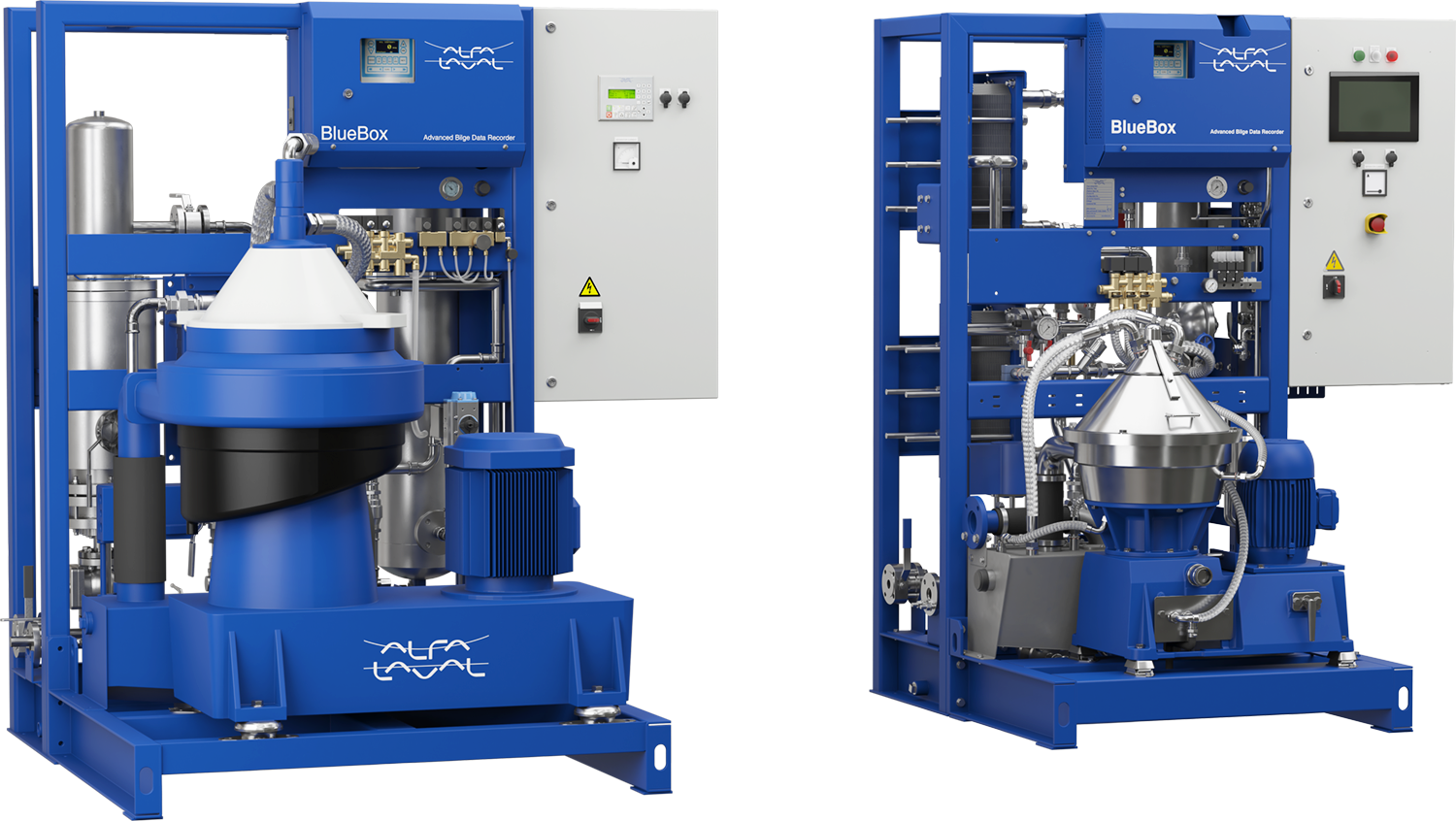
- Durchsatzbereich
- i40 S: 3-56 m³/h | i40 D: 7-80 m³/h | TZ-82: 15 m³/h (8mm-Düsen @ 7 bar)
- Betriebsdruck
- Typischerweise 4-12 bar; empfohlener Betriebsdruck 5-6,5 bar
- Wurfweite/reichweite
- TZ-82: 26 Meter horizontale Wurfweite (Benetzungsradius)
- Düsendurchmesser-Bereich
- 7-10 mm (verschiedene Konfigurationen für Durchsatz-Optimierung)
- Deck-Öffnung erforderlich
- i40 S/i40 D: nur 145 mm (kompakteste 2. Generation)
- Material-standard
- AISI 316 Edelstahl für Hauptkomponenten; PEEK für Seals/Verschleißteile
- Betriebstemperatur
- 0–95°C (32–203°F)
- Antriebsart
- Turbine-driven by cleaning medium flow (COW: crude oil washthrough possible)
- IMO-Konformität
- Erfüllt IMO-Anforderungen für COW (Crude Oil Washing) Systeme
- i40 S (Single-Nozzle, 2. Generation)
- i40 D (Dual-Nozzle, 2. Generation)
- i65 S (Single-Nozzle, High-Impact)
- T-73 (Automatic, 5.000-30.000 m³)
- TZ-67 (Rotary Jet Head, 50-500 m³)
- TZ-75 (Portable, 1.000-5.000 m³)
- TZ-82 (Portable/Fixed, bis 3.000 m³)
- TZ-89 (Media-Lubricated)
- 270FT Mark I (Single-Nozzle Crude Oil Tanker)
- Area: Nozzle wear and erosionCheck: Inspectors regularly check nozzles for wear marks, scratches, surface erosion and deformed openings. Nozzle blockages from sludge accumulation are the most frequent periodic maintenance task. Damaged nozzles must be replaced as a group.
- Area: Gearbox/turbine wear and vibrationCheck: Inspectors monitor for abnormal vibrations, temperature rise and irregular noise. Detached gear teeth and uneven disk distribution cause vibration problems. Inspection recommended every 200-300 operating hours; bearing replacement after 300-500 hours or at least every 3 years.
- Area: Ball bearings and sleeve bushings wearCheck: Inspectors check ball bearings for free rotation without contamination and damage. Sleeve bushings in gearbox frame must be checked: maximum diameter not exceeding 10.4 mm (bore not ovally deformed). Inspect all bearings and sealing rings every 6 months; replacement after 6,000 operating hours or every 3 years.
- Area: Seals and shaft passages (hysteresis coupling design)Check: Inspectors check for oil leakage and contamination at seal points. The hysteresis coupling eliminates conventional speed-setting shafts and reduces leak points. All rubber seals should be replaced at each service inspection to ensure hygiene and performance. Moisture and contamination ingress leads to seal failure.
- Area: Programming pattern and control sequence functionalityCheck: Inspectors test programming logic and valve control for correct 3D-indexed impact pattern. Check creep movement (vertical screw movement while horizontal rotation occurs) and progressive compression from coarse to fine over 8 cycles.
- Area: COW (Crude Oil Washing) system approval and crude oil compatibilityCheck: Inspectors verify IMO certification and crude oil wash-through approval. Toftejorg T-73 and 270FT Mark I are specifically designed for crude oil tankers. Check for corrosion/wear from crude oil exposure and verify valve seals under crude oil operating conditions.
Universal inspection/service points for tank cleaning machines (Gunclean Toftejorg, 2026-06). Per-model specs not auto-filled.
- Durchsatzbereich
- i40 S: 3-56 m³/h | i40 D: 7-80 m³/h | TZ-82: 15 m³/h (8mm-Düsen @ 7 bar)
- Betriebsdruck
- Typischerweise 4-12 bar; empfohlener Betriebsdruck 5-6,5 bar
- Wurfweite/reichweite
- TZ-82: 26 Meter horizontale Wurfweite (Benetzungsradius)
- Düsendurchmesser-Bereich
- 7-10 mm (verschiedene Konfigurationen für Durchsatz-Optimierung)
- Deck-Öffnung erforderlich
- i40 S/i40 D: nur 145 mm (kompakteste 2. Generation)
- Material-standard
- AISI 316 Edelstahl für Hauptkomponenten; PEEK für Seals/Verschleißteile
- Betriebstemperatur
- 0–95°C (32–203°F)
- Antriebsart
- Turbine-driven by cleaning medium flow (COW: crude oil washthrough possible)
- IMO-Konformität
- Erfüllt IMO-Anforderungen für COW (Crude Oil Washing) Systeme
- i40 S (Single-Nozzle, 2. Generation)
- i40 D (Dual-Nozzle, 2. Generation)
- i65 S (Single-Nozzle, High-Impact)
- T-73 (Automatic, 5.000-30.000 m³)
- TZ-67 (Rotary Jet Head, 50-500 m³)
- TZ-75 (Portable, 1.000-5.000 m³)
- TZ-82 (Portable/Fixed, bis 3.000 m³)
- TZ-89 (Media-Lubricated)
- 270FT Mark I (Single-Nozzle Crude Oil Tanker)
- Area: Nozzle wear and erosionCheck: Inspectors regularly check nozzles for wear marks, scratches, surface erosion and deformed openings. Nozzle blockages from sludge accumulation are the most frequent periodic maintenance task. Damaged nozzles must be replaced as a group.
- Area: Gearbox/turbine wear and vibrationCheck: Inspectors monitor for abnormal vibrations, temperature rise and irregular noise. Detached gear teeth and uneven disk distribution cause vibration problems. Inspection recommended every 200-300 operating hours; bearing replacement after 300-500 hours or at least every 3 years.
- Area: Ball bearings and sleeve bushings wearCheck: Inspectors check ball bearings for free rotation without contamination and damage. Sleeve bushings in gearbox frame must be checked: maximum diameter not exceeding 10.4 mm (bore not ovally deformed). Inspect all bearings and sealing rings every 6 months; replacement after 6,000 operating hours or every 3 years.
- Area: Seals and shaft passages (hysteresis coupling design)Check: Inspectors check for oil leakage and contamination at seal points. The hysteresis coupling eliminates conventional speed-setting shafts and reduces leak points. All rubber seals should be replaced at each service inspection to ensure hygiene and performance. Moisture and contamination ingress leads to seal failure.
- Area: Programming pattern and control sequence functionalityCheck: Inspectors test programming logic and valve control for correct 3D-indexed impact pattern. Check creep movement (vertical screw movement while horizontal rotation occurs) and progressive compression from coarse to fine over 8 cycles.
- Area: COW (Crude Oil Washing) system approval and crude oil compatibilityCheck: Inspectors verify IMO certification and crude oil wash-through approval. Toftejorg T-73 and 270FT Mark I are specifically designed for crude oil tankers. Check for corrosion/wear from crude oil exposure and verify valve seals under crude oil operating conditions.
Universal inspection/service points for tank cleaning machines (Gunclean Toftejorg, 2026-06). Per-model specs not auto-filled.
- Durchsatzbereich
- i40 S: 3-56 m³/h | i40 D: 7-80 m³/h | TZ-82: 15 m³/h (8mm-Düsen @ 7 bar)
- Betriebsdruck
- Typischerweise 4-12 bar; empfohlener Betriebsdruck 5-6,5 bar
- Wurfweite/reichweite
- TZ-82: 26 Meter horizontale Wurfweite (Benetzungsradius)
- Düsendurchmesser-Bereich
- 7-10 mm (verschiedene Konfigurationen für Durchsatz-Optimierung)
- Deck-Öffnung erforderlich
- i40 S/i40 D: nur 145 mm (kompakteste 2. Generation)
- Material-standard
- AISI 316 Edelstahl für Hauptkomponenten; PEEK für Seals/Verschleißteile
- Betriebstemperatur
- 0–95°C (32–203°F)
- Antriebsart
- Turbine-driven by cleaning medium flow (COW: crude oil washthrough possible)
- IMO-Konformität
- Erfüllt IMO-Anforderungen für COW (Crude Oil Washing) Systeme
- i40 S (Single-Nozzle, 2. Generation)
- i40 D (Dual-Nozzle, 2. Generation)
- i65 S (Single-Nozzle, High-Impact)
- T-73 (Automatic, 5.000-30.000 m³)
- TZ-67 (Rotary Jet Head, 50-500 m³)
- TZ-75 (Portable, 1.000-5.000 m³)
- TZ-82 (Portable/Fixed, bis 3.000 m³)
- TZ-89 (Media-Lubricated)
- 270FT Mark I (Single-Nozzle Crude Oil Tanker)
- Area: Nozzle wear and erosionCheck: Inspectors regularly check nozzles for wear marks, scratches, surface erosion and deformed openings. Nozzle blockages from sludge accumulation are the most frequent periodic maintenance task. Damaged nozzles must be replaced as a group.
- Area: Gearbox/turbine wear and vibrationCheck: Inspectors monitor for abnormal vibrations, temperature rise and irregular noise. Detached gear teeth and uneven disk distribution cause vibration problems. Inspection recommended every 200-300 operating hours; bearing replacement after 300-500 hours or at least every 3 years.
- Area: Ball bearings and sleeve bushings wearCheck: Inspectors check ball bearings for free rotation without contamination and damage. Sleeve bushings in gearbox frame must be checked: maximum diameter not exceeding 10.4 mm (bore not ovally deformed). Inspect all bearings and sealing rings every 6 months; replacement after 6,000 operating hours or every 3 years.
- Area: Seals and shaft passages (hysteresis coupling design)Check: Inspectors check for oil leakage and contamination at seal points. The hysteresis coupling eliminates conventional speed-setting shafts and reduces leak points. All rubber seals should be replaced at each service inspection to ensure hygiene and performance. Moisture and contamination ingress leads to seal failure.
- Area: Programming pattern and control sequence functionalityCheck: Inspectors test programming logic and valve control for correct 3D-indexed impact pattern. Check creep movement (vertical screw movement while horizontal rotation occurs) and progressive compression from coarse to fine over 8 cycles.
- Area: COW (Crude Oil Washing) system approval and crude oil compatibilityCheck: Inspectors verify IMO certification and crude oil wash-through approval. Toftejorg T-73 and 270FT Mark I are specifically designed for crude oil tankers. Check for corrosion/wear from crude oil exposure and verify valve seals under crude oil operating conditions.
Universal inspection/service points for tank cleaning machines (Gunclean Toftejorg, 2026-06). Per-model specs not auto-filled.
- Durchsatzbereich
- i40 S: 3-56 m³/h | i40 D: 7-80 m³/h | TZ-82: 15 m³/h (8mm-Düsen @ 7 bar)
- Betriebsdruck
- Typischerweise 4-12 bar; empfohlener Betriebsdruck 5-6,5 bar
- Wurfweite/reichweite
- TZ-82: 26 Meter horizontale Wurfweite (Benetzungsradius)
- Düsendurchmesser-Bereich
- 7-10 mm (verschiedene Konfigurationen für Durchsatz-Optimierung)
- Deck-Öffnung erforderlich
- i40 S/i40 D: nur 145 mm (kompakteste 2. Generation)
- Material-standard
- AISI 316 Edelstahl für Hauptkomponenten; PEEK für Seals/Verschleißteile
- Betriebstemperatur
- 0–95°C (32–203°F)
- Antriebsart
- Turbine-driven by cleaning medium flow (COW: crude oil washthrough possible)
- IMO-Konformität
- Erfüllt IMO-Anforderungen für COW (Crude Oil Washing) Systeme
- i40 S (Single-Nozzle, 2. Generation)
- i40 D (Dual-Nozzle, 2. Generation)
- i65 S (Single-Nozzle, High-Impact)
- T-73 (Automatic, 5.000-30.000 m³)
- TZ-67 (Rotary Jet Head, 50-500 m³)
- TZ-75 (Portable, 1.000-5.000 m³)
- TZ-82 (Portable/Fixed, bis 3.000 m³)
- TZ-89 (Media-Lubricated)
- 270FT Mark I (Single-Nozzle Crude Oil Tanker)
- Area: Nozzle wear and erosionCheck: Inspectors regularly check nozzles for wear marks, scratches, surface erosion and deformed openings. Nozzle blockages from sludge accumulation are the most frequent periodic maintenance task. Damaged nozzles must be replaced as a group.
- Area: Gearbox/turbine wear and vibrationCheck: Inspectors monitor for abnormal vibrations, temperature rise and irregular noise. Detached gear teeth and uneven disk distribution cause vibration problems. Inspection recommended every 200-300 operating hours; bearing replacement after 300-500 hours or at least every 3 years.
- Area: Ball bearings and sleeve bushings wearCheck: Inspectors check ball bearings for free rotation without contamination and damage. Sleeve bushings in gearbox frame must be checked: maximum diameter not exceeding 10.4 mm (bore not ovally deformed). Inspect all bearings and sealing rings every 6 months; replacement after 6,000 operating hours or every 3 years.
- Area: Seals and shaft passages (hysteresis coupling design)Check: Inspectors check for oil leakage and contamination at seal points. The hysteresis coupling eliminates conventional speed-setting shafts and reduces leak points. All rubber seals should be replaced at each service inspection to ensure hygiene and performance. Moisture and contamination ingress leads to seal failure.
- Area: Programming pattern and control sequence functionalityCheck: Inspectors test programming logic and valve control for correct 3D-indexed impact pattern. Check creep movement (vertical screw movement while horizontal rotation occurs) and progressive compression from coarse to fine over 8 cycles.
- Area: COW (Crude Oil Washing) system approval and crude oil compatibilityCheck: Inspectors verify IMO certification and crude oil wash-through approval. Toftejorg T-73 and 270FT Mark I are specifically designed for crude oil tankers. Check for corrosion/wear from crude oil exposure and verify valve seals under crude oil operating conditions.
Universal inspection/service points for tank cleaning machines (Gunclean Toftejorg, 2026-06). Per-model specs not auto-filled.
- Durchsatzbereich
- i40 S: 3-56 m³/h | i40 D: 7-80 m³/h | TZ-82: 15 m³/h (8mm-Düsen @ 7 bar)
- Betriebsdruck
- Typischerweise 4-12 bar; empfohlener Betriebsdruck 5-6,5 bar
- Wurfweite/reichweite
- TZ-82: 26 Meter horizontale Wurfweite (Benetzungsradius)
- Düsendurchmesser-Bereich
- 7-10 mm (verschiedene Konfigurationen für Durchsatz-Optimierung)
- Deck-Öffnung erforderlich
- i40 S/i40 D: nur 145 mm (kompakteste 2. Generation)
- Material-standard
- AISI 316 Edelstahl für Hauptkomponenten; PEEK für Seals/Verschleißteile
- Betriebstemperatur
- 0–95°C (32–203°F)
- Antriebsart
- Turbine-driven by cleaning medium flow (COW: crude oil washthrough possible)
- IMO-Konformität
- Erfüllt IMO-Anforderungen für COW (Crude Oil Washing) Systeme
- i40 S (Single-Nozzle, 2. Generation)
- i40 D (Dual-Nozzle, 2. Generation)
- i65 S (Single-Nozzle, High-Impact)
- T-73 (Automatic, 5.000-30.000 m³)
- TZ-67 (Rotary Jet Head, 50-500 m³)
- TZ-75 (Portable, 1.000-5.000 m³)
- TZ-82 (Portable/Fixed, bis 3.000 m³)
- TZ-89 (Media-Lubricated)
- 270FT Mark I (Single-Nozzle Crude Oil Tanker)
- Area: Nozzle wear and erosionCheck: Inspectors regularly check nozzles for wear marks, scratches, surface erosion and deformed openings. Nozzle blockages from sludge accumulation are the most frequent periodic maintenance task. Damaged nozzles must be replaced as a group.
- Area: Gearbox/turbine wear and vibrationCheck: Inspectors monitor for abnormal vibrations, temperature rise and irregular noise. Detached gear teeth and uneven disk distribution cause vibration problems. Inspection recommended every 200-300 operating hours; bearing replacement after 300-500 hours or at least every 3 years.
- Area: Ball bearings and sleeve bushings wearCheck: Inspectors check ball bearings for free rotation without contamination and damage. Sleeve bushings in gearbox frame must be checked: maximum diameter not exceeding 10.4 mm (bore not ovally deformed). Inspect all bearings and sealing rings every 6 months; replacement after 6,000 operating hours or every 3 years.
- Area: Seals and shaft passages (hysteresis coupling design)Check: Inspectors check for oil leakage and contamination at seal points. The hysteresis coupling eliminates conventional speed-setting shafts and reduces leak points. All rubber seals should be replaced at each service inspection to ensure hygiene and performance. Moisture and contamination ingress leads to seal failure.
- Area: Programming pattern and control sequence functionalityCheck: Inspectors test programming logic and valve control for correct 3D-indexed impact pattern. Check creep movement (vertical screw movement while horizontal rotation occurs) and progressive compression from coarse to fine over 8 cycles.
- Area: COW (Crude Oil Washing) system approval and crude oil compatibilityCheck: Inspectors verify IMO certification and crude oil wash-through approval. Toftejorg T-73 and 270FT Mark I are specifically designed for crude oil tankers. Check for corrosion/wear from crude oil exposure and verify valve seals under crude oil operating conditions.
Universal inspection/service points for tank cleaning machines (Gunclean Toftejorg, 2026-06). Per-model specs not auto-filled.
- Durchsatzbereich
- i40 S: 3-56 m³/h | i40 D: 7-80 m³/h | TZ-82: 15 m³/h (8mm-Düsen @ 7 bar)
- Betriebsdruck
- Typischerweise 4-12 bar; empfohlener Betriebsdruck 5-6,5 bar
- Wurfweite/reichweite
- TZ-82: 26 Meter horizontale Wurfweite (Benetzungsradius)
- Düsendurchmesser-Bereich
- 7-10 mm (verschiedene Konfigurationen für Durchsatz-Optimierung)
- Deck-Öffnung erforderlich
- i40 S/i40 D: nur 145 mm (kompakteste 2. Generation)
- Material-standard
- AISI 316 Edelstahl für Hauptkomponenten; PEEK für Seals/Verschleißteile
- Betriebstemperatur
- 0–95°C (32–203°F)
- Antriebsart
- Turbine-driven by cleaning medium flow (COW: crude oil washthrough possible)
- IMO-Konformität
- Erfüllt IMO-Anforderungen für COW (Crude Oil Washing) Systeme
- i40 S (Single-Nozzle, 2. Generation)
- i40 D (Dual-Nozzle, 2. Generation)
- i65 S (Single-Nozzle, High-Impact)
- T-73 (Automatic, 5.000-30.000 m³)
- TZ-67 (Rotary Jet Head, 50-500 m³)
- TZ-75 (Portable, 1.000-5.000 m³)
- TZ-82 (Portable/Fixed, bis 3.000 m³)
- TZ-89 (Media-Lubricated)
- 270FT Mark I (Single-Nozzle Crude Oil Tanker)
- Area: Nozzle wear and erosionCheck: Inspectors regularly check nozzles for wear marks, scratches, surface erosion and deformed openings. Nozzle blockages from sludge accumulation are the most frequent periodic maintenance task. Damaged nozzles must be replaced as a group.
- Area: Gearbox/turbine wear and vibrationCheck: Inspectors monitor for abnormal vibrations, temperature rise and irregular noise. Detached gear teeth and uneven disk distribution cause vibration problems. Inspection recommended every 200-300 operating hours; bearing replacement after 300-500 hours or at least every 3 years.
- Area: Ball bearings and sleeve bushings wearCheck: Inspectors check ball bearings for free rotation without contamination and damage. Sleeve bushings in gearbox frame must be checked: maximum diameter not exceeding 10.4 mm (bore not ovally deformed). Inspect all bearings and sealing rings every 6 months; replacement after 6,000 operating hours or every 3 years.
- Area: Seals and shaft passages (hysteresis coupling design)Check: Inspectors check for oil leakage and contamination at seal points. The hysteresis coupling eliminates conventional speed-setting shafts and reduces leak points. All rubber seals should be replaced at each service inspection to ensure hygiene and performance. Moisture and contamination ingress leads to seal failure.
- Area: Programming pattern and control sequence functionalityCheck: Inspectors test programming logic and valve control for correct 3D-indexed impact pattern. Check creep movement (vertical screw movement while horizontal rotation occurs) and progressive compression from coarse to fine over 8 cycles.
- Area: COW (Crude Oil Washing) system approval and crude oil compatibilityCheck: Inspectors verify IMO certification and crude oil wash-through approval. Toftejorg T-73 and 270FT Mark I are specifically designed for crude oil tankers. Check for corrosion/wear from crude oil exposure and verify valve seals under crude oil operating conditions.
Universal inspection/service points for tank cleaning machines (Gunclean Toftejorg, 2026-06). Per-model specs not auto-filled.
- Durchsatzbereich
- i40 S: 3-56 m³/h | i40 D: 7-80 m³/h | TZ-82: 15 m³/h (8mm-Düsen @ 7 bar)
- Betriebsdruck
- Typischerweise 4-12 bar; empfohlener Betriebsdruck 5-6,5 bar
- Wurfweite/reichweite
- TZ-82: 26 Meter horizontale Wurfweite (Benetzungsradius)
- Düsendurchmesser-Bereich
- 7-10 mm (verschiedene Konfigurationen für Durchsatz-Optimierung)
- Deck-Öffnung erforderlich
- i40 S/i40 D: nur 145 mm (kompakteste 2. Generation)
- Material-standard
- AISI 316 Edelstahl für Hauptkomponenten; PEEK für Seals/Verschleißteile
- Betriebstemperatur
- 0–95°C (32–203°F)
- Antriebsart
- Turbine-driven by cleaning medium flow (COW: crude oil washthrough possible)
- IMO-Konformität
- Erfüllt IMO-Anforderungen für COW (Crude Oil Washing) Systeme
- i40 S (Single-Nozzle, 2. Generation)
- i40 D (Dual-Nozzle, 2. Generation)
- i65 S (Single-Nozzle, High-Impact)
- T-73 (Automatic, 5.000-30.000 m³)
- TZ-67 (Rotary Jet Head, 50-500 m³)
- TZ-75 (Portable, 1.000-5.000 m³)
- TZ-82 (Portable/Fixed, bis 3.000 m³)
- TZ-89 (Media-Lubricated)
- 270FT Mark I (Single-Nozzle Crude Oil Tanker)
- Area: Nozzle wear and erosionCheck: Inspectors regularly check nozzles for wear marks, scratches, surface erosion and deformed openings. Nozzle blockages from sludge accumulation are the most frequent periodic maintenance task. Damaged nozzles must be replaced as a group.
- Area: Gearbox/turbine wear and vibrationCheck: Inspectors monitor for abnormal vibrations, temperature rise and irregular noise. Detached gear teeth and uneven disk distribution cause vibration problems. Inspection recommended every 200-300 operating hours; bearing replacement after 300-500 hours or at least every 3 years.
- Area: Ball bearings and sleeve bushings wearCheck: Inspectors check ball bearings for free rotation without contamination and damage. Sleeve bushings in gearbox frame must be checked: maximum diameter not exceeding 10.4 mm (bore not ovally deformed). Inspect all bearings and sealing rings every 6 months; replacement after 6,000 operating hours or every 3 years.
- Area: Seals and shaft passages (hysteresis coupling design)Check: Inspectors check for oil leakage and contamination at seal points. The hysteresis coupling eliminates conventional speed-setting shafts and reduces leak points. All rubber seals should be replaced at each service inspection to ensure hygiene and performance. Moisture and contamination ingress leads to seal failure.
- Area: Programming pattern and control sequence functionalityCheck: Inspectors test programming logic and valve control for correct 3D-indexed impact pattern. Check creep movement (vertical screw movement while horizontal rotation occurs) and progressive compression from coarse to fine over 8 cycles.
- Area: COW (Crude Oil Washing) system approval and crude oil compatibilityCheck: Inspectors verify IMO certification and crude oil wash-through approval. Toftejorg T-73 and 270FT Mark I are specifically designed for crude oil tankers. Check for corrosion/wear from crude oil exposure and verify valve seals under crude oil operating conditions.
Universal inspection/service points for tank cleaning machines (Gunclean Toftejorg, 2026-06). Per-model specs not auto-filled.
- Durchsatzbereich
- i40 S: 3-56 m³/h | i40 D: 7-80 m³/h | TZ-82: 15 m³/h (8mm-Düsen @ 7 bar)
- Betriebsdruck
- Typischerweise 4-12 bar; empfohlener Betriebsdruck 5-6,5 bar
- Wurfweite/reichweite
- TZ-82: 26 Meter horizontale Wurfweite (Benetzungsradius)
- Düsendurchmesser-Bereich
- 7-10 mm (verschiedene Konfigurationen für Durchsatz-Optimierung)
- Deck-Öffnung erforderlich
- i40 S/i40 D: nur 145 mm (kompakteste 2. Generation)
- Material-standard
- AISI 316 Edelstahl für Hauptkomponenten; PEEK für Seals/Verschleißteile
- Betriebstemperatur
- 0–95°C (32–203°F)
- Antriebsart
- Turbine-driven by cleaning medium flow (COW: crude oil washthrough possible)
- IMO-Konformität
- Erfüllt IMO-Anforderungen für COW (Crude Oil Washing) Systeme
- i40 S (Single-Nozzle, 2. Generation)
- i40 D (Dual-Nozzle, 2. Generation)
- i65 S (Single-Nozzle, High-Impact)
- T-73 (Automatic, 5.000-30.000 m³)
- TZ-67 (Rotary Jet Head, 50-500 m³)
- TZ-75 (Portable, 1.000-5.000 m³)
- TZ-82 (Portable/Fixed, bis 3.000 m³)
- TZ-89 (Media-Lubricated)
- 270FT Mark I (Single-Nozzle Crude Oil Tanker)
- Area: Nozzle wear and erosionCheck: Inspectors regularly check nozzles for wear marks, scratches, surface erosion and deformed openings. Nozzle blockages from sludge accumulation are the most frequent periodic maintenance task. Damaged nozzles must be replaced as a group.
- Area: Gearbox/turbine wear and vibrationCheck: Inspectors monitor for abnormal vibrations, temperature rise and irregular noise. Detached gear teeth and uneven disk distribution cause vibration problems. Inspection recommended every 200-300 operating hours; bearing replacement after 300-500 hours or at least every 3 years.
- Area: Ball bearings and sleeve bushings wearCheck: Inspectors check ball bearings for free rotation without contamination and damage. Sleeve bushings in gearbox frame must be checked: maximum diameter not exceeding 10.4 mm (bore not ovally deformed). Inspect all bearings and sealing rings every 6 months; replacement after 6,000 operating hours or every 3 years.
- Area: Seals and shaft passages (hysteresis coupling design)Check: Inspectors check for oil leakage and contamination at seal points. The hysteresis coupling eliminates conventional speed-setting shafts and reduces leak points. All rubber seals should be replaced at each service inspection to ensure hygiene and performance. Moisture and contamination ingress leads to seal failure.
- Area: Programming pattern and control sequence functionalityCheck: Inspectors test programming logic and valve control for correct 3D-indexed impact pattern. Check creep movement (vertical screw movement while horizontal rotation occurs) and progressive compression from coarse to fine over 8 cycles.
- Area: COW (Crude Oil Washing) system approval and crude oil compatibilityCheck: Inspectors verify IMO certification and crude oil wash-through approval. Toftejorg T-73 and 270FT Mark I are specifically designed for crude oil tankers. Check for corrosion/wear from crude oil exposure and verify valve seals under crude oil operating conditions.
Universal inspection/service points for tank cleaning machines (Gunclean Toftejorg, 2026-06). Per-model specs not auto-filled.
- Durchsatzbereich
- i40 S: 3-56 m³/h | i40 D: 7-80 m³/h | TZ-82: 15 m³/h (8mm-Düsen @ 7 bar)
- Betriebsdruck
- Typischerweise 4-12 bar; empfohlener Betriebsdruck 5-6,5 bar
- Wurfweite/reichweite
- TZ-82: 26 Meter horizontale Wurfweite (Benetzungsradius)
- Düsendurchmesser-Bereich
- 7-10 mm (verschiedene Konfigurationen für Durchsatz-Optimierung)
- Deck-Öffnung erforderlich
- i40 S/i40 D: nur 145 mm (kompakteste 2. Generation)
- Material-standard
- AISI 316 Edelstahl für Hauptkomponenten; PEEK für Seals/Verschleißteile
- Betriebstemperatur
- 0–95°C (32–203°F)
- Antriebsart
- Turbine-driven by cleaning medium flow (COW: crude oil washthrough possible)
- IMO-Konformität
- Erfüllt IMO-Anforderungen für COW (Crude Oil Washing) Systeme
- i40 S (Single-Nozzle, 2. Generation)
- i40 D (Dual-Nozzle, 2. Generation)
- i65 S (Single-Nozzle, High-Impact)
- T-73 (Automatic, 5.000-30.000 m³)
- TZ-67 (Rotary Jet Head, 50-500 m³)
- TZ-75 (Portable, 1.000-5.000 m³)
- TZ-82 (Portable/Fixed, bis 3.000 m³)
- TZ-89 (Media-Lubricated)
- 270FT Mark I (Single-Nozzle Crude Oil Tanker)
- Area: Nozzle wear and erosionCheck: Inspectors regularly check nozzles for wear marks, scratches, surface erosion and deformed openings. Nozzle blockages from sludge accumulation are the most frequent periodic maintenance task. Damaged nozzles must be replaced as a group.
- Area: Gearbox/turbine wear and vibrationCheck: Inspectors monitor for abnormal vibrations, temperature rise and irregular noise. Detached gear teeth and uneven disk distribution cause vibration problems. Inspection recommended every 200-300 operating hours; bearing replacement after 300-500 hours or at least every 3 years.
- Area: Ball bearings and sleeve bushings wearCheck: Inspectors check ball bearings for free rotation without contamination and damage. Sleeve bushings in gearbox frame must be checked: maximum diameter not exceeding 10.4 mm (bore not ovally deformed). Inspect all bearings and sealing rings every 6 months; replacement after 6,000 operating hours or every 3 years.
- Area: Seals and shaft passages (hysteresis coupling design)Check: Inspectors check for oil leakage and contamination at seal points. The hysteresis coupling eliminates conventional speed-setting shafts and reduces leak points. All rubber seals should be replaced at each service inspection to ensure hygiene and performance. Moisture and contamination ingress leads to seal failure.
- Area: Programming pattern and control sequence functionalityCheck: Inspectors test programming logic and valve control for correct 3D-indexed impact pattern. Check creep movement (vertical screw movement while horizontal rotation occurs) and progressive compression from coarse to fine over 8 cycles.
- Area: COW (Crude Oil Washing) system approval and crude oil compatibilityCheck: Inspectors verify IMO certification and crude oil wash-through approval. Toftejorg T-73 and 270FT Mark I are specifically designed for crude oil tankers. Check for corrosion/wear from crude oil exposure and verify valve seals under crude oil operating conditions.
Universal inspection/service points for tank cleaning machines (Gunclean Toftejorg, 2026-06). Per-model specs not auto-filled.
- Durchsatzbereich
- i40 S: 3-56 m³/h | i40 D: 7-80 m³/h | TZ-82: 15 m³/h (8mm-Düsen @ 7 bar)
- Betriebsdruck
- Typischerweise 4-12 bar; empfohlener Betriebsdruck 5-6,5 bar
- Wurfweite/reichweite
- TZ-82: 26 Meter horizontale Wurfweite (Benetzungsradius)
- Düsendurchmesser-Bereich
- 7-10 mm (verschiedene Konfigurationen für Durchsatz-Optimierung)
- Deck-Öffnung erforderlich
- i40 S/i40 D: nur 145 mm (kompakteste 2. Generation)
- Material-standard
- AISI 316 Edelstahl für Hauptkomponenten; PEEK für Seals/Verschleißteile
- Betriebstemperatur
- 0–95°C (32–203°F)
- Antriebsart
- Turbine-driven by cleaning medium flow (COW: crude oil washthrough possible)
- IMO-Konformität
- Erfüllt IMO-Anforderungen für COW (Crude Oil Washing) Systeme
- i40 S (Single-Nozzle, 2. Generation)
- i40 D (Dual-Nozzle, 2. Generation)
- i65 S (Single-Nozzle, High-Impact)
- T-73 (Automatic, 5.000-30.000 m³)
- TZ-67 (Rotary Jet Head, 50-500 m³)
- TZ-75 (Portable, 1.000-5.000 m³)
- TZ-82 (Portable/Fixed, bis 3.000 m³)
- TZ-89 (Media-Lubricated)
- 270FT Mark I (Single-Nozzle Crude Oil Tanker)
- Area: Nozzle wear and erosionCheck: Inspectors regularly check nozzles for wear marks, scratches, surface erosion and deformed openings. Nozzle blockages from sludge accumulation are the most frequent periodic maintenance task. Damaged nozzles must be replaced as a group.
- Area: Gearbox/turbine wear and vibrationCheck: Inspectors monitor for abnormal vibrations, temperature rise and irregular noise. Detached gear teeth and uneven disk distribution cause vibration problems. Inspection recommended every 200-300 operating hours; bearing replacement after 300-500 hours or at least every 3 years.
- Area: Ball bearings and sleeve bushings wearCheck: Inspectors check ball bearings for free rotation without contamination and damage. Sleeve bushings in gearbox frame must be checked: maximum diameter not exceeding 10.4 mm (bore not ovally deformed). Inspect all bearings and sealing rings every 6 months; replacement after 6,000 operating hours or every 3 years.
- Area: Seals and shaft passages (hysteresis coupling design)Check: Inspectors check for oil leakage and contamination at seal points. The hysteresis coupling eliminates conventional speed-setting shafts and reduces leak points. All rubber seals should be replaced at each service inspection to ensure hygiene and performance. Moisture and contamination ingress leads to seal failure.
- Area: Programming pattern and control sequence functionalityCheck: Inspectors test programming logic and valve control for correct 3D-indexed impact pattern. Check creep movement (vertical screw movement while horizontal rotation occurs) and progressive compression from coarse to fine over 8 cycles.
- Area: COW (Crude Oil Washing) system approval and crude oil compatibilityCheck: Inspectors verify IMO certification and crude oil wash-through approval. Toftejorg T-73 and 270FT Mark I are specifically designed for crude oil tankers. Check for corrosion/wear from crude oil exposure and verify valve seals under crude oil operating conditions.
Universal inspection/service points for tank cleaning machines (Gunclean Toftejorg, 2026-06). Per-model specs not auto-filled.
- Durchsatzbereich
- i40 S: 3-56 m³/h | i40 D: 7-80 m³/h | TZ-82: 15 m³/h (8mm-Düsen @ 7 bar)
- Betriebsdruck
- Typischerweise 4-12 bar; empfohlener Betriebsdruck 5-6,5 bar
- Wurfweite/reichweite
- TZ-82: 26 Meter horizontale Wurfweite (Benetzungsradius)
- Düsendurchmesser-Bereich
- 7-10 mm (verschiedene Konfigurationen für Durchsatz-Optimierung)
- Deck-Öffnung erforderlich
- i40 S/i40 D: nur 145 mm (kompakteste 2. Generation)
- Material-standard
- AISI 316 Edelstahl für Hauptkomponenten; PEEK für Seals/Verschleißteile
- Betriebstemperatur
- 0–95°C (32–203°F)
- Antriebsart
- Turbine-driven by cleaning medium flow (COW: crude oil washthrough possible)
- IMO-Konformität
- Erfüllt IMO-Anforderungen für COW (Crude Oil Washing) Systeme
- i40 S (Single-Nozzle, 2. Generation)
- i40 D (Dual-Nozzle, 2. Generation)
- i65 S (Single-Nozzle, High-Impact)
- T-73 (Automatic, 5.000-30.000 m³)
- TZ-67 (Rotary Jet Head, 50-500 m³)
- TZ-75 (Portable, 1.000-5.000 m³)
- TZ-82 (Portable/Fixed, bis 3.000 m³)
- TZ-89 (Media-Lubricated)
- 270FT Mark I (Single-Nozzle Crude Oil Tanker)
- Area: Nozzle wear and erosionCheck: Inspectors regularly check nozzles for wear marks, scratches, surface erosion and deformed openings. Nozzle blockages from sludge accumulation are the most frequent periodic maintenance task. Damaged nozzles must be replaced as a group.
- Area: Gearbox/turbine wear and vibrationCheck: Inspectors monitor for abnormal vibrations, temperature rise and irregular noise. Detached gear teeth and uneven disk distribution cause vibration problems. Inspection recommended every 200-300 operating hours; bearing replacement after 300-500 hours or at least every 3 years.
- Area: Ball bearings and sleeve bushings wearCheck: Inspectors check ball bearings for free rotation without contamination and damage. Sleeve bushings in gearbox frame must be checked: maximum diameter not exceeding 10.4 mm (bore not ovally deformed). Inspect all bearings and sealing rings every 6 months; replacement after 6,000 operating hours or every 3 years.
- Area: Seals and shaft passages (hysteresis coupling design)Check: Inspectors check for oil leakage and contamination at seal points. The hysteresis coupling eliminates conventional speed-setting shafts and reduces leak points. All rubber seals should be replaced at each service inspection to ensure hygiene and performance. Moisture and contamination ingress leads to seal failure.
- Area: Programming pattern and control sequence functionalityCheck: Inspectors test programming logic and valve control for correct 3D-indexed impact pattern. Check creep movement (vertical screw movement while horizontal rotation occurs) and progressive compression from coarse to fine over 8 cycles.
- Area: COW (Crude Oil Washing) system approval and crude oil compatibilityCheck: Inspectors verify IMO certification and crude oil wash-through approval. Toftejorg T-73 and 270FT Mark I are specifically designed for crude oil tankers. Check for corrosion/wear from crude oil exposure and verify valve seals under crude oil operating conditions.
Universal inspection/service points for tank cleaning machines (Gunclean Toftejorg, 2026-06). Per-model specs not auto-filled.
- Durchsatzbereich
- i40 S: 3-56 m³/h | i40 D: 7-80 m³/h | TZ-82: 15 m³/h (8mm-Düsen @ 7 bar)
- Betriebsdruck
- Typischerweise 4-12 bar; empfohlener Betriebsdruck 5-6,5 bar
- Wurfweite/reichweite
- TZ-82: 26 Meter horizontale Wurfweite (Benetzungsradius)
- Düsendurchmesser-Bereich
- 7-10 mm (verschiedene Konfigurationen für Durchsatz-Optimierung)
- Deck-Öffnung erforderlich
- i40 S/i40 D: nur 145 mm (kompakteste 2. Generation)
- Material-standard
- AISI 316 Edelstahl für Hauptkomponenten; PEEK für Seals/Verschleißteile
- Betriebstemperatur
- 0–95°C (32–203°F)
- Antriebsart
- Turbine-driven by cleaning medium flow (COW: crude oil washthrough possible)
- IMO-Konformität
- Erfüllt IMO-Anforderungen für COW (Crude Oil Washing) Systeme
- i40 S (Single-Nozzle, 2. Generation)
- i40 D (Dual-Nozzle, 2. Generation)
- i65 S (Single-Nozzle, High-Impact)
- T-73 (Automatic, 5.000-30.000 m³)
- TZ-67 (Rotary Jet Head, 50-500 m³)
- TZ-75 (Portable, 1.000-5.000 m³)
- TZ-82 (Portable/Fixed, bis 3.000 m³)
- TZ-89 (Media-Lubricated)
- 270FT Mark I (Single-Nozzle Crude Oil Tanker)
- Area: Nozzle wear and erosionCheck: Inspectors regularly check nozzles for wear marks, scratches, surface erosion and deformed openings. Nozzle blockages from sludge accumulation are the most frequent periodic maintenance task. Damaged nozzles must be replaced as a group.
- Area: Gearbox/turbine wear and vibrationCheck: Inspectors monitor for abnormal vibrations, temperature rise and irregular noise. Detached gear teeth and uneven disk distribution cause vibration problems. Inspection recommended every 200-300 operating hours; bearing replacement after 300-500 hours or at least every 3 years.
- Area: Ball bearings and sleeve bushings wearCheck: Inspectors check ball bearings for free rotation without contamination and damage. Sleeve bushings in gearbox frame must be checked: maximum diameter not exceeding 10.4 mm (bore not ovally deformed). Inspect all bearings and sealing rings every 6 months; replacement after 6,000 operating hours or every 3 years.
- Area: Seals and shaft passages (hysteresis coupling design)Check: Inspectors check for oil leakage and contamination at seal points. The hysteresis coupling eliminates conventional speed-setting shafts and reduces leak points. All rubber seals should be replaced at each service inspection to ensure hygiene and performance. Moisture and contamination ingress leads to seal failure.
- Area: Programming pattern and control sequence functionalityCheck: Inspectors test programming logic and valve control for correct 3D-indexed impact pattern. Check creep movement (vertical screw movement while horizontal rotation occurs) and progressive compression from coarse to fine over 8 cycles.
- Area: COW (Crude Oil Washing) system approval and crude oil compatibilityCheck: Inspectors verify IMO certification and crude oil wash-through approval. Toftejorg T-73 and 270FT Mark I are specifically designed for crude oil tankers. Check for corrosion/wear from crude oil exposure and verify valve seals under crude oil operating conditions.
Universal inspection/service points for tank cleaning machines (Gunclean Toftejorg, 2026-06). Per-model specs not auto-filled.
- Durchsatzbereich
- i40 S: 3-56 m³/h | i40 D: 7-80 m³/h | TZ-82: 15 m³/h (8mm-Düsen @ 7 bar)
- Betriebsdruck
- Typischerweise 4-12 bar; empfohlener Betriebsdruck 5-6,5 bar
- Wurfweite/reichweite
- TZ-82: 26 Meter horizontale Wurfweite (Benetzungsradius)
- Düsendurchmesser-Bereich
- 7-10 mm (verschiedene Konfigurationen für Durchsatz-Optimierung)
- Deck-Öffnung erforderlich
- i40 S/i40 D: nur 145 mm (kompakteste 2. Generation)
- Material-standard
- AISI 316 Edelstahl für Hauptkomponenten; PEEK für Seals/Verschleißteile
- Betriebstemperatur
- 0–95°C (32–203°F)
- Antriebsart
- Turbine-driven by cleaning medium flow (COW: crude oil washthrough possible)
- IMO-Konformität
- Erfüllt IMO-Anforderungen für COW (Crude Oil Washing) Systeme
- i40 S (Single-Nozzle, 2. Generation)
- i40 D (Dual-Nozzle, 2. Generation)
- i65 S (Single-Nozzle, High-Impact)
- T-73 (Automatic, 5.000-30.000 m³)
- TZ-67 (Rotary Jet Head, 50-500 m³)
- TZ-75 (Portable, 1.000-5.000 m³)
- TZ-82 (Portable/Fixed, bis 3.000 m³)
- TZ-89 (Media-Lubricated)
- 270FT Mark I (Single-Nozzle Crude Oil Tanker)
- Area: Nozzle wear and erosionCheck: Inspectors regularly check nozzles for wear marks, scratches, surface erosion and deformed openings. Nozzle blockages from sludge accumulation are the most frequent periodic maintenance task. Damaged nozzles must be replaced as a group.
- Area: Gearbox/turbine wear and vibrationCheck: Inspectors monitor for abnormal vibrations, temperature rise and irregular noise. Detached gear teeth and uneven disk distribution cause vibration problems. Inspection recommended every 200-300 operating hours; bearing replacement after 300-500 hours or at least every 3 years.
- Area: Ball bearings and sleeve bushings wearCheck: Inspectors check ball bearings for free rotation without contamination and damage. Sleeve bushings in gearbox frame must be checked: maximum diameter not exceeding 10.4 mm (bore not ovally deformed). Inspect all bearings and sealing rings every 6 months; replacement after 6,000 operating hours or every 3 years.
- Area: Seals and shaft passages (hysteresis coupling design)Check: Inspectors check for oil leakage and contamination at seal points. The hysteresis coupling eliminates conventional speed-setting shafts and reduces leak points. All rubber seals should be replaced at each service inspection to ensure hygiene and performance. Moisture and contamination ingress leads to seal failure.
- Area: Programming pattern and control sequence functionalityCheck: Inspectors test programming logic and valve control for correct 3D-indexed impact pattern. Check creep movement (vertical screw movement while horizontal rotation occurs) and progressive compression from coarse to fine over 8 cycles.
- Area: COW (Crude Oil Washing) system approval and crude oil compatibilityCheck: Inspectors verify IMO certification and crude oil wash-through approval. Toftejorg T-73 and 270FT Mark I are specifically designed for crude oil tankers. Check for corrosion/wear from crude oil exposure and verify valve seals under crude oil operating conditions.
Universal inspection/service points for tank cleaning machines (Gunclean Toftejorg, 2026-06). Per-model specs not auto-filled.
- Durchsatzbereich
- i40 S: 3-56 m³/h | i40 D: 7-80 m³/h | TZ-82: 15 m³/h (8mm-Düsen @ 7 bar)
- Betriebsdruck
- Typischerweise 4-12 bar; empfohlener Betriebsdruck 5-6,5 bar
- Wurfweite/reichweite
- TZ-82: 26 Meter horizontale Wurfweite (Benetzungsradius)
- Düsendurchmesser-Bereich
- 7-10 mm (verschiedene Konfigurationen für Durchsatz-Optimierung)
- Deck-Öffnung erforderlich
- i40 S/i40 D: nur 145 mm (kompakteste 2. Generation)
- Material-standard
- AISI 316 Edelstahl für Hauptkomponenten; PEEK für Seals/Verschleißteile
- Betriebstemperatur
- 0–95°C (32–203°F)
- Antriebsart
- Turbine-driven by cleaning medium flow (COW: crude oil washthrough possible)
- IMO-Konformität
- Erfüllt IMO-Anforderungen für COW (Crude Oil Washing) Systeme
- i40 S (Single-Nozzle, 2. Generation)
- i40 D (Dual-Nozzle, 2. Generation)
- i65 S (Single-Nozzle, High-Impact)
- T-73 (Automatic, 5.000-30.000 m³)
- TZ-67 (Rotary Jet Head, 50-500 m³)
- TZ-75 (Portable, 1.000-5.000 m³)
- TZ-82 (Portable/Fixed, bis 3.000 m³)
- TZ-89 (Media-Lubricated)
- 270FT Mark I (Single-Nozzle Crude Oil Tanker)
- Area: Nozzle wear and erosionCheck: Inspectors regularly check nozzles for wear marks, scratches, surface erosion and deformed openings. Nozzle blockages from sludge accumulation are the most frequent periodic maintenance task. Damaged nozzles must be replaced as a group.
- Area: Gearbox/turbine wear and vibrationCheck: Inspectors monitor for abnormal vibrations, temperature rise and irregular noise. Detached gear teeth and uneven disk distribution cause vibration problems. Inspection recommended every 200-300 operating hours; bearing replacement after 300-500 hours or at least every 3 years.
- Area: Ball bearings and sleeve bushings wearCheck: Inspectors check ball bearings for free rotation without contamination and damage. Sleeve bushings in gearbox frame must be checked: maximum diameter not exceeding 10.4 mm (bore not ovally deformed). Inspect all bearings and sealing rings every 6 months; replacement after 6,000 operating hours or every 3 years.
- Area: Seals and shaft passages (hysteresis coupling design)Check: Inspectors check for oil leakage and contamination at seal points. The hysteresis coupling eliminates conventional speed-setting shafts and reduces leak points. All rubber seals should be replaced at each service inspection to ensure hygiene and performance. Moisture and contamination ingress leads to seal failure.
- Area: Programming pattern and control sequence functionalityCheck: Inspectors test programming logic and valve control for correct 3D-indexed impact pattern. Check creep movement (vertical screw movement while horizontal rotation occurs) and progressive compression from coarse to fine over 8 cycles.
- Area: COW (Crude Oil Washing) system approval and crude oil compatibilityCheck: Inspectors verify IMO certification and crude oil wash-through approval. Toftejorg T-73 and 270FT Mark I are specifically designed for crude oil tankers. Check for corrosion/wear from crude oil exposure and verify valve seals under crude oil operating conditions.
Universal inspection/service points for tank cleaning machines (Gunclean Toftejorg, 2026-06). Per-model specs not auto-filled.
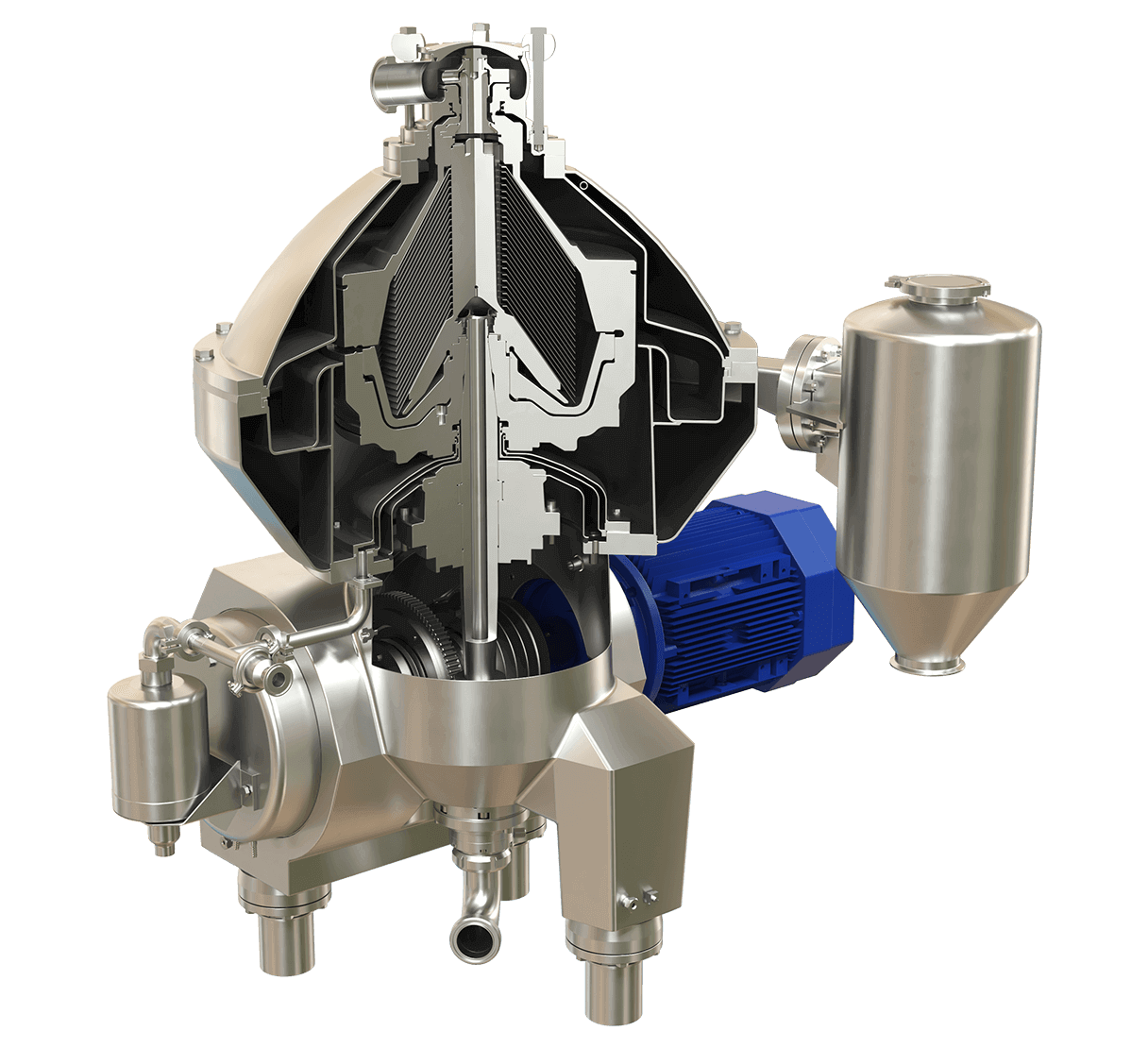
- Durchsatzbereich
- i40 S: 3-56 m³/h | i40 D: 7-80 m³/h | TZ-82: 15 m³/h (8mm-Düsen @ 7 bar)
- Betriebsdruck
- Typischerweise 4-12 bar; empfohlener Betriebsdruck 5-6,5 bar
- Wurfweite/reichweite
- TZ-82: 26 Meter horizontale Wurfweite (Benetzungsradius)
- Düsendurchmesser-Bereich
- 7-10 mm (verschiedene Konfigurationen für Durchsatz-Optimierung)
- Deck-Öffnung erforderlich
- i40 S/i40 D: nur 145 mm (kompakteste 2. Generation)
- Material-standard
- AISI 316 Edelstahl für Hauptkomponenten; PEEK für Seals/Verschleißteile
- Betriebstemperatur
- 0–95°C (32–203°F)
- Antriebsart
- Turbine-driven by cleaning medium flow (COW: crude oil washthrough possible)
- IMO-Konformität
- Erfüllt IMO-Anforderungen für COW (Crude Oil Washing) Systeme
- i40 S (Single-Nozzle, 2. Generation)
- i40 D (Dual-Nozzle, 2. Generation)
- i65 S (Single-Nozzle, High-Impact)
- T-73 (Automatic, 5.000-30.000 m³)
- TZ-67 (Rotary Jet Head, 50-500 m³)
- TZ-75 (Portable, 1.000-5.000 m³)
- TZ-82 (Portable/Fixed, bis 3.000 m³)
- TZ-89 (Media-Lubricated)
- 270FT Mark I (Single-Nozzle Crude Oil Tanker)
- Area: Nozzle wear and erosionCheck: Inspectors regularly check nozzles for wear marks, scratches, surface erosion and deformed openings. Nozzle blockages from sludge accumulation are the most frequent periodic maintenance task. Damaged nozzles must be replaced as a group.
- Area: Gearbox/turbine wear and vibrationCheck: Inspectors monitor for abnormal vibrations, temperature rise and irregular noise. Detached gear teeth and uneven disk distribution cause vibration problems. Inspection recommended every 200-300 operating hours; bearing replacement after 300-500 hours or at least every 3 years.
- Area: Ball bearings and sleeve bushings wearCheck: Inspectors check ball bearings for free rotation without contamination and damage. Sleeve bushings in gearbox frame must be checked: maximum diameter not exceeding 10.4 mm (bore not ovally deformed). Inspect all bearings and sealing rings every 6 months; replacement after 6,000 operating hours or every 3 years.
- Area: Seals and shaft passages (hysteresis coupling design)Check: Inspectors check for oil leakage and contamination at seal points. The hysteresis coupling eliminates conventional speed-setting shafts and reduces leak points. All rubber seals should be replaced at each service inspection to ensure hygiene and performance. Moisture and contamination ingress leads to seal failure.
- Area: Programming pattern and control sequence functionalityCheck: Inspectors test programming logic and valve control for correct 3D-indexed impact pattern. Check creep movement (vertical screw movement while horizontal rotation occurs) and progressive compression from coarse to fine over 8 cycles.
- Area: COW (Crude Oil Washing) system approval and crude oil compatibilityCheck: Inspectors verify IMO certification and crude oil wash-through approval. Toftejorg T-73 and 270FT Mark I are specifically designed for crude oil tankers. Check for corrosion/wear from crude oil exposure and verify valve seals under crude oil operating conditions.
Universal inspection/service points for tank cleaning machines (Gunclean Toftejorg, 2026-06). Per-model specs not auto-filled.
- Durchsatzbereich
- i40 S: 3-56 m³/h | i40 D: 7-80 m³/h | TZ-82: 15 m³/h (8mm-Düsen @ 7 bar)
- Betriebsdruck
- Typischerweise 4-12 bar; empfohlener Betriebsdruck 5-6,5 bar
- Wurfweite/reichweite
- TZ-82: 26 Meter horizontale Wurfweite (Benetzungsradius)
- Düsendurchmesser-Bereich
- 7-10 mm (verschiedene Konfigurationen für Durchsatz-Optimierung)
- Deck-Öffnung erforderlich
- i40 S/i40 D: nur 145 mm (kompakteste 2. Generation)
- Material-standard
- AISI 316 Edelstahl für Hauptkomponenten; PEEK für Seals/Verschleißteile
- Betriebstemperatur
- 0–95°C (32–203°F)
- Antriebsart
- Turbine-driven by cleaning medium flow (COW: crude oil washthrough possible)
- IMO-Konformität
- Erfüllt IMO-Anforderungen für COW (Crude Oil Washing) Systeme
- i40 S (Single-Nozzle, 2. Generation)
- i40 D (Dual-Nozzle, 2. Generation)
- i65 S (Single-Nozzle, High-Impact)
- T-73 (Automatic, 5.000-30.000 m³)
- TZ-67 (Rotary Jet Head, 50-500 m³)
- TZ-75 (Portable, 1.000-5.000 m³)
- TZ-82 (Portable/Fixed, bis 3.000 m³)
- TZ-89 (Media-Lubricated)
- 270FT Mark I (Single-Nozzle Crude Oil Tanker)
- Area: Nozzle wear and erosionCheck: Inspectors regularly check nozzles for wear marks, scratches, surface erosion and deformed openings. Nozzle blockages from sludge accumulation are the most frequent periodic maintenance task. Damaged nozzles must be replaced as a group.
- Area: Gearbox/turbine wear and vibrationCheck: Inspectors monitor for abnormal vibrations, temperature rise and irregular noise. Detached gear teeth and uneven disk distribution cause vibration problems. Inspection recommended every 200-300 operating hours; bearing replacement after 300-500 hours or at least every 3 years.
- Area: Ball bearings and sleeve bushings wearCheck: Inspectors check ball bearings for free rotation without contamination and damage. Sleeve bushings in gearbox frame must be checked: maximum diameter not exceeding 10.4 mm (bore not ovally deformed). Inspect all bearings and sealing rings every 6 months; replacement after 6,000 operating hours or every 3 years.
- Area: Seals and shaft passages (hysteresis coupling design)Check: Inspectors check for oil leakage and contamination at seal points. The hysteresis coupling eliminates conventional speed-setting shafts and reduces leak points. All rubber seals should be replaced at each service inspection to ensure hygiene and performance. Moisture and contamination ingress leads to seal failure.
- Area: Programming pattern and control sequence functionalityCheck: Inspectors test programming logic and valve control for correct 3D-indexed impact pattern. Check creep movement (vertical screw movement while horizontal rotation occurs) and progressive compression from coarse to fine over 8 cycles.
- Area: COW (Crude Oil Washing) system approval and crude oil compatibilityCheck: Inspectors verify IMO certification and crude oil wash-through approval. Toftejorg T-73 and 270FT Mark I are specifically designed for crude oil tankers. Check for corrosion/wear from crude oil exposure and verify valve seals under crude oil operating conditions.
Universal inspection/service points for tank cleaning machines (Gunclean Toftejorg, 2026-06). Per-model specs not auto-filled.
- Durchsatzbereich
- i40 S: 3-56 m³/h | i40 D: 7-80 m³/h | TZ-82: 15 m³/h (8mm-Düsen @ 7 bar)
- Betriebsdruck
- Typischerweise 4-12 bar; empfohlener Betriebsdruck 5-6,5 bar
- Wurfweite/reichweite
- TZ-82: 26 Meter horizontale Wurfweite (Benetzungsradius)
- Düsendurchmesser-Bereich
- 7-10 mm (verschiedene Konfigurationen für Durchsatz-Optimierung)
- Deck-Öffnung erforderlich
- i40 S/i40 D: nur 145 mm (kompakteste 2. Generation)
- Material-standard
- AISI 316 Edelstahl für Hauptkomponenten; PEEK für Seals/Verschleißteile
- Betriebstemperatur
- 0–95°C (32–203°F)
- Antriebsart
- Turbine-driven by cleaning medium flow (COW: crude oil washthrough possible)
- IMO-Konformität
- Erfüllt IMO-Anforderungen für COW (Crude Oil Washing) Systeme
- i40 S (Single-Nozzle, 2. Generation)
- i40 D (Dual-Nozzle, 2. Generation)
- i65 S (Single-Nozzle, High-Impact)
- T-73 (Automatic, 5.000-30.000 m³)
- TZ-67 (Rotary Jet Head, 50-500 m³)
- TZ-75 (Portable, 1.000-5.000 m³)
- TZ-82 (Portable/Fixed, bis 3.000 m³)
- TZ-89 (Media-Lubricated)
- 270FT Mark I (Single-Nozzle Crude Oil Tanker)
- Area: Nozzle wear and erosionCheck: Inspectors regularly check nozzles for wear marks, scratches, surface erosion and deformed openings. Nozzle blockages from sludge accumulation are the most frequent periodic maintenance task. Damaged nozzles must be replaced as a group.
- Area: Gearbox/turbine wear and vibrationCheck: Inspectors monitor for abnormal vibrations, temperature rise and irregular noise. Detached gear teeth and uneven disk distribution cause vibration problems. Inspection recommended every 200-300 operating hours; bearing replacement after 300-500 hours or at least every 3 years.
- Area: Ball bearings and sleeve bushings wearCheck: Inspectors check ball bearings for free rotation without contamination and damage. Sleeve bushings in gearbox frame must be checked: maximum diameter not exceeding 10.4 mm (bore not ovally deformed). Inspect all bearings and sealing rings every 6 months; replacement after 6,000 operating hours or every 3 years.
- Area: Seals and shaft passages (hysteresis coupling design)Check: Inspectors check for oil leakage and contamination at seal points. The hysteresis coupling eliminates conventional speed-setting shafts and reduces leak points. All rubber seals should be replaced at each service inspection to ensure hygiene and performance. Moisture and contamination ingress leads to seal failure.
- Area: Programming pattern and control sequence functionalityCheck: Inspectors test programming logic and valve control for correct 3D-indexed impact pattern. Check creep movement (vertical screw movement while horizontal rotation occurs) and progressive compression from coarse to fine over 8 cycles.
- Area: COW (Crude Oil Washing) system approval and crude oil compatibilityCheck: Inspectors verify IMO certification and crude oil wash-through approval. Toftejorg T-73 and 270FT Mark I are specifically designed for crude oil tankers. Check for corrosion/wear from crude oil exposure and verify valve seals under crude oil operating conditions.
Universal inspection/service points for tank cleaning machines (Gunclean Toftejorg, 2026-06). Per-model specs not auto-filled.
- Durchsatzbereich
- i40 S: 3-56 m³/h | i40 D: 7-80 m³/h | TZ-82: 15 m³/h (8mm-Düsen @ 7 bar)
- Betriebsdruck
- Typischerweise 4-12 bar; empfohlener Betriebsdruck 5-6,5 bar
- Wurfweite/reichweite
- TZ-82: 26 Meter horizontale Wurfweite (Benetzungsradius)
- Düsendurchmesser-Bereich
- 7-10 mm (verschiedene Konfigurationen für Durchsatz-Optimierung)
- Deck-Öffnung erforderlich
- i40 S/i40 D: nur 145 mm (kompakteste 2. Generation)
- Material-standard
- AISI 316 Edelstahl für Hauptkomponenten; PEEK für Seals/Verschleißteile
- Betriebstemperatur
- 0–95°C (32–203°F)
- Antriebsart
- Turbine-driven by cleaning medium flow (COW: crude oil washthrough possible)
- IMO-Konformität
- Erfüllt IMO-Anforderungen für COW (Crude Oil Washing) Systeme
- i40 S (Single-Nozzle, 2. Generation)
- i40 D (Dual-Nozzle, 2. Generation)
- i65 S (Single-Nozzle, High-Impact)
- T-73 (Automatic, 5.000-30.000 m³)
- TZ-67 (Rotary Jet Head, 50-500 m³)
- TZ-75 (Portable, 1.000-5.000 m³)
- TZ-82 (Portable/Fixed, bis 3.000 m³)
- TZ-89 (Media-Lubricated)
- 270FT Mark I (Single-Nozzle Crude Oil Tanker)
- Area: Nozzle wear and erosionCheck: Inspectors regularly check nozzles for wear marks, scratches, surface erosion and deformed openings. Nozzle blockages from sludge accumulation are the most frequent periodic maintenance task. Damaged nozzles must be replaced as a group.
- Area: Gearbox/turbine wear and vibrationCheck: Inspectors monitor for abnormal vibrations, temperature rise and irregular noise. Detached gear teeth and uneven disk distribution cause vibration problems. Inspection recommended every 200-300 operating hours; bearing replacement after 300-500 hours or at least every 3 years.
- Area: Ball bearings and sleeve bushings wearCheck: Inspectors check ball bearings for free rotation without contamination and damage. Sleeve bushings in gearbox frame must be checked: maximum diameter not exceeding 10.4 mm (bore not ovally deformed). Inspect all bearings and sealing rings every 6 months; replacement after 6,000 operating hours or every 3 years.
- Area: Seals and shaft passages (hysteresis coupling design)Check: Inspectors check for oil leakage and contamination at seal points. The hysteresis coupling eliminates conventional speed-setting shafts and reduces leak points. All rubber seals should be replaced at each service inspection to ensure hygiene and performance. Moisture and contamination ingress leads to seal failure.
- Area: Programming pattern and control sequence functionalityCheck: Inspectors test programming logic and valve control for correct 3D-indexed impact pattern. Check creep movement (vertical screw movement while horizontal rotation occurs) and progressive compression from coarse to fine over 8 cycles.
- Area: COW (Crude Oil Washing) system approval and crude oil compatibilityCheck: Inspectors verify IMO certification and crude oil wash-through approval. Toftejorg T-73 and 270FT Mark I are specifically designed for crude oil tankers. Check for corrosion/wear from crude oil exposure and verify valve seals under crude oil operating conditions.
Universal inspection/service points for tank cleaning machines (Gunclean Toftejorg, 2026-06). Per-model specs not auto-filled.
- Durchsatzbereich
- i40 S: 3-56 m³/h | i40 D: 7-80 m³/h | TZ-82: 15 m³/h (8mm-Düsen @ 7 bar)
- Betriebsdruck
- Typischerweise 4-12 bar; empfohlener Betriebsdruck 5-6,5 bar
- Wurfweite/reichweite
- TZ-82: 26 Meter horizontale Wurfweite (Benetzungsradius)
- Düsendurchmesser-Bereich
- 7-10 mm (verschiedene Konfigurationen für Durchsatz-Optimierung)
- Deck-Öffnung erforderlich
- i40 S/i40 D: nur 145 mm (kompakteste 2. Generation)
- Material-standard
- AISI 316 Edelstahl für Hauptkomponenten; PEEK für Seals/Verschleißteile
- Betriebstemperatur
- 0–95°C (32–203°F)
- Antriebsart
- Turbine-driven by cleaning medium flow (COW: crude oil washthrough possible)
- IMO-Konformität
- Erfüllt IMO-Anforderungen für COW (Crude Oil Washing) Systeme
- i40 S (Single-Nozzle, 2. Generation)
- i40 D (Dual-Nozzle, 2. Generation)
- i65 S (Single-Nozzle, High-Impact)
- T-73 (Automatic, 5.000-30.000 m³)
- TZ-67 (Rotary Jet Head, 50-500 m³)
- TZ-75 (Portable, 1.000-5.000 m³)
- TZ-82 (Portable/Fixed, bis 3.000 m³)
- TZ-89 (Media-Lubricated)
- 270FT Mark I (Single-Nozzle Crude Oil Tanker)
- Area: Nozzle wear and erosionCheck: Inspectors regularly check nozzles for wear marks, scratches, surface erosion and deformed openings. Nozzle blockages from sludge accumulation are the most frequent periodic maintenance task. Damaged nozzles must be replaced as a group.
- Area: Gearbox/turbine wear and vibrationCheck: Inspectors monitor for abnormal vibrations, temperature rise and irregular noise. Detached gear teeth and uneven disk distribution cause vibration problems. Inspection recommended every 200-300 operating hours; bearing replacement after 300-500 hours or at least every 3 years.
- Area: Ball bearings and sleeve bushings wearCheck: Inspectors check ball bearings for free rotation without contamination and damage. Sleeve bushings in gearbox frame must be checked: maximum diameter not exceeding 10.4 mm (bore not ovally deformed). Inspect all bearings and sealing rings every 6 months; replacement after 6,000 operating hours or every 3 years.
- Area: Seals and shaft passages (hysteresis coupling design)Check: Inspectors check for oil leakage and contamination at seal points. The hysteresis coupling eliminates conventional speed-setting shafts and reduces leak points. All rubber seals should be replaced at each service inspection to ensure hygiene and performance. Moisture and contamination ingress leads to seal failure.
- Area: Programming pattern and control sequence functionalityCheck: Inspectors test programming logic and valve control for correct 3D-indexed impact pattern. Check creep movement (vertical screw movement while horizontal rotation occurs) and progressive compression from coarse to fine over 8 cycles.
- Area: COW (Crude Oil Washing) system approval and crude oil compatibilityCheck: Inspectors verify IMO certification and crude oil wash-through approval. Toftejorg T-73 and 270FT Mark I are specifically designed for crude oil tankers. Check for corrosion/wear from crude oil exposure and verify valve seals under crude oil operating conditions.
Universal inspection/service points for tank cleaning machines (Gunclean Toftejorg, 2026-06). Per-model specs not auto-filled.
- Durchsatzbereich
- i40 S: 3-56 m³/h | i40 D: 7-80 m³/h | TZ-82: 15 m³/h (8mm-Düsen @ 7 bar)
- Betriebsdruck
- Typischerweise 4-12 bar; empfohlener Betriebsdruck 5-6,5 bar
- Wurfweite/reichweite
- TZ-82: 26 Meter horizontale Wurfweite (Benetzungsradius)
- Düsendurchmesser-Bereich
- 7-10 mm (verschiedene Konfigurationen für Durchsatz-Optimierung)
- Deck-Öffnung erforderlich
- i40 S/i40 D: nur 145 mm (kompakteste 2. Generation)
- Material-standard
- AISI 316 Edelstahl für Hauptkomponenten; PEEK für Seals/Verschleißteile
- Betriebstemperatur
- 0–95°C (32–203°F)
- Antriebsart
- Turbine-driven by cleaning medium flow (COW: crude oil washthrough possible)
- IMO-Konformität
- Erfüllt IMO-Anforderungen für COW (Crude Oil Washing) Systeme
- i40 S (Single-Nozzle, 2. Generation)
- i40 D (Dual-Nozzle, 2. Generation)
- i65 S (Single-Nozzle, High-Impact)
- T-73 (Automatic, 5.000-30.000 m³)
- TZ-67 (Rotary Jet Head, 50-500 m³)
- TZ-75 (Portable, 1.000-5.000 m³)
- TZ-82 (Portable/Fixed, bis 3.000 m³)
- TZ-89 (Media-Lubricated)
- 270FT Mark I (Single-Nozzle Crude Oil Tanker)
- Area: Nozzle wear and erosionCheck: Inspectors regularly check nozzles for wear marks, scratches, surface erosion and deformed openings. Nozzle blockages from sludge accumulation are the most frequent periodic maintenance task. Damaged nozzles must be replaced as a group.
- Area: Gearbox/turbine wear and vibrationCheck: Inspectors monitor for abnormal vibrations, temperature rise and irregular noise. Detached gear teeth and uneven disk distribution cause vibration problems. Inspection recommended every 200-300 operating hours; bearing replacement after 300-500 hours or at least every 3 years.
- Area: Ball bearings and sleeve bushings wearCheck: Inspectors check ball bearings for free rotation without contamination and damage. Sleeve bushings in gearbox frame must be checked: maximum diameter not exceeding 10.4 mm (bore not ovally deformed). Inspect all bearings and sealing rings every 6 months; replacement after 6,000 operating hours or every 3 years.
- Area: Seals and shaft passages (hysteresis coupling design)Check: Inspectors check for oil leakage and contamination at seal points. The hysteresis coupling eliminates conventional speed-setting shafts and reduces leak points. All rubber seals should be replaced at each service inspection to ensure hygiene and performance. Moisture and contamination ingress leads to seal failure.
- Area: Programming pattern and control sequence functionalityCheck: Inspectors test programming logic and valve control for correct 3D-indexed impact pattern. Check creep movement (vertical screw movement while horizontal rotation occurs) and progressive compression from coarse to fine over 8 cycles.
- Area: COW (Crude Oil Washing) system approval and crude oil compatibilityCheck: Inspectors verify IMO certification and crude oil wash-through approval. Toftejorg T-73 and 270FT Mark I are specifically designed for crude oil tankers. Check for corrosion/wear from crude oil exposure and verify valve seals under crude oil operating conditions.
Universal inspection/service points for tank cleaning machines (Gunclean Toftejorg, 2026-06). Per-model specs not auto-filled.
- Durchsatzbereich
- i40 S: 3-56 m³/h | i40 D: 7-80 m³/h | TZ-82: 15 m³/h (8mm-Düsen @ 7 bar)
- Betriebsdruck
- Typischerweise 4-12 bar; empfohlener Betriebsdruck 5-6,5 bar
- Wurfweite/reichweite
- TZ-82: 26 Meter horizontale Wurfweite (Benetzungsradius)
- Düsendurchmesser-Bereich
- 7-10 mm (verschiedene Konfigurationen für Durchsatz-Optimierung)
- Deck-Öffnung erforderlich
- i40 S/i40 D: nur 145 mm (kompakteste 2. Generation)
- Material-standard
- AISI 316 Edelstahl für Hauptkomponenten; PEEK für Seals/Verschleißteile
- Betriebstemperatur
- 0–95°C (32–203°F)
- Antriebsart
- Turbine-driven by cleaning medium flow (COW: crude oil washthrough possible)
- IMO-Konformität
- Erfüllt IMO-Anforderungen für COW (Crude Oil Washing) Systeme
- i40 S (Single-Nozzle, 2. Generation)
- i40 D (Dual-Nozzle, 2. Generation)
- i65 S (Single-Nozzle, High-Impact)
- T-73 (Automatic, 5.000-30.000 m³)
- TZ-67 (Rotary Jet Head, 50-500 m³)
- TZ-75 (Portable, 1.000-5.000 m³)
- TZ-82 (Portable/Fixed, bis 3.000 m³)
- TZ-89 (Media-Lubricated)
- 270FT Mark I (Single-Nozzle Crude Oil Tanker)
- Area: Nozzle wear and erosionCheck: Inspectors regularly check nozzles for wear marks, scratches, surface erosion and deformed openings. Nozzle blockages from sludge accumulation are the most frequent periodic maintenance task. Damaged nozzles must be replaced as a group.
- Area: Gearbox/turbine wear and vibrationCheck: Inspectors monitor for abnormal vibrations, temperature rise and irregular noise. Detached gear teeth and uneven disk distribution cause vibration problems. Inspection recommended every 200-300 operating hours; bearing replacement after 300-500 hours or at least every 3 years.
- Area: Ball bearings and sleeve bushings wearCheck: Inspectors check ball bearings for free rotation without contamination and damage. Sleeve bushings in gearbox frame must be checked: maximum diameter not exceeding 10.4 mm (bore not ovally deformed). Inspect all bearings and sealing rings every 6 months; replacement after 6,000 operating hours or every 3 years.
- Area: Seals and shaft passages (hysteresis coupling design)Check: Inspectors check for oil leakage and contamination at seal points. The hysteresis coupling eliminates conventional speed-setting shafts and reduces leak points. All rubber seals should be replaced at each service inspection to ensure hygiene and performance. Moisture and contamination ingress leads to seal failure.
- Area: Programming pattern and control sequence functionalityCheck: Inspectors test programming logic and valve control for correct 3D-indexed impact pattern. Check creep movement (vertical screw movement while horizontal rotation occurs) and progressive compression from coarse to fine over 8 cycles.
- Area: COW (Crude Oil Washing) system approval and crude oil compatibilityCheck: Inspectors verify IMO certification and crude oil wash-through approval. Toftejorg T-73 and 270FT Mark I are specifically designed for crude oil tankers. Check for corrosion/wear from crude oil exposure and verify valve seals under crude oil operating conditions.
Universal inspection/service points for tank cleaning machines (Gunclean Toftejorg, 2026-06). Per-model specs not auto-filled.
- Durchsatzbereich
- i40 S: 3-56 m³/h | i40 D: 7-80 m³/h | TZ-82: 15 m³/h (8mm-Düsen @ 7 bar)
- Betriebsdruck
- Typischerweise 4-12 bar; empfohlener Betriebsdruck 5-6,5 bar
- Wurfweite/reichweite
- TZ-82: 26 Meter horizontale Wurfweite (Benetzungsradius)
- Düsendurchmesser-Bereich
- 7-10 mm (verschiedene Konfigurationen für Durchsatz-Optimierung)
- Deck-Öffnung erforderlich
- i40 S/i40 D: nur 145 mm (kompakteste 2. Generation)
- Material-standard
- AISI 316 Edelstahl für Hauptkomponenten; PEEK für Seals/Verschleißteile
- Betriebstemperatur
- 0–95°C (32–203°F)
- Antriebsart
- Turbine-driven by cleaning medium flow (COW: crude oil washthrough possible)
- IMO-Konformität
- Erfüllt IMO-Anforderungen für COW (Crude Oil Washing) Systeme
- i40 S (Single-Nozzle, 2. Generation)
- i40 D (Dual-Nozzle, 2. Generation)
- i65 S (Single-Nozzle, High-Impact)
- T-73 (Automatic, 5.000-30.000 m³)
- TZ-67 (Rotary Jet Head, 50-500 m³)
- TZ-75 (Portable, 1.000-5.000 m³)
- TZ-82 (Portable/Fixed, bis 3.000 m³)
- TZ-89 (Media-Lubricated)
- 270FT Mark I (Single-Nozzle Crude Oil Tanker)
- Area: Nozzle wear and erosionCheck: Inspectors regularly check nozzles for wear marks, scratches, surface erosion and deformed openings. Nozzle blockages from sludge accumulation are the most frequent periodic maintenance task. Damaged nozzles must be replaced as a group.
- Area: Gearbox/turbine wear and vibrationCheck: Inspectors monitor for abnormal vibrations, temperature rise and irregular noise. Detached gear teeth and uneven disk distribution cause vibration problems. Inspection recommended every 200-300 operating hours; bearing replacement after 300-500 hours or at least every 3 years.
- Area: Ball bearings and sleeve bushings wearCheck: Inspectors check ball bearings for free rotation without contamination and damage. Sleeve bushings in gearbox frame must be checked: maximum diameter not exceeding 10.4 mm (bore not ovally deformed). Inspect all bearings and sealing rings every 6 months; replacement after 6,000 operating hours or every 3 years.
- Area: Seals and shaft passages (hysteresis coupling design)Check: Inspectors check for oil leakage and contamination at seal points. The hysteresis coupling eliminates conventional speed-setting shafts and reduces leak points. All rubber seals should be replaced at each service inspection to ensure hygiene and performance. Moisture and contamination ingress leads to seal failure.
- Area: Programming pattern and control sequence functionalityCheck: Inspectors test programming logic and valve control for correct 3D-indexed impact pattern. Check creep movement (vertical screw movement while horizontal rotation occurs) and progressive compression from coarse to fine over 8 cycles.
- Area: COW (Crude Oil Washing) system approval and crude oil compatibilityCheck: Inspectors verify IMO certification and crude oil wash-through approval. Toftejorg T-73 and 270FT Mark I are specifically designed for crude oil tankers. Check for corrosion/wear from crude oil exposure and verify valve seals under crude oil operating conditions.
Universal inspection/service points for tank cleaning machines (Gunclean Toftejorg, 2026-06). Per-model specs not auto-filled.
- Durchsatzbereich
- i40 S: 3-56 m³/h | i40 D: 7-80 m³/h | TZ-82: 15 m³/h (8mm-Düsen @ 7 bar)
- Betriebsdruck
- Typischerweise 4-12 bar; empfohlener Betriebsdruck 5-6,5 bar
- Wurfweite/reichweite
- TZ-82: 26 Meter horizontale Wurfweite (Benetzungsradius)
- Düsendurchmesser-Bereich
- 7-10 mm (verschiedene Konfigurationen für Durchsatz-Optimierung)
- Deck-Öffnung erforderlich
- i40 S/i40 D: nur 145 mm (kompakteste 2. Generation)
- Material-standard
- AISI 316 Edelstahl für Hauptkomponenten; PEEK für Seals/Verschleißteile
- Betriebstemperatur
- 0–95°C (32–203°F)
- Antriebsart
- Turbine-driven by cleaning medium flow (COW: crude oil washthrough possible)
- IMO-Konformität
- Erfüllt IMO-Anforderungen für COW (Crude Oil Washing) Systeme
- i40 S (Single-Nozzle, 2. Generation)
- i40 D (Dual-Nozzle, 2. Generation)
- i65 S (Single-Nozzle, High-Impact)
- T-73 (Automatic, 5.000-30.000 m³)
- TZ-67 (Rotary Jet Head, 50-500 m³)
- TZ-75 (Portable, 1.000-5.000 m³)
- TZ-82 (Portable/Fixed, bis 3.000 m³)
- TZ-89 (Media-Lubricated)
- 270FT Mark I (Single-Nozzle Crude Oil Tanker)
- Area: Nozzle wear and erosionCheck: Inspectors regularly check nozzles for wear marks, scratches, surface erosion and deformed openings. Nozzle blockages from sludge accumulation are the most frequent periodic maintenance task. Damaged nozzles must be replaced as a group.
- Area: Gearbox/turbine wear and vibrationCheck: Inspectors monitor for abnormal vibrations, temperature rise and irregular noise. Detached gear teeth and uneven disk distribution cause vibration problems. Inspection recommended every 200-300 operating hours; bearing replacement after 300-500 hours or at least every 3 years.
- Area: Ball bearings and sleeve bushings wearCheck: Inspectors check ball bearings for free rotation without contamination and damage. Sleeve bushings in gearbox frame must be checked: maximum diameter not exceeding 10.4 mm (bore not ovally deformed). Inspect all bearings and sealing rings every 6 months; replacement after 6,000 operating hours or every 3 years.
- Area: Seals and shaft passages (hysteresis coupling design)Check: Inspectors check for oil leakage and contamination at seal points. The hysteresis coupling eliminates conventional speed-setting shafts and reduces leak points. All rubber seals should be replaced at each service inspection to ensure hygiene and performance. Moisture and contamination ingress leads to seal failure.
- Area: Programming pattern and control sequence functionalityCheck: Inspectors test programming logic and valve control for correct 3D-indexed impact pattern. Check creep movement (vertical screw movement while horizontal rotation occurs) and progressive compression from coarse to fine over 8 cycles.
- Area: COW (Crude Oil Washing) system approval and crude oil compatibilityCheck: Inspectors verify IMO certification and crude oil wash-through approval. Toftejorg T-73 and 270FT Mark I are specifically designed for crude oil tankers. Check for corrosion/wear from crude oil exposure and verify valve seals under crude oil operating conditions.
Universal inspection/service points for tank cleaning machines (Gunclean Toftejorg, 2026-06). Per-model specs not auto-filled.
- Durchsatzbereich
- i40 S: 3-56 m³/h | i40 D: 7-80 m³/h | TZ-82: 15 m³/h (8mm-Düsen @ 7 bar)
- Betriebsdruck
- Typischerweise 4-12 bar; empfohlener Betriebsdruck 5-6,5 bar
- Wurfweite/reichweite
- TZ-82: 26 Meter horizontale Wurfweite (Benetzungsradius)
- Düsendurchmesser-Bereich
- 7-10 mm (verschiedene Konfigurationen für Durchsatz-Optimierung)
- Deck-Öffnung erforderlich
- i40 S/i40 D: nur 145 mm (kompakteste 2. Generation)
- Material-standard
- AISI 316 Edelstahl für Hauptkomponenten; PEEK für Seals/Verschleißteile
- Betriebstemperatur
- 0–95°C (32–203°F)
- Antriebsart
- Turbine-driven by cleaning medium flow (COW: crude oil washthrough possible)
- IMO-Konformität
- Erfüllt IMO-Anforderungen für COW (Crude Oil Washing) Systeme
- i40 S (Single-Nozzle, 2. Generation)
- i40 D (Dual-Nozzle, 2. Generation)
- i65 S (Single-Nozzle, High-Impact)
- T-73 (Automatic, 5.000-30.000 m³)
- TZ-67 (Rotary Jet Head, 50-500 m³)
- TZ-75 (Portable, 1.000-5.000 m³)
- TZ-82 (Portable/Fixed, bis 3.000 m³)
- TZ-89 (Media-Lubricated)
- 270FT Mark I (Single-Nozzle Crude Oil Tanker)
- Area: Nozzle wear and erosionCheck: Inspectors regularly check nozzles for wear marks, scratches, surface erosion and deformed openings. Nozzle blockages from sludge accumulation are the most frequent periodic maintenance task. Damaged nozzles must be replaced as a group.
- Area: Gearbox/turbine wear and vibrationCheck: Inspectors monitor for abnormal vibrations, temperature rise and irregular noise. Detached gear teeth and uneven disk distribution cause vibration problems. Inspection recommended every 200-300 operating hours; bearing replacement after 300-500 hours or at least every 3 years.
- Area: Ball bearings and sleeve bushings wearCheck: Inspectors check ball bearings for free rotation without contamination and damage. Sleeve bushings in gearbox frame must be checked: maximum diameter not exceeding 10.4 mm (bore not ovally deformed). Inspect all bearings and sealing rings every 6 months; replacement after 6,000 operating hours or every 3 years.
- Area: Seals and shaft passages (hysteresis coupling design)Check: Inspectors check for oil leakage and contamination at seal points. The hysteresis coupling eliminates conventional speed-setting shafts and reduces leak points. All rubber seals should be replaced at each service inspection to ensure hygiene and performance. Moisture and contamination ingress leads to seal failure.
- Area: Programming pattern and control sequence functionalityCheck: Inspectors test programming logic and valve control for correct 3D-indexed impact pattern. Check creep movement (vertical screw movement while horizontal rotation occurs) and progressive compression from coarse to fine over 8 cycles.
- Area: COW (Crude Oil Washing) system approval and crude oil compatibilityCheck: Inspectors verify IMO certification and crude oil wash-through approval. Toftejorg T-73 and 270FT Mark I are specifically designed for crude oil tankers. Check for corrosion/wear from crude oil exposure and verify valve seals under crude oil operating conditions.
Universal inspection/service points for tank cleaning machines (Gunclean Toftejorg, 2026-06). Per-model specs not auto-filled.
- Durchsatzbereich
- i40 S: 3-56 m³/h | i40 D: 7-80 m³/h | TZ-82: 15 m³/h (8mm-Düsen @ 7 bar)
- Betriebsdruck
- Typischerweise 4-12 bar; empfohlener Betriebsdruck 5-6,5 bar
- Wurfweite/reichweite
- TZ-82: 26 Meter horizontale Wurfweite (Benetzungsradius)
- Düsendurchmesser-Bereich
- 7-10 mm (verschiedene Konfigurationen für Durchsatz-Optimierung)
- Deck-Öffnung erforderlich
- i40 S/i40 D: nur 145 mm (kompakteste 2. Generation)
- Material-standard
- AISI 316 Edelstahl für Hauptkomponenten; PEEK für Seals/Verschleißteile
- Betriebstemperatur
- 0–95°C (32–203°F)
- Antriebsart
- Turbine-driven by cleaning medium flow (COW: crude oil washthrough possible)
- IMO-Konformität
- Erfüllt IMO-Anforderungen für COW (Crude Oil Washing) Systeme
- i40 S (Single-Nozzle, 2. Generation)
- i40 D (Dual-Nozzle, 2. Generation)
- i65 S (Single-Nozzle, High-Impact)
- T-73 (Automatic, 5.000-30.000 m³)
- TZ-67 (Rotary Jet Head, 50-500 m³)
- TZ-75 (Portable, 1.000-5.000 m³)
- TZ-82 (Portable/Fixed, bis 3.000 m³)
- TZ-89 (Media-Lubricated)
- 270FT Mark I (Single-Nozzle Crude Oil Tanker)
- Area: Nozzle wear and erosionCheck: Inspectors regularly check nozzles for wear marks, scratches, surface erosion and deformed openings. Nozzle blockages from sludge accumulation are the most frequent periodic maintenance task. Damaged nozzles must be replaced as a group.
- Area: Gearbox/turbine wear and vibrationCheck: Inspectors monitor for abnormal vibrations, temperature rise and irregular noise. Detached gear teeth and uneven disk distribution cause vibration problems. Inspection recommended every 200-300 operating hours; bearing replacement after 300-500 hours or at least every 3 years.
- Area: Ball bearings and sleeve bushings wearCheck: Inspectors check ball bearings for free rotation without contamination and damage. Sleeve bushings in gearbox frame must be checked: maximum diameter not exceeding 10.4 mm (bore not ovally deformed). Inspect all bearings and sealing rings every 6 months; replacement after 6,000 operating hours or every 3 years.
- Area: Seals and shaft passages (hysteresis coupling design)Check: Inspectors check for oil leakage and contamination at seal points. The hysteresis coupling eliminates conventional speed-setting shafts and reduces leak points. All rubber seals should be replaced at each service inspection to ensure hygiene and performance. Moisture and contamination ingress leads to seal failure.
- Area: Programming pattern and control sequence functionalityCheck: Inspectors test programming logic and valve control for correct 3D-indexed impact pattern. Check creep movement (vertical screw movement while horizontal rotation occurs) and progressive compression from coarse to fine over 8 cycles.
- Area: COW (Crude Oil Washing) system approval and crude oil compatibilityCheck: Inspectors verify IMO certification and crude oil wash-through approval. Toftejorg T-73 and 270FT Mark I are specifically designed for crude oil tankers. Check for corrosion/wear from crude oil exposure and verify valve seals under crude oil operating conditions.
Universal inspection/service points for tank cleaning machines (Gunclean Toftejorg, 2026-06). Per-model specs not auto-filled.
- Durchsatzbereich
- i40 S: 3-56 m³/h | i40 D: 7-80 m³/h | TZ-82: 15 m³/h (8mm-Düsen @ 7 bar)
- Betriebsdruck
- Typischerweise 4-12 bar; empfohlener Betriebsdruck 5-6,5 bar
- Wurfweite/reichweite
- TZ-82: 26 Meter horizontale Wurfweite (Benetzungsradius)
- Düsendurchmesser-Bereich
- 7-10 mm (verschiedene Konfigurationen für Durchsatz-Optimierung)
- Deck-Öffnung erforderlich
- i40 S/i40 D: nur 145 mm (kompakteste 2. Generation)
- Material-standard
- AISI 316 Edelstahl für Hauptkomponenten; PEEK für Seals/Verschleißteile
- Betriebstemperatur
- 0–95°C (32–203°F)
- Antriebsart
- Turbine-driven by cleaning medium flow (COW: crude oil washthrough possible)
- IMO-Konformität
- Erfüllt IMO-Anforderungen für COW (Crude Oil Washing) Systeme
- i40 S (Single-Nozzle, 2. Generation)
- i40 D (Dual-Nozzle, 2. Generation)
- i65 S (Single-Nozzle, High-Impact)
- T-73 (Automatic, 5.000-30.000 m³)
- TZ-67 (Rotary Jet Head, 50-500 m³)
- TZ-75 (Portable, 1.000-5.000 m³)
- TZ-82 (Portable/Fixed, bis 3.000 m³)
- TZ-89 (Media-Lubricated)
- 270FT Mark I (Single-Nozzle Crude Oil Tanker)
- Area: Nozzle wear and erosionCheck: Inspectors regularly check nozzles for wear marks, scratches, surface erosion and deformed openings. Nozzle blockages from sludge accumulation are the most frequent periodic maintenance task. Damaged nozzles must be replaced as a group.
- Area: Gearbox/turbine wear and vibrationCheck: Inspectors monitor for abnormal vibrations, temperature rise and irregular noise. Detached gear teeth and uneven disk distribution cause vibration problems. Inspection recommended every 200-300 operating hours; bearing replacement after 300-500 hours or at least every 3 years.
- Area: Ball bearings and sleeve bushings wearCheck: Inspectors check ball bearings for free rotation without contamination and damage. Sleeve bushings in gearbox frame must be checked: maximum diameter not exceeding 10.4 mm (bore not ovally deformed). Inspect all bearings and sealing rings every 6 months; replacement after 6,000 operating hours or every 3 years.
- Area: Seals and shaft passages (hysteresis coupling design)Check: Inspectors check for oil leakage and contamination at seal points. The hysteresis coupling eliminates conventional speed-setting shafts and reduces leak points. All rubber seals should be replaced at each service inspection to ensure hygiene and performance. Moisture and contamination ingress leads to seal failure.
- Area: Programming pattern and control sequence functionalityCheck: Inspectors test programming logic and valve control for correct 3D-indexed impact pattern. Check creep movement (vertical screw movement while horizontal rotation occurs) and progressive compression from coarse to fine over 8 cycles.
- Area: COW (Crude Oil Washing) system approval and crude oil compatibilityCheck: Inspectors verify IMO certification and crude oil wash-through approval. Toftejorg T-73 and 270FT Mark I are specifically designed for crude oil tankers. Check for corrosion/wear from crude oil exposure and verify valve seals under crude oil operating conditions.
Universal inspection/service points for tank cleaning machines (Gunclean Toftejorg, 2026-06). Per-model specs not auto-filled.

- Durchsatzbereich
- i40 S: 3-56 m³/h | i40 D: 7-80 m³/h | TZ-82: 15 m³/h (8mm-Düsen @ 7 bar)
- Betriebsdruck
- Typischerweise 4-12 bar; empfohlener Betriebsdruck 5-6,5 bar
- Wurfweite/reichweite
- TZ-82: 26 Meter horizontale Wurfweite (Benetzungsradius)
- Düsendurchmesser-Bereich
- 7-10 mm (verschiedene Konfigurationen für Durchsatz-Optimierung)
- Deck-Öffnung erforderlich
- i40 S/i40 D: nur 145 mm (kompakteste 2. Generation)
- Material-standard
- AISI 316 Edelstahl für Hauptkomponenten; PEEK für Seals/Verschleißteile
- Betriebstemperatur
- 0–95°C (32–203°F)
- Antriebsart
- Turbine-driven by cleaning medium flow (COW: crude oil washthrough possible)
- IMO-Konformität
- Erfüllt IMO-Anforderungen für COW (Crude Oil Washing) Systeme
- i40 S (Single-Nozzle, 2. Generation)
- i40 D (Dual-Nozzle, 2. Generation)
- i65 S (Single-Nozzle, High-Impact)
- T-73 (Automatic, 5.000-30.000 m³)
- TZ-67 (Rotary Jet Head, 50-500 m³)
- TZ-75 (Portable, 1.000-5.000 m³)
- TZ-82 (Portable/Fixed, bis 3.000 m³)
- TZ-89 (Media-Lubricated)
- 270FT Mark I (Single-Nozzle Crude Oil Tanker)
- Area: Nozzle wear and erosionCheck: Inspectors regularly check nozzles for wear marks, scratches, surface erosion and deformed openings. Nozzle blockages from sludge accumulation are the most frequent periodic maintenance task. Damaged nozzles must be replaced as a group.
- Area: Gearbox/turbine wear and vibrationCheck: Inspectors monitor for abnormal vibrations, temperature rise and irregular noise. Detached gear teeth and uneven disk distribution cause vibration problems. Inspection recommended every 200-300 operating hours; bearing replacement after 300-500 hours or at least every 3 years.
- Area: Ball bearings and sleeve bushings wearCheck: Inspectors check ball bearings for free rotation without contamination and damage. Sleeve bushings in gearbox frame must be checked: maximum diameter not exceeding 10.4 mm (bore not ovally deformed). Inspect all bearings and sealing rings every 6 months; replacement after 6,000 operating hours or every 3 years.
- Area: Seals and shaft passages (hysteresis coupling design)Check: Inspectors check for oil leakage and contamination at seal points. The hysteresis coupling eliminates conventional speed-setting shafts and reduces leak points. All rubber seals should be replaced at each service inspection to ensure hygiene and performance. Moisture and contamination ingress leads to seal failure.
- Area: Programming pattern and control sequence functionalityCheck: Inspectors test programming logic and valve control for correct 3D-indexed impact pattern. Check creep movement (vertical screw movement while horizontal rotation occurs) and progressive compression from coarse to fine over 8 cycles.
- Area: COW (Crude Oil Washing) system approval and crude oil compatibilityCheck: Inspectors verify IMO certification and crude oil wash-through approval. Toftejorg T-73 and 270FT Mark I are specifically designed for crude oil tankers. Check for corrosion/wear from crude oil exposure and verify valve seals under crude oil operating conditions.
Universal inspection/service points for tank cleaning machines (Gunclean Toftejorg, 2026-06). Per-model specs not auto-filled.
- Durchsatzbereich
- i40 S: 3-56 m³/h | i40 D: 7-80 m³/h | TZ-82: 15 m³/h (8mm-Düsen @ 7 bar)
- Betriebsdruck
- Typischerweise 4-12 bar; empfohlener Betriebsdruck 5-6,5 bar
- Wurfweite/reichweite
- TZ-82: 26 Meter horizontale Wurfweite (Benetzungsradius)
- Düsendurchmesser-Bereich
- 7-10 mm (verschiedene Konfigurationen für Durchsatz-Optimierung)
- Deck-Öffnung erforderlich
- i40 S/i40 D: nur 145 mm (kompakteste 2. Generation)
- Material-standard
- AISI 316 Edelstahl für Hauptkomponenten; PEEK für Seals/Verschleißteile
- Betriebstemperatur
- 0–95°C (32–203°F)
- Antriebsart
- Turbine-driven by cleaning medium flow (COW: crude oil washthrough possible)
- IMO-Konformität
- Erfüllt IMO-Anforderungen für COW (Crude Oil Washing) Systeme
- i40 S (Single-Nozzle, 2. Generation)
- i40 D (Dual-Nozzle, 2. Generation)
- i65 S (Single-Nozzle, High-Impact)
- T-73 (Automatic, 5.000-30.000 m³)
- TZ-67 (Rotary Jet Head, 50-500 m³)
- TZ-75 (Portable, 1.000-5.000 m³)
- TZ-82 (Portable/Fixed, bis 3.000 m³)
- TZ-89 (Media-Lubricated)
- 270FT Mark I (Single-Nozzle Crude Oil Tanker)
- Area: Nozzle wear and erosionCheck: Inspectors regularly check nozzles for wear marks, scratches, surface erosion and deformed openings. Nozzle blockages from sludge accumulation are the most frequent periodic maintenance task. Damaged nozzles must be replaced as a group.
- Area: Gearbox/turbine wear and vibrationCheck: Inspectors monitor for abnormal vibrations, temperature rise and irregular noise. Detached gear teeth and uneven disk distribution cause vibration problems. Inspection recommended every 200-300 operating hours; bearing replacement after 300-500 hours or at least every 3 years.
- Area: Ball bearings and sleeve bushings wearCheck: Inspectors check ball bearings for free rotation without contamination and damage. Sleeve bushings in gearbox frame must be checked: maximum diameter not exceeding 10.4 mm (bore not ovally deformed). Inspect all bearings and sealing rings every 6 months; replacement after 6,000 operating hours or every 3 years.
- Area: Seals and shaft passages (hysteresis coupling design)Check: Inspectors check for oil leakage and contamination at seal points. The hysteresis coupling eliminates conventional speed-setting shafts and reduces leak points. All rubber seals should be replaced at each service inspection to ensure hygiene and performance. Moisture and contamination ingress leads to seal failure.
- Area: Programming pattern and control sequence functionalityCheck: Inspectors test programming logic and valve control for correct 3D-indexed impact pattern. Check creep movement (vertical screw movement while horizontal rotation occurs) and progressive compression from coarse to fine over 8 cycles.
- Area: COW (Crude Oil Washing) system approval and crude oil compatibilityCheck: Inspectors verify IMO certification and crude oil wash-through approval. Toftejorg T-73 and 270FT Mark I are specifically designed for crude oil tankers. Check for corrosion/wear from crude oil exposure and verify valve seals under crude oil operating conditions.
Universal inspection/service points for tank cleaning machines (Gunclean Toftejorg, 2026-06). Per-model specs not auto-filled.
- Durchsatzbereich
- i40 S: 3-56 m³/h | i40 D: 7-80 m³/h | TZ-82: 15 m³/h (8mm-Düsen @ 7 bar)
- Betriebsdruck
- Typischerweise 4-12 bar; empfohlener Betriebsdruck 5-6,5 bar
- Wurfweite/reichweite
- TZ-82: 26 Meter horizontale Wurfweite (Benetzungsradius)
- Düsendurchmesser-Bereich
- 7-10 mm (verschiedene Konfigurationen für Durchsatz-Optimierung)
- Deck-Öffnung erforderlich
- i40 S/i40 D: nur 145 mm (kompakteste 2. Generation)
- Material-standard
- AISI 316 Edelstahl für Hauptkomponenten; PEEK für Seals/Verschleißteile
- Betriebstemperatur
- 0–95°C (32–203°F)
- Antriebsart
- Turbine-driven by cleaning medium flow (COW: crude oil washthrough possible)
- IMO-Konformität
- Erfüllt IMO-Anforderungen für COW (Crude Oil Washing) Systeme
- i40 S (Single-Nozzle, 2. Generation)
- i40 D (Dual-Nozzle, 2. Generation)
- i65 S (Single-Nozzle, High-Impact)
- T-73 (Automatic, 5.000-30.000 m³)
- TZ-67 (Rotary Jet Head, 50-500 m³)
- TZ-75 (Portable, 1.000-5.000 m³)
- TZ-82 (Portable/Fixed, bis 3.000 m³)
- TZ-89 (Media-Lubricated)
- 270FT Mark I (Single-Nozzle Crude Oil Tanker)
- Area: Nozzle wear and erosionCheck: Inspectors regularly check nozzles for wear marks, scratches, surface erosion and deformed openings. Nozzle blockages from sludge accumulation are the most frequent periodic maintenance task. Damaged nozzles must be replaced as a group.
- Area: Gearbox/turbine wear and vibrationCheck: Inspectors monitor for abnormal vibrations, temperature rise and irregular noise. Detached gear teeth and uneven disk distribution cause vibration problems. Inspection recommended every 200-300 operating hours; bearing replacement after 300-500 hours or at least every 3 years.
- Area: Ball bearings and sleeve bushings wearCheck: Inspectors check ball bearings for free rotation without contamination and damage. Sleeve bushings in gearbox frame must be checked: maximum diameter not exceeding 10.4 mm (bore not ovally deformed). Inspect all bearings and sealing rings every 6 months; replacement after 6,000 operating hours or every 3 years.
- Area: Seals and shaft passages (hysteresis coupling design)Check: Inspectors check for oil leakage and contamination at seal points. The hysteresis coupling eliminates conventional speed-setting shafts and reduces leak points. All rubber seals should be replaced at each service inspection to ensure hygiene and performance. Moisture and contamination ingress leads to seal failure.
- Area: Programming pattern and control sequence functionalityCheck: Inspectors test programming logic and valve control for correct 3D-indexed impact pattern. Check creep movement (vertical screw movement while horizontal rotation occurs) and progressive compression from coarse to fine over 8 cycles.
- Area: COW (Crude Oil Washing) system approval and crude oil compatibilityCheck: Inspectors verify IMO certification and crude oil wash-through approval. Toftejorg T-73 and 270FT Mark I are specifically designed for crude oil tankers. Check for corrosion/wear from crude oil exposure and verify valve seals under crude oil operating conditions.
Universal inspection/service points for tank cleaning machines (Gunclean Toftejorg, 2026-06). Per-model specs not auto-filled.
- Durchsatzbereich
- i40 S: 3-56 m³/h | i40 D: 7-80 m³/h | TZ-82: 15 m³/h (8mm-Düsen @ 7 bar)
- Betriebsdruck
- Typischerweise 4-12 bar; empfohlener Betriebsdruck 5-6,5 bar
- Wurfweite/reichweite
- TZ-82: 26 Meter horizontale Wurfweite (Benetzungsradius)
- Düsendurchmesser-Bereich
- 7-10 mm (verschiedene Konfigurationen für Durchsatz-Optimierung)
- Deck-Öffnung erforderlich
- i40 S/i40 D: nur 145 mm (kompakteste 2. Generation)
- Material-standard
- AISI 316 Edelstahl für Hauptkomponenten; PEEK für Seals/Verschleißteile
- Betriebstemperatur
- 0–95°C (32–203°F)
- Antriebsart
- Turbine-driven by cleaning medium flow (COW: crude oil washthrough possible)
- IMO-Konformität
- Erfüllt IMO-Anforderungen für COW (Crude Oil Washing) Systeme
- i40 S (Single-Nozzle, 2. Generation)
- i40 D (Dual-Nozzle, 2. Generation)
- i65 S (Single-Nozzle, High-Impact)
- T-73 (Automatic, 5.000-30.000 m³)
- TZ-67 (Rotary Jet Head, 50-500 m³)
- TZ-75 (Portable, 1.000-5.000 m³)
- TZ-82 (Portable/Fixed, bis 3.000 m³)
- TZ-89 (Media-Lubricated)
- 270FT Mark I (Single-Nozzle Crude Oil Tanker)
- Area: Nozzle wear and erosionCheck: Inspectors regularly check nozzles for wear marks, scratches, surface erosion and deformed openings. Nozzle blockages from sludge accumulation are the most frequent periodic maintenance task. Damaged nozzles must be replaced as a group.
- Area: Gearbox/turbine wear and vibrationCheck: Inspectors monitor for abnormal vibrations, temperature rise and irregular noise. Detached gear teeth and uneven disk distribution cause vibration problems. Inspection recommended every 200-300 operating hours; bearing replacement after 300-500 hours or at least every 3 years.
- Area: Ball bearings and sleeve bushings wearCheck: Inspectors check ball bearings for free rotation without contamination and damage. Sleeve bushings in gearbox frame must be checked: maximum diameter not exceeding 10.4 mm (bore not ovally deformed). Inspect all bearings and sealing rings every 6 months; replacement after 6,000 operating hours or every 3 years.
- Area: Seals and shaft passages (hysteresis coupling design)Check: Inspectors check for oil leakage and contamination at seal points. The hysteresis coupling eliminates conventional speed-setting shafts and reduces leak points. All rubber seals should be replaced at each service inspection to ensure hygiene and performance. Moisture and contamination ingress leads to seal failure.
- Area: Programming pattern and control sequence functionalityCheck: Inspectors test programming logic and valve control for correct 3D-indexed impact pattern. Check creep movement (vertical screw movement while horizontal rotation occurs) and progressive compression from coarse to fine over 8 cycles.
- Area: COW (Crude Oil Washing) system approval and crude oil compatibilityCheck: Inspectors verify IMO certification and crude oil wash-through approval. Toftejorg T-73 and 270FT Mark I are specifically designed for crude oil tankers. Check for corrosion/wear from crude oil exposure and verify valve seals under crude oil operating conditions.
Universal inspection/service points for tank cleaning machines (Gunclean Toftejorg, 2026-06). Per-model specs not auto-filled.
- Durchsatzbereich
- i40 S: 3-56 m³/h | i40 D: 7-80 m³/h | TZ-82: 15 m³/h (8mm-Düsen @ 7 bar)
- Betriebsdruck
- Typischerweise 4-12 bar; empfohlener Betriebsdruck 5-6,5 bar
- Wurfweite/reichweite
- TZ-82: 26 Meter horizontale Wurfweite (Benetzungsradius)
- Düsendurchmesser-Bereich
- 7-10 mm (verschiedene Konfigurationen für Durchsatz-Optimierung)
- Deck-Öffnung erforderlich
- i40 S/i40 D: nur 145 mm (kompakteste 2. Generation)
- Material-standard
- AISI 316 Edelstahl für Hauptkomponenten; PEEK für Seals/Verschleißteile
- Betriebstemperatur
- 0–95°C (32–203°F)
- Antriebsart
- Turbine-driven by cleaning medium flow (COW: crude oil washthrough possible)
- IMO-Konformität
- Erfüllt IMO-Anforderungen für COW (Crude Oil Washing) Systeme
- i40 S (Single-Nozzle, 2. Generation)
- i40 D (Dual-Nozzle, 2. Generation)
- i65 S (Single-Nozzle, High-Impact)
- T-73 (Automatic, 5.000-30.000 m³)
- TZ-67 (Rotary Jet Head, 50-500 m³)
- TZ-75 (Portable, 1.000-5.000 m³)
- TZ-82 (Portable/Fixed, bis 3.000 m³)
- TZ-89 (Media-Lubricated)
- 270FT Mark I (Single-Nozzle Crude Oil Tanker)
- Area: Nozzle wear and erosionCheck: Inspectors regularly check nozzles for wear marks, scratches, surface erosion and deformed openings. Nozzle blockages from sludge accumulation are the most frequent periodic maintenance task. Damaged nozzles must be replaced as a group.
- Area: Gearbox/turbine wear and vibrationCheck: Inspectors monitor for abnormal vibrations, temperature rise and irregular noise. Detached gear teeth and uneven disk distribution cause vibration problems. Inspection recommended every 200-300 operating hours; bearing replacement after 300-500 hours or at least every 3 years.
- Area: Ball bearings and sleeve bushings wearCheck: Inspectors check ball bearings for free rotation without contamination and damage. Sleeve bushings in gearbox frame must be checked: maximum diameter not exceeding 10.4 mm (bore not ovally deformed). Inspect all bearings and sealing rings every 6 months; replacement after 6,000 operating hours or every 3 years.
- Area: Seals and shaft passages (hysteresis coupling design)Check: Inspectors check for oil leakage and contamination at seal points. The hysteresis coupling eliminates conventional speed-setting shafts and reduces leak points. All rubber seals should be replaced at each service inspection to ensure hygiene and performance. Moisture and contamination ingress leads to seal failure.
- Area: Programming pattern and control sequence functionalityCheck: Inspectors test programming logic and valve control for correct 3D-indexed impact pattern. Check creep movement (vertical screw movement while horizontal rotation occurs) and progressive compression from coarse to fine over 8 cycles.
- Area: COW (Crude Oil Washing) system approval and crude oil compatibilityCheck: Inspectors verify IMO certification and crude oil wash-through approval. Toftejorg T-73 and 270FT Mark I are specifically designed for crude oil tankers. Check for corrosion/wear from crude oil exposure and verify valve seals under crude oil operating conditions.
Universal inspection/service points for tank cleaning machines (Gunclean Toftejorg, 2026-06). Per-model specs not auto-filled.
- Durchsatzbereich
- i40 S: 3-56 m³/h | i40 D: 7-80 m³/h | TZ-82: 15 m³/h (8mm-Düsen @ 7 bar)
- Betriebsdruck
- Typischerweise 4-12 bar; empfohlener Betriebsdruck 5-6,5 bar
- Wurfweite/reichweite
- TZ-82: 26 Meter horizontale Wurfweite (Benetzungsradius)
- Düsendurchmesser-Bereich
- 7-10 mm (verschiedene Konfigurationen für Durchsatz-Optimierung)
- Deck-Öffnung erforderlich
- i40 S/i40 D: nur 145 mm (kompakteste 2. Generation)
- Material-standard
- AISI 316 Edelstahl für Hauptkomponenten; PEEK für Seals/Verschleißteile
- Betriebstemperatur
- 0–95°C (32–203°F)
- Antriebsart
- Turbine-driven by cleaning medium flow (COW: crude oil washthrough possible)
- IMO-Konformität
- Erfüllt IMO-Anforderungen für COW (Crude Oil Washing) Systeme
- i40 S (Single-Nozzle, 2. Generation)
- i40 D (Dual-Nozzle, 2. Generation)
- i65 S (Single-Nozzle, High-Impact)
- T-73 (Automatic, 5.000-30.000 m³)
- TZ-67 (Rotary Jet Head, 50-500 m³)
- TZ-75 (Portable, 1.000-5.000 m³)
- TZ-82 (Portable/Fixed, bis 3.000 m³)
- TZ-89 (Media-Lubricated)
- 270FT Mark I (Single-Nozzle Crude Oil Tanker)
- Area: Nozzle wear and erosionCheck: Inspectors regularly check nozzles for wear marks, scratches, surface erosion and deformed openings. Nozzle blockages from sludge accumulation are the most frequent periodic maintenance task. Damaged nozzles must be replaced as a group.
- Area: Gearbox/turbine wear and vibrationCheck: Inspectors monitor for abnormal vibrations, temperature rise and irregular noise. Detached gear teeth and uneven disk distribution cause vibration problems. Inspection recommended every 200-300 operating hours; bearing replacement after 300-500 hours or at least every 3 years.
- Area: Ball bearings and sleeve bushings wearCheck: Inspectors check ball bearings for free rotation without contamination and damage. Sleeve bushings in gearbox frame must be checked: maximum diameter not exceeding 10.4 mm (bore not ovally deformed). Inspect all bearings and sealing rings every 6 months; replacement after 6,000 operating hours or every 3 years.
- Area: Seals and shaft passages (hysteresis coupling design)Check: Inspectors check for oil leakage and contamination at seal points. The hysteresis coupling eliminates conventional speed-setting shafts and reduces leak points. All rubber seals should be replaced at each service inspection to ensure hygiene and performance. Moisture and contamination ingress leads to seal failure.
- Area: Programming pattern and control sequence functionalityCheck: Inspectors test programming logic and valve control for correct 3D-indexed impact pattern. Check creep movement (vertical screw movement while horizontal rotation occurs) and progressive compression from coarse to fine over 8 cycles.
- Area: COW (Crude Oil Washing) system approval and crude oil compatibilityCheck: Inspectors verify IMO certification and crude oil wash-through approval. Toftejorg T-73 and 270FT Mark I are specifically designed for crude oil tankers. Check for corrosion/wear from crude oil exposure and verify valve seals under crude oil operating conditions.
Universal inspection/service points for tank cleaning machines (Gunclean Toftejorg, 2026-06). Per-model specs not auto-filled.
- Durchsatzbereich
- i40 S: 3-56 m³/h | i40 D: 7-80 m³/h | TZ-82: 15 m³/h (8mm-Düsen @ 7 bar)
- Betriebsdruck
- Typischerweise 4-12 bar; empfohlener Betriebsdruck 5-6,5 bar
- Wurfweite/reichweite
- TZ-82: 26 Meter horizontale Wurfweite (Benetzungsradius)
- Düsendurchmesser-Bereich
- 7-10 mm (verschiedene Konfigurationen für Durchsatz-Optimierung)
- Deck-Öffnung erforderlich
- i40 S/i40 D: nur 145 mm (kompakteste 2. Generation)
- Material-standard
- AISI 316 Edelstahl für Hauptkomponenten; PEEK für Seals/Verschleißteile
- Betriebstemperatur
- 0–95°C (32–203°F)
- Antriebsart
- Turbine-driven by cleaning medium flow (COW: crude oil washthrough possible)
- IMO-Konformität
- Erfüllt IMO-Anforderungen für COW (Crude Oil Washing) Systeme
- i40 S (Single-Nozzle, 2. Generation)
- i40 D (Dual-Nozzle, 2. Generation)
- i65 S (Single-Nozzle, High-Impact)
- T-73 (Automatic, 5.000-30.000 m³)
- TZ-67 (Rotary Jet Head, 50-500 m³)
- TZ-75 (Portable, 1.000-5.000 m³)
- TZ-82 (Portable/Fixed, bis 3.000 m³)
- TZ-89 (Media-Lubricated)
- 270FT Mark I (Single-Nozzle Crude Oil Tanker)
- Area: Nozzle wear and erosionCheck: Inspectors regularly check nozzles for wear marks, scratches, surface erosion and deformed openings. Nozzle blockages from sludge accumulation are the most frequent periodic maintenance task. Damaged nozzles must be replaced as a group.
- Area: Gearbox/turbine wear and vibrationCheck: Inspectors monitor for abnormal vibrations, temperature rise and irregular noise. Detached gear teeth and uneven disk distribution cause vibration problems. Inspection recommended every 200-300 operating hours; bearing replacement after 300-500 hours or at least every 3 years.
- Area: Ball bearings and sleeve bushings wearCheck: Inspectors check ball bearings for free rotation without contamination and damage. Sleeve bushings in gearbox frame must be checked: maximum diameter not exceeding 10.4 mm (bore not ovally deformed). Inspect all bearings and sealing rings every 6 months; replacement after 6,000 operating hours or every 3 years.
- Area: Seals and shaft passages (hysteresis coupling design)Check: Inspectors check for oil leakage and contamination at seal points. The hysteresis coupling eliminates conventional speed-setting shafts and reduces leak points. All rubber seals should be replaced at each service inspection to ensure hygiene and performance. Moisture and contamination ingress leads to seal failure.
- Area: Programming pattern and control sequence functionalityCheck: Inspectors test programming logic and valve control for correct 3D-indexed impact pattern. Check creep movement (vertical screw movement while horizontal rotation occurs) and progressive compression from coarse to fine over 8 cycles.
- Area: COW (Crude Oil Washing) system approval and crude oil compatibilityCheck: Inspectors verify IMO certification and crude oil wash-through approval. Toftejorg T-73 and 270FT Mark I are specifically designed for crude oil tankers. Check for corrosion/wear from crude oil exposure and verify valve seals under crude oil operating conditions.
Universal inspection/service points for tank cleaning machines (Gunclean Toftejorg, 2026-06). Per-model specs not auto-filled.
- Durchsatzbereich
- i40 S: 3-56 m³/h | i40 D: 7-80 m³/h | TZ-82: 15 m³/h (8mm-Düsen @ 7 bar)
- Betriebsdruck
- Typischerweise 4-12 bar; empfohlener Betriebsdruck 5-6,5 bar
- Wurfweite/reichweite
- TZ-82: 26 Meter horizontale Wurfweite (Benetzungsradius)
- Düsendurchmesser-Bereich
- 7-10 mm (verschiedene Konfigurationen für Durchsatz-Optimierung)
- Deck-Öffnung erforderlich
- i40 S/i40 D: nur 145 mm (kompakteste 2. Generation)
- Material-standard
- AISI 316 Edelstahl für Hauptkomponenten; PEEK für Seals/Verschleißteile
- Betriebstemperatur
- 0–95°C (32–203°F)
- Antriebsart
- Turbine-driven by cleaning medium flow (COW: crude oil washthrough possible)
- IMO-Konformität
- Erfüllt IMO-Anforderungen für COW (Crude Oil Washing) Systeme
- i40 S (Single-Nozzle, 2. Generation)
- i40 D (Dual-Nozzle, 2. Generation)
- i65 S (Single-Nozzle, High-Impact)
- T-73 (Automatic, 5.000-30.000 m³)
- TZ-67 (Rotary Jet Head, 50-500 m³)
- TZ-75 (Portable, 1.000-5.000 m³)
- TZ-82 (Portable/Fixed, bis 3.000 m³)
- TZ-89 (Media-Lubricated)
- 270FT Mark I (Single-Nozzle Crude Oil Tanker)
- Area: Nozzle wear and erosionCheck: Inspectors regularly check nozzles for wear marks, scratches, surface erosion and deformed openings. Nozzle blockages from sludge accumulation are the most frequent periodic maintenance task. Damaged nozzles must be replaced as a group.
- Area: Gearbox/turbine wear and vibrationCheck: Inspectors monitor for abnormal vibrations, temperature rise and irregular noise. Detached gear teeth and uneven disk distribution cause vibration problems. Inspection recommended every 200-300 operating hours; bearing replacement after 300-500 hours or at least every 3 years.
- Area: Ball bearings and sleeve bushings wearCheck: Inspectors check ball bearings for free rotation without contamination and damage. Sleeve bushings in gearbox frame must be checked: maximum diameter not exceeding 10.4 mm (bore not ovally deformed). Inspect all bearings and sealing rings every 6 months; replacement after 6,000 operating hours or every 3 years.
- Area: Seals and shaft passages (hysteresis coupling design)Check: Inspectors check for oil leakage and contamination at seal points. The hysteresis coupling eliminates conventional speed-setting shafts and reduces leak points. All rubber seals should be replaced at each service inspection to ensure hygiene and performance. Moisture and contamination ingress leads to seal failure.
- Area: Programming pattern and control sequence functionalityCheck: Inspectors test programming logic and valve control for correct 3D-indexed impact pattern. Check creep movement (vertical screw movement while horizontal rotation occurs) and progressive compression from coarse to fine over 8 cycles.
- Area: COW (Crude Oil Washing) system approval and crude oil compatibilityCheck: Inspectors verify IMO certification and crude oil wash-through approval. Toftejorg T-73 and 270FT Mark I are specifically designed for crude oil tankers. Check for corrosion/wear from crude oil exposure and verify valve seals under crude oil operating conditions.
Universal inspection/service points for tank cleaning machines (Gunclean Toftejorg, 2026-06). Per-model specs not auto-filled.
- Durchsatzbereich
- i40 S: 3-56 m³/h | i40 D: 7-80 m³/h | TZ-82: 15 m³/h (8mm-Düsen @ 7 bar)
- Betriebsdruck
- Typischerweise 4-12 bar; empfohlener Betriebsdruck 5-6,5 bar
- Wurfweite/reichweite
- TZ-82: 26 Meter horizontale Wurfweite (Benetzungsradius)
- Düsendurchmesser-Bereich
- 7-10 mm (verschiedene Konfigurationen für Durchsatz-Optimierung)
- Deck-Öffnung erforderlich
- i40 S/i40 D: nur 145 mm (kompakteste 2. Generation)
- Material-standard
- AISI 316 Edelstahl für Hauptkomponenten; PEEK für Seals/Verschleißteile
- Betriebstemperatur
- 0–95°C (32–203°F)
- Antriebsart
- Turbine-driven by cleaning medium flow (COW: crude oil washthrough possible)
- IMO-Konformität
- Erfüllt IMO-Anforderungen für COW (Crude Oil Washing) Systeme
- i40 S (Single-Nozzle, 2. Generation)
- i40 D (Dual-Nozzle, 2. Generation)
- i65 S (Single-Nozzle, High-Impact)
- T-73 (Automatic, 5.000-30.000 m³)
- TZ-67 (Rotary Jet Head, 50-500 m³)
- TZ-75 (Portable, 1.000-5.000 m³)
- TZ-82 (Portable/Fixed, bis 3.000 m³)
- TZ-89 (Media-Lubricated)
- 270FT Mark I (Single-Nozzle Crude Oil Tanker)
- Area: Nozzle wear and erosionCheck: Inspectors regularly check nozzles for wear marks, scratches, surface erosion and deformed openings. Nozzle blockages from sludge accumulation are the most frequent periodic maintenance task. Damaged nozzles must be replaced as a group.
- Area: Gearbox/turbine wear and vibrationCheck: Inspectors monitor for abnormal vibrations, temperature rise and irregular noise. Detached gear teeth and uneven disk distribution cause vibration problems. Inspection recommended every 200-300 operating hours; bearing replacement after 300-500 hours or at least every 3 years.
- Area: Ball bearings and sleeve bushings wearCheck: Inspectors check ball bearings for free rotation without contamination and damage. Sleeve bushings in gearbox frame must be checked: maximum diameter not exceeding 10.4 mm (bore not ovally deformed). Inspect all bearings and sealing rings every 6 months; replacement after 6,000 operating hours or every 3 years.
- Area: Seals and shaft passages (hysteresis coupling design)Check: Inspectors check for oil leakage and contamination at seal points. The hysteresis coupling eliminates conventional speed-setting shafts and reduces leak points. All rubber seals should be replaced at each service inspection to ensure hygiene and performance. Moisture and contamination ingress leads to seal failure.
- Area: Programming pattern and control sequence functionalityCheck: Inspectors test programming logic and valve control for correct 3D-indexed impact pattern. Check creep movement (vertical screw movement while horizontal rotation occurs) and progressive compression from coarse to fine over 8 cycles.
- Area: COW (Crude Oil Washing) system approval and crude oil compatibilityCheck: Inspectors verify IMO certification and crude oil wash-through approval. Toftejorg T-73 and 270FT Mark I are specifically designed for crude oil tankers. Check for corrosion/wear from crude oil exposure and verify valve seals under crude oil operating conditions.
Universal inspection/service points for tank cleaning machines (Gunclean Toftejorg, 2026-06). Per-model specs not auto-filled.
- Durchsatzbereich
- i40 S: 3-56 m³/h | i40 D: 7-80 m³/h | TZ-82: 15 m³/h (8mm-Düsen @ 7 bar)
- Betriebsdruck
- Typischerweise 4-12 bar; empfohlener Betriebsdruck 5-6,5 bar
- Wurfweite/reichweite
- TZ-82: 26 Meter horizontale Wurfweite (Benetzungsradius)
- Düsendurchmesser-Bereich
- 7-10 mm (verschiedene Konfigurationen für Durchsatz-Optimierung)
- Deck-Öffnung erforderlich
- i40 S/i40 D: nur 145 mm (kompakteste 2. Generation)
- Material-standard
- AISI 316 Edelstahl für Hauptkomponenten; PEEK für Seals/Verschleißteile
- Betriebstemperatur
- 0–95°C (32–203°F)
- Antriebsart
- Turbine-driven by cleaning medium flow (COW: crude oil washthrough possible)
- IMO-Konformität
- Erfüllt IMO-Anforderungen für COW (Crude Oil Washing) Systeme
- i40 S (Single-Nozzle, 2. Generation)
- i40 D (Dual-Nozzle, 2. Generation)
- i65 S (Single-Nozzle, High-Impact)
- T-73 (Automatic, 5.000-30.000 m³)
- TZ-67 (Rotary Jet Head, 50-500 m³)
- TZ-75 (Portable, 1.000-5.000 m³)
- TZ-82 (Portable/Fixed, bis 3.000 m³)
- TZ-89 (Media-Lubricated)
- 270FT Mark I (Single-Nozzle Crude Oil Tanker)
- Area: Nozzle wear and erosionCheck: Inspectors regularly check nozzles for wear marks, scratches, surface erosion and deformed openings. Nozzle blockages from sludge accumulation are the most frequent periodic maintenance task. Damaged nozzles must be replaced as a group.
- Area: Gearbox/turbine wear and vibrationCheck: Inspectors monitor for abnormal vibrations, temperature rise and irregular noise. Detached gear teeth and uneven disk distribution cause vibration problems. Inspection recommended every 200-300 operating hours; bearing replacement after 300-500 hours or at least every 3 years.
- Area: Ball bearings and sleeve bushings wearCheck: Inspectors check ball bearings for free rotation without contamination and damage. Sleeve bushings in gearbox frame must be checked: maximum diameter not exceeding 10.4 mm (bore not ovally deformed). Inspect all bearings and sealing rings every 6 months; replacement after 6,000 operating hours or every 3 years.
- Area: Seals and shaft passages (hysteresis coupling design)Check: Inspectors check for oil leakage and contamination at seal points. The hysteresis coupling eliminates conventional speed-setting shafts and reduces leak points. All rubber seals should be replaced at each service inspection to ensure hygiene and performance. Moisture and contamination ingress leads to seal failure.
- Area: Programming pattern and control sequence functionalityCheck: Inspectors test programming logic and valve control for correct 3D-indexed impact pattern. Check creep movement (vertical screw movement while horizontal rotation occurs) and progressive compression from coarse to fine over 8 cycles.
- Area: COW (Crude Oil Washing) system approval and crude oil compatibilityCheck: Inspectors verify IMO certification and crude oil wash-through approval. Toftejorg T-73 and 270FT Mark I are specifically designed for crude oil tankers. Check for corrosion/wear from crude oil exposure and verify valve seals under crude oil operating conditions.
Universal inspection/service points for tank cleaning machines (Gunclean Toftejorg, 2026-06). Per-model specs not auto-filled.
- Durchsatzbereich
- i40 S: 3-56 m³/h | i40 D: 7-80 m³/h | TZ-82: 15 m³/h (8mm-Düsen @ 7 bar)
- Betriebsdruck
- Typischerweise 4-12 bar; empfohlener Betriebsdruck 5-6,5 bar
- Wurfweite/reichweite
- TZ-82: 26 Meter horizontale Wurfweite (Benetzungsradius)
- Düsendurchmesser-Bereich
- 7-10 mm (verschiedene Konfigurationen für Durchsatz-Optimierung)
- Deck-Öffnung erforderlich
- i40 S/i40 D: nur 145 mm (kompakteste 2. Generation)
- Material-standard
- AISI 316 Edelstahl für Hauptkomponenten; PEEK für Seals/Verschleißteile
- Betriebstemperatur
- 0–95°C (32–203°F)
- Antriebsart
- Turbine-driven by cleaning medium flow (COW: crude oil washthrough possible)
- IMO-Konformität
- Erfüllt IMO-Anforderungen für COW (Crude Oil Washing) Systeme
- i40 S (Single-Nozzle, 2. Generation)
- i40 D (Dual-Nozzle, 2. Generation)
- i65 S (Single-Nozzle, High-Impact)
- T-73 (Automatic, 5.000-30.000 m³)
- TZ-67 (Rotary Jet Head, 50-500 m³)
- TZ-75 (Portable, 1.000-5.000 m³)
- TZ-82 (Portable/Fixed, bis 3.000 m³)
- TZ-89 (Media-Lubricated)
- 270FT Mark I (Single-Nozzle Crude Oil Tanker)
- Area: Nozzle wear and erosionCheck: Inspectors regularly check nozzles for wear marks, scratches, surface erosion and deformed openings. Nozzle blockages from sludge accumulation are the most frequent periodic maintenance task. Damaged nozzles must be replaced as a group.
- Area: Gearbox/turbine wear and vibrationCheck: Inspectors monitor for abnormal vibrations, temperature rise and irregular noise. Detached gear teeth and uneven disk distribution cause vibration problems. Inspection recommended every 200-300 operating hours; bearing replacement after 300-500 hours or at least every 3 years.
- Area: Ball bearings and sleeve bushings wearCheck: Inspectors check ball bearings for free rotation without contamination and damage. Sleeve bushings in gearbox frame must be checked: maximum diameter not exceeding 10.4 mm (bore not ovally deformed). Inspect all bearings and sealing rings every 6 months; replacement after 6,000 operating hours or every 3 years.
- Area: Seals and shaft passages (hysteresis coupling design)Check: Inspectors check for oil leakage and contamination at seal points. The hysteresis coupling eliminates conventional speed-setting shafts and reduces leak points. All rubber seals should be replaced at each service inspection to ensure hygiene and performance. Moisture and contamination ingress leads to seal failure.
- Area: Programming pattern and control sequence functionalityCheck: Inspectors test programming logic and valve control for correct 3D-indexed impact pattern. Check creep movement (vertical screw movement while horizontal rotation occurs) and progressive compression from coarse to fine over 8 cycles.
- Area: COW (Crude Oil Washing) system approval and crude oil compatibilityCheck: Inspectors verify IMO certification and crude oil wash-through approval. Toftejorg T-73 and 270FT Mark I are specifically designed for crude oil tankers. Check for corrosion/wear from crude oil exposure and verify valve seals under crude oil operating conditions.
Universal inspection/service points for tank cleaning machines (Gunclean Toftejorg, 2026-06). Per-model specs not auto-filled.
- Durchsatzbereich
- i40 S: 3-56 m³/h | i40 D: 7-80 m³/h | TZ-82: 15 m³/h (8mm-Düsen @ 7 bar)
- Betriebsdruck
- Typischerweise 4-12 bar; empfohlener Betriebsdruck 5-6,5 bar
- Wurfweite/reichweite
- TZ-82: 26 Meter horizontale Wurfweite (Benetzungsradius)
- Düsendurchmesser-Bereich
- 7-10 mm (verschiedene Konfigurationen für Durchsatz-Optimierung)
- Deck-Öffnung erforderlich
- i40 S/i40 D: nur 145 mm (kompakteste 2. Generation)
- Material-standard
- AISI 316 Edelstahl für Hauptkomponenten; PEEK für Seals/Verschleißteile
- Betriebstemperatur
- 0–95°C (32–203°F)
- Antriebsart
- Turbine-driven by cleaning medium flow (COW: crude oil washthrough possible)
- IMO-Konformität
- Erfüllt IMO-Anforderungen für COW (Crude Oil Washing) Systeme
- i40 S (Single-Nozzle, 2. Generation)
- i40 D (Dual-Nozzle, 2. Generation)
- i65 S (Single-Nozzle, High-Impact)
- T-73 (Automatic, 5.000-30.000 m³)
- TZ-67 (Rotary Jet Head, 50-500 m³)
- TZ-75 (Portable, 1.000-5.000 m³)
- TZ-82 (Portable/Fixed, bis 3.000 m³)
- TZ-89 (Media-Lubricated)
- 270FT Mark I (Single-Nozzle Crude Oil Tanker)
- Area: Nozzle wear and erosionCheck: Inspectors regularly check nozzles for wear marks, scratches, surface erosion and deformed openings. Nozzle blockages from sludge accumulation are the most frequent periodic maintenance task. Damaged nozzles must be replaced as a group.
- Area: Gearbox/turbine wear and vibrationCheck: Inspectors monitor for abnormal vibrations, temperature rise and irregular noise. Detached gear teeth and uneven disk distribution cause vibration problems. Inspection recommended every 200-300 operating hours; bearing replacement after 300-500 hours or at least every 3 years.
- Area: Ball bearings and sleeve bushings wearCheck: Inspectors check ball bearings for free rotation without contamination and damage. Sleeve bushings in gearbox frame must be checked: maximum diameter not exceeding 10.4 mm (bore not ovally deformed). Inspect all bearings and sealing rings every 6 months; replacement after 6,000 operating hours or every 3 years.
- Area: Seals and shaft passages (hysteresis coupling design)Check: Inspectors check for oil leakage and contamination at seal points. The hysteresis coupling eliminates conventional speed-setting shafts and reduces leak points. All rubber seals should be replaced at each service inspection to ensure hygiene and performance. Moisture and contamination ingress leads to seal failure.
- Area: Programming pattern and control sequence functionalityCheck: Inspectors test programming logic and valve control for correct 3D-indexed impact pattern. Check creep movement (vertical screw movement while horizontal rotation occurs) and progressive compression from coarse to fine over 8 cycles.
- Area: COW (Crude Oil Washing) system approval and crude oil compatibilityCheck: Inspectors verify IMO certification and crude oil wash-through approval. Toftejorg T-73 and 270FT Mark I are specifically designed for crude oil tankers. Check for corrosion/wear from crude oil exposure and verify valve seals under crude oil operating conditions.
Universal inspection/service points for tank cleaning machines (Gunclean Toftejorg, 2026-06). Per-model specs not auto-filled.
- Durchsatzbereich
- i40 S: 3-56 m³/h | i40 D: 7-80 m³/h | TZ-82: 15 m³/h (8mm-Düsen @ 7 bar)
- Betriebsdruck
- Typischerweise 4-12 bar; empfohlener Betriebsdruck 5-6,5 bar
- Wurfweite/reichweite
- TZ-82: 26 Meter horizontale Wurfweite (Benetzungsradius)
- Düsendurchmesser-Bereich
- 7-10 mm (verschiedene Konfigurationen für Durchsatz-Optimierung)
- Deck-Öffnung erforderlich
- i40 S/i40 D: nur 145 mm (kompakteste 2. Generation)
- Material-standard
- AISI 316 Edelstahl für Hauptkomponenten; PEEK für Seals/Verschleißteile
- Betriebstemperatur
- 0–95°C (32–203°F)
- Antriebsart
- Turbine-driven by cleaning medium flow (COW: crude oil washthrough possible)
- IMO-Konformität
- Erfüllt IMO-Anforderungen für COW (Crude Oil Washing) Systeme
- i40 S (Single-Nozzle, 2. Generation)
- i40 D (Dual-Nozzle, 2. Generation)
- i65 S (Single-Nozzle, High-Impact)
- T-73 (Automatic, 5.000-30.000 m³)
- TZ-67 (Rotary Jet Head, 50-500 m³)
- TZ-75 (Portable, 1.000-5.000 m³)
- TZ-82 (Portable/Fixed, bis 3.000 m³)
- TZ-89 (Media-Lubricated)
- 270FT Mark I (Single-Nozzle Crude Oil Tanker)
- Area: Nozzle wear and erosionCheck: Inspectors regularly check nozzles for wear marks, scratches, surface erosion and deformed openings. Nozzle blockages from sludge accumulation are the most frequent periodic maintenance task. Damaged nozzles must be replaced as a group.
- Area: Gearbox/turbine wear and vibrationCheck: Inspectors monitor for abnormal vibrations, temperature rise and irregular noise. Detached gear teeth and uneven disk distribution cause vibration problems. Inspection recommended every 200-300 operating hours; bearing replacement after 300-500 hours or at least every 3 years.
- Area: Ball bearings and sleeve bushings wearCheck: Inspectors check ball bearings for free rotation without contamination and damage. Sleeve bushings in gearbox frame must be checked: maximum diameter not exceeding 10.4 mm (bore not ovally deformed). Inspect all bearings and sealing rings every 6 months; replacement after 6,000 operating hours or every 3 years.
- Area: Seals and shaft passages (hysteresis coupling design)Check: Inspectors check for oil leakage and contamination at seal points. The hysteresis coupling eliminates conventional speed-setting shafts and reduces leak points. All rubber seals should be replaced at each service inspection to ensure hygiene and performance. Moisture and contamination ingress leads to seal failure.
- Area: Programming pattern and control sequence functionalityCheck: Inspectors test programming logic and valve control for correct 3D-indexed impact pattern. Check creep movement (vertical screw movement while horizontal rotation occurs) and progressive compression from coarse to fine over 8 cycles.
- Area: COW (Crude Oil Washing) system approval and crude oil compatibilityCheck: Inspectors verify IMO certification and crude oil wash-through approval. Toftejorg T-73 and 270FT Mark I are specifically designed for crude oil tankers. Check for corrosion/wear from crude oil exposure and verify valve seals under crude oil operating conditions.
Universal inspection/service points for tank cleaning machines (Gunclean Toftejorg, 2026-06). Per-model specs not auto-filled.
- Durchsatzbereich
- i40 S: 3-56 m³/h | i40 D: 7-80 m³/h | TZ-82: 15 m³/h (8mm-Düsen @ 7 bar)
- Betriebsdruck
- Typischerweise 4-12 bar; empfohlener Betriebsdruck 5-6,5 bar
- Wurfweite/reichweite
- TZ-82: 26 Meter horizontale Wurfweite (Benetzungsradius)
- Düsendurchmesser-Bereich
- 7-10 mm (verschiedene Konfigurationen für Durchsatz-Optimierung)
- Deck-Öffnung erforderlich
- i40 S/i40 D: nur 145 mm (kompakteste 2. Generation)
- Material-standard
- AISI 316 Edelstahl für Hauptkomponenten; PEEK für Seals/Verschleißteile
- Betriebstemperatur
- 0–95°C (32–203°F)
- Antriebsart
- Turbine-driven by cleaning medium flow (COW: crude oil washthrough possible)
- IMO-Konformität
- Erfüllt IMO-Anforderungen für COW (Crude Oil Washing) Systeme
- i40 S (Single-Nozzle, 2. Generation)
- i40 D (Dual-Nozzle, 2. Generation)
- i65 S (Single-Nozzle, High-Impact)
- T-73 (Automatic, 5.000-30.000 m³)
- TZ-67 (Rotary Jet Head, 50-500 m³)
- TZ-75 (Portable, 1.000-5.000 m³)
- TZ-82 (Portable/Fixed, bis 3.000 m³)
- TZ-89 (Media-Lubricated)
- 270FT Mark I (Single-Nozzle Crude Oil Tanker)
- Area: Nozzle wear and erosionCheck: Inspectors regularly check nozzles for wear marks, scratches, surface erosion and deformed openings. Nozzle blockages from sludge accumulation are the most frequent periodic maintenance task. Damaged nozzles must be replaced as a group.
- Area: Gearbox/turbine wear and vibrationCheck: Inspectors monitor for abnormal vibrations, temperature rise and irregular noise. Detached gear teeth and uneven disk distribution cause vibration problems. Inspection recommended every 200-300 operating hours; bearing replacement after 300-500 hours or at least every 3 years.
- Area: Ball bearings and sleeve bushings wearCheck: Inspectors check ball bearings for free rotation without contamination and damage. Sleeve bushings in gearbox frame must be checked: maximum diameter not exceeding 10.4 mm (bore not ovally deformed). Inspect all bearings and sealing rings every 6 months; replacement after 6,000 operating hours or every 3 years.
- Area: Seals and shaft passages (hysteresis coupling design)Check: Inspectors check for oil leakage and contamination at seal points. The hysteresis coupling eliminates conventional speed-setting shafts and reduces leak points. All rubber seals should be replaced at each service inspection to ensure hygiene and performance. Moisture and contamination ingress leads to seal failure.
- Area: Programming pattern and control sequence functionalityCheck: Inspectors test programming logic and valve control for correct 3D-indexed impact pattern. Check creep movement (vertical screw movement while horizontal rotation occurs) and progressive compression from coarse to fine over 8 cycles.
- Area: COW (Crude Oil Washing) system approval and crude oil compatibilityCheck: Inspectors verify IMO certification and crude oil wash-through approval. Toftejorg T-73 and 270FT Mark I are specifically designed for crude oil tankers. Check for corrosion/wear from crude oil exposure and verify valve seals under crude oil operating conditions.
Universal inspection/service points for tank cleaning machines (Gunclean Toftejorg, 2026-06). Per-model specs not auto-filled.
- Durchsatzbereich
- i40 S: 3-56 m³/h | i40 D: 7-80 m³/h | TZ-82: 15 m³/h (8mm-Düsen @ 7 bar)
- Betriebsdruck
- Typischerweise 4-12 bar; empfohlener Betriebsdruck 5-6,5 bar
- Wurfweite/reichweite
- TZ-82: 26 Meter horizontale Wurfweite (Benetzungsradius)
- Düsendurchmesser-Bereich
- 7-10 mm (verschiedene Konfigurationen für Durchsatz-Optimierung)
- Deck-Öffnung erforderlich
- i40 S/i40 D: nur 145 mm (kompakteste 2. Generation)
- Material-standard
- AISI 316 Edelstahl für Hauptkomponenten; PEEK für Seals/Verschleißteile
- Betriebstemperatur
- 0–95°C (32–203°F)
- Antriebsart
- Turbine-driven by cleaning medium flow (COW: crude oil washthrough possible)
- IMO-Konformität
- Erfüllt IMO-Anforderungen für COW (Crude Oil Washing) Systeme
- i40 S (Single-Nozzle, 2. Generation)
- i40 D (Dual-Nozzle, 2. Generation)
- i65 S (Single-Nozzle, High-Impact)
- T-73 (Automatic, 5.000-30.000 m³)
- TZ-67 (Rotary Jet Head, 50-500 m³)
- TZ-75 (Portable, 1.000-5.000 m³)
- TZ-82 (Portable/Fixed, bis 3.000 m³)
- TZ-89 (Media-Lubricated)
- 270FT Mark I (Single-Nozzle Crude Oil Tanker)
- Area: Nozzle wear and erosionCheck: Inspectors regularly check nozzles for wear marks, scratches, surface erosion and deformed openings. Nozzle blockages from sludge accumulation are the most frequent periodic maintenance task. Damaged nozzles must be replaced as a group.
- Area: Gearbox/turbine wear and vibrationCheck: Inspectors monitor for abnormal vibrations, temperature rise and irregular noise. Detached gear teeth and uneven disk distribution cause vibration problems. Inspection recommended every 200-300 operating hours; bearing replacement after 300-500 hours or at least every 3 years.
- Area: Ball bearings and sleeve bushings wearCheck: Inspectors check ball bearings for free rotation without contamination and damage. Sleeve bushings in gearbox frame must be checked: maximum diameter not exceeding 10.4 mm (bore not ovally deformed). Inspect all bearings and sealing rings every 6 months; replacement after 6,000 operating hours or every 3 years.
- Area: Seals and shaft passages (hysteresis coupling design)Check: Inspectors check for oil leakage and contamination at seal points. The hysteresis coupling eliminates conventional speed-setting shafts and reduces leak points. All rubber seals should be replaced at each service inspection to ensure hygiene and performance. Moisture and contamination ingress leads to seal failure.
- Area: Programming pattern and control sequence functionalityCheck: Inspectors test programming logic and valve control for correct 3D-indexed impact pattern. Check creep movement (vertical screw movement while horizontal rotation occurs) and progressive compression from coarse to fine over 8 cycles.
- Area: COW (Crude Oil Washing) system approval and crude oil compatibilityCheck: Inspectors verify IMO certification and crude oil wash-through approval. Toftejorg T-73 and 270FT Mark I are specifically designed for crude oil tankers. Check for corrosion/wear from crude oil exposure and verify valve seals under crude oil operating conditions.
Universal inspection/service points for tank cleaning machines (Gunclean Toftejorg, 2026-06). Per-model specs not auto-filled.
- Durchsatzbereich
- i40 S: 3-56 m³/h | i40 D: 7-80 m³/h | TZ-82: 15 m³/h (8mm-Düsen @ 7 bar)
- Betriebsdruck
- Typischerweise 4-12 bar; empfohlener Betriebsdruck 5-6,5 bar
- Wurfweite/reichweite
- TZ-82: 26 Meter horizontale Wurfweite (Benetzungsradius)
- Düsendurchmesser-Bereich
- 7-10 mm (verschiedene Konfigurationen für Durchsatz-Optimierung)
- Deck-Öffnung erforderlich
- i40 S/i40 D: nur 145 mm (kompakteste 2. Generation)
- Material-standard
- AISI 316 Edelstahl für Hauptkomponenten; PEEK für Seals/Verschleißteile
- Betriebstemperatur
- 0–95°C (32–203°F)
- Antriebsart
- Turbine-driven by cleaning medium flow (COW: crude oil washthrough possible)
- IMO-Konformität
- Erfüllt IMO-Anforderungen für COW (Crude Oil Washing) Systeme
- i40 S (Single-Nozzle, 2. Generation)
- i40 D (Dual-Nozzle, 2. Generation)
- i65 S (Single-Nozzle, High-Impact)
- T-73 (Automatic, 5.000-30.000 m³)
- TZ-67 (Rotary Jet Head, 50-500 m³)
- TZ-75 (Portable, 1.000-5.000 m³)
- TZ-82 (Portable/Fixed, bis 3.000 m³)
- TZ-89 (Media-Lubricated)
- 270FT Mark I (Single-Nozzle Crude Oil Tanker)
- Area: Nozzle wear and erosionCheck: Inspectors regularly check nozzles for wear marks, scratches, surface erosion and deformed openings. Nozzle blockages from sludge accumulation are the most frequent periodic maintenance task. Damaged nozzles must be replaced as a group.
- Area: Gearbox/turbine wear and vibrationCheck: Inspectors monitor for abnormal vibrations, temperature rise and irregular noise. Detached gear teeth and uneven disk distribution cause vibration problems. Inspection recommended every 200-300 operating hours; bearing replacement after 300-500 hours or at least every 3 years.
- Area: Ball bearings and sleeve bushings wearCheck: Inspectors check ball bearings for free rotation without contamination and damage. Sleeve bushings in gearbox frame must be checked: maximum diameter not exceeding 10.4 mm (bore not ovally deformed). Inspect all bearings and sealing rings every 6 months; replacement after 6,000 operating hours or every 3 years.
- Area: Seals and shaft passages (hysteresis coupling design)Check: Inspectors check for oil leakage and contamination at seal points. The hysteresis coupling eliminates conventional speed-setting shafts and reduces leak points. All rubber seals should be replaced at each service inspection to ensure hygiene and performance. Moisture and contamination ingress leads to seal failure.
- Area: Programming pattern and control sequence functionalityCheck: Inspectors test programming logic and valve control for correct 3D-indexed impact pattern. Check creep movement (vertical screw movement while horizontal rotation occurs) and progressive compression from coarse to fine over 8 cycles.
- Area: COW (Crude Oil Washing) system approval and crude oil compatibilityCheck: Inspectors verify IMO certification and crude oil wash-through approval. Toftejorg T-73 and 270FT Mark I are specifically designed for crude oil tankers. Check for corrosion/wear from crude oil exposure and verify valve seals under crude oil operating conditions.
Universal inspection/service points for tank cleaning machines (Gunclean Toftejorg, 2026-06). Per-model specs not auto-filled.
- Durchsatzbereich
- i40 S: 3-56 m³/h | i40 D: 7-80 m³/h | TZ-82: 15 m³/h (8mm-Düsen @ 7 bar)
- Betriebsdruck
- Typischerweise 4-12 bar; empfohlener Betriebsdruck 5-6,5 bar
- Wurfweite/reichweite
- TZ-82: 26 Meter horizontale Wurfweite (Benetzungsradius)
- Düsendurchmesser-Bereich
- 7-10 mm (verschiedene Konfigurationen für Durchsatz-Optimierung)
- Deck-Öffnung erforderlich
- i40 S/i40 D: nur 145 mm (kompakteste 2. Generation)
- Material-standard
- AISI 316 Edelstahl für Hauptkomponenten; PEEK für Seals/Verschleißteile
- Betriebstemperatur
- 0–95°C (32–203°F)
- Antriebsart
- Turbine-driven by cleaning medium flow (COW: crude oil washthrough possible)
- IMO-Konformität
- Erfüllt IMO-Anforderungen für COW (Crude Oil Washing) Systeme
- i40 S (Single-Nozzle, 2. Generation)
- i40 D (Dual-Nozzle, 2. Generation)
- i65 S (Single-Nozzle, High-Impact)
- T-73 (Automatic, 5.000-30.000 m³)
- TZ-67 (Rotary Jet Head, 50-500 m³)
- TZ-75 (Portable, 1.000-5.000 m³)
- TZ-82 (Portable/Fixed, bis 3.000 m³)
- TZ-89 (Media-Lubricated)
- 270FT Mark I (Single-Nozzle Crude Oil Tanker)
- Area: Nozzle wear and erosionCheck: Inspectors regularly check nozzles for wear marks, scratches, surface erosion and deformed openings. Nozzle blockages from sludge accumulation are the most frequent periodic maintenance task. Damaged nozzles must be replaced as a group.
- Area: Gearbox/turbine wear and vibrationCheck: Inspectors monitor for abnormal vibrations, temperature rise and irregular noise. Detached gear teeth and uneven disk distribution cause vibration problems. Inspection recommended every 200-300 operating hours; bearing replacement after 300-500 hours or at least every 3 years.
- Area: Ball bearings and sleeve bushings wearCheck: Inspectors check ball bearings for free rotation without contamination and damage. Sleeve bushings in gearbox frame must be checked: maximum diameter not exceeding 10.4 mm (bore not ovally deformed). Inspect all bearings and sealing rings every 6 months; replacement after 6,000 operating hours or every 3 years.
- Area: Seals and shaft passages (hysteresis coupling design)Check: Inspectors check for oil leakage and contamination at seal points. The hysteresis coupling eliminates conventional speed-setting shafts and reduces leak points. All rubber seals should be replaced at each service inspection to ensure hygiene and performance. Moisture and contamination ingress leads to seal failure.
- Area: Programming pattern and control sequence functionalityCheck: Inspectors test programming logic and valve control for correct 3D-indexed impact pattern. Check creep movement (vertical screw movement while horizontal rotation occurs) and progressive compression from coarse to fine over 8 cycles.
- Area: COW (Crude Oil Washing) system approval and crude oil compatibilityCheck: Inspectors verify IMO certification and crude oil wash-through approval. Toftejorg T-73 and 270FT Mark I are specifically designed for crude oil tankers. Check for corrosion/wear from crude oil exposure and verify valve seals under crude oil operating conditions.
Universal inspection/service points for tank cleaning machines (Gunclean Toftejorg, 2026-06). Per-model specs not auto-filled.
- Durchsatzbereich
- i40 S: 3-56 m³/h | i40 D: 7-80 m³/h | TZ-82: 15 m³/h (8mm-Düsen @ 7 bar)
- Betriebsdruck
- Typischerweise 4-12 bar; empfohlener Betriebsdruck 5-6,5 bar
- Wurfweite/reichweite
- TZ-82: 26 Meter horizontale Wurfweite (Benetzungsradius)
- Düsendurchmesser-Bereich
- 7-10 mm (verschiedene Konfigurationen für Durchsatz-Optimierung)
- Deck-Öffnung erforderlich
- i40 S/i40 D: nur 145 mm (kompakteste 2. Generation)
- Material-standard
- AISI 316 Edelstahl für Hauptkomponenten; PEEK für Seals/Verschleißteile
- Betriebstemperatur
- 0–95°C (32–203°F)
- Antriebsart
- Turbine-driven by cleaning medium flow (COW: crude oil washthrough possible)
- IMO-Konformität
- Erfüllt IMO-Anforderungen für COW (Crude Oil Washing) Systeme
- i40 S (Single-Nozzle, 2. Generation)
- i40 D (Dual-Nozzle, 2. Generation)
- i65 S (Single-Nozzle, High-Impact)
- T-73 (Automatic, 5.000-30.000 m³)
- TZ-67 (Rotary Jet Head, 50-500 m³)
- TZ-75 (Portable, 1.000-5.000 m³)
- TZ-82 (Portable/Fixed, bis 3.000 m³)
- TZ-89 (Media-Lubricated)
- 270FT Mark I (Single-Nozzle Crude Oil Tanker)
- Area: Nozzle wear and erosionCheck: Inspectors regularly check nozzles for wear marks, scratches, surface erosion and deformed openings. Nozzle blockages from sludge accumulation are the most frequent periodic maintenance task. Damaged nozzles must be replaced as a group.
- Area: Gearbox/turbine wear and vibrationCheck: Inspectors monitor for abnormal vibrations, temperature rise and irregular noise. Detached gear teeth and uneven disk distribution cause vibration problems. Inspection recommended every 200-300 operating hours; bearing replacement after 300-500 hours or at least every 3 years.
- Area: Ball bearings and sleeve bushings wearCheck: Inspectors check ball bearings for free rotation without contamination and damage. Sleeve bushings in gearbox frame must be checked: maximum diameter not exceeding 10.4 mm (bore not ovally deformed). Inspect all bearings and sealing rings every 6 months; replacement after 6,000 operating hours or every 3 years.
- Area: Seals and shaft passages (hysteresis coupling design)Check: Inspectors check for oil leakage and contamination at seal points. The hysteresis coupling eliminates conventional speed-setting shafts and reduces leak points. All rubber seals should be replaced at each service inspection to ensure hygiene and performance. Moisture and contamination ingress leads to seal failure.
- Area: Programming pattern and control sequence functionalityCheck: Inspectors test programming logic and valve control for correct 3D-indexed impact pattern. Check creep movement (vertical screw movement while horizontal rotation occurs) and progressive compression from coarse to fine over 8 cycles.
- Area: COW (Crude Oil Washing) system approval and crude oil compatibilityCheck: Inspectors verify IMO certification and crude oil wash-through approval. Toftejorg T-73 and 270FT Mark I are specifically designed for crude oil tankers. Check for corrosion/wear from crude oil exposure and verify valve seals under crude oil operating conditions.
Universal inspection/service points for tank cleaning machines (Gunclean Toftejorg, 2026-06). Per-model specs not auto-filled.
- Durchsatzbereich
- i40 S: 3-56 m³/h | i40 D: 7-80 m³/h | TZ-82: 15 m³/h (8mm-Düsen @ 7 bar)
- Betriebsdruck
- Typischerweise 4-12 bar; empfohlener Betriebsdruck 5-6,5 bar
- Wurfweite/reichweite
- TZ-82: 26 Meter horizontale Wurfweite (Benetzungsradius)
- Düsendurchmesser-Bereich
- 7-10 mm (verschiedene Konfigurationen für Durchsatz-Optimierung)
- Deck-Öffnung erforderlich
- i40 S/i40 D: nur 145 mm (kompakteste 2. Generation)
- Material-standard
- AISI 316 Edelstahl für Hauptkomponenten; PEEK für Seals/Verschleißteile
- Betriebstemperatur
- 0–95°C (32–203°F)
- Antriebsart
- Turbine-driven by cleaning medium flow (COW: crude oil washthrough possible)
- IMO-Konformität
- Erfüllt IMO-Anforderungen für COW (Crude Oil Washing) Systeme
- i40 S (Single-Nozzle, 2. Generation)
- i40 D (Dual-Nozzle, 2. Generation)
- i65 S (Single-Nozzle, High-Impact)
- T-73 (Automatic, 5.000-30.000 m³)
- TZ-67 (Rotary Jet Head, 50-500 m³)
- TZ-75 (Portable, 1.000-5.000 m³)
- TZ-82 (Portable/Fixed, bis 3.000 m³)
- TZ-89 (Media-Lubricated)
- 270FT Mark I (Single-Nozzle Crude Oil Tanker)
- Area: Nozzle wear and erosionCheck: Inspectors regularly check nozzles for wear marks, scratches, surface erosion and deformed openings. Nozzle blockages from sludge accumulation are the most frequent periodic maintenance task. Damaged nozzles must be replaced as a group.
- Area: Gearbox/turbine wear and vibrationCheck: Inspectors monitor for abnormal vibrations, temperature rise and irregular noise. Detached gear teeth and uneven disk distribution cause vibration problems. Inspection recommended every 200-300 operating hours; bearing replacement after 300-500 hours or at least every 3 years.
- Area: Ball bearings and sleeve bushings wearCheck: Inspectors check ball bearings for free rotation without contamination and damage. Sleeve bushings in gearbox frame must be checked: maximum diameter not exceeding 10.4 mm (bore not ovally deformed). Inspect all bearings and sealing rings every 6 months; replacement after 6,000 operating hours or every 3 years.
- Area: Seals and shaft passages (hysteresis coupling design)Check: Inspectors check for oil leakage and contamination at seal points. The hysteresis coupling eliminates conventional speed-setting shafts and reduces leak points. All rubber seals should be replaced at each service inspection to ensure hygiene and performance. Moisture and contamination ingress leads to seal failure.
- Area: Programming pattern and control sequence functionalityCheck: Inspectors test programming logic and valve control for correct 3D-indexed impact pattern. Check creep movement (vertical screw movement while horizontal rotation occurs) and progressive compression from coarse to fine over 8 cycles.
- Area: COW (Crude Oil Washing) system approval and crude oil compatibilityCheck: Inspectors verify IMO certification and crude oil wash-through approval. Toftejorg T-73 and 270FT Mark I are specifically designed for crude oil tankers. Check for corrosion/wear from crude oil exposure and verify valve seals under crude oil operating conditions.
Universal inspection/service points for tank cleaning machines (Gunclean Toftejorg, 2026-06). Per-model specs not auto-filled.
- Durchsatzbereich
- i40 S: 3-56 m³/h | i40 D: 7-80 m³/h | TZ-82: 15 m³/h (8mm-Düsen @ 7 bar)
- Betriebsdruck
- Typischerweise 4-12 bar; empfohlener Betriebsdruck 5-6,5 bar
- Wurfweite/reichweite
- TZ-82: 26 Meter horizontale Wurfweite (Benetzungsradius)
- Düsendurchmesser-Bereich
- 7-10 mm (verschiedene Konfigurationen für Durchsatz-Optimierung)
- Deck-Öffnung erforderlich
- i40 S/i40 D: nur 145 mm (kompakteste 2. Generation)
- Material-standard
- AISI 316 Edelstahl für Hauptkomponenten; PEEK für Seals/Verschleißteile
- Betriebstemperatur
- 0–95°C (32–203°F)
- Antriebsart
- Turbine-driven by cleaning medium flow (COW: crude oil washthrough possible)
- IMO-Konformität
- Erfüllt IMO-Anforderungen für COW (Crude Oil Washing) Systeme
- i40 S (Single-Nozzle, 2. Generation)
- i40 D (Dual-Nozzle, 2. Generation)
- i65 S (Single-Nozzle, High-Impact)
- T-73 (Automatic, 5.000-30.000 m³)
- TZ-67 (Rotary Jet Head, 50-500 m³)
- TZ-75 (Portable, 1.000-5.000 m³)
- TZ-82 (Portable/Fixed, bis 3.000 m³)
- TZ-89 (Media-Lubricated)
- 270FT Mark I (Single-Nozzle Crude Oil Tanker)
- Area: Nozzle wear and erosionCheck: Inspectors regularly check nozzles for wear marks, scratches, surface erosion and deformed openings. Nozzle blockages from sludge accumulation are the most frequent periodic maintenance task. Damaged nozzles must be replaced as a group.
- Area: Gearbox/turbine wear and vibrationCheck: Inspectors monitor for abnormal vibrations, temperature rise and irregular noise. Detached gear teeth and uneven disk distribution cause vibration problems. Inspection recommended every 200-300 operating hours; bearing replacement after 300-500 hours or at least every 3 years.
- Area: Ball bearings and sleeve bushings wearCheck: Inspectors check ball bearings for free rotation without contamination and damage. Sleeve bushings in gearbox frame must be checked: maximum diameter not exceeding 10.4 mm (bore not ovally deformed). Inspect all bearings and sealing rings every 6 months; replacement after 6,000 operating hours or every 3 years.
- Area: Seals and shaft passages (hysteresis coupling design)Check: Inspectors check for oil leakage and contamination at seal points. The hysteresis coupling eliminates conventional speed-setting shafts and reduces leak points. All rubber seals should be replaced at each service inspection to ensure hygiene and performance. Moisture and contamination ingress leads to seal failure.
- Area: Programming pattern and control sequence functionalityCheck: Inspectors test programming logic and valve control for correct 3D-indexed impact pattern. Check creep movement (vertical screw movement while horizontal rotation occurs) and progressive compression from coarse to fine over 8 cycles.
- Area: COW (Crude Oil Washing) system approval and crude oil compatibilityCheck: Inspectors verify IMO certification and crude oil wash-through approval. Toftejorg T-73 and 270FT Mark I are specifically designed for crude oil tankers. Check for corrosion/wear from crude oil exposure and verify valve seals under crude oil operating conditions.
Universal inspection/service points for tank cleaning machines (Gunclean Toftejorg, 2026-06). Per-model specs not auto-filled.
- Durchsatzbereich
- i40 S: 3-56 m³/h | i40 D: 7-80 m³/h | TZ-82: 15 m³/h (8mm-Düsen @ 7 bar)
- Betriebsdruck
- Typischerweise 4-12 bar; empfohlener Betriebsdruck 5-6,5 bar
- Wurfweite/reichweite
- TZ-82: 26 Meter horizontale Wurfweite (Benetzungsradius)
- Düsendurchmesser-Bereich
- 7-10 mm (verschiedene Konfigurationen für Durchsatz-Optimierung)
- Deck-Öffnung erforderlich
- i40 S/i40 D: nur 145 mm (kompakteste 2. Generation)
- Material-standard
- AISI 316 Edelstahl für Hauptkomponenten; PEEK für Seals/Verschleißteile
- Betriebstemperatur
- 0–95°C (32–203°F)
- Antriebsart
- Turbine-driven by cleaning medium flow (COW: crude oil washthrough possible)
- IMO-Konformität
- Erfüllt IMO-Anforderungen für COW (Crude Oil Washing) Systeme
- i40 S (Single-Nozzle, 2. Generation)
- i40 D (Dual-Nozzle, 2. Generation)
- i65 S (Single-Nozzle, High-Impact)
- T-73 (Automatic, 5.000-30.000 m³)
- TZ-67 (Rotary Jet Head, 50-500 m³)
- TZ-75 (Portable, 1.000-5.000 m³)
- TZ-82 (Portable/Fixed, bis 3.000 m³)
- TZ-89 (Media-Lubricated)
- 270FT Mark I (Single-Nozzle Crude Oil Tanker)
- Area: Nozzle wear and erosionCheck: Inspectors regularly check nozzles for wear marks, scratches, surface erosion and deformed openings. Nozzle blockages from sludge accumulation are the most frequent periodic maintenance task. Damaged nozzles must be replaced as a group.
- Area: Gearbox/turbine wear and vibrationCheck: Inspectors monitor for abnormal vibrations, temperature rise and irregular noise. Detached gear teeth and uneven disk distribution cause vibration problems. Inspection recommended every 200-300 operating hours; bearing replacement after 300-500 hours or at least every 3 years.
- Area: Ball bearings and sleeve bushings wearCheck: Inspectors check ball bearings for free rotation without contamination and damage. Sleeve bushings in gearbox frame must be checked: maximum diameter not exceeding 10.4 mm (bore not ovally deformed). Inspect all bearings and sealing rings every 6 months; replacement after 6,000 operating hours or every 3 years.
- Area: Seals and shaft passages (hysteresis coupling design)Check: Inspectors check for oil leakage and contamination at seal points. The hysteresis coupling eliminates conventional speed-setting shafts and reduces leak points. All rubber seals should be replaced at each service inspection to ensure hygiene and performance. Moisture and contamination ingress leads to seal failure.
- Area: Programming pattern and control sequence functionalityCheck: Inspectors test programming logic and valve control for correct 3D-indexed impact pattern. Check creep movement (vertical screw movement while horizontal rotation occurs) and progressive compression from coarse to fine over 8 cycles.
- Area: COW (Crude Oil Washing) system approval and crude oil compatibilityCheck: Inspectors verify IMO certification and crude oil wash-through approval. Toftejorg T-73 and 270FT Mark I are specifically designed for crude oil tankers. Check for corrosion/wear from crude oil exposure and verify valve seals under crude oil operating conditions.
Universal inspection/service points for tank cleaning machines (Gunclean Toftejorg, 2026-06). Per-model specs not auto-filled.
- Durchsatzbereich
- i40 S: 3-56 m³/h | i40 D: 7-80 m³/h | TZ-82: 15 m³/h (8mm-Düsen @ 7 bar)
- Betriebsdruck
- Typischerweise 4-12 bar; empfohlener Betriebsdruck 5-6,5 bar
- Wurfweite/reichweite
- TZ-82: 26 Meter horizontale Wurfweite (Benetzungsradius)
- Düsendurchmesser-Bereich
- 7-10 mm (verschiedene Konfigurationen für Durchsatz-Optimierung)
- Deck-Öffnung erforderlich
- i40 S/i40 D: nur 145 mm (kompakteste 2. Generation)
- Material-standard
- AISI 316 Edelstahl für Hauptkomponenten; PEEK für Seals/Verschleißteile
- Betriebstemperatur
- 0–95°C (32–203°F)
- Antriebsart
- Turbine-driven by cleaning medium flow (COW: crude oil washthrough possible)
- IMO-Konformität
- Erfüllt IMO-Anforderungen für COW (Crude Oil Washing) Systeme
- i40 S (Single-Nozzle, 2. Generation)
- i40 D (Dual-Nozzle, 2. Generation)
- i65 S (Single-Nozzle, High-Impact)
- T-73 (Automatic, 5.000-30.000 m³)
- TZ-67 (Rotary Jet Head, 50-500 m³)
- TZ-75 (Portable, 1.000-5.000 m³)
- TZ-82 (Portable/Fixed, bis 3.000 m³)
- TZ-89 (Media-Lubricated)
- 270FT Mark I (Single-Nozzle Crude Oil Tanker)
- Area: Nozzle wear and erosionCheck: Inspectors regularly check nozzles for wear marks, scratches, surface erosion and deformed openings. Nozzle blockages from sludge accumulation are the most frequent periodic maintenance task. Damaged nozzles must be replaced as a group.
- Area: Gearbox/turbine wear and vibrationCheck: Inspectors monitor for abnormal vibrations, temperature rise and irregular noise. Detached gear teeth and uneven disk distribution cause vibration problems. Inspection recommended every 200-300 operating hours; bearing replacement after 300-500 hours or at least every 3 years.
- Area: Ball bearings and sleeve bushings wearCheck: Inspectors check ball bearings for free rotation without contamination and damage. Sleeve bushings in gearbox frame must be checked: maximum diameter not exceeding 10.4 mm (bore not ovally deformed). Inspect all bearings and sealing rings every 6 months; replacement after 6,000 operating hours or every 3 years.
- Area: Seals and shaft passages (hysteresis coupling design)Check: Inspectors check for oil leakage and contamination at seal points. The hysteresis coupling eliminates conventional speed-setting shafts and reduces leak points. All rubber seals should be replaced at each service inspection to ensure hygiene and performance. Moisture and contamination ingress leads to seal failure.
- Area: Programming pattern and control sequence functionalityCheck: Inspectors test programming logic and valve control for correct 3D-indexed impact pattern. Check creep movement (vertical screw movement while horizontal rotation occurs) and progressive compression from coarse to fine over 8 cycles.
- Area: COW (Crude Oil Washing) system approval and crude oil compatibilityCheck: Inspectors verify IMO certification and crude oil wash-through approval. Toftejorg T-73 and 270FT Mark I are specifically designed for crude oil tankers. Check for corrosion/wear from crude oil exposure and verify valve seals under crude oil operating conditions.
Universal inspection/service points for tank cleaning machines (Gunclean Toftejorg, 2026-06). Per-model specs not auto-filled.
- Durchsatzbereich
- i40 S: 3-56 m³/h | i40 D: 7-80 m³/h | TZ-82: 15 m³/h (8mm-Düsen @ 7 bar)
- Betriebsdruck
- Typischerweise 4-12 bar; empfohlener Betriebsdruck 5-6,5 bar
- Wurfweite/reichweite
- TZ-82: 26 Meter horizontale Wurfweite (Benetzungsradius)
- Düsendurchmesser-Bereich
- 7-10 mm (verschiedene Konfigurationen für Durchsatz-Optimierung)
- Deck-Öffnung erforderlich
- i40 S/i40 D: nur 145 mm (kompakteste 2. Generation)
- Material-standard
- AISI 316 Edelstahl für Hauptkomponenten; PEEK für Seals/Verschleißteile
- Betriebstemperatur
- 0–95°C (32–203°F)
- Antriebsart
- Turbine-driven by cleaning medium flow (COW: crude oil washthrough possible)
- IMO-Konformität
- Erfüllt IMO-Anforderungen für COW (Crude Oil Washing) Systeme
- i40 S (Single-Nozzle, 2. Generation)
- i40 D (Dual-Nozzle, 2. Generation)
- i65 S (Single-Nozzle, High-Impact)
- T-73 (Automatic, 5.000-30.000 m³)
- TZ-67 (Rotary Jet Head, 50-500 m³)
- TZ-75 (Portable, 1.000-5.000 m³)
- TZ-82 (Portable/Fixed, bis 3.000 m³)
- TZ-89 (Media-Lubricated)
- 270FT Mark I (Single-Nozzle Crude Oil Tanker)
- Area: Nozzle wear and erosionCheck: Inspectors regularly check nozzles for wear marks, scratches, surface erosion and deformed openings. Nozzle blockages from sludge accumulation are the most frequent periodic maintenance task. Damaged nozzles must be replaced as a group.
- Area: Gearbox/turbine wear and vibrationCheck: Inspectors monitor for abnormal vibrations, temperature rise and irregular noise. Detached gear teeth and uneven disk distribution cause vibration problems. Inspection recommended every 200-300 operating hours; bearing replacement after 300-500 hours or at least every 3 years.
- Area: Ball bearings and sleeve bushings wearCheck: Inspectors check ball bearings for free rotation without contamination and damage. Sleeve bushings in gearbox frame must be checked: maximum diameter not exceeding 10.4 mm (bore not ovally deformed). Inspect all bearings and sealing rings every 6 months; replacement after 6,000 operating hours or every 3 years.
- Area: Seals and shaft passages (hysteresis coupling design)Check: Inspectors check for oil leakage and contamination at seal points. The hysteresis coupling eliminates conventional speed-setting shafts and reduces leak points. All rubber seals should be replaced at each service inspection to ensure hygiene and performance. Moisture and contamination ingress leads to seal failure.
- Area: Programming pattern and control sequence functionalityCheck: Inspectors test programming logic and valve control for correct 3D-indexed impact pattern. Check creep movement (vertical screw movement while horizontal rotation occurs) and progressive compression from coarse to fine over 8 cycles.
- Area: COW (Crude Oil Washing) system approval and crude oil compatibilityCheck: Inspectors verify IMO certification and crude oil wash-through approval. Toftejorg T-73 and 270FT Mark I are specifically designed for crude oil tankers. Check for corrosion/wear from crude oil exposure and verify valve seals under crude oil operating conditions.
Universal inspection/service points for tank cleaning machines (Gunclean Toftejorg, 2026-06). Per-model specs not auto-filled.
- Durchsatzbereich
- i40 S: 3-56 m³/h | i40 D: 7-80 m³/h | TZ-82: 15 m³/h (8mm-Düsen @ 7 bar)
- Betriebsdruck
- Typischerweise 4-12 bar; empfohlener Betriebsdruck 5-6,5 bar
- Wurfweite/reichweite
- TZ-82: 26 Meter horizontale Wurfweite (Benetzungsradius)
- Düsendurchmesser-Bereich
- 7-10 mm (verschiedene Konfigurationen für Durchsatz-Optimierung)
- Deck-Öffnung erforderlich
- i40 S/i40 D: nur 145 mm (kompakteste 2. Generation)
- Material-standard
- AISI 316 Edelstahl für Hauptkomponenten; PEEK für Seals/Verschleißteile
- Betriebstemperatur
- 0–95°C (32–203°F)
- Antriebsart
- Turbine-driven by cleaning medium flow (COW: crude oil washthrough possible)
- IMO-Konformität
- Erfüllt IMO-Anforderungen für COW (Crude Oil Washing) Systeme
- i40 S (Single-Nozzle, 2. Generation)
- i40 D (Dual-Nozzle, 2. Generation)
- i65 S (Single-Nozzle, High-Impact)
- T-73 (Automatic, 5.000-30.000 m³)
- TZ-67 (Rotary Jet Head, 50-500 m³)
- TZ-75 (Portable, 1.000-5.000 m³)
- TZ-82 (Portable/Fixed, bis 3.000 m³)
- TZ-89 (Media-Lubricated)
- 270FT Mark I (Single-Nozzle Crude Oil Tanker)
- Area: Nozzle wear and erosionCheck: Inspectors regularly check nozzles for wear marks, scratches, surface erosion and deformed openings. Nozzle blockages from sludge accumulation are the most frequent periodic maintenance task. Damaged nozzles must be replaced as a group.
- Area: Gearbox/turbine wear and vibrationCheck: Inspectors monitor for abnormal vibrations, temperature rise and irregular noise. Detached gear teeth and uneven disk distribution cause vibration problems. Inspection recommended every 200-300 operating hours; bearing replacement after 300-500 hours or at least every 3 years.
- Area: Ball bearings and sleeve bushings wearCheck: Inspectors check ball bearings for free rotation without contamination and damage. Sleeve bushings in gearbox frame must be checked: maximum diameter not exceeding 10.4 mm (bore not ovally deformed). Inspect all bearings and sealing rings every 6 months; replacement after 6,000 operating hours or every 3 years.
- Area: Seals and shaft passages (hysteresis coupling design)Check: Inspectors check for oil leakage and contamination at seal points. The hysteresis coupling eliminates conventional speed-setting shafts and reduces leak points. All rubber seals should be replaced at each service inspection to ensure hygiene and performance. Moisture and contamination ingress leads to seal failure.
- Area: Programming pattern and control sequence functionalityCheck: Inspectors test programming logic and valve control for correct 3D-indexed impact pattern. Check creep movement (vertical screw movement while horizontal rotation occurs) and progressive compression from coarse to fine over 8 cycles.
- Area: COW (Crude Oil Washing) system approval and crude oil compatibilityCheck: Inspectors verify IMO certification and crude oil wash-through approval. Toftejorg T-73 and 270FT Mark I are specifically designed for crude oil tankers. Check for corrosion/wear from crude oil exposure and verify valve seals under crude oil operating conditions.
Universal inspection/service points for tank cleaning machines (Gunclean Toftejorg, 2026-06). Per-model specs not auto-filled.
- Durchsatzbereich
- i40 S: 3-56 m³/h | i40 D: 7-80 m³/h | TZ-82: 15 m³/h (8mm-Düsen @ 7 bar)
- Betriebsdruck
- Typischerweise 4-12 bar; empfohlener Betriebsdruck 5-6,5 bar
- Wurfweite/reichweite
- TZ-82: 26 Meter horizontale Wurfweite (Benetzungsradius)
- Düsendurchmesser-Bereich
- 7-10 mm (verschiedene Konfigurationen für Durchsatz-Optimierung)
- Deck-Öffnung erforderlich
- i40 S/i40 D: nur 145 mm (kompakteste 2. Generation)
- Material-standard
- AISI 316 Edelstahl für Hauptkomponenten; PEEK für Seals/Verschleißteile
- Betriebstemperatur
- 0–95°C (32–203°F)
- Antriebsart
- Turbine-driven by cleaning medium flow (COW: crude oil washthrough possible)
- IMO-Konformität
- Erfüllt IMO-Anforderungen für COW (Crude Oil Washing) Systeme
- i40 S (Single-Nozzle, 2. Generation)
- i40 D (Dual-Nozzle, 2. Generation)
- i65 S (Single-Nozzle, High-Impact)
- T-73 (Automatic, 5.000-30.000 m³)
- TZ-67 (Rotary Jet Head, 50-500 m³)
- TZ-75 (Portable, 1.000-5.000 m³)
- TZ-82 (Portable/Fixed, bis 3.000 m³)
- TZ-89 (Media-Lubricated)
- 270FT Mark I (Single-Nozzle Crude Oil Tanker)
- Area: Nozzle wear and erosionCheck: Inspectors regularly check nozzles for wear marks, scratches, surface erosion and deformed openings. Nozzle blockages from sludge accumulation are the most frequent periodic maintenance task. Damaged nozzles must be replaced as a group.
- Area: Gearbox/turbine wear and vibrationCheck: Inspectors monitor for abnormal vibrations, temperature rise and irregular noise. Detached gear teeth and uneven disk distribution cause vibration problems. Inspection recommended every 200-300 operating hours; bearing replacement after 300-500 hours or at least every 3 years.
- Area: Ball bearings and sleeve bushings wearCheck: Inspectors check ball bearings for free rotation without contamination and damage. Sleeve bushings in gearbox frame must be checked: maximum diameter not exceeding 10.4 mm (bore not ovally deformed). Inspect all bearings and sealing rings every 6 months; replacement after 6,000 operating hours or every 3 years.
- Area: Seals and shaft passages (hysteresis coupling design)Check: Inspectors check for oil leakage and contamination at seal points. The hysteresis coupling eliminates conventional speed-setting shafts and reduces leak points. All rubber seals should be replaced at each service inspection to ensure hygiene and performance. Moisture and contamination ingress leads to seal failure.
- Area: Programming pattern and control sequence functionalityCheck: Inspectors test programming logic and valve control for correct 3D-indexed impact pattern. Check creep movement (vertical screw movement while horizontal rotation occurs) and progressive compression from coarse to fine over 8 cycles.
- Area: COW (Crude Oil Washing) system approval and crude oil compatibilityCheck: Inspectors verify IMO certification and crude oil wash-through approval. Toftejorg T-73 and 270FT Mark I are specifically designed for crude oil tankers. Check for corrosion/wear from crude oil exposure and verify valve seals under crude oil operating conditions.
Universal inspection/service points for tank cleaning machines (Gunclean Toftejorg, 2026-06). Per-model specs not auto-filled.
- Durchsatzbereich
- i40 S: 3-56 m³/h | i40 D: 7-80 m³/h | TZ-82: 15 m³/h (8mm-Düsen @ 7 bar)
- Betriebsdruck
- Typischerweise 4-12 bar; empfohlener Betriebsdruck 5-6,5 bar
- Wurfweite/reichweite
- TZ-82: 26 Meter horizontale Wurfweite (Benetzungsradius)
- Düsendurchmesser-Bereich
- 7-10 mm (verschiedene Konfigurationen für Durchsatz-Optimierung)
- Deck-Öffnung erforderlich
- i40 S/i40 D: nur 145 mm (kompakteste 2. Generation)
- Material-standard
- AISI 316 Edelstahl für Hauptkomponenten; PEEK für Seals/Verschleißteile
- Betriebstemperatur
- 0–95°C (32–203°F)
- Antriebsart
- Turbine-driven by cleaning medium flow (COW: crude oil washthrough possible)
- IMO-Konformität
- Erfüllt IMO-Anforderungen für COW (Crude Oil Washing) Systeme
- i40 S (Single-Nozzle, 2. Generation)
- i40 D (Dual-Nozzle, 2. Generation)
- i65 S (Single-Nozzle, High-Impact)
- T-73 (Automatic, 5.000-30.000 m³)
- TZ-67 (Rotary Jet Head, 50-500 m³)
- TZ-75 (Portable, 1.000-5.000 m³)
- TZ-82 (Portable/Fixed, bis 3.000 m³)
- TZ-89 (Media-Lubricated)
- 270FT Mark I (Single-Nozzle Crude Oil Tanker)
- Area: Nozzle wear and erosionCheck: Inspectors regularly check nozzles for wear marks, scratches, surface erosion and deformed openings. Nozzle blockages from sludge accumulation are the most frequent periodic maintenance task. Damaged nozzles must be replaced as a group.
- Area: Gearbox/turbine wear and vibrationCheck: Inspectors monitor for abnormal vibrations, temperature rise and irregular noise. Detached gear teeth and uneven disk distribution cause vibration problems. Inspection recommended every 200-300 operating hours; bearing replacement after 300-500 hours or at least every 3 years.
- Area: Ball bearings and sleeve bushings wearCheck: Inspectors check ball bearings for free rotation without contamination and damage. Sleeve bushings in gearbox frame must be checked: maximum diameter not exceeding 10.4 mm (bore not ovally deformed). Inspect all bearings and sealing rings every 6 months; replacement after 6,000 operating hours or every 3 years.
- Area: Seals and shaft passages (hysteresis coupling design)Check: Inspectors check for oil leakage and contamination at seal points. The hysteresis coupling eliminates conventional speed-setting shafts and reduces leak points. All rubber seals should be replaced at each service inspection to ensure hygiene and performance. Moisture and contamination ingress leads to seal failure.
- Area: Programming pattern and control sequence functionalityCheck: Inspectors test programming logic and valve control for correct 3D-indexed impact pattern. Check creep movement (vertical screw movement while horizontal rotation occurs) and progressive compression from coarse to fine over 8 cycles.
- Area: COW (Crude Oil Washing) system approval and crude oil compatibilityCheck: Inspectors verify IMO certification and crude oil wash-through approval. Toftejorg T-73 and 270FT Mark I are specifically designed for crude oil tankers. Check for corrosion/wear from crude oil exposure and verify valve seals under crude oil operating conditions.
Universal inspection/service points for tank cleaning machines (Gunclean Toftejorg, 2026-06). Per-model specs not auto-filled.
- Durchsatzbereich
- i40 S: 3-56 m³/h | i40 D: 7-80 m³/h | TZ-82: 15 m³/h (8mm-Düsen @ 7 bar)
- Betriebsdruck
- Typischerweise 4-12 bar; empfohlener Betriebsdruck 5-6,5 bar
- Wurfweite/reichweite
- TZ-82: 26 Meter horizontale Wurfweite (Benetzungsradius)
- Düsendurchmesser-Bereich
- 7-10 mm (verschiedene Konfigurationen für Durchsatz-Optimierung)
- Deck-Öffnung erforderlich
- i40 S/i40 D: nur 145 mm (kompakteste 2. Generation)
- Material-standard
- AISI 316 Edelstahl für Hauptkomponenten; PEEK für Seals/Verschleißteile
- Betriebstemperatur
- 0–95°C (32–203°F)
- Antriebsart
- Turbine-driven by cleaning medium flow (COW: crude oil washthrough possible)
- IMO-Konformität
- Erfüllt IMO-Anforderungen für COW (Crude Oil Washing) Systeme
- i40 S (Single-Nozzle, 2. Generation)
- i40 D (Dual-Nozzle, 2. Generation)
- i65 S (Single-Nozzle, High-Impact)
- T-73 (Automatic, 5.000-30.000 m³)
- TZ-67 (Rotary Jet Head, 50-500 m³)
- TZ-75 (Portable, 1.000-5.000 m³)
- TZ-82 (Portable/Fixed, bis 3.000 m³)
- TZ-89 (Media-Lubricated)
- 270FT Mark I (Single-Nozzle Crude Oil Tanker)
- Area: Nozzle wear and erosionCheck: Inspectors regularly check nozzles for wear marks, scratches, surface erosion and deformed openings. Nozzle blockages from sludge accumulation are the most frequent periodic maintenance task. Damaged nozzles must be replaced as a group.
- Area: Gearbox/turbine wear and vibrationCheck: Inspectors monitor for abnormal vibrations, temperature rise and irregular noise. Detached gear teeth and uneven disk distribution cause vibration problems. Inspection recommended every 200-300 operating hours; bearing replacement after 300-500 hours or at least every 3 years.
- Area: Ball bearings and sleeve bushings wearCheck: Inspectors check ball bearings for free rotation without contamination and damage. Sleeve bushings in gearbox frame must be checked: maximum diameter not exceeding 10.4 mm (bore not ovally deformed). Inspect all bearings and sealing rings every 6 months; replacement after 6,000 operating hours or every 3 years.
- Area: Seals and shaft passages (hysteresis coupling design)Check: Inspectors check for oil leakage and contamination at seal points. The hysteresis coupling eliminates conventional speed-setting shafts and reduces leak points. All rubber seals should be replaced at each service inspection to ensure hygiene and performance. Moisture and contamination ingress leads to seal failure.
- Area: Programming pattern and control sequence functionalityCheck: Inspectors test programming logic and valve control for correct 3D-indexed impact pattern. Check creep movement (vertical screw movement while horizontal rotation occurs) and progressive compression from coarse to fine over 8 cycles.
- Area: COW (Crude Oil Washing) system approval and crude oil compatibilityCheck: Inspectors verify IMO certification and crude oil wash-through approval. Toftejorg T-73 and 270FT Mark I are specifically designed for crude oil tankers. Check for corrosion/wear from crude oil exposure and verify valve seals under crude oil operating conditions.
Universal inspection/service points for tank cleaning machines (Gunclean Toftejorg, 2026-06). Per-model specs not auto-filled.
- Durchsatzbereich
- i40 S: 3-56 m³/h | i40 D: 7-80 m³/h | TZ-82: 15 m³/h (8mm-Düsen @ 7 bar)
- Betriebsdruck
- Typischerweise 4-12 bar; empfohlener Betriebsdruck 5-6,5 bar
- Wurfweite/reichweite
- TZ-82: 26 Meter horizontale Wurfweite (Benetzungsradius)
- Düsendurchmesser-Bereich
- 7-10 mm (verschiedene Konfigurationen für Durchsatz-Optimierung)
- Deck-Öffnung erforderlich
- i40 S/i40 D: nur 145 mm (kompakteste 2. Generation)
- Material-standard
- AISI 316 Edelstahl für Hauptkomponenten; PEEK für Seals/Verschleißteile
- Betriebstemperatur
- 0–95°C (32–203°F)
- Antriebsart
- Turbine-driven by cleaning medium flow (COW: crude oil washthrough possible)
- IMO-Konformität
- Erfüllt IMO-Anforderungen für COW (Crude Oil Washing) Systeme
- i40 S (Single-Nozzle, 2. Generation)
- i40 D (Dual-Nozzle, 2. Generation)
- i65 S (Single-Nozzle, High-Impact)
- T-73 (Automatic, 5.000-30.000 m³)
- TZ-67 (Rotary Jet Head, 50-500 m³)
- TZ-75 (Portable, 1.000-5.000 m³)
- TZ-82 (Portable/Fixed, bis 3.000 m³)
- TZ-89 (Media-Lubricated)
- 270FT Mark I (Single-Nozzle Crude Oil Tanker)
- Area: Nozzle wear and erosionCheck: Inspectors regularly check nozzles for wear marks, scratches, surface erosion and deformed openings. Nozzle blockages from sludge accumulation are the most frequent periodic maintenance task. Damaged nozzles must be replaced as a group.
- Area: Gearbox/turbine wear and vibrationCheck: Inspectors monitor for abnormal vibrations, temperature rise and irregular noise. Detached gear teeth and uneven disk distribution cause vibration problems. Inspection recommended every 200-300 operating hours; bearing replacement after 300-500 hours or at least every 3 years.
- Area: Ball bearings and sleeve bushings wearCheck: Inspectors check ball bearings for free rotation without contamination and damage. Sleeve bushings in gearbox frame must be checked: maximum diameter not exceeding 10.4 mm (bore not ovally deformed). Inspect all bearings and sealing rings every 6 months; replacement after 6,000 operating hours or every 3 years.
- Area: Seals and shaft passages (hysteresis coupling design)Check: Inspectors check for oil leakage and contamination at seal points. The hysteresis coupling eliminates conventional speed-setting shafts and reduces leak points. All rubber seals should be replaced at each service inspection to ensure hygiene and performance. Moisture and contamination ingress leads to seal failure.
- Area: Programming pattern and control sequence functionalityCheck: Inspectors test programming logic and valve control for correct 3D-indexed impact pattern. Check creep movement (vertical screw movement while horizontal rotation occurs) and progressive compression from coarse to fine over 8 cycles.
- Area: COW (Crude Oil Washing) system approval and crude oil compatibilityCheck: Inspectors verify IMO certification and crude oil wash-through approval. Toftejorg T-73 and 270FT Mark I are specifically designed for crude oil tankers. Check for corrosion/wear from crude oil exposure and verify valve seals under crude oil operating conditions.
Universal inspection/service points for tank cleaning machines (Gunclean Toftejorg, 2026-06). Per-model specs not auto-filled.
- Durchsatzbereich
- i40 S: 3-56 m³/h | i40 D: 7-80 m³/h | TZ-82: 15 m³/h (8mm-Düsen @ 7 bar)
- Betriebsdruck
- Typischerweise 4-12 bar; empfohlener Betriebsdruck 5-6,5 bar
- Wurfweite/reichweite
- TZ-82: 26 Meter horizontale Wurfweite (Benetzungsradius)
- Düsendurchmesser-Bereich
- 7-10 mm (verschiedene Konfigurationen für Durchsatz-Optimierung)
- Deck-Öffnung erforderlich
- i40 S/i40 D: nur 145 mm (kompakteste 2. Generation)
- Material-standard
- AISI 316 Edelstahl für Hauptkomponenten; PEEK für Seals/Verschleißteile
- Betriebstemperatur
- 0–95°C (32–203°F)
- Antriebsart
- Turbine-driven by cleaning medium flow (COW: crude oil washthrough possible)
- IMO-Konformität
- Erfüllt IMO-Anforderungen für COW (Crude Oil Washing) Systeme
- i40 S (Single-Nozzle, 2. Generation)
- i40 D (Dual-Nozzle, 2. Generation)
- i65 S (Single-Nozzle, High-Impact)
- T-73 (Automatic, 5.000-30.000 m³)
- TZ-67 (Rotary Jet Head, 50-500 m³)
- TZ-75 (Portable, 1.000-5.000 m³)
- TZ-82 (Portable/Fixed, bis 3.000 m³)
- TZ-89 (Media-Lubricated)
- 270FT Mark I (Single-Nozzle Crude Oil Tanker)
- Area: Nozzle wear and erosionCheck: Inspectors regularly check nozzles for wear marks, scratches, surface erosion and deformed openings. Nozzle blockages from sludge accumulation are the most frequent periodic maintenance task. Damaged nozzles must be replaced as a group.
- Area: Gearbox/turbine wear and vibrationCheck: Inspectors monitor for abnormal vibrations, temperature rise and irregular noise. Detached gear teeth and uneven disk distribution cause vibration problems. Inspection recommended every 200-300 operating hours; bearing replacement after 300-500 hours or at least every 3 years.
- Area: Ball bearings and sleeve bushings wearCheck: Inspectors check ball bearings for free rotation without contamination and damage. Sleeve bushings in gearbox frame must be checked: maximum diameter not exceeding 10.4 mm (bore not ovally deformed). Inspect all bearings and sealing rings every 6 months; replacement after 6,000 operating hours or every 3 years.
- Area: Seals and shaft passages (hysteresis coupling design)Check: Inspectors check for oil leakage and contamination at seal points. The hysteresis coupling eliminates conventional speed-setting shafts and reduces leak points. All rubber seals should be replaced at each service inspection to ensure hygiene and performance. Moisture and contamination ingress leads to seal failure.
- Area: Programming pattern and control sequence functionalityCheck: Inspectors test programming logic and valve control for correct 3D-indexed impact pattern. Check creep movement (vertical screw movement while horizontal rotation occurs) and progressive compression from coarse to fine over 8 cycles.
- Area: COW (Crude Oil Washing) system approval and crude oil compatibilityCheck: Inspectors verify IMO certification and crude oil wash-through approval. Toftejorg T-73 and 270FT Mark I are specifically designed for crude oil tankers. Check for corrosion/wear from crude oil exposure and verify valve seals under crude oil operating conditions.
Universal inspection/service points for tank cleaning machines (Gunclean Toftejorg, 2026-06). Per-model specs not auto-filled.
- Durchsatzbereich
- i40 S: 3-56 m³/h | i40 D: 7-80 m³/h | TZ-82: 15 m³/h (8mm-Düsen @ 7 bar)
- Betriebsdruck
- Typischerweise 4-12 bar; empfohlener Betriebsdruck 5-6,5 bar
- Wurfweite/reichweite
- TZ-82: 26 Meter horizontale Wurfweite (Benetzungsradius)
- Düsendurchmesser-Bereich
- 7-10 mm (verschiedene Konfigurationen für Durchsatz-Optimierung)
- Deck-Öffnung erforderlich
- i40 S/i40 D: nur 145 mm (kompakteste 2. Generation)
- Material-standard
- AISI 316 Edelstahl für Hauptkomponenten; PEEK für Seals/Verschleißteile
- Betriebstemperatur
- 0–95°C (32–203°F)
- Antriebsart
- Turbine-driven by cleaning medium flow (COW: crude oil washthrough possible)
- IMO-Konformität
- Erfüllt IMO-Anforderungen für COW (Crude Oil Washing) Systeme
- i40 S (Single-Nozzle, 2. Generation)
- i40 D (Dual-Nozzle, 2. Generation)
- i65 S (Single-Nozzle, High-Impact)
- T-73 (Automatic, 5.000-30.000 m³)
- TZ-67 (Rotary Jet Head, 50-500 m³)
- TZ-75 (Portable, 1.000-5.000 m³)
- TZ-82 (Portable/Fixed, bis 3.000 m³)
- TZ-89 (Media-Lubricated)
- 270FT Mark I (Single-Nozzle Crude Oil Tanker)
- Area: Nozzle wear and erosionCheck: Inspectors regularly check nozzles for wear marks, scratches, surface erosion and deformed openings. Nozzle blockages from sludge accumulation are the most frequent periodic maintenance task. Damaged nozzles must be replaced as a group.
- Area: Gearbox/turbine wear and vibrationCheck: Inspectors monitor for abnormal vibrations, temperature rise and irregular noise. Detached gear teeth and uneven disk distribution cause vibration problems. Inspection recommended every 200-300 operating hours; bearing replacement after 300-500 hours or at least every 3 years.
- Area: Ball bearings and sleeve bushings wearCheck: Inspectors check ball bearings for free rotation without contamination and damage. Sleeve bushings in gearbox frame must be checked: maximum diameter not exceeding 10.4 mm (bore not ovally deformed). Inspect all bearings and sealing rings every 6 months; replacement after 6,000 operating hours or every 3 years.
- Area: Seals and shaft passages (hysteresis coupling design)Check: Inspectors check for oil leakage and contamination at seal points. The hysteresis coupling eliminates conventional speed-setting shafts and reduces leak points. All rubber seals should be replaced at each service inspection to ensure hygiene and performance. Moisture and contamination ingress leads to seal failure.
- Area: Programming pattern and control sequence functionalityCheck: Inspectors test programming logic and valve control for correct 3D-indexed impact pattern. Check creep movement (vertical screw movement while horizontal rotation occurs) and progressive compression from coarse to fine over 8 cycles.
- Area: COW (Crude Oil Washing) system approval and crude oil compatibilityCheck: Inspectors verify IMO certification and crude oil wash-through approval. Toftejorg T-73 and 270FT Mark I are specifically designed for crude oil tankers. Check for corrosion/wear from crude oil exposure and verify valve seals under crude oil operating conditions.
Universal inspection/service points for tank cleaning machines (Gunclean Toftejorg, 2026-06). Per-model specs not auto-filled.
- Durchsatzbereich
- i40 S: 3-56 m³/h | i40 D: 7-80 m³/h | TZ-82: 15 m³/h (8mm-Düsen @ 7 bar)
- Betriebsdruck
- Typischerweise 4-12 bar; empfohlener Betriebsdruck 5-6,5 bar
- Wurfweite/reichweite
- TZ-82: 26 Meter horizontale Wurfweite (Benetzungsradius)
- Düsendurchmesser-Bereich
- 7-10 mm (verschiedene Konfigurationen für Durchsatz-Optimierung)
- Deck-Öffnung erforderlich
- i40 S/i40 D: nur 145 mm (kompakteste 2. Generation)
- Material-standard
- AISI 316 Edelstahl für Hauptkomponenten; PEEK für Seals/Verschleißteile
- Betriebstemperatur
- 0–95°C (32–203°F)
- Antriebsart
- Turbine-driven by cleaning medium flow (COW: crude oil washthrough possible)
- IMO-Konformität
- Erfüllt IMO-Anforderungen für COW (Crude Oil Washing) Systeme
- i40 S (Single-Nozzle, 2. Generation)
- i40 D (Dual-Nozzle, 2. Generation)
- i65 S (Single-Nozzle, High-Impact)
- T-73 (Automatic, 5.000-30.000 m³)
- TZ-67 (Rotary Jet Head, 50-500 m³)
- TZ-75 (Portable, 1.000-5.000 m³)
- TZ-82 (Portable/Fixed, bis 3.000 m³)
- TZ-89 (Media-Lubricated)
- 270FT Mark I (Single-Nozzle Crude Oil Tanker)
- Area: Nozzle wear and erosionCheck: Inspectors regularly check nozzles for wear marks, scratches, surface erosion and deformed openings. Nozzle blockages from sludge accumulation are the most frequent periodic maintenance task. Damaged nozzles must be replaced as a group.
- Area: Gearbox/turbine wear and vibrationCheck: Inspectors monitor for abnormal vibrations, temperature rise and irregular noise. Detached gear teeth and uneven disk distribution cause vibration problems. Inspection recommended every 200-300 operating hours; bearing replacement after 300-500 hours or at least every 3 years.
- Area: Ball bearings and sleeve bushings wearCheck: Inspectors check ball bearings for free rotation without contamination and damage. Sleeve bushings in gearbox frame must be checked: maximum diameter not exceeding 10.4 mm (bore not ovally deformed). Inspect all bearings and sealing rings every 6 months; replacement after 6,000 operating hours or every 3 years.
- Area: Seals and shaft passages (hysteresis coupling design)Check: Inspectors check for oil leakage and contamination at seal points. The hysteresis coupling eliminates conventional speed-setting shafts and reduces leak points. All rubber seals should be replaced at each service inspection to ensure hygiene and performance. Moisture and contamination ingress leads to seal failure.
- Area: Programming pattern and control sequence functionalityCheck: Inspectors test programming logic and valve control for correct 3D-indexed impact pattern. Check creep movement (vertical screw movement while horizontal rotation occurs) and progressive compression from coarse to fine over 8 cycles.
- Area: COW (Crude Oil Washing) system approval and crude oil compatibilityCheck: Inspectors verify IMO certification and crude oil wash-through approval. Toftejorg T-73 and 270FT Mark I are specifically designed for crude oil tankers. Check for corrosion/wear from crude oil exposure and verify valve seals under crude oil operating conditions.
Universal inspection/service points for tank cleaning machines (Gunclean Toftejorg, 2026-06). Per-model specs not auto-filled.
- Durchsatzbereich
- i40 S: 3-56 m³/h | i40 D: 7-80 m³/h | TZ-82: 15 m³/h (8mm-Düsen @ 7 bar)
- Betriebsdruck
- Typischerweise 4-12 bar; empfohlener Betriebsdruck 5-6,5 bar
- Wurfweite/reichweite
- TZ-82: 26 Meter horizontale Wurfweite (Benetzungsradius)
- Düsendurchmesser-Bereich
- 7-10 mm (verschiedene Konfigurationen für Durchsatz-Optimierung)
- Deck-Öffnung erforderlich
- i40 S/i40 D: nur 145 mm (kompakteste 2. Generation)
- Material-standard
- AISI 316 Edelstahl für Hauptkomponenten; PEEK für Seals/Verschleißteile
- Betriebstemperatur
- 0–95°C (32–203°F)
- Antriebsart
- Turbine-driven by cleaning medium flow (COW: crude oil washthrough possible)
- IMO-Konformität
- Erfüllt IMO-Anforderungen für COW (Crude Oil Washing) Systeme
- i40 S (Single-Nozzle, 2. Generation)
- i40 D (Dual-Nozzle, 2. Generation)
- i65 S (Single-Nozzle, High-Impact)
- T-73 (Automatic, 5.000-30.000 m³)
- TZ-67 (Rotary Jet Head, 50-500 m³)
- TZ-75 (Portable, 1.000-5.000 m³)
- TZ-82 (Portable/Fixed, bis 3.000 m³)
- TZ-89 (Media-Lubricated)
- 270FT Mark I (Single-Nozzle Crude Oil Tanker)
- Area: Nozzle wear and erosionCheck: Inspectors regularly check nozzles for wear marks, scratches, surface erosion and deformed openings. Nozzle blockages from sludge accumulation are the most frequent periodic maintenance task. Damaged nozzles must be replaced as a group.
- Area: Gearbox/turbine wear and vibrationCheck: Inspectors monitor for abnormal vibrations, temperature rise and irregular noise. Detached gear teeth and uneven disk distribution cause vibration problems. Inspection recommended every 200-300 operating hours; bearing replacement after 300-500 hours or at least every 3 years.
- Area: Ball bearings and sleeve bushings wearCheck: Inspectors check ball bearings for free rotation without contamination and damage. Sleeve bushings in gearbox frame must be checked: maximum diameter not exceeding 10.4 mm (bore not ovally deformed). Inspect all bearings and sealing rings every 6 months; replacement after 6,000 operating hours or every 3 years.
- Area: Seals and shaft passages (hysteresis coupling design)Check: Inspectors check for oil leakage and contamination at seal points. The hysteresis coupling eliminates conventional speed-setting shafts and reduces leak points. All rubber seals should be replaced at each service inspection to ensure hygiene and performance. Moisture and contamination ingress leads to seal failure.
- Area: Programming pattern and control sequence functionalityCheck: Inspectors test programming logic and valve control for correct 3D-indexed impact pattern. Check creep movement (vertical screw movement while horizontal rotation occurs) and progressive compression from coarse to fine over 8 cycles.
- Area: COW (Crude Oil Washing) system approval and crude oil compatibilityCheck: Inspectors verify IMO certification and crude oil wash-through approval. Toftejorg T-73 and 270FT Mark I are specifically designed for crude oil tankers. Check for corrosion/wear from crude oil exposure and verify valve seals under crude oil operating conditions.
Universal inspection/service points for tank cleaning machines (Gunclean Toftejorg, 2026-06). Per-model specs not auto-filled.
- Durchsatzbereich
- i40 S: 3-56 m³/h | i40 D: 7-80 m³/h | TZ-82: 15 m³/h (8mm-Düsen @ 7 bar)
- Betriebsdruck
- Typischerweise 4-12 bar; empfohlener Betriebsdruck 5-6,5 bar
- Wurfweite/reichweite
- TZ-82: 26 Meter horizontale Wurfweite (Benetzungsradius)
- Düsendurchmesser-Bereich
- 7-10 mm (verschiedene Konfigurationen für Durchsatz-Optimierung)
- Deck-Öffnung erforderlich
- i40 S/i40 D: nur 145 mm (kompakteste 2. Generation)
- Material-standard
- AISI 316 Edelstahl für Hauptkomponenten; PEEK für Seals/Verschleißteile
- Betriebstemperatur
- 0–95°C (32–203°F)
- Antriebsart
- Turbine-driven by cleaning medium flow (COW: crude oil washthrough possible)
- IMO-Konformität
- Erfüllt IMO-Anforderungen für COW (Crude Oil Washing) Systeme
- i40 S (Single-Nozzle, 2. Generation)
- i40 D (Dual-Nozzle, 2. Generation)
- i65 S (Single-Nozzle, High-Impact)
- T-73 (Automatic, 5.000-30.000 m³)
- TZ-67 (Rotary Jet Head, 50-500 m³)
- TZ-75 (Portable, 1.000-5.000 m³)
- TZ-82 (Portable/Fixed, bis 3.000 m³)
- TZ-89 (Media-Lubricated)
- 270FT Mark I (Single-Nozzle Crude Oil Tanker)
- Area: Nozzle wear and erosionCheck: Inspectors regularly check nozzles for wear marks, scratches, surface erosion and deformed openings. Nozzle blockages from sludge accumulation are the most frequent periodic maintenance task. Damaged nozzles must be replaced as a group.
- Area: Gearbox/turbine wear and vibrationCheck: Inspectors monitor for abnormal vibrations, temperature rise and irregular noise. Detached gear teeth and uneven disk distribution cause vibration problems. Inspection recommended every 200-300 operating hours; bearing replacement after 300-500 hours or at least every 3 years.
- Area: Ball bearings and sleeve bushings wearCheck: Inspectors check ball bearings for free rotation without contamination and damage. Sleeve bushings in gearbox frame must be checked: maximum diameter not exceeding 10.4 mm (bore not ovally deformed). Inspect all bearings and sealing rings every 6 months; replacement after 6,000 operating hours or every 3 years.
- Area: Seals and shaft passages (hysteresis coupling design)Check: Inspectors check for oil leakage and contamination at seal points. The hysteresis coupling eliminates conventional speed-setting shafts and reduces leak points. All rubber seals should be replaced at each service inspection to ensure hygiene and performance. Moisture and contamination ingress leads to seal failure.
- Area: Programming pattern and control sequence functionalityCheck: Inspectors test programming logic and valve control for correct 3D-indexed impact pattern. Check creep movement (vertical screw movement while horizontal rotation occurs) and progressive compression from coarse to fine over 8 cycles.
- Area: COW (Crude Oil Washing) system approval and crude oil compatibilityCheck: Inspectors verify IMO certification and crude oil wash-through approval. Toftejorg T-73 and 270FT Mark I are specifically designed for crude oil tankers. Check for corrosion/wear from crude oil exposure and verify valve seals under crude oil operating conditions.
Universal inspection/service points for tank cleaning machines (Gunclean Toftejorg, 2026-06). Per-model specs not auto-filled.
- Durchsatzbereich
- i40 S: 3-56 m³/h | i40 D: 7-80 m³/h | TZ-82: 15 m³/h (8mm-Düsen @ 7 bar)
- Betriebsdruck
- Typischerweise 4-12 bar; empfohlener Betriebsdruck 5-6,5 bar
- Wurfweite/reichweite
- TZ-82: 26 Meter horizontale Wurfweite (Benetzungsradius)
- Düsendurchmesser-Bereich
- 7-10 mm (verschiedene Konfigurationen für Durchsatz-Optimierung)
- Deck-Öffnung erforderlich
- i40 S/i40 D: nur 145 mm (kompakteste 2. Generation)
- Material-standard
- AISI 316 Edelstahl für Hauptkomponenten; PEEK für Seals/Verschleißteile
- Betriebstemperatur
- 0–95°C (32–203°F)
- Antriebsart
- Turbine-driven by cleaning medium flow (COW: crude oil washthrough possible)
- IMO-Konformität
- Erfüllt IMO-Anforderungen für COW (Crude Oil Washing) Systeme
- i40 S (Single-Nozzle, 2. Generation)
- i40 D (Dual-Nozzle, 2. Generation)
- i65 S (Single-Nozzle, High-Impact)
- T-73 (Automatic, 5.000-30.000 m³)
- TZ-67 (Rotary Jet Head, 50-500 m³)
- TZ-75 (Portable, 1.000-5.000 m³)
- TZ-82 (Portable/Fixed, bis 3.000 m³)
- TZ-89 (Media-Lubricated)
- 270FT Mark I (Single-Nozzle Crude Oil Tanker)
- Area: Nozzle wear and erosionCheck: Inspectors regularly check nozzles for wear marks, scratches, surface erosion and deformed openings. Nozzle blockages from sludge accumulation are the most frequent periodic maintenance task. Damaged nozzles must be replaced as a group.
- Area: Gearbox/turbine wear and vibrationCheck: Inspectors monitor for abnormal vibrations, temperature rise and irregular noise. Detached gear teeth and uneven disk distribution cause vibration problems. Inspection recommended every 200-300 operating hours; bearing replacement after 300-500 hours or at least every 3 years.
- Area: Ball bearings and sleeve bushings wearCheck: Inspectors check ball bearings for free rotation without contamination and damage. Sleeve bushings in gearbox frame must be checked: maximum diameter not exceeding 10.4 mm (bore not ovally deformed). Inspect all bearings and sealing rings every 6 months; replacement after 6,000 operating hours or every 3 years.
- Area: Seals and shaft passages (hysteresis coupling design)Check: Inspectors check for oil leakage and contamination at seal points. The hysteresis coupling eliminates conventional speed-setting shafts and reduces leak points. All rubber seals should be replaced at each service inspection to ensure hygiene and performance. Moisture and contamination ingress leads to seal failure.
- Area: Programming pattern and control sequence functionalityCheck: Inspectors test programming logic and valve control for correct 3D-indexed impact pattern. Check creep movement (vertical screw movement while horizontal rotation occurs) and progressive compression from coarse to fine over 8 cycles.
- Area: COW (Crude Oil Washing) system approval and crude oil compatibilityCheck: Inspectors verify IMO certification and crude oil wash-through approval. Toftejorg T-73 and 270FT Mark I are specifically designed for crude oil tankers. Check for corrosion/wear from crude oil exposure and verify valve seals under crude oil operating conditions.
Universal inspection/service points for tank cleaning machines (Gunclean Toftejorg, 2026-06). Per-model specs not auto-filled.
- Durchsatzbereich
- i40 S: 3-56 m³/h | i40 D: 7-80 m³/h | TZ-82: 15 m³/h (8mm-Düsen @ 7 bar)
- Betriebsdruck
- Typischerweise 4-12 bar; empfohlener Betriebsdruck 5-6,5 bar
- Wurfweite/reichweite
- TZ-82: 26 Meter horizontale Wurfweite (Benetzungsradius)
- Düsendurchmesser-Bereich
- 7-10 mm (verschiedene Konfigurationen für Durchsatz-Optimierung)
- Deck-Öffnung erforderlich
- i40 S/i40 D: nur 145 mm (kompakteste 2. Generation)
- Material-standard
- AISI 316 Edelstahl für Hauptkomponenten; PEEK für Seals/Verschleißteile
- Betriebstemperatur
- 0–95°C (32–203°F)
- Antriebsart
- Turbine-driven by cleaning medium flow (COW: crude oil washthrough possible)
- IMO-Konformität
- Erfüllt IMO-Anforderungen für COW (Crude Oil Washing) Systeme
- i40 S (Single-Nozzle, 2. Generation)
- i40 D (Dual-Nozzle, 2. Generation)
- i65 S (Single-Nozzle, High-Impact)
- T-73 (Automatic, 5.000-30.000 m³)
- TZ-67 (Rotary Jet Head, 50-500 m³)
- TZ-75 (Portable, 1.000-5.000 m³)
- TZ-82 (Portable/Fixed, bis 3.000 m³)
- TZ-89 (Media-Lubricated)
- 270FT Mark I (Single-Nozzle Crude Oil Tanker)
- Area: Nozzle wear and erosionCheck: Inspectors regularly check nozzles for wear marks, scratches, surface erosion and deformed openings. Nozzle blockages from sludge accumulation are the most frequent periodic maintenance task. Damaged nozzles must be replaced as a group.
- Area: Gearbox/turbine wear and vibrationCheck: Inspectors monitor for abnormal vibrations, temperature rise and irregular noise. Detached gear teeth and uneven disk distribution cause vibration problems. Inspection recommended every 200-300 operating hours; bearing replacement after 300-500 hours or at least every 3 years.
- Area: Ball bearings and sleeve bushings wearCheck: Inspectors check ball bearings for free rotation without contamination and damage. Sleeve bushings in gearbox frame must be checked: maximum diameter not exceeding 10.4 mm (bore not ovally deformed). Inspect all bearings and sealing rings every 6 months; replacement after 6,000 operating hours or every 3 years.
- Area: Seals and shaft passages (hysteresis coupling design)Check: Inspectors check for oil leakage and contamination at seal points. The hysteresis coupling eliminates conventional speed-setting shafts and reduces leak points. All rubber seals should be replaced at each service inspection to ensure hygiene and performance. Moisture and contamination ingress leads to seal failure.
- Area: Programming pattern and control sequence functionalityCheck: Inspectors test programming logic and valve control for correct 3D-indexed impact pattern. Check creep movement (vertical screw movement while horizontal rotation occurs) and progressive compression from coarse to fine over 8 cycles.
- Area: COW (Crude Oil Washing) system approval and crude oil compatibilityCheck: Inspectors verify IMO certification and crude oil wash-through approval. Toftejorg T-73 and 270FT Mark I are specifically designed for crude oil tankers. Check for corrosion/wear from crude oil exposure and verify valve seals under crude oil operating conditions.
Universal inspection/service points for tank cleaning machines (Gunclean Toftejorg, 2026-06). Per-model specs not auto-filled.
- Durchsatzbereich
- i40 S: 3-56 m³/h | i40 D: 7-80 m³/h | TZ-82: 15 m³/h (8mm-Düsen @ 7 bar)
- Betriebsdruck
- Typischerweise 4-12 bar; empfohlener Betriebsdruck 5-6,5 bar
- Wurfweite/reichweite
- TZ-82: 26 Meter horizontale Wurfweite (Benetzungsradius)
- Düsendurchmesser-Bereich
- 7-10 mm (verschiedene Konfigurationen für Durchsatz-Optimierung)
- Deck-Öffnung erforderlich
- i40 S/i40 D: nur 145 mm (kompakteste 2. Generation)
- Material-standard
- AISI 316 Edelstahl für Hauptkomponenten; PEEK für Seals/Verschleißteile
- Betriebstemperatur
- 0–95°C (32–203°F)
- Antriebsart
- Turbine-driven by cleaning medium flow (COW: crude oil washthrough possible)
- IMO-Konformität
- Erfüllt IMO-Anforderungen für COW (Crude Oil Washing) Systeme
- i40 S (Single-Nozzle, 2. Generation)
- i40 D (Dual-Nozzle, 2. Generation)
- i65 S (Single-Nozzle, High-Impact)
- T-73 (Automatic, 5.000-30.000 m³)
- TZ-67 (Rotary Jet Head, 50-500 m³)
- TZ-75 (Portable, 1.000-5.000 m³)
- TZ-82 (Portable/Fixed, bis 3.000 m³)
- TZ-89 (Media-Lubricated)
- 270FT Mark I (Single-Nozzle Crude Oil Tanker)
- Area: Nozzle wear and erosionCheck: Inspectors regularly check nozzles for wear marks, scratches, surface erosion and deformed openings. Nozzle blockages from sludge accumulation are the most frequent periodic maintenance task. Damaged nozzles must be replaced as a group.
- Area: Gearbox/turbine wear and vibrationCheck: Inspectors monitor for abnormal vibrations, temperature rise and irregular noise. Detached gear teeth and uneven disk distribution cause vibration problems. Inspection recommended every 200-300 operating hours; bearing replacement after 300-500 hours or at least every 3 years.
- Area: Ball bearings and sleeve bushings wearCheck: Inspectors check ball bearings for free rotation without contamination and damage. Sleeve bushings in gearbox frame must be checked: maximum diameter not exceeding 10.4 mm (bore not ovally deformed). Inspect all bearings and sealing rings every 6 months; replacement after 6,000 operating hours or every 3 years.
- Area: Seals and shaft passages (hysteresis coupling design)Check: Inspectors check for oil leakage and contamination at seal points. The hysteresis coupling eliminates conventional speed-setting shafts and reduces leak points. All rubber seals should be replaced at each service inspection to ensure hygiene and performance. Moisture and contamination ingress leads to seal failure.
- Area: Programming pattern and control sequence functionalityCheck: Inspectors test programming logic and valve control for correct 3D-indexed impact pattern. Check creep movement (vertical screw movement while horizontal rotation occurs) and progressive compression from coarse to fine over 8 cycles.
- Area: COW (Crude Oil Washing) system approval and crude oil compatibilityCheck: Inspectors verify IMO certification and crude oil wash-through approval. Toftejorg T-73 and 270FT Mark I are specifically designed for crude oil tankers. Check for corrosion/wear from crude oil exposure and verify valve seals under crude oil operating conditions.
Universal inspection/service points for tank cleaning machines (Gunclean Toftejorg, 2026-06). Per-model specs not auto-filled.
- Durchsatzbereich
- i40 S: 3-56 m³/h | i40 D: 7-80 m³/h | TZ-82: 15 m³/h (8mm-Düsen @ 7 bar)
- Betriebsdruck
- Typischerweise 4-12 bar; empfohlener Betriebsdruck 5-6,5 bar
- Wurfweite/reichweite
- TZ-82: 26 Meter horizontale Wurfweite (Benetzungsradius)
- Düsendurchmesser-Bereich
- 7-10 mm (verschiedene Konfigurationen für Durchsatz-Optimierung)
- Deck-Öffnung erforderlich
- i40 S/i40 D: nur 145 mm (kompakteste 2. Generation)
- Material-standard
- AISI 316 Edelstahl für Hauptkomponenten; PEEK für Seals/Verschleißteile
- Betriebstemperatur
- 0–95°C (32–203°F)
- Antriebsart
- Turbine-driven by cleaning medium flow (COW: crude oil washthrough possible)
- IMO-Konformität
- Erfüllt IMO-Anforderungen für COW (Crude Oil Washing) Systeme
- i40 S (Single-Nozzle, 2. Generation)
- i40 D (Dual-Nozzle, 2. Generation)
- i65 S (Single-Nozzle, High-Impact)
- T-73 (Automatic, 5.000-30.000 m³)
- TZ-67 (Rotary Jet Head, 50-500 m³)
- TZ-75 (Portable, 1.000-5.000 m³)
- TZ-82 (Portable/Fixed, bis 3.000 m³)
- TZ-89 (Media-Lubricated)
- 270FT Mark I (Single-Nozzle Crude Oil Tanker)
- Area: Nozzle wear and erosionCheck: Inspectors regularly check nozzles for wear marks, scratches, surface erosion and deformed openings. Nozzle blockages from sludge accumulation are the most frequent periodic maintenance task. Damaged nozzles must be replaced as a group.
- Area: Gearbox/turbine wear and vibrationCheck: Inspectors monitor for abnormal vibrations, temperature rise and irregular noise. Detached gear teeth and uneven disk distribution cause vibration problems. Inspection recommended every 200-300 operating hours; bearing replacement after 300-500 hours or at least every 3 years.
- Area: Ball bearings and sleeve bushings wearCheck: Inspectors check ball bearings for free rotation without contamination and damage. Sleeve bushings in gearbox frame must be checked: maximum diameter not exceeding 10.4 mm (bore not ovally deformed). Inspect all bearings and sealing rings every 6 months; replacement after 6,000 operating hours or every 3 years.
- Area: Seals and shaft passages (hysteresis coupling design)Check: Inspectors check for oil leakage and contamination at seal points. The hysteresis coupling eliminates conventional speed-setting shafts and reduces leak points. All rubber seals should be replaced at each service inspection to ensure hygiene and performance. Moisture and contamination ingress leads to seal failure.
- Area: Programming pattern and control sequence functionalityCheck: Inspectors test programming logic and valve control for correct 3D-indexed impact pattern. Check creep movement (vertical screw movement while horizontal rotation occurs) and progressive compression from coarse to fine over 8 cycles.
- Area: COW (Crude Oil Washing) system approval and crude oil compatibilityCheck: Inspectors verify IMO certification and crude oil wash-through approval. Toftejorg T-73 and 270FT Mark I are specifically designed for crude oil tankers. Check for corrosion/wear from crude oil exposure and verify valve seals under crude oil operating conditions.
Universal inspection/service points for tank cleaning machines (Gunclean Toftejorg, 2026-06). Per-model specs not auto-filled.
- Durchsatzbereich
- i40 S: 3-56 m³/h | i40 D: 7-80 m³/h | TZ-82: 15 m³/h (8mm-Düsen @ 7 bar)
- Betriebsdruck
- Typischerweise 4-12 bar; empfohlener Betriebsdruck 5-6,5 bar
- Wurfweite/reichweite
- TZ-82: 26 Meter horizontale Wurfweite (Benetzungsradius)
- Düsendurchmesser-Bereich
- 7-10 mm (verschiedene Konfigurationen für Durchsatz-Optimierung)
- Deck-Öffnung erforderlich
- i40 S/i40 D: nur 145 mm (kompakteste 2. Generation)
- Material-standard
- AISI 316 Edelstahl für Hauptkomponenten; PEEK für Seals/Verschleißteile
- Betriebstemperatur
- 0–95°C (32–203°F)
- Antriebsart
- Turbine-driven by cleaning medium flow (COW: crude oil washthrough possible)
- IMO-Konformität
- Erfüllt IMO-Anforderungen für COW (Crude Oil Washing) Systeme
- i40 S (Single-Nozzle, 2. Generation)
- i40 D (Dual-Nozzle, 2. Generation)
- i65 S (Single-Nozzle, High-Impact)
- T-73 (Automatic, 5.000-30.000 m³)
- TZ-67 (Rotary Jet Head, 50-500 m³)
- TZ-75 (Portable, 1.000-5.000 m³)
- TZ-82 (Portable/Fixed, bis 3.000 m³)
- TZ-89 (Media-Lubricated)
- 270FT Mark I (Single-Nozzle Crude Oil Tanker)
- Area: Nozzle wear and erosionCheck: Inspectors regularly check nozzles for wear marks, scratches, surface erosion and deformed openings. Nozzle blockages from sludge accumulation are the most frequent periodic maintenance task. Damaged nozzles must be replaced as a group.
- Area: Gearbox/turbine wear and vibrationCheck: Inspectors monitor for abnormal vibrations, temperature rise and irregular noise. Detached gear teeth and uneven disk distribution cause vibration problems. Inspection recommended every 200-300 operating hours; bearing replacement after 300-500 hours or at least every 3 years.
- Area: Ball bearings and sleeve bushings wearCheck: Inspectors check ball bearings for free rotation without contamination and damage. Sleeve bushings in gearbox frame must be checked: maximum diameter not exceeding 10.4 mm (bore not ovally deformed). Inspect all bearings and sealing rings every 6 months; replacement after 6,000 operating hours or every 3 years.
- Area: Seals and shaft passages (hysteresis coupling design)Check: Inspectors check for oil leakage and contamination at seal points. The hysteresis coupling eliminates conventional speed-setting shafts and reduces leak points. All rubber seals should be replaced at each service inspection to ensure hygiene and performance. Moisture and contamination ingress leads to seal failure.
- Area: Programming pattern and control sequence functionalityCheck: Inspectors test programming logic and valve control for correct 3D-indexed impact pattern. Check creep movement (vertical screw movement while horizontal rotation occurs) and progressive compression from coarse to fine over 8 cycles.
- Area: COW (Crude Oil Washing) system approval and crude oil compatibilityCheck: Inspectors verify IMO certification and crude oil wash-through approval. Toftejorg T-73 and 270FT Mark I are specifically designed for crude oil tankers. Check for corrosion/wear from crude oil exposure and verify valve seals under crude oil operating conditions.
Universal inspection/service points for tank cleaning machines (Gunclean Toftejorg, 2026-06). Per-model specs not auto-filled.
- Durchsatzbereich
- i40 S: 3-56 m³/h | i40 D: 7-80 m³/h | TZ-82: 15 m³/h (8mm-Düsen @ 7 bar)
- Betriebsdruck
- Typischerweise 4-12 bar; empfohlener Betriebsdruck 5-6,5 bar
- Wurfweite/reichweite
- TZ-82: 26 Meter horizontale Wurfweite (Benetzungsradius)
- Düsendurchmesser-Bereich
- 7-10 mm (verschiedene Konfigurationen für Durchsatz-Optimierung)
- Deck-Öffnung erforderlich
- i40 S/i40 D: nur 145 mm (kompakteste 2. Generation)
- Material-standard
- AISI 316 Edelstahl für Hauptkomponenten; PEEK für Seals/Verschleißteile
- Betriebstemperatur
- 0–95°C (32–203°F)
- Antriebsart
- Turbine-driven by cleaning medium flow (COW: crude oil washthrough possible)
- IMO-Konformität
- Erfüllt IMO-Anforderungen für COW (Crude Oil Washing) Systeme
- i40 S (Single-Nozzle, 2. Generation)
- i40 D (Dual-Nozzle, 2. Generation)
- i65 S (Single-Nozzle, High-Impact)
- T-73 (Automatic, 5.000-30.000 m³)
- TZ-67 (Rotary Jet Head, 50-500 m³)
- TZ-75 (Portable, 1.000-5.000 m³)
- TZ-82 (Portable/Fixed, bis 3.000 m³)
- TZ-89 (Media-Lubricated)
- 270FT Mark I (Single-Nozzle Crude Oil Tanker)
- Area: Nozzle wear and erosionCheck: Inspectors regularly check nozzles for wear marks, scratches, surface erosion and deformed openings. Nozzle blockages from sludge accumulation are the most frequent periodic maintenance task. Damaged nozzles must be replaced as a group.
- Area: Gearbox/turbine wear and vibrationCheck: Inspectors monitor for abnormal vibrations, temperature rise and irregular noise. Detached gear teeth and uneven disk distribution cause vibration problems. Inspection recommended every 200-300 operating hours; bearing replacement after 300-500 hours or at least every 3 years.
- Area: Ball bearings and sleeve bushings wearCheck: Inspectors check ball bearings for free rotation without contamination and damage. Sleeve bushings in gearbox frame must be checked: maximum diameter not exceeding 10.4 mm (bore not ovally deformed). Inspect all bearings and sealing rings every 6 months; replacement after 6,000 operating hours or every 3 years.
- Area: Seals and shaft passages (hysteresis coupling design)Check: Inspectors check for oil leakage and contamination at seal points. The hysteresis coupling eliminates conventional speed-setting shafts and reduces leak points. All rubber seals should be replaced at each service inspection to ensure hygiene and performance. Moisture and contamination ingress leads to seal failure.
- Area: Programming pattern and control sequence functionalityCheck: Inspectors test programming logic and valve control for correct 3D-indexed impact pattern. Check creep movement (vertical screw movement while horizontal rotation occurs) and progressive compression from coarse to fine over 8 cycles.
- Area: COW (Crude Oil Washing) system approval and crude oil compatibilityCheck: Inspectors verify IMO certification and crude oil wash-through approval. Toftejorg T-73 and 270FT Mark I are specifically designed for crude oil tankers. Check for corrosion/wear from crude oil exposure and verify valve seals under crude oil operating conditions.
Universal inspection/service points for tank cleaning machines (Gunclean Toftejorg, 2026-06). Per-model specs not auto-filled.
- Durchsatzbereich
- i40 S: 3-56 m³/h | i40 D: 7-80 m³/h | TZ-82: 15 m³/h (8mm-Düsen @ 7 bar)
- Betriebsdruck
- Typischerweise 4-12 bar; empfohlener Betriebsdruck 5-6,5 bar
- Wurfweite/reichweite
- TZ-82: 26 Meter horizontale Wurfweite (Benetzungsradius)
- Düsendurchmesser-Bereich
- 7-10 mm (verschiedene Konfigurationen für Durchsatz-Optimierung)
- Deck-Öffnung erforderlich
- i40 S/i40 D: nur 145 mm (kompakteste 2. Generation)
- Material-standard
- AISI 316 Edelstahl für Hauptkomponenten; PEEK für Seals/Verschleißteile
- Betriebstemperatur
- 0–95°C (32–203°F)
- Antriebsart
- Turbine-driven by cleaning medium flow (COW: crude oil washthrough possible)
- IMO-Konformität
- Erfüllt IMO-Anforderungen für COW (Crude Oil Washing) Systeme
- i40 S (Single-Nozzle, 2. Generation)
- i40 D (Dual-Nozzle, 2. Generation)
- i65 S (Single-Nozzle, High-Impact)
- T-73 (Automatic, 5.000-30.000 m³)
- TZ-67 (Rotary Jet Head, 50-500 m³)
- TZ-75 (Portable, 1.000-5.000 m³)
- TZ-82 (Portable/Fixed, bis 3.000 m³)
- TZ-89 (Media-Lubricated)
- 270FT Mark I (Single-Nozzle Crude Oil Tanker)
- Area: Nozzle wear and erosionCheck: Inspectors regularly check nozzles for wear marks, scratches, surface erosion and deformed openings. Nozzle blockages from sludge accumulation are the most frequent periodic maintenance task. Damaged nozzles must be replaced as a group.
- Area: Gearbox/turbine wear and vibrationCheck: Inspectors monitor for abnormal vibrations, temperature rise and irregular noise. Detached gear teeth and uneven disk distribution cause vibration problems. Inspection recommended every 200-300 operating hours; bearing replacement after 300-500 hours or at least every 3 years.
- Area: Ball bearings and sleeve bushings wearCheck: Inspectors check ball bearings for free rotation without contamination and damage. Sleeve bushings in gearbox frame must be checked: maximum diameter not exceeding 10.4 mm (bore not ovally deformed). Inspect all bearings and sealing rings every 6 months; replacement after 6,000 operating hours or every 3 years.
- Area: Seals and shaft passages (hysteresis coupling design)Check: Inspectors check for oil leakage and contamination at seal points. The hysteresis coupling eliminates conventional speed-setting shafts and reduces leak points. All rubber seals should be replaced at each service inspection to ensure hygiene and performance. Moisture and contamination ingress leads to seal failure.
- Area: Programming pattern and control sequence functionalityCheck: Inspectors test programming logic and valve control for correct 3D-indexed impact pattern. Check creep movement (vertical screw movement while horizontal rotation occurs) and progressive compression from coarse to fine over 8 cycles.
- Area: COW (Crude Oil Washing) system approval and crude oil compatibilityCheck: Inspectors verify IMO certification and crude oil wash-through approval. Toftejorg T-73 and 270FT Mark I are specifically designed for crude oil tankers. Check for corrosion/wear from crude oil exposure and verify valve seals under crude oil operating conditions.
Universal inspection/service points for tank cleaning machines (Gunclean Toftejorg, 2026-06). Per-model specs not auto-filled.
- Durchsatzbereich
- i40 S: 3-56 m³/h | i40 D: 7-80 m³/h | TZ-82: 15 m³/h (8mm-Düsen @ 7 bar)
- Betriebsdruck
- Typischerweise 4-12 bar; empfohlener Betriebsdruck 5-6,5 bar
- Wurfweite/reichweite
- TZ-82: 26 Meter horizontale Wurfweite (Benetzungsradius)
- Düsendurchmesser-Bereich
- 7-10 mm (verschiedene Konfigurationen für Durchsatz-Optimierung)
- Deck-Öffnung erforderlich
- i40 S/i40 D: nur 145 mm (kompakteste 2. Generation)
- Material-standard
- AISI 316 Edelstahl für Hauptkomponenten; PEEK für Seals/Verschleißteile
- Betriebstemperatur
- 0–95°C (32–203°F)
- Antriebsart
- Turbine-driven by cleaning medium flow (COW: crude oil washthrough possible)
- IMO-Konformität
- Erfüllt IMO-Anforderungen für COW (Crude Oil Washing) Systeme
- i40 S (Single-Nozzle, 2. Generation)
- i40 D (Dual-Nozzle, 2. Generation)
- i65 S (Single-Nozzle, High-Impact)
- T-73 (Automatic, 5.000-30.000 m³)
- TZ-67 (Rotary Jet Head, 50-500 m³)
- TZ-75 (Portable, 1.000-5.000 m³)
- TZ-82 (Portable/Fixed, bis 3.000 m³)
- TZ-89 (Media-Lubricated)
- 270FT Mark I (Single-Nozzle Crude Oil Tanker)
- Area: Nozzle wear and erosionCheck: Inspectors regularly check nozzles for wear marks, scratches, surface erosion and deformed openings. Nozzle blockages from sludge accumulation are the most frequent periodic maintenance task. Damaged nozzles must be replaced as a group.
- Area: Gearbox/turbine wear and vibrationCheck: Inspectors monitor for abnormal vibrations, temperature rise and irregular noise. Detached gear teeth and uneven disk distribution cause vibration problems. Inspection recommended every 200-300 operating hours; bearing replacement after 300-500 hours or at least every 3 years.
- Area: Ball bearings and sleeve bushings wearCheck: Inspectors check ball bearings for free rotation without contamination and damage. Sleeve bushings in gearbox frame must be checked: maximum diameter not exceeding 10.4 mm (bore not ovally deformed). Inspect all bearings and sealing rings every 6 months; replacement after 6,000 operating hours or every 3 years.
- Area: Seals and shaft passages (hysteresis coupling design)Check: Inspectors check for oil leakage and contamination at seal points. The hysteresis coupling eliminates conventional speed-setting shafts and reduces leak points. All rubber seals should be replaced at each service inspection to ensure hygiene and performance. Moisture and contamination ingress leads to seal failure.
- Area: Programming pattern and control sequence functionalityCheck: Inspectors test programming logic and valve control for correct 3D-indexed impact pattern. Check creep movement (vertical screw movement while horizontal rotation occurs) and progressive compression from coarse to fine over 8 cycles.
- Area: COW (Crude Oil Washing) system approval and crude oil compatibilityCheck: Inspectors verify IMO certification and crude oil wash-through approval. Toftejorg T-73 and 270FT Mark I are specifically designed for crude oil tankers. Check for corrosion/wear from crude oil exposure and verify valve seals under crude oil operating conditions.
Universal inspection/service points for tank cleaning machines (Gunclean Toftejorg, 2026-06). Per-model specs not auto-filled.
- Durchsatzbereich
- i40 S: 3-56 m³/h | i40 D: 7-80 m³/h | TZ-82: 15 m³/h (8mm-Düsen @ 7 bar)
- Betriebsdruck
- Typischerweise 4-12 bar; empfohlener Betriebsdruck 5-6,5 bar
- Wurfweite/reichweite
- TZ-82: 26 Meter horizontale Wurfweite (Benetzungsradius)
- Düsendurchmesser-Bereich
- 7-10 mm (verschiedene Konfigurationen für Durchsatz-Optimierung)
- Deck-Öffnung erforderlich
- i40 S/i40 D: nur 145 mm (kompakteste 2. Generation)
- Material-standard
- AISI 316 Edelstahl für Hauptkomponenten; PEEK für Seals/Verschleißteile
- Betriebstemperatur
- 0–95°C (32–203°F)
- Antriebsart
- Turbine-driven by cleaning medium flow (COW: crude oil washthrough possible)
- IMO-Konformität
- Erfüllt IMO-Anforderungen für COW (Crude Oil Washing) Systeme
- i40 S (Single-Nozzle, 2. Generation)
- i40 D (Dual-Nozzle, 2. Generation)
- i65 S (Single-Nozzle, High-Impact)
- T-73 (Automatic, 5.000-30.000 m³)
- TZ-67 (Rotary Jet Head, 50-500 m³)
- TZ-75 (Portable, 1.000-5.000 m³)
- TZ-82 (Portable/Fixed, bis 3.000 m³)
- TZ-89 (Media-Lubricated)
- 270FT Mark I (Single-Nozzle Crude Oil Tanker)
- Area: Nozzle wear and erosionCheck: Inspectors regularly check nozzles for wear marks, scratches, surface erosion and deformed openings. Nozzle blockages from sludge accumulation are the most frequent periodic maintenance task. Damaged nozzles must be replaced as a group.
- Area: Gearbox/turbine wear and vibrationCheck: Inspectors monitor for abnormal vibrations, temperature rise and irregular noise. Detached gear teeth and uneven disk distribution cause vibration problems. Inspection recommended every 200-300 operating hours; bearing replacement after 300-500 hours or at least every 3 years.
- Area: Ball bearings and sleeve bushings wearCheck: Inspectors check ball bearings for free rotation without contamination and damage. Sleeve bushings in gearbox frame must be checked: maximum diameter not exceeding 10.4 mm (bore not ovally deformed). Inspect all bearings and sealing rings every 6 months; replacement after 6,000 operating hours or every 3 years.
- Area: Seals and shaft passages (hysteresis coupling design)Check: Inspectors check for oil leakage and contamination at seal points. The hysteresis coupling eliminates conventional speed-setting shafts and reduces leak points. All rubber seals should be replaced at each service inspection to ensure hygiene and performance. Moisture and contamination ingress leads to seal failure.
- Area: Programming pattern and control sequence functionalityCheck: Inspectors test programming logic and valve control for correct 3D-indexed impact pattern. Check creep movement (vertical screw movement while horizontal rotation occurs) and progressive compression from coarse to fine over 8 cycles.
- Area: COW (Crude Oil Washing) system approval and crude oil compatibilityCheck: Inspectors verify IMO certification and crude oil wash-through approval. Toftejorg T-73 and 270FT Mark I are specifically designed for crude oil tankers. Check for corrosion/wear from crude oil exposure and verify valve seals under crude oil operating conditions.
Universal inspection/service points for tank cleaning machines (Gunclean Toftejorg, 2026-06). Per-model specs not auto-filled.
- Durchsatzbereich
- i40 S: 3-56 m³/h | i40 D: 7-80 m³/h | TZ-82: 15 m³/h (8mm-Düsen @ 7 bar)
- Betriebsdruck
- Typischerweise 4-12 bar; empfohlener Betriebsdruck 5-6,5 bar
- Wurfweite/reichweite
- TZ-82: 26 Meter horizontale Wurfweite (Benetzungsradius)
- Düsendurchmesser-Bereich
- 7-10 mm (verschiedene Konfigurationen für Durchsatz-Optimierung)
- Deck-Öffnung erforderlich
- i40 S/i40 D: nur 145 mm (kompakteste 2. Generation)
- Material-standard
- AISI 316 Edelstahl für Hauptkomponenten; PEEK für Seals/Verschleißteile
- Betriebstemperatur
- 0–95°C (32–203°F)
- Antriebsart
- Turbine-driven by cleaning medium flow (COW: crude oil washthrough possible)
- IMO-Konformität
- Erfüllt IMO-Anforderungen für COW (Crude Oil Washing) Systeme
- i40 S (Single-Nozzle, 2. Generation)
- i40 D (Dual-Nozzle, 2. Generation)
- i65 S (Single-Nozzle, High-Impact)
- T-73 (Automatic, 5.000-30.000 m³)
- TZ-67 (Rotary Jet Head, 50-500 m³)
- TZ-75 (Portable, 1.000-5.000 m³)
- TZ-82 (Portable/Fixed, bis 3.000 m³)
- TZ-89 (Media-Lubricated)
- 270FT Mark I (Single-Nozzle Crude Oil Tanker)
- Area: Nozzle wear and erosionCheck: Inspectors regularly check nozzles for wear marks, scratches, surface erosion and deformed openings. Nozzle blockages from sludge accumulation are the most frequent periodic maintenance task. Damaged nozzles must be replaced as a group.
- Area: Gearbox/turbine wear and vibrationCheck: Inspectors monitor for abnormal vibrations, temperature rise and irregular noise. Detached gear teeth and uneven disk distribution cause vibration problems. Inspection recommended every 200-300 operating hours; bearing replacement after 300-500 hours or at least every 3 years.
- Area: Ball bearings and sleeve bushings wearCheck: Inspectors check ball bearings for free rotation without contamination and damage. Sleeve bushings in gearbox frame must be checked: maximum diameter not exceeding 10.4 mm (bore not ovally deformed). Inspect all bearings and sealing rings every 6 months; replacement after 6,000 operating hours or every 3 years.
- Area: Seals and shaft passages (hysteresis coupling design)Check: Inspectors check for oil leakage and contamination at seal points. The hysteresis coupling eliminates conventional speed-setting shafts and reduces leak points. All rubber seals should be replaced at each service inspection to ensure hygiene and performance. Moisture and contamination ingress leads to seal failure.
- Area: Programming pattern and control sequence functionalityCheck: Inspectors test programming logic and valve control for correct 3D-indexed impact pattern. Check creep movement (vertical screw movement while horizontal rotation occurs) and progressive compression from coarse to fine over 8 cycles.
- Area: COW (Crude Oil Washing) system approval and crude oil compatibilityCheck: Inspectors verify IMO certification and crude oil wash-through approval. Toftejorg T-73 and 270FT Mark I are specifically designed for crude oil tankers. Check for corrosion/wear from crude oil exposure and verify valve seals under crude oil operating conditions.
Universal inspection/service points for tank cleaning machines (Gunclean Toftejorg, 2026-06). Per-model specs not auto-filled.
- Durchsatzbereich
- i40 S: 3-56 m³/h | i40 D: 7-80 m³/h | TZ-82: 15 m³/h (8mm-Düsen @ 7 bar)
- Betriebsdruck
- Typischerweise 4-12 bar; empfohlener Betriebsdruck 5-6,5 bar
- Wurfweite/reichweite
- TZ-82: 26 Meter horizontale Wurfweite (Benetzungsradius)
- Düsendurchmesser-Bereich
- 7-10 mm (verschiedene Konfigurationen für Durchsatz-Optimierung)
- Deck-Öffnung erforderlich
- i40 S/i40 D: nur 145 mm (kompakteste 2. Generation)
- Material-standard
- AISI 316 Edelstahl für Hauptkomponenten; PEEK für Seals/Verschleißteile
- Betriebstemperatur
- 0–95°C (32–203°F)
- Antriebsart
- Turbine-driven by cleaning medium flow (COW: crude oil washthrough possible)
- IMO-Konformität
- Erfüllt IMO-Anforderungen für COW (Crude Oil Washing) Systeme
- i40 S (Single-Nozzle, 2. Generation)
- i40 D (Dual-Nozzle, 2. Generation)
- i65 S (Single-Nozzle, High-Impact)
- T-73 (Automatic, 5.000-30.000 m³)
- TZ-67 (Rotary Jet Head, 50-500 m³)
- TZ-75 (Portable, 1.000-5.000 m³)
- TZ-82 (Portable/Fixed, bis 3.000 m³)
- TZ-89 (Media-Lubricated)
- 270FT Mark I (Single-Nozzle Crude Oil Tanker)
- Area: Nozzle wear and erosionCheck: Inspectors regularly check nozzles for wear marks, scratches, surface erosion and deformed openings. Nozzle blockages from sludge accumulation are the most frequent periodic maintenance task. Damaged nozzles must be replaced as a group.
- Area: Gearbox/turbine wear and vibrationCheck: Inspectors monitor for abnormal vibrations, temperature rise and irregular noise. Detached gear teeth and uneven disk distribution cause vibration problems. Inspection recommended every 200-300 operating hours; bearing replacement after 300-500 hours or at least every 3 years.
- Area: Ball bearings and sleeve bushings wearCheck: Inspectors check ball bearings for free rotation without contamination and damage. Sleeve bushings in gearbox frame must be checked: maximum diameter not exceeding 10.4 mm (bore not ovally deformed). Inspect all bearings and sealing rings every 6 months; replacement after 6,000 operating hours or every 3 years.
- Area: Seals and shaft passages (hysteresis coupling design)Check: Inspectors check for oil leakage and contamination at seal points. The hysteresis coupling eliminates conventional speed-setting shafts and reduces leak points. All rubber seals should be replaced at each service inspection to ensure hygiene and performance. Moisture and contamination ingress leads to seal failure.
- Area: Programming pattern and control sequence functionalityCheck: Inspectors test programming logic and valve control for correct 3D-indexed impact pattern. Check creep movement (vertical screw movement while horizontal rotation occurs) and progressive compression from coarse to fine over 8 cycles.
- Area: COW (Crude Oil Washing) system approval and crude oil compatibilityCheck: Inspectors verify IMO certification and crude oil wash-through approval. Toftejorg T-73 and 270FT Mark I are specifically designed for crude oil tankers. Check for corrosion/wear from crude oil exposure and verify valve seals under crude oil operating conditions.
Universal inspection/service points for tank cleaning machines (Gunclean Toftejorg, 2026-06). Per-model specs not auto-filled.
- Durchsatzbereich
- i40 S: 3-56 m³/h | i40 D: 7-80 m³/h | TZ-82: 15 m³/h (8mm-Düsen @ 7 bar)
- Betriebsdruck
- Typischerweise 4-12 bar; empfohlener Betriebsdruck 5-6,5 bar
- Wurfweite/reichweite
- TZ-82: 26 Meter horizontale Wurfweite (Benetzungsradius)
- Düsendurchmesser-Bereich
- 7-10 mm (verschiedene Konfigurationen für Durchsatz-Optimierung)
- Deck-Öffnung erforderlich
- i40 S/i40 D: nur 145 mm (kompakteste 2. Generation)
- Material-standard
- AISI 316 Edelstahl für Hauptkomponenten; PEEK für Seals/Verschleißteile
- Betriebstemperatur
- 0–95°C (32–203°F)
- Antriebsart
- Turbine-driven by cleaning medium flow (COW: crude oil washthrough possible)
- IMO-Konformität
- Erfüllt IMO-Anforderungen für COW (Crude Oil Washing) Systeme
- i40 S (Single-Nozzle, 2. Generation)
- i40 D (Dual-Nozzle, 2. Generation)
- i65 S (Single-Nozzle, High-Impact)
- T-73 (Automatic, 5.000-30.000 m³)
- TZ-67 (Rotary Jet Head, 50-500 m³)
- TZ-75 (Portable, 1.000-5.000 m³)
- TZ-82 (Portable/Fixed, bis 3.000 m³)
- TZ-89 (Media-Lubricated)
- 270FT Mark I (Single-Nozzle Crude Oil Tanker)
- Area: Nozzle wear and erosionCheck: Inspectors regularly check nozzles for wear marks, scratches, surface erosion and deformed openings. Nozzle blockages from sludge accumulation are the most frequent periodic maintenance task. Damaged nozzles must be replaced as a group.
- Area: Gearbox/turbine wear and vibrationCheck: Inspectors monitor for abnormal vibrations, temperature rise and irregular noise. Detached gear teeth and uneven disk distribution cause vibration problems. Inspection recommended every 200-300 operating hours; bearing replacement after 300-500 hours or at least every 3 years.
- Area: Ball bearings and sleeve bushings wearCheck: Inspectors check ball bearings for free rotation without contamination and damage. Sleeve bushings in gearbox frame must be checked: maximum diameter not exceeding 10.4 mm (bore not ovally deformed). Inspect all bearings and sealing rings every 6 months; replacement after 6,000 operating hours or every 3 years.
- Area: Seals and shaft passages (hysteresis coupling design)Check: Inspectors check for oil leakage and contamination at seal points. The hysteresis coupling eliminates conventional speed-setting shafts and reduces leak points. All rubber seals should be replaced at each service inspection to ensure hygiene and performance. Moisture and contamination ingress leads to seal failure.
- Area: Programming pattern and control sequence functionalityCheck: Inspectors test programming logic and valve control for correct 3D-indexed impact pattern. Check creep movement (vertical screw movement while horizontal rotation occurs) and progressive compression from coarse to fine over 8 cycles.
- Area: COW (Crude Oil Washing) system approval and crude oil compatibilityCheck: Inspectors verify IMO certification and crude oil wash-through approval. Toftejorg T-73 and 270FT Mark I are specifically designed for crude oil tankers. Check for corrosion/wear from crude oil exposure and verify valve seals under crude oil operating conditions.
Universal inspection/service points for tank cleaning machines (Gunclean Toftejorg, 2026-06). Per-model specs not auto-filled.
- Durchsatzbereich
- i40 S: 3-56 m³/h | i40 D: 7-80 m³/h | TZ-82: 15 m³/h (8mm-Düsen @ 7 bar)
- Betriebsdruck
- Typischerweise 4-12 bar; empfohlener Betriebsdruck 5-6,5 bar
- Wurfweite/reichweite
- TZ-82: 26 Meter horizontale Wurfweite (Benetzungsradius)
- Düsendurchmesser-Bereich
- 7-10 mm (verschiedene Konfigurationen für Durchsatz-Optimierung)
- Deck-Öffnung erforderlich
- i40 S/i40 D: nur 145 mm (kompakteste 2. Generation)
- Material-standard
- AISI 316 Edelstahl für Hauptkomponenten; PEEK für Seals/Verschleißteile
- Betriebstemperatur
- 0–95°C (32–203°F)
- Antriebsart
- Turbine-driven by cleaning medium flow (COW: crude oil washthrough possible)
- IMO-Konformität
- Erfüllt IMO-Anforderungen für COW (Crude Oil Washing) Systeme
- i40 S (Single-Nozzle, 2. Generation)
- i40 D (Dual-Nozzle, 2. Generation)
- i65 S (Single-Nozzle, High-Impact)
- T-73 (Automatic, 5.000-30.000 m³)
- TZ-67 (Rotary Jet Head, 50-500 m³)
- TZ-75 (Portable, 1.000-5.000 m³)
- TZ-82 (Portable/Fixed, bis 3.000 m³)
- TZ-89 (Media-Lubricated)
- 270FT Mark I (Single-Nozzle Crude Oil Tanker)
- Area: Nozzle wear and erosionCheck: Inspectors regularly check nozzles for wear marks, scratches, surface erosion and deformed openings. Nozzle blockages from sludge accumulation are the most frequent periodic maintenance task. Damaged nozzles must be replaced as a group.
- Area: Gearbox/turbine wear and vibrationCheck: Inspectors monitor for abnormal vibrations, temperature rise and irregular noise. Detached gear teeth and uneven disk distribution cause vibration problems. Inspection recommended every 200-300 operating hours; bearing replacement after 300-500 hours or at least every 3 years.
- Area: Ball bearings and sleeve bushings wearCheck: Inspectors check ball bearings for free rotation without contamination and damage. Sleeve bushings in gearbox frame must be checked: maximum diameter not exceeding 10.4 mm (bore not ovally deformed). Inspect all bearings and sealing rings every 6 months; replacement after 6,000 operating hours or every 3 years.
- Area: Seals and shaft passages (hysteresis coupling design)Check: Inspectors check for oil leakage and contamination at seal points. The hysteresis coupling eliminates conventional speed-setting shafts and reduces leak points. All rubber seals should be replaced at each service inspection to ensure hygiene and performance. Moisture and contamination ingress leads to seal failure.
- Area: Programming pattern and control sequence functionalityCheck: Inspectors test programming logic and valve control for correct 3D-indexed impact pattern. Check creep movement (vertical screw movement while horizontal rotation occurs) and progressive compression from coarse to fine over 8 cycles.
- Area: COW (Crude Oil Washing) system approval and crude oil compatibilityCheck: Inspectors verify IMO certification and crude oil wash-through approval. Toftejorg T-73 and 270FT Mark I are specifically designed for crude oil tankers. Check for corrosion/wear from crude oil exposure and verify valve seals under crude oil operating conditions.
Universal inspection/service points for tank cleaning machines (Gunclean Toftejorg, 2026-06). Per-model specs not auto-filled.
- Durchsatzbereich
- i40 S: 3-56 m³/h | i40 D: 7-80 m³/h | TZ-82: 15 m³/h (8mm-Düsen @ 7 bar)
- Betriebsdruck
- Typischerweise 4-12 bar; empfohlener Betriebsdruck 5-6,5 bar
- Wurfweite/reichweite
- TZ-82: 26 Meter horizontale Wurfweite (Benetzungsradius)
- Düsendurchmesser-Bereich
- 7-10 mm (verschiedene Konfigurationen für Durchsatz-Optimierung)
- Deck-Öffnung erforderlich
- i40 S/i40 D: nur 145 mm (kompakteste 2. Generation)
- Material-standard
- AISI 316 Edelstahl für Hauptkomponenten; PEEK für Seals/Verschleißteile
- Betriebstemperatur
- 0–95°C (32–203°F)
- Antriebsart
- Turbine-driven by cleaning medium flow (COW: crude oil washthrough possible)
- IMO-Konformität
- Erfüllt IMO-Anforderungen für COW (Crude Oil Washing) Systeme
- i40 S (Single-Nozzle, 2. Generation)
- i40 D (Dual-Nozzle, 2. Generation)
- i65 S (Single-Nozzle, High-Impact)
- T-73 (Automatic, 5.000-30.000 m³)
- TZ-67 (Rotary Jet Head, 50-500 m³)
- TZ-75 (Portable, 1.000-5.000 m³)
- TZ-82 (Portable/Fixed, bis 3.000 m³)
- TZ-89 (Media-Lubricated)
- 270FT Mark I (Single-Nozzle Crude Oil Tanker)
- Area: Nozzle wear and erosionCheck: Inspectors regularly check nozzles for wear marks, scratches, surface erosion and deformed openings. Nozzle blockages from sludge accumulation are the most frequent periodic maintenance task. Damaged nozzles must be replaced as a group.
- Area: Gearbox/turbine wear and vibrationCheck: Inspectors monitor for abnormal vibrations, temperature rise and irregular noise. Detached gear teeth and uneven disk distribution cause vibration problems. Inspection recommended every 200-300 operating hours; bearing replacement after 300-500 hours or at least every 3 years.
- Area: Ball bearings and sleeve bushings wearCheck: Inspectors check ball bearings for free rotation without contamination and damage. Sleeve bushings in gearbox frame must be checked: maximum diameter not exceeding 10.4 mm (bore not ovally deformed). Inspect all bearings and sealing rings every 6 months; replacement after 6,000 operating hours or every 3 years.
- Area: Seals and shaft passages (hysteresis coupling design)Check: Inspectors check for oil leakage and contamination at seal points. The hysteresis coupling eliminates conventional speed-setting shafts and reduces leak points. All rubber seals should be replaced at each service inspection to ensure hygiene and performance. Moisture and contamination ingress leads to seal failure.
- Area: Programming pattern and control sequence functionalityCheck: Inspectors test programming logic and valve control for correct 3D-indexed impact pattern. Check creep movement (vertical screw movement while horizontal rotation occurs) and progressive compression from coarse to fine over 8 cycles.
- Area: COW (Crude Oil Washing) system approval and crude oil compatibilityCheck: Inspectors verify IMO certification and crude oil wash-through approval. Toftejorg T-73 and 270FT Mark I are specifically designed for crude oil tankers. Check for corrosion/wear from crude oil exposure and verify valve seals under crude oil operating conditions.
Universal inspection/service points for tank cleaning machines (Gunclean Toftejorg, 2026-06). Per-model specs not auto-filled.
- Durchsatzbereich
- i40 S: 3-56 m³/h | i40 D: 7-80 m³/h | TZ-82: 15 m³/h (8mm-Düsen @ 7 bar)
- Betriebsdruck
- Typischerweise 4-12 bar; empfohlener Betriebsdruck 5-6,5 bar
- Wurfweite/reichweite
- TZ-82: 26 Meter horizontale Wurfweite (Benetzungsradius)
- Düsendurchmesser-Bereich
- 7-10 mm (verschiedene Konfigurationen für Durchsatz-Optimierung)
- Deck-Öffnung erforderlich
- i40 S/i40 D: nur 145 mm (kompakteste 2. Generation)
- Material-standard
- AISI 316 Edelstahl für Hauptkomponenten; PEEK für Seals/Verschleißteile
- Betriebstemperatur
- 0–95°C (32–203°F)
- Antriebsart
- Turbine-driven by cleaning medium flow (COW: crude oil washthrough possible)
- IMO-Konformität
- Erfüllt IMO-Anforderungen für COW (Crude Oil Washing) Systeme
- i40 S (Single-Nozzle, 2. Generation)
- i40 D (Dual-Nozzle, 2. Generation)
- i65 S (Single-Nozzle, High-Impact)
- T-73 (Automatic, 5.000-30.000 m³)
- TZ-67 (Rotary Jet Head, 50-500 m³)
- TZ-75 (Portable, 1.000-5.000 m³)
- TZ-82 (Portable/Fixed, bis 3.000 m³)
- TZ-89 (Media-Lubricated)
- 270FT Mark I (Single-Nozzle Crude Oil Tanker)
- Area: Nozzle wear and erosionCheck: Inspectors regularly check nozzles for wear marks, scratches, surface erosion and deformed openings. Nozzle blockages from sludge accumulation are the most frequent periodic maintenance task. Damaged nozzles must be replaced as a group.
- Area: Gearbox/turbine wear and vibrationCheck: Inspectors monitor for abnormal vibrations, temperature rise and irregular noise. Detached gear teeth and uneven disk distribution cause vibration problems. Inspection recommended every 200-300 operating hours; bearing replacement after 300-500 hours or at least every 3 years.
- Area: Ball bearings and sleeve bushings wearCheck: Inspectors check ball bearings for free rotation without contamination and damage. Sleeve bushings in gearbox frame must be checked: maximum diameter not exceeding 10.4 mm (bore not ovally deformed). Inspect all bearings and sealing rings every 6 months; replacement after 6,000 operating hours or every 3 years.
- Area: Seals and shaft passages (hysteresis coupling design)Check: Inspectors check for oil leakage and contamination at seal points. The hysteresis coupling eliminates conventional speed-setting shafts and reduces leak points. All rubber seals should be replaced at each service inspection to ensure hygiene and performance. Moisture and contamination ingress leads to seal failure.
- Area: Programming pattern and control sequence functionalityCheck: Inspectors test programming logic and valve control for correct 3D-indexed impact pattern. Check creep movement (vertical screw movement while horizontal rotation occurs) and progressive compression from coarse to fine over 8 cycles.
- Area: COW (Crude Oil Washing) system approval and crude oil compatibilityCheck: Inspectors verify IMO certification and crude oil wash-through approval. Toftejorg T-73 and 270FT Mark I are specifically designed for crude oil tankers. Check for corrosion/wear from crude oil exposure and verify valve seals under crude oil operating conditions.
Universal inspection/service points for tank cleaning machines (Gunclean Toftejorg, 2026-06). Per-model specs not auto-filled.
- Durchsatzbereich
- i40 S: 3-56 m³/h | i40 D: 7-80 m³/h | TZ-82: 15 m³/h (8mm-Düsen @ 7 bar)
- Betriebsdruck
- Typischerweise 4-12 bar; empfohlener Betriebsdruck 5-6,5 bar
- Wurfweite/reichweite
- TZ-82: 26 Meter horizontale Wurfweite (Benetzungsradius)
- Düsendurchmesser-Bereich
- 7-10 mm (verschiedene Konfigurationen für Durchsatz-Optimierung)
- Deck-Öffnung erforderlich
- i40 S/i40 D: nur 145 mm (kompakteste 2. Generation)
- Material-standard
- AISI 316 Edelstahl für Hauptkomponenten; PEEK für Seals/Verschleißteile
- Betriebstemperatur
- 0–95°C (32–203°F)
- Antriebsart
- Turbine-driven by cleaning medium flow (COW: crude oil washthrough possible)
- IMO-Konformität
- Erfüllt IMO-Anforderungen für COW (Crude Oil Washing) Systeme
- i40 S (Single-Nozzle, 2. Generation)
- i40 D (Dual-Nozzle, 2. Generation)
- i65 S (Single-Nozzle, High-Impact)
- T-73 (Automatic, 5.000-30.000 m³)
- TZ-67 (Rotary Jet Head, 50-500 m³)
- TZ-75 (Portable, 1.000-5.000 m³)
- TZ-82 (Portable/Fixed, bis 3.000 m³)
- TZ-89 (Media-Lubricated)
- 270FT Mark I (Single-Nozzle Crude Oil Tanker)
- Area: Nozzle wear and erosionCheck: Inspectors regularly check nozzles for wear marks, scratches, surface erosion and deformed openings. Nozzle blockages from sludge accumulation are the most frequent periodic maintenance task. Damaged nozzles must be replaced as a group.
- Area: Gearbox/turbine wear and vibrationCheck: Inspectors monitor for abnormal vibrations, temperature rise and irregular noise. Detached gear teeth and uneven disk distribution cause vibration problems. Inspection recommended every 200-300 operating hours; bearing replacement after 300-500 hours or at least every 3 years.
- Area: Ball bearings and sleeve bushings wearCheck: Inspectors check ball bearings for free rotation without contamination and damage. Sleeve bushings in gearbox frame must be checked: maximum diameter not exceeding 10.4 mm (bore not ovally deformed). Inspect all bearings and sealing rings every 6 months; replacement after 6,000 operating hours or every 3 years.
- Area: Seals and shaft passages (hysteresis coupling design)Check: Inspectors check for oil leakage and contamination at seal points. The hysteresis coupling eliminates conventional speed-setting shafts and reduces leak points. All rubber seals should be replaced at each service inspection to ensure hygiene and performance. Moisture and contamination ingress leads to seal failure.
- Area: Programming pattern and control sequence functionalityCheck: Inspectors test programming logic and valve control for correct 3D-indexed impact pattern. Check creep movement (vertical screw movement while horizontal rotation occurs) and progressive compression from coarse to fine over 8 cycles.
- Area: COW (Crude Oil Washing) system approval and crude oil compatibilityCheck: Inspectors verify IMO certification and crude oil wash-through approval. Toftejorg T-73 and 270FT Mark I are specifically designed for crude oil tankers. Check for corrosion/wear from crude oil exposure and verify valve seals under crude oil operating conditions.
Universal inspection/service points for tank cleaning machines (Gunclean Toftejorg, 2026-06). Per-model specs not auto-filled.
- Durchsatzbereich
- i40 S: 3-56 m³/h | i40 D: 7-80 m³/h | TZ-82: 15 m³/h (8mm-Düsen @ 7 bar)
- Betriebsdruck
- Typischerweise 4-12 bar; empfohlener Betriebsdruck 5-6,5 bar
- Wurfweite/reichweite
- TZ-82: 26 Meter horizontale Wurfweite (Benetzungsradius)
- Düsendurchmesser-Bereich
- 7-10 mm (verschiedene Konfigurationen für Durchsatz-Optimierung)
- Deck-Öffnung erforderlich
- i40 S/i40 D: nur 145 mm (kompakteste 2. Generation)
- Material-standard
- AISI 316 Edelstahl für Hauptkomponenten; PEEK für Seals/Verschleißteile
- Betriebstemperatur
- 0–95°C (32–203°F)
- Antriebsart
- Turbine-driven by cleaning medium flow (COW: crude oil washthrough possible)
- IMO-Konformität
- Erfüllt IMO-Anforderungen für COW (Crude Oil Washing) Systeme
- i40 S (Single-Nozzle, 2. Generation)
- i40 D (Dual-Nozzle, 2. Generation)
- i65 S (Single-Nozzle, High-Impact)
- T-73 (Automatic, 5.000-30.000 m³)
- TZ-67 (Rotary Jet Head, 50-500 m³)
- TZ-75 (Portable, 1.000-5.000 m³)
- TZ-82 (Portable/Fixed, bis 3.000 m³)
- TZ-89 (Media-Lubricated)
- 270FT Mark I (Single-Nozzle Crude Oil Tanker)
- Area: Nozzle wear and erosionCheck: Inspectors regularly check nozzles for wear marks, scratches, surface erosion and deformed openings. Nozzle blockages from sludge accumulation are the most frequent periodic maintenance task. Damaged nozzles must be replaced as a group.
- Area: Gearbox/turbine wear and vibrationCheck: Inspectors monitor for abnormal vibrations, temperature rise and irregular noise. Detached gear teeth and uneven disk distribution cause vibration problems. Inspection recommended every 200-300 operating hours; bearing replacement after 300-500 hours or at least every 3 years.
- Area: Ball bearings and sleeve bushings wearCheck: Inspectors check ball bearings for free rotation without contamination and damage. Sleeve bushings in gearbox frame must be checked: maximum diameter not exceeding 10.4 mm (bore not ovally deformed). Inspect all bearings and sealing rings every 6 months; replacement after 6,000 operating hours or every 3 years.
- Area: Seals and shaft passages (hysteresis coupling design)Check: Inspectors check for oil leakage and contamination at seal points. The hysteresis coupling eliminates conventional speed-setting shafts and reduces leak points. All rubber seals should be replaced at each service inspection to ensure hygiene and performance. Moisture and contamination ingress leads to seal failure.
- Area: Programming pattern and control sequence functionalityCheck: Inspectors test programming logic and valve control for correct 3D-indexed impact pattern. Check creep movement (vertical screw movement while horizontal rotation occurs) and progressive compression from coarse to fine over 8 cycles.
- Area: COW (Crude Oil Washing) system approval and crude oil compatibilityCheck: Inspectors verify IMO certification and crude oil wash-through approval. Toftejorg T-73 and 270FT Mark I are specifically designed for crude oil tankers. Check for corrosion/wear from crude oil exposure and verify valve seals under crude oil operating conditions.
Universal inspection/service points for tank cleaning machines (Gunclean Toftejorg, 2026-06). Per-model specs not auto-filled.
- Durchsatzbereich
- i40 S: 3-56 m³/h | i40 D: 7-80 m³/h | TZ-82: 15 m³/h (8mm-Düsen @ 7 bar)
- Betriebsdruck
- Typischerweise 4-12 bar; empfohlener Betriebsdruck 5-6,5 bar
- Wurfweite/reichweite
- TZ-82: 26 Meter horizontale Wurfweite (Benetzungsradius)
- Düsendurchmesser-Bereich
- 7-10 mm (verschiedene Konfigurationen für Durchsatz-Optimierung)
- Deck-Öffnung erforderlich
- i40 S/i40 D: nur 145 mm (kompakteste 2. Generation)
- Material-standard
- AISI 316 Edelstahl für Hauptkomponenten; PEEK für Seals/Verschleißteile
- Betriebstemperatur
- 0–95°C (32–203°F)
- Antriebsart
- Turbine-driven by cleaning medium flow (COW: crude oil washthrough possible)
- IMO-Konformität
- Erfüllt IMO-Anforderungen für COW (Crude Oil Washing) Systeme
- i40 S (Single-Nozzle, 2. Generation)
- i40 D (Dual-Nozzle, 2. Generation)
- i65 S (Single-Nozzle, High-Impact)
- T-73 (Automatic, 5.000-30.000 m³)
- TZ-67 (Rotary Jet Head, 50-500 m³)
- TZ-75 (Portable, 1.000-5.000 m³)
- TZ-82 (Portable/Fixed, bis 3.000 m³)
- TZ-89 (Media-Lubricated)
- 270FT Mark I (Single-Nozzle Crude Oil Tanker)
- Area: Nozzle wear and erosionCheck: Inspectors regularly check nozzles for wear marks, scratches, surface erosion and deformed openings. Nozzle blockages from sludge accumulation are the most frequent periodic maintenance task. Damaged nozzles must be replaced as a group.
- Area: Gearbox/turbine wear and vibrationCheck: Inspectors monitor for abnormal vibrations, temperature rise and irregular noise. Detached gear teeth and uneven disk distribution cause vibration problems. Inspection recommended every 200-300 operating hours; bearing replacement after 300-500 hours or at least every 3 years.
- Area: Ball bearings and sleeve bushings wearCheck: Inspectors check ball bearings for free rotation without contamination and damage. Sleeve bushings in gearbox frame must be checked: maximum diameter not exceeding 10.4 mm (bore not ovally deformed). Inspect all bearings and sealing rings every 6 months; replacement after 6,000 operating hours or every 3 years.
- Area: Seals and shaft passages (hysteresis coupling design)Check: Inspectors check for oil leakage and contamination at seal points. The hysteresis coupling eliminates conventional speed-setting shafts and reduces leak points. All rubber seals should be replaced at each service inspection to ensure hygiene and performance. Moisture and contamination ingress leads to seal failure.
- Area: Programming pattern and control sequence functionalityCheck: Inspectors test programming logic and valve control for correct 3D-indexed impact pattern. Check creep movement (vertical screw movement while horizontal rotation occurs) and progressive compression from coarse to fine over 8 cycles.
- Area: COW (Crude Oil Washing) system approval and crude oil compatibilityCheck: Inspectors verify IMO certification and crude oil wash-through approval. Toftejorg T-73 and 270FT Mark I are specifically designed for crude oil tankers. Check for corrosion/wear from crude oil exposure and verify valve seals under crude oil operating conditions.
Universal inspection/service points for tank cleaning machines (Gunclean Toftejorg, 2026-06). Per-model specs not auto-filled.
- Durchsatzbereich
- i40 S: 3-56 m³/h | i40 D: 7-80 m³/h | TZ-82: 15 m³/h (8mm-Düsen @ 7 bar)
- Betriebsdruck
- Typischerweise 4-12 bar; empfohlener Betriebsdruck 5-6,5 bar
- Wurfweite/reichweite
- TZ-82: 26 Meter horizontale Wurfweite (Benetzungsradius)
- Düsendurchmesser-Bereich
- 7-10 mm (verschiedene Konfigurationen für Durchsatz-Optimierung)
- Deck-Öffnung erforderlich
- i40 S/i40 D: nur 145 mm (kompakteste 2. Generation)
- Material-standard
- AISI 316 Edelstahl für Hauptkomponenten; PEEK für Seals/Verschleißteile
- Betriebstemperatur
- 0–95°C (32–203°F)
- Antriebsart
- Turbine-driven by cleaning medium flow (COW: crude oil washthrough possible)
- IMO-Konformität
- Erfüllt IMO-Anforderungen für COW (Crude Oil Washing) Systeme
- i40 S (Single-Nozzle, 2. Generation)
- i40 D (Dual-Nozzle, 2. Generation)
- i65 S (Single-Nozzle, High-Impact)
- T-73 (Automatic, 5.000-30.000 m³)
- TZ-67 (Rotary Jet Head, 50-500 m³)
- TZ-75 (Portable, 1.000-5.000 m³)
- TZ-82 (Portable/Fixed, bis 3.000 m³)
- TZ-89 (Media-Lubricated)
- 270FT Mark I (Single-Nozzle Crude Oil Tanker)
- Area: Nozzle wear and erosionCheck: Inspectors regularly check nozzles for wear marks, scratches, surface erosion and deformed openings. Nozzle blockages from sludge accumulation are the most frequent periodic maintenance task. Damaged nozzles must be replaced as a group.
- Area: Gearbox/turbine wear and vibrationCheck: Inspectors monitor for abnormal vibrations, temperature rise and irregular noise. Detached gear teeth and uneven disk distribution cause vibration problems. Inspection recommended every 200-300 operating hours; bearing replacement after 300-500 hours or at least every 3 years.
- Area: Ball bearings and sleeve bushings wearCheck: Inspectors check ball bearings for free rotation without contamination and damage. Sleeve bushings in gearbox frame must be checked: maximum diameter not exceeding 10.4 mm (bore not ovally deformed). Inspect all bearings and sealing rings every 6 months; replacement after 6,000 operating hours or every 3 years.
- Area: Seals and shaft passages (hysteresis coupling design)Check: Inspectors check for oil leakage and contamination at seal points. The hysteresis coupling eliminates conventional speed-setting shafts and reduces leak points. All rubber seals should be replaced at each service inspection to ensure hygiene and performance. Moisture and contamination ingress leads to seal failure.
- Area: Programming pattern and control sequence functionalityCheck: Inspectors test programming logic and valve control for correct 3D-indexed impact pattern. Check creep movement (vertical screw movement while horizontal rotation occurs) and progressive compression from coarse to fine over 8 cycles.
- Area: COW (Crude Oil Washing) system approval and crude oil compatibilityCheck: Inspectors verify IMO certification and crude oil wash-through approval. Toftejorg T-73 and 270FT Mark I are specifically designed for crude oil tankers. Check for corrosion/wear from crude oil exposure and verify valve seals under crude oil operating conditions.
Universal inspection/service points for tank cleaning machines (Gunclean Toftejorg, 2026-06). Per-model specs not auto-filled.
- Durchsatzbereich
- i40 S: 3-56 m³/h | i40 D: 7-80 m³/h | TZ-82: 15 m³/h (8mm-Düsen @ 7 bar)
- Betriebsdruck
- Typischerweise 4-12 bar; empfohlener Betriebsdruck 5-6,5 bar
- Wurfweite/reichweite
- TZ-82: 26 Meter horizontale Wurfweite (Benetzungsradius)
- Düsendurchmesser-Bereich
- 7-10 mm (verschiedene Konfigurationen für Durchsatz-Optimierung)
- Deck-Öffnung erforderlich
- i40 S/i40 D: nur 145 mm (kompakteste 2. Generation)
- Material-standard
- AISI 316 Edelstahl für Hauptkomponenten; PEEK für Seals/Verschleißteile
- Betriebstemperatur
- 0–95°C (32–203°F)
- Antriebsart
- Turbine-driven by cleaning medium flow (COW: crude oil washthrough possible)
- IMO-Konformität
- Erfüllt IMO-Anforderungen für COW (Crude Oil Washing) Systeme
- i40 S (Single-Nozzle, 2. Generation)
- i40 D (Dual-Nozzle, 2. Generation)
- i65 S (Single-Nozzle, High-Impact)
- T-73 (Automatic, 5.000-30.000 m³)
- TZ-67 (Rotary Jet Head, 50-500 m³)
- TZ-75 (Portable, 1.000-5.000 m³)
- TZ-82 (Portable/Fixed, bis 3.000 m³)
- TZ-89 (Media-Lubricated)
- 270FT Mark I (Single-Nozzle Crude Oil Tanker)
- Area: Nozzle wear and erosionCheck: Inspectors regularly check nozzles for wear marks, scratches, surface erosion and deformed openings. Nozzle blockages from sludge accumulation are the most frequent periodic maintenance task. Damaged nozzles must be replaced as a group.
- Area: Gearbox/turbine wear and vibrationCheck: Inspectors monitor for abnormal vibrations, temperature rise and irregular noise. Detached gear teeth and uneven disk distribution cause vibration problems. Inspection recommended every 200-300 operating hours; bearing replacement after 300-500 hours or at least every 3 years.
- Area: Ball bearings and sleeve bushings wearCheck: Inspectors check ball bearings for free rotation without contamination and damage. Sleeve bushings in gearbox frame must be checked: maximum diameter not exceeding 10.4 mm (bore not ovally deformed). Inspect all bearings and sealing rings every 6 months; replacement after 6,000 operating hours or every 3 years.
- Area: Seals and shaft passages (hysteresis coupling design)Check: Inspectors check for oil leakage and contamination at seal points. The hysteresis coupling eliminates conventional speed-setting shafts and reduces leak points. All rubber seals should be replaced at each service inspection to ensure hygiene and performance. Moisture and contamination ingress leads to seal failure.
- Area: Programming pattern and control sequence functionalityCheck: Inspectors test programming logic and valve control for correct 3D-indexed impact pattern. Check creep movement (vertical screw movement while horizontal rotation occurs) and progressive compression from coarse to fine over 8 cycles.
- Area: COW (Crude Oil Washing) system approval and crude oil compatibilityCheck: Inspectors verify IMO certification and crude oil wash-through approval. Toftejorg T-73 and 270FT Mark I are specifically designed for crude oil tankers. Check for corrosion/wear from crude oil exposure and verify valve seals under crude oil operating conditions.
Universal inspection/service points for tank cleaning machines (Gunclean Toftejorg, 2026-06). Per-model specs not auto-filled.
- Durchsatzbereich
- i40 S: 3-56 m³/h | i40 D: 7-80 m³/h | TZ-82: 15 m³/h (8mm-Düsen @ 7 bar)
- Betriebsdruck
- Typischerweise 4-12 bar; empfohlener Betriebsdruck 5-6,5 bar
- Wurfweite/reichweite
- TZ-82: 26 Meter horizontale Wurfweite (Benetzungsradius)
- Düsendurchmesser-Bereich
- 7-10 mm (verschiedene Konfigurationen für Durchsatz-Optimierung)
- Deck-Öffnung erforderlich
- i40 S/i40 D: nur 145 mm (kompakteste 2. Generation)
- Material-standard
- AISI 316 Edelstahl für Hauptkomponenten; PEEK für Seals/Verschleißteile
- Betriebstemperatur
- 0–95°C (32–203°F)
- Antriebsart
- Turbine-driven by cleaning medium flow (COW: crude oil washthrough possible)
- IMO-Konformität
- Erfüllt IMO-Anforderungen für COW (Crude Oil Washing) Systeme
- i40 S (Single-Nozzle, 2. Generation)
- i40 D (Dual-Nozzle, 2. Generation)
- i65 S (Single-Nozzle, High-Impact)
- T-73 (Automatic, 5.000-30.000 m³)
- TZ-67 (Rotary Jet Head, 50-500 m³)
- TZ-75 (Portable, 1.000-5.000 m³)
- TZ-82 (Portable/Fixed, bis 3.000 m³)
- TZ-89 (Media-Lubricated)
- 270FT Mark I (Single-Nozzle Crude Oil Tanker)
- Area: Nozzle wear and erosionCheck: Inspectors regularly check nozzles for wear marks, scratches, surface erosion and deformed openings. Nozzle blockages from sludge accumulation are the most frequent periodic maintenance task. Damaged nozzles must be replaced as a group.
- Area: Gearbox/turbine wear and vibrationCheck: Inspectors monitor for abnormal vibrations, temperature rise and irregular noise. Detached gear teeth and uneven disk distribution cause vibration problems. Inspection recommended every 200-300 operating hours; bearing replacement after 300-500 hours or at least every 3 years.
- Area: Ball bearings and sleeve bushings wearCheck: Inspectors check ball bearings for free rotation without contamination and damage. Sleeve bushings in gearbox frame must be checked: maximum diameter not exceeding 10.4 mm (bore not ovally deformed). Inspect all bearings and sealing rings every 6 months; replacement after 6,000 operating hours or every 3 years.
- Area: Seals and shaft passages (hysteresis coupling design)Check: Inspectors check for oil leakage and contamination at seal points. The hysteresis coupling eliminates conventional speed-setting shafts and reduces leak points. All rubber seals should be replaced at each service inspection to ensure hygiene and performance. Moisture and contamination ingress leads to seal failure.
- Area: Programming pattern and control sequence functionalityCheck: Inspectors test programming logic and valve control for correct 3D-indexed impact pattern. Check creep movement (vertical screw movement while horizontal rotation occurs) and progressive compression from coarse to fine over 8 cycles.
- Area: COW (Crude Oil Washing) system approval and crude oil compatibilityCheck: Inspectors verify IMO certification and crude oil wash-through approval. Toftejorg T-73 and 270FT Mark I are specifically designed for crude oil tankers. Check for corrosion/wear from crude oil exposure and verify valve seals under crude oil operating conditions.
Universal inspection/service points for tank cleaning machines (Gunclean Toftejorg, 2026-06). Per-model specs not auto-filled.
- Durchsatzbereich
- i40 S: 3-56 m³/h | i40 D: 7-80 m³/h | TZ-82: 15 m³/h (8mm-Düsen @ 7 bar)
- Betriebsdruck
- Typischerweise 4-12 bar; empfohlener Betriebsdruck 5-6,5 bar
- Wurfweite/reichweite
- TZ-82: 26 Meter horizontale Wurfweite (Benetzungsradius)
- Düsendurchmesser-Bereich
- 7-10 mm (verschiedene Konfigurationen für Durchsatz-Optimierung)
- Deck-Öffnung erforderlich
- i40 S/i40 D: nur 145 mm (kompakteste 2. Generation)
- Material-standard
- AISI 316 Edelstahl für Hauptkomponenten; PEEK für Seals/Verschleißteile
- Betriebstemperatur
- 0–95°C (32–203°F)
- Antriebsart
- Turbine-driven by cleaning medium flow (COW: crude oil washthrough possible)
- IMO-Konformität
- Erfüllt IMO-Anforderungen für COW (Crude Oil Washing) Systeme
- i40 S (Single-Nozzle, 2. Generation)
- i40 D (Dual-Nozzle, 2. Generation)
- i65 S (Single-Nozzle, High-Impact)
- T-73 (Automatic, 5.000-30.000 m³)
- TZ-67 (Rotary Jet Head, 50-500 m³)
- TZ-75 (Portable, 1.000-5.000 m³)
- TZ-82 (Portable/Fixed, bis 3.000 m³)
- TZ-89 (Media-Lubricated)
- 270FT Mark I (Single-Nozzle Crude Oil Tanker)
- Area: Nozzle wear and erosionCheck: Inspectors regularly check nozzles for wear marks, scratches, surface erosion and deformed openings. Nozzle blockages from sludge accumulation are the most frequent periodic maintenance task. Damaged nozzles must be replaced as a group.
- Area: Gearbox/turbine wear and vibrationCheck: Inspectors monitor for abnormal vibrations, temperature rise and irregular noise. Detached gear teeth and uneven disk distribution cause vibration problems. Inspection recommended every 200-300 operating hours; bearing replacement after 300-500 hours or at least every 3 years.
- Area: Ball bearings and sleeve bushings wearCheck: Inspectors check ball bearings for free rotation without contamination and damage. Sleeve bushings in gearbox frame must be checked: maximum diameter not exceeding 10.4 mm (bore not ovally deformed). Inspect all bearings and sealing rings every 6 months; replacement after 6,000 operating hours or every 3 years.
- Area: Seals and shaft passages (hysteresis coupling design)Check: Inspectors check for oil leakage and contamination at seal points. The hysteresis coupling eliminates conventional speed-setting shafts and reduces leak points. All rubber seals should be replaced at each service inspection to ensure hygiene and performance. Moisture and contamination ingress leads to seal failure.
- Area: Programming pattern and control sequence functionalityCheck: Inspectors test programming logic and valve control for correct 3D-indexed impact pattern. Check creep movement (vertical screw movement while horizontal rotation occurs) and progressive compression from coarse to fine over 8 cycles.
- Area: COW (Crude Oil Washing) system approval and crude oil compatibilityCheck: Inspectors verify IMO certification and crude oil wash-through approval. Toftejorg T-73 and 270FT Mark I are specifically designed for crude oil tankers. Check for corrosion/wear from crude oil exposure and verify valve seals under crude oil operating conditions.
Universal inspection/service points for tank cleaning machines (Gunclean Toftejorg, 2026-06). Per-model specs not auto-filled.
- Durchsatzbereich
- i40 S: 3-56 m³/h | i40 D: 7-80 m³/h | TZ-82: 15 m³/h (8mm-Düsen @ 7 bar)
- Betriebsdruck
- Typischerweise 4-12 bar; empfohlener Betriebsdruck 5-6,5 bar
- Wurfweite/reichweite
- TZ-82: 26 Meter horizontale Wurfweite (Benetzungsradius)
- Düsendurchmesser-Bereich
- 7-10 mm (verschiedene Konfigurationen für Durchsatz-Optimierung)
- Deck-Öffnung erforderlich
- i40 S/i40 D: nur 145 mm (kompakteste 2. Generation)
- Material-standard
- AISI 316 Edelstahl für Hauptkomponenten; PEEK für Seals/Verschleißteile
- Betriebstemperatur
- 0–95°C (32–203°F)
- Antriebsart
- Turbine-driven by cleaning medium flow (COW: crude oil washthrough possible)
- IMO-Konformität
- Erfüllt IMO-Anforderungen für COW (Crude Oil Washing) Systeme
- i40 S (Single-Nozzle, 2. Generation)
- i40 D (Dual-Nozzle, 2. Generation)
- i65 S (Single-Nozzle, High-Impact)
- T-73 (Automatic, 5.000-30.000 m³)
- TZ-67 (Rotary Jet Head, 50-500 m³)
- TZ-75 (Portable, 1.000-5.000 m³)
- TZ-82 (Portable/Fixed, bis 3.000 m³)
- TZ-89 (Media-Lubricated)
- 270FT Mark I (Single-Nozzle Crude Oil Tanker)
- Area: Nozzle wear and erosionCheck: Inspectors regularly check nozzles for wear marks, scratches, surface erosion and deformed openings. Nozzle blockages from sludge accumulation are the most frequent periodic maintenance task. Damaged nozzles must be replaced as a group.
- Area: Gearbox/turbine wear and vibrationCheck: Inspectors monitor for abnormal vibrations, temperature rise and irregular noise. Detached gear teeth and uneven disk distribution cause vibration problems. Inspection recommended every 200-300 operating hours; bearing replacement after 300-500 hours or at least every 3 years.
- Area: Ball bearings and sleeve bushings wearCheck: Inspectors check ball bearings for free rotation without contamination and damage. Sleeve bushings in gearbox frame must be checked: maximum diameter not exceeding 10.4 mm (bore not ovally deformed). Inspect all bearings and sealing rings every 6 months; replacement after 6,000 operating hours or every 3 years.
- Area: Seals and shaft passages (hysteresis coupling design)Check: Inspectors check for oil leakage and contamination at seal points. The hysteresis coupling eliminates conventional speed-setting shafts and reduces leak points. All rubber seals should be replaced at each service inspection to ensure hygiene and performance. Moisture and contamination ingress leads to seal failure.
- Area: Programming pattern and control sequence functionalityCheck: Inspectors test programming logic and valve control for correct 3D-indexed impact pattern. Check creep movement (vertical screw movement while horizontal rotation occurs) and progressive compression from coarse to fine over 8 cycles.
- Area: COW (Crude Oil Washing) system approval and crude oil compatibilityCheck: Inspectors verify IMO certification and crude oil wash-through approval. Toftejorg T-73 and 270FT Mark I are specifically designed for crude oil tankers. Check for corrosion/wear from crude oil exposure and verify valve seals under crude oil operating conditions.
Universal inspection/service points for tank cleaning machines (Gunclean Toftejorg, 2026-06). Per-model specs not auto-filled.
- Durchsatzbereich
- i40 S: 3-56 m³/h | i40 D: 7-80 m³/h | TZ-82: 15 m³/h (8mm-Düsen @ 7 bar)
- Betriebsdruck
- Typischerweise 4-12 bar; empfohlener Betriebsdruck 5-6,5 bar
- Wurfweite/reichweite
- TZ-82: 26 Meter horizontale Wurfweite (Benetzungsradius)
- Düsendurchmesser-Bereich
- 7-10 mm (verschiedene Konfigurationen für Durchsatz-Optimierung)
- Deck-Öffnung erforderlich
- i40 S/i40 D: nur 145 mm (kompakteste 2. Generation)
- Material-standard
- AISI 316 Edelstahl für Hauptkomponenten; PEEK für Seals/Verschleißteile
- Betriebstemperatur
- 0–95°C (32–203°F)
- Antriebsart
- Turbine-driven by cleaning medium flow (COW: crude oil washthrough possible)
- IMO-Konformität
- Erfüllt IMO-Anforderungen für COW (Crude Oil Washing) Systeme
- i40 S (Single-Nozzle, 2. Generation)
- i40 D (Dual-Nozzle, 2. Generation)
- i65 S (Single-Nozzle, High-Impact)
- T-73 (Automatic, 5.000-30.000 m³)
- TZ-67 (Rotary Jet Head, 50-500 m³)
- TZ-75 (Portable, 1.000-5.000 m³)
- TZ-82 (Portable/Fixed, bis 3.000 m³)
- TZ-89 (Media-Lubricated)
- 270FT Mark I (Single-Nozzle Crude Oil Tanker)
- Area: Nozzle wear and erosionCheck: Inspectors regularly check nozzles for wear marks, scratches, surface erosion and deformed openings. Nozzle blockages from sludge accumulation are the most frequent periodic maintenance task. Damaged nozzles must be replaced as a group.
- Area: Gearbox/turbine wear and vibrationCheck: Inspectors monitor for abnormal vibrations, temperature rise and irregular noise. Detached gear teeth and uneven disk distribution cause vibration problems. Inspection recommended every 200-300 operating hours; bearing replacement after 300-500 hours or at least every 3 years.
- Area: Ball bearings and sleeve bushings wearCheck: Inspectors check ball bearings for free rotation without contamination and damage. Sleeve bushings in gearbox frame must be checked: maximum diameter not exceeding 10.4 mm (bore not ovally deformed). Inspect all bearings and sealing rings every 6 months; replacement after 6,000 operating hours or every 3 years.
- Area: Seals and shaft passages (hysteresis coupling design)Check: Inspectors check for oil leakage and contamination at seal points. The hysteresis coupling eliminates conventional speed-setting shafts and reduces leak points. All rubber seals should be replaced at each service inspection to ensure hygiene and performance. Moisture and contamination ingress leads to seal failure.
- Area: Programming pattern and control sequence functionalityCheck: Inspectors test programming logic and valve control for correct 3D-indexed impact pattern. Check creep movement (vertical screw movement while horizontal rotation occurs) and progressive compression from coarse to fine over 8 cycles.
- Area: COW (Crude Oil Washing) system approval and crude oil compatibilityCheck: Inspectors verify IMO certification and crude oil wash-through approval. Toftejorg T-73 and 270FT Mark I are specifically designed for crude oil tankers. Check for corrosion/wear from crude oil exposure and verify valve seals under crude oil operating conditions.
Universal inspection/service points for tank cleaning machines (Gunclean Toftejorg, 2026-06). Per-model specs not auto-filled.
- Durchsatzbereich
- i40 S: 3-56 m³/h | i40 D: 7-80 m³/h | TZ-82: 15 m³/h (8mm-Düsen @ 7 bar)
- Betriebsdruck
- Typischerweise 4-12 bar; empfohlener Betriebsdruck 5-6,5 bar
- Wurfweite/reichweite
- TZ-82: 26 Meter horizontale Wurfweite (Benetzungsradius)
- Düsendurchmesser-Bereich
- 7-10 mm (verschiedene Konfigurationen für Durchsatz-Optimierung)
- Deck-Öffnung erforderlich
- i40 S/i40 D: nur 145 mm (kompakteste 2. Generation)
- Material-standard
- AISI 316 Edelstahl für Hauptkomponenten; PEEK für Seals/Verschleißteile
- Betriebstemperatur
- 0–95°C (32–203°F)
- Antriebsart
- Turbine-driven by cleaning medium flow (COW: crude oil washthrough possible)
- IMO-Konformität
- Erfüllt IMO-Anforderungen für COW (Crude Oil Washing) Systeme
- i40 S (Single-Nozzle, 2. Generation)
- i40 D (Dual-Nozzle, 2. Generation)
- i65 S (Single-Nozzle, High-Impact)
- T-73 (Automatic, 5.000-30.000 m³)
- TZ-67 (Rotary Jet Head, 50-500 m³)
- TZ-75 (Portable, 1.000-5.000 m³)
- TZ-82 (Portable/Fixed, bis 3.000 m³)
- TZ-89 (Media-Lubricated)
- 270FT Mark I (Single-Nozzle Crude Oil Tanker)
- Area: Nozzle wear and erosionCheck: Inspectors regularly check nozzles for wear marks, scratches, surface erosion and deformed openings. Nozzle blockages from sludge accumulation are the most frequent periodic maintenance task. Damaged nozzles must be replaced as a group.
- Area: Gearbox/turbine wear and vibrationCheck: Inspectors monitor for abnormal vibrations, temperature rise and irregular noise. Detached gear teeth and uneven disk distribution cause vibration problems. Inspection recommended every 200-300 operating hours; bearing replacement after 300-500 hours or at least every 3 years.
- Area: Ball bearings and sleeve bushings wearCheck: Inspectors check ball bearings for free rotation without contamination and damage. Sleeve bushings in gearbox frame must be checked: maximum diameter not exceeding 10.4 mm (bore not ovally deformed). Inspect all bearings and sealing rings every 6 months; replacement after 6,000 operating hours or every 3 years.
- Area: Seals and shaft passages (hysteresis coupling design)Check: Inspectors check for oil leakage and contamination at seal points. The hysteresis coupling eliminates conventional speed-setting shafts and reduces leak points. All rubber seals should be replaced at each service inspection to ensure hygiene and performance. Moisture and contamination ingress leads to seal failure.
- Area: Programming pattern and control sequence functionalityCheck: Inspectors test programming logic and valve control for correct 3D-indexed impact pattern. Check creep movement (vertical screw movement while horizontal rotation occurs) and progressive compression from coarse to fine over 8 cycles.
- Area: COW (Crude Oil Washing) system approval and crude oil compatibilityCheck: Inspectors verify IMO certification and crude oil wash-through approval. Toftejorg T-73 and 270FT Mark I are specifically designed for crude oil tankers. Check for corrosion/wear from crude oil exposure and verify valve seals under crude oil operating conditions.
Universal inspection/service points for tank cleaning machines (Gunclean Toftejorg, 2026-06). Per-model specs not auto-filled.
- Durchsatzbereich
- i40 S: 3-56 m³/h | i40 D: 7-80 m³/h | TZ-82: 15 m³/h (8mm-Düsen @ 7 bar)
- Betriebsdruck
- Typischerweise 4-12 bar; empfohlener Betriebsdruck 5-6,5 bar
- Wurfweite/reichweite
- TZ-82: 26 Meter horizontale Wurfweite (Benetzungsradius)
- Düsendurchmesser-Bereich
- 7-10 mm (verschiedene Konfigurationen für Durchsatz-Optimierung)
- Deck-Öffnung erforderlich
- i40 S/i40 D: nur 145 mm (kompakteste 2. Generation)
- Material-standard
- AISI 316 Edelstahl für Hauptkomponenten; PEEK für Seals/Verschleißteile
- Betriebstemperatur
- 0–95°C (32–203°F)
- Antriebsart
- Turbine-driven by cleaning medium flow (COW: crude oil washthrough possible)
- IMO-Konformität
- Erfüllt IMO-Anforderungen für COW (Crude Oil Washing) Systeme
- i40 S (Single-Nozzle, 2. Generation)
- i40 D (Dual-Nozzle, 2. Generation)
- i65 S (Single-Nozzle, High-Impact)
- T-73 (Automatic, 5.000-30.000 m³)
- TZ-67 (Rotary Jet Head, 50-500 m³)
- TZ-75 (Portable, 1.000-5.000 m³)
- TZ-82 (Portable/Fixed, bis 3.000 m³)
- TZ-89 (Media-Lubricated)
- 270FT Mark I (Single-Nozzle Crude Oil Tanker)
- Area: Nozzle wear and erosionCheck: Inspectors regularly check nozzles for wear marks, scratches, surface erosion and deformed openings. Nozzle blockages from sludge accumulation are the most frequent periodic maintenance task. Damaged nozzles must be replaced as a group.
- Area: Gearbox/turbine wear and vibrationCheck: Inspectors monitor for abnormal vibrations, temperature rise and irregular noise. Detached gear teeth and uneven disk distribution cause vibration problems. Inspection recommended every 200-300 operating hours; bearing replacement after 300-500 hours or at least every 3 years.
- Area: Ball bearings and sleeve bushings wearCheck: Inspectors check ball bearings for free rotation without contamination and damage. Sleeve bushings in gearbox frame must be checked: maximum diameter not exceeding 10.4 mm (bore not ovally deformed). Inspect all bearings and sealing rings every 6 months; replacement after 6,000 operating hours or every 3 years.
- Area: Seals and shaft passages (hysteresis coupling design)Check: Inspectors check for oil leakage and contamination at seal points. The hysteresis coupling eliminates conventional speed-setting shafts and reduces leak points. All rubber seals should be replaced at each service inspection to ensure hygiene and performance. Moisture and contamination ingress leads to seal failure.
- Area: Programming pattern and control sequence functionalityCheck: Inspectors test programming logic and valve control for correct 3D-indexed impact pattern. Check creep movement (vertical screw movement while horizontal rotation occurs) and progressive compression from coarse to fine over 8 cycles.
- Area: COW (Crude Oil Washing) system approval and crude oil compatibilityCheck: Inspectors verify IMO certification and crude oil wash-through approval. Toftejorg T-73 and 270FT Mark I are specifically designed for crude oil tankers. Check for corrosion/wear from crude oil exposure and verify valve seals under crude oil operating conditions.
Universal inspection/service points for tank cleaning machines (Gunclean Toftejorg, 2026-06). Per-model specs not auto-filled.
- Durchsatzbereich
- i40 S: 3-56 m³/h | i40 D: 7-80 m³/h | TZ-82: 15 m³/h (8mm-Düsen @ 7 bar)
- Betriebsdruck
- Typischerweise 4-12 bar; empfohlener Betriebsdruck 5-6,5 bar
- Wurfweite/reichweite
- TZ-82: 26 Meter horizontale Wurfweite (Benetzungsradius)
- Düsendurchmesser-Bereich
- 7-10 mm (verschiedene Konfigurationen für Durchsatz-Optimierung)
- Deck-Öffnung erforderlich
- i40 S/i40 D: nur 145 mm (kompakteste 2. Generation)
- Material-standard
- AISI 316 Edelstahl für Hauptkomponenten; PEEK für Seals/Verschleißteile
- Betriebstemperatur
- 0–95°C (32–203°F)
- Antriebsart
- Turbine-driven by cleaning medium flow (COW: crude oil washthrough possible)
- IMO-Konformität
- Erfüllt IMO-Anforderungen für COW (Crude Oil Washing) Systeme
- i40 S (Single-Nozzle, 2. Generation)
- i40 D (Dual-Nozzle, 2. Generation)
- i65 S (Single-Nozzle, High-Impact)
- T-73 (Automatic, 5.000-30.000 m³)
- TZ-67 (Rotary Jet Head, 50-500 m³)
- TZ-75 (Portable, 1.000-5.000 m³)
- TZ-82 (Portable/Fixed, bis 3.000 m³)
- TZ-89 (Media-Lubricated)
- 270FT Mark I (Single-Nozzle Crude Oil Tanker)
- Area: Nozzle wear and erosionCheck: Inspectors regularly check nozzles for wear marks, scratches, surface erosion and deformed openings. Nozzle blockages from sludge accumulation are the most frequent periodic maintenance task. Damaged nozzles must be replaced as a group.
- Area: Gearbox/turbine wear and vibrationCheck: Inspectors monitor for abnormal vibrations, temperature rise and irregular noise. Detached gear teeth and uneven disk distribution cause vibration problems. Inspection recommended every 200-300 operating hours; bearing replacement after 300-500 hours or at least every 3 years.
- Area: Ball bearings and sleeve bushings wearCheck: Inspectors check ball bearings for free rotation without contamination and damage. Sleeve bushings in gearbox frame must be checked: maximum diameter not exceeding 10.4 mm (bore not ovally deformed). Inspect all bearings and sealing rings every 6 months; replacement after 6,000 operating hours or every 3 years.
- Area: Seals and shaft passages (hysteresis coupling design)Check: Inspectors check for oil leakage and contamination at seal points. The hysteresis coupling eliminates conventional speed-setting shafts and reduces leak points. All rubber seals should be replaced at each service inspection to ensure hygiene and performance. Moisture and contamination ingress leads to seal failure.
- Area: Programming pattern and control sequence functionalityCheck: Inspectors test programming logic and valve control for correct 3D-indexed impact pattern. Check creep movement (vertical screw movement while horizontal rotation occurs) and progressive compression from coarse to fine over 8 cycles.
- Area: COW (Crude Oil Washing) system approval and crude oil compatibilityCheck: Inspectors verify IMO certification and crude oil wash-through approval. Toftejorg T-73 and 270FT Mark I are specifically designed for crude oil tankers. Check for corrosion/wear from crude oil exposure and verify valve seals under crude oil operating conditions.
Universal inspection/service points for tank cleaning machines (Gunclean Toftejorg, 2026-06). Per-model specs not auto-filled.
- Durchsatzbereich
- i40 S: 3-56 m³/h | i40 D: 7-80 m³/h | TZ-82: 15 m³/h (8mm-Düsen @ 7 bar)
- Betriebsdruck
- Typischerweise 4-12 bar; empfohlener Betriebsdruck 5-6,5 bar
- Wurfweite/reichweite
- TZ-82: 26 Meter horizontale Wurfweite (Benetzungsradius)
- Düsendurchmesser-Bereich
- 7-10 mm (verschiedene Konfigurationen für Durchsatz-Optimierung)
- Deck-Öffnung erforderlich
- i40 S/i40 D: nur 145 mm (kompakteste 2. Generation)
- Material-standard
- AISI 316 Edelstahl für Hauptkomponenten; PEEK für Seals/Verschleißteile
- Betriebstemperatur
- 0–95°C (32–203°F)
- Antriebsart
- Turbine-driven by cleaning medium flow (COW: crude oil washthrough possible)
- IMO-Konformität
- Erfüllt IMO-Anforderungen für COW (Crude Oil Washing) Systeme
- i40 S (Single-Nozzle, 2. Generation)
- i40 D (Dual-Nozzle, 2. Generation)
- i65 S (Single-Nozzle, High-Impact)
- T-73 (Automatic, 5.000-30.000 m³)
- TZ-67 (Rotary Jet Head, 50-500 m³)
- TZ-75 (Portable, 1.000-5.000 m³)
- TZ-82 (Portable/Fixed, bis 3.000 m³)
- TZ-89 (Media-Lubricated)
- 270FT Mark I (Single-Nozzle Crude Oil Tanker)
- Area: Nozzle wear and erosionCheck: Inspectors regularly check nozzles for wear marks, scratches, surface erosion and deformed openings. Nozzle blockages from sludge accumulation are the most frequent periodic maintenance task. Damaged nozzles must be replaced as a group.
- Area: Gearbox/turbine wear and vibrationCheck: Inspectors monitor for abnormal vibrations, temperature rise and irregular noise. Detached gear teeth and uneven disk distribution cause vibration problems. Inspection recommended every 200-300 operating hours; bearing replacement after 300-500 hours or at least every 3 years.
- Area: Ball bearings and sleeve bushings wearCheck: Inspectors check ball bearings for free rotation without contamination and damage. Sleeve bushings in gearbox frame must be checked: maximum diameter not exceeding 10.4 mm (bore not ovally deformed). Inspect all bearings and sealing rings every 6 months; replacement after 6,000 operating hours or every 3 years.
- Area: Seals and shaft passages (hysteresis coupling design)Check: Inspectors check for oil leakage and contamination at seal points. The hysteresis coupling eliminates conventional speed-setting shafts and reduces leak points. All rubber seals should be replaced at each service inspection to ensure hygiene and performance. Moisture and contamination ingress leads to seal failure.
- Area: Programming pattern and control sequence functionalityCheck: Inspectors test programming logic and valve control for correct 3D-indexed impact pattern. Check creep movement (vertical screw movement while horizontal rotation occurs) and progressive compression from coarse to fine over 8 cycles.
- Area: COW (Crude Oil Washing) system approval and crude oil compatibilityCheck: Inspectors verify IMO certification and crude oil wash-through approval. Toftejorg T-73 and 270FT Mark I are specifically designed for crude oil tankers. Check for corrosion/wear from crude oil exposure and verify valve seals under crude oil operating conditions.
Universal inspection/service points for tank cleaning machines (Gunclean Toftejorg, 2026-06). Per-model specs not auto-filled.
- Durchsatzbereich
- i40 S: 3-56 m³/h | i40 D: 7-80 m³/h | TZ-82: 15 m³/h (8mm-Düsen @ 7 bar)
- Betriebsdruck
- Typischerweise 4-12 bar; empfohlener Betriebsdruck 5-6,5 bar
- Wurfweite/reichweite
- TZ-82: 26 Meter horizontale Wurfweite (Benetzungsradius)
- Düsendurchmesser-Bereich
- 7-10 mm (verschiedene Konfigurationen für Durchsatz-Optimierung)
- Deck-Öffnung erforderlich
- i40 S/i40 D: nur 145 mm (kompakteste 2. Generation)
- Material-standard
- AISI 316 Edelstahl für Hauptkomponenten; PEEK für Seals/Verschleißteile
- Betriebstemperatur
- 0–95°C (32–203°F)
- Antriebsart
- Turbine-driven by cleaning medium flow (COW: crude oil washthrough possible)
- IMO-Konformität
- Erfüllt IMO-Anforderungen für COW (Crude Oil Washing) Systeme
- i40 S (Single-Nozzle, 2. Generation)
- i40 D (Dual-Nozzle, 2. Generation)
- i65 S (Single-Nozzle, High-Impact)
- T-73 (Automatic, 5.000-30.000 m³)
- TZ-67 (Rotary Jet Head, 50-500 m³)
- TZ-75 (Portable, 1.000-5.000 m³)
- TZ-82 (Portable/Fixed, bis 3.000 m³)
- TZ-89 (Media-Lubricated)
- 270FT Mark I (Single-Nozzle Crude Oil Tanker)
- Area: Nozzle wear and erosionCheck: Inspectors regularly check nozzles for wear marks, scratches, surface erosion and deformed openings. Nozzle blockages from sludge accumulation are the most frequent periodic maintenance task. Damaged nozzles must be replaced as a group.
- Area: Gearbox/turbine wear and vibrationCheck: Inspectors monitor for abnormal vibrations, temperature rise and irregular noise. Detached gear teeth and uneven disk distribution cause vibration problems. Inspection recommended every 200-300 operating hours; bearing replacement after 300-500 hours or at least every 3 years.
- Area: Ball bearings and sleeve bushings wearCheck: Inspectors check ball bearings for free rotation without contamination and damage. Sleeve bushings in gearbox frame must be checked: maximum diameter not exceeding 10.4 mm (bore not ovally deformed). Inspect all bearings and sealing rings every 6 months; replacement after 6,000 operating hours or every 3 years.
- Area: Seals and shaft passages (hysteresis coupling design)Check: Inspectors check for oil leakage and contamination at seal points. The hysteresis coupling eliminates conventional speed-setting shafts and reduces leak points. All rubber seals should be replaced at each service inspection to ensure hygiene and performance. Moisture and contamination ingress leads to seal failure.
- Area: Programming pattern and control sequence functionalityCheck: Inspectors test programming logic and valve control for correct 3D-indexed impact pattern. Check creep movement (vertical screw movement while horizontal rotation occurs) and progressive compression from coarse to fine over 8 cycles.
- Area: COW (Crude Oil Washing) system approval and crude oil compatibilityCheck: Inspectors verify IMO certification and crude oil wash-through approval. Toftejorg T-73 and 270FT Mark I are specifically designed for crude oil tankers. Check for corrosion/wear from crude oil exposure and verify valve seals under crude oil operating conditions.
Universal inspection/service points for tank cleaning machines (Gunclean Toftejorg, 2026-06). Per-model specs not auto-filled.
- Durchsatzbereich
- i40 S: 3-56 m³/h | i40 D: 7-80 m³/h | TZ-82: 15 m³/h (8mm-Düsen @ 7 bar)
- Betriebsdruck
- Typischerweise 4-12 bar; empfohlener Betriebsdruck 5-6,5 bar
- Wurfweite/reichweite
- TZ-82: 26 Meter horizontale Wurfweite (Benetzungsradius)
- Düsendurchmesser-Bereich
- 7-10 mm (verschiedene Konfigurationen für Durchsatz-Optimierung)
- Deck-Öffnung erforderlich
- i40 S/i40 D: nur 145 mm (kompakteste 2. Generation)
- Material-standard
- AISI 316 Edelstahl für Hauptkomponenten; PEEK für Seals/Verschleißteile
- Betriebstemperatur
- 0–95°C (32–203°F)
- Antriebsart
- Turbine-driven by cleaning medium flow (COW: crude oil washthrough possible)
- IMO-Konformität
- Erfüllt IMO-Anforderungen für COW (Crude Oil Washing) Systeme
- i40 S (Single-Nozzle, 2. Generation)
- i40 D (Dual-Nozzle, 2. Generation)
- i65 S (Single-Nozzle, High-Impact)
- T-73 (Automatic, 5.000-30.000 m³)
- TZ-67 (Rotary Jet Head, 50-500 m³)
- TZ-75 (Portable, 1.000-5.000 m³)
- TZ-82 (Portable/Fixed, bis 3.000 m³)
- TZ-89 (Media-Lubricated)
- 270FT Mark I (Single-Nozzle Crude Oil Tanker)
- Area: Nozzle wear and erosionCheck: Inspectors regularly check nozzles for wear marks, scratches, surface erosion and deformed openings. Nozzle blockages from sludge accumulation are the most frequent periodic maintenance task. Damaged nozzles must be replaced as a group.
- Area: Gearbox/turbine wear and vibrationCheck: Inspectors monitor for abnormal vibrations, temperature rise and irregular noise. Detached gear teeth and uneven disk distribution cause vibration problems. Inspection recommended every 200-300 operating hours; bearing replacement after 300-500 hours or at least every 3 years.
- Area: Ball bearings and sleeve bushings wearCheck: Inspectors check ball bearings for free rotation without contamination and damage. Sleeve bushings in gearbox frame must be checked: maximum diameter not exceeding 10.4 mm (bore not ovally deformed). Inspect all bearings and sealing rings every 6 months; replacement after 6,000 operating hours or every 3 years.
- Area: Seals and shaft passages (hysteresis coupling design)Check: Inspectors check for oil leakage and contamination at seal points. The hysteresis coupling eliminates conventional speed-setting shafts and reduces leak points. All rubber seals should be replaced at each service inspection to ensure hygiene and performance. Moisture and contamination ingress leads to seal failure.
- Area: Programming pattern and control sequence functionalityCheck: Inspectors test programming logic and valve control for correct 3D-indexed impact pattern. Check creep movement (vertical screw movement while horizontal rotation occurs) and progressive compression from coarse to fine over 8 cycles.
- Area: COW (Crude Oil Washing) system approval and crude oil compatibilityCheck: Inspectors verify IMO certification and crude oil wash-through approval. Toftejorg T-73 and 270FT Mark I are specifically designed for crude oil tankers. Check for corrosion/wear from crude oil exposure and verify valve seals under crude oil operating conditions.
Universal inspection/service points for tank cleaning machines (Gunclean Toftejorg, 2026-06). Per-model specs not auto-filled.
- Durchsatzbereich
- i40 S: 3-56 m³/h | i40 D: 7-80 m³/h | TZ-82: 15 m³/h (8mm-Düsen @ 7 bar)
- Betriebsdruck
- Typischerweise 4-12 bar; empfohlener Betriebsdruck 5-6,5 bar
- Wurfweite/reichweite
- TZ-82: 26 Meter horizontale Wurfweite (Benetzungsradius)
- Düsendurchmesser-Bereich
- 7-10 mm (verschiedene Konfigurationen für Durchsatz-Optimierung)
- Deck-Öffnung erforderlich
- i40 S/i40 D: nur 145 mm (kompakteste 2. Generation)
- Material-standard
- AISI 316 Edelstahl für Hauptkomponenten; PEEK für Seals/Verschleißteile
- Betriebstemperatur
- 0–95°C (32–203°F)
- Antriebsart
- Turbine-driven by cleaning medium flow (COW: crude oil washthrough possible)
- IMO-Konformität
- Erfüllt IMO-Anforderungen für COW (Crude Oil Washing) Systeme
- i40 S (Single-Nozzle, 2. Generation)
- i40 D (Dual-Nozzle, 2. Generation)
- i65 S (Single-Nozzle, High-Impact)
- T-73 (Automatic, 5.000-30.000 m³)
- TZ-67 (Rotary Jet Head, 50-500 m³)
- TZ-75 (Portable, 1.000-5.000 m³)
- TZ-82 (Portable/Fixed, bis 3.000 m³)
- TZ-89 (Media-Lubricated)
- 270FT Mark I (Single-Nozzle Crude Oil Tanker)
- Area: Nozzle wear and erosionCheck: Inspectors regularly check nozzles for wear marks, scratches, surface erosion and deformed openings. Nozzle blockages from sludge accumulation are the most frequent periodic maintenance task. Damaged nozzles must be replaced as a group.
- Area: Gearbox/turbine wear and vibrationCheck: Inspectors monitor for abnormal vibrations, temperature rise and irregular noise. Detached gear teeth and uneven disk distribution cause vibration problems. Inspection recommended every 200-300 operating hours; bearing replacement after 300-500 hours or at least every 3 years.
- Area: Ball bearings and sleeve bushings wearCheck: Inspectors check ball bearings for free rotation without contamination and damage. Sleeve bushings in gearbox frame must be checked: maximum diameter not exceeding 10.4 mm (bore not ovally deformed). Inspect all bearings and sealing rings every 6 months; replacement after 6,000 operating hours or every 3 years.
- Area: Seals and shaft passages (hysteresis coupling design)Check: Inspectors check for oil leakage and contamination at seal points. The hysteresis coupling eliminates conventional speed-setting shafts and reduces leak points. All rubber seals should be replaced at each service inspection to ensure hygiene and performance. Moisture and contamination ingress leads to seal failure.
- Area: Programming pattern and control sequence functionalityCheck: Inspectors test programming logic and valve control for correct 3D-indexed impact pattern. Check creep movement (vertical screw movement while horizontal rotation occurs) and progressive compression from coarse to fine over 8 cycles.
- Area: COW (Crude Oil Washing) system approval and crude oil compatibilityCheck: Inspectors verify IMO certification and crude oil wash-through approval. Toftejorg T-73 and 270FT Mark I are specifically designed for crude oil tankers. Check for corrosion/wear from crude oil exposure and verify valve seals under crude oil operating conditions.
Universal inspection/service points for tank cleaning machines (Gunclean Toftejorg, 2026-06). Per-model specs not auto-filled.
- Durchsatzbereich
- i40 S: 3-56 m³/h | i40 D: 7-80 m³/h | TZ-82: 15 m³/h (8mm-Düsen @ 7 bar)
- Betriebsdruck
- Typischerweise 4-12 bar; empfohlener Betriebsdruck 5-6,5 bar
- Wurfweite/reichweite
- TZ-82: 26 Meter horizontale Wurfweite (Benetzungsradius)
- Düsendurchmesser-Bereich
- 7-10 mm (verschiedene Konfigurationen für Durchsatz-Optimierung)
- Deck-Öffnung erforderlich
- i40 S/i40 D: nur 145 mm (kompakteste 2. Generation)
- Material-standard
- AISI 316 Edelstahl für Hauptkomponenten; PEEK für Seals/Verschleißteile
- Betriebstemperatur
- 0–95°C (32–203°F)
- Antriebsart
- Turbine-driven by cleaning medium flow (COW: crude oil washthrough possible)
- IMO-Konformität
- Erfüllt IMO-Anforderungen für COW (Crude Oil Washing) Systeme
- i40 S (Single-Nozzle, 2. Generation)
- i40 D (Dual-Nozzle, 2. Generation)
- i65 S (Single-Nozzle, High-Impact)
- T-73 (Automatic, 5.000-30.000 m³)
- TZ-67 (Rotary Jet Head, 50-500 m³)
- TZ-75 (Portable, 1.000-5.000 m³)
- TZ-82 (Portable/Fixed, bis 3.000 m³)
- TZ-89 (Media-Lubricated)
- 270FT Mark I (Single-Nozzle Crude Oil Tanker)
- Area: Nozzle wear and erosionCheck: Inspectors regularly check nozzles for wear marks, scratches, surface erosion and deformed openings. Nozzle blockages from sludge accumulation are the most frequent periodic maintenance task. Damaged nozzles must be replaced as a group.
- Area: Gearbox/turbine wear and vibrationCheck: Inspectors monitor for abnormal vibrations, temperature rise and irregular noise. Detached gear teeth and uneven disk distribution cause vibration problems. Inspection recommended every 200-300 operating hours; bearing replacement after 300-500 hours or at least every 3 years.
- Area: Ball bearings and sleeve bushings wearCheck: Inspectors check ball bearings for free rotation without contamination and damage. Sleeve bushings in gearbox frame must be checked: maximum diameter not exceeding 10.4 mm (bore not ovally deformed). Inspect all bearings and sealing rings every 6 months; replacement after 6,000 operating hours or every 3 years.
- Area: Seals and shaft passages (hysteresis coupling design)Check: Inspectors check for oil leakage and contamination at seal points. The hysteresis coupling eliminates conventional speed-setting shafts and reduces leak points. All rubber seals should be replaced at each service inspection to ensure hygiene and performance. Moisture and contamination ingress leads to seal failure.
- Area: Programming pattern and control sequence functionalityCheck: Inspectors test programming logic and valve control for correct 3D-indexed impact pattern. Check creep movement (vertical screw movement while horizontal rotation occurs) and progressive compression from coarse to fine over 8 cycles.
- Area: COW (Crude Oil Washing) system approval and crude oil compatibilityCheck: Inspectors verify IMO certification and crude oil wash-through approval. Toftejorg T-73 and 270FT Mark I are specifically designed for crude oil tankers. Check for corrosion/wear from crude oil exposure and verify valve seals under crude oil operating conditions.
Universal inspection/service points for tank cleaning machines (Gunclean Toftejorg, 2026-06). Per-model specs not auto-filled.
- Durchsatzbereich
- i40 S: 3-56 m³/h | i40 D: 7-80 m³/h | TZ-82: 15 m³/h (8mm-Düsen @ 7 bar)
- Betriebsdruck
- Typischerweise 4-12 bar; empfohlener Betriebsdruck 5-6,5 bar
- Wurfweite/reichweite
- TZ-82: 26 Meter horizontale Wurfweite (Benetzungsradius)
- Düsendurchmesser-Bereich
- 7-10 mm (verschiedene Konfigurationen für Durchsatz-Optimierung)
- Deck-Öffnung erforderlich
- i40 S/i40 D: nur 145 mm (kompakteste 2. Generation)
- Material-standard
- AISI 316 Edelstahl für Hauptkomponenten; PEEK für Seals/Verschleißteile
- Betriebstemperatur
- 0–95°C (32–203°F)
- Antriebsart
- Turbine-driven by cleaning medium flow (COW: crude oil washthrough possible)
- IMO-Konformität
- Erfüllt IMO-Anforderungen für COW (Crude Oil Washing) Systeme
- i40 S (Single-Nozzle, 2. Generation)
- i40 D (Dual-Nozzle, 2. Generation)
- i65 S (Single-Nozzle, High-Impact)
- T-73 (Automatic, 5.000-30.000 m³)
- TZ-67 (Rotary Jet Head, 50-500 m³)
- TZ-75 (Portable, 1.000-5.000 m³)
- TZ-82 (Portable/Fixed, bis 3.000 m³)
- TZ-89 (Media-Lubricated)
- 270FT Mark I (Single-Nozzle Crude Oil Tanker)
- Area: Nozzle wear and erosionCheck: Inspectors regularly check nozzles for wear marks, scratches, surface erosion and deformed openings. Nozzle blockages from sludge accumulation are the most frequent periodic maintenance task. Damaged nozzles must be replaced as a group.
- Area: Gearbox/turbine wear and vibrationCheck: Inspectors monitor for abnormal vibrations, temperature rise and irregular noise. Detached gear teeth and uneven disk distribution cause vibration problems. Inspection recommended every 200-300 operating hours; bearing replacement after 300-500 hours or at least every 3 years.
- Area: Ball bearings and sleeve bushings wearCheck: Inspectors check ball bearings for free rotation without contamination and damage. Sleeve bushings in gearbox frame must be checked: maximum diameter not exceeding 10.4 mm (bore not ovally deformed). Inspect all bearings and sealing rings every 6 months; replacement after 6,000 operating hours or every 3 years.
- Area: Seals and shaft passages (hysteresis coupling design)Check: Inspectors check for oil leakage and contamination at seal points. The hysteresis coupling eliminates conventional speed-setting shafts and reduces leak points. All rubber seals should be replaced at each service inspection to ensure hygiene and performance. Moisture and contamination ingress leads to seal failure.
- Area: Programming pattern and control sequence functionalityCheck: Inspectors test programming logic and valve control for correct 3D-indexed impact pattern. Check creep movement (vertical screw movement while horizontal rotation occurs) and progressive compression from coarse to fine over 8 cycles.
- Area: COW (Crude Oil Washing) system approval and crude oil compatibilityCheck: Inspectors verify IMO certification and crude oil wash-through approval. Toftejorg T-73 and 270FT Mark I are specifically designed for crude oil tankers. Check for corrosion/wear from crude oil exposure and verify valve seals under crude oil operating conditions.
Universal inspection/service points for tank cleaning machines (Gunclean Toftejorg, 2026-06). Per-model specs not auto-filled.
- Durchsatzbereich
- i40 S: 3-56 m³/h | i40 D: 7-80 m³/h | TZ-82: 15 m³/h (8mm-Düsen @ 7 bar)
- Betriebsdruck
- Typischerweise 4-12 bar; empfohlener Betriebsdruck 5-6,5 bar
- Wurfweite/reichweite
- TZ-82: 26 Meter horizontale Wurfweite (Benetzungsradius)
- Düsendurchmesser-Bereich
- 7-10 mm (verschiedene Konfigurationen für Durchsatz-Optimierung)
- Deck-Öffnung erforderlich
- i40 S/i40 D: nur 145 mm (kompakteste 2. Generation)
- Material-standard
- AISI 316 Edelstahl für Hauptkomponenten; PEEK für Seals/Verschleißteile
- Betriebstemperatur
- 0–95°C (32–203°F)
- Antriebsart
- Turbine-driven by cleaning medium flow (COW: crude oil washthrough possible)
- IMO-Konformität
- Erfüllt IMO-Anforderungen für COW (Crude Oil Washing) Systeme
- i40 S (Single-Nozzle, 2. Generation)
- i40 D (Dual-Nozzle, 2. Generation)
- i65 S (Single-Nozzle, High-Impact)
- T-73 (Automatic, 5.000-30.000 m³)
- TZ-67 (Rotary Jet Head, 50-500 m³)
- TZ-75 (Portable, 1.000-5.000 m³)
- TZ-82 (Portable/Fixed, bis 3.000 m³)
- TZ-89 (Media-Lubricated)
- 270FT Mark I (Single-Nozzle Crude Oil Tanker)
- Area: Nozzle wear and erosionCheck: Inspectors regularly check nozzles for wear marks, scratches, surface erosion and deformed openings. Nozzle blockages from sludge accumulation are the most frequent periodic maintenance task. Damaged nozzles must be replaced as a group.
- Area: Gearbox/turbine wear and vibrationCheck: Inspectors monitor for abnormal vibrations, temperature rise and irregular noise. Detached gear teeth and uneven disk distribution cause vibration problems. Inspection recommended every 200-300 operating hours; bearing replacement after 300-500 hours or at least every 3 years.
- Area: Ball bearings and sleeve bushings wearCheck: Inspectors check ball bearings for free rotation without contamination and damage. Sleeve bushings in gearbox frame must be checked: maximum diameter not exceeding 10.4 mm (bore not ovally deformed). Inspect all bearings and sealing rings every 6 months; replacement after 6,000 operating hours or every 3 years.
- Area: Seals and shaft passages (hysteresis coupling design)Check: Inspectors check for oil leakage and contamination at seal points. The hysteresis coupling eliminates conventional speed-setting shafts and reduces leak points. All rubber seals should be replaced at each service inspection to ensure hygiene and performance. Moisture and contamination ingress leads to seal failure.
- Area: Programming pattern and control sequence functionalityCheck: Inspectors test programming logic and valve control for correct 3D-indexed impact pattern. Check creep movement (vertical screw movement while horizontal rotation occurs) and progressive compression from coarse to fine over 8 cycles.
- Area: COW (Crude Oil Washing) system approval and crude oil compatibilityCheck: Inspectors verify IMO certification and crude oil wash-through approval. Toftejorg T-73 and 270FT Mark I are specifically designed for crude oil tankers. Check for corrosion/wear from crude oil exposure and verify valve seals under crude oil operating conditions.
Universal inspection/service points for tank cleaning machines (Gunclean Toftejorg, 2026-06). Per-model specs not auto-filled.
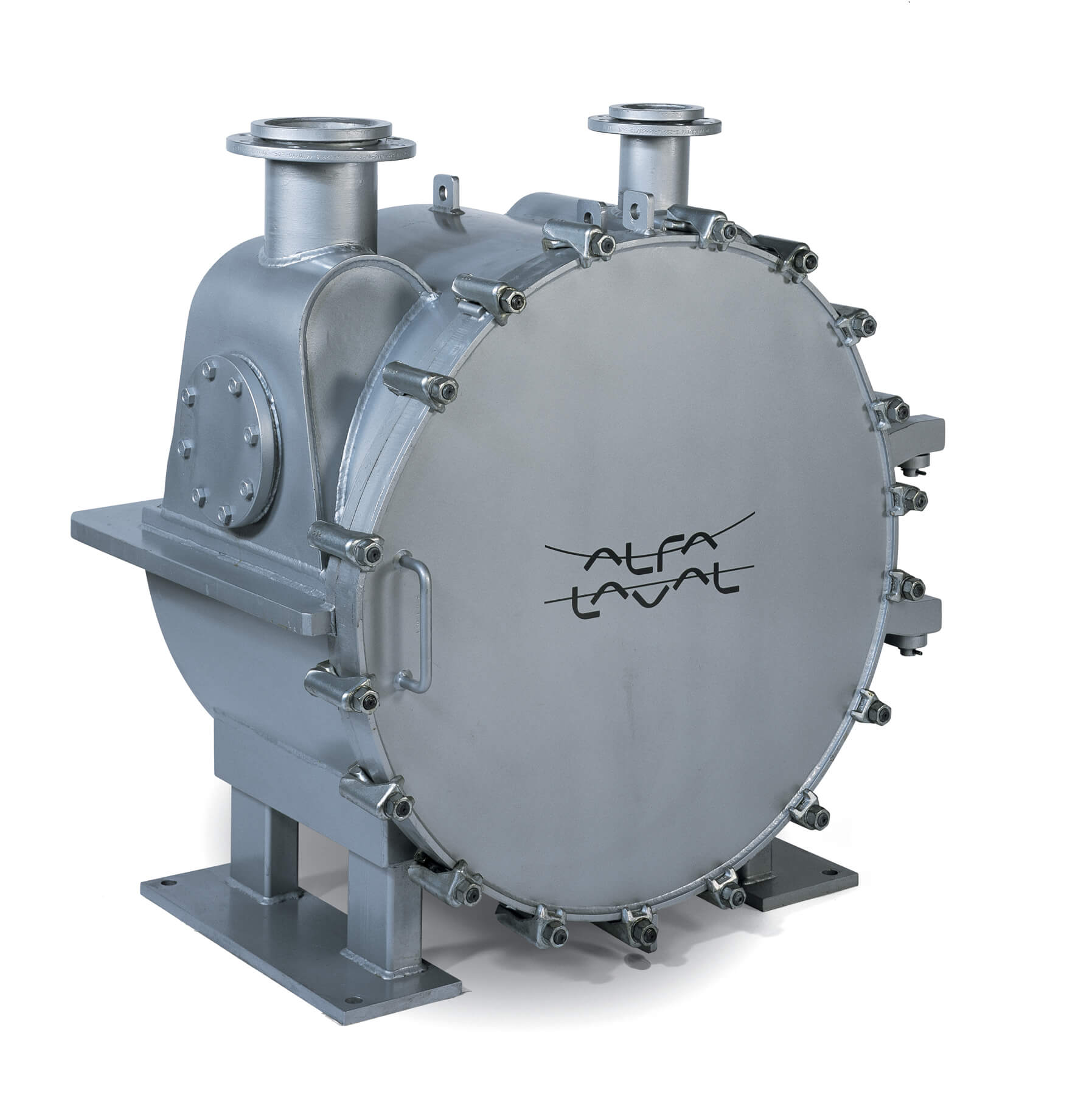
- Durchsatzbereich
- i40 S: 3-56 m³/h | i40 D: 7-80 m³/h | TZ-82: 15 m³/h (8mm-Düsen @ 7 bar)
- Betriebsdruck
- Typischerweise 4-12 bar; empfohlener Betriebsdruck 5-6,5 bar
- Wurfweite/reichweite
- TZ-82: 26 Meter horizontale Wurfweite (Benetzungsradius)
- Düsendurchmesser-Bereich
- 7-10 mm (verschiedene Konfigurationen für Durchsatz-Optimierung)
- Deck-Öffnung erforderlich
- i40 S/i40 D: nur 145 mm (kompakteste 2. Generation)
- Material-standard
- AISI 316 Edelstahl für Hauptkomponenten; PEEK für Seals/Verschleißteile
- Betriebstemperatur
- 0–95°C (32–203°F)
- Antriebsart
- Turbine-driven by cleaning medium flow (COW: crude oil washthrough possible)
- IMO-Konformität
- Erfüllt IMO-Anforderungen für COW (Crude Oil Washing) Systeme
- i40 S (Single-Nozzle, 2. Generation)
- i40 D (Dual-Nozzle, 2. Generation)
- i65 S (Single-Nozzle, High-Impact)
- T-73 (Automatic, 5.000-30.000 m³)
- TZ-67 (Rotary Jet Head, 50-500 m³)
- TZ-75 (Portable, 1.000-5.000 m³)
- TZ-82 (Portable/Fixed, bis 3.000 m³)
- TZ-89 (Media-Lubricated)
- 270FT Mark I (Single-Nozzle Crude Oil Tanker)
- Area: Nozzle wear and erosionCheck: Inspectors regularly check nozzles for wear marks, scratches, surface erosion and deformed openings. Nozzle blockages from sludge accumulation are the most frequent periodic maintenance task. Damaged nozzles must be replaced as a group.
- Area: Gearbox/turbine wear and vibrationCheck: Inspectors monitor for abnormal vibrations, temperature rise and irregular noise. Detached gear teeth and uneven disk distribution cause vibration problems. Inspection recommended every 200-300 operating hours; bearing replacement after 300-500 hours or at least every 3 years.
- Area: Ball bearings and sleeve bushings wearCheck: Inspectors check ball bearings for free rotation without contamination and damage. Sleeve bushings in gearbox frame must be checked: maximum diameter not exceeding 10.4 mm (bore not ovally deformed). Inspect all bearings and sealing rings every 6 months; replacement after 6,000 operating hours or every 3 years.
- Area: Seals and shaft passages (hysteresis coupling design)Check: Inspectors check for oil leakage and contamination at seal points. The hysteresis coupling eliminates conventional speed-setting shafts and reduces leak points. All rubber seals should be replaced at each service inspection to ensure hygiene and performance. Moisture and contamination ingress leads to seal failure.
- Area: Programming pattern and control sequence functionalityCheck: Inspectors test programming logic and valve control for correct 3D-indexed impact pattern. Check creep movement (vertical screw movement while horizontal rotation occurs) and progressive compression from coarse to fine over 8 cycles.
- Area: COW (Crude Oil Washing) system approval and crude oil compatibilityCheck: Inspectors verify IMO certification and crude oil wash-through approval. Toftejorg T-73 and 270FT Mark I are specifically designed for crude oil tankers. Check for corrosion/wear from crude oil exposure and verify valve seals under crude oil operating conditions.
Universal inspection/service points for tank cleaning machines (Gunclean Toftejorg, 2026-06). Per-model specs not auto-filled.
- Durchsatzbereich
- i40 S: 3-56 m³/h | i40 D: 7-80 m³/h | TZ-82: 15 m³/h (8mm-Düsen @ 7 bar)
- Betriebsdruck
- Typischerweise 4-12 bar; empfohlener Betriebsdruck 5-6,5 bar
- Wurfweite/reichweite
- TZ-82: 26 Meter horizontale Wurfweite (Benetzungsradius)
- Düsendurchmesser-Bereich
- 7-10 mm (verschiedene Konfigurationen für Durchsatz-Optimierung)
- Deck-Öffnung erforderlich
- i40 S/i40 D: nur 145 mm (kompakteste 2. Generation)
- Material-standard
- AISI 316 Edelstahl für Hauptkomponenten; PEEK für Seals/Verschleißteile
- Betriebstemperatur
- 0–95°C (32–203°F)
- Antriebsart
- Turbine-driven by cleaning medium flow (COW: crude oil washthrough possible)
- IMO-Konformität
- Erfüllt IMO-Anforderungen für COW (Crude Oil Washing) Systeme
- i40 S (Single-Nozzle, 2. Generation)
- i40 D (Dual-Nozzle, 2. Generation)
- i65 S (Single-Nozzle, High-Impact)
- T-73 (Automatic, 5.000-30.000 m³)
- TZ-67 (Rotary Jet Head, 50-500 m³)
- TZ-75 (Portable, 1.000-5.000 m³)
- TZ-82 (Portable/Fixed, bis 3.000 m³)
- TZ-89 (Media-Lubricated)
- 270FT Mark I (Single-Nozzle Crude Oil Tanker)
- Area: Nozzle wear and erosionCheck: Inspectors regularly check nozzles for wear marks, scratches, surface erosion and deformed openings. Nozzle blockages from sludge accumulation are the most frequent periodic maintenance task. Damaged nozzles must be replaced as a group.
- Area: Gearbox/turbine wear and vibrationCheck: Inspectors monitor for abnormal vibrations, temperature rise and irregular noise. Detached gear teeth and uneven disk distribution cause vibration problems. Inspection recommended every 200-300 operating hours; bearing replacement after 300-500 hours or at least every 3 years.
- Area: Ball bearings and sleeve bushings wearCheck: Inspectors check ball bearings for free rotation without contamination and damage. Sleeve bushings in gearbox frame must be checked: maximum diameter not exceeding 10.4 mm (bore not ovally deformed). Inspect all bearings and sealing rings every 6 months; replacement after 6,000 operating hours or every 3 years.
- Area: Seals and shaft passages (hysteresis coupling design)Check: Inspectors check for oil leakage and contamination at seal points. The hysteresis coupling eliminates conventional speed-setting shafts and reduces leak points. All rubber seals should be replaced at each service inspection to ensure hygiene and performance. Moisture and contamination ingress leads to seal failure.
- Area: Programming pattern and control sequence functionalityCheck: Inspectors test programming logic and valve control for correct 3D-indexed impact pattern. Check creep movement (vertical screw movement while horizontal rotation occurs) and progressive compression from coarse to fine over 8 cycles.
- Area: COW (Crude Oil Washing) system approval and crude oil compatibilityCheck: Inspectors verify IMO certification and crude oil wash-through approval. Toftejorg T-73 and 270FT Mark I are specifically designed for crude oil tankers. Check for corrosion/wear from crude oil exposure and verify valve seals under crude oil operating conditions.
Universal inspection/service points for tank cleaning machines (Gunclean Toftejorg, 2026-06). Per-model specs not auto-filled.
- Durchsatzbereich
- i40 S: 3-56 m³/h | i40 D: 7-80 m³/h | TZ-82: 15 m³/h (8mm-Düsen @ 7 bar)
- Betriebsdruck
- Typischerweise 4-12 bar; empfohlener Betriebsdruck 5-6,5 bar
- Wurfweite/reichweite
- TZ-82: 26 Meter horizontale Wurfweite (Benetzungsradius)
- Düsendurchmesser-Bereich
- 7-10 mm (verschiedene Konfigurationen für Durchsatz-Optimierung)
- Deck-Öffnung erforderlich
- i40 S/i40 D: nur 145 mm (kompakteste 2. Generation)
- Material-standard
- AISI 316 Edelstahl für Hauptkomponenten; PEEK für Seals/Verschleißteile
- Betriebstemperatur
- 0–95°C (32–203°F)
- Antriebsart
- Turbine-driven by cleaning medium flow (COW: crude oil washthrough possible)
- IMO-Konformität
- Erfüllt IMO-Anforderungen für COW (Crude Oil Washing) Systeme
- i40 S (Single-Nozzle, 2. Generation)
- i40 D (Dual-Nozzle, 2. Generation)
- i65 S (Single-Nozzle, High-Impact)
- T-73 (Automatic, 5.000-30.000 m³)
- TZ-67 (Rotary Jet Head, 50-500 m³)
- TZ-75 (Portable, 1.000-5.000 m³)
- TZ-82 (Portable/Fixed, bis 3.000 m³)
- TZ-89 (Media-Lubricated)
- 270FT Mark I (Single-Nozzle Crude Oil Tanker)
- Area: Nozzle wear and erosionCheck: Inspectors regularly check nozzles for wear marks, scratches, surface erosion and deformed openings. Nozzle blockages from sludge accumulation are the most frequent periodic maintenance task. Damaged nozzles must be replaced as a group.
- Area: Gearbox/turbine wear and vibrationCheck: Inspectors monitor for abnormal vibrations, temperature rise and irregular noise. Detached gear teeth and uneven disk distribution cause vibration problems. Inspection recommended every 200-300 operating hours; bearing replacement after 300-500 hours or at least every 3 years.
- Area: Ball bearings and sleeve bushings wearCheck: Inspectors check ball bearings for free rotation without contamination and damage. Sleeve bushings in gearbox frame must be checked: maximum diameter not exceeding 10.4 mm (bore not ovally deformed). Inspect all bearings and sealing rings every 6 months; replacement after 6,000 operating hours or every 3 years.
- Area: Seals and shaft passages (hysteresis coupling design)Check: Inspectors check for oil leakage and contamination at seal points. The hysteresis coupling eliminates conventional speed-setting shafts and reduces leak points. All rubber seals should be replaced at each service inspection to ensure hygiene and performance. Moisture and contamination ingress leads to seal failure.
- Area: Programming pattern and control sequence functionalityCheck: Inspectors test programming logic and valve control for correct 3D-indexed impact pattern. Check creep movement (vertical screw movement while horizontal rotation occurs) and progressive compression from coarse to fine over 8 cycles.
- Area: COW (Crude Oil Washing) system approval and crude oil compatibilityCheck: Inspectors verify IMO certification and crude oil wash-through approval. Toftejorg T-73 and 270FT Mark I are specifically designed for crude oil tankers. Check for corrosion/wear from crude oil exposure and verify valve seals under crude oil operating conditions.
Universal inspection/service points for tank cleaning machines (Gunclean Toftejorg, 2026-06). Per-model specs not auto-filled.
- Durchsatzbereich
- i40 S: 3-56 m³/h | i40 D: 7-80 m³/h | TZ-82: 15 m³/h (8mm-Düsen @ 7 bar)
- Betriebsdruck
- Typischerweise 4-12 bar; empfohlener Betriebsdruck 5-6,5 bar
- Wurfweite/reichweite
- TZ-82: 26 Meter horizontale Wurfweite (Benetzungsradius)
- Düsendurchmesser-Bereich
- 7-10 mm (verschiedene Konfigurationen für Durchsatz-Optimierung)
- Deck-Öffnung erforderlich
- i40 S/i40 D: nur 145 mm (kompakteste 2. Generation)
- Material-standard
- AISI 316 Edelstahl für Hauptkomponenten; PEEK für Seals/Verschleißteile
- Betriebstemperatur
- 0–95°C (32–203°F)
- Antriebsart
- Turbine-driven by cleaning medium flow (COW: crude oil washthrough possible)
- IMO-Konformität
- Erfüllt IMO-Anforderungen für COW (Crude Oil Washing) Systeme
- i40 S (Single-Nozzle, 2. Generation)
- i40 D (Dual-Nozzle, 2. Generation)
- i65 S (Single-Nozzle, High-Impact)
- T-73 (Automatic, 5.000-30.000 m³)
- TZ-67 (Rotary Jet Head, 50-500 m³)
- TZ-75 (Portable, 1.000-5.000 m³)
- TZ-82 (Portable/Fixed, bis 3.000 m³)
- TZ-89 (Media-Lubricated)
- 270FT Mark I (Single-Nozzle Crude Oil Tanker)
- Area: Nozzle wear and erosionCheck: Inspectors regularly check nozzles for wear marks, scratches, surface erosion and deformed openings. Nozzle blockages from sludge accumulation are the most frequent periodic maintenance task. Damaged nozzles must be replaced as a group.
- Area: Gearbox/turbine wear and vibrationCheck: Inspectors monitor for abnormal vibrations, temperature rise and irregular noise. Detached gear teeth and uneven disk distribution cause vibration problems. Inspection recommended every 200-300 operating hours; bearing replacement after 300-500 hours or at least every 3 years.
- Area: Ball bearings and sleeve bushings wearCheck: Inspectors check ball bearings for free rotation without contamination and damage. Sleeve bushings in gearbox frame must be checked: maximum diameter not exceeding 10.4 mm (bore not ovally deformed). Inspect all bearings and sealing rings every 6 months; replacement after 6,000 operating hours or every 3 years.
- Area: Seals and shaft passages (hysteresis coupling design)Check: Inspectors check for oil leakage and contamination at seal points. The hysteresis coupling eliminates conventional speed-setting shafts and reduces leak points. All rubber seals should be replaced at each service inspection to ensure hygiene and performance. Moisture and contamination ingress leads to seal failure.
- Area: Programming pattern and control sequence functionalityCheck: Inspectors test programming logic and valve control for correct 3D-indexed impact pattern. Check creep movement (vertical screw movement while horizontal rotation occurs) and progressive compression from coarse to fine over 8 cycles.
- Area: COW (Crude Oil Washing) system approval and crude oil compatibilityCheck: Inspectors verify IMO certification and crude oil wash-through approval. Toftejorg T-73 and 270FT Mark I are specifically designed for crude oil tankers. Check for corrosion/wear from crude oil exposure and verify valve seals under crude oil operating conditions.
Universal inspection/service points for tank cleaning machines (Gunclean Toftejorg, 2026-06). Per-model specs not auto-filled.
- Durchsatzbereich
- i40 S: 3-56 m³/h | i40 D: 7-80 m³/h | TZ-82: 15 m³/h (8mm-Düsen @ 7 bar)
- Betriebsdruck
- Typischerweise 4-12 bar; empfohlener Betriebsdruck 5-6,5 bar
- Wurfweite/reichweite
- TZ-82: 26 Meter horizontale Wurfweite (Benetzungsradius)
- Düsendurchmesser-Bereich
- 7-10 mm (verschiedene Konfigurationen für Durchsatz-Optimierung)
- Deck-Öffnung erforderlich
- i40 S/i40 D: nur 145 mm (kompakteste 2. Generation)
- Material-standard
- AISI 316 Edelstahl für Hauptkomponenten; PEEK für Seals/Verschleißteile
- Betriebstemperatur
- 0–95°C (32–203°F)
- Antriebsart
- Turbine-driven by cleaning medium flow (COW: crude oil washthrough possible)
- IMO-Konformität
- Erfüllt IMO-Anforderungen für COW (Crude Oil Washing) Systeme
- i40 S (Single-Nozzle, 2. Generation)
- i40 D (Dual-Nozzle, 2. Generation)
- i65 S (Single-Nozzle, High-Impact)
- T-73 (Automatic, 5.000-30.000 m³)
- TZ-67 (Rotary Jet Head, 50-500 m³)
- TZ-75 (Portable, 1.000-5.000 m³)
- TZ-82 (Portable/Fixed, bis 3.000 m³)
- TZ-89 (Media-Lubricated)
- 270FT Mark I (Single-Nozzle Crude Oil Tanker)
- Area: Nozzle wear and erosionCheck: Inspectors regularly check nozzles for wear marks, scratches, surface erosion and deformed openings. Nozzle blockages from sludge accumulation are the most frequent periodic maintenance task. Damaged nozzles must be replaced as a group.
- Area: Gearbox/turbine wear and vibrationCheck: Inspectors monitor for abnormal vibrations, temperature rise and irregular noise. Detached gear teeth and uneven disk distribution cause vibration problems. Inspection recommended every 200-300 operating hours; bearing replacement after 300-500 hours or at least every 3 years.
- Area: Ball bearings and sleeve bushings wearCheck: Inspectors check ball bearings for free rotation without contamination and damage. Sleeve bushings in gearbox frame must be checked: maximum diameter not exceeding 10.4 mm (bore not ovally deformed). Inspect all bearings and sealing rings every 6 months; replacement after 6,000 operating hours or every 3 years.
- Area: Seals and shaft passages (hysteresis coupling design)Check: Inspectors check for oil leakage and contamination at seal points. The hysteresis coupling eliminates conventional speed-setting shafts and reduces leak points. All rubber seals should be replaced at each service inspection to ensure hygiene and performance. Moisture and contamination ingress leads to seal failure.
- Area: Programming pattern and control sequence functionalityCheck: Inspectors test programming logic and valve control for correct 3D-indexed impact pattern. Check creep movement (vertical screw movement while horizontal rotation occurs) and progressive compression from coarse to fine over 8 cycles.
- Area: COW (Crude Oil Washing) system approval and crude oil compatibilityCheck: Inspectors verify IMO certification and crude oil wash-through approval. Toftejorg T-73 and 270FT Mark I are specifically designed for crude oil tankers. Check for corrosion/wear from crude oil exposure and verify valve seals under crude oil operating conditions.
Universal inspection/service points for tank cleaning machines (Gunclean Toftejorg, 2026-06). Per-model specs not auto-filled.
- Durchsatzbereich
- i40 S: 3-56 m³/h | i40 D: 7-80 m³/h | TZ-82: 15 m³/h (8mm-Düsen @ 7 bar)
- Betriebsdruck
- Typischerweise 4-12 bar; empfohlener Betriebsdruck 5-6,5 bar
- Wurfweite/reichweite
- TZ-82: 26 Meter horizontale Wurfweite (Benetzungsradius)
- Düsendurchmesser-Bereich
- 7-10 mm (verschiedene Konfigurationen für Durchsatz-Optimierung)
- Deck-Öffnung erforderlich
- i40 S/i40 D: nur 145 mm (kompakteste 2. Generation)
- Material-standard
- AISI 316 Edelstahl für Hauptkomponenten; PEEK für Seals/Verschleißteile
- Betriebstemperatur
- 0–95°C (32–203°F)
- Antriebsart
- Turbine-driven by cleaning medium flow (COW: crude oil washthrough possible)
- IMO-Konformität
- Erfüllt IMO-Anforderungen für COW (Crude Oil Washing) Systeme
- i40 S (Single-Nozzle, 2. Generation)
- i40 D (Dual-Nozzle, 2. Generation)
- i65 S (Single-Nozzle, High-Impact)
- T-73 (Automatic, 5.000-30.000 m³)
- TZ-67 (Rotary Jet Head, 50-500 m³)
- TZ-75 (Portable, 1.000-5.000 m³)
- TZ-82 (Portable/Fixed, bis 3.000 m³)
- TZ-89 (Media-Lubricated)
- 270FT Mark I (Single-Nozzle Crude Oil Tanker)
- Area: Nozzle wear and erosionCheck: Inspectors regularly check nozzles for wear marks, scratches, surface erosion and deformed openings. Nozzle blockages from sludge accumulation are the most frequent periodic maintenance task. Damaged nozzles must be replaced as a group.
- Area: Gearbox/turbine wear and vibrationCheck: Inspectors monitor for abnormal vibrations, temperature rise and irregular noise. Detached gear teeth and uneven disk distribution cause vibration problems. Inspection recommended every 200-300 operating hours; bearing replacement after 300-500 hours or at least every 3 years.
- Area: Ball bearings and sleeve bushings wearCheck: Inspectors check ball bearings for free rotation without contamination and damage. Sleeve bushings in gearbox frame must be checked: maximum diameter not exceeding 10.4 mm (bore not ovally deformed). Inspect all bearings and sealing rings every 6 months; replacement after 6,000 operating hours or every 3 years.
- Area: Seals and shaft passages (hysteresis coupling design)Check: Inspectors check for oil leakage and contamination at seal points. The hysteresis coupling eliminates conventional speed-setting shafts and reduces leak points. All rubber seals should be replaced at each service inspection to ensure hygiene and performance. Moisture and contamination ingress leads to seal failure.
- Area: Programming pattern and control sequence functionalityCheck: Inspectors test programming logic and valve control for correct 3D-indexed impact pattern. Check creep movement (vertical screw movement while horizontal rotation occurs) and progressive compression from coarse to fine over 8 cycles.
- Area: COW (Crude Oil Washing) system approval and crude oil compatibilityCheck: Inspectors verify IMO certification and crude oil wash-through approval. Toftejorg T-73 and 270FT Mark I are specifically designed for crude oil tankers. Check for corrosion/wear from crude oil exposure and verify valve seals under crude oil operating conditions.
Universal inspection/service points for tank cleaning machines (Gunclean Toftejorg, 2026-06). Per-model specs not auto-filled.
- Durchsatzbereich
- i40 S: 3-56 m³/h | i40 D: 7-80 m³/h | TZ-82: 15 m³/h (8mm-Düsen @ 7 bar)
- Betriebsdruck
- Typischerweise 4-12 bar; empfohlener Betriebsdruck 5-6,5 bar
- Wurfweite/reichweite
- TZ-82: 26 Meter horizontale Wurfweite (Benetzungsradius)
- Düsendurchmesser-Bereich
- 7-10 mm (verschiedene Konfigurationen für Durchsatz-Optimierung)
- Deck-Öffnung erforderlich
- i40 S/i40 D: nur 145 mm (kompakteste 2. Generation)
- Material-standard
- AISI 316 Edelstahl für Hauptkomponenten; PEEK für Seals/Verschleißteile
- Betriebstemperatur
- 0–95°C (32–203°F)
- Antriebsart
- Turbine-driven by cleaning medium flow (COW: crude oil washthrough possible)
- IMO-Konformität
- Erfüllt IMO-Anforderungen für COW (Crude Oil Washing) Systeme
- i40 S (Single-Nozzle, 2. Generation)
- i40 D (Dual-Nozzle, 2. Generation)
- i65 S (Single-Nozzle, High-Impact)
- T-73 (Automatic, 5.000-30.000 m³)
- TZ-67 (Rotary Jet Head, 50-500 m³)
- TZ-75 (Portable, 1.000-5.000 m³)
- TZ-82 (Portable/Fixed, bis 3.000 m³)
- TZ-89 (Media-Lubricated)
- 270FT Mark I (Single-Nozzle Crude Oil Tanker)
- Area: Nozzle wear and erosionCheck: Inspectors regularly check nozzles for wear marks, scratches, surface erosion and deformed openings. Nozzle blockages from sludge accumulation are the most frequent periodic maintenance task. Damaged nozzles must be replaced as a group.
- Area: Gearbox/turbine wear and vibrationCheck: Inspectors monitor for abnormal vibrations, temperature rise and irregular noise. Detached gear teeth and uneven disk distribution cause vibration problems. Inspection recommended every 200-300 operating hours; bearing replacement after 300-500 hours or at least every 3 years.
- Area: Ball bearings and sleeve bushings wearCheck: Inspectors check ball bearings for free rotation without contamination and damage. Sleeve bushings in gearbox frame must be checked: maximum diameter not exceeding 10.4 mm (bore not ovally deformed). Inspect all bearings and sealing rings every 6 months; replacement after 6,000 operating hours or every 3 years.
- Area: Seals and shaft passages (hysteresis coupling design)Check: Inspectors check for oil leakage and contamination at seal points. The hysteresis coupling eliminates conventional speed-setting shafts and reduces leak points. All rubber seals should be replaced at each service inspection to ensure hygiene and performance. Moisture and contamination ingress leads to seal failure.
- Area: Programming pattern and control sequence functionalityCheck: Inspectors test programming logic and valve control for correct 3D-indexed impact pattern. Check creep movement (vertical screw movement while horizontal rotation occurs) and progressive compression from coarse to fine over 8 cycles.
- Area: COW (Crude Oil Washing) system approval and crude oil compatibilityCheck: Inspectors verify IMO certification and crude oil wash-through approval. Toftejorg T-73 and 270FT Mark I are specifically designed for crude oil tankers. Check for corrosion/wear from crude oil exposure and verify valve seals under crude oil operating conditions.
Universal inspection/service points for tank cleaning machines (Gunclean Toftejorg, 2026-06). Per-model specs not auto-filled.
- Durchsatzbereich
- i40 S: 3-56 m³/h | i40 D: 7-80 m³/h | TZ-82: 15 m³/h (8mm-Düsen @ 7 bar)
- Betriebsdruck
- Typischerweise 4-12 bar; empfohlener Betriebsdruck 5-6,5 bar
- Wurfweite/reichweite
- TZ-82: 26 Meter horizontale Wurfweite (Benetzungsradius)
- Düsendurchmesser-Bereich
- 7-10 mm (verschiedene Konfigurationen für Durchsatz-Optimierung)
- Deck-Öffnung erforderlich
- i40 S/i40 D: nur 145 mm (kompakteste 2. Generation)
- Material-standard
- AISI 316 Edelstahl für Hauptkomponenten; PEEK für Seals/Verschleißteile
- Betriebstemperatur
- 0–95°C (32–203°F)
- Antriebsart
- Turbine-driven by cleaning medium flow (COW: crude oil washthrough possible)
- IMO-Konformität
- Erfüllt IMO-Anforderungen für COW (Crude Oil Washing) Systeme
- i40 S (Single-Nozzle, 2. Generation)
- i40 D (Dual-Nozzle, 2. Generation)
- i65 S (Single-Nozzle, High-Impact)
- T-73 (Automatic, 5.000-30.000 m³)
- TZ-67 (Rotary Jet Head, 50-500 m³)
- TZ-75 (Portable, 1.000-5.000 m³)
- TZ-82 (Portable/Fixed, bis 3.000 m³)
- TZ-89 (Media-Lubricated)
- 270FT Mark I (Single-Nozzle Crude Oil Tanker)
- Area: Nozzle wear and erosionCheck: Inspectors regularly check nozzles for wear marks, scratches, surface erosion and deformed openings. Nozzle blockages from sludge accumulation are the most frequent periodic maintenance task. Damaged nozzles must be replaced as a group.
- Area: Gearbox/turbine wear and vibrationCheck: Inspectors monitor for abnormal vibrations, temperature rise and irregular noise. Detached gear teeth and uneven disk distribution cause vibration problems. Inspection recommended every 200-300 operating hours; bearing replacement after 300-500 hours or at least every 3 years.
- Area: Ball bearings and sleeve bushings wearCheck: Inspectors check ball bearings for free rotation without contamination and damage. Sleeve bushings in gearbox frame must be checked: maximum diameter not exceeding 10.4 mm (bore not ovally deformed). Inspect all bearings and sealing rings every 6 months; replacement after 6,000 operating hours or every 3 years.
- Area: Seals and shaft passages (hysteresis coupling design)Check: Inspectors check for oil leakage and contamination at seal points. The hysteresis coupling eliminates conventional speed-setting shafts and reduces leak points. All rubber seals should be replaced at each service inspection to ensure hygiene and performance. Moisture and contamination ingress leads to seal failure.
- Area: Programming pattern and control sequence functionalityCheck: Inspectors test programming logic and valve control for correct 3D-indexed impact pattern. Check creep movement (vertical screw movement while horizontal rotation occurs) and progressive compression from coarse to fine over 8 cycles.
- Area: COW (Crude Oil Washing) system approval and crude oil compatibilityCheck: Inspectors verify IMO certification and crude oil wash-through approval. Toftejorg T-73 and 270FT Mark I are specifically designed for crude oil tankers. Check for corrosion/wear from crude oil exposure and verify valve seals under crude oil operating conditions.
Universal inspection/service points for tank cleaning machines (Gunclean Toftejorg, 2026-06). Per-model specs not auto-filled.
- Durchsatzbereich
- i40 S: 3-56 m³/h | i40 D: 7-80 m³/h | TZ-82: 15 m³/h (8mm-Düsen @ 7 bar)
- Betriebsdruck
- Typischerweise 4-12 bar; empfohlener Betriebsdruck 5-6,5 bar
- Wurfweite/reichweite
- TZ-82: 26 Meter horizontale Wurfweite (Benetzungsradius)
- Düsendurchmesser-Bereich
- 7-10 mm (verschiedene Konfigurationen für Durchsatz-Optimierung)
- Deck-Öffnung erforderlich
- i40 S/i40 D: nur 145 mm (kompakteste 2. Generation)
- Material-standard
- AISI 316 Edelstahl für Hauptkomponenten; PEEK für Seals/Verschleißteile
- Betriebstemperatur
- 0–95°C (32–203°F)
- Antriebsart
- Turbine-driven by cleaning medium flow (COW: crude oil washthrough possible)
- IMO-Konformität
- Erfüllt IMO-Anforderungen für COW (Crude Oil Washing) Systeme
- i40 S (Single-Nozzle, 2. Generation)
- i40 D (Dual-Nozzle, 2. Generation)
- i65 S (Single-Nozzle, High-Impact)
- T-73 (Automatic, 5.000-30.000 m³)
- TZ-67 (Rotary Jet Head, 50-500 m³)
- TZ-75 (Portable, 1.000-5.000 m³)
- TZ-82 (Portable/Fixed, bis 3.000 m³)
- TZ-89 (Media-Lubricated)
- 270FT Mark I (Single-Nozzle Crude Oil Tanker)
- Area: Nozzle wear and erosionCheck: Inspectors regularly check nozzles for wear marks, scratches, surface erosion and deformed openings. Nozzle blockages from sludge accumulation are the most frequent periodic maintenance task. Damaged nozzles must be replaced as a group.
- Area: Gearbox/turbine wear and vibrationCheck: Inspectors monitor for abnormal vibrations, temperature rise and irregular noise. Detached gear teeth and uneven disk distribution cause vibration problems. Inspection recommended every 200-300 operating hours; bearing replacement after 300-500 hours or at least every 3 years.
- Area: Ball bearings and sleeve bushings wearCheck: Inspectors check ball bearings for free rotation without contamination and damage. Sleeve bushings in gearbox frame must be checked: maximum diameter not exceeding 10.4 mm (bore not ovally deformed). Inspect all bearings and sealing rings every 6 months; replacement after 6,000 operating hours or every 3 years.
- Area: Seals and shaft passages (hysteresis coupling design)Check: Inspectors check for oil leakage and contamination at seal points. The hysteresis coupling eliminates conventional speed-setting shafts and reduces leak points. All rubber seals should be replaced at each service inspection to ensure hygiene and performance. Moisture and contamination ingress leads to seal failure.
- Area: Programming pattern and control sequence functionalityCheck: Inspectors test programming logic and valve control for correct 3D-indexed impact pattern. Check creep movement (vertical screw movement while horizontal rotation occurs) and progressive compression from coarse to fine over 8 cycles.
- Area: COW (Crude Oil Washing) system approval and crude oil compatibilityCheck: Inspectors verify IMO certification and crude oil wash-through approval. Toftejorg T-73 and 270FT Mark I are specifically designed for crude oil tankers. Check for corrosion/wear from crude oil exposure and verify valve seals under crude oil operating conditions.
Universal inspection/service points for tank cleaning machines (Gunclean Toftejorg, 2026-06). Per-model specs not auto-filled.
- Durchsatzbereich
- i40 S: 3-56 m³/h | i40 D: 7-80 m³/h | TZ-82: 15 m³/h (8mm-Düsen @ 7 bar)
- Betriebsdruck
- Typischerweise 4-12 bar; empfohlener Betriebsdruck 5-6,5 bar
- Wurfweite/reichweite
- TZ-82: 26 Meter horizontale Wurfweite (Benetzungsradius)
- Düsendurchmesser-Bereich
- 7-10 mm (verschiedene Konfigurationen für Durchsatz-Optimierung)
- Deck-Öffnung erforderlich
- i40 S/i40 D: nur 145 mm (kompakteste 2. Generation)
- Material-standard
- AISI 316 Edelstahl für Hauptkomponenten; PEEK für Seals/Verschleißteile
- Betriebstemperatur
- 0–95°C (32–203°F)
- Antriebsart
- Turbine-driven by cleaning medium flow (COW: crude oil washthrough possible)
- IMO-Konformität
- Erfüllt IMO-Anforderungen für COW (Crude Oil Washing) Systeme
- i40 S (Single-Nozzle, 2. Generation)
- i40 D (Dual-Nozzle, 2. Generation)
- i65 S (Single-Nozzle, High-Impact)
- T-73 (Automatic, 5.000-30.000 m³)
- TZ-67 (Rotary Jet Head, 50-500 m³)
- TZ-75 (Portable, 1.000-5.000 m³)
- TZ-82 (Portable/Fixed, bis 3.000 m³)
- TZ-89 (Media-Lubricated)
- 270FT Mark I (Single-Nozzle Crude Oil Tanker)
- Area: Nozzle wear and erosionCheck: Inspectors regularly check nozzles for wear marks, scratches, surface erosion and deformed openings. Nozzle blockages from sludge accumulation are the most frequent periodic maintenance task. Damaged nozzles must be replaced as a group.
- Area: Gearbox/turbine wear and vibrationCheck: Inspectors monitor for abnormal vibrations, temperature rise and irregular noise. Detached gear teeth and uneven disk distribution cause vibration problems. Inspection recommended every 200-300 operating hours; bearing replacement after 300-500 hours or at least every 3 years.
- Area: Ball bearings and sleeve bushings wearCheck: Inspectors check ball bearings for free rotation without contamination and damage. Sleeve bushings in gearbox frame must be checked: maximum diameter not exceeding 10.4 mm (bore not ovally deformed). Inspect all bearings and sealing rings every 6 months; replacement after 6,000 operating hours or every 3 years.
- Area: Seals and shaft passages (hysteresis coupling design)Check: Inspectors check for oil leakage and contamination at seal points. The hysteresis coupling eliminates conventional speed-setting shafts and reduces leak points. All rubber seals should be replaced at each service inspection to ensure hygiene and performance. Moisture and contamination ingress leads to seal failure.
- Area: Programming pattern and control sequence functionalityCheck: Inspectors test programming logic and valve control for correct 3D-indexed impact pattern. Check creep movement (vertical screw movement while horizontal rotation occurs) and progressive compression from coarse to fine over 8 cycles.
- Area: COW (Crude Oil Washing) system approval and crude oil compatibilityCheck: Inspectors verify IMO certification and crude oil wash-through approval. Toftejorg T-73 and 270FT Mark I are specifically designed for crude oil tankers. Check for corrosion/wear from crude oil exposure and verify valve seals under crude oil operating conditions.
Universal inspection/service points for tank cleaning machines (Gunclean Toftejorg, 2026-06). Per-model specs not auto-filled.
- Durchsatzbereich
- i40 S: 3-56 m³/h | i40 D: 7-80 m³/h | TZ-82: 15 m³/h (8mm-Düsen @ 7 bar)
- Betriebsdruck
- Typischerweise 4-12 bar; empfohlener Betriebsdruck 5-6,5 bar
- Wurfweite/reichweite
- TZ-82: 26 Meter horizontale Wurfweite (Benetzungsradius)
- Düsendurchmesser-Bereich
- 7-10 mm (verschiedene Konfigurationen für Durchsatz-Optimierung)
- Deck-Öffnung erforderlich
- i40 S/i40 D: nur 145 mm (kompakteste 2. Generation)
- Material-standard
- AISI 316 Edelstahl für Hauptkomponenten; PEEK für Seals/Verschleißteile
- Betriebstemperatur
- 0–95°C (32–203°F)
- Antriebsart
- Turbine-driven by cleaning medium flow (COW: crude oil washthrough possible)
- IMO-Konformität
- Erfüllt IMO-Anforderungen für COW (Crude Oil Washing) Systeme
- i40 S (Single-Nozzle, 2. Generation)
- i40 D (Dual-Nozzle, 2. Generation)
- i65 S (Single-Nozzle, High-Impact)
- T-73 (Automatic, 5.000-30.000 m³)
- TZ-67 (Rotary Jet Head, 50-500 m³)
- TZ-75 (Portable, 1.000-5.000 m³)
- TZ-82 (Portable/Fixed, bis 3.000 m³)
- TZ-89 (Media-Lubricated)
- 270FT Mark I (Single-Nozzle Crude Oil Tanker)
- Area: Nozzle wear and erosionCheck: Inspectors regularly check nozzles for wear marks, scratches, surface erosion and deformed openings. Nozzle blockages from sludge accumulation are the most frequent periodic maintenance task. Damaged nozzles must be replaced as a group.
- Area: Gearbox/turbine wear and vibrationCheck: Inspectors monitor for abnormal vibrations, temperature rise and irregular noise. Detached gear teeth and uneven disk distribution cause vibration problems. Inspection recommended every 200-300 operating hours; bearing replacement after 300-500 hours or at least every 3 years.
- Area: Ball bearings and sleeve bushings wearCheck: Inspectors check ball bearings for free rotation without contamination and damage. Sleeve bushings in gearbox frame must be checked: maximum diameter not exceeding 10.4 mm (bore not ovally deformed). Inspect all bearings and sealing rings every 6 months; replacement after 6,000 operating hours or every 3 years.
- Area: Seals and shaft passages (hysteresis coupling design)Check: Inspectors check for oil leakage and contamination at seal points. The hysteresis coupling eliminates conventional speed-setting shafts and reduces leak points. All rubber seals should be replaced at each service inspection to ensure hygiene and performance. Moisture and contamination ingress leads to seal failure.
- Area: Programming pattern and control sequence functionalityCheck: Inspectors test programming logic and valve control for correct 3D-indexed impact pattern. Check creep movement (vertical screw movement while horizontal rotation occurs) and progressive compression from coarse to fine over 8 cycles.
- Area: COW (Crude Oil Washing) system approval and crude oil compatibilityCheck: Inspectors verify IMO certification and crude oil wash-through approval. Toftejorg T-73 and 270FT Mark I are specifically designed for crude oil tankers. Check for corrosion/wear from crude oil exposure and verify valve seals under crude oil operating conditions.
Universal inspection/service points for tank cleaning machines (Gunclean Toftejorg, 2026-06). Per-model specs not auto-filled.
- Durchsatzbereich
- i40 S: 3-56 m³/h | i40 D: 7-80 m³/h | TZ-82: 15 m³/h (8mm-Düsen @ 7 bar)
- Betriebsdruck
- Typischerweise 4-12 bar; empfohlener Betriebsdruck 5-6,5 bar
- Wurfweite/reichweite
- TZ-82: 26 Meter horizontale Wurfweite (Benetzungsradius)
- Düsendurchmesser-Bereich
- 7-10 mm (verschiedene Konfigurationen für Durchsatz-Optimierung)
- Deck-Öffnung erforderlich
- i40 S/i40 D: nur 145 mm (kompakteste 2. Generation)
- Material-standard
- AISI 316 Edelstahl für Hauptkomponenten; PEEK für Seals/Verschleißteile
- Betriebstemperatur
- 0–95°C (32–203°F)
- Antriebsart
- Turbine-driven by cleaning medium flow (COW: crude oil washthrough possible)
- IMO-Konformität
- Erfüllt IMO-Anforderungen für COW (Crude Oil Washing) Systeme
- i40 S (Single-Nozzle, 2. Generation)
- i40 D (Dual-Nozzle, 2. Generation)
- i65 S (Single-Nozzle, High-Impact)
- T-73 (Automatic, 5.000-30.000 m³)
- TZ-67 (Rotary Jet Head, 50-500 m³)
- TZ-75 (Portable, 1.000-5.000 m³)
- TZ-82 (Portable/Fixed, bis 3.000 m³)
- TZ-89 (Media-Lubricated)
- 270FT Mark I (Single-Nozzle Crude Oil Tanker)
- Area: Nozzle wear and erosionCheck: Inspectors regularly check nozzles for wear marks, scratches, surface erosion and deformed openings. Nozzle blockages from sludge accumulation are the most frequent periodic maintenance task. Damaged nozzles must be replaced as a group.
- Area: Gearbox/turbine wear and vibrationCheck: Inspectors monitor for abnormal vibrations, temperature rise and irregular noise. Detached gear teeth and uneven disk distribution cause vibration problems. Inspection recommended every 200-300 operating hours; bearing replacement after 300-500 hours or at least every 3 years.
- Area: Ball bearings and sleeve bushings wearCheck: Inspectors check ball bearings for free rotation without contamination and damage. Sleeve bushings in gearbox frame must be checked: maximum diameter not exceeding 10.4 mm (bore not ovally deformed). Inspect all bearings and sealing rings every 6 months; replacement after 6,000 operating hours or every 3 years.
- Area: Seals and shaft passages (hysteresis coupling design)Check: Inspectors check for oil leakage and contamination at seal points. The hysteresis coupling eliminates conventional speed-setting shafts and reduces leak points. All rubber seals should be replaced at each service inspection to ensure hygiene and performance. Moisture and contamination ingress leads to seal failure.
- Area: Programming pattern and control sequence functionalityCheck: Inspectors test programming logic and valve control for correct 3D-indexed impact pattern. Check creep movement (vertical screw movement while horizontal rotation occurs) and progressive compression from coarse to fine over 8 cycles.
- Area: COW (Crude Oil Washing) system approval and crude oil compatibilityCheck: Inspectors verify IMO certification and crude oil wash-through approval. Toftejorg T-73 and 270FT Mark I are specifically designed for crude oil tankers. Check for corrosion/wear from crude oil exposure and verify valve seals under crude oil operating conditions.
Universal inspection/service points for tank cleaning machines (Gunclean Toftejorg, 2026-06). Per-model specs not auto-filled.
- Durchsatzbereich
- i40 S: 3-56 m³/h | i40 D: 7-80 m³/h | TZ-82: 15 m³/h (8mm-Düsen @ 7 bar)
- Betriebsdruck
- Typischerweise 4-12 bar; empfohlener Betriebsdruck 5-6,5 bar
- Wurfweite/reichweite
- TZ-82: 26 Meter horizontale Wurfweite (Benetzungsradius)
- Düsendurchmesser-Bereich
- 7-10 mm (verschiedene Konfigurationen für Durchsatz-Optimierung)
- Deck-Öffnung erforderlich
- i40 S/i40 D: nur 145 mm (kompakteste 2. Generation)
- Material-standard
- AISI 316 Edelstahl für Hauptkomponenten; PEEK für Seals/Verschleißteile
- Betriebstemperatur
- 0–95°C (32–203°F)
- Antriebsart
- Turbine-driven by cleaning medium flow (COW: crude oil washthrough possible)
- IMO-Konformität
- Erfüllt IMO-Anforderungen für COW (Crude Oil Washing) Systeme
- i40 S (Single-Nozzle, 2. Generation)
- i40 D (Dual-Nozzle, 2. Generation)
- i65 S (Single-Nozzle, High-Impact)
- T-73 (Automatic, 5.000-30.000 m³)
- TZ-67 (Rotary Jet Head, 50-500 m³)
- TZ-75 (Portable, 1.000-5.000 m³)
- TZ-82 (Portable/Fixed, bis 3.000 m³)
- TZ-89 (Media-Lubricated)
- 270FT Mark I (Single-Nozzle Crude Oil Tanker)
- Area: Nozzle wear and erosionCheck: Inspectors regularly check nozzles for wear marks, scratches, surface erosion and deformed openings. Nozzle blockages from sludge accumulation are the most frequent periodic maintenance task. Damaged nozzles must be replaced as a group.
- Area: Gearbox/turbine wear and vibrationCheck: Inspectors monitor for abnormal vibrations, temperature rise and irregular noise. Detached gear teeth and uneven disk distribution cause vibration problems. Inspection recommended every 200-300 operating hours; bearing replacement after 300-500 hours or at least every 3 years.
- Area: Ball bearings and sleeve bushings wearCheck: Inspectors check ball bearings for free rotation without contamination and damage. Sleeve bushings in gearbox frame must be checked: maximum diameter not exceeding 10.4 mm (bore not ovally deformed). Inspect all bearings and sealing rings every 6 months; replacement after 6,000 operating hours or every 3 years.
- Area: Seals and shaft passages (hysteresis coupling design)Check: Inspectors check for oil leakage and contamination at seal points. The hysteresis coupling eliminates conventional speed-setting shafts and reduces leak points. All rubber seals should be replaced at each service inspection to ensure hygiene and performance. Moisture and contamination ingress leads to seal failure.
- Area: Programming pattern and control sequence functionalityCheck: Inspectors test programming logic and valve control for correct 3D-indexed impact pattern. Check creep movement (vertical screw movement while horizontal rotation occurs) and progressive compression from coarse to fine over 8 cycles.
- Area: COW (Crude Oil Washing) system approval and crude oil compatibilityCheck: Inspectors verify IMO certification and crude oil wash-through approval. Toftejorg T-73 and 270FT Mark I are specifically designed for crude oil tankers. Check for corrosion/wear from crude oil exposure and verify valve seals under crude oil operating conditions.
Universal inspection/service points for tank cleaning machines (Gunclean Toftejorg, 2026-06). Per-model specs not auto-filled.
- Durchsatzbereich
- i40 S: 3-56 m³/h | i40 D: 7-80 m³/h | TZ-82: 15 m³/h (8mm-Düsen @ 7 bar)
- Betriebsdruck
- Typischerweise 4-12 bar; empfohlener Betriebsdruck 5-6,5 bar
- Wurfweite/reichweite
- TZ-82: 26 Meter horizontale Wurfweite (Benetzungsradius)
- Düsendurchmesser-Bereich
- 7-10 mm (verschiedene Konfigurationen für Durchsatz-Optimierung)
- Deck-Öffnung erforderlich
- i40 S/i40 D: nur 145 mm (kompakteste 2. Generation)
- Material-standard
- AISI 316 Edelstahl für Hauptkomponenten; PEEK für Seals/Verschleißteile
- Betriebstemperatur
- 0–95°C (32–203°F)
- Antriebsart
- Turbine-driven by cleaning medium flow (COW: crude oil washthrough possible)
- IMO-Konformität
- Erfüllt IMO-Anforderungen für COW (Crude Oil Washing) Systeme
- i40 S (Single-Nozzle, 2. Generation)
- i40 D (Dual-Nozzle, 2. Generation)
- i65 S (Single-Nozzle, High-Impact)
- T-73 (Automatic, 5.000-30.000 m³)
- TZ-67 (Rotary Jet Head, 50-500 m³)
- TZ-75 (Portable, 1.000-5.000 m³)
- TZ-82 (Portable/Fixed, bis 3.000 m³)
- TZ-89 (Media-Lubricated)
- 270FT Mark I (Single-Nozzle Crude Oil Tanker)
- Area: Nozzle wear and erosionCheck: Inspectors regularly check nozzles for wear marks, scratches, surface erosion and deformed openings. Nozzle blockages from sludge accumulation are the most frequent periodic maintenance task. Damaged nozzles must be replaced as a group.
- Area: Gearbox/turbine wear and vibrationCheck: Inspectors monitor for abnormal vibrations, temperature rise and irregular noise. Detached gear teeth and uneven disk distribution cause vibration problems. Inspection recommended every 200-300 operating hours; bearing replacement after 300-500 hours or at least every 3 years.
- Area: Ball bearings and sleeve bushings wearCheck: Inspectors check ball bearings for free rotation without contamination and damage. Sleeve bushings in gearbox frame must be checked: maximum diameter not exceeding 10.4 mm (bore not ovally deformed). Inspect all bearings and sealing rings every 6 months; replacement after 6,000 operating hours or every 3 years.
- Area: Seals and shaft passages (hysteresis coupling design)Check: Inspectors check for oil leakage and contamination at seal points. The hysteresis coupling eliminates conventional speed-setting shafts and reduces leak points. All rubber seals should be replaced at each service inspection to ensure hygiene and performance. Moisture and contamination ingress leads to seal failure.
- Area: Programming pattern and control sequence functionalityCheck: Inspectors test programming logic and valve control for correct 3D-indexed impact pattern. Check creep movement (vertical screw movement while horizontal rotation occurs) and progressive compression from coarse to fine over 8 cycles.
- Area: COW (Crude Oil Washing) system approval and crude oil compatibilityCheck: Inspectors verify IMO certification and crude oil wash-through approval. Toftejorg T-73 and 270FT Mark I are specifically designed for crude oil tankers. Check for corrosion/wear from crude oil exposure and verify valve seals under crude oil operating conditions.
Universal inspection/service points for tank cleaning machines (Gunclean Toftejorg, 2026-06). Per-model specs not auto-filled.
- Durchsatzbereich
- i40 S: 3-56 m³/h | i40 D: 7-80 m³/h | TZ-82: 15 m³/h (8mm-Düsen @ 7 bar)
- Betriebsdruck
- Typischerweise 4-12 bar; empfohlener Betriebsdruck 5-6,5 bar
- Wurfweite/reichweite
- TZ-82: 26 Meter horizontale Wurfweite (Benetzungsradius)
- Düsendurchmesser-Bereich
- 7-10 mm (verschiedene Konfigurationen für Durchsatz-Optimierung)
- Deck-Öffnung erforderlich
- i40 S/i40 D: nur 145 mm (kompakteste 2. Generation)
- Material-standard
- AISI 316 Edelstahl für Hauptkomponenten; PEEK für Seals/Verschleißteile
- Betriebstemperatur
- 0–95°C (32–203°F)
- Antriebsart
- Turbine-driven by cleaning medium flow (COW: crude oil washthrough possible)
- IMO-Konformität
- Erfüllt IMO-Anforderungen für COW (Crude Oil Washing) Systeme
- i40 S (Single-Nozzle, 2. Generation)
- i40 D (Dual-Nozzle, 2. Generation)
- i65 S (Single-Nozzle, High-Impact)
- T-73 (Automatic, 5.000-30.000 m³)
- TZ-67 (Rotary Jet Head, 50-500 m³)
- TZ-75 (Portable, 1.000-5.000 m³)
- TZ-82 (Portable/Fixed, bis 3.000 m³)
- TZ-89 (Media-Lubricated)
- 270FT Mark I (Single-Nozzle Crude Oil Tanker)
- Area: Nozzle wear and erosionCheck: Inspectors regularly check nozzles for wear marks, scratches, surface erosion and deformed openings. Nozzle blockages from sludge accumulation are the most frequent periodic maintenance task. Damaged nozzles must be replaced as a group.
- Area: Gearbox/turbine wear and vibrationCheck: Inspectors monitor for abnormal vibrations, temperature rise and irregular noise. Detached gear teeth and uneven disk distribution cause vibration problems. Inspection recommended every 200-300 operating hours; bearing replacement after 300-500 hours or at least every 3 years.
- Area: Ball bearings and sleeve bushings wearCheck: Inspectors check ball bearings for free rotation without contamination and damage. Sleeve bushings in gearbox frame must be checked: maximum diameter not exceeding 10.4 mm (bore not ovally deformed). Inspect all bearings and sealing rings every 6 months; replacement after 6,000 operating hours or every 3 years.
- Area: Seals and shaft passages (hysteresis coupling design)Check: Inspectors check for oil leakage and contamination at seal points. The hysteresis coupling eliminates conventional speed-setting shafts and reduces leak points. All rubber seals should be replaced at each service inspection to ensure hygiene and performance. Moisture and contamination ingress leads to seal failure.
- Area: Programming pattern and control sequence functionalityCheck: Inspectors test programming logic and valve control for correct 3D-indexed impact pattern. Check creep movement (vertical screw movement while horizontal rotation occurs) and progressive compression from coarse to fine over 8 cycles.
- Area: COW (Crude Oil Washing) system approval and crude oil compatibilityCheck: Inspectors verify IMO certification and crude oil wash-through approval. Toftejorg T-73 and 270FT Mark I are specifically designed for crude oil tankers. Check for corrosion/wear from crude oil exposure and verify valve seals under crude oil operating conditions.
Universal inspection/service points for tank cleaning machines (Gunclean Toftejorg, 2026-06). Per-model specs not auto-filled.
- Durchsatzbereich
- i40 S: 3-56 m³/h | i40 D: 7-80 m³/h | TZ-82: 15 m³/h (8mm-Düsen @ 7 bar)
- Betriebsdruck
- Typischerweise 4-12 bar; empfohlener Betriebsdruck 5-6,5 bar
- Wurfweite/reichweite
- TZ-82: 26 Meter horizontale Wurfweite (Benetzungsradius)
- Düsendurchmesser-Bereich
- 7-10 mm (verschiedene Konfigurationen für Durchsatz-Optimierung)
- Deck-Öffnung erforderlich
- i40 S/i40 D: nur 145 mm (kompakteste 2. Generation)
- Material-standard
- AISI 316 Edelstahl für Hauptkomponenten; PEEK für Seals/Verschleißteile
- Betriebstemperatur
- 0–95°C (32–203°F)
- Antriebsart
- Turbine-driven by cleaning medium flow (COW: crude oil washthrough possible)
- IMO-Konformität
- Erfüllt IMO-Anforderungen für COW (Crude Oil Washing) Systeme
- i40 S (Single-Nozzle, 2. Generation)
- i40 D (Dual-Nozzle, 2. Generation)
- i65 S (Single-Nozzle, High-Impact)
- T-73 (Automatic, 5.000-30.000 m³)
- TZ-67 (Rotary Jet Head, 50-500 m³)
- TZ-75 (Portable, 1.000-5.000 m³)
- TZ-82 (Portable/Fixed, bis 3.000 m³)
- TZ-89 (Media-Lubricated)
- 270FT Mark I (Single-Nozzle Crude Oil Tanker)
- Area: Nozzle wear and erosionCheck: Inspectors regularly check nozzles for wear marks, scratches, surface erosion and deformed openings. Nozzle blockages from sludge accumulation are the most frequent periodic maintenance task. Damaged nozzles must be replaced as a group.
- Area: Gearbox/turbine wear and vibrationCheck: Inspectors monitor for abnormal vibrations, temperature rise and irregular noise. Detached gear teeth and uneven disk distribution cause vibration problems. Inspection recommended every 200-300 operating hours; bearing replacement after 300-500 hours or at least every 3 years.
- Area: Ball bearings and sleeve bushings wearCheck: Inspectors check ball bearings for free rotation without contamination and damage. Sleeve bushings in gearbox frame must be checked: maximum diameter not exceeding 10.4 mm (bore not ovally deformed). Inspect all bearings and sealing rings every 6 months; replacement after 6,000 operating hours or every 3 years.
- Area: Seals and shaft passages (hysteresis coupling design)Check: Inspectors check for oil leakage and contamination at seal points. The hysteresis coupling eliminates conventional speed-setting shafts and reduces leak points. All rubber seals should be replaced at each service inspection to ensure hygiene and performance. Moisture and contamination ingress leads to seal failure.
- Area: Programming pattern and control sequence functionalityCheck: Inspectors test programming logic and valve control for correct 3D-indexed impact pattern. Check creep movement (vertical screw movement while horizontal rotation occurs) and progressive compression from coarse to fine over 8 cycles.
- Area: COW (Crude Oil Washing) system approval and crude oil compatibilityCheck: Inspectors verify IMO certification and crude oil wash-through approval. Toftejorg T-73 and 270FT Mark I are specifically designed for crude oil tankers. Check for corrosion/wear from crude oil exposure and verify valve seals under crude oil operating conditions.
Universal inspection/service points for tank cleaning machines (Gunclean Toftejorg, 2026-06). Per-model specs not auto-filled.
- Durchsatzbereich
- i40 S: 3-56 m³/h | i40 D: 7-80 m³/h | TZ-82: 15 m³/h (8mm-Düsen @ 7 bar)
- Betriebsdruck
- Typischerweise 4-12 bar; empfohlener Betriebsdruck 5-6,5 bar
- Wurfweite/reichweite
- TZ-82: 26 Meter horizontale Wurfweite (Benetzungsradius)
- Düsendurchmesser-Bereich
- 7-10 mm (verschiedene Konfigurationen für Durchsatz-Optimierung)
- Deck-Öffnung erforderlich
- i40 S/i40 D: nur 145 mm (kompakteste 2. Generation)
- Material-standard
- AISI 316 Edelstahl für Hauptkomponenten; PEEK für Seals/Verschleißteile
- Betriebstemperatur
- 0–95°C (32–203°F)
- Antriebsart
- Turbine-driven by cleaning medium flow (COW: crude oil washthrough possible)
- IMO-Konformität
- Erfüllt IMO-Anforderungen für COW (Crude Oil Washing) Systeme
- i40 S (Single-Nozzle, 2. Generation)
- i40 D (Dual-Nozzle, 2. Generation)
- i65 S (Single-Nozzle, High-Impact)
- T-73 (Automatic, 5.000-30.000 m³)
- TZ-67 (Rotary Jet Head, 50-500 m³)
- TZ-75 (Portable, 1.000-5.000 m³)
- TZ-82 (Portable/Fixed, bis 3.000 m³)
- TZ-89 (Media-Lubricated)
- 270FT Mark I (Single-Nozzle Crude Oil Tanker)
- Area: Nozzle wear and erosionCheck: Inspectors regularly check nozzles for wear marks, scratches, surface erosion and deformed openings. Nozzle blockages from sludge accumulation are the most frequent periodic maintenance task. Damaged nozzles must be replaced as a group.
- Area: Gearbox/turbine wear and vibrationCheck: Inspectors monitor for abnormal vibrations, temperature rise and irregular noise. Detached gear teeth and uneven disk distribution cause vibration problems. Inspection recommended every 200-300 operating hours; bearing replacement after 300-500 hours or at least every 3 years.
- Area: Ball bearings and sleeve bushings wearCheck: Inspectors check ball bearings for free rotation without contamination and damage. Sleeve bushings in gearbox frame must be checked: maximum diameter not exceeding 10.4 mm (bore not ovally deformed). Inspect all bearings and sealing rings every 6 months; replacement after 6,000 operating hours or every 3 years.
- Area: Seals and shaft passages (hysteresis coupling design)Check: Inspectors check for oil leakage and contamination at seal points. The hysteresis coupling eliminates conventional speed-setting shafts and reduces leak points. All rubber seals should be replaced at each service inspection to ensure hygiene and performance. Moisture and contamination ingress leads to seal failure.
- Area: Programming pattern and control sequence functionalityCheck: Inspectors test programming logic and valve control for correct 3D-indexed impact pattern. Check creep movement (vertical screw movement while horizontal rotation occurs) and progressive compression from coarse to fine over 8 cycles.
- Area: COW (Crude Oil Washing) system approval and crude oil compatibilityCheck: Inspectors verify IMO certification and crude oil wash-through approval. Toftejorg T-73 and 270FT Mark I are specifically designed for crude oil tankers. Check for corrosion/wear from crude oil exposure and verify valve seals under crude oil operating conditions.
Universal inspection/service points for tank cleaning machines (Gunclean Toftejorg, 2026-06). Per-model specs not auto-filled.
- Durchsatzbereich
- i40 S: 3-56 m³/h | i40 D: 7-80 m³/h | TZ-82: 15 m³/h (8mm-Düsen @ 7 bar)
- Betriebsdruck
- Typischerweise 4-12 bar; empfohlener Betriebsdruck 5-6,5 bar
- Wurfweite/reichweite
- TZ-82: 26 Meter horizontale Wurfweite (Benetzungsradius)
- Düsendurchmesser-Bereich
- 7-10 mm (verschiedene Konfigurationen für Durchsatz-Optimierung)
- Deck-Öffnung erforderlich
- i40 S/i40 D: nur 145 mm (kompakteste 2. Generation)
- Material-standard
- AISI 316 Edelstahl für Hauptkomponenten; PEEK für Seals/Verschleißteile
- Betriebstemperatur
- 0–95°C (32–203°F)
- Antriebsart
- Turbine-driven by cleaning medium flow (COW: crude oil washthrough possible)
- IMO-Konformität
- Erfüllt IMO-Anforderungen für COW (Crude Oil Washing) Systeme
- i40 S (Single-Nozzle, 2. Generation)
- i40 D (Dual-Nozzle, 2. Generation)
- i65 S (Single-Nozzle, High-Impact)
- T-73 (Automatic, 5.000-30.000 m³)
- TZ-67 (Rotary Jet Head, 50-500 m³)
- TZ-75 (Portable, 1.000-5.000 m³)
- TZ-82 (Portable/Fixed, bis 3.000 m³)
- TZ-89 (Media-Lubricated)
- 270FT Mark I (Single-Nozzle Crude Oil Tanker)
- Area: Nozzle wear and erosionCheck: Inspectors regularly check nozzles for wear marks, scratches, surface erosion and deformed openings. Nozzle blockages from sludge accumulation are the most frequent periodic maintenance task. Damaged nozzles must be replaced as a group.
- Area: Gearbox/turbine wear and vibrationCheck: Inspectors monitor for abnormal vibrations, temperature rise and irregular noise. Detached gear teeth and uneven disk distribution cause vibration problems. Inspection recommended every 200-300 operating hours; bearing replacement after 300-500 hours or at least every 3 years.
- Area: Ball bearings and sleeve bushings wearCheck: Inspectors check ball bearings for free rotation without contamination and damage. Sleeve bushings in gearbox frame must be checked: maximum diameter not exceeding 10.4 mm (bore not ovally deformed). Inspect all bearings and sealing rings every 6 months; replacement after 6,000 operating hours or every 3 years.
- Area: Seals and shaft passages (hysteresis coupling design)Check: Inspectors check for oil leakage and contamination at seal points. The hysteresis coupling eliminates conventional speed-setting shafts and reduces leak points. All rubber seals should be replaced at each service inspection to ensure hygiene and performance. Moisture and contamination ingress leads to seal failure.
- Area: Programming pattern and control sequence functionalityCheck: Inspectors test programming logic and valve control for correct 3D-indexed impact pattern. Check creep movement (vertical screw movement while horizontal rotation occurs) and progressive compression from coarse to fine over 8 cycles.
- Area: COW (Crude Oil Washing) system approval and crude oil compatibilityCheck: Inspectors verify IMO certification and crude oil wash-through approval. Toftejorg T-73 and 270FT Mark I are specifically designed for crude oil tankers. Check for corrosion/wear from crude oil exposure and verify valve seals under crude oil operating conditions.
Universal inspection/service points for tank cleaning machines (Gunclean Toftejorg, 2026-06). Per-model specs not auto-filled.
- Durchsatzbereich
- i40 S: 3-56 m³/h | i40 D: 7-80 m³/h | TZ-82: 15 m³/h (8mm-Düsen @ 7 bar)
- Betriebsdruck
- Typischerweise 4-12 bar; empfohlener Betriebsdruck 5-6,5 bar
- Wurfweite/reichweite
- TZ-82: 26 Meter horizontale Wurfweite (Benetzungsradius)
- Düsendurchmesser-Bereich
- 7-10 mm (verschiedene Konfigurationen für Durchsatz-Optimierung)
- Deck-Öffnung erforderlich
- i40 S/i40 D: nur 145 mm (kompakteste 2. Generation)
- Material-standard
- AISI 316 Edelstahl für Hauptkomponenten; PEEK für Seals/Verschleißteile
- Betriebstemperatur
- 0–95°C (32–203°F)
- Antriebsart
- Turbine-driven by cleaning medium flow (COW: crude oil washthrough possible)
- IMO-Konformität
- Erfüllt IMO-Anforderungen für COW (Crude Oil Washing) Systeme
- i40 S (Single-Nozzle, 2. Generation)
- i40 D (Dual-Nozzle, 2. Generation)
- i65 S (Single-Nozzle, High-Impact)
- T-73 (Automatic, 5.000-30.000 m³)
- TZ-67 (Rotary Jet Head, 50-500 m³)
- TZ-75 (Portable, 1.000-5.000 m³)
- TZ-82 (Portable/Fixed, bis 3.000 m³)
- TZ-89 (Media-Lubricated)
- 270FT Mark I (Single-Nozzle Crude Oil Tanker)
- Area: Nozzle wear and erosionCheck: Inspectors regularly check nozzles for wear marks, scratches, surface erosion and deformed openings. Nozzle blockages from sludge accumulation are the most frequent periodic maintenance task. Damaged nozzles must be replaced as a group.
- Area: Gearbox/turbine wear and vibrationCheck: Inspectors monitor for abnormal vibrations, temperature rise and irregular noise. Detached gear teeth and uneven disk distribution cause vibration problems. Inspection recommended every 200-300 operating hours; bearing replacement after 300-500 hours or at least every 3 years.
- Area: Ball bearings and sleeve bushings wearCheck: Inspectors check ball bearings for free rotation without contamination and damage. Sleeve bushings in gearbox frame must be checked: maximum diameter not exceeding 10.4 mm (bore not ovally deformed). Inspect all bearings and sealing rings every 6 months; replacement after 6,000 operating hours or every 3 years.
- Area: Seals and shaft passages (hysteresis coupling design)Check: Inspectors check for oil leakage and contamination at seal points. The hysteresis coupling eliminates conventional speed-setting shafts and reduces leak points. All rubber seals should be replaced at each service inspection to ensure hygiene and performance. Moisture and contamination ingress leads to seal failure.
- Area: Programming pattern and control sequence functionalityCheck: Inspectors test programming logic and valve control for correct 3D-indexed impact pattern. Check creep movement (vertical screw movement while horizontal rotation occurs) and progressive compression from coarse to fine over 8 cycles.
- Area: COW (Crude Oil Washing) system approval and crude oil compatibilityCheck: Inspectors verify IMO certification and crude oil wash-through approval. Toftejorg T-73 and 270FT Mark I are specifically designed for crude oil tankers. Check for corrosion/wear from crude oil exposure and verify valve seals under crude oil operating conditions.
Universal inspection/service points for tank cleaning machines (Gunclean Toftejorg, 2026-06). Per-model specs not auto-filled.
- Durchsatzbereich
- i40 S: 3-56 m³/h | i40 D: 7-80 m³/h | TZ-82: 15 m³/h (8mm-Düsen @ 7 bar)
- Betriebsdruck
- Typischerweise 4-12 bar; empfohlener Betriebsdruck 5-6,5 bar
- Wurfweite/reichweite
- TZ-82: 26 Meter horizontale Wurfweite (Benetzungsradius)
- Düsendurchmesser-Bereich
- 7-10 mm (verschiedene Konfigurationen für Durchsatz-Optimierung)
- Deck-Öffnung erforderlich
- i40 S/i40 D: nur 145 mm (kompakteste 2. Generation)
- Material-standard
- AISI 316 Edelstahl für Hauptkomponenten; PEEK für Seals/Verschleißteile
- Betriebstemperatur
- 0–95°C (32–203°F)
- Antriebsart
- Turbine-driven by cleaning medium flow (COW: crude oil washthrough possible)
- IMO-Konformität
- Erfüllt IMO-Anforderungen für COW (Crude Oil Washing) Systeme
- i40 S (Single-Nozzle, 2. Generation)
- i40 D (Dual-Nozzle, 2. Generation)
- i65 S (Single-Nozzle, High-Impact)
- T-73 (Automatic, 5.000-30.000 m³)
- TZ-67 (Rotary Jet Head, 50-500 m³)
- TZ-75 (Portable, 1.000-5.000 m³)
- TZ-82 (Portable/Fixed, bis 3.000 m³)
- TZ-89 (Media-Lubricated)
- 270FT Mark I (Single-Nozzle Crude Oil Tanker)
- Area: Nozzle wear and erosionCheck: Inspectors regularly check nozzles for wear marks, scratches, surface erosion and deformed openings. Nozzle blockages from sludge accumulation are the most frequent periodic maintenance task. Damaged nozzles must be replaced as a group.
- Area: Gearbox/turbine wear and vibrationCheck: Inspectors monitor for abnormal vibrations, temperature rise and irregular noise. Detached gear teeth and uneven disk distribution cause vibration problems. Inspection recommended every 200-300 operating hours; bearing replacement after 300-500 hours or at least every 3 years.
- Area: Ball bearings and sleeve bushings wearCheck: Inspectors check ball bearings for free rotation without contamination and damage. Sleeve bushings in gearbox frame must be checked: maximum diameter not exceeding 10.4 mm (bore not ovally deformed). Inspect all bearings and sealing rings every 6 months; replacement after 6,000 operating hours or every 3 years.
- Area: Seals and shaft passages (hysteresis coupling design)Check: Inspectors check for oil leakage and contamination at seal points. The hysteresis coupling eliminates conventional speed-setting shafts and reduces leak points. All rubber seals should be replaced at each service inspection to ensure hygiene and performance. Moisture and contamination ingress leads to seal failure.
- Area: Programming pattern and control sequence functionalityCheck: Inspectors test programming logic and valve control for correct 3D-indexed impact pattern. Check creep movement (vertical screw movement while horizontal rotation occurs) and progressive compression from coarse to fine over 8 cycles.
- Area: COW (Crude Oil Washing) system approval and crude oil compatibilityCheck: Inspectors verify IMO certification and crude oil wash-through approval. Toftejorg T-73 and 270FT Mark I are specifically designed for crude oil tankers. Check for corrosion/wear from crude oil exposure and verify valve seals under crude oil operating conditions.
Universal inspection/service points for tank cleaning machines (Gunclean Toftejorg, 2026-06). Per-model specs not auto-filled.
- Durchsatzbereich
- i40 S: 3-56 m³/h | i40 D: 7-80 m³/h | TZ-82: 15 m³/h (8mm-Düsen @ 7 bar)
- Betriebsdruck
- Typischerweise 4-12 bar; empfohlener Betriebsdruck 5-6,5 bar
- Wurfweite/reichweite
- TZ-82: 26 Meter horizontale Wurfweite (Benetzungsradius)
- Düsendurchmesser-Bereich
- 7-10 mm (verschiedene Konfigurationen für Durchsatz-Optimierung)
- Deck-Öffnung erforderlich
- i40 S/i40 D: nur 145 mm (kompakteste 2. Generation)
- Material-standard
- AISI 316 Edelstahl für Hauptkomponenten; PEEK für Seals/Verschleißteile
- Betriebstemperatur
- 0–95°C (32–203°F)
- Antriebsart
- Turbine-driven by cleaning medium flow (COW: crude oil washthrough possible)
- IMO-Konformität
- Erfüllt IMO-Anforderungen für COW (Crude Oil Washing) Systeme
- i40 S (Single-Nozzle, 2. Generation)
- i40 D (Dual-Nozzle, 2. Generation)
- i65 S (Single-Nozzle, High-Impact)
- T-73 (Automatic, 5.000-30.000 m³)
- TZ-67 (Rotary Jet Head, 50-500 m³)
- TZ-75 (Portable, 1.000-5.000 m³)
- TZ-82 (Portable/Fixed, bis 3.000 m³)
- TZ-89 (Media-Lubricated)
- 270FT Mark I (Single-Nozzle Crude Oil Tanker)
- Area: Nozzle wear and erosionCheck: Inspectors regularly check nozzles for wear marks, scratches, surface erosion and deformed openings. Nozzle blockages from sludge accumulation are the most frequent periodic maintenance task. Damaged nozzles must be replaced as a group.
- Area: Gearbox/turbine wear and vibrationCheck: Inspectors monitor for abnormal vibrations, temperature rise and irregular noise. Detached gear teeth and uneven disk distribution cause vibration problems. Inspection recommended every 200-300 operating hours; bearing replacement after 300-500 hours or at least every 3 years.
- Area: Ball bearings and sleeve bushings wearCheck: Inspectors check ball bearings for free rotation without contamination and damage. Sleeve bushings in gearbox frame must be checked: maximum diameter not exceeding 10.4 mm (bore not ovally deformed). Inspect all bearings and sealing rings every 6 months; replacement after 6,000 operating hours or every 3 years.
- Area: Seals and shaft passages (hysteresis coupling design)Check: Inspectors check for oil leakage and contamination at seal points. The hysteresis coupling eliminates conventional speed-setting shafts and reduces leak points. All rubber seals should be replaced at each service inspection to ensure hygiene and performance. Moisture and contamination ingress leads to seal failure.
- Area: Programming pattern and control sequence functionalityCheck: Inspectors test programming logic and valve control for correct 3D-indexed impact pattern. Check creep movement (vertical screw movement while horizontal rotation occurs) and progressive compression from coarse to fine over 8 cycles.
- Area: COW (Crude Oil Washing) system approval and crude oil compatibilityCheck: Inspectors verify IMO certification and crude oil wash-through approval. Toftejorg T-73 and 270FT Mark I are specifically designed for crude oil tankers. Check for corrosion/wear from crude oil exposure and verify valve seals under crude oil operating conditions.
Universal inspection/service points for tank cleaning machines (Gunclean Toftejorg, 2026-06). Per-model specs not auto-filled.
- Durchsatzbereich
- i40 S: 3-56 m³/h | i40 D: 7-80 m³/h | TZ-82: 15 m³/h (8mm-Düsen @ 7 bar)
- Betriebsdruck
- Typischerweise 4-12 bar; empfohlener Betriebsdruck 5-6,5 bar
- Wurfweite/reichweite
- TZ-82: 26 Meter horizontale Wurfweite (Benetzungsradius)
- Düsendurchmesser-Bereich
- 7-10 mm (verschiedene Konfigurationen für Durchsatz-Optimierung)
- Deck-Öffnung erforderlich
- i40 S/i40 D: nur 145 mm (kompakteste 2. Generation)
- Material-standard
- AISI 316 Edelstahl für Hauptkomponenten; PEEK für Seals/Verschleißteile
- Betriebstemperatur
- 0–95°C (32–203°F)
- Antriebsart
- Turbine-driven by cleaning medium flow (COW: crude oil washthrough possible)
- IMO-Konformität
- Erfüllt IMO-Anforderungen für COW (Crude Oil Washing) Systeme
- i40 S (Single-Nozzle, 2. Generation)
- i40 D (Dual-Nozzle, 2. Generation)
- i65 S (Single-Nozzle, High-Impact)
- T-73 (Automatic, 5.000-30.000 m³)
- TZ-67 (Rotary Jet Head, 50-500 m³)
- TZ-75 (Portable, 1.000-5.000 m³)
- TZ-82 (Portable/Fixed, bis 3.000 m³)
- TZ-89 (Media-Lubricated)
- 270FT Mark I (Single-Nozzle Crude Oil Tanker)
- Area: Nozzle wear and erosionCheck: Inspectors regularly check nozzles for wear marks, scratches, surface erosion and deformed openings. Nozzle blockages from sludge accumulation are the most frequent periodic maintenance task. Damaged nozzles must be replaced as a group.
- Area: Gearbox/turbine wear and vibrationCheck: Inspectors monitor for abnormal vibrations, temperature rise and irregular noise. Detached gear teeth and uneven disk distribution cause vibration problems. Inspection recommended every 200-300 operating hours; bearing replacement after 300-500 hours or at least every 3 years.
- Area: Ball bearings and sleeve bushings wearCheck: Inspectors check ball bearings for free rotation without contamination and damage. Sleeve bushings in gearbox frame must be checked: maximum diameter not exceeding 10.4 mm (bore not ovally deformed). Inspect all bearings and sealing rings every 6 months; replacement after 6,000 operating hours or every 3 years.
- Area: Seals and shaft passages (hysteresis coupling design)Check: Inspectors check for oil leakage and contamination at seal points. The hysteresis coupling eliminates conventional speed-setting shafts and reduces leak points. All rubber seals should be replaced at each service inspection to ensure hygiene and performance. Moisture and contamination ingress leads to seal failure.
- Area: Programming pattern and control sequence functionalityCheck: Inspectors test programming logic and valve control for correct 3D-indexed impact pattern. Check creep movement (vertical screw movement while horizontal rotation occurs) and progressive compression from coarse to fine over 8 cycles.
- Area: COW (Crude Oil Washing) system approval and crude oil compatibilityCheck: Inspectors verify IMO certification and crude oil wash-through approval. Toftejorg T-73 and 270FT Mark I are specifically designed for crude oil tankers. Check for corrosion/wear from crude oil exposure and verify valve seals under crude oil operating conditions.
Universal inspection/service points for tank cleaning machines (Gunclean Toftejorg, 2026-06). Per-model specs not auto-filled.
- Durchsatzbereich
- i40 S: 3-56 m³/h | i40 D: 7-80 m³/h | TZ-82: 15 m³/h (8mm-Düsen @ 7 bar)
- Betriebsdruck
- Typischerweise 4-12 bar; empfohlener Betriebsdruck 5-6,5 bar
- Wurfweite/reichweite
- TZ-82: 26 Meter horizontale Wurfweite (Benetzungsradius)
- Düsendurchmesser-Bereich
- 7-10 mm (verschiedene Konfigurationen für Durchsatz-Optimierung)
- Deck-Öffnung erforderlich
- i40 S/i40 D: nur 145 mm (kompakteste 2. Generation)
- Material-standard
- AISI 316 Edelstahl für Hauptkomponenten; PEEK für Seals/Verschleißteile
- Betriebstemperatur
- 0–95°C (32–203°F)
- Antriebsart
- Turbine-driven by cleaning medium flow (COW: crude oil washthrough possible)
- IMO-Konformität
- Erfüllt IMO-Anforderungen für COW (Crude Oil Washing) Systeme
- i40 S (Single-Nozzle, 2. Generation)
- i40 D (Dual-Nozzle, 2. Generation)
- i65 S (Single-Nozzle, High-Impact)
- T-73 (Automatic, 5.000-30.000 m³)
- TZ-67 (Rotary Jet Head, 50-500 m³)
- TZ-75 (Portable, 1.000-5.000 m³)
- TZ-82 (Portable/Fixed, bis 3.000 m³)
- TZ-89 (Media-Lubricated)
- 270FT Mark I (Single-Nozzle Crude Oil Tanker)
- Area: Nozzle wear and erosionCheck: Inspectors regularly check nozzles for wear marks, scratches, surface erosion and deformed openings. Nozzle blockages from sludge accumulation are the most frequent periodic maintenance task. Damaged nozzles must be replaced as a group.
- Area: Gearbox/turbine wear and vibrationCheck: Inspectors monitor for abnormal vibrations, temperature rise and irregular noise. Detached gear teeth and uneven disk distribution cause vibration problems. Inspection recommended every 200-300 operating hours; bearing replacement after 300-500 hours or at least every 3 years.
- Area: Ball bearings and sleeve bushings wearCheck: Inspectors check ball bearings for free rotation without contamination and damage. Sleeve bushings in gearbox frame must be checked: maximum diameter not exceeding 10.4 mm (bore not ovally deformed). Inspect all bearings and sealing rings every 6 months; replacement after 6,000 operating hours or every 3 years.
- Area: Seals and shaft passages (hysteresis coupling design)Check: Inspectors check for oil leakage and contamination at seal points. The hysteresis coupling eliminates conventional speed-setting shafts and reduces leak points. All rubber seals should be replaced at each service inspection to ensure hygiene and performance. Moisture and contamination ingress leads to seal failure.
- Area: Programming pattern and control sequence functionalityCheck: Inspectors test programming logic and valve control for correct 3D-indexed impact pattern. Check creep movement (vertical screw movement while horizontal rotation occurs) and progressive compression from coarse to fine over 8 cycles.
- Area: COW (Crude Oil Washing) system approval and crude oil compatibilityCheck: Inspectors verify IMO certification and crude oil wash-through approval. Toftejorg T-73 and 270FT Mark I are specifically designed for crude oil tankers. Check for corrosion/wear from crude oil exposure and verify valve seals under crude oil operating conditions.
Universal inspection/service points for tank cleaning machines (Gunclean Toftejorg, 2026-06). Per-model specs not auto-filled.
- Durchsatzbereich
- i40 S: 3-56 m³/h | i40 D: 7-80 m³/h | TZ-82: 15 m³/h (8mm-Düsen @ 7 bar)
- Betriebsdruck
- Typischerweise 4-12 bar; empfohlener Betriebsdruck 5-6,5 bar
- Wurfweite/reichweite
- TZ-82: 26 Meter horizontale Wurfweite (Benetzungsradius)
- Düsendurchmesser-Bereich
- 7-10 mm (verschiedene Konfigurationen für Durchsatz-Optimierung)
- Deck-Öffnung erforderlich
- i40 S/i40 D: nur 145 mm (kompakteste 2. Generation)
- Material-standard
- AISI 316 Edelstahl für Hauptkomponenten; PEEK für Seals/Verschleißteile
- Betriebstemperatur
- 0–95°C (32–203°F)
- Antriebsart
- Turbine-driven by cleaning medium flow (COW: crude oil washthrough possible)
- IMO-Konformität
- Erfüllt IMO-Anforderungen für COW (Crude Oil Washing) Systeme
- i40 S (Single-Nozzle, 2. Generation)
- i40 D (Dual-Nozzle, 2. Generation)
- i65 S (Single-Nozzle, High-Impact)
- T-73 (Automatic, 5.000-30.000 m³)
- TZ-67 (Rotary Jet Head, 50-500 m³)
- TZ-75 (Portable, 1.000-5.000 m³)
- TZ-82 (Portable/Fixed, bis 3.000 m³)
- TZ-89 (Media-Lubricated)
- 270FT Mark I (Single-Nozzle Crude Oil Tanker)
- Area: Nozzle wear and erosionCheck: Inspectors regularly check nozzles for wear marks, scratches, surface erosion and deformed openings. Nozzle blockages from sludge accumulation are the most frequent periodic maintenance task. Damaged nozzles must be replaced as a group.
- Area: Gearbox/turbine wear and vibrationCheck: Inspectors monitor for abnormal vibrations, temperature rise and irregular noise. Detached gear teeth and uneven disk distribution cause vibration problems. Inspection recommended every 200-300 operating hours; bearing replacement after 300-500 hours or at least every 3 years.
- Area: Ball bearings and sleeve bushings wearCheck: Inspectors check ball bearings for free rotation without contamination and damage. Sleeve bushings in gearbox frame must be checked: maximum diameter not exceeding 10.4 mm (bore not ovally deformed). Inspect all bearings and sealing rings every 6 months; replacement after 6,000 operating hours or every 3 years.
- Area: Seals and shaft passages (hysteresis coupling design)Check: Inspectors check for oil leakage and contamination at seal points. The hysteresis coupling eliminates conventional speed-setting shafts and reduces leak points. All rubber seals should be replaced at each service inspection to ensure hygiene and performance. Moisture and contamination ingress leads to seal failure.
- Area: Programming pattern and control sequence functionalityCheck: Inspectors test programming logic and valve control for correct 3D-indexed impact pattern. Check creep movement (vertical screw movement while horizontal rotation occurs) and progressive compression from coarse to fine over 8 cycles.
- Area: COW (Crude Oil Washing) system approval and crude oil compatibilityCheck: Inspectors verify IMO certification and crude oil wash-through approval. Toftejorg T-73 and 270FT Mark I are specifically designed for crude oil tankers. Check for corrosion/wear from crude oil exposure and verify valve seals under crude oil operating conditions.
Universal inspection/service points for tank cleaning machines (Gunclean Toftejorg, 2026-06). Per-model specs not auto-filled.
- Durchsatzbereich
- i40 S: 3-56 m³/h | i40 D: 7-80 m³/h | TZ-82: 15 m³/h (8mm-Düsen @ 7 bar)
- Betriebsdruck
- Typischerweise 4-12 bar; empfohlener Betriebsdruck 5-6,5 bar
- Wurfweite/reichweite
- TZ-82: 26 Meter horizontale Wurfweite (Benetzungsradius)
- Düsendurchmesser-Bereich
- 7-10 mm (verschiedene Konfigurationen für Durchsatz-Optimierung)
- Deck-Öffnung erforderlich
- i40 S/i40 D: nur 145 mm (kompakteste 2. Generation)
- Material-standard
- AISI 316 Edelstahl für Hauptkomponenten; PEEK für Seals/Verschleißteile
- Betriebstemperatur
- 0–95°C (32–203°F)
- Antriebsart
- Turbine-driven by cleaning medium flow (COW: crude oil washthrough possible)
- IMO-Konformität
- Erfüllt IMO-Anforderungen für COW (Crude Oil Washing) Systeme
- i40 S (Single-Nozzle, 2. Generation)
- i40 D (Dual-Nozzle, 2. Generation)
- i65 S (Single-Nozzle, High-Impact)
- T-73 (Automatic, 5.000-30.000 m³)
- TZ-67 (Rotary Jet Head, 50-500 m³)
- TZ-75 (Portable, 1.000-5.000 m³)
- TZ-82 (Portable/Fixed, bis 3.000 m³)
- TZ-89 (Media-Lubricated)
- 270FT Mark I (Single-Nozzle Crude Oil Tanker)
- Area: Nozzle wear and erosionCheck: Inspectors regularly check nozzles for wear marks, scratches, surface erosion and deformed openings. Nozzle blockages from sludge accumulation are the most frequent periodic maintenance task. Damaged nozzles must be replaced as a group.
- Area: Gearbox/turbine wear and vibrationCheck: Inspectors monitor for abnormal vibrations, temperature rise and irregular noise. Detached gear teeth and uneven disk distribution cause vibration problems. Inspection recommended every 200-300 operating hours; bearing replacement after 300-500 hours or at least every 3 years.
- Area: Ball bearings and sleeve bushings wearCheck: Inspectors check ball bearings for free rotation without contamination and damage. Sleeve bushings in gearbox frame must be checked: maximum diameter not exceeding 10.4 mm (bore not ovally deformed). Inspect all bearings and sealing rings every 6 months; replacement after 6,000 operating hours or every 3 years.
- Area: Seals and shaft passages (hysteresis coupling design)Check: Inspectors check for oil leakage and contamination at seal points. The hysteresis coupling eliminates conventional speed-setting shafts and reduces leak points. All rubber seals should be replaced at each service inspection to ensure hygiene and performance. Moisture and contamination ingress leads to seal failure.
- Area: Programming pattern and control sequence functionalityCheck: Inspectors test programming logic and valve control for correct 3D-indexed impact pattern. Check creep movement (vertical screw movement while horizontal rotation occurs) and progressive compression from coarse to fine over 8 cycles.
- Area: COW (Crude Oil Washing) system approval and crude oil compatibilityCheck: Inspectors verify IMO certification and crude oil wash-through approval. Toftejorg T-73 and 270FT Mark I are specifically designed for crude oil tankers. Check for corrosion/wear from crude oil exposure and verify valve seals under crude oil operating conditions.
Universal inspection/service points for tank cleaning machines (Gunclean Toftejorg, 2026-06). Per-model specs not auto-filled.
- Durchsatzbereich
- i40 S: 3-56 m³/h | i40 D: 7-80 m³/h | TZ-82: 15 m³/h (8mm-Düsen @ 7 bar)
- Betriebsdruck
- Typischerweise 4-12 bar; empfohlener Betriebsdruck 5-6,5 bar
- Wurfweite/reichweite
- TZ-82: 26 Meter horizontale Wurfweite (Benetzungsradius)
- Düsendurchmesser-Bereich
- 7-10 mm (verschiedene Konfigurationen für Durchsatz-Optimierung)
- Deck-Öffnung erforderlich
- i40 S/i40 D: nur 145 mm (kompakteste 2. Generation)
- Material-standard
- AISI 316 Edelstahl für Hauptkomponenten; PEEK für Seals/Verschleißteile
- Betriebstemperatur
- 0–95°C (32–203°F)
- Antriebsart
- Turbine-driven by cleaning medium flow (COW: crude oil washthrough possible)
- IMO-Konformität
- Erfüllt IMO-Anforderungen für COW (Crude Oil Washing) Systeme
- i40 S (Single-Nozzle, 2. Generation)
- i40 D (Dual-Nozzle, 2. Generation)
- i65 S (Single-Nozzle, High-Impact)
- T-73 (Automatic, 5.000-30.000 m³)
- TZ-67 (Rotary Jet Head, 50-500 m³)
- TZ-75 (Portable, 1.000-5.000 m³)
- TZ-82 (Portable/Fixed, bis 3.000 m³)
- TZ-89 (Media-Lubricated)
- 270FT Mark I (Single-Nozzle Crude Oil Tanker)
- Area: Nozzle wear and erosionCheck: Inspectors regularly check nozzles for wear marks, scratches, surface erosion and deformed openings. Nozzle blockages from sludge accumulation are the most frequent periodic maintenance task. Damaged nozzles must be replaced as a group.
- Area: Gearbox/turbine wear and vibrationCheck: Inspectors monitor for abnormal vibrations, temperature rise and irregular noise. Detached gear teeth and uneven disk distribution cause vibration problems. Inspection recommended every 200-300 operating hours; bearing replacement after 300-500 hours or at least every 3 years.
- Area: Ball bearings and sleeve bushings wearCheck: Inspectors check ball bearings for free rotation without contamination and damage. Sleeve bushings in gearbox frame must be checked: maximum diameter not exceeding 10.4 mm (bore not ovally deformed). Inspect all bearings and sealing rings every 6 months; replacement after 6,000 operating hours or every 3 years.
- Area: Seals and shaft passages (hysteresis coupling design)Check: Inspectors check for oil leakage and contamination at seal points. The hysteresis coupling eliminates conventional speed-setting shafts and reduces leak points. All rubber seals should be replaced at each service inspection to ensure hygiene and performance. Moisture and contamination ingress leads to seal failure.
- Area: Programming pattern and control sequence functionalityCheck: Inspectors test programming logic and valve control for correct 3D-indexed impact pattern. Check creep movement (vertical screw movement while horizontal rotation occurs) and progressive compression from coarse to fine over 8 cycles.
- Area: COW (Crude Oil Washing) system approval and crude oil compatibilityCheck: Inspectors verify IMO certification and crude oil wash-through approval. Toftejorg T-73 and 270FT Mark I are specifically designed for crude oil tankers. Check for corrosion/wear from crude oil exposure and verify valve seals under crude oil operating conditions.
Universal inspection/service points for tank cleaning machines (Gunclean Toftejorg, 2026-06). Per-model specs not auto-filled.
- Durchsatzbereich
- i40 S: 3-56 m³/h | i40 D: 7-80 m³/h | TZ-82: 15 m³/h (8mm-Düsen @ 7 bar)
- Betriebsdruck
- Typischerweise 4-12 bar; empfohlener Betriebsdruck 5-6,5 bar
- Wurfweite/reichweite
- TZ-82: 26 Meter horizontale Wurfweite (Benetzungsradius)
- Düsendurchmesser-Bereich
- 7-10 mm (verschiedene Konfigurationen für Durchsatz-Optimierung)
- Deck-Öffnung erforderlich
- i40 S/i40 D: nur 145 mm (kompakteste 2. Generation)
- Material-standard
- AISI 316 Edelstahl für Hauptkomponenten; PEEK für Seals/Verschleißteile
- Betriebstemperatur
- 0–95°C (32–203°F)
- Antriebsart
- Turbine-driven by cleaning medium flow (COW: crude oil washthrough possible)
- IMO-Konformität
- Erfüllt IMO-Anforderungen für COW (Crude Oil Washing) Systeme
- i40 S (Single-Nozzle, 2. Generation)
- i40 D (Dual-Nozzle, 2. Generation)
- i65 S (Single-Nozzle, High-Impact)
- T-73 (Automatic, 5.000-30.000 m³)
- TZ-67 (Rotary Jet Head, 50-500 m³)
- TZ-75 (Portable, 1.000-5.000 m³)
- TZ-82 (Portable/Fixed, bis 3.000 m³)
- TZ-89 (Media-Lubricated)
- 270FT Mark I (Single-Nozzle Crude Oil Tanker)
- Area: Nozzle wear and erosionCheck: Inspectors regularly check nozzles for wear marks, scratches, surface erosion and deformed openings. Nozzle blockages from sludge accumulation are the most frequent periodic maintenance task. Damaged nozzles must be replaced as a group.
- Area: Gearbox/turbine wear and vibrationCheck: Inspectors monitor for abnormal vibrations, temperature rise and irregular noise. Detached gear teeth and uneven disk distribution cause vibration problems. Inspection recommended every 200-300 operating hours; bearing replacement after 300-500 hours or at least every 3 years.
- Area: Ball bearings and sleeve bushings wearCheck: Inspectors check ball bearings for free rotation without contamination and damage. Sleeve bushings in gearbox frame must be checked: maximum diameter not exceeding 10.4 mm (bore not ovally deformed). Inspect all bearings and sealing rings every 6 months; replacement after 6,000 operating hours or every 3 years.
- Area: Seals and shaft passages (hysteresis coupling design)Check: Inspectors check for oil leakage and contamination at seal points. The hysteresis coupling eliminates conventional speed-setting shafts and reduces leak points. All rubber seals should be replaced at each service inspection to ensure hygiene and performance. Moisture and contamination ingress leads to seal failure.
- Area: Programming pattern and control sequence functionalityCheck: Inspectors test programming logic and valve control for correct 3D-indexed impact pattern. Check creep movement (vertical screw movement while horizontal rotation occurs) and progressive compression from coarse to fine over 8 cycles.
- Area: COW (Crude Oil Washing) system approval and crude oil compatibilityCheck: Inspectors verify IMO certification and crude oil wash-through approval. Toftejorg T-73 and 270FT Mark I are specifically designed for crude oil tankers. Check for corrosion/wear from crude oil exposure and verify valve seals under crude oil operating conditions.
Universal inspection/service points for tank cleaning machines (Gunclean Toftejorg, 2026-06). Per-model specs not auto-filled.
- Durchsatzbereich
- i40 S: 3-56 m³/h | i40 D: 7-80 m³/h | TZ-82: 15 m³/h (8mm-Düsen @ 7 bar)
- Betriebsdruck
- Typischerweise 4-12 bar; empfohlener Betriebsdruck 5-6,5 bar
- Wurfweite/reichweite
- TZ-82: 26 Meter horizontale Wurfweite (Benetzungsradius)
- Düsendurchmesser-Bereich
- 7-10 mm (verschiedene Konfigurationen für Durchsatz-Optimierung)
- Deck-Öffnung erforderlich
- i40 S/i40 D: nur 145 mm (kompakteste 2. Generation)
- Material-standard
- AISI 316 Edelstahl für Hauptkomponenten; PEEK für Seals/Verschleißteile
- Betriebstemperatur
- 0–95°C (32–203°F)
- Antriebsart
- Turbine-driven by cleaning medium flow (COW: crude oil washthrough possible)
- IMO-Konformität
- Erfüllt IMO-Anforderungen für COW (Crude Oil Washing) Systeme
- i40 S (Single-Nozzle, 2. Generation)
- i40 D (Dual-Nozzle, 2. Generation)
- i65 S (Single-Nozzle, High-Impact)
- T-73 (Automatic, 5.000-30.000 m³)
- TZ-67 (Rotary Jet Head, 50-500 m³)
- TZ-75 (Portable, 1.000-5.000 m³)
- TZ-82 (Portable/Fixed, bis 3.000 m³)
- TZ-89 (Media-Lubricated)
- 270FT Mark I (Single-Nozzle Crude Oil Tanker)
- Area: Nozzle wear and erosionCheck: Inspectors regularly check nozzles for wear marks, scratches, surface erosion and deformed openings. Nozzle blockages from sludge accumulation are the most frequent periodic maintenance task. Damaged nozzles must be replaced as a group.
- Area: Gearbox/turbine wear and vibrationCheck: Inspectors monitor for abnormal vibrations, temperature rise and irregular noise. Detached gear teeth and uneven disk distribution cause vibration problems. Inspection recommended every 200-300 operating hours; bearing replacement after 300-500 hours or at least every 3 years.
- Area: Ball bearings and sleeve bushings wearCheck: Inspectors check ball bearings for free rotation without contamination and damage. Sleeve bushings in gearbox frame must be checked: maximum diameter not exceeding 10.4 mm (bore not ovally deformed). Inspect all bearings and sealing rings every 6 months; replacement after 6,000 operating hours or every 3 years.
- Area: Seals and shaft passages (hysteresis coupling design)Check: Inspectors check for oil leakage and contamination at seal points. The hysteresis coupling eliminates conventional speed-setting shafts and reduces leak points. All rubber seals should be replaced at each service inspection to ensure hygiene and performance. Moisture and contamination ingress leads to seal failure.
- Area: Programming pattern and control sequence functionalityCheck: Inspectors test programming logic and valve control for correct 3D-indexed impact pattern. Check creep movement (vertical screw movement while horizontal rotation occurs) and progressive compression from coarse to fine over 8 cycles.
- Area: COW (Crude Oil Washing) system approval and crude oil compatibilityCheck: Inspectors verify IMO certification and crude oil wash-through approval. Toftejorg T-73 and 270FT Mark I are specifically designed for crude oil tankers. Check for corrosion/wear from crude oil exposure and verify valve seals under crude oil operating conditions.
Universal inspection/service points for tank cleaning machines (Gunclean Toftejorg, 2026-06). Per-model specs not auto-filled.
- Durchsatzbereich
- i40 S: 3-56 m³/h | i40 D: 7-80 m³/h | TZ-82: 15 m³/h (8mm-Düsen @ 7 bar)
- Betriebsdruck
- Typischerweise 4-12 bar; empfohlener Betriebsdruck 5-6,5 bar
- Wurfweite/reichweite
- TZ-82: 26 Meter horizontale Wurfweite (Benetzungsradius)
- Düsendurchmesser-Bereich
- 7-10 mm (verschiedene Konfigurationen für Durchsatz-Optimierung)
- Deck-Öffnung erforderlich
- i40 S/i40 D: nur 145 mm (kompakteste 2. Generation)
- Material-standard
- AISI 316 Edelstahl für Hauptkomponenten; PEEK für Seals/Verschleißteile
- Betriebstemperatur
- 0–95°C (32–203°F)
- Antriebsart
- Turbine-driven by cleaning medium flow (COW: crude oil washthrough possible)
- IMO-Konformität
- Erfüllt IMO-Anforderungen für COW (Crude Oil Washing) Systeme
- i40 S (Single-Nozzle, 2. Generation)
- i40 D (Dual-Nozzle, 2. Generation)
- i65 S (Single-Nozzle, High-Impact)
- T-73 (Automatic, 5.000-30.000 m³)
- TZ-67 (Rotary Jet Head, 50-500 m³)
- TZ-75 (Portable, 1.000-5.000 m³)
- TZ-82 (Portable/Fixed, bis 3.000 m³)
- TZ-89 (Media-Lubricated)
- 270FT Mark I (Single-Nozzle Crude Oil Tanker)
- Area: Nozzle wear and erosionCheck: Inspectors regularly check nozzles for wear marks, scratches, surface erosion and deformed openings. Nozzle blockages from sludge accumulation are the most frequent periodic maintenance task. Damaged nozzles must be replaced as a group.
- Area: Gearbox/turbine wear and vibrationCheck: Inspectors monitor for abnormal vibrations, temperature rise and irregular noise. Detached gear teeth and uneven disk distribution cause vibration problems. Inspection recommended every 200-300 operating hours; bearing replacement after 300-500 hours or at least every 3 years.
- Area: Ball bearings and sleeve bushings wearCheck: Inspectors check ball bearings for free rotation without contamination and damage. Sleeve bushings in gearbox frame must be checked: maximum diameter not exceeding 10.4 mm (bore not ovally deformed). Inspect all bearings and sealing rings every 6 months; replacement after 6,000 operating hours or every 3 years.
- Area: Seals and shaft passages (hysteresis coupling design)Check: Inspectors check for oil leakage and contamination at seal points. The hysteresis coupling eliminates conventional speed-setting shafts and reduces leak points. All rubber seals should be replaced at each service inspection to ensure hygiene and performance. Moisture and contamination ingress leads to seal failure.
- Area: Programming pattern and control sequence functionalityCheck: Inspectors test programming logic and valve control for correct 3D-indexed impact pattern. Check creep movement (vertical screw movement while horizontal rotation occurs) and progressive compression from coarse to fine over 8 cycles.
- Area: COW (Crude Oil Washing) system approval and crude oil compatibilityCheck: Inspectors verify IMO certification and crude oil wash-through approval. Toftejorg T-73 and 270FT Mark I are specifically designed for crude oil tankers. Check for corrosion/wear from crude oil exposure and verify valve seals under crude oil operating conditions.
Universal inspection/service points for tank cleaning machines (Gunclean Toftejorg, 2026-06). Per-model specs not auto-filled.
- Durchsatzbereich
- i40 S: 3-56 m³/h | i40 D: 7-80 m³/h | TZ-82: 15 m³/h (8mm-Düsen @ 7 bar)
- Betriebsdruck
- Typischerweise 4-12 bar; empfohlener Betriebsdruck 5-6,5 bar
- Wurfweite/reichweite
- TZ-82: 26 Meter horizontale Wurfweite (Benetzungsradius)
- Düsendurchmesser-Bereich
- 7-10 mm (verschiedene Konfigurationen für Durchsatz-Optimierung)
- Deck-Öffnung erforderlich
- i40 S/i40 D: nur 145 mm (kompakteste 2. Generation)
- Material-standard
- AISI 316 Edelstahl für Hauptkomponenten; PEEK für Seals/Verschleißteile
- Betriebstemperatur
- 0–95°C (32–203°F)
- Antriebsart
- Turbine-driven by cleaning medium flow (COW: crude oil washthrough possible)
- IMO-Konformität
- Erfüllt IMO-Anforderungen für COW (Crude Oil Washing) Systeme
- i40 S (Single-Nozzle, 2. Generation)
- i40 D (Dual-Nozzle, 2. Generation)
- i65 S (Single-Nozzle, High-Impact)
- T-73 (Automatic, 5.000-30.000 m³)
- TZ-67 (Rotary Jet Head, 50-500 m³)
- TZ-75 (Portable, 1.000-5.000 m³)
- TZ-82 (Portable/Fixed, bis 3.000 m³)
- TZ-89 (Media-Lubricated)
- 270FT Mark I (Single-Nozzle Crude Oil Tanker)
- Area: Nozzle wear and erosionCheck: Inspectors regularly check nozzles for wear marks, scratches, surface erosion and deformed openings. Nozzle blockages from sludge accumulation are the most frequent periodic maintenance task. Damaged nozzles must be replaced as a group.
- Area: Gearbox/turbine wear and vibrationCheck: Inspectors monitor for abnormal vibrations, temperature rise and irregular noise. Detached gear teeth and uneven disk distribution cause vibration problems. Inspection recommended every 200-300 operating hours; bearing replacement after 300-500 hours or at least every 3 years.
- Area: Ball bearings and sleeve bushings wearCheck: Inspectors check ball bearings for free rotation without contamination and damage. Sleeve bushings in gearbox frame must be checked: maximum diameter not exceeding 10.4 mm (bore not ovally deformed). Inspect all bearings and sealing rings every 6 months; replacement after 6,000 operating hours or every 3 years.
- Area: Seals and shaft passages (hysteresis coupling design)Check: Inspectors check for oil leakage and contamination at seal points. The hysteresis coupling eliminates conventional speed-setting shafts and reduces leak points. All rubber seals should be replaced at each service inspection to ensure hygiene and performance. Moisture and contamination ingress leads to seal failure.
- Area: Programming pattern and control sequence functionalityCheck: Inspectors test programming logic and valve control for correct 3D-indexed impact pattern. Check creep movement (vertical screw movement while horizontal rotation occurs) and progressive compression from coarse to fine over 8 cycles.
- Area: COW (Crude Oil Washing) system approval and crude oil compatibilityCheck: Inspectors verify IMO certification and crude oil wash-through approval. Toftejorg T-73 and 270FT Mark I are specifically designed for crude oil tankers. Check for corrosion/wear from crude oil exposure and verify valve seals under crude oil operating conditions.
Universal inspection/service points for tank cleaning machines (Gunclean Toftejorg, 2026-06). Per-model specs not auto-filled.
- Durchsatzbereich
- i40 S: 3-56 m³/h | i40 D: 7-80 m³/h | TZ-82: 15 m³/h (8mm-Düsen @ 7 bar)
- Betriebsdruck
- Typischerweise 4-12 bar; empfohlener Betriebsdruck 5-6,5 bar
- Wurfweite/reichweite
- TZ-82: 26 Meter horizontale Wurfweite (Benetzungsradius)
- Düsendurchmesser-Bereich
- 7-10 mm (verschiedene Konfigurationen für Durchsatz-Optimierung)
- Deck-Öffnung erforderlich
- i40 S/i40 D: nur 145 mm (kompakteste 2. Generation)
- Material-standard
- AISI 316 Edelstahl für Hauptkomponenten; PEEK für Seals/Verschleißteile
- Betriebstemperatur
- 0–95°C (32–203°F)
- Antriebsart
- Turbine-driven by cleaning medium flow (COW: crude oil washthrough possible)
- IMO-Konformität
- Erfüllt IMO-Anforderungen für COW (Crude Oil Washing) Systeme
- i40 S (Single-Nozzle, 2. Generation)
- i40 D (Dual-Nozzle, 2. Generation)
- i65 S (Single-Nozzle, High-Impact)
- T-73 (Automatic, 5.000-30.000 m³)
- TZ-67 (Rotary Jet Head, 50-500 m³)
- TZ-75 (Portable, 1.000-5.000 m³)
- TZ-82 (Portable/Fixed, bis 3.000 m³)
- TZ-89 (Media-Lubricated)
- 270FT Mark I (Single-Nozzle Crude Oil Tanker)
- Area: Nozzle wear and erosionCheck: Inspectors regularly check nozzles for wear marks, scratches, surface erosion and deformed openings. Nozzle blockages from sludge accumulation are the most frequent periodic maintenance task. Damaged nozzles must be replaced as a group.
- Area: Gearbox/turbine wear and vibrationCheck: Inspectors monitor for abnormal vibrations, temperature rise and irregular noise. Detached gear teeth and uneven disk distribution cause vibration problems. Inspection recommended every 200-300 operating hours; bearing replacement after 300-500 hours or at least every 3 years.
- Area: Ball bearings and sleeve bushings wearCheck: Inspectors check ball bearings for free rotation without contamination and damage. Sleeve bushings in gearbox frame must be checked: maximum diameter not exceeding 10.4 mm (bore not ovally deformed). Inspect all bearings and sealing rings every 6 months; replacement after 6,000 operating hours or every 3 years.
- Area: Seals and shaft passages (hysteresis coupling design)Check: Inspectors check for oil leakage and contamination at seal points. The hysteresis coupling eliminates conventional speed-setting shafts and reduces leak points. All rubber seals should be replaced at each service inspection to ensure hygiene and performance. Moisture and contamination ingress leads to seal failure.
- Area: Programming pattern and control sequence functionalityCheck: Inspectors test programming logic and valve control for correct 3D-indexed impact pattern. Check creep movement (vertical screw movement while horizontal rotation occurs) and progressive compression from coarse to fine over 8 cycles.
- Area: COW (Crude Oil Washing) system approval and crude oil compatibilityCheck: Inspectors verify IMO certification and crude oil wash-through approval. Toftejorg T-73 and 270FT Mark I are specifically designed for crude oil tankers. Check for corrosion/wear from crude oil exposure and verify valve seals under crude oil operating conditions.
Universal inspection/service points for tank cleaning machines (Gunclean Toftejorg, 2026-06). Per-model specs not auto-filled.
- Durchsatzbereich
- i40 S: 3-56 m³/h | i40 D: 7-80 m³/h | TZ-82: 15 m³/h (8mm-Düsen @ 7 bar)
- Betriebsdruck
- Typischerweise 4-12 bar; empfohlener Betriebsdruck 5-6,5 bar
- Wurfweite/reichweite
- TZ-82: 26 Meter horizontale Wurfweite (Benetzungsradius)
- Düsendurchmesser-Bereich
- 7-10 mm (verschiedene Konfigurationen für Durchsatz-Optimierung)
- Deck-Öffnung erforderlich
- i40 S/i40 D: nur 145 mm (kompakteste 2. Generation)
- Material-standard
- AISI 316 Edelstahl für Hauptkomponenten; PEEK für Seals/Verschleißteile
- Betriebstemperatur
- 0–95°C (32–203°F)
- Antriebsart
- Turbine-driven by cleaning medium flow (COW: crude oil washthrough possible)
- IMO-Konformität
- Erfüllt IMO-Anforderungen für COW (Crude Oil Washing) Systeme
- i40 S (Single-Nozzle, 2. Generation)
- i40 D (Dual-Nozzle, 2. Generation)
- i65 S (Single-Nozzle, High-Impact)
- T-73 (Automatic, 5.000-30.000 m³)
- TZ-67 (Rotary Jet Head, 50-500 m³)
- TZ-75 (Portable, 1.000-5.000 m³)
- TZ-82 (Portable/Fixed, bis 3.000 m³)
- TZ-89 (Media-Lubricated)
- 270FT Mark I (Single-Nozzle Crude Oil Tanker)
- Area: Nozzle wear and erosionCheck: Inspectors regularly check nozzles for wear marks, scratches, surface erosion and deformed openings. Nozzle blockages from sludge accumulation are the most frequent periodic maintenance task. Damaged nozzles must be replaced as a group.
- Area: Gearbox/turbine wear and vibrationCheck: Inspectors monitor for abnormal vibrations, temperature rise and irregular noise. Detached gear teeth and uneven disk distribution cause vibration problems. Inspection recommended every 200-300 operating hours; bearing replacement after 300-500 hours or at least every 3 years.
- Area: Ball bearings and sleeve bushings wearCheck: Inspectors check ball bearings for free rotation without contamination and damage. Sleeve bushings in gearbox frame must be checked: maximum diameter not exceeding 10.4 mm (bore not ovally deformed). Inspect all bearings and sealing rings every 6 months; replacement after 6,000 operating hours or every 3 years.
- Area: Seals and shaft passages (hysteresis coupling design)Check: Inspectors check for oil leakage and contamination at seal points. The hysteresis coupling eliminates conventional speed-setting shafts and reduces leak points. All rubber seals should be replaced at each service inspection to ensure hygiene and performance. Moisture and contamination ingress leads to seal failure.
- Area: Programming pattern and control sequence functionalityCheck: Inspectors test programming logic and valve control for correct 3D-indexed impact pattern. Check creep movement (vertical screw movement while horizontal rotation occurs) and progressive compression from coarse to fine over 8 cycles.
- Area: COW (Crude Oil Washing) system approval and crude oil compatibilityCheck: Inspectors verify IMO certification and crude oil wash-through approval. Toftejorg T-73 and 270FT Mark I are specifically designed for crude oil tankers. Check for corrosion/wear from crude oil exposure and verify valve seals under crude oil operating conditions.
Universal inspection/service points for tank cleaning machines (Gunclean Toftejorg, 2026-06). Per-model specs not auto-filled.
- Durchsatzbereich
- i40 S: 3-56 m³/h | i40 D: 7-80 m³/h | TZ-82: 15 m³/h (8mm-Düsen @ 7 bar)
- Betriebsdruck
- Typischerweise 4-12 bar; empfohlener Betriebsdruck 5-6,5 bar
- Wurfweite/reichweite
- TZ-82: 26 Meter horizontale Wurfweite (Benetzungsradius)
- Düsendurchmesser-Bereich
- 7-10 mm (verschiedene Konfigurationen für Durchsatz-Optimierung)
- Deck-Öffnung erforderlich
- i40 S/i40 D: nur 145 mm (kompakteste 2. Generation)
- Material-standard
- AISI 316 Edelstahl für Hauptkomponenten; PEEK für Seals/Verschleißteile
- Betriebstemperatur
- 0–95°C (32–203°F)
- Antriebsart
- Turbine-driven by cleaning medium flow (COW: crude oil washthrough possible)
- IMO-Konformität
- Erfüllt IMO-Anforderungen für COW (Crude Oil Washing) Systeme
- i40 S (Single-Nozzle, 2. Generation)
- i40 D (Dual-Nozzle, 2. Generation)
- i65 S (Single-Nozzle, High-Impact)
- T-73 (Automatic, 5.000-30.000 m³)
- TZ-67 (Rotary Jet Head, 50-500 m³)
- TZ-75 (Portable, 1.000-5.000 m³)
- TZ-82 (Portable/Fixed, bis 3.000 m³)
- TZ-89 (Media-Lubricated)
- 270FT Mark I (Single-Nozzle Crude Oil Tanker)
- Area: Nozzle wear and erosionCheck: Inspectors regularly check nozzles for wear marks, scratches, surface erosion and deformed openings. Nozzle blockages from sludge accumulation are the most frequent periodic maintenance task. Damaged nozzles must be replaced as a group.
- Area: Gearbox/turbine wear and vibrationCheck: Inspectors monitor for abnormal vibrations, temperature rise and irregular noise. Detached gear teeth and uneven disk distribution cause vibration problems. Inspection recommended every 200-300 operating hours; bearing replacement after 300-500 hours or at least every 3 years.
- Area: Ball bearings and sleeve bushings wearCheck: Inspectors check ball bearings for free rotation without contamination and damage. Sleeve bushings in gearbox frame must be checked: maximum diameter not exceeding 10.4 mm (bore not ovally deformed). Inspect all bearings and sealing rings every 6 months; replacement after 6,000 operating hours or every 3 years.
- Area: Seals and shaft passages (hysteresis coupling design)Check: Inspectors check for oil leakage and contamination at seal points. The hysteresis coupling eliminates conventional speed-setting shafts and reduces leak points. All rubber seals should be replaced at each service inspection to ensure hygiene and performance. Moisture and contamination ingress leads to seal failure.
- Area: Programming pattern and control sequence functionalityCheck: Inspectors test programming logic and valve control for correct 3D-indexed impact pattern. Check creep movement (vertical screw movement while horizontal rotation occurs) and progressive compression from coarse to fine over 8 cycles.
- Area: COW (Crude Oil Washing) system approval and crude oil compatibilityCheck: Inspectors verify IMO certification and crude oil wash-through approval. Toftejorg T-73 and 270FT Mark I are specifically designed for crude oil tankers. Check for corrosion/wear from crude oil exposure and verify valve seals under crude oil operating conditions.
Universal inspection/service points for tank cleaning machines (Gunclean Toftejorg, 2026-06). Per-model specs not auto-filled.

- Durchsatzbereich
- i40 S: 3-56 m³/h | i40 D: 7-80 m³/h | TZ-82: 15 m³/h (8mm-Düsen @ 7 bar)
- Betriebsdruck
- Typischerweise 4-12 bar; empfohlener Betriebsdruck 5-6,5 bar
- Wurfweite/reichweite
- TZ-82: 26 Meter horizontale Wurfweite (Benetzungsradius)
- Düsendurchmesser-Bereich
- 7-10 mm (verschiedene Konfigurationen für Durchsatz-Optimierung)
- Deck-Öffnung erforderlich
- i40 S/i40 D: nur 145 mm (kompakteste 2. Generation)
- Material-standard
- AISI 316 Edelstahl für Hauptkomponenten; PEEK für Seals/Verschleißteile
- Betriebstemperatur
- 0–95°C (32–203°F)
- Antriebsart
- Turbine-driven by cleaning medium flow (COW: crude oil washthrough possible)
- IMO-Konformität
- Erfüllt IMO-Anforderungen für COW (Crude Oil Washing) Systeme
- i40 S (Single-Nozzle, 2. Generation)
- i40 D (Dual-Nozzle, 2. Generation)
- i65 S (Single-Nozzle, High-Impact)
- T-73 (Automatic, 5.000-30.000 m³)
- TZ-67 (Rotary Jet Head, 50-500 m³)
- TZ-75 (Portable, 1.000-5.000 m³)
- TZ-82 (Portable/Fixed, bis 3.000 m³)
- TZ-89 (Media-Lubricated)
- 270FT Mark I (Single-Nozzle Crude Oil Tanker)
- Area: Nozzle wear and erosionCheck: Inspectors regularly check nozzles for wear marks, scratches, surface erosion and deformed openings. Nozzle blockages from sludge accumulation are the most frequent periodic maintenance task. Damaged nozzles must be replaced as a group.
- Area: Gearbox/turbine wear and vibrationCheck: Inspectors monitor for abnormal vibrations, temperature rise and irregular noise. Detached gear teeth and uneven disk distribution cause vibration problems. Inspection recommended every 200-300 operating hours; bearing replacement after 300-500 hours or at least every 3 years.
- Area: Ball bearings and sleeve bushings wearCheck: Inspectors check ball bearings for free rotation without contamination and damage. Sleeve bushings in gearbox frame must be checked: maximum diameter not exceeding 10.4 mm (bore not ovally deformed). Inspect all bearings and sealing rings every 6 months; replacement after 6,000 operating hours or every 3 years.
- Area: Seals and shaft passages (hysteresis coupling design)Check: Inspectors check for oil leakage and contamination at seal points. The hysteresis coupling eliminates conventional speed-setting shafts and reduces leak points. All rubber seals should be replaced at each service inspection to ensure hygiene and performance. Moisture and contamination ingress leads to seal failure.
- Area: Programming pattern and control sequence functionalityCheck: Inspectors test programming logic and valve control for correct 3D-indexed impact pattern. Check creep movement (vertical screw movement while horizontal rotation occurs) and progressive compression from coarse to fine over 8 cycles.
- Area: COW (Crude Oil Washing) system approval and crude oil compatibilityCheck: Inspectors verify IMO certification and crude oil wash-through approval. Toftejorg T-73 and 270FT Mark I are specifically designed for crude oil tankers. Check for corrosion/wear from crude oil exposure and verify valve seals under crude oil operating conditions.
Universal inspection/service points for tank cleaning machines (Gunclean Toftejorg, 2026-06). Per-model specs not auto-filled.
- Durchsatzbereich
- i40 S: 3-56 m³/h | i40 D: 7-80 m³/h | TZ-82: 15 m³/h (8mm-Düsen @ 7 bar)
- Betriebsdruck
- Typischerweise 4-12 bar; empfohlener Betriebsdruck 5-6,5 bar
- Wurfweite/reichweite
- TZ-82: 26 Meter horizontale Wurfweite (Benetzungsradius)
- Düsendurchmesser-Bereich
- 7-10 mm (verschiedene Konfigurationen für Durchsatz-Optimierung)
- Deck-Öffnung erforderlich
- i40 S/i40 D: nur 145 mm (kompakteste 2. Generation)
- Material-standard
- AISI 316 Edelstahl für Hauptkomponenten; PEEK für Seals/Verschleißteile
- Betriebstemperatur
- 0–95°C (32–203°F)
- Antriebsart
- Turbine-driven by cleaning medium flow (COW: crude oil washthrough possible)
- IMO-Konformität
- Erfüllt IMO-Anforderungen für COW (Crude Oil Washing) Systeme
- i40 S (Single-Nozzle, 2. Generation)
- i40 D (Dual-Nozzle, 2. Generation)
- i65 S (Single-Nozzle, High-Impact)
- T-73 (Automatic, 5.000-30.000 m³)
- TZ-67 (Rotary Jet Head, 50-500 m³)
- TZ-75 (Portable, 1.000-5.000 m³)
- TZ-82 (Portable/Fixed, bis 3.000 m³)
- TZ-89 (Media-Lubricated)
- 270FT Mark I (Single-Nozzle Crude Oil Tanker)
- Area: Nozzle wear and erosionCheck: Inspectors regularly check nozzles for wear marks, scratches, surface erosion and deformed openings. Nozzle blockages from sludge accumulation are the most frequent periodic maintenance task. Damaged nozzles must be replaced as a group.
- Area: Gearbox/turbine wear and vibrationCheck: Inspectors monitor for abnormal vibrations, temperature rise and irregular noise. Detached gear teeth and uneven disk distribution cause vibration problems. Inspection recommended every 200-300 operating hours; bearing replacement after 300-500 hours or at least every 3 years.
- Area: Ball bearings and sleeve bushings wearCheck: Inspectors check ball bearings for free rotation without contamination and damage. Sleeve bushings in gearbox frame must be checked: maximum diameter not exceeding 10.4 mm (bore not ovally deformed). Inspect all bearings and sealing rings every 6 months; replacement after 6,000 operating hours or every 3 years.
- Area: Seals and shaft passages (hysteresis coupling design)Check: Inspectors check for oil leakage and contamination at seal points. The hysteresis coupling eliminates conventional speed-setting shafts and reduces leak points. All rubber seals should be replaced at each service inspection to ensure hygiene and performance. Moisture and contamination ingress leads to seal failure.
- Area: Programming pattern and control sequence functionalityCheck: Inspectors test programming logic and valve control for correct 3D-indexed impact pattern. Check creep movement (vertical screw movement while horizontal rotation occurs) and progressive compression from coarse to fine over 8 cycles.
- Area: COW (Crude Oil Washing) system approval and crude oil compatibilityCheck: Inspectors verify IMO certification and crude oil wash-through approval. Toftejorg T-73 and 270FT Mark I are specifically designed for crude oil tankers. Check for corrosion/wear from crude oil exposure and verify valve seals under crude oil operating conditions.
Universal inspection/service points for tank cleaning machines (Gunclean Toftejorg, 2026-06). Per-model specs not auto-filled.
- Durchsatzbereich
- i40 S: 3-56 m³/h | i40 D: 7-80 m³/h | TZ-82: 15 m³/h (8mm-Düsen @ 7 bar)
- Betriebsdruck
- Typischerweise 4-12 bar; empfohlener Betriebsdruck 5-6,5 bar
- Wurfweite/reichweite
- TZ-82: 26 Meter horizontale Wurfweite (Benetzungsradius)
- Düsendurchmesser-Bereich
- 7-10 mm (verschiedene Konfigurationen für Durchsatz-Optimierung)
- Deck-Öffnung erforderlich
- i40 S/i40 D: nur 145 mm (kompakteste 2. Generation)
- Material-standard
- AISI 316 Edelstahl für Hauptkomponenten; PEEK für Seals/Verschleißteile
- Betriebstemperatur
- 0–95°C (32–203°F)
- Antriebsart
- Turbine-driven by cleaning medium flow (COW: crude oil washthrough possible)
- IMO-Konformität
- Erfüllt IMO-Anforderungen für COW (Crude Oil Washing) Systeme
- i40 S (Single-Nozzle, 2. Generation)
- i40 D (Dual-Nozzle, 2. Generation)
- i65 S (Single-Nozzle, High-Impact)
- T-73 (Automatic, 5.000-30.000 m³)
- TZ-67 (Rotary Jet Head, 50-500 m³)
- TZ-75 (Portable, 1.000-5.000 m³)
- TZ-82 (Portable/Fixed, bis 3.000 m³)
- TZ-89 (Media-Lubricated)
- 270FT Mark I (Single-Nozzle Crude Oil Tanker)
- Area: Nozzle wear and erosionCheck: Inspectors regularly check nozzles for wear marks, scratches, surface erosion and deformed openings. Nozzle blockages from sludge accumulation are the most frequent periodic maintenance task. Damaged nozzles must be replaced as a group.
- Area: Gearbox/turbine wear and vibrationCheck: Inspectors monitor for abnormal vibrations, temperature rise and irregular noise. Detached gear teeth and uneven disk distribution cause vibration problems. Inspection recommended every 200-300 operating hours; bearing replacement after 300-500 hours or at least every 3 years.
- Area: Ball bearings and sleeve bushings wearCheck: Inspectors check ball bearings for free rotation without contamination and damage. Sleeve bushings in gearbox frame must be checked: maximum diameter not exceeding 10.4 mm (bore not ovally deformed). Inspect all bearings and sealing rings every 6 months; replacement after 6,000 operating hours or every 3 years.
- Area: Seals and shaft passages (hysteresis coupling design)Check: Inspectors check for oil leakage and contamination at seal points. The hysteresis coupling eliminates conventional speed-setting shafts and reduces leak points. All rubber seals should be replaced at each service inspection to ensure hygiene and performance. Moisture and contamination ingress leads to seal failure.
- Area: Programming pattern and control sequence functionalityCheck: Inspectors test programming logic and valve control for correct 3D-indexed impact pattern. Check creep movement (vertical screw movement while horizontal rotation occurs) and progressive compression from coarse to fine over 8 cycles.
- Area: COW (Crude Oil Washing) system approval and crude oil compatibilityCheck: Inspectors verify IMO certification and crude oil wash-through approval. Toftejorg T-73 and 270FT Mark I are specifically designed for crude oil tankers. Check for corrosion/wear from crude oil exposure and verify valve seals under crude oil operating conditions.
Universal inspection/service points for tank cleaning machines (Gunclean Toftejorg, 2026-06). Per-model specs not auto-filled.
- Durchsatzbereich
- i40 S: 3-56 m³/h | i40 D: 7-80 m³/h | TZ-82: 15 m³/h (8mm-Düsen @ 7 bar)
- Betriebsdruck
- Typischerweise 4-12 bar; empfohlener Betriebsdruck 5-6,5 bar
- Wurfweite/reichweite
- TZ-82: 26 Meter horizontale Wurfweite (Benetzungsradius)
- Düsendurchmesser-Bereich
- 7-10 mm (verschiedene Konfigurationen für Durchsatz-Optimierung)
- Deck-Öffnung erforderlich
- i40 S/i40 D: nur 145 mm (kompakteste 2. Generation)
- Material-standard
- AISI 316 Edelstahl für Hauptkomponenten; PEEK für Seals/Verschleißteile
- Betriebstemperatur
- 0–95°C (32–203°F)
- Antriebsart
- Turbine-driven by cleaning medium flow (COW: crude oil washthrough possible)
- IMO-Konformität
- Erfüllt IMO-Anforderungen für COW (Crude Oil Washing) Systeme
- i40 S (Single-Nozzle, 2. Generation)
- i40 D (Dual-Nozzle, 2. Generation)
- i65 S (Single-Nozzle, High-Impact)
- T-73 (Automatic, 5.000-30.000 m³)
- TZ-67 (Rotary Jet Head, 50-500 m³)
- TZ-75 (Portable, 1.000-5.000 m³)
- TZ-82 (Portable/Fixed, bis 3.000 m³)
- TZ-89 (Media-Lubricated)
- 270FT Mark I (Single-Nozzle Crude Oil Tanker)
- Area: Nozzle wear and erosionCheck: Inspectors regularly check nozzles for wear marks, scratches, surface erosion and deformed openings. Nozzle blockages from sludge accumulation are the most frequent periodic maintenance task. Damaged nozzles must be replaced as a group.
- Area: Gearbox/turbine wear and vibrationCheck: Inspectors monitor for abnormal vibrations, temperature rise and irregular noise. Detached gear teeth and uneven disk distribution cause vibration problems. Inspection recommended every 200-300 operating hours; bearing replacement after 300-500 hours or at least every 3 years.
- Area: Ball bearings and sleeve bushings wearCheck: Inspectors check ball bearings for free rotation without contamination and damage. Sleeve bushings in gearbox frame must be checked: maximum diameter not exceeding 10.4 mm (bore not ovally deformed). Inspect all bearings and sealing rings every 6 months; replacement after 6,000 operating hours or every 3 years.
- Area: Seals and shaft passages (hysteresis coupling design)Check: Inspectors check for oil leakage and contamination at seal points. The hysteresis coupling eliminates conventional speed-setting shafts and reduces leak points. All rubber seals should be replaced at each service inspection to ensure hygiene and performance. Moisture and contamination ingress leads to seal failure.
- Area: Programming pattern and control sequence functionalityCheck: Inspectors test programming logic and valve control for correct 3D-indexed impact pattern. Check creep movement (vertical screw movement while horizontal rotation occurs) and progressive compression from coarse to fine over 8 cycles.
- Area: COW (Crude Oil Washing) system approval and crude oil compatibilityCheck: Inspectors verify IMO certification and crude oil wash-through approval. Toftejorg T-73 and 270FT Mark I are specifically designed for crude oil tankers. Check for corrosion/wear from crude oil exposure and verify valve seals under crude oil operating conditions.
Universal inspection/service points for tank cleaning machines (Gunclean Toftejorg, 2026-06). Per-model specs not auto-filled.
- Durchsatzbereich
- i40 S: 3-56 m³/h | i40 D: 7-80 m³/h | TZ-82: 15 m³/h (8mm-Düsen @ 7 bar)
- Betriebsdruck
- Typischerweise 4-12 bar; empfohlener Betriebsdruck 5-6,5 bar
- Wurfweite/reichweite
- TZ-82: 26 Meter horizontale Wurfweite (Benetzungsradius)
- Düsendurchmesser-Bereich
- 7-10 mm (verschiedene Konfigurationen für Durchsatz-Optimierung)
- Deck-Öffnung erforderlich
- i40 S/i40 D: nur 145 mm (kompakteste 2. Generation)
- Material-standard
- AISI 316 Edelstahl für Hauptkomponenten; PEEK für Seals/Verschleißteile
- Betriebstemperatur
- 0–95°C (32–203°F)
- Antriebsart
- Turbine-driven by cleaning medium flow (COW: crude oil washthrough possible)
- IMO-Konformität
- Erfüllt IMO-Anforderungen für COW (Crude Oil Washing) Systeme
- i40 S (Single-Nozzle, 2. Generation)
- i40 D (Dual-Nozzle, 2. Generation)
- i65 S (Single-Nozzle, High-Impact)
- T-73 (Automatic, 5.000-30.000 m³)
- TZ-67 (Rotary Jet Head, 50-500 m³)
- TZ-75 (Portable, 1.000-5.000 m³)
- TZ-82 (Portable/Fixed, bis 3.000 m³)
- TZ-89 (Media-Lubricated)
- 270FT Mark I (Single-Nozzle Crude Oil Tanker)
- Area: Nozzle wear and erosionCheck: Inspectors regularly check nozzles for wear marks, scratches, surface erosion and deformed openings. Nozzle blockages from sludge accumulation are the most frequent periodic maintenance task. Damaged nozzles must be replaced as a group.
- Area: Gearbox/turbine wear and vibrationCheck: Inspectors monitor for abnormal vibrations, temperature rise and irregular noise. Detached gear teeth and uneven disk distribution cause vibration problems. Inspection recommended every 200-300 operating hours; bearing replacement after 300-500 hours or at least every 3 years.
- Area: Ball bearings and sleeve bushings wearCheck: Inspectors check ball bearings for free rotation without contamination and damage. Sleeve bushings in gearbox frame must be checked: maximum diameter not exceeding 10.4 mm (bore not ovally deformed). Inspect all bearings and sealing rings every 6 months; replacement after 6,000 operating hours or every 3 years.
- Area: Seals and shaft passages (hysteresis coupling design)Check: Inspectors check for oil leakage and contamination at seal points. The hysteresis coupling eliminates conventional speed-setting shafts and reduces leak points. All rubber seals should be replaced at each service inspection to ensure hygiene and performance. Moisture and contamination ingress leads to seal failure.
- Area: Programming pattern and control sequence functionalityCheck: Inspectors test programming logic and valve control for correct 3D-indexed impact pattern. Check creep movement (vertical screw movement while horizontal rotation occurs) and progressive compression from coarse to fine over 8 cycles.
- Area: COW (Crude Oil Washing) system approval and crude oil compatibilityCheck: Inspectors verify IMO certification and crude oil wash-through approval. Toftejorg T-73 and 270FT Mark I are specifically designed for crude oil tankers. Check for corrosion/wear from crude oil exposure and verify valve seals under crude oil operating conditions.
Universal inspection/service points for tank cleaning machines (Gunclean Toftejorg, 2026-06). Per-model specs not auto-filled.
- Durchsatzbereich
- i40 S: 3-56 m³/h | i40 D: 7-80 m³/h | TZ-82: 15 m³/h (8mm-Düsen @ 7 bar)
- Betriebsdruck
- Typischerweise 4-12 bar; empfohlener Betriebsdruck 5-6,5 bar
- Wurfweite/reichweite
- TZ-82: 26 Meter horizontale Wurfweite (Benetzungsradius)
- Düsendurchmesser-Bereich
- 7-10 mm (verschiedene Konfigurationen für Durchsatz-Optimierung)
- Deck-Öffnung erforderlich
- i40 S/i40 D: nur 145 mm (kompakteste 2. Generation)
- Material-standard
- AISI 316 Edelstahl für Hauptkomponenten; PEEK für Seals/Verschleißteile
- Betriebstemperatur
- 0–95°C (32–203°F)
- Antriebsart
- Turbine-driven by cleaning medium flow (COW: crude oil washthrough possible)
- IMO-Konformität
- Erfüllt IMO-Anforderungen für COW (Crude Oil Washing) Systeme
- i40 S (Single-Nozzle, 2. Generation)
- i40 D (Dual-Nozzle, 2. Generation)
- i65 S (Single-Nozzle, High-Impact)
- T-73 (Automatic, 5.000-30.000 m³)
- TZ-67 (Rotary Jet Head, 50-500 m³)
- TZ-75 (Portable, 1.000-5.000 m³)
- TZ-82 (Portable/Fixed, bis 3.000 m³)
- TZ-89 (Media-Lubricated)
- 270FT Mark I (Single-Nozzle Crude Oil Tanker)
- Area: Nozzle wear and erosionCheck: Inspectors regularly check nozzles for wear marks, scratches, surface erosion and deformed openings. Nozzle blockages from sludge accumulation are the most frequent periodic maintenance task. Damaged nozzles must be replaced as a group.
- Area: Gearbox/turbine wear and vibrationCheck: Inspectors monitor for abnormal vibrations, temperature rise and irregular noise. Detached gear teeth and uneven disk distribution cause vibration problems. Inspection recommended every 200-300 operating hours; bearing replacement after 300-500 hours or at least every 3 years.
- Area: Ball bearings and sleeve bushings wearCheck: Inspectors check ball bearings for free rotation without contamination and damage. Sleeve bushings in gearbox frame must be checked: maximum diameter not exceeding 10.4 mm (bore not ovally deformed). Inspect all bearings and sealing rings every 6 months; replacement after 6,000 operating hours or every 3 years.
- Area: Seals and shaft passages (hysteresis coupling design)Check: Inspectors check for oil leakage and contamination at seal points. The hysteresis coupling eliminates conventional speed-setting shafts and reduces leak points. All rubber seals should be replaced at each service inspection to ensure hygiene and performance. Moisture and contamination ingress leads to seal failure.
- Area: Programming pattern and control sequence functionalityCheck: Inspectors test programming logic and valve control for correct 3D-indexed impact pattern. Check creep movement (vertical screw movement while horizontal rotation occurs) and progressive compression from coarse to fine over 8 cycles.
- Area: COW (Crude Oil Washing) system approval and crude oil compatibilityCheck: Inspectors verify IMO certification and crude oil wash-through approval. Toftejorg T-73 and 270FT Mark I are specifically designed for crude oil tankers. Check for corrosion/wear from crude oil exposure and verify valve seals under crude oil operating conditions.
Universal inspection/service points for tank cleaning machines (Gunclean Toftejorg, 2026-06). Per-model specs not auto-filled.
- Durchsatzbereich
- i40 S: 3-56 m³/h | i40 D: 7-80 m³/h | TZ-82: 15 m³/h (8mm-Düsen @ 7 bar)
- Betriebsdruck
- Typischerweise 4-12 bar; empfohlener Betriebsdruck 5-6,5 bar
- Wurfweite/reichweite
- TZ-82: 26 Meter horizontale Wurfweite (Benetzungsradius)
- Düsendurchmesser-Bereich
- 7-10 mm (verschiedene Konfigurationen für Durchsatz-Optimierung)
- Deck-Öffnung erforderlich
- i40 S/i40 D: nur 145 mm (kompakteste 2. Generation)
- Material-standard
- AISI 316 Edelstahl für Hauptkomponenten; PEEK für Seals/Verschleißteile
- Betriebstemperatur
- 0–95°C (32–203°F)
- Antriebsart
- Turbine-driven by cleaning medium flow (COW: crude oil washthrough possible)
- IMO-Konformität
- Erfüllt IMO-Anforderungen für COW (Crude Oil Washing) Systeme
- i40 S (Single-Nozzle, 2. Generation)
- i40 D (Dual-Nozzle, 2. Generation)
- i65 S (Single-Nozzle, High-Impact)
- T-73 (Automatic, 5.000-30.000 m³)
- TZ-67 (Rotary Jet Head, 50-500 m³)
- TZ-75 (Portable, 1.000-5.000 m³)
- TZ-82 (Portable/Fixed, bis 3.000 m³)
- TZ-89 (Media-Lubricated)
- 270FT Mark I (Single-Nozzle Crude Oil Tanker)
- Area: Nozzle wear and erosionCheck: Inspectors regularly check nozzles for wear marks, scratches, surface erosion and deformed openings. Nozzle blockages from sludge accumulation are the most frequent periodic maintenance task. Damaged nozzles must be replaced as a group.
- Area: Gearbox/turbine wear and vibrationCheck: Inspectors monitor for abnormal vibrations, temperature rise and irregular noise. Detached gear teeth and uneven disk distribution cause vibration problems. Inspection recommended every 200-300 operating hours; bearing replacement after 300-500 hours or at least every 3 years.
- Area: Ball bearings and sleeve bushings wearCheck: Inspectors check ball bearings for free rotation without contamination and damage. Sleeve bushings in gearbox frame must be checked: maximum diameter not exceeding 10.4 mm (bore not ovally deformed). Inspect all bearings and sealing rings every 6 months; replacement after 6,000 operating hours or every 3 years.
- Area: Seals and shaft passages (hysteresis coupling design)Check: Inspectors check for oil leakage and contamination at seal points. The hysteresis coupling eliminates conventional speed-setting shafts and reduces leak points. All rubber seals should be replaced at each service inspection to ensure hygiene and performance. Moisture and contamination ingress leads to seal failure.
- Area: Programming pattern and control sequence functionalityCheck: Inspectors test programming logic and valve control for correct 3D-indexed impact pattern. Check creep movement (vertical screw movement while horizontal rotation occurs) and progressive compression from coarse to fine over 8 cycles.
- Area: COW (Crude Oil Washing) system approval and crude oil compatibilityCheck: Inspectors verify IMO certification and crude oil wash-through approval. Toftejorg T-73 and 270FT Mark I are specifically designed for crude oil tankers. Check for corrosion/wear from crude oil exposure and verify valve seals under crude oil operating conditions.
Universal inspection/service points for tank cleaning machines (Gunclean Toftejorg, 2026-06). Per-model specs not auto-filled.
- Durchsatzbereich
- i40 S: 3-56 m³/h | i40 D: 7-80 m³/h | TZ-82: 15 m³/h (8mm-Düsen @ 7 bar)
- Betriebsdruck
- Typischerweise 4-12 bar; empfohlener Betriebsdruck 5-6,5 bar
- Wurfweite/reichweite
- TZ-82: 26 Meter horizontale Wurfweite (Benetzungsradius)
- Düsendurchmesser-Bereich
- 7-10 mm (verschiedene Konfigurationen für Durchsatz-Optimierung)
- Deck-Öffnung erforderlich
- i40 S/i40 D: nur 145 mm (kompakteste 2. Generation)
- Material-standard
- AISI 316 Edelstahl für Hauptkomponenten; PEEK für Seals/Verschleißteile
- Betriebstemperatur
- 0–95°C (32–203°F)
- Antriebsart
- Turbine-driven by cleaning medium flow (COW: crude oil washthrough possible)
- IMO-Konformität
- Erfüllt IMO-Anforderungen für COW (Crude Oil Washing) Systeme
- i40 S (Single-Nozzle, 2. Generation)
- i40 D (Dual-Nozzle, 2. Generation)
- i65 S (Single-Nozzle, High-Impact)
- T-73 (Automatic, 5.000-30.000 m³)
- TZ-67 (Rotary Jet Head, 50-500 m³)
- TZ-75 (Portable, 1.000-5.000 m³)
- TZ-82 (Portable/Fixed, bis 3.000 m³)
- TZ-89 (Media-Lubricated)
- 270FT Mark I (Single-Nozzle Crude Oil Tanker)
- Area: Nozzle wear and erosionCheck: Inspectors regularly check nozzles for wear marks, scratches, surface erosion and deformed openings. Nozzle blockages from sludge accumulation are the most frequent periodic maintenance task. Damaged nozzles must be replaced as a group.
- Area: Gearbox/turbine wear and vibrationCheck: Inspectors monitor for abnormal vibrations, temperature rise and irregular noise. Detached gear teeth and uneven disk distribution cause vibration problems. Inspection recommended every 200-300 operating hours; bearing replacement after 300-500 hours or at least every 3 years.
- Area: Ball bearings and sleeve bushings wearCheck: Inspectors check ball bearings for free rotation without contamination and damage. Sleeve bushings in gearbox frame must be checked: maximum diameter not exceeding 10.4 mm (bore not ovally deformed). Inspect all bearings and sealing rings every 6 months; replacement after 6,000 operating hours or every 3 years.
- Area: Seals and shaft passages (hysteresis coupling design)Check: Inspectors check for oil leakage and contamination at seal points. The hysteresis coupling eliminates conventional speed-setting shafts and reduces leak points. All rubber seals should be replaced at each service inspection to ensure hygiene and performance. Moisture and contamination ingress leads to seal failure.
- Area: Programming pattern and control sequence functionalityCheck: Inspectors test programming logic and valve control for correct 3D-indexed impact pattern. Check creep movement (vertical screw movement while horizontal rotation occurs) and progressive compression from coarse to fine over 8 cycles.
- Area: COW (Crude Oil Washing) system approval and crude oil compatibilityCheck: Inspectors verify IMO certification and crude oil wash-through approval. Toftejorg T-73 and 270FT Mark I are specifically designed for crude oil tankers. Check for corrosion/wear from crude oil exposure and verify valve seals under crude oil operating conditions.
Universal inspection/service points for tank cleaning machines (Gunclean Toftejorg, 2026-06). Per-model specs not auto-filled.
- Durchsatzbereich
- i40 S: 3-56 m³/h | i40 D: 7-80 m³/h | TZ-82: 15 m³/h (8mm-Düsen @ 7 bar)
- Betriebsdruck
- Typischerweise 4-12 bar; empfohlener Betriebsdruck 5-6,5 bar
- Wurfweite/reichweite
- TZ-82: 26 Meter horizontale Wurfweite (Benetzungsradius)
- Düsendurchmesser-Bereich
- 7-10 mm (verschiedene Konfigurationen für Durchsatz-Optimierung)
- Deck-Öffnung erforderlich
- i40 S/i40 D: nur 145 mm (kompakteste 2. Generation)
- Material-standard
- AISI 316 Edelstahl für Hauptkomponenten; PEEK für Seals/Verschleißteile
- Betriebstemperatur
- 0–95°C (32–203°F)
- Antriebsart
- Turbine-driven by cleaning medium flow (COW: crude oil washthrough possible)
- IMO-Konformität
- Erfüllt IMO-Anforderungen für COW (Crude Oil Washing) Systeme
- i40 S (Single-Nozzle, 2. Generation)
- i40 D (Dual-Nozzle, 2. Generation)
- i65 S (Single-Nozzle, High-Impact)
- T-73 (Automatic, 5.000-30.000 m³)
- TZ-67 (Rotary Jet Head, 50-500 m³)
- TZ-75 (Portable, 1.000-5.000 m³)
- TZ-82 (Portable/Fixed, bis 3.000 m³)
- TZ-89 (Media-Lubricated)
- 270FT Mark I (Single-Nozzle Crude Oil Tanker)
- Area: Nozzle wear and erosionCheck: Inspectors regularly check nozzles for wear marks, scratches, surface erosion and deformed openings. Nozzle blockages from sludge accumulation are the most frequent periodic maintenance task. Damaged nozzles must be replaced as a group.
- Area: Gearbox/turbine wear and vibrationCheck: Inspectors monitor for abnormal vibrations, temperature rise and irregular noise. Detached gear teeth and uneven disk distribution cause vibration problems. Inspection recommended every 200-300 operating hours; bearing replacement after 300-500 hours or at least every 3 years.
- Area: Ball bearings and sleeve bushings wearCheck: Inspectors check ball bearings for free rotation without contamination and damage. Sleeve bushings in gearbox frame must be checked: maximum diameter not exceeding 10.4 mm (bore not ovally deformed). Inspect all bearings and sealing rings every 6 months; replacement after 6,000 operating hours or every 3 years.
- Area: Seals and shaft passages (hysteresis coupling design)Check: Inspectors check for oil leakage and contamination at seal points. The hysteresis coupling eliminates conventional speed-setting shafts and reduces leak points. All rubber seals should be replaced at each service inspection to ensure hygiene and performance. Moisture and contamination ingress leads to seal failure.
- Area: Programming pattern and control sequence functionalityCheck: Inspectors test programming logic and valve control for correct 3D-indexed impact pattern. Check creep movement (vertical screw movement while horizontal rotation occurs) and progressive compression from coarse to fine over 8 cycles.
- Area: COW (Crude Oil Washing) system approval and crude oil compatibilityCheck: Inspectors verify IMO certification and crude oil wash-through approval. Toftejorg T-73 and 270FT Mark I are specifically designed for crude oil tankers. Check for corrosion/wear from crude oil exposure and verify valve seals under crude oil operating conditions.
Universal inspection/service points for tank cleaning machines (Gunclean Toftejorg, 2026-06). Per-model specs not auto-filled.
- Durchsatzbereich
- i40 S: 3-56 m³/h | i40 D: 7-80 m³/h | TZ-82: 15 m³/h (8mm-Düsen @ 7 bar)
- Betriebsdruck
- Typischerweise 4-12 bar; empfohlener Betriebsdruck 5-6,5 bar
- Wurfweite/reichweite
- TZ-82: 26 Meter horizontale Wurfweite (Benetzungsradius)
- Düsendurchmesser-Bereich
- 7-10 mm (verschiedene Konfigurationen für Durchsatz-Optimierung)
- Deck-Öffnung erforderlich
- i40 S/i40 D: nur 145 mm (kompakteste 2. Generation)
- Material-standard
- AISI 316 Edelstahl für Hauptkomponenten; PEEK für Seals/Verschleißteile
- Betriebstemperatur
- 0–95°C (32–203°F)
- Antriebsart
- Turbine-driven by cleaning medium flow (COW: crude oil washthrough possible)
- IMO-Konformität
- Erfüllt IMO-Anforderungen für COW (Crude Oil Washing) Systeme
- i40 S (Single-Nozzle, 2. Generation)
- i40 D (Dual-Nozzle, 2. Generation)
- i65 S (Single-Nozzle, High-Impact)
- T-73 (Automatic, 5.000-30.000 m³)
- TZ-67 (Rotary Jet Head, 50-500 m³)
- TZ-75 (Portable, 1.000-5.000 m³)
- TZ-82 (Portable/Fixed, bis 3.000 m³)
- TZ-89 (Media-Lubricated)
- 270FT Mark I (Single-Nozzle Crude Oil Tanker)
- Area: Nozzle wear and erosionCheck: Inspectors regularly check nozzles for wear marks, scratches, surface erosion and deformed openings. Nozzle blockages from sludge accumulation are the most frequent periodic maintenance task. Damaged nozzles must be replaced as a group.
- Area: Gearbox/turbine wear and vibrationCheck: Inspectors monitor for abnormal vibrations, temperature rise and irregular noise. Detached gear teeth and uneven disk distribution cause vibration problems. Inspection recommended every 200-300 operating hours; bearing replacement after 300-500 hours or at least every 3 years.
- Area: Ball bearings and sleeve bushings wearCheck: Inspectors check ball bearings for free rotation without contamination and damage. Sleeve bushings in gearbox frame must be checked: maximum diameter not exceeding 10.4 mm (bore not ovally deformed). Inspect all bearings and sealing rings every 6 months; replacement after 6,000 operating hours or every 3 years.
- Area: Seals and shaft passages (hysteresis coupling design)Check: Inspectors check for oil leakage and contamination at seal points. The hysteresis coupling eliminates conventional speed-setting shafts and reduces leak points. All rubber seals should be replaced at each service inspection to ensure hygiene and performance. Moisture and contamination ingress leads to seal failure.
- Area: Programming pattern and control sequence functionalityCheck: Inspectors test programming logic and valve control for correct 3D-indexed impact pattern. Check creep movement (vertical screw movement while horizontal rotation occurs) and progressive compression from coarse to fine over 8 cycles.
- Area: COW (Crude Oil Washing) system approval and crude oil compatibilityCheck: Inspectors verify IMO certification and crude oil wash-through approval. Toftejorg T-73 and 270FT Mark I are specifically designed for crude oil tankers. Check for corrosion/wear from crude oil exposure and verify valve seals under crude oil operating conditions.
Universal inspection/service points for tank cleaning machines (Gunclean Toftejorg, 2026-06). Per-model specs not auto-filled.
- Durchsatzbereich
- i40 S: 3-56 m³/h | i40 D: 7-80 m³/h | TZ-82: 15 m³/h (8mm-Düsen @ 7 bar)
- Betriebsdruck
- Typischerweise 4-12 bar; empfohlener Betriebsdruck 5-6,5 bar
- Wurfweite/reichweite
- TZ-82: 26 Meter horizontale Wurfweite (Benetzungsradius)
- Düsendurchmesser-Bereich
- 7-10 mm (verschiedene Konfigurationen für Durchsatz-Optimierung)
- Deck-Öffnung erforderlich
- i40 S/i40 D: nur 145 mm (kompakteste 2. Generation)
- Material-standard
- AISI 316 Edelstahl für Hauptkomponenten; PEEK für Seals/Verschleißteile
- Betriebstemperatur
- 0–95°C (32–203°F)
- Antriebsart
- Turbine-driven by cleaning medium flow (COW: crude oil washthrough possible)
- IMO-Konformität
- Erfüllt IMO-Anforderungen für COW (Crude Oil Washing) Systeme
- i40 S (Single-Nozzle, 2. Generation)
- i40 D (Dual-Nozzle, 2. Generation)
- i65 S (Single-Nozzle, High-Impact)
- T-73 (Automatic, 5.000-30.000 m³)
- TZ-67 (Rotary Jet Head, 50-500 m³)
- TZ-75 (Portable, 1.000-5.000 m³)
- TZ-82 (Portable/Fixed, bis 3.000 m³)
- TZ-89 (Media-Lubricated)
- 270FT Mark I (Single-Nozzle Crude Oil Tanker)
- Area: Nozzle wear and erosionCheck: Inspectors regularly check nozzles for wear marks, scratches, surface erosion and deformed openings. Nozzle blockages from sludge accumulation are the most frequent periodic maintenance task. Damaged nozzles must be replaced as a group.
- Area: Gearbox/turbine wear and vibrationCheck: Inspectors monitor for abnormal vibrations, temperature rise and irregular noise. Detached gear teeth and uneven disk distribution cause vibration problems. Inspection recommended every 200-300 operating hours; bearing replacement after 300-500 hours or at least every 3 years.
- Area: Ball bearings and sleeve bushings wearCheck: Inspectors check ball bearings for free rotation without contamination and damage. Sleeve bushings in gearbox frame must be checked: maximum diameter not exceeding 10.4 mm (bore not ovally deformed). Inspect all bearings and sealing rings every 6 months; replacement after 6,000 operating hours or every 3 years.
- Area: Seals and shaft passages (hysteresis coupling design)Check: Inspectors check for oil leakage and contamination at seal points. The hysteresis coupling eliminates conventional speed-setting shafts and reduces leak points. All rubber seals should be replaced at each service inspection to ensure hygiene and performance. Moisture and contamination ingress leads to seal failure.
- Area: Programming pattern and control sequence functionalityCheck: Inspectors test programming logic and valve control for correct 3D-indexed impact pattern. Check creep movement (vertical screw movement while horizontal rotation occurs) and progressive compression from coarse to fine over 8 cycles.
- Area: COW (Crude Oil Washing) system approval and crude oil compatibilityCheck: Inspectors verify IMO certification and crude oil wash-through approval. Toftejorg T-73 and 270FT Mark I are specifically designed for crude oil tankers. Check for corrosion/wear from crude oil exposure and verify valve seals under crude oil operating conditions.
Universal inspection/service points for tank cleaning machines (Gunclean Toftejorg, 2026-06). Per-model specs not auto-filled.
- Durchsatzbereich
- i40 S: 3-56 m³/h | i40 D: 7-80 m³/h | TZ-82: 15 m³/h (8mm-Düsen @ 7 bar)
- Betriebsdruck
- Typischerweise 4-12 bar; empfohlener Betriebsdruck 5-6,5 bar
- Wurfweite/reichweite
- TZ-82: 26 Meter horizontale Wurfweite (Benetzungsradius)
- Düsendurchmesser-Bereich
- 7-10 mm (verschiedene Konfigurationen für Durchsatz-Optimierung)
- Deck-Öffnung erforderlich
- i40 S/i40 D: nur 145 mm (kompakteste 2. Generation)
- Material-standard
- AISI 316 Edelstahl für Hauptkomponenten; PEEK für Seals/Verschleißteile
- Betriebstemperatur
- 0–95°C (32–203°F)
- Antriebsart
- Turbine-driven by cleaning medium flow (COW: crude oil washthrough possible)
- IMO-Konformität
- Erfüllt IMO-Anforderungen für COW (Crude Oil Washing) Systeme
- i40 S (Single-Nozzle, 2. Generation)
- i40 D (Dual-Nozzle, 2. Generation)
- i65 S (Single-Nozzle, High-Impact)
- T-73 (Automatic, 5.000-30.000 m³)
- TZ-67 (Rotary Jet Head, 50-500 m³)
- TZ-75 (Portable, 1.000-5.000 m³)
- TZ-82 (Portable/Fixed, bis 3.000 m³)
- TZ-89 (Media-Lubricated)
- 270FT Mark I (Single-Nozzle Crude Oil Tanker)
- Area: Nozzle wear and erosionCheck: Inspectors regularly check nozzles for wear marks, scratches, surface erosion and deformed openings. Nozzle blockages from sludge accumulation are the most frequent periodic maintenance task. Damaged nozzles must be replaced as a group.
- Area: Gearbox/turbine wear and vibrationCheck: Inspectors monitor for abnormal vibrations, temperature rise and irregular noise. Detached gear teeth and uneven disk distribution cause vibration problems. Inspection recommended every 200-300 operating hours; bearing replacement after 300-500 hours or at least every 3 years.
- Area: Ball bearings and sleeve bushings wearCheck: Inspectors check ball bearings for free rotation without contamination and damage. Sleeve bushings in gearbox frame must be checked: maximum diameter not exceeding 10.4 mm (bore not ovally deformed). Inspect all bearings and sealing rings every 6 months; replacement after 6,000 operating hours or every 3 years.
- Area: Seals and shaft passages (hysteresis coupling design)Check: Inspectors check for oil leakage and contamination at seal points. The hysteresis coupling eliminates conventional speed-setting shafts and reduces leak points. All rubber seals should be replaced at each service inspection to ensure hygiene and performance. Moisture and contamination ingress leads to seal failure.
- Area: Programming pattern and control sequence functionalityCheck: Inspectors test programming logic and valve control for correct 3D-indexed impact pattern. Check creep movement (vertical screw movement while horizontal rotation occurs) and progressive compression from coarse to fine over 8 cycles.
- Area: COW (Crude Oil Washing) system approval and crude oil compatibilityCheck: Inspectors verify IMO certification and crude oil wash-through approval. Toftejorg T-73 and 270FT Mark I are specifically designed for crude oil tankers. Check for corrosion/wear from crude oil exposure and verify valve seals under crude oil operating conditions.
Universal inspection/service points for tank cleaning machines (Gunclean Toftejorg, 2026-06). Per-model specs not auto-filled.
- Durchsatzbereich
- i40 S: 3-56 m³/h | i40 D: 7-80 m³/h | TZ-82: 15 m³/h (8mm-Düsen @ 7 bar)
- Betriebsdruck
- Typischerweise 4-12 bar; empfohlener Betriebsdruck 5-6,5 bar
- Wurfweite/reichweite
- TZ-82: 26 Meter horizontale Wurfweite (Benetzungsradius)
- Düsendurchmesser-Bereich
- 7-10 mm (verschiedene Konfigurationen für Durchsatz-Optimierung)
- Deck-Öffnung erforderlich
- i40 S/i40 D: nur 145 mm (kompakteste 2. Generation)
- Material-standard
- AISI 316 Edelstahl für Hauptkomponenten; PEEK für Seals/Verschleißteile
- Betriebstemperatur
- 0–95°C (32–203°F)
- Antriebsart
- Turbine-driven by cleaning medium flow (COW: crude oil washthrough possible)
- IMO-Konformität
- Erfüllt IMO-Anforderungen für COW (Crude Oil Washing) Systeme
- i40 S (Single-Nozzle, 2. Generation)
- i40 D (Dual-Nozzle, 2. Generation)
- i65 S (Single-Nozzle, High-Impact)
- T-73 (Automatic, 5.000-30.000 m³)
- TZ-67 (Rotary Jet Head, 50-500 m³)
- TZ-75 (Portable, 1.000-5.000 m³)
- TZ-82 (Portable/Fixed, bis 3.000 m³)
- TZ-89 (Media-Lubricated)
- 270FT Mark I (Single-Nozzle Crude Oil Tanker)
- Area: Nozzle wear and erosionCheck: Inspectors regularly check nozzles for wear marks, scratches, surface erosion and deformed openings. Nozzle blockages from sludge accumulation are the most frequent periodic maintenance task. Damaged nozzles must be replaced as a group.
- Area: Gearbox/turbine wear and vibrationCheck: Inspectors monitor for abnormal vibrations, temperature rise and irregular noise. Detached gear teeth and uneven disk distribution cause vibration problems. Inspection recommended every 200-300 operating hours; bearing replacement after 300-500 hours or at least every 3 years.
- Area: Ball bearings and sleeve bushings wearCheck: Inspectors check ball bearings for free rotation without contamination and damage. Sleeve bushings in gearbox frame must be checked: maximum diameter not exceeding 10.4 mm (bore not ovally deformed). Inspect all bearings and sealing rings every 6 months; replacement after 6,000 operating hours or every 3 years.
- Area: Seals and shaft passages (hysteresis coupling design)Check: Inspectors check for oil leakage and contamination at seal points. The hysteresis coupling eliminates conventional speed-setting shafts and reduces leak points. All rubber seals should be replaced at each service inspection to ensure hygiene and performance. Moisture and contamination ingress leads to seal failure.
- Area: Programming pattern and control sequence functionalityCheck: Inspectors test programming logic and valve control for correct 3D-indexed impact pattern. Check creep movement (vertical screw movement while horizontal rotation occurs) and progressive compression from coarse to fine over 8 cycles.
- Area: COW (Crude Oil Washing) system approval and crude oil compatibilityCheck: Inspectors verify IMO certification and crude oil wash-through approval. Toftejorg T-73 and 270FT Mark I are specifically designed for crude oil tankers. Check for corrosion/wear from crude oil exposure and verify valve seals under crude oil operating conditions.
Universal inspection/service points for tank cleaning machines (Gunclean Toftejorg, 2026-06). Per-model specs not auto-filled.
- Durchsatzbereich
- i40 S: 3-56 m³/h | i40 D: 7-80 m³/h | TZ-82: 15 m³/h (8mm-Düsen @ 7 bar)
- Betriebsdruck
- Typischerweise 4-12 bar; empfohlener Betriebsdruck 5-6,5 bar
- Wurfweite/reichweite
- TZ-82: 26 Meter horizontale Wurfweite (Benetzungsradius)
- Düsendurchmesser-Bereich
- 7-10 mm (verschiedene Konfigurationen für Durchsatz-Optimierung)
- Deck-Öffnung erforderlich
- i40 S/i40 D: nur 145 mm (kompakteste 2. Generation)
- Material-standard
- AISI 316 Edelstahl für Hauptkomponenten; PEEK für Seals/Verschleißteile
- Betriebstemperatur
- 0–95°C (32–203°F)
- Antriebsart
- Turbine-driven by cleaning medium flow (COW: crude oil washthrough possible)
- IMO-Konformität
- Erfüllt IMO-Anforderungen für COW (Crude Oil Washing) Systeme
- i40 S (Single-Nozzle, 2. Generation)
- i40 D (Dual-Nozzle, 2. Generation)
- i65 S (Single-Nozzle, High-Impact)
- T-73 (Automatic, 5.000-30.000 m³)
- TZ-67 (Rotary Jet Head, 50-500 m³)
- TZ-75 (Portable, 1.000-5.000 m³)
- TZ-82 (Portable/Fixed, bis 3.000 m³)
- TZ-89 (Media-Lubricated)
- 270FT Mark I (Single-Nozzle Crude Oil Tanker)
- Area: Nozzle wear and erosionCheck: Inspectors regularly check nozzles for wear marks, scratches, surface erosion and deformed openings. Nozzle blockages from sludge accumulation are the most frequent periodic maintenance task. Damaged nozzles must be replaced as a group.
- Area: Gearbox/turbine wear and vibrationCheck: Inspectors monitor for abnormal vibrations, temperature rise and irregular noise. Detached gear teeth and uneven disk distribution cause vibration problems. Inspection recommended every 200-300 operating hours; bearing replacement after 300-500 hours or at least every 3 years.
- Area: Ball bearings and sleeve bushings wearCheck: Inspectors check ball bearings for free rotation without contamination and damage. Sleeve bushings in gearbox frame must be checked: maximum diameter not exceeding 10.4 mm (bore not ovally deformed). Inspect all bearings and sealing rings every 6 months; replacement after 6,000 operating hours or every 3 years.
- Area: Seals and shaft passages (hysteresis coupling design)Check: Inspectors check for oil leakage and contamination at seal points. The hysteresis coupling eliminates conventional speed-setting shafts and reduces leak points. All rubber seals should be replaced at each service inspection to ensure hygiene and performance. Moisture and contamination ingress leads to seal failure.
- Area: Programming pattern and control sequence functionalityCheck: Inspectors test programming logic and valve control for correct 3D-indexed impact pattern. Check creep movement (vertical screw movement while horizontal rotation occurs) and progressive compression from coarse to fine over 8 cycles.
- Area: COW (Crude Oil Washing) system approval and crude oil compatibilityCheck: Inspectors verify IMO certification and crude oil wash-through approval. Toftejorg T-73 and 270FT Mark I are specifically designed for crude oil tankers. Check for corrosion/wear from crude oil exposure and verify valve seals under crude oil operating conditions.
Universal inspection/service points for tank cleaning machines (Gunclean Toftejorg, 2026-06). Per-model specs not auto-filled.
- Durchsatzbereich
- i40 S: 3-56 m³/h | i40 D: 7-80 m³/h | TZ-82: 15 m³/h (8mm-Düsen @ 7 bar)
- Betriebsdruck
- Typischerweise 4-12 bar; empfohlener Betriebsdruck 5-6,5 bar
- Wurfweite/reichweite
- TZ-82: 26 Meter horizontale Wurfweite (Benetzungsradius)
- Düsendurchmesser-Bereich
- 7-10 mm (verschiedene Konfigurationen für Durchsatz-Optimierung)
- Deck-Öffnung erforderlich
- i40 S/i40 D: nur 145 mm (kompakteste 2. Generation)
- Material-standard
- AISI 316 Edelstahl für Hauptkomponenten; PEEK für Seals/Verschleißteile
- Betriebstemperatur
- 0–95°C (32–203°F)
- Antriebsart
- Turbine-driven by cleaning medium flow (COW: crude oil washthrough possible)
- IMO-Konformität
- Erfüllt IMO-Anforderungen für COW (Crude Oil Washing) Systeme
- i40 S (Single-Nozzle, 2. Generation)
- i40 D (Dual-Nozzle, 2. Generation)
- i65 S (Single-Nozzle, High-Impact)
- T-73 (Automatic, 5.000-30.000 m³)
- TZ-67 (Rotary Jet Head, 50-500 m³)
- TZ-75 (Portable, 1.000-5.000 m³)
- TZ-82 (Portable/Fixed, bis 3.000 m³)
- TZ-89 (Media-Lubricated)
- 270FT Mark I (Single-Nozzle Crude Oil Tanker)
- Area: Nozzle wear and erosionCheck: Inspectors regularly check nozzles for wear marks, scratches, surface erosion and deformed openings. Nozzle blockages from sludge accumulation are the most frequent periodic maintenance task. Damaged nozzles must be replaced as a group.
- Area: Gearbox/turbine wear and vibrationCheck: Inspectors monitor for abnormal vibrations, temperature rise and irregular noise. Detached gear teeth and uneven disk distribution cause vibration problems. Inspection recommended every 200-300 operating hours; bearing replacement after 300-500 hours or at least every 3 years.
- Area: Ball bearings and sleeve bushings wearCheck: Inspectors check ball bearings for free rotation without contamination and damage. Sleeve bushings in gearbox frame must be checked: maximum diameter not exceeding 10.4 mm (bore not ovally deformed). Inspect all bearings and sealing rings every 6 months; replacement after 6,000 operating hours or every 3 years.
- Area: Seals and shaft passages (hysteresis coupling design)Check: Inspectors check for oil leakage and contamination at seal points. The hysteresis coupling eliminates conventional speed-setting shafts and reduces leak points. All rubber seals should be replaced at each service inspection to ensure hygiene and performance. Moisture and contamination ingress leads to seal failure.
- Area: Programming pattern and control sequence functionalityCheck: Inspectors test programming logic and valve control for correct 3D-indexed impact pattern. Check creep movement (vertical screw movement while horizontal rotation occurs) and progressive compression from coarse to fine over 8 cycles.
- Area: COW (Crude Oil Washing) system approval and crude oil compatibilityCheck: Inspectors verify IMO certification and crude oil wash-through approval. Toftejorg T-73 and 270FT Mark I are specifically designed for crude oil tankers. Check for corrosion/wear from crude oil exposure and verify valve seals under crude oil operating conditions.
Universal inspection/service points for tank cleaning machines (Gunclean Toftejorg, 2026-06). Per-model specs not auto-filled.
- Durchsatzbereich
- i40 S: 3-56 m³/h | i40 D: 7-80 m³/h | TZ-82: 15 m³/h (8mm-Düsen @ 7 bar)
- Betriebsdruck
- Typischerweise 4-12 bar; empfohlener Betriebsdruck 5-6,5 bar
- Wurfweite/reichweite
- TZ-82: 26 Meter horizontale Wurfweite (Benetzungsradius)
- Düsendurchmesser-Bereich
- 7-10 mm (verschiedene Konfigurationen für Durchsatz-Optimierung)
- Deck-Öffnung erforderlich
- i40 S/i40 D: nur 145 mm (kompakteste 2. Generation)
- Material-standard
- AISI 316 Edelstahl für Hauptkomponenten; PEEK für Seals/Verschleißteile
- Betriebstemperatur
- 0–95°C (32–203°F)
- Antriebsart
- Turbine-driven by cleaning medium flow (COW: crude oil washthrough possible)
- IMO-Konformität
- Erfüllt IMO-Anforderungen für COW (Crude Oil Washing) Systeme
- i40 S (Single-Nozzle, 2. Generation)
- i40 D (Dual-Nozzle, 2. Generation)
- i65 S (Single-Nozzle, High-Impact)
- T-73 (Automatic, 5.000-30.000 m³)
- TZ-67 (Rotary Jet Head, 50-500 m³)
- TZ-75 (Portable, 1.000-5.000 m³)
- TZ-82 (Portable/Fixed, bis 3.000 m³)
- TZ-89 (Media-Lubricated)
- 270FT Mark I (Single-Nozzle Crude Oil Tanker)
- Area: Nozzle wear and erosionCheck: Inspectors regularly check nozzles for wear marks, scratches, surface erosion and deformed openings. Nozzle blockages from sludge accumulation are the most frequent periodic maintenance task. Damaged nozzles must be replaced as a group.
- Area: Gearbox/turbine wear and vibrationCheck: Inspectors monitor for abnormal vibrations, temperature rise and irregular noise. Detached gear teeth and uneven disk distribution cause vibration problems. Inspection recommended every 200-300 operating hours; bearing replacement after 300-500 hours or at least every 3 years.
- Area: Ball bearings and sleeve bushings wearCheck: Inspectors check ball bearings for free rotation without contamination and damage. Sleeve bushings in gearbox frame must be checked: maximum diameter not exceeding 10.4 mm (bore not ovally deformed). Inspect all bearings and sealing rings every 6 months; replacement after 6,000 operating hours or every 3 years.
- Area: Seals and shaft passages (hysteresis coupling design)Check: Inspectors check for oil leakage and contamination at seal points. The hysteresis coupling eliminates conventional speed-setting shafts and reduces leak points. All rubber seals should be replaced at each service inspection to ensure hygiene and performance. Moisture and contamination ingress leads to seal failure.
- Area: Programming pattern and control sequence functionalityCheck: Inspectors test programming logic and valve control for correct 3D-indexed impact pattern. Check creep movement (vertical screw movement while horizontal rotation occurs) and progressive compression from coarse to fine over 8 cycles.
- Area: COW (Crude Oil Washing) system approval and crude oil compatibilityCheck: Inspectors verify IMO certification and crude oil wash-through approval. Toftejorg T-73 and 270FT Mark I are specifically designed for crude oil tankers. Check for corrosion/wear from crude oil exposure and verify valve seals under crude oil operating conditions.
Universal inspection/service points for tank cleaning machines (Gunclean Toftejorg, 2026-06). Per-model specs not auto-filled.
- Durchsatzbereich
- i40 S: 3-56 m³/h | i40 D: 7-80 m³/h | TZ-82: 15 m³/h (8mm-Düsen @ 7 bar)
- Betriebsdruck
- Typischerweise 4-12 bar; empfohlener Betriebsdruck 5-6,5 bar
- Wurfweite/reichweite
- TZ-82: 26 Meter horizontale Wurfweite (Benetzungsradius)
- Düsendurchmesser-Bereich
- 7-10 mm (verschiedene Konfigurationen für Durchsatz-Optimierung)
- Deck-Öffnung erforderlich
- i40 S/i40 D: nur 145 mm (kompakteste 2. Generation)
- Material-standard
- AISI 316 Edelstahl für Hauptkomponenten; PEEK für Seals/Verschleißteile
- Betriebstemperatur
- 0–95°C (32–203°F)
- Antriebsart
- Turbine-driven by cleaning medium flow (COW: crude oil washthrough possible)
- IMO-Konformität
- Erfüllt IMO-Anforderungen für COW (Crude Oil Washing) Systeme
- i40 S (Single-Nozzle, 2. Generation)
- i40 D (Dual-Nozzle, 2. Generation)
- i65 S (Single-Nozzle, High-Impact)
- T-73 (Automatic, 5.000-30.000 m³)
- TZ-67 (Rotary Jet Head, 50-500 m³)
- TZ-75 (Portable, 1.000-5.000 m³)
- TZ-82 (Portable/Fixed, bis 3.000 m³)
- TZ-89 (Media-Lubricated)
- 270FT Mark I (Single-Nozzle Crude Oil Tanker)
- Area: Nozzle wear and erosionCheck: Inspectors regularly check nozzles for wear marks, scratches, surface erosion and deformed openings. Nozzle blockages from sludge accumulation are the most frequent periodic maintenance task. Damaged nozzles must be replaced as a group.
- Area: Gearbox/turbine wear and vibrationCheck: Inspectors monitor for abnormal vibrations, temperature rise and irregular noise. Detached gear teeth and uneven disk distribution cause vibration problems. Inspection recommended every 200-300 operating hours; bearing replacement after 300-500 hours or at least every 3 years.
- Area: Ball bearings and sleeve bushings wearCheck: Inspectors check ball bearings for free rotation without contamination and damage. Sleeve bushings in gearbox frame must be checked: maximum diameter not exceeding 10.4 mm (bore not ovally deformed). Inspect all bearings and sealing rings every 6 months; replacement after 6,000 operating hours or every 3 years.
- Area: Seals and shaft passages (hysteresis coupling design)Check: Inspectors check for oil leakage and contamination at seal points. The hysteresis coupling eliminates conventional speed-setting shafts and reduces leak points. All rubber seals should be replaced at each service inspection to ensure hygiene and performance. Moisture and contamination ingress leads to seal failure.
- Area: Programming pattern and control sequence functionalityCheck: Inspectors test programming logic and valve control for correct 3D-indexed impact pattern. Check creep movement (vertical screw movement while horizontal rotation occurs) and progressive compression from coarse to fine over 8 cycles.
- Area: COW (Crude Oil Washing) system approval and crude oil compatibilityCheck: Inspectors verify IMO certification and crude oil wash-through approval. Toftejorg T-73 and 270FT Mark I are specifically designed for crude oil tankers. Check for corrosion/wear from crude oil exposure and verify valve seals under crude oil operating conditions.
Universal inspection/service points for tank cleaning machines (Gunclean Toftejorg, 2026-06). Per-model specs not auto-filled.
- Durchsatzbereich
- i40 S: 3-56 m³/h | i40 D: 7-80 m³/h | TZ-82: 15 m³/h (8mm-Düsen @ 7 bar)
- Betriebsdruck
- Typischerweise 4-12 bar; empfohlener Betriebsdruck 5-6,5 bar
- Wurfweite/reichweite
- TZ-82: 26 Meter horizontale Wurfweite (Benetzungsradius)
- Düsendurchmesser-Bereich
- 7-10 mm (verschiedene Konfigurationen für Durchsatz-Optimierung)
- Deck-Öffnung erforderlich
- i40 S/i40 D: nur 145 mm (kompakteste 2. Generation)
- Material-standard
- AISI 316 Edelstahl für Hauptkomponenten; PEEK für Seals/Verschleißteile
- Betriebstemperatur
- 0–95°C (32–203°F)
- Antriebsart
- Turbine-driven by cleaning medium flow (COW: crude oil washthrough possible)
- IMO-Konformität
- Erfüllt IMO-Anforderungen für COW (Crude Oil Washing) Systeme
- i40 S (Single-Nozzle, 2. Generation)
- i40 D (Dual-Nozzle, 2. Generation)
- i65 S (Single-Nozzle, High-Impact)
- T-73 (Automatic, 5.000-30.000 m³)
- TZ-67 (Rotary Jet Head, 50-500 m³)
- TZ-75 (Portable, 1.000-5.000 m³)
- TZ-82 (Portable/Fixed, bis 3.000 m³)
- TZ-89 (Media-Lubricated)
- 270FT Mark I (Single-Nozzle Crude Oil Tanker)
- Area: Nozzle wear and erosionCheck: Inspectors regularly check nozzles for wear marks, scratches, surface erosion and deformed openings. Nozzle blockages from sludge accumulation are the most frequent periodic maintenance task. Damaged nozzles must be replaced as a group.
- Area: Gearbox/turbine wear and vibrationCheck: Inspectors monitor for abnormal vibrations, temperature rise and irregular noise. Detached gear teeth and uneven disk distribution cause vibration problems. Inspection recommended every 200-300 operating hours; bearing replacement after 300-500 hours or at least every 3 years.
- Area: Ball bearings and sleeve bushings wearCheck: Inspectors check ball bearings for free rotation without contamination and damage. Sleeve bushings in gearbox frame must be checked: maximum diameter not exceeding 10.4 mm (bore not ovally deformed). Inspect all bearings and sealing rings every 6 months; replacement after 6,000 operating hours or every 3 years.
- Area: Seals and shaft passages (hysteresis coupling design)Check: Inspectors check for oil leakage and contamination at seal points. The hysteresis coupling eliminates conventional speed-setting shafts and reduces leak points. All rubber seals should be replaced at each service inspection to ensure hygiene and performance. Moisture and contamination ingress leads to seal failure.
- Area: Programming pattern and control sequence functionalityCheck: Inspectors test programming logic and valve control for correct 3D-indexed impact pattern. Check creep movement (vertical screw movement while horizontal rotation occurs) and progressive compression from coarse to fine over 8 cycles.
- Area: COW (Crude Oil Washing) system approval and crude oil compatibilityCheck: Inspectors verify IMO certification and crude oil wash-through approval. Toftejorg T-73 and 270FT Mark I are specifically designed for crude oil tankers. Check for corrosion/wear from crude oil exposure and verify valve seals under crude oil operating conditions.
Universal inspection/service points for tank cleaning machines (Gunclean Toftejorg, 2026-06). Per-model specs not auto-filled.
- Durchsatzbereich
- i40 S: 3-56 m³/h | i40 D: 7-80 m³/h | TZ-82: 15 m³/h (8mm-Düsen @ 7 bar)
- Betriebsdruck
- Typischerweise 4-12 bar; empfohlener Betriebsdruck 5-6,5 bar
- Wurfweite/reichweite
- TZ-82: 26 Meter horizontale Wurfweite (Benetzungsradius)
- Düsendurchmesser-Bereich
- 7-10 mm (verschiedene Konfigurationen für Durchsatz-Optimierung)
- Deck-Öffnung erforderlich
- i40 S/i40 D: nur 145 mm (kompakteste 2. Generation)
- Material-standard
- AISI 316 Edelstahl für Hauptkomponenten; PEEK für Seals/Verschleißteile
- Betriebstemperatur
- 0–95°C (32–203°F)
- Antriebsart
- Turbine-driven by cleaning medium flow (COW: crude oil washthrough possible)
- IMO-Konformität
- Erfüllt IMO-Anforderungen für COW (Crude Oil Washing) Systeme
- i40 S (Single-Nozzle, 2. Generation)
- i40 D (Dual-Nozzle, 2. Generation)
- i65 S (Single-Nozzle, High-Impact)
- T-73 (Automatic, 5.000-30.000 m³)
- TZ-67 (Rotary Jet Head, 50-500 m³)
- TZ-75 (Portable, 1.000-5.000 m³)
- TZ-82 (Portable/Fixed, bis 3.000 m³)
- TZ-89 (Media-Lubricated)
- 270FT Mark I (Single-Nozzle Crude Oil Tanker)
- Area: Nozzle wear and erosionCheck: Inspectors regularly check nozzles for wear marks, scratches, surface erosion and deformed openings. Nozzle blockages from sludge accumulation are the most frequent periodic maintenance task. Damaged nozzles must be replaced as a group.
- Area: Gearbox/turbine wear and vibrationCheck: Inspectors monitor for abnormal vibrations, temperature rise and irregular noise. Detached gear teeth and uneven disk distribution cause vibration problems. Inspection recommended every 200-300 operating hours; bearing replacement after 300-500 hours or at least every 3 years.
- Area: Ball bearings and sleeve bushings wearCheck: Inspectors check ball bearings for free rotation without contamination and damage. Sleeve bushings in gearbox frame must be checked: maximum diameter not exceeding 10.4 mm (bore not ovally deformed). Inspect all bearings and sealing rings every 6 months; replacement after 6,000 operating hours or every 3 years.
- Area: Seals and shaft passages (hysteresis coupling design)Check: Inspectors check for oil leakage and contamination at seal points. The hysteresis coupling eliminates conventional speed-setting shafts and reduces leak points. All rubber seals should be replaced at each service inspection to ensure hygiene and performance. Moisture and contamination ingress leads to seal failure.
- Area: Programming pattern and control sequence functionalityCheck: Inspectors test programming logic and valve control for correct 3D-indexed impact pattern. Check creep movement (vertical screw movement while horizontal rotation occurs) and progressive compression from coarse to fine over 8 cycles.
- Area: COW (Crude Oil Washing) system approval and crude oil compatibilityCheck: Inspectors verify IMO certification and crude oil wash-through approval. Toftejorg T-73 and 270FT Mark I are specifically designed for crude oil tankers. Check for corrosion/wear from crude oil exposure and verify valve seals under crude oil operating conditions.
Universal inspection/service points for tank cleaning machines (Gunclean Toftejorg, 2026-06). Per-model specs not auto-filled.
- Durchsatzbereich
- i40 S: 3-56 m³/h | i40 D: 7-80 m³/h | TZ-82: 15 m³/h (8mm-Düsen @ 7 bar)
- Betriebsdruck
- Typischerweise 4-12 bar; empfohlener Betriebsdruck 5-6,5 bar
- Wurfweite/reichweite
- TZ-82: 26 Meter horizontale Wurfweite (Benetzungsradius)
- Düsendurchmesser-Bereich
- 7-10 mm (verschiedene Konfigurationen für Durchsatz-Optimierung)
- Deck-Öffnung erforderlich
- i40 S/i40 D: nur 145 mm (kompakteste 2. Generation)
- Material-standard
- AISI 316 Edelstahl für Hauptkomponenten; PEEK für Seals/Verschleißteile
- Betriebstemperatur
- 0–95°C (32–203°F)
- Antriebsart
- Turbine-driven by cleaning medium flow (COW: crude oil washthrough possible)
- IMO-Konformität
- Erfüllt IMO-Anforderungen für COW (Crude Oil Washing) Systeme
- i40 S (Single-Nozzle, 2. Generation)
- i40 D (Dual-Nozzle, 2. Generation)
- i65 S (Single-Nozzle, High-Impact)
- T-73 (Automatic, 5.000-30.000 m³)
- TZ-67 (Rotary Jet Head, 50-500 m³)
- TZ-75 (Portable, 1.000-5.000 m³)
- TZ-82 (Portable/Fixed, bis 3.000 m³)
- TZ-89 (Media-Lubricated)
- 270FT Mark I (Single-Nozzle Crude Oil Tanker)
- Area: Nozzle wear and erosionCheck: Inspectors regularly check nozzles for wear marks, scratches, surface erosion and deformed openings. Nozzle blockages from sludge accumulation are the most frequent periodic maintenance task. Damaged nozzles must be replaced as a group.
- Area: Gearbox/turbine wear and vibrationCheck: Inspectors monitor for abnormal vibrations, temperature rise and irregular noise. Detached gear teeth and uneven disk distribution cause vibration problems. Inspection recommended every 200-300 operating hours; bearing replacement after 300-500 hours or at least every 3 years.
- Area: Ball bearings and sleeve bushings wearCheck: Inspectors check ball bearings for free rotation without contamination and damage. Sleeve bushings in gearbox frame must be checked: maximum diameter not exceeding 10.4 mm (bore not ovally deformed). Inspect all bearings and sealing rings every 6 months; replacement after 6,000 operating hours or every 3 years.
- Area: Seals and shaft passages (hysteresis coupling design)Check: Inspectors check for oil leakage and contamination at seal points. The hysteresis coupling eliminates conventional speed-setting shafts and reduces leak points. All rubber seals should be replaced at each service inspection to ensure hygiene and performance. Moisture and contamination ingress leads to seal failure.
- Area: Programming pattern and control sequence functionalityCheck: Inspectors test programming logic and valve control for correct 3D-indexed impact pattern. Check creep movement (vertical screw movement while horizontal rotation occurs) and progressive compression from coarse to fine over 8 cycles.
- Area: COW (Crude Oil Washing) system approval and crude oil compatibilityCheck: Inspectors verify IMO certification and crude oil wash-through approval. Toftejorg T-73 and 270FT Mark I are specifically designed for crude oil tankers. Check for corrosion/wear from crude oil exposure and verify valve seals under crude oil operating conditions.
Universal inspection/service points for tank cleaning machines (Gunclean Toftejorg, 2026-06). Per-model specs not auto-filled.
- Durchsatzbereich
- i40 S: 3-56 m³/h | i40 D: 7-80 m³/h | TZ-82: 15 m³/h (8mm-Düsen @ 7 bar)
- Betriebsdruck
- Typischerweise 4-12 bar; empfohlener Betriebsdruck 5-6,5 bar
- Wurfweite/reichweite
- TZ-82: 26 Meter horizontale Wurfweite (Benetzungsradius)
- Düsendurchmesser-Bereich
- 7-10 mm (verschiedene Konfigurationen für Durchsatz-Optimierung)
- Deck-Öffnung erforderlich
- i40 S/i40 D: nur 145 mm (kompakteste 2. Generation)
- Material-standard
- AISI 316 Edelstahl für Hauptkomponenten; PEEK für Seals/Verschleißteile
- Betriebstemperatur
- 0–95°C (32–203°F)
- Antriebsart
- Turbine-driven by cleaning medium flow (COW: crude oil washthrough possible)
- IMO-Konformität
- Erfüllt IMO-Anforderungen für COW (Crude Oil Washing) Systeme
- i40 S (Single-Nozzle, 2. Generation)
- i40 D (Dual-Nozzle, 2. Generation)
- i65 S (Single-Nozzle, High-Impact)
- T-73 (Automatic, 5.000-30.000 m³)
- TZ-67 (Rotary Jet Head, 50-500 m³)
- TZ-75 (Portable, 1.000-5.000 m³)
- TZ-82 (Portable/Fixed, bis 3.000 m³)
- TZ-89 (Media-Lubricated)
- 270FT Mark I (Single-Nozzle Crude Oil Tanker)
- Area: Nozzle wear and erosionCheck: Inspectors regularly check nozzles for wear marks, scratches, surface erosion and deformed openings. Nozzle blockages from sludge accumulation are the most frequent periodic maintenance task. Damaged nozzles must be replaced as a group.
- Area: Gearbox/turbine wear and vibrationCheck: Inspectors monitor for abnormal vibrations, temperature rise and irregular noise. Detached gear teeth and uneven disk distribution cause vibration problems. Inspection recommended every 200-300 operating hours; bearing replacement after 300-500 hours or at least every 3 years.
- Area: Ball bearings and sleeve bushings wearCheck: Inspectors check ball bearings for free rotation without contamination and damage. Sleeve bushings in gearbox frame must be checked: maximum diameter not exceeding 10.4 mm (bore not ovally deformed). Inspect all bearings and sealing rings every 6 months; replacement after 6,000 operating hours or every 3 years.
- Area: Seals and shaft passages (hysteresis coupling design)Check: Inspectors check for oil leakage and contamination at seal points. The hysteresis coupling eliminates conventional speed-setting shafts and reduces leak points. All rubber seals should be replaced at each service inspection to ensure hygiene and performance. Moisture and contamination ingress leads to seal failure.
- Area: Programming pattern and control sequence functionalityCheck: Inspectors test programming logic and valve control for correct 3D-indexed impact pattern. Check creep movement (vertical screw movement while horizontal rotation occurs) and progressive compression from coarse to fine over 8 cycles.
- Area: COW (Crude Oil Washing) system approval and crude oil compatibilityCheck: Inspectors verify IMO certification and crude oil wash-through approval. Toftejorg T-73 and 270FT Mark I are specifically designed for crude oil tankers. Check for corrosion/wear from crude oil exposure and verify valve seals under crude oil operating conditions.
Universal inspection/service points for tank cleaning machines (Gunclean Toftejorg, 2026-06). Per-model specs not auto-filled.

- Durchsatzbereich
- i40 S: 3-56 m³/h | i40 D: 7-80 m³/h | TZ-82: 15 m³/h (8mm-Düsen @ 7 bar)
- Betriebsdruck
- Typischerweise 4-12 bar; empfohlener Betriebsdruck 5-6,5 bar
- Wurfweite/reichweite
- TZ-82: 26 Meter horizontale Wurfweite (Benetzungsradius)
- Düsendurchmesser-Bereich
- 7-10 mm (verschiedene Konfigurationen für Durchsatz-Optimierung)
- Deck-Öffnung erforderlich
- i40 S/i40 D: nur 145 mm (kompakteste 2. Generation)
- Material-standard
- AISI 316 Edelstahl für Hauptkomponenten; PEEK für Seals/Verschleißteile
- Betriebstemperatur
- 0–95°C (32–203°F)
- Antriebsart
- Turbine-driven by cleaning medium flow (COW: crude oil washthrough possible)
- IMO-Konformität
- Erfüllt IMO-Anforderungen für COW (Crude Oil Washing) Systeme
- i40 S (Single-Nozzle, 2. Generation)
- i40 D (Dual-Nozzle, 2. Generation)
- i65 S (Single-Nozzle, High-Impact)
- T-73 (Automatic, 5.000-30.000 m³)
- TZ-67 (Rotary Jet Head, 50-500 m³)
- TZ-75 (Portable, 1.000-5.000 m³)
- TZ-82 (Portable/Fixed, bis 3.000 m³)
- TZ-89 (Media-Lubricated)
- 270FT Mark I (Single-Nozzle Crude Oil Tanker)
- Area: Nozzle wear and erosionCheck: Inspectors regularly check nozzles for wear marks, scratches, surface erosion and deformed openings. Nozzle blockages from sludge accumulation are the most frequent periodic maintenance task. Damaged nozzles must be replaced as a group.
- Area: Gearbox/turbine wear and vibrationCheck: Inspectors monitor for abnormal vibrations, temperature rise and irregular noise. Detached gear teeth and uneven disk distribution cause vibration problems. Inspection recommended every 200-300 operating hours; bearing replacement after 300-500 hours or at least every 3 years.
- Area: Ball bearings and sleeve bushings wearCheck: Inspectors check ball bearings for free rotation without contamination and damage. Sleeve bushings in gearbox frame must be checked: maximum diameter not exceeding 10.4 mm (bore not ovally deformed). Inspect all bearings and sealing rings every 6 months; replacement after 6,000 operating hours or every 3 years.
- Area: Seals and shaft passages (hysteresis coupling design)Check: Inspectors check for oil leakage and contamination at seal points. The hysteresis coupling eliminates conventional speed-setting shafts and reduces leak points. All rubber seals should be replaced at each service inspection to ensure hygiene and performance. Moisture and contamination ingress leads to seal failure.
- Area: Programming pattern and control sequence functionalityCheck: Inspectors test programming logic and valve control for correct 3D-indexed impact pattern. Check creep movement (vertical screw movement while horizontal rotation occurs) and progressive compression from coarse to fine over 8 cycles.
- Area: COW (Crude Oil Washing) system approval and crude oil compatibilityCheck: Inspectors verify IMO certification and crude oil wash-through approval. Toftejorg T-73 and 270FT Mark I are specifically designed for crude oil tankers. Check for corrosion/wear from crude oil exposure and verify valve seals under crude oil operating conditions.
Universal inspection/service points for tank cleaning machines (Gunclean Toftejorg, 2026-06). Per-model specs not auto-filled.
- Durchsatzbereich
- i40 S: 3-56 m³/h | i40 D: 7-80 m³/h | TZ-82: 15 m³/h (8mm-Düsen @ 7 bar)
- Betriebsdruck
- Typischerweise 4-12 bar; empfohlener Betriebsdruck 5-6,5 bar
- Wurfweite/reichweite
- TZ-82: 26 Meter horizontale Wurfweite (Benetzungsradius)
- Düsendurchmesser-Bereich
- 7-10 mm (verschiedene Konfigurationen für Durchsatz-Optimierung)
- Deck-Öffnung erforderlich
- i40 S/i40 D: nur 145 mm (kompakteste 2. Generation)
- Material-standard
- AISI 316 Edelstahl für Hauptkomponenten; PEEK für Seals/Verschleißteile
- Betriebstemperatur
- 0–95°C (32–203°F)
- Antriebsart
- Turbine-driven by cleaning medium flow (COW: crude oil washthrough possible)
- IMO-Konformität
- Erfüllt IMO-Anforderungen für COW (Crude Oil Washing) Systeme
- i40 S (Single-Nozzle, 2. Generation)
- i40 D (Dual-Nozzle, 2. Generation)
- i65 S (Single-Nozzle, High-Impact)
- T-73 (Automatic, 5.000-30.000 m³)
- TZ-67 (Rotary Jet Head, 50-500 m³)
- TZ-75 (Portable, 1.000-5.000 m³)
- TZ-82 (Portable/Fixed, bis 3.000 m³)
- TZ-89 (Media-Lubricated)
- 270FT Mark I (Single-Nozzle Crude Oil Tanker)
- Area: Nozzle wear and erosionCheck: Inspectors regularly check nozzles for wear marks, scratches, surface erosion and deformed openings. Nozzle blockages from sludge accumulation are the most frequent periodic maintenance task. Damaged nozzles must be replaced as a group.
- Area: Gearbox/turbine wear and vibrationCheck: Inspectors monitor for abnormal vibrations, temperature rise and irregular noise. Detached gear teeth and uneven disk distribution cause vibration problems. Inspection recommended every 200-300 operating hours; bearing replacement after 300-500 hours or at least every 3 years.
- Area: Ball bearings and sleeve bushings wearCheck: Inspectors check ball bearings for free rotation without contamination and damage. Sleeve bushings in gearbox frame must be checked: maximum diameter not exceeding 10.4 mm (bore not ovally deformed). Inspect all bearings and sealing rings every 6 months; replacement after 6,000 operating hours or every 3 years.
- Area: Seals and shaft passages (hysteresis coupling design)Check: Inspectors check for oil leakage and contamination at seal points. The hysteresis coupling eliminates conventional speed-setting shafts and reduces leak points. All rubber seals should be replaced at each service inspection to ensure hygiene and performance. Moisture and contamination ingress leads to seal failure.
- Area: Programming pattern and control sequence functionalityCheck: Inspectors test programming logic and valve control for correct 3D-indexed impact pattern. Check creep movement (vertical screw movement while horizontal rotation occurs) and progressive compression from coarse to fine over 8 cycles.
- Area: COW (Crude Oil Washing) system approval and crude oil compatibilityCheck: Inspectors verify IMO certification and crude oil wash-through approval. Toftejorg T-73 and 270FT Mark I are specifically designed for crude oil tankers. Check for corrosion/wear from crude oil exposure and verify valve seals under crude oil operating conditions.
Universal inspection/service points for tank cleaning machines (Gunclean Toftejorg, 2026-06). Per-model specs not auto-filled.
- Durchsatzbereich
- i40 S: 3-56 m³/h | i40 D: 7-80 m³/h | TZ-82: 15 m³/h (8mm-Düsen @ 7 bar)
- Betriebsdruck
- Typischerweise 4-12 bar; empfohlener Betriebsdruck 5-6,5 bar
- Wurfweite/reichweite
- TZ-82: 26 Meter horizontale Wurfweite (Benetzungsradius)
- Düsendurchmesser-Bereich
- 7-10 mm (verschiedene Konfigurationen für Durchsatz-Optimierung)
- Deck-Öffnung erforderlich
- i40 S/i40 D: nur 145 mm (kompakteste 2. Generation)
- Material-standard
- AISI 316 Edelstahl für Hauptkomponenten; PEEK für Seals/Verschleißteile
- Betriebstemperatur
- 0–95°C (32–203°F)
- Antriebsart
- Turbine-driven by cleaning medium flow (COW: crude oil washthrough possible)
- IMO-Konformität
- Erfüllt IMO-Anforderungen für COW (Crude Oil Washing) Systeme
- i40 S (Single-Nozzle, 2. Generation)
- i40 D (Dual-Nozzle, 2. Generation)
- i65 S (Single-Nozzle, High-Impact)
- T-73 (Automatic, 5.000-30.000 m³)
- TZ-67 (Rotary Jet Head, 50-500 m³)
- TZ-75 (Portable, 1.000-5.000 m³)
- TZ-82 (Portable/Fixed, bis 3.000 m³)
- TZ-89 (Media-Lubricated)
- 270FT Mark I (Single-Nozzle Crude Oil Tanker)
- Area: Nozzle wear and erosionCheck: Inspectors regularly check nozzles for wear marks, scratches, surface erosion and deformed openings. Nozzle blockages from sludge accumulation are the most frequent periodic maintenance task. Damaged nozzles must be replaced as a group.
- Area: Gearbox/turbine wear and vibrationCheck: Inspectors monitor for abnormal vibrations, temperature rise and irregular noise. Detached gear teeth and uneven disk distribution cause vibration problems. Inspection recommended every 200-300 operating hours; bearing replacement after 300-500 hours or at least every 3 years.
- Area: Ball bearings and sleeve bushings wearCheck: Inspectors check ball bearings for free rotation without contamination and damage. Sleeve bushings in gearbox frame must be checked: maximum diameter not exceeding 10.4 mm (bore not ovally deformed). Inspect all bearings and sealing rings every 6 months; replacement after 6,000 operating hours or every 3 years.
- Area: Seals and shaft passages (hysteresis coupling design)Check: Inspectors check for oil leakage and contamination at seal points. The hysteresis coupling eliminates conventional speed-setting shafts and reduces leak points. All rubber seals should be replaced at each service inspection to ensure hygiene and performance. Moisture and contamination ingress leads to seal failure.
- Area: Programming pattern and control sequence functionalityCheck: Inspectors test programming logic and valve control for correct 3D-indexed impact pattern. Check creep movement (vertical screw movement while horizontal rotation occurs) and progressive compression from coarse to fine over 8 cycles.
- Area: COW (Crude Oil Washing) system approval and crude oil compatibilityCheck: Inspectors verify IMO certification and crude oil wash-through approval. Toftejorg T-73 and 270FT Mark I are specifically designed for crude oil tankers. Check for corrosion/wear from crude oil exposure and verify valve seals under crude oil operating conditions.
Universal inspection/service points for tank cleaning machines (Gunclean Toftejorg, 2026-06). Per-model specs not auto-filled.
- Durchsatzbereich
- i40 S: 3-56 m³/h | i40 D: 7-80 m³/h | TZ-82: 15 m³/h (8mm-Düsen @ 7 bar)
- Betriebsdruck
- Typischerweise 4-12 bar; empfohlener Betriebsdruck 5-6,5 bar
- Wurfweite/reichweite
- TZ-82: 26 Meter horizontale Wurfweite (Benetzungsradius)
- Düsendurchmesser-Bereich
- 7-10 mm (verschiedene Konfigurationen für Durchsatz-Optimierung)
- Deck-Öffnung erforderlich
- i40 S/i40 D: nur 145 mm (kompakteste 2. Generation)
- Material-standard
- AISI 316 Edelstahl für Hauptkomponenten; PEEK für Seals/Verschleißteile
- Betriebstemperatur
- 0–95°C (32–203°F)
- Antriebsart
- Turbine-driven by cleaning medium flow (COW: crude oil washthrough possible)
- IMO-Konformität
- Erfüllt IMO-Anforderungen für COW (Crude Oil Washing) Systeme
- i40 S (Single-Nozzle, 2. Generation)
- i40 D (Dual-Nozzle, 2. Generation)
- i65 S (Single-Nozzle, High-Impact)
- T-73 (Automatic, 5.000-30.000 m³)
- TZ-67 (Rotary Jet Head, 50-500 m³)
- TZ-75 (Portable, 1.000-5.000 m³)
- TZ-82 (Portable/Fixed, bis 3.000 m³)
- TZ-89 (Media-Lubricated)
- 270FT Mark I (Single-Nozzle Crude Oil Tanker)
- Area: Nozzle wear and erosionCheck: Inspectors regularly check nozzles for wear marks, scratches, surface erosion and deformed openings. Nozzle blockages from sludge accumulation are the most frequent periodic maintenance task. Damaged nozzles must be replaced as a group.
- Area: Gearbox/turbine wear and vibrationCheck: Inspectors monitor for abnormal vibrations, temperature rise and irregular noise. Detached gear teeth and uneven disk distribution cause vibration problems. Inspection recommended every 200-300 operating hours; bearing replacement after 300-500 hours or at least every 3 years.
- Area: Ball bearings and sleeve bushings wearCheck: Inspectors check ball bearings for free rotation without contamination and damage. Sleeve bushings in gearbox frame must be checked: maximum diameter not exceeding 10.4 mm (bore not ovally deformed). Inspect all bearings and sealing rings every 6 months; replacement after 6,000 operating hours or every 3 years.
- Area: Seals and shaft passages (hysteresis coupling design)Check: Inspectors check for oil leakage and contamination at seal points. The hysteresis coupling eliminates conventional speed-setting shafts and reduces leak points. All rubber seals should be replaced at each service inspection to ensure hygiene and performance. Moisture and contamination ingress leads to seal failure.
- Area: Programming pattern and control sequence functionalityCheck: Inspectors test programming logic and valve control for correct 3D-indexed impact pattern. Check creep movement (vertical screw movement while horizontal rotation occurs) and progressive compression from coarse to fine over 8 cycles.
- Area: COW (Crude Oil Washing) system approval and crude oil compatibilityCheck: Inspectors verify IMO certification and crude oil wash-through approval. Toftejorg T-73 and 270FT Mark I are specifically designed for crude oil tankers. Check for corrosion/wear from crude oil exposure and verify valve seals under crude oil operating conditions.
Universal inspection/service points for tank cleaning machines (Gunclean Toftejorg, 2026-06). Per-model specs not auto-filled.
- Durchsatzbereich
- i40 S: 3-56 m³/h | i40 D: 7-80 m³/h | TZ-82: 15 m³/h (8mm-Düsen @ 7 bar)
- Betriebsdruck
- Typischerweise 4-12 bar; empfohlener Betriebsdruck 5-6,5 bar
- Wurfweite/reichweite
- TZ-82: 26 Meter horizontale Wurfweite (Benetzungsradius)
- Düsendurchmesser-Bereich
- 7-10 mm (verschiedene Konfigurationen für Durchsatz-Optimierung)
- Deck-Öffnung erforderlich
- i40 S/i40 D: nur 145 mm (kompakteste 2. Generation)
- Material-standard
- AISI 316 Edelstahl für Hauptkomponenten; PEEK für Seals/Verschleißteile
- Betriebstemperatur
- 0–95°C (32–203°F)
- Antriebsart
- Turbine-driven by cleaning medium flow (COW: crude oil washthrough possible)
- IMO-Konformität
- Erfüllt IMO-Anforderungen für COW (Crude Oil Washing) Systeme
- i40 S (Single-Nozzle, 2. Generation)
- i40 D (Dual-Nozzle, 2. Generation)
- i65 S (Single-Nozzle, High-Impact)
- T-73 (Automatic, 5.000-30.000 m³)
- TZ-67 (Rotary Jet Head, 50-500 m³)
- TZ-75 (Portable, 1.000-5.000 m³)
- TZ-82 (Portable/Fixed, bis 3.000 m³)
- TZ-89 (Media-Lubricated)
- 270FT Mark I (Single-Nozzle Crude Oil Tanker)
- Area: Nozzle wear and erosionCheck: Inspectors regularly check nozzles for wear marks, scratches, surface erosion and deformed openings. Nozzle blockages from sludge accumulation are the most frequent periodic maintenance task. Damaged nozzles must be replaced as a group.
- Area: Gearbox/turbine wear and vibrationCheck: Inspectors monitor for abnormal vibrations, temperature rise and irregular noise. Detached gear teeth and uneven disk distribution cause vibration problems. Inspection recommended every 200-300 operating hours; bearing replacement after 300-500 hours or at least every 3 years.
- Area: Ball bearings and sleeve bushings wearCheck: Inspectors check ball bearings for free rotation without contamination and damage. Sleeve bushings in gearbox frame must be checked: maximum diameter not exceeding 10.4 mm (bore not ovally deformed). Inspect all bearings and sealing rings every 6 months; replacement after 6,000 operating hours or every 3 years.
- Area: Seals and shaft passages (hysteresis coupling design)Check: Inspectors check for oil leakage and contamination at seal points. The hysteresis coupling eliminates conventional speed-setting shafts and reduces leak points. All rubber seals should be replaced at each service inspection to ensure hygiene and performance. Moisture and contamination ingress leads to seal failure.
- Area: Programming pattern and control sequence functionalityCheck: Inspectors test programming logic and valve control for correct 3D-indexed impact pattern. Check creep movement (vertical screw movement while horizontal rotation occurs) and progressive compression from coarse to fine over 8 cycles.
- Area: COW (Crude Oil Washing) system approval and crude oil compatibilityCheck: Inspectors verify IMO certification and crude oil wash-through approval. Toftejorg T-73 and 270FT Mark I are specifically designed for crude oil tankers. Check for corrosion/wear from crude oil exposure and verify valve seals under crude oil operating conditions.
Universal inspection/service points for tank cleaning machines (Gunclean Toftejorg, 2026-06). Per-model specs not auto-filled.
- Durchsatzbereich
- i40 S: 3-56 m³/h | i40 D: 7-80 m³/h | TZ-82: 15 m³/h (8mm-Düsen @ 7 bar)
- Betriebsdruck
- Typischerweise 4-12 bar; empfohlener Betriebsdruck 5-6,5 bar
- Wurfweite/reichweite
- TZ-82: 26 Meter horizontale Wurfweite (Benetzungsradius)
- Düsendurchmesser-Bereich
- 7-10 mm (verschiedene Konfigurationen für Durchsatz-Optimierung)
- Deck-Öffnung erforderlich
- i40 S/i40 D: nur 145 mm (kompakteste 2. Generation)
- Material-standard
- AISI 316 Edelstahl für Hauptkomponenten; PEEK für Seals/Verschleißteile
- Betriebstemperatur
- 0–95°C (32–203°F)
- Antriebsart
- Turbine-driven by cleaning medium flow (COW: crude oil washthrough possible)
- IMO-Konformität
- Erfüllt IMO-Anforderungen für COW (Crude Oil Washing) Systeme
- i40 S (Single-Nozzle, 2. Generation)
- i40 D (Dual-Nozzle, 2. Generation)
- i65 S (Single-Nozzle, High-Impact)
- T-73 (Automatic, 5.000-30.000 m³)
- TZ-67 (Rotary Jet Head, 50-500 m³)
- TZ-75 (Portable, 1.000-5.000 m³)
- TZ-82 (Portable/Fixed, bis 3.000 m³)
- TZ-89 (Media-Lubricated)
- 270FT Mark I (Single-Nozzle Crude Oil Tanker)
- Area: Nozzle wear and erosionCheck: Inspectors regularly check nozzles for wear marks, scratches, surface erosion and deformed openings. Nozzle blockages from sludge accumulation are the most frequent periodic maintenance task. Damaged nozzles must be replaced as a group.
- Area: Gearbox/turbine wear and vibrationCheck: Inspectors monitor for abnormal vibrations, temperature rise and irregular noise. Detached gear teeth and uneven disk distribution cause vibration problems. Inspection recommended every 200-300 operating hours; bearing replacement after 300-500 hours or at least every 3 years.
- Area: Ball bearings and sleeve bushings wearCheck: Inspectors check ball bearings for free rotation without contamination and damage. Sleeve bushings in gearbox frame must be checked: maximum diameter not exceeding 10.4 mm (bore not ovally deformed). Inspect all bearings and sealing rings every 6 months; replacement after 6,000 operating hours or every 3 years.
- Area: Seals and shaft passages (hysteresis coupling design)Check: Inspectors check for oil leakage and contamination at seal points. The hysteresis coupling eliminates conventional speed-setting shafts and reduces leak points. All rubber seals should be replaced at each service inspection to ensure hygiene and performance. Moisture and contamination ingress leads to seal failure.
- Area: Programming pattern and control sequence functionalityCheck: Inspectors test programming logic and valve control for correct 3D-indexed impact pattern. Check creep movement (vertical screw movement while horizontal rotation occurs) and progressive compression from coarse to fine over 8 cycles.
- Area: COW (Crude Oil Washing) system approval and crude oil compatibilityCheck: Inspectors verify IMO certification and crude oil wash-through approval. Toftejorg T-73 and 270FT Mark I are specifically designed for crude oil tankers. Check for corrosion/wear from crude oil exposure and verify valve seals under crude oil operating conditions.
Universal inspection/service points for tank cleaning machines (Gunclean Toftejorg, 2026-06). Per-model specs not auto-filled.
- Durchsatzbereich
- i40 S: 3-56 m³/h | i40 D: 7-80 m³/h | TZ-82: 15 m³/h (8mm-Düsen @ 7 bar)
- Betriebsdruck
- Typischerweise 4-12 bar; empfohlener Betriebsdruck 5-6,5 bar
- Wurfweite/reichweite
- TZ-82: 26 Meter horizontale Wurfweite (Benetzungsradius)
- Düsendurchmesser-Bereich
- 7-10 mm (verschiedene Konfigurationen für Durchsatz-Optimierung)
- Deck-Öffnung erforderlich
- i40 S/i40 D: nur 145 mm (kompakteste 2. Generation)
- Material-standard
- AISI 316 Edelstahl für Hauptkomponenten; PEEK für Seals/Verschleißteile
- Betriebstemperatur
- 0–95°C (32–203°F)
- Antriebsart
- Turbine-driven by cleaning medium flow (COW: crude oil washthrough possible)
- IMO-Konformität
- Erfüllt IMO-Anforderungen für COW (Crude Oil Washing) Systeme
- i40 S (Single-Nozzle, 2. Generation)
- i40 D (Dual-Nozzle, 2. Generation)
- i65 S (Single-Nozzle, High-Impact)
- T-73 (Automatic, 5.000-30.000 m³)
- TZ-67 (Rotary Jet Head, 50-500 m³)
- TZ-75 (Portable, 1.000-5.000 m³)
- TZ-82 (Portable/Fixed, bis 3.000 m³)
- TZ-89 (Media-Lubricated)
- 270FT Mark I (Single-Nozzle Crude Oil Tanker)
- Area: Nozzle wear and erosionCheck: Inspectors regularly check nozzles for wear marks, scratches, surface erosion and deformed openings. Nozzle blockages from sludge accumulation are the most frequent periodic maintenance task. Damaged nozzles must be replaced as a group.
- Area: Gearbox/turbine wear and vibrationCheck: Inspectors monitor for abnormal vibrations, temperature rise and irregular noise. Detached gear teeth and uneven disk distribution cause vibration problems. Inspection recommended every 200-300 operating hours; bearing replacement after 300-500 hours or at least every 3 years.
- Area: Ball bearings and sleeve bushings wearCheck: Inspectors check ball bearings for free rotation without contamination and damage. Sleeve bushings in gearbox frame must be checked: maximum diameter not exceeding 10.4 mm (bore not ovally deformed). Inspect all bearings and sealing rings every 6 months; replacement after 6,000 operating hours or every 3 years.
- Area: Seals and shaft passages (hysteresis coupling design)Check: Inspectors check for oil leakage and contamination at seal points. The hysteresis coupling eliminates conventional speed-setting shafts and reduces leak points. All rubber seals should be replaced at each service inspection to ensure hygiene and performance. Moisture and contamination ingress leads to seal failure.
- Area: Programming pattern and control sequence functionalityCheck: Inspectors test programming logic and valve control for correct 3D-indexed impact pattern. Check creep movement (vertical screw movement while horizontal rotation occurs) and progressive compression from coarse to fine over 8 cycles.
- Area: COW (Crude Oil Washing) system approval and crude oil compatibilityCheck: Inspectors verify IMO certification and crude oil wash-through approval. Toftejorg T-73 and 270FT Mark I are specifically designed for crude oil tankers. Check for corrosion/wear from crude oil exposure and verify valve seals under crude oil operating conditions.
Universal inspection/service points for tank cleaning machines (Gunclean Toftejorg, 2026-06). Per-model specs not auto-filled.
- Durchsatzbereich
- i40 S: 3-56 m³/h | i40 D: 7-80 m³/h | TZ-82: 15 m³/h (8mm-Düsen @ 7 bar)
- Betriebsdruck
- Typischerweise 4-12 bar; empfohlener Betriebsdruck 5-6,5 bar
- Wurfweite/reichweite
- TZ-82: 26 Meter horizontale Wurfweite (Benetzungsradius)
- Düsendurchmesser-Bereich
- 7-10 mm (verschiedene Konfigurationen für Durchsatz-Optimierung)
- Deck-Öffnung erforderlich
- i40 S/i40 D: nur 145 mm (kompakteste 2. Generation)
- Material-standard
- AISI 316 Edelstahl für Hauptkomponenten; PEEK für Seals/Verschleißteile
- Betriebstemperatur
- 0–95°C (32–203°F)
- Antriebsart
- Turbine-driven by cleaning medium flow (COW: crude oil washthrough possible)
- IMO-Konformität
- Erfüllt IMO-Anforderungen für COW (Crude Oil Washing) Systeme
- i40 S (Single-Nozzle, 2. Generation)
- i40 D (Dual-Nozzle, 2. Generation)
- i65 S (Single-Nozzle, High-Impact)
- T-73 (Automatic, 5.000-30.000 m³)
- TZ-67 (Rotary Jet Head, 50-500 m³)
- TZ-75 (Portable, 1.000-5.000 m³)
- TZ-82 (Portable/Fixed, bis 3.000 m³)
- TZ-89 (Media-Lubricated)
- 270FT Mark I (Single-Nozzle Crude Oil Tanker)
- Area: Nozzle wear and erosionCheck: Inspectors regularly check nozzles for wear marks, scratches, surface erosion and deformed openings. Nozzle blockages from sludge accumulation are the most frequent periodic maintenance task. Damaged nozzles must be replaced as a group.
- Area: Gearbox/turbine wear and vibrationCheck: Inspectors monitor for abnormal vibrations, temperature rise and irregular noise. Detached gear teeth and uneven disk distribution cause vibration problems. Inspection recommended every 200-300 operating hours; bearing replacement after 300-500 hours or at least every 3 years.
- Area: Ball bearings and sleeve bushings wearCheck: Inspectors check ball bearings for free rotation without contamination and damage. Sleeve bushings in gearbox frame must be checked: maximum diameter not exceeding 10.4 mm (bore not ovally deformed). Inspect all bearings and sealing rings every 6 months; replacement after 6,000 operating hours or every 3 years.
- Area: Seals and shaft passages (hysteresis coupling design)Check: Inspectors check for oil leakage and contamination at seal points. The hysteresis coupling eliminates conventional speed-setting shafts and reduces leak points. All rubber seals should be replaced at each service inspection to ensure hygiene and performance. Moisture and contamination ingress leads to seal failure.
- Area: Programming pattern and control sequence functionalityCheck: Inspectors test programming logic and valve control for correct 3D-indexed impact pattern. Check creep movement (vertical screw movement while horizontal rotation occurs) and progressive compression from coarse to fine over 8 cycles.
- Area: COW (Crude Oil Washing) system approval and crude oil compatibilityCheck: Inspectors verify IMO certification and crude oil wash-through approval. Toftejorg T-73 and 270FT Mark I are specifically designed for crude oil tankers. Check for corrosion/wear from crude oil exposure and verify valve seals under crude oil operating conditions.
Universal inspection/service points for tank cleaning machines (Gunclean Toftejorg, 2026-06). Per-model specs not auto-filled.
- Durchsatzbereich
- i40 S: 3-56 m³/h | i40 D: 7-80 m³/h | TZ-82: 15 m³/h (8mm-Düsen @ 7 bar)
- Betriebsdruck
- Typischerweise 4-12 bar; empfohlener Betriebsdruck 5-6,5 bar
- Wurfweite/reichweite
- TZ-82: 26 Meter horizontale Wurfweite (Benetzungsradius)
- Düsendurchmesser-Bereich
- 7-10 mm (verschiedene Konfigurationen für Durchsatz-Optimierung)
- Deck-Öffnung erforderlich
- i40 S/i40 D: nur 145 mm (kompakteste 2. Generation)
- Material-standard
- AISI 316 Edelstahl für Hauptkomponenten; PEEK für Seals/Verschleißteile
- Betriebstemperatur
- 0–95°C (32–203°F)
- Antriebsart
- Turbine-driven by cleaning medium flow (COW: crude oil washthrough possible)
- IMO-Konformität
- Erfüllt IMO-Anforderungen für COW (Crude Oil Washing) Systeme
- i40 S (Single-Nozzle, 2. Generation)
- i40 D (Dual-Nozzle, 2. Generation)
- i65 S (Single-Nozzle, High-Impact)
- T-73 (Automatic, 5.000-30.000 m³)
- TZ-67 (Rotary Jet Head, 50-500 m³)
- TZ-75 (Portable, 1.000-5.000 m³)
- TZ-82 (Portable/Fixed, bis 3.000 m³)
- TZ-89 (Media-Lubricated)
- 270FT Mark I (Single-Nozzle Crude Oil Tanker)
- Area: Nozzle wear and erosionCheck: Inspectors regularly check nozzles for wear marks, scratches, surface erosion and deformed openings. Nozzle blockages from sludge accumulation are the most frequent periodic maintenance task. Damaged nozzles must be replaced as a group.
- Area: Gearbox/turbine wear and vibrationCheck: Inspectors monitor for abnormal vibrations, temperature rise and irregular noise. Detached gear teeth and uneven disk distribution cause vibration problems. Inspection recommended every 200-300 operating hours; bearing replacement after 300-500 hours or at least every 3 years.
- Area: Ball bearings and sleeve bushings wearCheck: Inspectors check ball bearings for free rotation without contamination and damage. Sleeve bushings in gearbox frame must be checked: maximum diameter not exceeding 10.4 mm (bore not ovally deformed). Inspect all bearings and sealing rings every 6 months; replacement after 6,000 operating hours or every 3 years.
- Area: Seals and shaft passages (hysteresis coupling design)Check: Inspectors check for oil leakage and contamination at seal points. The hysteresis coupling eliminates conventional speed-setting shafts and reduces leak points. All rubber seals should be replaced at each service inspection to ensure hygiene and performance. Moisture and contamination ingress leads to seal failure.
- Area: Programming pattern and control sequence functionalityCheck: Inspectors test programming logic and valve control for correct 3D-indexed impact pattern. Check creep movement (vertical screw movement while horizontal rotation occurs) and progressive compression from coarse to fine over 8 cycles.
- Area: COW (Crude Oil Washing) system approval and crude oil compatibilityCheck: Inspectors verify IMO certification and crude oil wash-through approval. Toftejorg T-73 and 270FT Mark I are specifically designed for crude oil tankers. Check for corrosion/wear from crude oil exposure and verify valve seals under crude oil operating conditions.
Universal inspection/service points for tank cleaning machines (Gunclean Toftejorg, 2026-06). Per-model specs not auto-filled.
- Durchsatzbereich
- i40 S: 3-56 m³/h | i40 D: 7-80 m³/h | TZ-82: 15 m³/h (8mm-Düsen @ 7 bar)
- Betriebsdruck
- Typischerweise 4-12 bar; empfohlener Betriebsdruck 5-6,5 bar
- Wurfweite/reichweite
- TZ-82: 26 Meter horizontale Wurfweite (Benetzungsradius)
- Düsendurchmesser-Bereich
- 7-10 mm (verschiedene Konfigurationen für Durchsatz-Optimierung)
- Deck-Öffnung erforderlich
- i40 S/i40 D: nur 145 mm (kompakteste 2. Generation)
- Material-standard
- AISI 316 Edelstahl für Hauptkomponenten; PEEK für Seals/Verschleißteile
- Betriebstemperatur
- 0–95°C (32–203°F)
- Antriebsart
- Turbine-driven by cleaning medium flow (COW: crude oil washthrough possible)
- IMO-Konformität
- Erfüllt IMO-Anforderungen für COW (Crude Oil Washing) Systeme
- i40 S (Single-Nozzle, 2. Generation)
- i40 D (Dual-Nozzle, 2. Generation)
- i65 S (Single-Nozzle, High-Impact)
- T-73 (Automatic, 5.000-30.000 m³)
- TZ-67 (Rotary Jet Head, 50-500 m³)
- TZ-75 (Portable, 1.000-5.000 m³)
- TZ-82 (Portable/Fixed, bis 3.000 m³)
- TZ-89 (Media-Lubricated)
- 270FT Mark I (Single-Nozzle Crude Oil Tanker)
- Area: Nozzle wear and erosionCheck: Inspectors regularly check nozzles for wear marks, scratches, surface erosion and deformed openings. Nozzle blockages from sludge accumulation are the most frequent periodic maintenance task. Damaged nozzles must be replaced as a group.
- Area: Gearbox/turbine wear and vibrationCheck: Inspectors monitor for abnormal vibrations, temperature rise and irregular noise. Detached gear teeth and uneven disk distribution cause vibration problems. Inspection recommended every 200-300 operating hours; bearing replacement after 300-500 hours or at least every 3 years.
- Area: Ball bearings and sleeve bushings wearCheck: Inspectors check ball bearings for free rotation without contamination and damage. Sleeve bushings in gearbox frame must be checked: maximum diameter not exceeding 10.4 mm (bore not ovally deformed). Inspect all bearings and sealing rings every 6 months; replacement after 6,000 operating hours or every 3 years.
- Area: Seals and shaft passages (hysteresis coupling design)Check: Inspectors check for oil leakage and contamination at seal points. The hysteresis coupling eliminates conventional speed-setting shafts and reduces leak points. All rubber seals should be replaced at each service inspection to ensure hygiene and performance. Moisture and contamination ingress leads to seal failure.
- Area: Programming pattern and control sequence functionalityCheck: Inspectors test programming logic and valve control for correct 3D-indexed impact pattern. Check creep movement (vertical screw movement while horizontal rotation occurs) and progressive compression from coarse to fine over 8 cycles.
- Area: COW (Crude Oil Washing) system approval and crude oil compatibilityCheck: Inspectors verify IMO certification and crude oil wash-through approval. Toftejorg T-73 and 270FT Mark I are specifically designed for crude oil tankers. Check for corrosion/wear from crude oil exposure and verify valve seals under crude oil operating conditions.
Universal inspection/service points for tank cleaning machines (Gunclean Toftejorg, 2026-06). Per-model specs not auto-filled.
- Durchsatzbereich
- i40 S: 3-56 m³/h | i40 D: 7-80 m³/h | TZ-82: 15 m³/h (8mm-Düsen @ 7 bar)
- Betriebsdruck
- Typischerweise 4-12 bar; empfohlener Betriebsdruck 5-6,5 bar
- Wurfweite/reichweite
- TZ-82: 26 Meter horizontale Wurfweite (Benetzungsradius)
- Düsendurchmesser-Bereich
- 7-10 mm (verschiedene Konfigurationen für Durchsatz-Optimierung)
- Deck-Öffnung erforderlich
- i40 S/i40 D: nur 145 mm (kompakteste 2. Generation)
- Material-standard
- AISI 316 Edelstahl für Hauptkomponenten; PEEK für Seals/Verschleißteile
- Betriebstemperatur
- 0–95°C (32–203°F)
- Antriebsart
- Turbine-driven by cleaning medium flow (COW: crude oil washthrough possible)
- IMO-Konformität
- Erfüllt IMO-Anforderungen für COW (Crude Oil Washing) Systeme
- i40 S (Single-Nozzle, 2. Generation)
- i40 D (Dual-Nozzle, 2. Generation)
- i65 S (Single-Nozzle, High-Impact)
- T-73 (Automatic, 5.000-30.000 m³)
- TZ-67 (Rotary Jet Head, 50-500 m³)
- TZ-75 (Portable, 1.000-5.000 m³)
- TZ-82 (Portable/Fixed, bis 3.000 m³)
- TZ-89 (Media-Lubricated)
- 270FT Mark I (Single-Nozzle Crude Oil Tanker)
- Area: Nozzle wear and erosionCheck: Inspectors regularly check nozzles for wear marks, scratches, surface erosion and deformed openings. Nozzle blockages from sludge accumulation are the most frequent periodic maintenance task. Damaged nozzles must be replaced as a group.
- Area: Gearbox/turbine wear and vibrationCheck: Inspectors monitor for abnormal vibrations, temperature rise and irregular noise. Detached gear teeth and uneven disk distribution cause vibration problems. Inspection recommended every 200-300 operating hours; bearing replacement after 300-500 hours or at least every 3 years.
- Area: Ball bearings and sleeve bushings wearCheck: Inspectors check ball bearings for free rotation without contamination and damage. Sleeve bushings in gearbox frame must be checked: maximum diameter not exceeding 10.4 mm (bore not ovally deformed). Inspect all bearings and sealing rings every 6 months; replacement after 6,000 operating hours or every 3 years.
- Area: Seals and shaft passages (hysteresis coupling design)Check: Inspectors check for oil leakage and contamination at seal points. The hysteresis coupling eliminates conventional speed-setting shafts and reduces leak points. All rubber seals should be replaced at each service inspection to ensure hygiene and performance. Moisture and contamination ingress leads to seal failure.
- Area: Programming pattern and control sequence functionalityCheck: Inspectors test programming logic and valve control for correct 3D-indexed impact pattern. Check creep movement (vertical screw movement while horizontal rotation occurs) and progressive compression from coarse to fine over 8 cycles.
- Area: COW (Crude Oil Washing) system approval and crude oil compatibilityCheck: Inspectors verify IMO certification and crude oil wash-through approval. Toftejorg T-73 and 270FT Mark I are specifically designed for crude oil tankers. Check for corrosion/wear from crude oil exposure and verify valve seals under crude oil operating conditions.
Universal inspection/service points for tank cleaning machines (Gunclean Toftejorg, 2026-06). Per-model specs not auto-filled.
- Durchsatzbereich
- i40 S: 3-56 m³/h | i40 D: 7-80 m³/h | TZ-82: 15 m³/h (8mm-Düsen @ 7 bar)
- Betriebsdruck
- Typischerweise 4-12 bar; empfohlener Betriebsdruck 5-6,5 bar
- Wurfweite/reichweite
- TZ-82: 26 Meter horizontale Wurfweite (Benetzungsradius)
- Düsendurchmesser-Bereich
- 7-10 mm (verschiedene Konfigurationen für Durchsatz-Optimierung)
- Deck-Öffnung erforderlich
- i40 S/i40 D: nur 145 mm (kompakteste 2. Generation)
- Material-standard
- AISI 316 Edelstahl für Hauptkomponenten; PEEK für Seals/Verschleißteile
- Betriebstemperatur
- 0–95°C (32–203°F)
- Antriebsart
- Turbine-driven by cleaning medium flow (COW: crude oil washthrough possible)
- IMO-Konformität
- Erfüllt IMO-Anforderungen für COW (Crude Oil Washing) Systeme
- i40 S (Single-Nozzle, 2. Generation)
- i40 D (Dual-Nozzle, 2. Generation)
- i65 S (Single-Nozzle, High-Impact)
- T-73 (Automatic, 5.000-30.000 m³)
- TZ-67 (Rotary Jet Head, 50-500 m³)
- TZ-75 (Portable, 1.000-5.000 m³)
- TZ-82 (Portable/Fixed, bis 3.000 m³)
- TZ-89 (Media-Lubricated)
- 270FT Mark I (Single-Nozzle Crude Oil Tanker)
- Area: Nozzle wear and erosionCheck: Inspectors regularly check nozzles for wear marks, scratches, surface erosion and deformed openings. Nozzle blockages from sludge accumulation are the most frequent periodic maintenance task. Damaged nozzles must be replaced as a group.
- Area: Gearbox/turbine wear and vibrationCheck: Inspectors monitor for abnormal vibrations, temperature rise and irregular noise. Detached gear teeth and uneven disk distribution cause vibration problems. Inspection recommended every 200-300 operating hours; bearing replacement after 300-500 hours or at least every 3 years.
- Area: Ball bearings and sleeve bushings wearCheck: Inspectors check ball bearings for free rotation without contamination and damage. Sleeve bushings in gearbox frame must be checked: maximum diameter not exceeding 10.4 mm (bore not ovally deformed). Inspect all bearings and sealing rings every 6 months; replacement after 6,000 operating hours or every 3 years.
- Area: Seals and shaft passages (hysteresis coupling design)Check: Inspectors check for oil leakage and contamination at seal points. The hysteresis coupling eliminates conventional speed-setting shafts and reduces leak points. All rubber seals should be replaced at each service inspection to ensure hygiene and performance. Moisture and contamination ingress leads to seal failure.
- Area: Programming pattern and control sequence functionalityCheck: Inspectors test programming logic and valve control for correct 3D-indexed impact pattern. Check creep movement (vertical screw movement while horizontal rotation occurs) and progressive compression from coarse to fine over 8 cycles.
- Area: COW (Crude Oil Washing) system approval and crude oil compatibilityCheck: Inspectors verify IMO certification and crude oil wash-through approval. Toftejorg T-73 and 270FT Mark I are specifically designed for crude oil tankers. Check for corrosion/wear from crude oil exposure and verify valve seals under crude oil operating conditions.
Universal inspection/service points for tank cleaning machines (Gunclean Toftejorg, 2026-06). Per-model specs not auto-filled.
- Durchsatzbereich
- i40 S: 3-56 m³/h | i40 D: 7-80 m³/h | TZ-82: 15 m³/h (8mm-Düsen @ 7 bar)
- Betriebsdruck
- Typischerweise 4-12 bar; empfohlener Betriebsdruck 5-6,5 bar
- Wurfweite/reichweite
- TZ-82: 26 Meter horizontale Wurfweite (Benetzungsradius)
- Düsendurchmesser-Bereich
- 7-10 mm (verschiedene Konfigurationen für Durchsatz-Optimierung)
- Deck-Öffnung erforderlich
- i40 S/i40 D: nur 145 mm (kompakteste 2. Generation)
- Material-standard
- AISI 316 Edelstahl für Hauptkomponenten; PEEK für Seals/Verschleißteile
- Betriebstemperatur
- 0–95°C (32–203°F)
- Antriebsart
- Turbine-driven by cleaning medium flow (COW: crude oil washthrough possible)
- IMO-Konformität
- Erfüllt IMO-Anforderungen für COW (Crude Oil Washing) Systeme
- i40 S (Single-Nozzle, 2. Generation)
- i40 D (Dual-Nozzle, 2. Generation)
- i65 S (Single-Nozzle, High-Impact)
- T-73 (Automatic, 5.000-30.000 m³)
- TZ-67 (Rotary Jet Head, 50-500 m³)
- TZ-75 (Portable, 1.000-5.000 m³)
- TZ-82 (Portable/Fixed, bis 3.000 m³)
- TZ-89 (Media-Lubricated)
- 270FT Mark I (Single-Nozzle Crude Oil Tanker)
- Area: Nozzle wear and erosionCheck: Inspectors regularly check nozzles for wear marks, scratches, surface erosion and deformed openings. Nozzle blockages from sludge accumulation are the most frequent periodic maintenance task. Damaged nozzles must be replaced as a group.
- Area: Gearbox/turbine wear and vibrationCheck: Inspectors monitor for abnormal vibrations, temperature rise and irregular noise. Detached gear teeth and uneven disk distribution cause vibration problems. Inspection recommended every 200-300 operating hours; bearing replacement after 300-500 hours or at least every 3 years.
- Area: Ball bearings and sleeve bushings wearCheck: Inspectors check ball bearings for free rotation without contamination and damage. Sleeve bushings in gearbox frame must be checked: maximum diameter not exceeding 10.4 mm (bore not ovally deformed). Inspect all bearings and sealing rings every 6 months; replacement after 6,000 operating hours or every 3 years.
- Area: Seals and shaft passages (hysteresis coupling design)Check: Inspectors check for oil leakage and contamination at seal points. The hysteresis coupling eliminates conventional speed-setting shafts and reduces leak points. All rubber seals should be replaced at each service inspection to ensure hygiene and performance. Moisture and contamination ingress leads to seal failure.
- Area: Programming pattern and control sequence functionalityCheck: Inspectors test programming logic and valve control for correct 3D-indexed impact pattern. Check creep movement (vertical screw movement while horizontal rotation occurs) and progressive compression from coarse to fine over 8 cycles.
- Area: COW (Crude Oil Washing) system approval and crude oil compatibilityCheck: Inspectors verify IMO certification and crude oil wash-through approval. Toftejorg T-73 and 270FT Mark I are specifically designed for crude oil tankers. Check for corrosion/wear from crude oil exposure and verify valve seals under crude oil operating conditions.
Universal inspection/service points for tank cleaning machines (Gunclean Toftejorg, 2026-06). Per-model specs not auto-filled.
- Durchsatzbereich
- i40 S: 3-56 m³/h | i40 D: 7-80 m³/h | TZ-82: 15 m³/h (8mm-Düsen @ 7 bar)
- Betriebsdruck
- Typischerweise 4-12 bar; empfohlener Betriebsdruck 5-6,5 bar
- Wurfweite/reichweite
- TZ-82: 26 Meter horizontale Wurfweite (Benetzungsradius)
- Düsendurchmesser-Bereich
- 7-10 mm (verschiedene Konfigurationen für Durchsatz-Optimierung)
- Deck-Öffnung erforderlich
- i40 S/i40 D: nur 145 mm (kompakteste 2. Generation)
- Material-standard
- AISI 316 Edelstahl für Hauptkomponenten; PEEK für Seals/Verschleißteile
- Betriebstemperatur
- 0–95°C (32–203°F)
- Antriebsart
- Turbine-driven by cleaning medium flow (COW: crude oil washthrough possible)
- IMO-Konformität
- Erfüllt IMO-Anforderungen für COW (Crude Oil Washing) Systeme
- i40 S (Single-Nozzle, 2. Generation)
- i40 D (Dual-Nozzle, 2. Generation)
- i65 S (Single-Nozzle, High-Impact)
- T-73 (Automatic, 5.000-30.000 m³)
- TZ-67 (Rotary Jet Head, 50-500 m³)
- TZ-75 (Portable, 1.000-5.000 m³)
- TZ-82 (Portable/Fixed, bis 3.000 m³)
- TZ-89 (Media-Lubricated)
- 270FT Mark I (Single-Nozzle Crude Oil Tanker)
- Area: Nozzle wear and erosionCheck: Inspectors regularly check nozzles for wear marks, scratches, surface erosion and deformed openings. Nozzle blockages from sludge accumulation are the most frequent periodic maintenance task. Damaged nozzles must be replaced as a group.
- Area: Gearbox/turbine wear and vibrationCheck: Inspectors monitor for abnormal vibrations, temperature rise and irregular noise. Detached gear teeth and uneven disk distribution cause vibration problems. Inspection recommended every 200-300 operating hours; bearing replacement after 300-500 hours or at least every 3 years.
- Area: Ball bearings and sleeve bushings wearCheck: Inspectors check ball bearings for free rotation without contamination and damage. Sleeve bushings in gearbox frame must be checked: maximum diameter not exceeding 10.4 mm (bore not ovally deformed). Inspect all bearings and sealing rings every 6 months; replacement after 6,000 operating hours or every 3 years.
- Area: Seals and shaft passages (hysteresis coupling design)Check: Inspectors check for oil leakage and contamination at seal points. The hysteresis coupling eliminates conventional speed-setting shafts and reduces leak points. All rubber seals should be replaced at each service inspection to ensure hygiene and performance. Moisture and contamination ingress leads to seal failure.
- Area: Programming pattern and control sequence functionalityCheck: Inspectors test programming logic and valve control for correct 3D-indexed impact pattern. Check creep movement (vertical screw movement while horizontal rotation occurs) and progressive compression from coarse to fine over 8 cycles.
- Area: COW (Crude Oil Washing) system approval and crude oil compatibilityCheck: Inspectors verify IMO certification and crude oil wash-through approval. Toftejorg T-73 and 270FT Mark I are specifically designed for crude oil tankers. Check for corrosion/wear from crude oil exposure and verify valve seals under crude oil operating conditions.
Universal inspection/service points for tank cleaning machines (Gunclean Toftejorg, 2026-06). Per-model specs not auto-filled.
- Durchsatzbereich
- i40 S: 3-56 m³/h | i40 D: 7-80 m³/h | TZ-82: 15 m³/h (8mm-Düsen @ 7 bar)
- Betriebsdruck
- Typischerweise 4-12 bar; empfohlener Betriebsdruck 5-6,5 bar
- Wurfweite/reichweite
- TZ-82: 26 Meter horizontale Wurfweite (Benetzungsradius)
- Düsendurchmesser-Bereich
- 7-10 mm (verschiedene Konfigurationen für Durchsatz-Optimierung)
- Deck-Öffnung erforderlich
- i40 S/i40 D: nur 145 mm (kompakteste 2. Generation)
- Material-standard
- AISI 316 Edelstahl für Hauptkomponenten; PEEK für Seals/Verschleißteile
- Betriebstemperatur
- 0–95°C (32–203°F)
- Antriebsart
- Turbine-driven by cleaning medium flow (COW: crude oil washthrough possible)
- IMO-Konformität
- Erfüllt IMO-Anforderungen für COW (Crude Oil Washing) Systeme
- i40 S (Single-Nozzle, 2. Generation)
- i40 D (Dual-Nozzle, 2. Generation)
- i65 S (Single-Nozzle, High-Impact)
- T-73 (Automatic, 5.000-30.000 m³)
- TZ-67 (Rotary Jet Head, 50-500 m³)
- TZ-75 (Portable, 1.000-5.000 m³)
- TZ-82 (Portable/Fixed, bis 3.000 m³)
- TZ-89 (Media-Lubricated)
- 270FT Mark I (Single-Nozzle Crude Oil Tanker)
- Area: Nozzle wear and erosionCheck: Inspectors regularly check nozzles for wear marks, scratches, surface erosion and deformed openings. Nozzle blockages from sludge accumulation are the most frequent periodic maintenance task. Damaged nozzles must be replaced as a group.
- Area: Gearbox/turbine wear and vibrationCheck: Inspectors monitor for abnormal vibrations, temperature rise and irregular noise. Detached gear teeth and uneven disk distribution cause vibration problems. Inspection recommended every 200-300 operating hours; bearing replacement after 300-500 hours or at least every 3 years.
- Area: Ball bearings and sleeve bushings wearCheck: Inspectors check ball bearings for free rotation without contamination and damage. Sleeve bushings in gearbox frame must be checked: maximum diameter not exceeding 10.4 mm (bore not ovally deformed). Inspect all bearings and sealing rings every 6 months; replacement after 6,000 operating hours or every 3 years.
- Area: Seals and shaft passages (hysteresis coupling design)Check: Inspectors check for oil leakage and contamination at seal points. The hysteresis coupling eliminates conventional speed-setting shafts and reduces leak points. All rubber seals should be replaced at each service inspection to ensure hygiene and performance. Moisture and contamination ingress leads to seal failure.
- Area: Programming pattern and control sequence functionalityCheck: Inspectors test programming logic and valve control for correct 3D-indexed impact pattern. Check creep movement (vertical screw movement while horizontal rotation occurs) and progressive compression from coarse to fine over 8 cycles.
- Area: COW (Crude Oil Washing) system approval and crude oil compatibilityCheck: Inspectors verify IMO certification and crude oil wash-through approval. Toftejorg T-73 and 270FT Mark I are specifically designed for crude oil tankers. Check for corrosion/wear from crude oil exposure and verify valve seals under crude oil operating conditions.
Universal inspection/service points for tank cleaning machines (Gunclean Toftejorg, 2026-06). Per-model specs not auto-filled.
- Durchsatzbereich
- i40 S: 3-56 m³/h | i40 D: 7-80 m³/h | TZ-82: 15 m³/h (8mm-Düsen @ 7 bar)
- Betriebsdruck
- Typischerweise 4-12 bar; empfohlener Betriebsdruck 5-6,5 bar
- Wurfweite/reichweite
- TZ-82: 26 Meter horizontale Wurfweite (Benetzungsradius)
- Düsendurchmesser-Bereich
- 7-10 mm (verschiedene Konfigurationen für Durchsatz-Optimierung)
- Deck-Öffnung erforderlich
- i40 S/i40 D: nur 145 mm (kompakteste 2. Generation)
- Material-standard
- AISI 316 Edelstahl für Hauptkomponenten; PEEK für Seals/Verschleißteile
- Betriebstemperatur
- 0–95°C (32–203°F)
- Antriebsart
- Turbine-driven by cleaning medium flow (COW: crude oil washthrough possible)
- IMO-Konformität
- Erfüllt IMO-Anforderungen für COW (Crude Oil Washing) Systeme
- i40 S (Single-Nozzle, 2. Generation)
- i40 D (Dual-Nozzle, 2. Generation)
- i65 S (Single-Nozzle, High-Impact)
- T-73 (Automatic, 5.000-30.000 m³)
- TZ-67 (Rotary Jet Head, 50-500 m³)
- TZ-75 (Portable, 1.000-5.000 m³)
- TZ-82 (Portable/Fixed, bis 3.000 m³)
- TZ-89 (Media-Lubricated)
- 270FT Mark I (Single-Nozzle Crude Oil Tanker)
- Area: Nozzle wear and erosionCheck: Inspectors regularly check nozzles for wear marks, scratches, surface erosion and deformed openings. Nozzle blockages from sludge accumulation are the most frequent periodic maintenance task. Damaged nozzles must be replaced as a group.
- Area: Gearbox/turbine wear and vibrationCheck: Inspectors monitor for abnormal vibrations, temperature rise and irregular noise. Detached gear teeth and uneven disk distribution cause vibration problems. Inspection recommended every 200-300 operating hours; bearing replacement after 300-500 hours or at least every 3 years.
- Area: Ball bearings and sleeve bushings wearCheck: Inspectors check ball bearings for free rotation without contamination and damage. Sleeve bushings in gearbox frame must be checked: maximum diameter not exceeding 10.4 mm (bore not ovally deformed). Inspect all bearings and sealing rings every 6 months; replacement after 6,000 operating hours or every 3 years.
- Area: Seals and shaft passages (hysteresis coupling design)Check: Inspectors check for oil leakage and contamination at seal points. The hysteresis coupling eliminates conventional speed-setting shafts and reduces leak points. All rubber seals should be replaced at each service inspection to ensure hygiene and performance. Moisture and contamination ingress leads to seal failure.
- Area: Programming pattern and control sequence functionalityCheck: Inspectors test programming logic and valve control for correct 3D-indexed impact pattern. Check creep movement (vertical screw movement while horizontal rotation occurs) and progressive compression from coarse to fine over 8 cycles.
- Area: COW (Crude Oil Washing) system approval and crude oil compatibilityCheck: Inspectors verify IMO certification and crude oil wash-through approval. Toftejorg T-73 and 270FT Mark I are specifically designed for crude oil tankers. Check for corrosion/wear from crude oil exposure and verify valve seals under crude oil operating conditions.
Universal inspection/service points for tank cleaning machines (Gunclean Toftejorg, 2026-06). Per-model specs not auto-filled.
- Durchsatzbereich
- i40 S: 3-56 m³/h | i40 D: 7-80 m³/h | TZ-82: 15 m³/h (8mm-Düsen @ 7 bar)
- Betriebsdruck
- Typischerweise 4-12 bar; empfohlener Betriebsdruck 5-6,5 bar
- Wurfweite/reichweite
- TZ-82: 26 Meter horizontale Wurfweite (Benetzungsradius)
- Düsendurchmesser-Bereich
- 7-10 mm (verschiedene Konfigurationen für Durchsatz-Optimierung)
- Deck-Öffnung erforderlich
- i40 S/i40 D: nur 145 mm (kompakteste 2. Generation)
- Material-standard
- AISI 316 Edelstahl für Hauptkomponenten; PEEK für Seals/Verschleißteile
- Betriebstemperatur
- 0–95°C (32–203°F)
- Antriebsart
- Turbine-driven by cleaning medium flow (COW: crude oil washthrough possible)
- IMO-Konformität
- Erfüllt IMO-Anforderungen für COW (Crude Oil Washing) Systeme
- i40 S (Single-Nozzle, 2. Generation)
- i40 D (Dual-Nozzle, 2. Generation)
- i65 S (Single-Nozzle, High-Impact)
- T-73 (Automatic, 5.000-30.000 m³)
- TZ-67 (Rotary Jet Head, 50-500 m³)
- TZ-75 (Portable, 1.000-5.000 m³)
- TZ-82 (Portable/Fixed, bis 3.000 m³)
- TZ-89 (Media-Lubricated)
- 270FT Mark I (Single-Nozzle Crude Oil Tanker)
- Area: Nozzle wear and erosionCheck: Inspectors regularly check nozzles for wear marks, scratches, surface erosion and deformed openings. Nozzle blockages from sludge accumulation are the most frequent periodic maintenance task. Damaged nozzles must be replaced as a group.
- Area: Gearbox/turbine wear and vibrationCheck: Inspectors monitor for abnormal vibrations, temperature rise and irregular noise. Detached gear teeth and uneven disk distribution cause vibration problems. Inspection recommended every 200-300 operating hours; bearing replacement after 300-500 hours or at least every 3 years.
- Area: Ball bearings and sleeve bushings wearCheck: Inspectors check ball bearings for free rotation without contamination and damage. Sleeve bushings in gearbox frame must be checked: maximum diameter not exceeding 10.4 mm (bore not ovally deformed). Inspect all bearings and sealing rings every 6 months; replacement after 6,000 operating hours or every 3 years.
- Area: Seals and shaft passages (hysteresis coupling design)Check: Inspectors check for oil leakage and contamination at seal points. The hysteresis coupling eliminates conventional speed-setting shafts and reduces leak points. All rubber seals should be replaced at each service inspection to ensure hygiene and performance. Moisture and contamination ingress leads to seal failure.
- Area: Programming pattern and control sequence functionalityCheck: Inspectors test programming logic and valve control for correct 3D-indexed impact pattern. Check creep movement (vertical screw movement while horizontal rotation occurs) and progressive compression from coarse to fine over 8 cycles.
- Area: COW (Crude Oil Washing) system approval and crude oil compatibilityCheck: Inspectors verify IMO certification and crude oil wash-through approval. Toftejorg T-73 and 270FT Mark I are specifically designed for crude oil tankers. Check for corrosion/wear from crude oil exposure and verify valve seals under crude oil operating conditions.
Universal inspection/service points for tank cleaning machines (Gunclean Toftejorg, 2026-06). Per-model specs not auto-filled.
- Durchsatzbereich
- i40 S: 3-56 m³/h | i40 D: 7-80 m³/h | TZ-82: 15 m³/h (8mm-Düsen @ 7 bar)
- Betriebsdruck
- Typischerweise 4-12 bar; empfohlener Betriebsdruck 5-6,5 bar
- Wurfweite/reichweite
- TZ-82: 26 Meter horizontale Wurfweite (Benetzungsradius)
- Düsendurchmesser-Bereich
- 7-10 mm (verschiedene Konfigurationen für Durchsatz-Optimierung)
- Deck-Öffnung erforderlich
- i40 S/i40 D: nur 145 mm (kompakteste 2. Generation)
- Material-standard
- AISI 316 Edelstahl für Hauptkomponenten; PEEK für Seals/Verschleißteile
- Betriebstemperatur
- 0–95°C (32–203°F)
- Antriebsart
- Turbine-driven by cleaning medium flow (COW: crude oil washthrough possible)
- IMO-Konformität
- Erfüllt IMO-Anforderungen für COW (Crude Oil Washing) Systeme
- i40 S (Single-Nozzle, 2. Generation)
- i40 D (Dual-Nozzle, 2. Generation)
- i65 S (Single-Nozzle, High-Impact)
- T-73 (Automatic, 5.000-30.000 m³)
- TZ-67 (Rotary Jet Head, 50-500 m³)
- TZ-75 (Portable, 1.000-5.000 m³)
- TZ-82 (Portable/Fixed, bis 3.000 m³)
- TZ-89 (Media-Lubricated)
- 270FT Mark I (Single-Nozzle Crude Oil Tanker)
- Area: Nozzle wear and erosionCheck: Inspectors regularly check nozzles for wear marks, scratches, surface erosion and deformed openings. Nozzle blockages from sludge accumulation are the most frequent periodic maintenance task. Damaged nozzles must be replaced as a group.
- Area: Gearbox/turbine wear and vibrationCheck: Inspectors monitor for abnormal vibrations, temperature rise and irregular noise. Detached gear teeth and uneven disk distribution cause vibration problems. Inspection recommended every 200-300 operating hours; bearing replacement after 300-500 hours or at least every 3 years.
- Area: Ball bearings and sleeve bushings wearCheck: Inspectors check ball bearings for free rotation without contamination and damage. Sleeve bushings in gearbox frame must be checked: maximum diameter not exceeding 10.4 mm (bore not ovally deformed). Inspect all bearings and sealing rings every 6 months; replacement after 6,000 operating hours or every 3 years.
- Area: Seals and shaft passages (hysteresis coupling design)Check: Inspectors check for oil leakage and contamination at seal points. The hysteresis coupling eliminates conventional speed-setting shafts and reduces leak points. All rubber seals should be replaced at each service inspection to ensure hygiene and performance. Moisture and contamination ingress leads to seal failure.
- Area: Programming pattern and control sequence functionalityCheck: Inspectors test programming logic and valve control for correct 3D-indexed impact pattern. Check creep movement (vertical screw movement while horizontal rotation occurs) and progressive compression from coarse to fine over 8 cycles.
- Area: COW (Crude Oil Washing) system approval and crude oil compatibilityCheck: Inspectors verify IMO certification and crude oil wash-through approval. Toftejorg T-73 and 270FT Mark I are specifically designed for crude oil tankers. Check for corrosion/wear from crude oil exposure and verify valve seals under crude oil operating conditions.
Universal inspection/service points for tank cleaning machines (Gunclean Toftejorg, 2026-06). Per-model specs not auto-filled.
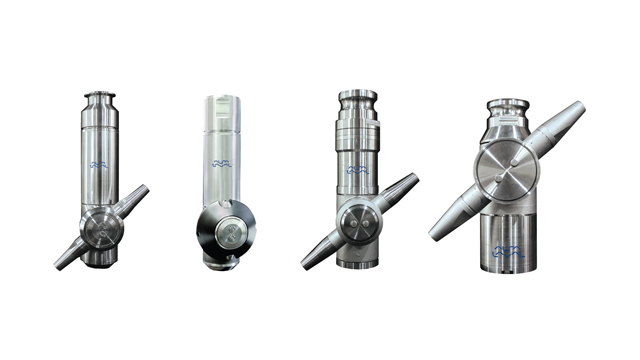
- Durchsatzbereich
- i40 S: 3-56 m³/h | i40 D: 7-80 m³/h | TZ-82: 15 m³/h (8mm-Düsen @ 7 bar)
- Betriebsdruck
- Typischerweise 4-12 bar; empfohlener Betriebsdruck 5-6,5 bar
- Wurfweite/reichweite
- TZ-82: 26 Meter horizontale Wurfweite (Benetzungsradius)
- Düsendurchmesser-Bereich
- 7-10 mm (verschiedene Konfigurationen für Durchsatz-Optimierung)
- Deck-Öffnung erforderlich
- i40 S/i40 D: nur 145 mm (kompakteste 2. Generation)
- Material-standard
- AISI 316 Edelstahl für Hauptkomponenten; PEEK für Seals/Verschleißteile
- Betriebstemperatur
- 0–95°C (32–203°F)
- Antriebsart
- Turbine-driven by cleaning medium flow (COW: crude oil washthrough possible)
- IMO-Konformität
- Erfüllt IMO-Anforderungen für COW (Crude Oil Washing) Systeme
- i40 S (Single-Nozzle, 2. Generation)
- i40 D (Dual-Nozzle, 2. Generation)
- i65 S (Single-Nozzle, High-Impact)
- T-73 (Automatic, 5.000-30.000 m³)
- TZ-67 (Rotary Jet Head, 50-500 m³)
- TZ-75 (Portable, 1.000-5.000 m³)
- TZ-82 (Portable/Fixed, bis 3.000 m³)
- TZ-89 (Media-Lubricated)
- 270FT Mark I (Single-Nozzle Crude Oil Tanker)
- Area: Nozzle wear and erosionCheck: Inspectors regularly check nozzles for wear marks, scratches, surface erosion and deformed openings. Nozzle blockages from sludge accumulation are the most frequent periodic maintenance task. Damaged nozzles must be replaced as a group.
- Area: Gearbox/turbine wear and vibrationCheck: Inspectors monitor for abnormal vibrations, temperature rise and irregular noise. Detached gear teeth and uneven disk distribution cause vibration problems. Inspection recommended every 200-300 operating hours; bearing replacement after 300-500 hours or at least every 3 years.
- Area: Ball bearings and sleeve bushings wearCheck: Inspectors check ball bearings for free rotation without contamination and damage. Sleeve bushings in gearbox frame must be checked: maximum diameter not exceeding 10.4 mm (bore not ovally deformed). Inspect all bearings and sealing rings every 6 months; replacement after 6,000 operating hours or every 3 years.
- Area: Seals and shaft passages (hysteresis coupling design)Check: Inspectors check for oil leakage and contamination at seal points. The hysteresis coupling eliminates conventional speed-setting shafts and reduces leak points. All rubber seals should be replaced at each service inspection to ensure hygiene and performance. Moisture and contamination ingress leads to seal failure.
- Area: Programming pattern and control sequence functionalityCheck: Inspectors test programming logic and valve control for correct 3D-indexed impact pattern. Check creep movement (vertical screw movement while horizontal rotation occurs) and progressive compression from coarse to fine over 8 cycles.
- Area: COW (Crude Oil Washing) system approval and crude oil compatibilityCheck: Inspectors verify IMO certification and crude oil wash-through approval. Toftejorg T-73 and 270FT Mark I are specifically designed for crude oil tankers. Check for corrosion/wear from crude oil exposure and verify valve seals under crude oil operating conditions.
Universal inspection/service points for tank cleaning machines (Gunclean Toftejorg, 2026-06). Per-model specs not auto-filled.
- Durchsatzbereich
- i40 S: 3-56 m³/h | i40 D: 7-80 m³/h | TZ-82: 15 m³/h (8mm-Düsen @ 7 bar)
- Betriebsdruck
- Typischerweise 4-12 bar; empfohlener Betriebsdruck 5-6,5 bar
- Wurfweite/reichweite
- TZ-82: 26 Meter horizontale Wurfweite (Benetzungsradius)
- Düsendurchmesser-Bereich
- 7-10 mm (verschiedene Konfigurationen für Durchsatz-Optimierung)
- Deck-Öffnung erforderlich
- i40 S/i40 D: nur 145 mm (kompakteste 2. Generation)
- Material-standard
- AISI 316 Edelstahl für Hauptkomponenten; PEEK für Seals/Verschleißteile
- Betriebstemperatur
- 0–95°C (32–203°F)
- Antriebsart
- Turbine-driven by cleaning medium flow (COW: crude oil washthrough possible)
- IMO-Konformität
- Erfüllt IMO-Anforderungen für COW (Crude Oil Washing) Systeme
- i40 S (Single-Nozzle, 2. Generation)
- i40 D (Dual-Nozzle, 2. Generation)
- i65 S (Single-Nozzle, High-Impact)
- T-73 (Automatic, 5.000-30.000 m³)
- TZ-67 (Rotary Jet Head, 50-500 m³)
- TZ-75 (Portable, 1.000-5.000 m³)
- TZ-82 (Portable/Fixed, bis 3.000 m³)
- TZ-89 (Media-Lubricated)
- 270FT Mark I (Single-Nozzle Crude Oil Tanker)
- Area: Nozzle wear and erosionCheck: Inspectors regularly check nozzles for wear marks, scratches, surface erosion and deformed openings. Nozzle blockages from sludge accumulation are the most frequent periodic maintenance task. Damaged nozzles must be replaced as a group.
- Area: Gearbox/turbine wear and vibrationCheck: Inspectors monitor for abnormal vibrations, temperature rise and irregular noise. Detached gear teeth and uneven disk distribution cause vibration problems. Inspection recommended every 200-300 operating hours; bearing replacement after 300-500 hours or at least every 3 years.
- Area: Ball bearings and sleeve bushings wearCheck: Inspectors check ball bearings for free rotation without contamination and damage. Sleeve bushings in gearbox frame must be checked: maximum diameter not exceeding 10.4 mm (bore not ovally deformed). Inspect all bearings and sealing rings every 6 months; replacement after 6,000 operating hours or every 3 years.
- Area: Seals and shaft passages (hysteresis coupling design)Check: Inspectors check for oil leakage and contamination at seal points. The hysteresis coupling eliminates conventional speed-setting shafts and reduces leak points. All rubber seals should be replaced at each service inspection to ensure hygiene and performance. Moisture and contamination ingress leads to seal failure.
- Area: Programming pattern and control sequence functionalityCheck: Inspectors test programming logic and valve control for correct 3D-indexed impact pattern. Check creep movement (vertical screw movement while horizontal rotation occurs) and progressive compression from coarse to fine over 8 cycles.
- Area: COW (Crude Oil Washing) system approval and crude oil compatibilityCheck: Inspectors verify IMO certification and crude oil wash-through approval. Toftejorg T-73 and 270FT Mark I are specifically designed for crude oil tankers. Check for corrosion/wear from crude oil exposure and verify valve seals under crude oil operating conditions.
Universal inspection/service points for tank cleaning machines (Gunclean Toftejorg, 2026-06). Per-model specs not auto-filled.
- Durchsatzbereich
- i40 S: 3-56 m³/h | i40 D: 7-80 m³/h | TZ-82: 15 m³/h (8mm-Düsen @ 7 bar)
- Betriebsdruck
- Typischerweise 4-12 bar; empfohlener Betriebsdruck 5-6,5 bar
- Wurfweite/reichweite
- TZ-82: 26 Meter horizontale Wurfweite (Benetzungsradius)
- Düsendurchmesser-Bereich
- 7-10 mm (verschiedene Konfigurationen für Durchsatz-Optimierung)
- Deck-Öffnung erforderlich
- i40 S/i40 D: nur 145 mm (kompakteste 2. Generation)
- Material-standard
- AISI 316 Edelstahl für Hauptkomponenten; PEEK für Seals/Verschleißteile
- Betriebstemperatur
- 0–95°C (32–203°F)
- Antriebsart
- Turbine-driven by cleaning medium flow (COW: crude oil washthrough possible)
- IMO-Konformität
- Erfüllt IMO-Anforderungen für COW (Crude Oil Washing) Systeme
- i40 S (Single-Nozzle, 2. Generation)
- i40 D (Dual-Nozzle, 2. Generation)
- i65 S (Single-Nozzle, High-Impact)
- T-73 (Automatic, 5.000-30.000 m³)
- TZ-67 (Rotary Jet Head, 50-500 m³)
- TZ-75 (Portable, 1.000-5.000 m³)
- TZ-82 (Portable/Fixed, bis 3.000 m³)
- TZ-89 (Media-Lubricated)
- 270FT Mark I (Single-Nozzle Crude Oil Tanker)
- Area: Nozzle wear and erosionCheck: Inspectors regularly check nozzles for wear marks, scratches, surface erosion and deformed openings. Nozzle blockages from sludge accumulation are the most frequent periodic maintenance task. Damaged nozzles must be replaced as a group.
- Area: Gearbox/turbine wear and vibrationCheck: Inspectors monitor for abnormal vibrations, temperature rise and irregular noise. Detached gear teeth and uneven disk distribution cause vibration problems. Inspection recommended every 200-300 operating hours; bearing replacement after 300-500 hours or at least every 3 years.
- Area: Ball bearings and sleeve bushings wearCheck: Inspectors check ball bearings for free rotation without contamination and damage. Sleeve bushings in gearbox frame must be checked: maximum diameter not exceeding 10.4 mm (bore not ovally deformed). Inspect all bearings and sealing rings every 6 months; replacement after 6,000 operating hours or every 3 years.
- Area: Seals and shaft passages (hysteresis coupling design)Check: Inspectors check for oil leakage and contamination at seal points. The hysteresis coupling eliminates conventional speed-setting shafts and reduces leak points. All rubber seals should be replaced at each service inspection to ensure hygiene and performance. Moisture and contamination ingress leads to seal failure.
- Area: Programming pattern and control sequence functionalityCheck: Inspectors test programming logic and valve control for correct 3D-indexed impact pattern. Check creep movement (vertical screw movement while horizontal rotation occurs) and progressive compression from coarse to fine over 8 cycles.
- Area: COW (Crude Oil Washing) system approval and crude oil compatibilityCheck: Inspectors verify IMO certification and crude oil wash-through approval. Toftejorg T-73 and 270FT Mark I are specifically designed for crude oil tankers. Check for corrosion/wear from crude oil exposure and verify valve seals under crude oil operating conditions.
Universal inspection/service points for tank cleaning machines (Gunclean Toftejorg, 2026-06). Per-model specs not auto-filled.
- Durchsatzbereich
- i40 S: 3-56 m³/h | i40 D: 7-80 m³/h | TZ-82: 15 m³/h (8mm-Düsen @ 7 bar)
- Betriebsdruck
- Typischerweise 4-12 bar; empfohlener Betriebsdruck 5-6,5 bar
- Wurfweite/reichweite
- TZ-82: 26 Meter horizontale Wurfweite (Benetzungsradius)
- Düsendurchmesser-Bereich
- 7-10 mm (verschiedene Konfigurationen für Durchsatz-Optimierung)
- Deck-Öffnung erforderlich
- i40 S/i40 D: nur 145 mm (kompakteste 2. Generation)
- Material-standard
- AISI 316 Edelstahl für Hauptkomponenten; PEEK für Seals/Verschleißteile
- Betriebstemperatur
- 0–95°C (32–203°F)
- Antriebsart
- Turbine-driven by cleaning medium flow (COW: crude oil washthrough possible)
- IMO-Konformität
- Erfüllt IMO-Anforderungen für COW (Crude Oil Washing) Systeme
- i40 S (Single-Nozzle, 2. Generation)
- i40 D (Dual-Nozzle, 2. Generation)
- i65 S (Single-Nozzle, High-Impact)
- T-73 (Automatic, 5.000-30.000 m³)
- TZ-67 (Rotary Jet Head, 50-500 m³)
- TZ-75 (Portable, 1.000-5.000 m³)
- TZ-82 (Portable/Fixed, bis 3.000 m³)
- TZ-89 (Media-Lubricated)
- 270FT Mark I (Single-Nozzle Crude Oil Tanker)
- Area: Nozzle wear and erosionCheck: Inspectors regularly check nozzles for wear marks, scratches, surface erosion and deformed openings. Nozzle blockages from sludge accumulation are the most frequent periodic maintenance task. Damaged nozzles must be replaced as a group.
- Area: Gearbox/turbine wear and vibrationCheck: Inspectors monitor for abnormal vibrations, temperature rise and irregular noise. Detached gear teeth and uneven disk distribution cause vibration problems. Inspection recommended every 200-300 operating hours; bearing replacement after 300-500 hours or at least every 3 years.
- Area: Ball bearings and sleeve bushings wearCheck: Inspectors check ball bearings for free rotation without contamination and damage. Sleeve bushings in gearbox frame must be checked: maximum diameter not exceeding 10.4 mm (bore not ovally deformed). Inspect all bearings and sealing rings every 6 months; replacement after 6,000 operating hours or every 3 years.
- Area: Seals and shaft passages (hysteresis coupling design)Check: Inspectors check for oil leakage and contamination at seal points. The hysteresis coupling eliminates conventional speed-setting shafts and reduces leak points. All rubber seals should be replaced at each service inspection to ensure hygiene and performance. Moisture and contamination ingress leads to seal failure.
- Area: Programming pattern and control sequence functionalityCheck: Inspectors test programming logic and valve control for correct 3D-indexed impact pattern. Check creep movement (vertical screw movement while horizontal rotation occurs) and progressive compression from coarse to fine over 8 cycles.
- Area: COW (Crude Oil Washing) system approval and crude oil compatibilityCheck: Inspectors verify IMO certification and crude oil wash-through approval. Toftejorg T-73 and 270FT Mark I are specifically designed for crude oil tankers. Check for corrosion/wear from crude oil exposure and verify valve seals under crude oil operating conditions.
Universal inspection/service points for tank cleaning machines (Gunclean Toftejorg, 2026-06). Per-model specs not auto-filled.
- Durchsatzbereich
- i40 S: 3-56 m³/h | i40 D: 7-80 m³/h | TZ-82: 15 m³/h (8mm-Düsen @ 7 bar)
- Betriebsdruck
- Typischerweise 4-12 bar; empfohlener Betriebsdruck 5-6,5 bar
- Wurfweite/reichweite
- TZ-82: 26 Meter horizontale Wurfweite (Benetzungsradius)
- Düsendurchmesser-Bereich
- 7-10 mm (verschiedene Konfigurationen für Durchsatz-Optimierung)
- Deck-Öffnung erforderlich
- i40 S/i40 D: nur 145 mm (kompakteste 2. Generation)
- Material-standard
- AISI 316 Edelstahl für Hauptkomponenten; PEEK für Seals/Verschleißteile
- Betriebstemperatur
- 0–95°C (32–203°F)
- Antriebsart
- Turbine-driven by cleaning medium flow (COW: crude oil washthrough possible)
- IMO-Konformität
- Erfüllt IMO-Anforderungen für COW (Crude Oil Washing) Systeme
- i40 S (Single-Nozzle, 2. Generation)
- i40 D (Dual-Nozzle, 2. Generation)
- i65 S (Single-Nozzle, High-Impact)
- T-73 (Automatic, 5.000-30.000 m³)
- TZ-67 (Rotary Jet Head, 50-500 m³)
- TZ-75 (Portable, 1.000-5.000 m³)
- TZ-82 (Portable/Fixed, bis 3.000 m³)
- TZ-89 (Media-Lubricated)
- 270FT Mark I (Single-Nozzle Crude Oil Tanker)
- Area: Nozzle wear and erosionCheck: Inspectors regularly check nozzles for wear marks, scratches, surface erosion and deformed openings. Nozzle blockages from sludge accumulation are the most frequent periodic maintenance task. Damaged nozzles must be replaced as a group.
- Area: Gearbox/turbine wear and vibrationCheck: Inspectors monitor for abnormal vibrations, temperature rise and irregular noise. Detached gear teeth and uneven disk distribution cause vibration problems. Inspection recommended every 200-300 operating hours; bearing replacement after 300-500 hours or at least every 3 years.
- Area: Ball bearings and sleeve bushings wearCheck: Inspectors check ball bearings for free rotation without contamination and damage. Sleeve bushings in gearbox frame must be checked: maximum diameter not exceeding 10.4 mm (bore not ovally deformed). Inspect all bearings and sealing rings every 6 months; replacement after 6,000 operating hours or every 3 years.
- Area: Seals and shaft passages (hysteresis coupling design)Check: Inspectors check for oil leakage and contamination at seal points. The hysteresis coupling eliminates conventional speed-setting shafts and reduces leak points. All rubber seals should be replaced at each service inspection to ensure hygiene and performance. Moisture and contamination ingress leads to seal failure.
- Area: Programming pattern and control sequence functionalityCheck: Inspectors test programming logic and valve control for correct 3D-indexed impact pattern. Check creep movement (vertical screw movement while horizontal rotation occurs) and progressive compression from coarse to fine over 8 cycles.
- Area: COW (Crude Oil Washing) system approval and crude oil compatibilityCheck: Inspectors verify IMO certification and crude oil wash-through approval. Toftejorg T-73 and 270FT Mark I are specifically designed for crude oil tankers. Check for corrosion/wear from crude oil exposure and verify valve seals under crude oil operating conditions.
Universal inspection/service points for tank cleaning machines (Gunclean Toftejorg, 2026-06). Per-model specs not auto-filled.
- Durchsatzbereich
- i40 S: 3-56 m³/h | i40 D: 7-80 m³/h | TZ-82: 15 m³/h (8mm-Düsen @ 7 bar)
- Betriebsdruck
- Typischerweise 4-12 bar; empfohlener Betriebsdruck 5-6,5 bar
- Wurfweite/reichweite
- TZ-82: 26 Meter horizontale Wurfweite (Benetzungsradius)
- Düsendurchmesser-Bereich
- 7-10 mm (verschiedene Konfigurationen für Durchsatz-Optimierung)
- Deck-Öffnung erforderlich
- i40 S/i40 D: nur 145 mm (kompakteste 2. Generation)
- Material-standard
- AISI 316 Edelstahl für Hauptkomponenten; PEEK für Seals/Verschleißteile
- Betriebstemperatur
- 0–95°C (32–203°F)
- Antriebsart
- Turbine-driven by cleaning medium flow (COW: crude oil washthrough possible)
- IMO-Konformität
- Erfüllt IMO-Anforderungen für COW (Crude Oil Washing) Systeme
- i40 S (Single-Nozzle, 2. Generation)
- i40 D (Dual-Nozzle, 2. Generation)
- i65 S (Single-Nozzle, High-Impact)
- T-73 (Automatic, 5.000-30.000 m³)
- TZ-67 (Rotary Jet Head, 50-500 m³)
- TZ-75 (Portable, 1.000-5.000 m³)
- TZ-82 (Portable/Fixed, bis 3.000 m³)
- TZ-89 (Media-Lubricated)
- 270FT Mark I (Single-Nozzle Crude Oil Tanker)
- Area: Nozzle wear and erosionCheck: Inspectors regularly check nozzles for wear marks, scratches, surface erosion and deformed openings. Nozzle blockages from sludge accumulation are the most frequent periodic maintenance task. Damaged nozzles must be replaced as a group.
- Area: Gearbox/turbine wear and vibrationCheck: Inspectors monitor for abnormal vibrations, temperature rise and irregular noise. Detached gear teeth and uneven disk distribution cause vibration problems. Inspection recommended every 200-300 operating hours; bearing replacement after 300-500 hours or at least every 3 years.
- Area: Ball bearings and sleeve bushings wearCheck: Inspectors check ball bearings for free rotation without contamination and damage. Sleeve bushings in gearbox frame must be checked: maximum diameter not exceeding 10.4 mm (bore not ovally deformed). Inspect all bearings and sealing rings every 6 months; replacement after 6,000 operating hours or every 3 years.
- Area: Seals and shaft passages (hysteresis coupling design)Check: Inspectors check for oil leakage and contamination at seal points. The hysteresis coupling eliminates conventional speed-setting shafts and reduces leak points. All rubber seals should be replaced at each service inspection to ensure hygiene and performance. Moisture and contamination ingress leads to seal failure.
- Area: Programming pattern and control sequence functionalityCheck: Inspectors test programming logic and valve control for correct 3D-indexed impact pattern. Check creep movement (vertical screw movement while horizontal rotation occurs) and progressive compression from coarse to fine over 8 cycles.
- Area: COW (Crude Oil Washing) system approval and crude oil compatibilityCheck: Inspectors verify IMO certification and crude oil wash-through approval. Toftejorg T-73 and 270FT Mark I are specifically designed for crude oil tankers. Check for corrosion/wear from crude oil exposure and verify valve seals under crude oil operating conditions.
Universal inspection/service points for tank cleaning machines (Gunclean Toftejorg, 2026-06). Per-model specs not auto-filled.
- Durchsatzbereich
- i40 S: 3-56 m³/h | i40 D: 7-80 m³/h | TZ-82: 15 m³/h (8mm-Düsen @ 7 bar)
- Betriebsdruck
- Typischerweise 4-12 bar; empfohlener Betriebsdruck 5-6,5 bar
- Wurfweite/reichweite
- TZ-82: 26 Meter horizontale Wurfweite (Benetzungsradius)
- Düsendurchmesser-Bereich
- 7-10 mm (verschiedene Konfigurationen für Durchsatz-Optimierung)
- Deck-Öffnung erforderlich
- i40 S/i40 D: nur 145 mm (kompakteste 2. Generation)
- Material-standard
- AISI 316 Edelstahl für Hauptkomponenten; PEEK für Seals/Verschleißteile
- Betriebstemperatur
- 0–95°C (32–203°F)
- Antriebsart
- Turbine-driven by cleaning medium flow (COW: crude oil washthrough possible)
- IMO-Konformität
- Erfüllt IMO-Anforderungen für COW (Crude Oil Washing) Systeme
- i40 S (Single-Nozzle, 2. Generation)
- i40 D (Dual-Nozzle, 2. Generation)
- i65 S (Single-Nozzle, High-Impact)
- T-73 (Automatic, 5.000-30.000 m³)
- TZ-67 (Rotary Jet Head, 50-500 m³)
- TZ-75 (Portable, 1.000-5.000 m³)
- TZ-82 (Portable/Fixed, bis 3.000 m³)
- TZ-89 (Media-Lubricated)
- 270FT Mark I (Single-Nozzle Crude Oil Tanker)
- Area: Nozzle wear and erosionCheck: Inspectors regularly check nozzles for wear marks, scratches, surface erosion and deformed openings. Nozzle blockages from sludge accumulation are the most frequent periodic maintenance task. Damaged nozzles must be replaced as a group.
- Area: Gearbox/turbine wear and vibrationCheck: Inspectors monitor for abnormal vibrations, temperature rise and irregular noise. Detached gear teeth and uneven disk distribution cause vibration problems. Inspection recommended every 200-300 operating hours; bearing replacement after 300-500 hours or at least every 3 years.
- Area: Ball bearings and sleeve bushings wearCheck: Inspectors check ball bearings for free rotation without contamination and damage. Sleeve bushings in gearbox frame must be checked: maximum diameter not exceeding 10.4 mm (bore not ovally deformed). Inspect all bearings and sealing rings every 6 months; replacement after 6,000 operating hours or every 3 years.
- Area: Seals and shaft passages (hysteresis coupling design)Check: Inspectors check for oil leakage and contamination at seal points. The hysteresis coupling eliminates conventional speed-setting shafts and reduces leak points. All rubber seals should be replaced at each service inspection to ensure hygiene and performance. Moisture and contamination ingress leads to seal failure.
- Area: Programming pattern and control sequence functionalityCheck: Inspectors test programming logic and valve control for correct 3D-indexed impact pattern. Check creep movement (vertical screw movement while horizontal rotation occurs) and progressive compression from coarse to fine over 8 cycles.
- Area: COW (Crude Oil Washing) system approval and crude oil compatibilityCheck: Inspectors verify IMO certification and crude oil wash-through approval. Toftejorg T-73 and 270FT Mark I are specifically designed for crude oil tankers. Check for corrosion/wear from crude oil exposure and verify valve seals under crude oil operating conditions.
Universal inspection/service points for tank cleaning machines (Gunclean Toftejorg, 2026-06). Per-model specs not auto-filled.
- Durchsatzbereich
- i40 S: 3-56 m³/h | i40 D: 7-80 m³/h | TZ-82: 15 m³/h (8mm-Düsen @ 7 bar)
- Betriebsdruck
- Typischerweise 4-12 bar; empfohlener Betriebsdruck 5-6,5 bar
- Wurfweite/reichweite
- TZ-82: 26 Meter horizontale Wurfweite (Benetzungsradius)
- Düsendurchmesser-Bereich
- 7-10 mm (verschiedene Konfigurationen für Durchsatz-Optimierung)
- Deck-Öffnung erforderlich
- i40 S/i40 D: nur 145 mm (kompakteste 2. Generation)
- Material-standard
- AISI 316 Edelstahl für Hauptkomponenten; PEEK für Seals/Verschleißteile
- Betriebstemperatur
- 0–95°C (32–203°F)
- Antriebsart
- Turbine-driven by cleaning medium flow (COW: crude oil washthrough possible)
- IMO-Konformität
- Erfüllt IMO-Anforderungen für COW (Crude Oil Washing) Systeme
- i40 S (Single-Nozzle, 2. Generation)
- i40 D (Dual-Nozzle, 2. Generation)
- i65 S (Single-Nozzle, High-Impact)
- T-73 (Automatic, 5.000-30.000 m³)
- TZ-67 (Rotary Jet Head, 50-500 m³)
- TZ-75 (Portable, 1.000-5.000 m³)
- TZ-82 (Portable/Fixed, bis 3.000 m³)
- TZ-89 (Media-Lubricated)
- 270FT Mark I (Single-Nozzle Crude Oil Tanker)
- Area: Nozzle wear and erosionCheck: Inspectors regularly check nozzles for wear marks, scratches, surface erosion and deformed openings. Nozzle blockages from sludge accumulation are the most frequent periodic maintenance task. Damaged nozzles must be replaced as a group.
- Area: Gearbox/turbine wear and vibrationCheck: Inspectors monitor for abnormal vibrations, temperature rise and irregular noise. Detached gear teeth and uneven disk distribution cause vibration problems. Inspection recommended every 200-300 operating hours; bearing replacement after 300-500 hours or at least every 3 years.
- Area: Ball bearings and sleeve bushings wearCheck: Inspectors check ball bearings for free rotation without contamination and damage. Sleeve bushings in gearbox frame must be checked: maximum diameter not exceeding 10.4 mm (bore not ovally deformed). Inspect all bearings and sealing rings every 6 months; replacement after 6,000 operating hours or every 3 years.
- Area: Seals and shaft passages (hysteresis coupling design)Check: Inspectors check for oil leakage and contamination at seal points. The hysteresis coupling eliminates conventional speed-setting shafts and reduces leak points. All rubber seals should be replaced at each service inspection to ensure hygiene and performance. Moisture and contamination ingress leads to seal failure.
- Area: Programming pattern and control sequence functionalityCheck: Inspectors test programming logic and valve control for correct 3D-indexed impact pattern. Check creep movement (vertical screw movement while horizontal rotation occurs) and progressive compression from coarse to fine over 8 cycles.
- Area: COW (Crude Oil Washing) system approval and crude oil compatibilityCheck: Inspectors verify IMO certification and crude oil wash-through approval. Toftejorg T-73 and 270FT Mark I are specifically designed for crude oil tankers. Check for corrosion/wear from crude oil exposure and verify valve seals under crude oil operating conditions.
Universal inspection/service points for tank cleaning machines (Gunclean Toftejorg, 2026-06). Per-model specs not auto-filled.
- Durchsatzbereich
- i40 S: 3-56 m³/h | i40 D: 7-80 m³/h | TZ-82: 15 m³/h (8mm-Düsen @ 7 bar)
- Betriebsdruck
- Typischerweise 4-12 bar; empfohlener Betriebsdruck 5-6,5 bar
- Wurfweite/reichweite
- TZ-82: 26 Meter horizontale Wurfweite (Benetzungsradius)
- Düsendurchmesser-Bereich
- 7-10 mm (verschiedene Konfigurationen für Durchsatz-Optimierung)
- Deck-Öffnung erforderlich
- i40 S/i40 D: nur 145 mm (kompakteste 2. Generation)
- Material-standard
- AISI 316 Edelstahl für Hauptkomponenten; PEEK für Seals/Verschleißteile
- Betriebstemperatur
- 0–95°C (32–203°F)
- Antriebsart
- Turbine-driven by cleaning medium flow (COW: crude oil washthrough possible)
- IMO-Konformität
- Erfüllt IMO-Anforderungen für COW (Crude Oil Washing) Systeme
- i40 S (Single-Nozzle, 2. Generation)
- i40 D (Dual-Nozzle, 2. Generation)
- i65 S (Single-Nozzle, High-Impact)
- T-73 (Automatic, 5.000-30.000 m³)
- TZ-67 (Rotary Jet Head, 50-500 m³)
- TZ-75 (Portable, 1.000-5.000 m³)
- TZ-82 (Portable/Fixed, bis 3.000 m³)
- TZ-89 (Media-Lubricated)
- 270FT Mark I (Single-Nozzle Crude Oil Tanker)
- Area: Nozzle wear and erosionCheck: Inspectors regularly check nozzles for wear marks, scratches, surface erosion and deformed openings. Nozzle blockages from sludge accumulation are the most frequent periodic maintenance task. Damaged nozzles must be replaced as a group.
- Area: Gearbox/turbine wear and vibrationCheck: Inspectors monitor for abnormal vibrations, temperature rise and irregular noise. Detached gear teeth and uneven disk distribution cause vibration problems. Inspection recommended every 200-300 operating hours; bearing replacement after 300-500 hours or at least every 3 years.
- Area: Ball bearings and sleeve bushings wearCheck: Inspectors check ball bearings for free rotation without contamination and damage. Sleeve bushings in gearbox frame must be checked: maximum diameter not exceeding 10.4 mm (bore not ovally deformed). Inspect all bearings and sealing rings every 6 months; replacement after 6,000 operating hours or every 3 years.
- Area: Seals and shaft passages (hysteresis coupling design)Check: Inspectors check for oil leakage and contamination at seal points. The hysteresis coupling eliminates conventional speed-setting shafts and reduces leak points. All rubber seals should be replaced at each service inspection to ensure hygiene and performance. Moisture and contamination ingress leads to seal failure.
- Area: Programming pattern and control sequence functionalityCheck: Inspectors test programming logic and valve control for correct 3D-indexed impact pattern. Check creep movement (vertical screw movement while horizontal rotation occurs) and progressive compression from coarse to fine over 8 cycles.
- Area: COW (Crude Oil Washing) system approval and crude oil compatibilityCheck: Inspectors verify IMO certification and crude oil wash-through approval. Toftejorg T-73 and 270FT Mark I are specifically designed for crude oil tankers. Check for corrosion/wear from crude oil exposure and verify valve seals under crude oil operating conditions.
Universal inspection/service points for tank cleaning machines (Gunclean Toftejorg, 2026-06). Per-model specs not auto-filled.
- Durchsatzbereich
- i40 S: 3-56 m³/h | i40 D: 7-80 m³/h | TZ-82: 15 m³/h (8mm-Düsen @ 7 bar)
- Betriebsdruck
- Typischerweise 4-12 bar; empfohlener Betriebsdruck 5-6,5 bar
- Wurfweite/reichweite
- TZ-82: 26 Meter horizontale Wurfweite (Benetzungsradius)
- Düsendurchmesser-Bereich
- 7-10 mm (verschiedene Konfigurationen für Durchsatz-Optimierung)
- Deck-Öffnung erforderlich
- i40 S/i40 D: nur 145 mm (kompakteste 2. Generation)
- Material-standard
- AISI 316 Edelstahl für Hauptkomponenten; PEEK für Seals/Verschleißteile
- Betriebstemperatur
- 0–95°C (32–203°F)
- Antriebsart
- Turbine-driven by cleaning medium flow (COW: crude oil washthrough possible)
- IMO-Konformität
- Erfüllt IMO-Anforderungen für COW (Crude Oil Washing) Systeme
- i40 S (Single-Nozzle, 2. Generation)
- i40 D (Dual-Nozzle, 2. Generation)
- i65 S (Single-Nozzle, High-Impact)
- T-73 (Automatic, 5.000-30.000 m³)
- TZ-67 (Rotary Jet Head, 50-500 m³)
- TZ-75 (Portable, 1.000-5.000 m³)
- TZ-82 (Portable/Fixed, bis 3.000 m³)
- TZ-89 (Media-Lubricated)
- 270FT Mark I (Single-Nozzle Crude Oil Tanker)
- Area: Nozzle wear and erosionCheck: Inspectors regularly check nozzles for wear marks, scratches, surface erosion and deformed openings. Nozzle blockages from sludge accumulation are the most frequent periodic maintenance task. Damaged nozzles must be replaced as a group.
- Area: Gearbox/turbine wear and vibrationCheck: Inspectors monitor for abnormal vibrations, temperature rise and irregular noise. Detached gear teeth and uneven disk distribution cause vibration problems. Inspection recommended every 200-300 operating hours; bearing replacement after 300-500 hours or at least every 3 years.
- Area: Ball bearings and sleeve bushings wearCheck: Inspectors check ball bearings for free rotation without contamination and damage. Sleeve bushings in gearbox frame must be checked: maximum diameter not exceeding 10.4 mm (bore not ovally deformed). Inspect all bearings and sealing rings every 6 months; replacement after 6,000 operating hours or every 3 years.
- Area: Seals and shaft passages (hysteresis coupling design)Check: Inspectors check for oil leakage and contamination at seal points. The hysteresis coupling eliminates conventional speed-setting shafts and reduces leak points. All rubber seals should be replaced at each service inspection to ensure hygiene and performance. Moisture and contamination ingress leads to seal failure.
- Area: Programming pattern and control sequence functionalityCheck: Inspectors test programming logic and valve control for correct 3D-indexed impact pattern. Check creep movement (vertical screw movement while horizontal rotation occurs) and progressive compression from coarse to fine over 8 cycles.
- Area: COW (Crude Oil Washing) system approval and crude oil compatibilityCheck: Inspectors verify IMO certification and crude oil wash-through approval. Toftejorg T-73 and 270FT Mark I are specifically designed for crude oil tankers. Check for corrosion/wear from crude oil exposure and verify valve seals under crude oil operating conditions.
Universal inspection/service points for tank cleaning machines (Gunclean Toftejorg, 2026-06). Per-model specs not auto-filled.
- Durchsatzbereich
- i40 S: 3-56 m³/h | i40 D: 7-80 m³/h | TZ-82: 15 m³/h (8mm-Düsen @ 7 bar)
- Betriebsdruck
- Typischerweise 4-12 bar; empfohlener Betriebsdruck 5-6,5 bar
- Wurfweite/reichweite
- TZ-82: 26 Meter horizontale Wurfweite (Benetzungsradius)
- Düsendurchmesser-Bereich
- 7-10 mm (verschiedene Konfigurationen für Durchsatz-Optimierung)
- Deck-Öffnung erforderlich
- i40 S/i40 D: nur 145 mm (kompakteste 2. Generation)
- Material-standard
- AISI 316 Edelstahl für Hauptkomponenten; PEEK für Seals/Verschleißteile
- Betriebstemperatur
- 0–95°C (32–203°F)
- Antriebsart
- Turbine-driven by cleaning medium flow (COW: crude oil washthrough possible)
- IMO-Konformität
- Erfüllt IMO-Anforderungen für COW (Crude Oil Washing) Systeme
- i40 S (Single-Nozzle, 2. Generation)
- i40 D (Dual-Nozzle, 2. Generation)
- i65 S (Single-Nozzle, High-Impact)
- T-73 (Automatic, 5.000-30.000 m³)
- TZ-67 (Rotary Jet Head, 50-500 m³)
- TZ-75 (Portable, 1.000-5.000 m³)
- TZ-82 (Portable/Fixed, bis 3.000 m³)
- TZ-89 (Media-Lubricated)
- 270FT Mark I (Single-Nozzle Crude Oil Tanker)
- Area: Nozzle wear and erosionCheck: Inspectors regularly check nozzles for wear marks, scratches, surface erosion and deformed openings. Nozzle blockages from sludge accumulation are the most frequent periodic maintenance task. Damaged nozzles must be replaced as a group.
- Area: Gearbox/turbine wear and vibrationCheck: Inspectors monitor for abnormal vibrations, temperature rise and irregular noise. Detached gear teeth and uneven disk distribution cause vibration problems. Inspection recommended every 200-300 operating hours; bearing replacement after 300-500 hours or at least every 3 years.
- Area: Ball bearings and sleeve bushings wearCheck: Inspectors check ball bearings for free rotation without contamination and damage. Sleeve bushings in gearbox frame must be checked: maximum diameter not exceeding 10.4 mm (bore not ovally deformed). Inspect all bearings and sealing rings every 6 months; replacement after 6,000 operating hours or every 3 years.
- Area: Seals and shaft passages (hysteresis coupling design)Check: Inspectors check for oil leakage and contamination at seal points. The hysteresis coupling eliminates conventional speed-setting shafts and reduces leak points. All rubber seals should be replaced at each service inspection to ensure hygiene and performance. Moisture and contamination ingress leads to seal failure.
- Area: Programming pattern and control sequence functionalityCheck: Inspectors test programming logic and valve control for correct 3D-indexed impact pattern. Check creep movement (vertical screw movement while horizontal rotation occurs) and progressive compression from coarse to fine over 8 cycles.
- Area: COW (Crude Oil Washing) system approval and crude oil compatibilityCheck: Inspectors verify IMO certification and crude oil wash-through approval. Toftejorg T-73 and 270FT Mark I are specifically designed for crude oil tankers. Check for corrosion/wear from crude oil exposure and verify valve seals under crude oil operating conditions.
Universal inspection/service points for tank cleaning machines (Gunclean Toftejorg, 2026-06). Per-model specs not auto-filled.
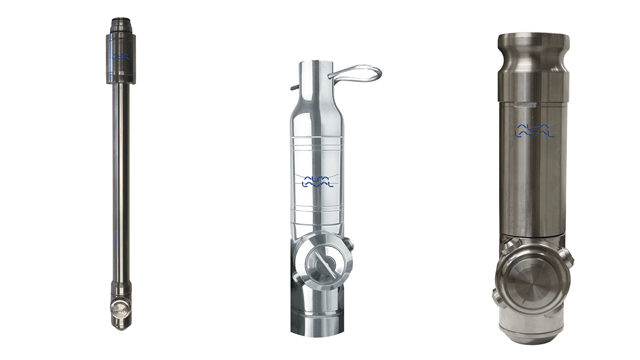
- Durchsatzbereich
- i40 S: 3-56 m³/h | i40 D: 7-80 m³/h | TZ-82: 15 m³/h (8mm-Düsen @ 7 bar)
- Betriebsdruck
- Typischerweise 4-12 bar; empfohlener Betriebsdruck 5-6,5 bar
- Wurfweite/reichweite
- TZ-82: 26 Meter horizontale Wurfweite (Benetzungsradius)
- Düsendurchmesser-Bereich
- 7-10 mm (verschiedene Konfigurationen für Durchsatz-Optimierung)
- Deck-Öffnung erforderlich
- i40 S/i40 D: nur 145 mm (kompakteste 2. Generation)
- Material-standard
- AISI 316 Edelstahl für Hauptkomponenten; PEEK für Seals/Verschleißteile
- Betriebstemperatur
- 0–95°C (32–203°F)
- Antriebsart
- Turbine-driven by cleaning medium flow (COW: crude oil washthrough possible)
- IMO-Konformität
- Erfüllt IMO-Anforderungen für COW (Crude Oil Washing) Systeme
- i40 S (Single-Nozzle, 2. Generation)
- i40 D (Dual-Nozzle, 2. Generation)
- i65 S (Single-Nozzle, High-Impact)
- T-73 (Automatic, 5.000-30.000 m³)
- TZ-67 (Rotary Jet Head, 50-500 m³)
- TZ-75 (Portable, 1.000-5.000 m³)
- TZ-82 (Portable/Fixed, bis 3.000 m³)
- TZ-89 (Media-Lubricated)
- 270FT Mark I (Single-Nozzle Crude Oil Tanker)
- Area: Nozzle wear and erosionCheck: Inspectors regularly check nozzles for wear marks, scratches, surface erosion and deformed openings. Nozzle blockages from sludge accumulation are the most frequent periodic maintenance task. Damaged nozzles must be replaced as a group.
- Area: Gearbox/turbine wear and vibrationCheck: Inspectors monitor for abnormal vibrations, temperature rise and irregular noise. Detached gear teeth and uneven disk distribution cause vibration problems. Inspection recommended every 200-300 operating hours; bearing replacement after 300-500 hours or at least every 3 years.
- Area: Ball bearings and sleeve bushings wearCheck: Inspectors check ball bearings for free rotation without contamination and damage. Sleeve bushings in gearbox frame must be checked: maximum diameter not exceeding 10.4 mm (bore not ovally deformed). Inspect all bearings and sealing rings every 6 months; replacement after 6,000 operating hours or every 3 years.
- Area: Seals and shaft passages (hysteresis coupling design)Check: Inspectors check for oil leakage and contamination at seal points. The hysteresis coupling eliminates conventional speed-setting shafts and reduces leak points. All rubber seals should be replaced at each service inspection to ensure hygiene and performance. Moisture and contamination ingress leads to seal failure.
- Area: Programming pattern and control sequence functionalityCheck: Inspectors test programming logic and valve control for correct 3D-indexed impact pattern. Check creep movement (vertical screw movement while horizontal rotation occurs) and progressive compression from coarse to fine over 8 cycles.
- Area: COW (Crude Oil Washing) system approval and crude oil compatibilityCheck: Inspectors verify IMO certification and crude oil wash-through approval. Toftejorg T-73 and 270FT Mark I are specifically designed for crude oil tankers. Check for corrosion/wear from crude oil exposure and verify valve seals under crude oil operating conditions.
Universal inspection/service points for tank cleaning machines (Gunclean Toftejorg, 2026-06). Per-model specs not auto-filled.
- Durchsatzbereich
- i40 S: 3-56 m³/h | i40 D: 7-80 m³/h | TZ-82: 15 m³/h (8mm-Düsen @ 7 bar)
- Betriebsdruck
- Typischerweise 4-12 bar; empfohlener Betriebsdruck 5-6,5 bar
- Wurfweite/reichweite
- TZ-82: 26 Meter horizontale Wurfweite (Benetzungsradius)
- Düsendurchmesser-Bereich
- 7-10 mm (verschiedene Konfigurationen für Durchsatz-Optimierung)
- Deck-Öffnung erforderlich
- i40 S/i40 D: nur 145 mm (kompakteste 2. Generation)
- Material-standard
- AISI 316 Edelstahl für Hauptkomponenten; PEEK für Seals/Verschleißteile
- Betriebstemperatur
- 0–95°C (32–203°F)
- Antriebsart
- Turbine-driven by cleaning medium flow (COW: crude oil washthrough possible)
- IMO-Konformität
- Erfüllt IMO-Anforderungen für COW (Crude Oil Washing) Systeme
- i40 S (Single-Nozzle, 2. Generation)
- i40 D (Dual-Nozzle, 2. Generation)
- i65 S (Single-Nozzle, High-Impact)
- T-73 (Automatic, 5.000-30.000 m³)
- TZ-67 (Rotary Jet Head, 50-500 m³)
- TZ-75 (Portable, 1.000-5.000 m³)
- TZ-82 (Portable/Fixed, bis 3.000 m³)
- TZ-89 (Media-Lubricated)
- 270FT Mark I (Single-Nozzle Crude Oil Tanker)
- Area: Nozzle wear and erosionCheck: Inspectors regularly check nozzles for wear marks, scratches, surface erosion and deformed openings. Nozzle blockages from sludge accumulation are the most frequent periodic maintenance task. Damaged nozzles must be replaced as a group.
- Area: Gearbox/turbine wear and vibrationCheck: Inspectors monitor for abnormal vibrations, temperature rise and irregular noise. Detached gear teeth and uneven disk distribution cause vibration problems. Inspection recommended every 200-300 operating hours; bearing replacement after 300-500 hours or at least every 3 years.
- Area: Ball bearings and sleeve bushings wearCheck: Inspectors check ball bearings for free rotation without contamination and damage. Sleeve bushings in gearbox frame must be checked: maximum diameter not exceeding 10.4 mm (bore not ovally deformed). Inspect all bearings and sealing rings every 6 months; replacement after 6,000 operating hours or every 3 years.
- Area: Seals and shaft passages (hysteresis coupling design)Check: Inspectors check for oil leakage and contamination at seal points. The hysteresis coupling eliminates conventional speed-setting shafts and reduces leak points. All rubber seals should be replaced at each service inspection to ensure hygiene and performance. Moisture and contamination ingress leads to seal failure.
- Area: Programming pattern and control sequence functionalityCheck: Inspectors test programming logic and valve control for correct 3D-indexed impact pattern. Check creep movement (vertical screw movement while horizontal rotation occurs) and progressive compression from coarse to fine over 8 cycles.
- Area: COW (Crude Oil Washing) system approval and crude oil compatibilityCheck: Inspectors verify IMO certification and crude oil wash-through approval. Toftejorg T-73 and 270FT Mark I are specifically designed for crude oil tankers. Check for corrosion/wear from crude oil exposure and verify valve seals under crude oil operating conditions.
Universal inspection/service points for tank cleaning machines (Gunclean Toftejorg, 2026-06). Per-model specs not auto-filled.
- Durchsatzbereich
- i40 S: 3-56 m³/h | i40 D: 7-80 m³/h | TZ-82: 15 m³/h (8mm-Düsen @ 7 bar)
- Betriebsdruck
- Typischerweise 4-12 bar; empfohlener Betriebsdruck 5-6,5 bar
- Wurfweite/reichweite
- TZ-82: 26 Meter horizontale Wurfweite (Benetzungsradius)
- Düsendurchmesser-Bereich
- 7-10 mm (verschiedene Konfigurationen für Durchsatz-Optimierung)
- Deck-Öffnung erforderlich
- i40 S/i40 D: nur 145 mm (kompakteste 2. Generation)
- Material-standard
- AISI 316 Edelstahl für Hauptkomponenten; PEEK für Seals/Verschleißteile
- Betriebstemperatur
- 0–95°C (32–203°F)
- Antriebsart
- Turbine-driven by cleaning medium flow (COW: crude oil washthrough possible)
- IMO-Konformität
- Erfüllt IMO-Anforderungen für COW (Crude Oil Washing) Systeme
- i40 S (Single-Nozzle, 2. Generation)
- i40 D (Dual-Nozzle, 2. Generation)
- i65 S (Single-Nozzle, High-Impact)
- T-73 (Automatic, 5.000-30.000 m³)
- TZ-67 (Rotary Jet Head, 50-500 m³)
- TZ-75 (Portable, 1.000-5.000 m³)
- TZ-82 (Portable/Fixed, bis 3.000 m³)
- TZ-89 (Media-Lubricated)
- 270FT Mark I (Single-Nozzle Crude Oil Tanker)
- Area: Nozzle wear and erosionCheck: Inspectors regularly check nozzles for wear marks, scratches, surface erosion and deformed openings. Nozzle blockages from sludge accumulation are the most frequent periodic maintenance task. Damaged nozzles must be replaced as a group.
- Area: Gearbox/turbine wear and vibrationCheck: Inspectors monitor for abnormal vibrations, temperature rise and irregular noise. Detached gear teeth and uneven disk distribution cause vibration problems. Inspection recommended every 200-300 operating hours; bearing replacement after 300-500 hours or at least every 3 years.
- Area: Ball bearings and sleeve bushings wearCheck: Inspectors check ball bearings for free rotation without contamination and damage. Sleeve bushings in gearbox frame must be checked: maximum diameter not exceeding 10.4 mm (bore not ovally deformed). Inspect all bearings and sealing rings every 6 months; replacement after 6,000 operating hours or every 3 years.
- Area: Seals and shaft passages (hysteresis coupling design)Check: Inspectors check for oil leakage and contamination at seal points. The hysteresis coupling eliminates conventional speed-setting shafts and reduces leak points. All rubber seals should be replaced at each service inspection to ensure hygiene and performance. Moisture and contamination ingress leads to seal failure.
- Area: Programming pattern and control sequence functionalityCheck: Inspectors test programming logic and valve control for correct 3D-indexed impact pattern. Check creep movement (vertical screw movement while horizontal rotation occurs) and progressive compression from coarse to fine over 8 cycles.
- Area: COW (Crude Oil Washing) system approval and crude oil compatibilityCheck: Inspectors verify IMO certification and crude oil wash-through approval. Toftejorg T-73 and 270FT Mark I are specifically designed for crude oil tankers. Check for corrosion/wear from crude oil exposure and verify valve seals under crude oil operating conditions.
Universal inspection/service points for tank cleaning machines (Gunclean Toftejorg, 2026-06). Per-model specs not auto-filled.
- Durchsatzbereich
- i40 S: 3-56 m³/h | i40 D: 7-80 m³/h | TZ-82: 15 m³/h (8mm-Düsen @ 7 bar)
- Betriebsdruck
- Typischerweise 4-12 bar; empfohlener Betriebsdruck 5-6,5 bar
- Wurfweite/reichweite
- TZ-82: 26 Meter horizontale Wurfweite (Benetzungsradius)
- Düsendurchmesser-Bereich
- 7-10 mm (verschiedene Konfigurationen für Durchsatz-Optimierung)
- Deck-Öffnung erforderlich
- i40 S/i40 D: nur 145 mm (kompakteste 2. Generation)
- Material-standard
- AISI 316 Edelstahl für Hauptkomponenten; PEEK für Seals/Verschleißteile
- Betriebstemperatur
- 0–95°C (32–203°F)
- Antriebsart
- Turbine-driven by cleaning medium flow (COW: crude oil washthrough possible)
- IMO-Konformität
- Erfüllt IMO-Anforderungen für COW (Crude Oil Washing) Systeme
- i40 S (Single-Nozzle, 2. Generation)
- i40 D (Dual-Nozzle, 2. Generation)
- i65 S (Single-Nozzle, High-Impact)
- T-73 (Automatic, 5.000-30.000 m³)
- TZ-67 (Rotary Jet Head, 50-500 m³)
- TZ-75 (Portable, 1.000-5.000 m³)
- TZ-82 (Portable/Fixed, bis 3.000 m³)
- TZ-89 (Media-Lubricated)
- 270FT Mark I (Single-Nozzle Crude Oil Tanker)
- Area: Nozzle wear and erosionCheck: Inspectors regularly check nozzles for wear marks, scratches, surface erosion and deformed openings. Nozzle blockages from sludge accumulation are the most frequent periodic maintenance task. Damaged nozzles must be replaced as a group.
- Area: Gearbox/turbine wear and vibrationCheck: Inspectors monitor for abnormal vibrations, temperature rise and irregular noise. Detached gear teeth and uneven disk distribution cause vibration problems. Inspection recommended every 200-300 operating hours; bearing replacement after 300-500 hours or at least every 3 years.
- Area: Ball bearings and sleeve bushings wearCheck: Inspectors check ball bearings for free rotation without contamination and damage. Sleeve bushings in gearbox frame must be checked: maximum diameter not exceeding 10.4 mm (bore not ovally deformed). Inspect all bearings and sealing rings every 6 months; replacement after 6,000 operating hours or every 3 years.
- Area: Seals and shaft passages (hysteresis coupling design)Check: Inspectors check for oil leakage and contamination at seal points. The hysteresis coupling eliminates conventional speed-setting shafts and reduces leak points. All rubber seals should be replaced at each service inspection to ensure hygiene and performance. Moisture and contamination ingress leads to seal failure.
- Area: Programming pattern and control sequence functionalityCheck: Inspectors test programming logic and valve control for correct 3D-indexed impact pattern. Check creep movement (vertical screw movement while horizontal rotation occurs) and progressive compression from coarse to fine over 8 cycles.
- Area: COW (Crude Oil Washing) system approval and crude oil compatibilityCheck: Inspectors verify IMO certification and crude oil wash-through approval. Toftejorg T-73 and 270FT Mark I are specifically designed for crude oil tankers. Check for corrosion/wear from crude oil exposure and verify valve seals under crude oil operating conditions.
Universal inspection/service points for tank cleaning machines (Gunclean Toftejorg, 2026-06). Per-model specs not auto-filled.
- Durchsatzbereich
- i40 S: 3-56 m³/h | i40 D: 7-80 m³/h | TZ-82: 15 m³/h (8mm-Düsen @ 7 bar)
- Betriebsdruck
- Typischerweise 4-12 bar; empfohlener Betriebsdruck 5-6,5 bar
- Wurfweite/reichweite
- TZ-82: 26 Meter horizontale Wurfweite (Benetzungsradius)
- Düsendurchmesser-Bereich
- 7-10 mm (verschiedene Konfigurationen für Durchsatz-Optimierung)
- Deck-Öffnung erforderlich
- i40 S/i40 D: nur 145 mm (kompakteste 2. Generation)
- Material-standard
- AISI 316 Edelstahl für Hauptkomponenten; PEEK für Seals/Verschleißteile
- Betriebstemperatur
- 0–95°C (32–203°F)
- Antriebsart
- Turbine-driven by cleaning medium flow (COW: crude oil washthrough possible)
- IMO-Konformität
- Erfüllt IMO-Anforderungen für COW (Crude Oil Washing) Systeme
- i40 S (Single-Nozzle, 2. Generation)
- i40 D (Dual-Nozzle, 2. Generation)
- i65 S (Single-Nozzle, High-Impact)
- T-73 (Automatic, 5.000-30.000 m³)
- TZ-67 (Rotary Jet Head, 50-500 m³)
- TZ-75 (Portable, 1.000-5.000 m³)
- TZ-82 (Portable/Fixed, bis 3.000 m³)
- TZ-89 (Media-Lubricated)
- 270FT Mark I (Single-Nozzle Crude Oil Tanker)
- Area: Nozzle wear and erosionCheck: Inspectors regularly check nozzles for wear marks, scratches, surface erosion and deformed openings. Nozzle blockages from sludge accumulation are the most frequent periodic maintenance task. Damaged nozzles must be replaced as a group.
- Area: Gearbox/turbine wear and vibrationCheck: Inspectors monitor for abnormal vibrations, temperature rise and irregular noise. Detached gear teeth and uneven disk distribution cause vibration problems. Inspection recommended every 200-300 operating hours; bearing replacement after 300-500 hours or at least every 3 years.
- Area: Ball bearings and sleeve bushings wearCheck: Inspectors check ball bearings for free rotation without contamination and damage. Sleeve bushings in gearbox frame must be checked: maximum diameter not exceeding 10.4 mm (bore not ovally deformed). Inspect all bearings and sealing rings every 6 months; replacement after 6,000 operating hours or every 3 years.
- Area: Seals and shaft passages (hysteresis coupling design)Check: Inspectors check for oil leakage and contamination at seal points. The hysteresis coupling eliminates conventional speed-setting shafts and reduces leak points. All rubber seals should be replaced at each service inspection to ensure hygiene and performance. Moisture and contamination ingress leads to seal failure.
- Area: Programming pattern and control sequence functionalityCheck: Inspectors test programming logic and valve control for correct 3D-indexed impact pattern. Check creep movement (vertical screw movement while horizontal rotation occurs) and progressive compression from coarse to fine over 8 cycles.
- Area: COW (Crude Oil Washing) system approval and crude oil compatibilityCheck: Inspectors verify IMO certification and crude oil wash-through approval. Toftejorg T-73 and 270FT Mark I are specifically designed for crude oil tankers. Check for corrosion/wear from crude oil exposure and verify valve seals under crude oil operating conditions.
Universal inspection/service points for tank cleaning machines (Gunclean Toftejorg, 2026-06). Per-model specs not auto-filled.
- Durchsatzbereich
- i40 S: 3-56 m³/h | i40 D: 7-80 m³/h | TZ-82: 15 m³/h (8mm-Düsen @ 7 bar)
- Betriebsdruck
- Typischerweise 4-12 bar; empfohlener Betriebsdruck 5-6,5 bar
- Wurfweite/reichweite
- TZ-82: 26 Meter horizontale Wurfweite (Benetzungsradius)
- Düsendurchmesser-Bereich
- 7-10 mm (verschiedene Konfigurationen für Durchsatz-Optimierung)
- Deck-Öffnung erforderlich
- i40 S/i40 D: nur 145 mm (kompakteste 2. Generation)
- Material-standard
- AISI 316 Edelstahl für Hauptkomponenten; PEEK für Seals/Verschleißteile
- Betriebstemperatur
- 0–95°C (32–203°F)
- Antriebsart
- Turbine-driven by cleaning medium flow (COW: crude oil washthrough possible)
- IMO-Konformität
- Erfüllt IMO-Anforderungen für COW (Crude Oil Washing) Systeme
- i40 S (Single-Nozzle, 2. Generation)
- i40 D (Dual-Nozzle, 2. Generation)
- i65 S (Single-Nozzle, High-Impact)
- T-73 (Automatic, 5.000-30.000 m³)
- TZ-67 (Rotary Jet Head, 50-500 m³)
- TZ-75 (Portable, 1.000-5.000 m³)
- TZ-82 (Portable/Fixed, bis 3.000 m³)
- TZ-89 (Media-Lubricated)
- 270FT Mark I (Single-Nozzle Crude Oil Tanker)
- Area: Nozzle wear and erosionCheck: Inspectors regularly check nozzles for wear marks, scratches, surface erosion and deformed openings. Nozzle blockages from sludge accumulation are the most frequent periodic maintenance task. Damaged nozzles must be replaced as a group.
- Area: Gearbox/turbine wear and vibrationCheck: Inspectors monitor for abnormal vibrations, temperature rise and irregular noise. Detached gear teeth and uneven disk distribution cause vibration problems. Inspection recommended every 200-300 operating hours; bearing replacement after 300-500 hours or at least every 3 years.
- Area: Ball bearings and sleeve bushings wearCheck: Inspectors check ball bearings for free rotation without contamination and damage. Sleeve bushings in gearbox frame must be checked: maximum diameter not exceeding 10.4 mm (bore not ovally deformed). Inspect all bearings and sealing rings every 6 months; replacement after 6,000 operating hours or every 3 years.
- Area: Seals and shaft passages (hysteresis coupling design)Check: Inspectors check for oil leakage and contamination at seal points. The hysteresis coupling eliminates conventional speed-setting shafts and reduces leak points. All rubber seals should be replaced at each service inspection to ensure hygiene and performance. Moisture and contamination ingress leads to seal failure.
- Area: Programming pattern and control sequence functionalityCheck: Inspectors test programming logic and valve control for correct 3D-indexed impact pattern. Check creep movement (vertical screw movement while horizontal rotation occurs) and progressive compression from coarse to fine over 8 cycles.
- Area: COW (Crude Oil Washing) system approval and crude oil compatibilityCheck: Inspectors verify IMO certification and crude oil wash-through approval. Toftejorg T-73 and 270FT Mark I are specifically designed for crude oil tankers. Check for corrosion/wear from crude oil exposure and verify valve seals under crude oil operating conditions.
Universal inspection/service points for tank cleaning machines (Gunclean Toftejorg, 2026-06). Per-model specs not auto-filled.
- Durchsatzbereich
- i40 S: 3-56 m³/h | i40 D: 7-80 m³/h | TZ-82: 15 m³/h (8mm-Düsen @ 7 bar)
- Betriebsdruck
- Typischerweise 4-12 bar; empfohlener Betriebsdruck 5-6,5 bar
- Wurfweite/reichweite
- TZ-82: 26 Meter horizontale Wurfweite (Benetzungsradius)
- Düsendurchmesser-Bereich
- 7-10 mm (verschiedene Konfigurationen für Durchsatz-Optimierung)
- Deck-Öffnung erforderlich
- i40 S/i40 D: nur 145 mm (kompakteste 2. Generation)
- Material-standard
- AISI 316 Edelstahl für Hauptkomponenten; PEEK für Seals/Verschleißteile
- Betriebstemperatur
- 0–95°C (32–203°F)
- Antriebsart
- Turbine-driven by cleaning medium flow (COW: crude oil washthrough possible)
- IMO-Konformität
- Erfüllt IMO-Anforderungen für COW (Crude Oil Washing) Systeme
- i40 S (Single-Nozzle, 2. Generation)
- i40 D (Dual-Nozzle, 2. Generation)
- i65 S (Single-Nozzle, High-Impact)
- T-73 (Automatic, 5.000-30.000 m³)
- TZ-67 (Rotary Jet Head, 50-500 m³)
- TZ-75 (Portable, 1.000-5.000 m³)
- TZ-82 (Portable/Fixed, bis 3.000 m³)
- TZ-89 (Media-Lubricated)
- 270FT Mark I (Single-Nozzle Crude Oil Tanker)
- Area: Nozzle wear and erosionCheck: Inspectors regularly check nozzles for wear marks, scratches, surface erosion and deformed openings. Nozzle blockages from sludge accumulation are the most frequent periodic maintenance task. Damaged nozzles must be replaced as a group.
- Area: Gearbox/turbine wear and vibrationCheck: Inspectors monitor for abnormal vibrations, temperature rise and irregular noise. Detached gear teeth and uneven disk distribution cause vibration problems. Inspection recommended every 200-300 operating hours; bearing replacement after 300-500 hours or at least every 3 years.
- Area: Ball bearings and sleeve bushings wearCheck: Inspectors check ball bearings for free rotation without contamination and damage. Sleeve bushings in gearbox frame must be checked: maximum diameter not exceeding 10.4 mm (bore not ovally deformed). Inspect all bearings and sealing rings every 6 months; replacement after 6,000 operating hours or every 3 years.
- Area: Seals and shaft passages (hysteresis coupling design)Check: Inspectors check for oil leakage and contamination at seal points. The hysteresis coupling eliminates conventional speed-setting shafts and reduces leak points. All rubber seals should be replaced at each service inspection to ensure hygiene and performance. Moisture and contamination ingress leads to seal failure.
- Area: Programming pattern and control sequence functionalityCheck: Inspectors test programming logic and valve control for correct 3D-indexed impact pattern. Check creep movement (vertical screw movement while horizontal rotation occurs) and progressive compression from coarse to fine over 8 cycles.
- Area: COW (Crude Oil Washing) system approval and crude oil compatibilityCheck: Inspectors verify IMO certification and crude oil wash-through approval. Toftejorg T-73 and 270FT Mark I are specifically designed for crude oil tankers. Check for corrosion/wear from crude oil exposure and verify valve seals under crude oil operating conditions.
Universal inspection/service points for tank cleaning machines (Gunclean Toftejorg, 2026-06). Per-model specs not auto-filled.
- Durchsatzbereich
- i40 S: 3-56 m³/h | i40 D: 7-80 m³/h | TZ-82: 15 m³/h (8mm-Düsen @ 7 bar)
- Betriebsdruck
- Typischerweise 4-12 bar; empfohlener Betriebsdruck 5-6,5 bar
- Wurfweite/reichweite
- TZ-82: 26 Meter horizontale Wurfweite (Benetzungsradius)
- Düsendurchmesser-Bereich
- 7-10 mm (verschiedene Konfigurationen für Durchsatz-Optimierung)
- Deck-Öffnung erforderlich
- i40 S/i40 D: nur 145 mm (kompakteste 2. Generation)
- Material-standard
- AISI 316 Edelstahl für Hauptkomponenten; PEEK für Seals/Verschleißteile
- Betriebstemperatur
- 0–95°C (32–203°F)
- Antriebsart
- Turbine-driven by cleaning medium flow (COW: crude oil washthrough possible)
- IMO-Konformität
- Erfüllt IMO-Anforderungen für COW (Crude Oil Washing) Systeme
- i40 S (Single-Nozzle, 2. Generation)
- i40 D (Dual-Nozzle, 2. Generation)
- i65 S (Single-Nozzle, High-Impact)
- T-73 (Automatic, 5.000-30.000 m³)
- TZ-67 (Rotary Jet Head, 50-500 m³)
- TZ-75 (Portable, 1.000-5.000 m³)
- TZ-82 (Portable/Fixed, bis 3.000 m³)
- TZ-89 (Media-Lubricated)
- 270FT Mark I (Single-Nozzle Crude Oil Tanker)
- Area: Nozzle wear and erosionCheck: Inspectors regularly check nozzles for wear marks, scratches, surface erosion and deformed openings. Nozzle blockages from sludge accumulation are the most frequent periodic maintenance task. Damaged nozzles must be replaced as a group.
- Area: Gearbox/turbine wear and vibrationCheck: Inspectors monitor for abnormal vibrations, temperature rise and irregular noise. Detached gear teeth and uneven disk distribution cause vibration problems. Inspection recommended every 200-300 operating hours; bearing replacement after 300-500 hours or at least every 3 years.
- Area: Ball bearings and sleeve bushings wearCheck: Inspectors check ball bearings for free rotation without contamination and damage. Sleeve bushings in gearbox frame must be checked: maximum diameter not exceeding 10.4 mm (bore not ovally deformed). Inspect all bearings and sealing rings every 6 months; replacement after 6,000 operating hours or every 3 years.
- Area: Seals and shaft passages (hysteresis coupling design)Check: Inspectors check for oil leakage and contamination at seal points. The hysteresis coupling eliminates conventional speed-setting shafts and reduces leak points. All rubber seals should be replaced at each service inspection to ensure hygiene and performance. Moisture and contamination ingress leads to seal failure.
- Area: Programming pattern and control sequence functionalityCheck: Inspectors test programming logic and valve control for correct 3D-indexed impact pattern. Check creep movement (vertical screw movement while horizontal rotation occurs) and progressive compression from coarse to fine over 8 cycles.
- Area: COW (Crude Oil Washing) system approval and crude oil compatibilityCheck: Inspectors verify IMO certification and crude oil wash-through approval. Toftejorg T-73 and 270FT Mark I are specifically designed for crude oil tankers. Check for corrosion/wear from crude oil exposure and verify valve seals under crude oil operating conditions.
Universal inspection/service points for tank cleaning machines (Gunclean Toftejorg, 2026-06). Per-model specs not auto-filled.
- Durchsatzbereich
- i40 S: 3-56 m³/h | i40 D: 7-80 m³/h | TZ-82: 15 m³/h (8mm-Düsen @ 7 bar)
- Betriebsdruck
- Typischerweise 4-12 bar; empfohlener Betriebsdruck 5-6,5 bar
- Wurfweite/reichweite
- TZ-82: 26 Meter horizontale Wurfweite (Benetzungsradius)
- Düsendurchmesser-Bereich
- 7-10 mm (verschiedene Konfigurationen für Durchsatz-Optimierung)
- Deck-Öffnung erforderlich
- i40 S/i40 D: nur 145 mm (kompakteste 2. Generation)
- Material-standard
- AISI 316 Edelstahl für Hauptkomponenten; PEEK für Seals/Verschleißteile
- Betriebstemperatur
- 0–95°C (32–203°F)
- Antriebsart
- Turbine-driven by cleaning medium flow (COW: crude oil washthrough possible)
- IMO-Konformität
- Erfüllt IMO-Anforderungen für COW (Crude Oil Washing) Systeme
- i40 S (Single-Nozzle, 2. Generation)
- i40 D (Dual-Nozzle, 2. Generation)
- i65 S (Single-Nozzle, High-Impact)
- T-73 (Automatic, 5.000-30.000 m³)
- TZ-67 (Rotary Jet Head, 50-500 m³)
- TZ-75 (Portable, 1.000-5.000 m³)
- TZ-82 (Portable/Fixed, bis 3.000 m³)
- TZ-89 (Media-Lubricated)
- 270FT Mark I (Single-Nozzle Crude Oil Tanker)
- Area: Nozzle wear and erosionCheck: Inspectors regularly check nozzles for wear marks, scratches, surface erosion and deformed openings. Nozzle blockages from sludge accumulation are the most frequent periodic maintenance task. Damaged nozzles must be replaced as a group.
- Area: Gearbox/turbine wear and vibrationCheck: Inspectors monitor for abnormal vibrations, temperature rise and irregular noise. Detached gear teeth and uneven disk distribution cause vibration problems. Inspection recommended every 200-300 operating hours; bearing replacement after 300-500 hours or at least every 3 years.
- Area: Ball bearings and sleeve bushings wearCheck: Inspectors check ball bearings for free rotation without contamination and damage. Sleeve bushings in gearbox frame must be checked: maximum diameter not exceeding 10.4 mm (bore not ovally deformed). Inspect all bearings and sealing rings every 6 months; replacement after 6,000 operating hours or every 3 years.
- Area: Seals and shaft passages (hysteresis coupling design)Check: Inspectors check for oil leakage and contamination at seal points. The hysteresis coupling eliminates conventional speed-setting shafts and reduces leak points. All rubber seals should be replaced at each service inspection to ensure hygiene and performance. Moisture and contamination ingress leads to seal failure.
- Area: Programming pattern and control sequence functionalityCheck: Inspectors test programming logic and valve control for correct 3D-indexed impact pattern. Check creep movement (vertical screw movement while horizontal rotation occurs) and progressive compression from coarse to fine over 8 cycles.
- Area: COW (Crude Oil Washing) system approval and crude oil compatibilityCheck: Inspectors verify IMO certification and crude oil wash-through approval. Toftejorg T-73 and 270FT Mark I are specifically designed for crude oil tankers. Check for corrosion/wear from crude oil exposure and verify valve seals under crude oil operating conditions.
Universal inspection/service points for tank cleaning machines (Gunclean Toftejorg, 2026-06). Per-model specs not auto-filled.
- Durchsatzbereich
- i40 S: 3-56 m³/h | i40 D: 7-80 m³/h | TZ-82: 15 m³/h (8mm-Düsen @ 7 bar)
- Betriebsdruck
- Typischerweise 4-12 bar; empfohlener Betriebsdruck 5-6,5 bar
- Wurfweite/reichweite
- TZ-82: 26 Meter horizontale Wurfweite (Benetzungsradius)
- Düsendurchmesser-Bereich
- 7-10 mm (verschiedene Konfigurationen für Durchsatz-Optimierung)
- Deck-Öffnung erforderlich
- i40 S/i40 D: nur 145 mm (kompakteste 2. Generation)
- Material-standard
- AISI 316 Edelstahl für Hauptkomponenten; PEEK für Seals/Verschleißteile
- Betriebstemperatur
- 0–95°C (32–203°F)
- Antriebsart
- Turbine-driven by cleaning medium flow (COW: crude oil washthrough possible)
- IMO-Konformität
- Erfüllt IMO-Anforderungen für COW (Crude Oil Washing) Systeme
- i40 S (Single-Nozzle, 2. Generation)
- i40 D (Dual-Nozzle, 2. Generation)
- i65 S (Single-Nozzle, High-Impact)
- T-73 (Automatic, 5.000-30.000 m³)
- TZ-67 (Rotary Jet Head, 50-500 m³)
- TZ-75 (Portable, 1.000-5.000 m³)
- TZ-82 (Portable/Fixed, bis 3.000 m³)
- TZ-89 (Media-Lubricated)
- 270FT Mark I (Single-Nozzle Crude Oil Tanker)
- Area: Nozzle wear and erosionCheck: Inspectors regularly check nozzles for wear marks, scratches, surface erosion and deformed openings. Nozzle blockages from sludge accumulation are the most frequent periodic maintenance task. Damaged nozzles must be replaced as a group.
- Area: Gearbox/turbine wear and vibrationCheck: Inspectors monitor for abnormal vibrations, temperature rise and irregular noise. Detached gear teeth and uneven disk distribution cause vibration problems. Inspection recommended every 200-300 operating hours; bearing replacement after 300-500 hours or at least every 3 years.
- Area: Ball bearings and sleeve bushings wearCheck: Inspectors check ball bearings for free rotation without contamination and damage. Sleeve bushings in gearbox frame must be checked: maximum diameter not exceeding 10.4 mm (bore not ovally deformed). Inspect all bearings and sealing rings every 6 months; replacement after 6,000 operating hours or every 3 years.
- Area: Seals and shaft passages (hysteresis coupling design)Check: Inspectors check for oil leakage and contamination at seal points. The hysteresis coupling eliminates conventional speed-setting shafts and reduces leak points. All rubber seals should be replaced at each service inspection to ensure hygiene and performance. Moisture and contamination ingress leads to seal failure.
- Area: Programming pattern and control sequence functionalityCheck: Inspectors test programming logic and valve control for correct 3D-indexed impact pattern. Check creep movement (vertical screw movement while horizontal rotation occurs) and progressive compression from coarse to fine over 8 cycles.
- Area: COW (Crude Oil Washing) system approval and crude oil compatibilityCheck: Inspectors verify IMO certification and crude oil wash-through approval. Toftejorg T-73 and 270FT Mark I are specifically designed for crude oil tankers. Check for corrosion/wear from crude oil exposure and verify valve seals under crude oil operating conditions.
Universal inspection/service points for tank cleaning machines (Gunclean Toftejorg, 2026-06). Per-model specs not auto-filled.
- Durchsatzbereich
- i40 S: 3-56 m³/h | i40 D: 7-80 m³/h | TZ-82: 15 m³/h (8mm-Düsen @ 7 bar)
- Betriebsdruck
- Typischerweise 4-12 bar; empfohlener Betriebsdruck 5-6,5 bar
- Wurfweite/reichweite
- TZ-82: 26 Meter horizontale Wurfweite (Benetzungsradius)
- Düsendurchmesser-Bereich
- 7-10 mm (verschiedene Konfigurationen für Durchsatz-Optimierung)
- Deck-Öffnung erforderlich
- i40 S/i40 D: nur 145 mm (kompakteste 2. Generation)
- Material-standard
- AISI 316 Edelstahl für Hauptkomponenten; PEEK für Seals/Verschleißteile
- Betriebstemperatur
- 0–95°C (32–203°F)
- Antriebsart
- Turbine-driven by cleaning medium flow (COW: crude oil washthrough possible)
- IMO-Konformität
- Erfüllt IMO-Anforderungen für COW (Crude Oil Washing) Systeme
- i40 S (Single-Nozzle, 2. Generation)
- i40 D (Dual-Nozzle, 2. Generation)
- i65 S (Single-Nozzle, High-Impact)
- T-73 (Automatic, 5.000-30.000 m³)
- TZ-67 (Rotary Jet Head, 50-500 m³)
- TZ-75 (Portable, 1.000-5.000 m³)
- TZ-82 (Portable/Fixed, bis 3.000 m³)
- TZ-89 (Media-Lubricated)
- 270FT Mark I (Single-Nozzle Crude Oil Tanker)
- Area: Nozzle wear and erosionCheck: Inspectors regularly check nozzles for wear marks, scratches, surface erosion and deformed openings. Nozzle blockages from sludge accumulation are the most frequent periodic maintenance task. Damaged nozzles must be replaced as a group.
- Area: Gearbox/turbine wear and vibrationCheck: Inspectors monitor for abnormal vibrations, temperature rise and irregular noise. Detached gear teeth and uneven disk distribution cause vibration problems. Inspection recommended every 200-300 operating hours; bearing replacement after 300-500 hours or at least every 3 years.
- Area: Ball bearings and sleeve bushings wearCheck: Inspectors check ball bearings for free rotation without contamination and damage. Sleeve bushings in gearbox frame must be checked: maximum diameter not exceeding 10.4 mm (bore not ovally deformed). Inspect all bearings and sealing rings every 6 months; replacement after 6,000 operating hours or every 3 years.
- Area: Seals and shaft passages (hysteresis coupling design)Check: Inspectors check for oil leakage and contamination at seal points. The hysteresis coupling eliminates conventional speed-setting shafts and reduces leak points. All rubber seals should be replaced at each service inspection to ensure hygiene and performance. Moisture and contamination ingress leads to seal failure.
- Area: Programming pattern and control sequence functionalityCheck: Inspectors test programming logic and valve control for correct 3D-indexed impact pattern. Check creep movement (vertical screw movement while horizontal rotation occurs) and progressive compression from coarse to fine over 8 cycles.
- Area: COW (Crude Oil Washing) system approval and crude oil compatibilityCheck: Inspectors verify IMO certification and crude oil wash-through approval. Toftejorg T-73 and 270FT Mark I are specifically designed for crude oil tankers. Check for corrosion/wear from crude oil exposure and verify valve seals under crude oil operating conditions.
Universal inspection/service points for tank cleaning machines (Gunclean Toftejorg, 2026-06). Per-model specs not auto-filled.
- Durchsatzbereich
- i40 S: 3-56 m³/h | i40 D: 7-80 m³/h | TZ-82: 15 m³/h (8mm-Düsen @ 7 bar)
- Betriebsdruck
- Typischerweise 4-12 bar; empfohlener Betriebsdruck 5-6,5 bar
- Wurfweite/reichweite
- TZ-82: 26 Meter horizontale Wurfweite (Benetzungsradius)
- Düsendurchmesser-Bereich
- 7-10 mm (verschiedene Konfigurationen für Durchsatz-Optimierung)
- Deck-Öffnung erforderlich
- i40 S/i40 D: nur 145 mm (kompakteste 2. Generation)
- Material-standard
- AISI 316 Edelstahl für Hauptkomponenten; PEEK für Seals/Verschleißteile
- Betriebstemperatur
- 0–95°C (32–203°F)
- Antriebsart
- Turbine-driven by cleaning medium flow (COW: crude oil washthrough possible)
- IMO-Konformität
- Erfüllt IMO-Anforderungen für COW (Crude Oil Washing) Systeme
- i40 S (Single-Nozzle, 2. Generation)
- i40 D (Dual-Nozzle, 2. Generation)
- i65 S (Single-Nozzle, High-Impact)
- T-73 (Automatic, 5.000-30.000 m³)
- TZ-67 (Rotary Jet Head, 50-500 m³)
- TZ-75 (Portable, 1.000-5.000 m³)
- TZ-82 (Portable/Fixed, bis 3.000 m³)
- TZ-89 (Media-Lubricated)
- 270FT Mark I (Single-Nozzle Crude Oil Tanker)
- Area: Nozzle wear and erosionCheck: Inspectors regularly check nozzles for wear marks, scratches, surface erosion and deformed openings. Nozzle blockages from sludge accumulation are the most frequent periodic maintenance task. Damaged nozzles must be replaced as a group.
- Area: Gearbox/turbine wear and vibrationCheck: Inspectors monitor for abnormal vibrations, temperature rise and irregular noise. Detached gear teeth and uneven disk distribution cause vibration problems. Inspection recommended every 200-300 operating hours; bearing replacement after 300-500 hours or at least every 3 years.
- Area: Ball bearings and sleeve bushings wearCheck: Inspectors check ball bearings for free rotation without contamination and damage. Sleeve bushings in gearbox frame must be checked: maximum diameter not exceeding 10.4 mm (bore not ovally deformed). Inspect all bearings and sealing rings every 6 months; replacement after 6,000 operating hours or every 3 years.
- Area: Seals and shaft passages (hysteresis coupling design)Check: Inspectors check for oil leakage and contamination at seal points. The hysteresis coupling eliminates conventional speed-setting shafts and reduces leak points. All rubber seals should be replaced at each service inspection to ensure hygiene and performance. Moisture and contamination ingress leads to seal failure.
- Area: Programming pattern and control sequence functionalityCheck: Inspectors test programming logic and valve control for correct 3D-indexed impact pattern. Check creep movement (vertical screw movement while horizontal rotation occurs) and progressive compression from coarse to fine over 8 cycles.
- Area: COW (Crude Oil Washing) system approval and crude oil compatibilityCheck: Inspectors verify IMO certification and crude oil wash-through approval. Toftejorg T-73 and 270FT Mark I are specifically designed for crude oil tankers. Check for corrosion/wear from crude oil exposure and verify valve seals under crude oil operating conditions.
Universal inspection/service points for tank cleaning machines (Gunclean Toftejorg, 2026-06). Per-model specs not auto-filled.
- Durchsatzbereich
- i40 S: 3-56 m³/h | i40 D: 7-80 m³/h | TZ-82: 15 m³/h (8mm-Düsen @ 7 bar)
- Betriebsdruck
- Typischerweise 4-12 bar; empfohlener Betriebsdruck 5-6,5 bar
- Wurfweite/reichweite
- TZ-82: 26 Meter horizontale Wurfweite (Benetzungsradius)
- Düsendurchmesser-Bereich
- 7-10 mm (verschiedene Konfigurationen für Durchsatz-Optimierung)
- Deck-Öffnung erforderlich
- i40 S/i40 D: nur 145 mm (kompakteste 2. Generation)
- Material-standard
- AISI 316 Edelstahl für Hauptkomponenten; PEEK für Seals/Verschleißteile
- Betriebstemperatur
- 0–95°C (32–203°F)
- Antriebsart
- Turbine-driven by cleaning medium flow (COW: crude oil washthrough possible)
- IMO-Konformität
- Erfüllt IMO-Anforderungen für COW (Crude Oil Washing) Systeme
- i40 S (Single-Nozzle, 2. Generation)
- i40 D (Dual-Nozzle, 2. Generation)
- i65 S (Single-Nozzle, High-Impact)
- T-73 (Automatic, 5.000-30.000 m³)
- TZ-67 (Rotary Jet Head, 50-500 m³)
- TZ-75 (Portable, 1.000-5.000 m³)
- TZ-82 (Portable/Fixed, bis 3.000 m³)
- TZ-89 (Media-Lubricated)
- 270FT Mark I (Single-Nozzle Crude Oil Tanker)
- Area: Nozzle wear and erosionCheck: Inspectors regularly check nozzles for wear marks, scratches, surface erosion and deformed openings. Nozzle blockages from sludge accumulation are the most frequent periodic maintenance task. Damaged nozzles must be replaced as a group.
- Area: Gearbox/turbine wear and vibrationCheck: Inspectors monitor for abnormal vibrations, temperature rise and irregular noise. Detached gear teeth and uneven disk distribution cause vibration problems. Inspection recommended every 200-300 operating hours; bearing replacement after 300-500 hours or at least every 3 years.
- Area: Ball bearings and sleeve bushings wearCheck: Inspectors check ball bearings for free rotation without contamination and damage. Sleeve bushings in gearbox frame must be checked: maximum diameter not exceeding 10.4 mm (bore not ovally deformed). Inspect all bearings and sealing rings every 6 months; replacement after 6,000 operating hours or every 3 years.
- Area: Seals and shaft passages (hysteresis coupling design)Check: Inspectors check for oil leakage and contamination at seal points. The hysteresis coupling eliminates conventional speed-setting shafts and reduces leak points. All rubber seals should be replaced at each service inspection to ensure hygiene and performance. Moisture and contamination ingress leads to seal failure.
- Area: Programming pattern and control sequence functionalityCheck: Inspectors test programming logic and valve control for correct 3D-indexed impact pattern. Check creep movement (vertical screw movement while horizontal rotation occurs) and progressive compression from coarse to fine over 8 cycles.
- Area: COW (Crude Oil Washing) system approval and crude oil compatibilityCheck: Inspectors verify IMO certification and crude oil wash-through approval. Toftejorg T-73 and 270FT Mark I are specifically designed for crude oil tankers. Check for corrosion/wear from crude oil exposure and verify valve seals under crude oil operating conditions.
Universal inspection/service points for tank cleaning machines (Gunclean Toftejorg, 2026-06). Per-model specs not auto-filled.
- Durchsatzbereich
- i40 S: 3-56 m³/h | i40 D: 7-80 m³/h | TZ-82: 15 m³/h (8mm-Düsen @ 7 bar)
- Betriebsdruck
- Typischerweise 4-12 bar; empfohlener Betriebsdruck 5-6,5 bar
- Wurfweite/reichweite
- TZ-82: 26 Meter horizontale Wurfweite (Benetzungsradius)
- Düsendurchmesser-Bereich
- 7-10 mm (verschiedene Konfigurationen für Durchsatz-Optimierung)
- Deck-Öffnung erforderlich
- i40 S/i40 D: nur 145 mm (kompakteste 2. Generation)
- Material-standard
- AISI 316 Edelstahl für Hauptkomponenten; PEEK für Seals/Verschleißteile
- Betriebstemperatur
- 0–95°C (32–203°F)
- Antriebsart
- Turbine-driven by cleaning medium flow (COW: crude oil washthrough possible)
- IMO-Konformität
- Erfüllt IMO-Anforderungen für COW (Crude Oil Washing) Systeme
- i40 S (Single-Nozzle, 2. Generation)
- i40 D (Dual-Nozzle, 2. Generation)
- i65 S (Single-Nozzle, High-Impact)
- T-73 (Automatic, 5.000-30.000 m³)
- TZ-67 (Rotary Jet Head, 50-500 m³)
- TZ-75 (Portable, 1.000-5.000 m³)
- TZ-82 (Portable/Fixed, bis 3.000 m³)
- TZ-89 (Media-Lubricated)
- 270FT Mark I (Single-Nozzle Crude Oil Tanker)
- Area: Nozzle wear and erosionCheck: Inspectors regularly check nozzles for wear marks, scratches, surface erosion and deformed openings. Nozzle blockages from sludge accumulation are the most frequent periodic maintenance task. Damaged nozzles must be replaced as a group.
- Area: Gearbox/turbine wear and vibrationCheck: Inspectors monitor for abnormal vibrations, temperature rise and irregular noise. Detached gear teeth and uneven disk distribution cause vibration problems. Inspection recommended every 200-300 operating hours; bearing replacement after 300-500 hours or at least every 3 years.
- Area: Ball bearings and sleeve bushings wearCheck: Inspectors check ball bearings for free rotation without contamination and damage. Sleeve bushings in gearbox frame must be checked: maximum diameter not exceeding 10.4 mm (bore not ovally deformed). Inspect all bearings and sealing rings every 6 months; replacement after 6,000 operating hours or every 3 years.
- Area: Seals and shaft passages (hysteresis coupling design)Check: Inspectors check for oil leakage and contamination at seal points. The hysteresis coupling eliminates conventional speed-setting shafts and reduces leak points. All rubber seals should be replaced at each service inspection to ensure hygiene and performance. Moisture and contamination ingress leads to seal failure.
- Area: Programming pattern and control sequence functionalityCheck: Inspectors test programming logic and valve control for correct 3D-indexed impact pattern. Check creep movement (vertical screw movement while horizontal rotation occurs) and progressive compression from coarse to fine over 8 cycles.
- Area: COW (Crude Oil Washing) system approval and crude oil compatibilityCheck: Inspectors verify IMO certification and crude oil wash-through approval. Toftejorg T-73 and 270FT Mark I are specifically designed for crude oil tankers. Check for corrosion/wear from crude oil exposure and verify valve seals under crude oil operating conditions.
Universal inspection/service points for tank cleaning machines (Gunclean Toftejorg, 2026-06). Per-model specs not auto-filled.
- Durchsatzbereich
- i40 S: 3-56 m³/h | i40 D: 7-80 m³/h | TZ-82: 15 m³/h (8mm-Düsen @ 7 bar)
- Betriebsdruck
- Typischerweise 4-12 bar; empfohlener Betriebsdruck 5-6,5 bar
- Wurfweite/reichweite
- TZ-82: 26 Meter horizontale Wurfweite (Benetzungsradius)
- Düsendurchmesser-Bereich
- 7-10 mm (verschiedene Konfigurationen für Durchsatz-Optimierung)
- Deck-Öffnung erforderlich
- i40 S/i40 D: nur 145 mm (kompakteste 2. Generation)
- Material-standard
- AISI 316 Edelstahl für Hauptkomponenten; PEEK für Seals/Verschleißteile
- Betriebstemperatur
- 0–95°C (32–203°F)
- Antriebsart
- Turbine-driven by cleaning medium flow (COW: crude oil washthrough possible)
- IMO-Konformität
- Erfüllt IMO-Anforderungen für COW (Crude Oil Washing) Systeme
- i40 S (Single-Nozzle, 2. Generation)
- i40 D (Dual-Nozzle, 2. Generation)
- i65 S (Single-Nozzle, High-Impact)
- T-73 (Automatic, 5.000-30.000 m³)
- TZ-67 (Rotary Jet Head, 50-500 m³)
- TZ-75 (Portable, 1.000-5.000 m³)
- TZ-82 (Portable/Fixed, bis 3.000 m³)
- TZ-89 (Media-Lubricated)
- 270FT Mark I (Single-Nozzle Crude Oil Tanker)
- Area: Nozzle wear and erosionCheck: Inspectors regularly check nozzles for wear marks, scratches, surface erosion and deformed openings. Nozzle blockages from sludge accumulation are the most frequent periodic maintenance task. Damaged nozzles must be replaced as a group.
- Area: Gearbox/turbine wear and vibrationCheck: Inspectors monitor for abnormal vibrations, temperature rise and irregular noise. Detached gear teeth and uneven disk distribution cause vibration problems. Inspection recommended every 200-300 operating hours; bearing replacement after 300-500 hours or at least every 3 years.
- Area: Ball bearings and sleeve bushings wearCheck: Inspectors check ball bearings for free rotation without contamination and damage. Sleeve bushings in gearbox frame must be checked: maximum diameter not exceeding 10.4 mm (bore not ovally deformed). Inspect all bearings and sealing rings every 6 months; replacement after 6,000 operating hours or every 3 years.
- Area: Seals and shaft passages (hysteresis coupling design)Check: Inspectors check for oil leakage and contamination at seal points. The hysteresis coupling eliminates conventional speed-setting shafts and reduces leak points. All rubber seals should be replaced at each service inspection to ensure hygiene and performance. Moisture and contamination ingress leads to seal failure.
- Area: Programming pattern and control sequence functionalityCheck: Inspectors test programming logic and valve control for correct 3D-indexed impact pattern. Check creep movement (vertical screw movement while horizontal rotation occurs) and progressive compression from coarse to fine over 8 cycles.
- Area: COW (Crude Oil Washing) system approval and crude oil compatibilityCheck: Inspectors verify IMO certification and crude oil wash-through approval. Toftejorg T-73 and 270FT Mark I are specifically designed for crude oil tankers. Check for corrosion/wear from crude oil exposure and verify valve seals under crude oil operating conditions.
Universal inspection/service points for tank cleaning machines (Gunclean Toftejorg, 2026-06). Per-model specs not auto-filled.
- Durchsatzbereich
- i40 S: 3-56 m³/h | i40 D: 7-80 m³/h | TZ-82: 15 m³/h (8mm-Düsen @ 7 bar)
- Betriebsdruck
- Typischerweise 4-12 bar; empfohlener Betriebsdruck 5-6,5 bar
- Wurfweite/reichweite
- TZ-82: 26 Meter horizontale Wurfweite (Benetzungsradius)
- Düsendurchmesser-Bereich
- 7-10 mm (verschiedene Konfigurationen für Durchsatz-Optimierung)
- Deck-Öffnung erforderlich
- i40 S/i40 D: nur 145 mm (kompakteste 2. Generation)
- Material-standard
- AISI 316 Edelstahl für Hauptkomponenten; PEEK für Seals/Verschleißteile
- Betriebstemperatur
- 0–95°C (32–203°F)
- Antriebsart
- Turbine-driven by cleaning medium flow (COW: crude oil washthrough possible)
- IMO-Konformität
- Erfüllt IMO-Anforderungen für COW (Crude Oil Washing) Systeme
- i40 S (Single-Nozzle, 2. Generation)
- i40 D (Dual-Nozzle, 2. Generation)
- i65 S (Single-Nozzle, High-Impact)
- T-73 (Automatic, 5.000-30.000 m³)
- TZ-67 (Rotary Jet Head, 50-500 m³)
- TZ-75 (Portable, 1.000-5.000 m³)
- TZ-82 (Portable/Fixed, bis 3.000 m³)
- TZ-89 (Media-Lubricated)
- 270FT Mark I (Single-Nozzle Crude Oil Tanker)
- Area: Nozzle wear and erosionCheck: Inspectors regularly check nozzles for wear marks, scratches, surface erosion and deformed openings. Nozzle blockages from sludge accumulation are the most frequent periodic maintenance task. Damaged nozzles must be replaced as a group.
- Area: Gearbox/turbine wear and vibrationCheck: Inspectors monitor for abnormal vibrations, temperature rise and irregular noise. Detached gear teeth and uneven disk distribution cause vibration problems. Inspection recommended every 200-300 operating hours; bearing replacement after 300-500 hours or at least every 3 years.
- Area: Ball bearings and sleeve bushings wearCheck: Inspectors check ball bearings for free rotation without contamination and damage. Sleeve bushings in gearbox frame must be checked: maximum diameter not exceeding 10.4 mm (bore not ovally deformed). Inspect all bearings and sealing rings every 6 months; replacement after 6,000 operating hours or every 3 years.
- Area: Seals and shaft passages (hysteresis coupling design)Check: Inspectors check for oil leakage and contamination at seal points. The hysteresis coupling eliminates conventional speed-setting shafts and reduces leak points. All rubber seals should be replaced at each service inspection to ensure hygiene and performance. Moisture and contamination ingress leads to seal failure.
- Area: Programming pattern and control sequence functionalityCheck: Inspectors test programming logic and valve control for correct 3D-indexed impact pattern. Check creep movement (vertical screw movement while horizontal rotation occurs) and progressive compression from coarse to fine over 8 cycles.
- Area: COW (Crude Oil Washing) system approval and crude oil compatibilityCheck: Inspectors verify IMO certification and crude oil wash-through approval. Toftejorg T-73 and 270FT Mark I are specifically designed for crude oil tankers. Check for corrosion/wear from crude oil exposure and verify valve seals under crude oil operating conditions.
Universal inspection/service points for tank cleaning machines (Gunclean Toftejorg, 2026-06). Per-model specs not auto-filled.
- Durchsatzbereich
- i40 S: 3-56 m³/h | i40 D: 7-80 m³/h | TZ-82: 15 m³/h (8mm-Düsen @ 7 bar)
- Betriebsdruck
- Typischerweise 4-12 bar; empfohlener Betriebsdruck 5-6,5 bar
- Wurfweite/reichweite
- TZ-82: 26 Meter horizontale Wurfweite (Benetzungsradius)
- Düsendurchmesser-Bereich
- 7-10 mm (verschiedene Konfigurationen für Durchsatz-Optimierung)
- Deck-Öffnung erforderlich
- i40 S/i40 D: nur 145 mm (kompakteste 2. Generation)
- Material-standard
- AISI 316 Edelstahl für Hauptkomponenten; PEEK für Seals/Verschleißteile
- Betriebstemperatur
- 0–95°C (32–203°F)
- Antriebsart
- Turbine-driven by cleaning medium flow (COW: crude oil washthrough possible)
- IMO-Konformität
- Erfüllt IMO-Anforderungen für COW (Crude Oil Washing) Systeme
- i40 S (Single-Nozzle, 2. Generation)
- i40 D (Dual-Nozzle, 2. Generation)
- i65 S (Single-Nozzle, High-Impact)
- T-73 (Automatic, 5.000-30.000 m³)
- TZ-67 (Rotary Jet Head, 50-500 m³)
- TZ-75 (Portable, 1.000-5.000 m³)
- TZ-82 (Portable/Fixed, bis 3.000 m³)
- TZ-89 (Media-Lubricated)
- 270FT Mark I (Single-Nozzle Crude Oil Tanker)
- Area: Nozzle wear and erosionCheck: Inspectors regularly check nozzles for wear marks, scratches, surface erosion and deformed openings. Nozzle blockages from sludge accumulation are the most frequent periodic maintenance task. Damaged nozzles must be replaced as a group.
- Area: Gearbox/turbine wear and vibrationCheck: Inspectors monitor for abnormal vibrations, temperature rise and irregular noise. Detached gear teeth and uneven disk distribution cause vibration problems. Inspection recommended every 200-300 operating hours; bearing replacement after 300-500 hours or at least every 3 years.
- Area: Ball bearings and sleeve bushings wearCheck: Inspectors check ball bearings for free rotation without contamination and damage. Sleeve bushings in gearbox frame must be checked: maximum diameter not exceeding 10.4 mm (bore not ovally deformed). Inspect all bearings and sealing rings every 6 months; replacement after 6,000 operating hours or every 3 years.
- Area: Seals and shaft passages (hysteresis coupling design)Check: Inspectors check for oil leakage and contamination at seal points. The hysteresis coupling eliminates conventional speed-setting shafts and reduces leak points. All rubber seals should be replaced at each service inspection to ensure hygiene and performance. Moisture and contamination ingress leads to seal failure.
- Area: Programming pattern and control sequence functionalityCheck: Inspectors test programming logic and valve control for correct 3D-indexed impact pattern. Check creep movement (vertical screw movement while horizontal rotation occurs) and progressive compression from coarse to fine over 8 cycles.
- Area: COW (Crude Oil Washing) system approval and crude oil compatibilityCheck: Inspectors verify IMO certification and crude oil wash-through approval. Toftejorg T-73 and 270FT Mark I are specifically designed for crude oil tankers. Check for corrosion/wear from crude oil exposure and verify valve seals under crude oil operating conditions.
Universal inspection/service points for tank cleaning machines (Gunclean Toftejorg, 2026-06). Per-model specs not auto-filled.
- Durchsatzbereich
- i40 S: 3-56 m³/h | i40 D: 7-80 m³/h | TZ-82: 15 m³/h (8mm-Düsen @ 7 bar)
- Betriebsdruck
- Typischerweise 4-12 bar; empfohlener Betriebsdruck 5-6,5 bar
- Wurfweite/reichweite
- TZ-82: 26 Meter horizontale Wurfweite (Benetzungsradius)
- Düsendurchmesser-Bereich
- 7-10 mm (verschiedene Konfigurationen für Durchsatz-Optimierung)
- Deck-Öffnung erforderlich
- i40 S/i40 D: nur 145 mm (kompakteste 2. Generation)
- Material-standard
- AISI 316 Edelstahl für Hauptkomponenten; PEEK für Seals/Verschleißteile
- Betriebstemperatur
- 0–95°C (32–203°F)
- Antriebsart
- Turbine-driven by cleaning medium flow (COW: crude oil washthrough possible)
- IMO-Konformität
- Erfüllt IMO-Anforderungen für COW (Crude Oil Washing) Systeme
- i40 S (Single-Nozzle, 2. Generation)
- i40 D (Dual-Nozzle, 2. Generation)
- i65 S (Single-Nozzle, High-Impact)
- T-73 (Automatic, 5.000-30.000 m³)
- TZ-67 (Rotary Jet Head, 50-500 m³)
- TZ-75 (Portable, 1.000-5.000 m³)
- TZ-82 (Portable/Fixed, bis 3.000 m³)
- TZ-89 (Media-Lubricated)
- 270FT Mark I (Single-Nozzle Crude Oil Tanker)
- Area: Nozzle wear and erosionCheck: Inspectors regularly check nozzles for wear marks, scratches, surface erosion and deformed openings. Nozzle blockages from sludge accumulation are the most frequent periodic maintenance task. Damaged nozzles must be replaced as a group.
- Area: Gearbox/turbine wear and vibrationCheck: Inspectors monitor for abnormal vibrations, temperature rise and irregular noise. Detached gear teeth and uneven disk distribution cause vibration problems. Inspection recommended every 200-300 operating hours; bearing replacement after 300-500 hours or at least every 3 years.
- Area: Ball bearings and sleeve bushings wearCheck: Inspectors check ball bearings for free rotation without contamination and damage. Sleeve bushings in gearbox frame must be checked: maximum diameter not exceeding 10.4 mm (bore not ovally deformed). Inspect all bearings and sealing rings every 6 months; replacement after 6,000 operating hours or every 3 years.
- Area: Seals and shaft passages (hysteresis coupling design)Check: Inspectors check for oil leakage and contamination at seal points. The hysteresis coupling eliminates conventional speed-setting shafts and reduces leak points. All rubber seals should be replaced at each service inspection to ensure hygiene and performance. Moisture and contamination ingress leads to seal failure.
- Area: Programming pattern and control sequence functionalityCheck: Inspectors test programming logic and valve control for correct 3D-indexed impact pattern. Check creep movement (vertical screw movement while horizontal rotation occurs) and progressive compression from coarse to fine over 8 cycles.
- Area: COW (Crude Oil Washing) system approval and crude oil compatibilityCheck: Inspectors verify IMO certification and crude oil wash-through approval. Toftejorg T-73 and 270FT Mark I are specifically designed for crude oil tankers. Check for corrosion/wear from crude oil exposure and verify valve seals under crude oil operating conditions.
Universal inspection/service points for tank cleaning machines (Gunclean Toftejorg, 2026-06). Per-model specs not auto-filled.
- Durchsatzbereich
- i40 S: 3-56 m³/h | i40 D: 7-80 m³/h | TZ-82: 15 m³/h (8mm-Düsen @ 7 bar)
- Betriebsdruck
- Typischerweise 4-12 bar; empfohlener Betriebsdruck 5-6,5 bar
- Wurfweite/reichweite
- TZ-82: 26 Meter horizontale Wurfweite (Benetzungsradius)
- Düsendurchmesser-Bereich
- 7-10 mm (verschiedene Konfigurationen für Durchsatz-Optimierung)
- Deck-Öffnung erforderlich
- i40 S/i40 D: nur 145 mm (kompakteste 2. Generation)
- Material-standard
- AISI 316 Edelstahl für Hauptkomponenten; PEEK für Seals/Verschleißteile
- Betriebstemperatur
- 0–95°C (32–203°F)
- Antriebsart
- Turbine-driven by cleaning medium flow (COW: crude oil washthrough possible)
- IMO-Konformität
- Erfüllt IMO-Anforderungen für COW (Crude Oil Washing) Systeme
- i40 S (Single-Nozzle, 2. Generation)
- i40 D (Dual-Nozzle, 2. Generation)
- i65 S (Single-Nozzle, High-Impact)
- T-73 (Automatic, 5.000-30.000 m³)
- TZ-67 (Rotary Jet Head, 50-500 m³)
- TZ-75 (Portable, 1.000-5.000 m³)
- TZ-82 (Portable/Fixed, bis 3.000 m³)
- TZ-89 (Media-Lubricated)
- 270FT Mark I (Single-Nozzle Crude Oil Tanker)
- Area: Nozzle wear and erosionCheck: Inspectors regularly check nozzles for wear marks, scratches, surface erosion and deformed openings. Nozzle blockages from sludge accumulation are the most frequent periodic maintenance task. Damaged nozzles must be replaced as a group.
- Area: Gearbox/turbine wear and vibrationCheck: Inspectors monitor for abnormal vibrations, temperature rise and irregular noise. Detached gear teeth and uneven disk distribution cause vibration problems. Inspection recommended every 200-300 operating hours; bearing replacement after 300-500 hours or at least every 3 years.
- Area: Ball bearings and sleeve bushings wearCheck: Inspectors check ball bearings for free rotation without contamination and damage. Sleeve bushings in gearbox frame must be checked: maximum diameter not exceeding 10.4 mm (bore not ovally deformed). Inspect all bearings and sealing rings every 6 months; replacement after 6,000 operating hours or every 3 years.
- Area: Seals and shaft passages (hysteresis coupling design)Check: Inspectors check for oil leakage and contamination at seal points. The hysteresis coupling eliminates conventional speed-setting shafts and reduces leak points. All rubber seals should be replaced at each service inspection to ensure hygiene and performance. Moisture and contamination ingress leads to seal failure.
- Area: Programming pattern and control sequence functionalityCheck: Inspectors test programming logic and valve control for correct 3D-indexed impact pattern. Check creep movement (vertical screw movement while horizontal rotation occurs) and progressive compression from coarse to fine over 8 cycles.
- Area: COW (Crude Oil Washing) system approval and crude oil compatibilityCheck: Inspectors verify IMO certification and crude oil wash-through approval. Toftejorg T-73 and 270FT Mark I are specifically designed for crude oil tankers. Check for corrosion/wear from crude oil exposure and verify valve seals under crude oil operating conditions.
Universal inspection/service points for tank cleaning machines (Gunclean Toftejorg, 2026-06). Per-model specs not auto-filled.
- Durchsatzbereich
- i40 S: 3-56 m³/h | i40 D: 7-80 m³/h | TZ-82: 15 m³/h (8mm-Düsen @ 7 bar)
- Betriebsdruck
- Typischerweise 4-12 bar; empfohlener Betriebsdruck 5-6,5 bar
- Wurfweite/reichweite
- TZ-82: 26 Meter horizontale Wurfweite (Benetzungsradius)
- Düsendurchmesser-Bereich
- 7-10 mm (verschiedene Konfigurationen für Durchsatz-Optimierung)
- Deck-Öffnung erforderlich
- i40 S/i40 D: nur 145 mm (kompakteste 2. Generation)
- Material-standard
- AISI 316 Edelstahl für Hauptkomponenten; PEEK für Seals/Verschleißteile
- Betriebstemperatur
- 0–95°C (32–203°F)
- Antriebsart
- Turbine-driven by cleaning medium flow (COW: crude oil washthrough possible)
- IMO-Konformität
- Erfüllt IMO-Anforderungen für COW (Crude Oil Washing) Systeme
- i40 S (Single-Nozzle, 2. Generation)
- i40 D (Dual-Nozzle, 2. Generation)
- i65 S (Single-Nozzle, High-Impact)
- T-73 (Automatic, 5.000-30.000 m³)
- TZ-67 (Rotary Jet Head, 50-500 m³)
- TZ-75 (Portable, 1.000-5.000 m³)
- TZ-82 (Portable/Fixed, bis 3.000 m³)
- TZ-89 (Media-Lubricated)
- 270FT Mark I (Single-Nozzle Crude Oil Tanker)
- Area: Nozzle wear and erosionCheck: Inspectors regularly check nozzles for wear marks, scratches, surface erosion and deformed openings. Nozzle blockages from sludge accumulation are the most frequent periodic maintenance task. Damaged nozzles must be replaced as a group.
- Area: Gearbox/turbine wear and vibrationCheck: Inspectors monitor for abnormal vibrations, temperature rise and irregular noise. Detached gear teeth and uneven disk distribution cause vibration problems. Inspection recommended every 200-300 operating hours; bearing replacement after 300-500 hours or at least every 3 years.
- Area: Ball bearings and sleeve bushings wearCheck: Inspectors check ball bearings for free rotation without contamination and damage. Sleeve bushings in gearbox frame must be checked: maximum diameter not exceeding 10.4 mm (bore not ovally deformed). Inspect all bearings and sealing rings every 6 months; replacement after 6,000 operating hours or every 3 years.
- Area: Seals and shaft passages (hysteresis coupling design)Check: Inspectors check for oil leakage and contamination at seal points. The hysteresis coupling eliminates conventional speed-setting shafts and reduces leak points. All rubber seals should be replaced at each service inspection to ensure hygiene and performance. Moisture and contamination ingress leads to seal failure.
- Area: Programming pattern and control sequence functionalityCheck: Inspectors test programming logic and valve control for correct 3D-indexed impact pattern. Check creep movement (vertical screw movement while horizontal rotation occurs) and progressive compression from coarse to fine over 8 cycles.
- Area: COW (Crude Oil Washing) system approval and crude oil compatibilityCheck: Inspectors verify IMO certification and crude oil wash-through approval. Toftejorg T-73 and 270FT Mark I are specifically designed for crude oil tankers. Check for corrosion/wear from crude oil exposure and verify valve seals under crude oil operating conditions.
Universal inspection/service points for tank cleaning machines (Gunclean Toftejorg, 2026-06). Per-model specs not auto-filled.
- Durchsatzbereich
- i40 S: 3-56 m³/h | i40 D: 7-80 m³/h | TZ-82: 15 m³/h (8mm-Düsen @ 7 bar)
- Betriebsdruck
- Typischerweise 4-12 bar; empfohlener Betriebsdruck 5-6,5 bar
- Wurfweite/reichweite
- TZ-82: 26 Meter horizontale Wurfweite (Benetzungsradius)
- Düsendurchmesser-Bereich
- 7-10 mm (verschiedene Konfigurationen für Durchsatz-Optimierung)
- Deck-Öffnung erforderlich
- i40 S/i40 D: nur 145 mm (kompakteste 2. Generation)
- Material-standard
- AISI 316 Edelstahl für Hauptkomponenten; PEEK für Seals/Verschleißteile
- Betriebstemperatur
- 0–95°C (32–203°F)
- Antriebsart
- Turbine-driven by cleaning medium flow (COW: crude oil washthrough possible)
- IMO-Konformität
- Erfüllt IMO-Anforderungen für COW (Crude Oil Washing) Systeme
- i40 S (Single-Nozzle, 2. Generation)
- i40 D (Dual-Nozzle, 2. Generation)
- i65 S (Single-Nozzle, High-Impact)
- T-73 (Automatic, 5.000-30.000 m³)
- TZ-67 (Rotary Jet Head, 50-500 m³)
- TZ-75 (Portable, 1.000-5.000 m³)
- TZ-82 (Portable/Fixed, bis 3.000 m³)
- TZ-89 (Media-Lubricated)
- 270FT Mark I (Single-Nozzle Crude Oil Tanker)
- Area: Nozzle wear and erosionCheck: Inspectors regularly check nozzles for wear marks, scratches, surface erosion and deformed openings. Nozzle blockages from sludge accumulation are the most frequent periodic maintenance task. Damaged nozzles must be replaced as a group.
- Area: Gearbox/turbine wear and vibrationCheck: Inspectors monitor for abnormal vibrations, temperature rise and irregular noise. Detached gear teeth and uneven disk distribution cause vibration problems. Inspection recommended every 200-300 operating hours; bearing replacement after 300-500 hours or at least every 3 years.
- Area: Ball bearings and sleeve bushings wearCheck: Inspectors check ball bearings for free rotation without contamination and damage. Sleeve bushings in gearbox frame must be checked: maximum diameter not exceeding 10.4 mm (bore not ovally deformed). Inspect all bearings and sealing rings every 6 months; replacement after 6,000 operating hours or every 3 years.
- Area: Seals and shaft passages (hysteresis coupling design)Check: Inspectors check for oil leakage and contamination at seal points. The hysteresis coupling eliminates conventional speed-setting shafts and reduces leak points. All rubber seals should be replaced at each service inspection to ensure hygiene and performance. Moisture and contamination ingress leads to seal failure.
- Area: Programming pattern and control sequence functionalityCheck: Inspectors test programming logic and valve control for correct 3D-indexed impact pattern. Check creep movement (vertical screw movement while horizontal rotation occurs) and progressive compression from coarse to fine over 8 cycles.
- Area: COW (Crude Oil Washing) system approval and crude oil compatibilityCheck: Inspectors verify IMO certification and crude oil wash-through approval. Toftejorg T-73 and 270FT Mark I are specifically designed for crude oil tankers. Check for corrosion/wear from crude oil exposure and verify valve seals under crude oil operating conditions.
Universal inspection/service points for tank cleaning machines (Gunclean Toftejorg, 2026-06). Per-model specs not auto-filled.
- Durchsatzbereich
- i40 S: 3-56 m³/h | i40 D: 7-80 m³/h | TZ-82: 15 m³/h (8mm-Düsen @ 7 bar)
- Betriebsdruck
- Typischerweise 4-12 bar; empfohlener Betriebsdruck 5-6,5 bar
- Wurfweite/reichweite
- TZ-82: 26 Meter horizontale Wurfweite (Benetzungsradius)
- Düsendurchmesser-Bereich
- 7-10 mm (verschiedene Konfigurationen für Durchsatz-Optimierung)
- Deck-Öffnung erforderlich
- i40 S/i40 D: nur 145 mm (kompakteste 2. Generation)
- Material-standard
- AISI 316 Edelstahl für Hauptkomponenten; PEEK für Seals/Verschleißteile
- Betriebstemperatur
- 0–95°C (32–203°F)
- Antriebsart
- Turbine-driven by cleaning medium flow (COW: crude oil washthrough possible)
- IMO-Konformität
- Erfüllt IMO-Anforderungen für COW (Crude Oil Washing) Systeme
- i40 S (Single-Nozzle, 2. Generation)
- i40 D (Dual-Nozzle, 2. Generation)
- i65 S (Single-Nozzle, High-Impact)
- T-73 (Automatic, 5.000-30.000 m³)
- TZ-67 (Rotary Jet Head, 50-500 m³)
- TZ-75 (Portable, 1.000-5.000 m³)
- TZ-82 (Portable/Fixed, bis 3.000 m³)
- TZ-89 (Media-Lubricated)
- 270FT Mark I (Single-Nozzle Crude Oil Tanker)
- Area: Nozzle wear and erosionCheck: Inspectors regularly check nozzles for wear marks, scratches, surface erosion and deformed openings. Nozzle blockages from sludge accumulation are the most frequent periodic maintenance task. Damaged nozzles must be replaced as a group.
- Area: Gearbox/turbine wear and vibrationCheck: Inspectors monitor for abnormal vibrations, temperature rise and irregular noise. Detached gear teeth and uneven disk distribution cause vibration problems. Inspection recommended every 200-300 operating hours; bearing replacement after 300-500 hours or at least every 3 years.
- Area: Ball bearings and sleeve bushings wearCheck: Inspectors check ball bearings for free rotation without contamination and damage. Sleeve bushings in gearbox frame must be checked: maximum diameter not exceeding 10.4 mm (bore not ovally deformed). Inspect all bearings and sealing rings every 6 months; replacement after 6,000 operating hours or every 3 years.
- Area: Seals and shaft passages (hysteresis coupling design)Check: Inspectors check for oil leakage and contamination at seal points. The hysteresis coupling eliminates conventional speed-setting shafts and reduces leak points. All rubber seals should be replaced at each service inspection to ensure hygiene and performance. Moisture and contamination ingress leads to seal failure.
- Area: Programming pattern and control sequence functionalityCheck: Inspectors test programming logic and valve control for correct 3D-indexed impact pattern. Check creep movement (vertical screw movement while horizontal rotation occurs) and progressive compression from coarse to fine over 8 cycles.
- Area: COW (Crude Oil Washing) system approval and crude oil compatibilityCheck: Inspectors verify IMO certification and crude oil wash-through approval. Toftejorg T-73 and 270FT Mark I are specifically designed for crude oil tankers. Check for corrosion/wear from crude oil exposure and verify valve seals under crude oil operating conditions.
Universal inspection/service points for tank cleaning machines (Gunclean Toftejorg, 2026-06). Per-model specs not auto-filled.
- Durchsatzbereich
- i40 S: 3-56 m³/h | i40 D: 7-80 m³/h | TZ-82: 15 m³/h (8mm-Düsen @ 7 bar)
- Betriebsdruck
- Typischerweise 4-12 bar; empfohlener Betriebsdruck 5-6,5 bar
- Wurfweite/reichweite
- TZ-82: 26 Meter horizontale Wurfweite (Benetzungsradius)
- Düsendurchmesser-Bereich
- 7-10 mm (verschiedene Konfigurationen für Durchsatz-Optimierung)
- Deck-Öffnung erforderlich
- i40 S/i40 D: nur 145 mm (kompakteste 2. Generation)
- Material-standard
- AISI 316 Edelstahl für Hauptkomponenten; PEEK für Seals/Verschleißteile
- Betriebstemperatur
- 0–95°C (32–203°F)
- Antriebsart
- Turbine-driven by cleaning medium flow (COW: crude oil washthrough possible)
- IMO-Konformität
- Erfüllt IMO-Anforderungen für COW (Crude Oil Washing) Systeme
- i40 S (Single-Nozzle, 2. Generation)
- i40 D (Dual-Nozzle, 2. Generation)
- i65 S (Single-Nozzle, High-Impact)
- T-73 (Automatic, 5.000-30.000 m³)
- TZ-67 (Rotary Jet Head, 50-500 m³)
- TZ-75 (Portable, 1.000-5.000 m³)
- TZ-82 (Portable/Fixed, bis 3.000 m³)
- TZ-89 (Media-Lubricated)
- 270FT Mark I (Single-Nozzle Crude Oil Tanker)
- Area: Nozzle wear and erosionCheck: Inspectors regularly check nozzles for wear marks, scratches, surface erosion and deformed openings. Nozzle blockages from sludge accumulation are the most frequent periodic maintenance task. Damaged nozzles must be replaced as a group.
- Area: Gearbox/turbine wear and vibrationCheck: Inspectors monitor for abnormal vibrations, temperature rise and irregular noise. Detached gear teeth and uneven disk distribution cause vibration problems. Inspection recommended every 200-300 operating hours; bearing replacement after 300-500 hours or at least every 3 years.
- Area: Ball bearings and sleeve bushings wearCheck: Inspectors check ball bearings for free rotation without contamination and damage. Sleeve bushings in gearbox frame must be checked: maximum diameter not exceeding 10.4 mm (bore not ovally deformed). Inspect all bearings and sealing rings every 6 months; replacement after 6,000 operating hours or every 3 years.
- Area: Seals and shaft passages (hysteresis coupling design)Check: Inspectors check for oil leakage and contamination at seal points. The hysteresis coupling eliminates conventional speed-setting shafts and reduces leak points. All rubber seals should be replaced at each service inspection to ensure hygiene and performance. Moisture and contamination ingress leads to seal failure.
- Area: Programming pattern and control sequence functionalityCheck: Inspectors test programming logic and valve control for correct 3D-indexed impact pattern. Check creep movement (vertical screw movement while horizontal rotation occurs) and progressive compression from coarse to fine over 8 cycles.
- Area: COW (Crude Oil Washing) system approval and crude oil compatibilityCheck: Inspectors verify IMO certification and crude oil wash-through approval. Toftejorg T-73 and 270FT Mark I are specifically designed for crude oil tankers. Check for corrosion/wear from crude oil exposure and verify valve seals under crude oil operating conditions.
Universal inspection/service points for tank cleaning machines (Gunclean Toftejorg, 2026-06). Per-model specs not auto-filled.
- Durchsatzbereich
- i40 S: 3-56 m³/h | i40 D: 7-80 m³/h | TZ-82: 15 m³/h (8mm-Düsen @ 7 bar)
- Betriebsdruck
- Typischerweise 4-12 bar; empfohlener Betriebsdruck 5-6,5 bar
- Wurfweite/reichweite
- TZ-82: 26 Meter horizontale Wurfweite (Benetzungsradius)
- Düsendurchmesser-Bereich
- 7-10 mm (verschiedene Konfigurationen für Durchsatz-Optimierung)
- Deck-Öffnung erforderlich
- i40 S/i40 D: nur 145 mm (kompakteste 2. Generation)
- Material-standard
- AISI 316 Edelstahl für Hauptkomponenten; PEEK für Seals/Verschleißteile
- Betriebstemperatur
- 0–95°C (32–203°F)
- Antriebsart
- Turbine-driven by cleaning medium flow (COW: crude oil washthrough possible)
- IMO-Konformität
- Erfüllt IMO-Anforderungen für COW (Crude Oil Washing) Systeme
- i40 S (Single-Nozzle, 2. Generation)
- i40 D (Dual-Nozzle, 2. Generation)
- i65 S (Single-Nozzle, High-Impact)
- T-73 (Automatic, 5.000-30.000 m³)
- TZ-67 (Rotary Jet Head, 50-500 m³)
- TZ-75 (Portable, 1.000-5.000 m³)
- TZ-82 (Portable/Fixed, bis 3.000 m³)
- TZ-89 (Media-Lubricated)
- 270FT Mark I (Single-Nozzle Crude Oil Tanker)
- Area: Nozzle wear and erosionCheck: Inspectors regularly check nozzles for wear marks, scratches, surface erosion and deformed openings. Nozzle blockages from sludge accumulation are the most frequent periodic maintenance task. Damaged nozzles must be replaced as a group.
- Area: Gearbox/turbine wear and vibrationCheck: Inspectors monitor for abnormal vibrations, temperature rise and irregular noise. Detached gear teeth and uneven disk distribution cause vibration problems. Inspection recommended every 200-300 operating hours; bearing replacement after 300-500 hours or at least every 3 years.
- Area: Ball bearings and sleeve bushings wearCheck: Inspectors check ball bearings for free rotation without contamination and damage. Sleeve bushings in gearbox frame must be checked: maximum diameter not exceeding 10.4 mm (bore not ovally deformed). Inspect all bearings and sealing rings every 6 months; replacement after 6,000 operating hours or every 3 years.
- Area: Seals and shaft passages (hysteresis coupling design)Check: Inspectors check for oil leakage and contamination at seal points. The hysteresis coupling eliminates conventional speed-setting shafts and reduces leak points. All rubber seals should be replaced at each service inspection to ensure hygiene and performance. Moisture and contamination ingress leads to seal failure.
- Area: Programming pattern and control sequence functionalityCheck: Inspectors test programming logic and valve control for correct 3D-indexed impact pattern. Check creep movement (vertical screw movement while horizontal rotation occurs) and progressive compression from coarse to fine over 8 cycles.
- Area: COW (Crude Oil Washing) system approval and crude oil compatibilityCheck: Inspectors verify IMO certification and crude oil wash-through approval. Toftejorg T-73 and 270FT Mark I are specifically designed for crude oil tankers. Check for corrosion/wear from crude oil exposure and verify valve seals under crude oil operating conditions.
Universal inspection/service points for tank cleaning machines (Gunclean Toftejorg, 2026-06). Per-model specs not auto-filled.
- Durchsatzbereich
- i40 S: 3-56 m³/h | i40 D: 7-80 m³/h | TZ-82: 15 m³/h (8mm-Düsen @ 7 bar)
- Betriebsdruck
- Typischerweise 4-12 bar; empfohlener Betriebsdruck 5-6,5 bar
- Wurfweite/reichweite
- TZ-82: 26 Meter horizontale Wurfweite (Benetzungsradius)
- Düsendurchmesser-Bereich
- 7-10 mm (verschiedene Konfigurationen für Durchsatz-Optimierung)
- Deck-Öffnung erforderlich
- i40 S/i40 D: nur 145 mm (kompakteste 2. Generation)
- Material-standard
- AISI 316 Edelstahl für Hauptkomponenten; PEEK für Seals/Verschleißteile
- Betriebstemperatur
- 0–95°C (32–203°F)
- Antriebsart
- Turbine-driven by cleaning medium flow (COW: crude oil washthrough possible)
- IMO-Konformität
- Erfüllt IMO-Anforderungen für COW (Crude Oil Washing) Systeme
- i40 S (Single-Nozzle, 2. Generation)
- i40 D (Dual-Nozzle, 2. Generation)
- i65 S (Single-Nozzle, High-Impact)
- T-73 (Automatic, 5.000-30.000 m³)
- TZ-67 (Rotary Jet Head, 50-500 m³)
- TZ-75 (Portable, 1.000-5.000 m³)
- TZ-82 (Portable/Fixed, bis 3.000 m³)
- TZ-89 (Media-Lubricated)
- 270FT Mark I (Single-Nozzle Crude Oil Tanker)
- Area: Nozzle wear and erosionCheck: Inspectors regularly check nozzles for wear marks, scratches, surface erosion and deformed openings. Nozzle blockages from sludge accumulation are the most frequent periodic maintenance task. Damaged nozzles must be replaced as a group.
- Area: Gearbox/turbine wear and vibrationCheck: Inspectors monitor for abnormal vibrations, temperature rise and irregular noise. Detached gear teeth and uneven disk distribution cause vibration problems. Inspection recommended every 200-300 operating hours; bearing replacement after 300-500 hours or at least every 3 years.
- Area: Ball bearings and sleeve bushings wearCheck: Inspectors check ball bearings for free rotation without contamination and damage. Sleeve bushings in gearbox frame must be checked: maximum diameter not exceeding 10.4 mm (bore not ovally deformed). Inspect all bearings and sealing rings every 6 months; replacement after 6,000 operating hours or every 3 years.
- Area: Seals and shaft passages (hysteresis coupling design)Check: Inspectors check for oil leakage and contamination at seal points. The hysteresis coupling eliminates conventional speed-setting shafts and reduces leak points. All rubber seals should be replaced at each service inspection to ensure hygiene and performance. Moisture and contamination ingress leads to seal failure.
- Area: Programming pattern and control sequence functionalityCheck: Inspectors test programming logic and valve control for correct 3D-indexed impact pattern. Check creep movement (vertical screw movement while horizontal rotation occurs) and progressive compression from coarse to fine over 8 cycles.
- Area: COW (Crude Oil Washing) system approval and crude oil compatibilityCheck: Inspectors verify IMO certification and crude oil wash-through approval. Toftejorg T-73 and 270FT Mark I are specifically designed for crude oil tankers. Check for corrosion/wear from crude oil exposure and verify valve seals under crude oil operating conditions.
Universal inspection/service points for tank cleaning machines (Gunclean Toftejorg, 2026-06). Per-model specs not auto-filled.
- Durchsatzbereich
- i40 S: 3-56 m³/h | i40 D: 7-80 m³/h | TZ-82: 15 m³/h (8mm-Düsen @ 7 bar)
- Betriebsdruck
- Typischerweise 4-12 bar; empfohlener Betriebsdruck 5-6,5 bar
- Wurfweite/reichweite
- TZ-82: 26 Meter horizontale Wurfweite (Benetzungsradius)
- Düsendurchmesser-Bereich
- 7-10 mm (verschiedene Konfigurationen für Durchsatz-Optimierung)
- Deck-Öffnung erforderlich
- i40 S/i40 D: nur 145 mm (kompakteste 2. Generation)
- Material-standard
- AISI 316 Edelstahl für Hauptkomponenten; PEEK für Seals/Verschleißteile
- Betriebstemperatur
- 0–95°C (32–203°F)
- Antriebsart
- Turbine-driven by cleaning medium flow (COW: crude oil washthrough possible)
- IMO-Konformität
- Erfüllt IMO-Anforderungen für COW (Crude Oil Washing) Systeme
- i40 S (Single-Nozzle, 2. Generation)
- i40 D (Dual-Nozzle, 2. Generation)
- i65 S (Single-Nozzle, High-Impact)
- T-73 (Automatic, 5.000-30.000 m³)
- TZ-67 (Rotary Jet Head, 50-500 m³)
- TZ-75 (Portable, 1.000-5.000 m³)
- TZ-82 (Portable/Fixed, bis 3.000 m³)
- TZ-89 (Media-Lubricated)
- 270FT Mark I (Single-Nozzle Crude Oil Tanker)
- Area: Nozzle wear and erosionCheck: Inspectors regularly check nozzles for wear marks, scratches, surface erosion and deformed openings. Nozzle blockages from sludge accumulation are the most frequent periodic maintenance task. Damaged nozzles must be replaced as a group.
- Area: Gearbox/turbine wear and vibrationCheck: Inspectors monitor for abnormal vibrations, temperature rise and irregular noise. Detached gear teeth and uneven disk distribution cause vibration problems. Inspection recommended every 200-300 operating hours; bearing replacement after 300-500 hours or at least every 3 years.
- Area: Ball bearings and sleeve bushings wearCheck: Inspectors check ball bearings for free rotation without contamination and damage. Sleeve bushings in gearbox frame must be checked: maximum diameter not exceeding 10.4 mm (bore not ovally deformed). Inspect all bearings and sealing rings every 6 months; replacement after 6,000 operating hours or every 3 years.
- Area: Seals and shaft passages (hysteresis coupling design)Check: Inspectors check for oil leakage and contamination at seal points. The hysteresis coupling eliminates conventional speed-setting shafts and reduces leak points. All rubber seals should be replaced at each service inspection to ensure hygiene and performance. Moisture and contamination ingress leads to seal failure.
- Area: Programming pattern and control sequence functionalityCheck: Inspectors test programming logic and valve control for correct 3D-indexed impact pattern. Check creep movement (vertical screw movement while horizontal rotation occurs) and progressive compression from coarse to fine over 8 cycles.
- Area: COW (Crude Oil Washing) system approval and crude oil compatibilityCheck: Inspectors verify IMO certification and crude oil wash-through approval. Toftejorg T-73 and 270FT Mark I are specifically designed for crude oil tankers. Check for corrosion/wear from crude oil exposure and verify valve seals under crude oil operating conditions.
Universal inspection/service points for tank cleaning machines (Gunclean Toftejorg, 2026-06). Per-model specs not auto-filled.
- Durchsatzbereich
- i40 S: 3-56 m³/h | i40 D: 7-80 m³/h | TZ-82: 15 m³/h (8mm-Düsen @ 7 bar)
- Betriebsdruck
- Typischerweise 4-12 bar; empfohlener Betriebsdruck 5-6,5 bar
- Wurfweite/reichweite
- TZ-82: 26 Meter horizontale Wurfweite (Benetzungsradius)
- Düsendurchmesser-Bereich
- 7-10 mm (verschiedene Konfigurationen für Durchsatz-Optimierung)
- Deck-Öffnung erforderlich
- i40 S/i40 D: nur 145 mm (kompakteste 2. Generation)
- Material-standard
- AISI 316 Edelstahl für Hauptkomponenten; PEEK für Seals/Verschleißteile
- Betriebstemperatur
- 0–95°C (32–203°F)
- Antriebsart
- Turbine-driven by cleaning medium flow (COW: crude oil washthrough possible)
- IMO-Konformität
- Erfüllt IMO-Anforderungen für COW (Crude Oil Washing) Systeme
- i40 S (Single-Nozzle, 2. Generation)
- i40 D (Dual-Nozzle, 2. Generation)
- i65 S (Single-Nozzle, High-Impact)
- T-73 (Automatic, 5.000-30.000 m³)
- TZ-67 (Rotary Jet Head, 50-500 m³)
- TZ-75 (Portable, 1.000-5.000 m³)
- TZ-82 (Portable/Fixed, bis 3.000 m³)
- TZ-89 (Media-Lubricated)
- 270FT Mark I (Single-Nozzle Crude Oil Tanker)
- Area: Nozzle wear and erosionCheck: Inspectors regularly check nozzles for wear marks, scratches, surface erosion and deformed openings. Nozzle blockages from sludge accumulation are the most frequent periodic maintenance task. Damaged nozzles must be replaced as a group.
- Area: Gearbox/turbine wear and vibrationCheck: Inspectors monitor for abnormal vibrations, temperature rise and irregular noise. Detached gear teeth and uneven disk distribution cause vibration problems. Inspection recommended every 200-300 operating hours; bearing replacement after 300-500 hours or at least every 3 years.
- Area: Ball bearings and sleeve bushings wearCheck: Inspectors check ball bearings for free rotation without contamination and damage. Sleeve bushings in gearbox frame must be checked: maximum diameter not exceeding 10.4 mm (bore not ovally deformed). Inspect all bearings and sealing rings every 6 months; replacement after 6,000 operating hours or every 3 years.
- Area: Seals and shaft passages (hysteresis coupling design)Check: Inspectors check for oil leakage and contamination at seal points. The hysteresis coupling eliminates conventional speed-setting shafts and reduces leak points. All rubber seals should be replaced at each service inspection to ensure hygiene and performance. Moisture and contamination ingress leads to seal failure.
- Area: Programming pattern and control sequence functionalityCheck: Inspectors test programming logic and valve control for correct 3D-indexed impact pattern. Check creep movement (vertical screw movement while horizontal rotation occurs) and progressive compression from coarse to fine over 8 cycles.
- Area: COW (Crude Oil Washing) system approval and crude oil compatibilityCheck: Inspectors verify IMO certification and crude oil wash-through approval. Toftejorg T-73 and 270FT Mark I are specifically designed for crude oil tankers. Check for corrosion/wear from crude oil exposure and verify valve seals under crude oil operating conditions.
Universal inspection/service points for tank cleaning machines (Gunclean Toftejorg, 2026-06). Per-model specs not auto-filled.
- Durchsatzbereich
- i40 S: 3-56 m³/h | i40 D: 7-80 m³/h | TZ-82: 15 m³/h (8mm-Düsen @ 7 bar)
- Betriebsdruck
- Typischerweise 4-12 bar; empfohlener Betriebsdruck 5-6,5 bar
- Wurfweite/reichweite
- TZ-82: 26 Meter horizontale Wurfweite (Benetzungsradius)
- Düsendurchmesser-Bereich
- 7-10 mm (verschiedene Konfigurationen für Durchsatz-Optimierung)
- Deck-Öffnung erforderlich
- i40 S/i40 D: nur 145 mm (kompakteste 2. Generation)
- Material-standard
- AISI 316 Edelstahl für Hauptkomponenten; PEEK für Seals/Verschleißteile
- Betriebstemperatur
- 0–95°C (32–203°F)
- Antriebsart
- Turbine-driven by cleaning medium flow (COW: crude oil washthrough possible)
- IMO-Konformität
- Erfüllt IMO-Anforderungen für COW (Crude Oil Washing) Systeme
- i40 S (Single-Nozzle, 2. Generation)
- i40 D (Dual-Nozzle, 2. Generation)
- i65 S (Single-Nozzle, High-Impact)
- T-73 (Automatic, 5.000-30.000 m³)
- TZ-67 (Rotary Jet Head, 50-500 m³)
- TZ-75 (Portable, 1.000-5.000 m³)
- TZ-82 (Portable/Fixed, bis 3.000 m³)
- TZ-89 (Media-Lubricated)
- 270FT Mark I (Single-Nozzle Crude Oil Tanker)
- Area: Nozzle wear and erosionCheck: Inspectors regularly check nozzles for wear marks, scratches, surface erosion and deformed openings. Nozzle blockages from sludge accumulation are the most frequent periodic maintenance task. Damaged nozzles must be replaced as a group.
- Area: Gearbox/turbine wear and vibrationCheck: Inspectors monitor for abnormal vibrations, temperature rise and irregular noise. Detached gear teeth and uneven disk distribution cause vibration problems. Inspection recommended every 200-300 operating hours; bearing replacement after 300-500 hours or at least every 3 years.
- Area: Ball bearings and sleeve bushings wearCheck: Inspectors check ball bearings for free rotation without contamination and damage. Sleeve bushings in gearbox frame must be checked: maximum diameter not exceeding 10.4 mm (bore not ovally deformed). Inspect all bearings and sealing rings every 6 months; replacement after 6,000 operating hours or every 3 years.
- Area: Seals and shaft passages (hysteresis coupling design)Check: Inspectors check for oil leakage and contamination at seal points. The hysteresis coupling eliminates conventional speed-setting shafts and reduces leak points. All rubber seals should be replaced at each service inspection to ensure hygiene and performance. Moisture and contamination ingress leads to seal failure.
- Area: Programming pattern and control sequence functionalityCheck: Inspectors test programming logic and valve control for correct 3D-indexed impact pattern. Check creep movement (vertical screw movement while horizontal rotation occurs) and progressive compression from coarse to fine over 8 cycles.
- Area: COW (Crude Oil Washing) system approval and crude oil compatibilityCheck: Inspectors verify IMO certification and crude oil wash-through approval. Toftejorg T-73 and 270FT Mark I are specifically designed for crude oil tankers. Check for corrosion/wear from crude oil exposure and verify valve seals under crude oil operating conditions.
Universal inspection/service points for tank cleaning machines (Gunclean Toftejorg, 2026-06). Per-model specs not auto-filled.
- Durchsatzbereich
- i40 S: 3-56 m³/h | i40 D: 7-80 m³/h | TZ-82: 15 m³/h (8mm-Düsen @ 7 bar)
- Betriebsdruck
- Typischerweise 4-12 bar; empfohlener Betriebsdruck 5-6,5 bar
- Wurfweite/reichweite
- TZ-82: 26 Meter horizontale Wurfweite (Benetzungsradius)
- Düsendurchmesser-Bereich
- 7-10 mm (verschiedene Konfigurationen für Durchsatz-Optimierung)
- Deck-Öffnung erforderlich
- i40 S/i40 D: nur 145 mm (kompakteste 2. Generation)
- Material-standard
- AISI 316 Edelstahl für Hauptkomponenten; PEEK für Seals/Verschleißteile
- Betriebstemperatur
- 0–95°C (32–203°F)
- Antriebsart
- Turbine-driven by cleaning medium flow (COW: crude oil washthrough possible)
- IMO-Konformität
- Erfüllt IMO-Anforderungen für COW (Crude Oil Washing) Systeme
- i40 S (Single-Nozzle, 2. Generation)
- i40 D (Dual-Nozzle, 2. Generation)
- i65 S (Single-Nozzle, High-Impact)
- T-73 (Automatic, 5.000-30.000 m³)
- TZ-67 (Rotary Jet Head, 50-500 m³)
- TZ-75 (Portable, 1.000-5.000 m³)
- TZ-82 (Portable/Fixed, bis 3.000 m³)
- TZ-89 (Media-Lubricated)
- 270FT Mark I (Single-Nozzle Crude Oil Tanker)
- Area: Nozzle wear and erosionCheck: Inspectors regularly check nozzles for wear marks, scratches, surface erosion and deformed openings. Nozzle blockages from sludge accumulation are the most frequent periodic maintenance task. Damaged nozzles must be replaced as a group.
- Area: Gearbox/turbine wear and vibrationCheck: Inspectors monitor for abnormal vibrations, temperature rise and irregular noise. Detached gear teeth and uneven disk distribution cause vibration problems. Inspection recommended every 200-300 operating hours; bearing replacement after 300-500 hours or at least every 3 years.
- Area: Ball bearings and sleeve bushings wearCheck: Inspectors check ball bearings for free rotation without contamination and damage. Sleeve bushings in gearbox frame must be checked: maximum diameter not exceeding 10.4 mm (bore not ovally deformed). Inspect all bearings and sealing rings every 6 months; replacement after 6,000 operating hours or every 3 years.
- Area: Seals and shaft passages (hysteresis coupling design)Check: Inspectors check for oil leakage and contamination at seal points. The hysteresis coupling eliminates conventional speed-setting shafts and reduces leak points. All rubber seals should be replaced at each service inspection to ensure hygiene and performance. Moisture and contamination ingress leads to seal failure.
- Area: Programming pattern and control sequence functionalityCheck: Inspectors test programming logic and valve control for correct 3D-indexed impact pattern. Check creep movement (vertical screw movement while horizontal rotation occurs) and progressive compression from coarse to fine over 8 cycles.
- Area: COW (Crude Oil Washing) system approval and crude oil compatibilityCheck: Inspectors verify IMO certification and crude oil wash-through approval. Toftejorg T-73 and 270FT Mark I are specifically designed for crude oil tankers. Check for corrosion/wear from crude oil exposure and verify valve seals under crude oil operating conditions.
Universal inspection/service points for tank cleaning machines (Gunclean Toftejorg, 2026-06). Per-model specs not auto-filled.
- Durchsatzbereich
- i40 S: 3-56 m³/h | i40 D: 7-80 m³/h | TZ-82: 15 m³/h (8mm-Düsen @ 7 bar)
- Betriebsdruck
- Typischerweise 4-12 bar; empfohlener Betriebsdruck 5-6,5 bar
- Wurfweite/reichweite
- TZ-82: 26 Meter horizontale Wurfweite (Benetzungsradius)
- Düsendurchmesser-Bereich
- 7-10 mm (verschiedene Konfigurationen für Durchsatz-Optimierung)
- Deck-Öffnung erforderlich
- i40 S/i40 D: nur 145 mm (kompakteste 2. Generation)
- Material-standard
- AISI 316 Edelstahl für Hauptkomponenten; PEEK für Seals/Verschleißteile
- Betriebstemperatur
- 0–95°C (32–203°F)
- Antriebsart
- Turbine-driven by cleaning medium flow (COW: crude oil washthrough possible)
- IMO-Konformität
- Erfüllt IMO-Anforderungen für COW (Crude Oil Washing) Systeme
- i40 S (Single-Nozzle, 2. Generation)
- i40 D (Dual-Nozzle, 2. Generation)
- i65 S (Single-Nozzle, High-Impact)
- T-73 (Automatic, 5.000-30.000 m³)
- TZ-67 (Rotary Jet Head, 50-500 m³)
- TZ-75 (Portable, 1.000-5.000 m³)
- TZ-82 (Portable/Fixed, bis 3.000 m³)
- TZ-89 (Media-Lubricated)
- 270FT Mark I (Single-Nozzle Crude Oil Tanker)
- Area: Nozzle wear and erosionCheck: Inspectors regularly check nozzles for wear marks, scratches, surface erosion and deformed openings. Nozzle blockages from sludge accumulation are the most frequent periodic maintenance task. Damaged nozzles must be replaced as a group.
- Area: Gearbox/turbine wear and vibrationCheck: Inspectors monitor for abnormal vibrations, temperature rise and irregular noise. Detached gear teeth and uneven disk distribution cause vibration problems. Inspection recommended every 200-300 operating hours; bearing replacement after 300-500 hours or at least every 3 years.
- Area: Ball bearings and sleeve bushings wearCheck: Inspectors check ball bearings for free rotation without contamination and damage. Sleeve bushings in gearbox frame must be checked: maximum diameter not exceeding 10.4 mm (bore not ovally deformed). Inspect all bearings and sealing rings every 6 months; replacement after 6,000 operating hours or every 3 years.
- Area: Seals and shaft passages (hysteresis coupling design)Check: Inspectors check for oil leakage and contamination at seal points. The hysteresis coupling eliminates conventional speed-setting shafts and reduces leak points. All rubber seals should be replaced at each service inspection to ensure hygiene and performance. Moisture and contamination ingress leads to seal failure.
- Area: Programming pattern and control sequence functionalityCheck: Inspectors test programming logic and valve control for correct 3D-indexed impact pattern. Check creep movement (vertical screw movement while horizontal rotation occurs) and progressive compression from coarse to fine over 8 cycles.
- Area: COW (Crude Oil Washing) system approval and crude oil compatibilityCheck: Inspectors verify IMO certification and crude oil wash-through approval. Toftejorg T-73 and 270FT Mark I are specifically designed for crude oil tankers. Check for corrosion/wear from crude oil exposure and verify valve seals under crude oil operating conditions.
Universal inspection/service points for tank cleaning machines (Gunclean Toftejorg, 2026-06). Per-model specs not auto-filled.
- Durchsatzbereich
- i40 S: 3-56 m³/h | i40 D: 7-80 m³/h | TZ-82: 15 m³/h (8mm-Düsen @ 7 bar)
- Betriebsdruck
- Typischerweise 4-12 bar; empfohlener Betriebsdruck 5-6,5 bar
- Wurfweite/reichweite
- TZ-82: 26 Meter horizontale Wurfweite (Benetzungsradius)
- Düsendurchmesser-Bereich
- 7-10 mm (verschiedene Konfigurationen für Durchsatz-Optimierung)
- Deck-Öffnung erforderlich
- i40 S/i40 D: nur 145 mm (kompakteste 2. Generation)
- Material-standard
- AISI 316 Edelstahl für Hauptkomponenten; PEEK für Seals/Verschleißteile
- Betriebstemperatur
- 0–95°C (32–203°F)
- Antriebsart
- Turbine-driven by cleaning medium flow (COW: crude oil washthrough possible)
- IMO-Konformität
- Erfüllt IMO-Anforderungen für COW (Crude Oil Washing) Systeme
- i40 S (Single-Nozzle, 2. Generation)
- i40 D (Dual-Nozzle, 2. Generation)
- i65 S (Single-Nozzle, High-Impact)
- T-73 (Automatic, 5.000-30.000 m³)
- TZ-67 (Rotary Jet Head, 50-500 m³)
- TZ-75 (Portable, 1.000-5.000 m³)
- TZ-82 (Portable/Fixed, bis 3.000 m³)
- TZ-89 (Media-Lubricated)
- 270FT Mark I (Single-Nozzle Crude Oil Tanker)
- Area: Nozzle wear and erosionCheck: Inspectors regularly check nozzles for wear marks, scratches, surface erosion and deformed openings. Nozzle blockages from sludge accumulation are the most frequent periodic maintenance task. Damaged nozzles must be replaced as a group.
- Area: Gearbox/turbine wear and vibrationCheck: Inspectors monitor for abnormal vibrations, temperature rise and irregular noise. Detached gear teeth and uneven disk distribution cause vibration problems. Inspection recommended every 200-300 operating hours; bearing replacement after 300-500 hours or at least every 3 years.
- Area: Ball bearings and sleeve bushings wearCheck: Inspectors check ball bearings for free rotation without contamination and damage. Sleeve bushings in gearbox frame must be checked: maximum diameter not exceeding 10.4 mm (bore not ovally deformed). Inspect all bearings and sealing rings every 6 months; replacement after 6,000 operating hours or every 3 years.
- Area: Seals and shaft passages (hysteresis coupling design)Check: Inspectors check for oil leakage and contamination at seal points. The hysteresis coupling eliminates conventional speed-setting shafts and reduces leak points. All rubber seals should be replaced at each service inspection to ensure hygiene and performance. Moisture and contamination ingress leads to seal failure.
- Area: Programming pattern and control sequence functionalityCheck: Inspectors test programming logic and valve control for correct 3D-indexed impact pattern. Check creep movement (vertical screw movement while horizontal rotation occurs) and progressive compression from coarse to fine over 8 cycles.
- Area: COW (Crude Oil Washing) system approval and crude oil compatibilityCheck: Inspectors verify IMO certification and crude oil wash-through approval. Toftejorg T-73 and 270FT Mark I are specifically designed for crude oil tankers. Check for corrosion/wear from crude oil exposure and verify valve seals under crude oil operating conditions.
Universal inspection/service points for tank cleaning machines (Gunclean Toftejorg, 2026-06). Per-model specs not auto-filled.
- Durchsatzbereich
- i40 S: 3-56 m³/h | i40 D: 7-80 m³/h | TZ-82: 15 m³/h (8mm-Düsen @ 7 bar)
- Betriebsdruck
- Typischerweise 4-12 bar; empfohlener Betriebsdruck 5-6,5 bar
- Wurfweite/reichweite
- TZ-82: 26 Meter horizontale Wurfweite (Benetzungsradius)
- Düsendurchmesser-Bereich
- 7-10 mm (verschiedene Konfigurationen für Durchsatz-Optimierung)
- Deck-Öffnung erforderlich
- i40 S/i40 D: nur 145 mm (kompakteste 2. Generation)
- Material-standard
- AISI 316 Edelstahl für Hauptkomponenten; PEEK für Seals/Verschleißteile
- Betriebstemperatur
- 0–95°C (32–203°F)
- Antriebsart
- Turbine-driven by cleaning medium flow (COW: crude oil washthrough possible)
- IMO-Konformität
- Erfüllt IMO-Anforderungen für COW (Crude Oil Washing) Systeme
- i40 S (Single-Nozzle, 2. Generation)
- i40 D (Dual-Nozzle, 2. Generation)
- i65 S (Single-Nozzle, High-Impact)
- T-73 (Automatic, 5.000-30.000 m³)
- TZ-67 (Rotary Jet Head, 50-500 m³)
- TZ-75 (Portable, 1.000-5.000 m³)
- TZ-82 (Portable/Fixed, bis 3.000 m³)
- TZ-89 (Media-Lubricated)
- 270FT Mark I (Single-Nozzle Crude Oil Tanker)
- Area: Nozzle wear and erosionCheck: Inspectors regularly check nozzles for wear marks, scratches, surface erosion and deformed openings. Nozzle blockages from sludge accumulation are the most frequent periodic maintenance task. Damaged nozzles must be replaced as a group.
- Area: Gearbox/turbine wear and vibrationCheck: Inspectors monitor for abnormal vibrations, temperature rise and irregular noise. Detached gear teeth and uneven disk distribution cause vibration problems. Inspection recommended every 200-300 operating hours; bearing replacement after 300-500 hours or at least every 3 years.
- Area: Ball bearings and sleeve bushings wearCheck: Inspectors check ball bearings for free rotation without contamination and damage. Sleeve bushings in gearbox frame must be checked: maximum diameter not exceeding 10.4 mm (bore not ovally deformed). Inspect all bearings and sealing rings every 6 months; replacement after 6,000 operating hours or every 3 years.
- Area: Seals and shaft passages (hysteresis coupling design)Check: Inspectors check for oil leakage and contamination at seal points. The hysteresis coupling eliminates conventional speed-setting shafts and reduces leak points. All rubber seals should be replaced at each service inspection to ensure hygiene and performance. Moisture and contamination ingress leads to seal failure.
- Area: Programming pattern and control sequence functionalityCheck: Inspectors test programming logic and valve control for correct 3D-indexed impact pattern. Check creep movement (vertical screw movement while horizontal rotation occurs) and progressive compression from coarse to fine over 8 cycles.
- Area: COW (Crude Oil Washing) system approval and crude oil compatibilityCheck: Inspectors verify IMO certification and crude oil wash-through approval. Toftejorg T-73 and 270FT Mark I are specifically designed for crude oil tankers. Check for corrosion/wear from crude oil exposure and verify valve seals under crude oil operating conditions.
Universal inspection/service points for tank cleaning machines (Gunclean Toftejorg, 2026-06). Per-model specs not auto-filled.
- Durchsatzbereich
- i40 S: 3-56 m³/h | i40 D: 7-80 m³/h | TZ-82: 15 m³/h (8mm-Düsen @ 7 bar)
- Betriebsdruck
- Typischerweise 4-12 bar; empfohlener Betriebsdruck 5-6,5 bar
- Wurfweite/reichweite
- TZ-82: 26 Meter horizontale Wurfweite (Benetzungsradius)
- Düsendurchmesser-Bereich
- 7-10 mm (verschiedene Konfigurationen für Durchsatz-Optimierung)
- Deck-Öffnung erforderlich
- i40 S/i40 D: nur 145 mm (kompakteste 2. Generation)
- Material-standard
- AISI 316 Edelstahl für Hauptkomponenten; PEEK für Seals/Verschleißteile
- Betriebstemperatur
- 0–95°C (32–203°F)
- Antriebsart
- Turbine-driven by cleaning medium flow (COW: crude oil washthrough possible)
- IMO-Konformität
- Erfüllt IMO-Anforderungen für COW (Crude Oil Washing) Systeme
- i40 S (Single-Nozzle, 2. Generation)
- i40 D (Dual-Nozzle, 2. Generation)
- i65 S (Single-Nozzle, High-Impact)
- T-73 (Automatic, 5.000-30.000 m³)
- TZ-67 (Rotary Jet Head, 50-500 m³)
- TZ-75 (Portable, 1.000-5.000 m³)
- TZ-82 (Portable/Fixed, bis 3.000 m³)
- TZ-89 (Media-Lubricated)
- 270FT Mark I (Single-Nozzle Crude Oil Tanker)
- Area: Nozzle wear and erosionCheck: Inspectors regularly check nozzles for wear marks, scratches, surface erosion and deformed openings. Nozzle blockages from sludge accumulation are the most frequent periodic maintenance task. Damaged nozzles must be replaced as a group.
- Area: Gearbox/turbine wear and vibrationCheck: Inspectors monitor for abnormal vibrations, temperature rise and irregular noise. Detached gear teeth and uneven disk distribution cause vibration problems. Inspection recommended every 200-300 operating hours; bearing replacement after 300-500 hours or at least every 3 years.
- Area: Ball bearings and sleeve bushings wearCheck: Inspectors check ball bearings for free rotation without contamination and damage. Sleeve bushings in gearbox frame must be checked: maximum diameter not exceeding 10.4 mm (bore not ovally deformed). Inspect all bearings and sealing rings every 6 months; replacement after 6,000 operating hours or every 3 years.
- Area: Seals and shaft passages (hysteresis coupling design)Check: Inspectors check for oil leakage and contamination at seal points. The hysteresis coupling eliminates conventional speed-setting shafts and reduces leak points. All rubber seals should be replaced at each service inspection to ensure hygiene and performance. Moisture and contamination ingress leads to seal failure.
- Area: Programming pattern and control sequence functionalityCheck: Inspectors test programming logic and valve control for correct 3D-indexed impact pattern. Check creep movement (vertical screw movement while horizontal rotation occurs) and progressive compression from coarse to fine over 8 cycles.
- Area: COW (Crude Oil Washing) system approval and crude oil compatibilityCheck: Inspectors verify IMO certification and crude oil wash-through approval. Toftejorg T-73 and 270FT Mark I are specifically designed for crude oil tankers. Check for corrosion/wear from crude oil exposure and verify valve seals under crude oil operating conditions.
Universal inspection/service points for tank cleaning machines (Gunclean Toftejorg, 2026-06). Per-model specs not auto-filled.
- Durchsatzbereich
- i40 S: 3-56 m³/h | i40 D: 7-80 m³/h | TZ-82: 15 m³/h (8mm-Düsen @ 7 bar)
- Betriebsdruck
- Typischerweise 4-12 bar; empfohlener Betriebsdruck 5-6,5 bar
- Wurfweite/reichweite
- TZ-82: 26 Meter horizontale Wurfweite (Benetzungsradius)
- Düsendurchmesser-Bereich
- 7-10 mm (verschiedene Konfigurationen für Durchsatz-Optimierung)
- Deck-Öffnung erforderlich
- i40 S/i40 D: nur 145 mm (kompakteste 2. Generation)
- Material-standard
- AISI 316 Edelstahl für Hauptkomponenten; PEEK für Seals/Verschleißteile
- Betriebstemperatur
- 0–95°C (32–203°F)
- Antriebsart
- Turbine-driven by cleaning medium flow (COW: crude oil washthrough possible)
- IMO-Konformität
- Erfüllt IMO-Anforderungen für COW (Crude Oil Washing) Systeme
- i40 S (Single-Nozzle, 2. Generation)
- i40 D (Dual-Nozzle, 2. Generation)
- i65 S (Single-Nozzle, High-Impact)
- T-73 (Automatic, 5.000-30.000 m³)
- TZ-67 (Rotary Jet Head, 50-500 m³)
- TZ-75 (Portable, 1.000-5.000 m³)
- TZ-82 (Portable/Fixed, bis 3.000 m³)
- TZ-89 (Media-Lubricated)
- 270FT Mark I (Single-Nozzle Crude Oil Tanker)
- Area: Nozzle wear and erosionCheck: Inspectors regularly check nozzles for wear marks, scratches, surface erosion and deformed openings. Nozzle blockages from sludge accumulation are the most frequent periodic maintenance task. Damaged nozzles must be replaced as a group.
- Area: Gearbox/turbine wear and vibrationCheck: Inspectors monitor for abnormal vibrations, temperature rise and irregular noise. Detached gear teeth and uneven disk distribution cause vibration problems. Inspection recommended every 200-300 operating hours; bearing replacement after 300-500 hours or at least every 3 years.
- Area: Ball bearings and sleeve bushings wearCheck: Inspectors check ball bearings for free rotation without contamination and damage. Sleeve bushings in gearbox frame must be checked: maximum diameter not exceeding 10.4 mm (bore not ovally deformed). Inspect all bearings and sealing rings every 6 months; replacement after 6,000 operating hours or every 3 years.
- Area: Seals and shaft passages (hysteresis coupling design)Check: Inspectors check for oil leakage and contamination at seal points. The hysteresis coupling eliminates conventional speed-setting shafts and reduces leak points. All rubber seals should be replaced at each service inspection to ensure hygiene and performance. Moisture and contamination ingress leads to seal failure.
- Area: Programming pattern and control sequence functionalityCheck: Inspectors test programming logic and valve control for correct 3D-indexed impact pattern. Check creep movement (vertical screw movement while horizontal rotation occurs) and progressive compression from coarse to fine over 8 cycles.
- Area: COW (Crude Oil Washing) system approval and crude oil compatibilityCheck: Inspectors verify IMO certification and crude oil wash-through approval. Toftejorg T-73 and 270FT Mark I are specifically designed for crude oil tankers. Check for corrosion/wear from crude oil exposure and verify valve seals under crude oil operating conditions.
Universal inspection/service points for tank cleaning machines (Gunclean Toftejorg, 2026-06). Per-model specs not auto-filled.
- Durchsatzbereich
- i40 S: 3-56 m³/h | i40 D: 7-80 m³/h | TZ-82: 15 m³/h (8mm-Düsen @ 7 bar)
- Betriebsdruck
- Typischerweise 4-12 bar; empfohlener Betriebsdruck 5-6,5 bar
- Wurfweite/reichweite
- TZ-82: 26 Meter horizontale Wurfweite (Benetzungsradius)
- Düsendurchmesser-Bereich
- 7-10 mm (verschiedene Konfigurationen für Durchsatz-Optimierung)
- Deck-Öffnung erforderlich
- i40 S/i40 D: nur 145 mm (kompakteste 2. Generation)
- Material-standard
- AISI 316 Edelstahl für Hauptkomponenten; PEEK für Seals/Verschleißteile
- Betriebstemperatur
- 0–95°C (32–203°F)
- Antriebsart
- Turbine-driven by cleaning medium flow (COW: crude oil washthrough possible)
- IMO-Konformität
- Erfüllt IMO-Anforderungen für COW (Crude Oil Washing) Systeme
- i40 S (Single-Nozzle, 2. Generation)
- i40 D (Dual-Nozzle, 2. Generation)
- i65 S (Single-Nozzle, High-Impact)
- T-73 (Automatic, 5.000-30.000 m³)
- TZ-67 (Rotary Jet Head, 50-500 m³)
- TZ-75 (Portable, 1.000-5.000 m³)
- TZ-82 (Portable/Fixed, bis 3.000 m³)
- TZ-89 (Media-Lubricated)
- 270FT Mark I (Single-Nozzle Crude Oil Tanker)
- Area: Nozzle wear and erosionCheck: Inspectors regularly check nozzles for wear marks, scratches, surface erosion and deformed openings. Nozzle blockages from sludge accumulation are the most frequent periodic maintenance task. Damaged nozzles must be replaced as a group.
- Area: Gearbox/turbine wear and vibrationCheck: Inspectors monitor for abnormal vibrations, temperature rise and irregular noise. Detached gear teeth and uneven disk distribution cause vibration problems. Inspection recommended every 200-300 operating hours; bearing replacement after 300-500 hours or at least every 3 years.
- Area: Ball bearings and sleeve bushings wearCheck: Inspectors check ball bearings for free rotation without contamination and damage. Sleeve bushings in gearbox frame must be checked: maximum diameter not exceeding 10.4 mm (bore not ovally deformed). Inspect all bearings and sealing rings every 6 months; replacement after 6,000 operating hours or every 3 years.
- Area: Seals and shaft passages (hysteresis coupling design)Check: Inspectors check for oil leakage and contamination at seal points. The hysteresis coupling eliminates conventional speed-setting shafts and reduces leak points. All rubber seals should be replaced at each service inspection to ensure hygiene and performance. Moisture and contamination ingress leads to seal failure.
- Area: Programming pattern and control sequence functionalityCheck: Inspectors test programming logic and valve control for correct 3D-indexed impact pattern. Check creep movement (vertical screw movement while horizontal rotation occurs) and progressive compression from coarse to fine over 8 cycles.
- Area: COW (Crude Oil Washing) system approval and crude oil compatibilityCheck: Inspectors verify IMO certification and crude oil wash-through approval. Toftejorg T-73 and 270FT Mark I are specifically designed for crude oil tankers. Check for corrosion/wear from crude oil exposure and verify valve seals under crude oil operating conditions.
Universal inspection/service points for tank cleaning machines (Gunclean Toftejorg, 2026-06). Per-model specs not auto-filled.
- Durchsatzbereich
- i40 S: 3-56 m³/h | i40 D: 7-80 m³/h | TZ-82: 15 m³/h (8mm-Düsen @ 7 bar)
- Betriebsdruck
- Typischerweise 4-12 bar; empfohlener Betriebsdruck 5-6,5 bar
- Wurfweite/reichweite
- TZ-82: 26 Meter horizontale Wurfweite (Benetzungsradius)
- Düsendurchmesser-Bereich
- 7-10 mm (verschiedene Konfigurationen für Durchsatz-Optimierung)
- Deck-Öffnung erforderlich
- i40 S/i40 D: nur 145 mm (kompakteste 2. Generation)
- Material-standard
- AISI 316 Edelstahl für Hauptkomponenten; PEEK für Seals/Verschleißteile
- Betriebstemperatur
- 0–95°C (32–203°F)
- Antriebsart
- Turbine-driven by cleaning medium flow (COW: crude oil washthrough possible)
- IMO-Konformität
- Erfüllt IMO-Anforderungen für COW (Crude Oil Washing) Systeme
- i40 S (Single-Nozzle, 2. Generation)
- i40 D (Dual-Nozzle, 2. Generation)
- i65 S (Single-Nozzle, High-Impact)
- T-73 (Automatic, 5.000-30.000 m³)
- TZ-67 (Rotary Jet Head, 50-500 m³)
- TZ-75 (Portable, 1.000-5.000 m³)
- TZ-82 (Portable/Fixed, bis 3.000 m³)
- TZ-89 (Media-Lubricated)
- 270FT Mark I (Single-Nozzle Crude Oil Tanker)
- Area: Nozzle wear and erosionCheck: Inspectors regularly check nozzles for wear marks, scratches, surface erosion and deformed openings. Nozzle blockages from sludge accumulation are the most frequent periodic maintenance task. Damaged nozzles must be replaced as a group.
- Area: Gearbox/turbine wear and vibrationCheck: Inspectors monitor for abnormal vibrations, temperature rise and irregular noise. Detached gear teeth and uneven disk distribution cause vibration problems. Inspection recommended every 200-300 operating hours; bearing replacement after 300-500 hours or at least every 3 years.
- Area: Ball bearings and sleeve bushings wearCheck: Inspectors check ball bearings for free rotation without contamination and damage. Sleeve bushings in gearbox frame must be checked: maximum diameter not exceeding 10.4 mm (bore not ovally deformed). Inspect all bearings and sealing rings every 6 months; replacement after 6,000 operating hours or every 3 years.
- Area: Seals and shaft passages (hysteresis coupling design)Check: Inspectors check for oil leakage and contamination at seal points. The hysteresis coupling eliminates conventional speed-setting shafts and reduces leak points. All rubber seals should be replaced at each service inspection to ensure hygiene and performance. Moisture and contamination ingress leads to seal failure.
- Area: Programming pattern and control sequence functionalityCheck: Inspectors test programming logic and valve control for correct 3D-indexed impact pattern. Check creep movement (vertical screw movement while horizontal rotation occurs) and progressive compression from coarse to fine over 8 cycles.
- Area: COW (Crude Oil Washing) system approval and crude oil compatibilityCheck: Inspectors verify IMO certification and crude oil wash-through approval. Toftejorg T-73 and 270FT Mark I are specifically designed for crude oil tankers. Check for corrosion/wear from crude oil exposure and verify valve seals under crude oil operating conditions.
Universal inspection/service points for tank cleaning machines (Gunclean Toftejorg, 2026-06). Per-model specs not auto-filled.
- Durchsatzbereich
- i40 S: 3-56 m³/h | i40 D: 7-80 m³/h | TZ-82: 15 m³/h (8mm-Düsen @ 7 bar)
- Betriebsdruck
- Typischerweise 4-12 bar; empfohlener Betriebsdruck 5-6,5 bar
- Wurfweite/reichweite
- TZ-82: 26 Meter horizontale Wurfweite (Benetzungsradius)
- Düsendurchmesser-Bereich
- 7-10 mm (verschiedene Konfigurationen für Durchsatz-Optimierung)
- Deck-Öffnung erforderlich
- i40 S/i40 D: nur 145 mm (kompakteste 2. Generation)
- Material-standard
- AISI 316 Edelstahl für Hauptkomponenten; PEEK für Seals/Verschleißteile
- Betriebstemperatur
- 0–95°C (32–203°F)
- Antriebsart
- Turbine-driven by cleaning medium flow (COW: crude oil washthrough possible)
- IMO-Konformität
- Erfüllt IMO-Anforderungen für COW (Crude Oil Washing) Systeme
- i40 S (Single-Nozzle, 2. Generation)
- i40 D (Dual-Nozzle, 2. Generation)
- i65 S (Single-Nozzle, High-Impact)
- T-73 (Automatic, 5.000-30.000 m³)
- TZ-67 (Rotary Jet Head, 50-500 m³)
- TZ-75 (Portable, 1.000-5.000 m³)
- TZ-82 (Portable/Fixed, bis 3.000 m³)
- TZ-89 (Media-Lubricated)
- 270FT Mark I (Single-Nozzle Crude Oil Tanker)
- Area: Nozzle wear and erosionCheck: Inspectors regularly check nozzles for wear marks, scratches, surface erosion and deformed openings. Nozzle blockages from sludge accumulation are the most frequent periodic maintenance task. Damaged nozzles must be replaced as a group.
- Area: Gearbox/turbine wear and vibrationCheck: Inspectors monitor for abnormal vibrations, temperature rise and irregular noise. Detached gear teeth and uneven disk distribution cause vibration problems. Inspection recommended every 200-300 operating hours; bearing replacement after 300-500 hours or at least every 3 years.
- Area: Ball bearings and sleeve bushings wearCheck: Inspectors check ball bearings for free rotation without contamination and damage. Sleeve bushings in gearbox frame must be checked: maximum diameter not exceeding 10.4 mm (bore not ovally deformed). Inspect all bearings and sealing rings every 6 months; replacement after 6,000 operating hours or every 3 years.
- Area: Seals and shaft passages (hysteresis coupling design)Check: Inspectors check for oil leakage and contamination at seal points. The hysteresis coupling eliminates conventional speed-setting shafts and reduces leak points. All rubber seals should be replaced at each service inspection to ensure hygiene and performance. Moisture and contamination ingress leads to seal failure.
- Area: Programming pattern and control sequence functionalityCheck: Inspectors test programming logic and valve control for correct 3D-indexed impact pattern. Check creep movement (vertical screw movement while horizontal rotation occurs) and progressive compression from coarse to fine over 8 cycles.
- Area: COW (Crude Oil Washing) system approval and crude oil compatibilityCheck: Inspectors verify IMO certification and crude oil wash-through approval. Toftejorg T-73 and 270FT Mark I are specifically designed for crude oil tankers. Check for corrosion/wear from crude oil exposure and verify valve seals under crude oil operating conditions.
Universal inspection/service points for tank cleaning machines (Gunclean Toftejorg, 2026-06). Per-model specs not auto-filled.
- Durchsatzbereich
- i40 S: 3-56 m³/h | i40 D: 7-80 m³/h | TZ-82: 15 m³/h (8mm-Düsen @ 7 bar)
- Betriebsdruck
- Typischerweise 4-12 bar; empfohlener Betriebsdruck 5-6,5 bar
- Wurfweite/reichweite
- TZ-82: 26 Meter horizontale Wurfweite (Benetzungsradius)
- Düsendurchmesser-Bereich
- 7-10 mm (verschiedene Konfigurationen für Durchsatz-Optimierung)
- Deck-Öffnung erforderlich
- i40 S/i40 D: nur 145 mm (kompakteste 2. Generation)
- Material-standard
- AISI 316 Edelstahl für Hauptkomponenten; PEEK für Seals/Verschleißteile
- Betriebstemperatur
- 0–95°C (32–203°F)
- Antriebsart
- Turbine-driven by cleaning medium flow (COW: crude oil washthrough possible)
- IMO-Konformität
- Erfüllt IMO-Anforderungen für COW (Crude Oil Washing) Systeme
- i40 S (Single-Nozzle, 2. Generation)
- i40 D (Dual-Nozzle, 2. Generation)
- i65 S (Single-Nozzle, High-Impact)
- T-73 (Automatic, 5.000-30.000 m³)
- TZ-67 (Rotary Jet Head, 50-500 m³)
- TZ-75 (Portable, 1.000-5.000 m³)
- TZ-82 (Portable/Fixed, bis 3.000 m³)
- TZ-89 (Media-Lubricated)
- 270FT Mark I (Single-Nozzle Crude Oil Tanker)
- Area: Nozzle wear and erosionCheck: Inspectors regularly check nozzles for wear marks, scratches, surface erosion and deformed openings. Nozzle blockages from sludge accumulation are the most frequent periodic maintenance task. Damaged nozzles must be replaced as a group.
- Area: Gearbox/turbine wear and vibrationCheck: Inspectors monitor for abnormal vibrations, temperature rise and irregular noise. Detached gear teeth and uneven disk distribution cause vibration problems. Inspection recommended every 200-300 operating hours; bearing replacement after 300-500 hours or at least every 3 years.
- Area: Ball bearings and sleeve bushings wearCheck: Inspectors check ball bearings for free rotation without contamination and damage. Sleeve bushings in gearbox frame must be checked: maximum diameter not exceeding 10.4 mm (bore not ovally deformed). Inspect all bearings and sealing rings every 6 months; replacement after 6,000 operating hours or every 3 years.
- Area: Seals and shaft passages (hysteresis coupling design)Check: Inspectors check for oil leakage and contamination at seal points. The hysteresis coupling eliminates conventional speed-setting shafts and reduces leak points. All rubber seals should be replaced at each service inspection to ensure hygiene and performance. Moisture and contamination ingress leads to seal failure.
- Area: Programming pattern and control sequence functionalityCheck: Inspectors test programming logic and valve control for correct 3D-indexed impact pattern. Check creep movement (vertical screw movement while horizontal rotation occurs) and progressive compression from coarse to fine over 8 cycles.
- Area: COW (Crude Oil Washing) system approval and crude oil compatibilityCheck: Inspectors verify IMO certification and crude oil wash-through approval. Toftejorg T-73 and 270FT Mark I are specifically designed for crude oil tankers. Check for corrosion/wear from crude oil exposure and verify valve seals under crude oil operating conditions.
Universal inspection/service points for tank cleaning machines (Gunclean Toftejorg, 2026-06). Per-model specs not auto-filled.
- Durchsatzbereich
- i40 S: 3-56 m³/h | i40 D: 7-80 m³/h | TZ-82: 15 m³/h (8mm-Düsen @ 7 bar)
- Betriebsdruck
- Typischerweise 4-12 bar; empfohlener Betriebsdruck 5-6,5 bar
- Wurfweite/reichweite
- TZ-82: 26 Meter horizontale Wurfweite (Benetzungsradius)
- Düsendurchmesser-Bereich
- 7-10 mm (verschiedene Konfigurationen für Durchsatz-Optimierung)
- Deck-Öffnung erforderlich
- i40 S/i40 D: nur 145 mm (kompakteste 2. Generation)
- Material-standard
- AISI 316 Edelstahl für Hauptkomponenten; PEEK für Seals/Verschleißteile
- Betriebstemperatur
- 0–95°C (32–203°F)
- Antriebsart
- Turbine-driven by cleaning medium flow (COW: crude oil washthrough possible)
- IMO-Konformität
- Erfüllt IMO-Anforderungen für COW (Crude Oil Washing) Systeme
- i40 S (Single-Nozzle, 2. Generation)
- i40 D (Dual-Nozzle, 2. Generation)
- i65 S (Single-Nozzle, High-Impact)
- T-73 (Automatic, 5.000-30.000 m³)
- TZ-67 (Rotary Jet Head, 50-500 m³)
- TZ-75 (Portable, 1.000-5.000 m³)
- TZ-82 (Portable/Fixed, bis 3.000 m³)
- TZ-89 (Media-Lubricated)
- 270FT Mark I (Single-Nozzle Crude Oil Tanker)
- Area: Nozzle wear and erosionCheck: Inspectors regularly check nozzles for wear marks, scratches, surface erosion and deformed openings. Nozzle blockages from sludge accumulation are the most frequent periodic maintenance task. Damaged nozzles must be replaced as a group.
- Area: Gearbox/turbine wear and vibrationCheck: Inspectors monitor for abnormal vibrations, temperature rise and irregular noise. Detached gear teeth and uneven disk distribution cause vibration problems. Inspection recommended every 200-300 operating hours; bearing replacement after 300-500 hours or at least every 3 years.
- Area: Ball bearings and sleeve bushings wearCheck: Inspectors check ball bearings for free rotation without contamination and damage. Sleeve bushings in gearbox frame must be checked: maximum diameter not exceeding 10.4 mm (bore not ovally deformed). Inspect all bearings and sealing rings every 6 months; replacement after 6,000 operating hours or every 3 years.
- Area: Seals and shaft passages (hysteresis coupling design)Check: Inspectors check for oil leakage and contamination at seal points. The hysteresis coupling eliminates conventional speed-setting shafts and reduces leak points. All rubber seals should be replaced at each service inspection to ensure hygiene and performance. Moisture and contamination ingress leads to seal failure.
- Area: Programming pattern and control sequence functionalityCheck: Inspectors test programming logic and valve control for correct 3D-indexed impact pattern. Check creep movement (vertical screw movement while horizontal rotation occurs) and progressive compression from coarse to fine over 8 cycles.
- Area: COW (Crude Oil Washing) system approval and crude oil compatibilityCheck: Inspectors verify IMO certification and crude oil wash-through approval. Toftejorg T-73 and 270FT Mark I are specifically designed for crude oil tankers. Check for corrosion/wear from crude oil exposure and verify valve seals under crude oil operating conditions.
Universal inspection/service points for tank cleaning machines (Gunclean Toftejorg, 2026-06). Per-model specs not auto-filled.
- Durchsatzbereich
- i40 S: 3-56 m³/h | i40 D: 7-80 m³/h | TZ-82: 15 m³/h (8mm-Düsen @ 7 bar)
- Betriebsdruck
- Typischerweise 4-12 bar; empfohlener Betriebsdruck 5-6,5 bar
- Wurfweite/reichweite
- TZ-82: 26 Meter horizontale Wurfweite (Benetzungsradius)
- Düsendurchmesser-Bereich
- 7-10 mm (verschiedene Konfigurationen für Durchsatz-Optimierung)
- Deck-Öffnung erforderlich
- i40 S/i40 D: nur 145 mm (kompakteste 2. Generation)
- Material-standard
- AISI 316 Edelstahl für Hauptkomponenten; PEEK für Seals/Verschleißteile
- Betriebstemperatur
- 0–95°C (32–203°F)
- Antriebsart
- Turbine-driven by cleaning medium flow (COW: crude oil washthrough possible)
- IMO-Konformität
- Erfüllt IMO-Anforderungen für COW (Crude Oil Washing) Systeme
- i40 S (Single-Nozzle, 2. Generation)
- i40 D (Dual-Nozzle, 2. Generation)
- i65 S (Single-Nozzle, High-Impact)
- T-73 (Automatic, 5.000-30.000 m³)
- TZ-67 (Rotary Jet Head, 50-500 m³)
- TZ-75 (Portable, 1.000-5.000 m³)
- TZ-82 (Portable/Fixed, bis 3.000 m³)
- TZ-89 (Media-Lubricated)
- 270FT Mark I (Single-Nozzle Crude Oil Tanker)
- Area: Nozzle wear and erosionCheck: Inspectors regularly check nozzles for wear marks, scratches, surface erosion and deformed openings. Nozzle blockages from sludge accumulation are the most frequent periodic maintenance task. Damaged nozzles must be replaced as a group.
- Area: Gearbox/turbine wear and vibrationCheck: Inspectors monitor for abnormal vibrations, temperature rise and irregular noise. Detached gear teeth and uneven disk distribution cause vibration problems. Inspection recommended every 200-300 operating hours; bearing replacement after 300-500 hours or at least every 3 years.
- Area: Ball bearings and sleeve bushings wearCheck: Inspectors check ball bearings for free rotation without contamination and damage. Sleeve bushings in gearbox frame must be checked: maximum diameter not exceeding 10.4 mm (bore not ovally deformed). Inspect all bearings and sealing rings every 6 months; replacement after 6,000 operating hours or every 3 years.
- Area: Seals and shaft passages (hysteresis coupling design)Check: Inspectors check for oil leakage and contamination at seal points. The hysteresis coupling eliminates conventional speed-setting shafts and reduces leak points. All rubber seals should be replaced at each service inspection to ensure hygiene and performance. Moisture and contamination ingress leads to seal failure.
- Area: Programming pattern and control sequence functionalityCheck: Inspectors test programming logic and valve control for correct 3D-indexed impact pattern. Check creep movement (vertical screw movement while horizontal rotation occurs) and progressive compression from coarse to fine over 8 cycles.
- Area: COW (Crude Oil Washing) system approval and crude oil compatibilityCheck: Inspectors verify IMO certification and crude oil wash-through approval. Toftejorg T-73 and 270FT Mark I are specifically designed for crude oil tankers. Check for corrosion/wear from crude oil exposure and verify valve seals under crude oil operating conditions.
Universal inspection/service points for tank cleaning machines (Gunclean Toftejorg, 2026-06). Per-model specs not auto-filled.
- Durchsatzbereich
- i40 S: 3-56 m³/h | i40 D: 7-80 m³/h | TZ-82: 15 m³/h (8mm-Düsen @ 7 bar)
- Betriebsdruck
- Typischerweise 4-12 bar; empfohlener Betriebsdruck 5-6,5 bar
- Wurfweite/reichweite
- TZ-82: 26 Meter horizontale Wurfweite (Benetzungsradius)
- Düsendurchmesser-Bereich
- 7-10 mm (verschiedene Konfigurationen für Durchsatz-Optimierung)
- Deck-Öffnung erforderlich
- i40 S/i40 D: nur 145 mm (kompakteste 2. Generation)
- Material-standard
- AISI 316 Edelstahl für Hauptkomponenten; PEEK für Seals/Verschleißteile
- Betriebstemperatur
- 0–95°C (32–203°F)
- Antriebsart
- Turbine-driven by cleaning medium flow (COW: crude oil washthrough possible)
- IMO-Konformität
- Erfüllt IMO-Anforderungen für COW (Crude Oil Washing) Systeme
- i40 S (Single-Nozzle, 2. Generation)
- i40 D (Dual-Nozzle, 2. Generation)
- i65 S (Single-Nozzle, High-Impact)
- T-73 (Automatic, 5.000-30.000 m³)
- TZ-67 (Rotary Jet Head, 50-500 m³)
- TZ-75 (Portable, 1.000-5.000 m³)
- TZ-82 (Portable/Fixed, bis 3.000 m³)
- TZ-89 (Media-Lubricated)
- 270FT Mark I (Single-Nozzle Crude Oil Tanker)
- Area: Nozzle wear and erosionCheck: Inspectors regularly check nozzles for wear marks, scratches, surface erosion and deformed openings. Nozzle blockages from sludge accumulation are the most frequent periodic maintenance task. Damaged nozzles must be replaced as a group.
- Area: Gearbox/turbine wear and vibrationCheck: Inspectors monitor for abnormal vibrations, temperature rise and irregular noise. Detached gear teeth and uneven disk distribution cause vibration problems. Inspection recommended every 200-300 operating hours; bearing replacement after 300-500 hours or at least every 3 years.
- Area: Ball bearings and sleeve bushings wearCheck: Inspectors check ball bearings for free rotation without contamination and damage. Sleeve bushings in gearbox frame must be checked: maximum diameter not exceeding 10.4 mm (bore not ovally deformed). Inspect all bearings and sealing rings every 6 months; replacement after 6,000 operating hours or every 3 years.
- Area: Seals and shaft passages (hysteresis coupling design)Check: Inspectors check for oil leakage and contamination at seal points. The hysteresis coupling eliminates conventional speed-setting shafts and reduces leak points. All rubber seals should be replaced at each service inspection to ensure hygiene and performance. Moisture and contamination ingress leads to seal failure.
- Area: Programming pattern and control sequence functionalityCheck: Inspectors test programming logic and valve control for correct 3D-indexed impact pattern. Check creep movement (vertical screw movement while horizontal rotation occurs) and progressive compression from coarse to fine over 8 cycles.
- Area: COW (Crude Oil Washing) system approval and crude oil compatibilityCheck: Inspectors verify IMO certification and crude oil wash-through approval. Toftejorg T-73 and 270FT Mark I are specifically designed for crude oil tankers. Check for corrosion/wear from crude oil exposure and verify valve seals under crude oil operating conditions.
Universal inspection/service points for tank cleaning machines (Gunclean Toftejorg, 2026-06). Per-model specs not auto-filled.
- Durchsatzbereich
- i40 S: 3-56 m³/h | i40 D: 7-80 m³/h | TZ-82: 15 m³/h (8mm-Düsen @ 7 bar)
- Betriebsdruck
- Typischerweise 4-12 bar; empfohlener Betriebsdruck 5-6,5 bar
- Wurfweite/reichweite
- TZ-82: 26 Meter horizontale Wurfweite (Benetzungsradius)
- Düsendurchmesser-Bereich
- 7-10 mm (verschiedene Konfigurationen für Durchsatz-Optimierung)
- Deck-Öffnung erforderlich
- i40 S/i40 D: nur 145 mm (kompakteste 2. Generation)
- Material-standard
- AISI 316 Edelstahl für Hauptkomponenten; PEEK für Seals/Verschleißteile
- Betriebstemperatur
- 0–95°C (32–203°F)
- Antriebsart
- Turbine-driven by cleaning medium flow (COW: crude oil washthrough possible)
- IMO-Konformität
- Erfüllt IMO-Anforderungen für COW (Crude Oil Washing) Systeme
- i40 S (Single-Nozzle, 2. Generation)
- i40 D (Dual-Nozzle, 2. Generation)
- i65 S (Single-Nozzle, High-Impact)
- T-73 (Automatic, 5.000-30.000 m³)
- TZ-67 (Rotary Jet Head, 50-500 m³)
- TZ-75 (Portable, 1.000-5.000 m³)
- TZ-82 (Portable/Fixed, bis 3.000 m³)
- TZ-89 (Media-Lubricated)
- 270FT Mark I (Single-Nozzle Crude Oil Tanker)
- Area: Nozzle wear and erosionCheck: Inspectors regularly check nozzles for wear marks, scratches, surface erosion and deformed openings. Nozzle blockages from sludge accumulation are the most frequent periodic maintenance task. Damaged nozzles must be replaced as a group.
- Area: Gearbox/turbine wear and vibrationCheck: Inspectors monitor for abnormal vibrations, temperature rise and irregular noise. Detached gear teeth and uneven disk distribution cause vibration problems. Inspection recommended every 200-300 operating hours; bearing replacement after 300-500 hours or at least every 3 years.
- Area: Ball bearings and sleeve bushings wearCheck: Inspectors check ball bearings for free rotation without contamination and damage. Sleeve bushings in gearbox frame must be checked: maximum diameter not exceeding 10.4 mm (bore not ovally deformed). Inspect all bearings and sealing rings every 6 months; replacement after 6,000 operating hours or every 3 years.
- Area: Seals and shaft passages (hysteresis coupling design)Check: Inspectors check for oil leakage and contamination at seal points. The hysteresis coupling eliminates conventional speed-setting shafts and reduces leak points. All rubber seals should be replaced at each service inspection to ensure hygiene and performance. Moisture and contamination ingress leads to seal failure.
- Area: Programming pattern and control sequence functionalityCheck: Inspectors test programming logic and valve control for correct 3D-indexed impact pattern. Check creep movement (vertical screw movement while horizontal rotation occurs) and progressive compression from coarse to fine over 8 cycles.
- Area: COW (Crude Oil Washing) system approval and crude oil compatibilityCheck: Inspectors verify IMO certification and crude oil wash-through approval. Toftejorg T-73 and 270FT Mark I are specifically designed for crude oil tankers. Check for corrosion/wear from crude oil exposure and verify valve seals under crude oil operating conditions.
Universal inspection/service points for tank cleaning machines (Gunclean Toftejorg, 2026-06). Per-model specs not auto-filled.
- Durchsatzbereich
- i40 S: 3-56 m³/h | i40 D: 7-80 m³/h | TZ-82: 15 m³/h (8mm-Düsen @ 7 bar)
- Betriebsdruck
- Typischerweise 4-12 bar; empfohlener Betriebsdruck 5-6,5 bar
- Wurfweite/reichweite
- TZ-82: 26 Meter horizontale Wurfweite (Benetzungsradius)
- Düsendurchmesser-Bereich
- 7-10 mm (verschiedene Konfigurationen für Durchsatz-Optimierung)
- Deck-Öffnung erforderlich
- i40 S/i40 D: nur 145 mm (kompakteste 2. Generation)
- Material-standard
- AISI 316 Edelstahl für Hauptkomponenten; PEEK für Seals/Verschleißteile
- Betriebstemperatur
- 0–95°C (32–203°F)
- Antriebsart
- Turbine-driven by cleaning medium flow (COW: crude oil washthrough possible)
- IMO-Konformität
- Erfüllt IMO-Anforderungen für COW (Crude Oil Washing) Systeme
- i40 S (Single-Nozzle, 2. Generation)
- i40 D (Dual-Nozzle, 2. Generation)
- i65 S (Single-Nozzle, High-Impact)
- T-73 (Automatic, 5.000-30.000 m³)
- TZ-67 (Rotary Jet Head, 50-500 m³)
- TZ-75 (Portable, 1.000-5.000 m³)
- TZ-82 (Portable/Fixed, bis 3.000 m³)
- TZ-89 (Media-Lubricated)
- 270FT Mark I (Single-Nozzle Crude Oil Tanker)
- Area: Nozzle wear and erosionCheck: Inspectors regularly check nozzles for wear marks, scratches, surface erosion and deformed openings. Nozzle blockages from sludge accumulation are the most frequent periodic maintenance task. Damaged nozzles must be replaced as a group.
- Area: Gearbox/turbine wear and vibrationCheck: Inspectors monitor for abnormal vibrations, temperature rise and irregular noise. Detached gear teeth and uneven disk distribution cause vibration problems. Inspection recommended every 200-300 operating hours; bearing replacement after 300-500 hours or at least every 3 years.
- Area: Ball bearings and sleeve bushings wearCheck: Inspectors check ball bearings for free rotation without contamination and damage. Sleeve bushings in gearbox frame must be checked: maximum diameter not exceeding 10.4 mm (bore not ovally deformed). Inspect all bearings and sealing rings every 6 months; replacement after 6,000 operating hours or every 3 years.
- Area: Seals and shaft passages (hysteresis coupling design)Check: Inspectors check for oil leakage and contamination at seal points. The hysteresis coupling eliminates conventional speed-setting shafts and reduces leak points. All rubber seals should be replaced at each service inspection to ensure hygiene and performance. Moisture and contamination ingress leads to seal failure.
- Area: Programming pattern and control sequence functionalityCheck: Inspectors test programming logic and valve control for correct 3D-indexed impact pattern. Check creep movement (vertical screw movement while horizontal rotation occurs) and progressive compression from coarse to fine over 8 cycles.
- Area: COW (Crude Oil Washing) system approval and crude oil compatibilityCheck: Inspectors verify IMO certification and crude oil wash-through approval. Toftejorg T-73 and 270FT Mark I are specifically designed for crude oil tankers. Check for corrosion/wear from crude oil exposure and verify valve seals under crude oil operating conditions.
Universal inspection/service points for tank cleaning machines (Gunclean Toftejorg, 2026-06). Per-model specs not auto-filled.
- Durchsatzbereich
- i40 S: 3-56 m³/h | i40 D: 7-80 m³/h | TZ-82: 15 m³/h (8mm-Düsen @ 7 bar)
- Betriebsdruck
- Typischerweise 4-12 bar; empfohlener Betriebsdruck 5-6,5 bar
- Wurfweite/reichweite
- TZ-82: 26 Meter horizontale Wurfweite (Benetzungsradius)
- Düsendurchmesser-Bereich
- 7-10 mm (verschiedene Konfigurationen für Durchsatz-Optimierung)
- Deck-Öffnung erforderlich
- i40 S/i40 D: nur 145 mm (kompakteste 2. Generation)
- Material-standard
- AISI 316 Edelstahl für Hauptkomponenten; PEEK für Seals/Verschleißteile
- Betriebstemperatur
- 0–95°C (32–203°F)
- Antriebsart
- Turbine-driven by cleaning medium flow (COW: crude oil washthrough possible)
- IMO-Konformität
- Erfüllt IMO-Anforderungen für COW (Crude Oil Washing) Systeme
- i40 S (Single-Nozzle, 2. Generation)
- i40 D (Dual-Nozzle, 2. Generation)
- i65 S (Single-Nozzle, High-Impact)
- T-73 (Automatic, 5.000-30.000 m³)
- TZ-67 (Rotary Jet Head, 50-500 m³)
- TZ-75 (Portable, 1.000-5.000 m³)
- TZ-82 (Portable/Fixed, bis 3.000 m³)
- TZ-89 (Media-Lubricated)
- 270FT Mark I (Single-Nozzle Crude Oil Tanker)
- Area: Nozzle wear and erosionCheck: Inspectors regularly check nozzles for wear marks, scratches, surface erosion and deformed openings. Nozzle blockages from sludge accumulation are the most frequent periodic maintenance task. Damaged nozzles must be replaced as a group.
- Area: Gearbox/turbine wear and vibrationCheck: Inspectors monitor for abnormal vibrations, temperature rise and irregular noise. Detached gear teeth and uneven disk distribution cause vibration problems. Inspection recommended every 200-300 operating hours; bearing replacement after 300-500 hours or at least every 3 years.
- Area: Ball bearings and sleeve bushings wearCheck: Inspectors check ball bearings for free rotation without contamination and damage. Sleeve bushings in gearbox frame must be checked: maximum diameter not exceeding 10.4 mm (bore not ovally deformed). Inspect all bearings and sealing rings every 6 months; replacement after 6,000 operating hours or every 3 years.
- Area: Seals and shaft passages (hysteresis coupling design)Check: Inspectors check for oil leakage and contamination at seal points. The hysteresis coupling eliminates conventional speed-setting shafts and reduces leak points. All rubber seals should be replaced at each service inspection to ensure hygiene and performance. Moisture and contamination ingress leads to seal failure.
- Area: Programming pattern and control sequence functionalityCheck: Inspectors test programming logic and valve control for correct 3D-indexed impact pattern. Check creep movement (vertical screw movement while horizontal rotation occurs) and progressive compression from coarse to fine over 8 cycles.
- Area: COW (Crude Oil Washing) system approval and crude oil compatibilityCheck: Inspectors verify IMO certification and crude oil wash-through approval. Toftejorg T-73 and 270FT Mark I are specifically designed for crude oil tankers. Check for corrosion/wear from crude oil exposure and verify valve seals under crude oil operating conditions.
Universal inspection/service points for tank cleaning machines (Gunclean Toftejorg, 2026-06). Per-model specs not auto-filled.
- Durchsatzbereich
- i40 S: 3-56 m³/h | i40 D: 7-80 m³/h | TZ-82: 15 m³/h (8mm-Düsen @ 7 bar)
- Betriebsdruck
- Typischerweise 4-12 bar; empfohlener Betriebsdruck 5-6,5 bar
- Wurfweite/reichweite
- TZ-82: 26 Meter horizontale Wurfweite (Benetzungsradius)
- Düsendurchmesser-Bereich
- 7-10 mm (verschiedene Konfigurationen für Durchsatz-Optimierung)
- Deck-Öffnung erforderlich
- i40 S/i40 D: nur 145 mm (kompakteste 2. Generation)
- Material-standard
- AISI 316 Edelstahl für Hauptkomponenten; PEEK für Seals/Verschleißteile
- Betriebstemperatur
- 0–95°C (32–203°F)
- Antriebsart
- Turbine-driven by cleaning medium flow (COW: crude oil washthrough possible)
- IMO-Konformität
- Erfüllt IMO-Anforderungen für COW (Crude Oil Washing) Systeme
- i40 S (Single-Nozzle, 2. Generation)
- i40 D (Dual-Nozzle, 2. Generation)
- i65 S (Single-Nozzle, High-Impact)
- T-73 (Automatic, 5.000-30.000 m³)
- TZ-67 (Rotary Jet Head, 50-500 m³)
- TZ-75 (Portable, 1.000-5.000 m³)
- TZ-82 (Portable/Fixed, bis 3.000 m³)
- TZ-89 (Media-Lubricated)
- 270FT Mark I (Single-Nozzle Crude Oil Tanker)
- Area: Nozzle wear and erosionCheck: Inspectors regularly check nozzles for wear marks, scratches, surface erosion and deformed openings. Nozzle blockages from sludge accumulation are the most frequent periodic maintenance task. Damaged nozzles must be replaced as a group.
- Area: Gearbox/turbine wear and vibrationCheck: Inspectors monitor for abnormal vibrations, temperature rise and irregular noise. Detached gear teeth and uneven disk distribution cause vibration problems. Inspection recommended every 200-300 operating hours; bearing replacement after 300-500 hours or at least every 3 years.
- Area: Ball bearings and sleeve bushings wearCheck: Inspectors check ball bearings for free rotation without contamination and damage. Sleeve bushings in gearbox frame must be checked: maximum diameter not exceeding 10.4 mm (bore not ovally deformed). Inspect all bearings and sealing rings every 6 months; replacement after 6,000 operating hours or every 3 years.
- Area: Seals and shaft passages (hysteresis coupling design)Check: Inspectors check for oil leakage and contamination at seal points. The hysteresis coupling eliminates conventional speed-setting shafts and reduces leak points. All rubber seals should be replaced at each service inspection to ensure hygiene and performance. Moisture and contamination ingress leads to seal failure.
- Area: Programming pattern and control sequence functionalityCheck: Inspectors test programming logic and valve control for correct 3D-indexed impact pattern. Check creep movement (vertical screw movement while horizontal rotation occurs) and progressive compression from coarse to fine over 8 cycles.
- Area: COW (Crude Oil Washing) system approval and crude oil compatibilityCheck: Inspectors verify IMO certification and crude oil wash-through approval. Toftejorg T-73 and 270FT Mark I are specifically designed for crude oil tankers. Check for corrosion/wear from crude oil exposure and verify valve seals under crude oil operating conditions.
Universal inspection/service points for tank cleaning machines (Gunclean Toftejorg, 2026-06). Per-model specs not auto-filled.
- Durchsatzbereich
- i40 S: 3-56 m³/h | i40 D: 7-80 m³/h | TZ-82: 15 m³/h (8mm-Düsen @ 7 bar)
- Betriebsdruck
- Typischerweise 4-12 bar; empfohlener Betriebsdruck 5-6,5 bar
- Wurfweite/reichweite
- TZ-82: 26 Meter horizontale Wurfweite (Benetzungsradius)
- Düsendurchmesser-Bereich
- 7-10 mm (verschiedene Konfigurationen für Durchsatz-Optimierung)
- Deck-Öffnung erforderlich
- i40 S/i40 D: nur 145 mm (kompakteste 2. Generation)
- Material-standard
- AISI 316 Edelstahl für Hauptkomponenten; PEEK für Seals/Verschleißteile
- Betriebstemperatur
- 0–95°C (32–203°F)
- Antriebsart
- Turbine-driven by cleaning medium flow (COW: crude oil washthrough possible)
- IMO-Konformität
- Erfüllt IMO-Anforderungen für COW (Crude Oil Washing) Systeme
- i40 S (Single-Nozzle, 2. Generation)
- i40 D (Dual-Nozzle, 2. Generation)
- i65 S (Single-Nozzle, High-Impact)
- T-73 (Automatic, 5.000-30.000 m³)
- TZ-67 (Rotary Jet Head, 50-500 m³)
- TZ-75 (Portable, 1.000-5.000 m³)
- TZ-82 (Portable/Fixed, bis 3.000 m³)
- TZ-89 (Media-Lubricated)
- 270FT Mark I (Single-Nozzle Crude Oil Tanker)
- Area: Nozzle wear and erosionCheck: Inspectors regularly check nozzles for wear marks, scratches, surface erosion and deformed openings. Nozzle blockages from sludge accumulation are the most frequent periodic maintenance task. Damaged nozzles must be replaced as a group.
- Area: Gearbox/turbine wear and vibrationCheck: Inspectors monitor for abnormal vibrations, temperature rise and irregular noise. Detached gear teeth and uneven disk distribution cause vibration problems. Inspection recommended every 200-300 operating hours; bearing replacement after 300-500 hours or at least every 3 years.
- Area: Ball bearings and sleeve bushings wearCheck: Inspectors check ball bearings for free rotation without contamination and damage. Sleeve bushings in gearbox frame must be checked: maximum diameter not exceeding 10.4 mm (bore not ovally deformed). Inspect all bearings and sealing rings every 6 months; replacement after 6,000 operating hours or every 3 years.
- Area: Seals and shaft passages (hysteresis coupling design)Check: Inspectors check for oil leakage and contamination at seal points. The hysteresis coupling eliminates conventional speed-setting shafts and reduces leak points. All rubber seals should be replaced at each service inspection to ensure hygiene and performance. Moisture and contamination ingress leads to seal failure.
- Area: Programming pattern and control sequence functionalityCheck: Inspectors test programming logic and valve control for correct 3D-indexed impact pattern. Check creep movement (vertical screw movement while horizontal rotation occurs) and progressive compression from coarse to fine over 8 cycles.
- Area: COW (Crude Oil Washing) system approval and crude oil compatibilityCheck: Inspectors verify IMO certification and crude oil wash-through approval. Toftejorg T-73 and 270FT Mark I are specifically designed for crude oil tankers. Check for corrosion/wear from crude oil exposure and verify valve seals under crude oil operating conditions.
Universal inspection/service points for tank cleaning machines (Gunclean Toftejorg, 2026-06). Per-model specs not auto-filled.
- Durchsatzbereich
- i40 S: 3-56 m³/h | i40 D: 7-80 m³/h | TZ-82: 15 m³/h (8mm-Düsen @ 7 bar)
- Betriebsdruck
- Typischerweise 4-12 bar; empfohlener Betriebsdruck 5-6,5 bar
- Wurfweite/reichweite
- TZ-82: 26 Meter horizontale Wurfweite (Benetzungsradius)
- Düsendurchmesser-Bereich
- 7-10 mm (verschiedene Konfigurationen für Durchsatz-Optimierung)
- Deck-Öffnung erforderlich
- i40 S/i40 D: nur 145 mm (kompakteste 2. Generation)
- Material-standard
- AISI 316 Edelstahl für Hauptkomponenten; PEEK für Seals/Verschleißteile
- Betriebstemperatur
- 0–95°C (32–203°F)
- Antriebsart
- Turbine-driven by cleaning medium flow (COW: crude oil washthrough possible)
- IMO-Konformität
- Erfüllt IMO-Anforderungen für COW (Crude Oil Washing) Systeme
- i40 S (Single-Nozzle, 2. Generation)
- i40 D (Dual-Nozzle, 2. Generation)
- i65 S (Single-Nozzle, High-Impact)
- T-73 (Automatic, 5.000-30.000 m³)
- TZ-67 (Rotary Jet Head, 50-500 m³)
- TZ-75 (Portable, 1.000-5.000 m³)
- TZ-82 (Portable/Fixed, bis 3.000 m³)
- TZ-89 (Media-Lubricated)
- 270FT Mark I (Single-Nozzle Crude Oil Tanker)
- Area: Nozzle wear and erosionCheck: Inspectors regularly check nozzles for wear marks, scratches, surface erosion and deformed openings. Nozzle blockages from sludge accumulation are the most frequent periodic maintenance task. Damaged nozzles must be replaced as a group.
- Area: Gearbox/turbine wear and vibrationCheck: Inspectors monitor for abnormal vibrations, temperature rise and irregular noise. Detached gear teeth and uneven disk distribution cause vibration problems. Inspection recommended every 200-300 operating hours; bearing replacement after 300-500 hours or at least every 3 years.
- Area: Ball bearings and sleeve bushings wearCheck: Inspectors check ball bearings for free rotation without contamination and damage. Sleeve bushings in gearbox frame must be checked: maximum diameter not exceeding 10.4 mm (bore not ovally deformed). Inspect all bearings and sealing rings every 6 months; replacement after 6,000 operating hours or every 3 years.
- Area: Seals and shaft passages (hysteresis coupling design)Check: Inspectors check for oil leakage and contamination at seal points. The hysteresis coupling eliminates conventional speed-setting shafts and reduces leak points. All rubber seals should be replaced at each service inspection to ensure hygiene and performance. Moisture and contamination ingress leads to seal failure.
- Area: Programming pattern and control sequence functionalityCheck: Inspectors test programming logic and valve control for correct 3D-indexed impact pattern. Check creep movement (vertical screw movement while horizontal rotation occurs) and progressive compression from coarse to fine over 8 cycles.
- Area: COW (Crude Oil Washing) system approval and crude oil compatibilityCheck: Inspectors verify IMO certification and crude oil wash-through approval. Toftejorg T-73 and 270FT Mark I are specifically designed for crude oil tankers. Check for corrosion/wear from crude oil exposure and verify valve seals under crude oil operating conditions.
Universal inspection/service points for tank cleaning machines (Gunclean Toftejorg, 2026-06). Per-model specs not auto-filled.
- Durchsatzbereich
- i40 S: 3-56 m³/h | i40 D: 7-80 m³/h | TZ-82: 15 m³/h (8mm-Düsen @ 7 bar)
- Betriebsdruck
- Typischerweise 4-12 bar; empfohlener Betriebsdruck 5-6,5 bar
- Wurfweite/reichweite
- TZ-82: 26 Meter horizontale Wurfweite (Benetzungsradius)
- Düsendurchmesser-Bereich
- 7-10 mm (verschiedene Konfigurationen für Durchsatz-Optimierung)
- Deck-Öffnung erforderlich
- i40 S/i40 D: nur 145 mm (kompakteste 2. Generation)
- Material-standard
- AISI 316 Edelstahl für Hauptkomponenten; PEEK für Seals/Verschleißteile
- Betriebstemperatur
- 0–95°C (32–203°F)
- Antriebsart
- Turbine-driven by cleaning medium flow (COW: crude oil washthrough possible)
- IMO-Konformität
- Erfüllt IMO-Anforderungen für COW (Crude Oil Washing) Systeme
- i40 S (Single-Nozzle, 2. Generation)
- i40 D (Dual-Nozzle, 2. Generation)
- i65 S (Single-Nozzle, High-Impact)
- T-73 (Automatic, 5.000-30.000 m³)
- TZ-67 (Rotary Jet Head, 50-500 m³)
- TZ-75 (Portable, 1.000-5.000 m³)
- TZ-82 (Portable/Fixed, bis 3.000 m³)
- TZ-89 (Media-Lubricated)
- 270FT Mark I (Single-Nozzle Crude Oil Tanker)
- Area: Nozzle wear and erosionCheck: Inspectors regularly check nozzles for wear marks, scratches, surface erosion and deformed openings. Nozzle blockages from sludge accumulation are the most frequent periodic maintenance task. Damaged nozzles must be replaced as a group.
- Area: Gearbox/turbine wear and vibrationCheck: Inspectors monitor for abnormal vibrations, temperature rise and irregular noise. Detached gear teeth and uneven disk distribution cause vibration problems. Inspection recommended every 200-300 operating hours; bearing replacement after 300-500 hours or at least every 3 years.
- Area: Ball bearings and sleeve bushings wearCheck: Inspectors check ball bearings for free rotation without contamination and damage. Sleeve bushings in gearbox frame must be checked: maximum diameter not exceeding 10.4 mm (bore not ovally deformed). Inspect all bearings and sealing rings every 6 months; replacement after 6,000 operating hours or every 3 years.
- Area: Seals and shaft passages (hysteresis coupling design)Check: Inspectors check for oil leakage and contamination at seal points. The hysteresis coupling eliminates conventional speed-setting shafts and reduces leak points. All rubber seals should be replaced at each service inspection to ensure hygiene and performance. Moisture and contamination ingress leads to seal failure.
- Area: Programming pattern and control sequence functionalityCheck: Inspectors test programming logic and valve control for correct 3D-indexed impact pattern. Check creep movement (vertical screw movement while horizontal rotation occurs) and progressive compression from coarse to fine over 8 cycles.
- Area: COW (Crude Oil Washing) system approval and crude oil compatibilityCheck: Inspectors verify IMO certification and crude oil wash-through approval. Toftejorg T-73 and 270FT Mark I are specifically designed for crude oil tankers. Check for corrosion/wear from crude oil exposure and verify valve seals under crude oil operating conditions.
Universal inspection/service points for tank cleaning machines (Gunclean Toftejorg, 2026-06). Per-model specs not auto-filled.
- Durchsatzbereich
- i40 S: 3-56 m³/h | i40 D: 7-80 m³/h | TZ-82: 15 m³/h (8mm-Düsen @ 7 bar)
- Betriebsdruck
- Typischerweise 4-12 bar; empfohlener Betriebsdruck 5-6,5 bar
- Wurfweite/reichweite
- TZ-82: 26 Meter horizontale Wurfweite (Benetzungsradius)
- Düsendurchmesser-Bereich
- 7-10 mm (verschiedene Konfigurationen für Durchsatz-Optimierung)
- Deck-Öffnung erforderlich
- i40 S/i40 D: nur 145 mm (kompakteste 2. Generation)
- Material-standard
- AISI 316 Edelstahl für Hauptkomponenten; PEEK für Seals/Verschleißteile
- Betriebstemperatur
- 0–95°C (32–203°F)
- Antriebsart
- Turbine-driven by cleaning medium flow (COW: crude oil washthrough possible)
- IMO-Konformität
- Erfüllt IMO-Anforderungen für COW (Crude Oil Washing) Systeme
- i40 S (Single-Nozzle, 2. Generation)
- i40 D (Dual-Nozzle, 2. Generation)
- i65 S (Single-Nozzle, High-Impact)
- T-73 (Automatic, 5.000-30.000 m³)
- TZ-67 (Rotary Jet Head, 50-500 m³)
- TZ-75 (Portable, 1.000-5.000 m³)
- TZ-82 (Portable/Fixed, bis 3.000 m³)
- TZ-89 (Media-Lubricated)
- 270FT Mark I (Single-Nozzle Crude Oil Tanker)
- Area: Nozzle wear and erosionCheck: Inspectors regularly check nozzles for wear marks, scratches, surface erosion and deformed openings. Nozzle blockages from sludge accumulation are the most frequent periodic maintenance task. Damaged nozzles must be replaced as a group.
- Area: Gearbox/turbine wear and vibrationCheck: Inspectors monitor for abnormal vibrations, temperature rise and irregular noise. Detached gear teeth and uneven disk distribution cause vibration problems. Inspection recommended every 200-300 operating hours; bearing replacement after 300-500 hours or at least every 3 years.
- Area: Ball bearings and sleeve bushings wearCheck: Inspectors check ball bearings for free rotation without contamination and damage. Sleeve bushings in gearbox frame must be checked: maximum diameter not exceeding 10.4 mm (bore not ovally deformed). Inspect all bearings and sealing rings every 6 months; replacement after 6,000 operating hours or every 3 years.
- Area: Seals and shaft passages (hysteresis coupling design)Check: Inspectors check for oil leakage and contamination at seal points. The hysteresis coupling eliminates conventional speed-setting shafts and reduces leak points. All rubber seals should be replaced at each service inspection to ensure hygiene and performance. Moisture and contamination ingress leads to seal failure.
- Area: Programming pattern and control sequence functionalityCheck: Inspectors test programming logic and valve control for correct 3D-indexed impact pattern. Check creep movement (vertical screw movement while horizontal rotation occurs) and progressive compression from coarse to fine over 8 cycles.
- Area: COW (Crude Oil Washing) system approval and crude oil compatibilityCheck: Inspectors verify IMO certification and crude oil wash-through approval. Toftejorg T-73 and 270FT Mark I are specifically designed for crude oil tankers. Check for corrosion/wear from crude oil exposure and verify valve seals under crude oil operating conditions.
Universal inspection/service points for tank cleaning machines (Gunclean Toftejorg, 2026-06). Per-model specs not auto-filled.
- Durchsatzbereich
- i40 S: 3-56 m³/h | i40 D: 7-80 m³/h | TZ-82: 15 m³/h (8mm-Düsen @ 7 bar)
- Betriebsdruck
- Typischerweise 4-12 bar; empfohlener Betriebsdruck 5-6,5 bar
- Wurfweite/reichweite
- TZ-82: 26 Meter horizontale Wurfweite (Benetzungsradius)
- Düsendurchmesser-Bereich
- 7-10 mm (verschiedene Konfigurationen für Durchsatz-Optimierung)
- Deck-Öffnung erforderlich
- i40 S/i40 D: nur 145 mm (kompakteste 2. Generation)
- Material-standard
- AISI 316 Edelstahl für Hauptkomponenten; PEEK für Seals/Verschleißteile
- Betriebstemperatur
- 0–95°C (32–203°F)
- Antriebsart
- Turbine-driven by cleaning medium flow (COW: crude oil washthrough possible)
- IMO-Konformität
- Erfüllt IMO-Anforderungen für COW (Crude Oil Washing) Systeme
- i40 S (Single-Nozzle, 2. Generation)
- i40 D (Dual-Nozzle, 2. Generation)
- i65 S (Single-Nozzle, High-Impact)
- T-73 (Automatic, 5.000-30.000 m³)
- TZ-67 (Rotary Jet Head, 50-500 m³)
- TZ-75 (Portable, 1.000-5.000 m³)
- TZ-82 (Portable/Fixed, bis 3.000 m³)
- TZ-89 (Media-Lubricated)
- 270FT Mark I (Single-Nozzle Crude Oil Tanker)
- Area: Nozzle wear and erosionCheck: Inspectors regularly check nozzles for wear marks, scratches, surface erosion and deformed openings. Nozzle blockages from sludge accumulation are the most frequent periodic maintenance task. Damaged nozzles must be replaced as a group.
- Area: Gearbox/turbine wear and vibrationCheck: Inspectors monitor for abnormal vibrations, temperature rise and irregular noise. Detached gear teeth and uneven disk distribution cause vibration problems. Inspection recommended every 200-300 operating hours; bearing replacement after 300-500 hours or at least every 3 years.
- Area: Ball bearings and sleeve bushings wearCheck: Inspectors check ball bearings for free rotation without contamination and damage. Sleeve bushings in gearbox frame must be checked: maximum diameter not exceeding 10.4 mm (bore not ovally deformed). Inspect all bearings and sealing rings every 6 months; replacement after 6,000 operating hours or every 3 years.
- Area: Seals and shaft passages (hysteresis coupling design)Check: Inspectors check for oil leakage and contamination at seal points. The hysteresis coupling eliminates conventional speed-setting shafts and reduces leak points. All rubber seals should be replaced at each service inspection to ensure hygiene and performance. Moisture and contamination ingress leads to seal failure.
- Area: Programming pattern and control sequence functionalityCheck: Inspectors test programming logic and valve control for correct 3D-indexed impact pattern. Check creep movement (vertical screw movement while horizontal rotation occurs) and progressive compression from coarse to fine over 8 cycles.
- Area: COW (Crude Oil Washing) system approval and crude oil compatibilityCheck: Inspectors verify IMO certification and crude oil wash-through approval. Toftejorg T-73 and 270FT Mark I are specifically designed for crude oil tankers. Check for corrosion/wear from crude oil exposure and verify valve seals under crude oil operating conditions.
Universal inspection/service points for tank cleaning machines (Gunclean Toftejorg, 2026-06). Per-model specs not auto-filled.
- Durchsatzbereich
- i40 S: 3-56 m³/h | i40 D: 7-80 m³/h | TZ-82: 15 m³/h (8mm-Düsen @ 7 bar)
- Betriebsdruck
- Typischerweise 4-12 bar; empfohlener Betriebsdruck 5-6,5 bar
- Wurfweite/reichweite
- TZ-82: 26 Meter horizontale Wurfweite (Benetzungsradius)
- Düsendurchmesser-Bereich
- 7-10 mm (verschiedene Konfigurationen für Durchsatz-Optimierung)
- Deck-Öffnung erforderlich
- i40 S/i40 D: nur 145 mm (kompakteste 2. Generation)
- Material-standard
- AISI 316 Edelstahl für Hauptkomponenten; PEEK für Seals/Verschleißteile
- Betriebstemperatur
- 0–95°C (32–203°F)
- Antriebsart
- Turbine-driven by cleaning medium flow (COW: crude oil washthrough possible)
- IMO-Konformität
- Erfüllt IMO-Anforderungen für COW (Crude Oil Washing) Systeme
- i40 S (Single-Nozzle, 2. Generation)
- i40 D (Dual-Nozzle, 2. Generation)
- i65 S (Single-Nozzle, High-Impact)
- T-73 (Automatic, 5.000-30.000 m³)
- TZ-67 (Rotary Jet Head, 50-500 m³)
- TZ-75 (Portable, 1.000-5.000 m³)
- TZ-82 (Portable/Fixed, bis 3.000 m³)
- TZ-89 (Media-Lubricated)
- 270FT Mark I (Single-Nozzle Crude Oil Tanker)
- Area: Nozzle wear and erosionCheck: Inspectors regularly check nozzles for wear marks, scratches, surface erosion and deformed openings. Nozzle blockages from sludge accumulation are the most frequent periodic maintenance task. Damaged nozzles must be replaced as a group.
- Area: Gearbox/turbine wear and vibrationCheck: Inspectors monitor for abnormal vibrations, temperature rise and irregular noise. Detached gear teeth and uneven disk distribution cause vibration problems. Inspection recommended every 200-300 operating hours; bearing replacement after 300-500 hours or at least every 3 years.
- Area: Ball bearings and sleeve bushings wearCheck: Inspectors check ball bearings for free rotation without contamination and damage. Sleeve bushings in gearbox frame must be checked: maximum diameter not exceeding 10.4 mm (bore not ovally deformed). Inspect all bearings and sealing rings every 6 months; replacement after 6,000 operating hours or every 3 years.
- Area: Seals and shaft passages (hysteresis coupling design)Check: Inspectors check for oil leakage and contamination at seal points. The hysteresis coupling eliminates conventional speed-setting shafts and reduces leak points. All rubber seals should be replaced at each service inspection to ensure hygiene and performance. Moisture and contamination ingress leads to seal failure.
- Area: Programming pattern and control sequence functionalityCheck: Inspectors test programming logic and valve control for correct 3D-indexed impact pattern. Check creep movement (vertical screw movement while horizontal rotation occurs) and progressive compression from coarse to fine over 8 cycles.
- Area: COW (Crude Oil Washing) system approval and crude oil compatibilityCheck: Inspectors verify IMO certification and crude oil wash-through approval. Toftejorg T-73 and 270FT Mark I are specifically designed for crude oil tankers. Check for corrosion/wear from crude oil exposure and verify valve seals under crude oil operating conditions.
Universal inspection/service points for tank cleaning machines (Gunclean Toftejorg, 2026-06). Per-model specs not auto-filled.
- Durchsatzbereich
- i40 S: 3-56 m³/h | i40 D: 7-80 m³/h | TZ-82: 15 m³/h (8mm-Düsen @ 7 bar)
- Betriebsdruck
- Typischerweise 4-12 bar; empfohlener Betriebsdruck 5-6,5 bar
- Wurfweite/reichweite
- TZ-82: 26 Meter horizontale Wurfweite (Benetzungsradius)
- Düsendurchmesser-Bereich
- 7-10 mm (verschiedene Konfigurationen für Durchsatz-Optimierung)
- Deck-Öffnung erforderlich
- i40 S/i40 D: nur 145 mm (kompakteste 2. Generation)
- Material-standard
- AISI 316 Edelstahl für Hauptkomponenten; PEEK für Seals/Verschleißteile
- Betriebstemperatur
- 0–95°C (32–203°F)
- Antriebsart
- Turbine-driven by cleaning medium flow (COW: crude oil washthrough possible)
- IMO-Konformität
- Erfüllt IMO-Anforderungen für COW (Crude Oil Washing) Systeme
- i40 S (Single-Nozzle, 2. Generation)
- i40 D (Dual-Nozzle, 2. Generation)
- i65 S (Single-Nozzle, High-Impact)
- T-73 (Automatic, 5.000-30.000 m³)
- TZ-67 (Rotary Jet Head, 50-500 m³)
- TZ-75 (Portable, 1.000-5.000 m³)
- TZ-82 (Portable/Fixed, bis 3.000 m³)
- TZ-89 (Media-Lubricated)
- 270FT Mark I (Single-Nozzle Crude Oil Tanker)
- Area: Nozzle wear and erosionCheck: Inspectors regularly check nozzles for wear marks, scratches, surface erosion and deformed openings. Nozzle blockages from sludge accumulation are the most frequent periodic maintenance task. Damaged nozzles must be replaced as a group.
- Area: Gearbox/turbine wear and vibrationCheck: Inspectors monitor for abnormal vibrations, temperature rise and irregular noise. Detached gear teeth and uneven disk distribution cause vibration problems. Inspection recommended every 200-300 operating hours; bearing replacement after 300-500 hours or at least every 3 years.
- Area: Ball bearings and sleeve bushings wearCheck: Inspectors check ball bearings for free rotation without contamination and damage. Sleeve bushings in gearbox frame must be checked: maximum diameter not exceeding 10.4 mm (bore not ovally deformed). Inspect all bearings and sealing rings every 6 months; replacement after 6,000 operating hours or every 3 years.
- Area: Seals and shaft passages (hysteresis coupling design)Check: Inspectors check for oil leakage and contamination at seal points. The hysteresis coupling eliminates conventional speed-setting shafts and reduces leak points. All rubber seals should be replaced at each service inspection to ensure hygiene and performance. Moisture and contamination ingress leads to seal failure.
- Area: Programming pattern and control sequence functionalityCheck: Inspectors test programming logic and valve control for correct 3D-indexed impact pattern. Check creep movement (vertical screw movement while horizontal rotation occurs) and progressive compression from coarse to fine over 8 cycles.
- Area: COW (Crude Oil Washing) system approval and crude oil compatibilityCheck: Inspectors verify IMO certification and crude oil wash-through approval. Toftejorg T-73 and 270FT Mark I are specifically designed for crude oil tankers. Check for corrosion/wear from crude oil exposure and verify valve seals under crude oil operating conditions.
Universal inspection/service points for tank cleaning machines (Gunclean Toftejorg, 2026-06). Per-model specs not auto-filled.
- Durchsatzbereich
- i40 S: 3-56 m³/h | i40 D: 7-80 m³/h | TZ-82: 15 m³/h (8mm-Düsen @ 7 bar)
- Betriebsdruck
- Typischerweise 4-12 bar; empfohlener Betriebsdruck 5-6,5 bar
- Wurfweite/reichweite
- TZ-82: 26 Meter horizontale Wurfweite (Benetzungsradius)
- Düsendurchmesser-Bereich
- 7-10 mm (verschiedene Konfigurationen für Durchsatz-Optimierung)
- Deck-Öffnung erforderlich
- i40 S/i40 D: nur 145 mm (kompakteste 2. Generation)
- Material-standard
- AISI 316 Edelstahl für Hauptkomponenten; PEEK für Seals/Verschleißteile
- Betriebstemperatur
- 0–95°C (32–203°F)
- Antriebsart
- Turbine-driven by cleaning medium flow (COW: crude oil washthrough possible)
- IMO-Konformität
- Erfüllt IMO-Anforderungen für COW (Crude Oil Washing) Systeme
- i40 S (Single-Nozzle, 2. Generation)
- i40 D (Dual-Nozzle, 2. Generation)
- i65 S (Single-Nozzle, High-Impact)
- T-73 (Automatic, 5.000-30.000 m³)
- TZ-67 (Rotary Jet Head, 50-500 m³)
- TZ-75 (Portable, 1.000-5.000 m³)
- TZ-82 (Portable/Fixed, bis 3.000 m³)
- TZ-89 (Media-Lubricated)
- 270FT Mark I (Single-Nozzle Crude Oil Tanker)
- Area: Nozzle wear and erosionCheck: Inspectors regularly check nozzles for wear marks, scratches, surface erosion and deformed openings. Nozzle blockages from sludge accumulation are the most frequent periodic maintenance task. Damaged nozzles must be replaced as a group.
- Area: Gearbox/turbine wear and vibrationCheck: Inspectors monitor for abnormal vibrations, temperature rise and irregular noise. Detached gear teeth and uneven disk distribution cause vibration problems. Inspection recommended every 200-300 operating hours; bearing replacement after 300-500 hours or at least every 3 years.
- Area: Ball bearings and sleeve bushings wearCheck: Inspectors check ball bearings for free rotation without contamination and damage. Sleeve bushings in gearbox frame must be checked: maximum diameter not exceeding 10.4 mm (bore not ovally deformed). Inspect all bearings and sealing rings every 6 months; replacement after 6,000 operating hours or every 3 years.
- Area: Seals and shaft passages (hysteresis coupling design)Check: Inspectors check for oil leakage and contamination at seal points. The hysteresis coupling eliminates conventional speed-setting shafts and reduces leak points. All rubber seals should be replaced at each service inspection to ensure hygiene and performance. Moisture and contamination ingress leads to seal failure.
- Area: Programming pattern and control sequence functionalityCheck: Inspectors test programming logic and valve control for correct 3D-indexed impact pattern. Check creep movement (vertical screw movement while horizontal rotation occurs) and progressive compression from coarse to fine over 8 cycles.
- Area: COW (Crude Oil Washing) system approval and crude oil compatibilityCheck: Inspectors verify IMO certification and crude oil wash-through approval. Toftejorg T-73 and 270FT Mark I are specifically designed for crude oil tankers. Check for corrosion/wear from crude oil exposure and verify valve seals under crude oil operating conditions.
Universal inspection/service points for tank cleaning machines (Gunclean Toftejorg, 2026-06). Per-model specs not auto-filled.
- Durchsatzbereich
- i40 S: 3-56 m³/h | i40 D: 7-80 m³/h | TZ-82: 15 m³/h (8mm-Düsen @ 7 bar)
- Betriebsdruck
- Typischerweise 4-12 bar; empfohlener Betriebsdruck 5-6,5 bar
- Wurfweite/reichweite
- TZ-82: 26 Meter horizontale Wurfweite (Benetzungsradius)
- Düsendurchmesser-Bereich
- 7-10 mm (verschiedene Konfigurationen für Durchsatz-Optimierung)
- Deck-Öffnung erforderlich
- i40 S/i40 D: nur 145 mm (kompakteste 2. Generation)
- Material-standard
- AISI 316 Edelstahl für Hauptkomponenten; PEEK für Seals/Verschleißteile
- Betriebstemperatur
- 0–95°C (32–203°F)
- Antriebsart
- Turbine-driven by cleaning medium flow (COW: crude oil washthrough possible)
- IMO-Konformität
- Erfüllt IMO-Anforderungen für COW (Crude Oil Washing) Systeme
- i40 S (Single-Nozzle, 2. Generation)
- i40 D (Dual-Nozzle, 2. Generation)
- i65 S (Single-Nozzle, High-Impact)
- T-73 (Automatic, 5.000-30.000 m³)
- TZ-67 (Rotary Jet Head, 50-500 m³)
- TZ-75 (Portable, 1.000-5.000 m³)
- TZ-82 (Portable/Fixed, bis 3.000 m³)
- TZ-89 (Media-Lubricated)
- 270FT Mark I (Single-Nozzle Crude Oil Tanker)
- Area: Nozzle wear and erosionCheck: Inspectors regularly check nozzles for wear marks, scratches, surface erosion and deformed openings. Nozzle blockages from sludge accumulation are the most frequent periodic maintenance task. Damaged nozzles must be replaced as a group.
- Area: Gearbox/turbine wear and vibrationCheck: Inspectors monitor for abnormal vibrations, temperature rise and irregular noise. Detached gear teeth and uneven disk distribution cause vibration problems. Inspection recommended every 200-300 operating hours; bearing replacement after 300-500 hours or at least every 3 years.
- Area: Ball bearings and sleeve bushings wearCheck: Inspectors check ball bearings for free rotation without contamination and damage. Sleeve bushings in gearbox frame must be checked: maximum diameter not exceeding 10.4 mm (bore not ovally deformed). Inspect all bearings and sealing rings every 6 months; replacement after 6,000 operating hours or every 3 years.
- Area: Seals and shaft passages (hysteresis coupling design)Check: Inspectors check for oil leakage and contamination at seal points. The hysteresis coupling eliminates conventional speed-setting shafts and reduces leak points. All rubber seals should be replaced at each service inspection to ensure hygiene and performance. Moisture and contamination ingress leads to seal failure.
- Area: Programming pattern and control sequence functionalityCheck: Inspectors test programming logic and valve control for correct 3D-indexed impact pattern. Check creep movement (vertical screw movement while horizontal rotation occurs) and progressive compression from coarse to fine over 8 cycles.
- Area: COW (Crude Oil Washing) system approval and crude oil compatibilityCheck: Inspectors verify IMO certification and crude oil wash-through approval. Toftejorg T-73 and 270FT Mark I are specifically designed for crude oil tankers. Check for corrosion/wear from crude oil exposure and verify valve seals under crude oil operating conditions.
Universal inspection/service points for tank cleaning machines (Gunclean Toftejorg, 2026-06). Per-model specs not auto-filled.
- Durchsatzbereich
- i40 S: 3-56 m³/h | i40 D: 7-80 m³/h | TZ-82: 15 m³/h (8mm-Düsen @ 7 bar)
- Betriebsdruck
- Typischerweise 4-12 bar; empfohlener Betriebsdruck 5-6,5 bar
- Wurfweite/reichweite
- TZ-82: 26 Meter horizontale Wurfweite (Benetzungsradius)
- Düsendurchmesser-Bereich
- 7-10 mm (verschiedene Konfigurationen für Durchsatz-Optimierung)
- Deck-Öffnung erforderlich
- i40 S/i40 D: nur 145 mm (kompakteste 2. Generation)
- Material-standard
- AISI 316 Edelstahl für Hauptkomponenten; PEEK für Seals/Verschleißteile
- Betriebstemperatur
- 0–95°C (32–203°F)
- Antriebsart
- Turbine-driven by cleaning medium flow (COW: crude oil washthrough possible)
- IMO-Konformität
- Erfüllt IMO-Anforderungen für COW (Crude Oil Washing) Systeme
- i40 S (Single-Nozzle, 2. Generation)
- i40 D (Dual-Nozzle, 2. Generation)
- i65 S (Single-Nozzle, High-Impact)
- T-73 (Automatic, 5.000-30.000 m³)
- TZ-67 (Rotary Jet Head, 50-500 m³)
- TZ-75 (Portable, 1.000-5.000 m³)
- TZ-82 (Portable/Fixed, bis 3.000 m³)
- TZ-89 (Media-Lubricated)
- 270FT Mark I (Single-Nozzle Crude Oil Tanker)
- Area: Nozzle wear and erosionCheck: Inspectors regularly check nozzles for wear marks, scratches, surface erosion and deformed openings. Nozzle blockages from sludge accumulation are the most frequent periodic maintenance task. Damaged nozzles must be replaced as a group.
- Area: Gearbox/turbine wear and vibrationCheck: Inspectors monitor for abnormal vibrations, temperature rise and irregular noise. Detached gear teeth and uneven disk distribution cause vibration problems. Inspection recommended every 200-300 operating hours; bearing replacement after 300-500 hours or at least every 3 years.
- Area: Ball bearings and sleeve bushings wearCheck: Inspectors check ball bearings for free rotation without contamination and damage. Sleeve bushings in gearbox frame must be checked: maximum diameter not exceeding 10.4 mm (bore not ovally deformed). Inspect all bearings and sealing rings every 6 months; replacement after 6,000 operating hours or every 3 years.
- Area: Seals and shaft passages (hysteresis coupling design)Check: Inspectors check for oil leakage and contamination at seal points. The hysteresis coupling eliminates conventional speed-setting shafts and reduces leak points. All rubber seals should be replaced at each service inspection to ensure hygiene and performance. Moisture and contamination ingress leads to seal failure.
- Area: Programming pattern and control sequence functionalityCheck: Inspectors test programming logic and valve control for correct 3D-indexed impact pattern. Check creep movement (vertical screw movement while horizontal rotation occurs) and progressive compression from coarse to fine over 8 cycles.
- Area: COW (Crude Oil Washing) system approval and crude oil compatibilityCheck: Inspectors verify IMO certification and crude oil wash-through approval. Toftejorg T-73 and 270FT Mark I are specifically designed for crude oil tankers. Check for corrosion/wear from crude oil exposure and verify valve seals under crude oil operating conditions.
Universal inspection/service points for tank cleaning machines (Gunclean Toftejorg, 2026-06). Per-model specs not auto-filled.
- Durchsatzbereich
- i40 S: 3-56 m³/h | i40 D: 7-80 m³/h | TZ-82: 15 m³/h (8mm-Düsen @ 7 bar)
- Betriebsdruck
- Typischerweise 4-12 bar; empfohlener Betriebsdruck 5-6,5 bar
- Wurfweite/reichweite
- TZ-82: 26 Meter horizontale Wurfweite (Benetzungsradius)
- Düsendurchmesser-Bereich
- 7-10 mm (verschiedene Konfigurationen für Durchsatz-Optimierung)
- Deck-Öffnung erforderlich
- i40 S/i40 D: nur 145 mm (kompakteste 2. Generation)
- Material-standard
- AISI 316 Edelstahl für Hauptkomponenten; PEEK für Seals/Verschleißteile
- Betriebstemperatur
- 0–95°C (32–203°F)
- Antriebsart
- Turbine-driven by cleaning medium flow (COW: crude oil washthrough possible)
- IMO-Konformität
- Erfüllt IMO-Anforderungen für COW (Crude Oil Washing) Systeme
- i40 S (Single-Nozzle, 2. Generation)
- i40 D (Dual-Nozzle, 2. Generation)
- i65 S (Single-Nozzle, High-Impact)
- T-73 (Automatic, 5.000-30.000 m³)
- TZ-67 (Rotary Jet Head, 50-500 m³)
- TZ-75 (Portable, 1.000-5.000 m³)
- TZ-82 (Portable/Fixed, bis 3.000 m³)
- TZ-89 (Media-Lubricated)
- 270FT Mark I (Single-Nozzle Crude Oil Tanker)
- Area: Nozzle wear and erosionCheck: Inspectors regularly check nozzles for wear marks, scratches, surface erosion and deformed openings. Nozzle blockages from sludge accumulation are the most frequent periodic maintenance task. Damaged nozzles must be replaced as a group.
- Area: Gearbox/turbine wear and vibrationCheck: Inspectors monitor for abnormal vibrations, temperature rise and irregular noise. Detached gear teeth and uneven disk distribution cause vibration problems. Inspection recommended every 200-300 operating hours; bearing replacement after 300-500 hours or at least every 3 years.
- Area: Ball bearings and sleeve bushings wearCheck: Inspectors check ball bearings for free rotation without contamination and damage. Sleeve bushings in gearbox frame must be checked: maximum diameter not exceeding 10.4 mm (bore not ovally deformed). Inspect all bearings and sealing rings every 6 months; replacement after 6,000 operating hours or every 3 years.
- Area: Seals and shaft passages (hysteresis coupling design)Check: Inspectors check for oil leakage and contamination at seal points. The hysteresis coupling eliminates conventional speed-setting shafts and reduces leak points. All rubber seals should be replaced at each service inspection to ensure hygiene and performance. Moisture and contamination ingress leads to seal failure.
- Area: Programming pattern and control sequence functionalityCheck: Inspectors test programming logic and valve control for correct 3D-indexed impact pattern. Check creep movement (vertical screw movement while horizontal rotation occurs) and progressive compression from coarse to fine over 8 cycles.
- Area: COW (Crude Oil Washing) system approval and crude oil compatibilityCheck: Inspectors verify IMO certification and crude oil wash-through approval. Toftejorg T-73 and 270FT Mark I are specifically designed for crude oil tankers. Check for corrosion/wear from crude oil exposure and verify valve seals under crude oil operating conditions.
Universal inspection/service points for tank cleaning machines (Gunclean Toftejorg, 2026-06). Per-model specs not auto-filled.
- Durchsatzbereich
- i40 S: 3-56 m³/h | i40 D: 7-80 m³/h | TZ-82: 15 m³/h (8mm-Düsen @ 7 bar)
- Betriebsdruck
- Typischerweise 4-12 bar; empfohlener Betriebsdruck 5-6,5 bar
- Wurfweite/reichweite
- TZ-82: 26 Meter horizontale Wurfweite (Benetzungsradius)
- Düsendurchmesser-Bereich
- 7-10 mm (verschiedene Konfigurationen für Durchsatz-Optimierung)
- Deck-Öffnung erforderlich
- i40 S/i40 D: nur 145 mm (kompakteste 2. Generation)
- Material-standard
- AISI 316 Edelstahl für Hauptkomponenten; PEEK für Seals/Verschleißteile
- Betriebstemperatur
- 0–95°C (32–203°F)
- Antriebsart
- Turbine-driven by cleaning medium flow (COW: crude oil washthrough possible)
- IMO-Konformität
- Erfüllt IMO-Anforderungen für COW (Crude Oil Washing) Systeme
- i40 S (Single-Nozzle, 2. Generation)
- i40 D (Dual-Nozzle, 2. Generation)
- i65 S (Single-Nozzle, High-Impact)
- T-73 (Automatic, 5.000-30.000 m³)
- TZ-67 (Rotary Jet Head, 50-500 m³)
- TZ-75 (Portable, 1.000-5.000 m³)
- TZ-82 (Portable/Fixed, bis 3.000 m³)
- TZ-89 (Media-Lubricated)
- 270FT Mark I (Single-Nozzle Crude Oil Tanker)
- Area: Nozzle wear and erosionCheck: Inspectors regularly check nozzles for wear marks, scratches, surface erosion and deformed openings. Nozzle blockages from sludge accumulation are the most frequent periodic maintenance task. Damaged nozzles must be replaced as a group.
- Area: Gearbox/turbine wear and vibrationCheck: Inspectors monitor for abnormal vibrations, temperature rise and irregular noise. Detached gear teeth and uneven disk distribution cause vibration problems. Inspection recommended every 200-300 operating hours; bearing replacement after 300-500 hours or at least every 3 years.
- Area: Ball bearings and sleeve bushings wearCheck: Inspectors check ball bearings for free rotation without contamination and damage. Sleeve bushings in gearbox frame must be checked: maximum diameter not exceeding 10.4 mm (bore not ovally deformed). Inspect all bearings and sealing rings every 6 months; replacement after 6,000 operating hours or every 3 years.
- Area: Seals and shaft passages (hysteresis coupling design)Check: Inspectors check for oil leakage and contamination at seal points. The hysteresis coupling eliminates conventional speed-setting shafts and reduces leak points. All rubber seals should be replaced at each service inspection to ensure hygiene and performance. Moisture and contamination ingress leads to seal failure.
- Area: Programming pattern and control sequence functionalityCheck: Inspectors test programming logic and valve control for correct 3D-indexed impact pattern. Check creep movement (vertical screw movement while horizontal rotation occurs) and progressive compression from coarse to fine over 8 cycles.
- Area: COW (Crude Oil Washing) system approval and crude oil compatibilityCheck: Inspectors verify IMO certification and crude oil wash-through approval. Toftejorg T-73 and 270FT Mark I are specifically designed for crude oil tankers. Check for corrosion/wear from crude oil exposure and verify valve seals under crude oil operating conditions.
Universal inspection/service points for tank cleaning machines (Gunclean Toftejorg, 2026-06). Per-model specs not auto-filled.
- Durchsatzbereich
- i40 S: 3-56 m³/h | i40 D: 7-80 m³/h | TZ-82: 15 m³/h (8mm-Düsen @ 7 bar)
- Betriebsdruck
- Typischerweise 4-12 bar; empfohlener Betriebsdruck 5-6,5 bar
- Wurfweite/reichweite
- TZ-82: 26 Meter horizontale Wurfweite (Benetzungsradius)
- Düsendurchmesser-Bereich
- 7-10 mm (verschiedene Konfigurationen für Durchsatz-Optimierung)
- Deck-Öffnung erforderlich
- i40 S/i40 D: nur 145 mm (kompakteste 2. Generation)
- Material-standard
- AISI 316 Edelstahl für Hauptkomponenten; PEEK für Seals/Verschleißteile
- Betriebstemperatur
- 0–95°C (32–203°F)
- Antriebsart
- Turbine-driven by cleaning medium flow (COW: crude oil washthrough possible)
- IMO-Konformität
- Erfüllt IMO-Anforderungen für COW (Crude Oil Washing) Systeme
- i40 S (Single-Nozzle, 2. Generation)
- i40 D (Dual-Nozzle, 2. Generation)
- i65 S (Single-Nozzle, High-Impact)
- T-73 (Automatic, 5.000-30.000 m³)
- TZ-67 (Rotary Jet Head, 50-500 m³)
- TZ-75 (Portable, 1.000-5.000 m³)
- TZ-82 (Portable/Fixed, bis 3.000 m³)
- TZ-89 (Media-Lubricated)
- 270FT Mark I (Single-Nozzle Crude Oil Tanker)
- Area: Nozzle wear and erosionCheck: Inspectors regularly check nozzles for wear marks, scratches, surface erosion and deformed openings. Nozzle blockages from sludge accumulation are the most frequent periodic maintenance task. Damaged nozzles must be replaced as a group.
- Area: Gearbox/turbine wear and vibrationCheck: Inspectors monitor for abnormal vibrations, temperature rise and irregular noise. Detached gear teeth and uneven disk distribution cause vibration problems. Inspection recommended every 200-300 operating hours; bearing replacement after 300-500 hours or at least every 3 years.
- Area: Ball bearings and sleeve bushings wearCheck: Inspectors check ball bearings for free rotation without contamination and damage. Sleeve bushings in gearbox frame must be checked: maximum diameter not exceeding 10.4 mm (bore not ovally deformed). Inspect all bearings and sealing rings every 6 months; replacement after 6,000 operating hours or every 3 years.
- Area: Seals and shaft passages (hysteresis coupling design)Check: Inspectors check for oil leakage and contamination at seal points. The hysteresis coupling eliminates conventional speed-setting shafts and reduces leak points. All rubber seals should be replaced at each service inspection to ensure hygiene and performance. Moisture and contamination ingress leads to seal failure.
- Area: Programming pattern and control sequence functionalityCheck: Inspectors test programming logic and valve control for correct 3D-indexed impact pattern. Check creep movement (vertical screw movement while horizontal rotation occurs) and progressive compression from coarse to fine over 8 cycles.
- Area: COW (Crude Oil Washing) system approval and crude oil compatibilityCheck: Inspectors verify IMO certification and crude oil wash-through approval. Toftejorg T-73 and 270FT Mark I are specifically designed for crude oil tankers. Check for corrosion/wear from crude oil exposure and verify valve seals under crude oil operating conditions.
Universal inspection/service points for tank cleaning machines (Gunclean Toftejorg, 2026-06). Per-model specs not auto-filled.
- Durchsatzbereich
- i40 S: 3-56 m³/h | i40 D: 7-80 m³/h | TZ-82: 15 m³/h (8mm-Düsen @ 7 bar)
- Betriebsdruck
- Typischerweise 4-12 bar; empfohlener Betriebsdruck 5-6,5 bar
- Wurfweite/reichweite
- TZ-82: 26 Meter horizontale Wurfweite (Benetzungsradius)
- Düsendurchmesser-Bereich
- 7-10 mm (verschiedene Konfigurationen für Durchsatz-Optimierung)
- Deck-Öffnung erforderlich
- i40 S/i40 D: nur 145 mm (kompakteste 2. Generation)
- Material-standard
- AISI 316 Edelstahl für Hauptkomponenten; PEEK für Seals/Verschleißteile
- Betriebstemperatur
- 0–95°C (32–203°F)
- Antriebsart
- Turbine-driven by cleaning medium flow (COW: crude oil washthrough possible)
- IMO-Konformität
- Erfüllt IMO-Anforderungen für COW (Crude Oil Washing) Systeme
- i40 S (Single-Nozzle, 2. Generation)
- i40 D (Dual-Nozzle, 2. Generation)
- i65 S (Single-Nozzle, High-Impact)
- T-73 (Automatic, 5.000-30.000 m³)
- TZ-67 (Rotary Jet Head, 50-500 m³)
- TZ-75 (Portable, 1.000-5.000 m³)
- TZ-82 (Portable/Fixed, bis 3.000 m³)
- TZ-89 (Media-Lubricated)
- 270FT Mark I (Single-Nozzle Crude Oil Tanker)
- Area: Nozzle wear and erosionCheck: Inspectors regularly check nozzles for wear marks, scratches, surface erosion and deformed openings. Nozzle blockages from sludge accumulation are the most frequent periodic maintenance task. Damaged nozzles must be replaced as a group.
- Area: Gearbox/turbine wear and vibrationCheck: Inspectors monitor for abnormal vibrations, temperature rise and irregular noise. Detached gear teeth and uneven disk distribution cause vibration problems. Inspection recommended every 200-300 operating hours; bearing replacement after 300-500 hours or at least every 3 years.
- Area: Ball bearings and sleeve bushings wearCheck: Inspectors check ball bearings for free rotation without contamination and damage. Sleeve bushings in gearbox frame must be checked: maximum diameter not exceeding 10.4 mm (bore not ovally deformed). Inspect all bearings and sealing rings every 6 months; replacement after 6,000 operating hours or every 3 years.
- Area: Seals and shaft passages (hysteresis coupling design)Check: Inspectors check for oil leakage and contamination at seal points. The hysteresis coupling eliminates conventional speed-setting shafts and reduces leak points. All rubber seals should be replaced at each service inspection to ensure hygiene and performance. Moisture and contamination ingress leads to seal failure.
- Area: Programming pattern and control sequence functionalityCheck: Inspectors test programming logic and valve control for correct 3D-indexed impact pattern. Check creep movement (vertical screw movement while horizontal rotation occurs) and progressive compression from coarse to fine over 8 cycles.
- Area: COW (Crude Oil Washing) system approval and crude oil compatibilityCheck: Inspectors verify IMO certification and crude oil wash-through approval. Toftejorg T-73 and 270FT Mark I are specifically designed for crude oil tankers. Check for corrosion/wear from crude oil exposure and verify valve seals under crude oil operating conditions.
Universal inspection/service points for tank cleaning machines (Gunclean Toftejorg, 2026-06). Per-model specs not auto-filled.
- Durchsatzbereich
- i40 S: 3-56 m³/h | i40 D: 7-80 m³/h | TZ-82: 15 m³/h (8mm-Düsen @ 7 bar)
- Betriebsdruck
- Typischerweise 4-12 bar; empfohlener Betriebsdruck 5-6,5 bar
- Wurfweite/reichweite
- TZ-82: 26 Meter horizontale Wurfweite (Benetzungsradius)
- Düsendurchmesser-Bereich
- 7-10 mm (verschiedene Konfigurationen für Durchsatz-Optimierung)
- Deck-Öffnung erforderlich
- i40 S/i40 D: nur 145 mm (kompakteste 2. Generation)
- Material-standard
- AISI 316 Edelstahl für Hauptkomponenten; PEEK für Seals/Verschleißteile
- Betriebstemperatur
- 0–95°C (32–203°F)
- Antriebsart
- Turbine-driven by cleaning medium flow (COW: crude oil washthrough possible)
- IMO-Konformität
- Erfüllt IMO-Anforderungen für COW (Crude Oil Washing) Systeme
- i40 S (Single-Nozzle, 2. Generation)
- i40 D (Dual-Nozzle, 2. Generation)
- i65 S (Single-Nozzle, High-Impact)
- T-73 (Automatic, 5.000-30.000 m³)
- TZ-67 (Rotary Jet Head, 50-500 m³)
- TZ-75 (Portable, 1.000-5.000 m³)
- TZ-82 (Portable/Fixed, bis 3.000 m³)
- TZ-89 (Media-Lubricated)
- 270FT Mark I (Single-Nozzle Crude Oil Tanker)
- Area: Nozzle wear and erosionCheck: Inspectors regularly check nozzles for wear marks, scratches, surface erosion and deformed openings. Nozzle blockages from sludge accumulation are the most frequent periodic maintenance task. Damaged nozzles must be replaced as a group.
- Area: Gearbox/turbine wear and vibrationCheck: Inspectors monitor for abnormal vibrations, temperature rise and irregular noise. Detached gear teeth and uneven disk distribution cause vibration problems. Inspection recommended every 200-300 operating hours; bearing replacement after 300-500 hours or at least every 3 years.
- Area: Ball bearings and sleeve bushings wearCheck: Inspectors check ball bearings for free rotation without contamination and damage. Sleeve bushings in gearbox frame must be checked: maximum diameter not exceeding 10.4 mm (bore not ovally deformed). Inspect all bearings and sealing rings every 6 months; replacement after 6,000 operating hours or every 3 years.
- Area: Seals and shaft passages (hysteresis coupling design)Check: Inspectors check for oil leakage and contamination at seal points. The hysteresis coupling eliminates conventional speed-setting shafts and reduces leak points. All rubber seals should be replaced at each service inspection to ensure hygiene and performance. Moisture and contamination ingress leads to seal failure.
- Area: Programming pattern and control sequence functionalityCheck: Inspectors test programming logic and valve control for correct 3D-indexed impact pattern. Check creep movement (vertical screw movement while horizontal rotation occurs) and progressive compression from coarse to fine over 8 cycles.
- Area: COW (Crude Oil Washing) system approval and crude oil compatibilityCheck: Inspectors verify IMO certification and crude oil wash-through approval. Toftejorg T-73 and 270FT Mark I are specifically designed for crude oil tankers. Check for corrosion/wear from crude oil exposure and verify valve seals under crude oil operating conditions.
Universal inspection/service points for tank cleaning machines (Gunclean Toftejorg, 2026-06). Per-model specs not auto-filled.
- Durchsatzbereich
- i40 S: 3-56 m³/h | i40 D: 7-80 m³/h | TZ-82: 15 m³/h (8mm-Düsen @ 7 bar)
- Betriebsdruck
- Typischerweise 4-12 bar; empfohlener Betriebsdruck 5-6,5 bar
- Wurfweite/reichweite
- TZ-82: 26 Meter horizontale Wurfweite (Benetzungsradius)
- Düsendurchmesser-Bereich
- 7-10 mm (verschiedene Konfigurationen für Durchsatz-Optimierung)
- Deck-Öffnung erforderlich
- i40 S/i40 D: nur 145 mm (kompakteste 2. Generation)
- Material-standard
- AISI 316 Edelstahl für Hauptkomponenten; PEEK für Seals/Verschleißteile
- Betriebstemperatur
- 0–95°C (32–203°F)
- Antriebsart
- Turbine-driven by cleaning medium flow (COW: crude oil washthrough possible)
- IMO-Konformität
- Erfüllt IMO-Anforderungen für COW (Crude Oil Washing) Systeme
- i40 S (Single-Nozzle, 2. Generation)
- i40 D (Dual-Nozzle, 2. Generation)
- i65 S (Single-Nozzle, High-Impact)
- T-73 (Automatic, 5.000-30.000 m³)
- TZ-67 (Rotary Jet Head, 50-500 m³)
- TZ-75 (Portable, 1.000-5.000 m³)
- TZ-82 (Portable/Fixed, bis 3.000 m³)
- TZ-89 (Media-Lubricated)
- 270FT Mark I (Single-Nozzle Crude Oil Tanker)
- Area: Nozzle wear and erosionCheck: Inspectors regularly check nozzles for wear marks, scratches, surface erosion and deformed openings. Nozzle blockages from sludge accumulation are the most frequent periodic maintenance task. Damaged nozzles must be replaced as a group.
- Area: Gearbox/turbine wear and vibrationCheck: Inspectors monitor for abnormal vibrations, temperature rise and irregular noise. Detached gear teeth and uneven disk distribution cause vibration problems. Inspection recommended every 200-300 operating hours; bearing replacement after 300-500 hours or at least every 3 years.
- Area: Ball bearings and sleeve bushings wearCheck: Inspectors check ball bearings for free rotation without contamination and damage. Sleeve bushings in gearbox frame must be checked: maximum diameter not exceeding 10.4 mm (bore not ovally deformed). Inspect all bearings and sealing rings every 6 months; replacement after 6,000 operating hours or every 3 years.
- Area: Seals and shaft passages (hysteresis coupling design)Check: Inspectors check for oil leakage and contamination at seal points. The hysteresis coupling eliminates conventional speed-setting shafts and reduces leak points. All rubber seals should be replaced at each service inspection to ensure hygiene and performance. Moisture and contamination ingress leads to seal failure.
- Area: Programming pattern and control sequence functionalityCheck: Inspectors test programming logic and valve control for correct 3D-indexed impact pattern. Check creep movement (vertical screw movement while horizontal rotation occurs) and progressive compression from coarse to fine over 8 cycles.
- Area: COW (Crude Oil Washing) system approval and crude oil compatibilityCheck: Inspectors verify IMO certification and crude oil wash-through approval. Toftejorg T-73 and 270FT Mark I are specifically designed for crude oil tankers. Check for corrosion/wear from crude oil exposure and verify valve seals under crude oil operating conditions.
Universal inspection/service points for tank cleaning machines (Gunclean Toftejorg, 2026-06). Per-model specs not auto-filled.
- Durchsatzbereich
- i40 S: 3-56 m³/h | i40 D: 7-80 m³/h | TZ-82: 15 m³/h (8mm-Düsen @ 7 bar)
- Betriebsdruck
- Typischerweise 4-12 bar; empfohlener Betriebsdruck 5-6,5 bar
- Wurfweite/reichweite
- TZ-82: 26 Meter horizontale Wurfweite (Benetzungsradius)
- Düsendurchmesser-Bereich
- 7-10 mm (verschiedene Konfigurationen für Durchsatz-Optimierung)
- Deck-Öffnung erforderlich
- i40 S/i40 D: nur 145 mm (kompakteste 2. Generation)
- Material-standard
- AISI 316 Edelstahl für Hauptkomponenten; PEEK für Seals/Verschleißteile
- Betriebstemperatur
- 0–95°C (32–203°F)
- Antriebsart
- Turbine-driven by cleaning medium flow (COW: crude oil washthrough possible)
- IMO-Konformität
- Erfüllt IMO-Anforderungen für COW (Crude Oil Washing) Systeme
- i40 S (Single-Nozzle, 2. Generation)
- i40 D (Dual-Nozzle, 2. Generation)
- i65 S (Single-Nozzle, High-Impact)
- T-73 (Automatic, 5.000-30.000 m³)
- TZ-67 (Rotary Jet Head, 50-500 m³)
- TZ-75 (Portable, 1.000-5.000 m³)
- TZ-82 (Portable/Fixed, bis 3.000 m³)
- TZ-89 (Media-Lubricated)
- 270FT Mark I (Single-Nozzle Crude Oil Tanker)
- Area: Nozzle wear and erosionCheck: Inspectors regularly check nozzles for wear marks, scratches, surface erosion and deformed openings. Nozzle blockages from sludge accumulation are the most frequent periodic maintenance task. Damaged nozzles must be replaced as a group.
- Area: Gearbox/turbine wear and vibrationCheck: Inspectors monitor for abnormal vibrations, temperature rise and irregular noise. Detached gear teeth and uneven disk distribution cause vibration problems. Inspection recommended every 200-300 operating hours; bearing replacement after 300-500 hours or at least every 3 years.
- Area: Ball bearings and sleeve bushings wearCheck: Inspectors check ball bearings for free rotation without contamination and damage. Sleeve bushings in gearbox frame must be checked: maximum diameter not exceeding 10.4 mm (bore not ovally deformed). Inspect all bearings and sealing rings every 6 months; replacement after 6,000 operating hours or every 3 years.
- Area: Seals and shaft passages (hysteresis coupling design)Check: Inspectors check for oil leakage and contamination at seal points. The hysteresis coupling eliminates conventional speed-setting shafts and reduces leak points. All rubber seals should be replaced at each service inspection to ensure hygiene and performance. Moisture and contamination ingress leads to seal failure.
- Area: Programming pattern and control sequence functionalityCheck: Inspectors test programming logic and valve control for correct 3D-indexed impact pattern. Check creep movement (vertical screw movement while horizontal rotation occurs) and progressive compression from coarse to fine over 8 cycles.
- Area: COW (Crude Oil Washing) system approval and crude oil compatibilityCheck: Inspectors verify IMO certification and crude oil wash-through approval. Toftejorg T-73 and 270FT Mark I are specifically designed for crude oil tankers. Check for corrosion/wear from crude oil exposure and verify valve seals under crude oil operating conditions.
Universal inspection/service points for tank cleaning machines (Gunclean Toftejorg, 2026-06). Per-model specs not auto-filled.
- Durchsatzbereich
- i40 S: 3-56 m³/h | i40 D: 7-80 m³/h | TZ-82: 15 m³/h (8mm-Düsen @ 7 bar)
- Betriebsdruck
- Typischerweise 4-12 bar; empfohlener Betriebsdruck 5-6,5 bar
- Wurfweite/reichweite
- TZ-82: 26 Meter horizontale Wurfweite (Benetzungsradius)
- Düsendurchmesser-Bereich
- 7-10 mm (verschiedene Konfigurationen für Durchsatz-Optimierung)
- Deck-Öffnung erforderlich
- i40 S/i40 D: nur 145 mm (kompakteste 2. Generation)
- Material-standard
- AISI 316 Edelstahl für Hauptkomponenten; PEEK für Seals/Verschleißteile
- Betriebstemperatur
- 0–95°C (32–203°F)
- Antriebsart
- Turbine-driven by cleaning medium flow (COW: crude oil washthrough possible)
- IMO-Konformität
- Erfüllt IMO-Anforderungen für COW (Crude Oil Washing) Systeme
- i40 S (Single-Nozzle, 2. Generation)
- i40 D (Dual-Nozzle, 2. Generation)
- i65 S (Single-Nozzle, High-Impact)
- T-73 (Automatic, 5.000-30.000 m³)
- TZ-67 (Rotary Jet Head, 50-500 m³)
- TZ-75 (Portable, 1.000-5.000 m³)
- TZ-82 (Portable/Fixed, bis 3.000 m³)
- TZ-89 (Media-Lubricated)
- 270FT Mark I (Single-Nozzle Crude Oil Tanker)
- Area: Nozzle wear and erosionCheck: Inspectors regularly check nozzles for wear marks, scratches, surface erosion and deformed openings. Nozzle blockages from sludge accumulation are the most frequent periodic maintenance task. Damaged nozzles must be replaced as a group.
- Area: Gearbox/turbine wear and vibrationCheck: Inspectors monitor for abnormal vibrations, temperature rise and irregular noise. Detached gear teeth and uneven disk distribution cause vibration problems. Inspection recommended every 200-300 operating hours; bearing replacement after 300-500 hours or at least every 3 years.
- Area: Ball bearings and sleeve bushings wearCheck: Inspectors check ball bearings for free rotation without contamination and damage. Sleeve bushings in gearbox frame must be checked: maximum diameter not exceeding 10.4 mm (bore not ovally deformed). Inspect all bearings and sealing rings every 6 months; replacement after 6,000 operating hours or every 3 years.
- Area: Seals and shaft passages (hysteresis coupling design)Check: Inspectors check for oil leakage and contamination at seal points. The hysteresis coupling eliminates conventional speed-setting shafts and reduces leak points. All rubber seals should be replaced at each service inspection to ensure hygiene and performance. Moisture and contamination ingress leads to seal failure.
- Area: Programming pattern and control sequence functionalityCheck: Inspectors test programming logic and valve control for correct 3D-indexed impact pattern. Check creep movement (vertical screw movement while horizontal rotation occurs) and progressive compression from coarse to fine over 8 cycles.
- Area: COW (Crude Oil Washing) system approval and crude oil compatibilityCheck: Inspectors verify IMO certification and crude oil wash-through approval. Toftejorg T-73 and 270FT Mark I are specifically designed for crude oil tankers. Check for corrosion/wear from crude oil exposure and verify valve seals under crude oil operating conditions.
Universal inspection/service points for tank cleaning machines (Gunclean Toftejorg, 2026-06). Per-model specs not auto-filled.
- Durchsatzbereich
- i40 S: 3-56 m³/h | i40 D: 7-80 m³/h | TZ-82: 15 m³/h (8mm-Düsen @ 7 bar)
- Betriebsdruck
- Typischerweise 4-12 bar; empfohlener Betriebsdruck 5-6,5 bar
- Wurfweite/reichweite
- TZ-82: 26 Meter horizontale Wurfweite (Benetzungsradius)
- Düsendurchmesser-Bereich
- 7-10 mm (verschiedene Konfigurationen für Durchsatz-Optimierung)
- Deck-Öffnung erforderlich
- i40 S/i40 D: nur 145 mm (kompakteste 2. Generation)
- Material-standard
- AISI 316 Edelstahl für Hauptkomponenten; PEEK für Seals/Verschleißteile
- Betriebstemperatur
- 0–95°C (32–203°F)
- Antriebsart
- Turbine-driven by cleaning medium flow (COW: crude oil washthrough possible)
- IMO-Konformität
- Erfüllt IMO-Anforderungen für COW (Crude Oil Washing) Systeme
- i40 S (Single-Nozzle, 2. Generation)
- i40 D (Dual-Nozzle, 2. Generation)
- i65 S (Single-Nozzle, High-Impact)
- T-73 (Automatic, 5.000-30.000 m³)
- TZ-67 (Rotary Jet Head, 50-500 m³)
- TZ-75 (Portable, 1.000-5.000 m³)
- TZ-82 (Portable/Fixed, bis 3.000 m³)
- TZ-89 (Media-Lubricated)
- 270FT Mark I (Single-Nozzle Crude Oil Tanker)
- Area: Nozzle wear and erosionCheck: Inspectors regularly check nozzles for wear marks, scratches, surface erosion and deformed openings. Nozzle blockages from sludge accumulation are the most frequent periodic maintenance task. Damaged nozzles must be replaced as a group.
- Area: Gearbox/turbine wear and vibrationCheck: Inspectors monitor for abnormal vibrations, temperature rise and irregular noise. Detached gear teeth and uneven disk distribution cause vibration problems. Inspection recommended every 200-300 operating hours; bearing replacement after 300-500 hours or at least every 3 years.
- Area: Ball bearings and sleeve bushings wearCheck: Inspectors check ball bearings for free rotation without contamination and damage. Sleeve bushings in gearbox frame must be checked: maximum diameter not exceeding 10.4 mm (bore not ovally deformed). Inspect all bearings and sealing rings every 6 months; replacement after 6,000 operating hours or every 3 years.
- Area: Seals and shaft passages (hysteresis coupling design)Check: Inspectors check for oil leakage and contamination at seal points. The hysteresis coupling eliminates conventional speed-setting shafts and reduces leak points. All rubber seals should be replaced at each service inspection to ensure hygiene and performance. Moisture and contamination ingress leads to seal failure.
- Area: Programming pattern and control sequence functionalityCheck: Inspectors test programming logic and valve control for correct 3D-indexed impact pattern. Check creep movement (vertical screw movement while horizontal rotation occurs) and progressive compression from coarse to fine over 8 cycles.
- Area: COW (Crude Oil Washing) system approval and crude oil compatibilityCheck: Inspectors verify IMO certification and crude oil wash-through approval. Toftejorg T-73 and 270FT Mark I are specifically designed for crude oil tankers. Check for corrosion/wear from crude oil exposure and verify valve seals under crude oil operating conditions.
Universal inspection/service points for tank cleaning machines (Gunclean Toftejorg, 2026-06). Per-model specs not auto-filled.
- Durchsatzbereich
- i40 S: 3-56 m³/h | i40 D: 7-80 m³/h | TZ-82: 15 m³/h (8mm-Düsen @ 7 bar)
- Betriebsdruck
- Typischerweise 4-12 bar; empfohlener Betriebsdruck 5-6,5 bar
- Wurfweite/reichweite
- TZ-82: 26 Meter horizontale Wurfweite (Benetzungsradius)
- Düsendurchmesser-Bereich
- 7-10 mm (verschiedene Konfigurationen für Durchsatz-Optimierung)
- Deck-Öffnung erforderlich
- i40 S/i40 D: nur 145 mm (kompakteste 2. Generation)
- Material-standard
- AISI 316 Edelstahl für Hauptkomponenten; PEEK für Seals/Verschleißteile
- Betriebstemperatur
- 0–95°C (32–203°F)
- Antriebsart
- Turbine-driven by cleaning medium flow (COW: crude oil washthrough possible)
- IMO-Konformität
- Erfüllt IMO-Anforderungen für COW (Crude Oil Washing) Systeme
- i40 S (Single-Nozzle, 2. Generation)
- i40 D (Dual-Nozzle, 2. Generation)
- i65 S (Single-Nozzle, High-Impact)
- T-73 (Automatic, 5.000-30.000 m³)
- TZ-67 (Rotary Jet Head, 50-500 m³)
- TZ-75 (Portable, 1.000-5.000 m³)
- TZ-82 (Portable/Fixed, bis 3.000 m³)
- TZ-89 (Media-Lubricated)
- 270FT Mark I (Single-Nozzle Crude Oil Tanker)
- Area: Nozzle wear and erosionCheck: Inspectors regularly check nozzles for wear marks, scratches, surface erosion and deformed openings. Nozzle blockages from sludge accumulation are the most frequent periodic maintenance task. Damaged nozzles must be replaced as a group.
- Area: Gearbox/turbine wear and vibrationCheck: Inspectors monitor for abnormal vibrations, temperature rise and irregular noise. Detached gear teeth and uneven disk distribution cause vibration problems. Inspection recommended every 200-300 operating hours; bearing replacement after 300-500 hours or at least every 3 years.
- Area: Ball bearings and sleeve bushings wearCheck: Inspectors check ball bearings for free rotation without contamination and damage. Sleeve bushings in gearbox frame must be checked: maximum diameter not exceeding 10.4 mm (bore not ovally deformed). Inspect all bearings and sealing rings every 6 months; replacement after 6,000 operating hours or every 3 years.
- Area: Seals and shaft passages (hysteresis coupling design)Check: Inspectors check for oil leakage and contamination at seal points. The hysteresis coupling eliminates conventional speed-setting shafts and reduces leak points. All rubber seals should be replaced at each service inspection to ensure hygiene and performance. Moisture and contamination ingress leads to seal failure.
- Area: Programming pattern and control sequence functionalityCheck: Inspectors test programming logic and valve control for correct 3D-indexed impact pattern. Check creep movement (vertical screw movement while horizontal rotation occurs) and progressive compression from coarse to fine over 8 cycles.
- Area: COW (Crude Oil Washing) system approval and crude oil compatibilityCheck: Inspectors verify IMO certification and crude oil wash-through approval. Toftejorg T-73 and 270FT Mark I are specifically designed for crude oil tankers. Check for corrosion/wear from crude oil exposure and verify valve seals under crude oil operating conditions.
Universal inspection/service points for tank cleaning machines (Gunclean Toftejorg, 2026-06). Per-model specs not auto-filled.
- Durchsatzbereich
- i40 S: 3-56 m³/h | i40 D: 7-80 m³/h | TZ-82: 15 m³/h (8mm-Düsen @ 7 bar)
- Betriebsdruck
- Typischerweise 4-12 bar; empfohlener Betriebsdruck 5-6,5 bar
- Wurfweite/reichweite
- TZ-82: 26 Meter horizontale Wurfweite (Benetzungsradius)
- Düsendurchmesser-Bereich
- 7-10 mm (verschiedene Konfigurationen für Durchsatz-Optimierung)
- Deck-Öffnung erforderlich
- i40 S/i40 D: nur 145 mm (kompakteste 2. Generation)
- Material-standard
- AISI 316 Edelstahl für Hauptkomponenten; PEEK für Seals/Verschleißteile
- Betriebstemperatur
- 0–95°C (32–203°F)
- Antriebsart
- Turbine-driven by cleaning medium flow (COW: crude oil washthrough possible)
- IMO-Konformität
- Erfüllt IMO-Anforderungen für COW (Crude Oil Washing) Systeme
- i40 S (Single-Nozzle, 2. Generation)
- i40 D (Dual-Nozzle, 2. Generation)
- i65 S (Single-Nozzle, High-Impact)
- T-73 (Automatic, 5.000-30.000 m³)
- TZ-67 (Rotary Jet Head, 50-500 m³)
- TZ-75 (Portable, 1.000-5.000 m³)
- TZ-82 (Portable/Fixed, bis 3.000 m³)
- TZ-89 (Media-Lubricated)
- 270FT Mark I (Single-Nozzle Crude Oil Tanker)
- Area: Nozzle wear and erosionCheck: Inspectors regularly check nozzles for wear marks, scratches, surface erosion and deformed openings. Nozzle blockages from sludge accumulation are the most frequent periodic maintenance task. Damaged nozzles must be replaced as a group.
- Area: Gearbox/turbine wear and vibrationCheck: Inspectors monitor for abnormal vibrations, temperature rise and irregular noise. Detached gear teeth and uneven disk distribution cause vibration problems. Inspection recommended every 200-300 operating hours; bearing replacement after 300-500 hours or at least every 3 years.
- Area: Ball bearings and sleeve bushings wearCheck: Inspectors check ball bearings for free rotation without contamination and damage. Sleeve bushings in gearbox frame must be checked: maximum diameter not exceeding 10.4 mm (bore not ovally deformed). Inspect all bearings and sealing rings every 6 months; replacement after 6,000 operating hours or every 3 years.
- Area: Seals and shaft passages (hysteresis coupling design)Check: Inspectors check for oil leakage and contamination at seal points. The hysteresis coupling eliminates conventional speed-setting shafts and reduces leak points. All rubber seals should be replaced at each service inspection to ensure hygiene and performance. Moisture and contamination ingress leads to seal failure.
- Area: Programming pattern and control sequence functionalityCheck: Inspectors test programming logic and valve control for correct 3D-indexed impact pattern. Check creep movement (vertical screw movement while horizontal rotation occurs) and progressive compression from coarse to fine over 8 cycles.
- Area: COW (Crude Oil Washing) system approval and crude oil compatibilityCheck: Inspectors verify IMO certification and crude oil wash-through approval. Toftejorg T-73 and 270FT Mark I are specifically designed for crude oil tankers. Check for corrosion/wear from crude oil exposure and verify valve seals under crude oil operating conditions.
Universal inspection/service points for tank cleaning machines (Gunclean Toftejorg, 2026-06). Per-model specs not auto-filled.
- Durchsatzbereich
- i40 S: 3-56 m³/h | i40 D: 7-80 m³/h | TZ-82: 15 m³/h (8mm-Düsen @ 7 bar)
- Betriebsdruck
- Typischerweise 4-12 bar; empfohlener Betriebsdruck 5-6,5 bar
- Wurfweite/reichweite
- TZ-82: 26 Meter horizontale Wurfweite (Benetzungsradius)
- Düsendurchmesser-Bereich
- 7-10 mm (verschiedene Konfigurationen für Durchsatz-Optimierung)
- Deck-Öffnung erforderlich
- i40 S/i40 D: nur 145 mm (kompakteste 2. Generation)
- Material-standard
- AISI 316 Edelstahl für Hauptkomponenten; PEEK für Seals/Verschleißteile
- Betriebstemperatur
- 0–95°C (32–203°F)
- Antriebsart
- Turbine-driven by cleaning medium flow (COW: crude oil washthrough possible)
- IMO-Konformität
- Erfüllt IMO-Anforderungen für COW (Crude Oil Washing) Systeme
- i40 S (Single-Nozzle, 2. Generation)
- i40 D (Dual-Nozzle, 2. Generation)
- i65 S (Single-Nozzle, High-Impact)
- T-73 (Automatic, 5.000-30.000 m³)
- TZ-67 (Rotary Jet Head, 50-500 m³)
- TZ-75 (Portable, 1.000-5.000 m³)
- TZ-82 (Portable/Fixed, bis 3.000 m³)
- TZ-89 (Media-Lubricated)
- 270FT Mark I (Single-Nozzle Crude Oil Tanker)
- Area: Nozzle wear and erosionCheck: Inspectors regularly check nozzles for wear marks, scratches, surface erosion and deformed openings. Nozzle blockages from sludge accumulation are the most frequent periodic maintenance task. Damaged nozzles must be replaced as a group.
- Area: Gearbox/turbine wear and vibrationCheck: Inspectors monitor for abnormal vibrations, temperature rise and irregular noise. Detached gear teeth and uneven disk distribution cause vibration problems. Inspection recommended every 200-300 operating hours; bearing replacement after 300-500 hours or at least every 3 years.
- Area: Ball bearings and sleeve bushings wearCheck: Inspectors check ball bearings for free rotation without contamination and damage. Sleeve bushings in gearbox frame must be checked: maximum diameter not exceeding 10.4 mm (bore not ovally deformed). Inspect all bearings and sealing rings every 6 months; replacement after 6,000 operating hours or every 3 years.
- Area: Seals and shaft passages (hysteresis coupling design)Check: Inspectors check for oil leakage and contamination at seal points. The hysteresis coupling eliminates conventional speed-setting shafts and reduces leak points. All rubber seals should be replaced at each service inspection to ensure hygiene and performance. Moisture and contamination ingress leads to seal failure.
- Area: Programming pattern and control sequence functionalityCheck: Inspectors test programming logic and valve control for correct 3D-indexed impact pattern. Check creep movement (vertical screw movement while horizontal rotation occurs) and progressive compression from coarse to fine over 8 cycles.
- Area: COW (Crude Oil Washing) system approval and crude oil compatibilityCheck: Inspectors verify IMO certification and crude oil wash-through approval. Toftejorg T-73 and 270FT Mark I are specifically designed for crude oil tankers. Check for corrosion/wear from crude oil exposure and verify valve seals under crude oil operating conditions.
Universal inspection/service points for tank cleaning machines (Gunclean Toftejorg, 2026-06). Per-model specs not auto-filled.
- Durchsatzbereich
- i40 S: 3-56 m³/h | i40 D: 7-80 m³/h | TZ-82: 15 m³/h (8mm-Düsen @ 7 bar)
- Betriebsdruck
- Typischerweise 4-12 bar; empfohlener Betriebsdruck 5-6,5 bar
- Wurfweite/reichweite
- TZ-82: 26 Meter horizontale Wurfweite (Benetzungsradius)
- Düsendurchmesser-Bereich
- 7-10 mm (verschiedene Konfigurationen für Durchsatz-Optimierung)
- Deck-Öffnung erforderlich
- i40 S/i40 D: nur 145 mm (kompakteste 2. Generation)
- Material-standard
- AISI 316 Edelstahl für Hauptkomponenten; PEEK für Seals/Verschleißteile
- Betriebstemperatur
- 0–95°C (32–203°F)
- Antriebsart
- Turbine-driven by cleaning medium flow (COW: crude oil washthrough possible)
- IMO-Konformität
- Erfüllt IMO-Anforderungen für COW (Crude Oil Washing) Systeme
- i40 S (Single-Nozzle, 2. Generation)
- i40 D (Dual-Nozzle, 2. Generation)
- i65 S (Single-Nozzle, High-Impact)
- T-73 (Automatic, 5.000-30.000 m³)
- TZ-67 (Rotary Jet Head, 50-500 m³)
- TZ-75 (Portable, 1.000-5.000 m³)
- TZ-82 (Portable/Fixed, bis 3.000 m³)
- TZ-89 (Media-Lubricated)
- 270FT Mark I (Single-Nozzle Crude Oil Tanker)
- Area: Nozzle wear and erosionCheck: Inspectors regularly check nozzles for wear marks, scratches, surface erosion and deformed openings. Nozzle blockages from sludge accumulation are the most frequent periodic maintenance task. Damaged nozzles must be replaced as a group.
- Area: Gearbox/turbine wear and vibrationCheck: Inspectors monitor for abnormal vibrations, temperature rise and irregular noise. Detached gear teeth and uneven disk distribution cause vibration problems. Inspection recommended every 200-300 operating hours; bearing replacement after 300-500 hours or at least every 3 years.
- Area: Ball bearings and sleeve bushings wearCheck: Inspectors check ball bearings for free rotation without contamination and damage. Sleeve bushings in gearbox frame must be checked: maximum diameter not exceeding 10.4 mm (bore not ovally deformed). Inspect all bearings and sealing rings every 6 months; replacement after 6,000 operating hours or every 3 years.
- Area: Seals and shaft passages (hysteresis coupling design)Check: Inspectors check for oil leakage and contamination at seal points. The hysteresis coupling eliminates conventional speed-setting shafts and reduces leak points. All rubber seals should be replaced at each service inspection to ensure hygiene and performance. Moisture and contamination ingress leads to seal failure.
- Area: Programming pattern and control sequence functionalityCheck: Inspectors test programming logic and valve control for correct 3D-indexed impact pattern. Check creep movement (vertical screw movement while horizontal rotation occurs) and progressive compression from coarse to fine over 8 cycles.
- Area: COW (Crude Oil Washing) system approval and crude oil compatibilityCheck: Inspectors verify IMO certification and crude oil wash-through approval. Toftejorg T-73 and 270FT Mark I are specifically designed for crude oil tankers. Check for corrosion/wear from crude oil exposure and verify valve seals under crude oil operating conditions.
Universal inspection/service points for tank cleaning machines (Gunclean Toftejorg, 2026-06). Per-model specs not auto-filled.
- Durchsatzbereich
- i40 S: 3-56 m³/h | i40 D: 7-80 m³/h | TZ-82: 15 m³/h (8mm-Düsen @ 7 bar)
- Betriebsdruck
- Typischerweise 4-12 bar; empfohlener Betriebsdruck 5-6,5 bar
- Wurfweite/reichweite
- TZ-82: 26 Meter horizontale Wurfweite (Benetzungsradius)
- Düsendurchmesser-Bereich
- 7-10 mm (verschiedene Konfigurationen für Durchsatz-Optimierung)
- Deck-Öffnung erforderlich
- i40 S/i40 D: nur 145 mm (kompakteste 2. Generation)
- Material-standard
- AISI 316 Edelstahl für Hauptkomponenten; PEEK für Seals/Verschleißteile
- Betriebstemperatur
- 0–95°C (32–203°F)
- Antriebsart
- Turbine-driven by cleaning medium flow (COW: crude oil washthrough possible)
- IMO-Konformität
- Erfüllt IMO-Anforderungen für COW (Crude Oil Washing) Systeme
- i40 S (Single-Nozzle, 2. Generation)
- i40 D (Dual-Nozzle, 2. Generation)
- i65 S (Single-Nozzle, High-Impact)
- T-73 (Automatic, 5.000-30.000 m³)
- TZ-67 (Rotary Jet Head, 50-500 m³)
- TZ-75 (Portable, 1.000-5.000 m³)
- TZ-82 (Portable/Fixed, bis 3.000 m³)
- TZ-89 (Media-Lubricated)
- 270FT Mark I (Single-Nozzle Crude Oil Tanker)
- Area: Nozzle wear and erosionCheck: Inspectors regularly check nozzles for wear marks, scratches, surface erosion and deformed openings. Nozzle blockages from sludge accumulation are the most frequent periodic maintenance task. Damaged nozzles must be replaced as a group.
- Area: Gearbox/turbine wear and vibrationCheck: Inspectors monitor for abnormal vibrations, temperature rise and irregular noise. Detached gear teeth and uneven disk distribution cause vibration problems. Inspection recommended every 200-300 operating hours; bearing replacement after 300-500 hours or at least every 3 years.
- Area: Ball bearings and sleeve bushings wearCheck: Inspectors check ball bearings for free rotation without contamination and damage. Sleeve bushings in gearbox frame must be checked: maximum diameter not exceeding 10.4 mm (bore not ovally deformed). Inspect all bearings and sealing rings every 6 months; replacement after 6,000 operating hours or every 3 years.
- Area: Seals and shaft passages (hysteresis coupling design)Check: Inspectors check for oil leakage and contamination at seal points. The hysteresis coupling eliminates conventional speed-setting shafts and reduces leak points. All rubber seals should be replaced at each service inspection to ensure hygiene and performance. Moisture and contamination ingress leads to seal failure.
- Area: Programming pattern and control sequence functionalityCheck: Inspectors test programming logic and valve control for correct 3D-indexed impact pattern. Check creep movement (vertical screw movement while horizontal rotation occurs) and progressive compression from coarse to fine over 8 cycles.
- Area: COW (Crude Oil Washing) system approval and crude oil compatibilityCheck: Inspectors verify IMO certification and crude oil wash-through approval. Toftejorg T-73 and 270FT Mark I are specifically designed for crude oil tankers. Check for corrosion/wear from crude oil exposure and verify valve seals under crude oil operating conditions.
Universal inspection/service points for tank cleaning machines (Gunclean Toftejorg, 2026-06). Per-model specs not auto-filled.
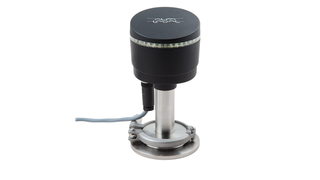
- Durchsatzbereich
- i40 S: 3-56 m³/h | i40 D: 7-80 m³/h | TZ-82: 15 m³/h (8mm-Düsen @ 7 bar)
- Betriebsdruck
- Typischerweise 4-12 bar; empfohlener Betriebsdruck 5-6,5 bar
- Wurfweite/reichweite
- TZ-82: 26 Meter horizontale Wurfweite (Benetzungsradius)
- Düsendurchmesser-Bereich
- 7-10 mm (verschiedene Konfigurationen für Durchsatz-Optimierung)
- Deck-Öffnung erforderlich
- i40 S/i40 D: nur 145 mm (kompakteste 2. Generation)
- Material-standard
- AISI 316 Edelstahl für Hauptkomponenten; PEEK für Seals/Verschleißteile
- Betriebstemperatur
- 0–95°C (32–203°F)
- Antriebsart
- Turbine-driven by cleaning medium flow (COW: crude oil washthrough possible)
- IMO-Konformität
- Erfüllt IMO-Anforderungen für COW (Crude Oil Washing) Systeme
- i40 S (Single-Nozzle, 2. Generation)
- i40 D (Dual-Nozzle, 2. Generation)
- i65 S (Single-Nozzle, High-Impact)
- T-73 (Automatic, 5.000-30.000 m³)
- TZ-67 (Rotary Jet Head, 50-500 m³)
- TZ-75 (Portable, 1.000-5.000 m³)
- TZ-82 (Portable/Fixed, bis 3.000 m³)
- TZ-89 (Media-Lubricated)
- 270FT Mark I (Single-Nozzle Crude Oil Tanker)
- Area: Nozzle wear and erosionCheck: Inspectors regularly check nozzles for wear marks, scratches, surface erosion and deformed openings. Nozzle blockages from sludge accumulation are the most frequent periodic maintenance task. Damaged nozzles must be replaced as a group.
- Area: Gearbox/turbine wear and vibrationCheck: Inspectors monitor for abnormal vibrations, temperature rise and irregular noise. Detached gear teeth and uneven disk distribution cause vibration problems. Inspection recommended every 200-300 operating hours; bearing replacement after 300-500 hours or at least every 3 years.
- Area: Ball bearings and sleeve bushings wearCheck: Inspectors check ball bearings for free rotation without contamination and damage. Sleeve bushings in gearbox frame must be checked: maximum diameter not exceeding 10.4 mm (bore not ovally deformed). Inspect all bearings and sealing rings every 6 months; replacement after 6,000 operating hours or every 3 years.
- Area: Seals and shaft passages (hysteresis coupling design)Check: Inspectors check for oil leakage and contamination at seal points. The hysteresis coupling eliminates conventional speed-setting shafts and reduces leak points. All rubber seals should be replaced at each service inspection to ensure hygiene and performance. Moisture and contamination ingress leads to seal failure.
- Area: Programming pattern and control sequence functionalityCheck: Inspectors test programming logic and valve control for correct 3D-indexed impact pattern. Check creep movement (vertical screw movement while horizontal rotation occurs) and progressive compression from coarse to fine over 8 cycles.
- Area: COW (Crude Oil Washing) system approval and crude oil compatibilityCheck: Inspectors verify IMO certification and crude oil wash-through approval. Toftejorg T-73 and 270FT Mark I are specifically designed for crude oil tankers. Check for corrosion/wear from crude oil exposure and verify valve seals under crude oil operating conditions.
Universal inspection/service points for tank cleaning machines (Gunclean Toftejorg, 2026-06). Per-model specs not auto-filled.
- Durchsatzbereich
- i40 S: 3-56 m³/h | i40 D: 7-80 m³/h | TZ-82: 15 m³/h (8mm-Düsen @ 7 bar)
- Betriebsdruck
- Typischerweise 4-12 bar; empfohlener Betriebsdruck 5-6,5 bar
- Wurfweite/reichweite
- TZ-82: 26 Meter horizontale Wurfweite (Benetzungsradius)
- Düsendurchmesser-Bereich
- 7-10 mm (verschiedene Konfigurationen für Durchsatz-Optimierung)
- Deck-Öffnung erforderlich
- i40 S/i40 D: nur 145 mm (kompakteste 2. Generation)
- Material-standard
- AISI 316 Edelstahl für Hauptkomponenten; PEEK für Seals/Verschleißteile
- Betriebstemperatur
- 0–95°C (32–203°F)
- Antriebsart
- Turbine-driven by cleaning medium flow (COW: crude oil washthrough possible)
- IMO-Konformität
- Erfüllt IMO-Anforderungen für COW (Crude Oil Washing) Systeme
- i40 S (Single-Nozzle, 2. Generation)
- i40 D (Dual-Nozzle, 2. Generation)
- i65 S (Single-Nozzle, High-Impact)
- T-73 (Automatic, 5.000-30.000 m³)
- TZ-67 (Rotary Jet Head, 50-500 m³)
- TZ-75 (Portable, 1.000-5.000 m³)
- TZ-82 (Portable/Fixed, bis 3.000 m³)
- TZ-89 (Media-Lubricated)
- 270FT Mark I (Single-Nozzle Crude Oil Tanker)
- Area: Nozzle wear and erosionCheck: Inspectors regularly check nozzles for wear marks, scratches, surface erosion and deformed openings. Nozzle blockages from sludge accumulation are the most frequent periodic maintenance task. Damaged nozzles must be replaced as a group.
- Area: Gearbox/turbine wear and vibrationCheck: Inspectors monitor for abnormal vibrations, temperature rise and irregular noise. Detached gear teeth and uneven disk distribution cause vibration problems. Inspection recommended every 200-300 operating hours; bearing replacement after 300-500 hours or at least every 3 years.
- Area: Ball bearings and sleeve bushings wearCheck: Inspectors check ball bearings for free rotation without contamination and damage. Sleeve bushings in gearbox frame must be checked: maximum diameter not exceeding 10.4 mm (bore not ovally deformed). Inspect all bearings and sealing rings every 6 months; replacement after 6,000 operating hours or every 3 years.
- Area: Seals and shaft passages (hysteresis coupling design)Check: Inspectors check for oil leakage and contamination at seal points. The hysteresis coupling eliminates conventional speed-setting shafts and reduces leak points. All rubber seals should be replaced at each service inspection to ensure hygiene and performance. Moisture and contamination ingress leads to seal failure.
- Area: Programming pattern and control sequence functionalityCheck: Inspectors test programming logic and valve control for correct 3D-indexed impact pattern. Check creep movement (vertical screw movement while horizontal rotation occurs) and progressive compression from coarse to fine over 8 cycles.
- Area: COW (Crude Oil Washing) system approval and crude oil compatibilityCheck: Inspectors verify IMO certification and crude oil wash-through approval. Toftejorg T-73 and 270FT Mark I are specifically designed for crude oil tankers. Check for corrosion/wear from crude oil exposure and verify valve seals under crude oil operating conditions.
Universal inspection/service points for tank cleaning machines (Gunclean Toftejorg, 2026-06). Per-model specs not auto-filled.
- Durchsatzbereich
- i40 S: 3-56 m³/h | i40 D: 7-80 m³/h | TZ-82: 15 m³/h (8mm-Düsen @ 7 bar)
- Betriebsdruck
- Typischerweise 4-12 bar; empfohlener Betriebsdruck 5-6,5 bar
- Wurfweite/reichweite
- TZ-82: 26 Meter horizontale Wurfweite (Benetzungsradius)
- Düsendurchmesser-Bereich
- 7-10 mm (verschiedene Konfigurationen für Durchsatz-Optimierung)
- Deck-Öffnung erforderlich
- i40 S/i40 D: nur 145 mm (kompakteste 2. Generation)
- Material-standard
- AISI 316 Edelstahl für Hauptkomponenten; PEEK für Seals/Verschleißteile
- Betriebstemperatur
- 0–95°C (32–203°F)
- Antriebsart
- Turbine-driven by cleaning medium flow (COW: crude oil washthrough possible)
- IMO-Konformität
- Erfüllt IMO-Anforderungen für COW (Crude Oil Washing) Systeme
- i40 S (Single-Nozzle, 2. Generation)
- i40 D (Dual-Nozzle, 2. Generation)
- i65 S (Single-Nozzle, High-Impact)
- T-73 (Automatic, 5.000-30.000 m³)
- TZ-67 (Rotary Jet Head, 50-500 m³)
- TZ-75 (Portable, 1.000-5.000 m³)
- TZ-82 (Portable/Fixed, bis 3.000 m³)
- TZ-89 (Media-Lubricated)
- 270FT Mark I (Single-Nozzle Crude Oil Tanker)
- Area: Nozzle wear and erosionCheck: Inspectors regularly check nozzles for wear marks, scratches, surface erosion and deformed openings. Nozzle blockages from sludge accumulation are the most frequent periodic maintenance task. Damaged nozzles must be replaced as a group.
- Area: Gearbox/turbine wear and vibrationCheck: Inspectors monitor for abnormal vibrations, temperature rise and irregular noise. Detached gear teeth and uneven disk distribution cause vibration problems. Inspection recommended every 200-300 operating hours; bearing replacement after 300-500 hours or at least every 3 years.
- Area: Ball bearings and sleeve bushings wearCheck: Inspectors check ball bearings for free rotation without contamination and damage. Sleeve bushings in gearbox frame must be checked: maximum diameter not exceeding 10.4 mm (bore not ovally deformed). Inspect all bearings and sealing rings every 6 months; replacement after 6,000 operating hours or every 3 years.
- Area: Seals and shaft passages (hysteresis coupling design)Check: Inspectors check for oil leakage and contamination at seal points. The hysteresis coupling eliminates conventional speed-setting shafts and reduces leak points. All rubber seals should be replaced at each service inspection to ensure hygiene and performance. Moisture and contamination ingress leads to seal failure.
- Area: Programming pattern and control sequence functionalityCheck: Inspectors test programming logic and valve control for correct 3D-indexed impact pattern. Check creep movement (vertical screw movement while horizontal rotation occurs) and progressive compression from coarse to fine over 8 cycles.
- Area: COW (Crude Oil Washing) system approval and crude oil compatibilityCheck: Inspectors verify IMO certification and crude oil wash-through approval. Toftejorg T-73 and 270FT Mark I are specifically designed for crude oil tankers. Check for corrosion/wear from crude oil exposure and verify valve seals under crude oil operating conditions.
Universal inspection/service points for tank cleaning machines (Gunclean Toftejorg, 2026-06). Per-model specs not auto-filled.
- Durchsatzbereich
- i40 S: 3-56 m³/h | i40 D: 7-80 m³/h | TZ-82: 15 m³/h (8mm-Düsen @ 7 bar)
- Betriebsdruck
- Typischerweise 4-12 bar; empfohlener Betriebsdruck 5-6,5 bar
- Wurfweite/reichweite
- TZ-82: 26 Meter horizontale Wurfweite (Benetzungsradius)
- Düsendurchmesser-Bereich
- 7-10 mm (verschiedene Konfigurationen für Durchsatz-Optimierung)
- Deck-Öffnung erforderlich
- i40 S/i40 D: nur 145 mm (kompakteste 2. Generation)
- Material-standard
- AISI 316 Edelstahl für Hauptkomponenten; PEEK für Seals/Verschleißteile
- Betriebstemperatur
- 0–95°C (32–203°F)
- Antriebsart
- Turbine-driven by cleaning medium flow (COW: crude oil washthrough possible)
- IMO-Konformität
- Erfüllt IMO-Anforderungen für COW (Crude Oil Washing) Systeme
- i40 S (Single-Nozzle, 2. Generation)
- i40 D (Dual-Nozzle, 2. Generation)
- i65 S (Single-Nozzle, High-Impact)
- T-73 (Automatic, 5.000-30.000 m³)
- TZ-67 (Rotary Jet Head, 50-500 m³)
- TZ-75 (Portable, 1.000-5.000 m³)
- TZ-82 (Portable/Fixed, bis 3.000 m³)
- TZ-89 (Media-Lubricated)
- 270FT Mark I (Single-Nozzle Crude Oil Tanker)
- Area: Nozzle wear and erosionCheck: Inspectors regularly check nozzles for wear marks, scratches, surface erosion and deformed openings. Nozzle blockages from sludge accumulation are the most frequent periodic maintenance task. Damaged nozzles must be replaced as a group.
- Area: Gearbox/turbine wear and vibrationCheck: Inspectors monitor for abnormal vibrations, temperature rise and irregular noise. Detached gear teeth and uneven disk distribution cause vibration problems. Inspection recommended every 200-300 operating hours; bearing replacement after 300-500 hours or at least every 3 years.
- Area: Ball bearings and sleeve bushings wearCheck: Inspectors check ball bearings for free rotation without contamination and damage. Sleeve bushings in gearbox frame must be checked: maximum diameter not exceeding 10.4 mm (bore not ovally deformed). Inspect all bearings and sealing rings every 6 months; replacement after 6,000 operating hours or every 3 years.
- Area: Seals and shaft passages (hysteresis coupling design)Check: Inspectors check for oil leakage and contamination at seal points. The hysteresis coupling eliminates conventional speed-setting shafts and reduces leak points. All rubber seals should be replaced at each service inspection to ensure hygiene and performance. Moisture and contamination ingress leads to seal failure.
- Area: Programming pattern and control sequence functionalityCheck: Inspectors test programming logic and valve control for correct 3D-indexed impact pattern. Check creep movement (vertical screw movement while horizontal rotation occurs) and progressive compression from coarse to fine over 8 cycles.
- Area: COW (Crude Oil Washing) system approval and crude oil compatibilityCheck: Inspectors verify IMO certification and crude oil wash-through approval. Toftejorg T-73 and 270FT Mark I are specifically designed for crude oil tankers. Check for corrosion/wear from crude oil exposure and verify valve seals under crude oil operating conditions.
Universal inspection/service points for tank cleaning machines (Gunclean Toftejorg, 2026-06). Per-model specs not auto-filled.
- Durchsatzbereich
- i40 S: 3-56 m³/h | i40 D: 7-80 m³/h | TZ-82: 15 m³/h (8mm-Düsen @ 7 bar)
- Betriebsdruck
- Typischerweise 4-12 bar; empfohlener Betriebsdruck 5-6,5 bar
- Wurfweite/reichweite
- TZ-82: 26 Meter horizontale Wurfweite (Benetzungsradius)
- Düsendurchmesser-Bereich
- 7-10 mm (verschiedene Konfigurationen für Durchsatz-Optimierung)
- Deck-Öffnung erforderlich
- i40 S/i40 D: nur 145 mm (kompakteste 2. Generation)
- Material-standard
- AISI 316 Edelstahl für Hauptkomponenten; PEEK für Seals/Verschleißteile
- Betriebstemperatur
- 0–95°C (32–203°F)
- Antriebsart
- Turbine-driven by cleaning medium flow (COW: crude oil washthrough possible)
- IMO-Konformität
- Erfüllt IMO-Anforderungen für COW (Crude Oil Washing) Systeme
- i40 S (Single-Nozzle, 2. Generation)
- i40 D (Dual-Nozzle, 2. Generation)
- i65 S (Single-Nozzle, High-Impact)
- T-73 (Automatic, 5.000-30.000 m³)
- TZ-67 (Rotary Jet Head, 50-500 m³)
- TZ-75 (Portable, 1.000-5.000 m³)
- TZ-82 (Portable/Fixed, bis 3.000 m³)
- TZ-89 (Media-Lubricated)
- 270FT Mark I (Single-Nozzle Crude Oil Tanker)
- Area: Nozzle wear and erosionCheck: Inspectors regularly check nozzles for wear marks, scratches, surface erosion and deformed openings. Nozzle blockages from sludge accumulation are the most frequent periodic maintenance task. Damaged nozzles must be replaced as a group.
- Area: Gearbox/turbine wear and vibrationCheck: Inspectors monitor for abnormal vibrations, temperature rise and irregular noise. Detached gear teeth and uneven disk distribution cause vibration problems. Inspection recommended every 200-300 operating hours; bearing replacement after 300-500 hours or at least every 3 years.
- Area: Ball bearings and sleeve bushings wearCheck: Inspectors check ball bearings for free rotation without contamination and damage. Sleeve bushings in gearbox frame must be checked: maximum diameter not exceeding 10.4 mm (bore not ovally deformed). Inspect all bearings and sealing rings every 6 months; replacement after 6,000 operating hours or every 3 years.
- Area: Seals and shaft passages (hysteresis coupling design)Check: Inspectors check for oil leakage and contamination at seal points. The hysteresis coupling eliminates conventional speed-setting shafts and reduces leak points. All rubber seals should be replaced at each service inspection to ensure hygiene and performance. Moisture and contamination ingress leads to seal failure.
- Area: Programming pattern and control sequence functionalityCheck: Inspectors test programming logic and valve control for correct 3D-indexed impact pattern. Check creep movement (vertical screw movement while horizontal rotation occurs) and progressive compression from coarse to fine over 8 cycles.
- Area: COW (Crude Oil Washing) system approval and crude oil compatibilityCheck: Inspectors verify IMO certification and crude oil wash-through approval. Toftejorg T-73 and 270FT Mark I are specifically designed for crude oil tankers. Check for corrosion/wear from crude oil exposure and verify valve seals under crude oil operating conditions.
Universal inspection/service points for tank cleaning machines (Gunclean Toftejorg, 2026-06). Per-model specs not auto-filled.
- Durchsatzbereich
- i40 S: 3-56 m³/h | i40 D: 7-80 m³/h | TZ-82: 15 m³/h (8mm-Düsen @ 7 bar)
- Betriebsdruck
- Typischerweise 4-12 bar; empfohlener Betriebsdruck 5-6,5 bar
- Wurfweite/reichweite
- TZ-82: 26 Meter horizontale Wurfweite (Benetzungsradius)
- Düsendurchmesser-Bereich
- 7-10 mm (verschiedene Konfigurationen für Durchsatz-Optimierung)
- Deck-Öffnung erforderlich
- i40 S/i40 D: nur 145 mm (kompakteste 2. Generation)
- Material-standard
- AISI 316 Edelstahl für Hauptkomponenten; PEEK für Seals/Verschleißteile
- Betriebstemperatur
- 0–95°C (32–203°F)
- Antriebsart
- Turbine-driven by cleaning medium flow (COW: crude oil washthrough possible)
- IMO-Konformität
- Erfüllt IMO-Anforderungen für COW (Crude Oil Washing) Systeme
- i40 S (Single-Nozzle, 2. Generation)
- i40 D (Dual-Nozzle, 2. Generation)
- i65 S (Single-Nozzle, High-Impact)
- T-73 (Automatic, 5.000-30.000 m³)
- TZ-67 (Rotary Jet Head, 50-500 m³)
- TZ-75 (Portable, 1.000-5.000 m³)
- TZ-82 (Portable/Fixed, bis 3.000 m³)
- TZ-89 (Media-Lubricated)
- 270FT Mark I (Single-Nozzle Crude Oil Tanker)
- Area: Nozzle wear and erosionCheck: Inspectors regularly check nozzles for wear marks, scratches, surface erosion and deformed openings. Nozzle blockages from sludge accumulation are the most frequent periodic maintenance task. Damaged nozzles must be replaced as a group.
- Area: Gearbox/turbine wear and vibrationCheck: Inspectors monitor for abnormal vibrations, temperature rise and irregular noise. Detached gear teeth and uneven disk distribution cause vibration problems. Inspection recommended every 200-300 operating hours; bearing replacement after 300-500 hours or at least every 3 years.
- Area: Ball bearings and sleeve bushings wearCheck: Inspectors check ball bearings for free rotation without contamination and damage. Sleeve bushings in gearbox frame must be checked: maximum diameter not exceeding 10.4 mm (bore not ovally deformed). Inspect all bearings and sealing rings every 6 months; replacement after 6,000 operating hours or every 3 years.
- Area: Seals and shaft passages (hysteresis coupling design)Check: Inspectors check for oil leakage and contamination at seal points. The hysteresis coupling eliminates conventional speed-setting shafts and reduces leak points. All rubber seals should be replaced at each service inspection to ensure hygiene and performance. Moisture and contamination ingress leads to seal failure.
- Area: Programming pattern and control sequence functionalityCheck: Inspectors test programming logic and valve control for correct 3D-indexed impact pattern. Check creep movement (vertical screw movement while horizontal rotation occurs) and progressive compression from coarse to fine over 8 cycles.
- Area: COW (Crude Oil Washing) system approval and crude oil compatibilityCheck: Inspectors verify IMO certification and crude oil wash-through approval. Toftejorg T-73 and 270FT Mark I are specifically designed for crude oil tankers. Check for corrosion/wear from crude oil exposure and verify valve seals under crude oil operating conditions.
Universal inspection/service points for tank cleaning machines (Gunclean Toftejorg, 2026-06). Per-model specs not auto-filled.
- Durchsatzbereich
- i40 S: 3-56 m³/h | i40 D: 7-80 m³/h | TZ-82: 15 m³/h (8mm-Düsen @ 7 bar)
- Betriebsdruck
- Typischerweise 4-12 bar; empfohlener Betriebsdruck 5-6,5 bar
- Wurfweite/reichweite
- TZ-82: 26 Meter horizontale Wurfweite (Benetzungsradius)
- Düsendurchmesser-Bereich
- 7-10 mm (verschiedene Konfigurationen für Durchsatz-Optimierung)
- Deck-Öffnung erforderlich
- i40 S/i40 D: nur 145 mm (kompakteste 2. Generation)
- Material-standard
- AISI 316 Edelstahl für Hauptkomponenten; PEEK für Seals/Verschleißteile
- Betriebstemperatur
- 0–95°C (32–203°F)
- Antriebsart
- Turbine-driven by cleaning medium flow (COW: crude oil washthrough possible)
- IMO-Konformität
- Erfüllt IMO-Anforderungen für COW (Crude Oil Washing) Systeme
- i40 S (Single-Nozzle, 2. Generation)
- i40 D (Dual-Nozzle, 2. Generation)
- i65 S (Single-Nozzle, High-Impact)
- T-73 (Automatic, 5.000-30.000 m³)
- TZ-67 (Rotary Jet Head, 50-500 m³)
- TZ-75 (Portable, 1.000-5.000 m³)
- TZ-82 (Portable/Fixed, bis 3.000 m³)
- TZ-89 (Media-Lubricated)
- 270FT Mark I (Single-Nozzle Crude Oil Tanker)
- Area: Nozzle wear and erosionCheck: Inspectors regularly check nozzles for wear marks, scratches, surface erosion and deformed openings. Nozzle blockages from sludge accumulation are the most frequent periodic maintenance task. Damaged nozzles must be replaced as a group.
- Area: Gearbox/turbine wear and vibrationCheck: Inspectors monitor for abnormal vibrations, temperature rise and irregular noise. Detached gear teeth and uneven disk distribution cause vibration problems. Inspection recommended every 200-300 operating hours; bearing replacement after 300-500 hours or at least every 3 years.
- Area: Ball bearings and sleeve bushings wearCheck: Inspectors check ball bearings for free rotation without contamination and damage. Sleeve bushings in gearbox frame must be checked: maximum diameter not exceeding 10.4 mm (bore not ovally deformed). Inspect all bearings and sealing rings every 6 months; replacement after 6,000 operating hours or every 3 years.
- Area: Seals and shaft passages (hysteresis coupling design)Check: Inspectors check for oil leakage and contamination at seal points. The hysteresis coupling eliminates conventional speed-setting shafts and reduces leak points. All rubber seals should be replaced at each service inspection to ensure hygiene and performance. Moisture and contamination ingress leads to seal failure.
- Area: Programming pattern and control sequence functionalityCheck: Inspectors test programming logic and valve control for correct 3D-indexed impact pattern. Check creep movement (vertical screw movement while horizontal rotation occurs) and progressive compression from coarse to fine over 8 cycles.
- Area: COW (Crude Oil Washing) system approval and crude oil compatibilityCheck: Inspectors verify IMO certification and crude oil wash-through approval. Toftejorg T-73 and 270FT Mark I are specifically designed for crude oil tankers. Check for corrosion/wear from crude oil exposure and verify valve seals under crude oil operating conditions.
Universal inspection/service points for tank cleaning machines (Gunclean Toftejorg, 2026-06). Per-model specs not auto-filled.
- Durchsatzbereich
- i40 S: 3-56 m³/h | i40 D: 7-80 m³/h | TZ-82: 15 m³/h (8mm-Düsen @ 7 bar)
- Betriebsdruck
- Typischerweise 4-12 bar; empfohlener Betriebsdruck 5-6,5 bar
- Wurfweite/reichweite
- TZ-82: 26 Meter horizontale Wurfweite (Benetzungsradius)
- Düsendurchmesser-Bereich
- 7-10 mm (verschiedene Konfigurationen für Durchsatz-Optimierung)
- Deck-Öffnung erforderlich
- i40 S/i40 D: nur 145 mm (kompakteste 2. Generation)
- Material-standard
- AISI 316 Edelstahl für Hauptkomponenten; PEEK für Seals/Verschleißteile
- Betriebstemperatur
- 0–95°C (32–203°F)
- Antriebsart
- Turbine-driven by cleaning medium flow (COW: crude oil washthrough possible)
- IMO-Konformität
- Erfüllt IMO-Anforderungen für COW (Crude Oil Washing) Systeme
- i40 S (Single-Nozzle, 2. Generation)
- i40 D (Dual-Nozzle, 2. Generation)
- i65 S (Single-Nozzle, High-Impact)
- T-73 (Automatic, 5.000-30.000 m³)
- TZ-67 (Rotary Jet Head, 50-500 m³)
- TZ-75 (Portable, 1.000-5.000 m³)
- TZ-82 (Portable/Fixed, bis 3.000 m³)
- TZ-89 (Media-Lubricated)
- 270FT Mark I (Single-Nozzle Crude Oil Tanker)
- Area: Nozzle wear and erosionCheck: Inspectors regularly check nozzles for wear marks, scratches, surface erosion and deformed openings. Nozzle blockages from sludge accumulation are the most frequent periodic maintenance task. Damaged nozzles must be replaced as a group.
- Area: Gearbox/turbine wear and vibrationCheck: Inspectors monitor for abnormal vibrations, temperature rise and irregular noise. Detached gear teeth and uneven disk distribution cause vibration problems. Inspection recommended every 200-300 operating hours; bearing replacement after 300-500 hours or at least every 3 years.
- Area: Ball bearings and sleeve bushings wearCheck: Inspectors check ball bearings for free rotation without contamination and damage. Sleeve bushings in gearbox frame must be checked: maximum diameter not exceeding 10.4 mm (bore not ovally deformed). Inspect all bearings and sealing rings every 6 months; replacement after 6,000 operating hours or every 3 years.
- Area: Seals and shaft passages (hysteresis coupling design)Check: Inspectors check for oil leakage and contamination at seal points. The hysteresis coupling eliminates conventional speed-setting shafts and reduces leak points. All rubber seals should be replaced at each service inspection to ensure hygiene and performance. Moisture and contamination ingress leads to seal failure.
- Area: Programming pattern and control sequence functionalityCheck: Inspectors test programming logic and valve control for correct 3D-indexed impact pattern. Check creep movement (vertical screw movement while horizontal rotation occurs) and progressive compression from coarse to fine over 8 cycles.
- Area: COW (Crude Oil Washing) system approval and crude oil compatibilityCheck: Inspectors verify IMO certification and crude oil wash-through approval. Toftejorg T-73 and 270FT Mark I are specifically designed for crude oil tankers. Check for corrosion/wear from crude oil exposure and verify valve seals under crude oil operating conditions.
Universal inspection/service points for tank cleaning machines (Gunclean Toftejorg, 2026-06). Per-model specs not auto-filled.
- Durchsatzbereich
- i40 S: 3-56 m³/h | i40 D: 7-80 m³/h | TZ-82: 15 m³/h (8mm-Düsen @ 7 bar)
- Betriebsdruck
- Typischerweise 4-12 bar; empfohlener Betriebsdruck 5-6,5 bar
- Wurfweite/reichweite
- TZ-82: 26 Meter horizontale Wurfweite (Benetzungsradius)
- Düsendurchmesser-Bereich
- 7-10 mm (verschiedene Konfigurationen für Durchsatz-Optimierung)
- Deck-Öffnung erforderlich
- i40 S/i40 D: nur 145 mm (kompakteste 2. Generation)
- Material-standard
- AISI 316 Edelstahl für Hauptkomponenten; PEEK für Seals/Verschleißteile
- Betriebstemperatur
- 0–95°C (32–203°F)
- Antriebsart
- Turbine-driven by cleaning medium flow (COW: crude oil washthrough possible)
- IMO-Konformität
- Erfüllt IMO-Anforderungen für COW (Crude Oil Washing) Systeme
- i40 S (Single-Nozzle, 2. Generation)
- i40 D (Dual-Nozzle, 2. Generation)
- i65 S (Single-Nozzle, High-Impact)
- T-73 (Automatic, 5.000-30.000 m³)
- TZ-67 (Rotary Jet Head, 50-500 m³)
- TZ-75 (Portable, 1.000-5.000 m³)
- TZ-82 (Portable/Fixed, bis 3.000 m³)
- TZ-89 (Media-Lubricated)
- 270FT Mark I (Single-Nozzle Crude Oil Tanker)
- Area: Nozzle wear and erosionCheck: Inspectors regularly check nozzles for wear marks, scratches, surface erosion and deformed openings. Nozzle blockages from sludge accumulation are the most frequent periodic maintenance task. Damaged nozzles must be replaced as a group.
- Area: Gearbox/turbine wear and vibrationCheck: Inspectors monitor for abnormal vibrations, temperature rise and irregular noise. Detached gear teeth and uneven disk distribution cause vibration problems. Inspection recommended every 200-300 operating hours; bearing replacement after 300-500 hours or at least every 3 years.
- Area: Ball bearings and sleeve bushings wearCheck: Inspectors check ball bearings for free rotation without contamination and damage. Sleeve bushings in gearbox frame must be checked: maximum diameter not exceeding 10.4 mm (bore not ovally deformed). Inspect all bearings and sealing rings every 6 months; replacement after 6,000 operating hours or every 3 years.
- Area: Seals and shaft passages (hysteresis coupling design)Check: Inspectors check for oil leakage and contamination at seal points. The hysteresis coupling eliminates conventional speed-setting shafts and reduces leak points. All rubber seals should be replaced at each service inspection to ensure hygiene and performance. Moisture and contamination ingress leads to seal failure.
- Area: Programming pattern and control sequence functionalityCheck: Inspectors test programming logic and valve control for correct 3D-indexed impact pattern. Check creep movement (vertical screw movement while horizontal rotation occurs) and progressive compression from coarse to fine over 8 cycles.
- Area: COW (Crude Oil Washing) system approval and crude oil compatibilityCheck: Inspectors verify IMO certification and crude oil wash-through approval. Toftejorg T-73 and 270FT Mark I are specifically designed for crude oil tankers. Check for corrosion/wear from crude oil exposure and verify valve seals under crude oil operating conditions.
Universal inspection/service points for tank cleaning machines (Gunclean Toftejorg, 2026-06). Per-model specs not auto-filled.
- Durchsatzbereich
- i40 S: 3-56 m³/h | i40 D: 7-80 m³/h | TZ-82: 15 m³/h (8mm-Düsen @ 7 bar)
- Betriebsdruck
- Typischerweise 4-12 bar; empfohlener Betriebsdruck 5-6,5 bar
- Wurfweite/reichweite
- TZ-82: 26 Meter horizontale Wurfweite (Benetzungsradius)
- Düsendurchmesser-Bereich
- 7-10 mm (verschiedene Konfigurationen für Durchsatz-Optimierung)
- Deck-Öffnung erforderlich
- i40 S/i40 D: nur 145 mm (kompakteste 2. Generation)
- Material-standard
- AISI 316 Edelstahl für Hauptkomponenten; PEEK für Seals/Verschleißteile
- Betriebstemperatur
- 0–95°C (32–203°F)
- Antriebsart
- Turbine-driven by cleaning medium flow (COW: crude oil washthrough possible)
- IMO-Konformität
- Erfüllt IMO-Anforderungen für COW (Crude Oil Washing) Systeme
- i40 S (Single-Nozzle, 2. Generation)
- i40 D (Dual-Nozzle, 2. Generation)
- i65 S (Single-Nozzle, High-Impact)
- T-73 (Automatic, 5.000-30.000 m³)
- TZ-67 (Rotary Jet Head, 50-500 m³)
- TZ-75 (Portable, 1.000-5.000 m³)
- TZ-82 (Portable/Fixed, bis 3.000 m³)
- TZ-89 (Media-Lubricated)
- 270FT Mark I (Single-Nozzle Crude Oil Tanker)
- Area: Nozzle wear and erosionCheck: Inspectors regularly check nozzles for wear marks, scratches, surface erosion and deformed openings. Nozzle blockages from sludge accumulation are the most frequent periodic maintenance task. Damaged nozzles must be replaced as a group.
- Area: Gearbox/turbine wear and vibrationCheck: Inspectors monitor for abnormal vibrations, temperature rise and irregular noise. Detached gear teeth and uneven disk distribution cause vibration problems. Inspection recommended every 200-300 operating hours; bearing replacement after 300-500 hours or at least every 3 years.
- Area: Ball bearings and sleeve bushings wearCheck: Inspectors check ball bearings for free rotation without contamination and damage. Sleeve bushings in gearbox frame must be checked: maximum diameter not exceeding 10.4 mm (bore not ovally deformed). Inspect all bearings and sealing rings every 6 months; replacement after 6,000 operating hours or every 3 years.
- Area: Seals and shaft passages (hysteresis coupling design)Check: Inspectors check for oil leakage and contamination at seal points. The hysteresis coupling eliminates conventional speed-setting shafts and reduces leak points. All rubber seals should be replaced at each service inspection to ensure hygiene and performance. Moisture and contamination ingress leads to seal failure.
- Area: Programming pattern and control sequence functionalityCheck: Inspectors test programming logic and valve control for correct 3D-indexed impact pattern. Check creep movement (vertical screw movement while horizontal rotation occurs) and progressive compression from coarse to fine over 8 cycles.
- Area: COW (Crude Oil Washing) system approval and crude oil compatibilityCheck: Inspectors verify IMO certification and crude oil wash-through approval. Toftejorg T-73 and 270FT Mark I are specifically designed for crude oil tankers. Check for corrosion/wear from crude oil exposure and verify valve seals under crude oil operating conditions.
Universal inspection/service points for tank cleaning machines (Gunclean Toftejorg, 2026-06). Per-model specs not auto-filled.
- Durchsatzbereich
- i40 S: 3-56 m³/h | i40 D: 7-80 m³/h | TZ-82: 15 m³/h (8mm-Düsen @ 7 bar)
- Betriebsdruck
- Typischerweise 4-12 bar; empfohlener Betriebsdruck 5-6,5 bar
- Wurfweite/reichweite
- TZ-82: 26 Meter horizontale Wurfweite (Benetzungsradius)
- Düsendurchmesser-Bereich
- 7-10 mm (verschiedene Konfigurationen für Durchsatz-Optimierung)
- Deck-Öffnung erforderlich
- i40 S/i40 D: nur 145 mm (kompakteste 2. Generation)
- Material-standard
- AISI 316 Edelstahl für Hauptkomponenten; PEEK für Seals/Verschleißteile
- Betriebstemperatur
- 0–95°C (32–203°F)
- Antriebsart
- Turbine-driven by cleaning medium flow (COW: crude oil washthrough possible)
- IMO-Konformität
- Erfüllt IMO-Anforderungen für COW (Crude Oil Washing) Systeme
- i40 S (Single-Nozzle, 2. Generation)
- i40 D (Dual-Nozzle, 2. Generation)
- i65 S (Single-Nozzle, High-Impact)
- T-73 (Automatic, 5.000-30.000 m³)
- TZ-67 (Rotary Jet Head, 50-500 m³)
- TZ-75 (Portable, 1.000-5.000 m³)
- TZ-82 (Portable/Fixed, bis 3.000 m³)
- TZ-89 (Media-Lubricated)
- 270FT Mark I (Single-Nozzle Crude Oil Tanker)
- Area: Nozzle wear and erosionCheck: Inspectors regularly check nozzles for wear marks, scratches, surface erosion and deformed openings. Nozzle blockages from sludge accumulation are the most frequent periodic maintenance task. Damaged nozzles must be replaced as a group.
- Area: Gearbox/turbine wear and vibrationCheck: Inspectors monitor for abnormal vibrations, temperature rise and irregular noise. Detached gear teeth and uneven disk distribution cause vibration problems. Inspection recommended every 200-300 operating hours; bearing replacement after 300-500 hours or at least every 3 years.
- Area: Ball bearings and sleeve bushings wearCheck: Inspectors check ball bearings for free rotation without contamination and damage. Sleeve bushings in gearbox frame must be checked: maximum diameter not exceeding 10.4 mm (bore not ovally deformed). Inspect all bearings and sealing rings every 6 months; replacement after 6,000 operating hours or every 3 years.
- Area: Seals and shaft passages (hysteresis coupling design)Check: Inspectors check for oil leakage and contamination at seal points. The hysteresis coupling eliminates conventional speed-setting shafts and reduces leak points. All rubber seals should be replaced at each service inspection to ensure hygiene and performance. Moisture and contamination ingress leads to seal failure.
- Area: Programming pattern and control sequence functionalityCheck: Inspectors test programming logic and valve control for correct 3D-indexed impact pattern. Check creep movement (vertical screw movement while horizontal rotation occurs) and progressive compression from coarse to fine over 8 cycles.
- Area: COW (Crude Oil Washing) system approval and crude oil compatibilityCheck: Inspectors verify IMO certification and crude oil wash-through approval. Toftejorg T-73 and 270FT Mark I are specifically designed for crude oil tankers. Check for corrosion/wear from crude oil exposure and verify valve seals under crude oil operating conditions.
Universal inspection/service points for tank cleaning machines (Gunclean Toftejorg, 2026-06). Per-model specs not auto-filled.
- Durchsatzbereich
- i40 S: 3-56 m³/h | i40 D: 7-80 m³/h | TZ-82: 15 m³/h (8mm-Düsen @ 7 bar)
- Betriebsdruck
- Typischerweise 4-12 bar; empfohlener Betriebsdruck 5-6,5 bar
- Wurfweite/reichweite
- TZ-82: 26 Meter horizontale Wurfweite (Benetzungsradius)
- Düsendurchmesser-Bereich
- 7-10 mm (verschiedene Konfigurationen für Durchsatz-Optimierung)
- Deck-Öffnung erforderlich
- i40 S/i40 D: nur 145 mm (kompakteste 2. Generation)
- Material-standard
- AISI 316 Edelstahl für Hauptkomponenten; PEEK für Seals/Verschleißteile
- Betriebstemperatur
- 0–95°C (32–203°F)
- Antriebsart
- Turbine-driven by cleaning medium flow (COW: crude oil washthrough possible)
- IMO-Konformität
- Erfüllt IMO-Anforderungen für COW (Crude Oil Washing) Systeme
- i40 S (Single-Nozzle, 2. Generation)
- i40 D (Dual-Nozzle, 2. Generation)
- i65 S (Single-Nozzle, High-Impact)
- T-73 (Automatic, 5.000-30.000 m³)
- TZ-67 (Rotary Jet Head, 50-500 m³)
- TZ-75 (Portable, 1.000-5.000 m³)
- TZ-82 (Portable/Fixed, bis 3.000 m³)
- TZ-89 (Media-Lubricated)
- 270FT Mark I (Single-Nozzle Crude Oil Tanker)
- Area: Nozzle wear and erosionCheck: Inspectors regularly check nozzles for wear marks, scratches, surface erosion and deformed openings. Nozzle blockages from sludge accumulation are the most frequent periodic maintenance task. Damaged nozzles must be replaced as a group.
- Area: Gearbox/turbine wear and vibrationCheck: Inspectors monitor for abnormal vibrations, temperature rise and irregular noise. Detached gear teeth and uneven disk distribution cause vibration problems. Inspection recommended every 200-300 operating hours; bearing replacement after 300-500 hours or at least every 3 years.
- Area: Ball bearings and sleeve bushings wearCheck: Inspectors check ball bearings for free rotation without contamination and damage. Sleeve bushings in gearbox frame must be checked: maximum diameter not exceeding 10.4 mm (bore not ovally deformed). Inspect all bearings and sealing rings every 6 months; replacement after 6,000 operating hours or every 3 years.
- Area: Seals and shaft passages (hysteresis coupling design)Check: Inspectors check for oil leakage and contamination at seal points. The hysteresis coupling eliminates conventional speed-setting shafts and reduces leak points. All rubber seals should be replaced at each service inspection to ensure hygiene and performance. Moisture and contamination ingress leads to seal failure.
- Area: Programming pattern and control sequence functionalityCheck: Inspectors test programming logic and valve control for correct 3D-indexed impact pattern. Check creep movement (vertical screw movement while horizontal rotation occurs) and progressive compression from coarse to fine over 8 cycles.
- Area: COW (Crude Oil Washing) system approval and crude oil compatibilityCheck: Inspectors verify IMO certification and crude oil wash-through approval. Toftejorg T-73 and 270FT Mark I are specifically designed for crude oil tankers. Check for corrosion/wear from crude oil exposure and verify valve seals under crude oil operating conditions.
Universal inspection/service points for tank cleaning machines (Gunclean Toftejorg, 2026-06). Per-model specs not auto-filled.
- Durchsatzbereich
- i40 S: 3-56 m³/h | i40 D: 7-80 m³/h | TZ-82: 15 m³/h (8mm-Düsen @ 7 bar)
- Betriebsdruck
- Typischerweise 4-12 bar; empfohlener Betriebsdruck 5-6,5 bar
- Wurfweite/reichweite
- TZ-82: 26 Meter horizontale Wurfweite (Benetzungsradius)
- Düsendurchmesser-Bereich
- 7-10 mm (verschiedene Konfigurationen für Durchsatz-Optimierung)
- Deck-Öffnung erforderlich
- i40 S/i40 D: nur 145 mm (kompakteste 2. Generation)
- Material-standard
- AISI 316 Edelstahl für Hauptkomponenten; PEEK für Seals/Verschleißteile
- Betriebstemperatur
- 0–95°C (32–203°F)
- Antriebsart
- Turbine-driven by cleaning medium flow (COW: crude oil washthrough possible)
- IMO-Konformität
- Erfüllt IMO-Anforderungen für COW (Crude Oil Washing) Systeme
- i40 S (Single-Nozzle, 2. Generation)
- i40 D (Dual-Nozzle, 2. Generation)
- i65 S (Single-Nozzle, High-Impact)
- T-73 (Automatic, 5.000-30.000 m³)
- TZ-67 (Rotary Jet Head, 50-500 m³)
- TZ-75 (Portable, 1.000-5.000 m³)
- TZ-82 (Portable/Fixed, bis 3.000 m³)
- TZ-89 (Media-Lubricated)
- 270FT Mark I (Single-Nozzle Crude Oil Tanker)
- Area: Nozzle wear and erosionCheck: Inspectors regularly check nozzles for wear marks, scratches, surface erosion and deformed openings. Nozzle blockages from sludge accumulation are the most frequent periodic maintenance task. Damaged nozzles must be replaced as a group.
- Area: Gearbox/turbine wear and vibrationCheck: Inspectors monitor for abnormal vibrations, temperature rise and irregular noise. Detached gear teeth and uneven disk distribution cause vibration problems. Inspection recommended every 200-300 operating hours; bearing replacement after 300-500 hours or at least every 3 years.
- Area: Ball bearings and sleeve bushings wearCheck: Inspectors check ball bearings for free rotation without contamination and damage. Sleeve bushings in gearbox frame must be checked: maximum diameter not exceeding 10.4 mm (bore not ovally deformed). Inspect all bearings and sealing rings every 6 months; replacement after 6,000 operating hours or every 3 years.
- Area: Seals and shaft passages (hysteresis coupling design)Check: Inspectors check for oil leakage and contamination at seal points. The hysteresis coupling eliminates conventional speed-setting shafts and reduces leak points. All rubber seals should be replaced at each service inspection to ensure hygiene and performance. Moisture and contamination ingress leads to seal failure.
- Area: Programming pattern and control sequence functionalityCheck: Inspectors test programming logic and valve control for correct 3D-indexed impact pattern. Check creep movement (vertical screw movement while horizontal rotation occurs) and progressive compression from coarse to fine over 8 cycles.
- Area: COW (Crude Oil Washing) system approval and crude oil compatibilityCheck: Inspectors verify IMO certification and crude oil wash-through approval. Toftejorg T-73 and 270FT Mark I are specifically designed for crude oil tankers. Check for corrosion/wear from crude oil exposure and verify valve seals under crude oil operating conditions.
Universal inspection/service points for tank cleaning machines (Gunclean Toftejorg, 2026-06). Per-model specs not auto-filled.
- Durchsatzbereich
- i40 S: 3-56 m³/h | i40 D: 7-80 m³/h | TZ-82: 15 m³/h (8mm-Düsen @ 7 bar)
- Betriebsdruck
- Typischerweise 4-12 bar; empfohlener Betriebsdruck 5-6,5 bar
- Wurfweite/reichweite
- TZ-82: 26 Meter horizontale Wurfweite (Benetzungsradius)
- Düsendurchmesser-Bereich
- 7-10 mm (verschiedene Konfigurationen für Durchsatz-Optimierung)
- Deck-Öffnung erforderlich
- i40 S/i40 D: nur 145 mm (kompakteste 2. Generation)
- Material-standard
- AISI 316 Edelstahl für Hauptkomponenten; PEEK für Seals/Verschleißteile
- Betriebstemperatur
- 0–95°C (32–203°F)
- Antriebsart
- Turbine-driven by cleaning medium flow (COW: crude oil washthrough possible)
- IMO-Konformität
- Erfüllt IMO-Anforderungen für COW (Crude Oil Washing) Systeme
- i40 S (Single-Nozzle, 2. Generation)
- i40 D (Dual-Nozzle, 2. Generation)
- i65 S (Single-Nozzle, High-Impact)
- T-73 (Automatic, 5.000-30.000 m³)
- TZ-67 (Rotary Jet Head, 50-500 m³)
- TZ-75 (Portable, 1.000-5.000 m³)
- TZ-82 (Portable/Fixed, bis 3.000 m³)
- TZ-89 (Media-Lubricated)
- 270FT Mark I (Single-Nozzle Crude Oil Tanker)
- Area: Nozzle wear and erosionCheck: Inspectors regularly check nozzles for wear marks, scratches, surface erosion and deformed openings. Nozzle blockages from sludge accumulation are the most frequent periodic maintenance task. Damaged nozzles must be replaced as a group.
- Area: Gearbox/turbine wear and vibrationCheck: Inspectors monitor for abnormal vibrations, temperature rise and irregular noise. Detached gear teeth and uneven disk distribution cause vibration problems. Inspection recommended every 200-300 operating hours; bearing replacement after 300-500 hours or at least every 3 years.
- Area: Ball bearings and sleeve bushings wearCheck: Inspectors check ball bearings for free rotation without contamination and damage. Sleeve bushings in gearbox frame must be checked: maximum diameter not exceeding 10.4 mm (bore not ovally deformed). Inspect all bearings and sealing rings every 6 months; replacement after 6,000 operating hours or every 3 years.
- Area: Seals and shaft passages (hysteresis coupling design)Check: Inspectors check for oil leakage and contamination at seal points. The hysteresis coupling eliminates conventional speed-setting shafts and reduces leak points. All rubber seals should be replaced at each service inspection to ensure hygiene and performance. Moisture and contamination ingress leads to seal failure.
- Area: Programming pattern and control sequence functionalityCheck: Inspectors test programming logic and valve control for correct 3D-indexed impact pattern. Check creep movement (vertical screw movement while horizontal rotation occurs) and progressive compression from coarse to fine over 8 cycles.
- Area: COW (Crude Oil Washing) system approval and crude oil compatibilityCheck: Inspectors verify IMO certification and crude oil wash-through approval. Toftejorg T-73 and 270FT Mark I are specifically designed for crude oil tankers. Check for corrosion/wear from crude oil exposure and verify valve seals under crude oil operating conditions.
Universal inspection/service points for tank cleaning machines (Gunclean Toftejorg, 2026-06). Per-model specs not auto-filled.
- Durchsatzbereich
- i40 S: 3-56 m³/h | i40 D: 7-80 m³/h | TZ-82: 15 m³/h (8mm-Düsen @ 7 bar)
- Betriebsdruck
- Typischerweise 4-12 bar; empfohlener Betriebsdruck 5-6,5 bar
- Wurfweite/reichweite
- TZ-82: 26 Meter horizontale Wurfweite (Benetzungsradius)
- Düsendurchmesser-Bereich
- 7-10 mm (verschiedene Konfigurationen für Durchsatz-Optimierung)
- Deck-Öffnung erforderlich
- i40 S/i40 D: nur 145 mm (kompakteste 2. Generation)
- Material-standard
- AISI 316 Edelstahl für Hauptkomponenten; PEEK für Seals/Verschleißteile
- Betriebstemperatur
- 0–95°C (32–203°F)
- Antriebsart
- Turbine-driven by cleaning medium flow (COW: crude oil washthrough possible)
- IMO-Konformität
- Erfüllt IMO-Anforderungen für COW (Crude Oil Washing) Systeme
- i40 S (Single-Nozzle, 2. Generation)
- i40 D (Dual-Nozzle, 2. Generation)
- i65 S (Single-Nozzle, High-Impact)
- T-73 (Automatic, 5.000-30.000 m³)
- TZ-67 (Rotary Jet Head, 50-500 m³)
- TZ-75 (Portable, 1.000-5.000 m³)
- TZ-82 (Portable/Fixed, bis 3.000 m³)
- TZ-89 (Media-Lubricated)
- 270FT Mark I (Single-Nozzle Crude Oil Tanker)
- Area: Nozzle wear and erosionCheck: Inspectors regularly check nozzles for wear marks, scratches, surface erosion and deformed openings. Nozzle blockages from sludge accumulation are the most frequent periodic maintenance task. Damaged nozzles must be replaced as a group.
- Area: Gearbox/turbine wear and vibrationCheck: Inspectors monitor for abnormal vibrations, temperature rise and irregular noise. Detached gear teeth and uneven disk distribution cause vibration problems. Inspection recommended every 200-300 operating hours; bearing replacement after 300-500 hours or at least every 3 years.
- Area: Ball bearings and sleeve bushings wearCheck: Inspectors check ball bearings for free rotation without contamination and damage. Sleeve bushings in gearbox frame must be checked: maximum diameter not exceeding 10.4 mm (bore not ovally deformed). Inspect all bearings and sealing rings every 6 months; replacement after 6,000 operating hours or every 3 years.
- Area: Seals and shaft passages (hysteresis coupling design)Check: Inspectors check for oil leakage and contamination at seal points. The hysteresis coupling eliminates conventional speed-setting shafts and reduces leak points. All rubber seals should be replaced at each service inspection to ensure hygiene and performance. Moisture and contamination ingress leads to seal failure.
- Area: Programming pattern and control sequence functionalityCheck: Inspectors test programming logic and valve control for correct 3D-indexed impact pattern. Check creep movement (vertical screw movement while horizontal rotation occurs) and progressive compression from coarse to fine over 8 cycles.
- Area: COW (Crude Oil Washing) system approval and crude oil compatibilityCheck: Inspectors verify IMO certification and crude oil wash-through approval. Toftejorg T-73 and 270FT Mark I are specifically designed for crude oil tankers. Check for corrosion/wear from crude oil exposure and verify valve seals under crude oil operating conditions.
Universal inspection/service points for tank cleaning machines (Gunclean Toftejorg, 2026-06). Per-model specs not auto-filled.
- Durchsatzbereich
- i40 S: 3-56 m³/h | i40 D: 7-80 m³/h | TZ-82: 15 m³/h (8mm-Düsen @ 7 bar)
- Betriebsdruck
- Typischerweise 4-12 bar; empfohlener Betriebsdruck 5-6,5 bar
- Wurfweite/reichweite
- TZ-82: 26 Meter horizontale Wurfweite (Benetzungsradius)
- Düsendurchmesser-Bereich
- 7-10 mm (verschiedene Konfigurationen für Durchsatz-Optimierung)
- Deck-Öffnung erforderlich
- i40 S/i40 D: nur 145 mm (kompakteste 2. Generation)
- Material-standard
- AISI 316 Edelstahl für Hauptkomponenten; PEEK für Seals/Verschleißteile
- Betriebstemperatur
- 0–95°C (32–203°F)
- Antriebsart
- Turbine-driven by cleaning medium flow (COW: crude oil washthrough possible)
- IMO-Konformität
- Erfüllt IMO-Anforderungen für COW (Crude Oil Washing) Systeme
- i40 S (Single-Nozzle, 2. Generation)
- i40 D (Dual-Nozzle, 2. Generation)
- i65 S (Single-Nozzle, High-Impact)
- T-73 (Automatic, 5.000-30.000 m³)
- TZ-67 (Rotary Jet Head, 50-500 m³)
- TZ-75 (Portable, 1.000-5.000 m³)
- TZ-82 (Portable/Fixed, bis 3.000 m³)
- TZ-89 (Media-Lubricated)
- 270FT Mark I (Single-Nozzle Crude Oil Tanker)
- Area: Nozzle wear and erosionCheck: Inspectors regularly check nozzles for wear marks, scratches, surface erosion and deformed openings. Nozzle blockages from sludge accumulation are the most frequent periodic maintenance task. Damaged nozzles must be replaced as a group.
- Area: Gearbox/turbine wear and vibrationCheck: Inspectors monitor for abnormal vibrations, temperature rise and irregular noise. Detached gear teeth and uneven disk distribution cause vibration problems. Inspection recommended every 200-300 operating hours; bearing replacement after 300-500 hours or at least every 3 years.
- Area: Ball bearings and sleeve bushings wearCheck: Inspectors check ball bearings for free rotation without contamination and damage. Sleeve bushings in gearbox frame must be checked: maximum diameter not exceeding 10.4 mm (bore not ovally deformed). Inspect all bearings and sealing rings every 6 months; replacement after 6,000 operating hours or every 3 years.
- Area: Seals and shaft passages (hysteresis coupling design)Check: Inspectors check for oil leakage and contamination at seal points. The hysteresis coupling eliminates conventional speed-setting shafts and reduces leak points. All rubber seals should be replaced at each service inspection to ensure hygiene and performance. Moisture and contamination ingress leads to seal failure.
- Area: Programming pattern and control sequence functionalityCheck: Inspectors test programming logic and valve control for correct 3D-indexed impact pattern. Check creep movement (vertical screw movement while horizontal rotation occurs) and progressive compression from coarse to fine over 8 cycles.
- Area: COW (Crude Oil Washing) system approval and crude oil compatibilityCheck: Inspectors verify IMO certification and crude oil wash-through approval. Toftejorg T-73 and 270FT Mark I are specifically designed for crude oil tankers. Check for corrosion/wear from crude oil exposure and verify valve seals under crude oil operating conditions.
Universal inspection/service points for tank cleaning machines (Gunclean Toftejorg, 2026-06). Per-model specs not auto-filled.
- Durchsatzbereich
- i40 S: 3-56 m³/h | i40 D: 7-80 m³/h | TZ-82: 15 m³/h (8mm-Düsen @ 7 bar)
- Betriebsdruck
- Typischerweise 4-12 bar; empfohlener Betriebsdruck 5-6,5 bar
- Wurfweite/reichweite
- TZ-82: 26 Meter horizontale Wurfweite (Benetzungsradius)
- Düsendurchmesser-Bereich
- 7-10 mm (verschiedene Konfigurationen für Durchsatz-Optimierung)
- Deck-Öffnung erforderlich
- i40 S/i40 D: nur 145 mm (kompakteste 2. Generation)
- Material-standard
- AISI 316 Edelstahl für Hauptkomponenten; PEEK für Seals/Verschleißteile
- Betriebstemperatur
- 0–95°C (32–203°F)
- Antriebsart
- Turbine-driven by cleaning medium flow (COW: crude oil washthrough possible)
- IMO-Konformität
- Erfüllt IMO-Anforderungen für COW (Crude Oil Washing) Systeme
- i40 S (Single-Nozzle, 2. Generation)
- i40 D (Dual-Nozzle, 2. Generation)
- i65 S (Single-Nozzle, High-Impact)
- T-73 (Automatic, 5.000-30.000 m³)
- TZ-67 (Rotary Jet Head, 50-500 m³)
- TZ-75 (Portable, 1.000-5.000 m³)
- TZ-82 (Portable/Fixed, bis 3.000 m³)
- TZ-89 (Media-Lubricated)
- 270FT Mark I (Single-Nozzle Crude Oil Tanker)
- Area: Nozzle wear and erosionCheck: Inspectors regularly check nozzles for wear marks, scratches, surface erosion and deformed openings. Nozzle blockages from sludge accumulation are the most frequent periodic maintenance task. Damaged nozzles must be replaced as a group.
- Area: Gearbox/turbine wear and vibrationCheck: Inspectors monitor for abnormal vibrations, temperature rise and irregular noise. Detached gear teeth and uneven disk distribution cause vibration problems. Inspection recommended every 200-300 operating hours; bearing replacement after 300-500 hours or at least every 3 years.
- Area: Ball bearings and sleeve bushings wearCheck: Inspectors check ball bearings for free rotation without contamination and damage. Sleeve bushings in gearbox frame must be checked: maximum diameter not exceeding 10.4 mm (bore not ovally deformed). Inspect all bearings and sealing rings every 6 months; replacement after 6,000 operating hours or every 3 years.
- Area: Seals and shaft passages (hysteresis coupling design)Check: Inspectors check for oil leakage and contamination at seal points. The hysteresis coupling eliminates conventional speed-setting shafts and reduces leak points. All rubber seals should be replaced at each service inspection to ensure hygiene and performance. Moisture and contamination ingress leads to seal failure.
- Area: Programming pattern and control sequence functionalityCheck: Inspectors test programming logic and valve control for correct 3D-indexed impact pattern. Check creep movement (vertical screw movement while horizontal rotation occurs) and progressive compression from coarse to fine over 8 cycles.
- Area: COW (Crude Oil Washing) system approval and crude oil compatibilityCheck: Inspectors verify IMO certification and crude oil wash-through approval. Toftejorg T-73 and 270FT Mark I are specifically designed for crude oil tankers. Check for corrosion/wear from crude oil exposure and verify valve seals under crude oil operating conditions.
Universal inspection/service points for tank cleaning machines (Gunclean Toftejorg, 2026-06). Per-model specs not auto-filled.
- Durchsatzbereich
- i40 S: 3-56 m³/h | i40 D: 7-80 m³/h | TZ-82: 15 m³/h (8mm-Düsen @ 7 bar)
- Betriebsdruck
- Typischerweise 4-12 bar; empfohlener Betriebsdruck 5-6,5 bar
- Wurfweite/reichweite
- TZ-82: 26 Meter horizontale Wurfweite (Benetzungsradius)
- Düsendurchmesser-Bereich
- 7-10 mm (verschiedene Konfigurationen für Durchsatz-Optimierung)
- Deck-Öffnung erforderlich
- i40 S/i40 D: nur 145 mm (kompakteste 2. Generation)
- Material-standard
- AISI 316 Edelstahl für Hauptkomponenten; PEEK für Seals/Verschleißteile
- Betriebstemperatur
- 0–95°C (32–203°F)
- Antriebsart
- Turbine-driven by cleaning medium flow (COW: crude oil washthrough possible)
- IMO-Konformität
- Erfüllt IMO-Anforderungen für COW (Crude Oil Washing) Systeme
- i40 S (Single-Nozzle, 2. Generation)
- i40 D (Dual-Nozzle, 2. Generation)
- i65 S (Single-Nozzle, High-Impact)
- T-73 (Automatic, 5.000-30.000 m³)
- TZ-67 (Rotary Jet Head, 50-500 m³)
- TZ-75 (Portable, 1.000-5.000 m³)
- TZ-82 (Portable/Fixed, bis 3.000 m³)
- TZ-89 (Media-Lubricated)
- 270FT Mark I (Single-Nozzle Crude Oil Tanker)
- Area: Nozzle wear and erosionCheck: Inspectors regularly check nozzles for wear marks, scratches, surface erosion and deformed openings. Nozzle blockages from sludge accumulation are the most frequent periodic maintenance task. Damaged nozzles must be replaced as a group.
- Area: Gearbox/turbine wear and vibrationCheck: Inspectors monitor for abnormal vibrations, temperature rise and irregular noise. Detached gear teeth and uneven disk distribution cause vibration problems. Inspection recommended every 200-300 operating hours; bearing replacement after 300-500 hours or at least every 3 years.
- Area: Ball bearings and sleeve bushings wearCheck: Inspectors check ball bearings for free rotation without contamination and damage. Sleeve bushings in gearbox frame must be checked: maximum diameter not exceeding 10.4 mm (bore not ovally deformed). Inspect all bearings and sealing rings every 6 months; replacement after 6,000 operating hours or every 3 years.
- Area: Seals and shaft passages (hysteresis coupling design)Check: Inspectors check for oil leakage and contamination at seal points. The hysteresis coupling eliminates conventional speed-setting shafts and reduces leak points. All rubber seals should be replaced at each service inspection to ensure hygiene and performance. Moisture and contamination ingress leads to seal failure.
- Area: Programming pattern and control sequence functionalityCheck: Inspectors test programming logic and valve control for correct 3D-indexed impact pattern. Check creep movement (vertical screw movement while horizontal rotation occurs) and progressive compression from coarse to fine over 8 cycles.
- Area: COW (Crude Oil Washing) system approval and crude oil compatibilityCheck: Inspectors verify IMO certification and crude oil wash-through approval. Toftejorg T-73 and 270FT Mark I are specifically designed for crude oil tankers. Check for corrosion/wear from crude oil exposure and verify valve seals under crude oil operating conditions.
Universal inspection/service points for tank cleaning machines (Gunclean Toftejorg, 2026-06). Per-model specs not auto-filled.
- Durchsatzbereich
- i40 S: 3-56 m³/h | i40 D: 7-80 m³/h | TZ-82: 15 m³/h (8mm-Düsen @ 7 bar)
- Betriebsdruck
- Typischerweise 4-12 bar; empfohlener Betriebsdruck 5-6,5 bar
- Wurfweite/reichweite
- TZ-82: 26 Meter horizontale Wurfweite (Benetzungsradius)
- Düsendurchmesser-Bereich
- 7-10 mm (verschiedene Konfigurationen für Durchsatz-Optimierung)
- Deck-Öffnung erforderlich
- i40 S/i40 D: nur 145 mm (kompakteste 2. Generation)
- Material-standard
- AISI 316 Edelstahl für Hauptkomponenten; PEEK für Seals/Verschleißteile
- Betriebstemperatur
- 0–95°C (32–203°F)
- Antriebsart
- Turbine-driven by cleaning medium flow (COW: crude oil washthrough possible)
- IMO-Konformität
- Erfüllt IMO-Anforderungen für COW (Crude Oil Washing) Systeme
- i40 S (Single-Nozzle, 2. Generation)
- i40 D (Dual-Nozzle, 2. Generation)
- i65 S (Single-Nozzle, High-Impact)
- T-73 (Automatic, 5.000-30.000 m³)
- TZ-67 (Rotary Jet Head, 50-500 m³)
- TZ-75 (Portable, 1.000-5.000 m³)
- TZ-82 (Portable/Fixed, bis 3.000 m³)
- TZ-89 (Media-Lubricated)
- 270FT Mark I (Single-Nozzle Crude Oil Tanker)
- Area: Nozzle wear and erosionCheck: Inspectors regularly check nozzles for wear marks, scratches, surface erosion and deformed openings. Nozzle blockages from sludge accumulation are the most frequent periodic maintenance task. Damaged nozzles must be replaced as a group.
- Area: Gearbox/turbine wear and vibrationCheck: Inspectors monitor for abnormal vibrations, temperature rise and irregular noise. Detached gear teeth and uneven disk distribution cause vibration problems. Inspection recommended every 200-300 operating hours; bearing replacement after 300-500 hours or at least every 3 years.
- Area: Ball bearings and sleeve bushings wearCheck: Inspectors check ball bearings for free rotation without contamination and damage. Sleeve bushings in gearbox frame must be checked: maximum diameter not exceeding 10.4 mm (bore not ovally deformed). Inspect all bearings and sealing rings every 6 months; replacement after 6,000 operating hours or every 3 years.
- Area: Seals and shaft passages (hysteresis coupling design)Check: Inspectors check for oil leakage and contamination at seal points. The hysteresis coupling eliminates conventional speed-setting shafts and reduces leak points. All rubber seals should be replaced at each service inspection to ensure hygiene and performance. Moisture and contamination ingress leads to seal failure.
- Area: Programming pattern and control sequence functionalityCheck: Inspectors test programming logic and valve control for correct 3D-indexed impact pattern. Check creep movement (vertical screw movement while horizontal rotation occurs) and progressive compression from coarse to fine over 8 cycles.
- Area: COW (Crude Oil Washing) system approval and crude oil compatibilityCheck: Inspectors verify IMO certification and crude oil wash-through approval. Toftejorg T-73 and 270FT Mark I are specifically designed for crude oil tankers. Check for corrosion/wear from crude oil exposure and verify valve seals under crude oil operating conditions.
Universal inspection/service points for tank cleaning machines (Gunclean Toftejorg, 2026-06). Per-model specs not auto-filled.
- Durchsatzbereich
- i40 S: 3-56 m³/h | i40 D: 7-80 m³/h | TZ-82: 15 m³/h (8mm-Düsen @ 7 bar)
- Betriebsdruck
- Typischerweise 4-12 bar; empfohlener Betriebsdruck 5-6,5 bar
- Wurfweite/reichweite
- TZ-82: 26 Meter horizontale Wurfweite (Benetzungsradius)
- Düsendurchmesser-Bereich
- 7-10 mm (verschiedene Konfigurationen für Durchsatz-Optimierung)
- Deck-Öffnung erforderlich
- i40 S/i40 D: nur 145 mm (kompakteste 2. Generation)
- Material-standard
- AISI 316 Edelstahl für Hauptkomponenten; PEEK für Seals/Verschleißteile
- Betriebstemperatur
- 0–95°C (32–203°F)
- Antriebsart
- Turbine-driven by cleaning medium flow (COW: crude oil washthrough possible)
- IMO-Konformität
- Erfüllt IMO-Anforderungen für COW (Crude Oil Washing) Systeme
- i40 S (Single-Nozzle, 2. Generation)
- i40 D (Dual-Nozzle, 2. Generation)
- i65 S (Single-Nozzle, High-Impact)
- T-73 (Automatic, 5.000-30.000 m³)
- TZ-67 (Rotary Jet Head, 50-500 m³)
- TZ-75 (Portable, 1.000-5.000 m³)
- TZ-82 (Portable/Fixed, bis 3.000 m³)
- TZ-89 (Media-Lubricated)
- 270FT Mark I (Single-Nozzle Crude Oil Tanker)
- Area: Nozzle wear and erosionCheck: Inspectors regularly check nozzles for wear marks, scratches, surface erosion and deformed openings. Nozzle blockages from sludge accumulation are the most frequent periodic maintenance task. Damaged nozzles must be replaced as a group.
- Area: Gearbox/turbine wear and vibrationCheck: Inspectors monitor for abnormal vibrations, temperature rise and irregular noise. Detached gear teeth and uneven disk distribution cause vibration problems. Inspection recommended every 200-300 operating hours; bearing replacement after 300-500 hours or at least every 3 years.
- Area: Ball bearings and sleeve bushings wearCheck: Inspectors check ball bearings for free rotation without contamination and damage. Sleeve bushings in gearbox frame must be checked: maximum diameter not exceeding 10.4 mm (bore not ovally deformed). Inspect all bearings and sealing rings every 6 months; replacement after 6,000 operating hours or every 3 years.
- Area: Seals and shaft passages (hysteresis coupling design)Check: Inspectors check for oil leakage and contamination at seal points. The hysteresis coupling eliminates conventional speed-setting shafts and reduces leak points. All rubber seals should be replaced at each service inspection to ensure hygiene and performance. Moisture and contamination ingress leads to seal failure.
- Area: Programming pattern and control sequence functionalityCheck: Inspectors test programming logic and valve control for correct 3D-indexed impact pattern. Check creep movement (vertical screw movement while horizontal rotation occurs) and progressive compression from coarse to fine over 8 cycles.
- Area: COW (Crude Oil Washing) system approval and crude oil compatibilityCheck: Inspectors verify IMO certification and crude oil wash-through approval. Toftejorg T-73 and 270FT Mark I are specifically designed for crude oil tankers. Check for corrosion/wear from crude oil exposure and verify valve seals under crude oil operating conditions.
Universal inspection/service points for tank cleaning machines (Gunclean Toftejorg, 2026-06). Per-model specs not auto-filled.
- Durchsatzbereich
- i40 S: 3-56 m³/h | i40 D: 7-80 m³/h | TZ-82: 15 m³/h (8mm-Düsen @ 7 bar)
- Betriebsdruck
- Typischerweise 4-12 bar; empfohlener Betriebsdruck 5-6,5 bar
- Wurfweite/reichweite
- TZ-82: 26 Meter horizontale Wurfweite (Benetzungsradius)
- Düsendurchmesser-Bereich
- 7-10 mm (verschiedene Konfigurationen für Durchsatz-Optimierung)
- Deck-Öffnung erforderlich
- i40 S/i40 D: nur 145 mm (kompakteste 2. Generation)
- Material-standard
- AISI 316 Edelstahl für Hauptkomponenten; PEEK für Seals/Verschleißteile
- Betriebstemperatur
- 0–95°C (32–203°F)
- Antriebsart
- Turbine-driven by cleaning medium flow (COW: crude oil washthrough possible)
- IMO-Konformität
- Erfüllt IMO-Anforderungen für COW (Crude Oil Washing) Systeme
- i40 S (Single-Nozzle, 2. Generation)
- i40 D (Dual-Nozzle, 2. Generation)
- i65 S (Single-Nozzle, High-Impact)
- T-73 (Automatic, 5.000-30.000 m³)
- TZ-67 (Rotary Jet Head, 50-500 m³)
- TZ-75 (Portable, 1.000-5.000 m³)
- TZ-82 (Portable/Fixed, bis 3.000 m³)
- TZ-89 (Media-Lubricated)
- 270FT Mark I (Single-Nozzle Crude Oil Tanker)
- Area: Nozzle wear and erosionCheck: Inspectors regularly check nozzles for wear marks, scratches, surface erosion and deformed openings. Nozzle blockages from sludge accumulation are the most frequent periodic maintenance task. Damaged nozzles must be replaced as a group.
- Area: Gearbox/turbine wear and vibrationCheck: Inspectors monitor for abnormal vibrations, temperature rise and irregular noise. Detached gear teeth and uneven disk distribution cause vibration problems. Inspection recommended every 200-300 operating hours; bearing replacement after 300-500 hours or at least every 3 years.
- Area: Ball bearings and sleeve bushings wearCheck: Inspectors check ball bearings for free rotation without contamination and damage. Sleeve bushings in gearbox frame must be checked: maximum diameter not exceeding 10.4 mm (bore not ovally deformed). Inspect all bearings and sealing rings every 6 months; replacement after 6,000 operating hours or every 3 years.
- Area: Seals and shaft passages (hysteresis coupling design)Check: Inspectors check for oil leakage and contamination at seal points. The hysteresis coupling eliminates conventional speed-setting shafts and reduces leak points. All rubber seals should be replaced at each service inspection to ensure hygiene and performance. Moisture and contamination ingress leads to seal failure.
- Area: Programming pattern and control sequence functionalityCheck: Inspectors test programming logic and valve control for correct 3D-indexed impact pattern. Check creep movement (vertical screw movement while horizontal rotation occurs) and progressive compression from coarse to fine over 8 cycles.
- Area: COW (Crude Oil Washing) system approval and crude oil compatibilityCheck: Inspectors verify IMO certification and crude oil wash-through approval. Toftejorg T-73 and 270FT Mark I are specifically designed for crude oil tankers. Check for corrosion/wear from crude oil exposure and verify valve seals under crude oil operating conditions.
Universal inspection/service points for tank cleaning machines (Gunclean Toftejorg, 2026-06). Per-model specs not auto-filled.
- Durchsatzbereich
- i40 S: 3-56 m³/h | i40 D: 7-80 m³/h | TZ-82: 15 m³/h (8mm-Düsen @ 7 bar)
- Betriebsdruck
- Typischerweise 4-12 bar; empfohlener Betriebsdruck 5-6,5 bar
- Wurfweite/reichweite
- TZ-82: 26 Meter horizontale Wurfweite (Benetzungsradius)
- Düsendurchmesser-Bereich
- 7-10 mm (verschiedene Konfigurationen für Durchsatz-Optimierung)
- Deck-Öffnung erforderlich
- i40 S/i40 D: nur 145 mm (kompakteste 2. Generation)
- Material-standard
- AISI 316 Edelstahl für Hauptkomponenten; PEEK für Seals/Verschleißteile
- Betriebstemperatur
- 0–95°C (32–203°F)
- Antriebsart
- Turbine-driven by cleaning medium flow (COW: crude oil washthrough possible)
- IMO-Konformität
- Erfüllt IMO-Anforderungen für COW (Crude Oil Washing) Systeme
- i40 S (Single-Nozzle, 2. Generation)
- i40 D (Dual-Nozzle, 2. Generation)
- i65 S (Single-Nozzle, High-Impact)
- T-73 (Automatic, 5.000-30.000 m³)
- TZ-67 (Rotary Jet Head, 50-500 m³)
- TZ-75 (Portable, 1.000-5.000 m³)
- TZ-82 (Portable/Fixed, bis 3.000 m³)
- TZ-89 (Media-Lubricated)
- 270FT Mark I (Single-Nozzle Crude Oil Tanker)
- Area: Nozzle wear and erosionCheck: Inspectors regularly check nozzles for wear marks, scratches, surface erosion and deformed openings. Nozzle blockages from sludge accumulation are the most frequent periodic maintenance task. Damaged nozzles must be replaced as a group.
- Area: Gearbox/turbine wear and vibrationCheck: Inspectors monitor for abnormal vibrations, temperature rise and irregular noise. Detached gear teeth and uneven disk distribution cause vibration problems. Inspection recommended every 200-300 operating hours; bearing replacement after 300-500 hours or at least every 3 years.
- Area: Ball bearings and sleeve bushings wearCheck: Inspectors check ball bearings for free rotation without contamination and damage. Sleeve bushings in gearbox frame must be checked: maximum diameter not exceeding 10.4 mm (bore not ovally deformed). Inspect all bearings and sealing rings every 6 months; replacement after 6,000 operating hours or every 3 years.
- Area: Seals and shaft passages (hysteresis coupling design)Check: Inspectors check for oil leakage and contamination at seal points. The hysteresis coupling eliminates conventional speed-setting shafts and reduces leak points. All rubber seals should be replaced at each service inspection to ensure hygiene and performance. Moisture and contamination ingress leads to seal failure.
- Area: Programming pattern and control sequence functionalityCheck: Inspectors test programming logic and valve control for correct 3D-indexed impact pattern. Check creep movement (vertical screw movement while horizontal rotation occurs) and progressive compression from coarse to fine over 8 cycles.
- Area: COW (Crude Oil Washing) system approval and crude oil compatibilityCheck: Inspectors verify IMO certification and crude oil wash-through approval. Toftejorg T-73 and 270FT Mark I are specifically designed for crude oil tankers. Check for corrosion/wear from crude oil exposure and verify valve seals under crude oil operating conditions.
Universal inspection/service points for tank cleaning machines (Gunclean Toftejorg, 2026-06). Per-model specs not auto-filled.
- Durchsatzbereich
- i40 S: 3-56 m³/h | i40 D: 7-80 m³/h | TZ-82: 15 m³/h (8mm-Düsen @ 7 bar)
- Betriebsdruck
- Typischerweise 4-12 bar; empfohlener Betriebsdruck 5-6,5 bar
- Wurfweite/reichweite
- TZ-82: 26 Meter horizontale Wurfweite (Benetzungsradius)
- Düsendurchmesser-Bereich
- 7-10 mm (verschiedene Konfigurationen für Durchsatz-Optimierung)
- Deck-Öffnung erforderlich
- i40 S/i40 D: nur 145 mm (kompakteste 2. Generation)
- Material-standard
- AISI 316 Edelstahl für Hauptkomponenten; PEEK für Seals/Verschleißteile
- Betriebstemperatur
- 0–95°C (32–203°F)
- Antriebsart
- Turbine-driven by cleaning medium flow (COW: crude oil washthrough possible)
- IMO-Konformität
- Erfüllt IMO-Anforderungen für COW (Crude Oil Washing) Systeme
- i40 S (Single-Nozzle, 2. Generation)
- i40 D (Dual-Nozzle, 2. Generation)
- i65 S (Single-Nozzle, High-Impact)
- T-73 (Automatic, 5.000-30.000 m³)
- TZ-67 (Rotary Jet Head, 50-500 m³)
- TZ-75 (Portable, 1.000-5.000 m³)
- TZ-82 (Portable/Fixed, bis 3.000 m³)
- TZ-89 (Media-Lubricated)
- 270FT Mark I (Single-Nozzle Crude Oil Tanker)
- Area: Nozzle wear and erosionCheck: Inspectors regularly check nozzles for wear marks, scratches, surface erosion and deformed openings. Nozzle blockages from sludge accumulation are the most frequent periodic maintenance task. Damaged nozzles must be replaced as a group.
- Area: Gearbox/turbine wear and vibrationCheck: Inspectors monitor for abnormal vibrations, temperature rise and irregular noise. Detached gear teeth and uneven disk distribution cause vibration problems. Inspection recommended every 200-300 operating hours; bearing replacement after 300-500 hours or at least every 3 years.
- Area: Ball bearings and sleeve bushings wearCheck: Inspectors check ball bearings for free rotation without contamination and damage. Sleeve bushings in gearbox frame must be checked: maximum diameter not exceeding 10.4 mm (bore not ovally deformed). Inspect all bearings and sealing rings every 6 months; replacement after 6,000 operating hours or every 3 years.
- Area: Seals and shaft passages (hysteresis coupling design)Check: Inspectors check for oil leakage and contamination at seal points. The hysteresis coupling eliminates conventional speed-setting shafts and reduces leak points. All rubber seals should be replaced at each service inspection to ensure hygiene and performance. Moisture and contamination ingress leads to seal failure.
- Area: Programming pattern and control sequence functionalityCheck: Inspectors test programming logic and valve control for correct 3D-indexed impact pattern. Check creep movement (vertical screw movement while horizontal rotation occurs) and progressive compression from coarse to fine over 8 cycles.
- Area: COW (Crude Oil Washing) system approval and crude oil compatibilityCheck: Inspectors verify IMO certification and crude oil wash-through approval. Toftejorg T-73 and 270FT Mark I are specifically designed for crude oil tankers. Check for corrosion/wear from crude oil exposure and verify valve seals under crude oil operating conditions.
Universal inspection/service points for tank cleaning machines (Gunclean Toftejorg, 2026-06). Per-model specs not auto-filled.
- Durchsatzbereich
- i40 S: 3-56 m³/h | i40 D: 7-80 m³/h | TZ-82: 15 m³/h (8mm-Düsen @ 7 bar)
- Betriebsdruck
- Typischerweise 4-12 bar; empfohlener Betriebsdruck 5-6,5 bar
- Wurfweite/reichweite
- TZ-82: 26 Meter horizontale Wurfweite (Benetzungsradius)
- Düsendurchmesser-Bereich
- 7-10 mm (verschiedene Konfigurationen für Durchsatz-Optimierung)
- Deck-Öffnung erforderlich
- i40 S/i40 D: nur 145 mm (kompakteste 2. Generation)
- Material-standard
- AISI 316 Edelstahl für Hauptkomponenten; PEEK für Seals/Verschleißteile
- Betriebstemperatur
- 0–95°C (32–203°F)
- Antriebsart
- Turbine-driven by cleaning medium flow (COW: crude oil washthrough possible)
- IMO-Konformität
- Erfüllt IMO-Anforderungen für COW (Crude Oil Washing) Systeme
- i40 S (Single-Nozzle, 2. Generation)
- i40 D (Dual-Nozzle, 2. Generation)
- i65 S (Single-Nozzle, High-Impact)
- T-73 (Automatic, 5.000-30.000 m³)
- TZ-67 (Rotary Jet Head, 50-500 m³)
- TZ-75 (Portable, 1.000-5.000 m³)
- TZ-82 (Portable/Fixed, bis 3.000 m³)
- TZ-89 (Media-Lubricated)
- 270FT Mark I (Single-Nozzle Crude Oil Tanker)
- Area: Nozzle wear and erosionCheck: Inspectors regularly check nozzles for wear marks, scratches, surface erosion and deformed openings. Nozzle blockages from sludge accumulation are the most frequent periodic maintenance task. Damaged nozzles must be replaced as a group.
- Area: Gearbox/turbine wear and vibrationCheck: Inspectors monitor for abnormal vibrations, temperature rise and irregular noise. Detached gear teeth and uneven disk distribution cause vibration problems. Inspection recommended every 200-300 operating hours; bearing replacement after 300-500 hours or at least every 3 years.
- Area: Ball bearings and sleeve bushings wearCheck: Inspectors check ball bearings for free rotation without contamination and damage. Sleeve bushings in gearbox frame must be checked: maximum diameter not exceeding 10.4 mm (bore not ovally deformed). Inspect all bearings and sealing rings every 6 months; replacement after 6,000 operating hours or every 3 years.
- Area: Seals and shaft passages (hysteresis coupling design)Check: Inspectors check for oil leakage and contamination at seal points. The hysteresis coupling eliminates conventional speed-setting shafts and reduces leak points. All rubber seals should be replaced at each service inspection to ensure hygiene and performance. Moisture and contamination ingress leads to seal failure.
- Area: Programming pattern and control sequence functionalityCheck: Inspectors test programming logic and valve control for correct 3D-indexed impact pattern. Check creep movement (vertical screw movement while horizontal rotation occurs) and progressive compression from coarse to fine over 8 cycles.
- Area: COW (Crude Oil Washing) system approval and crude oil compatibilityCheck: Inspectors verify IMO certification and crude oil wash-through approval. Toftejorg T-73 and 270FT Mark I are specifically designed for crude oil tankers. Check for corrosion/wear from crude oil exposure and verify valve seals under crude oil operating conditions.
Universal inspection/service points for tank cleaning machines (Gunclean Toftejorg, 2026-06). Per-model specs not auto-filled.
- Durchsatzbereich
- i40 S: 3-56 m³/h | i40 D: 7-80 m³/h | TZ-82: 15 m³/h (8mm-Düsen @ 7 bar)
- Betriebsdruck
- Typischerweise 4-12 bar; empfohlener Betriebsdruck 5-6,5 bar
- Wurfweite/reichweite
- TZ-82: 26 Meter horizontale Wurfweite (Benetzungsradius)
- Düsendurchmesser-Bereich
- 7-10 mm (verschiedene Konfigurationen für Durchsatz-Optimierung)
- Deck-Öffnung erforderlich
- i40 S/i40 D: nur 145 mm (kompakteste 2. Generation)
- Material-standard
- AISI 316 Edelstahl für Hauptkomponenten; PEEK für Seals/Verschleißteile
- Betriebstemperatur
- 0–95°C (32–203°F)
- Antriebsart
- Turbine-driven by cleaning medium flow (COW: crude oil washthrough possible)
- IMO-Konformität
- Erfüllt IMO-Anforderungen für COW (Crude Oil Washing) Systeme
- i40 S (Single-Nozzle, 2. Generation)
- i40 D (Dual-Nozzle, 2. Generation)
- i65 S (Single-Nozzle, High-Impact)
- T-73 (Automatic, 5.000-30.000 m³)
- TZ-67 (Rotary Jet Head, 50-500 m³)
- TZ-75 (Portable, 1.000-5.000 m³)
- TZ-82 (Portable/Fixed, bis 3.000 m³)
- TZ-89 (Media-Lubricated)
- 270FT Mark I (Single-Nozzle Crude Oil Tanker)
- Area: Nozzle wear and erosionCheck: Inspectors regularly check nozzles for wear marks, scratches, surface erosion and deformed openings. Nozzle blockages from sludge accumulation are the most frequent periodic maintenance task. Damaged nozzles must be replaced as a group.
- Area: Gearbox/turbine wear and vibrationCheck: Inspectors monitor for abnormal vibrations, temperature rise and irregular noise. Detached gear teeth and uneven disk distribution cause vibration problems. Inspection recommended every 200-300 operating hours; bearing replacement after 300-500 hours or at least every 3 years.
- Area: Ball bearings and sleeve bushings wearCheck: Inspectors check ball bearings for free rotation without contamination and damage. Sleeve bushings in gearbox frame must be checked: maximum diameter not exceeding 10.4 mm (bore not ovally deformed). Inspect all bearings and sealing rings every 6 months; replacement after 6,000 operating hours or every 3 years.
- Area: Seals and shaft passages (hysteresis coupling design)Check: Inspectors check for oil leakage and contamination at seal points. The hysteresis coupling eliminates conventional speed-setting shafts and reduces leak points. All rubber seals should be replaced at each service inspection to ensure hygiene and performance. Moisture and contamination ingress leads to seal failure.
- Area: Programming pattern and control sequence functionalityCheck: Inspectors test programming logic and valve control for correct 3D-indexed impact pattern. Check creep movement (vertical screw movement while horizontal rotation occurs) and progressive compression from coarse to fine over 8 cycles.
- Area: COW (Crude Oil Washing) system approval and crude oil compatibilityCheck: Inspectors verify IMO certification and crude oil wash-through approval. Toftejorg T-73 and 270FT Mark I are specifically designed for crude oil tankers. Check for corrosion/wear from crude oil exposure and verify valve seals under crude oil operating conditions.
Universal inspection/service points for tank cleaning machines (Gunclean Toftejorg, 2026-06). Per-model specs not auto-filled.
- Durchsatzbereich
- i40 S: 3-56 m³/h | i40 D: 7-80 m³/h | TZ-82: 15 m³/h (8mm-Düsen @ 7 bar)
- Betriebsdruck
- Typischerweise 4-12 bar; empfohlener Betriebsdruck 5-6,5 bar
- Wurfweite/reichweite
- TZ-82: 26 Meter horizontale Wurfweite (Benetzungsradius)
- Düsendurchmesser-Bereich
- 7-10 mm (verschiedene Konfigurationen für Durchsatz-Optimierung)
- Deck-Öffnung erforderlich
- i40 S/i40 D: nur 145 mm (kompakteste 2. Generation)
- Material-standard
- AISI 316 Edelstahl für Hauptkomponenten; PEEK für Seals/Verschleißteile
- Betriebstemperatur
- 0–95°C (32–203°F)
- Antriebsart
- Turbine-driven by cleaning medium flow (COW: crude oil washthrough possible)
- IMO-Konformität
- Erfüllt IMO-Anforderungen für COW (Crude Oil Washing) Systeme
- i40 S (Single-Nozzle, 2. Generation)
- i40 D (Dual-Nozzle, 2. Generation)
- i65 S (Single-Nozzle, High-Impact)
- T-73 (Automatic, 5.000-30.000 m³)
- TZ-67 (Rotary Jet Head, 50-500 m³)
- TZ-75 (Portable, 1.000-5.000 m³)
- TZ-82 (Portable/Fixed, bis 3.000 m³)
- TZ-89 (Media-Lubricated)
- 270FT Mark I (Single-Nozzle Crude Oil Tanker)
- Area: Nozzle wear and erosionCheck: Inspectors regularly check nozzles for wear marks, scratches, surface erosion and deformed openings. Nozzle blockages from sludge accumulation are the most frequent periodic maintenance task. Damaged nozzles must be replaced as a group.
- Area: Gearbox/turbine wear and vibrationCheck: Inspectors monitor for abnormal vibrations, temperature rise and irregular noise. Detached gear teeth and uneven disk distribution cause vibration problems. Inspection recommended every 200-300 operating hours; bearing replacement after 300-500 hours or at least every 3 years.
- Area: Ball bearings and sleeve bushings wearCheck: Inspectors check ball bearings for free rotation without contamination and damage. Sleeve bushings in gearbox frame must be checked: maximum diameter not exceeding 10.4 mm (bore not ovally deformed). Inspect all bearings and sealing rings every 6 months; replacement after 6,000 operating hours or every 3 years.
- Area: Seals and shaft passages (hysteresis coupling design)Check: Inspectors check for oil leakage and contamination at seal points. The hysteresis coupling eliminates conventional speed-setting shafts and reduces leak points. All rubber seals should be replaced at each service inspection to ensure hygiene and performance. Moisture and contamination ingress leads to seal failure.
- Area: Programming pattern and control sequence functionalityCheck: Inspectors test programming logic and valve control for correct 3D-indexed impact pattern. Check creep movement (vertical screw movement while horizontal rotation occurs) and progressive compression from coarse to fine over 8 cycles.
- Area: COW (Crude Oil Washing) system approval and crude oil compatibilityCheck: Inspectors verify IMO certification and crude oil wash-through approval. Toftejorg T-73 and 270FT Mark I are specifically designed for crude oil tankers. Check for corrosion/wear from crude oil exposure and verify valve seals under crude oil operating conditions.
Universal inspection/service points for tank cleaning machines (Gunclean Toftejorg, 2026-06). Per-model specs not auto-filled.
- Durchsatzbereich
- i40 S: 3-56 m³/h | i40 D: 7-80 m³/h | TZ-82: 15 m³/h (8mm-Düsen @ 7 bar)
- Betriebsdruck
- Typischerweise 4-12 bar; empfohlener Betriebsdruck 5-6,5 bar
- Wurfweite/reichweite
- TZ-82: 26 Meter horizontale Wurfweite (Benetzungsradius)
- Düsendurchmesser-Bereich
- 7-10 mm (verschiedene Konfigurationen für Durchsatz-Optimierung)
- Deck-Öffnung erforderlich
- i40 S/i40 D: nur 145 mm (kompakteste 2. Generation)
- Material-standard
- AISI 316 Edelstahl für Hauptkomponenten; PEEK für Seals/Verschleißteile
- Betriebstemperatur
- 0–95°C (32–203°F)
- Antriebsart
- Turbine-driven by cleaning medium flow (COW: crude oil washthrough possible)
- IMO-Konformität
- Erfüllt IMO-Anforderungen für COW (Crude Oil Washing) Systeme
- i40 S (Single-Nozzle, 2. Generation)
- i40 D (Dual-Nozzle, 2. Generation)
- i65 S (Single-Nozzle, High-Impact)
- T-73 (Automatic, 5.000-30.000 m³)
- TZ-67 (Rotary Jet Head, 50-500 m³)
- TZ-75 (Portable, 1.000-5.000 m³)
- TZ-82 (Portable/Fixed, bis 3.000 m³)
- TZ-89 (Media-Lubricated)
- 270FT Mark I (Single-Nozzle Crude Oil Tanker)
- Area: Nozzle wear and erosionCheck: Inspectors regularly check nozzles for wear marks, scratches, surface erosion and deformed openings. Nozzle blockages from sludge accumulation are the most frequent periodic maintenance task. Damaged nozzles must be replaced as a group.
- Area: Gearbox/turbine wear and vibrationCheck: Inspectors monitor for abnormal vibrations, temperature rise and irregular noise. Detached gear teeth and uneven disk distribution cause vibration problems. Inspection recommended every 200-300 operating hours; bearing replacement after 300-500 hours or at least every 3 years.
- Area: Ball bearings and sleeve bushings wearCheck: Inspectors check ball bearings for free rotation without contamination and damage. Sleeve bushings in gearbox frame must be checked: maximum diameter not exceeding 10.4 mm (bore not ovally deformed). Inspect all bearings and sealing rings every 6 months; replacement after 6,000 operating hours or every 3 years.
- Area: Seals and shaft passages (hysteresis coupling design)Check: Inspectors check for oil leakage and contamination at seal points. The hysteresis coupling eliminates conventional speed-setting shafts and reduces leak points. All rubber seals should be replaced at each service inspection to ensure hygiene and performance. Moisture and contamination ingress leads to seal failure.
- Area: Programming pattern and control sequence functionalityCheck: Inspectors test programming logic and valve control for correct 3D-indexed impact pattern. Check creep movement (vertical screw movement while horizontal rotation occurs) and progressive compression from coarse to fine over 8 cycles.
- Area: COW (Crude Oil Washing) system approval and crude oil compatibilityCheck: Inspectors verify IMO certification and crude oil wash-through approval. Toftejorg T-73 and 270FT Mark I are specifically designed for crude oil tankers. Check for corrosion/wear from crude oil exposure and verify valve seals under crude oil operating conditions.
Universal inspection/service points for tank cleaning machines (Gunclean Toftejorg, 2026-06). Per-model specs not auto-filled.
- Durchsatzbereich
- i40 S: 3-56 m³/h | i40 D: 7-80 m³/h | TZ-82: 15 m³/h (8mm-Düsen @ 7 bar)
- Betriebsdruck
- Typischerweise 4-12 bar; empfohlener Betriebsdruck 5-6,5 bar
- Wurfweite/reichweite
- TZ-82: 26 Meter horizontale Wurfweite (Benetzungsradius)
- Düsendurchmesser-Bereich
- 7-10 mm (verschiedene Konfigurationen für Durchsatz-Optimierung)
- Deck-Öffnung erforderlich
- i40 S/i40 D: nur 145 mm (kompakteste 2. Generation)
- Material-standard
- AISI 316 Edelstahl für Hauptkomponenten; PEEK für Seals/Verschleißteile
- Betriebstemperatur
- 0–95°C (32–203°F)
- Antriebsart
- Turbine-driven by cleaning medium flow (COW: crude oil washthrough possible)
- IMO-Konformität
- Erfüllt IMO-Anforderungen für COW (Crude Oil Washing) Systeme
- i40 S (Single-Nozzle, 2. Generation)
- i40 D (Dual-Nozzle, 2. Generation)
- i65 S (Single-Nozzle, High-Impact)
- T-73 (Automatic, 5.000-30.000 m³)
- TZ-67 (Rotary Jet Head, 50-500 m³)
- TZ-75 (Portable, 1.000-5.000 m³)
- TZ-82 (Portable/Fixed, bis 3.000 m³)
- TZ-89 (Media-Lubricated)
- 270FT Mark I (Single-Nozzle Crude Oil Tanker)
- Area: Nozzle wear and erosionCheck: Inspectors regularly check nozzles for wear marks, scratches, surface erosion and deformed openings. Nozzle blockages from sludge accumulation are the most frequent periodic maintenance task. Damaged nozzles must be replaced as a group.
- Area: Gearbox/turbine wear and vibrationCheck: Inspectors monitor for abnormal vibrations, temperature rise and irregular noise. Detached gear teeth and uneven disk distribution cause vibration problems. Inspection recommended every 200-300 operating hours; bearing replacement after 300-500 hours or at least every 3 years.
- Area: Ball bearings and sleeve bushings wearCheck: Inspectors check ball bearings for free rotation without contamination and damage. Sleeve bushings in gearbox frame must be checked: maximum diameter not exceeding 10.4 mm (bore not ovally deformed). Inspect all bearings and sealing rings every 6 months; replacement after 6,000 operating hours or every 3 years.
- Area: Seals and shaft passages (hysteresis coupling design)Check: Inspectors check for oil leakage and contamination at seal points. The hysteresis coupling eliminates conventional speed-setting shafts and reduces leak points. All rubber seals should be replaced at each service inspection to ensure hygiene and performance. Moisture and contamination ingress leads to seal failure.
- Area: Programming pattern and control sequence functionalityCheck: Inspectors test programming logic and valve control for correct 3D-indexed impact pattern. Check creep movement (vertical screw movement while horizontal rotation occurs) and progressive compression from coarse to fine over 8 cycles.
- Area: COW (Crude Oil Washing) system approval and crude oil compatibilityCheck: Inspectors verify IMO certification and crude oil wash-through approval. Toftejorg T-73 and 270FT Mark I are specifically designed for crude oil tankers. Check for corrosion/wear from crude oil exposure and verify valve seals under crude oil operating conditions.
Universal inspection/service points for tank cleaning machines (Gunclean Toftejorg, 2026-06). Per-model specs not auto-filled.
- Durchsatzbereich
- i40 S: 3-56 m³/h | i40 D: 7-80 m³/h | TZ-82: 15 m³/h (8mm-Düsen @ 7 bar)
- Betriebsdruck
- Typischerweise 4-12 bar; empfohlener Betriebsdruck 5-6,5 bar
- Wurfweite/reichweite
- TZ-82: 26 Meter horizontale Wurfweite (Benetzungsradius)
- Düsendurchmesser-Bereich
- 7-10 mm (verschiedene Konfigurationen für Durchsatz-Optimierung)
- Deck-Öffnung erforderlich
- i40 S/i40 D: nur 145 mm (kompakteste 2. Generation)
- Material-standard
- AISI 316 Edelstahl für Hauptkomponenten; PEEK für Seals/Verschleißteile
- Betriebstemperatur
- 0–95°C (32–203°F)
- Antriebsart
- Turbine-driven by cleaning medium flow (COW: crude oil washthrough possible)
- IMO-Konformität
- Erfüllt IMO-Anforderungen für COW (Crude Oil Washing) Systeme
- i40 S (Single-Nozzle, 2. Generation)
- i40 D (Dual-Nozzle, 2. Generation)
- i65 S (Single-Nozzle, High-Impact)
- T-73 (Automatic, 5.000-30.000 m³)
- TZ-67 (Rotary Jet Head, 50-500 m³)
- TZ-75 (Portable, 1.000-5.000 m³)
- TZ-82 (Portable/Fixed, bis 3.000 m³)
- TZ-89 (Media-Lubricated)
- 270FT Mark I (Single-Nozzle Crude Oil Tanker)
- Area: Nozzle wear and erosionCheck: Inspectors regularly check nozzles for wear marks, scratches, surface erosion and deformed openings. Nozzle blockages from sludge accumulation are the most frequent periodic maintenance task. Damaged nozzles must be replaced as a group.
- Area: Gearbox/turbine wear and vibrationCheck: Inspectors monitor for abnormal vibrations, temperature rise and irregular noise. Detached gear teeth and uneven disk distribution cause vibration problems. Inspection recommended every 200-300 operating hours; bearing replacement after 300-500 hours or at least every 3 years.
- Area: Ball bearings and sleeve bushings wearCheck: Inspectors check ball bearings for free rotation without contamination and damage. Sleeve bushings in gearbox frame must be checked: maximum diameter not exceeding 10.4 mm (bore not ovally deformed). Inspect all bearings and sealing rings every 6 months; replacement after 6,000 operating hours or every 3 years.
- Area: Seals and shaft passages (hysteresis coupling design)Check: Inspectors check for oil leakage and contamination at seal points. The hysteresis coupling eliminates conventional speed-setting shafts and reduces leak points. All rubber seals should be replaced at each service inspection to ensure hygiene and performance. Moisture and contamination ingress leads to seal failure.
- Area: Programming pattern and control sequence functionalityCheck: Inspectors test programming logic and valve control for correct 3D-indexed impact pattern. Check creep movement (vertical screw movement while horizontal rotation occurs) and progressive compression from coarse to fine over 8 cycles.
- Area: COW (Crude Oil Washing) system approval and crude oil compatibilityCheck: Inspectors verify IMO certification and crude oil wash-through approval. Toftejorg T-73 and 270FT Mark I are specifically designed for crude oil tankers. Check for corrosion/wear from crude oil exposure and verify valve seals under crude oil operating conditions.
Universal inspection/service points for tank cleaning machines (Gunclean Toftejorg, 2026-06). Per-model specs not auto-filled.
- Durchsatzbereich
- i40 S: 3-56 m³/h | i40 D: 7-80 m³/h | TZ-82: 15 m³/h (8mm-Düsen @ 7 bar)
- Betriebsdruck
- Typischerweise 4-12 bar; empfohlener Betriebsdruck 5-6,5 bar
- Wurfweite/reichweite
- TZ-82: 26 Meter horizontale Wurfweite (Benetzungsradius)
- Düsendurchmesser-Bereich
- 7-10 mm (verschiedene Konfigurationen für Durchsatz-Optimierung)
- Deck-Öffnung erforderlich
- i40 S/i40 D: nur 145 mm (kompakteste 2. Generation)
- Material-standard
- AISI 316 Edelstahl für Hauptkomponenten; PEEK für Seals/Verschleißteile
- Betriebstemperatur
- 0–95°C (32–203°F)
- Antriebsart
- Turbine-driven by cleaning medium flow (COW: crude oil washthrough possible)
- IMO-Konformität
- Erfüllt IMO-Anforderungen für COW (Crude Oil Washing) Systeme
- i40 S (Single-Nozzle, 2. Generation)
- i40 D (Dual-Nozzle, 2. Generation)
- i65 S (Single-Nozzle, High-Impact)
- T-73 (Automatic, 5.000-30.000 m³)
- TZ-67 (Rotary Jet Head, 50-500 m³)
- TZ-75 (Portable, 1.000-5.000 m³)
- TZ-82 (Portable/Fixed, bis 3.000 m³)
- TZ-89 (Media-Lubricated)
- 270FT Mark I (Single-Nozzle Crude Oil Tanker)
- Area: Nozzle wear and erosionCheck: Inspectors regularly check nozzles for wear marks, scratches, surface erosion and deformed openings. Nozzle blockages from sludge accumulation are the most frequent periodic maintenance task. Damaged nozzles must be replaced as a group.
- Area: Gearbox/turbine wear and vibrationCheck: Inspectors monitor for abnormal vibrations, temperature rise and irregular noise. Detached gear teeth and uneven disk distribution cause vibration problems. Inspection recommended every 200-300 operating hours; bearing replacement after 300-500 hours or at least every 3 years.
- Area: Ball bearings and sleeve bushings wearCheck: Inspectors check ball bearings for free rotation without contamination and damage. Sleeve bushings in gearbox frame must be checked: maximum diameter not exceeding 10.4 mm (bore not ovally deformed). Inspect all bearings and sealing rings every 6 months; replacement after 6,000 operating hours or every 3 years.
- Area: Seals and shaft passages (hysteresis coupling design)Check: Inspectors check for oil leakage and contamination at seal points. The hysteresis coupling eliminates conventional speed-setting shafts and reduces leak points. All rubber seals should be replaced at each service inspection to ensure hygiene and performance. Moisture and contamination ingress leads to seal failure.
- Area: Programming pattern and control sequence functionalityCheck: Inspectors test programming logic and valve control for correct 3D-indexed impact pattern. Check creep movement (vertical screw movement while horizontal rotation occurs) and progressive compression from coarse to fine over 8 cycles.
- Area: COW (Crude Oil Washing) system approval and crude oil compatibilityCheck: Inspectors verify IMO certification and crude oil wash-through approval. Toftejorg T-73 and 270FT Mark I are specifically designed for crude oil tankers. Check for corrosion/wear from crude oil exposure and verify valve seals under crude oil operating conditions.
Universal inspection/service points for tank cleaning machines (Gunclean Toftejorg, 2026-06). Per-model specs not auto-filled.
- Durchsatzbereich
- i40 S: 3-56 m³/h | i40 D: 7-80 m³/h | TZ-82: 15 m³/h (8mm-Düsen @ 7 bar)
- Betriebsdruck
- Typischerweise 4-12 bar; empfohlener Betriebsdruck 5-6,5 bar
- Wurfweite/reichweite
- TZ-82: 26 Meter horizontale Wurfweite (Benetzungsradius)
- Düsendurchmesser-Bereich
- 7-10 mm (verschiedene Konfigurationen für Durchsatz-Optimierung)
- Deck-Öffnung erforderlich
- i40 S/i40 D: nur 145 mm (kompakteste 2. Generation)
- Material-standard
- AISI 316 Edelstahl für Hauptkomponenten; PEEK für Seals/Verschleißteile
- Betriebstemperatur
- 0–95°C (32–203°F)
- Antriebsart
- Turbine-driven by cleaning medium flow (COW: crude oil washthrough possible)
- IMO-Konformität
- Erfüllt IMO-Anforderungen für COW (Crude Oil Washing) Systeme
- i40 S (Single-Nozzle, 2. Generation)
- i40 D (Dual-Nozzle, 2. Generation)
- i65 S (Single-Nozzle, High-Impact)
- T-73 (Automatic, 5.000-30.000 m³)
- TZ-67 (Rotary Jet Head, 50-500 m³)
- TZ-75 (Portable, 1.000-5.000 m³)
- TZ-82 (Portable/Fixed, bis 3.000 m³)
- TZ-89 (Media-Lubricated)
- 270FT Mark I (Single-Nozzle Crude Oil Tanker)
- Area: Nozzle wear and erosionCheck: Inspectors regularly check nozzles for wear marks, scratches, surface erosion and deformed openings. Nozzle blockages from sludge accumulation are the most frequent periodic maintenance task. Damaged nozzles must be replaced as a group.
- Area: Gearbox/turbine wear and vibrationCheck: Inspectors monitor for abnormal vibrations, temperature rise and irregular noise. Detached gear teeth and uneven disk distribution cause vibration problems. Inspection recommended every 200-300 operating hours; bearing replacement after 300-500 hours or at least every 3 years.
- Area: Ball bearings and sleeve bushings wearCheck: Inspectors check ball bearings for free rotation without contamination and damage. Sleeve bushings in gearbox frame must be checked: maximum diameter not exceeding 10.4 mm (bore not ovally deformed). Inspect all bearings and sealing rings every 6 months; replacement after 6,000 operating hours or every 3 years.
- Area: Seals and shaft passages (hysteresis coupling design)Check: Inspectors check for oil leakage and contamination at seal points. The hysteresis coupling eliminates conventional speed-setting shafts and reduces leak points. All rubber seals should be replaced at each service inspection to ensure hygiene and performance. Moisture and contamination ingress leads to seal failure.
- Area: Programming pattern and control sequence functionalityCheck: Inspectors test programming logic and valve control for correct 3D-indexed impact pattern. Check creep movement (vertical screw movement while horizontal rotation occurs) and progressive compression from coarse to fine over 8 cycles.
- Area: COW (Crude Oil Washing) system approval and crude oil compatibilityCheck: Inspectors verify IMO certification and crude oil wash-through approval. Toftejorg T-73 and 270FT Mark I are specifically designed for crude oil tankers. Check for corrosion/wear from crude oil exposure and verify valve seals under crude oil operating conditions.
Universal inspection/service points for tank cleaning machines (Gunclean Toftejorg, 2026-06). Per-model specs not auto-filled.
- Durchsatzbereich
- i40 S: 3-56 m³/h | i40 D: 7-80 m³/h | TZ-82: 15 m³/h (8mm-Düsen @ 7 bar)
- Betriebsdruck
- Typischerweise 4-12 bar; empfohlener Betriebsdruck 5-6,5 bar
- Wurfweite/reichweite
- TZ-82: 26 Meter horizontale Wurfweite (Benetzungsradius)
- Düsendurchmesser-Bereich
- 7-10 mm (verschiedene Konfigurationen für Durchsatz-Optimierung)
- Deck-Öffnung erforderlich
- i40 S/i40 D: nur 145 mm (kompakteste 2. Generation)
- Material-standard
- AISI 316 Edelstahl für Hauptkomponenten; PEEK für Seals/Verschleißteile
- Betriebstemperatur
- 0–95°C (32–203°F)
- Antriebsart
- Turbine-driven by cleaning medium flow (COW: crude oil washthrough possible)
- IMO-Konformität
- Erfüllt IMO-Anforderungen für COW (Crude Oil Washing) Systeme
- i40 S (Single-Nozzle, 2. Generation)
- i40 D (Dual-Nozzle, 2. Generation)
- i65 S (Single-Nozzle, High-Impact)
- T-73 (Automatic, 5.000-30.000 m³)
- TZ-67 (Rotary Jet Head, 50-500 m³)
- TZ-75 (Portable, 1.000-5.000 m³)
- TZ-82 (Portable/Fixed, bis 3.000 m³)
- TZ-89 (Media-Lubricated)
- 270FT Mark I (Single-Nozzle Crude Oil Tanker)
- Area: Nozzle wear and erosionCheck: Inspectors regularly check nozzles for wear marks, scratches, surface erosion and deformed openings. Nozzle blockages from sludge accumulation are the most frequent periodic maintenance task. Damaged nozzles must be replaced as a group.
- Area: Gearbox/turbine wear and vibrationCheck: Inspectors monitor for abnormal vibrations, temperature rise and irregular noise. Detached gear teeth and uneven disk distribution cause vibration problems. Inspection recommended every 200-300 operating hours; bearing replacement after 300-500 hours or at least every 3 years.
- Area: Ball bearings and sleeve bushings wearCheck: Inspectors check ball bearings for free rotation without contamination and damage. Sleeve bushings in gearbox frame must be checked: maximum diameter not exceeding 10.4 mm (bore not ovally deformed). Inspect all bearings and sealing rings every 6 months; replacement after 6,000 operating hours or every 3 years.
- Area: Seals and shaft passages (hysteresis coupling design)Check: Inspectors check for oil leakage and contamination at seal points. The hysteresis coupling eliminates conventional speed-setting shafts and reduces leak points. All rubber seals should be replaced at each service inspection to ensure hygiene and performance. Moisture and contamination ingress leads to seal failure.
- Area: Programming pattern and control sequence functionalityCheck: Inspectors test programming logic and valve control for correct 3D-indexed impact pattern. Check creep movement (vertical screw movement while horizontal rotation occurs) and progressive compression from coarse to fine over 8 cycles.
- Area: COW (Crude Oil Washing) system approval and crude oil compatibilityCheck: Inspectors verify IMO certification and crude oil wash-through approval. Toftejorg T-73 and 270FT Mark I are specifically designed for crude oil tankers. Check for corrosion/wear from crude oil exposure and verify valve seals under crude oil operating conditions.
Universal inspection/service points for tank cleaning machines (Gunclean Toftejorg, 2026-06). Per-model specs not auto-filled.
- Durchsatzbereich
- i40 S: 3-56 m³/h | i40 D: 7-80 m³/h | TZ-82: 15 m³/h (8mm-Düsen @ 7 bar)
- Betriebsdruck
- Typischerweise 4-12 bar; empfohlener Betriebsdruck 5-6,5 bar
- Wurfweite/reichweite
- TZ-82: 26 Meter horizontale Wurfweite (Benetzungsradius)
- Düsendurchmesser-Bereich
- 7-10 mm (verschiedene Konfigurationen für Durchsatz-Optimierung)
- Deck-Öffnung erforderlich
- i40 S/i40 D: nur 145 mm (kompakteste 2. Generation)
- Material-standard
- AISI 316 Edelstahl für Hauptkomponenten; PEEK für Seals/Verschleißteile
- Betriebstemperatur
- 0–95°C (32–203°F)
- Antriebsart
- Turbine-driven by cleaning medium flow (COW: crude oil washthrough possible)
- IMO-Konformität
- Erfüllt IMO-Anforderungen für COW (Crude Oil Washing) Systeme
- i40 S (Single-Nozzle, 2. Generation)
- i40 D (Dual-Nozzle, 2. Generation)
- i65 S (Single-Nozzle, High-Impact)
- T-73 (Automatic, 5.000-30.000 m³)
- TZ-67 (Rotary Jet Head, 50-500 m³)
- TZ-75 (Portable, 1.000-5.000 m³)
- TZ-82 (Portable/Fixed, bis 3.000 m³)
- TZ-89 (Media-Lubricated)
- 270FT Mark I (Single-Nozzle Crude Oil Tanker)
- Area: Nozzle wear and erosionCheck: Inspectors regularly check nozzles for wear marks, scratches, surface erosion and deformed openings. Nozzle blockages from sludge accumulation are the most frequent periodic maintenance task. Damaged nozzles must be replaced as a group.
- Area: Gearbox/turbine wear and vibrationCheck: Inspectors monitor for abnormal vibrations, temperature rise and irregular noise. Detached gear teeth and uneven disk distribution cause vibration problems. Inspection recommended every 200-300 operating hours; bearing replacement after 300-500 hours or at least every 3 years.
- Area: Ball bearings and sleeve bushings wearCheck: Inspectors check ball bearings for free rotation without contamination and damage. Sleeve bushings in gearbox frame must be checked: maximum diameter not exceeding 10.4 mm (bore not ovally deformed). Inspect all bearings and sealing rings every 6 months; replacement after 6,000 operating hours or every 3 years.
- Area: Seals and shaft passages (hysteresis coupling design)Check: Inspectors check for oil leakage and contamination at seal points. The hysteresis coupling eliminates conventional speed-setting shafts and reduces leak points. All rubber seals should be replaced at each service inspection to ensure hygiene and performance. Moisture and contamination ingress leads to seal failure.
- Area: Programming pattern and control sequence functionalityCheck: Inspectors test programming logic and valve control for correct 3D-indexed impact pattern. Check creep movement (vertical screw movement while horizontal rotation occurs) and progressive compression from coarse to fine over 8 cycles.
- Area: COW (Crude Oil Washing) system approval and crude oil compatibilityCheck: Inspectors verify IMO certification and crude oil wash-through approval. Toftejorg T-73 and 270FT Mark I are specifically designed for crude oil tankers. Check for corrosion/wear from crude oil exposure and verify valve seals under crude oil operating conditions.
Universal inspection/service points for tank cleaning machines (Gunclean Toftejorg, 2026-06). Per-model specs not auto-filled.
- Durchsatzbereich
- i40 S: 3-56 m³/h | i40 D: 7-80 m³/h | TZ-82: 15 m³/h (8mm-Düsen @ 7 bar)
- Betriebsdruck
- Typischerweise 4-12 bar; empfohlener Betriebsdruck 5-6,5 bar
- Wurfweite/reichweite
- TZ-82: 26 Meter horizontale Wurfweite (Benetzungsradius)
- Düsendurchmesser-Bereich
- 7-10 mm (verschiedene Konfigurationen für Durchsatz-Optimierung)
- Deck-Öffnung erforderlich
- i40 S/i40 D: nur 145 mm (kompakteste 2. Generation)
- Material-standard
- AISI 316 Edelstahl für Hauptkomponenten; PEEK für Seals/Verschleißteile
- Betriebstemperatur
- 0–95°C (32–203°F)
- Antriebsart
- Turbine-driven by cleaning medium flow (COW: crude oil washthrough possible)
- IMO-Konformität
- Erfüllt IMO-Anforderungen für COW (Crude Oil Washing) Systeme
- i40 S (Single-Nozzle, 2. Generation)
- i40 D (Dual-Nozzle, 2. Generation)
- i65 S (Single-Nozzle, High-Impact)
- T-73 (Automatic, 5.000-30.000 m³)
- TZ-67 (Rotary Jet Head, 50-500 m³)
- TZ-75 (Portable, 1.000-5.000 m³)
- TZ-82 (Portable/Fixed, bis 3.000 m³)
- TZ-89 (Media-Lubricated)
- 270FT Mark I (Single-Nozzle Crude Oil Tanker)
- Area: Nozzle wear and erosionCheck: Inspectors regularly check nozzles for wear marks, scratches, surface erosion and deformed openings. Nozzle blockages from sludge accumulation are the most frequent periodic maintenance task. Damaged nozzles must be replaced as a group.
- Area: Gearbox/turbine wear and vibrationCheck: Inspectors monitor for abnormal vibrations, temperature rise and irregular noise. Detached gear teeth and uneven disk distribution cause vibration problems. Inspection recommended every 200-300 operating hours; bearing replacement after 300-500 hours or at least every 3 years.
- Area: Ball bearings and sleeve bushings wearCheck: Inspectors check ball bearings for free rotation without contamination and damage. Sleeve bushings in gearbox frame must be checked: maximum diameter not exceeding 10.4 mm (bore not ovally deformed). Inspect all bearings and sealing rings every 6 months; replacement after 6,000 operating hours or every 3 years.
- Area: Seals and shaft passages (hysteresis coupling design)Check: Inspectors check for oil leakage and contamination at seal points. The hysteresis coupling eliminates conventional speed-setting shafts and reduces leak points. All rubber seals should be replaced at each service inspection to ensure hygiene and performance. Moisture and contamination ingress leads to seal failure.
- Area: Programming pattern and control sequence functionalityCheck: Inspectors test programming logic and valve control for correct 3D-indexed impact pattern. Check creep movement (vertical screw movement while horizontal rotation occurs) and progressive compression from coarse to fine over 8 cycles.
- Area: COW (Crude Oil Washing) system approval and crude oil compatibilityCheck: Inspectors verify IMO certification and crude oil wash-through approval. Toftejorg T-73 and 270FT Mark I are specifically designed for crude oil tankers. Check for corrosion/wear from crude oil exposure and verify valve seals under crude oil operating conditions.
Universal inspection/service points for tank cleaning machines (Gunclean Toftejorg, 2026-06). Per-model specs not auto-filled.
- Durchsatzbereich
- i40 S: 3-56 m³/h | i40 D: 7-80 m³/h | TZ-82: 15 m³/h (8mm-Düsen @ 7 bar)
- Betriebsdruck
- Typischerweise 4-12 bar; empfohlener Betriebsdruck 5-6,5 bar
- Wurfweite/reichweite
- TZ-82: 26 Meter horizontale Wurfweite (Benetzungsradius)
- Düsendurchmesser-Bereich
- 7-10 mm (verschiedene Konfigurationen für Durchsatz-Optimierung)
- Deck-Öffnung erforderlich
- i40 S/i40 D: nur 145 mm (kompakteste 2. Generation)
- Material-standard
- AISI 316 Edelstahl für Hauptkomponenten; PEEK für Seals/Verschleißteile
- Betriebstemperatur
- 0–95°C (32–203°F)
- Antriebsart
- Turbine-driven by cleaning medium flow (COW: crude oil washthrough possible)
- IMO-Konformität
- Erfüllt IMO-Anforderungen für COW (Crude Oil Washing) Systeme
- i40 S (Single-Nozzle, 2. Generation)
- i40 D (Dual-Nozzle, 2. Generation)
- i65 S (Single-Nozzle, High-Impact)
- T-73 (Automatic, 5.000-30.000 m³)
- TZ-67 (Rotary Jet Head, 50-500 m³)
- TZ-75 (Portable, 1.000-5.000 m³)
- TZ-82 (Portable/Fixed, bis 3.000 m³)
- TZ-89 (Media-Lubricated)
- 270FT Mark I (Single-Nozzle Crude Oil Tanker)
- Area: Nozzle wear and erosionCheck: Inspectors regularly check nozzles for wear marks, scratches, surface erosion and deformed openings. Nozzle blockages from sludge accumulation are the most frequent periodic maintenance task. Damaged nozzles must be replaced as a group.
- Area: Gearbox/turbine wear and vibrationCheck: Inspectors monitor for abnormal vibrations, temperature rise and irregular noise. Detached gear teeth and uneven disk distribution cause vibration problems. Inspection recommended every 200-300 operating hours; bearing replacement after 300-500 hours or at least every 3 years.
- Area: Ball bearings and sleeve bushings wearCheck: Inspectors check ball bearings for free rotation without contamination and damage. Sleeve bushings in gearbox frame must be checked: maximum diameter not exceeding 10.4 mm (bore not ovally deformed). Inspect all bearings and sealing rings every 6 months; replacement after 6,000 operating hours or every 3 years.
- Area: Seals and shaft passages (hysteresis coupling design)Check: Inspectors check for oil leakage and contamination at seal points. The hysteresis coupling eliminates conventional speed-setting shafts and reduces leak points. All rubber seals should be replaced at each service inspection to ensure hygiene and performance. Moisture and contamination ingress leads to seal failure.
- Area: Programming pattern and control sequence functionalityCheck: Inspectors test programming logic and valve control for correct 3D-indexed impact pattern. Check creep movement (vertical screw movement while horizontal rotation occurs) and progressive compression from coarse to fine over 8 cycles.
- Area: COW (Crude Oil Washing) system approval and crude oil compatibilityCheck: Inspectors verify IMO certification and crude oil wash-through approval. Toftejorg T-73 and 270FT Mark I are specifically designed for crude oil tankers. Check for corrosion/wear from crude oil exposure and verify valve seals under crude oil operating conditions.
Universal inspection/service points for tank cleaning machines (Gunclean Toftejorg, 2026-06). Per-model specs not auto-filled.
- Durchsatzbereich
- i40 S: 3-56 m³/h | i40 D: 7-80 m³/h | TZ-82: 15 m³/h (8mm-Düsen @ 7 bar)
- Betriebsdruck
- Typischerweise 4-12 bar; empfohlener Betriebsdruck 5-6,5 bar
- Wurfweite/reichweite
- TZ-82: 26 Meter horizontale Wurfweite (Benetzungsradius)
- Düsendurchmesser-Bereich
- 7-10 mm (verschiedene Konfigurationen für Durchsatz-Optimierung)
- Deck-Öffnung erforderlich
- i40 S/i40 D: nur 145 mm (kompakteste 2. Generation)
- Material-standard
- AISI 316 Edelstahl für Hauptkomponenten; PEEK für Seals/Verschleißteile
- Betriebstemperatur
- 0–95°C (32–203°F)
- Antriebsart
- Turbine-driven by cleaning medium flow (COW: crude oil washthrough possible)
- IMO-Konformität
- Erfüllt IMO-Anforderungen für COW (Crude Oil Washing) Systeme
- i40 S (Single-Nozzle, 2. Generation)
- i40 D (Dual-Nozzle, 2. Generation)
- i65 S (Single-Nozzle, High-Impact)
- T-73 (Automatic, 5.000-30.000 m³)
- TZ-67 (Rotary Jet Head, 50-500 m³)
- TZ-75 (Portable, 1.000-5.000 m³)
- TZ-82 (Portable/Fixed, bis 3.000 m³)
- TZ-89 (Media-Lubricated)
- 270FT Mark I (Single-Nozzle Crude Oil Tanker)
- Area: Nozzle wear and erosionCheck: Inspectors regularly check nozzles for wear marks, scratches, surface erosion and deformed openings. Nozzle blockages from sludge accumulation are the most frequent periodic maintenance task. Damaged nozzles must be replaced as a group.
- Area: Gearbox/turbine wear and vibrationCheck: Inspectors monitor for abnormal vibrations, temperature rise and irregular noise. Detached gear teeth and uneven disk distribution cause vibration problems. Inspection recommended every 200-300 operating hours; bearing replacement after 300-500 hours or at least every 3 years.
- Area: Ball bearings and sleeve bushings wearCheck: Inspectors check ball bearings for free rotation without contamination and damage. Sleeve bushings in gearbox frame must be checked: maximum diameter not exceeding 10.4 mm (bore not ovally deformed). Inspect all bearings and sealing rings every 6 months; replacement after 6,000 operating hours or every 3 years.
- Area: Seals and shaft passages (hysteresis coupling design)Check: Inspectors check for oil leakage and contamination at seal points. The hysteresis coupling eliminates conventional speed-setting shafts and reduces leak points. All rubber seals should be replaced at each service inspection to ensure hygiene and performance. Moisture and contamination ingress leads to seal failure.
- Area: Programming pattern and control sequence functionalityCheck: Inspectors test programming logic and valve control for correct 3D-indexed impact pattern. Check creep movement (vertical screw movement while horizontal rotation occurs) and progressive compression from coarse to fine over 8 cycles.
- Area: COW (Crude Oil Washing) system approval and crude oil compatibilityCheck: Inspectors verify IMO certification and crude oil wash-through approval. Toftejorg T-73 and 270FT Mark I are specifically designed for crude oil tankers. Check for corrosion/wear from crude oil exposure and verify valve seals under crude oil operating conditions.
Universal inspection/service points for tank cleaning machines (Gunclean Toftejorg, 2026-06). Per-model specs not auto-filled.
- Durchsatzbereich
- i40 S: 3-56 m³/h | i40 D: 7-80 m³/h | TZ-82: 15 m³/h (8mm-Düsen @ 7 bar)
- Betriebsdruck
- Typischerweise 4-12 bar; empfohlener Betriebsdruck 5-6,5 bar
- Wurfweite/reichweite
- TZ-82: 26 Meter horizontale Wurfweite (Benetzungsradius)
- Düsendurchmesser-Bereich
- 7-10 mm (verschiedene Konfigurationen für Durchsatz-Optimierung)
- Deck-Öffnung erforderlich
- i40 S/i40 D: nur 145 mm (kompakteste 2. Generation)
- Material-standard
- AISI 316 Edelstahl für Hauptkomponenten; PEEK für Seals/Verschleißteile
- Betriebstemperatur
- 0–95°C (32–203°F)
- Antriebsart
- Turbine-driven by cleaning medium flow (COW: crude oil washthrough possible)
- IMO-Konformität
- Erfüllt IMO-Anforderungen für COW (Crude Oil Washing) Systeme
- i40 S (Single-Nozzle, 2. Generation)
- i40 D (Dual-Nozzle, 2. Generation)
- i65 S (Single-Nozzle, High-Impact)
- T-73 (Automatic, 5.000-30.000 m³)
- TZ-67 (Rotary Jet Head, 50-500 m³)
- TZ-75 (Portable, 1.000-5.000 m³)
- TZ-82 (Portable/Fixed, bis 3.000 m³)
- TZ-89 (Media-Lubricated)
- 270FT Mark I (Single-Nozzle Crude Oil Tanker)
- Area: Nozzle wear and erosionCheck: Inspectors regularly check nozzles for wear marks, scratches, surface erosion and deformed openings. Nozzle blockages from sludge accumulation are the most frequent periodic maintenance task. Damaged nozzles must be replaced as a group.
- Area: Gearbox/turbine wear and vibrationCheck: Inspectors monitor for abnormal vibrations, temperature rise and irregular noise. Detached gear teeth and uneven disk distribution cause vibration problems. Inspection recommended every 200-300 operating hours; bearing replacement after 300-500 hours or at least every 3 years.
- Area: Ball bearings and sleeve bushings wearCheck: Inspectors check ball bearings for free rotation without contamination and damage. Sleeve bushings in gearbox frame must be checked: maximum diameter not exceeding 10.4 mm (bore not ovally deformed). Inspect all bearings and sealing rings every 6 months; replacement after 6,000 operating hours or every 3 years.
- Area: Seals and shaft passages (hysteresis coupling design)Check: Inspectors check for oil leakage and contamination at seal points. The hysteresis coupling eliminates conventional speed-setting shafts and reduces leak points. All rubber seals should be replaced at each service inspection to ensure hygiene and performance. Moisture and contamination ingress leads to seal failure.
- Area: Programming pattern and control sequence functionalityCheck: Inspectors test programming logic and valve control for correct 3D-indexed impact pattern. Check creep movement (vertical screw movement while horizontal rotation occurs) and progressive compression from coarse to fine over 8 cycles.
- Area: COW (Crude Oil Washing) system approval and crude oil compatibilityCheck: Inspectors verify IMO certification and crude oil wash-through approval. Toftejorg T-73 and 270FT Mark I are specifically designed for crude oil tankers. Check for corrosion/wear from crude oil exposure and verify valve seals under crude oil operating conditions.
Universal inspection/service points for tank cleaning machines (Gunclean Toftejorg, 2026-06). Per-model specs not auto-filled.
- Durchsatzbereich
- i40 S: 3-56 m³/h | i40 D: 7-80 m³/h | TZ-82: 15 m³/h (8mm-Düsen @ 7 bar)
- Betriebsdruck
- Typischerweise 4-12 bar; empfohlener Betriebsdruck 5-6,5 bar
- Wurfweite/reichweite
- TZ-82: 26 Meter horizontale Wurfweite (Benetzungsradius)
- Düsendurchmesser-Bereich
- 7-10 mm (verschiedene Konfigurationen für Durchsatz-Optimierung)
- Deck-Öffnung erforderlich
- i40 S/i40 D: nur 145 mm (kompakteste 2. Generation)
- Material-standard
- AISI 316 Edelstahl für Hauptkomponenten; PEEK für Seals/Verschleißteile
- Betriebstemperatur
- 0–95°C (32–203°F)
- Antriebsart
- Turbine-driven by cleaning medium flow (COW: crude oil washthrough possible)
- IMO-Konformität
- Erfüllt IMO-Anforderungen für COW (Crude Oil Washing) Systeme
- i40 S (Single-Nozzle, 2. Generation)
- i40 D (Dual-Nozzle, 2. Generation)
- i65 S (Single-Nozzle, High-Impact)
- T-73 (Automatic, 5.000-30.000 m³)
- TZ-67 (Rotary Jet Head, 50-500 m³)
- TZ-75 (Portable, 1.000-5.000 m³)
- TZ-82 (Portable/Fixed, bis 3.000 m³)
- TZ-89 (Media-Lubricated)
- 270FT Mark I (Single-Nozzle Crude Oil Tanker)
- Area: Nozzle wear and erosionCheck: Inspectors regularly check nozzles for wear marks, scratches, surface erosion and deformed openings. Nozzle blockages from sludge accumulation are the most frequent periodic maintenance task. Damaged nozzles must be replaced as a group.
- Area: Gearbox/turbine wear and vibrationCheck: Inspectors monitor for abnormal vibrations, temperature rise and irregular noise. Detached gear teeth and uneven disk distribution cause vibration problems. Inspection recommended every 200-300 operating hours; bearing replacement after 300-500 hours or at least every 3 years.
- Area: Ball bearings and sleeve bushings wearCheck: Inspectors check ball bearings for free rotation without contamination and damage. Sleeve bushings in gearbox frame must be checked: maximum diameter not exceeding 10.4 mm (bore not ovally deformed). Inspect all bearings and sealing rings every 6 months; replacement after 6,000 operating hours or every 3 years.
- Area: Seals and shaft passages (hysteresis coupling design)Check: Inspectors check for oil leakage and contamination at seal points. The hysteresis coupling eliminates conventional speed-setting shafts and reduces leak points. All rubber seals should be replaced at each service inspection to ensure hygiene and performance. Moisture and contamination ingress leads to seal failure.
- Area: Programming pattern and control sequence functionalityCheck: Inspectors test programming logic and valve control for correct 3D-indexed impact pattern. Check creep movement (vertical screw movement while horizontal rotation occurs) and progressive compression from coarse to fine over 8 cycles.
- Area: COW (Crude Oil Washing) system approval and crude oil compatibilityCheck: Inspectors verify IMO certification and crude oil wash-through approval. Toftejorg T-73 and 270FT Mark I are specifically designed for crude oil tankers. Check for corrosion/wear from crude oil exposure and verify valve seals under crude oil operating conditions.
Universal inspection/service points for tank cleaning machines (Gunclean Toftejorg, 2026-06). Per-model specs not auto-filled.
- Durchsatzbereich
- i40 S: 3-56 m³/h | i40 D: 7-80 m³/h | TZ-82: 15 m³/h (8mm-Düsen @ 7 bar)
- Betriebsdruck
- Typischerweise 4-12 bar; empfohlener Betriebsdruck 5-6,5 bar
- Wurfweite/reichweite
- TZ-82: 26 Meter horizontale Wurfweite (Benetzungsradius)
- Düsendurchmesser-Bereich
- 7-10 mm (verschiedene Konfigurationen für Durchsatz-Optimierung)
- Deck-Öffnung erforderlich
- i40 S/i40 D: nur 145 mm (kompakteste 2. Generation)
- Material-standard
- AISI 316 Edelstahl für Hauptkomponenten; PEEK für Seals/Verschleißteile
- Betriebstemperatur
- 0–95°C (32–203°F)
- Antriebsart
- Turbine-driven by cleaning medium flow (COW: crude oil washthrough possible)
- IMO-Konformität
- Erfüllt IMO-Anforderungen für COW (Crude Oil Washing) Systeme
- i40 S (Single-Nozzle, 2. Generation)
- i40 D (Dual-Nozzle, 2. Generation)
- i65 S (Single-Nozzle, High-Impact)
- T-73 (Automatic, 5.000-30.000 m³)
- TZ-67 (Rotary Jet Head, 50-500 m³)
- TZ-75 (Portable, 1.000-5.000 m³)
- TZ-82 (Portable/Fixed, bis 3.000 m³)
- TZ-89 (Media-Lubricated)
- 270FT Mark I (Single-Nozzle Crude Oil Tanker)
- Area: Nozzle wear and erosionCheck: Inspectors regularly check nozzles for wear marks, scratches, surface erosion and deformed openings. Nozzle blockages from sludge accumulation are the most frequent periodic maintenance task. Damaged nozzles must be replaced as a group.
- Area: Gearbox/turbine wear and vibrationCheck: Inspectors monitor for abnormal vibrations, temperature rise and irregular noise. Detached gear teeth and uneven disk distribution cause vibration problems. Inspection recommended every 200-300 operating hours; bearing replacement after 300-500 hours or at least every 3 years.
- Area: Ball bearings and sleeve bushings wearCheck: Inspectors check ball bearings for free rotation without contamination and damage. Sleeve bushings in gearbox frame must be checked: maximum diameter not exceeding 10.4 mm (bore not ovally deformed). Inspect all bearings and sealing rings every 6 months; replacement after 6,000 operating hours or every 3 years.
- Area: Seals and shaft passages (hysteresis coupling design)Check: Inspectors check for oil leakage and contamination at seal points. The hysteresis coupling eliminates conventional speed-setting shafts and reduces leak points. All rubber seals should be replaced at each service inspection to ensure hygiene and performance. Moisture and contamination ingress leads to seal failure.
- Area: Programming pattern and control sequence functionalityCheck: Inspectors test programming logic and valve control for correct 3D-indexed impact pattern. Check creep movement (vertical screw movement while horizontal rotation occurs) and progressive compression from coarse to fine over 8 cycles.
- Area: COW (Crude Oil Washing) system approval and crude oil compatibilityCheck: Inspectors verify IMO certification and crude oil wash-through approval. Toftejorg T-73 and 270FT Mark I are specifically designed for crude oil tankers. Check for corrosion/wear from crude oil exposure and verify valve seals under crude oil operating conditions.
Universal inspection/service points for tank cleaning machines (Gunclean Toftejorg, 2026-06). Per-model specs not auto-filled.
- Durchsatzbereich
- i40 S: 3-56 m³/h | i40 D: 7-80 m³/h | TZ-82: 15 m³/h (8mm-Düsen @ 7 bar)
- Betriebsdruck
- Typischerweise 4-12 bar; empfohlener Betriebsdruck 5-6,5 bar
- Wurfweite/reichweite
- TZ-82: 26 Meter horizontale Wurfweite (Benetzungsradius)
- Düsendurchmesser-Bereich
- 7-10 mm (verschiedene Konfigurationen für Durchsatz-Optimierung)
- Deck-Öffnung erforderlich
- i40 S/i40 D: nur 145 mm (kompakteste 2. Generation)
- Material-standard
- AISI 316 Edelstahl für Hauptkomponenten; PEEK für Seals/Verschleißteile
- Betriebstemperatur
- 0–95°C (32–203°F)
- Antriebsart
- Turbine-driven by cleaning medium flow (COW: crude oil washthrough possible)
- IMO-Konformität
- Erfüllt IMO-Anforderungen für COW (Crude Oil Washing) Systeme
- i40 S (Single-Nozzle, 2. Generation)
- i40 D (Dual-Nozzle, 2. Generation)
- i65 S (Single-Nozzle, High-Impact)
- T-73 (Automatic, 5.000-30.000 m³)
- TZ-67 (Rotary Jet Head, 50-500 m³)
- TZ-75 (Portable, 1.000-5.000 m³)
- TZ-82 (Portable/Fixed, bis 3.000 m³)
- TZ-89 (Media-Lubricated)
- 270FT Mark I (Single-Nozzle Crude Oil Tanker)
- Area: Nozzle wear and erosionCheck: Inspectors regularly check nozzles for wear marks, scratches, surface erosion and deformed openings. Nozzle blockages from sludge accumulation are the most frequent periodic maintenance task. Damaged nozzles must be replaced as a group.
- Area: Gearbox/turbine wear and vibrationCheck: Inspectors monitor for abnormal vibrations, temperature rise and irregular noise. Detached gear teeth and uneven disk distribution cause vibration problems. Inspection recommended every 200-300 operating hours; bearing replacement after 300-500 hours or at least every 3 years.
- Area: Ball bearings and sleeve bushings wearCheck: Inspectors check ball bearings for free rotation without contamination and damage. Sleeve bushings in gearbox frame must be checked: maximum diameter not exceeding 10.4 mm (bore not ovally deformed). Inspect all bearings and sealing rings every 6 months; replacement after 6,000 operating hours or every 3 years.
- Area: Seals and shaft passages (hysteresis coupling design)Check: Inspectors check for oil leakage and contamination at seal points. The hysteresis coupling eliminates conventional speed-setting shafts and reduces leak points. All rubber seals should be replaced at each service inspection to ensure hygiene and performance. Moisture and contamination ingress leads to seal failure.
- Area: Programming pattern and control sequence functionalityCheck: Inspectors test programming logic and valve control for correct 3D-indexed impact pattern. Check creep movement (vertical screw movement while horizontal rotation occurs) and progressive compression from coarse to fine over 8 cycles.
- Area: COW (Crude Oil Washing) system approval and crude oil compatibilityCheck: Inspectors verify IMO certification and crude oil wash-through approval. Toftejorg T-73 and 270FT Mark I are specifically designed for crude oil tankers. Check for corrosion/wear from crude oil exposure and verify valve seals under crude oil operating conditions.
Universal inspection/service points for tank cleaning machines (Gunclean Toftejorg, 2026-06). Per-model specs not auto-filled.
- Durchsatzbereich
- i40 S: 3-56 m³/h | i40 D: 7-80 m³/h | TZ-82: 15 m³/h (8mm-Düsen @ 7 bar)
- Betriebsdruck
- Typischerweise 4-12 bar; empfohlener Betriebsdruck 5-6,5 bar
- Wurfweite/reichweite
- TZ-82: 26 Meter horizontale Wurfweite (Benetzungsradius)
- Düsendurchmesser-Bereich
- 7-10 mm (verschiedene Konfigurationen für Durchsatz-Optimierung)
- Deck-Öffnung erforderlich
- i40 S/i40 D: nur 145 mm (kompakteste 2. Generation)
- Material-standard
- AISI 316 Edelstahl für Hauptkomponenten; PEEK für Seals/Verschleißteile
- Betriebstemperatur
- 0–95°C (32–203°F)
- Antriebsart
- Turbine-driven by cleaning medium flow (COW: crude oil washthrough possible)
- IMO-Konformität
- Erfüllt IMO-Anforderungen für COW (Crude Oil Washing) Systeme
- i40 S (Single-Nozzle, 2. Generation)
- i40 D (Dual-Nozzle, 2. Generation)
- i65 S (Single-Nozzle, High-Impact)
- T-73 (Automatic, 5.000-30.000 m³)
- TZ-67 (Rotary Jet Head, 50-500 m³)
- TZ-75 (Portable, 1.000-5.000 m³)
- TZ-82 (Portable/Fixed, bis 3.000 m³)
- TZ-89 (Media-Lubricated)
- 270FT Mark I (Single-Nozzle Crude Oil Tanker)
- Area: Nozzle wear and erosionCheck: Inspectors regularly check nozzles for wear marks, scratches, surface erosion and deformed openings. Nozzle blockages from sludge accumulation are the most frequent periodic maintenance task. Damaged nozzles must be replaced as a group.
- Area: Gearbox/turbine wear and vibrationCheck: Inspectors monitor for abnormal vibrations, temperature rise and irregular noise. Detached gear teeth and uneven disk distribution cause vibration problems. Inspection recommended every 200-300 operating hours; bearing replacement after 300-500 hours or at least every 3 years.
- Area: Ball bearings and sleeve bushings wearCheck: Inspectors check ball bearings for free rotation without contamination and damage. Sleeve bushings in gearbox frame must be checked: maximum diameter not exceeding 10.4 mm (bore not ovally deformed). Inspect all bearings and sealing rings every 6 months; replacement after 6,000 operating hours or every 3 years.
- Area: Seals and shaft passages (hysteresis coupling design)Check: Inspectors check for oil leakage and contamination at seal points. The hysteresis coupling eliminates conventional speed-setting shafts and reduces leak points. All rubber seals should be replaced at each service inspection to ensure hygiene and performance. Moisture and contamination ingress leads to seal failure.
- Area: Programming pattern and control sequence functionalityCheck: Inspectors test programming logic and valve control for correct 3D-indexed impact pattern. Check creep movement (vertical screw movement while horizontal rotation occurs) and progressive compression from coarse to fine over 8 cycles.
- Area: COW (Crude Oil Washing) system approval and crude oil compatibilityCheck: Inspectors verify IMO certification and crude oil wash-through approval. Toftejorg T-73 and 270FT Mark I are specifically designed for crude oil tankers. Check for corrosion/wear from crude oil exposure and verify valve seals under crude oil operating conditions.
Universal inspection/service points for tank cleaning machines (Gunclean Toftejorg, 2026-06). Per-model specs not auto-filled.
- Durchsatzbereich
- i40 S: 3-56 m³/h | i40 D: 7-80 m³/h | TZ-82: 15 m³/h (8mm-Düsen @ 7 bar)
- Betriebsdruck
- Typischerweise 4-12 bar; empfohlener Betriebsdruck 5-6,5 bar
- Wurfweite/reichweite
- TZ-82: 26 Meter horizontale Wurfweite (Benetzungsradius)
- Düsendurchmesser-Bereich
- 7-10 mm (verschiedene Konfigurationen für Durchsatz-Optimierung)
- Deck-Öffnung erforderlich
- i40 S/i40 D: nur 145 mm (kompakteste 2. Generation)
- Material-standard
- AISI 316 Edelstahl für Hauptkomponenten; PEEK für Seals/Verschleißteile
- Betriebstemperatur
- 0–95°C (32–203°F)
- Antriebsart
- Turbine-driven by cleaning medium flow (COW: crude oil washthrough possible)
- IMO-Konformität
- Erfüllt IMO-Anforderungen für COW (Crude Oil Washing) Systeme
- i40 S (Single-Nozzle, 2. Generation)
- i40 D (Dual-Nozzle, 2. Generation)
- i65 S (Single-Nozzle, High-Impact)
- T-73 (Automatic, 5.000-30.000 m³)
- TZ-67 (Rotary Jet Head, 50-500 m³)
- TZ-75 (Portable, 1.000-5.000 m³)
- TZ-82 (Portable/Fixed, bis 3.000 m³)
- TZ-89 (Media-Lubricated)
- 270FT Mark I (Single-Nozzle Crude Oil Tanker)
- Area: Nozzle wear and erosionCheck: Inspectors regularly check nozzles for wear marks, scratches, surface erosion and deformed openings. Nozzle blockages from sludge accumulation are the most frequent periodic maintenance task. Damaged nozzles must be replaced as a group.
- Area: Gearbox/turbine wear and vibrationCheck: Inspectors monitor for abnormal vibrations, temperature rise and irregular noise. Detached gear teeth and uneven disk distribution cause vibration problems. Inspection recommended every 200-300 operating hours; bearing replacement after 300-500 hours or at least every 3 years.
- Area: Ball bearings and sleeve bushings wearCheck: Inspectors check ball bearings for free rotation without contamination and damage. Sleeve bushings in gearbox frame must be checked: maximum diameter not exceeding 10.4 mm (bore not ovally deformed). Inspect all bearings and sealing rings every 6 months; replacement after 6,000 operating hours or every 3 years.
- Area: Seals and shaft passages (hysteresis coupling design)Check: Inspectors check for oil leakage and contamination at seal points. The hysteresis coupling eliminates conventional speed-setting shafts and reduces leak points. All rubber seals should be replaced at each service inspection to ensure hygiene and performance. Moisture and contamination ingress leads to seal failure.
- Area: Programming pattern and control sequence functionalityCheck: Inspectors test programming logic and valve control for correct 3D-indexed impact pattern. Check creep movement (vertical screw movement while horizontal rotation occurs) and progressive compression from coarse to fine over 8 cycles.
- Area: COW (Crude Oil Washing) system approval and crude oil compatibilityCheck: Inspectors verify IMO certification and crude oil wash-through approval. Toftejorg T-73 and 270FT Mark I are specifically designed for crude oil tankers. Check for corrosion/wear from crude oil exposure and verify valve seals under crude oil operating conditions.
Universal inspection/service points for tank cleaning machines (Gunclean Toftejorg, 2026-06). Per-model specs not auto-filled.
- Durchsatzbereich
- i40 S: 3-56 m³/h | i40 D: 7-80 m³/h | TZ-82: 15 m³/h (8mm-Düsen @ 7 bar)
- Betriebsdruck
- Typischerweise 4-12 bar; empfohlener Betriebsdruck 5-6,5 bar
- Wurfweite/reichweite
- TZ-82: 26 Meter horizontale Wurfweite (Benetzungsradius)
- Düsendurchmesser-Bereich
- 7-10 mm (verschiedene Konfigurationen für Durchsatz-Optimierung)
- Deck-Öffnung erforderlich
- i40 S/i40 D: nur 145 mm (kompakteste 2. Generation)
- Material-standard
- AISI 316 Edelstahl für Hauptkomponenten; PEEK für Seals/Verschleißteile
- Betriebstemperatur
- 0–95°C (32–203°F)
- Antriebsart
- Turbine-driven by cleaning medium flow (COW: crude oil washthrough possible)
- IMO-Konformität
- Erfüllt IMO-Anforderungen für COW (Crude Oil Washing) Systeme
- i40 S (Single-Nozzle, 2. Generation)
- i40 D (Dual-Nozzle, 2. Generation)
- i65 S (Single-Nozzle, High-Impact)
- T-73 (Automatic, 5.000-30.000 m³)
- TZ-67 (Rotary Jet Head, 50-500 m³)
- TZ-75 (Portable, 1.000-5.000 m³)
- TZ-82 (Portable/Fixed, bis 3.000 m³)
- TZ-89 (Media-Lubricated)
- 270FT Mark I (Single-Nozzle Crude Oil Tanker)
- Area: Nozzle wear and erosionCheck: Inspectors regularly check nozzles for wear marks, scratches, surface erosion and deformed openings. Nozzle blockages from sludge accumulation are the most frequent periodic maintenance task. Damaged nozzles must be replaced as a group.
- Area: Gearbox/turbine wear and vibrationCheck: Inspectors monitor for abnormal vibrations, temperature rise and irregular noise. Detached gear teeth and uneven disk distribution cause vibration problems. Inspection recommended every 200-300 operating hours; bearing replacement after 300-500 hours or at least every 3 years.
- Area: Ball bearings and sleeve bushings wearCheck: Inspectors check ball bearings for free rotation without contamination and damage. Sleeve bushings in gearbox frame must be checked: maximum diameter not exceeding 10.4 mm (bore not ovally deformed). Inspect all bearings and sealing rings every 6 months; replacement after 6,000 operating hours or every 3 years.
- Area: Seals and shaft passages (hysteresis coupling design)Check: Inspectors check for oil leakage and contamination at seal points. The hysteresis coupling eliminates conventional speed-setting shafts and reduces leak points. All rubber seals should be replaced at each service inspection to ensure hygiene and performance. Moisture and contamination ingress leads to seal failure.
- Area: Programming pattern and control sequence functionalityCheck: Inspectors test programming logic and valve control for correct 3D-indexed impact pattern. Check creep movement (vertical screw movement while horizontal rotation occurs) and progressive compression from coarse to fine over 8 cycles.
- Area: COW (Crude Oil Washing) system approval and crude oil compatibilityCheck: Inspectors verify IMO certification and crude oil wash-through approval. Toftejorg T-73 and 270FT Mark I are specifically designed for crude oil tankers. Check for corrosion/wear from crude oil exposure and verify valve seals under crude oil operating conditions.
Universal inspection/service points for tank cleaning machines (Gunclean Toftejorg, 2026-06). Per-model specs not auto-filled.
- Durchsatzbereich
- i40 S: 3-56 m³/h | i40 D: 7-80 m³/h | TZ-82: 15 m³/h (8mm-Düsen @ 7 bar)
- Betriebsdruck
- Typischerweise 4-12 bar; empfohlener Betriebsdruck 5-6,5 bar
- Wurfweite/reichweite
- TZ-82: 26 Meter horizontale Wurfweite (Benetzungsradius)
- Düsendurchmesser-Bereich
- 7-10 mm (verschiedene Konfigurationen für Durchsatz-Optimierung)
- Deck-Öffnung erforderlich
- i40 S/i40 D: nur 145 mm (kompakteste 2. Generation)
- Material-standard
- AISI 316 Edelstahl für Hauptkomponenten; PEEK für Seals/Verschleißteile
- Betriebstemperatur
- 0–95°C (32–203°F)
- Antriebsart
- Turbine-driven by cleaning medium flow (COW: crude oil washthrough possible)
- IMO-Konformität
- Erfüllt IMO-Anforderungen für COW (Crude Oil Washing) Systeme
- i40 S (Single-Nozzle, 2. Generation)
- i40 D (Dual-Nozzle, 2. Generation)
- i65 S (Single-Nozzle, High-Impact)
- T-73 (Automatic, 5.000-30.000 m³)
- TZ-67 (Rotary Jet Head, 50-500 m³)
- TZ-75 (Portable, 1.000-5.000 m³)
- TZ-82 (Portable/Fixed, bis 3.000 m³)
- TZ-89 (Media-Lubricated)
- 270FT Mark I (Single-Nozzle Crude Oil Tanker)
- Area: Nozzle wear and erosionCheck: Inspectors regularly check nozzles for wear marks, scratches, surface erosion and deformed openings. Nozzle blockages from sludge accumulation are the most frequent periodic maintenance task. Damaged nozzles must be replaced as a group.
- Area: Gearbox/turbine wear and vibrationCheck: Inspectors monitor for abnormal vibrations, temperature rise and irregular noise. Detached gear teeth and uneven disk distribution cause vibration problems. Inspection recommended every 200-300 operating hours; bearing replacement after 300-500 hours or at least every 3 years.
- Area: Ball bearings and sleeve bushings wearCheck: Inspectors check ball bearings for free rotation without contamination and damage. Sleeve bushings in gearbox frame must be checked: maximum diameter not exceeding 10.4 mm (bore not ovally deformed). Inspect all bearings and sealing rings every 6 months; replacement after 6,000 operating hours or every 3 years.
- Area: Seals and shaft passages (hysteresis coupling design)Check: Inspectors check for oil leakage and contamination at seal points. The hysteresis coupling eliminates conventional speed-setting shafts and reduces leak points. All rubber seals should be replaced at each service inspection to ensure hygiene and performance. Moisture and contamination ingress leads to seal failure.
- Area: Programming pattern and control sequence functionalityCheck: Inspectors test programming logic and valve control for correct 3D-indexed impact pattern. Check creep movement (vertical screw movement while horizontal rotation occurs) and progressive compression from coarse to fine over 8 cycles.
- Area: COW (Crude Oil Washing) system approval and crude oil compatibilityCheck: Inspectors verify IMO certification and crude oil wash-through approval. Toftejorg T-73 and 270FT Mark I are specifically designed for crude oil tankers. Check for corrosion/wear from crude oil exposure and verify valve seals under crude oil operating conditions.
Universal inspection/service points for tank cleaning machines (Gunclean Toftejorg, 2026-06). Per-model specs not auto-filled.
- Durchsatzbereich
- i40 S: 3-56 m³/h | i40 D: 7-80 m³/h | TZ-82: 15 m³/h (8mm-Düsen @ 7 bar)
- Betriebsdruck
- Typischerweise 4-12 bar; empfohlener Betriebsdruck 5-6,5 bar
- Wurfweite/reichweite
- TZ-82: 26 Meter horizontale Wurfweite (Benetzungsradius)
- Düsendurchmesser-Bereich
- 7-10 mm (verschiedene Konfigurationen für Durchsatz-Optimierung)
- Deck-Öffnung erforderlich
- i40 S/i40 D: nur 145 mm (kompakteste 2. Generation)
- Material-standard
- AISI 316 Edelstahl für Hauptkomponenten; PEEK für Seals/Verschleißteile
- Betriebstemperatur
- 0–95°C (32–203°F)
- Antriebsart
- Turbine-driven by cleaning medium flow (COW: crude oil washthrough possible)
- IMO-Konformität
- Erfüllt IMO-Anforderungen für COW (Crude Oil Washing) Systeme
- i40 S (Single-Nozzle, 2. Generation)
- i40 D (Dual-Nozzle, 2. Generation)
- i65 S (Single-Nozzle, High-Impact)
- T-73 (Automatic, 5.000-30.000 m³)
- TZ-67 (Rotary Jet Head, 50-500 m³)
- TZ-75 (Portable, 1.000-5.000 m³)
- TZ-82 (Portable/Fixed, bis 3.000 m³)
- TZ-89 (Media-Lubricated)
- 270FT Mark I (Single-Nozzle Crude Oil Tanker)
- Area: Nozzle wear and erosionCheck: Inspectors regularly check nozzles for wear marks, scratches, surface erosion and deformed openings. Nozzle blockages from sludge accumulation are the most frequent periodic maintenance task. Damaged nozzles must be replaced as a group.
- Area: Gearbox/turbine wear and vibrationCheck: Inspectors monitor for abnormal vibrations, temperature rise and irregular noise. Detached gear teeth and uneven disk distribution cause vibration problems. Inspection recommended every 200-300 operating hours; bearing replacement after 300-500 hours or at least every 3 years.
- Area: Ball bearings and sleeve bushings wearCheck: Inspectors check ball bearings for free rotation without contamination and damage. Sleeve bushings in gearbox frame must be checked: maximum diameter not exceeding 10.4 mm (bore not ovally deformed). Inspect all bearings and sealing rings every 6 months; replacement after 6,000 operating hours or every 3 years.
- Area: Seals and shaft passages (hysteresis coupling design)Check: Inspectors check for oil leakage and contamination at seal points. The hysteresis coupling eliminates conventional speed-setting shafts and reduces leak points. All rubber seals should be replaced at each service inspection to ensure hygiene and performance. Moisture and contamination ingress leads to seal failure.
- Area: Programming pattern and control sequence functionalityCheck: Inspectors test programming logic and valve control for correct 3D-indexed impact pattern. Check creep movement (vertical screw movement while horizontal rotation occurs) and progressive compression from coarse to fine over 8 cycles.
- Area: COW (Crude Oil Washing) system approval and crude oil compatibilityCheck: Inspectors verify IMO certification and crude oil wash-through approval. Toftejorg T-73 and 270FT Mark I are specifically designed for crude oil tankers. Check for corrosion/wear from crude oil exposure and verify valve seals under crude oil operating conditions.
Universal inspection/service points for tank cleaning machines (Gunclean Toftejorg, 2026-06). Per-model specs not auto-filled.
- Durchsatzbereich
- i40 S: 3-56 m³/h | i40 D: 7-80 m³/h | TZ-82: 15 m³/h (8mm-Düsen @ 7 bar)
- Betriebsdruck
- Typischerweise 4-12 bar; empfohlener Betriebsdruck 5-6,5 bar
- Wurfweite/reichweite
- TZ-82: 26 Meter horizontale Wurfweite (Benetzungsradius)
- Düsendurchmesser-Bereich
- 7-10 mm (verschiedene Konfigurationen für Durchsatz-Optimierung)
- Deck-Öffnung erforderlich
- i40 S/i40 D: nur 145 mm (kompakteste 2. Generation)
- Material-standard
- AISI 316 Edelstahl für Hauptkomponenten; PEEK für Seals/Verschleißteile
- Betriebstemperatur
- 0–95°C (32–203°F)
- Antriebsart
- Turbine-driven by cleaning medium flow (COW: crude oil washthrough possible)
- IMO-Konformität
- Erfüllt IMO-Anforderungen für COW (Crude Oil Washing) Systeme
- i40 S (Single-Nozzle, 2. Generation)
- i40 D (Dual-Nozzle, 2. Generation)
- i65 S (Single-Nozzle, High-Impact)
- T-73 (Automatic, 5.000-30.000 m³)
- TZ-67 (Rotary Jet Head, 50-500 m³)
- TZ-75 (Portable, 1.000-5.000 m³)
- TZ-82 (Portable/Fixed, bis 3.000 m³)
- TZ-89 (Media-Lubricated)
- 270FT Mark I (Single-Nozzle Crude Oil Tanker)
- Area: Nozzle wear and erosionCheck: Inspectors regularly check nozzles for wear marks, scratches, surface erosion and deformed openings. Nozzle blockages from sludge accumulation are the most frequent periodic maintenance task. Damaged nozzles must be replaced as a group.
- Area: Gearbox/turbine wear and vibrationCheck: Inspectors monitor for abnormal vibrations, temperature rise and irregular noise. Detached gear teeth and uneven disk distribution cause vibration problems. Inspection recommended every 200-300 operating hours; bearing replacement after 300-500 hours or at least every 3 years.
- Area: Ball bearings and sleeve bushings wearCheck: Inspectors check ball bearings for free rotation without contamination and damage. Sleeve bushings in gearbox frame must be checked: maximum diameter not exceeding 10.4 mm (bore not ovally deformed). Inspect all bearings and sealing rings every 6 months; replacement after 6,000 operating hours or every 3 years.
- Area: Seals and shaft passages (hysteresis coupling design)Check: Inspectors check for oil leakage and contamination at seal points. The hysteresis coupling eliminates conventional speed-setting shafts and reduces leak points. All rubber seals should be replaced at each service inspection to ensure hygiene and performance. Moisture and contamination ingress leads to seal failure.
- Area: Programming pattern and control sequence functionalityCheck: Inspectors test programming logic and valve control for correct 3D-indexed impact pattern. Check creep movement (vertical screw movement while horizontal rotation occurs) and progressive compression from coarse to fine over 8 cycles.
- Area: COW (Crude Oil Washing) system approval and crude oil compatibilityCheck: Inspectors verify IMO certification and crude oil wash-through approval. Toftejorg T-73 and 270FT Mark I are specifically designed for crude oil tankers. Check for corrosion/wear from crude oil exposure and verify valve seals under crude oil operating conditions.
Universal inspection/service points for tank cleaning machines (Gunclean Toftejorg, 2026-06). Per-model specs not auto-filled.
- Durchsatzbereich
- i40 S: 3-56 m³/h | i40 D: 7-80 m³/h | TZ-82: 15 m³/h (8mm-Düsen @ 7 bar)
- Betriebsdruck
- Typischerweise 4-12 bar; empfohlener Betriebsdruck 5-6,5 bar
- Wurfweite/reichweite
- TZ-82: 26 Meter horizontale Wurfweite (Benetzungsradius)
- Düsendurchmesser-Bereich
- 7-10 mm (verschiedene Konfigurationen für Durchsatz-Optimierung)
- Deck-Öffnung erforderlich
- i40 S/i40 D: nur 145 mm (kompakteste 2. Generation)
- Material-standard
- AISI 316 Edelstahl für Hauptkomponenten; PEEK für Seals/Verschleißteile
- Betriebstemperatur
- 0–95°C (32–203°F)
- Antriebsart
- Turbine-driven by cleaning medium flow (COW: crude oil washthrough possible)
- IMO-Konformität
- Erfüllt IMO-Anforderungen für COW (Crude Oil Washing) Systeme
- i40 S (Single-Nozzle, 2. Generation)
- i40 D (Dual-Nozzle, 2. Generation)
- i65 S (Single-Nozzle, High-Impact)
- T-73 (Automatic, 5.000-30.000 m³)
- TZ-67 (Rotary Jet Head, 50-500 m³)
- TZ-75 (Portable, 1.000-5.000 m³)
- TZ-82 (Portable/Fixed, bis 3.000 m³)
- TZ-89 (Media-Lubricated)
- 270FT Mark I (Single-Nozzle Crude Oil Tanker)
- Area: Nozzle wear and erosionCheck: Inspectors regularly check nozzles for wear marks, scratches, surface erosion and deformed openings. Nozzle blockages from sludge accumulation are the most frequent periodic maintenance task. Damaged nozzles must be replaced as a group.
- Area: Gearbox/turbine wear and vibrationCheck: Inspectors monitor for abnormal vibrations, temperature rise and irregular noise. Detached gear teeth and uneven disk distribution cause vibration problems. Inspection recommended every 200-300 operating hours; bearing replacement after 300-500 hours or at least every 3 years.
- Area: Ball bearings and sleeve bushings wearCheck: Inspectors check ball bearings for free rotation without contamination and damage. Sleeve bushings in gearbox frame must be checked: maximum diameter not exceeding 10.4 mm (bore not ovally deformed). Inspect all bearings and sealing rings every 6 months; replacement after 6,000 operating hours or every 3 years.
- Area: Seals and shaft passages (hysteresis coupling design)Check: Inspectors check for oil leakage and contamination at seal points. The hysteresis coupling eliminates conventional speed-setting shafts and reduces leak points. All rubber seals should be replaced at each service inspection to ensure hygiene and performance. Moisture and contamination ingress leads to seal failure.
- Area: Programming pattern and control sequence functionalityCheck: Inspectors test programming logic and valve control for correct 3D-indexed impact pattern. Check creep movement (vertical screw movement while horizontal rotation occurs) and progressive compression from coarse to fine over 8 cycles.
- Area: COW (Crude Oil Washing) system approval and crude oil compatibilityCheck: Inspectors verify IMO certification and crude oil wash-through approval. Toftejorg T-73 and 270FT Mark I are specifically designed for crude oil tankers. Check for corrosion/wear from crude oil exposure and verify valve seals under crude oil operating conditions.
Universal inspection/service points for tank cleaning machines (Gunclean Toftejorg, 2026-06). Per-model specs not auto-filled.
- Durchsatzbereich
- i40 S: 3-56 m³/h | i40 D: 7-80 m³/h | TZ-82: 15 m³/h (8mm-Düsen @ 7 bar)
- Betriebsdruck
- Typischerweise 4-12 bar; empfohlener Betriebsdruck 5-6,5 bar
- Wurfweite/reichweite
- TZ-82: 26 Meter horizontale Wurfweite (Benetzungsradius)
- Düsendurchmesser-Bereich
- 7-10 mm (verschiedene Konfigurationen für Durchsatz-Optimierung)
- Deck-Öffnung erforderlich
- i40 S/i40 D: nur 145 mm (kompakteste 2. Generation)
- Material-standard
- AISI 316 Edelstahl für Hauptkomponenten; PEEK für Seals/Verschleißteile
- Betriebstemperatur
- 0–95°C (32–203°F)
- Antriebsart
- Turbine-driven by cleaning medium flow (COW: crude oil washthrough possible)
- IMO-Konformität
- Erfüllt IMO-Anforderungen für COW (Crude Oil Washing) Systeme
- i40 S (Single-Nozzle, 2. Generation)
- i40 D (Dual-Nozzle, 2. Generation)
- i65 S (Single-Nozzle, High-Impact)
- T-73 (Automatic, 5.000-30.000 m³)
- TZ-67 (Rotary Jet Head, 50-500 m³)
- TZ-75 (Portable, 1.000-5.000 m³)
- TZ-82 (Portable/Fixed, bis 3.000 m³)
- TZ-89 (Media-Lubricated)
- 270FT Mark I (Single-Nozzle Crude Oil Tanker)
- Area: Nozzle wear and erosionCheck: Inspectors regularly check nozzles for wear marks, scratches, surface erosion and deformed openings. Nozzle blockages from sludge accumulation are the most frequent periodic maintenance task. Damaged nozzles must be replaced as a group.
- Area: Gearbox/turbine wear and vibrationCheck: Inspectors monitor for abnormal vibrations, temperature rise and irregular noise. Detached gear teeth and uneven disk distribution cause vibration problems. Inspection recommended every 200-300 operating hours; bearing replacement after 300-500 hours or at least every 3 years.
- Area: Ball bearings and sleeve bushings wearCheck: Inspectors check ball bearings for free rotation without contamination and damage. Sleeve bushings in gearbox frame must be checked: maximum diameter not exceeding 10.4 mm (bore not ovally deformed). Inspect all bearings and sealing rings every 6 months; replacement after 6,000 operating hours or every 3 years.
- Area: Seals and shaft passages (hysteresis coupling design)Check: Inspectors check for oil leakage and contamination at seal points. The hysteresis coupling eliminates conventional speed-setting shafts and reduces leak points. All rubber seals should be replaced at each service inspection to ensure hygiene and performance. Moisture and contamination ingress leads to seal failure.
- Area: Programming pattern and control sequence functionalityCheck: Inspectors test programming logic and valve control for correct 3D-indexed impact pattern. Check creep movement (vertical screw movement while horizontal rotation occurs) and progressive compression from coarse to fine over 8 cycles.
- Area: COW (Crude Oil Washing) system approval and crude oil compatibilityCheck: Inspectors verify IMO certification and crude oil wash-through approval. Toftejorg T-73 and 270FT Mark I are specifically designed for crude oil tankers. Check for corrosion/wear from crude oil exposure and verify valve seals under crude oil operating conditions.
Universal inspection/service points for tank cleaning machines (Gunclean Toftejorg, 2026-06). Per-model specs not auto-filled.
- Durchsatzbereich
- i40 S: 3-56 m³/h | i40 D: 7-80 m³/h | TZ-82: 15 m³/h (8mm-Düsen @ 7 bar)
- Betriebsdruck
- Typischerweise 4-12 bar; empfohlener Betriebsdruck 5-6,5 bar
- Wurfweite/reichweite
- TZ-82: 26 Meter horizontale Wurfweite (Benetzungsradius)
- Düsendurchmesser-Bereich
- 7-10 mm (verschiedene Konfigurationen für Durchsatz-Optimierung)
- Deck-Öffnung erforderlich
- i40 S/i40 D: nur 145 mm (kompakteste 2. Generation)
- Material-standard
- AISI 316 Edelstahl für Hauptkomponenten; PEEK für Seals/Verschleißteile
- Betriebstemperatur
- 0–95°C (32–203°F)
- Antriebsart
- Turbine-driven by cleaning medium flow (COW: crude oil washthrough possible)
- IMO-Konformität
- Erfüllt IMO-Anforderungen für COW (Crude Oil Washing) Systeme
- i40 S (Single-Nozzle, 2. Generation)
- i40 D (Dual-Nozzle, 2. Generation)
- i65 S (Single-Nozzle, High-Impact)
- T-73 (Automatic, 5.000-30.000 m³)
- TZ-67 (Rotary Jet Head, 50-500 m³)
- TZ-75 (Portable, 1.000-5.000 m³)
- TZ-82 (Portable/Fixed, bis 3.000 m³)
- TZ-89 (Media-Lubricated)
- 270FT Mark I (Single-Nozzle Crude Oil Tanker)
- Area: Nozzle wear and erosionCheck: Inspectors regularly check nozzles for wear marks, scratches, surface erosion and deformed openings. Nozzle blockages from sludge accumulation are the most frequent periodic maintenance task. Damaged nozzles must be replaced as a group.
- Area: Gearbox/turbine wear and vibrationCheck: Inspectors monitor for abnormal vibrations, temperature rise and irregular noise. Detached gear teeth and uneven disk distribution cause vibration problems. Inspection recommended every 200-300 operating hours; bearing replacement after 300-500 hours or at least every 3 years.
- Area: Ball bearings and sleeve bushings wearCheck: Inspectors check ball bearings for free rotation without contamination and damage. Sleeve bushings in gearbox frame must be checked: maximum diameter not exceeding 10.4 mm (bore not ovally deformed). Inspect all bearings and sealing rings every 6 months; replacement after 6,000 operating hours or every 3 years.
- Area: Seals and shaft passages (hysteresis coupling design)Check: Inspectors check for oil leakage and contamination at seal points. The hysteresis coupling eliminates conventional speed-setting shafts and reduces leak points. All rubber seals should be replaced at each service inspection to ensure hygiene and performance. Moisture and contamination ingress leads to seal failure.
- Area: Programming pattern and control sequence functionalityCheck: Inspectors test programming logic and valve control for correct 3D-indexed impact pattern. Check creep movement (vertical screw movement while horizontal rotation occurs) and progressive compression from coarse to fine over 8 cycles.
- Area: COW (Crude Oil Washing) system approval and crude oil compatibilityCheck: Inspectors verify IMO certification and crude oil wash-through approval. Toftejorg T-73 and 270FT Mark I are specifically designed for crude oil tankers. Check for corrosion/wear from crude oil exposure and verify valve seals under crude oil operating conditions.
Universal inspection/service points for tank cleaning machines (Gunclean Toftejorg, 2026-06). Per-model specs not auto-filled.
- Durchsatzbereich
- i40 S: 3-56 m³/h | i40 D: 7-80 m³/h | TZ-82: 15 m³/h (8mm-Düsen @ 7 bar)
- Betriebsdruck
- Typischerweise 4-12 bar; empfohlener Betriebsdruck 5-6,5 bar
- Wurfweite/reichweite
- TZ-82: 26 Meter horizontale Wurfweite (Benetzungsradius)
- Düsendurchmesser-Bereich
- 7-10 mm (verschiedene Konfigurationen für Durchsatz-Optimierung)
- Deck-Öffnung erforderlich
- i40 S/i40 D: nur 145 mm (kompakteste 2. Generation)
- Material-standard
- AISI 316 Edelstahl für Hauptkomponenten; PEEK für Seals/Verschleißteile
- Betriebstemperatur
- 0–95°C (32–203°F)
- Antriebsart
- Turbine-driven by cleaning medium flow (COW: crude oil washthrough possible)
- IMO-Konformität
- Erfüllt IMO-Anforderungen für COW (Crude Oil Washing) Systeme
- i40 S (Single-Nozzle, 2. Generation)
- i40 D (Dual-Nozzle, 2. Generation)
- i65 S (Single-Nozzle, High-Impact)
- T-73 (Automatic, 5.000-30.000 m³)
- TZ-67 (Rotary Jet Head, 50-500 m³)
- TZ-75 (Portable, 1.000-5.000 m³)
- TZ-82 (Portable/Fixed, bis 3.000 m³)
- TZ-89 (Media-Lubricated)
- 270FT Mark I (Single-Nozzle Crude Oil Tanker)
- Area: Nozzle wear and erosionCheck: Inspectors regularly check nozzles for wear marks, scratches, surface erosion and deformed openings. Nozzle blockages from sludge accumulation are the most frequent periodic maintenance task. Damaged nozzles must be replaced as a group.
- Area: Gearbox/turbine wear and vibrationCheck: Inspectors monitor for abnormal vibrations, temperature rise and irregular noise. Detached gear teeth and uneven disk distribution cause vibration problems. Inspection recommended every 200-300 operating hours; bearing replacement after 300-500 hours or at least every 3 years.
- Area: Ball bearings and sleeve bushings wearCheck: Inspectors check ball bearings for free rotation without contamination and damage. Sleeve bushings in gearbox frame must be checked: maximum diameter not exceeding 10.4 mm (bore not ovally deformed). Inspect all bearings and sealing rings every 6 months; replacement after 6,000 operating hours or every 3 years.
- Area: Seals and shaft passages (hysteresis coupling design)Check: Inspectors check for oil leakage and contamination at seal points. The hysteresis coupling eliminates conventional speed-setting shafts and reduces leak points. All rubber seals should be replaced at each service inspection to ensure hygiene and performance. Moisture and contamination ingress leads to seal failure.
- Area: Programming pattern and control sequence functionalityCheck: Inspectors test programming logic and valve control for correct 3D-indexed impact pattern. Check creep movement (vertical screw movement while horizontal rotation occurs) and progressive compression from coarse to fine over 8 cycles.
- Area: COW (Crude Oil Washing) system approval and crude oil compatibilityCheck: Inspectors verify IMO certification and crude oil wash-through approval. Toftejorg T-73 and 270FT Mark I are specifically designed for crude oil tankers. Check for corrosion/wear from crude oil exposure and verify valve seals under crude oil operating conditions.
Universal inspection/service points for tank cleaning machines (Gunclean Toftejorg, 2026-06). Per-model specs not auto-filled.
- Durchsatzbereich
- i40 S: 3-56 m³/h | i40 D: 7-80 m³/h | TZ-82: 15 m³/h (8mm-Düsen @ 7 bar)
- Betriebsdruck
- Typischerweise 4-12 bar; empfohlener Betriebsdruck 5-6,5 bar
- Wurfweite/reichweite
- TZ-82: 26 Meter horizontale Wurfweite (Benetzungsradius)
- Düsendurchmesser-Bereich
- 7-10 mm (verschiedene Konfigurationen für Durchsatz-Optimierung)
- Deck-Öffnung erforderlich
- i40 S/i40 D: nur 145 mm (kompakteste 2. Generation)
- Material-standard
- AISI 316 Edelstahl für Hauptkomponenten; PEEK für Seals/Verschleißteile
- Betriebstemperatur
- 0–95°C (32–203°F)
- Antriebsart
- Turbine-driven by cleaning medium flow (COW: crude oil washthrough possible)
- IMO-Konformität
- Erfüllt IMO-Anforderungen für COW (Crude Oil Washing) Systeme
- i40 S (Single-Nozzle, 2. Generation)
- i40 D (Dual-Nozzle, 2. Generation)
- i65 S (Single-Nozzle, High-Impact)
- T-73 (Automatic, 5.000-30.000 m³)
- TZ-67 (Rotary Jet Head, 50-500 m³)
- TZ-75 (Portable, 1.000-5.000 m³)
- TZ-82 (Portable/Fixed, bis 3.000 m³)
- TZ-89 (Media-Lubricated)
- 270FT Mark I (Single-Nozzle Crude Oil Tanker)
- Area: Nozzle wear and erosionCheck: Inspectors regularly check nozzles for wear marks, scratches, surface erosion and deformed openings. Nozzle blockages from sludge accumulation are the most frequent periodic maintenance task. Damaged nozzles must be replaced as a group.
- Area: Gearbox/turbine wear and vibrationCheck: Inspectors monitor for abnormal vibrations, temperature rise and irregular noise. Detached gear teeth and uneven disk distribution cause vibration problems. Inspection recommended every 200-300 operating hours; bearing replacement after 300-500 hours or at least every 3 years.
- Area: Ball bearings and sleeve bushings wearCheck: Inspectors check ball bearings for free rotation without contamination and damage. Sleeve bushings in gearbox frame must be checked: maximum diameter not exceeding 10.4 mm (bore not ovally deformed). Inspect all bearings and sealing rings every 6 months; replacement after 6,000 operating hours or every 3 years.
- Area: Seals and shaft passages (hysteresis coupling design)Check: Inspectors check for oil leakage and contamination at seal points. The hysteresis coupling eliminates conventional speed-setting shafts and reduces leak points. All rubber seals should be replaced at each service inspection to ensure hygiene and performance. Moisture and contamination ingress leads to seal failure.
- Area: Programming pattern and control sequence functionalityCheck: Inspectors test programming logic and valve control for correct 3D-indexed impact pattern. Check creep movement (vertical screw movement while horizontal rotation occurs) and progressive compression from coarse to fine over 8 cycles.
- Area: COW (Crude Oil Washing) system approval and crude oil compatibilityCheck: Inspectors verify IMO certification and crude oil wash-through approval. Toftejorg T-73 and 270FT Mark I are specifically designed for crude oil tankers. Check for corrosion/wear from crude oil exposure and verify valve seals under crude oil operating conditions.
Universal inspection/service points for tank cleaning machines (Gunclean Toftejorg, 2026-06). Per-model specs not auto-filled.
- Durchsatzbereich
- i40 S: 3-56 m³/h | i40 D: 7-80 m³/h | TZ-82: 15 m³/h (8mm-Düsen @ 7 bar)
- Betriebsdruck
- Typischerweise 4-12 bar; empfohlener Betriebsdruck 5-6,5 bar
- Wurfweite/reichweite
- TZ-82: 26 Meter horizontale Wurfweite (Benetzungsradius)
- Düsendurchmesser-Bereich
- 7-10 mm (verschiedene Konfigurationen für Durchsatz-Optimierung)
- Deck-Öffnung erforderlich
- i40 S/i40 D: nur 145 mm (kompakteste 2. Generation)
- Material-standard
- AISI 316 Edelstahl für Hauptkomponenten; PEEK für Seals/Verschleißteile
- Betriebstemperatur
- 0–95°C (32–203°F)
- Antriebsart
- Turbine-driven by cleaning medium flow (COW: crude oil washthrough possible)
- IMO-Konformität
- Erfüllt IMO-Anforderungen für COW (Crude Oil Washing) Systeme
- i40 S (Single-Nozzle, 2. Generation)
- i40 D (Dual-Nozzle, 2. Generation)
- i65 S (Single-Nozzle, High-Impact)
- T-73 (Automatic, 5.000-30.000 m³)
- TZ-67 (Rotary Jet Head, 50-500 m³)
- TZ-75 (Portable, 1.000-5.000 m³)
- TZ-82 (Portable/Fixed, bis 3.000 m³)
- TZ-89 (Media-Lubricated)
- 270FT Mark I (Single-Nozzle Crude Oil Tanker)
- Area: Nozzle wear and erosionCheck: Inspectors regularly check nozzles for wear marks, scratches, surface erosion and deformed openings. Nozzle blockages from sludge accumulation are the most frequent periodic maintenance task. Damaged nozzles must be replaced as a group.
- Area: Gearbox/turbine wear and vibrationCheck: Inspectors monitor for abnormal vibrations, temperature rise and irregular noise. Detached gear teeth and uneven disk distribution cause vibration problems. Inspection recommended every 200-300 operating hours; bearing replacement after 300-500 hours or at least every 3 years.
- Area: Ball bearings and sleeve bushings wearCheck: Inspectors check ball bearings for free rotation without contamination and damage. Sleeve bushings in gearbox frame must be checked: maximum diameter not exceeding 10.4 mm (bore not ovally deformed). Inspect all bearings and sealing rings every 6 months; replacement after 6,000 operating hours or every 3 years.
- Area: Seals and shaft passages (hysteresis coupling design)Check: Inspectors check for oil leakage and contamination at seal points. The hysteresis coupling eliminates conventional speed-setting shafts and reduces leak points. All rubber seals should be replaced at each service inspection to ensure hygiene and performance. Moisture and contamination ingress leads to seal failure.
- Area: Programming pattern and control sequence functionalityCheck: Inspectors test programming logic and valve control for correct 3D-indexed impact pattern. Check creep movement (vertical screw movement while horizontal rotation occurs) and progressive compression from coarse to fine over 8 cycles.
- Area: COW (Crude Oil Washing) system approval and crude oil compatibilityCheck: Inspectors verify IMO certification and crude oil wash-through approval. Toftejorg T-73 and 270FT Mark I are specifically designed for crude oil tankers. Check for corrosion/wear from crude oil exposure and verify valve seals under crude oil operating conditions.
Universal inspection/service points for tank cleaning machines (Gunclean Toftejorg, 2026-06). Per-model specs not auto-filled.
- Durchsatzbereich
- i40 S: 3-56 m³/h | i40 D: 7-80 m³/h | TZ-82: 15 m³/h (8mm-Düsen @ 7 bar)
- Betriebsdruck
- Typischerweise 4-12 bar; empfohlener Betriebsdruck 5-6,5 bar
- Wurfweite/reichweite
- TZ-82: 26 Meter horizontale Wurfweite (Benetzungsradius)
- Düsendurchmesser-Bereich
- 7-10 mm (verschiedene Konfigurationen für Durchsatz-Optimierung)
- Deck-Öffnung erforderlich
- i40 S/i40 D: nur 145 mm (kompakteste 2. Generation)
- Material-standard
- AISI 316 Edelstahl für Hauptkomponenten; PEEK für Seals/Verschleißteile
- Betriebstemperatur
- 0–95°C (32–203°F)
- Antriebsart
- Turbine-driven by cleaning medium flow (COW: crude oil washthrough possible)
- IMO-Konformität
- Erfüllt IMO-Anforderungen für COW (Crude Oil Washing) Systeme
- i40 S (Single-Nozzle, 2. Generation)
- i40 D (Dual-Nozzle, 2. Generation)
- i65 S (Single-Nozzle, High-Impact)
- T-73 (Automatic, 5.000-30.000 m³)
- TZ-67 (Rotary Jet Head, 50-500 m³)
- TZ-75 (Portable, 1.000-5.000 m³)
- TZ-82 (Portable/Fixed, bis 3.000 m³)
- TZ-89 (Media-Lubricated)
- 270FT Mark I (Single-Nozzle Crude Oil Tanker)
- Area: Nozzle wear and erosionCheck: Inspectors regularly check nozzles for wear marks, scratches, surface erosion and deformed openings. Nozzle blockages from sludge accumulation are the most frequent periodic maintenance task. Damaged nozzles must be replaced as a group.
- Area: Gearbox/turbine wear and vibrationCheck: Inspectors monitor for abnormal vibrations, temperature rise and irregular noise. Detached gear teeth and uneven disk distribution cause vibration problems. Inspection recommended every 200-300 operating hours; bearing replacement after 300-500 hours or at least every 3 years.
- Area: Ball bearings and sleeve bushings wearCheck: Inspectors check ball bearings for free rotation without contamination and damage. Sleeve bushings in gearbox frame must be checked: maximum diameter not exceeding 10.4 mm (bore not ovally deformed). Inspect all bearings and sealing rings every 6 months; replacement after 6,000 operating hours or every 3 years.
- Area: Seals and shaft passages (hysteresis coupling design)Check: Inspectors check for oil leakage and contamination at seal points. The hysteresis coupling eliminates conventional speed-setting shafts and reduces leak points. All rubber seals should be replaced at each service inspection to ensure hygiene and performance. Moisture and contamination ingress leads to seal failure.
- Area: Programming pattern and control sequence functionalityCheck: Inspectors test programming logic and valve control for correct 3D-indexed impact pattern. Check creep movement (vertical screw movement while horizontal rotation occurs) and progressive compression from coarse to fine over 8 cycles.
- Area: COW (Crude Oil Washing) system approval and crude oil compatibilityCheck: Inspectors verify IMO certification and crude oil wash-through approval. Toftejorg T-73 and 270FT Mark I are specifically designed for crude oil tankers. Check for corrosion/wear from crude oil exposure and verify valve seals under crude oil operating conditions.
Universal inspection/service points for tank cleaning machines (Gunclean Toftejorg, 2026-06). Per-model specs not auto-filled.
- Durchsatzbereich
- i40 S: 3-56 m³/h | i40 D: 7-80 m³/h | TZ-82: 15 m³/h (8mm-Düsen @ 7 bar)
- Betriebsdruck
- Typischerweise 4-12 bar; empfohlener Betriebsdruck 5-6,5 bar
- Wurfweite/reichweite
- TZ-82: 26 Meter horizontale Wurfweite (Benetzungsradius)
- Düsendurchmesser-Bereich
- 7-10 mm (verschiedene Konfigurationen für Durchsatz-Optimierung)
- Deck-Öffnung erforderlich
- i40 S/i40 D: nur 145 mm (kompakteste 2. Generation)
- Material-standard
- AISI 316 Edelstahl für Hauptkomponenten; PEEK für Seals/Verschleißteile
- Betriebstemperatur
- 0–95°C (32–203°F)
- Antriebsart
- Turbine-driven by cleaning medium flow (COW: crude oil washthrough possible)
- IMO-Konformität
- Erfüllt IMO-Anforderungen für COW (Crude Oil Washing) Systeme
- i40 S (Single-Nozzle, 2. Generation)
- i40 D (Dual-Nozzle, 2. Generation)
- i65 S (Single-Nozzle, High-Impact)
- T-73 (Automatic, 5.000-30.000 m³)
- TZ-67 (Rotary Jet Head, 50-500 m³)
- TZ-75 (Portable, 1.000-5.000 m³)
- TZ-82 (Portable/Fixed, bis 3.000 m³)
- TZ-89 (Media-Lubricated)
- 270FT Mark I (Single-Nozzle Crude Oil Tanker)
- Area: Nozzle wear and erosionCheck: Inspectors regularly check nozzles for wear marks, scratches, surface erosion and deformed openings. Nozzle blockages from sludge accumulation are the most frequent periodic maintenance task. Damaged nozzles must be replaced as a group.
- Area: Gearbox/turbine wear and vibrationCheck: Inspectors monitor for abnormal vibrations, temperature rise and irregular noise. Detached gear teeth and uneven disk distribution cause vibration problems. Inspection recommended every 200-300 operating hours; bearing replacement after 300-500 hours or at least every 3 years.
- Area: Ball bearings and sleeve bushings wearCheck: Inspectors check ball bearings for free rotation without contamination and damage. Sleeve bushings in gearbox frame must be checked: maximum diameter not exceeding 10.4 mm (bore not ovally deformed). Inspect all bearings and sealing rings every 6 months; replacement after 6,000 operating hours or every 3 years.
- Area: Seals and shaft passages (hysteresis coupling design)Check: Inspectors check for oil leakage and contamination at seal points. The hysteresis coupling eliminates conventional speed-setting shafts and reduces leak points. All rubber seals should be replaced at each service inspection to ensure hygiene and performance. Moisture and contamination ingress leads to seal failure.
- Area: Programming pattern and control sequence functionalityCheck: Inspectors test programming logic and valve control for correct 3D-indexed impact pattern. Check creep movement (vertical screw movement while horizontal rotation occurs) and progressive compression from coarse to fine over 8 cycles.
- Area: COW (Crude Oil Washing) system approval and crude oil compatibilityCheck: Inspectors verify IMO certification and crude oil wash-through approval. Toftejorg T-73 and 270FT Mark I are specifically designed for crude oil tankers. Check for corrosion/wear from crude oil exposure and verify valve seals under crude oil operating conditions.
Universal inspection/service points for tank cleaning machines (Gunclean Toftejorg, 2026-06). Per-model specs not auto-filled.
- Durchsatzbereich
- i40 S: 3-56 m³/h | i40 D: 7-80 m³/h | TZ-82: 15 m³/h (8mm-Düsen @ 7 bar)
- Betriebsdruck
- Typischerweise 4-12 bar; empfohlener Betriebsdruck 5-6,5 bar
- Wurfweite/reichweite
- TZ-82: 26 Meter horizontale Wurfweite (Benetzungsradius)
- Düsendurchmesser-Bereich
- 7-10 mm (verschiedene Konfigurationen für Durchsatz-Optimierung)
- Deck-Öffnung erforderlich
- i40 S/i40 D: nur 145 mm (kompakteste 2. Generation)
- Material-standard
- AISI 316 Edelstahl für Hauptkomponenten; PEEK für Seals/Verschleißteile
- Betriebstemperatur
- 0–95°C (32–203°F)
- Antriebsart
- Turbine-driven by cleaning medium flow (COW: crude oil washthrough possible)
- IMO-Konformität
- Erfüllt IMO-Anforderungen für COW (Crude Oil Washing) Systeme
- i40 S (Single-Nozzle, 2. Generation)
- i40 D (Dual-Nozzle, 2. Generation)
- i65 S (Single-Nozzle, High-Impact)
- T-73 (Automatic, 5.000-30.000 m³)
- TZ-67 (Rotary Jet Head, 50-500 m³)
- TZ-75 (Portable, 1.000-5.000 m³)
- TZ-82 (Portable/Fixed, bis 3.000 m³)
- TZ-89 (Media-Lubricated)
- 270FT Mark I (Single-Nozzle Crude Oil Tanker)
- Area: Nozzle wear and erosionCheck: Inspectors regularly check nozzles for wear marks, scratches, surface erosion and deformed openings. Nozzle blockages from sludge accumulation are the most frequent periodic maintenance task. Damaged nozzles must be replaced as a group.
- Area: Gearbox/turbine wear and vibrationCheck: Inspectors monitor for abnormal vibrations, temperature rise and irregular noise. Detached gear teeth and uneven disk distribution cause vibration problems. Inspection recommended every 200-300 operating hours; bearing replacement after 300-500 hours or at least every 3 years.
- Area: Ball bearings and sleeve bushings wearCheck: Inspectors check ball bearings for free rotation without contamination and damage. Sleeve bushings in gearbox frame must be checked: maximum diameter not exceeding 10.4 mm (bore not ovally deformed). Inspect all bearings and sealing rings every 6 months; replacement after 6,000 operating hours or every 3 years.
- Area: Seals and shaft passages (hysteresis coupling design)Check: Inspectors check for oil leakage and contamination at seal points. The hysteresis coupling eliminates conventional speed-setting shafts and reduces leak points. All rubber seals should be replaced at each service inspection to ensure hygiene and performance. Moisture and contamination ingress leads to seal failure.
- Area: Programming pattern and control sequence functionalityCheck: Inspectors test programming logic and valve control for correct 3D-indexed impact pattern. Check creep movement (vertical screw movement while horizontal rotation occurs) and progressive compression from coarse to fine over 8 cycles.
- Area: COW (Crude Oil Washing) system approval and crude oil compatibilityCheck: Inspectors verify IMO certification and crude oil wash-through approval. Toftejorg T-73 and 270FT Mark I are specifically designed for crude oil tankers. Check for corrosion/wear from crude oil exposure and verify valve seals under crude oil operating conditions.
Universal inspection/service points for tank cleaning machines (Gunclean Toftejorg, 2026-06). Per-model specs not auto-filled.
- Durchsatzbereich
- i40 S: 3-56 m³/h | i40 D: 7-80 m³/h | TZ-82: 15 m³/h (8mm-Düsen @ 7 bar)
- Betriebsdruck
- Typischerweise 4-12 bar; empfohlener Betriebsdruck 5-6,5 bar
- Wurfweite/reichweite
- TZ-82: 26 Meter horizontale Wurfweite (Benetzungsradius)
- Düsendurchmesser-Bereich
- 7-10 mm (verschiedene Konfigurationen für Durchsatz-Optimierung)
- Deck-Öffnung erforderlich
- i40 S/i40 D: nur 145 mm (kompakteste 2. Generation)
- Material-standard
- AISI 316 Edelstahl für Hauptkomponenten; PEEK für Seals/Verschleißteile
- Betriebstemperatur
- 0–95°C (32–203°F)
- Antriebsart
- Turbine-driven by cleaning medium flow (COW: crude oil washthrough possible)
- IMO-Konformität
- Erfüllt IMO-Anforderungen für COW (Crude Oil Washing) Systeme
- i40 S (Single-Nozzle, 2. Generation)
- i40 D (Dual-Nozzle, 2. Generation)
- i65 S (Single-Nozzle, High-Impact)
- T-73 (Automatic, 5.000-30.000 m³)
- TZ-67 (Rotary Jet Head, 50-500 m³)
- TZ-75 (Portable, 1.000-5.000 m³)
- TZ-82 (Portable/Fixed, bis 3.000 m³)
- TZ-89 (Media-Lubricated)
- 270FT Mark I (Single-Nozzle Crude Oil Tanker)
- Area: Nozzle wear and erosionCheck: Inspectors regularly check nozzles for wear marks, scratches, surface erosion and deformed openings. Nozzle blockages from sludge accumulation are the most frequent periodic maintenance task. Damaged nozzles must be replaced as a group.
- Area: Gearbox/turbine wear and vibrationCheck: Inspectors monitor for abnormal vibrations, temperature rise and irregular noise. Detached gear teeth and uneven disk distribution cause vibration problems. Inspection recommended every 200-300 operating hours; bearing replacement after 300-500 hours or at least every 3 years.
- Area: Ball bearings and sleeve bushings wearCheck: Inspectors check ball bearings for free rotation without contamination and damage. Sleeve bushings in gearbox frame must be checked: maximum diameter not exceeding 10.4 mm (bore not ovally deformed). Inspect all bearings and sealing rings every 6 months; replacement after 6,000 operating hours or every 3 years.
- Area: Seals and shaft passages (hysteresis coupling design)Check: Inspectors check for oil leakage and contamination at seal points. The hysteresis coupling eliminates conventional speed-setting shafts and reduces leak points. All rubber seals should be replaced at each service inspection to ensure hygiene and performance. Moisture and contamination ingress leads to seal failure.
- Area: Programming pattern and control sequence functionalityCheck: Inspectors test programming logic and valve control for correct 3D-indexed impact pattern. Check creep movement (vertical screw movement while horizontal rotation occurs) and progressive compression from coarse to fine over 8 cycles.
- Area: COW (Crude Oil Washing) system approval and crude oil compatibilityCheck: Inspectors verify IMO certification and crude oil wash-through approval. Toftejorg T-73 and 270FT Mark I are specifically designed for crude oil tankers. Check for corrosion/wear from crude oil exposure and verify valve seals under crude oil operating conditions.
Universal inspection/service points for tank cleaning machines (Gunclean Toftejorg, 2026-06). Per-model specs not auto-filled.
- Durchsatzbereich
- i40 S: 3-56 m³/h | i40 D: 7-80 m³/h | TZ-82: 15 m³/h (8mm-Düsen @ 7 bar)
- Betriebsdruck
- Typischerweise 4-12 bar; empfohlener Betriebsdruck 5-6,5 bar
- Wurfweite/reichweite
- TZ-82: 26 Meter horizontale Wurfweite (Benetzungsradius)
- Düsendurchmesser-Bereich
- 7-10 mm (verschiedene Konfigurationen für Durchsatz-Optimierung)
- Deck-Öffnung erforderlich
- i40 S/i40 D: nur 145 mm (kompakteste 2. Generation)
- Material-standard
- AISI 316 Edelstahl für Hauptkomponenten; PEEK für Seals/Verschleißteile
- Betriebstemperatur
- 0–95°C (32–203°F)
- Antriebsart
- Turbine-driven by cleaning medium flow (COW: crude oil washthrough possible)
- IMO-Konformität
- Erfüllt IMO-Anforderungen für COW (Crude Oil Washing) Systeme
- i40 S (Single-Nozzle, 2. Generation)
- i40 D (Dual-Nozzle, 2. Generation)
- i65 S (Single-Nozzle, High-Impact)
- T-73 (Automatic, 5.000-30.000 m³)
- TZ-67 (Rotary Jet Head, 50-500 m³)
- TZ-75 (Portable, 1.000-5.000 m³)
- TZ-82 (Portable/Fixed, bis 3.000 m³)
- TZ-89 (Media-Lubricated)
- 270FT Mark I (Single-Nozzle Crude Oil Tanker)
- Area: Nozzle wear and erosionCheck: Inspectors regularly check nozzles for wear marks, scratches, surface erosion and deformed openings. Nozzle blockages from sludge accumulation are the most frequent periodic maintenance task. Damaged nozzles must be replaced as a group.
- Area: Gearbox/turbine wear and vibrationCheck: Inspectors monitor for abnormal vibrations, temperature rise and irregular noise. Detached gear teeth and uneven disk distribution cause vibration problems. Inspection recommended every 200-300 operating hours; bearing replacement after 300-500 hours or at least every 3 years.
- Area: Ball bearings and sleeve bushings wearCheck: Inspectors check ball bearings for free rotation without contamination and damage. Sleeve bushings in gearbox frame must be checked: maximum diameter not exceeding 10.4 mm (bore not ovally deformed). Inspect all bearings and sealing rings every 6 months; replacement after 6,000 operating hours or every 3 years.
- Area: Seals and shaft passages (hysteresis coupling design)Check: Inspectors check for oil leakage and contamination at seal points. The hysteresis coupling eliminates conventional speed-setting shafts and reduces leak points. All rubber seals should be replaced at each service inspection to ensure hygiene and performance. Moisture and contamination ingress leads to seal failure.
- Area: Programming pattern and control sequence functionalityCheck: Inspectors test programming logic and valve control for correct 3D-indexed impact pattern. Check creep movement (vertical screw movement while horizontal rotation occurs) and progressive compression from coarse to fine over 8 cycles.
- Area: COW (Crude Oil Washing) system approval and crude oil compatibilityCheck: Inspectors verify IMO certification and crude oil wash-through approval. Toftejorg T-73 and 270FT Mark I are specifically designed for crude oil tankers. Check for corrosion/wear from crude oil exposure and verify valve seals under crude oil operating conditions.
Universal inspection/service points for tank cleaning machines (Gunclean Toftejorg, 2026-06). Per-model specs not auto-filled.
- Durchsatzbereich
- i40 S: 3-56 m³/h | i40 D: 7-80 m³/h | TZ-82: 15 m³/h (8mm-Düsen @ 7 bar)
- Betriebsdruck
- Typischerweise 4-12 bar; empfohlener Betriebsdruck 5-6,5 bar
- Wurfweite/reichweite
- TZ-82: 26 Meter horizontale Wurfweite (Benetzungsradius)
- Düsendurchmesser-Bereich
- 7-10 mm (verschiedene Konfigurationen für Durchsatz-Optimierung)
- Deck-Öffnung erforderlich
- i40 S/i40 D: nur 145 mm (kompakteste 2. Generation)
- Material-standard
- AISI 316 Edelstahl für Hauptkomponenten; PEEK für Seals/Verschleißteile
- Betriebstemperatur
- 0–95°C (32–203°F)
- Antriebsart
- Turbine-driven by cleaning medium flow (COW: crude oil washthrough possible)
- IMO-Konformität
- Erfüllt IMO-Anforderungen für COW (Crude Oil Washing) Systeme
- i40 S (Single-Nozzle, 2. Generation)
- i40 D (Dual-Nozzle, 2. Generation)
- i65 S (Single-Nozzle, High-Impact)
- T-73 (Automatic, 5.000-30.000 m³)
- TZ-67 (Rotary Jet Head, 50-500 m³)
- TZ-75 (Portable, 1.000-5.000 m³)
- TZ-82 (Portable/Fixed, bis 3.000 m³)
- TZ-89 (Media-Lubricated)
- 270FT Mark I (Single-Nozzle Crude Oil Tanker)
- Area: Nozzle wear and erosionCheck: Inspectors regularly check nozzles for wear marks, scratches, surface erosion and deformed openings. Nozzle blockages from sludge accumulation are the most frequent periodic maintenance task. Damaged nozzles must be replaced as a group.
- Area: Gearbox/turbine wear and vibrationCheck: Inspectors monitor for abnormal vibrations, temperature rise and irregular noise. Detached gear teeth and uneven disk distribution cause vibration problems. Inspection recommended every 200-300 operating hours; bearing replacement after 300-500 hours or at least every 3 years.
- Area: Ball bearings and sleeve bushings wearCheck: Inspectors check ball bearings for free rotation without contamination and damage. Sleeve bushings in gearbox frame must be checked: maximum diameter not exceeding 10.4 mm (bore not ovally deformed). Inspect all bearings and sealing rings every 6 months; replacement after 6,000 operating hours or every 3 years.
- Area: Seals and shaft passages (hysteresis coupling design)Check: Inspectors check for oil leakage and contamination at seal points. The hysteresis coupling eliminates conventional speed-setting shafts and reduces leak points. All rubber seals should be replaced at each service inspection to ensure hygiene and performance. Moisture and contamination ingress leads to seal failure.
- Area: Programming pattern and control sequence functionalityCheck: Inspectors test programming logic and valve control for correct 3D-indexed impact pattern. Check creep movement (vertical screw movement while horizontal rotation occurs) and progressive compression from coarse to fine over 8 cycles.
- Area: COW (Crude Oil Washing) system approval and crude oil compatibilityCheck: Inspectors verify IMO certification and crude oil wash-through approval. Toftejorg T-73 and 270FT Mark I are specifically designed for crude oil tankers. Check for corrosion/wear from crude oil exposure and verify valve seals under crude oil operating conditions.
Universal inspection/service points for tank cleaning machines (Gunclean Toftejorg, 2026-06). Per-model specs not auto-filled.
- Durchsatzbereich
- i40 S: 3-56 m³/h | i40 D: 7-80 m³/h | TZ-82: 15 m³/h (8mm-Düsen @ 7 bar)
- Betriebsdruck
- Typischerweise 4-12 bar; empfohlener Betriebsdruck 5-6,5 bar
- Wurfweite/reichweite
- TZ-82: 26 Meter horizontale Wurfweite (Benetzungsradius)
- Düsendurchmesser-Bereich
- 7-10 mm (verschiedene Konfigurationen für Durchsatz-Optimierung)
- Deck-Öffnung erforderlich
- i40 S/i40 D: nur 145 mm (kompakteste 2. Generation)
- Material-standard
- AISI 316 Edelstahl für Hauptkomponenten; PEEK für Seals/Verschleißteile
- Betriebstemperatur
- 0–95°C (32–203°F)
- Antriebsart
- Turbine-driven by cleaning medium flow (COW: crude oil washthrough possible)
- IMO-Konformität
- Erfüllt IMO-Anforderungen für COW (Crude Oil Washing) Systeme
- i40 S (Single-Nozzle, 2. Generation)
- i40 D (Dual-Nozzle, 2. Generation)
- i65 S (Single-Nozzle, High-Impact)
- T-73 (Automatic, 5.000-30.000 m³)
- TZ-67 (Rotary Jet Head, 50-500 m³)
- TZ-75 (Portable, 1.000-5.000 m³)
- TZ-82 (Portable/Fixed, bis 3.000 m³)
- TZ-89 (Media-Lubricated)
- 270FT Mark I (Single-Nozzle Crude Oil Tanker)
- Area: Nozzle wear and erosionCheck: Inspectors regularly check nozzles for wear marks, scratches, surface erosion and deformed openings. Nozzle blockages from sludge accumulation are the most frequent periodic maintenance task. Damaged nozzles must be replaced as a group.
- Area: Gearbox/turbine wear and vibrationCheck: Inspectors monitor for abnormal vibrations, temperature rise and irregular noise. Detached gear teeth and uneven disk distribution cause vibration problems. Inspection recommended every 200-300 operating hours; bearing replacement after 300-500 hours or at least every 3 years.
- Area: Ball bearings and sleeve bushings wearCheck: Inspectors check ball bearings for free rotation without contamination and damage. Sleeve bushings in gearbox frame must be checked: maximum diameter not exceeding 10.4 mm (bore not ovally deformed). Inspect all bearings and sealing rings every 6 months; replacement after 6,000 operating hours or every 3 years.
- Area: Seals and shaft passages (hysteresis coupling design)Check: Inspectors check for oil leakage and contamination at seal points. The hysteresis coupling eliminates conventional speed-setting shafts and reduces leak points. All rubber seals should be replaced at each service inspection to ensure hygiene and performance. Moisture and contamination ingress leads to seal failure.
- Area: Programming pattern and control sequence functionalityCheck: Inspectors test programming logic and valve control for correct 3D-indexed impact pattern. Check creep movement (vertical screw movement while horizontal rotation occurs) and progressive compression from coarse to fine over 8 cycles.
- Area: COW (Crude Oil Washing) system approval and crude oil compatibilityCheck: Inspectors verify IMO certification and crude oil wash-through approval. Toftejorg T-73 and 270FT Mark I are specifically designed for crude oil tankers. Check for corrosion/wear from crude oil exposure and verify valve seals under crude oil operating conditions.
Universal inspection/service points for tank cleaning machines (Gunclean Toftejorg, 2026-06). Per-model specs not auto-filled.
- Durchsatzbereich
- i40 S: 3-56 m³/h | i40 D: 7-80 m³/h | TZ-82: 15 m³/h (8mm-Düsen @ 7 bar)
- Betriebsdruck
- Typischerweise 4-12 bar; empfohlener Betriebsdruck 5-6,5 bar
- Wurfweite/reichweite
- TZ-82: 26 Meter horizontale Wurfweite (Benetzungsradius)
- Düsendurchmesser-Bereich
- 7-10 mm (verschiedene Konfigurationen für Durchsatz-Optimierung)
- Deck-Öffnung erforderlich
- i40 S/i40 D: nur 145 mm (kompakteste 2. Generation)
- Material-standard
- AISI 316 Edelstahl für Hauptkomponenten; PEEK für Seals/Verschleißteile
- Betriebstemperatur
- 0–95°C (32–203°F)
- Antriebsart
- Turbine-driven by cleaning medium flow (COW: crude oil washthrough possible)
- IMO-Konformität
- Erfüllt IMO-Anforderungen für COW (Crude Oil Washing) Systeme
- i40 S (Single-Nozzle, 2. Generation)
- i40 D (Dual-Nozzle, 2. Generation)
- i65 S (Single-Nozzle, High-Impact)
- T-73 (Automatic, 5.000-30.000 m³)
- TZ-67 (Rotary Jet Head, 50-500 m³)
- TZ-75 (Portable, 1.000-5.000 m³)
- TZ-82 (Portable/Fixed, bis 3.000 m³)
- TZ-89 (Media-Lubricated)
- 270FT Mark I (Single-Nozzle Crude Oil Tanker)
- Area: Nozzle wear and erosionCheck: Inspectors regularly check nozzles for wear marks, scratches, surface erosion and deformed openings. Nozzle blockages from sludge accumulation are the most frequent periodic maintenance task. Damaged nozzles must be replaced as a group.
- Area: Gearbox/turbine wear and vibrationCheck: Inspectors monitor for abnormal vibrations, temperature rise and irregular noise. Detached gear teeth and uneven disk distribution cause vibration problems. Inspection recommended every 200-300 operating hours; bearing replacement after 300-500 hours or at least every 3 years.
- Area: Ball bearings and sleeve bushings wearCheck: Inspectors check ball bearings for free rotation without contamination and damage. Sleeve bushings in gearbox frame must be checked: maximum diameter not exceeding 10.4 mm (bore not ovally deformed). Inspect all bearings and sealing rings every 6 months; replacement after 6,000 operating hours or every 3 years.
- Area: Seals and shaft passages (hysteresis coupling design)Check: Inspectors check for oil leakage and contamination at seal points. The hysteresis coupling eliminates conventional speed-setting shafts and reduces leak points. All rubber seals should be replaced at each service inspection to ensure hygiene and performance. Moisture and contamination ingress leads to seal failure.
- Area: Programming pattern and control sequence functionalityCheck: Inspectors test programming logic and valve control for correct 3D-indexed impact pattern. Check creep movement (vertical screw movement while horizontal rotation occurs) and progressive compression from coarse to fine over 8 cycles.
- Area: COW (Crude Oil Washing) system approval and crude oil compatibilityCheck: Inspectors verify IMO certification and crude oil wash-through approval. Toftejorg T-73 and 270FT Mark I are specifically designed for crude oil tankers. Check for corrosion/wear from crude oil exposure and verify valve seals under crude oil operating conditions.
Universal inspection/service points for tank cleaning machines (Gunclean Toftejorg, 2026-06). Per-model specs not auto-filled.
- Durchsatzbereich
- i40 S: 3-56 m³/h | i40 D: 7-80 m³/h | TZ-82: 15 m³/h (8mm-Düsen @ 7 bar)
- Betriebsdruck
- Typischerweise 4-12 bar; empfohlener Betriebsdruck 5-6,5 bar
- Wurfweite/reichweite
- TZ-82: 26 Meter horizontale Wurfweite (Benetzungsradius)
- Düsendurchmesser-Bereich
- 7-10 mm (verschiedene Konfigurationen für Durchsatz-Optimierung)
- Deck-Öffnung erforderlich
- i40 S/i40 D: nur 145 mm (kompakteste 2. Generation)
- Material-standard
- AISI 316 Edelstahl für Hauptkomponenten; PEEK für Seals/Verschleißteile
- Betriebstemperatur
- 0–95°C (32–203°F)
- Antriebsart
- Turbine-driven by cleaning medium flow (COW: crude oil washthrough possible)
- IMO-Konformität
- Erfüllt IMO-Anforderungen für COW (Crude Oil Washing) Systeme
- i40 S (Single-Nozzle, 2. Generation)
- i40 D (Dual-Nozzle, 2. Generation)
- i65 S (Single-Nozzle, High-Impact)
- T-73 (Automatic, 5.000-30.000 m³)
- TZ-67 (Rotary Jet Head, 50-500 m³)
- TZ-75 (Portable, 1.000-5.000 m³)
- TZ-82 (Portable/Fixed, bis 3.000 m³)
- TZ-89 (Media-Lubricated)
- 270FT Mark I (Single-Nozzle Crude Oil Tanker)
- Area: Nozzle wear and erosionCheck: Inspectors regularly check nozzles for wear marks, scratches, surface erosion and deformed openings. Nozzle blockages from sludge accumulation are the most frequent periodic maintenance task. Damaged nozzles must be replaced as a group.
- Area: Gearbox/turbine wear and vibrationCheck: Inspectors monitor for abnormal vibrations, temperature rise and irregular noise. Detached gear teeth and uneven disk distribution cause vibration problems. Inspection recommended every 200-300 operating hours; bearing replacement after 300-500 hours or at least every 3 years.
- Area: Ball bearings and sleeve bushings wearCheck: Inspectors check ball bearings for free rotation without contamination and damage. Sleeve bushings in gearbox frame must be checked: maximum diameter not exceeding 10.4 mm (bore not ovally deformed). Inspect all bearings and sealing rings every 6 months; replacement after 6,000 operating hours or every 3 years.
- Area: Seals and shaft passages (hysteresis coupling design)Check: Inspectors check for oil leakage and contamination at seal points. The hysteresis coupling eliminates conventional speed-setting shafts and reduces leak points. All rubber seals should be replaced at each service inspection to ensure hygiene and performance. Moisture and contamination ingress leads to seal failure.
- Area: Programming pattern and control sequence functionalityCheck: Inspectors test programming logic and valve control for correct 3D-indexed impact pattern. Check creep movement (vertical screw movement while horizontal rotation occurs) and progressive compression from coarse to fine over 8 cycles.
- Area: COW (Crude Oil Washing) system approval and crude oil compatibilityCheck: Inspectors verify IMO certification and crude oil wash-through approval. Toftejorg T-73 and 270FT Mark I are specifically designed for crude oil tankers. Check for corrosion/wear from crude oil exposure and verify valve seals under crude oil operating conditions.
Universal inspection/service points for tank cleaning machines (Gunclean Toftejorg, 2026-06). Per-model specs not auto-filled.
- Durchsatzbereich
- i40 S: 3-56 m³/h | i40 D: 7-80 m³/h | TZ-82: 15 m³/h (8mm-Düsen @ 7 bar)
- Betriebsdruck
- Typischerweise 4-12 bar; empfohlener Betriebsdruck 5-6,5 bar
- Wurfweite/reichweite
- TZ-82: 26 Meter horizontale Wurfweite (Benetzungsradius)
- Düsendurchmesser-Bereich
- 7-10 mm (verschiedene Konfigurationen für Durchsatz-Optimierung)
- Deck-Öffnung erforderlich
- i40 S/i40 D: nur 145 mm (kompakteste 2. Generation)
- Material-standard
- AISI 316 Edelstahl für Hauptkomponenten; PEEK für Seals/Verschleißteile
- Betriebstemperatur
- 0–95°C (32–203°F)
- Antriebsart
- Turbine-driven by cleaning medium flow (COW: crude oil washthrough possible)
- IMO-Konformität
- Erfüllt IMO-Anforderungen für COW (Crude Oil Washing) Systeme
- i40 S (Single-Nozzle, 2. Generation)
- i40 D (Dual-Nozzle, 2. Generation)
- i65 S (Single-Nozzle, High-Impact)
- T-73 (Automatic, 5.000-30.000 m³)
- TZ-67 (Rotary Jet Head, 50-500 m³)
- TZ-75 (Portable, 1.000-5.000 m³)
- TZ-82 (Portable/Fixed, bis 3.000 m³)
- TZ-89 (Media-Lubricated)
- 270FT Mark I (Single-Nozzle Crude Oil Tanker)
- Area: Nozzle wear and erosionCheck: Inspectors regularly check nozzles for wear marks, scratches, surface erosion and deformed openings. Nozzle blockages from sludge accumulation are the most frequent periodic maintenance task. Damaged nozzles must be replaced as a group.
- Area: Gearbox/turbine wear and vibrationCheck: Inspectors monitor for abnormal vibrations, temperature rise and irregular noise. Detached gear teeth and uneven disk distribution cause vibration problems. Inspection recommended every 200-300 operating hours; bearing replacement after 300-500 hours or at least every 3 years.
- Area: Ball bearings and sleeve bushings wearCheck: Inspectors check ball bearings for free rotation without contamination and damage. Sleeve bushings in gearbox frame must be checked: maximum diameter not exceeding 10.4 mm (bore not ovally deformed). Inspect all bearings and sealing rings every 6 months; replacement after 6,000 operating hours or every 3 years.
- Area: Seals and shaft passages (hysteresis coupling design)Check: Inspectors check for oil leakage and contamination at seal points. The hysteresis coupling eliminates conventional speed-setting shafts and reduces leak points. All rubber seals should be replaced at each service inspection to ensure hygiene and performance. Moisture and contamination ingress leads to seal failure.
- Area: Programming pattern and control sequence functionalityCheck: Inspectors test programming logic and valve control for correct 3D-indexed impact pattern. Check creep movement (vertical screw movement while horizontal rotation occurs) and progressive compression from coarse to fine over 8 cycles.
- Area: COW (Crude Oil Washing) system approval and crude oil compatibilityCheck: Inspectors verify IMO certification and crude oil wash-through approval. Toftejorg T-73 and 270FT Mark I are specifically designed for crude oil tankers. Check for corrosion/wear from crude oil exposure and verify valve seals under crude oil operating conditions.
Universal inspection/service points for tank cleaning machines (Gunclean Toftejorg, 2026-06). Per-model specs not auto-filled.
- Durchsatzbereich
- i40 S: 3-56 m³/h | i40 D: 7-80 m³/h | TZ-82: 15 m³/h (8mm-Düsen @ 7 bar)
- Betriebsdruck
- Typischerweise 4-12 bar; empfohlener Betriebsdruck 5-6,5 bar
- Wurfweite/reichweite
- TZ-82: 26 Meter horizontale Wurfweite (Benetzungsradius)
- Düsendurchmesser-Bereich
- 7-10 mm (verschiedene Konfigurationen für Durchsatz-Optimierung)
- Deck-Öffnung erforderlich
- i40 S/i40 D: nur 145 mm (kompakteste 2. Generation)
- Material-standard
- AISI 316 Edelstahl für Hauptkomponenten; PEEK für Seals/Verschleißteile
- Betriebstemperatur
- 0–95°C (32–203°F)
- Antriebsart
- Turbine-driven by cleaning medium flow (COW: crude oil washthrough possible)
- IMO-Konformität
- Erfüllt IMO-Anforderungen für COW (Crude Oil Washing) Systeme
- i40 S (Single-Nozzle, 2. Generation)
- i40 D (Dual-Nozzle, 2. Generation)
- i65 S (Single-Nozzle, High-Impact)
- T-73 (Automatic, 5.000-30.000 m³)
- TZ-67 (Rotary Jet Head, 50-500 m³)
- TZ-75 (Portable, 1.000-5.000 m³)
- TZ-82 (Portable/Fixed, bis 3.000 m³)
- TZ-89 (Media-Lubricated)
- 270FT Mark I (Single-Nozzle Crude Oil Tanker)
- Area: Nozzle wear and erosionCheck: Inspectors regularly check nozzles for wear marks, scratches, surface erosion and deformed openings. Nozzle blockages from sludge accumulation are the most frequent periodic maintenance task. Damaged nozzles must be replaced as a group.
- Area: Gearbox/turbine wear and vibrationCheck: Inspectors monitor for abnormal vibrations, temperature rise and irregular noise. Detached gear teeth and uneven disk distribution cause vibration problems. Inspection recommended every 200-300 operating hours; bearing replacement after 300-500 hours or at least every 3 years.
- Area: Ball bearings and sleeve bushings wearCheck: Inspectors check ball bearings for free rotation without contamination and damage. Sleeve bushings in gearbox frame must be checked: maximum diameter not exceeding 10.4 mm (bore not ovally deformed). Inspect all bearings and sealing rings every 6 months; replacement after 6,000 operating hours or every 3 years.
- Area: Seals and shaft passages (hysteresis coupling design)Check: Inspectors check for oil leakage and contamination at seal points. The hysteresis coupling eliminates conventional speed-setting shafts and reduces leak points. All rubber seals should be replaced at each service inspection to ensure hygiene and performance. Moisture and contamination ingress leads to seal failure.
- Area: Programming pattern and control sequence functionalityCheck: Inspectors test programming logic and valve control for correct 3D-indexed impact pattern. Check creep movement (vertical screw movement while horizontal rotation occurs) and progressive compression from coarse to fine over 8 cycles.
- Area: COW (Crude Oil Washing) system approval and crude oil compatibilityCheck: Inspectors verify IMO certification and crude oil wash-through approval. Toftejorg T-73 and 270FT Mark I are specifically designed for crude oil tankers. Check for corrosion/wear from crude oil exposure and verify valve seals under crude oil operating conditions.
Universal inspection/service points for tank cleaning machines (Gunclean Toftejorg, 2026-06). Per-model specs not auto-filled.
- Durchsatzbereich
- i40 S: 3-56 m³/h | i40 D: 7-80 m³/h | TZ-82: 15 m³/h (8mm-Düsen @ 7 bar)
- Betriebsdruck
- Typischerweise 4-12 bar; empfohlener Betriebsdruck 5-6,5 bar
- Wurfweite/reichweite
- TZ-82: 26 Meter horizontale Wurfweite (Benetzungsradius)
- Düsendurchmesser-Bereich
- 7-10 mm (verschiedene Konfigurationen für Durchsatz-Optimierung)
- Deck-Öffnung erforderlich
- i40 S/i40 D: nur 145 mm (kompakteste 2. Generation)
- Material-standard
- AISI 316 Edelstahl für Hauptkomponenten; PEEK für Seals/Verschleißteile
- Betriebstemperatur
- 0–95°C (32–203°F)
- Antriebsart
- Turbine-driven by cleaning medium flow (COW: crude oil washthrough possible)
- IMO-Konformität
- Erfüllt IMO-Anforderungen für COW (Crude Oil Washing) Systeme
- i40 S (Single-Nozzle, 2. Generation)
- i40 D (Dual-Nozzle, 2. Generation)
- i65 S (Single-Nozzle, High-Impact)
- T-73 (Automatic, 5.000-30.000 m³)
- TZ-67 (Rotary Jet Head, 50-500 m³)
- TZ-75 (Portable, 1.000-5.000 m³)
- TZ-82 (Portable/Fixed, bis 3.000 m³)
- TZ-89 (Media-Lubricated)
- 270FT Mark I (Single-Nozzle Crude Oil Tanker)
- Area: Nozzle wear and erosionCheck: Inspectors regularly check nozzles for wear marks, scratches, surface erosion and deformed openings. Nozzle blockages from sludge accumulation are the most frequent periodic maintenance task. Damaged nozzles must be replaced as a group.
- Area: Gearbox/turbine wear and vibrationCheck: Inspectors monitor for abnormal vibrations, temperature rise and irregular noise. Detached gear teeth and uneven disk distribution cause vibration problems. Inspection recommended every 200-300 operating hours; bearing replacement after 300-500 hours or at least every 3 years.
- Area: Ball bearings and sleeve bushings wearCheck: Inspectors check ball bearings for free rotation without contamination and damage. Sleeve bushings in gearbox frame must be checked: maximum diameter not exceeding 10.4 mm (bore not ovally deformed). Inspect all bearings and sealing rings every 6 months; replacement after 6,000 operating hours or every 3 years.
- Area: Seals and shaft passages (hysteresis coupling design)Check: Inspectors check for oil leakage and contamination at seal points. The hysteresis coupling eliminates conventional speed-setting shafts and reduces leak points. All rubber seals should be replaced at each service inspection to ensure hygiene and performance. Moisture and contamination ingress leads to seal failure.
- Area: Programming pattern and control sequence functionalityCheck: Inspectors test programming logic and valve control for correct 3D-indexed impact pattern. Check creep movement (vertical screw movement while horizontal rotation occurs) and progressive compression from coarse to fine over 8 cycles.
- Area: COW (Crude Oil Washing) system approval and crude oil compatibilityCheck: Inspectors verify IMO certification and crude oil wash-through approval. Toftejorg T-73 and 270FT Mark I are specifically designed for crude oil tankers. Check for corrosion/wear from crude oil exposure and verify valve seals under crude oil operating conditions.
Universal inspection/service points for tank cleaning machines (Gunclean Toftejorg, 2026-06). Per-model specs not auto-filled.
- Durchsatzbereich
- i40 S: 3-56 m³/h | i40 D: 7-80 m³/h | TZ-82: 15 m³/h (8mm-Düsen @ 7 bar)
- Betriebsdruck
- Typischerweise 4-12 bar; empfohlener Betriebsdruck 5-6,5 bar
- Wurfweite/reichweite
- TZ-82: 26 Meter horizontale Wurfweite (Benetzungsradius)
- Düsendurchmesser-Bereich
- 7-10 mm (verschiedene Konfigurationen für Durchsatz-Optimierung)
- Deck-Öffnung erforderlich
- i40 S/i40 D: nur 145 mm (kompakteste 2. Generation)
- Material-standard
- AISI 316 Edelstahl für Hauptkomponenten; PEEK für Seals/Verschleißteile
- Betriebstemperatur
- 0–95°C (32–203°F)
- Antriebsart
- Turbine-driven by cleaning medium flow (COW: crude oil washthrough possible)
- IMO-Konformität
- Erfüllt IMO-Anforderungen für COW (Crude Oil Washing) Systeme
- i40 S (Single-Nozzle, 2. Generation)
- i40 D (Dual-Nozzle, 2. Generation)
- i65 S (Single-Nozzle, High-Impact)
- T-73 (Automatic, 5.000-30.000 m³)
- TZ-67 (Rotary Jet Head, 50-500 m³)
- TZ-75 (Portable, 1.000-5.000 m³)
- TZ-82 (Portable/Fixed, bis 3.000 m³)
- TZ-89 (Media-Lubricated)
- 270FT Mark I (Single-Nozzle Crude Oil Tanker)
- Area: Nozzle wear and erosionCheck: Inspectors regularly check nozzles for wear marks, scratches, surface erosion and deformed openings. Nozzle blockages from sludge accumulation are the most frequent periodic maintenance task. Damaged nozzles must be replaced as a group.
- Area: Gearbox/turbine wear and vibrationCheck: Inspectors monitor for abnormal vibrations, temperature rise and irregular noise. Detached gear teeth and uneven disk distribution cause vibration problems. Inspection recommended every 200-300 operating hours; bearing replacement after 300-500 hours or at least every 3 years.
- Area: Ball bearings and sleeve bushings wearCheck: Inspectors check ball bearings for free rotation without contamination and damage. Sleeve bushings in gearbox frame must be checked: maximum diameter not exceeding 10.4 mm (bore not ovally deformed). Inspect all bearings and sealing rings every 6 months; replacement after 6,000 operating hours or every 3 years.
- Area: Seals and shaft passages (hysteresis coupling design)Check: Inspectors check for oil leakage and contamination at seal points. The hysteresis coupling eliminates conventional speed-setting shafts and reduces leak points. All rubber seals should be replaced at each service inspection to ensure hygiene and performance. Moisture and contamination ingress leads to seal failure.
- Area: Programming pattern and control sequence functionalityCheck: Inspectors test programming logic and valve control for correct 3D-indexed impact pattern. Check creep movement (vertical screw movement while horizontal rotation occurs) and progressive compression from coarse to fine over 8 cycles.
- Area: COW (Crude Oil Washing) system approval and crude oil compatibilityCheck: Inspectors verify IMO certification and crude oil wash-through approval. Toftejorg T-73 and 270FT Mark I are specifically designed for crude oil tankers. Check for corrosion/wear from crude oil exposure and verify valve seals under crude oil operating conditions.
Universal inspection/service points for tank cleaning machines (Gunclean Toftejorg, 2026-06). Per-model specs not auto-filled.
- Durchsatzbereich
- i40 S: 3-56 m³/h | i40 D: 7-80 m³/h | TZ-82: 15 m³/h (8mm-Düsen @ 7 bar)
- Betriebsdruck
- Typischerweise 4-12 bar; empfohlener Betriebsdruck 5-6,5 bar
- Wurfweite/reichweite
- TZ-82: 26 Meter horizontale Wurfweite (Benetzungsradius)
- Düsendurchmesser-Bereich
- 7-10 mm (verschiedene Konfigurationen für Durchsatz-Optimierung)
- Deck-Öffnung erforderlich
- i40 S/i40 D: nur 145 mm (kompakteste 2. Generation)
- Material-standard
- AISI 316 Edelstahl für Hauptkomponenten; PEEK für Seals/Verschleißteile
- Betriebstemperatur
- 0–95°C (32–203°F)
- Antriebsart
- Turbine-driven by cleaning medium flow (COW: crude oil washthrough possible)
- IMO-Konformität
- Erfüllt IMO-Anforderungen für COW (Crude Oil Washing) Systeme
- i40 S (Single-Nozzle, 2. Generation)
- i40 D (Dual-Nozzle, 2. Generation)
- i65 S (Single-Nozzle, High-Impact)
- T-73 (Automatic, 5.000-30.000 m³)
- TZ-67 (Rotary Jet Head, 50-500 m³)
- TZ-75 (Portable, 1.000-5.000 m³)
- TZ-82 (Portable/Fixed, bis 3.000 m³)
- TZ-89 (Media-Lubricated)
- 270FT Mark I (Single-Nozzle Crude Oil Tanker)
- Area: Nozzle wear and erosionCheck: Inspectors regularly check nozzles for wear marks, scratches, surface erosion and deformed openings. Nozzle blockages from sludge accumulation are the most frequent periodic maintenance task. Damaged nozzles must be replaced as a group.
- Area: Gearbox/turbine wear and vibrationCheck: Inspectors monitor for abnormal vibrations, temperature rise and irregular noise. Detached gear teeth and uneven disk distribution cause vibration problems. Inspection recommended every 200-300 operating hours; bearing replacement after 300-500 hours or at least every 3 years.
- Area: Ball bearings and sleeve bushings wearCheck: Inspectors check ball bearings for free rotation without contamination and damage. Sleeve bushings in gearbox frame must be checked: maximum diameter not exceeding 10.4 mm (bore not ovally deformed). Inspect all bearings and sealing rings every 6 months; replacement after 6,000 operating hours or every 3 years.
- Area: Seals and shaft passages (hysteresis coupling design)Check: Inspectors check for oil leakage and contamination at seal points. The hysteresis coupling eliminates conventional speed-setting shafts and reduces leak points. All rubber seals should be replaced at each service inspection to ensure hygiene and performance. Moisture and contamination ingress leads to seal failure.
- Area: Programming pattern and control sequence functionalityCheck: Inspectors test programming logic and valve control for correct 3D-indexed impact pattern. Check creep movement (vertical screw movement while horizontal rotation occurs) and progressive compression from coarse to fine over 8 cycles.
- Area: COW (Crude Oil Washing) system approval and crude oil compatibilityCheck: Inspectors verify IMO certification and crude oil wash-through approval. Toftejorg T-73 and 270FT Mark I are specifically designed for crude oil tankers. Check for corrosion/wear from crude oil exposure and verify valve seals under crude oil operating conditions.
Universal inspection/service points for tank cleaning machines (Gunclean Toftejorg, 2026-06). Per-model specs not auto-filled.
- Durchsatzbereich
- i40 S: 3-56 m³/h | i40 D: 7-80 m³/h | TZ-82: 15 m³/h (8mm-Düsen @ 7 bar)
- Betriebsdruck
- Typischerweise 4-12 bar; empfohlener Betriebsdruck 5-6,5 bar
- Wurfweite/reichweite
- TZ-82: 26 Meter horizontale Wurfweite (Benetzungsradius)
- Düsendurchmesser-Bereich
- 7-10 mm (verschiedene Konfigurationen für Durchsatz-Optimierung)
- Deck-Öffnung erforderlich
- i40 S/i40 D: nur 145 mm (kompakteste 2. Generation)
- Material-standard
- AISI 316 Edelstahl für Hauptkomponenten; PEEK für Seals/Verschleißteile
- Betriebstemperatur
- 0–95°C (32–203°F)
- Antriebsart
- Turbine-driven by cleaning medium flow (COW: crude oil washthrough possible)
- IMO-Konformität
- Erfüllt IMO-Anforderungen für COW (Crude Oil Washing) Systeme
- i40 S (Single-Nozzle, 2. Generation)
- i40 D (Dual-Nozzle, 2. Generation)
- i65 S (Single-Nozzle, High-Impact)
- T-73 (Automatic, 5.000-30.000 m³)
- TZ-67 (Rotary Jet Head, 50-500 m³)
- TZ-75 (Portable, 1.000-5.000 m³)
- TZ-82 (Portable/Fixed, bis 3.000 m³)
- TZ-89 (Media-Lubricated)
- 270FT Mark I (Single-Nozzle Crude Oil Tanker)
- Area: Nozzle wear and erosionCheck: Inspectors regularly check nozzles for wear marks, scratches, surface erosion and deformed openings. Nozzle blockages from sludge accumulation are the most frequent periodic maintenance task. Damaged nozzles must be replaced as a group.
- Area: Gearbox/turbine wear and vibrationCheck: Inspectors monitor for abnormal vibrations, temperature rise and irregular noise. Detached gear teeth and uneven disk distribution cause vibration problems. Inspection recommended every 200-300 operating hours; bearing replacement after 300-500 hours or at least every 3 years.
- Area: Ball bearings and sleeve bushings wearCheck: Inspectors check ball bearings for free rotation without contamination and damage. Sleeve bushings in gearbox frame must be checked: maximum diameter not exceeding 10.4 mm (bore not ovally deformed). Inspect all bearings and sealing rings every 6 months; replacement after 6,000 operating hours or every 3 years.
- Area: Seals and shaft passages (hysteresis coupling design)Check: Inspectors check for oil leakage and contamination at seal points. The hysteresis coupling eliminates conventional speed-setting shafts and reduces leak points. All rubber seals should be replaced at each service inspection to ensure hygiene and performance. Moisture and contamination ingress leads to seal failure.
- Area: Programming pattern and control sequence functionalityCheck: Inspectors test programming logic and valve control for correct 3D-indexed impact pattern. Check creep movement (vertical screw movement while horizontal rotation occurs) and progressive compression from coarse to fine over 8 cycles.
- Area: COW (Crude Oil Washing) system approval and crude oil compatibilityCheck: Inspectors verify IMO certification and crude oil wash-through approval. Toftejorg T-73 and 270FT Mark I are specifically designed for crude oil tankers. Check for corrosion/wear from crude oil exposure and verify valve seals under crude oil operating conditions.
Universal inspection/service points for tank cleaning machines (Gunclean Toftejorg, 2026-06). Per-model specs not auto-filled.
- Durchsatzbereich
- i40 S: 3-56 m³/h | i40 D: 7-80 m³/h | TZ-82: 15 m³/h (8mm-Düsen @ 7 bar)
- Betriebsdruck
- Typischerweise 4-12 bar; empfohlener Betriebsdruck 5-6,5 bar
- Wurfweite/reichweite
- TZ-82: 26 Meter horizontale Wurfweite (Benetzungsradius)
- Düsendurchmesser-Bereich
- 7-10 mm (verschiedene Konfigurationen für Durchsatz-Optimierung)
- Deck-Öffnung erforderlich
- i40 S/i40 D: nur 145 mm (kompakteste 2. Generation)
- Material-standard
- AISI 316 Edelstahl für Hauptkomponenten; PEEK für Seals/Verschleißteile
- Betriebstemperatur
- 0–95°C (32–203°F)
- Antriebsart
- Turbine-driven by cleaning medium flow (COW: crude oil washthrough possible)
- IMO-Konformität
- Erfüllt IMO-Anforderungen für COW (Crude Oil Washing) Systeme
- i40 S (Single-Nozzle, 2. Generation)
- i40 D (Dual-Nozzle, 2. Generation)
- i65 S (Single-Nozzle, High-Impact)
- T-73 (Automatic, 5.000-30.000 m³)
- TZ-67 (Rotary Jet Head, 50-500 m³)
- TZ-75 (Portable, 1.000-5.000 m³)
- TZ-82 (Portable/Fixed, bis 3.000 m³)
- TZ-89 (Media-Lubricated)
- 270FT Mark I (Single-Nozzle Crude Oil Tanker)
- Area: Nozzle wear and erosionCheck: Inspectors regularly check nozzles for wear marks, scratches, surface erosion and deformed openings. Nozzle blockages from sludge accumulation are the most frequent periodic maintenance task. Damaged nozzles must be replaced as a group.
- Area: Gearbox/turbine wear and vibrationCheck: Inspectors monitor for abnormal vibrations, temperature rise and irregular noise. Detached gear teeth and uneven disk distribution cause vibration problems. Inspection recommended every 200-300 operating hours; bearing replacement after 300-500 hours or at least every 3 years.
- Area: Ball bearings and sleeve bushings wearCheck: Inspectors check ball bearings for free rotation without contamination and damage. Sleeve bushings in gearbox frame must be checked: maximum diameter not exceeding 10.4 mm (bore not ovally deformed). Inspect all bearings and sealing rings every 6 months; replacement after 6,000 operating hours or every 3 years.
- Area: Seals and shaft passages (hysteresis coupling design)Check: Inspectors check for oil leakage and contamination at seal points. The hysteresis coupling eliminates conventional speed-setting shafts and reduces leak points. All rubber seals should be replaced at each service inspection to ensure hygiene and performance. Moisture and contamination ingress leads to seal failure.
- Area: Programming pattern and control sequence functionalityCheck: Inspectors test programming logic and valve control for correct 3D-indexed impact pattern. Check creep movement (vertical screw movement while horizontal rotation occurs) and progressive compression from coarse to fine over 8 cycles.
- Area: COW (Crude Oil Washing) system approval and crude oil compatibilityCheck: Inspectors verify IMO certification and crude oil wash-through approval. Toftejorg T-73 and 270FT Mark I are specifically designed for crude oil tankers. Check for corrosion/wear from crude oil exposure and verify valve seals under crude oil operating conditions.
Universal inspection/service points for tank cleaning machines (Gunclean Toftejorg, 2026-06). Per-model specs not auto-filled.
- Durchsatzbereich
- i40 S: 3-56 m³/h | i40 D: 7-80 m³/h | TZ-82: 15 m³/h (8mm-Düsen @ 7 bar)
- Betriebsdruck
- Typischerweise 4-12 bar; empfohlener Betriebsdruck 5-6,5 bar
- Wurfweite/reichweite
- TZ-82: 26 Meter horizontale Wurfweite (Benetzungsradius)
- Düsendurchmesser-Bereich
- 7-10 mm (verschiedene Konfigurationen für Durchsatz-Optimierung)
- Deck-Öffnung erforderlich
- i40 S/i40 D: nur 145 mm (kompakteste 2. Generation)
- Material-standard
- AISI 316 Edelstahl für Hauptkomponenten; PEEK für Seals/Verschleißteile
- Betriebstemperatur
- 0–95°C (32–203°F)
- Antriebsart
- Turbine-driven by cleaning medium flow (COW: crude oil washthrough possible)
- IMO-Konformität
- Erfüllt IMO-Anforderungen für COW (Crude Oil Washing) Systeme
- i40 S (Single-Nozzle, 2. Generation)
- i40 D (Dual-Nozzle, 2. Generation)
- i65 S (Single-Nozzle, High-Impact)
- T-73 (Automatic, 5.000-30.000 m³)
- TZ-67 (Rotary Jet Head, 50-500 m³)
- TZ-75 (Portable, 1.000-5.000 m³)
- TZ-82 (Portable/Fixed, bis 3.000 m³)
- TZ-89 (Media-Lubricated)
- 270FT Mark I (Single-Nozzle Crude Oil Tanker)
- Area: Nozzle wear and erosionCheck: Inspectors regularly check nozzles for wear marks, scratches, surface erosion and deformed openings. Nozzle blockages from sludge accumulation are the most frequent periodic maintenance task. Damaged nozzles must be replaced as a group.
- Area: Gearbox/turbine wear and vibrationCheck: Inspectors monitor for abnormal vibrations, temperature rise and irregular noise. Detached gear teeth and uneven disk distribution cause vibration problems. Inspection recommended every 200-300 operating hours; bearing replacement after 300-500 hours or at least every 3 years.
- Area: Ball bearings and sleeve bushings wearCheck: Inspectors check ball bearings for free rotation without contamination and damage. Sleeve bushings in gearbox frame must be checked: maximum diameter not exceeding 10.4 mm (bore not ovally deformed). Inspect all bearings and sealing rings every 6 months; replacement after 6,000 operating hours or every 3 years.
- Area: Seals and shaft passages (hysteresis coupling design)Check: Inspectors check for oil leakage and contamination at seal points. The hysteresis coupling eliminates conventional speed-setting shafts and reduces leak points. All rubber seals should be replaced at each service inspection to ensure hygiene and performance. Moisture and contamination ingress leads to seal failure.
- Area: Programming pattern and control sequence functionalityCheck: Inspectors test programming logic and valve control for correct 3D-indexed impact pattern. Check creep movement (vertical screw movement while horizontal rotation occurs) and progressive compression from coarse to fine over 8 cycles.
- Area: COW (Crude Oil Washing) system approval and crude oil compatibilityCheck: Inspectors verify IMO certification and crude oil wash-through approval. Toftejorg T-73 and 270FT Mark I are specifically designed for crude oil tankers. Check for corrosion/wear from crude oil exposure and verify valve seals under crude oil operating conditions.
Universal inspection/service points for tank cleaning machines (Gunclean Toftejorg, 2026-06). Per-model specs not auto-filled.
- Durchsatzbereich
- i40 S: 3-56 m³/h | i40 D: 7-80 m³/h | TZ-82: 15 m³/h (8mm-Düsen @ 7 bar)
- Betriebsdruck
- Typischerweise 4-12 bar; empfohlener Betriebsdruck 5-6,5 bar
- Wurfweite/reichweite
- TZ-82: 26 Meter horizontale Wurfweite (Benetzungsradius)
- Düsendurchmesser-Bereich
- 7-10 mm (verschiedene Konfigurationen für Durchsatz-Optimierung)
- Deck-Öffnung erforderlich
- i40 S/i40 D: nur 145 mm (kompakteste 2. Generation)
- Material-standard
- AISI 316 Edelstahl für Hauptkomponenten; PEEK für Seals/Verschleißteile
- Betriebstemperatur
- 0–95°C (32–203°F)
- Antriebsart
- Turbine-driven by cleaning medium flow (COW: crude oil washthrough possible)
- IMO-Konformität
- Erfüllt IMO-Anforderungen für COW (Crude Oil Washing) Systeme
- i40 S (Single-Nozzle, 2. Generation)
- i40 D (Dual-Nozzle, 2. Generation)
- i65 S (Single-Nozzle, High-Impact)
- T-73 (Automatic, 5.000-30.000 m³)
- TZ-67 (Rotary Jet Head, 50-500 m³)
- TZ-75 (Portable, 1.000-5.000 m³)
- TZ-82 (Portable/Fixed, bis 3.000 m³)
- TZ-89 (Media-Lubricated)
- 270FT Mark I (Single-Nozzle Crude Oil Tanker)
- Area: Nozzle wear and erosionCheck: Inspectors regularly check nozzles for wear marks, scratches, surface erosion and deformed openings. Nozzle blockages from sludge accumulation are the most frequent periodic maintenance task. Damaged nozzles must be replaced as a group.
- Area: Gearbox/turbine wear and vibrationCheck: Inspectors monitor for abnormal vibrations, temperature rise and irregular noise. Detached gear teeth and uneven disk distribution cause vibration problems. Inspection recommended every 200-300 operating hours; bearing replacement after 300-500 hours or at least every 3 years.
- Area: Ball bearings and sleeve bushings wearCheck: Inspectors check ball bearings for free rotation without contamination and damage. Sleeve bushings in gearbox frame must be checked: maximum diameter not exceeding 10.4 mm (bore not ovally deformed). Inspect all bearings and sealing rings every 6 months; replacement after 6,000 operating hours or every 3 years.
- Area: Seals and shaft passages (hysteresis coupling design)Check: Inspectors check for oil leakage and contamination at seal points. The hysteresis coupling eliminates conventional speed-setting shafts and reduces leak points. All rubber seals should be replaced at each service inspection to ensure hygiene and performance. Moisture and contamination ingress leads to seal failure.
- Area: Programming pattern and control sequence functionalityCheck: Inspectors test programming logic and valve control for correct 3D-indexed impact pattern. Check creep movement (vertical screw movement while horizontal rotation occurs) and progressive compression from coarse to fine over 8 cycles.
- Area: COW (Crude Oil Washing) system approval and crude oil compatibilityCheck: Inspectors verify IMO certification and crude oil wash-through approval. Toftejorg T-73 and 270FT Mark I are specifically designed for crude oil tankers. Check for corrosion/wear from crude oil exposure and verify valve seals under crude oil operating conditions.
Universal inspection/service points for tank cleaning machines (Gunclean Toftejorg, 2026-06). Per-model specs not auto-filled.
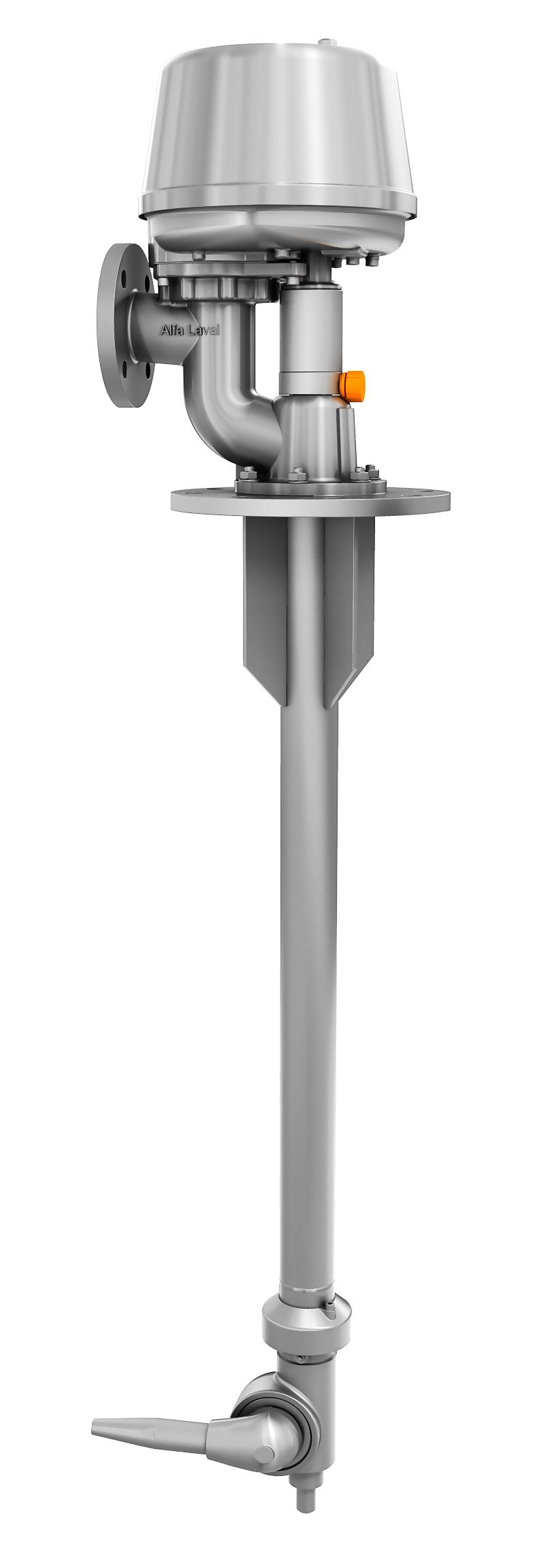
- Durchsatzbereich
- i40 S: 3-56 m³/h | i40 D: 7-80 m³/h | TZ-82: 15 m³/h (8mm-Düsen @ 7 bar)
- Betriebsdruck
- Typischerweise 4-12 bar; empfohlener Betriebsdruck 5-6,5 bar
- Wurfweite/reichweite
- TZ-82: 26 Meter horizontale Wurfweite (Benetzungsradius)
- Düsendurchmesser-Bereich
- 7-10 mm (verschiedene Konfigurationen für Durchsatz-Optimierung)
- Deck-Öffnung erforderlich
- i40 S/i40 D: nur 145 mm (kompakteste 2. Generation)
- Material-standard
- AISI 316 Edelstahl für Hauptkomponenten; PEEK für Seals/Verschleißteile
- Betriebstemperatur
- 0–95°C (32–203°F)
- Antriebsart
- Turbine-driven by cleaning medium flow (COW: crude oil washthrough possible)
- IMO-Konformität
- Erfüllt IMO-Anforderungen für COW (Crude Oil Washing) Systeme
- i40 S (Single-Nozzle, 2. Generation)
- i40 D (Dual-Nozzle, 2. Generation)
- i65 S (Single-Nozzle, High-Impact)
- T-73 (Automatic, 5.000-30.000 m³)
- TZ-67 (Rotary Jet Head, 50-500 m³)
- TZ-75 (Portable, 1.000-5.000 m³)
- TZ-82 (Portable/Fixed, bis 3.000 m³)
- TZ-89 (Media-Lubricated)
- 270FT Mark I (Single-Nozzle Crude Oil Tanker)
- Area: Nozzle wear and erosionCheck: Inspectors regularly check nozzles for wear marks, scratches, surface erosion and deformed openings. Nozzle blockages from sludge accumulation are the most frequent periodic maintenance task. Damaged nozzles must be replaced as a group.
- Area: Gearbox/turbine wear and vibrationCheck: Inspectors monitor for abnormal vibrations, temperature rise and irregular noise. Detached gear teeth and uneven disk distribution cause vibration problems. Inspection recommended every 200-300 operating hours; bearing replacement after 300-500 hours or at least every 3 years.
- Area: Ball bearings and sleeve bushings wearCheck: Inspectors check ball bearings for free rotation without contamination and damage. Sleeve bushings in gearbox frame must be checked: maximum diameter not exceeding 10.4 mm (bore not ovally deformed). Inspect all bearings and sealing rings every 6 months; replacement after 6,000 operating hours or every 3 years.
- Area: Seals and shaft passages (hysteresis coupling design)Check: Inspectors check for oil leakage and contamination at seal points. The hysteresis coupling eliminates conventional speed-setting shafts and reduces leak points. All rubber seals should be replaced at each service inspection to ensure hygiene and performance. Moisture and contamination ingress leads to seal failure.
- Area: Programming pattern and control sequence functionalityCheck: Inspectors test programming logic and valve control for correct 3D-indexed impact pattern. Check creep movement (vertical screw movement while horizontal rotation occurs) and progressive compression from coarse to fine over 8 cycles.
- Area: COW (Crude Oil Washing) system approval and crude oil compatibilityCheck: Inspectors verify IMO certification and crude oil wash-through approval. Toftejorg T-73 and 270FT Mark I are specifically designed for crude oil tankers. Check for corrosion/wear from crude oil exposure and verify valve seals under crude oil operating conditions.
Universal inspection/service points for tank cleaning machines (Gunclean Toftejorg, 2026-06). Per-model specs not auto-filled.
- Durchsatzbereich
- i40 S: 3-56 m³/h | i40 D: 7-80 m³/h | TZ-82: 15 m³/h (8mm-Düsen @ 7 bar)
- Betriebsdruck
- Typischerweise 4-12 bar; empfohlener Betriebsdruck 5-6,5 bar
- Wurfweite/reichweite
- TZ-82: 26 Meter horizontale Wurfweite (Benetzungsradius)
- Düsendurchmesser-Bereich
- 7-10 mm (verschiedene Konfigurationen für Durchsatz-Optimierung)
- Deck-Öffnung erforderlich
- i40 S/i40 D: nur 145 mm (kompakteste 2. Generation)
- Material-standard
- AISI 316 Edelstahl für Hauptkomponenten; PEEK für Seals/Verschleißteile
- Betriebstemperatur
- 0–95°C (32–203°F)
- Antriebsart
- Turbine-driven by cleaning medium flow (COW: crude oil washthrough possible)
- IMO-Konformität
- Erfüllt IMO-Anforderungen für COW (Crude Oil Washing) Systeme
- i40 S (Single-Nozzle, 2. Generation)
- i40 D (Dual-Nozzle, 2. Generation)
- i65 S (Single-Nozzle, High-Impact)
- T-73 (Automatic, 5.000-30.000 m³)
- TZ-67 (Rotary Jet Head, 50-500 m³)
- TZ-75 (Portable, 1.000-5.000 m³)
- TZ-82 (Portable/Fixed, bis 3.000 m³)
- TZ-89 (Media-Lubricated)
- 270FT Mark I (Single-Nozzle Crude Oil Tanker)
- Area: Nozzle wear and erosionCheck: Inspectors regularly check nozzles for wear marks, scratches, surface erosion and deformed openings. Nozzle blockages from sludge accumulation are the most frequent periodic maintenance task. Damaged nozzles must be replaced as a group.
- Area: Gearbox/turbine wear and vibrationCheck: Inspectors monitor for abnormal vibrations, temperature rise and irregular noise. Detached gear teeth and uneven disk distribution cause vibration problems. Inspection recommended every 200-300 operating hours; bearing replacement after 300-500 hours or at least every 3 years.
- Area: Ball bearings and sleeve bushings wearCheck: Inspectors check ball bearings for free rotation without contamination and damage. Sleeve bushings in gearbox frame must be checked: maximum diameter not exceeding 10.4 mm (bore not ovally deformed). Inspect all bearings and sealing rings every 6 months; replacement after 6,000 operating hours or every 3 years.
- Area: Seals and shaft passages (hysteresis coupling design)Check: Inspectors check for oil leakage and contamination at seal points. The hysteresis coupling eliminates conventional speed-setting shafts and reduces leak points. All rubber seals should be replaced at each service inspection to ensure hygiene and performance. Moisture and contamination ingress leads to seal failure.
- Area: Programming pattern and control sequence functionalityCheck: Inspectors test programming logic and valve control for correct 3D-indexed impact pattern. Check creep movement (vertical screw movement while horizontal rotation occurs) and progressive compression from coarse to fine over 8 cycles.
- Area: COW (Crude Oil Washing) system approval and crude oil compatibilityCheck: Inspectors verify IMO certification and crude oil wash-through approval. Toftejorg T-73 and 270FT Mark I are specifically designed for crude oil tankers. Check for corrosion/wear from crude oil exposure and verify valve seals under crude oil operating conditions.
Universal inspection/service points for tank cleaning machines (Gunclean Toftejorg, 2026-06). Per-model specs not auto-filled.
- Durchsatzbereich
- i40 S: 3-56 m³/h | i40 D: 7-80 m³/h | TZ-82: 15 m³/h (8mm-Düsen @ 7 bar)
- Betriebsdruck
- Typischerweise 4-12 bar; empfohlener Betriebsdruck 5-6,5 bar
- Wurfweite/reichweite
- TZ-82: 26 Meter horizontale Wurfweite (Benetzungsradius)
- Düsendurchmesser-Bereich
- 7-10 mm (verschiedene Konfigurationen für Durchsatz-Optimierung)
- Deck-Öffnung erforderlich
- i40 S/i40 D: nur 145 mm (kompakteste 2. Generation)
- Material-standard
- AISI 316 Edelstahl für Hauptkomponenten; PEEK für Seals/Verschleißteile
- Betriebstemperatur
- 0–95°C (32–203°F)
- Antriebsart
- Turbine-driven by cleaning medium flow (COW: crude oil washthrough possible)
- IMO-Konformität
- Erfüllt IMO-Anforderungen für COW (Crude Oil Washing) Systeme
- i40 S (Single-Nozzle, 2. Generation)
- i40 D (Dual-Nozzle, 2. Generation)
- i65 S (Single-Nozzle, High-Impact)
- T-73 (Automatic, 5.000-30.000 m³)
- TZ-67 (Rotary Jet Head, 50-500 m³)
- TZ-75 (Portable, 1.000-5.000 m³)
- TZ-82 (Portable/Fixed, bis 3.000 m³)
- TZ-89 (Media-Lubricated)
- 270FT Mark I (Single-Nozzle Crude Oil Tanker)
- Area: Nozzle wear and erosionCheck: Inspectors regularly check nozzles for wear marks, scratches, surface erosion and deformed openings. Nozzle blockages from sludge accumulation are the most frequent periodic maintenance task. Damaged nozzles must be replaced as a group.
- Area: Gearbox/turbine wear and vibrationCheck: Inspectors monitor for abnormal vibrations, temperature rise and irregular noise. Detached gear teeth and uneven disk distribution cause vibration problems. Inspection recommended every 200-300 operating hours; bearing replacement after 300-500 hours or at least every 3 years.
- Area: Ball bearings and sleeve bushings wearCheck: Inspectors check ball bearings for free rotation without contamination and damage. Sleeve bushings in gearbox frame must be checked: maximum diameter not exceeding 10.4 mm (bore not ovally deformed). Inspect all bearings and sealing rings every 6 months; replacement after 6,000 operating hours or every 3 years.
- Area: Seals and shaft passages (hysteresis coupling design)Check: Inspectors check for oil leakage and contamination at seal points. The hysteresis coupling eliminates conventional speed-setting shafts and reduces leak points. All rubber seals should be replaced at each service inspection to ensure hygiene and performance. Moisture and contamination ingress leads to seal failure.
- Area: Programming pattern and control sequence functionalityCheck: Inspectors test programming logic and valve control for correct 3D-indexed impact pattern. Check creep movement (vertical screw movement while horizontal rotation occurs) and progressive compression from coarse to fine over 8 cycles.
- Area: COW (Crude Oil Washing) system approval and crude oil compatibilityCheck: Inspectors verify IMO certification and crude oil wash-through approval. Toftejorg T-73 and 270FT Mark I are specifically designed for crude oil tankers. Check for corrosion/wear from crude oil exposure and verify valve seals under crude oil operating conditions.
Universal inspection/service points for tank cleaning machines (Gunclean Toftejorg, 2026-06). Per-model specs not auto-filled.
- Durchsatzbereich
- i40 S: 3-56 m³/h | i40 D: 7-80 m³/h | TZ-82: 15 m³/h (8mm-Düsen @ 7 bar)
- Betriebsdruck
- Typischerweise 4-12 bar; empfohlener Betriebsdruck 5-6,5 bar
- Wurfweite/reichweite
- TZ-82: 26 Meter horizontale Wurfweite (Benetzungsradius)
- Düsendurchmesser-Bereich
- 7-10 mm (verschiedene Konfigurationen für Durchsatz-Optimierung)
- Deck-Öffnung erforderlich
- i40 S/i40 D: nur 145 mm (kompakteste 2. Generation)
- Material-standard
- AISI 316 Edelstahl für Hauptkomponenten; PEEK für Seals/Verschleißteile
- Betriebstemperatur
- 0–95°C (32–203°F)
- Antriebsart
- Turbine-driven by cleaning medium flow (COW: crude oil washthrough possible)
- IMO-Konformität
- Erfüllt IMO-Anforderungen für COW (Crude Oil Washing) Systeme
- i40 S (Single-Nozzle, 2. Generation)
- i40 D (Dual-Nozzle, 2. Generation)
- i65 S (Single-Nozzle, High-Impact)
- T-73 (Automatic, 5.000-30.000 m³)
- TZ-67 (Rotary Jet Head, 50-500 m³)
- TZ-75 (Portable, 1.000-5.000 m³)
- TZ-82 (Portable/Fixed, bis 3.000 m³)
- TZ-89 (Media-Lubricated)
- 270FT Mark I (Single-Nozzle Crude Oil Tanker)
- Area: Nozzle wear and erosionCheck: Inspectors regularly check nozzles for wear marks, scratches, surface erosion and deformed openings. Nozzle blockages from sludge accumulation are the most frequent periodic maintenance task. Damaged nozzles must be replaced as a group.
- Area: Gearbox/turbine wear and vibrationCheck: Inspectors monitor for abnormal vibrations, temperature rise and irregular noise. Detached gear teeth and uneven disk distribution cause vibration problems. Inspection recommended every 200-300 operating hours; bearing replacement after 300-500 hours or at least every 3 years.
- Area: Ball bearings and sleeve bushings wearCheck: Inspectors check ball bearings for free rotation without contamination and damage. Sleeve bushings in gearbox frame must be checked: maximum diameter not exceeding 10.4 mm (bore not ovally deformed). Inspect all bearings and sealing rings every 6 months; replacement after 6,000 operating hours or every 3 years.
- Area: Seals and shaft passages (hysteresis coupling design)Check: Inspectors check for oil leakage and contamination at seal points. The hysteresis coupling eliminates conventional speed-setting shafts and reduces leak points. All rubber seals should be replaced at each service inspection to ensure hygiene and performance. Moisture and contamination ingress leads to seal failure.
- Area: Programming pattern and control sequence functionalityCheck: Inspectors test programming logic and valve control for correct 3D-indexed impact pattern. Check creep movement (vertical screw movement while horizontal rotation occurs) and progressive compression from coarse to fine over 8 cycles.
- Area: COW (Crude Oil Washing) system approval and crude oil compatibilityCheck: Inspectors verify IMO certification and crude oil wash-through approval. Toftejorg T-73 and 270FT Mark I are specifically designed for crude oil tankers. Check for corrosion/wear from crude oil exposure and verify valve seals under crude oil operating conditions.
Universal inspection/service points for tank cleaning machines (Gunclean Toftejorg, 2026-06). Per-model specs not auto-filled.
- Durchsatzbereich
- i40 S: 3-56 m³/h | i40 D: 7-80 m³/h | TZ-82: 15 m³/h (8mm-Düsen @ 7 bar)
- Betriebsdruck
- Typischerweise 4-12 bar; empfohlener Betriebsdruck 5-6,5 bar
- Wurfweite/reichweite
- TZ-82: 26 Meter horizontale Wurfweite (Benetzungsradius)
- Düsendurchmesser-Bereich
- 7-10 mm (verschiedene Konfigurationen für Durchsatz-Optimierung)
- Deck-Öffnung erforderlich
- i40 S/i40 D: nur 145 mm (kompakteste 2. Generation)
- Material-standard
- AISI 316 Edelstahl für Hauptkomponenten; PEEK für Seals/Verschleißteile
- Betriebstemperatur
- 0–95°C (32–203°F)
- Antriebsart
- Turbine-driven by cleaning medium flow (COW: crude oil washthrough possible)
- IMO-Konformität
- Erfüllt IMO-Anforderungen für COW (Crude Oil Washing) Systeme
- i40 S (Single-Nozzle, 2. Generation)
- i40 D (Dual-Nozzle, 2. Generation)
- i65 S (Single-Nozzle, High-Impact)
- T-73 (Automatic, 5.000-30.000 m³)
- TZ-67 (Rotary Jet Head, 50-500 m³)
- TZ-75 (Portable, 1.000-5.000 m³)
- TZ-82 (Portable/Fixed, bis 3.000 m³)
- TZ-89 (Media-Lubricated)
- 270FT Mark I (Single-Nozzle Crude Oil Tanker)
- Area: Nozzle wear and erosionCheck: Inspectors regularly check nozzles for wear marks, scratches, surface erosion and deformed openings. Nozzle blockages from sludge accumulation are the most frequent periodic maintenance task. Damaged nozzles must be replaced as a group.
- Area: Gearbox/turbine wear and vibrationCheck: Inspectors monitor for abnormal vibrations, temperature rise and irregular noise. Detached gear teeth and uneven disk distribution cause vibration problems. Inspection recommended every 200-300 operating hours; bearing replacement after 300-500 hours or at least every 3 years.
- Area: Ball bearings and sleeve bushings wearCheck: Inspectors check ball bearings for free rotation without contamination and damage. Sleeve bushings in gearbox frame must be checked: maximum diameter not exceeding 10.4 mm (bore not ovally deformed). Inspect all bearings and sealing rings every 6 months; replacement after 6,000 operating hours or every 3 years.
- Area: Seals and shaft passages (hysteresis coupling design)Check: Inspectors check for oil leakage and contamination at seal points. The hysteresis coupling eliminates conventional speed-setting shafts and reduces leak points. All rubber seals should be replaced at each service inspection to ensure hygiene and performance. Moisture and contamination ingress leads to seal failure.
- Area: Programming pattern and control sequence functionalityCheck: Inspectors test programming logic and valve control for correct 3D-indexed impact pattern. Check creep movement (vertical screw movement while horizontal rotation occurs) and progressive compression from coarse to fine over 8 cycles.
- Area: COW (Crude Oil Washing) system approval and crude oil compatibilityCheck: Inspectors verify IMO certification and crude oil wash-through approval. Toftejorg T-73 and 270FT Mark I are specifically designed for crude oil tankers. Check for corrosion/wear from crude oil exposure and verify valve seals under crude oil operating conditions.
Universal inspection/service points for tank cleaning machines (Gunclean Toftejorg, 2026-06). Per-model specs not auto-filled.
- Durchsatzbereich
- i40 S: 3-56 m³/h | i40 D: 7-80 m³/h | TZ-82: 15 m³/h (8mm-Düsen @ 7 bar)
- Betriebsdruck
- Typischerweise 4-12 bar; empfohlener Betriebsdruck 5-6,5 bar
- Wurfweite/reichweite
- TZ-82: 26 Meter horizontale Wurfweite (Benetzungsradius)
- Düsendurchmesser-Bereich
- 7-10 mm (verschiedene Konfigurationen für Durchsatz-Optimierung)
- Deck-Öffnung erforderlich
- i40 S/i40 D: nur 145 mm (kompakteste 2. Generation)
- Material-standard
- AISI 316 Edelstahl für Hauptkomponenten; PEEK für Seals/Verschleißteile
- Betriebstemperatur
- 0–95°C (32–203°F)
- Antriebsart
- Turbine-driven by cleaning medium flow (COW: crude oil washthrough possible)
- IMO-Konformität
- Erfüllt IMO-Anforderungen für COW (Crude Oil Washing) Systeme
- i40 S (Single-Nozzle, 2. Generation)
- i40 D (Dual-Nozzle, 2. Generation)
- i65 S (Single-Nozzle, High-Impact)
- T-73 (Automatic, 5.000-30.000 m³)
- TZ-67 (Rotary Jet Head, 50-500 m³)
- TZ-75 (Portable, 1.000-5.000 m³)
- TZ-82 (Portable/Fixed, bis 3.000 m³)
- TZ-89 (Media-Lubricated)
- 270FT Mark I (Single-Nozzle Crude Oil Tanker)
- Area: Nozzle wear and erosionCheck: Inspectors regularly check nozzles for wear marks, scratches, surface erosion and deformed openings. Nozzle blockages from sludge accumulation are the most frequent periodic maintenance task. Damaged nozzles must be replaced as a group.
- Area: Gearbox/turbine wear and vibrationCheck: Inspectors monitor for abnormal vibrations, temperature rise and irregular noise. Detached gear teeth and uneven disk distribution cause vibration problems. Inspection recommended every 200-300 operating hours; bearing replacement after 300-500 hours or at least every 3 years.
- Area: Ball bearings and sleeve bushings wearCheck: Inspectors check ball bearings for free rotation without contamination and damage. Sleeve bushings in gearbox frame must be checked: maximum diameter not exceeding 10.4 mm (bore not ovally deformed). Inspect all bearings and sealing rings every 6 months; replacement after 6,000 operating hours or every 3 years.
- Area: Seals and shaft passages (hysteresis coupling design)Check: Inspectors check for oil leakage and contamination at seal points. The hysteresis coupling eliminates conventional speed-setting shafts and reduces leak points. All rubber seals should be replaced at each service inspection to ensure hygiene and performance. Moisture and contamination ingress leads to seal failure.
- Area: Programming pattern and control sequence functionalityCheck: Inspectors test programming logic and valve control for correct 3D-indexed impact pattern. Check creep movement (vertical screw movement while horizontal rotation occurs) and progressive compression from coarse to fine over 8 cycles.
- Area: COW (Crude Oil Washing) system approval and crude oil compatibilityCheck: Inspectors verify IMO certification and crude oil wash-through approval. Toftejorg T-73 and 270FT Mark I are specifically designed for crude oil tankers. Check for corrosion/wear from crude oil exposure and verify valve seals under crude oil operating conditions.
Universal inspection/service points for tank cleaning machines (Gunclean Toftejorg, 2026-06). Per-model specs not auto-filled.
- Durchsatzbereich
- i40 S: 3-56 m³/h | i40 D: 7-80 m³/h | TZ-82: 15 m³/h (8mm-Düsen @ 7 bar)
- Betriebsdruck
- Typischerweise 4-12 bar; empfohlener Betriebsdruck 5-6,5 bar
- Wurfweite/reichweite
- TZ-82: 26 Meter horizontale Wurfweite (Benetzungsradius)
- Düsendurchmesser-Bereich
- 7-10 mm (verschiedene Konfigurationen für Durchsatz-Optimierung)
- Deck-Öffnung erforderlich
- i40 S/i40 D: nur 145 mm (kompakteste 2. Generation)
- Material-standard
- AISI 316 Edelstahl für Hauptkomponenten; PEEK für Seals/Verschleißteile
- Betriebstemperatur
- 0–95°C (32–203°F)
- Antriebsart
- Turbine-driven by cleaning medium flow (COW: crude oil washthrough possible)
- IMO-Konformität
- Erfüllt IMO-Anforderungen für COW (Crude Oil Washing) Systeme
- i40 S (Single-Nozzle, 2. Generation)
- i40 D (Dual-Nozzle, 2. Generation)
- i65 S (Single-Nozzle, High-Impact)
- T-73 (Automatic, 5.000-30.000 m³)
- TZ-67 (Rotary Jet Head, 50-500 m³)
- TZ-75 (Portable, 1.000-5.000 m³)
- TZ-82 (Portable/Fixed, bis 3.000 m³)
- TZ-89 (Media-Lubricated)
- 270FT Mark I (Single-Nozzle Crude Oil Tanker)
- Area: Nozzle wear and erosionCheck: Inspectors regularly check nozzles for wear marks, scratches, surface erosion and deformed openings. Nozzle blockages from sludge accumulation are the most frequent periodic maintenance task. Damaged nozzles must be replaced as a group.
- Area: Gearbox/turbine wear and vibrationCheck: Inspectors monitor for abnormal vibrations, temperature rise and irregular noise. Detached gear teeth and uneven disk distribution cause vibration problems. Inspection recommended every 200-300 operating hours; bearing replacement after 300-500 hours or at least every 3 years.
- Area: Ball bearings and sleeve bushings wearCheck: Inspectors check ball bearings for free rotation without contamination and damage. Sleeve bushings in gearbox frame must be checked: maximum diameter not exceeding 10.4 mm (bore not ovally deformed). Inspect all bearings and sealing rings every 6 months; replacement after 6,000 operating hours or every 3 years.
- Area: Seals and shaft passages (hysteresis coupling design)Check: Inspectors check for oil leakage and contamination at seal points. The hysteresis coupling eliminates conventional speed-setting shafts and reduces leak points. All rubber seals should be replaced at each service inspection to ensure hygiene and performance. Moisture and contamination ingress leads to seal failure.
- Area: Programming pattern and control sequence functionalityCheck: Inspectors test programming logic and valve control for correct 3D-indexed impact pattern. Check creep movement (vertical screw movement while horizontal rotation occurs) and progressive compression from coarse to fine over 8 cycles.
- Area: COW (Crude Oil Washing) system approval and crude oil compatibilityCheck: Inspectors verify IMO certification and crude oil wash-through approval. Toftejorg T-73 and 270FT Mark I are specifically designed for crude oil tankers. Check for corrosion/wear from crude oil exposure and verify valve seals under crude oil operating conditions.
Universal inspection/service points for tank cleaning machines (Gunclean Toftejorg, 2026-06). Per-model specs not auto-filled.
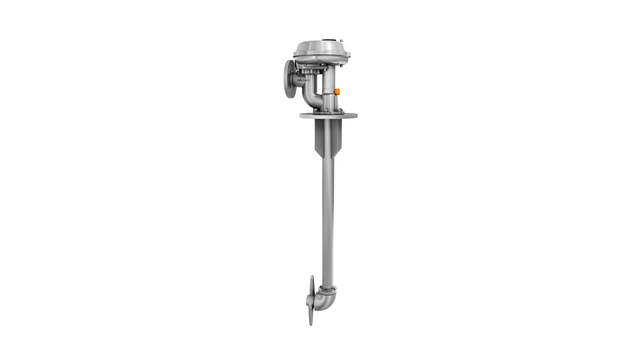
- Durchsatzbereich
- i40 S: 3-56 m³/h | i40 D: 7-80 m³/h | TZ-82: 15 m³/h (8mm-Düsen @ 7 bar)
- Betriebsdruck
- Typischerweise 4-12 bar; empfohlener Betriebsdruck 5-6,5 bar
- Wurfweite/reichweite
- TZ-82: 26 Meter horizontale Wurfweite (Benetzungsradius)
- Düsendurchmesser-Bereich
- 7-10 mm (verschiedene Konfigurationen für Durchsatz-Optimierung)
- Deck-Öffnung erforderlich
- i40 S/i40 D: nur 145 mm (kompakteste 2. Generation)
- Material-standard
- AISI 316 Edelstahl für Hauptkomponenten; PEEK für Seals/Verschleißteile
- Betriebstemperatur
- 0–95°C (32–203°F)
- Antriebsart
- Turbine-driven by cleaning medium flow (COW: crude oil washthrough possible)
- IMO-Konformität
- Erfüllt IMO-Anforderungen für COW (Crude Oil Washing) Systeme
- i40 S (Single-Nozzle, 2. Generation)
- i40 D (Dual-Nozzle, 2. Generation)
- i65 S (Single-Nozzle, High-Impact)
- T-73 (Automatic, 5.000-30.000 m³)
- TZ-67 (Rotary Jet Head, 50-500 m³)
- TZ-75 (Portable, 1.000-5.000 m³)
- TZ-82 (Portable/Fixed, bis 3.000 m³)
- TZ-89 (Media-Lubricated)
- 270FT Mark I (Single-Nozzle Crude Oil Tanker)
- Area: Nozzle wear and erosionCheck: Inspectors regularly check nozzles for wear marks, scratches, surface erosion and deformed openings. Nozzle blockages from sludge accumulation are the most frequent periodic maintenance task. Damaged nozzles must be replaced as a group.
- Area: Gearbox/turbine wear and vibrationCheck: Inspectors monitor for abnormal vibrations, temperature rise and irregular noise. Detached gear teeth and uneven disk distribution cause vibration problems. Inspection recommended every 200-300 operating hours; bearing replacement after 300-500 hours or at least every 3 years.
- Area: Ball bearings and sleeve bushings wearCheck: Inspectors check ball bearings for free rotation without contamination and damage. Sleeve bushings in gearbox frame must be checked: maximum diameter not exceeding 10.4 mm (bore not ovally deformed). Inspect all bearings and sealing rings every 6 months; replacement after 6,000 operating hours or every 3 years.
- Area: Seals and shaft passages (hysteresis coupling design)Check: Inspectors check for oil leakage and contamination at seal points. The hysteresis coupling eliminates conventional speed-setting shafts and reduces leak points. All rubber seals should be replaced at each service inspection to ensure hygiene and performance. Moisture and contamination ingress leads to seal failure.
- Area: Programming pattern and control sequence functionalityCheck: Inspectors test programming logic and valve control for correct 3D-indexed impact pattern. Check creep movement (vertical screw movement while horizontal rotation occurs) and progressive compression from coarse to fine over 8 cycles.
- Area: COW (Crude Oil Washing) system approval and crude oil compatibilityCheck: Inspectors verify IMO certification and crude oil wash-through approval. Toftejorg T-73 and 270FT Mark I are specifically designed for crude oil tankers. Check for corrosion/wear from crude oil exposure and verify valve seals under crude oil operating conditions.
Universal inspection/service points for tank cleaning machines (Gunclean Toftejorg, 2026-06). Per-model specs not auto-filled.
- Durchsatzbereich
- i40 S: 3-56 m³/h | i40 D: 7-80 m³/h | TZ-82: 15 m³/h (8mm-Düsen @ 7 bar)
- Betriebsdruck
- Typischerweise 4-12 bar; empfohlener Betriebsdruck 5-6,5 bar
- Wurfweite/reichweite
- TZ-82: 26 Meter horizontale Wurfweite (Benetzungsradius)
- Düsendurchmesser-Bereich
- 7-10 mm (verschiedene Konfigurationen für Durchsatz-Optimierung)
- Deck-Öffnung erforderlich
- i40 S/i40 D: nur 145 mm (kompakteste 2. Generation)
- Material-standard
- AISI 316 Edelstahl für Hauptkomponenten; PEEK für Seals/Verschleißteile
- Betriebstemperatur
- 0–95°C (32–203°F)
- Antriebsart
- Turbine-driven by cleaning medium flow (COW: crude oil washthrough possible)
- IMO-Konformität
- Erfüllt IMO-Anforderungen für COW (Crude Oil Washing) Systeme
- i40 S (Single-Nozzle, 2. Generation)
- i40 D (Dual-Nozzle, 2. Generation)
- i65 S (Single-Nozzle, High-Impact)
- T-73 (Automatic, 5.000-30.000 m³)
- TZ-67 (Rotary Jet Head, 50-500 m³)
- TZ-75 (Portable, 1.000-5.000 m³)
- TZ-82 (Portable/Fixed, bis 3.000 m³)
- TZ-89 (Media-Lubricated)
- 270FT Mark I (Single-Nozzle Crude Oil Tanker)
- Area: Nozzle wear and erosionCheck: Inspectors regularly check nozzles for wear marks, scratches, surface erosion and deformed openings. Nozzle blockages from sludge accumulation are the most frequent periodic maintenance task. Damaged nozzles must be replaced as a group.
- Area: Gearbox/turbine wear and vibrationCheck: Inspectors monitor for abnormal vibrations, temperature rise and irregular noise. Detached gear teeth and uneven disk distribution cause vibration problems. Inspection recommended every 200-300 operating hours; bearing replacement after 300-500 hours or at least every 3 years.
- Area: Ball bearings and sleeve bushings wearCheck: Inspectors check ball bearings for free rotation without contamination and damage. Sleeve bushings in gearbox frame must be checked: maximum diameter not exceeding 10.4 mm (bore not ovally deformed). Inspect all bearings and sealing rings every 6 months; replacement after 6,000 operating hours or every 3 years.
- Area: Seals and shaft passages (hysteresis coupling design)Check: Inspectors check for oil leakage and contamination at seal points. The hysteresis coupling eliminates conventional speed-setting shafts and reduces leak points. All rubber seals should be replaced at each service inspection to ensure hygiene and performance. Moisture and contamination ingress leads to seal failure.
- Area: Programming pattern and control sequence functionalityCheck: Inspectors test programming logic and valve control for correct 3D-indexed impact pattern. Check creep movement (vertical screw movement while horizontal rotation occurs) and progressive compression from coarse to fine over 8 cycles.
- Area: COW (Crude Oil Washing) system approval and crude oil compatibilityCheck: Inspectors verify IMO certification and crude oil wash-through approval. Toftejorg T-73 and 270FT Mark I are specifically designed for crude oil tankers. Check for corrosion/wear from crude oil exposure and verify valve seals under crude oil operating conditions.
Universal inspection/service points for tank cleaning machines (Gunclean Toftejorg, 2026-06). Per-model specs not auto-filled.
- Durchsatzbereich
- i40 S: 3-56 m³/h | i40 D: 7-80 m³/h | TZ-82: 15 m³/h (8mm-Düsen @ 7 bar)
- Betriebsdruck
- Typischerweise 4-12 bar; empfohlener Betriebsdruck 5-6,5 bar
- Wurfweite/reichweite
- TZ-82: 26 Meter horizontale Wurfweite (Benetzungsradius)
- Düsendurchmesser-Bereich
- 7-10 mm (verschiedene Konfigurationen für Durchsatz-Optimierung)
- Deck-Öffnung erforderlich
- i40 S/i40 D: nur 145 mm (kompakteste 2. Generation)
- Material-standard
- AISI 316 Edelstahl für Hauptkomponenten; PEEK für Seals/Verschleißteile
- Betriebstemperatur
- 0–95°C (32–203°F)
- Antriebsart
- Turbine-driven by cleaning medium flow (COW: crude oil washthrough possible)
- IMO-Konformität
- Erfüllt IMO-Anforderungen für COW (Crude Oil Washing) Systeme
- i40 S (Single-Nozzle, 2. Generation)
- i40 D (Dual-Nozzle, 2. Generation)
- i65 S (Single-Nozzle, High-Impact)
- T-73 (Automatic, 5.000-30.000 m³)
- TZ-67 (Rotary Jet Head, 50-500 m³)
- TZ-75 (Portable, 1.000-5.000 m³)
- TZ-82 (Portable/Fixed, bis 3.000 m³)
- TZ-89 (Media-Lubricated)
- 270FT Mark I (Single-Nozzle Crude Oil Tanker)
- Area: Nozzle wear and erosionCheck: Inspectors regularly check nozzles for wear marks, scratches, surface erosion and deformed openings. Nozzle blockages from sludge accumulation are the most frequent periodic maintenance task. Damaged nozzles must be replaced as a group.
- Area: Gearbox/turbine wear and vibrationCheck: Inspectors monitor for abnormal vibrations, temperature rise and irregular noise. Detached gear teeth and uneven disk distribution cause vibration problems. Inspection recommended every 200-300 operating hours; bearing replacement after 300-500 hours or at least every 3 years.
- Area: Ball bearings and sleeve bushings wearCheck: Inspectors check ball bearings for free rotation without contamination and damage. Sleeve bushings in gearbox frame must be checked: maximum diameter not exceeding 10.4 mm (bore not ovally deformed). Inspect all bearings and sealing rings every 6 months; replacement after 6,000 operating hours or every 3 years.
- Area: Seals and shaft passages (hysteresis coupling design)Check: Inspectors check for oil leakage and contamination at seal points. The hysteresis coupling eliminates conventional speed-setting shafts and reduces leak points. All rubber seals should be replaced at each service inspection to ensure hygiene and performance. Moisture and contamination ingress leads to seal failure.
- Area: Programming pattern and control sequence functionalityCheck: Inspectors test programming logic and valve control for correct 3D-indexed impact pattern. Check creep movement (vertical screw movement while horizontal rotation occurs) and progressive compression from coarse to fine over 8 cycles.
- Area: COW (Crude Oil Washing) system approval and crude oil compatibilityCheck: Inspectors verify IMO certification and crude oil wash-through approval. Toftejorg T-73 and 270FT Mark I are specifically designed for crude oil tankers. Check for corrosion/wear from crude oil exposure and verify valve seals under crude oil operating conditions.
Universal inspection/service points for tank cleaning machines (Gunclean Toftejorg, 2026-06). Per-model specs not auto-filled.
- Durchsatzbereich
- i40 S: 3-56 m³/h | i40 D: 7-80 m³/h | TZ-82: 15 m³/h (8mm-Düsen @ 7 bar)
- Betriebsdruck
- Typischerweise 4-12 bar; empfohlener Betriebsdruck 5-6,5 bar
- Wurfweite/reichweite
- TZ-82: 26 Meter horizontale Wurfweite (Benetzungsradius)
- Düsendurchmesser-Bereich
- 7-10 mm (verschiedene Konfigurationen für Durchsatz-Optimierung)
- Deck-Öffnung erforderlich
- i40 S/i40 D: nur 145 mm (kompakteste 2. Generation)
- Material-standard
- AISI 316 Edelstahl für Hauptkomponenten; PEEK für Seals/Verschleißteile
- Betriebstemperatur
- 0–95°C (32–203°F)
- Antriebsart
- Turbine-driven by cleaning medium flow (COW: crude oil washthrough possible)
- IMO-Konformität
- Erfüllt IMO-Anforderungen für COW (Crude Oil Washing) Systeme
- i40 S (Single-Nozzle, 2. Generation)
- i40 D (Dual-Nozzle, 2. Generation)
- i65 S (Single-Nozzle, High-Impact)
- T-73 (Automatic, 5.000-30.000 m³)
- TZ-67 (Rotary Jet Head, 50-500 m³)
- TZ-75 (Portable, 1.000-5.000 m³)
- TZ-82 (Portable/Fixed, bis 3.000 m³)
- TZ-89 (Media-Lubricated)
- 270FT Mark I (Single-Nozzle Crude Oil Tanker)
- Area: Nozzle wear and erosionCheck: Inspectors regularly check nozzles for wear marks, scratches, surface erosion and deformed openings. Nozzle blockages from sludge accumulation are the most frequent periodic maintenance task. Damaged nozzles must be replaced as a group.
- Area: Gearbox/turbine wear and vibrationCheck: Inspectors monitor for abnormal vibrations, temperature rise and irregular noise. Detached gear teeth and uneven disk distribution cause vibration problems. Inspection recommended every 200-300 operating hours; bearing replacement after 300-500 hours or at least every 3 years.
- Area: Ball bearings and sleeve bushings wearCheck: Inspectors check ball bearings for free rotation without contamination and damage. Sleeve bushings in gearbox frame must be checked: maximum diameter not exceeding 10.4 mm (bore not ovally deformed). Inspect all bearings and sealing rings every 6 months; replacement after 6,000 operating hours or every 3 years.
- Area: Seals and shaft passages (hysteresis coupling design)Check: Inspectors check for oil leakage and contamination at seal points. The hysteresis coupling eliminates conventional speed-setting shafts and reduces leak points. All rubber seals should be replaced at each service inspection to ensure hygiene and performance. Moisture and contamination ingress leads to seal failure.
- Area: Programming pattern and control sequence functionalityCheck: Inspectors test programming logic and valve control for correct 3D-indexed impact pattern. Check creep movement (vertical screw movement while horizontal rotation occurs) and progressive compression from coarse to fine over 8 cycles.
- Area: COW (Crude Oil Washing) system approval and crude oil compatibilityCheck: Inspectors verify IMO certification and crude oil wash-through approval. Toftejorg T-73 and 270FT Mark I are specifically designed for crude oil tankers. Check for corrosion/wear from crude oil exposure and verify valve seals under crude oil operating conditions.
Universal inspection/service points for tank cleaning machines (Gunclean Toftejorg, 2026-06). Per-model specs not auto-filled.
- Durchsatzbereich
- i40 S: 3-56 m³/h | i40 D: 7-80 m³/h | TZ-82: 15 m³/h (8mm-Düsen @ 7 bar)
- Betriebsdruck
- Typischerweise 4-12 bar; empfohlener Betriebsdruck 5-6,5 bar
- Wurfweite/reichweite
- TZ-82: 26 Meter horizontale Wurfweite (Benetzungsradius)
- Düsendurchmesser-Bereich
- 7-10 mm (verschiedene Konfigurationen für Durchsatz-Optimierung)
- Deck-Öffnung erforderlich
- i40 S/i40 D: nur 145 mm (kompakteste 2. Generation)
- Material-standard
- AISI 316 Edelstahl für Hauptkomponenten; PEEK für Seals/Verschleißteile
- Betriebstemperatur
- 0–95°C (32–203°F)
- Antriebsart
- Turbine-driven by cleaning medium flow (COW: crude oil washthrough possible)
- IMO-Konformität
- Erfüllt IMO-Anforderungen für COW (Crude Oil Washing) Systeme
- i40 S (Single-Nozzle, 2. Generation)
- i40 D (Dual-Nozzle, 2. Generation)
- i65 S (Single-Nozzle, High-Impact)
- T-73 (Automatic, 5.000-30.000 m³)
- TZ-67 (Rotary Jet Head, 50-500 m³)
- TZ-75 (Portable, 1.000-5.000 m³)
- TZ-82 (Portable/Fixed, bis 3.000 m³)
- TZ-89 (Media-Lubricated)
- 270FT Mark I (Single-Nozzle Crude Oil Tanker)
- Area: Nozzle wear and erosionCheck: Inspectors regularly check nozzles for wear marks, scratches, surface erosion and deformed openings. Nozzle blockages from sludge accumulation are the most frequent periodic maintenance task. Damaged nozzles must be replaced as a group.
- Area: Gearbox/turbine wear and vibrationCheck: Inspectors monitor for abnormal vibrations, temperature rise and irregular noise. Detached gear teeth and uneven disk distribution cause vibration problems. Inspection recommended every 200-300 operating hours; bearing replacement after 300-500 hours or at least every 3 years.
- Area: Ball bearings and sleeve bushings wearCheck: Inspectors check ball bearings for free rotation without contamination and damage. Sleeve bushings in gearbox frame must be checked: maximum diameter not exceeding 10.4 mm (bore not ovally deformed). Inspect all bearings and sealing rings every 6 months; replacement after 6,000 operating hours or every 3 years.
- Area: Seals and shaft passages (hysteresis coupling design)Check: Inspectors check for oil leakage and contamination at seal points. The hysteresis coupling eliminates conventional speed-setting shafts and reduces leak points. All rubber seals should be replaced at each service inspection to ensure hygiene and performance. Moisture and contamination ingress leads to seal failure.
- Area: Programming pattern and control sequence functionalityCheck: Inspectors test programming logic and valve control for correct 3D-indexed impact pattern. Check creep movement (vertical screw movement while horizontal rotation occurs) and progressive compression from coarse to fine over 8 cycles.
- Area: COW (Crude Oil Washing) system approval and crude oil compatibilityCheck: Inspectors verify IMO certification and crude oil wash-through approval. Toftejorg T-73 and 270FT Mark I are specifically designed for crude oil tankers. Check for corrosion/wear from crude oil exposure and verify valve seals under crude oil operating conditions.
Universal inspection/service points for tank cleaning machines (Gunclean Toftejorg, 2026-06). Per-model specs not auto-filled.
- Durchsatzbereich
- i40 S: 3-56 m³/h | i40 D: 7-80 m³/h | TZ-82: 15 m³/h (8mm-Düsen @ 7 bar)
- Betriebsdruck
- Typischerweise 4-12 bar; empfohlener Betriebsdruck 5-6,5 bar
- Wurfweite/reichweite
- TZ-82: 26 Meter horizontale Wurfweite (Benetzungsradius)
- Düsendurchmesser-Bereich
- 7-10 mm (verschiedene Konfigurationen für Durchsatz-Optimierung)
- Deck-Öffnung erforderlich
- i40 S/i40 D: nur 145 mm (kompakteste 2. Generation)
- Material-standard
- AISI 316 Edelstahl für Hauptkomponenten; PEEK für Seals/Verschleißteile
- Betriebstemperatur
- 0–95°C (32–203°F)
- Antriebsart
- Turbine-driven by cleaning medium flow (COW: crude oil washthrough possible)
- IMO-Konformität
- Erfüllt IMO-Anforderungen für COW (Crude Oil Washing) Systeme
- i40 S (Single-Nozzle, 2. Generation)
- i40 D (Dual-Nozzle, 2. Generation)
- i65 S (Single-Nozzle, High-Impact)
- T-73 (Automatic, 5.000-30.000 m³)
- TZ-67 (Rotary Jet Head, 50-500 m³)
- TZ-75 (Portable, 1.000-5.000 m³)
- TZ-82 (Portable/Fixed, bis 3.000 m³)
- TZ-89 (Media-Lubricated)
- 270FT Mark I (Single-Nozzle Crude Oil Tanker)
- Area: Nozzle wear and erosionCheck: Inspectors regularly check nozzles for wear marks, scratches, surface erosion and deformed openings. Nozzle blockages from sludge accumulation are the most frequent periodic maintenance task. Damaged nozzles must be replaced as a group.
- Area: Gearbox/turbine wear and vibrationCheck: Inspectors monitor for abnormal vibrations, temperature rise and irregular noise. Detached gear teeth and uneven disk distribution cause vibration problems. Inspection recommended every 200-300 operating hours; bearing replacement after 300-500 hours or at least every 3 years.
- Area: Ball bearings and sleeve bushings wearCheck: Inspectors check ball bearings for free rotation without contamination and damage. Sleeve bushings in gearbox frame must be checked: maximum diameter not exceeding 10.4 mm (bore not ovally deformed). Inspect all bearings and sealing rings every 6 months; replacement after 6,000 operating hours or every 3 years.
- Area: Seals and shaft passages (hysteresis coupling design)Check: Inspectors check for oil leakage and contamination at seal points. The hysteresis coupling eliminates conventional speed-setting shafts and reduces leak points. All rubber seals should be replaced at each service inspection to ensure hygiene and performance. Moisture and contamination ingress leads to seal failure.
- Area: Programming pattern and control sequence functionalityCheck: Inspectors test programming logic and valve control for correct 3D-indexed impact pattern. Check creep movement (vertical screw movement while horizontal rotation occurs) and progressive compression from coarse to fine over 8 cycles.
- Area: COW (Crude Oil Washing) system approval and crude oil compatibilityCheck: Inspectors verify IMO certification and crude oil wash-through approval. Toftejorg T-73 and 270FT Mark I are specifically designed for crude oil tankers. Check for corrosion/wear from crude oil exposure and verify valve seals under crude oil operating conditions.
Universal inspection/service points for tank cleaning machines (Gunclean Toftejorg, 2026-06). Per-model specs not auto-filled.
- Durchsatzbereich
- i40 S: 3-56 m³/h | i40 D: 7-80 m³/h | TZ-82: 15 m³/h (8mm-Düsen @ 7 bar)
- Betriebsdruck
- Typischerweise 4-12 bar; empfohlener Betriebsdruck 5-6,5 bar
- Wurfweite/reichweite
- TZ-82: 26 Meter horizontale Wurfweite (Benetzungsradius)
- Düsendurchmesser-Bereich
- 7-10 mm (verschiedene Konfigurationen für Durchsatz-Optimierung)
- Deck-Öffnung erforderlich
- i40 S/i40 D: nur 145 mm (kompakteste 2. Generation)
- Material-standard
- AISI 316 Edelstahl für Hauptkomponenten; PEEK für Seals/Verschleißteile
- Betriebstemperatur
- 0–95°C (32–203°F)
- Antriebsart
- Turbine-driven by cleaning medium flow (COW: crude oil washthrough possible)
- IMO-Konformität
- Erfüllt IMO-Anforderungen für COW (Crude Oil Washing) Systeme
- i40 S (Single-Nozzle, 2. Generation)
- i40 D (Dual-Nozzle, 2. Generation)
- i65 S (Single-Nozzle, High-Impact)
- T-73 (Automatic, 5.000-30.000 m³)
- TZ-67 (Rotary Jet Head, 50-500 m³)
- TZ-75 (Portable, 1.000-5.000 m³)
- TZ-82 (Portable/Fixed, bis 3.000 m³)
- TZ-89 (Media-Lubricated)
- 270FT Mark I (Single-Nozzle Crude Oil Tanker)
- Area: Nozzle wear and erosionCheck: Inspectors regularly check nozzles for wear marks, scratches, surface erosion and deformed openings. Nozzle blockages from sludge accumulation are the most frequent periodic maintenance task. Damaged nozzles must be replaced as a group.
- Area: Gearbox/turbine wear and vibrationCheck: Inspectors monitor for abnormal vibrations, temperature rise and irregular noise. Detached gear teeth and uneven disk distribution cause vibration problems. Inspection recommended every 200-300 operating hours; bearing replacement after 300-500 hours or at least every 3 years.
- Area: Ball bearings and sleeve bushings wearCheck: Inspectors check ball bearings for free rotation without contamination and damage. Sleeve bushings in gearbox frame must be checked: maximum diameter not exceeding 10.4 mm (bore not ovally deformed). Inspect all bearings and sealing rings every 6 months; replacement after 6,000 operating hours or every 3 years.
- Area: Seals and shaft passages (hysteresis coupling design)Check: Inspectors check for oil leakage and contamination at seal points. The hysteresis coupling eliminates conventional speed-setting shafts and reduces leak points. All rubber seals should be replaced at each service inspection to ensure hygiene and performance. Moisture and contamination ingress leads to seal failure.
- Area: Programming pattern and control sequence functionalityCheck: Inspectors test programming logic and valve control for correct 3D-indexed impact pattern. Check creep movement (vertical screw movement while horizontal rotation occurs) and progressive compression from coarse to fine over 8 cycles.
- Area: COW (Crude Oil Washing) system approval and crude oil compatibilityCheck: Inspectors verify IMO certification and crude oil wash-through approval. Toftejorg T-73 and 270FT Mark I are specifically designed for crude oil tankers. Check for corrosion/wear from crude oil exposure and verify valve seals under crude oil operating conditions.
Universal inspection/service points for tank cleaning machines (Gunclean Toftejorg, 2026-06). Per-model specs not auto-filled.
- Durchsatzbereich
- i40 S: 3-56 m³/h | i40 D: 7-80 m³/h | TZ-82: 15 m³/h (8mm-Düsen @ 7 bar)
- Betriebsdruck
- Typischerweise 4-12 bar; empfohlener Betriebsdruck 5-6,5 bar
- Wurfweite/reichweite
- TZ-82: 26 Meter horizontale Wurfweite (Benetzungsradius)
- Düsendurchmesser-Bereich
- 7-10 mm (verschiedene Konfigurationen für Durchsatz-Optimierung)
- Deck-Öffnung erforderlich
- i40 S/i40 D: nur 145 mm (kompakteste 2. Generation)
- Material-standard
- AISI 316 Edelstahl für Hauptkomponenten; PEEK für Seals/Verschleißteile
- Betriebstemperatur
- 0–95°C (32–203°F)
- Antriebsart
- Turbine-driven by cleaning medium flow (COW: crude oil washthrough possible)
- IMO-Konformität
- Erfüllt IMO-Anforderungen für COW (Crude Oil Washing) Systeme
- i40 S (Single-Nozzle, 2. Generation)
- i40 D (Dual-Nozzle, 2. Generation)
- i65 S (Single-Nozzle, High-Impact)
- T-73 (Automatic, 5.000-30.000 m³)
- TZ-67 (Rotary Jet Head, 50-500 m³)
- TZ-75 (Portable, 1.000-5.000 m³)
- TZ-82 (Portable/Fixed, bis 3.000 m³)
- TZ-89 (Media-Lubricated)
- 270FT Mark I (Single-Nozzle Crude Oil Tanker)
- Area: Nozzle wear and erosionCheck: Inspectors regularly check nozzles for wear marks, scratches, surface erosion and deformed openings. Nozzle blockages from sludge accumulation are the most frequent periodic maintenance task. Damaged nozzles must be replaced as a group.
- Area: Gearbox/turbine wear and vibrationCheck: Inspectors monitor for abnormal vibrations, temperature rise and irregular noise. Detached gear teeth and uneven disk distribution cause vibration problems. Inspection recommended every 200-300 operating hours; bearing replacement after 300-500 hours or at least every 3 years.
- Area: Ball bearings and sleeve bushings wearCheck: Inspectors check ball bearings for free rotation without contamination and damage. Sleeve bushings in gearbox frame must be checked: maximum diameter not exceeding 10.4 mm (bore not ovally deformed). Inspect all bearings and sealing rings every 6 months; replacement after 6,000 operating hours or every 3 years.
- Area: Seals and shaft passages (hysteresis coupling design)Check: Inspectors check for oil leakage and contamination at seal points. The hysteresis coupling eliminates conventional speed-setting shafts and reduces leak points. All rubber seals should be replaced at each service inspection to ensure hygiene and performance. Moisture and contamination ingress leads to seal failure.
- Area: Programming pattern and control sequence functionalityCheck: Inspectors test programming logic and valve control for correct 3D-indexed impact pattern. Check creep movement (vertical screw movement while horizontal rotation occurs) and progressive compression from coarse to fine over 8 cycles.
- Area: COW (Crude Oil Washing) system approval and crude oil compatibilityCheck: Inspectors verify IMO certification and crude oil wash-through approval. Toftejorg T-73 and 270FT Mark I are specifically designed for crude oil tankers. Check for corrosion/wear from crude oil exposure and verify valve seals under crude oil operating conditions.
Universal inspection/service points for tank cleaning machines (Gunclean Toftejorg, 2026-06). Per-model specs not auto-filled.
- Durchsatzbereich
- i40 S: 3-56 m³/h | i40 D: 7-80 m³/h | TZ-82: 15 m³/h (8mm-Düsen @ 7 bar)
- Betriebsdruck
- Typischerweise 4-12 bar; empfohlener Betriebsdruck 5-6,5 bar
- Wurfweite/reichweite
- TZ-82: 26 Meter horizontale Wurfweite (Benetzungsradius)
- Düsendurchmesser-Bereich
- 7-10 mm (verschiedene Konfigurationen für Durchsatz-Optimierung)
- Deck-Öffnung erforderlich
- i40 S/i40 D: nur 145 mm (kompakteste 2. Generation)
- Material-standard
- AISI 316 Edelstahl für Hauptkomponenten; PEEK für Seals/Verschleißteile
- Betriebstemperatur
- 0–95°C (32–203°F)
- Antriebsart
- Turbine-driven by cleaning medium flow (COW: crude oil washthrough possible)
- IMO-Konformität
- Erfüllt IMO-Anforderungen für COW (Crude Oil Washing) Systeme
- i40 S (Single-Nozzle, 2. Generation)
- i40 D (Dual-Nozzle, 2. Generation)
- i65 S (Single-Nozzle, High-Impact)
- T-73 (Automatic, 5.000-30.000 m³)
- TZ-67 (Rotary Jet Head, 50-500 m³)
- TZ-75 (Portable, 1.000-5.000 m³)
- TZ-82 (Portable/Fixed, bis 3.000 m³)
- TZ-89 (Media-Lubricated)
- 270FT Mark I (Single-Nozzle Crude Oil Tanker)
- Area: Nozzle wear and erosionCheck: Inspectors regularly check nozzles for wear marks, scratches, surface erosion and deformed openings. Nozzle blockages from sludge accumulation are the most frequent periodic maintenance task. Damaged nozzles must be replaced as a group.
- Area: Gearbox/turbine wear and vibrationCheck: Inspectors monitor for abnormal vibrations, temperature rise and irregular noise. Detached gear teeth and uneven disk distribution cause vibration problems. Inspection recommended every 200-300 operating hours; bearing replacement after 300-500 hours or at least every 3 years.
- Area: Ball bearings and sleeve bushings wearCheck: Inspectors check ball bearings for free rotation without contamination and damage. Sleeve bushings in gearbox frame must be checked: maximum diameter not exceeding 10.4 mm (bore not ovally deformed). Inspect all bearings and sealing rings every 6 months; replacement after 6,000 operating hours or every 3 years.
- Area: Seals and shaft passages (hysteresis coupling design)Check: Inspectors check for oil leakage and contamination at seal points. The hysteresis coupling eliminates conventional speed-setting shafts and reduces leak points. All rubber seals should be replaced at each service inspection to ensure hygiene and performance. Moisture and contamination ingress leads to seal failure.
- Area: Programming pattern and control sequence functionalityCheck: Inspectors test programming logic and valve control for correct 3D-indexed impact pattern. Check creep movement (vertical screw movement while horizontal rotation occurs) and progressive compression from coarse to fine over 8 cycles.
- Area: COW (Crude Oil Washing) system approval and crude oil compatibilityCheck: Inspectors verify IMO certification and crude oil wash-through approval. Toftejorg T-73 and 270FT Mark I are specifically designed for crude oil tankers. Check for corrosion/wear from crude oil exposure and verify valve seals under crude oil operating conditions.
Universal inspection/service points for tank cleaning machines (Gunclean Toftejorg, 2026-06). Per-model specs not auto-filled.
- Durchsatzbereich
- i40 S: 3-56 m³/h | i40 D: 7-80 m³/h | TZ-82: 15 m³/h (8mm-Düsen @ 7 bar)
- Betriebsdruck
- Typischerweise 4-12 bar; empfohlener Betriebsdruck 5-6,5 bar
- Wurfweite/reichweite
- TZ-82: 26 Meter horizontale Wurfweite (Benetzungsradius)
- Düsendurchmesser-Bereich
- 7-10 mm (verschiedene Konfigurationen für Durchsatz-Optimierung)
- Deck-Öffnung erforderlich
- i40 S/i40 D: nur 145 mm (kompakteste 2. Generation)
- Material-standard
- AISI 316 Edelstahl für Hauptkomponenten; PEEK für Seals/Verschleißteile
- Betriebstemperatur
- 0–95°C (32–203°F)
- Antriebsart
- Turbine-driven by cleaning medium flow (COW: crude oil washthrough possible)
- IMO-Konformität
- Erfüllt IMO-Anforderungen für COW (Crude Oil Washing) Systeme
- i40 S (Single-Nozzle, 2. Generation)
- i40 D (Dual-Nozzle, 2. Generation)
- i65 S (Single-Nozzle, High-Impact)
- T-73 (Automatic, 5.000-30.000 m³)
- TZ-67 (Rotary Jet Head, 50-500 m³)
- TZ-75 (Portable, 1.000-5.000 m³)
- TZ-82 (Portable/Fixed, bis 3.000 m³)
- TZ-89 (Media-Lubricated)
- 270FT Mark I (Single-Nozzle Crude Oil Tanker)
- Area: Nozzle wear and erosionCheck: Inspectors regularly check nozzles for wear marks, scratches, surface erosion and deformed openings. Nozzle blockages from sludge accumulation are the most frequent periodic maintenance task. Damaged nozzles must be replaced as a group.
- Area: Gearbox/turbine wear and vibrationCheck: Inspectors monitor for abnormal vibrations, temperature rise and irregular noise. Detached gear teeth and uneven disk distribution cause vibration problems. Inspection recommended every 200-300 operating hours; bearing replacement after 300-500 hours or at least every 3 years.
- Area: Ball bearings and sleeve bushings wearCheck: Inspectors check ball bearings for free rotation without contamination and damage. Sleeve bushings in gearbox frame must be checked: maximum diameter not exceeding 10.4 mm (bore not ovally deformed). Inspect all bearings and sealing rings every 6 months; replacement after 6,000 operating hours or every 3 years.
- Area: Seals and shaft passages (hysteresis coupling design)Check: Inspectors check for oil leakage and contamination at seal points. The hysteresis coupling eliminates conventional speed-setting shafts and reduces leak points. All rubber seals should be replaced at each service inspection to ensure hygiene and performance. Moisture and contamination ingress leads to seal failure.
- Area: Programming pattern and control sequence functionalityCheck: Inspectors test programming logic and valve control for correct 3D-indexed impact pattern. Check creep movement (vertical screw movement while horizontal rotation occurs) and progressive compression from coarse to fine over 8 cycles.
- Area: COW (Crude Oil Washing) system approval and crude oil compatibilityCheck: Inspectors verify IMO certification and crude oil wash-through approval. Toftejorg T-73 and 270FT Mark I are specifically designed for crude oil tankers. Check for corrosion/wear from crude oil exposure and verify valve seals under crude oil operating conditions.
Universal inspection/service points for tank cleaning machines (Gunclean Toftejorg, 2026-06). Per-model specs not auto-filled.
- Durchsatzbereich
- i40 S: 3-56 m³/h | i40 D: 7-80 m³/h | TZ-82: 15 m³/h (8mm-Düsen @ 7 bar)
- Betriebsdruck
- Typischerweise 4-12 bar; empfohlener Betriebsdruck 5-6,5 bar
- Wurfweite/reichweite
- TZ-82: 26 Meter horizontale Wurfweite (Benetzungsradius)
- Düsendurchmesser-Bereich
- 7-10 mm (verschiedene Konfigurationen für Durchsatz-Optimierung)
- Deck-Öffnung erforderlich
- i40 S/i40 D: nur 145 mm (kompakteste 2. Generation)
- Material-standard
- AISI 316 Edelstahl für Hauptkomponenten; PEEK für Seals/Verschleißteile
- Betriebstemperatur
- 0–95°C (32–203°F)
- Antriebsart
- Turbine-driven by cleaning medium flow (COW: crude oil washthrough possible)
- IMO-Konformität
- Erfüllt IMO-Anforderungen für COW (Crude Oil Washing) Systeme
- i40 S (Single-Nozzle, 2. Generation)
- i40 D (Dual-Nozzle, 2. Generation)
- i65 S (Single-Nozzle, High-Impact)
- T-73 (Automatic, 5.000-30.000 m³)
- TZ-67 (Rotary Jet Head, 50-500 m³)
- TZ-75 (Portable, 1.000-5.000 m³)
- TZ-82 (Portable/Fixed, bis 3.000 m³)
- TZ-89 (Media-Lubricated)
- 270FT Mark I (Single-Nozzle Crude Oil Tanker)
- Area: Nozzle wear and erosionCheck: Inspectors regularly check nozzles for wear marks, scratches, surface erosion and deformed openings. Nozzle blockages from sludge accumulation are the most frequent periodic maintenance task. Damaged nozzles must be replaced as a group.
- Area: Gearbox/turbine wear and vibrationCheck: Inspectors monitor for abnormal vibrations, temperature rise and irregular noise. Detached gear teeth and uneven disk distribution cause vibration problems. Inspection recommended every 200-300 operating hours; bearing replacement after 300-500 hours or at least every 3 years.
- Area: Ball bearings and sleeve bushings wearCheck: Inspectors check ball bearings for free rotation without contamination and damage. Sleeve bushings in gearbox frame must be checked: maximum diameter not exceeding 10.4 mm (bore not ovally deformed). Inspect all bearings and sealing rings every 6 months; replacement after 6,000 operating hours or every 3 years.
- Area: Seals and shaft passages (hysteresis coupling design)Check: Inspectors check for oil leakage and contamination at seal points. The hysteresis coupling eliminates conventional speed-setting shafts and reduces leak points. All rubber seals should be replaced at each service inspection to ensure hygiene and performance. Moisture and contamination ingress leads to seal failure.
- Area: Programming pattern and control sequence functionalityCheck: Inspectors test programming logic and valve control for correct 3D-indexed impact pattern. Check creep movement (vertical screw movement while horizontal rotation occurs) and progressive compression from coarse to fine over 8 cycles.
- Area: COW (Crude Oil Washing) system approval and crude oil compatibilityCheck: Inspectors verify IMO certification and crude oil wash-through approval. Toftejorg T-73 and 270FT Mark I are specifically designed for crude oil tankers. Check for corrosion/wear from crude oil exposure and verify valve seals under crude oil operating conditions.
Universal inspection/service points for tank cleaning machines (Gunclean Toftejorg, 2026-06). Per-model specs not auto-filled.
- Durchsatzbereich
- i40 S: 3-56 m³/h | i40 D: 7-80 m³/h | TZ-82: 15 m³/h (8mm-Düsen @ 7 bar)
- Betriebsdruck
- Typischerweise 4-12 bar; empfohlener Betriebsdruck 5-6,5 bar
- Wurfweite/reichweite
- TZ-82: 26 Meter horizontale Wurfweite (Benetzungsradius)
- Düsendurchmesser-Bereich
- 7-10 mm (verschiedene Konfigurationen für Durchsatz-Optimierung)
- Deck-Öffnung erforderlich
- i40 S/i40 D: nur 145 mm (kompakteste 2. Generation)
- Material-standard
- AISI 316 Edelstahl für Hauptkomponenten; PEEK für Seals/Verschleißteile
- Betriebstemperatur
- 0–95°C (32–203°F)
- Antriebsart
- Turbine-driven by cleaning medium flow (COW: crude oil washthrough possible)
- IMO-Konformität
- Erfüllt IMO-Anforderungen für COW (Crude Oil Washing) Systeme
- i40 S (Single-Nozzle, 2. Generation)
- i40 D (Dual-Nozzle, 2. Generation)
- i65 S (Single-Nozzle, High-Impact)
- T-73 (Automatic, 5.000-30.000 m³)
- TZ-67 (Rotary Jet Head, 50-500 m³)
- TZ-75 (Portable, 1.000-5.000 m³)
- TZ-82 (Portable/Fixed, bis 3.000 m³)
- TZ-89 (Media-Lubricated)
- 270FT Mark I (Single-Nozzle Crude Oil Tanker)
- Area: Nozzle wear and erosionCheck: Inspectors regularly check nozzles for wear marks, scratches, surface erosion and deformed openings. Nozzle blockages from sludge accumulation are the most frequent periodic maintenance task. Damaged nozzles must be replaced as a group.
- Area: Gearbox/turbine wear and vibrationCheck: Inspectors monitor for abnormal vibrations, temperature rise and irregular noise. Detached gear teeth and uneven disk distribution cause vibration problems. Inspection recommended every 200-300 operating hours; bearing replacement after 300-500 hours or at least every 3 years.
- Area: Ball bearings and sleeve bushings wearCheck: Inspectors check ball bearings for free rotation without contamination and damage. Sleeve bushings in gearbox frame must be checked: maximum diameter not exceeding 10.4 mm (bore not ovally deformed). Inspect all bearings and sealing rings every 6 months; replacement after 6,000 operating hours or every 3 years.
- Area: Seals and shaft passages (hysteresis coupling design)Check: Inspectors check for oil leakage and contamination at seal points. The hysteresis coupling eliminates conventional speed-setting shafts and reduces leak points. All rubber seals should be replaced at each service inspection to ensure hygiene and performance. Moisture and contamination ingress leads to seal failure.
- Area: Programming pattern and control sequence functionalityCheck: Inspectors test programming logic and valve control for correct 3D-indexed impact pattern. Check creep movement (vertical screw movement while horizontal rotation occurs) and progressive compression from coarse to fine over 8 cycles.
- Area: COW (Crude Oil Washing) system approval and crude oil compatibilityCheck: Inspectors verify IMO certification and crude oil wash-through approval. Toftejorg T-73 and 270FT Mark I are specifically designed for crude oil tankers. Check for corrosion/wear from crude oil exposure and verify valve seals under crude oil operating conditions.
Universal inspection/service points for tank cleaning machines (Gunclean Toftejorg, 2026-06). Per-model specs not auto-filled.
- Durchsatzbereich
- i40 S: 3-56 m³/h | i40 D: 7-80 m³/h | TZ-82: 15 m³/h (8mm-Düsen @ 7 bar)
- Betriebsdruck
- Typischerweise 4-12 bar; empfohlener Betriebsdruck 5-6,5 bar
- Wurfweite/reichweite
- TZ-82: 26 Meter horizontale Wurfweite (Benetzungsradius)
- Düsendurchmesser-Bereich
- 7-10 mm (verschiedene Konfigurationen für Durchsatz-Optimierung)
- Deck-Öffnung erforderlich
- i40 S/i40 D: nur 145 mm (kompakteste 2. Generation)
- Material-standard
- AISI 316 Edelstahl für Hauptkomponenten; PEEK für Seals/Verschleißteile
- Betriebstemperatur
- 0–95°C (32–203°F)
- Antriebsart
- Turbine-driven by cleaning medium flow (COW: crude oil washthrough possible)
- IMO-Konformität
- Erfüllt IMO-Anforderungen für COW (Crude Oil Washing) Systeme
- i40 S (Single-Nozzle, 2. Generation)
- i40 D (Dual-Nozzle, 2. Generation)
- i65 S (Single-Nozzle, High-Impact)
- T-73 (Automatic, 5.000-30.000 m³)
- TZ-67 (Rotary Jet Head, 50-500 m³)
- TZ-75 (Portable, 1.000-5.000 m³)
- TZ-82 (Portable/Fixed, bis 3.000 m³)
- TZ-89 (Media-Lubricated)
- 270FT Mark I (Single-Nozzle Crude Oil Tanker)
- Area: Nozzle wear and erosionCheck: Inspectors regularly check nozzles for wear marks, scratches, surface erosion and deformed openings. Nozzle blockages from sludge accumulation are the most frequent periodic maintenance task. Damaged nozzles must be replaced as a group.
- Area: Gearbox/turbine wear and vibrationCheck: Inspectors monitor for abnormal vibrations, temperature rise and irregular noise. Detached gear teeth and uneven disk distribution cause vibration problems. Inspection recommended every 200-300 operating hours; bearing replacement after 300-500 hours or at least every 3 years.
- Area: Ball bearings and sleeve bushings wearCheck: Inspectors check ball bearings for free rotation without contamination and damage. Sleeve bushings in gearbox frame must be checked: maximum diameter not exceeding 10.4 mm (bore not ovally deformed). Inspect all bearings and sealing rings every 6 months; replacement after 6,000 operating hours or every 3 years.
- Area: Seals and shaft passages (hysteresis coupling design)Check: Inspectors check for oil leakage and contamination at seal points. The hysteresis coupling eliminates conventional speed-setting shafts and reduces leak points. All rubber seals should be replaced at each service inspection to ensure hygiene and performance. Moisture and contamination ingress leads to seal failure.
- Area: Programming pattern and control sequence functionalityCheck: Inspectors test programming logic and valve control for correct 3D-indexed impact pattern. Check creep movement (vertical screw movement while horizontal rotation occurs) and progressive compression from coarse to fine over 8 cycles.
- Area: COW (Crude Oil Washing) system approval and crude oil compatibilityCheck: Inspectors verify IMO certification and crude oil wash-through approval. Toftejorg T-73 and 270FT Mark I are specifically designed for crude oil tankers. Check for corrosion/wear from crude oil exposure and verify valve seals under crude oil operating conditions.
Universal inspection/service points for tank cleaning machines (Gunclean Toftejorg, 2026-06). Per-model specs not auto-filled.
- Durchsatzbereich
- i40 S: 3-56 m³/h | i40 D: 7-80 m³/h | TZ-82: 15 m³/h (8mm-Düsen @ 7 bar)
- Betriebsdruck
- Typischerweise 4-12 bar; empfohlener Betriebsdruck 5-6,5 bar
- Wurfweite/reichweite
- TZ-82: 26 Meter horizontale Wurfweite (Benetzungsradius)
- Düsendurchmesser-Bereich
- 7-10 mm (verschiedene Konfigurationen für Durchsatz-Optimierung)
- Deck-Öffnung erforderlich
- i40 S/i40 D: nur 145 mm (kompakteste 2. Generation)
- Material-standard
- AISI 316 Edelstahl für Hauptkomponenten; PEEK für Seals/Verschleißteile
- Betriebstemperatur
- 0–95°C (32–203°F)
- Antriebsart
- Turbine-driven by cleaning medium flow (COW: crude oil washthrough possible)
- IMO-Konformität
- Erfüllt IMO-Anforderungen für COW (Crude Oil Washing) Systeme
- i40 S (Single-Nozzle, 2. Generation)
- i40 D (Dual-Nozzle, 2. Generation)
- i65 S (Single-Nozzle, High-Impact)
- T-73 (Automatic, 5.000-30.000 m³)
- TZ-67 (Rotary Jet Head, 50-500 m³)
- TZ-75 (Portable, 1.000-5.000 m³)
- TZ-82 (Portable/Fixed, bis 3.000 m³)
- TZ-89 (Media-Lubricated)
- 270FT Mark I (Single-Nozzle Crude Oil Tanker)
- Area: Nozzle wear and erosionCheck: Inspectors regularly check nozzles for wear marks, scratches, surface erosion and deformed openings. Nozzle blockages from sludge accumulation are the most frequent periodic maintenance task. Damaged nozzles must be replaced as a group.
- Area: Gearbox/turbine wear and vibrationCheck: Inspectors monitor for abnormal vibrations, temperature rise and irregular noise. Detached gear teeth and uneven disk distribution cause vibration problems. Inspection recommended every 200-300 operating hours; bearing replacement after 300-500 hours or at least every 3 years.
- Area: Ball bearings and sleeve bushings wearCheck: Inspectors check ball bearings for free rotation without contamination and damage. Sleeve bushings in gearbox frame must be checked: maximum diameter not exceeding 10.4 mm (bore not ovally deformed). Inspect all bearings and sealing rings every 6 months; replacement after 6,000 operating hours or every 3 years.
- Area: Seals and shaft passages (hysteresis coupling design)Check: Inspectors check for oil leakage and contamination at seal points. The hysteresis coupling eliminates conventional speed-setting shafts and reduces leak points. All rubber seals should be replaced at each service inspection to ensure hygiene and performance. Moisture and contamination ingress leads to seal failure.
- Area: Programming pattern and control sequence functionalityCheck: Inspectors test programming logic and valve control for correct 3D-indexed impact pattern. Check creep movement (vertical screw movement while horizontal rotation occurs) and progressive compression from coarse to fine over 8 cycles.
- Area: COW (Crude Oil Washing) system approval and crude oil compatibilityCheck: Inspectors verify IMO certification and crude oil wash-through approval. Toftejorg T-73 and 270FT Mark I are specifically designed for crude oil tankers. Check for corrosion/wear from crude oil exposure and verify valve seals under crude oil operating conditions.
Universal inspection/service points for tank cleaning machines (Gunclean Toftejorg, 2026-06). Per-model specs not auto-filled.
- Durchsatzbereich
- i40 S: 3-56 m³/h | i40 D: 7-80 m³/h | TZ-82: 15 m³/h (8mm-Düsen @ 7 bar)
- Betriebsdruck
- Typischerweise 4-12 bar; empfohlener Betriebsdruck 5-6,5 bar
- Wurfweite/reichweite
- TZ-82: 26 Meter horizontale Wurfweite (Benetzungsradius)
- Düsendurchmesser-Bereich
- 7-10 mm (verschiedene Konfigurationen für Durchsatz-Optimierung)
- Deck-Öffnung erforderlich
- i40 S/i40 D: nur 145 mm (kompakteste 2. Generation)
- Material-standard
- AISI 316 Edelstahl für Hauptkomponenten; PEEK für Seals/Verschleißteile
- Betriebstemperatur
- 0–95°C (32–203°F)
- Antriebsart
- Turbine-driven by cleaning medium flow (COW: crude oil washthrough possible)
- IMO-Konformität
- Erfüllt IMO-Anforderungen für COW (Crude Oil Washing) Systeme
- i40 S (Single-Nozzle, 2. Generation)
- i40 D (Dual-Nozzle, 2. Generation)
- i65 S (Single-Nozzle, High-Impact)
- T-73 (Automatic, 5.000-30.000 m³)
- TZ-67 (Rotary Jet Head, 50-500 m³)
- TZ-75 (Portable, 1.000-5.000 m³)
- TZ-82 (Portable/Fixed, bis 3.000 m³)
- TZ-89 (Media-Lubricated)
- 270FT Mark I (Single-Nozzle Crude Oil Tanker)
- Area: Nozzle wear and erosionCheck: Inspectors regularly check nozzles for wear marks, scratches, surface erosion and deformed openings. Nozzle blockages from sludge accumulation are the most frequent periodic maintenance task. Damaged nozzles must be replaced as a group.
- Area: Gearbox/turbine wear and vibrationCheck: Inspectors monitor for abnormal vibrations, temperature rise and irregular noise. Detached gear teeth and uneven disk distribution cause vibration problems. Inspection recommended every 200-300 operating hours; bearing replacement after 300-500 hours or at least every 3 years.
- Area: Ball bearings and sleeve bushings wearCheck: Inspectors check ball bearings for free rotation without contamination and damage. Sleeve bushings in gearbox frame must be checked: maximum diameter not exceeding 10.4 mm (bore not ovally deformed). Inspect all bearings and sealing rings every 6 months; replacement after 6,000 operating hours or every 3 years.
- Area: Seals and shaft passages (hysteresis coupling design)Check: Inspectors check for oil leakage and contamination at seal points. The hysteresis coupling eliminates conventional speed-setting shafts and reduces leak points. All rubber seals should be replaced at each service inspection to ensure hygiene and performance. Moisture and contamination ingress leads to seal failure.
- Area: Programming pattern and control sequence functionalityCheck: Inspectors test programming logic and valve control for correct 3D-indexed impact pattern. Check creep movement (vertical screw movement while horizontal rotation occurs) and progressive compression from coarse to fine over 8 cycles.
- Area: COW (Crude Oil Washing) system approval and crude oil compatibilityCheck: Inspectors verify IMO certification and crude oil wash-through approval. Toftejorg T-73 and 270FT Mark I are specifically designed for crude oil tankers. Check for corrosion/wear from crude oil exposure and verify valve seals under crude oil operating conditions.
Universal inspection/service points for tank cleaning machines (Gunclean Toftejorg, 2026-06). Per-model specs not auto-filled.
- Durchsatzbereich
- i40 S: 3-56 m³/h | i40 D: 7-80 m³/h | TZ-82: 15 m³/h (8mm-Düsen @ 7 bar)
- Betriebsdruck
- Typischerweise 4-12 bar; empfohlener Betriebsdruck 5-6,5 bar
- Wurfweite/reichweite
- TZ-82: 26 Meter horizontale Wurfweite (Benetzungsradius)
- Düsendurchmesser-Bereich
- 7-10 mm (verschiedene Konfigurationen für Durchsatz-Optimierung)
- Deck-Öffnung erforderlich
- i40 S/i40 D: nur 145 mm (kompakteste 2. Generation)
- Material-standard
- AISI 316 Edelstahl für Hauptkomponenten; PEEK für Seals/Verschleißteile
- Betriebstemperatur
- 0–95°C (32–203°F)
- Antriebsart
- Turbine-driven by cleaning medium flow (COW: crude oil washthrough possible)
- IMO-Konformität
- Erfüllt IMO-Anforderungen für COW (Crude Oil Washing) Systeme
- i40 S (Single-Nozzle, 2. Generation)
- i40 D (Dual-Nozzle, 2. Generation)
- i65 S (Single-Nozzle, High-Impact)
- T-73 (Automatic, 5.000-30.000 m³)
- TZ-67 (Rotary Jet Head, 50-500 m³)
- TZ-75 (Portable, 1.000-5.000 m³)
- TZ-82 (Portable/Fixed, bis 3.000 m³)
- TZ-89 (Media-Lubricated)
- 270FT Mark I (Single-Nozzle Crude Oil Tanker)
- Area: Nozzle wear and erosionCheck: Inspectors regularly check nozzles for wear marks, scratches, surface erosion and deformed openings. Nozzle blockages from sludge accumulation are the most frequent periodic maintenance task. Damaged nozzles must be replaced as a group.
- Area: Gearbox/turbine wear and vibrationCheck: Inspectors monitor for abnormal vibrations, temperature rise and irregular noise. Detached gear teeth and uneven disk distribution cause vibration problems. Inspection recommended every 200-300 operating hours; bearing replacement after 300-500 hours or at least every 3 years.
- Area: Ball bearings and sleeve bushings wearCheck: Inspectors check ball bearings for free rotation without contamination and damage. Sleeve bushings in gearbox frame must be checked: maximum diameter not exceeding 10.4 mm (bore not ovally deformed). Inspect all bearings and sealing rings every 6 months; replacement after 6,000 operating hours or every 3 years.
- Area: Seals and shaft passages (hysteresis coupling design)Check: Inspectors check for oil leakage and contamination at seal points. The hysteresis coupling eliminates conventional speed-setting shafts and reduces leak points. All rubber seals should be replaced at each service inspection to ensure hygiene and performance. Moisture and contamination ingress leads to seal failure.
- Area: Programming pattern and control sequence functionalityCheck: Inspectors test programming logic and valve control for correct 3D-indexed impact pattern. Check creep movement (vertical screw movement while horizontal rotation occurs) and progressive compression from coarse to fine over 8 cycles.
- Area: COW (Crude Oil Washing) system approval and crude oil compatibilityCheck: Inspectors verify IMO certification and crude oil wash-through approval. Toftejorg T-73 and 270FT Mark I are specifically designed for crude oil tankers. Check for corrosion/wear from crude oil exposure and verify valve seals under crude oil operating conditions.
Universal inspection/service points for tank cleaning machines (Gunclean Toftejorg, 2026-06). Per-model specs not auto-filled.
- Durchsatzbereich
- i40 S: 3-56 m³/h | i40 D: 7-80 m³/h | TZ-82: 15 m³/h (8mm-Düsen @ 7 bar)
- Betriebsdruck
- Typischerweise 4-12 bar; empfohlener Betriebsdruck 5-6,5 bar
- Wurfweite/reichweite
- TZ-82: 26 Meter horizontale Wurfweite (Benetzungsradius)
- Düsendurchmesser-Bereich
- 7-10 mm (verschiedene Konfigurationen für Durchsatz-Optimierung)
- Deck-Öffnung erforderlich
- i40 S/i40 D: nur 145 mm (kompakteste 2. Generation)
- Material-standard
- AISI 316 Edelstahl für Hauptkomponenten; PEEK für Seals/Verschleißteile
- Betriebstemperatur
- 0–95°C (32–203°F)
- Antriebsart
- Turbine-driven by cleaning medium flow (COW: crude oil washthrough possible)
- IMO-Konformität
- Erfüllt IMO-Anforderungen für COW (Crude Oil Washing) Systeme
- i40 S (Single-Nozzle, 2. Generation)
- i40 D (Dual-Nozzle, 2. Generation)
- i65 S (Single-Nozzle, High-Impact)
- T-73 (Automatic, 5.000-30.000 m³)
- TZ-67 (Rotary Jet Head, 50-500 m³)
- TZ-75 (Portable, 1.000-5.000 m³)
- TZ-82 (Portable/Fixed, bis 3.000 m³)
- TZ-89 (Media-Lubricated)
- 270FT Mark I (Single-Nozzle Crude Oil Tanker)
- Area: Nozzle wear and erosionCheck: Inspectors regularly check nozzles for wear marks, scratches, surface erosion and deformed openings. Nozzle blockages from sludge accumulation are the most frequent periodic maintenance task. Damaged nozzles must be replaced as a group.
- Area: Gearbox/turbine wear and vibrationCheck: Inspectors monitor for abnormal vibrations, temperature rise and irregular noise. Detached gear teeth and uneven disk distribution cause vibration problems. Inspection recommended every 200-300 operating hours; bearing replacement after 300-500 hours or at least every 3 years.
- Area: Ball bearings and sleeve bushings wearCheck: Inspectors check ball bearings for free rotation without contamination and damage. Sleeve bushings in gearbox frame must be checked: maximum diameter not exceeding 10.4 mm (bore not ovally deformed). Inspect all bearings and sealing rings every 6 months; replacement after 6,000 operating hours or every 3 years.
- Area: Seals and shaft passages (hysteresis coupling design)Check: Inspectors check for oil leakage and contamination at seal points. The hysteresis coupling eliminates conventional speed-setting shafts and reduces leak points. All rubber seals should be replaced at each service inspection to ensure hygiene and performance. Moisture and contamination ingress leads to seal failure.
- Area: Programming pattern and control sequence functionalityCheck: Inspectors test programming logic and valve control for correct 3D-indexed impact pattern. Check creep movement (vertical screw movement while horizontal rotation occurs) and progressive compression from coarse to fine over 8 cycles.
- Area: COW (Crude Oil Washing) system approval and crude oil compatibilityCheck: Inspectors verify IMO certification and crude oil wash-through approval. Toftejorg T-73 and 270FT Mark I are specifically designed for crude oil tankers. Check for corrosion/wear from crude oil exposure and verify valve seals under crude oil operating conditions.
Universal inspection/service points for tank cleaning machines (Gunclean Toftejorg, 2026-06). Per-model specs not auto-filled.
- Durchsatzbereich
- i40 S: 3-56 m³/h | i40 D: 7-80 m³/h | TZ-82: 15 m³/h (8mm-Düsen @ 7 bar)
- Betriebsdruck
- Typischerweise 4-12 bar; empfohlener Betriebsdruck 5-6,5 bar
- Wurfweite/reichweite
- TZ-82: 26 Meter horizontale Wurfweite (Benetzungsradius)
- Düsendurchmesser-Bereich
- 7-10 mm (verschiedene Konfigurationen für Durchsatz-Optimierung)
- Deck-Öffnung erforderlich
- i40 S/i40 D: nur 145 mm (kompakteste 2. Generation)
- Material-standard
- AISI 316 Edelstahl für Hauptkomponenten; PEEK für Seals/Verschleißteile
- Betriebstemperatur
- 0–95°C (32–203°F)
- Antriebsart
- Turbine-driven by cleaning medium flow (COW: crude oil washthrough possible)
- IMO-Konformität
- Erfüllt IMO-Anforderungen für COW (Crude Oil Washing) Systeme
- i40 S (Single-Nozzle, 2. Generation)
- i40 D (Dual-Nozzle, 2. Generation)
- i65 S (Single-Nozzle, High-Impact)
- T-73 (Automatic, 5.000-30.000 m³)
- TZ-67 (Rotary Jet Head, 50-500 m³)
- TZ-75 (Portable, 1.000-5.000 m³)
- TZ-82 (Portable/Fixed, bis 3.000 m³)
- TZ-89 (Media-Lubricated)
- 270FT Mark I (Single-Nozzle Crude Oil Tanker)
- Area: Nozzle wear and erosionCheck: Inspectors regularly check nozzles for wear marks, scratches, surface erosion and deformed openings. Nozzle blockages from sludge accumulation are the most frequent periodic maintenance task. Damaged nozzles must be replaced as a group.
- Area: Gearbox/turbine wear and vibrationCheck: Inspectors monitor for abnormal vibrations, temperature rise and irregular noise. Detached gear teeth and uneven disk distribution cause vibration problems. Inspection recommended every 200-300 operating hours; bearing replacement after 300-500 hours or at least every 3 years.
- Area: Ball bearings and sleeve bushings wearCheck: Inspectors check ball bearings for free rotation without contamination and damage. Sleeve bushings in gearbox frame must be checked: maximum diameter not exceeding 10.4 mm (bore not ovally deformed). Inspect all bearings and sealing rings every 6 months; replacement after 6,000 operating hours or every 3 years.
- Area: Seals and shaft passages (hysteresis coupling design)Check: Inspectors check for oil leakage and contamination at seal points. The hysteresis coupling eliminates conventional speed-setting shafts and reduces leak points. All rubber seals should be replaced at each service inspection to ensure hygiene and performance. Moisture and contamination ingress leads to seal failure.
- Area: Programming pattern and control sequence functionalityCheck: Inspectors test programming logic and valve control for correct 3D-indexed impact pattern. Check creep movement (vertical screw movement while horizontal rotation occurs) and progressive compression from coarse to fine over 8 cycles.
- Area: COW (Crude Oil Washing) system approval and crude oil compatibilityCheck: Inspectors verify IMO certification and crude oil wash-through approval. Toftejorg T-73 and 270FT Mark I are specifically designed for crude oil tankers. Check for corrosion/wear from crude oil exposure and verify valve seals under crude oil operating conditions.
Universal inspection/service points for tank cleaning machines (Gunclean Toftejorg, 2026-06). Per-model specs not auto-filled.
- Durchsatzbereich
- i40 S: 3-56 m³/h | i40 D: 7-80 m³/h | TZ-82: 15 m³/h (8mm-Düsen @ 7 bar)
- Betriebsdruck
- Typischerweise 4-12 bar; empfohlener Betriebsdruck 5-6,5 bar
- Wurfweite/reichweite
- TZ-82: 26 Meter horizontale Wurfweite (Benetzungsradius)
- Düsendurchmesser-Bereich
- 7-10 mm (verschiedene Konfigurationen für Durchsatz-Optimierung)
- Deck-Öffnung erforderlich
- i40 S/i40 D: nur 145 mm (kompakteste 2. Generation)
- Material-standard
- AISI 316 Edelstahl für Hauptkomponenten; PEEK für Seals/Verschleißteile
- Betriebstemperatur
- 0–95°C (32–203°F)
- Antriebsart
- Turbine-driven by cleaning medium flow (COW: crude oil washthrough possible)
- IMO-Konformität
- Erfüllt IMO-Anforderungen für COW (Crude Oil Washing) Systeme
- i40 S (Single-Nozzle, 2. Generation)
- i40 D (Dual-Nozzle, 2. Generation)
- i65 S (Single-Nozzle, High-Impact)
- T-73 (Automatic, 5.000-30.000 m³)
- TZ-67 (Rotary Jet Head, 50-500 m³)
- TZ-75 (Portable, 1.000-5.000 m³)
- TZ-82 (Portable/Fixed, bis 3.000 m³)
- TZ-89 (Media-Lubricated)
- 270FT Mark I (Single-Nozzle Crude Oil Tanker)
- Area: Nozzle wear and erosionCheck: Inspectors regularly check nozzles for wear marks, scratches, surface erosion and deformed openings. Nozzle blockages from sludge accumulation are the most frequent periodic maintenance task. Damaged nozzles must be replaced as a group.
- Area: Gearbox/turbine wear and vibrationCheck: Inspectors monitor for abnormal vibrations, temperature rise and irregular noise. Detached gear teeth and uneven disk distribution cause vibration problems. Inspection recommended every 200-300 operating hours; bearing replacement after 300-500 hours or at least every 3 years.
- Area: Ball bearings and sleeve bushings wearCheck: Inspectors check ball bearings for free rotation without contamination and damage. Sleeve bushings in gearbox frame must be checked: maximum diameter not exceeding 10.4 mm (bore not ovally deformed). Inspect all bearings and sealing rings every 6 months; replacement after 6,000 operating hours or every 3 years.
- Area: Seals and shaft passages (hysteresis coupling design)Check: Inspectors check for oil leakage and contamination at seal points. The hysteresis coupling eliminates conventional speed-setting shafts and reduces leak points. All rubber seals should be replaced at each service inspection to ensure hygiene and performance. Moisture and contamination ingress leads to seal failure.
- Area: Programming pattern and control sequence functionalityCheck: Inspectors test programming logic and valve control for correct 3D-indexed impact pattern. Check creep movement (vertical screw movement while horizontal rotation occurs) and progressive compression from coarse to fine over 8 cycles.
- Area: COW (Crude Oil Washing) system approval and crude oil compatibilityCheck: Inspectors verify IMO certification and crude oil wash-through approval. Toftejorg T-73 and 270FT Mark I are specifically designed for crude oil tankers. Check for corrosion/wear from crude oil exposure and verify valve seals under crude oil operating conditions.
Universal inspection/service points for tank cleaning machines (Gunclean Toftejorg, 2026-06). Per-model specs not auto-filled.
- Durchsatzbereich
- i40 S: 3-56 m³/h | i40 D: 7-80 m³/h | TZ-82: 15 m³/h (8mm-Düsen @ 7 bar)
- Betriebsdruck
- Typischerweise 4-12 bar; empfohlener Betriebsdruck 5-6,5 bar
- Wurfweite/reichweite
- TZ-82: 26 Meter horizontale Wurfweite (Benetzungsradius)
- Düsendurchmesser-Bereich
- 7-10 mm (verschiedene Konfigurationen für Durchsatz-Optimierung)
- Deck-Öffnung erforderlich
- i40 S/i40 D: nur 145 mm (kompakteste 2. Generation)
- Material-standard
- AISI 316 Edelstahl für Hauptkomponenten; PEEK für Seals/Verschleißteile
- Betriebstemperatur
- 0–95°C (32–203°F)
- Antriebsart
- Turbine-driven by cleaning medium flow (COW: crude oil washthrough possible)
- IMO-Konformität
- Erfüllt IMO-Anforderungen für COW (Crude Oil Washing) Systeme
- i40 S (Single-Nozzle, 2. Generation)
- i40 D (Dual-Nozzle, 2. Generation)
- i65 S (Single-Nozzle, High-Impact)
- T-73 (Automatic, 5.000-30.000 m³)
- TZ-67 (Rotary Jet Head, 50-500 m³)
- TZ-75 (Portable, 1.000-5.000 m³)
- TZ-82 (Portable/Fixed, bis 3.000 m³)
- TZ-89 (Media-Lubricated)
- 270FT Mark I (Single-Nozzle Crude Oil Tanker)
- Area: Nozzle wear and erosionCheck: Inspectors regularly check nozzles for wear marks, scratches, surface erosion and deformed openings. Nozzle blockages from sludge accumulation are the most frequent periodic maintenance task. Damaged nozzles must be replaced as a group.
- Area: Gearbox/turbine wear and vibrationCheck: Inspectors monitor for abnormal vibrations, temperature rise and irregular noise. Detached gear teeth and uneven disk distribution cause vibration problems. Inspection recommended every 200-300 operating hours; bearing replacement after 300-500 hours or at least every 3 years.
- Area: Ball bearings and sleeve bushings wearCheck: Inspectors check ball bearings for free rotation without contamination and damage. Sleeve bushings in gearbox frame must be checked: maximum diameter not exceeding 10.4 mm (bore not ovally deformed). Inspect all bearings and sealing rings every 6 months; replacement after 6,000 operating hours or every 3 years.
- Area: Seals and shaft passages (hysteresis coupling design)Check: Inspectors check for oil leakage and contamination at seal points. The hysteresis coupling eliminates conventional speed-setting shafts and reduces leak points. All rubber seals should be replaced at each service inspection to ensure hygiene and performance. Moisture and contamination ingress leads to seal failure.
- Area: Programming pattern and control sequence functionalityCheck: Inspectors test programming logic and valve control for correct 3D-indexed impact pattern. Check creep movement (vertical screw movement while horizontal rotation occurs) and progressive compression from coarse to fine over 8 cycles.
- Area: COW (Crude Oil Washing) system approval and crude oil compatibilityCheck: Inspectors verify IMO certification and crude oil wash-through approval. Toftejorg T-73 and 270FT Mark I are specifically designed for crude oil tankers. Check for corrosion/wear from crude oil exposure and verify valve seals under crude oil operating conditions.
Universal inspection/service points for tank cleaning machines (Gunclean Toftejorg, 2026-06). Per-model specs not auto-filled.
- Durchsatzbereich
- i40 S: 3-56 m³/h | i40 D: 7-80 m³/h | TZ-82: 15 m³/h (8mm-Düsen @ 7 bar)
- Betriebsdruck
- Typischerweise 4-12 bar; empfohlener Betriebsdruck 5-6,5 bar
- Wurfweite/reichweite
- TZ-82: 26 Meter horizontale Wurfweite (Benetzungsradius)
- Düsendurchmesser-Bereich
- 7-10 mm (verschiedene Konfigurationen für Durchsatz-Optimierung)
- Deck-Öffnung erforderlich
- i40 S/i40 D: nur 145 mm (kompakteste 2. Generation)
- Material-standard
- AISI 316 Edelstahl für Hauptkomponenten; PEEK für Seals/Verschleißteile
- Betriebstemperatur
- 0–95°C (32–203°F)
- Antriebsart
- Turbine-driven by cleaning medium flow (COW: crude oil washthrough possible)
- IMO-Konformität
- Erfüllt IMO-Anforderungen für COW (Crude Oil Washing) Systeme
- i40 S (Single-Nozzle, 2. Generation)
- i40 D (Dual-Nozzle, 2. Generation)
- i65 S (Single-Nozzle, High-Impact)
- T-73 (Automatic, 5.000-30.000 m³)
- TZ-67 (Rotary Jet Head, 50-500 m³)
- TZ-75 (Portable, 1.000-5.000 m³)
- TZ-82 (Portable/Fixed, bis 3.000 m³)
- TZ-89 (Media-Lubricated)
- 270FT Mark I (Single-Nozzle Crude Oil Tanker)
- Area: Nozzle wear and erosionCheck: Inspectors regularly check nozzles for wear marks, scratches, surface erosion and deformed openings. Nozzle blockages from sludge accumulation are the most frequent periodic maintenance task. Damaged nozzles must be replaced as a group.
- Area: Gearbox/turbine wear and vibrationCheck: Inspectors monitor for abnormal vibrations, temperature rise and irregular noise. Detached gear teeth and uneven disk distribution cause vibration problems. Inspection recommended every 200-300 operating hours; bearing replacement after 300-500 hours or at least every 3 years.
- Area: Ball bearings and sleeve bushings wearCheck: Inspectors check ball bearings for free rotation without contamination and damage. Sleeve bushings in gearbox frame must be checked: maximum diameter not exceeding 10.4 mm (bore not ovally deformed). Inspect all bearings and sealing rings every 6 months; replacement after 6,000 operating hours or every 3 years.
- Area: Seals and shaft passages (hysteresis coupling design)Check: Inspectors check for oil leakage and contamination at seal points. The hysteresis coupling eliminates conventional speed-setting shafts and reduces leak points. All rubber seals should be replaced at each service inspection to ensure hygiene and performance. Moisture and contamination ingress leads to seal failure.
- Area: Programming pattern and control sequence functionalityCheck: Inspectors test programming logic and valve control for correct 3D-indexed impact pattern. Check creep movement (vertical screw movement while horizontal rotation occurs) and progressive compression from coarse to fine over 8 cycles.
- Area: COW (Crude Oil Washing) system approval and crude oil compatibilityCheck: Inspectors verify IMO certification and crude oil wash-through approval. Toftejorg T-73 and 270FT Mark I are specifically designed for crude oil tankers. Check for corrosion/wear from crude oil exposure and verify valve seals under crude oil operating conditions.
Universal inspection/service points for tank cleaning machines (Gunclean Toftejorg, 2026-06). Per-model specs not auto-filled.
- Durchsatzbereich
- i40 S: 3-56 m³/h | i40 D: 7-80 m³/h | TZ-82: 15 m³/h (8mm-Düsen @ 7 bar)
- Betriebsdruck
- Typischerweise 4-12 bar; empfohlener Betriebsdruck 5-6,5 bar
- Wurfweite/reichweite
- TZ-82: 26 Meter horizontale Wurfweite (Benetzungsradius)
- Düsendurchmesser-Bereich
- 7-10 mm (verschiedene Konfigurationen für Durchsatz-Optimierung)
- Deck-Öffnung erforderlich
- i40 S/i40 D: nur 145 mm (kompakteste 2. Generation)
- Material-standard
- AISI 316 Edelstahl für Hauptkomponenten; PEEK für Seals/Verschleißteile
- Betriebstemperatur
- 0–95°C (32–203°F)
- Antriebsart
- Turbine-driven by cleaning medium flow (COW: crude oil washthrough possible)
- IMO-Konformität
- Erfüllt IMO-Anforderungen für COW (Crude Oil Washing) Systeme
- i40 S (Single-Nozzle, 2. Generation)
- i40 D (Dual-Nozzle, 2. Generation)
- i65 S (Single-Nozzle, High-Impact)
- T-73 (Automatic, 5.000-30.000 m³)
- TZ-67 (Rotary Jet Head, 50-500 m³)
- TZ-75 (Portable, 1.000-5.000 m³)
- TZ-82 (Portable/Fixed, bis 3.000 m³)
- TZ-89 (Media-Lubricated)
- 270FT Mark I (Single-Nozzle Crude Oil Tanker)
- Area: Nozzle wear and erosionCheck: Inspectors regularly check nozzles for wear marks, scratches, surface erosion and deformed openings. Nozzle blockages from sludge accumulation are the most frequent periodic maintenance task. Damaged nozzles must be replaced as a group.
- Area: Gearbox/turbine wear and vibrationCheck: Inspectors monitor for abnormal vibrations, temperature rise and irregular noise. Detached gear teeth and uneven disk distribution cause vibration problems. Inspection recommended every 200-300 operating hours; bearing replacement after 300-500 hours or at least every 3 years.
- Area: Ball bearings and sleeve bushings wearCheck: Inspectors check ball bearings for free rotation without contamination and damage. Sleeve bushings in gearbox frame must be checked: maximum diameter not exceeding 10.4 mm (bore not ovally deformed). Inspect all bearings and sealing rings every 6 months; replacement after 6,000 operating hours or every 3 years.
- Area: Seals and shaft passages (hysteresis coupling design)Check: Inspectors check for oil leakage and contamination at seal points. The hysteresis coupling eliminates conventional speed-setting shafts and reduces leak points. All rubber seals should be replaced at each service inspection to ensure hygiene and performance. Moisture and contamination ingress leads to seal failure.
- Area: Programming pattern and control sequence functionalityCheck: Inspectors test programming logic and valve control for correct 3D-indexed impact pattern. Check creep movement (vertical screw movement while horizontal rotation occurs) and progressive compression from coarse to fine over 8 cycles.
- Area: COW (Crude Oil Washing) system approval and crude oil compatibilityCheck: Inspectors verify IMO certification and crude oil wash-through approval. Toftejorg T-73 and 270FT Mark I are specifically designed for crude oil tankers. Check for corrosion/wear from crude oil exposure and verify valve seals under crude oil operating conditions.
Universal inspection/service points for tank cleaning machines (Gunclean Toftejorg, 2026-06). Per-model specs not auto-filled.
- Durchsatzbereich
- i40 S: 3-56 m³/h | i40 D: 7-80 m³/h | TZ-82: 15 m³/h (8mm-Düsen @ 7 bar)
- Betriebsdruck
- Typischerweise 4-12 bar; empfohlener Betriebsdruck 5-6,5 bar
- Wurfweite/reichweite
- TZ-82: 26 Meter horizontale Wurfweite (Benetzungsradius)
- Düsendurchmesser-Bereich
- 7-10 mm (verschiedene Konfigurationen für Durchsatz-Optimierung)
- Deck-Öffnung erforderlich
- i40 S/i40 D: nur 145 mm (kompakteste 2. Generation)
- Material-standard
- AISI 316 Edelstahl für Hauptkomponenten; PEEK für Seals/Verschleißteile
- Betriebstemperatur
- 0–95°C (32–203°F)
- Antriebsart
- Turbine-driven by cleaning medium flow (COW: crude oil washthrough possible)
- IMO-Konformität
- Erfüllt IMO-Anforderungen für COW (Crude Oil Washing) Systeme
- i40 S (Single-Nozzle, 2. Generation)
- i40 D (Dual-Nozzle, 2. Generation)
- i65 S (Single-Nozzle, High-Impact)
- T-73 (Automatic, 5.000-30.000 m³)
- TZ-67 (Rotary Jet Head, 50-500 m³)
- TZ-75 (Portable, 1.000-5.000 m³)
- TZ-82 (Portable/Fixed, bis 3.000 m³)
- TZ-89 (Media-Lubricated)
- 270FT Mark I (Single-Nozzle Crude Oil Tanker)
- Area: Nozzle wear and erosionCheck: Inspectors regularly check nozzles for wear marks, scratches, surface erosion and deformed openings. Nozzle blockages from sludge accumulation are the most frequent periodic maintenance task. Damaged nozzles must be replaced as a group.
- Area: Gearbox/turbine wear and vibrationCheck: Inspectors monitor for abnormal vibrations, temperature rise and irregular noise. Detached gear teeth and uneven disk distribution cause vibration problems. Inspection recommended every 200-300 operating hours; bearing replacement after 300-500 hours or at least every 3 years.
- Area: Ball bearings and sleeve bushings wearCheck: Inspectors check ball bearings for free rotation without contamination and damage. Sleeve bushings in gearbox frame must be checked: maximum diameter not exceeding 10.4 mm (bore not ovally deformed). Inspect all bearings and sealing rings every 6 months; replacement after 6,000 operating hours or every 3 years.
- Area: Seals and shaft passages (hysteresis coupling design)Check: Inspectors check for oil leakage and contamination at seal points. The hysteresis coupling eliminates conventional speed-setting shafts and reduces leak points. All rubber seals should be replaced at each service inspection to ensure hygiene and performance. Moisture and contamination ingress leads to seal failure.
- Area: Programming pattern and control sequence functionalityCheck: Inspectors test programming logic and valve control for correct 3D-indexed impact pattern. Check creep movement (vertical screw movement while horizontal rotation occurs) and progressive compression from coarse to fine over 8 cycles.
- Area: COW (Crude Oil Washing) system approval and crude oil compatibilityCheck: Inspectors verify IMO certification and crude oil wash-through approval. Toftejorg T-73 and 270FT Mark I are specifically designed for crude oil tankers. Check for corrosion/wear from crude oil exposure and verify valve seals under crude oil operating conditions.
Universal inspection/service points for tank cleaning machines (Gunclean Toftejorg, 2026-06). Per-model specs not auto-filled.
- Durchsatzbereich
- i40 S: 3-56 m³/h | i40 D: 7-80 m³/h | TZ-82: 15 m³/h (8mm-Düsen @ 7 bar)
- Betriebsdruck
- Typischerweise 4-12 bar; empfohlener Betriebsdruck 5-6,5 bar
- Wurfweite/reichweite
- TZ-82: 26 Meter horizontale Wurfweite (Benetzungsradius)
- Düsendurchmesser-Bereich
- 7-10 mm (verschiedene Konfigurationen für Durchsatz-Optimierung)
- Deck-Öffnung erforderlich
- i40 S/i40 D: nur 145 mm (kompakteste 2. Generation)
- Material-standard
- AISI 316 Edelstahl für Hauptkomponenten; PEEK für Seals/Verschleißteile
- Betriebstemperatur
- 0–95°C (32–203°F)
- Antriebsart
- Turbine-driven by cleaning medium flow (COW: crude oil washthrough possible)
- IMO-Konformität
- Erfüllt IMO-Anforderungen für COW (Crude Oil Washing) Systeme
- i40 S (Single-Nozzle, 2. Generation)
- i40 D (Dual-Nozzle, 2. Generation)
- i65 S (Single-Nozzle, High-Impact)
- T-73 (Automatic, 5.000-30.000 m³)
- TZ-67 (Rotary Jet Head, 50-500 m³)
- TZ-75 (Portable, 1.000-5.000 m³)
- TZ-82 (Portable/Fixed, bis 3.000 m³)
- TZ-89 (Media-Lubricated)
- 270FT Mark I (Single-Nozzle Crude Oil Tanker)
- Area: Nozzle wear and erosionCheck: Inspectors regularly check nozzles for wear marks, scratches, surface erosion and deformed openings. Nozzle blockages from sludge accumulation are the most frequent periodic maintenance task. Damaged nozzles must be replaced as a group.
- Area: Gearbox/turbine wear and vibrationCheck: Inspectors monitor for abnormal vibrations, temperature rise and irregular noise. Detached gear teeth and uneven disk distribution cause vibration problems. Inspection recommended every 200-300 operating hours; bearing replacement after 300-500 hours or at least every 3 years.
- Area: Ball bearings and sleeve bushings wearCheck: Inspectors check ball bearings for free rotation without contamination and damage. Sleeve bushings in gearbox frame must be checked: maximum diameter not exceeding 10.4 mm (bore not ovally deformed). Inspect all bearings and sealing rings every 6 months; replacement after 6,000 operating hours or every 3 years.
- Area: Seals and shaft passages (hysteresis coupling design)Check: Inspectors check for oil leakage and contamination at seal points. The hysteresis coupling eliminates conventional speed-setting shafts and reduces leak points. All rubber seals should be replaced at each service inspection to ensure hygiene and performance. Moisture and contamination ingress leads to seal failure.
- Area: Programming pattern and control sequence functionalityCheck: Inspectors test programming logic and valve control for correct 3D-indexed impact pattern. Check creep movement (vertical screw movement while horizontal rotation occurs) and progressive compression from coarse to fine over 8 cycles.
- Area: COW (Crude Oil Washing) system approval and crude oil compatibilityCheck: Inspectors verify IMO certification and crude oil wash-through approval. Toftejorg T-73 and 270FT Mark I are specifically designed for crude oil tankers. Check for corrosion/wear from crude oil exposure and verify valve seals under crude oil operating conditions.
Universal inspection/service points for tank cleaning machines (Gunclean Toftejorg, 2026-06). Per-model specs not auto-filled.
- Durchsatzbereich
- i40 S: 3-56 m³/h | i40 D: 7-80 m³/h | TZ-82: 15 m³/h (8mm-Düsen @ 7 bar)
- Betriebsdruck
- Typischerweise 4-12 bar; empfohlener Betriebsdruck 5-6,5 bar
- Wurfweite/reichweite
- TZ-82: 26 Meter horizontale Wurfweite (Benetzungsradius)
- Düsendurchmesser-Bereich
- 7-10 mm (verschiedene Konfigurationen für Durchsatz-Optimierung)
- Deck-Öffnung erforderlich
- i40 S/i40 D: nur 145 mm (kompakteste 2. Generation)
- Material-standard
- AISI 316 Edelstahl für Hauptkomponenten; PEEK für Seals/Verschleißteile
- Betriebstemperatur
- 0–95°C (32–203°F)
- Antriebsart
- Turbine-driven by cleaning medium flow (COW: crude oil washthrough possible)
- IMO-Konformität
- Erfüllt IMO-Anforderungen für COW (Crude Oil Washing) Systeme
- i40 S (Single-Nozzle, 2. Generation)
- i40 D (Dual-Nozzle, 2. Generation)
- i65 S (Single-Nozzle, High-Impact)
- T-73 (Automatic, 5.000-30.000 m³)
- TZ-67 (Rotary Jet Head, 50-500 m³)
- TZ-75 (Portable, 1.000-5.000 m³)
- TZ-82 (Portable/Fixed, bis 3.000 m³)
- TZ-89 (Media-Lubricated)
- 270FT Mark I (Single-Nozzle Crude Oil Tanker)
- Area: Nozzle wear and erosionCheck: Inspectors regularly check nozzles for wear marks, scratches, surface erosion and deformed openings. Nozzle blockages from sludge accumulation are the most frequent periodic maintenance task. Damaged nozzles must be replaced as a group.
- Area: Gearbox/turbine wear and vibrationCheck: Inspectors monitor for abnormal vibrations, temperature rise and irregular noise. Detached gear teeth and uneven disk distribution cause vibration problems. Inspection recommended every 200-300 operating hours; bearing replacement after 300-500 hours or at least every 3 years.
- Area: Ball bearings and sleeve bushings wearCheck: Inspectors check ball bearings for free rotation without contamination and damage. Sleeve bushings in gearbox frame must be checked: maximum diameter not exceeding 10.4 mm (bore not ovally deformed). Inspect all bearings and sealing rings every 6 months; replacement after 6,000 operating hours or every 3 years.
- Area: Seals and shaft passages (hysteresis coupling design)Check: Inspectors check for oil leakage and contamination at seal points. The hysteresis coupling eliminates conventional speed-setting shafts and reduces leak points. All rubber seals should be replaced at each service inspection to ensure hygiene and performance. Moisture and contamination ingress leads to seal failure.
- Area: Programming pattern and control sequence functionalityCheck: Inspectors test programming logic and valve control for correct 3D-indexed impact pattern. Check creep movement (vertical screw movement while horizontal rotation occurs) and progressive compression from coarse to fine over 8 cycles.
- Area: COW (Crude Oil Washing) system approval and crude oil compatibilityCheck: Inspectors verify IMO certification and crude oil wash-through approval. Toftejorg T-73 and 270FT Mark I are specifically designed for crude oil tankers. Check for corrosion/wear from crude oil exposure and verify valve seals under crude oil operating conditions.
Universal inspection/service points for tank cleaning machines (Gunclean Toftejorg, 2026-06). Per-model specs not auto-filled.
- Durchsatzbereich
- i40 S: 3-56 m³/h | i40 D: 7-80 m³/h | TZ-82: 15 m³/h (8mm-Düsen @ 7 bar)
- Betriebsdruck
- Typischerweise 4-12 bar; empfohlener Betriebsdruck 5-6,5 bar
- Wurfweite/reichweite
- TZ-82: 26 Meter horizontale Wurfweite (Benetzungsradius)
- Düsendurchmesser-Bereich
- 7-10 mm (verschiedene Konfigurationen für Durchsatz-Optimierung)
- Deck-Öffnung erforderlich
- i40 S/i40 D: nur 145 mm (kompakteste 2. Generation)
- Material-standard
- AISI 316 Edelstahl für Hauptkomponenten; PEEK für Seals/Verschleißteile
- Betriebstemperatur
- 0–95°C (32–203°F)
- Antriebsart
- Turbine-driven by cleaning medium flow (COW: crude oil washthrough possible)
- IMO-Konformität
- Erfüllt IMO-Anforderungen für COW (Crude Oil Washing) Systeme
- i40 S (Single-Nozzle, 2. Generation)
- i40 D (Dual-Nozzle, 2. Generation)
- i65 S (Single-Nozzle, High-Impact)
- T-73 (Automatic, 5.000-30.000 m³)
- TZ-67 (Rotary Jet Head, 50-500 m³)
- TZ-75 (Portable, 1.000-5.000 m³)
- TZ-82 (Portable/Fixed, bis 3.000 m³)
- TZ-89 (Media-Lubricated)
- 270FT Mark I (Single-Nozzle Crude Oil Tanker)
- Area: Nozzle wear and erosionCheck: Inspectors regularly check nozzles for wear marks, scratches, surface erosion and deformed openings. Nozzle blockages from sludge accumulation are the most frequent periodic maintenance task. Damaged nozzles must be replaced as a group.
- Area: Gearbox/turbine wear and vibrationCheck: Inspectors monitor for abnormal vibrations, temperature rise and irregular noise. Detached gear teeth and uneven disk distribution cause vibration problems. Inspection recommended every 200-300 operating hours; bearing replacement after 300-500 hours or at least every 3 years.
- Area: Ball bearings and sleeve bushings wearCheck: Inspectors check ball bearings for free rotation without contamination and damage. Sleeve bushings in gearbox frame must be checked: maximum diameter not exceeding 10.4 mm (bore not ovally deformed). Inspect all bearings and sealing rings every 6 months; replacement after 6,000 operating hours or every 3 years.
- Area: Seals and shaft passages (hysteresis coupling design)Check: Inspectors check for oil leakage and contamination at seal points. The hysteresis coupling eliminates conventional speed-setting shafts and reduces leak points. All rubber seals should be replaced at each service inspection to ensure hygiene and performance. Moisture and contamination ingress leads to seal failure.
- Area: Programming pattern and control sequence functionalityCheck: Inspectors test programming logic and valve control for correct 3D-indexed impact pattern. Check creep movement (vertical screw movement while horizontal rotation occurs) and progressive compression from coarse to fine over 8 cycles.
- Area: COW (Crude Oil Washing) system approval and crude oil compatibilityCheck: Inspectors verify IMO certification and crude oil wash-through approval. Toftejorg T-73 and 270FT Mark I are specifically designed for crude oil tankers. Check for corrosion/wear from crude oil exposure and verify valve seals under crude oil operating conditions.
Universal inspection/service points for tank cleaning machines (Gunclean Toftejorg, 2026-06). Per-model specs not auto-filled.
- Durchsatzbereich
- i40 S: 3-56 m³/h | i40 D: 7-80 m³/h | TZ-82: 15 m³/h (8mm-Düsen @ 7 bar)
- Betriebsdruck
- Typischerweise 4-12 bar; empfohlener Betriebsdruck 5-6,5 bar
- Wurfweite/reichweite
- TZ-82: 26 Meter horizontale Wurfweite (Benetzungsradius)
- Düsendurchmesser-Bereich
- 7-10 mm (verschiedene Konfigurationen für Durchsatz-Optimierung)
- Deck-Öffnung erforderlich
- i40 S/i40 D: nur 145 mm (kompakteste 2. Generation)
- Material-standard
- AISI 316 Edelstahl für Hauptkomponenten; PEEK für Seals/Verschleißteile
- Betriebstemperatur
- 0–95°C (32–203°F)
- Antriebsart
- Turbine-driven by cleaning medium flow (COW: crude oil washthrough possible)
- IMO-Konformität
- Erfüllt IMO-Anforderungen für COW (Crude Oil Washing) Systeme
- i40 S (Single-Nozzle, 2. Generation)
- i40 D (Dual-Nozzle, 2. Generation)
- i65 S (Single-Nozzle, High-Impact)
- T-73 (Automatic, 5.000-30.000 m³)
- TZ-67 (Rotary Jet Head, 50-500 m³)
- TZ-75 (Portable, 1.000-5.000 m³)
- TZ-82 (Portable/Fixed, bis 3.000 m³)
- TZ-89 (Media-Lubricated)
- 270FT Mark I (Single-Nozzle Crude Oil Tanker)
- Area: Nozzle wear and erosionCheck: Inspectors regularly check nozzles for wear marks, scratches, surface erosion and deformed openings. Nozzle blockages from sludge accumulation are the most frequent periodic maintenance task. Damaged nozzles must be replaced as a group.
- Area: Gearbox/turbine wear and vibrationCheck: Inspectors monitor for abnormal vibrations, temperature rise and irregular noise. Detached gear teeth and uneven disk distribution cause vibration problems. Inspection recommended every 200-300 operating hours; bearing replacement after 300-500 hours or at least every 3 years.
- Area: Ball bearings and sleeve bushings wearCheck: Inspectors check ball bearings for free rotation without contamination and damage. Sleeve bushings in gearbox frame must be checked: maximum diameter not exceeding 10.4 mm (bore not ovally deformed). Inspect all bearings and sealing rings every 6 months; replacement after 6,000 operating hours or every 3 years.
- Area: Seals and shaft passages (hysteresis coupling design)Check: Inspectors check for oil leakage and contamination at seal points. The hysteresis coupling eliminates conventional speed-setting shafts and reduces leak points. All rubber seals should be replaced at each service inspection to ensure hygiene and performance. Moisture and contamination ingress leads to seal failure.
- Area: Programming pattern and control sequence functionalityCheck: Inspectors test programming logic and valve control for correct 3D-indexed impact pattern. Check creep movement (vertical screw movement while horizontal rotation occurs) and progressive compression from coarse to fine over 8 cycles.
- Area: COW (Crude Oil Washing) system approval and crude oil compatibilityCheck: Inspectors verify IMO certification and crude oil wash-through approval. Toftejorg T-73 and 270FT Mark I are specifically designed for crude oil tankers. Check for corrosion/wear from crude oil exposure and verify valve seals under crude oil operating conditions.
Universal inspection/service points for tank cleaning machines (Gunclean Toftejorg, 2026-06). Per-model specs not auto-filled.
- Durchsatzbereich
- i40 S: 3-56 m³/h | i40 D: 7-80 m³/h | TZ-82: 15 m³/h (8mm-Düsen @ 7 bar)
- Betriebsdruck
- Typischerweise 4-12 bar; empfohlener Betriebsdruck 5-6,5 bar
- Wurfweite/reichweite
- TZ-82: 26 Meter horizontale Wurfweite (Benetzungsradius)
- Düsendurchmesser-Bereich
- 7-10 mm (verschiedene Konfigurationen für Durchsatz-Optimierung)
- Deck-Öffnung erforderlich
- i40 S/i40 D: nur 145 mm (kompakteste 2. Generation)
- Material-standard
- AISI 316 Edelstahl für Hauptkomponenten; PEEK für Seals/Verschleißteile
- Betriebstemperatur
- 0–95°C (32–203°F)
- Antriebsart
- Turbine-driven by cleaning medium flow (COW: crude oil washthrough possible)
- IMO-Konformität
- Erfüllt IMO-Anforderungen für COW (Crude Oil Washing) Systeme
- i40 S (Single-Nozzle, 2. Generation)
- i40 D (Dual-Nozzle, 2. Generation)
- i65 S (Single-Nozzle, High-Impact)
- T-73 (Automatic, 5.000-30.000 m³)
- TZ-67 (Rotary Jet Head, 50-500 m³)
- TZ-75 (Portable, 1.000-5.000 m³)
- TZ-82 (Portable/Fixed, bis 3.000 m³)
- TZ-89 (Media-Lubricated)
- 270FT Mark I (Single-Nozzle Crude Oil Tanker)
- Area: Nozzle wear and erosionCheck: Inspectors regularly check nozzles for wear marks, scratches, surface erosion and deformed openings. Nozzle blockages from sludge accumulation are the most frequent periodic maintenance task. Damaged nozzles must be replaced as a group.
- Area: Gearbox/turbine wear and vibrationCheck: Inspectors monitor for abnormal vibrations, temperature rise and irregular noise. Detached gear teeth and uneven disk distribution cause vibration problems. Inspection recommended every 200-300 operating hours; bearing replacement after 300-500 hours or at least every 3 years.
- Area: Ball bearings and sleeve bushings wearCheck: Inspectors check ball bearings for free rotation without contamination and damage. Sleeve bushings in gearbox frame must be checked: maximum diameter not exceeding 10.4 mm (bore not ovally deformed). Inspect all bearings and sealing rings every 6 months; replacement after 6,000 operating hours or every 3 years.
- Area: Seals and shaft passages (hysteresis coupling design)Check: Inspectors check for oil leakage and contamination at seal points. The hysteresis coupling eliminates conventional speed-setting shafts and reduces leak points. All rubber seals should be replaced at each service inspection to ensure hygiene and performance. Moisture and contamination ingress leads to seal failure.
- Area: Programming pattern and control sequence functionalityCheck: Inspectors test programming logic and valve control for correct 3D-indexed impact pattern. Check creep movement (vertical screw movement while horizontal rotation occurs) and progressive compression from coarse to fine over 8 cycles.
- Area: COW (Crude Oil Washing) system approval and crude oil compatibilityCheck: Inspectors verify IMO certification and crude oil wash-through approval. Toftejorg T-73 and 270FT Mark I are specifically designed for crude oil tankers. Check for corrosion/wear from crude oil exposure and verify valve seals under crude oil operating conditions.
Universal inspection/service points for tank cleaning machines (Gunclean Toftejorg, 2026-06). Per-model specs not auto-filled.
- Durchsatzbereich
- i40 S: 3-56 m³/h | i40 D: 7-80 m³/h | TZ-82: 15 m³/h (8mm-Düsen @ 7 bar)
- Betriebsdruck
- Typischerweise 4-12 bar; empfohlener Betriebsdruck 5-6,5 bar
- Wurfweite/reichweite
- TZ-82: 26 Meter horizontale Wurfweite (Benetzungsradius)
- Düsendurchmesser-Bereich
- 7-10 mm (verschiedene Konfigurationen für Durchsatz-Optimierung)
- Deck-Öffnung erforderlich
- i40 S/i40 D: nur 145 mm (kompakteste 2. Generation)
- Material-standard
- AISI 316 Edelstahl für Hauptkomponenten; PEEK für Seals/Verschleißteile
- Betriebstemperatur
- 0–95°C (32–203°F)
- Antriebsart
- Turbine-driven by cleaning medium flow (COW: crude oil washthrough possible)
- IMO-Konformität
- Erfüllt IMO-Anforderungen für COW (Crude Oil Washing) Systeme
- i40 S (Single-Nozzle, 2. Generation)
- i40 D (Dual-Nozzle, 2. Generation)
- i65 S (Single-Nozzle, High-Impact)
- T-73 (Automatic, 5.000-30.000 m³)
- TZ-67 (Rotary Jet Head, 50-500 m³)
- TZ-75 (Portable, 1.000-5.000 m³)
- TZ-82 (Portable/Fixed, bis 3.000 m³)
- TZ-89 (Media-Lubricated)
- 270FT Mark I (Single-Nozzle Crude Oil Tanker)
- Area: Nozzle wear and erosionCheck: Inspectors regularly check nozzles for wear marks, scratches, surface erosion and deformed openings. Nozzle blockages from sludge accumulation are the most frequent periodic maintenance task. Damaged nozzles must be replaced as a group.
- Area: Gearbox/turbine wear and vibrationCheck: Inspectors monitor for abnormal vibrations, temperature rise and irregular noise. Detached gear teeth and uneven disk distribution cause vibration problems. Inspection recommended every 200-300 operating hours; bearing replacement after 300-500 hours or at least every 3 years.
- Area: Ball bearings and sleeve bushings wearCheck: Inspectors check ball bearings for free rotation without contamination and damage. Sleeve bushings in gearbox frame must be checked: maximum diameter not exceeding 10.4 mm (bore not ovally deformed). Inspect all bearings and sealing rings every 6 months; replacement after 6,000 operating hours or every 3 years.
- Area: Seals and shaft passages (hysteresis coupling design)Check: Inspectors check for oil leakage and contamination at seal points. The hysteresis coupling eliminates conventional speed-setting shafts and reduces leak points. All rubber seals should be replaced at each service inspection to ensure hygiene and performance. Moisture and contamination ingress leads to seal failure.
- Area: Programming pattern and control sequence functionalityCheck: Inspectors test programming logic and valve control for correct 3D-indexed impact pattern. Check creep movement (vertical screw movement while horizontal rotation occurs) and progressive compression from coarse to fine over 8 cycles.
- Area: COW (Crude Oil Washing) system approval and crude oil compatibilityCheck: Inspectors verify IMO certification and crude oil wash-through approval. Toftejorg T-73 and 270FT Mark I are specifically designed for crude oil tankers. Check for corrosion/wear from crude oil exposure and verify valve seals under crude oil operating conditions.
Universal inspection/service points for tank cleaning machines (Gunclean Toftejorg, 2026-06). Per-model specs not auto-filled.
- Durchsatzbereich
- i40 S: 3-56 m³/h | i40 D: 7-80 m³/h | TZ-82: 15 m³/h (8mm-Düsen @ 7 bar)
- Betriebsdruck
- Typischerweise 4-12 bar; empfohlener Betriebsdruck 5-6,5 bar
- Wurfweite/reichweite
- TZ-82: 26 Meter horizontale Wurfweite (Benetzungsradius)
- Düsendurchmesser-Bereich
- 7-10 mm (verschiedene Konfigurationen für Durchsatz-Optimierung)
- Deck-Öffnung erforderlich
- i40 S/i40 D: nur 145 mm (kompakteste 2. Generation)
- Material-standard
- AISI 316 Edelstahl für Hauptkomponenten; PEEK für Seals/Verschleißteile
- Betriebstemperatur
- 0–95°C (32–203°F)
- Antriebsart
- Turbine-driven by cleaning medium flow (COW: crude oil washthrough possible)
- IMO-Konformität
- Erfüllt IMO-Anforderungen für COW (Crude Oil Washing) Systeme
- i40 S (Single-Nozzle, 2. Generation)
- i40 D (Dual-Nozzle, 2. Generation)
- i65 S (Single-Nozzle, High-Impact)
- T-73 (Automatic, 5.000-30.000 m³)
- TZ-67 (Rotary Jet Head, 50-500 m³)
- TZ-75 (Portable, 1.000-5.000 m³)
- TZ-82 (Portable/Fixed, bis 3.000 m³)
- TZ-89 (Media-Lubricated)
- 270FT Mark I (Single-Nozzle Crude Oil Tanker)
- Area: Nozzle wear and erosionCheck: Inspectors regularly check nozzles for wear marks, scratches, surface erosion and deformed openings. Nozzle blockages from sludge accumulation are the most frequent periodic maintenance task. Damaged nozzles must be replaced as a group.
- Area: Gearbox/turbine wear and vibrationCheck: Inspectors monitor for abnormal vibrations, temperature rise and irregular noise. Detached gear teeth and uneven disk distribution cause vibration problems. Inspection recommended every 200-300 operating hours; bearing replacement after 300-500 hours or at least every 3 years.
- Area: Ball bearings and sleeve bushings wearCheck: Inspectors check ball bearings for free rotation without contamination and damage. Sleeve bushings in gearbox frame must be checked: maximum diameter not exceeding 10.4 mm (bore not ovally deformed). Inspect all bearings and sealing rings every 6 months; replacement after 6,000 operating hours or every 3 years.
- Area: Seals and shaft passages (hysteresis coupling design)Check: Inspectors check for oil leakage and contamination at seal points. The hysteresis coupling eliminates conventional speed-setting shafts and reduces leak points. All rubber seals should be replaced at each service inspection to ensure hygiene and performance. Moisture and contamination ingress leads to seal failure.
- Area: Programming pattern and control sequence functionalityCheck: Inspectors test programming logic and valve control for correct 3D-indexed impact pattern. Check creep movement (vertical screw movement while horizontal rotation occurs) and progressive compression from coarse to fine over 8 cycles.
- Area: COW (Crude Oil Washing) system approval and crude oil compatibilityCheck: Inspectors verify IMO certification and crude oil wash-through approval. Toftejorg T-73 and 270FT Mark I are specifically designed for crude oil tankers. Check for corrosion/wear from crude oil exposure and verify valve seals under crude oil operating conditions.
Universal inspection/service points for tank cleaning machines (Gunclean Toftejorg, 2026-06). Per-model specs not auto-filled.
- Durchsatzbereich
- i40 S: 3-56 m³/h | i40 D: 7-80 m³/h | TZ-82: 15 m³/h (8mm-Düsen @ 7 bar)
- Betriebsdruck
- Typischerweise 4-12 bar; empfohlener Betriebsdruck 5-6,5 bar
- Wurfweite/reichweite
- TZ-82: 26 Meter horizontale Wurfweite (Benetzungsradius)
- Düsendurchmesser-Bereich
- 7-10 mm (verschiedene Konfigurationen für Durchsatz-Optimierung)
- Deck-Öffnung erforderlich
- i40 S/i40 D: nur 145 mm (kompakteste 2. Generation)
- Material-standard
- AISI 316 Edelstahl für Hauptkomponenten; PEEK für Seals/Verschleißteile
- Betriebstemperatur
- 0–95°C (32–203°F)
- Antriebsart
- Turbine-driven by cleaning medium flow (COW: crude oil washthrough possible)
- IMO-Konformität
- Erfüllt IMO-Anforderungen für COW (Crude Oil Washing) Systeme
- i40 S (Single-Nozzle, 2. Generation)
- i40 D (Dual-Nozzle, 2. Generation)
- i65 S (Single-Nozzle, High-Impact)
- T-73 (Automatic, 5.000-30.000 m³)
- TZ-67 (Rotary Jet Head, 50-500 m³)
- TZ-75 (Portable, 1.000-5.000 m³)
- TZ-82 (Portable/Fixed, bis 3.000 m³)
- TZ-89 (Media-Lubricated)
- 270FT Mark I (Single-Nozzle Crude Oil Tanker)
- Area: Nozzle wear and erosionCheck: Inspectors regularly check nozzles for wear marks, scratches, surface erosion and deformed openings. Nozzle blockages from sludge accumulation are the most frequent periodic maintenance task. Damaged nozzles must be replaced as a group.
- Area: Gearbox/turbine wear and vibrationCheck: Inspectors monitor for abnormal vibrations, temperature rise and irregular noise. Detached gear teeth and uneven disk distribution cause vibration problems. Inspection recommended every 200-300 operating hours; bearing replacement after 300-500 hours or at least every 3 years.
- Area: Ball bearings and sleeve bushings wearCheck: Inspectors check ball bearings for free rotation without contamination and damage. Sleeve bushings in gearbox frame must be checked: maximum diameter not exceeding 10.4 mm (bore not ovally deformed). Inspect all bearings and sealing rings every 6 months; replacement after 6,000 operating hours or every 3 years.
- Area: Seals and shaft passages (hysteresis coupling design)Check: Inspectors check for oil leakage and contamination at seal points. The hysteresis coupling eliminates conventional speed-setting shafts and reduces leak points. All rubber seals should be replaced at each service inspection to ensure hygiene and performance. Moisture and contamination ingress leads to seal failure.
- Area: Programming pattern and control sequence functionalityCheck: Inspectors test programming logic and valve control for correct 3D-indexed impact pattern. Check creep movement (vertical screw movement while horizontal rotation occurs) and progressive compression from coarse to fine over 8 cycles.
- Area: COW (Crude Oil Washing) system approval and crude oil compatibilityCheck: Inspectors verify IMO certification and crude oil wash-through approval. Toftejorg T-73 and 270FT Mark I are specifically designed for crude oil tankers. Check for corrosion/wear from crude oil exposure and verify valve seals under crude oil operating conditions.
Universal inspection/service points for tank cleaning machines (Gunclean Toftejorg, 2026-06). Per-model specs not auto-filled.
- Durchsatzbereich
- i40 S: 3-56 m³/h | i40 D: 7-80 m³/h | TZ-82: 15 m³/h (8mm-Düsen @ 7 bar)
- Betriebsdruck
- Typischerweise 4-12 bar; empfohlener Betriebsdruck 5-6,5 bar
- Wurfweite/reichweite
- TZ-82: 26 Meter horizontale Wurfweite (Benetzungsradius)
- Düsendurchmesser-Bereich
- 7-10 mm (verschiedene Konfigurationen für Durchsatz-Optimierung)
- Deck-Öffnung erforderlich
- i40 S/i40 D: nur 145 mm (kompakteste 2. Generation)
- Material-standard
- AISI 316 Edelstahl für Hauptkomponenten; PEEK für Seals/Verschleißteile
- Betriebstemperatur
- 0–95°C (32–203°F)
- Antriebsart
- Turbine-driven by cleaning medium flow (COW: crude oil washthrough possible)
- IMO-Konformität
- Erfüllt IMO-Anforderungen für COW (Crude Oil Washing) Systeme
- i40 S (Single-Nozzle, 2. Generation)
- i40 D (Dual-Nozzle, 2. Generation)
- i65 S (Single-Nozzle, High-Impact)
- T-73 (Automatic, 5.000-30.000 m³)
- TZ-67 (Rotary Jet Head, 50-500 m³)
- TZ-75 (Portable, 1.000-5.000 m³)
- TZ-82 (Portable/Fixed, bis 3.000 m³)
- TZ-89 (Media-Lubricated)
- 270FT Mark I (Single-Nozzle Crude Oil Tanker)
- Area: Nozzle wear and erosionCheck: Inspectors regularly check nozzles for wear marks, scratches, surface erosion and deformed openings. Nozzle blockages from sludge accumulation are the most frequent periodic maintenance task. Damaged nozzles must be replaced as a group.
- Area: Gearbox/turbine wear and vibrationCheck: Inspectors monitor for abnormal vibrations, temperature rise and irregular noise. Detached gear teeth and uneven disk distribution cause vibration problems. Inspection recommended every 200-300 operating hours; bearing replacement after 300-500 hours or at least every 3 years.
- Area: Ball bearings and sleeve bushings wearCheck: Inspectors check ball bearings for free rotation without contamination and damage. Sleeve bushings in gearbox frame must be checked: maximum diameter not exceeding 10.4 mm (bore not ovally deformed). Inspect all bearings and sealing rings every 6 months; replacement after 6,000 operating hours or every 3 years.
- Area: Seals and shaft passages (hysteresis coupling design)Check: Inspectors check for oil leakage and contamination at seal points. The hysteresis coupling eliminates conventional speed-setting shafts and reduces leak points. All rubber seals should be replaced at each service inspection to ensure hygiene and performance. Moisture and contamination ingress leads to seal failure.
- Area: Programming pattern and control sequence functionalityCheck: Inspectors test programming logic and valve control for correct 3D-indexed impact pattern. Check creep movement (vertical screw movement while horizontal rotation occurs) and progressive compression from coarse to fine over 8 cycles.
- Area: COW (Crude Oil Washing) system approval and crude oil compatibilityCheck: Inspectors verify IMO certification and crude oil wash-through approval. Toftejorg T-73 and 270FT Mark I are specifically designed for crude oil tankers. Check for corrosion/wear from crude oil exposure and verify valve seals under crude oil operating conditions.
Universal inspection/service points for tank cleaning machines (Gunclean Toftejorg, 2026-06). Per-model specs not auto-filled.
- Durchsatzbereich
- i40 S: 3-56 m³/h | i40 D: 7-80 m³/h | TZ-82: 15 m³/h (8mm-Düsen @ 7 bar)
- Betriebsdruck
- Typischerweise 4-12 bar; empfohlener Betriebsdruck 5-6,5 bar
- Wurfweite/reichweite
- TZ-82: 26 Meter horizontale Wurfweite (Benetzungsradius)
- Düsendurchmesser-Bereich
- 7-10 mm (verschiedene Konfigurationen für Durchsatz-Optimierung)
- Deck-Öffnung erforderlich
- i40 S/i40 D: nur 145 mm (kompakteste 2. Generation)
- Material-standard
- AISI 316 Edelstahl für Hauptkomponenten; PEEK für Seals/Verschleißteile
- Betriebstemperatur
- 0–95°C (32–203°F)
- Antriebsart
- Turbine-driven by cleaning medium flow (COW: crude oil washthrough possible)
- IMO-Konformität
- Erfüllt IMO-Anforderungen für COW (Crude Oil Washing) Systeme
- i40 S (Single-Nozzle, 2. Generation)
- i40 D (Dual-Nozzle, 2. Generation)
- i65 S (Single-Nozzle, High-Impact)
- T-73 (Automatic, 5.000-30.000 m³)
- TZ-67 (Rotary Jet Head, 50-500 m³)
- TZ-75 (Portable, 1.000-5.000 m³)
- TZ-82 (Portable/Fixed, bis 3.000 m³)
- TZ-89 (Media-Lubricated)
- 270FT Mark I (Single-Nozzle Crude Oil Tanker)
- Area: Nozzle wear and erosionCheck: Inspectors regularly check nozzles for wear marks, scratches, surface erosion and deformed openings. Nozzle blockages from sludge accumulation are the most frequent periodic maintenance task. Damaged nozzles must be replaced as a group.
- Area: Gearbox/turbine wear and vibrationCheck: Inspectors monitor for abnormal vibrations, temperature rise and irregular noise. Detached gear teeth and uneven disk distribution cause vibration problems. Inspection recommended every 200-300 operating hours; bearing replacement after 300-500 hours or at least every 3 years.
- Area: Ball bearings and sleeve bushings wearCheck: Inspectors check ball bearings for free rotation without contamination and damage. Sleeve bushings in gearbox frame must be checked: maximum diameter not exceeding 10.4 mm (bore not ovally deformed). Inspect all bearings and sealing rings every 6 months; replacement after 6,000 operating hours or every 3 years.
- Area: Seals and shaft passages (hysteresis coupling design)Check: Inspectors check for oil leakage and contamination at seal points. The hysteresis coupling eliminates conventional speed-setting shafts and reduces leak points. All rubber seals should be replaced at each service inspection to ensure hygiene and performance. Moisture and contamination ingress leads to seal failure.
- Area: Programming pattern and control sequence functionalityCheck: Inspectors test programming logic and valve control for correct 3D-indexed impact pattern. Check creep movement (vertical screw movement while horizontal rotation occurs) and progressive compression from coarse to fine over 8 cycles.
- Area: COW (Crude Oil Washing) system approval and crude oil compatibilityCheck: Inspectors verify IMO certification and crude oil wash-through approval. Toftejorg T-73 and 270FT Mark I are specifically designed for crude oil tankers. Check for corrosion/wear from crude oil exposure and verify valve seals under crude oil operating conditions.
Universal inspection/service points for tank cleaning machines (Gunclean Toftejorg, 2026-06). Per-model specs not auto-filled.
- Durchsatzbereich
- i40 S: 3-56 m³/h | i40 D: 7-80 m³/h | TZ-82: 15 m³/h (8mm-Düsen @ 7 bar)
- Betriebsdruck
- Typischerweise 4-12 bar; empfohlener Betriebsdruck 5-6,5 bar
- Wurfweite/reichweite
- TZ-82: 26 Meter horizontale Wurfweite (Benetzungsradius)
- Düsendurchmesser-Bereich
- 7-10 mm (verschiedene Konfigurationen für Durchsatz-Optimierung)
- Deck-Öffnung erforderlich
- i40 S/i40 D: nur 145 mm (kompakteste 2. Generation)
- Material-standard
- AISI 316 Edelstahl für Hauptkomponenten; PEEK für Seals/Verschleißteile
- Betriebstemperatur
- 0–95°C (32–203°F)
- Antriebsart
- Turbine-driven by cleaning medium flow (COW: crude oil washthrough possible)
- IMO-Konformität
- Erfüllt IMO-Anforderungen für COW (Crude Oil Washing) Systeme
- i40 S (Single-Nozzle, 2. Generation)
- i40 D (Dual-Nozzle, 2. Generation)
- i65 S (Single-Nozzle, High-Impact)
- T-73 (Automatic, 5.000-30.000 m³)
- TZ-67 (Rotary Jet Head, 50-500 m³)
- TZ-75 (Portable, 1.000-5.000 m³)
- TZ-82 (Portable/Fixed, bis 3.000 m³)
- TZ-89 (Media-Lubricated)
- 270FT Mark I (Single-Nozzle Crude Oil Tanker)
- Area: Nozzle wear and erosionCheck: Inspectors regularly check nozzles for wear marks, scratches, surface erosion and deformed openings. Nozzle blockages from sludge accumulation are the most frequent periodic maintenance task. Damaged nozzles must be replaced as a group.
- Area: Gearbox/turbine wear and vibrationCheck: Inspectors monitor for abnormal vibrations, temperature rise and irregular noise. Detached gear teeth and uneven disk distribution cause vibration problems. Inspection recommended every 200-300 operating hours; bearing replacement after 300-500 hours or at least every 3 years.
- Area: Ball bearings and sleeve bushings wearCheck: Inspectors check ball bearings for free rotation without contamination and damage. Sleeve bushings in gearbox frame must be checked: maximum diameter not exceeding 10.4 mm (bore not ovally deformed). Inspect all bearings and sealing rings every 6 months; replacement after 6,000 operating hours or every 3 years.
- Area: Seals and shaft passages (hysteresis coupling design)Check: Inspectors check for oil leakage and contamination at seal points. The hysteresis coupling eliminates conventional speed-setting shafts and reduces leak points. All rubber seals should be replaced at each service inspection to ensure hygiene and performance. Moisture and contamination ingress leads to seal failure.
- Area: Programming pattern and control sequence functionalityCheck: Inspectors test programming logic and valve control for correct 3D-indexed impact pattern. Check creep movement (vertical screw movement while horizontal rotation occurs) and progressive compression from coarse to fine over 8 cycles.
- Area: COW (Crude Oil Washing) system approval and crude oil compatibilityCheck: Inspectors verify IMO certification and crude oil wash-through approval. Toftejorg T-73 and 270FT Mark I are specifically designed for crude oil tankers. Check for corrosion/wear from crude oil exposure and verify valve seals under crude oil operating conditions.
Universal inspection/service points for tank cleaning machines (Gunclean Toftejorg, 2026-06). Per-model specs not auto-filled.
- Durchsatzbereich
- i40 S: 3-56 m³/h | i40 D: 7-80 m³/h | TZ-82: 15 m³/h (8mm-Düsen @ 7 bar)
- Betriebsdruck
- Typischerweise 4-12 bar; empfohlener Betriebsdruck 5-6,5 bar
- Wurfweite/reichweite
- TZ-82: 26 Meter horizontale Wurfweite (Benetzungsradius)
- Düsendurchmesser-Bereich
- 7-10 mm (verschiedene Konfigurationen für Durchsatz-Optimierung)
- Deck-Öffnung erforderlich
- i40 S/i40 D: nur 145 mm (kompakteste 2. Generation)
- Material-standard
- AISI 316 Edelstahl für Hauptkomponenten; PEEK für Seals/Verschleißteile
- Betriebstemperatur
- 0–95°C (32–203°F)
- Antriebsart
- Turbine-driven by cleaning medium flow (COW: crude oil washthrough possible)
- IMO-Konformität
- Erfüllt IMO-Anforderungen für COW (Crude Oil Washing) Systeme
- i40 S (Single-Nozzle, 2. Generation)
- i40 D (Dual-Nozzle, 2. Generation)
- i65 S (Single-Nozzle, High-Impact)
- T-73 (Automatic, 5.000-30.000 m³)
- TZ-67 (Rotary Jet Head, 50-500 m³)
- TZ-75 (Portable, 1.000-5.000 m³)
- TZ-82 (Portable/Fixed, bis 3.000 m³)
- TZ-89 (Media-Lubricated)
- 270FT Mark I (Single-Nozzle Crude Oil Tanker)
- Area: Nozzle wear and erosionCheck: Inspectors regularly check nozzles for wear marks, scratches, surface erosion and deformed openings. Nozzle blockages from sludge accumulation are the most frequent periodic maintenance task. Damaged nozzles must be replaced as a group.
- Area: Gearbox/turbine wear and vibrationCheck: Inspectors monitor for abnormal vibrations, temperature rise and irregular noise. Detached gear teeth and uneven disk distribution cause vibration problems. Inspection recommended every 200-300 operating hours; bearing replacement after 300-500 hours or at least every 3 years.
- Area: Ball bearings and sleeve bushings wearCheck: Inspectors check ball bearings for free rotation without contamination and damage. Sleeve bushings in gearbox frame must be checked: maximum diameter not exceeding 10.4 mm (bore not ovally deformed). Inspect all bearings and sealing rings every 6 months; replacement after 6,000 operating hours or every 3 years.
- Area: Seals and shaft passages (hysteresis coupling design)Check: Inspectors check for oil leakage and contamination at seal points. The hysteresis coupling eliminates conventional speed-setting shafts and reduces leak points. All rubber seals should be replaced at each service inspection to ensure hygiene and performance. Moisture and contamination ingress leads to seal failure.
- Area: Programming pattern and control sequence functionalityCheck: Inspectors test programming logic and valve control for correct 3D-indexed impact pattern. Check creep movement (vertical screw movement while horizontal rotation occurs) and progressive compression from coarse to fine over 8 cycles.
- Area: COW (Crude Oil Washing) system approval and crude oil compatibilityCheck: Inspectors verify IMO certification and crude oil wash-through approval. Toftejorg T-73 and 270FT Mark I are specifically designed for crude oil tankers. Check for corrosion/wear from crude oil exposure and verify valve seals under crude oil operating conditions.
Universal inspection/service points for tank cleaning machines (Gunclean Toftejorg, 2026-06). Per-model specs not auto-filled.
- Durchsatzbereich
- i40 S: 3-56 m³/h | i40 D: 7-80 m³/h | TZ-82: 15 m³/h (8mm-Düsen @ 7 bar)
- Betriebsdruck
- Typischerweise 4-12 bar; empfohlener Betriebsdruck 5-6,5 bar
- Wurfweite/reichweite
- TZ-82: 26 Meter horizontale Wurfweite (Benetzungsradius)
- Düsendurchmesser-Bereich
- 7-10 mm (verschiedene Konfigurationen für Durchsatz-Optimierung)
- Deck-Öffnung erforderlich
- i40 S/i40 D: nur 145 mm (kompakteste 2. Generation)
- Material-standard
- AISI 316 Edelstahl für Hauptkomponenten; PEEK für Seals/Verschleißteile
- Betriebstemperatur
- 0–95°C (32–203°F)
- Antriebsart
- Turbine-driven by cleaning medium flow (COW: crude oil washthrough possible)
- IMO-Konformität
- Erfüllt IMO-Anforderungen für COW (Crude Oil Washing) Systeme
- i40 S (Single-Nozzle, 2. Generation)
- i40 D (Dual-Nozzle, 2. Generation)
- i65 S (Single-Nozzle, High-Impact)
- T-73 (Automatic, 5.000-30.000 m³)
- TZ-67 (Rotary Jet Head, 50-500 m³)
- TZ-75 (Portable, 1.000-5.000 m³)
- TZ-82 (Portable/Fixed, bis 3.000 m³)
- TZ-89 (Media-Lubricated)
- 270FT Mark I (Single-Nozzle Crude Oil Tanker)
- Area: Nozzle wear and erosionCheck: Inspectors regularly check nozzles for wear marks, scratches, surface erosion and deformed openings. Nozzle blockages from sludge accumulation are the most frequent periodic maintenance task. Damaged nozzles must be replaced as a group.
- Area: Gearbox/turbine wear and vibrationCheck: Inspectors monitor for abnormal vibrations, temperature rise and irregular noise. Detached gear teeth and uneven disk distribution cause vibration problems. Inspection recommended every 200-300 operating hours; bearing replacement after 300-500 hours or at least every 3 years.
- Area: Ball bearings and sleeve bushings wearCheck: Inspectors check ball bearings for free rotation without contamination and damage. Sleeve bushings in gearbox frame must be checked: maximum diameter not exceeding 10.4 mm (bore not ovally deformed). Inspect all bearings and sealing rings every 6 months; replacement after 6,000 operating hours or every 3 years.
- Area: Seals and shaft passages (hysteresis coupling design)Check: Inspectors check for oil leakage and contamination at seal points. The hysteresis coupling eliminates conventional speed-setting shafts and reduces leak points. All rubber seals should be replaced at each service inspection to ensure hygiene and performance. Moisture and contamination ingress leads to seal failure.
- Area: Programming pattern and control sequence functionalityCheck: Inspectors test programming logic and valve control for correct 3D-indexed impact pattern. Check creep movement (vertical screw movement while horizontal rotation occurs) and progressive compression from coarse to fine over 8 cycles.
- Area: COW (Crude Oil Washing) system approval and crude oil compatibilityCheck: Inspectors verify IMO certification and crude oil wash-through approval. Toftejorg T-73 and 270FT Mark I are specifically designed for crude oil tankers. Check for corrosion/wear from crude oil exposure and verify valve seals under crude oil operating conditions.
Universal inspection/service points for tank cleaning machines (Gunclean Toftejorg, 2026-06). Per-model specs not auto-filled.
- Durchsatzbereich
- i40 S: 3-56 m³/h | i40 D: 7-80 m³/h | TZ-82: 15 m³/h (8mm-Düsen @ 7 bar)
- Betriebsdruck
- Typischerweise 4-12 bar; empfohlener Betriebsdruck 5-6,5 bar
- Wurfweite/reichweite
- TZ-82: 26 Meter horizontale Wurfweite (Benetzungsradius)
- Düsendurchmesser-Bereich
- 7-10 mm (verschiedene Konfigurationen für Durchsatz-Optimierung)
- Deck-Öffnung erforderlich
- i40 S/i40 D: nur 145 mm (kompakteste 2. Generation)
- Material-standard
- AISI 316 Edelstahl für Hauptkomponenten; PEEK für Seals/Verschleißteile
- Betriebstemperatur
- 0–95°C (32–203°F)
- Antriebsart
- Turbine-driven by cleaning medium flow (COW: crude oil washthrough possible)
- IMO-Konformität
- Erfüllt IMO-Anforderungen für COW (Crude Oil Washing) Systeme
- i40 S (Single-Nozzle, 2. Generation)
- i40 D (Dual-Nozzle, 2. Generation)
- i65 S (Single-Nozzle, High-Impact)
- T-73 (Automatic, 5.000-30.000 m³)
- TZ-67 (Rotary Jet Head, 50-500 m³)
- TZ-75 (Portable, 1.000-5.000 m³)
- TZ-82 (Portable/Fixed, bis 3.000 m³)
- TZ-89 (Media-Lubricated)
- 270FT Mark I (Single-Nozzle Crude Oil Tanker)
- Area: Nozzle wear and erosionCheck: Inspectors regularly check nozzles for wear marks, scratches, surface erosion and deformed openings. Nozzle blockages from sludge accumulation are the most frequent periodic maintenance task. Damaged nozzles must be replaced as a group.
- Area: Gearbox/turbine wear and vibrationCheck: Inspectors monitor for abnormal vibrations, temperature rise and irregular noise. Detached gear teeth and uneven disk distribution cause vibration problems. Inspection recommended every 200-300 operating hours; bearing replacement after 300-500 hours or at least every 3 years.
- Area: Ball bearings and sleeve bushings wearCheck: Inspectors check ball bearings for free rotation without contamination and damage. Sleeve bushings in gearbox frame must be checked: maximum diameter not exceeding 10.4 mm (bore not ovally deformed). Inspect all bearings and sealing rings every 6 months; replacement after 6,000 operating hours or every 3 years.
- Area: Seals and shaft passages (hysteresis coupling design)Check: Inspectors check for oil leakage and contamination at seal points. The hysteresis coupling eliminates conventional speed-setting shafts and reduces leak points. All rubber seals should be replaced at each service inspection to ensure hygiene and performance. Moisture and contamination ingress leads to seal failure.
- Area: Programming pattern and control sequence functionalityCheck: Inspectors test programming logic and valve control for correct 3D-indexed impact pattern. Check creep movement (vertical screw movement while horizontal rotation occurs) and progressive compression from coarse to fine over 8 cycles.
- Area: COW (Crude Oil Washing) system approval and crude oil compatibilityCheck: Inspectors verify IMO certification and crude oil wash-through approval. Toftejorg T-73 and 270FT Mark I are specifically designed for crude oil tankers. Check for corrosion/wear from crude oil exposure and verify valve seals under crude oil operating conditions.
Universal inspection/service points for tank cleaning machines (Gunclean Toftejorg, 2026-06). Per-model specs not auto-filled.
- Durchsatzbereich
- i40 S: 3-56 m³/h | i40 D: 7-80 m³/h | TZ-82: 15 m³/h (8mm-Düsen @ 7 bar)
- Betriebsdruck
- Typischerweise 4-12 bar; empfohlener Betriebsdruck 5-6,5 bar
- Wurfweite/reichweite
- TZ-82: 26 Meter horizontale Wurfweite (Benetzungsradius)
- Düsendurchmesser-Bereich
- 7-10 mm (verschiedene Konfigurationen für Durchsatz-Optimierung)
- Deck-Öffnung erforderlich
- i40 S/i40 D: nur 145 mm (kompakteste 2. Generation)
- Material-standard
- AISI 316 Edelstahl für Hauptkomponenten; PEEK für Seals/Verschleißteile
- Betriebstemperatur
- 0–95°C (32–203°F)
- Antriebsart
- Turbine-driven by cleaning medium flow (COW: crude oil washthrough possible)
- IMO-Konformität
- Erfüllt IMO-Anforderungen für COW (Crude Oil Washing) Systeme
- i40 S (Single-Nozzle, 2. Generation)
- i40 D (Dual-Nozzle, 2. Generation)
- i65 S (Single-Nozzle, High-Impact)
- T-73 (Automatic, 5.000-30.000 m³)
- TZ-67 (Rotary Jet Head, 50-500 m³)
- TZ-75 (Portable, 1.000-5.000 m³)
- TZ-82 (Portable/Fixed, bis 3.000 m³)
- TZ-89 (Media-Lubricated)
- 270FT Mark I (Single-Nozzle Crude Oil Tanker)
- Area: Nozzle wear and erosionCheck: Inspectors regularly check nozzles for wear marks, scratches, surface erosion and deformed openings. Nozzle blockages from sludge accumulation are the most frequent periodic maintenance task. Damaged nozzles must be replaced as a group.
- Area: Gearbox/turbine wear and vibrationCheck: Inspectors monitor for abnormal vibrations, temperature rise and irregular noise. Detached gear teeth and uneven disk distribution cause vibration problems. Inspection recommended every 200-300 operating hours; bearing replacement after 300-500 hours or at least every 3 years.
- Area: Ball bearings and sleeve bushings wearCheck: Inspectors check ball bearings for free rotation without contamination and damage. Sleeve bushings in gearbox frame must be checked: maximum diameter not exceeding 10.4 mm (bore not ovally deformed). Inspect all bearings and sealing rings every 6 months; replacement after 6,000 operating hours or every 3 years.
- Area: Seals and shaft passages (hysteresis coupling design)Check: Inspectors check for oil leakage and contamination at seal points. The hysteresis coupling eliminates conventional speed-setting shafts and reduces leak points. All rubber seals should be replaced at each service inspection to ensure hygiene and performance. Moisture and contamination ingress leads to seal failure.
- Area: Programming pattern and control sequence functionalityCheck: Inspectors test programming logic and valve control for correct 3D-indexed impact pattern. Check creep movement (vertical screw movement while horizontal rotation occurs) and progressive compression from coarse to fine over 8 cycles.
- Area: COW (Crude Oil Washing) system approval and crude oil compatibilityCheck: Inspectors verify IMO certification and crude oil wash-through approval. Toftejorg T-73 and 270FT Mark I are specifically designed for crude oil tankers. Check for corrosion/wear from crude oil exposure and verify valve seals under crude oil operating conditions.
Universal inspection/service points for tank cleaning machines (Gunclean Toftejorg, 2026-06). Per-model specs not auto-filled.
- Durchsatzbereich
- i40 S: 3-56 m³/h | i40 D: 7-80 m³/h | TZ-82: 15 m³/h (8mm-Düsen @ 7 bar)
- Betriebsdruck
- Typischerweise 4-12 bar; empfohlener Betriebsdruck 5-6,5 bar
- Wurfweite/reichweite
- TZ-82: 26 Meter horizontale Wurfweite (Benetzungsradius)
- Düsendurchmesser-Bereich
- 7-10 mm (verschiedene Konfigurationen für Durchsatz-Optimierung)
- Deck-Öffnung erforderlich
- i40 S/i40 D: nur 145 mm (kompakteste 2. Generation)
- Material-standard
- AISI 316 Edelstahl für Hauptkomponenten; PEEK für Seals/Verschleißteile
- Betriebstemperatur
- 0–95°C (32–203°F)
- Antriebsart
- Turbine-driven by cleaning medium flow (COW: crude oil washthrough possible)
- IMO-Konformität
- Erfüllt IMO-Anforderungen für COW (Crude Oil Washing) Systeme
- i40 S (Single-Nozzle, 2. Generation)
- i40 D (Dual-Nozzle, 2. Generation)
- i65 S (Single-Nozzle, High-Impact)
- T-73 (Automatic, 5.000-30.000 m³)
- TZ-67 (Rotary Jet Head, 50-500 m³)
- TZ-75 (Portable, 1.000-5.000 m³)
- TZ-82 (Portable/Fixed, bis 3.000 m³)
- TZ-89 (Media-Lubricated)
- 270FT Mark I (Single-Nozzle Crude Oil Tanker)
- Area: Nozzle wear and erosionCheck: Inspectors regularly check nozzles for wear marks, scratches, surface erosion and deformed openings. Nozzle blockages from sludge accumulation are the most frequent periodic maintenance task. Damaged nozzles must be replaced as a group.
- Area: Gearbox/turbine wear and vibrationCheck: Inspectors monitor for abnormal vibrations, temperature rise and irregular noise. Detached gear teeth and uneven disk distribution cause vibration problems. Inspection recommended every 200-300 operating hours; bearing replacement after 300-500 hours or at least every 3 years.
- Area: Ball bearings and sleeve bushings wearCheck: Inspectors check ball bearings for free rotation without contamination and damage. Sleeve bushings in gearbox frame must be checked: maximum diameter not exceeding 10.4 mm (bore not ovally deformed). Inspect all bearings and sealing rings every 6 months; replacement after 6,000 operating hours or every 3 years.
- Area: Seals and shaft passages (hysteresis coupling design)Check: Inspectors check for oil leakage and contamination at seal points. The hysteresis coupling eliminates conventional speed-setting shafts and reduces leak points. All rubber seals should be replaced at each service inspection to ensure hygiene and performance. Moisture and contamination ingress leads to seal failure.
- Area: Programming pattern and control sequence functionalityCheck: Inspectors test programming logic and valve control for correct 3D-indexed impact pattern. Check creep movement (vertical screw movement while horizontal rotation occurs) and progressive compression from coarse to fine over 8 cycles.
- Area: COW (Crude Oil Washing) system approval and crude oil compatibilityCheck: Inspectors verify IMO certification and crude oil wash-through approval. Toftejorg T-73 and 270FT Mark I are specifically designed for crude oil tankers. Check for corrosion/wear from crude oil exposure and verify valve seals under crude oil operating conditions.
Universal inspection/service points for tank cleaning machines (Gunclean Toftejorg, 2026-06). Per-model specs not auto-filled.
- Durchsatzbereich
- i40 S: 3-56 m³/h | i40 D: 7-80 m³/h | TZ-82: 15 m³/h (8mm-Düsen @ 7 bar)
- Betriebsdruck
- Typischerweise 4-12 bar; empfohlener Betriebsdruck 5-6,5 bar
- Wurfweite/reichweite
- TZ-82: 26 Meter horizontale Wurfweite (Benetzungsradius)
- Düsendurchmesser-Bereich
- 7-10 mm (verschiedene Konfigurationen für Durchsatz-Optimierung)
- Deck-Öffnung erforderlich
- i40 S/i40 D: nur 145 mm (kompakteste 2. Generation)
- Material-standard
- AISI 316 Edelstahl für Hauptkomponenten; PEEK für Seals/Verschleißteile
- Betriebstemperatur
- 0–95°C (32–203°F)
- Antriebsart
- Turbine-driven by cleaning medium flow (COW: crude oil washthrough possible)
- IMO-Konformität
- Erfüllt IMO-Anforderungen für COW (Crude Oil Washing) Systeme
- i40 S (Single-Nozzle, 2. Generation)
- i40 D (Dual-Nozzle, 2. Generation)
- i65 S (Single-Nozzle, High-Impact)
- T-73 (Automatic, 5.000-30.000 m³)
- TZ-67 (Rotary Jet Head, 50-500 m³)
- TZ-75 (Portable, 1.000-5.000 m³)
- TZ-82 (Portable/Fixed, bis 3.000 m³)
- TZ-89 (Media-Lubricated)
- 270FT Mark I (Single-Nozzle Crude Oil Tanker)
- Area: Nozzle wear and erosionCheck: Inspectors regularly check nozzles for wear marks, scratches, surface erosion and deformed openings. Nozzle blockages from sludge accumulation are the most frequent periodic maintenance task. Damaged nozzles must be replaced as a group.
- Area: Gearbox/turbine wear and vibrationCheck: Inspectors monitor for abnormal vibrations, temperature rise and irregular noise. Detached gear teeth and uneven disk distribution cause vibration problems. Inspection recommended every 200-300 operating hours; bearing replacement after 300-500 hours or at least every 3 years.
- Area: Ball bearings and sleeve bushings wearCheck: Inspectors check ball bearings for free rotation without contamination and damage. Sleeve bushings in gearbox frame must be checked: maximum diameter not exceeding 10.4 mm (bore not ovally deformed). Inspect all bearings and sealing rings every 6 months; replacement after 6,000 operating hours or every 3 years.
- Area: Seals and shaft passages (hysteresis coupling design)Check: Inspectors check for oil leakage and contamination at seal points. The hysteresis coupling eliminates conventional speed-setting shafts and reduces leak points. All rubber seals should be replaced at each service inspection to ensure hygiene and performance. Moisture and contamination ingress leads to seal failure.
- Area: Programming pattern and control sequence functionalityCheck: Inspectors test programming logic and valve control for correct 3D-indexed impact pattern. Check creep movement (vertical screw movement while horizontal rotation occurs) and progressive compression from coarse to fine over 8 cycles.
- Area: COW (Crude Oil Washing) system approval and crude oil compatibilityCheck: Inspectors verify IMO certification and crude oil wash-through approval. Toftejorg T-73 and 270FT Mark I are specifically designed for crude oil tankers. Check for corrosion/wear from crude oil exposure and verify valve seals under crude oil operating conditions.
Universal inspection/service points for tank cleaning machines (Gunclean Toftejorg, 2026-06). Per-model specs not auto-filled.
- Durchsatzbereich
- i40 S: 3-56 m³/h | i40 D: 7-80 m³/h | TZ-82: 15 m³/h (8mm-Düsen @ 7 bar)
- Betriebsdruck
- Typischerweise 4-12 bar; empfohlener Betriebsdruck 5-6,5 bar
- Wurfweite/reichweite
- TZ-82: 26 Meter horizontale Wurfweite (Benetzungsradius)
- Düsendurchmesser-Bereich
- 7-10 mm (verschiedene Konfigurationen für Durchsatz-Optimierung)
- Deck-Öffnung erforderlich
- i40 S/i40 D: nur 145 mm (kompakteste 2. Generation)
- Material-standard
- AISI 316 Edelstahl für Hauptkomponenten; PEEK für Seals/Verschleißteile
- Betriebstemperatur
- 0–95°C (32–203°F)
- Antriebsart
- Turbine-driven by cleaning medium flow (COW: crude oil washthrough possible)
- IMO-Konformität
- Erfüllt IMO-Anforderungen für COW (Crude Oil Washing) Systeme
- i40 S (Single-Nozzle, 2. Generation)
- i40 D (Dual-Nozzle, 2. Generation)
- i65 S (Single-Nozzle, High-Impact)
- T-73 (Automatic, 5.000-30.000 m³)
- TZ-67 (Rotary Jet Head, 50-500 m³)
- TZ-75 (Portable, 1.000-5.000 m³)
- TZ-82 (Portable/Fixed, bis 3.000 m³)
- TZ-89 (Media-Lubricated)
- 270FT Mark I (Single-Nozzle Crude Oil Tanker)
- Area: Nozzle wear and erosionCheck: Inspectors regularly check nozzles for wear marks, scratches, surface erosion and deformed openings. Nozzle blockages from sludge accumulation are the most frequent periodic maintenance task. Damaged nozzles must be replaced as a group.
- Area: Gearbox/turbine wear and vibrationCheck: Inspectors monitor for abnormal vibrations, temperature rise and irregular noise. Detached gear teeth and uneven disk distribution cause vibration problems. Inspection recommended every 200-300 operating hours; bearing replacement after 300-500 hours or at least every 3 years.
- Area: Ball bearings and sleeve bushings wearCheck: Inspectors check ball bearings for free rotation without contamination and damage. Sleeve bushings in gearbox frame must be checked: maximum diameter not exceeding 10.4 mm (bore not ovally deformed). Inspect all bearings and sealing rings every 6 months; replacement after 6,000 operating hours or every 3 years.
- Area: Seals and shaft passages (hysteresis coupling design)Check: Inspectors check for oil leakage and contamination at seal points. The hysteresis coupling eliminates conventional speed-setting shafts and reduces leak points. All rubber seals should be replaced at each service inspection to ensure hygiene and performance. Moisture and contamination ingress leads to seal failure.
- Area: Programming pattern and control sequence functionalityCheck: Inspectors test programming logic and valve control for correct 3D-indexed impact pattern. Check creep movement (vertical screw movement while horizontal rotation occurs) and progressive compression from coarse to fine over 8 cycles.
- Area: COW (Crude Oil Washing) system approval and crude oil compatibilityCheck: Inspectors verify IMO certification and crude oil wash-through approval. Toftejorg T-73 and 270FT Mark I are specifically designed for crude oil tankers. Check for corrosion/wear from crude oil exposure and verify valve seals under crude oil operating conditions.
Universal inspection/service points for tank cleaning machines (Gunclean Toftejorg, 2026-06). Per-model specs not auto-filled.
- Durchsatzbereich
- i40 S: 3-56 m³/h | i40 D: 7-80 m³/h | TZ-82: 15 m³/h (8mm-Düsen @ 7 bar)
- Betriebsdruck
- Typischerweise 4-12 bar; empfohlener Betriebsdruck 5-6,5 bar
- Wurfweite/reichweite
- TZ-82: 26 Meter horizontale Wurfweite (Benetzungsradius)
- Düsendurchmesser-Bereich
- 7-10 mm (verschiedene Konfigurationen für Durchsatz-Optimierung)
- Deck-Öffnung erforderlich
- i40 S/i40 D: nur 145 mm (kompakteste 2. Generation)
- Material-standard
- AISI 316 Edelstahl für Hauptkomponenten; PEEK für Seals/Verschleißteile
- Betriebstemperatur
- 0–95°C (32–203°F)
- Antriebsart
- Turbine-driven by cleaning medium flow (COW: crude oil washthrough possible)
- IMO-Konformität
- Erfüllt IMO-Anforderungen für COW (Crude Oil Washing) Systeme
- i40 S (Single-Nozzle, 2. Generation)
- i40 D (Dual-Nozzle, 2. Generation)
- i65 S (Single-Nozzle, High-Impact)
- T-73 (Automatic, 5.000-30.000 m³)
- TZ-67 (Rotary Jet Head, 50-500 m³)
- TZ-75 (Portable, 1.000-5.000 m³)
- TZ-82 (Portable/Fixed, bis 3.000 m³)
- TZ-89 (Media-Lubricated)
- 270FT Mark I (Single-Nozzle Crude Oil Tanker)
- Area: Nozzle wear and erosionCheck: Inspectors regularly check nozzles for wear marks, scratches, surface erosion and deformed openings. Nozzle blockages from sludge accumulation are the most frequent periodic maintenance task. Damaged nozzles must be replaced as a group.
- Area: Gearbox/turbine wear and vibrationCheck: Inspectors monitor for abnormal vibrations, temperature rise and irregular noise. Detached gear teeth and uneven disk distribution cause vibration problems. Inspection recommended every 200-300 operating hours; bearing replacement after 300-500 hours or at least every 3 years.
- Area: Ball bearings and sleeve bushings wearCheck: Inspectors check ball bearings for free rotation without contamination and damage. Sleeve bushings in gearbox frame must be checked: maximum diameter not exceeding 10.4 mm (bore not ovally deformed). Inspect all bearings and sealing rings every 6 months; replacement after 6,000 operating hours or every 3 years.
- Area: Seals and shaft passages (hysteresis coupling design)Check: Inspectors check for oil leakage and contamination at seal points. The hysteresis coupling eliminates conventional speed-setting shafts and reduces leak points. All rubber seals should be replaced at each service inspection to ensure hygiene and performance. Moisture and contamination ingress leads to seal failure.
- Area: Programming pattern and control sequence functionalityCheck: Inspectors test programming logic and valve control for correct 3D-indexed impact pattern. Check creep movement (vertical screw movement while horizontal rotation occurs) and progressive compression from coarse to fine over 8 cycles.
- Area: COW (Crude Oil Washing) system approval and crude oil compatibilityCheck: Inspectors verify IMO certification and crude oil wash-through approval. Toftejorg T-73 and 270FT Mark I are specifically designed for crude oil tankers. Check for corrosion/wear from crude oil exposure and verify valve seals under crude oil operating conditions.
Universal inspection/service points for tank cleaning machines (Gunclean Toftejorg, 2026-06). Per-model specs not auto-filled.
- Durchsatzbereich
- i40 S: 3-56 m³/h | i40 D: 7-80 m³/h | TZ-82: 15 m³/h (8mm-Düsen @ 7 bar)
- Betriebsdruck
- Typischerweise 4-12 bar; empfohlener Betriebsdruck 5-6,5 bar
- Wurfweite/reichweite
- TZ-82: 26 Meter horizontale Wurfweite (Benetzungsradius)
- Düsendurchmesser-Bereich
- 7-10 mm (verschiedene Konfigurationen für Durchsatz-Optimierung)
- Deck-Öffnung erforderlich
- i40 S/i40 D: nur 145 mm (kompakteste 2. Generation)
- Material-standard
- AISI 316 Edelstahl für Hauptkomponenten; PEEK für Seals/Verschleißteile
- Betriebstemperatur
- 0–95°C (32–203°F)
- Antriebsart
- Turbine-driven by cleaning medium flow (COW: crude oil washthrough possible)
- IMO-Konformität
- Erfüllt IMO-Anforderungen für COW (Crude Oil Washing) Systeme
- i40 S (Single-Nozzle, 2. Generation)
- i40 D (Dual-Nozzle, 2. Generation)
- i65 S (Single-Nozzle, High-Impact)
- T-73 (Automatic, 5.000-30.000 m³)
- TZ-67 (Rotary Jet Head, 50-500 m³)
- TZ-75 (Portable, 1.000-5.000 m³)
- TZ-82 (Portable/Fixed, bis 3.000 m³)
- TZ-89 (Media-Lubricated)
- 270FT Mark I (Single-Nozzle Crude Oil Tanker)
- Area: Nozzle wear and erosionCheck: Inspectors regularly check nozzles for wear marks, scratches, surface erosion and deformed openings. Nozzle blockages from sludge accumulation are the most frequent periodic maintenance task. Damaged nozzles must be replaced as a group.
- Area: Gearbox/turbine wear and vibrationCheck: Inspectors monitor for abnormal vibrations, temperature rise and irregular noise. Detached gear teeth and uneven disk distribution cause vibration problems. Inspection recommended every 200-300 operating hours; bearing replacement after 300-500 hours or at least every 3 years.
- Area: Ball bearings and sleeve bushings wearCheck: Inspectors check ball bearings for free rotation without contamination and damage. Sleeve bushings in gearbox frame must be checked: maximum diameter not exceeding 10.4 mm (bore not ovally deformed). Inspect all bearings and sealing rings every 6 months; replacement after 6,000 operating hours or every 3 years.
- Area: Seals and shaft passages (hysteresis coupling design)Check: Inspectors check for oil leakage and contamination at seal points. The hysteresis coupling eliminates conventional speed-setting shafts and reduces leak points. All rubber seals should be replaced at each service inspection to ensure hygiene and performance. Moisture and contamination ingress leads to seal failure.
- Area: Programming pattern and control sequence functionalityCheck: Inspectors test programming logic and valve control for correct 3D-indexed impact pattern. Check creep movement (vertical screw movement while horizontal rotation occurs) and progressive compression from coarse to fine over 8 cycles.
- Area: COW (Crude Oil Washing) system approval and crude oil compatibilityCheck: Inspectors verify IMO certification and crude oil wash-through approval. Toftejorg T-73 and 270FT Mark I are specifically designed for crude oil tankers. Check for corrosion/wear from crude oil exposure and verify valve seals under crude oil operating conditions.
Universal inspection/service points for tank cleaning machines (Gunclean Toftejorg, 2026-06). Per-model specs not auto-filled.
- Durchsatzbereich
- i40 S: 3-56 m³/h | i40 D: 7-80 m³/h | TZ-82: 15 m³/h (8mm-Düsen @ 7 bar)
- Betriebsdruck
- Typischerweise 4-12 bar; empfohlener Betriebsdruck 5-6,5 bar
- Wurfweite/reichweite
- TZ-82: 26 Meter horizontale Wurfweite (Benetzungsradius)
- Düsendurchmesser-Bereich
- 7-10 mm (verschiedene Konfigurationen für Durchsatz-Optimierung)
- Deck-Öffnung erforderlich
- i40 S/i40 D: nur 145 mm (kompakteste 2. Generation)
- Material-standard
- AISI 316 Edelstahl für Hauptkomponenten; PEEK für Seals/Verschleißteile
- Betriebstemperatur
- 0–95°C (32–203°F)
- Antriebsart
- Turbine-driven by cleaning medium flow (COW: crude oil washthrough possible)
- IMO-Konformität
- Erfüllt IMO-Anforderungen für COW (Crude Oil Washing) Systeme
- i40 S (Single-Nozzle, 2. Generation)
- i40 D (Dual-Nozzle, 2. Generation)
- i65 S (Single-Nozzle, High-Impact)
- T-73 (Automatic, 5.000-30.000 m³)
- TZ-67 (Rotary Jet Head, 50-500 m³)
- TZ-75 (Portable, 1.000-5.000 m³)
- TZ-82 (Portable/Fixed, bis 3.000 m³)
- TZ-89 (Media-Lubricated)
- 270FT Mark I (Single-Nozzle Crude Oil Tanker)
- Area: Nozzle wear and erosionCheck: Inspectors regularly check nozzles for wear marks, scratches, surface erosion and deformed openings. Nozzle blockages from sludge accumulation are the most frequent periodic maintenance task. Damaged nozzles must be replaced as a group.
- Area: Gearbox/turbine wear and vibrationCheck: Inspectors monitor for abnormal vibrations, temperature rise and irregular noise. Detached gear teeth and uneven disk distribution cause vibration problems. Inspection recommended every 200-300 operating hours; bearing replacement after 300-500 hours or at least every 3 years.
- Area: Ball bearings and sleeve bushings wearCheck: Inspectors check ball bearings for free rotation without contamination and damage. Sleeve bushings in gearbox frame must be checked: maximum diameter not exceeding 10.4 mm (bore not ovally deformed). Inspect all bearings and sealing rings every 6 months; replacement after 6,000 operating hours or every 3 years.
- Area: Seals and shaft passages (hysteresis coupling design)Check: Inspectors check for oil leakage and contamination at seal points. The hysteresis coupling eliminates conventional speed-setting shafts and reduces leak points. All rubber seals should be replaced at each service inspection to ensure hygiene and performance. Moisture and contamination ingress leads to seal failure.
- Area: Programming pattern and control sequence functionalityCheck: Inspectors test programming logic and valve control for correct 3D-indexed impact pattern. Check creep movement (vertical screw movement while horizontal rotation occurs) and progressive compression from coarse to fine over 8 cycles.
- Area: COW (Crude Oil Washing) system approval and crude oil compatibilityCheck: Inspectors verify IMO certification and crude oil wash-through approval. Toftejorg T-73 and 270FT Mark I are specifically designed for crude oil tankers. Check for corrosion/wear from crude oil exposure and verify valve seals under crude oil operating conditions.
Universal inspection/service points for tank cleaning machines (Gunclean Toftejorg, 2026-06). Per-model specs not auto-filled.
- Durchsatzbereich
- i40 S: 3-56 m³/h | i40 D: 7-80 m³/h | TZ-82: 15 m³/h (8mm-Düsen @ 7 bar)
- Betriebsdruck
- Typischerweise 4-12 bar; empfohlener Betriebsdruck 5-6,5 bar
- Wurfweite/reichweite
- TZ-82: 26 Meter horizontale Wurfweite (Benetzungsradius)
- Düsendurchmesser-Bereich
- 7-10 mm (verschiedene Konfigurationen für Durchsatz-Optimierung)
- Deck-Öffnung erforderlich
- i40 S/i40 D: nur 145 mm (kompakteste 2. Generation)
- Material-standard
- AISI 316 Edelstahl für Hauptkomponenten; PEEK für Seals/Verschleißteile
- Betriebstemperatur
- 0–95°C (32–203°F)
- Antriebsart
- Turbine-driven by cleaning medium flow (COW: crude oil washthrough possible)
- IMO-Konformität
- Erfüllt IMO-Anforderungen für COW (Crude Oil Washing) Systeme
- i40 S (Single-Nozzle, 2. Generation)
- i40 D (Dual-Nozzle, 2. Generation)
- i65 S (Single-Nozzle, High-Impact)
- T-73 (Automatic, 5.000-30.000 m³)
- TZ-67 (Rotary Jet Head, 50-500 m³)
- TZ-75 (Portable, 1.000-5.000 m³)
- TZ-82 (Portable/Fixed, bis 3.000 m³)
- TZ-89 (Media-Lubricated)
- 270FT Mark I (Single-Nozzle Crude Oil Tanker)
- Area: Nozzle wear and erosionCheck: Inspectors regularly check nozzles for wear marks, scratches, surface erosion and deformed openings. Nozzle blockages from sludge accumulation are the most frequent periodic maintenance task. Damaged nozzles must be replaced as a group.
- Area: Gearbox/turbine wear and vibrationCheck: Inspectors monitor for abnormal vibrations, temperature rise and irregular noise. Detached gear teeth and uneven disk distribution cause vibration problems. Inspection recommended every 200-300 operating hours; bearing replacement after 300-500 hours or at least every 3 years.
- Area: Ball bearings and sleeve bushings wearCheck: Inspectors check ball bearings for free rotation without contamination and damage. Sleeve bushings in gearbox frame must be checked: maximum diameter not exceeding 10.4 mm (bore not ovally deformed). Inspect all bearings and sealing rings every 6 months; replacement after 6,000 operating hours or every 3 years.
- Area: Seals and shaft passages (hysteresis coupling design)Check: Inspectors check for oil leakage and contamination at seal points. The hysteresis coupling eliminates conventional speed-setting shafts and reduces leak points. All rubber seals should be replaced at each service inspection to ensure hygiene and performance. Moisture and contamination ingress leads to seal failure.
- Area: Programming pattern and control sequence functionalityCheck: Inspectors test programming logic and valve control for correct 3D-indexed impact pattern. Check creep movement (vertical screw movement while horizontal rotation occurs) and progressive compression from coarse to fine over 8 cycles.
- Area: COW (Crude Oil Washing) system approval and crude oil compatibilityCheck: Inspectors verify IMO certification and crude oil wash-through approval. Toftejorg T-73 and 270FT Mark I are specifically designed for crude oil tankers. Check for corrosion/wear from crude oil exposure and verify valve seals under crude oil operating conditions.
Universal inspection/service points for tank cleaning machines (Gunclean Toftejorg, 2026-06). Per-model specs not auto-filled.
- Durchsatzbereich
- i40 S: 3-56 m³/h | i40 D: 7-80 m³/h | TZ-82: 15 m³/h (8mm-Düsen @ 7 bar)
- Betriebsdruck
- Typischerweise 4-12 bar; empfohlener Betriebsdruck 5-6,5 bar
- Wurfweite/reichweite
- TZ-82: 26 Meter horizontale Wurfweite (Benetzungsradius)
- Düsendurchmesser-Bereich
- 7-10 mm (verschiedene Konfigurationen für Durchsatz-Optimierung)
- Deck-Öffnung erforderlich
- i40 S/i40 D: nur 145 mm (kompakteste 2. Generation)
- Material-standard
- AISI 316 Edelstahl für Hauptkomponenten; PEEK für Seals/Verschleißteile
- Betriebstemperatur
- 0–95°C (32–203°F)
- Antriebsart
- Turbine-driven by cleaning medium flow (COW: crude oil washthrough possible)
- IMO-Konformität
- Erfüllt IMO-Anforderungen für COW (Crude Oil Washing) Systeme
- i40 S (Single-Nozzle, 2. Generation)
- i40 D (Dual-Nozzle, 2. Generation)
- i65 S (Single-Nozzle, High-Impact)
- T-73 (Automatic, 5.000-30.000 m³)
- TZ-67 (Rotary Jet Head, 50-500 m³)
- TZ-75 (Portable, 1.000-5.000 m³)
- TZ-82 (Portable/Fixed, bis 3.000 m³)
- TZ-89 (Media-Lubricated)
- 270FT Mark I (Single-Nozzle Crude Oil Tanker)
- Area: Nozzle wear and erosionCheck: Inspectors regularly check nozzles for wear marks, scratches, surface erosion and deformed openings. Nozzle blockages from sludge accumulation are the most frequent periodic maintenance task. Damaged nozzles must be replaced as a group.
- Area: Gearbox/turbine wear and vibrationCheck: Inspectors monitor for abnormal vibrations, temperature rise and irregular noise. Detached gear teeth and uneven disk distribution cause vibration problems. Inspection recommended every 200-300 operating hours; bearing replacement after 300-500 hours or at least every 3 years.
- Area: Ball bearings and sleeve bushings wearCheck: Inspectors check ball bearings for free rotation without contamination and damage. Sleeve bushings in gearbox frame must be checked: maximum diameter not exceeding 10.4 mm (bore not ovally deformed). Inspect all bearings and sealing rings every 6 months; replacement after 6,000 operating hours or every 3 years.
- Area: Seals and shaft passages (hysteresis coupling design)Check: Inspectors check for oil leakage and contamination at seal points. The hysteresis coupling eliminates conventional speed-setting shafts and reduces leak points. All rubber seals should be replaced at each service inspection to ensure hygiene and performance. Moisture and contamination ingress leads to seal failure.
- Area: Programming pattern and control sequence functionalityCheck: Inspectors test programming logic and valve control for correct 3D-indexed impact pattern. Check creep movement (vertical screw movement while horizontal rotation occurs) and progressive compression from coarse to fine over 8 cycles.
- Area: COW (Crude Oil Washing) system approval and crude oil compatibilityCheck: Inspectors verify IMO certification and crude oil wash-through approval. Toftejorg T-73 and 270FT Mark I are specifically designed for crude oil tankers. Check for corrosion/wear from crude oil exposure and verify valve seals under crude oil operating conditions.
Universal inspection/service points for tank cleaning machines (Gunclean Toftejorg, 2026-06). Per-model specs not auto-filled.
- Durchsatzbereich
- i40 S: 3-56 m³/h | i40 D: 7-80 m³/h | TZ-82: 15 m³/h (8mm-Düsen @ 7 bar)
- Betriebsdruck
- Typischerweise 4-12 bar; empfohlener Betriebsdruck 5-6,5 bar
- Wurfweite/reichweite
- TZ-82: 26 Meter horizontale Wurfweite (Benetzungsradius)
- Düsendurchmesser-Bereich
- 7-10 mm (verschiedene Konfigurationen für Durchsatz-Optimierung)
- Deck-Öffnung erforderlich
- i40 S/i40 D: nur 145 mm (kompakteste 2. Generation)
- Material-standard
- AISI 316 Edelstahl für Hauptkomponenten; PEEK für Seals/Verschleißteile
- Betriebstemperatur
- 0–95°C (32–203°F)
- Antriebsart
- Turbine-driven by cleaning medium flow (COW: crude oil washthrough possible)
- IMO-Konformität
- Erfüllt IMO-Anforderungen für COW (Crude Oil Washing) Systeme
- i40 S (Single-Nozzle, 2. Generation)
- i40 D (Dual-Nozzle, 2. Generation)
- i65 S (Single-Nozzle, High-Impact)
- T-73 (Automatic, 5.000-30.000 m³)
- TZ-67 (Rotary Jet Head, 50-500 m³)
- TZ-75 (Portable, 1.000-5.000 m³)
- TZ-82 (Portable/Fixed, bis 3.000 m³)
- TZ-89 (Media-Lubricated)
- 270FT Mark I (Single-Nozzle Crude Oil Tanker)
- Area: Nozzle wear and erosionCheck: Inspectors regularly check nozzles for wear marks, scratches, surface erosion and deformed openings. Nozzle blockages from sludge accumulation are the most frequent periodic maintenance task. Damaged nozzles must be replaced as a group.
- Area: Gearbox/turbine wear and vibrationCheck: Inspectors monitor for abnormal vibrations, temperature rise and irregular noise. Detached gear teeth and uneven disk distribution cause vibration problems. Inspection recommended every 200-300 operating hours; bearing replacement after 300-500 hours or at least every 3 years.
- Area: Ball bearings and sleeve bushings wearCheck: Inspectors check ball bearings for free rotation without contamination and damage. Sleeve bushings in gearbox frame must be checked: maximum diameter not exceeding 10.4 mm (bore not ovally deformed). Inspect all bearings and sealing rings every 6 months; replacement after 6,000 operating hours or every 3 years.
- Area: Seals and shaft passages (hysteresis coupling design)Check: Inspectors check for oil leakage and contamination at seal points. The hysteresis coupling eliminates conventional speed-setting shafts and reduces leak points. All rubber seals should be replaced at each service inspection to ensure hygiene and performance. Moisture and contamination ingress leads to seal failure.
- Area: Programming pattern and control sequence functionalityCheck: Inspectors test programming logic and valve control for correct 3D-indexed impact pattern. Check creep movement (vertical screw movement while horizontal rotation occurs) and progressive compression from coarse to fine over 8 cycles.
- Area: COW (Crude Oil Washing) system approval and crude oil compatibilityCheck: Inspectors verify IMO certification and crude oil wash-through approval. Toftejorg T-73 and 270FT Mark I are specifically designed for crude oil tankers. Check for corrosion/wear from crude oil exposure and verify valve seals under crude oil operating conditions.
Universal inspection/service points for tank cleaning machines (Gunclean Toftejorg, 2026-06). Per-model specs not auto-filled.
- Durchsatzbereich
- i40 S: 3-56 m³/h | i40 D: 7-80 m³/h | TZ-82: 15 m³/h (8mm-Düsen @ 7 bar)
- Betriebsdruck
- Typischerweise 4-12 bar; empfohlener Betriebsdruck 5-6,5 bar
- Wurfweite/reichweite
- TZ-82: 26 Meter horizontale Wurfweite (Benetzungsradius)
- Düsendurchmesser-Bereich
- 7-10 mm (verschiedene Konfigurationen für Durchsatz-Optimierung)
- Deck-Öffnung erforderlich
- i40 S/i40 D: nur 145 mm (kompakteste 2. Generation)
- Material-standard
- AISI 316 Edelstahl für Hauptkomponenten; PEEK für Seals/Verschleißteile
- Betriebstemperatur
- 0–95°C (32–203°F)
- Antriebsart
- Turbine-driven by cleaning medium flow (COW: crude oil washthrough possible)
- IMO-Konformität
- Erfüllt IMO-Anforderungen für COW (Crude Oil Washing) Systeme
- i40 S (Single-Nozzle, 2. Generation)
- i40 D (Dual-Nozzle, 2. Generation)
- i65 S (Single-Nozzle, High-Impact)
- T-73 (Automatic, 5.000-30.000 m³)
- TZ-67 (Rotary Jet Head, 50-500 m³)
- TZ-75 (Portable, 1.000-5.000 m³)
- TZ-82 (Portable/Fixed, bis 3.000 m³)
- TZ-89 (Media-Lubricated)
- 270FT Mark I (Single-Nozzle Crude Oil Tanker)
- Area: Nozzle wear and erosionCheck: Inspectors regularly check nozzles for wear marks, scratches, surface erosion and deformed openings. Nozzle blockages from sludge accumulation are the most frequent periodic maintenance task. Damaged nozzles must be replaced as a group.
- Area: Gearbox/turbine wear and vibrationCheck: Inspectors monitor for abnormal vibrations, temperature rise and irregular noise. Detached gear teeth and uneven disk distribution cause vibration problems. Inspection recommended every 200-300 operating hours; bearing replacement after 300-500 hours or at least every 3 years.
- Area: Ball bearings and sleeve bushings wearCheck: Inspectors check ball bearings for free rotation without contamination and damage. Sleeve bushings in gearbox frame must be checked: maximum diameter not exceeding 10.4 mm (bore not ovally deformed). Inspect all bearings and sealing rings every 6 months; replacement after 6,000 operating hours or every 3 years.
- Area: Seals and shaft passages (hysteresis coupling design)Check: Inspectors check for oil leakage and contamination at seal points. The hysteresis coupling eliminates conventional speed-setting shafts and reduces leak points. All rubber seals should be replaced at each service inspection to ensure hygiene and performance. Moisture and contamination ingress leads to seal failure.
- Area: Programming pattern and control sequence functionalityCheck: Inspectors test programming logic and valve control for correct 3D-indexed impact pattern. Check creep movement (vertical screw movement while horizontal rotation occurs) and progressive compression from coarse to fine over 8 cycles.
- Area: COW (Crude Oil Washing) system approval and crude oil compatibilityCheck: Inspectors verify IMO certification and crude oil wash-through approval. Toftejorg T-73 and 270FT Mark I are specifically designed for crude oil tankers. Check for corrosion/wear from crude oil exposure and verify valve seals under crude oil operating conditions.
Universal inspection/service points for tank cleaning machines (Gunclean Toftejorg, 2026-06). Per-model specs not auto-filled.
- Durchsatzbereich
- i40 S: 3-56 m³/h | i40 D: 7-80 m³/h | TZ-82: 15 m³/h (8mm-Düsen @ 7 bar)
- Betriebsdruck
- Typischerweise 4-12 bar; empfohlener Betriebsdruck 5-6,5 bar
- Wurfweite/reichweite
- TZ-82: 26 Meter horizontale Wurfweite (Benetzungsradius)
- Düsendurchmesser-Bereich
- 7-10 mm (verschiedene Konfigurationen für Durchsatz-Optimierung)
- Deck-Öffnung erforderlich
- i40 S/i40 D: nur 145 mm (kompakteste 2. Generation)
- Material-standard
- AISI 316 Edelstahl für Hauptkomponenten; PEEK für Seals/Verschleißteile
- Betriebstemperatur
- 0–95°C (32–203°F)
- Antriebsart
- Turbine-driven by cleaning medium flow (COW: crude oil washthrough possible)
- IMO-Konformität
- Erfüllt IMO-Anforderungen für COW (Crude Oil Washing) Systeme
- i40 S (Single-Nozzle, 2. Generation)
- i40 D (Dual-Nozzle, 2. Generation)
- i65 S (Single-Nozzle, High-Impact)
- T-73 (Automatic, 5.000-30.000 m³)
- TZ-67 (Rotary Jet Head, 50-500 m³)
- TZ-75 (Portable, 1.000-5.000 m³)
- TZ-82 (Portable/Fixed, bis 3.000 m³)
- TZ-89 (Media-Lubricated)
- 270FT Mark I (Single-Nozzle Crude Oil Tanker)
- Area: Nozzle wear and erosionCheck: Inspectors regularly check nozzles for wear marks, scratches, surface erosion and deformed openings. Nozzle blockages from sludge accumulation are the most frequent periodic maintenance task. Damaged nozzles must be replaced as a group.
- Area: Gearbox/turbine wear and vibrationCheck: Inspectors monitor for abnormal vibrations, temperature rise and irregular noise. Detached gear teeth and uneven disk distribution cause vibration problems. Inspection recommended every 200-300 operating hours; bearing replacement after 300-500 hours or at least every 3 years.
- Area: Ball bearings and sleeve bushings wearCheck: Inspectors check ball bearings for free rotation without contamination and damage. Sleeve bushings in gearbox frame must be checked: maximum diameter not exceeding 10.4 mm (bore not ovally deformed). Inspect all bearings and sealing rings every 6 months; replacement after 6,000 operating hours or every 3 years.
- Area: Seals and shaft passages (hysteresis coupling design)Check: Inspectors check for oil leakage and contamination at seal points. The hysteresis coupling eliminates conventional speed-setting shafts and reduces leak points. All rubber seals should be replaced at each service inspection to ensure hygiene and performance. Moisture and contamination ingress leads to seal failure.
- Area: Programming pattern and control sequence functionalityCheck: Inspectors test programming logic and valve control for correct 3D-indexed impact pattern. Check creep movement (vertical screw movement while horizontal rotation occurs) and progressive compression from coarse to fine over 8 cycles.
- Area: COW (Crude Oil Washing) system approval and crude oil compatibilityCheck: Inspectors verify IMO certification and crude oil wash-through approval. Toftejorg T-73 and 270FT Mark I are specifically designed for crude oil tankers. Check for corrosion/wear from crude oil exposure and verify valve seals under crude oil operating conditions.
Universal inspection/service points for tank cleaning machines (Gunclean Toftejorg, 2026-06). Per-model specs not auto-filled.
- Durchsatzbereich
- i40 S: 3-56 m³/h | i40 D: 7-80 m³/h | TZ-82: 15 m³/h (8mm-Düsen @ 7 bar)
- Betriebsdruck
- Typischerweise 4-12 bar; empfohlener Betriebsdruck 5-6,5 bar
- Wurfweite/reichweite
- TZ-82: 26 Meter horizontale Wurfweite (Benetzungsradius)
- Düsendurchmesser-Bereich
- 7-10 mm (verschiedene Konfigurationen für Durchsatz-Optimierung)
- Deck-Öffnung erforderlich
- i40 S/i40 D: nur 145 mm (kompakteste 2. Generation)
- Material-standard
- AISI 316 Edelstahl für Hauptkomponenten; PEEK für Seals/Verschleißteile
- Betriebstemperatur
- 0–95°C (32–203°F)
- Antriebsart
- Turbine-driven by cleaning medium flow (COW: crude oil washthrough possible)
- IMO-Konformität
- Erfüllt IMO-Anforderungen für COW (Crude Oil Washing) Systeme
- i40 S (Single-Nozzle, 2. Generation)
- i40 D (Dual-Nozzle, 2. Generation)
- i65 S (Single-Nozzle, High-Impact)
- T-73 (Automatic, 5.000-30.000 m³)
- TZ-67 (Rotary Jet Head, 50-500 m³)
- TZ-75 (Portable, 1.000-5.000 m³)
- TZ-82 (Portable/Fixed, bis 3.000 m³)
- TZ-89 (Media-Lubricated)
- 270FT Mark I (Single-Nozzle Crude Oil Tanker)
- Area: Nozzle wear and erosionCheck: Inspectors regularly check nozzles for wear marks, scratches, surface erosion and deformed openings. Nozzle blockages from sludge accumulation are the most frequent periodic maintenance task. Damaged nozzles must be replaced as a group.
- Area: Gearbox/turbine wear and vibrationCheck: Inspectors monitor for abnormal vibrations, temperature rise and irregular noise. Detached gear teeth and uneven disk distribution cause vibration problems. Inspection recommended every 200-300 operating hours; bearing replacement after 300-500 hours or at least every 3 years.
- Area: Ball bearings and sleeve bushings wearCheck: Inspectors check ball bearings for free rotation without contamination and damage. Sleeve bushings in gearbox frame must be checked: maximum diameter not exceeding 10.4 mm (bore not ovally deformed). Inspect all bearings and sealing rings every 6 months; replacement after 6,000 operating hours or every 3 years.
- Area: Seals and shaft passages (hysteresis coupling design)Check: Inspectors check for oil leakage and contamination at seal points. The hysteresis coupling eliminates conventional speed-setting shafts and reduces leak points. All rubber seals should be replaced at each service inspection to ensure hygiene and performance. Moisture and contamination ingress leads to seal failure.
- Area: Programming pattern and control sequence functionalityCheck: Inspectors test programming logic and valve control for correct 3D-indexed impact pattern. Check creep movement (vertical screw movement while horizontal rotation occurs) and progressive compression from coarse to fine over 8 cycles.
- Area: COW (Crude Oil Washing) system approval and crude oil compatibilityCheck: Inspectors verify IMO certification and crude oil wash-through approval. Toftejorg T-73 and 270FT Mark I are specifically designed for crude oil tankers. Check for corrosion/wear from crude oil exposure and verify valve seals under crude oil operating conditions.
Universal inspection/service points for tank cleaning machines (Gunclean Toftejorg, 2026-06). Per-model specs not auto-filled.
- Durchsatzbereich
- i40 S: 3-56 m³/h | i40 D: 7-80 m³/h | TZ-82: 15 m³/h (8mm-Düsen @ 7 bar)
- Betriebsdruck
- Typischerweise 4-12 bar; empfohlener Betriebsdruck 5-6,5 bar
- Wurfweite/reichweite
- TZ-82: 26 Meter horizontale Wurfweite (Benetzungsradius)
- Düsendurchmesser-Bereich
- 7-10 mm (verschiedene Konfigurationen für Durchsatz-Optimierung)
- Deck-Öffnung erforderlich
- i40 S/i40 D: nur 145 mm (kompakteste 2. Generation)
- Material-standard
- AISI 316 Edelstahl für Hauptkomponenten; PEEK für Seals/Verschleißteile
- Betriebstemperatur
- 0–95°C (32–203°F)
- Antriebsart
- Turbine-driven by cleaning medium flow (COW: crude oil washthrough possible)
- IMO-Konformität
- Erfüllt IMO-Anforderungen für COW (Crude Oil Washing) Systeme
- i40 S (Single-Nozzle, 2. Generation)
- i40 D (Dual-Nozzle, 2. Generation)
- i65 S (Single-Nozzle, High-Impact)
- T-73 (Automatic, 5.000-30.000 m³)
- TZ-67 (Rotary Jet Head, 50-500 m³)
- TZ-75 (Portable, 1.000-5.000 m³)
- TZ-82 (Portable/Fixed, bis 3.000 m³)
- TZ-89 (Media-Lubricated)
- 270FT Mark I (Single-Nozzle Crude Oil Tanker)
- Area: Nozzle wear and erosionCheck: Inspectors regularly check nozzles for wear marks, scratches, surface erosion and deformed openings. Nozzle blockages from sludge accumulation are the most frequent periodic maintenance task. Damaged nozzles must be replaced as a group.
- Area: Gearbox/turbine wear and vibrationCheck: Inspectors monitor for abnormal vibrations, temperature rise and irregular noise. Detached gear teeth and uneven disk distribution cause vibration problems. Inspection recommended every 200-300 operating hours; bearing replacement after 300-500 hours or at least every 3 years.
- Area: Ball bearings and sleeve bushings wearCheck: Inspectors check ball bearings for free rotation without contamination and damage. Sleeve bushings in gearbox frame must be checked: maximum diameter not exceeding 10.4 mm (bore not ovally deformed). Inspect all bearings and sealing rings every 6 months; replacement after 6,000 operating hours or every 3 years.
- Area: Seals and shaft passages (hysteresis coupling design)Check: Inspectors check for oil leakage and contamination at seal points. The hysteresis coupling eliminates conventional speed-setting shafts and reduces leak points. All rubber seals should be replaced at each service inspection to ensure hygiene and performance. Moisture and contamination ingress leads to seal failure.
- Area: Programming pattern and control sequence functionalityCheck: Inspectors test programming logic and valve control for correct 3D-indexed impact pattern. Check creep movement (vertical screw movement while horizontal rotation occurs) and progressive compression from coarse to fine over 8 cycles.
- Area: COW (Crude Oil Washing) system approval and crude oil compatibilityCheck: Inspectors verify IMO certification and crude oil wash-through approval. Toftejorg T-73 and 270FT Mark I are specifically designed for crude oil tankers. Check for corrosion/wear from crude oil exposure and verify valve seals under crude oil operating conditions.
Universal inspection/service points for tank cleaning machines (Gunclean Toftejorg, 2026-06). Per-model specs not auto-filled.
- Durchsatzbereich
- i40 S: 3-56 m³/h | i40 D: 7-80 m³/h | TZ-82: 15 m³/h (8mm-Düsen @ 7 bar)
- Betriebsdruck
- Typischerweise 4-12 bar; empfohlener Betriebsdruck 5-6,5 bar
- Wurfweite/reichweite
- TZ-82: 26 Meter horizontale Wurfweite (Benetzungsradius)
- Düsendurchmesser-Bereich
- 7-10 mm (verschiedene Konfigurationen für Durchsatz-Optimierung)
- Deck-Öffnung erforderlich
- i40 S/i40 D: nur 145 mm (kompakteste 2. Generation)
- Material-standard
- AISI 316 Edelstahl für Hauptkomponenten; PEEK für Seals/Verschleißteile
- Betriebstemperatur
- 0–95°C (32–203°F)
- Antriebsart
- Turbine-driven by cleaning medium flow (COW: crude oil washthrough possible)
- IMO-Konformität
- Erfüllt IMO-Anforderungen für COW (Crude Oil Washing) Systeme
- i40 S (Single-Nozzle, 2. Generation)
- i40 D (Dual-Nozzle, 2. Generation)
- i65 S (Single-Nozzle, High-Impact)
- T-73 (Automatic, 5.000-30.000 m³)
- TZ-67 (Rotary Jet Head, 50-500 m³)
- TZ-75 (Portable, 1.000-5.000 m³)
- TZ-82 (Portable/Fixed, bis 3.000 m³)
- TZ-89 (Media-Lubricated)
- 270FT Mark I (Single-Nozzle Crude Oil Tanker)
- Area: Nozzle wear and erosionCheck: Inspectors regularly check nozzles for wear marks, scratches, surface erosion and deformed openings. Nozzle blockages from sludge accumulation are the most frequent periodic maintenance task. Damaged nozzles must be replaced as a group.
- Area: Gearbox/turbine wear and vibrationCheck: Inspectors monitor for abnormal vibrations, temperature rise and irregular noise. Detached gear teeth and uneven disk distribution cause vibration problems. Inspection recommended every 200-300 operating hours; bearing replacement after 300-500 hours or at least every 3 years.
- Area: Ball bearings and sleeve bushings wearCheck: Inspectors check ball bearings for free rotation without contamination and damage. Sleeve bushings in gearbox frame must be checked: maximum diameter not exceeding 10.4 mm (bore not ovally deformed). Inspect all bearings and sealing rings every 6 months; replacement after 6,000 operating hours or every 3 years.
- Area: Seals and shaft passages (hysteresis coupling design)Check: Inspectors check for oil leakage and contamination at seal points. The hysteresis coupling eliminates conventional speed-setting shafts and reduces leak points. All rubber seals should be replaced at each service inspection to ensure hygiene and performance. Moisture and contamination ingress leads to seal failure.
- Area: Programming pattern and control sequence functionalityCheck: Inspectors test programming logic and valve control for correct 3D-indexed impact pattern. Check creep movement (vertical screw movement while horizontal rotation occurs) and progressive compression from coarse to fine over 8 cycles.
- Area: COW (Crude Oil Washing) system approval and crude oil compatibilityCheck: Inspectors verify IMO certification and crude oil wash-through approval. Toftejorg T-73 and 270FT Mark I are specifically designed for crude oil tankers. Check for corrosion/wear from crude oil exposure and verify valve seals under crude oil operating conditions.
Universal inspection/service points for tank cleaning machines (Gunclean Toftejorg, 2026-06). Per-model specs not auto-filled.
- Durchsatzbereich
- i40 S: 3-56 m³/h | i40 D: 7-80 m³/h | TZ-82: 15 m³/h (8mm-Düsen @ 7 bar)
- Betriebsdruck
- Typischerweise 4-12 bar; empfohlener Betriebsdruck 5-6,5 bar
- Wurfweite/reichweite
- TZ-82: 26 Meter horizontale Wurfweite (Benetzungsradius)
- Düsendurchmesser-Bereich
- 7-10 mm (verschiedene Konfigurationen für Durchsatz-Optimierung)
- Deck-Öffnung erforderlich
- i40 S/i40 D: nur 145 mm (kompakteste 2. Generation)
- Material-standard
- AISI 316 Edelstahl für Hauptkomponenten; PEEK für Seals/Verschleißteile
- Betriebstemperatur
- 0–95°C (32–203°F)
- Antriebsart
- Turbine-driven by cleaning medium flow (COW: crude oil washthrough possible)
- IMO-Konformität
- Erfüllt IMO-Anforderungen für COW (Crude Oil Washing) Systeme
- i40 S (Single-Nozzle, 2. Generation)
- i40 D (Dual-Nozzle, 2. Generation)
- i65 S (Single-Nozzle, High-Impact)
- T-73 (Automatic, 5.000-30.000 m³)
- TZ-67 (Rotary Jet Head, 50-500 m³)
- TZ-75 (Portable, 1.000-5.000 m³)
- TZ-82 (Portable/Fixed, bis 3.000 m³)
- TZ-89 (Media-Lubricated)
- 270FT Mark I (Single-Nozzle Crude Oil Tanker)
- Area: Nozzle wear and erosionCheck: Inspectors regularly check nozzles for wear marks, scratches, surface erosion and deformed openings. Nozzle blockages from sludge accumulation are the most frequent periodic maintenance task. Damaged nozzles must be replaced as a group.
- Area: Gearbox/turbine wear and vibrationCheck: Inspectors monitor for abnormal vibrations, temperature rise and irregular noise. Detached gear teeth and uneven disk distribution cause vibration problems. Inspection recommended every 200-300 operating hours; bearing replacement after 300-500 hours or at least every 3 years.
- Area: Ball bearings and sleeve bushings wearCheck: Inspectors check ball bearings for free rotation without contamination and damage. Sleeve bushings in gearbox frame must be checked: maximum diameter not exceeding 10.4 mm (bore not ovally deformed). Inspect all bearings and sealing rings every 6 months; replacement after 6,000 operating hours or every 3 years.
- Area: Seals and shaft passages (hysteresis coupling design)Check: Inspectors check for oil leakage and contamination at seal points. The hysteresis coupling eliminates conventional speed-setting shafts and reduces leak points. All rubber seals should be replaced at each service inspection to ensure hygiene and performance. Moisture and contamination ingress leads to seal failure.
- Area: Programming pattern and control sequence functionalityCheck: Inspectors test programming logic and valve control for correct 3D-indexed impact pattern. Check creep movement (vertical screw movement while horizontal rotation occurs) and progressive compression from coarse to fine over 8 cycles.
- Area: COW (Crude Oil Washing) system approval and crude oil compatibilityCheck: Inspectors verify IMO certification and crude oil wash-through approval. Toftejorg T-73 and 270FT Mark I are specifically designed for crude oil tankers. Check for corrosion/wear from crude oil exposure and verify valve seals under crude oil operating conditions.
Universal inspection/service points for tank cleaning machines (Gunclean Toftejorg, 2026-06). Per-model specs not auto-filled.
- Durchsatzbereich
- i40 S: 3-56 m³/h | i40 D: 7-80 m³/h | TZ-82: 15 m³/h (8mm-Düsen @ 7 bar)
- Betriebsdruck
- Typischerweise 4-12 bar; empfohlener Betriebsdruck 5-6,5 bar
- Wurfweite/reichweite
- TZ-82: 26 Meter horizontale Wurfweite (Benetzungsradius)
- Düsendurchmesser-Bereich
- 7-10 mm (verschiedene Konfigurationen für Durchsatz-Optimierung)
- Deck-Öffnung erforderlich
- i40 S/i40 D: nur 145 mm (kompakteste 2. Generation)
- Material-standard
- AISI 316 Edelstahl für Hauptkomponenten; PEEK für Seals/Verschleißteile
- Betriebstemperatur
- 0–95°C (32–203°F)
- Antriebsart
- Turbine-driven by cleaning medium flow (COW: crude oil washthrough possible)
- IMO-Konformität
- Erfüllt IMO-Anforderungen für COW (Crude Oil Washing) Systeme
- i40 S (Single-Nozzle, 2. Generation)
- i40 D (Dual-Nozzle, 2. Generation)
- i65 S (Single-Nozzle, High-Impact)
- T-73 (Automatic, 5.000-30.000 m³)
- TZ-67 (Rotary Jet Head, 50-500 m³)
- TZ-75 (Portable, 1.000-5.000 m³)
- TZ-82 (Portable/Fixed, bis 3.000 m³)
- TZ-89 (Media-Lubricated)
- 270FT Mark I (Single-Nozzle Crude Oil Tanker)
- Area: Nozzle wear and erosionCheck: Inspectors regularly check nozzles for wear marks, scratches, surface erosion and deformed openings. Nozzle blockages from sludge accumulation are the most frequent periodic maintenance task. Damaged nozzles must be replaced as a group.
- Area: Gearbox/turbine wear and vibrationCheck: Inspectors monitor for abnormal vibrations, temperature rise and irregular noise. Detached gear teeth and uneven disk distribution cause vibration problems. Inspection recommended every 200-300 operating hours; bearing replacement after 300-500 hours or at least every 3 years.
- Area: Ball bearings and sleeve bushings wearCheck: Inspectors check ball bearings for free rotation without contamination and damage. Sleeve bushings in gearbox frame must be checked: maximum diameter not exceeding 10.4 mm (bore not ovally deformed). Inspect all bearings and sealing rings every 6 months; replacement after 6,000 operating hours or every 3 years.
- Area: Seals and shaft passages (hysteresis coupling design)Check: Inspectors check for oil leakage and contamination at seal points. The hysteresis coupling eliminates conventional speed-setting shafts and reduces leak points. All rubber seals should be replaced at each service inspection to ensure hygiene and performance. Moisture and contamination ingress leads to seal failure.
- Area: Programming pattern and control sequence functionalityCheck: Inspectors test programming logic and valve control for correct 3D-indexed impact pattern. Check creep movement (vertical screw movement while horizontal rotation occurs) and progressive compression from coarse to fine over 8 cycles.
- Area: COW (Crude Oil Washing) system approval and crude oil compatibilityCheck: Inspectors verify IMO certification and crude oil wash-through approval. Toftejorg T-73 and 270FT Mark I are specifically designed for crude oil tankers. Check for corrosion/wear from crude oil exposure and verify valve seals under crude oil operating conditions.
Universal inspection/service points for tank cleaning machines (Gunclean Toftejorg, 2026-06). Per-model specs not auto-filled.
- Durchsatzbereich
- i40 S: 3-56 m³/h | i40 D: 7-80 m³/h | TZ-82: 15 m³/h (8mm-Düsen @ 7 bar)
- Betriebsdruck
- Typischerweise 4-12 bar; empfohlener Betriebsdruck 5-6,5 bar
- Wurfweite/reichweite
- TZ-82: 26 Meter horizontale Wurfweite (Benetzungsradius)
- Düsendurchmesser-Bereich
- 7-10 mm (verschiedene Konfigurationen für Durchsatz-Optimierung)
- Deck-Öffnung erforderlich
- i40 S/i40 D: nur 145 mm (kompakteste 2. Generation)
- Material-standard
- AISI 316 Edelstahl für Hauptkomponenten; PEEK für Seals/Verschleißteile
- Betriebstemperatur
- 0–95°C (32–203°F)
- Antriebsart
- Turbine-driven by cleaning medium flow (COW: crude oil washthrough possible)
- IMO-Konformität
- Erfüllt IMO-Anforderungen für COW (Crude Oil Washing) Systeme
- i40 S (Single-Nozzle, 2. Generation)
- i40 D (Dual-Nozzle, 2. Generation)
- i65 S (Single-Nozzle, High-Impact)
- T-73 (Automatic, 5.000-30.000 m³)
- TZ-67 (Rotary Jet Head, 50-500 m³)
- TZ-75 (Portable, 1.000-5.000 m³)
- TZ-82 (Portable/Fixed, bis 3.000 m³)
- TZ-89 (Media-Lubricated)
- 270FT Mark I (Single-Nozzle Crude Oil Tanker)
- Area: Nozzle wear and erosionCheck: Inspectors regularly check nozzles for wear marks, scratches, surface erosion and deformed openings. Nozzle blockages from sludge accumulation are the most frequent periodic maintenance task. Damaged nozzles must be replaced as a group.
- Area: Gearbox/turbine wear and vibrationCheck: Inspectors monitor for abnormal vibrations, temperature rise and irregular noise. Detached gear teeth and uneven disk distribution cause vibration problems. Inspection recommended every 200-300 operating hours; bearing replacement after 300-500 hours or at least every 3 years.
- Area: Ball bearings and sleeve bushings wearCheck: Inspectors check ball bearings for free rotation without contamination and damage. Sleeve bushings in gearbox frame must be checked: maximum diameter not exceeding 10.4 mm (bore not ovally deformed). Inspect all bearings and sealing rings every 6 months; replacement after 6,000 operating hours or every 3 years.
- Area: Seals and shaft passages (hysteresis coupling design)Check: Inspectors check for oil leakage and contamination at seal points. The hysteresis coupling eliminates conventional speed-setting shafts and reduces leak points. All rubber seals should be replaced at each service inspection to ensure hygiene and performance. Moisture and contamination ingress leads to seal failure.
- Area: Programming pattern and control sequence functionalityCheck: Inspectors test programming logic and valve control for correct 3D-indexed impact pattern. Check creep movement (vertical screw movement while horizontal rotation occurs) and progressive compression from coarse to fine over 8 cycles.
- Area: COW (Crude Oil Washing) system approval and crude oil compatibilityCheck: Inspectors verify IMO certification and crude oil wash-through approval. Toftejorg T-73 and 270FT Mark I are specifically designed for crude oil tankers. Check for corrosion/wear from crude oil exposure and verify valve seals under crude oil operating conditions.
Universal inspection/service points for tank cleaning machines (Gunclean Toftejorg, 2026-06). Per-model specs not auto-filled.
- Durchsatzbereich
- i40 S: 3-56 m³/h | i40 D: 7-80 m³/h | TZ-82: 15 m³/h (8mm-Düsen @ 7 bar)
- Betriebsdruck
- Typischerweise 4-12 bar; empfohlener Betriebsdruck 5-6,5 bar
- Wurfweite/reichweite
- TZ-82: 26 Meter horizontale Wurfweite (Benetzungsradius)
- Düsendurchmesser-Bereich
- 7-10 mm (verschiedene Konfigurationen für Durchsatz-Optimierung)
- Deck-Öffnung erforderlich
- i40 S/i40 D: nur 145 mm (kompakteste 2. Generation)
- Material-standard
- AISI 316 Edelstahl für Hauptkomponenten; PEEK für Seals/Verschleißteile
- Betriebstemperatur
- 0–95°C (32–203°F)
- Antriebsart
- Turbine-driven by cleaning medium flow (COW: crude oil washthrough possible)
- IMO-Konformität
- Erfüllt IMO-Anforderungen für COW (Crude Oil Washing) Systeme
- i40 S (Single-Nozzle, 2. Generation)
- i40 D (Dual-Nozzle, 2. Generation)
- i65 S (Single-Nozzle, High-Impact)
- T-73 (Automatic, 5.000-30.000 m³)
- TZ-67 (Rotary Jet Head, 50-500 m³)
- TZ-75 (Portable, 1.000-5.000 m³)
- TZ-82 (Portable/Fixed, bis 3.000 m³)
- TZ-89 (Media-Lubricated)
- 270FT Mark I (Single-Nozzle Crude Oil Tanker)
- Area: Nozzle wear and erosionCheck: Inspectors regularly check nozzles for wear marks, scratches, surface erosion and deformed openings. Nozzle blockages from sludge accumulation are the most frequent periodic maintenance task. Damaged nozzles must be replaced as a group.
- Area: Gearbox/turbine wear and vibrationCheck: Inspectors monitor for abnormal vibrations, temperature rise and irregular noise. Detached gear teeth and uneven disk distribution cause vibration problems. Inspection recommended every 200-300 operating hours; bearing replacement after 300-500 hours or at least every 3 years.
- Area: Ball bearings and sleeve bushings wearCheck: Inspectors check ball bearings for free rotation without contamination and damage. Sleeve bushings in gearbox frame must be checked: maximum diameter not exceeding 10.4 mm (bore not ovally deformed). Inspect all bearings and sealing rings every 6 months; replacement after 6,000 operating hours or every 3 years.
- Area: Seals and shaft passages (hysteresis coupling design)Check: Inspectors check for oil leakage and contamination at seal points. The hysteresis coupling eliminates conventional speed-setting shafts and reduces leak points. All rubber seals should be replaced at each service inspection to ensure hygiene and performance. Moisture and contamination ingress leads to seal failure.
- Area: Programming pattern and control sequence functionalityCheck: Inspectors test programming logic and valve control for correct 3D-indexed impact pattern. Check creep movement (vertical screw movement while horizontal rotation occurs) and progressive compression from coarse to fine over 8 cycles.
- Area: COW (Crude Oil Washing) system approval and crude oil compatibilityCheck: Inspectors verify IMO certification and crude oil wash-through approval. Toftejorg T-73 and 270FT Mark I are specifically designed for crude oil tankers. Check for corrosion/wear from crude oil exposure and verify valve seals under crude oil operating conditions.
Universal inspection/service points for tank cleaning machines (Gunclean Toftejorg, 2026-06). Per-model specs not auto-filled.
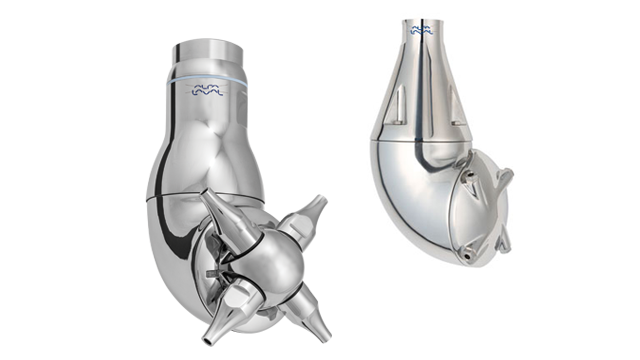
- Durchsatzbereich
- i40 S: 3-56 m³/h | i40 D: 7-80 m³/h | TZ-82: 15 m³/h (8mm-Düsen @ 7 bar)
- Betriebsdruck
- Typischerweise 4-12 bar; empfohlener Betriebsdruck 5-6,5 bar
- Wurfweite/reichweite
- TZ-82: 26 Meter horizontale Wurfweite (Benetzungsradius)
- Düsendurchmesser-Bereich
- 7-10 mm (verschiedene Konfigurationen für Durchsatz-Optimierung)
- Deck-Öffnung erforderlich
- i40 S/i40 D: nur 145 mm (kompakteste 2. Generation)
- Material-standard
- AISI 316 Edelstahl für Hauptkomponenten; PEEK für Seals/Verschleißteile
- Betriebstemperatur
- 0–95°C (32–203°F)
- Antriebsart
- Turbine-driven by cleaning medium flow (COW: crude oil washthrough possible)
- IMO-Konformität
- Erfüllt IMO-Anforderungen für COW (Crude Oil Washing) Systeme
- i40 S (Single-Nozzle, 2. Generation)
- i40 D (Dual-Nozzle, 2. Generation)
- i65 S (Single-Nozzle, High-Impact)
- T-73 (Automatic, 5.000-30.000 m³)
- TZ-67 (Rotary Jet Head, 50-500 m³)
- TZ-75 (Portable, 1.000-5.000 m³)
- TZ-82 (Portable/Fixed, bis 3.000 m³)
- TZ-89 (Media-Lubricated)
- 270FT Mark I (Single-Nozzle Crude Oil Tanker)
- Area: Nozzle wear and erosionCheck: Inspectors regularly check nozzles for wear marks, scratches, surface erosion and deformed openings. Nozzle blockages from sludge accumulation are the most frequent periodic maintenance task. Damaged nozzles must be replaced as a group.
- Area: Gearbox/turbine wear and vibrationCheck: Inspectors monitor for abnormal vibrations, temperature rise and irregular noise. Detached gear teeth and uneven disk distribution cause vibration problems. Inspection recommended every 200-300 operating hours; bearing replacement after 300-500 hours or at least every 3 years.
- Area: Ball bearings and sleeve bushings wearCheck: Inspectors check ball bearings for free rotation without contamination and damage. Sleeve bushings in gearbox frame must be checked: maximum diameter not exceeding 10.4 mm (bore not ovally deformed). Inspect all bearings and sealing rings every 6 months; replacement after 6,000 operating hours or every 3 years.
- Area: Seals and shaft passages (hysteresis coupling design)Check: Inspectors check for oil leakage and contamination at seal points. The hysteresis coupling eliminates conventional speed-setting shafts and reduces leak points. All rubber seals should be replaced at each service inspection to ensure hygiene and performance. Moisture and contamination ingress leads to seal failure.
- Area: Programming pattern and control sequence functionalityCheck: Inspectors test programming logic and valve control for correct 3D-indexed impact pattern. Check creep movement (vertical screw movement while horizontal rotation occurs) and progressive compression from coarse to fine over 8 cycles.
- Area: COW (Crude Oil Washing) system approval and crude oil compatibilityCheck: Inspectors verify IMO certification and crude oil wash-through approval. Toftejorg T-73 and 270FT Mark I are specifically designed for crude oil tankers. Check for corrosion/wear from crude oil exposure and verify valve seals under crude oil operating conditions.
Universal inspection/service points for tank cleaning machines (Gunclean Toftejorg, 2026-06). Per-model specs not auto-filled.
- Durchsatzbereich
- i40 S: 3-56 m³/h | i40 D: 7-80 m³/h | TZ-82: 15 m³/h (8mm-Düsen @ 7 bar)
- Betriebsdruck
- Typischerweise 4-12 bar; empfohlener Betriebsdruck 5-6,5 bar
- Wurfweite/reichweite
- TZ-82: 26 Meter horizontale Wurfweite (Benetzungsradius)
- Düsendurchmesser-Bereich
- 7-10 mm (verschiedene Konfigurationen für Durchsatz-Optimierung)
- Deck-Öffnung erforderlich
- i40 S/i40 D: nur 145 mm (kompakteste 2. Generation)
- Material-standard
- AISI 316 Edelstahl für Hauptkomponenten; PEEK für Seals/Verschleißteile
- Betriebstemperatur
- 0–95°C (32–203°F)
- Antriebsart
- Turbine-driven by cleaning medium flow (COW: crude oil washthrough possible)
- IMO-Konformität
- Erfüllt IMO-Anforderungen für COW (Crude Oil Washing) Systeme
- i40 S (Single-Nozzle, 2. Generation)
- i40 D (Dual-Nozzle, 2. Generation)
- i65 S (Single-Nozzle, High-Impact)
- T-73 (Automatic, 5.000-30.000 m³)
- TZ-67 (Rotary Jet Head, 50-500 m³)
- TZ-75 (Portable, 1.000-5.000 m³)
- TZ-82 (Portable/Fixed, bis 3.000 m³)
- TZ-89 (Media-Lubricated)
- 270FT Mark I (Single-Nozzle Crude Oil Tanker)
- Area: Nozzle wear and erosionCheck: Inspectors regularly check nozzles for wear marks, scratches, surface erosion and deformed openings. Nozzle blockages from sludge accumulation are the most frequent periodic maintenance task. Damaged nozzles must be replaced as a group.
- Area: Gearbox/turbine wear and vibrationCheck: Inspectors monitor for abnormal vibrations, temperature rise and irregular noise. Detached gear teeth and uneven disk distribution cause vibration problems. Inspection recommended every 200-300 operating hours; bearing replacement after 300-500 hours or at least every 3 years.
- Area: Ball bearings and sleeve bushings wearCheck: Inspectors check ball bearings for free rotation without contamination and damage. Sleeve bushings in gearbox frame must be checked: maximum diameter not exceeding 10.4 mm (bore not ovally deformed). Inspect all bearings and sealing rings every 6 months; replacement after 6,000 operating hours or every 3 years.
- Area: Seals and shaft passages (hysteresis coupling design)Check: Inspectors check for oil leakage and contamination at seal points. The hysteresis coupling eliminates conventional speed-setting shafts and reduces leak points. All rubber seals should be replaced at each service inspection to ensure hygiene and performance. Moisture and contamination ingress leads to seal failure.
- Area: Programming pattern and control sequence functionalityCheck: Inspectors test programming logic and valve control for correct 3D-indexed impact pattern. Check creep movement (vertical screw movement while horizontal rotation occurs) and progressive compression from coarse to fine over 8 cycles.
- Area: COW (Crude Oil Washing) system approval and crude oil compatibilityCheck: Inspectors verify IMO certification and crude oil wash-through approval. Toftejorg T-73 and 270FT Mark I are specifically designed for crude oil tankers. Check for corrosion/wear from crude oil exposure and verify valve seals under crude oil operating conditions.
Universal inspection/service points for tank cleaning machines (Gunclean Toftejorg, 2026-06). Per-model specs not auto-filled.
- Durchsatzbereich
- i40 S: 3-56 m³/h | i40 D: 7-80 m³/h | TZ-82: 15 m³/h (8mm-Düsen @ 7 bar)
- Betriebsdruck
- Typischerweise 4-12 bar; empfohlener Betriebsdruck 5-6,5 bar
- Wurfweite/reichweite
- TZ-82: 26 Meter horizontale Wurfweite (Benetzungsradius)
- Düsendurchmesser-Bereich
- 7-10 mm (verschiedene Konfigurationen für Durchsatz-Optimierung)
- Deck-Öffnung erforderlich
- i40 S/i40 D: nur 145 mm (kompakteste 2. Generation)
- Material-standard
- AISI 316 Edelstahl für Hauptkomponenten; PEEK für Seals/Verschleißteile
- Betriebstemperatur
- 0–95°C (32–203°F)
- Antriebsart
- Turbine-driven by cleaning medium flow (COW: crude oil washthrough possible)
- IMO-Konformität
- Erfüllt IMO-Anforderungen für COW (Crude Oil Washing) Systeme
- i40 S (Single-Nozzle, 2. Generation)
- i40 D (Dual-Nozzle, 2. Generation)
- i65 S (Single-Nozzle, High-Impact)
- T-73 (Automatic, 5.000-30.000 m³)
- TZ-67 (Rotary Jet Head, 50-500 m³)
- TZ-75 (Portable, 1.000-5.000 m³)
- TZ-82 (Portable/Fixed, bis 3.000 m³)
- TZ-89 (Media-Lubricated)
- 270FT Mark I (Single-Nozzle Crude Oil Tanker)
- Area: Nozzle wear and erosionCheck: Inspectors regularly check nozzles for wear marks, scratches, surface erosion and deformed openings. Nozzle blockages from sludge accumulation are the most frequent periodic maintenance task. Damaged nozzles must be replaced as a group.
- Area: Gearbox/turbine wear and vibrationCheck: Inspectors monitor for abnormal vibrations, temperature rise and irregular noise. Detached gear teeth and uneven disk distribution cause vibration problems. Inspection recommended every 200-300 operating hours; bearing replacement after 300-500 hours or at least every 3 years.
- Area: Ball bearings and sleeve bushings wearCheck: Inspectors check ball bearings for free rotation without contamination and damage. Sleeve bushings in gearbox frame must be checked: maximum diameter not exceeding 10.4 mm (bore not ovally deformed). Inspect all bearings and sealing rings every 6 months; replacement after 6,000 operating hours or every 3 years.
- Area: Seals and shaft passages (hysteresis coupling design)Check: Inspectors check for oil leakage and contamination at seal points. The hysteresis coupling eliminates conventional speed-setting shafts and reduces leak points. All rubber seals should be replaced at each service inspection to ensure hygiene and performance. Moisture and contamination ingress leads to seal failure.
- Area: Programming pattern and control sequence functionalityCheck: Inspectors test programming logic and valve control for correct 3D-indexed impact pattern. Check creep movement (vertical screw movement while horizontal rotation occurs) and progressive compression from coarse to fine over 8 cycles.
- Area: COW (Crude Oil Washing) system approval and crude oil compatibilityCheck: Inspectors verify IMO certification and crude oil wash-through approval. Toftejorg T-73 and 270FT Mark I are specifically designed for crude oil tankers. Check for corrosion/wear from crude oil exposure and verify valve seals under crude oil operating conditions.
Universal inspection/service points for tank cleaning machines (Gunclean Toftejorg, 2026-06). Per-model specs not auto-filled.
- Durchsatzbereich
- i40 S: 3-56 m³/h | i40 D: 7-80 m³/h | TZ-82: 15 m³/h (8mm-Düsen @ 7 bar)
- Betriebsdruck
- Typischerweise 4-12 bar; empfohlener Betriebsdruck 5-6,5 bar
- Wurfweite/reichweite
- TZ-82: 26 Meter horizontale Wurfweite (Benetzungsradius)
- Düsendurchmesser-Bereich
- 7-10 mm (verschiedene Konfigurationen für Durchsatz-Optimierung)
- Deck-Öffnung erforderlich
- i40 S/i40 D: nur 145 mm (kompakteste 2. Generation)
- Material-standard
- AISI 316 Edelstahl für Hauptkomponenten; PEEK für Seals/Verschleißteile
- Betriebstemperatur
- 0–95°C (32–203°F)
- Antriebsart
- Turbine-driven by cleaning medium flow (COW: crude oil washthrough possible)
- IMO-Konformität
- Erfüllt IMO-Anforderungen für COW (Crude Oil Washing) Systeme
- i40 S (Single-Nozzle, 2. Generation)
- i40 D (Dual-Nozzle, 2. Generation)
- i65 S (Single-Nozzle, High-Impact)
- T-73 (Automatic, 5.000-30.000 m³)
- TZ-67 (Rotary Jet Head, 50-500 m³)
- TZ-75 (Portable, 1.000-5.000 m³)
- TZ-82 (Portable/Fixed, bis 3.000 m³)
- TZ-89 (Media-Lubricated)
- 270FT Mark I (Single-Nozzle Crude Oil Tanker)
- Area: Nozzle wear and erosionCheck: Inspectors regularly check nozzles for wear marks, scratches, surface erosion and deformed openings. Nozzle blockages from sludge accumulation are the most frequent periodic maintenance task. Damaged nozzles must be replaced as a group.
- Area: Gearbox/turbine wear and vibrationCheck: Inspectors monitor for abnormal vibrations, temperature rise and irregular noise. Detached gear teeth and uneven disk distribution cause vibration problems. Inspection recommended every 200-300 operating hours; bearing replacement after 300-500 hours or at least every 3 years.
- Area: Ball bearings and sleeve bushings wearCheck: Inspectors check ball bearings for free rotation without contamination and damage. Sleeve bushings in gearbox frame must be checked: maximum diameter not exceeding 10.4 mm (bore not ovally deformed). Inspect all bearings and sealing rings every 6 months; replacement after 6,000 operating hours or every 3 years.
- Area: Seals and shaft passages (hysteresis coupling design)Check: Inspectors check for oil leakage and contamination at seal points. The hysteresis coupling eliminates conventional speed-setting shafts and reduces leak points. All rubber seals should be replaced at each service inspection to ensure hygiene and performance. Moisture and contamination ingress leads to seal failure.
- Area: Programming pattern and control sequence functionalityCheck: Inspectors test programming logic and valve control for correct 3D-indexed impact pattern. Check creep movement (vertical screw movement while horizontal rotation occurs) and progressive compression from coarse to fine over 8 cycles.
- Area: COW (Crude Oil Washing) system approval and crude oil compatibilityCheck: Inspectors verify IMO certification and crude oil wash-through approval. Toftejorg T-73 and 270FT Mark I are specifically designed for crude oil tankers. Check for corrosion/wear from crude oil exposure and verify valve seals under crude oil operating conditions.
Universal inspection/service points for tank cleaning machines (Gunclean Toftejorg, 2026-06). Per-model specs not auto-filled.
- Durchsatzbereich
- i40 S: 3-56 m³/h | i40 D: 7-80 m³/h | TZ-82: 15 m³/h (8mm-Düsen @ 7 bar)
- Betriebsdruck
- Typischerweise 4-12 bar; empfohlener Betriebsdruck 5-6,5 bar
- Wurfweite/reichweite
- TZ-82: 26 Meter horizontale Wurfweite (Benetzungsradius)
- Düsendurchmesser-Bereich
- 7-10 mm (verschiedene Konfigurationen für Durchsatz-Optimierung)
- Deck-Öffnung erforderlich
- i40 S/i40 D: nur 145 mm (kompakteste 2. Generation)
- Material-standard
- AISI 316 Edelstahl für Hauptkomponenten; PEEK für Seals/Verschleißteile
- Betriebstemperatur
- 0–95°C (32–203°F)
- Antriebsart
- Turbine-driven by cleaning medium flow (COW: crude oil washthrough possible)
- IMO-Konformität
- Erfüllt IMO-Anforderungen für COW (Crude Oil Washing) Systeme
- i40 S (Single-Nozzle, 2. Generation)
- i40 D (Dual-Nozzle, 2. Generation)
- i65 S (Single-Nozzle, High-Impact)
- T-73 (Automatic, 5.000-30.000 m³)
- TZ-67 (Rotary Jet Head, 50-500 m³)
- TZ-75 (Portable, 1.000-5.000 m³)
- TZ-82 (Portable/Fixed, bis 3.000 m³)
- TZ-89 (Media-Lubricated)
- 270FT Mark I (Single-Nozzle Crude Oil Tanker)
- Area: Nozzle wear and erosionCheck: Inspectors regularly check nozzles for wear marks, scratches, surface erosion and deformed openings. Nozzle blockages from sludge accumulation are the most frequent periodic maintenance task. Damaged nozzles must be replaced as a group.
- Area: Gearbox/turbine wear and vibrationCheck: Inspectors monitor for abnormal vibrations, temperature rise and irregular noise. Detached gear teeth and uneven disk distribution cause vibration problems. Inspection recommended every 200-300 operating hours; bearing replacement after 300-500 hours or at least every 3 years.
- Area: Ball bearings and sleeve bushings wearCheck: Inspectors check ball bearings for free rotation without contamination and damage. Sleeve bushings in gearbox frame must be checked: maximum diameter not exceeding 10.4 mm (bore not ovally deformed). Inspect all bearings and sealing rings every 6 months; replacement after 6,000 operating hours or every 3 years.
- Area: Seals and shaft passages (hysteresis coupling design)Check: Inspectors check for oil leakage and contamination at seal points. The hysteresis coupling eliminates conventional speed-setting shafts and reduces leak points. All rubber seals should be replaced at each service inspection to ensure hygiene and performance. Moisture and contamination ingress leads to seal failure.
- Area: Programming pattern and control sequence functionalityCheck: Inspectors test programming logic and valve control for correct 3D-indexed impact pattern. Check creep movement (vertical screw movement while horizontal rotation occurs) and progressive compression from coarse to fine over 8 cycles.
- Area: COW (Crude Oil Washing) system approval and crude oil compatibilityCheck: Inspectors verify IMO certification and crude oil wash-through approval. Toftejorg T-73 and 270FT Mark I are specifically designed for crude oil tankers. Check for corrosion/wear from crude oil exposure and verify valve seals under crude oil operating conditions.
Universal inspection/service points for tank cleaning machines (Gunclean Toftejorg, 2026-06). Per-model specs not auto-filled.
- Durchsatzbereich
- i40 S: 3-56 m³/h | i40 D: 7-80 m³/h | TZ-82: 15 m³/h (8mm-Düsen @ 7 bar)
- Betriebsdruck
- Typischerweise 4-12 bar; empfohlener Betriebsdruck 5-6,5 bar
- Wurfweite/reichweite
- TZ-82: 26 Meter horizontale Wurfweite (Benetzungsradius)
- Düsendurchmesser-Bereich
- 7-10 mm (verschiedene Konfigurationen für Durchsatz-Optimierung)
- Deck-Öffnung erforderlich
- i40 S/i40 D: nur 145 mm (kompakteste 2. Generation)
- Material-standard
- AISI 316 Edelstahl für Hauptkomponenten; PEEK für Seals/Verschleißteile
- Betriebstemperatur
- 0–95°C (32–203°F)
- Antriebsart
- Turbine-driven by cleaning medium flow (COW: crude oil washthrough possible)
- IMO-Konformität
- Erfüllt IMO-Anforderungen für COW (Crude Oil Washing) Systeme
- i40 S (Single-Nozzle, 2. Generation)
- i40 D (Dual-Nozzle, 2. Generation)
- i65 S (Single-Nozzle, High-Impact)
- T-73 (Automatic, 5.000-30.000 m³)
- TZ-67 (Rotary Jet Head, 50-500 m³)
- TZ-75 (Portable, 1.000-5.000 m³)
- TZ-82 (Portable/Fixed, bis 3.000 m³)
- TZ-89 (Media-Lubricated)
- 270FT Mark I (Single-Nozzle Crude Oil Tanker)
- Area: Nozzle wear and erosionCheck: Inspectors regularly check nozzles for wear marks, scratches, surface erosion and deformed openings. Nozzle blockages from sludge accumulation are the most frequent periodic maintenance task. Damaged nozzles must be replaced as a group.
- Area: Gearbox/turbine wear and vibrationCheck: Inspectors monitor for abnormal vibrations, temperature rise and irregular noise. Detached gear teeth and uneven disk distribution cause vibration problems. Inspection recommended every 200-300 operating hours; bearing replacement after 300-500 hours or at least every 3 years.
- Area: Ball bearings and sleeve bushings wearCheck: Inspectors check ball bearings for free rotation without contamination and damage. Sleeve bushings in gearbox frame must be checked: maximum diameter not exceeding 10.4 mm (bore not ovally deformed). Inspect all bearings and sealing rings every 6 months; replacement after 6,000 operating hours or every 3 years.
- Area: Seals and shaft passages (hysteresis coupling design)Check: Inspectors check for oil leakage and contamination at seal points. The hysteresis coupling eliminates conventional speed-setting shafts and reduces leak points. All rubber seals should be replaced at each service inspection to ensure hygiene and performance. Moisture and contamination ingress leads to seal failure.
- Area: Programming pattern and control sequence functionalityCheck: Inspectors test programming logic and valve control for correct 3D-indexed impact pattern. Check creep movement (vertical screw movement while horizontal rotation occurs) and progressive compression from coarse to fine over 8 cycles.
- Area: COW (Crude Oil Washing) system approval and crude oil compatibilityCheck: Inspectors verify IMO certification and crude oil wash-through approval. Toftejorg T-73 and 270FT Mark I are specifically designed for crude oil tankers. Check for corrosion/wear from crude oil exposure and verify valve seals under crude oil operating conditions.
Universal inspection/service points for tank cleaning machines (Gunclean Toftejorg, 2026-06). Per-model specs not auto-filled.
- Durchsatzbereich
- i40 S: 3-56 m³/h | i40 D: 7-80 m³/h | TZ-82: 15 m³/h (8mm-Düsen @ 7 bar)
- Betriebsdruck
- Typischerweise 4-12 bar; empfohlener Betriebsdruck 5-6,5 bar
- Wurfweite/reichweite
- TZ-82: 26 Meter horizontale Wurfweite (Benetzungsradius)
- Düsendurchmesser-Bereich
- 7-10 mm (verschiedene Konfigurationen für Durchsatz-Optimierung)
- Deck-Öffnung erforderlich
- i40 S/i40 D: nur 145 mm (kompakteste 2. Generation)
- Material-standard
- AISI 316 Edelstahl für Hauptkomponenten; PEEK für Seals/Verschleißteile
- Betriebstemperatur
- 0–95°C (32–203°F)
- Antriebsart
- Turbine-driven by cleaning medium flow (COW: crude oil washthrough possible)
- IMO-Konformität
- Erfüllt IMO-Anforderungen für COW (Crude Oil Washing) Systeme
- i40 S (Single-Nozzle, 2. Generation)
- i40 D (Dual-Nozzle, 2. Generation)
- i65 S (Single-Nozzle, High-Impact)
- T-73 (Automatic, 5.000-30.000 m³)
- TZ-67 (Rotary Jet Head, 50-500 m³)
- TZ-75 (Portable, 1.000-5.000 m³)
- TZ-82 (Portable/Fixed, bis 3.000 m³)
- TZ-89 (Media-Lubricated)
- 270FT Mark I (Single-Nozzle Crude Oil Tanker)
- Area: Nozzle wear and erosionCheck: Inspectors regularly check nozzles for wear marks, scratches, surface erosion and deformed openings. Nozzle blockages from sludge accumulation are the most frequent periodic maintenance task. Damaged nozzles must be replaced as a group.
- Area: Gearbox/turbine wear and vibrationCheck: Inspectors monitor for abnormal vibrations, temperature rise and irregular noise. Detached gear teeth and uneven disk distribution cause vibration problems. Inspection recommended every 200-300 operating hours; bearing replacement after 300-500 hours or at least every 3 years.
- Area: Ball bearings and sleeve bushings wearCheck: Inspectors check ball bearings for free rotation without contamination and damage. Sleeve bushings in gearbox frame must be checked: maximum diameter not exceeding 10.4 mm (bore not ovally deformed). Inspect all bearings and sealing rings every 6 months; replacement after 6,000 operating hours or every 3 years.
- Area: Seals and shaft passages (hysteresis coupling design)Check: Inspectors check for oil leakage and contamination at seal points. The hysteresis coupling eliminates conventional speed-setting shafts and reduces leak points. All rubber seals should be replaced at each service inspection to ensure hygiene and performance. Moisture and contamination ingress leads to seal failure.
- Area: Programming pattern and control sequence functionalityCheck: Inspectors test programming logic and valve control for correct 3D-indexed impact pattern. Check creep movement (vertical screw movement while horizontal rotation occurs) and progressive compression from coarse to fine over 8 cycles.
- Area: COW (Crude Oil Washing) system approval and crude oil compatibilityCheck: Inspectors verify IMO certification and crude oil wash-through approval. Toftejorg T-73 and 270FT Mark I are specifically designed for crude oil tankers. Check for corrosion/wear from crude oil exposure and verify valve seals under crude oil operating conditions.
Universal inspection/service points for tank cleaning machines (Gunclean Toftejorg, 2026-06). Per-model specs not auto-filled.
- Durchsatzbereich
- i40 S: 3-56 m³/h | i40 D: 7-80 m³/h | TZ-82: 15 m³/h (8mm-Düsen @ 7 bar)
- Betriebsdruck
- Typischerweise 4-12 bar; empfohlener Betriebsdruck 5-6,5 bar
- Wurfweite/reichweite
- TZ-82: 26 Meter horizontale Wurfweite (Benetzungsradius)
- Düsendurchmesser-Bereich
- 7-10 mm (verschiedene Konfigurationen für Durchsatz-Optimierung)
- Deck-Öffnung erforderlich
- i40 S/i40 D: nur 145 mm (kompakteste 2. Generation)
- Material-standard
- AISI 316 Edelstahl für Hauptkomponenten; PEEK für Seals/Verschleißteile
- Betriebstemperatur
- 0–95°C (32–203°F)
- Antriebsart
- Turbine-driven by cleaning medium flow (COW: crude oil washthrough possible)
- IMO-Konformität
- Erfüllt IMO-Anforderungen für COW (Crude Oil Washing) Systeme
- i40 S (Single-Nozzle, 2. Generation)
- i40 D (Dual-Nozzle, 2. Generation)
- i65 S (Single-Nozzle, High-Impact)
- T-73 (Automatic, 5.000-30.000 m³)
- TZ-67 (Rotary Jet Head, 50-500 m³)
- TZ-75 (Portable, 1.000-5.000 m³)
- TZ-82 (Portable/Fixed, bis 3.000 m³)
- TZ-89 (Media-Lubricated)
- 270FT Mark I (Single-Nozzle Crude Oil Tanker)
- Area: Nozzle wear and erosionCheck: Inspectors regularly check nozzles for wear marks, scratches, surface erosion and deformed openings. Nozzle blockages from sludge accumulation are the most frequent periodic maintenance task. Damaged nozzles must be replaced as a group.
- Area: Gearbox/turbine wear and vibrationCheck: Inspectors monitor for abnormal vibrations, temperature rise and irregular noise. Detached gear teeth and uneven disk distribution cause vibration problems. Inspection recommended every 200-300 operating hours; bearing replacement after 300-500 hours or at least every 3 years.
- Area: Ball bearings and sleeve bushings wearCheck: Inspectors check ball bearings for free rotation without contamination and damage. Sleeve bushings in gearbox frame must be checked: maximum diameter not exceeding 10.4 mm (bore not ovally deformed). Inspect all bearings and sealing rings every 6 months; replacement after 6,000 operating hours or every 3 years.
- Area: Seals and shaft passages (hysteresis coupling design)Check: Inspectors check for oil leakage and contamination at seal points. The hysteresis coupling eliminates conventional speed-setting shafts and reduces leak points. All rubber seals should be replaced at each service inspection to ensure hygiene and performance. Moisture and contamination ingress leads to seal failure.
- Area: Programming pattern and control sequence functionalityCheck: Inspectors test programming logic and valve control for correct 3D-indexed impact pattern. Check creep movement (vertical screw movement while horizontal rotation occurs) and progressive compression from coarse to fine over 8 cycles.
- Area: COW (Crude Oil Washing) system approval and crude oil compatibilityCheck: Inspectors verify IMO certification and crude oil wash-through approval. Toftejorg T-73 and 270FT Mark I are specifically designed for crude oil tankers. Check for corrosion/wear from crude oil exposure and verify valve seals under crude oil operating conditions.
Universal inspection/service points for tank cleaning machines (Gunclean Toftejorg, 2026-06). Per-model specs not auto-filled.
- Durchsatzbereich
- i40 S: 3-56 m³/h | i40 D: 7-80 m³/h | TZ-82: 15 m³/h (8mm-Düsen @ 7 bar)
- Betriebsdruck
- Typischerweise 4-12 bar; empfohlener Betriebsdruck 5-6,5 bar
- Wurfweite/reichweite
- TZ-82: 26 Meter horizontale Wurfweite (Benetzungsradius)
- Düsendurchmesser-Bereich
- 7-10 mm (verschiedene Konfigurationen für Durchsatz-Optimierung)
- Deck-Öffnung erforderlich
- i40 S/i40 D: nur 145 mm (kompakteste 2. Generation)
- Material-standard
- AISI 316 Edelstahl für Hauptkomponenten; PEEK für Seals/Verschleißteile
- Betriebstemperatur
- 0–95°C (32–203°F)
- Antriebsart
- Turbine-driven by cleaning medium flow (COW: crude oil washthrough possible)
- IMO-Konformität
- Erfüllt IMO-Anforderungen für COW (Crude Oil Washing) Systeme
- i40 S (Single-Nozzle, 2. Generation)
- i40 D (Dual-Nozzle, 2. Generation)
- i65 S (Single-Nozzle, High-Impact)
- T-73 (Automatic, 5.000-30.000 m³)
- TZ-67 (Rotary Jet Head, 50-500 m³)
- TZ-75 (Portable, 1.000-5.000 m³)
- TZ-82 (Portable/Fixed, bis 3.000 m³)
- TZ-89 (Media-Lubricated)
- 270FT Mark I (Single-Nozzle Crude Oil Tanker)
- Area: Nozzle wear and erosionCheck: Inspectors regularly check nozzles for wear marks, scratches, surface erosion and deformed openings. Nozzle blockages from sludge accumulation are the most frequent periodic maintenance task. Damaged nozzles must be replaced as a group.
- Area: Gearbox/turbine wear and vibrationCheck: Inspectors monitor for abnormal vibrations, temperature rise and irregular noise. Detached gear teeth and uneven disk distribution cause vibration problems. Inspection recommended every 200-300 operating hours; bearing replacement after 300-500 hours or at least every 3 years.
- Area: Ball bearings and sleeve bushings wearCheck: Inspectors check ball bearings for free rotation without contamination and damage. Sleeve bushings in gearbox frame must be checked: maximum diameter not exceeding 10.4 mm (bore not ovally deformed). Inspect all bearings and sealing rings every 6 months; replacement after 6,000 operating hours or every 3 years.
- Area: Seals and shaft passages (hysteresis coupling design)Check: Inspectors check for oil leakage and contamination at seal points. The hysteresis coupling eliminates conventional speed-setting shafts and reduces leak points. All rubber seals should be replaced at each service inspection to ensure hygiene and performance. Moisture and contamination ingress leads to seal failure.
- Area: Programming pattern and control sequence functionalityCheck: Inspectors test programming logic and valve control for correct 3D-indexed impact pattern. Check creep movement (vertical screw movement while horizontal rotation occurs) and progressive compression from coarse to fine over 8 cycles.
- Area: COW (Crude Oil Washing) system approval and crude oil compatibilityCheck: Inspectors verify IMO certification and crude oil wash-through approval. Toftejorg T-73 and 270FT Mark I are specifically designed for crude oil tankers. Check for corrosion/wear from crude oil exposure and verify valve seals under crude oil operating conditions.
Universal inspection/service points for tank cleaning machines (Gunclean Toftejorg, 2026-06). Per-model specs not auto-filled.
- Durchsatzbereich
- i40 S: 3-56 m³/h | i40 D: 7-80 m³/h | TZ-82: 15 m³/h (8mm-Düsen @ 7 bar)
- Betriebsdruck
- Typischerweise 4-12 bar; empfohlener Betriebsdruck 5-6,5 bar
- Wurfweite/reichweite
- TZ-82: 26 Meter horizontale Wurfweite (Benetzungsradius)
- Düsendurchmesser-Bereich
- 7-10 mm (verschiedene Konfigurationen für Durchsatz-Optimierung)
- Deck-Öffnung erforderlich
- i40 S/i40 D: nur 145 mm (kompakteste 2. Generation)
- Material-standard
- AISI 316 Edelstahl für Hauptkomponenten; PEEK für Seals/Verschleißteile
- Betriebstemperatur
- 0–95°C (32–203°F)
- Antriebsart
- Turbine-driven by cleaning medium flow (COW: crude oil washthrough possible)
- IMO-Konformität
- Erfüllt IMO-Anforderungen für COW (Crude Oil Washing) Systeme
- i40 S (Single-Nozzle, 2. Generation)
- i40 D (Dual-Nozzle, 2. Generation)
- i65 S (Single-Nozzle, High-Impact)
- T-73 (Automatic, 5.000-30.000 m³)
- TZ-67 (Rotary Jet Head, 50-500 m³)
- TZ-75 (Portable, 1.000-5.000 m³)
- TZ-82 (Portable/Fixed, bis 3.000 m³)
- TZ-89 (Media-Lubricated)
- 270FT Mark I (Single-Nozzle Crude Oil Tanker)
- Area: Nozzle wear and erosionCheck: Inspectors regularly check nozzles for wear marks, scratches, surface erosion and deformed openings. Nozzle blockages from sludge accumulation are the most frequent periodic maintenance task. Damaged nozzles must be replaced as a group.
- Area: Gearbox/turbine wear and vibrationCheck: Inspectors monitor for abnormal vibrations, temperature rise and irregular noise. Detached gear teeth and uneven disk distribution cause vibration problems. Inspection recommended every 200-300 operating hours; bearing replacement after 300-500 hours or at least every 3 years.
- Area: Ball bearings and sleeve bushings wearCheck: Inspectors check ball bearings for free rotation without contamination and damage. Sleeve bushings in gearbox frame must be checked: maximum diameter not exceeding 10.4 mm (bore not ovally deformed). Inspect all bearings and sealing rings every 6 months; replacement after 6,000 operating hours or every 3 years.
- Area: Seals and shaft passages (hysteresis coupling design)Check: Inspectors check for oil leakage and contamination at seal points. The hysteresis coupling eliminates conventional speed-setting shafts and reduces leak points. All rubber seals should be replaced at each service inspection to ensure hygiene and performance. Moisture and contamination ingress leads to seal failure.
- Area: Programming pattern and control sequence functionalityCheck: Inspectors test programming logic and valve control for correct 3D-indexed impact pattern. Check creep movement (vertical screw movement while horizontal rotation occurs) and progressive compression from coarse to fine over 8 cycles.
- Area: COW (Crude Oil Washing) system approval and crude oil compatibilityCheck: Inspectors verify IMO certification and crude oil wash-through approval. Toftejorg T-73 and 270FT Mark I are specifically designed for crude oil tankers. Check for corrosion/wear from crude oil exposure and verify valve seals under crude oil operating conditions.
Universal inspection/service points for tank cleaning machines (Gunclean Toftejorg, 2026-06). Per-model specs not auto-filled.
- Durchsatzbereich
- i40 S: 3-56 m³/h | i40 D: 7-80 m³/h | TZ-82: 15 m³/h (8mm-Düsen @ 7 bar)
- Betriebsdruck
- Typischerweise 4-12 bar; empfohlener Betriebsdruck 5-6,5 bar
- Wurfweite/reichweite
- TZ-82: 26 Meter horizontale Wurfweite (Benetzungsradius)
- Düsendurchmesser-Bereich
- 7-10 mm (verschiedene Konfigurationen für Durchsatz-Optimierung)
- Deck-Öffnung erforderlich
- i40 S/i40 D: nur 145 mm (kompakteste 2. Generation)
- Material-standard
- AISI 316 Edelstahl für Hauptkomponenten; PEEK für Seals/Verschleißteile
- Betriebstemperatur
- 0–95°C (32–203°F)
- Antriebsart
- Turbine-driven by cleaning medium flow (COW: crude oil washthrough possible)
- IMO-Konformität
- Erfüllt IMO-Anforderungen für COW (Crude Oil Washing) Systeme
- i40 S (Single-Nozzle, 2. Generation)
- i40 D (Dual-Nozzle, 2. Generation)
- i65 S (Single-Nozzle, High-Impact)
- T-73 (Automatic, 5.000-30.000 m³)
- TZ-67 (Rotary Jet Head, 50-500 m³)
- TZ-75 (Portable, 1.000-5.000 m³)
- TZ-82 (Portable/Fixed, bis 3.000 m³)
- TZ-89 (Media-Lubricated)
- 270FT Mark I (Single-Nozzle Crude Oil Tanker)
- Area: Nozzle wear and erosionCheck: Inspectors regularly check nozzles for wear marks, scratches, surface erosion and deformed openings. Nozzle blockages from sludge accumulation are the most frequent periodic maintenance task. Damaged nozzles must be replaced as a group.
- Area: Gearbox/turbine wear and vibrationCheck: Inspectors monitor for abnormal vibrations, temperature rise and irregular noise. Detached gear teeth and uneven disk distribution cause vibration problems. Inspection recommended every 200-300 operating hours; bearing replacement after 300-500 hours or at least every 3 years.
- Area: Ball bearings and sleeve bushings wearCheck: Inspectors check ball bearings for free rotation without contamination and damage. Sleeve bushings in gearbox frame must be checked: maximum diameter not exceeding 10.4 mm (bore not ovally deformed). Inspect all bearings and sealing rings every 6 months; replacement after 6,000 operating hours or every 3 years.
- Area: Seals and shaft passages (hysteresis coupling design)Check: Inspectors check for oil leakage and contamination at seal points. The hysteresis coupling eliminates conventional speed-setting shafts and reduces leak points. All rubber seals should be replaced at each service inspection to ensure hygiene and performance. Moisture and contamination ingress leads to seal failure.
- Area: Programming pattern and control sequence functionalityCheck: Inspectors test programming logic and valve control for correct 3D-indexed impact pattern. Check creep movement (vertical screw movement while horizontal rotation occurs) and progressive compression from coarse to fine over 8 cycles.
- Area: COW (Crude Oil Washing) system approval and crude oil compatibilityCheck: Inspectors verify IMO certification and crude oil wash-through approval. Toftejorg T-73 and 270FT Mark I are specifically designed for crude oil tankers. Check for corrosion/wear from crude oil exposure and verify valve seals under crude oil operating conditions.
Universal inspection/service points for tank cleaning machines (Gunclean Toftejorg, 2026-06). Per-model specs not auto-filled.
- Durchsatzbereich
- i40 S: 3-56 m³/h | i40 D: 7-80 m³/h | TZ-82: 15 m³/h (8mm-Düsen @ 7 bar)
- Betriebsdruck
- Typischerweise 4-12 bar; empfohlener Betriebsdruck 5-6,5 bar
- Wurfweite/reichweite
- TZ-82: 26 Meter horizontale Wurfweite (Benetzungsradius)
- Düsendurchmesser-Bereich
- 7-10 mm (verschiedene Konfigurationen für Durchsatz-Optimierung)
- Deck-Öffnung erforderlich
- i40 S/i40 D: nur 145 mm (kompakteste 2. Generation)
- Material-standard
- AISI 316 Edelstahl für Hauptkomponenten; PEEK für Seals/Verschleißteile
- Betriebstemperatur
- 0–95°C (32–203°F)
- Antriebsart
- Turbine-driven by cleaning medium flow (COW: crude oil washthrough possible)
- IMO-Konformität
- Erfüllt IMO-Anforderungen für COW (Crude Oil Washing) Systeme
- i40 S (Single-Nozzle, 2. Generation)
- i40 D (Dual-Nozzle, 2. Generation)
- i65 S (Single-Nozzle, High-Impact)
- T-73 (Automatic, 5.000-30.000 m³)
- TZ-67 (Rotary Jet Head, 50-500 m³)
- TZ-75 (Portable, 1.000-5.000 m³)
- TZ-82 (Portable/Fixed, bis 3.000 m³)
- TZ-89 (Media-Lubricated)
- 270FT Mark I (Single-Nozzle Crude Oil Tanker)
- Area: Nozzle wear and erosionCheck: Inspectors regularly check nozzles for wear marks, scratches, surface erosion and deformed openings. Nozzle blockages from sludge accumulation are the most frequent periodic maintenance task. Damaged nozzles must be replaced as a group.
- Area: Gearbox/turbine wear and vibrationCheck: Inspectors monitor for abnormal vibrations, temperature rise and irregular noise. Detached gear teeth and uneven disk distribution cause vibration problems. Inspection recommended every 200-300 operating hours; bearing replacement after 300-500 hours or at least every 3 years.
- Area: Ball bearings and sleeve bushings wearCheck: Inspectors check ball bearings for free rotation without contamination and damage. Sleeve bushings in gearbox frame must be checked: maximum diameter not exceeding 10.4 mm (bore not ovally deformed). Inspect all bearings and sealing rings every 6 months; replacement after 6,000 operating hours or every 3 years.
- Area: Seals and shaft passages (hysteresis coupling design)Check: Inspectors check for oil leakage and contamination at seal points. The hysteresis coupling eliminates conventional speed-setting shafts and reduces leak points. All rubber seals should be replaced at each service inspection to ensure hygiene and performance. Moisture and contamination ingress leads to seal failure.
- Area: Programming pattern and control sequence functionalityCheck: Inspectors test programming logic and valve control for correct 3D-indexed impact pattern. Check creep movement (vertical screw movement while horizontal rotation occurs) and progressive compression from coarse to fine over 8 cycles.
- Area: COW (Crude Oil Washing) system approval and crude oil compatibilityCheck: Inspectors verify IMO certification and crude oil wash-through approval. Toftejorg T-73 and 270FT Mark I are specifically designed for crude oil tankers. Check for corrosion/wear from crude oil exposure and verify valve seals under crude oil operating conditions.
Universal inspection/service points for tank cleaning machines (Gunclean Toftejorg, 2026-06). Per-model specs not auto-filled.
- Durchsatzbereich
- i40 S: 3-56 m³/h | i40 D: 7-80 m³/h | TZ-82: 15 m³/h (8mm-Düsen @ 7 bar)
- Betriebsdruck
- Typischerweise 4-12 bar; empfohlener Betriebsdruck 5-6,5 bar
- Wurfweite/reichweite
- TZ-82: 26 Meter horizontale Wurfweite (Benetzungsradius)
- Düsendurchmesser-Bereich
- 7-10 mm (verschiedene Konfigurationen für Durchsatz-Optimierung)
- Deck-Öffnung erforderlich
- i40 S/i40 D: nur 145 mm (kompakteste 2. Generation)
- Material-standard
- AISI 316 Edelstahl für Hauptkomponenten; PEEK für Seals/Verschleißteile
- Betriebstemperatur
- 0–95°C (32–203°F)
- Antriebsart
- Turbine-driven by cleaning medium flow (COW: crude oil washthrough possible)
- IMO-Konformität
- Erfüllt IMO-Anforderungen für COW (Crude Oil Washing) Systeme
- i40 S (Single-Nozzle, 2. Generation)
- i40 D (Dual-Nozzle, 2. Generation)
- i65 S (Single-Nozzle, High-Impact)
- T-73 (Automatic, 5.000-30.000 m³)
- TZ-67 (Rotary Jet Head, 50-500 m³)
- TZ-75 (Portable, 1.000-5.000 m³)
- TZ-82 (Portable/Fixed, bis 3.000 m³)
- TZ-89 (Media-Lubricated)
- 270FT Mark I (Single-Nozzle Crude Oil Tanker)
- Area: Nozzle wear and erosionCheck: Inspectors regularly check nozzles for wear marks, scratches, surface erosion and deformed openings. Nozzle blockages from sludge accumulation are the most frequent periodic maintenance task. Damaged nozzles must be replaced as a group.
- Area: Gearbox/turbine wear and vibrationCheck: Inspectors monitor for abnormal vibrations, temperature rise and irregular noise. Detached gear teeth and uneven disk distribution cause vibration problems. Inspection recommended every 200-300 operating hours; bearing replacement after 300-500 hours or at least every 3 years.
- Area: Ball bearings and sleeve bushings wearCheck: Inspectors check ball bearings for free rotation without contamination and damage. Sleeve bushings in gearbox frame must be checked: maximum diameter not exceeding 10.4 mm (bore not ovally deformed). Inspect all bearings and sealing rings every 6 months; replacement after 6,000 operating hours or every 3 years.
- Area: Seals and shaft passages (hysteresis coupling design)Check: Inspectors check for oil leakage and contamination at seal points. The hysteresis coupling eliminates conventional speed-setting shafts and reduces leak points. All rubber seals should be replaced at each service inspection to ensure hygiene and performance. Moisture and contamination ingress leads to seal failure.
- Area: Programming pattern and control sequence functionalityCheck: Inspectors test programming logic and valve control for correct 3D-indexed impact pattern. Check creep movement (vertical screw movement while horizontal rotation occurs) and progressive compression from coarse to fine over 8 cycles.
- Area: COW (Crude Oil Washing) system approval and crude oil compatibilityCheck: Inspectors verify IMO certification and crude oil wash-through approval. Toftejorg T-73 and 270FT Mark I are specifically designed for crude oil tankers. Check for corrosion/wear from crude oil exposure and verify valve seals under crude oil operating conditions.
Universal inspection/service points for tank cleaning machines (Gunclean Toftejorg, 2026-06). Per-model specs not auto-filled.
- Durchsatzbereich
- i40 S: 3-56 m³/h | i40 D: 7-80 m³/h | TZ-82: 15 m³/h (8mm-Düsen @ 7 bar)
- Betriebsdruck
- Typischerweise 4-12 bar; empfohlener Betriebsdruck 5-6,5 bar
- Wurfweite/reichweite
- TZ-82: 26 Meter horizontale Wurfweite (Benetzungsradius)
- Düsendurchmesser-Bereich
- 7-10 mm (verschiedene Konfigurationen für Durchsatz-Optimierung)
- Deck-Öffnung erforderlich
- i40 S/i40 D: nur 145 mm (kompakteste 2. Generation)
- Material-standard
- AISI 316 Edelstahl für Hauptkomponenten; PEEK für Seals/Verschleißteile
- Betriebstemperatur
- 0–95°C (32–203°F)
- Antriebsart
- Turbine-driven by cleaning medium flow (COW: crude oil washthrough possible)
- IMO-Konformität
- Erfüllt IMO-Anforderungen für COW (Crude Oil Washing) Systeme
- i40 S (Single-Nozzle, 2. Generation)
- i40 D (Dual-Nozzle, 2. Generation)
- i65 S (Single-Nozzle, High-Impact)
- T-73 (Automatic, 5.000-30.000 m³)
- TZ-67 (Rotary Jet Head, 50-500 m³)
- TZ-75 (Portable, 1.000-5.000 m³)
- TZ-82 (Portable/Fixed, bis 3.000 m³)
- TZ-89 (Media-Lubricated)
- 270FT Mark I (Single-Nozzle Crude Oil Tanker)
- Area: Nozzle wear and erosionCheck: Inspectors regularly check nozzles for wear marks, scratches, surface erosion and deformed openings. Nozzle blockages from sludge accumulation are the most frequent periodic maintenance task. Damaged nozzles must be replaced as a group.
- Area: Gearbox/turbine wear and vibrationCheck: Inspectors monitor for abnormal vibrations, temperature rise and irregular noise. Detached gear teeth and uneven disk distribution cause vibration problems. Inspection recommended every 200-300 operating hours; bearing replacement after 300-500 hours or at least every 3 years.
- Area: Ball bearings and sleeve bushings wearCheck: Inspectors check ball bearings for free rotation without contamination and damage. Sleeve bushings in gearbox frame must be checked: maximum diameter not exceeding 10.4 mm (bore not ovally deformed). Inspect all bearings and sealing rings every 6 months; replacement after 6,000 operating hours or every 3 years.
- Area: Seals and shaft passages (hysteresis coupling design)Check: Inspectors check for oil leakage and contamination at seal points. The hysteresis coupling eliminates conventional speed-setting shafts and reduces leak points. All rubber seals should be replaced at each service inspection to ensure hygiene and performance. Moisture and contamination ingress leads to seal failure.
- Area: Programming pattern and control sequence functionalityCheck: Inspectors test programming logic and valve control for correct 3D-indexed impact pattern. Check creep movement (vertical screw movement while horizontal rotation occurs) and progressive compression from coarse to fine over 8 cycles.
- Area: COW (Crude Oil Washing) system approval and crude oil compatibilityCheck: Inspectors verify IMO certification and crude oil wash-through approval. Toftejorg T-73 and 270FT Mark I are specifically designed for crude oil tankers. Check for corrosion/wear from crude oil exposure and verify valve seals under crude oil operating conditions.
Universal inspection/service points for tank cleaning machines (Gunclean Toftejorg, 2026-06). Per-model specs not auto-filled.
- Durchsatzbereich
- i40 S: 3-56 m³/h | i40 D: 7-80 m³/h | TZ-82: 15 m³/h (8mm-Düsen @ 7 bar)
- Betriebsdruck
- Typischerweise 4-12 bar; empfohlener Betriebsdruck 5-6,5 bar
- Wurfweite/reichweite
- TZ-82: 26 Meter horizontale Wurfweite (Benetzungsradius)
- Düsendurchmesser-Bereich
- 7-10 mm (verschiedene Konfigurationen für Durchsatz-Optimierung)
- Deck-Öffnung erforderlich
- i40 S/i40 D: nur 145 mm (kompakteste 2. Generation)
- Material-standard
- AISI 316 Edelstahl für Hauptkomponenten; PEEK für Seals/Verschleißteile
- Betriebstemperatur
- 0–95°C (32–203°F)
- Antriebsart
- Turbine-driven by cleaning medium flow (COW: crude oil washthrough possible)
- IMO-Konformität
- Erfüllt IMO-Anforderungen für COW (Crude Oil Washing) Systeme
- i40 S (Single-Nozzle, 2. Generation)
- i40 D (Dual-Nozzle, 2. Generation)
- i65 S (Single-Nozzle, High-Impact)
- T-73 (Automatic, 5.000-30.000 m³)
- TZ-67 (Rotary Jet Head, 50-500 m³)
- TZ-75 (Portable, 1.000-5.000 m³)
- TZ-82 (Portable/Fixed, bis 3.000 m³)
- TZ-89 (Media-Lubricated)
- 270FT Mark I (Single-Nozzle Crude Oil Tanker)
- Area: Nozzle wear and erosionCheck: Inspectors regularly check nozzles for wear marks, scratches, surface erosion and deformed openings. Nozzle blockages from sludge accumulation are the most frequent periodic maintenance task. Damaged nozzles must be replaced as a group.
- Area: Gearbox/turbine wear and vibrationCheck: Inspectors monitor for abnormal vibrations, temperature rise and irregular noise. Detached gear teeth and uneven disk distribution cause vibration problems. Inspection recommended every 200-300 operating hours; bearing replacement after 300-500 hours or at least every 3 years.
- Area: Ball bearings and sleeve bushings wearCheck: Inspectors check ball bearings for free rotation without contamination and damage. Sleeve bushings in gearbox frame must be checked: maximum diameter not exceeding 10.4 mm (bore not ovally deformed). Inspect all bearings and sealing rings every 6 months; replacement after 6,000 operating hours or every 3 years.
- Area: Seals and shaft passages (hysteresis coupling design)Check: Inspectors check for oil leakage and contamination at seal points. The hysteresis coupling eliminates conventional speed-setting shafts and reduces leak points. All rubber seals should be replaced at each service inspection to ensure hygiene and performance. Moisture and contamination ingress leads to seal failure.
- Area: Programming pattern and control sequence functionalityCheck: Inspectors test programming logic and valve control for correct 3D-indexed impact pattern. Check creep movement (vertical screw movement while horizontal rotation occurs) and progressive compression from coarse to fine over 8 cycles.
- Area: COW (Crude Oil Washing) system approval and crude oil compatibilityCheck: Inspectors verify IMO certification and crude oil wash-through approval. Toftejorg T-73 and 270FT Mark I are specifically designed for crude oil tankers. Check for corrosion/wear from crude oil exposure and verify valve seals under crude oil operating conditions.
Universal inspection/service points for tank cleaning machines (Gunclean Toftejorg, 2026-06). Per-model specs not auto-filled.
- Durchsatzbereich
- i40 S: 3-56 m³/h | i40 D: 7-80 m³/h | TZ-82: 15 m³/h (8mm-Düsen @ 7 bar)
- Betriebsdruck
- Typischerweise 4-12 bar; empfohlener Betriebsdruck 5-6,5 bar
- Wurfweite/reichweite
- TZ-82: 26 Meter horizontale Wurfweite (Benetzungsradius)
- Düsendurchmesser-Bereich
- 7-10 mm (verschiedene Konfigurationen für Durchsatz-Optimierung)
- Deck-Öffnung erforderlich
- i40 S/i40 D: nur 145 mm (kompakteste 2. Generation)
- Material-standard
- AISI 316 Edelstahl für Hauptkomponenten; PEEK für Seals/Verschleißteile
- Betriebstemperatur
- 0–95°C (32–203°F)
- Antriebsart
- Turbine-driven by cleaning medium flow (COW: crude oil washthrough possible)
- IMO-Konformität
- Erfüllt IMO-Anforderungen für COW (Crude Oil Washing) Systeme
- i40 S (Single-Nozzle, 2. Generation)
- i40 D (Dual-Nozzle, 2. Generation)
- i65 S (Single-Nozzle, High-Impact)
- T-73 (Automatic, 5.000-30.000 m³)
- TZ-67 (Rotary Jet Head, 50-500 m³)
- TZ-75 (Portable, 1.000-5.000 m³)
- TZ-82 (Portable/Fixed, bis 3.000 m³)
- TZ-89 (Media-Lubricated)
- 270FT Mark I (Single-Nozzle Crude Oil Tanker)
- Area: Nozzle wear and erosionCheck: Inspectors regularly check nozzles for wear marks, scratches, surface erosion and deformed openings. Nozzle blockages from sludge accumulation are the most frequent periodic maintenance task. Damaged nozzles must be replaced as a group.
- Area: Gearbox/turbine wear and vibrationCheck: Inspectors monitor for abnormal vibrations, temperature rise and irregular noise. Detached gear teeth and uneven disk distribution cause vibration problems. Inspection recommended every 200-300 operating hours; bearing replacement after 300-500 hours or at least every 3 years.
- Area: Ball bearings and sleeve bushings wearCheck: Inspectors check ball bearings for free rotation without contamination and damage. Sleeve bushings in gearbox frame must be checked: maximum diameter not exceeding 10.4 mm (bore not ovally deformed). Inspect all bearings and sealing rings every 6 months; replacement after 6,000 operating hours or every 3 years.
- Area: Seals and shaft passages (hysteresis coupling design)Check: Inspectors check for oil leakage and contamination at seal points. The hysteresis coupling eliminates conventional speed-setting shafts and reduces leak points. All rubber seals should be replaced at each service inspection to ensure hygiene and performance. Moisture and contamination ingress leads to seal failure.
- Area: Programming pattern and control sequence functionalityCheck: Inspectors test programming logic and valve control for correct 3D-indexed impact pattern. Check creep movement (vertical screw movement while horizontal rotation occurs) and progressive compression from coarse to fine over 8 cycles.
- Area: COW (Crude Oil Washing) system approval and crude oil compatibilityCheck: Inspectors verify IMO certification and crude oil wash-through approval. Toftejorg T-73 and 270FT Mark I are specifically designed for crude oil tankers. Check for corrosion/wear from crude oil exposure and verify valve seals under crude oil operating conditions.
Universal inspection/service points for tank cleaning machines (Gunclean Toftejorg, 2026-06). Per-model specs not auto-filled.
- Durchsatzbereich
- i40 S: 3-56 m³/h | i40 D: 7-80 m³/h | TZ-82: 15 m³/h (8mm-Düsen @ 7 bar)
- Betriebsdruck
- Typischerweise 4-12 bar; empfohlener Betriebsdruck 5-6,5 bar
- Wurfweite/reichweite
- TZ-82: 26 Meter horizontale Wurfweite (Benetzungsradius)
- Düsendurchmesser-Bereich
- 7-10 mm (verschiedene Konfigurationen für Durchsatz-Optimierung)
- Deck-Öffnung erforderlich
- i40 S/i40 D: nur 145 mm (kompakteste 2. Generation)
- Material-standard
- AISI 316 Edelstahl für Hauptkomponenten; PEEK für Seals/Verschleißteile
- Betriebstemperatur
- 0–95°C (32–203°F)
- Antriebsart
- Turbine-driven by cleaning medium flow (COW: crude oil washthrough possible)
- IMO-Konformität
- Erfüllt IMO-Anforderungen für COW (Crude Oil Washing) Systeme
- i40 S (Single-Nozzle, 2. Generation)
- i40 D (Dual-Nozzle, 2. Generation)
- i65 S (Single-Nozzle, High-Impact)
- T-73 (Automatic, 5.000-30.000 m³)
- TZ-67 (Rotary Jet Head, 50-500 m³)
- TZ-75 (Portable, 1.000-5.000 m³)
- TZ-82 (Portable/Fixed, bis 3.000 m³)
- TZ-89 (Media-Lubricated)
- 270FT Mark I (Single-Nozzle Crude Oil Tanker)
- Area: Nozzle wear and erosionCheck: Inspectors regularly check nozzles for wear marks, scratches, surface erosion and deformed openings. Nozzle blockages from sludge accumulation are the most frequent periodic maintenance task. Damaged nozzles must be replaced as a group.
- Area: Gearbox/turbine wear and vibrationCheck: Inspectors monitor for abnormal vibrations, temperature rise and irregular noise. Detached gear teeth and uneven disk distribution cause vibration problems. Inspection recommended every 200-300 operating hours; bearing replacement after 300-500 hours or at least every 3 years.
- Area: Ball bearings and sleeve bushings wearCheck: Inspectors check ball bearings for free rotation without contamination and damage. Sleeve bushings in gearbox frame must be checked: maximum diameter not exceeding 10.4 mm (bore not ovally deformed). Inspect all bearings and sealing rings every 6 months; replacement after 6,000 operating hours or every 3 years.
- Area: Seals and shaft passages (hysteresis coupling design)Check: Inspectors check for oil leakage and contamination at seal points. The hysteresis coupling eliminates conventional speed-setting shafts and reduces leak points. All rubber seals should be replaced at each service inspection to ensure hygiene and performance. Moisture and contamination ingress leads to seal failure.
- Area: Programming pattern and control sequence functionalityCheck: Inspectors test programming logic and valve control for correct 3D-indexed impact pattern. Check creep movement (vertical screw movement while horizontal rotation occurs) and progressive compression from coarse to fine over 8 cycles.
- Area: COW (Crude Oil Washing) system approval and crude oil compatibilityCheck: Inspectors verify IMO certification and crude oil wash-through approval. Toftejorg T-73 and 270FT Mark I are specifically designed for crude oil tankers. Check for corrosion/wear from crude oil exposure and verify valve seals under crude oil operating conditions.
Universal inspection/service points for tank cleaning machines (Gunclean Toftejorg, 2026-06). Per-model specs not auto-filled.
- Durchsatzbereich
- i40 S: 3-56 m³/h | i40 D: 7-80 m³/h | TZ-82: 15 m³/h (8mm-Düsen @ 7 bar)
- Betriebsdruck
- Typischerweise 4-12 bar; empfohlener Betriebsdruck 5-6,5 bar
- Wurfweite/reichweite
- TZ-82: 26 Meter horizontale Wurfweite (Benetzungsradius)
- Düsendurchmesser-Bereich
- 7-10 mm (verschiedene Konfigurationen für Durchsatz-Optimierung)
- Deck-Öffnung erforderlich
- i40 S/i40 D: nur 145 mm (kompakteste 2. Generation)
- Material-standard
- AISI 316 Edelstahl für Hauptkomponenten; PEEK für Seals/Verschleißteile
- Betriebstemperatur
- 0–95°C (32–203°F)
- Antriebsart
- Turbine-driven by cleaning medium flow (COW: crude oil washthrough possible)
- IMO-Konformität
- Erfüllt IMO-Anforderungen für COW (Crude Oil Washing) Systeme
- i40 S (Single-Nozzle, 2. Generation)
- i40 D (Dual-Nozzle, 2. Generation)
- i65 S (Single-Nozzle, High-Impact)
- T-73 (Automatic, 5.000-30.000 m³)
- TZ-67 (Rotary Jet Head, 50-500 m³)
- TZ-75 (Portable, 1.000-5.000 m³)
- TZ-82 (Portable/Fixed, bis 3.000 m³)
- TZ-89 (Media-Lubricated)
- 270FT Mark I (Single-Nozzle Crude Oil Tanker)
- Area: Nozzle wear and erosionCheck: Inspectors regularly check nozzles for wear marks, scratches, surface erosion and deformed openings. Nozzle blockages from sludge accumulation are the most frequent periodic maintenance task. Damaged nozzles must be replaced as a group.
- Area: Gearbox/turbine wear and vibrationCheck: Inspectors monitor for abnormal vibrations, temperature rise and irregular noise. Detached gear teeth and uneven disk distribution cause vibration problems. Inspection recommended every 200-300 operating hours; bearing replacement after 300-500 hours or at least every 3 years.
- Area: Ball bearings and sleeve bushings wearCheck: Inspectors check ball bearings for free rotation without contamination and damage. Sleeve bushings in gearbox frame must be checked: maximum diameter not exceeding 10.4 mm (bore not ovally deformed). Inspect all bearings and sealing rings every 6 months; replacement after 6,000 operating hours or every 3 years.
- Area: Seals and shaft passages (hysteresis coupling design)Check: Inspectors check for oil leakage and contamination at seal points. The hysteresis coupling eliminates conventional speed-setting shafts and reduces leak points. All rubber seals should be replaced at each service inspection to ensure hygiene and performance. Moisture and contamination ingress leads to seal failure.
- Area: Programming pattern and control sequence functionalityCheck: Inspectors test programming logic and valve control for correct 3D-indexed impact pattern. Check creep movement (vertical screw movement while horizontal rotation occurs) and progressive compression from coarse to fine over 8 cycles.
- Area: COW (Crude Oil Washing) system approval and crude oil compatibilityCheck: Inspectors verify IMO certification and crude oil wash-through approval. Toftejorg T-73 and 270FT Mark I are specifically designed for crude oil tankers. Check for corrosion/wear from crude oil exposure and verify valve seals under crude oil operating conditions.
Universal inspection/service points for tank cleaning machines (Gunclean Toftejorg, 2026-06). Per-model specs not auto-filled.
- Durchsatzbereich
- i40 S: 3-56 m³/h | i40 D: 7-80 m³/h | TZ-82: 15 m³/h (8mm-Düsen @ 7 bar)
- Betriebsdruck
- Typischerweise 4-12 bar; empfohlener Betriebsdruck 5-6,5 bar
- Wurfweite/reichweite
- TZ-82: 26 Meter horizontale Wurfweite (Benetzungsradius)
- Düsendurchmesser-Bereich
- 7-10 mm (verschiedene Konfigurationen für Durchsatz-Optimierung)
- Deck-Öffnung erforderlich
- i40 S/i40 D: nur 145 mm (kompakteste 2. Generation)
- Material-standard
- AISI 316 Edelstahl für Hauptkomponenten; PEEK für Seals/Verschleißteile
- Betriebstemperatur
- 0–95°C (32–203°F)
- Antriebsart
- Turbine-driven by cleaning medium flow (COW: crude oil washthrough possible)
- IMO-Konformität
- Erfüllt IMO-Anforderungen für COW (Crude Oil Washing) Systeme
- i40 S (Single-Nozzle, 2. Generation)
- i40 D (Dual-Nozzle, 2. Generation)
- i65 S (Single-Nozzle, High-Impact)
- T-73 (Automatic, 5.000-30.000 m³)
- TZ-67 (Rotary Jet Head, 50-500 m³)
- TZ-75 (Portable, 1.000-5.000 m³)
- TZ-82 (Portable/Fixed, bis 3.000 m³)
- TZ-89 (Media-Lubricated)
- 270FT Mark I (Single-Nozzle Crude Oil Tanker)
- Area: Nozzle wear and erosionCheck: Inspectors regularly check nozzles for wear marks, scratches, surface erosion and deformed openings. Nozzle blockages from sludge accumulation are the most frequent periodic maintenance task. Damaged nozzles must be replaced as a group.
- Area: Gearbox/turbine wear and vibrationCheck: Inspectors monitor for abnormal vibrations, temperature rise and irregular noise. Detached gear teeth and uneven disk distribution cause vibration problems. Inspection recommended every 200-300 operating hours; bearing replacement after 300-500 hours or at least every 3 years.
- Area: Ball bearings and sleeve bushings wearCheck: Inspectors check ball bearings for free rotation without contamination and damage. Sleeve bushings in gearbox frame must be checked: maximum diameter not exceeding 10.4 mm (bore not ovally deformed). Inspect all bearings and sealing rings every 6 months; replacement after 6,000 operating hours or every 3 years.
- Area: Seals and shaft passages (hysteresis coupling design)Check: Inspectors check for oil leakage and contamination at seal points. The hysteresis coupling eliminates conventional speed-setting shafts and reduces leak points. All rubber seals should be replaced at each service inspection to ensure hygiene and performance. Moisture and contamination ingress leads to seal failure.
- Area: Programming pattern and control sequence functionalityCheck: Inspectors test programming logic and valve control for correct 3D-indexed impact pattern. Check creep movement (vertical screw movement while horizontal rotation occurs) and progressive compression from coarse to fine over 8 cycles.
- Area: COW (Crude Oil Washing) system approval and crude oil compatibilityCheck: Inspectors verify IMO certification and crude oil wash-through approval. Toftejorg T-73 and 270FT Mark I are specifically designed for crude oil tankers. Check for corrosion/wear from crude oil exposure and verify valve seals under crude oil operating conditions.
Universal inspection/service points for tank cleaning machines (Gunclean Toftejorg, 2026-06). Per-model specs not auto-filled.
- Durchsatzbereich
- i40 S: 3-56 m³/h | i40 D: 7-80 m³/h | TZ-82: 15 m³/h (8mm-Düsen @ 7 bar)
- Betriebsdruck
- Typischerweise 4-12 bar; empfohlener Betriebsdruck 5-6,5 bar
- Wurfweite/reichweite
- TZ-82: 26 Meter horizontale Wurfweite (Benetzungsradius)
- Düsendurchmesser-Bereich
- 7-10 mm (verschiedene Konfigurationen für Durchsatz-Optimierung)
- Deck-Öffnung erforderlich
- i40 S/i40 D: nur 145 mm (kompakteste 2. Generation)
- Material-standard
- AISI 316 Edelstahl für Hauptkomponenten; PEEK für Seals/Verschleißteile
- Betriebstemperatur
- 0–95°C (32–203°F)
- Antriebsart
- Turbine-driven by cleaning medium flow (COW: crude oil washthrough possible)
- IMO-Konformität
- Erfüllt IMO-Anforderungen für COW (Crude Oil Washing) Systeme
- i40 S (Single-Nozzle, 2. Generation)
- i40 D (Dual-Nozzle, 2. Generation)
- i65 S (Single-Nozzle, High-Impact)
- T-73 (Automatic, 5.000-30.000 m³)
- TZ-67 (Rotary Jet Head, 50-500 m³)
- TZ-75 (Portable, 1.000-5.000 m³)
- TZ-82 (Portable/Fixed, bis 3.000 m³)
- TZ-89 (Media-Lubricated)
- 270FT Mark I (Single-Nozzle Crude Oil Tanker)
- Area: Nozzle wear and erosionCheck: Inspectors regularly check nozzles for wear marks, scratches, surface erosion and deformed openings. Nozzle blockages from sludge accumulation are the most frequent periodic maintenance task. Damaged nozzles must be replaced as a group.
- Area: Gearbox/turbine wear and vibrationCheck: Inspectors monitor for abnormal vibrations, temperature rise and irregular noise. Detached gear teeth and uneven disk distribution cause vibration problems. Inspection recommended every 200-300 operating hours; bearing replacement after 300-500 hours or at least every 3 years.
- Area: Ball bearings and sleeve bushings wearCheck: Inspectors check ball bearings for free rotation without contamination and damage. Sleeve bushings in gearbox frame must be checked: maximum diameter not exceeding 10.4 mm (bore not ovally deformed). Inspect all bearings and sealing rings every 6 months; replacement after 6,000 operating hours or every 3 years.
- Area: Seals and shaft passages (hysteresis coupling design)Check: Inspectors check for oil leakage and contamination at seal points. The hysteresis coupling eliminates conventional speed-setting shafts and reduces leak points. All rubber seals should be replaced at each service inspection to ensure hygiene and performance. Moisture and contamination ingress leads to seal failure.
- Area: Programming pattern and control sequence functionalityCheck: Inspectors test programming logic and valve control for correct 3D-indexed impact pattern. Check creep movement (vertical screw movement while horizontal rotation occurs) and progressive compression from coarse to fine over 8 cycles.
- Area: COW (Crude Oil Washing) system approval and crude oil compatibilityCheck: Inspectors verify IMO certification and crude oil wash-through approval. Toftejorg T-73 and 270FT Mark I are specifically designed for crude oil tankers. Check for corrosion/wear from crude oil exposure and verify valve seals under crude oil operating conditions.
Universal inspection/service points for tank cleaning machines (Gunclean Toftejorg, 2026-06). Per-model specs not auto-filled.
- Durchsatzbereich
- i40 S: 3-56 m³/h | i40 D: 7-80 m³/h | TZ-82: 15 m³/h (8mm-Düsen @ 7 bar)
- Betriebsdruck
- Typischerweise 4-12 bar; empfohlener Betriebsdruck 5-6,5 bar
- Wurfweite/reichweite
- TZ-82: 26 Meter horizontale Wurfweite (Benetzungsradius)
- Düsendurchmesser-Bereich
- 7-10 mm (verschiedene Konfigurationen für Durchsatz-Optimierung)
- Deck-Öffnung erforderlich
- i40 S/i40 D: nur 145 mm (kompakteste 2. Generation)
- Material-standard
- AISI 316 Edelstahl für Hauptkomponenten; PEEK für Seals/Verschleißteile
- Betriebstemperatur
- 0–95°C (32–203°F)
- Antriebsart
- Turbine-driven by cleaning medium flow (COW: crude oil washthrough possible)
- IMO-Konformität
- Erfüllt IMO-Anforderungen für COW (Crude Oil Washing) Systeme
- i40 S (Single-Nozzle, 2. Generation)
- i40 D (Dual-Nozzle, 2. Generation)
- i65 S (Single-Nozzle, High-Impact)
- T-73 (Automatic, 5.000-30.000 m³)
- TZ-67 (Rotary Jet Head, 50-500 m³)
- TZ-75 (Portable, 1.000-5.000 m³)
- TZ-82 (Portable/Fixed, bis 3.000 m³)
- TZ-89 (Media-Lubricated)
- 270FT Mark I (Single-Nozzle Crude Oil Tanker)
- Area: Nozzle wear and erosionCheck: Inspectors regularly check nozzles for wear marks, scratches, surface erosion and deformed openings. Nozzle blockages from sludge accumulation are the most frequent periodic maintenance task. Damaged nozzles must be replaced as a group.
- Area: Gearbox/turbine wear and vibrationCheck: Inspectors monitor for abnormal vibrations, temperature rise and irregular noise. Detached gear teeth and uneven disk distribution cause vibration problems. Inspection recommended every 200-300 operating hours; bearing replacement after 300-500 hours or at least every 3 years.
- Area: Ball bearings and sleeve bushings wearCheck: Inspectors check ball bearings for free rotation without contamination and damage. Sleeve bushings in gearbox frame must be checked: maximum diameter not exceeding 10.4 mm (bore not ovally deformed). Inspect all bearings and sealing rings every 6 months; replacement after 6,000 operating hours or every 3 years.
- Area: Seals and shaft passages (hysteresis coupling design)Check: Inspectors check for oil leakage and contamination at seal points. The hysteresis coupling eliminates conventional speed-setting shafts and reduces leak points. All rubber seals should be replaced at each service inspection to ensure hygiene and performance. Moisture and contamination ingress leads to seal failure.
- Area: Programming pattern and control sequence functionalityCheck: Inspectors test programming logic and valve control for correct 3D-indexed impact pattern. Check creep movement (vertical screw movement while horizontal rotation occurs) and progressive compression from coarse to fine over 8 cycles.
- Area: COW (Crude Oil Washing) system approval and crude oil compatibilityCheck: Inspectors verify IMO certification and crude oil wash-through approval. Toftejorg T-73 and 270FT Mark I are specifically designed for crude oil tankers. Check for corrosion/wear from crude oil exposure and verify valve seals under crude oil operating conditions.
Universal inspection/service points for tank cleaning machines (Gunclean Toftejorg, 2026-06). Per-model specs not auto-filled.
- Durchsatzbereich
- i40 S: 3-56 m³/h | i40 D: 7-80 m³/h | TZ-82: 15 m³/h (8mm-Düsen @ 7 bar)
- Betriebsdruck
- Typischerweise 4-12 bar; empfohlener Betriebsdruck 5-6,5 bar
- Wurfweite/reichweite
- TZ-82: 26 Meter horizontale Wurfweite (Benetzungsradius)
- Düsendurchmesser-Bereich
- 7-10 mm (verschiedene Konfigurationen für Durchsatz-Optimierung)
- Deck-Öffnung erforderlich
- i40 S/i40 D: nur 145 mm (kompakteste 2. Generation)
- Material-standard
- AISI 316 Edelstahl für Hauptkomponenten; PEEK für Seals/Verschleißteile
- Betriebstemperatur
- 0–95°C (32–203°F)
- Antriebsart
- Turbine-driven by cleaning medium flow (COW: crude oil washthrough possible)
- IMO-Konformität
- Erfüllt IMO-Anforderungen für COW (Crude Oil Washing) Systeme
- i40 S (Single-Nozzle, 2. Generation)
- i40 D (Dual-Nozzle, 2. Generation)
- i65 S (Single-Nozzle, High-Impact)
- T-73 (Automatic, 5.000-30.000 m³)
- TZ-67 (Rotary Jet Head, 50-500 m³)
- TZ-75 (Portable, 1.000-5.000 m³)
- TZ-82 (Portable/Fixed, bis 3.000 m³)
- TZ-89 (Media-Lubricated)
- 270FT Mark I (Single-Nozzle Crude Oil Tanker)
- Area: Nozzle wear and erosionCheck: Inspectors regularly check nozzles for wear marks, scratches, surface erosion and deformed openings. Nozzle blockages from sludge accumulation are the most frequent periodic maintenance task. Damaged nozzles must be replaced as a group.
- Area: Gearbox/turbine wear and vibrationCheck: Inspectors monitor for abnormal vibrations, temperature rise and irregular noise. Detached gear teeth and uneven disk distribution cause vibration problems. Inspection recommended every 200-300 operating hours; bearing replacement after 300-500 hours or at least every 3 years.
- Area: Ball bearings and sleeve bushings wearCheck: Inspectors check ball bearings for free rotation without contamination and damage. Sleeve bushings in gearbox frame must be checked: maximum diameter not exceeding 10.4 mm (bore not ovally deformed). Inspect all bearings and sealing rings every 6 months; replacement after 6,000 operating hours or every 3 years.
- Area: Seals and shaft passages (hysteresis coupling design)Check: Inspectors check for oil leakage and contamination at seal points. The hysteresis coupling eliminates conventional speed-setting shafts and reduces leak points. All rubber seals should be replaced at each service inspection to ensure hygiene and performance. Moisture and contamination ingress leads to seal failure.
- Area: Programming pattern and control sequence functionalityCheck: Inspectors test programming logic and valve control for correct 3D-indexed impact pattern. Check creep movement (vertical screw movement while horizontal rotation occurs) and progressive compression from coarse to fine over 8 cycles.
- Area: COW (Crude Oil Washing) system approval and crude oil compatibilityCheck: Inspectors verify IMO certification and crude oil wash-through approval. Toftejorg T-73 and 270FT Mark I are specifically designed for crude oil tankers. Check for corrosion/wear from crude oil exposure and verify valve seals under crude oil operating conditions.
Universal inspection/service points for tank cleaning machines (Gunclean Toftejorg, 2026-06). Per-model specs not auto-filled.
- Durchsatzbereich
- i40 S: 3-56 m³/h | i40 D: 7-80 m³/h | TZ-82: 15 m³/h (8mm-Düsen @ 7 bar)
- Betriebsdruck
- Typischerweise 4-12 bar; empfohlener Betriebsdruck 5-6,5 bar
- Wurfweite/reichweite
- TZ-82: 26 Meter horizontale Wurfweite (Benetzungsradius)
- Düsendurchmesser-Bereich
- 7-10 mm (verschiedene Konfigurationen für Durchsatz-Optimierung)
- Deck-Öffnung erforderlich
- i40 S/i40 D: nur 145 mm (kompakteste 2. Generation)
- Material-standard
- AISI 316 Edelstahl für Hauptkomponenten; PEEK für Seals/Verschleißteile
- Betriebstemperatur
- 0–95°C (32–203°F)
- Antriebsart
- Turbine-driven by cleaning medium flow (COW: crude oil washthrough possible)
- IMO-Konformität
- Erfüllt IMO-Anforderungen für COW (Crude Oil Washing) Systeme
- i40 S (Single-Nozzle, 2. Generation)
- i40 D (Dual-Nozzle, 2. Generation)
- i65 S (Single-Nozzle, High-Impact)
- T-73 (Automatic, 5.000-30.000 m³)
- TZ-67 (Rotary Jet Head, 50-500 m³)
- TZ-75 (Portable, 1.000-5.000 m³)
- TZ-82 (Portable/Fixed, bis 3.000 m³)
- TZ-89 (Media-Lubricated)
- 270FT Mark I (Single-Nozzle Crude Oil Tanker)
- Area: Nozzle wear and erosionCheck: Inspectors regularly check nozzles for wear marks, scratches, surface erosion and deformed openings. Nozzle blockages from sludge accumulation are the most frequent periodic maintenance task. Damaged nozzles must be replaced as a group.
- Area: Gearbox/turbine wear and vibrationCheck: Inspectors monitor for abnormal vibrations, temperature rise and irregular noise. Detached gear teeth and uneven disk distribution cause vibration problems. Inspection recommended every 200-300 operating hours; bearing replacement after 300-500 hours or at least every 3 years.
- Area: Ball bearings and sleeve bushings wearCheck: Inspectors check ball bearings for free rotation without contamination and damage. Sleeve bushings in gearbox frame must be checked: maximum diameter not exceeding 10.4 mm (bore not ovally deformed). Inspect all bearings and sealing rings every 6 months; replacement after 6,000 operating hours or every 3 years.
- Area: Seals and shaft passages (hysteresis coupling design)Check: Inspectors check for oil leakage and contamination at seal points. The hysteresis coupling eliminates conventional speed-setting shafts and reduces leak points. All rubber seals should be replaced at each service inspection to ensure hygiene and performance. Moisture and contamination ingress leads to seal failure.
- Area: Programming pattern and control sequence functionalityCheck: Inspectors test programming logic and valve control for correct 3D-indexed impact pattern. Check creep movement (vertical screw movement while horizontal rotation occurs) and progressive compression from coarse to fine over 8 cycles.
- Area: COW (Crude Oil Washing) system approval and crude oil compatibilityCheck: Inspectors verify IMO certification and crude oil wash-through approval. Toftejorg T-73 and 270FT Mark I are specifically designed for crude oil tankers. Check for corrosion/wear from crude oil exposure and verify valve seals under crude oil operating conditions.
Universal inspection/service points for tank cleaning machines (Gunclean Toftejorg, 2026-06). Per-model specs not auto-filled.
- Durchsatzbereich
- i40 S: 3-56 m³/h | i40 D: 7-80 m³/h | TZ-82: 15 m³/h (8mm-Düsen @ 7 bar)
- Betriebsdruck
- Typischerweise 4-12 bar; empfohlener Betriebsdruck 5-6,5 bar
- Wurfweite/reichweite
- TZ-82: 26 Meter horizontale Wurfweite (Benetzungsradius)
- Düsendurchmesser-Bereich
- 7-10 mm (verschiedene Konfigurationen für Durchsatz-Optimierung)
- Deck-Öffnung erforderlich
- i40 S/i40 D: nur 145 mm (kompakteste 2. Generation)
- Material-standard
- AISI 316 Edelstahl für Hauptkomponenten; PEEK für Seals/Verschleißteile
- Betriebstemperatur
- 0–95°C (32–203°F)
- Antriebsart
- Turbine-driven by cleaning medium flow (COW: crude oil washthrough possible)
- IMO-Konformität
- Erfüllt IMO-Anforderungen für COW (Crude Oil Washing) Systeme
- i40 S (Single-Nozzle, 2. Generation)
- i40 D (Dual-Nozzle, 2. Generation)
- i65 S (Single-Nozzle, High-Impact)
- T-73 (Automatic, 5.000-30.000 m³)
- TZ-67 (Rotary Jet Head, 50-500 m³)
- TZ-75 (Portable, 1.000-5.000 m³)
- TZ-82 (Portable/Fixed, bis 3.000 m³)
- TZ-89 (Media-Lubricated)
- 270FT Mark I (Single-Nozzle Crude Oil Tanker)
- Area: Nozzle wear and erosionCheck: Inspectors regularly check nozzles for wear marks, scratches, surface erosion and deformed openings. Nozzle blockages from sludge accumulation are the most frequent periodic maintenance task. Damaged nozzles must be replaced as a group.
- Area: Gearbox/turbine wear and vibrationCheck: Inspectors monitor for abnormal vibrations, temperature rise and irregular noise. Detached gear teeth and uneven disk distribution cause vibration problems. Inspection recommended every 200-300 operating hours; bearing replacement after 300-500 hours or at least every 3 years.
- Area: Ball bearings and sleeve bushings wearCheck: Inspectors check ball bearings for free rotation without contamination and damage. Sleeve bushings in gearbox frame must be checked: maximum diameter not exceeding 10.4 mm (bore not ovally deformed). Inspect all bearings and sealing rings every 6 months; replacement after 6,000 operating hours or every 3 years.
- Area: Seals and shaft passages (hysteresis coupling design)Check: Inspectors check for oil leakage and contamination at seal points. The hysteresis coupling eliminates conventional speed-setting shafts and reduces leak points. All rubber seals should be replaced at each service inspection to ensure hygiene and performance. Moisture and contamination ingress leads to seal failure.
- Area: Programming pattern and control sequence functionalityCheck: Inspectors test programming logic and valve control for correct 3D-indexed impact pattern. Check creep movement (vertical screw movement while horizontal rotation occurs) and progressive compression from coarse to fine over 8 cycles.
- Area: COW (Crude Oil Washing) system approval and crude oil compatibilityCheck: Inspectors verify IMO certification and crude oil wash-through approval. Toftejorg T-73 and 270FT Mark I are specifically designed for crude oil tankers. Check for corrosion/wear from crude oil exposure and verify valve seals under crude oil operating conditions.
Universal inspection/service points for tank cleaning machines (Gunclean Toftejorg, 2026-06). Per-model specs not auto-filled.
- Durchsatzbereich
- i40 S: 3-56 m³/h | i40 D: 7-80 m³/h | TZ-82: 15 m³/h (8mm-Düsen @ 7 bar)
- Betriebsdruck
- Typischerweise 4-12 bar; empfohlener Betriebsdruck 5-6,5 bar
- Wurfweite/reichweite
- TZ-82: 26 Meter horizontale Wurfweite (Benetzungsradius)
- Düsendurchmesser-Bereich
- 7-10 mm (verschiedene Konfigurationen für Durchsatz-Optimierung)
- Deck-Öffnung erforderlich
- i40 S/i40 D: nur 145 mm (kompakteste 2. Generation)
- Material-standard
- AISI 316 Edelstahl für Hauptkomponenten; PEEK für Seals/Verschleißteile
- Betriebstemperatur
- 0–95°C (32–203°F)
- Antriebsart
- Turbine-driven by cleaning medium flow (COW: crude oil washthrough possible)
- IMO-Konformität
- Erfüllt IMO-Anforderungen für COW (Crude Oil Washing) Systeme
- i40 S (Single-Nozzle, 2. Generation)
- i40 D (Dual-Nozzle, 2. Generation)
- i65 S (Single-Nozzle, High-Impact)
- T-73 (Automatic, 5.000-30.000 m³)
- TZ-67 (Rotary Jet Head, 50-500 m³)
- TZ-75 (Portable, 1.000-5.000 m³)
- TZ-82 (Portable/Fixed, bis 3.000 m³)
- TZ-89 (Media-Lubricated)
- 270FT Mark I (Single-Nozzle Crude Oil Tanker)
- Area: Nozzle wear and erosionCheck: Inspectors regularly check nozzles for wear marks, scratches, surface erosion and deformed openings. Nozzle blockages from sludge accumulation are the most frequent periodic maintenance task. Damaged nozzles must be replaced as a group.
- Area: Gearbox/turbine wear and vibrationCheck: Inspectors monitor for abnormal vibrations, temperature rise and irregular noise. Detached gear teeth and uneven disk distribution cause vibration problems. Inspection recommended every 200-300 operating hours; bearing replacement after 300-500 hours or at least every 3 years.
- Area: Ball bearings and sleeve bushings wearCheck: Inspectors check ball bearings for free rotation without contamination and damage. Sleeve bushings in gearbox frame must be checked: maximum diameter not exceeding 10.4 mm (bore not ovally deformed). Inspect all bearings and sealing rings every 6 months; replacement after 6,000 operating hours or every 3 years.
- Area: Seals and shaft passages (hysteresis coupling design)Check: Inspectors check for oil leakage and contamination at seal points. The hysteresis coupling eliminates conventional speed-setting shafts and reduces leak points. All rubber seals should be replaced at each service inspection to ensure hygiene and performance. Moisture and contamination ingress leads to seal failure.
- Area: Programming pattern and control sequence functionalityCheck: Inspectors test programming logic and valve control for correct 3D-indexed impact pattern. Check creep movement (vertical screw movement while horizontal rotation occurs) and progressive compression from coarse to fine over 8 cycles.
- Area: COW (Crude Oil Washing) system approval and crude oil compatibilityCheck: Inspectors verify IMO certification and crude oil wash-through approval. Toftejorg T-73 and 270FT Mark I are specifically designed for crude oil tankers. Check for corrosion/wear from crude oil exposure and verify valve seals under crude oil operating conditions.
Universal inspection/service points for tank cleaning machines (Gunclean Toftejorg, 2026-06). Per-model specs not auto-filled.
- Durchsatzbereich
- i40 S: 3-56 m³/h | i40 D: 7-80 m³/h | TZ-82: 15 m³/h (8mm-Düsen @ 7 bar)
- Betriebsdruck
- Typischerweise 4-12 bar; empfohlener Betriebsdruck 5-6,5 bar
- Wurfweite/reichweite
- TZ-82: 26 Meter horizontale Wurfweite (Benetzungsradius)
- Düsendurchmesser-Bereich
- 7-10 mm (verschiedene Konfigurationen für Durchsatz-Optimierung)
- Deck-Öffnung erforderlich
- i40 S/i40 D: nur 145 mm (kompakteste 2. Generation)
- Material-standard
- AISI 316 Edelstahl für Hauptkomponenten; PEEK für Seals/Verschleißteile
- Betriebstemperatur
- 0–95°C (32–203°F)
- Antriebsart
- Turbine-driven by cleaning medium flow (COW: crude oil washthrough possible)
- IMO-Konformität
- Erfüllt IMO-Anforderungen für COW (Crude Oil Washing) Systeme
- i40 S (Single-Nozzle, 2. Generation)
- i40 D (Dual-Nozzle, 2. Generation)
- i65 S (Single-Nozzle, High-Impact)
- T-73 (Automatic, 5.000-30.000 m³)
- TZ-67 (Rotary Jet Head, 50-500 m³)
- TZ-75 (Portable, 1.000-5.000 m³)
- TZ-82 (Portable/Fixed, bis 3.000 m³)
- TZ-89 (Media-Lubricated)
- 270FT Mark I (Single-Nozzle Crude Oil Tanker)
- Area: Nozzle wear and erosionCheck: Inspectors regularly check nozzles for wear marks, scratches, surface erosion and deformed openings. Nozzle blockages from sludge accumulation are the most frequent periodic maintenance task. Damaged nozzles must be replaced as a group.
- Area: Gearbox/turbine wear and vibrationCheck: Inspectors monitor for abnormal vibrations, temperature rise and irregular noise. Detached gear teeth and uneven disk distribution cause vibration problems. Inspection recommended every 200-300 operating hours; bearing replacement after 300-500 hours or at least every 3 years.
- Area: Ball bearings and sleeve bushings wearCheck: Inspectors check ball bearings for free rotation without contamination and damage. Sleeve bushings in gearbox frame must be checked: maximum diameter not exceeding 10.4 mm (bore not ovally deformed). Inspect all bearings and sealing rings every 6 months; replacement after 6,000 operating hours or every 3 years.
- Area: Seals and shaft passages (hysteresis coupling design)Check: Inspectors check for oil leakage and contamination at seal points. The hysteresis coupling eliminates conventional speed-setting shafts and reduces leak points. All rubber seals should be replaced at each service inspection to ensure hygiene and performance. Moisture and contamination ingress leads to seal failure.
- Area: Programming pattern and control sequence functionalityCheck: Inspectors test programming logic and valve control for correct 3D-indexed impact pattern. Check creep movement (vertical screw movement while horizontal rotation occurs) and progressive compression from coarse to fine over 8 cycles.
- Area: COW (Crude Oil Washing) system approval and crude oil compatibilityCheck: Inspectors verify IMO certification and crude oil wash-through approval. Toftejorg T-73 and 270FT Mark I are specifically designed for crude oil tankers. Check for corrosion/wear from crude oil exposure and verify valve seals under crude oil operating conditions.
Universal inspection/service points for tank cleaning machines (Gunclean Toftejorg, 2026-06). Per-model specs not auto-filled.
- Durchsatzbereich
- i40 S: 3-56 m³/h | i40 D: 7-80 m³/h | TZ-82: 15 m³/h (8mm-Düsen @ 7 bar)
- Betriebsdruck
- Typischerweise 4-12 bar; empfohlener Betriebsdruck 5-6,5 bar
- Wurfweite/reichweite
- TZ-82: 26 Meter horizontale Wurfweite (Benetzungsradius)
- Düsendurchmesser-Bereich
- 7-10 mm (verschiedene Konfigurationen für Durchsatz-Optimierung)
- Deck-Öffnung erforderlich
- i40 S/i40 D: nur 145 mm (kompakteste 2. Generation)
- Material-standard
- AISI 316 Edelstahl für Hauptkomponenten; PEEK für Seals/Verschleißteile
- Betriebstemperatur
- 0–95°C (32–203°F)
- Antriebsart
- Turbine-driven by cleaning medium flow (COW: crude oil washthrough possible)
- IMO-Konformität
- Erfüllt IMO-Anforderungen für COW (Crude Oil Washing) Systeme
- i40 S (Single-Nozzle, 2. Generation)
- i40 D (Dual-Nozzle, 2. Generation)
- i65 S (Single-Nozzle, High-Impact)
- T-73 (Automatic, 5.000-30.000 m³)
- TZ-67 (Rotary Jet Head, 50-500 m³)
- TZ-75 (Portable, 1.000-5.000 m³)
- TZ-82 (Portable/Fixed, bis 3.000 m³)
- TZ-89 (Media-Lubricated)
- 270FT Mark I (Single-Nozzle Crude Oil Tanker)
- Area: Nozzle wear and erosionCheck: Inspectors regularly check nozzles for wear marks, scratches, surface erosion and deformed openings. Nozzle blockages from sludge accumulation are the most frequent periodic maintenance task. Damaged nozzles must be replaced as a group.
- Area: Gearbox/turbine wear and vibrationCheck: Inspectors monitor for abnormal vibrations, temperature rise and irregular noise. Detached gear teeth and uneven disk distribution cause vibration problems. Inspection recommended every 200-300 operating hours; bearing replacement after 300-500 hours or at least every 3 years.
- Area: Ball bearings and sleeve bushings wearCheck: Inspectors check ball bearings for free rotation without contamination and damage. Sleeve bushings in gearbox frame must be checked: maximum diameter not exceeding 10.4 mm (bore not ovally deformed). Inspect all bearings and sealing rings every 6 months; replacement after 6,000 operating hours or every 3 years.
- Area: Seals and shaft passages (hysteresis coupling design)Check: Inspectors check for oil leakage and contamination at seal points. The hysteresis coupling eliminates conventional speed-setting shafts and reduces leak points. All rubber seals should be replaced at each service inspection to ensure hygiene and performance. Moisture and contamination ingress leads to seal failure.
- Area: Programming pattern and control sequence functionalityCheck: Inspectors test programming logic and valve control for correct 3D-indexed impact pattern. Check creep movement (vertical screw movement while horizontal rotation occurs) and progressive compression from coarse to fine over 8 cycles.
- Area: COW (Crude Oil Washing) system approval and crude oil compatibilityCheck: Inspectors verify IMO certification and crude oil wash-through approval. Toftejorg T-73 and 270FT Mark I are specifically designed for crude oil tankers. Check for corrosion/wear from crude oil exposure and verify valve seals under crude oil operating conditions.
Universal inspection/service points for tank cleaning machines (Gunclean Toftejorg, 2026-06). Per-model specs not auto-filled.
- Durchsatzbereich
- i40 S: 3-56 m³/h | i40 D: 7-80 m³/h | TZ-82: 15 m³/h (8mm-Düsen @ 7 bar)
- Betriebsdruck
- Typischerweise 4-12 bar; empfohlener Betriebsdruck 5-6,5 bar
- Wurfweite/reichweite
- TZ-82: 26 Meter horizontale Wurfweite (Benetzungsradius)
- Düsendurchmesser-Bereich
- 7-10 mm (verschiedene Konfigurationen für Durchsatz-Optimierung)
- Deck-Öffnung erforderlich
- i40 S/i40 D: nur 145 mm (kompakteste 2. Generation)
- Material-standard
- AISI 316 Edelstahl für Hauptkomponenten; PEEK für Seals/Verschleißteile
- Betriebstemperatur
- 0–95°C (32–203°F)
- Antriebsart
- Turbine-driven by cleaning medium flow (COW: crude oil washthrough possible)
- IMO-Konformität
- Erfüllt IMO-Anforderungen für COW (Crude Oil Washing) Systeme
- i40 S (Single-Nozzle, 2. Generation)
- i40 D (Dual-Nozzle, 2. Generation)
- i65 S (Single-Nozzle, High-Impact)
- T-73 (Automatic, 5.000-30.000 m³)
- TZ-67 (Rotary Jet Head, 50-500 m³)
- TZ-75 (Portable, 1.000-5.000 m³)
- TZ-82 (Portable/Fixed, bis 3.000 m³)
- TZ-89 (Media-Lubricated)
- 270FT Mark I (Single-Nozzle Crude Oil Tanker)
- Area: Nozzle wear and erosionCheck: Inspectors regularly check nozzles for wear marks, scratches, surface erosion and deformed openings. Nozzle blockages from sludge accumulation are the most frequent periodic maintenance task. Damaged nozzles must be replaced as a group.
- Area: Gearbox/turbine wear and vibrationCheck: Inspectors monitor for abnormal vibrations, temperature rise and irregular noise. Detached gear teeth and uneven disk distribution cause vibration problems. Inspection recommended every 200-300 operating hours; bearing replacement after 300-500 hours or at least every 3 years.
- Area: Ball bearings and sleeve bushings wearCheck: Inspectors check ball bearings for free rotation without contamination and damage. Sleeve bushings in gearbox frame must be checked: maximum diameter not exceeding 10.4 mm (bore not ovally deformed). Inspect all bearings and sealing rings every 6 months; replacement after 6,000 operating hours or every 3 years.
- Area: Seals and shaft passages (hysteresis coupling design)Check: Inspectors check for oil leakage and contamination at seal points. The hysteresis coupling eliminates conventional speed-setting shafts and reduces leak points. All rubber seals should be replaced at each service inspection to ensure hygiene and performance. Moisture and contamination ingress leads to seal failure.
- Area: Programming pattern and control sequence functionalityCheck: Inspectors test programming logic and valve control for correct 3D-indexed impact pattern. Check creep movement (vertical screw movement while horizontal rotation occurs) and progressive compression from coarse to fine over 8 cycles.
- Area: COW (Crude Oil Washing) system approval and crude oil compatibilityCheck: Inspectors verify IMO certification and crude oil wash-through approval. Toftejorg T-73 and 270FT Mark I are specifically designed for crude oil tankers. Check for corrosion/wear from crude oil exposure and verify valve seals under crude oil operating conditions.
Universal inspection/service points for tank cleaning machines (Gunclean Toftejorg, 2026-06). Per-model specs not auto-filled.
- Durchsatzbereich
- i40 S: 3-56 m³/h | i40 D: 7-80 m³/h | TZ-82: 15 m³/h (8mm-Düsen @ 7 bar)
- Betriebsdruck
- Typischerweise 4-12 bar; empfohlener Betriebsdruck 5-6,5 bar
- Wurfweite/reichweite
- TZ-82: 26 Meter horizontale Wurfweite (Benetzungsradius)
- Düsendurchmesser-Bereich
- 7-10 mm (verschiedene Konfigurationen für Durchsatz-Optimierung)
- Deck-Öffnung erforderlich
- i40 S/i40 D: nur 145 mm (kompakteste 2. Generation)
- Material-standard
- AISI 316 Edelstahl für Hauptkomponenten; PEEK für Seals/Verschleißteile
- Betriebstemperatur
- 0–95°C (32–203°F)
- Antriebsart
- Turbine-driven by cleaning medium flow (COW: crude oil washthrough possible)
- IMO-Konformität
- Erfüllt IMO-Anforderungen für COW (Crude Oil Washing) Systeme
- i40 S (Single-Nozzle, 2. Generation)
- i40 D (Dual-Nozzle, 2. Generation)
- i65 S (Single-Nozzle, High-Impact)
- T-73 (Automatic, 5.000-30.000 m³)
- TZ-67 (Rotary Jet Head, 50-500 m³)
- TZ-75 (Portable, 1.000-5.000 m³)
- TZ-82 (Portable/Fixed, bis 3.000 m³)
- TZ-89 (Media-Lubricated)
- 270FT Mark I (Single-Nozzle Crude Oil Tanker)
- Area: Nozzle wear and erosionCheck: Inspectors regularly check nozzles for wear marks, scratches, surface erosion and deformed openings. Nozzle blockages from sludge accumulation are the most frequent periodic maintenance task. Damaged nozzles must be replaced as a group.
- Area: Gearbox/turbine wear and vibrationCheck: Inspectors monitor for abnormal vibrations, temperature rise and irregular noise. Detached gear teeth and uneven disk distribution cause vibration problems. Inspection recommended every 200-300 operating hours; bearing replacement after 300-500 hours or at least every 3 years.
- Area: Ball bearings and sleeve bushings wearCheck: Inspectors check ball bearings for free rotation without contamination and damage. Sleeve bushings in gearbox frame must be checked: maximum diameter not exceeding 10.4 mm (bore not ovally deformed). Inspect all bearings and sealing rings every 6 months; replacement after 6,000 operating hours or every 3 years.
- Area: Seals and shaft passages (hysteresis coupling design)Check: Inspectors check for oil leakage and contamination at seal points. The hysteresis coupling eliminates conventional speed-setting shafts and reduces leak points. All rubber seals should be replaced at each service inspection to ensure hygiene and performance. Moisture and contamination ingress leads to seal failure.
- Area: Programming pattern and control sequence functionalityCheck: Inspectors test programming logic and valve control for correct 3D-indexed impact pattern. Check creep movement (vertical screw movement while horizontal rotation occurs) and progressive compression from coarse to fine over 8 cycles.
- Area: COW (Crude Oil Washing) system approval and crude oil compatibilityCheck: Inspectors verify IMO certification and crude oil wash-through approval. Toftejorg T-73 and 270FT Mark I are specifically designed for crude oil tankers. Check for corrosion/wear from crude oil exposure and verify valve seals under crude oil operating conditions.
Universal inspection/service points for tank cleaning machines (Gunclean Toftejorg, 2026-06). Per-model specs not auto-filled.
- Durchsatzbereich
- i40 S: 3-56 m³/h | i40 D: 7-80 m³/h | TZ-82: 15 m³/h (8mm-Düsen @ 7 bar)
- Betriebsdruck
- Typischerweise 4-12 bar; empfohlener Betriebsdruck 5-6,5 bar
- Wurfweite/reichweite
- TZ-82: 26 Meter horizontale Wurfweite (Benetzungsradius)
- Düsendurchmesser-Bereich
- 7-10 mm (verschiedene Konfigurationen für Durchsatz-Optimierung)
- Deck-Öffnung erforderlich
- i40 S/i40 D: nur 145 mm (kompakteste 2. Generation)
- Material-standard
- AISI 316 Edelstahl für Hauptkomponenten; PEEK für Seals/Verschleißteile
- Betriebstemperatur
- 0–95°C (32–203°F)
- Antriebsart
- Turbine-driven by cleaning medium flow (COW: crude oil washthrough possible)
- IMO-Konformität
- Erfüllt IMO-Anforderungen für COW (Crude Oil Washing) Systeme
- i40 S (Single-Nozzle, 2. Generation)
- i40 D (Dual-Nozzle, 2. Generation)
- i65 S (Single-Nozzle, High-Impact)
- T-73 (Automatic, 5.000-30.000 m³)
- TZ-67 (Rotary Jet Head, 50-500 m³)
- TZ-75 (Portable, 1.000-5.000 m³)
- TZ-82 (Portable/Fixed, bis 3.000 m³)
- TZ-89 (Media-Lubricated)
- 270FT Mark I (Single-Nozzle Crude Oil Tanker)
- Area: Nozzle wear and erosionCheck: Inspectors regularly check nozzles for wear marks, scratches, surface erosion and deformed openings. Nozzle blockages from sludge accumulation are the most frequent periodic maintenance task. Damaged nozzles must be replaced as a group.
- Area: Gearbox/turbine wear and vibrationCheck: Inspectors monitor for abnormal vibrations, temperature rise and irregular noise. Detached gear teeth and uneven disk distribution cause vibration problems. Inspection recommended every 200-300 operating hours; bearing replacement after 300-500 hours or at least every 3 years.
- Area: Ball bearings and sleeve bushings wearCheck: Inspectors check ball bearings for free rotation without contamination and damage. Sleeve bushings in gearbox frame must be checked: maximum diameter not exceeding 10.4 mm (bore not ovally deformed). Inspect all bearings and sealing rings every 6 months; replacement after 6,000 operating hours or every 3 years.
- Area: Seals and shaft passages (hysteresis coupling design)Check: Inspectors check for oil leakage and contamination at seal points. The hysteresis coupling eliminates conventional speed-setting shafts and reduces leak points. All rubber seals should be replaced at each service inspection to ensure hygiene and performance. Moisture and contamination ingress leads to seal failure.
- Area: Programming pattern and control sequence functionalityCheck: Inspectors test programming logic and valve control for correct 3D-indexed impact pattern. Check creep movement (vertical screw movement while horizontal rotation occurs) and progressive compression from coarse to fine over 8 cycles.
- Area: COW (Crude Oil Washing) system approval and crude oil compatibilityCheck: Inspectors verify IMO certification and crude oil wash-through approval. Toftejorg T-73 and 270FT Mark I are specifically designed for crude oil tankers. Check for corrosion/wear from crude oil exposure and verify valve seals under crude oil operating conditions.
Universal inspection/service points for tank cleaning machines (Gunclean Toftejorg, 2026-06). Per-model specs not auto-filled.
- Durchsatzbereich
- i40 S: 3-56 m³/h | i40 D: 7-80 m³/h | TZ-82: 15 m³/h (8mm-Düsen @ 7 bar)
- Betriebsdruck
- Typischerweise 4-12 bar; empfohlener Betriebsdruck 5-6,5 bar
- Wurfweite/reichweite
- TZ-82: 26 Meter horizontale Wurfweite (Benetzungsradius)
- Düsendurchmesser-Bereich
- 7-10 mm (verschiedene Konfigurationen für Durchsatz-Optimierung)
- Deck-Öffnung erforderlich
- i40 S/i40 D: nur 145 mm (kompakteste 2. Generation)
- Material-standard
- AISI 316 Edelstahl für Hauptkomponenten; PEEK für Seals/Verschleißteile
- Betriebstemperatur
- 0–95°C (32–203°F)
- Antriebsart
- Turbine-driven by cleaning medium flow (COW: crude oil washthrough possible)
- IMO-Konformität
- Erfüllt IMO-Anforderungen für COW (Crude Oil Washing) Systeme
- i40 S (Single-Nozzle, 2. Generation)
- i40 D (Dual-Nozzle, 2. Generation)
- i65 S (Single-Nozzle, High-Impact)
- T-73 (Automatic, 5.000-30.000 m³)
- TZ-67 (Rotary Jet Head, 50-500 m³)
- TZ-75 (Portable, 1.000-5.000 m³)
- TZ-82 (Portable/Fixed, bis 3.000 m³)
- TZ-89 (Media-Lubricated)
- 270FT Mark I (Single-Nozzle Crude Oil Tanker)
- Area: Nozzle wear and erosionCheck: Inspectors regularly check nozzles for wear marks, scratches, surface erosion and deformed openings. Nozzle blockages from sludge accumulation are the most frequent periodic maintenance task. Damaged nozzles must be replaced as a group.
- Area: Gearbox/turbine wear and vibrationCheck: Inspectors monitor for abnormal vibrations, temperature rise and irregular noise. Detached gear teeth and uneven disk distribution cause vibration problems. Inspection recommended every 200-300 operating hours; bearing replacement after 300-500 hours or at least every 3 years.
- Area: Ball bearings and sleeve bushings wearCheck: Inspectors check ball bearings for free rotation without contamination and damage. Sleeve bushings in gearbox frame must be checked: maximum diameter not exceeding 10.4 mm (bore not ovally deformed). Inspect all bearings and sealing rings every 6 months; replacement after 6,000 operating hours or every 3 years.
- Area: Seals and shaft passages (hysteresis coupling design)Check: Inspectors check for oil leakage and contamination at seal points. The hysteresis coupling eliminates conventional speed-setting shafts and reduces leak points. All rubber seals should be replaced at each service inspection to ensure hygiene and performance. Moisture and contamination ingress leads to seal failure.
- Area: Programming pattern and control sequence functionalityCheck: Inspectors test programming logic and valve control for correct 3D-indexed impact pattern. Check creep movement (vertical screw movement while horizontal rotation occurs) and progressive compression from coarse to fine over 8 cycles.
- Area: COW (Crude Oil Washing) system approval and crude oil compatibilityCheck: Inspectors verify IMO certification and crude oil wash-through approval. Toftejorg T-73 and 270FT Mark I are specifically designed for crude oil tankers. Check for corrosion/wear from crude oil exposure and verify valve seals under crude oil operating conditions.
Universal inspection/service points for tank cleaning machines (Gunclean Toftejorg, 2026-06). Per-model specs not auto-filled.
- Durchsatzbereich
- i40 S: 3-56 m³/h | i40 D: 7-80 m³/h | TZ-82: 15 m³/h (8mm-Düsen @ 7 bar)
- Betriebsdruck
- Typischerweise 4-12 bar; empfohlener Betriebsdruck 5-6,5 bar
- Wurfweite/reichweite
- TZ-82: 26 Meter horizontale Wurfweite (Benetzungsradius)
- Düsendurchmesser-Bereich
- 7-10 mm (verschiedene Konfigurationen für Durchsatz-Optimierung)
- Deck-Öffnung erforderlich
- i40 S/i40 D: nur 145 mm (kompakteste 2. Generation)
- Material-standard
- AISI 316 Edelstahl für Hauptkomponenten; PEEK für Seals/Verschleißteile
- Betriebstemperatur
- 0–95°C (32–203°F)
- Antriebsart
- Turbine-driven by cleaning medium flow (COW: crude oil washthrough possible)
- IMO-Konformität
- Erfüllt IMO-Anforderungen für COW (Crude Oil Washing) Systeme
- i40 S (Single-Nozzle, 2. Generation)
- i40 D (Dual-Nozzle, 2. Generation)
- i65 S (Single-Nozzle, High-Impact)
- T-73 (Automatic, 5.000-30.000 m³)
- TZ-67 (Rotary Jet Head, 50-500 m³)
- TZ-75 (Portable, 1.000-5.000 m³)
- TZ-82 (Portable/Fixed, bis 3.000 m³)
- TZ-89 (Media-Lubricated)
- 270FT Mark I (Single-Nozzle Crude Oil Tanker)
- Area: Nozzle wear and erosionCheck: Inspectors regularly check nozzles for wear marks, scratches, surface erosion and deformed openings. Nozzle blockages from sludge accumulation are the most frequent periodic maintenance task. Damaged nozzles must be replaced as a group.
- Area: Gearbox/turbine wear and vibrationCheck: Inspectors monitor for abnormal vibrations, temperature rise and irregular noise. Detached gear teeth and uneven disk distribution cause vibration problems. Inspection recommended every 200-300 operating hours; bearing replacement after 300-500 hours or at least every 3 years.
- Area: Ball bearings and sleeve bushings wearCheck: Inspectors check ball bearings for free rotation without contamination and damage. Sleeve bushings in gearbox frame must be checked: maximum diameter not exceeding 10.4 mm (bore not ovally deformed). Inspect all bearings and sealing rings every 6 months; replacement after 6,000 operating hours or every 3 years.
- Area: Seals and shaft passages (hysteresis coupling design)Check: Inspectors check for oil leakage and contamination at seal points. The hysteresis coupling eliminates conventional speed-setting shafts and reduces leak points. All rubber seals should be replaced at each service inspection to ensure hygiene and performance. Moisture and contamination ingress leads to seal failure.
- Area: Programming pattern and control sequence functionalityCheck: Inspectors test programming logic and valve control for correct 3D-indexed impact pattern. Check creep movement (vertical screw movement while horizontal rotation occurs) and progressive compression from coarse to fine over 8 cycles.
- Area: COW (Crude Oil Washing) system approval and crude oil compatibilityCheck: Inspectors verify IMO certification and crude oil wash-through approval. Toftejorg T-73 and 270FT Mark I are specifically designed for crude oil tankers. Check for corrosion/wear from crude oil exposure and verify valve seals under crude oil operating conditions.
Universal inspection/service points for tank cleaning machines (Gunclean Toftejorg, 2026-06). Per-model specs not auto-filled.
- Durchsatzbereich
- i40 S: 3-56 m³/h | i40 D: 7-80 m³/h | TZ-82: 15 m³/h (8mm-Düsen @ 7 bar)
- Betriebsdruck
- Typischerweise 4-12 bar; empfohlener Betriebsdruck 5-6,5 bar
- Wurfweite/reichweite
- TZ-82: 26 Meter horizontale Wurfweite (Benetzungsradius)
- Düsendurchmesser-Bereich
- 7-10 mm (verschiedene Konfigurationen für Durchsatz-Optimierung)
- Deck-Öffnung erforderlich
- i40 S/i40 D: nur 145 mm (kompakteste 2. Generation)
- Material-standard
- AISI 316 Edelstahl für Hauptkomponenten; PEEK für Seals/Verschleißteile
- Betriebstemperatur
- 0–95°C (32–203°F)
- Antriebsart
- Turbine-driven by cleaning medium flow (COW: crude oil washthrough possible)
- IMO-Konformität
- Erfüllt IMO-Anforderungen für COW (Crude Oil Washing) Systeme
- i40 S (Single-Nozzle, 2. Generation)
- i40 D (Dual-Nozzle, 2. Generation)
- i65 S (Single-Nozzle, High-Impact)
- T-73 (Automatic, 5.000-30.000 m³)
- TZ-67 (Rotary Jet Head, 50-500 m³)
- TZ-75 (Portable, 1.000-5.000 m³)
- TZ-82 (Portable/Fixed, bis 3.000 m³)
- TZ-89 (Media-Lubricated)
- 270FT Mark I (Single-Nozzle Crude Oil Tanker)
- Area: Nozzle wear and erosionCheck: Inspectors regularly check nozzles for wear marks, scratches, surface erosion and deformed openings. Nozzle blockages from sludge accumulation are the most frequent periodic maintenance task. Damaged nozzles must be replaced as a group.
- Area: Gearbox/turbine wear and vibrationCheck: Inspectors monitor for abnormal vibrations, temperature rise and irregular noise. Detached gear teeth and uneven disk distribution cause vibration problems. Inspection recommended every 200-300 operating hours; bearing replacement after 300-500 hours or at least every 3 years.
- Area: Ball bearings and sleeve bushings wearCheck: Inspectors check ball bearings for free rotation without contamination and damage. Sleeve bushings in gearbox frame must be checked: maximum diameter not exceeding 10.4 mm (bore not ovally deformed). Inspect all bearings and sealing rings every 6 months; replacement after 6,000 operating hours or every 3 years.
- Area: Seals and shaft passages (hysteresis coupling design)Check: Inspectors check for oil leakage and contamination at seal points. The hysteresis coupling eliminates conventional speed-setting shafts and reduces leak points. All rubber seals should be replaced at each service inspection to ensure hygiene and performance. Moisture and contamination ingress leads to seal failure.
- Area: Programming pattern and control sequence functionalityCheck: Inspectors test programming logic and valve control for correct 3D-indexed impact pattern. Check creep movement (vertical screw movement while horizontal rotation occurs) and progressive compression from coarse to fine over 8 cycles.
- Area: COW (Crude Oil Washing) system approval and crude oil compatibilityCheck: Inspectors verify IMO certification and crude oil wash-through approval. Toftejorg T-73 and 270FT Mark I are specifically designed for crude oil tankers. Check for corrosion/wear from crude oil exposure and verify valve seals under crude oil operating conditions.
Universal inspection/service points for tank cleaning machines (Gunclean Toftejorg, 2026-06). Per-model specs not auto-filled.
- Durchsatzbereich
- i40 S: 3-56 m³/h | i40 D: 7-80 m³/h | TZ-82: 15 m³/h (8mm-Düsen @ 7 bar)
- Betriebsdruck
- Typischerweise 4-12 bar; empfohlener Betriebsdruck 5-6,5 bar
- Wurfweite/reichweite
- TZ-82: 26 Meter horizontale Wurfweite (Benetzungsradius)
- Düsendurchmesser-Bereich
- 7-10 mm (verschiedene Konfigurationen für Durchsatz-Optimierung)
- Deck-Öffnung erforderlich
- i40 S/i40 D: nur 145 mm (kompakteste 2. Generation)
- Material-standard
- AISI 316 Edelstahl für Hauptkomponenten; PEEK für Seals/Verschleißteile
- Betriebstemperatur
- 0–95°C (32–203°F)
- Antriebsart
- Turbine-driven by cleaning medium flow (COW: crude oil washthrough possible)
- IMO-Konformität
- Erfüllt IMO-Anforderungen für COW (Crude Oil Washing) Systeme
- i40 S (Single-Nozzle, 2. Generation)
- i40 D (Dual-Nozzle, 2. Generation)
- i65 S (Single-Nozzle, High-Impact)
- T-73 (Automatic, 5.000-30.000 m³)
- TZ-67 (Rotary Jet Head, 50-500 m³)
- TZ-75 (Portable, 1.000-5.000 m³)
- TZ-82 (Portable/Fixed, bis 3.000 m³)
- TZ-89 (Media-Lubricated)
- 270FT Mark I (Single-Nozzle Crude Oil Tanker)
- Area: Nozzle wear and erosionCheck: Inspectors regularly check nozzles for wear marks, scratches, surface erosion and deformed openings. Nozzle blockages from sludge accumulation are the most frequent periodic maintenance task. Damaged nozzles must be replaced as a group.
- Area: Gearbox/turbine wear and vibrationCheck: Inspectors monitor for abnormal vibrations, temperature rise and irregular noise. Detached gear teeth and uneven disk distribution cause vibration problems. Inspection recommended every 200-300 operating hours; bearing replacement after 300-500 hours or at least every 3 years.
- Area: Ball bearings and sleeve bushings wearCheck: Inspectors check ball bearings for free rotation without contamination and damage. Sleeve bushings in gearbox frame must be checked: maximum diameter not exceeding 10.4 mm (bore not ovally deformed). Inspect all bearings and sealing rings every 6 months; replacement after 6,000 operating hours or every 3 years.
- Area: Seals and shaft passages (hysteresis coupling design)Check: Inspectors check for oil leakage and contamination at seal points. The hysteresis coupling eliminates conventional speed-setting shafts and reduces leak points. All rubber seals should be replaced at each service inspection to ensure hygiene and performance. Moisture and contamination ingress leads to seal failure.
- Area: Programming pattern and control sequence functionalityCheck: Inspectors test programming logic and valve control for correct 3D-indexed impact pattern. Check creep movement (vertical screw movement while horizontal rotation occurs) and progressive compression from coarse to fine over 8 cycles.
- Area: COW (Crude Oil Washing) system approval and crude oil compatibilityCheck: Inspectors verify IMO certification and crude oil wash-through approval. Toftejorg T-73 and 270FT Mark I are specifically designed for crude oil tankers. Check for corrosion/wear from crude oil exposure and verify valve seals under crude oil operating conditions.
Universal inspection/service points for tank cleaning machines (Gunclean Toftejorg, 2026-06). Per-model specs not auto-filled.
- Durchsatzbereich
- i40 S: 3-56 m³/h | i40 D: 7-80 m³/h | TZ-82: 15 m³/h (8mm-Düsen @ 7 bar)
- Betriebsdruck
- Typischerweise 4-12 bar; empfohlener Betriebsdruck 5-6,5 bar
- Wurfweite/reichweite
- TZ-82: 26 Meter horizontale Wurfweite (Benetzungsradius)
- Düsendurchmesser-Bereich
- 7-10 mm (verschiedene Konfigurationen für Durchsatz-Optimierung)
- Deck-Öffnung erforderlich
- i40 S/i40 D: nur 145 mm (kompakteste 2. Generation)
- Material-standard
- AISI 316 Edelstahl für Hauptkomponenten; PEEK für Seals/Verschleißteile
- Betriebstemperatur
- 0–95°C (32–203°F)
- Antriebsart
- Turbine-driven by cleaning medium flow (COW: crude oil washthrough possible)
- IMO-Konformität
- Erfüllt IMO-Anforderungen für COW (Crude Oil Washing) Systeme
- i40 S (Single-Nozzle, 2. Generation)
- i40 D (Dual-Nozzle, 2. Generation)
- i65 S (Single-Nozzle, High-Impact)
- T-73 (Automatic, 5.000-30.000 m³)
- TZ-67 (Rotary Jet Head, 50-500 m³)
- TZ-75 (Portable, 1.000-5.000 m³)
- TZ-82 (Portable/Fixed, bis 3.000 m³)
- TZ-89 (Media-Lubricated)
- 270FT Mark I (Single-Nozzle Crude Oil Tanker)
- Area: Nozzle wear and erosionCheck: Inspectors regularly check nozzles for wear marks, scratches, surface erosion and deformed openings. Nozzle blockages from sludge accumulation are the most frequent periodic maintenance task. Damaged nozzles must be replaced as a group.
- Area: Gearbox/turbine wear and vibrationCheck: Inspectors monitor for abnormal vibrations, temperature rise and irregular noise. Detached gear teeth and uneven disk distribution cause vibration problems. Inspection recommended every 200-300 operating hours; bearing replacement after 300-500 hours or at least every 3 years.
- Area: Ball bearings and sleeve bushings wearCheck: Inspectors check ball bearings for free rotation without contamination and damage. Sleeve bushings in gearbox frame must be checked: maximum diameter not exceeding 10.4 mm (bore not ovally deformed). Inspect all bearings and sealing rings every 6 months; replacement after 6,000 operating hours or every 3 years.
- Area: Seals and shaft passages (hysteresis coupling design)Check: Inspectors check for oil leakage and contamination at seal points. The hysteresis coupling eliminates conventional speed-setting shafts and reduces leak points. All rubber seals should be replaced at each service inspection to ensure hygiene and performance. Moisture and contamination ingress leads to seal failure.
- Area: Programming pattern and control sequence functionalityCheck: Inspectors test programming logic and valve control for correct 3D-indexed impact pattern. Check creep movement (vertical screw movement while horizontal rotation occurs) and progressive compression from coarse to fine over 8 cycles.
- Area: COW (Crude Oil Washing) system approval and crude oil compatibilityCheck: Inspectors verify IMO certification and crude oil wash-through approval. Toftejorg T-73 and 270FT Mark I are specifically designed for crude oil tankers. Check for corrosion/wear from crude oil exposure and verify valve seals under crude oil operating conditions.
Universal inspection/service points for tank cleaning machines (Gunclean Toftejorg, 2026-06). Per-model specs not auto-filled.
- Durchsatzbereich
- i40 S: 3-56 m³/h | i40 D: 7-80 m³/h | TZ-82: 15 m³/h (8mm-Düsen @ 7 bar)
- Betriebsdruck
- Typischerweise 4-12 bar; empfohlener Betriebsdruck 5-6,5 bar
- Wurfweite/reichweite
- TZ-82: 26 Meter horizontale Wurfweite (Benetzungsradius)
- Düsendurchmesser-Bereich
- 7-10 mm (verschiedene Konfigurationen für Durchsatz-Optimierung)
- Deck-Öffnung erforderlich
- i40 S/i40 D: nur 145 mm (kompakteste 2. Generation)
- Material-standard
- AISI 316 Edelstahl für Hauptkomponenten; PEEK für Seals/Verschleißteile
- Betriebstemperatur
- 0–95°C (32–203°F)
- Antriebsart
- Turbine-driven by cleaning medium flow (COW: crude oil washthrough possible)
- IMO-Konformität
- Erfüllt IMO-Anforderungen für COW (Crude Oil Washing) Systeme
- i40 S (Single-Nozzle, 2. Generation)
- i40 D (Dual-Nozzle, 2. Generation)
- i65 S (Single-Nozzle, High-Impact)
- T-73 (Automatic, 5.000-30.000 m³)
- TZ-67 (Rotary Jet Head, 50-500 m³)
- TZ-75 (Portable, 1.000-5.000 m³)
- TZ-82 (Portable/Fixed, bis 3.000 m³)
- TZ-89 (Media-Lubricated)
- 270FT Mark I (Single-Nozzle Crude Oil Tanker)
- Area: Nozzle wear and erosionCheck: Inspectors regularly check nozzles for wear marks, scratches, surface erosion and deformed openings. Nozzle blockages from sludge accumulation are the most frequent periodic maintenance task. Damaged nozzles must be replaced as a group.
- Area: Gearbox/turbine wear and vibrationCheck: Inspectors monitor for abnormal vibrations, temperature rise and irregular noise. Detached gear teeth and uneven disk distribution cause vibration problems. Inspection recommended every 200-300 operating hours; bearing replacement after 300-500 hours or at least every 3 years.
- Area: Ball bearings and sleeve bushings wearCheck: Inspectors check ball bearings for free rotation without contamination and damage. Sleeve bushings in gearbox frame must be checked: maximum diameter not exceeding 10.4 mm (bore not ovally deformed). Inspect all bearings and sealing rings every 6 months; replacement after 6,000 operating hours or every 3 years.
- Area: Seals and shaft passages (hysteresis coupling design)Check: Inspectors check for oil leakage and contamination at seal points. The hysteresis coupling eliminates conventional speed-setting shafts and reduces leak points. All rubber seals should be replaced at each service inspection to ensure hygiene and performance. Moisture and contamination ingress leads to seal failure.
- Area: Programming pattern and control sequence functionalityCheck: Inspectors test programming logic and valve control for correct 3D-indexed impact pattern. Check creep movement (vertical screw movement while horizontal rotation occurs) and progressive compression from coarse to fine over 8 cycles.
- Area: COW (Crude Oil Washing) system approval and crude oil compatibilityCheck: Inspectors verify IMO certification and crude oil wash-through approval. Toftejorg T-73 and 270FT Mark I are specifically designed for crude oil tankers. Check for corrosion/wear from crude oil exposure and verify valve seals under crude oil operating conditions.
Universal inspection/service points for tank cleaning machines (Gunclean Toftejorg, 2026-06). Per-model specs not auto-filled.
- Durchsatzbereich
- i40 S: 3-56 m³/h | i40 D: 7-80 m³/h | TZ-82: 15 m³/h (8mm-Düsen @ 7 bar)
- Betriebsdruck
- Typischerweise 4-12 bar; empfohlener Betriebsdruck 5-6,5 bar
- Wurfweite/reichweite
- TZ-82: 26 Meter horizontale Wurfweite (Benetzungsradius)
- Düsendurchmesser-Bereich
- 7-10 mm (verschiedene Konfigurationen für Durchsatz-Optimierung)
- Deck-Öffnung erforderlich
- i40 S/i40 D: nur 145 mm (kompakteste 2. Generation)
- Material-standard
- AISI 316 Edelstahl für Hauptkomponenten; PEEK für Seals/Verschleißteile
- Betriebstemperatur
- 0–95°C (32–203°F)
- Antriebsart
- Turbine-driven by cleaning medium flow (COW: crude oil washthrough possible)
- IMO-Konformität
- Erfüllt IMO-Anforderungen für COW (Crude Oil Washing) Systeme
- i40 S (Single-Nozzle, 2. Generation)
- i40 D (Dual-Nozzle, 2. Generation)
- i65 S (Single-Nozzle, High-Impact)
- T-73 (Automatic, 5.000-30.000 m³)
- TZ-67 (Rotary Jet Head, 50-500 m³)
- TZ-75 (Portable, 1.000-5.000 m³)
- TZ-82 (Portable/Fixed, bis 3.000 m³)
- TZ-89 (Media-Lubricated)
- 270FT Mark I (Single-Nozzle Crude Oil Tanker)
- Area: Nozzle wear and erosionCheck: Inspectors regularly check nozzles for wear marks, scratches, surface erosion and deformed openings. Nozzle blockages from sludge accumulation are the most frequent periodic maintenance task. Damaged nozzles must be replaced as a group.
- Area: Gearbox/turbine wear and vibrationCheck: Inspectors monitor for abnormal vibrations, temperature rise and irregular noise. Detached gear teeth and uneven disk distribution cause vibration problems. Inspection recommended every 200-300 operating hours; bearing replacement after 300-500 hours or at least every 3 years.
- Area: Ball bearings and sleeve bushings wearCheck: Inspectors check ball bearings for free rotation without contamination and damage. Sleeve bushings in gearbox frame must be checked: maximum diameter not exceeding 10.4 mm (bore not ovally deformed). Inspect all bearings and sealing rings every 6 months; replacement after 6,000 operating hours or every 3 years.
- Area: Seals and shaft passages (hysteresis coupling design)Check: Inspectors check for oil leakage and contamination at seal points. The hysteresis coupling eliminates conventional speed-setting shafts and reduces leak points. All rubber seals should be replaced at each service inspection to ensure hygiene and performance. Moisture and contamination ingress leads to seal failure.
- Area: Programming pattern and control sequence functionalityCheck: Inspectors test programming logic and valve control for correct 3D-indexed impact pattern. Check creep movement (vertical screw movement while horizontal rotation occurs) and progressive compression from coarse to fine over 8 cycles.
- Area: COW (Crude Oil Washing) system approval and crude oil compatibilityCheck: Inspectors verify IMO certification and crude oil wash-through approval. Toftejorg T-73 and 270FT Mark I are specifically designed for crude oil tankers. Check for corrosion/wear from crude oil exposure and verify valve seals under crude oil operating conditions.
Universal inspection/service points for tank cleaning machines (Gunclean Toftejorg, 2026-06). Per-model specs not auto-filled.
- Durchsatzbereich
- i40 S: 3-56 m³/h | i40 D: 7-80 m³/h | TZ-82: 15 m³/h (8mm-Düsen @ 7 bar)
- Betriebsdruck
- Typischerweise 4-12 bar; empfohlener Betriebsdruck 5-6,5 bar
- Wurfweite/reichweite
- TZ-82: 26 Meter horizontale Wurfweite (Benetzungsradius)
- Düsendurchmesser-Bereich
- 7-10 mm (verschiedene Konfigurationen für Durchsatz-Optimierung)
- Deck-Öffnung erforderlich
- i40 S/i40 D: nur 145 mm (kompakteste 2. Generation)
- Material-standard
- AISI 316 Edelstahl für Hauptkomponenten; PEEK für Seals/Verschleißteile
- Betriebstemperatur
- 0–95°C (32–203°F)
- Antriebsart
- Turbine-driven by cleaning medium flow (COW: crude oil washthrough possible)
- IMO-Konformität
- Erfüllt IMO-Anforderungen für COW (Crude Oil Washing) Systeme
- i40 S (Single-Nozzle, 2. Generation)
- i40 D (Dual-Nozzle, 2. Generation)
- i65 S (Single-Nozzle, High-Impact)
- T-73 (Automatic, 5.000-30.000 m³)
- TZ-67 (Rotary Jet Head, 50-500 m³)
- TZ-75 (Portable, 1.000-5.000 m³)
- TZ-82 (Portable/Fixed, bis 3.000 m³)
- TZ-89 (Media-Lubricated)
- 270FT Mark I (Single-Nozzle Crude Oil Tanker)
- Area: Nozzle wear and erosionCheck: Inspectors regularly check nozzles for wear marks, scratches, surface erosion and deformed openings. Nozzle blockages from sludge accumulation are the most frequent periodic maintenance task. Damaged nozzles must be replaced as a group.
- Area: Gearbox/turbine wear and vibrationCheck: Inspectors monitor for abnormal vibrations, temperature rise and irregular noise. Detached gear teeth and uneven disk distribution cause vibration problems. Inspection recommended every 200-300 operating hours; bearing replacement after 300-500 hours or at least every 3 years.
- Area: Ball bearings and sleeve bushings wearCheck: Inspectors check ball bearings for free rotation without contamination and damage. Sleeve bushings in gearbox frame must be checked: maximum diameter not exceeding 10.4 mm (bore not ovally deformed). Inspect all bearings and sealing rings every 6 months; replacement after 6,000 operating hours or every 3 years.
- Area: Seals and shaft passages (hysteresis coupling design)Check: Inspectors check for oil leakage and contamination at seal points. The hysteresis coupling eliminates conventional speed-setting shafts and reduces leak points. All rubber seals should be replaced at each service inspection to ensure hygiene and performance. Moisture and contamination ingress leads to seal failure.
- Area: Programming pattern and control sequence functionalityCheck: Inspectors test programming logic and valve control for correct 3D-indexed impact pattern. Check creep movement (vertical screw movement while horizontal rotation occurs) and progressive compression from coarse to fine over 8 cycles.
- Area: COW (Crude Oil Washing) system approval and crude oil compatibilityCheck: Inspectors verify IMO certification and crude oil wash-through approval. Toftejorg T-73 and 270FT Mark I are specifically designed for crude oil tankers. Check for corrosion/wear from crude oil exposure and verify valve seals under crude oil operating conditions.
Universal inspection/service points for tank cleaning machines (Gunclean Toftejorg, 2026-06). Per-model specs not auto-filled.
- Durchsatzbereich
- i40 S: 3-56 m³/h | i40 D: 7-80 m³/h | TZ-82: 15 m³/h (8mm-Düsen @ 7 bar)
- Betriebsdruck
- Typischerweise 4-12 bar; empfohlener Betriebsdruck 5-6,5 bar
- Wurfweite/reichweite
- TZ-82: 26 Meter horizontale Wurfweite (Benetzungsradius)
- Düsendurchmesser-Bereich
- 7-10 mm (verschiedene Konfigurationen für Durchsatz-Optimierung)
- Deck-Öffnung erforderlich
- i40 S/i40 D: nur 145 mm (kompakteste 2. Generation)
- Material-standard
- AISI 316 Edelstahl für Hauptkomponenten; PEEK für Seals/Verschleißteile
- Betriebstemperatur
- 0–95°C (32–203°F)
- Antriebsart
- Turbine-driven by cleaning medium flow (COW: crude oil washthrough possible)
- IMO-Konformität
- Erfüllt IMO-Anforderungen für COW (Crude Oil Washing) Systeme
- i40 S (Single-Nozzle, 2. Generation)
- i40 D (Dual-Nozzle, 2. Generation)
- i65 S (Single-Nozzle, High-Impact)
- T-73 (Automatic, 5.000-30.000 m³)
- TZ-67 (Rotary Jet Head, 50-500 m³)
- TZ-75 (Portable, 1.000-5.000 m³)
- TZ-82 (Portable/Fixed, bis 3.000 m³)
- TZ-89 (Media-Lubricated)
- 270FT Mark I (Single-Nozzle Crude Oil Tanker)
- Area: Nozzle wear and erosionCheck: Inspectors regularly check nozzles for wear marks, scratches, surface erosion and deformed openings. Nozzle blockages from sludge accumulation are the most frequent periodic maintenance task. Damaged nozzles must be replaced as a group.
- Area: Gearbox/turbine wear and vibrationCheck: Inspectors monitor for abnormal vibrations, temperature rise and irregular noise. Detached gear teeth and uneven disk distribution cause vibration problems. Inspection recommended every 200-300 operating hours; bearing replacement after 300-500 hours or at least every 3 years.
- Area: Ball bearings and sleeve bushings wearCheck: Inspectors check ball bearings for free rotation without contamination and damage. Sleeve bushings in gearbox frame must be checked: maximum diameter not exceeding 10.4 mm (bore not ovally deformed). Inspect all bearings and sealing rings every 6 months; replacement after 6,000 operating hours or every 3 years.
- Area: Seals and shaft passages (hysteresis coupling design)Check: Inspectors check for oil leakage and contamination at seal points. The hysteresis coupling eliminates conventional speed-setting shafts and reduces leak points. All rubber seals should be replaced at each service inspection to ensure hygiene and performance. Moisture and contamination ingress leads to seal failure.
- Area: Programming pattern and control sequence functionalityCheck: Inspectors test programming logic and valve control for correct 3D-indexed impact pattern. Check creep movement (vertical screw movement while horizontal rotation occurs) and progressive compression from coarse to fine over 8 cycles.
- Area: COW (Crude Oil Washing) system approval and crude oil compatibilityCheck: Inspectors verify IMO certification and crude oil wash-through approval. Toftejorg T-73 and 270FT Mark I are specifically designed for crude oil tankers. Check for corrosion/wear from crude oil exposure and verify valve seals under crude oil operating conditions.
Universal inspection/service points for tank cleaning machines (Gunclean Toftejorg, 2026-06). Per-model specs not auto-filled.
- Durchsatzbereich
- i40 S: 3-56 m³/h | i40 D: 7-80 m³/h | TZ-82: 15 m³/h (8mm-Düsen @ 7 bar)
- Betriebsdruck
- Typischerweise 4-12 bar; empfohlener Betriebsdruck 5-6,5 bar
- Wurfweite/reichweite
- TZ-82: 26 Meter horizontale Wurfweite (Benetzungsradius)
- Düsendurchmesser-Bereich
- 7-10 mm (verschiedene Konfigurationen für Durchsatz-Optimierung)
- Deck-Öffnung erforderlich
- i40 S/i40 D: nur 145 mm (kompakteste 2. Generation)
- Material-standard
- AISI 316 Edelstahl für Hauptkomponenten; PEEK für Seals/Verschleißteile
- Betriebstemperatur
- 0–95°C (32–203°F)
- Antriebsart
- Turbine-driven by cleaning medium flow (COW: crude oil washthrough possible)
- IMO-Konformität
- Erfüllt IMO-Anforderungen für COW (Crude Oil Washing) Systeme
- i40 S (Single-Nozzle, 2. Generation)
- i40 D (Dual-Nozzle, 2. Generation)
- i65 S (Single-Nozzle, High-Impact)
- T-73 (Automatic, 5.000-30.000 m³)
- TZ-67 (Rotary Jet Head, 50-500 m³)
- TZ-75 (Portable, 1.000-5.000 m³)
- TZ-82 (Portable/Fixed, bis 3.000 m³)
- TZ-89 (Media-Lubricated)
- 270FT Mark I (Single-Nozzle Crude Oil Tanker)
- Area: Nozzle wear and erosionCheck: Inspectors regularly check nozzles for wear marks, scratches, surface erosion and deformed openings. Nozzle blockages from sludge accumulation are the most frequent periodic maintenance task. Damaged nozzles must be replaced as a group.
- Area: Gearbox/turbine wear and vibrationCheck: Inspectors monitor for abnormal vibrations, temperature rise and irregular noise. Detached gear teeth and uneven disk distribution cause vibration problems. Inspection recommended every 200-300 operating hours; bearing replacement after 300-500 hours or at least every 3 years.
- Area: Ball bearings and sleeve bushings wearCheck: Inspectors check ball bearings for free rotation without contamination and damage. Sleeve bushings in gearbox frame must be checked: maximum diameter not exceeding 10.4 mm (bore not ovally deformed). Inspect all bearings and sealing rings every 6 months; replacement after 6,000 operating hours or every 3 years.
- Area: Seals and shaft passages (hysteresis coupling design)Check: Inspectors check for oil leakage and contamination at seal points. The hysteresis coupling eliminates conventional speed-setting shafts and reduces leak points. All rubber seals should be replaced at each service inspection to ensure hygiene and performance. Moisture and contamination ingress leads to seal failure.
- Area: Programming pattern and control sequence functionalityCheck: Inspectors test programming logic and valve control for correct 3D-indexed impact pattern. Check creep movement (vertical screw movement while horizontal rotation occurs) and progressive compression from coarse to fine over 8 cycles.
- Area: COW (Crude Oil Washing) system approval and crude oil compatibilityCheck: Inspectors verify IMO certification and crude oil wash-through approval. Toftejorg T-73 and 270FT Mark I are specifically designed for crude oil tankers. Check for corrosion/wear from crude oil exposure and verify valve seals under crude oil operating conditions.
Universal inspection/service points for tank cleaning machines (Gunclean Toftejorg, 2026-06). Per-model specs not auto-filled.
- Durchsatzbereich
- i40 S: 3-56 m³/h | i40 D: 7-80 m³/h | TZ-82: 15 m³/h (8mm-Düsen @ 7 bar)
- Betriebsdruck
- Typischerweise 4-12 bar; empfohlener Betriebsdruck 5-6,5 bar
- Wurfweite/reichweite
- TZ-82: 26 Meter horizontale Wurfweite (Benetzungsradius)
- Düsendurchmesser-Bereich
- 7-10 mm (verschiedene Konfigurationen für Durchsatz-Optimierung)
- Deck-Öffnung erforderlich
- i40 S/i40 D: nur 145 mm (kompakteste 2. Generation)
- Material-standard
- AISI 316 Edelstahl für Hauptkomponenten; PEEK für Seals/Verschleißteile
- Betriebstemperatur
- 0–95°C (32–203°F)
- Antriebsart
- Turbine-driven by cleaning medium flow (COW: crude oil washthrough possible)
- IMO-Konformität
- Erfüllt IMO-Anforderungen für COW (Crude Oil Washing) Systeme
- i40 S (Single-Nozzle, 2. Generation)
- i40 D (Dual-Nozzle, 2. Generation)
- i65 S (Single-Nozzle, High-Impact)
- T-73 (Automatic, 5.000-30.000 m³)
- TZ-67 (Rotary Jet Head, 50-500 m³)
- TZ-75 (Portable, 1.000-5.000 m³)
- TZ-82 (Portable/Fixed, bis 3.000 m³)
- TZ-89 (Media-Lubricated)
- 270FT Mark I (Single-Nozzle Crude Oil Tanker)
- Area: Nozzle wear and erosionCheck: Inspectors regularly check nozzles for wear marks, scratches, surface erosion and deformed openings. Nozzle blockages from sludge accumulation are the most frequent periodic maintenance task. Damaged nozzles must be replaced as a group.
- Area: Gearbox/turbine wear and vibrationCheck: Inspectors monitor for abnormal vibrations, temperature rise and irregular noise. Detached gear teeth and uneven disk distribution cause vibration problems. Inspection recommended every 200-300 operating hours; bearing replacement after 300-500 hours or at least every 3 years.
- Area: Ball bearings and sleeve bushings wearCheck: Inspectors check ball bearings for free rotation without contamination and damage. Sleeve bushings in gearbox frame must be checked: maximum diameter not exceeding 10.4 mm (bore not ovally deformed). Inspect all bearings and sealing rings every 6 months; replacement after 6,000 operating hours or every 3 years.
- Area: Seals and shaft passages (hysteresis coupling design)Check: Inspectors check for oil leakage and contamination at seal points. The hysteresis coupling eliminates conventional speed-setting shafts and reduces leak points. All rubber seals should be replaced at each service inspection to ensure hygiene and performance. Moisture and contamination ingress leads to seal failure.
- Area: Programming pattern and control sequence functionalityCheck: Inspectors test programming logic and valve control for correct 3D-indexed impact pattern. Check creep movement (vertical screw movement while horizontal rotation occurs) and progressive compression from coarse to fine over 8 cycles.
- Area: COW (Crude Oil Washing) system approval and crude oil compatibilityCheck: Inspectors verify IMO certification and crude oil wash-through approval. Toftejorg T-73 and 270FT Mark I are specifically designed for crude oil tankers. Check for corrosion/wear from crude oil exposure and verify valve seals under crude oil operating conditions.
Universal inspection/service points for tank cleaning machines (Gunclean Toftejorg, 2026-06). Per-model specs not auto-filled.
- Durchsatzbereich
- i40 S: 3-56 m³/h | i40 D: 7-80 m³/h | TZ-82: 15 m³/h (8mm-Düsen @ 7 bar)
- Betriebsdruck
- Typischerweise 4-12 bar; empfohlener Betriebsdruck 5-6,5 bar
- Wurfweite/reichweite
- TZ-82: 26 Meter horizontale Wurfweite (Benetzungsradius)
- Düsendurchmesser-Bereich
- 7-10 mm (verschiedene Konfigurationen für Durchsatz-Optimierung)
- Deck-Öffnung erforderlich
- i40 S/i40 D: nur 145 mm (kompakteste 2. Generation)
- Material-standard
- AISI 316 Edelstahl für Hauptkomponenten; PEEK für Seals/Verschleißteile
- Betriebstemperatur
- 0–95°C (32–203°F)
- Antriebsart
- Turbine-driven by cleaning medium flow (COW: crude oil washthrough possible)
- IMO-Konformität
- Erfüllt IMO-Anforderungen für COW (Crude Oil Washing) Systeme
- i40 S (Single-Nozzle, 2. Generation)
- i40 D (Dual-Nozzle, 2. Generation)
- i65 S (Single-Nozzle, High-Impact)
- T-73 (Automatic, 5.000-30.000 m³)
- TZ-67 (Rotary Jet Head, 50-500 m³)
- TZ-75 (Portable, 1.000-5.000 m³)
- TZ-82 (Portable/Fixed, bis 3.000 m³)
- TZ-89 (Media-Lubricated)
- 270FT Mark I (Single-Nozzle Crude Oil Tanker)
- Area: Nozzle wear and erosionCheck: Inspectors regularly check nozzles for wear marks, scratches, surface erosion and deformed openings. Nozzle blockages from sludge accumulation are the most frequent periodic maintenance task. Damaged nozzles must be replaced as a group.
- Area: Gearbox/turbine wear and vibrationCheck: Inspectors monitor for abnormal vibrations, temperature rise and irregular noise. Detached gear teeth and uneven disk distribution cause vibration problems. Inspection recommended every 200-300 operating hours; bearing replacement after 300-500 hours or at least every 3 years.
- Area: Ball bearings and sleeve bushings wearCheck: Inspectors check ball bearings for free rotation without contamination and damage. Sleeve bushings in gearbox frame must be checked: maximum diameter not exceeding 10.4 mm (bore not ovally deformed). Inspect all bearings and sealing rings every 6 months; replacement after 6,000 operating hours or every 3 years.
- Area: Seals and shaft passages (hysteresis coupling design)Check: Inspectors check for oil leakage and contamination at seal points. The hysteresis coupling eliminates conventional speed-setting shafts and reduces leak points. All rubber seals should be replaced at each service inspection to ensure hygiene and performance. Moisture and contamination ingress leads to seal failure.
- Area: Programming pattern and control sequence functionalityCheck: Inspectors test programming logic and valve control for correct 3D-indexed impact pattern. Check creep movement (vertical screw movement while horizontal rotation occurs) and progressive compression from coarse to fine over 8 cycles.
- Area: COW (Crude Oil Washing) system approval and crude oil compatibilityCheck: Inspectors verify IMO certification and crude oil wash-through approval. Toftejorg T-73 and 270FT Mark I are specifically designed for crude oil tankers. Check for corrosion/wear from crude oil exposure and verify valve seals under crude oil operating conditions.
Universal inspection/service points for tank cleaning machines (Gunclean Toftejorg, 2026-06). Per-model specs not auto-filled.
- Durchsatzbereich
- i40 S: 3-56 m³/h | i40 D: 7-80 m³/h | TZ-82: 15 m³/h (8mm-Düsen @ 7 bar)
- Betriebsdruck
- Typischerweise 4-12 bar; empfohlener Betriebsdruck 5-6,5 bar
- Wurfweite/reichweite
- TZ-82: 26 Meter horizontale Wurfweite (Benetzungsradius)
- Düsendurchmesser-Bereich
- 7-10 mm (verschiedene Konfigurationen für Durchsatz-Optimierung)
- Deck-Öffnung erforderlich
- i40 S/i40 D: nur 145 mm (kompakteste 2. Generation)
- Material-standard
- AISI 316 Edelstahl für Hauptkomponenten; PEEK für Seals/Verschleißteile
- Betriebstemperatur
- 0–95°C (32–203°F)
- Antriebsart
- Turbine-driven by cleaning medium flow (COW: crude oil washthrough possible)
- IMO-Konformität
- Erfüllt IMO-Anforderungen für COW (Crude Oil Washing) Systeme
- i40 S (Single-Nozzle, 2. Generation)
- i40 D (Dual-Nozzle, 2. Generation)
- i65 S (Single-Nozzle, High-Impact)
- T-73 (Automatic, 5.000-30.000 m³)
- TZ-67 (Rotary Jet Head, 50-500 m³)
- TZ-75 (Portable, 1.000-5.000 m³)
- TZ-82 (Portable/Fixed, bis 3.000 m³)
- TZ-89 (Media-Lubricated)
- 270FT Mark I (Single-Nozzle Crude Oil Tanker)
- Area: Nozzle wear and erosionCheck: Inspectors regularly check nozzles for wear marks, scratches, surface erosion and deformed openings. Nozzle blockages from sludge accumulation are the most frequent periodic maintenance task. Damaged nozzles must be replaced as a group.
- Area: Gearbox/turbine wear and vibrationCheck: Inspectors monitor for abnormal vibrations, temperature rise and irregular noise. Detached gear teeth and uneven disk distribution cause vibration problems. Inspection recommended every 200-300 operating hours; bearing replacement after 300-500 hours or at least every 3 years.
- Area: Ball bearings and sleeve bushings wearCheck: Inspectors check ball bearings for free rotation without contamination and damage. Sleeve bushings in gearbox frame must be checked: maximum diameter not exceeding 10.4 mm (bore not ovally deformed). Inspect all bearings and sealing rings every 6 months; replacement after 6,000 operating hours or every 3 years.
- Area: Seals and shaft passages (hysteresis coupling design)Check: Inspectors check for oil leakage and contamination at seal points. The hysteresis coupling eliminates conventional speed-setting shafts and reduces leak points. All rubber seals should be replaced at each service inspection to ensure hygiene and performance. Moisture and contamination ingress leads to seal failure.
- Area: Programming pattern and control sequence functionalityCheck: Inspectors test programming logic and valve control for correct 3D-indexed impact pattern. Check creep movement (vertical screw movement while horizontal rotation occurs) and progressive compression from coarse to fine over 8 cycles.
- Area: COW (Crude Oil Washing) system approval and crude oil compatibilityCheck: Inspectors verify IMO certification and crude oil wash-through approval. Toftejorg T-73 and 270FT Mark I are specifically designed for crude oil tankers. Check for corrosion/wear from crude oil exposure and verify valve seals under crude oil operating conditions.
Universal inspection/service points for tank cleaning machines (Gunclean Toftejorg, 2026-06). Per-model specs not auto-filled.
- Durchsatzbereich
- i40 S: 3-56 m³/h | i40 D: 7-80 m³/h | TZ-82: 15 m³/h (8mm-Düsen @ 7 bar)
- Betriebsdruck
- Typischerweise 4-12 bar; empfohlener Betriebsdruck 5-6,5 bar
- Wurfweite/reichweite
- TZ-82: 26 Meter horizontale Wurfweite (Benetzungsradius)
- Düsendurchmesser-Bereich
- 7-10 mm (verschiedene Konfigurationen für Durchsatz-Optimierung)
- Deck-Öffnung erforderlich
- i40 S/i40 D: nur 145 mm (kompakteste 2. Generation)
- Material-standard
- AISI 316 Edelstahl für Hauptkomponenten; PEEK für Seals/Verschleißteile
- Betriebstemperatur
- 0–95°C (32–203°F)
- Antriebsart
- Turbine-driven by cleaning medium flow (COW: crude oil washthrough possible)
- IMO-Konformität
- Erfüllt IMO-Anforderungen für COW (Crude Oil Washing) Systeme
- i40 S (Single-Nozzle, 2. Generation)
- i40 D (Dual-Nozzle, 2. Generation)
- i65 S (Single-Nozzle, High-Impact)
- T-73 (Automatic, 5.000-30.000 m³)
- TZ-67 (Rotary Jet Head, 50-500 m³)
- TZ-75 (Portable, 1.000-5.000 m³)
- TZ-82 (Portable/Fixed, bis 3.000 m³)
- TZ-89 (Media-Lubricated)
- 270FT Mark I (Single-Nozzle Crude Oil Tanker)
- Area: Nozzle wear and erosionCheck: Inspectors regularly check nozzles for wear marks, scratches, surface erosion and deformed openings. Nozzle blockages from sludge accumulation are the most frequent periodic maintenance task. Damaged nozzles must be replaced as a group.
- Area: Gearbox/turbine wear and vibrationCheck: Inspectors monitor for abnormal vibrations, temperature rise and irregular noise. Detached gear teeth and uneven disk distribution cause vibration problems. Inspection recommended every 200-300 operating hours; bearing replacement after 300-500 hours or at least every 3 years.
- Area: Ball bearings and sleeve bushings wearCheck: Inspectors check ball bearings for free rotation without contamination and damage. Sleeve bushings in gearbox frame must be checked: maximum diameter not exceeding 10.4 mm (bore not ovally deformed). Inspect all bearings and sealing rings every 6 months; replacement after 6,000 operating hours or every 3 years.
- Area: Seals and shaft passages (hysteresis coupling design)Check: Inspectors check for oil leakage and contamination at seal points. The hysteresis coupling eliminates conventional speed-setting shafts and reduces leak points. All rubber seals should be replaced at each service inspection to ensure hygiene and performance. Moisture and contamination ingress leads to seal failure.
- Area: Programming pattern and control sequence functionalityCheck: Inspectors test programming logic and valve control for correct 3D-indexed impact pattern. Check creep movement (vertical screw movement while horizontal rotation occurs) and progressive compression from coarse to fine over 8 cycles.
- Area: COW (Crude Oil Washing) system approval and crude oil compatibilityCheck: Inspectors verify IMO certification and crude oil wash-through approval. Toftejorg T-73 and 270FT Mark I are specifically designed for crude oil tankers. Check for corrosion/wear from crude oil exposure and verify valve seals under crude oil operating conditions.
Universal inspection/service points for tank cleaning machines (Gunclean Toftejorg, 2026-06). Per-model specs not auto-filled.
- Durchsatzbereich
- i40 S: 3-56 m³/h | i40 D: 7-80 m³/h | TZ-82: 15 m³/h (8mm-Düsen @ 7 bar)
- Betriebsdruck
- Typischerweise 4-12 bar; empfohlener Betriebsdruck 5-6,5 bar
- Wurfweite/reichweite
- TZ-82: 26 Meter horizontale Wurfweite (Benetzungsradius)
- Düsendurchmesser-Bereich
- 7-10 mm (verschiedene Konfigurationen für Durchsatz-Optimierung)
- Deck-Öffnung erforderlich
- i40 S/i40 D: nur 145 mm (kompakteste 2. Generation)
- Material-standard
- AISI 316 Edelstahl für Hauptkomponenten; PEEK für Seals/Verschleißteile
- Betriebstemperatur
- 0–95°C (32–203°F)
- Antriebsart
- Turbine-driven by cleaning medium flow (COW: crude oil washthrough possible)
- IMO-Konformität
- Erfüllt IMO-Anforderungen für COW (Crude Oil Washing) Systeme
- i40 S (Single-Nozzle, 2. Generation)
- i40 D (Dual-Nozzle, 2. Generation)
- i65 S (Single-Nozzle, High-Impact)
- T-73 (Automatic, 5.000-30.000 m³)
- TZ-67 (Rotary Jet Head, 50-500 m³)
- TZ-75 (Portable, 1.000-5.000 m³)
- TZ-82 (Portable/Fixed, bis 3.000 m³)
- TZ-89 (Media-Lubricated)
- 270FT Mark I (Single-Nozzle Crude Oil Tanker)
- Area: Nozzle wear and erosionCheck: Inspectors regularly check nozzles for wear marks, scratches, surface erosion and deformed openings. Nozzle blockages from sludge accumulation are the most frequent periodic maintenance task. Damaged nozzles must be replaced as a group.
- Area: Gearbox/turbine wear and vibrationCheck: Inspectors monitor for abnormal vibrations, temperature rise and irregular noise. Detached gear teeth and uneven disk distribution cause vibration problems. Inspection recommended every 200-300 operating hours; bearing replacement after 300-500 hours or at least every 3 years.
- Area: Ball bearings and sleeve bushings wearCheck: Inspectors check ball bearings for free rotation without contamination and damage. Sleeve bushings in gearbox frame must be checked: maximum diameter not exceeding 10.4 mm (bore not ovally deformed). Inspect all bearings and sealing rings every 6 months; replacement after 6,000 operating hours or every 3 years.
- Area: Seals and shaft passages (hysteresis coupling design)Check: Inspectors check for oil leakage and contamination at seal points. The hysteresis coupling eliminates conventional speed-setting shafts and reduces leak points. All rubber seals should be replaced at each service inspection to ensure hygiene and performance. Moisture and contamination ingress leads to seal failure.
- Area: Programming pattern and control sequence functionalityCheck: Inspectors test programming logic and valve control for correct 3D-indexed impact pattern. Check creep movement (vertical screw movement while horizontal rotation occurs) and progressive compression from coarse to fine over 8 cycles.
- Area: COW (Crude Oil Washing) system approval and crude oil compatibilityCheck: Inspectors verify IMO certification and crude oil wash-through approval. Toftejorg T-73 and 270FT Mark I are specifically designed for crude oil tankers. Check for corrosion/wear from crude oil exposure and verify valve seals under crude oil operating conditions.
Universal inspection/service points for tank cleaning machines (Gunclean Toftejorg, 2026-06). Per-model specs not auto-filled.
- Durchsatzbereich
- i40 S: 3-56 m³/h | i40 D: 7-80 m³/h | TZ-82: 15 m³/h (8mm-Düsen @ 7 bar)
- Betriebsdruck
- Typischerweise 4-12 bar; empfohlener Betriebsdruck 5-6,5 bar
- Wurfweite/reichweite
- TZ-82: 26 Meter horizontale Wurfweite (Benetzungsradius)
- Düsendurchmesser-Bereich
- 7-10 mm (verschiedene Konfigurationen für Durchsatz-Optimierung)
- Deck-Öffnung erforderlich
- i40 S/i40 D: nur 145 mm (kompakteste 2. Generation)
- Material-standard
- AISI 316 Edelstahl für Hauptkomponenten; PEEK für Seals/Verschleißteile
- Betriebstemperatur
- 0–95°C (32–203°F)
- Antriebsart
- Turbine-driven by cleaning medium flow (COW: crude oil washthrough possible)
- IMO-Konformität
- Erfüllt IMO-Anforderungen für COW (Crude Oil Washing) Systeme
- i40 S (Single-Nozzle, 2. Generation)
- i40 D (Dual-Nozzle, 2. Generation)
- i65 S (Single-Nozzle, High-Impact)
- T-73 (Automatic, 5.000-30.000 m³)
- TZ-67 (Rotary Jet Head, 50-500 m³)
- TZ-75 (Portable, 1.000-5.000 m³)
- TZ-82 (Portable/Fixed, bis 3.000 m³)
- TZ-89 (Media-Lubricated)
- 270FT Mark I (Single-Nozzle Crude Oil Tanker)
- Area: Nozzle wear and erosionCheck: Inspectors regularly check nozzles for wear marks, scratches, surface erosion and deformed openings. Nozzle blockages from sludge accumulation are the most frequent periodic maintenance task. Damaged nozzles must be replaced as a group.
- Area: Gearbox/turbine wear and vibrationCheck: Inspectors monitor for abnormal vibrations, temperature rise and irregular noise. Detached gear teeth and uneven disk distribution cause vibration problems. Inspection recommended every 200-300 operating hours; bearing replacement after 300-500 hours or at least every 3 years.
- Area: Ball bearings and sleeve bushings wearCheck: Inspectors check ball bearings for free rotation without contamination and damage. Sleeve bushings in gearbox frame must be checked: maximum diameter not exceeding 10.4 mm (bore not ovally deformed). Inspect all bearings and sealing rings every 6 months; replacement after 6,000 operating hours or every 3 years.
- Area: Seals and shaft passages (hysteresis coupling design)Check: Inspectors check for oil leakage and contamination at seal points. The hysteresis coupling eliminates conventional speed-setting shafts and reduces leak points. All rubber seals should be replaced at each service inspection to ensure hygiene and performance. Moisture and contamination ingress leads to seal failure.
- Area: Programming pattern and control sequence functionalityCheck: Inspectors test programming logic and valve control for correct 3D-indexed impact pattern. Check creep movement (vertical screw movement while horizontal rotation occurs) and progressive compression from coarse to fine over 8 cycles.
- Area: COW (Crude Oil Washing) system approval and crude oil compatibilityCheck: Inspectors verify IMO certification and crude oil wash-through approval. Toftejorg T-73 and 270FT Mark I are specifically designed for crude oil tankers. Check for corrosion/wear from crude oil exposure and verify valve seals under crude oil operating conditions.
Universal inspection/service points for tank cleaning machines (Gunclean Toftejorg, 2026-06). Per-model specs not auto-filled.
- Durchsatzbereich
- i40 S: 3-56 m³/h | i40 D: 7-80 m³/h | TZ-82: 15 m³/h (8mm-Düsen @ 7 bar)
- Betriebsdruck
- Typischerweise 4-12 bar; empfohlener Betriebsdruck 5-6,5 bar
- Wurfweite/reichweite
- TZ-82: 26 Meter horizontale Wurfweite (Benetzungsradius)
- Düsendurchmesser-Bereich
- 7-10 mm (verschiedene Konfigurationen für Durchsatz-Optimierung)
- Deck-Öffnung erforderlich
- i40 S/i40 D: nur 145 mm (kompakteste 2. Generation)
- Material-standard
- AISI 316 Edelstahl für Hauptkomponenten; PEEK für Seals/Verschleißteile
- Betriebstemperatur
- 0–95°C (32–203°F)
- Antriebsart
- Turbine-driven by cleaning medium flow (COW: crude oil washthrough possible)
- IMO-Konformität
- Erfüllt IMO-Anforderungen für COW (Crude Oil Washing) Systeme
- i40 S (Single-Nozzle, 2. Generation)
- i40 D (Dual-Nozzle, 2. Generation)
- i65 S (Single-Nozzle, High-Impact)
- T-73 (Automatic, 5.000-30.000 m³)
- TZ-67 (Rotary Jet Head, 50-500 m³)
- TZ-75 (Portable, 1.000-5.000 m³)
- TZ-82 (Portable/Fixed, bis 3.000 m³)
- TZ-89 (Media-Lubricated)
- 270FT Mark I (Single-Nozzle Crude Oil Tanker)
- Area: Nozzle wear and erosionCheck: Inspectors regularly check nozzles for wear marks, scratches, surface erosion and deformed openings. Nozzle blockages from sludge accumulation are the most frequent periodic maintenance task. Damaged nozzles must be replaced as a group.
- Area: Gearbox/turbine wear and vibrationCheck: Inspectors monitor for abnormal vibrations, temperature rise and irregular noise. Detached gear teeth and uneven disk distribution cause vibration problems. Inspection recommended every 200-300 operating hours; bearing replacement after 300-500 hours or at least every 3 years.
- Area: Ball bearings and sleeve bushings wearCheck: Inspectors check ball bearings for free rotation without contamination and damage. Sleeve bushings in gearbox frame must be checked: maximum diameter not exceeding 10.4 mm (bore not ovally deformed). Inspect all bearings and sealing rings every 6 months; replacement after 6,000 operating hours or every 3 years.
- Area: Seals and shaft passages (hysteresis coupling design)Check: Inspectors check for oil leakage and contamination at seal points. The hysteresis coupling eliminates conventional speed-setting shafts and reduces leak points. All rubber seals should be replaced at each service inspection to ensure hygiene and performance. Moisture and contamination ingress leads to seal failure.
- Area: Programming pattern and control sequence functionalityCheck: Inspectors test programming logic and valve control for correct 3D-indexed impact pattern. Check creep movement (vertical screw movement while horizontal rotation occurs) and progressive compression from coarse to fine over 8 cycles.
- Area: COW (Crude Oil Washing) system approval and crude oil compatibilityCheck: Inspectors verify IMO certification and crude oil wash-through approval. Toftejorg T-73 and 270FT Mark I are specifically designed for crude oil tankers. Check for corrosion/wear from crude oil exposure and verify valve seals under crude oil operating conditions.
Universal inspection/service points for tank cleaning machines (Gunclean Toftejorg, 2026-06). Per-model specs not auto-filled.
- Durchsatzbereich
- i40 S: 3-56 m³/h | i40 D: 7-80 m³/h | TZ-82: 15 m³/h (8mm-Düsen @ 7 bar)
- Betriebsdruck
- Typischerweise 4-12 bar; empfohlener Betriebsdruck 5-6,5 bar
- Wurfweite/reichweite
- TZ-82: 26 Meter horizontale Wurfweite (Benetzungsradius)
- Düsendurchmesser-Bereich
- 7-10 mm (verschiedene Konfigurationen für Durchsatz-Optimierung)
- Deck-Öffnung erforderlich
- i40 S/i40 D: nur 145 mm (kompakteste 2. Generation)
- Material-standard
- AISI 316 Edelstahl für Hauptkomponenten; PEEK für Seals/Verschleißteile
- Betriebstemperatur
- 0–95°C (32–203°F)
- Antriebsart
- Turbine-driven by cleaning medium flow (COW: crude oil washthrough possible)
- IMO-Konformität
- Erfüllt IMO-Anforderungen für COW (Crude Oil Washing) Systeme
- i40 S (Single-Nozzle, 2. Generation)
- i40 D (Dual-Nozzle, 2. Generation)
- i65 S (Single-Nozzle, High-Impact)
- T-73 (Automatic, 5.000-30.000 m³)
- TZ-67 (Rotary Jet Head, 50-500 m³)
- TZ-75 (Portable, 1.000-5.000 m³)
- TZ-82 (Portable/Fixed, bis 3.000 m³)
- TZ-89 (Media-Lubricated)
- 270FT Mark I (Single-Nozzle Crude Oil Tanker)
- Area: Nozzle wear and erosionCheck: Inspectors regularly check nozzles for wear marks, scratches, surface erosion and deformed openings. Nozzle blockages from sludge accumulation are the most frequent periodic maintenance task. Damaged nozzles must be replaced as a group.
- Area: Gearbox/turbine wear and vibrationCheck: Inspectors monitor for abnormal vibrations, temperature rise and irregular noise. Detached gear teeth and uneven disk distribution cause vibration problems. Inspection recommended every 200-300 operating hours; bearing replacement after 300-500 hours or at least every 3 years.
- Area: Ball bearings and sleeve bushings wearCheck: Inspectors check ball bearings for free rotation without contamination and damage. Sleeve bushings in gearbox frame must be checked: maximum diameter not exceeding 10.4 mm (bore not ovally deformed). Inspect all bearings and sealing rings every 6 months; replacement after 6,000 operating hours or every 3 years.
- Area: Seals and shaft passages (hysteresis coupling design)Check: Inspectors check for oil leakage and contamination at seal points. The hysteresis coupling eliminates conventional speed-setting shafts and reduces leak points. All rubber seals should be replaced at each service inspection to ensure hygiene and performance. Moisture and contamination ingress leads to seal failure.
- Area: Programming pattern and control sequence functionalityCheck: Inspectors test programming logic and valve control for correct 3D-indexed impact pattern. Check creep movement (vertical screw movement while horizontal rotation occurs) and progressive compression from coarse to fine over 8 cycles.
- Area: COW (Crude Oil Washing) system approval and crude oil compatibilityCheck: Inspectors verify IMO certification and crude oil wash-through approval. Toftejorg T-73 and 270FT Mark I are specifically designed for crude oil tankers. Check for corrosion/wear from crude oil exposure and verify valve seals under crude oil operating conditions.
Universal inspection/service points for tank cleaning machines (Gunclean Toftejorg, 2026-06). Per-model specs not auto-filled.
- Durchsatzbereich
- i40 S: 3-56 m³/h | i40 D: 7-80 m³/h | TZ-82: 15 m³/h (8mm-Düsen @ 7 bar)
- Betriebsdruck
- Typischerweise 4-12 bar; empfohlener Betriebsdruck 5-6,5 bar
- Wurfweite/reichweite
- TZ-82: 26 Meter horizontale Wurfweite (Benetzungsradius)
- Düsendurchmesser-Bereich
- 7-10 mm (verschiedene Konfigurationen für Durchsatz-Optimierung)
- Deck-Öffnung erforderlich
- i40 S/i40 D: nur 145 mm (kompakteste 2. Generation)
- Material-standard
- AISI 316 Edelstahl für Hauptkomponenten; PEEK für Seals/Verschleißteile
- Betriebstemperatur
- 0–95°C (32–203°F)
- Antriebsart
- Turbine-driven by cleaning medium flow (COW: crude oil washthrough possible)
- IMO-Konformität
- Erfüllt IMO-Anforderungen für COW (Crude Oil Washing) Systeme
- i40 S (Single-Nozzle, 2. Generation)
- i40 D (Dual-Nozzle, 2. Generation)
- i65 S (Single-Nozzle, High-Impact)
- T-73 (Automatic, 5.000-30.000 m³)
- TZ-67 (Rotary Jet Head, 50-500 m³)
- TZ-75 (Portable, 1.000-5.000 m³)
- TZ-82 (Portable/Fixed, bis 3.000 m³)
- TZ-89 (Media-Lubricated)
- 270FT Mark I (Single-Nozzle Crude Oil Tanker)
- Area: Nozzle wear and erosionCheck: Inspectors regularly check nozzles for wear marks, scratches, surface erosion and deformed openings. Nozzle blockages from sludge accumulation are the most frequent periodic maintenance task. Damaged nozzles must be replaced as a group.
- Area: Gearbox/turbine wear and vibrationCheck: Inspectors monitor for abnormal vibrations, temperature rise and irregular noise. Detached gear teeth and uneven disk distribution cause vibration problems. Inspection recommended every 200-300 operating hours; bearing replacement after 300-500 hours or at least every 3 years.
- Area: Ball bearings and sleeve bushings wearCheck: Inspectors check ball bearings for free rotation without contamination and damage. Sleeve bushings in gearbox frame must be checked: maximum diameter not exceeding 10.4 mm (bore not ovally deformed). Inspect all bearings and sealing rings every 6 months; replacement after 6,000 operating hours or every 3 years.
- Area: Seals and shaft passages (hysteresis coupling design)Check: Inspectors check for oil leakage and contamination at seal points. The hysteresis coupling eliminates conventional speed-setting shafts and reduces leak points. All rubber seals should be replaced at each service inspection to ensure hygiene and performance. Moisture and contamination ingress leads to seal failure.
- Area: Programming pattern and control sequence functionalityCheck: Inspectors test programming logic and valve control for correct 3D-indexed impact pattern. Check creep movement (vertical screw movement while horizontal rotation occurs) and progressive compression from coarse to fine over 8 cycles.
- Area: COW (Crude Oil Washing) system approval and crude oil compatibilityCheck: Inspectors verify IMO certification and crude oil wash-through approval. Toftejorg T-73 and 270FT Mark I are specifically designed for crude oil tankers. Check for corrosion/wear from crude oil exposure and verify valve seals under crude oil operating conditions.
Universal inspection/service points for tank cleaning machines (Gunclean Toftejorg, 2026-06). Per-model specs not auto-filled.
- Durchsatzbereich
- i40 S: 3-56 m³/h | i40 D: 7-80 m³/h | TZ-82: 15 m³/h (8mm-Düsen @ 7 bar)
- Betriebsdruck
- Typischerweise 4-12 bar; empfohlener Betriebsdruck 5-6,5 bar
- Wurfweite/reichweite
- TZ-82: 26 Meter horizontale Wurfweite (Benetzungsradius)
- Düsendurchmesser-Bereich
- 7-10 mm (verschiedene Konfigurationen für Durchsatz-Optimierung)
- Deck-Öffnung erforderlich
- i40 S/i40 D: nur 145 mm (kompakteste 2. Generation)
- Material-standard
- AISI 316 Edelstahl für Hauptkomponenten; PEEK für Seals/Verschleißteile
- Betriebstemperatur
- 0–95°C (32–203°F)
- Antriebsart
- Turbine-driven by cleaning medium flow (COW: crude oil washthrough possible)
- IMO-Konformität
- Erfüllt IMO-Anforderungen für COW (Crude Oil Washing) Systeme
- i40 S (Single-Nozzle, 2. Generation)
- i40 D (Dual-Nozzle, 2. Generation)
- i65 S (Single-Nozzle, High-Impact)
- T-73 (Automatic, 5.000-30.000 m³)
- TZ-67 (Rotary Jet Head, 50-500 m³)
- TZ-75 (Portable, 1.000-5.000 m³)
- TZ-82 (Portable/Fixed, bis 3.000 m³)
- TZ-89 (Media-Lubricated)
- 270FT Mark I (Single-Nozzle Crude Oil Tanker)
- Area: Nozzle wear and erosionCheck: Inspectors regularly check nozzles for wear marks, scratches, surface erosion and deformed openings. Nozzle blockages from sludge accumulation are the most frequent periodic maintenance task. Damaged nozzles must be replaced as a group.
- Area: Gearbox/turbine wear and vibrationCheck: Inspectors monitor for abnormal vibrations, temperature rise and irregular noise. Detached gear teeth and uneven disk distribution cause vibration problems. Inspection recommended every 200-300 operating hours; bearing replacement after 300-500 hours or at least every 3 years.
- Area: Ball bearings and sleeve bushings wearCheck: Inspectors check ball bearings for free rotation without contamination and damage. Sleeve bushings in gearbox frame must be checked: maximum diameter not exceeding 10.4 mm (bore not ovally deformed). Inspect all bearings and sealing rings every 6 months; replacement after 6,000 operating hours or every 3 years.
- Area: Seals and shaft passages (hysteresis coupling design)Check: Inspectors check for oil leakage and contamination at seal points. The hysteresis coupling eliminates conventional speed-setting shafts and reduces leak points. All rubber seals should be replaced at each service inspection to ensure hygiene and performance. Moisture and contamination ingress leads to seal failure.
- Area: Programming pattern and control sequence functionalityCheck: Inspectors test programming logic and valve control for correct 3D-indexed impact pattern. Check creep movement (vertical screw movement while horizontal rotation occurs) and progressive compression from coarse to fine over 8 cycles.
- Area: COW (Crude Oil Washing) system approval and crude oil compatibilityCheck: Inspectors verify IMO certification and crude oil wash-through approval. Toftejorg T-73 and 270FT Mark I are specifically designed for crude oil tankers. Check for corrosion/wear from crude oil exposure and verify valve seals under crude oil operating conditions.
Universal inspection/service points for tank cleaning machines (Gunclean Toftejorg, 2026-06). Per-model specs not auto-filled.
- Durchsatzbereich
- i40 S: 3-56 m³/h | i40 D: 7-80 m³/h | TZ-82: 15 m³/h (8mm-Düsen @ 7 bar)
- Betriebsdruck
- Typischerweise 4-12 bar; empfohlener Betriebsdruck 5-6,5 bar
- Wurfweite/reichweite
- TZ-82: 26 Meter horizontale Wurfweite (Benetzungsradius)
- Düsendurchmesser-Bereich
- 7-10 mm (verschiedene Konfigurationen für Durchsatz-Optimierung)
- Deck-Öffnung erforderlich
- i40 S/i40 D: nur 145 mm (kompakteste 2. Generation)
- Material-standard
- AISI 316 Edelstahl für Hauptkomponenten; PEEK für Seals/Verschleißteile
- Betriebstemperatur
- 0–95°C (32–203°F)
- Antriebsart
- Turbine-driven by cleaning medium flow (COW: crude oil washthrough possible)
- IMO-Konformität
- Erfüllt IMO-Anforderungen für COW (Crude Oil Washing) Systeme
- i40 S (Single-Nozzle, 2. Generation)
- i40 D (Dual-Nozzle, 2. Generation)
- i65 S (Single-Nozzle, High-Impact)
- T-73 (Automatic, 5.000-30.000 m³)
- TZ-67 (Rotary Jet Head, 50-500 m³)
- TZ-75 (Portable, 1.000-5.000 m³)
- TZ-82 (Portable/Fixed, bis 3.000 m³)
- TZ-89 (Media-Lubricated)
- 270FT Mark I (Single-Nozzle Crude Oil Tanker)
- Area: Nozzle wear and erosionCheck: Inspectors regularly check nozzles for wear marks, scratches, surface erosion and deformed openings. Nozzle blockages from sludge accumulation are the most frequent periodic maintenance task. Damaged nozzles must be replaced as a group.
- Area: Gearbox/turbine wear and vibrationCheck: Inspectors monitor for abnormal vibrations, temperature rise and irregular noise. Detached gear teeth and uneven disk distribution cause vibration problems. Inspection recommended every 200-300 operating hours; bearing replacement after 300-500 hours or at least every 3 years.
- Area: Ball bearings and sleeve bushings wearCheck: Inspectors check ball bearings for free rotation without contamination and damage. Sleeve bushings in gearbox frame must be checked: maximum diameter not exceeding 10.4 mm (bore not ovally deformed). Inspect all bearings and sealing rings every 6 months; replacement after 6,000 operating hours or every 3 years.
- Area: Seals and shaft passages (hysteresis coupling design)Check: Inspectors check for oil leakage and contamination at seal points. The hysteresis coupling eliminates conventional speed-setting shafts and reduces leak points. All rubber seals should be replaced at each service inspection to ensure hygiene and performance. Moisture and contamination ingress leads to seal failure.
- Area: Programming pattern and control sequence functionalityCheck: Inspectors test programming logic and valve control for correct 3D-indexed impact pattern. Check creep movement (vertical screw movement while horizontal rotation occurs) and progressive compression from coarse to fine over 8 cycles.
- Area: COW (Crude Oil Washing) system approval and crude oil compatibilityCheck: Inspectors verify IMO certification and crude oil wash-through approval. Toftejorg T-73 and 270FT Mark I are specifically designed for crude oil tankers. Check for corrosion/wear from crude oil exposure and verify valve seals under crude oil operating conditions.
Universal inspection/service points for tank cleaning machines (Gunclean Toftejorg, 2026-06). Per-model specs not auto-filled.
- Durchsatzbereich
- i40 S: 3-56 m³/h | i40 D: 7-80 m³/h | TZ-82: 15 m³/h (8mm-Düsen @ 7 bar)
- Betriebsdruck
- Typischerweise 4-12 bar; empfohlener Betriebsdruck 5-6,5 bar
- Wurfweite/reichweite
- TZ-82: 26 Meter horizontale Wurfweite (Benetzungsradius)
- Düsendurchmesser-Bereich
- 7-10 mm (verschiedene Konfigurationen für Durchsatz-Optimierung)
- Deck-Öffnung erforderlich
- i40 S/i40 D: nur 145 mm (kompakteste 2. Generation)
- Material-standard
- AISI 316 Edelstahl für Hauptkomponenten; PEEK für Seals/Verschleißteile
- Betriebstemperatur
- 0–95°C (32–203°F)
- Antriebsart
- Turbine-driven by cleaning medium flow (COW: crude oil washthrough possible)
- IMO-Konformität
- Erfüllt IMO-Anforderungen für COW (Crude Oil Washing) Systeme
- i40 S (Single-Nozzle, 2. Generation)
- i40 D (Dual-Nozzle, 2. Generation)
- i65 S (Single-Nozzle, High-Impact)
- T-73 (Automatic, 5.000-30.000 m³)
- TZ-67 (Rotary Jet Head, 50-500 m³)
- TZ-75 (Portable, 1.000-5.000 m³)
- TZ-82 (Portable/Fixed, bis 3.000 m³)
- TZ-89 (Media-Lubricated)
- 270FT Mark I (Single-Nozzle Crude Oil Tanker)
- Area: Nozzle wear and erosionCheck: Inspectors regularly check nozzles for wear marks, scratches, surface erosion and deformed openings. Nozzle blockages from sludge accumulation are the most frequent periodic maintenance task. Damaged nozzles must be replaced as a group.
- Area: Gearbox/turbine wear and vibrationCheck: Inspectors monitor for abnormal vibrations, temperature rise and irregular noise. Detached gear teeth and uneven disk distribution cause vibration problems. Inspection recommended every 200-300 operating hours; bearing replacement after 300-500 hours or at least every 3 years.
- Area: Ball bearings and sleeve bushings wearCheck: Inspectors check ball bearings for free rotation without contamination and damage. Sleeve bushings in gearbox frame must be checked: maximum diameter not exceeding 10.4 mm (bore not ovally deformed). Inspect all bearings and sealing rings every 6 months; replacement after 6,000 operating hours or every 3 years.
- Area: Seals and shaft passages (hysteresis coupling design)Check: Inspectors check for oil leakage and contamination at seal points. The hysteresis coupling eliminates conventional speed-setting shafts and reduces leak points. All rubber seals should be replaced at each service inspection to ensure hygiene and performance. Moisture and contamination ingress leads to seal failure.
- Area: Programming pattern and control sequence functionalityCheck: Inspectors test programming logic and valve control for correct 3D-indexed impact pattern. Check creep movement (vertical screw movement while horizontal rotation occurs) and progressive compression from coarse to fine over 8 cycles.
- Area: COW (Crude Oil Washing) system approval and crude oil compatibilityCheck: Inspectors verify IMO certification and crude oil wash-through approval. Toftejorg T-73 and 270FT Mark I are specifically designed for crude oil tankers. Check for corrosion/wear from crude oil exposure and verify valve seals under crude oil operating conditions.
Universal inspection/service points for tank cleaning machines (Gunclean Toftejorg, 2026-06). Per-model specs not auto-filled.
- Durchsatzbereich
- i40 S: 3-56 m³/h | i40 D: 7-80 m³/h | TZ-82: 15 m³/h (8mm-Düsen @ 7 bar)
- Betriebsdruck
- Typischerweise 4-12 bar; empfohlener Betriebsdruck 5-6,5 bar
- Wurfweite/reichweite
- TZ-82: 26 Meter horizontale Wurfweite (Benetzungsradius)
- Düsendurchmesser-Bereich
- 7-10 mm (verschiedene Konfigurationen für Durchsatz-Optimierung)
- Deck-Öffnung erforderlich
- i40 S/i40 D: nur 145 mm (kompakteste 2. Generation)
- Material-standard
- AISI 316 Edelstahl für Hauptkomponenten; PEEK für Seals/Verschleißteile
- Betriebstemperatur
- 0–95°C (32–203°F)
- Antriebsart
- Turbine-driven by cleaning medium flow (COW: crude oil washthrough possible)
- IMO-Konformität
- Erfüllt IMO-Anforderungen für COW (Crude Oil Washing) Systeme
- i40 S (Single-Nozzle, 2. Generation)
- i40 D (Dual-Nozzle, 2. Generation)
- i65 S (Single-Nozzle, High-Impact)
- T-73 (Automatic, 5.000-30.000 m³)
- TZ-67 (Rotary Jet Head, 50-500 m³)
- TZ-75 (Portable, 1.000-5.000 m³)
- TZ-82 (Portable/Fixed, bis 3.000 m³)
- TZ-89 (Media-Lubricated)
- 270FT Mark I (Single-Nozzle Crude Oil Tanker)
- Area: Nozzle wear and erosionCheck: Inspectors regularly check nozzles for wear marks, scratches, surface erosion and deformed openings. Nozzle blockages from sludge accumulation are the most frequent periodic maintenance task. Damaged nozzles must be replaced as a group.
- Area: Gearbox/turbine wear and vibrationCheck: Inspectors monitor for abnormal vibrations, temperature rise and irregular noise. Detached gear teeth and uneven disk distribution cause vibration problems. Inspection recommended every 200-300 operating hours; bearing replacement after 300-500 hours or at least every 3 years.
- Area: Ball bearings and sleeve bushings wearCheck: Inspectors check ball bearings for free rotation without contamination and damage. Sleeve bushings in gearbox frame must be checked: maximum diameter not exceeding 10.4 mm (bore not ovally deformed). Inspect all bearings and sealing rings every 6 months; replacement after 6,000 operating hours or every 3 years.
- Area: Seals and shaft passages (hysteresis coupling design)Check: Inspectors check for oil leakage and contamination at seal points. The hysteresis coupling eliminates conventional speed-setting shafts and reduces leak points. All rubber seals should be replaced at each service inspection to ensure hygiene and performance. Moisture and contamination ingress leads to seal failure.
- Area: Programming pattern and control sequence functionalityCheck: Inspectors test programming logic and valve control for correct 3D-indexed impact pattern. Check creep movement (vertical screw movement while horizontal rotation occurs) and progressive compression from coarse to fine over 8 cycles.
- Area: COW (Crude Oil Washing) system approval and crude oil compatibilityCheck: Inspectors verify IMO certification and crude oil wash-through approval. Toftejorg T-73 and 270FT Mark I are specifically designed for crude oil tankers. Check for corrosion/wear from crude oil exposure and verify valve seals under crude oil operating conditions.
Universal inspection/service points for tank cleaning machines (Gunclean Toftejorg, 2026-06). Per-model specs not auto-filled.
- Durchsatzbereich
- i40 S: 3-56 m³/h | i40 D: 7-80 m³/h | TZ-82: 15 m³/h (8mm-Düsen @ 7 bar)
- Betriebsdruck
- Typischerweise 4-12 bar; empfohlener Betriebsdruck 5-6,5 bar
- Wurfweite/reichweite
- TZ-82: 26 Meter horizontale Wurfweite (Benetzungsradius)
- Düsendurchmesser-Bereich
- 7-10 mm (verschiedene Konfigurationen für Durchsatz-Optimierung)
- Deck-Öffnung erforderlich
- i40 S/i40 D: nur 145 mm (kompakteste 2. Generation)
- Material-standard
- AISI 316 Edelstahl für Hauptkomponenten; PEEK für Seals/Verschleißteile
- Betriebstemperatur
- 0–95°C (32–203°F)
- Antriebsart
- Turbine-driven by cleaning medium flow (COW: crude oil washthrough possible)
- IMO-Konformität
- Erfüllt IMO-Anforderungen für COW (Crude Oil Washing) Systeme
- i40 S (Single-Nozzle, 2. Generation)
- i40 D (Dual-Nozzle, 2. Generation)
- i65 S (Single-Nozzle, High-Impact)
- T-73 (Automatic, 5.000-30.000 m³)
- TZ-67 (Rotary Jet Head, 50-500 m³)
- TZ-75 (Portable, 1.000-5.000 m³)
- TZ-82 (Portable/Fixed, bis 3.000 m³)
- TZ-89 (Media-Lubricated)
- 270FT Mark I (Single-Nozzle Crude Oil Tanker)
- Area: Nozzle wear and erosionCheck: Inspectors regularly check nozzles for wear marks, scratches, surface erosion and deformed openings. Nozzle blockages from sludge accumulation are the most frequent periodic maintenance task. Damaged nozzles must be replaced as a group.
- Area: Gearbox/turbine wear and vibrationCheck: Inspectors monitor for abnormal vibrations, temperature rise and irregular noise. Detached gear teeth and uneven disk distribution cause vibration problems. Inspection recommended every 200-300 operating hours; bearing replacement after 300-500 hours or at least every 3 years.
- Area: Ball bearings and sleeve bushings wearCheck: Inspectors check ball bearings for free rotation without contamination and damage. Sleeve bushings in gearbox frame must be checked: maximum diameter not exceeding 10.4 mm (bore not ovally deformed). Inspect all bearings and sealing rings every 6 months; replacement after 6,000 operating hours or every 3 years.
- Area: Seals and shaft passages (hysteresis coupling design)Check: Inspectors check for oil leakage and contamination at seal points. The hysteresis coupling eliminates conventional speed-setting shafts and reduces leak points. All rubber seals should be replaced at each service inspection to ensure hygiene and performance. Moisture and contamination ingress leads to seal failure.
- Area: Programming pattern and control sequence functionalityCheck: Inspectors test programming logic and valve control for correct 3D-indexed impact pattern. Check creep movement (vertical screw movement while horizontal rotation occurs) and progressive compression from coarse to fine over 8 cycles.
- Area: COW (Crude Oil Washing) system approval and crude oil compatibilityCheck: Inspectors verify IMO certification and crude oil wash-through approval. Toftejorg T-73 and 270FT Mark I are specifically designed for crude oil tankers. Check for corrosion/wear from crude oil exposure and verify valve seals under crude oil operating conditions.
Universal inspection/service points for tank cleaning machines (Gunclean Toftejorg, 2026-06). Per-model specs not auto-filled.
- Durchsatzbereich
- i40 S: 3-56 m³/h | i40 D: 7-80 m³/h | TZ-82: 15 m³/h (8mm-Düsen @ 7 bar)
- Betriebsdruck
- Typischerweise 4-12 bar; empfohlener Betriebsdruck 5-6,5 bar
- Wurfweite/reichweite
- TZ-82: 26 Meter horizontale Wurfweite (Benetzungsradius)
- Düsendurchmesser-Bereich
- 7-10 mm (verschiedene Konfigurationen für Durchsatz-Optimierung)
- Deck-Öffnung erforderlich
- i40 S/i40 D: nur 145 mm (kompakteste 2. Generation)
- Material-standard
- AISI 316 Edelstahl für Hauptkomponenten; PEEK für Seals/Verschleißteile
- Betriebstemperatur
- 0–95°C (32–203°F)
- Antriebsart
- Turbine-driven by cleaning medium flow (COW: crude oil washthrough possible)
- IMO-Konformität
- Erfüllt IMO-Anforderungen für COW (Crude Oil Washing) Systeme
- i40 S (Single-Nozzle, 2. Generation)
- i40 D (Dual-Nozzle, 2. Generation)
- i65 S (Single-Nozzle, High-Impact)
- T-73 (Automatic, 5.000-30.000 m³)
- TZ-67 (Rotary Jet Head, 50-500 m³)
- TZ-75 (Portable, 1.000-5.000 m³)
- TZ-82 (Portable/Fixed, bis 3.000 m³)
- TZ-89 (Media-Lubricated)
- 270FT Mark I (Single-Nozzle Crude Oil Tanker)
- Area: Nozzle wear and erosionCheck: Inspectors regularly check nozzles for wear marks, scratches, surface erosion and deformed openings. Nozzle blockages from sludge accumulation are the most frequent periodic maintenance task. Damaged nozzles must be replaced as a group.
- Area: Gearbox/turbine wear and vibrationCheck: Inspectors monitor for abnormal vibrations, temperature rise and irregular noise. Detached gear teeth and uneven disk distribution cause vibration problems. Inspection recommended every 200-300 operating hours; bearing replacement after 300-500 hours or at least every 3 years.
- Area: Ball bearings and sleeve bushings wearCheck: Inspectors check ball bearings for free rotation without contamination and damage. Sleeve bushings in gearbox frame must be checked: maximum diameter not exceeding 10.4 mm (bore not ovally deformed). Inspect all bearings and sealing rings every 6 months; replacement after 6,000 operating hours or every 3 years.
- Area: Seals and shaft passages (hysteresis coupling design)Check: Inspectors check for oil leakage and contamination at seal points. The hysteresis coupling eliminates conventional speed-setting shafts and reduces leak points. All rubber seals should be replaced at each service inspection to ensure hygiene and performance. Moisture and contamination ingress leads to seal failure.
- Area: Programming pattern and control sequence functionalityCheck: Inspectors test programming logic and valve control for correct 3D-indexed impact pattern. Check creep movement (vertical screw movement while horizontal rotation occurs) and progressive compression from coarse to fine over 8 cycles.
- Area: COW (Crude Oil Washing) system approval and crude oil compatibilityCheck: Inspectors verify IMO certification and crude oil wash-through approval. Toftejorg T-73 and 270FT Mark I are specifically designed for crude oil tankers. Check for corrosion/wear from crude oil exposure and verify valve seals under crude oil operating conditions.
Universal inspection/service points for tank cleaning machines (Gunclean Toftejorg, 2026-06). Per-model specs not auto-filled.
- Durchsatzbereich
- i40 S: 3-56 m³/h | i40 D: 7-80 m³/h | TZ-82: 15 m³/h (8mm-Düsen @ 7 bar)
- Betriebsdruck
- Typischerweise 4-12 bar; empfohlener Betriebsdruck 5-6,5 bar
- Wurfweite/reichweite
- TZ-82: 26 Meter horizontale Wurfweite (Benetzungsradius)
- Düsendurchmesser-Bereich
- 7-10 mm (verschiedene Konfigurationen für Durchsatz-Optimierung)
- Deck-Öffnung erforderlich
- i40 S/i40 D: nur 145 mm (kompakteste 2. Generation)
- Material-standard
- AISI 316 Edelstahl für Hauptkomponenten; PEEK für Seals/Verschleißteile
- Betriebstemperatur
- 0–95°C (32–203°F)
- Antriebsart
- Turbine-driven by cleaning medium flow (COW: crude oil washthrough possible)
- IMO-Konformität
- Erfüllt IMO-Anforderungen für COW (Crude Oil Washing) Systeme
- i40 S (Single-Nozzle, 2. Generation)
- i40 D (Dual-Nozzle, 2. Generation)
- i65 S (Single-Nozzle, High-Impact)
- T-73 (Automatic, 5.000-30.000 m³)
- TZ-67 (Rotary Jet Head, 50-500 m³)
- TZ-75 (Portable, 1.000-5.000 m³)
- TZ-82 (Portable/Fixed, bis 3.000 m³)
- TZ-89 (Media-Lubricated)
- 270FT Mark I (Single-Nozzle Crude Oil Tanker)
- Area: Nozzle wear and erosionCheck: Inspectors regularly check nozzles for wear marks, scratches, surface erosion and deformed openings. Nozzle blockages from sludge accumulation are the most frequent periodic maintenance task. Damaged nozzles must be replaced as a group.
- Area: Gearbox/turbine wear and vibrationCheck: Inspectors monitor for abnormal vibrations, temperature rise and irregular noise. Detached gear teeth and uneven disk distribution cause vibration problems. Inspection recommended every 200-300 operating hours; bearing replacement after 300-500 hours or at least every 3 years.
- Area: Ball bearings and sleeve bushings wearCheck: Inspectors check ball bearings for free rotation without contamination and damage. Sleeve bushings in gearbox frame must be checked: maximum diameter not exceeding 10.4 mm (bore not ovally deformed). Inspect all bearings and sealing rings every 6 months; replacement after 6,000 operating hours or every 3 years.
- Area: Seals and shaft passages (hysteresis coupling design)Check: Inspectors check for oil leakage and contamination at seal points. The hysteresis coupling eliminates conventional speed-setting shafts and reduces leak points. All rubber seals should be replaced at each service inspection to ensure hygiene and performance. Moisture and contamination ingress leads to seal failure.
- Area: Programming pattern and control sequence functionalityCheck: Inspectors test programming logic and valve control for correct 3D-indexed impact pattern. Check creep movement (vertical screw movement while horizontal rotation occurs) and progressive compression from coarse to fine over 8 cycles.
- Area: COW (Crude Oil Washing) system approval and crude oil compatibilityCheck: Inspectors verify IMO certification and crude oil wash-through approval. Toftejorg T-73 and 270FT Mark I are specifically designed for crude oil tankers. Check for corrosion/wear from crude oil exposure and verify valve seals under crude oil operating conditions.
Universal inspection/service points for tank cleaning machines (Gunclean Toftejorg, 2026-06). Per-model specs not auto-filled.
- Durchsatzbereich
- i40 S: 3-56 m³/h | i40 D: 7-80 m³/h | TZ-82: 15 m³/h (8mm-Düsen @ 7 bar)
- Betriebsdruck
- Typischerweise 4-12 bar; empfohlener Betriebsdruck 5-6,5 bar
- Wurfweite/reichweite
- TZ-82: 26 Meter horizontale Wurfweite (Benetzungsradius)
- Düsendurchmesser-Bereich
- 7-10 mm (verschiedene Konfigurationen für Durchsatz-Optimierung)
- Deck-Öffnung erforderlich
- i40 S/i40 D: nur 145 mm (kompakteste 2. Generation)
- Material-standard
- AISI 316 Edelstahl für Hauptkomponenten; PEEK für Seals/Verschleißteile
- Betriebstemperatur
- 0–95°C (32–203°F)
- Antriebsart
- Turbine-driven by cleaning medium flow (COW: crude oil washthrough possible)
- IMO-Konformität
- Erfüllt IMO-Anforderungen für COW (Crude Oil Washing) Systeme
- i40 S (Single-Nozzle, 2. Generation)
- i40 D (Dual-Nozzle, 2. Generation)
- i65 S (Single-Nozzle, High-Impact)
- T-73 (Automatic, 5.000-30.000 m³)
- TZ-67 (Rotary Jet Head, 50-500 m³)
- TZ-75 (Portable, 1.000-5.000 m³)
- TZ-82 (Portable/Fixed, bis 3.000 m³)
- TZ-89 (Media-Lubricated)
- 270FT Mark I (Single-Nozzle Crude Oil Tanker)
- Area: Nozzle wear and erosionCheck: Inspectors regularly check nozzles for wear marks, scratches, surface erosion and deformed openings. Nozzle blockages from sludge accumulation are the most frequent periodic maintenance task. Damaged nozzles must be replaced as a group.
- Area: Gearbox/turbine wear and vibrationCheck: Inspectors monitor for abnormal vibrations, temperature rise and irregular noise. Detached gear teeth and uneven disk distribution cause vibration problems. Inspection recommended every 200-300 operating hours; bearing replacement after 300-500 hours or at least every 3 years.
- Area: Ball bearings and sleeve bushings wearCheck: Inspectors check ball bearings for free rotation without contamination and damage. Sleeve bushings in gearbox frame must be checked: maximum diameter not exceeding 10.4 mm (bore not ovally deformed). Inspect all bearings and sealing rings every 6 months; replacement after 6,000 operating hours or every 3 years.
- Area: Seals and shaft passages (hysteresis coupling design)Check: Inspectors check for oil leakage and contamination at seal points. The hysteresis coupling eliminates conventional speed-setting shafts and reduces leak points. All rubber seals should be replaced at each service inspection to ensure hygiene and performance. Moisture and contamination ingress leads to seal failure.
- Area: Programming pattern and control sequence functionalityCheck: Inspectors test programming logic and valve control for correct 3D-indexed impact pattern. Check creep movement (vertical screw movement while horizontal rotation occurs) and progressive compression from coarse to fine over 8 cycles.
- Area: COW (Crude Oil Washing) system approval and crude oil compatibilityCheck: Inspectors verify IMO certification and crude oil wash-through approval. Toftejorg T-73 and 270FT Mark I are specifically designed for crude oil tankers. Check for corrosion/wear from crude oil exposure and verify valve seals under crude oil operating conditions.
Universal inspection/service points for tank cleaning machines (Gunclean Toftejorg, 2026-06). Per-model specs not auto-filled.
- Durchsatzbereich
- i40 S: 3-56 m³/h | i40 D: 7-80 m³/h | TZ-82: 15 m³/h (8mm-Düsen @ 7 bar)
- Betriebsdruck
- Typischerweise 4-12 bar; empfohlener Betriebsdruck 5-6,5 bar
- Wurfweite/reichweite
- TZ-82: 26 Meter horizontale Wurfweite (Benetzungsradius)
- Düsendurchmesser-Bereich
- 7-10 mm (verschiedene Konfigurationen für Durchsatz-Optimierung)
- Deck-Öffnung erforderlich
- i40 S/i40 D: nur 145 mm (kompakteste 2. Generation)
- Material-standard
- AISI 316 Edelstahl für Hauptkomponenten; PEEK für Seals/Verschleißteile
- Betriebstemperatur
- 0–95°C (32–203°F)
- Antriebsart
- Turbine-driven by cleaning medium flow (COW: crude oil washthrough possible)
- IMO-Konformität
- Erfüllt IMO-Anforderungen für COW (Crude Oil Washing) Systeme
- i40 S (Single-Nozzle, 2. Generation)
- i40 D (Dual-Nozzle, 2. Generation)
- i65 S (Single-Nozzle, High-Impact)
- T-73 (Automatic, 5.000-30.000 m³)
- TZ-67 (Rotary Jet Head, 50-500 m³)
- TZ-75 (Portable, 1.000-5.000 m³)
- TZ-82 (Portable/Fixed, bis 3.000 m³)
- TZ-89 (Media-Lubricated)
- 270FT Mark I (Single-Nozzle Crude Oil Tanker)
- Area: Nozzle wear and erosionCheck: Inspectors regularly check nozzles for wear marks, scratches, surface erosion and deformed openings. Nozzle blockages from sludge accumulation are the most frequent periodic maintenance task. Damaged nozzles must be replaced as a group.
- Area: Gearbox/turbine wear and vibrationCheck: Inspectors monitor for abnormal vibrations, temperature rise and irregular noise. Detached gear teeth and uneven disk distribution cause vibration problems. Inspection recommended every 200-300 operating hours; bearing replacement after 300-500 hours or at least every 3 years.
- Area: Ball bearings and sleeve bushings wearCheck: Inspectors check ball bearings for free rotation without contamination and damage. Sleeve bushings in gearbox frame must be checked: maximum diameter not exceeding 10.4 mm (bore not ovally deformed). Inspect all bearings and sealing rings every 6 months; replacement after 6,000 operating hours or every 3 years.
- Area: Seals and shaft passages (hysteresis coupling design)Check: Inspectors check for oil leakage and contamination at seal points. The hysteresis coupling eliminates conventional speed-setting shafts and reduces leak points. All rubber seals should be replaced at each service inspection to ensure hygiene and performance. Moisture and contamination ingress leads to seal failure.
- Area: Programming pattern and control sequence functionalityCheck: Inspectors test programming logic and valve control for correct 3D-indexed impact pattern. Check creep movement (vertical screw movement while horizontal rotation occurs) and progressive compression from coarse to fine over 8 cycles.
- Area: COW (Crude Oil Washing) system approval and crude oil compatibilityCheck: Inspectors verify IMO certification and crude oil wash-through approval. Toftejorg T-73 and 270FT Mark I are specifically designed for crude oil tankers. Check for corrosion/wear from crude oil exposure and verify valve seals under crude oil operating conditions.
Universal inspection/service points for tank cleaning machines (Gunclean Toftejorg, 2026-06). Per-model specs not auto-filled.
- Durchsatzbereich
- i40 S: 3-56 m³/h | i40 D: 7-80 m³/h | TZ-82: 15 m³/h (8mm-Düsen @ 7 bar)
- Betriebsdruck
- Typischerweise 4-12 bar; empfohlener Betriebsdruck 5-6,5 bar
- Wurfweite/reichweite
- TZ-82: 26 Meter horizontale Wurfweite (Benetzungsradius)
- Düsendurchmesser-Bereich
- 7-10 mm (verschiedene Konfigurationen für Durchsatz-Optimierung)
- Deck-Öffnung erforderlich
- i40 S/i40 D: nur 145 mm (kompakteste 2. Generation)
- Material-standard
- AISI 316 Edelstahl für Hauptkomponenten; PEEK für Seals/Verschleißteile
- Betriebstemperatur
- 0–95°C (32–203°F)
- Antriebsart
- Turbine-driven by cleaning medium flow (COW: crude oil washthrough possible)
- IMO-Konformität
- Erfüllt IMO-Anforderungen für COW (Crude Oil Washing) Systeme
- i40 S (Single-Nozzle, 2. Generation)
- i40 D (Dual-Nozzle, 2. Generation)
- i65 S (Single-Nozzle, High-Impact)
- T-73 (Automatic, 5.000-30.000 m³)
- TZ-67 (Rotary Jet Head, 50-500 m³)
- TZ-75 (Portable, 1.000-5.000 m³)
- TZ-82 (Portable/Fixed, bis 3.000 m³)
- TZ-89 (Media-Lubricated)
- 270FT Mark I (Single-Nozzle Crude Oil Tanker)
- Area: Nozzle wear and erosionCheck: Inspectors regularly check nozzles for wear marks, scratches, surface erosion and deformed openings. Nozzle blockages from sludge accumulation are the most frequent periodic maintenance task. Damaged nozzles must be replaced as a group.
- Area: Gearbox/turbine wear and vibrationCheck: Inspectors monitor for abnormal vibrations, temperature rise and irregular noise. Detached gear teeth and uneven disk distribution cause vibration problems. Inspection recommended every 200-300 operating hours; bearing replacement after 300-500 hours or at least every 3 years.
- Area: Ball bearings and sleeve bushings wearCheck: Inspectors check ball bearings for free rotation without contamination and damage. Sleeve bushings in gearbox frame must be checked: maximum diameter not exceeding 10.4 mm (bore not ovally deformed). Inspect all bearings and sealing rings every 6 months; replacement after 6,000 operating hours or every 3 years.
- Area: Seals and shaft passages (hysteresis coupling design)Check: Inspectors check for oil leakage and contamination at seal points. The hysteresis coupling eliminates conventional speed-setting shafts and reduces leak points. All rubber seals should be replaced at each service inspection to ensure hygiene and performance. Moisture and contamination ingress leads to seal failure.
- Area: Programming pattern and control sequence functionalityCheck: Inspectors test programming logic and valve control for correct 3D-indexed impact pattern. Check creep movement (vertical screw movement while horizontal rotation occurs) and progressive compression from coarse to fine over 8 cycles.
- Area: COW (Crude Oil Washing) system approval and crude oil compatibilityCheck: Inspectors verify IMO certification and crude oil wash-through approval. Toftejorg T-73 and 270FT Mark I are specifically designed for crude oil tankers. Check for corrosion/wear from crude oil exposure and verify valve seals under crude oil operating conditions.
Universal inspection/service points for tank cleaning machines (Gunclean Toftejorg, 2026-06). Per-model specs not auto-filled.
- Durchsatzbereich
- i40 S: 3-56 m³/h | i40 D: 7-80 m³/h | TZ-82: 15 m³/h (8mm-Düsen @ 7 bar)
- Betriebsdruck
- Typischerweise 4-12 bar; empfohlener Betriebsdruck 5-6,5 bar
- Wurfweite/reichweite
- TZ-82: 26 Meter horizontale Wurfweite (Benetzungsradius)
- Düsendurchmesser-Bereich
- 7-10 mm (verschiedene Konfigurationen für Durchsatz-Optimierung)
- Deck-Öffnung erforderlich
- i40 S/i40 D: nur 145 mm (kompakteste 2. Generation)
- Material-standard
- AISI 316 Edelstahl für Hauptkomponenten; PEEK für Seals/Verschleißteile
- Betriebstemperatur
- 0–95°C (32–203°F)
- Antriebsart
- Turbine-driven by cleaning medium flow (COW: crude oil washthrough possible)
- IMO-Konformität
- Erfüllt IMO-Anforderungen für COW (Crude Oil Washing) Systeme
- i40 S (Single-Nozzle, 2. Generation)
- i40 D (Dual-Nozzle, 2. Generation)
- i65 S (Single-Nozzle, High-Impact)
- T-73 (Automatic, 5.000-30.000 m³)
- TZ-67 (Rotary Jet Head, 50-500 m³)
- TZ-75 (Portable, 1.000-5.000 m³)
- TZ-82 (Portable/Fixed, bis 3.000 m³)
- TZ-89 (Media-Lubricated)
- 270FT Mark I (Single-Nozzle Crude Oil Tanker)
- Area: Nozzle wear and erosionCheck: Inspectors regularly check nozzles for wear marks, scratches, surface erosion and deformed openings. Nozzle blockages from sludge accumulation are the most frequent periodic maintenance task. Damaged nozzles must be replaced as a group.
- Area: Gearbox/turbine wear and vibrationCheck: Inspectors monitor for abnormal vibrations, temperature rise and irregular noise. Detached gear teeth and uneven disk distribution cause vibration problems. Inspection recommended every 200-300 operating hours; bearing replacement after 300-500 hours or at least every 3 years.
- Area: Ball bearings and sleeve bushings wearCheck: Inspectors check ball bearings for free rotation without contamination and damage. Sleeve bushings in gearbox frame must be checked: maximum diameter not exceeding 10.4 mm (bore not ovally deformed). Inspect all bearings and sealing rings every 6 months; replacement after 6,000 operating hours or every 3 years.
- Area: Seals and shaft passages (hysteresis coupling design)Check: Inspectors check for oil leakage and contamination at seal points. The hysteresis coupling eliminates conventional speed-setting shafts and reduces leak points. All rubber seals should be replaced at each service inspection to ensure hygiene and performance. Moisture and contamination ingress leads to seal failure.
- Area: Programming pattern and control sequence functionalityCheck: Inspectors test programming logic and valve control for correct 3D-indexed impact pattern. Check creep movement (vertical screw movement while horizontal rotation occurs) and progressive compression from coarse to fine over 8 cycles.
- Area: COW (Crude Oil Washing) system approval and crude oil compatibilityCheck: Inspectors verify IMO certification and crude oil wash-through approval. Toftejorg T-73 and 270FT Mark I are specifically designed for crude oil tankers. Check for corrosion/wear from crude oil exposure and verify valve seals under crude oil operating conditions.
Universal inspection/service points for tank cleaning machines (Gunclean Toftejorg, 2026-06). Per-model specs not auto-filled.
- Durchsatzbereich
- i40 S: 3-56 m³/h | i40 D: 7-80 m³/h | TZ-82: 15 m³/h (8mm-Düsen @ 7 bar)
- Betriebsdruck
- Typischerweise 4-12 bar; empfohlener Betriebsdruck 5-6,5 bar
- Wurfweite/reichweite
- TZ-82: 26 Meter horizontale Wurfweite (Benetzungsradius)
- Düsendurchmesser-Bereich
- 7-10 mm (verschiedene Konfigurationen für Durchsatz-Optimierung)
- Deck-Öffnung erforderlich
- i40 S/i40 D: nur 145 mm (kompakteste 2. Generation)
- Material-standard
- AISI 316 Edelstahl für Hauptkomponenten; PEEK für Seals/Verschleißteile
- Betriebstemperatur
- 0–95°C (32–203°F)
- Antriebsart
- Turbine-driven by cleaning medium flow (COW: crude oil washthrough possible)
- IMO-Konformität
- Erfüllt IMO-Anforderungen für COW (Crude Oil Washing) Systeme
- i40 S (Single-Nozzle, 2. Generation)
- i40 D (Dual-Nozzle, 2. Generation)
- i65 S (Single-Nozzle, High-Impact)
- T-73 (Automatic, 5.000-30.000 m³)
- TZ-67 (Rotary Jet Head, 50-500 m³)
- TZ-75 (Portable, 1.000-5.000 m³)
- TZ-82 (Portable/Fixed, bis 3.000 m³)
- TZ-89 (Media-Lubricated)
- 270FT Mark I (Single-Nozzle Crude Oil Tanker)
- Area: Nozzle wear and erosionCheck: Inspectors regularly check nozzles for wear marks, scratches, surface erosion and deformed openings. Nozzle blockages from sludge accumulation are the most frequent periodic maintenance task. Damaged nozzles must be replaced as a group.
- Area: Gearbox/turbine wear and vibrationCheck: Inspectors monitor for abnormal vibrations, temperature rise and irregular noise. Detached gear teeth and uneven disk distribution cause vibration problems. Inspection recommended every 200-300 operating hours; bearing replacement after 300-500 hours or at least every 3 years.
- Area: Ball bearings and sleeve bushings wearCheck: Inspectors check ball bearings for free rotation without contamination and damage. Sleeve bushings in gearbox frame must be checked: maximum diameter not exceeding 10.4 mm (bore not ovally deformed). Inspect all bearings and sealing rings every 6 months; replacement after 6,000 operating hours or every 3 years.
- Area: Seals and shaft passages (hysteresis coupling design)Check: Inspectors check for oil leakage and contamination at seal points. The hysteresis coupling eliminates conventional speed-setting shafts and reduces leak points. All rubber seals should be replaced at each service inspection to ensure hygiene and performance. Moisture and contamination ingress leads to seal failure.
- Area: Programming pattern and control sequence functionalityCheck: Inspectors test programming logic and valve control for correct 3D-indexed impact pattern. Check creep movement (vertical screw movement while horizontal rotation occurs) and progressive compression from coarse to fine over 8 cycles.
- Area: COW (Crude Oil Washing) system approval and crude oil compatibilityCheck: Inspectors verify IMO certification and crude oil wash-through approval. Toftejorg T-73 and 270FT Mark I are specifically designed for crude oil tankers. Check for corrosion/wear from crude oil exposure and verify valve seals under crude oil operating conditions.
Universal inspection/service points for tank cleaning machines (Gunclean Toftejorg, 2026-06). Per-model specs not auto-filled.
- Durchsatzbereich
- i40 S: 3-56 m³/h | i40 D: 7-80 m³/h | TZ-82: 15 m³/h (8mm-Düsen @ 7 bar)
- Betriebsdruck
- Typischerweise 4-12 bar; empfohlener Betriebsdruck 5-6,5 bar
- Wurfweite/reichweite
- TZ-82: 26 Meter horizontale Wurfweite (Benetzungsradius)
- Düsendurchmesser-Bereich
- 7-10 mm (verschiedene Konfigurationen für Durchsatz-Optimierung)
- Deck-Öffnung erforderlich
- i40 S/i40 D: nur 145 mm (kompakteste 2. Generation)
- Material-standard
- AISI 316 Edelstahl für Hauptkomponenten; PEEK für Seals/Verschleißteile
- Betriebstemperatur
- 0–95°C (32–203°F)
- Antriebsart
- Turbine-driven by cleaning medium flow (COW: crude oil washthrough possible)
- IMO-Konformität
- Erfüllt IMO-Anforderungen für COW (Crude Oil Washing) Systeme
- i40 S (Single-Nozzle, 2. Generation)
- i40 D (Dual-Nozzle, 2. Generation)
- i65 S (Single-Nozzle, High-Impact)
- T-73 (Automatic, 5.000-30.000 m³)
- TZ-67 (Rotary Jet Head, 50-500 m³)
- TZ-75 (Portable, 1.000-5.000 m³)
- TZ-82 (Portable/Fixed, bis 3.000 m³)
- TZ-89 (Media-Lubricated)
- 270FT Mark I (Single-Nozzle Crude Oil Tanker)
- Area: Nozzle wear and erosionCheck: Inspectors regularly check nozzles for wear marks, scratches, surface erosion and deformed openings. Nozzle blockages from sludge accumulation are the most frequent periodic maintenance task. Damaged nozzles must be replaced as a group.
- Area: Gearbox/turbine wear and vibrationCheck: Inspectors monitor for abnormal vibrations, temperature rise and irregular noise. Detached gear teeth and uneven disk distribution cause vibration problems. Inspection recommended every 200-300 operating hours; bearing replacement after 300-500 hours or at least every 3 years.
- Area: Ball bearings and sleeve bushings wearCheck: Inspectors check ball bearings for free rotation without contamination and damage. Sleeve bushings in gearbox frame must be checked: maximum diameter not exceeding 10.4 mm (bore not ovally deformed). Inspect all bearings and sealing rings every 6 months; replacement after 6,000 operating hours or every 3 years.
- Area: Seals and shaft passages (hysteresis coupling design)Check: Inspectors check for oil leakage and contamination at seal points. The hysteresis coupling eliminates conventional speed-setting shafts and reduces leak points. All rubber seals should be replaced at each service inspection to ensure hygiene and performance. Moisture and contamination ingress leads to seal failure.
- Area: Programming pattern and control sequence functionalityCheck: Inspectors test programming logic and valve control for correct 3D-indexed impact pattern. Check creep movement (vertical screw movement while horizontal rotation occurs) and progressive compression from coarse to fine over 8 cycles.
- Area: COW (Crude Oil Washing) system approval and crude oil compatibilityCheck: Inspectors verify IMO certification and crude oil wash-through approval. Toftejorg T-73 and 270FT Mark I are specifically designed for crude oil tankers. Check for corrosion/wear from crude oil exposure and verify valve seals under crude oil operating conditions.
Universal inspection/service points for tank cleaning machines (Gunclean Toftejorg, 2026-06). Per-model specs not auto-filled.
- Durchsatzbereich
- i40 S: 3-56 m³/h | i40 D: 7-80 m³/h | TZ-82: 15 m³/h (8mm-Düsen @ 7 bar)
- Betriebsdruck
- Typischerweise 4-12 bar; empfohlener Betriebsdruck 5-6,5 bar
- Wurfweite/reichweite
- TZ-82: 26 Meter horizontale Wurfweite (Benetzungsradius)
- Düsendurchmesser-Bereich
- 7-10 mm (verschiedene Konfigurationen für Durchsatz-Optimierung)
- Deck-Öffnung erforderlich
- i40 S/i40 D: nur 145 mm (kompakteste 2. Generation)
- Material-standard
- AISI 316 Edelstahl für Hauptkomponenten; PEEK für Seals/Verschleißteile
- Betriebstemperatur
- 0–95°C (32–203°F)
- Antriebsart
- Turbine-driven by cleaning medium flow (COW: crude oil washthrough possible)
- IMO-Konformität
- Erfüllt IMO-Anforderungen für COW (Crude Oil Washing) Systeme
- i40 S (Single-Nozzle, 2. Generation)
- i40 D (Dual-Nozzle, 2. Generation)
- i65 S (Single-Nozzle, High-Impact)
- T-73 (Automatic, 5.000-30.000 m³)
- TZ-67 (Rotary Jet Head, 50-500 m³)
- TZ-75 (Portable, 1.000-5.000 m³)
- TZ-82 (Portable/Fixed, bis 3.000 m³)
- TZ-89 (Media-Lubricated)
- 270FT Mark I (Single-Nozzle Crude Oil Tanker)
- Area: Nozzle wear and erosionCheck: Inspectors regularly check nozzles for wear marks, scratches, surface erosion and deformed openings. Nozzle blockages from sludge accumulation are the most frequent periodic maintenance task. Damaged nozzles must be replaced as a group.
- Area: Gearbox/turbine wear and vibrationCheck: Inspectors monitor for abnormal vibrations, temperature rise and irregular noise. Detached gear teeth and uneven disk distribution cause vibration problems. Inspection recommended every 200-300 operating hours; bearing replacement after 300-500 hours or at least every 3 years.
- Area: Ball bearings and sleeve bushings wearCheck: Inspectors check ball bearings for free rotation without contamination and damage. Sleeve bushings in gearbox frame must be checked: maximum diameter not exceeding 10.4 mm (bore not ovally deformed). Inspect all bearings and sealing rings every 6 months; replacement after 6,000 operating hours or every 3 years.
- Area: Seals and shaft passages (hysteresis coupling design)Check: Inspectors check for oil leakage and contamination at seal points. The hysteresis coupling eliminates conventional speed-setting shafts and reduces leak points. All rubber seals should be replaced at each service inspection to ensure hygiene and performance. Moisture and contamination ingress leads to seal failure.
- Area: Programming pattern and control sequence functionalityCheck: Inspectors test programming logic and valve control for correct 3D-indexed impact pattern. Check creep movement (vertical screw movement while horizontal rotation occurs) and progressive compression from coarse to fine over 8 cycles.
- Area: COW (Crude Oil Washing) system approval and crude oil compatibilityCheck: Inspectors verify IMO certification and crude oil wash-through approval. Toftejorg T-73 and 270FT Mark I are specifically designed for crude oil tankers. Check for corrosion/wear from crude oil exposure and verify valve seals under crude oil operating conditions.
Universal inspection/service points for tank cleaning machines (Gunclean Toftejorg, 2026-06). Per-model specs not auto-filled.
- Durchsatzbereich
- i40 S: 3-56 m³/h | i40 D: 7-80 m³/h | TZ-82: 15 m³/h (8mm-Düsen @ 7 bar)
- Betriebsdruck
- Typischerweise 4-12 bar; empfohlener Betriebsdruck 5-6,5 bar
- Wurfweite/reichweite
- TZ-82: 26 Meter horizontale Wurfweite (Benetzungsradius)
- Düsendurchmesser-Bereich
- 7-10 mm (verschiedene Konfigurationen für Durchsatz-Optimierung)
- Deck-Öffnung erforderlich
- i40 S/i40 D: nur 145 mm (kompakteste 2. Generation)
- Material-standard
- AISI 316 Edelstahl für Hauptkomponenten; PEEK für Seals/Verschleißteile
- Betriebstemperatur
- 0–95°C (32–203°F)
- Antriebsart
- Turbine-driven by cleaning medium flow (COW: crude oil washthrough possible)
- IMO-Konformität
- Erfüllt IMO-Anforderungen für COW (Crude Oil Washing) Systeme
- i40 S (Single-Nozzle, 2. Generation)
- i40 D (Dual-Nozzle, 2. Generation)
- i65 S (Single-Nozzle, High-Impact)
- T-73 (Automatic, 5.000-30.000 m³)
- TZ-67 (Rotary Jet Head, 50-500 m³)
- TZ-75 (Portable, 1.000-5.000 m³)
- TZ-82 (Portable/Fixed, bis 3.000 m³)
- TZ-89 (Media-Lubricated)
- 270FT Mark I (Single-Nozzle Crude Oil Tanker)
- Area: Nozzle wear and erosionCheck: Inspectors regularly check nozzles for wear marks, scratches, surface erosion and deformed openings. Nozzle blockages from sludge accumulation are the most frequent periodic maintenance task. Damaged nozzles must be replaced as a group.
- Area: Gearbox/turbine wear and vibrationCheck: Inspectors monitor for abnormal vibrations, temperature rise and irregular noise. Detached gear teeth and uneven disk distribution cause vibration problems. Inspection recommended every 200-300 operating hours; bearing replacement after 300-500 hours or at least every 3 years.
- Area: Ball bearings and sleeve bushings wearCheck: Inspectors check ball bearings for free rotation without contamination and damage. Sleeve bushings in gearbox frame must be checked: maximum diameter not exceeding 10.4 mm (bore not ovally deformed). Inspect all bearings and sealing rings every 6 months; replacement after 6,000 operating hours or every 3 years.
- Area: Seals and shaft passages (hysteresis coupling design)Check: Inspectors check for oil leakage and contamination at seal points. The hysteresis coupling eliminates conventional speed-setting shafts and reduces leak points. All rubber seals should be replaced at each service inspection to ensure hygiene and performance. Moisture and contamination ingress leads to seal failure.
- Area: Programming pattern and control sequence functionalityCheck: Inspectors test programming logic and valve control for correct 3D-indexed impact pattern. Check creep movement (vertical screw movement while horizontal rotation occurs) and progressive compression from coarse to fine over 8 cycles.
- Area: COW (Crude Oil Washing) system approval and crude oil compatibilityCheck: Inspectors verify IMO certification and crude oil wash-through approval. Toftejorg T-73 and 270FT Mark I are specifically designed for crude oil tankers. Check for corrosion/wear from crude oil exposure and verify valve seals under crude oil operating conditions.
Universal inspection/service points for tank cleaning machines (Gunclean Toftejorg, 2026-06). Per-model specs not auto-filled.
- Durchsatzbereich
- i40 S: 3-56 m³/h | i40 D: 7-80 m³/h | TZ-82: 15 m³/h (8mm-Düsen @ 7 bar)
- Betriebsdruck
- Typischerweise 4-12 bar; empfohlener Betriebsdruck 5-6,5 bar
- Wurfweite/reichweite
- TZ-82: 26 Meter horizontale Wurfweite (Benetzungsradius)
- Düsendurchmesser-Bereich
- 7-10 mm (verschiedene Konfigurationen für Durchsatz-Optimierung)
- Deck-Öffnung erforderlich
- i40 S/i40 D: nur 145 mm (kompakteste 2. Generation)
- Material-standard
- AISI 316 Edelstahl für Hauptkomponenten; PEEK für Seals/Verschleißteile
- Betriebstemperatur
- 0–95°C (32–203°F)
- Antriebsart
- Turbine-driven by cleaning medium flow (COW: crude oil washthrough possible)
- IMO-Konformität
- Erfüllt IMO-Anforderungen für COW (Crude Oil Washing) Systeme
- i40 S (Single-Nozzle, 2. Generation)
- i40 D (Dual-Nozzle, 2. Generation)
- i65 S (Single-Nozzle, High-Impact)
- T-73 (Automatic, 5.000-30.000 m³)
- TZ-67 (Rotary Jet Head, 50-500 m³)
- TZ-75 (Portable, 1.000-5.000 m³)
- TZ-82 (Portable/Fixed, bis 3.000 m³)
- TZ-89 (Media-Lubricated)
- 270FT Mark I (Single-Nozzle Crude Oil Tanker)
- Area: Nozzle wear and erosionCheck: Inspectors regularly check nozzles for wear marks, scratches, surface erosion and deformed openings. Nozzle blockages from sludge accumulation are the most frequent periodic maintenance task. Damaged nozzles must be replaced as a group.
- Area: Gearbox/turbine wear and vibrationCheck: Inspectors monitor for abnormal vibrations, temperature rise and irregular noise. Detached gear teeth and uneven disk distribution cause vibration problems. Inspection recommended every 200-300 operating hours; bearing replacement after 300-500 hours or at least every 3 years.
- Area: Ball bearings and sleeve bushings wearCheck: Inspectors check ball bearings for free rotation without contamination and damage. Sleeve bushings in gearbox frame must be checked: maximum diameter not exceeding 10.4 mm (bore not ovally deformed). Inspect all bearings and sealing rings every 6 months; replacement after 6,000 operating hours or every 3 years.
- Area: Seals and shaft passages (hysteresis coupling design)Check: Inspectors check for oil leakage and contamination at seal points. The hysteresis coupling eliminates conventional speed-setting shafts and reduces leak points. All rubber seals should be replaced at each service inspection to ensure hygiene and performance. Moisture and contamination ingress leads to seal failure.
- Area: Programming pattern and control sequence functionalityCheck: Inspectors test programming logic and valve control for correct 3D-indexed impact pattern. Check creep movement (vertical screw movement while horizontal rotation occurs) and progressive compression from coarse to fine over 8 cycles.
- Area: COW (Crude Oil Washing) system approval and crude oil compatibilityCheck: Inspectors verify IMO certification and crude oil wash-through approval. Toftejorg T-73 and 270FT Mark I are specifically designed for crude oil tankers. Check for corrosion/wear from crude oil exposure and verify valve seals under crude oil operating conditions.
Universal inspection/service points for tank cleaning machines (Gunclean Toftejorg, 2026-06). Per-model specs not auto-filled.
- Durchsatzbereich
- i40 S: 3-56 m³/h | i40 D: 7-80 m³/h | TZ-82: 15 m³/h (8mm-Düsen @ 7 bar)
- Betriebsdruck
- Typischerweise 4-12 bar; empfohlener Betriebsdruck 5-6,5 bar
- Wurfweite/reichweite
- TZ-82: 26 Meter horizontale Wurfweite (Benetzungsradius)
- Düsendurchmesser-Bereich
- 7-10 mm (verschiedene Konfigurationen für Durchsatz-Optimierung)
- Deck-Öffnung erforderlich
- i40 S/i40 D: nur 145 mm (kompakteste 2. Generation)
- Material-standard
- AISI 316 Edelstahl für Hauptkomponenten; PEEK für Seals/Verschleißteile
- Betriebstemperatur
- 0–95°C (32–203°F)
- Antriebsart
- Turbine-driven by cleaning medium flow (COW: crude oil washthrough possible)
- IMO-Konformität
- Erfüllt IMO-Anforderungen für COW (Crude Oil Washing) Systeme
- i40 S (Single-Nozzle, 2. Generation)
- i40 D (Dual-Nozzle, 2. Generation)
- i65 S (Single-Nozzle, High-Impact)
- T-73 (Automatic, 5.000-30.000 m³)
- TZ-67 (Rotary Jet Head, 50-500 m³)
- TZ-75 (Portable, 1.000-5.000 m³)
- TZ-82 (Portable/Fixed, bis 3.000 m³)
- TZ-89 (Media-Lubricated)
- 270FT Mark I (Single-Nozzle Crude Oil Tanker)
- Area: Nozzle wear and erosionCheck: Inspectors regularly check nozzles for wear marks, scratches, surface erosion and deformed openings. Nozzle blockages from sludge accumulation are the most frequent periodic maintenance task. Damaged nozzles must be replaced as a group.
- Area: Gearbox/turbine wear and vibrationCheck: Inspectors monitor for abnormal vibrations, temperature rise and irregular noise. Detached gear teeth and uneven disk distribution cause vibration problems. Inspection recommended every 200-300 operating hours; bearing replacement after 300-500 hours or at least every 3 years.
- Area: Ball bearings and sleeve bushings wearCheck: Inspectors check ball bearings for free rotation without contamination and damage. Sleeve bushings in gearbox frame must be checked: maximum diameter not exceeding 10.4 mm (bore not ovally deformed). Inspect all bearings and sealing rings every 6 months; replacement after 6,000 operating hours or every 3 years.
- Area: Seals and shaft passages (hysteresis coupling design)Check: Inspectors check for oil leakage and contamination at seal points. The hysteresis coupling eliminates conventional speed-setting shafts and reduces leak points. All rubber seals should be replaced at each service inspection to ensure hygiene and performance. Moisture and contamination ingress leads to seal failure.
- Area: Programming pattern and control sequence functionalityCheck: Inspectors test programming logic and valve control for correct 3D-indexed impact pattern. Check creep movement (vertical screw movement while horizontal rotation occurs) and progressive compression from coarse to fine over 8 cycles.
- Area: COW (Crude Oil Washing) system approval and crude oil compatibilityCheck: Inspectors verify IMO certification and crude oil wash-through approval. Toftejorg T-73 and 270FT Mark I are specifically designed for crude oil tankers. Check for corrosion/wear from crude oil exposure and verify valve seals under crude oil operating conditions.
Universal inspection/service points for tank cleaning machines (Gunclean Toftejorg, 2026-06). Per-model specs not auto-filled.
- Durchsatzbereich
- i40 S: 3-56 m³/h | i40 D: 7-80 m³/h | TZ-82: 15 m³/h (8mm-Düsen @ 7 bar)
- Betriebsdruck
- Typischerweise 4-12 bar; empfohlener Betriebsdruck 5-6,5 bar
- Wurfweite/reichweite
- TZ-82: 26 Meter horizontale Wurfweite (Benetzungsradius)
- Düsendurchmesser-Bereich
- 7-10 mm (verschiedene Konfigurationen für Durchsatz-Optimierung)
- Deck-Öffnung erforderlich
- i40 S/i40 D: nur 145 mm (kompakteste 2. Generation)
- Material-standard
- AISI 316 Edelstahl für Hauptkomponenten; PEEK für Seals/Verschleißteile
- Betriebstemperatur
- 0–95°C (32–203°F)
- Antriebsart
- Turbine-driven by cleaning medium flow (COW: crude oil washthrough possible)
- IMO-Konformität
- Erfüllt IMO-Anforderungen für COW (Crude Oil Washing) Systeme
- i40 S (Single-Nozzle, 2. Generation)
- i40 D (Dual-Nozzle, 2. Generation)
- i65 S (Single-Nozzle, High-Impact)
- T-73 (Automatic, 5.000-30.000 m³)
- TZ-67 (Rotary Jet Head, 50-500 m³)
- TZ-75 (Portable, 1.000-5.000 m³)
- TZ-82 (Portable/Fixed, bis 3.000 m³)
- TZ-89 (Media-Lubricated)
- 270FT Mark I (Single-Nozzle Crude Oil Tanker)
- Area: Nozzle wear and erosionCheck: Inspectors regularly check nozzles for wear marks, scratches, surface erosion and deformed openings. Nozzle blockages from sludge accumulation are the most frequent periodic maintenance task. Damaged nozzles must be replaced as a group.
- Area: Gearbox/turbine wear and vibrationCheck: Inspectors monitor for abnormal vibrations, temperature rise and irregular noise. Detached gear teeth and uneven disk distribution cause vibration problems. Inspection recommended every 200-300 operating hours; bearing replacement after 300-500 hours or at least every 3 years.
- Area: Ball bearings and sleeve bushings wearCheck: Inspectors check ball bearings for free rotation without contamination and damage. Sleeve bushings in gearbox frame must be checked: maximum diameter not exceeding 10.4 mm (bore not ovally deformed). Inspect all bearings and sealing rings every 6 months; replacement after 6,000 operating hours or every 3 years.
- Area: Seals and shaft passages (hysteresis coupling design)Check: Inspectors check for oil leakage and contamination at seal points. The hysteresis coupling eliminates conventional speed-setting shafts and reduces leak points. All rubber seals should be replaced at each service inspection to ensure hygiene and performance. Moisture and contamination ingress leads to seal failure.
- Area: Programming pattern and control sequence functionalityCheck: Inspectors test programming logic and valve control for correct 3D-indexed impact pattern. Check creep movement (vertical screw movement while horizontal rotation occurs) and progressive compression from coarse to fine over 8 cycles.
- Area: COW (Crude Oil Washing) system approval and crude oil compatibilityCheck: Inspectors verify IMO certification and crude oil wash-through approval. Toftejorg T-73 and 270FT Mark I are specifically designed for crude oil tankers. Check for corrosion/wear from crude oil exposure and verify valve seals under crude oil operating conditions.
Universal inspection/service points for tank cleaning machines (Gunclean Toftejorg, 2026-06). Per-model specs not auto-filled.
- Durchsatzbereich
- i40 S: 3-56 m³/h | i40 D: 7-80 m³/h | TZ-82: 15 m³/h (8mm-Düsen @ 7 bar)
- Betriebsdruck
- Typischerweise 4-12 bar; empfohlener Betriebsdruck 5-6,5 bar
- Wurfweite/reichweite
- TZ-82: 26 Meter horizontale Wurfweite (Benetzungsradius)
- Düsendurchmesser-Bereich
- 7-10 mm (verschiedene Konfigurationen für Durchsatz-Optimierung)
- Deck-Öffnung erforderlich
- i40 S/i40 D: nur 145 mm (kompakteste 2. Generation)
- Material-standard
- AISI 316 Edelstahl für Hauptkomponenten; PEEK für Seals/Verschleißteile
- Betriebstemperatur
- 0–95°C (32–203°F)
- Antriebsart
- Turbine-driven by cleaning medium flow (COW: crude oil washthrough possible)
- IMO-Konformität
- Erfüllt IMO-Anforderungen für COW (Crude Oil Washing) Systeme
- i40 S (Single-Nozzle, 2. Generation)
- i40 D (Dual-Nozzle, 2. Generation)
- i65 S (Single-Nozzle, High-Impact)
- T-73 (Automatic, 5.000-30.000 m³)
- TZ-67 (Rotary Jet Head, 50-500 m³)
- TZ-75 (Portable, 1.000-5.000 m³)
- TZ-82 (Portable/Fixed, bis 3.000 m³)
- TZ-89 (Media-Lubricated)
- 270FT Mark I (Single-Nozzle Crude Oil Tanker)
- Area: Nozzle wear and erosionCheck: Inspectors regularly check nozzles for wear marks, scratches, surface erosion and deformed openings. Nozzle blockages from sludge accumulation are the most frequent periodic maintenance task. Damaged nozzles must be replaced as a group.
- Area: Gearbox/turbine wear and vibrationCheck: Inspectors monitor for abnormal vibrations, temperature rise and irregular noise. Detached gear teeth and uneven disk distribution cause vibration problems. Inspection recommended every 200-300 operating hours; bearing replacement after 300-500 hours or at least every 3 years.
- Area: Ball bearings and sleeve bushings wearCheck: Inspectors check ball bearings for free rotation without contamination and damage. Sleeve bushings in gearbox frame must be checked: maximum diameter not exceeding 10.4 mm (bore not ovally deformed). Inspect all bearings and sealing rings every 6 months; replacement after 6,000 operating hours or every 3 years.
- Area: Seals and shaft passages (hysteresis coupling design)Check: Inspectors check for oil leakage and contamination at seal points. The hysteresis coupling eliminates conventional speed-setting shafts and reduces leak points. All rubber seals should be replaced at each service inspection to ensure hygiene and performance. Moisture and contamination ingress leads to seal failure.
- Area: Programming pattern and control sequence functionalityCheck: Inspectors test programming logic and valve control for correct 3D-indexed impact pattern. Check creep movement (vertical screw movement while horizontal rotation occurs) and progressive compression from coarse to fine over 8 cycles.
- Area: COW (Crude Oil Washing) system approval and crude oil compatibilityCheck: Inspectors verify IMO certification and crude oil wash-through approval. Toftejorg T-73 and 270FT Mark I are specifically designed for crude oil tankers. Check for corrosion/wear from crude oil exposure and verify valve seals under crude oil operating conditions.
Universal inspection/service points for tank cleaning machines (Gunclean Toftejorg, 2026-06). Per-model specs not auto-filled.
- Durchsatzbereich
- i40 S: 3-56 m³/h | i40 D: 7-80 m³/h | TZ-82: 15 m³/h (8mm-Düsen @ 7 bar)
- Betriebsdruck
- Typischerweise 4-12 bar; empfohlener Betriebsdruck 5-6,5 bar
- Wurfweite/reichweite
- TZ-82: 26 Meter horizontale Wurfweite (Benetzungsradius)
- Düsendurchmesser-Bereich
- 7-10 mm (verschiedene Konfigurationen für Durchsatz-Optimierung)
- Deck-Öffnung erforderlich
- i40 S/i40 D: nur 145 mm (kompakteste 2. Generation)
- Material-standard
- AISI 316 Edelstahl für Hauptkomponenten; PEEK für Seals/Verschleißteile
- Betriebstemperatur
- 0–95°C (32–203°F)
- Antriebsart
- Turbine-driven by cleaning medium flow (COW: crude oil washthrough possible)
- IMO-Konformität
- Erfüllt IMO-Anforderungen für COW (Crude Oil Washing) Systeme
- i40 S (Single-Nozzle, 2. Generation)
- i40 D (Dual-Nozzle, 2. Generation)
- i65 S (Single-Nozzle, High-Impact)
- T-73 (Automatic, 5.000-30.000 m³)
- TZ-67 (Rotary Jet Head, 50-500 m³)
- TZ-75 (Portable, 1.000-5.000 m³)
- TZ-82 (Portable/Fixed, bis 3.000 m³)
- TZ-89 (Media-Lubricated)
- 270FT Mark I (Single-Nozzle Crude Oil Tanker)
- Area: Nozzle wear and erosionCheck: Inspectors regularly check nozzles for wear marks, scratches, surface erosion and deformed openings. Nozzle blockages from sludge accumulation are the most frequent periodic maintenance task. Damaged nozzles must be replaced as a group.
- Area: Gearbox/turbine wear and vibrationCheck: Inspectors monitor for abnormal vibrations, temperature rise and irregular noise. Detached gear teeth and uneven disk distribution cause vibration problems. Inspection recommended every 200-300 operating hours; bearing replacement after 300-500 hours or at least every 3 years.
- Area: Ball bearings and sleeve bushings wearCheck: Inspectors check ball bearings for free rotation without contamination and damage. Sleeve bushings in gearbox frame must be checked: maximum diameter not exceeding 10.4 mm (bore not ovally deformed). Inspect all bearings and sealing rings every 6 months; replacement after 6,000 operating hours or every 3 years.
- Area: Seals and shaft passages (hysteresis coupling design)Check: Inspectors check for oil leakage and contamination at seal points. The hysteresis coupling eliminates conventional speed-setting shafts and reduces leak points. All rubber seals should be replaced at each service inspection to ensure hygiene and performance. Moisture and contamination ingress leads to seal failure.
- Area: Programming pattern and control sequence functionalityCheck: Inspectors test programming logic and valve control for correct 3D-indexed impact pattern. Check creep movement (vertical screw movement while horizontal rotation occurs) and progressive compression from coarse to fine over 8 cycles.
- Area: COW (Crude Oil Washing) system approval and crude oil compatibilityCheck: Inspectors verify IMO certification and crude oil wash-through approval. Toftejorg T-73 and 270FT Mark I are specifically designed for crude oil tankers. Check for corrosion/wear from crude oil exposure and verify valve seals under crude oil operating conditions.
Universal inspection/service points for tank cleaning machines (Gunclean Toftejorg, 2026-06). Per-model specs not auto-filled.
- Durchsatzbereich
- i40 S: 3-56 m³/h | i40 D: 7-80 m³/h | TZ-82: 15 m³/h (8mm-Düsen @ 7 bar)
- Betriebsdruck
- Typischerweise 4-12 bar; empfohlener Betriebsdruck 5-6,5 bar
- Wurfweite/reichweite
- TZ-82: 26 Meter horizontale Wurfweite (Benetzungsradius)
- Düsendurchmesser-Bereich
- 7-10 mm (verschiedene Konfigurationen für Durchsatz-Optimierung)
- Deck-Öffnung erforderlich
- i40 S/i40 D: nur 145 mm (kompakteste 2. Generation)
- Material-standard
- AISI 316 Edelstahl für Hauptkomponenten; PEEK für Seals/Verschleißteile
- Betriebstemperatur
- 0–95°C (32–203°F)
- Antriebsart
- Turbine-driven by cleaning medium flow (COW: crude oil washthrough possible)
- IMO-Konformität
- Erfüllt IMO-Anforderungen für COW (Crude Oil Washing) Systeme
- i40 S (Single-Nozzle, 2. Generation)
- i40 D (Dual-Nozzle, 2. Generation)
- i65 S (Single-Nozzle, High-Impact)
- T-73 (Automatic, 5.000-30.000 m³)
- TZ-67 (Rotary Jet Head, 50-500 m³)
- TZ-75 (Portable, 1.000-5.000 m³)
- TZ-82 (Portable/Fixed, bis 3.000 m³)
- TZ-89 (Media-Lubricated)
- 270FT Mark I (Single-Nozzle Crude Oil Tanker)
- Area: Nozzle wear and erosionCheck: Inspectors regularly check nozzles for wear marks, scratches, surface erosion and deformed openings. Nozzle blockages from sludge accumulation are the most frequent periodic maintenance task. Damaged nozzles must be replaced as a group.
- Area: Gearbox/turbine wear and vibrationCheck: Inspectors monitor for abnormal vibrations, temperature rise and irregular noise. Detached gear teeth and uneven disk distribution cause vibration problems. Inspection recommended every 200-300 operating hours; bearing replacement after 300-500 hours or at least every 3 years.
- Area: Ball bearings and sleeve bushings wearCheck: Inspectors check ball bearings for free rotation without contamination and damage. Sleeve bushings in gearbox frame must be checked: maximum diameter not exceeding 10.4 mm (bore not ovally deformed). Inspect all bearings and sealing rings every 6 months; replacement after 6,000 operating hours or every 3 years.
- Area: Seals and shaft passages (hysteresis coupling design)Check: Inspectors check for oil leakage and contamination at seal points. The hysteresis coupling eliminates conventional speed-setting shafts and reduces leak points. All rubber seals should be replaced at each service inspection to ensure hygiene and performance. Moisture and contamination ingress leads to seal failure.
- Area: Programming pattern and control sequence functionalityCheck: Inspectors test programming logic and valve control for correct 3D-indexed impact pattern. Check creep movement (vertical screw movement while horizontal rotation occurs) and progressive compression from coarse to fine over 8 cycles.
- Area: COW (Crude Oil Washing) system approval and crude oil compatibilityCheck: Inspectors verify IMO certification and crude oil wash-through approval. Toftejorg T-73 and 270FT Mark I are specifically designed for crude oil tankers. Check for corrosion/wear from crude oil exposure and verify valve seals under crude oil operating conditions.
Universal inspection/service points for tank cleaning machines (Gunclean Toftejorg, 2026-06). Per-model specs not auto-filled.
- Durchsatzbereich
- i40 S: 3-56 m³/h | i40 D: 7-80 m³/h | TZ-82: 15 m³/h (8mm-Düsen @ 7 bar)
- Betriebsdruck
- Typischerweise 4-12 bar; empfohlener Betriebsdruck 5-6,5 bar
- Wurfweite/reichweite
- TZ-82: 26 Meter horizontale Wurfweite (Benetzungsradius)
- Düsendurchmesser-Bereich
- 7-10 mm (verschiedene Konfigurationen für Durchsatz-Optimierung)
- Deck-Öffnung erforderlich
- i40 S/i40 D: nur 145 mm (kompakteste 2. Generation)
- Material-standard
- AISI 316 Edelstahl für Hauptkomponenten; PEEK für Seals/Verschleißteile
- Betriebstemperatur
- 0–95°C (32–203°F)
- Antriebsart
- Turbine-driven by cleaning medium flow (COW: crude oil washthrough possible)
- IMO-Konformität
- Erfüllt IMO-Anforderungen für COW (Crude Oil Washing) Systeme
- i40 S (Single-Nozzle, 2. Generation)
- i40 D (Dual-Nozzle, 2. Generation)
- i65 S (Single-Nozzle, High-Impact)
- T-73 (Automatic, 5.000-30.000 m³)
- TZ-67 (Rotary Jet Head, 50-500 m³)
- TZ-75 (Portable, 1.000-5.000 m³)
- TZ-82 (Portable/Fixed, bis 3.000 m³)
- TZ-89 (Media-Lubricated)
- 270FT Mark I (Single-Nozzle Crude Oil Tanker)
- Area: Nozzle wear and erosionCheck: Inspectors regularly check nozzles for wear marks, scratches, surface erosion and deformed openings. Nozzle blockages from sludge accumulation are the most frequent periodic maintenance task. Damaged nozzles must be replaced as a group.
- Area: Gearbox/turbine wear and vibrationCheck: Inspectors monitor for abnormal vibrations, temperature rise and irregular noise. Detached gear teeth and uneven disk distribution cause vibration problems. Inspection recommended every 200-300 operating hours; bearing replacement after 300-500 hours or at least every 3 years.
- Area: Ball bearings and sleeve bushings wearCheck: Inspectors check ball bearings for free rotation without contamination and damage. Sleeve bushings in gearbox frame must be checked: maximum diameter not exceeding 10.4 mm (bore not ovally deformed). Inspect all bearings and sealing rings every 6 months; replacement after 6,000 operating hours or every 3 years.
- Area: Seals and shaft passages (hysteresis coupling design)Check: Inspectors check for oil leakage and contamination at seal points. The hysteresis coupling eliminates conventional speed-setting shafts and reduces leak points. All rubber seals should be replaced at each service inspection to ensure hygiene and performance. Moisture and contamination ingress leads to seal failure.
- Area: Programming pattern and control sequence functionalityCheck: Inspectors test programming logic and valve control for correct 3D-indexed impact pattern. Check creep movement (vertical screw movement while horizontal rotation occurs) and progressive compression from coarse to fine over 8 cycles.
- Area: COW (Crude Oil Washing) system approval and crude oil compatibilityCheck: Inspectors verify IMO certification and crude oil wash-through approval. Toftejorg T-73 and 270FT Mark I are specifically designed for crude oil tankers. Check for corrosion/wear from crude oil exposure and verify valve seals under crude oil operating conditions.
Universal inspection/service points for tank cleaning machines (Gunclean Toftejorg, 2026-06). Per-model specs not auto-filled.
- Durchsatzbereich
- i40 S: 3-56 m³/h | i40 D: 7-80 m³/h | TZ-82: 15 m³/h (8mm-Düsen @ 7 bar)
- Betriebsdruck
- Typischerweise 4-12 bar; empfohlener Betriebsdruck 5-6,5 bar
- Wurfweite/reichweite
- TZ-82: 26 Meter horizontale Wurfweite (Benetzungsradius)
- Düsendurchmesser-Bereich
- 7-10 mm (verschiedene Konfigurationen für Durchsatz-Optimierung)
- Deck-Öffnung erforderlich
- i40 S/i40 D: nur 145 mm (kompakteste 2. Generation)
- Material-standard
- AISI 316 Edelstahl für Hauptkomponenten; PEEK für Seals/Verschleißteile
- Betriebstemperatur
- 0–95°C (32–203°F)
- Antriebsart
- Turbine-driven by cleaning medium flow (COW: crude oil washthrough possible)
- IMO-Konformität
- Erfüllt IMO-Anforderungen für COW (Crude Oil Washing) Systeme
- i40 S (Single-Nozzle, 2. Generation)
- i40 D (Dual-Nozzle, 2. Generation)
- i65 S (Single-Nozzle, High-Impact)
- T-73 (Automatic, 5.000-30.000 m³)
- TZ-67 (Rotary Jet Head, 50-500 m³)
- TZ-75 (Portable, 1.000-5.000 m³)
- TZ-82 (Portable/Fixed, bis 3.000 m³)
- TZ-89 (Media-Lubricated)
- 270FT Mark I (Single-Nozzle Crude Oil Tanker)
- Area: Nozzle wear and erosionCheck: Inspectors regularly check nozzles for wear marks, scratches, surface erosion and deformed openings. Nozzle blockages from sludge accumulation are the most frequent periodic maintenance task. Damaged nozzles must be replaced as a group.
- Area: Gearbox/turbine wear and vibrationCheck: Inspectors monitor for abnormal vibrations, temperature rise and irregular noise. Detached gear teeth and uneven disk distribution cause vibration problems. Inspection recommended every 200-300 operating hours; bearing replacement after 300-500 hours or at least every 3 years.
- Area: Ball bearings and sleeve bushings wearCheck: Inspectors check ball bearings for free rotation without contamination and damage. Sleeve bushings in gearbox frame must be checked: maximum diameter not exceeding 10.4 mm (bore not ovally deformed). Inspect all bearings and sealing rings every 6 months; replacement after 6,000 operating hours or every 3 years.
- Area: Seals and shaft passages (hysteresis coupling design)Check: Inspectors check for oil leakage and contamination at seal points. The hysteresis coupling eliminates conventional speed-setting shafts and reduces leak points. All rubber seals should be replaced at each service inspection to ensure hygiene and performance. Moisture and contamination ingress leads to seal failure.
- Area: Programming pattern and control sequence functionalityCheck: Inspectors test programming logic and valve control for correct 3D-indexed impact pattern. Check creep movement (vertical screw movement while horizontal rotation occurs) and progressive compression from coarse to fine over 8 cycles.
- Area: COW (Crude Oil Washing) system approval and crude oil compatibilityCheck: Inspectors verify IMO certification and crude oil wash-through approval. Toftejorg T-73 and 270FT Mark I are specifically designed for crude oil tankers. Check for corrosion/wear from crude oil exposure and verify valve seals under crude oil operating conditions.
Universal inspection/service points for tank cleaning machines (Gunclean Toftejorg, 2026-06). Per-model specs not auto-filled.
- Durchsatzbereich
- i40 S: 3-56 m³/h | i40 D: 7-80 m³/h | TZ-82: 15 m³/h (8mm-Düsen @ 7 bar)
- Betriebsdruck
- Typischerweise 4-12 bar; empfohlener Betriebsdruck 5-6,5 bar
- Wurfweite/reichweite
- TZ-82: 26 Meter horizontale Wurfweite (Benetzungsradius)
- Düsendurchmesser-Bereich
- 7-10 mm (verschiedene Konfigurationen für Durchsatz-Optimierung)
- Deck-Öffnung erforderlich
- i40 S/i40 D: nur 145 mm (kompakteste 2. Generation)
- Material-standard
- AISI 316 Edelstahl für Hauptkomponenten; PEEK für Seals/Verschleißteile
- Betriebstemperatur
- 0–95°C (32–203°F)
- Antriebsart
- Turbine-driven by cleaning medium flow (COW: crude oil washthrough possible)
- IMO-Konformität
- Erfüllt IMO-Anforderungen für COW (Crude Oil Washing) Systeme
- i40 S (Single-Nozzle, 2. Generation)
- i40 D (Dual-Nozzle, 2. Generation)
- i65 S (Single-Nozzle, High-Impact)
- T-73 (Automatic, 5.000-30.000 m³)
- TZ-67 (Rotary Jet Head, 50-500 m³)
- TZ-75 (Portable, 1.000-5.000 m³)
- TZ-82 (Portable/Fixed, bis 3.000 m³)
- TZ-89 (Media-Lubricated)
- 270FT Mark I (Single-Nozzle Crude Oil Tanker)
- Area: Nozzle wear and erosionCheck: Inspectors regularly check nozzles for wear marks, scratches, surface erosion and deformed openings. Nozzle blockages from sludge accumulation are the most frequent periodic maintenance task. Damaged nozzles must be replaced as a group.
- Area: Gearbox/turbine wear and vibrationCheck: Inspectors monitor for abnormal vibrations, temperature rise and irregular noise. Detached gear teeth and uneven disk distribution cause vibration problems. Inspection recommended every 200-300 operating hours; bearing replacement after 300-500 hours or at least every 3 years.
- Area: Ball bearings and sleeve bushings wearCheck: Inspectors check ball bearings for free rotation without contamination and damage. Sleeve bushings in gearbox frame must be checked: maximum diameter not exceeding 10.4 mm (bore not ovally deformed). Inspect all bearings and sealing rings every 6 months; replacement after 6,000 operating hours or every 3 years.
- Area: Seals and shaft passages (hysteresis coupling design)Check: Inspectors check for oil leakage and contamination at seal points. The hysteresis coupling eliminates conventional speed-setting shafts and reduces leak points. All rubber seals should be replaced at each service inspection to ensure hygiene and performance. Moisture and contamination ingress leads to seal failure.
- Area: Programming pattern and control sequence functionalityCheck: Inspectors test programming logic and valve control for correct 3D-indexed impact pattern. Check creep movement (vertical screw movement while horizontal rotation occurs) and progressive compression from coarse to fine over 8 cycles.
- Area: COW (Crude Oil Washing) system approval and crude oil compatibilityCheck: Inspectors verify IMO certification and crude oil wash-through approval. Toftejorg T-73 and 270FT Mark I are specifically designed for crude oil tankers. Check for corrosion/wear from crude oil exposure and verify valve seals under crude oil operating conditions.
Universal inspection/service points for tank cleaning machines (Gunclean Toftejorg, 2026-06). Per-model specs not auto-filled.
- Durchsatzbereich
- i40 S: 3-56 m³/h | i40 D: 7-80 m³/h | TZ-82: 15 m³/h (8mm-Düsen @ 7 bar)
- Betriebsdruck
- Typischerweise 4-12 bar; empfohlener Betriebsdruck 5-6,5 bar
- Wurfweite/reichweite
- TZ-82: 26 Meter horizontale Wurfweite (Benetzungsradius)
- Düsendurchmesser-Bereich
- 7-10 mm (verschiedene Konfigurationen für Durchsatz-Optimierung)
- Deck-Öffnung erforderlich
- i40 S/i40 D: nur 145 mm (kompakteste 2. Generation)
- Material-standard
- AISI 316 Edelstahl für Hauptkomponenten; PEEK für Seals/Verschleißteile
- Betriebstemperatur
- 0–95°C (32–203°F)
- Antriebsart
- Turbine-driven by cleaning medium flow (COW: crude oil washthrough possible)
- IMO-Konformität
- Erfüllt IMO-Anforderungen für COW (Crude Oil Washing) Systeme
- i40 S (Single-Nozzle, 2. Generation)
- i40 D (Dual-Nozzle, 2. Generation)
- i65 S (Single-Nozzle, High-Impact)
- T-73 (Automatic, 5.000-30.000 m³)
- TZ-67 (Rotary Jet Head, 50-500 m³)
- TZ-75 (Portable, 1.000-5.000 m³)
- TZ-82 (Portable/Fixed, bis 3.000 m³)
- TZ-89 (Media-Lubricated)
- 270FT Mark I (Single-Nozzle Crude Oil Tanker)
- Area: Nozzle wear and erosionCheck: Inspectors regularly check nozzles for wear marks, scratches, surface erosion and deformed openings. Nozzle blockages from sludge accumulation are the most frequent periodic maintenance task. Damaged nozzles must be replaced as a group.
- Area: Gearbox/turbine wear and vibrationCheck: Inspectors monitor for abnormal vibrations, temperature rise and irregular noise. Detached gear teeth and uneven disk distribution cause vibration problems. Inspection recommended every 200-300 operating hours; bearing replacement after 300-500 hours or at least every 3 years.
- Area: Ball bearings and sleeve bushings wearCheck: Inspectors check ball bearings for free rotation without contamination and damage. Sleeve bushings in gearbox frame must be checked: maximum diameter not exceeding 10.4 mm (bore not ovally deformed). Inspect all bearings and sealing rings every 6 months; replacement after 6,000 operating hours or every 3 years.
- Area: Seals and shaft passages (hysteresis coupling design)Check: Inspectors check for oil leakage and contamination at seal points. The hysteresis coupling eliminates conventional speed-setting shafts and reduces leak points. All rubber seals should be replaced at each service inspection to ensure hygiene and performance. Moisture and contamination ingress leads to seal failure.
- Area: Programming pattern and control sequence functionalityCheck: Inspectors test programming logic and valve control for correct 3D-indexed impact pattern. Check creep movement (vertical screw movement while horizontal rotation occurs) and progressive compression from coarse to fine over 8 cycles.
- Area: COW (Crude Oil Washing) system approval and crude oil compatibilityCheck: Inspectors verify IMO certification and crude oil wash-through approval. Toftejorg T-73 and 270FT Mark I are specifically designed for crude oil tankers. Check for corrosion/wear from crude oil exposure and verify valve seals under crude oil operating conditions.
Universal inspection/service points for tank cleaning machines (Gunclean Toftejorg, 2026-06). Per-model specs not auto-filled.
- Durchsatzbereich
- i40 S: 3-56 m³/h | i40 D: 7-80 m³/h | TZ-82: 15 m³/h (8mm-Düsen @ 7 bar)
- Betriebsdruck
- Typischerweise 4-12 bar; empfohlener Betriebsdruck 5-6,5 bar
- Wurfweite/reichweite
- TZ-82: 26 Meter horizontale Wurfweite (Benetzungsradius)
- Düsendurchmesser-Bereich
- 7-10 mm (verschiedene Konfigurationen für Durchsatz-Optimierung)
- Deck-Öffnung erforderlich
- i40 S/i40 D: nur 145 mm (kompakteste 2. Generation)
- Material-standard
- AISI 316 Edelstahl für Hauptkomponenten; PEEK für Seals/Verschleißteile
- Betriebstemperatur
- 0–95°C (32–203°F)
- Antriebsart
- Turbine-driven by cleaning medium flow (COW: crude oil washthrough possible)
- IMO-Konformität
- Erfüllt IMO-Anforderungen für COW (Crude Oil Washing) Systeme
- i40 S (Single-Nozzle, 2. Generation)
- i40 D (Dual-Nozzle, 2. Generation)
- i65 S (Single-Nozzle, High-Impact)
- T-73 (Automatic, 5.000-30.000 m³)
- TZ-67 (Rotary Jet Head, 50-500 m³)
- TZ-75 (Portable, 1.000-5.000 m³)
- TZ-82 (Portable/Fixed, bis 3.000 m³)
- TZ-89 (Media-Lubricated)
- 270FT Mark I (Single-Nozzle Crude Oil Tanker)
- Area: Nozzle wear and erosionCheck: Inspectors regularly check nozzles for wear marks, scratches, surface erosion and deformed openings. Nozzle blockages from sludge accumulation are the most frequent periodic maintenance task. Damaged nozzles must be replaced as a group.
- Area: Gearbox/turbine wear and vibrationCheck: Inspectors monitor for abnormal vibrations, temperature rise and irregular noise. Detached gear teeth and uneven disk distribution cause vibration problems. Inspection recommended every 200-300 operating hours; bearing replacement after 300-500 hours or at least every 3 years.
- Area: Ball bearings and sleeve bushings wearCheck: Inspectors check ball bearings for free rotation without contamination and damage. Sleeve bushings in gearbox frame must be checked: maximum diameter not exceeding 10.4 mm (bore not ovally deformed). Inspect all bearings and sealing rings every 6 months; replacement after 6,000 operating hours or every 3 years.
- Area: Seals and shaft passages (hysteresis coupling design)Check: Inspectors check for oil leakage and contamination at seal points. The hysteresis coupling eliminates conventional speed-setting shafts and reduces leak points. All rubber seals should be replaced at each service inspection to ensure hygiene and performance. Moisture and contamination ingress leads to seal failure.
- Area: Programming pattern and control sequence functionalityCheck: Inspectors test programming logic and valve control for correct 3D-indexed impact pattern. Check creep movement (vertical screw movement while horizontal rotation occurs) and progressive compression from coarse to fine over 8 cycles.
- Area: COW (Crude Oil Washing) system approval and crude oil compatibilityCheck: Inspectors verify IMO certification and crude oil wash-through approval. Toftejorg T-73 and 270FT Mark I are specifically designed for crude oil tankers. Check for corrosion/wear from crude oil exposure and verify valve seals under crude oil operating conditions.
Universal inspection/service points for tank cleaning machines (Gunclean Toftejorg, 2026-06). Per-model specs not auto-filled.
- Durchsatzbereich
- i40 S: 3-56 m³/h | i40 D: 7-80 m³/h | TZ-82: 15 m³/h (8mm-Düsen @ 7 bar)
- Betriebsdruck
- Typischerweise 4-12 bar; empfohlener Betriebsdruck 5-6,5 bar
- Wurfweite/reichweite
- TZ-82: 26 Meter horizontale Wurfweite (Benetzungsradius)
- Düsendurchmesser-Bereich
- 7-10 mm (verschiedene Konfigurationen für Durchsatz-Optimierung)
- Deck-Öffnung erforderlich
- i40 S/i40 D: nur 145 mm (kompakteste 2. Generation)
- Material-standard
- AISI 316 Edelstahl für Hauptkomponenten; PEEK für Seals/Verschleißteile
- Betriebstemperatur
- 0–95°C (32–203°F)
- Antriebsart
- Turbine-driven by cleaning medium flow (COW: crude oil washthrough possible)
- IMO-Konformität
- Erfüllt IMO-Anforderungen für COW (Crude Oil Washing) Systeme
- i40 S (Single-Nozzle, 2. Generation)
- i40 D (Dual-Nozzle, 2. Generation)
- i65 S (Single-Nozzle, High-Impact)
- T-73 (Automatic, 5.000-30.000 m³)
- TZ-67 (Rotary Jet Head, 50-500 m³)
- TZ-75 (Portable, 1.000-5.000 m³)
- TZ-82 (Portable/Fixed, bis 3.000 m³)
- TZ-89 (Media-Lubricated)
- 270FT Mark I (Single-Nozzle Crude Oil Tanker)
- Area: Nozzle wear and erosionCheck: Inspectors regularly check nozzles for wear marks, scratches, surface erosion and deformed openings. Nozzle blockages from sludge accumulation are the most frequent periodic maintenance task. Damaged nozzles must be replaced as a group.
- Area: Gearbox/turbine wear and vibrationCheck: Inspectors monitor for abnormal vibrations, temperature rise and irregular noise. Detached gear teeth and uneven disk distribution cause vibration problems. Inspection recommended every 200-300 operating hours; bearing replacement after 300-500 hours or at least every 3 years.
- Area: Ball bearings and sleeve bushings wearCheck: Inspectors check ball bearings for free rotation without contamination and damage. Sleeve bushings in gearbox frame must be checked: maximum diameter not exceeding 10.4 mm (bore not ovally deformed). Inspect all bearings and sealing rings every 6 months; replacement after 6,000 operating hours or every 3 years.
- Area: Seals and shaft passages (hysteresis coupling design)Check: Inspectors check for oil leakage and contamination at seal points. The hysteresis coupling eliminates conventional speed-setting shafts and reduces leak points. All rubber seals should be replaced at each service inspection to ensure hygiene and performance. Moisture and contamination ingress leads to seal failure.
- Area: Programming pattern and control sequence functionalityCheck: Inspectors test programming logic and valve control for correct 3D-indexed impact pattern. Check creep movement (vertical screw movement while horizontal rotation occurs) and progressive compression from coarse to fine over 8 cycles.
- Area: COW (Crude Oil Washing) system approval and crude oil compatibilityCheck: Inspectors verify IMO certification and crude oil wash-through approval. Toftejorg T-73 and 270FT Mark I are specifically designed for crude oil tankers. Check for corrosion/wear from crude oil exposure and verify valve seals under crude oil operating conditions.
Universal inspection/service points for tank cleaning machines (Gunclean Toftejorg, 2026-06). Per-model specs not auto-filled.
- Durchsatzbereich
- i40 S: 3-56 m³/h | i40 D: 7-80 m³/h | TZ-82: 15 m³/h (8mm-Düsen @ 7 bar)
- Betriebsdruck
- Typischerweise 4-12 bar; empfohlener Betriebsdruck 5-6,5 bar
- Wurfweite/reichweite
- TZ-82: 26 Meter horizontale Wurfweite (Benetzungsradius)
- Düsendurchmesser-Bereich
- 7-10 mm (verschiedene Konfigurationen für Durchsatz-Optimierung)
- Deck-Öffnung erforderlich
- i40 S/i40 D: nur 145 mm (kompakteste 2. Generation)
- Material-standard
- AISI 316 Edelstahl für Hauptkomponenten; PEEK für Seals/Verschleißteile
- Betriebstemperatur
- 0–95°C (32–203°F)
- Antriebsart
- Turbine-driven by cleaning medium flow (COW: crude oil washthrough possible)
- IMO-Konformität
- Erfüllt IMO-Anforderungen für COW (Crude Oil Washing) Systeme
- i40 S (Single-Nozzle, 2. Generation)
- i40 D (Dual-Nozzle, 2. Generation)
- i65 S (Single-Nozzle, High-Impact)
- T-73 (Automatic, 5.000-30.000 m³)
- TZ-67 (Rotary Jet Head, 50-500 m³)
- TZ-75 (Portable, 1.000-5.000 m³)
- TZ-82 (Portable/Fixed, bis 3.000 m³)
- TZ-89 (Media-Lubricated)
- 270FT Mark I (Single-Nozzle Crude Oil Tanker)
- Area: Nozzle wear and erosionCheck: Inspectors regularly check nozzles for wear marks, scratches, surface erosion and deformed openings. Nozzle blockages from sludge accumulation are the most frequent periodic maintenance task. Damaged nozzles must be replaced as a group.
- Area: Gearbox/turbine wear and vibrationCheck: Inspectors monitor for abnormal vibrations, temperature rise and irregular noise. Detached gear teeth and uneven disk distribution cause vibration problems. Inspection recommended every 200-300 operating hours; bearing replacement after 300-500 hours or at least every 3 years.
- Area: Ball bearings and sleeve bushings wearCheck: Inspectors check ball bearings for free rotation without contamination and damage. Sleeve bushings in gearbox frame must be checked: maximum diameter not exceeding 10.4 mm (bore not ovally deformed). Inspect all bearings and sealing rings every 6 months; replacement after 6,000 operating hours or every 3 years.
- Area: Seals and shaft passages (hysteresis coupling design)Check: Inspectors check for oil leakage and contamination at seal points. The hysteresis coupling eliminates conventional speed-setting shafts and reduces leak points. All rubber seals should be replaced at each service inspection to ensure hygiene and performance. Moisture and contamination ingress leads to seal failure.
- Area: Programming pattern and control sequence functionalityCheck: Inspectors test programming logic and valve control for correct 3D-indexed impact pattern. Check creep movement (vertical screw movement while horizontal rotation occurs) and progressive compression from coarse to fine over 8 cycles.
- Area: COW (Crude Oil Washing) system approval and crude oil compatibilityCheck: Inspectors verify IMO certification and crude oil wash-through approval. Toftejorg T-73 and 270FT Mark I are specifically designed for crude oil tankers. Check for corrosion/wear from crude oil exposure and verify valve seals under crude oil operating conditions.
Universal inspection/service points for tank cleaning machines (Gunclean Toftejorg, 2026-06). Per-model specs not auto-filled.
- Durchsatzbereich
- i40 S: 3-56 m³/h | i40 D: 7-80 m³/h | TZ-82: 15 m³/h (8mm-Düsen @ 7 bar)
- Betriebsdruck
- Typischerweise 4-12 bar; empfohlener Betriebsdruck 5-6,5 bar
- Wurfweite/reichweite
- TZ-82: 26 Meter horizontale Wurfweite (Benetzungsradius)
- Düsendurchmesser-Bereich
- 7-10 mm (verschiedene Konfigurationen für Durchsatz-Optimierung)
- Deck-Öffnung erforderlich
- i40 S/i40 D: nur 145 mm (kompakteste 2. Generation)
- Material-standard
- AISI 316 Edelstahl für Hauptkomponenten; PEEK für Seals/Verschleißteile
- Betriebstemperatur
- 0–95°C (32–203°F)
- Antriebsart
- Turbine-driven by cleaning medium flow (COW: crude oil washthrough possible)
- IMO-Konformität
- Erfüllt IMO-Anforderungen für COW (Crude Oil Washing) Systeme
- i40 S (Single-Nozzle, 2. Generation)
- i40 D (Dual-Nozzle, 2. Generation)
- i65 S (Single-Nozzle, High-Impact)
- T-73 (Automatic, 5.000-30.000 m³)
- TZ-67 (Rotary Jet Head, 50-500 m³)
- TZ-75 (Portable, 1.000-5.000 m³)
- TZ-82 (Portable/Fixed, bis 3.000 m³)
- TZ-89 (Media-Lubricated)
- 270FT Mark I (Single-Nozzle Crude Oil Tanker)
- Area: Nozzle wear and erosionCheck: Inspectors regularly check nozzles for wear marks, scratches, surface erosion and deformed openings. Nozzle blockages from sludge accumulation are the most frequent periodic maintenance task. Damaged nozzles must be replaced as a group.
- Area: Gearbox/turbine wear and vibrationCheck: Inspectors monitor for abnormal vibrations, temperature rise and irregular noise. Detached gear teeth and uneven disk distribution cause vibration problems. Inspection recommended every 200-300 operating hours; bearing replacement after 300-500 hours or at least every 3 years.
- Area: Ball bearings and sleeve bushings wearCheck: Inspectors check ball bearings for free rotation without contamination and damage. Sleeve bushings in gearbox frame must be checked: maximum diameter not exceeding 10.4 mm (bore not ovally deformed). Inspect all bearings and sealing rings every 6 months; replacement after 6,000 operating hours or every 3 years.
- Area: Seals and shaft passages (hysteresis coupling design)Check: Inspectors check for oil leakage and contamination at seal points. The hysteresis coupling eliminates conventional speed-setting shafts and reduces leak points. All rubber seals should be replaced at each service inspection to ensure hygiene and performance. Moisture and contamination ingress leads to seal failure.
- Area: Programming pattern and control sequence functionalityCheck: Inspectors test programming logic and valve control for correct 3D-indexed impact pattern. Check creep movement (vertical screw movement while horizontal rotation occurs) and progressive compression from coarse to fine over 8 cycles.
- Area: COW (Crude Oil Washing) system approval and crude oil compatibilityCheck: Inspectors verify IMO certification and crude oil wash-through approval. Toftejorg T-73 and 270FT Mark I are specifically designed for crude oil tankers. Check for corrosion/wear from crude oil exposure and verify valve seals under crude oil operating conditions.
Universal inspection/service points for tank cleaning machines (Gunclean Toftejorg, 2026-06). Per-model specs not auto-filled.
- Durchsatzbereich
- i40 S: 3-56 m³/h | i40 D: 7-80 m³/h | TZ-82: 15 m³/h (8mm-Düsen @ 7 bar)
- Betriebsdruck
- Typischerweise 4-12 bar; empfohlener Betriebsdruck 5-6,5 bar
- Wurfweite/reichweite
- TZ-82: 26 Meter horizontale Wurfweite (Benetzungsradius)
- Düsendurchmesser-Bereich
- 7-10 mm (verschiedene Konfigurationen für Durchsatz-Optimierung)
- Deck-Öffnung erforderlich
- i40 S/i40 D: nur 145 mm (kompakteste 2. Generation)
- Material-standard
- AISI 316 Edelstahl für Hauptkomponenten; PEEK für Seals/Verschleißteile
- Betriebstemperatur
- 0–95°C (32–203°F)
- Antriebsart
- Turbine-driven by cleaning medium flow (COW: crude oil washthrough possible)
- IMO-Konformität
- Erfüllt IMO-Anforderungen für COW (Crude Oil Washing) Systeme
- i40 S (Single-Nozzle, 2. Generation)
- i40 D (Dual-Nozzle, 2. Generation)
- i65 S (Single-Nozzle, High-Impact)
- T-73 (Automatic, 5.000-30.000 m³)
- TZ-67 (Rotary Jet Head, 50-500 m³)
- TZ-75 (Portable, 1.000-5.000 m³)
- TZ-82 (Portable/Fixed, bis 3.000 m³)
- TZ-89 (Media-Lubricated)
- 270FT Mark I (Single-Nozzle Crude Oil Tanker)
- Area: Nozzle wear and erosionCheck: Inspectors regularly check nozzles for wear marks, scratches, surface erosion and deformed openings. Nozzle blockages from sludge accumulation are the most frequent periodic maintenance task. Damaged nozzles must be replaced as a group.
- Area: Gearbox/turbine wear and vibrationCheck: Inspectors monitor for abnormal vibrations, temperature rise and irregular noise. Detached gear teeth and uneven disk distribution cause vibration problems. Inspection recommended every 200-300 operating hours; bearing replacement after 300-500 hours or at least every 3 years.
- Area: Ball bearings and sleeve bushings wearCheck: Inspectors check ball bearings for free rotation without contamination and damage. Sleeve bushings in gearbox frame must be checked: maximum diameter not exceeding 10.4 mm (bore not ovally deformed). Inspect all bearings and sealing rings every 6 months; replacement after 6,000 operating hours or every 3 years.
- Area: Seals and shaft passages (hysteresis coupling design)Check: Inspectors check for oil leakage and contamination at seal points. The hysteresis coupling eliminates conventional speed-setting shafts and reduces leak points. All rubber seals should be replaced at each service inspection to ensure hygiene and performance. Moisture and contamination ingress leads to seal failure.
- Area: Programming pattern and control sequence functionalityCheck: Inspectors test programming logic and valve control for correct 3D-indexed impact pattern. Check creep movement (vertical screw movement while horizontal rotation occurs) and progressive compression from coarse to fine over 8 cycles.
- Area: COW (Crude Oil Washing) system approval and crude oil compatibilityCheck: Inspectors verify IMO certification and crude oil wash-through approval. Toftejorg T-73 and 270FT Mark I are specifically designed for crude oil tankers. Check for corrosion/wear from crude oil exposure and verify valve seals under crude oil operating conditions.
Universal inspection/service points for tank cleaning machines (Gunclean Toftejorg, 2026-06). Per-model specs not auto-filled.
- Durchsatzbereich
- i40 S: 3-56 m³/h | i40 D: 7-80 m³/h | TZ-82: 15 m³/h (8mm-Düsen @ 7 bar)
- Betriebsdruck
- Typischerweise 4-12 bar; empfohlener Betriebsdruck 5-6,5 bar
- Wurfweite/reichweite
- TZ-82: 26 Meter horizontale Wurfweite (Benetzungsradius)
- Düsendurchmesser-Bereich
- 7-10 mm (verschiedene Konfigurationen für Durchsatz-Optimierung)
- Deck-Öffnung erforderlich
- i40 S/i40 D: nur 145 mm (kompakteste 2. Generation)
- Material-standard
- AISI 316 Edelstahl für Hauptkomponenten; PEEK für Seals/Verschleißteile
- Betriebstemperatur
- 0–95°C (32–203°F)
- Antriebsart
- Turbine-driven by cleaning medium flow (COW: crude oil washthrough possible)
- IMO-Konformität
- Erfüllt IMO-Anforderungen für COW (Crude Oil Washing) Systeme
- i40 S (Single-Nozzle, 2. Generation)
- i40 D (Dual-Nozzle, 2. Generation)
- i65 S (Single-Nozzle, High-Impact)
- T-73 (Automatic, 5.000-30.000 m³)
- TZ-67 (Rotary Jet Head, 50-500 m³)
- TZ-75 (Portable, 1.000-5.000 m³)
- TZ-82 (Portable/Fixed, bis 3.000 m³)
- TZ-89 (Media-Lubricated)
- 270FT Mark I (Single-Nozzle Crude Oil Tanker)
- Area: Nozzle wear and erosionCheck: Inspectors regularly check nozzles for wear marks, scratches, surface erosion and deformed openings. Nozzle blockages from sludge accumulation are the most frequent periodic maintenance task. Damaged nozzles must be replaced as a group.
- Area: Gearbox/turbine wear and vibrationCheck: Inspectors monitor for abnormal vibrations, temperature rise and irregular noise. Detached gear teeth and uneven disk distribution cause vibration problems. Inspection recommended every 200-300 operating hours; bearing replacement after 300-500 hours or at least every 3 years.
- Area: Ball bearings and sleeve bushings wearCheck: Inspectors check ball bearings for free rotation without contamination and damage. Sleeve bushings in gearbox frame must be checked: maximum diameter not exceeding 10.4 mm (bore not ovally deformed). Inspect all bearings and sealing rings every 6 months; replacement after 6,000 operating hours or every 3 years.
- Area: Seals and shaft passages (hysteresis coupling design)Check: Inspectors check for oil leakage and contamination at seal points. The hysteresis coupling eliminates conventional speed-setting shafts and reduces leak points. All rubber seals should be replaced at each service inspection to ensure hygiene and performance. Moisture and contamination ingress leads to seal failure.
- Area: Programming pattern and control sequence functionalityCheck: Inspectors test programming logic and valve control for correct 3D-indexed impact pattern. Check creep movement (vertical screw movement while horizontal rotation occurs) and progressive compression from coarse to fine over 8 cycles.
- Area: COW (Crude Oil Washing) system approval and crude oil compatibilityCheck: Inspectors verify IMO certification and crude oil wash-through approval. Toftejorg T-73 and 270FT Mark I are specifically designed for crude oil tankers. Check for corrosion/wear from crude oil exposure and verify valve seals under crude oil operating conditions.
Universal inspection/service points for tank cleaning machines (Gunclean Toftejorg, 2026-06). Per-model specs not auto-filled.
- Durchsatzbereich
- i40 S: 3-56 m³/h | i40 D: 7-80 m³/h | TZ-82: 15 m³/h (8mm-Düsen @ 7 bar)
- Betriebsdruck
- Typischerweise 4-12 bar; empfohlener Betriebsdruck 5-6,5 bar
- Wurfweite/reichweite
- TZ-82: 26 Meter horizontale Wurfweite (Benetzungsradius)
- Düsendurchmesser-Bereich
- 7-10 mm (verschiedene Konfigurationen für Durchsatz-Optimierung)
- Deck-Öffnung erforderlich
- i40 S/i40 D: nur 145 mm (kompakteste 2. Generation)
- Material-standard
- AISI 316 Edelstahl für Hauptkomponenten; PEEK für Seals/Verschleißteile
- Betriebstemperatur
- 0–95°C (32–203°F)
- Antriebsart
- Turbine-driven by cleaning medium flow (COW: crude oil washthrough possible)
- IMO-Konformität
- Erfüllt IMO-Anforderungen für COW (Crude Oil Washing) Systeme
- i40 S (Single-Nozzle, 2. Generation)
- i40 D (Dual-Nozzle, 2. Generation)
- i65 S (Single-Nozzle, High-Impact)
- T-73 (Automatic, 5.000-30.000 m³)
- TZ-67 (Rotary Jet Head, 50-500 m³)
- TZ-75 (Portable, 1.000-5.000 m³)
- TZ-82 (Portable/Fixed, bis 3.000 m³)
- TZ-89 (Media-Lubricated)
- 270FT Mark I (Single-Nozzle Crude Oil Tanker)
- Area: Nozzle wear and erosionCheck: Inspectors regularly check nozzles for wear marks, scratches, surface erosion and deformed openings. Nozzle blockages from sludge accumulation are the most frequent periodic maintenance task. Damaged nozzles must be replaced as a group.
- Area: Gearbox/turbine wear and vibrationCheck: Inspectors monitor for abnormal vibrations, temperature rise and irregular noise. Detached gear teeth and uneven disk distribution cause vibration problems. Inspection recommended every 200-300 operating hours; bearing replacement after 300-500 hours or at least every 3 years.
- Area: Ball bearings and sleeve bushings wearCheck: Inspectors check ball bearings for free rotation without contamination and damage. Sleeve bushings in gearbox frame must be checked: maximum diameter not exceeding 10.4 mm (bore not ovally deformed). Inspect all bearings and sealing rings every 6 months; replacement after 6,000 operating hours or every 3 years.
- Area: Seals and shaft passages (hysteresis coupling design)Check: Inspectors check for oil leakage and contamination at seal points. The hysteresis coupling eliminates conventional speed-setting shafts and reduces leak points. All rubber seals should be replaced at each service inspection to ensure hygiene and performance. Moisture and contamination ingress leads to seal failure.
- Area: Programming pattern and control sequence functionalityCheck: Inspectors test programming logic and valve control for correct 3D-indexed impact pattern. Check creep movement (vertical screw movement while horizontal rotation occurs) and progressive compression from coarse to fine over 8 cycles.
- Area: COW (Crude Oil Washing) system approval and crude oil compatibilityCheck: Inspectors verify IMO certification and crude oil wash-through approval. Toftejorg T-73 and 270FT Mark I are specifically designed for crude oil tankers. Check for corrosion/wear from crude oil exposure and verify valve seals under crude oil operating conditions.
Universal inspection/service points for tank cleaning machines (Gunclean Toftejorg, 2026-06). Per-model specs not auto-filled.
- Durchsatzbereich
- i40 S: 3-56 m³/h | i40 D: 7-80 m³/h | TZ-82: 15 m³/h (8mm-Düsen @ 7 bar)
- Betriebsdruck
- Typischerweise 4-12 bar; empfohlener Betriebsdruck 5-6,5 bar
- Wurfweite/reichweite
- TZ-82: 26 Meter horizontale Wurfweite (Benetzungsradius)
- Düsendurchmesser-Bereich
- 7-10 mm (verschiedene Konfigurationen für Durchsatz-Optimierung)
- Deck-Öffnung erforderlich
- i40 S/i40 D: nur 145 mm (kompakteste 2. Generation)
- Material-standard
- AISI 316 Edelstahl für Hauptkomponenten; PEEK für Seals/Verschleißteile
- Betriebstemperatur
- 0–95°C (32–203°F)
- Antriebsart
- Turbine-driven by cleaning medium flow (COW: crude oil washthrough possible)
- IMO-Konformität
- Erfüllt IMO-Anforderungen für COW (Crude Oil Washing) Systeme
- i40 S (Single-Nozzle, 2. Generation)
- i40 D (Dual-Nozzle, 2. Generation)
- i65 S (Single-Nozzle, High-Impact)
- T-73 (Automatic, 5.000-30.000 m³)
- TZ-67 (Rotary Jet Head, 50-500 m³)
- TZ-75 (Portable, 1.000-5.000 m³)
- TZ-82 (Portable/Fixed, bis 3.000 m³)
- TZ-89 (Media-Lubricated)
- 270FT Mark I (Single-Nozzle Crude Oil Tanker)
- Area: Nozzle wear and erosionCheck: Inspectors regularly check nozzles for wear marks, scratches, surface erosion and deformed openings. Nozzle blockages from sludge accumulation are the most frequent periodic maintenance task. Damaged nozzles must be replaced as a group.
- Area: Gearbox/turbine wear and vibrationCheck: Inspectors monitor for abnormal vibrations, temperature rise and irregular noise. Detached gear teeth and uneven disk distribution cause vibration problems. Inspection recommended every 200-300 operating hours; bearing replacement after 300-500 hours or at least every 3 years.
- Area: Ball bearings and sleeve bushings wearCheck: Inspectors check ball bearings for free rotation without contamination and damage. Sleeve bushings in gearbox frame must be checked: maximum diameter not exceeding 10.4 mm (bore not ovally deformed). Inspect all bearings and sealing rings every 6 months; replacement after 6,000 operating hours or every 3 years.
- Area: Seals and shaft passages (hysteresis coupling design)Check: Inspectors check for oil leakage and contamination at seal points. The hysteresis coupling eliminates conventional speed-setting shafts and reduces leak points. All rubber seals should be replaced at each service inspection to ensure hygiene and performance. Moisture and contamination ingress leads to seal failure.
- Area: Programming pattern and control sequence functionalityCheck: Inspectors test programming logic and valve control for correct 3D-indexed impact pattern. Check creep movement (vertical screw movement while horizontal rotation occurs) and progressive compression from coarse to fine over 8 cycles.
- Area: COW (Crude Oil Washing) system approval and crude oil compatibilityCheck: Inspectors verify IMO certification and crude oil wash-through approval. Toftejorg T-73 and 270FT Mark I are specifically designed for crude oil tankers. Check for corrosion/wear from crude oil exposure and verify valve seals under crude oil operating conditions.
Universal inspection/service points for tank cleaning machines (Gunclean Toftejorg, 2026-06). Per-model specs not auto-filled.
- Durchsatzbereich
- i40 S: 3-56 m³/h | i40 D: 7-80 m³/h | TZ-82: 15 m³/h (8mm-Düsen @ 7 bar)
- Betriebsdruck
- Typischerweise 4-12 bar; empfohlener Betriebsdruck 5-6,5 bar
- Wurfweite/reichweite
- TZ-82: 26 Meter horizontale Wurfweite (Benetzungsradius)
- Düsendurchmesser-Bereich
- 7-10 mm (verschiedene Konfigurationen für Durchsatz-Optimierung)
- Deck-Öffnung erforderlich
- i40 S/i40 D: nur 145 mm (kompakteste 2. Generation)
- Material-standard
- AISI 316 Edelstahl für Hauptkomponenten; PEEK für Seals/Verschleißteile
- Betriebstemperatur
- 0–95°C (32–203°F)
- Antriebsart
- Turbine-driven by cleaning medium flow (COW: crude oil washthrough possible)
- IMO-Konformität
- Erfüllt IMO-Anforderungen für COW (Crude Oil Washing) Systeme
- i40 S (Single-Nozzle, 2. Generation)
- i40 D (Dual-Nozzle, 2. Generation)
- i65 S (Single-Nozzle, High-Impact)
- T-73 (Automatic, 5.000-30.000 m³)
- TZ-67 (Rotary Jet Head, 50-500 m³)
- TZ-75 (Portable, 1.000-5.000 m³)
- TZ-82 (Portable/Fixed, bis 3.000 m³)
- TZ-89 (Media-Lubricated)
- 270FT Mark I (Single-Nozzle Crude Oil Tanker)
- Area: Nozzle wear and erosionCheck: Inspectors regularly check nozzles for wear marks, scratches, surface erosion and deformed openings. Nozzle blockages from sludge accumulation are the most frequent periodic maintenance task. Damaged nozzles must be replaced as a group.
- Area: Gearbox/turbine wear and vibrationCheck: Inspectors monitor for abnormal vibrations, temperature rise and irregular noise. Detached gear teeth and uneven disk distribution cause vibration problems. Inspection recommended every 200-300 operating hours; bearing replacement after 300-500 hours or at least every 3 years.
- Area: Ball bearings and sleeve bushings wearCheck: Inspectors check ball bearings for free rotation without contamination and damage. Sleeve bushings in gearbox frame must be checked: maximum diameter not exceeding 10.4 mm (bore not ovally deformed). Inspect all bearings and sealing rings every 6 months; replacement after 6,000 operating hours or every 3 years.
- Area: Seals and shaft passages (hysteresis coupling design)Check: Inspectors check for oil leakage and contamination at seal points. The hysteresis coupling eliminates conventional speed-setting shafts and reduces leak points. All rubber seals should be replaced at each service inspection to ensure hygiene and performance. Moisture and contamination ingress leads to seal failure.
- Area: Programming pattern and control sequence functionalityCheck: Inspectors test programming logic and valve control for correct 3D-indexed impact pattern. Check creep movement (vertical screw movement while horizontal rotation occurs) and progressive compression from coarse to fine over 8 cycles.
- Area: COW (Crude Oil Washing) system approval and crude oil compatibilityCheck: Inspectors verify IMO certification and crude oil wash-through approval. Toftejorg T-73 and 270FT Mark I are specifically designed for crude oil tankers. Check for corrosion/wear from crude oil exposure and verify valve seals under crude oil operating conditions.
Universal inspection/service points for tank cleaning machines (Gunclean Toftejorg, 2026-06). Per-model specs not auto-filled.
- Durchsatzbereich
- i40 S: 3-56 m³/h | i40 D: 7-80 m³/h | TZ-82: 15 m³/h (8mm-Düsen @ 7 bar)
- Betriebsdruck
- Typischerweise 4-12 bar; empfohlener Betriebsdruck 5-6,5 bar
- Wurfweite/reichweite
- TZ-82: 26 Meter horizontale Wurfweite (Benetzungsradius)
- Düsendurchmesser-Bereich
- 7-10 mm (verschiedene Konfigurationen für Durchsatz-Optimierung)
- Deck-Öffnung erforderlich
- i40 S/i40 D: nur 145 mm (kompakteste 2. Generation)
- Material-standard
- AISI 316 Edelstahl für Hauptkomponenten; PEEK für Seals/Verschleißteile
- Betriebstemperatur
- 0–95°C (32–203°F)
- Antriebsart
- Turbine-driven by cleaning medium flow (COW: crude oil washthrough possible)
- IMO-Konformität
- Erfüllt IMO-Anforderungen für COW (Crude Oil Washing) Systeme
- i40 S (Single-Nozzle, 2. Generation)
- i40 D (Dual-Nozzle, 2. Generation)
- i65 S (Single-Nozzle, High-Impact)
- T-73 (Automatic, 5.000-30.000 m³)
- TZ-67 (Rotary Jet Head, 50-500 m³)
- TZ-75 (Portable, 1.000-5.000 m³)
- TZ-82 (Portable/Fixed, bis 3.000 m³)
- TZ-89 (Media-Lubricated)
- 270FT Mark I (Single-Nozzle Crude Oil Tanker)
- Area: Nozzle wear and erosionCheck: Inspectors regularly check nozzles for wear marks, scratches, surface erosion and deformed openings. Nozzle blockages from sludge accumulation are the most frequent periodic maintenance task. Damaged nozzles must be replaced as a group.
- Area: Gearbox/turbine wear and vibrationCheck: Inspectors monitor for abnormal vibrations, temperature rise and irregular noise. Detached gear teeth and uneven disk distribution cause vibration problems. Inspection recommended every 200-300 operating hours; bearing replacement after 300-500 hours or at least every 3 years.
- Area: Ball bearings and sleeve bushings wearCheck: Inspectors check ball bearings for free rotation without contamination and damage. Sleeve bushings in gearbox frame must be checked: maximum diameter not exceeding 10.4 mm (bore not ovally deformed). Inspect all bearings and sealing rings every 6 months; replacement after 6,000 operating hours or every 3 years.
- Area: Seals and shaft passages (hysteresis coupling design)Check: Inspectors check for oil leakage and contamination at seal points. The hysteresis coupling eliminates conventional speed-setting shafts and reduces leak points. All rubber seals should be replaced at each service inspection to ensure hygiene and performance. Moisture and contamination ingress leads to seal failure.
- Area: Programming pattern and control sequence functionalityCheck: Inspectors test programming logic and valve control for correct 3D-indexed impact pattern. Check creep movement (vertical screw movement while horizontal rotation occurs) and progressive compression from coarse to fine over 8 cycles.
- Area: COW (Crude Oil Washing) system approval and crude oil compatibilityCheck: Inspectors verify IMO certification and crude oil wash-through approval. Toftejorg T-73 and 270FT Mark I are specifically designed for crude oil tankers. Check for corrosion/wear from crude oil exposure and verify valve seals under crude oil operating conditions.
Universal inspection/service points for tank cleaning machines (Gunclean Toftejorg, 2026-06). Per-model specs not auto-filled.
- Durchsatzbereich
- i40 S: 3-56 m³/h | i40 D: 7-80 m³/h | TZ-82: 15 m³/h (8mm-Düsen @ 7 bar)
- Betriebsdruck
- Typischerweise 4-12 bar; empfohlener Betriebsdruck 5-6,5 bar
- Wurfweite/reichweite
- TZ-82: 26 Meter horizontale Wurfweite (Benetzungsradius)
- Düsendurchmesser-Bereich
- 7-10 mm (verschiedene Konfigurationen für Durchsatz-Optimierung)
- Deck-Öffnung erforderlich
- i40 S/i40 D: nur 145 mm (kompakteste 2. Generation)
- Material-standard
- AISI 316 Edelstahl für Hauptkomponenten; PEEK für Seals/Verschleißteile
- Betriebstemperatur
- 0–95°C (32–203°F)
- Antriebsart
- Turbine-driven by cleaning medium flow (COW: crude oil washthrough possible)
- IMO-Konformität
- Erfüllt IMO-Anforderungen für COW (Crude Oil Washing) Systeme
- i40 S (Single-Nozzle, 2. Generation)
- i40 D (Dual-Nozzle, 2. Generation)
- i65 S (Single-Nozzle, High-Impact)
- T-73 (Automatic, 5.000-30.000 m³)
- TZ-67 (Rotary Jet Head, 50-500 m³)
- TZ-75 (Portable, 1.000-5.000 m³)
- TZ-82 (Portable/Fixed, bis 3.000 m³)
- TZ-89 (Media-Lubricated)
- 270FT Mark I (Single-Nozzle Crude Oil Tanker)
- Area: Nozzle wear and erosionCheck: Inspectors regularly check nozzles for wear marks, scratches, surface erosion and deformed openings. Nozzle blockages from sludge accumulation are the most frequent periodic maintenance task. Damaged nozzles must be replaced as a group.
- Area: Gearbox/turbine wear and vibrationCheck: Inspectors monitor for abnormal vibrations, temperature rise and irregular noise. Detached gear teeth and uneven disk distribution cause vibration problems. Inspection recommended every 200-300 operating hours; bearing replacement after 300-500 hours or at least every 3 years.
- Area: Ball bearings and sleeve bushings wearCheck: Inspectors check ball bearings for free rotation without contamination and damage. Sleeve bushings in gearbox frame must be checked: maximum diameter not exceeding 10.4 mm (bore not ovally deformed). Inspect all bearings and sealing rings every 6 months; replacement after 6,000 operating hours or every 3 years.
- Area: Seals and shaft passages (hysteresis coupling design)Check: Inspectors check for oil leakage and contamination at seal points. The hysteresis coupling eliminates conventional speed-setting shafts and reduces leak points. All rubber seals should be replaced at each service inspection to ensure hygiene and performance. Moisture and contamination ingress leads to seal failure.
- Area: Programming pattern and control sequence functionalityCheck: Inspectors test programming logic and valve control for correct 3D-indexed impact pattern. Check creep movement (vertical screw movement while horizontal rotation occurs) and progressive compression from coarse to fine over 8 cycles.
- Area: COW (Crude Oil Washing) system approval and crude oil compatibilityCheck: Inspectors verify IMO certification and crude oil wash-through approval. Toftejorg T-73 and 270FT Mark I are specifically designed for crude oil tankers. Check for corrosion/wear from crude oil exposure and verify valve seals under crude oil operating conditions.
Universal inspection/service points for tank cleaning machines (Gunclean Toftejorg, 2026-06). Per-model specs not auto-filled.
- Durchsatzbereich
- i40 S: 3-56 m³/h | i40 D: 7-80 m³/h | TZ-82: 15 m³/h (8mm-Düsen @ 7 bar)
- Betriebsdruck
- Typischerweise 4-12 bar; empfohlener Betriebsdruck 5-6,5 bar
- Wurfweite/reichweite
- TZ-82: 26 Meter horizontale Wurfweite (Benetzungsradius)
- Düsendurchmesser-Bereich
- 7-10 mm (verschiedene Konfigurationen für Durchsatz-Optimierung)
- Deck-Öffnung erforderlich
- i40 S/i40 D: nur 145 mm (kompakteste 2. Generation)
- Material-standard
- AISI 316 Edelstahl für Hauptkomponenten; PEEK für Seals/Verschleißteile
- Betriebstemperatur
- 0–95°C (32–203°F)
- Antriebsart
- Turbine-driven by cleaning medium flow (COW: crude oil washthrough possible)
- IMO-Konformität
- Erfüllt IMO-Anforderungen für COW (Crude Oil Washing) Systeme
- i40 S (Single-Nozzle, 2. Generation)
- i40 D (Dual-Nozzle, 2. Generation)
- i65 S (Single-Nozzle, High-Impact)
- T-73 (Automatic, 5.000-30.000 m³)
- TZ-67 (Rotary Jet Head, 50-500 m³)
- TZ-75 (Portable, 1.000-5.000 m³)
- TZ-82 (Portable/Fixed, bis 3.000 m³)
- TZ-89 (Media-Lubricated)
- 270FT Mark I (Single-Nozzle Crude Oil Tanker)
- Area: Nozzle wear and erosionCheck: Inspectors regularly check nozzles for wear marks, scratches, surface erosion and deformed openings. Nozzle blockages from sludge accumulation are the most frequent periodic maintenance task. Damaged nozzles must be replaced as a group.
- Area: Gearbox/turbine wear and vibrationCheck: Inspectors monitor for abnormal vibrations, temperature rise and irregular noise. Detached gear teeth and uneven disk distribution cause vibration problems. Inspection recommended every 200-300 operating hours; bearing replacement after 300-500 hours or at least every 3 years.
- Area: Ball bearings and sleeve bushings wearCheck: Inspectors check ball bearings for free rotation without contamination and damage. Sleeve bushings in gearbox frame must be checked: maximum diameter not exceeding 10.4 mm (bore not ovally deformed). Inspect all bearings and sealing rings every 6 months; replacement after 6,000 operating hours or every 3 years.
- Area: Seals and shaft passages (hysteresis coupling design)Check: Inspectors check for oil leakage and contamination at seal points. The hysteresis coupling eliminates conventional speed-setting shafts and reduces leak points. All rubber seals should be replaced at each service inspection to ensure hygiene and performance. Moisture and contamination ingress leads to seal failure.
- Area: Programming pattern and control sequence functionalityCheck: Inspectors test programming logic and valve control for correct 3D-indexed impact pattern. Check creep movement (vertical screw movement while horizontal rotation occurs) and progressive compression from coarse to fine over 8 cycles.
- Area: COW (Crude Oil Washing) system approval and crude oil compatibilityCheck: Inspectors verify IMO certification and crude oil wash-through approval. Toftejorg T-73 and 270FT Mark I are specifically designed for crude oil tankers. Check for corrosion/wear from crude oil exposure and verify valve seals under crude oil operating conditions.
Universal inspection/service points for tank cleaning machines (Gunclean Toftejorg, 2026-06). Per-model specs not auto-filled.
- Durchsatzbereich
- i40 S: 3-56 m³/h | i40 D: 7-80 m³/h | TZ-82: 15 m³/h (8mm-Düsen @ 7 bar)
- Betriebsdruck
- Typischerweise 4-12 bar; empfohlener Betriebsdruck 5-6,5 bar
- Wurfweite/reichweite
- TZ-82: 26 Meter horizontale Wurfweite (Benetzungsradius)
- Düsendurchmesser-Bereich
- 7-10 mm (verschiedene Konfigurationen für Durchsatz-Optimierung)
- Deck-Öffnung erforderlich
- i40 S/i40 D: nur 145 mm (kompakteste 2. Generation)
- Material-standard
- AISI 316 Edelstahl für Hauptkomponenten; PEEK für Seals/Verschleißteile
- Betriebstemperatur
- 0–95°C (32–203°F)
- Antriebsart
- Turbine-driven by cleaning medium flow (COW: crude oil washthrough possible)
- IMO-Konformität
- Erfüllt IMO-Anforderungen für COW (Crude Oil Washing) Systeme
- i40 S (Single-Nozzle, 2. Generation)
- i40 D (Dual-Nozzle, 2. Generation)
- i65 S (Single-Nozzle, High-Impact)
- T-73 (Automatic, 5.000-30.000 m³)
- TZ-67 (Rotary Jet Head, 50-500 m³)
- TZ-75 (Portable, 1.000-5.000 m³)
- TZ-82 (Portable/Fixed, bis 3.000 m³)
- TZ-89 (Media-Lubricated)
- 270FT Mark I (Single-Nozzle Crude Oil Tanker)
- Area: Nozzle wear and erosionCheck: Inspectors regularly check nozzles for wear marks, scratches, surface erosion and deformed openings. Nozzle blockages from sludge accumulation are the most frequent periodic maintenance task. Damaged nozzles must be replaced as a group.
- Area: Gearbox/turbine wear and vibrationCheck: Inspectors monitor for abnormal vibrations, temperature rise and irregular noise. Detached gear teeth and uneven disk distribution cause vibration problems. Inspection recommended every 200-300 operating hours; bearing replacement after 300-500 hours or at least every 3 years.
- Area: Ball bearings and sleeve bushings wearCheck: Inspectors check ball bearings for free rotation without contamination and damage. Sleeve bushings in gearbox frame must be checked: maximum diameter not exceeding 10.4 mm (bore not ovally deformed). Inspect all bearings and sealing rings every 6 months; replacement after 6,000 operating hours or every 3 years.
- Area: Seals and shaft passages (hysteresis coupling design)Check: Inspectors check for oil leakage and contamination at seal points. The hysteresis coupling eliminates conventional speed-setting shafts and reduces leak points. All rubber seals should be replaced at each service inspection to ensure hygiene and performance. Moisture and contamination ingress leads to seal failure.
- Area: Programming pattern and control sequence functionalityCheck: Inspectors test programming logic and valve control for correct 3D-indexed impact pattern. Check creep movement (vertical screw movement while horizontal rotation occurs) and progressive compression from coarse to fine over 8 cycles.
- Area: COW (Crude Oil Washing) system approval and crude oil compatibilityCheck: Inspectors verify IMO certification and crude oil wash-through approval. Toftejorg T-73 and 270FT Mark I are specifically designed for crude oil tankers. Check for corrosion/wear from crude oil exposure and verify valve seals under crude oil operating conditions.
Universal inspection/service points for tank cleaning machines (Gunclean Toftejorg, 2026-06). Per-model specs not auto-filled.
- Durchsatzbereich
- i40 S: 3-56 m³/h | i40 D: 7-80 m³/h | TZ-82: 15 m³/h (8mm-Düsen @ 7 bar)
- Betriebsdruck
- Typischerweise 4-12 bar; empfohlener Betriebsdruck 5-6,5 bar
- Wurfweite/reichweite
- TZ-82: 26 Meter horizontale Wurfweite (Benetzungsradius)
- Düsendurchmesser-Bereich
- 7-10 mm (verschiedene Konfigurationen für Durchsatz-Optimierung)
- Deck-Öffnung erforderlich
- i40 S/i40 D: nur 145 mm (kompakteste 2. Generation)
- Material-standard
- AISI 316 Edelstahl für Hauptkomponenten; PEEK für Seals/Verschleißteile
- Betriebstemperatur
- 0–95°C (32–203°F)
- Antriebsart
- Turbine-driven by cleaning medium flow (COW: crude oil washthrough possible)
- IMO-Konformität
- Erfüllt IMO-Anforderungen für COW (Crude Oil Washing) Systeme
- i40 S (Single-Nozzle, 2. Generation)
- i40 D (Dual-Nozzle, 2. Generation)
- i65 S (Single-Nozzle, High-Impact)
- T-73 (Automatic, 5.000-30.000 m³)
- TZ-67 (Rotary Jet Head, 50-500 m³)
- TZ-75 (Portable, 1.000-5.000 m³)
- TZ-82 (Portable/Fixed, bis 3.000 m³)
- TZ-89 (Media-Lubricated)
- 270FT Mark I (Single-Nozzle Crude Oil Tanker)
- Area: Nozzle wear and erosionCheck: Inspectors regularly check nozzles for wear marks, scratches, surface erosion and deformed openings. Nozzle blockages from sludge accumulation are the most frequent periodic maintenance task. Damaged nozzles must be replaced as a group.
- Area: Gearbox/turbine wear and vibrationCheck: Inspectors monitor for abnormal vibrations, temperature rise and irregular noise. Detached gear teeth and uneven disk distribution cause vibration problems. Inspection recommended every 200-300 operating hours; bearing replacement after 300-500 hours or at least every 3 years.
- Area: Ball bearings and sleeve bushings wearCheck: Inspectors check ball bearings for free rotation without contamination and damage. Sleeve bushings in gearbox frame must be checked: maximum diameter not exceeding 10.4 mm (bore not ovally deformed). Inspect all bearings and sealing rings every 6 months; replacement after 6,000 operating hours or every 3 years.
- Area: Seals and shaft passages (hysteresis coupling design)Check: Inspectors check for oil leakage and contamination at seal points. The hysteresis coupling eliminates conventional speed-setting shafts and reduces leak points. All rubber seals should be replaced at each service inspection to ensure hygiene and performance. Moisture and contamination ingress leads to seal failure.
- Area: Programming pattern and control sequence functionalityCheck: Inspectors test programming logic and valve control for correct 3D-indexed impact pattern. Check creep movement (vertical screw movement while horizontal rotation occurs) and progressive compression from coarse to fine over 8 cycles.
- Area: COW (Crude Oil Washing) system approval and crude oil compatibilityCheck: Inspectors verify IMO certification and crude oil wash-through approval. Toftejorg T-73 and 270FT Mark I are specifically designed for crude oil tankers. Check for corrosion/wear from crude oil exposure and verify valve seals under crude oil operating conditions.
Universal inspection/service points for tank cleaning machines (Gunclean Toftejorg, 2026-06). Per-model specs not auto-filled.
- Durchsatzbereich
- i40 S: 3-56 m³/h | i40 D: 7-80 m³/h | TZ-82: 15 m³/h (8mm-Düsen @ 7 bar)
- Betriebsdruck
- Typischerweise 4-12 bar; empfohlener Betriebsdruck 5-6,5 bar
- Wurfweite/reichweite
- TZ-82: 26 Meter horizontale Wurfweite (Benetzungsradius)
- Düsendurchmesser-Bereich
- 7-10 mm (verschiedene Konfigurationen für Durchsatz-Optimierung)
- Deck-Öffnung erforderlich
- i40 S/i40 D: nur 145 mm (kompakteste 2. Generation)
- Material-standard
- AISI 316 Edelstahl für Hauptkomponenten; PEEK für Seals/Verschleißteile
- Betriebstemperatur
- 0–95°C (32–203°F)
- Antriebsart
- Turbine-driven by cleaning medium flow (COW: crude oil washthrough possible)
- IMO-Konformität
- Erfüllt IMO-Anforderungen für COW (Crude Oil Washing) Systeme
- i40 S (Single-Nozzle, 2. Generation)
- i40 D (Dual-Nozzle, 2. Generation)
- i65 S (Single-Nozzle, High-Impact)
- T-73 (Automatic, 5.000-30.000 m³)
- TZ-67 (Rotary Jet Head, 50-500 m³)
- TZ-75 (Portable, 1.000-5.000 m³)
- TZ-82 (Portable/Fixed, bis 3.000 m³)
- TZ-89 (Media-Lubricated)
- 270FT Mark I (Single-Nozzle Crude Oil Tanker)
- Area: Nozzle wear and erosionCheck: Inspectors regularly check nozzles for wear marks, scratches, surface erosion and deformed openings. Nozzle blockages from sludge accumulation are the most frequent periodic maintenance task. Damaged nozzles must be replaced as a group.
- Area: Gearbox/turbine wear and vibrationCheck: Inspectors monitor for abnormal vibrations, temperature rise and irregular noise. Detached gear teeth and uneven disk distribution cause vibration problems. Inspection recommended every 200-300 operating hours; bearing replacement after 300-500 hours or at least every 3 years.
- Area: Ball bearings and sleeve bushings wearCheck: Inspectors check ball bearings for free rotation without contamination and damage. Sleeve bushings in gearbox frame must be checked: maximum diameter not exceeding 10.4 mm (bore not ovally deformed). Inspect all bearings and sealing rings every 6 months; replacement after 6,000 operating hours or every 3 years.
- Area: Seals and shaft passages (hysteresis coupling design)Check: Inspectors check for oil leakage and contamination at seal points. The hysteresis coupling eliminates conventional speed-setting shafts and reduces leak points. All rubber seals should be replaced at each service inspection to ensure hygiene and performance. Moisture and contamination ingress leads to seal failure.
- Area: Programming pattern and control sequence functionalityCheck: Inspectors test programming logic and valve control for correct 3D-indexed impact pattern. Check creep movement (vertical screw movement while horizontal rotation occurs) and progressive compression from coarse to fine over 8 cycles.
- Area: COW (Crude Oil Washing) system approval and crude oil compatibilityCheck: Inspectors verify IMO certification and crude oil wash-through approval. Toftejorg T-73 and 270FT Mark I are specifically designed for crude oil tankers. Check for corrosion/wear from crude oil exposure and verify valve seals under crude oil operating conditions.
Universal inspection/service points for tank cleaning machines (Gunclean Toftejorg, 2026-06). Per-model specs not auto-filled.
- Durchsatzbereich
- i40 S: 3-56 m³/h | i40 D: 7-80 m³/h | TZ-82: 15 m³/h (8mm-Düsen @ 7 bar)
- Betriebsdruck
- Typischerweise 4-12 bar; empfohlener Betriebsdruck 5-6,5 bar
- Wurfweite/reichweite
- TZ-82: 26 Meter horizontale Wurfweite (Benetzungsradius)
- Düsendurchmesser-Bereich
- 7-10 mm (verschiedene Konfigurationen für Durchsatz-Optimierung)
- Deck-Öffnung erforderlich
- i40 S/i40 D: nur 145 mm (kompakteste 2. Generation)
- Material-standard
- AISI 316 Edelstahl für Hauptkomponenten; PEEK für Seals/Verschleißteile
- Betriebstemperatur
- 0–95°C (32–203°F)
- Antriebsart
- Turbine-driven by cleaning medium flow (COW: crude oil washthrough possible)
- IMO-Konformität
- Erfüllt IMO-Anforderungen für COW (Crude Oil Washing) Systeme
- i40 S (Single-Nozzle, 2. Generation)
- i40 D (Dual-Nozzle, 2. Generation)
- i65 S (Single-Nozzle, High-Impact)
- T-73 (Automatic, 5.000-30.000 m³)
- TZ-67 (Rotary Jet Head, 50-500 m³)
- TZ-75 (Portable, 1.000-5.000 m³)
- TZ-82 (Portable/Fixed, bis 3.000 m³)
- TZ-89 (Media-Lubricated)
- 270FT Mark I (Single-Nozzle Crude Oil Tanker)
- Area: Nozzle wear and erosionCheck: Inspectors regularly check nozzles for wear marks, scratches, surface erosion and deformed openings. Nozzle blockages from sludge accumulation are the most frequent periodic maintenance task. Damaged nozzles must be replaced as a group.
- Area: Gearbox/turbine wear and vibrationCheck: Inspectors monitor for abnormal vibrations, temperature rise and irregular noise. Detached gear teeth and uneven disk distribution cause vibration problems. Inspection recommended every 200-300 operating hours; bearing replacement after 300-500 hours or at least every 3 years.
- Area: Ball bearings and sleeve bushings wearCheck: Inspectors check ball bearings for free rotation without contamination and damage. Sleeve bushings in gearbox frame must be checked: maximum diameter not exceeding 10.4 mm (bore not ovally deformed). Inspect all bearings and sealing rings every 6 months; replacement after 6,000 operating hours or every 3 years.
- Area: Seals and shaft passages (hysteresis coupling design)Check: Inspectors check for oil leakage and contamination at seal points. The hysteresis coupling eliminates conventional speed-setting shafts and reduces leak points. All rubber seals should be replaced at each service inspection to ensure hygiene and performance. Moisture and contamination ingress leads to seal failure.
- Area: Programming pattern and control sequence functionalityCheck: Inspectors test programming logic and valve control for correct 3D-indexed impact pattern. Check creep movement (vertical screw movement while horizontal rotation occurs) and progressive compression from coarse to fine over 8 cycles.
- Area: COW (Crude Oil Washing) system approval and crude oil compatibilityCheck: Inspectors verify IMO certification and crude oil wash-through approval. Toftejorg T-73 and 270FT Mark I are specifically designed for crude oil tankers. Check for corrosion/wear from crude oil exposure and verify valve seals under crude oil operating conditions.
Universal inspection/service points for tank cleaning machines (Gunclean Toftejorg, 2026-06). Per-model specs not auto-filled.
- Durchsatzbereich
- i40 S: 3-56 m³/h | i40 D: 7-80 m³/h | TZ-82: 15 m³/h (8mm-Düsen @ 7 bar)
- Betriebsdruck
- Typischerweise 4-12 bar; empfohlener Betriebsdruck 5-6,5 bar
- Wurfweite/reichweite
- TZ-82: 26 Meter horizontale Wurfweite (Benetzungsradius)
- Düsendurchmesser-Bereich
- 7-10 mm (verschiedene Konfigurationen für Durchsatz-Optimierung)
- Deck-Öffnung erforderlich
- i40 S/i40 D: nur 145 mm (kompakteste 2. Generation)
- Material-standard
- AISI 316 Edelstahl für Hauptkomponenten; PEEK für Seals/Verschleißteile
- Betriebstemperatur
- 0–95°C (32–203°F)
- Antriebsart
- Turbine-driven by cleaning medium flow (COW: crude oil washthrough possible)
- IMO-Konformität
- Erfüllt IMO-Anforderungen für COW (Crude Oil Washing) Systeme
- i40 S (Single-Nozzle, 2. Generation)
- i40 D (Dual-Nozzle, 2. Generation)
- i65 S (Single-Nozzle, High-Impact)
- T-73 (Automatic, 5.000-30.000 m³)
- TZ-67 (Rotary Jet Head, 50-500 m³)
- TZ-75 (Portable, 1.000-5.000 m³)
- TZ-82 (Portable/Fixed, bis 3.000 m³)
- TZ-89 (Media-Lubricated)
- 270FT Mark I (Single-Nozzle Crude Oil Tanker)
- Area: Nozzle wear and erosionCheck: Inspectors regularly check nozzles for wear marks, scratches, surface erosion and deformed openings. Nozzle blockages from sludge accumulation are the most frequent periodic maintenance task. Damaged nozzles must be replaced as a group.
- Area: Gearbox/turbine wear and vibrationCheck: Inspectors monitor for abnormal vibrations, temperature rise and irregular noise. Detached gear teeth and uneven disk distribution cause vibration problems. Inspection recommended every 200-300 operating hours; bearing replacement after 300-500 hours or at least every 3 years.
- Area: Ball bearings and sleeve bushings wearCheck: Inspectors check ball bearings for free rotation without contamination and damage. Sleeve bushings in gearbox frame must be checked: maximum diameter not exceeding 10.4 mm (bore not ovally deformed). Inspect all bearings and sealing rings every 6 months; replacement after 6,000 operating hours or every 3 years.
- Area: Seals and shaft passages (hysteresis coupling design)Check: Inspectors check for oil leakage and contamination at seal points. The hysteresis coupling eliminates conventional speed-setting shafts and reduces leak points. All rubber seals should be replaced at each service inspection to ensure hygiene and performance. Moisture and contamination ingress leads to seal failure.
- Area: Programming pattern and control sequence functionalityCheck: Inspectors test programming logic and valve control for correct 3D-indexed impact pattern. Check creep movement (vertical screw movement while horizontal rotation occurs) and progressive compression from coarse to fine over 8 cycles.
- Area: COW (Crude Oil Washing) system approval and crude oil compatibilityCheck: Inspectors verify IMO certification and crude oil wash-through approval. Toftejorg T-73 and 270FT Mark I are specifically designed for crude oil tankers. Check for corrosion/wear from crude oil exposure and verify valve seals under crude oil operating conditions.
Universal inspection/service points for tank cleaning machines (Gunclean Toftejorg, 2026-06). Per-model specs not auto-filled.
- Durchsatzbereich
- i40 S: 3-56 m³/h | i40 D: 7-80 m³/h | TZ-82: 15 m³/h (8mm-Düsen @ 7 bar)
- Betriebsdruck
- Typischerweise 4-12 bar; empfohlener Betriebsdruck 5-6,5 bar
- Wurfweite/reichweite
- TZ-82: 26 Meter horizontale Wurfweite (Benetzungsradius)
- Düsendurchmesser-Bereich
- 7-10 mm (verschiedene Konfigurationen für Durchsatz-Optimierung)
- Deck-Öffnung erforderlich
- i40 S/i40 D: nur 145 mm (kompakteste 2. Generation)
- Material-standard
- AISI 316 Edelstahl für Hauptkomponenten; PEEK für Seals/Verschleißteile
- Betriebstemperatur
- 0–95°C (32–203°F)
- Antriebsart
- Turbine-driven by cleaning medium flow (COW: crude oil washthrough possible)
- IMO-Konformität
- Erfüllt IMO-Anforderungen für COW (Crude Oil Washing) Systeme
- i40 S (Single-Nozzle, 2. Generation)
- i40 D (Dual-Nozzle, 2. Generation)
- i65 S (Single-Nozzle, High-Impact)
- T-73 (Automatic, 5.000-30.000 m³)
- TZ-67 (Rotary Jet Head, 50-500 m³)
- TZ-75 (Portable, 1.000-5.000 m³)
- TZ-82 (Portable/Fixed, bis 3.000 m³)
- TZ-89 (Media-Lubricated)
- 270FT Mark I (Single-Nozzle Crude Oil Tanker)
- Area: Nozzle wear and erosionCheck: Inspectors regularly check nozzles for wear marks, scratches, surface erosion and deformed openings. Nozzle blockages from sludge accumulation are the most frequent periodic maintenance task. Damaged nozzles must be replaced as a group.
- Area: Gearbox/turbine wear and vibrationCheck: Inspectors monitor for abnormal vibrations, temperature rise and irregular noise. Detached gear teeth and uneven disk distribution cause vibration problems. Inspection recommended every 200-300 operating hours; bearing replacement after 300-500 hours or at least every 3 years.
- Area: Ball bearings and sleeve bushings wearCheck: Inspectors check ball bearings for free rotation without contamination and damage. Sleeve bushings in gearbox frame must be checked: maximum diameter not exceeding 10.4 mm (bore not ovally deformed). Inspect all bearings and sealing rings every 6 months; replacement after 6,000 operating hours or every 3 years.
- Area: Seals and shaft passages (hysteresis coupling design)Check: Inspectors check for oil leakage and contamination at seal points. The hysteresis coupling eliminates conventional speed-setting shafts and reduces leak points. All rubber seals should be replaced at each service inspection to ensure hygiene and performance. Moisture and contamination ingress leads to seal failure.
- Area: Programming pattern and control sequence functionalityCheck: Inspectors test programming logic and valve control for correct 3D-indexed impact pattern. Check creep movement (vertical screw movement while horizontal rotation occurs) and progressive compression from coarse to fine over 8 cycles.
- Area: COW (Crude Oil Washing) system approval and crude oil compatibilityCheck: Inspectors verify IMO certification and crude oil wash-through approval. Toftejorg T-73 and 270FT Mark I are specifically designed for crude oil tankers. Check for corrosion/wear from crude oil exposure and verify valve seals under crude oil operating conditions.
Universal inspection/service points for tank cleaning machines (Gunclean Toftejorg, 2026-06). Per-model specs not auto-filled.
- Durchsatzbereich
- i40 S: 3-56 m³/h | i40 D: 7-80 m³/h | TZ-82: 15 m³/h (8mm-Düsen @ 7 bar)
- Betriebsdruck
- Typischerweise 4-12 bar; empfohlener Betriebsdruck 5-6,5 bar
- Wurfweite/reichweite
- TZ-82: 26 Meter horizontale Wurfweite (Benetzungsradius)
- Düsendurchmesser-Bereich
- 7-10 mm (verschiedene Konfigurationen für Durchsatz-Optimierung)
- Deck-Öffnung erforderlich
- i40 S/i40 D: nur 145 mm (kompakteste 2. Generation)
- Material-standard
- AISI 316 Edelstahl für Hauptkomponenten; PEEK für Seals/Verschleißteile
- Betriebstemperatur
- 0–95°C (32–203°F)
- Antriebsart
- Turbine-driven by cleaning medium flow (COW: crude oil washthrough possible)
- IMO-Konformität
- Erfüllt IMO-Anforderungen für COW (Crude Oil Washing) Systeme
- i40 S (Single-Nozzle, 2. Generation)
- i40 D (Dual-Nozzle, 2. Generation)
- i65 S (Single-Nozzle, High-Impact)
- T-73 (Automatic, 5.000-30.000 m³)
- TZ-67 (Rotary Jet Head, 50-500 m³)
- TZ-75 (Portable, 1.000-5.000 m³)
- TZ-82 (Portable/Fixed, bis 3.000 m³)
- TZ-89 (Media-Lubricated)
- 270FT Mark I (Single-Nozzle Crude Oil Tanker)
- Area: Nozzle wear and erosionCheck: Inspectors regularly check nozzles for wear marks, scratches, surface erosion and deformed openings. Nozzle blockages from sludge accumulation are the most frequent periodic maintenance task. Damaged nozzles must be replaced as a group.
- Area: Gearbox/turbine wear and vibrationCheck: Inspectors monitor for abnormal vibrations, temperature rise and irregular noise. Detached gear teeth and uneven disk distribution cause vibration problems. Inspection recommended every 200-300 operating hours; bearing replacement after 300-500 hours or at least every 3 years.
- Area: Ball bearings and sleeve bushings wearCheck: Inspectors check ball bearings for free rotation without contamination and damage. Sleeve bushings in gearbox frame must be checked: maximum diameter not exceeding 10.4 mm (bore not ovally deformed). Inspect all bearings and sealing rings every 6 months; replacement after 6,000 operating hours or every 3 years.
- Area: Seals and shaft passages (hysteresis coupling design)Check: Inspectors check for oil leakage and contamination at seal points. The hysteresis coupling eliminates conventional speed-setting shafts and reduces leak points. All rubber seals should be replaced at each service inspection to ensure hygiene and performance. Moisture and contamination ingress leads to seal failure.
- Area: Programming pattern and control sequence functionalityCheck: Inspectors test programming logic and valve control for correct 3D-indexed impact pattern. Check creep movement (vertical screw movement while horizontal rotation occurs) and progressive compression from coarse to fine over 8 cycles.
- Area: COW (Crude Oil Washing) system approval and crude oil compatibilityCheck: Inspectors verify IMO certification and crude oil wash-through approval. Toftejorg T-73 and 270FT Mark I are specifically designed for crude oil tankers. Check for corrosion/wear from crude oil exposure and verify valve seals under crude oil operating conditions.
Universal inspection/service points for tank cleaning machines (Gunclean Toftejorg, 2026-06). Per-model specs not auto-filled.
- Durchsatzbereich
- i40 S: 3-56 m³/h | i40 D: 7-80 m³/h | TZ-82: 15 m³/h (8mm-Düsen @ 7 bar)
- Betriebsdruck
- Typischerweise 4-12 bar; empfohlener Betriebsdruck 5-6,5 bar
- Wurfweite/reichweite
- TZ-82: 26 Meter horizontale Wurfweite (Benetzungsradius)
- Düsendurchmesser-Bereich
- 7-10 mm (verschiedene Konfigurationen für Durchsatz-Optimierung)
- Deck-Öffnung erforderlich
- i40 S/i40 D: nur 145 mm (kompakteste 2. Generation)
- Material-standard
- AISI 316 Edelstahl für Hauptkomponenten; PEEK für Seals/Verschleißteile
- Betriebstemperatur
- 0–95°C (32–203°F)
- Antriebsart
- Turbine-driven by cleaning medium flow (COW: crude oil washthrough possible)
- IMO-Konformität
- Erfüllt IMO-Anforderungen für COW (Crude Oil Washing) Systeme
- i40 S (Single-Nozzle, 2. Generation)
- i40 D (Dual-Nozzle, 2. Generation)
- i65 S (Single-Nozzle, High-Impact)
- T-73 (Automatic, 5.000-30.000 m³)
- TZ-67 (Rotary Jet Head, 50-500 m³)
- TZ-75 (Portable, 1.000-5.000 m³)
- TZ-82 (Portable/Fixed, bis 3.000 m³)
- TZ-89 (Media-Lubricated)
- 270FT Mark I (Single-Nozzle Crude Oil Tanker)
- Area: Nozzle wear and erosionCheck: Inspectors regularly check nozzles for wear marks, scratches, surface erosion and deformed openings. Nozzle blockages from sludge accumulation are the most frequent periodic maintenance task. Damaged nozzles must be replaced as a group.
- Area: Gearbox/turbine wear and vibrationCheck: Inspectors monitor for abnormal vibrations, temperature rise and irregular noise. Detached gear teeth and uneven disk distribution cause vibration problems. Inspection recommended every 200-300 operating hours; bearing replacement after 300-500 hours or at least every 3 years.
- Area: Ball bearings and sleeve bushings wearCheck: Inspectors check ball bearings for free rotation without contamination and damage. Sleeve bushings in gearbox frame must be checked: maximum diameter not exceeding 10.4 mm (bore not ovally deformed). Inspect all bearings and sealing rings every 6 months; replacement after 6,000 operating hours or every 3 years.
- Area: Seals and shaft passages (hysteresis coupling design)Check: Inspectors check for oil leakage and contamination at seal points. The hysteresis coupling eliminates conventional speed-setting shafts and reduces leak points. All rubber seals should be replaced at each service inspection to ensure hygiene and performance. Moisture and contamination ingress leads to seal failure.
- Area: Programming pattern and control sequence functionalityCheck: Inspectors test programming logic and valve control for correct 3D-indexed impact pattern. Check creep movement (vertical screw movement while horizontal rotation occurs) and progressive compression from coarse to fine over 8 cycles.
- Area: COW (Crude Oil Washing) system approval and crude oil compatibilityCheck: Inspectors verify IMO certification and crude oil wash-through approval. Toftejorg T-73 and 270FT Mark I are specifically designed for crude oil tankers. Check for corrosion/wear from crude oil exposure and verify valve seals under crude oil operating conditions.
Universal inspection/service points for tank cleaning machines (Gunclean Toftejorg, 2026-06). Per-model specs not auto-filled.
- Durchsatzbereich
- i40 S: 3-56 m³/h | i40 D: 7-80 m³/h | TZ-82: 15 m³/h (8mm-Düsen @ 7 bar)
- Betriebsdruck
- Typischerweise 4-12 bar; empfohlener Betriebsdruck 5-6,5 bar
- Wurfweite/reichweite
- TZ-82: 26 Meter horizontale Wurfweite (Benetzungsradius)
- Düsendurchmesser-Bereich
- 7-10 mm (verschiedene Konfigurationen für Durchsatz-Optimierung)
- Deck-Öffnung erforderlich
- i40 S/i40 D: nur 145 mm (kompakteste 2. Generation)
- Material-standard
- AISI 316 Edelstahl für Hauptkomponenten; PEEK für Seals/Verschleißteile
- Betriebstemperatur
- 0–95°C (32–203°F)
- Antriebsart
- Turbine-driven by cleaning medium flow (COW: crude oil washthrough possible)
- IMO-Konformität
- Erfüllt IMO-Anforderungen für COW (Crude Oil Washing) Systeme
- i40 S (Single-Nozzle, 2. Generation)
- i40 D (Dual-Nozzle, 2. Generation)
- i65 S (Single-Nozzle, High-Impact)
- T-73 (Automatic, 5.000-30.000 m³)
- TZ-67 (Rotary Jet Head, 50-500 m³)
- TZ-75 (Portable, 1.000-5.000 m³)
- TZ-82 (Portable/Fixed, bis 3.000 m³)
- TZ-89 (Media-Lubricated)
- 270FT Mark I (Single-Nozzle Crude Oil Tanker)
- Area: Nozzle wear and erosionCheck: Inspectors regularly check nozzles for wear marks, scratches, surface erosion and deformed openings. Nozzle blockages from sludge accumulation are the most frequent periodic maintenance task. Damaged nozzles must be replaced as a group.
- Area: Gearbox/turbine wear and vibrationCheck: Inspectors monitor for abnormal vibrations, temperature rise and irregular noise. Detached gear teeth and uneven disk distribution cause vibration problems. Inspection recommended every 200-300 operating hours; bearing replacement after 300-500 hours or at least every 3 years.
- Area: Ball bearings and sleeve bushings wearCheck: Inspectors check ball bearings for free rotation without contamination and damage. Sleeve bushings in gearbox frame must be checked: maximum diameter not exceeding 10.4 mm (bore not ovally deformed). Inspect all bearings and sealing rings every 6 months; replacement after 6,000 operating hours or every 3 years.
- Area: Seals and shaft passages (hysteresis coupling design)Check: Inspectors check for oil leakage and contamination at seal points. The hysteresis coupling eliminates conventional speed-setting shafts and reduces leak points. All rubber seals should be replaced at each service inspection to ensure hygiene and performance. Moisture and contamination ingress leads to seal failure.
- Area: Programming pattern and control sequence functionalityCheck: Inspectors test programming logic and valve control for correct 3D-indexed impact pattern. Check creep movement (vertical screw movement while horizontal rotation occurs) and progressive compression from coarse to fine over 8 cycles.
- Area: COW (Crude Oil Washing) system approval and crude oil compatibilityCheck: Inspectors verify IMO certification and crude oil wash-through approval. Toftejorg T-73 and 270FT Mark I are specifically designed for crude oil tankers. Check for corrosion/wear from crude oil exposure and verify valve seals under crude oil operating conditions.
Universal inspection/service points for tank cleaning machines (Gunclean Toftejorg, 2026-06). Per-model specs not auto-filled.
- Durchsatzbereich
- i40 S: 3-56 m³/h | i40 D: 7-80 m³/h | TZ-82: 15 m³/h (8mm-Düsen @ 7 bar)
- Betriebsdruck
- Typischerweise 4-12 bar; empfohlener Betriebsdruck 5-6,5 bar
- Wurfweite/reichweite
- TZ-82: 26 Meter horizontale Wurfweite (Benetzungsradius)
- Düsendurchmesser-Bereich
- 7-10 mm (verschiedene Konfigurationen für Durchsatz-Optimierung)
- Deck-Öffnung erforderlich
- i40 S/i40 D: nur 145 mm (kompakteste 2. Generation)
- Material-standard
- AISI 316 Edelstahl für Hauptkomponenten; PEEK für Seals/Verschleißteile
- Betriebstemperatur
- 0–95°C (32–203°F)
- Antriebsart
- Turbine-driven by cleaning medium flow (COW: crude oil washthrough possible)
- IMO-Konformität
- Erfüllt IMO-Anforderungen für COW (Crude Oil Washing) Systeme
- i40 S (Single-Nozzle, 2. Generation)
- i40 D (Dual-Nozzle, 2. Generation)
- i65 S (Single-Nozzle, High-Impact)
- T-73 (Automatic, 5.000-30.000 m³)
- TZ-67 (Rotary Jet Head, 50-500 m³)
- TZ-75 (Portable, 1.000-5.000 m³)
- TZ-82 (Portable/Fixed, bis 3.000 m³)
- TZ-89 (Media-Lubricated)
- 270FT Mark I (Single-Nozzle Crude Oil Tanker)
- Area: Nozzle wear and erosionCheck: Inspectors regularly check nozzles for wear marks, scratches, surface erosion and deformed openings. Nozzle blockages from sludge accumulation are the most frequent periodic maintenance task. Damaged nozzles must be replaced as a group.
- Area: Gearbox/turbine wear and vibrationCheck: Inspectors monitor for abnormal vibrations, temperature rise and irregular noise. Detached gear teeth and uneven disk distribution cause vibration problems. Inspection recommended every 200-300 operating hours; bearing replacement after 300-500 hours or at least every 3 years.
- Area: Ball bearings and sleeve bushings wearCheck: Inspectors check ball bearings for free rotation without contamination and damage. Sleeve bushings in gearbox frame must be checked: maximum diameter not exceeding 10.4 mm (bore not ovally deformed). Inspect all bearings and sealing rings every 6 months; replacement after 6,000 operating hours or every 3 years.
- Area: Seals and shaft passages (hysteresis coupling design)Check: Inspectors check for oil leakage and contamination at seal points. The hysteresis coupling eliminates conventional speed-setting shafts and reduces leak points. All rubber seals should be replaced at each service inspection to ensure hygiene and performance. Moisture and contamination ingress leads to seal failure.
- Area: Programming pattern and control sequence functionalityCheck: Inspectors test programming logic and valve control for correct 3D-indexed impact pattern. Check creep movement (vertical screw movement while horizontal rotation occurs) and progressive compression from coarse to fine over 8 cycles.
- Area: COW (Crude Oil Washing) system approval and crude oil compatibilityCheck: Inspectors verify IMO certification and crude oil wash-through approval. Toftejorg T-73 and 270FT Mark I are specifically designed for crude oil tankers. Check for corrosion/wear from crude oil exposure and verify valve seals under crude oil operating conditions.
Universal inspection/service points for tank cleaning machines (Gunclean Toftejorg, 2026-06). Per-model specs not auto-filled.
- Durchsatzbereich
- i40 S: 3-56 m³/h | i40 D: 7-80 m³/h | TZ-82: 15 m³/h (8mm-Düsen @ 7 bar)
- Betriebsdruck
- Typischerweise 4-12 bar; empfohlener Betriebsdruck 5-6,5 bar
- Wurfweite/reichweite
- TZ-82: 26 Meter horizontale Wurfweite (Benetzungsradius)
- Düsendurchmesser-Bereich
- 7-10 mm (verschiedene Konfigurationen für Durchsatz-Optimierung)
- Deck-Öffnung erforderlich
- i40 S/i40 D: nur 145 mm (kompakteste 2. Generation)
- Material-standard
- AISI 316 Edelstahl für Hauptkomponenten; PEEK für Seals/Verschleißteile
- Betriebstemperatur
- 0–95°C (32–203°F)
- Antriebsart
- Turbine-driven by cleaning medium flow (COW: crude oil washthrough possible)
- IMO-Konformität
- Erfüllt IMO-Anforderungen für COW (Crude Oil Washing) Systeme
- i40 S (Single-Nozzle, 2. Generation)
- i40 D (Dual-Nozzle, 2. Generation)
- i65 S (Single-Nozzle, High-Impact)
- T-73 (Automatic, 5.000-30.000 m³)
- TZ-67 (Rotary Jet Head, 50-500 m³)
- TZ-75 (Portable, 1.000-5.000 m³)
- TZ-82 (Portable/Fixed, bis 3.000 m³)
- TZ-89 (Media-Lubricated)
- 270FT Mark I (Single-Nozzle Crude Oil Tanker)
- Area: Nozzle wear and erosionCheck: Inspectors regularly check nozzles for wear marks, scratches, surface erosion and deformed openings. Nozzle blockages from sludge accumulation are the most frequent periodic maintenance task. Damaged nozzles must be replaced as a group.
- Area: Gearbox/turbine wear and vibrationCheck: Inspectors monitor for abnormal vibrations, temperature rise and irregular noise. Detached gear teeth and uneven disk distribution cause vibration problems. Inspection recommended every 200-300 operating hours; bearing replacement after 300-500 hours or at least every 3 years.
- Area: Ball bearings and sleeve bushings wearCheck: Inspectors check ball bearings for free rotation without contamination and damage. Sleeve bushings in gearbox frame must be checked: maximum diameter not exceeding 10.4 mm (bore not ovally deformed). Inspect all bearings and sealing rings every 6 months; replacement after 6,000 operating hours or every 3 years.
- Area: Seals and shaft passages (hysteresis coupling design)Check: Inspectors check for oil leakage and contamination at seal points. The hysteresis coupling eliminates conventional speed-setting shafts and reduces leak points. All rubber seals should be replaced at each service inspection to ensure hygiene and performance. Moisture and contamination ingress leads to seal failure.
- Area: Programming pattern and control sequence functionalityCheck: Inspectors test programming logic and valve control for correct 3D-indexed impact pattern. Check creep movement (vertical screw movement while horizontal rotation occurs) and progressive compression from coarse to fine over 8 cycles.
- Area: COW (Crude Oil Washing) system approval and crude oil compatibilityCheck: Inspectors verify IMO certification and crude oil wash-through approval. Toftejorg T-73 and 270FT Mark I are specifically designed for crude oil tankers. Check for corrosion/wear from crude oil exposure and verify valve seals under crude oil operating conditions.
Universal inspection/service points for tank cleaning machines (Gunclean Toftejorg, 2026-06). Per-model specs not auto-filled.
- Durchsatzbereich
- i40 S: 3-56 m³/h | i40 D: 7-80 m³/h | TZ-82: 15 m³/h (8mm-Düsen @ 7 bar)
- Betriebsdruck
- Typischerweise 4-12 bar; empfohlener Betriebsdruck 5-6,5 bar
- Wurfweite/reichweite
- TZ-82: 26 Meter horizontale Wurfweite (Benetzungsradius)
- Düsendurchmesser-Bereich
- 7-10 mm (verschiedene Konfigurationen für Durchsatz-Optimierung)
- Deck-Öffnung erforderlich
- i40 S/i40 D: nur 145 mm (kompakteste 2. Generation)
- Material-standard
- AISI 316 Edelstahl für Hauptkomponenten; PEEK für Seals/Verschleißteile
- Betriebstemperatur
- 0–95°C (32–203°F)
- Antriebsart
- Turbine-driven by cleaning medium flow (COW: crude oil washthrough possible)
- IMO-Konformität
- Erfüllt IMO-Anforderungen für COW (Crude Oil Washing) Systeme
- i40 S (Single-Nozzle, 2. Generation)
- i40 D (Dual-Nozzle, 2. Generation)
- i65 S (Single-Nozzle, High-Impact)
- T-73 (Automatic, 5.000-30.000 m³)
- TZ-67 (Rotary Jet Head, 50-500 m³)
- TZ-75 (Portable, 1.000-5.000 m³)
- TZ-82 (Portable/Fixed, bis 3.000 m³)
- TZ-89 (Media-Lubricated)
- 270FT Mark I (Single-Nozzle Crude Oil Tanker)
- Area: Nozzle wear and erosionCheck: Inspectors regularly check nozzles for wear marks, scratches, surface erosion and deformed openings. Nozzle blockages from sludge accumulation are the most frequent periodic maintenance task. Damaged nozzles must be replaced as a group.
- Area: Gearbox/turbine wear and vibrationCheck: Inspectors monitor for abnormal vibrations, temperature rise and irregular noise. Detached gear teeth and uneven disk distribution cause vibration problems. Inspection recommended every 200-300 operating hours; bearing replacement after 300-500 hours or at least every 3 years.
- Area: Ball bearings and sleeve bushings wearCheck: Inspectors check ball bearings for free rotation without contamination and damage. Sleeve bushings in gearbox frame must be checked: maximum diameter not exceeding 10.4 mm (bore not ovally deformed). Inspect all bearings and sealing rings every 6 months; replacement after 6,000 operating hours or every 3 years.
- Area: Seals and shaft passages (hysteresis coupling design)Check: Inspectors check for oil leakage and contamination at seal points. The hysteresis coupling eliminates conventional speed-setting shafts and reduces leak points. All rubber seals should be replaced at each service inspection to ensure hygiene and performance. Moisture and contamination ingress leads to seal failure.
- Area: Programming pattern and control sequence functionalityCheck: Inspectors test programming logic and valve control for correct 3D-indexed impact pattern. Check creep movement (vertical screw movement while horizontal rotation occurs) and progressive compression from coarse to fine over 8 cycles.
- Area: COW (Crude Oil Washing) system approval and crude oil compatibilityCheck: Inspectors verify IMO certification and crude oil wash-through approval. Toftejorg T-73 and 270FT Mark I are specifically designed for crude oil tankers. Check for corrosion/wear from crude oil exposure and verify valve seals under crude oil operating conditions.
Universal inspection/service points for tank cleaning machines (Gunclean Toftejorg, 2026-06). Per-model specs not auto-filled.
- Durchsatzbereich
- i40 S: 3-56 m³/h | i40 D: 7-80 m³/h | TZ-82: 15 m³/h (8mm-Düsen @ 7 bar)
- Betriebsdruck
- Typischerweise 4-12 bar; empfohlener Betriebsdruck 5-6,5 bar
- Wurfweite/reichweite
- TZ-82: 26 Meter horizontale Wurfweite (Benetzungsradius)
- Düsendurchmesser-Bereich
- 7-10 mm (verschiedene Konfigurationen für Durchsatz-Optimierung)
- Deck-Öffnung erforderlich
- i40 S/i40 D: nur 145 mm (kompakteste 2. Generation)
- Material-standard
- AISI 316 Edelstahl für Hauptkomponenten; PEEK für Seals/Verschleißteile
- Betriebstemperatur
- 0–95°C (32–203°F)
- Antriebsart
- Turbine-driven by cleaning medium flow (COW: crude oil washthrough possible)
- IMO-Konformität
- Erfüllt IMO-Anforderungen für COW (Crude Oil Washing) Systeme
- i40 S (Single-Nozzle, 2. Generation)
- i40 D (Dual-Nozzle, 2. Generation)
- i65 S (Single-Nozzle, High-Impact)
- T-73 (Automatic, 5.000-30.000 m³)
- TZ-67 (Rotary Jet Head, 50-500 m³)
- TZ-75 (Portable, 1.000-5.000 m³)
- TZ-82 (Portable/Fixed, bis 3.000 m³)
- TZ-89 (Media-Lubricated)
- 270FT Mark I (Single-Nozzle Crude Oil Tanker)
- Area: Nozzle wear and erosionCheck: Inspectors regularly check nozzles for wear marks, scratches, surface erosion and deformed openings. Nozzle blockages from sludge accumulation are the most frequent periodic maintenance task. Damaged nozzles must be replaced as a group.
- Area: Gearbox/turbine wear and vibrationCheck: Inspectors monitor for abnormal vibrations, temperature rise and irregular noise. Detached gear teeth and uneven disk distribution cause vibration problems. Inspection recommended every 200-300 operating hours; bearing replacement after 300-500 hours or at least every 3 years.
- Area: Ball bearings and sleeve bushings wearCheck: Inspectors check ball bearings for free rotation without contamination and damage. Sleeve bushings in gearbox frame must be checked: maximum diameter not exceeding 10.4 mm (bore not ovally deformed). Inspect all bearings and sealing rings every 6 months; replacement after 6,000 operating hours or every 3 years.
- Area: Seals and shaft passages (hysteresis coupling design)Check: Inspectors check for oil leakage and contamination at seal points. The hysteresis coupling eliminates conventional speed-setting shafts and reduces leak points. All rubber seals should be replaced at each service inspection to ensure hygiene and performance. Moisture and contamination ingress leads to seal failure.
- Area: Programming pattern and control sequence functionalityCheck: Inspectors test programming logic and valve control for correct 3D-indexed impact pattern. Check creep movement (vertical screw movement while horizontal rotation occurs) and progressive compression from coarse to fine over 8 cycles.
- Area: COW (Crude Oil Washing) system approval and crude oil compatibilityCheck: Inspectors verify IMO certification and crude oil wash-through approval. Toftejorg T-73 and 270FT Mark I are specifically designed for crude oil tankers. Check for corrosion/wear from crude oil exposure and verify valve seals under crude oil operating conditions.
Universal inspection/service points for tank cleaning machines (Gunclean Toftejorg, 2026-06). Per-model specs not auto-filled.
- Durchsatzbereich
- i40 S: 3-56 m³/h | i40 D: 7-80 m³/h | TZ-82: 15 m³/h (8mm-Düsen @ 7 bar)
- Betriebsdruck
- Typischerweise 4-12 bar; empfohlener Betriebsdruck 5-6,5 bar
- Wurfweite/reichweite
- TZ-82: 26 Meter horizontale Wurfweite (Benetzungsradius)
- Düsendurchmesser-Bereich
- 7-10 mm (verschiedene Konfigurationen für Durchsatz-Optimierung)
- Deck-Öffnung erforderlich
- i40 S/i40 D: nur 145 mm (kompakteste 2. Generation)
- Material-standard
- AISI 316 Edelstahl für Hauptkomponenten; PEEK für Seals/Verschleißteile
- Betriebstemperatur
- 0–95°C (32–203°F)
- Antriebsart
- Turbine-driven by cleaning medium flow (COW: crude oil washthrough possible)
- IMO-Konformität
- Erfüllt IMO-Anforderungen für COW (Crude Oil Washing) Systeme
- i40 S (Single-Nozzle, 2. Generation)
- i40 D (Dual-Nozzle, 2. Generation)
- i65 S (Single-Nozzle, High-Impact)
- T-73 (Automatic, 5.000-30.000 m³)
- TZ-67 (Rotary Jet Head, 50-500 m³)
- TZ-75 (Portable, 1.000-5.000 m³)
- TZ-82 (Portable/Fixed, bis 3.000 m³)
- TZ-89 (Media-Lubricated)
- 270FT Mark I (Single-Nozzle Crude Oil Tanker)
- Area: Nozzle wear and erosionCheck: Inspectors regularly check nozzles for wear marks, scratches, surface erosion and deformed openings. Nozzle blockages from sludge accumulation are the most frequent periodic maintenance task. Damaged nozzles must be replaced as a group.
- Area: Gearbox/turbine wear and vibrationCheck: Inspectors monitor for abnormal vibrations, temperature rise and irregular noise. Detached gear teeth and uneven disk distribution cause vibration problems. Inspection recommended every 200-300 operating hours; bearing replacement after 300-500 hours or at least every 3 years.
- Area: Ball bearings and sleeve bushings wearCheck: Inspectors check ball bearings for free rotation without contamination and damage. Sleeve bushings in gearbox frame must be checked: maximum diameter not exceeding 10.4 mm (bore not ovally deformed). Inspect all bearings and sealing rings every 6 months; replacement after 6,000 operating hours or every 3 years.
- Area: Seals and shaft passages (hysteresis coupling design)Check: Inspectors check for oil leakage and contamination at seal points. The hysteresis coupling eliminates conventional speed-setting shafts and reduces leak points. All rubber seals should be replaced at each service inspection to ensure hygiene and performance. Moisture and contamination ingress leads to seal failure.
- Area: Programming pattern and control sequence functionalityCheck: Inspectors test programming logic and valve control for correct 3D-indexed impact pattern. Check creep movement (vertical screw movement while horizontal rotation occurs) and progressive compression from coarse to fine over 8 cycles.
- Area: COW (Crude Oil Washing) system approval and crude oil compatibilityCheck: Inspectors verify IMO certification and crude oil wash-through approval. Toftejorg T-73 and 270FT Mark I are specifically designed for crude oil tankers. Check for corrosion/wear from crude oil exposure and verify valve seals under crude oil operating conditions.
Universal inspection/service points for tank cleaning machines (Gunclean Toftejorg, 2026-06). Per-model specs not auto-filled.
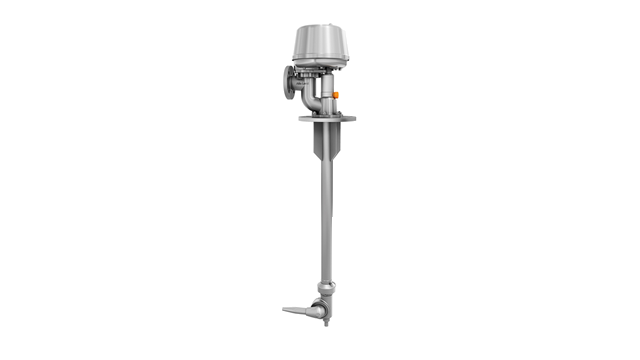
- Durchsatzbereich
- i40 S: 3-56 m³/h | i40 D: 7-80 m³/h | TZ-82: 15 m³/h (8mm-Düsen @ 7 bar)
- Betriebsdruck
- Typischerweise 4-12 bar; empfohlener Betriebsdruck 5-6,5 bar
- Wurfweite/reichweite
- TZ-82: 26 Meter horizontale Wurfweite (Benetzungsradius)
- Düsendurchmesser-Bereich
- 7-10 mm (verschiedene Konfigurationen für Durchsatz-Optimierung)
- Deck-Öffnung erforderlich
- i40 S/i40 D: nur 145 mm (kompakteste 2. Generation)
- Material-standard
- AISI 316 Edelstahl für Hauptkomponenten; PEEK für Seals/Verschleißteile
- Betriebstemperatur
- 0–95°C (32–203°F)
- Antriebsart
- Turbine-driven by cleaning medium flow (COW: crude oil washthrough possible)
- IMO-Konformität
- Erfüllt IMO-Anforderungen für COW (Crude Oil Washing) Systeme
- i40 S (Single-Nozzle, 2. Generation)
- i40 D (Dual-Nozzle, 2. Generation)
- i65 S (Single-Nozzle, High-Impact)
- T-73 (Automatic, 5.000-30.000 m³)
- TZ-67 (Rotary Jet Head, 50-500 m³)
- TZ-75 (Portable, 1.000-5.000 m³)
- TZ-82 (Portable/Fixed, bis 3.000 m³)
- TZ-89 (Media-Lubricated)
- 270FT Mark I (Single-Nozzle Crude Oil Tanker)
- Area: Nozzle wear and erosionCheck: Inspectors regularly check nozzles for wear marks, scratches, surface erosion and deformed openings. Nozzle blockages from sludge accumulation are the most frequent periodic maintenance task. Damaged nozzles must be replaced as a group.
- Area: Gearbox/turbine wear and vibrationCheck: Inspectors monitor for abnormal vibrations, temperature rise and irregular noise. Detached gear teeth and uneven disk distribution cause vibration problems. Inspection recommended every 200-300 operating hours; bearing replacement after 300-500 hours or at least every 3 years.
- Area: Ball bearings and sleeve bushings wearCheck: Inspectors check ball bearings for free rotation without contamination and damage. Sleeve bushings in gearbox frame must be checked: maximum diameter not exceeding 10.4 mm (bore not ovally deformed). Inspect all bearings and sealing rings every 6 months; replacement after 6,000 operating hours or every 3 years.
- Area: Seals and shaft passages (hysteresis coupling design)Check: Inspectors check for oil leakage and contamination at seal points. The hysteresis coupling eliminates conventional speed-setting shafts and reduces leak points. All rubber seals should be replaced at each service inspection to ensure hygiene and performance. Moisture and contamination ingress leads to seal failure.
- Area: Programming pattern and control sequence functionalityCheck: Inspectors test programming logic and valve control for correct 3D-indexed impact pattern. Check creep movement (vertical screw movement while horizontal rotation occurs) and progressive compression from coarse to fine over 8 cycles.
- Area: COW (Crude Oil Washing) system approval and crude oil compatibilityCheck: Inspectors verify IMO certification and crude oil wash-through approval. Toftejorg T-73 and 270FT Mark I are specifically designed for crude oil tankers. Check for corrosion/wear from crude oil exposure and verify valve seals under crude oil operating conditions.
Universal inspection/service points for tank cleaning machines (Gunclean Toftejorg, 2026-06). Per-model specs not auto-filled.
- Durchsatzbereich
- i40 S: 3-56 m³/h | i40 D: 7-80 m³/h | TZ-82: 15 m³/h (8mm-Düsen @ 7 bar)
- Betriebsdruck
- Typischerweise 4-12 bar; empfohlener Betriebsdruck 5-6,5 bar
- Wurfweite/reichweite
- TZ-82: 26 Meter horizontale Wurfweite (Benetzungsradius)
- Düsendurchmesser-Bereich
- 7-10 mm (verschiedene Konfigurationen für Durchsatz-Optimierung)
- Deck-Öffnung erforderlich
- i40 S/i40 D: nur 145 mm (kompakteste 2. Generation)
- Material-standard
- AISI 316 Edelstahl für Hauptkomponenten; PEEK für Seals/Verschleißteile
- Betriebstemperatur
- 0–95°C (32–203°F)
- Antriebsart
- Turbine-driven by cleaning medium flow (COW: crude oil washthrough possible)
- IMO-Konformität
- Erfüllt IMO-Anforderungen für COW (Crude Oil Washing) Systeme
- i40 S (Single-Nozzle, 2. Generation)
- i40 D (Dual-Nozzle, 2. Generation)
- i65 S (Single-Nozzle, High-Impact)
- T-73 (Automatic, 5.000-30.000 m³)
- TZ-67 (Rotary Jet Head, 50-500 m³)
- TZ-75 (Portable, 1.000-5.000 m³)
- TZ-82 (Portable/Fixed, bis 3.000 m³)
- TZ-89 (Media-Lubricated)
- 270FT Mark I (Single-Nozzle Crude Oil Tanker)
- Area: Nozzle wear and erosionCheck: Inspectors regularly check nozzles for wear marks, scratches, surface erosion and deformed openings. Nozzle blockages from sludge accumulation are the most frequent periodic maintenance task. Damaged nozzles must be replaced as a group.
- Area: Gearbox/turbine wear and vibrationCheck: Inspectors monitor for abnormal vibrations, temperature rise and irregular noise. Detached gear teeth and uneven disk distribution cause vibration problems. Inspection recommended every 200-300 operating hours; bearing replacement after 300-500 hours or at least every 3 years.
- Area: Ball bearings and sleeve bushings wearCheck: Inspectors check ball bearings for free rotation without contamination and damage. Sleeve bushings in gearbox frame must be checked: maximum diameter not exceeding 10.4 mm (bore not ovally deformed). Inspect all bearings and sealing rings every 6 months; replacement after 6,000 operating hours or every 3 years.
- Area: Seals and shaft passages (hysteresis coupling design)Check: Inspectors check for oil leakage and contamination at seal points. The hysteresis coupling eliminates conventional speed-setting shafts and reduces leak points. All rubber seals should be replaced at each service inspection to ensure hygiene and performance. Moisture and contamination ingress leads to seal failure.
- Area: Programming pattern and control sequence functionalityCheck: Inspectors test programming logic and valve control for correct 3D-indexed impact pattern. Check creep movement (vertical screw movement while horizontal rotation occurs) and progressive compression from coarse to fine over 8 cycles.
- Area: COW (Crude Oil Washing) system approval and crude oil compatibilityCheck: Inspectors verify IMO certification and crude oil wash-through approval. Toftejorg T-73 and 270FT Mark I are specifically designed for crude oil tankers. Check for corrosion/wear from crude oil exposure and verify valve seals under crude oil operating conditions.
Universal inspection/service points for tank cleaning machines (Gunclean Toftejorg, 2026-06). Per-model specs not auto-filled.
- Durchsatzbereich
- i40 S: 3-56 m³/h | i40 D: 7-80 m³/h | TZ-82: 15 m³/h (8mm-Düsen @ 7 bar)
- Betriebsdruck
- Typischerweise 4-12 bar; empfohlener Betriebsdruck 5-6,5 bar
- Wurfweite/reichweite
- TZ-82: 26 Meter horizontale Wurfweite (Benetzungsradius)
- Düsendurchmesser-Bereich
- 7-10 mm (verschiedene Konfigurationen für Durchsatz-Optimierung)
- Deck-Öffnung erforderlich
- i40 S/i40 D: nur 145 mm (kompakteste 2. Generation)
- Material-standard
- AISI 316 Edelstahl für Hauptkomponenten; PEEK für Seals/Verschleißteile
- Betriebstemperatur
- 0–95°C (32–203°F)
- Antriebsart
- Turbine-driven by cleaning medium flow (COW: crude oil washthrough possible)
- IMO-Konformität
- Erfüllt IMO-Anforderungen für COW (Crude Oil Washing) Systeme
- i40 S (Single-Nozzle, 2. Generation)
- i40 D (Dual-Nozzle, 2. Generation)
- i65 S (Single-Nozzle, High-Impact)
- T-73 (Automatic, 5.000-30.000 m³)
- TZ-67 (Rotary Jet Head, 50-500 m³)
- TZ-75 (Portable, 1.000-5.000 m³)
- TZ-82 (Portable/Fixed, bis 3.000 m³)
- TZ-89 (Media-Lubricated)
- 270FT Mark I (Single-Nozzle Crude Oil Tanker)
- Area: Nozzle wear and erosionCheck: Inspectors regularly check nozzles for wear marks, scratches, surface erosion and deformed openings. Nozzle blockages from sludge accumulation are the most frequent periodic maintenance task. Damaged nozzles must be replaced as a group.
- Area: Gearbox/turbine wear and vibrationCheck: Inspectors monitor for abnormal vibrations, temperature rise and irregular noise. Detached gear teeth and uneven disk distribution cause vibration problems. Inspection recommended every 200-300 operating hours; bearing replacement after 300-500 hours or at least every 3 years.
- Area: Ball bearings and sleeve bushings wearCheck: Inspectors check ball bearings for free rotation without contamination and damage. Sleeve bushings in gearbox frame must be checked: maximum diameter not exceeding 10.4 mm (bore not ovally deformed). Inspect all bearings and sealing rings every 6 months; replacement after 6,000 operating hours or every 3 years.
- Area: Seals and shaft passages (hysteresis coupling design)Check: Inspectors check for oil leakage and contamination at seal points. The hysteresis coupling eliminates conventional speed-setting shafts and reduces leak points. All rubber seals should be replaced at each service inspection to ensure hygiene and performance. Moisture and contamination ingress leads to seal failure.
- Area: Programming pattern and control sequence functionalityCheck: Inspectors test programming logic and valve control for correct 3D-indexed impact pattern. Check creep movement (vertical screw movement while horizontal rotation occurs) and progressive compression from coarse to fine over 8 cycles.
- Area: COW (Crude Oil Washing) system approval and crude oil compatibilityCheck: Inspectors verify IMO certification and crude oil wash-through approval. Toftejorg T-73 and 270FT Mark I are specifically designed for crude oil tankers. Check for corrosion/wear from crude oil exposure and verify valve seals under crude oil operating conditions.
Universal inspection/service points for tank cleaning machines (Gunclean Toftejorg, 2026-06). Per-model specs not auto-filled.
- Durchsatzbereich
- i40 S: 3-56 m³/h | i40 D: 7-80 m³/h | TZ-82: 15 m³/h (8mm-Düsen @ 7 bar)
- Betriebsdruck
- Typischerweise 4-12 bar; empfohlener Betriebsdruck 5-6,5 bar
- Wurfweite/reichweite
- TZ-82: 26 Meter horizontale Wurfweite (Benetzungsradius)
- Düsendurchmesser-Bereich
- 7-10 mm (verschiedene Konfigurationen für Durchsatz-Optimierung)
- Deck-Öffnung erforderlich
- i40 S/i40 D: nur 145 mm (kompakteste 2. Generation)
- Material-standard
- AISI 316 Edelstahl für Hauptkomponenten; PEEK für Seals/Verschleißteile
- Betriebstemperatur
- 0–95°C (32–203°F)
- Antriebsart
- Turbine-driven by cleaning medium flow (COW: crude oil washthrough possible)
- IMO-Konformität
- Erfüllt IMO-Anforderungen für COW (Crude Oil Washing) Systeme
- i40 S (Single-Nozzle, 2. Generation)
- i40 D (Dual-Nozzle, 2. Generation)
- i65 S (Single-Nozzle, High-Impact)
- T-73 (Automatic, 5.000-30.000 m³)
- TZ-67 (Rotary Jet Head, 50-500 m³)
- TZ-75 (Portable, 1.000-5.000 m³)
- TZ-82 (Portable/Fixed, bis 3.000 m³)
- TZ-89 (Media-Lubricated)
- 270FT Mark I (Single-Nozzle Crude Oil Tanker)
- Area: Nozzle wear and erosionCheck: Inspectors regularly check nozzles for wear marks, scratches, surface erosion and deformed openings. Nozzle blockages from sludge accumulation are the most frequent periodic maintenance task. Damaged nozzles must be replaced as a group.
- Area: Gearbox/turbine wear and vibrationCheck: Inspectors monitor for abnormal vibrations, temperature rise and irregular noise. Detached gear teeth and uneven disk distribution cause vibration problems. Inspection recommended every 200-300 operating hours; bearing replacement after 300-500 hours or at least every 3 years.
- Area: Ball bearings and sleeve bushings wearCheck: Inspectors check ball bearings for free rotation without contamination and damage. Sleeve bushings in gearbox frame must be checked: maximum diameter not exceeding 10.4 mm (bore not ovally deformed). Inspect all bearings and sealing rings every 6 months; replacement after 6,000 operating hours or every 3 years.
- Area: Seals and shaft passages (hysteresis coupling design)Check: Inspectors check for oil leakage and contamination at seal points. The hysteresis coupling eliminates conventional speed-setting shafts and reduces leak points. All rubber seals should be replaced at each service inspection to ensure hygiene and performance. Moisture and contamination ingress leads to seal failure.
- Area: Programming pattern and control sequence functionalityCheck: Inspectors test programming logic and valve control for correct 3D-indexed impact pattern. Check creep movement (vertical screw movement while horizontal rotation occurs) and progressive compression from coarse to fine over 8 cycles.
- Area: COW (Crude Oil Washing) system approval and crude oil compatibilityCheck: Inspectors verify IMO certification and crude oil wash-through approval. Toftejorg T-73 and 270FT Mark I are specifically designed for crude oil tankers. Check for corrosion/wear from crude oil exposure and verify valve seals under crude oil operating conditions.
Universal inspection/service points for tank cleaning machines (Gunclean Toftejorg, 2026-06). Per-model specs not auto-filled.
- Durchsatzbereich
- i40 S: 3-56 m³/h | i40 D: 7-80 m³/h | TZ-82: 15 m³/h (8mm-Düsen @ 7 bar)
- Betriebsdruck
- Typischerweise 4-12 bar; empfohlener Betriebsdruck 5-6,5 bar
- Wurfweite/reichweite
- TZ-82: 26 Meter horizontale Wurfweite (Benetzungsradius)
- Düsendurchmesser-Bereich
- 7-10 mm (verschiedene Konfigurationen für Durchsatz-Optimierung)
- Deck-Öffnung erforderlich
- i40 S/i40 D: nur 145 mm (kompakteste 2. Generation)
- Material-standard
- AISI 316 Edelstahl für Hauptkomponenten; PEEK für Seals/Verschleißteile
- Betriebstemperatur
- 0–95°C (32–203°F)
- Antriebsart
- Turbine-driven by cleaning medium flow (COW: crude oil washthrough possible)
- IMO-Konformität
- Erfüllt IMO-Anforderungen für COW (Crude Oil Washing) Systeme
- i40 S (Single-Nozzle, 2. Generation)
- i40 D (Dual-Nozzle, 2. Generation)
- i65 S (Single-Nozzle, High-Impact)
- T-73 (Automatic, 5.000-30.000 m³)
- TZ-67 (Rotary Jet Head, 50-500 m³)
- TZ-75 (Portable, 1.000-5.000 m³)
- TZ-82 (Portable/Fixed, bis 3.000 m³)
- TZ-89 (Media-Lubricated)
- 270FT Mark I (Single-Nozzle Crude Oil Tanker)
- Area: Nozzle wear and erosionCheck: Inspectors regularly check nozzles for wear marks, scratches, surface erosion and deformed openings. Nozzle blockages from sludge accumulation are the most frequent periodic maintenance task. Damaged nozzles must be replaced as a group.
- Area: Gearbox/turbine wear and vibrationCheck: Inspectors monitor for abnormal vibrations, temperature rise and irregular noise. Detached gear teeth and uneven disk distribution cause vibration problems. Inspection recommended every 200-300 operating hours; bearing replacement after 300-500 hours or at least every 3 years.
- Area: Ball bearings and sleeve bushings wearCheck: Inspectors check ball bearings for free rotation without contamination and damage. Sleeve bushings in gearbox frame must be checked: maximum diameter not exceeding 10.4 mm (bore not ovally deformed). Inspect all bearings and sealing rings every 6 months; replacement after 6,000 operating hours or every 3 years.
- Area: Seals and shaft passages (hysteresis coupling design)Check: Inspectors check for oil leakage and contamination at seal points. The hysteresis coupling eliminates conventional speed-setting shafts and reduces leak points. All rubber seals should be replaced at each service inspection to ensure hygiene and performance. Moisture and contamination ingress leads to seal failure.
- Area: Programming pattern and control sequence functionalityCheck: Inspectors test programming logic and valve control for correct 3D-indexed impact pattern. Check creep movement (vertical screw movement while horizontal rotation occurs) and progressive compression from coarse to fine over 8 cycles.
- Area: COW (Crude Oil Washing) system approval and crude oil compatibilityCheck: Inspectors verify IMO certification and crude oil wash-through approval. Toftejorg T-73 and 270FT Mark I are specifically designed for crude oil tankers. Check for corrosion/wear from crude oil exposure and verify valve seals under crude oil operating conditions.
Universal inspection/service points for tank cleaning machines (Gunclean Toftejorg, 2026-06). Per-model specs not auto-filled.
- Durchsatzbereich
- i40 S: 3-56 m³/h | i40 D: 7-80 m³/h | TZ-82: 15 m³/h (8mm-Düsen @ 7 bar)
- Betriebsdruck
- Typischerweise 4-12 bar; empfohlener Betriebsdruck 5-6,5 bar
- Wurfweite/reichweite
- TZ-82: 26 Meter horizontale Wurfweite (Benetzungsradius)
- Düsendurchmesser-Bereich
- 7-10 mm (verschiedene Konfigurationen für Durchsatz-Optimierung)
- Deck-Öffnung erforderlich
- i40 S/i40 D: nur 145 mm (kompakteste 2. Generation)
- Material-standard
- AISI 316 Edelstahl für Hauptkomponenten; PEEK für Seals/Verschleißteile
- Betriebstemperatur
- 0–95°C (32–203°F)
- Antriebsart
- Turbine-driven by cleaning medium flow (COW: crude oil washthrough possible)
- IMO-Konformität
- Erfüllt IMO-Anforderungen für COW (Crude Oil Washing) Systeme
- i40 S (Single-Nozzle, 2. Generation)
- i40 D (Dual-Nozzle, 2. Generation)
- i65 S (Single-Nozzle, High-Impact)
- T-73 (Automatic, 5.000-30.000 m³)
- TZ-67 (Rotary Jet Head, 50-500 m³)
- TZ-75 (Portable, 1.000-5.000 m³)
- TZ-82 (Portable/Fixed, bis 3.000 m³)
- TZ-89 (Media-Lubricated)
- 270FT Mark I (Single-Nozzle Crude Oil Tanker)
- Area: Nozzle wear and erosionCheck: Inspectors regularly check nozzles for wear marks, scratches, surface erosion and deformed openings. Nozzle blockages from sludge accumulation are the most frequent periodic maintenance task. Damaged nozzles must be replaced as a group.
- Area: Gearbox/turbine wear and vibrationCheck: Inspectors monitor for abnormal vibrations, temperature rise and irregular noise. Detached gear teeth and uneven disk distribution cause vibration problems. Inspection recommended every 200-300 operating hours; bearing replacement after 300-500 hours or at least every 3 years.
- Area: Ball bearings and sleeve bushings wearCheck: Inspectors check ball bearings for free rotation without contamination and damage. Sleeve bushings in gearbox frame must be checked: maximum diameter not exceeding 10.4 mm (bore not ovally deformed). Inspect all bearings and sealing rings every 6 months; replacement after 6,000 operating hours or every 3 years.
- Area: Seals and shaft passages (hysteresis coupling design)Check: Inspectors check for oil leakage and contamination at seal points. The hysteresis coupling eliminates conventional speed-setting shafts and reduces leak points. All rubber seals should be replaced at each service inspection to ensure hygiene and performance. Moisture and contamination ingress leads to seal failure.
- Area: Programming pattern and control sequence functionalityCheck: Inspectors test programming logic and valve control for correct 3D-indexed impact pattern. Check creep movement (vertical screw movement while horizontal rotation occurs) and progressive compression from coarse to fine over 8 cycles.
- Area: COW (Crude Oil Washing) system approval and crude oil compatibilityCheck: Inspectors verify IMO certification and crude oil wash-through approval. Toftejorg T-73 and 270FT Mark I are specifically designed for crude oil tankers. Check for corrosion/wear from crude oil exposure and verify valve seals under crude oil operating conditions.
Universal inspection/service points for tank cleaning machines (Gunclean Toftejorg, 2026-06). Per-model specs not auto-filled.
- Durchsatzbereich
- i40 S: 3-56 m³/h | i40 D: 7-80 m³/h | TZ-82: 15 m³/h (8mm-Düsen @ 7 bar)
- Betriebsdruck
- Typischerweise 4-12 bar; empfohlener Betriebsdruck 5-6,5 bar
- Wurfweite/reichweite
- TZ-82: 26 Meter horizontale Wurfweite (Benetzungsradius)
- Düsendurchmesser-Bereich
- 7-10 mm (verschiedene Konfigurationen für Durchsatz-Optimierung)
- Deck-Öffnung erforderlich
- i40 S/i40 D: nur 145 mm (kompakteste 2. Generation)
- Material-standard
- AISI 316 Edelstahl für Hauptkomponenten; PEEK für Seals/Verschleißteile
- Betriebstemperatur
- 0–95°C (32–203°F)
- Antriebsart
- Turbine-driven by cleaning medium flow (COW: crude oil washthrough possible)
- IMO-Konformität
- Erfüllt IMO-Anforderungen für COW (Crude Oil Washing) Systeme
- i40 S (Single-Nozzle, 2. Generation)
- i40 D (Dual-Nozzle, 2. Generation)
- i65 S (Single-Nozzle, High-Impact)
- T-73 (Automatic, 5.000-30.000 m³)
- TZ-67 (Rotary Jet Head, 50-500 m³)
- TZ-75 (Portable, 1.000-5.000 m³)
- TZ-82 (Portable/Fixed, bis 3.000 m³)
- TZ-89 (Media-Lubricated)
- 270FT Mark I (Single-Nozzle Crude Oil Tanker)
- Area: Nozzle wear and erosionCheck: Inspectors regularly check nozzles for wear marks, scratches, surface erosion and deformed openings. Nozzle blockages from sludge accumulation are the most frequent periodic maintenance task. Damaged nozzles must be replaced as a group.
- Area: Gearbox/turbine wear and vibrationCheck: Inspectors monitor for abnormal vibrations, temperature rise and irregular noise. Detached gear teeth and uneven disk distribution cause vibration problems. Inspection recommended every 200-300 operating hours; bearing replacement after 300-500 hours or at least every 3 years.
- Area: Ball bearings and sleeve bushings wearCheck: Inspectors check ball bearings for free rotation without contamination and damage. Sleeve bushings in gearbox frame must be checked: maximum diameter not exceeding 10.4 mm (bore not ovally deformed). Inspect all bearings and sealing rings every 6 months; replacement after 6,000 operating hours or every 3 years.
- Area: Seals and shaft passages (hysteresis coupling design)Check: Inspectors check for oil leakage and contamination at seal points. The hysteresis coupling eliminates conventional speed-setting shafts and reduces leak points. All rubber seals should be replaced at each service inspection to ensure hygiene and performance. Moisture and contamination ingress leads to seal failure.
- Area: Programming pattern and control sequence functionalityCheck: Inspectors test programming logic and valve control for correct 3D-indexed impact pattern. Check creep movement (vertical screw movement while horizontal rotation occurs) and progressive compression from coarse to fine over 8 cycles.
- Area: COW (Crude Oil Washing) system approval and crude oil compatibilityCheck: Inspectors verify IMO certification and crude oil wash-through approval. Toftejorg T-73 and 270FT Mark I are specifically designed for crude oil tankers. Check for corrosion/wear from crude oil exposure and verify valve seals under crude oil operating conditions.
Universal inspection/service points for tank cleaning machines (Gunclean Toftejorg, 2026-06). Per-model specs not auto-filled.
- Durchsatzbereich
- i40 S: 3-56 m³/h | i40 D: 7-80 m³/h | TZ-82: 15 m³/h (8mm-Düsen @ 7 bar)
- Betriebsdruck
- Typischerweise 4-12 bar; empfohlener Betriebsdruck 5-6,5 bar
- Wurfweite/reichweite
- TZ-82: 26 Meter horizontale Wurfweite (Benetzungsradius)
- Düsendurchmesser-Bereich
- 7-10 mm (verschiedene Konfigurationen für Durchsatz-Optimierung)
- Deck-Öffnung erforderlich
- i40 S/i40 D: nur 145 mm (kompakteste 2. Generation)
- Material-standard
- AISI 316 Edelstahl für Hauptkomponenten; PEEK für Seals/Verschleißteile
- Betriebstemperatur
- 0–95°C (32–203°F)
- Antriebsart
- Turbine-driven by cleaning medium flow (COW: crude oil washthrough possible)
- IMO-Konformität
- Erfüllt IMO-Anforderungen für COW (Crude Oil Washing) Systeme
- i40 S (Single-Nozzle, 2. Generation)
- i40 D (Dual-Nozzle, 2. Generation)
- i65 S (Single-Nozzle, High-Impact)
- T-73 (Automatic, 5.000-30.000 m³)
- TZ-67 (Rotary Jet Head, 50-500 m³)
- TZ-75 (Portable, 1.000-5.000 m³)
- TZ-82 (Portable/Fixed, bis 3.000 m³)
- TZ-89 (Media-Lubricated)
- 270FT Mark I (Single-Nozzle Crude Oil Tanker)
- Area: Nozzle wear and erosionCheck: Inspectors regularly check nozzles for wear marks, scratches, surface erosion and deformed openings. Nozzle blockages from sludge accumulation are the most frequent periodic maintenance task. Damaged nozzles must be replaced as a group.
- Area: Gearbox/turbine wear and vibrationCheck: Inspectors monitor for abnormal vibrations, temperature rise and irregular noise. Detached gear teeth and uneven disk distribution cause vibration problems. Inspection recommended every 200-300 operating hours; bearing replacement after 300-500 hours or at least every 3 years.
- Area: Ball bearings and sleeve bushings wearCheck: Inspectors check ball bearings for free rotation without contamination and damage. Sleeve bushings in gearbox frame must be checked: maximum diameter not exceeding 10.4 mm (bore not ovally deformed). Inspect all bearings and sealing rings every 6 months; replacement after 6,000 operating hours or every 3 years.
- Area: Seals and shaft passages (hysteresis coupling design)Check: Inspectors check for oil leakage and contamination at seal points. The hysteresis coupling eliminates conventional speed-setting shafts and reduces leak points. All rubber seals should be replaced at each service inspection to ensure hygiene and performance. Moisture and contamination ingress leads to seal failure.
- Area: Programming pattern and control sequence functionalityCheck: Inspectors test programming logic and valve control for correct 3D-indexed impact pattern. Check creep movement (vertical screw movement while horizontal rotation occurs) and progressive compression from coarse to fine over 8 cycles.
- Area: COW (Crude Oil Washing) system approval and crude oil compatibilityCheck: Inspectors verify IMO certification and crude oil wash-through approval. Toftejorg T-73 and 270FT Mark I are specifically designed for crude oil tankers. Check for corrosion/wear from crude oil exposure and verify valve seals under crude oil operating conditions.
Universal inspection/service points for tank cleaning machines (Gunclean Toftejorg, 2026-06). Per-model specs not auto-filled.
- Durchsatzbereich
- i40 S: 3-56 m³/h | i40 D: 7-80 m³/h | TZ-82: 15 m³/h (8mm-Düsen @ 7 bar)
- Betriebsdruck
- Typischerweise 4-12 bar; empfohlener Betriebsdruck 5-6,5 bar
- Wurfweite/reichweite
- TZ-82: 26 Meter horizontale Wurfweite (Benetzungsradius)
- Düsendurchmesser-Bereich
- 7-10 mm (verschiedene Konfigurationen für Durchsatz-Optimierung)
- Deck-Öffnung erforderlich
- i40 S/i40 D: nur 145 mm (kompakteste 2. Generation)
- Material-standard
- AISI 316 Edelstahl für Hauptkomponenten; PEEK für Seals/Verschleißteile
- Betriebstemperatur
- 0–95°C (32–203°F)
- Antriebsart
- Turbine-driven by cleaning medium flow (COW: crude oil washthrough possible)
- IMO-Konformität
- Erfüllt IMO-Anforderungen für COW (Crude Oil Washing) Systeme
- i40 S (Single-Nozzle, 2. Generation)
- i40 D (Dual-Nozzle, 2. Generation)
- i65 S (Single-Nozzle, High-Impact)
- T-73 (Automatic, 5.000-30.000 m³)
- TZ-67 (Rotary Jet Head, 50-500 m³)
- TZ-75 (Portable, 1.000-5.000 m³)
- TZ-82 (Portable/Fixed, bis 3.000 m³)
- TZ-89 (Media-Lubricated)
- 270FT Mark I (Single-Nozzle Crude Oil Tanker)
- Area: Nozzle wear and erosionCheck: Inspectors regularly check nozzles for wear marks, scratches, surface erosion and deformed openings. Nozzle blockages from sludge accumulation are the most frequent periodic maintenance task. Damaged nozzles must be replaced as a group.
- Area: Gearbox/turbine wear and vibrationCheck: Inspectors monitor for abnormal vibrations, temperature rise and irregular noise. Detached gear teeth and uneven disk distribution cause vibration problems. Inspection recommended every 200-300 operating hours; bearing replacement after 300-500 hours or at least every 3 years.
- Area: Ball bearings and sleeve bushings wearCheck: Inspectors check ball bearings for free rotation without contamination and damage. Sleeve bushings in gearbox frame must be checked: maximum diameter not exceeding 10.4 mm (bore not ovally deformed). Inspect all bearings and sealing rings every 6 months; replacement after 6,000 operating hours or every 3 years.
- Area: Seals and shaft passages (hysteresis coupling design)Check: Inspectors check for oil leakage and contamination at seal points. The hysteresis coupling eliminates conventional speed-setting shafts and reduces leak points. All rubber seals should be replaced at each service inspection to ensure hygiene and performance. Moisture and contamination ingress leads to seal failure.
- Area: Programming pattern and control sequence functionalityCheck: Inspectors test programming logic and valve control for correct 3D-indexed impact pattern. Check creep movement (vertical screw movement while horizontal rotation occurs) and progressive compression from coarse to fine over 8 cycles.
- Area: COW (Crude Oil Washing) system approval and crude oil compatibilityCheck: Inspectors verify IMO certification and crude oil wash-through approval. Toftejorg T-73 and 270FT Mark I are specifically designed for crude oil tankers. Check for corrosion/wear from crude oil exposure and verify valve seals under crude oil operating conditions.
Universal inspection/service points for tank cleaning machines (Gunclean Toftejorg, 2026-06). Per-model specs not auto-filled.
- Durchsatzbereich
- i40 S: 3-56 m³/h | i40 D: 7-80 m³/h | TZ-82: 15 m³/h (8mm-Düsen @ 7 bar)
- Betriebsdruck
- Typischerweise 4-12 bar; empfohlener Betriebsdruck 5-6,5 bar
- Wurfweite/reichweite
- TZ-82: 26 Meter horizontale Wurfweite (Benetzungsradius)
- Düsendurchmesser-Bereich
- 7-10 mm (verschiedene Konfigurationen für Durchsatz-Optimierung)
- Deck-Öffnung erforderlich
- i40 S/i40 D: nur 145 mm (kompakteste 2. Generation)
- Material-standard
- AISI 316 Edelstahl für Hauptkomponenten; PEEK für Seals/Verschleißteile
- Betriebstemperatur
- 0–95°C (32–203°F)
- Antriebsart
- Turbine-driven by cleaning medium flow (COW: crude oil washthrough possible)
- IMO-Konformität
- Erfüllt IMO-Anforderungen für COW (Crude Oil Washing) Systeme
- i40 S (Single-Nozzle, 2. Generation)
- i40 D (Dual-Nozzle, 2. Generation)
- i65 S (Single-Nozzle, High-Impact)
- T-73 (Automatic, 5.000-30.000 m³)
- TZ-67 (Rotary Jet Head, 50-500 m³)
- TZ-75 (Portable, 1.000-5.000 m³)
- TZ-82 (Portable/Fixed, bis 3.000 m³)
- TZ-89 (Media-Lubricated)
- 270FT Mark I (Single-Nozzle Crude Oil Tanker)
- Area: Nozzle wear and erosionCheck: Inspectors regularly check nozzles for wear marks, scratches, surface erosion and deformed openings. Nozzle blockages from sludge accumulation are the most frequent periodic maintenance task. Damaged nozzles must be replaced as a group.
- Area: Gearbox/turbine wear and vibrationCheck: Inspectors monitor for abnormal vibrations, temperature rise and irregular noise. Detached gear teeth and uneven disk distribution cause vibration problems. Inspection recommended every 200-300 operating hours; bearing replacement after 300-500 hours or at least every 3 years.
- Area: Ball bearings and sleeve bushings wearCheck: Inspectors check ball bearings for free rotation without contamination and damage. Sleeve bushings in gearbox frame must be checked: maximum diameter not exceeding 10.4 mm (bore not ovally deformed). Inspect all bearings and sealing rings every 6 months; replacement after 6,000 operating hours or every 3 years.
- Area: Seals and shaft passages (hysteresis coupling design)Check: Inspectors check for oil leakage and contamination at seal points. The hysteresis coupling eliminates conventional speed-setting shafts and reduces leak points. All rubber seals should be replaced at each service inspection to ensure hygiene and performance. Moisture and contamination ingress leads to seal failure.
- Area: Programming pattern and control sequence functionalityCheck: Inspectors test programming logic and valve control for correct 3D-indexed impact pattern. Check creep movement (vertical screw movement while horizontal rotation occurs) and progressive compression from coarse to fine over 8 cycles.
- Area: COW (Crude Oil Washing) system approval and crude oil compatibilityCheck: Inspectors verify IMO certification and crude oil wash-through approval. Toftejorg T-73 and 270FT Mark I are specifically designed for crude oil tankers. Check for corrosion/wear from crude oil exposure and verify valve seals under crude oil operating conditions.
Universal inspection/service points for tank cleaning machines (Gunclean Toftejorg, 2026-06). Per-model specs not auto-filled.
- Durchsatzbereich
- i40 S: 3-56 m³/h | i40 D: 7-80 m³/h | TZ-82: 15 m³/h (8mm-Düsen @ 7 bar)
- Betriebsdruck
- Typischerweise 4-12 bar; empfohlener Betriebsdruck 5-6,5 bar
- Wurfweite/reichweite
- TZ-82: 26 Meter horizontale Wurfweite (Benetzungsradius)
- Düsendurchmesser-Bereich
- 7-10 mm (verschiedene Konfigurationen für Durchsatz-Optimierung)
- Deck-Öffnung erforderlich
- i40 S/i40 D: nur 145 mm (kompakteste 2. Generation)
- Material-standard
- AISI 316 Edelstahl für Hauptkomponenten; PEEK für Seals/Verschleißteile
- Betriebstemperatur
- 0–95°C (32–203°F)
- Antriebsart
- Turbine-driven by cleaning medium flow (COW: crude oil washthrough possible)
- IMO-Konformität
- Erfüllt IMO-Anforderungen für COW (Crude Oil Washing) Systeme
- i40 S (Single-Nozzle, 2. Generation)
- i40 D (Dual-Nozzle, 2. Generation)
- i65 S (Single-Nozzle, High-Impact)
- T-73 (Automatic, 5.000-30.000 m³)
- TZ-67 (Rotary Jet Head, 50-500 m³)
- TZ-75 (Portable, 1.000-5.000 m³)
- TZ-82 (Portable/Fixed, bis 3.000 m³)
- TZ-89 (Media-Lubricated)
- 270FT Mark I (Single-Nozzle Crude Oil Tanker)
- Area: Nozzle wear and erosionCheck: Inspectors regularly check nozzles for wear marks, scratches, surface erosion and deformed openings. Nozzle blockages from sludge accumulation are the most frequent periodic maintenance task. Damaged nozzles must be replaced as a group.
- Area: Gearbox/turbine wear and vibrationCheck: Inspectors monitor for abnormal vibrations, temperature rise and irregular noise. Detached gear teeth and uneven disk distribution cause vibration problems. Inspection recommended every 200-300 operating hours; bearing replacement after 300-500 hours or at least every 3 years.
- Area: Ball bearings and sleeve bushings wearCheck: Inspectors check ball bearings for free rotation without contamination and damage. Sleeve bushings in gearbox frame must be checked: maximum diameter not exceeding 10.4 mm (bore not ovally deformed). Inspect all bearings and sealing rings every 6 months; replacement after 6,000 operating hours or every 3 years.
- Area: Seals and shaft passages (hysteresis coupling design)Check: Inspectors check for oil leakage and contamination at seal points. The hysteresis coupling eliminates conventional speed-setting shafts and reduces leak points. All rubber seals should be replaced at each service inspection to ensure hygiene and performance. Moisture and contamination ingress leads to seal failure.
- Area: Programming pattern and control sequence functionalityCheck: Inspectors test programming logic and valve control for correct 3D-indexed impact pattern. Check creep movement (vertical screw movement while horizontal rotation occurs) and progressive compression from coarse to fine over 8 cycles.
- Area: COW (Crude Oil Washing) system approval and crude oil compatibilityCheck: Inspectors verify IMO certification and crude oil wash-through approval. Toftejorg T-73 and 270FT Mark I are specifically designed for crude oil tankers. Check for corrosion/wear from crude oil exposure and verify valve seals under crude oil operating conditions.
Universal inspection/service points for tank cleaning machines (Gunclean Toftejorg, 2026-06). Per-model specs not auto-filled.
- Durchsatzbereich
- i40 S: 3-56 m³/h | i40 D: 7-80 m³/h | TZ-82: 15 m³/h (8mm-Düsen @ 7 bar)
- Betriebsdruck
- Typischerweise 4-12 bar; empfohlener Betriebsdruck 5-6,5 bar
- Wurfweite/reichweite
- TZ-82: 26 Meter horizontale Wurfweite (Benetzungsradius)
- Düsendurchmesser-Bereich
- 7-10 mm (verschiedene Konfigurationen für Durchsatz-Optimierung)
- Deck-Öffnung erforderlich
- i40 S/i40 D: nur 145 mm (kompakteste 2. Generation)
- Material-standard
- AISI 316 Edelstahl für Hauptkomponenten; PEEK für Seals/Verschleißteile
- Betriebstemperatur
- 0–95°C (32–203°F)
- Antriebsart
- Turbine-driven by cleaning medium flow (COW: crude oil washthrough possible)
- IMO-Konformität
- Erfüllt IMO-Anforderungen für COW (Crude Oil Washing) Systeme
- i40 S (Single-Nozzle, 2. Generation)
- i40 D (Dual-Nozzle, 2. Generation)
- i65 S (Single-Nozzle, High-Impact)
- T-73 (Automatic, 5.000-30.000 m³)
- TZ-67 (Rotary Jet Head, 50-500 m³)
- TZ-75 (Portable, 1.000-5.000 m³)
- TZ-82 (Portable/Fixed, bis 3.000 m³)
- TZ-89 (Media-Lubricated)
- 270FT Mark I (Single-Nozzle Crude Oil Tanker)
- Area: Nozzle wear and erosionCheck: Inspectors regularly check nozzles for wear marks, scratches, surface erosion and deformed openings. Nozzle blockages from sludge accumulation are the most frequent periodic maintenance task. Damaged nozzles must be replaced as a group.
- Area: Gearbox/turbine wear and vibrationCheck: Inspectors monitor for abnormal vibrations, temperature rise and irregular noise. Detached gear teeth and uneven disk distribution cause vibration problems. Inspection recommended every 200-300 operating hours; bearing replacement after 300-500 hours or at least every 3 years.
- Area: Ball bearings and sleeve bushings wearCheck: Inspectors check ball bearings for free rotation without contamination and damage. Sleeve bushings in gearbox frame must be checked: maximum diameter not exceeding 10.4 mm (bore not ovally deformed). Inspect all bearings and sealing rings every 6 months; replacement after 6,000 operating hours or every 3 years.
- Area: Seals and shaft passages (hysteresis coupling design)Check: Inspectors check for oil leakage and contamination at seal points. The hysteresis coupling eliminates conventional speed-setting shafts and reduces leak points. All rubber seals should be replaced at each service inspection to ensure hygiene and performance. Moisture and contamination ingress leads to seal failure.
- Area: Programming pattern and control sequence functionalityCheck: Inspectors test programming logic and valve control for correct 3D-indexed impact pattern. Check creep movement (vertical screw movement while horizontal rotation occurs) and progressive compression from coarse to fine over 8 cycles.
- Area: COW (Crude Oil Washing) system approval and crude oil compatibilityCheck: Inspectors verify IMO certification and crude oil wash-through approval. Toftejorg T-73 and 270FT Mark I are specifically designed for crude oil tankers. Check for corrosion/wear from crude oil exposure and verify valve seals under crude oil operating conditions.
Universal inspection/service points for tank cleaning machines (Gunclean Toftejorg, 2026-06). Per-model specs not auto-filled.
- Durchsatzbereich
- i40 S: 3-56 m³/h | i40 D: 7-80 m³/h | TZ-82: 15 m³/h (8mm-Düsen @ 7 bar)
- Betriebsdruck
- Typischerweise 4-12 bar; empfohlener Betriebsdruck 5-6,5 bar
- Wurfweite/reichweite
- TZ-82: 26 Meter horizontale Wurfweite (Benetzungsradius)
- Düsendurchmesser-Bereich
- 7-10 mm (verschiedene Konfigurationen für Durchsatz-Optimierung)
- Deck-Öffnung erforderlich
- i40 S/i40 D: nur 145 mm (kompakteste 2. Generation)
- Material-standard
- AISI 316 Edelstahl für Hauptkomponenten; PEEK für Seals/Verschleißteile
- Betriebstemperatur
- 0–95°C (32–203°F)
- Antriebsart
- Turbine-driven by cleaning medium flow (COW: crude oil washthrough possible)
- IMO-Konformität
- Erfüllt IMO-Anforderungen für COW (Crude Oil Washing) Systeme
- i40 S (Single-Nozzle, 2. Generation)
- i40 D (Dual-Nozzle, 2. Generation)
- i65 S (Single-Nozzle, High-Impact)
- T-73 (Automatic, 5.000-30.000 m³)
- TZ-67 (Rotary Jet Head, 50-500 m³)
- TZ-75 (Portable, 1.000-5.000 m³)
- TZ-82 (Portable/Fixed, bis 3.000 m³)
- TZ-89 (Media-Lubricated)
- 270FT Mark I (Single-Nozzle Crude Oil Tanker)
- Area: Nozzle wear and erosionCheck: Inspectors regularly check nozzles for wear marks, scratches, surface erosion and deformed openings. Nozzle blockages from sludge accumulation are the most frequent periodic maintenance task. Damaged nozzles must be replaced as a group.
- Area: Gearbox/turbine wear and vibrationCheck: Inspectors monitor for abnormal vibrations, temperature rise and irregular noise. Detached gear teeth and uneven disk distribution cause vibration problems. Inspection recommended every 200-300 operating hours; bearing replacement after 300-500 hours or at least every 3 years.
- Area: Ball bearings and sleeve bushings wearCheck: Inspectors check ball bearings for free rotation without contamination and damage. Sleeve bushings in gearbox frame must be checked: maximum diameter not exceeding 10.4 mm (bore not ovally deformed). Inspect all bearings and sealing rings every 6 months; replacement after 6,000 operating hours or every 3 years.
- Area: Seals and shaft passages (hysteresis coupling design)Check: Inspectors check for oil leakage and contamination at seal points. The hysteresis coupling eliminates conventional speed-setting shafts and reduces leak points. All rubber seals should be replaced at each service inspection to ensure hygiene and performance. Moisture and contamination ingress leads to seal failure.
- Area: Programming pattern and control sequence functionalityCheck: Inspectors test programming logic and valve control for correct 3D-indexed impact pattern. Check creep movement (vertical screw movement while horizontal rotation occurs) and progressive compression from coarse to fine over 8 cycles.
- Area: COW (Crude Oil Washing) system approval and crude oil compatibilityCheck: Inspectors verify IMO certification and crude oil wash-through approval. Toftejorg T-73 and 270FT Mark I are specifically designed for crude oil tankers. Check for corrosion/wear from crude oil exposure and verify valve seals under crude oil operating conditions.
Universal inspection/service points for tank cleaning machines (Gunclean Toftejorg, 2026-06). Per-model specs not auto-filled.
- Durchsatzbereich
- i40 S: 3-56 m³/h | i40 D: 7-80 m³/h | TZ-82: 15 m³/h (8mm-Düsen @ 7 bar)
- Betriebsdruck
- Typischerweise 4-12 bar; empfohlener Betriebsdruck 5-6,5 bar
- Wurfweite/reichweite
- TZ-82: 26 Meter horizontale Wurfweite (Benetzungsradius)
- Düsendurchmesser-Bereich
- 7-10 mm (verschiedene Konfigurationen für Durchsatz-Optimierung)
- Deck-Öffnung erforderlich
- i40 S/i40 D: nur 145 mm (kompakteste 2. Generation)
- Material-standard
- AISI 316 Edelstahl für Hauptkomponenten; PEEK für Seals/Verschleißteile
- Betriebstemperatur
- 0–95°C (32–203°F)
- Antriebsart
- Turbine-driven by cleaning medium flow (COW: crude oil washthrough possible)
- IMO-Konformität
- Erfüllt IMO-Anforderungen für COW (Crude Oil Washing) Systeme
- i40 S (Single-Nozzle, 2. Generation)
- i40 D (Dual-Nozzle, 2. Generation)
- i65 S (Single-Nozzle, High-Impact)
- T-73 (Automatic, 5.000-30.000 m³)
- TZ-67 (Rotary Jet Head, 50-500 m³)
- TZ-75 (Portable, 1.000-5.000 m³)
- TZ-82 (Portable/Fixed, bis 3.000 m³)
- TZ-89 (Media-Lubricated)
- 270FT Mark I (Single-Nozzle Crude Oil Tanker)
- Area: Nozzle wear and erosionCheck: Inspectors regularly check nozzles for wear marks, scratches, surface erosion and deformed openings. Nozzle blockages from sludge accumulation are the most frequent periodic maintenance task. Damaged nozzles must be replaced as a group.
- Area: Gearbox/turbine wear and vibrationCheck: Inspectors monitor for abnormal vibrations, temperature rise and irregular noise. Detached gear teeth and uneven disk distribution cause vibration problems. Inspection recommended every 200-300 operating hours; bearing replacement after 300-500 hours or at least every 3 years.
- Area: Ball bearings and sleeve bushings wearCheck: Inspectors check ball bearings for free rotation without contamination and damage. Sleeve bushings in gearbox frame must be checked: maximum diameter not exceeding 10.4 mm (bore not ovally deformed). Inspect all bearings and sealing rings every 6 months; replacement after 6,000 operating hours or every 3 years.
- Area: Seals and shaft passages (hysteresis coupling design)Check: Inspectors check for oil leakage and contamination at seal points. The hysteresis coupling eliminates conventional speed-setting shafts and reduces leak points. All rubber seals should be replaced at each service inspection to ensure hygiene and performance. Moisture and contamination ingress leads to seal failure.
- Area: Programming pattern and control sequence functionalityCheck: Inspectors test programming logic and valve control for correct 3D-indexed impact pattern. Check creep movement (vertical screw movement while horizontal rotation occurs) and progressive compression from coarse to fine over 8 cycles.
- Area: COW (Crude Oil Washing) system approval and crude oil compatibilityCheck: Inspectors verify IMO certification and crude oil wash-through approval. Toftejorg T-73 and 270FT Mark I are specifically designed for crude oil tankers. Check for corrosion/wear from crude oil exposure and verify valve seals under crude oil operating conditions.
Universal inspection/service points for tank cleaning machines (Gunclean Toftejorg, 2026-06). Per-model specs not auto-filled.
- Durchsatzbereich
- i40 S: 3-56 m³/h | i40 D: 7-80 m³/h | TZ-82: 15 m³/h (8mm-Düsen @ 7 bar)
- Betriebsdruck
- Typischerweise 4-12 bar; empfohlener Betriebsdruck 5-6,5 bar
- Wurfweite/reichweite
- TZ-82: 26 Meter horizontale Wurfweite (Benetzungsradius)
- Düsendurchmesser-Bereich
- 7-10 mm (verschiedene Konfigurationen für Durchsatz-Optimierung)
- Deck-Öffnung erforderlich
- i40 S/i40 D: nur 145 mm (kompakteste 2. Generation)
- Material-standard
- AISI 316 Edelstahl für Hauptkomponenten; PEEK für Seals/Verschleißteile
- Betriebstemperatur
- 0–95°C (32–203°F)
- Antriebsart
- Turbine-driven by cleaning medium flow (COW: crude oil washthrough possible)
- IMO-Konformität
- Erfüllt IMO-Anforderungen für COW (Crude Oil Washing) Systeme
- i40 S (Single-Nozzle, 2. Generation)
- i40 D (Dual-Nozzle, 2. Generation)
- i65 S (Single-Nozzle, High-Impact)
- T-73 (Automatic, 5.000-30.000 m³)
- TZ-67 (Rotary Jet Head, 50-500 m³)
- TZ-75 (Portable, 1.000-5.000 m³)
- TZ-82 (Portable/Fixed, bis 3.000 m³)
- TZ-89 (Media-Lubricated)
- 270FT Mark I (Single-Nozzle Crude Oil Tanker)
- Area: Nozzle wear and erosionCheck: Inspectors regularly check nozzles for wear marks, scratches, surface erosion and deformed openings. Nozzle blockages from sludge accumulation are the most frequent periodic maintenance task. Damaged nozzles must be replaced as a group.
- Area: Gearbox/turbine wear and vibrationCheck: Inspectors monitor for abnormal vibrations, temperature rise and irregular noise. Detached gear teeth and uneven disk distribution cause vibration problems. Inspection recommended every 200-300 operating hours; bearing replacement after 300-500 hours or at least every 3 years.
- Area: Ball bearings and sleeve bushings wearCheck: Inspectors check ball bearings for free rotation without contamination and damage. Sleeve bushings in gearbox frame must be checked: maximum diameter not exceeding 10.4 mm (bore not ovally deformed). Inspect all bearings and sealing rings every 6 months; replacement after 6,000 operating hours or every 3 years.
- Area: Seals and shaft passages (hysteresis coupling design)Check: Inspectors check for oil leakage and contamination at seal points. The hysteresis coupling eliminates conventional speed-setting shafts and reduces leak points. All rubber seals should be replaced at each service inspection to ensure hygiene and performance. Moisture and contamination ingress leads to seal failure.
- Area: Programming pattern and control sequence functionalityCheck: Inspectors test programming logic and valve control for correct 3D-indexed impact pattern. Check creep movement (vertical screw movement while horizontal rotation occurs) and progressive compression from coarse to fine over 8 cycles.
- Area: COW (Crude Oil Washing) system approval and crude oil compatibilityCheck: Inspectors verify IMO certification and crude oil wash-through approval. Toftejorg T-73 and 270FT Mark I are specifically designed for crude oil tankers. Check for corrosion/wear from crude oil exposure and verify valve seals under crude oil operating conditions.
Universal inspection/service points for tank cleaning machines (Gunclean Toftejorg, 2026-06). Per-model specs not auto-filled.
- Durchsatzbereich
- i40 S: 3-56 m³/h | i40 D: 7-80 m³/h | TZ-82: 15 m³/h (8mm-Düsen @ 7 bar)
- Betriebsdruck
- Typischerweise 4-12 bar; empfohlener Betriebsdruck 5-6,5 bar
- Wurfweite/reichweite
- TZ-82: 26 Meter horizontale Wurfweite (Benetzungsradius)
- Düsendurchmesser-Bereich
- 7-10 mm (verschiedene Konfigurationen für Durchsatz-Optimierung)
- Deck-Öffnung erforderlich
- i40 S/i40 D: nur 145 mm (kompakteste 2. Generation)
- Material-standard
- AISI 316 Edelstahl für Hauptkomponenten; PEEK für Seals/Verschleißteile
- Betriebstemperatur
- 0–95°C (32–203°F)
- Antriebsart
- Turbine-driven by cleaning medium flow (COW: crude oil washthrough possible)
- IMO-Konformität
- Erfüllt IMO-Anforderungen für COW (Crude Oil Washing) Systeme
- i40 S (Single-Nozzle, 2. Generation)
- i40 D (Dual-Nozzle, 2. Generation)
- i65 S (Single-Nozzle, High-Impact)
- T-73 (Automatic, 5.000-30.000 m³)
- TZ-67 (Rotary Jet Head, 50-500 m³)
- TZ-75 (Portable, 1.000-5.000 m³)
- TZ-82 (Portable/Fixed, bis 3.000 m³)
- TZ-89 (Media-Lubricated)
- 270FT Mark I (Single-Nozzle Crude Oil Tanker)
- Area: Nozzle wear and erosionCheck: Inspectors regularly check nozzles for wear marks, scratches, surface erosion and deformed openings. Nozzle blockages from sludge accumulation are the most frequent periodic maintenance task. Damaged nozzles must be replaced as a group.
- Area: Gearbox/turbine wear and vibrationCheck: Inspectors monitor for abnormal vibrations, temperature rise and irregular noise. Detached gear teeth and uneven disk distribution cause vibration problems. Inspection recommended every 200-300 operating hours; bearing replacement after 300-500 hours or at least every 3 years.
- Area: Ball bearings and sleeve bushings wearCheck: Inspectors check ball bearings for free rotation without contamination and damage. Sleeve bushings in gearbox frame must be checked: maximum diameter not exceeding 10.4 mm (bore not ovally deformed). Inspect all bearings and sealing rings every 6 months; replacement after 6,000 operating hours or every 3 years.
- Area: Seals and shaft passages (hysteresis coupling design)Check: Inspectors check for oil leakage and contamination at seal points. The hysteresis coupling eliminates conventional speed-setting shafts and reduces leak points. All rubber seals should be replaced at each service inspection to ensure hygiene and performance. Moisture and contamination ingress leads to seal failure.
- Area: Programming pattern and control sequence functionalityCheck: Inspectors test programming logic and valve control for correct 3D-indexed impact pattern. Check creep movement (vertical screw movement while horizontal rotation occurs) and progressive compression from coarse to fine over 8 cycles.
- Area: COW (Crude Oil Washing) system approval and crude oil compatibilityCheck: Inspectors verify IMO certification and crude oil wash-through approval. Toftejorg T-73 and 270FT Mark I are specifically designed for crude oil tankers. Check for corrosion/wear from crude oil exposure and verify valve seals under crude oil operating conditions.
Universal inspection/service points for tank cleaning machines (Gunclean Toftejorg, 2026-06). Per-model specs not auto-filled.
- Durchsatzbereich
- i40 S: 3-56 m³/h | i40 D: 7-80 m³/h | TZ-82: 15 m³/h (8mm-Düsen @ 7 bar)
- Betriebsdruck
- Typischerweise 4-12 bar; empfohlener Betriebsdruck 5-6,5 bar
- Wurfweite/reichweite
- TZ-82: 26 Meter horizontale Wurfweite (Benetzungsradius)
- Düsendurchmesser-Bereich
- 7-10 mm (verschiedene Konfigurationen für Durchsatz-Optimierung)
- Deck-Öffnung erforderlich
- i40 S/i40 D: nur 145 mm (kompakteste 2. Generation)
- Material-standard
- AISI 316 Edelstahl für Hauptkomponenten; PEEK für Seals/Verschleißteile
- Betriebstemperatur
- 0–95°C (32–203°F)
- Antriebsart
- Turbine-driven by cleaning medium flow (COW: crude oil washthrough possible)
- IMO-Konformität
- Erfüllt IMO-Anforderungen für COW (Crude Oil Washing) Systeme
- i40 S (Single-Nozzle, 2. Generation)
- i40 D (Dual-Nozzle, 2. Generation)
- i65 S (Single-Nozzle, High-Impact)
- T-73 (Automatic, 5.000-30.000 m³)
- TZ-67 (Rotary Jet Head, 50-500 m³)
- TZ-75 (Portable, 1.000-5.000 m³)
- TZ-82 (Portable/Fixed, bis 3.000 m³)
- TZ-89 (Media-Lubricated)
- 270FT Mark I (Single-Nozzle Crude Oil Tanker)
- Area: Nozzle wear and erosionCheck: Inspectors regularly check nozzles for wear marks, scratches, surface erosion and deformed openings. Nozzle blockages from sludge accumulation are the most frequent periodic maintenance task. Damaged nozzles must be replaced as a group.
- Area: Gearbox/turbine wear and vibrationCheck: Inspectors monitor for abnormal vibrations, temperature rise and irregular noise. Detached gear teeth and uneven disk distribution cause vibration problems. Inspection recommended every 200-300 operating hours; bearing replacement after 300-500 hours or at least every 3 years.
- Area: Ball bearings and sleeve bushings wearCheck: Inspectors check ball bearings for free rotation without contamination and damage. Sleeve bushings in gearbox frame must be checked: maximum diameter not exceeding 10.4 mm (bore not ovally deformed). Inspect all bearings and sealing rings every 6 months; replacement after 6,000 operating hours or every 3 years.
- Area: Seals and shaft passages (hysteresis coupling design)Check: Inspectors check for oil leakage and contamination at seal points. The hysteresis coupling eliminates conventional speed-setting shafts and reduces leak points. All rubber seals should be replaced at each service inspection to ensure hygiene and performance. Moisture and contamination ingress leads to seal failure.
- Area: Programming pattern and control sequence functionalityCheck: Inspectors test programming logic and valve control for correct 3D-indexed impact pattern. Check creep movement (vertical screw movement while horizontal rotation occurs) and progressive compression from coarse to fine over 8 cycles.
- Area: COW (Crude Oil Washing) system approval and crude oil compatibilityCheck: Inspectors verify IMO certification and crude oil wash-through approval. Toftejorg T-73 and 270FT Mark I are specifically designed for crude oil tankers. Check for corrosion/wear from crude oil exposure and verify valve seals under crude oil operating conditions.
Universal inspection/service points for tank cleaning machines (Gunclean Toftejorg, 2026-06). Per-model specs not auto-filled.
- Durchsatzbereich
- i40 S: 3-56 m³/h | i40 D: 7-80 m³/h | TZ-82: 15 m³/h (8mm-Düsen @ 7 bar)
- Betriebsdruck
- Typischerweise 4-12 bar; empfohlener Betriebsdruck 5-6,5 bar
- Wurfweite/reichweite
- TZ-82: 26 Meter horizontale Wurfweite (Benetzungsradius)
- Düsendurchmesser-Bereich
- 7-10 mm (verschiedene Konfigurationen für Durchsatz-Optimierung)
- Deck-Öffnung erforderlich
- i40 S/i40 D: nur 145 mm (kompakteste 2. Generation)
- Material-standard
- AISI 316 Edelstahl für Hauptkomponenten; PEEK für Seals/Verschleißteile
- Betriebstemperatur
- 0–95°C (32–203°F)
- Antriebsart
- Turbine-driven by cleaning medium flow (COW: crude oil washthrough possible)
- IMO-Konformität
- Erfüllt IMO-Anforderungen für COW (Crude Oil Washing) Systeme
- i40 S (Single-Nozzle, 2. Generation)
- i40 D (Dual-Nozzle, 2. Generation)
- i65 S (Single-Nozzle, High-Impact)
- T-73 (Automatic, 5.000-30.000 m³)
- TZ-67 (Rotary Jet Head, 50-500 m³)
- TZ-75 (Portable, 1.000-5.000 m³)
- TZ-82 (Portable/Fixed, bis 3.000 m³)
- TZ-89 (Media-Lubricated)
- 270FT Mark I (Single-Nozzle Crude Oil Tanker)
- Area: Nozzle wear and erosionCheck: Inspectors regularly check nozzles for wear marks, scratches, surface erosion and deformed openings. Nozzle blockages from sludge accumulation are the most frequent periodic maintenance task. Damaged nozzles must be replaced as a group.
- Area: Gearbox/turbine wear and vibrationCheck: Inspectors monitor for abnormal vibrations, temperature rise and irregular noise. Detached gear teeth and uneven disk distribution cause vibration problems. Inspection recommended every 200-300 operating hours; bearing replacement after 300-500 hours or at least every 3 years.
- Area: Ball bearings and sleeve bushings wearCheck: Inspectors check ball bearings for free rotation without contamination and damage. Sleeve bushings in gearbox frame must be checked: maximum diameter not exceeding 10.4 mm (bore not ovally deformed). Inspect all bearings and sealing rings every 6 months; replacement after 6,000 operating hours or every 3 years.
- Area: Seals and shaft passages (hysteresis coupling design)Check: Inspectors check for oil leakage and contamination at seal points. The hysteresis coupling eliminates conventional speed-setting shafts and reduces leak points. All rubber seals should be replaced at each service inspection to ensure hygiene and performance. Moisture and contamination ingress leads to seal failure.
- Area: Programming pattern and control sequence functionalityCheck: Inspectors test programming logic and valve control for correct 3D-indexed impact pattern. Check creep movement (vertical screw movement while horizontal rotation occurs) and progressive compression from coarse to fine over 8 cycles.
- Area: COW (Crude Oil Washing) system approval and crude oil compatibilityCheck: Inspectors verify IMO certification and crude oil wash-through approval. Toftejorg T-73 and 270FT Mark I are specifically designed for crude oil tankers. Check for corrosion/wear from crude oil exposure and verify valve seals under crude oil operating conditions.
Universal inspection/service points for tank cleaning machines (Gunclean Toftejorg, 2026-06). Per-model specs not auto-filled.
- Durchsatzbereich
- i40 S: 3-56 m³/h | i40 D: 7-80 m³/h | TZ-82: 15 m³/h (8mm-Düsen @ 7 bar)
- Betriebsdruck
- Typischerweise 4-12 bar; empfohlener Betriebsdruck 5-6,5 bar
- Wurfweite/reichweite
- TZ-82: 26 Meter horizontale Wurfweite (Benetzungsradius)
- Düsendurchmesser-Bereich
- 7-10 mm (verschiedene Konfigurationen für Durchsatz-Optimierung)
- Deck-Öffnung erforderlich
- i40 S/i40 D: nur 145 mm (kompakteste 2. Generation)
- Material-standard
- AISI 316 Edelstahl für Hauptkomponenten; PEEK für Seals/Verschleißteile
- Betriebstemperatur
- 0–95°C (32–203°F)
- Antriebsart
- Turbine-driven by cleaning medium flow (COW: crude oil washthrough possible)
- IMO-Konformität
- Erfüllt IMO-Anforderungen für COW (Crude Oil Washing) Systeme
- i40 S (Single-Nozzle, 2. Generation)
- i40 D (Dual-Nozzle, 2. Generation)
- i65 S (Single-Nozzle, High-Impact)
- T-73 (Automatic, 5.000-30.000 m³)
- TZ-67 (Rotary Jet Head, 50-500 m³)
- TZ-75 (Portable, 1.000-5.000 m³)
- TZ-82 (Portable/Fixed, bis 3.000 m³)
- TZ-89 (Media-Lubricated)
- 270FT Mark I (Single-Nozzle Crude Oil Tanker)
- Area: Nozzle wear and erosionCheck: Inspectors regularly check nozzles for wear marks, scratches, surface erosion and deformed openings. Nozzle blockages from sludge accumulation are the most frequent periodic maintenance task. Damaged nozzles must be replaced as a group.
- Area: Gearbox/turbine wear and vibrationCheck: Inspectors monitor for abnormal vibrations, temperature rise and irregular noise. Detached gear teeth and uneven disk distribution cause vibration problems. Inspection recommended every 200-300 operating hours; bearing replacement after 300-500 hours or at least every 3 years.
- Area: Ball bearings and sleeve bushings wearCheck: Inspectors check ball bearings for free rotation without contamination and damage. Sleeve bushings in gearbox frame must be checked: maximum diameter not exceeding 10.4 mm (bore not ovally deformed). Inspect all bearings and sealing rings every 6 months; replacement after 6,000 operating hours or every 3 years.
- Area: Seals and shaft passages (hysteresis coupling design)Check: Inspectors check for oil leakage and contamination at seal points. The hysteresis coupling eliminates conventional speed-setting shafts and reduces leak points. All rubber seals should be replaced at each service inspection to ensure hygiene and performance. Moisture and contamination ingress leads to seal failure.
- Area: Programming pattern and control sequence functionalityCheck: Inspectors test programming logic and valve control for correct 3D-indexed impact pattern. Check creep movement (vertical screw movement while horizontal rotation occurs) and progressive compression from coarse to fine over 8 cycles.
- Area: COW (Crude Oil Washing) system approval and crude oil compatibilityCheck: Inspectors verify IMO certification and crude oil wash-through approval. Toftejorg T-73 and 270FT Mark I are specifically designed for crude oil tankers. Check for corrosion/wear from crude oil exposure and verify valve seals under crude oil operating conditions.
Universal inspection/service points for tank cleaning machines (Gunclean Toftejorg, 2026-06). Per-model specs not auto-filled.
- Durchsatzbereich
- i40 S: 3-56 m³/h | i40 D: 7-80 m³/h | TZ-82: 15 m³/h (8mm-Düsen @ 7 bar)
- Betriebsdruck
- Typischerweise 4-12 bar; empfohlener Betriebsdruck 5-6,5 bar
- Wurfweite/reichweite
- TZ-82: 26 Meter horizontale Wurfweite (Benetzungsradius)
- Düsendurchmesser-Bereich
- 7-10 mm (verschiedene Konfigurationen für Durchsatz-Optimierung)
- Deck-Öffnung erforderlich
- i40 S/i40 D: nur 145 mm (kompakteste 2. Generation)
- Material-standard
- AISI 316 Edelstahl für Hauptkomponenten; PEEK für Seals/Verschleißteile
- Betriebstemperatur
- 0–95°C (32–203°F)
- Antriebsart
- Turbine-driven by cleaning medium flow (COW: crude oil washthrough possible)
- IMO-Konformität
- Erfüllt IMO-Anforderungen für COW (Crude Oil Washing) Systeme
- i40 S (Single-Nozzle, 2. Generation)
- i40 D (Dual-Nozzle, 2. Generation)
- i65 S (Single-Nozzle, High-Impact)
- T-73 (Automatic, 5.000-30.000 m³)
- TZ-67 (Rotary Jet Head, 50-500 m³)
- TZ-75 (Portable, 1.000-5.000 m³)
- TZ-82 (Portable/Fixed, bis 3.000 m³)
- TZ-89 (Media-Lubricated)
- 270FT Mark I (Single-Nozzle Crude Oil Tanker)
- Area: Nozzle wear and erosionCheck: Inspectors regularly check nozzles for wear marks, scratches, surface erosion and deformed openings. Nozzle blockages from sludge accumulation are the most frequent periodic maintenance task. Damaged nozzles must be replaced as a group.
- Area: Gearbox/turbine wear and vibrationCheck: Inspectors monitor for abnormal vibrations, temperature rise and irregular noise. Detached gear teeth and uneven disk distribution cause vibration problems. Inspection recommended every 200-300 operating hours; bearing replacement after 300-500 hours or at least every 3 years.
- Area: Ball bearings and sleeve bushings wearCheck: Inspectors check ball bearings for free rotation without contamination and damage. Sleeve bushings in gearbox frame must be checked: maximum diameter not exceeding 10.4 mm (bore not ovally deformed). Inspect all bearings and sealing rings every 6 months; replacement after 6,000 operating hours or every 3 years.
- Area: Seals and shaft passages (hysteresis coupling design)Check: Inspectors check for oil leakage and contamination at seal points. The hysteresis coupling eliminates conventional speed-setting shafts and reduces leak points. All rubber seals should be replaced at each service inspection to ensure hygiene and performance. Moisture and contamination ingress leads to seal failure.
- Area: Programming pattern and control sequence functionalityCheck: Inspectors test programming logic and valve control for correct 3D-indexed impact pattern. Check creep movement (vertical screw movement while horizontal rotation occurs) and progressive compression from coarse to fine over 8 cycles.
- Area: COW (Crude Oil Washing) system approval and crude oil compatibilityCheck: Inspectors verify IMO certification and crude oil wash-through approval. Toftejorg T-73 and 270FT Mark I are specifically designed for crude oil tankers. Check for corrosion/wear from crude oil exposure and verify valve seals under crude oil operating conditions.
Universal inspection/service points for tank cleaning machines (Gunclean Toftejorg, 2026-06). Per-model specs not auto-filled.
- Durchsatzbereich
- i40 S: 3-56 m³/h | i40 D: 7-80 m³/h | TZ-82: 15 m³/h (8mm-Düsen @ 7 bar)
- Betriebsdruck
- Typischerweise 4-12 bar; empfohlener Betriebsdruck 5-6,5 bar
- Wurfweite/reichweite
- TZ-82: 26 Meter horizontale Wurfweite (Benetzungsradius)
- Düsendurchmesser-Bereich
- 7-10 mm (verschiedene Konfigurationen für Durchsatz-Optimierung)
- Deck-Öffnung erforderlich
- i40 S/i40 D: nur 145 mm (kompakteste 2. Generation)
- Material-standard
- AISI 316 Edelstahl für Hauptkomponenten; PEEK für Seals/Verschleißteile
- Betriebstemperatur
- 0–95°C (32–203°F)
- Antriebsart
- Turbine-driven by cleaning medium flow (COW: crude oil washthrough possible)
- IMO-Konformität
- Erfüllt IMO-Anforderungen für COW (Crude Oil Washing) Systeme
- i40 S (Single-Nozzle, 2. Generation)
- i40 D (Dual-Nozzle, 2. Generation)
- i65 S (Single-Nozzle, High-Impact)
- T-73 (Automatic, 5.000-30.000 m³)
- TZ-67 (Rotary Jet Head, 50-500 m³)
- TZ-75 (Portable, 1.000-5.000 m³)
- TZ-82 (Portable/Fixed, bis 3.000 m³)
- TZ-89 (Media-Lubricated)
- 270FT Mark I (Single-Nozzle Crude Oil Tanker)
- Area: Nozzle wear and erosionCheck: Inspectors regularly check nozzles for wear marks, scratches, surface erosion and deformed openings. Nozzle blockages from sludge accumulation are the most frequent periodic maintenance task. Damaged nozzles must be replaced as a group.
- Area: Gearbox/turbine wear and vibrationCheck: Inspectors monitor for abnormal vibrations, temperature rise and irregular noise. Detached gear teeth and uneven disk distribution cause vibration problems. Inspection recommended every 200-300 operating hours; bearing replacement after 300-500 hours or at least every 3 years.
- Area: Ball bearings and sleeve bushings wearCheck: Inspectors check ball bearings for free rotation without contamination and damage. Sleeve bushings in gearbox frame must be checked: maximum diameter not exceeding 10.4 mm (bore not ovally deformed). Inspect all bearings and sealing rings every 6 months; replacement after 6,000 operating hours or every 3 years.
- Area: Seals and shaft passages (hysteresis coupling design)Check: Inspectors check for oil leakage and contamination at seal points. The hysteresis coupling eliminates conventional speed-setting shafts and reduces leak points. All rubber seals should be replaced at each service inspection to ensure hygiene and performance. Moisture and contamination ingress leads to seal failure.
- Area: Programming pattern and control sequence functionalityCheck: Inspectors test programming logic and valve control for correct 3D-indexed impact pattern. Check creep movement (vertical screw movement while horizontal rotation occurs) and progressive compression from coarse to fine over 8 cycles.
- Area: COW (Crude Oil Washing) system approval and crude oil compatibilityCheck: Inspectors verify IMO certification and crude oil wash-through approval. Toftejorg T-73 and 270FT Mark I are specifically designed for crude oil tankers. Check for corrosion/wear from crude oil exposure and verify valve seals under crude oil operating conditions.
Universal inspection/service points for tank cleaning machines (Gunclean Toftejorg, 2026-06). Per-model specs not auto-filled.
- Durchsatzbereich
- i40 S: 3-56 m³/h | i40 D: 7-80 m³/h | TZ-82: 15 m³/h (8mm-Düsen @ 7 bar)
- Betriebsdruck
- Typischerweise 4-12 bar; empfohlener Betriebsdruck 5-6,5 bar
- Wurfweite/reichweite
- TZ-82: 26 Meter horizontale Wurfweite (Benetzungsradius)
- Düsendurchmesser-Bereich
- 7-10 mm (verschiedene Konfigurationen für Durchsatz-Optimierung)
- Deck-Öffnung erforderlich
- i40 S/i40 D: nur 145 mm (kompakteste 2. Generation)
- Material-standard
- AISI 316 Edelstahl für Hauptkomponenten; PEEK für Seals/Verschleißteile
- Betriebstemperatur
- 0–95°C (32–203°F)
- Antriebsart
- Turbine-driven by cleaning medium flow (COW: crude oil washthrough possible)
- IMO-Konformität
- Erfüllt IMO-Anforderungen für COW (Crude Oil Washing) Systeme
- i40 S (Single-Nozzle, 2. Generation)
- i40 D (Dual-Nozzle, 2. Generation)
- i65 S (Single-Nozzle, High-Impact)
- T-73 (Automatic, 5.000-30.000 m³)
- TZ-67 (Rotary Jet Head, 50-500 m³)
- TZ-75 (Portable, 1.000-5.000 m³)
- TZ-82 (Portable/Fixed, bis 3.000 m³)
- TZ-89 (Media-Lubricated)
- 270FT Mark I (Single-Nozzle Crude Oil Tanker)
- Area: Nozzle wear and erosionCheck: Inspectors regularly check nozzles for wear marks, scratches, surface erosion and deformed openings. Nozzle blockages from sludge accumulation are the most frequent periodic maintenance task. Damaged nozzles must be replaced as a group.
- Area: Gearbox/turbine wear and vibrationCheck: Inspectors monitor for abnormal vibrations, temperature rise and irregular noise. Detached gear teeth and uneven disk distribution cause vibration problems. Inspection recommended every 200-300 operating hours; bearing replacement after 300-500 hours or at least every 3 years.
- Area: Ball bearings and sleeve bushings wearCheck: Inspectors check ball bearings for free rotation without contamination and damage. Sleeve bushings in gearbox frame must be checked: maximum diameter not exceeding 10.4 mm (bore not ovally deformed). Inspect all bearings and sealing rings every 6 months; replacement after 6,000 operating hours or every 3 years.
- Area: Seals and shaft passages (hysteresis coupling design)Check: Inspectors check for oil leakage and contamination at seal points. The hysteresis coupling eliminates conventional speed-setting shafts and reduces leak points. All rubber seals should be replaced at each service inspection to ensure hygiene and performance. Moisture and contamination ingress leads to seal failure.
- Area: Programming pattern and control sequence functionalityCheck: Inspectors test programming logic and valve control for correct 3D-indexed impact pattern. Check creep movement (vertical screw movement while horizontal rotation occurs) and progressive compression from coarse to fine over 8 cycles.
- Area: COW (Crude Oil Washing) system approval and crude oil compatibilityCheck: Inspectors verify IMO certification and crude oil wash-through approval. Toftejorg T-73 and 270FT Mark I are specifically designed for crude oil tankers. Check for corrosion/wear from crude oil exposure and verify valve seals under crude oil operating conditions.
Universal inspection/service points for tank cleaning machines (Gunclean Toftejorg, 2026-06). Per-model specs not auto-filled.
- Durchsatzbereich
- i40 S: 3-56 m³/h | i40 D: 7-80 m³/h | TZ-82: 15 m³/h (8mm-Düsen @ 7 bar)
- Betriebsdruck
- Typischerweise 4-12 bar; empfohlener Betriebsdruck 5-6,5 bar
- Wurfweite/reichweite
- TZ-82: 26 Meter horizontale Wurfweite (Benetzungsradius)
- Düsendurchmesser-Bereich
- 7-10 mm (verschiedene Konfigurationen für Durchsatz-Optimierung)
- Deck-Öffnung erforderlich
- i40 S/i40 D: nur 145 mm (kompakteste 2. Generation)
- Material-standard
- AISI 316 Edelstahl für Hauptkomponenten; PEEK für Seals/Verschleißteile
- Betriebstemperatur
- 0–95°C (32–203°F)
- Antriebsart
- Turbine-driven by cleaning medium flow (COW: crude oil washthrough possible)
- IMO-Konformität
- Erfüllt IMO-Anforderungen für COW (Crude Oil Washing) Systeme
- i40 S (Single-Nozzle, 2. Generation)
- i40 D (Dual-Nozzle, 2. Generation)
- i65 S (Single-Nozzle, High-Impact)
- T-73 (Automatic, 5.000-30.000 m³)
- TZ-67 (Rotary Jet Head, 50-500 m³)
- TZ-75 (Portable, 1.000-5.000 m³)
- TZ-82 (Portable/Fixed, bis 3.000 m³)
- TZ-89 (Media-Lubricated)
- 270FT Mark I (Single-Nozzle Crude Oil Tanker)
- Area: Nozzle wear and erosionCheck: Inspectors regularly check nozzles for wear marks, scratches, surface erosion and deformed openings. Nozzle blockages from sludge accumulation are the most frequent periodic maintenance task. Damaged nozzles must be replaced as a group.
- Area: Gearbox/turbine wear and vibrationCheck: Inspectors monitor for abnormal vibrations, temperature rise and irregular noise. Detached gear teeth and uneven disk distribution cause vibration problems. Inspection recommended every 200-300 operating hours; bearing replacement after 300-500 hours or at least every 3 years.
- Area: Ball bearings and sleeve bushings wearCheck: Inspectors check ball bearings for free rotation without contamination and damage. Sleeve bushings in gearbox frame must be checked: maximum diameter not exceeding 10.4 mm (bore not ovally deformed). Inspect all bearings and sealing rings every 6 months; replacement after 6,000 operating hours or every 3 years.
- Area: Seals and shaft passages (hysteresis coupling design)Check: Inspectors check for oil leakage and contamination at seal points. The hysteresis coupling eliminates conventional speed-setting shafts and reduces leak points. All rubber seals should be replaced at each service inspection to ensure hygiene and performance. Moisture and contamination ingress leads to seal failure.
- Area: Programming pattern and control sequence functionalityCheck: Inspectors test programming logic and valve control for correct 3D-indexed impact pattern. Check creep movement (vertical screw movement while horizontal rotation occurs) and progressive compression from coarse to fine over 8 cycles.
- Area: COW (Crude Oil Washing) system approval and crude oil compatibilityCheck: Inspectors verify IMO certification and crude oil wash-through approval. Toftejorg T-73 and 270FT Mark I are specifically designed for crude oil tankers. Check for corrosion/wear from crude oil exposure and verify valve seals under crude oil operating conditions.
Universal inspection/service points for tank cleaning machines (Gunclean Toftejorg, 2026-06). Per-model specs not auto-filled.
Cloud Marine
192- Blocked nozzles or debris in the supply path distort the jet pattern and leave poorly cleaned areas
- Worn bearings, gears or turbine parts can stop or slow rotation, noticed as incomplete coverage or an abnormal cleaning pattern
- Seal leakage reduces effective pressure and causes visible leakage at the machine or connection
- Scale, cargo residue or corrosion can seize moving parts and prevent correct indexing or rotation
- Incorrect setup or damaged hoses and couplings can reduce flow, create leaks or make the unit unsafe to handle
- Nozzle blockage caused by cargo residue, rust scale or debris, resulting in weak or distorted cleaning jets
- Rotation or indexing failure caused by gear wear, deposits or drive-mechanism damage, resulting in incomplete or repetitive cleaning coverage
- Seal or bearing deterioration caused by chemical attack, abrasive contamination or wear, resulting in leakage, stiffness or abnormal movement
- Supply-pressure loss caused by pump, valve, strainer or hose restriction, resulting in reduced jet reach and poor cleaning effectiveness
- Incorrect program, installation angle or nozzle orientation caused by setup or maintenance error, resulting in missed tank surfaces or inefficient cleaning
- Nozzle blockage caused by cargo residue, rust scale or debris, resulting in weak or distorted cleaning jets
- Rotation or indexing failure caused by gear wear, deposits or drive-mechanism damage, resulting in incomplete or repetitive cleaning coverage
- Seal or bearing deterioration caused by chemical attack, abrasive contamination or wear, resulting in leakage, stiffness or abnormal movement
- Supply-pressure loss caused by pump, valve, strainer or hose restriction, resulting in reduced jet reach and poor cleaning effectiveness
- Incorrect program, installation angle or nozzle orientation caused by setup or maintenance error, resulting in missed tank surfaces or inefficient cleaning
- Nozzle or internal passage blockage from debris or scale reduces jet strength and leaves unwashed areas
- Gear, turbine, bearing, or indexing mechanism wear caused by contamination or inadequate flushing causes stalled, irregular, or incomplete cleaning patterns
- Seal or swivel leakage from wear or damage produces visible leakage and loss of cleaning pressure
- Insufficient supply pressure or flow from pump, valve, strainer, or piping problems causes weak jets and poor cleaning results
- Incorrect program, mounting, or orientation can leave shadow areas or produce an incomplete cleaning pattern
- Nozzle or internal passage blockage from debris or scale reduces jet strength and leaves unwashed areas
- Gear, turbine, bearing, or indexing mechanism wear caused by contamination or inadequate flushing causes stalled, irregular, or incomplete cleaning patterns
- Seal or swivel leakage from wear or damage produces visible leakage and loss of cleaning pressure
- Insufficient supply pressure or flow from pump, valve, strainer, or piping problems causes weak jets and poor cleaning results
- Incorrect program, mounting, or orientation can leave shadow areas or produce an incomplete cleaning pattern
- Nozzle or internal passage blockage from debris or scale reduces jet strength and leaves unwashed areas
- Gear, turbine, bearing, or indexing mechanism wear caused by contamination or inadequate flushing causes stalled, irregular, or incomplete cleaning patterns
- Seal or swivel leakage from wear or damage produces visible leakage and loss of cleaning pressure
- Insufficient supply pressure or flow from pump, valve, strainer, or piping problems causes weak jets and poor cleaning results
- Incorrect program, mounting, or orientation can leave shadow areas or produce an incomplete cleaning pattern
- Blocked nozzles or debris in the supply path distort the jet pattern and leave poorly cleaned areas
- Worn bearings, gears or turbine parts can stop or slow rotation, noticed as incomplete coverage or an abnormal cleaning pattern
- Seal leakage reduces effective pressure and causes visible leakage at the machine or connection
- Scale, cargo residue or corrosion can seize moving parts and prevent correct indexing or rotation
- Incorrect setup or damaged hoses and couplings can reduce flow, create leaks or make the unit unsafe to handle
- Nozzle blockage caused by cargo residue, rust scale or debris, resulting in weak or distorted cleaning jets
- Rotation or indexing failure caused by gear wear, deposits or drive-mechanism damage, resulting in incomplete or repetitive cleaning coverage
- Seal or bearing deterioration caused by chemical attack, abrasive contamination or wear, resulting in leakage, stiffness or abnormal movement
- Supply-pressure loss caused by pump, valve, strainer or hose restriction, resulting in reduced jet reach and poor cleaning effectiveness
- Incorrect program, installation angle or nozzle orientation caused by setup or maintenance error, resulting in missed tank surfaces or inefficient cleaning
- Nozzle blockage caused by cargo residue, rust scale or debris, resulting in weak or distorted cleaning jets
- Rotation or indexing failure caused by gear wear, deposits or drive-mechanism damage, resulting in incomplete or repetitive cleaning coverage
- Seal or bearing deterioration caused by chemical attack, abrasive contamination or wear, resulting in leakage, stiffness or abnormal movement
- Supply-pressure loss caused by pump, valve, strainer or hose restriction, resulting in reduced jet reach and poor cleaning effectiveness
- Incorrect program, installation angle or nozzle orientation caused by setup or maintenance error, resulting in missed tank surfaces or inefficient cleaning
- Nozzle or internal passage blockage from debris or scale reduces jet strength and leaves unwashed areas
- Gear, turbine, bearing, or indexing mechanism wear caused by contamination or inadequate flushing causes stalled, irregular, or incomplete cleaning patterns
- Seal or swivel leakage from wear or damage produces visible leakage and loss of cleaning pressure
- Insufficient supply pressure or flow from pump, valve, strainer, or piping problems causes weak jets and poor cleaning results
- Incorrect program, mounting, or orientation can leave shadow areas or produce an incomplete cleaning pattern
- Nozzle or internal passage blockage from debris or scale reduces jet strength and leaves unwashed areas
- Gear, turbine, bearing, or indexing mechanism wear caused by contamination or inadequate flushing causes stalled, irregular, or incomplete cleaning patterns
- Seal or swivel leakage from wear or damage produces visible leakage and loss of cleaning pressure
- Insufficient supply pressure or flow from pump, valve, strainer, or piping problems causes weak jets and poor cleaning results
- Incorrect program, mounting, or orientation can leave shadow areas or produce an incomplete cleaning pattern
- Nozzle or internal passage blockage from debris or scale reduces jet strength and leaves unwashed areas
- Gear, turbine, bearing, or indexing mechanism wear caused by contamination or inadequate flushing causes stalled, irregular, or incomplete cleaning patterns
- Seal or swivel leakage from wear or damage produces visible leakage and loss of cleaning pressure
- Insufficient supply pressure or flow from pump, valve, strainer, or piping problems causes weak jets and poor cleaning results
- Incorrect program, mounting, or orientation can leave shadow areas or produce an incomplete cleaning pattern
- Nozzle blockage caused by cargo residue, rust scale or debris, resulting in weak or distorted cleaning jets
- Rotation or indexing failure caused by gear wear, deposits or drive-mechanism damage, resulting in incomplete or repetitive cleaning coverage
- Seal or bearing deterioration caused by chemical attack, abrasive contamination or wear, resulting in leakage, stiffness or abnormal movement
- Supply-pressure loss caused by pump, valve, strainer or hose restriction, resulting in reduced jet reach and poor cleaning effectiveness
- Incorrect program, installation angle or nozzle orientation caused by setup or maintenance error, resulting in missed tank surfaces or inefficient cleaning
- Nozzle blockage or deposits reduce jet quality and leave areas incompletely cleaned
- Seal, swivel or valve wear causes leakage and loss of effective cleaning pressure
- Bearing, gearing or indexing wear on moving units causes irregular rotation, rough movement or incomplete coverage
- Corrosion or erosion changes the nozzle geometry and reduces cleaning performance
- Restricted upstream flow, dirty strainers or incorrect valve line-up produces weak cleaning action
- Nozzle blockage or deposits reduce jet quality and leave areas incompletely cleaned
- Seal, swivel or valve wear causes leakage and loss of effective cleaning pressure
- Bearing, gearing or indexing wear on moving units causes irregular rotation, rough movement or incomplete coverage
- Corrosion or erosion changes the nozzle geometry and reduces cleaning performance
- Restricted upstream flow, dirty strainers or incorrect valve line-up produces weak cleaning action
- Nozzle or internal passage blockage from debris or scale reduces jet strength and leaves unwashed areas
- Gear, turbine, bearing, or indexing mechanism wear caused by contamination or inadequate flushing causes stalled, irregular, or incomplete cleaning patterns
- Seal or swivel leakage from wear or damage produces visible leakage and loss of cleaning pressure
- Insufficient supply pressure or flow from pump, valve, strainer, or piping problems causes weak jets and poor cleaning results
- Incorrect program, mounting, or orientation can leave shadow areas or produce an incomplete cleaning pattern
- Nozzle or internal passage blockage from debris or scale reduces jet strength and leaves unwashed areas
- Gear, turbine, bearing, or indexing mechanism wear caused by contamination or inadequate flushing causes stalled, irregular, or incomplete cleaning patterns
- Seal or swivel leakage from wear or damage produces visible leakage and loss of cleaning pressure
- Insufficient supply pressure or flow from pump, valve, strainer, or piping problems causes weak jets and poor cleaning results
- Incorrect program, mounting, or orientation can leave shadow areas or produce an incomplete cleaning pattern
- Nozzle or internal passage blockage from debris or scale reduces jet strength and leaves unwashed areas
- Gear, turbine, bearing, or indexing mechanism wear caused by contamination or inadequate flushing causes stalled, irregular, or incomplete cleaning patterns
- Seal or swivel leakage from wear or damage produces visible leakage and loss of cleaning pressure
- Insufficient supply pressure or flow from pump, valve, strainer, or piping problems causes weak jets and poor cleaning results
- Incorrect program, mounting, or orientation can leave shadow areas or produce an incomplete cleaning pattern
- Nozzle blockage caused by cargo residue, rust scale or debris, resulting in weak or distorted cleaning jets
- Rotation or indexing failure caused by gear wear, deposits or drive-mechanism damage, resulting in incomplete or repetitive cleaning coverage
- Seal or bearing deterioration caused by chemical attack, abrasive contamination or wear, resulting in leakage, stiffness or abnormal movement
- Supply-pressure loss caused by pump, valve, strainer or hose restriction, resulting in reduced jet reach and poor cleaning effectiveness
- Incorrect program, installation angle or nozzle orientation caused by setup or maintenance error, resulting in missed tank surfaces or inefficient cleaning
- Nozzle blockage or deposits reduce jet quality and leave areas incompletely cleaned
- Seal, swivel or valve wear causes leakage and loss of effective cleaning pressure
- Bearing, gearing or indexing wear on moving units causes irregular rotation, rough movement or incomplete coverage
- Corrosion or erosion changes the nozzle geometry and reduces cleaning performance
- Restricted upstream flow, dirty strainers or incorrect valve line-up produces weak cleaning action
- Nozzle blockage or deposits reduce jet quality and leave areas incompletely cleaned
- Seal, swivel or valve wear causes leakage and loss of effective cleaning pressure
- Bearing, gearing or indexing wear on moving units causes irregular rotation, rough movement or incomplete coverage
- Corrosion or erosion changes the nozzle geometry and reduces cleaning performance
- Restricted upstream flow, dirty strainers or incorrect valve line-up produces weak cleaning action
- Nozzle or internal passage blockage from debris or scale reduces jet strength and leaves unwashed areas
- Gear, turbine, bearing, or indexing mechanism wear caused by contamination or inadequate flushing causes stalled, irregular, or incomplete cleaning patterns
- Seal or swivel leakage from wear or damage produces visible leakage and loss of cleaning pressure
- Insufficient supply pressure or flow from pump, valve, strainer, or piping problems causes weak jets and poor cleaning results
- Incorrect program, mounting, or orientation can leave shadow areas or produce an incomplete cleaning pattern
- Nozzle or internal passage blockage from debris or scale reduces jet strength and leaves unwashed areas
- Gear, turbine, bearing, or indexing mechanism wear caused by contamination or inadequate flushing causes stalled, irregular, or incomplete cleaning patterns
- Seal or swivel leakage from wear or damage produces visible leakage and loss of cleaning pressure
- Insufficient supply pressure or flow from pump, valve, strainer, or piping problems causes weak jets and poor cleaning results
- Incorrect program, mounting, or orientation can leave shadow areas or produce an incomplete cleaning pattern
- Nozzle or internal passage blockage from debris or scale reduces jet strength and leaves unwashed areas
- Gear, turbine, bearing, or indexing mechanism wear caused by contamination or inadequate flushing causes stalled, irregular, or incomplete cleaning patterns
- Seal or swivel leakage from wear or damage produces visible leakage and loss of cleaning pressure
- Insufficient supply pressure or flow from pump, valve, strainer, or piping problems causes weak jets and poor cleaning results
- Incorrect program, mounting, or orientation can leave shadow areas or produce an incomplete cleaning pattern
- Nozzle blockage caused by cargo residue, rust scale or debris, resulting in weak or distorted cleaning jets
- Rotation or indexing failure caused by gear wear, deposits or drive-mechanism damage, resulting in incomplete or repetitive cleaning coverage
- Seal or bearing deterioration caused by chemical attack, abrasive contamination or wear, resulting in leakage, stiffness or abnormal movement
- Supply-pressure loss caused by pump, valve, strainer or hose restriction, resulting in reduced jet reach and poor cleaning effectiveness
- Incorrect program, installation angle or nozzle orientation caused by setup or maintenance error, resulting in missed tank surfaces or inefficient cleaning
- Nozzle blockage or deposits reduce jet quality and leave areas incompletely cleaned
- Seal, swivel or valve wear causes leakage and loss of effective cleaning pressure
- Bearing, gearing or indexing wear on moving units causes irregular rotation, rough movement or incomplete coverage
- Corrosion or erosion changes the nozzle geometry and reduces cleaning performance
- Restricted upstream flow, dirty strainers or incorrect valve line-up produces weak cleaning action
- Nozzle blockage or deposits reduce jet quality and leave areas incompletely cleaned
- Seal, swivel or valve wear causes leakage and loss of effective cleaning pressure
- Bearing, gearing or indexing wear on moving units causes irregular rotation, rough movement or incomplete coverage
- Corrosion or erosion changes the nozzle geometry and reduces cleaning performance
- Restricted upstream flow, dirty strainers or incorrect valve line-up produces weak cleaning action
- Nozzle or internal passage blockage from debris or scale reduces jet strength and leaves unwashed areas
- Gear, turbine, bearing, or indexing mechanism wear caused by contamination or inadequate flushing causes stalled, irregular, or incomplete cleaning patterns
- Seal or swivel leakage from wear or damage produces visible leakage and loss of cleaning pressure
- Insufficient supply pressure or flow from pump, valve, strainer, or piping problems causes weak jets and poor cleaning results
- Incorrect program, mounting, or orientation can leave shadow areas or produce an incomplete cleaning pattern
- Nozzle or internal passage blockage from debris or scale reduces jet strength and leaves unwashed areas
- Gear, turbine, bearing, or indexing mechanism wear caused by contamination or inadequate flushing causes stalled, irregular, or incomplete cleaning patterns
- Seal or swivel leakage from wear or damage produces visible leakage and loss of cleaning pressure
- Insufficient supply pressure or flow from pump, valve, strainer, or piping problems causes weak jets and poor cleaning results
- Incorrect program, mounting, or orientation can leave shadow areas or produce an incomplete cleaning pattern
- Nozzle or internal passage blockage from debris or scale reduces jet strength and leaves unwashed areas
- Gear, turbine, bearing, or indexing mechanism wear caused by contamination or inadequate flushing causes stalled, irregular, or incomplete cleaning patterns
- Seal or swivel leakage from wear or damage produces visible leakage and loss of cleaning pressure
- Insufficient supply pressure or flow from pump, valve, strainer, or piping problems causes weak jets and poor cleaning results
- Incorrect program, mounting, or orientation can leave shadow areas or produce an incomplete cleaning pattern
- Nozzle blockage caused by cargo residue, rust scale or debris, resulting in weak or distorted cleaning jets
- Rotation or indexing failure caused by gear wear, deposits or drive-mechanism damage, resulting in incomplete or repetitive cleaning coverage
- Seal or bearing deterioration caused by chemical attack, abrasive contamination or wear, resulting in leakage, stiffness or abnormal movement
- Supply-pressure loss caused by pump, valve, strainer or hose restriction, resulting in reduced jet reach and poor cleaning effectiveness
- Incorrect program, installation angle or nozzle orientation caused by setup or maintenance error, resulting in missed tank surfaces or inefficient cleaning
- Nozzle blockage or deposits reduce jet quality and leave areas incompletely cleaned
- Seal, swivel or valve wear causes leakage and loss of effective cleaning pressure
- Bearing, gearing or indexing wear on moving units causes irregular rotation, rough movement or incomplete coverage
- Corrosion or erosion changes the nozzle geometry and reduces cleaning performance
- Restricted upstream flow, dirty strainers or incorrect valve line-up produces weak cleaning action
- Nozzle blockage or deposits reduce jet quality and leave areas incompletely cleaned
- Seal, swivel or valve wear causes leakage and loss of effective cleaning pressure
- Bearing, gearing or indexing wear on moving units causes irregular rotation, rough movement or incomplete coverage
- Corrosion or erosion changes the nozzle geometry and reduces cleaning performance
- Restricted upstream flow, dirty strainers or incorrect valve line-up produces weak cleaning action
- Nozzle or internal passage blockage from debris or scale reduces jet strength and leaves unwashed areas
- Gear, turbine, bearing, or indexing mechanism wear caused by contamination or inadequate flushing causes stalled, irregular, or incomplete cleaning patterns
- Seal or swivel leakage from wear or damage produces visible leakage and loss of cleaning pressure
- Insufficient supply pressure or flow from pump, valve, strainer, or piping problems causes weak jets and poor cleaning results
- Incorrect program, mounting, or orientation can leave shadow areas or produce an incomplete cleaning pattern
- Nozzle or internal passage blockage from debris or scale reduces jet strength and leaves unwashed areas
- Gear, turbine, bearing, or indexing mechanism wear caused by contamination or inadequate flushing causes stalled, irregular, or incomplete cleaning patterns
- Seal or swivel leakage from wear or damage produces visible leakage and loss of cleaning pressure
- Insufficient supply pressure or flow from pump, valve, strainer, or piping problems causes weak jets and poor cleaning results
- Incorrect program, mounting, or orientation can leave shadow areas or produce an incomplete cleaning pattern
- Nozzle or internal passage blockage from debris or scale reduces jet strength and leaves unwashed areas
- Gear, turbine, bearing, or indexing mechanism wear caused by contamination or inadequate flushing causes stalled, irregular, or incomplete cleaning patterns
- Seal or swivel leakage from wear or damage produces visible leakage and loss of cleaning pressure
- Insufficient supply pressure or flow from pump, valve, strainer, or piping problems causes weak jets and poor cleaning results
- Incorrect program, mounting, or orientation can leave shadow areas or produce an incomplete cleaning pattern
- Nozzle blockage caused by cargo residue, rust scale or debris, resulting in weak or distorted cleaning jets
- Rotation or indexing failure caused by gear wear, deposits or drive-mechanism damage, resulting in incomplete or repetitive cleaning coverage
- Seal or bearing deterioration caused by chemical attack, abrasive contamination or wear, resulting in leakage, stiffness or abnormal movement
- Supply-pressure loss caused by pump, valve, strainer or hose restriction, resulting in reduced jet reach and poor cleaning effectiveness
- Incorrect program, installation angle or nozzle orientation caused by setup or maintenance error, resulting in missed tank surfaces or inefficient cleaning
- Nozzle blockage or deposits reduce jet quality and leave areas incompletely cleaned
- Seal, swivel or valve wear causes leakage and loss of effective cleaning pressure
- Bearing, gearing or indexing wear on moving units causes irregular rotation, rough movement or incomplete coverage
- Corrosion or erosion changes the nozzle geometry and reduces cleaning performance
- Restricted upstream flow, dirty strainers or incorrect valve line-up produces weak cleaning action
- Nozzle blockage or deposits reduce jet quality and leave areas incompletely cleaned
- Seal, swivel or valve wear causes leakage and loss of effective cleaning pressure
- Bearing, gearing or indexing wear on moving units causes irregular rotation, rough movement or incomplete coverage
- Corrosion or erosion changes the nozzle geometry and reduces cleaning performance
- Restricted upstream flow, dirty strainers or incorrect valve line-up produces weak cleaning action
- Nozzle or internal passage blockage from debris or scale reduces jet strength and leaves unwashed areas
- Gear, turbine, bearing, or indexing mechanism wear caused by contamination or inadequate flushing causes stalled, irregular, or incomplete cleaning patterns
- Seal or swivel leakage from wear or damage produces visible leakage and loss of cleaning pressure
- Insufficient supply pressure or flow from pump, valve, strainer, or piping problems causes weak jets and poor cleaning results
- Incorrect program, mounting, or orientation can leave shadow areas or produce an incomplete cleaning pattern
- Nozzle or internal passage blockage from debris or scale reduces jet strength and leaves unwashed areas
- Gear, turbine, bearing, or indexing mechanism wear caused by contamination or inadequate flushing causes stalled, irregular, or incomplete cleaning patterns
- Seal or swivel leakage from wear or damage produces visible leakage and loss of cleaning pressure
- Insufficient supply pressure or flow from pump, valve, strainer, or piping problems causes weak jets and poor cleaning results
- Incorrect program, mounting, or orientation can leave shadow areas or produce an incomplete cleaning pattern
- Nozzle or internal passage blockage from debris or scale reduces jet strength and leaves unwashed areas
- Gear, turbine, bearing, or indexing mechanism wear caused by contamination or inadequate flushing causes stalled, irregular, or incomplete cleaning patterns
- Seal or swivel leakage from wear or damage produces visible leakage and loss of cleaning pressure
- Insufficient supply pressure or flow from pump, valve, strainer, or piping problems causes weak jets and poor cleaning results
- Incorrect program, mounting, or orientation can leave shadow areas or produce an incomplete cleaning pattern
- Nozzle blockage caused by cargo residue, rust scale or debris, resulting in weak or distorted cleaning jets
- Rotation or indexing failure caused by gear wear, deposits or drive-mechanism damage, resulting in incomplete or repetitive cleaning coverage
- Seal or bearing deterioration caused by chemical attack, abrasive contamination or wear, resulting in leakage, stiffness or abnormal movement
- Supply-pressure loss caused by pump, valve, strainer or hose restriction, resulting in reduced jet reach and poor cleaning effectiveness
- Incorrect program, installation angle or nozzle orientation caused by setup or maintenance error, resulting in missed tank surfaces or inefficient cleaning
- Nozzle blockage or deposits reduce jet quality and leave areas incompletely cleaned
- Seal, swivel or valve wear causes leakage and loss of effective cleaning pressure
- Bearing, gearing or indexing wear on moving units causes irregular rotation, rough movement or incomplete coverage
- Corrosion or erosion changes the nozzle geometry and reduces cleaning performance
- Restricted upstream flow, dirty strainers or incorrect valve line-up produces weak cleaning action
- Nozzle blockage or deposits reduce jet quality and leave areas incompletely cleaned
- Seal, swivel or valve wear causes leakage and loss of effective cleaning pressure
- Bearing, gearing or indexing wear on moving units causes irregular rotation, rough movement or incomplete coverage
- Corrosion or erosion changes the nozzle geometry and reduces cleaning performance
- Restricted upstream flow, dirty strainers or incorrect valve line-up produces weak cleaning action
- Nozzle or internal passage blockage from debris or scale reduces jet strength and leaves unwashed areas
- Gear, turbine, bearing, or indexing mechanism wear caused by contamination or inadequate flushing causes stalled, irregular, or incomplete cleaning patterns
- Seal or swivel leakage from wear or damage produces visible leakage and loss of cleaning pressure
- Insufficient supply pressure or flow from pump, valve, strainer, or piping problems causes weak jets and poor cleaning results
- Incorrect program, mounting, or orientation can leave shadow areas or produce an incomplete cleaning pattern
- Nozzle or internal passage blockage from debris or scale reduces jet strength and leaves unwashed areas
- Gear, turbine, bearing, or indexing mechanism wear caused by contamination or inadequate flushing causes stalled, irregular, or incomplete cleaning patterns
- Seal or swivel leakage from wear or damage produces visible leakage and loss of cleaning pressure
- Insufficient supply pressure or flow from pump, valve, strainer, or piping problems causes weak jets and poor cleaning results
- Incorrect program, mounting, or orientation can leave shadow areas or produce an incomplete cleaning pattern
- Nozzle or internal passage blockage from debris or scale reduces jet strength and leaves unwashed areas
- Gear, turbine, bearing, or indexing mechanism wear caused by contamination or inadequate flushing causes stalled, irregular, or incomplete cleaning patterns
- Seal or swivel leakage from wear or damage produces visible leakage and loss of cleaning pressure
- Insufficient supply pressure or flow from pump, valve, strainer, or piping problems causes weak jets and poor cleaning results
- Incorrect program, mounting, or orientation can leave shadow areas or produce an incomplete cleaning pattern
- Blocked nozzles or debris in the supply path distort the jet pattern and leave poorly cleaned areas
- Worn bearings, gears or turbine parts can stop or slow rotation, noticed as incomplete coverage or an abnormal cleaning pattern
- Seal leakage reduces effective pressure and causes visible leakage at the machine or connection
- Scale, cargo residue or corrosion can seize moving parts and prevent correct indexing or rotation
- Incorrect setup or damaged hoses and couplings can reduce flow, create leaks or make the unit unsafe to handle
- Nozzle blockage caused by cargo residue, rust scale or debris, resulting in weak or distorted cleaning jets
- Rotation or indexing failure caused by gear wear, deposits or drive-mechanism damage, resulting in incomplete or repetitive cleaning coverage
- Seal or bearing deterioration caused by chemical attack, abrasive contamination or wear, resulting in leakage, stiffness or abnormal movement
- Supply-pressure loss caused by pump, valve, strainer or hose restriction, resulting in reduced jet reach and poor cleaning effectiveness
- Incorrect program, installation angle or nozzle orientation caused by setup or maintenance error, resulting in missed tank surfaces or inefficient cleaning
- Nozzle blockage caused by cargo residue, rust scale or debris, resulting in weak or distorted cleaning jets
- Rotation or indexing failure caused by gear wear, deposits or drive-mechanism damage, resulting in incomplete or repetitive cleaning coverage
- Seal or bearing deterioration caused by chemical attack, abrasive contamination or wear, resulting in leakage, stiffness or abnormal movement
- Supply-pressure loss caused by pump, valve, strainer or hose restriction, resulting in reduced jet reach and poor cleaning effectiveness
- Incorrect program, installation angle or nozzle orientation caused by setup or maintenance error, resulting in missed tank surfaces or inefficient cleaning
- Nozzle or internal passage blockage from debris or scale reduces jet strength and leaves unwashed areas
- Gear, turbine, bearing, or indexing mechanism wear caused by contamination or inadequate flushing causes stalled, irregular, or incomplete cleaning patterns
- Seal or swivel leakage from wear or damage produces visible leakage and loss of cleaning pressure
- Insufficient supply pressure or flow from pump, valve, strainer, or piping problems causes weak jets and poor cleaning results
- Incorrect program, mounting, or orientation can leave shadow areas or produce an incomplete cleaning pattern
- Nozzle or internal passage blockage from debris or scale reduces jet strength and leaves unwashed areas
- Gear, turbine, bearing, or indexing mechanism wear caused by contamination or inadequate flushing causes stalled, irregular, or incomplete cleaning patterns
- Seal or swivel leakage from wear or damage produces visible leakage and loss of cleaning pressure
- Insufficient supply pressure or flow from pump, valve, strainer, or piping problems causes weak jets and poor cleaning results
- Incorrect program, mounting, or orientation can leave shadow areas or produce an incomplete cleaning pattern
- Nozzle or internal passage blockage from debris or scale reduces jet strength and leaves unwashed areas
- Gear, turbine, bearing, or indexing mechanism wear caused by contamination or inadequate flushing causes stalled, irregular, or incomplete cleaning patterns
- Seal or swivel leakage from wear or damage produces visible leakage and loss of cleaning pressure
- Insufficient supply pressure or flow from pump, valve, strainer, or piping problems causes weak jets and poor cleaning results
- Incorrect program, mounting, or orientation can leave shadow areas or produce an incomplete cleaning pattern
- Blocked nozzles or debris in the supply path distort the jet pattern and leave poorly cleaned areas
- Worn bearings, gears or turbine parts can stop or slow rotation, noticed as incomplete coverage or an abnormal cleaning pattern
- Seal leakage reduces effective pressure and causes visible leakage at the machine or connection
- Scale, cargo residue or corrosion can seize moving parts and prevent correct indexing or rotation
- Incorrect setup or damaged hoses and couplings can reduce flow, create leaks or make the unit unsafe to handle
- Nozzle blockage caused by cargo residue, rust scale or debris, resulting in weak or distorted cleaning jets
- Rotation or indexing failure caused by gear wear, deposits or drive-mechanism damage, resulting in incomplete or repetitive cleaning coverage
- Seal or bearing deterioration caused by chemical attack, abrasive contamination or wear, resulting in leakage, stiffness or abnormal movement
- Supply-pressure loss caused by pump, valve, strainer or hose restriction, resulting in reduced jet reach and poor cleaning effectiveness
- Incorrect program, installation angle or nozzle orientation caused by setup or maintenance error, resulting in missed tank surfaces or inefficient cleaning
- Nozzle blockage caused by cargo residue, rust scale or debris, resulting in weak or distorted cleaning jets
- Rotation or indexing failure caused by gear wear, deposits or drive-mechanism damage, resulting in incomplete or repetitive cleaning coverage
- Seal or bearing deterioration caused by chemical attack, abrasive contamination or wear, resulting in leakage, stiffness or abnormal movement
- Supply-pressure loss caused by pump, valve, strainer or hose restriction, resulting in reduced jet reach and poor cleaning effectiveness
- Incorrect program, installation angle or nozzle orientation caused by setup or maintenance error, resulting in missed tank surfaces or inefficient cleaning
- Nozzle or internal passage blockage from debris or scale reduces jet strength and leaves unwashed areas
- Gear, turbine, bearing, or indexing mechanism wear caused by contamination or inadequate flushing causes stalled, irregular, or incomplete cleaning patterns
- Seal or swivel leakage from wear or damage produces visible leakage and loss of cleaning pressure
- Insufficient supply pressure or flow from pump, valve, strainer, or piping problems causes weak jets and poor cleaning results
- Incorrect program, mounting, or orientation can leave shadow areas or produce an incomplete cleaning pattern
- Nozzle or internal passage blockage from debris or scale reduces jet strength and leaves unwashed areas
- Gear, turbine, bearing, or indexing mechanism wear caused by contamination or inadequate flushing causes stalled, irregular, or incomplete cleaning patterns
- Seal or swivel leakage from wear or damage produces visible leakage and loss of cleaning pressure
- Insufficient supply pressure or flow from pump, valve, strainer, or piping problems causes weak jets and poor cleaning results
- Incorrect program, mounting, or orientation can leave shadow areas or produce an incomplete cleaning pattern
- Nozzle or internal passage blockage from debris or scale reduces jet strength and leaves unwashed areas
- Gear, turbine, bearing, or indexing mechanism wear caused by contamination or inadequate flushing causes stalled, irregular, or incomplete cleaning patterns
- Seal or swivel leakage from wear or damage produces visible leakage and loss of cleaning pressure
- Insufficient supply pressure or flow from pump, valve, strainer, or piping problems causes weak jets and poor cleaning results
- Incorrect program, mounting, or orientation can leave shadow areas or produce an incomplete cleaning pattern
- Nozzle blockage caused by cargo residue, rust scale or debris, resulting in weak or distorted cleaning jets
- Rotation or indexing failure caused by gear wear, deposits or drive-mechanism damage, resulting in incomplete or repetitive cleaning coverage
- Seal or bearing deterioration caused by chemical attack, abrasive contamination or wear, resulting in leakage, stiffness or abnormal movement
- Supply-pressure loss caused by pump, valve, strainer or hose restriction, resulting in reduced jet reach and poor cleaning effectiveness
- Incorrect program, installation angle or nozzle orientation caused by setup or maintenance error, resulting in missed tank surfaces or inefficient cleaning
- Nozzle blockage or deposits reduce jet quality and leave areas incompletely cleaned
- Seal, swivel or valve wear causes leakage and loss of effective cleaning pressure
- Bearing, gearing or indexing wear on moving units causes irregular rotation, rough movement or incomplete coverage
- Corrosion or erosion changes the nozzle geometry and reduces cleaning performance
- Restricted upstream flow, dirty strainers or incorrect valve line-up produces weak cleaning action
- Nozzle blockage or deposits reduce jet quality and leave areas incompletely cleaned
- Seal, swivel or valve wear causes leakage and loss of effective cleaning pressure
- Bearing, gearing or indexing wear on moving units causes irregular rotation, rough movement or incomplete coverage
- Corrosion or erosion changes the nozzle geometry and reduces cleaning performance
- Restricted upstream flow, dirty strainers or incorrect valve line-up produces weak cleaning action
- Nozzle or internal passage blockage from debris or scale reduces jet strength and leaves unwashed areas
- Gear, turbine, bearing, or indexing mechanism wear caused by contamination or inadequate flushing causes stalled, irregular, or incomplete cleaning patterns
- Seal or swivel leakage from wear or damage produces visible leakage and loss of cleaning pressure
- Insufficient supply pressure or flow from pump, valve, strainer, or piping problems causes weak jets and poor cleaning results
- Incorrect program, mounting, or orientation can leave shadow areas or produce an incomplete cleaning pattern
- Nozzle or internal passage blockage from debris or scale reduces jet strength and leaves unwashed areas
- Gear, turbine, bearing, or indexing mechanism wear caused by contamination or inadequate flushing causes stalled, irregular, or incomplete cleaning patterns
- Seal or swivel leakage from wear or damage produces visible leakage and loss of cleaning pressure
- Insufficient supply pressure or flow from pump, valve, strainer, or piping problems causes weak jets and poor cleaning results
- Incorrect program, mounting, or orientation can leave shadow areas or produce an incomplete cleaning pattern
- Nozzle or internal passage blockage from debris or scale reduces jet strength and leaves unwashed areas
- Gear, turbine, bearing, or indexing mechanism wear caused by contamination or inadequate flushing causes stalled, irregular, or incomplete cleaning patterns
- Seal or swivel leakage from wear or damage produces visible leakage and loss of cleaning pressure
- Insufficient supply pressure or flow from pump, valve, strainer, or piping problems causes weak jets and poor cleaning results
- Incorrect program, mounting, or orientation can leave shadow areas or produce an incomplete cleaning pattern
- Nozzle blockage caused by cargo residue, rust scale or debris, resulting in weak or distorted cleaning jets
- Rotation or indexing failure caused by gear wear, deposits or drive-mechanism damage, resulting in incomplete or repetitive cleaning coverage
- Seal or bearing deterioration caused by chemical attack, abrasive contamination or wear, resulting in leakage, stiffness or abnormal movement
- Supply-pressure loss caused by pump, valve, strainer or hose restriction, resulting in reduced jet reach and poor cleaning effectiveness
- Incorrect program, installation angle or nozzle orientation caused by setup or maintenance error, resulting in missed tank surfaces or inefficient cleaning
- Nozzle blockage or deposits reduce jet quality and leave areas incompletely cleaned
- Seal, swivel or valve wear causes leakage and loss of effective cleaning pressure
- Bearing, gearing or indexing wear on moving units causes irregular rotation, rough movement or incomplete coverage
- Corrosion or erosion changes the nozzle geometry and reduces cleaning performance
- Restricted upstream flow, dirty strainers or incorrect valve line-up produces weak cleaning action
- Nozzle blockage or deposits reduce jet quality and leave areas incompletely cleaned
- Seal, swivel or valve wear causes leakage and loss of effective cleaning pressure
- Bearing, gearing or indexing wear on moving units causes irregular rotation, rough movement or incomplete coverage
- Corrosion or erosion changes the nozzle geometry and reduces cleaning performance
- Restricted upstream flow, dirty strainers or incorrect valve line-up produces weak cleaning action
- Nozzle or internal passage blockage from debris or scale reduces jet strength and leaves unwashed areas
- Gear, turbine, bearing, or indexing mechanism wear caused by contamination or inadequate flushing causes stalled, irregular, or incomplete cleaning patterns
- Seal or swivel leakage from wear or damage produces visible leakage and loss of cleaning pressure
- Insufficient supply pressure or flow from pump, valve, strainer, or piping problems causes weak jets and poor cleaning results
- Incorrect program, mounting, or orientation can leave shadow areas or produce an incomplete cleaning pattern
- Nozzle or internal passage blockage from debris or scale reduces jet strength and leaves unwashed areas
- Gear, turbine, bearing, or indexing mechanism wear caused by contamination or inadequate flushing causes stalled, irregular, or incomplete cleaning patterns
- Seal or swivel leakage from wear or damage produces visible leakage and loss of cleaning pressure
- Insufficient supply pressure or flow from pump, valve, strainer, or piping problems causes weak jets and poor cleaning results
- Incorrect program, mounting, or orientation can leave shadow areas or produce an incomplete cleaning pattern
- Nozzle or internal passage blockage from debris or scale reduces jet strength and leaves unwashed areas
- Gear, turbine, bearing, or indexing mechanism wear caused by contamination or inadequate flushing causes stalled, irregular, or incomplete cleaning patterns
- Seal or swivel leakage from wear or damage produces visible leakage and loss of cleaning pressure
- Insufficient supply pressure or flow from pump, valve, strainer, or piping problems causes weak jets and poor cleaning results
- Incorrect program, mounting, or orientation can leave shadow areas or produce an incomplete cleaning pattern
- Nozzle blockage caused by cargo residue, rust scale or debris, resulting in weak or distorted cleaning jets
- Rotation or indexing failure caused by gear wear, deposits or drive-mechanism damage, resulting in incomplete or repetitive cleaning coverage
- Seal or bearing deterioration caused by chemical attack, abrasive contamination or wear, resulting in leakage, stiffness or abnormal movement
- Supply-pressure loss caused by pump, valve, strainer or hose restriction, resulting in reduced jet reach and poor cleaning effectiveness
- Incorrect program, installation angle or nozzle orientation caused by setup or maintenance error, resulting in missed tank surfaces or inefficient cleaning
- Nozzle blockage or deposits reduce jet quality and leave areas incompletely cleaned
- Seal, swivel or valve wear causes leakage and loss of effective cleaning pressure
- Bearing, gearing or indexing wear on moving units causes irregular rotation, rough movement or incomplete coverage
- Corrosion or erosion changes the nozzle geometry and reduces cleaning performance
- Restricted upstream flow, dirty strainers or incorrect valve line-up produces weak cleaning action
- Nozzle blockage or deposits reduce jet quality and leave areas incompletely cleaned
- Seal, swivel or valve wear causes leakage and loss of effective cleaning pressure
- Bearing, gearing or indexing wear on moving units causes irregular rotation, rough movement or incomplete coverage
- Corrosion or erosion changes the nozzle geometry and reduces cleaning performance
- Restricted upstream flow, dirty strainers or incorrect valve line-up produces weak cleaning action
- Nozzle or internal passage blockage from debris or scale reduces jet strength and leaves unwashed areas
- Gear, turbine, bearing, or indexing mechanism wear caused by contamination or inadequate flushing causes stalled, irregular, or incomplete cleaning patterns
- Seal or swivel leakage from wear or damage produces visible leakage and loss of cleaning pressure
- Insufficient supply pressure or flow from pump, valve, strainer, or piping problems causes weak jets and poor cleaning results
- Incorrect program, mounting, or orientation can leave shadow areas or produce an incomplete cleaning pattern
- Nozzle or internal passage blockage from debris or scale reduces jet strength and leaves unwashed areas
- Gear, turbine, bearing, or indexing mechanism wear caused by contamination or inadequate flushing causes stalled, irregular, or incomplete cleaning patterns
- Seal or swivel leakage from wear or damage produces visible leakage and loss of cleaning pressure
- Insufficient supply pressure or flow from pump, valve, strainer, or piping problems causes weak jets and poor cleaning results
- Incorrect program, mounting, or orientation can leave shadow areas or produce an incomplete cleaning pattern
- Nozzle or internal passage blockage from debris or scale reduces jet strength and leaves unwashed areas
- Gear, turbine, bearing, or indexing mechanism wear caused by contamination or inadequate flushing causes stalled, irregular, or incomplete cleaning patterns
- Seal or swivel leakage from wear or damage produces visible leakage and loss of cleaning pressure
- Insufficient supply pressure or flow from pump, valve, strainer, or piping problems causes weak jets and poor cleaning results
- Incorrect program, mounting, or orientation can leave shadow areas or produce an incomplete cleaning pattern
- Nozzle blockage caused by cargo residue, rust scale or debris, resulting in weak or distorted cleaning jets
- Rotation or indexing failure caused by gear wear, deposits or drive-mechanism damage, resulting in incomplete or repetitive cleaning coverage
- Seal or bearing deterioration caused by chemical attack, abrasive contamination or wear, resulting in leakage, stiffness or abnormal movement
- Supply-pressure loss caused by pump, valve, strainer or hose restriction, resulting in reduced jet reach and poor cleaning effectiveness
- Incorrect program, installation angle or nozzle orientation caused by setup or maintenance error, resulting in missed tank surfaces or inefficient cleaning
- Nozzle blockage or deposits reduce jet quality and leave areas incompletely cleaned
- Seal, swivel or valve wear causes leakage and loss of effective cleaning pressure
- Bearing, gearing or indexing wear on moving units causes irregular rotation, rough movement or incomplete coverage
- Corrosion or erosion changes the nozzle geometry and reduces cleaning performance
- Restricted upstream flow, dirty strainers or incorrect valve line-up produces weak cleaning action
- Nozzle blockage or deposits reduce jet quality and leave areas incompletely cleaned
- Seal, swivel or valve wear causes leakage and loss of effective cleaning pressure
- Bearing, gearing or indexing wear on moving units causes irregular rotation, rough movement or incomplete coverage
- Corrosion or erosion changes the nozzle geometry and reduces cleaning performance
- Restricted upstream flow, dirty strainers or incorrect valve line-up produces weak cleaning action
- Nozzle or internal passage blockage from debris or scale reduces jet strength and leaves unwashed areas
- Gear, turbine, bearing, or indexing mechanism wear caused by contamination or inadequate flushing causes stalled, irregular, or incomplete cleaning patterns
- Seal or swivel leakage from wear or damage produces visible leakage and loss of cleaning pressure
- Insufficient supply pressure or flow from pump, valve, strainer, or piping problems causes weak jets and poor cleaning results
- Incorrect program, mounting, or orientation can leave shadow areas or produce an incomplete cleaning pattern
- Nozzle or internal passage blockage from debris or scale reduces jet strength and leaves unwashed areas
- Gear, turbine, bearing, or indexing mechanism wear caused by contamination or inadequate flushing causes stalled, irregular, or incomplete cleaning patterns
- Seal or swivel leakage from wear or damage produces visible leakage and loss of cleaning pressure
- Insufficient supply pressure or flow from pump, valve, strainer, or piping problems causes weak jets and poor cleaning results
- Incorrect program, mounting, or orientation can leave shadow areas or produce an incomplete cleaning pattern
- Nozzle or internal passage blockage from debris or scale reduces jet strength and leaves unwashed areas
- Gear, turbine, bearing, or indexing mechanism wear caused by contamination or inadequate flushing causes stalled, irregular, or incomplete cleaning patterns
- Seal or swivel leakage from wear or damage produces visible leakage and loss of cleaning pressure
- Insufficient supply pressure or flow from pump, valve, strainer, or piping problems causes weak jets and poor cleaning results
- Incorrect program, mounting, or orientation can leave shadow areas or produce an incomplete cleaning pattern
- Nozzle blockage caused by cargo residue, rust scale or debris, resulting in weak or distorted cleaning jets
- Rotation or indexing failure caused by gear wear, deposits or drive-mechanism damage, resulting in incomplete or repetitive cleaning coverage
- Seal or bearing deterioration caused by chemical attack, abrasive contamination or wear, resulting in leakage, stiffness or abnormal movement
- Supply-pressure loss caused by pump, valve, strainer or hose restriction, resulting in reduced jet reach and poor cleaning effectiveness
- Incorrect program, installation angle or nozzle orientation caused by setup or maintenance error, resulting in missed tank surfaces or inefficient cleaning
- Nozzle blockage or deposits reduce jet quality and leave areas incompletely cleaned
- Seal, swivel or valve wear causes leakage and loss of effective cleaning pressure
- Bearing, gearing or indexing wear on moving units causes irregular rotation, rough movement or incomplete coverage
- Corrosion or erosion changes the nozzle geometry and reduces cleaning performance
- Restricted upstream flow, dirty strainers or incorrect valve line-up produces weak cleaning action
- Nozzle blockage or deposits reduce jet quality and leave areas incompletely cleaned
- Seal, swivel or valve wear causes leakage and loss of effective cleaning pressure
- Bearing, gearing or indexing wear on moving units causes irregular rotation, rough movement or incomplete coverage
- Corrosion or erosion changes the nozzle geometry and reduces cleaning performance
- Restricted upstream flow, dirty strainers or incorrect valve line-up produces weak cleaning action
- Nozzle or internal passage blockage from debris or scale reduces jet strength and leaves unwashed areas
- Gear, turbine, bearing, or indexing mechanism wear caused by contamination or inadequate flushing causes stalled, irregular, or incomplete cleaning patterns
- Seal or swivel leakage from wear or damage produces visible leakage and loss of cleaning pressure
- Insufficient supply pressure or flow from pump, valve, strainer, or piping problems causes weak jets and poor cleaning results
- Incorrect program, mounting, or orientation can leave shadow areas or produce an incomplete cleaning pattern
- Nozzle or internal passage blockage from debris or scale reduces jet strength and leaves unwashed areas
- Gear, turbine, bearing, or indexing mechanism wear caused by contamination or inadequate flushing causes stalled, irregular, or incomplete cleaning patterns
- Seal or swivel leakage from wear or damage produces visible leakage and loss of cleaning pressure
- Insufficient supply pressure or flow from pump, valve, strainer, or piping problems causes weak jets and poor cleaning results
- Incorrect program, mounting, or orientation can leave shadow areas or produce an incomplete cleaning pattern
- Nozzle or internal passage blockage from debris or scale reduces jet strength and leaves unwashed areas
- Gear, turbine, bearing, or indexing mechanism wear caused by contamination or inadequate flushing causes stalled, irregular, or incomplete cleaning patterns
- Seal or swivel leakage from wear or damage produces visible leakage and loss of cleaning pressure
- Insufficient supply pressure or flow from pump, valve, strainer, or piping problems causes weak jets and poor cleaning results
- Incorrect program, mounting, or orientation can leave shadow areas or produce an incomplete cleaning pattern
- Nozzle blockage caused by cargo residue, rust scale or debris, resulting in weak or distorted cleaning jets
- Rotation or indexing failure caused by gear wear, deposits or drive-mechanism damage, resulting in incomplete or repetitive cleaning coverage
- Seal or bearing deterioration caused by chemical attack, abrasive contamination or wear, resulting in leakage, stiffness or abnormal movement
- Supply-pressure loss caused by pump, valve, strainer or hose restriction, resulting in reduced jet reach and poor cleaning effectiveness
- Incorrect program, installation angle or nozzle orientation caused by setup or maintenance error, resulting in missed tank surfaces or inefficient cleaning
- Nozzle blockage or deposits reduce jet quality and leave areas incompletely cleaned
- Seal, swivel or valve wear causes leakage and loss of effective cleaning pressure
- Bearing, gearing or indexing wear on moving units causes irregular rotation, rough movement or incomplete coverage
- Corrosion or erosion changes the nozzle geometry and reduces cleaning performance
- Restricted upstream flow, dirty strainers or incorrect valve line-up produces weak cleaning action
- Nozzle blockage or deposits reduce jet quality and leave areas incompletely cleaned
- Seal, swivel or valve wear causes leakage and loss of effective cleaning pressure
- Bearing, gearing or indexing wear on moving units causes irregular rotation, rough movement or incomplete coverage
- Corrosion or erosion changes the nozzle geometry and reduces cleaning performance
- Restricted upstream flow, dirty strainers or incorrect valve line-up produces weak cleaning action
- Nozzle or internal passage blockage from debris or scale reduces jet strength and leaves unwashed areas
- Gear, turbine, bearing, or indexing mechanism wear caused by contamination or inadequate flushing causes stalled, irregular, or incomplete cleaning patterns
- Seal or swivel leakage from wear or damage produces visible leakage and loss of cleaning pressure
- Insufficient supply pressure or flow from pump, valve, strainer, or piping problems causes weak jets and poor cleaning results
- Incorrect program, mounting, or orientation can leave shadow areas or produce an incomplete cleaning pattern
- Nozzle or internal passage blockage from debris or scale reduces jet strength and leaves unwashed areas
- Gear, turbine, bearing, or indexing mechanism wear caused by contamination or inadequate flushing causes stalled, irregular, or incomplete cleaning patterns
- Seal or swivel leakage from wear or damage produces visible leakage and loss of cleaning pressure
- Insufficient supply pressure or flow from pump, valve, strainer, or piping problems causes weak jets and poor cleaning results
- Incorrect program, mounting, or orientation can leave shadow areas or produce an incomplete cleaning pattern
- Nozzle or internal passage blockage from debris or scale reduces jet strength and leaves unwashed areas
- Gear, turbine, bearing, or indexing mechanism wear caused by contamination or inadequate flushing causes stalled, irregular, or incomplete cleaning patterns
- Seal or swivel leakage from wear or damage produces visible leakage and loss of cleaning pressure
- Insufficient supply pressure or flow from pump, valve, strainer, or piping problems causes weak jets and poor cleaning results
- Incorrect program, mounting, or orientation can leave shadow areas or produce an incomplete cleaning pattern
- Blocked nozzles or debris in the supply path distort the jet pattern and leave poorly cleaned areas
- Worn bearings, gears or turbine parts can stop or slow rotation, noticed as incomplete coverage or an abnormal cleaning pattern
- Seal leakage reduces effective pressure and causes visible leakage at the machine or connection
- Scale, cargo residue or corrosion can seize moving parts and prevent correct indexing or rotation
- Incorrect setup or damaged hoses and couplings can reduce flow, create leaks or make the unit unsafe to handle
- Nozzle blockage caused by cargo residue, rust scale or debris, resulting in weak or distorted cleaning jets
- Rotation or indexing failure caused by gear wear, deposits or drive-mechanism damage, resulting in incomplete or repetitive cleaning coverage
- Seal or bearing deterioration caused by chemical attack, abrasive contamination or wear, resulting in leakage, stiffness or abnormal movement
- Supply-pressure loss caused by pump, valve, strainer or hose restriction, resulting in reduced jet reach and poor cleaning effectiveness
- Incorrect program, installation angle or nozzle orientation caused by setup or maintenance error, resulting in missed tank surfaces or inefficient cleaning
- Nozzle blockage caused by cargo residue, rust scale or debris, resulting in weak or distorted cleaning jets
- Rotation or indexing failure caused by gear wear, deposits or drive-mechanism damage, resulting in incomplete or repetitive cleaning coverage
- Seal or bearing deterioration caused by chemical attack, abrasive contamination or wear, resulting in leakage, stiffness or abnormal movement
- Supply-pressure loss caused by pump, valve, strainer or hose restriction, resulting in reduced jet reach and poor cleaning effectiveness
- Incorrect program, installation angle or nozzle orientation caused by setup or maintenance error, resulting in missed tank surfaces or inefficient cleaning
- Nozzle or internal passage blockage from debris or scale reduces jet strength and leaves unwashed areas
- Gear, turbine, bearing, or indexing mechanism wear caused by contamination or inadequate flushing causes stalled, irregular, or incomplete cleaning patterns
- Seal or swivel leakage from wear or damage produces visible leakage and loss of cleaning pressure
- Insufficient supply pressure or flow from pump, valve, strainer, or piping problems causes weak jets and poor cleaning results
- Incorrect program, mounting, or orientation can leave shadow areas or produce an incomplete cleaning pattern
- Nozzle or internal passage blockage from debris or scale reduces jet strength and leaves unwashed areas
- Gear, turbine, bearing, or indexing mechanism wear caused by contamination or inadequate flushing causes stalled, irregular, or incomplete cleaning patterns
- Seal or swivel leakage from wear or damage produces visible leakage and loss of cleaning pressure
- Insufficient supply pressure or flow from pump, valve, strainer, or piping problems causes weak jets and poor cleaning results
- Incorrect program, mounting, or orientation can leave shadow areas or produce an incomplete cleaning pattern
- Nozzle or internal passage blockage from debris or scale reduces jet strength and leaves unwashed areas
- Gear, turbine, bearing, or indexing mechanism wear caused by contamination or inadequate flushing causes stalled, irregular, or incomplete cleaning patterns
- Seal or swivel leakage from wear or damage produces visible leakage and loss of cleaning pressure
- Insufficient supply pressure or flow from pump, valve, strainer, or piping problems causes weak jets and poor cleaning results
- Incorrect program, mounting, or orientation can leave shadow areas or produce an incomplete cleaning pattern
- Blocked nozzles or debris in the supply path distort the jet pattern and leave poorly cleaned areas
- Worn bearings, gears or turbine parts can stop or slow rotation, noticed as incomplete coverage or an abnormal cleaning pattern
- Seal leakage reduces effective pressure and causes visible leakage at the machine or connection
- Scale, cargo residue or corrosion can seize moving parts and prevent correct indexing or rotation
- Incorrect setup or damaged hoses and couplings can reduce flow, create leaks or make the unit unsafe to handle
- Nozzle blockage caused by cargo residue, rust scale or debris, resulting in weak or distorted cleaning jets
- Rotation or indexing failure caused by gear wear, deposits or drive-mechanism damage, resulting in incomplete or repetitive cleaning coverage
- Seal or bearing deterioration caused by chemical attack, abrasive contamination or wear, resulting in leakage, stiffness or abnormal movement
- Supply-pressure loss caused by pump, valve, strainer or hose restriction, resulting in reduced jet reach and poor cleaning effectiveness
- Incorrect program, installation angle or nozzle orientation caused by setup or maintenance error, resulting in missed tank surfaces or inefficient cleaning
- Nozzle blockage caused by cargo residue, rust scale or debris, resulting in weak or distorted cleaning jets
- Rotation or indexing failure caused by gear wear, deposits or drive-mechanism damage, resulting in incomplete or repetitive cleaning coverage
- Seal or bearing deterioration caused by chemical attack, abrasive contamination or wear, resulting in leakage, stiffness or abnormal movement
- Supply-pressure loss caused by pump, valve, strainer or hose restriction, resulting in reduced jet reach and poor cleaning effectiveness
- Incorrect program, installation angle or nozzle orientation caused by setup or maintenance error, resulting in missed tank surfaces or inefficient cleaning
- Nozzle or internal passage blockage from debris or scale reduces jet strength and leaves unwashed areas
- Gear, turbine, bearing, or indexing mechanism wear caused by contamination or inadequate flushing causes stalled, irregular, or incomplete cleaning patterns
- Seal or swivel leakage from wear or damage produces visible leakage and loss of cleaning pressure
- Insufficient supply pressure or flow from pump, valve, strainer, or piping problems causes weak jets and poor cleaning results
- Incorrect program, mounting, or orientation can leave shadow areas or produce an incomplete cleaning pattern
- Nozzle or internal passage blockage from debris or scale reduces jet strength and leaves unwashed areas
- Gear, turbine, bearing, or indexing mechanism wear caused by contamination or inadequate flushing causes stalled, irregular, or incomplete cleaning patterns
- Seal or swivel leakage from wear or damage produces visible leakage and loss of cleaning pressure
- Insufficient supply pressure or flow from pump, valve, strainer, or piping problems causes weak jets and poor cleaning results
- Incorrect program, mounting, or orientation can leave shadow areas or produce an incomplete cleaning pattern
- Nozzle or internal passage blockage from debris or scale reduces jet strength and leaves unwashed areas
- Gear, turbine, bearing, or indexing mechanism wear caused by contamination or inadequate flushing causes stalled, irregular, or incomplete cleaning patterns
- Seal or swivel leakage from wear or damage produces visible leakage and loss of cleaning pressure
- Insufficient supply pressure or flow from pump, valve, strainer, or piping problems causes weak jets and poor cleaning results
- Incorrect program, mounting, or orientation can leave shadow areas or produce an incomplete cleaning pattern
- Nozzle blockage caused by cargo residue, rust scale or debris, resulting in weak or distorted cleaning jets
- Rotation or indexing failure caused by gear wear, deposits or drive-mechanism damage, resulting in incomplete or repetitive cleaning coverage
- Seal or bearing deterioration caused by chemical attack, abrasive contamination or wear, resulting in leakage, stiffness or abnormal movement
- Supply-pressure loss caused by pump, valve, strainer or hose restriction, resulting in reduced jet reach and poor cleaning effectiveness
- Incorrect program, installation angle or nozzle orientation caused by setup or maintenance error, resulting in missed tank surfaces or inefficient cleaning
- Nozzle blockage or deposits reduce jet quality and leave areas incompletely cleaned
- Seal, swivel or valve wear causes leakage and loss of effective cleaning pressure
- Bearing, gearing or indexing wear on moving units causes irregular rotation, rough movement or incomplete coverage
- Corrosion or erosion changes the nozzle geometry and reduces cleaning performance
- Restricted upstream flow, dirty strainers or incorrect valve line-up produces weak cleaning action
- Nozzle blockage or deposits reduce jet quality and leave areas incompletely cleaned
- Seal, swivel or valve wear causes leakage and loss of effective cleaning pressure
- Bearing, gearing or indexing wear on moving units causes irregular rotation, rough movement or incomplete coverage
- Corrosion or erosion changes the nozzle geometry and reduces cleaning performance
- Restricted upstream flow, dirty strainers or incorrect valve line-up produces weak cleaning action
- Nozzle or internal passage blockage from debris or scale reduces jet strength and leaves unwashed areas
- Gear, turbine, bearing, or indexing mechanism wear caused by contamination or inadequate flushing causes stalled, irregular, or incomplete cleaning patterns
- Seal or swivel leakage from wear or damage produces visible leakage and loss of cleaning pressure
- Insufficient supply pressure or flow from pump, valve, strainer, or piping problems causes weak jets and poor cleaning results
- Incorrect program, mounting, or orientation can leave shadow areas or produce an incomplete cleaning pattern
- Nozzle or internal passage blockage from debris or scale reduces jet strength and leaves unwashed areas
- Gear, turbine, bearing, or indexing mechanism wear caused by contamination or inadequate flushing causes stalled, irregular, or incomplete cleaning patterns
- Seal or swivel leakage from wear or damage produces visible leakage and loss of cleaning pressure
- Insufficient supply pressure or flow from pump, valve, strainer, or piping problems causes weak jets and poor cleaning results
- Incorrect program, mounting, or orientation can leave shadow areas or produce an incomplete cleaning pattern
- Nozzle or internal passage blockage from debris or scale reduces jet strength and leaves unwashed areas
- Gear, turbine, bearing, or indexing mechanism wear caused by contamination or inadequate flushing causes stalled, irregular, or incomplete cleaning patterns
- Seal or swivel leakage from wear or damage produces visible leakage and loss of cleaning pressure
- Insufficient supply pressure or flow from pump, valve, strainer, or piping problems causes weak jets and poor cleaning results
- Incorrect program, mounting, or orientation can leave shadow areas or produce an incomplete cleaning pattern
- Nozzle blockage caused by cargo residue, rust scale or debris, resulting in weak or distorted cleaning jets
- Rotation or indexing failure caused by gear wear, deposits or drive-mechanism damage, resulting in incomplete or repetitive cleaning coverage
- Seal or bearing deterioration caused by chemical attack, abrasive contamination or wear, resulting in leakage, stiffness or abnormal movement
- Supply-pressure loss caused by pump, valve, strainer or hose restriction, resulting in reduced jet reach and poor cleaning effectiveness
- Incorrect program, installation angle or nozzle orientation caused by setup or maintenance error, resulting in missed tank surfaces or inefficient cleaning
- Nozzle blockage or deposits reduce jet quality and leave areas incompletely cleaned
- Seal, swivel or valve wear causes leakage and loss of effective cleaning pressure
- Bearing, gearing or indexing wear on moving units causes irregular rotation, rough movement or incomplete coverage
- Corrosion or erosion changes the nozzle geometry and reduces cleaning performance
- Restricted upstream flow, dirty strainers or incorrect valve line-up produces weak cleaning action
- Nozzle blockage or deposits reduce jet quality and leave areas incompletely cleaned
- Seal, swivel or valve wear causes leakage and loss of effective cleaning pressure
- Bearing, gearing or indexing wear on moving units causes irregular rotation, rough movement or incomplete coverage
- Corrosion or erosion changes the nozzle geometry and reduces cleaning performance
- Restricted upstream flow, dirty strainers or incorrect valve line-up produces weak cleaning action
- Nozzle or internal passage blockage from debris or scale reduces jet strength and leaves unwashed areas
- Gear, turbine, bearing, or indexing mechanism wear caused by contamination or inadequate flushing causes stalled, irregular, or incomplete cleaning patterns
- Seal or swivel leakage from wear or damage produces visible leakage and loss of cleaning pressure
- Insufficient supply pressure or flow from pump, valve, strainer, or piping problems causes weak jets and poor cleaning results
- Incorrect program, mounting, or orientation can leave shadow areas or produce an incomplete cleaning pattern
- Nozzle or internal passage blockage from debris or scale reduces jet strength and leaves unwashed areas
- Gear, turbine, bearing, or indexing mechanism wear caused by contamination or inadequate flushing causes stalled, irregular, or incomplete cleaning patterns
- Seal or swivel leakage from wear or damage produces visible leakage and loss of cleaning pressure
- Insufficient supply pressure or flow from pump, valve, strainer, or piping problems causes weak jets and poor cleaning results
- Incorrect program, mounting, or orientation can leave shadow areas or produce an incomplete cleaning pattern
- Nozzle or internal passage blockage from debris or scale reduces jet strength and leaves unwashed areas
- Gear, turbine, bearing, or indexing mechanism wear caused by contamination or inadequate flushing causes stalled, irregular, or incomplete cleaning patterns
- Seal or swivel leakage from wear or damage produces visible leakage and loss of cleaning pressure
- Insufficient supply pressure or flow from pump, valve, strainer, or piping problems causes weak jets and poor cleaning results
- Incorrect program, mounting, or orientation can leave shadow areas or produce an incomplete cleaning pattern
- Nozzle blockage caused by cargo residue, rust scale or debris, resulting in weak or distorted cleaning jets
- Rotation or indexing failure caused by gear wear, deposits or drive-mechanism damage, resulting in incomplete or repetitive cleaning coverage
- Seal or bearing deterioration caused by chemical attack, abrasive contamination or wear, resulting in leakage, stiffness or abnormal movement
- Supply-pressure loss caused by pump, valve, strainer or hose restriction, resulting in reduced jet reach and poor cleaning effectiveness
- Incorrect program, installation angle or nozzle orientation caused by setup or maintenance error, resulting in missed tank surfaces or inefficient cleaning
- Nozzle blockage or deposits reduce jet quality and leave areas incompletely cleaned
- Seal, swivel or valve wear causes leakage and loss of effective cleaning pressure
- Bearing, gearing or indexing wear on moving units causes irregular rotation, rough movement or incomplete coverage
- Corrosion or erosion changes the nozzle geometry and reduces cleaning performance
- Restricted upstream flow, dirty strainers or incorrect valve line-up produces weak cleaning action
- Nozzle blockage or deposits reduce jet quality and leave areas incompletely cleaned
- Seal, swivel or valve wear causes leakage and loss of effective cleaning pressure
- Bearing, gearing or indexing wear on moving units causes irregular rotation, rough movement or incomplete coverage
- Corrosion or erosion changes the nozzle geometry and reduces cleaning performance
- Restricted upstream flow, dirty strainers or incorrect valve line-up produces weak cleaning action
- Nozzle or internal passage blockage from debris or scale reduces jet strength and leaves unwashed areas
- Gear, turbine, bearing, or indexing mechanism wear caused by contamination or inadequate flushing causes stalled, irregular, or incomplete cleaning patterns
- Seal or swivel leakage from wear or damage produces visible leakage and loss of cleaning pressure
- Insufficient supply pressure or flow from pump, valve, strainer, or piping problems causes weak jets and poor cleaning results
- Incorrect program, mounting, or orientation can leave shadow areas or produce an incomplete cleaning pattern
- Nozzle or internal passage blockage from debris or scale reduces jet strength and leaves unwashed areas
- Gear, turbine, bearing, or indexing mechanism wear caused by contamination or inadequate flushing causes stalled, irregular, or incomplete cleaning patterns
- Seal or swivel leakage from wear or damage produces visible leakage and loss of cleaning pressure
- Insufficient supply pressure or flow from pump, valve, strainer, or piping problems causes weak jets and poor cleaning results
- Incorrect program, mounting, or orientation can leave shadow areas or produce an incomplete cleaning pattern
- Nozzle or internal passage blockage from debris or scale reduces jet strength and leaves unwashed areas
- Gear, turbine, bearing, or indexing mechanism wear caused by contamination or inadequate flushing causes stalled, irregular, or incomplete cleaning patterns
- Seal or swivel leakage from wear or damage produces visible leakage and loss of cleaning pressure
- Insufficient supply pressure or flow from pump, valve, strainer, or piping problems causes weak jets and poor cleaning results
- Incorrect program, mounting, or orientation can leave shadow areas or produce an incomplete cleaning pattern
- Nozzle blockage caused by cargo residue, rust scale or debris, resulting in weak or distorted cleaning jets
- Rotation or indexing failure caused by gear wear, deposits or drive-mechanism damage, resulting in incomplete or repetitive cleaning coverage
- Seal or bearing deterioration caused by chemical attack, abrasive contamination or wear, resulting in leakage, stiffness or abnormal movement
- Supply-pressure loss caused by pump, valve, strainer or hose restriction, resulting in reduced jet reach and poor cleaning effectiveness
- Incorrect program, installation angle or nozzle orientation caused by setup or maintenance error, resulting in missed tank surfaces or inefficient cleaning
- Nozzle blockage or deposits reduce jet quality and leave areas incompletely cleaned
- Seal, swivel or valve wear causes leakage and loss of effective cleaning pressure
- Bearing, gearing or indexing wear on moving units causes irregular rotation, rough movement or incomplete coverage
- Corrosion or erosion changes the nozzle geometry and reduces cleaning performance
- Restricted upstream flow, dirty strainers or incorrect valve line-up produces weak cleaning action
- Nozzle blockage or deposits reduce jet quality and leave areas incompletely cleaned
- Seal, swivel or valve wear causes leakage and loss of effective cleaning pressure
- Bearing, gearing or indexing wear on moving units causes irregular rotation, rough movement or incomplete coverage
- Corrosion or erosion changes the nozzle geometry and reduces cleaning performance
- Restricted upstream flow, dirty strainers or incorrect valve line-up produces weak cleaning action
- Nozzle or internal passage blockage from debris or scale reduces jet strength and leaves unwashed areas
- Gear, turbine, bearing, or indexing mechanism wear caused by contamination or inadequate flushing causes stalled, irregular, or incomplete cleaning patterns
- Seal or swivel leakage from wear or damage produces visible leakage and loss of cleaning pressure
- Insufficient supply pressure or flow from pump, valve, strainer, or piping problems causes weak jets and poor cleaning results
- Incorrect program, mounting, or orientation can leave shadow areas or produce an incomplete cleaning pattern
- Nozzle or internal passage blockage from debris or scale reduces jet strength and leaves unwashed areas
- Gear, turbine, bearing, or indexing mechanism wear caused by contamination or inadequate flushing causes stalled, irregular, or incomplete cleaning patterns
- Seal or swivel leakage from wear or damage produces visible leakage and loss of cleaning pressure
- Insufficient supply pressure or flow from pump, valve, strainer, or piping problems causes weak jets and poor cleaning results
- Incorrect program, mounting, or orientation can leave shadow areas or produce an incomplete cleaning pattern
- Nozzle or internal passage blockage from debris or scale reduces jet strength and leaves unwashed areas
- Gear, turbine, bearing, or indexing mechanism wear caused by contamination or inadequate flushing causes stalled, irregular, or incomplete cleaning patterns
- Seal or swivel leakage from wear or damage produces visible leakage and loss of cleaning pressure
- Insufficient supply pressure or flow from pump, valve, strainer, or piping problems causes weak jets and poor cleaning results
- Incorrect program, mounting, or orientation can leave shadow areas or produce an incomplete cleaning pattern
- Nozzle blockage caused by cargo residue, rust scale or debris, resulting in weak or distorted cleaning jets
- Rotation or indexing failure caused by gear wear, deposits or drive-mechanism damage, resulting in incomplete or repetitive cleaning coverage
- Seal or bearing deterioration caused by chemical attack, abrasive contamination or wear, resulting in leakage, stiffness or abnormal movement
- Supply-pressure loss caused by pump, valve, strainer or hose restriction, resulting in reduced jet reach and poor cleaning effectiveness
- Incorrect program, installation angle or nozzle orientation caused by setup or maintenance error, resulting in missed tank surfaces or inefficient cleaning
- Nozzle blockage or deposits reduce jet quality and leave areas incompletely cleaned
- Seal, swivel or valve wear causes leakage and loss of effective cleaning pressure
- Bearing, gearing or indexing wear on moving units causes irregular rotation, rough movement or incomplete coverage
- Corrosion or erosion changes the nozzle geometry and reduces cleaning performance
- Restricted upstream flow, dirty strainers or incorrect valve line-up produces weak cleaning action
- Nozzle blockage or deposits reduce jet quality and leave areas incompletely cleaned
- Seal, swivel or valve wear causes leakage and loss of effective cleaning pressure
- Bearing, gearing or indexing wear on moving units causes irregular rotation, rough movement or incomplete coverage
- Corrosion or erosion changes the nozzle geometry and reduces cleaning performance
- Restricted upstream flow, dirty strainers or incorrect valve line-up produces weak cleaning action
- Nozzle or internal passage blockage from debris or scale reduces jet strength and leaves unwashed areas
- Gear, turbine, bearing, or indexing mechanism wear caused by contamination or inadequate flushing causes stalled, irregular, or incomplete cleaning patterns
- Seal or swivel leakage from wear or damage produces visible leakage and loss of cleaning pressure
- Insufficient supply pressure or flow from pump, valve, strainer, or piping problems causes weak jets and poor cleaning results
- Incorrect program, mounting, or orientation can leave shadow areas or produce an incomplete cleaning pattern
- Nozzle or internal passage blockage from debris or scale reduces jet strength and leaves unwashed areas
- Gear, turbine, bearing, or indexing mechanism wear caused by contamination or inadequate flushing causes stalled, irregular, or incomplete cleaning patterns
- Seal or swivel leakage from wear or damage produces visible leakage and loss of cleaning pressure
- Insufficient supply pressure or flow from pump, valve, strainer, or piping problems causes weak jets and poor cleaning results
- Incorrect program, mounting, or orientation can leave shadow areas or produce an incomplete cleaning pattern
- Nozzle or internal passage blockage from debris or scale reduces jet strength and leaves unwashed areas
- Gear, turbine, bearing, or indexing mechanism wear caused by contamination or inadequate flushing causes stalled, irregular, or incomplete cleaning patterns
- Seal or swivel leakage from wear or damage produces visible leakage and loss of cleaning pressure
- Insufficient supply pressure or flow from pump, valve, strainer, or piping problems causes weak jets and poor cleaning results
- Incorrect program, mounting, or orientation can leave shadow areas or produce an incomplete cleaning pattern
- Nozzle blockage caused by cargo residue, rust scale or debris, resulting in weak or distorted cleaning jets
- Rotation or indexing failure caused by gear wear, deposits or drive-mechanism damage, resulting in incomplete or repetitive cleaning coverage
- Seal or bearing deterioration caused by chemical attack, abrasive contamination or wear, resulting in leakage, stiffness or abnormal movement
- Supply-pressure loss caused by pump, valve, strainer or hose restriction, resulting in reduced jet reach and poor cleaning effectiveness
- Incorrect program, installation angle or nozzle orientation caused by setup or maintenance error, resulting in missed tank surfaces or inefficient cleaning
- Nozzle blockage or deposits reduce jet quality and leave areas incompletely cleaned
- Seal, swivel or valve wear causes leakage and loss of effective cleaning pressure
- Bearing, gearing or indexing wear on moving units causes irregular rotation, rough movement or incomplete coverage
- Corrosion or erosion changes the nozzle geometry and reduces cleaning performance
- Restricted upstream flow, dirty strainers or incorrect valve line-up produces weak cleaning action
- Nozzle blockage or deposits reduce jet quality and leave areas incompletely cleaned
- Seal, swivel or valve wear causes leakage and loss of effective cleaning pressure
- Bearing, gearing or indexing wear on moving units causes irregular rotation, rough movement or incomplete coverage
- Corrosion or erosion changes the nozzle geometry and reduces cleaning performance
- Restricted upstream flow, dirty strainers or incorrect valve line-up produces weak cleaning action
- Nozzle or internal passage blockage from debris or scale reduces jet strength and leaves unwashed areas
- Gear, turbine, bearing, or indexing mechanism wear caused by contamination or inadequate flushing causes stalled, irregular, or incomplete cleaning patterns
- Seal or swivel leakage from wear or damage produces visible leakage and loss of cleaning pressure
- Insufficient supply pressure or flow from pump, valve, strainer, or piping problems causes weak jets and poor cleaning results
- Incorrect program, mounting, or orientation can leave shadow areas or produce an incomplete cleaning pattern
- Nozzle or internal passage blockage from debris or scale reduces jet strength and leaves unwashed areas
- Gear, turbine, bearing, or indexing mechanism wear caused by contamination or inadequate flushing causes stalled, irregular, or incomplete cleaning patterns
- Seal or swivel leakage from wear or damage produces visible leakage and loss of cleaning pressure
- Insufficient supply pressure or flow from pump, valve, strainer, or piping problems causes weak jets and poor cleaning results
- Incorrect program, mounting, or orientation can leave shadow areas or produce an incomplete cleaning pattern
- Nozzle or internal passage blockage from debris or scale reduces jet strength and leaves unwashed areas
- Gear, turbine, bearing, or indexing mechanism wear caused by contamination or inadequate flushing causes stalled, irregular, or incomplete cleaning patterns
- Seal or swivel leakage from wear or damage produces visible leakage and loss of cleaning pressure
- Insufficient supply pressure or flow from pump, valve, strainer, or piping problems causes weak jets and poor cleaning results
- Incorrect program, mounting, or orientation can leave shadow areas or produce an incomplete cleaning pattern
- Blocked nozzles or debris in the supply path distort the jet pattern and leave poorly cleaned areas
- Worn bearings, gears or turbine parts can stop or slow rotation, noticed as incomplete coverage or an abnormal cleaning pattern
- Seal leakage reduces effective pressure and causes visible leakage at the machine or connection
- Scale, cargo residue or corrosion can seize moving parts and prevent correct indexing or rotation
- Incorrect setup or damaged hoses and couplings can reduce flow, create leaks or make the unit unsafe to handle
- Nozzle blockage caused by cargo residue, rust scale or debris, resulting in weak or distorted cleaning jets
- Rotation or indexing failure caused by gear wear, deposits or drive-mechanism damage, resulting in incomplete or repetitive cleaning coverage
- Seal or bearing deterioration caused by chemical attack, abrasive contamination or wear, resulting in leakage, stiffness or abnormal movement
- Supply-pressure loss caused by pump, valve, strainer or hose restriction, resulting in reduced jet reach and poor cleaning effectiveness
- Incorrect program, installation angle or nozzle orientation caused by setup or maintenance error, resulting in missed tank surfaces or inefficient cleaning
- Nozzle blockage caused by cargo residue, rust scale or debris, resulting in weak or distorted cleaning jets
- Rotation or indexing failure caused by gear wear, deposits or drive-mechanism damage, resulting in incomplete or repetitive cleaning coverage
- Seal or bearing deterioration caused by chemical attack, abrasive contamination or wear, resulting in leakage, stiffness or abnormal movement
- Supply-pressure loss caused by pump, valve, strainer or hose restriction, resulting in reduced jet reach and poor cleaning effectiveness
- Incorrect program, installation angle or nozzle orientation caused by setup or maintenance error, resulting in missed tank surfaces or inefficient cleaning
- Nozzle or internal passage blockage from debris or scale reduces jet strength and leaves unwashed areas
- Gear, turbine, bearing, or indexing mechanism wear caused by contamination or inadequate flushing causes stalled, irregular, or incomplete cleaning patterns
- Seal or swivel leakage from wear or damage produces visible leakage and loss of cleaning pressure
- Insufficient supply pressure or flow from pump, valve, strainer, or piping problems causes weak jets and poor cleaning results
- Incorrect program, mounting, or orientation can leave shadow areas or produce an incomplete cleaning pattern
- Nozzle or internal passage blockage from debris or scale reduces jet strength and leaves unwashed areas
- Gear, turbine, bearing, or indexing mechanism wear caused by contamination or inadequate flushing causes stalled, irregular, or incomplete cleaning patterns
- Seal or swivel leakage from wear or damage produces visible leakage and loss of cleaning pressure
- Insufficient supply pressure or flow from pump, valve, strainer, or piping problems causes weak jets and poor cleaning results
- Incorrect program, mounting, or orientation can leave shadow areas or produce an incomplete cleaning pattern
- Nozzle or internal passage blockage from debris or scale reduces jet strength and leaves unwashed areas
- Gear, turbine, bearing, or indexing mechanism wear caused by contamination or inadequate flushing causes stalled, irregular, or incomplete cleaning patterns
- Seal or swivel leakage from wear or damage produces visible leakage and loss of cleaning pressure
- Insufficient supply pressure or flow from pump, valve, strainer, or piping problems causes weak jets and poor cleaning results
- Incorrect program, mounting, or orientation can leave shadow areas or produce an incomplete cleaning pattern
- Blocked nozzles or debris in the supply path distort the jet pattern and leave poorly cleaned areas
- Worn bearings, gears or turbine parts can stop or slow rotation, noticed as incomplete coverage or an abnormal cleaning pattern
- Seal leakage reduces effective pressure and causes visible leakage at the machine or connection
- Scale, cargo residue or corrosion can seize moving parts and prevent correct indexing or rotation
- Incorrect setup or damaged hoses and couplings can reduce flow, create leaks or make the unit unsafe to handle
- Nozzle blockage caused by cargo residue, rust scale or debris, resulting in weak or distorted cleaning jets
- Rotation or indexing failure caused by gear wear, deposits or drive-mechanism damage, resulting in incomplete or repetitive cleaning coverage
- Seal or bearing deterioration caused by chemical attack, abrasive contamination or wear, resulting in leakage, stiffness or abnormal movement
- Supply-pressure loss caused by pump, valve, strainer or hose restriction, resulting in reduced jet reach and poor cleaning effectiveness
- Incorrect program, installation angle or nozzle orientation caused by setup or maintenance error, resulting in missed tank surfaces or inefficient cleaning
- Nozzle blockage caused by cargo residue, rust scale or debris, resulting in weak or distorted cleaning jets
- Rotation or indexing failure caused by gear wear, deposits or drive-mechanism damage, resulting in incomplete or repetitive cleaning coverage
- Seal or bearing deterioration caused by chemical attack, abrasive contamination or wear, resulting in leakage, stiffness or abnormal movement
- Supply-pressure loss caused by pump, valve, strainer or hose restriction, resulting in reduced jet reach and poor cleaning effectiveness
- Incorrect program, installation angle or nozzle orientation caused by setup or maintenance error, resulting in missed tank surfaces or inefficient cleaning
- Nozzle or internal passage blockage from debris or scale reduces jet strength and leaves unwashed areas
- Gear, turbine, bearing, or indexing mechanism wear caused by contamination or inadequate flushing causes stalled, irregular, or incomplete cleaning patterns
- Seal or swivel leakage from wear or damage produces visible leakage and loss of cleaning pressure
- Insufficient supply pressure or flow from pump, valve, strainer, or piping problems causes weak jets and poor cleaning results
- Incorrect program, mounting, or orientation can leave shadow areas or produce an incomplete cleaning pattern
- Nozzle or internal passage blockage from debris or scale reduces jet strength and leaves unwashed areas
- Gear, turbine, bearing, or indexing mechanism wear caused by contamination or inadequate flushing causes stalled, irregular, or incomplete cleaning patterns
- Seal or swivel leakage from wear or damage produces visible leakage and loss of cleaning pressure
- Insufficient supply pressure or flow from pump, valve, strainer, or piping problems causes weak jets and poor cleaning results
- Incorrect program, mounting, or orientation can leave shadow areas or produce an incomplete cleaning pattern
- Nozzle or internal passage blockage from debris or scale reduces jet strength and leaves unwashed areas
- Gear, turbine, bearing, or indexing mechanism wear caused by contamination or inadequate flushing causes stalled, irregular, or incomplete cleaning patterns
- Seal or swivel leakage from wear or damage produces visible leakage and loss of cleaning pressure
- Insufficient supply pressure or flow from pump, valve, strainer, or piping problems causes weak jets and poor cleaning results
- Incorrect program, mounting, or orientation can leave shadow areas or produce an incomplete cleaning pattern
- Nozzle blockage caused by cargo residue, rust scale or debris, resulting in weak or distorted cleaning jets
- Rotation or indexing failure caused by gear wear, deposits or drive-mechanism damage, resulting in incomplete or repetitive cleaning coverage
- Seal or bearing deterioration caused by chemical attack, abrasive contamination or wear, resulting in leakage, stiffness or abnormal movement
- Supply-pressure loss caused by pump, valve, strainer or hose restriction, resulting in reduced jet reach and poor cleaning effectiveness
- Incorrect program, installation angle or nozzle orientation caused by setup or maintenance error, resulting in missed tank surfaces or inefficient cleaning
- Nozzle blockage or deposits reduce jet quality and leave areas incompletely cleaned
- Seal, swivel or valve wear causes leakage and loss of effective cleaning pressure
- Bearing, gearing or indexing wear on moving units causes irregular rotation, rough movement or incomplete coverage
- Corrosion or erosion changes the nozzle geometry and reduces cleaning performance
- Restricted upstream flow, dirty strainers or incorrect valve line-up produces weak cleaning action
- Nozzle blockage or deposits reduce jet quality and leave areas incompletely cleaned
- Seal, swivel or valve wear causes leakage and loss of effective cleaning pressure
- Bearing, gearing or indexing wear on moving units causes irregular rotation, rough movement or incomplete coverage
- Corrosion or erosion changes the nozzle geometry and reduces cleaning performance
- Restricted upstream flow, dirty strainers or incorrect valve line-up produces weak cleaning action
- Nozzle or internal passage blockage from debris or scale reduces jet strength and leaves unwashed areas
- Gear, turbine, bearing, or indexing mechanism wear caused by contamination or inadequate flushing causes stalled, irregular, or incomplete cleaning patterns
- Seal or swivel leakage from wear or damage produces visible leakage and loss of cleaning pressure
- Insufficient supply pressure or flow from pump, valve, strainer, or piping problems causes weak jets and poor cleaning results
- Incorrect program, mounting, or orientation can leave shadow areas or produce an incomplete cleaning pattern
- Nozzle or internal passage blockage from debris or scale reduces jet strength and leaves unwashed areas
- Gear, turbine, bearing, or indexing mechanism wear caused by contamination or inadequate flushing causes stalled, irregular, or incomplete cleaning patterns
- Seal or swivel leakage from wear or damage produces visible leakage and loss of cleaning pressure
- Insufficient supply pressure or flow from pump, valve, strainer, or piping problems causes weak jets and poor cleaning results
- Incorrect program, mounting, or orientation can leave shadow areas or produce an incomplete cleaning pattern
- Nozzle or internal passage blockage from debris or scale reduces jet strength and leaves unwashed areas
- Gear, turbine, bearing, or indexing mechanism wear caused by contamination or inadequate flushing causes stalled, irregular, or incomplete cleaning patterns
- Seal or swivel leakage from wear or damage produces visible leakage and loss of cleaning pressure
- Insufficient supply pressure or flow from pump, valve, strainer, or piping problems causes weak jets and poor cleaning results
- Incorrect program, mounting, or orientation can leave shadow areas or produce an incomplete cleaning pattern
- Nozzle blockage caused by cargo residue, rust scale or debris, resulting in weak or distorted cleaning jets
- Rotation or indexing failure caused by gear wear, deposits or drive-mechanism damage, resulting in incomplete or repetitive cleaning coverage
- Seal or bearing deterioration caused by chemical attack, abrasive contamination or wear, resulting in leakage, stiffness or abnormal movement
- Supply-pressure loss caused by pump, valve, strainer or hose restriction, resulting in reduced jet reach and poor cleaning effectiveness
- Incorrect program, installation angle or nozzle orientation caused by setup or maintenance error, resulting in missed tank surfaces or inefficient cleaning
- Nozzle blockage or deposits reduce jet quality and leave areas incompletely cleaned
- Seal, swivel or valve wear causes leakage and loss of effective cleaning pressure
- Bearing, gearing or indexing wear on moving units causes irregular rotation, rough movement or incomplete coverage
- Corrosion or erosion changes the nozzle geometry and reduces cleaning performance
- Restricted upstream flow, dirty strainers or incorrect valve line-up produces weak cleaning action
- Nozzle blockage or deposits reduce jet quality and leave areas incompletely cleaned
- Seal, swivel or valve wear causes leakage and loss of effective cleaning pressure
- Bearing, gearing or indexing wear on moving units causes irregular rotation, rough movement or incomplete coverage
- Corrosion or erosion changes the nozzle geometry and reduces cleaning performance
- Restricted upstream flow, dirty strainers or incorrect valve line-up produces weak cleaning action
- Nozzle or internal passage blockage from debris or scale reduces jet strength and leaves unwashed areas
- Gear, turbine, bearing, or indexing mechanism wear caused by contamination or inadequate flushing causes stalled, irregular, or incomplete cleaning patterns
- Seal or swivel leakage from wear or damage produces visible leakage and loss of cleaning pressure
- Insufficient supply pressure or flow from pump, valve, strainer, or piping problems causes weak jets and poor cleaning results
- Incorrect program, mounting, or orientation can leave shadow areas or produce an incomplete cleaning pattern
- Nozzle or internal passage blockage from debris or scale reduces jet strength and leaves unwashed areas
- Gear, turbine, bearing, or indexing mechanism wear caused by contamination or inadequate flushing causes stalled, irregular, or incomplete cleaning patterns
- Seal or swivel leakage from wear or damage produces visible leakage and loss of cleaning pressure
- Insufficient supply pressure or flow from pump, valve, strainer, or piping problems causes weak jets and poor cleaning results
- Incorrect program, mounting, or orientation can leave shadow areas or produce an incomplete cleaning pattern
- Nozzle or internal passage blockage from debris or scale reduces jet strength and leaves unwashed areas
- Gear, turbine, bearing, or indexing mechanism wear caused by contamination or inadequate flushing causes stalled, irregular, or incomplete cleaning patterns
- Seal or swivel leakage from wear or damage produces visible leakage and loss of cleaning pressure
- Insufficient supply pressure or flow from pump, valve, strainer, or piping problems causes weak jets and poor cleaning results
- Incorrect program, mounting, or orientation can leave shadow areas or produce an incomplete cleaning pattern
- Nozzle blockage caused by cargo residue, rust scale or debris, resulting in weak or distorted cleaning jets
- Rotation or indexing failure caused by gear wear, deposits or drive-mechanism damage, resulting in incomplete or repetitive cleaning coverage
- Seal or bearing deterioration caused by chemical attack, abrasive contamination or wear, resulting in leakage, stiffness or abnormal movement
- Supply-pressure loss caused by pump, valve, strainer or hose restriction, resulting in reduced jet reach and poor cleaning effectiveness
- Incorrect program, installation angle or nozzle orientation caused by setup or maintenance error, resulting in missed tank surfaces or inefficient cleaning
- Nozzle blockage or deposits reduce jet quality and leave areas incompletely cleaned
- Seal, swivel or valve wear causes leakage and loss of effective cleaning pressure
- Bearing, gearing or indexing wear on moving units causes irregular rotation, rough movement or incomplete coverage
- Corrosion or erosion changes the nozzle geometry and reduces cleaning performance
- Restricted upstream flow, dirty strainers or incorrect valve line-up produces weak cleaning action
- Nozzle blockage or deposits reduce jet quality and leave areas incompletely cleaned
- Seal, swivel or valve wear causes leakage and loss of effective cleaning pressure
- Bearing, gearing or indexing wear on moving units causes irregular rotation, rough movement or incomplete coverage
- Corrosion or erosion changes the nozzle geometry and reduces cleaning performance
- Restricted upstream flow, dirty strainers or incorrect valve line-up produces weak cleaning action
- Nozzle or internal passage blockage from debris or scale reduces jet strength and leaves unwashed areas
- Gear, turbine, bearing, or indexing mechanism wear caused by contamination or inadequate flushing causes stalled, irregular, or incomplete cleaning patterns
- Seal or swivel leakage from wear or damage produces visible leakage and loss of cleaning pressure
- Insufficient supply pressure or flow from pump, valve, strainer, or piping problems causes weak jets and poor cleaning results
- Incorrect program, mounting, or orientation can leave shadow areas or produce an incomplete cleaning pattern
- Nozzle or internal passage blockage from debris or scale reduces jet strength and leaves unwashed areas
- Gear, turbine, bearing, or indexing mechanism wear caused by contamination or inadequate flushing causes stalled, irregular, or incomplete cleaning patterns
- Seal or swivel leakage from wear or damage produces visible leakage and loss of cleaning pressure
- Insufficient supply pressure or flow from pump, valve, strainer, or piping problems causes weak jets and poor cleaning results
- Incorrect program, mounting, or orientation can leave shadow areas or produce an incomplete cleaning pattern
- Nozzle or internal passage blockage from debris or scale reduces jet strength and leaves unwashed areas
- Gear, turbine, bearing, or indexing mechanism wear caused by contamination or inadequate flushing causes stalled, irregular, or incomplete cleaning patterns
- Seal or swivel leakage from wear or damage produces visible leakage and loss of cleaning pressure
- Insufficient supply pressure or flow from pump, valve, strainer, or piping problems causes weak jets and poor cleaning results
- Incorrect program, mounting, or orientation can leave shadow areas or produce an incomplete cleaning pattern
- Nozzle blockage caused by cargo residue, rust scale or debris, resulting in weak or distorted cleaning jets
- Rotation or indexing failure caused by gear wear, deposits or drive-mechanism damage, resulting in incomplete or repetitive cleaning coverage
- Seal or bearing deterioration caused by chemical attack, abrasive contamination or wear, resulting in leakage, stiffness or abnormal movement
- Supply-pressure loss caused by pump, valve, strainer or hose restriction, resulting in reduced jet reach and poor cleaning effectiveness
- Incorrect program, installation angle or nozzle orientation caused by setup or maintenance error, resulting in missed tank surfaces or inefficient cleaning
- Nozzle blockage or deposits reduce jet quality and leave areas incompletely cleaned
- Seal, swivel or valve wear causes leakage and loss of effective cleaning pressure
- Bearing, gearing or indexing wear on moving units causes irregular rotation, rough movement or incomplete coverage
- Corrosion or erosion changes the nozzle geometry and reduces cleaning performance
- Restricted upstream flow, dirty strainers or incorrect valve line-up produces weak cleaning action
- Nozzle blockage or deposits reduce jet quality and leave areas incompletely cleaned
- Seal, swivel or valve wear causes leakage and loss of effective cleaning pressure
- Bearing, gearing or indexing wear on moving units causes irregular rotation, rough movement or incomplete coverage
- Corrosion or erosion changes the nozzle geometry and reduces cleaning performance
- Restricted upstream flow, dirty strainers or incorrect valve line-up produces weak cleaning action
- Nozzle or internal passage blockage from debris or scale reduces jet strength and leaves unwashed areas
- Gear, turbine, bearing, or indexing mechanism wear caused by contamination or inadequate flushing causes stalled, irregular, or incomplete cleaning patterns
- Seal or swivel leakage from wear or damage produces visible leakage and loss of cleaning pressure
- Insufficient supply pressure or flow from pump, valve, strainer, or piping problems causes weak jets and poor cleaning results
- Incorrect program, mounting, or orientation can leave shadow areas or produce an incomplete cleaning pattern
- Nozzle or internal passage blockage from debris or scale reduces jet strength and leaves unwashed areas
- Gear, turbine, bearing, or indexing mechanism wear caused by contamination or inadequate flushing causes stalled, irregular, or incomplete cleaning patterns
- Seal or swivel leakage from wear or damage produces visible leakage and loss of cleaning pressure
- Insufficient supply pressure or flow from pump, valve, strainer, or piping problems causes weak jets and poor cleaning results
- Incorrect program, mounting, or orientation can leave shadow areas or produce an incomplete cleaning pattern
- Nozzle or internal passage blockage from debris or scale reduces jet strength and leaves unwashed areas
- Gear, turbine, bearing, or indexing mechanism wear caused by contamination or inadequate flushing causes stalled, irregular, or incomplete cleaning patterns
- Seal or swivel leakage from wear or damage produces visible leakage and loss of cleaning pressure
- Insufficient supply pressure or flow from pump, valve, strainer, or piping problems causes weak jets and poor cleaning results
- Incorrect program, mounting, or orientation can leave shadow areas or produce an incomplete cleaning pattern
- Nozzle blockage caused by cargo residue, rust scale or debris, resulting in weak or distorted cleaning jets
- Rotation or indexing failure caused by gear wear, deposits or drive-mechanism damage, resulting in incomplete or repetitive cleaning coverage
- Seal or bearing deterioration caused by chemical attack, abrasive contamination or wear, resulting in leakage, stiffness or abnormal movement
- Supply-pressure loss caused by pump, valve, strainer or hose restriction, resulting in reduced jet reach and poor cleaning effectiveness
- Incorrect program, installation angle or nozzle orientation caused by setup or maintenance error, resulting in missed tank surfaces or inefficient cleaning
- Nozzle blockage or deposits reduce jet quality and leave areas incompletely cleaned
- Seal, swivel or valve wear causes leakage and loss of effective cleaning pressure
- Bearing, gearing or indexing wear on moving units causes irregular rotation, rough movement or incomplete coverage
- Corrosion or erosion changes the nozzle geometry and reduces cleaning performance
- Restricted upstream flow, dirty strainers or incorrect valve line-up produces weak cleaning action
- Nozzle blockage or deposits reduce jet quality and leave areas incompletely cleaned
- Seal, swivel or valve wear causes leakage and loss of effective cleaning pressure
- Bearing, gearing or indexing wear on moving units causes irregular rotation, rough movement or incomplete coverage
- Corrosion or erosion changes the nozzle geometry and reduces cleaning performance
- Restricted upstream flow, dirty strainers or incorrect valve line-up produces weak cleaning action
- Nozzle or internal passage blockage from debris or scale reduces jet strength and leaves unwashed areas
- Gear, turbine, bearing, or indexing mechanism wear caused by contamination or inadequate flushing causes stalled, irregular, or incomplete cleaning patterns
- Seal or swivel leakage from wear or damage produces visible leakage and loss of cleaning pressure
- Insufficient supply pressure or flow from pump, valve, strainer, or piping problems causes weak jets and poor cleaning results
- Incorrect program, mounting, or orientation can leave shadow areas or produce an incomplete cleaning pattern
- Nozzle or internal passage blockage from debris or scale reduces jet strength and leaves unwashed areas
- Gear, turbine, bearing, or indexing mechanism wear caused by contamination or inadequate flushing causes stalled, irregular, or incomplete cleaning patterns
- Seal or swivel leakage from wear or damage produces visible leakage and loss of cleaning pressure
- Insufficient supply pressure or flow from pump, valve, strainer, or piping problems causes weak jets and poor cleaning results
- Incorrect program, mounting, or orientation can leave shadow areas or produce an incomplete cleaning pattern
- Nozzle or internal passage blockage from debris or scale reduces jet strength and leaves unwashed areas
- Gear, turbine, bearing, or indexing mechanism wear caused by contamination or inadequate flushing causes stalled, irregular, or incomplete cleaning patterns
- Seal or swivel leakage from wear or damage produces visible leakage and loss of cleaning pressure
- Insufficient supply pressure or flow from pump, valve, strainer, or piping problems causes weak jets and poor cleaning results
- Incorrect program, mounting, or orientation can leave shadow areas or produce an incomplete cleaning pattern
- Nozzle blockage caused by cargo residue, rust scale or debris, resulting in weak or distorted cleaning jets
- Rotation or indexing failure caused by gear wear, deposits or drive-mechanism damage, resulting in incomplete or repetitive cleaning coverage
- Seal or bearing deterioration caused by chemical attack, abrasive contamination or wear, resulting in leakage, stiffness or abnormal movement
- Supply-pressure loss caused by pump, valve, strainer or hose restriction, resulting in reduced jet reach and poor cleaning effectiveness
- Incorrect program, installation angle or nozzle orientation caused by setup or maintenance error, resulting in missed tank surfaces or inefficient cleaning
- Nozzle blockage or deposits reduce jet quality and leave areas incompletely cleaned
- Seal, swivel or valve wear causes leakage and loss of effective cleaning pressure
- Bearing, gearing or indexing wear on moving units causes irregular rotation, rough movement or incomplete coverage
- Corrosion or erosion changes the nozzle geometry and reduces cleaning performance
- Restricted upstream flow, dirty strainers or incorrect valve line-up produces weak cleaning action
- Nozzle blockage or deposits reduce jet quality and leave areas incompletely cleaned
- Seal, swivel or valve wear causes leakage and loss of effective cleaning pressure
- Bearing, gearing or indexing wear on moving units causes irregular rotation, rough movement or incomplete coverage
- Corrosion or erosion changes the nozzle geometry and reduces cleaning performance
- Restricted upstream flow, dirty strainers or incorrect valve line-up produces weak cleaning action
- Nozzle or internal passage blockage from debris or scale reduces jet strength and leaves unwashed areas
- Gear, turbine, bearing, or indexing mechanism wear caused by contamination or inadequate flushing causes stalled, irregular, or incomplete cleaning patterns
- Seal or swivel leakage from wear or damage produces visible leakage and loss of cleaning pressure
- Insufficient supply pressure or flow from pump, valve, strainer, or piping problems causes weak jets and poor cleaning results
- Incorrect program, mounting, or orientation can leave shadow areas or produce an incomplete cleaning pattern
- Nozzle or internal passage blockage from debris or scale reduces jet strength and leaves unwashed areas
- Gear, turbine, bearing, or indexing mechanism wear caused by contamination or inadequate flushing causes stalled, irregular, or incomplete cleaning patterns
- Seal or swivel leakage from wear or damage produces visible leakage and loss of cleaning pressure
- Insufficient supply pressure or flow from pump, valve, strainer, or piping problems causes weak jets and poor cleaning results
- Incorrect program, mounting, or orientation can leave shadow areas or produce an incomplete cleaning pattern
- Nozzle or internal passage blockage from debris or scale reduces jet strength and leaves unwashed areas
- Gear, turbine, bearing, or indexing mechanism wear caused by contamination or inadequate flushing causes stalled, irregular, or incomplete cleaning patterns
- Seal or swivel leakage from wear or damage produces visible leakage and loss of cleaning pressure
- Insufficient supply pressure or flow from pump, valve, strainer, or piping problems causes weak jets and poor cleaning results
- Incorrect program, mounting, or orientation can leave shadow areas or produce an incomplete cleaning pattern
Scanjet Marine
144- Nozzle blockage caused by cargo residue, rust scale or debris, resulting in weak or distorted cleaning jets
- Rotation or indexing failure caused by gear wear, deposits or drive-mechanism damage, resulting in incomplete or repetitive cleaning coverage
- Seal or bearing deterioration caused by chemical attack, abrasive contamination or wear, resulting in leakage, stiffness or abnormal movement
- Supply-pressure loss caused by pump, valve, strainer or hose restriction, resulting in reduced jet reach and poor cleaning effectiveness
- Incorrect program, installation angle or nozzle orientation caused by setup or maintenance error, resulting in missed tank surfaces or inefficient cleaning
- Nozzle blockage or deposits reduce jet quality and leave areas incompletely cleaned
- Seal, swivel or valve wear causes leakage and loss of effective cleaning pressure
- Bearing, gearing or indexing wear on moving units causes irregular rotation, rough movement or incomplete coverage
- Corrosion or erosion changes the nozzle geometry and reduces cleaning performance
- Restricted upstream flow, dirty strainers or incorrect valve line-up produces weak cleaning action
- Nozzle blockage or deposits reduce jet quality and leave areas incompletely cleaned
- Seal, swivel or valve wear causes leakage and loss of effective cleaning pressure
- Bearing, gearing or indexing wear on moving units causes irregular rotation, rough movement or incomplete coverage
- Corrosion or erosion changes the nozzle geometry and reduces cleaning performance
- Restricted upstream flow, dirty strainers or incorrect valve line-up produces weak cleaning action
- Nozzle or internal passage blockage from debris or scale reduces jet strength and leaves unwashed areas
- Gear, turbine, bearing, or indexing mechanism wear caused by contamination or inadequate flushing causes stalled, irregular, or incomplete cleaning patterns
- Seal or swivel leakage from wear or damage produces visible leakage and loss of cleaning pressure
- Insufficient supply pressure or flow from pump, valve, strainer, or piping problems causes weak jets and poor cleaning results
- Incorrect program, mounting, or orientation can leave shadow areas or produce an incomplete cleaning pattern
- Nozzle or internal passage blockage from debris or scale reduces jet strength and leaves unwashed areas
- Gear, turbine, bearing, or indexing mechanism wear caused by contamination or inadequate flushing causes stalled, irregular, or incomplete cleaning patterns
- Seal or swivel leakage from wear or damage produces visible leakage and loss of cleaning pressure
- Insufficient supply pressure or flow from pump, valve, strainer, or piping problems causes weak jets and poor cleaning results
- Incorrect program, mounting, or orientation can leave shadow areas or produce an incomplete cleaning pattern
- Nozzle or internal passage blockage from debris or scale reduces jet strength and leaves unwashed areas
- Gear, turbine, bearing, or indexing mechanism wear caused by contamination or inadequate flushing causes stalled, irregular, or incomplete cleaning patterns
- Seal or swivel leakage from wear or damage produces visible leakage and loss of cleaning pressure
- Insufficient supply pressure or flow from pump, valve, strainer, or piping problems causes weak jets and poor cleaning results
- Incorrect program, mounting, or orientation can leave shadow areas or produce an incomplete cleaning pattern
- Nozzle blockage caused by cargo residue, rust scale or debris, resulting in weak or distorted cleaning jets
- Rotation or indexing failure caused by gear wear, deposits or drive-mechanism damage, resulting in incomplete or repetitive cleaning coverage
- Seal or bearing deterioration caused by chemical attack, abrasive contamination or wear, resulting in leakage, stiffness or abnormal movement
- Supply-pressure loss caused by pump, valve, strainer or hose restriction, resulting in reduced jet reach and poor cleaning effectiveness
- Incorrect program, installation angle or nozzle orientation caused by setup or maintenance error, resulting in missed tank surfaces or inefficient cleaning
- Nozzle blockage or deposits reduce jet quality and leave areas incompletely cleaned
- Seal, swivel or valve wear causes leakage and loss of effective cleaning pressure
- Bearing, gearing or indexing wear on moving units causes irregular rotation, rough movement or incomplete coverage
- Corrosion or erosion changes the nozzle geometry and reduces cleaning performance
- Restricted upstream flow, dirty strainers or incorrect valve line-up produces weak cleaning action
- Nozzle blockage or deposits reduce jet quality and leave areas incompletely cleaned
- Seal, swivel or valve wear causes leakage and loss of effective cleaning pressure
- Bearing, gearing or indexing wear on moving units causes irregular rotation, rough movement or incomplete coverage
- Corrosion or erosion changes the nozzle geometry and reduces cleaning performance
- Restricted upstream flow, dirty strainers or incorrect valve line-up produces weak cleaning action
- Nozzle or internal passage blockage from debris or scale reduces jet strength and leaves unwashed areas
- Gear, turbine, bearing, or indexing mechanism wear caused by contamination or inadequate flushing causes stalled, irregular, or incomplete cleaning patterns
- Seal or swivel leakage from wear or damage produces visible leakage and loss of cleaning pressure
- Insufficient supply pressure or flow from pump, valve, strainer, or piping problems causes weak jets and poor cleaning results
- Incorrect program, mounting, or orientation can leave shadow areas or produce an incomplete cleaning pattern
- Nozzle or internal passage blockage from debris or scale reduces jet strength and leaves unwashed areas
- Gear, turbine, bearing, or indexing mechanism wear caused by contamination or inadequate flushing causes stalled, irregular, or incomplete cleaning patterns
- Seal or swivel leakage from wear or damage produces visible leakage and loss of cleaning pressure
- Insufficient supply pressure or flow from pump, valve, strainer, or piping problems causes weak jets and poor cleaning results
- Incorrect program, mounting, or orientation can leave shadow areas or produce an incomplete cleaning pattern
- Nozzle or internal passage blockage from debris or scale reduces jet strength and leaves unwashed areas
- Gear, turbine, bearing, or indexing mechanism wear caused by contamination or inadequate flushing causes stalled, irregular, or incomplete cleaning patterns
- Seal or swivel leakage from wear or damage produces visible leakage and loss of cleaning pressure
- Insufficient supply pressure or flow from pump, valve, strainer, or piping problems causes weak jets and poor cleaning results
- Incorrect program, mounting, or orientation can leave shadow areas or produce an incomplete cleaning pattern
- Nozzle blockage or deposits reduce jet quality and leave areas incompletely cleaned
- Seal, swivel or valve wear causes leakage and loss of effective cleaning pressure
- Bearing, gearing or indexing wear on moving units causes irregular rotation, rough movement or incomplete coverage
- Corrosion or erosion changes the nozzle geometry and reduces cleaning performance
- Restricted upstream flow, dirty strainers or incorrect valve line-up produces weak cleaning action
- Nozzle blockage or deposits reduce jet quality and leave areas incompletely cleaned
- Seal, swivel or valve wear causes leakage and loss of effective cleaning pressure
- Bearing, gearing or indexing wear on moving units causes irregular rotation, rough movement or incomplete coverage
- Corrosion or erosion changes the nozzle geometry and reduces cleaning performance
- Restricted upstream flow, dirty strainers or incorrect valve line-up produces weak cleaning action
- Nozzle blockage or deposits reduce jet quality and leave areas incompletely cleaned
- Seal, swivel or valve wear causes leakage and loss of effective cleaning pressure
- Bearing, gearing or indexing wear on moving units causes irregular rotation, rough movement or incomplete coverage
- Corrosion or erosion changes the nozzle geometry and reduces cleaning performance
- Restricted upstream flow, dirty strainers or incorrect valve line-up produces weak cleaning action
- Nozzle or internal passage blockage from debris or scale reduces jet strength and leaves unwashed areas
- Gear, turbine, bearing, or indexing mechanism wear caused by contamination or inadequate flushing causes stalled, irregular, or incomplete cleaning patterns
- Seal or swivel leakage from wear or damage produces visible leakage and loss of cleaning pressure
- Insufficient supply pressure or flow from pump, valve, strainer, or piping problems causes weak jets and poor cleaning results
- Incorrect program, mounting, or orientation can leave shadow areas or produce an incomplete cleaning pattern
- Nozzle or internal passage blockage from debris or scale reduces jet strength and leaves unwashed areas
- Gear, turbine, bearing, or indexing mechanism wear caused by contamination or inadequate flushing causes stalled, irregular, or incomplete cleaning patterns
- Seal or swivel leakage from wear or damage produces visible leakage and loss of cleaning pressure
- Insufficient supply pressure or flow from pump, valve, strainer, or piping problems causes weak jets and poor cleaning results
- Incorrect program, mounting, or orientation can leave shadow areas or produce an incomplete cleaning pattern
- Nozzle or internal passage blockage from debris or scale reduces jet strength and leaves unwashed areas
- Gear, turbine, bearing, or indexing mechanism wear caused by contamination or inadequate flushing causes stalled, irregular, or incomplete cleaning patterns
- Seal or swivel leakage from wear or damage produces visible leakage and loss of cleaning pressure
- Insufficient supply pressure or flow from pump, valve, strainer, or piping problems causes weak jets and poor cleaning results
- Incorrect program, mounting, or orientation can leave shadow areas or produce an incomplete cleaning pattern
- Nozzle blockage or deposits reduce jet quality and leave areas incompletely cleaned
- Seal, swivel or valve wear causes leakage and loss of effective cleaning pressure
- Bearing, gearing or indexing wear on moving units causes irregular rotation, rough movement or incomplete coverage
- Corrosion or erosion changes the nozzle geometry and reduces cleaning performance
- Restricted upstream flow, dirty strainers or incorrect valve line-up produces weak cleaning action
- Nozzle blockage or deposits reduce jet quality and leave areas incompletely cleaned
- Seal, swivel or valve wear causes leakage and loss of effective cleaning pressure
- Bearing, gearing or indexing wear on moving units causes irregular rotation, rough movement or incomplete coverage
- Corrosion or erosion changes the nozzle geometry and reduces cleaning performance
- Restricted upstream flow, dirty strainers or incorrect valve line-up produces weak cleaning action
- Nozzle blockage or deposits reduce jet quality and leave areas incompletely cleaned
- Seal, swivel or valve wear causes leakage and loss of effective cleaning pressure
- Bearing, gearing or indexing wear on moving units causes irregular rotation, rough movement or incomplete coverage
- Corrosion or erosion changes the nozzle geometry and reduces cleaning performance
- Restricted upstream flow, dirty strainers or incorrect valve line-up produces weak cleaning action
- Nozzle or internal passage blockage from debris or scale reduces jet strength and leaves unwashed areas
- Gear, turbine, bearing, or indexing mechanism wear caused by contamination or inadequate flushing causes stalled, irregular, or incomplete cleaning patterns
- Seal or swivel leakage from wear or damage produces visible leakage and loss of cleaning pressure
- Insufficient supply pressure or flow from pump, valve, strainer, or piping problems causes weak jets and poor cleaning results
- Incorrect program, mounting, or orientation can leave shadow areas or produce an incomplete cleaning pattern
- Nozzle or internal passage blockage from debris or scale reduces jet strength and leaves unwashed areas
- Gear, turbine, bearing, or indexing mechanism wear caused by contamination or inadequate flushing causes stalled, irregular, or incomplete cleaning patterns
- Seal or swivel leakage from wear or damage produces visible leakage and loss of cleaning pressure
- Insufficient supply pressure or flow from pump, valve, strainer, or piping problems causes weak jets and poor cleaning results
- Incorrect program, mounting, or orientation can leave shadow areas or produce an incomplete cleaning pattern
- Nozzle or internal passage blockage from debris or scale reduces jet strength and leaves unwashed areas
- Gear, turbine, bearing, or indexing mechanism wear caused by contamination or inadequate flushing causes stalled, irregular, or incomplete cleaning patterns
- Seal or swivel leakage from wear or damage produces visible leakage and loss of cleaning pressure
- Insufficient supply pressure or flow from pump, valve, strainer, or piping problems causes weak jets and poor cleaning results
- Incorrect program, mounting, or orientation can leave shadow areas or produce an incomplete cleaning pattern
- Nozzle blockage or deposits reduce jet quality and leave areas incompletely cleaned
- Seal, swivel or valve wear causes leakage and loss of effective cleaning pressure
- Bearing, gearing or indexing wear on moving units causes irregular rotation, rough movement or incomplete coverage
- Corrosion or erosion changes the nozzle geometry and reduces cleaning performance
- Restricted upstream flow, dirty strainers or incorrect valve line-up produces weak cleaning action
- Nozzle blockage or deposits reduce jet quality and leave areas incompletely cleaned
- Seal, swivel or valve wear causes leakage and loss of effective cleaning pressure
- Bearing, gearing or indexing wear on moving units causes irregular rotation, rough movement or incomplete coverage
- Corrosion or erosion changes the nozzle geometry and reduces cleaning performance
- Restricted upstream flow, dirty strainers or incorrect valve line-up produces weak cleaning action
- Nozzle blockage or deposits reduce jet quality and leave areas incompletely cleaned
- Seal, swivel or valve wear causes leakage and loss of effective cleaning pressure
- Bearing, gearing or indexing wear on moving units causes irregular rotation, rough movement or incomplete coverage
- Corrosion or erosion changes the nozzle geometry and reduces cleaning performance
- Restricted upstream flow, dirty strainers or incorrect valve line-up produces weak cleaning action
- Nozzle or internal passage blockage from debris or scale reduces jet strength and leaves unwashed areas
- Gear, turbine, bearing, or indexing mechanism wear caused by contamination or inadequate flushing causes stalled, irregular, or incomplete cleaning patterns
- Seal or swivel leakage from wear or damage produces visible leakage and loss of cleaning pressure
- Insufficient supply pressure or flow from pump, valve, strainer, or piping problems causes weak jets and poor cleaning results
- Incorrect program, mounting, or orientation can leave shadow areas or produce an incomplete cleaning pattern
- Nozzle or internal passage blockage from debris or scale reduces jet strength and leaves unwashed areas
- Gear, turbine, bearing, or indexing mechanism wear caused by contamination or inadequate flushing causes stalled, irregular, or incomplete cleaning patterns
- Seal or swivel leakage from wear or damage produces visible leakage and loss of cleaning pressure
- Insufficient supply pressure or flow from pump, valve, strainer, or piping problems causes weak jets and poor cleaning results
- Incorrect program, mounting, or orientation can leave shadow areas or produce an incomplete cleaning pattern
- Nozzle or internal passage blockage from debris or scale reduces jet strength and leaves unwashed areas
- Gear, turbine, bearing, or indexing mechanism wear caused by contamination or inadequate flushing causes stalled, irregular, or incomplete cleaning patterns
- Seal or swivel leakage from wear or damage produces visible leakage and loss of cleaning pressure
- Insufficient supply pressure or flow from pump, valve, strainer, or piping problems causes weak jets and poor cleaning results
- Incorrect program, mounting, or orientation can leave shadow areas or produce an incomplete cleaning pattern
- Nozzle blockage or deposits reduce jet quality and leave areas incompletely cleaned
- Seal, swivel or valve wear causes leakage and loss of effective cleaning pressure
- Bearing, gearing or indexing wear on moving units causes irregular rotation, rough movement or incomplete coverage
- Corrosion or erosion changes the nozzle geometry and reduces cleaning performance
- Restricted upstream flow, dirty strainers or incorrect valve line-up produces weak cleaning action
- Nozzle blockage or deposits reduce jet quality and leave areas incompletely cleaned
- Seal, swivel or valve wear causes leakage and loss of effective cleaning pressure
- Bearing, gearing or indexing wear on moving units causes irregular rotation, rough movement or incomplete coverage
- Corrosion or erosion changes the nozzle geometry and reduces cleaning performance
- Restricted upstream flow, dirty strainers or incorrect valve line-up produces weak cleaning action
- Nozzle blockage or deposits reduce jet quality and leave areas incompletely cleaned
- Seal, swivel or valve wear causes leakage and loss of effective cleaning pressure
- Bearing, gearing or indexing wear on moving units causes irregular rotation, rough movement or incomplete coverage
- Corrosion or erosion changes the nozzle geometry and reduces cleaning performance
- Restricted upstream flow, dirty strainers or incorrect valve line-up produces weak cleaning action
- Nozzle or internal passage blockage from debris or scale reduces jet strength and leaves unwashed areas
- Gear, turbine, bearing, or indexing mechanism wear caused by contamination or inadequate flushing causes stalled, irregular, or incomplete cleaning patterns
- Seal or swivel leakage from wear or damage produces visible leakage and loss of cleaning pressure
- Insufficient supply pressure or flow from pump, valve, strainer, or piping problems causes weak jets and poor cleaning results
- Incorrect program, mounting, or orientation can leave shadow areas or produce an incomplete cleaning pattern
- Nozzle or internal passage blockage from debris or scale reduces jet strength and leaves unwashed areas
- Gear, turbine, bearing, or indexing mechanism wear caused by contamination or inadequate flushing causes stalled, irregular, or incomplete cleaning patterns
- Seal or swivel leakage from wear or damage produces visible leakage and loss of cleaning pressure
- Insufficient supply pressure or flow from pump, valve, strainer, or piping problems causes weak jets and poor cleaning results
- Incorrect program, mounting, or orientation can leave shadow areas or produce an incomplete cleaning pattern
- Nozzle or internal passage blockage from debris or scale reduces jet strength and leaves unwashed areas
- Gear, turbine, bearing, or indexing mechanism wear caused by contamination or inadequate flushing causes stalled, irregular, or incomplete cleaning patterns
- Seal or swivel leakage from wear or damage produces visible leakage and loss of cleaning pressure
- Insufficient supply pressure or flow from pump, valve, strainer, or piping problems causes weak jets and poor cleaning results
- Incorrect program, mounting, or orientation can leave shadow areas or produce an incomplete cleaning pattern
- Nozzle blockage or deposits reduce jet quality and leave areas incompletely cleaned
- Seal, swivel or valve wear causes leakage and loss of effective cleaning pressure
- Bearing, gearing or indexing wear on moving units causes irregular rotation, rough movement or incomplete coverage
- Corrosion or erosion changes the nozzle geometry and reduces cleaning performance
- Restricted upstream flow, dirty strainers or incorrect valve line-up produces weak cleaning action
- Nozzle or internal passage blockage from debris or scale reduces jet strength and leaves unwashed areas
- Gear, turbine, bearing, or indexing mechanism wear caused by contamination or inadequate flushing causes stalled, irregular, or incomplete cleaning patterns
- Seal or swivel leakage from wear or damage produces visible leakage and loss of cleaning pressure
- Insufficient supply pressure or flow from pump, valve, strainer, or piping problems causes weak jets and poor cleaning results
- Incorrect program, mounting, or orientation can leave shadow areas or produce an incomplete cleaning pattern
- Nozzle or internal passage blockage from debris or scale reduces jet strength and leaves unwashed areas
- Gear, turbine, bearing, or indexing mechanism wear caused by contamination or inadequate flushing causes stalled, irregular, or incomplete cleaning patterns
- Seal or swivel leakage from wear or damage produces visible leakage and loss of cleaning pressure
- Insufficient supply pressure or flow from pump, valve, strainer, or piping problems causes weak jets and poor cleaning results
- Incorrect program, mounting, or orientation can leave shadow areas or produce an incomplete cleaning pattern
- Nozzle or internal passage blockage from debris or scale reduces jet strength and leaves unwashed areas
- Gear, turbine, bearing, or indexing mechanism wear caused by contamination or inadequate flushing causes stalled, irregular, or incomplete cleaning patterns
- Seal or swivel leakage from wear or damage produces visible leakage and loss of cleaning pressure
- Insufficient supply pressure or flow from pump, valve, strainer, or piping problems causes weak jets and poor cleaning results
- Incorrect program, mounting, or orientation can leave shadow areas or produce an incomplete cleaning pattern
- Nozzle or internal passage blockage from debris or scale reduces jet strength and leaves unwashed areas
- Gear, turbine, bearing, or indexing mechanism wear caused by contamination or inadequate flushing causes stalled, irregular, or incomplete cleaning patterns
- Seal or swivel leakage from wear or damage produces visible leakage and loss of cleaning pressure
- Insufficient supply pressure or flow from pump, valve, strainer, or piping problems causes weak jets and poor cleaning results
- Incorrect program, mounting, or orientation can leave shadow areas or produce an incomplete cleaning pattern
- Nozzle or internal passage blockage from debris or scale reduces jet strength and leaves unwashed areas
- Gear, turbine, bearing, or indexing mechanism wear caused by contamination or inadequate flushing causes stalled, irregular, or incomplete cleaning patterns
- Seal or swivel leakage from wear or damage produces visible leakage and loss of cleaning pressure
- Insufficient supply pressure or flow from pump, valve, strainer, or piping problems causes weak jets and poor cleaning results
- Incorrect program, mounting, or orientation can leave shadow areas or produce an incomplete cleaning pattern
- Nozzle blockage or deposits reduce jet quality and leave areas incompletely cleaned
- Seal, swivel or valve wear causes leakage and loss of effective cleaning pressure
- Bearing, gearing or indexing wear on moving units causes irregular rotation, rough movement or incomplete coverage
- Corrosion or erosion changes the nozzle geometry and reduces cleaning performance
- Restricted upstream flow, dirty strainers or incorrect valve line-up produces weak cleaning action
- Nozzle or internal passage blockage from debris or scale reduces jet strength and leaves unwashed areas
- Gear, turbine, bearing, or indexing mechanism wear caused by contamination or inadequate flushing causes stalled, irregular, or incomplete cleaning patterns
- Seal or swivel leakage from wear or damage produces visible leakage and loss of cleaning pressure
- Insufficient supply pressure or flow from pump, valve, strainer, or piping problems causes weak jets and poor cleaning results
- Incorrect program, mounting, or orientation can leave shadow areas or produce an incomplete cleaning pattern
- Nozzle or internal passage blockage from debris or scale reduces jet strength and leaves unwashed areas
- Gear, turbine, bearing, or indexing mechanism wear caused by contamination or inadequate flushing causes stalled, irregular, or incomplete cleaning patterns
- Seal or swivel leakage from wear or damage produces visible leakage and loss of cleaning pressure
- Insufficient supply pressure or flow from pump, valve, strainer, or piping problems causes weak jets and poor cleaning results
- Incorrect program, mounting, or orientation can leave shadow areas or produce an incomplete cleaning pattern
- Nozzle or internal passage blockage from debris or scale reduces jet strength and leaves unwashed areas
- Gear, turbine, bearing, or indexing mechanism wear caused by contamination or inadequate flushing causes stalled, irregular, or incomplete cleaning patterns
- Seal or swivel leakage from wear or damage produces visible leakage and loss of cleaning pressure
- Insufficient supply pressure or flow from pump, valve, strainer, or piping problems causes weak jets and poor cleaning results
- Incorrect program, mounting, or orientation can leave shadow areas or produce an incomplete cleaning pattern
- Nozzle or internal passage blockage from debris or scale reduces jet strength and leaves unwashed areas
- Gear, turbine, bearing, or indexing mechanism wear caused by contamination or inadequate flushing causes stalled, irregular, or incomplete cleaning patterns
- Seal or swivel leakage from wear or damage produces visible leakage and loss of cleaning pressure
- Insufficient supply pressure or flow from pump, valve, strainer, or piping problems causes weak jets and poor cleaning results
- Incorrect program, mounting, or orientation can leave shadow areas or produce an incomplete cleaning pattern
- Nozzle or internal passage blockage from debris or scale reduces jet strength and leaves unwashed areas
- Gear, turbine, bearing, or indexing mechanism wear caused by contamination or inadequate flushing causes stalled, irregular, or incomplete cleaning patterns
- Seal or swivel leakage from wear or damage produces visible leakage and loss of cleaning pressure
- Insufficient supply pressure or flow from pump, valve, strainer, or piping problems causes weak jets and poor cleaning results
- Incorrect program, mounting, or orientation can leave shadow areas or produce an incomplete cleaning pattern
- Nozzle blockage caused by cargo residue, rust scale or debris, resulting in weak or distorted cleaning jets
- Rotation or indexing failure caused by gear wear, deposits or drive-mechanism damage, resulting in incomplete or repetitive cleaning coverage
- Seal or bearing deterioration caused by chemical attack, abrasive contamination or wear, resulting in leakage, stiffness or abnormal movement
- Supply-pressure loss caused by pump, valve, strainer or hose restriction, resulting in reduced jet reach and poor cleaning effectiveness
- Incorrect program, installation angle or nozzle orientation caused by setup or maintenance error, resulting in missed tank surfaces or inefficient cleaning
- Nozzle blockage or deposits reduce jet quality and leave areas incompletely cleaned
- Seal, swivel or valve wear causes leakage and loss of effective cleaning pressure
- Bearing, gearing or indexing wear on moving units causes irregular rotation, rough movement or incomplete coverage
- Corrosion or erosion changes the nozzle geometry and reduces cleaning performance
- Restricted upstream flow, dirty strainers or incorrect valve line-up produces weak cleaning action
- Nozzle blockage or deposits reduce jet quality and leave areas incompletely cleaned
- Seal, swivel or valve wear causes leakage and loss of effective cleaning pressure
- Bearing, gearing or indexing wear on moving units causes irregular rotation, rough movement or incomplete coverage
- Corrosion or erosion changes the nozzle geometry and reduces cleaning performance
- Restricted upstream flow, dirty strainers or incorrect valve line-up produces weak cleaning action
- Nozzle or internal passage blockage from debris or scale reduces jet strength and leaves unwashed areas
- Gear, turbine, bearing, or indexing mechanism wear caused by contamination or inadequate flushing causes stalled, irregular, or incomplete cleaning patterns
- Seal or swivel leakage from wear or damage produces visible leakage and loss of cleaning pressure
- Insufficient supply pressure or flow from pump, valve, strainer, or piping problems causes weak jets and poor cleaning results
- Incorrect program, mounting, or orientation can leave shadow areas or produce an incomplete cleaning pattern
- Nozzle or internal passage blockage from debris or scale reduces jet strength and leaves unwashed areas
- Gear, turbine, bearing, or indexing mechanism wear caused by contamination or inadequate flushing causes stalled, irregular, or incomplete cleaning patterns
- Seal or swivel leakage from wear or damage produces visible leakage and loss of cleaning pressure
- Insufficient supply pressure or flow from pump, valve, strainer, or piping problems causes weak jets and poor cleaning results
- Incorrect program, mounting, or orientation can leave shadow areas or produce an incomplete cleaning pattern
- Nozzle or internal passage blockage from debris or scale reduces jet strength and leaves unwashed areas
- Gear, turbine, bearing, or indexing mechanism wear caused by contamination or inadequate flushing causes stalled, irregular, or incomplete cleaning patterns
- Seal or swivel leakage from wear or damage produces visible leakage and loss of cleaning pressure
- Insufficient supply pressure or flow from pump, valve, strainer, or piping problems causes weak jets and poor cleaning results
- Incorrect program, mounting, or orientation can leave shadow areas or produce an incomplete cleaning pattern
- Nozzle blockage caused by cargo residue, rust scale or debris, resulting in weak or distorted cleaning jets
- Rotation or indexing failure caused by gear wear, deposits or drive-mechanism damage, resulting in incomplete or repetitive cleaning coverage
- Seal or bearing deterioration caused by chemical attack, abrasive contamination or wear, resulting in leakage, stiffness or abnormal movement
- Supply-pressure loss caused by pump, valve, strainer or hose restriction, resulting in reduced jet reach and poor cleaning effectiveness
- Incorrect program, installation angle or nozzle orientation caused by setup or maintenance error, resulting in missed tank surfaces or inefficient cleaning
- Nozzle blockage or deposits reduce jet quality and leave areas incompletely cleaned
- Seal, swivel or valve wear causes leakage and loss of effective cleaning pressure
- Bearing, gearing or indexing wear on moving units causes irregular rotation, rough movement or incomplete coverage
- Corrosion or erosion changes the nozzle geometry and reduces cleaning performance
- Restricted upstream flow, dirty strainers or incorrect valve line-up produces weak cleaning action
- Nozzle blockage or deposits reduce jet quality and leave areas incompletely cleaned
- Seal, swivel or valve wear causes leakage and loss of effective cleaning pressure
- Bearing, gearing or indexing wear on moving units causes irregular rotation, rough movement or incomplete coverage
- Corrosion or erosion changes the nozzle geometry and reduces cleaning performance
- Restricted upstream flow, dirty strainers or incorrect valve line-up produces weak cleaning action
- Nozzle or internal passage blockage from debris or scale reduces jet strength and leaves unwashed areas
- Gear, turbine, bearing, or indexing mechanism wear caused by contamination or inadequate flushing causes stalled, irregular, or incomplete cleaning patterns
- Seal or swivel leakage from wear or damage produces visible leakage and loss of cleaning pressure
- Insufficient supply pressure or flow from pump, valve, strainer, or piping problems causes weak jets and poor cleaning results
- Incorrect program, mounting, or orientation can leave shadow areas or produce an incomplete cleaning pattern
- Nozzle or internal passage blockage from debris or scale reduces jet strength and leaves unwashed areas
- Gear, turbine, bearing, or indexing mechanism wear caused by contamination or inadequate flushing causes stalled, irregular, or incomplete cleaning patterns
- Seal or swivel leakage from wear or damage produces visible leakage and loss of cleaning pressure
- Insufficient supply pressure or flow from pump, valve, strainer, or piping problems causes weak jets and poor cleaning results
- Incorrect program, mounting, or orientation can leave shadow areas or produce an incomplete cleaning pattern
- Nozzle or internal passage blockage from debris or scale reduces jet strength and leaves unwashed areas
- Gear, turbine, bearing, or indexing mechanism wear caused by contamination or inadequate flushing causes stalled, irregular, or incomplete cleaning patterns
- Seal or swivel leakage from wear or damage produces visible leakage and loss of cleaning pressure
- Insufficient supply pressure or flow from pump, valve, strainer, or piping problems causes weak jets and poor cleaning results
- Incorrect program, mounting, or orientation can leave shadow areas or produce an incomplete cleaning pattern
- Nozzle blockage or deposits reduce jet quality and leave areas incompletely cleaned
- Seal, swivel or valve wear causes leakage and loss of effective cleaning pressure
- Bearing, gearing or indexing wear on moving units causes irregular rotation, rough movement or incomplete coverage
- Corrosion or erosion changes the nozzle geometry and reduces cleaning performance
- Restricted upstream flow, dirty strainers or incorrect valve line-up produces weak cleaning action
- Nozzle or internal passage blockage from debris or scale reduces jet strength and leaves unwashed areas
- Gear, turbine, bearing, or indexing mechanism wear caused by contamination or inadequate flushing causes stalled, irregular, or incomplete cleaning patterns
- Seal or swivel leakage from wear or damage produces visible leakage and loss of cleaning pressure
- Insufficient supply pressure or flow from pump, valve, strainer, or piping problems causes weak jets and poor cleaning results
- Incorrect program, mounting, or orientation can leave shadow areas or produce an incomplete cleaning pattern
- Nozzle or internal passage blockage from debris or scale reduces jet strength and leaves unwashed areas
- Gear, turbine, bearing, or indexing mechanism wear caused by contamination or inadequate flushing causes stalled, irregular, or incomplete cleaning patterns
- Seal or swivel leakage from wear or damage produces visible leakage and loss of cleaning pressure
- Insufficient supply pressure or flow from pump, valve, strainer, or piping problems causes weak jets and poor cleaning results
- Incorrect program, mounting, or orientation can leave shadow areas or produce an incomplete cleaning pattern
- Nozzle or internal passage blockage from debris or scale reduces jet strength and leaves unwashed areas
- Gear, turbine, bearing, or indexing mechanism wear caused by contamination or inadequate flushing causes stalled, irregular, or incomplete cleaning patterns
- Seal or swivel leakage from wear or damage produces visible leakage and loss of cleaning pressure
- Insufficient supply pressure or flow from pump, valve, strainer, or piping problems causes weak jets and poor cleaning results
- Incorrect program, mounting, or orientation can leave shadow areas or produce an incomplete cleaning pattern
- Nozzle or internal passage blockage from debris or scale reduces jet strength and leaves unwashed areas
- Gear, turbine, bearing, or indexing mechanism wear caused by contamination or inadequate flushing causes stalled, irregular, or incomplete cleaning patterns
- Seal or swivel leakage from wear or damage produces visible leakage and loss of cleaning pressure
- Insufficient supply pressure or flow from pump, valve, strainer, or piping problems causes weak jets and poor cleaning results
- Incorrect program, mounting, or orientation can leave shadow areas or produce an incomplete cleaning pattern
- Nozzle or internal passage blockage from debris or scale reduces jet strength and leaves unwashed areas
- Gear, turbine, bearing, or indexing mechanism wear caused by contamination or inadequate flushing causes stalled, irregular, or incomplete cleaning patterns
- Seal or swivel leakage from wear or damage produces visible leakage and loss of cleaning pressure
- Insufficient supply pressure or flow from pump, valve, strainer, or piping problems causes weak jets and poor cleaning results
- Incorrect program, mounting, or orientation can leave shadow areas or produce an incomplete cleaning pattern
- Nozzle blockage or deposits reduce jet quality and leave areas incompletely cleaned
- Seal, swivel or valve wear causes leakage and loss of effective cleaning pressure
- Bearing, gearing or indexing wear on moving units causes irregular rotation, rough movement or incomplete coverage
- Corrosion or erosion changes the nozzle geometry and reduces cleaning performance
- Restricted upstream flow, dirty strainers or incorrect valve line-up produces weak cleaning action
- Nozzle or internal passage blockage from debris or scale reduces jet strength and leaves unwashed areas
- Gear, turbine, bearing, or indexing mechanism wear caused by contamination or inadequate flushing causes stalled, irregular, or incomplete cleaning patterns
- Seal or swivel leakage from wear or damage produces visible leakage and loss of cleaning pressure
- Insufficient supply pressure or flow from pump, valve, strainer, or piping problems causes weak jets and poor cleaning results
- Incorrect program, mounting, or orientation can leave shadow areas or produce an incomplete cleaning pattern
- Nozzle or internal passage blockage from debris or scale reduces jet strength and leaves unwashed areas
- Gear, turbine, bearing, or indexing mechanism wear caused by contamination or inadequate flushing causes stalled, irregular, or incomplete cleaning patterns
- Seal or swivel leakage from wear or damage produces visible leakage and loss of cleaning pressure
- Insufficient supply pressure or flow from pump, valve, strainer, or piping problems causes weak jets and poor cleaning results
- Incorrect program, mounting, or orientation can leave shadow areas or produce an incomplete cleaning pattern
- Nozzle or internal passage blockage from debris or scale reduces jet strength and leaves unwashed areas
- Gear, turbine, bearing, or indexing mechanism wear caused by contamination or inadequate flushing causes stalled, irregular, or incomplete cleaning patterns
- Seal or swivel leakage from wear or damage produces visible leakage and loss of cleaning pressure
- Insufficient supply pressure or flow from pump, valve, strainer, or piping problems causes weak jets and poor cleaning results
- Incorrect program, mounting, or orientation can leave shadow areas or produce an incomplete cleaning pattern
- Nozzle or internal passage blockage from debris or scale reduces jet strength and leaves unwashed areas
- Gear, turbine, bearing, or indexing mechanism wear caused by contamination or inadequate flushing causes stalled, irregular, or incomplete cleaning patterns
- Seal or swivel leakage from wear or damage produces visible leakage and loss of cleaning pressure
- Insufficient supply pressure or flow from pump, valve, strainer, or piping problems causes weak jets and poor cleaning results
- Incorrect program, mounting, or orientation can leave shadow areas or produce an incomplete cleaning pattern
- Nozzle or internal passage blockage from debris or scale reduces jet strength and leaves unwashed areas
- Gear, turbine, bearing, or indexing mechanism wear caused by contamination or inadequate flushing causes stalled, irregular, or incomplete cleaning patterns
- Seal or swivel leakage from wear or damage produces visible leakage and loss of cleaning pressure
- Insufficient supply pressure or flow from pump, valve, strainer, or piping problems causes weak jets and poor cleaning results
- Incorrect program, mounting, or orientation can leave shadow areas or produce an incomplete cleaning pattern
- Nozzle blockage or deposits reduce jet quality and leave areas incompletely cleaned
- Seal, swivel or valve wear causes leakage and loss of effective cleaning pressure
- Bearing, gearing or indexing wear on moving units causes irregular rotation, rough movement or incomplete coverage
- Corrosion or erosion changes the nozzle geometry and reduces cleaning performance
- Restricted upstream flow, dirty strainers or incorrect valve line-up produces weak cleaning action
- Nozzle or internal passage blockage from debris or scale reduces jet strength and leaves unwashed areas
- Gear, turbine, bearing, or indexing mechanism wear caused by contamination or inadequate flushing causes stalled, irregular, or incomplete cleaning patterns
- Seal or swivel leakage from wear or damage produces visible leakage and loss of cleaning pressure
- Insufficient supply pressure or flow from pump, valve, strainer, or piping problems causes weak jets and poor cleaning results
- Incorrect program, mounting, or orientation can leave shadow areas or produce an incomplete cleaning pattern
- Nozzle or internal passage blockage from debris or scale reduces jet strength and leaves unwashed areas
- Gear, turbine, bearing, or indexing mechanism wear caused by contamination or inadequate flushing causes stalled, irregular, or incomplete cleaning patterns
- Seal or swivel leakage from wear or damage produces visible leakage and loss of cleaning pressure
- Insufficient supply pressure or flow from pump, valve, strainer, or piping problems causes weak jets and poor cleaning results
- Incorrect program, mounting, or orientation can leave shadow areas or produce an incomplete cleaning pattern
- Nozzle or internal passage blockage from debris or scale reduces jet strength and leaves unwashed areas
- Gear, turbine, bearing, or indexing mechanism wear caused by contamination or inadequate flushing causes stalled, irregular, or incomplete cleaning patterns
- Seal or swivel leakage from wear or damage produces visible leakage and loss of cleaning pressure
- Insufficient supply pressure or flow from pump, valve, strainer, or piping problems causes weak jets and poor cleaning results
- Incorrect program, mounting, or orientation can leave shadow areas or produce an incomplete cleaning pattern
- Nozzle or internal passage blockage from debris or scale reduces jet strength and leaves unwashed areas
- Gear, turbine, bearing, or indexing mechanism wear caused by contamination or inadequate flushing causes stalled, irregular, or incomplete cleaning patterns
- Seal or swivel leakage from wear or damage produces visible leakage and loss of cleaning pressure
- Insufficient supply pressure or flow from pump, valve, strainer, or piping problems causes weak jets and poor cleaning results
- Incorrect program, mounting, or orientation can leave shadow areas or produce an incomplete cleaning pattern
- Nozzle or internal passage blockage from debris or scale reduces jet strength and leaves unwashed areas
- Gear, turbine, bearing, or indexing mechanism wear caused by contamination or inadequate flushing causes stalled, irregular, or incomplete cleaning patterns
- Seal or swivel leakage from wear or damage produces visible leakage and loss of cleaning pressure
- Insufficient supply pressure or flow from pump, valve, strainer, or piping problems causes weak jets and poor cleaning results
- Incorrect program, mounting, or orientation can leave shadow areas or produce an incomplete cleaning pattern
- Nozzle blockage or deposits reduce jet quality and leave areas incompletely cleaned
- Seal, swivel or valve wear causes leakage and loss of effective cleaning pressure
- Bearing, gearing or indexing wear on moving units causes irregular rotation, rough movement or incomplete coverage
- Corrosion or erosion changes the nozzle geometry and reduces cleaning performance
- Restricted upstream flow, dirty strainers or incorrect valve line-up produces weak cleaning action
- Nozzle or internal passage blockage from debris or scale reduces jet strength and leaves unwashed areas
- Gear, turbine, bearing, or indexing mechanism wear caused by contamination or inadequate flushing causes stalled, irregular, or incomplete cleaning patterns
- Seal or swivel leakage from wear or damage produces visible leakage and loss of cleaning pressure
- Insufficient supply pressure or flow from pump, valve, strainer, or piping problems causes weak jets and poor cleaning results
- Incorrect program, mounting, or orientation can leave shadow areas or produce an incomplete cleaning pattern
- Nozzle or internal passage blockage from debris or scale reduces jet strength and leaves unwashed areas
- Gear, turbine, bearing, or indexing mechanism wear caused by contamination or inadequate flushing causes stalled, irregular, or incomplete cleaning patterns
- Seal or swivel leakage from wear or damage produces visible leakage and loss of cleaning pressure
- Insufficient supply pressure or flow from pump, valve, strainer, or piping problems causes weak jets and poor cleaning results
- Incorrect program, mounting, or orientation can leave shadow areas or produce an incomplete cleaning pattern
- Nozzle or internal passage blockage from debris or scale reduces jet strength and leaves unwashed areas
- Gear, turbine, bearing, or indexing mechanism wear caused by contamination or inadequate flushing causes stalled, irregular, or incomplete cleaning patterns
- Seal or swivel leakage from wear or damage produces visible leakage and loss of cleaning pressure
- Insufficient supply pressure or flow from pump, valve, strainer, or piping problems causes weak jets and poor cleaning results
- Incorrect program, mounting, or orientation can leave shadow areas or produce an incomplete cleaning pattern
- Nozzle or internal passage blockage from debris or scale reduces jet strength and leaves unwashed areas
- Gear, turbine, bearing, or indexing mechanism wear caused by contamination or inadequate flushing causes stalled, irregular, or incomplete cleaning patterns
- Seal or swivel leakage from wear or damage produces visible leakage and loss of cleaning pressure
- Insufficient supply pressure or flow from pump, valve, strainer, or piping problems causes weak jets and poor cleaning results
- Incorrect program, mounting, or orientation can leave shadow areas or produce an incomplete cleaning pattern
- Nozzle or internal passage blockage from debris or scale reduces jet strength and leaves unwashed areas
- Gear, turbine, bearing, or indexing mechanism wear caused by contamination or inadequate flushing causes stalled, irregular, or incomplete cleaning patterns
- Seal or swivel leakage from wear or damage produces visible leakage and loss of cleaning pressure
- Insufficient supply pressure or flow from pump, valve, strainer, or piping problems causes weak jets and poor cleaning results
- Incorrect program, mounting, or orientation can leave shadow areas or produce an incomplete cleaning pattern
- Nozzle blockage or deposits reduce jet quality and leave areas incompletely cleaned
- Seal, swivel or valve wear causes leakage and loss of effective cleaning pressure
- Bearing, gearing or indexing wear on moving units causes irregular rotation, rough movement or incomplete coverage
- Corrosion or erosion changes the nozzle geometry and reduces cleaning performance
- Restricted upstream flow, dirty strainers or incorrect valve line-up produces weak cleaning action
- Nozzle or internal passage blockage from debris or scale reduces jet strength and leaves unwashed areas
- Gear, turbine, bearing, or indexing mechanism wear caused by contamination or inadequate flushing causes stalled, irregular, or incomplete cleaning patterns
- Seal or swivel leakage from wear or damage produces visible leakage and loss of cleaning pressure
- Insufficient supply pressure or flow from pump, valve, strainer, or piping problems causes weak jets and poor cleaning results
- Incorrect program, mounting, or orientation can leave shadow areas or produce an incomplete cleaning pattern
- Nozzle or internal passage blockage from debris or scale reduces jet strength and leaves unwashed areas
- Gear, turbine, bearing, or indexing mechanism wear caused by contamination or inadequate flushing causes stalled, irregular, or incomplete cleaning patterns
- Seal or swivel leakage from wear or damage produces visible leakage and loss of cleaning pressure
- Insufficient supply pressure or flow from pump, valve, strainer, or piping problems causes weak jets and poor cleaning results
- Incorrect program, mounting, or orientation can leave shadow areas or produce an incomplete cleaning pattern
- Nozzle or internal passage blockage from debris or scale reduces jet strength and leaves unwashed areas
- Gear, turbine, bearing, or indexing mechanism wear caused by contamination or inadequate flushing causes stalled, irregular, or incomplete cleaning patterns
- Seal or swivel leakage from wear or damage produces visible leakage and loss of cleaning pressure
- Insufficient supply pressure or flow from pump, valve, strainer, or piping problems causes weak jets and poor cleaning results
- Incorrect program, mounting, or orientation can leave shadow areas or produce an incomplete cleaning pattern
- Nozzle or internal passage blockage from debris or scale reduces jet strength and leaves unwashed areas
- Gear, turbine, bearing, or indexing mechanism wear caused by contamination or inadequate flushing causes stalled, irregular, or incomplete cleaning patterns
- Seal or swivel leakage from wear or damage produces visible leakage and loss of cleaning pressure
- Insufficient supply pressure or flow from pump, valve, strainer, or piping problems causes weak jets and poor cleaning results
- Incorrect program, mounting, or orientation can leave shadow areas or produce an incomplete cleaning pattern
- Nozzle or internal passage blockage from debris or scale reduces jet strength and leaves unwashed areas
- Gear, turbine, bearing, or indexing mechanism wear caused by contamination or inadequate flushing causes stalled, irregular, or incomplete cleaning patterns
- Seal or swivel leakage from wear or damage produces visible leakage and loss of cleaning pressure
- Insufficient supply pressure or flow from pump, valve, strainer, or piping problems causes weak jets and poor cleaning results
- Incorrect program, mounting, or orientation can leave shadow areas or produce an incomplete cleaning pattern
- Nozzle blockage or deposits reduce jet quality and leave areas incompletely cleaned
- Seal, swivel or valve wear causes leakage and loss of effective cleaning pressure
- Bearing, gearing or indexing wear on moving units causes irregular rotation, rough movement or incomplete coverage
- Corrosion or erosion changes the nozzle geometry and reduces cleaning performance
- Restricted upstream flow, dirty strainers or incorrect valve line-up produces weak cleaning action
- Nozzle or internal passage blockage from debris or scale reduces jet strength and leaves unwashed areas
- Gear, turbine, bearing, or indexing mechanism wear caused by contamination or inadequate flushing causes stalled, irregular, or incomplete cleaning patterns
- Seal or swivel leakage from wear or damage produces visible leakage and loss of cleaning pressure
- Insufficient supply pressure or flow from pump, valve, strainer, or piping problems causes weak jets and poor cleaning results
- Incorrect program, mounting, or orientation can leave shadow areas or produce an incomplete cleaning pattern
- Nozzle or internal passage blockage from debris or scale reduces jet strength and leaves unwashed areas
- Gear, turbine, bearing, or indexing mechanism wear caused by contamination or inadequate flushing causes stalled, irregular, or incomplete cleaning patterns
- Seal or swivel leakage from wear or damage produces visible leakage and loss of cleaning pressure
- Insufficient supply pressure or flow from pump, valve, strainer, or piping problems causes weak jets and poor cleaning results
- Incorrect program, mounting, or orientation can leave shadow areas or produce an incomplete cleaning pattern
- Nozzle or internal passage blockage from debris or scale reduces jet strength and leaves unwashed areas
- Gear, turbine, bearing, or indexing mechanism wear caused by contamination or inadequate flushing causes stalled, irregular, or incomplete cleaning patterns
- Seal or swivel leakage from wear or damage produces visible leakage and loss of cleaning pressure
- Insufficient supply pressure or flow from pump, valve, strainer, or piping problems causes weak jets and poor cleaning results
- Incorrect program, mounting, or orientation can leave shadow areas or produce an incomplete cleaning pattern
- Nozzle or internal passage blockage from debris or scale reduces jet strength and leaves unwashed areas
- Gear, turbine, bearing, or indexing mechanism wear caused by contamination or inadequate flushing causes stalled, irregular, or incomplete cleaning patterns
- Seal or swivel leakage from wear or damage produces visible leakage and loss of cleaning pressure
- Insufficient supply pressure or flow from pump, valve, strainer, or piping problems causes weak jets and poor cleaning results
- Incorrect program, mounting, or orientation can leave shadow areas or produce an incomplete cleaning pattern
- Nozzle or internal passage blockage from debris or scale reduces jet strength and leaves unwashed areas
- Gear, turbine, bearing, or indexing mechanism wear caused by contamination or inadequate flushing causes stalled, irregular, or incomplete cleaning patterns
- Seal or swivel leakage from wear or damage produces visible leakage and loss of cleaning pressure
- Insufficient supply pressure or flow from pump, valve, strainer, or piping problems causes weak jets and poor cleaning results
- Incorrect program, mounting, or orientation can leave shadow areas or produce an incomplete cleaning pattern
- Nozzle blockage caused by cargo residue, rust scale or debris, resulting in weak or distorted cleaning jets
- Rotation or indexing failure caused by gear wear, deposits or drive-mechanism damage, resulting in incomplete or repetitive cleaning coverage
- Seal or bearing deterioration caused by chemical attack, abrasive contamination or wear, resulting in leakage, stiffness or abnormal movement
- Supply-pressure loss caused by pump, valve, strainer or hose restriction, resulting in reduced jet reach and poor cleaning effectiveness
- Incorrect program, installation angle or nozzle orientation caused by setup or maintenance error, resulting in missed tank surfaces or inefficient cleaning
- Nozzle blockage or deposits reduce jet quality and leave areas incompletely cleaned
- Seal, swivel or valve wear causes leakage and loss of effective cleaning pressure
- Bearing, gearing or indexing wear on moving units causes irregular rotation, rough movement or incomplete coverage
- Corrosion or erosion changes the nozzle geometry and reduces cleaning performance
- Restricted upstream flow, dirty strainers or incorrect valve line-up produces weak cleaning action
- Nozzle blockage or deposits reduce jet quality and leave areas incompletely cleaned
- Seal, swivel or valve wear causes leakage and loss of effective cleaning pressure
- Bearing, gearing or indexing wear on moving units causes irregular rotation, rough movement or incomplete coverage
- Corrosion or erosion changes the nozzle geometry and reduces cleaning performance
- Restricted upstream flow, dirty strainers or incorrect valve line-up produces weak cleaning action
- Nozzle or internal passage blockage from debris or scale reduces jet strength and leaves unwashed areas
- Gear, turbine, bearing, or indexing mechanism wear caused by contamination or inadequate flushing causes stalled, irregular, or incomplete cleaning patterns
- Seal or swivel leakage from wear or damage produces visible leakage and loss of cleaning pressure
- Insufficient supply pressure or flow from pump, valve, strainer, or piping problems causes weak jets and poor cleaning results
- Incorrect program, mounting, or orientation can leave shadow areas or produce an incomplete cleaning pattern
- Nozzle or internal passage blockage from debris or scale reduces jet strength and leaves unwashed areas
- Gear, turbine, bearing, or indexing mechanism wear caused by contamination or inadequate flushing causes stalled, irregular, or incomplete cleaning patterns
- Seal or swivel leakage from wear or damage produces visible leakage and loss of cleaning pressure
- Insufficient supply pressure or flow from pump, valve, strainer, or piping problems causes weak jets and poor cleaning results
- Incorrect program, mounting, or orientation can leave shadow areas or produce an incomplete cleaning pattern
- Nozzle or internal passage blockage from debris or scale reduces jet strength and leaves unwashed areas
- Gear, turbine, bearing, or indexing mechanism wear caused by contamination or inadequate flushing causes stalled, irregular, or incomplete cleaning patterns
- Seal or swivel leakage from wear or damage produces visible leakage and loss of cleaning pressure
- Insufficient supply pressure or flow from pump, valve, strainer, or piping problems causes weak jets and poor cleaning results
- Incorrect program, mounting, or orientation can leave shadow areas or produce an incomplete cleaning pattern
- Nozzle blockage caused by cargo residue, rust scale or debris, resulting in weak or distorted cleaning jets
- Rotation or indexing failure caused by gear wear, deposits or drive-mechanism damage, resulting in incomplete or repetitive cleaning coverage
- Seal or bearing deterioration caused by chemical attack, abrasive contamination or wear, resulting in leakage, stiffness or abnormal movement
- Supply-pressure loss caused by pump, valve, strainer or hose restriction, resulting in reduced jet reach and poor cleaning effectiveness
- Incorrect program, installation angle or nozzle orientation caused by setup or maintenance error, resulting in missed tank surfaces or inefficient cleaning
- Nozzle blockage or deposits reduce jet quality and leave areas incompletely cleaned
- Seal, swivel or valve wear causes leakage and loss of effective cleaning pressure
- Bearing, gearing or indexing wear on moving units causes irregular rotation, rough movement or incomplete coverage
- Corrosion or erosion changes the nozzle geometry and reduces cleaning performance
- Restricted upstream flow, dirty strainers or incorrect valve line-up produces weak cleaning action
- Nozzle blockage or deposits reduce jet quality and leave areas incompletely cleaned
- Seal, swivel or valve wear causes leakage and loss of effective cleaning pressure
- Bearing, gearing or indexing wear on moving units causes irregular rotation, rough movement or incomplete coverage
- Corrosion or erosion changes the nozzle geometry and reduces cleaning performance
- Restricted upstream flow, dirty strainers or incorrect valve line-up produces weak cleaning action
- Nozzle or internal passage blockage from debris or scale reduces jet strength and leaves unwashed areas
- Gear, turbine, bearing, or indexing mechanism wear caused by contamination or inadequate flushing causes stalled, irregular, or incomplete cleaning patterns
- Seal or swivel leakage from wear or damage produces visible leakage and loss of cleaning pressure
- Insufficient supply pressure or flow from pump, valve, strainer, or piping problems causes weak jets and poor cleaning results
- Incorrect program, mounting, or orientation can leave shadow areas or produce an incomplete cleaning pattern
- Nozzle or internal passage blockage from debris or scale reduces jet strength and leaves unwashed areas
- Gear, turbine, bearing, or indexing mechanism wear caused by contamination or inadequate flushing causes stalled, irregular, or incomplete cleaning patterns
- Seal or swivel leakage from wear or damage produces visible leakage and loss of cleaning pressure
- Insufficient supply pressure or flow from pump, valve, strainer, or piping problems causes weak jets and poor cleaning results
- Incorrect program, mounting, or orientation can leave shadow areas or produce an incomplete cleaning pattern
- Nozzle or internal passage blockage from debris or scale reduces jet strength and leaves unwashed areas
- Gear, turbine, bearing, or indexing mechanism wear caused by contamination or inadequate flushing causes stalled, irregular, or incomplete cleaning patterns
- Seal or swivel leakage from wear or damage produces visible leakage and loss of cleaning pressure
- Insufficient supply pressure or flow from pump, valve, strainer, or piping problems causes weak jets and poor cleaning results
- Incorrect program, mounting, or orientation can leave shadow areas or produce an incomplete cleaning pattern
- Nozzle blockage or deposits reduce jet quality and leave areas incompletely cleaned
- Seal, swivel or valve wear causes leakage and loss of effective cleaning pressure
- Bearing, gearing or indexing wear on moving units causes irregular rotation, rough movement or incomplete coverage
- Corrosion or erosion changes the nozzle geometry and reduces cleaning performance
- Restricted upstream flow, dirty strainers or incorrect valve line-up produces weak cleaning action
- Nozzle or internal passage blockage from debris or scale reduces jet strength and leaves unwashed areas
- Gear, turbine, bearing, or indexing mechanism wear caused by contamination or inadequate flushing causes stalled, irregular, or incomplete cleaning patterns
- Seal or swivel leakage from wear or damage produces visible leakage and loss of cleaning pressure
- Insufficient supply pressure or flow from pump, valve, strainer, or piping problems causes weak jets and poor cleaning results
- Incorrect program, mounting, or orientation can leave shadow areas or produce an incomplete cleaning pattern
- Nozzle or internal passage blockage from debris or scale reduces jet strength and leaves unwashed areas
- Gear, turbine, bearing, or indexing mechanism wear caused by contamination or inadequate flushing causes stalled, irregular, or incomplete cleaning patterns
- Seal or swivel leakage from wear or damage produces visible leakage and loss of cleaning pressure
- Insufficient supply pressure or flow from pump, valve, strainer, or piping problems causes weak jets and poor cleaning results
- Incorrect program, mounting, or orientation can leave shadow areas or produce an incomplete cleaning pattern
- Nozzle or internal passage blockage from debris or scale reduces jet strength and leaves unwashed areas
- Gear, turbine, bearing, or indexing mechanism wear caused by contamination or inadequate flushing causes stalled, irregular, or incomplete cleaning patterns
- Seal or swivel leakage from wear or damage produces visible leakage and loss of cleaning pressure
- Insufficient supply pressure or flow from pump, valve, strainer, or piping problems causes weak jets and poor cleaning results
- Incorrect program, mounting, or orientation can leave shadow areas or produce an incomplete cleaning pattern
- Nozzle or internal passage blockage from debris or scale reduces jet strength and leaves unwashed areas
- Gear, turbine, bearing, or indexing mechanism wear caused by contamination or inadequate flushing causes stalled, irregular, or incomplete cleaning patterns
- Seal or swivel leakage from wear or damage produces visible leakage and loss of cleaning pressure
- Insufficient supply pressure or flow from pump, valve, strainer, or piping problems causes weak jets and poor cleaning results
- Incorrect program, mounting, or orientation can leave shadow areas or produce an incomplete cleaning pattern
- Nozzle or internal passage blockage from debris or scale reduces jet strength and leaves unwashed areas
- Gear, turbine, bearing, or indexing mechanism wear caused by contamination or inadequate flushing causes stalled, irregular, or incomplete cleaning patterns
- Seal or swivel leakage from wear or damage produces visible leakage and loss of cleaning pressure
- Insufficient supply pressure or flow from pump, valve, strainer, or piping problems causes weak jets and poor cleaning results
- Incorrect program, mounting, or orientation can leave shadow areas or produce an incomplete cleaning pattern
- Nozzle blockage or deposits reduce jet quality and leave areas incompletely cleaned
- Seal, swivel or valve wear causes leakage and loss of effective cleaning pressure
- Bearing, gearing or indexing wear on moving units causes irregular rotation, rough movement or incomplete coverage
- Corrosion or erosion changes the nozzle geometry and reduces cleaning performance
- Restricted upstream flow, dirty strainers or incorrect valve line-up produces weak cleaning action
- Nozzle or internal passage blockage from debris or scale reduces jet strength and leaves unwashed areas
- Gear, turbine, bearing, or indexing mechanism wear caused by contamination or inadequate flushing causes stalled, irregular, or incomplete cleaning patterns
- Seal or swivel leakage from wear or damage produces visible leakage and loss of cleaning pressure
- Insufficient supply pressure or flow from pump, valve, strainer, or piping problems causes weak jets and poor cleaning results
- Incorrect program, mounting, or orientation can leave shadow areas or produce an incomplete cleaning pattern
- Nozzle or internal passage blockage from debris or scale reduces jet strength and leaves unwashed areas
- Gear, turbine, bearing, or indexing mechanism wear caused by contamination or inadequate flushing causes stalled, irregular, or incomplete cleaning patterns
- Seal or swivel leakage from wear or damage produces visible leakage and loss of cleaning pressure
- Insufficient supply pressure or flow from pump, valve, strainer, or piping problems causes weak jets and poor cleaning results
- Incorrect program, mounting, or orientation can leave shadow areas or produce an incomplete cleaning pattern
- Nozzle or internal passage blockage from debris or scale reduces jet strength and leaves unwashed areas
- Gear, turbine, bearing, or indexing mechanism wear caused by contamination or inadequate flushing causes stalled, irregular, or incomplete cleaning patterns
- Seal or swivel leakage from wear or damage produces visible leakage and loss of cleaning pressure
- Insufficient supply pressure or flow from pump, valve, strainer, or piping problems causes weak jets and poor cleaning results
- Incorrect program, mounting, or orientation can leave shadow areas or produce an incomplete cleaning pattern
- Nozzle or internal passage blockage from debris or scale reduces jet strength and leaves unwashed areas
- Gear, turbine, bearing, or indexing mechanism wear caused by contamination or inadequate flushing causes stalled, irregular, or incomplete cleaning patterns
- Seal or swivel leakage from wear or damage produces visible leakage and loss of cleaning pressure
- Insufficient supply pressure or flow from pump, valve, strainer, or piping problems causes weak jets and poor cleaning results
- Incorrect program, mounting, or orientation can leave shadow areas or produce an incomplete cleaning pattern
- Nozzle or internal passage blockage from debris or scale reduces jet strength and leaves unwashed areas
- Gear, turbine, bearing, or indexing mechanism wear caused by contamination or inadequate flushing causes stalled, irregular, or incomplete cleaning patterns
- Seal or swivel leakage from wear or damage produces visible leakage and loss of cleaning pressure
- Insufficient supply pressure or flow from pump, valve, strainer, or piping problems causes weak jets and poor cleaning results
- Incorrect program, mounting, or orientation can leave shadow areas or produce an incomplete cleaning pattern
- Nozzle blockage or deposits reduce jet quality and leave areas incompletely cleaned
- Seal, swivel or valve wear causes leakage and loss of effective cleaning pressure
- Bearing, gearing or indexing wear on moving units causes irregular rotation, rough movement or incomplete coverage
- Corrosion or erosion changes the nozzle geometry and reduces cleaning performance
- Restricted upstream flow, dirty strainers or incorrect valve line-up produces weak cleaning action
- Nozzle or internal passage blockage from debris or scale reduces jet strength and leaves unwashed areas
- Gear, turbine, bearing, or indexing mechanism wear caused by contamination or inadequate flushing causes stalled, irregular, or incomplete cleaning patterns
- Seal or swivel leakage from wear or damage produces visible leakage and loss of cleaning pressure
- Insufficient supply pressure or flow from pump, valve, strainer, or piping problems causes weak jets and poor cleaning results
- Incorrect program, mounting, or orientation can leave shadow areas or produce an incomplete cleaning pattern
- Nozzle or internal passage blockage from debris or scale reduces jet strength and leaves unwashed areas
- Gear, turbine, bearing, or indexing mechanism wear caused by contamination or inadequate flushing causes stalled, irregular, or incomplete cleaning patterns
- Seal or swivel leakage from wear or damage produces visible leakage and loss of cleaning pressure
- Insufficient supply pressure or flow from pump, valve, strainer, or piping problems causes weak jets and poor cleaning results
- Incorrect program, mounting, or orientation can leave shadow areas or produce an incomplete cleaning pattern
- Nozzle or internal passage blockage from debris or scale reduces jet strength and leaves unwashed areas
- Gear, turbine, bearing, or indexing mechanism wear caused by contamination or inadequate flushing causes stalled, irregular, or incomplete cleaning patterns
- Seal or swivel leakage from wear or damage produces visible leakage and loss of cleaning pressure
- Insufficient supply pressure or flow from pump, valve, strainer, or piping problems causes weak jets and poor cleaning results
- Incorrect program, mounting, or orientation can leave shadow areas or produce an incomplete cleaning pattern
- Nozzle or internal passage blockage from debris or scale reduces jet strength and leaves unwashed areas
- Gear, turbine, bearing, or indexing mechanism wear caused by contamination or inadequate flushing causes stalled, irregular, or incomplete cleaning patterns
- Seal or swivel leakage from wear or damage produces visible leakage and loss of cleaning pressure
- Insufficient supply pressure or flow from pump, valve, strainer, or piping problems causes weak jets and poor cleaning results
- Incorrect program, mounting, or orientation can leave shadow areas or produce an incomplete cleaning pattern
- Nozzle or internal passage blockage from debris or scale reduces jet strength and leaves unwashed areas
- Gear, turbine, bearing, or indexing mechanism wear caused by contamination or inadequate flushing causes stalled, irregular, or incomplete cleaning patterns
- Seal or swivel leakage from wear or damage produces visible leakage and loss of cleaning pressure
- Insufficient supply pressure or flow from pump, valve, strainer, or piping problems causes weak jets and poor cleaning results
- Incorrect program, mounting, or orientation can leave shadow areas or produce an incomplete cleaning pattern
- Nozzle blockage or deposits reduce jet quality and leave areas incompletely cleaned
- Seal, swivel or valve wear causes leakage and loss of effective cleaning pressure
- Bearing, gearing or indexing wear on moving units causes irregular rotation, rough movement or incomplete coverage
- Corrosion or erosion changes the nozzle geometry and reduces cleaning performance
- Restricted upstream flow, dirty strainers or incorrect valve line-up produces weak cleaning action
- Nozzle or internal passage blockage from debris or scale reduces jet strength and leaves unwashed areas
- Gear, turbine, bearing, or indexing mechanism wear caused by contamination or inadequate flushing causes stalled, irregular, or incomplete cleaning patterns
- Seal or swivel leakage from wear or damage produces visible leakage and loss of cleaning pressure
- Insufficient supply pressure or flow from pump, valve, strainer, or piping problems causes weak jets and poor cleaning results
- Incorrect program, mounting, or orientation can leave shadow areas or produce an incomplete cleaning pattern
- Nozzle or internal passage blockage from debris or scale reduces jet strength and leaves unwashed areas
- Gear, turbine, bearing, or indexing mechanism wear caused by contamination or inadequate flushing causes stalled, irregular, or incomplete cleaning patterns
- Seal or swivel leakage from wear or damage produces visible leakage and loss of cleaning pressure
- Insufficient supply pressure or flow from pump, valve, strainer, or piping problems causes weak jets and poor cleaning results
- Incorrect program, mounting, or orientation can leave shadow areas or produce an incomplete cleaning pattern
- Nozzle or internal passage blockage from debris or scale reduces jet strength and leaves unwashed areas
- Gear, turbine, bearing, or indexing mechanism wear caused by contamination or inadequate flushing causes stalled, irregular, or incomplete cleaning patterns
- Seal or swivel leakage from wear or damage produces visible leakage and loss of cleaning pressure
- Insufficient supply pressure or flow from pump, valve, strainer, or piping problems causes weak jets and poor cleaning results
- Incorrect program, mounting, or orientation can leave shadow areas or produce an incomplete cleaning pattern
- Nozzle or internal passage blockage from debris or scale reduces jet strength and leaves unwashed areas
- Gear, turbine, bearing, or indexing mechanism wear caused by contamination or inadequate flushing causes stalled, irregular, or incomplete cleaning patterns
- Seal or swivel leakage from wear or damage produces visible leakage and loss of cleaning pressure
- Insufficient supply pressure or flow from pump, valve, strainer, or piping problems causes weak jets and poor cleaning results
- Incorrect program, mounting, or orientation can leave shadow areas or produce an incomplete cleaning pattern
- Nozzle or internal passage blockage from debris or scale reduces jet strength and leaves unwashed areas
- Gear, turbine, bearing, or indexing mechanism wear caused by contamination or inadequate flushing causes stalled, irregular, or incomplete cleaning patterns
- Seal or swivel leakage from wear or damage produces visible leakage and loss of cleaning pressure
- Insufficient supply pressure or flow from pump, valve, strainer, or piping problems causes weak jets and poor cleaning results
- Incorrect program, mounting, or orientation can leave shadow areas or produce an incomplete cleaning pattern
- Nozzle blockage or deposits reduce jet quality and leave areas incompletely cleaned
- Seal, swivel or valve wear causes leakage and loss of effective cleaning pressure
- Bearing, gearing or indexing wear on moving units causes irregular rotation, rough movement or incomplete coverage
- Corrosion or erosion changes the nozzle geometry and reduces cleaning performance
- Restricted upstream flow, dirty strainers or incorrect valve line-up produces weak cleaning action
- Nozzle or internal passage blockage from debris or scale reduces jet strength and leaves unwashed areas
- Gear, turbine, bearing, or indexing mechanism wear caused by contamination or inadequate flushing causes stalled, irregular, or incomplete cleaning patterns
- Seal or swivel leakage from wear or damage produces visible leakage and loss of cleaning pressure
- Insufficient supply pressure or flow from pump, valve, strainer, or piping problems causes weak jets and poor cleaning results
- Incorrect program, mounting, or orientation can leave shadow areas or produce an incomplete cleaning pattern
- Nozzle or internal passage blockage from debris or scale reduces jet strength and leaves unwashed areas
- Gear, turbine, bearing, or indexing mechanism wear caused by contamination or inadequate flushing causes stalled, irregular, or incomplete cleaning patterns
- Seal or swivel leakage from wear or damage produces visible leakage and loss of cleaning pressure
- Insufficient supply pressure or flow from pump, valve, strainer, or piping problems causes weak jets and poor cleaning results
- Incorrect program, mounting, or orientation can leave shadow areas or produce an incomplete cleaning pattern
- Nozzle or internal passage blockage from debris or scale reduces jet strength and leaves unwashed areas
- Gear, turbine, bearing, or indexing mechanism wear caused by contamination or inadequate flushing causes stalled, irregular, or incomplete cleaning patterns
- Seal or swivel leakage from wear or damage produces visible leakage and loss of cleaning pressure
- Insufficient supply pressure or flow from pump, valve, strainer, or piping problems causes weak jets and poor cleaning results
- Incorrect program, mounting, or orientation can leave shadow areas or produce an incomplete cleaning pattern
- Nozzle or internal passage blockage from debris or scale reduces jet strength and leaves unwashed areas
- Gear, turbine, bearing, or indexing mechanism wear caused by contamination or inadequate flushing causes stalled, irregular, or incomplete cleaning patterns
- Seal or swivel leakage from wear or damage produces visible leakage and loss of cleaning pressure
- Insufficient supply pressure or flow from pump, valve, strainer, or piping problems causes weak jets and poor cleaning results
- Incorrect program, mounting, or orientation can leave shadow areas or produce an incomplete cleaning pattern
- Nozzle or internal passage blockage from debris or scale reduces jet strength and leaves unwashed areas
- Gear, turbine, bearing, or indexing mechanism wear caused by contamination or inadequate flushing causes stalled, irregular, or incomplete cleaning patterns
- Seal or swivel leakage from wear or damage produces visible leakage and loss of cleaning pressure
- Insufficient supply pressure or flow from pump, valve, strainer, or piping problems causes weak jets and poor cleaning results
- Incorrect program, mounting, or orientation can leave shadow areas or produce an incomplete cleaning pattern
- Nozzle blockage or deposits reduce jet quality and leave areas incompletely cleaned
- Seal, swivel or valve wear causes leakage and loss of effective cleaning pressure
- Bearing, gearing or indexing wear on moving units causes irregular rotation, rough movement or incomplete coverage
- Corrosion or erosion changes the nozzle geometry and reduces cleaning performance
- Restricted upstream flow, dirty strainers or incorrect valve line-up produces weak cleaning action
- Nozzle or internal passage blockage from debris or scale reduces jet strength and leaves unwashed areas
- Gear, turbine, bearing, or indexing mechanism wear caused by contamination or inadequate flushing causes stalled, irregular, or incomplete cleaning patterns
- Seal or swivel leakage from wear or damage produces visible leakage and loss of cleaning pressure
- Insufficient supply pressure or flow from pump, valve, strainer, or piping problems causes weak jets and poor cleaning results
- Incorrect program, mounting, or orientation can leave shadow areas or produce an incomplete cleaning pattern
- Nozzle or internal passage blockage from debris or scale reduces jet strength and leaves unwashed areas
- Gear, turbine, bearing, or indexing mechanism wear caused by contamination or inadequate flushing causes stalled, irregular, or incomplete cleaning patterns
- Seal or swivel leakage from wear or damage produces visible leakage and loss of cleaning pressure
- Insufficient supply pressure or flow from pump, valve, strainer, or piping problems causes weak jets and poor cleaning results
- Incorrect program, mounting, or orientation can leave shadow areas or produce an incomplete cleaning pattern
- Nozzle or internal passage blockage from debris or scale reduces jet strength and leaves unwashed areas
- Gear, turbine, bearing, or indexing mechanism wear caused by contamination or inadequate flushing causes stalled, irregular, or incomplete cleaning patterns
- Seal or swivel leakage from wear or damage produces visible leakage and loss of cleaning pressure
- Insufficient supply pressure or flow from pump, valve, strainer, or piping problems causes weak jets and poor cleaning results
- Incorrect program, mounting, or orientation can leave shadow areas or produce an incomplete cleaning pattern
- Nozzle or internal passage blockage from debris or scale reduces jet strength and leaves unwashed areas
- Gear, turbine, bearing, or indexing mechanism wear caused by contamination or inadequate flushing causes stalled, irregular, or incomplete cleaning patterns
- Seal or swivel leakage from wear or damage produces visible leakage and loss of cleaning pressure
- Insufficient supply pressure or flow from pump, valve, strainer, or piping problems causes weak jets and poor cleaning results
- Incorrect program, mounting, or orientation can leave shadow areas or produce an incomplete cleaning pattern
- Nozzle or internal passage blockage from debris or scale reduces jet strength and leaves unwashed areas
- Gear, turbine, bearing, or indexing mechanism wear caused by contamination or inadequate flushing causes stalled, irregular, or incomplete cleaning patterns
- Seal or swivel leakage from wear or damage produces visible leakage and loss of cleaning pressure
- Insufficient supply pressure or flow from pump, valve, strainer, or piping problems causes weak jets and poor cleaning results
- Incorrect program, mounting, or orientation can leave shadow areas or produce an incomplete cleaning pattern
TS Marine
144- Gear or indexing-mechanism wear causes irregular rotation, incomplete coverage or repeated nozzle tracks
- Nozzle blockage or deposits reduce jet quality and leave visibly unclean tank areas
- Seal deterioration causes external or internal leakage and loss of effective cleaning pressure
- Bearing or swivel wear produces rough movement, vibration or seizure
- Incorrect setup or supply conditions cause incomplete cleaning cycles or inadequate jet reach
- Blocked nozzles or debris in the supply path distort the jet pattern and leave poorly cleaned areas
- Worn bearings, gears or turbine parts can stop or slow rotation, noticed as incomplete coverage or an abnormal cleaning pattern
- Seal leakage reduces effective pressure and causes visible leakage at the machine or connection
- Scale, cargo residue or corrosion can seize moving parts and prevent correct indexing or rotation
- Incorrect setup or damaged hoses and couplings can reduce flow, create leaks or make the unit unsafe to handle
- Blocked nozzles or debris in the supply path distort the jet pattern and leave poorly cleaned areas
- Worn bearings, gears or turbine parts can stop or slow rotation, noticed as incomplete coverage or an abnormal cleaning pattern
- Seal leakage reduces effective pressure and causes visible leakage at the machine or connection
- Scale, cargo residue or corrosion can seize moving parts and prevent correct indexing or rotation
- Incorrect setup or damaged hoses and couplings can reduce flow, create leaks or make the unit unsafe to handle
- Nozzle blockage caused by cargo residue, rust scale or debris, resulting in weak or distorted cleaning jets
- Rotation or indexing failure caused by gear wear, deposits or drive-mechanism damage, resulting in incomplete or repetitive cleaning coverage
- Seal or bearing deterioration caused by chemical attack, abrasive contamination or wear, resulting in leakage, stiffness or abnormal movement
- Supply-pressure loss caused by pump, valve, strainer or hose restriction, resulting in reduced jet reach and poor cleaning effectiveness
- Incorrect program, installation angle or nozzle orientation caused by setup or maintenance error, resulting in missed tank surfaces or inefficient cleaning
- Nozzle blockage caused by cargo residue, rust scale or debris, resulting in weak or distorted cleaning jets
- Rotation or indexing failure caused by gear wear, deposits or drive-mechanism damage, resulting in incomplete or repetitive cleaning coverage
- Seal or bearing deterioration caused by chemical attack, abrasive contamination or wear, resulting in leakage, stiffness or abnormal movement
- Supply-pressure loss caused by pump, valve, strainer or hose restriction, resulting in reduced jet reach and poor cleaning effectiveness
- Incorrect program, installation angle or nozzle orientation caused by setup or maintenance error, resulting in missed tank surfaces or inefficient cleaning
- Nozzle blockage caused by cargo residue, rust scale or debris, resulting in weak or distorted cleaning jets
- Rotation or indexing failure caused by gear wear, deposits or drive-mechanism damage, resulting in incomplete or repetitive cleaning coverage
- Seal or bearing deterioration caused by chemical attack, abrasive contamination or wear, resulting in leakage, stiffness or abnormal movement
- Supply-pressure loss caused by pump, valve, strainer or hose restriction, resulting in reduced jet reach and poor cleaning effectiveness
- Incorrect program, installation angle or nozzle orientation caused by setup or maintenance error, resulting in missed tank surfaces or inefficient cleaning
- Gear or indexing-mechanism wear causes irregular rotation, incomplete coverage or repeated nozzle tracks
- Nozzle blockage or deposits reduce jet quality and leave visibly unclean tank areas
- Seal deterioration causes external or internal leakage and loss of effective cleaning pressure
- Bearing or swivel wear produces rough movement, vibration or seizure
- Incorrect setup or supply conditions cause incomplete cleaning cycles or inadequate jet reach
- Blocked nozzles or debris in the supply path distort the jet pattern and leave poorly cleaned areas
- Worn bearings, gears or turbine parts can stop or slow rotation, noticed as incomplete coverage or an abnormal cleaning pattern
- Seal leakage reduces effective pressure and causes visible leakage at the machine or connection
- Scale, cargo residue or corrosion can seize moving parts and prevent correct indexing or rotation
- Incorrect setup or damaged hoses and couplings can reduce flow, create leaks or make the unit unsafe to handle
- Blocked nozzles or debris in the supply path distort the jet pattern and leave poorly cleaned areas
- Worn bearings, gears or turbine parts can stop or slow rotation, noticed as incomplete coverage or an abnormal cleaning pattern
- Seal leakage reduces effective pressure and causes visible leakage at the machine or connection
- Scale, cargo residue or corrosion can seize moving parts and prevent correct indexing or rotation
- Incorrect setup or damaged hoses and couplings can reduce flow, create leaks or make the unit unsafe to handle
- Nozzle blockage caused by cargo residue, rust scale or debris, resulting in weak or distorted cleaning jets
- Rotation or indexing failure caused by gear wear, deposits or drive-mechanism damage, resulting in incomplete or repetitive cleaning coverage
- Seal or bearing deterioration caused by chemical attack, abrasive contamination or wear, resulting in leakage, stiffness or abnormal movement
- Supply-pressure loss caused by pump, valve, strainer or hose restriction, resulting in reduced jet reach and poor cleaning effectiveness
- Incorrect program, installation angle or nozzle orientation caused by setup or maintenance error, resulting in missed tank surfaces or inefficient cleaning
- Nozzle blockage caused by cargo residue, rust scale or debris, resulting in weak or distorted cleaning jets
- Rotation or indexing failure caused by gear wear, deposits or drive-mechanism damage, resulting in incomplete or repetitive cleaning coverage
- Seal or bearing deterioration caused by chemical attack, abrasive contamination or wear, resulting in leakage, stiffness or abnormal movement
- Supply-pressure loss caused by pump, valve, strainer or hose restriction, resulting in reduced jet reach and poor cleaning effectiveness
- Incorrect program, installation angle or nozzle orientation caused by setup or maintenance error, resulting in missed tank surfaces or inefficient cleaning
- Nozzle blockage caused by cargo residue, rust scale or debris, resulting in weak or distorted cleaning jets
- Rotation or indexing failure caused by gear wear, deposits or drive-mechanism damage, resulting in incomplete or repetitive cleaning coverage
- Seal or bearing deterioration caused by chemical attack, abrasive contamination or wear, resulting in leakage, stiffness or abnormal movement
- Supply-pressure loss caused by pump, valve, strainer or hose restriction, resulting in reduced jet reach and poor cleaning effectiveness
- Incorrect program, installation angle or nozzle orientation caused by setup or maintenance error, resulting in missed tank surfaces or inefficient cleaning
- Blocked nozzles or debris in the supply path distort the jet pattern and leave poorly cleaned areas
- Worn bearings, gears or turbine parts can stop or slow rotation, noticed as incomplete coverage or an abnormal cleaning pattern
- Seal leakage reduces effective pressure and causes visible leakage at the machine or connection
- Scale, cargo residue or corrosion can seize moving parts and prevent correct indexing or rotation
- Incorrect setup or damaged hoses and couplings can reduce flow, create leaks or make the unit unsafe to handle
- Blocked nozzles or debris in the supply path distort the jet pattern and leave poorly cleaned areas
- Worn bearings, gears or turbine parts can stop or slow rotation, noticed as incomplete coverage or an abnormal cleaning pattern
- Seal leakage reduces effective pressure and causes visible leakage at the machine or connection
- Scale, cargo residue or corrosion can seize moving parts and prevent correct indexing or rotation
- Incorrect setup or damaged hoses and couplings can reduce flow, create leaks or make the unit unsafe to handle
- Blocked nozzles or debris in the supply path distort the jet pattern and leave poorly cleaned areas
- Worn bearings, gears or turbine parts can stop or slow rotation, noticed as incomplete coverage or an abnormal cleaning pattern
- Seal leakage reduces effective pressure and causes visible leakage at the machine or connection
- Scale, cargo residue or corrosion can seize moving parts and prevent correct indexing or rotation
- Incorrect setup or damaged hoses and couplings can reduce flow, create leaks or make the unit unsafe to handle
- Nozzle blockage or deposits reduce jet quality and leave areas incompletely cleaned
- Seal, swivel or valve wear causes leakage and loss of effective cleaning pressure
- Bearing, gearing or indexing wear on moving units causes irregular rotation, rough movement or incomplete coverage
- Corrosion or erosion changes the nozzle geometry and reduces cleaning performance
- Restricted upstream flow, dirty strainers or incorrect valve line-up produces weak cleaning action
- Nozzle blockage or deposits reduce jet quality and leave areas incompletely cleaned
- Seal, swivel or valve wear causes leakage and loss of effective cleaning pressure
- Bearing, gearing or indexing wear on moving units causes irregular rotation, rough movement or incomplete coverage
- Corrosion or erosion changes the nozzle geometry and reduces cleaning performance
- Restricted upstream flow, dirty strainers or incorrect valve line-up produces weak cleaning action
- Nozzle blockage or deposits reduce jet quality and leave areas incompletely cleaned
- Seal, swivel or valve wear causes leakage and loss of effective cleaning pressure
- Bearing, gearing or indexing wear on moving units causes irregular rotation, rough movement or incomplete coverage
- Corrosion or erosion changes the nozzle geometry and reduces cleaning performance
- Restricted upstream flow, dirty strainers or incorrect valve line-up produces weak cleaning action
- Blocked nozzles or debris in the supply path distort the jet pattern and leave poorly cleaned areas
- Worn bearings, gears or turbine parts can stop or slow rotation, noticed as incomplete coverage or an abnormal cleaning pattern
- Seal leakage reduces effective pressure and causes visible leakage at the machine or connection
- Scale, cargo residue or corrosion can seize moving parts and prevent correct indexing or rotation
- Incorrect setup or damaged hoses and couplings can reduce flow, create leaks or make the unit unsafe to handle
- Blocked nozzles or debris in the supply path distort the jet pattern and leave poorly cleaned areas
- Worn bearings, gears or turbine parts can stop or slow rotation, noticed as incomplete coverage or an abnormal cleaning pattern
- Seal leakage reduces effective pressure and causes visible leakage at the machine or connection
- Scale, cargo residue or corrosion can seize moving parts and prevent correct indexing or rotation
- Incorrect setup or damaged hoses and couplings can reduce flow, create leaks or make the unit unsafe to handle
- Blocked nozzles or debris in the supply path distort the jet pattern and leave poorly cleaned areas
- Worn bearings, gears or turbine parts can stop or slow rotation, noticed as incomplete coverage or an abnormal cleaning pattern
- Seal leakage reduces effective pressure and causes visible leakage at the machine or connection
- Scale, cargo residue or corrosion can seize moving parts and prevent correct indexing or rotation
- Incorrect setup or damaged hoses and couplings can reduce flow, create leaks or make the unit unsafe to handle
- Nozzle blockage or deposits reduce jet quality and leave areas incompletely cleaned
- Seal, swivel or valve wear causes leakage and loss of effective cleaning pressure
- Bearing, gearing or indexing wear on moving units causes irregular rotation, rough movement or incomplete coverage
- Corrosion or erosion changes the nozzle geometry and reduces cleaning performance
- Restricted upstream flow, dirty strainers or incorrect valve line-up produces weak cleaning action
- Nozzle blockage or deposits reduce jet quality and leave areas incompletely cleaned
- Seal, swivel or valve wear causes leakage and loss of effective cleaning pressure
- Bearing, gearing or indexing wear on moving units causes irregular rotation, rough movement or incomplete coverage
- Corrosion or erosion changes the nozzle geometry and reduces cleaning performance
- Restricted upstream flow, dirty strainers or incorrect valve line-up produces weak cleaning action
- Nozzle blockage or deposits reduce jet quality and leave areas incompletely cleaned
- Seal, swivel or valve wear causes leakage and loss of effective cleaning pressure
- Bearing, gearing or indexing wear on moving units causes irregular rotation, rough movement or incomplete coverage
- Corrosion or erosion changes the nozzle geometry and reduces cleaning performance
- Restricted upstream flow, dirty strainers or incorrect valve line-up produces weak cleaning action
- Blocked nozzles or debris in the supply path distort the jet pattern and leave poorly cleaned areas
- Worn bearings, gears or turbine parts can stop or slow rotation, noticed as incomplete coverage or an abnormal cleaning pattern
- Seal leakage reduces effective pressure and causes visible leakage at the machine or connection
- Scale, cargo residue or corrosion can seize moving parts and prevent correct indexing or rotation
- Incorrect setup or damaged hoses and couplings can reduce flow, create leaks or make the unit unsafe to handle
- Blocked nozzles or debris in the supply path distort the jet pattern and leave poorly cleaned areas
- Worn bearings, gears or turbine parts can stop or slow rotation, noticed as incomplete coverage or an abnormal cleaning pattern
- Seal leakage reduces effective pressure and causes visible leakage at the machine or connection
- Scale, cargo residue or corrosion can seize moving parts and prevent correct indexing or rotation
- Incorrect setup or damaged hoses and couplings can reduce flow, create leaks or make the unit unsafe to handle
- Blocked nozzles or debris in the supply path distort the jet pattern and leave poorly cleaned areas
- Worn bearings, gears or turbine parts can stop or slow rotation, noticed as incomplete coverage or an abnormal cleaning pattern
- Seal leakage reduces effective pressure and causes visible leakage at the machine or connection
- Scale, cargo residue or corrosion can seize moving parts and prevent correct indexing or rotation
- Incorrect setup or damaged hoses and couplings can reduce flow, create leaks or make the unit unsafe to handle
- Nozzle blockage or deposits reduce jet quality and leave areas incompletely cleaned
- Seal, swivel or valve wear causes leakage and loss of effective cleaning pressure
- Bearing, gearing or indexing wear on moving units causes irregular rotation, rough movement or incomplete coverage
- Corrosion or erosion changes the nozzle geometry and reduces cleaning performance
- Restricted upstream flow, dirty strainers or incorrect valve line-up produces weak cleaning action
- Nozzle blockage or deposits reduce jet quality and leave areas incompletely cleaned
- Seal, swivel or valve wear causes leakage and loss of effective cleaning pressure
- Bearing, gearing or indexing wear on moving units causes irregular rotation, rough movement or incomplete coverage
- Corrosion or erosion changes the nozzle geometry and reduces cleaning performance
- Restricted upstream flow, dirty strainers or incorrect valve line-up produces weak cleaning action
- Nozzle blockage or deposits reduce jet quality and leave areas incompletely cleaned
- Seal, swivel or valve wear causes leakage and loss of effective cleaning pressure
- Bearing, gearing or indexing wear on moving units causes irregular rotation, rough movement or incomplete coverage
- Corrosion or erosion changes the nozzle geometry and reduces cleaning performance
- Restricted upstream flow, dirty strainers or incorrect valve line-up produces weak cleaning action
- Blocked nozzles or debris in the supply path distort the jet pattern and leave poorly cleaned areas
- Worn bearings, gears or turbine parts can stop or slow rotation, noticed as incomplete coverage or an abnormal cleaning pattern
- Seal leakage reduces effective pressure and causes visible leakage at the machine or connection
- Scale, cargo residue or corrosion can seize moving parts and prevent correct indexing or rotation
- Incorrect setup or damaged hoses and couplings can reduce flow, create leaks or make the unit unsafe to handle
- Blocked nozzles or debris in the supply path distort the jet pattern and leave poorly cleaned areas
- Worn bearings, gears or turbine parts can stop or slow rotation, noticed as incomplete coverage or an abnormal cleaning pattern
- Seal leakage reduces effective pressure and causes visible leakage at the machine or connection
- Scale, cargo residue or corrosion can seize moving parts and prevent correct indexing or rotation
- Incorrect setup or damaged hoses and couplings can reduce flow, create leaks or make the unit unsafe to handle
- Blocked nozzles or debris in the supply path distort the jet pattern and leave poorly cleaned areas
- Worn bearings, gears or turbine parts can stop or slow rotation, noticed as incomplete coverage or an abnormal cleaning pattern
- Seal leakage reduces effective pressure and causes visible leakage at the machine or connection
- Scale, cargo residue or corrosion can seize moving parts and prevent correct indexing or rotation
- Incorrect setup or damaged hoses and couplings can reduce flow, create leaks or make the unit unsafe to handle
- Nozzle blockage or deposits reduce jet quality and leave areas incompletely cleaned
- Seal, swivel or valve wear causes leakage and loss of effective cleaning pressure
- Bearing, gearing or indexing wear on moving units causes irregular rotation, rough movement or incomplete coverage
- Corrosion or erosion changes the nozzle geometry and reduces cleaning performance
- Restricted upstream flow, dirty strainers or incorrect valve line-up produces weak cleaning action
- Nozzle blockage or deposits reduce jet quality and leave areas incompletely cleaned
- Seal, swivel or valve wear causes leakage and loss of effective cleaning pressure
- Bearing, gearing or indexing wear on moving units causes irregular rotation, rough movement or incomplete coverage
- Corrosion or erosion changes the nozzle geometry and reduces cleaning performance
- Restricted upstream flow, dirty strainers or incorrect valve line-up produces weak cleaning action
- Nozzle blockage or deposits reduce jet quality and leave areas incompletely cleaned
- Seal, swivel or valve wear causes leakage and loss of effective cleaning pressure
- Bearing, gearing or indexing wear on moving units causes irregular rotation, rough movement or incomplete coverage
- Corrosion or erosion changes the nozzle geometry and reduces cleaning performance
- Restricted upstream flow, dirty strainers or incorrect valve line-up produces weak cleaning action
- Blocked nozzles or debris in the supply path distort the jet pattern and leave poorly cleaned areas
- Worn bearings, gears or turbine parts can stop or slow rotation, noticed as incomplete coverage or an abnormal cleaning pattern
- Seal leakage reduces effective pressure and causes visible leakage at the machine or connection
- Scale, cargo residue or corrosion can seize moving parts and prevent correct indexing or rotation
- Incorrect setup or damaged hoses and couplings can reduce flow, create leaks or make the unit unsafe to handle
- Blocked nozzles or debris in the supply path distort the jet pattern and leave poorly cleaned areas
- Worn bearings, gears or turbine parts can stop or slow rotation, noticed as incomplete coverage or an abnormal cleaning pattern
- Seal leakage reduces effective pressure and causes visible leakage at the machine or connection
- Scale, cargo residue or corrosion can seize moving parts and prevent correct indexing or rotation
- Incorrect setup or damaged hoses and couplings can reduce flow, create leaks or make the unit unsafe to handle
- Blocked nozzles or debris in the supply path distort the jet pattern and leave poorly cleaned areas
- Worn bearings, gears or turbine parts can stop or slow rotation, noticed as incomplete coverage or an abnormal cleaning pattern
- Seal leakage reduces effective pressure and causes visible leakage at the machine or connection
- Scale, cargo residue or corrosion can seize moving parts and prevent correct indexing or rotation
- Incorrect setup or damaged hoses and couplings can reduce flow, create leaks or make the unit unsafe to handle
- Nozzle blockage or deposits reduce jet quality and leave areas incompletely cleaned
- Seal, swivel or valve wear causes leakage and loss of effective cleaning pressure
- Bearing, gearing or indexing wear on moving units causes irregular rotation, rough movement or incomplete coverage
- Corrosion or erosion changes the nozzle geometry and reduces cleaning performance
- Restricted upstream flow, dirty strainers or incorrect valve line-up produces weak cleaning action
- Nozzle blockage or deposits reduce jet quality and leave areas incompletely cleaned
- Seal, swivel or valve wear causes leakage and loss of effective cleaning pressure
- Bearing, gearing or indexing wear on moving units causes irregular rotation, rough movement or incomplete coverage
- Corrosion or erosion changes the nozzle geometry and reduces cleaning performance
- Restricted upstream flow, dirty strainers or incorrect valve line-up produces weak cleaning action
- Nozzle blockage or deposits reduce jet quality and leave areas incompletely cleaned
- Seal, swivel or valve wear causes leakage and loss of effective cleaning pressure
- Bearing, gearing or indexing wear on moving units causes irregular rotation, rough movement or incomplete coverage
- Corrosion or erosion changes the nozzle geometry and reduces cleaning performance
- Restricted upstream flow, dirty strainers or incorrect valve line-up produces weak cleaning action
- Blocked nozzles or debris in the supply path distort the jet pattern and leave poorly cleaned areas
- Worn bearings, gears or turbine parts can stop or slow rotation, noticed as incomplete coverage or an abnormal cleaning pattern
- Seal leakage reduces effective pressure and causes visible leakage at the machine or connection
- Scale, cargo residue or corrosion can seize moving parts and prevent correct indexing or rotation
- Incorrect setup or damaged hoses and couplings can reduce flow, create leaks or make the unit unsafe to handle
- Blocked nozzles or debris in the supply path distort the jet pattern and leave poorly cleaned areas
- Worn bearings, gears or turbine parts can stop or slow rotation, noticed as incomplete coverage or an abnormal cleaning pattern
- Seal leakage reduces effective pressure and causes visible leakage at the machine or connection
- Scale, cargo residue or corrosion can seize moving parts and prevent correct indexing or rotation
- Incorrect setup or damaged hoses and couplings can reduce flow, create leaks or make the unit unsafe to handle
- Blocked nozzles or debris in the supply path distort the jet pattern and leave poorly cleaned areas
- Worn bearings, gears or turbine parts can stop or slow rotation, noticed as incomplete coverage or an abnormal cleaning pattern
- Seal leakage reduces effective pressure and causes visible leakage at the machine or connection
- Scale, cargo residue or corrosion can seize moving parts and prevent correct indexing or rotation
- Incorrect setup or damaged hoses and couplings can reduce flow, create leaks or make the unit unsafe to handle
- Nozzle blockage or deposits reduce jet quality and leave areas incompletely cleaned
- Seal, swivel or valve wear causes leakage and loss of effective cleaning pressure
- Bearing, gearing or indexing wear on moving units causes irregular rotation, rough movement or incomplete coverage
- Corrosion or erosion changes the nozzle geometry and reduces cleaning performance
- Restricted upstream flow, dirty strainers or incorrect valve line-up produces weak cleaning action
- Nozzle blockage or deposits reduce jet quality and leave areas incompletely cleaned
- Seal, swivel or valve wear causes leakage and loss of effective cleaning pressure
- Bearing, gearing or indexing wear on moving units causes irregular rotation, rough movement or incomplete coverage
- Corrosion or erosion changes the nozzle geometry and reduces cleaning performance
- Restricted upstream flow, dirty strainers or incorrect valve line-up produces weak cleaning action
- Nozzle blockage or deposits reduce jet quality and leave areas incompletely cleaned
- Seal, swivel or valve wear causes leakage and loss of effective cleaning pressure
- Bearing, gearing or indexing wear on moving units causes irregular rotation, rough movement or incomplete coverage
- Corrosion or erosion changes the nozzle geometry and reduces cleaning performance
- Restricted upstream flow, dirty strainers or incorrect valve line-up produces weak cleaning action
- Gear or indexing-mechanism wear causes irregular rotation, incomplete coverage or repeated nozzle tracks
- Nozzle blockage or deposits reduce jet quality and leave visibly unclean tank areas
- Seal deterioration causes external or internal leakage and loss of effective cleaning pressure
- Bearing or swivel wear produces rough movement, vibration or seizure
- Incorrect setup or supply conditions cause incomplete cleaning cycles or inadequate jet reach
- Blocked nozzles or debris in the supply path distort the jet pattern and leave poorly cleaned areas
- Worn bearings, gears or turbine parts can stop or slow rotation, noticed as incomplete coverage or an abnormal cleaning pattern
- Seal leakage reduces effective pressure and causes visible leakage at the machine or connection
- Scale, cargo residue or corrosion can seize moving parts and prevent correct indexing or rotation
- Incorrect setup or damaged hoses and couplings can reduce flow, create leaks or make the unit unsafe to handle
- Blocked nozzles or debris in the supply path distort the jet pattern and leave poorly cleaned areas
- Worn bearings, gears or turbine parts can stop or slow rotation, noticed as incomplete coverage or an abnormal cleaning pattern
- Seal leakage reduces effective pressure and causes visible leakage at the machine or connection
- Scale, cargo residue or corrosion can seize moving parts and prevent correct indexing or rotation
- Incorrect setup or damaged hoses and couplings can reduce flow, create leaks or make the unit unsafe to handle
- Nozzle blockage caused by cargo residue, rust scale or debris, resulting in weak or distorted cleaning jets
- Rotation or indexing failure caused by gear wear, deposits or drive-mechanism damage, resulting in incomplete or repetitive cleaning coverage
- Seal or bearing deterioration caused by chemical attack, abrasive contamination or wear, resulting in leakage, stiffness or abnormal movement
- Supply-pressure loss caused by pump, valve, strainer or hose restriction, resulting in reduced jet reach and poor cleaning effectiveness
- Incorrect program, installation angle or nozzle orientation caused by setup or maintenance error, resulting in missed tank surfaces or inefficient cleaning
- Nozzle blockage caused by cargo residue, rust scale or debris, resulting in weak or distorted cleaning jets
- Rotation or indexing failure caused by gear wear, deposits or drive-mechanism damage, resulting in incomplete or repetitive cleaning coverage
- Seal or bearing deterioration caused by chemical attack, abrasive contamination or wear, resulting in leakage, stiffness or abnormal movement
- Supply-pressure loss caused by pump, valve, strainer or hose restriction, resulting in reduced jet reach and poor cleaning effectiveness
- Incorrect program, installation angle or nozzle orientation caused by setup or maintenance error, resulting in missed tank surfaces or inefficient cleaning
- Nozzle blockage caused by cargo residue, rust scale or debris, resulting in weak or distorted cleaning jets
- Rotation or indexing failure caused by gear wear, deposits or drive-mechanism damage, resulting in incomplete or repetitive cleaning coverage
- Seal or bearing deterioration caused by chemical attack, abrasive contamination or wear, resulting in leakage, stiffness or abnormal movement
- Supply-pressure loss caused by pump, valve, strainer or hose restriction, resulting in reduced jet reach and poor cleaning effectiveness
- Incorrect program, installation angle or nozzle orientation caused by setup or maintenance error, resulting in missed tank surfaces or inefficient cleaning
- Gear or indexing-mechanism wear causes irregular rotation, incomplete coverage or repeated nozzle tracks
- Nozzle blockage or deposits reduce jet quality and leave visibly unclean tank areas
- Seal deterioration causes external or internal leakage and loss of effective cleaning pressure
- Bearing or swivel wear produces rough movement, vibration or seizure
- Incorrect setup or supply conditions cause incomplete cleaning cycles or inadequate jet reach
- Blocked nozzles or debris in the supply path distort the jet pattern and leave poorly cleaned areas
- Worn bearings, gears or turbine parts can stop or slow rotation, noticed as incomplete coverage or an abnormal cleaning pattern
- Seal leakage reduces effective pressure and causes visible leakage at the machine or connection
- Scale, cargo residue or corrosion can seize moving parts and prevent correct indexing or rotation
- Incorrect setup or damaged hoses and couplings can reduce flow, create leaks or make the unit unsafe to handle
- Blocked nozzles or debris in the supply path distort the jet pattern and leave poorly cleaned areas
- Worn bearings, gears or turbine parts can stop or slow rotation, noticed as incomplete coverage or an abnormal cleaning pattern
- Seal leakage reduces effective pressure and causes visible leakage at the machine or connection
- Scale, cargo residue or corrosion can seize moving parts and prevent correct indexing or rotation
- Incorrect setup or damaged hoses and couplings can reduce flow, create leaks or make the unit unsafe to handle
- Nozzle blockage caused by cargo residue, rust scale or debris, resulting in weak or distorted cleaning jets
- Rotation or indexing failure caused by gear wear, deposits or drive-mechanism damage, resulting in incomplete or repetitive cleaning coverage
- Seal or bearing deterioration caused by chemical attack, abrasive contamination or wear, resulting in leakage, stiffness or abnormal movement
- Supply-pressure loss caused by pump, valve, strainer or hose restriction, resulting in reduced jet reach and poor cleaning effectiveness
- Incorrect program, installation angle or nozzle orientation caused by setup or maintenance error, resulting in missed tank surfaces or inefficient cleaning
- Nozzle blockage caused by cargo residue, rust scale or debris, resulting in weak or distorted cleaning jets
- Rotation or indexing failure caused by gear wear, deposits or drive-mechanism damage, resulting in incomplete or repetitive cleaning coverage
- Seal or bearing deterioration caused by chemical attack, abrasive contamination or wear, resulting in leakage, stiffness or abnormal movement
- Supply-pressure loss caused by pump, valve, strainer or hose restriction, resulting in reduced jet reach and poor cleaning effectiveness
- Incorrect program, installation angle or nozzle orientation caused by setup or maintenance error, resulting in missed tank surfaces or inefficient cleaning
- Nozzle blockage caused by cargo residue, rust scale or debris, resulting in weak or distorted cleaning jets
- Rotation or indexing failure caused by gear wear, deposits or drive-mechanism damage, resulting in incomplete or repetitive cleaning coverage
- Seal or bearing deterioration caused by chemical attack, abrasive contamination or wear, resulting in leakage, stiffness or abnormal movement
- Supply-pressure loss caused by pump, valve, strainer or hose restriction, resulting in reduced jet reach and poor cleaning effectiveness
- Incorrect program, installation angle or nozzle orientation caused by setup or maintenance error, resulting in missed tank surfaces or inefficient cleaning
- Blocked nozzles or debris in the supply path distort the jet pattern and leave poorly cleaned areas
- Worn bearings, gears or turbine parts can stop or slow rotation, noticed as incomplete coverage or an abnormal cleaning pattern
- Seal leakage reduces effective pressure and causes visible leakage at the machine or connection
- Scale, cargo residue or corrosion can seize moving parts and prevent correct indexing or rotation
- Incorrect setup or damaged hoses and couplings can reduce flow, create leaks or make the unit unsafe to handle
- Blocked nozzles or debris in the supply path distort the jet pattern and leave poorly cleaned areas
- Worn bearings, gears or turbine parts can stop or slow rotation, noticed as incomplete coverage or an abnormal cleaning pattern
- Seal leakage reduces effective pressure and causes visible leakage at the machine or connection
- Scale, cargo residue or corrosion can seize moving parts and prevent correct indexing or rotation
- Incorrect setup or damaged hoses and couplings can reduce flow, create leaks or make the unit unsafe to handle
- Blocked nozzles or debris in the supply path distort the jet pattern and leave poorly cleaned areas
- Worn bearings, gears or turbine parts can stop or slow rotation, noticed as incomplete coverage or an abnormal cleaning pattern
- Seal leakage reduces effective pressure and causes visible leakage at the machine or connection
- Scale, cargo residue or corrosion can seize moving parts and prevent correct indexing or rotation
- Incorrect setup or damaged hoses and couplings can reduce flow, create leaks or make the unit unsafe to handle
- Nozzle blockage or deposits reduce jet quality and leave areas incompletely cleaned
- Seal, swivel or valve wear causes leakage and loss of effective cleaning pressure
- Bearing, gearing or indexing wear on moving units causes irregular rotation, rough movement or incomplete coverage
- Corrosion or erosion changes the nozzle geometry and reduces cleaning performance
- Restricted upstream flow, dirty strainers or incorrect valve line-up produces weak cleaning action
- Nozzle blockage or deposits reduce jet quality and leave areas incompletely cleaned
- Seal, swivel or valve wear causes leakage and loss of effective cleaning pressure
- Bearing, gearing or indexing wear on moving units causes irregular rotation, rough movement or incomplete coverage
- Corrosion or erosion changes the nozzle geometry and reduces cleaning performance
- Restricted upstream flow, dirty strainers or incorrect valve line-up produces weak cleaning action
- Nozzle blockage or deposits reduce jet quality and leave areas incompletely cleaned
- Seal, swivel or valve wear causes leakage and loss of effective cleaning pressure
- Bearing, gearing or indexing wear on moving units causes irregular rotation, rough movement or incomplete coverage
- Corrosion or erosion changes the nozzle geometry and reduces cleaning performance
- Restricted upstream flow, dirty strainers or incorrect valve line-up produces weak cleaning action
- Blocked nozzles or debris in the supply path distort the jet pattern and leave poorly cleaned areas
- Worn bearings, gears or turbine parts can stop or slow rotation, noticed as incomplete coverage or an abnormal cleaning pattern
- Seal leakage reduces effective pressure and causes visible leakage at the machine or connection
- Scale, cargo residue or corrosion can seize moving parts and prevent correct indexing or rotation
- Incorrect setup or damaged hoses and couplings can reduce flow, create leaks or make the unit unsafe to handle
- Blocked nozzles or debris in the supply path distort the jet pattern and leave poorly cleaned areas
- Worn bearings, gears or turbine parts can stop or slow rotation, noticed as incomplete coverage or an abnormal cleaning pattern
- Seal leakage reduces effective pressure and causes visible leakage at the machine or connection
- Scale, cargo residue or corrosion can seize moving parts and prevent correct indexing or rotation
- Incorrect setup or damaged hoses and couplings can reduce flow, create leaks or make the unit unsafe to handle
- Blocked nozzles or debris in the supply path distort the jet pattern and leave poorly cleaned areas
- Worn bearings, gears or turbine parts can stop or slow rotation, noticed as incomplete coverage or an abnormal cleaning pattern
- Seal leakage reduces effective pressure and causes visible leakage at the machine or connection
- Scale, cargo residue or corrosion can seize moving parts and prevent correct indexing or rotation
- Incorrect setup or damaged hoses and couplings can reduce flow, create leaks or make the unit unsafe to handle
- Nozzle blockage or deposits reduce jet quality and leave areas incompletely cleaned
- Seal, swivel or valve wear causes leakage and loss of effective cleaning pressure
- Bearing, gearing or indexing wear on moving units causes irregular rotation, rough movement or incomplete coverage
- Corrosion or erosion changes the nozzle geometry and reduces cleaning performance
- Restricted upstream flow, dirty strainers or incorrect valve line-up produces weak cleaning action
- Nozzle blockage or deposits reduce jet quality and leave areas incompletely cleaned
- Seal, swivel or valve wear causes leakage and loss of effective cleaning pressure
- Bearing, gearing or indexing wear on moving units causes irregular rotation, rough movement or incomplete coverage
- Corrosion or erosion changes the nozzle geometry and reduces cleaning performance
- Restricted upstream flow, dirty strainers or incorrect valve line-up produces weak cleaning action
- Nozzle blockage or deposits reduce jet quality and leave areas incompletely cleaned
- Seal, swivel or valve wear causes leakage and loss of effective cleaning pressure
- Bearing, gearing or indexing wear on moving units causes irregular rotation, rough movement or incomplete coverage
- Corrosion or erosion changes the nozzle geometry and reduces cleaning performance
- Restricted upstream flow, dirty strainers or incorrect valve line-up produces weak cleaning action
- Blocked nozzles or debris in the supply path distort the jet pattern and leave poorly cleaned areas
- Worn bearings, gears or turbine parts can stop or slow rotation, noticed as incomplete coverage or an abnormal cleaning pattern
- Seal leakage reduces effective pressure and causes visible leakage at the machine or connection
- Scale, cargo residue or corrosion can seize moving parts and prevent correct indexing or rotation
- Incorrect setup or damaged hoses and couplings can reduce flow, create leaks or make the unit unsafe to handle
- Blocked nozzles or debris in the supply path distort the jet pattern and leave poorly cleaned areas
- Worn bearings, gears or turbine parts can stop or slow rotation, noticed as incomplete coverage or an abnormal cleaning pattern
- Seal leakage reduces effective pressure and causes visible leakage at the machine or connection
- Scale, cargo residue or corrosion can seize moving parts and prevent correct indexing or rotation
- Incorrect setup or damaged hoses and couplings can reduce flow, create leaks or make the unit unsafe to handle
- Blocked nozzles or debris in the supply path distort the jet pattern and leave poorly cleaned areas
- Worn bearings, gears or turbine parts can stop or slow rotation, noticed as incomplete coverage or an abnormal cleaning pattern
- Seal leakage reduces effective pressure and causes visible leakage at the machine or connection
- Scale, cargo residue or corrosion can seize moving parts and prevent correct indexing or rotation
- Incorrect setup or damaged hoses and couplings can reduce flow, create leaks or make the unit unsafe to handle
- Nozzle blockage or deposits reduce jet quality and leave areas incompletely cleaned
- Seal, swivel or valve wear causes leakage and loss of effective cleaning pressure
- Bearing, gearing or indexing wear on moving units causes irregular rotation, rough movement or incomplete coverage
- Corrosion or erosion changes the nozzle geometry and reduces cleaning performance
- Restricted upstream flow, dirty strainers or incorrect valve line-up produces weak cleaning action
- Nozzle blockage or deposits reduce jet quality and leave areas incompletely cleaned
- Seal, swivel or valve wear causes leakage and loss of effective cleaning pressure
- Bearing, gearing or indexing wear on moving units causes irregular rotation, rough movement or incomplete coverage
- Corrosion or erosion changes the nozzle geometry and reduces cleaning performance
- Restricted upstream flow, dirty strainers or incorrect valve line-up produces weak cleaning action
- Nozzle blockage or deposits reduce jet quality and leave areas incompletely cleaned
- Seal, swivel or valve wear causes leakage and loss of effective cleaning pressure
- Bearing, gearing or indexing wear on moving units causes irregular rotation, rough movement or incomplete coverage
- Corrosion or erosion changes the nozzle geometry and reduces cleaning performance
- Restricted upstream flow, dirty strainers or incorrect valve line-up produces weak cleaning action
- Blocked nozzles or debris in the supply path distort the jet pattern and leave poorly cleaned areas
- Worn bearings, gears or turbine parts can stop or slow rotation, noticed as incomplete coverage or an abnormal cleaning pattern
- Seal leakage reduces effective pressure and causes visible leakage at the machine or connection
- Scale, cargo residue or corrosion can seize moving parts and prevent correct indexing or rotation
- Incorrect setup or damaged hoses and couplings can reduce flow, create leaks or make the unit unsafe to handle
- Blocked nozzles or debris in the supply path distort the jet pattern and leave poorly cleaned areas
- Worn bearings, gears or turbine parts can stop or slow rotation, noticed as incomplete coverage or an abnormal cleaning pattern
- Seal leakage reduces effective pressure and causes visible leakage at the machine or connection
- Scale, cargo residue or corrosion can seize moving parts and prevent correct indexing or rotation
- Incorrect setup or damaged hoses and couplings can reduce flow, create leaks or make the unit unsafe to handle
- Blocked nozzles or debris in the supply path distort the jet pattern and leave poorly cleaned areas
- Worn bearings, gears or turbine parts can stop or slow rotation, noticed as incomplete coverage or an abnormal cleaning pattern
- Seal leakage reduces effective pressure and causes visible leakage at the machine or connection
- Scale, cargo residue or corrosion can seize moving parts and prevent correct indexing or rotation
- Incorrect setup or damaged hoses and couplings can reduce flow, create leaks or make the unit unsafe to handle
- Nozzle blockage or deposits reduce jet quality and leave areas incompletely cleaned
- Seal, swivel or valve wear causes leakage and loss of effective cleaning pressure
- Bearing, gearing or indexing wear on moving units causes irregular rotation, rough movement or incomplete coverage
- Corrosion or erosion changes the nozzle geometry and reduces cleaning performance
- Restricted upstream flow, dirty strainers or incorrect valve line-up produces weak cleaning action
- Nozzle blockage or deposits reduce jet quality and leave areas incompletely cleaned
- Seal, swivel or valve wear causes leakage and loss of effective cleaning pressure
- Bearing, gearing or indexing wear on moving units causes irregular rotation, rough movement or incomplete coverage
- Corrosion or erosion changes the nozzle geometry and reduces cleaning performance
- Restricted upstream flow, dirty strainers or incorrect valve line-up produces weak cleaning action
- Nozzle blockage or deposits reduce jet quality and leave areas incompletely cleaned
- Seal, swivel or valve wear causes leakage and loss of effective cleaning pressure
- Bearing, gearing or indexing wear on moving units causes irregular rotation, rough movement or incomplete coverage
- Corrosion or erosion changes the nozzle geometry and reduces cleaning performance
- Restricted upstream flow, dirty strainers or incorrect valve line-up produces weak cleaning action
- Blocked nozzles or debris in the supply path distort the jet pattern and leave poorly cleaned areas
- Worn bearings, gears or turbine parts can stop or slow rotation, noticed as incomplete coverage or an abnormal cleaning pattern
- Seal leakage reduces effective pressure and causes visible leakage at the machine or connection
- Scale, cargo residue or corrosion can seize moving parts and prevent correct indexing or rotation
- Incorrect setup or damaged hoses and couplings can reduce flow, create leaks or make the unit unsafe to handle
- Blocked nozzles or debris in the supply path distort the jet pattern and leave poorly cleaned areas
- Worn bearings, gears or turbine parts can stop or slow rotation, noticed as incomplete coverage or an abnormal cleaning pattern
- Seal leakage reduces effective pressure and causes visible leakage at the machine or connection
- Scale, cargo residue or corrosion can seize moving parts and prevent correct indexing or rotation
- Incorrect setup or damaged hoses and couplings can reduce flow, create leaks or make the unit unsafe to handle
- Blocked nozzles or debris in the supply path distort the jet pattern and leave poorly cleaned areas
- Worn bearings, gears or turbine parts can stop or slow rotation, noticed as incomplete coverage or an abnormal cleaning pattern
- Seal leakage reduces effective pressure and causes visible leakage at the machine or connection
- Scale, cargo residue or corrosion can seize moving parts and prevent correct indexing or rotation
- Incorrect setup or damaged hoses and couplings can reduce flow, create leaks or make the unit unsafe to handle
- Nozzle blockage or deposits reduce jet quality and leave areas incompletely cleaned
- Seal, swivel or valve wear causes leakage and loss of effective cleaning pressure
- Bearing, gearing or indexing wear on moving units causes irregular rotation, rough movement or incomplete coverage
- Corrosion or erosion changes the nozzle geometry and reduces cleaning performance
- Restricted upstream flow, dirty strainers or incorrect valve line-up produces weak cleaning action
- Nozzle blockage or deposits reduce jet quality and leave areas incompletely cleaned
- Seal, swivel or valve wear causes leakage and loss of effective cleaning pressure
- Bearing, gearing or indexing wear on moving units causes irregular rotation, rough movement or incomplete coverage
- Corrosion or erosion changes the nozzle geometry and reduces cleaning performance
- Restricted upstream flow, dirty strainers or incorrect valve line-up produces weak cleaning action
- Nozzle blockage or deposits reduce jet quality and leave areas incompletely cleaned
- Seal, swivel or valve wear causes leakage and loss of effective cleaning pressure
- Bearing, gearing or indexing wear on moving units causes irregular rotation, rough movement or incomplete coverage
- Corrosion or erosion changes the nozzle geometry and reduces cleaning performance
- Restricted upstream flow, dirty strainers or incorrect valve line-up produces weak cleaning action
- Blocked nozzles or debris in the supply path distort the jet pattern and leave poorly cleaned areas
- Worn bearings, gears or turbine parts can stop or slow rotation, noticed as incomplete coverage or an abnormal cleaning pattern
- Seal leakage reduces effective pressure and causes visible leakage at the machine or connection
- Scale, cargo residue or corrosion can seize moving parts and prevent correct indexing or rotation
- Incorrect setup or damaged hoses and couplings can reduce flow, create leaks or make the unit unsafe to handle
- Blocked nozzles or debris in the supply path distort the jet pattern and leave poorly cleaned areas
- Worn bearings, gears or turbine parts can stop or slow rotation, noticed as incomplete coverage or an abnormal cleaning pattern
- Seal leakage reduces effective pressure and causes visible leakage at the machine or connection
- Scale, cargo residue or corrosion can seize moving parts and prevent correct indexing or rotation
- Incorrect setup or damaged hoses and couplings can reduce flow, create leaks or make the unit unsafe to handle
- Blocked nozzles or debris in the supply path distort the jet pattern and leave poorly cleaned areas
- Worn bearings, gears or turbine parts can stop or slow rotation, noticed as incomplete coverage or an abnormal cleaning pattern
- Seal leakage reduces effective pressure and causes visible leakage at the machine or connection
- Scale, cargo residue or corrosion can seize moving parts and prevent correct indexing or rotation
- Incorrect setup or damaged hoses and couplings can reduce flow, create leaks or make the unit unsafe to handle
- Nozzle blockage or deposits reduce jet quality and leave areas incompletely cleaned
- Seal, swivel or valve wear causes leakage and loss of effective cleaning pressure
- Bearing, gearing or indexing wear on moving units causes irregular rotation, rough movement or incomplete coverage
- Corrosion or erosion changes the nozzle geometry and reduces cleaning performance
- Restricted upstream flow, dirty strainers or incorrect valve line-up produces weak cleaning action
- Nozzle blockage or deposits reduce jet quality and leave areas incompletely cleaned
- Seal, swivel or valve wear causes leakage and loss of effective cleaning pressure
- Bearing, gearing or indexing wear on moving units causes irregular rotation, rough movement or incomplete coverage
- Corrosion or erosion changes the nozzle geometry and reduces cleaning performance
- Restricted upstream flow, dirty strainers or incorrect valve line-up produces weak cleaning action
- Nozzle blockage or deposits reduce jet quality and leave areas incompletely cleaned
- Seal, swivel or valve wear causes leakage and loss of effective cleaning pressure
- Bearing, gearing or indexing wear on moving units causes irregular rotation, rough movement or incomplete coverage
- Corrosion or erosion changes the nozzle geometry and reduces cleaning performance
- Restricted upstream flow, dirty strainers or incorrect valve line-up produces weak cleaning action
- Gear or indexing-mechanism wear causes irregular rotation, incomplete coverage or repeated nozzle tracks
- Nozzle blockage or deposits reduce jet quality and leave visibly unclean tank areas
- Seal deterioration causes external or internal leakage and loss of effective cleaning pressure
- Bearing or swivel wear produces rough movement, vibration or seizure
- Incorrect setup or supply conditions cause incomplete cleaning cycles or inadequate jet reach
- Blocked nozzles or debris in the supply path distort the jet pattern and leave poorly cleaned areas
- Worn bearings, gears or turbine parts can stop or slow rotation, noticed as incomplete coverage or an abnormal cleaning pattern
- Seal leakage reduces effective pressure and causes visible leakage at the machine or connection
- Scale, cargo residue or corrosion can seize moving parts and prevent correct indexing or rotation
- Incorrect setup or damaged hoses and couplings can reduce flow, create leaks or make the unit unsafe to handle
- Blocked nozzles or debris in the supply path distort the jet pattern and leave poorly cleaned areas
- Worn bearings, gears or turbine parts can stop or slow rotation, noticed as incomplete coverage or an abnormal cleaning pattern
- Seal leakage reduces effective pressure and causes visible leakage at the machine or connection
- Scale, cargo residue or corrosion can seize moving parts and prevent correct indexing or rotation
- Incorrect setup or damaged hoses and couplings can reduce flow, create leaks or make the unit unsafe to handle
- Nozzle blockage caused by cargo residue, rust scale or debris, resulting in weak or distorted cleaning jets
- Rotation or indexing failure caused by gear wear, deposits or drive-mechanism damage, resulting in incomplete or repetitive cleaning coverage
- Seal or bearing deterioration caused by chemical attack, abrasive contamination or wear, resulting in leakage, stiffness or abnormal movement
- Supply-pressure loss caused by pump, valve, strainer or hose restriction, resulting in reduced jet reach and poor cleaning effectiveness
- Incorrect program, installation angle or nozzle orientation caused by setup or maintenance error, resulting in missed tank surfaces or inefficient cleaning
- Nozzle blockage caused by cargo residue, rust scale or debris, resulting in weak or distorted cleaning jets
- Rotation or indexing failure caused by gear wear, deposits or drive-mechanism damage, resulting in incomplete or repetitive cleaning coverage
- Seal or bearing deterioration caused by chemical attack, abrasive contamination or wear, resulting in leakage, stiffness or abnormal movement
- Supply-pressure loss caused by pump, valve, strainer or hose restriction, resulting in reduced jet reach and poor cleaning effectiveness
- Incorrect program, installation angle or nozzle orientation caused by setup or maintenance error, resulting in missed tank surfaces or inefficient cleaning
- Nozzle blockage caused by cargo residue, rust scale or debris, resulting in weak or distorted cleaning jets
- Rotation or indexing failure caused by gear wear, deposits or drive-mechanism damage, resulting in incomplete or repetitive cleaning coverage
- Seal or bearing deterioration caused by chemical attack, abrasive contamination or wear, resulting in leakage, stiffness or abnormal movement
- Supply-pressure loss caused by pump, valve, strainer or hose restriction, resulting in reduced jet reach and poor cleaning effectiveness
- Incorrect program, installation angle or nozzle orientation caused by setup or maintenance error, resulting in missed tank surfaces or inefficient cleaning
- Gear or indexing-mechanism wear causes irregular rotation, incomplete coverage or repeated nozzle tracks
- Nozzle blockage or deposits reduce jet quality and leave visibly unclean tank areas
- Seal deterioration causes external or internal leakage and loss of effective cleaning pressure
- Bearing or swivel wear produces rough movement, vibration or seizure
- Incorrect setup or supply conditions cause incomplete cleaning cycles or inadequate jet reach
- Blocked nozzles or debris in the supply path distort the jet pattern and leave poorly cleaned areas
- Worn bearings, gears or turbine parts can stop or slow rotation, noticed as incomplete coverage or an abnormal cleaning pattern
- Seal leakage reduces effective pressure and causes visible leakage at the machine or connection
- Scale, cargo residue or corrosion can seize moving parts and prevent correct indexing or rotation
- Incorrect setup or damaged hoses and couplings can reduce flow, create leaks or make the unit unsafe to handle
- Blocked nozzles or debris in the supply path distort the jet pattern and leave poorly cleaned areas
- Worn bearings, gears or turbine parts can stop or slow rotation, noticed as incomplete coverage or an abnormal cleaning pattern
- Seal leakage reduces effective pressure and causes visible leakage at the machine or connection
- Scale, cargo residue or corrosion can seize moving parts and prevent correct indexing or rotation
- Incorrect setup or damaged hoses and couplings can reduce flow, create leaks or make the unit unsafe to handle
- Nozzle blockage caused by cargo residue, rust scale or debris, resulting in weak or distorted cleaning jets
- Rotation or indexing failure caused by gear wear, deposits or drive-mechanism damage, resulting in incomplete or repetitive cleaning coverage
- Seal or bearing deterioration caused by chemical attack, abrasive contamination or wear, resulting in leakage, stiffness or abnormal movement
- Supply-pressure loss caused by pump, valve, strainer or hose restriction, resulting in reduced jet reach and poor cleaning effectiveness
- Incorrect program, installation angle or nozzle orientation caused by setup or maintenance error, resulting in missed tank surfaces or inefficient cleaning
- Nozzle blockage caused by cargo residue, rust scale or debris, resulting in weak or distorted cleaning jets
- Rotation or indexing failure caused by gear wear, deposits or drive-mechanism damage, resulting in incomplete or repetitive cleaning coverage
- Seal or bearing deterioration caused by chemical attack, abrasive contamination or wear, resulting in leakage, stiffness or abnormal movement
- Supply-pressure loss caused by pump, valve, strainer or hose restriction, resulting in reduced jet reach and poor cleaning effectiveness
- Incorrect program, installation angle or nozzle orientation caused by setup or maintenance error, resulting in missed tank surfaces or inefficient cleaning
- Nozzle blockage caused by cargo residue, rust scale or debris, resulting in weak or distorted cleaning jets
- Rotation or indexing failure caused by gear wear, deposits or drive-mechanism damage, resulting in incomplete or repetitive cleaning coverage
- Seal or bearing deterioration caused by chemical attack, abrasive contamination or wear, resulting in leakage, stiffness or abnormal movement
- Supply-pressure loss caused by pump, valve, strainer or hose restriction, resulting in reduced jet reach and poor cleaning effectiveness
- Incorrect program, installation angle or nozzle orientation caused by setup or maintenance error, resulting in missed tank surfaces or inefficient cleaning
- Blocked nozzles or debris in the supply path distort the jet pattern and leave poorly cleaned areas
- Worn bearings, gears or turbine parts can stop or slow rotation, noticed as incomplete coverage or an abnormal cleaning pattern
- Seal leakage reduces effective pressure and causes visible leakage at the machine or connection
- Scale, cargo residue or corrosion can seize moving parts and prevent correct indexing or rotation
- Incorrect setup or damaged hoses and couplings can reduce flow, create leaks or make the unit unsafe to handle
- Blocked nozzles or debris in the supply path distort the jet pattern and leave poorly cleaned areas
- Worn bearings, gears or turbine parts can stop or slow rotation, noticed as incomplete coverage or an abnormal cleaning pattern
- Seal leakage reduces effective pressure and causes visible leakage at the machine or connection
- Scale, cargo residue or corrosion can seize moving parts and prevent correct indexing or rotation
- Incorrect setup or damaged hoses and couplings can reduce flow, create leaks or make the unit unsafe to handle
- Blocked nozzles or debris in the supply path distort the jet pattern and leave poorly cleaned areas
- Worn bearings, gears or turbine parts can stop or slow rotation, noticed as incomplete coverage or an abnormal cleaning pattern
- Seal leakage reduces effective pressure and causes visible leakage at the machine or connection
- Scale, cargo residue or corrosion can seize moving parts and prevent correct indexing or rotation
- Incorrect setup or damaged hoses and couplings can reduce flow, create leaks or make the unit unsafe to handle
- Nozzle blockage or deposits reduce jet quality and leave areas incompletely cleaned
- Seal, swivel or valve wear causes leakage and loss of effective cleaning pressure
- Bearing, gearing or indexing wear on moving units causes irregular rotation, rough movement or incomplete coverage
- Corrosion or erosion changes the nozzle geometry and reduces cleaning performance
- Restricted upstream flow, dirty strainers or incorrect valve line-up produces weak cleaning action
- Nozzle blockage or deposits reduce jet quality and leave areas incompletely cleaned
- Seal, swivel or valve wear causes leakage and loss of effective cleaning pressure
- Bearing, gearing or indexing wear on moving units causes irregular rotation, rough movement or incomplete coverage
- Corrosion or erosion changes the nozzle geometry and reduces cleaning performance
- Restricted upstream flow, dirty strainers or incorrect valve line-up produces weak cleaning action
- Nozzle blockage or deposits reduce jet quality and leave areas incompletely cleaned
- Seal, swivel or valve wear causes leakage and loss of effective cleaning pressure
- Bearing, gearing or indexing wear on moving units causes irregular rotation, rough movement or incomplete coverage
- Corrosion or erosion changes the nozzle geometry and reduces cleaning performance
- Restricted upstream flow, dirty strainers or incorrect valve line-up produces weak cleaning action
- Blocked nozzles or debris in the supply path distort the jet pattern and leave poorly cleaned areas
- Worn bearings, gears or turbine parts can stop or slow rotation, noticed as incomplete coverage or an abnormal cleaning pattern
- Seal leakage reduces effective pressure and causes visible leakage at the machine or connection
- Scale, cargo residue or corrosion can seize moving parts and prevent correct indexing or rotation
- Incorrect setup or damaged hoses and couplings can reduce flow, create leaks or make the unit unsafe to handle
- Blocked nozzles or debris in the supply path distort the jet pattern and leave poorly cleaned areas
- Worn bearings, gears or turbine parts can stop or slow rotation, noticed as incomplete coverage or an abnormal cleaning pattern
- Seal leakage reduces effective pressure and causes visible leakage at the machine or connection
- Scale, cargo residue or corrosion can seize moving parts and prevent correct indexing or rotation
- Incorrect setup or damaged hoses and couplings can reduce flow, create leaks or make the unit unsafe to handle
- Blocked nozzles or debris in the supply path distort the jet pattern and leave poorly cleaned areas
- Worn bearings, gears or turbine parts can stop or slow rotation, noticed as incomplete coverage or an abnormal cleaning pattern
- Seal leakage reduces effective pressure and causes visible leakage at the machine or connection
- Scale, cargo residue or corrosion can seize moving parts and prevent correct indexing or rotation
- Incorrect setup or damaged hoses and couplings can reduce flow, create leaks or make the unit unsafe to handle
- Nozzle blockage or deposits reduce jet quality and leave areas incompletely cleaned
- Seal, swivel or valve wear causes leakage and loss of effective cleaning pressure
- Bearing, gearing or indexing wear on moving units causes irregular rotation, rough movement or incomplete coverage
- Corrosion or erosion changes the nozzle geometry and reduces cleaning performance
- Restricted upstream flow, dirty strainers or incorrect valve line-up produces weak cleaning action
- Nozzle blockage or deposits reduce jet quality and leave areas incompletely cleaned
- Seal, swivel or valve wear causes leakage and loss of effective cleaning pressure
- Bearing, gearing or indexing wear on moving units causes irregular rotation, rough movement or incomplete coverage
- Corrosion or erosion changes the nozzle geometry and reduces cleaning performance
- Restricted upstream flow, dirty strainers or incorrect valve line-up produces weak cleaning action
- Nozzle blockage or deposits reduce jet quality and leave areas incompletely cleaned
- Seal, swivel or valve wear causes leakage and loss of effective cleaning pressure
- Bearing, gearing or indexing wear on moving units causes irregular rotation, rough movement or incomplete coverage
- Corrosion or erosion changes the nozzle geometry and reduces cleaning performance
- Restricted upstream flow, dirty strainers or incorrect valve line-up produces weak cleaning action
- Blocked nozzles or debris in the supply path distort the jet pattern and leave poorly cleaned areas
- Worn bearings, gears or turbine parts can stop or slow rotation, noticed as incomplete coverage or an abnormal cleaning pattern
- Seal leakage reduces effective pressure and causes visible leakage at the machine or connection
- Scale, cargo residue or corrosion can seize moving parts and prevent correct indexing or rotation
- Incorrect setup or damaged hoses and couplings can reduce flow, create leaks or make the unit unsafe to handle
- Blocked nozzles or debris in the supply path distort the jet pattern and leave poorly cleaned areas
- Worn bearings, gears or turbine parts can stop or slow rotation, noticed as incomplete coverage or an abnormal cleaning pattern
- Seal leakage reduces effective pressure and causes visible leakage at the machine or connection
- Scale, cargo residue or corrosion can seize moving parts and prevent correct indexing or rotation
- Incorrect setup or damaged hoses and couplings can reduce flow, create leaks or make the unit unsafe to handle
- Blocked nozzles or debris in the supply path distort the jet pattern and leave poorly cleaned areas
- Worn bearings, gears or turbine parts can stop or slow rotation, noticed as incomplete coverage or an abnormal cleaning pattern
- Seal leakage reduces effective pressure and causes visible leakage at the machine or connection
- Scale, cargo residue or corrosion can seize moving parts and prevent correct indexing or rotation
- Incorrect setup or damaged hoses and couplings can reduce flow, create leaks or make the unit unsafe to handle
- Nozzle blockage or deposits reduce jet quality and leave areas incompletely cleaned
- Seal, swivel or valve wear causes leakage and loss of effective cleaning pressure
- Bearing, gearing or indexing wear on moving units causes irregular rotation, rough movement or incomplete coverage
- Corrosion or erosion changes the nozzle geometry and reduces cleaning performance
- Restricted upstream flow, dirty strainers or incorrect valve line-up produces weak cleaning action
- Nozzle blockage or deposits reduce jet quality and leave areas incompletely cleaned
- Seal, swivel or valve wear causes leakage and loss of effective cleaning pressure
- Bearing, gearing or indexing wear on moving units causes irregular rotation, rough movement or incomplete coverage
- Corrosion or erosion changes the nozzle geometry and reduces cleaning performance
- Restricted upstream flow, dirty strainers or incorrect valve line-up produces weak cleaning action
- Nozzle blockage or deposits reduce jet quality and leave areas incompletely cleaned
- Seal, swivel or valve wear causes leakage and loss of effective cleaning pressure
- Bearing, gearing or indexing wear on moving units causes irregular rotation, rough movement or incomplete coverage
- Corrosion or erosion changes the nozzle geometry and reduces cleaning performance
- Restricted upstream flow, dirty strainers or incorrect valve line-up produces weak cleaning action
- Blocked nozzles or debris in the supply path distort the jet pattern and leave poorly cleaned areas
- Worn bearings, gears or turbine parts can stop or slow rotation, noticed as incomplete coverage or an abnormal cleaning pattern
- Seal leakage reduces effective pressure and causes visible leakage at the machine or connection
- Scale, cargo residue or corrosion can seize moving parts and prevent correct indexing or rotation
- Incorrect setup or damaged hoses and couplings can reduce flow, create leaks or make the unit unsafe to handle
- Blocked nozzles or debris in the supply path distort the jet pattern and leave poorly cleaned areas
- Worn bearings, gears or turbine parts can stop or slow rotation, noticed as incomplete coverage or an abnormal cleaning pattern
- Seal leakage reduces effective pressure and causes visible leakage at the machine or connection
- Scale, cargo residue or corrosion can seize moving parts and prevent correct indexing or rotation
- Incorrect setup or damaged hoses and couplings can reduce flow, create leaks or make the unit unsafe to handle
- Blocked nozzles or debris in the supply path distort the jet pattern and leave poorly cleaned areas
- Worn bearings, gears or turbine parts can stop or slow rotation, noticed as incomplete coverage or an abnormal cleaning pattern
- Seal leakage reduces effective pressure and causes visible leakage at the machine or connection
- Scale, cargo residue or corrosion can seize moving parts and prevent correct indexing or rotation
- Incorrect setup or damaged hoses and couplings can reduce flow, create leaks or make the unit unsafe to handle
- Nozzle blockage or deposits reduce jet quality and leave areas incompletely cleaned
- Seal, swivel or valve wear causes leakage and loss of effective cleaning pressure
- Bearing, gearing or indexing wear on moving units causes irregular rotation, rough movement or incomplete coverage
- Corrosion or erosion changes the nozzle geometry and reduces cleaning performance
- Restricted upstream flow, dirty strainers or incorrect valve line-up produces weak cleaning action
- Nozzle blockage or deposits reduce jet quality and leave areas incompletely cleaned
- Seal, swivel or valve wear causes leakage and loss of effective cleaning pressure
- Bearing, gearing or indexing wear on moving units causes irregular rotation, rough movement or incomplete coverage
- Corrosion or erosion changes the nozzle geometry and reduces cleaning performance
- Restricted upstream flow, dirty strainers or incorrect valve line-up produces weak cleaning action
- Nozzle blockage or deposits reduce jet quality and leave areas incompletely cleaned
- Seal, swivel or valve wear causes leakage and loss of effective cleaning pressure
- Bearing, gearing or indexing wear on moving units causes irregular rotation, rough movement or incomplete coverage
- Corrosion or erosion changes the nozzle geometry and reduces cleaning performance
- Restricted upstream flow, dirty strainers or incorrect valve line-up produces weak cleaning action
- Blocked nozzles or debris in the supply path distort the jet pattern and leave poorly cleaned areas
- Worn bearings, gears or turbine parts can stop or slow rotation, noticed as incomplete coverage or an abnormal cleaning pattern
- Seal leakage reduces effective pressure and causes visible leakage at the machine or connection
- Scale, cargo residue or corrosion can seize moving parts and prevent correct indexing or rotation
- Incorrect setup or damaged hoses and couplings can reduce flow, create leaks or make the unit unsafe to handle
- Blocked nozzles or debris in the supply path distort the jet pattern and leave poorly cleaned areas
- Worn bearings, gears or turbine parts can stop or slow rotation, noticed as incomplete coverage or an abnormal cleaning pattern
- Seal leakage reduces effective pressure and causes visible leakage at the machine or connection
- Scale, cargo residue or corrosion can seize moving parts and prevent correct indexing or rotation
- Incorrect setup or damaged hoses and couplings can reduce flow, create leaks or make the unit unsafe to handle
- Blocked nozzles or debris in the supply path distort the jet pattern and leave poorly cleaned areas
- Worn bearings, gears or turbine parts can stop or slow rotation, noticed as incomplete coverage or an abnormal cleaning pattern
- Seal leakage reduces effective pressure and causes visible leakage at the machine or connection
- Scale, cargo residue or corrosion can seize moving parts and prevent correct indexing or rotation
- Incorrect setup or damaged hoses and couplings can reduce flow, create leaks or make the unit unsafe to handle
- Nozzle blockage or deposits reduce jet quality and leave areas incompletely cleaned
- Seal, swivel or valve wear causes leakage and loss of effective cleaning pressure
- Bearing, gearing or indexing wear on moving units causes irregular rotation, rough movement or incomplete coverage
- Corrosion or erosion changes the nozzle geometry and reduces cleaning performance
- Restricted upstream flow, dirty strainers or incorrect valve line-up produces weak cleaning action
- Nozzle blockage or deposits reduce jet quality and leave areas incompletely cleaned
- Seal, swivel or valve wear causes leakage and loss of effective cleaning pressure
- Bearing, gearing or indexing wear on moving units causes irregular rotation, rough movement or incomplete coverage
- Corrosion or erosion changes the nozzle geometry and reduces cleaning performance
- Restricted upstream flow, dirty strainers or incorrect valve line-up produces weak cleaning action
- Nozzle blockage or deposits reduce jet quality and leave areas incompletely cleaned
- Seal, swivel or valve wear causes leakage and loss of effective cleaning pressure
- Bearing, gearing or indexing wear on moving units causes irregular rotation, rough movement or incomplete coverage
- Corrosion or erosion changes the nozzle geometry and reduces cleaning performance
- Restricted upstream flow, dirty strainers or incorrect valve line-up produces weak cleaning action
- Blocked nozzles or debris in the supply path distort the jet pattern and leave poorly cleaned areas
- Worn bearings, gears or turbine parts can stop or slow rotation, noticed as incomplete coverage or an abnormal cleaning pattern
- Seal leakage reduces effective pressure and causes visible leakage at the machine or connection
- Scale, cargo residue or corrosion can seize moving parts and prevent correct indexing or rotation
- Incorrect setup or damaged hoses and couplings can reduce flow, create leaks or make the unit unsafe to handle
- Blocked nozzles or debris in the supply path distort the jet pattern and leave poorly cleaned areas
- Worn bearings, gears or turbine parts can stop or slow rotation, noticed as incomplete coverage or an abnormal cleaning pattern
- Seal leakage reduces effective pressure and causes visible leakage at the machine or connection
- Scale, cargo residue or corrosion can seize moving parts and prevent correct indexing or rotation
- Incorrect setup or damaged hoses and couplings can reduce flow, create leaks or make the unit unsafe to handle
- Blocked nozzles or debris in the supply path distort the jet pattern and leave poorly cleaned areas
- Worn bearings, gears or turbine parts can stop or slow rotation, noticed as incomplete coverage or an abnormal cleaning pattern
- Seal leakage reduces effective pressure and causes visible leakage at the machine or connection
- Scale, cargo residue or corrosion can seize moving parts and prevent correct indexing or rotation
- Incorrect setup or damaged hoses and couplings can reduce flow, create leaks or make the unit unsafe to handle
- Nozzle blockage or deposits reduce jet quality and leave areas incompletely cleaned
- Seal, swivel or valve wear causes leakage and loss of effective cleaning pressure
- Bearing, gearing or indexing wear on moving units causes irregular rotation, rough movement or incomplete coverage
- Corrosion or erosion changes the nozzle geometry and reduces cleaning performance
- Restricted upstream flow, dirty strainers or incorrect valve line-up produces weak cleaning action
- Nozzle blockage or deposits reduce jet quality and leave areas incompletely cleaned
- Seal, swivel or valve wear causes leakage and loss of effective cleaning pressure
- Bearing, gearing or indexing wear on moving units causes irregular rotation, rough movement or incomplete coverage
- Corrosion or erosion changes the nozzle geometry and reduces cleaning performance
- Restricted upstream flow, dirty strainers or incorrect valve line-up produces weak cleaning action
- Nozzle blockage or deposits reduce jet quality and leave areas incompletely cleaned
- Seal, swivel or valve wear causes leakage and loss of effective cleaning pressure
- Bearing, gearing or indexing wear on moving units causes irregular rotation, rough movement or incomplete coverage
- Corrosion or erosion changes the nozzle geometry and reduces cleaning performance
- Restricted upstream flow, dirty strainers or incorrect valve line-up produces weak cleaning action
Scanjet Marine & Systems
6
- Vane seal leakage in rotary-vane type causes internal bypass
- HPU motor bearing damage after 30,000+ operating hours
- Solenoid valve sticking from oil contamination
- Ruderlage-Rückmeldesystem Kalibrierungsdrift
- Vane seal leakage in rotary-vane type causes internal bypass
- HPU motor bearing damage after 30,000+ operating hours
- Solenoid valve sticking from oil contamination
- Ruderlage-Rückmeldesystem Kalibrierungsdrift
- Vane seal leakage in rotary-vane type causes internal bypass
- HPU motor bearing damage after 30,000+ operating hours
- Solenoid valve sticking from oil contamination
- Ruderlage-Rückmeldesystem Kalibrierungsdrift
- Vane seal leakage in rotary-vane type causes internal bypass
- HPU motor bearing damage after 30,000+ operating hours
- Solenoid valve sticking from oil contamination
- Ruderlage-Rückmeldesystem Kalibrierungsdrift

- Vane seal leakage in rotary-vane type causes internal bypass
- HPU motor bearing damage after 30,000+ operating hours
- Solenoid valve sticking from oil contamination
- Ruderlage-Rückmeldesystem Kalibrierungsdrift
- Vane seal leakage in rotary-vane type causes internal bypass
- HPU motor bearing damage after 30,000+ operating hours
- Solenoid valve sticking from oil contamination
- Ruderlage-Rückmeldesystem Kalibrierungsdrift
Tanktech
2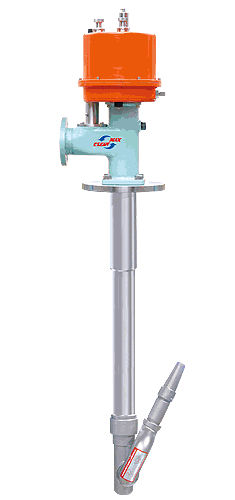
Polarmarine
1Victor Marine
1
- Vane seal leakage in rotary-vane type causes internal bypass
- HPU motor bearing damage after 30,000+ operating hours
- Solenoid valve sticking from oil contamination
- Ruderlage-Rückmeldesystem Kalibrierungsdrift