GJ4 10m dia 30m3h 12bar
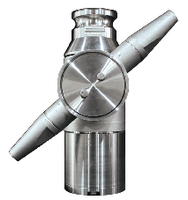
Alfa Laval Gunclean Toftejorg tank cleaning machine. Alfa Laval (formerly Toftejorg Group, acquired since 2003) specializes in fully programmable ship tank cleaning machines with turbine-driven rotary technology. The Gunclean Toftejorg equipment is designed primarily as fixed installed systems in crude oil, product and chemical tankers as well as offshore applications. The A
Inspector Detail
▸
Common issues
- Drive turbine or gear train wear causing erratic or stalled indexing between programmed positions
- Nozzle wear enlarging orifice diameter and reducing jet impact and coverage
- Deck seal/gland leakage allowing tank atmosphere or cleaning medium to escape
- Programming unit losing calibration, causing incomplete tank coverage
- Bearing wear in the machine head from continuous rotation under pressure
- Corrosion or fouling of the machine when left in an aggressive cargo tank atmosphere between uses
- Hose/coupling wear at the supply connection from repeated pressure cycling
Inspection checklist
- Function-test the full programmed cycle before tank entry and confirm the coverage pattern matches spec
- Check nozzle bore diameter against the maker's new-build size for wear/enlargement
- Inspect the deck seal/stuffing box for leakage during a pressure test
- Check the drive gearbox/turbine for correct rotation speed and smooth indexing
- Inspect the body and head for corrosion, cracks or impact damage
- Check supply hose, couplings and isolation valves for leaks or damage
- Confirm the machine can be fully retracted/isolated from the tank when not running
- Confirm pressure and flow at the machine match the programmed design values
Service intervals
| Nozzle inspection/replacement | annually or after each major tank cleaning campaign, whichever is sooner |
| Gearbox/turbine drive service | per the maker's manual, typically annually or every 1,000-2,000 operating hours |
| Deck seal/gland renewal | at drydock or when leakage is detected |
| Full function test of the programmed cycle | before each tank cleaning operation |
Typical wear limits
| Nozzle bore diameter | cleaning pressure and coverage fall off once bore wear exceeds roughly 5-10% over the as-new diameter - confirm against the maker's replacement criteria |
Ranges are typical for this design class. Always confirm against the manufacturer documentation for your serial number.
Critical spares
- Nozzle set matched to the machine
- Deck seal / stuffing box seal kit
- Drive gearbox seal and bearing kit
- Supply hose and coupling set
Safety
- High-pressure water jet - never approach or service the machine while pressurized or during a cleaning cycle
- Tank cleaning is normally an enclosed-space operation - follow gas-freeing and enclosed-space entry procedures; this equipment does not replace them
- Static electricity generation from high-velocity jetting in flammable cargo tanks - confirm bonding/earthing and cargo compatibility before use
- Deck seal failure under pressure can eject tank atmosphere or liquid - inspect before each use
Class survey
Tank cleaning machines are not typically a standalone class survey item, but their deck seals and isolation arrangements are checked as part of cargo tank and piping integrity surveys on tankers; keep function-test and nozzle-wear records to support planned maintenance system evidence.
Components & Design
Component data being added…
Technical Data
🤖 Ask about this model
One free question — answered like a marine engineer. No account needed.
Common failures & inspection points
Inspectors regularly check nozzles for wear marks, scratches, surface erosion and deformed openings. Nozzle blockages from sludge accumulation are the most frequent periodic maintenance task. Damaged nozzles must be replaced as a group.
Inspectors monitor for abnormal vibrations, temperature rise and irregular noise. Detached gear teeth and uneven disk distribution cause vibration problems. Inspection recommended every 200-300 operating hours; bearing replacement after 300-500 hours or at least every 3 years.
Inspectors check ball bearings for free rotation without contamination and damage. Sleeve bushings in gearbox frame must be checked: maximum diameter not exceeding 10.4 mm (bore not ovally deformed). Inspect all bearings and sealing rings every 6 months; replacement after 6,000 operating hours or every 3 years.
Inspectors check for oil leakage and contamination at seal points. The hysteresis coupling eliminates conventional speed-setting shafts and reduces leak points. All rubber seals should be replaced at each service inspection to ensure hygiene and performance. Moisture and contamination ingress leads to seal failure.
Inspectors test programming logic and valve control for correct 3D-indexed impact pattern. Check creep movement (vertical screw movement while horizontal rotation occurs) and progressive compression from coarse to fine over 8 cycles.
Inspectors verify IMO certification and crude oil wash-through approval. Toftejorg T-73 and 270FT Mark I are specifically designed for crude oil tankers. Check for corrosion/wear from crude oil exposure and verify valve seals under crude oil operating conditions.
Type-general inspection and maintenance points for this equipment category — not model-specific.
Suppliers & Spare Parts
Direct links to manufacturer, datasheet, spare-parts portal and dealers — request access below.
📄 Request sourcing links & documentsCases, daily reports, timesheets and AI troubleshooting in the OceanSphere Marine app — free for 14 days.
Start free trial →Find manufacturers, repair shops and spare-part dealers in the Maritime Network — our global company directory.
Maritime Network →