What to check on a Ballast/Stripping Pump.
A ballast/stripping pump does two jobs that a straight cargo pump was never built for. As a ballast pump it moves seawater in and out of ballast tanks to control trim, list and draft, and increasingly to complete a ballast water exchange or feed a ballast water management system within a tight operational window. As a stripping pump it takes over from the main cargo pumps once tank level has dropped too low for them to keep suction, pulling the last tonnes of cargo and the air-liquid mixture that comes…
What makes a ballast/stripping pump different from a dedicated cargo pump
A ballast/stripping pump does two jobs that a straight cargo pump was never built for. As a ballast pump it moves seawater in and out of ballast tanks to control trim, list and draft, and increasingly to complete a ballast water exchange or feed a ballast water management system within a tight operational window. As a stripping pump it takes over from the main cargo pumps once tank level has dropped too low for them to keep suction, pulling the last tonnes of cargo and the air-liquid mixture that comes with a nearly empty tank. That second duty is why these pumps are almost always self-priming: a conventional centrifugal pump loses suction the moment it draws air, while a self-priming design can re-establish its prime after ingesting air and keep working down to the last usable inches of cargo.
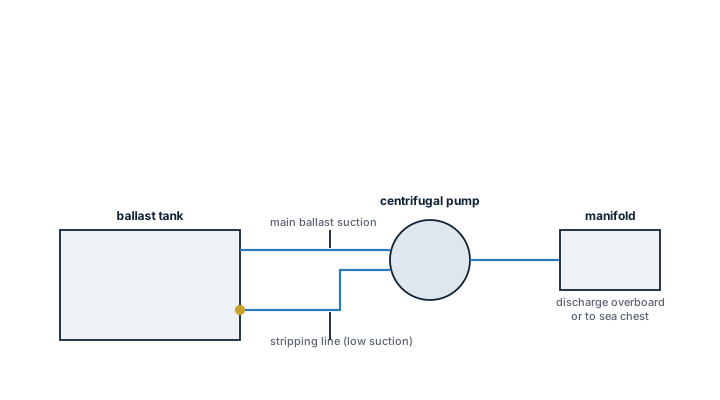
Main components
Self-priming centrifugal stage
A centrifugal impeller paired with a priming chamber or liquid-ring arrangement that recovers suction after an air lock, letting the pump keep working as the tank empties and the suction bell starts drawing air along with liquid.
Ballast crossover manifold
Valving that lets the same pump draw from and discharge to different ballast tanks, or switch between ballast duty and stripping duty on a cargo tank, without needing a separate pump for each function.
Vapor/liquid separator
On stripping duty, separates the entrained gas from the liquid before it reaches the pump casing, protecting the impeller from the worst effects of cavitation as suction conditions deteriorate.
Selection and sizing
- Ballast capacity sized against the time allowed for a full ballast exchange or treatment cycle, not just against tank volume
- Self-priming lift and re-priming time, since a slow-priming pump extends the stripping phase and delays the next cargo operation
- NPSH margin at the end of stripping duty, when suction conditions are at their worst
- Compatibility with the vessel's ballast water management system, since some treatment units require a defined flow rate and pressure at the pump discharge
Regulations and class
MARPOL Annex I governs segregated ballast arrangements on tankers, keeping ballast water in tanks separate from cargo and fuel systems. The IMO Ballast Water Management Convention sets the exchange and treatment standards this pump must be able to support, and class rules for tankers set stripping performance expectations to demonstrate a tank can be sufficiently drained for gas-freeing, tank cleaning or a cargo change.
Typical faults
- Loss of prime from a worn or leaking priming chamber, leaving the pump unable to recover suction once air enters the line
- Wear ring and impeller erosion from sediment carried in ballast water, gradually reducing head and capacity even though the pump still runs
- Mechanical seal failure from sand or silt in coastal ballast water, a common cause of unplanned pump room entry
- Extended stripping time as wear reduces self-priming performance, quietly adding hours to every discharge without an obvious single failure point
What to look for in a supplier
- Documented self-priming performance curves under realistic air content, not just clean-water test figures
- Materials suited to ballast water quality on the vessel's trading routes, including sediment-heavy coastal water
- Confirmed compatibility with the fitted or planned ballast water management system
- Seal and wear ring spares held or readily available, since these are the parts most exposed to abrasive ballast water
Time the stripping phase on every discharge and watch the trend — a self-priming pump that used to finish a tank in twenty minutes and now needs forty is telling you about wear ring clearance long before it fails outright.