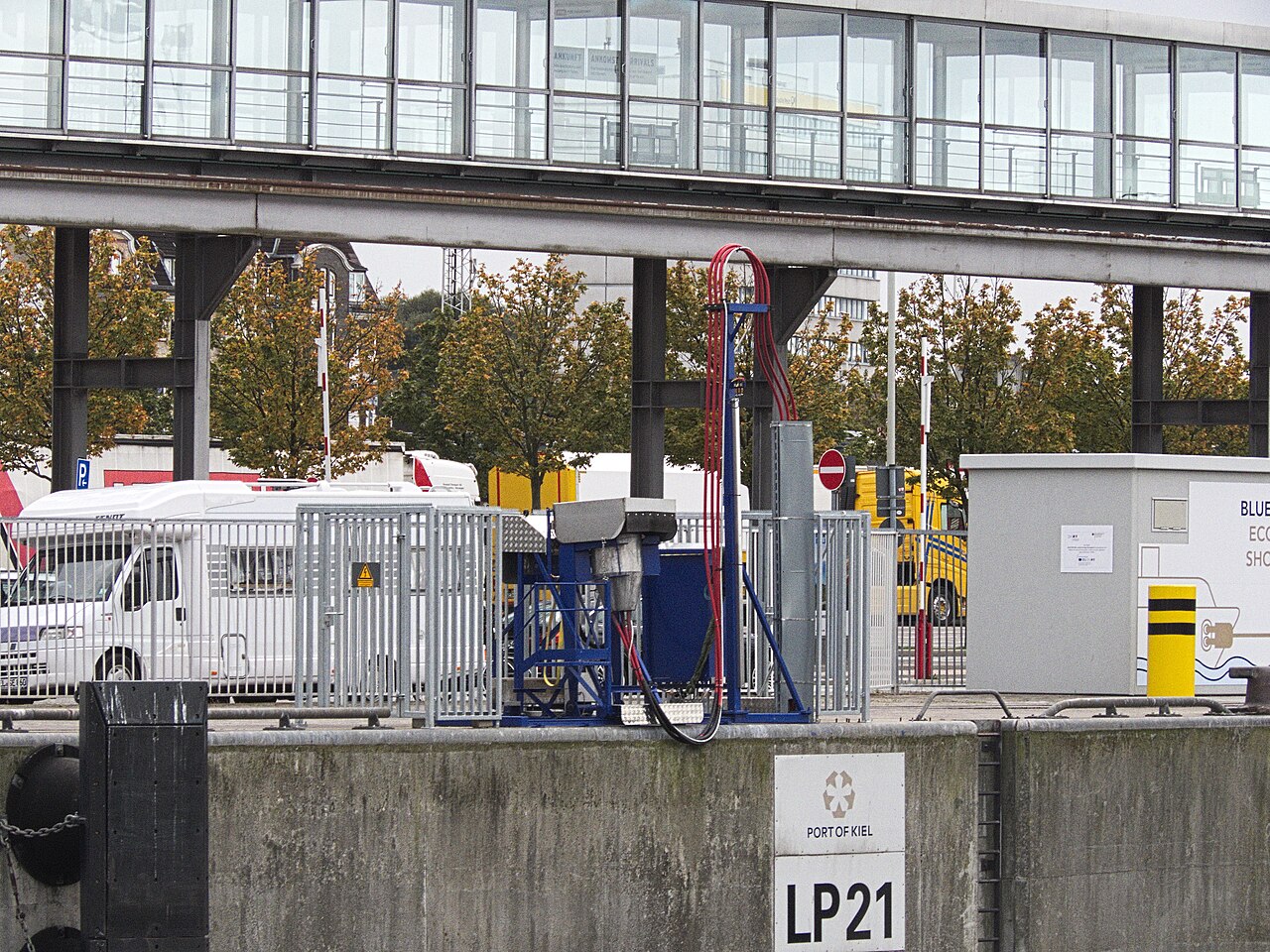
What to check on a Shore Power Connection System.
A shore power (cold ironing) connection replaces the ship's running generators with an external supply drawn from the quay while alongside. The core difficulty is not the cable itself but the interface: shore supply may run at a different voltage and frequency from the ship's own network (60 Hz vessels calling at 50 Hz ports, or the reverse), and the two sources must never be connected in parallel even for an instant. Unlike a simple socket-and-plug arrangement, a proper installation includes synchronising, protection and interlocking equipment that makes a closed-transition…
What sets a shore power connection apart
A shore power (cold ironing) connection replaces the ship's running generators with an external supply drawn from the quay while alongside. The core difficulty is not the cable itself but the interface: shore supply may run at a different voltage and frequency from the ship's own network (60 Hz vessels calling at 50 Hz ports, or the reverse), and the two sources must never be connected in parallel even for an instant. Unlike a simple socket-and-plug arrangement, a proper installation includes synchronising, protection and interlocking equipment that makes a closed-transition changeover safe, or forces an open-transition (brief blackout) changeover where synchronising is not fitted.
Main components
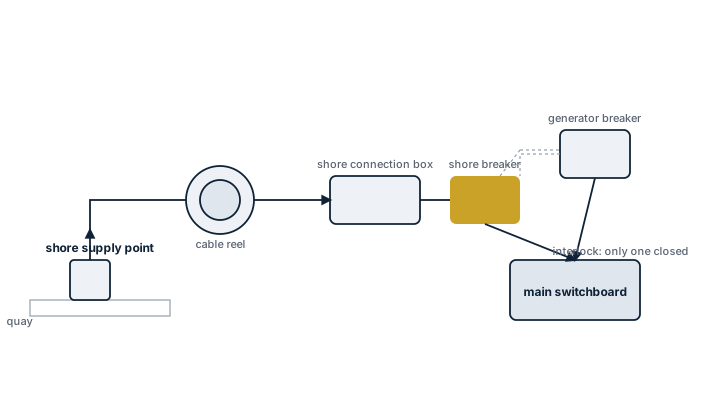
Shore connection box
A weatherproof enclosure on deck or in a dedicated space near the accommodation, housing the plug/socket, earthing terminal and local indication. Sized for the expected current and protected against ingress of rain and spray.
Frequency converter
Where shore frequency does not match the ship's network, a static or rotary converter sits between the shore cable and the ship's switchboard. Rotary converters are simpler to protect against harmonics; static converters are lighter but need filtering to keep waveform distortion within levels the ship's electronics can tolerate.
Synchronising and interlock panel
Checks voltage, frequency, phase sequence and phase angle before allowing the shore breaker to close, and mechanically or electrically interlocks the shore breaker against the generator breakers so the ship's own plant and the shore supply cannot be paralleled.
Cable handling system
A reel or festoon arrangement, sometimes crane-assisted on larger vessels, to run heavy multicore cable from the quay connection point to the shore box without straining glands or connectors as the ship rises and falls with the tide.
Selection and sizing
Sizing follows the vessel's hotel load while alongside, not its full sea-going electrical load: cargo pumps, propulsion auxiliaries and most navigation equipment are shut down in port. Typical high-voltage shore connections for larger vessels are arranged around 6.6 kV or 11 kV; smaller ships and low hotel loads may use 440 V or 690 V low-voltage supply instead. Key figures to check against the intended trade are:
- Rated current and voltage of the shore supply available at the calling ports
- Whether a frequency conversion stage is needed for the trade pattern
- Short-circuit withstand rating of the shore breaker relative to the ship's switchboard
- Cable length and permissible voltage drop over the reach from box to quay outlet
Regulations and class
Class societies apply IEC 80005-1 (high-voltage shore connection) or IEC 80005-3 (low-voltage) as the design basis, referenced through their own rules for electrical installations. SOLAS Ch. II-1 requires the interlocking arrangement to prevent paralleling of shore and ship supply. Where cold ironing is fitted to reduce port emissions, MARPOL Annex VI and local port authority requirements may set minimum uptake obligations at specific berths.
Typical faults
| Fault | Consequence |
|---|---|
| Interlock bypassed or defeated by crew under time pressure | Risk of paralleling shore and ship supply, causing a severe fault and possible switchboard damage |
| Cable gland or connector corrosion from salt spray | Earth fault or loss of connection during cargo operations |
| Frequency converter filter degradation | Harmonic distortion feeding into sensitive navigation and cargo control electronics |
| Reel brake or festoon wear | Cable strain and conductor damage as the ship moves with tide and loading |
What to look for in a supplier
- Documented type approval of the synchronising and interlock panel by a recognised class society
- Converter capacity and filtering matched to the ship's actual harmonic-sensitive load, not just nameplate kVA
- Enclosure rating suited to the deck location and expected weather exposure
- Availability of spares and local service support in the ports the ship regularly calls
Never let anyone close the shore breaker before the synchronising panel has given a clear go-ahead — a mismatched paralleling event can take out the main switchboard in the time it takes to say close it.