Intermediate Bearing
An intermediate bearing supports the propeller shaft between the gearbox and the stern tube, and its job is purely to carry radial load and keep alignment - it carries none of the sealing or thrust duties of its neighbours.
Read more — Intermediate Bearing explained ▾
What defines an intermediate bearing
An intermediate bearing, sometimes called a line bearing, supports the length of propeller shaft that runs between the gearbox or main engine coupling and the stern tube. Its role is narrow and specific: carry the shaft's radial weight and keep it running true along its centerline, nothing more. It does not seal against seawater ingress like the stern tube seal, and it does not absorb propeller thrust like the thrust bearing built into the gearbox or a dedicated thrust block. On a short shaft line, a single intermediate bearing or even none may be needed; longer shaft lines, common on larger vessels where the engine sits well forward of the stern tube, need one or more intermediate bearings spaced to keep shaft deflection within limits.
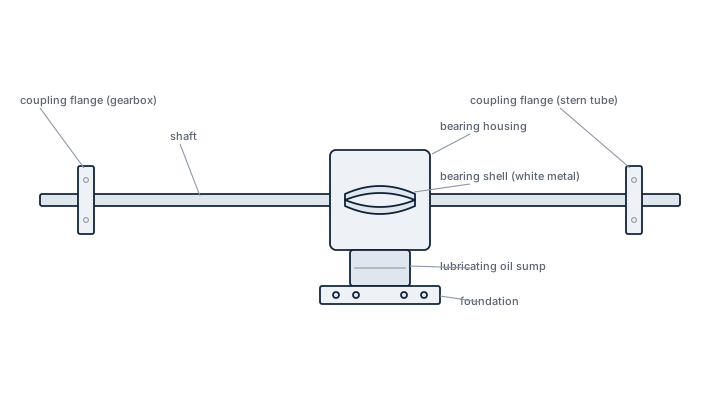
Main components
Bearing housing
A split housing bolted to a foundation on the shaft tunnel structure, allowing the bearing to be opened for inspection or shell replacement without disturbing the shaft itself.
Bearing shell / bush
Traditionally white metal (babbitt) on a steel backing, though water-lubricated rubber or synthetic bearings are used in some installations; the shell is the wearing part and is designed to be replaceable.
Lubrication system
Oil-lubricated bearings run in a sealed housing with a self-contained oil bath or ring-oiling arrangement; the lubrication method must match the shaft speed and load, since underlubrication is the most common cause of premature wear.
Temperature monitoring
Most intermediate bearings on vessels above a modest size carry a temperature sensor or thermometer pocket, since rising bearing temperature is the earliest reliable warning of developing wear or lubrication failure.
Alignment shims
Thin shims under the housing set the bearing's vertical and lateral position precisely during shaft alignment, and are a key reference point whenever the shaft line is re-aligned after engine or gearbox work.
Selection and sizing
- Shaft diameter and speed, which set the bearing's bore and the lubrication regime it needs.
- Span between bearings, calculated from shaft deflection limits so the shaft does not sag excessively between support points.
- Load rating versus the shaft's actual weight distribution, confirmed during the vessel's shaft alignment calculation.
- Bearing material - white metal for most oil-lubricated applications, water-lubricated synthetic materials where oil lubrication is impractical or undesirable near the stern tube.
Regulations and class
Class societies require shaft alignment calculations to be submitted and approved as part of the shaft line design, and intermediate bearing positions are fixed by that approved alignment. Periodic survey under class rules includes shaft line inspection at intervals tied to the vessel's survey cycle, commonly opened up for examination at the five-yearly special survey, with bearing clearance and wear measured against the manufacturer's tolerance. Continuous shaft survey arrangements, where fitted, allow extended intervals between openings provided monitoring data such as bearing temperature and oil condition is logged and within limits.
Typical faults
| Fault | Cause | Consequence |
|---|---|---|
| Bearing shell wear beyond tolerance | Inadequate lubrication or contaminated oil over extended running | Increased shaft vibration and risk of shaft-to-housing contact |
| Rising bearing temperature | Lubrication failure, misalignment, or bearing shell breakdown | Accelerated wear, and if unaddressed, bearing seizure |
| Misalignment after dry-docking | Hull deflection change or incomplete re-alignment check after work | Uneven load on bearings, premature wear concentrated at one point |
| Oil contamination | Seal degradation letting water or debris into the housing | Abrasive wear accelerating shell breakdown well ahead of schedule |
What to look for in a supplier
- Bearing shell material and dimensions matched exactly to the vessel's approved shaft alignment calculation.
- Documented load rating and recommended re-lubrication interval for the specific installation.
- Ability to supply matched shims for re-alignment work, not just the bearing housing alone.
- Track record supporting the vessel's class society survey requirements for shaft line components.
Log bearing temperature at every watch rather than relying on an alarm setpoint - a slow upward trend over days is the warning that catches wear before it becomes a seizure, while a fixed alarm only fires once the damage is already underway.
2 manufacturers · 17 models
Aegir Marine
9- Bearing wear or lubrication loss can raise temperature and vibration, noticed through monitoring or abnormal noise
- Misalignment can produce uneven bearing loads, vibration and accelerated seal wear
- Seal deterioration can cause oil leakage or seawater ingress, seen in stern-tube levels or bilges
- Corrosion or fretting at interfaces can damage shafts, sleeves or bearing housings
- Loose foundations or damaged chocking can shift alignment and change vibration behavior
- Matches a common 150 mm shaft size without custom machining
- Compact length of 300 mm eases installation in confined gear rooms
- White‑metal (babbitt) material offers good embedability and wear resistance for moderate loads
- Simple design allows easy inspection and routine maintenance
- No integral seal – external sealing must be provided to prevent lubricant loss
- Load capacity is lower than high‑performance polymer or hybrid bearings
- Requires regular lubrication checks; unsuitable for long unattended periods
- Limited documentation publicly available, so verification of exact dimensions may be needed
- Bearing wear or lubrication loss can raise temperature and vibration, noticed through monitoring or abnormal noise
- Misalignment can produce uneven bearing loads, vibration and accelerated seal wear
- Seal deterioration can cause oil leakage or seawater ingress, seen in stern-tube levels or bilges
- Corrosion or fretting at interfaces can damage shafts, sleeves or bearing housings
- Loose foundations or damaged chocking can shift alignment and change vibration behavior
- Optimised geometry for a 200 mm shaft reduces installation space requirements
- White‑metal lining provides good embedability and conformability to shaft irregularities
- Standardised dimensions (400 mm length) simplify replacement in existing Aegir line‑shaft systems
- Compatible with a wide range of external sealing solutions
- No integral seal – an additional seal must be supplied and fitted separately
- White‑metal material may have lower fatigue life at very high speeds compared with polymer or ceramic liners
- Load rating and temperature limits are not published in open sources, requiring direct manufacturer confirmation
- Availability may be limited to Aegir‑approved distributors
- Lubrication loss or contamination causes rising bearing temperature, noise or surface damage
- Misalignment creates uneven load distribution and produces localized heating, vibration or abnormal wear
- Bearing-shell or white-metal damage causes metallic debris, elevated temperature or increased shaft movement
- Foundation settlement or loose holding-down arrangements changes alignment and causes vibration or edge loading
- Oil leakage or failed seals reduces lubricant level and contaminates the surrounding foundation
- Specifically sized for 250 mm shafts – no custom machining required
- Compact length (500 mm) saves space in tight shaft line arrangements
- White‑metal material offers good conformability and low friction under moderate loads
- Standard design simplifies installation and replacement on a wide range of vessels
- Cost‑effective compared with high‑performance polymer or ceramic bearings
- No built‑in seal; external sealing must be added to protect against contamination
- White metal has limited temperature tolerance – not ideal for very high‑temperature applications
- Requires regular lubrication and monitoring to avoid premature wear
- Load capacity lower than some heavy‑duty babbitt or alloy bearings, limiting use on high‑power shafts
- Not suited for ultra‑high speed propulsion systems where oil‑free designs are preferred
- Bearing wear or lubrication loss can raise temperature and vibration, noticed through monitoring or abnormal noise
- Misalignment can produce uneven bearing loads, vibration and accelerated seal wear
- Seal deterioration can cause oil leakage or seawater ingress, seen in stern-tube levels or bilges
- Corrosion or fretting at interfaces can damage shafts, sleeves or bearing housings
- Loose foundations or damaged chocking can shift alignment and change vibration behavior
- Exact fit for 300 mm shafts eliminates need for adapters
- Compact 600 mm length saves space in confined shaft line arrangements
- White‑metal alloy provides good conformability and embedment for moderate loads
- Simple construction without an integrated seal allows use of preferred external sealing solutions
- Aegir Marine’s reputation for marine‑grade manufacturing ensures material quality
- White‑metal material may have lower wear resistance under high load or abrasive conditions compared with polymer or ceramic liners
- No built‑in seal requires additional sealing components, increasing installation complexity
- Limited publicly available load rating data can make sizing decisions less straightforward
- Requires regular oil lubrication and monitoring to prevent premature wear
- Lubrication loss or contamination causes rising bearing temperature, noise or surface damage
- Misalignment creates uneven load distribution and produces localized heating, vibration or abnormal wear
- Bearing-shell or white-metal damage causes metallic debris, elevated temperature or increased shaft movement
- Foundation settlement or loose holding-down arrangements changes alignment and causes vibration or edge loading
- Oil leakage or failed seals reduces lubricant level and contaminates the surrounding foundation
- Sized specifically for 400 mm shafts, eliminating the need for custom machining
- Compact 800 mm length eases installation in confined stern‑tube spaces
- White‑metal alloy offers good conformability and embedment resistance under moderate loads
- Standard design compatible with common lubrication systems
- No integral seal provided (seal_type is null), requiring additional sealing arrangements
- White‑metal material may have lower fatigue life at very high rotational speeds compared with polymer or hybrid bearings
- Limited to medium‑speed applications; not ideal for shafts exceeding typical merchant vessel RPM ranges
- Lubrication loss or contamination causes rising bearing temperature, noise or surface damage
- Misalignment creates uneven load distribution and produces localized heating, vibration or abnormal wear
- Bearing-shell or white-metal damage causes metallic debris, elevated temperature or increased shaft movement
- Foundation settlement or loose holding-down arrangements changes alignment and causes vibration or edge loading
- Oil leakage or failed seals reduces lubricant level and contaminates the surrounding foundation
- High load capacity suited to large commercial vessels
- Babbitt (white‑metal) lining offers good conformability and wear resistance when properly lubricated
- Standard 1000 mm length matches common shaft line spacing for 500 mm shafts
- Modular design allows relatively straightforward installation and replacement
- Requires continuous oil lubrication and regular monitoring of bearing temperature and oil quality
- No integrated seal (seal_type is null), so external sealing arrangements are needed
- Bulkier and heavier than modern polymer or hybrid bearings
- Performance limited at very high shaft speeds compared to advanced composite designs
- Lubrication loss or contamination causes rising bearing temperature, noise or surface damage
- Misalignment creates uneven load distribution and produces localized heating, vibration or abnormal wear
- Bearing-shell or white-metal damage causes metallic debris, elevated temperature or increased shaft movement
- Foundation settlement or loose holding-down arrangements changes alignment and causes vibration or edge loading
- Oil leakage or failed seals reduces lubricant level and contaminates the surrounding foundation
- High load capacity suitable for large propulsion shafts (up to 600 mm)
- Robust white‑metal alloy offers good wear resistance when properly lubricated
- Relatively simple installation with standard mounting dimensions (1200 mm length)
- Provides both radial and axial support, improving shaft alignment
- Proven design for long‑term service in harsh marine environments
- Requires diligent oil monitoring; white metal can wear rapidly if lubrication lapses
- Limited maximum rotational speed compared with polymer or hybrid bearings
- No integrated seal type is specified, so external sealing may be required
- Heavier than some modern composite bearing options
- Thermal expansion of the white‑metal alloy must be managed in high‑temperature applications
- Lubrication loss or contamination causes rising bearing temperature, noise or surface damage
- Misalignment creates uneven load distribution and produces localized heating, vibration or abnormal wear
- Bearing-shell or white-metal damage causes metallic debris, elevated temperature or increased shaft movement
- Foundation settlement or loose holding-down arrangements changes alignment and causes vibration or edge loading
- Oil leakage or failed seals reduces lubricant level and contaminates the surrounding foundation
- Specifically sized for 700 mm shaft diameters common on large vessels
- White‑metal alloy offers high load capacity and good conformability to shaft runout
- Compact 1400 mm axial length fits typical shaft line spacing constraints
- Designed to integrate with Aegir Marine bearing housings and accessories
- Open design allows straightforward visual inspection and maintenance
- No integral oil seal – requires an external sealing or lubrication system
- White‑metal bearings generate higher friction at very high shaft speeds compared with polymer/ceramic alternatives
- Relatively heavy construction versus lightweight alloy options
- Applicable only to vessels that use Aegir’s compatible shaft line geometry
- Requires regular oil monitoring and bearing temperature checks
- Lubrication loss or contamination causes rising bearing temperature, noise or surface damage
- Misalignment creates uneven load distribution and produces localized heating, vibration or abnormal wear
- Bearing-shell or white-metal damage causes metallic debris, elevated temperature or increased shaft movement
- Foundation settlement or loose holding-down arrangements changes alignment and causes vibration or edge loading
- Oil leakage or failed seals reduces lubricant level and contaminates the surrounding foundation
- Designed for large shafts (800 mm) common on high‑power vessels
- White‑metal material provides good conformability and load distribution at moderate speeds
- Standard 1 600 mm length fits typical shaft line spacing, simplifying installation
- Modular design allows straightforward removal and replacement during dry‑dock
- Compatible with a wide range of marine propulsion systems
- No integrated seal (seal_type is null), requiring separate sealing solutions in harsh environments
- White‑metal alloys have limited temperature tolerance compared with polymer or ceramic liners
- Relatively heavy and bulky, which may affect shaft alignment tolerances on smaller vessels
- Requires regular lubrication and monitoring to avoid premature wear
- Not optimised for very high‑speed shafts (>150 rpm) where oil‑free or hybrid bearings are preferred
Pacific Marine
8- Lubrication loss or contamination causes rising bearing temperature, noise or surface damage
- Misalignment creates uneven load distribution and produces localized heating, vibration or abnormal wear
- Bearing-shell or white-metal damage causes metallic debris, elevated temperature or increased shaft movement
- Foundation settlement or loose holding-down arrangements changes alignment and causes vibration or edge loading
- Oil leakage or failed seals reduces lubricant level and contaminates the surrounding foundation
- Specifically sized for 100 mm shafts
- Compact overall length of 200 mm fits confined shaft line spaces
- White‑metal material offers good embedability and conformability to shaft irregularities
- Standard Pacific Marine design integrates easily with their other shaft line components
- No integral seal; external sealing must be provided
- White‑metal requires regular lubrication and monitoring for wear
- Limited suitability for very high rotational speeds compared to polymer or ceramic bearings
- Requires periodic inspection to detect embedment or material fatigue
- Lubrication loss or contamination causes rising bearing temperature, noise or surface damage
- Misalignment creates uneven load distribution and produces localized heating, vibration or abnormal wear
- Bearing-shell or white-metal damage causes metallic debris, elevated temperature or increased shaft movement
- Foundation settlement or loose holding-down arrangements changes alignment and causes vibration or edge loading
- Oil leakage or failed seals reduces lubricant level and contaminates the surrounding foundation
- Standard 150 mm bore matches many existing shaft line designs on medium‑size vessels
- Compact 300 mm length reduces installation space and eases alignment
- White‑metal (Babbitt) material offers good embedability and wear resistance for moderate loads
- Designed to integrate with Pacific Marine lubrication and bearing housings
- No integral seal provided; external sealing must be arranged
- White‑metal bearings require a reliable oil film and are less tolerant of low‑lubrication conditions
- Load capacity lower than bronze or polymer alternatives for high‑power applications
- Specific certification data not publicly confirmed
- Bearing wear or lubrication loss can raise temperature and vibration, noticed through monitoring or abnormal noise
- Misalignment can produce uneven bearing loads, vibration and accelerated seal wear
- Seal deterioration can cause oil leakage or seawater ingress, seen in stern-tube levels or bilges
- Corrosion or fretting at interfaces can damage shafts, sleeves or bearing housings
- Loose foundations or damaged chocking can shift alignment and change vibration behavior
- High static load capacity due to white‑metal material
- Good conformability to shaft misalignment
- Relatively low purchase cost compared with polymer or ceramic bearings
- Straightforward installation on standard shaft lines
- Limited maximum rotational speed; not suited for high‑speed applications
- Requires regular oil lubrication and monitoring of wear
- White metal is susceptible to corrosion if water ingress occurs (no seal provided)
- Wear particles can contaminate adjacent machinery if filtration is inadequate
- Lubrication loss or contamination causes rising bearing temperature, noise or surface damage
- Misalignment creates uneven load distribution and produces localized heating, vibration or abnormal wear
- Bearing-shell or white-metal damage causes metallic debris, elevated temperature or increased shaft movement
- Foundation settlement or loose holding-down arrangements changes alignment and causes vibration or edge loading
- Oil leakage or failed seals reduces lubricant level and contaminates the surrounding foundation
- Exact match to 250 mm shaft diameter eliminates need for adapters
- White‑metal alloy offers high load capacity and good conformability
- Standard 500 mm length fits common shaft line spacing
- Pacific Marine’s proven track record in marine propulsion bearings
- Simple design facilitates inspection, maintenance and replacement
- Requires regular oil lubrication; no self‑lubricating option
- No integrated seal increases risk of contamination if not protected
- White‑metal wear can accelerate with misalignment or improper loading
- Optimised for medium‑speed engine shaft speeds, less suitable for high‑speed applications
- Relatively heavy compared with modern polymer or composite alternatives
- Lubrication loss or contamination causes rising bearing temperature, noise or surface damage
- Misalignment creates uneven load distribution and produces localized heating, vibration or abnormal wear
- Bearing-shell or white-metal damage causes metallic debris, elevated temperature or increased shaft movement
- Foundation settlement or loose holding-down arrangements changes alignment and causes vibration or edge loading
- Oil leakage or failed seals reduces lubricant level and contaminates the surrounding foundation
- Designed for the common 300 mm shaft size used on many ocean‑going vessels
- Robust white‑metal alloy provides high load capacity and good fatigue resistance
- Compact 600 mm length eases installation in confined shaft line spaces
- Standardized dimensions simplify replacement and spare parts logistics
- No factory‑installed seal; requires a separate sealing solution for water ingress protection
- White‑metal material can wear faster at very high rotational speeds or temperatures
- May need more frequent lubrication monitoring compared with polymer‑filled bearings
- Limited to applications where the bearing load and speed fall within white‑metal design limits
- Lubrication loss or contamination causes rising bearing temperature, noise or surface damage
- Misalignment creates uneven load distribution and produces localized heating, vibration or abnormal wear
- Bearing-shell or white-metal damage causes metallic debris, elevated temperature or increased shaft movement
- Foundation settlement or loose holding-down arrangements changes alignment and causes vibration or edge loading
- Oil leakage or failed seals reduces lubricant level and contaminates the surrounding foundation
- Designed for a 400 mm shaft – matches common large‑propulsion dimensions
- White‑metal alloy provides high load capacity and good conformability
- Relatively simple, non‑sealed design eases installation and routine inspection
- Length of 800 mm gives ample bearing surface for even load distribution
- No built‑in seal – requires external sealing or frequent lubrication to prevent contamination
- White‑metal bearings can wear faster if misaligned or poorly lubricated
- Limited information on vibration damping compared with polymer or hybrid bearings
- May need custom machining of housing for exact fit on some hull designs
- Lubrication loss or contamination causes rising bearing temperature, noise or surface damage
- Misalignment creates uneven load distribution and produces localized heating, vibration or abnormal wear
- Bearing-shell or white-metal damage causes metallic debris, elevated temperature or increased shaft movement
- Foundation settlement or loose holding-down arrangements changes alignment and causes vibration or edge loading
- Oil leakage or failed seals reduces lubricant level and contaminates the surrounding foundation
- Specifically sized for 500 mm shafts, eliminating need for custom machining
- White‑metal material provides good conformability and embedment resistance under moderate loads
- Compact 1 000 mm length fits tight shaft line spaces
- Standard Pacific Marine design known for straightforward installation and maintenance
- No integral seal (seal_type is null), requiring external sealing or oil‑tight arrangements
- White‑metal may be less suitable for very high rotational speeds compared with polymer or hybrid bearings
- Requires regular lubrication monitoring to avoid wear in harsh marine environments
- Needs verification of material grade and heat treatment before critical installations
- Lubrication loss or contamination causes rising bearing temperature, noise or surface damage
- Misalignment creates uneven load distribution and produces localized heating, vibration or abnormal wear
- Bearing-shell or white-metal damage causes metallic debris, elevated temperature or increased shaft movement
- Foundation settlement or loose holding-down arrangements changes alignment and causes vibration or edge loading
- Oil leakage or failed seals reduces lubricant level and contaminates the surrounding foundation
- Designed specifically for 600 mm shafts – no custom machining required
- Robust white‑metal alloy provides high load capacity and good wear resistance
- Standard 1200 mm length fits most Pacific Marine shaft line layouts
- Proven Pacific Marine design with long service history in merchant vessels
- Relatively simple installation and alignment procedures
- No integral seal – requires external sealing or regular lubrication monitoring
- White‑metal races need periodic oil replenishment to avoid overheating
- Heavier than polymer or hybrid bearings, increasing overall shaft line weight
- Limited temperature range compared with advanced ceramic or composite options
- May require more frequent inspection in high‑speed applications