What to check on a Propulsion Gearbox / Reduction Gear.
28 models from Twin Disc in Propulsion Gearbox / Reduction Gear. Below: the full model list.
What a reduction gear does that nothing else can
Most main engines run most efficiently well above the rotational speed a propeller can use without its blade tips cavitating and losing thrust. A reduction gear sits between the two, stepping engine speed down through a set of precision-cut gears to the slower speed the propeller needs, while carrying the full torque of the engine's output through that reduction. Slow-speed two-stroke engines are directly coupled to the shaft and need no gearbox at all; medium-speed four-stroke installations and gas turbines almost always need one, which is the main reason gearbox presence tracks engine type rather than vessel size alone.
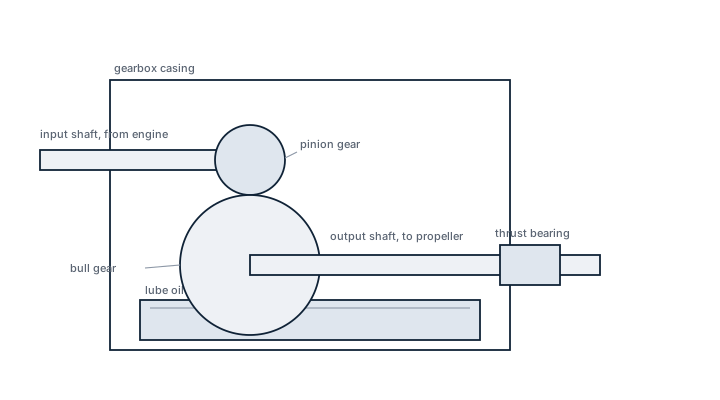
Legend
- Gearbox casing
- Pinion gear
- Input shaft, from engine
- Bull gear
- Output shaft, to propeller
- Thrust bearing
- Lube oil sump
Read the full guide
Main components
Gear train
Single or double-reduction helical or double-helical gears, sized to carry the engine's full continuous torque with a service margin, and precision-machined since gear tooth error shows up directly as noise and wear.
Bearings
Journal or roller bearings carrying both the gear's radial load and, on many designs, the propeller's astern and ahead thrust loads transmitted back through the output shaft.
Clutch
A hydraulic or pneumatic clutch on multi-engine or diesel-electric-adjacent arrangements, letting one engine be declutched for maintenance or slow steaming while the gearbox stays coupled to the shaft.
Lubrication system
A dedicated lube oil system with its own pump, cooler and filter, since gear tooth contact and high-speed bearings need continuous, filtered, cooled oil independent of the main engine's own system.
Selection / Sizing
- Torque capacity matched to the engine's maximum continuous rating with the reduction ratio the propeller design calls for, not just the nameplate power.
- Reduction ratio, set by the gap between the engine's efficient running speed and the propeller's optimum speed for the hull.
- Whether a clutch, power take-off for a shaft generator, or reverse-reduction capability is needed for the propulsion arrangement.
- Torsional vibration compatibility across the whole shaft line — engine, gearbox and propeller together, not the gearbox checked in isolation.
Regulations / Class
Class rules require type approval and design review of the gear train, shafting and bearings as part of the propulsion system, with torsional vibration calculations submitted for the complete shaft line before construction. Periodic survey includes oil sampling and analysis, bearing clearance checks, and inspection of the gear teeth for pitting or wear at intervals set by the vessel's survey cycle, alongside the shaft line's tailshaft survey requirements where applicable.
Typical faults
| Fault | Cause | Consequence |
|---|---|---|
| Rising gear noise or whine | Tooth wear, pitting, or misalignment after a bearing change | Progressive tooth damage, risk of sudden tooth failure under load |
| Bearing temperature rise | Lube oil cooler fouling or oil degradation losing its film strength | Bearing wipes if not caught, forcing an unplanned shutdown |
| Clutch slip | Worn clutch plates or low hydraulic actuation pressure | Loss of drive transmission, engine cannot deliver full power to the shaft |
| Metal particles in oil analysis | Early-stage gear tooth or bearing distress | Warning sign that, ignored, leads to a major internal failure |
What to look for in a supplier
- Torsional vibration analysis for the complete shaft line delivered with the gearbox, not treated as a separate exercise.
- Class type approval for the gear design and documented tooth contact pattern testing.
- An oil analysis and condition monitoring programme recommendation specific to the gearbox, since generic engine oil intervals do not apply.
- Spare gear sets or at minimum spare bearings held or sourceable within a reasonable lead time, given how long a custom gear set takes to remanufacture.
Metal particles in a routine gearbox oil sample are the earliest warning a chief engineer gets of tooth or bearing distress — treat a change in particle count as more urgent than a change in oil temperature.