OceanSphere
Engines

Exhaust Gas Cleaning System (Scrubber)

medium 113 models total

A scrubber sprays alkaline water or seawater through the exhaust stream to strip out sulphur oxides, letting a ship keep burning cheaper high-sulphur fuel oil while meeting the global sulphur cap that would otherwise force a switch to low-sulphur fuel.

Read more — Exhaust Gas Cleaning System (Scrubber) explained

What makes this type distinct

A scrubber is an exhaust gas after-treatment system, not an engine modification - it sits in the exhaust line downstream of the engine or boiler and washes sulphur oxides out of the gas stream with water, letting the vessel keep burning cheaper high-sulphur fuel oil while still meeting the sulphur limits set for exhaust emissions. The distinction that matters commercially is open-loop versus closed-loop operation: an open-loop scrubber uses seawater's natural alkalinity and discharges the washwater overboard after treatment, while a closed-loop scrubber circulates fresh water dosed with caustic soda and only bleeds off a small treated stream, storing the rest for eventual discharge or landing ashore. Hybrid units switch between the two depending on where the ship is trading, since a growing number of ports and coastal states restrict or ban open-loop discharge.
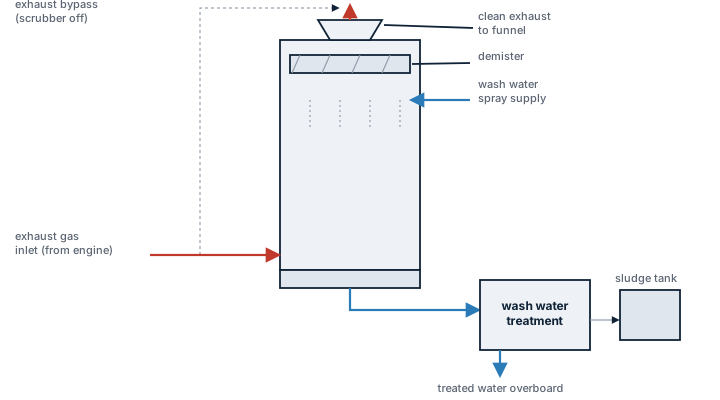
Exhaust gas scrubber flow
Flow diagram of an exhaust gas cleaning scrubber showing exhaust entering the tower and being washed by a spray of alkaline or sea water, passing a demister before leaving clean to the funnel, while the collected wash water goes to a treatment separator that sends sludge to a holding tank and discharges treated water overboard.

Main components

Scrubber tower

Vertical vessel in the exhaust line where wash water is sprayed through the rising exhaust gas, stripping sulphur oxides and particulates as the gas passes through.

Washwater treatment plant

Separators and filters that clean the washwater of soot and residues before discharge or recirculation, plus a dosing system for caustic soda on closed-loop units.

Monitoring system

Continuous emission monitoring for SOx and particulates in the exhaust, and washwater monitoring for pH, PAH, turbidity and nitrates before any overboard discharge.

Residue tank

Sludge tank collecting the separated residues from washwater treatment, landed ashore as waste at suitable ports.

Bypass arrangement

A duct allowing exhaust to bypass the scrubber if it is out of service, generally only permitted for limited periods and outside emission control areas.

Selection and sizing

Scrubber capacity is matched to the engine and boiler exhaust flow it treats, and the choice between open-loop, closed-loop, or hybrid depends on the ship's trading pattern - a vessel spending significant time in ports or waters that restrict open-loop discharge needs closed-loop capability even if open-loop would otherwise be cheaper to run. Space and weight for the tower, treatment plant, and residue tanks compete with cargo or accommodation space, which is a bigger factor on smaller ships than on large tankers or bulk carriers with room to spare. Fuel cost differential between high-sulphur and compliant low-sulphur fuel drives the payback calculation but is not itself a technical sizing input.

  • Exhaust flow rate from the engines and boilers to be treated
  • Open-loop, closed-loop, or hybrid operation against the vessel's trading pattern
  • Space and weight available for tower, treatment plant, and residue tanks
  • Washwater discharge criteria in the ship's planned trading areas
  • Monitoring and data-logging capability to demonstrate continuous compliance

Regulations and class

Scrubbers are the recognised equivalent method under MARPOL Annex VI for meeting the sulphur limit on fuel oil, in place of burning compliant low-sulphur fuel directly, provided the system meets the IMO's guidelines for exhaust gas cleaning systems and washwater discharge criteria. A growing list of ports, coastal states, and some entire regions restrict or prohibit open-loop discharge within their waters, so compliance is not just about the ship's flag but about where it trades. Class societies survey the installation, issue an EGC scheme certificate confirming the system meets the applicable guideline, and require ongoing monitoring records to be kept and available for port state control inspection.

Typical faults

FaultConsequence
Washwater monitoring sensor drifting or fouledDischarge exceeds limits without an alarm, port state detention risk
Scrubber tower internals scaled or corrodedReduced SOx removal efficiency, exhaust back-pressure rising
Residue tank overfilled or not landed on scheduleNo spare capacity, forcing an unplanned discharge or operational restriction
Bypass used outside permitted conditionsNon-compliant SOx emissions, logged and detectable at inspection
Caustic dosing system miscalibrated on closed-loop unitsWashwater pH out of range, treatment plant strain

What to look for in a supplier

  • EGC scheme documentation matching the flag and class the vessel carries
  • Proven hybrid capability if the vessel trades through open-loop-restricted waters
  • Realistic exhaust back-pressure figures at full engine load, not just at a test condition
  • Monitoring package that logs and stores compliance data automatically for inspection
  • Service support able to reach the ports the vessel actually calls at, not just major hubs

Track washwater discharge restrictions for every port on the itinerary before arrival, not on arrival - a scrubber that has to switch to closed-loop mode with no warning can run out of storage capacity faster than expected.

6 manufacturers · 113 models

Yara Marine

33
EGR-500 open-loop unverified
Engine power (kW)
500
Scrubber type
open-loop
Sox reduction pct
98
IMO Compliant
ja
Common Failures & Inspection Points
  • Fouling or deposit build-up caused by poor combustion, contaminated fluid or exhaust soot can reduce heat transfer or flow and produce higher temperatures or loss of capacity
  • Leakage from tubes, gaskets, seals or casing caused by corrosion, thermal cycling or erosion can appear as fluid loss, pressure decay or cross-contamination
  • Burner, ignition or fuel-control faults where combustion is used can cause flame failure, unstable firing, smoke or shutdown alarms
  • Fan, pump or actuator faults caused by mechanical wear or electrical problems can reduce circulation, airflow or treatment effectiveness
  • Sensor, control or safety-interlock faults caused by drift, wiring defects or contamination can trigger nuisance trips or allow unstable operation
Service: Inspect for leakage, corrosion, deposits, refractory or insulation damage where fitted, abnormal temperatures and secure supports. Check burners, pumps, fans, valves, soot-cleaning or treatment components and safety devices relevant to the installed equipment. Refer to manufacturer documentation for exact operating limits, cleaning criteria and pressure or combustion test values.
Spare Parts: Carry maker-recommended gaskets and seals, burner or ignition service parts where applicable, filters, actuator or valve repair items, sensors, fuses and selected pump or fan consumables appropriate to the unit.
Use Cases: Steam production, heating, waste incineration, exhaust heat recovery, emissions control and related engine-room process duties on marine vessels.
EGR-500 closed-loop unverified
Engine power (kW)
500
Scrubber type
closed-loop
Sox reduction pct
98
IMO Compliant
ja
Common Failures & Inspection Points
  • Fouling, scaling or blocked spray paths reduce treatment effectiveness and cause abnormal pressure drop or emissions readings
  • Pump, blower or fan faults cause low circulation or gas flow and system shutdown
  • Analyzer or sensor contamination causes incorrect gas-quality, emissions or oxygen readings
  • Seal, valve or piping leakage causes liquid or gas leakage and unstable process pressure
  • Control, dosing or interlock faults cause off-specification gas, alarm conditions or automatic shutdown
Service: Inspect treatment vessels or generators, pumps, fans or blowers, spray or filtration equipment, analyzers, drains and control interlocks. Trend gas quality, pressure drop and liquid-treatment condition where applicable. Verify shutdown and isolation functions according to the approved procedure. Refer to manufacturer, vessel and statutory documentation for the exact figure for gas quality, emissions, pressure and chemical limits.
Spare Parts: Carry pump and valve seals, analyzer consumables, filters, spray nozzles, dosing parts, fan or blower service items, sensors and control relays.
Use Cases: SOx control, tanker inerting, nitrogen generation and cargo-atmosphere management.
EGR-500 hybrid unverified
Engine power (kW)
500
Scrubber type
hybrid
Sox reduction pct
98
IMO Compliant
ja
Common Failures & Inspection Points
  • Loss of electrical, hydraulic, pneumatic, or other service supply caused by a tripped protection device, leakage, blockage, or upstream fault results in failed starting or loss of function
  • Mechanical wear, corrosion, fouling, or contamination of moving and wetted parts causes increased noise, leakage, sticking, vibration, or reduced performance
  • Seal, gasket, hose, cable, or connection deterioration from age, heat, vibration, or environmental exposure produces visible leakage, intermittent signals, or loss of pressure
  • Sensor, switch, actuator, relay, or control-system faults can cause incorrect indication, nuisance alarms, failed automatic sequences, or loss of remote control
  • Incorrect adjustment, assembly, or maintenance can lead to unstable operation, recurrent alarms, or performance that differs from the vessel's normal baseline
Service: Inspect the unit for leakage, corrosion, contamination, loose connections, abnormal noise or vibration, condition of guards and mountings, service supplies, controls, alarms, and functional performance. Use the vessel maintenance history to identify deterioration trends and refer to the manufacturer documentation for exact settings, tolerances, test values, and overhaul criteria.
Spare Parts: Keep the manufacturer-recommended seals and gaskets, filters where fitted, fuses or protection items, common sensors and switches, and critical actuator, control, or wear components appropriate to the installed configuration. Exact part numbers and quantities must come from the manufacturer spare-parts documentation.
Use Cases: Used on vessel types fitted with exhaust gas cleaning equipment, including merchant, offshore, passenger, fishing, or workboat installations where this specific exhaust gas cleaning system (scrubber) duty is required.
EGR-750 open-loop unverified
Engine power (kW)
750
Scrubber type
open-loop
Sox reduction pct
98
IMO Compliant
ja
Common Failures & Inspection Points
  • Fouling or deposit build-up caused by poor combustion, contaminated fluid or exhaust soot can reduce heat transfer or flow and produce higher temperatures or loss of capacity
  • Leakage from tubes, gaskets, seals or casing caused by corrosion, thermal cycling or erosion can appear as fluid loss, pressure decay or cross-contamination
  • Burner, ignition or fuel-control faults where combustion is used can cause flame failure, unstable firing, smoke or shutdown alarms
  • Fan, pump or actuator faults caused by mechanical wear or electrical problems can reduce circulation, airflow or treatment effectiveness
  • Sensor, control or safety-interlock faults caused by drift, wiring defects or contamination can trigger nuisance trips or allow unstable operation
Service: Inspect for leakage, corrosion, deposits, refractory or insulation damage where fitted, abnormal temperatures and secure supports. Check burners, pumps, fans, valves, soot-cleaning or treatment components and safety devices relevant to the installed equipment. Refer to manufacturer documentation for exact operating limits, cleaning criteria and pressure or combustion test values.
Spare Parts: Carry maker-recommended gaskets and seals, burner or ignition service parts where applicable, filters, actuator or valve repair items, sensors, fuses and selected pump or fan consumables appropriate to the unit.
Use Cases: Steam production, heating, waste incineration, exhaust heat recovery, emissions control and related engine-room process duties on marine vessels.
EGR-750 closed-loop unverified
Engine power (kW)
750
Scrubber type
closed-loop
Sox reduction pct
98
IMO Compliant
ja
Common Failures & Inspection Points
  • Fouling, scaling or blocked spray paths reduce treatment effectiveness and cause abnormal pressure drop or emissions readings
  • Pump, blower or fan faults cause low circulation or gas flow and system shutdown
  • Analyzer or sensor contamination causes incorrect gas-quality, emissions or oxygen readings
  • Seal, valve or piping leakage causes liquid or gas leakage and unstable process pressure
  • Control, dosing or interlock faults cause off-specification gas, alarm conditions or automatic shutdown
Service: Inspect treatment vessels or generators, pumps, fans or blowers, spray or filtration equipment, analyzers, drains and control interlocks. Trend gas quality, pressure drop and liquid-treatment condition where applicable. Verify shutdown and isolation functions according to the approved procedure. Refer to manufacturer, vessel and statutory documentation for the exact figure for gas quality, emissions, pressure and chemical limits.
Spare Parts: Carry pump and valve seals, analyzer consumables, filters, spray nozzles, dosing parts, fan or blower service items, sensors and control relays.
Use Cases: SOx control, tanker inerting, nitrogen generation and cargo-atmosphere management.
EGR-750 hybrid unverified
Engine power (kW)
750
Scrubber type
hybrid
Sox reduction pct
98
IMO Compliant
ja
Common Failures & Inspection Points
  • Loss of electrical, hydraulic, pneumatic, or other service supply caused by a tripped protection device, leakage, blockage, or upstream fault results in failed starting or loss of function
  • Mechanical wear, corrosion, fouling, or contamination of moving and wetted parts causes increased noise, leakage, sticking, vibration, or reduced performance
  • Seal, gasket, hose, cable, or connection deterioration from age, heat, vibration, or environmental exposure produces visible leakage, intermittent signals, or loss of pressure
  • Sensor, switch, actuator, relay, or control-system faults can cause incorrect indication, nuisance alarms, failed automatic sequences, or loss of remote control
  • Incorrect adjustment, assembly, or maintenance can lead to unstable operation, recurrent alarms, or performance that differs from the vessel's normal baseline
Service: Inspect the unit for leakage, corrosion, contamination, loose connections, abnormal noise or vibration, condition of guards and mountings, service supplies, controls, alarms, and functional performance. Use the vessel maintenance history to identify deterioration trends and refer to the manufacturer documentation for exact settings, tolerances, test values, and overhaul criteria.
Spare Parts: Keep the manufacturer-recommended seals and gaskets, filters where fitted, fuses or protection items, common sensors and switches, and critical actuator, control, or wear components appropriate to the installed configuration. Exact part numbers and quantities must come from the manufacturer spare-parts documentation.
Use Cases: Used on vessel types fitted with exhaust gas cleaning equipment, including merchant, offshore, passenger, fishing, or workboat installations where this specific exhaust gas cleaning system (scrubber) duty is required.
EGR-1000 open-loop unverified
Engine power (kW)
1000
Scrubber type
open-loop
Sox reduction pct
98
IMO Compliant
ja
Common Failures & Inspection Points
  • Fouling or deposit build-up caused by poor combustion, contaminated fluid or exhaust soot can reduce heat transfer or flow and produce higher temperatures or loss of capacity
  • Leakage from tubes, gaskets, seals or casing caused by corrosion, thermal cycling or erosion can appear as fluid loss, pressure decay or cross-contamination
  • Burner, ignition or fuel-control faults where combustion is used can cause flame failure, unstable firing, smoke or shutdown alarms
  • Fan, pump or actuator faults caused by mechanical wear or electrical problems can reduce circulation, airflow or treatment effectiveness
  • Sensor, control or safety-interlock faults caused by drift, wiring defects or contamination can trigger nuisance trips or allow unstable operation
Service: Inspect for leakage, corrosion, deposits, refractory or insulation damage where fitted, abnormal temperatures and secure supports. Check burners, pumps, fans, valves, soot-cleaning or treatment components and safety devices relevant to the installed equipment. Refer to manufacturer documentation for exact operating limits, cleaning criteria and pressure or combustion test values.
Spare Parts: Carry maker-recommended gaskets and seals, burner or ignition service parts where applicable, filters, actuator or valve repair items, sensors, fuses and selected pump or fan consumables appropriate to the unit.
Use Cases: Steam production, heating, waste incineration, exhaust heat recovery, emissions control and related engine-room process duties on marine vessels.
EGR-1000 closed-loop unverified
Engine power (kW)
1000
Scrubber type
closed-loop
Sox reduction pct
98
IMO Compliant
ja
Common Failures & Inspection Points
  • Loss of electrical, hydraulic, pneumatic, fluid, or other service supply from a protection trip, leakage, blockage, or upstream fault results in failed starting or loss of function
  • Mechanical wear, corrosion, fouling, or contamination of moving and wetted parts causes increased noise, leakage, sticking, vibration, or reduced performance
  • Seal, gasket, hose, cable, or connection deterioration from age, heat, vibration, or environmental exposure produces visible leakage, intermittent signals, or loss of pressure
  • Sensor, switch, actuator, relay, or control-system faults cause incorrect indication, nuisance alarms, failed automatic sequences, or loss of remote control
  • Incorrect adjustment, assembly, or maintenance leads to unstable operation, recurrent alarms, or performance that differs from the vessel's normal baseline
Service: Inspect the unit for leakage, corrosion, contamination, loose connections, abnormal noise or vibration, condition of guards and mountings, service supplies, controls, alarms, and functional performance. Use maintenance history to identify deterioration trends and refer to manufacturer documentation for exact settings, tolerances, test values, and overhaul criteria.
Spare Parts: Keep the manufacturer-recommended seals and gaskets, filters where fitted, fuses or protection items, common sensors and switches, and critical actuator, control, or wear components appropriate to the installed configuration. Exact part numbers and quantities must come from the manufacturer spare-parts documentation.
Use Cases: Used on vessel types fitted with exhaust gas cleaning equipment, including merchant, offshore, passenger, fishing, or workboat installations where this specific exhaust gas cleaning system (scrubber) duty is required.
EGR-1000 hybrid unverified
Engine power (kW)
1000
Scrubber type
hybrid
Sox reduction pct
98
IMO Compliant
ja
Common Failures & Inspection Points
  • Loss of electrical, hydraulic, pneumatic, or other service supply caused by a tripped protection device, leakage, blockage, or upstream fault results in failed starting or loss of function
  • Mechanical wear, corrosion, fouling, or contamination of moving and wetted parts causes increased noise, leakage, sticking, vibration, or reduced performance
  • Seal, gasket, hose, cable, or connection deterioration from age, heat, vibration, or environmental exposure produces visible leakage, intermittent signals, or loss of pressure
  • Sensor, switch, actuator, relay, or control-system faults can cause incorrect indication, nuisance alarms, failed automatic sequences, or loss of remote control
  • Incorrect adjustment, assembly, or maintenance can lead to unstable operation, recurrent alarms, or performance that differs from the vessel's normal baseline
Service: Inspect the unit for leakage, corrosion, contamination, loose connections, abnormal noise or vibration, condition of guards and mountings, service supplies, controls, alarms, and functional performance. Use the vessel maintenance history to identify deterioration trends and refer to the manufacturer documentation for exact settings, tolerances, test values, and overhaul criteria.
Spare Parts: Keep the manufacturer-recommended seals and gaskets, filters where fitted, fuses or protection items, common sensors and switches, and critical actuator, control, or wear components appropriate to the installed configuration. Exact part numbers and quantities must come from the manufacturer spare-parts documentation.
Use Cases: Used on vessel types fitted with exhaust gas cleaning equipment, including merchant, offshore, passenger, fishing, or workboat installations where this specific exhaust gas cleaning system (scrubber) duty is required.
EGR-1500 open-loop unverified
Engine power (kW)
1500
Scrubber type
open-loop
Sox reduction pct
98
IMO Compliant
ja
Common Failures & Inspection Points
  • Fouling or deposit build-up caused by poor combustion, contaminated fluid or exhaust soot can reduce heat transfer or flow and produce higher temperatures or loss of capacity
  • Leakage from tubes, gaskets, seals or casing caused by corrosion, thermal cycling or erosion can appear as fluid loss, pressure decay or cross-contamination
  • Burner, ignition or fuel-control faults where combustion is used can cause flame failure, unstable firing, smoke or shutdown alarms
  • Fan, pump or actuator faults caused by mechanical wear or electrical problems can reduce circulation, airflow or treatment effectiveness
  • Sensor, control or safety-interlock faults caused by drift, wiring defects or contamination can trigger nuisance trips or allow unstable operation
Service: Inspect for leakage, corrosion, deposits, refractory or insulation damage where fitted, abnormal temperatures and secure supports. Check burners, pumps, fans, valves, soot-cleaning or treatment components and safety devices relevant to the installed equipment. Refer to manufacturer documentation for exact operating limits, cleaning criteria and pressure or combustion test values.
Spare Parts: Carry maker-recommended gaskets and seals, burner or ignition service parts where applicable, filters, actuator or valve repair items, sensors, fuses and selected pump or fan consumables appropriate to the unit.
Use Cases: Steam production, heating, waste incineration, exhaust heat recovery, emissions control and related engine-room process duties on marine vessels.
EGR-1500 closed-loop unverified
Engine power (kW)
1500
Scrubber type
closed-loop
Sox reduction pct
98
IMO Compliant
ja
Common Failures & Inspection Points
  • Loss of electrical, hydraulic, pneumatic, fluid, or other service supply from a protection trip, leakage, blockage, or upstream fault results in failed starting or loss of function
  • Mechanical wear, corrosion, fouling, or contamination of moving and wetted parts causes increased noise, leakage, sticking, vibration, or reduced performance
  • Seal, gasket, hose, cable, or connection deterioration from age, heat, vibration, or environmental exposure produces visible leakage, intermittent signals, or loss of pressure
  • Sensor, switch, actuator, relay, or control-system faults cause incorrect indication, nuisance alarms, failed automatic sequences, or loss of remote control
  • Incorrect adjustment, assembly, or maintenance leads to unstable operation, recurrent alarms, or performance that differs from the vessel's normal baseline
Service: Inspect the unit for leakage, corrosion, contamination, loose connections, abnormal noise or vibration, condition of guards and mountings, service supplies, controls, alarms, and functional performance. Use maintenance history to identify deterioration trends and refer to manufacturer documentation for exact settings, tolerances, test values, and overhaul criteria.
Spare Parts: Keep the manufacturer-recommended seals and gaskets, filters where fitted, fuses or protection items, common sensors and switches, and critical actuator, control, or wear components appropriate to the installed configuration. Exact part numbers and quantities must come from the manufacturer spare-parts documentation.
Use Cases: Used on vessel types fitted with exhaust gas cleaning equipment, including merchant, offshore, passenger, fishing, or workboat installations where this specific exhaust gas cleaning system (scrubber) duty is required.
EGR-1500 hybrid unverified
Engine power (kW)
1500
Scrubber type
hybrid
Sox reduction pct
98
IMO Compliant
ja
Common Failures & Inspection Points
  • Loss of electrical, hydraulic, pneumatic, or other service supply caused by a tripped protection device, leakage, blockage, or upstream fault results in failed starting or loss of function
  • Mechanical wear, corrosion, fouling, or contamination of moving and wetted parts causes increased noise, leakage, sticking, vibration, or reduced performance
  • Seal, gasket, hose, cable, or connection deterioration from age, heat, vibration, or environmental exposure produces visible leakage, intermittent signals, or loss of pressure
  • Sensor, switch, actuator, relay, or control-system faults can cause incorrect indication, nuisance alarms, failed automatic sequences, or loss of remote control
  • Incorrect adjustment, assembly, or maintenance can lead to unstable operation, recurrent alarms, or performance that differs from the vessel's normal baseline
Service: Inspect the unit for leakage, corrosion, contamination, loose connections, abnormal noise or vibration, condition of guards and mountings, service supplies, controls, alarms, and functional performance. Use the vessel maintenance history to identify deterioration trends and refer to the manufacturer documentation for exact settings, tolerances, test values, and overhaul criteria.
Spare Parts: Keep the manufacturer-recommended seals and gaskets, filters where fitted, fuses or protection items, common sensors and switches, and critical actuator, control, or wear components appropriate to the installed configuration. Exact part numbers and quantities must come from the manufacturer spare-parts documentation.
Use Cases: Used on vessel types fitted with exhaust gas cleaning equipment, including merchant, offshore, passenger, fishing, or workboat installations where this specific exhaust gas cleaning system (scrubber) duty is required.
EGR-2000 open-loop unverified
Engine power (kW)
2000
Scrubber type
open-loop
Sox reduction pct
98
IMO Compliant
ja
Common Failures & Inspection Points
  • Fouling or deposit build-up caused by poor combustion, contaminated fluid or exhaust soot can reduce heat transfer or flow and produce higher temperatures or loss of capacity
  • Leakage from tubes, gaskets, seals or casing caused by corrosion, thermal cycling or erosion can appear as fluid loss, pressure decay or cross-contamination
  • Burner, ignition or fuel-control faults where combustion is used can cause flame failure, unstable firing, smoke or shutdown alarms
  • Fan, pump or actuator faults caused by mechanical wear or electrical problems can reduce circulation, airflow or treatment effectiveness
  • Sensor, control or safety-interlock faults caused by drift, wiring defects or contamination can trigger nuisance trips or allow unstable operation
Service: Inspect for leakage, corrosion, deposits, refractory or insulation damage where fitted, abnormal temperatures and secure supports. Check burners, pumps, fans, valves, soot-cleaning or treatment components and safety devices relevant to the installed equipment. Refer to manufacturer documentation for exact operating limits, cleaning criteria and pressure or combustion test values.
Spare Parts: Carry maker-recommended gaskets and seals, burner or ignition service parts where applicable, filters, actuator or valve repair items, sensors, fuses and selected pump or fan consumables appropriate to the unit.
Use Cases: Steam production, heating, waste incineration, exhaust heat recovery, emissions control and related engine-room process duties on marine vessels.
EGR-2000 closed-loop unverified
Engine power (kW)
2000
Scrubber type
closed-loop
Sox reduction pct
98
IMO Compliant
ja
Common Failures & Inspection Points
  • Loss of electrical, hydraulic, pneumatic, fluid, or other service supply from a protection trip, leakage, blockage, or upstream fault results in failed starting or loss of function
  • Mechanical wear, corrosion, fouling, or contamination of moving and wetted parts causes increased noise, leakage, sticking, vibration, or reduced performance
  • Seal, gasket, hose, cable, or connection deterioration from age, heat, vibration, or environmental exposure produces visible leakage, intermittent signals, or loss of pressure
  • Sensor, switch, actuator, relay, or control-system faults cause incorrect indication, nuisance alarms, failed automatic sequences, or loss of remote control
  • Incorrect adjustment, assembly, or maintenance leads to unstable operation, recurrent alarms, or performance that differs from the vessel's normal baseline
Service: Inspect the unit for leakage, corrosion, contamination, loose connections, abnormal noise or vibration, condition of guards and mountings, service supplies, controls, alarms, and functional performance. Use maintenance history to identify deterioration trends and refer to manufacturer documentation for exact settings, tolerances, test values, and overhaul criteria.
Spare Parts: Keep the manufacturer-recommended seals and gaskets, filters where fitted, fuses or protection items, common sensors and switches, and critical actuator, control, or wear components appropriate to the installed configuration. Exact part numbers and quantities must come from the manufacturer spare-parts documentation.
Use Cases: Used on vessel types fitted with exhaust gas cleaning equipment, including merchant, offshore, passenger, fishing, or workboat installations where this specific exhaust gas cleaning system (scrubber) duty is required.
EGR-2000 hybrid unverified
Engine power (kW)
2000
Scrubber type
hybrid
Sox reduction pct
98
IMO Compliant
ja
Common Failures & Inspection Points
  • Loss of electrical, hydraulic, pneumatic, or other service supply caused by a tripped protection device, leakage, blockage, or upstream fault results in failed starting or loss of function
  • Mechanical wear, corrosion, fouling, or contamination of moving and wetted parts causes increased noise, leakage, sticking, vibration, or reduced performance
  • Seal, gasket, hose, cable, or connection deterioration from age, heat, vibration, or environmental exposure produces visible leakage, intermittent signals, or loss of pressure
  • Sensor, switch, actuator, relay, or control-system faults can cause incorrect indication, nuisance alarms, failed automatic sequences, or loss of remote control
  • Incorrect adjustment, assembly, or maintenance can lead to unstable operation, recurrent alarms, or performance that differs from the vessel's normal baseline
Service: Inspect the unit for leakage, corrosion, contamination, loose connections, abnormal noise or vibration, condition of guards and mountings, service supplies, controls, alarms, and functional performance. Use the vessel maintenance history to identify deterioration trends and refer to the manufacturer documentation for exact settings, tolerances, test values, and overhaul criteria.
Spare Parts: Keep the manufacturer-recommended seals and gaskets, filters where fitted, fuses or protection items, common sensors and switches, and critical actuator, control, or wear components appropriate to the installed configuration. Exact part numbers and quantities must come from the manufacturer spare-parts documentation.
Use Cases: Used on vessel types fitted with exhaust gas cleaning equipment, including merchant, offshore, passenger, fishing, or workboat installations where this specific exhaust gas cleaning system (scrubber) duty is required.
EGR-2500 open-loop unverified
Engine power (kW)
2500
Scrubber type
open-loop
Sox reduction pct
98
IMO Compliant
ja
Common Failures & Inspection Points
  • Fouling or deposit build-up caused by poor combustion, contaminated fluid or exhaust soot can reduce heat transfer or flow and produce higher temperatures or loss of capacity
  • Leakage from tubes, gaskets, seals or casing caused by corrosion, thermal cycling or erosion can appear as fluid loss, pressure decay or cross-contamination
  • Burner, ignition or fuel-control faults where combustion is used can cause flame failure, unstable firing, smoke or shutdown alarms
  • Fan, pump or actuator faults caused by mechanical wear or electrical problems can reduce circulation, airflow or treatment effectiveness
  • Sensor, control or safety-interlock faults caused by drift, wiring defects or contamination can trigger nuisance trips or allow unstable operation
Service: Inspect for leakage, corrosion, deposits, refractory or insulation damage where fitted, abnormal temperatures and secure supports. Check burners, pumps, fans, valves, soot-cleaning or treatment components and safety devices relevant to the installed equipment. Refer to manufacturer documentation for exact operating limits, cleaning criteria and pressure or combustion test values.
Spare Parts: Carry maker-recommended gaskets and seals, burner or ignition service parts where applicable, filters, actuator or valve repair items, sensors, fuses and selected pump or fan consumables appropriate to the unit.
Use Cases: Steam production, heating, waste incineration, exhaust heat recovery, emissions control and related engine-room process duties on marine vessels.
EGR-2500 closed-loop unverified
Engine power (kW)
2500
Scrubber type
closed-loop
Sox reduction pct
98
IMO Compliant
ja
Common Failures & Inspection Points
  • Loss of electrical, hydraulic, pneumatic, fluid, or other service supply from a protection trip, leakage, blockage, or upstream fault results in failed starting or loss of function
  • Mechanical wear, corrosion, fouling, or contamination of moving and wetted parts causes increased noise, leakage, sticking, vibration, or reduced performance
  • Seal, gasket, hose, cable, or connection deterioration from age, heat, vibration, or environmental exposure produces visible leakage, intermittent signals, or loss of pressure
  • Sensor, switch, actuator, relay, or control-system faults cause incorrect indication, nuisance alarms, failed automatic sequences, or loss of remote control
  • Incorrect adjustment, assembly, or maintenance leads to unstable operation, recurrent alarms, or performance that differs from the vessel's normal baseline
Service: Inspect the unit for leakage, corrosion, contamination, loose connections, abnormal noise or vibration, condition of guards and mountings, service supplies, controls, alarms, and functional performance. Use maintenance history to identify deterioration trends and refer to manufacturer documentation for exact settings, tolerances, test values, and overhaul criteria.
Spare Parts: Keep the manufacturer-recommended seals and gaskets, filters where fitted, fuses or protection items, common sensors and switches, and critical actuator, control, or wear components appropriate to the installed configuration. Exact part numbers and quantities must come from the manufacturer spare-parts documentation.
Use Cases: Used on vessel types fitted with exhaust gas cleaning equipment, including merchant, offshore, passenger, fishing, or workboat installations where this specific exhaust gas cleaning system (scrubber) duty is required.
EGR-2500 hybrid unverified
Engine power (kW)
2500
Scrubber type
hybrid
Sox reduction pct
98
IMO Compliant
ja
Common Failures & Inspection Points
  • Loss of electrical, hydraulic, pneumatic, or other service supply caused by a tripped protection device, leakage, blockage, or upstream fault results in failed starting or loss of function
  • Mechanical wear, corrosion, fouling, or contamination of moving and wetted parts causes increased noise, leakage, sticking, vibration, or reduced performance
  • Seal, gasket, hose, cable, or connection deterioration from age, heat, vibration, or environmental exposure produces visible leakage, intermittent signals, or loss of pressure
  • Sensor, switch, actuator, relay, or control-system faults can cause incorrect indication, nuisance alarms, failed automatic sequences, or loss of remote control
  • Incorrect adjustment, assembly, or maintenance can lead to unstable operation, recurrent alarms, or performance that differs from the vessel's normal baseline
Service: Inspect the unit for leakage, corrosion, contamination, loose connections, abnormal noise or vibration, condition of guards and mountings, service supplies, controls, alarms, and functional performance. Use the vessel maintenance history to identify deterioration trends and refer to the manufacturer documentation for exact settings, tolerances, test values, and overhaul criteria.
Spare Parts: Keep the manufacturer-recommended seals and gaskets, filters where fitted, fuses or protection items, common sensors and switches, and critical actuator, control, or wear components appropriate to the installed configuration. Exact part numbers and quantities must come from the manufacturer spare-parts documentation.
Use Cases: Used on vessel types fitted with exhaust gas cleaning equipment, including merchant, offshore, passenger, fishing, or workboat installations where this specific exhaust gas cleaning system (scrubber) duty is required.
EGR-3000 open-loop unverified
Engine power (kW)
3000
Scrubber type
open-loop
Sox reduction pct
98
IMO Compliant
ja
Common Failures & Inspection Points
  • Fouling or deposit build-up caused by poor combustion, contaminated fluid or exhaust soot can reduce heat transfer or flow and produce higher temperatures or loss of capacity
  • Leakage from tubes, gaskets, seals or casing caused by corrosion, thermal cycling or erosion can appear as fluid loss, pressure decay or cross-contamination
  • Burner, ignition or fuel-control faults where combustion is used can cause flame failure, unstable firing, smoke or shutdown alarms
  • Fan, pump or actuator faults caused by mechanical wear or electrical problems can reduce circulation, airflow or treatment effectiveness
  • Sensor, control or safety-interlock faults caused by drift, wiring defects or contamination can trigger nuisance trips or allow unstable operation
Service: Inspect for leakage, corrosion, deposits, refractory or insulation damage where fitted, abnormal temperatures and secure supports. Check burners, pumps, fans, valves, soot-cleaning or treatment components and safety devices relevant to the installed equipment. Refer to manufacturer documentation for exact operating limits, cleaning criteria and pressure or combustion test values.
Spare Parts: Carry maker-recommended gaskets and seals, burner or ignition service parts where applicable, filters, actuator or valve repair items, sensors, fuses and selected pump or fan consumables appropriate to the unit.
Use Cases: Steam production, heating, waste incineration, exhaust heat recovery, emissions control and related engine-room process duties on marine vessels.
EGR-3000 closed-loop unverified
Engine power (kW)
3000
Scrubber type
closed-loop
Sox reduction pct
98
IMO Compliant
ja
Common Failures & Inspection Points
  • Loss of electrical, hydraulic, pneumatic, fluid, or other service supply from a protection trip, leakage, blockage, or upstream fault results in failed starting or loss of function
  • Mechanical wear, corrosion, fouling, or contamination of moving and wetted parts causes increased noise, leakage, sticking, vibration, or reduced performance
  • Seal, gasket, hose, cable, or connection deterioration from age, heat, vibration, or environmental exposure produces visible leakage, intermittent signals, or loss of pressure
  • Sensor, switch, actuator, relay, or control-system faults cause incorrect indication, nuisance alarms, failed automatic sequences, or loss of remote control
  • Incorrect adjustment, assembly, or maintenance leads to unstable operation, recurrent alarms, or performance that differs from the vessel's normal baseline
Service: Inspect the unit for leakage, corrosion, contamination, loose connections, abnormal noise or vibration, condition of guards and mountings, service supplies, controls, alarms, and functional performance. Use maintenance history to identify deterioration trends and refer to manufacturer documentation for exact settings, tolerances, test values, and overhaul criteria.
Spare Parts: Keep the manufacturer-recommended seals and gaskets, filters where fitted, fuses or protection items, common sensors and switches, and critical actuator, control, or wear components appropriate to the installed configuration. Exact part numbers and quantities must come from the manufacturer spare-parts documentation.
Use Cases: Used on vessel types fitted with exhaust gas cleaning equipment, including merchant, offshore, passenger, fishing, or workboat installations where this specific exhaust gas cleaning system (scrubber) duty is required.
EGR-3000 hybrid unverified
Engine power (kW)
3000
Scrubber type
hybrid
Sox reduction pct
98
IMO Compliant
ja
Common Failures & Inspection Points
  • Loss of electrical, hydraulic, pneumatic, or other service supply caused by a tripped protection device, leakage, blockage, or upstream fault results in failed starting or loss of function
  • Mechanical wear, corrosion, fouling, or contamination of moving and wetted parts causes increased noise, leakage, sticking, vibration, or reduced performance
  • Seal, gasket, hose, cable, or connection deterioration from age, heat, vibration, or environmental exposure produces visible leakage, intermittent signals, or loss of pressure
  • Sensor, switch, actuator, relay, or control-system faults can cause incorrect indication, nuisance alarms, failed automatic sequences, or loss of remote control
  • Incorrect adjustment, assembly, or maintenance can lead to unstable operation, recurrent alarms, or performance that differs from the vessel's normal baseline
Service: Inspect the unit for leakage, corrosion, contamination, loose connections, abnormal noise or vibration, condition of guards and mountings, service supplies, controls, alarms, and functional performance. Use the vessel maintenance history to identify deterioration trends and refer to the manufacturer documentation for exact settings, tolerances, test values, and overhaul criteria.
Spare Parts: Keep the manufacturer-recommended seals and gaskets, filters where fitted, fuses or protection items, common sensors and switches, and critical actuator, control, or wear components appropriate to the installed configuration. Exact part numbers and quantities must come from the manufacturer spare-parts documentation.
Use Cases: Used on vessel types fitted with exhaust gas cleaning equipment, including merchant, offshore, passenger, fishing, or workboat installations where this specific exhaust gas cleaning system (scrubber) duty is required.
EGR-3500 open-loop unverified
Engine power (kW)
3500
Scrubber type
open-loop
Sox reduction pct
98
IMO Compliant
ja
Common Failures & Inspection Points
  • Fouling or deposit build-up caused by poor combustion, contaminated fluid or exhaust soot can reduce heat transfer or flow and produce higher temperatures or loss of capacity
  • Leakage from tubes, gaskets, seals or casing caused by corrosion, thermal cycling or erosion can appear as fluid loss, pressure decay or cross-contamination
  • Burner, ignition or fuel-control faults where combustion is used can cause flame failure, unstable firing, smoke or shutdown alarms
  • Fan, pump or actuator faults caused by mechanical wear or electrical problems can reduce circulation, airflow or treatment effectiveness
  • Sensor, control or safety-interlock faults caused by drift, wiring defects or contamination can trigger nuisance trips or allow unstable operation
Service: Inspect for leakage, corrosion, deposits, refractory or insulation damage where fitted, abnormal temperatures and secure supports. Check burners, pumps, fans, valves, soot-cleaning or treatment components and safety devices relevant to the installed equipment. Refer to manufacturer documentation for exact operating limits, cleaning criteria and pressure or combustion test values.
Spare Parts: Carry maker-recommended gaskets and seals, burner or ignition service parts where applicable, filters, actuator or valve repair items, sensors, fuses and selected pump or fan consumables appropriate to the unit.
Use Cases: Steam production, heating, waste incineration, exhaust heat recovery, emissions control and related engine-room process duties on marine vessels.
EGR-3500 closed-loop unverified
Engine power (kW)
3500
Scrubber type
closed-loop
Sox reduction pct
98
IMO Compliant
ja
Common Failures & Inspection Points
  • Loss of electrical, hydraulic, pneumatic, fluid, or other service supply from a protection trip, leakage, blockage, or upstream fault results in failed starting or loss of function
  • Mechanical wear, corrosion, fouling, or contamination of moving and wetted parts causes increased noise, leakage, sticking, vibration, or reduced performance
  • Seal, gasket, hose, cable, or connection deterioration from age, heat, vibration, or environmental exposure produces visible leakage, intermittent signals, or loss of pressure
  • Sensor, switch, actuator, relay, or control-system faults cause incorrect indication, nuisance alarms, failed automatic sequences, or loss of remote control
  • Incorrect adjustment, assembly, or maintenance leads to unstable operation, recurrent alarms, or performance that differs from the vessel's normal baseline
Service: Inspect the unit for leakage, corrosion, contamination, loose connections, abnormal noise or vibration, condition of guards and mountings, service supplies, controls, alarms, and functional performance. Use maintenance history to identify deterioration trends and refer to manufacturer documentation for exact settings, tolerances, test values, and overhaul criteria.
Spare Parts: Keep the manufacturer-recommended seals and gaskets, filters where fitted, fuses or protection items, common sensors and switches, and critical actuator, control, or wear components appropriate to the installed configuration. Exact part numbers and quantities must come from the manufacturer spare-parts documentation.
Use Cases: Used on vessel types fitted with exhaust gas cleaning equipment, including merchant, offshore, passenger, fishing, or workboat installations where this specific exhaust gas cleaning system (scrubber) duty is required.
EGR-3500 hybrid unverified
Engine power (kW)
3500
Scrubber type
hybrid
Sox reduction pct
98
IMO Compliant
ja
Common Failures & Inspection Points
  • Loss of electrical, hydraulic, pneumatic, or other service supply caused by a tripped protection device, leakage, blockage, or upstream fault results in failed starting or loss of function
  • Mechanical wear, corrosion, fouling, or contamination of moving and wetted parts causes increased noise, leakage, sticking, vibration, or reduced performance
  • Seal, gasket, hose, cable, or connection deterioration from age, heat, vibration, or environmental exposure produces visible leakage, intermittent signals, or loss of pressure
  • Sensor, switch, actuator, relay, or control-system faults can cause incorrect indication, nuisance alarms, failed automatic sequences, or loss of remote control
  • Incorrect adjustment, assembly, or maintenance can lead to unstable operation, recurrent alarms, or performance that differs from the vessel's normal baseline
Service: Inspect the unit for leakage, corrosion, contamination, loose connections, abnormal noise or vibration, condition of guards and mountings, service supplies, controls, alarms, and functional performance. Use the vessel maintenance history to identify deterioration trends and refer to the manufacturer documentation for exact settings, tolerances, test values, and overhaul criteria.
Spare Parts: Keep the manufacturer-recommended seals and gaskets, filters where fitted, fuses or protection items, common sensors and switches, and critical actuator, control, or wear components appropriate to the installed configuration. Exact part numbers and quantities must come from the manufacturer spare-parts documentation.
Use Cases: Used on vessel types fitted with exhaust gas cleaning equipment, including merchant, offshore, passenger, fishing, or workboat installations where this specific exhaust gas cleaning system (scrubber) duty is required.
EGR-4000 open-loop unverified
Engine power (kW)
4000
Scrubber type
open-loop
Sox reduction pct
98
IMO Compliant
ja
Common Failures & Inspection Points
  • Fouling or deposit build-up caused by poor combustion, contaminated fluid or exhaust soot can reduce heat transfer or flow and produce higher temperatures or loss of capacity
  • Leakage from tubes, gaskets, seals or casing caused by corrosion, thermal cycling or erosion can appear as fluid loss, pressure decay or cross-contamination
  • Burner, ignition or fuel-control faults where combustion is used can cause flame failure, unstable firing, smoke or shutdown alarms
  • Fan, pump or actuator faults caused by mechanical wear or electrical problems can reduce circulation, airflow or treatment effectiveness
  • Sensor, control or safety-interlock faults caused by drift, wiring defects or contamination can trigger nuisance trips or allow unstable operation
Service: Inspect for leakage, corrosion, deposits, refractory or insulation damage where fitted, abnormal temperatures and secure supports. Check burners, pumps, fans, valves, soot-cleaning or treatment components and safety devices relevant to the installed equipment. Refer to manufacturer documentation for exact operating limits, cleaning criteria and pressure or combustion test values.
Spare Parts: Carry maker-recommended gaskets and seals, burner or ignition service parts where applicable, filters, actuator or valve repair items, sensors, fuses and selected pump or fan consumables appropriate to the unit.
Use Cases: Steam production, heating, waste incineration, exhaust heat recovery, emissions control and related engine-room process duties on marine vessels.
EGR-4000 closed-loop unverified
Engine power (kW)
4000
Scrubber type
closed-loop
Sox reduction pct
98
IMO Compliant
ja
Common Failures & Inspection Points
  • Loss of electrical, hydraulic, pneumatic, fluid, or other service supply from a protection trip, leakage, blockage, or upstream fault results in failed starting or loss of function
  • Mechanical wear, corrosion, fouling, or contamination of moving and wetted parts causes increased noise, leakage, sticking, vibration, or reduced performance
  • Seal, gasket, hose, cable, or connection deterioration from age, heat, vibration, or environmental exposure produces visible leakage, intermittent signals, or loss of pressure
  • Sensor, switch, actuator, relay, or control-system faults cause incorrect indication, nuisance alarms, failed automatic sequences, or loss of remote control
  • Incorrect adjustment, assembly, or maintenance leads to unstable operation, recurrent alarms, or performance that differs from the vessel's normal baseline
Service: Inspect the unit for leakage, corrosion, contamination, loose connections, abnormal noise or vibration, condition of guards and mountings, service supplies, controls, alarms, and functional performance. Use maintenance history to identify deterioration trends and refer to manufacturer documentation for exact settings, tolerances, test values, and overhaul criteria.
Spare Parts: Keep the manufacturer-recommended seals and gaskets, filters where fitted, fuses or protection items, common sensors and switches, and critical actuator, control, or wear components appropriate to the installed configuration. Exact part numbers and quantities must come from the manufacturer spare-parts documentation.
Use Cases: Used on vessel types fitted with exhaust gas cleaning equipment, including merchant, offshore, passenger, fishing, or workboat installations where this specific exhaust gas cleaning system (scrubber) duty is required.
EGR-4000 hybrid unverified
Engine power (kW)
4000
Scrubber type
hybrid
Sox reduction pct
98
IMO Compliant
ja
Common Failures & Inspection Points
  • Loss of electrical, hydraulic, pneumatic, or other service supply caused by a tripped protection device, leakage, blockage, or upstream fault results in failed starting or loss of function
  • Mechanical wear, corrosion, fouling, or contamination of moving and wetted parts causes increased noise, leakage, sticking, vibration, or reduced performance
  • Seal, gasket, hose, cable, or connection deterioration from age, heat, vibration, or environmental exposure produces visible leakage, intermittent signals, or loss of pressure
  • Sensor, switch, actuator, relay, or control-system faults can cause incorrect indication, nuisance alarms, failed automatic sequences, or loss of remote control
  • Incorrect adjustment, assembly, or maintenance can lead to unstable operation, recurrent alarms, or performance that differs from the vessel's normal baseline
Service: Inspect the unit for leakage, corrosion, contamination, loose connections, abnormal noise or vibration, condition of guards and mountings, service supplies, controls, alarms, and functional performance. Use the vessel maintenance history to identify deterioration trends and refer to the manufacturer documentation for exact settings, tolerances, test values, and overhaul criteria.
Spare Parts: Keep the manufacturer-recommended seals and gaskets, filters where fitted, fuses or protection items, common sensors and switches, and critical actuator, control, or wear components appropriate to the installed configuration. Exact part numbers and quantities must come from the manufacturer spare-parts documentation.
Use Cases: Used on vessel types fitted with exhaust gas cleaning equipment, including merchant, offshore, passenger, fishing, or workboat installations where this specific exhaust gas cleaning system (scrubber) duty is required.
EGR-4500 open-loop unverified
Engine power (kW)
4500
Scrubber type
open-loop
Sox reduction pct
98
IMO Compliant
ja
Common Failures & Inspection Points
  • Fouling or deposit build-up caused by poor combustion, contaminated fluid or exhaust soot can reduce heat transfer or flow and produce higher temperatures or loss of capacity
  • Leakage from tubes, gaskets, seals or casing caused by corrosion, thermal cycling or erosion can appear as fluid loss, pressure decay or cross-contamination
  • Burner, ignition or fuel-control faults where combustion is used can cause flame failure, unstable firing, smoke or shutdown alarms
  • Fan, pump or actuator faults caused by mechanical wear or electrical problems can reduce circulation, airflow or treatment effectiveness
  • Sensor, control or safety-interlock faults caused by drift, wiring defects or contamination can trigger nuisance trips or allow unstable operation
Service: Inspect for leakage, corrosion, deposits, refractory or insulation damage where fitted, abnormal temperatures and secure supports. Check burners, pumps, fans, valves, soot-cleaning or treatment components and safety devices relevant to the installed equipment. Refer to manufacturer documentation for exact operating limits, cleaning criteria and pressure or combustion test values.
Spare Parts: Carry maker-recommended gaskets and seals, burner or ignition service parts where applicable, filters, actuator or valve repair items, sensors, fuses and selected pump or fan consumables appropriate to the unit.
Use Cases: Steam production, heating, waste incineration, exhaust heat recovery, emissions control and related engine-room process duties on marine vessels.
EGR-4500 closed-loop unverified
Engine power (kW)
4500
Scrubber type
closed-loop
Sox reduction pct
98
IMO Compliant
ja
Common Failures & Inspection Points
  • Loss of electrical, hydraulic, pneumatic, fluid, or other service supply from a protection trip, leakage, blockage, or upstream fault results in failed starting or loss of function
  • Mechanical wear, corrosion, fouling, or contamination of moving and wetted parts causes increased noise, leakage, sticking, vibration, or reduced performance
  • Seal, gasket, hose, cable, or connection deterioration from age, heat, vibration, or environmental exposure produces visible leakage, intermittent signals, or loss of pressure
  • Sensor, switch, actuator, relay, or control-system faults cause incorrect indication, nuisance alarms, failed automatic sequences, or loss of remote control
  • Incorrect adjustment, assembly, or maintenance leads to unstable operation, recurrent alarms, or performance that differs from the vessel's normal baseline
Service: Inspect the unit for leakage, corrosion, contamination, loose connections, abnormal noise or vibration, condition of guards and mountings, service supplies, controls, alarms, and functional performance. Use maintenance history to identify deterioration trends and refer to manufacturer documentation for exact settings, tolerances, test values, and overhaul criteria.
Spare Parts: Keep the manufacturer-recommended seals and gaskets, filters where fitted, fuses or protection items, common sensors and switches, and critical actuator, control, or wear components appropriate to the installed configuration. Exact part numbers and quantities must come from the manufacturer spare-parts documentation.
Use Cases: Used on vessel types fitted with exhaust gas cleaning equipment, including merchant, offshore, passenger, fishing, or workboat installations where this specific exhaust gas cleaning system (scrubber) duty is required.
EGR-4500 hybrid unverified
Engine power (kW)
4500
Scrubber type
hybrid
Sox reduction pct
98
IMO Compliant
ja
Common Failures & Inspection Points
  • Loss of electrical, hydraulic, pneumatic, or other service supply caused by a tripped protection device, leakage, blockage, or upstream fault results in failed starting or loss of function
  • Mechanical wear, corrosion, fouling, or contamination of moving and wetted parts causes increased noise, leakage, sticking, vibration, or reduced performance
  • Seal, gasket, hose, cable, or connection deterioration from age, heat, vibration, or environmental exposure produces visible leakage, intermittent signals, or loss of pressure
  • Sensor, switch, actuator, relay, or control-system faults can cause incorrect indication, nuisance alarms, failed automatic sequences, or loss of remote control
  • Incorrect adjustment, assembly, or maintenance can lead to unstable operation, recurrent alarms, or performance that differs from the vessel's normal baseline
Service: Inspect the unit for leakage, corrosion, contamination, loose connections, abnormal noise or vibration, condition of guards and mountings, service supplies, controls, alarms, and functional performance. Use the vessel maintenance history to identify deterioration trends and refer to the manufacturer documentation for exact settings, tolerances, test values, and overhaul criteria.
Spare Parts: Keep the manufacturer-recommended seals and gaskets, filters where fitted, fuses or protection items, common sensors and switches, and critical actuator, control, or wear components appropriate to the installed configuration. Exact part numbers and quantities must come from the manufacturer spare-parts documentation.
Use Cases: Used on vessel types fitted with exhaust gas cleaning equipment, including merchant, offshore, passenger, fishing, or workboat installations where this specific exhaust gas cleaning system (scrubber) duty is required.
EGR-5000 open-loop unverified
Engine power (kW)
5000
Scrubber type
open-loop
Sox reduction pct
98
IMO Compliant
ja
Common Failures & Inspection Points
  • Fouling or deposit build-up caused by poor combustion, contaminated fluid or exhaust soot can reduce heat transfer or flow and produce higher temperatures or loss of capacity
  • Leakage from tubes, gaskets, seals or casing caused by corrosion, thermal cycling or erosion can appear as fluid loss, pressure decay or cross-contamination
  • Burner, ignition or fuel-control faults where combustion is used can cause flame failure, unstable firing, smoke or shutdown alarms
  • Fan, pump or actuator faults caused by mechanical wear or electrical problems can reduce circulation, airflow or treatment effectiveness
  • Sensor, control or safety-interlock faults caused by drift, wiring defects or contamination can trigger nuisance trips or allow unstable operation
Service: Inspect for leakage, corrosion, deposits, refractory or insulation damage where fitted, abnormal temperatures and secure supports. Check burners, pumps, fans, valves, soot-cleaning or treatment components and safety devices relevant to the installed equipment. Refer to manufacturer documentation for exact operating limits, cleaning criteria and pressure or combustion test values.
Spare Parts: Carry maker-recommended gaskets and seals, burner or ignition service parts where applicable, filters, actuator or valve repair items, sensors, fuses and selected pump or fan consumables appropriate to the unit.
Use Cases: Steam production, heating, waste incineration, exhaust heat recovery, emissions control and related engine-room process duties on marine vessels.
EGR-5000 closed-loop unverified
Engine power (kW)
5000
Scrubber type
closed-loop
Sox reduction pct
98
IMO Compliant
ja
Common Failures & Inspection Points
  • Loss of electrical, hydraulic, pneumatic, fluid, or other service supply from a protection trip, leakage, blockage, or upstream fault results in failed starting or loss of function
  • Mechanical wear, corrosion, fouling, or contamination of moving and wetted parts causes increased noise, leakage, sticking, vibration, or reduced performance
  • Seal, gasket, hose, cable, or connection deterioration from age, heat, vibration, or environmental exposure produces visible leakage, intermittent signals, or loss of pressure
  • Sensor, switch, actuator, relay, or control-system faults cause incorrect indication, nuisance alarms, failed automatic sequences, or loss of remote control
  • Incorrect adjustment, assembly, or maintenance leads to unstable operation, recurrent alarms, or performance that differs from the vessel's normal baseline
Service: Inspect the unit for leakage, corrosion, contamination, loose connections, abnormal noise or vibration, condition of guards and mountings, service supplies, controls, alarms, and functional performance. Use maintenance history to identify deterioration trends and refer to manufacturer documentation for exact settings, tolerances, test values, and overhaul criteria.
Spare Parts: Keep the manufacturer-recommended seals and gaskets, filters where fitted, fuses or protection items, common sensors and switches, and critical actuator, control, or wear components appropriate to the installed configuration. Exact part numbers and quantities must come from the manufacturer spare-parts documentation.
Use Cases: Used on vessel types fitted with exhaust gas cleaning equipment, including merchant, offshore, passenger, fishing, or workboat installations where this specific exhaust gas cleaning system (scrubber) duty is required.
EGR-5000 hybrid unverified
Engine power (kW)
5000
Scrubber type
hybrid
Sox reduction pct
98
IMO Compliant
ja
Common Failures & Inspection Points
  • Loss of electrical, hydraulic, pneumatic, or other service supply caused by a tripped protection device, leakage, blockage, or upstream fault results in failed starting or loss of function
  • Mechanical wear, corrosion, fouling, or contamination of moving and wetted parts causes increased noise, leakage, sticking, vibration, or reduced performance
  • Seal, gasket, hose, cable, or connection deterioration from age, heat, vibration, or environmental exposure produces visible leakage, intermittent signals, or loss of pressure
  • Sensor, switch, actuator, relay, or control-system faults can cause incorrect indication, nuisance alarms, failed automatic sequences, or loss of remote control
  • Incorrect adjustment, assembly, or maintenance can lead to unstable operation, recurrent alarms, or performance that differs from the vessel's normal baseline
Service: Inspect the unit for leakage, corrosion, contamination, loose connections, abnormal noise or vibration, condition of guards and mountings, service supplies, controls, alarms, and functional performance. Use the vessel maintenance history to identify deterioration trends and refer to the manufacturer documentation for exact settings, tolerances, test values, and overhaul criteria.
Spare Parts: Keep the manufacturer-recommended seals and gaskets, filters where fitted, fuses or protection items, common sensors and switches, and critical actuator, control, or wear components appropriate to the installed configuration. Exact part numbers and quantities must come from the manufacturer spare-parts documentation.
Use Cases: Used on vessel types fitted with exhaust gas cleaning equipment, including merchant, offshore, passenger, fishing, or workboat installations where this specific exhaust gas cleaning system (scrubber) duty is required.

Andritz Marine

21
AM-Scrubber-500 open-loop unverified
Engine power (kW)
500
Scrubber type
open-loop
Sox reduction pct
98
IMO Compliant
ja
Common Failures & Inspection Points
  • Spray-nozzle or packing fouling reduces gas-liquid contact and causes poor emissions performance or rising pressure drop
  • Wash-water pump or circulation faults cause low flow and automatic system derating or shutdown
  • Analyzer or sensor contamination produces incorrect emissions, pH or process readings and compliance alarms
  • Scale, corrosion or solids buildup damages tower internals, piping or treatment equipment
  • Valve, dosing or control faults cause unstable chemistry, bypass conditions or failed operating sequence
Service: Inspect scrubber internals where accessible, wash-water pumps, spray nozzles, piping, analyzers, dosing or water-treatment equipment and drains. Trend emissions and process readings and review alarms and compliance records. Maintain residue handling and overboard control under the vessel's approved environmental procedure. Refer to the manufacturer and statutory documentation for the exact figure for emissions, chemistry, pressure and flow criteria.
Spare Parts: Carry pump and valve seals, spray nozzles, analyzer consumables, filters, dosing components, sensors and control relays.
Use Cases: SOx and exhaust-gas emissions control on merchant vessels fitted with approved scrubber systems.
AM-Scrubber-500 closed-loop unverified
Engine power (kW)
500
Scrubber type
closed-loop
Sox reduction pct
98
IMO Compliant
ja
Common Failures & Inspection Points
  • Washwater or circulation-pump failure caused by wear, blockage or electrical faults, resulting in low flow and an emission-compliance alarm
  • Nozzle or tower fouling caused by soot, scale or deposits, resulting in poor gas-liquid contact, rising backpressure or reduced treatment performance
  • Sensor or analyzer drift caused by contamination, calibration error or electronics faults, resulting in implausible emissions or washwater readings
  • Valve, reagent or dosing failure caused by actuator, blockage or control faults, resulting in incorrect process chemistry or unavailable operation
  • Corrosion or leakage caused by acidic washwater and aggressive condensate, resulting in thinning, visible leakage or damaged piping and tower internals
Service: Inspect circulation pumps, strainers, nozzles, tower internals, valves, dosing equipment, analyzers and drains according to the approved maintenance plan. Monitor exhaust backpressure and process indications and investigate recurring compliance alarms promptly. Clean sensors and sampling lines and maintain calibration records required by the approved monitoring scheme. Inspect washwater piping and tower structure for corrosion, leakage and coating deterioration. Function-test automatic bypass, changeover and alarm sequences using approved procedures. Refer to the manufacturer documentation for the exact figure for emissions limits, dosing rates, water-quality and maintenance settings.
Spare Parts: Keep pump seals and bearings, nozzles, strainers, valve actuators, analyzer consumables, sensor parts and manufacturer-recommended control modules. Corrosion-resistant gaskets and piping components should match installed materials. Critical compliance equipment may justify strategic spare analyzers or pump components.
Use Cases: Exhaust-emission control on ships fitted with an approved scrubber system for operation under applicable air-pollution requirements.
AM-Scrubber-500 hybrid unverified
Engine power (kW)
500
Scrubber type
hybrid
Sox reduction pct
98
IMO Compliant
ja
Common Failures & Inspection Points
  • Nozzle or washwater path fouling, typically indicated by poor gas cleaning, pressure change or emission alarm
  • Pump failure or low washwater flow, typically indicated by scrubber trip, high outlet emissions or temperature
  • Analyzer/sensor drift or failure, typically indicated by invalid compliance readings or alarms
  • Corrosion/erosion of tower internals and piping, typically indicated by leakage, thinning or reduced performance
  • Control or reagent-dosing fault, typically indicated by unstable pH/chemistry or inability to meet emission target
Service: Inspect tower internals where accessible, pumps, nozzles, piping corrosion, analyzers, dosing, washwater treatment and alarm history; compliance limits and sampling methods must follow statutory and manufacturer documentation.
Spare Parts: Keep pump seals, spray nozzles, analyzer cells/sensors, dosing-pump parts, valve seals and corrosion-resistant gaskets/fittings.
Use Cases: Used on ships fitted with approved SOx/exhaust-gas cleaning systems to meet applicable air-emission requirements. This entry applies specifically to the Exhaust Gas Cleaning System (Scrubber) variant identified as Andritz Marine AM-Scrubber-500 hybrid.
AM-Scrubber-1000 open-loop unverified
Engine power (kW)
1000
Scrubber type
open-loop
Sox reduction pct
98
IMO Compliant
ja
Common Failures & Inspection Points
  • Washwater or circulation-pump failure caused by wear, blockage or electrical faults, resulting in low flow and an emission-compliance alarm
  • Nozzle or tower fouling caused by soot, scale or deposits, resulting in poor gas-liquid contact, rising backpressure or reduced treatment performance
  • Sensor or analyzer drift caused by contamination, calibration error or electronics faults, resulting in implausible emissions or washwater readings
  • Valve, reagent or dosing failure caused by actuator, blockage or control faults, resulting in incorrect process chemistry or unavailable operation
  • Corrosion or leakage caused by acidic washwater and aggressive condensate, resulting in thinning, visible leakage or damaged piping and tower internals
Service: Inspect circulation pumps, strainers, nozzles, tower internals, valves, dosing equipment, analyzers and drains according to the approved maintenance plan. Monitor exhaust backpressure and process indications and investigate recurring compliance alarms promptly. Clean sensors and sampling lines and maintain calibration records required by the approved monitoring scheme. Inspect washwater piping and tower structure for corrosion, leakage and coating deterioration. Function-test automatic bypass, changeover and alarm sequences using approved procedures. Refer to the manufacturer documentation for the exact figure for emissions limits, dosing rates, water-quality and maintenance settings.
Spare Parts: Keep pump seals and bearings, nozzles, strainers, valve actuators, analyzer consumables, sensor parts and manufacturer-recommended control modules. Corrosion-resistant gaskets and piping components should match installed materials. Critical compliance equipment may justify strategic spare analyzers or pump components.
Use Cases: Exhaust-emission control on ships fitted with an approved scrubber system for operation under applicable air-pollution requirements.
AM-Scrubber-1000 closed-loop unverified
Engine power (kW)
1000
Scrubber type
closed-loop
Sox reduction pct
98
IMO Compliant
ja
Common Failures & Inspection Points
  • Washwater or circulation-pump failure caused by wear, blockage or electrical faults, resulting in low flow and an emission-compliance alarm
  • Nozzle or tower fouling caused by soot, scale or deposits, resulting in poor gas-liquid contact, rising backpressure or reduced treatment performance
  • Sensor or analyzer drift caused by contamination, calibration error or electronics faults, resulting in implausible emissions or washwater readings
  • Valve, reagent or dosing failure caused by actuator, blockage or control faults, resulting in incorrect process chemistry or unavailable operation
  • Corrosion or leakage caused by acidic washwater and aggressive condensate, resulting in thinning, visible leakage or damaged piping and tower internals
Service: Inspect circulation pumps, strainers, nozzles, tower internals, valves, dosing equipment, analyzers and drains according to the approved maintenance plan. Monitor exhaust backpressure and process indications and investigate recurring compliance alarms promptly. Clean sensors and sampling lines and maintain calibration records required by the approved monitoring scheme. Inspect washwater piping and tower structure for corrosion, leakage and coating deterioration. Function-test automatic bypass, changeover and alarm sequences using approved procedures. Refer to the manufacturer documentation for the exact figure for emissions limits, dosing rates, water-quality and maintenance settings.
Spare Parts: Keep pump seals and bearings, nozzles, strainers, valve actuators, analyzer consumables, sensor parts and manufacturer-recommended control modules. Corrosion-resistant gaskets and piping components should match installed materials. Critical compliance equipment may justify strategic spare analyzers or pump components.
Use Cases: Exhaust-emission control on ships fitted with an approved scrubber system for operation under applicable air-pollution requirements.
AM-Scrubber-1000 hybrid unverified
Engine power (kW)
1000
Scrubber type
hybrid
Sox reduction pct
98
IMO Compliant
ja
Common Failures & Inspection Points
  • Spray-nozzle or packing fouling reduces gas-liquid contact and causes poor emissions performance or rising pressure drop
  • Wash-water pump or circulation faults cause low flow and automatic system derating or shutdown
  • Analyzer or sensor contamination produces incorrect emissions, pH or process readings and compliance alarms
  • Scale, corrosion or solids buildup damages tower internals, piping or treatment equipment
  • Valve, dosing or control faults cause unstable chemistry, bypass conditions or failed operating sequence
Service: Inspect scrubber internals where accessible, wash-water pumps, spray nozzles, piping, analyzers, dosing or water-treatment equipment and drains. Trend emissions and process readings and review alarms and compliance records. Maintain residue handling and overboard control under the vessel's approved environmental procedure. Refer to the manufacturer and statutory documentation for the exact figure for emissions, chemistry, pressure and flow criteria.
Spare Parts: Carry pump and valve seals, spray nozzles, analyzer consumables, filters, dosing components, sensors and control relays.
Use Cases: SOx and exhaust-gas emissions control on merchant vessels fitted with approved scrubber systems.
AM-Scrubber-1500 open-loop unverified
Engine power (kW)
1500
Scrubber type
open-loop
Sox reduction pct
98
IMO Compliant
ja
Common Failures & Inspection Points
  • Washwater or circulation-pump failure caused by wear, blockage or electrical faults, resulting in low flow and an emission-compliance alarm
  • Nozzle or tower fouling caused by soot, scale or deposits, resulting in poor gas-liquid contact, rising backpressure or reduced treatment performance
  • Sensor or analyzer drift caused by contamination, calibration error or electronics faults, resulting in implausible emissions or washwater readings
  • Valve, reagent or dosing failure caused by actuator, blockage or control faults, resulting in incorrect process chemistry or unavailable operation
  • Corrosion or leakage caused by acidic washwater and aggressive condensate, resulting in thinning, visible leakage or damaged piping and tower internals
Service: Inspect circulation pumps, strainers, nozzles, tower internals, valves, dosing equipment, analyzers and drains according to the approved maintenance plan. Monitor exhaust backpressure and process indications and investigate recurring compliance alarms promptly. Clean sensors and sampling lines and maintain calibration records required by the approved monitoring scheme. Inspect washwater piping and tower structure for corrosion, leakage and coating deterioration. Function-test automatic bypass, changeover and alarm sequences using approved procedures. Refer to the manufacturer documentation for the exact figure for emissions limits, dosing rates, water-quality and maintenance settings.
Spare Parts: Keep pump seals and bearings, nozzles, strainers, valve actuators, analyzer consumables, sensor parts and manufacturer-recommended control modules. Corrosion-resistant gaskets and piping components should match installed materials. Critical compliance equipment may justify strategic spare analyzers or pump components.
Use Cases: Exhaust-emission control on ships fitted with an approved scrubber system for operation under applicable air-pollution requirements.
AM-Scrubber-1500 closed-loop unverified
Engine power (kW)
1500
Scrubber type
closed-loop
Sox reduction pct
98
IMO Compliant
ja
Common Failures & Inspection Points
  • Washwater or circulation-pump failure caused by wear, blockage or electrical faults, resulting in low flow and an emission-compliance alarm
  • Nozzle or tower fouling caused by soot, scale or deposits, resulting in poor gas-liquid contact, rising backpressure or reduced treatment performance
  • Sensor or analyzer drift caused by contamination, calibration error or electronics faults, resulting in implausible emissions or washwater readings
  • Valve, reagent or dosing failure caused by actuator, blockage or control faults, resulting in incorrect process chemistry or unavailable operation
  • Corrosion or leakage caused by acidic washwater and aggressive condensate, resulting in thinning, visible leakage or damaged piping and tower internals
Service: Inspect circulation pumps, strainers, nozzles, tower internals, valves, dosing equipment, analyzers and drains according to the approved maintenance plan. Monitor exhaust backpressure and process indications and investigate recurring compliance alarms promptly. Clean sensors and sampling lines and maintain calibration records required by the approved monitoring scheme. Inspect washwater piping and tower structure for corrosion, leakage and coating deterioration. Function-test automatic bypass, changeover and alarm sequences using approved procedures. Refer to the manufacturer documentation for the exact figure for emissions limits, dosing rates, water-quality and maintenance settings.
Spare Parts: Keep pump seals and bearings, nozzles, strainers, valve actuators, analyzer consumables, sensor parts and manufacturer-recommended control modules. Corrosion-resistant gaskets and piping components should match installed materials. Critical compliance equipment may justify strategic spare analyzers or pump components.
Use Cases: Exhaust-emission control on ships fitted with an approved scrubber system for operation under applicable air-pollution requirements.
AM-Scrubber-1500 hybrid unverified
Engine power (kW)
1500
Scrubber type
hybrid
Sox reduction pct
98
IMO Compliant
ja
Common Failures & Inspection Points
  • Spray-nozzle or packing fouling reduces gas-liquid contact and causes poor emissions performance or rising pressure drop
  • Wash-water pump or circulation faults cause low flow and automatic system derating or shutdown
  • Analyzer or sensor contamination produces incorrect emissions, pH or process readings and compliance alarms
  • Scale, corrosion or solids buildup damages tower internals, piping or treatment equipment
  • Valve, dosing or control faults cause unstable chemistry, bypass conditions or failed operating sequence
Service: Inspect scrubber internals where accessible, wash-water pumps, spray nozzles, piping, analyzers, dosing or water-treatment equipment and drains. Trend emissions and process readings and review alarms and compliance records. Maintain residue handling and overboard control under the vessel's approved environmental procedure. Refer to the manufacturer and statutory documentation for the exact figure for emissions, chemistry, pressure and flow criteria.
Spare Parts: Carry pump and valve seals, spray nozzles, analyzer consumables, filters, dosing components, sensors and control relays.
Use Cases: SOx and exhaust-gas emissions control on merchant vessels fitted with approved scrubber systems.
AM-Scrubber-2000 open-loop unverified
Engine power (kW)
2000
Scrubber type
open-loop
Sox reduction pct
98
IMO Compliant
ja
Common Failures & Inspection Points
  • Washwater or circulation-pump failure caused by wear, blockage or electrical faults, resulting in low flow and an emission-compliance alarm
  • Nozzle or tower fouling caused by soot, scale or deposits, resulting in poor gas-liquid contact, rising backpressure or reduced treatment performance
  • Sensor or analyzer drift caused by contamination, calibration error or electronics faults, resulting in implausible emissions or washwater readings
  • Valve, reagent or dosing failure caused by actuator, blockage or control faults, resulting in incorrect process chemistry or unavailable operation
  • Corrosion or leakage caused by acidic washwater and aggressive condensate, resulting in thinning, visible leakage or damaged piping and tower internals
Service: Inspect circulation pumps, strainers, nozzles, tower internals, valves, dosing equipment, analyzers and drains according to the approved maintenance plan. Monitor exhaust backpressure and process indications and investigate recurring compliance alarms promptly. Clean sensors and sampling lines and maintain calibration records required by the approved monitoring scheme. Inspect washwater piping and tower structure for corrosion, leakage and coating deterioration. Function-test automatic bypass, changeover and alarm sequences using approved procedures. Refer to the manufacturer documentation for the exact figure for emissions limits, dosing rates, water-quality and maintenance settings.
Spare Parts: Keep pump seals and bearings, nozzles, strainers, valve actuators, analyzer consumables, sensor parts and manufacturer-recommended control modules. Corrosion-resistant gaskets and piping components should match installed materials. Critical compliance equipment may justify strategic spare analyzers or pump components.
Use Cases: Exhaust-emission control on ships fitted with an approved scrubber system for operation under applicable air-pollution requirements.
AM-Scrubber-2000 closed-loop unverified
Engine power (kW)
2000
Scrubber type
closed-loop
Sox reduction pct
98
IMO Compliant
ja
Common Failures & Inspection Points
  • Washwater or circulation-pump failure caused by wear, blockage or electrical faults, resulting in low flow and an emission-compliance alarm
  • Nozzle or tower fouling caused by soot, scale or deposits, resulting in poor gas-liquid contact, rising backpressure or reduced treatment performance
  • Sensor or analyzer drift caused by contamination, calibration error or electronics faults, resulting in implausible emissions or washwater readings
  • Valve, reagent or dosing failure caused by actuator, blockage or control faults, resulting in incorrect process chemistry or unavailable operation
  • Corrosion or leakage caused by acidic washwater and aggressive condensate, resulting in thinning, visible leakage or damaged piping and tower internals
Service: Inspect circulation pumps, strainers, nozzles, tower internals, valves, dosing equipment, analyzers and drains according to the approved maintenance plan. Monitor exhaust backpressure and process indications and investigate recurring compliance alarms promptly. Clean sensors and sampling lines and maintain calibration records required by the approved monitoring scheme. Inspect washwater piping and tower structure for corrosion, leakage and coating deterioration. Function-test automatic bypass, changeover and alarm sequences using approved procedures. Refer to the manufacturer documentation for the exact figure for emissions limits, dosing rates, water-quality and maintenance settings.
Spare Parts: Keep pump seals and bearings, nozzles, strainers, valve actuators, analyzer consumables, sensor parts and manufacturer-recommended control modules. Corrosion-resistant gaskets and piping components should match installed materials. Critical compliance equipment may justify strategic spare analyzers or pump components.
Use Cases: Exhaust-emission control on ships fitted with an approved scrubber system for operation under applicable air-pollution requirements.
AM-Scrubber-2000 hybrid unverified
Engine power (kW)
2000
Scrubber type
hybrid
Sox reduction pct
98
IMO Compliant
ja
Common Failures & Inspection Points
  • Spray-nozzle or packing fouling reduces gas-liquid contact and causes poor emissions performance or rising pressure drop
  • Wash-water pump or circulation faults cause low flow and automatic system derating or shutdown
  • Analyzer or sensor contamination produces incorrect emissions, pH or process readings and compliance alarms
  • Scale, corrosion or solids buildup damages tower internals, piping or treatment equipment
  • Valve, dosing or control faults cause unstable chemistry, bypass conditions or failed operating sequence
Service: Inspect scrubber internals where accessible, wash-water pumps, spray nozzles, piping, analyzers, dosing or water-treatment equipment and drains. Trend emissions and process readings and review alarms and compliance records. Maintain residue handling and overboard control under the vessel's approved environmental procedure. Refer to the manufacturer and statutory documentation for the exact figure for emissions, chemistry, pressure and flow criteria.
Spare Parts: Carry pump and valve seals, spray nozzles, analyzer consumables, filters, dosing components, sensors and control relays.
Use Cases: SOx and exhaust-gas emissions control on merchant vessels fitted with approved scrubber systems.
AM-Scrubber-3000 open-loop unverified
Engine power (kW)
3000
Scrubber type
open-loop
Sox reduction pct
98
IMO Compliant
ja
Common Failures & Inspection Points
  • Washwater or circulation-pump failure caused by wear, blockage or electrical faults, resulting in low flow and an emission-compliance alarm
  • Nozzle or tower fouling caused by soot, scale or deposits, resulting in poor gas-liquid contact, rising backpressure or reduced treatment performance
  • Sensor or analyzer drift caused by contamination, calibration error or electronics faults, resulting in implausible emissions or washwater readings
  • Valve, reagent or dosing failure caused by actuator, blockage or control faults, resulting in incorrect process chemistry or unavailable operation
  • Corrosion or leakage caused by acidic washwater and aggressive condensate, resulting in thinning, visible leakage or damaged piping and tower internals
Service: Inspect circulation pumps, strainers, nozzles, tower internals, valves, dosing equipment, analyzers and drains according to the approved maintenance plan. Monitor exhaust backpressure and process indications and investigate recurring compliance alarms promptly. Clean sensors and sampling lines and maintain calibration records required by the approved monitoring scheme. Inspect washwater piping and tower structure for corrosion, leakage and coating deterioration. Function-test automatic bypass, changeover and alarm sequences using approved procedures. Refer to the manufacturer documentation for the exact figure for emissions limits, dosing rates, water-quality and maintenance settings.
Spare Parts: Keep pump seals and bearings, nozzles, strainers, valve actuators, analyzer consumables, sensor parts and manufacturer-recommended control modules. Corrosion-resistant gaskets and piping components should match installed materials. Critical compliance equipment may justify strategic spare analyzers or pump components.
Use Cases: Exhaust-emission control on ships fitted with an approved scrubber system for operation under applicable air-pollution requirements.
AM-Scrubber-3000 closed-loop unverified
Engine power (kW)
3000
Scrubber type
closed-loop
Sox reduction pct
98
IMO Compliant
ja
Common Failures & Inspection Points
  • Washwater or circulation-pump failure caused by wear, blockage or electrical faults, resulting in low flow and an emission-compliance alarm
  • Nozzle or tower fouling caused by soot, scale or deposits, resulting in poor gas-liquid contact, rising backpressure or reduced treatment performance
  • Sensor or analyzer drift caused by contamination, calibration error or electronics faults, resulting in implausible emissions or washwater readings
  • Valve, reagent or dosing failure caused by actuator, blockage or control faults, resulting in incorrect process chemistry or unavailable operation
  • Corrosion or leakage caused by acidic washwater and aggressive condensate, resulting in thinning, visible leakage or damaged piping and tower internals
Service: Inspect circulation pumps, strainers, nozzles, tower internals, valves, dosing equipment, analyzers and drains according to the approved maintenance plan. Monitor exhaust backpressure and process indications and investigate recurring compliance alarms promptly. Clean sensors and sampling lines and maintain calibration records required by the approved monitoring scheme. Inspect washwater piping and tower structure for corrosion, leakage and coating deterioration. Function-test automatic bypass, changeover and alarm sequences using approved procedures. Refer to the manufacturer documentation for the exact figure for emissions limits, dosing rates, water-quality and maintenance settings.
Spare Parts: Keep pump seals and bearings, nozzles, strainers, valve actuators, analyzer consumables, sensor parts and manufacturer-recommended control modules. Corrosion-resistant gaskets and piping components should match installed materials. Critical compliance equipment may justify strategic spare analyzers or pump components.
Use Cases: Exhaust-emission control on ships fitted with an approved scrubber system for operation under applicable air-pollution requirements.
AM-Scrubber-3000 hybrid unverified
Engine power (kW)
3000
Scrubber type
hybrid
Sox reduction pct
98
IMO Compliant
ja
Common Failures & Inspection Points
  • Spray-nozzle or packing fouling reduces gas-liquid contact and causes poor emissions performance or rising pressure drop
  • Wash-water pump or circulation faults cause low flow and automatic system derating or shutdown
  • Analyzer or sensor contamination produces incorrect emissions, pH or process readings and compliance alarms
  • Scale, corrosion or solids buildup damages tower internals, piping or treatment equipment
  • Valve, dosing or control faults cause unstable chemistry, bypass conditions or failed operating sequence
Service: Inspect scrubber internals where accessible, wash-water pumps, spray nozzles, piping, analyzers, dosing or water-treatment equipment and drains. Trend emissions and process readings and review alarms and compliance records. Maintain residue handling and overboard control under the vessel's approved environmental procedure. Refer to the manufacturer and statutory documentation for the exact figure for emissions, chemistry, pressure and flow criteria.
Spare Parts: Carry pump and valve seals, spray nozzles, analyzer consumables, filters, dosing components, sensors and control relays.
Use Cases: SOx and exhaust-gas emissions control on merchant vessels fitted with approved scrubber systems.
AM-Scrubber-5000 open-loop unverified
Engine power (kW)
5000
Scrubber type
open-loop
Sox reduction pct
98
IMO Compliant
ja
Common Failures & Inspection Points
  • Washwater or circulation-pump failure caused by wear, blockage or electrical faults, resulting in low flow and an emission-compliance alarm
  • Nozzle or tower fouling caused by soot, scale or deposits, resulting in poor gas-liquid contact, rising backpressure or reduced treatment performance
  • Sensor or analyzer drift caused by contamination, calibration error or electronics faults, resulting in implausible emissions or washwater readings
  • Valve, reagent or dosing failure caused by actuator, blockage or control faults, resulting in incorrect process chemistry or unavailable operation
  • Corrosion or leakage caused by acidic washwater and aggressive condensate, resulting in thinning, visible leakage or damaged piping and tower internals
Service: Inspect circulation pumps, strainers, nozzles, tower internals, valves, dosing equipment, analyzers and drains according to the approved maintenance plan. Monitor exhaust backpressure and process indications and investigate recurring compliance alarms promptly. Clean sensors and sampling lines and maintain calibration records required by the approved monitoring scheme. Inspect washwater piping and tower structure for corrosion, leakage and coating deterioration. Function-test automatic bypass, changeover and alarm sequences using approved procedures. Refer to the manufacturer documentation for the exact figure for emissions limits, dosing rates, water-quality and maintenance settings.
Spare Parts: Keep pump seals and bearings, nozzles, strainers, valve actuators, analyzer consumables, sensor parts and manufacturer-recommended control modules. Corrosion-resistant gaskets and piping components should match installed materials. Critical compliance equipment may justify strategic spare analyzers or pump components.
Use Cases: Exhaust-emission control on ships fitted with an approved scrubber system for operation under applicable air-pollution requirements.
AM-Scrubber-5000 closed-loop unverified
Engine power (kW)
5000
Scrubber type
closed-loop
Sox reduction pct
98
IMO Compliant
ja
Common Failures & Inspection Points
  • Washwater or circulation-pump failure caused by wear, blockage or electrical faults, resulting in low flow and an emission-compliance alarm
  • Nozzle or tower fouling caused by soot, scale or deposits, resulting in poor gas-liquid contact, rising backpressure or reduced treatment performance
  • Sensor or analyzer drift caused by contamination, calibration error or electronics faults, resulting in implausible emissions or washwater readings
  • Valve, reagent or dosing failure caused by actuator, blockage or control faults, resulting in incorrect process chemistry or unavailable operation
  • Corrosion or leakage caused by acidic washwater and aggressive condensate, resulting in thinning, visible leakage or damaged piping and tower internals
Service: Inspect circulation pumps, strainers, nozzles, tower internals, valves, dosing equipment, analyzers and drains according to the approved maintenance plan. Monitor exhaust backpressure and process indications and investigate recurring compliance alarms promptly. Clean sensors and sampling lines and maintain calibration records required by the approved monitoring scheme. Inspect washwater piping and tower structure for corrosion, leakage and coating deterioration. Function-test automatic bypass, changeover and alarm sequences using approved procedures. Refer to the manufacturer documentation for the exact figure for emissions limits, dosing rates, water-quality and maintenance settings.
Spare Parts: Keep pump seals and bearings, nozzles, strainers, valve actuators, analyzer consumables, sensor parts and manufacturer-recommended control modules. Corrosion-resistant gaskets and piping components should match installed materials. Critical compliance equipment may justify strategic spare analyzers or pump components.
Use Cases: Exhaust-emission control on ships fitted with an approved scrubber system for operation under applicable air-pollution requirements.
AM-Scrubber-5000 hybrid unverified
Engine power (kW)
5000
Scrubber type
hybrid
Sox reduction pct
98
IMO Compliant
ja
Common Failures & Inspection Points
  • Spray-nozzle or packing fouling reduces gas-liquid contact and causes poor emissions performance or rising pressure drop
  • Wash-water pump or circulation faults cause low flow and automatic system derating or shutdown
  • Analyzer or sensor contamination produces incorrect emissions, pH or process readings and compliance alarms
  • Scale, corrosion or solids buildup damages tower internals, piping or treatment equipment
  • Valve, dosing or control faults cause unstable chemistry, bypass conditions or failed operating sequence
Service: Inspect scrubber internals where accessible, wash-water pumps, spray nozzles, piping, analyzers, dosing or water-treatment equipment and drains. Trend emissions and process readings and review alarms and compliance records. Maintain residue handling and overboard control under the vessel's approved environmental procedure. Refer to the manufacturer and statutory documentation for the exact figure for emissions, chemistry, pressure and flow criteria.
Spare Parts: Carry pump and valve seals, spray nozzles, analyzer consumables, filters, dosing components, sensors and control relays.
Use Cases: SOx and exhaust-gas emissions control on merchant vessels fitted with approved scrubber systems.
AM-Scrubber-8000 open-loop unverified
Engine power (kW)
8000
Scrubber type
open-loop
Sox reduction pct
98
IMO Compliant
ja
Common Failures & Inspection Points
  • Washwater or circulation-pump failure caused by wear, blockage or electrical faults, resulting in low flow and an emission-compliance alarm
  • Nozzle or tower fouling caused by soot, scale or deposits, resulting in poor gas-liquid contact, rising backpressure or reduced treatment performance
  • Sensor or analyzer drift caused by contamination, calibration error or electronics faults, resulting in implausible emissions or washwater readings
  • Valve, reagent or dosing failure caused by actuator, blockage or control faults, resulting in incorrect process chemistry or unavailable operation
  • Corrosion or leakage caused by acidic washwater and aggressive condensate, resulting in thinning, visible leakage or damaged piping and tower internals
Service: Inspect circulation pumps, strainers, nozzles, tower internals, valves, dosing equipment, analyzers and drains according to the approved maintenance plan. Monitor exhaust backpressure and process indications and investigate recurring compliance alarms promptly. Clean sensors and sampling lines and maintain calibration records required by the approved monitoring scheme. Inspect washwater piping and tower structure for corrosion, leakage and coating deterioration. Function-test automatic bypass, changeover and alarm sequences using approved procedures. Refer to the manufacturer documentation for the exact figure for emissions limits, dosing rates, water-quality and maintenance settings.
Spare Parts: Keep pump seals and bearings, nozzles, strainers, valve actuators, analyzer consumables, sensor parts and manufacturer-recommended control modules. Corrosion-resistant gaskets and piping components should match installed materials. Critical compliance equipment may justify strategic spare analyzers or pump components.
Use Cases: Exhaust-emission control on ships fitted with an approved scrubber system for operation under applicable air-pollution requirements.
AM-Scrubber-8000 closed-loop unverified
Engine power (kW)
8000
Scrubber type
closed-loop
Sox reduction pct
98
IMO Compliant
ja
Common Failures & Inspection Points
  • Washwater or circulation-pump failure caused by wear, blockage or electrical faults, resulting in low flow and an emission-compliance alarm
  • Nozzle or tower fouling caused by soot, scale or deposits, resulting in poor gas-liquid contact, rising backpressure or reduced treatment performance
  • Sensor or analyzer drift caused by contamination, calibration error or electronics faults, resulting in implausible emissions or washwater readings
  • Valve, reagent or dosing failure caused by actuator, blockage or control faults, resulting in incorrect process chemistry or unavailable operation
  • Corrosion or leakage caused by acidic washwater and aggressive condensate, resulting in thinning, visible leakage or damaged piping and tower internals
Service: Inspect circulation pumps, strainers, nozzles, tower internals, valves, dosing equipment, analyzers and drains according to the approved maintenance plan. Monitor exhaust backpressure and process indications and investigate recurring compliance alarms promptly. Clean sensors and sampling lines and maintain calibration records required by the approved monitoring scheme. Inspect washwater piping and tower structure for corrosion, leakage and coating deterioration. Function-test automatic bypass, changeover and alarm sequences using approved procedures. Refer to the manufacturer documentation for the exact figure for emissions limits, dosing rates, water-quality and maintenance settings.
Spare Parts: Keep pump seals and bearings, nozzles, strainers, valve actuators, analyzer consumables, sensor parts and manufacturer-recommended control modules. Corrosion-resistant gaskets and piping components should match installed materials. Critical compliance equipment may justify strategic spare analyzers or pump components.
Use Cases: Exhaust-emission control on ships fitted with an approved scrubber system for operation under applicable air-pollution requirements.
AM-Scrubber-8000 hybrid unverified
Engine power (kW)
8000
Scrubber type
hybrid
Sox reduction pct
98
IMO Compliant
ja
Common Failures & Inspection Points
  • Spray-nozzle or packing fouling reduces gas-liquid contact and causes poor emissions performance or rising pressure drop
  • Wash-water pump or circulation faults cause low flow and automatic system derating or shutdown
  • Analyzer or sensor contamination produces incorrect emissions, pH or process readings and compliance alarms
  • Scale, corrosion or solids buildup damages tower internals, piping or treatment equipment
  • Valve, dosing or control faults cause unstable chemistry, bypass conditions or failed operating sequence
Service: Inspect scrubber internals where accessible, wash-water pumps, spray nozzles, piping, analyzers, dosing or water-treatment equipment and drains. Trend emissions and process readings and review alarms and compliance records. Maintain residue handling and overboard control under the vessel's approved environmental procedure. Refer to the manufacturer and statutory documentation for the exact figure for emissions, chemistry, pressure and flow criteria.
Spare Parts: Carry pump and valve seals, spray nozzles, analyzer consumables, filters, dosing components, sensors and control relays.
Use Cases: SOx and exhaust-gas emissions control on merchant vessels fitted with approved scrubber systems.

Langh Tech

21
LT-EGCS-500 open-loop unverified
Engine power (kW)
500
Scrubber type
open-loop
Sox reduction pct
98
IMO Compliant
ja
Common Failures & Inspection Points
  • Loss of electrical, hydraulic, pneumatic, fluid, or other service supply from a protection trip, leakage, blockage, or upstream fault results in failed starting or loss of function
  • Mechanical wear, corrosion, fouling, or contamination of moving and wetted parts causes increased noise, leakage, sticking, vibration, or reduced performance
  • Seal, gasket, hose, cable, or connection deterioration from age, heat, vibration, or environmental exposure produces visible leakage, intermittent signals, or loss of pressure
  • Sensor, switch, actuator, relay, or control-system faults cause incorrect indication, nuisance alarms, failed automatic sequences, or loss of remote control
  • Incorrect adjustment, assembly, or maintenance leads to unstable operation, recurrent alarms, or performance that differs from the vessel's normal baseline
Service: Inspect the unit for leakage, corrosion, contamination, loose connections, abnormal noise or vibration, condition of guards and mountings, service supplies, controls, alarms, and functional performance. Use maintenance history to identify deterioration trends and refer to manufacturer documentation for exact settings, tolerances, test values, and overhaul criteria.
Spare Parts: Keep the manufacturer-recommended seals and gaskets, filters where fitted, fuses or protection items, common sensors and switches, and critical actuator, control, or wear components appropriate to the installed configuration. Exact part numbers and quantities must come from the manufacturer spare-parts documentation.
Use Cases: Used on vessel types fitted with exhaust gas cleaning equipment, including merchant, offshore, passenger, fishing, or workboat installations where this specific exhaust gas cleaning system (scrubber) duty is required.
LT-EGCS-500 closed-loop unverified
Engine power (kW)
500
Scrubber type
closed-loop
Sox reduction pct
98
IMO Compliant
ja
Common Failures & Inspection Points
  • Loss of electrical, hydraulic, pneumatic, fluid, or other service supply from a protection trip, leakage, blockage, or upstream fault results in failed starting or loss of function
  • Mechanical wear, corrosion, fouling, or contamination of moving and wetted parts causes increased noise, leakage, sticking, vibration, or reduced performance
  • Seal, gasket, hose, cable, or connection deterioration from age, heat, vibration, or environmental exposure produces visible leakage, intermittent signals, or loss of pressure
  • Sensor, switch, actuator, relay, or control-system faults cause incorrect indication, nuisance alarms, failed automatic sequences, or loss of remote control
  • Incorrect adjustment, assembly, or maintenance leads to unstable operation, recurrent alarms, or performance that differs from the vessel's normal baseline
Service: Inspect the unit for leakage, corrosion, contamination, loose connections, abnormal noise or vibration, condition of guards and mountings, service supplies, controls, alarms, and functional performance. Use maintenance history to identify deterioration trends and refer to manufacturer documentation for exact settings, tolerances, test values, and overhaul criteria.
Spare Parts: Keep the manufacturer-recommended seals and gaskets, filters where fitted, fuses or protection items, common sensors and switches, and critical actuator, control, or wear components appropriate to the installed configuration. Exact part numbers and quantities must come from the manufacturer spare-parts documentation.
Use Cases: Used on vessel types fitted with exhaust gas cleaning equipment, including merchant, offshore, passenger, fishing, or workboat installations where this specific exhaust gas cleaning system (scrubber) duty is required.
LT-EGCS-500 hybrid unverified
Engine power (kW)
500
Scrubber type
hybrid
Sox reduction pct
98
IMO Compliant
ja
Common Failures & Inspection Points
  • Fouling or deposit build-up caused by poor combustion, contaminated fluid or exhaust soot can reduce heat transfer or flow and produce higher temperatures or loss of capacity
  • Leakage from tubes, gaskets, seals or casing caused by corrosion, thermal cycling or erosion can appear as fluid loss, pressure decay or cross-contamination
  • Burner, ignition or fuel-control faults where combustion is used can cause flame failure, unstable firing, smoke or shutdown alarms
  • Fan, pump or actuator faults caused by mechanical wear or electrical problems can reduce circulation, airflow or treatment effectiveness
  • Sensor, control or safety-interlock faults caused by drift, wiring defects or contamination can trigger nuisance trips or allow unstable operation
Service: Inspect for leakage, corrosion, deposits, refractory or insulation damage where fitted, abnormal temperatures and secure supports. Check burners, pumps, fans, valves, soot-cleaning or treatment components and safety devices relevant to the installed equipment. Refer to manufacturer documentation for exact operating limits, cleaning criteria and pressure or combustion test values.
Spare Parts: Carry maker-recommended gaskets and seals, burner or ignition service parts where applicable, filters, actuator or valve repair items, sensors, fuses and selected pump or fan consumables appropriate to the unit.
Use Cases: Steam production, heating, waste incineration, exhaust heat recovery, emissions control and related engine-room process duties on marine vessels.
LT-EGCS-1000 open-loop unverified
Engine power (kW)
1000
Scrubber type
open-loop
Sox reduction pct
98
IMO Compliant
ja
Common Failures & Inspection Points
  • Loss of electrical, hydraulic, pneumatic, fluid, or other service supply from a protection trip, leakage, blockage, or upstream fault results in failed starting or loss of function
  • Mechanical wear, corrosion, fouling, or contamination of moving and wetted parts causes increased noise, leakage, sticking, vibration, or reduced performance
  • Seal, gasket, hose, cable, or connection deterioration from age, heat, vibration, or environmental exposure produces visible leakage, intermittent signals, or loss of pressure
  • Sensor, switch, actuator, relay, or control-system faults cause incorrect indication, nuisance alarms, failed automatic sequences, or loss of remote control
  • Incorrect adjustment, assembly, or maintenance leads to unstable operation, recurrent alarms, or performance that differs from the vessel's normal baseline
Service: Inspect the unit for leakage, corrosion, contamination, loose connections, abnormal noise or vibration, condition of guards and mountings, service supplies, controls, alarms, and functional performance. Use maintenance history to identify deterioration trends and refer to manufacturer documentation for exact settings, tolerances, test values, and overhaul criteria.
Spare Parts: Keep the manufacturer-recommended seals and gaskets, filters where fitted, fuses or protection items, common sensors and switches, and critical actuator, control, or wear components appropriate to the installed configuration. Exact part numbers and quantities must come from the manufacturer spare-parts documentation.
Use Cases: Used on vessel types fitted with exhaust gas cleaning equipment, including merchant, offshore, passenger, fishing, or workboat installations where this specific exhaust gas cleaning system (scrubber) duty is required.
LT-EGCS-1000 closed-loop unverified
Engine power (kW)
1000
Scrubber type
closed-loop
Sox reduction pct
98
IMO Compliant
ja
Common Failures & Inspection Points
  • Nozzle or washwater path fouling, typically indicated by poor gas cleaning, pressure change or emission alarm
  • Pump failure or low washwater flow, typically indicated by scrubber trip, high outlet emissions or temperature
  • Analyzer/sensor drift or failure, typically indicated by invalid compliance readings or alarms
  • Corrosion/erosion of tower internals and piping, typically indicated by leakage, thinning or reduced performance
  • Control or reagent-dosing fault, typically indicated by unstable pH/chemistry or inability to meet emission target
Service: Inspect tower internals where accessible, pumps, nozzles, piping corrosion, analyzers, dosing, washwater treatment and alarm history; compliance limits and sampling methods must follow statutory and manufacturer documentation.
Spare Parts: Keep pump seals, spray nozzles, analyzer cells/sensors, dosing-pump parts, valve seals and corrosion-resistant gaskets/fittings.
Use Cases: Used on ships fitted with approved SOx/exhaust-gas cleaning systems to meet applicable air-emission requirements. This entry applies specifically to the Exhaust Gas Cleaning System (Scrubber) variant identified as Langh Tech LT-EGCS-1000 closed-loop.
LT-EGCS-1000 hybrid unverified
Engine power (kW)
1000
Scrubber type
hybrid
Sox reduction pct
98
IMO Compliant
ja
Common Failures & Inspection Points
  • Fouling or deposit build-up caused by poor combustion, contaminated fluid or exhaust soot can reduce heat transfer or flow and produce higher temperatures or loss of capacity
  • Leakage from tubes, gaskets, seals or casing caused by corrosion, thermal cycling or erosion can appear as fluid loss, pressure decay or cross-contamination
  • Burner, ignition or fuel-control faults where combustion is used can cause flame failure, unstable firing, smoke or shutdown alarms
  • Fan, pump or actuator faults caused by mechanical wear or electrical problems can reduce circulation, airflow or treatment effectiveness
  • Sensor, control or safety-interlock faults caused by drift, wiring defects or contamination can trigger nuisance trips or allow unstable operation
Service: Inspect for leakage, corrosion, deposits, refractory or insulation damage where fitted, abnormal temperatures and secure supports. Check burners, pumps, fans, valves, soot-cleaning or treatment components and safety devices relevant to the installed equipment. Refer to manufacturer documentation for exact operating limits, cleaning criteria and pressure or combustion test values.
Spare Parts: Carry maker-recommended gaskets and seals, burner or ignition service parts where applicable, filters, actuator or valve repair items, sensors, fuses and selected pump or fan consumables appropriate to the unit.
Use Cases: Steam production, heating, waste incineration, exhaust heat recovery, emissions control and related engine-room process duties on marine vessels.
LT-EGCS-1500 open-loop unverified
Engine power (kW)
1500
Scrubber type
open-loop
Sox reduction pct
98
IMO Compliant
ja
Common Failures & Inspection Points
  • Loss of electrical, hydraulic, pneumatic, fluid, or other service supply from a protection trip, leakage, blockage, or upstream fault results in failed starting or loss of function
  • Mechanical wear, corrosion, fouling, or contamination of moving and wetted parts causes increased noise, leakage, sticking, vibration, or reduced performance
  • Seal, gasket, hose, cable, or connection deterioration from age, heat, vibration, or environmental exposure produces visible leakage, intermittent signals, or loss of pressure
  • Sensor, switch, actuator, relay, or control-system faults cause incorrect indication, nuisance alarms, failed automatic sequences, or loss of remote control
  • Incorrect adjustment, assembly, or maintenance leads to unstable operation, recurrent alarms, or performance that differs from the vessel's normal baseline
Service: Inspect the unit for leakage, corrosion, contamination, loose connections, abnormal noise or vibration, condition of guards and mountings, service supplies, controls, alarms, and functional performance. Use maintenance history to identify deterioration trends and refer to manufacturer documentation for exact settings, tolerances, test values, and overhaul criteria.
Spare Parts: Keep the manufacturer-recommended seals and gaskets, filters where fitted, fuses or protection items, common sensors and switches, and critical actuator, control, or wear components appropriate to the installed configuration. Exact part numbers and quantities must come from the manufacturer spare-parts documentation.
Use Cases: Used on vessel types fitted with exhaust gas cleaning equipment, including merchant, offshore, passenger, fishing, or workboat installations where this specific exhaust gas cleaning system (scrubber) duty is required.
LT-EGCS-1500 closed-loop unverified
Engine power (kW)
1500
Scrubber type
closed-loop
Sox reduction pct
98
IMO Compliant
ja
Common Failures & Inspection Points
  • Nozzle or washwater path fouling, typically indicated by poor gas cleaning, pressure change or emission alarm
  • Pump failure or low washwater flow, typically indicated by scrubber trip, high outlet emissions or temperature
  • Analyzer/sensor drift or failure, typically indicated by invalid compliance readings or alarms
  • Corrosion/erosion of tower internals and piping, typically indicated by leakage, thinning or reduced performance
  • Control or reagent-dosing fault, typically indicated by unstable pH/chemistry or inability to meet emission target
Service: Inspect tower internals where accessible, pumps, nozzles, piping corrosion, analyzers, dosing, washwater treatment and alarm history; compliance limits and sampling methods must follow statutory and manufacturer documentation.
Spare Parts: Keep pump seals, spray nozzles, analyzer cells/sensors, dosing-pump parts, valve seals and corrosion-resistant gaskets/fittings.
Use Cases: Used on ships fitted with approved SOx/exhaust-gas cleaning systems to meet applicable air-emission requirements. This entry applies specifically to the Exhaust Gas Cleaning System (Scrubber) variant identified as Langh Tech LT-EGCS-1500 closed-loop.
LT-EGCS-1500 hybrid unverified
Engine power (kW)
1500
Scrubber type
hybrid
Sox reduction pct
98
IMO Compliant
ja
Common Failures & Inspection Points
  • Fouling or deposit build-up caused by poor combustion, contaminated fluid or exhaust soot can reduce heat transfer or flow and produce higher temperatures or loss of capacity
  • Leakage from tubes, gaskets, seals or casing caused by corrosion, thermal cycling or erosion can appear as fluid loss, pressure decay or cross-contamination
  • Burner, ignition or fuel-control faults where combustion is used can cause flame failure, unstable firing, smoke or shutdown alarms
  • Fan, pump or actuator faults caused by mechanical wear or electrical problems can reduce circulation, airflow or treatment effectiveness
  • Sensor, control or safety-interlock faults caused by drift, wiring defects or contamination can trigger nuisance trips or allow unstable operation
Service: Inspect for leakage, corrosion, deposits, refractory or insulation damage where fitted, abnormal temperatures and secure supports. Check burners, pumps, fans, valves, soot-cleaning or treatment components and safety devices relevant to the installed equipment. Refer to manufacturer documentation for exact operating limits, cleaning criteria and pressure or combustion test values.
Spare Parts: Carry maker-recommended gaskets and seals, burner or ignition service parts where applicable, filters, actuator or valve repair items, sensors, fuses and selected pump or fan consumables appropriate to the unit.
Use Cases: Steam production, heating, waste incineration, exhaust heat recovery, emissions control and related engine-room process duties on marine vessels.
LT-EGCS-2000 open-loop unverified
Engine power (kW)
2000
Scrubber type
open-loop
Sox reduction pct
98
IMO Compliant
ja
Common Failures & Inspection Points
  • Loss of electrical, hydraulic, pneumatic, fluid, or other service supply from a protection trip, leakage, blockage, or upstream fault results in failed starting or loss of function
  • Mechanical wear, corrosion, fouling, or contamination of moving and wetted parts causes increased noise, leakage, sticking, vibration, or reduced performance
  • Seal, gasket, hose, cable, or connection deterioration from age, heat, vibration, or environmental exposure produces visible leakage, intermittent signals, or loss of pressure
  • Sensor, switch, actuator, relay, or control-system faults cause incorrect indication, nuisance alarms, failed automatic sequences, or loss of remote control
  • Incorrect adjustment, assembly, or maintenance leads to unstable operation, recurrent alarms, or performance that differs from the vessel's normal baseline
Service: Inspect the unit for leakage, corrosion, contamination, loose connections, abnormal noise or vibration, condition of guards and mountings, service supplies, controls, alarms, and functional performance. Use maintenance history to identify deterioration trends and refer to manufacturer documentation for exact settings, tolerances, test values, and overhaul criteria.
Spare Parts: Keep the manufacturer-recommended seals and gaskets, filters where fitted, fuses or protection items, common sensors and switches, and critical actuator, control, or wear components appropriate to the installed configuration. Exact part numbers and quantities must come from the manufacturer spare-parts documentation.
Use Cases: Used on vessel types fitted with exhaust gas cleaning equipment, including merchant, offshore, passenger, fishing, or workboat installations where this specific exhaust gas cleaning system (scrubber) duty is required.
LT-EGCS-2000 closed-loop unverified
Engine power (kW)
2000
Scrubber type
closed-loop
Sox reduction pct
98
IMO Compliant
ja
Common Failures & Inspection Points
  • Nozzle or washwater path fouling, typically indicated by poor gas cleaning, pressure change or emission alarm
  • Pump failure or low washwater flow, typically indicated by scrubber trip, high outlet emissions or temperature
  • Analyzer/sensor drift or failure, typically indicated by invalid compliance readings or alarms
  • Corrosion/erosion of tower internals and piping, typically indicated by leakage, thinning or reduced performance
  • Control or reagent-dosing fault, typically indicated by unstable pH/chemistry or inability to meet emission target
Service: Inspect tower internals where accessible, pumps, nozzles, piping corrosion, analyzers, dosing, washwater treatment and alarm history; compliance limits and sampling methods must follow statutory and manufacturer documentation.
Spare Parts: Keep pump seals, spray nozzles, analyzer cells/sensors, dosing-pump parts, valve seals and corrosion-resistant gaskets/fittings.
Use Cases: Used on ships fitted with approved SOx/exhaust-gas cleaning systems to meet applicable air-emission requirements. This entry applies specifically to the Exhaust Gas Cleaning System (Scrubber) variant identified as Langh Tech LT-EGCS-2000 closed-loop.
LT-EGCS-2000 hybrid unverified
Engine power (kW)
2000
Scrubber type
hybrid
Sox reduction pct
98
IMO Compliant
ja
Common Failures & Inspection Points
  • Fouling or deposit build-up caused by poor combustion, contaminated fluid or exhaust soot can reduce heat transfer or flow and produce higher temperatures or loss of capacity
  • Leakage from tubes, gaskets, seals or casing caused by corrosion, thermal cycling or erosion can appear as fluid loss, pressure decay or cross-contamination
  • Burner, ignition or fuel-control faults where combustion is used can cause flame failure, unstable firing, smoke or shutdown alarms
  • Fan, pump or actuator faults caused by mechanical wear or electrical problems can reduce circulation, airflow or treatment effectiveness
  • Sensor, control or safety-interlock faults caused by drift, wiring defects or contamination can trigger nuisance trips or allow unstable operation
Service: Inspect for leakage, corrosion, deposits, refractory or insulation damage where fitted, abnormal temperatures and secure supports. Check burners, pumps, fans, valves, soot-cleaning or treatment components and safety devices relevant to the installed equipment. Refer to manufacturer documentation for exact operating limits, cleaning criteria and pressure or combustion test values.
Spare Parts: Carry maker-recommended gaskets and seals, burner or ignition service parts where applicable, filters, actuator or valve repair items, sensors, fuses and selected pump or fan consumables appropriate to the unit.
Use Cases: Steam production, heating, waste incineration, exhaust heat recovery, emissions control and related engine-room process duties on marine vessels.
LT-EGCS-3000 open-loop unverified
Engine power (kW)
3000
Scrubber type
open-loop
Sox reduction pct
98
IMO Compliant
ja
Common Failures & Inspection Points
  • Loss of electrical, hydraulic, pneumatic, fluid, or other service supply from a protection trip, leakage, blockage, or upstream fault results in failed starting or loss of function
  • Mechanical wear, corrosion, fouling, or contamination of moving and wetted parts causes increased noise, leakage, sticking, vibration, or reduced performance
  • Seal, gasket, hose, cable, or connection deterioration from age, heat, vibration, or environmental exposure produces visible leakage, intermittent signals, or loss of pressure
  • Sensor, switch, actuator, relay, or control-system faults cause incorrect indication, nuisance alarms, failed automatic sequences, or loss of remote control
  • Incorrect adjustment, assembly, or maintenance leads to unstable operation, recurrent alarms, or performance that differs from the vessel's normal baseline
Service: Inspect the unit for leakage, corrosion, contamination, loose connections, abnormal noise or vibration, condition of guards and mountings, service supplies, controls, alarms, and functional performance. Use maintenance history to identify deterioration trends and refer to manufacturer documentation for exact settings, tolerances, test values, and overhaul criteria.
Spare Parts: Keep the manufacturer-recommended seals and gaskets, filters where fitted, fuses or protection items, common sensors and switches, and critical actuator, control, or wear components appropriate to the installed configuration. Exact part numbers and quantities must come from the manufacturer spare-parts documentation.
Use Cases: Used on vessel types fitted with exhaust gas cleaning equipment, including merchant, offshore, passenger, fishing, or workboat installations where this specific exhaust gas cleaning system (scrubber) duty is required.
LT-EGCS-3000 closed-loop unverified
Engine power (kW)
3000
Scrubber type
closed-loop
Sox reduction pct
98
IMO Compliant
ja
Common Failures & Inspection Points
  • Nozzle or washwater path fouling, typically indicated by poor gas cleaning, pressure change or emission alarm
  • Pump failure or low washwater flow, typically indicated by scrubber trip, high outlet emissions or temperature
  • Analyzer/sensor drift or failure, typically indicated by invalid compliance readings or alarms
  • Corrosion/erosion of tower internals and piping, typically indicated by leakage, thinning or reduced performance
  • Control or reagent-dosing fault, typically indicated by unstable pH/chemistry or inability to meet emission target
Service: Inspect tower internals where accessible, pumps, nozzles, piping corrosion, analyzers, dosing, washwater treatment and alarm history; compliance limits and sampling methods must follow statutory and manufacturer documentation.
Spare Parts: Keep pump seals, spray nozzles, analyzer cells/sensors, dosing-pump parts, valve seals and corrosion-resistant gaskets/fittings.
Use Cases: Used on ships fitted with approved SOx/exhaust-gas cleaning systems to meet applicable air-emission requirements. This entry applies specifically to the Exhaust Gas Cleaning System (Scrubber) variant identified as Langh Tech LT-EGCS-3000 closed-loop.
LT-EGCS-3000 hybrid unverified
Engine power (kW)
3000
Scrubber type
hybrid
Sox reduction pct
98
IMO Compliant
ja
Common Failures & Inspection Points
  • Fouling or deposit build-up caused by poor combustion, contaminated fluid or exhaust soot can reduce heat transfer or flow and produce higher temperatures or loss of capacity
  • Leakage from tubes, gaskets, seals or casing caused by corrosion, thermal cycling or erosion can appear as fluid loss, pressure decay or cross-contamination
  • Burner, ignition or fuel-control faults where combustion is used can cause flame failure, unstable firing, smoke or shutdown alarms
  • Fan, pump or actuator faults caused by mechanical wear or electrical problems can reduce circulation, airflow or treatment effectiveness
  • Sensor, control or safety-interlock faults caused by drift, wiring defects or contamination can trigger nuisance trips or allow unstable operation
Service: Inspect for leakage, corrosion, deposits, refractory or insulation damage where fitted, abnormal temperatures and secure supports. Check burners, pumps, fans, valves, soot-cleaning or treatment components and safety devices relevant to the installed equipment. Refer to manufacturer documentation for exact operating limits, cleaning criteria and pressure or combustion test values.
Spare Parts: Carry maker-recommended gaskets and seals, burner or ignition service parts where applicable, filters, actuator or valve repair items, sensors, fuses and selected pump or fan consumables appropriate to the unit.
Use Cases: Steam production, heating, waste incineration, exhaust heat recovery, emissions control and related engine-room process duties on marine vessels.
LT-EGCS-4000 open-loop unverified
Engine power (kW)
4000
Scrubber type
open-loop
Sox reduction pct
98
IMO Compliant
ja
Common Failures & Inspection Points
  • Loss of electrical, hydraulic, pneumatic, fluid, or other service supply from a protection trip, leakage, blockage, or upstream fault results in failed starting or loss of function
  • Mechanical wear, corrosion, fouling, or contamination of moving and wetted parts causes increased noise, leakage, sticking, vibration, or reduced performance
  • Seal, gasket, hose, cable, or connection deterioration from age, heat, vibration, or environmental exposure produces visible leakage, intermittent signals, or loss of pressure
  • Sensor, switch, actuator, relay, or control-system faults cause incorrect indication, nuisance alarms, failed automatic sequences, or loss of remote control
  • Incorrect adjustment, assembly, or maintenance leads to unstable operation, recurrent alarms, or performance that differs from the vessel's normal baseline
Service: Inspect the unit for leakage, corrosion, contamination, loose connections, abnormal noise or vibration, condition of guards and mountings, service supplies, controls, alarms, and functional performance. Use maintenance history to identify deterioration trends and refer to manufacturer documentation for exact settings, tolerances, test values, and overhaul criteria.
Spare Parts: Keep the manufacturer-recommended seals and gaskets, filters where fitted, fuses or protection items, common sensors and switches, and critical actuator, control, or wear components appropriate to the installed configuration. Exact part numbers and quantities must come from the manufacturer spare-parts documentation.
Use Cases: Used on vessel types fitted with exhaust gas cleaning equipment, including merchant, offshore, passenger, fishing, or workboat installations where this specific exhaust gas cleaning system (scrubber) duty is required.
LT-EGCS-4000 closed-loop unverified
Engine power (kW)
4000
Scrubber type
closed-loop
Sox reduction pct
98
IMO Compliant
ja
Common Failures & Inspection Points
  • Nozzle or washwater path fouling, typically indicated by poor gas cleaning, pressure change or emission alarm
  • Pump failure or low washwater flow, typically indicated by scrubber trip, high outlet emissions or temperature
  • Analyzer/sensor drift or failure, typically indicated by invalid compliance readings or alarms
  • Corrosion/erosion of tower internals and piping, typically indicated by leakage, thinning or reduced performance
  • Control or reagent-dosing fault, typically indicated by unstable pH/chemistry or inability to meet emission target
Service: Inspect tower internals where accessible, pumps, nozzles, piping corrosion, analyzers, dosing, washwater treatment and alarm history; compliance limits and sampling methods must follow statutory and manufacturer documentation.
Spare Parts: Keep pump seals, spray nozzles, analyzer cells/sensors, dosing-pump parts, valve seals and corrosion-resistant gaskets/fittings.
Use Cases: Used on ships fitted with approved SOx/exhaust-gas cleaning systems to meet applicable air-emission requirements. This entry applies specifically to the Exhaust Gas Cleaning System (Scrubber) variant identified as Langh Tech LT-EGCS-4000 closed-loop.
LT-EGCS-4000 hybrid unverified
Engine power (kW)
4000
Scrubber type
hybrid
Sox reduction pct
98
IMO Compliant
ja
Common Failures & Inspection Points
  • Fouling or deposit build-up caused by poor combustion, contaminated fluid or exhaust soot can reduce heat transfer or flow and produce higher temperatures or loss of capacity
  • Leakage from tubes, gaskets, seals or casing caused by corrosion, thermal cycling or erosion can appear as fluid loss, pressure decay or cross-contamination
  • Burner, ignition or fuel-control faults where combustion is used can cause flame failure, unstable firing, smoke or shutdown alarms
  • Fan, pump or actuator faults caused by mechanical wear or electrical problems can reduce circulation, airflow or treatment effectiveness
  • Sensor, control or safety-interlock faults caused by drift, wiring defects or contamination can trigger nuisance trips or allow unstable operation
Service: Inspect for leakage, corrosion, deposits, refractory or insulation damage where fitted, abnormal temperatures and secure supports. Check burners, pumps, fans, valves, soot-cleaning or treatment components and safety devices relevant to the installed equipment. Refer to manufacturer documentation for exact operating limits, cleaning criteria and pressure or combustion test values.
Spare Parts: Carry maker-recommended gaskets and seals, burner or ignition service parts where applicable, filters, actuator or valve repair items, sensors, fuses and selected pump or fan consumables appropriate to the unit.
Use Cases: Steam production, heating, waste incineration, exhaust heat recovery, emissions control and related engine-room process duties on marine vessels.
LT-EGCS-5000 open-loop unverified
Engine power (kW)
5000
Scrubber type
open-loop
Sox reduction pct
98
IMO Compliant
ja
Common Failures & Inspection Points
  • Loss of electrical, hydraulic, pneumatic, fluid, or other service supply from a protection trip, leakage, blockage, or upstream fault results in failed starting or loss of function
  • Mechanical wear, corrosion, fouling, or contamination of moving and wetted parts causes increased noise, leakage, sticking, vibration, or reduced performance
  • Seal, gasket, hose, cable, or connection deterioration from age, heat, vibration, or environmental exposure produces visible leakage, intermittent signals, or loss of pressure
  • Sensor, switch, actuator, relay, or control-system faults cause incorrect indication, nuisance alarms, failed automatic sequences, or loss of remote control
  • Incorrect adjustment, assembly, or maintenance leads to unstable operation, recurrent alarms, or performance that differs from the vessel's normal baseline
Service: Inspect the unit for leakage, corrosion, contamination, loose connections, abnormal noise or vibration, condition of guards and mountings, service supplies, controls, alarms, and functional performance. Use maintenance history to identify deterioration trends and refer to manufacturer documentation for exact settings, tolerances, test values, and overhaul criteria.
Spare Parts: Keep the manufacturer-recommended seals and gaskets, filters where fitted, fuses or protection items, common sensors and switches, and critical actuator, control, or wear components appropriate to the installed configuration. Exact part numbers and quantities must come from the manufacturer spare-parts documentation.
Use Cases: Used on vessel types fitted with exhaust gas cleaning equipment, including merchant, offshore, passenger, fishing, or workboat installations where this specific exhaust gas cleaning system (scrubber) duty is required.
LT-EGCS-5000 closed-loop unverified
Engine power (kW)
5000
Scrubber type
closed-loop
Sox reduction pct
98
IMO Compliant
ja
Common Failures & Inspection Points
  • Nozzle or washwater path fouling, typically indicated by poor gas cleaning, pressure change or emission alarm
  • Pump failure or low washwater flow, typically indicated by scrubber trip, high outlet emissions or temperature
  • Analyzer/sensor drift or failure, typically indicated by invalid compliance readings or alarms
  • Corrosion/erosion of tower internals and piping, typically indicated by leakage, thinning or reduced performance
  • Control or reagent-dosing fault, typically indicated by unstable pH/chemistry or inability to meet emission target
Service: Inspect tower internals where accessible, pumps, nozzles, piping corrosion, analyzers, dosing, washwater treatment and alarm history; compliance limits and sampling methods must follow statutory and manufacturer documentation.
Spare Parts: Keep pump seals, spray nozzles, analyzer cells/sensors, dosing-pump parts, valve seals and corrosion-resistant gaskets/fittings.
Use Cases: Used on ships fitted with approved SOx/exhaust-gas cleaning systems to meet applicable air-emission requirements. This entry applies specifically to the Exhaust Gas Cleaning System (Scrubber) variant identified as Langh Tech LT-EGCS-5000 closed-loop.
LT-EGCS-5000 hybrid unverified
Engine power (kW)
5000
Scrubber type
hybrid
Sox reduction pct
98
IMO Compliant
ja
Common Failures & Inspection Points
  • Fouling or deposit build-up caused by poor combustion, contaminated fluid or exhaust soot can reduce heat transfer or flow and produce higher temperatures or loss of capacity
  • Leakage from tubes, gaskets, seals or casing caused by corrosion, thermal cycling or erosion can appear as fluid loss, pressure decay or cross-contamination
  • Burner, ignition or fuel-control faults where combustion is used can cause flame failure, unstable firing, smoke or shutdown alarms
  • Fan, pump or actuator faults caused by mechanical wear or electrical problems can reduce circulation, airflow or treatment effectiveness
  • Sensor, control or safety-interlock faults caused by drift, wiring defects or contamination can trigger nuisance trips or allow unstable operation
Service: Inspect for leakage, corrosion, deposits, refractory or insulation damage where fitted, abnormal temperatures and secure supports. Check burners, pumps, fans, valves, soot-cleaning or treatment components and safety devices relevant to the installed equipment. Refer to manufacturer documentation for exact operating limits, cleaning criteria and pressure or combustion test values.
Spare Parts: Carry maker-recommended gaskets and seals, burner or ignition service parts where applicable, filters, actuator or valve repair items, sensors, fuses and selected pump or fan consumables appropriate to the unit.
Use Cases: Steam production, heating, waste incineration, exhaust heat recovery, emissions control and related engine-room process duties on marine vessels.

Pacific Green Marine

21
EGCS-P-500 open-loop unverified
Engine power (kW)
500
Scrubber type
open-loop
Sox reduction pct
98
IMO Compliant
ja
Common Failures & Inspection Points
  • Washwater or circulation-pump failure caused by wear, blockage or electrical faults, resulting in low flow and an emission-compliance alarm
  • Nozzle or tower fouling caused by soot, scale or deposits, resulting in poor gas-liquid contact, rising backpressure or reduced treatment performance
  • Sensor or analyzer drift caused by contamination, calibration error or electronics faults, resulting in implausible emissions or washwater readings
  • Valve, reagent or dosing failure caused by actuator, blockage or control faults, resulting in incorrect process chemistry or unavailable operation
  • Corrosion or leakage caused by acidic washwater and aggressive condensate, resulting in thinning, visible leakage or damaged piping and tower internals
Service: Inspect circulation pumps, strainers, nozzles, tower internals, valves, dosing equipment, analyzers and drains according to the approved maintenance plan. Monitor exhaust backpressure and process indications and investigate recurring compliance alarms promptly. Clean sensors and sampling lines and maintain calibration records required by the approved monitoring scheme. Inspect washwater piping and tower structure for corrosion, leakage and coating deterioration. Function-test automatic bypass, changeover and alarm sequences using approved procedures. Refer to the manufacturer documentation for the exact figure for emissions limits, dosing rates, water-quality and maintenance settings.
Spare Parts: Keep pump seals and bearings, nozzles, strainers, valve actuators, analyzer consumables, sensor parts and manufacturer-recommended control modules. Corrosion-resistant gaskets and piping components should match installed materials. Critical compliance equipment may justify strategic spare analyzers or pump components.
Use Cases: Exhaust-emission control on ships fitted with an approved scrubber system for operation under applicable air-pollution requirements.
EGCS-P-500 closed-loop unverified
Engine power (kW)
500
Scrubber type
closed-loop
Sox reduction pct
98
IMO Compliant
ja
Common Failures & Inspection Points
  • Washwater or circulation-pump failure caused by wear, blockage or electrical faults, resulting in low flow and an emission-compliance alarm
  • Nozzle or tower fouling caused by soot, scale or deposits, resulting in poor gas-liquid contact, rising backpressure or reduced treatment performance
  • Sensor or analyzer drift caused by contamination, calibration error or electronics faults, resulting in implausible emissions or washwater readings
  • Valve, reagent or dosing failure caused by actuator, blockage or control faults, resulting in incorrect process chemistry or unavailable operation
  • Corrosion or leakage caused by acidic washwater and aggressive condensate, resulting in thinning, visible leakage or damaged piping and tower internals
Service: Inspect circulation pumps, strainers, nozzles, tower internals, valves, dosing equipment, analyzers and drains according to the approved maintenance plan. Monitor exhaust backpressure and process indications and investigate recurring compliance alarms promptly. Clean sensors and sampling lines and maintain calibration records required by the approved monitoring scheme. Inspect washwater piping and tower structure for corrosion, leakage and coating deterioration. Function-test automatic bypass, changeover and alarm sequences using approved procedures. Refer to the manufacturer documentation for the exact figure for emissions limits, dosing rates, water-quality and maintenance settings.
Spare Parts: Keep pump seals and bearings, nozzles, strainers, valve actuators, analyzer consumables, sensor parts and manufacturer-recommended control modules. Corrosion-resistant gaskets and piping components should match installed materials. Critical compliance equipment may justify strategic spare analyzers or pump components.
Use Cases: Exhaust-emission control on ships fitted with an approved scrubber system for operation under applicable air-pollution requirements.
EGCS-P-500 hybrid unverified
Engine power (kW)
500
Scrubber type
hybrid
Sox reduction pct
98
IMO Compliant
ja
Common Failures & Inspection Points
  • Spray-nozzle or packing fouling reduces gas-liquid contact and causes poor emissions performance or rising pressure drop
  • Wash-water pump or circulation faults cause low flow and automatic system derating or shutdown
  • Analyzer or sensor contamination produces incorrect emissions, pH or process readings and compliance alarms
  • Scale, corrosion or solids buildup damages tower internals, piping or treatment equipment
  • Valve, dosing or control faults cause unstable chemistry, bypass conditions or failed operating sequence
Service: Inspect scrubber internals where accessible, wash-water pumps, spray nozzles, piping, analyzers, dosing or water-treatment equipment and drains. Trend emissions and process readings and review alarms and compliance records. Maintain residue handling and overboard control under the vessel's approved environmental procedure. Refer to the manufacturer and statutory documentation for the exact figure for emissions, chemistry, pressure and flow criteria.
Spare Parts: Carry pump and valve seals, spray nozzles, analyzer consumables, filters, dosing components, sensors and control relays.
Use Cases: SOx and exhaust-gas emissions control on merchant vessels fitted with approved scrubber systems.
EGCS-P-1000 open-loop unverified
Engine power (kW)
1000
Scrubber type
open-loop
Sox reduction pct
98
IMO Compliant
ja
Common Failures & Inspection Points
  • Washwater or circulation-pump failure caused by wear, blockage or electrical faults, resulting in low flow and an emission-compliance alarm
  • Nozzle or tower fouling caused by soot, scale or deposits, resulting in poor gas-liquid contact, rising backpressure or reduced treatment performance
  • Sensor or analyzer drift caused by contamination, calibration error or electronics faults, resulting in implausible emissions or washwater readings
  • Valve, reagent or dosing failure caused by actuator, blockage or control faults, resulting in incorrect process chemistry or unavailable operation
  • Corrosion or leakage caused by acidic washwater and aggressive condensate, resulting in thinning, visible leakage or damaged piping and tower internals
Service: Inspect circulation pumps, strainers, nozzles, tower internals, valves, dosing equipment, analyzers and drains according to the approved maintenance plan. Monitor exhaust backpressure and process indications and investigate recurring compliance alarms promptly. Clean sensors and sampling lines and maintain calibration records required by the approved monitoring scheme. Inspect washwater piping and tower structure for corrosion, leakage and coating deterioration. Function-test automatic bypass, changeover and alarm sequences using approved procedures. Refer to the manufacturer documentation for the exact figure for emissions limits, dosing rates, water-quality and maintenance settings.
Spare Parts: Keep pump seals and bearings, nozzles, strainers, valve actuators, analyzer consumables, sensor parts and manufacturer-recommended control modules. Corrosion-resistant gaskets and piping components should match installed materials. Critical compliance equipment may justify strategic spare analyzers or pump components.
Use Cases: Exhaust-emission control on ships fitted with an approved scrubber system for operation under applicable air-pollution requirements.
EGCS-P-1000 closed-loop unverified
Engine power (kW)
1000
Scrubber type
closed-loop
Sox reduction pct
98
IMO Compliant
ja
Common Failures & Inspection Points
  • Washwater or circulation-pump failure caused by wear, blockage or electrical faults, resulting in low flow and an emission-compliance alarm
  • Nozzle or tower fouling caused by soot, scale or deposits, resulting in poor gas-liquid contact, rising backpressure or reduced treatment performance
  • Sensor or analyzer drift caused by contamination, calibration error or electronics faults, resulting in implausible emissions or washwater readings
  • Valve, reagent or dosing failure caused by actuator, blockage or control faults, resulting in incorrect process chemistry or unavailable operation
  • Corrosion or leakage caused by acidic washwater and aggressive condensate, resulting in thinning, visible leakage or damaged piping and tower internals
Service: Inspect circulation pumps, strainers, nozzles, tower internals, valves, dosing equipment, analyzers and drains according to the approved maintenance plan. Monitor exhaust backpressure and process indications and investigate recurring compliance alarms promptly. Clean sensors and sampling lines and maintain calibration records required by the approved monitoring scheme. Inspect washwater piping and tower structure for corrosion, leakage and coating deterioration. Function-test automatic bypass, changeover and alarm sequences using approved procedures. Refer to the manufacturer documentation for the exact figure for emissions limits, dosing rates, water-quality and maintenance settings.
Spare Parts: Keep pump seals and bearings, nozzles, strainers, valve actuators, analyzer consumables, sensor parts and manufacturer-recommended control modules. Corrosion-resistant gaskets and piping components should match installed materials. Critical compliance equipment may justify strategic spare analyzers or pump components.
Use Cases: Exhaust-emission control on ships fitted with an approved scrubber system for operation under applicable air-pollution requirements.
EGCS-P-1000 hybrid unverified
Engine power (kW)
1000
Scrubber type
hybrid
Sox reduction pct
98
IMO Compliant
ja
Common Failures & Inspection Points
  • Spray-nozzle or packing fouling reduces gas-liquid contact and causes poor emissions performance or rising pressure drop
  • Wash-water pump or circulation faults cause low flow and automatic system derating or shutdown
  • Analyzer or sensor contamination produces incorrect emissions, pH or process readings and compliance alarms
  • Scale, corrosion or solids buildup damages tower internals, piping or treatment equipment
  • Valve, dosing or control faults cause unstable chemistry, bypass conditions or failed operating sequence
Service: Inspect scrubber internals where accessible, wash-water pumps, spray nozzles, piping, analyzers, dosing or water-treatment equipment and drains. Trend emissions and process readings and review alarms and compliance records. Maintain residue handling and overboard control under the vessel's approved environmental procedure. Refer to the manufacturer and statutory documentation for the exact figure for emissions, chemistry, pressure and flow criteria.
Spare Parts: Carry pump and valve seals, spray nozzles, analyzer consumables, filters, dosing components, sensors and control relays.
Use Cases: SOx and exhaust-gas emissions control on merchant vessels fitted with approved scrubber systems.
EGCS-P-1500 open-loop unverified
Engine power (kW)
1500
Scrubber type
open-loop
Sox reduction pct
98
IMO Compliant
ja
Common Failures & Inspection Points
  • Washwater or circulation-pump failure caused by wear, blockage or electrical faults, resulting in low flow and an emission-compliance alarm
  • Nozzle or tower fouling caused by soot, scale or deposits, resulting in poor gas-liquid contact, rising backpressure or reduced treatment performance
  • Sensor or analyzer drift caused by contamination, calibration error or electronics faults, resulting in implausible emissions or washwater readings
  • Valve, reagent or dosing failure caused by actuator, blockage or control faults, resulting in incorrect process chemistry or unavailable operation
  • Corrosion or leakage caused by acidic washwater and aggressive condensate, resulting in thinning, visible leakage or damaged piping and tower internals
Service: Inspect circulation pumps, strainers, nozzles, tower internals, valves, dosing equipment, analyzers and drains according to the approved maintenance plan. Monitor exhaust backpressure and process indications and investigate recurring compliance alarms promptly. Clean sensors and sampling lines and maintain calibration records required by the approved monitoring scheme. Inspect washwater piping and tower structure for corrosion, leakage and coating deterioration. Function-test automatic bypass, changeover and alarm sequences using approved procedures. Refer to the manufacturer documentation for the exact figure for emissions limits, dosing rates, water-quality and maintenance settings.
Spare Parts: Keep pump seals and bearings, nozzles, strainers, valve actuators, analyzer consumables, sensor parts and manufacturer-recommended control modules. Corrosion-resistant gaskets and piping components should match installed materials. Critical compliance equipment may justify strategic spare analyzers or pump components.
Use Cases: Exhaust-emission control on ships fitted with an approved scrubber system for operation under applicable air-pollution requirements.
EGCS-P-1500 closed-loop unverified
Engine power (kW)
1500
Scrubber type
closed-loop
Sox reduction pct
98
IMO Compliant
ja
Common Failures & Inspection Points
  • Washwater or circulation-pump failure caused by wear, blockage or electrical faults, resulting in low flow and an emission-compliance alarm
  • Nozzle or tower fouling caused by soot, scale or deposits, resulting in poor gas-liquid contact, rising backpressure or reduced treatment performance
  • Sensor or analyzer drift caused by contamination, calibration error or electronics faults, resulting in implausible emissions or washwater readings
  • Valve, reagent or dosing failure caused by actuator, blockage or control faults, resulting in incorrect process chemistry or unavailable operation
  • Corrosion or leakage caused by acidic washwater and aggressive condensate, resulting in thinning, visible leakage or damaged piping and tower internals
Service: Inspect circulation pumps, strainers, nozzles, tower internals, valves, dosing equipment, analyzers and drains according to the approved maintenance plan. Monitor exhaust backpressure and process indications and investigate recurring compliance alarms promptly. Clean sensors and sampling lines and maintain calibration records required by the approved monitoring scheme. Inspect washwater piping and tower structure for corrosion, leakage and coating deterioration. Function-test automatic bypass, changeover and alarm sequences using approved procedures. Refer to the manufacturer documentation for the exact figure for emissions limits, dosing rates, water-quality and maintenance settings.
Spare Parts: Keep pump seals and bearings, nozzles, strainers, valve actuators, analyzer consumables, sensor parts and manufacturer-recommended control modules. Corrosion-resistant gaskets and piping components should match installed materials. Critical compliance equipment may justify strategic spare analyzers or pump components.
Use Cases: Exhaust-emission control on ships fitted with an approved scrubber system for operation under applicable air-pollution requirements.
EGCS-P-1500 hybrid unverified
Engine power (kW)
1500
Scrubber type
hybrid
Sox reduction pct
98
IMO Compliant
ja
Common Failures & Inspection Points
  • Spray-nozzle or packing fouling reduces gas-liquid contact and causes poor emissions performance or rising pressure drop
  • Wash-water pump or circulation faults cause low flow and automatic system derating or shutdown
  • Analyzer or sensor contamination produces incorrect emissions, pH or process readings and compliance alarms
  • Scale, corrosion or solids buildup damages tower internals, piping or treatment equipment
  • Valve, dosing or control faults cause unstable chemistry, bypass conditions or failed operating sequence
Service: Inspect scrubber internals where accessible, wash-water pumps, spray nozzles, piping, analyzers, dosing or water-treatment equipment and drains. Trend emissions and process readings and review alarms and compliance records. Maintain residue handling and overboard control under the vessel's approved environmental procedure. Refer to the manufacturer and statutory documentation for the exact figure for emissions, chemistry, pressure and flow criteria.
Spare Parts: Carry pump and valve seals, spray nozzles, analyzer consumables, filters, dosing components, sensors and control relays.
Use Cases: SOx and exhaust-gas emissions control on merchant vessels fitted with approved scrubber systems.
EGCS-P-2000 open-loop unverified
Engine power (kW)
2000
Scrubber type
open-loop
Sox reduction pct
98
IMO Compliant
ja
Common Failures & Inspection Points
  • Washwater or circulation-pump failure caused by wear, blockage or electrical faults, resulting in low flow and an emission-compliance alarm
  • Nozzle or tower fouling caused by soot, scale or deposits, resulting in poor gas-liquid contact, rising backpressure or reduced treatment performance
  • Sensor or analyzer drift caused by contamination, calibration error or electronics faults, resulting in implausible emissions or washwater readings
  • Valve, reagent or dosing failure caused by actuator, blockage or control faults, resulting in incorrect process chemistry or unavailable operation
  • Corrosion or leakage caused by acidic washwater and aggressive condensate, resulting in thinning, visible leakage or damaged piping and tower internals
Service: Inspect circulation pumps, strainers, nozzles, tower internals, valves, dosing equipment, analyzers and drains according to the approved maintenance plan. Monitor exhaust backpressure and process indications and investigate recurring compliance alarms promptly. Clean sensors and sampling lines and maintain calibration records required by the approved monitoring scheme. Inspect washwater piping and tower structure for corrosion, leakage and coating deterioration. Function-test automatic bypass, changeover and alarm sequences using approved procedures. Refer to the manufacturer documentation for the exact figure for emissions limits, dosing rates, water-quality and maintenance settings.
Spare Parts: Keep pump seals and bearings, nozzles, strainers, valve actuators, analyzer consumables, sensor parts and manufacturer-recommended control modules. Corrosion-resistant gaskets and piping components should match installed materials. Critical compliance equipment may justify strategic spare analyzers or pump components.
Use Cases: Exhaust-emission control on ships fitted with an approved scrubber system for operation under applicable air-pollution requirements.
EGCS-P-2000 closed-loop unverified
Engine power (kW)
2000
Scrubber type
closed-loop
Sox reduction pct
98
IMO Compliant
ja
Common Failures & Inspection Points
  • Washwater or circulation-pump failure caused by wear, blockage or electrical faults, resulting in low flow and an emission-compliance alarm
  • Nozzle or tower fouling caused by soot, scale or deposits, resulting in poor gas-liquid contact, rising backpressure or reduced treatment performance
  • Sensor or analyzer drift caused by contamination, calibration error or electronics faults, resulting in implausible emissions or washwater readings
  • Valve, reagent or dosing failure caused by actuator, blockage or control faults, resulting in incorrect process chemistry or unavailable operation
  • Corrosion or leakage caused by acidic washwater and aggressive condensate, resulting in thinning, visible leakage or damaged piping and tower internals
Service: Inspect circulation pumps, strainers, nozzles, tower internals, valves, dosing equipment, analyzers and drains according to the approved maintenance plan. Monitor exhaust backpressure and process indications and investigate recurring compliance alarms promptly. Clean sensors and sampling lines and maintain calibration records required by the approved monitoring scheme. Inspect washwater piping and tower structure for corrosion, leakage and coating deterioration. Function-test automatic bypass, changeover and alarm sequences using approved procedures. Refer to the manufacturer documentation for the exact figure for emissions limits, dosing rates, water-quality and maintenance settings.
Spare Parts: Keep pump seals and bearings, nozzles, strainers, valve actuators, analyzer consumables, sensor parts and manufacturer-recommended control modules. Corrosion-resistant gaskets and piping components should match installed materials. Critical compliance equipment may justify strategic spare analyzers or pump components.
Use Cases: Exhaust-emission control on ships fitted with an approved scrubber system for operation under applicable air-pollution requirements.
EGCS-P-2000 hybrid unverified
Engine power (kW)
2000
Scrubber type
hybrid
Sox reduction pct
98
IMO Compliant
ja
Common Failures & Inspection Points
  • Spray-nozzle or packing fouling reduces gas-liquid contact and causes poor emissions performance or rising pressure drop
  • Wash-water pump or circulation faults cause low flow and automatic system derating or shutdown
  • Analyzer or sensor contamination produces incorrect emissions, pH or process readings and compliance alarms
  • Scale, corrosion or solids buildup damages tower internals, piping or treatment equipment
  • Valve, dosing or control faults cause unstable chemistry, bypass conditions or failed operating sequence
Service: Inspect scrubber internals where accessible, wash-water pumps, spray nozzles, piping, analyzers, dosing or water-treatment equipment and drains. Trend emissions and process readings and review alarms and compliance records. Maintain residue handling and overboard control under the vessel's approved environmental procedure. Refer to the manufacturer and statutory documentation for the exact figure for emissions, chemistry, pressure and flow criteria.
Spare Parts: Carry pump and valve seals, spray nozzles, analyzer consumables, filters, dosing components, sensors and control relays.
Use Cases: SOx and exhaust-gas emissions control on merchant vessels fitted with approved scrubber systems.
EGCS-P-3000 open-loop unverified
Engine power (kW)
3000
Scrubber type
open-loop
Sox reduction pct
98
IMO Compliant
ja
Common Failures & Inspection Points
  • Washwater or circulation-pump failure caused by wear, blockage or electrical faults, resulting in low flow and an emission-compliance alarm
  • Nozzle or tower fouling caused by soot, scale or deposits, resulting in poor gas-liquid contact, rising backpressure or reduced treatment performance
  • Sensor or analyzer drift caused by contamination, calibration error or electronics faults, resulting in implausible emissions or washwater readings
  • Valve, reagent or dosing failure caused by actuator, blockage or control faults, resulting in incorrect process chemistry or unavailable operation
  • Corrosion or leakage caused by acidic washwater and aggressive condensate, resulting in thinning, visible leakage or damaged piping and tower internals
Service: Inspect circulation pumps, strainers, nozzles, tower internals, valves, dosing equipment, analyzers and drains according to the approved maintenance plan. Monitor exhaust backpressure and process indications and investigate recurring compliance alarms promptly. Clean sensors and sampling lines and maintain calibration records required by the approved monitoring scheme. Inspect washwater piping and tower structure for corrosion, leakage and coating deterioration. Function-test automatic bypass, changeover and alarm sequences using approved procedures. Refer to the manufacturer documentation for the exact figure for emissions limits, dosing rates, water-quality and maintenance settings.
Spare Parts: Keep pump seals and bearings, nozzles, strainers, valve actuators, analyzer consumables, sensor parts and manufacturer-recommended control modules. Corrosion-resistant gaskets and piping components should match installed materials. Critical compliance equipment may justify strategic spare analyzers or pump components.
Use Cases: Exhaust-emission control on ships fitted with an approved scrubber system for operation under applicable air-pollution requirements.
EGCS-P-3000 closed-loop unverified
Engine power (kW)
3000
Scrubber type
closed-loop
Sox reduction pct
98
IMO Compliant
ja
Common Failures & Inspection Points
  • Washwater or circulation-pump failure caused by wear, blockage or electrical faults, resulting in low flow and an emission-compliance alarm
  • Nozzle or tower fouling caused by soot, scale or deposits, resulting in poor gas-liquid contact, rising backpressure or reduced treatment performance
  • Sensor or analyzer drift caused by contamination, calibration error or electronics faults, resulting in implausible emissions or washwater readings
  • Valve, reagent or dosing failure caused by actuator, blockage or control faults, resulting in incorrect process chemistry or unavailable operation
  • Corrosion or leakage caused by acidic washwater and aggressive condensate, resulting in thinning, visible leakage or damaged piping and tower internals
Service: Inspect circulation pumps, strainers, nozzles, tower internals, valves, dosing equipment, analyzers and drains according to the approved maintenance plan. Monitor exhaust backpressure and process indications and investigate recurring compliance alarms promptly. Clean sensors and sampling lines and maintain calibration records required by the approved monitoring scheme. Inspect washwater piping and tower structure for corrosion, leakage and coating deterioration. Function-test automatic bypass, changeover and alarm sequences using approved procedures. Refer to the manufacturer documentation for the exact figure for emissions limits, dosing rates, water-quality and maintenance settings.
Spare Parts: Keep pump seals and bearings, nozzles, strainers, valve actuators, analyzer consumables, sensor parts and manufacturer-recommended control modules. Corrosion-resistant gaskets and piping components should match installed materials. Critical compliance equipment may justify strategic spare analyzers or pump components.
Use Cases: Exhaust-emission control on ships fitted with an approved scrubber system for operation under applicable air-pollution requirements.
EGCS-P-3000 hybrid unverified
Engine power (kW)
3000
Scrubber type
hybrid
Sox reduction pct
98
IMO Compliant
ja
Common Failures & Inspection Points
  • Spray-nozzle or packing fouling reduces gas-liquid contact and causes poor emissions performance or rising pressure drop
  • Wash-water pump or circulation faults cause low flow and automatic system derating or shutdown
  • Analyzer or sensor contamination produces incorrect emissions, pH or process readings and compliance alarms
  • Scale, corrosion or solids buildup damages tower internals, piping or treatment equipment
  • Valve, dosing or control faults cause unstable chemistry, bypass conditions or failed operating sequence
Service: Inspect scrubber internals where accessible, wash-water pumps, spray nozzles, piping, analyzers, dosing or water-treatment equipment and drains. Trend emissions and process readings and review alarms and compliance records. Maintain residue handling and overboard control under the vessel's approved environmental procedure. Refer to the manufacturer and statutory documentation for the exact figure for emissions, chemistry, pressure and flow criteria.
Spare Parts: Carry pump and valve seals, spray nozzles, analyzer consumables, filters, dosing components, sensors and control relays.
Use Cases: SOx and exhaust-gas emissions control on merchant vessels fitted with approved scrubber systems.
EGCS-P-4000 open-loop unverified
Engine power (kW)
4000
Scrubber type
open-loop
Sox reduction pct
98
IMO Compliant
ja
Common Failures & Inspection Points
  • Washwater or circulation-pump failure caused by wear, blockage or electrical faults, resulting in low flow and an emission-compliance alarm
  • Nozzle or tower fouling caused by soot, scale or deposits, resulting in poor gas-liquid contact, rising backpressure or reduced treatment performance
  • Sensor or analyzer drift caused by contamination, calibration error or electronics faults, resulting in implausible emissions or washwater readings
  • Valve, reagent or dosing failure caused by actuator, blockage or control faults, resulting in incorrect process chemistry or unavailable operation
  • Corrosion or leakage caused by acidic washwater and aggressive condensate, resulting in thinning, visible leakage or damaged piping and tower internals
Service: Inspect circulation pumps, strainers, nozzles, tower internals, valves, dosing equipment, analyzers and drains according to the approved maintenance plan. Monitor exhaust backpressure and process indications and investigate recurring compliance alarms promptly. Clean sensors and sampling lines and maintain calibration records required by the approved monitoring scheme. Inspect washwater piping and tower structure for corrosion, leakage and coating deterioration. Function-test automatic bypass, changeover and alarm sequences using approved procedures. Refer to the manufacturer documentation for the exact figure for emissions limits, dosing rates, water-quality and maintenance settings.
Spare Parts: Keep pump seals and bearings, nozzles, strainers, valve actuators, analyzer consumables, sensor parts and manufacturer-recommended control modules. Corrosion-resistant gaskets and piping components should match installed materials. Critical compliance equipment may justify strategic spare analyzers or pump components.
Use Cases: Exhaust-emission control on ships fitted with an approved scrubber system for operation under applicable air-pollution requirements.
EGCS-P-4000 closed-loop unverified
Engine power (kW)
4000
Scrubber type
closed-loop
Sox reduction pct
98
IMO Compliant
ja
Common Failures & Inspection Points
  • Washwater or circulation-pump failure caused by wear, blockage or electrical faults, resulting in low flow and an emission-compliance alarm
  • Nozzle or tower fouling caused by soot, scale or deposits, resulting in poor gas-liquid contact, rising backpressure or reduced treatment performance
  • Sensor or analyzer drift caused by contamination, calibration error or electronics faults, resulting in implausible emissions or washwater readings
  • Valve, reagent or dosing failure caused by actuator, blockage or control faults, resulting in incorrect process chemistry or unavailable operation
  • Corrosion or leakage caused by acidic washwater and aggressive condensate, resulting in thinning, visible leakage or damaged piping and tower internals
Service: Inspect circulation pumps, strainers, nozzles, tower internals, valves, dosing equipment, analyzers and drains according to the approved maintenance plan. Monitor exhaust backpressure and process indications and investigate recurring compliance alarms promptly. Clean sensors and sampling lines and maintain calibration records required by the approved monitoring scheme. Inspect washwater piping and tower structure for corrosion, leakage and coating deterioration. Function-test automatic bypass, changeover and alarm sequences using approved procedures. Refer to the manufacturer documentation for the exact figure for emissions limits, dosing rates, water-quality and maintenance settings.
Spare Parts: Keep pump seals and bearings, nozzles, strainers, valve actuators, analyzer consumables, sensor parts and manufacturer-recommended control modules. Corrosion-resistant gaskets and piping components should match installed materials. Critical compliance equipment may justify strategic spare analyzers or pump components.
Use Cases: Exhaust-emission control on ships fitted with an approved scrubber system for operation under applicable air-pollution requirements.
EGCS-P-4000 hybrid unverified
Engine power (kW)
4000
Scrubber type
hybrid
Sox reduction pct
98
IMO Compliant
ja
Common Failures & Inspection Points
  • Spray-nozzle or packing fouling reduces gas-liquid contact and causes poor emissions performance or rising pressure drop
  • Wash-water pump or circulation faults cause low flow and automatic system derating or shutdown
  • Analyzer or sensor contamination produces incorrect emissions, pH or process readings and compliance alarms
  • Scale, corrosion or solids buildup damages tower internals, piping or treatment equipment
  • Valve, dosing or control faults cause unstable chemistry, bypass conditions or failed operating sequence
Service: Inspect scrubber internals where accessible, wash-water pumps, spray nozzles, piping, analyzers, dosing or water-treatment equipment and drains. Trend emissions and process readings and review alarms and compliance records. Maintain residue handling and overboard control under the vessel's approved environmental procedure. Refer to the manufacturer and statutory documentation for the exact figure for emissions, chemistry, pressure and flow criteria.
Spare Parts: Carry pump and valve seals, spray nozzles, analyzer consumables, filters, dosing components, sensors and control relays.
Use Cases: SOx and exhaust-gas emissions control on merchant vessels fitted with approved scrubber systems.
EGCS-P-5000 open-loop unverified
Engine power (kW)
5000
Scrubber type
open-loop
Sox reduction pct
98
IMO Compliant
ja
Common Failures & Inspection Points
  • Washwater or circulation-pump failure caused by wear, blockage or electrical faults, resulting in low flow and an emission-compliance alarm
  • Nozzle or tower fouling caused by soot, scale or deposits, resulting in poor gas-liquid contact, rising backpressure or reduced treatment performance
  • Sensor or analyzer drift caused by contamination, calibration error or electronics faults, resulting in implausible emissions or washwater readings
  • Valve, reagent or dosing failure caused by actuator, blockage or control faults, resulting in incorrect process chemistry or unavailable operation
  • Corrosion or leakage caused by acidic washwater and aggressive condensate, resulting in thinning, visible leakage or damaged piping and tower internals
Service: Inspect circulation pumps, strainers, nozzles, tower internals, valves, dosing equipment, analyzers and drains according to the approved maintenance plan. Monitor exhaust backpressure and process indications and investigate recurring compliance alarms promptly. Clean sensors and sampling lines and maintain calibration records required by the approved monitoring scheme. Inspect washwater piping and tower structure for corrosion, leakage and coating deterioration. Function-test automatic bypass, changeover and alarm sequences using approved procedures. Refer to the manufacturer documentation for the exact figure for emissions limits, dosing rates, water-quality and maintenance settings.
Spare Parts: Keep pump seals and bearings, nozzles, strainers, valve actuators, analyzer consumables, sensor parts and manufacturer-recommended control modules. Corrosion-resistant gaskets and piping components should match installed materials. Critical compliance equipment may justify strategic spare analyzers or pump components.
Use Cases: Exhaust-emission control on ships fitted with an approved scrubber system for operation under applicable air-pollution requirements.
EGCS-P-5000 closed-loop unverified
Engine power (kW)
5000
Scrubber type
closed-loop
Sox reduction pct
98
IMO Compliant
ja
Common Failures & Inspection Points
  • Washwater or circulation-pump failure caused by wear, blockage or electrical faults, resulting in low flow and an emission-compliance alarm
  • Nozzle or tower fouling caused by soot, scale or deposits, resulting in poor gas-liquid contact, rising backpressure or reduced treatment performance
  • Sensor or analyzer drift caused by contamination, calibration error or electronics faults, resulting in implausible emissions or washwater readings
  • Valve, reagent or dosing failure caused by actuator, blockage or control faults, resulting in incorrect process chemistry or unavailable operation
  • Corrosion or leakage caused by acidic washwater and aggressive condensate, resulting in thinning, visible leakage or damaged piping and tower internals
Service: Inspect circulation pumps, strainers, nozzles, tower internals, valves, dosing equipment, analyzers and drains according to the approved maintenance plan. Monitor exhaust backpressure and process indications and investigate recurring compliance alarms promptly. Clean sensors and sampling lines and maintain calibration records required by the approved monitoring scheme. Inspect washwater piping and tower structure for corrosion, leakage and coating deterioration. Function-test automatic bypass, changeover and alarm sequences using approved procedures. Refer to the manufacturer documentation for the exact figure for emissions limits, dosing rates, water-quality and maintenance settings.
Spare Parts: Keep pump seals and bearings, nozzles, strainers, valve actuators, analyzer consumables, sensor parts and manufacturer-recommended control modules. Corrosion-resistant gaskets and piping components should match installed materials. Critical compliance equipment may justify strategic spare analyzers or pump components.
Use Cases: Exhaust-emission control on ships fitted with an approved scrubber system for operation under applicable air-pollution requirements.
EGCS-P-5000 hybrid unverified
Engine power (kW)
5000
Scrubber type
hybrid
Sox reduction pct
98
IMO Compliant
ja
Common Failures & Inspection Points
  • Spray-nozzle or packing fouling reduces gas-liquid contact and causes poor emissions performance or rising pressure drop
  • Wash-water pump or circulation faults cause low flow and automatic system derating or shutdown
  • Analyzer or sensor contamination produces incorrect emissions, pH or process readings and compliance alarms
  • Scale, corrosion or solids buildup damages tower internals, piping or treatment equipment
  • Valve, dosing or control faults cause unstable chemistry, bypass conditions or failed operating sequence
Service: Inspect scrubber internals where accessible, wash-water pumps, spray nozzles, piping, analyzers, dosing or water-treatment equipment and drains. Trend emissions and process readings and review alarms and compliance records. Maintain residue handling and overboard control under the vessel's approved environmental procedure. Refer to the manufacturer and statutory documentation for the exact figure for emissions, chemistry, pressure and flow criteria.
Spare Parts: Carry pump and valve seals, spray nozzles, analyzer consumables, filters, dosing components, sensors and control relays.
Use Cases: SOx and exhaust-gas emissions control on merchant vessels fitted with approved scrubber systems.

Clean Marine

15
CM-EGCS-500 open-loop unverified
Engine power (kW)
500
Scrubber type
open-loop
Sox reduction pct
98
IMO Compliant
ja
Common Failures & Inspection Points
  • Nozzle or washwater path fouling, typically indicated by poor gas cleaning, pressure change or emission alarm
  • Pump failure or low washwater flow, typically indicated by scrubber trip, high outlet emissions or temperature
  • Analyzer/sensor drift or failure, typically indicated by invalid compliance readings or alarms
  • Corrosion/erosion of tower internals and piping, typically indicated by leakage, thinning or reduced performance
  • Control or reagent-dosing fault, typically indicated by unstable pH/chemistry or inability to meet emission target
Service: Inspect tower internals where accessible, pumps, nozzles, piping corrosion, analyzers, dosing, washwater treatment and alarm history; compliance limits and sampling methods must follow statutory and manufacturer documentation.
Spare Parts: Keep pump seals, spray nozzles, analyzer cells/sensors, dosing-pump parts, valve seals and corrosion-resistant gaskets/fittings.
Use Cases: Used on ships fitted with approved SOx/exhaust-gas cleaning systems to meet applicable air-emission requirements. This entry applies specifically to the Exhaust Gas Cleaning System (Scrubber) variant identified as Clean Marine AS CM-EGCS-500 open-loop.
CM-EGCS-500 closed-loop unverified
Engine power (kW)
500
Scrubber type
closed-loop
Sox reduction pct
98
IMO Compliant
ja
Common Failures & Inspection Points
  • Spray-nozzle or packing fouling reduces gas-liquid contact and causes poor emissions performance or rising pressure drop
  • Wash-water pump or circulation faults cause low flow and automatic system derating or shutdown
  • Analyzer or sensor contamination produces incorrect emissions, pH or process readings and compliance alarms
  • Scale, corrosion or solids buildup damages tower internals, piping or treatment equipment
  • Valve, dosing or control faults cause unstable chemistry, bypass conditions or failed operating sequence
Service: Inspect scrubber internals where accessible, wash-water pumps, spray nozzles, piping, analyzers, dosing or water-treatment equipment and drains. Trend emissions and process readings and review alarms and compliance records. Maintain residue handling and overboard control under the vessel's approved environmental procedure. Refer to the manufacturer and statutory documentation for the exact figure for emissions, chemistry, pressure and flow criteria.
Spare Parts: Carry pump and valve seals, spray nozzles, analyzer consumables, filters, dosing components, sensors and control relays.
Use Cases: SOx and exhaust-gas emissions control on merchant vessels fitted with approved scrubber systems.
CM-EGCS-500 hybrid unverified
Engine power (kW)
500
Scrubber type
hybrid
Sox reduction pct
98
IMO Compliant
ja
Common Failures & Inspection Points
  • Loss of electrical, hydraulic, pneumatic, fluid, or other service supply from a protection trip, leakage, blockage, or upstream fault results in failed starting or loss of function
  • Mechanical wear, corrosion, fouling, or contamination of moving and wetted parts causes increased noise, leakage, sticking, vibration, or reduced performance
  • Seal, gasket, hose, cable, or connection deterioration from age, heat, vibration, or environmental exposure produces visible leakage, intermittent signals, or loss of pressure
  • Sensor, switch, actuator, relay, or control-system faults cause incorrect indication, nuisance alarms, failed automatic sequences, or loss of remote control
  • Incorrect adjustment, assembly, or maintenance leads to unstable operation, recurrent alarms, or performance that differs from the vessel's normal baseline
Service: Inspect the unit for leakage, corrosion, contamination, loose connections, abnormal noise or vibration, condition of guards and mountings, service supplies, controls, alarms, and functional performance. Use maintenance history to identify deterioration trends and refer to manufacturer documentation for exact settings, tolerances, test values, and overhaul criteria.
Spare Parts: Keep the manufacturer-recommended seals and gaskets, filters where fitted, fuses or protection items, common sensors and switches, and critical actuator, control, or wear components appropriate to the installed configuration. Exact part numbers and quantities must come from the manufacturer spare-parts documentation.
Use Cases: Used on vessel types fitted with exhaust gas cleaning equipment, including merchant, offshore, passenger, fishing, or workboat installations where this specific exhaust gas cleaning system (scrubber) duty is required.
CM-EGCS-1000 open-loop unverified
Engine power (kW)
1000
Scrubber type
open-loop
Sox reduction pct
98
IMO Compliant
ja
Common Failures & Inspection Points
  • Spray-nozzle or packing fouling reduces gas-liquid contact and causes poor emissions performance or rising pressure drop
  • Wash-water pump or circulation faults cause low flow and automatic system derating or shutdown
  • Analyzer or sensor contamination produces incorrect emissions, pH or process readings and compliance alarms
  • Scale, corrosion or solids buildup damages tower internals, piping or treatment equipment
  • Valve, dosing or control faults cause unstable chemistry, bypass conditions or failed operating sequence
Service: Inspect scrubber internals where accessible, wash-water pumps, spray nozzles, piping, analyzers, dosing or water-treatment equipment and drains. Trend emissions and process readings and review alarms and compliance records. Maintain residue handling and overboard control under the vessel's approved environmental procedure. Refer to the manufacturer and statutory documentation for the exact figure for emissions, chemistry, pressure and flow criteria.
Spare Parts: Carry pump and valve seals, spray nozzles, analyzer consumables, filters, dosing components, sensors and control relays.
Use Cases: SOx and exhaust-gas emissions control on merchant vessels fitted with approved scrubber systems.
CM-EGCS-1000 closed-loop unverified
Engine power (kW)
1000
Scrubber type
closed-loop
Sox reduction pct
98
IMO Compliant
ja
Common Failures & Inspection Points
  • Spray-nozzle or packing fouling reduces gas-liquid contact and causes poor emissions performance or rising pressure drop
  • Wash-water pump or circulation faults cause low flow and automatic system derating or shutdown
  • Analyzer or sensor contamination produces incorrect emissions, pH or process readings and compliance alarms
  • Scale, corrosion or solids buildup damages tower internals, piping or treatment equipment
  • Valve, dosing or control faults cause unstable chemistry, bypass conditions or failed operating sequence
Service: Inspect scrubber internals where accessible, wash-water pumps, spray nozzles, piping, analyzers, dosing or water-treatment equipment and drains. Trend emissions and process readings and review alarms and compliance records. Maintain residue handling and overboard control under the vessel's approved environmental procedure. Refer to the manufacturer and statutory documentation for the exact figure for emissions, chemistry, pressure and flow criteria.
Spare Parts: Carry pump and valve seals, spray nozzles, analyzer consumables, filters, dosing components, sensors and control relays.
Use Cases: SOx and exhaust-gas emissions control on merchant vessels fitted with approved scrubber systems.
CM-EGCS-1000 hybrid unverified
Engine power (kW)
1000
Scrubber type
hybrid
Sox reduction pct
98
IMO Compliant
ja
Common Failures & Inspection Points
  • Nozzle or washwater path fouling, typically indicated by poor gas cleaning, pressure change or emission alarm
  • Pump failure or low washwater flow, typically indicated by scrubber trip, high outlet emissions or temperature
  • Analyzer/sensor drift or failure, typically indicated by invalid compliance readings or alarms
  • Corrosion/erosion of tower internals and piping, typically indicated by leakage, thinning or reduced performance
  • Control or reagent-dosing fault, typically indicated by unstable pH/chemistry or inability to meet emission target
Service: Inspect tower internals where accessible, pumps, nozzles, piping corrosion, analyzers, dosing, washwater treatment and alarm history; compliance limits and sampling methods must follow statutory and manufacturer documentation.
Spare Parts: Keep pump seals, spray nozzles, analyzer cells/sensors, dosing-pump parts, valve seals and corrosion-resistant gaskets/fittings.
Use Cases: Used on ships fitted with approved SOx/exhaust-gas cleaning systems to meet applicable air-emission requirements. This entry applies specifically to the Exhaust Gas Cleaning System (Scrubber) variant identified as Clean Marine AS CM-EGCS-1000 hybrid.
CM-EGCS-2000 open-loop unverified
Engine power (kW)
2000
Scrubber type
open-loop
Sox reduction pct
98
IMO Compliant
ja
Common Failures & Inspection Points
  • Spray-nozzle or packing fouling reduces gas-liquid contact and causes poor emissions performance or rising pressure drop
  • Wash-water pump or circulation faults cause low flow and automatic system derating or shutdown
  • Analyzer or sensor contamination produces incorrect emissions, pH or process readings and compliance alarms
  • Scale, corrosion or solids buildup damages tower internals, piping or treatment equipment
  • Valve, dosing or control faults cause unstable chemistry, bypass conditions or failed operating sequence
Service: Inspect scrubber internals where accessible, wash-water pumps, spray nozzles, piping, analyzers, dosing or water-treatment equipment and drains. Trend emissions and process readings and review alarms and compliance records. Maintain residue handling and overboard control under the vessel's approved environmental procedure. Refer to the manufacturer and statutory documentation for the exact figure for emissions, chemistry, pressure and flow criteria.
Spare Parts: Carry pump and valve seals, spray nozzles, analyzer consumables, filters, dosing components, sensors and control relays.
Use Cases: SOx and exhaust-gas emissions control on merchant vessels fitted with approved scrubber systems.
CM-EGCS-2000 closed-loop unverified
Engine power (kW)
2000
Scrubber type
closed-loop
Sox reduction pct
98
IMO Compliant
ja
Common Failures & Inspection Points
  • Spray-nozzle or packing fouling reduces gas-liquid contact and causes poor emissions performance or rising pressure drop
  • Wash-water pump or circulation faults cause low flow and automatic system derating or shutdown
  • Analyzer or sensor contamination produces incorrect emissions, pH or process readings and compliance alarms
  • Scale, corrosion or solids buildup damages tower internals, piping or treatment equipment
  • Valve, dosing or control faults cause unstable chemistry, bypass conditions or failed operating sequence
Service: Inspect scrubber internals where accessible, wash-water pumps, spray nozzles, piping, analyzers, dosing or water-treatment equipment and drains. Trend emissions and process readings and review alarms and compliance records. Maintain residue handling and overboard control under the vessel's approved environmental procedure. Refer to the manufacturer and statutory documentation for the exact figure for emissions, chemistry, pressure and flow criteria.
Spare Parts: Carry pump and valve seals, spray nozzles, analyzer consumables, filters, dosing components, sensors and control relays.
Use Cases: SOx and exhaust-gas emissions control on merchant vessels fitted with approved scrubber systems.
CM-EGCS-2000 hybrid unverified
Engine power (kW)
2000
Scrubber type
hybrid
Sox reduction pct
98
IMO Compliant
ja
Common Failures & Inspection Points
  • Nozzle or washwater path fouling, typically indicated by poor gas cleaning, pressure change or emission alarm
  • Pump failure or low washwater flow, typically indicated by scrubber trip, high outlet emissions or temperature
  • Analyzer/sensor drift or failure, typically indicated by invalid compliance readings or alarms
  • Corrosion/erosion of tower internals and piping, typically indicated by leakage, thinning or reduced performance
  • Control or reagent-dosing fault, typically indicated by unstable pH/chemistry or inability to meet emission target
Service: Inspect tower internals where accessible, pumps, nozzles, piping corrosion, analyzers, dosing, washwater treatment and alarm history; compliance limits and sampling methods must follow statutory and manufacturer documentation.
Spare Parts: Keep pump seals, spray nozzles, analyzer cells/sensors, dosing-pump parts, valve seals and corrosion-resistant gaskets/fittings.
Use Cases: Used on ships fitted with approved SOx/exhaust-gas cleaning systems to meet applicable air-emission requirements. This entry applies specifically to the Exhaust Gas Cleaning System (Scrubber) variant identified as Clean Marine AS CM-EGCS-2000 hybrid.
CM-EGCS-3000 open-loop unverified
Engine power (kW)
3000
Scrubber type
open-loop
Sox reduction pct
98
IMO Compliant
ja
Common Failures & Inspection Points
  • Spray-nozzle or packing fouling reduces gas-liquid contact and causes poor emissions performance or rising pressure drop
  • Wash-water pump or circulation faults cause low flow and automatic system derating or shutdown
  • Analyzer or sensor contamination produces incorrect emissions, pH or process readings and compliance alarms
  • Scale, corrosion or solids buildup damages tower internals, piping or treatment equipment
  • Valve, dosing or control faults cause unstable chemistry, bypass conditions or failed operating sequence
Service: Inspect scrubber internals where accessible, wash-water pumps, spray nozzles, piping, analyzers, dosing or water-treatment equipment and drains. Trend emissions and process readings and review alarms and compliance records. Maintain residue handling and overboard control under the vessel's approved environmental procedure. Refer to the manufacturer and statutory documentation for the exact figure for emissions, chemistry, pressure and flow criteria.
Spare Parts: Carry pump and valve seals, spray nozzles, analyzer consumables, filters, dosing components, sensors and control relays.
Use Cases: SOx and exhaust-gas emissions control on merchant vessels fitted with approved scrubber systems.
CM-EGCS-3000 closed-loop unverified
Engine power (kW)
3000
Scrubber type
closed-loop
Sox reduction pct
98
IMO Compliant
ja
Common Failures & Inspection Points
  • Spray-nozzle or packing fouling reduces gas-liquid contact and causes poor emissions performance or rising pressure drop
  • Wash-water pump or circulation faults cause low flow and automatic system derating or shutdown
  • Analyzer or sensor contamination produces incorrect emissions, pH or process readings and compliance alarms
  • Scale, corrosion or solids buildup damages tower internals, piping or treatment equipment
  • Valve, dosing or control faults cause unstable chemistry, bypass conditions or failed operating sequence
Service: Inspect scrubber internals where accessible, wash-water pumps, spray nozzles, piping, analyzers, dosing or water-treatment equipment and drains. Trend emissions and process readings and review alarms and compliance records. Maintain residue handling and overboard control under the vessel's approved environmental procedure. Refer to the manufacturer and statutory documentation for the exact figure for emissions, chemistry, pressure and flow criteria.
Spare Parts: Carry pump and valve seals, spray nozzles, analyzer consumables, filters, dosing components, sensors and control relays.
Use Cases: SOx and exhaust-gas emissions control on merchant vessels fitted with approved scrubber systems.
CM-EGCS-3000 hybrid unverified
Engine power (kW)
3000
Scrubber type
hybrid
Sox reduction pct
98
IMO Compliant
ja
Common Failures & Inspection Points
  • Nozzle or washwater path fouling, typically indicated by poor gas cleaning, pressure change or emission alarm
  • Pump failure or low washwater flow, typically indicated by scrubber trip, high outlet emissions or temperature
  • Analyzer/sensor drift or failure, typically indicated by invalid compliance readings or alarms
  • Corrosion/erosion of tower internals and piping, typically indicated by leakage, thinning or reduced performance
  • Control or reagent-dosing fault, typically indicated by unstable pH/chemistry or inability to meet emission target
Service: Inspect tower internals where accessible, pumps, nozzles, piping corrosion, analyzers, dosing, washwater treatment and alarm history; compliance limits and sampling methods must follow statutory and manufacturer documentation.
Spare Parts: Keep pump seals, spray nozzles, analyzer cells/sensors, dosing-pump parts, valve seals and corrosion-resistant gaskets/fittings.
Use Cases: Used on ships fitted with approved SOx/exhaust-gas cleaning systems to meet applicable air-emission requirements. This entry applies specifically to the Exhaust Gas Cleaning System (Scrubber) variant identified as Clean Marine AS CM-EGCS-3000 hybrid.
CM-EGCS-5000 open-loop unverified
Engine power (kW)
5000
Scrubber type
open-loop
Sox reduction pct
98
IMO Compliant
ja
Common Failures & Inspection Points
  • Spray-nozzle or packing fouling reduces gas-liquid contact and causes poor emissions performance or rising pressure drop
  • Wash-water pump or circulation faults cause low flow and automatic system derating or shutdown
  • Analyzer or sensor contamination produces incorrect emissions, pH or process readings and compliance alarms
  • Scale, corrosion or solids buildup damages tower internals, piping or treatment equipment
  • Valve, dosing or control faults cause unstable chemistry, bypass conditions or failed operating sequence
Service: Inspect scrubber internals where accessible, wash-water pumps, spray nozzles, piping, analyzers, dosing or water-treatment equipment and drains. Trend emissions and process readings and review alarms and compliance records. Maintain residue handling and overboard control under the vessel's approved environmental procedure. Refer to the manufacturer and statutory documentation for the exact figure for emissions, chemistry, pressure and flow criteria.
Spare Parts: Carry pump and valve seals, spray nozzles, analyzer consumables, filters, dosing components, sensors and control relays.
Use Cases: SOx and exhaust-gas emissions control on merchant vessels fitted with approved scrubber systems.
CM-EGCS-5000 closed-loop unverified
Engine power (kW)
5000
Scrubber type
closed-loop
Sox reduction pct
98
IMO Compliant
ja
Common Failures & Inspection Points
  • Spray-nozzle or packing fouling reduces gas-liquid contact and causes poor emissions performance or rising pressure drop
  • Wash-water pump or circulation faults cause low flow and automatic system derating or shutdown
  • Analyzer or sensor contamination produces incorrect emissions, pH or process readings and compliance alarms
  • Scale, corrosion or solids buildup damages tower internals, piping or treatment equipment
  • Valve, dosing or control faults cause unstable chemistry, bypass conditions or failed operating sequence
Service: Inspect scrubber internals where accessible, wash-water pumps, spray nozzles, piping, analyzers, dosing or water-treatment equipment and drains. Trend emissions and process readings and review alarms and compliance records. Maintain residue handling and overboard control under the vessel's approved environmental procedure. Refer to the manufacturer and statutory documentation for the exact figure for emissions, chemistry, pressure and flow criteria.
Spare Parts: Carry pump and valve seals, spray nozzles, analyzer consumables, filters, dosing components, sensors and control relays.
Use Cases: SOx and exhaust-gas emissions control on merchant vessels fitted with approved scrubber systems.
CM-EGCS-5000 hybrid unverified
Engine power (kW)
5000
Scrubber type
hybrid
Sox reduction pct
98
IMO Compliant
ja
Common Failures & Inspection Points
  • Nozzle or washwater path fouling, typically indicated by poor gas cleaning, pressure change or emission alarm
  • Pump failure or low washwater flow, typically indicated by scrubber trip, high outlet emissions or temperature
  • Analyzer/sensor drift or failure, typically indicated by invalid compliance readings or alarms
  • Corrosion/erosion of tower internals and piping, typically indicated by leakage, thinning or reduced performance
  • Control or reagent-dosing fault, typically indicated by unstable pH/chemistry or inability to meet emission target
Service: Inspect tower internals where accessible, pumps, nozzles, piping corrosion, analyzers, dosing, washwater treatment and alarm history; compliance limits and sampling methods must follow statutory and manufacturer documentation.
Spare Parts: Keep pump seals, spray nozzles, analyzer cells/sensors, dosing-pump parts, valve seals and corrosion-resistant gaskets/fittings.
Use Cases: Used on ships fitted with approved SOx/exhaust-gas cleaning systems to meet applicable air-emission requirements. This entry applies specifically to the Exhaust Gas Cleaning System (Scrubber) variant identified as Clean Marine AS CM-EGCS-5000 hybrid.

Wärtsilä

2
Wärtsilä NOR
Fuel-flexible
all current and future marine fuels from high Sulphur HFO to ammonia, methanol and other sustainable fuels
Technology
Selective Catalytic Reduction (SCR)
NOx Reduction
Up to 95 %
Reductant
Urea 40% (AdBlue/AUS40) or aqueous ammonia
Engine Coverage
W20, W25, W31, W32, W34DF, W46F, W46TS-DF
Compliance
IMO Tier III NECA
Backpressure Increase
< 30 mbar
Catalyst Life
16000 - 32000 h
Common Failures & Inspection Points
  • Urea dosing pump, injector or line blockage causes insufficient reagent delivery and rising NOx emissions or dosing alarms
  • Catalyst fouling, poisoning or ageing reduces conversion efficiency and causes emission-compliance deviation
  • Crystallized reagent deposits in the mixer or injector create restriction and uneven ammonia distribution
  • Exhaust-temperature or NOx-sensor faults cause incorrect control decisions, alarms or loss of closed-loop dosing
  • Control-system, air-supply or reagent-quality problems cause unstable dosing, high ammonia slip or system shutdown
Service: Inspect dosing pumps, injectors, mixers, reagent lines and filters for leakage, crystallization and blockage. Review catalyst differential pressure, exhaust temperatures, dosing trends and emission measurements, and inspect catalyst elements according to the approved maintenance plan. Verify reagent quality and flush or preserve dosing equipment as specified during long shutdowns. Calibration, catalyst acceptance and emission test criteria must follow the certified engine/NOR documentation.
Spare Parts: Carry dosing-pump and injector service parts, filters, seals, representative temperature/pressure/NOx sensors, control fuses, dosing-air components where fitted and approved cleaning consumables. Catalyst blocks are strategic spares whose carriage should follow the maker's recommendation and vessel operating profile.
Use Cases: Diesel-powered merchant, offshore, research and specialist vessels requiring SCR-based NOx reduction for the connected Wärtsilä or approved engine installation.
Wärtsilä IQ Series
IQ Series
Scrubber Type
Open-loop, Closed-loop, Hybrid
SOx Removal
Up to 99 %
PM Removal
Up to 80 %
Engine Power Range
5 - 80 MW
Configurations
I-type, U-type inline
Material
Glass-reinforced epoxy / Inconel
Compliance
IMO MARPOL Annex VI, ECA 0.1% SOx
Footprint Reduction
Up to 50% vs. legacy scrubber