What to check on a Welding Flux.
Flux is not one product but two different jobs depending on process. Submerged arc welding (SAW) flux is a granular mineral compound poured over the joint ahead of the arc; it melts to form a slag blanket that shields the weld pool from atmospheric nitrogen and oxygen, and it also transfers alloying elements into the weld metal, so the flux composition is chosen alongside the wire, not as an afterthought. Brazing flux works differently again - the base metal never melts in brazing, so the flux's job is purely chemical…
What makes this type distinct
Flux is not one product but two different jobs depending on process. Submerged arc welding (SAW) flux is a granular mineral compound poured over the joint ahead of the arc; it melts to form a slag blanket that shields the weld pool from atmospheric nitrogen and oxygen, and it also transfers alloying elements into the weld metal, so the flux composition is chosen alongside the wire, not as an afterthought. Brazing flux works differently again - the base metal never melts in brazing, so the flux's job is purely chemical, dissolving the oxide film on both surfaces so the molten filler alloy can wet and flow into the joint by capillary action. Confusing the two, or substituting a general-purpose flux for the specific base metal and process, is a common cause of weld defects at sea.
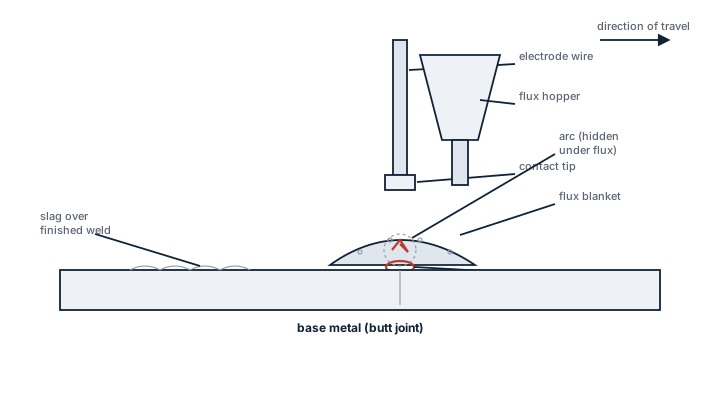
Main components
SAW flux types
Fused flux, melted and granulated during manufacture, gives consistent composition and handles moisture pickup better; agglomerated flux is chemically bonded at lower temperature and allows more alloying flexibility but absorbs moisture more readily and needs stricter storage.
Flux basicity
Rated on a basicity index; acidic flux gives good bead appearance and high deposition rate, basic flux gives better weld metal toughness and lower hydrogen content, relevant for thick, highly stressed hull sections.
Brazing flux
Formulated for a specific temperature range and base metal - copper alloys, stainless steel, and cast iron each need a different flux chemistry to dissolve the relevant oxide.
Packaging and storage
SAW flux is supplied in sealed bags or drums; once opened, it must be kept dry or re-baked before use, since absorbed moisture is a direct source of hydrogen-induced weld cracking.
Selection and sizing
Flux is matched to the wire grade and the parent steel first, then to the joint design and welding position - SAW is a flat or horizontal-vertical process, so flux choice also depends on whether the joint allows the flux bed to sit in place. Basicity is selected against the required weld metal toughness and the risk of hydrogen cracking on thick or high-strength steel sections common in hull repair. Brazing flux is selected by base metal and the brazing temperature range of the chosen filler rod, printed on the filler rod's own specification, not guessed from the metal colour.
- Compatibility with the wire or filler rod grade already qualified for the repair
- Basicity index against required toughness and hydrogen control for SAW flux
- Moisture content and re-baking requirements before use
- Base metal match for brazing flux - copper, stainless, or cast iron are not interchangeable
- Shelf life and storage condition, since flux is a consumable that degrades in a humid engine room store
Regulations and class
Structural repairs made with SAW consumables on class-surveyed hull or pressure-retaining components must use a welding procedure and consumables qualified to the relevant class society's welding rules, with the flux and wire combination tested together, not separately, since the deposited weld metal properties depend on both. Welders performing class-relevant repairs at sea or in a yard must hold a current welder qualification certificate covering the process and position used. Consumables used for repairs later surveyed by class should be traceable - batch and certificate on file - in case the repair is queried.
Typical faults
| Fault | Consequence |
|---|---|
| SAW flux not re-baked after moisture pickup | Hydrogen-induced cracking in the weld or heat-affected zone |
| Wrong basicity for the joint thickness | Reduced toughness, porosity, or poor slag detachment |
| Brazing flux residue not fully cleaned off | Corrosion at the joint, especially on stainless steel, over time |
| Flux and wire combination not qualified together | Weld metal properties fall outside what the procedure claims |
| Old or contaminated flux reused from an open bag | Porosity and inconsistent bead appearance |
What to look for in a supplier
- Certificates showing the flux and wire combination tested together against a recognised weld procedure
- Clear basicity index and recommended re-baking temperature on the data sheet
- Batch traceability for repairs that may later face class survey
- Packaging suited to long-term storage in a ship's stores, sealed against humidity
- Stock of the specific brazing flux grades matching the vessel's common base metals, not one general-purpose tin
Never assume an opened bag of SAW flux from last year's repair is still dry enough to use - a quick re-bake before a structural weld costs an hour, a hydrogen crack in a hull frame costs a lot more.