Welding Wire (MIG/MAG)
Solid and flux-cored wire for GMAW/FCAW is what most onboard structural and pipe repairs actually run on, because it welds faster and with less operator skill than stick electrodes — but only if the wire's chemistry actually matches the parent steel, not just its diameter.
Read more — Welding Wire (MIG/MAG) explained ▾
What sets MIG/MAG wire apart from stick electrodes and TIG filler
Solid wire (GMAW) and flux-cored wire (FCAW) feed continuously from a spool through a welding gun, giving a much higher deposition rate than a stick electrode that has to be changed every few minutes. Solid wire needs a shielding gas bottle and calm conditions, which makes it a workshop or dry engine-room process; flux-cored wire carries its own flux inside the wire and, in self-shielded grades, needs no external gas at all, which is why it is the more common choice for shipboard repair away from a controlled shop.
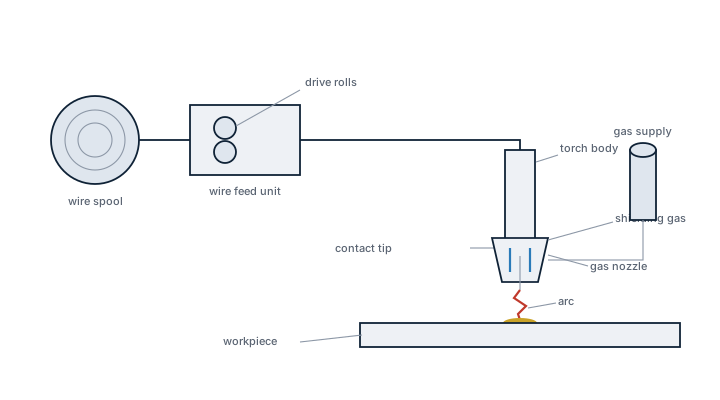
Main components
Solid wire (GMAW/MIG)
Copper-coated mild steel or stainless wire, typically 0.8-1.2 mm for shipboard work, used with a CO2 or argon/CO2 mixed shielding gas. Produces a clean weld with minimal spatter when gas coverage is good, but is vulnerable to porosity the moment wind or a draft disturbs the gas shield — a real limitation on an open deck.
Flux-cored wire (FCAW)
A tubular wire filled with flux, available gas-shielded (higher quality, needs a bottle) or self-shielded (no external gas, tolerant of wind, the practical choice for deck and tank repairs). Deposits slightly more slag than solid wire, which has to be chipped between passes.
Wire classification and matching
Wires are classified by AWS or equivalent designation (for example ER70S-6 for mild steel solid wire) that specifies tensile strength and chemistry. The wire must match the parent steel grade and, on classed structural repairs, the welding procedure the repair is carried out under.
Selection considerations
- Parent material grade — mild steel hull plate, higher-tensile steel, or stainless piping all need a different wire classification.
- Position — self-shielded flux-cored wire tolerates wind and vertical/overhead positions that solid wire struggles with.
- Diameter matched to the joint thickness and the welding set's amperage range on board.
- Shielding gas availability — a vessel without a steady CO2/argon supply is effectively limited to self-shielded flux-cored wire for out-of-shop repairs.
Regulations and class
Structural repairs to classed hull or pressure parts must follow a welding procedure specification approved by the vessel's class society, with the wire consumable identified as part of that procedure. Class surveyors will ask for the consumable certificate and the approved WPS before accepting a permanent structural repair; temporary repairs carried out for the crew's own safety are typically reported to class at the next port even when done under time pressure.
Typical faults
| Fault | Consequence |
|---|---|
| Wire stored in a humid store without a sealed container | Moisture pickup causes hydrogen porosity and cracking in the finished weld |
| Wrong wire classification used against a higher-tensile steel repair | Weld strength falls below the parent metal, creating a weak point that can fail under load |
| Solid wire used on an open deck in wind | Shielding gas blown away mid-weld, resulting in porous, brittle beads |
| Wire diameter mismatched to the welding set's drive rollers | Inconsistent feed causes burn-back into the contact tip and interrupted arcs |
What to look for in a supplier
- Batch certificates (2.1/2.2 or 3.1 depending on the application) traceable to the spool actually delivered.
- Sealed, moisture-resistant packaging appropriate for long sea passages in a humid steel store.
- Classification matching common shipboard steel grades already on board, so stock does not fragment across too many part numbers.
- Consistent spool sizing that fits the existing welding sets rather than forcing an adapter.
Keep opened spools in a sealed, desiccated container between uses — wire that has absorbed moisture from a humid engine room store is a common, avoidable cause of cracked repair welds found on the next survey.
7 manufacturers · 25 models
Lincoln Electric Europe
12- Aws-klassifizierung
- E7018 H4R (Excalibur MR), E6013, E7014, E7024 depending on series - strength 490-710 MPa
- Wasserstoffgehalt
- H4 = max. 4 mL/100g Schweißgut (Niedrigwasserstoff für Druckbehälter/Schiffe)
- Feuchtigkeitswiderstand
- R-Designation: Non-hygroscopic coating, max. 0.4% moisture absorption after 9h at 80°F/80% r.h. (vs. standard: 4h max.)
- ISO 2560:2020
- Internationale Klassifizierung für SMAW-Stabelektroden (Zugfestigkeit, Zähigkeit, Wasserstoff, Stromart)
- Lagerbedingung
- Sealed hermetic containers; after opening: oven min. 100-150°C or batches to be discarded (max. 4-9h air humidity exposure)
- Trocknung/rekonditionierung
- Low-Hydrogen (E7018): 2h at 450-500°C (232-260°C); higher classes: max. 3x 1h at 700-800°C; holding temperature ~150°C after drying
- Excalibur (7018 MR/H4R - Niedrigwasserstoff, feuchtigkeitsresistent)
- Fleetweld (37, 5P+, 180 - verschiedene Anwendungen)
- Murex (7014, 7024 - Rutilbeschichtung/Hochleistung)
- LincolnWeld (880M and others for shipbuilding)
- Stainless Steel Lines (308L-17, 316L-15 für Korrosionsbeständigkeit)
- Area: Moisture absorption covered electrodes - coating sticky/damp or odor indicationCheck: Visual: check coating for dryness; tacky test (touch); odor test; for H4R: up to 9 h permissible at <80°F/<60% r.H. (otherwise oven/discard); document with moisture meter
- Area: Coating defects - cracks, spalling, contamination (rust/wear)Check: Surface inspection: check coating for cracks/breaks; check color/gloss (discoloration=moisture); compare storage duration; batches >6 months dry before use; discard defective batches
- Area: Classification conformity and approval - deviation from DNV/ABS/Lloyd's approvalCheck: Check documentation: certificate number DNV/ABS/Lloyd's on container; AWS/ISO classification (e.g. E7018 H4R M 3 YH5); review batch papers; query DNV Approval Finder; check certificate expiration date; reject batches <approval date
- Area: Batch traceability and storage management - no marking or lost originCheck: Etiketten sichtbar/lesbar: Chargennummer, Verfallsdatum, Lagerdatum, Lagerort, Temperatur/Feuchte-Protokoll; Materialtestzertifikate (MTR) verfügbar; Schweißprozedur (WPS) + Schweißerqualifikation (WQR) dokumentiert; Logbuch Ofen-Ein-/Auszeiten führen
- Area: Drying/reconditioning documentation - temperature, time, holding temperature not validatedCheck: View oven protocol: check achieved temperature (E7018: 450-500°C, observe tolerance); holding time from reaching nominal temperature; holding temperature ~150°C after cooling; demonstrate thermometer calibration; temperature data logger; avoid over-drying (coating breaks)
- Area: Storage environment not suitable - high air humidity/salt mist (maritime) or mechanical damageCheck: Storage conditions on site: temperature, air humidity (hygrometer), ventilation, salt spray protection; container integrity (dents/scratches=rust risk); location on ship: near engine room (<50°C ideal); seal containers after opening; compare storage duration versus expiration date
Type-universal inspection/service points for Welding Consumables (Lincoln Electric Europe, Mega-Swarm 2026-06). Per-model specs not auto-filled.
- Aws-klassifizierung
- E7018 H4R (Excalibur MR), E6013, E7014, E7024 depending on series - strength 490-710 MPa
- Wasserstoffgehalt
- H4 = max. 4 mL/100g Schweißgut (Niedrigwasserstoff für Druckbehälter/Schiffe)
- Feuchtigkeitswiderstand
- R-Designation: Non-hygroscopic coating, max. 0.4% moisture absorption after 9h at 80°F/80% r.h. (vs. standard: 4h max.)
- ISO 2560:2020
- Internationale Klassifizierung für SMAW-Stabelektroden (Zugfestigkeit, Zähigkeit, Wasserstoff, Stromart)
- Lagerbedingung
- Sealed hermetic containers; after opening: oven min. 100-150°C or batches to be discarded (max. 4-9h air humidity exposure)
- Trocknung/rekonditionierung
- Low-Hydrogen (E7018): 2h at 450-500°C (232-260°C); higher classes: max. 3x 1h at 700-800°C; holding temperature ~150°C after drying
- Excalibur (7018 MR/H4R - Niedrigwasserstoff, feuchtigkeitsresistent)
- Fleetweld (37, 5P+, 180 - verschiedene Anwendungen)
- Murex (7014, 7024 - Rutilbeschichtung/Hochleistung)
- LincolnWeld (880M and others for shipbuilding)
- Stainless Steel Lines (308L-17, 316L-15 für Korrosionsbeständigkeit)
- Area: Moisture absorption covered electrodes - coating sticky/damp or odor indicationCheck: Visual: check coating for dryness; tacky test (touch); odor test; for H4R: up to 9 h permissible at <80°F/<60% r.H. (otherwise oven/discard); document with moisture meter
- Area: Coating defects - cracks, spalling, contamination (rust/wear)Check: Surface inspection: check coating for cracks/breaks; check color/gloss (discoloration=moisture); compare storage duration; batches >6 months dry before use; discard defective batches
- Area: Classification conformity and approval - deviation from DNV/ABS/Lloyd's approvalCheck: Check documentation: certificate number DNV/ABS/Lloyd's on container; AWS/ISO classification (e.g. E7018 H4R M 3 YH5); review batch papers; query DNV Approval Finder; check certificate expiration date; reject batches <approval date
- Area: Batch traceability and storage management - no marking or lost originCheck: Etiketten sichtbar/lesbar: Chargennummer, Verfallsdatum, Lagerdatum, Lagerort, Temperatur/Feuchte-Protokoll; Materialtestzertifikate (MTR) verfügbar; Schweißprozedur (WPS) + Schweißerqualifikation (WQR) dokumentiert; Logbuch Ofen-Ein-/Auszeiten führen
- Area: Drying/reconditioning documentation - temperature, time, holding temperature not validatedCheck: View oven protocol: check achieved temperature (E7018: 450-500°C, observe tolerance); holding time from reaching nominal temperature; holding temperature ~150°C after cooling; demonstrate thermometer calibration; temperature data logger; avoid over-drying (coating breaks)
- Area: Storage environment not suitable - high air humidity/salt mist (maritime) or mechanical damageCheck: Storage conditions on site: temperature, air humidity (hygrometer), ventilation, salt spray protection; container integrity (dents/scratches=rust risk); location on ship: near engine room (<50°C ideal); seal containers after opening; compare storage duration versus expiration date
Type-universal inspection/service points for Welding Consumables (Lincoln Electric Europe, Mega-Swarm 2026-06). Per-model specs not auto-filled.
- Aws-klassifizierung
- E7018 H4R (Excalibur MR), E6013, E7014, E7024 depending on series - strength 490-710 MPa
- Wasserstoffgehalt
- H4 = max. 4 mL/100g Schweißgut (Niedrigwasserstoff für Druckbehälter/Schiffe)
- Feuchtigkeitswiderstand
- R-Designation: Non-hygroscopic coating, max. 0.4% moisture absorption after 9h at 80°F/80% r.h. (vs. standard: 4h max.)
- ISO 2560:2020
- Internationale Klassifizierung für SMAW-Stabelektroden (Zugfestigkeit, Zähigkeit, Wasserstoff, Stromart)
- Lagerbedingung
- Sealed hermetic containers; after opening: oven min. 100-150°C or batches to be discarded (max. 4-9h air humidity exposure)
- Trocknung/rekonditionierung
- Low-Hydrogen (E7018): 2h at 450-500°C (232-260°C); higher classes: max. 3x 1h at 700-800°C; holding temperature ~150°C after drying
- Excalibur (7018 MR/H4R - Niedrigwasserstoff, feuchtigkeitsresistent)
- Fleetweld (37, 5P+, 180 - verschiedene Anwendungen)
- Murex (7014, 7024 - Rutilbeschichtung/Hochleistung)
- LincolnWeld (880M and others for shipbuilding)
- Stainless Steel Lines (308L-17, 316L-15 für Korrosionsbeständigkeit)
- Area: Moisture absorption covered electrodes - coating sticky/damp or odor indicationCheck: Visual: check coating for dryness; tacky test (touch); odor test; for H4R: up to 9 h permissible at <80°F/<60% r.H. (otherwise oven/discard); document with moisture meter
- Area: Coating defects - cracks, spalling, contamination (rust/wear)Check: Surface inspection: check coating for cracks/breaks; check color/gloss (discoloration=moisture); compare storage duration; batches >6 months dry before use; discard defective batches
- Area: Classification conformity and approval - deviation from DNV/ABS/Lloyd's approvalCheck: Check documentation: certificate number DNV/ABS/Lloyd's on container; AWS/ISO classification (e.g. E7018 H4R M 3 YH5); review batch papers; query DNV Approval Finder; check certificate expiration date; reject batches <approval date
- Area: Batch traceability and storage management - no marking or lost originCheck: Etiketten sichtbar/lesbar: Chargennummer, Verfallsdatum, Lagerdatum, Lagerort, Temperatur/Feuchte-Protokoll; Materialtestzertifikate (MTR) verfügbar; Schweißprozedur (WPS) + Schweißerqualifikation (WQR) dokumentiert; Logbuch Ofen-Ein-/Auszeiten führen
- Area: Drying/reconditioning documentation - temperature, time, holding temperature not validatedCheck: View oven protocol: check achieved temperature (E7018: 450-500°C, observe tolerance); holding time from reaching nominal temperature; holding temperature ~150°C after cooling; demonstrate thermometer calibration; temperature data logger; avoid over-drying (coating breaks)
- Area: Storage environment not suitable - high air humidity/salt mist (maritime) or mechanical damageCheck: Storage conditions on site: temperature, air humidity (hygrometer), ventilation, salt spray protection; container integrity (dents/scratches=rust risk); location on ship: near engine room (<50°C ideal); seal containers after opening; compare storage duration versus expiration date
Type-universal inspection/service points for Welding Consumables (Lincoln Electric Europe, Mega-Swarm 2026-06). Per-model specs not auto-filled.
- Aws-klassifizierung
- E7018 H4R (Excalibur MR), E6013, E7014, E7024 depending on series - strength 490-710 MPa
- Wasserstoffgehalt
- H4 = max. 4 mL/100g Schweißgut (Niedrigwasserstoff für Druckbehälter/Schiffe)
- Feuchtigkeitswiderstand
- R-Designation: Non-hygroscopic coating, max. 0.4% moisture absorption after 9h at 80°F/80% r.h. (vs. standard: 4h max.)
- ISO 2560:2020
- Internationale Klassifizierung für SMAW-Stabelektroden (Zugfestigkeit, Zähigkeit, Wasserstoff, Stromart)
- Lagerbedingung
- Sealed hermetic containers; after opening: oven min. 100-150°C or batches to be discarded (max. 4-9h air humidity exposure)
- Trocknung/rekonditionierung
- Low-Hydrogen (E7018): 2h at 450-500°C (232-260°C); higher classes: max. 3x 1h at 700-800°C; holding temperature ~150°C after drying
- Excalibur (7018 MR/H4R - Niedrigwasserstoff, feuchtigkeitsresistent)
- Fleetweld (37, 5P+, 180 - verschiedene Anwendungen)
- Murex (7014, 7024 - Rutilbeschichtung/Hochleistung)
- LincolnWeld (880M and others for shipbuilding)
- Stainless Steel Lines (308L-17, 316L-15 für Korrosionsbeständigkeit)
- Area: Moisture absorption covered electrodes - coating sticky/damp or odor indicationCheck: Visual: check coating for dryness; tacky test (touch); odor test; for H4R: up to 9 h permissible at <80°F/<60% r.H. (otherwise oven/discard); document with moisture meter
- Area: Coating defects - cracks, spalling, contamination (rust/wear)Check: Surface inspection: check coating for cracks/breaks; check color/gloss (discoloration=moisture); compare storage duration; batches >6 months dry before use; discard defective batches
- Area: Classification conformity and approval - deviation from DNV/ABS/Lloyd's approvalCheck: Check documentation: certificate number DNV/ABS/Lloyd's on container; AWS/ISO classification (e.g. E7018 H4R M 3 YH5); review batch papers; query DNV Approval Finder; check certificate expiration date; reject batches <approval date
- Area: Batch traceability and storage management - no marking or lost originCheck: Etiketten sichtbar/lesbar: Chargennummer, Verfallsdatum, Lagerdatum, Lagerort, Temperatur/Feuchte-Protokoll; Materialtestzertifikate (MTR) verfügbar; Schweißprozedur (WPS) + Schweißerqualifikation (WQR) dokumentiert; Logbuch Ofen-Ein-/Auszeiten führen
- Area: Drying/reconditioning documentation - temperature, time, holding temperature not validatedCheck: View oven protocol: check achieved temperature (E7018: 450-500°C, observe tolerance); holding time from reaching nominal temperature; holding temperature ~150°C after cooling; demonstrate thermometer calibration; temperature data logger; avoid over-drying (coating breaks)
- Area: Storage environment not suitable - high air humidity/salt mist (maritime) or mechanical damageCheck: Storage conditions on site: temperature, air humidity (hygrometer), ventilation, salt spray protection; container integrity (dents/scratches=rust risk); location on ship: near engine room (<50°C ideal); seal containers after opening; compare storage duration versus expiration date
Type-universal inspection/service points for Welding Consumables (Lincoln Electric Europe, Mega-Swarm 2026-06). Per-model specs not auto-filled.
- Aws-klassifizierung
- E7018 H4R (Excalibur MR), E6013, E7014, E7024 depending on series - strength 490-710 MPa
- Wasserstoffgehalt
- H4 = max. 4 mL/100g Schweißgut (Niedrigwasserstoff für Druckbehälter/Schiffe)
- Feuchtigkeitswiderstand
- R-Designation: Non-hygroscopic coating, max. 0.4% moisture absorption after 9h at 80°F/80% r.h. (vs. standard: 4h max.)
- ISO 2560:2020
- Internationale Klassifizierung für SMAW-Stabelektroden (Zugfestigkeit, Zähigkeit, Wasserstoff, Stromart)
- Lagerbedingung
- Sealed hermetic containers; after opening: oven min. 100-150°C or batches to be discarded (max. 4-9h air humidity exposure)
- Trocknung/rekonditionierung
- Low-Hydrogen (E7018): 2h at 450-500°C (232-260°C); higher classes: max. 3x 1h at 700-800°C; holding temperature ~150°C after drying
- Excalibur (7018 MR/H4R - Niedrigwasserstoff, feuchtigkeitsresistent)
- Fleetweld (37, 5P+, 180 - verschiedene Anwendungen)
- Murex (7014, 7024 - Rutilbeschichtung/Hochleistung)
- LincolnWeld (880M and others for shipbuilding)
- Stainless Steel Lines (308L-17, 316L-15 für Korrosionsbeständigkeit)
- Area: Moisture absorption covered electrodes - coating sticky/damp or odor indicationCheck: Visual: check coating for dryness; tacky test (touch); odor test; for H4R: up to 9 h permissible at <80°F/<60% r.H. (otherwise oven/discard); document with moisture meter
- Area: Coating defects - cracks, spalling, contamination (rust/wear)Check: Surface inspection: check coating for cracks/breaks; check color/gloss (discoloration=moisture); compare storage duration; batches >6 months dry before use; discard defective batches
- Area: Classification conformity and approval - deviation from DNV/ABS/Lloyd's approvalCheck: Check documentation: certificate number DNV/ABS/Lloyd's on container; AWS/ISO classification (e.g. E7018 H4R M 3 YH5); review batch papers; query DNV Approval Finder; check certificate expiration date; reject batches <approval date
- Area: Batch traceability and storage management - no marking or lost originCheck: Etiketten sichtbar/lesbar: Chargennummer, Verfallsdatum, Lagerdatum, Lagerort, Temperatur/Feuchte-Protokoll; Materialtestzertifikate (MTR) verfügbar; Schweißprozedur (WPS) + Schweißerqualifikation (WQR) dokumentiert; Logbuch Ofen-Ein-/Auszeiten führen
- Area: Drying/reconditioning documentation - temperature, time, holding temperature not validatedCheck: View oven protocol: check achieved temperature (E7018: 450-500°C, observe tolerance); holding time from reaching nominal temperature; holding temperature ~150°C after cooling; demonstrate thermometer calibration; temperature data logger; avoid over-drying (coating breaks)
- Area: Storage environment not suitable - high air humidity/salt mist (maritime) or mechanical damageCheck: Storage conditions on site: temperature, air humidity (hygrometer), ventilation, salt spray protection; container integrity (dents/scratches=rust risk); location on ship: near engine room (<50°C ideal); seal containers after opening; compare storage duration versus expiration date
Type-universal inspection/service points for Welding Consumables (Lincoln Electric Europe, Mega-Swarm 2026-06). Per-model specs not auto-filled.
- Aws-klassifizierung
- E7018 H4R (Excalibur MR), E6013, E7014, E7024 depending on series - strength 490-710 MPa
- Wasserstoffgehalt
- H4 = max. 4 mL/100g Schweißgut (Niedrigwasserstoff für Druckbehälter/Schiffe)
- Feuchtigkeitswiderstand
- R-Designation: Non-hygroscopic coating, max. 0.4% moisture absorption after 9h at 80°F/80% r.h. (vs. standard: 4h max.)
- ISO 2560:2020
- Internationale Klassifizierung für SMAW-Stabelektroden (Zugfestigkeit, Zähigkeit, Wasserstoff, Stromart)
- Lagerbedingung
- Sealed hermetic containers; after opening: oven min. 100-150°C or batches to be discarded (max. 4-9h air humidity exposure)
- Trocknung/rekonditionierung
- Low-Hydrogen (E7018): 2h at 450-500°C (232-260°C); higher classes: max. 3x 1h at 700-800°C; holding temperature ~150°C after drying
- Excalibur (7018 MR/H4R - Niedrigwasserstoff, feuchtigkeitsresistent)
- Fleetweld (37, 5P+, 180 - verschiedene Anwendungen)
- Murex (7014, 7024 - Rutilbeschichtung/Hochleistung)
- LincolnWeld (880M and others for shipbuilding)
- Stainless Steel Lines (308L-17, 316L-15 für Korrosionsbeständigkeit)
- Area: Moisture absorption covered electrodes - coating sticky/damp or odor indicationCheck: Visual: check coating for dryness; tacky test (touch); odor test; for H4R: up to 9 h permissible at <80°F/<60% r.H. (otherwise oven/discard); document with moisture meter
- Area: Coating defects - cracks, spalling, contamination (rust/wear)Check: Surface inspection: check coating for cracks/breaks; check color/gloss (discoloration=moisture); compare storage duration; batches >6 months dry before use; discard defective batches
- Area: Classification conformity and approval - deviation from DNV/ABS/Lloyd's approvalCheck: Check documentation: certificate number DNV/ABS/Lloyd's on container; AWS/ISO classification (e.g. E7018 H4R M 3 YH5); review batch papers; query DNV Approval Finder; check certificate expiration date; reject batches <approval date
- Area: Batch traceability and storage management - no marking or lost originCheck: Etiketten sichtbar/lesbar: Chargennummer, Verfallsdatum, Lagerdatum, Lagerort, Temperatur/Feuchte-Protokoll; Materialtestzertifikate (MTR) verfügbar; Schweißprozedur (WPS) + Schweißerqualifikation (WQR) dokumentiert; Logbuch Ofen-Ein-/Auszeiten führen
- Area: Drying/reconditioning documentation - temperature, time, holding temperature not validatedCheck: View oven protocol: check achieved temperature (E7018: 450-500°C, observe tolerance); holding time from reaching nominal temperature; holding temperature ~150°C after cooling; demonstrate thermometer calibration; temperature data logger; avoid over-drying (coating breaks)
- Area: Storage environment not suitable - high air humidity/salt mist (maritime) or mechanical damageCheck: Storage conditions on site: temperature, air humidity (hygrometer), ventilation, salt spray protection; container integrity (dents/scratches=rust risk); location on ship: near engine room (<50°C ideal); seal containers after opening; compare storage duration versus expiration date
Type-universal inspection/service points for Welding Consumables (Lincoln Electric Europe, Mega-Swarm 2026-06). Per-model specs not auto-filled.
- Aws-klassifizierung
- E7018 H4R (Excalibur MR), E6013, E7014, E7024 depending on series - strength 490-710 MPa
- Wasserstoffgehalt
- H4 = max. 4 mL/100g Schweißgut (Niedrigwasserstoff für Druckbehälter/Schiffe)
- Feuchtigkeitswiderstand
- R-Designation: Non-hygroscopic coating, max. 0.4% moisture absorption after 9h at 80°F/80% r.h. (vs. standard: 4h max.)
- ISO 2560:2020
- Internationale Klassifizierung für SMAW-Stabelektroden (Zugfestigkeit, Zähigkeit, Wasserstoff, Stromart)
- Lagerbedingung
- Sealed hermetic containers; after opening: oven min. 100-150°C or batches to be discarded (max. 4-9h air humidity exposure)
- Trocknung/rekonditionierung
- Low-Hydrogen (E7018): 2h at 450-500°C (232-260°C); higher classes: max. 3x 1h at 700-800°C; holding temperature ~150°C after drying
- Excalibur (7018 MR/H4R - Niedrigwasserstoff, feuchtigkeitsresistent)
- Fleetweld (37, 5P+, 180 - verschiedene Anwendungen)
- Murex (7014, 7024 - Rutilbeschichtung/Hochleistung)
- LincolnWeld (880M and others for shipbuilding)
- Stainless Steel Lines (308L-17, 316L-15 für Korrosionsbeständigkeit)
- Area: Moisture absorption covered electrodes - coating sticky/damp or odor indicationCheck: Visual: check coating for dryness; tacky test (touch); odor test; for H4R: up to 9 h permissible at <80°F/<60% r.H. (otherwise oven/discard); document with moisture meter
- Area: Coating defects - cracks, spalling, contamination (rust/wear)Check: Surface inspection: check coating for cracks/breaks; check color/gloss (discoloration=moisture); compare storage duration; batches >6 months dry before use; discard defective batches
- Area: Classification conformity and approval - deviation from DNV/ABS/Lloyd's approvalCheck: Check documentation: certificate number DNV/ABS/Lloyd's on container; AWS/ISO classification (e.g. E7018 H4R M 3 YH5); review batch papers; query DNV Approval Finder; check certificate expiration date; reject batches <approval date
- Area: Batch traceability and storage management - no marking or lost originCheck: Etiketten sichtbar/lesbar: Chargennummer, Verfallsdatum, Lagerdatum, Lagerort, Temperatur/Feuchte-Protokoll; Materialtestzertifikate (MTR) verfügbar; Schweißprozedur (WPS) + Schweißerqualifikation (WQR) dokumentiert; Logbuch Ofen-Ein-/Auszeiten führen
- Area: Drying/reconditioning documentation - temperature, time, holding temperature not validatedCheck: View oven protocol: check achieved temperature (E7018: 450-500°C, observe tolerance); holding time from reaching nominal temperature; holding temperature ~150°C after cooling; demonstrate thermometer calibration; temperature data logger; avoid over-drying (coating breaks)
- Area: Storage environment not suitable - high air humidity/salt mist (maritime) or mechanical damageCheck: Storage conditions on site: temperature, air humidity (hygrometer), ventilation, salt spray protection; container integrity (dents/scratches=rust risk); location on ship: near engine room (<50°C ideal); seal containers after opening; compare storage duration versus expiration date
Type-universal inspection/service points for Welding Consumables (Lincoln Electric Europe, Mega-Swarm 2026-06). Per-model specs not auto-filled.
- Aws-klassifizierung
- E7018 H4R (Excalibur MR), E6013, E7014, E7024 depending on series - strength 490-710 MPa
- Wasserstoffgehalt
- H4 = max. 4 mL/100g Schweißgut (Niedrigwasserstoff für Druckbehälter/Schiffe)
- Feuchtigkeitswiderstand
- R-Designation: Non-hygroscopic coating, max. 0.4% moisture absorption after 9h at 80°F/80% r.h. (vs. standard: 4h max.)
- ISO 2560:2020
- Internationale Klassifizierung für SMAW-Stabelektroden (Zugfestigkeit, Zähigkeit, Wasserstoff, Stromart)
- Lagerbedingung
- Sealed hermetic containers; after opening: oven min. 100-150°C or batches to be discarded (max. 4-9h air humidity exposure)
- Trocknung/rekonditionierung
- Low-Hydrogen (E7018): 2h at 450-500°C (232-260°C); higher classes: max. 3x 1h at 700-800°C; holding temperature ~150°C after drying
- Excalibur (7018 MR/H4R - Niedrigwasserstoff, feuchtigkeitsresistent)
- Fleetweld (37, 5P+, 180 - verschiedene Anwendungen)
- Murex (7014, 7024 - Rutilbeschichtung/Hochleistung)
- LincolnWeld (880M and others for shipbuilding)
- Stainless Steel Lines (308L-17, 316L-15 für Korrosionsbeständigkeit)
- Area: Moisture absorption covered electrodes - coating sticky/damp or odor indicationCheck: Visual: check coating for dryness; tacky test (touch); odor test; for H4R: up to 9 h permissible at <80°F/<60% r.H. (otherwise oven/discard); document with moisture meter
- Area: Coating defects - cracks, spalling, contamination (rust/wear)Check: Surface inspection: check coating for cracks/breaks; check color/gloss (discoloration=moisture); compare storage duration; batches >6 months dry before use; discard defective batches
- Area: Classification conformity and approval - deviation from DNV/ABS/Lloyd's approvalCheck: Check documentation: certificate number DNV/ABS/Lloyd's on container; AWS/ISO classification (e.g. E7018 H4R M 3 YH5); review batch papers; query DNV Approval Finder; check certificate expiration date; reject batches <approval date
- Area: Batch traceability and storage management - no marking or lost originCheck: Etiketten sichtbar/lesbar: Chargennummer, Verfallsdatum, Lagerdatum, Lagerort, Temperatur/Feuchte-Protokoll; Materialtestzertifikate (MTR) verfügbar; Schweißprozedur (WPS) + Schweißerqualifikation (WQR) dokumentiert; Logbuch Ofen-Ein-/Auszeiten führen
- Area: Drying/reconditioning documentation - temperature, time, holding temperature not validatedCheck: View oven protocol: check achieved temperature (E7018: 450-500°C, observe tolerance); holding time from reaching nominal temperature; holding temperature ~150°C after cooling; demonstrate thermometer calibration; temperature data logger; avoid over-drying (coating breaks)
- Area: Storage environment not suitable - high air humidity/salt mist (maritime) or mechanical damageCheck: Storage conditions on site: temperature, air humidity (hygrometer), ventilation, salt spray protection; container integrity (dents/scratches=rust risk); location on ship: near engine room (<50°C ideal); seal containers after opening; compare storage duration versus expiration date
Type-universal inspection/service points for Welding Consumables (Lincoln Electric Europe, Mega-Swarm 2026-06). Per-model specs not auto-filled.
- Aws-klassifizierung
- E7018 H4R (Excalibur MR), E6013, E7014, E7024 depending on series - strength 490-710 MPa
- Wasserstoffgehalt
- H4 = max. 4 mL/100g Schweißgut (Niedrigwasserstoff für Druckbehälter/Schiffe)
- Feuchtigkeitswiderstand
- R-Designation: Non-hygroscopic coating, max. 0.4% moisture absorption after 9h at 80°F/80% r.h. (vs. standard: 4h max.)
- ISO 2560:2020
- Internationale Klassifizierung für SMAW-Stabelektroden (Zugfestigkeit, Zähigkeit, Wasserstoff, Stromart)
- Lagerbedingung
- Sealed hermetic containers; after opening: oven min. 100-150°C or batches to be discarded (max. 4-9h air humidity exposure)
- Trocknung/rekonditionierung
- Low-Hydrogen (E7018): 2h at 450-500°C (232-260°C); higher classes: max. 3x 1h at 700-800°C; holding temperature ~150°C after drying
- Excalibur (7018 MR/H4R - Niedrigwasserstoff, feuchtigkeitsresistent)
- Fleetweld (37, 5P+, 180 - verschiedene Anwendungen)
- Murex (7014, 7024 - Rutilbeschichtung/Hochleistung)
- LincolnWeld (880M and others for shipbuilding)
- Stainless Steel Lines (308L-17, 316L-15 für Korrosionsbeständigkeit)
- Area: Moisture absorption covered electrodes - coating sticky/damp or odor indicationCheck: Visual: check coating for dryness; tacky test (touch); odor test; for H4R: up to 9 h permissible at <80°F/<60% r.H. (otherwise oven/discard); document with moisture meter
- Area: Coating defects - cracks, spalling, contamination (rust/wear)Check: Surface inspection: check coating for cracks/breaks; check color/gloss (discoloration=moisture); compare storage duration; batches >6 months dry before use; discard defective batches
- Area: Classification conformity and approval - deviation from DNV/ABS/Lloyd's approvalCheck: Check documentation: certificate number DNV/ABS/Lloyd's on container; AWS/ISO classification (e.g. E7018 H4R M 3 YH5); review batch papers; query DNV Approval Finder; check certificate expiration date; reject batches <approval date
- Area: Batch traceability and storage management - no marking or lost originCheck: Etiketten sichtbar/lesbar: Chargennummer, Verfallsdatum, Lagerdatum, Lagerort, Temperatur/Feuchte-Protokoll; Materialtestzertifikate (MTR) verfügbar; Schweißprozedur (WPS) + Schweißerqualifikation (WQR) dokumentiert; Logbuch Ofen-Ein-/Auszeiten führen
- Area: Drying/reconditioning documentation - temperature, time, holding temperature not validatedCheck: View oven protocol: check achieved temperature (E7018: 450-500°C, observe tolerance); holding time from reaching nominal temperature; holding temperature ~150°C after cooling; demonstrate thermometer calibration; temperature data logger; avoid over-drying (coating breaks)
- Area: Storage environment not suitable - high air humidity/salt mist (maritime) or mechanical damageCheck: Storage conditions on site: temperature, air humidity (hygrometer), ventilation, salt spray protection; container integrity (dents/scratches=rust risk); location on ship: near engine room (<50°C ideal); seal containers after opening; compare storage duration versus expiration date
Type-universal inspection/service points for Welding Consumables (Lincoln Electric Europe, Mega-Swarm 2026-06). Per-model specs not auto-filled.
- Aws-klassifizierung
- E7018 H4R (Excalibur MR), E6013, E7014, E7024 depending on series - strength 490-710 MPa
- Wasserstoffgehalt
- H4 = max. 4 mL/100g Schweißgut (Niedrigwasserstoff für Druckbehälter/Schiffe)
- Feuchtigkeitswiderstand
- R-Designation: Non-hygroscopic coating, max. 0.4% moisture absorption after 9h at 80°F/80% r.h. (vs. standard: 4h max.)
- ISO 2560:2020
- Internationale Klassifizierung für SMAW-Stabelektroden (Zugfestigkeit, Zähigkeit, Wasserstoff, Stromart)
- Lagerbedingung
- Sealed hermetic containers; after opening: oven min. 100-150°C or batches to be discarded (max. 4-9h air humidity exposure)
- Trocknung/rekonditionierung
- Low-Hydrogen (E7018): 2h at 450-500°C (232-260°C); higher classes: max. 3x 1h at 700-800°C; holding temperature ~150°C after drying
- Excalibur (7018 MR/H4R - Niedrigwasserstoff, feuchtigkeitsresistent)
- Fleetweld (37, 5P+, 180 - verschiedene Anwendungen)
- Murex (7014, 7024 - Rutilbeschichtung/Hochleistung)
- LincolnWeld (880M and others for shipbuilding)
- Stainless Steel Lines (308L-17, 316L-15 für Korrosionsbeständigkeit)
- Area: Moisture absorption covered electrodes - coating sticky/damp or odor indicationCheck: Visual: check coating for dryness; tacky test (touch); odor test; for H4R: up to 9 h permissible at <80°F/<60% r.H. (otherwise oven/discard); document with moisture meter
- Area: Coating defects - cracks, spalling, contamination (rust/wear)Check: Surface inspection: check coating for cracks/breaks; check color/gloss (discoloration=moisture); compare storage duration; batches >6 months dry before use; discard defective batches
- Area: Classification conformity and approval - deviation from DNV/ABS/Lloyd's approvalCheck: Check documentation: certificate number DNV/ABS/Lloyd's on container; AWS/ISO classification (e.g. E7018 H4R M 3 YH5); review batch papers; query DNV Approval Finder; check certificate expiration date; reject batches <approval date
- Area: Batch traceability and storage management - no marking or lost originCheck: Etiketten sichtbar/lesbar: Chargennummer, Verfallsdatum, Lagerdatum, Lagerort, Temperatur/Feuchte-Protokoll; Materialtestzertifikate (MTR) verfügbar; Schweißprozedur (WPS) + Schweißerqualifikation (WQR) dokumentiert; Logbuch Ofen-Ein-/Auszeiten führen
- Area: Drying/reconditioning documentation - temperature, time, holding temperature not validatedCheck: View oven protocol: check achieved temperature (E7018: 450-500°C, observe tolerance); holding time from reaching nominal temperature; holding temperature ~150°C after cooling; demonstrate thermometer calibration; temperature data logger; avoid over-drying (coating breaks)
- Area: Storage environment not suitable - high air humidity/salt mist (maritime) or mechanical damageCheck: Storage conditions on site: temperature, air humidity (hygrometer), ventilation, salt spray protection; container integrity (dents/scratches=rust risk); location on ship: near engine room (<50°C ideal); seal containers after opening; compare storage duration versus expiration date
Type-universal inspection/service points for Welding Consumables (Lincoln Electric Europe, Mega-Swarm 2026-06). Per-model specs not auto-filled.
- Aws-klassifizierung
- E7018 H4R (Excalibur MR), E6013, E7014, E7024 depending on series - strength 490-710 MPa
- Wasserstoffgehalt
- H4 = max. 4 mL/100g Schweißgut (Niedrigwasserstoff für Druckbehälter/Schiffe)
- Feuchtigkeitswiderstand
- R-Designation: Non-hygroscopic coating, max. 0.4% moisture absorption after 9h at 80°F/80% r.h. (vs. standard: 4h max.)
- ISO 2560:2020
- Internationale Klassifizierung für SMAW-Stabelektroden (Zugfestigkeit, Zähigkeit, Wasserstoff, Stromart)
- Lagerbedingung
- Sealed hermetic containers; after opening: oven min. 100-150°C or batches to be discarded (max. 4-9h air humidity exposure)
- Trocknung/rekonditionierung
- Low-Hydrogen (E7018): 2h at 450-500°C (232-260°C); higher classes: max. 3x 1h at 700-800°C; holding temperature ~150°C after drying
- Excalibur (7018 MR/H4R - Niedrigwasserstoff, feuchtigkeitsresistent)
- Fleetweld (37, 5P+, 180 - verschiedene Anwendungen)
- Murex (7014, 7024 - Rutilbeschichtung/Hochleistung)
- LincolnWeld (880M and others for shipbuilding)
- Stainless Steel Lines (308L-17, 316L-15 für Korrosionsbeständigkeit)
- Area: Moisture absorption covered electrodes - coating sticky/damp or odor indicationCheck: Visual: check coating for dryness; tacky test (touch); odor test; for H4R: up to 9 h permissible at <80°F/<60% r.H. (otherwise oven/discard); document with moisture meter
- Area: Coating defects - cracks, spalling, contamination (rust/wear)Check: Surface inspection: check coating for cracks/breaks; check color/gloss (discoloration=moisture); compare storage duration; batches >6 months dry before use; discard defective batches
- Area: Classification conformity and approval - deviation from DNV/ABS/Lloyd's approvalCheck: Check documentation: certificate number DNV/ABS/Lloyd's on container; AWS/ISO classification (e.g. E7018 H4R M 3 YH5); review batch papers; query DNV Approval Finder; check certificate expiration date; reject batches <approval date
- Area: Batch traceability and storage management - no marking or lost originCheck: Etiketten sichtbar/lesbar: Chargennummer, Verfallsdatum, Lagerdatum, Lagerort, Temperatur/Feuchte-Protokoll; Materialtestzertifikate (MTR) verfügbar; Schweißprozedur (WPS) + Schweißerqualifikation (WQR) dokumentiert; Logbuch Ofen-Ein-/Auszeiten führen
- Area: Drying/reconditioning documentation - temperature, time, holding temperature not validatedCheck: View oven protocol: check achieved temperature (E7018: 450-500°C, observe tolerance); holding time from reaching nominal temperature; holding temperature ~150°C after cooling; demonstrate thermometer calibration; temperature data logger; avoid over-drying (coating breaks)
- Area: Storage environment not suitable - high air humidity/salt mist (maritime) or mechanical damageCheck: Storage conditions on site: temperature, air humidity (hygrometer), ventilation, salt spray protection; container integrity (dents/scratches=rust risk); location on ship: near engine room (<50°C ideal); seal containers after opening; compare storage duration versus expiration date
Type-universal inspection/service points for Welding Consumables (Lincoln Electric Europe, Mega-Swarm 2026-06). Per-model specs not auto-filled.
- Aws-klassifizierung
- E7018 H4R (Excalibur MR), E6013, E7014, E7024 depending on series - strength 490-710 MPa
- Wasserstoffgehalt
- H4 = max. 4 mL/100g Schweißgut (Niedrigwasserstoff für Druckbehälter/Schiffe)
- Feuchtigkeitswiderstand
- R-Designation: Non-hygroscopic coating, max. 0.4% moisture absorption after 9h at 80°F/80% r.h. (vs. standard: 4h max.)
- ISO 2560:2020
- Internationale Klassifizierung für SMAW-Stabelektroden (Zugfestigkeit, Zähigkeit, Wasserstoff, Stromart)
- Lagerbedingung
- Sealed hermetic containers; after opening: oven min. 100-150°C or batches to be discarded (max. 4-9h air humidity exposure)
- Trocknung/rekonditionierung
- Low-Hydrogen (E7018): 2h at 450-500°C (232-260°C); higher classes: max. 3x 1h at 700-800°C; holding temperature ~150°C after drying
- Excalibur (7018 MR/H4R - Niedrigwasserstoff, feuchtigkeitsresistent)
- Fleetweld (37, 5P+, 180 - verschiedene Anwendungen)
- Murex (7014, 7024 - Rutilbeschichtung/Hochleistung)
- LincolnWeld (880M and others for shipbuilding)
- Stainless Steel Lines (308L-17, 316L-15 für Korrosionsbeständigkeit)
- Area: Moisture absorption covered electrodes - coating sticky/damp or odor indicationCheck: Visual: check coating for dryness; tacky test (touch); odor test; for H4R: up to 9 h permissible at <80°F/<60% r.H. (otherwise oven/discard); document with moisture meter
- Area: Coating defects - cracks, spalling, contamination (rust/wear)Check: Surface inspection: check coating for cracks/breaks; check color/gloss (discoloration=moisture); compare storage duration; batches >6 months dry before use; discard defective batches
- Area: Classification conformity and approval - deviation from DNV/ABS/Lloyd's approvalCheck: Check documentation: certificate number DNV/ABS/Lloyd's on container; AWS/ISO classification (e.g. E7018 H4R M 3 YH5); review batch papers; query DNV Approval Finder; check certificate expiration date; reject batches <approval date
- Area: Batch traceability and storage management - no marking or lost originCheck: Etiketten sichtbar/lesbar: Chargennummer, Verfallsdatum, Lagerdatum, Lagerort, Temperatur/Feuchte-Protokoll; Materialtestzertifikate (MTR) verfügbar; Schweißprozedur (WPS) + Schweißerqualifikation (WQR) dokumentiert; Logbuch Ofen-Ein-/Auszeiten führen
- Area: Drying/reconditioning documentation - temperature, time, holding temperature not validatedCheck: View oven protocol: check achieved temperature (E7018: 450-500°C, observe tolerance); holding time from reaching nominal temperature; holding temperature ~150°C after cooling; demonstrate thermometer calibration; temperature data logger; avoid over-drying (coating breaks)
- Area: Storage environment not suitable - high air humidity/salt mist (maritime) or mechanical damageCheck: Storage conditions on site: temperature, air humidity (hygrometer), ventilation, salt spray protection; container integrity (dents/scratches=rust risk); location on ship: near engine room (<50°C ideal); seal containers after opening; compare storage duration versus expiration date
Type-universal inspection/service points for Welding Consumables (Lincoln Electric Europe, Mega-Swarm 2026-06). Per-model specs not auto-filled.