What to check on a Tugger Winch.
A tugger winch is the deck's all-purpose puller: a single drum, a motor, a brake and a controller, used wherever something needs to be dragged, positioned or held rather than paid out and rendered under load like a mooring line. It has none of the automatic tension rendering, load monitoring or dual-drum arrangement of a mooring winch, and it is not rated or arranged to hold a ship against a berth. Typical jobs are hauling hatch covers, positioning cargo, handling the pennant of a tow wire, tensioning lashings, or pulling…
What sets a tugger winch apart
A tugger winch is the deck's all-purpose puller: a single drum, a motor, a brake and a controller, used wherever something needs to be dragged, positioned or held rather than paid out and rendered under load like a mooring line. It has none of the automatic tension rendering, load monitoring or dual-drum arrangement of a mooring winch, and it is not rated or arranged to hold a ship against a berth. Typical jobs are hauling hatch covers, positioning cargo, handling the pennant of a tow wire, tensioning lashings, or pulling wire through fairleads during rigging work. Because the duty is intermittent and manually controlled rather than continuous holding, tugger winches are built lighter and cheaper per tonne of pull than mooring or anchor windlass drives.
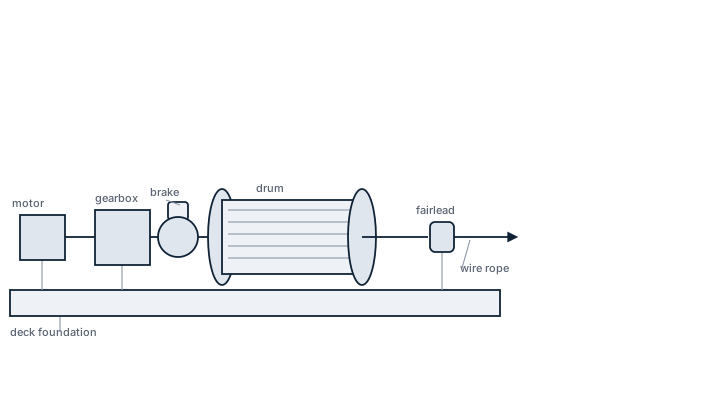
Main components
- Drum — single, plain or grooved, sized for wire rope diameter and the working length required
- Drive — hydraulic motor is most common on deck machinery because it tolerates stall under load; electric versions exist for lighter duty
- Brake — a spring-applied, hydraulically or electrically released holding brake that grips automatically on loss of power
- Controller — local lever or pendant control, sometimes remote, with no automatic tension or payout logic
- Fairlead and guide rollers — direct the wire onto the drum at the correct angle to avoid crushing or riding turns
Selection and sizing
A tugger winch is chosen on line pull and layer capacity, not on a mooring load table:
- Rated line pull at first layer, since pull capacity drops as wire builds up on the drum
- Wire rope diameter and drum capacity for the longest single haul the job requires
- Hydraulic supply pressure and flow available from the deck machinery power pack, if hydraulic
- Mounting arrangement — deck-mounted, davit-mounted or portable, depending on where the pulling job sits on deck
Typical faults
| Fault | Cause | Consequence |
|---|---|---|
| Brake slip under load | Worn brake lining or contaminated brake surfaces | Load creeps back when the winch is left holding, risk to personnel nearby |
| Riding turns on the drum | Wire fed onto the drum at the wrong angle or with slack layers | Jammed wire, damage on the next haul, need to cut the wire free |
| Hydraulic motor overheating | Prolonged stall against an obstruction with no relief | Seal failure and oil leakage from the motor |
| Wire rope crushing at the fairlead | Misaligned lead angle between the pulling point and the drum | Broken wires and reduced rope working load, earlier rope replacement |
What to look for in a supplier
- A fail-safe brake that applies automatically on hydraulic or electrical power loss, not one that needs power to hold
- Documented line pull at every drum layer, not only the bare-drum figure
- Compatibility with the ship's existing hydraulic power pack pressure and flow, where relevant
- Availability of a compatible fairlead and mounting foundation for the intended deck location
Never use a tugger winch as a mooring winch substitute: it has no rendering brake calibrated to a safe working load, so a sudden surge can part the wire or overload the drum before the brake gives way.