Towing Winch
A towing winch pays out and hauls in wire under controlled tension rather than simply holding or releasing it, which is what separates it from a fixed towing hook and from an ordinary mooring winch that is never rated for the shock loads a towline sees underway.
Read more — Towing Winch explained ▾
What Sets a Towing Winch Apart
The defining feature of a towing winch is its ability to render, paying out wire under load in a controlled way when the towline sees a sudden surge, then hauling back in once the load eases. A fixed towing hook has no such capability, it either holds the line or releases it in one movement, and a standard mooring winch is not built for the dynamic shock loading a towline generates as a tug works a ship in a seaway. Most towing winches also offer a constant-tension mode, holding a set line tension automatically as the towed vessel moves relative to the tug, which a simple brake-only winch cannot do.
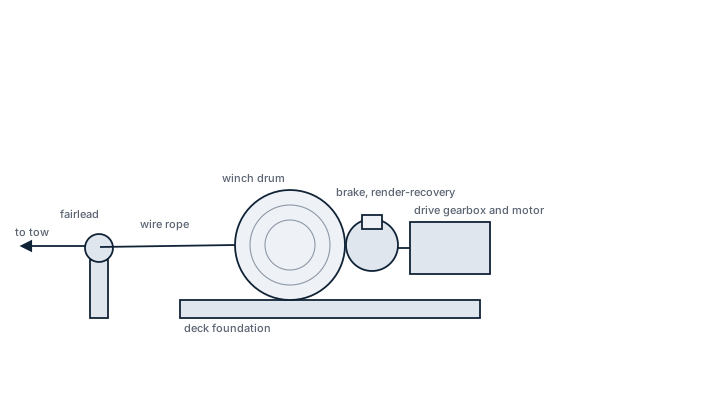
Main Components
- Drum – single or split, sized for the towline and, on many designs, a separate pennant or guide wire.
- Brake – band or disc, rated to hold the towline at a defined percentage above maximum expected pull.
- Drive – hydraulic or electric motor, sized for both hauling speed and render/recover response.
- Level wind and spooling gear – keeps the wire laying evenly across the drum under load.
- Load cell or tension monitoring – feeds the constant-tension control loop and gives the operator a live reading.
- Emergency quick release – drops the load fast if the towline must be let go in an emergency.
- Towline and fairlead – wire rope construction chosen for flexibility and resistance to crushing, run out over a stern roller or fairlead.
Selection and Sizing
Brake holding capacity has to exceed the towline's breaking strength by the margin required for the vessel's towing or escort notation, not just match the tug's bollard pull. Drum capacity is set by wire diameter and the length needed for the trade the tug works in, and the rendering speed range and constant-tension band both need to suit the sea states expected, since an escort tug working at speed alongside a large ship sees very different dynamics from a harbour tug on a short line. These duty differences are exactly what separates an escort-rated winch from a basic harbour towing winch of similar drum size.
Regulations and Class
Class towing and escort notations require the winch brake to be tested and certified to hold at a defined margin above the rated towline pull, and the towline itself carries its own certification with periodic proof load testing. Where a winch is fitted as part of a ship's emergency towing arrangement rather than a tug's working gear, SOLAS Chapter II-1 requirements for tankers of 20,000 dwt and above apply, including the ability to bring the arrangement into use quickly and, on many designs, without needing external power.
Typical Faults
- Brake lining wear or glazing – reduces holding capacity and risks uncontrolled paying-out under load exactly when the brake is needed most.
- Fatigue or broken wires at drum crossover points – the towline can part suddenly under a shock load that a visually intact rope should have survived.
- Level wind misalignment – wire piles up and crushes itself on the drum, reducing both capacity and rope life.
- Faulty hydraulic valve in constant-tension mode – tension hunts up and down, generating snatch loads on the towline instead of absorbing them.
- Load cell drift – the operator sees an inaccurate tension reading and either over- or under-tensions the tow without realising it.
What to Look for in a Supplier
- A brake test certificate showing holding capacity at the winch's rated load, not just the drive motor's output.
- A towline specification matched to the drum grooving and the constant-tension control system, since not every wire construction suits every winch.
- Service support for the hydraulic power unit specific to the winch, rather than a generic hydraulics contractor.
- Spare brake linings and load cell calibration held or readily available.
Test render and recover under an actual load before relying on constant-tension mode in service; a winch that behaves correctly on a static bench test can still hunt or snatch once real wave-induced loads are on the line.
28 manufacturers · 559 models
DMT Marine Equipment SA
27 ✓ 21 verified- Brake lining wear, contamination, glazing, or poor adjustment causes slipping, overheating, or inability to hold load
- Hydraulic leakage, low system pressure, pump wear, or valve faults cause slow movement, weak pull, or failure to operate
- Electric motor, starter, brake, or protection faults cause failed starting, trips, or loss of one direction
- Gear, bearing, shaft, drum, gypsy, clutch, or warping-head wear causes noise, backlash, vibration, or unreliable engagement
- Corrosion, seized controls, limit devices, or remote-control faults from deck exposure cause stiff operation or failed commands
- Brake lining wear, contamination, glazing, or poor adjustment causes slipping, overheating, or inability to hold load
- Hydraulic leakage, low system pressure, pump wear, or valve faults cause slow movement, weak pull, or failure to operate
- Electric motor, starter, brake, or protection faults cause failed starting, trips, or loss of one direction
- Gear, bearing, shaft, drum, gypsy, clutch, or warping-head wear causes noise, backlash, vibration, or unreliable engagement
- Corrosion, seized controls, limit devices, or remote-control faults from deck exposure cause stiff operation or failed commands
- Wire/rope wear or spooling damage, typically indicated by broken strands, flattening, poor winding or failed inspection
- Brake or clutch wear, typically indicated by poor load control, slipping or overheating
- Hydraulic leakage or drive fault, typically indicated by slow/restricted operation or inability to heave/pay out
- Towing-hook latch or emergency-release fault, typically indicated by failure to secure or release when commanded
- Load-cell/control-system fault, typically indicated by incorrect tension indication or alarm
- Wire/rope wear or spooling damage, typically indicated by broken strands, flattening, poor winding or failed inspection
- Brake or clutch wear, typically indicated by poor load control, slipping or overheating
- Hydraulic leakage or drive fault, typically indicated by slow/restricted operation or inability to heave/pay out
- Towing-hook latch or emergency-release fault, typically indicated by failure to secure or release when commanded
- Load-cell/control-system fault, typically indicated by incorrect tension indication or alarm
- Wire/rope wear or spooling damage, typically indicated by broken strands, flattening, poor winding or failed inspection
- Brake or clutch wear, typically indicated by poor load control, slipping or overheating
- Hydraulic leakage or drive fault, typically indicated by slow/restricted operation or inability to heave/pay out
- Towing-hook latch or emergency-release fault, typically indicated by failure to secure or release when commanded
- Load-cell/control-system fault, typically indicated by incorrect tension indication or alarm
- Wire/rope wear or spooling damage, typically indicated by broken strands, flattening, poor winding or failed inspection
- Brake or clutch wear, typically indicated by poor load control, slipping or overheating
- Hydraulic leakage or drive fault, typically indicated by slow/restricted operation or inability to heave/pay out
- Towing-hook latch or emergency-release fault, typically indicated by failure to secure or release when commanded
- Load-cell/control-system fault, typically indicated by incorrect tension indication or alarm
- Area: Brake lining wear and brake band condition: inspect brake pads/linings for wear, glazing, or contamination (oil/grease), check brake band seating and adjustmentCheck: Brake lining wear and brake band condition: inspect brake pads/linings for wear, glazing, or contamination (oil/grease), check brake band seating and adjustment per manufacturer tolerance
- Area: Wire rope / synthetic towline condition: inspect for broken wires, kinks, corrosion, wear, and correct spooling on drum; check end terminations and connection tCheck: Wire rope / synthetic towline condition: inspect for broken wires, kinks, corrosion, wear, and correct spooling on drum; check end terminations and connection to drum barrel
- Area: Hydraulic system integrity (for hydraulic-drive models): check oil level, filter condition, hose and fitting integrity for leaks, pressure relief valve settingsCheck: Hydraulic system integrity (for hydraulic-drive models): check oil level, filter condition, hose and fitting integrity for leaks, pressure relief valve settings, and hydraulic motor condition
- Area: Gearbox and bearing lubrication: verify oil levels in reduction gearbox, grease all designated lubrication points on bearings and shaft seals per maintenance scCheck: Gearbox and bearing lubrication: verify oil levels in reduction gearbox, grease all designated lubrication points on bearings and shaft seals per maintenance schedule
- Area: Clutch and dog-clutch engagement: inspect clutch plates or dog-clutch teeth for wear and correct engagement; verify declutching mechanism operates freely underCheck: Clutch and dog-clutch engagement: inspect clutch plates or dog-clutch teeth for wear and correct engagement; verify declutching mechanism operates freely under no-load
- Area: Structural and foundation integrity: examine winch bedplate, foundation bolts, welded connections, and frame for cracks, corrosion, or deformation; check drum fCheck: Structural and foundation integrity: examine winch bedplate, foundation bolts, welded connections, and frame for cracks, corrosion, or deformation; check drum flanges for cracks
- Area: Control system and safety devices: test remote and local controls, verify overload protection / load limiter settings, check e-stop functionality, audible/visuaCheck: Control system and safety devices: test remote and local controls, verify overload protection / load limiter settings, check e-stop functionality, audible/visual alarms, and constant-tension system calibration
- Area: Corrosion protection: inspect paint system and sacrificial anodes for condition, treat bare metal areas, verify stainless-steel or galvanized components are freCheck: Corrosion protection: inspect paint system and sacrificial anodes for condition, treat bare metal areas, verify stainless-steel or galvanized components are free of corrosion
Typ-universelle Inspektionspunkte fuer Towing Equipment (verifiziert, 2026-06).
- Area: Brake lining wear and brake band condition: inspect brake pads/linings for wear, glazing, or contamination (oil/grease), check brake band seating and adjustmentCheck: Brake lining wear and brake band condition: inspect brake pads/linings for wear, glazing, or contamination (oil/grease), check brake band seating and adjustment per manufacturer tolerance
- Area: Wire rope / synthetic towline condition: inspect for broken wires, kinks, corrosion, wear, and correct spooling on drum; check end terminations and connection tCheck: Wire rope / synthetic towline condition: inspect for broken wires, kinks, corrosion, wear, and correct spooling on drum; check end terminations and connection to drum barrel
- Area: Hydraulic system integrity (for hydraulic-drive models): check oil level, filter condition, hose and fitting integrity for leaks, pressure relief valve settingsCheck: Hydraulic system integrity (for hydraulic-drive models): check oil level, filter condition, hose and fitting integrity for leaks, pressure relief valve settings, and hydraulic motor condition
- Area: Gearbox and bearing lubrication: verify oil levels in reduction gearbox, grease all designated lubrication points on bearings and shaft seals per maintenance scCheck: Gearbox and bearing lubrication: verify oil levels in reduction gearbox, grease all designated lubrication points on bearings and shaft seals per maintenance schedule
- Area: Clutch and dog-clutch engagement: inspect clutch plates or dog-clutch teeth for wear and correct engagement; verify declutching mechanism operates freely underCheck: Clutch and dog-clutch engagement: inspect clutch plates or dog-clutch teeth for wear and correct engagement; verify declutching mechanism operates freely under no-load
- Area: Structural and foundation integrity: examine winch bedplate, foundation bolts, welded connections, and frame for cracks, corrosion, or deformation; check drum fCheck: Structural and foundation integrity: examine winch bedplate, foundation bolts, welded connections, and frame for cracks, corrosion, or deformation; check drum flanges for cracks
- Area: Control system and safety devices: test remote and local controls, verify overload protection / load limiter settings, check e-stop functionality, audible/visuaCheck: Control system and safety devices: test remote and local controls, verify overload protection / load limiter settings, check e-stop functionality, audible/visual alarms, and constant-tension system calibration
- Area: Corrosion protection: inspect paint system and sacrificial anodes for condition, treat bare metal areas, verify stainless-steel or galvanized components are freCheck: Corrosion protection: inspect paint system and sacrificial anodes for condition, treat bare metal areas, verify stainless-steel or galvanized components are free of corrosion
Typ-universelle Inspektionspunkte fuer Towing Equipment (verifiziert, 2026-06).
- Area: Brake lining wear and brake band condition: inspect brake pads/linings for wear, glazing, or contamination (oil/grease), check brake band seating and adjustmentCheck: Brake lining wear and brake band condition: inspect brake pads/linings for wear, glazing, or contamination (oil/grease), check brake band seating and adjustment per manufacturer tolerance
- Area: Wire rope / synthetic towline condition: inspect for broken wires, kinks, corrosion, wear, and correct spooling on drum; check end terminations and connection tCheck: Wire rope / synthetic towline condition: inspect for broken wires, kinks, corrosion, wear, and correct spooling on drum; check end terminations and connection to drum barrel
- Area: Hydraulic system integrity (for hydraulic-drive models): check oil level, filter condition, hose and fitting integrity for leaks, pressure relief valve settingsCheck: Hydraulic system integrity (for hydraulic-drive models): check oil level, filter condition, hose and fitting integrity for leaks, pressure relief valve settings, and hydraulic motor condition
- Area: Gearbox and bearing lubrication: verify oil levels in reduction gearbox, grease all designated lubrication points on bearings and shaft seals per maintenance scCheck: Gearbox and bearing lubrication: verify oil levels in reduction gearbox, grease all designated lubrication points on bearings and shaft seals per maintenance schedule
- Area: Clutch and dog-clutch engagement: inspect clutch plates or dog-clutch teeth for wear and correct engagement; verify declutching mechanism operates freely underCheck: Clutch and dog-clutch engagement: inspect clutch plates or dog-clutch teeth for wear and correct engagement; verify declutching mechanism operates freely under no-load
- Area: Structural and foundation integrity: examine winch bedplate, foundation bolts, welded connections, and frame for cracks, corrosion, or deformation; check drum fCheck: Structural and foundation integrity: examine winch bedplate, foundation bolts, welded connections, and frame for cracks, corrosion, or deformation; check drum flanges for cracks
- Area: Control system and safety devices: test remote and local controls, verify overload protection / load limiter settings, check e-stop functionality, audible/visuaCheck: Control system and safety devices: test remote and local controls, verify overload protection / load limiter settings, check e-stop functionality, audible/visual alarms, and constant-tension system calibration
- Area: Corrosion protection: inspect paint system and sacrificial anodes for condition, treat bare metal areas, verify stainless-steel or galvanized components are freCheck: Corrosion protection: inspect paint system and sacrificial anodes for condition, treat bare metal areas, verify stainless-steel or galvanized components are free of corrosion
Typ-universelle Inspektionspunkte fuer Towing Equipment (verifiziert, 2026-06).
- Area: Brake lining wear and brake band condition: inspect brake pads/linings for wear, glazing, or contamination (oil/grease), check brake band seating and adjustmentCheck: Brake lining wear and brake band condition: inspect brake pads/linings for wear, glazing, or contamination (oil/grease), check brake band seating and adjustment per manufacturer tolerance
- Area: Wire rope / synthetic towline condition: inspect for broken wires, kinks, corrosion, wear, and correct spooling on drum; check end terminations and connection tCheck: Wire rope / synthetic towline condition: inspect for broken wires, kinks, corrosion, wear, and correct spooling on drum; check end terminations and connection to drum barrel
- Area: Hydraulic system integrity (for hydraulic-drive models): check oil level, filter condition, hose and fitting integrity for leaks, pressure relief valve settingsCheck: Hydraulic system integrity (for hydraulic-drive models): check oil level, filter condition, hose and fitting integrity for leaks, pressure relief valve settings, and hydraulic motor condition
- Area: Gearbox and bearing lubrication: verify oil levels in reduction gearbox, grease all designated lubrication points on bearings and shaft seals per maintenance scCheck: Gearbox and bearing lubrication: verify oil levels in reduction gearbox, grease all designated lubrication points on bearings and shaft seals per maintenance schedule
- Area: Clutch and dog-clutch engagement: inspect clutch plates or dog-clutch teeth for wear and correct engagement; verify declutching mechanism operates freely underCheck: Clutch and dog-clutch engagement: inspect clutch plates or dog-clutch teeth for wear and correct engagement; verify declutching mechanism operates freely under no-load
- Area: Structural and foundation integrity: examine winch bedplate, foundation bolts, welded connections, and frame for cracks, corrosion, or deformation; check drum fCheck: Structural and foundation integrity: examine winch bedplate, foundation bolts, welded connections, and frame for cracks, corrosion, or deformation; check drum flanges for cracks
- Area: Control system and safety devices: test remote and local controls, verify overload protection / load limiter settings, check e-stop functionality, audible/visuaCheck: Control system and safety devices: test remote and local controls, verify overload protection / load limiter settings, check e-stop functionality, audible/visual alarms, and constant-tension system calibration
- Area: Corrosion protection: inspect paint system and sacrificial anodes for condition, treat bare metal areas, verify stainless-steel or galvanized components are freCheck: Corrosion protection: inspect paint system and sacrificial anodes for condition, treat bare metal areas, verify stainless-steel or galvanized components are free of corrosion
Typ-universelle Inspektionspunkte fuer Towing Equipment (verifiziert, 2026-06).
- Area: Brake lining wear and brake band condition: inspect brake pads/linings for wear, glazing, or contamination (oil/grease), check brake band seating and adjustmentCheck: Brake lining wear and brake band condition: inspect brake pads/linings for wear, glazing, or contamination (oil/grease), check brake band seating and adjustment per manufacturer tolerance
- Area: Wire rope / synthetic towline condition: inspect for broken wires, kinks, corrosion, wear, and correct spooling on drum; check end terminations and connection tCheck: Wire rope / synthetic towline condition: inspect for broken wires, kinks, corrosion, wear, and correct spooling on drum; check end terminations and connection to drum barrel
- Area: Hydraulic system integrity (for hydraulic-drive models): check oil level, filter condition, hose and fitting integrity for leaks, pressure relief valve settingsCheck: Hydraulic system integrity (for hydraulic-drive models): check oil level, filter condition, hose and fitting integrity for leaks, pressure relief valve settings, and hydraulic motor condition
- Area: Gearbox and bearing lubrication: verify oil levels in reduction gearbox, grease all designated lubrication points on bearings and shaft seals per maintenance scCheck: Gearbox and bearing lubrication: verify oil levels in reduction gearbox, grease all designated lubrication points on bearings and shaft seals per maintenance schedule
- Area: Clutch and dog-clutch engagement: inspect clutch plates or dog-clutch teeth for wear and correct engagement; verify declutching mechanism operates freely underCheck: Clutch and dog-clutch engagement: inspect clutch plates or dog-clutch teeth for wear and correct engagement; verify declutching mechanism operates freely under no-load
- Area: Structural and foundation integrity: examine winch bedplate, foundation bolts, welded connections, and frame for cracks, corrosion, or deformation; check drum fCheck: Structural and foundation integrity: examine winch bedplate, foundation bolts, welded connections, and frame for cracks, corrosion, or deformation; check drum flanges for cracks
- Area: Control system and safety devices: test remote and local controls, verify overload protection / load limiter settings, check e-stop functionality, audible/visuaCheck: Control system and safety devices: test remote and local controls, verify overload protection / load limiter settings, check e-stop functionality, audible/visual alarms, and constant-tension system calibration
- Area: Corrosion protection: inspect paint system and sacrificial anodes for condition, treat bare metal areas, verify stainless-steel or galvanized components are freCheck: Corrosion protection: inspect paint system and sacrificial anodes for condition, treat bare metal areas, verify stainless-steel or galvanized components are free of corrosion
Typ-universelle Inspektionspunkte fuer Towing Equipment (verifiziert, 2026-06).
- Area: Brake lining wear and brake band condition: inspect brake pads/linings for wear, glazing, or contamination (oil/grease), check brake band seating and adjustmentCheck: Brake lining wear and brake band condition: inspect brake pads/linings for wear, glazing, or contamination (oil/grease), check brake band seating and adjustment per manufacturer tolerance
- Area: Wire rope / synthetic towline condition: inspect for broken wires, kinks, corrosion, wear, and correct spooling on drum; check end terminations and connection tCheck: Wire rope / synthetic towline condition: inspect for broken wires, kinks, corrosion, wear, and correct spooling on drum; check end terminations and connection to drum barrel
- Area: Hydraulic system integrity (for hydraulic-drive models): check oil level, filter condition, hose and fitting integrity for leaks, pressure relief valve settingsCheck: Hydraulic system integrity (for hydraulic-drive models): check oil level, filter condition, hose and fitting integrity for leaks, pressure relief valve settings, and hydraulic motor condition
- Area: Gearbox and bearing lubrication: verify oil levels in reduction gearbox, grease all designated lubrication points on bearings and shaft seals per maintenance scCheck: Gearbox and bearing lubrication: verify oil levels in reduction gearbox, grease all designated lubrication points on bearings and shaft seals per maintenance schedule
- Area: Clutch and dog-clutch engagement: inspect clutch plates or dog-clutch teeth for wear and correct engagement; verify declutching mechanism operates freely underCheck: Clutch and dog-clutch engagement: inspect clutch plates or dog-clutch teeth for wear and correct engagement; verify declutching mechanism operates freely under no-load
- Area: Structural and foundation integrity: examine winch bedplate, foundation bolts, welded connections, and frame for cracks, corrosion, or deformation; check drum fCheck: Structural and foundation integrity: examine winch bedplate, foundation bolts, welded connections, and frame for cracks, corrosion, or deformation; check drum flanges for cracks
- Area: Control system and safety devices: test remote and local controls, verify overload protection / load limiter settings, check e-stop functionality, audible/visuaCheck: Control system and safety devices: test remote and local controls, verify overload protection / load limiter settings, check e-stop functionality, audible/visual alarms, and constant-tension system calibration
- Area: Corrosion protection: inspect paint system and sacrificial anodes for condition, treat bare metal areas, verify stainless-steel or galvanized components are freCheck: Corrosion protection: inspect paint system and sacrificial anodes for condition, treat bare metal areas, verify stainless-steel or galvanized components are free of corrosion
Typ-universelle Inspektionspunkte fuer Towing Equipment (verifiziert, 2026-06).
- Area: Brake lining wear and brake band condition: inspect brake pads/linings for wear, glazing, or contamination (oil/grease), check brake band seating and adjustmentCheck: Brake lining wear and brake band condition: inspect brake pads/linings for wear, glazing, or contamination (oil/grease), check brake band seating and adjustment per manufacturer tolerance
- Area: Wire rope / synthetic towline condition: inspect for broken wires, kinks, corrosion, wear, and correct spooling on drum; check end terminations and connection tCheck: Wire rope / synthetic towline condition: inspect for broken wires, kinks, corrosion, wear, and correct spooling on drum; check end terminations and connection to drum barrel
- Area: Hydraulic system integrity (for hydraulic-drive models): check oil level, filter condition, hose and fitting integrity for leaks, pressure relief valve settingsCheck: Hydraulic system integrity (for hydraulic-drive models): check oil level, filter condition, hose and fitting integrity for leaks, pressure relief valve settings, and hydraulic motor condition
- Area: Gearbox and bearing lubrication: verify oil levels in reduction gearbox, grease all designated lubrication points on bearings and shaft seals per maintenance scCheck: Gearbox and bearing lubrication: verify oil levels in reduction gearbox, grease all designated lubrication points on bearings and shaft seals per maintenance schedule
- Area: Clutch and dog-clutch engagement: inspect clutch plates or dog-clutch teeth for wear and correct engagement; verify declutching mechanism operates freely underCheck: Clutch and dog-clutch engagement: inspect clutch plates or dog-clutch teeth for wear and correct engagement; verify declutching mechanism operates freely under no-load
- Area: Structural and foundation integrity: examine winch bedplate, foundation bolts, welded connections, and frame for cracks, corrosion, or deformation; check drum fCheck: Structural and foundation integrity: examine winch bedplate, foundation bolts, welded connections, and frame for cracks, corrosion, or deformation; check drum flanges for cracks
- Area: Control system and safety devices: test remote and local controls, verify overload protection / load limiter settings, check e-stop functionality, audible/visuaCheck: Control system and safety devices: test remote and local controls, verify overload protection / load limiter settings, check e-stop functionality, audible/visual alarms, and constant-tension system calibration
- Area: Corrosion protection: inspect paint system and sacrificial anodes for condition, treat bare metal areas, verify stainless-steel or galvanized components are freCheck: Corrosion protection: inspect paint system and sacrificial anodes for condition, treat bare metal areas, verify stainless-steel or galvanized components are free of corrosion
Typ-universelle Inspektionspunkte fuer Towing Equipment (verifiziert, 2026-06).
- Area: Brake lining wear and brake band condition: inspect brake pads/linings for wear, glazing, or contamination (oil/grease), check brake band seating and adjustmentCheck: Brake lining wear and brake band condition: inspect brake pads/linings for wear, glazing, or contamination (oil/grease), check brake band seating and adjustment per manufacturer tolerance
- Area: Wire rope / synthetic towline condition: inspect for broken wires, kinks, corrosion, wear, and correct spooling on drum; check end terminations and connection tCheck: Wire rope / synthetic towline condition: inspect for broken wires, kinks, corrosion, wear, and correct spooling on drum; check end terminations and connection to drum barrel
- Area: Hydraulic system integrity (for hydraulic-drive models): check oil level, filter condition, hose and fitting integrity for leaks, pressure relief valve settingsCheck: Hydraulic system integrity (for hydraulic-drive models): check oil level, filter condition, hose and fitting integrity for leaks, pressure relief valve settings, and hydraulic motor condition
- Area: Gearbox and bearing lubrication: verify oil levels in reduction gearbox, grease all designated lubrication points on bearings and shaft seals per maintenance scCheck: Gearbox and bearing lubrication: verify oil levels in reduction gearbox, grease all designated lubrication points on bearings and shaft seals per maintenance schedule
- Area: Clutch and dog-clutch engagement: inspect clutch plates or dog-clutch teeth for wear and correct engagement; verify declutching mechanism operates freely underCheck: Clutch and dog-clutch engagement: inspect clutch plates or dog-clutch teeth for wear and correct engagement; verify declutching mechanism operates freely under no-load
- Area: Structural and foundation integrity: examine winch bedplate, foundation bolts, welded connections, and frame for cracks, corrosion, or deformation; check drum fCheck: Structural and foundation integrity: examine winch bedplate, foundation bolts, welded connections, and frame for cracks, corrosion, or deformation; check drum flanges for cracks
- Area: Control system and safety devices: test remote and local controls, verify overload protection / load limiter settings, check e-stop functionality, audible/visuaCheck: Control system and safety devices: test remote and local controls, verify overload protection / load limiter settings, check e-stop functionality, audible/visual alarms, and constant-tension system calibration
- Area: Corrosion protection: inspect paint system and sacrificial anodes for condition, treat bare metal areas, verify stainless-steel or galvanized components are freCheck: Corrosion protection: inspect paint system and sacrificial anodes for condition, treat bare metal areas, verify stainless-steel or galvanized components are free of corrosion
Typ-universelle Inspektionspunkte fuer Towing Equipment (verifiziert, 2026-06).
- Area: Brake lining wear and brake band condition: inspect brake pads/linings for wear, glazing, or contamination (oil/grease), check brake band seating and adjustmentCheck: Brake lining wear and brake band condition: inspect brake pads/linings for wear, glazing, or contamination (oil/grease), check brake band seating and adjustment per manufacturer tolerance
- Area: Wire rope / synthetic towline condition: inspect for broken wires, kinks, corrosion, wear, and correct spooling on drum; check end terminations and connection tCheck: Wire rope / synthetic towline condition: inspect for broken wires, kinks, corrosion, wear, and correct spooling on drum; check end terminations and connection to drum barrel
- Area: Hydraulic system integrity (for hydraulic-drive models): check oil level, filter condition, hose and fitting integrity for leaks, pressure relief valve settingsCheck: Hydraulic system integrity (for hydraulic-drive models): check oil level, filter condition, hose and fitting integrity for leaks, pressure relief valve settings, and hydraulic motor condition
- Area: Gearbox and bearing lubrication: verify oil levels in reduction gearbox, grease all designated lubrication points on bearings and shaft seals per maintenance scCheck: Gearbox and bearing lubrication: verify oil levels in reduction gearbox, grease all designated lubrication points on bearings and shaft seals per maintenance schedule
- Area: Clutch and dog-clutch engagement: inspect clutch plates or dog-clutch teeth for wear and correct engagement; verify declutching mechanism operates freely underCheck: Clutch and dog-clutch engagement: inspect clutch plates or dog-clutch teeth for wear and correct engagement; verify declutching mechanism operates freely under no-load
- Area: Structural and foundation integrity: examine winch bedplate, foundation bolts, welded connections, and frame for cracks, corrosion, or deformation; check drum fCheck: Structural and foundation integrity: examine winch bedplate, foundation bolts, welded connections, and frame for cracks, corrosion, or deformation; check drum flanges for cracks
- Area: Control system and safety devices: test remote and local controls, verify overload protection / load limiter settings, check e-stop functionality, audible/visuaCheck: Control system and safety devices: test remote and local controls, verify overload protection / load limiter settings, check e-stop functionality, audible/visual alarms, and constant-tension system calibration
- Area: Corrosion protection: inspect paint system and sacrificial anodes for condition, treat bare metal areas, verify stainless-steel or galvanized components are freCheck: Corrosion protection: inspect paint system and sacrificial anodes for condition, treat bare metal areas, verify stainless-steel or galvanized components are free of corrosion
Typ-universelle Inspektionspunkte fuer Towing Equipment (verifiziert, 2026-06).
- Area: Brake lining wear and brake band condition: inspect brake pads/linings for wear, glazing, or contamination (oil/grease), check brake band seating and adjustmentCheck: Brake lining wear and brake band condition: inspect brake pads/linings for wear, glazing, or contamination (oil/grease), check brake band seating and adjustment per manufacturer tolerance
- Area: Wire rope / synthetic towline condition: inspect for broken wires, kinks, corrosion, wear, and correct spooling on drum; check end terminations and connection tCheck: Wire rope / synthetic towline condition: inspect for broken wires, kinks, corrosion, wear, and correct spooling on drum; check end terminations and connection to drum barrel
- Area: Hydraulic system integrity (for hydraulic-drive models): check oil level, filter condition, hose and fitting integrity for leaks, pressure relief valve settingsCheck: Hydraulic system integrity (for hydraulic-drive models): check oil level, filter condition, hose and fitting integrity for leaks, pressure relief valve settings, and hydraulic motor condition
- Area: Gearbox and bearing lubrication: verify oil levels in reduction gearbox, grease all designated lubrication points on bearings and shaft seals per maintenance scCheck: Gearbox and bearing lubrication: verify oil levels in reduction gearbox, grease all designated lubrication points on bearings and shaft seals per maintenance schedule
- Area: Clutch and dog-clutch engagement: inspect clutch plates or dog-clutch teeth for wear and correct engagement; verify declutching mechanism operates freely underCheck: Clutch and dog-clutch engagement: inspect clutch plates or dog-clutch teeth for wear and correct engagement; verify declutching mechanism operates freely under no-load
- Area: Structural and foundation integrity: examine winch bedplate, foundation bolts, welded connections, and frame for cracks, corrosion, or deformation; check drum fCheck: Structural and foundation integrity: examine winch bedplate, foundation bolts, welded connections, and frame for cracks, corrosion, or deformation; check drum flanges for cracks
- Area: Control system and safety devices: test remote and local controls, verify overload protection / load limiter settings, check e-stop functionality, audible/visuaCheck: Control system and safety devices: test remote and local controls, verify overload protection / load limiter settings, check e-stop functionality, audible/visual alarms, and constant-tension system calibration
- Area: Corrosion protection: inspect paint system and sacrificial anodes for condition, treat bare metal areas, verify stainless-steel or galvanized components are freCheck: Corrosion protection: inspect paint system and sacrificial anodes for condition, treat bare metal areas, verify stainless-steel or galvanized components are free of corrosion
Typ-universelle Inspektionspunkte fuer Towing Equipment (verifiziert, 2026-06).
- Area: Brake lining wear and brake band condition: inspect brake pads/linings for wear, glazing, or contamination (oil/grease), check brake band seating and adjustmentCheck: Brake lining wear and brake band condition: inspect brake pads/linings for wear, glazing, or contamination (oil/grease), check brake band seating and adjustment per manufacturer tolerance
- Area: Wire rope / synthetic towline condition: inspect for broken wires, kinks, corrosion, wear, and correct spooling on drum; check end terminations and connection tCheck: Wire rope / synthetic towline condition: inspect for broken wires, kinks, corrosion, wear, and correct spooling on drum; check end terminations and connection to drum barrel
- Area: Hydraulic system integrity (for hydraulic-drive models): check oil level, filter condition, hose and fitting integrity for leaks, pressure relief valve settingsCheck: Hydraulic system integrity (for hydraulic-drive models): check oil level, filter condition, hose and fitting integrity for leaks, pressure relief valve settings, and hydraulic motor condition
- Area: Gearbox and bearing lubrication: verify oil levels in reduction gearbox, grease all designated lubrication points on bearings and shaft seals per maintenance scCheck: Gearbox and bearing lubrication: verify oil levels in reduction gearbox, grease all designated lubrication points on bearings and shaft seals per maintenance schedule
- Area: Clutch and dog-clutch engagement: inspect clutch plates or dog-clutch teeth for wear and correct engagement; verify declutching mechanism operates freely underCheck: Clutch and dog-clutch engagement: inspect clutch plates or dog-clutch teeth for wear and correct engagement; verify declutching mechanism operates freely under no-load
- Area: Structural and foundation integrity: examine winch bedplate, foundation bolts, welded connections, and frame for cracks, corrosion, or deformation; check drum fCheck: Structural and foundation integrity: examine winch bedplate, foundation bolts, welded connections, and frame for cracks, corrosion, or deformation; check drum flanges for cracks
- Area: Control system and safety devices: test remote and local controls, verify overload protection / load limiter settings, check e-stop functionality, audible/visuaCheck: Control system and safety devices: test remote and local controls, verify overload protection / load limiter settings, check e-stop functionality, audible/visual alarms, and constant-tension system calibration
- Area: Corrosion protection: inspect paint system and sacrificial anodes for condition, treat bare metal areas, verify stainless-steel or galvanized components are freCheck: Corrosion protection: inspect paint system and sacrificial anodes for condition, treat bare metal areas, verify stainless-steel or galvanized components are free of corrosion
Typ-universelle Inspektionspunkte fuer Towing Equipment (verifiziert, 2026-06).
- Area: Brake lining wear and brake band condition: inspect brake pads/linings for wear, glazing, or contamination (oil/grease), check brake band seating and adjustmentCheck: Brake lining wear and brake band condition: inspect brake pads/linings for wear, glazing, or contamination (oil/grease), check brake band seating and adjustment per manufacturer tolerance
- Area: Wire rope / synthetic towline condition: inspect for broken wires, kinks, corrosion, wear, and correct spooling on drum; check end terminations and connection tCheck: Wire rope / synthetic towline condition: inspect for broken wires, kinks, corrosion, wear, and correct spooling on drum; check end terminations and connection to drum barrel
- Area: Hydraulic system integrity (for hydraulic-drive models): check oil level, filter condition, hose and fitting integrity for leaks, pressure relief valve settingsCheck: Hydraulic system integrity (for hydraulic-drive models): check oil level, filter condition, hose and fitting integrity for leaks, pressure relief valve settings, and hydraulic motor condition
- Area: Gearbox and bearing lubrication: verify oil levels in reduction gearbox, grease all designated lubrication points on bearings and shaft seals per maintenance scCheck: Gearbox and bearing lubrication: verify oil levels in reduction gearbox, grease all designated lubrication points on bearings and shaft seals per maintenance schedule
- Area: Clutch and dog-clutch engagement: inspect clutch plates or dog-clutch teeth for wear and correct engagement; verify declutching mechanism operates freely underCheck: Clutch and dog-clutch engagement: inspect clutch plates or dog-clutch teeth for wear and correct engagement; verify declutching mechanism operates freely under no-load
- Area: Structural and foundation integrity: examine winch bedplate, foundation bolts, welded connections, and frame for cracks, corrosion, or deformation; check drum fCheck: Structural and foundation integrity: examine winch bedplate, foundation bolts, welded connections, and frame for cracks, corrosion, or deformation; check drum flanges for cracks
- Area: Control system and safety devices: test remote and local controls, verify overload protection / load limiter settings, check e-stop functionality, audible/visuaCheck: Control system and safety devices: test remote and local controls, verify overload protection / load limiter settings, check e-stop functionality, audible/visual alarms, and constant-tension system calibration
- Area: Corrosion protection: inspect paint system and sacrificial anodes for condition, treat bare metal areas, verify stainless-steel or galvanized components are freCheck: Corrosion protection: inspect paint system and sacrificial anodes for condition, treat bare metal areas, verify stainless-steel or galvanized components are free of corrosion
Typ-universelle Inspektionspunkte fuer Towing Equipment (verifiziert, 2026-06).
- Area: Brake lining wear and brake band condition: inspect brake pads/linings for wear, glazing, or contamination (oil/grease), check brake band seating and adjustmentCheck: Brake lining wear and brake band condition: inspect brake pads/linings for wear, glazing, or contamination (oil/grease), check brake band seating and adjustment per manufacturer tolerance
- Area: Wire rope / synthetic towline condition: inspect for broken wires, kinks, corrosion, wear, and correct spooling on drum; check end terminations and connection tCheck: Wire rope / synthetic towline condition: inspect for broken wires, kinks, corrosion, wear, and correct spooling on drum; check end terminations and connection to drum barrel
- Area: Hydraulic system integrity (for hydraulic-drive models): check oil level, filter condition, hose and fitting integrity for leaks, pressure relief valve settingsCheck: Hydraulic system integrity (for hydraulic-drive models): check oil level, filter condition, hose and fitting integrity for leaks, pressure relief valve settings, and hydraulic motor condition
- Area: Gearbox and bearing lubrication: verify oil levels in reduction gearbox, grease all designated lubrication points on bearings and shaft seals per maintenance scCheck: Gearbox and bearing lubrication: verify oil levels in reduction gearbox, grease all designated lubrication points on bearings and shaft seals per maintenance schedule
- Area: Clutch and dog-clutch engagement: inspect clutch plates or dog-clutch teeth for wear and correct engagement; verify declutching mechanism operates freely underCheck: Clutch and dog-clutch engagement: inspect clutch plates or dog-clutch teeth for wear and correct engagement; verify declutching mechanism operates freely under no-load
- Area: Structural and foundation integrity: examine winch bedplate, foundation bolts, welded connections, and frame for cracks, corrosion, or deformation; check drum fCheck: Structural and foundation integrity: examine winch bedplate, foundation bolts, welded connections, and frame for cracks, corrosion, or deformation; check drum flanges for cracks
- Area: Control system and safety devices: test remote and local controls, verify overload protection / load limiter settings, check e-stop functionality, audible/visuaCheck: Control system and safety devices: test remote and local controls, verify overload protection / load limiter settings, check e-stop functionality, audible/visual alarms, and constant-tension system calibration
- Area: Corrosion protection: inspect paint system and sacrificial anodes for condition, treat bare metal areas, verify stainless-steel or galvanized components are freCheck: Corrosion protection: inspect paint system and sacrificial anodes for condition, treat bare metal areas, verify stainless-steel or galvanized components are free of corrosion
Typ-universelle Inspektionspunkte fuer Towing Equipment (verifiziert, 2026-06).
- Area: Brake lining wear and brake band condition: inspect brake pads/linings for wear, glazing, or contamination (oil/grease), check brake band seating and adjustmentCheck: Brake lining wear and brake band condition: inspect brake pads/linings for wear, glazing, or contamination (oil/grease), check brake band seating and adjustment per manufacturer tolerance
- Area: Wire rope / synthetic towline condition: inspect for broken wires, kinks, corrosion, wear, and correct spooling on drum; check end terminations and connection tCheck: Wire rope / synthetic towline condition: inspect for broken wires, kinks, corrosion, wear, and correct spooling on drum; check end terminations and connection to drum barrel
- Area: Hydraulic system integrity (for hydraulic-drive models): check oil level, filter condition, hose and fitting integrity for leaks, pressure relief valve settingsCheck: Hydraulic system integrity (for hydraulic-drive models): check oil level, filter condition, hose and fitting integrity for leaks, pressure relief valve settings, and hydraulic motor condition
- Area: Gearbox and bearing lubrication: verify oil levels in reduction gearbox, grease all designated lubrication points on bearings and shaft seals per maintenance scCheck: Gearbox and bearing lubrication: verify oil levels in reduction gearbox, grease all designated lubrication points on bearings and shaft seals per maintenance schedule
- Area: Clutch and dog-clutch engagement: inspect clutch plates or dog-clutch teeth for wear and correct engagement; verify declutching mechanism operates freely underCheck: Clutch and dog-clutch engagement: inspect clutch plates or dog-clutch teeth for wear and correct engagement; verify declutching mechanism operates freely under no-load
- Area: Structural and foundation integrity: examine winch bedplate, foundation bolts, welded connections, and frame for cracks, corrosion, or deformation; check drum fCheck: Structural and foundation integrity: examine winch bedplate, foundation bolts, welded connections, and frame for cracks, corrosion, or deformation; check drum flanges for cracks
- Area: Control system and safety devices: test remote and local controls, verify overload protection / load limiter settings, check e-stop functionality, audible/visuaCheck: Control system and safety devices: test remote and local controls, verify overload protection / load limiter settings, check e-stop functionality, audible/visual alarms, and constant-tension system calibration
- Area: Corrosion protection: inspect paint system and sacrificial anodes for condition, treat bare metal areas, verify stainless-steel or galvanized components are freCheck: Corrosion protection: inspect paint system and sacrificial anodes for condition, treat bare metal areas, verify stainless-steel or galvanized components are free of corrosion
Typ-universelle Inspektionspunkte fuer Towing Equipment (verifiziert, 2026-06).
- Area: Brake lining wear and brake band condition: inspect brake pads/linings for wear, glazing, or contamination (oil/grease), check brake band seating and adjustmentCheck: Brake lining wear and brake band condition: inspect brake pads/linings for wear, glazing, or contamination (oil/grease), check brake band seating and adjustment per manufacturer tolerance
- Area: Wire rope / synthetic towline condition: inspect for broken wires, kinks, corrosion, wear, and correct spooling on drum; check end terminations and connection tCheck: Wire rope / synthetic towline condition: inspect for broken wires, kinks, corrosion, wear, and correct spooling on drum; check end terminations and connection to drum barrel
- Area: Hydraulic system integrity (for hydraulic-drive models): check oil level, filter condition, hose and fitting integrity for leaks, pressure relief valve settingsCheck: Hydraulic system integrity (for hydraulic-drive models): check oil level, filter condition, hose and fitting integrity for leaks, pressure relief valve settings, and hydraulic motor condition
- Area: Gearbox and bearing lubrication: verify oil levels in reduction gearbox, grease all designated lubrication points on bearings and shaft seals per maintenance scCheck: Gearbox and bearing lubrication: verify oil levels in reduction gearbox, grease all designated lubrication points on bearings and shaft seals per maintenance schedule
- Area: Clutch and dog-clutch engagement: inspect clutch plates or dog-clutch teeth for wear and correct engagement; verify declutching mechanism operates freely underCheck: Clutch and dog-clutch engagement: inspect clutch plates or dog-clutch teeth for wear and correct engagement; verify declutching mechanism operates freely under no-load
- Area: Structural and foundation integrity: examine winch bedplate, foundation bolts, welded connections, and frame for cracks, corrosion, or deformation; check drum fCheck: Structural and foundation integrity: examine winch bedplate, foundation bolts, welded connections, and frame for cracks, corrosion, or deformation; check drum flanges for cracks
- Area: Control system and safety devices: test remote and local controls, verify overload protection / load limiter settings, check e-stop functionality, audible/visuaCheck: Control system and safety devices: test remote and local controls, verify overload protection / load limiter settings, check e-stop functionality, audible/visual alarms, and constant-tension system calibration
- Area: Corrosion protection: inspect paint system and sacrificial anodes for condition, treat bare metal areas, verify stainless-steel or galvanized components are freCheck: Corrosion protection: inspect paint system and sacrificial anodes for condition, treat bare metal areas, verify stainless-steel or galvanized components are free of corrosion
Typ-universelle Inspektionspunkte fuer Towing Equipment (verifiziert, 2026-06).
- Area: Brake lining wear and brake band condition: inspect brake pads/linings for wear, glazing, or contamination (oil/grease), check brake band seating and adjustmentCheck: Brake lining wear and brake band condition: inspect brake pads/linings for wear, glazing, or contamination (oil/grease), check brake band seating and adjustment per manufacturer tolerance
- Area: Wire rope / synthetic towline condition: inspect for broken wires, kinks, corrosion, wear, and correct spooling on drum; check end terminations and connection tCheck: Wire rope / synthetic towline condition: inspect for broken wires, kinks, corrosion, wear, and correct spooling on drum; check end terminations and connection to drum barrel
- Area: Hydraulic system integrity (for hydraulic-drive models): check oil level, filter condition, hose and fitting integrity for leaks, pressure relief valve settingsCheck: Hydraulic system integrity (for hydraulic-drive models): check oil level, filter condition, hose and fitting integrity for leaks, pressure relief valve settings, and hydraulic motor condition
- Area: Gearbox and bearing lubrication: verify oil levels in reduction gearbox, grease all designated lubrication points on bearings and shaft seals per maintenance scCheck: Gearbox and bearing lubrication: verify oil levels in reduction gearbox, grease all designated lubrication points on bearings and shaft seals per maintenance schedule
- Area: Clutch and dog-clutch engagement: inspect clutch plates or dog-clutch teeth for wear and correct engagement; verify declutching mechanism operates freely underCheck: Clutch and dog-clutch engagement: inspect clutch plates or dog-clutch teeth for wear and correct engagement; verify declutching mechanism operates freely under no-load
- Area: Structural and foundation integrity: examine winch bedplate, foundation bolts, welded connections, and frame for cracks, corrosion, or deformation; check drum fCheck: Structural and foundation integrity: examine winch bedplate, foundation bolts, welded connections, and frame for cracks, corrosion, or deformation; check drum flanges for cracks
- Area: Control system and safety devices: test remote and local controls, verify overload protection / load limiter settings, check e-stop functionality, audible/visuaCheck: Control system and safety devices: test remote and local controls, verify overload protection / load limiter settings, check e-stop functionality, audible/visual alarms, and constant-tension system calibration
- Area: Corrosion protection: inspect paint system and sacrificial anodes for condition, treat bare metal areas, verify stainless-steel or galvanized components are freCheck: Corrosion protection: inspect paint system and sacrificial anodes for condition, treat bare metal areas, verify stainless-steel or galvanized components are free of corrosion
Typ-universelle Inspektionspunkte fuer Towing Equipment (verifiziert, 2026-06).
- Area: Brake lining wear and brake band condition: inspect brake pads/linings for wear, glazing, or contamination (oil/grease), check brake band seating and adjustmentCheck: Brake lining wear and brake band condition: inspect brake pads/linings for wear, glazing, or contamination (oil/grease), check brake band seating and adjustment per manufacturer tolerance
- Area: Wire rope / synthetic towline condition: inspect for broken wires, kinks, corrosion, wear, and correct spooling on drum; check end terminations and connection tCheck: Wire rope / synthetic towline condition: inspect for broken wires, kinks, corrosion, wear, and correct spooling on drum; check end terminations and connection to drum barrel
- Area: Hydraulic system integrity (for hydraulic-drive models): check oil level, filter condition, hose and fitting integrity for leaks, pressure relief valve settingsCheck: Hydraulic system integrity (for hydraulic-drive models): check oil level, filter condition, hose and fitting integrity for leaks, pressure relief valve settings, and hydraulic motor condition
- Area: Gearbox and bearing lubrication: verify oil levels in reduction gearbox, grease all designated lubrication points on bearings and shaft seals per maintenance scCheck: Gearbox and bearing lubrication: verify oil levels in reduction gearbox, grease all designated lubrication points on bearings and shaft seals per maintenance schedule
- Area: Clutch and dog-clutch engagement: inspect clutch plates or dog-clutch teeth for wear and correct engagement; verify declutching mechanism operates freely underCheck: Clutch and dog-clutch engagement: inspect clutch plates or dog-clutch teeth for wear and correct engagement; verify declutching mechanism operates freely under no-load
- Area: Structural and foundation integrity: examine winch bedplate, foundation bolts, welded connections, and frame for cracks, corrosion, or deformation; check drum fCheck: Structural and foundation integrity: examine winch bedplate, foundation bolts, welded connections, and frame for cracks, corrosion, or deformation; check drum flanges for cracks
- Area: Control system and safety devices: test remote and local controls, verify overload protection / load limiter settings, check e-stop functionality, audible/visuaCheck: Control system and safety devices: test remote and local controls, verify overload protection / load limiter settings, check e-stop functionality, audible/visual alarms, and constant-tension system calibration
- Area: Corrosion protection: inspect paint system and sacrificial anodes for condition, treat bare metal areas, verify stainless-steel or galvanized components are freCheck: Corrosion protection: inspect paint system and sacrificial anodes for condition, treat bare metal areas, verify stainless-steel or galvanized components are free of corrosion
Typ-universelle Inspektionspunkte fuer Towing Equipment (verifiziert, 2026-06).
- Area: Brake lining wear and brake band condition: inspect brake pads/linings for wear, glazing, or contamination (oil/grease), check brake band seating and adjustmentCheck: Brake lining wear and brake band condition: inspect brake pads/linings for wear, glazing, or contamination (oil/grease), check brake band seating and adjustment per manufacturer tolerance
- Area: Wire rope / synthetic towline condition: inspect for broken wires, kinks, corrosion, wear, and correct spooling on drum; check end terminations and connection tCheck: Wire rope / synthetic towline condition: inspect for broken wires, kinks, corrosion, wear, and correct spooling on drum; check end terminations and connection to drum barrel
- Area: Hydraulic system integrity (for hydraulic-drive models): check oil level, filter condition, hose and fitting integrity for leaks, pressure relief valve settingsCheck: Hydraulic system integrity (for hydraulic-drive models): check oil level, filter condition, hose and fitting integrity for leaks, pressure relief valve settings, and hydraulic motor condition
- Area: Gearbox and bearing lubrication: verify oil levels in reduction gearbox, grease all designated lubrication points on bearings and shaft seals per maintenance scCheck: Gearbox and bearing lubrication: verify oil levels in reduction gearbox, grease all designated lubrication points on bearings and shaft seals per maintenance schedule
- Area: Clutch and dog-clutch engagement: inspect clutch plates or dog-clutch teeth for wear and correct engagement; verify declutching mechanism operates freely underCheck: Clutch and dog-clutch engagement: inspect clutch plates or dog-clutch teeth for wear and correct engagement; verify declutching mechanism operates freely under no-load
- Area: Structural and foundation integrity: examine winch bedplate, foundation bolts, welded connections, and frame for cracks, corrosion, or deformation; check drum fCheck: Structural and foundation integrity: examine winch bedplate, foundation bolts, welded connections, and frame for cracks, corrosion, or deformation; check drum flanges for cracks
- Area: Control system and safety devices: test remote and local controls, verify overload protection / load limiter settings, check e-stop functionality, audible/visuaCheck: Control system and safety devices: test remote and local controls, verify overload protection / load limiter settings, check e-stop functionality, audible/visual alarms, and constant-tension system calibration
- Area: Corrosion protection: inspect paint system and sacrificial anodes for condition, treat bare metal areas, verify stainless-steel or galvanized components are freCheck: Corrosion protection: inspect paint system and sacrificial anodes for condition, treat bare metal areas, verify stainless-steel or galvanized components are free of corrosion
Typ-universelle Inspektionspunkte fuer Towing Equipment (verifiziert, 2026-06).
- Area: Brake lining wear and brake band condition: inspect brake pads/linings for wear, glazing, or contamination (oil/grease), check brake band seating and adjustmentCheck: Brake lining wear and brake band condition: inspect brake pads/linings for wear, glazing, or contamination (oil/grease), check brake band seating and adjustment per manufacturer tolerance
- Area: Wire rope / synthetic towline condition: inspect for broken wires, kinks, corrosion, wear, and correct spooling on drum; check end terminations and connection tCheck: Wire rope / synthetic towline condition: inspect for broken wires, kinks, corrosion, wear, and correct spooling on drum; check end terminations and connection to drum barrel
- Area: Hydraulic system integrity (for hydraulic-drive models): check oil level, filter condition, hose and fitting integrity for leaks, pressure relief valve settingsCheck: Hydraulic system integrity (for hydraulic-drive models): check oil level, filter condition, hose and fitting integrity for leaks, pressure relief valve settings, and hydraulic motor condition
- Area: Gearbox and bearing lubrication: verify oil levels in reduction gearbox, grease all designated lubrication points on bearings and shaft seals per maintenance scCheck: Gearbox and bearing lubrication: verify oil levels in reduction gearbox, grease all designated lubrication points on bearings and shaft seals per maintenance schedule
- Area: Clutch and dog-clutch engagement: inspect clutch plates or dog-clutch teeth for wear and correct engagement; verify declutching mechanism operates freely underCheck: Clutch and dog-clutch engagement: inspect clutch plates or dog-clutch teeth for wear and correct engagement; verify declutching mechanism operates freely under no-load
- Area: Structural and foundation integrity: examine winch bedplate, foundation bolts, welded connections, and frame for cracks, corrosion, or deformation; check drum fCheck: Structural and foundation integrity: examine winch bedplate, foundation bolts, welded connections, and frame for cracks, corrosion, or deformation; check drum flanges for cracks
- Area: Control system and safety devices: test remote and local controls, verify overload protection / load limiter settings, check e-stop functionality, audible/visuaCheck: Control system and safety devices: test remote and local controls, verify overload protection / load limiter settings, check e-stop functionality, audible/visual alarms, and constant-tension system calibration
- Area: Corrosion protection: inspect paint system and sacrificial anodes for condition, treat bare metal areas, verify stainless-steel or galvanized components are freCheck: Corrosion protection: inspect paint system and sacrificial anodes for condition, treat bare metal areas, verify stainless-steel or galvanized components are free of corrosion
Typ-universelle Inspektionspunkte fuer Towing Equipment (verifiziert, 2026-06).
- Area: Brake lining wear and brake band condition: inspect brake pads/linings for wear, glazing, or contamination (oil/grease), check brake band seating and adjustmentCheck: Brake lining wear and brake band condition: inspect brake pads/linings for wear, glazing, or contamination (oil/grease), check brake band seating and adjustment per manufacturer tolerance
- Area: Wire rope / synthetic towline condition: inspect for broken wires, kinks, corrosion, wear, and correct spooling on drum; check end terminations and connection tCheck: Wire rope / synthetic towline condition: inspect for broken wires, kinks, corrosion, wear, and correct spooling on drum; check end terminations and connection to drum barrel
- Area: Hydraulic system integrity (for hydraulic-drive models): check oil level, filter condition, hose and fitting integrity for leaks, pressure relief valve settingsCheck: Hydraulic system integrity (for hydraulic-drive models): check oil level, filter condition, hose and fitting integrity for leaks, pressure relief valve settings, and hydraulic motor condition
- Area: Gearbox and bearing lubrication: verify oil levels in reduction gearbox, grease all designated lubrication points on bearings and shaft seals per maintenance scCheck: Gearbox and bearing lubrication: verify oil levels in reduction gearbox, grease all designated lubrication points on bearings and shaft seals per maintenance schedule
- Area: Clutch and dog-clutch engagement: inspect clutch plates or dog-clutch teeth for wear and correct engagement; verify declutching mechanism operates freely underCheck: Clutch and dog-clutch engagement: inspect clutch plates or dog-clutch teeth for wear and correct engagement; verify declutching mechanism operates freely under no-load
- Area: Structural and foundation integrity: examine winch bedplate, foundation bolts, welded connections, and frame for cracks, corrosion, or deformation; check drum fCheck: Structural and foundation integrity: examine winch bedplate, foundation bolts, welded connections, and frame for cracks, corrosion, or deformation; check drum flanges for cracks
- Area: Control system and safety devices: test remote and local controls, verify overload protection / load limiter settings, check e-stop functionality, audible/visuaCheck: Control system and safety devices: test remote and local controls, verify overload protection / load limiter settings, check e-stop functionality, audible/visual alarms, and constant-tension system calibration
- Area: Corrosion protection: inspect paint system and sacrificial anodes for condition, treat bare metal areas, verify stainless-steel or galvanized components are freCheck: Corrosion protection: inspect paint system and sacrificial anodes for condition, treat bare metal areas, verify stainless-steel or galvanized components are free of corrosion
Typ-universelle Inspektionspunkte fuer Towing Equipment (verifiziert, 2026-06).
- Area: Brake lining wear and brake band condition: inspect brake pads/linings for wear, glazing, or contamination (oil/grease), check brake band seating and adjustmentCheck: Brake lining wear and brake band condition: inspect brake pads/linings for wear, glazing, or contamination (oil/grease), check brake band seating and adjustment per manufacturer tolerance
- Area: Wire rope / synthetic towline condition: inspect for broken wires, kinks, corrosion, wear, and correct spooling on drum; check end terminations and connection tCheck: Wire rope / synthetic towline condition: inspect for broken wires, kinks, corrosion, wear, and correct spooling on drum; check end terminations and connection to drum barrel
- Area: Hydraulic system integrity (for hydraulic-drive models): check oil level, filter condition, hose and fitting integrity for leaks, pressure relief valve settingsCheck: Hydraulic system integrity (for hydraulic-drive models): check oil level, filter condition, hose and fitting integrity for leaks, pressure relief valve settings, and hydraulic motor condition
- Area: Gearbox and bearing lubrication: verify oil levels in reduction gearbox, grease all designated lubrication points on bearings and shaft seals per maintenance scCheck: Gearbox and bearing lubrication: verify oil levels in reduction gearbox, grease all designated lubrication points on bearings and shaft seals per maintenance schedule
- Area: Clutch and dog-clutch engagement: inspect clutch plates or dog-clutch teeth for wear and correct engagement; verify declutching mechanism operates freely underCheck: Clutch and dog-clutch engagement: inspect clutch plates or dog-clutch teeth for wear and correct engagement; verify declutching mechanism operates freely under no-load
- Area: Structural and foundation integrity: examine winch bedplate, foundation bolts, welded connections, and frame for cracks, corrosion, or deformation; check drum fCheck: Structural and foundation integrity: examine winch bedplate, foundation bolts, welded connections, and frame for cracks, corrosion, or deformation; check drum flanges for cracks
- Area: Control system and safety devices: test remote and local controls, verify overload protection / load limiter settings, check e-stop functionality, audible/visuaCheck: Control system and safety devices: test remote and local controls, verify overload protection / load limiter settings, check e-stop functionality, audible/visual alarms, and constant-tension system calibration
- Area: Corrosion protection: inspect paint system and sacrificial anodes for condition, treat bare metal areas, verify stainless-steel or galvanized components are freCheck: Corrosion protection: inspect paint system and sacrificial anodes for condition, treat bare metal areas, verify stainless-steel or galvanized components are free of corrosion
Typ-universelle Inspektionspunkte fuer Towing Equipment (verifiziert, 2026-06).
MacGregor
17 ✓ 5 verified- Hydraulic leakage, contamination or pressure loss caused by worn seals, damaged hoses or pump faults can produce slow movement, reduced force or visible oil leakage
- Brake or holding-device wear caused by friction, contamination or incorrect adjustment can lead to slipping, poor holding or abnormal stopping behavior
- Wire, chain, sheave, drum, bearing or pin wear caused by corrosion, overload or inadequate lubrication can show as noise, rough motion, deformation or visible damage
- Limit switch, sensor or control faults caused by damaged wiring, misalignment or moisture can produce inhibited motions, nuisance trips or loss of safety functions
- Structural corrosion, cracking or loose foundation fasteners caused by cyclic loading and marine exposure can appear as movement, coating breakdown or visible defects around load paths
- Hydraulic leakage, contamination or pressure loss caused by worn seals, damaged hoses or pump faults can produce slow movement, reduced force or visible oil leakage
- Brake or holding-device wear caused by friction, contamination or incorrect adjustment can lead to slipping, poor holding or abnormal stopping behavior
- Wire, chain, sheave, drum, bearing or pin wear caused by corrosion, overload or inadequate lubrication can show as noise, rough motion, deformation or visible damage
- Limit switch, sensor or control faults caused by damaged wiring, misalignment or moisture can produce inhibited motions, nuisance trips or loss of safety functions
- Structural corrosion, cracking or loose foundation fasteners caused by cyclic loading and marine exposure can appear as movement, coating breakdown or visible defects around load paths
- Hydraulic leakage, contamination or pressure loss caused by worn seals, damaged hoses or pump faults can produce slow movement, reduced force or visible oil leakage
- Brake or holding-device wear caused by friction, contamination or incorrect adjustment can lead to slipping, poor holding or abnormal stopping behavior
- Wire, chain, sheave, drum, bearing or pin wear caused by corrosion, overload or inadequate lubrication can show as noise, rough motion, deformation or visible damage
- Limit switch, sensor or control faults caused by damaged wiring, misalignment or moisture can produce inhibited motions, nuisance trips or loss of safety functions
- Structural corrosion, cracking or loose foundation fasteners caused by cyclic loading and marine exposure can appear as movement, coating breakdown or visible defects around load paths
- Hydraulic leakage, contamination or pressure loss caused by worn seals, damaged hoses or pump faults can produce slow movement, reduced force or visible oil leakage
- Brake or holding-device wear caused by friction, contamination or incorrect adjustment can lead to slipping, poor holding or abnormal stopping behavior
- Wire, chain, sheave, drum, bearing or pin wear caused by corrosion, overload or inadequate lubrication can show as noise, rough motion, deformation or visible damage
- Limit switch, sensor or control faults caused by damaged wiring, misalignment or moisture can produce inhibited motions, nuisance trips or loss of safety functions
- Structural corrosion, cracking or loose foundation fasteners caused by cyclic loading and marine exposure can appear as movement, coating breakdown or visible defects around load paths
- Hydraulic leakage, contamination or pressure loss caused by worn seals, damaged hoses or pump faults can produce slow movement, reduced force or visible oil leakage
- Brake or holding-device wear caused by friction, contamination or incorrect adjustment can lead to slipping, poor holding or abnormal stopping behavior
- Wire, chain, sheave, drum, bearing or pin wear caused by corrosion, overload or inadequate lubrication can show as noise, rough motion, deformation or visible damage
- Limit switch, sensor or control faults caused by damaged wiring, misalignment or moisture can produce inhibited motions, nuisance trips or loss of safety functions
- Structural corrosion, cracking or loose foundation fasteners caused by cyclic loading and marine exposure can appear as movement, coating breakdown or visible defects around load paths
- Hydraulic leakage, contamination or pressure loss caused by worn seals, damaged hoses or pump faults can produce slow movement, reduced force or visible oil leakage
- Brake or holding-device wear caused by friction, contamination or incorrect adjustment can lead to slipping, poor holding or abnormal stopping behavior
- Wire, chain, sheave, drum, bearing or pin wear caused by corrosion, overload or inadequate lubrication can show as noise, rough motion, deformation or visible damage
- Limit switch, sensor or control faults caused by damaged wiring, misalignment or moisture can produce inhibited motions, nuisance trips or loss of safety functions
- Structural corrosion, cracking or loose foundation fasteners caused by cyclic loading and marine exposure can appear as movement, coating breakdown or visible defects around load paths
- Hydraulic leakage, contamination or pressure loss caused by worn seals, damaged hoses or pump faults can produce slow movement, reduced force or visible oil leakage
- Brake or holding-device wear caused by friction, contamination or incorrect adjustment can lead to slipping, poor holding or abnormal stopping behavior
- Wire, chain, sheave, drum, bearing or pin wear caused by corrosion, overload or inadequate lubrication can show as noise, rough motion, deformation or visible damage
- Limit switch, sensor or control faults caused by damaged wiring, misalignment or moisture can produce inhibited motions, nuisance trips or loss of safety functions
- Structural corrosion, cracking or loose foundation fasteners caused by cyclic loading and marine exposure can appear as movement, coating breakdown or visible defects around load paths
- Hydraulic leakage, contamination or pressure loss caused by worn seals, damaged hoses or pump faults can produce slow movement, reduced force or visible oil leakage
- Brake or holding-device wear caused by friction, contamination or incorrect adjustment can lead to slipping, poor holding or abnormal stopping behavior
- Wire, chain, sheave, drum, bearing or pin wear caused by corrosion, overload or inadequate lubrication can show as noise, rough motion, deformation or visible damage
- Limit switch, sensor or control faults caused by damaged wiring, misalignment or moisture can produce inhibited motions, nuisance trips or loss of safety functions
- Structural corrosion, cracking or loose foundation fasteners caused by cyclic loading and marine exposure can appear as movement, coating breakdown or visible defects around load paths
- Hydraulic leakage, contamination or pressure loss caused by worn seals, damaged hoses or pump faults can produce slow movement, reduced force or visible oil leakage
- Brake or holding-device wear caused by friction, contamination or incorrect adjustment can lead to slipping, poor holding or abnormal stopping behavior
- Wire, chain, sheave, drum, bearing or pin wear caused by corrosion, overload or inadequate lubrication can show as noise, rough motion, deformation or visible damage
- Limit switch, sensor or control faults caused by damaged wiring, misalignment or moisture can produce inhibited motions, nuisance trips or loss of safety functions
- Structural corrosion, cracking or loose foundation fasteners caused by cyclic loading and marine exposure can appear as movement, coating breakdown or visible defects around load paths
- Hydraulic leakage, contamination or pressure loss caused by worn seals, damaged hoses or pump faults can produce slow movement, reduced force or visible oil leakage
- Brake or holding-device wear caused by friction, contamination or incorrect adjustment can lead to slipping, poor holding or abnormal stopping behavior
- Wire, chain, sheave, drum, bearing or pin wear caused by corrosion, overload or inadequate lubrication can show as noise, rough motion, deformation or visible damage
- Limit switch, sensor or control faults caused by damaged wiring, misalignment or moisture can produce inhibited motions, nuisance trips or loss of safety functions
- Structural corrosion, cracking or loose foundation fasteners caused by cyclic loading and marine exposure can appear as movement, coating breakdown or visible defects around load paths
- Hydraulic leakage, contamination or pressure loss caused by worn seals, damaged hoses or pump faults can produce slow movement, reduced force or visible oil leakage
- Brake or holding-device wear caused by friction, contamination or incorrect adjustment can lead to slipping, poor holding or abnormal stopping behavior
- Wire, chain, sheave, drum, bearing or pin wear caused by corrosion, overload or inadequate lubrication can show as noise, rough motion, deformation or visible damage
- Limit switch, sensor or control faults caused by damaged wiring, misalignment or moisture can produce inhibited motions, nuisance trips or loss of safety functions
- Structural corrosion, cracking or loose foundation fasteners caused by cyclic loading and marine exposure can appear as movement, coating breakdown or visible defects around load paths
- Area: Wire rope condition and wear: inspect for broken wires, kinks, corrosion, and reduction in nominal diameter; replace rope when wear exceeds manufacturer limitsCheck: Wire rope condition and wear: inspect for broken wires, kinks, corrosion, and reduction in nominal diameter; replace rope when wear exceeds manufacturer limits (typically 10% diameter reduction or reaching 5% broken wires per lay length per class rules)
- Area: Drum and spooling gear: check drum surface for grooves, corrosion, and weld integrity; verify VHSS or mechanical spooling device alignment, lubrication, and freCheck: Drum and spooling gear: check drum surface for grooves, corrosion, and weld integrity; verify VHSS or mechanical spooling device alignment, lubrication, and free movement across the full rope traverse width
- Area: Brake system: inspect hydraulic fail-safe spring-loaded brake for spring tension, pad/disc wear, hydraulic seals, and actuator function; verify static brake holCheck: Brake system: inspect hydraulic fail-safe spring-loaded brake for spring tension, pad/disc wear, hydraulic seals, and actuator function; verify static brake holding capacity by load test per class requirement
- Area: Hydraulic/electric drive system: check hydraulic oil level, contamination (water ingress, particles), filter condition, hose/fitting integrity and pressure-testCheck: Hydraulic/electric drive system: check hydraulic oil level, contamination (water ingress, particles), filter condition, hose/fitting integrity and pressure-tested to rated working pressure; for electric drives inspect motor insulation resistance, VFD parameters, contactor condition, and dynamic braking resistors
- Area: Clutch and clutch coupling: verify engagement/disengagement function under no-load and loaded conditions; inspect friction surfaces, hydraulic actuation cylindeCheck: Clutch and clutch coupling: verify engagement/disengagement function under no-load and loaded conditions; inspect friction surfaces, hydraulic actuation cylinders, and pilots for leaks and wear
- Area: Control system and interlocks: test all control stations (local and remote), emergency stop functions, load/tension monitoring displays, overload alarms, and auCheck: Control system and interlocks: test all control stations (local and remote), emergency stop functions, load/tension monitoring displays, overload alarms, and automatic cut-out at minimum drum turns
- Area: Structural integrity and foundation: inspect winch frame, bedplate, bolting torque, weld seams and deck foundation for cracks, corrosion, and deformation; checkCheck: Structural integrity and foundation: inspect winch frame, bedplate, bolting torque, weld seams and deck foundation for cracks, corrosion, and deformation; check rope guide rollers and shark-jaw towing pin/stopper for wear and free rotation
- Area: Lubrication: verify grease nipple accessibility and correct lubrication intervals for all bearings, shaft seals, reduction gearboxes, and spooling device guideCheck: Lubrication: verify grease nipple accessibility and correct lubrication intervals for all bearings, shaft seals, reduction gearboxes, and spooling device guide rails; check gearbox oil level and condition
Typ-universelle Inspektionspunkte fuer Towing Equipment (verifiziert, 2026-06).
- Area: Wire rope condition and wear: inspect for broken wires, kinks, corrosion, and reduction in nominal diameter; replace rope when wear exceeds manufacturer limitsCheck: Wire rope condition and wear: inspect for broken wires, kinks, corrosion, and reduction in nominal diameter; replace rope when wear exceeds manufacturer limits (typically 10% diameter reduction or reaching 5% broken wires per lay length per class rules)
- Area: Drum and spooling gear: check drum surface for grooves, corrosion, and weld integrity; verify VHSS or mechanical spooling device alignment, lubrication, and freCheck: Drum and spooling gear: check drum surface for grooves, corrosion, and weld integrity; verify VHSS or mechanical spooling device alignment, lubrication, and free movement across the full rope traverse width
- Area: Brake system: inspect hydraulic fail-safe spring-loaded brake for spring tension, pad/disc wear, hydraulic seals, and actuator function; verify static brake holCheck: Brake system: inspect hydraulic fail-safe spring-loaded brake for spring tension, pad/disc wear, hydraulic seals, and actuator function; verify static brake holding capacity by load test per class requirement
- Area: Hydraulic/electric drive system: check hydraulic oil level, contamination (water ingress, particles), filter condition, hose/fitting integrity and pressure-testCheck: Hydraulic/electric drive system: check hydraulic oil level, contamination (water ingress, particles), filter condition, hose/fitting integrity and pressure-tested to rated working pressure; for electric drives inspect motor insulation resistance, VFD parameters, contactor condition, and dynamic braking resistors
- Area: Clutch and clutch coupling: verify engagement/disengagement function under no-load and loaded conditions; inspect friction surfaces, hydraulic actuation cylindeCheck: Clutch and clutch coupling: verify engagement/disengagement function under no-load and loaded conditions; inspect friction surfaces, hydraulic actuation cylinders, and pilots for leaks and wear
- Area: Control system and interlocks: test all control stations (local and remote), emergency stop functions, load/tension monitoring displays, overload alarms, and auCheck: Control system and interlocks: test all control stations (local and remote), emergency stop functions, load/tension monitoring displays, overload alarms, and automatic cut-out at minimum drum turns
- Area: Structural integrity and foundation: inspect winch frame, bedplate, bolting torque, weld seams and deck foundation for cracks, corrosion, and deformation; checkCheck: Structural integrity and foundation: inspect winch frame, bedplate, bolting torque, weld seams and deck foundation for cracks, corrosion, and deformation; check rope guide rollers and shark-jaw towing pin/stopper for wear and free rotation
- Area: Lubrication: verify grease nipple accessibility and correct lubrication intervals for all bearings, shaft seals, reduction gearboxes, and spooling device guideCheck: Lubrication: verify grease nipple accessibility and correct lubrication intervals for all bearings, shaft seals, reduction gearboxes, and spooling device guide rails; check gearbox oil level and condition
Typ-universelle Inspektionspunkte fuer Towing Equipment (verifiziert, 2026-06).
- Area: Wire rope condition and wear: inspect for broken wires, kinks, corrosion, and reduction in nominal diameter; replace rope when wear exceeds manufacturer limitsCheck: Wire rope condition and wear: inspect for broken wires, kinks, corrosion, and reduction in nominal diameter; replace rope when wear exceeds manufacturer limits (typically 10% diameter reduction or reaching 5% broken wires per lay length per class rules)
- Area: Drum and spooling gear: check drum surface for grooves, corrosion, and weld integrity; verify VHSS or mechanical spooling device alignment, lubrication, and freCheck: Drum and spooling gear: check drum surface for grooves, corrosion, and weld integrity; verify VHSS or mechanical spooling device alignment, lubrication, and free movement across the full rope traverse width
- Area: Brake system: inspect hydraulic fail-safe spring-loaded brake for spring tension, pad/disc wear, hydraulic seals, and actuator function; verify static brake holCheck: Brake system: inspect hydraulic fail-safe spring-loaded brake for spring tension, pad/disc wear, hydraulic seals, and actuator function; verify static brake holding capacity by load test per class requirement
- Area: Hydraulic/electric drive system: check hydraulic oil level, contamination (water ingress, particles), filter condition, hose/fitting integrity and pressure-testCheck: Hydraulic/electric drive system: check hydraulic oil level, contamination (water ingress, particles), filter condition, hose/fitting integrity and pressure-tested to rated working pressure; for electric drives inspect motor insulation resistance, VFD parameters, contactor condition, and dynamic braking resistors
- Area: Clutch and clutch coupling: verify engagement/disengagement function under no-load and loaded conditions; inspect friction surfaces, hydraulic actuation cylindeCheck: Clutch and clutch coupling: verify engagement/disengagement function under no-load and loaded conditions; inspect friction surfaces, hydraulic actuation cylinders, and pilots for leaks and wear
- Area: Control system and interlocks: test all control stations (local and remote), emergency stop functions, load/tension monitoring displays, overload alarms, and auCheck: Control system and interlocks: test all control stations (local and remote), emergency stop functions, load/tension monitoring displays, overload alarms, and automatic cut-out at minimum drum turns
- Area: Structural integrity and foundation: inspect winch frame, bedplate, bolting torque, weld seams and deck foundation for cracks, corrosion, and deformation; checkCheck: Structural integrity and foundation: inspect winch frame, bedplate, bolting torque, weld seams and deck foundation for cracks, corrosion, and deformation; check rope guide rollers and shark-jaw towing pin/stopper for wear and free rotation
- Area: Lubrication: verify grease nipple accessibility and correct lubrication intervals for all bearings, shaft seals, reduction gearboxes, and spooling device guideCheck: Lubrication: verify grease nipple accessibility and correct lubrication intervals for all bearings, shaft seals, reduction gearboxes, and spooling device guide rails; check gearbox oil level and condition
Typ-universelle Inspektionspunkte fuer Towing Equipment (verifiziert, 2026-06).
- Area: Wire rope condition and wear: inspect for broken wires, kinks, corrosion, and reduction in nominal diameter; replace rope when wear exceeds manufacturer limitsCheck: Wire rope condition and wear: inspect for broken wires, kinks, corrosion, and reduction in nominal diameter; replace rope when wear exceeds manufacturer limits (typically 10% diameter reduction or reaching 5% broken wires per lay length per class rules)
- Area: Drum and spooling gear: check drum surface for grooves, corrosion, and weld integrity; verify VHSS or mechanical spooling device alignment, lubrication, and freCheck: Drum and spooling gear: check drum surface for grooves, corrosion, and weld integrity; verify VHSS or mechanical spooling device alignment, lubrication, and free movement across the full rope traverse width
- Area: Brake system: inspect hydraulic fail-safe spring-loaded brake for spring tension, pad/disc wear, hydraulic seals, and actuator function; verify static brake holCheck: Brake system: inspect hydraulic fail-safe spring-loaded brake for spring tension, pad/disc wear, hydraulic seals, and actuator function; verify static brake holding capacity by load test per class requirement
- Area: Hydraulic/electric drive system: check hydraulic oil level, contamination (water ingress, particles), filter condition, hose/fitting integrity and pressure-testCheck: Hydraulic/electric drive system: check hydraulic oil level, contamination (water ingress, particles), filter condition, hose/fitting integrity and pressure-tested to rated working pressure; for electric drives inspect motor insulation resistance, VFD parameters, contactor condition, and dynamic braking resistors
- Area: Clutch and clutch coupling: verify engagement/disengagement function under no-load and loaded conditions; inspect friction surfaces, hydraulic actuation cylindeCheck: Clutch and clutch coupling: verify engagement/disengagement function under no-load and loaded conditions; inspect friction surfaces, hydraulic actuation cylinders, and pilots for leaks and wear
- Area: Control system and interlocks: test all control stations (local and remote), emergency stop functions, load/tension monitoring displays, overload alarms, and auCheck: Control system and interlocks: test all control stations (local and remote), emergency stop functions, load/tension monitoring displays, overload alarms, and automatic cut-out at minimum drum turns
- Area: Structural integrity and foundation: inspect winch frame, bedplate, bolting torque, weld seams and deck foundation for cracks, corrosion, and deformation; checkCheck: Structural integrity and foundation: inspect winch frame, bedplate, bolting torque, weld seams and deck foundation for cracks, corrosion, and deformation; check rope guide rollers and shark-jaw towing pin/stopper for wear and free rotation
- Area: Lubrication: verify grease nipple accessibility and correct lubrication intervals for all bearings, shaft seals, reduction gearboxes, and spooling device guideCheck: Lubrication: verify grease nipple accessibility and correct lubrication intervals for all bearings, shaft seals, reduction gearboxes, and spooling device guide rails; check gearbox oil level and condition
Typ-universelle Inspektionspunkte fuer Towing Equipment (verifiziert, 2026-06).
- Area: Wire rope condition and wear: inspect for broken wires, kinks, corrosion, and reduction in nominal diameter; replace rope when wear exceeds manufacturer limitsCheck: Wire rope condition and wear: inspect for broken wires, kinks, corrosion, and reduction in nominal diameter; replace rope when wear exceeds manufacturer limits (typically 10% diameter reduction or reaching 5% broken wires per lay length per class rules)
- Area: Drum and spooling gear: check drum surface for grooves, corrosion, and weld integrity; verify VHSS or mechanical spooling device alignment, lubrication, and freCheck: Drum and spooling gear: check drum surface for grooves, corrosion, and weld integrity; verify VHSS or mechanical spooling device alignment, lubrication, and free movement across the full rope traverse width
- Area: Brake system: inspect hydraulic fail-safe spring-loaded brake for spring tension, pad/disc wear, hydraulic seals, and actuator function; verify static brake holCheck: Brake system: inspect hydraulic fail-safe spring-loaded brake for spring tension, pad/disc wear, hydraulic seals, and actuator function; verify static brake holding capacity by load test per class requirement
- Area: Hydraulic/electric drive system: check hydraulic oil level, contamination (water ingress, particles), filter condition, hose/fitting integrity and pressure-testCheck: Hydraulic/electric drive system: check hydraulic oil level, contamination (water ingress, particles), filter condition, hose/fitting integrity and pressure-tested to rated working pressure; for electric drives inspect motor insulation resistance, VFD parameters, contactor condition, and dynamic braking resistors
- Area: Clutch and clutch coupling: verify engagement/disengagement function under no-load and loaded conditions; inspect friction surfaces, hydraulic actuation cylindeCheck: Clutch and clutch coupling: verify engagement/disengagement function under no-load and loaded conditions; inspect friction surfaces, hydraulic actuation cylinders, and pilots for leaks and wear
- Area: Control system and interlocks: test all control stations (local and remote), emergency stop functions, load/tension monitoring displays, overload alarms, and auCheck: Control system and interlocks: test all control stations (local and remote), emergency stop functions, load/tension monitoring displays, overload alarms, and automatic cut-out at minimum drum turns
- Area: Structural integrity and foundation: inspect winch frame, bedplate, bolting torque, weld seams and deck foundation for cracks, corrosion, and deformation; checkCheck: Structural integrity and foundation: inspect winch frame, bedplate, bolting torque, weld seams and deck foundation for cracks, corrosion, and deformation; check rope guide rollers and shark-jaw towing pin/stopper for wear and free rotation
- Area: Lubrication: verify grease nipple accessibility and correct lubrication intervals for all bearings, shaft seals, reduction gearboxes, and spooling device guideCheck: Lubrication: verify grease nipple accessibility and correct lubrication intervals for all bearings, shaft seals, reduction gearboxes, and spooling device guide rails; check gearbox oil level and condition
Typ-universelle Inspektionspunkte fuer Towing Equipment (verifiziert, 2026-06).
- TW-200
- TW-500
- TW-1000
- TW-1500
- TW-2000
- 50
- 500
- Disc brake overheating from emergency stops
- Wire rope drum groove wear
- Hydraulic motor seal failure
- Cascade control valve malfunction
- Tow pin/hook mechanism wear
Kongsberg Maritime
12 ✓ 6 verified- Brake lining wear, contamination, glazing, or poor adjustment causes slipping, overheating, or inability to hold load
- Hydraulic leakage, low system pressure, pump wear, or valve faults cause slow movement, weak pull, or failure to operate
- Electric motor, starter, brake, or protection faults cause failed starting, trips, or loss of one direction
- Gear, bearing, shaft, drum, gypsy, clutch, or warping-head wear causes noise, backlash, vibration, or unreliable engagement
- Corrosion, seized controls, limit devices, or remote-control faults from deck exposure cause stiff operation or failed commands
- Brake lining wear, contamination, glazing, or poor adjustment causes slipping, overheating, or inability to hold load
- Hydraulic leakage, low system pressure, pump wear, or valve faults cause slow movement, weak pull, or failure to operate
- Electric motor, starter, brake, or protection faults cause failed starting, trips, or loss of one direction
- Gear, bearing, shaft, drum, gypsy, clutch, or warping-head wear causes noise, backlash, vibration, or unreliable engagement
- Corrosion, seized controls, limit devices, or remote-control faults from deck exposure cause stiff operation or failed commands
- Brake lining wear, contamination, glazing, or poor adjustment causes slipping, overheating, or inability to hold load
- Hydraulic leakage, low system pressure, pump wear, or valve faults cause slow movement, weak pull, or failure to operate
- Electric motor, starter, brake, or protection faults cause failed starting, trips, or loss of one direction
- Gear, bearing, shaft, drum, gypsy, clutch, or warping-head wear causes noise, backlash, vibration, or unreliable engagement
- Corrosion, seized controls, limit devices, or remote-control faults from deck exposure cause stiff operation or failed commands
- Brake lining wear, contamination, glazing, or poor adjustment causes slipping, overheating, or inability to hold load
- Hydraulic leakage, low system pressure, pump wear, or valve faults cause slow movement, weak pull, or failure to operate
- Electric motor, starter, brake, or protection faults cause failed starting, trips, or loss of one direction
- Gear, bearing, shaft, drum, gypsy, clutch, or warping-head wear causes noise, backlash, vibration, or unreliable engagement
- Corrosion, seized controls, limit devices, or remote-control faults from deck exposure cause stiff operation or failed commands
- Brake lining wear, contamination, glazing, or poor adjustment causes slipping, overheating, or inability to hold load
- Hydraulic leakage, low system pressure, pump wear, or valve faults cause slow movement, weak pull, or failure to operate
- Electric motor, starter, brake, or protection faults cause failed starting, trips, or loss of one direction
- Gear, bearing, shaft, drum, gypsy, clutch, or warping-head wear causes noise, backlash, vibration, or unreliable engagement
- Corrosion, seized controls, limit devices, or remote-control faults from deck exposure cause stiff operation or failed commands
- Area: Check rope condition and wear: inspect wire or fibre rope for kinks, corrosion, broken wires, wear and crushing; inspect rope end connection (socCheck: Check rope condition and wear: inspect wire or fibre rope for kinks, corrosion, broken wires, wear and crushing; inspect rope end connection (socket attachment) for fit and corrosion
- Area: Brake system (band brake): measure brake band wear thickness, inspect brake lining for cracks and abrasion, test brake linkage and hydraulic cylinder for function and leCheck: Brake system (band brake): measure brake band wear thickness, inspect brake lining for cracks and abrasion, test brake linkage and hydraulic cylinder for function and leakage, check brake holding force per manufacturer specification
- Area: Friction clutch: check clutch lining wear, verify engagement time and quick release function (< 3 s), check hydraulic control lines auCheck: Friction clutch: check clutch lining wear, verify engagement time and quick release function (< 3 s), check hydraulic control lines for leaks and pressure drop
- Area: Hydraulic system: check oil level, oil quality (viscosity, water content, particles); measure pump noise and pressure level; inspect all hoses, fittings and fiCheck: Hydraulic system: check oil level, oil quality (viscosity, water content, particles); measure pump noise and pressure level; inspect all hoses, fittings and filters for leaks and condition
- Area: Gearbox and bearings: check gear oil level and condition; measure bearing noise and temperature during operation; check shaft seals for leaksCheck: Gearbox and bearings: check gear oil level and condition; measure bearing noise and temperature during operation; check shaft seals for leaks
- Area: Drum structure and flanges: visually inspect drum profile for deformations, cracks and corrosion; check wire guidance and spooling device (fleeting/mirror) for wear and functionCheck: Drum structure and flanges: visually inspect drum profile for deformations, cracks and corrosion; check wire guidance and spooling device (fleeting/mirror) for wear and function
- Area: Control and display system: calibrate voltage, length and speed display in control room and check for correct function; alarms (overload,Check: Control and display system: calibrate voltage, length and speed display in control room and check for correct function; alarms (overload, rope end) test
- Area: Corrosion protection and coating: check all external surfaces, screw connections and foundation bolts for corrosion; check anode arrangement (if presentCheck: Corrosion protection and coating: check all external surfaces, screw connections and foundation bolts for corrosion; check anode arrangement (if present); document and repair coating damage
Typ-universelle Inspektionspunkte fuer Towing Equipment (verifiziert, 2026-06).
- Area: Check rope condition and wear: inspect wire or fibre rope for kinks, corrosion, broken wires, wear and crushing; inspect rope end connection (socCheck: Check rope condition and wear: inspect wire or fibre rope for kinks, corrosion, broken wires, wear and crushing; inspect rope end connection (socket attachment) for fit and corrosion
- Area: Brake system (band brake): measure brake band wear thickness, inspect brake lining for cracks and abrasion, test brake linkage and hydraulic cylinder for function and leCheck: Brake system (band brake): measure brake band wear thickness, inspect brake lining for cracks and abrasion, test brake linkage and hydraulic cylinder for function and leakage, check brake holding force per manufacturer specification
- Area: Friction clutch: check clutch lining wear, verify engagement time and quick release function (< 3 s), check hydraulic control lines auCheck: Friction clutch: check clutch lining wear, verify engagement time and quick release function (< 3 s), check hydraulic control lines for leaks and pressure drop
- Area: Hydraulic system: check oil level, oil quality (viscosity, water content, particles); measure pump noise and pressure level; inspect all hoses, fittings and fiCheck: Hydraulic system: check oil level, oil quality (viscosity, water content, particles); measure pump noise and pressure level; inspect all hoses, fittings and filters for leaks and condition
- Area: Gearbox and bearings: check gear oil level and condition; measure bearing noise and temperature during operation; check shaft seals for leaksCheck: Gearbox and bearings: check gear oil level and condition; measure bearing noise and temperature during operation; check shaft seals for leaks
- Area: Drum structure and flanges: visually inspect drum profile for deformations, cracks and corrosion; check wire guidance and spooling device (fleeting/mirror) for wear and functionCheck: Drum structure and flanges: visually inspect drum profile for deformations, cracks and corrosion; check wire guidance and spooling device (fleeting/mirror) for wear and function
- Area: Control and display system: calibrate voltage, length and speed display in control room and check for correct function; alarms (overload,Check: Control and display system: calibrate voltage, length and speed display in control room and check for correct function; alarms (overload, rope end) test
- Area: Corrosion protection and coating: check all external surfaces, screw connections and foundation bolts for corrosion; check anode arrangement (if presentCheck: Corrosion protection and coating: check all external surfaces, screw connections and foundation bolts for corrosion; check anode arrangement (if present); document and repair coating damage
Typ-universelle Inspektionspunkte fuer Towing Equipment (verifiziert, 2026-06).
- Area: Check rope condition and wear: inspect wire or fibre rope for kinks, corrosion, broken wires, wear and crushing; inspect rope end connection (socCheck: Check rope condition and wear: inspect wire or fibre rope for kinks, corrosion, broken wires, wear and crushing; inspect rope end connection (socket attachment) for fit and corrosion
- Area: Brake system (band brake): measure brake band wear thickness, inspect brake lining for cracks and abrasion, test brake linkage and hydraulic cylinder for function and leCheck: Brake system (band brake): measure brake band wear thickness, inspect brake lining for cracks and abrasion, test brake linkage and hydraulic cylinder for function and leakage, check brake holding force per manufacturer specification
- Area: Friction clutch: check clutch lining wear, verify engagement time and quick release function (< 3 s), check hydraulic control lines auCheck: Friction clutch: check clutch lining wear, verify engagement time and quick release function (< 3 s), check hydraulic control lines for leaks and pressure drop
- Area: Hydraulic system: check oil level, oil quality (viscosity, water content, particles); measure pump noise and pressure level; inspect all hoses, fittings and fiCheck: Hydraulic system: check oil level, oil quality (viscosity, water content, particles); measure pump noise and pressure level; inspect all hoses, fittings and filters for leaks and condition
- Area: Gearbox and bearings: check gear oil level and condition; measure bearing noise and temperature during operation; check shaft seals for leaksCheck: Gearbox and bearings: check gear oil level and condition; measure bearing noise and temperature during operation; check shaft seals for leaks
- Area: Drum structure and flanges: visually inspect drum profile for deformations, cracks and corrosion; check wire guidance and spooling device (fleeting/mirror) for wear and functionCheck: Drum structure and flanges: visually inspect drum profile for deformations, cracks and corrosion; check wire guidance and spooling device (fleeting/mirror) for wear and function
- Area: Control and display system: calibrate voltage, length and speed display in control room and check for correct function; alarms (overload,Check: Control and display system: calibrate voltage, length and speed display in control room and check for correct function; alarms (overload, rope end) test
- Area: Corrosion protection and coating: check all external surfaces, screw connections and foundation bolts for corrosion; check anode arrangement (if presentCheck: Corrosion protection and coating: check all external surfaces, screw connections and foundation bolts for corrosion; check anode arrangement (if present); document and repair coating damage
Typ-universelle Inspektionspunkte fuer Towing Equipment (verifiziert, 2026-06).
- Area: Check rope condition and wear: inspect wire or fibre rope for kinks, corrosion, broken wires, wear and crushing; inspect rope end connection (socCheck: Check rope condition and wear: inspect wire or fibre rope for kinks, corrosion, broken wires, wear and crushing; inspect rope end connection (socket attachment) for fit and corrosion
- Area: Brake system (band brake): measure brake band wear thickness, inspect brake lining for cracks and abrasion, test brake linkage and hydraulic cylinder for function and leCheck: Brake system (band brake): measure brake band wear thickness, inspect brake lining for cracks and abrasion, test brake linkage and hydraulic cylinder for function and leakage, check brake holding force per manufacturer specification
- Area: Friction clutch: check clutch lining wear, verify engagement time and quick release function (< 3 s), check hydraulic control lines auCheck: Friction clutch: check clutch lining wear, verify engagement time and quick release function (< 3 s), check hydraulic control lines for leaks and pressure drop
- Area: Hydraulic system: check oil level, oil quality (viscosity, water content, particles); measure pump noise and pressure level; inspect all hoses, fittings and fiCheck: Hydraulic system: check oil level, oil quality (viscosity, water content, particles); measure pump noise and pressure level; inspect all hoses, fittings and filters for leaks and condition
- Area: Gearbox and bearings: check gear oil level and condition; measure bearing noise and temperature during operation; check shaft seals for leaksCheck: Gearbox and bearings: check gear oil level and condition; measure bearing noise and temperature during operation; check shaft seals for leaks
- Area: Drum structure and flanges: visually inspect drum profile for deformations, cracks and corrosion; check wire guidance and spooling device (fleeting/mirror) for wear and functionCheck: Drum structure and flanges: visually inspect drum profile for deformations, cracks and corrosion; check wire guidance and spooling device (fleeting/mirror) for wear and function
- Area: Control and display system: calibrate voltage, length and speed display in control room and check for correct function; alarms (overload,Check: Control and display system: calibrate voltage, length and speed display in control room and check for correct function; alarms (overload, rope end) test
- Area: Corrosion protection and coating: check all external surfaces, screw connections and foundation bolts for corrosion; check anode arrangement (if presentCheck: Corrosion protection and coating: check all external surfaces, screw connections and foundation bolts for corrosion; check anode arrangement (if present); document and repair coating damage
Typ-universelle Inspektionspunkte fuer Towing Equipment (verifiziert, 2026-06).
- Area: Check rope condition and wear: inspect wire or fibre rope for kinks, corrosion, broken wires, wear and crushing; inspect rope end connection (socCheck: Check rope condition and wear: inspect wire or fibre rope for kinks, corrosion, broken wires, wear and crushing; inspect rope end connection (socket attachment) for fit and corrosion
- Area: Brake system (band brake): measure brake band wear thickness, inspect brake lining for cracks and abrasion, test brake linkage and hydraulic cylinder for function and leCheck: Brake system (band brake): measure brake band wear thickness, inspect brake lining for cracks and abrasion, test brake linkage and hydraulic cylinder for function and leakage, check brake holding force per manufacturer specification
- Area: Friction clutch: check clutch lining wear, verify engagement time and quick release function (< 3 s), check hydraulic control lines auCheck: Friction clutch: check clutch lining wear, verify engagement time and quick release function (< 3 s), check hydraulic control lines for leaks and pressure drop
- Area: Hydraulic system: check oil level, oil quality (viscosity, water content, particles); measure pump noise and pressure level; inspect all hoses, fittings and fiCheck: Hydraulic system: check oil level, oil quality (viscosity, water content, particles); measure pump noise and pressure level; inspect all hoses, fittings and filters for leaks and condition
- Area: Gearbox and bearings: check gear oil level and condition; measure bearing noise and temperature during operation; check shaft seals for leaksCheck: Gearbox and bearings: check gear oil level and condition; measure bearing noise and temperature during operation; check shaft seals for leaks
- Area: Drum structure and flanges: visually inspect drum profile for deformations, cracks and corrosion; check wire guidance and spooling device (fleeting/mirror) for wear and functionCheck: Drum structure and flanges: visually inspect drum profile for deformations, cracks and corrosion; check wire guidance and spooling device (fleeting/mirror) for wear and function
- Area: Control and display system: calibrate voltage, length and speed display in control room and check for correct function; alarms (overload,Check: Control and display system: calibrate voltage, length and speed display in control room and check for correct function; alarms (overload, rope end) test
- Area: Corrosion protection and coating: check all external surfaces, screw connections and foundation bolts for corrosion; check anode arrangement (if presentCheck: Corrosion protection and coating: check all external surfaces, screw connections and foundation bolts for corrosion; check anode arrangement (if present); document and repair coating damage
Typ-universelle Inspektionspunkte fuer Towing Equipment (verifiziert, 2026-06).
- Area: Check rope condition and wear: inspect wire or fibre rope for kinks, corrosion, broken wires, wear and crushing; inspect rope end connection (socCheck: Check rope condition and wear: inspect wire or fibre rope for kinks, corrosion, broken wires, wear and crushing; inspect rope end connection (socket attachment) for fit and corrosion
- Area: Brake system (band brake): measure brake band wear thickness, inspect brake lining for cracks and abrasion, test brake linkage and hydraulic cylinder for function and leCheck: Brake system (band brake): measure brake band wear thickness, inspect brake lining for cracks and abrasion, test brake linkage and hydraulic cylinder for function and leakage, check brake holding force per manufacturer specification
- Area: Friction clutch: check clutch lining wear, verify engagement time and quick release function (< 3 s), check hydraulic control lines auCheck: Friction clutch: check clutch lining wear, verify engagement time and quick release function (< 3 s), check hydraulic control lines for leaks and pressure drop
- Area: Hydraulic system: check oil level, oil quality (viscosity, water content, particles); measure pump noise and pressure level; inspect all hoses, fittings and fiCheck: Hydraulic system: check oil level, oil quality (viscosity, water content, particles); measure pump noise and pressure level; inspect all hoses, fittings and filters for leaks and condition
- Area: Gearbox and bearings: check gear oil level and condition; measure bearing noise and temperature during operation; check shaft seals for leaksCheck: Gearbox and bearings: check gear oil level and condition; measure bearing noise and temperature during operation; check shaft seals for leaks
- Area: Drum structure and flanges: visually inspect drum profile for deformations, cracks and corrosion; check wire guidance and spooling device (fleeting/mirror) for wear and functionCheck: Drum structure and flanges: visually inspect drum profile for deformations, cracks and corrosion; check wire guidance and spooling device (fleeting/mirror) for wear and function
- Area: Control and display system: calibrate voltage, length and speed display in control room and check for correct function; alarms (overload,Check: Control and display system: calibrate voltage, length and speed display in control room and check for correct function; alarms (overload, rope end) test
- Area: Corrosion protection and coating: check all external surfaces, screw connections and foundation bolts for corrosion; check anode arrangement (if presentCheck: Corrosion protection and coating: check all external surfaces, screw connections and foundation bolts for corrosion; check anode arrangement (if present); document and repair coating damage
Typ-universelle Inspektionspunkte fuer Towing Equipment (verifiziert, 2026-06).
- RR-TW-200
- RR-TW-500
- RR-TW-1000
- RR-TW-1500
- 50
- 400
- Disc brake overheating
- Wire drum groove wear
- Hydraulic system seal failures
- Cascade valve malfunction
Markey Machine
12 ✓ 12 verified- Area: Brake lining thickness and brake drum wear — inspect for wear beyond minimum thickness limits, scoring, glazing, or contamination by oil/grease; replace liningsCheck: Brake lining thickness and brake drum wear — inspect for wear beyond minimum thickness limits, scoring, glazing, or contamination by oil/grease; replace linings as required
- Area: Wire rope / HMPE soft-line condition — check for broken wires, kinks, bird-caging, corrosion, flat spots, and diameter reduction; measure and compare to originaCheck: Wire rope / HMPE soft-line condition — check for broken wires, kinks, bird-caging, corrosion, flat spots, and diameter reduction; measure and compare to original diameter; replace at manufacturer-specified intervals
- Area: Drum and fairlead/levelwind inspection — examine drum shell for cracks, weld defects, and corrosion; verify levelwind traversing mechanism (chain, diamond screwCheck: Drum and fairlead/levelwind inspection — examine drum shell for cracks, weld defects, and corrosion; verify levelwind traversing mechanism (chain, diamond screw, guides) for wear, lubrication, and proper alignment
- Area: Clutch and disconnect mechanism — inspect multi-disc or jaw clutches for wear, engagement/disengagement function, and torque capacity; check pneumatic or hydrauCheck: Clutch and disconnect mechanism — inspect multi-disc or jaw clutches for wear, engagement/disengagement function, and torque capacity; check pneumatic or hydraulic actuators and control interlocks
- Area: Gearbox and bearing inspection — check gear tooth condition for pitting, spalling, and wear; inspect bearings for noise, temperature rise, and play; verify oilCheck: Gearbox and bearing inspection — check gear tooth condition for pitting, spalling, and wear; inspect bearings for noise, temperature rise, and play; verify oil level, quality, and change intervals
- Area: Render/Recover and automatic tension control — test set-point accuracy, response time, and slip-brake function under load; verify water-cooling system (where fiCheck: Render/Recover and automatic tension control — test set-point accuracy, response time, and slip-brake function under load; verify water-cooling system (where fitted) for flow, temperature, and hose condition
- Area: Electrical and control systems — inspect motor insulation resistance, VFD drive parameters, control wiring, limit switches, proximity sensors, wheelhouse/remoteCheck: Electrical and control systems — inspect motor insulation resistance, VFD drive parameters, control wiring, limit switches, proximity sensors, wheelhouse/remote control stations, and emergency stop circuits; verify IEEE-45 compliance
- Area: Foundation, fasteners, and structural integrity — check deck mounting bolts for torque and corrosion, weld integrity of frame and warping head, and alignment ofCheck: Foundation, fasteners, and structural integrity — check deck mounting bolts for torque and corrosion, weld integrity of frame and warping head, and alignment of towing wire lead relative to fairlead or levelwind
Typ-universelle Inspektionspunkte fuer Towing Equipment (verifiziert, 2026-06).
- Area: Brake lining thickness and brake drum wear — inspect for wear beyond minimum thickness limits, scoring, glazing, or contamination by oil/grease; replace liningsCheck: Brake lining thickness and brake drum wear — inspect for wear beyond minimum thickness limits, scoring, glazing, or contamination by oil/grease; replace linings as required
- Area: Wire rope / HMPE soft-line condition — check for broken wires, kinks, bird-caging, corrosion, flat spots, and diameter reduction; measure and compare to originaCheck: Wire rope / HMPE soft-line condition — check for broken wires, kinks, bird-caging, corrosion, flat spots, and diameter reduction; measure and compare to original diameter; replace at manufacturer-specified intervals
- Area: Drum and fairlead/levelwind inspection — examine drum shell for cracks, weld defects, and corrosion; verify levelwind traversing mechanism (chain, diamond screwCheck: Drum and fairlead/levelwind inspection — examine drum shell for cracks, weld defects, and corrosion; verify levelwind traversing mechanism (chain, diamond screw, guides) for wear, lubrication, and proper alignment
- Area: Clutch and disconnect mechanism — inspect multi-disc or jaw clutches for wear, engagement/disengagement function, and torque capacity; check pneumatic or hydrauCheck: Clutch and disconnect mechanism — inspect multi-disc or jaw clutches for wear, engagement/disengagement function, and torque capacity; check pneumatic or hydraulic actuators and control interlocks
- Area: Gearbox and bearing inspection — check gear tooth condition for pitting, spalling, and wear; inspect bearings for noise, temperature rise, and play; verify oilCheck: Gearbox and bearing inspection — check gear tooth condition for pitting, spalling, and wear; inspect bearings for noise, temperature rise, and play; verify oil level, quality, and change intervals
- Area: Render/Recover and automatic tension control — test set-point accuracy, response time, and slip-brake function under load; verify water-cooling system (where fiCheck: Render/Recover and automatic tension control — test set-point accuracy, response time, and slip-brake function under load; verify water-cooling system (where fitted) for flow, temperature, and hose condition
- Area: Electrical and control systems — inspect motor insulation resistance, VFD drive parameters, control wiring, limit switches, proximity sensors, wheelhouse/remoteCheck: Electrical and control systems — inspect motor insulation resistance, VFD drive parameters, control wiring, limit switches, proximity sensors, wheelhouse/remote control stations, and emergency stop circuits; verify IEEE-45 compliance
- Area: Foundation, fasteners, and structural integrity — check deck mounting bolts for torque and corrosion, weld integrity of frame and warping head, and alignment ofCheck: Foundation, fasteners, and structural integrity — check deck mounting bolts for torque and corrosion, weld integrity of frame and warping head, and alignment of towing wire lead relative to fairlead or levelwind
Typ-universelle Inspektionspunkte fuer Towing Equipment (verifiziert, 2026-06).
- Area: Brake lining thickness and brake drum wear — inspect for wear beyond minimum thickness limits, scoring, glazing, or contamination by oil/grease; replace liningsCheck: Brake lining thickness and brake drum wear — inspect for wear beyond minimum thickness limits, scoring, glazing, or contamination by oil/grease; replace linings as required
- Area: Wire rope / HMPE soft-line condition — check for broken wires, kinks, bird-caging, corrosion, flat spots, and diameter reduction; measure and compare to originaCheck: Wire rope / HMPE soft-line condition — check for broken wires, kinks, bird-caging, corrosion, flat spots, and diameter reduction; measure and compare to original diameter; replace at manufacturer-specified intervals
- Area: Drum and fairlead/levelwind inspection — examine drum shell for cracks, weld defects, and corrosion; verify levelwind traversing mechanism (chain, diamond screwCheck: Drum and fairlead/levelwind inspection — examine drum shell for cracks, weld defects, and corrosion; verify levelwind traversing mechanism (chain, diamond screw, guides) for wear, lubrication, and proper alignment
- Area: Clutch and disconnect mechanism — inspect multi-disc or jaw clutches for wear, engagement/disengagement function, and torque capacity; check pneumatic or hydrauCheck: Clutch and disconnect mechanism — inspect multi-disc or jaw clutches for wear, engagement/disengagement function, and torque capacity; check pneumatic or hydraulic actuators and control interlocks
- Area: Gearbox and bearing inspection — check gear tooth condition for pitting, spalling, and wear; inspect bearings for noise, temperature rise, and play; verify oilCheck: Gearbox and bearing inspection — check gear tooth condition for pitting, spalling, and wear; inspect bearings for noise, temperature rise, and play; verify oil level, quality, and change intervals
- Area: Render/Recover and automatic tension control — test set-point accuracy, response time, and slip-brake function under load; verify water-cooling system (where fiCheck: Render/Recover and automatic tension control — test set-point accuracy, response time, and slip-brake function under load; verify water-cooling system (where fitted) for flow, temperature, and hose condition
- Area: Electrical and control systems — inspect motor insulation resistance, VFD drive parameters, control wiring, limit switches, proximity sensors, wheelhouse/remoteCheck: Electrical and control systems — inspect motor insulation resistance, VFD drive parameters, control wiring, limit switches, proximity sensors, wheelhouse/remote control stations, and emergency stop circuits; verify IEEE-45 compliance
- Area: Foundation, fasteners, and structural integrity — check deck mounting bolts for torque and corrosion, weld integrity of frame and warping head, and alignment ofCheck: Foundation, fasteners, and structural integrity — check deck mounting bolts for torque and corrosion, weld integrity of frame and warping head, and alignment of towing wire lead relative to fairlead or levelwind
Typ-universelle Inspektionspunkte fuer Towing Equipment (verifiziert, 2026-06).
- Area: Brake lining thickness and brake drum wear — inspect for wear beyond minimum thickness limits, scoring, glazing, or contamination by oil/grease; replace liningsCheck: Brake lining thickness and brake drum wear — inspect for wear beyond minimum thickness limits, scoring, glazing, or contamination by oil/grease; replace linings as required
- Area: Wire rope / HMPE soft-line condition — check for broken wires, kinks, bird-caging, corrosion, flat spots, and diameter reduction; measure and compare to originaCheck: Wire rope / HMPE soft-line condition — check for broken wires, kinks, bird-caging, corrosion, flat spots, and diameter reduction; measure and compare to original diameter; replace at manufacturer-specified intervals
- Area: Drum and fairlead/levelwind inspection — examine drum shell for cracks, weld defects, and corrosion; verify levelwind traversing mechanism (chain, diamond screwCheck: Drum and fairlead/levelwind inspection — examine drum shell for cracks, weld defects, and corrosion; verify levelwind traversing mechanism (chain, diamond screw, guides) for wear, lubrication, and proper alignment
- Area: Clutch and disconnect mechanism — inspect multi-disc or jaw clutches for wear, engagement/disengagement function, and torque capacity; check pneumatic or hydrauCheck: Clutch and disconnect mechanism — inspect multi-disc or jaw clutches for wear, engagement/disengagement function, and torque capacity; check pneumatic or hydraulic actuators and control interlocks
- Area: Gearbox and bearing inspection — check gear tooth condition for pitting, spalling, and wear; inspect bearings for noise, temperature rise, and play; verify oilCheck: Gearbox and bearing inspection — check gear tooth condition for pitting, spalling, and wear; inspect bearings for noise, temperature rise, and play; verify oil level, quality, and change intervals
- Area: Render/Recover and automatic tension control — test set-point accuracy, response time, and slip-brake function under load; verify water-cooling system (where fiCheck: Render/Recover and automatic tension control — test set-point accuracy, response time, and slip-brake function under load; verify water-cooling system (where fitted) for flow, temperature, and hose condition
- Area: Electrical and control systems — inspect motor insulation resistance, VFD drive parameters, control wiring, limit switches, proximity sensors, wheelhouse/remoteCheck: Electrical and control systems — inspect motor insulation resistance, VFD drive parameters, control wiring, limit switches, proximity sensors, wheelhouse/remote control stations, and emergency stop circuits; verify IEEE-45 compliance
- Area: Foundation, fasteners, and structural integrity — check deck mounting bolts for torque and corrosion, weld integrity of frame and warping head, and alignment ofCheck: Foundation, fasteners, and structural integrity — check deck mounting bolts for torque and corrosion, weld integrity of frame and warping head, and alignment of towing wire lead relative to fairlead or levelwind
Typ-universelle Inspektionspunkte fuer Towing Equipment (verifiziert, 2026-06).
- Area: Brake lining thickness and brake drum wear — inspect for wear beyond minimum thickness limits, scoring, glazing, or contamination by oil/grease; replace liningsCheck: Brake lining thickness and brake drum wear — inspect for wear beyond minimum thickness limits, scoring, glazing, or contamination by oil/grease; replace linings as required
- Area: Wire rope / HMPE soft-line condition — check for broken wires, kinks, bird-caging, corrosion, flat spots, and diameter reduction; measure and compare to originaCheck: Wire rope / HMPE soft-line condition — check for broken wires, kinks, bird-caging, corrosion, flat spots, and diameter reduction; measure and compare to original diameter; replace at manufacturer-specified intervals
- Area: Drum and fairlead/levelwind inspection — examine drum shell for cracks, weld defects, and corrosion; verify levelwind traversing mechanism (chain, diamond screwCheck: Drum and fairlead/levelwind inspection — examine drum shell for cracks, weld defects, and corrosion; verify levelwind traversing mechanism (chain, diamond screw, guides) for wear, lubrication, and proper alignment
- Area: Clutch and disconnect mechanism — inspect multi-disc or jaw clutches for wear, engagement/disengagement function, and torque capacity; check pneumatic or hydrauCheck: Clutch and disconnect mechanism — inspect multi-disc or jaw clutches for wear, engagement/disengagement function, and torque capacity; check pneumatic or hydraulic actuators and control interlocks
- Area: Gearbox and bearing inspection — check gear tooth condition for pitting, spalling, and wear; inspect bearings for noise, temperature rise, and play; verify oilCheck: Gearbox and bearing inspection — check gear tooth condition for pitting, spalling, and wear; inspect bearings for noise, temperature rise, and play; verify oil level, quality, and change intervals
- Area: Render/Recover and automatic tension control — test set-point accuracy, response time, and slip-brake function under load; verify water-cooling system (where fiCheck: Render/Recover and automatic tension control — test set-point accuracy, response time, and slip-brake function under load; verify water-cooling system (where fitted) for flow, temperature, and hose condition
- Area: Electrical and control systems — inspect motor insulation resistance, VFD drive parameters, control wiring, limit switches, proximity sensors, wheelhouse/remoteCheck: Electrical and control systems — inspect motor insulation resistance, VFD drive parameters, control wiring, limit switches, proximity sensors, wheelhouse/remote control stations, and emergency stop circuits; verify IEEE-45 compliance
- Area: Foundation, fasteners, and structural integrity — check deck mounting bolts for torque and corrosion, weld integrity of frame and warping head, and alignment ofCheck: Foundation, fasteners, and structural integrity — check deck mounting bolts for torque and corrosion, weld integrity of frame and warping head, and alignment of towing wire lead relative to fairlead or levelwind
Typ-universelle Inspektionspunkte fuer Towing Equipment (verifiziert, 2026-06).
- Area: Brake lining thickness and brake drum wear — inspect for wear beyond minimum thickness limits, scoring, glazing, or contamination by oil/grease; replace liningsCheck: Brake lining thickness and brake drum wear — inspect for wear beyond minimum thickness limits, scoring, glazing, or contamination by oil/grease; replace linings as required
- Area: Wire rope / HMPE soft-line condition — check for broken wires, kinks, bird-caging, corrosion, flat spots, and diameter reduction; measure and compare to originaCheck: Wire rope / HMPE soft-line condition — check for broken wires, kinks, bird-caging, corrosion, flat spots, and diameter reduction; measure and compare to original diameter; replace at manufacturer-specified intervals
- Area: Drum and fairlead/levelwind inspection — examine drum shell for cracks, weld defects, and corrosion; verify levelwind traversing mechanism (chain, diamond screwCheck: Drum and fairlead/levelwind inspection — examine drum shell for cracks, weld defects, and corrosion; verify levelwind traversing mechanism (chain, diamond screw, guides) for wear, lubrication, and proper alignment
- Area: Clutch and disconnect mechanism — inspect multi-disc or jaw clutches for wear, engagement/disengagement function, and torque capacity; check pneumatic or hydrauCheck: Clutch and disconnect mechanism — inspect multi-disc or jaw clutches for wear, engagement/disengagement function, and torque capacity; check pneumatic or hydraulic actuators and control interlocks
- Area: Gearbox and bearing inspection — check gear tooth condition for pitting, spalling, and wear; inspect bearings for noise, temperature rise, and play; verify oilCheck: Gearbox and bearing inspection — check gear tooth condition for pitting, spalling, and wear; inspect bearings for noise, temperature rise, and play; verify oil level, quality, and change intervals
- Area: Render/Recover and automatic tension control — test set-point accuracy, response time, and slip-brake function under load; verify water-cooling system (where fiCheck: Render/Recover and automatic tension control — test set-point accuracy, response time, and slip-brake function under load; verify water-cooling system (where fitted) for flow, temperature, and hose condition
- Area: Electrical and control systems — inspect motor insulation resistance, VFD drive parameters, control wiring, limit switches, proximity sensors, wheelhouse/remoteCheck: Electrical and control systems — inspect motor insulation resistance, VFD drive parameters, control wiring, limit switches, proximity sensors, wheelhouse/remote control stations, and emergency stop circuits; verify IEEE-45 compliance
- Area: Foundation, fasteners, and structural integrity — check deck mounting bolts for torque and corrosion, weld integrity of frame and warping head, and alignment ofCheck: Foundation, fasteners, and structural integrity — check deck mounting bolts for torque and corrosion, weld integrity of frame and warping head, and alignment of towing wire lead relative to fairlead or levelwind
Typ-universelle Inspektionspunkte fuer Towing Equipment (verifiziert, 2026-06).
- Area: Brake lining thickness and brake drum wear — inspect for wear beyond minimum thickness limits, scoring, glazing, or contamination by oil/grease; replace liningsCheck: Brake lining thickness and brake drum wear — inspect for wear beyond minimum thickness limits, scoring, glazing, or contamination by oil/grease; replace linings as required
- Area: Wire rope / HMPE soft-line condition — check for broken wires, kinks, bird-caging, corrosion, flat spots, and diameter reduction; measure and compare to originaCheck: Wire rope / HMPE soft-line condition — check for broken wires, kinks, bird-caging, corrosion, flat spots, and diameter reduction; measure and compare to original diameter; replace at manufacturer-specified intervals
- Area: Drum and fairlead/levelwind inspection — examine drum shell for cracks, weld defects, and corrosion; verify levelwind traversing mechanism (chain, diamond screwCheck: Drum and fairlead/levelwind inspection — examine drum shell for cracks, weld defects, and corrosion; verify levelwind traversing mechanism (chain, diamond screw, guides) for wear, lubrication, and proper alignment
- Area: Clutch and disconnect mechanism — inspect multi-disc or jaw clutches for wear, engagement/disengagement function, and torque capacity; check pneumatic or hydrauCheck: Clutch and disconnect mechanism — inspect multi-disc or jaw clutches for wear, engagement/disengagement function, and torque capacity; check pneumatic or hydraulic actuators and control interlocks
- Area: Gearbox and bearing inspection — check gear tooth condition for pitting, spalling, and wear; inspect bearings for noise, temperature rise, and play; verify oilCheck: Gearbox and bearing inspection — check gear tooth condition for pitting, spalling, and wear; inspect bearings for noise, temperature rise, and play; verify oil level, quality, and change intervals
- Area: Render/Recover and automatic tension control — test set-point accuracy, response time, and slip-brake function under load; verify water-cooling system (where fiCheck: Render/Recover and automatic tension control — test set-point accuracy, response time, and slip-brake function under load; verify water-cooling system (where fitted) for flow, temperature, and hose condition
- Area: Electrical and control systems — inspect motor insulation resistance, VFD drive parameters, control wiring, limit switches, proximity sensors, wheelhouse/remoteCheck: Electrical and control systems — inspect motor insulation resistance, VFD drive parameters, control wiring, limit switches, proximity sensors, wheelhouse/remote control stations, and emergency stop circuits; verify IEEE-45 compliance
- Area: Foundation, fasteners, and structural integrity — check deck mounting bolts for torque and corrosion, weld integrity of frame and warping head, and alignment ofCheck: Foundation, fasteners, and structural integrity — check deck mounting bolts for torque and corrosion, weld integrity of frame and warping head, and alignment of towing wire lead relative to fairlead or levelwind
Typ-universelle Inspektionspunkte fuer Towing Equipment (verifiziert, 2026-06).
- Area: Brake lining thickness and brake drum wear — inspect for wear beyond minimum thickness limits, scoring, glazing, or contamination by oil/grease; replace liningsCheck: Brake lining thickness and brake drum wear — inspect for wear beyond minimum thickness limits, scoring, glazing, or contamination by oil/grease; replace linings as required
- Area: Wire rope / HMPE soft-line condition — check for broken wires, kinks, bird-caging, corrosion, flat spots, and diameter reduction; measure and compare to originaCheck: Wire rope / HMPE soft-line condition — check for broken wires, kinks, bird-caging, corrosion, flat spots, and diameter reduction; measure and compare to original diameter; replace at manufacturer-specified intervals
- Area: Drum and fairlead/levelwind inspection — examine drum shell for cracks, weld defects, and corrosion; verify levelwind traversing mechanism (chain, diamond screwCheck: Drum and fairlead/levelwind inspection — examine drum shell for cracks, weld defects, and corrosion; verify levelwind traversing mechanism (chain, diamond screw, guides) for wear, lubrication, and proper alignment
- Area: Clutch and disconnect mechanism — inspect multi-disc or jaw clutches for wear, engagement/disengagement function, and torque capacity; check pneumatic or hydrauCheck: Clutch and disconnect mechanism — inspect multi-disc or jaw clutches for wear, engagement/disengagement function, and torque capacity; check pneumatic or hydraulic actuators and control interlocks
- Area: Gearbox and bearing inspection — check gear tooth condition for pitting, spalling, and wear; inspect bearings for noise, temperature rise, and play; verify oilCheck: Gearbox and bearing inspection — check gear tooth condition for pitting, spalling, and wear; inspect bearings for noise, temperature rise, and play; verify oil level, quality, and change intervals
- Area: Render/Recover and automatic tension control — test set-point accuracy, response time, and slip-brake function under load; verify water-cooling system (where fiCheck: Render/Recover and automatic tension control — test set-point accuracy, response time, and slip-brake function under load; verify water-cooling system (where fitted) for flow, temperature, and hose condition
- Area: Electrical and control systems — inspect motor insulation resistance, VFD drive parameters, control wiring, limit switches, proximity sensors, wheelhouse/remoteCheck: Electrical and control systems — inspect motor insulation resistance, VFD drive parameters, control wiring, limit switches, proximity sensors, wheelhouse/remote control stations, and emergency stop circuits; verify IEEE-45 compliance
- Area: Foundation, fasteners, and structural integrity — check deck mounting bolts for torque and corrosion, weld integrity of frame and warping head, and alignment ofCheck: Foundation, fasteners, and structural integrity — check deck mounting bolts for torque and corrosion, weld integrity of frame and warping head, and alignment of towing wire lead relative to fairlead or levelwind
Typ-universelle Inspektionspunkte fuer Towing Equipment (verifiziert, 2026-06).
- Area: Brake lining thickness and brake drum wear — inspect for wear beyond minimum thickness limits, scoring, glazing, or contamination by oil/grease; replace liningsCheck: Brake lining thickness and brake drum wear — inspect for wear beyond minimum thickness limits, scoring, glazing, or contamination by oil/grease; replace linings as required
- Area: Wire rope / HMPE soft-line condition — check for broken wires, kinks, bird-caging, corrosion, flat spots, and diameter reduction; measure and compare to originaCheck: Wire rope / HMPE soft-line condition — check for broken wires, kinks, bird-caging, corrosion, flat spots, and diameter reduction; measure and compare to original diameter; replace at manufacturer-specified intervals
- Area: Drum and fairlead/levelwind inspection — examine drum shell for cracks, weld defects, and corrosion; verify levelwind traversing mechanism (chain, diamond screwCheck: Drum and fairlead/levelwind inspection — examine drum shell for cracks, weld defects, and corrosion; verify levelwind traversing mechanism (chain, diamond screw, guides) for wear, lubrication, and proper alignment
- Area: Clutch and disconnect mechanism — inspect multi-disc or jaw clutches for wear, engagement/disengagement function, and torque capacity; check pneumatic or hydrauCheck: Clutch and disconnect mechanism — inspect multi-disc or jaw clutches for wear, engagement/disengagement function, and torque capacity; check pneumatic or hydraulic actuators and control interlocks
- Area: Gearbox and bearing inspection — check gear tooth condition for pitting, spalling, and wear; inspect bearings for noise, temperature rise, and play; verify oilCheck: Gearbox and bearing inspection — check gear tooth condition for pitting, spalling, and wear; inspect bearings for noise, temperature rise, and play; verify oil level, quality, and change intervals
- Area: Render/Recover and automatic tension control — test set-point accuracy, response time, and slip-brake function under load; verify water-cooling system (where fiCheck: Render/Recover and automatic tension control — test set-point accuracy, response time, and slip-brake function under load; verify water-cooling system (where fitted) for flow, temperature, and hose condition
- Area: Electrical and control systems — inspect motor insulation resistance, VFD drive parameters, control wiring, limit switches, proximity sensors, wheelhouse/remoteCheck: Electrical and control systems — inspect motor insulation resistance, VFD drive parameters, control wiring, limit switches, proximity sensors, wheelhouse/remote control stations, and emergency stop circuits; verify IEEE-45 compliance
- Area: Foundation, fasteners, and structural integrity — check deck mounting bolts for torque and corrosion, weld integrity of frame and warping head, and alignment ofCheck: Foundation, fasteners, and structural integrity — check deck mounting bolts for torque and corrosion, weld integrity of frame and warping head, and alignment of towing wire lead relative to fairlead or levelwind
Typ-universelle Inspektionspunkte fuer Towing Equipment (verifiziert, 2026-06).
- Area: Brake lining thickness and brake drum wear — inspect for wear beyond minimum thickness limits, scoring, glazing, or contamination by oil/grease; replace liningsCheck: Brake lining thickness and brake drum wear — inspect for wear beyond minimum thickness limits, scoring, glazing, or contamination by oil/grease; replace linings as required
- Area: Wire rope / HMPE soft-line condition — check for broken wires, kinks, bird-caging, corrosion, flat spots, and diameter reduction; measure and compare to originaCheck: Wire rope / HMPE soft-line condition — check for broken wires, kinks, bird-caging, corrosion, flat spots, and diameter reduction; measure and compare to original diameter; replace at manufacturer-specified intervals
- Area: Drum and fairlead/levelwind inspection — examine drum shell for cracks, weld defects, and corrosion; verify levelwind traversing mechanism (chain, diamond screwCheck: Drum and fairlead/levelwind inspection — examine drum shell for cracks, weld defects, and corrosion; verify levelwind traversing mechanism (chain, diamond screw, guides) for wear, lubrication, and proper alignment
- Area: Clutch and disconnect mechanism — inspect multi-disc or jaw clutches for wear, engagement/disengagement function, and torque capacity; check pneumatic or hydrauCheck: Clutch and disconnect mechanism — inspect multi-disc or jaw clutches for wear, engagement/disengagement function, and torque capacity; check pneumatic or hydraulic actuators and control interlocks
- Area: Gearbox and bearing inspection — check gear tooth condition for pitting, spalling, and wear; inspect bearings for noise, temperature rise, and play; verify oilCheck: Gearbox and bearing inspection — check gear tooth condition for pitting, spalling, and wear; inspect bearings for noise, temperature rise, and play; verify oil level, quality, and change intervals
- Area: Render/Recover and automatic tension control — test set-point accuracy, response time, and slip-brake function under load; verify water-cooling system (where fiCheck: Render/Recover and automatic tension control — test set-point accuracy, response time, and slip-brake function under load; verify water-cooling system (where fitted) for flow, temperature, and hose condition
- Area: Electrical and control systems — inspect motor insulation resistance, VFD drive parameters, control wiring, limit switches, proximity sensors, wheelhouse/remoteCheck: Electrical and control systems — inspect motor insulation resistance, VFD drive parameters, control wiring, limit switches, proximity sensors, wheelhouse/remote control stations, and emergency stop circuits; verify IEEE-45 compliance
- Area: Foundation, fasteners, and structural integrity — check deck mounting bolts for torque and corrosion, weld integrity of frame and warping head, and alignment ofCheck: Foundation, fasteners, and structural integrity — check deck mounting bolts for torque and corrosion, weld integrity of frame and warping head, and alignment of towing wire lead relative to fairlead or levelwind
Typ-universelle Inspektionspunkte fuer Towing Equipment (verifiziert, 2026-06).
- Area: Brake lining thickness and brake drum wear — inspect for wear beyond minimum thickness limits, scoring, glazing, or contamination by oil/grease; replace liningsCheck: Brake lining thickness and brake drum wear — inspect for wear beyond minimum thickness limits, scoring, glazing, or contamination by oil/grease; replace linings as required
- Area: Wire rope / HMPE soft-line condition — check for broken wires, kinks, bird-caging, corrosion, flat spots, and diameter reduction; measure and compare to originaCheck: Wire rope / HMPE soft-line condition — check for broken wires, kinks, bird-caging, corrosion, flat spots, and diameter reduction; measure and compare to original diameter; replace at manufacturer-specified intervals
- Area: Drum and fairlead/levelwind inspection — examine drum shell for cracks, weld defects, and corrosion; verify levelwind traversing mechanism (chain, diamond screwCheck: Drum and fairlead/levelwind inspection — examine drum shell for cracks, weld defects, and corrosion; verify levelwind traversing mechanism (chain, diamond screw, guides) for wear, lubrication, and proper alignment
- Area: Clutch and disconnect mechanism — inspect multi-disc or jaw clutches for wear, engagement/disengagement function, and torque capacity; check pneumatic or hydrauCheck: Clutch and disconnect mechanism — inspect multi-disc or jaw clutches for wear, engagement/disengagement function, and torque capacity; check pneumatic or hydraulic actuators and control interlocks
- Area: Gearbox and bearing inspection — check gear tooth condition for pitting, spalling, and wear; inspect bearings for noise, temperature rise, and play; verify oilCheck: Gearbox and bearing inspection — check gear tooth condition for pitting, spalling, and wear; inspect bearings for noise, temperature rise, and play; verify oil level, quality, and change intervals
- Area: Render/Recover and automatic tension control — test set-point accuracy, response time, and slip-brake function under load; verify water-cooling system (where fiCheck: Render/Recover and automatic tension control — test set-point accuracy, response time, and slip-brake function under load; verify water-cooling system (where fitted) for flow, temperature, and hose condition
- Area: Electrical and control systems — inspect motor insulation resistance, VFD drive parameters, control wiring, limit switches, proximity sensors, wheelhouse/remoteCheck: Electrical and control systems — inspect motor insulation resistance, VFD drive parameters, control wiring, limit switches, proximity sensors, wheelhouse/remote control stations, and emergency stop circuits; verify IEEE-45 compliance
- Area: Foundation, fasteners, and structural integrity — check deck mounting bolts for torque and corrosion, weld integrity of frame and warping head, and alignment ofCheck: Foundation, fasteners, and structural integrity — check deck mounting bolts for torque and corrosion, weld integrity of frame and warping head, and alignment of towing wire lead relative to fairlead or levelwind
Typ-universelle Inspektionspunkte fuer Towing Equipment (verifiziert, 2026-06).
- Area: Brake lining thickness and brake drum wear — inspect for wear beyond minimum thickness limits, scoring, glazing, or contamination by oil/grease; replace liningsCheck: Brake lining thickness and brake drum wear — inspect for wear beyond minimum thickness limits, scoring, glazing, or contamination by oil/grease; replace linings as required
- Area: Wire rope / HMPE soft-line condition — check for broken wires, kinks, bird-caging, corrosion, flat spots, and diameter reduction; measure and compare to originaCheck: Wire rope / HMPE soft-line condition — check for broken wires, kinks, bird-caging, corrosion, flat spots, and diameter reduction; measure and compare to original diameter; replace at manufacturer-specified intervals
- Area: Drum and fairlead/levelwind inspection — examine drum shell for cracks, weld defects, and corrosion; verify levelwind traversing mechanism (chain, diamond screwCheck: Drum and fairlead/levelwind inspection — examine drum shell for cracks, weld defects, and corrosion; verify levelwind traversing mechanism (chain, diamond screw, guides) for wear, lubrication, and proper alignment
- Area: Clutch and disconnect mechanism — inspect multi-disc or jaw clutches for wear, engagement/disengagement function, and torque capacity; check pneumatic or hydrauCheck: Clutch and disconnect mechanism — inspect multi-disc or jaw clutches for wear, engagement/disengagement function, and torque capacity; check pneumatic or hydraulic actuators and control interlocks
- Area: Gearbox and bearing inspection — check gear tooth condition for pitting, spalling, and wear; inspect bearings for noise, temperature rise, and play; verify oilCheck: Gearbox and bearing inspection — check gear tooth condition for pitting, spalling, and wear; inspect bearings for noise, temperature rise, and play; verify oil level, quality, and change intervals
- Area: Render/Recover and automatic tension control — test set-point accuracy, response time, and slip-brake function under load; verify water-cooling system (where fiCheck: Render/Recover and automatic tension control — test set-point accuracy, response time, and slip-brake function under load; verify water-cooling system (where fitted) for flow, temperature, and hose condition
- Area: Electrical and control systems — inspect motor insulation resistance, VFD drive parameters, control wiring, limit switches, proximity sensors, wheelhouse/remoteCheck: Electrical and control systems — inspect motor insulation resistance, VFD drive parameters, control wiring, limit switches, proximity sensors, wheelhouse/remote control stations, and emergency stop circuits; verify IEEE-45 compliance
- Area: Foundation, fasteners, and structural integrity — check deck mounting bolts for torque and corrosion, weld integrity of frame and warping head, and alignment ofCheck: Foundation, fasteners, and structural integrity — check deck mounting bolts for torque and corrosion, weld integrity of frame and warping head, and alignment of towing wire lead relative to fairlead or levelwind
Typ-universelle Inspektionspunkte fuer Towing Equipment (verifiziert, 2026-06).
IBERCISA Deck Machinery
8 ✓ 8 verified- Area: Inspect and lubricate all wire rope/synthetic rope drums, flanges, and grooves for wear, deformation, and Lebus/criss-cross spooling alignmentCheck: Inspect and lubricate all wire rope/synthetic rope drums, flanges, and grooves for wear, deformation, and Lebus/criss-cross spooling alignment
- Area: Check and test hydraulic or pneumatic brake system: measure brake band thickness, verify holding capacity matches rated SWL (static brake test), and inspect braCheck: Check and test hydraulic or pneumatic brake system: measure brake band thickness, verify holding capacity matches rated SWL (static brake test), and inspect brake actuator seals
- Area: Test constant tension (render-recovery) system and automatic rendering function across full load range; verify response time meets specificationCheck: Test constant tension (render-recovery) system and automatic rendering function across full load range; verify response time meets specification
- Area: Inspect gearbox oil level and quality (split or enclosed type), check for leaks, and record vibration/noise signaturesCheck: Inspect gearbox oil level and quality (split or enclosed type), check for leaks, and record vibration/noise signatures
- Area: Check all electrical connections, frequency converter/VFD parameters, motor insulation resistance, and encoder/sensor calibration (for electric drive units)Check: Check all electrical connections, frequency converter/VFD parameters, motor insulation resistance, and encoder/sensor calibration (for electric drive units)
- Area: Inspect towing line (wire rope or HMPE) for broken wires, kinking, bird-caging, corrosion, and end terminations (spelter socket, swaged fitting); verify remainiCheck: Inspect towing line (wire rope or HMPE) for broken wires, kinking, bird-caging, corrosion, and end terminations (spelter socket, swaged fitting); verify remaining safe working load
- Area: Verify load cell and line-length monitoring system calibration; test overload protection and automatic stop functionsCheck: Verify load cell and line-length monitoring system calibration; test overload protection and automatic stop functions
- Area: Test quick-release/emergency release mechanism (where fitted) and inspect hook, swivel, and shackle SWL markings; confirm classification society (DNV, BV, LR, eCheck: Test quick-release/emergency release mechanism (where fitted) and inspect hook, swivel, and shackle SWL markings; confirm classification society (DNV, BV, LR, etc.) documentation is current
Typ-universelle Inspektionspunkte fuer Towing Equipment (verifiziert, 2026-06).
- Area: Inspect and lubricate all wire rope/synthetic rope drums, flanges, and grooves for wear, deformation, and Lebus/criss-cross spooling alignmentCheck: Inspect and lubricate all wire rope/synthetic rope drums, flanges, and grooves for wear, deformation, and Lebus/criss-cross spooling alignment
- Area: Check and test hydraulic or pneumatic brake system: measure brake band thickness, verify holding capacity matches rated SWL (static brake test), and inspect braCheck: Check and test hydraulic or pneumatic brake system: measure brake band thickness, verify holding capacity matches rated SWL (static brake test), and inspect brake actuator seals
- Area: Test constant tension (render-recovery) system and automatic rendering function across full load range; verify response time meets specificationCheck: Test constant tension (render-recovery) system and automatic rendering function across full load range; verify response time meets specification
- Area: Inspect gearbox oil level and quality (split or enclosed type), check for leaks, and record vibration/noise signaturesCheck: Inspect gearbox oil level and quality (split or enclosed type), check for leaks, and record vibration/noise signatures
- Area: Check all electrical connections, frequency converter/VFD parameters, motor insulation resistance, and encoder/sensor calibration (for electric drive units)Check: Check all electrical connections, frequency converter/VFD parameters, motor insulation resistance, and encoder/sensor calibration (for electric drive units)
- Area: Inspect towing line (wire rope or HMPE) for broken wires, kinking, bird-caging, corrosion, and end terminations (spelter socket, swaged fitting); verify remainiCheck: Inspect towing line (wire rope or HMPE) for broken wires, kinking, bird-caging, corrosion, and end terminations (spelter socket, swaged fitting); verify remaining safe working load
- Area: Verify load cell and line-length monitoring system calibration; test overload protection and automatic stop functionsCheck: Verify load cell and line-length monitoring system calibration; test overload protection and automatic stop functions
- Area: Test quick-release/emergency release mechanism (where fitted) and inspect hook, swivel, and shackle SWL markings; confirm classification society (DNV, BV, LR, eCheck: Test quick-release/emergency release mechanism (where fitted) and inspect hook, swivel, and shackle SWL markings; confirm classification society (DNV, BV, LR, etc.) documentation is current
Typ-universelle Inspektionspunkte fuer Towing Equipment (verifiziert, 2026-06).
- Area: Inspect and lubricate all wire rope/synthetic rope drums, flanges, and grooves for wear, deformation, and Lebus/criss-cross spooling alignmentCheck: Inspect and lubricate all wire rope/synthetic rope drums, flanges, and grooves for wear, deformation, and Lebus/criss-cross spooling alignment
- Area: Check and test hydraulic or pneumatic brake system: measure brake band thickness, verify holding capacity matches rated SWL (static brake test), and inspect braCheck: Check and test hydraulic or pneumatic brake system: measure brake band thickness, verify holding capacity matches rated SWL (static brake test), and inspect brake actuator seals
- Area: Test constant tension (render-recovery) system and automatic rendering function across full load range; verify response time meets specificationCheck: Test constant tension (render-recovery) system and automatic rendering function across full load range; verify response time meets specification
- Area: Inspect gearbox oil level and quality (split or enclosed type), check for leaks, and record vibration/noise signaturesCheck: Inspect gearbox oil level and quality (split or enclosed type), check for leaks, and record vibration/noise signatures
- Area: Check all electrical connections, frequency converter/VFD parameters, motor insulation resistance, and encoder/sensor calibration (for electric drive units)Check: Check all electrical connections, frequency converter/VFD parameters, motor insulation resistance, and encoder/sensor calibration (for electric drive units)
- Area: Inspect towing line (wire rope or HMPE) for broken wires, kinking, bird-caging, corrosion, and end terminations (spelter socket, swaged fitting); verify remainiCheck: Inspect towing line (wire rope or HMPE) for broken wires, kinking, bird-caging, corrosion, and end terminations (spelter socket, swaged fitting); verify remaining safe working load
- Area: Verify load cell and line-length monitoring system calibration; test overload protection and automatic stop functionsCheck: Verify load cell and line-length monitoring system calibration; test overload protection and automatic stop functions
- Area: Test quick-release/emergency release mechanism (where fitted) and inspect hook, swivel, and shackle SWL markings; confirm classification society (DNV, BV, LR, eCheck: Test quick-release/emergency release mechanism (where fitted) and inspect hook, swivel, and shackle SWL markings; confirm classification society (DNV, BV, LR, etc.) documentation is current
Typ-universelle Inspektionspunkte fuer Towing Equipment (verifiziert, 2026-06).
- Area: Inspect and lubricate all wire rope/synthetic rope drums, flanges, and grooves for wear, deformation, and Lebus/criss-cross spooling alignmentCheck: Inspect and lubricate all wire rope/synthetic rope drums, flanges, and grooves for wear, deformation, and Lebus/criss-cross spooling alignment
- Area: Check and test hydraulic or pneumatic brake system: measure brake band thickness, verify holding capacity matches rated SWL (static brake test), and inspect braCheck: Check and test hydraulic or pneumatic brake system: measure brake band thickness, verify holding capacity matches rated SWL (static brake test), and inspect brake actuator seals
- Area: Test constant tension (render-recovery) system and automatic rendering function across full load range; verify response time meets specificationCheck: Test constant tension (render-recovery) system and automatic rendering function across full load range; verify response time meets specification
- Area: Inspect gearbox oil level and quality (split or enclosed type), check for leaks, and record vibration/noise signaturesCheck: Inspect gearbox oil level and quality (split or enclosed type), check for leaks, and record vibration/noise signatures
- Area: Check all electrical connections, frequency converter/VFD parameters, motor insulation resistance, and encoder/sensor calibration (for electric drive units)Check: Check all electrical connections, frequency converter/VFD parameters, motor insulation resistance, and encoder/sensor calibration (for electric drive units)
- Area: Inspect towing line (wire rope or HMPE) for broken wires, kinking, bird-caging, corrosion, and end terminations (spelter socket, swaged fitting); verify remainiCheck: Inspect towing line (wire rope or HMPE) for broken wires, kinking, bird-caging, corrosion, and end terminations (spelter socket, swaged fitting); verify remaining safe working load
- Area: Verify load cell and line-length monitoring system calibration; test overload protection and automatic stop functionsCheck: Verify load cell and line-length monitoring system calibration; test overload protection and automatic stop functions
- Area: Test quick-release/emergency release mechanism (where fitted) and inspect hook, swivel, and shackle SWL markings; confirm classification society (DNV, BV, LR, eCheck: Test quick-release/emergency release mechanism (where fitted) and inspect hook, swivel, and shackle SWL markings; confirm classification society (DNV, BV, LR, etc.) documentation is current
Typ-universelle Inspektionspunkte fuer Towing Equipment (verifiziert, 2026-06).
- Area: Inspect and lubricate all wire rope/synthetic rope drums, flanges, and grooves for wear, deformation, and Lebus/criss-cross spooling alignmentCheck: Inspect and lubricate all wire rope/synthetic rope drums, flanges, and grooves for wear, deformation, and Lebus/criss-cross spooling alignment
- Area: Check and test hydraulic or pneumatic brake system: measure brake band thickness, verify holding capacity matches rated SWL (static brake test), and inspect braCheck: Check and test hydraulic or pneumatic brake system: measure brake band thickness, verify holding capacity matches rated SWL (static brake test), and inspect brake actuator seals
- Area: Test constant tension (render-recovery) system and automatic rendering function across full load range; verify response time meets specificationCheck: Test constant tension (render-recovery) system and automatic rendering function across full load range; verify response time meets specification
- Area: Inspect gearbox oil level and quality (split or enclosed type), check for leaks, and record vibration/noise signaturesCheck: Inspect gearbox oil level and quality (split or enclosed type), check for leaks, and record vibration/noise signatures
- Area: Check all electrical connections, frequency converter/VFD parameters, motor insulation resistance, and encoder/sensor calibration (for electric drive units)Check: Check all electrical connections, frequency converter/VFD parameters, motor insulation resistance, and encoder/sensor calibration (for electric drive units)
- Area: Inspect towing line (wire rope or HMPE) for broken wires, kinking, bird-caging, corrosion, and end terminations (spelter socket, swaged fitting); verify remainiCheck: Inspect towing line (wire rope or HMPE) for broken wires, kinking, bird-caging, corrosion, and end terminations (spelter socket, swaged fitting); verify remaining safe working load
- Area: Verify load cell and line-length monitoring system calibration; test overload protection and automatic stop functionsCheck: Verify load cell and line-length monitoring system calibration; test overload protection and automatic stop functions
- Area: Test quick-release/emergency release mechanism (where fitted) and inspect hook, swivel, and shackle SWL markings; confirm classification society (DNV, BV, LR, eCheck: Test quick-release/emergency release mechanism (where fitted) and inspect hook, swivel, and shackle SWL markings; confirm classification society (DNV, BV, LR, etc.) documentation is current
Typ-universelle Inspektionspunkte fuer Towing Equipment (verifiziert, 2026-06).
- Area: Inspect and lubricate all wire rope/synthetic rope drums, flanges, and grooves for wear, deformation, and Lebus/criss-cross spooling alignmentCheck: Inspect and lubricate all wire rope/synthetic rope drums, flanges, and grooves for wear, deformation, and Lebus/criss-cross spooling alignment
- Area: Check and test hydraulic or pneumatic brake system: measure brake band thickness, verify holding capacity matches rated SWL (static brake test), and inspect braCheck: Check and test hydraulic or pneumatic brake system: measure brake band thickness, verify holding capacity matches rated SWL (static brake test), and inspect brake actuator seals
- Area: Test constant tension (render-recovery) system and automatic rendering function across full load range; verify response time meets specificationCheck: Test constant tension (render-recovery) system and automatic rendering function across full load range; verify response time meets specification
- Area: Inspect gearbox oil level and quality (split or enclosed type), check for leaks, and record vibration/noise signaturesCheck: Inspect gearbox oil level and quality (split or enclosed type), check for leaks, and record vibration/noise signatures
- Area: Check all electrical connections, frequency converter/VFD parameters, motor insulation resistance, and encoder/sensor calibration (for electric drive units)Check: Check all electrical connections, frequency converter/VFD parameters, motor insulation resistance, and encoder/sensor calibration (for electric drive units)
- Area: Inspect towing line (wire rope or HMPE) for broken wires, kinking, bird-caging, corrosion, and end terminations (spelter socket, swaged fitting); verify remainiCheck: Inspect towing line (wire rope or HMPE) for broken wires, kinking, bird-caging, corrosion, and end terminations (spelter socket, swaged fitting); verify remaining safe working load
- Area: Verify load cell and line-length monitoring system calibration; test overload protection and automatic stop functionsCheck: Verify load cell and line-length monitoring system calibration; test overload protection and automatic stop functions
- Area: Test quick-release/emergency release mechanism (where fitted) and inspect hook, swivel, and shackle SWL markings; confirm classification society (DNV, BV, LR, eCheck: Test quick-release/emergency release mechanism (where fitted) and inspect hook, swivel, and shackle SWL markings; confirm classification society (DNV, BV, LR, etc.) documentation is current
Typ-universelle Inspektionspunkte fuer Towing Equipment (verifiziert, 2026-06).
- Area: Inspect and lubricate all wire rope/synthetic rope drums, flanges, and grooves for wear, deformation, and Lebus/criss-cross spooling alignmentCheck: Inspect and lubricate all wire rope/synthetic rope drums, flanges, and grooves for wear, deformation, and Lebus/criss-cross spooling alignment
- Area: Check and test hydraulic or pneumatic brake system: measure brake band thickness, verify holding capacity matches rated SWL (static brake test), and inspect braCheck: Check and test hydraulic or pneumatic brake system: measure brake band thickness, verify holding capacity matches rated SWL (static brake test), and inspect brake actuator seals
- Area: Test constant tension (render-recovery) system and automatic rendering function across full load range; verify response time meets specificationCheck: Test constant tension (render-recovery) system and automatic rendering function across full load range; verify response time meets specification
- Area: Inspect gearbox oil level and quality (split or enclosed type), check for leaks, and record vibration/noise signaturesCheck: Inspect gearbox oil level and quality (split or enclosed type), check for leaks, and record vibration/noise signatures
- Area: Check all electrical connections, frequency converter/VFD parameters, motor insulation resistance, and encoder/sensor calibration (for electric drive units)Check: Check all electrical connections, frequency converter/VFD parameters, motor insulation resistance, and encoder/sensor calibration (for electric drive units)
- Area: Inspect towing line (wire rope or HMPE) for broken wires, kinking, bird-caging, corrosion, and end terminations (spelter socket, swaged fitting); verify remainiCheck: Inspect towing line (wire rope or HMPE) for broken wires, kinking, bird-caging, corrosion, and end terminations (spelter socket, swaged fitting); verify remaining safe working load
- Area: Verify load cell and line-length monitoring system calibration; test overload protection and automatic stop functionsCheck: Verify load cell and line-length monitoring system calibration; test overload protection and automatic stop functions
- Area: Test quick-release/emergency release mechanism (where fitted) and inspect hook, swivel, and shackle SWL markings; confirm classification society (DNV, BV, LR, eCheck: Test quick-release/emergency release mechanism (where fitted) and inspect hook, swivel, and shackle SWL markings; confirm classification society (DNV, BV, LR, etc.) documentation is current
Typ-universelle Inspektionspunkte fuer Towing Equipment (verifiziert, 2026-06).
- Area: Inspect and lubricate all wire rope/synthetic rope drums, flanges, and grooves for wear, deformation, and Lebus/criss-cross spooling alignmentCheck: Inspect and lubricate all wire rope/synthetic rope drums, flanges, and grooves for wear, deformation, and Lebus/criss-cross spooling alignment
- Area: Check and test hydraulic or pneumatic brake system: measure brake band thickness, verify holding capacity matches rated SWL (static brake test), and inspect braCheck: Check and test hydraulic or pneumatic brake system: measure brake band thickness, verify holding capacity matches rated SWL (static brake test), and inspect brake actuator seals
- Area: Test constant tension (render-recovery) system and automatic rendering function across full load range; verify response time meets specificationCheck: Test constant tension (render-recovery) system and automatic rendering function across full load range; verify response time meets specification
- Area: Inspect gearbox oil level and quality (split or enclosed type), check for leaks, and record vibration/noise signaturesCheck: Inspect gearbox oil level and quality (split or enclosed type), check for leaks, and record vibration/noise signatures
- Area: Check all electrical connections, frequency converter/VFD parameters, motor insulation resistance, and encoder/sensor calibration (for electric drive units)Check: Check all electrical connections, frequency converter/VFD parameters, motor insulation resistance, and encoder/sensor calibration (for electric drive units)
- Area: Inspect towing line (wire rope or HMPE) for broken wires, kinking, bird-caging, corrosion, and end terminations (spelter socket, swaged fitting); verify remainiCheck: Inspect towing line (wire rope or HMPE) for broken wires, kinking, bird-caging, corrosion, and end terminations (spelter socket, swaged fitting); verify remaining safe working load
- Area: Verify load cell and line-length monitoring system calibration; test overload protection and automatic stop functionsCheck: Verify load cell and line-length monitoring system calibration; test overload protection and automatic stop functions
- Area: Test quick-release/emergency release mechanism (where fitted) and inspect hook, swivel, and shackle SWL markings; confirm classification society (DNV, BV, LR, eCheck: Test quick-release/emergency release mechanism (where fitted) and inspect hook, swivel, and shackle SWL markings; confirm classification society (DNV, BV, LR, etc.) documentation is current
Typ-universelle Inspektionspunkte fuer Towing Equipment (verifiziert, 2026-06).
EMCÉ Winches
7 ✓ 7 verified
- Area: Brake system inspection: check oil-bath disc brake and/or band brake for wear, oil level, and correct spring tension; verify fail-safe engagement under loadCheck: Brake system inspection: check oil-bath disc brake and/or band brake for wear, oil level, and correct spring tension; verify fail-safe engagement under load
- Area: Wire rope/cable inspection: examine for broken wires, kinks, corrosion, flattening, and correct fleet angle onto drum; check termination and drum anchor pointCheck: Wire rope/cable inspection: examine for broken wires, kinks, corrosion, flattening, and correct fleet angle onto drum; check termination and drum anchor point
- Area: Drum and flanges: inspect drum surface for grooves, cracks, and corrosion; verify proper level-winding and equal rope layering across drum widthCheck: Drum and flanges: inspect drum surface for grooves, cracks, and corrosion; verify proper level-winding and equal rope layering across drum width
- Area: Gearbox inspection: check for oil leaks, correct oil level and grade, unusual noise or vibration; inspect planetary or worm gear mesh and bearing conditionCheck: Gearbox inspection: check for oil leaks, correct oil level and grade, unusual noise or vibration; inspect planetary or worm gear mesh and bearing condition
- Area: Motor and drive unit: test electric/hydraulic/pneumatic motor for overheating, abnormal current draw, air/fluid leaks, and correct pressure or voltage at ratedCheck: Motor and drive unit: test electric/hydraulic/pneumatic motor for overheating, abnormal current draw, air/fluid leaks, and correct pressure or voltage at rated load
- Area: Structural and mounting integrity: inspect winch frame, foundation bolts, welds, and deck/base plate for cracks, corrosion, and proper torque; verify lifting luCheck: Structural and mounting integrity: inspect winch frame, foundation bolts, welds, and deck/base plate for cracks, corrosion, and proper torque; verify lifting lug condition if applicable
- Area: Control system and limit switches: function-test control valves, push-buttons, remote controls, overload protection, and any automatic load-sensing devices; verCheck: Control system and limit switches: function-test control valves, push-buttons, remote controls, overload protection, and any automatic load-sensing devices; verify emergency stop operation
- Area: Corrosion protection and coating: inspect paint/coating condition (ISO 12944 C4-High or marine-grade systems); treat any bare metal areas and check sacrificialCheck: Corrosion protection and coating: inspect paint/coating condition (ISO 12944 C4-High or marine-grade systems); treat any bare metal areas and check sacrificial anodes on marine installations
Typ-universelle Inspektionspunkte fuer Towing Equipment (verifiziert, 2026-06).
- Area: Brake system inspection: check oil-bath disc brake and/or band brake for wear, oil level, and correct spring tension; verify fail-safe engagement under loadCheck: Brake system inspection: check oil-bath disc brake and/or band brake for wear, oil level, and correct spring tension; verify fail-safe engagement under load
- Area: Wire rope/cable inspection: examine for broken wires, kinks, corrosion, flattening, and correct fleet angle onto drum; check termination and drum anchor pointCheck: Wire rope/cable inspection: examine for broken wires, kinks, corrosion, flattening, and correct fleet angle onto drum; check termination and drum anchor point
- Area: Drum and flanges: inspect drum surface for grooves, cracks, and corrosion; verify proper level-winding and equal rope layering across drum widthCheck: Drum and flanges: inspect drum surface for grooves, cracks, and corrosion; verify proper level-winding and equal rope layering across drum width
- Area: Gearbox inspection: check for oil leaks, correct oil level and grade, unusual noise or vibration; inspect planetary or worm gear mesh and bearing conditionCheck: Gearbox inspection: check for oil leaks, correct oil level and grade, unusual noise or vibration; inspect planetary or worm gear mesh and bearing condition
- Area: Motor and drive unit: test electric/hydraulic/pneumatic motor for overheating, abnormal current draw, air/fluid leaks, and correct pressure or voltage at ratedCheck: Motor and drive unit: test electric/hydraulic/pneumatic motor for overheating, abnormal current draw, air/fluid leaks, and correct pressure or voltage at rated load
- Area: Structural and mounting integrity: inspect winch frame, foundation bolts, welds, and deck/base plate for cracks, corrosion, and proper torque; verify lifting luCheck: Structural and mounting integrity: inspect winch frame, foundation bolts, welds, and deck/base plate for cracks, corrosion, and proper torque; verify lifting lug condition if applicable
- Area: Control system and limit switches: function-test control valves, push-buttons, remote controls, overload protection, and any automatic load-sensing devices; verCheck: Control system and limit switches: function-test control valves, push-buttons, remote controls, overload protection, and any automatic load-sensing devices; verify emergency stop operation
- Area: Corrosion protection and coating: inspect paint/coating condition (ISO 12944 C4-High or marine-grade systems); treat any bare metal areas and check sacrificialCheck: Corrosion protection and coating: inspect paint/coating condition (ISO 12944 C4-High or marine-grade systems); treat any bare metal areas and check sacrificial anodes on marine installations
Typ-universelle Inspektionspunkte fuer Towing Equipment (verifiziert, 2026-06).
- Area: Brake system inspection: check oil-bath disc brake and/or band brake for wear, oil level, and correct spring tension; verify fail-safe engagement under loadCheck: Brake system inspection: check oil-bath disc brake and/or band brake for wear, oil level, and correct spring tension; verify fail-safe engagement under load
- Area: Wire rope/cable inspection: examine for broken wires, kinks, corrosion, flattening, and correct fleet angle onto drum; check termination and drum anchor pointCheck: Wire rope/cable inspection: examine for broken wires, kinks, corrosion, flattening, and correct fleet angle onto drum; check termination and drum anchor point
- Area: Drum and flanges: inspect drum surface for grooves, cracks, and corrosion; verify proper level-winding and equal rope layering across drum widthCheck: Drum and flanges: inspect drum surface for grooves, cracks, and corrosion; verify proper level-winding and equal rope layering across drum width
- Area: Gearbox inspection: check for oil leaks, correct oil level and grade, unusual noise or vibration; inspect planetary or worm gear mesh and bearing conditionCheck: Gearbox inspection: check for oil leaks, correct oil level and grade, unusual noise or vibration; inspect planetary or worm gear mesh and bearing condition
- Area: Motor and drive unit: test electric/hydraulic/pneumatic motor for overheating, abnormal current draw, air/fluid leaks, and correct pressure or voltage at ratedCheck: Motor and drive unit: test electric/hydraulic/pneumatic motor for overheating, abnormal current draw, air/fluid leaks, and correct pressure or voltage at rated load
- Area: Structural and mounting integrity: inspect winch frame, foundation bolts, welds, and deck/base plate for cracks, corrosion, and proper torque; verify lifting luCheck: Structural and mounting integrity: inspect winch frame, foundation bolts, welds, and deck/base plate for cracks, corrosion, and proper torque; verify lifting lug condition if applicable
- Area: Control system and limit switches: function-test control valves, push-buttons, remote controls, overload protection, and any automatic load-sensing devices; verCheck: Control system and limit switches: function-test control valves, push-buttons, remote controls, overload protection, and any automatic load-sensing devices; verify emergency stop operation
- Area: Corrosion protection and coating: inspect paint/coating condition (ISO 12944 C4-High or marine-grade systems); treat any bare metal areas and check sacrificialCheck: Corrosion protection and coating: inspect paint/coating condition (ISO 12944 C4-High or marine-grade systems); treat any bare metal areas and check sacrificial anodes on marine installations
Typ-universelle Inspektionspunkte fuer Towing Equipment (verifiziert, 2026-06).
- Area: Brake system inspection: check oil-bath disc brake and/or band brake for wear, oil level, and correct spring tension; verify fail-safe engagement under loadCheck: Brake system inspection: check oil-bath disc brake and/or band brake for wear, oil level, and correct spring tension; verify fail-safe engagement under load
- Area: Wire rope/cable inspection: examine for broken wires, kinks, corrosion, flattening, and correct fleet angle onto drum; check termination and drum anchor pointCheck: Wire rope/cable inspection: examine for broken wires, kinks, corrosion, flattening, and correct fleet angle onto drum; check termination and drum anchor point
- Area: Drum and flanges: inspect drum surface for grooves, cracks, and corrosion; verify proper level-winding and equal rope layering across drum widthCheck: Drum and flanges: inspect drum surface for grooves, cracks, and corrosion; verify proper level-winding and equal rope layering across drum width
- Area: Gearbox inspection: check for oil leaks, correct oil level and grade, unusual noise or vibration; inspect planetary or worm gear mesh and bearing conditionCheck: Gearbox inspection: check for oil leaks, correct oil level and grade, unusual noise or vibration; inspect planetary or worm gear mesh and bearing condition
- Area: Motor and drive unit: test electric/hydraulic/pneumatic motor for overheating, abnormal current draw, air/fluid leaks, and correct pressure or voltage at ratedCheck: Motor and drive unit: test electric/hydraulic/pneumatic motor for overheating, abnormal current draw, air/fluid leaks, and correct pressure or voltage at rated load
- Area: Structural and mounting integrity: inspect winch frame, foundation bolts, welds, and deck/base plate for cracks, corrosion, and proper torque; verify lifting luCheck: Structural and mounting integrity: inspect winch frame, foundation bolts, welds, and deck/base plate for cracks, corrosion, and proper torque; verify lifting lug condition if applicable
- Area: Control system and limit switches: function-test control valves, push-buttons, remote controls, overload protection, and any automatic load-sensing devices; verCheck: Control system and limit switches: function-test control valves, push-buttons, remote controls, overload protection, and any automatic load-sensing devices; verify emergency stop operation
- Area: Corrosion protection and coating: inspect paint/coating condition (ISO 12944 C4-High or marine-grade systems); treat any bare metal areas and check sacrificialCheck: Corrosion protection and coating: inspect paint/coating condition (ISO 12944 C4-High or marine-grade systems); treat any bare metal areas and check sacrificial anodes on marine installations
Typ-universelle Inspektionspunkte fuer Towing Equipment (verifiziert, 2026-06).
- Area: Brake system inspection: check oil-bath disc brake and/or band brake for wear, oil level, and correct spring tension; verify fail-safe engagement under loadCheck: Brake system inspection: check oil-bath disc brake and/or band brake for wear, oil level, and correct spring tension; verify fail-safe engagement under load
- Area: Wire rope/cable inspection: examine for broken wires, kinks, corrosion, flattening, and correct fleet angle onto drum; check termination and drum anchor pointCheck: Wire rope/cable inspection: examine for broken wires, kinks, corrosion, flattening, and correct fleet angle onto drum; check termination and drum anchor point
- Area: Drum and flanges: inspect drum surface for grooves, cracks, and corrosion; verify proper level-winding and equal rope layering across drum widthCheck: Drum and flanges: inspect drum surface for grooves, cracks, and corrosion; verify proper level-winding and equal rope layering across drum width
- Area: Gearbox inspection: check for oil leaks, correct oil level and grade, unusual noise or vibration; inspect planetary or worm gear mesh and bearing conditionCheck: Gearbox inspection: check for oil leaks, correct oil level and grade, unusual noise or vibration; inspect planetary or worm gear mesh and bearing condition
- Area: Motor and drive unit: test electric/hydraulic/pneumatic motor for overheating, abnormal current draw, air/fluid leaks, and correct pressure or voltage at ratedCheck: Motor and drive unit: test electric/hydraulic/pneumatic motor for overheating, abnormal current draw, air/fluid leaks, and correct pressure or voltage at rated load
- Area: Structural and mounting integrity: inspect winch frame, foundation bolts, welds, and deck/base plate for cracks, corrosion, and proper torque; verify lifting luCheck: Structural and mounting integrity: inspect winch frame, foundation bolts, welds, and deck/base plate for cracks, corrosion, and proper torque; verify lifting lug condition if applicable
- Area: Control system and limit switches: function-test control valves, push-buttons, remote controls, overload protection, and any automatic load-sensing devices; verCheck: Control system and limit switches: function-test control valves, push-buttons, remote controls, overload protection, and any automatic load-sensing devices; verify emergency stop operation
- Area: Corrosion protection and coating: inspect paint/coating condition (ISO 12944 C4-High or marine-grade systems); treat any bare metal areas and check sacrificialCheck: Corrosion protection and coating: inspect paint/coating condition (ISO 12944 C4-High or marine-grade systems); treat any bare metal areas and check sacrificial anodes on marine installations
Typ-universelle Inspektionspunkte fuer Towing Equipment (verifiziert, 2026-06).
- Area: Brake system inspection: check oil-bath disc brake and/or band brake for wear, oil level, and correct spring tension; verify fail-safe engagement under loadCheck: Brake system inspection: check oil-bath disc brake and/or band brake for wear, oil level, and correct spring tension; verify fail-safe engagement under load
- Area: Wire rope/cable inspection: examine for broken wires, kinks, corrosion, flattening, and correct fleet angle onto drum; check termination and drum anchor pointCheck: Wire rope/cable inspection: examine for broken wires, kinks, corrosion, flattening, and correct fleet angle onto drum; check termination and drum anchor point
- Area: Drum and flanges: inspect drum surface for grooves, cracks, and corrosion; verify proper level-winding and equal rope layering across drum widthCheck: Drum and flanges: inspect drum surface for grooves, cracks, and corrosion; verify proper level-winding and equal rope layering across drum width
- Area: Gearbox inspection: check for oil leaks, correct oil level and grade, unusual noise or vibration; inspect planetary or worm gear mesh and bearing conditionCheck: Gearbox inspection: check for oil leaks, correct oil level and grade, unusual noise or vibration; inspect planetary or worm gear mesh and bearing condition
- Area: Motor and drive unit: test electric/hydraulic/pneumatic motor for overheating, abnormal current draw, air/fluid leaks, and correct pressure or voltage at ratedCheck: Motor and drive unit: test electric/hydraulic/pneumatic motor for overheating, abnormal current draw, air/fluid leaks, and correct pressure or voltage at rated load
- Area: Structural and mounting integrity: inspect winch frame, foundation bolts, welds, and deck/base plate for cracks, corrosion, and proper torque; verify lifting luCheck: Structural and mounting integrity: inspect winch frame, foundation bolts, welds, and deck/base plate for cracks, corrosion, and proper torque; verify lifting lug condition if applicable
- Area: Control system and limit switches: function-test control valves, push-buttons, remote controls, overload protection, and any automatic load-sensing devices; verCheck: Control system and limit switches: function-test control valves, push-buttons, remote controls, overload protection, and any automatic load-sensing devices; verify emergency stop operation
- Area: Corrosion protection and coating: inspect paint/coating condition (ISO 12944 C4-High or marine-grade systems); treat any bare metal areas and check sacrificialCheck: Corrosion protection and coating: inspect paint/coating condition (ISO 12944 C4-High or marine-grade systems); treat any bare metal areas and check sacrificial anodes on marine installations
Typ-universelle Inspektionspunkte fuer Towing Equipment (verifiziert, 2026-06).
- Area: Brake system inspection: check oil-bath disc brake and/or band brake for wear, oil level, and correct spring tension; verify fail-safe engagement under loadCheck: Brake system inspection: check oil-bath disc brake and/or band brake for wear, oil level, and correct spring tension; verify fail-safe engagement under load
- Area: Wire rope/cable inspection: examine for broken wires, kinks, corrosion, flattening, and correct fleet angle onto drum; check termination and drum anchor pointCheck: Wire rope/cable inspection: examine for broken wires, kinks, corrosion, flattening, and correct fleet angle onto drum; check termination and drum anchor point
- Area: Drum and flanges: inspect drum surface for grooves, cracks, and corrosion; verify proper level-winding and equal rope layering across drum widthCheck: Drum and flanges: inspect drum surface for grooves, cracks, and corrosion; verify proper level-winding and equal rope layering across drum width
- Area: Gearbox inspection: check for oil leaks, correct oil level and grade, unusual noise or vibration; inspect planetary or worm gear mesh and bearing conditionCheck: Gearbox inspection: check for oil leaks, correct oil level and grade, unusual noise or vibration; inspect planetary or worm gear mesh and bearing condition
- Area: Motor and drive unit: test electric/hydraulic/pneumatic motor for overheating, abnormal current draw, air/fluid leaks, and correct pressure or voltage at ratedCheck: Motor and drive unit: test electric/hydraulic/pneumatic motor for overheating, abnormal current draw, air/fluid leaks, and correct pressure or voltage at rated load
- Area: Structural and mounting integrity: inspect winch frame, foundation bolts, welds, and deck/base plate for cracks, corrosion, and proper torque; verify lifting luCheck: Structural and mounting integrity: inspect winch frame, foundation bolts, welds, and deck/base plate for cracks, corrosion, and proper torque; verify lifting lug condition if applicable
- Area: Control system and limit switches: function-test control valves, push-buttons, remote controls, overload protection, and any automatic load-sensing devices; verCheck: Control system and limit switches: function-test control valves, push-buttons, remote controls, overload protection, and any automatic load-sensing devices; verify emergency stop operation
- Area: Corrosion protection and coating: inspect paint/coating condition (ISO 12944 C4-High or marine-grade systems); treat any bare metal areas and check sacrificialCheck: Corrosion protection and coating: inspect paint/coating condition (ISO 12944 C4-High or marine-grade systems); treat any bare metal areas and check sacrificial anodes on marine installations
Typ-universelle Inspektionspunkte fuer Towing Equipment (verifiziert, 2026-06).
Palfinger Marine
6 ✓ 6 verified- Area: Wire rope condition inspection: check for broken wires, kinks, corrosion, and wear at drum fleeting points and fairleads; replace if strand breaks exceed classCheck: Wire rope condition inspection: check for broken wires, kinks, corrosion, and wear at drum fleeting points and fairleads; replace if strand breaks exceed class society limits
- Area: Brake system inspection: measure brake lining thickness, check brake band/disc condition, verify holding torque against rated brake holding force, inspect hydraCheck: Brake system inspection: measure brake lining thickness, check brake band/disc condition, verify holding torque against rated brake holding force, inspect hydraulic brake actuators for leaks
- Area: Drive system inspection: check hydraulic motor/electric motor coupling, verify oil levels and condition in gearbox, inspect motor mounts and couplings for wear,Check: Drive system inspection: check hydraulic motor/electric motor coupling, verify oil levels and condition in gearbox, inspect motor mounts and couplings for wear, check hydraulic hose integrity
- Area: Drum and clutch inspection: examine drum flange welds for cracks, check clutch engagement/disengagement operation, inspect drum shaft bearings for wear and lubrCheck: Drum and clutch inspection: examine drum flange welds for cracks, check clutch engagement/disengagement operation, inspect drum shaft bearings for wear and lubrication
- Area: Spooling device inspection: verify level-wind or spooling gear alignment and lubrication, check for damage to worm/guide screw threads, test automatic and manuaCheck: Spooling device inspection: verify level-wind or spooling gear alignment and lubrication, check for damage to worm/guide screw threads, test automatic and manual spooling function
- Area: Control system and sensors inspection: test all control stations (bridge, local, remote), verify tension and speed indicators, check load cells and overload proCheck: Control system and sensors inspection: test all control stations (bridge, local, remote), verify tension and speed indicators, check load cells and overload protection settings, test emergency stop function
- Area: Structural attachment inspection: inspect winch bed and foundation bolts for tightness and corrosion, examine deck penetration welds for cracks, check alignmentCheck: Structural attachment inspection: inspect winch bed and foundation bolts for tightness and corrosion, examine deck penetration welds for cracks, check alignment with towing pin/fairlead
- Area: Corrosion protection inspection: check paint/coating condition on winch body, drum, and exposed steel surfaces; inspect zinc anodes or other cathodic protectionCheck: Corrosion protection inspection: check paint/coating condition on winch body, drum, and exposed steel surfaces; inspect zinc anodes or other cathodic protection where fitted; check seals on enclosed gear housings
Typ-universelle Inspektionspunkte fuer Towing Equipment (verifiziert, 2026-06).
- Area: Wire rope condition inspection: check for broken wires, kinks, corrosion, and wear at drum fleeting points and fairleads; replace if strand breaks exceed classCheck: Wire rope condition inspection: check for broken wires, kinks, corrosion, and wear at drum fleeting points and fairleads; replace if strand breaks exceed class society limits
- Area: Brake system inspection: measure brake lining thickness, check brake band/disc condition, verify holding torque against rated brake holding force, inspect hydraCheck: Brake system inspection: measure brake lining thickness, check brake band/disc condition, verify holding torque against rated brake holding force, inspect hydraulic brake actuators for leaks
- Area: Drive system inspection: check hydraulic motor/electric motor coupling, verify oil levels and condition in gearbox, inspect motor mounts and couplings for wear,Check: Drive system inspection: check hydraulic motor/electric motor coupling, verify oil levels and condition in gearbox, inspect motor mounts and couplings for wear, check hydraulic hose integrity
- Area: Drum and clutch inspection: examine drum flange welds for cracks, check clutch engagement/disengagement operation, inspect drum shaft bearings for wear and lubrCheck: Drum and clutch inspection: examine drum flange welds for cracks, check clutch engagement/disengagement operation, inspect drum shaft bearings for wear and lubrication
- Area: Spooling device inspection: verify level-wind or spooling gear alignment and lubrication, check for damage to worm/guide screw threads, test automatic and manuaCheck: Spooling device inspection: verify level-wind or spooling gear alignment and lubrication, check for damage to worm/guide screw threads, test automatic and manual spooling function
- Area: Control system and sensors inspection: test all control stations (bridge, local, remote), verify tension and speed indicators, check load cells and overload proCheck: Control system and sensors inspection: test all control stations (bridge, local, remote), verify tension and speed indicators, check load cells and overload protection settings, test emergency stop function
- Area: Structural attachment inspection: inspect winch bed and foundation bolts for tightness and corrosion, examine deck penetration welds for cracks, check alignmentCheck: Structural attachment inspection: inspect winch bed and foundation bolts for tightness and corrosion, examine deck penetration welds for cracks, check alignment with towing pin/fairlead
- Area: Corrosion protection inspection: check paint/coating condition on winch body, drum, and exposed steel surfaces; inspect zinc anodes or other cathodic protectionCheck: Corrosion protection inspection: check paint/coating condition on winch body, drum, and exposed steel surfaces; inspect zinc anodes or other cathodic protection where fitted; check seals on enclosed gear housings
Typ-universelle Inspektionspunkte fuer Towing Equipment (verifiziert, 2026-06).
- Area: Wire rope condition inspection: check for broken wires, kinks, corrosion, and wear at drum fleeting points and fairleads; replace if strand breaks exceed classCheck: Wire rope condition inspection: check for broken wires, kinks, corrosion, and wear at drum fleeting points and fairleads; replace if strand breaks exceed class society limits
- Area: Brake system inspection: measure brake lining thickness, check brake band/disc condition, verify holding torque against rated brake holding force, inspect hydraCheck: Brake system inspection: measure brake lining thickness, check brake band/disc condition, verify holding torque against rated brake holding force, inspect hydraulic brake actuators for leaks
- Area: Drive system inspection: check hydraulic motor/electric motor coupling, verify oil levels and condition in gearbox, inspect motor mounts and couplings for wear,Check: Drive system inspection: check hydraulic motor/electric motor coupling, verify oil levels and condition in gearbox, inspect motor mounts and couplings for wear, check hydraulic hose integrity
- Area: Drum and clutch inspection: examine drum flange welds for cracks, check clutch engagement/disengagement operation, inspect drum shaft bearings for wear and lubrCheck: Drum and clutch inspection: examine drum flange welds for cracks, check clutch engagement/disengagement operation, inspect drum shaft bearings for wear and lubrication
- Area: Spooling device inspection: verify level-wind or spooling gear alignment and lubrication, check for damage to worm/guide screw threads, test automatic and manuaCheck: Spooling device inspection: verify level-wind or spooling gear alignment and lubrication, check for damage to worm/guide screw threads, test automatic and manual spooling function
- Area: Control system and sensors inspection: test all control stations (bridge, local, remote), verify tension and speed indicators, check load cells and overload proCheck: Control system and sensors inspection: test all control stations (bridge, local, remote), verify tension and speed indicators, check load cells and overload protection settings, test emergency stop function
- Area: Structural attachment inspection: inspect winch bed and foundation bolts for tightness and corrosion, examine deck penetration welds for cracks, check alignmentCheck: Structural attachment inspection: inspect winch bed and foundation bolts for tightness and corrosion, examine deck penetration welds for cracks, check alignment with towing pin/fairlead
- Area: Corrosion protection inspection: check paint/coating condition on winch body, drum, and exposed steel surfaces; inspect zinc anodes or other cathodic protectionCheck: Corrosion protection inspection: check paint/coating condition on winch body, drum, and exposed steel surfaces; inspect zinc anodes or other cathodic protection where fitted; check seals on enclosed gear housings
Typ-universelle Inspektionspunkte fuer Towing Equipment (verifiziert, 2026-06).
- Area: Wire rope condition inspection: check for broken wires, kinks, corrosion, and wear at drum fleeting points and fairleads; replace if strand breaks exceed classCheck: Wire rope condition inspection: check for broken wires, kinks, corrosion, and wear at drum fleeting points and fairleads; replace if strand breaks exceed class society limits
- Area: Brake system inspection: measure brake lining thickness, check brake band/disc condition, verify holding torque against rated brake holding force, inspect hydraCheck: Brake system inspection: measure brake lining thickness, check brake band/disc condition, verify holding torque against rated brake holding force, inspect hydraulic brake actuators for leaks
- Area: Drive system inspection: check hydraulic motor/electric motor coupling, verify oil levels and condition in gearbox, inspect motor mounts and couplings for wear,Check: Drive system inspection: check hydraulic motor/electric motor coupling, verify oil levels and condition in gearbox, inspect motor mounts and couplings for wear, check hydraulic hose integrity
- Area: Drum and clutch inspection: examine drum flange welds for cracks, check clutch engagement/disengagement operation, inspect drum shaft bearings for wear and lubrCheck: Drum and clutch inspection: examine drum flange welds for cracks, check clutch engagement/disengagement operation, inspect drum shaft bearings for wear and lubrication
- Area: Spooling device inspection: verify level-wind or spooling gear alignment and lubrication, check for damage to worm/guide screw threads, test automatic and manuaCheck: Spooling device inspection: verify level-wind or spooling gear alignment and lubrication, check for damage to worm/guide screw threads, test automatic and manual spooling function
- Area: Control system and sensors inspection: test all control stations (bridge, local, remote), verify tension and speed indicators, check load cells and overload proCheck: Control system and sensors inspection: test all control stations (bridge, local, remote), verify tension and speed indicators, check load cells and overload protection settings, test emergency stop function
- Area: Structural attachment inspection: inspect winch bed and foundation bolts for tightness and corrosion, examine deck penetration welds for cracks, check alignmentCheck: Structural attachment inspection: inspect winch bed and foundation bolts for tightness and corrosion, examine deck penetration welds for cracks, check alignment with towing pin/fairlead
- Area: Corrosion protection inspection: check paint/coating condition on winch body, drum, and exposed steel surfaces; inspect zinc anodes or other cathodic protectionCheck: Corrosion protection inspection: check paint/coating condition on winch body, drum, and exposed steel surfaces; inspect zinc anodes or other cathodic protection where fitted; check seals on enclosed gear housings
Typ-universelle Inspektionspunkte fuer Towing Equipment (verifiziert, 2026-06).
- Area: Wire rope condition inspection: check for broken wires, kinks, corrosion, and wear at drum fleeting points and fairleads; replace if strand breaks exceed classCheck: Wire rope condition inspection: check for broken wires, kinks, corrosion, and wear at drum fleeting points and fairleads; replace if strand breaks exceed class society limits
- Area: Brake system inspection: measure brake lining thickness, check brake band/disc condition, verify holding torque against rated brake holding force, inspect hydraCheck: Brake system inspection: measure brake lining thickness, check brake band/disc condition, verify holding torque against rated brake holding force, inspect hydraulic brake actuators for leaks
- Area: Drive system inspection: check hydraulic motor/electric motor coupling, verify oil levels and condition in gearbox, inspect motor mounts and couplings for wear,Check: Drive system inspection: check hydraulic motor/electric motor coupling, verify oil levels and condition in gearbox, inspect motor mounts and couplings for wear, check hydraulic hose integrity
- Area: Drum and clutch inspection: examine drum flange welds for cracks, check clutch engagement/disengagement operation, inspect drum shaft bearings for wear and lubrCheck: Drum and clutch inspection: examine drum flange welds for cracks, check clutch engagement/disengagement operation, inspect drum shaft bearings for wear and lubrication
- Area: Spooling device inspection: verify level-wind or spooling gear alignment and lubrication, check for damage to worm/guide screw threads, test automatic and manuaCheck: Spooling device inspection: verify level-wind or spooling gear alignment and lubrication, check for damage to worm/guide screw threads, test automatic and manual spooling function
- Area: Control system and sensors inspection: test all control stations (bridge, local, remote), verify tension and speed indicators, check load cells and overload proCheck: Control system and sensors inspection: test all control stations (bridge, local, remote), verify tension and speed indicators, check load cells and overload protection settings, test emergency stop function
- Area: Structural attachment inspection: inspect winch bed and foundation bolts for tightness and corrosion, examine deck penetration welds for cracks, check alignmentCheck: Structural attachment inspection: inspect winch bed and foundation bolts for tightness and corrosion, examine deck penetration welds for cracks, check alignment with towing pin/fairlead
- Area: Corrosion protection inspection: check paint/coating condition on winch body, drum, and exposed steel surfaces; inspect zinc anodes or other cathodic protectionCheck: Corrosion protection inspection: check paint/coating condition on winch body, drum, and exposed steel surfaces; inspect zinc anodes or other cathodic protection where fitted; check seals on enclosed gear housings
Typ-universelle Inspektionspunkte fuer Towing Equipment (verifiziert, 2026-06).
- Area: Wire rope condition inspection: check for broken wires, kinks, corrosion, and wear at drum fleeting points and fairleads; replace if strand breaks exceed classCheck: Wire rope condition inspection: check for broken wires, kinks, corrosion, and wear at drum fleeting points and fairleads; replace if strand breaks exceed class society limits
- Area: Brake system inspection: measure brake lining thickness, check brake band/disc condition, verify holding torque against rated brake holding force, inspect hydraCheck: Brake system inspection: measure brake lining thickness, check brake band/disc condition, verify holding torque against rated brake holding force, inspect hydraulic brake actuators for leaks
- Area: Drive system inspection: check hydraulic motor/electric motor coupling, verify oil levels and condition in gearbox, inspect motor mounts and couplings for wear,Check: Drive system inspection: check hydraulic motor/electric motor coupling, verify oil levels and condition in gearbox, inspect motor mounts and couplings for wear, check hydraulic hose integrity
- Area: Drum and clutch inspection: examine drum flange welds for cracks, check clutch engagement/disengagement operation, inspect drum shaft bearings for wear and lubrCheck: Drum and clutch inspection: examine drum flange welds for cracks, check clutch engagement/disengagement operation, inspect drum shaft bearings for wear and lubrication
- Area: Spooling device inspection: verify level-wind or spooling gear alignment and lubrication, check for damage to worm/guide screw threads, test automatic and manuaCheck: Spooling device inspection: verify level-wind or spooling gear alignment and lubrication, check for damage to worm/guide screw threads, test automatic and manual spooling function
- Area: Control system and sensors inspection: test all control stations (bridge, local, remote), verify tension and speed indicators, check load cells and overload proCheck: Control system and sensors inspection: test all control stations (bridge, local, remote), verify tension and speed indicators, check load cells and overload protection settings, test emergency stop function
- Area: Structural attachment inspection: inspect winch bed and foundation bolts for tightness and corrosion, examine deck penetration welds for cracks, check alignmentCheck: Structural attachment inspection: inspect winch bed and foundation bolts for tightness and corrosion, examine deck penetration welds for cracks, check alignment with towing pin/fairlead
- Area: Corrosion protection inspection: check paint/coating condition on winch body, drum, and exposed steel surfaces; inspect zinc anodes or other cathodic protectionCheck: Corrosion protection inspection: check paint/coating condition on winch body, drum, and exposed steel surfaces; inspect zinc anodes or other cathodic protection where fitted; check seals on enclosed gear housings
Typ-universelle Inspektionspunkte fuer Towing Equipment (verifiziert, 2026-06).
Adria Winch d.o.o.
3 ✓ 3 verified- Area: Wire rope / tow line inspection: Check for broken wires, kinks, corrosion, and wear; measure diameter at multiple points and compare against minimum allowable dCheck: Wire rope / tow line inspection: Check for broken wires, kinks, corrosion, and wear; measure diameter at multiple points and compare against minimum allowable diameter; inspect end terminations (sockets, ferrules, splices).
- Area: Drum and spooling device inspection: Verify drum grooves for wear and deformation; check automatic spooling device alignment and traversing motion; inspect drumCheck: Drum and spooling device inspection: Verify drum grooves for wear and deformation; check automatic spooling device alignment and traversing motion; inspect drum flanges and core for cracks.
- Area: Brake system inspection: Test automatic disc/band brake holding capacity under rated load; inspect brake lining/pad thickness and disc surface condition; verifyCheck: Brake system inspection: Test automatic disc/band brake holding capacity under rated load; inspect brake lining/pad thickness and disc surface condition; verify fail-safe function (spring-applied, hydraulically released or equivalent).
- Area: Clutch inspection: Test friction clutch engagement and slipping torque; inspect clutch plates or cone surfaces for wear; verify quick-release function operationCheck: Clutch inspection: Test friction clutch engagement and slipping torque; inspect clutch plates or cone surfaces for wear; verify quick-release function operation and hydraulic actuation if applicable.
- Area: Hydraulic system inspection (hydraulic drive units): Check HPU oil level, cleanliness (particle count), and filter condition; inspect hoses, fittings, and manifCheck: Hydraulic system inspection (hydraulic drive units): Check HPU oil level, cleanliness (particle count), and filter condition; inspect hoses, fittings, and manifolds for leaks; verify pressure relief valve settings.
- Area: Structural and mounting inspection: Inspect bed plate, foundation bolts, and deck welds for cracks or corrosion; check bearing housings for play and lubricationCheck: Structural and mounting inspection: Inspect bed plate, foundation bolts, and deck welds for cracks or corrosion; check bearing housings for play and lubrication; inspect paint coating condition and corrosion protection.
- Area: Control and instrumentation inspection: Test PLC controller, load cells, and drum encoder calibration; verify local and bridge control panel operation includingCheck: Control and instrumentation inspection: Test PLC controller, load cells, and drum encoder calibration; verify local and bridge control panel operation including touchscreen HMI; test all limit switches and overload protection relays.
- Area: Lubrication and sealing inspection: Verify oil-bath or grease-lubricated gearbox levels; inspect shaft seals for leakage; confirm lubrication intervals are metCheck: Lubrication and sealing inspection: Verify oil-bath or grease-lubricated gearbox levels; inspect shaft seals for leakage; confirm lubrication intervals are met and correct lubricant grades are used.
Typ-universelle Inspektionspunkte fuer Towing Equipment (verifiziert, 2026-06).
- Area: Wire rope / tow line inspection: Check for broken wires, kinks, corrosion, and wear; measure diameter at multiple points and compare against minimum allowable dCheck: Wire rope / tow line inspection: Check for broken wires, kinks, corrosion, and wear; measure diameter at multiple points and compare against minimum allowable diameter; inspect end terminations (sockets, ferrules, splices).
- Area: Drum and spooling device inspection: Verify drum grooves for wear and deformation; check automatic spooling device alignment and traversing motion; inspect drumCheck: Drum and spooling device inspection: Verify drum grooves for wear and deformation; check automatic spooling device alignment and traversing motion; inspect drum flanges and core for cracks.
- Area: Brake system inspection: Test automatic disc/band brake holding capacity under rated load; inspect brake lining/pad thickness and disc surface condition; verifyCheck: Brake system inspection: Test automatic disc/band brake holding capacity under rated load; inspect brake lining/pad thickness and disc surface condition; verify fail-safe function (spring-applied, hydraulically released or equivalent).
- Area: Clutch inspection: Test friction clutch engagement and slipping torque; inspect clutch plates or cone surfaces for wear; verify quick-release function operationCheck: Clutch inspection: Test friction clutch engagement and slipping torque; inspect clutch plates or cone surfaces for wear; verify quick-release function operation and hydraulic actuation if applicable.
- Area: Hydraulic system inspection (hydraulic drive units): Check HPU oil level, cleanliness (particle count), and filter condition; inspect hoses, fittings, and manifCheck: Hydraulic system inspection (hydraulic drive units): Check HPU oil level, cleanliness (particle count), and filter condition; inspect hoses, fittings, and manifolds for leaks; verify pressure relief valve settings.
- Area: Structural and mounting inspection: Inspect bed plate, foundation bolts, and deck welds for cracks or corrosion; check bearing housings for play and lubricationCheck: Structural and mounting inspection: Inspect bed plate, foundation bolts, and deck welds for cracks or corrosion; check bearing housings for play and lubrication; inspect paint coating condition and corrosion protection.
- Area: Control and instrumentation inspection: Test PLC controller, load cells, and drum encoder calibration; verify local and bridge control panel operation includingCheck: Control and instrumentation inspection: Test PLC controller, load cells, and drum encoder calibration; verify local and bridge control panel operation including touchscreen HMI; test all limit switches and overload protection relays.
- Area: Lubrication and sealing inspection: Verify oil-bath or grease-lubricated gearbox levels; inspect shaft seals for leakage; confirm lubrication intervals are metCheck: Lubrication and sealing inspection: Verify oil-bath or grease-lubricated gearbox levels; inspect shaft seals for leakage; confirm lubrication intervals are met and correct lubricant grades are used.
Typ-universelle Inspektionspunkte fuer Towing Equipment (verifiziert, 2026-06).
- Area: Wire rope / tow line inspection: Check for broken wires, kinks, corrosion, and wear; measure diameter at multiple points and compare against minimum allowable dCheck: Wire rope / tow line inspection: Check for broken wires, kinks, corrosion, and wear; measure diameter at multiple points and compare against minimum allowable diameter; inspect end terminations (sockets, ferrules, splices).
- Area: Drum and spooling device inspection: Verify drum grooves for wear and deformation; check automatic spooling device alignment and traversing motion; inspect drumCheck: Drum and spooling device inspection: Verify drum grooves for wear and deformation; check automatic spooling device alignment and traversing motion; inspect drum flanges and core for cracks.
- Area: Brake system inspection: Test automatic disc/band brake holding capacity under rated load; inspect brake lining/pad thickness and disc surface condition; verifyCheck: Brake system inspection: Test automatic disc/band brake holding capacity under rated load; inspect brake lining/pad thickness and disc surface condition; verify fail-safe function (spring-applied, hydraulically released or equivalent).
- Area: Clutch inspection: Test friction clutch engagement and slipping torque; inspect clutch plates or cone surfaces for wear; verify quick-release function operationCheck: Clutch inspection: Test friction clutch engagement and slipping torque; inspect clutch plates or cone surfaces for wear; verify quick-release function operation and hydraulic actuation if applicable.
- Area: Hydraulic system inspection (hydraulic drive units): Check HPU oil level, cleanliness (particle count), and filter condition; inspect hoses, fittings, and manifCheck: Hydraulic system inspection (hydraulic drive units): Check HPU oil level, cleanliness (particle count), and filter condition; inspect hoses, fittings, and manifolds for leaks; verify pressure relief valve settings.
- Area: Structural and mounting inspection: Inspect bed plate, foundation bolts, and deck welds for cracks or corrosion; check bearing housings for play and lubricationCheck: Structural and mounting inspection: Inspect bed plate, foundation bolts, and deck welds for cracks or corrosion; check bearing housings for play and lubrication; inspect paint coating condition and corrosion protection.
- Area: Control and instrumentation inspection: Test PLC controller, load cells, and drum encoder calibration; verify local and bridge control panel operation includingCheck: Control and instrumentation inspection: Test PLC controller, load cells, and drum encoder calibration; verify local and bridge control panel operation including touchscreen HMI; test all limit switches and overload protection relays.
- Area: Lubrication and sealing inspection: Verify oil-bath or grease-lubricated gearbox levels; inspect shaft seals for leakage; confirm lubrication intervals are metCheck: Lubrication and sealing inspection: Verify oil-bath or grease-lubricated gearbox levels; inspect shaft seals for leakage; confirm lubrication intervals are met and correct lubricant grades are used.
Typ-universelle Inspektionspunkte fuer Towing Equipment (verifiziert, 2026-06).
Damen Marine Components
3 ✓ 3 verified
- Area: Check hydraulic hose and fitting condition: inspect for leaks, chafing, and corrosion at all hydraulic connections and pressure relief valvesCheck: Check hydraulic hose and fitting condition: inspect for leaks, chafing, and corrosion at all hydraulic connections and pressure relief valves
- Area: Verify brake system function: test holding brake engagement and release, measure brake pad/disc wear, confirm brake holding force meets rated capacityCheck: Verify brake system function: test holding brake engagement and release, measure brake pad/disc wear, confirm brake holding force meets rated capacity
- Area: Inspect wire rope or synthetic towing line: check for broken wires, kinks, bird-caging, corrosion, or wear; verify correct spooling and drum capacity remainingCheck: Inspect wire rope or synthetic towing line: check for broken wires, kinks, bird-caging, corrosion, or wear; verify correct spooling and drum capacity remaining
- Area: Check drum and shaft bearings: inspect for play, noise, and lubrication; verify bearing seals are intact and free of contaminationCheck: Check drum and shaft bearings: inspect for play, noise, and lubrication; verify bearing seals are intact and free of contamination
- Area: Test clutch and gearbox operation: verify smooth engagement/disengagement, check gearbox oil level and condition, inspect for abnormal noise or vibrationCheck: Test clutch and gearbox operation: verify smooth engagement/disengagement, check gearbox oil level and condition, inspect for abnormal noise or vibration
- Area: Inspect motor and drive system: check hydraulic motor or electric motor for leaks, overheating, and correct pressure/flow or electrical parameters; verify driveCheck: Inspect motor and drive system: check hydraulic motor or electric motor for leaks, overheating, and correct pressure/flow or electrical parameters; verify drive coupling alignment
- Area: Functional load test: verify pulling force and braking force against rated values; confirm line-force measurement and line-length measurement systems are calibrCheck: Functional load test: verify pulling force and braking force against rated values; confirm line-force measurement and line-length measurement systems are calibrated and accurate
- Area: Structural inspection: check winch foundation bolts for correct torque, inspect winch frame and drum flanges for cracks or deformation, verify corrosion protectCheck: Structural inspection: check winch foundation bolts for correct torque, inspect winch frame and drum flanges for cracks or deformation, verify corrosion protection (paint/coating) condition
Typ-universelle Inspektionspunkte fuer Towing Equipment (verifiziert, 2026-06).
- Area: Check hydraulic hose and fitting condition: inspect for leaks, chafing, and corrosion at all hydraulic connections and pressure relief valvesCheck: Check hydraulic hose and fitting condition: inspect for leaks, chafing, and corrosion at all hydraulic connections and pressure relief valves
- Area: Verify brake system function: test holding brake engagement and release, measure brake pad/disc wear, confirm brake holding force meets rated capacityCheck: Verify brake system function: test holding brake engagement and release, measure brake pad/disc wear, confirm brake holding force meets rated capacity
- Area: Inspect wire rope or synthetic towing line: check for broken wires, kinks, bird-caging, corrosion, or wear; verify correct spooling and drum capacity remainingCheck: Inspect wire rope or synthetic towing line: check for broken wires, kinks, bird-caging, corrosion, or wear; verify correct spooling and drum capacity remaining
- Area: Check drum and shaft bearings: inspect for play, noise, and lubrication; verify bearing seals are intact and free of contaminationCheck: Check drum and shaft bearings: inspect for play, noise, and lubrication; verify bearing seals are intact and free of contamination
- Area: Test clutch and gearbox operation: verify smooth engagement/disengagement, check gearbox oil level and condition, inspect for abnormal noise or vibrationCheck: Test clutch and gearbox operation: verify smooth engagement/disengagement, check gearbox oil level and condition, inspect for abnormal noise or vibration
- Area: Inspect motor and drive system: check hydraulic motor or electric motor for leaks, overheating, and correct pressure/flow or electrical parameters; verify driveCheck: Inspect motor and drive system: check hydraulic motor or electric motor for leaks, overheating, and correct pressure/flow or electrical parameters; verify drive coupling alignment
- Area: Functional load test: verify pulling force and braking force against rated values; confirm line-force measurement and line-length measurement systems are calibrCheck: Functional load test: verify pulling force and braking force against rated values; confirm line-force measurement and line-length measurement systems are calibrated and accurate
- Area: Structural inspection: check winch foundation bolts for correct torque, inspect winch frame and drum flanges for cracks or deformation, verify corrosion protectCheck: Structural inspection: check winch foundation bolts for correct torque, inspect winch frame and drum flanges for cracks or deformation, verify corrosion protection (paint/coating) condition
Typ-universelle Inspektionspunkte fuer Towing Equipment (verifiziert, 2026-06).
- Area: Check hydraulic hose and fitting condition: inspect for leaks, chafing, and corrosion at all hydraulic connections and pressure relief valvesCheck: Check hydraulic hose and fitting condition: inspect for leaks, chafing, and corrosion at all hydraulic connections and pressure relief valves
- Area: Verify brake system function: test holding brake engagement and release, measure brake pad/disc wear, confirm brake holding force meets rated capacityCheck: Verify brake system function: test holding brake engagement and release, measure brake pad/disc wear, confirm brake holding force meets rated capacity
- Area: Inspect wire rope or synthetic towing line: check for broken wires, kinks, bird-caging, corrosion, or wear; verify correct spooling and drum capacity remainingCheck: Inspect wire rope or synthetic towing line: check for broken wires, kinks, bird-caging, corrosion, or wear; verify correct spooling and drum capacity remaining
- Area: Check drum and shaft bearings: inspect for play, noise, and lubrication; verify bearing seals are intact and free of contaminationCheck: Check drum and shaft bearings: inspect for play, noise, and lubrication; verify bearing seals are intact and free of contamination
- Area: Test clutch and gearbox operation: verify smooth engagement/disengagement, check gearbox oil level and condition, inspect for abnormal noise or vibrationCheck: Test clutch and gearbox operation: verify smooth engagement/disengagement, check gearbox oil level and condition, inspect for abnormal noise or vibration
- Area: Inspect motor and drive system: check hydraulic motor or electric motor for leaks, overheating, and correct pressure/flow or electrical parameters; verify driveCheck: Inspect motor and drive system: check hydraulic motor or electric motor for leaks, overheating, and correct pressure/flow or electrical parameters; verify drive coupling alignment
- Area: Functional load test: verify pulling force and braking force against rated values; confirm line-force measurement and line-length measurement systems are calibrCheck: Functional load test: verify pulling force and braking force against rated values; confirm line-force measurement and line-length measurement systems are calibrated and accurate
- Area: Structural inspection: check winch foundation bolts for correct torque, inspect winch frame and drum flanges for cracks or deformation, verify corrosion protectCheck: Structural inspection: check winch foundation bolts for correct torque, inspect winch frame and drum flanges for cracks or deformation, verify corrosion protection (paint/coating) condition
Typ-universelle Inspektionspunkte fuer Towing Equipment (verifiziert, 2026-06).
YMV Crane and Winch Systems
2 ✓ 2 verified
- Area: Inspect wire rope condition: check for broken wires, kinks, corrosion, and deformation along full length; replace if wear exceeds manufacturer limitsCheck: Inspect wire rope condition: check for broken wires, kinks, corrosion, and deformation along full length; replace if wear exceeds manufacturer limits
- Area: Brake system inspection: verify brake lining thickness, brake band/disc condition, and correct holding capacity under rated loadCheck: Brake system inspection: verify brake lining thickness, brake band/disc condition, and correct holding capacity under rated load
- Area: Gearbox and drive unit: check oil level and condition, inspect for leaks, verify torque output and gear engagementCheck: Gearbox and drive unit: check oil level and condition, inspect for leaks, verify torque output and gear engagement
- Area: Hydraulic system (where applicable): inspect hoses, fittings, seals, and HPU pressure settings; check hydraulic fluid level and cleanlinessCheck: Hydraulic system (where applicable): inspect hoses, fittings, seals, and HPU pressure settings; check hydraulic fluid level and cleanliness
- Area: Drum and fleeting angle: inspect drum surface for grooves or deformation, verify correct spooling/fleeting angle to prevent wire overlap damageCheck: Drum and fleeting angle: inspect drum surface for grooves or deformation, verify correct spooling/fleeting angle to prevent wire overlap damage
- Area: Clutch and coupling inspection: check clutch engagement/disengagement operation, inspect coupling elements for wear or misalignmentCheck: Clutch and coupling inspection: check clutch engagement/disengagement operation, inspect coupling elements for wear or misalignment
- Area: Load monitoring and control systems: function-test tension measurement, wire length counters, speed indicators, and remote/auto-tension control electronicsCheck: Load monitoring and control systems: function-test tension measurement, wire length counters, speed indicators, and remote/auto-tension control electronics
- Area: Classification survey and load test: perform periodic statutory load tests and present documentation to relevant class society (DNV GL, BV, RINA, ABS, etc.) perCheck: Classification survey and load test: perform periodic statutory load tests and present documentation to relevant class society (DNV GL, BV, RINA, ABS, etc.) per applicable intervals
Typ-universelle Inspektionspunkte fuer Towing Equipment (verifiziert, 2026-06).
- Area: Inspect wire rope condition: check for broken wires, kinks, corrosion, and deformation along full length; replace if wear exceeds manufacturer limitsCheck: Inspect wire rope condition: check for broken wires, kinks, corrosion, and deformation along full length; replace if wear exceeds manufacturer limits
- Area: Brake system inspection: verify brake lining thickness, brake band/disc condition, and correct holding capacity under rated loadCheck: Brake system inspection: verify brake lining thickness, brake band/disc condition, and correct holding capacity under rated load
- Area: Gearbox and drive unit: check oil level and condition, inspect for leaks, verify torque output and gear engagementCheck: Gearbox and drive unit: check oil level and condition, inspect for leaks, verify torque output and gear engagement
- Area: Hydraulic system (where applicable): inspect hoses, fittings, seals, and HPU pressure settings; check hydraulic fluid level and cleanlinessCheck: Hydraulic system (where applicable): inspect hoses, fittings, seals, and HPU pressure settings; check hydraulic fluid level and cleanliness
- Area: Drum and fleeting angle: inspect drum surface for grooves or deformation, verify correct spooling/fleeting angle to prevent wire overlap damageCheck: Drum and fleeting angle: inspect drum surface for grooves or deformation, verify correct spooling/fleeting angle to prevent wire overlap damage
- Area: Clutch and coupling inspection: check clutch engagement/disengagement operation, inspect coupling elements for wear or misalignmentCheck: Clutch and coupling inspection: check clutch engagement/disengagement operation, inspect coupling elements for wear or misalignment
- Area: Load monitoring and control systems: function-test tension measurement, wire length counters, speed indicators, and remote/auto-tension control electronicsCheck: Load monitoring and control systems: function-test tension measurement, wire length counters, speed indicators, and remote/auto-tension control electronics
- Area: Classification survey and load test: perform periodic statutory load tests and present documentation to relevant class society (DNV GL, BV, RINA, ABS, etc.) perCheck: Classification survey and load test: perform periodic statutory load tests and present documentation to relevant class society (DNV GL, BV, RINA, ABS, etc.) per applicable intervals
Typ-universelle Inspektionspunkte fuer Towing Equipment (verifiziert, 2026-06).
Markey Machinery
65- Brake wear or contamination reduces holding ability, noticed as line, wire or chain creep
- Hydraulic leakage or drive faults reduce heaving performance or stop the winch
- Bearing or gear wear causes noise, vibration, backlash or overheating
- Control, limit or emergency-stop faults cause loss of command or unsafe movement
- Corrosion and poor lubrication cause seized pins, clutches or chain-handling components
- Brake wear or contamination reduces holding ability, noticed as line, wire or chain creep
- Hydraulic leakage or drive faults reduce heaving performance or stop the winch
- Bearing or gear wear causes noise, vibration, backlash or overheating
- Control, limit or emergency-stop faults cause loss of command or unsafe movement
- Corrosion and poor lubrication cause seized pins, clutches or chain-handling components
- Brake wear or contamination reduces holding ability, noticed as line, wire or chain creep
- Hydraulic leakage or drive faults reduce heaving performance or stop the winch
- Bearing or gear wear causes noise, vibration, backlash or overheating
- Control, limit or emergency-stop faults cause loss of command or unsafe movement
- Corrosion and poor lubrication cause seized pins, clutches or chain-handling components
- Brake wear or contamination reduces holding ability, noticed as line, wire or chain creep
- Hydraulic leakage or drive faults reduce heaving performance or stop the winch
- Bearing or gear wear causes noise, vibration, backlash or overheating
- Control, limit or emergency-stop faults cause loss of command or unsafe movement
- Corrosion and poor lubrication cause seized pins, clutches or chain-handling components
- Brake wear or contamination reduces holding ability, noticed as line, wire or chain creep
- Hydraulic leakage or drive faults reduce heaving performance or stop the winch
- Bearing or gear wear causes noise, vibration, backlash or overheating
- Control, limit or emergency-stop faults cause loss of command or unsafe movement
- Corrosion and poor lubrication cause seized pins, clutches or chain-handling components
- Brake wear or contamination reduces holding ability, noticed as line, wire or chain creep
- Hydraulic leakage or drive faults reduce heaving performance or stop the winch
- Bearing or gear wear causes noise, vibration, backlash or overheating
- Control, limit or emergency-stop faults cause loss of command or unsafe movement
- Corrosion and poor lubrication cause seized pins, clutches or chain-handling components
- Brake wear or contamination reduces holding ability, noticed as line, wire or chain creep
- Hydraulic leakage or drive faults reduce heaving performance or stop the winch
- Bearing or gear wear causes noise, vibration, backlash or overheating
- Control, limit or emergency-stop faults cause loss of command or unsafe movement
- Corrosion and poor lubrication cause seized pins, clutches or chain-handling components
- Brake wear or contamination reduces holding ability, noticed as line, wire or chain creep
- Hydraulic leakage or drive faults reduce heaving performance or stop the winch
- Bearing or gear wear causes noise, vibration, backlash or overheating
- Control, limit or emergency-stop faults cause loss of command or unsafe movement
- Corrosion and poor lubrication cause seized pins, clutches or chain-handling components
- Brake wear or contamination reduces holding ability, noticed as line, wire or chain creep
- Hydraulic leakage or drive faults reduce heaving performance or stop the winch
- Bearing or gear wear causes noise, vibration, backlash or overheating
- Control, limit or emergency-stop faults cause loss of command or unsafe movement
- Corrosion and poor lubrication cause seized pins, clutches or chain-handling components
- Brake wear or contamination reduces holding ability, noticed as line, wire or chain creep
- Hydraulic leakage or drive faults reduce heaving performance or stop the winch
- Bearing or gear wear causes noise, vibration, backlash or overheating
- Control, limit or emergency-stop faults cause loss of command or unsafe movement
- Corrosion and poor lubrication cause seized pins, clutches or chain-handling components
- Brake wear or contamination reduces holding ability, noticed as line, wire or chain creep
- Hydraulic leakage or drive faults reduce heaving performance or stop the winch
- Bearing or gear wear causes noise, vibration, backlash or overheating
- Control, limit or emergency-stop faults cause loss of command or unsafe movement
- Corrosion and poor lubrication cause seized pins, clutches or chain-handling components
- Brake or clutch deterioration caused by repeated high-energy loading or poor adjustment, resulting in slipping, overheating or inability to control line tension
- Hydraulic or electric drive failure caused by leakage, motor faults or control problems, resulting in slow or unavailable winch operation
- Drum, fairlead or sheave wear caused by towline loading and corrosion, resulting in rope damage, vibration or poor spooling
- Load-monitoring or control-system fault caused by sensor, wiring or calibration problems, resulting in missing or implausible tension indication
- Structural or securing damage caused by shock loads and fatigue, resulting in cracking, deformation or abnormal movement at foundations
- Brake wear or contamination reduces holding ability, noticed as line, wire or chain creep
- Hydraulic leakage or drive faults reduce heaving performance or stop the winch
- Bearing or gear wear causes noise, vibration, backlash or overheating
- Control, limit or emergency-stop faults cause loss of command or unsafe movement
- Corrosion and poor lubrication cause seized pins, clutches or chain-handling components
- Brake wear or contamination reduces holding ability, noticed as line, wire or chain creep
- Hydraulic leakage or drive faults reduce heaving performance or stop the winch
- Bearing or gear wear causes noise, vibration, backlash or overheating
- Control, limit or emergency-stop faults cause loss of command or unsafe movement
- Corrosion and poor lubrication cause seized pins, clutches or chain-handling components
- Brake wear or contamination reduces holding ability, noticed as line, wire or chain creep
- Hydraulic leakage or drive faults reduce heaving performance or stop the winch
- Bearing or gear wear causes noise, vibration, backlash or overheating
- Control, limit or emergency-stop faults cause loss of command or unsafe movement
- Corrosion and poor lubrication cause seized pins, clutches or chain-handling components
- Wire-rope, chain, roller or line-contact wear caused by loaded movement, corrosion or poor lubrication, resulting in visible damage, rough operation or accelerated rope wear
- Brake, locking or clutch deterioration caused by repeated loading or contamination, resulting in poor holding or excessive travel
- Hydraulic or electric drive failure caused by leakage, motor faults or control problems, resulting in slow, weak or unavailable movement
- Bearing, pin, hinge or structural wear caused by cyclic loading and corrosion, resulting in play, vibration, misalignment or abnormal noise
- Limit, interlock or control-system fault caused by sensor, wiring or calibration problems, resulting in inhibited movement, alarms or loss of protective functions
- Wire-rope, chain, roller or line-contact wear caused by loaded movement, corrosion or poor lubrication, resulting in visible damage, rough operation or accelerated rope wear
- Brake, locking or clutch deterioration caused by repeated loading or contamination, resulting in poor holding or excessive travel
- Hydraulic or electric drive failure caused by leakage, motor faults or control problems, resulting in slow, weak or unavailable movement
- Bearing, pin, hinge or structural wear caused by cyclic loading and corrosion, resulting in play, vibration, misalignment or abnormal noise
- Limit, interlock or control-system fault caused by sensor, wiring or calibration problems, resulting in inhibited movement, alarms or loss of protective functions
- Wire-rope, chain, roller or line-contact wear caused by loaded movement, corrosion or poor lubrication, resulting in visible damage, rough operation or accelerated rope wear
- Brake, locking or clutch deterioration caused by repeated loading or contamination, resulting in poor holding or excessive travel
- Hydraulic or electric drive failure caused by leakage, motor faults or control problems, resulting in slow, weak or unavailable movement
- Bearing, pin, hinge or structural wear caused by cyclic loading and corrosion, resulting in play, vibration, misalignment or abnormal noise
- Limit, interlock or control-system fault caused by sensor, wiring or calibration problems, resulting in inhibited movement, alarms or loss of protective functions
- Wire-rope, chain, roller or line-contact wear caused by loaded movement, corrosion or poor lubrication, resulting in visible damage, rough operation or accelerated rope wear
- Brake, locking or clutch deterioration caused by repeated loading or contamination, resulting in poor holding or excessive travel
- Hydraulic or electric drive failure caused by leakage, motor faults or control problems, resulting in slow, weak or unavailable movement
- Bearing, pin, hinge or structural wear caused by cyclic loading and corrosion, resulting in play, vibration, misalignment or abnormal noise
- Limit, interlock or control-system fault caused by sensor, wiring or calibration problems, resulting in inhibited movement, alarms or loss of protective functions
- Wire-rope, chain, roller or line-contact wear caused by loaded movement, corrosion or poor lubrication, resulting in visible damage, rough operation or accelerated rope wear
- Brake, locking or clutch deterioration caused by repeated loading or contamination, resulting in poor holding or excessive travel
- Hydraulic or electric drive failure caused by leakage, motor faults or control problems, resulting in slow, weak or unavailable movement
- Bearing, pin, hinge or structural wear caused by cyclic loading and corrosion, resulting in play, vibration, misalignment or abnormal noise
- Limit, interlock or control-system fault caused by sensor, wiring or calibration problems, resulting in inhibited movement, alarms or loss of protective functions
- Wire-rope, chain, roller or line-contact wear caused by loaded movement, corrosion or poor lubrication, resulting in visible damage, rough operation or accelerated rope wear
- Brake, locking or clutch deterioration caused by repeated loading or contamination, resulting in poor holding or excessive travel
- Hydraulic or electric drive failure caused by leakage, motor faults or control problems, resulting in slow, weak or unavailable movement
- Bearing, pin, hinge or structural wear caused by cyclic loading and corrosion, resulting in play, vibration, misalignment or abnormal noise
- Limit, interlock or control-system fault caused by sensor, wiring or calibration problems, resulting in inhibited movement, alarms or loss of protective functions
- Wire-rope, chain, roller or line-contact wear caused by loaded movement, corrosion or poor lubrication, resulting in visible damage, rough operation or accelerated rope wear
- Brake, locking or clutch deterioration caused by repeated loading or contamination, resulting in poor holding or excessive travel
- Hydraulic or electric drive failure caused by leakage, motor faults or control problems, resulting in slow, weak or unavailable movement
- Bearing, pin, hinge or structural wear caused by cyclic loading and corrosion, resulting in play, vibration, misalignment or abnormal noise
- Limit, interlock or control-system fault caused by sensor, wiring or calibration problems, resulting in inhibited movement, alarms or loss of protective functions
- Wire-rope, chain, roller or line-contact wear caused by loaded movement, corrosion or poor lubrication, resulting in visible damage, rough operation or accelerated rope wear
- Brake, locking or clutch deterioration caused by repeated loading or contamination, resulting in poor holding or excessive travel
- Hydraulic or electric drive failure caused by leakage, motor faults or control problems, resulting in slow, weak or unavailable movement
- Bearing, pin, hinge or structural wear caused by cyclic loading and corrosion, resulting in play, vibration, misalignment or abnormal noise
- Limit, interlock or control-system fault caused by sensor, wiring or calibration problems, resulting in inhibited movement, alarms or loss of protective functions
- Wire-rope, chain, roller or line-contact wear caused by loaded movement, corrosion or poor lubrication, resulting in visible damage, rough operation or accelerated rope wear
- Brake, locking or clutch deterioration caused by repeated loading or contamination, resulting in poor holding or excessive travel
- Hydraulic or electric drive failure caused by leakage, motor faults or control problems, resulting in slow, weak or unavailable movement
- Bearing, pin, hinge or structural wear caused by cyclic loading and corrosion, resulting in play, vibration, misalignment or abnormal noise
- Limit, interlock or control-system fault caused by sensor, wiring or calibration problems, resulting in inhibited movement, alarms or loss of protective functions
- Wire-rope, chain, roller or line-contact wear caused by loaded movement, corrosion or poor lubrication, resulting in visible damage, rough operation or accelerated rope wear
- Brake, locking or clutch deterioration caused by repeated loading or contamination, resulting in poor holding or excessive travel
- Hydraulic or electric drive failure caused by leakage, motor faults or control problems, resulting in slow, weak or unavailable movement
- Bearing, pin, hinge or structural wear caused by cyclic loading and corrosion, resulting in play, vibration, misalignment or abnormal noise
- Limit, interlock or control-system fault caused by sensor, wiring or calibration problems, resulting in inhibited movement, alarms or loss of protective functions
- Wire-rope, chain, roller or line-contact wear caused by loaded movement, corrosion or poor lubrication, resulting in visible damage, rough operation or accelerated rope wear
- Brake, locking or clutch deterioration caused by repeated loading or contamination, resulting in poor holding or excessive travel
- Hydraulic or electric drive failure caused by leakage, motor faults or control problems, resulting in slow, weak or unavailable movement
- Bearing, pin, hinge or structural wear caused by cyclic loading and corrosion, resulting in play, vibration, misalignment or abnormal noise
- Limit, interlock or control-system fault caused by sensor, wiring or calibration problems, resulting in inhibited movement, alarms or loss of protective functions
- Wire-rope, chain, roller or line-contact wear caused by loaded movement, corrosion or poor lubrication, resulting in visible damage, rough operation or accelerated rope wear
- Brake, locking or clutch deterioration caused by repeated loading or contamination, resulting in poor holding or excessive travel
- Hydraulic or electric drive failure caused by leakage, motor faults or control problems, resulting in slow, weak or unavailable movement
- Bearing, pin, hinge or structural wear caused by cyclic loading and corrosion, resulting in play, vibration, misalignment or abnormal noise
- Limit, interlock or control-system fault caused by sensor, wiring or calibration problems, resulting in inhibited movement, alarms or loss of protective functions
- Wire-rope, chain, roller or line-contact wear caused by loaded movement, corrosion or poor lubrication, resulting in visible damage, rough operation or accelerated rope wear
- Brake, locking or clutch deterioration caused by repeated loading or contamination, resulting in poor holding or excessive travel
- Hydraulic or electric drive failure caused by leakage, motor faults or control problems, resulting in slow, weak or unavailable movement
- Bearing, pin, hinge or structural wear caused by cyclic loading and corrosion, resulting in play, vibration, misalignment or abnormal noise
- Limit, interlock or control-system fault caused by sensor, wiring or calibration problems, resulting in inhibited movement, alarms or loss of protective functions
- Wire-rope, chain, roller or line-contact wear caused by loaded movement, corrosion or poor lubrication, resulting in visible damage, rough operation or accelerated rope wear
- Brake, locking or clutch deterioration caused by repeated loading or contamination, resulting in poor holding or excessive travel
- Hydraulic or electric drive failure caused by leakage, motor faults or control problems, resulting in slow, weak or unavailable movement
- Bearing, pin, hinge or structural wear caused by cyclic loading and corrosion, resulting in play, vibration, misalignment or abnormal noise
- Limit, interlock or control-system fault caused by sensor, wiring or calibration problems, resulting in inhibited movement, alarms or loss of protective functions
- Wire-rope, chain, roller or line-contact wear caused by loaded movement, corrosion or poor lubrication, resulting in visible damage, rough operation or accelerated rope wear
- Brake, locking or clutch deterioration caused by repeated loading or contamination, resulting in poor holding or excessive travel
- Hydraulic or electric drive failure caused by leakage, motor faults or control problems, resulting in slow, weak or unavailable movement
- Bearing, pin, hinge or structural wear caused by cyclic loading and corrosion, resulting in play, vibration, misalignment or abnormal noise
- Limit, interlock or control-system fault caused by sensor, wiring or calibration problems, resulting in inhibited movement, alarms or loss of protective functions
- Wire-rope, chain, roller or line-contact wear caused by loaded movement, corrosion or poor lubrication, resulting in visible damage, rough operation or accelerated rope wear
- Brake, locking or clutch deterioration caused by repeated loading or contamination, resulting in poor holding or excessive travel
- Hydraulic or electric drive failure caused by leakage, motor faults or control problems, resulting in slow, weak or unavailable movement
- Bearing, pin, hinge or structural wear caused by cyclic loading and corrosion, resulting in play, vibration, misalignment or abnormal noise
- Limit, interlock or control-system fault caused by sensor, wiring or calibration problems, resulting in inhibited movement, alarms or loss of protective functions
- Wire-rope, chain, roller or line-contact wear caused by loaded movement, corrosion or poor lubrication, resulting in visible damage, rough operation or accelerated rope wear
- Brake, locking or clutch deterioration caused by repeated loading or contamination, resulting in poor holding or excessive travel
- Hydraulic or electric drive failure caused by leakage, motor faults or control problems, resulting in slow, weak or unavailable movement
- Bearing, pin, hinge or structural wear caused by cyclic loading and corrosion, resulting in play, vibration, misalignment or abnormal noise
- Limit, interlock or control-system fault caused by sensor, wiring or calibration problems, resulting in inhibited movement, alarms or loss of protective functions
- Wire-rope, chain, roller or line-contact wear caused by loaded movement, corrosion or poor lubrication, resulting in visible damage, rough operation or accelerated rope wear
- Brake, locking or clutch deterioration caused by repeated loading or contamination, resulting in poor holding or excessive travel
- Hydraulic or electric drive failure caused by leakage, motor faults or control problems, resulting in slow, weak or unavailable movement
- Bearing, pin, hinge or structural wear caused by cyclic loading and corrosion, resulting in play, vibration, misalignment or abnormal noise
- Limit, interlock or control-system fault caused by sensor, wiring or calibration problems, resulting in inhibited movement, alarms or loss of protective functions
- Wire-rope, chain, roller or line-contact wear caused by loaded movement, corrosion or poor lubrication, resulting in visible damage, rough operation or accelerated rope wear
- Brake, locking or clutch deterioration caused by repeated loading or contamination, resulting in poor holding or excessive travel
- Hydraulic or electric drive failure caused by leakage, motor faults or control problems, resulting in slow, weak or unavailable movement
- Bearing, pin, hinge or structural wear caused by cyclic loading and corrosion, resulting in play, vibration, misalignment or abnormal noise
- Limit, interlock or control-system fault caused by sensor, wiring or calibration problems, resulting in inhibited movement, alarms or loss of protective functions
- Wire-rope, chain, roller or line-contact wear caused by loaded movement, corrosion or poor lubrication, resulting in visible damage, rough operation or accelerated rope wear
- Brake, locking or clutch deterioration caused by repeated loading or contamination, resulting in poor holding or excessive travel
- Hydraulic or electric drive failure caused by leakage, motor faults or control problems, resulting in slow, weak or unavailable movement
- Bearing, pin, hinge or structural wear caused by cyclic loading and corrosion, resulting in play, vibration, misalignment or abnormal noise
- Limit, interlock or control-system fault caused by sensor, wiring or calibration problems, resulting in inhibited movement, alarms or loss of protective functions
- Wire-rope, chain, roller or line-contact wear caused by loaded movement, corrosion or poor lubrication, resulting in visible damage, rough operation or accelerated rope wear
- Brake, locking or clutch deterioration caused by repeated loading or contamination, resulting in poor holding or excessive travel
- Hydraulic or electric drive failure caused by leakage, motor faults or control problems, resulting in slow, weak or unavailable movement
- Bearing, pin, hinge or structural wear caused by cyclic loading and corrosion, resulting in play, vibration, misalignment or abnormal noise
- Limit, interlock or control-system fault caused by sensor, wiring or calibration problems, resulting in inhibited movement, alarms or loss of protective functions
- Wire-rope, chain, roller or line-contact wear caused by loaded movement, corrosion or poor lubrication, resulting in visible damage, rough operation or accelerated rope wear
- Brake, locking or clutch deterioration caused by repeated loading or contamination, resulting in poor holding or excessive travel
- Hydraulic or electric drive failure caused by leakage, motor faults or control problems, resulting in slow, weak or unavailable movement
- Bearing, pin, hinge or structural wear caused by cyclic loading and corrosion, resulting in play, vibration, misalignment or abnormal noise
- Limit, interlock or control-system fault caused by sensor, wiring or calibration problems, resulting in inhibited movement, alarms or loss of protective functions
- Wire-rope, chain, roller or line-contact wear caused by loaded movement, corrosion or poor lubrication, resulting in visible damage, rough operation or accelerated rope wear
- Brake, locking or clutch deterioration caused by repeated loading or contamination, resulting in poor holding or excessive travel
- Hydraulic or electric drive failure caused by leakage, motor faults or control problems, resulting in slow, weak or unavailable movement
- Bearing, pin, hinge or structural wear caused by cyclic loading and corrosion, resulting in play, vibration, misalignment or abnormal noise
- Limit, interlock or control-system fault caused by sensor, wiring or calibration problems, resulting in inhibited movement, alarms or loss of protective functions
- Wire-rope, chain, roller or line-contact wear caused by loaded movement, corrosion or poor lubrication, resulting in visible damage, rough operation or accelerated rope wear
- Brake, locking or clutch deterioration caused by repeated loading or contamination, resulting in poor holding or excessive travel
- Hydraulic or electric drive failure caused by leakage, motor faults or control problems, resulting in slow, weak or unavailable movement
- Bearing, pin, hinge or structural wear caused by cyclic loading and corrosion, resulting in play, vibration, misalignment or abnormal noise
- Limit, interlock or control-system fault caused by sensor, wiring or calibration problems, resulting in inhibited movement, alarms or loss of protective functions
- Wire-rope, chain, roller or line-contact wear caused by loaded movement, corrosion or poor lubrication, resulting in visible damage, rough operation or accelerated rope wear
- Brake, locking or clutch deterioration caused by repeated loading or contamination, resulting in poor holding or excessive travel
- Hydraulic or electric drive failure caused by leakage, motor faults or control problems, resulting in slow, weak or unavailable movement
- Bearing, pin, hinge or structural wear caused by cyclic loading and corrosion, resulting in play, vibration, misalignment or abnormal noise
- Limit, interlock or control-system fault caused by sensor, wiring or calibration problems, resulting in inhibited movement, alarms or loss of protective functions
- Wire-rope, chain, roller or line-contact wear caused by loaded movement, corrosion or poor lubrication, resulting in visible damage, rough operation or accelerated rope wear
- Brake, locking or clutch deterioration caused by repeated loading or contamination, resulting in poor holding or excessive travel
- Hydraulic or electric drive failure caused by leakage, motor faults or control problems, resulting in slow, weak or unavailable movement
- Bearing, pin, hinge or structural wear caused by cyclic loading and corrosion, resulting in play, vibration, misalignment or abnormal noise
- Limit, interlock or control-system fault caused by sensor, wiring or calibration problems, resulting in inhibited movement, alarms or loss of protective functions
- Wire-rope, chain, roller or line-contact wear caused by loaded movement, corrosion or poor lubrication, resulting in visible damage, rough operation or accelerated rope wear
- Brake, locking or clutch deterioration caused by repeated loading or contamination, resulting in poor holding or excessive travel
- Hydraulic or electric drive failure caused by leakage, motor faults or control problems, resulting in slow, weak or unavailable movement
- Bearing, pin, hinge or structural wear caused by cyclic loading and corrosion, resulting in play, vibration, misalignment or abnormal noise
- Limit, interlock or control-system fault caused by sensor, wiring or calibration problems, resulting in inhibited movement, alarms or loss of protective functions
- Wire-rope, chain, roller or line-contact wear caused by loaded movement, corrosion or poor lubrication, resulting in visible damage, rough operation or accelerated rope wear
- Brake, locking or clutch deterioration caused by repeated loading or contamination, resulting in poor holding or excessive travel
- Hydraulic or electric drive failure caused by leakage, motor faults or control problems, resulting in slow, weak or unavailable movement
- Bearing, pin, hinge or structural wear caused by cyclic loading and corrosion, resulting in play, vibration, misalignment or abnormal noise
- Limit, interlock or control-system fault caused by sensor, wiring or calibration problems, resulting in inhibited movement, alarms or loss of protective functions
- Wire-rope, chain, roller or line-contact wear caused by loaded movement, corrosion or poor lubrication, resulting in visible damage, rough operation or accelerated rope wear
- Brake, locking or clutch deterioration caused by repeated loading or contamination, resulting in poor holding or excessive travel
- Hydraulic or electric drive failure caused by leakage, motor faults or control problems, resulting in slow, weak or unavailable movement
- Bearing, pin, hinge or structural wear caused by cyclic loading and corrosion, resulting in play, vibration, misalignment or abnormal noise
- Limit, interlock or control-system fault caused by sensor, wiring or calibration problems, resulting in inhibited movement, alarms or loss of protective functions
- Wire-rope, chain, roller or line-contact wear caused by loaded movement, corrosion or poor lubrication, resulting in visible damage, rough operation or accelerated rope wear
- Brake, locking or clutch deterioration caused by repeated loading or contamination, resulting in poor holding or excessive travel
- Hydraulic or electric drive failure caused by leakage, motor faults or control problems, resulting in slow, weak or unavailable movement
- Bearing, pin, hinge or structural wear caused by cyclic loading and corrosion, resulting in play, vibration, misalignment or abnormal noise
- Limit, interlock or control-system fault caused by sensor, wiring or calibration problems, resulting in inhibited movement, alarms or loss of protective functions
- Wire-rope, chain, roller or line-contact wear caused by loaded movement, corrosion or poor lubrication, resulting in visible damage, rough operation or accelerated rope wear
- Brake, locking or clutch deterioration caused by repeated loading or contamination, resulting in poor holding or excessive travel
- Hydraulic or electric drive failure caused by leakage, motor faults or control problems, resulting in slow, weak or unavailable movement
- Bearing, pin, hinge or structural wear caused by cyclic loading and corrosion, resulting in play, vibration, misalignment or abnormal noise
- Limit, interlock or control-system fault caused by sensor, wiring or calibration problems, resulting in inhibited movement, alarms or loss of protective functions
- Wire-rope, chain, roller or line-contact wear caused by loaded movement, corrosion or poor lubrication, resulting in visible damage, rough operation or accelerated rope wear
- Brake, locking or clutch deterioration caused by repeated loading or contamination, resulting in poor holding or excessive travel
- Hydraulic or electric drive failure caused by leakage, motor faults or control problems, resulting in slow, weak or unavailable movement
- Bearing, pin, hinge or structural wear caused by cyclic loading and corrosion, resulting in play, vibration, misalignment or abnormal noise
- Limit, interlock or control-system fault caused by sensor, wiring or calibration problems, resulting in inhibited movement, alarms or loss of protective functions
- Wire-rope, chain, roller or line-contact wear caused by loaded movement, corrosion or poor lubrication, resulting in visible damage, rough operation or accelerated rope wear
- Brake, locking or clutch deterioration caused by repeated loading or contamination, resulting in poor holding or excessive travel
- Hydraulic or electric drive failure caused by leakage, motor faults or control problems, resulting in slow, weak or unavailable movement
- Bearing, pin, hinge or structural wear caused by cyclic loading and corrosion, resulting in play, vibration, misalignment or abnormal noise
- Limit, interlock or control-system fault caused by sensor, wiring or calibration problems, resulting in inhibited movement, alarms or loss of protective functions
- Wire-rope, chain, roller or line-contact wear caused by loaded movement, corrosion or poor lubrication, resulting in visible damage, rough operation or accelerated rope wear
- Brake, locking or clutch deterioration caused by repeated loading or contamination, resulting in poor holding or excessive travel
- Hydraulic or electric drive failure caused by leakage, motor faults or control problems, resulting in slow, weak or unavailable movement
- Bearing, pin, hinge or structural wear caused by cyclic loading and corrosion, resulting in play, vibration, misalignment or abnormal noise
- Limit, interlock or control-system fault caused by sensor, wiring or calibration problems, resulting in inhibited movement, alarms or loss of protective functions
- Wire-rope, chain, roller or line-contact wear caused by loaded movement, corrosion or poor lubrication, resulting in visible damage, rough operation or accelerated rope wear
- Brake, locking or clutch deterioration caused by repeated loading or contamination, resulting in poor holding or excessive travel
- Hydraulic or electric drive failure caused by leakage, motor faults or control problems, resulting in slow, weak or unavailable movement
- Bearing, pin, hinge or structural wear caused by cyclic loading and corrosion, resulting in play, vibration, misalignment or abnormal noise
- Limit, interlock or control-system fault caused by sensor, wiring or calibration problems, resulting in inhibited movement, alarms or loss of protective functions
- Wire-rope, chain, roller or line-contact wear caused by loaded movement, corrosion or poor lubrication, resulting in visible damage, rough operation or accelerated rope wear
- Brake, locking or clutch deterioration caused by repeated loading or contamination, resulting in poor holding or excessive travel
- Hydraulic or electric drive failure caused by leakage, motor faults or control problems, resulting in slow, weak or unavailable movement
- Bearing, pin, hinge or structural wear caused by cyclic loading and corrosion, resulting in play, vibration, misalignment or abnormal noise
- Limit, interlock or control-system fault caused by sensor, wiring or calibration problems, resulting in inhibited movement, alarms or loss of protective functions
- Wire-rope, chain, roller or line-contact wear caused by loaded movement, corrosion or poor lubrication, resulting in visible damage, rough operation or accelerated rope wear
- Brake, locking or clutch deterioration caused by repeated loading or contamination, resulting in poor holding or excessive travel
- Hydraulic or electric drive failure caused by leakage, motor faults or control problems, resulting in slow, weak or unavailable movement
- Bearing, pin, hinge or structural wear caused by cyclic loading and corrosion, resulting in play, vibration, misalignment or abnormal noise
- Limit, interlock or control-system fault caused by sensor, wiring or calibration problems, resulting in inhibited movement, alarms or loss of protective functions
- Wire-rope, chain, roller or line-contact wear caused by loaded movement, corrosion or poor lubrication, resulting in visible damage, rough operation or accelerated rope wear
- Brake, locking or clutch deterioration caused by repeated loading or contamination, resulting in poor holding or excessive travel
- Hydraulic or electric drive failure caused by leakage, motor faults or control problems, resulting in slow, weak or unavailable movement
- Bearing, pin, hinge or structural wear caused by cyclic loading and corrosion, resulting in play, vibration, misalignment or abnormal noise
- Limit, interlock or control-system fault caused by sensor, wiring or calibration problems, resulting in inhibited movement, alarms or loss of protective functions
- Wire-rope, chain, roller or line-contact wear caused by loaded movement, corrosion or poor lubrication, resulting in visible damage, rough operation or accelerated rope wear
- Brake, locking or clutch deterioration caused by repeated loading or contamination, resulting in poor holding or excessive travel
- Hydraulic or electric drive failure caused by leakage, motor faults or control problems, resulting in slow, weak or unavailable movement
- Bearing, pin, hinge or structural wear caused by cyclic loading and corrosion, resulting in play, vibration, misalignment or abnormal noise
- Limit, interlock or control-system fault caused by sensor, wiring or calibration problems, resulting in inhibited movement, alarms or loss of protective functions
- Wire-rope, chain, roller or line-contact wear caused by loaded movement, corrosion or poor lubrication, resulting in visible damage, rough operation or accelerated rope wear
- Brake, locking or clutch deterioration caused by repeated loading or contamination, resulting in poor holding or excessive travel
- Hydraulic or electric drive failure caused by leakage, motor faults or control problems, resulting in slow, weak or unavailable movement
- Bearing, pin, hinge or structural wear caused by cyclic loading and corrosion, resulting in play, vibration, misalignment or abnormal noise
- Limit, interlock or control-system fault caused by sensor, wiring or calibration problems, resulting in inhibited movement, alarms or loss of protective functions
- Wire-rope, chain, roller or line-contact wear caused by loaded movement, corrosion or poor lubrication, resulting in visible damage, rough operation or accelerated rope wear
- Brake, locking or clutch deterioration caused by repeated loading or contamination, resulting in poor holding or excessive travel
- Hydraulic or electric drive failure caused by leakage, motor faults or control problems, resulting in slow, weak or unavailable movement
- Bearing, pin, hinge or structural wear caused by cyclic loading and corrosion, resulting in play, vibration, misalignment or abnormal noise
- Limit, interlock or control-system fault caused by sensor, wiring or calibration problems, resulting in inhibited movement, alarms or loss of protective functions
- Wire-rope, chain, roller or line-contact wear caused by loaded movement, corrosion or poor lubrication, resulting in visible damage, rough operation or accelerated rope wear
- Brake, locking or clutch deterioration caused by repeated loading or contamination, resulting in poor holding or excessive travel
- Hydraulic or electric drive failure caused by leakage, motor faults or control problems, resulting in slow, weak or unavailable movement
- Bearing, pin, hinge or structural wear caused by cyclic loading and corrosion, resulting in play, vibration, misalignment or abnormal noise
- Limit, interlock or control-system fault caused by sensor, wiring or calibration problems, resulting in inhibited movement, alarms or loss of protective functions
- Wire-rope, chain, roller or line-contact wear caused by loaded movement, corrosion or poor lubrication, resulting in visible damage, rough operation or accelerated rope wear
- Brake, locking or clutch deterioration caused by repeated loading or contamination, resulting in poor holding or excessive travel
- Hydraulic or electric drive failure caused by leakage, motor faults or control problems, resulting in slow, weak or unavailable movement
- Bearing, pin, hinge or structural wear caused by cyclic loading and corrosion, resulting in play, vibration, misalignment or abnormal noise
- Limit, interlock or control-system fault caused by sensor, wiring or calibration problems, resulting in inhibited movement, alarms or loss of protective functions
- Wire-rope, chain, roller or line-contact wear caused by loaded movement, corrosion or poor lubrication, resulting in visible damage, rough operation or accelerated rope wear
- Brake, locking or clutch deterioration caused by repeated loading or contamination, resulting in poor holding or excessive travel
- Hydraulic or electric drive failure caused by leakage, motor faults or control problems, resulting in slow, weak or unavailable movement
- Bearing, pin, hinge or structural wear caused by cyclic loading and corrosion, resulting in play, vibration, misalignment or abnormal noise
- Limit, interlock or control-system fault caused by sensor, wiring or calibration problems, resulting in inhibited movement, alarms or loss of protective functions
- Wire-rope, chain, roller or line-contact wear caused by loaded movement, corrosion or poor lubrication, resulting in visible damage, rough operation or accelerated rope wear
- Brake, locking or clutch deterioration caused by repeated loading or contamination, resulting in poor holding or excessive travel
- Hydraulic or electric drive failure caused by leakage, motor faults or control problems, resulting in slow, weak or unavailable movement
- Bearing, pin, hinge or structural wear caused by cyclic loading and corrosion, resulting in play, vibration, misalignment or abnormal noise
- Limit, interlock or control-system fault caused by sensor, wiring or calibration problems, resulting in inhibited movement, alarms or loss of protective functions
- Wire-rope, chain, roller or line-contact wear caused by loaded movement, corrosion or poor lubrication, resulting in visible damage, rough operation or accelerated rope wear
- Brake, locking or clutch deterioration caused by repeated loading or contamination, resulting in poor holding or excessive travel
- Hydraulic or electric drive failure caused by leakage, motor faults or control problems, resulting in slow, weak or unavailable movement
- Bearing, pin, hinge or structural wear caused by cyclic loading and corrosion, resulting in play, vibration, misalignment or abnormal noise
- Limit, interlock or control-system fault caused by sensor, wiring or calibration problems, resulting in inhibited movement, alarms or loss of protective functions
- Wire-rope, chain, roller or line-contact wear caused by loaded movement, corrosion or poor lubrication, resulting in visible damage, rough operation or accelerated rope wear
- Brake, locking or clutch deterioration caused by repeated loading or contamination, resulting in poor holding or excessive travel
- Hydraulic or electric drive failure caused by leakage, motor faults or control problems, resulting in slow, weak or unavailable movement
- Bearing, pin, hinge or structural wear caused by cyclic loading and corrosion, resulting in play, vibration, misalignment or abnormal noise
- Limit, interlock or control-system fault caused by sensor, wiring or calibration problems, resulting in inhibited movement, alarms or loss of protective functions
- Wire-rope, chain, roller or line-contact wear caused by loaded movement, corrosion or poor lubrication, resulting in visible damage, rough operation or accelerated rope wear
- Brake, locking or clutch deterioration caused by repeated loading or contamination, resulting in poor holding or excessive travel
- Hydraulic or electric drive failure caused by leakage, motor faults or control problems, resulting in slow, weak or unavailable movement
- Bearing, pin, hinge or structural wear caused by cyclic loading and corrosion, resulting in play, vibration, misalignment or abnormal noise
- Limit, interlock or control-system fault caused by sensor, wiring or calibration problems, resulting in inhibited movement, alarms or loss of protective functions
- Wire-rope, chain, roller or line-contact wear caused by loaded movement, corrosion or poor lubrication, resulting in visible damage, rough operation or accelerated rope wear
- Brake, locking or clutch deterioration caused by repeated loading or contamination, resulting in poor holding or excessive travel
- Hydraulic or electric drive failure caused by leakage, motor faults or control problems, resulting in slow, weak or unavailable movement
- Bearing, pin, hinge or structural wear caused by cyclic loading and corrosion, resulting in play, vibration, misalignment or abnormal noise
- Limit, interlock or control-system fault caused by sensor, wiring or calibration problems, resulting in inhibited movement, alarms or loss of protective functions
- Wire-rope, chain, roller or line-contact wear caused by loaded movement, corrosion or poor lubrication, resulting in visible damage, rough operation or accelerated rope wear
- Brake, locking or clutch deterioration caused by repeated loading or contamination, resulting in poor holding or excessive travel
- Hydraulic or electric drive failure caused by leakage, motor faults or control problems, resulting in slow, weak or unavailable movement
- Bearing, pin, hinge or structural wear caused by cyclic loading and corrosion, resulting in play, vibration, misalignment or abnormal noise
- Limit, interlock or control-system fault caused by sensor, wiring or calibration problems, resulting in inhibited movement, alarms or loss of protective functions
Kongsberg
59- Hydraulic leakage, contamination or pressure loss caused by worn seals, damaged hoses or pump faults can produce slow movement, reduced force or visible oil leakage
- Brake or holding-device wear caused by friction, contamination or incorrect adjustment can lead to slipping, poor holding or abnormal stopping behavior
- Wire, chain, sheave, drum, bearing or pin wear caused by corrosion, overload or inadequate lubrication can show as noise, rough motion, deformation or visible damage
- Limit switch, sensor or control faults caused by damaged wiring, misalignment or moisture can produce inhibited motions, nuisance trips or loss of safety functions
- Structural corrosion, cracking or loose foundation fasteners caused by cyclic loading and marine exposure can appear as movement, coating breakdown or visible defects around load paths
- Hydraulic leakage, contamination or pressure loss caused by worn seals, damaged hoses or pump faults can produce slow movement, reduced force or visible oil leakage
- Brake or holding-device wear caused by friction, contamination or incorrect adjustment can lead to slipping, poor holding or abnormal stopping behavior
- Wire, chain, sheave, drum, bearing or pin wear caused by corrosion, overload or inadequate lubrication can show as noise, rough motion, deformation or visible damage
- Limit switch, sensor or control faults caused by damaged wiring, misalignment or moisture can produce inhibited motions, nuisance trips or loss of safety functions
- Structural corrosion, cracking or loose foundation fasteners caused by cyclic loading and marine exposure can appear as movement, coating breakdown or visible defects around load paths
- Hydraulic leakage, contamination or pressure loss caused by worn seals, damaged hoses or pump faults can produce slow movement, reduced force or visible oil leakage
- Brake or holding-device wear caused by friction, contamination or incorrect adjustment can lead to slipping, poor holding or abnormal stopping behavior
- Wire, chain, sheave, drum, bearing or pin wear caused by corrosion, overload or inadequate lubrication can show as noise, rough motion, deformation or visible damage
- Limit switch, sensor or control faults caused by damaged wiring, misalignment or moisture can produce inhibited motions, nuisance trips or loss of safety functions
- Structural corrosion, cracking or loose foundation fasteners caused by cyclic loading and marine exposure can appear as movement, coating breakdown or visible defects around load paths
- Hydraulic leakage, contamination or pressure loss caused by worn seals, damaged hoses or pump faults can produce slow movement, reduced force or visible oil leakage
- Brake or holding-device wear caused by friction, contamination or incorrect adjustment can lead to slipping, poor holding or abnormal stopping behavior
- Wire, chain, sheave, drum, bearing or pin wear caused by corrosion, overload or inadequate lubrication can show as noise, rough motion, deformation or visible damage
- Limit switch, sensor or control faults caused by damaged wiring, misalignment or moisture can produce inhibited motions, nuisance trips or loss of safety functions
- Structural corrosion, cracking or loose foundation fasteners caused by cyclic loading and marine exposure can appear as movement, coating breakdown or visible defects around load paths
- Hydraulic leakage, contamination or pressure loss caused by worn seals, damaged hoses or pump faults can produce slow movement, reduced force or visible oil leakage
- Brake or holding-device wear caused by friction, contamination or incorrect adjustment can lead to slipping, poor holding or abnormal stopping behavior
- Wire, chain, sheave, drum, bearing or pin wear caused by corrosion, overload or inadequate lubrication can show as noise, rough motion, deformation or visible damage
- Limit switch, sensor or control faults caused by damaged wiring, misalignment or moisture can produce inhibited motions, nuisance trips or loss of safety functions
- Structural corrosion, cracking or loose foundation fasteners caused by cyclic loading and marine exposure can appear as movement, coating breakdown or visible defects around load paths
- Hydraulic leakage, contamination or pressure loss caused by worn seals, damaged hoses or pump faults can produce slow movement, reduced force or visible oil leakage
- Brake or holding-device wear caused by friction, contamination or incorrect adjustment can lead to slipping, poor holding or abnormal stopping behavior
- Wire, chain, sheave, drum, bearing or pin wear caused by corrosion, overload or inadequate lubrication can show as noise, rough motion, deformation or visible damage
- Limit switch, sensor or control faults caused by damaged wiring, misalignment or moisture can produce inhibited motions, nuisance trips or loss of safety functions
- Structural corrosion, cracking or loose foundation fasteners caused by cyclic loading and marine exposure can appear as movement, coating breakdown or visible defects around load paths
- Hydraulic leakage, contamination or pressure loss caused by worn seals, damaged hoses or pump faults can produce slow movement, reduced force or visible oil leakage
- Brake or holding-device wear caused by friction, contamination or incorrect adjustment can lead to slipping, poor holding or abnormal stopping behavior
- Wire, chain, sheave, drum, bearing or pin wear caused by corrosion, overload or inadequate lubrication can show as noise, rough motion, deformation or visible damage
- Limit switch, sensor or control faults caused by damaged wiring, misalignment or moisture can produce inhibited motions, nuisance trips or loss of safety functions
- Structural corrosion, cracking or loose foundation fasteners caused by cyclic loading and marine exposure can appear as movement, coating breakdown or visible defects around load paths
- Hydraulic leakage, contamination or pressure loss caused by worn seals, damaged hoses or pump faults can produce slow movement, reduced force or visible oil leakage
- Brake or holding-device wear caused by friction, contamination or incorrect adjustment can lead to slipping, poor holding or abnormal stopping behavior
- Wire, chain, sheave, drum, bearing or pin wear caused by corrosion, overload or inadequate lubrication can show as noise, rough motion, deformation or visible damage
- Limit switch, sensor or control faults caused by damaged wiring, misalignment or moisture can produce inhibited motions, nuisance trips or loss of safety functions
- Structural corrosion, cracking or loose foundation fasteners caused by cyclic loading and marine exposure can appear as movement, coating breakdown or visible defects around load paths
- Hydraulic leakage, contamination or pressure loss caused by worn seals, damaged hoses or pump faults can produce slow movement, reduced force or visible oil leakage
- Brake or holding-device wear caused by friction, contamination or incorrect adjustment can lead to slipping, poor holding or abnormal stopping behavior
- Wire, chain, sheave, drum, bearing or pin wear caused by corrosion, overload or inadequate lubrication can show as noise, rough motion, deformation or visible damage
- Limit switch, sensor or control faults caused by damaged wiring, misalignment or moisture can produce inhibited motions, nuisance trips or loss of safety functions
- Structural corrosion, cracking or loose foundation fasteners caused by cyclic loading and marine exposure can appear as movement, coating breakdown or visible defects around load paths
- Wire-rope, chain, roller or line-contact wear caused by loaded movement, corrosion or poor lubrication, resulting in visible damage, rough operation or accelerated rope wear
- Brake, locking or clutch deterioration caused by repeated loading or contamination, resulting in poor holding or excessive travel
- Hydraulic or electric drive failure caused by leakage, motor faults or control problems, resulting in slow, weak or unavailable movement
- Bearing, pin, hinge or structural wear caused by cyclic loading and corrosion, resulting in play, vibration, misalignment or abnormal noise
- Limit, interlock or control-system fault caused by sensor, wiring or calibration problems, resulting in inhibited movement, alarms or loss of protective functions
- Wire-rope, chain, roller or line-contact wear caused by loaded movement, corrosion or poor lubrication, resulting in visible damage, rough operation or accelerated rope wear
- Brake, locking or clutch deterioration caused by repeated loading or contamination, resulting in poor holding or excessive travel
- Hydraulic or electric drive failure caused by leakage, motor faults or control problems, resulting in slow, weak or unavailable movement
- Bearing, pin, hinge or structural wear caused by cyclic loading and corrosion, resulting in play, vibration, misalignment or abnormal noise
- Limit, interlock or control-system fault caused by sensor, wiring or calibration problems, resulting in inhibited movement, alarms or loss of protective functions
- Wire-rope, chain, roller or line-contact wear caused by loaded movement, corrosion or poor lubrication, resulting in visible damage, rough operation or accelerated rope wear
- Brake, locking or clutch deterioration caused by repeated loading or contamination, resulting in poor holding or excessive travel
- Hydraulic or electric drive failure caused by leakage, motor faults or control problems, resulting in slow, weak or unavailable movement
- Bearing, pin, hinge or structural wear caused by cyclic loading and corrosion, resulting in play, vibration, misalignment or abnormal noise
- Limit, interlock or control-system fault caused by sensor, wiring or calibration problems, resulting in inhibited movement, alarms or loss of protective functions
- Wire-rope, chain, roller or line-contact wear caused by loaded movement, corrosion or poor lubrication, resulting in visible damage, rough operation or accelerated rope wear
- Brake, locking or clutch deterioration caused by repeated loading or contamination, resulting in poor holding or excessive travel
- Hydraulic or electric drive failure caused by leakage, motor faults or control problems, resulting in slow, weak or unavailable movement
- Bearing, pin, hinge or structural wear caused by cyclic loading and corrosion, resulting in play, vibration, misalignment or abnormal noise
- Limit, interlock or control-system fault caused by sensor, wiring or calibration problems, resulting in inhibited movement, alarms or loss of protective functions
- Wire-rope, chain, roller or line-contact wear caused by loaded movement, corrosion or poor lubrication, resulting in visible damage, rough operation or accelerated rope wear
- Brake, locking or clutch deterioration caused by repeated loading or contamination, resulting in poor holding or excessive travel
- Hydraulic or electric drive failure caused by leakage, motor faults or control problems, resulting in slow, weak or unavailable movement
- Bearing, pin, hinge or structural wear caused by cyclic loading and corrosion, resulting in play, vibration, misalignment or abnormal noise
- Limit, interlock or control-system fault caused by sensor, wiring or calibration problems, resulting in inhibited movement, alarms or loss of protective functions
- Wire-rope, chain, roller or line-contact wear caused by loaded movement, corrosion or poor lubrication, resulting in visible damage, rough operation or accelerated rope wear
- Brake, locking or clutch deterioration caused by repeated loading or contamination, resulting in poor holding or excessive travel
- Hydraulic or electric drive failure caused by leakage, motor faults or control problems, resulting in slow, weak or unavailable movement
- Bearing, pin, hinge or structural wear caused by cyclic loading and corrosion, resulting in play, vibration, misalignment or abnormal noise
- Limit, interlock or control-system fault caused by sensor, wiring or calibration problems, resulting in inhibited movement, alarms or loss of protective functions
- Wire-rope, chain, roller or line-contact wear caused by loaded movement, corrosion or poor lubrication, resulting in visible damage, rough operation or accelerated rope wear
- Brake, locking or clutch deterioration caused by repeated loading or contamination, resulting in poor holding or excessive travel
- Hydraulic or electric drive failure caused by leakage, motor faults or control problems, resulting in slow, weak or unavailable movement
- Bearing, pin, hinge or structural wear caused by cyclic loading and corrosion, resulting in play, vibration, misalignment or abnormal noise
- Limit, interlock or control-system fault caused by sensor, wiring or calibration problems, resulting in inhibited movement, alarms or loss of protective functions
- Wire-rope, chain, roller or line-contact wear caused by loaded movement, corrosion or poor lubrication, resulting in visible damage, rough operation or accelerated rope wear
- Brake, locking or clutch deterioration caused by repeated loading or contamination, resulting in poor holding or excessive travel
- Hydraulic or electric drive failure caused by leakage, motor faults or control problems, resulting in slow, weak or unavailable movement
- Bearing, pin, hinge or structural wear caused by cyclic loading and corrosion, resulting in play, vibration, misalignment or abnormal noise
- Limit, interlock or control-system fault caused by sensor, wiring or calibration problems, resulting in inhibited movement, alarms or loss of protective functions
- Wire-rope, chain, roller or line-contact wear caused by loaded movement, corrosion or poor lubrication, resulting in visible damage, rough operation or accelerated rope wear
- Brake, locking or clutch deterioration caused by repeated loading or contamination, resulting in poor holding or excessive travel
- Hydraulic or electric drive failure caused by leakage, motor faults or control problems, resulting in slow, weak or unavailable movement
- Bearing, pin, hinge or structural wear caused by cyclic loading and corrosion, resulting in play, vibration, misalignment or abnormal noise
- Limit, interlock or control-system fault caused by sensor, wiring or calibration problems, resulting in inhibited movement, alarms or loss of protective functions
- Wire-rope, chain, roller or line-contact wear caused by loaded movement, corrosion or poor lubrication, resulting in visible damage, rough operation or accelerated rope wear
- Brake, locking or clutch deterioration caused by repeated loading or contamination, resulting in poor holding or excessive travel
- Hydraulic or electric drive failure caused by leakage, motor faults or control problems, resulting in slow, weak or unavailable movement
- Bearing, pin, hinge or structural wear caused by cyclic loading and corrosion, resulting in play, vibration, misalignment or abnormal noise
- Limit, interlock or control-system fault caused by sensor, wiring or calibration problems, resulting in inhibited movement, alarms or loss of protective functions
- Wire-rope, chain, roller or line-contact wear caused by loaded movement, corrosion or poor lubrication, resulting in visible damage, rough operation or accelerated rope wear
- Brake, locking or clutch deterioration caused by repeated loading or contamination, resulting in poor holding or excessive travel
- Hydraulic or electric drive failure caused by leakage, motor faults or control problems, resulting in slow, weak or unavailable movement
- Bearing, pin, hinge or structural wear caused by cyclic loading and corrosion, resulting in play, vibration, misalignment or abnormal noise
- Limit, interlock or control-system fault caused by sensor, wiring or calibration problems, resulting in inhibited movement, alarms or loss of protective functions
- Wire-rope, chain, roller or line-contact wear caused by loaded movement, corrosion or poor lubrication, resulting in visible damage, rough operation or accelerated rope wear
- Brake, locking or clutch deterioration caused by repeated loading or contamination, resulting in poor holding or excessive travel
- Hydraulic or electric drive failure caused by leakage, motor faults or control problems, resulting in slow, weak or unavailable movement
- Bearing, pin, hinge or structural wear caused by cyclic loading and corrosion, resulting in play, vibration, misalignment or abnormal noise
- Limit, interlock or control-system fault caused by sensor, wiring or calibration problems, resulting in inhibited movement, alarms or loss of protective functions
- Wire-rope, chain, roller or line-contact wear caused by loaded movement, corrosion or poor lubrication, resulting in visible damage, rough operation or accelerated rope wear
- Brake, locking or clutch deterioration caused by repeated loading or contamination, resulting in poor holding or excessive travel
- Hydraulic or electric drive failure caused by leakage, motor faults or control problems, resulting in slow, weak or unavailable movement
- Bearing, pin, hinge or structural wear caused by cyclic loading and corrosion, resulting in play, vibration, misalignment or abnormal noise
- Limit, interlock or control-system fault caused by sensor, wiring or calibration problems, resulting in inhibited movement, alarms or loss of protective functions
- Wire-rope, chain, roller or line-contact wear caused by loaded movement, corrosion or poor lubrication, resulting in visible damage, rough operation or accelerated rope wear
- Brake, locking or clutch deterioration caused by repeated loading or contamination, resulting in poor holding or excessive travel
- Hydraulic or electric drive failure caused by leakage, motor faults or control problems, resulting in slow, weak or unavailable movement
- Bearing, pin, hinge or structural wear caused by cyclic loading and corrosion, resulting in play, vibration, misalignment or abnormal noise
- Limit, interlock or control-system fault caused by sensor, wiring or calibration problems, resulting in inhibited movement, alarms or loss of protective functions
- Wire-rope, chain, roller or line-contact wear caused by loaded movement, corrosion or poor lubrication, resulting in visible damage, rough operation or accelerated rope wear
- Brake, locking or clutch deterioration caused by repeated loading or contamination, resulting in poor holding or excessive travel
- Hydraulic or electric drive failure caused by leakage, motor faults or control problems, resulting in slow, weak or unavailable movement
- Bearing, pin, hinge or structural wear caused by cyclic loading and corrosion, resulting in play, vibration, misalignment or abnormal noise
- Limit, interlock or control-system fault caused by sensor, wiring or calibration problems, resulting in inhibited movement, alarms or loss of protective functions
- Wire-rope, chain, roller or line-contact wear caused by loaded movement, corrosion or poor lubrication, resulting in visible damage, rough operation or accelerated rope wear
- Brake, locking or clutch deterioration caused by repeated loading or contamination, resulting in poor holding or excessive travel
- Hydraulic or electric drive failure caused by leakage, motor faults or control problems, resulting in slow, weak or unavailable movement
- Bearing, pin, hinge or structural wear caused by cyclic loading and corrosion, resulting in play, vibration, misalignment or abnormal noise
- Limit, interlock or control-system fault caused by sensor, wiring or calibration problems, resulting in inhibited movement, alarms or loss of protective functions
- Wire-rope, chain, roller or line-contact wear caused by loaded movement, corrosion or poor lubrication, resulting in visible damage, rough operation or accelerated rope wear
- Brake, locking or clutch deterioration caused by repeated loading or contamination, resulting in poor holding or excessive travel
- Hydraulic or electric drive failure caused by leakage, motor faults or control problems, resulting in slow, weak or unavailable movement
- Bearing, pin, hinge or structural wear caused by cyclic loading and corrosion, resulting in play, vibration, misalignment or abnormal noise
- Limit, interlock or control-system fault caused by sensor, wiring or calibration problems, resulting in inhibited movement, alarms or loss of protective functions
- Wire-rope, chain, roller or line-contact wear caused by loaded movement, corrosion or poor lubrication, resulting in visible damage, rough operation or accelerated rope wear
- Brake, locking or clutch deterioration caused by repeated loading or contamination, resulting in poor holding or excessive travel
- Hydraulic or electric drive failure caused by leakage, motor faults or control problems, resulting in slow, weak or unavailable movement
- Bearing, pin, hinge or structural wear caused by cyclic loading and corrosion, resulting in play, vibration, misalignment or abnormal noise
- Limit, interlock or control-system fault caused by sensor, wiring or calibration problems, resulting in inhibited movement, alarms or loss of protective functions
- Wire-rope, chain, roller or line-contact wear caused by loaded movement, corrosion or poor lubrication, resulting in visible damage, rough operation or accelerated rope wear
- Brake, locking or clutch deterioration caused by repeated loading or contamination, resulting in poor holding or excessive travel
- Hydraulic or electric drive failure caused by leakage, motor faults or control problems, resulting in slow, weak or unavailable movement
- Bearing, pin, hinge or structural wear caused by cyclic loading and corrosion, resulting in play, vibration, misalignment or abnormal noise
- Limit, interlock or control-system fault caused by sensor, wiring or calibration problems, resulting in inhibited movement, alarms or loss of protective functions
- Wire-rope, chain, roller or line-contact wear caused by loaded movement, corrosion or poor lubrication, resulting in visible damage, rough operation or accelerated rope wear
- Brake, locking or clutch deterioration caused by repeated loading or contamination, resulting in poor holding or excessive travel
- Hydraulic or electric drive failure caused by leakage, motor faults or control problems, resulting in slow, weak or unavailable movement
- Bearing, pin, hinge or structural wear caused by cyclic loading and corrosion, resulting in play, vibration, misalignment or abnormal noise
- Limit, interlock or control-system fault caused by sensor, wiring or calibration problems, resulting in inhibited movement, alarms or loss of protective functions
- Wire-rope, chain, roller or line-contact wear caused by loaded movement, corrosion or poor lubrication, resulting in visible damage, rough operation or accelerated rope wear
- Brake, locking or clutch deterioration caused by repeated loading or contamination, resulting in poor holding or excessive travel
- Hydraulic or electric drive failure caused by leakage, motor faults or control problems, resulting in slow, weak or unavailable movement
- Bearing, pin, hinge or structural wear caused by cyclic loading and corrosion, resulting in play, vibration, misalignment or abnormal noise
- Limit, interlock or control-system fault caused by sensor, wiring or calibration problems, resulting in inhibited movement, alarms or loss of protective functions
- Wire-rope, chain, roller or line-contact wear caused by loaded movement, corrosion or poor lubrication, resulting in visible damage, rough operation or accelerated rope wear
- Brake, locking or clutch deterioration caused by repeated loading or contamination, resulting in poor holding or excessive travel
- Hydraulic or electric drive failure caused by leakage, motor faults or control problems, resulting in slow, weak or unavailable movement
- Bearing, pin, hinge or structural wear caused by cyclic loading and corrosion, resulting in play, vibration, misalignment or abnormal noise
- Limit, interlock or control-system fault caused by sensor, wiring or calibration problems, resulting in inhibited movement, alarms or loss of protective functions
- Wire-rope, chain, roller or line-contact wear caused by loaded movement, corrosion or poor lubrication, resulting in visible damage, rough operation or accelerated rope wear
- Brake, locking or clutch deterioration caused by repeated loading or contamination, resulting in poor holding or excessive travel
- Hydraulic or electric drive failure caused by leakage, motor faults or control problems, resulting in slow, weak or unavailable movement
- Bearing, pin, hinge or structural wear caused by cyclic loading and corrosion, resulting in play, vibration, misalignment or abnormal noise
- Limit, interlock or control-system fault caused by sensor, wiring or calibration problems, resulting in inhibited movement, alarms or loss of protective functions
- Wire-rope, chain, roller or line-contact wear caused by loaded movement, corrosion or poor lubrication, resulting in visible damage, rough operation or accelerated rope wear
- Brake, locking or clutch deterioration caused by repeated loading or contamination, resulting in poor holding or excessive travel
- Hydraulic or electric drive failure caused by leakage, motor faults or control problems, resulting in slow, weak or unavailable movement
- Bearing, pin, hinge or structural wear caused by cyclic loading and corrosion, resulting in play, vibration, misalignment or abnormal noise
- Limit, interlock or control-system fault caused by sensor, wiring or calibration problems, resulting in inhibited movement, alarms or loss of protective functions
- Wire-rope, chain, roller or line-contact wear caused by loaded movement, corrosion or poor lubrication, resulting in visible damage, rough operation or accelerated rope wear
- Brake, locking or clutch deterioration caused by repeated loading or contamination, resulting in poor holding or excessive travel
- Hydraulic or electric drive failure caused by leakage, motor faults or control problems, resulting in slow, weak or unavailable movement
- Bearing, pin, hinge or structural wear caused by cyclic loading and corrosion, resulting in play, vibration, misalignment or abnormal noise
- Limit, interlock or control-system fault caused by sensor, wiring or calibration problems, resulting in inhibited movement, alarms or loss of protective functions
- Wire-rope, chain, roller or line-contact wear caused by loaded movement, corrosion or poor lubrication, resulting in visible damage, rough operation or accelerated rope wear
- Brake, locking or clutch deterioration caused by repeated loading or contamination, resulting in poor holding or excessive travel
- Hydraulic or electric drive failure caused by leakage, motor faults or control problems, resulting in slow, weak or unavailable movement
- Bearing, pin, hinge or structural wear caused by cyclic loading and corrosion, resulting in play, vibration, misalignment or abnormal noise
- Limit, interlock or control-system fault caused by sensor, wiring or calibration problems, resulting in inhibited movement, alarms or loss of protective functions
- Wire-rope, chain, roller or line-contact wear caused by loaded movement, corrosion or poor lubrication, resulting in visible damage, rough operation or accelerated rope wear
- Brake, locking or clutch deterioration caused by repeated loading or contamination, resulting in poor holding or excessive travel
- Hydraulic or electric drive failure caused by leakage, motor faults or control problems, resulting in slow, weak or unavailable movement
- Bearing, pin, hinge or structural wear caused by cyclic loading and corrosion, resulting in play, vibration, misalignment or abnormal noise
- Limit, interlock or control-system fault caused by sensor, wiring or calibration problems, resulting in inhibited movement, alarms or loss of protective functions
- Wire-rope, chain, roller or line-contact wear caused by loaded movement, corrosion or poor lubrication, resulting in visible damage, rough operation or accelerated rope wear
- Brake, locking or clutch deterioration caused by repeated loading or contamination, resulting in poor holding or excessive travel
- Hydraulic or electric drive failure caused by leakage, motor faults or control problems, resulting in slow, weak or unavailable movement
- Bearing, pin, hinge or structural wear caused by cyclic loading and corrosion, resulting in play, vibration, misalignment or abnormal noise
- Limit, interlock or control-system fault caused by sensor, wiring or calibration problems, resulting in inhibited movement, alarms or loss of protective functions
- Wire-rope, chain, roller or line-contact wear caused by loaded movement, corrosion or poor lubrication, resulting in visible damage, rough operation or accelerated rope wear
- Brake, locking or clutch deterioration caused by repeated loading or contamination, resulting in poor holding or excessive travel
- Hydraulic or electric drive failure caused by leakage, motor faults or control problems, resulting in slow, weak or unavailable movement
- Bearing, pin, hinge or structural wear caused by cyclic loading and corrosion, resulting in play, vibration, misalignment or abnormal noise
- Limit, interlock or control-system fault caused by sensor, wiring or calibration problems, resulting in inhibited movement, alarms or loss of protective functions
- Wire-rope, chain, roller or line-contact wear caused by loaded movement, corrosion or poor lubrication, resulting in visible damage, rough operation or accelerated rope wear
- Brake, locking or clutch deterioration caused by repeated loading or contamination, resulting in poor holding or excessive travel
- Hydraulic or electric drive failure caused by leakage, motor faults or control problems, resulting in slow, weak or unavailable movement
- Bearing, pin, hinge or structural wear caused by cyclic loading and corrosion, resulting in play, vibration, misalignment or abnormal noise
- Limit, interlock or control-system fault caused by sensor, wiring or calibration problems, resulting in inhibited movement, alarms or loss of protective functions
- Wire-rope, chain, roller or line-contact wear caused by loaded movement, corrosion or poor lubrication, resulting in visible damage, rough operation or accelerated rope wear
- Brake, locking or clutch deterioration caused by repeated loading or contamination, resulting in poor holding or excessive travel
- Hydraulic or electric drive failure caused by leakage, motor faults or control problems, resulting in slow, weak or unavailable movement
- Bearing, pin, hinge or structural wear caused by cyclic loading and corrosion, resulting in play, vibration, misalignment or abnormal noise
- Limit, interlock or control-system fault caused by sensor, wiring or calibration problems, resulting in inhibited movement, alarms or loss of protective functions
- Wire-rope, chain, roller or line-contact wear caused by loaded movement, corrosion or poor lubrication, resulting in visible damage, rough operation or accelerated rope wear
- Brake, locking or clutch deterioration caused by repeated loading or contamination, resulting in poor holding or excessive travel
- Hydraulic or electric drive failure caused by leakage, motor faults or control problems, resulting in slow, weak or unavailable movement
- Bearing, pin, hinge or structural wear caused by cyclic loading and corrosion, resulting in play, vibration, misalignment or abnormal noise
- Limit, interlock or control-system fault caused by sensor, wiring or calibration problems, resulting in inhibited movement, alarms or loss of protective functions
- Wire-rope, chain, roller or line-contact wear caused by loaded movement, corrosion or poor lubrication, resulting in visible damage, rough operation or accelerated rope wear
- Brake, locking or clutch deterioration caused by repeated loading or contamination, resulting in poor holding or excessive travel
- Hydraulic or electric drive failure caused by leakage, motor faults or control problems, resulting in slow, weak or unavailable movement
- Bearing, pin, hinge or structural wear caused by cyclic loading and corrosion, resulting in play, vibration, misalignment or abnormal noise
- Limit, interlock or control-system fault caused by sensor, wiring or calibration problems, resulting in inhibited movement, alarms or loss of protective functions
- Wire-rope, chain, roller or line-contact wear caused by loaded movement, corrosion or poor lubrication, resulting in visible damage, rough operation or accelerated rope wear
- Brake, locking or clutch deterioration caused by repeated loading or contamination, resulting in poor holding or excessive travel
- Hydraulic or electric drive failure caused by leakage, motor faults or control problems, resulting in slow, weak or unavailable movement
- Bearing, pin, hinge or structural wear caused by cyclic loading and corrosion, resulting in play, vibration, misalignment or abnormal noise
- Limit, interlock or control-system fault caused by sensor, wiring or calibration problems, resulting in inhibited movement, alarms or loss of protective functions
- Wire-rope, chain, roller or line-contact wear caused by loaded movement, corrosion or poor lubrication, resulting in visible damage, rough operation or accelerated rope wear
- Brake, locking or clutch deterioration caused by repeated loading or contamination, resulting in poor holding or excessive travel
- Hydraulic or electric drive failure caused by leakage, motor faults or control problems, resulting in slow, weak or unavailable movement
- Bearing, pin, hinge or structural wear caused by cyclic loading and corrosion, resulting in play, vibration, misalignment or abnormal noise
- Limit, interlock or control-system fault caused by sensor, wiring or calibration problems, resulting in inhibited movement, alarms or loss of protective functions
- Wire-rope, chain, roller or line-contact wear caused by loaded movement, corrosion or poor lubrication, resulting in visible damage, rough operation or accelerated rope wear
- Brake, locking or clutch deterioration caused by repeated loading or contamination, resulting in poor holding or excessive travel
- Hydraulic or electric drive failure caused by leakage, motor faults or control problems, resulting in slow, weak or unavailable movement
- Bearing, pin, hinge or structural wear caused by cyclic loading and corrosion, resulting in play, vibration, misalignment or abnormal noise
- Limit, interlock or control-system fault caused by sensor, wiring or calibration problems, resulting in inhibited movement, alarms or loss of protective functions
- Wire-rope, chain, roller or line-contact wear caused by loaded movement, corrosion or poor lubrication, resulting in visible damage, rough operation or accelerated rope wear
- Brake, locking or clutch deterioration caused by repeated loading or contamination, resulting in poor holding or excessive travel
- Hydraulic or electric drive failure caused by leakage, motor faults or control problems, resulting in slow, weak or unavailable movement
- Bearing, pin, hinge or structural wear caused by cyclic loading and corrosion, resulting in play, vibration, misalignment or abnormal noise
- Limit, interlock or control-system fault caused by sensor, wiring or calibration problems, resulting in inhibited movement, alarms or loss of protective functions
- Wire-rope, chain, roller or line-contact wear caused by loaded movement, corrosion or poor lubrication, resulting in visible damage, rough operation or accelerated rope wear
- Brake, locking or clutch deterioration caused by repeated loading or contamination, resulting in poor holding or excessive travel
- Hydraulic or electric drive failure caused by leakage, motor faults or control problems, resulting in slow, weak or unavailable movement
- Bearing, pin, hinge or structural wear caused by cyclic loading and corrosion, resulting in play, vibration, misalignment or abnormal noise
- Limit, interlock or control-system fault caused by sensor, wiring or calibration problems, resulting in inhibited movement, alarms or loss of protective functions
- Wire-rope, chain, roller or line-contact wear caused by loaded movement, corrosion or poor lubrication, resulting in visible damage, rough operation or accelerated rope wear
- Brake, locking or clutch deterioration caused by repeated loading or contamination, resulting in poor holding or excessive travel
- Hydraulic or electric drive failure caused by leakage, motor faults or control problems, resulting in slow, weak or unavailable movement
- Bearing, pin, hinge or structural wear caused by cyclic loading and corrosion, resulting in play, vibration, misalignment or abnormal noise
- Limit, interlock or control-system fault caused by sensor, wiring or calibration problems, resulting in inhibited movement, alarms or loss of protective functions
- Wire-rope, chain, roller or line-contact wear caused by loaded movement, corrosion or poor lubrication, resulting in visible damage, rough operation or accelerated rope wear
- Brake, locking or clutch deterioration caused by repeated loading or contamination, resulting in poor holding or excessive travel
- Hydraulic or electric drive failure caused by leakage, motor faults or control problems, resulting in slow, weak or unavailable movement
- Bearing, pin, hinge or structural wear caused by cyclic loading and corrosion, resulting in play, vibration, misalignment or abnormal noise
- Limit, interlock or control-system fault caused by sensor, wiring or calibration problems, resulting in inhibited movement, alarms or loss of protective functions
- Wire-rope, chain, roller or line-contact wear caused by loaded movement, corrosion or poor lubrication, resulting in visible damage, rough operation or accelerated rope wear
- Brake, locking or clutch deterioration caused by repeated loading or contamination, resulting in poor holding or excessive travel
- Hydraulic or electric drive failure caused by leakage, motor faults or control problems, resulting in slow, weak or unavailable movement
- Bearing, pin, hinge or structural wear caused by cyclic loading and corrosion, resulting in play, vibration, misalignment or abnormal noise
- Limit, interlock or control-system fault caused by sensor, wiring or calibration problems, resulting in inhibited movement, alarms or loss of protective functions
- Wire-rope, chain, roller or line-contact wear caused by loaded movement, corrosion or poor lubrication, resulting in visible damage, rough operation or accelerated rope wear
- Brake, locking or clutch deterioration caused by repeated loading or contamination, resulting in poor holding or excessive travel
- Hydraulic or electric drive failure caused by leakage, motor faults or control problems, resulting in slow, weak or unavailable movement
- Bearing, pin, hinge or structural wear caused by cyclic loading and corrosion, resulting in play, vibration, misalignment or abnormal noise
- Limit, interlock or control-system fault caused by sensor, wiring or calibration problems, resulting in inhibited movement, alarms or loss of protective functions
- Wire-rope, chain, roller or line-contact wear caused by loaded movement, corrosion or poor lubrication, resulting in visible damage, rough operation or accelerated rope wear
- Brake, locking or clutch deterioration caused by repeated loading or contamination, resulting in poor holding or excessive travel
- Hydraulic or electric drive failure caused by leakage, motor faults or control problems, resulting in slow, weak or unavailable movement
- Bearing, pin, hinge or structural wear caused by cyclic loading and corrosion, resulting in play, vibration, misalignment or abnormal noise
- Limit, interlock or control-system fault caused by sensor, wiring or calibration problems, resulting in inhibited movement, alarms or loss of protective functions
- Wire-rope, chain, roller or line-contact wear caused by loaded movement, corrosion or poor lubrication, resulting in visible damage, rough operation or accelerated rope wear
- Brake, locking or clutch deterioration caused by repeated loading or contamination, resulting in poor holding or excessive travel
- Hydraulic or electric drive failure caused by leakage, motor faults or control problems, resulting in slow, weak or unavailable movement
- Bearing, pin, hinge or structural wear caused by cyclic loading and corrosion, resulting in play, vibration, misalignment or abnormal noise
- Limit, interlock or control-system fault caused by sensor, wiring or calibration problems, resulting in inhibited movement, alarms or loss of protective functions
- Wire-rope, chain, roller or line-contact wear caused by loaded movement, corrosion or poor lubrication, resulting in visible damage, rough operation or accelerated rope wear
- Brake, locking or clutch deterioration caused by repeated loading or contamination, resulting in poor holding or excessive travel
- Hydraulic or electric drive failure caused by leakage, motor faults or control problems, resulting in slow, weak or unavailable movement
- Bearing, pin, hinge or structural wear caused by cyclic loading and corrosion, resulting in play, vibration, misalignment or abnormal noise
- Limit, interlock or control-system fault caused by sensor, wiring or calibration problems, resulting in inhibited movement, alarms or loss of protective functions
- Wire-rope, chain, roller or line-contact wear caused by loaded movement, corrosion or poor lubrication, resulting in visible damage, rough operation or accelerated rope wear
- Brake, locking or clutch deterioration caused by repeated loading or contamination, resulting in poor holding or excessive travel
- Hydraulic or electric drive failure caused by leakage, motor faults or control problems, resulting in slow, weak or unavailable movement
- Bearing, pin, hinge or structural wear caused by cyclic loading and corrosion, resulting in play, vibration, misalignment or abnormal noise
- Limit, interlock or control-system fault caused by sensor, wiring or calibration problems, resulting in inhibited movement, alarms or loss of protective functions
- Wire-rope, chain, roller or line-contact wear caused by loaded movement, corrosion or poor lubrication, resulting in visible damage, rough operation or accelerated rope wear
- Brake, locking or clutch deterioration caused by repeated loading or contamination, resulting in poor holding or excessive travel
- Hydraulic or electric drive failure caused by leakage, motor faults or control problems, resulting in slow, weak or unavailable movement
- Bearing, pin, hinge or structural wear caused by cyclic loading and corrosion, resulting in play, vibration, misalignment or abnormal noise
- Limit, interlock or control-system fault caused by sensor, wiring or calibration problems, resulting in inhibited movement, alarms or loss of protective functions
- Wire-rope, chain, roller or line-contact wear caused by loaded movement, corrosion or poor lubrication, resulting in visible damage, rough operation or accelerated rope wear
- Brake, locking or clutch deterioration caused by repeated loading or contamination, resulting in poor holding or excessive travel
- Hydraulic or electric drive failure caused by leakage, motor faults or control problems, resulting in slow, weak or unavailable movement
- Bearing, pin, hinge or structural wear caused by cyclic loading and corrosion, resulting in play, vibration, misalignment or abnormal noise
- Limit, interlock or control-system fault caused by sensor, wiring or calibration problems, resulting in inhibited movement, alarms or loss of protective functions
- Wire-rope, chain, roller or line-contact wear caused by loaded movement, corrosion or poor lubrication, resulting in visible damage, rough operation or accelerated rope wear
- Brake, locking or clutch deterioration caused by repeated loading or contamination, resulting in poor holding or excessive travel
- Hydraulic or electric drive failure caused by leakage, motor faults or control problems, resulting in slow, weak or unavailable movement
- Bearing, pin, hinge or structural wear caused by cyclic loading and corrosion, resulting in play, vibration, misalignment or abnormal noise
- Limit, interlock or control-system fault caused by sensor, wiring or calibration problems, resulting in inhibited movement, alarms or loss of protective functions
- Wire-rope, chain, roller or line-contact wear caused by loaded movement, corrosion or poor lubrication, resulting in visible damage, rough operation or accelerated rope wear
- Brake, locking or clutch deterioration caused by repeated loading or contamination, resulting in poor holding or excessive travel
- Hydraulic or electric drive failure caused by leakage, motor faults or control problems, resulting in slow, weak or unavailable movement
- Bearing, pin, hinge or structural wear caused by cyclic loading and corrosion, resulting in play, vibration, misalignment or abnormal noise
- Limit, interlock or control-system fault caused by sensor, wiring or calibration problems, resulting in inhibited movement, alarms or loss of protective functions
Ibercisa
58- Loss of electrical, hydraulic, pneumatic, or other service supply caused by a tripped protection device, leakage, blockage, or upstream fault results in failed starting or loss of function
- Mechanical wear, corrosion, fouling, or contamination of moving and wetted parts causes increased noise, leakage, sticking, vibration, or reduced performance
- Seal, gasket, hose, cable, or connection deterioration from age, heat, vibration, or environmental exposure produces visible leakage, intermittent signals, or loss of pressure
- Sensor, switch, actuator, relay, or control-system faults can cause incorrect indication, nuisance alarms, failed automatic sequences, or loss of remote control
- Incorrect adjustment, assembly, or maintenance can lead to unstable operation, recurrent alarms, or performance that differs from the vessel's normal baseline
- Loss of electrical, hydraulic, pneumatic, or other service supply caused by a tripped protection device, leakage, blockage, or upstream fault results in failed starting or loss of function
- Mechanical wear, corrosion, fouling, or contamination of moving and wetted parts causes increased noise, leakage, sticking, vibration, or reduced performance
- Seal, gasket, hose, cable, or connection deterioration from age, heat, vibration, or environmental exposure produces visible leakage, intermittent signals, or loss of pressure
- Sensor, switch, actuator, relay, or control-system faults can cause incorrect indication, nuisance alarms, failed automatic sequences, or loss of remote control
- Incorrect adjustment, assembly, or maintenance can lead to unstable operation, recurrent alarms, or performance that differs from the vessel's normal baseline
- Loss of electrical, hydraulic, pneumatic, or other service supply caused by a tripped protection device, leakage, blockage, or upstream fault results in failed starting or loss of function
- Mechanical wear, corrosion, fouling, or contamination of moving and wetted parts causes increased noise, leakage, sticking, vibration, or reduced performance
- Seal, gasket, hose, cable, or connection deterioration from age, heat, vibration, or environmental exposure produces visible leakage, intermittent signals, or loss of pressure
- Sensor, switch, actuator, relay, or control-system faults can cause incorrect indication, nuisance alarms, failed automatic sequences, or loss of remote control
- Incorrect adjustment, assembly, or maintenance can lead to unstable operation, recurrent alarms, or performance that differs from the vessel's normal baseline
- Loss of electrical, hydraulic, pneumatic, or other service supply caused by a tripped protection device, leakage, blockage, or upstream fault results in failed starting or loss of function
- Mechanical wear, corrosion, fouling, or contamination of moving and wetted parts causes increased noise, leakage, sticking, vibration, or reduced performance
- Seal, gasket, hose, cable, or connection deterioration from age, heat, vibration, or environmental exposure produces visible leakage, intermittent signals, or loss of pressure
- Sensor, switch, actuator, relay, or control-system faults can cause incorrect indication, nuisance alarms, failed automatic sequences, or loss of remote control
- Incorrect adjustment, assembly, or maintenance can lead to unstable operation, recurrent alarms, or performance that differs from the vessel's normal baseline
- Loss of electrical, hydraulic, pneumatic, or other service supply caused by a tripped protection device, leakage, blockage, or upstream fault results in failed starting or loss of function
- Mechanical wear, corrosion, fouling, or contamination of moving and wetted parts causes increased noise, leakage, sticking, vibration, or reduced performance
- Seal, gasket, hose, cable, or connection deterioration from age, heat, vibration, or environmental exposure produces visible leakage, intermittent signals, or loss of pressure
- Sensor, switch, actuator, relay, or control-system faults can cause incorrect indication, nuisance alarms, failed automatic sequences, or loss of remote control
- Incorrect adjustment, assembly, or maintenance can lead to unstable operation, recurrent alarms, or performance that differs from the vessel's normal baseline
- Loss of electrical, hydraulic, pneumatic, or other service supply caused by a tripped protection device, leakage, blockage, or upstream fault results in failed starting or loss of function
- Mechanical wear, corrosion, fouling, or contamination of moving and wetted parts causes increased noise, leakage, sticking, vibration, or reduced performance
- Seal, gasket, hose, cable, or connection deterioration from age, heat, vibration, or environmental exposure produces visible leakage, intermittent signals, or loss of pressure
- Sensor, switch, actuator, relay, or control-system faults can cause incorrect indication, nuisance alarms, failed automatic sequences, or loss of remote control
- Incorrect adjustment, assembly, or maintenance can lead to unstable operation, recurrent alarms, or performance that differs from the vessel's normal baseline
- Brake or clutch deterioration caused by repeated high-energy loading or poor adjustment, resulting in slipping, overheating or inability to control line tension
- Hydraulic or electric drive failure caused by leakage, motor faults or control problems, resulting in slow or unavailable winch operation
- Drum, fairlead or sheave wear caused by towline loading and corrosion, resulting in rope damage, vibration or poor spooling
- Load-monitoring or control-system fault caused by sensor, wiring or calibration problems, resulting in missing or implausible tension indication
- Structural or securing damage caused by shock loads and fatigue, resulting in cracking, deformation or abnormal movement at foundations
- Brake or clutch deterioration caused by repeated high-energy loading or poor adjustment, resulting in slipping, overheating or inability to control line tension
- Hydraulic or electric drive failure caused by leakage, motor faults or control problems, resulting in slow or unavailable winch operation
- Drum, fairlead or sheave wear caused by towline loading and corrosion, resulting in rope damage, vibration or poor spooling
- Load-monitoring or control-system fault caused by sensor, wiring or calibration problems, resulting in missing or implausible tension indication
- Structural or securing damage caused by shock loads and fatigue, resulting in cracking, deformation or abnormal movement at foundations
- Brake lining wear, contamination, glazing, or poor adjustment causes slipping, overheating, or inability to hold load
- Hydraulic leakage, low system pressure, pump wear, or valve faults cause slow movement, weak pull, or failure to operate
- Electric motor, starter, brake, or protection faults cause failed starting, trips, or loss of one direction
- Gear, bearing, shaft, drum, gypsy, clutch, or warping-head wear causes noise, backlash, vibration, or unreliable engagement
- Corrosion, seized controls, limit devices, or remote-control faults from deck exposure cause stiff operation or failed commands
- Brake lining wear, contamination, glazing, or poor adjustment causes slipping, overheating, or inability to hold load
- Hydraulic leakage, low system pressure, pump wear, or valve faults cause slow movement, weak pull, or failure to operate
- Electric motor, starter, brake, or protection faults cause failed starting, trips, or loss of one direction
- Gear, bearing, shaft, drum, gypsy, clutch, or warping-head wear causes noise, backlash, vibration, or unreliable engagement
- Corrosion, seized controls, limit devices, or remote-control faults from deck exposure cause stiff operation or failed commands
- Brake lining wear, contamination, glazing, or poor adjustment causes slipping, overheating, or inability to hold load
- Hydraulic leakage, low system pressure, pump wear, or valve faults cause slow movement, weak pull, or failure to operate
- Electric motor, starter, brake, or protection faults cause failed starting, trips, or loss of one direction
- Gear, bearing, shaft, drum, gypsy, clutch, or warping-head wear causes noise, backlash, vibration, or unreliable engagement
- Corrosion, seized controls, limit devices, or remote-control faults from deck exposure cause stiff operation or failed commands
- Brake lining wear, contamination, glazing, or poor adjustment causes slipping, overheating, or inability to hold load
- Hydraulic leakage, low system pressure, pump wear, or valve faults cause slow movement, weak pull, or failure to operate
- Electric motor, starter, brake, or protection faults cause failed starting, trips, or loss of one direction
- Gear, bearing, shaft, drum, gypsy, clutch, or warping-head wear causes noise, backlash, vibration, or unreliable engagement
- Corrosion, seized controls, limit devices, or remote-control faults from deck exposure cause stiff operation or failed commands
- Brake lining wear, contamination, glazing, or poor adjustment causes slipping, overheating, or inability to hold load
- Hydraulic leakage, low system pressure, pump wear, or valve faults cause slow movement, weak pull, or failure to operate
- Electric motor, starter, brake, or protection faults cause failed starting, trips, or loss of one direction
- Gear, bearing, shaft, drum, gypsy, clutch, or warping-head wear causes noise, backlash, vibration, or unreliable engagement
- Corrosion, seized controls, limit devices, or remote-control faults from deck exposure cause stiff operation or failed commands
- Brake lining wear, contamination, glazing, or poor adjustment causes slipping, overheating, or inability to hold load
- Hydraulic leakage, low system pressure, pump wear, or valve faults cause slow movement, weak pull, or failure to operate
- Electric motor, starter, brake, or protection faults cause failed starting, trips, or loss of one direction
- Gear, bearing, shaft, drum, gypsy, clutch, or warping-head wear causes noise, backlash, vibration, or unreliable engagement
- Corrosion, seized controls, limit devices, or remote-control faults from deck exposure cause stiff operation or failed commands
- Brake lining wear, contamination, glazing, or poor adjustment causes slipping, overheating, or inability to hold load
- Hydraulic leakage, low system pressure, pump wear, or valve faults cause slow movement, weak pull, or failure to operate
- Electric motor, starter, brake, or protection faults cause failed starting, trips, or loss of one direction
- Gear, bearing, shaft, drum, gypsy, clutch, or warping-head wear causes noise, backlash, vibration, or unreliable engagement
- Corrosion, seized controls, limit devices, or remote-control faults from deck exposure cause stiff operation or failed commands
- Brake lining wear, contamination, glazing, or poor adjustment causes slipping, overheating, or inability to hold load
- Hydraulic leakage, low system pressure, pump wear, or valve faults cause slow movement, weak pull, or failure to operate
- Electric motor, starter, brake, or protection faults cause failed starting, trips, or loss of one direction
- Gear, bearing, shaft, drum, gypsy, clutch, or warping-head wear causes noise, backlash, vibration, or unreliable engagement
- Corrosion, seized controls, limit devices, or remote-control faults from deck exposure cause stiff operation or failed commands
- Brake lining wear, contamination, glazing, or poor adjustment causes slipping, overheating, or inability to hold load
- Hydraulic leakage, low system pressure, pump wear, or valve faults cause slow movement, weak pull, or failure to operate
- Electric motor, starter, brake, or protection faults cause failed starting, trips, or loss of one direction
- Gear, bearing, shaft, drum, gypsy, clutch, or warping-head wear causes noise, backlash, vibration, or unreliable engagement
- Corrosion, seized controls, limit devices, or remote-control faults from deck exposure cause stiff operation or failed commands
- Brake lining wear, contamination, glazing, or poor adjustment causes slipping, overheating, or inability to hold load
- Hydraulic leakage, low system pressure, pump wear, or valve faults cause slow movement, weak pull, or failure to operate
- Electric motor, starter, brake, or protection faults cause failed starting, trips, or loss of one direction
- Gear, bearing, shaft, drum, gypsy, clutch, or warping-head wear causes noise, backlash, vibration, or unreliable engagement
- Corrosion, seized controls, limit devices, or remote-control faults from deck exposure cause stiff operation or failed commands
- Brake lining wear, contamination, glazing, or poor adjustment causes slipping, overheating, or inability to hold load
- Hydraulic leakage, low system pressure, pump wear, or valve faults cause slow movement, weak pull, or failure to operate
- Electric motor, starter, brake, or protection faults cause failed starting, trips, or loss of one direction
- Gear, bearing, shaft, drum, gypsy, clutch, or warping-head wear causes noise, backlash, vibration, or unreliable engagement
- Corrosion, seized controls, limit devices, or remote-control faults from deck exposure cause stiff operation or failed commands
- Brake lining wear, contamination, glazing, or poor adjustment causes slipping, overheating, or inability to hold load
- Hydraulic leakage, low system pressure, pump wear, or valve faults cause slow movement, weak pull, or failure to operate
- Electric motor, starter, brake, or protection faults cause failed starting, trips, or loss of one direction
- Gear, bearing, shaft, drum, gypsy, clutch, or warping-head wear causes noise, backlash, vibration, or unreliable engagement
- Corrosion, seized controls, limit devices, or remote-control faults from deck exposure cause stiff operation or failed commands
- Brake lining wear, contamination, glazing, or poor adjustment causes slipping, overheating, or inability to hold load
- Hydraulic leakage, low system pressure, pump wear, or valve faults cause slow movement, weak pull, or failure to operate
- Electric motor, starter, brake, or protection faults cause failed starting, trips, or loss of one direction
- Gear, bearing, shaft, drum, gypsy, clutch, or warping-head wear causes noise, backlash, vibration, or unreliable engagement
- Corrosion, seized controls, limit devices, or remote-control faults from deck exposure cause stiff operation or failed commands
- Brake lining wear, contamination, glazing, or poor adjustment causes slipping, overheating, or inability to hold load
- Hydraulic leakage, low system pressure, pump wear, or valve faults cause slow movement, weak pull, or failure to operate
- Electric motor, starter, brake, or protection faults cause failed starting, trips, or loss of one direction
- Gear, bearing, shaft, drum, gypsy, clutch, or warping-head wear causes noise, backlash, vibration, or unreliable engagement
- Corrosion, seized controls, limit devices, or remote-control faults from deck exposure cause stiff operation or failed commands
- Brake lining wear, contamination, glazing, or poor adjustment causes slipping, overheating, or inability to hold load
- Hydraulic leakage, low system pressure, pump wear, or valve faults cause slow movement, weak pull, or failure to operate
- Electric motor, starter, brake, or protection faults cause failed starting, trips, or loss of one direction
- Gear, bearing, shaft, drum, gypsy, clutch, or warping-head wear causes noise, backlash, vibration, or unreliable engagement
- Corrosion, seized controls, limit devices, or remote-control faults from deck exposure cause stiff operation or failed commands
- Brake lining wear, contamination, glazing, or poor adjustment causes slipping, overheating, or inability to hold load
- Hydraulic leakage, low system pressure, pump wear, or valve faults cause slow movement, weak pull, or failure to operate
- Electric motor, starter, brake, or protection faults cause failed starting, trips, or loss of one direction
- Gear, bearing, shaft, drum, gypsy, clutch, or warping-head wear causes noise, backlash, vibration, or unreliable engagement
- Corrosion, seized controls, limit devices, or remote-control faults from deck exposure cause stiff operation or failed commands
- Brake lining wear, contamination, glazing, or poor adjustment causes slipping, overheating, or inability to hold load
- Hydraulic leakage, low system pressure, pump wear, or valve faults cause slow movement, weak pull, or failure to operate
- Electric motor, starter, brake, or protection faults cause failed starting, trips, or loss of one direction
- Gear, bearing, shaft, drum, gypsy, clutch, or warping-head wear causes noise, backlash, vibration, or unreliable engagement
- Corrosion, seized controls, limit devices, or remote-control faults from deck exposure cause stiff operation or failed commands
- Brake lining wear, contamination, glazing, or poor adjustment causes slipping, overheating, or inability to hold load
- Hydraulic leakage, low system pressure, pump wear, or valve faults cause slow movement, weak pull, or failure to operate
- Electric motor, starter, brake, or protection faults cause failed starting, trips, or loss of one direction
- Gear, bearing, shaft, drum, gypsy, clutch, or warping-head wear causes noise, backlash, vibration, or unreliable engagement
- Corrosion, seized controls, limit devices, or remote-control faults from deck exposure cause stiff operation or failed commands
- Brake lining wear, contamination, glazing, or poor adjustment causes slipping, overheating, or inability to hold load
- Hydraulic leakage, low system pressure, pump wear, or valve faults cause slow movement, weak pull, or failure to operate
- Electric motor, starter, brake, or protection faults cause failed starting, trips, or loss of one direction
- Gear, bearing, shaft, drum, gypsy, clutch, or warping-head wear causes noise, backlash, vibration, or unreliable engagement
- Corrosion, seized controls, limit devices, or remote-control faults from deck exposure cause stiff operation or failed commands
- Brake lining wear, contamination, glazing, or poor adjustment causes slipping, overheating, or inability to hold load
- Hydraulic leakage, low system pressure, pump wear, or valve faults cause slow movement, weak pull, or failure to operate
- Electric motor, starter, brake, or protection faults cause failed starting, trips, or loss of one direction
- Gear, bearing, shaft, drum, gypsy, clutch, or warping-head wear causes noise, backlash, vibration, or unreliable engagement
- Corrosion, seized controls, limit devices, or remote-control faults from deck exposure cause stiff operation or failed commands
- Brake lining wear, contamination, glazing, or poor adjustment causes slipping, overheating, or inability to hold load
- Hydraulic leakage, low system pressure, pump wear, or valve faults cause slow movement, weak pull, or failure to operate
- Electric motor, starter, brake, or protection faults cause failed starting, trips, or loss of one direction
- Gear, bearing, shaft, drum, gypsy, clutch, or warping-head wear causes noise, backlash, vibration, or unreliable engagement
- Corrosion, seized controls, limit devices, or remote-control faults from deck exposure cause stiff operation or failed commands
- Brake lining wear, contamination, glazing, or poor adjustment causes slipping, overheating, or inability to hold load
- Hydraulic leakage, low system pressure, pump wear, or valve faults cause slow movement, weak pull, or failure to operate
- Electric motor, starter, brake, or protection faults cause failed starting, trips, or loss of one direction
- Gear, bearing, shaft, drum, gypsy, clutch, or warping-head wear causes noise, backlash, vibration, or unreliable engagement
- Corrosion, seized controls, limit devices, or remote-control faults from deck exposure cause stiff operation or failed commands
- Brake lining wear, contamination, glazing, or poor adjustment causes slipping, overheating, or inability to hold load
- Hydraulic leakage, low system pressure, pump wear, or valve faults cause slow movement, weak pull, or failure to operate
- Electric motor, starter, brake, or protection faults cause failed starting, trips, or loss of one direction
- Gear, bearing, shaft, drum, gypsy, clutch, or warping-head wear causes noise, backlash, vibration, or unreliable engagement
- Corrosion, seized controls, limit devices, or remote-control faults from deck exposure cause stiff operation or failed commands
- Brake lining wear, contamination, glazing, or poor adjustment causes slipping, overheating, or inability to hold load
- Hydraulic leakage, low system pressure, pump wear, or valve faults cause slow movement, weak pull, or failure to operate
- Electric motor, starter, brake, or protection faults cause failed starting, trips, or loss of one direction
- Gear, bearing, shaft, drum, gypsy, clutch, or warping-head wear causes noise, backlash, vibration, or unreliable engagement
- Corrosion, seized controls, limit devices, or remote-control faults from deck exposure cause stiff operation or failed commands
- Brake lining wear, contamination, glazing, or poor adjustment causes slipping, overheating, or inability to hold load
- Hydraulic leakage, low system pressure, pump wear, or valve faults cause slow movement, weak pull, or failure to operate
- Electric motor, starter, brake, or protection faults cause failed starting, trips, or loss of one direction
- Gear, bearing, shaft, drum, gypsy, clutch, or warping-head wear causes noise, backlash, vibration, or unreliable engagement
- Corrosion, seized controls, limit devices, or remote-control faults from deck exposure cause stiff operation or failed commands
- Brake lining wear, contamination, glazing, or poor adjustment causes slipping, overheating, or inability to hold load
- Hydraulic leakage, low system pressure, pump wear, or valve faults cause slow movement, weak pull, or failure to operate
- Electric motor, starter, brake, or protection faults cause failed starting, trips, or loss of one direction
- Gear, bearing, shaft, drum, gypsy, clutch, or warping-head wear causes noise, backlash, vibration, or unreliable engagement
- Corrosion, seized controls, limit devices, or remote-control faults from deck exposure cause stiff operation or failed commands
- Brake lining wear, contamination, glazing, or poor adjustment causes slipping, overheating, or inability to hold load
- Hydraulic leakage, low system pressure, pump wear, or valve faults cause slow movement, weak pull, or failure to operate
- Electric motor, starter, brake, or protection faults cause failed starting, trips, or loss of one direction
- Gear, bearing, shaft, drum, gypsy, clutch, or warping-head wear causes noise, backlash, vibration, or unreliable engagement
- Corrosion, seized controls, limit devices, or remote-control faults from deck exposure cause stiff operation or failed commands
- Brake lining wear, contamination, glazing, or poor adjustment causes slipping, overheating, or inability to hold load
- Hydraulic leakage, low system pressure, pump wear, or valve faults cause slow movement, weak pull, or failure to operate
- Electric motor, starter, brake, or protection faults cause failed starting, trips, or loss of one direction
- Gear, bearing, shaft, drum, gypsy, clutch, or warping-head wear causes noise, backlash, vibration, or unreliable engagement
- Corrosion, seized controls, limit devices, or remote-control faults from deck exposure cause stiff operation or failed commands
- Brake lining wear, contamination, glazing, or poor adjustment causes slipping, overheating, or inability to hold load
- Hydraulic leakage, low system pressure, pump wear, or valve faults cause slow movement, weak pull, or failure to operate
- Electric motor, starter, brake, or protection faults cause failed starting, trips, or loss of one direction
- Gear, bearing, shaft, drum, gypsy, clutch, or warping-head wear causes noise, backlash, vibration, or unreliable engagement
- Corrosion, seized controls, limit devices, or remote-control faults from deck exposure cause stiff operation or failed commands
- Brake lining wear, contamination, glazing, or poor adjustment causes slipping, overheating, or inability to hold load
- Hydraulic leakage, low system pressure, pump wear, or valve faults cause slow movement, weak pull, or failure to operate
- Electric motor, starter, brake, or protection faults cause failed starting, trips, or loss of one direction
- Gear, bearing, shaft, drum, gypsy, clutch, or warping-head wear causes noise, backlash, vibration, or unreliable engagement
- Corrosion, seized controls, limit devices, or remote-control faults from deck exposure cause stiff operation or failed commands
- Brake lining wear, contamination, glazing, or poor adjustment causes slipping, overheating, or inability to hold load
- Hydraulic leakage, low system pressure, pump wear, or valve faults cause slow movement, weak pull, or failure to operate
- Electric motor, starter, brake, or protection faults cause failed starting, trips, or loss of one direction
- Gear, bearing, shaft, drum, gypsy, clutch, or warping-head wear causes noise, backlash, vibration, or unreliable engagement
- Corrosion, seized controls, limit devices, or remote-control faults from deck exposure cause stiff operation or failed commands
- Brake lining wear, contamination, glazing, or poor adjustment causes slipping, overheating, or inability to hold load
- Hydraulic leakage, low system pressure, pump wear, or valve faults cause slow movement, weak pull, or failure to operate
- Electric motor, starter, brake, or protection faults cause failed starting, trips, or loss of one direction
- Gear, bearing, shaft, drum, gypsy, clutch, or warping-head wear causes noise, backlash, vibration, or unreliable engagement
- Corrosion, seized controls, limit devices, or remote-control faults from deck exposure cause stiff operation or failed commands
- Brake lining wear, contamination, glazing, or poor adjustment causes slipping, overheating, or inability to hold load
- Hydraulic leakage, low system pressure, pump wear, or valve faults cause slow movement, weak pull, or failure to operate
- Electric motor, starter, brake, or protection faults cause failed starting, trips, or loss of one direction
- Gear, bearing, shaft, drum, gypsy, clutch, or warping-head wear causes noise, backlash, vibration, or unreliable engagement
- Corrosion, seized controls, limit devices, or remote-control faults from deck exposure cause stiff operation or failed commands
- Brake lining wear, contamination, glazing, or poor adjustment causes slipping, overheating, or inability to hold load
- Hydraulic leakage, low system pressure, pump wear, or valve faults cause slow movement, weak pull, or failure to operate
- Electric motor, starter, brake, or protection faults cause failed starting, trips, or loss of one direction
- Gear, bearing, shaft, drum, gypsy, clutch, or warping-head wear causes noise, backlash, vibration, or unreliable engagement
- Corrosion, seized controls, limit devices, or remote-control faults from deck exposure cause stiff operation or failed commands
- Brake lining wear, contamination, glazing, or poor adjustment causes slipping, overheating, or inability to hold load
- Hydraulic leakage, low system pressure, pump wear, or valve faults cause slow movement, weak pull, or failure to operate
- Electric motor, starter, brake, or protection faults cause failed starting, trips, or loss of one direction
- Gear, bearing, shaft, drum, gypsy, clutch, or warping-head wear causes noise, backlash, vibration, or unreliable engagement
- Corrosion, seized controls, limit devices, or remote-control faults from deck exposure cause stiff operation or failed commands
- Brake lining wear, contamination, glazing, or poor adjustment causes slipping, overheating, or inability to hold load
- Hydraulic leakage, low system pressure, pump wear, or valve faults cause slow movement, weak pull, or failure to operate
- Electric motor, starter, brake, or protection faults cause failed starting, trips, or loss of one direction
- Gear, bearing, shaft, drum, gypsy, clutch, or warping-head wear causes noise, backlash, vibration, or unreliable engagement
- Corrosion, seized controls, limit devices, or remote-control faults from deck exposure cause stiff operation or failed commands
- Brake lining wear, contamination, glazing, or poor adjustment causes slipping, overheating, or inability to hold load
- Hydraulic leakage, low system pressure, pump wear, or valve faults cause slow movement, weak pull, or failure to operate
- Electric motor, starter, brake, or protection faults cause failed starting, trips, or loss of one direction
- Gear, bearing, shaft, drum, gypsy, clutch, or warping-head wear causes noise, backlash, vibration, or unreliable engagement
- Corrosion, seized controls, limit devices, or remote-control faults from deck exposure cause stiff operation or failed commands
- Brake lining wear, contamination, glazing, or poor adjustment causes slipping, overheating, or inability to hold load
- Hydraulic leakage, low system pressure, pump wear, or valve faults cause slow movement, weak pull, or failure to operate
- Electric motor, starter, brake, or protection faults cause failed starting, trips, or loss of one direction
- Gear, bearing, shaft, drum, gypsy, clutch, or warping-head wear causes noise, backlash, vibration, or unreliable engagement
- Corrosion, seized controls, limit devices, or remote-control faults from deck exposure cause stiff operation or failed commands
- Brake lining wear, contamination, glazing, or poor adjustment causes slipping, overheating, or inability to hold load
- Hydraulic leakage, low system pressure, pump wear, or valve faults cause slow movement, weak pull, or failure to operate
- Electric motor, starter, brake, or protection faults cause failed starting, trips, or loss of one direction
- Gear, bearing, shaft, drum, gypsy, clutch, or warping-head wear causes noise, backlash, vibration, or unreliable engagement
- Corrosion, seized controls, limit devices, or remote-control faults from deck exposure cause stiff operation or failed commands
- Brake lining wear, contamination, glazing, or poor adjustment causes slipping, overheating, or inability to hold load
- Hydraulic leakage, low system pressure, pump wear, or valve faults cause slow movement, weak pull, or failure to operate
- Electric motor, starter, brake, or protection faults cause failed starting, trips, or loss of one direction
- Gear, bearing, shaft, drum, gypsy, clutch, or warping-head wear causes noise, backlash, vibration, or unreliable engagement
- Corrosion, seized controls, limit devices, or remote-control faults from deck exposure cause stiff operation or failed commands
- Brake lining wear, contamination, glazing, or poor adjustment causes slipping, overheating, or inability to hold load
- Hydraulic leakage, low system pressure, pump wear, or valve faults cause slow movement, weak pull, or failure to operate
- Electric motor, starter, brake, or protection faults cause failed starting, trips, or loss of one direction
- Gear, bearing, shaft, drum, gypsy, clutch, or warping-head wear causes noise, backlash, vibration, or unreliable engagement
- Corrosion, seized controls, limit devices, or remote-control faults from deck exposure cause stiff operation or failed commands
- Brake lining wear, contamination, glazing, or poor adjustment causes slipping, overheating, or inability to hold load
- Hydraulic leakage, low system pressure, pump wear, or valve faults cause slow movement, weak pull, or failure to operate
- Electric motor, starter, brake, or protection faults cause failed starting, trips, or loss of one direction
- Gear, bearing, shaft, drum, gypsy, clutch, or warping-head wear causes noise, backlash, vibration, or unreliable engagement
- Corrosion, seized controls, limit devices, or remote-control faults from deck exposure cause stiff operation or failed commands
- Brake lining wear, contamination, glazing, or poor adjustment causes slipping, overheating, or inability to hold load
- Hydraulic leakage, low system pressure, pump wear, or valve faults cause slow movement, weak pull, or failure to operate
- Electric motor, starter, brake, or protection faults cause failed starting, trips, or loss of one direction
- Gear, bearing, shaft, drum, gypsy, clutch, or warping-head wear causes noise, backlash, vibration, or unreliable engagement
- Corrosion, seized controls, limit devices, or remote-control faults from deck exposure cause stiff operation or failed commands
- Brake lining wear, contamination, glazing, or poor adjustment causes slipping, overheating, or inability to hold load
- Hydraulic leakage, low system pressure, pump wear, or valve faults cause slow movement, weak pull, or failure to operate
- Electric motor, starter, brake, or protection faults cause failed starting, trips, or loss of one direction
- Gear, bearing, shaft, drum, gypsy, clutch, or warping-head wear causes noise, backlash, vibration, or unreliable engagement
- Corrosion, seized controls, limit devices, or remote-control faults from deck exposure cause stiff operation or failed commands
- Brake lining wear, contamination, glazing, or poor adjustment causes slipping, overheating, or inability to hold load
- Hydraulic leakage, low system pressure, pump wear, or valve faults cause slow movement, weak pull, or failure to operate
- Electric motor, starter, brake, or protection faults cause failed starting, trips, or loss of one direction
- Gear, bearing, shaft, drum, gypsy, clutch, or warping-head wear causes noise, backlash, vibration, or unreliable engagement
- Corrosion, seized controls, limit devices, or remote-control faults from deck exposure cause stiff operation or failed commands
- Brake lining wear, contamination, glazing, or poor adjustment causes slipping, overheating, or inability to hold load
- Hydraulic leakage, low system pressure, pump wear, or valve faults cause slow movement, weak pull, or failure to operate
- Electric motor, starter, brake, or protection faults cause failed starting, trips, or loss of one direction
- Gear, bearing, shaft, drum, gypsy, clutch, or warping-head wear causes noise, backlash, vibration, or unreliable engagement
- Corrosion, seized controls, limit devices, or remote-control faults from deck exposure cause stiff operation or failed commands
- Brake lining wear, contamination, glazing, or poor adjustment causes slipping, overheating, or inability to hold load
- Hydraulic leakage, low system pressure, pump wear, or valve faults cause slow movement, weak pull, or failure to operate
- Electric motor, starter, brake, or protection faults cause failed starting, trips, or loss of one direction
- Gear, bearing, shaft, drum, gypsy, clutch, or warping-head wear causes noise, backlash, vibration, or unreliable engagement
- Corrosion, seized controls, limit devices, or remote-control faults from deck exposure cause stiff operation or failed commands
- Brake lining wear, contamination, glazing, or poor adjustment causes slipping, overheating, or inability to hold load
- Hydraulic leakage, low system pressure, pump wear, or valve faults cause slow movement, weak pull, or failure to operate
- Electric motor, starter, brake, or protection faults cause failed starting, trips, or loss of one direction
- Gear, bearing, shaft, drum, gypsy, clutch, or warping-head wear causes noise, backlash, vibration, or unreliable engagement
- Corrosion, seized controls, limit devices, or remote-control faults from deck exposure cause stiff operation or failed commands
- Brake lining wear, contamination, glazing, or poor adjustment causes slipping, overheating, or inability to hold load
- Hydraulic leakage, low system pressure, pump wear, or valve faults cause slow movement, weak pull, or failure to operate
- Electric motor, starter, brake, or protection faults cause failed starting, trips, or loss of one direction
- Gear, bearing, shaft, drum, gypsy, clutch, or warping-head wear causes noise, backlash, vibration, or unreliable engagement
- Corrosion, seized controls, limit devices, or remote-control faults from deck exposure cause stiff operation or failed commands
- Brake lining wear, contamination, glazing, or poor adjustment causes slipping, overheating, or inability to hold load
- Hydraulic leakage, low system pressure, pump wear, or valve faults cause slow movement, weak pull, or failure to operate
- Electric motor, starter, brake, or protection faults cause failed starting, trips, or loss of one direction
- Gear, bearing, shaft, drum, gypsy, clutch, or warping-head wear causes noise, backlash, vibration, or unreliable engagement
- Corrosion, seized controls, limit devices, or remote-control faults from deck exposure cause stiff operation or failed commands
Karmøy Winch
58- Brake or clutch deterioration caused by repeated high-energy loading or poor adjustment, resulting in slipping, overheating or inability to control line tension
- Hydraulic or electric drive failure caused by leakage, motor faults or control problems, resulting in slow or unavailable winch operation
- Drum, fairlead or sheave wear caused by towline loading and corrosion, resulting in rope damage, vibration or poor spooling
- Load-monitoring or control-system fault caused by sensor, wiring or calibration problems, resulting in missing or implausible tension indication
- Structural or securing damage caused by shock loads and fatigue, resulting in cracking, deformation or abnormal movement at foundations
- Brake or clutch deterioration caused by repeated high-energy loading or poor adjustment, resulting in slipping, overheating or inability to control line tension
- Hydraulic or electric drive failure caused by leakage, motor faults or control problems, resulting in slow or unavailable winch operation
- Drum, fairlead or sheave wear caused by towline loading and corrosion, resulting in rope damage, vibration or poor spooling
- Load-monitoring or control-system fault caused by sensor, wiring or calibration problems, resulting in missing or implausible tension indication
- Structural or securing damage caused by shock loads and fatigue, resulting in cracking, deformation or abnormal movement at foundations
- Brake or clutch deterioration caused by repeated high-energy loading or poor adjustment, resulting in slipping, overheating or inability to control line tension
- Hydraulic or electric drive failure caused by leakage, motor faults or control problems, resulting in slow or unavailable winch operation
- Drum, fairlead or sheave wear caused by towline loading and corrosion, resulting in rope damage, vibration or poor spooling
- Load-monitoring or control-system fault caused by sensor, wiring or calibration problems, resulting in missing or implausible tension indication
- Structural or securing damage caused by shock loads and fatigue, resulting in cracking, deformation or abnormal movement at foundations
- Brake or clutch deterioration caused by repeated high-energy loading or poor adjustment, resulting in slipping, overheating or inability to control line tension
- Hydraulic or electric drive failure caused by leakage, motor faults or control problems, resulting in slow or unavailable winch operation
- Drum, fairlead or sheave wear caused by towline loading and corrosion, resulting in rope damage, vibration or poor spooling
- Load-monitoring or control-system fault caused by sensor, wiring or calibration problems, resulting in missing or implausible tension indication
- Structural or securing damage caused by shock loads and fatigue, resulting in cracking, deformation or abnormal movement at foundations
- Brake or clutch deterioration caused by repeated high-energy loading or poor adjustment, resulting in slipping, overheating or inability to control line tension
- Hydraulic or electric drive failure caused by leakage, motor faults or control problems, resulting in slow or unavailable winch operation
- Drum, fairlead or sheave wear caused by towline loading and corrosion, resulting in rope damage, vibration or poor spooling
- Load-monitoring or control-system fault caused by sensor, wiring or calibration problems, resulting in missing or implausible tension indication
- Structural or securing damage caused by shock loads and fatigue, resulting in cracking, deformation or abnormal movement at foundations
- Brake or clutch deterioration caused by repeated high-energy loading or poor adjustment, resulting in slipping, overheating or inability to control line tension
- Hydraulic or electric drive failure caused by leakage, motor faults or control problems, resulting in slow or unavailable winch operation
- Drum, fairlead or sheave wear caused by towline loading and corrosion, resulting in rope damage, vibration or poor spooling
- Load-monitoring or control-system fault caused by sensor, wiring or calibration problems, resulting in missing or implausible tension indication
- Structural or securing damage caused by shock loads and fatigue, resulting in cracking, deformation or abnormal movement at foundations
- Brake wear or incorrect adjustment causes line creep, poor holding or excessive brake temperature
- Hydraulic or electric drive faults cause slow line movement, inability to heave or protective trips
- Level-wind or spooling faults cause uneven line buildup, crushing or line damage
- Bearing, gearbox or drum wear causes abnormal noise, vibration or overheating
- Load-sensing, tension-control or emergency-release faults cause alarms or loss of automatic towing functions
- Brake wear or incorrect adjustment causes line creep, poor holding or excessive brake temperature
- Hydraulic or electric drive faults cause slow line movement, inability to heave or protective trips
- Level-wind or spooling faults cause uneven line buildup, crushing or line damage
- Bearing, gearbox or drum wear causes abnormal noise, vibration or overheating
- Load-sensing, tension-control or emergency-release faults cause alarms or loss of automatic towing functions
- Brake or clutch deterioration caused by repeated high-energy loading or poor adjustment, resulting in slipping, overheating or inability to control line tension
- Hydraulic or electric drive failure caused by leakage, motor faults or control problems, resulting in slow or unavailable operation
- Drum, pin, fairlead or sheave wear caused by towline loading and corrosion, resulting in rope damage, vibration or poor line guidance
- Load-monitoring or control-system fault caused by sensor, wiring or calibration problems, resulting in missing or implausible tension indication
- Structural or securing damage caused by shock loads and fatigue, resulting in cracking, deformation or abnormal movement at foundations
- Brake wear or incorrect adjustment causes tow-line creep, poor holding or excessive brake temperature
- Hydraulic or electric drive faults cause slow line movement, inability to heave or protective trips
- Level-wind or spooling faults cause uneven line buildup, crushing or line damage
- Bearing, gearbox or drum wear causes abnormal noise, vibration or overheating
- Load-sensing, tension-control or emergency-release faults cause alarms or loss of automatic towing functions
- Brake or clutch deterioration caused by repeated high-energy loading or poor adjustment, resulting in slipping, overheating or inability to control line tension
- Hydraulic or electric drive failure caused by leakage, motor faults or control problems, resulting in slow or unavailable operation
- Drum, pin, fairlead or sheave wear caused by towline loading and corrosion, resulting in rope damage, vibration or poor line guidance
- Load-monitoring or control-system fault caused by sensor, wiring or calibration problems, resulting in missing or implausible tension indication
- Structural or securing damage caused by shock loads and fatigue, resulting in cracking, deformation or abnormal movement at foundations
- Brake wear or incorrect adjustment causes tow-line creep, poor holding or excessive brake temperature
- Hydraulic or electric drive faults cause slow line movement, inability to heave or protective trips
- Level-wind or spooling faults cause uneven line buildup, crushing or line damage
- Bearing, gearbox or drum wear causes abnormal noise, vibration or overheating
- Load-sensing, tension-control or emergency-release faults cause alarms or loss of automatic towing functions
- Brake or clutch deterioration caused by repeated high-energy loading or poor adjustment, resulting in slipping, overheating or inability to control line tension
- Hydraulic or electric drive failure caused by leakage, motor faults or control problems, resulting in slow or unavailable operation
- Drum, pin, fairlead or sheave wear caused by towline loading and corrosion, resulting in rope damage, vibration or poor line guidance
- Load-monitoring or control-system fault caused by sensor, wiring or calibration problems, resulting in missing or implausible tension indication
- Structural or securing damage caused by shock loads and fatigue, resulting in cracking, deformation or abnormal movement at foundations
- Brake wear or incorrect adjustment causes tow-line creep, poor holding or excessive brake temperature
- Hydraulic or electric drive faults cause slow line movement, inability to heave or protective trips
- Level-wind or spooling faults cause uneven line buildup, crushing or line damage
- Bearing, gearbox or drum wear causes abnormal noise, vibration or overheating
- Load-sensing, tension-control or emergency-release faults cause alarms or loss of automatic towing functions
- Brake or clutch deterioration caused by repeated high-energy loading or poor adjustment, resulting in slipping, overheating or inability to control line tension
- Hydraulic or electric drive failure caused by leakage, motor faults or control problems, resulting in slow or unavailable operation
- Drum, pin, fairlead or sheave wear caused by towline loading and corrosion, resulting in rope damage, vibration or poor line guidance
- Load-monitoring or control-system fault caused by sensor, wiring or calibration problems, resulting in missing or implausible tension indication
- Structural or securing damage caused by shock loads and fatigue, resulting in cracking, deformation or abnormal movement at foundations
- Brake wear or incorrect adjustment causes tow-line creep, poor holding or excessive brake temperature
- Hydraulic or electric drive faults cause slow line movement, inability to heave or protective trips
- Level-wind or spooling faults cause uneven line buildup, crushing or line damage
- Bearing, gearbox or drum wear causes abnormal noise, vibration or overheating
- Load-sensing, tension-control or emergency-release faults cause alarms or loss of automatic towing functions
- Brake or clutch deterioration caused by repeated high-energy loading or poor adjustment, resulting in slipping, overheating or inability to control line tension
- Hydraulic or electric drive failure caused by leakage, motor faults or control problems, resulting in slow or unavailable operation
- Drum, pin, fairlead or sheave wear caused by towline loading and corrosion, resulting in rope damage, vibration or poor line guidance
- Load-monitoring or control-system fault caused by sensor, wiring or calibration problems, resulting in missing or implausible tension indication
- Structural or securing damage caused by shock loads and fatigue, resulting in cracking, deformation or abnormal movement at foundations
- Brake wear or incorrect adjustment causes tow-line creep, poor holding or excessive brake temperature
- Hydraulic or electric drive faults cause slow line movement, inability to heave or protective trips
- Level-wind or spooling faults cause uneven line buildup, crushing or line damage
- Bearing, gearbox or drum wear causes abnormal noise, vibration or overheating
- Load-sensing, tension-control or emergency-release faults cause alarms or loss of automatic towing functions
- Brake or clutch deterioration caused by repeated high-energy loading or poor adjustment, resulting in slipping, overheating or inability to control line tension
- Hydraulic or electric drive failure caused by leakage, motor faults or control problems, resulting in slow or unavailable operation
- Drum, pin, fairlead or sheave wear caused by towline loading and corrosion, resulting in rope damage, vibration or poor line guidance
- Load-monitoring or control-system fault caused by sensor, wiring or calibration problems, resulting in missing or implausible tension indication
- Structural or securing damage caused by shock loads and fatigue, resulting in cracking, deformation or abnormal movement at foundations
- Brake wear or incorrect adjustment causes tow-line creep, poor holding or excessive brake temperature
- Hydraulic or electric drive faults cause slow line movement, inability to heave or protective trips
- Level-wind or spooling faults cause uneven line buildup, crushing or line damage
- Bearing, gearbox or drum wear causes abnormal noise, vibration or overheating
- Load-sensing, tension-control or emergency-release faults cause alarms or loss of automatic towing functions
- Brake or clutch deterioration caused by repeated high-energy loading or poor adjustment, resulting in slipping, overheating or inability to control line tension
- Hydraulic or electric drive failure caused by leakage, motor faults or control problems, resulting in slow or unavailable operation
- Drum, pin, fairlead or sheave wear caused by towline loading and corrosion, resulting in rope damage, vibration or poor line guidance
- Load-monitoring or control-system fault caused by sensor, wiring or calibration problems, resulting in missing or implausible tension indication
- Structural or securing damage caused by shock loads and fatigue, resulting in cracking, deformation or abnormal movement at foundations
- Brake wear or incorrect adjustment causes tow-line creep, poor holding or excessive brake temperature
- Hydraulic or electric drive faults cause slow line movement, inability to heave or protective trips
- Level-wind or spooling faults cause uneven line buildup, crushing or line damage
- Bearing, gearbox or drum wear causes abnormal noise, vibration or overheating
- Load-sensing, tension-control or emergency-release faults cause alarms or loss of automatic towing functions
- Brake or clutch deterioration caused by repeated high-energy loading or poor adjustment, resulting in slipping, overheating or inability to control line tension
- Hydraulic or electric drive failure caused by leakage, motor faults or control problems, resulting in slow or unavailable operation
- Drum, pin, fairlead or sheave wear caused by towline loading and corrosion, resulting in rope damage, vibration or poor line guidance
- Load-monitoring or control-system fault caused by sensor, wiring or calibration problems, resulting in missing or implausible tension indication
- Structural or securing damage caused by shock loads and fatigue, resulting in cracking, deformation or abnormal movement at foundations
- Brake wear or incorrect adjustment causes tow-line creep, poor holding or excessive brake temperature
- Hydraulic or electric drive faults cause slow line movement, inability to heave or protective trips
- Level-wind or spooling faults cause uneven line buildup, crushing or line damage
- Bearing, gearbox or drum wear causes abnormal noise, vibration or overheating
- Load-sensing, tension-control or emergency-release faults cause alarms or loss of automatic towing functions
- Brake or clutch deterioration caused by repeated high-energy loading or poor adjustment, resulting in slipping, overheating or inability to control line tension
- Hydraulic or electric drive failure caused by leakage, motor faults or control problems, resulting in slow or unavailable operation
- Drum, pin, fairlead or sheave wear caused by towline loading and corrosion, resulting in rope damage, vibration or poor line guidance
- Load-monitoring or control-system fault caused by sensor, wiring or calibration problems, resulting in missing or implausible tension indication
- Structural or securing damage caused by shock loads and fatigue, resulting in cracking, deformation or abnormal movement at foundations
- Brake wear or incorrect adjustment causes tow-line creep, poor holding or excessive brake temperature
- Hydraulic or electric drive faults cause slow line movement, inability to heave or protective trips
- Level-wind or spooling faults cause uneven line buildup, crushing or line damage
- Bearing, gearbox or drum wear causes abnormal noise, vibration or overheating
- Load-sensing, tension-control or emergency-release faults cause alarms or loss of automatic towing functions
- Brake or clutch deterioration caused by repeated high-energy loading or poor adjustment, resulting in slipping, overheating or inability to control line tension
- Hydraulic or electric drive failure caused by leakage, motor faults or control problems, resulting in slow or unavailable operation
- Drum, pin, fairlead or sheave wear caused by towline loading and corrosion, resulting in rope damage, vibration or poor line guidance
- Load-monitoring or control-system fault caused by sensor, wiring or calibration problems, resulting in missing or implausible tension indication
- Structural or securing damage caused by shock loads and fatigue, resulting in cracking, deformation or abnormal movement at foundations
- Brake wear or incorrect adjustment causes tow-line creep, poor holding or excessive brake temperature
- Hydraulic or electric drive faults cause slow line movement, inability to heave or protective trips
- Level-wind or spooling faults cause uneven line buildup, crushing or line damage
- Bearing, gearbox or drum wear causes abnormal noise, vibration or overheating
- Load-sensing, tension-control or emergency-release faults cause alarms or loss of automatic towing functions
- Brake or clutch deterioration caused by repeated high-energy loading or poor adjustment, resulting in slipping, overheating or inability to control line tension
- Hydraulic or electric drive failure caused by leakage, motor faults or control problems, resulting in slow or unavailable operation
- Drum, pin, fairlead or sheave wear caused by towline loading and corrosion, resulting in rope damage, vibration or poor line guidance
- Load-monitoring or control-system fault caused by sensor, wiring or calibration problems, resulting in missing or implausible tension indication
- Structural or securing damage caused by shock loads and fatigue, resulting in cracking, deformation or abnormal movement at foundations
- Brake wear or incorrect adjustment causes tow-line creep, poor holding or excessive brake temperature
- Hydraulic or electric drive faults cause slow line movement, inability to heave or protective trips
- Level-wind or spooling faults cause uneven line buildup, crushing or line damage
- Bearing, gearbox or drum wear causes abnormal noise, vibration or overheating
- Load-sensing, tension-control or emergency-release faults cause alarms or loss of automatic towing functions
- Brake or clutch deterioration caused by repeated high-energy loading or poor adjustment, resulting in slipping, overheating or inability to control line tension
- Hydraulic or electric drive failure caused by leakage, motor faults or control problems, resulting in slow or unavailable operation
- Drum, pin, fairlead or sheave wear caused by towline loading and corrosion, resulting in rope damage, vibration or poor line guidance
- Load-monitoring or control-system fault caused by sensor, wiring or calibration problems, resulting in missing or implausible tension indication
- Structural or securing damage caused by shock loads and fatigue, resulting in cracking, deformation or abnormal movement at foundations
- Brake wear or incorrect adjustment causes tow-line creep, poor holding or excessive brake temperature
- Hydraulic or electric drive faults cause slow line movement, inability to heave or protective trips
- Level-wind or spooling faults cause uneven line buildup, crushing or line damage
- Bearing, gearbox or drum wear causes abnormal noise, vibration or overheating
- Load-sensing, tension-control or emergency-release faults cause alarms or loss of automatic towing functions
- Brake or clutch deterioration caused by repeated high-energy loading or poor adjustment, resulting in slipping, overheating or inability to control line tension
- Hydraulic or electric drive failure caused by leakage, motor faults or control problems, resulting in slow or unavailable operation
- Drum, pin, fairlead or sheave wear caused by towline loading and corrosion, resulting in rope damage, vibration or poor line guidance
- Load-monitoring or control-system fault caused by sensor, wiring or calibration problems, resulting in missing or implausible tension indication
- Structural or securing damage caused by shock loads and fatigue, resulting in cracking, deformation or abnormal movement at foundations
- Brake wear or incorrect adjustment causes tow-line creep, poor holding or excessive brake temperature
- Hydraulic or electric drive faults cause slow line movement, inability to heave or protective trips
- Level-wind or spooling faults cause uneven line buildup, crushing or line damage
- Bearing, gearbox or drum wear causes abnormal noise, vibration or overheating
- Load-sensing, tension-control or emergency-release faults cause alarms or loss of automatic towing functions
- Brake or clutch deterioration caused by repeated high-energy loading or poor adjustment, resulting in slipping, overheating or inability to control line tension
- Hydraulic or electric drive failure caused by leakage, motor faults or control problems, resulting in slow or unavailable operation
- Drum, pin, fairlead or sheave wear caused by towline loading and corrosion, resulting in rope damage, vibration or poor line guidance
- Load-monitoring or control-system fault caused by sensor, wiring or calibration problems, resulting in missing or implausible tension indication
- Structural or securing damage caused by shock loads and fatigue, resulting in cracking, deformation or abnormal movement at foundations
- Brake wear or incorrect adjustment causes tow-line creep, poor holding or excessive brake temperature
- Hydraulic or electric drive faults cause slow line movement, inability to heave or protective trips
- Level-wind or spooling faults cause uneven line buildup, crushing or line damage
- Bearing, gearbox or drum wear causes abnormal noise, vibration or overheating
- Load-sensing, tension-control or emergency-release faults cause alarms or loss of automatic towing functions
- Brake or clutch deterioration caused by repeated high-energy loading or poor adjustment, resulting in slipping, overheating or inability to control line tension
- Hydraulic or electric drive failure caused by leakage, motor faults or control problems, resulting in slow or unavailable operation
- Drum, pin, fairlead or sheave wear caused by towline loading and corrosion, resulting in rope damage, vibration or poor line guidance
- Load-monitoring or control-system fault caused by sensor, wiring or calibration problems, resulting in missing or implausible tension indication
- Structural or securing damage caused by shock loads and fatigue, resulting in cracking, deformation or abnormal movement at foundations
- Brake wear or incorrect adjustment causes tow-line creep, poor holding or excessive brake temperature
- Hydraulic or electric drive faults cause slow line movement, inability to heave or protective trips
- Level-wind or spooling faults cause uneven line buildup, crushing or line damage
- Bearing, gearbox or drum wear causes abnormal noise, vibration or overheating
- Load-sensing, tension-control or emergency-release faults cause alarms or loss of automatic towing functions
- Brake or clutch deterioration caused by repeated high-energy loading or poor adjustment, resulting in slipping, overheating or inability to control line tension
- Hydraulic or electric drive failure caused by leakage, motor faults or control problems, resulting in slow or unavailable operation
- Drum, pin, fairlead or sheave wear caused by towline loading and corrosion, resulting in rope damage, vibration or poor line guidance
- Load-monitoring or control-system fault caused by sensor, wiring or calibration problems, resulting in missing or implausible tension indication
- Structural or securing damage caused by shock loads and fatigue, resulting in cracking, deformation or abnormal movement at foundations
- Brake wear or incorrect adjustment causes tow-line creep, poor holding or excessive brake temperature
- Hydraulic or electric drive faults cause slow line movement, inability to heave or protective trips
- Level-wind or spooling faults cause uneven line buildup, crushing or line damage
- Bearing, gearbox or drum wear causes abnormal noise, vibration or overheating
- Load-sensing, tension-control or emergency-release faults cause alarms or loss of automatic towing functions
- Brake or clutch deterioration caused by repeated high-energy loading or poor adjustment, resulting in slipping, overheating or inability to control line tension
- Hydraulic or electric drive failure caused by leakage, motor faults or control problems, resulting in slow or unavailable operation
- Drum, pin, fairlead or sheave wear caused by towline loading and corrosion, resulting in rope damage, vibration or poor line guidance
- Load-monitoring or control-system fault caused by sensor, wiring or calibration problems, resulting in missing or implausible tension indication
- Structural or securing damage caused by shock loads and fatigue, resulting in cracking, deformation or abnormal movement at foundations
- Brake wear or incorrect adjustment causes tow-line creep, poor holding or excessive brake temperature
- Hydraulic or electric drive faults cause slow line movement, inability to heave or protective trips
- Level-wind or spooling faults cause uneven line buildup, crushing or line damage
- Bearing, gearbox or drum wear causes abnormal noise, vibration or overheating
- Load-sensing, tension-control or emergency-release faults cause alarms or loss of automatic towing functions
- Brake or clutch deterioration caused by repeated high-energy loading or poor adjustment, resulting in slipping, overheating or inability to control line tension
- Hydraulic or electric drive failure caused by leakage, motor faults or control problems, resulting in slow or unavailable operation
- Drum, pin, fairlead or sheave wear caused by towline loading and corrosion, resulting in rope damage, vibration or poor line guidance
- Load-monitoring or control-system fault caused by sensor, wiring or calibration problems, resulting in missing or implausible tension indication
- Structural or securing damage caused by shock loads and fatigue, resulting in cracking, deformation or abnormal movement at foundations
- Brake or clutch deterioration caused by repeated high-energy loading or poor adjustment, resulting in slipping, overheating or inability to control line tension
- Hydraulic or electric drive failure caused by leakage, motor faults or control problems, resulting in slow or unavailable operation
- Drum, pin, fairlead or sheave wear caused by towline loading and corrosion, resulting in rope damage, vibration or poor line guidance
- Load-monitoring or control-system fault caused by sensor, wiring or calibration problems, resulting in missing or implausible tension indication
- Structural or securing damage caused by shock loads and fatigue, resulting in cracking, deformation or abnormal movement at foundations
- Brake or clutch deterioration caused by repeated high-energy loading or poor adjustment, resulting in slipping, overheating or inability to control line tension
- Hydraulic or electric drive failure caused by leakage, motor faults or control problems, resulting in slow or unavailable operation
- Drum, pin, fairlead or sheave wear caused by towline loading and corrosion, resulting in rope damage, vibration or poor line guidance
- Load-monitoring or control-system fault caused by sensor, wiring or calibration problems, resulting in missing or implausible tension indication
- Structural or securing damage caused by shock loads and fatigue, resulting in cracking, deformation or abnormal movement at foundations
- Brake or clutch deterioration caused by repeated high-energy loading or poor adjustment, resulting in slipping, overheating or inability to control line tension
- Hydraulic or electric drive failure caused by leakage, motor faults or control problems, resulting in slow or unavailable operation
- Drum, pin, fairlead or sheave wear caused by towline loading and corrosion, resulting in rope damage, vibration or poor line guidance
- Load-monitoring or control-system fault caused by sensor, wiring or calibration problems, resulting in missing or implausible tension indication
- Structural or securing damage caused by shock loads and fatigue, resulting in cracking, deformation or abnormal movement at foundations
- Brake or clutch deterioration caused by repeated high-energy loading or poor adjustment, resulting in slipping, overheating or inability to control line tension
- Hydraulic or electric drive failure caused by leakage, motor faults or control problems, resulting in slow or unavailable operation
- Drum, pin, fairlead or sheave wear caused by towline loading and corrosion, resulting in rope damage, vibration or poor line guidance
- Load-monitoring or control-system fault caused by sensor, wiring or calibration problems, resulting in missing or implausible tension indication
- Structural or securing damage caused by shock loads and fatigue, resulting in cracking, deformation or abnormal movement at foundations
- Brake or clutch deterioration caused by repeated high-energy loading or poor adjustment, resulting in slipping, overheating or inability to control line tension
- Hydraulic or electric drive failure caused by leakage, motor faults or control problems, resulting in slow or unavailable operation
- Drum, pin, fairlead or sheave wear caused by towline loading and corrosion, resulting in rope damage, vibration or poor line guidance
- Load-monitoring or control-system fault caused by sensor, wiring or calibration problems, resulting in missing or implausible tension indication
- Structural or securing damage caused by shock loads and fatigue, resulting in cracking, deformation or abnormal movement at foundations
- Brake or clutch deterioration caused by repeated high-energy loading or poor adjustment, resulting in slipping, overheating or inability to control line tension
- Hydraulic or electric drive failure caused by leakage, motor faults or control problems, resulting in slow or unavailable operation
- Drum, pin, fairlead or sheave wear caused by towline loading and corrosion, resulting in rope damage, vibration or poor line guidance
- Load-monitoring or control-system fault caused by sensor, wiring or calibration problems, resulting in missing or implausible tension indication
- Structural or securing damage caused by shock loads and fatigue, resulting in cracking, deformation or abnormal movement at foundations
- Brake or clutch deterioration caused by repeated high-energy loading or poor adjustment, resulting in slipping, overheating or inability to control line tension
- Hydraulic or electric drive failure caused by leakage, motor faults or control problems, resulting in slow or unavailable operation
- Drum, pin, fairlead or sheave wear caused by towline loading and corrosion, resulting in rope damage, vibration or poor line guidance
- Load-monitoring or control-system fault caused by sensor, wiring or calibration problems, resulting in missing or implausible tension indication
- Structural or securing damage caused by shock loads and fatigue, resulting in cracking, deformation or abnormal movement at foundations
- Brake or clutch deterioration caused by repeated high-energy loading or poor adjustment, resulting in slipping, overheating or inability to control line tension
- Hydraulic or electric drive failure caused by leakage, motor faults or control problems, resulting in slow or unavailable operation
- Drum, pin, fairlead or sheave wear caused by towline loading and corrosion, resulting in rope damage, vibration or poor line guidance
- Load-monitoring or control-system fault caused by sensor, wiring or calibration problems, resulting in missing or implausible tension indication
- Structural or securing damage caused by shock loads and fatigue, resulting in cracking, deformation or abnormal movement at foundations
- Brake or clutch deterioration caused by repeated high-energy loading or poor adjustment, resulting in slipping, overheating or inability to control line tension
- Hydraulic or electric drive failure caused by leakage, motor faults or control problems, resulting in slow or unavailable operation
- Drum, pin, fairlead or sheave wear caused by towline loading and corrosion, resulting in rope damage, vibration or poor line guidance
- Load-monitoring or control-system fault caused by sensor, wiring or calibration problems, resulting in missing or implausible tension indication
- Structural or securing damage caused by shock loads and fatigue, resulting in cracking, deformation or abnormal movement at foundations
- Brake or clutch deterioration caused by repeated high-energy loading or poor adjustment, resulting in slipping, overheating or inability to control line tension
- Hydraulic or electric drive failure caused by leakage, motor faults or control problems, resulting in slow or unavailable operation
- Drum, pin, fairlead or sheave wear caused by towline loading and corrosion, resulting in rope damage, vibration or poor line guidance
- Load-monitoring or control-system fault caused by sensor, wiring or calibration problems, resulting in missing or implausible tension indication
- Structural or securing damage caused by shock loads and fatigue, resulting in cracking, deformation or abnormal movement at foundations
- Brake or clutch deterioration caused by repeated high-energy loading or poor adjustment, resulting in slipping, overheating or inability to control line tension
- Hydraulic or electric drive failure caused by leakage, motor faults or control problems, resulting in slow or unavailable operation
- Drum, pin, fairlead or sheave wear caused by towline loading and corrosion, resulting in rope damage, vibration or poor line guidance
- Load-monitoring or control-system fault caused by sensor, wiring or calibration problems, resulting in missing or implausible tension indication
- Structural or securing damage caused by shock loads and fatigue, resulting in cracking, deformation or abnormal movement at foundations
- Brake or clutch deterioration caused by repeated high-energy loading or poor adjustment, resulting in slipping, overheating or inability to control line tension
- Hydraulic or electric drive failure caused by leakage, motor faults or control problems, resulting in slow or unavailable operation
- Drum, pin, fairlead or sheave wear caused by towline loading and corrosion, resulting in rope damage, vibration or poor line guidance
- Load-monitoring or control-system fault caused by sensor, wiring or calibration problems, resulting in missing or implausible tension indication
- Structural or securing damage caused by shock loads and fatigue, resulting in cracking, deformation or abnormal movement at foundations
- Brake or clutch deterioration caused by repeated high-energy loading or poor adjustment, resulting in slipping, overheating or inability to control line tension
- Hydraulic or electric drive failure caused by leakage, motor faults or control problems, resulting in slow or unavailable operation
- Drum, pin, fairlead or sheave wear caused by towline loading and corrosion, resulting in rope damage, vibration or poor line guidance
- Load-monitoring or control-system fault caused by sensor, wiring or calibration problems, resulting in missing or implausible tension indication
- Structural or securing damage caused by shock loads and fatigue, resulting in cracking, deformation or abnormal movement at foundations
- Brake or clutch deterioration caused by repeated high-energy loading or poor adjustment, resulting in slipping, overheating or inability to control line tension
- Hydraulic or electric drive failure caused by leakage, motor faults or control problems, resulting in slow or unavailable operation
- Drum, pin, fairlead or sheave wear caused by towline loading and corrosion, resulting in rope damage, vibration or poor line guidance
- Load-monitoring or control-system fault caused by sensor, wiring or calibration problems, resulting in missing or implausible tension indication
- Structural or securing damage caused by shock loads and fatigue, resulting in cracking, deformation or abnormal movement at foundations
- Brake or clutch deterioration caused by repeated high-energy loading or poor adjustment, resulting in slipping, overheating or inability to control line tension
- Hydraulic or electric drive failure caused by leakage, motor faults or control problems, resulting in slow or unavailable operation
- Drum, pin, fairlead or sheave wear caused by towline loading and corrosion, resulting in rope damage, vibration or poor line guidance
- Load-monitoring or control-system fault caused by sensor, wiring or calibration problems, resulting in missing or implausible tension indication
- Structural or securing damage caused by shock loads and fatigue, resulting in cracking, deformation or abnormal movement at foundations
Data Marine
57- Loss of electrical, hydraulic, pneumatic, or other service supply caused by a tripped protection device, leakage, blockage, or upstream fault results in failed starting or loss of function
- Mechanical wear, corrosion, fouling, or contamination of moving and wetted parts causes increased noise, leakage, sticking, vibration, or reduced performance
- Seal, gasket, hose, cable, or connection deterioration from age, heat, vibration, or environmental exposure produces visible leakage, intermittent signals, or loss of pressure
- Sensor, switch, actuator, relay, or control-system faults can cause incorrect indication, nuisance alarms, failed automatic sequences, or loss of remote control
- Incorrect adjustment, assembly, or maintenance can lead to unstable operation, recurrent alarms, or performance that differs from the vessel's normal baseline
- Loss of electrical, hydraulic, pneumatic, or other service supply caused by a tripped protection device, leakage, blockage, or upstream fault results in failed starting or loss of function
- Mechanical wear, corrosion, fouling, or contamination of moving and wetted parts causes increased noise, leakage, sticking, vibration, or reduced performance
- Seal, gasket, hose, cable, or connection deterioration from age, heat, vibration, or environmental exposure produces visible leakage, intermittent signals, or loss of pressure
- Sensor, switch, actuator, relay, or control-system faults can cause incorrect indication, nuisance alarms, failed automatic sequences, or loss of remote control
- Incorrect adjustment, assembly, or maintenance can lead to unstable operation, recurrent alarms, or performance that differs from the vessel's normal baseline
- Loss of electrical, hydraulic, pneumatic, or other service supply caused by a tripped protection device, leakage, blockage, or upstream fault results in failed starting or loss of function
- Mechanical wear, corrosion, fouling, or contamination of moving and wetted parts causes increased noise, leakage, sticking, vibration, or reduced performance
- Seal, gasket, hose, cable, or connection deterioration from age, heat, vibration, or environmental exposure produces visible leakage, intermittent signals, or loss of pressure
- Sensor, switch, actuator, relay, or control-system faults can cause incorrect indication, nuisance alarms, failed automatic sequences, or loss of remote control
- Incorrect adjustment, assembly, or maintenance can lead to unstable operation, recurrent alarms, or performance that differs from the vessel's normal baseline
- Loss of electrical, hydraulic, pneumatic, or other service supply caused by a tripped protection device, leakage, blockage, or upstream fault results in failed starting or loss of function
- Mechanical wear, corrosion, fouling, or contamination of moving and wetted parts causes increased noise, leakage, sticking, vibration, or reduced performance
- Seal, gasket, hose, cable, or connection deterioration from age, heat, vibration, or environmental exposure produces visible leakage, intermittent signals, or loss of pressure
- Sensor, switch, actuator, relay, or control-system faults can cause incorrect indication, nuisance alarms, failed automatic sequences, or loss of remote control
- Incorrect adjustment, assembly, or maintenance can lead to unstable operation, recurrent alarms, or performance that differs from the vessel's normal baseline
- Loss of electrical, hydraulic, pneumatic, or other service supply caused by a tripped protection device, leakage, blockage, or upstream fault results in failed starting or loss of function
- Mechanical wear, corrosion, fouling, or contamination of moving and wetted parts causes increased noise, leakage, sticking, vibration, or reduced performance
- Seal, gasket, hose, cable, or connection deterioration from age, heat, vibration, or environmental exposure produces visible leakage, intermittent signals, or loss of pressure
- Sensor, switch, actuator, relay, or control-system faults can cause incorrect indication, nuisance alarms, failed automatic sequences, or loss of remote control
- Incorrect adjustment, assembly, or maintenance can lead to unstable operation, recurrent alarms, or performance that differs from the vessel's normal baseline
- Brake or clutch deterioration caused by repeated high-energy loading or poor adjustment, resulting in slipping, overheating or inability to control line tension
- Hydraulic or electric drive failure caused by leakage, motor faults or control problems, resulting in slow or unavailable winch operation
- Drum, fairlead or sheave wear caused by towline loading and corrosion, resulting in rope damage, vibration or poor spooling
- Load-monitoring or control-system fault caused by sensor, wiring or calibration problems, resulting in missing or implausible tension indication
- Structural or securing damage caused by shock loads and fatigue, resulting in cracking, deformation or abnormal movement at foundations
- Brake or clutch deterioration caused by repeated high-energy loading or poor adjustment, resulting in slipping, overheating or inability to control line tension
- Hydraulic or electric drive failure caused by leakage, motor faults or control problems, resulting in slow or unavailable winch operation
- Drum, fairlead or sheave wear caused by towline loading and corrosion, resulting in rope damage, vibration or poor spooling
- Load-monitoring or control-system fault caused by sensor, wiring or calibration problems, resulting in missing or implausible tension indication
- Structural or securing damage caused by shock loads and fatigue, resulting in cracking, deformation or abnormal movement at foundations
- Brake wear or incorrect adjustment causes tow-line creep, poor holding or excessive brake temperature
- Hydraulic or electric drive faults cause slow line movement, inability to heave or protective trips
- Level-wind or spooling faults cause uneven line buildup, crushing or line damage
- Bearing, gearbox or drum wear causes abnormal noise, vibration or overheating
- Load-sensing, tension-control or emergency-release faults cause alarms or loss of automatic towing functions
- Brake wear or incorrect adjustment causes tow-line creep, poor holding or excessive brake temperature
- Hydraulic or electric drive faults cause slow line movement, inability to heave or protective trips
- Level-wind or spooling faults cause uneven line buildup, crushing or line damage
- Bearing, gearbox or drum wear causes abnormal noise, vibration or overheating
- Load-sensing, tension-control or emergency-release faults cause alarms or loss of automatic towing functions
- Brake wear or incorrect adjustment causes tow-line creep, poor holding or excessive brake temperature
- Hydraulic or electric drive faults cause slow line movement, inability to heave or protective trips
- Level-wind or spooling faults cause uneven line buildup, crushing or line damage
- Bearing, gearbox or drum wear causes abnormal noise, vibration or overheating
- Load-sensing, tension-control or emergency-release faults cause alarms or loss of automatic towing functions
- Brake wear or incorrect adjustment causes tow-line creep, poor holding or excessive brake temperature
- Hydraulic or electric drive faults cause slow line movement, inability to heave or protective trips
- Level-wind or spooling faults cause uneven line buildup, crushing or line damage
- Bearing, gearbox or drum wear causes abnormal noise, vibration or overheating
- Load-sensing, tension-control or emergency-release faults cause alarms or loss of automatic towing functions
- Brake wear or incorrect adjustment causes tow-line creep, poor holding or excessive brake temperature
- Hydraulic or electric drive faults cause slow line movement, inability to heave or protective trips
- Level-wind or spooling faults cause uneven line buildup, crushing or line damage
- Bearing, gearbox or drum wear causes abnormal noise, vibration or overheating
- Load-sensing, tension-control or emergency-release faults cause alarms or loss of automatic towing functions
- Brake wear or incorrect adjustment causes tow-line creep, poor holding or excessive brake temperature
- Hydraulic or electric drive faults cause slow line movement, inability to heave or protective trips
- Level-wind or spooling faults cause uneven line buildup, crushing or line damage
- Bearing, gearbox or drum wear causes abnormal noise, vibration or overheating
- Load-sensing, tension-control or emergency-release faults cause alarms or loss of automatic towing functions
- Brake wear or incorrect adjustment causes tow-line creep, poor holding or excessive brake temperature
- Hydraulic or electric drive faults cause slow line movement, inability to heave or protective trips
- Level-wind or spooling faults cause uneven line buildup, crushing or line damage
- Bearing, gearbox or drum wear causes abnormal noise, vibration or overheating
- Load-sensing, tension-control or emergency-release faults cause alarms or loss of automatic towing functions
- Brake wear or incorrect adjustment causes tow-line creep, poor holding or excessive brake temperature
- Hydraulic or electric drive faults cause slow line movement, inability to heave or protective trips
- Level-wind or spooling faults cause uneven line buildup, crushing or line damage
- Bearing, gearbox or drum wear causes abnormal noise, vibration or overheating
- Load-sensing, tension-control or emergency-release faults cause alarms or loss of automatic towing functions
- Brake wear or incorrect adjustment causes tow-line creep, poor holding or excessive brake temperature
- Hydraulic or electric drive faults cause slow line movement, inability to heave or protective trips
- Level-wind or spooling faults cause uneven line buildup, crushing or line damage
- Bearing, gearbox or drum wear causes abnormal noise, vibration or overheating
- Load-sensing, tension-control or emergency-release faults cause alarms or loss of automatic towing functions
- Brake wear or incorrect adjustment causes tow-line creep, poor holding or excessive brake temperature
- Hydraulic or electric drive faults cause slow line movement, inability to heave or protective trips
- Level-wind or spooling faults cause uneven line buildup, crushing or line damage
- Bearing, gearbox or drum wear causes abnormal noise, vibration or overheating
- Load-sensing, tension-control or emergency-release faults cause alarms or loss of automatic towing functions
- Brake wear or incorrect adjustment causes tow-line creep, poor holding or excessive brake temperature
- Hydraulic or electric drive faults cause slow line movement, inability to heave or protective trips
- Level-wind or spooling faults cause uneven line buildup, crushing or line damage
- Bearing, gearbox or drum wear causes abnormal noise, vibration or overheating
- Load-sensing, tension-control or emergency-release faults cause alarms or loss of automatic towing functions
- Brake wear or incorrect adjustment causes tow-line creep, poor holding or excessive brake temperature
- Hydraulic or electric drive faults cause slow line movement, inability to heave or protective trips
- Level-wind or spooling faults cause uneven line buildup, crushing or line damage
- Bearing, gearbox or drum wear causes abnormal noise, vibration or overheating
- Load-sensing, tension-control or emergency-release faults cause alarms or loss of automatic towing functions
- Brake wear or incorrect adjustment causes tow-line creep, poor holding or excessive brake temperature
- Hydraulic or electric drive faults cause slow line movement, inability to heave or protective trips
- Level-wind or spooling faults cause uneven line buildup, crushing or line damage
- Bearing, gearbox or drum wear causes abnormal noise, vibration or overheating
- Load-sensing, tension-control or emergency-release faults cause alarms or loss of automatic towing functions
- Brake wear or incorrect adjustment causes tow-line creep, poor holding or excessive brake temperature
- Hydraulic or electric drive faults cause slow line movement, inability to heave or protective trips
- Level-wind or spooling faults cause uneven line buildup, crushing or line damage
- Bearing, gearbox or drum wear causes abnormal noise, vibration or overheating
- Load-sensing, tension-control or emergency-release faults cause alarms or loss of automatic towing functions
- Brake wear or incorrect adjustment causes tow-line creep, poor holding or excessive brake temperature
- Hydraulic or electric drive faults cause slow line movement, inability to heave or protective trips
- Level-wind or spooling faults cause uneven line buildup, crushing or line damage
- Bearing, gearbox or drum wear causes abnormal noise, vibration or overheating
- Load-sensing, tension-control or emergency-release faults cause alarms or loss of automatic towing functions
- Brake wear or incorrect adjustment causes tow-line creep, poor holding or excessive brake temperature
- Hydraulic or electric drive faults cause slow line movement, inability to heave or protective trips
- Level-wind or spooling faults cause uneven line buildup, crushing or line damage
- Bearing, gearbox or drum wear causes abnormal noise, vibration or overheating
- Load-sensing, tension-control or emergency-release faults cause alarms or loss of automatic towing functions
- Brake wear or incorrect adjustment causes tow-line creep, poor holding or excessive brake temperature
- Hydraulic or electric drive faults cause slow line movement, inability to heave or protective trips
- Level-wind or spooling faults cause uneven line buildup, crushing or line damage
- Bearing, gearbox or drum wear causes abnormal noise, vibration or overheating
- Load-sensing, tension-control or emergency-release faults cause alarms or loss of automatic towing functions
- Brake wear or incorrect adjustment causes tow-line creep, poor holding or excessive brake temperature
- Hydraulic or electric drive faults cause slow line movement, inability to heave or protective trips
- Level-wind or spooling faults cause uneven line buildup, crushing or line damage
- Bearing, gearbox or drum wear causes abnormal noise, vibration or overheating
- Load-sensing, tension-control or emergency-release faults cause alarms or loss of automatic towing functions
- Brake wear or incorrect adjustment causes tow-line creep, poor holding or excessive brake temperature
- Hydraulic or electric drive faults cause slow line movement, inability to heave or protective trips
- Level-wind or spooling faults cause uneven line buildup, crushing or line damage
- Bearing, gearbox or drum wear causes abnormal noise, vibration or overheating
- Load-sensing, tension-control or emergency-release faults cause alarms or loss of automatic towing functions
- Brake wear or incorrect adjustment causes tow-line creep, poor holding or excessive brake temperature
- Hydraulic or electric drive faults cause slow line movement, inability to heave or protective trips
- Level-wind or spooling faults cause uneven line buildup, crushing or line damage
- Bearing, gearbox or drum wear causes abnormal noise, vibration or overheating
- Load-sensing, tension-control or emergency-release faults cause alarms or loss of automatic towing functions
- Brake wear or incorrect adjustment causes tow-line creep, poor holding or excessive brake temperature
- Hydraulic or electric drive faults cause slow line movement, inability to heave or protective trips
- Level-wind or spooling faults cause uneven line buildup, crushing or line damage
- Bearing, gearbox or drum wear causes abnormal noise, vibration or overheating
- Load-sensing, tension-control or emergency-release faults cause alarms or loss of automatic towing functions
- Brake wear or incorrect adjustment causes tow-line creep, poor holding or excessive brake temperature
- Hydraulic or electric drive faults cause slow line movement, inability to heave or protective trips
- Level-wind or spooling faults cause uneven line buildup, crushing or line damage
- Bearing, gearbox or drum wear causes abnormal noise, vibration or overheating
- Load-sensing, tension-control or emergency-release faults cause alarms or loss of automatic towing functions
- Brake wear or incorrect adjustment causes tow-line creep, poor holding or excessive brake temperature
- Hydraulic or electric drive faults cause slow line movement, inability to heave or protective trips
- Level-wind or spooling faults cause uneven line buildup, crushing or line damage
- Bearing, gearbox or drum wear causes abnormal noise, vibration or overheating
- Load-sensing, tension-control or emergency-release faults cause alarms or loss of automatic towing functions
- Brake wear or incorrect adjustment causes tow-line creep, poor holding or excessive brake temperature
- Hydraulic or electric drive faults cause slow line movement, inability to heave or protective trips
- Level-wind or spooling faults cause uneven line buildup, crushing or line damage
- Bearing, gearbox or drum wear causes abnormal noise, vibration or overheating
- Load-sensing, tension-control or emergency-release faults cause alarms or loss of automatic towing functions
- Brake wear or incorrect adjustment causes tow-line creep, poor holding or excessive brake temperature
- Hydraulic or electric drive faults cause slow line movement, inability to heave or protective trips
- Level-wind or spooling faults cause uneven line buildup, crushing or line damage
- Bearing, gearbox or drum wear causes abnormal noise, vibration or overheating
- Load-sensing, tension-control or emergency-release faults cause alarms or loss of automatic towing functions
- Brake wear or incorrect adjustment causes tow-line creep, poor holding or excessive brake temperature
- Hydraulic or electric drive faults cause slow line movement, inability to heave or protective trips
- Level-wind or spooling faults cause uneven line buildup, crushing or line damage
- Bearing, gearbox or drum wear causes abnormal noise, vibration or overheating
- Load-sensing, tension-control or emergency-release faults cause alarms or loss of automatic towing functions
- Brake wear or incorrect adjustment causes tow-line creep, poor holding or excessive brake temperature
- Hydraulic or electric drive faults cause slow line movement, inability to heave or protective trips
- Level-wind or spooling faults cause uneven line buildup, crushing or line damage
- Bearing, gearbox or drum wear causes abnormal noise, vibration or overheating
- Load-sensing, tension-control or emergency-release faults cause alarms or loss of automatic towing functions
- Brake wear or incorrect adjustment causes tow-line creep, poor holding or excessive brake temperature
- Hydraulic or electric drive faults cause slow line movement, inability to heave or protective trips
- Level-wind or spooling faults cause uneven line buildup, crushing or line damage
- Bearing, gearbox or drum wear causes abnormal noise, vibration or overheating
- Load-sensing, tension-control or emergency-release faults cause alarms or loss of automatic towing functions
- Brake wear or incorrect adjustment causes tow-line creep, poor holding or excessive brake temperature
- Hydraulic or electric drive faults cause slow line movement, inability to heave or protective trips
- Level-wind or spooling faults cause uneven line buildup, crushing or line damage
- Bearing, gearbox or drum wear causes abnormal noise, vibration or overheating
- Load-sensing, tension-control or emergency-release faults cause alarms or loss of automatic towing functions
- Brake wear or incorrect adjustment causes tow-line creep, poor holding or excessive brake temperature
- Hydraulic or electric drive faults cause slow line movement, inability to heave or protective trips
- Level-wind or spooling faults cause uneven line buildup, crushing or line damage
- Bearing, gearbox or drum wear causes abnormal noise, vibration or overheating
- Load-sensing, tension-control or emergency-release faults cause alarms or loss of automatic towing functions
- Brake wear or incorrect adjustment causes tow-line creep, poor holding or excessive brake temperature
- Hydraulic or electric drive faults cause slow line movement, inability to heave or protective trips
- Level-wind or spooling faults cause uneven line buildup, crushing or line damage
- Bearing, gearbox or drum wear causes abnormal noise, vibration or overheating
- Load-sensing, tension-control or emergency-release faults cause alarms or loss of automatic towing functions
- Brake wear or incorrect adjustment causes tow-line creep, poor holding or excessive brake temperature
- Hydraulic or electric drive faults cause slow line movement, inability to heave or protective trips
- Level-wind or spooling faults cause uneven line buildup, crushing or line damage
- Bearing, gearbox or drum wear causes abnormal noise, vibration or overheating
- Load-sensing, tension-control or emergency-release faults cause alarms or loss of automatic towing functions
- Brake wear or incorrect adjustment causes tow-line creep, poor holding or excessive brake temperature
- Hydraulic or electric drive faults cause slow line movement, inability to heave or protective trips
- Level-wind or spooling faults cause uneven line buildup, crushing or line damage
- Bearing, gearbox or drum wear causes abnormal noise, vibration or overheating
- Load-sensing, tension-control or emergency-release faults cause alarms or loss of automatic towing functions
- Brake wear or incorrect adjustment causes tow-line creep, poor holding or excessive brake temperature
- Hydraulic or electric drive faults cause slow line movement, inability to heave or protective trips
- Level-wind or spooling faults cause uneven line buildup, crushing or line damage
- Bearing, gearbox or drum wear causes abnormal noise, vibration or overheating
- Load-sensing, tension-control or emergency-release faults cause alarms or loss of automatic towing functions
- Brake wear or incorrect adjustment causes tow-line creep, poor holding or excessive brake temperature
- Hydraulic or electric drive faults cause slow line movement, inability to heave or protective trips
- Level-wind or spooling faults cause uneven line buildup, crushing or line damage
- Bearing, gearbox or drum wear causes abnormal noise, vibration or overheating
- Load-sensing, tension-control or emergency-release faults cause alarms or loss of automatic towing functions
- Brake wear or incorrect adjustment causes tow-line creep, poor holding or excessive brake temperature
- Hydraulic or electric drive faults cause slow line movement, inability to heave or protective trips
- Level-wind or spooling faults cause uneven line buildup, crushing or line damage
- Bearing, gearbox or drum wear causes abnormal noise, vibration or overheating
- Load-sensing, tension-control or emergency-release faults cause alarms or loss of automatic towing functions
- Brake wear or incorrect adjustment causes tow-line creep, poor holding or excessive brake temperature
- Hydraulic or electric drive faults cause slow line movement, inability to heave or protective trips
- Level-wind or spooling faults cause uneven line buildup, crushing or line damage
- Bearing, gearbox or drum wear causes abnormal noise, vibration or overheating
- Load-sensing, tension-control or emergency-release faults cause alarms or loss of automatic towing functions
- Brake wear or incorrect adjustment causes tow-line creep, poor holding or excessive brake temperature
- Hydraulic or electric drive faults cause slow line movement, inability to heave or protective trips
- Level-wind or spooling faults cause uneven line buildup, crushing or line damage
- Bearing, gearbox or drum wear causes abnormal noise, vibration or overheating
- Load-sensing, tension-control or emergency-release faults cause alarms or loss of automatic towing functions
- Brake wear or incorrect adjustment causes tow-line creep, poor holding or excessive brake temperature
- Hydraulic or electric drive faults cause slow line movement, inability to heave or protective trips
- Level-wind or spooling faults cause uneven line buildup, crushing or line damage
- Bearing, gearbox or drum wear causes abnormal noise, vibration or overheating
- Load-sensing, tension-control or emergency-release faults cause alarms or loss of automatic towing functions
- Brake wear or incorrect adjustment causes tow-line creep, poor holding or excessive brake temperature
- Hydraulic or electric drive faults cause slow line movement, inability to heave or protective trips
- Level-wind or spooling faults cause uneven line buildup, crushing or line damage
- Bearing, gearbox or drum wear causes abnormal noise, vibration or overheating
- Load-sensing, tension-control or emergency-release faults cause alarms or loss of automatic towing functions
- Brake wear or incorrect adjustment causes tow-line creep, poor holding or excessive brake temperature
- Hydraulic or electric drive faults cause slow line movement, inability to heave or protective trips
- Level-wind or spooling faults cause uneven line buildup, crushing or line damage
- Bearing, gearbox or drum wear causes abnormal noise, vibration or overheating
- Load-sensing, tension-control or emergency-release faults cause alarms or loss of automatic towing functions
- Brake wear or incorrect adjustment causes tow-line creep, poor holding or excessive brake temperature
- Hydraulic or electric drive faults cause slow line movement, inability to heave or protective trips
- Level-wind or spooling faults cause uneven line buildup, crushing or line damage
- Bearing, gearbox or drum wear causes abnormal noise, vibration or overheating
- Load-sensing, tension-control or emergency-release faults cause alarms or loss of automatic towing functions
- Brake wear or incorrect adjustment causes tow-line creep, poor holding or excessive brake temperature
- Hydraulic or electric drive faults cause slow line movement, inability to heave or protective trips
- Level-wind or spooling faults cause uneven line buildup, crushing or line damage
- Bearing, gearbox or drum wear causes abnormal noise, vibration or overheating
- Load-sensing, tension-control or emergency-release faults cause alarms or loss of automatic towing functions
- Brake wear or incorrect adjustment causes tow-line creep, poor holding or excessive brake temperature
- Hydraulic or electric drive faults cause slow line movement, inability to heave or protective trips
- Level-wind or spooling faults cause uneven line buildup, crushing or line damage
- Bearing, gearbox or drum wear causes abnormal noise, vibration or overheating
- Load-sensing, tension-control or emergency-release faults cause alarms or loss of automatic towing functions
- Brake wear or incorrect adjustment causes tow-line creep, poor holding or excessive brake temperature
- Hydraulic or electric drive faults cause slow line movement, inability to heave or protective trips
- Level-wind or spooling faults cause uneven line buildup, crushing or line damage
- Bearing, gearbox or drum wear causes abnormal noise, vibration or overheating
- Load-sensing, tension-control or emergency-release faults cause alarms or loss of automatic towing functions
- Brake wear or incorrect adjustment causes tow-line creep, poor holding or excessive brake temperature
- Hydraulic or electric drive faults cause slow line movement, inability to heave or protective trips
- Level-wind or spooling faults cause uneven line buildup, crushing or line damage
- Bearing, gearbox or drum wear causes abnormal noise, vibration or overheating
- Load-sensing, tension-control or emergency-release faults cause alarms or loss of automatic towing functions
- Brake wear or incorrect adjustment causes tow-line creep, poor holding or excessive brake temperature
- Hydraulic or electric drive faults cause slow line movement, inability to heave or protective trips
- Level-wind or spooling faults cause uneven line buildup, crushing or line damage
- Bearing, gearbox or drum wear causes abnormal noise, vibration or overheating
- Load-sensing, tension-control or emergency-release faults cause alarms or loss of automatic towing functions
- Brake wear or incorrect adjustment causes tow-line creep, poor holding or excessive brake temperature
- Hydraulic or electric drive faults cause slow line movement, inability to heave or protective trips
- Level-wind or spooling faults cause uneven line buildup, crushing or line damage
- Bearing, gearbox or drum wear causes abnormal noise, vibration or overheating
- Load-sensing, tension-control or emergency-release faults cause alarms or loss of automatic towing functions
- Brake wear or incorrect adjustment causes tow-line creep, poor holding or excessive brake temperature
- Hydraulic or electric drive faults cause slow line movement, inability to heave or protective trips
- Level-wind or spooling faults cause uneven line buildup, crushing or line damage
- Bearing, gearbox or drum wear causes abnormal noise, vibration or overheating
- Load-sensing, tension-control or emergency-release faults cause alarms or loss of automatic towing functions
- Brake wear or incorrect adjustment causes tow-line creep, poor holding or excessive brake temperature
- Hydraulic or electric drive faults cause slow line movement, inability to heave or protective trips
- Level-wind or spooling faults cause uneven line buildup, crushing or line damage
- Bearing, gearbox or drum wear causes abnormal noise, vibration or overheating
- Load-sensing, tension-control or emergency-release faults cause alarms or loss of automatic towing functions
Rapp Marine
57
- Loss of electrical, hydraulic, pneumatic, or other service supply caused by a tripped protection device, leakage, blockage, or upstream fault results in failed starting or loss of function
- Mechanical wear, corrosion, fouling, or contamination of moving and wetted parts causes increased noise, leakage, sticking, vibration, or reduced performance
- Seal, gasket, hose, cable, or connection deterioration from age, heat, vibration, or environmental exposure produces visible leakage, intermittent signals, or loss of pressure
- Sensor, switch, actuator, relay, or control-system faults can cause incorrect indication, nuisance alarms, failed automatic sequences, or loss of remote control
- Incorrect adjustment, assembly, or maintenance can lead to unstable operation, recurrent alarms, or performance that differs from the vessel's normal baseline
- Loss of electrical, hydraulic, pneumatic, or other service supply caused by a tripped protection device, leakage, blockage, or upstream fault results in failed starting or loss of function
- Mechanical wear, corrosion, fouling, or contamination of moving and wetted parts causes increased noise, leakage, sticking, vibration, or reduced performance
- Seal, gasket, hose, cable, or connection deterioration from age, heat, vibration, or environmental exposure produces visible leakage, intermittent signals, or loss of pressure
- Sensor, switch, actuator, relay, or control-system faults can cause incorrect indication, nuisance alarms, failed automatic sequences, or loss of remote control
- Incorrect adjustment, assembly, or maintenance can lead to unstable operation, recurrent alarms, or performance that differs from the vessel's normal baseline
- Loss of electrical, hydraulic, pneumatic, or other service supply caused by a tripped protection device, leakage, blockage, or upstream fault results in failed starting or loss of function
- Mechanical wear, corrosion, fouling, or contamination of moving and wetted parts causes increased noise, leakage, sticking, vibration, or reduced performance
- Seal, gasket, hose, cable, or connection deterioration from age, heat, vibration, or environmental exposure produces visible leakage, intermittent signals, or loss of pressure
- Sensor, switch, actuator, relay, or control-system faults can cause incorrect indication, nuisance alarms, failed automatic sequences, or loss of remote control
- Incorrect adjustment, assembly, or maintenance can lead to unstable operation, recurrent alarms, or performance that differs from the vessel's normal baseline
- Loss of electrical, hydraulic, pneumatic, or other service supply caused by a tripped protection device, leakage, blockage, or upstream fault results in failed starting or loss of function
- Mechanical wear, corrosion, fouling, or contamination of moving and wetted parts causes increased noise, leakage, sticking, vibration, or reduced performance
- Seal, gasket, hose, cable, or connection deterioration from age, heat, vibration, or environmental exposure produces visible leakage, intermittent signals, or loss of pressure
- Sensor, switch, actuator, relay, or control-system faults can cause incorrect indication, nuisance alarms, failed automatic sequences, or loss of remote control
- Incorrect adjustment, assembly, or maintenance can lead to unstable operation, recurrent alarms, or performance that differs from the vessel's normal baseline
- Loss of electrical, hydraulic, pneumatic, or other service supply caused by a tripped protection device, leakage, blockage, or upstream fault results in failed starting or loss of function
- Mechanical wear, corrosion, fouling, or contamination of moving and wetted parts causes increased noise, leakage, sticking, vibration, or reduced performance
- Seal, gasket, hose, cable, or connection deterioration from age, heat, vibration, or environmental exposure produces visible leakage, intermittent signals, or loss of pressure
- Sensor, switch, actuator, relay, or control-system faults can cause incorrect indication, nuisance alarms, failed automatic sequences, or loss of remote control
- Incorrect adjustment, assembly, or maintenance can lead to unstable operation, recurrent alarms, or performance that differs from the vessel's normal baseline
- Loss of electrical, hydraulic, pneumatic, or other service supply caused by a tripped protection device, leakage, blockage, or upstream fault results in failed starting or loss of function
- Mechanical wear, corrosion, fouling, or contamination of moving and wetted parts causes increased noise, leakage, sticking, vibration, or reduced performance
- Seal, gasket, hose, cable, or connection deterioration from age, heat, vibration, or environmental exposure produces visible leakage, intermittent signals, or loss of pressure
- Sensor, switch, actuator, relay, or control-system faults can cause incorrect indication, nuisance alarms, failed automatic sequences, or loss of remote control
- Incorrect adjustment, assembly, or maintenance can lead to unstable operation, recurrent alarms, or performance that differs from the vessel's normal baseline
- Brake or clutch deterioration caused by repeated high-energy loading or poor adjustment, resulting in slipping, overheating or inability to control line tension
- Hydraulic or electric drive failure caused by leakage, motor faults or control problems, resulting in slow or unavailable winch operation
- Drum, fairlead or sheave wear caused by towline loading and corrosion, resulting in rope damage, vibration or poor spooling
- Load-monitoring or control-system fault caused by sensor, wiring or calibration problems, resulting in missing or implausible tension indication
- Structural or securing damage caused by shock loads and fatigue, resulting in cracking, deformation or abnormal movement at foundations
- Brake wear or incorrect adjustment causes tow-line creep, poor holding or excessive brake temperature
- Hydraulic or electric drive faults cause slow line movement, inability to heave or protective trips
- Level-wind or spooling faults cause uneven line buildup, crushing or line damage
- Bearing, gearbox or drum wear causes abnormal noise, vibration or overheating
- Load-sensing, tension-control or emergency-release faults cause alarms or loss of automatic towing functions
- Brake wear or incorrect adjustment causes tow-line creep, poor holding or excessive brake temperature
- Hydraulic or electric drive faults cause slow line movement, inability to heave or protective trips
- Level-wind or spooling faults cause uneven line buildup, crushing or line damage
- Bearing, gearbox or drum wear causes abnormal noise, vibration or overheating
- Load-sensing, tension-control or emergency-release faults cause alarms or loss of automatic towing functions
- Brake wear or incorrect adjustment causes tow-line creep, poor holding or excessive brake temperature
- Hydraulic or electric drive faults cause slow line movement, inability to heave or protective trips
- Level-wind or spooling faults cause uneven line buildup, crushing or line damage
- Bearing, gearbox or drum wear causes abnormal noise, vibration or overheating
- Load-sensing, tension-control or emergency-release faults cause alarms or loss of automatic towing functions
- Brake wear or incorrect adjustment causes tow-line creep, poor holding or excessive brake temperature
- Hydraulic or electric drive faults cause slow line movement, inability to heave or protective trips
- Level-wind or spooling faults cause uneven line buildup, crushing or line damage
- Bearing, gearbox or drum wear causes abnormal noise, vibration or overheating
- Load-sensing, tension-control or emergency-release faults cause alarms or loss of automatic towing functions
- Brake wear or incorrect adjustment causes tow-line creep, poor holding or excessive brake temperature
- Hydraulic or electric drive faults cause slow line movement, inability to heave or protective trips
- Level-wind or spooling faults cause uneven line buildup, crushing or line damage
- Bearing, gearbox or drum wear causes abnormal noise, vibration or overheating
- Load-sensing, tension-control or emergency-release faults cause alarms or loss of automatic towing functions
- Brake wear or incorrect adjustment causes tow-line creep, poor holding or excessive brake temperature
- Hydraulic or electric drive faults cause slow line movement, inability to heave or protective trips
- Level-wind or spooling faults cause uneven line buildup, crushing or line damage
- Bearing, gearbox or drum wear causes abnormal noise, vibration or overheating
- Load-sensing, tension-control or emergency-release faults cause alarms or loss of automatic towing functions
- Brake wear or incorrect adjustment causes tow-line creep, poor holding or excessive brake temperature
- Hydraulic or electric drive faults cause slow line movement, inability to heave or protective trips
- Level-wind or spooling faults cause uneven line buildup, crushing or line damage
- Bearing, gearbox or drum wear causes abnormal noise, vibration or overheating
- Load-sensing, tension-control or emergency-release faults cause alarms or loss of automatic towing functions
- Brake wear or incorrect adjustment causes tow-line creep, poor holding or excessive brake temperature
- Hydraulic or electric drive faults cause slow line movement, inability to heave or protective trips
- Level-wind or spooling faults cause uneven line buildup, crushing or line damage
- Bearing, gearbox or drum wear causes abnormal noise, vibration or overheating
- Load-sensing, tension-control or emergency-release faults cause alarms or loss of automatic towing functions
- Brake wear or incorrect adjustment causes tow-line creep, poor holding or excessive brake temperature
- Hydraulic or electric drive faults cause slow line movement, inability to heave or protective trips
- Level-wind or spooling faults cause uneven line buildup, crushing or line damage
- Bearing, gearbox or drum wear causes abnormal noise, vibration or overheating
- Load-sensing, tension-control or emergency-release faults cause alarms or loss of automatic towing functions
- Brake wear or incorrect adjustment causes tow-line creep, poor holding or excessive brake temperature
- Hydraulic or electric drive faults cause slow line movement, inability to heave or protective trips
- Level-wind or spooling faults cause uneven line buildup, crushing or line damage
- Bearing, gearbox or drum wear causes abnormal noise, vibration or overheating
- Load-sensing, tension-control or emergency-release faults cause alarms or loss of automatic towing functions
- Brake wear or incorrect adjustment causes tow-line creep, poor holding or excessive brake temperature
- Hydraulic or electric drive faults cause slow line movement, inability to heave or protective trips
- Level-wind or spooling faults cause uneven line buildup, crushing or line damage
- Bearing, gearbox or drum wear causes abnormal noise, vibration or overheating
- Load-sensing, tension-control or emergency-release faults cause alarms or loss of automatic towing functions
- Brake wear or incorrect adjustment causes tow-line creep, poor holding or excessive brake temperature
- Hydraulic or electric drive faults cause slow line movement, inability to heave or protective trips
- Level-wind or spooling faults cause uneven line buildup, crushing or line damage
- Bearing, gearbox or drum wear causes abnormal noise, vibration or overheating
- Load-sensing, tension-control or emergency-release faults cause alarms or loss of automatic towing functions
- Brake wear or incorrect adjustment causes tow-line creep, poor holding or excessive brake temperature
- Hydraulic or electric drive faults cause slow line movement, inability to heave or protective trips
- Level-wind or spooling faults cause uneven line buildup, crushing or line damage
- Bearing, gearbox or drum wear causes abnormal noise, vibration or overheating
- Load-sensing, tension-control or emergency-release faults cause alarms or loss of automatic towing functions
- Brake wear or incorrect adjustment causes tow-line creep, poor holding or excessive brake temperature
- Hydraulic or electric drive faults cause slow line movement, inability to heave or protective trips
- Level-wind or spooling faults cause uneven line buildup, crushing or line damage
- Bearing, gearbox or drum wear causes abnormal noise, vibration or overheating
- Load-sensing, tension-control or emergency-release faults cause alarms or loss of automatic towing functions
- Brake wear or incorrect adjustment causes tow-line creep, poor holding or excessive brake temperature
- Hydraulic or electric drive faults cause slow line movement, inability to heave or protective trips
- Level-wind or spooling faults cause uneven line buildup, crushing or line damage
- Bearing, gearbox or drum wear causes abnormal noise, vibration or overheating
- Load-sensing, tension-control or emergency-release faults cause alarms or loss of automatic towing functions
- Brake wear or incorrect adjustment causes tow-line creep, poor holding or excessive brake temperature
- Hydraulic or electric drive faults cause slow line movement, inability to heave or protective trips
- Level-wind or spooling faults cause uneven line buildup, crushing or line damage
- Bearing, gearbox or drum wear causes abnormal noise, vibration or overheating
- Load-sensing, tension-control or emergency-release faults cause alarms or loss of automatic towing functions
- Brake wear or incorrect adjustment causes tow-line creep, poor holding or excessive brake temperature
- Hydraulic or electric drive faults cause slow line movement, inability to heave or protective trips
- Level-wind or spooling faults cause uneven line buildup, crushing or line damage
- Bearing, gearbox or drum wear causes abnormal noise, vibration or overheating
- Load-sensing, tension-control or emergency-release faults cause alarms or loss of automatic towing functions
- Brake wear or incorrect adjustment causes tow-line creep, poor holding or excessive brake temperature
- Hydraulic or electric drive faults cause slow line movement, inability to heave or protective trips
- Level-wind or spooling faults cause uneven line buildup, crushing or line damage
- Bearing, gearbox or drum wear causes abnormal noise, vibration or overheating
- Load-sensing, tension-control or emergency-release faults cause alarms or loss of automatic towing functions
- Brake wear or incorrect adjustment causes tow-line creep, poor holding or excessive brake temperature
- Hydraulic or electric drive faults cause slow line movement, inability to heave or protective trips
- Level-wind or spooling faults cause uneven line buildup, crushing or line damage
- Bearing, gearbox or drum wear causes abnormal noise, vibration or overheating
- Load-sensing, tension-control or emergency-release faults cause alarms or loss of automatic towing functions
- Brake wear or incorrect adjustment causes tow-line creep, poor holding or excessive brake temperature
- Hydraulic or electric drive faults cause slow line movement, inability to heave or protective trips
- Level-wind or spooling faults cause uneven line buildup, crushing or line damage
- Bearing, gearbox or drum wear causes abnormal noise, vibration or overheating
- Load-sensing, tension-control or emergency-release faults cause alarms or loss of automatic towing functions
- Brake wear or incorrect adjustment causes tow-line creep, poor holding or excessive brake temperature
- Hydraulic or electric drive faults cause slow line movement, inability to heave or protective trips
- Level-wind or spooling faults cause uneven line buildup, crushing or line damage
- Bearing, gearbox or drum wear causes abnormal noise, vibration or overheating
- Load-sensing, tension-control or emergency-release faults cause alarms or loss of automatic towing functions
- Brake wear or incorrect adjustment causes tow-line creep, poor holding or excessive brake temperature
- Hydraulic or electric drive faults cause slow line movement, inability to heave or protective trips
- Level-wind or spooling faults cause uneven line buildup, crushing or line damage
- Bearing, gearbox or drum wear causes abnormal noise, vibration or overheating
- Load-sensing, tension-control or emergency-release faults cause alarms or loss of automatic towing functions
- Brake wear or incorrect adjustment causes tow-line creep, poor holding or excessive brake temperature
- Hydraulic or electric drive faults cause slow line movement, inability to heave or protective trips
- Level-wind or spooling faults cause uneven line buildup, crushing or line damage
- Bearing, gearbox or drum wear causes abnormal noise, vibration or overheating
- Load-sensing, tension-control or emergency-release faults cause alarms or loss of automatic towing functions
- Brake wear or incorrect adjustment causes tow-line creep, poor holding or excessive brake temperature
- Hydraulic or electric drive faults cause slow line movement, inability to heave or protective trips
- Level-wind or spooling faults cause uneven line buildup, crushing or line damage
- Bearing, gearbox or drum wear causes abnormal noise, vibration or overheating
- Load-sensing, tension-control or emergency-release faults cause alarms or loss of automatic towing functions
- Brake wear or incorrect adjustment causes tow-line creep, poor holding or excessive brake temperature
- Hydraulic or electric drive faults cause slow line movement, inability to heave or protective trips
- Level-wind or spooling faults cause uneven line buildup, crushing or line damage
- Bearing, gearbox or drum wear causes abnormal noise, vibration or overheating
- Load-sensing, tension-control or emergency-release faults cause alarms or loss of automatic towing functions
- Brake wear or incorrect adjustment causes tow-line creep, poor holding or excessive brake temperature
- Hydraulic or electric drive faults cause slow line movement, inability to heave or protective trips
- Level-wind or spooling faults cause uneven line buildup, crushing or line damage
- Bearing, gearbox or drum wear causes abnormal noise, vibration or overheating
- Load-sensing, tension-control or emergency-release faults cause alarms or loss of automatic towing functions
- Brake wear or incorrect adjustment causes tow-line creep, poor holding or excessive brake temperature
- Hydraulic or electric drive faults cause slow line movement, inability to heave or protective trips
- Level-wind or spooling faults cause uneven line buildup, crushing or line damage
- Bearing, gearbox or drum wear causes abnormal noise, vibration or overheating
- Load-sensing, tension-control or emergency-release faults cause alarms or loss of automatic towing functions
- Brake wear or incorrect adjustment causes tow-line creep, poor holding or excessive brake temperature
- Hydraulic or electric drive faults cause slow line movement, inability to heave or protective trips
- Level-wind or spooling faults cause uneven line buildup, crushing or line damage
- Bearing, gearbox or drum wear causes abnormal noise, vibration or overheating
- Load-sensing, tension-control or emergency-release faults cause alarms or loss of automatic towing functions
- Brake wear or incorrect adjustment causes tow-line creep, poor holding or excessive brake temperature
- Hydraulic or electric drive faults cause slow line movement, inability to heave or protective trips
- Level-wind or spooling faults cause uneven line buildup, crushing or line damage
- Bearing, gearbox or drum wear causes abnormal noise, vibration or overheating
- Load-sensing, tension-control or emergency-release faults cause alarms or loss of automatic towing functions
- Brake wear or incorrect adjustment causes tow-line creep, poor holding or excessive brake temperature
- Hydraulic or electric drive faults cause slow line movement, inability to heave or protective trips
- Level-wind or spooling faults cause uneven line buildup, crushing or line damage
- Bearing, gearbox or drum wear causes abnormal noise, vibration or overheating
- Load-sensing, tension-control or emergency-release faults cause alarms or loss of automatic towing functions
- Brake wear or incorrect adjustment causes tow-line creep, poor holding or excessive brake temperature
- Hydraulic or electric drive faults cause slow line movement, inability to heave or protective trips
- Level-wind or spooling faults cause uneven line buildup, crushing or line damage
- Bearing, gearbox or drum wear causes abnormal noise, vibration or overheating
- Load-sensing, tension-control or emergency-release faults cause alarms or loss of automatic towing functions
- Brake wear or incorrect adjustment causes tow-line creep, poor holding or excessive brake temperature
- Hydraulic or electric drive faults cause slow line movement, inability to heave or protective trips
- Level-wind or spooling faults cause uneven line buildup, crushing or line damage
- Bearing, gearbox or drum wear causes abnormal noise, vibration or overheating
- Load-sensing, tension-control or emergency-release faults cause alarms or loss of automatic towing functions
- Brake wear or incorrect adjustment causes tow-line creep, poor holding or excessive brake temperature
- Hydraulic or electric drive faults cause slow line movement, inability to heave or protective trips
- Level-wind or spooling faults cause uneven line buildup, crushing or line damage
- Bearing, gearbox or drum wear causes abnormal noise, vibration or overheating
- Load-sensing, tension-control or emergency-release faults cause alarms or loss of automatic towing functions
- Brake wear or incorrect adjustment causes tow-line creep, poor holding or excessive brake temperature
- Hydraulic or electric drive faults cause slow line movement, inability to heave or protective trips
- Level-wind or spooling faults cause uneven line buildup, crushing or line damage
- Bearing, gearbox or drum wear causes abnormal noise, vibration or overheating
- Load-sensing, tension-control or emergency-release faults cause alarms or loss of automatic towing functions
- Brake wear or incorrect adjustment causes tow-line creep, poor holding or excessive brake temperature
- Hydraulic or electric drive faults cause slow line movement, inability to heave or protective trips
- Level-wind or spooling faults cause uneven line buildup, crushing or line damage
- Bearing, gearbox or drum wear causes abnormal noise, vibration or overheating
- Load-sensing, tension-control or emergency-release faults cause alarms or loss of automatic towing functions
- Brake wear or incorrect adjustment causes tow-line creep, poor holding or excessive brake temperature
- Hydraulic or electric drive faults cause slow line movement, inability to heave or protective trips
- Level-wind or spooling faults cause uneven line buildup, crushing or line damage
- Bearing, gearbox or drum wear causes abnormal noise, vibration or overheating
- Load-sensing, tension-control or emergency-release faults cause alarms or loss of automatic towing functions
- Brake wear or incorrect adjustment causes tow-line creep, poor holding or excessive brake temperature
- Hydraulic or electric drive faults cause slow line movement, inability to heave or protective trips
- Level-wind or spooling faults cause uneven line buildup, crushing or line damage
- Bearing, gearbox or drum wear causes abnormal noise, vibration or overheating
- Load-sensing, tension-control or emergency-release faults cause alarms or loss of automatic towing functions
- Brake wear or incorrect adjustment causes tow-line creep, poor holding or excessive brake temperature
- Hydraulic or electric drive faults cause slow line movement, inability to heave or protective trips
- Level-wind or spooling faults cause uneven line buildup, crushing or line damage
- Bearing, gearbox or drum wear causes abnormal noise, vibration or overheating
- Load-sensing, tension-control or emergency-release faults cause alarms or loss of automatic towing functions
- Brake wear or incorrect adjustment causes tow-line creep, poor holding or excessive brake temperature
- Hydraulic or electric drive faults cause slow line movement, inability to heave or protective trips
- Level-wind or spooling faults cause uneven line buildup, crushing or line damage
- Bearing, gearbox or drum wear causes abnormal noise, vibration or overheating
- Load-sensing, tension-control or emergency-release faults cause alarms or loss of automatic towing functions
- Brake wear or incorrect adjustment causes tow-line creep, poor holding or excessive brake temperature
- Hydraulic or electric drive faults cause slow line movement, inability to heave or protective trips
- Level-wind or spooling faults cause uneven line buildup, crushing or line damage
- Bearing, gearbox or drum wear causes abnormal noise, vibration or overheating
- Load-sensing, tension-control or emergency-release faults cause alarms or loss of automatic towing functions
- Brake wear or incorrect adjustment causes tow-line creep, poor holding or excessive brake temperature
- Hydraulic or electric drive faults cause slow line movement, inability to heave or protective trips
- Level-wind or spooling faults cause uneven line buildup, crushing or line damage
- Bearing, gearbox or drum wear causes abnormal noise, vibration or overheating
- Load-sensing, tension-control or emergency-release faults cause alarms or loss of automatic towing functions
- Brake wear or incorrect adjustment causes tow-line creep, poor holding or excessive brake temperature
- Hydraulic or electric drive faults cause slow line movement, inability to heave or protective trips
- Level-wind or spooling faults cause uneven line buildup, crushing or line damage
- Bearing, gearbox or drum wear causes abnormal noise, vibration or overheating
- Load-sensing, tension-control or emergency-release faults cause alarms or loss of automatic towing functions
- Brake wear or incorrect adjustment causes tow-line creep, poor holding or excessive brake temperature
- Hydraulic or electric drive faults cause slow line movement, inability to heave or protective trips
- Level-wind or spooling faults cause uneven line buildup, crushing or line damage
- Bearing, gearbox or drum wear causes abnormal noise, vibration or overheating
- Load-sensing, tension-control or emergency-release faults cause alarms or loss of automatic towing functions
- Brake wear or incorrect adjustment causes tow-line creep, poor holding or excessive brake temperature
- Hydraulic or electric drive faults cause slow line movement, inability to heave or protective trips
- Level-wind or spooling faults cause uneven line buildup, crushing or line damage
- Bearing, gearbox or drum wear causes abnormal noise, vibration or overheating
- Load-sensing, tension-control or emergency-release faults cause alarms or loss of automatic towing functions
- Brake wear or incorrect adjustment causes tow-line creep, poor holding or excessive brake temperature
- Hydraulic or electric drive faults cause slow line movement, inability to heave or protective trips
- Level-wind or spooling faults cause uneven line buildup, crushing or line damage
- Bearing, gearbox or drum wear causes abnormal noise, vibration or overheating
- Load-sensing, tension-control or emergency-release faults cause alarms or loss of automatic towing functions
- Brake wear or incorrect adjustment causes tow-line creep, poor holding or excessive brake temperature
- Hydraulic or electric drive faults cause slow line movement, inability to heave or protective trips
- Level-wind or spooling faults cause uneven line buildup, crushing or line damage
- Bearing, gearbox or drum wear causes abnormal noise, vibration or overheating
- Load-sensing, tension-control or emergency-release faults cause alarms or loss of automatic towing functions
- Brake wear or incorrect adjustment causes tow-line creep, poor holding or excessive brake temperature
- Hydraulic or electric drive faults cause slow line movement, inability to heave or protective trips
- Level-wind or spooling faults cause uneven line buildup, crushing or line damage
- Bearing, gearbox or drum wear causes abnormal noise, vibration or overheating
- Load-sensing, tension-control or emergency-release faults cause alarms or loss of automatic towing functions
- Brake wear or incorrect adjustment causes tow-line creep, poor holding or excessive brake temperature
- Hydraulic or electric drive faults cause slow line movement, inability to heave or protective trips
- Level-wind or spooling faults cause uneven line buildup, crushing or line damage
- Bearing, gearbox or drum wear causes abnormal noise, vibration or overheating
- Load-sensing, tension-control or emergency-release faults cause alarms or loss of automatic towing functions
- Brake wear or incorrect adjustment causes tow-line creep, poor holding or excessive brake temperature
- Hydraulic or electric drive faults cause slow line movement, inability to heave or protective trips
- Level-wind or spooling faults cause uneven line buildup, crushing or line damage
- Bearing, gearbox or drum wear causes abnormal noise, vibration or overheating
- Load-sensing, tension-control or emergency-release faults cause alarms or loss of automatic towing functions
- Brake wear or incorrect adjustment causes tow-line creep, poor holding or excessive brake temperature
- Hydraulic or electric drive faults cause slow line movement, inability to heave or protective trips
- Level-wind or spooling faults cause uneven line buildup, crushing or line damage
- Bearing, gearbox or drum wear causes abnormal noise, vibration or overheating
- Load-sensing, tension-control or emergency-release faults cause alarms or loss of automatic towing functions
Towimor
37- Loss of electrical, hydraulic, pneumatic, or other service supply caused by a tripped protection device, leakage, blockage, or upstream fault results in failed starting or loss of function
- Mechanical wear, corrosion, fouling, or contamination of moving and wetted parts causes increased noise, leakage, sticking, vibration, or reduced performance
- Seal, gasket, hose, cable, or connection deterioration from age, heat, vibration, or environmental exposure produces visible leakage, intermittent signals, or loss of pressure
- Sensor, switch, actuator, relay, or control-system faults can cause incorrect indication, nuisance alarms, failed automatic sequences, or loss of remote control
- Incorrect adjustment, assembly, or maintenance can lead to unstable operation, recurrent alarms, or performance that differs from the vessel's normal baseline
- Loss of electrical, hydraulic, pneumatic, or other service supply caused by a tripped protection device, leakage, blockage, or upstream fault results in failed starting or loss of function
- Mechanical wear, corrosion, fouling, or contamination of moving and wetted parts causes increased noise, leakage, sticking, vibration, or reduced performance
- Seal, gasket, hose, cable, or connection deterioration from age, heat, vibration, or environmental exposure produces visible leakage, intermittent signals, or loss of pressure
- Sensor, switch, actuator, relay, or control-system faults can cause incorrect indication, nuisance alarms, failed automatic sequences, or loss of remote control
- Incorrect adjustment, assembly, or maintenance can lead to unstable operation, recurrent alarms, or performance that differs from the vessel's normal baseline
- Loss of electrical, hydraulic, pneumatic, or other service supply caused by a tripped protection device, leakage, blockage, or upstream fault results in failed starting or loss of function
- Mechanical wear, corrosion, fouling, or contamination of moving and wetted parts causes increased noise, leakage, sticking, vibration, or reduced performance
- Seal, gasket, hose, cable, or connection deterioration from age, heat, vibration, or environmental exposure produces visible leakage, intermittent signals, or loss of pressure
- Sensor, switch, actuator, relay, or control-system faults can cause incorrect indication, nuisance alarms, failed automatic sequences, or loss of remote control
- Incorrect adjustment, assembly, or maintenance can lead to unstable operation, recurrent alarms, or performance that differs from the vessel's normal baseline
- Loss of electrical, hydraulic, pneumatic, or other service supply caused by a tripped protection device, leakage, blockage, or upstream fault results in failed starting or loss of function
- Mechanical wear, corrosion, fouling, or contamination of moving and wetted parts causes increased noise, leakage, sticking, vibration, or reduced performance
- Seal, gasket, hose, cable, or connection deterioration from age, heat, vibration, or environmental exposure produces visible leakage, intermittent signals, or loss of pressure
- Sensor, switch, actuator, relay, or control-system faults can cause incorrect indication, nuisance alarms, failed automatic sequences, or loss of remote control
- Incorrect adjustment, assembly, or maintenance can lead to unstable operation, recurrent alarms, or performance that differs from the vessel's normal baseline
- Loss of electrical, hydraulic, pneumatic, or other service supply caused by a tripped protection device, leakage, blockage, or upstream fault results in failed starting or loss of function
- Mechanical wear, corrosion, fouling, or contamination of moving and wetted parts causes increased noise, leakage, sticking, vibration, or reduced performance
- Seal, gasket, hose, cable, or connection deterioration from age, heat, vibration, or environmental exposure produces visible leakage, intermittent signals, or loss of pressure
- Sensor, switch, actuator, relay, or control-system faults can cause incorrect indication, nuisance alarms, failed automatic sequences, or loss of remote control
- Incorrect adjustment, assembly, or maintenance can lead to unstable operation, recurrent alarms, or performance that differs from the vessel's normal baseline
- Loss of electrical, hydraulic, pneumatic, or other service supply caused by a tripped protection device, leakage, blockage, or upstream fault results in failed starting or loss of function
- Mechanical wear, corrosion, fouling, or contamination of moving and wetted parts causes increased noise, leakage, sticking, vibration, or reduced performance
- Seal, gasket, hose, cable, or connection deterioration from age, heat, vibration, or environmental exposure produces visible leakage, intermittent signals, or loss of pressure
- Sensor, switch, actuator, relay, or control-system faults can cause incorrect indication, nuisance alarms, failed automatic sequences, or loss of remote control
- Incorrect adjustment, assembly, or maintenance can lead to unstable operation, recurrent alarms, or performance that differs from the vessel's normal baseline
- Loss of electrical, hydraulic, pneumatic, or other service supply caused by a tripped protection device, leakage, blockage, or upstream fault results in failed starting or loss of function
- Mechanical wear, corrosion, fouling, or contamination of moving and wetted parts causes increased noise, leakage, sticking, vibration, or reduced performance
- Seal, gasket, hose, cable, or connection deterioration from age, heat, vibration, or environmental exposure produces visible leakage, intermittent signals, or loss of pressure
- Sensor, switch, actuator, relay, or control-system faults can cause incorrect indication, nuisance alarms, failed automatic sequences, or loss of remote control
- Incorrect adjustment, assembly, or maintenance can lead to unstable operation, recurrent alarms, or performance that differs from the vessel's normal baseline
- Brake wear, contamination or incorrect adjustment causes line or chain creep and poor holding
- Hydraulic or electric drive faults cause slow operation, inability to heave or protective trips
- Gearbox, bearing, drum or wildcat wear causes abnormal noise, vibration or rough engagement
- Spooling, clutch or line-guide faults cause uneven handling, line damage or chain jumping
- Corrosion, seized controls or poor lubrication causes stiff operation or unreliable movement
- Hydraulic leakage, contamination or pressure loss caused by worn seals, damaged hoses or pump faults can produce slow movement, reduced force or visible oil leakage
- Brake or holding-device wear caused by friction, contamination or incorrect adjustment can lead to slipping, poor holding or abnormal stopping behavior
- Wire, chain, sheave, drum, bearing or pin wear caused by corrosion, overload or inadequate lubrication can show as noise, rough motion, deformation or visible damage
- Limit switch, sensor or control faults caused by damaged wiring, misalignment or moisture can produce inhibited motions, nuisance trips or loss of safety functions
- Structural corrosion, cracking or loose foundation fasteners caused by cyclic loading and marine exposure can appear as movement, coating breakdown or visible defects around load paths
- Brake wear, contamination or incorrect adjustment causes line or chain creep and poor holding
- Hydraulic or electric drive faults cause slow operation, inability to heave or protective trips
- Gearbox, bearing, drum or wildcat wear causes abnormal noise, vibration or rough engagement
- Spooling, clutch or line-guide faults cause uneven handling, line damage or chain jumping
- Corrosion, seized controls or poor lubrication causes stiff operation or unreliable movement
- Hydraulic leakage, contamination or pressure loss caused by worn seals, damaged hoses or pump faults can produce slow movement, reduced force or visible oil leakage
- Brake or holding-device wear caused by friction, contamination or incorrect adjustment can lead to slipping, poor holding or abnormal stopping behavior
- Wire, chain, sheave, drum, bearing or pin wear caused by corrosion, overload or inadequate lubrication can show as noise, rough motion, deformation or visible damage
- Limit switch, sensor or control faults caused by damaged wiring, misalignment or moisture can produce inhibited motions, nuisance trips or loss of safety functions
- Structural corrosion, cracking or loose foundation fasteners caused by cyclic loading and marine exposure can appear as movement, coating breakdown or visible defects around load paths
- Brake wear, contamination or incorrect adjustment causes line or chain creep and poor holding
- Hydraulic or electric drive faults cause slow operation, inability to heave or protective trips
- Gearbox, bearing, drum or wildcat wear causes abnormal noise, vibration or rough engagement
- Spooling, clutch or line-guide faults cause uneven handling, line damage or chain jumping
- Corrosion, seized controls or poor lubrication causes stiff operation or unreliable movement
- Hydraulic leakage, contamination or pressure loss caused by worn seals, damaged hoses or pump faults can produce slow movement, reduced force or visible oil leakage
- Brake or holding-device wear caused by friction, contamination or incorrect adjustment can lead to slipping, poor holding or abnormal stopping behavior
- Wire, chain, sheave, drum, bearing or pin wear caused by corrosion, overload or inadequate lubrication can show as noise, rough motion, deformation or visible damage
- Limit switch, sensor or control faults caused by damaged wiring, misalignment or moisture can produce inhibited motions, nuisance trips or loss of safety functions
- Structural corrosion, cracking or loose foundation fasteners caused by cyclic loading and marine exposure can appear as movement, coating breakdown or visible defects around load paths
- Brake wear, contamination or incorrect adjustment causes line or chain creep and poor holding
- Hydraulic or electric drive faults cause slow operation, inability to heave or protective trips
- Gearbox, bearing, drum or wildcat wear causes abnormal noise, vibration or rough engagement
- Spooling, clutch or line-guide faults cause uneven handling, line damage or chain jumping
- Corrosion, seized controls or poor lubrication causes stiff operation or unreliable movement
- Hydraulic leakage, contamination or pressure loss caused by worn seals, damaged hoses or pump faults can produce slow movement, reduced force or visible oil leakage
- Brake or holding-device wear caused by friction, contamination or incorrect adjustment can lead to slipping, poor holding or abnormal stopping behavior
- Wire, chain, sheave, drum, bearing or pin wear caused by corrosion, overload or inadequate lubrication can show as noise, rough motion, deformation or visible damage
- Limit switch, sensor or control faults caused by damaged wiring, misalignment or moisture can produce inhibited motions, nuisance trips or loss of safety functions
- Structural corrosion, cracking or loose foundation fasteners caused by cyclic loading and marine exposure can appear as movement, coating breakdown or visible defects around load paths
- Brake wear, contamination or incorrect adjustment causes line or chain creep and poor holding
- Hydraulic or electric drive faults cause slow operation, inability to heave or protective trips
- Gearbox, bearing, drum or wildcat wear causes abnormal noise, vibration or rough engagement
- Spooling, clutch or line-guide faults cause uneven handling, line damage or chain jumping
- Corrosion, seized controls or poor lubrication causes stiff operation or unreliable movement
- Hydraulic leakage, contamination or pressure loss caused by worn seals, damaged hoses or pump faults can produce slow movement, reduced force or visible oil leakage
- Brake or holding-device wear caused by friction, contamination or incorrect adjustment can lead to slipping, poor holding or abnormal stopping behavior
- Wire, chain, sheave, drum, bearing or pin wear caused by corrosion, overload or inadequate lubrication can show as noise, rough motion, deformation or visible damage
- Limit switch, sensor or control faults caused by damaged wiring, misalignment or moisture can produce inhibited motions, nuisance trips or loss of safety functions
- Structural corrosion, cracking or loose foundation fasteners caused by cyclic loading and marine exposure can appear as movement, coating breakdown or visible defects around load paths
- Brake wear, contamination or incorrect adjustment causes line or chain creep and poor holding
- Hydraulic or electric drive faults cause slow operation, inability to heave or protective trips
- Gearbox, bearing, drum or wildcat wear causes abnormal noise, vibration or rough engagement
- Spooling, clutch or line-guide faults cause uneven handling, line damage or chain jumping
- Corrosion, seized controls or poor lubrication causes stiff operation or unreliable movement
- Hydraulic leakage, contamination or pressure loss caused by worn seals, damaged hoses or pump faults can produce slow movement, reduced force or visible oil leakage
- Brake or holding-device wear caused by friction, contamination or incorrect adjustment can lead to slipping, poor holding or abnormal stopping behavior
- Wire, chain, sheave, drum, bearing or pin wear caused by corrosion, overload or inadequate lubrication can show as noise, rough motion, deformation or visible damage
- Limit switch, sensor or control faults caused by damaged wiring, misalignment or moisture can produce inhibited motions, nuisance trips or loss of safety functions
- Structural corrosion, cracking or loose foundation fasteners caused by cyclic loading and marine exposure can appear as movement, coating breakdown or visible defects around load paths
- Brake wear, contamination or incorrect adjustment causes line or chain creep and poor holding
- Hydraulic or electric drive faults cause slow operation, inability to heave or protective trips
- Gearbox, bearing, drum or wildcat wear causes abnormal noise, vibration or rough engagement
- Spooling, clutch or line-guide faults cause uneven handling, line damage or chain jumping
- Corrosion, seized controls or poor lubrication causes stiff operation or unreliable movement
- Hydraulic leakage, contamination or pressure loss caused by worn seals, damaged hoses or pump faults can produce slow movement, reduced force or visible oil leakage
- Brake or holding-device wear caused by friction, contamination or incorrect adjustment can lead to slipping, poor holding or abnormal stopping behavior
- Wire, chain, sheave, drum, bearing or pin wear caused by corrosion, overload or inadequate lubrication can show as noise, rough motion, deformation or visible damage
- Limit switch, sensor or control faults caused by damaged wiring, misalignment or moisture can produce inhibited motions, nuisance trips or loss of safety functions
- Structural corrosion, cracking or loose foundation fasteners caused by cyclic loading and marine exposure can appear as movement, coating breakdown or visible defects around load paths
- Brake wear, contamination or incorrect adjustment causes line or chain creep and poor holding
- Hydraulic or electric drive faults cause slow operation, inability to heave or protective trips
- Gearbox, bearing, drum or wildcat wear causes abnormal noise, vibration or rough engagement
- Spooling, clutch or line-guide faults cause uneven handling, line damage or chain jumping
- Corrosion, seized controls or poor lubrication causes stiff operation or unreliable movement
- Hydraulic leakage, contamination or pressure loss caused by worn seals, damaged hoses or pump faults can produce slow movement, reduced force or visible oil leakage
- Brake or holding-device wear caused by friction, contamination or incorrect adjustment can lead to slipping, poor holding or abnormal stopping behavior
- Wire, chain, sheave, drum, bearing or pin wear caused by corrosion, overload or inadequate lubrication can show as noise, rough motion, deformation or visible damage
- Limit switch, sensor or control faults caused by damaged wiring, misalignment or moisture can produce inhibited motions, nuisance trips or loss of safety functions
- Structural corrosion, cracking or loose foundation fasteners caused by cyclic loading and marine exposure can appear as movement, coating breakdown or visible defects around load paths
- Brake wear, contamination or incorrect adjustment causes line or chain creep and poor holding
- Hydraulic or electric drive faults cause slow operation, inability to heave or protective trips
- Gearbox, bearing, drum or wildcat wear causes abnormal noise, vibration or rough engagement
- Spooling, clutch or line-guide faults cause uneven handling, line damage or chain jumping
- Corrosion, seized controls or poor lubrication causes stiff operation or unreliable movement
- Hydraulic leakage, contamination or pressure loss caused by worn seals, damaged hoses or pump faults can produce slow movement, reduced force or visible oil leakage
- Brake or holding-device wear caused by friction, contamination or incorrect adjustment can lead to slipping, poor holding or abnormal stopping behavior
- Wire, chain, sheave, drum, bearing or pin wear caused by corrosion, overload or inadequate lubrication can show as noise, rough motion, deformation or visible damage
- Limit switch, sensor or control faults caused by damaged wiring, misalignment or moisture can produce inhibited motions, nuisance trips or loss of safety functions
- Structural corrosion, cracking or loose foundation fasteners caused by cyclic loading and marine exposure can appear as movement, coating breakdown or visible defects around load paths
- Brake wear, contamination or incorrect adjustment causes line or chain creep and poor holding
- Hydraulic or electric drive faults cause slow operation, inability to heave or protective trips
- Gearbox, bearing, drum or wildcat wear causes abnormal noise, vibration or rough engagement
- Spooling, clutch or line-guide faults cause uneven handling, line damage or chain jumping
- Corrosion, seized controls or poor lubrication causes stiff operation or unreliable movement
- Hydraulic leakage, contamination or pressure loss caused by worn seals, damaged hoses or pump faults can produce slow movement, reduced force or visible oil leakage
- Brake or holding-device wear caused by friction, contamination or incorrect adjustment can lead to slipping, poor holding or abnormal stopping behavior
- Wire, chain, sheave, drum, bearing or pin wear caused by corrosion, overload or inadequate lubrication can show as noise, rough motion, deformation or visible damage
- Limit switch, sensor or control faults caused by damaged wiring, misalignment or moisture can produce inhibited motions, nuisance trips or loss of safety functions
- Structural corrosion, cracking or loose foundation fasteners caused by cyclic loading and marine exposure can appear as movement, coating breakdown or visible defects around load paths
- Brake wear, contamination or incorrect adjustment causes line or chain creep and poor holding
- Hydraulic or electric drive faults cause slow operation, inability to heave or protective trips
- Gearbox, bearing, drum or wildcat wear causes abnormal noise, vibration or rough engagement
- Spooling, clutch or line-guide faults cause uneven handling, line damage or chain jumping
- Corrosion, seized controls or poor lubrication causes stiff operation or unreliable movement
- Hydraulic leakage, contamination or pressure loss caused by worn seals, damaged hoses or pump faults can produce slow movement, reduced force or visible oil leakage
- Brake or holding-device wear caused by friction, contamination or incorrect adjustment can lead to slipping, poor holding or abnormal stopping behavior
- Wire, chain, sheave, drum, bearing or pin wear caused by corrosion, overload or inadequate lubrication can show as noise, rough motion, deformation or visible damage
- Limit switch, sensor or control faults caused by damaged wiring, misalignment or moisture can produce inhibited motions, nuisance trips or loss of safety functions
- Structural corrosion, cracking or loose foundation fasteners caused by cyclic loading and marine exposure can appear as movement, coating breakdown or visible defects around load paths
- Brake wear, contamination or incorrect adjustment causes line or chain creep and poor holding
- Hydraulic or electric drive faults cause slow operation, inability to heave or protective trips
- Gearbox, bearing, drum or wildcat wear causes abnormal noise, vibration or rough engagement
- Spooling, clutch or line-guide faults cause uneven handling, line damage or chain jumping
- Corrosion, seized controls or poor lubrication causes stiff operation or unreliable movement
- Hydraulic leakage, contamination or pressure loss caused by worn seals, damaged hoses or pump faults can produce slow movement, reduced force or visible oil leakage
- Brake or holding-device wear caused by friction, contamination or incorrect adjustment can lead to slipping, poor holding or abnormal stopping behavior
- Wire, chain, sheave, drum, bearing or pin wear caused by corrosion, overload or inadequate lubrication can show as noise, rough motion, deformation or visible damage
- Limit switch, sensor or control faults caused by damaged wiring, misalignment or moisture can produce inhibited motions, nuisance trips or loss of safety functions
- Structural corrosion, cracking or loose foundation fasteners caused by cyclic loading and marine exposure can appear as movement, coating breakdown or visible defects around load paths
- Brake wear, contamination or incorrect adjustment causes line or chain creep and poor holding
- Hydraulic or electric drive faults cause slow operation, inability to heave or protective trips
- Gearbox, bearing, drum or wildcat wear causes abnormal noise, vibration or rough engagement
- Spooling, clutch or line-guide faults cause uneven handling, line damage or chain jumping
- Corrosion, seized controls or poor lubrication causes stiff operation or unreliable movement
- Hydraulic leakage, contamination or pressure loss caused by worn seals, damaged hoses or pump faults can produce slow movement, reduced force or visible oil leakage
- Brake or holding-device wear caused by friction, contamination or incorrect adjustment can lead to slipping, poor holding or abnormal stopping behavior
- Wire, chain, sheave, drum, bearing or pin wear caused by corrosion, overload or inadequate lubrication can show as noise, rough motion, deformation or visible damage
- Limit switch, sensor or control faults caused by damaged wiring, misalignment or moisture can produce inhibited motions, nuisance trips or loss of safety functions
- Structural corrosion, cracking or loose foundation fasteners caused by cyclic loading and marine exposure can appear as movement, coating breakdown or visible defects around load paths
- Brake wear, contamination or incorrect adjustment causes line or chain creep and poor holding
- Hydraulic or electric drive faults cause slow operation, inability to heave or protective trips
- Gearbox, bearing, drum or wildcat wear causes abnormal noise, vibration or rough engagement
- Spooling, clutch or line-guide faults cause uneven handling, line damage or chain jumping
- Corrosion, seized controls or poor lubrication causes stiff operation or unreliable movement
- Hydraulic leakage, contamination or pressure loss caused by worn seals, damaged hoses or pump faults can produce slow movement, reduced force or visible oil leakage
- Brake or holding-device wear caused by friction, contamination or incorrect adjustment can lead to slipping, poor holding or abnormal stopping behavior
- Wire, chain, sheave, drum, bearing or pin wear caused by corrosion, overload or inadequate lubrication can show as noise, rough motion, deformation or visible damage
- Limit switch, sensor or control faults caused by damaged wiring, misalignment or moisture can produce inhibited motions, nuisance trips or loss of safety functions
- Structural corrosion, cracking or loose foundation fasteners caused by cyclic loading and marine exposure can appear as movement, coating breakdown or visible defects around load paths
- Brake wear, contamination or incorrect adjustment causes line or chain creep and poor holding
- Hydraulic or electric drive faults cause slow operation, inability to heave or protective trips
- Gearbox, bearing, drum or wildcat wear causes abnormal noise, vibration or rough engagement
- Spooling, clutch or line-guide faults cause uneven handling, line damage or chain jumping
- Corrosion, seized controls or poor lubrication causes stiff operation or unreliable movement
- Hydraulic leakage, contamination or pressure loss caused by worn seals, damaged hoses or pump faults can produce slow movement, reduced force or visible oil leakage
- Brake or holding-device wear caused by friction, contamination or incorrect adjustment can lead to slipping, poor holding or abnormal stopping behavior
- Wire, chain, sheave, drum, bearing or pin wear caused by corrosion, overload or inadequate lubrication can show as noise, rough motion, deformation or visible damage
- Limit switch, sensor or control faults caused by damaged wiring, misalignment or moisture can produce inhibited motions, nuisance trips or loss of safety functions
- Structural corrosion, cracking or loose foundation fasteners caused by cyclic loading and marine exposure can appear as movement, coating breakdown or visible defects around load paths
ASL Norway
36- Brake wear or incorrect adjustment causes line creep, poor holding or excessive brake temperature
- Hydraulic or electric drive faults cause slow line movement, inability to heave or protective trips
- Level-wind or spooling faults cause uneven line buildup, crushing or line damage
- Bearing, gearbox or drum wear causes abnormal noise, vibration or overheating
- Load-sensing, tension-control or emergency-release faults cause alarms or loss of automatic towing functions
- Brake wear or incorrect adjustment causes line creep, poor holding or excessive brake temperature
- Hydraulic or electric drive faults cause slow line movement, inability to heave or protective trips
- Level-wind or spooling faults cause uneven line buildup, crushing or line damage
- Bearing, gearbox or drum wear causes abnormal noise, vibration or overheating
- Load-sensing, tension-control or emergency-release faults cause alarms or loss of automatic towing functions
- Brake wear or incorrect adjustment causes line creep, poor holding or excessive brake temperature
- Hydraulic or electric drive faults cause slow line movement, inability to heave or protective trips
- Level-wind or spooling faults cause uneven line buildup, crushing or line damage
- Bearing, gearbox or drum wear causes abnormal noise, vibration or overheating
- Load-sensing, tension-control or emergency-release faults cause alarms or loss of automatic towing functions
- Brake wear or incorrect adjustment causes line creep, poor holding or excessive brake temperature
- Hydraulic or electric drive faults cause slow line movement, inability to heave or protective trips
- Level-wind or spooling faults cause uneven line buildup, crushing or line damage
- Bearing, gearbox or drum wear causes abnormal noise, vibration or overheating
- Load-sensing, tension-control or emergency-release faults cause alarms or loss of automatic towing functions
- Brake wear or incorrect adjustment causes line creep, poor holding or excessive brake temperature
- Hydraulic or electric drive faults cause slow line movement, inability to heave or protective trips
- Level-wind or spooling faults cause uneven line buildup, crushing or line damage
- Bearing, gearbox or drum wear causes abnormal noise, vibration or overheating
- Load-sensing, tension-control or emergency-release faults cause alarms or loss of automatic towing functions
- Brake wear or incorrect adjustment causes line creep, poor holding or excessive brake temperature
- Hydraulic or electric drive faults cause slow line movement, inability to heave or protective trips
- Level-wind or spooling faults cause uneven line buildup, crushing or line damage
- Bearing, gearbox or drum wear causes abnormal noise, vibration or overheating
- Load-sensing, tension-control or emergency-release faults cause alarms or loss of automatic towing functions
- Wire/rope wear or spooling damage, typically indicated by broken strands, flattening, poor winding or failed inspection
- Brake or clutch wear, typically indicated by poor load control, slipping or overheating
- Hydraulic leakage or drive fault, typically indicated by slow/restricted operation or inability to heave/pay out
- Towing-hook latch or emergency-release fault, typically indicated by failure to secure or release when commanded
- Load-cell/control-system fault, typically indicated by incorrect tension indication or alarm
- Wire/rope wear or spooling damage, typically indicated by broken strands, flattening, poor winding or failed inspection
- Brake or clutch wear, typically indicated by poor load control, slipping or overheating
- Hydraulic leakage or drive fault, typically indicated by slow/restricted operation or inability to heave/pay out
- Towing-hook latch or emergency-release fault, typically indicated by failure to secure or release when commanded
- Load-cell/control-system fault, typically indicated by incorrect tension indication or alarm
- Wire/rope wear or spooling damage, typically indicated by broken strands, flattening, poor winding or failed inspection
- Brake or clutch wear, typically indicated by poor load control, slipping or overheating
- Hydraulic leakage or drive fault, typically indicated by slow/restricted operation or inability to heave/pay out
- Towing-hook latch or emergency-release fault, typically indicated by failure to secure or release when commanded
- Load-cell/control-system fault, typically indicated by incorrect tension indication or alarm
- Wire/rope wear or spooling damage, typically indicated by broken strands, flattening, poor winding or failed inspection
- Brake or clutch wear, typically indicated by poor load control, slipping or overheating
- Hydraulic leakage or drive fault, typically indicated by slow/restricted operation or inability to heave/pay out
- Towing-hook latch or emergency-release fault, typically indicated by failure to secure or release when commanded
- Load-cell/control-system fault, typically indicated by incorrect tension indication or alarm
- Wire/rope wear or spooling damage, typically indicated by broken strands, flattening, poor winding or failed inspection
- Brake or clutch wear, typically indicated by poor load control, slipping or overheating
- Hydraulic leakage or drive fault, typically indicated by slow/restricted operation or inability to heave/pay out
- Towing-hook latch or emergency-release fault, typically indicated by failure to secure or release when commanded
- Load-cell/control-system fault, typically indicated by incorrect tension indication or alarm
- Wire/rope wear or spooling damage, typically indicated by broken strands, flattening, poor winding or failed inspection
- Brake or clutch wear, typically indicated by poor load control, slipping or overheating
- Hydraulic leakage or drive fault, typically indicated by slow/restricted operation or inability to heave/pay out
- Towing-hook latch or emergency-release fault, typically indicated by failure to secure or release when commanded
- Load-cell/control-system fault, typically indicated by incorrect tension indication or alarm
- Wire/rope wear or spooling damage, typically indicated by broken strands, flattening, poor winding or failed inspection
- Brake or clutch wear, typically indicated by poor load control, slipping or overheating
- Hydraulic leakage or drive fault, typically indicated by slow/restricted operation or inability to heave/pay out
- Towing-hook latch or emergency-release fault, typically indicated by failure to secure or release when commanded
- Load-cell/control-system fault, typically indicated by incorrect tension indication or alarm
- Wire/rope wear or spooling damage, typically indicated by broken strands, flattening, poor winding or failed inspection
- Brake or clutch wear, typically indicated by poor load control, slipping or overheating
- Hydraulic leakage or drive fault, typically indicated by slow/restricted operation or inability to heave/pay out
- Towing-hook latch or emergency-release fault, typically indicated by failure to secure or release when commanded
- Load-cell/control-system fault, typically indicated by incorrect tension indication or alarm
- Wire/rope wear or spooling damage, typically indicated by broken strands, flattening, poor winding or failed inspection
- Brake or clutch wear, typically indicated by poor load control, slipping or overheating
- Hydraulic leakage or drive fault, typically indicated by slow/restricted operation or inability to heave/pay out
- Towing-hook latch or emergency-release fault, typically indicated by failure to secure or release when commanded
- Load-cell/control-system fault, typically indicated by incorrect tension indication or alarm
- Wire/rope wear or spooling damage, typically indicated by broken strands, flattening, poor winding or failed inspection
- Brake or clutch wear, typically indicated by poor load control, slipping or overheating
- Hydraulic leakage or drive fault, typically indicated by slow/restricted operation or inability to heave/pay out
- Towing-hook latch or emergency-release fault, typically indicated by failure to secure or release when commanded
- Load-cell/control-system fault, typically indicated by incorrect tension indication or alarm
- Wire/rope wear or spooling damage, typically indicated by broken strands, flattening, poor winding or failed inspection
- Brake or clutch wear, typically indicated by poor load control, slipping or overheating
- Hydraulic leakage or drive fault, typically indicated by slow/restricted operation or inability to heave/pay out
- Towing-hook latch or emergency-release fault, typically indicated by failure to secure or release when commanded
- Load-cell/control-system fault, typically indicated by incorrect tension indication or alarm
- Wire/rope wear or spooling damage, typically indicated by broken strands, flattening, poor winding or failed inspection
- Brake or clutch wear, typically indicated by poor load control, slipping or overheating
- Hydraulic leakage or drive fault, typically indicated by slow/restricted operation or inability to heave/pay out
- Towing-hook latch or emergency-release fault, typically indicated by failure to secure or release when commanded
- Load-cell/control-system fault, typically indicated by incorrect tension indication or alarm
- Wire/rope wear or spooling damage, typically indicated by broken strands, flattening, poor winding or failed inspection
- Brake or clutch wear, typically indicated by poor load control, slipping or overheating
- Hydraulic leakage or drive fault, typically indicated by slow/restricted operation or inability to heave/pay out
- Towing-hook latch or emergency-release fault, typically indicated by failure to secure or release when commanded
- Load-cell/control-system fault, typically indicated by incorrect tension indication or alarm
- Wire/rope wear or spooling damage, typically indicated by broken strands, flattening, poor winding or failed inspection
- Brake or clutch wear, typically indicated by poor load control, slipping or overheating
- Hydraulic leakage or drive fault, typically indicated by slow/restricted operation or inability to heave/pay out
- Towing-hook latch or emergency-release fault, typically indicated by failure to secure or release when commanded
- Load-cell/control-system fault, typically indicated by incorrect tension indication or alarm
- Wire/rope wear or spooling damage, typically indicated by broken strands, flattening, poor winding or failed inspection
- Brake or clutch wear, typically indicated by poor load control, slipping or overheating
- Hydraulic leakage or drive fault, typically indicated by slow/restricted operation or inability to heave/pay out
- Towing-hook latch or emergency-release fault, typically indicated by failure to secure or release when commanded
- Load-cell/control-system fault, typically indicated by incorrect tension indication or alarm
- Wire/rope wear or spooling damage, typically indicated by broken strands, flattening, poor winding or failed inspection
- Brake or clutch wear, typically indicated by poor load control, slipping or overheating
- Hydraulic leakage or drive fault, typically indicated by slow/restricted operation or inability to heave/pay out
- Towing-hook latch or emergency-release fault, typically indicated by failure to secure or release when commanded
- Load-cell/control-system fault, typically indicated by incorrect tension indication or alarm
- Wire/rope wear or spooling damage, typically indicated by broken strands, flattening, poor winding or failed inspection
- Brake or clutch wear, typically indicated by poor load control, slipping or overheating
- Hydraulic leakage or drive fault, typically indicated by slow/restricted operation or inability to heave/pay out
- Towing-hook latch or emergency-release fault, typically indicated by failure to secure or release when commanded
- Load-cell/control-system fault, typically indicated by incorrect tension indication or alarm
- Wire/rope wear or spooling damage, typically indicated by broken strands, flattening, poor winding or failed inspection
- Brake or clutch wear, typically indicated by poor load control, slipping or overheating
- Hydraulic leakage or drive fault, typically indicated by slow/restricted operation or inability to heave/pay out
- Towing-hook latch or emergency-release fault, typically indicated by failure to secure or release when commanded
- Load-cell/control-system fault, typically indicated by incorrect tension indication or alarm
- Wire/rope wear or spooling damage, typically indicated by broken strands, flattening, poor winding or failed inspection
- Brake or clutch wear, typically indicated by poor load control, slipping or overheating
- Hydraulic leakage or drive fault, typically indicated by slow/restricted operation or inability to heave/pay out
- Towing-hook latch or emergency-release fault, typically indicated by failure to secure or release when commanded
- Load-cell/control-system fault, typically indicated by incorrect tension indication or alarm
- Wire/rope wear or spooling damage, typically indicated by broken strands, flattening, poor winding or failed inspection
- Brake or clutch wear, typically indicated by poor load control, slipping or overheating
- Hydraulic leakage or drive fault, typically indicated by slow/restricted operation or inability to heave/pay out
- Towing-hook latch or emergency-release fault, typically indicated by failure to secure or release when commanded
- Load-cell/control-system fault, typically indicated by incorrect tension indication or alarm
- Wire/rope wear or spooling damage, typically indicated by broken strands, flattening, poor winding or failed inspection
- Brake or clutch wear, typically indicated by poor load control, slipping or overheating
- Hydraulic leakage or drive fault, typically indicated by slow/restricted operation or inability to heave/pay out
- Towing-hook latch or emergency-release fault, typically indicated by failure to secure or release when commanded
- Load-cell/control-system fault, typically indicated by incorrect tension indication or alarm
- Wire/rope wear or spooling damage, typically indicated by broken strands, flattening, poor winding or failed inspection
- Brake or clutch wear, typically indicated by poor load control, slipping or overheating
- Hydraulic leakage or drive fault, typically indicated by slow/restricted operation or inability to heave/pay out
- Towing-hook latch or emergency-release fault, typically indicated by failure to secure or release when commanded
- Load-cell/control-system fault, typically indicated by incorrect tension indication or alarm
- Wire/rope wear or spooling damage, typically indicated by broken strands, flattening, poor winding or failed inspection
- Brake or clutch wear, typically indicated by poor load control, slipping or overheating
- Hydraulic leakage or drive fault, typically indicated by slow/restricted operation or inability to heave/pay out
- Towing-hook latch or emergency-release fault, typically indicated by failure to secure or release when commanded
- Load-cell/control-system fault, typically indicated by incorrect tension indication or alarm
- Wire/rope wear or spooling damage, typically indicated by broken strands, flattening, poor winding or failed inspection
- Brake or clutch wear, typically indicated by poor load control, slipping or overheating
- Hydraulic leakage or drive fault, typically indicated by slow/restricted operation or inability to heave/pay out
- Towing-hook latch or emergency-release fault, typically indicated by failure to secure or release when commanded
- Load-cell/control-system fault, typically indicated by incorrect tension indication or alarm
- Wire/rope wear or spooling damage, typically indicated by broken strands, flattening, poor winding or failed inspection
- Brake or clutch wear, typically indicated by poor load control, slipping or overheating
- Hydraulic leakage or drive fault, typically indicated by slow/restricted operation or inability to heave/pay out
- Towing-hook latch or emergency-release fault, typically indicated by failure to secure or release when commanded
- Load-cell/control-system fault, typically indicated by incorrect tension indication or alarm
- Wire/rope wear or spooling damage, typically indicated by broken strands, flattening, poor winding or failed inspection
- Brake or clutch wear, typically indicated by poor load control, slipping or overheating
- Hydraulic leakage or drive fault, typically indicated by slow/restricted operation or inability to heave/pay out
- Towing-hook latch or emergency-release fault, typically indicated by failure to secure or release when commanded
- Load-cell/control-system fault, typically indicated by incorrect tension indication or alarm
- Wire/rope wear or spooling damage, typically indicated by broken strands, flattening, poor winding or failed inspection
- Brake or clutch wear, typically indicated by poor load control, slipping or overheating
- Hydraulic leakage or drive fault, typically indicated by slow/restricted operation or inability to heave/pay out
- Towing-hook latch or emergency-release fault, typically indicated by failure to secure or release when commanded
- Load-cell/control-system fault, typically indicated by incorrect tension indication or alarm
- Wire/rope wear or spooling damage, typically indicated by broken strands, flattening, poor winding or failed inspection
- Brake or clutch wear, typically indicated by poor load control, slipping or overheating
- Hydraulic leakage or drive fault, typically indicated by slow/restricted operation or inability to heave/pay out
- Towing-hook latch or emergency-release fault, typically indicated by failure to secure or release when commanded
- Load-cell/control-system fault, typically indicated by incorrect tension indication or alarm
- Wire/rope wear or spooling damage, typically indicated by broken strands, flattening, poor winding or failed inspection
- Brake or clutch wear, typically indicated by poor load control, slipping or overheating
- Hydraulic leakage or drive fault, typically indicated by slow/restricted operation or inability to heave/pay out
- Towing-hook latch or emergency-release fault, typically indicated by failure to secure or release when commanded
- Load-cell/control-system fault, typically indicated by incorrect tension indication or alarm
- Wire/rope wear or spooling damage, typically indicated by broken strands, flattening, poor winding or failed inspection
- Brake or clutch wear, typically indicated by poor load control, slipping or overheating
- Hydraulic leakage or drive fault, typically indicated by slow/restricted operation or inability to heave/pay out
- Towing-hook latch or emergency-release fault, typically indicated by failure to secure or release when commanded
- Load-cell/control-system fault, typically indicated by incorrect tension indication or alarm
JonRie InterTech
15- Hydraulic leakage, contamination or pressure loss caused by worn seals, damaged hoses or pump faults can produce slow movement, reduced force or visible oil leakage
- Brake or holding-device wear caused by friction, contamination or incorrect adjustment can lead to slipping, poor holding or abnormal stopping behavior
- Wire, chain, sheave, drum, bearing or pin wear caused by corrosion, overload or inadequate lubrication can show as noise, rough motion, deformation or visible damage
- Limit switch, sensor or control faults caused by damaged wiring, misalignment or moisture can produce inhibited motions, nuisance trips or loss of safety functions
- Structural corrosion, cracking or loose foundation fasteners caused by cyclic loading and marine exposure can appear as movement, coating breakdown or visible defects around load paths
- Hydraulic leakage, contamination or pressure loss caused by worn seals, damaged hoses or pump faults can produce slow movement, reduced force or visible oil leakage
- Brake or holding-device wear caused by friction, contamination or incorrect adjustment can lead to slipping, poor holding or abnormal stopping behavior
- Wire, chain, sheave, drum, bearing or pin wear caused by corrosion, overload or inadequate lubrication can show as noise, rough motion, deformation or visible damage
- Limit switch, sensor or control faults caused by damaged wiring, misalignment or moisture can produce inhibited motions, nuisance trips or loss of safety functions
- Structural corrosion, cracking or loose foundation fasteners caused by cyclic loading and marine exposure can appear as movement, coating breakdown or visible defects around load paths
- Brake lining wear, contamination, glazing, or poor adjustment causes slipping, overheating, or inability to hold load
- Hydraulic leakage, low system pressure, pump wear, or valve faults cause slow movement, weak pull, or failure to operate
- Electric motor, starter, brake, or protection faults cause failed starting, trips, or loss of one direction
- Gear, bearing, shaft, drum, gypsy, clutch, or warping-head wear causes noise, backlash, vibration, or unreliable engagement
- Corrosion, seized controls, limit devices, or remote-control faults from deck exposure cause stiff operation or failed commands
- Hydraulic leakage, contamination or pressure loss caused by worn seals, damaged hoses or pump faults can produce slow movement, reduced force or visible oil leakage
- Brake or holding-device wear caused by friction, contamination or incorrect adjustment can lead to slipping, poor holding or abnormal stopping behavior
- Wire, chain, sheave, drum, bearing or pin wear caused by corrosion, overload or inadequate lubrication can show as noise, rough motion, deformation or visible damage
- Limit switch, sensor or control faults caused by damaged wiring, misalignment or moisture can produce inhibited motions, nuisance trips or loss of safety functions
- Structural corrosion, cracking or loose foundation fasteners caused by cyclic loading and marine exposure can appear as movement, coating breakdown or visible defects around load paths
- Hydraulic leakage, contamination or pressure loss caused by worn seals, damaged hoses or pump faults can produce slow movement, reduced force or visible oil leakage
- Brake or holding-device wear caused by friction, contamination or incorrect adjustment can lead to slipping, poor holding or abnormal stopping behavior
- Wire, chain, sheave, drum, bearing or pin wear caused by corrosion, overload or inadequate lubrication can show as noise, rough motion, deformation or visible damage
- Limit switch, sensor or control faults caused by damaged wiring, misalignment or moisture can produce inhibited motions, nuisance trips or loss of safety functions
- Structural corrosion, cracking or loose foundation fasteners caused by cyclic loading and marine exposure can appear as movement, coating breakdown or visible defects around load paths
- Brake lining wear, contamination, glazing, or poor adjustment causes slipping, overheating, or inability to hold load
- Hydraulic leakage, low system pressure, pump wear, or valve faults cause slow movement, weak pull, or failure to operate
- Electric motor, starter, brake, or protection faults cause failed starting, trips, or loss of one direction
- Gear, bearing, shaft, drum, gypsy, clutch, or warping-head wear causes noise, backlash, vibration, or unreliable engagement
- Corrosion, seized controls, limit devices, or remote-control faults from deck exposure cause stiff operation or failed commands
- Brake lining wear, contamination, glazing, or poor adjustment causes slipping, overheating, or inability to hold load
- Hydraulic leakage, low system pressure, pump wear, or valve faults cause slow movement, weak pull, or failure to operate
- Electric motor, starter, brake, or protection faults cause failed starting, trips, or loss of one direction
- Gear, bearing, shaft, drum, gypsy, clutch, or warping-head wear causes noise, backlash, vibration, or unreliable engagement
- Corrosion, seized controls, limit devices, or remote-control faults from deck exposure cause stiff operation or failed commands
- Hydraulic leakage, contamination or pressure loss caused by worn seals, damaged hoses or pump faults can produce slow movement, reduced force or visible oil leakage
- Brake or holding-device wear caused by friction, contamination or incorrect adjustment can lead to slipping, poor holding or abnormal stopping behavior
- Wire, chain, sheave, drum, bearing or pin wear caused by corrosion, overload or inadequate lubrication can show as noise, rough motion, deformation or visible damage
- Limit switch, sensor or control faults caused by damaged wiring, misalignment or moisture can produce inhibited motions, nuisance trips or loss of safety functions
- Structural corrosion, cracking or loose foundation fasteners caused by cyclic loading and marine exposure can appear as movement, coating breakdown or visible defects around load paths
- Wire/rope wear or spooling damage, typically indicated by broken strands, flattening, poor winding or failed inspection
- Brake or clutch wear, typically indicated by poor load control, slipping or overheating
- Hydraulic leakage or drive fault, typically indicated by slow/restricted operation or inability to heave/pay out
- Towing-hook latch or emergency-release fault, typically indicated by failure to secure or release when commanded
- Load-cell/control-system fault, typically indicated by incorrect tension indication or alarm
- Hydraulic leakage, contamination or pressure loss caused by worn seals, damaged hoses or pump faults can produce slow movement, reduced force or visible oil leakage
- Brake or holding-device wear caused by friction, contamination or incorrect adjustment can lead to slipping, poor holding or abnormal stopping behavior
- Wire, chain, sheave, drum, bearing or pin wear caused by corrosion, overload or inadequate lubrication can show as noise, rough motion, deformation or visible damage
- Limit switch, sensor or control faults caused by damaged wiring, misalignment or moisture can produce inhibited motions, nuisance trips or loss of safety functions
- Structural corrosion, cracking or loose foundation fasteners caused by cyclic loading and marine exposure can appear as movement, coating breakdown or visible defects around load paths
- Hydraulic leakage, contamination or pressure loss caused by worn seals, damaged hoses or pump faults can produce slow movement, reduced force or visible oil leakage
- Brake or holding-device wear caused by friction, contamination or incorrect adjustment can lead to slipping, poor holding or abnormal stopping behavior
- Wire, chain, sheave, drum, bearing or pin wear caused by corrosion, overload or inadequate lubrication can show as noise, rough motion, deformation or visible damage
- Limit switch, sensor or control faults caused by damaged wiring, misalignment or moisture can produce inhibited motions, nuisance trips or loss of safety functions
- Structural corrosion, cracking or loose foundation fasteners caused by cyclic loading and marine exposure can appear as movement, coating breakdown or visible defects around load paths
- Brake lining wear, contamination, glazing, or poor adjustment causes slipping, overheating, or inability to hold load
- Hydraulic leakage, low system pressure, pump wear, or valve faults cause slow movement, weak pull, or failure to operate
- Electric motor, starter, brake, or protection faults cause failed starting, trips, or loss of one direction
- Gear, bearing, shaft, drum, gypsy, clutch, or warping-head wear causes noise, backlash, vibration, or unreliable engagement
- Corrosion, seized controls, limit devices, or remote-control faults from deck exposure cause stiff operation or failed commands
- Brake lining wear, contamination, glazing, or poor adjustment causes slipping, overheating, or inability to hold load
- Hydraulic leakage, low system pressure, pump wear, or valve faults cause slow movement, weak pull, or failure to operate
- Electric motor, starter, brake, or protection faults cause failed starting, trips, or loss of one direction
- Gear, bearing, shaft, drum, gypsy, clutch, or warping-head wear causes noise, backlash, vibration, or unreliable engagement
- Corrosion, seized controls, limit devices, or remote-control faults from deck exposure cause stiff operation or failed commands
- Hydraulic leakage, contamination or pressure loss caused by worn seals, damaged hoses or pump faults can produce slow movement, reduced force or visible oil leakage
- Brake or holding-device wear caused by friction, contamination or incorrect adjustment can lead to slipping, poor holding or abnormal stopping behavior
- Wire, chain, sheave, drum, bearing or pin wear caused by corrosion, overload or inadequate lubrication can show as noise, rough motion, deformation or visible damage
- Limit switch, sensor or control faults caused by damaged wiring, misalignment or moisture can produce inhibited motions, nuisance trips or loss of safety functions
- Structural corrosion, cracking or loose foundation fasteners caused by cyclic loading and marine exposure can appear as movement, coating breakdown or visible defects around load paths
- Wire/rope wear or spooling damage, typically indicated by broken strands, flattening, poor winding or failed inspection
- Brake or clutch wear, typically indicated by poor load control, slipping or overheating
- Hydraulic leakage or drive fault, typically indicated by slow/restricted operation or inability to heave/pay out
- Towing-hook latch or emergency-release fault, typically indicated by failure to secure or release when commanded
- Load-cell/control-system fault, typically indicated by incorrect tension indication or alarm
Markey
12- Brake or clutch deterioration caused by repeated high-energy loading or poor adjustment, resulting in slipping, overheating or inability to control line tension
- Hydraulic or electric drive failure caused by leakage, motor faults or control problems, resulting in slow or unavailable winch operation
- Drum, fairlead or sheave wear caused by towline loading and corrosion, resulting in rope damage, vibration or poor spooling
- Load-monitoring or control-system fault caused by sensor, wiring or calibration problems, resulting in missing or implausible tension indication
- Structural or securing damage caused by shock loads and fatigue, resulting in cracking, deformation or abnormal movement at foundations
- Brake wear or incorrect adjustment causes line creep, poor holding or excessive brake temperature
- Hydraulic or electric drive faults cause slow line movement, inability to heave or protective trips
- Level-wind or spooling faults cause uneven line buildup, crushing or line damage
- Bearing, gearbox or drum wear causes abnormal noise, vibration or overheating
- Load-sensing, tension-control or emergency-release faults cause alarms or loss of automatic towing functions
- Brake wear or incorrect adjustment causes line creep, poor holding or excessive brake temperature
- Hydraulic or electric drive faults cause slow line movement, inability to heave or protective trips
- Level-wind or spooling faults cause uneven line buildup, crushing or line damage
- Bearing, gearbox or drum wear causes abnormal noise, vibration or overheating
- Load-sensing, tension-control or emergency-release faults cause alarms or loss of automatic towing functions
- Brake wear or incorrect adjustment causes line creep, poor holding or excessive brake temperature
- Hydraulic or electric drive faults cause slow line movement, inability to heave or protective trips
- Level-wind or spooling faults cause uneven line buildup, crushing or line damage
- Bearing, gearbox or drum wear causes abnormal noise, vibration or overheating
- Load-sensing, tension-control or emergency-release faults cause alarms or loss of automatic towing functions
- Brake wear or incorrect adjustment causes line creep, poor holding or excessive brake temperature
- Hydraulic or electric drive faults cause slow line movement, inability to heave or protective trips
- Level-wind or spooling faults cause uneven line buildup, crushing or line damage
- Bearing, gearbox or drum wear causes abnormal noise, vibration or overheating
- Load-sensing, tension-control or emergency-release faults cause alarms or loss of automatic towing functions
- Brake wear or incorrect adjustment causes line creep, poor holding or excessive brake temperature
- Hydraulic or electric drive faults cause slow line movement, inability to heave or protective trips
- Level-wind or spooling faults cause uneven line buildup, crushing or line damage
- Bearing, gearbox or drum wear causes abnormal noise, vibration or overheating
- Load-sensing, tension-control or emergency-release faults cause alarms or loss of automatic towing functions
- Brake wear or incorrect adjustment causes line creep, poor holding or excessive brake temperature
- Hydraulic or electric drive faults cause slow line movement, inability to heave or protective trips
- Level-wind or spooling faults cause uneven line buildup, crushing or line damage
- Bearing, gearbox or drum wear causes abnormal noise, vibration or overheating
- Load-sensing, tension-control or emergency-release faults cause alarms or loss of automatic towing functions
- Brake wear or incorrect adjustment causes line creep, poor holding or excessive brake temperature
- Hydraulic or electric drive faults cause slow line movement, inability to heave or protective trips
- Level-wind or spooling faults cause uneven line buildup, crushing or line damage
- Bearing, gearbox or drum wear causes abnormal noise, vibration or overheating
- Load-sensing, tension-control or emergency-release faults cause alarms or loss of automatic towing functions
- Brake wear or incorrect adjustment causes line creep, poor holding or excessive brake temperature
- Hydraulic or electric drive faults cause slow line movement, inability to heave or protective trips
- Level-wind or spooling faults cause uneven line buildup, crushing or line damage
- Bearing, gearbox or drum wear causes abnormal noise, vibration or overheating
- Load-sensing, tension-control or emergency-release faults cause alarms or loss of automatic towing functions
- Brake wear or incorrect adjustment causes line creep, poor holding or excessive brake temperature
- Hydraulic or electric drive faults cause slow line movement, inability to heave or protective trips
- Level-wind or spooling faults cause uneven line buildup, crushing or line damage
- Bearing, gearbox or drum wear causes abnormal noise, vibration or overheating
- Load-sensing, tension-control or emergency-release faults cause alarms or loss of automatic towing functions
- Brake wear or incorrect adjustment causes line creep, poor holding or excessive brake temperature
- Hydraulic or electric drive faults cause slow line movement, inability to heave or protective trips
- Level-wind or spooling faults cause uneven line buildup, crushing or line damage
- Bearing, gearbox or drum wear causes abnormal noise, vibration or overheating
- Load-sensing, tension-control or emergency-release faults cause alarms or loss of automatic towing functions
- Brake wear or incorrect adjustment causes line creep, poor holding or excessive brake temperature
- Hydraulic or electric drive faults cause slow line movement, inability to heave or protective trips
- Level-wind or spooling faults cause uneven line buildup, crushing or line damage
- Bearing, gearbox or drum wear causes abnormal noise, vibration or overheating
- Load-sensing, tension-control or emergency-release faults cause alarms or loss of automatic towing functions
DMT Marine Equipment (South Korea)
1
- DMT-TW-100
- DMT-TW-300
- DMT-TW-500
- DMT-TW-1000
- 30
- 300
- Disc brake quality varies
- Casting inconsistency
- Hydraulic seal issues
Fukushima (Japan)
1- FK-TW-100
- FK-TW-300
- FK-TW-500
- FK-TW-800
- 30
- 250
- Brake wear, contamination or actuator deterioration, noticed as reduced holding control or abnormal brake travel
- Gearbox or bearing wear, noticed as noise, vibration, temperature increase or backlash
- Gear-housing or shaft-seal leakage, noticed as loss of lubricant around the drive
- Electric-motor moisture/insulation deterioration or hydraulic-drive contamination, noticed as trips, slow response or reduced torque
- Drum, wire/rope contact surface or level-wind damage where fitted, noticed as poor spooling or line damage
- Control, limit or emergency-stop malfunction, noticed during functional testing
Ibercisa (Spain)
1
- IB-TW-100
- IB-TW-300
- IB-TW-500
- IB-TW-1000
- 30
- 300
- Disc brake wear
- Hydraulic motor seal leak
- Wire drum groove wear
- Render control valve malfunction
IHC (Royal IHC) (Netherlands)
1
- IHC-TW-300
- IHC-TW-500
- IHC-TW-1000
- IHC-TW-2000
- 100
- 600
- Disc brake overheating from emergency render
- Waterfall drum chain guide wear
- Hydraulic HPU overheating in tropical climates
MAN Energy Solutions
1- TW-200
- TW-500
- TW-1000
- TW-1500
- 50
- 400
- Disc brake wear
- Electric motor insulation failure
- Wire drum wear
Markey Machinery (USA)
1- TDSD-24
- TDSD-34
- TDSF-40
- TDSF-48
- 50
- 400
- Disc brake wear from render operations
- Wire rope drum scoring
- Hydraulic motor seal failure
- Control valve sticking
Rapp Marine Group (Norway)
1
- RH-TW-100
- RH-TW-300
- RH-TW-500
- RH-TW-800
- 30
- 250
- Disc brake wear
- Hydraulic motor seal failure
- Cascade valve issues
Towimor (Poland)
1- TW-TW-100
- TW-TW-200
- TW-TW-350
- TW-TW-500
- 30
- 160
- Brake wear, contamination or actuator deterioration, noticed as reduced holding control or abnormal brake travel
- Gearbox or bearing wear, noticed as noise, vibration, temperature increase or backlash
- Gear-housing or shaft-seal leakage, noticed as loss of lubricant around the drive
- Electric-motor moisture/insulation deterioration or hydraulic-drive contamination, noticed as trips, slow response or reduced torque
- Drum, wire/rope contact surface or level-wind damage where fitted, noticed as poor spooling or line damage
- Control, limit or emergency-stop malfunction, noticed during functional testing