Oily Water Separator
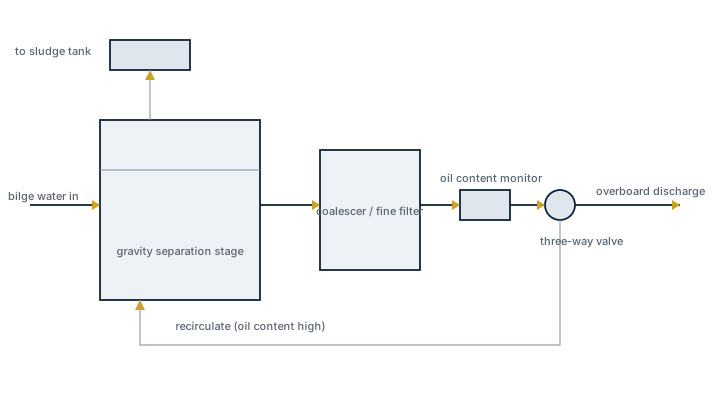
An oily water separator treats bilge water in two stages, a gravity separation stage followed by coalescing or fine filtration, and includes a continuous oil content monitor that automatically stops overboard discharge if the legal limit is exceeded.
Read more — Oily Water Separator explained ▾
What Makes an Oily Water Separator Different
An oily water separator (OWS) is not a single filter but a small treatment plant: bilge water enters a first gravity stage where free oil rises and heavier solids settle, then passes through a coalescing or fine-filtration second stage that strips out the fine oil droplets gravity alone cannot remove. A separate, independently certified oil content monitor (OCM) samples the outlet continuously and automatically diverts the flow back to the bilge holding tank the instant it senses oil above the legal limit, rather than letting the separator's own performance be the only safeguard. That combination of mechanical separation plus an independent electronic watchdog is what distinguishes an OWS from a simple bilge strainer or a standalone filter unit, neither of which can be discharged overboard on its own authority.
Main Components
Gravity/coalescing separator
The primary vessel, often a two- or three-chamber steel tank, where oil droplets coalesce on plates or packing and rise to a collecting space skimmed off to a sludge tank.
Fine filter or second-stage coalescer
Removes the remaining fine droplets on the way toward the discharge limit; filter elements or coalescer packs are consumable and need periodic replacement.
Oil content monitor (OCM)
An independently type-approved instrument, separate from the separator's own controls, that continuously measures oil-in-water at the overboard line and closes a three-way valve on a high reading.
Three-way discharge valve
Automatically routed to the bilge tank on an OCM alarm, and increasingly required to be sealed or logged so it cannot be bypassed without a recorded event.
Pumps and piping
A dedicated bilge pump feeds the unit; the piping arrangement must prevent any unauthorized bypass around the separator or the monitor.
Selection and Sizing
- Rated throughput in cubic metres per hour, sized to the ship's bilge pumping capacity and machinery space volume
- Compatibility with the fuel and lubricating oil types actually carried, since some emulsified oils and detergent-based cleaners resist gravity separation
- OCM type approval covering the discharge standard the ship trades under, including any regional limits stricter than the IMO baseline
- Footprint and headroom in the engine room, since the unit is usually retrofitted into an already crowded space
Regulations and Class
MARPOL Annex I sets the 15 ppm discharge limit for machinery space bilge water outside special areas, with stricter limits and additional monitoring, recording and equipment requirements applying in some regions. Every OWS and OCM combination must carry IMO type approval under the applicable MEPC resolution, and the ship must keep an Oil Record Book Part I logging every discharge, transfer and disposal of oily residues. Class and flag state surveys check that the OCM alarm and automatic stopping device function correctly and that no unauthorized bypass piping exists; bypass arrangements found during Port State Control inspections are treated as a serious deficiency and have led to criminal prosecutions under MARPOL.
Typical Faults
| Fault | Cause | Consequence |
|---|---|---|
| OCM giving false clean readings | Dirty sample cell, uncalibrated sensor, sample line fouled | Undetected oily discharge, MARPOL violation risk |
| Separator overwhelmed by emulsified oil | Detergents or chemical cleaners washed into the bilge | Poor separation, frequent OCM trips, sludge tank filling faster than expected |
| Filter/coalescer elements clogging quickly | Heavy solids or rust scale in bilge water not pre-strained | Reduced throughput, rising differential pressure, more frequent element changes |
| Illegal bypass piping | Crew shortcut installed to avoid slow processing | Detention, fines, criminal liability for owner and crew |
What to Look for in a Supplier
- Current IMO type approval certificate for both the separator and the OCM, matched to the discharge standard the ship needs
- Filter and coalescer elements available as standard, stocked spares rather than a single proprietary source
- A monitor design with a track record of stable calibration rather than frequent false trips, since crews disable unreliable alarms
- Clear documentation supporting the flag state approval process and Port State Control inspection
Every bypass line an OWS has ever been caught with started as someone's temporary fix during an overload; there is no version of that shortcut that ends well once Port State Control finds it.
13 manufacturers · 46 models
Alfa Laval
34- PureBilge 0.5
- PureBilge 1.0
- PureBilge 2.5
- PureBilge 5.0
- 0.5
- 5.0
- 2
- 8
- Durchsatz (PureBilge 2515)
- 2.500 l/h
- Durchsatz (PureBilge 5015)
- 5.000 l/h
- Separator-drehzahl
- 8.000 rpm
- Ölgehalt Ausgabe (typisch)
- <5 ppm (MARPOL-Limit: 15 ppm)
- Filtermedium
- Vorwärmefilter + Koalescenteinsätze
- Prozessregler
- EPC 60/70 (computergestützt, mit Cybersecurity)
- PureBilge 2515 (2500 l/h, 15ppm)
- PureBilge 5015 (5000 l/h, 15ppm)
- PureBilge Compact 0605 (600 l/h, 5ppm)
- Area: 15ppm-Ölgehalt-Monitor (Optical Cell) Verschmutzung/KalibrierungCheck: Visual: Check optical cell for fouling; Function test via high-oil simulation (monthly); Calibration by authorized manufacturer agent every 12 months or before IOPP renewal survey (MEPC.107(49) § 4.2.11 requirement)
- Area: Coalescer inserts (filter/coalescer) blockage, wear or degradationCheck: Routine inspection: Weekly check filter/coalescer elements for wear, clogging or damage; Replace upon blockage or visible wear (planned maintenance). Internal inspection: Clear separator chamber and inspect coalescer inserts for aging
- Area: Three-way valve (changeover valve) position and functionCheck: Daily: Check all valve positions; Monthly: Test three-way valve under simulated high-oil condition to confirm diversion to slop tank; Check for leakage at flange connections; Actuation without delay or abnormal noise
- Area: Process controller (EPC 60/70) alarms, data logging and sensor functionsCheck: Weekly: Check all sensors (temperature, pressure, speed) for functionality; Monthly: Check data logging device and review log data; Quarterly: Test all alarms and sensor outputs (document with protocol); Annually: Verify sensor calibration
- Area: Piping and flange connections: Leakage and corrosionCheck: Daily: Visually inspect all pipes and valve connections for oil film, droplet formation or corrosion (especially hot water/drain areas); Weekly: Check flanges for reduction in clamping force or leakage under load; Immediately repair if signs of corrosion or leakage appear
- Area: Heater (if electrical) and preheating to setpoint temperatureCheck: Daily: Check outlet temperature of preheated bilge water (typical: 50-70°C, manufacturer-specific); Weekly: Inspect heating element surface for deposits, wear or charring; Monthly: Calibrate thermostats and temperature sensors; If setpoint temperature is not reached, check thermocouple or controller
Type-universal inspection/maintenance points for oily water separator (Alfa Laval, Mega-Schwarm 2026-06). Per-model specs not auto-filled.
- MAPX 207
- MAPX 309
- 0.5
- 5.0
- 5.5
- 15
- Durchsatz (PureBilge 2515)
- 2.500 l/h
- Durchsatz (PureBilge 5015)
- 5.000 l/h
- Separator-drehzahl
- 8.000 rpm
- Ölgehalt Ausgabe (typisch)
- <5 ppm (MARPOL-Limit: 15 ppm)
- Filtermedium
- Vorwärmefilter + Koalescenteinsätze
- Prozessregler
- EPC 60/70 (computergestützt, mit Cybersecurity)
- PureBilge 2515 (2500 l/h, 15ppm)
- PureBilge 5015 (5000 l/h, 15ppm)
- PureBilge Compact 0605 (600 l/h, 5ppm)
- Area: 15ppm-Ölgehalt-Monitor (Optical Cell) Verschmutzung/KalibrierungCheck: Visual: Check optical cell for fouling; Function test via high-oil simulation (monthly); Calibration by authorized manufacturer agent every 12 months or before IOPP renewal survey (MEPC.107(49) § 4.2.11 requirement)
- Area: Coalescer inserts (filter/coalescer) blockage, wear or degradationCheck: Routine inspection: Weekly check filter/coalescer elements for wear, clogging or damage; Replace upon blockage or visible wear (planned maintenance). Internal inspection: Clear separator chamber and inspect coalescer inserts for aging
- Area: Three-way valve (changeover valve) position and functionCheck: Daily: Check all valve positions; Monthly: Test three-way valve under simulated high-oil condition to confirm diversion to slop tank; Check for leakage at flange connections; Actuation without delay or abnormal noise
- Area: Process controller (EPC 60/70) alarms, data logging and sensor functionsCheck: Weekly: Check all sensors (temperature, pressure, speed) for functionality; Monthly: Check data logging device and review log data; Quarterly: Test all alarms and sensor outputs (document with protocol); Annually: Verify sensor calibration
- Area: Piping and flange connections: Leakage and corrosionCheck: Daily: Visually inspect all pipes and valve connections for oil film, droplet formation or corrosion (especially hot water/drain areas); Weekly: Check flanges for reduction in clamping force or leakage under load; Immediately repair if signs of corrosion or leakage appear
- Area: Heater (if electrical) and preheating to setpoint temperatureCheck: Daily: Check outlet temperature of preheated bilge water (typical: 50-70°C, manufacturer-specific); Weekly: Inspect heating element surface for deposits, wear or charring; Monthly: Calibrate thermostats and temperature sensors; If setpoint temperature is not reached, check thermocouple or controller
Type-universal inspection/maintenance points for oily water separator (Alfa Laval, Mega-Schwarm 2026-06). Per-model specs not auto-filled.
Compass Water Solutions (formerly Oil Pollution Control) (USA)
1- CWS-250
- CWS-500
- CWS-1000
- CWS-2500
- 0.25
- 5.0
- 1
- 4
- Absorption polisher exhaustion — replacement required
- OCM calibration issues
- Pump cavitation from debris
Deckma Hamburg (Germany)
1
- OMD-24
- OMD-24ex
- 0.05
- 0.1
- IR window fouling from oil buildup
- Calibration drift
- Sample pump failure
- Electronics sensitivity to humidity
Detegasa (Spain)
1
- DWF-250
- DWF-500
- DWF-1000
- DWF-2500
- 0.25
- 5.0
- 2
- 6
- Membrane fouling requiring chemical cleaning or replacement
- High-pressure pump failure on membrane stage
- OCM calibration drift
DVZ-Services (Netherlands)
1- IC-05
- IC-10
- IC-25
- IC-50
- 0.5
- 5.0
- 1
- 4
- Coalescer plate fouling from detergent contamination
- OCM calibration drift
- Discharge valve actuator failure
Facet International / Parker Hannifin (USA)
1- CLS-25
- CLS-50
- CLS-100
- CLS-200
- 0.5
- 10.0
- 1
- 5
- Coalescing cartridge plugging from heavy contamination
- Separation efficiency drop with emulsified oils
- OCM sensor drift
Jowa (Sweden)
1- Jowa OWS 0.5
- Jowa OWS 1.0
- Jowa OWS 2.5
- Jowa OWS 5.0
- 0.5
- 5.0
- 1
- 5
- OCM window fouling causing false readings
- Coalescer element degradation
- Bilge pump air lock from empty bilge well
- Solenoid valve failure on 3-way valve
Marinfloc (Sweden)
1
- MF 0.5
- MF 1.0
- MF 2.5
- MF 5.0
- 0.5
- 5.0
- 2
- 6
- Chemical dosing pump failure or misdosing
- Flocculation chemical supply exhaustion — requires regular replenishment
- Flotation tank foam overflow
- OCM calibration drift
Rivertrace (UK)
1- Smart OCM
- Smart OWS 0.5
- Smart OWS 1.0
- Smart OWS 2.5
- 0.5
- 5.0
- 1
- 5
- Fluorescence sensor window fouling
- Calibration drift — requires regular zero-water check
- Flow cell blockage
RWO / Veolia (Germany/France)
1
- SKIT/S 0.25
- SKIT/S 0.50
- SKIT/S 1.0
- SKIT/S 2.5
- SKIT/S 5.0
- 0.25
- 5.0
- 1
- 5
- Coalescer plate fouling from detergent-contaminated bilge water
- OCM sensor drift — regular calibration mandatory
- Bilge pump cavitation from debris blockage
- 3-way recirculation valve failure
SKF / Blohm+Voss (Germany/Sweden)
1
- OCM-15
- OCM-15E
- 0.05
- 0.1
- Optical window fouling from oil film buildup — most common issue
- Calibration drift requiring monthly recalibration
- Flow cell blockage from debris
- Electronics board failure from humidity/vibration
Victor Marine (UK)
1
- VMS 0.25
- VMS 0.50
- VMS 1.0
- VMS 2.5
- VMS 5.0
- 0.25
- 5.0
- 1
- 4
- Coalescer cartridge clogging from detergent contamination
- OCM sensor fouling
- Bilge pump suction strainer clogging
- 3-way valve actuator failure
Wärtsilä
1
- BOSS 0.5
- BOSS 1.0
- BOSS 2.5
- BOSS 5.0
- 0.5
- 5.0
- 1
- 5
- Coalescer cartridge clogging
- OCM fouling
- Pump seal failure
- 3-way valve actuator issues