Bilge Pump
A dedicated bilge pump is sized, self-priming and positioned as a safety system under SOLAS, remaining the first line of defence against flooding even when general service or fire pumps are already committed to other duties.
Read more — Bilge Pump explained ▾
What sets a bilge pump apart from a general service pump
A dedicated bilge pump is built and piped specifically to remove water from bilge wells and, in an emergency, from a flooded compartment, which is why SOLAS treats bilge pumping capacity as a safety system rather than an ordinary utility. Many ships also permit general service or fire pumps to be cross-connected into the bilge system as a backup, but the dedicated bilge pump is sized, self-priming, and positioned so it remains the first line of defence even if other pumps are occupied with firefighting or ballast duties at the same moment flooding starts.
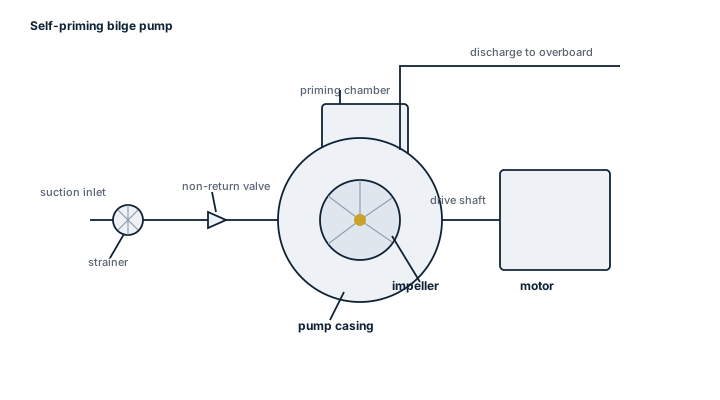
Main components
Pump unit
Usually a self-priming centrifugal pump, since bilge suction lines run dry between uses and a non-self-priming pump would need manual priming before it could draw water at all.
Bilge main and branch lines
Piping running from bilge wells in each watertight compartment to a distribution manifold, with non-return valves preventing water flowing back into a compartment that is not flooded.
Strainers and mud boxes
Catch debris, rag, and scale before it reaches the pump impeller — one of the most frequently blocked items in the whole system.
Oily water separator interface
Machinery space bilge water is oily and cannot be discharged overboard directly; it is routed through an OWS or to a holding tank, with the bilge pump often feeding that system rather than the sea directly during normal, non-emergency pumping.
Remote and local controls
Bilge high-level alarms in each compartment, and valve remote controls operable from above the bulkhead deck so a compartment does not need to be entered to open its bilge suction during flooding.
Selection and sizing
- Capacity set by class rules as a function of ship length, breadth, and depth, not by an arbitrary engineering choice — the minimum pipe diameter and pump capacity are calculated from a formula in the applicable class rules.
- Number of independent power-driven bilge pumps required, which increases with ship size and passenger ship status.
- Self-priming lift capability against the actual suction head in the deepest bilge well served.
- Material selection resistant to bilge water contaminants — oil, salt water, and occasional chemical residue depending on cargo.
Regulations and class
SOLAS Chapter II-1 sets out bilge pumping and drainage requirements in detail, including minimum number of pumps, minimum bilge main diameter calculated from ship dimensions, and the requirement that at least one power bilge pump be operable with the main engine stopped. MARPOL Annex I Regulation 14 requires that machinery space bilge water be processed through oily water separating equipment, the 15 ppm bilge alarm and separator, before any overboard discharge, which is why the bilge and OWS systems are usually described together even though they perform different jobs. Class surveys verify pump capacity by test, check non-return valve function, and confirm remote valve operation from the required position.
Typical faults
| Fault | Cause | Consequence |
|---|---|---|
| Pump loses prime repeatedly | Worn mechanical seal or a leaking suction line joint drawing in air | Pump runs without moving water, and a genuine flooding event would go unaddressed |
| Reduced flow at rated speed | Blocked strainer or mud box not cleaned on schedule | Bilge levels rise faster than the pump can clear them during heavy washdown or a real leak |
| Non-return valve stuck open | Debris lodged in the valve seat or corrosion of the hinge pin | Water can flow backward between compartments, defeating the watertight subdivision the system is meant to protect |
| OWS 15 ppm alarm trips constantly | Emulsified oil from detergent use in the bilge, or a worn separator element | Bilge water cannot be discharged and accumulates, and crew face pressure to bypass the system illegally, which is a serious MARPOL violation if it happens |
What to look for in a supplier
- Pump capacity certified against the class formula for the specific ship dimensions, not a generic catalogue rating.
- Self-priming performance data at the actual suction lift the installation requires.
- Material compatibility with the ship's actual bilge water chemistry, particularly for chemical or product tankers.
- Spares and service support for the mechanical seal, the component most likely to need attention between dry-dockings.
Test remote bilge valve operation from its required position regularly, not just the pump itself — a pump that runs perfectly is useless if the valve to the flooded compartment cannot be opened from outside it.
29 manufacturers · 282 models
Azcue
93 ✓ 89 verified- Area: Mechanical seal leakage at pump casing or shaftCheck: Visually inspect around the seal area for signs of seawater or bilge water leakage. Check for moisture or salt crystallization. Listen for unusual sounds indicating seal dry-running.
- Area: Cavitation damage to impeller and seal faces from low NPSH or vapor bubble formationCheck: Listen for grinding/gravel sounds during pump operation. Visually inspect impeller blade surfaces for pitting. Check net positive suction head (NPSH) availability against pump curve requirements. Verify suction strainer is clean.
- Area: Swing check valve stuck or debris-clogged, preventing proper discharge closureCheck: Manually test check valve closure (if accessible). Verify no water backflow. Inspect strainer basket for debris accumulation. Check valve should seal when pump is not running.
- Area: Hose deterioration: kinks, cracks, loose clamps, non-tight or leaking connections at discharge/suction linesCheck: Visually inspect all visible hose sections for cracks, perishing, discoloration. Verify clamp tightness. Check connection points for seeping or spraying water. Press hoses for softness/degradation.
- Area: Float mechanism stuck due to debris, salt encrustations, or corrosion in automatic modelsCheck: For automatic pumps with float switches: Manually operate float arm to verify smooth movement. Inspect for visible corrosion or deposits. Clean salt/debris from mechanism. Verify electrical continuity.
Typ-universelle Inspektionspunkte fuer Bilge Pumps (verifiziert, 2026-06).
- Area: Mechanical seal leakage at pump casing or shaftCheck: Visually inspect around the seal area for signs of seawater or bilge water leakage. Check for moisture or salt crystallization. Listen for unusual sounds indicating seal dry-running.
- Area: Cavitation damage to impeller and seal faces from low NPSH or vapor bubble formationCheck: Listen for grinding/gravel sounds during pump operation. Visually inspect impeller blade surfaces for pitting. Check net positive suction head (NPSH) availability against pump curve requirements. Verify suction strainer is clean.
- Area: Swing check valve stuck or debris-clogged, preventing proper discharge closureCheck: Manually test check valve closure (if accessible). Verify no water backflow. Inspect strainer basket for debris accumulation. Check valve should seal when pump is not running.
- Area: Hose deterioration: kinks, cracks, loose clamps, non-tight or leaking connections at discharge/suction linesCheck: Visually inspect all visible hose sections for cracks, perishing, discoloration. Verify clamp tightness. Check connection points for seeping or spraying water. Press hoses for softness/degradation.
- Area: Float mechanism stuck due to debris, salt encrustations, or corrosion in automatic modelsCheck: For automatic pumps with float switches: Manually operate float arm to verify smooth movement. Inspect for visible corrosion or deposits. Clean salt/debris from mechanism. Verify electrical continuity.
Typ-universelle Inspektionspunkte fuer Bilge Pumps (verifiziert, 2026-06).
- Area: Mechanical seal leakage at pump casing or shaftCheck: Visually inspect around the seal area for signs of seawater or bilge water leakage. Check for moisture or salt crystallization. Listen for unusual sounds indicating seal dry-running.
- Area: Cavitation damage to impeller and seal faces from low NPSH or vapor bubble formationCheck: Listen for grinding/gravel sounds during pump operation. Visually inspect impeller blade surfaces for pitting. Check net positive suction head (NPSH) availability against pump curve requirements. Verify suction strainer is clean.
- Area: Swing check valve stuck or debris-clogged, preventing proper discharge closureCheck: Manually test check valve closure (if accessible). Verify no water backflow. Inspect strainer basket for debris accumulation. Check valve should seal when pump is not running.
- Area: Hose deterioration: kinks, cracks, loose clamps, non-tight or leaking connections at discharge/suction linesCheck: Visually inspect all visible hose sections for cracks, perishing, discoloration. Verify clamp tightness. Check connection points for seeping or spraying water. Press hoses for softness/degradation.
- Area: Float mechanism stuck due to debris, salt encrustations, or corrosion in automatic modelsCheck: For automatic pumps with float switches: Manually operate float arm to verify smooth movement. Inspect for visible corrosion or deposits. Clean salt/debris from mechanism. Verify electrical continuity.
Typ-universelle Inspektionspunkte fuer Bilge Pumps (verifiziert, 2026-06).
- Area: Mechanical seal leakage at pump casing or shaftCheck: Visually inspect around the seal area for signs of seawater or bilge water leakage. Check for moisture or salt crystallization. Listen for unusual sounds indicating seal dry-running.
- Area: Cavitation damage to impeller and seal faces from low NPSH or vapor bubble formationCheck: Listen for grinding/gravel sounds during pump operation. Visually inspect impeller blade surfaces for pitting. Check net positive suction head (NPSH) availability against pump curve requirements. Verify suction strainer is clean.
- Area: Swing check valve stuck or debris-clogged, preventing proper discharge closureCheck: Manually test check valve closure (if accessible). Verify no water backflow. Inspect strainer basket for debris accumulation. Check valve should seal when pump is not running.
- Area: Hose deterioration: kinks, cracks, loose clamps, non-tight or leaking connections at discharge/suction linesCheck: Visually inspect all visible hose sections for cracks, perishing, discoloration. Verify clamp tightness. Check connection points for seeping or spraying water. Press hoses for softness/degradation.
- Area: Float mechanism stuck due to debris, salt encrustations, or corrosion in automatic modelsCheck: For automatic pumps with float switches: Manually operate float arm to verify smooth movement. Inspect for visible corrosion or deposits. Clean salt/debris from mechanism. Verify electrical continuity.
Typ-universelle Inspektionspunkte fuer Bilge Pumps (verifiziert, 2026-06).
- Area: Seal integrity and mechanical seal conditionCheck: Verify mechanical seal assembly is properly installed, check for any signs of leakage around the shaft seal, inspect seal faces for corrosion or wear
- Area: Impeller blockage or debris accumulationCheck: Check impeller for solids deposits, verify semi-open impeller design (where applicable) for debris tolerance, confirm strainer/suction screen functionality
- Area: Motor-pump coupling alignment and conditionCheck: Verify rigid or flexible coupling is properly tightened, check for corrosion on coupling components, confirm shaft alignment using dial indicator
- Area: Pump casing corrosion and material degradationCheck: Inspect cast iron casing for pitting or corrosion, verify bronze/stainless steel options match intended seawater service, check wear rings for erosion
- Area: Priming capability and suction performanceCheck: For self-priming models (CA, SP, MO, BR), test dry-run capability after 30-minute initial priming, verify foot valve/suction screen is not blocked, confirm NPSH requirements are met
Typ-universelle Inspektionspunkte fuer Bilge Pumps (verifiziert, 2026-06).
- Area: Seal integrity and mechanical seal conditionCheck: Verify mechanical seal assembly is properly installed, check for any signs of leakage around the shaft seal, inspect seal faces for corrosion or wear
- Area: Impeller blockage or debris accumulationCheck: Check impeller for solids deposits, verify semi-open impeller design (where applicable) for debris tolerance, confirm strainer/suction screen functionality
- Area: Motor-pump coupling alignment and conditionCheck: Verify rigid or flexible coupling is properly tightened, check for corrosion on coupling components, confirm shaft alignment using dial indicator
- Area: Pump casing corrosion and material degradationCheck: Inspect cast iron casing for pitting or corrosion, verify bronze/stainless steel options match intended seawater service, check wear rings for erosion
- Area: Priming capability and suction performanceCheck: For self-priming models (CA, SP, MO, BR), test dry-run capability after 30-minute initial priming, verify foot valve/suction screen is not blocked, confirm NPSH requirements are met
Typ-universelle Inspektionspunkte fuer Bilge Pumps (verifiziert, 2026-06).
- Area: Seal integrity and mechanical seal conditionCheck: Verify mechanical seal assembly is properly installed, check for any signs of leakage around the shaft seal, inspect seal faces for corrosion or wear
- Area: Impeller blockage or debris accumulationCheck: Check impeller for solids deposits, verify semi-open impeller design (where applicable) for debris tolerance, confirm strainer/suction screen functionality
- Area: Motor-pump coupling alignment and conditionCheck: Verify rigid or flexible coupling is properly tightened, check for corrosion on coupling components, confirm shaft alignment using dial indicator
- Area: Pump casing corrosion and material degradationCheck: Inspect cast iron casing for pitting or corrosion, verify bronze/stainless steel options match intended seawater service, check wear rings for erosion
- Area: Priming capability and suction performanceCheck: For self-priming models (CA, SP, MO, BR), test dry-run capability after 30-minute initial priming, verify foot valve/suction screen is not blocked, confirm NPSH requirements are met
Typ-universelle Inspektionspunkte fuer Bilge Pumps (verifiziert, 2026-06).
- Area: Seal integrity and mechanical seal conditionCheck: Verify mechanical seal assembly is properly installed, check for any signs of leakage around the shaft seal, inspect seal faces for corrosion or wear
- Area: Impeller blockage or debris accumulationCheck: Check impeller for solids deposits, verify semi-open impeller design (where applicable) for debris tolerance, confirm strainer/suction screen functionality
- Area: Motor-pump coupling alignment and conditionCheck: Verify rigid or flexible coupling is properly tightened, check for corrosion on coupling components, confirm shaft alignment using dial indicator
- Area: Pump casing corrosion and material degradationCheck: Inspect cast iron casing for pitting or corrosion, verify bronze/stainless steel options match intended seawater service, check wear rings for erosion
- Area: Priming capability and suction performanceCheck: For self-priming models (CA, SP, MO, BR), test dry-run capability after 30-minute initial priming, verify foot valve/suction screen is not blocked, confirm NPSH requirements are met
Typ-universelle Inspektionspunkte fuer Bilge Pumps (verifiziert, 2026-06).
- Area: Seal integrity and mechanical seal conditionCheck: Verify mechanical seal assembly is properly installed, check for any signs of leakage around the shaft seal, inspect seal faces for corrosion or wear
- Area: Impeller blockage or debris accumulationCheck: Check impeller for solids deposits, verify semi-open impeller design (where applicable) for debris tolerance, confirm strainer/suction screen functionality
- Area: Motor-pump coupling alignment and conditionCheck: Verify rigid or flexible coupling is properly tightened, check for corrosion on coupling components, confirm shaft alignment using dial indicator
- Area: Pump casing corrosion and material degradationCheck: Inspect cast iron casing for pitting or corrosion, verify bronze/stainless steel options match intended seawater service, check wear rings for erosion
- Area: Priming capability and suction performanceCheck: For self-priming models (CA, SP, MO, BR), test dry-run capability after 30-minute initial priming, verify foot valve/suction screen is not blocked, confirm NPSH requirements are met
Typ-universelle Inspektionspunkte fuer Bilge Pumps (verifiziert, 2026-06).
- Area: Seal integrity and mechanical seal conditionCheck: Verify mechanical seal assembly is properly installed, check for any signs of leakage around the shaft seal, inspect seal faces for corrosion or wear
- Area: Impeller blockage or debris accumulationCheck: Check impeller for solids deposits, verify semi-open impeller design (where applicable) for debris tolerance, confirm strainer/suction screen functionality
- Area: Motor-pump coupling alignment and conditionCheck: Verify rigid or flexible coupling is properly tightened, check for corrosion on coupling components, confirm shaft alignment using dial indicator
- Area: Pump casing corrosion and material degradationCheck: Inspect cast iron casing for pitting or corrosion, verify bronze/stainless steel options match intended seawater service, check wear rings for erosion
- Area: Priming capability and suction performanceCheck: For self-priming models (CA, SP, MO, BR), test dry-run capability after 30-minute initial priming, verify foot valve/suction screen is not blocked, confirm NPSH requirements are met
Typ-universelle Inspektionspunkte fuer Bilge Pumps (verifiziert, 2026-06).
- Area: Seal integrity and mechanical seal conditionCheck: Verify mechanical seal assembly is properly installed, check for any signs of leakage around the shaft seal, inspect seal faces for corrosion or wear
- Area: Impeller blockage or debris accumulationCheck: Check impeller for solids deposits, verify semi-open impeller design (where applicable) for debris tolerance, confirm strainer/suction screen functionality
- Area: Motor-pump coupling alignment and conditionCheck: Verify rigid or flexible coupling is properly tightened, check for corrosion on coupling components, confirm shaft alignment using dial indicator
- Area: Pump casing corrosion and material degradationCheck: Inspect cast iron casing for pitting or corrosion, verify bronze/stainless steel options match intended seawater service, check wear rings for erosion
- Area: Priming capability and suction performanceCheck: For self-priming models (CA, SP, MO, BR), test dry-run capability after 30-minute initial priming, verify foot valve/suction screen is not blocked, confirm NPSH requirements are met
Typ-universelle Inspektionspunkte fuer Bilge Pumps (verifiziert, 2026-06).
- Area: Seal integrity and mechanical seal conditionCheck: Verify mechanical seal assembly is properly installed, check for any signs of leakage around the shaft seal, inspect seal faces for corrosion or wear
- Area: Impeller blockage or debris accumulationCheck: Check impeller for solids deposits, verify semi-open impeller design (where applicable) for debris tolerance, confirm strainer/suction screen functionality
- Area: Motor-pump coupling alignment and conditionCheck: Verify rigid or flexible coupling is properly tightened, check for corrosion on coupling components, confirm shaft alignment using dial indicator
- Area: Pump casing corrosion and material degradationCheck: Inspect cast iron casing for pitting or corrosion, verify bronze/stainless steel options match intended seawater service, check wear rings for erosion
- Area: Priming capability and suction performanceCheck: For self-priming models (CA, SP, MO, BR), test dry-run capability after 30-minute initial priming, verify foot valve/suction screen is not blocked, confirm NPSH requirements are met
Typ-universelle Inspektionspunkte fuer Bilge Pumps (verifiziert, 2026-06).
- Area: Seal integrity and mechanical seal conditionCheck: Verify mechanical seal assembly is properly installed, check for any signs of leakage around the shaft seal, inspect seal faces for corrosion or wear
- Area: Impeller blockage or debris accumulationCheck: Check impeller for solids deposits, verify semi-open impeller design (where applicable) for debris tolerance, confirm strainer/suction screen functionality
- Area: Motor-pump coupling alignment and conditionCheck: Verify rigid or flexible coupling is properly tightened, check for corrosion on coupling components, confirm shaft alignment using dial indicator
- Area: Pump casing corrosion and material degradationCheck: Inspect cast iron casing for pitting or corrosion, verify bronze/stainless steel options match intended seawater service, check wear rings for erosion
- Area: Priming capability and suction performanceCheck: For self-priming models (CA, SP, MO, BR), test dry-run capability after 30-minute initial priming, verify foot valve/suction screen is not blocked, confirm NPSH requirements are met
Typ-universelle Inspektionspunkte fuer Bilge Pumps (verifiziert, 2026-06).
- Area: Seal integrity and mechanical seal conditionCheck: Verify mechanical seal assembly is properly installed, check for any signs of leakage around the shaft seal, inspect seal faces for corrosion or wear
- Area: Impeller blockage or debris accumulationCheck: Check impeller for solids deposits, verify semi-open impeller design (where applicable) for debris tolerance, confirm strainer/suction screen functionality
- Area: Motor-pump coupling alignment and conditionCheck: Verify rigid or flexible coupling is properly tightened, check for corrosion on coupling components, confirm shaft alignment using dial indicator
- Area: Pump casing corrosion and material degradationCheck: Inspect cast iron casing for pitting or corrosion, verify bronze/stainless steel options match intended seawater service, check wear rings for erosion
- Area: Priming capability and suction performanceCheck: For self-priming models (CA, SP, MO, BR), test dry-run capability after 30-minute initial priming, verify foot valve/suction screen is not blocked, confirm NPSH requirements are met
Typ-universelle Inspektionspunkte fuer Bilge Pumps (verifiziert, 2026-06).
- Area: Seal integrity and mechanical seal conditionCheck: Verify mechanical seal assembly is properly installed, check for any signs of leakage around the shaft seal, inspect seal faces for corrosion or wear
- Area: Impeller blockage or debris accumulationCheck: Check impeller for solids deposits, verify semi-open impeller design (where applicable) for debris tolerance, confirm strainer/suction screen functionality
- Area: Motor-pump coupling alignment and conditionCheck: Verify rigid or flexible coupling is properly tightened, check for corrosion on coupling components, confirm shaft alignment using dial indicator
- Area: Pump casing corrosion and material degradationCheck: Inspect cast iron casing for pitting or corrosion, verify bronze/stainless steel options match intended seawater service, check wear rings for erosion
- Area: Priming capability and suction performanceCheck: For self-priming models (CA, SP, MO, BR), test dry-run capability after 30-minute initial priming, verify foot valve/suction screen is not blocked, confirm NPSH requirements are met
Typ-universelle Inspektionspunkte fuer Bilge Pumps (verifiziert, 2026-06).
- Area: Seal integrity and mechanical seal conditionCheck: Verify mechanical seal assembly is properly installed, check for any signs of leakage around the shaft seal, inspect seal faces for corrosion or wear
- Area: Impeller blockage or debris accumulationCheck: Check impeller for solids deposits, verify semi-open impeller design (where applicable) for debris tolerance, confirm strainer/suction screen functionality
- Area: Motor-pump coupling alignment and conditionCheck: Verify rigid or flexible coupling is properly tightened, check for corrosion on coupling components, confirm shaft alignment using dial indicator
- Area: Pump casing corrosion and material degradationCheck: Inspect cast iron casing for pitting or corrosion, verify bronze/stainless steel options match intended seawater service, check wear rings for erosion
- Area: Priming capability and suction performanceCheck: For self-priming models (CA, SP, MO, BR), test dry-run capability after 30-minute initial priming, verify foot valve/suction screen is not blocked, confirm NPSH requirements are met
Typ-universelle Inspektionspunkte fuer Bilge Pumps (verifiziert, 2026-06).
- Area: Seal integrity and mechanical seal conditionCheck: Verify mechanical seal assembly is properly installed, check for any signs of leakage around the shaft seal, inspect seal faces for corrosion or wear
- Area: Impeller blockage or debris accumulationCheck: Check impeller for solids deposits, verify semi-open impeller design (where applicable) for debris tolerance, confirm strainer/suction screen functionality
- Area: Motor-pump coupling alignment and conditionCheck: Verify rigid or flexible coupling is properly tightened, check for corrosion on coupling components, confirm shaft alignment using dial indicator
- Area: Pump casing corrosion and material degradationCheck: Inspect cast iron casing for pitting or corrosion, verify bronze/stainless steel options match intended seawater service, check wear rings for erosion
- Area: Priming capability and suction performanceCheck: For self-priming models (CA, SP, MO, BR), test dry-run capability after 30-minute initial priming, verify foot valve/suction screen is not blocked, confirm NPSH requirements are met
Typ-universelle Inspektionspunkte fuer Bilge Pumps (verifiziert, 2026-06).
- Area: Seal integrity and mechanical seal conditionCheck: Verify mechanical seal assembly is properly installed, check for any signs of leakage around the shaft seal, inspect seal faces for corrosion or wear
- Area: Impeller blockage or debris accumulationCheck: Check impeller for solids deposits, verify semi-open impeller design (where applicable) for debris tolerance, confirm strainer/suction screen functionality
- Area: Motor-pump coupling alignment and conditionCheck: Verify rigid or flexible coupling is properly tightened, check for corrosion on coupling components, confirm shaft alignment using dial indicator
- Area: Pump casing corrosion and material degradationCheck: Inspect cast iron casing for pitting or corrosion, verify bronze/stainless steel options match intended seawater service, check wear rings for erosion
- Area: Priming capability and suction performanceCheck: For self-priming models (CA, SP, MO, BR), test dry-run capability after 30-minute initial priming, verify foot valve/suction screen is not blocked, confirm NPSH requirements are met
Typ-universelle Inspektionspunkte fuer Bilge Pumps (verifiziert, 2026-06).
- Area: Seal integrity and mechanical seal conditionCheck: Verify mechanical seal assembly is properly installed, check for any signs of leakage around the shaft seal, inspect seal faces for corrosion or wear
- Area: Impeller blockage or debris accumulationCheck: Check impeller for solids deposits, verify semi-open impeller design (where applicable) for debris tolerance, confirm strainer/suction screen functionality
- Area: Motor-pump coupling alignment and conditionCheck: Verify rigid or flexible coupling is properly tightened, check for corrosion on coupling components, confirm shaft alignment using dial indicator
- Area: Pump casing corrosion and material degradationCheck: Inspect cast iron casing for pitting or corrosion, verify bronze/stainless steel options match intended seawater service, check wear rings for erosion
- Area: Priming capability and suction performanceCheck: For self-priming models (CA, SP, MO, BR), test dry-run capability after 30-minute initial priming, verify foot valve/suction screen is not blocked, confirm NPSH requirements are met
Typ-universelle Inspektionspunkte fuer Bilge Pumps (verifiziert, 2026-06).
- Area: Seal integrity and mechanical seal conditionCheck: Verify mechanical seal assembly is properly installed, check for any signs of leakage around the shaft seal, inspect seal faces for corrosion or wear
- Area: Impeller blockage or debris accumulationCheck: Check impeller for solids deposits, verify semi-open impeller design (where applicable) for debris tolerance, confirm strainer/suction screen functionality
- Area: Motor-pump coupling alignment and conditionCheck: Verify rigid or flexible coupling is properly tightened, check for corrosion on coupling components, confirm shaft alignment using dial indicator
- Area: Pump casing corrosion and material degradationCheck: Inspect cast iron casing for pitting or corrosion, verify bronze/stainless steel options match intended seawater service, check wear rings for erosion
- Area: Priming capability and suction performanceCheck: For self-priming models (CA, SP, MO, BR), test dry-run capability after 30-minute initial priming, verify foot valve/suction screen is not blocked, confirm NPSH requirements are met
Typ-universelle Inspektionspunkte fuer Bilge Pumps (verifiziert, 2026-06).
- Area: Seal integrity and mechanical seal conditionCheck: Verify mechanical seal assembly is properly installed, check for any signs of leakage around the shaft seal, inspect seal faces for corrosion or wear
- Area: Impeller blockage or debris accumulationCheck: Check impeller for solids deposits, verify semi-open impeller design (where applicable) for debris tolerance, confirm strainer/suction screen functionality
- Area: Motor-pump coupling alignment and conditionCheck: Verify rigid or flexible coupling is properly tightened, check for corrosion on coupling components, confirm shaft alignment using dial indicator
- Area: Pump casing corrosion and material degradationCheck: Inspect cast iron casing for pitting or corrosion, verify bronze/stainless steel options match intended seawater service, check wear rings for erosion
- Area: Priming capability and suction performanceCheck: For self-priming models (CA, SP, MO, BR), test dry-run capability after 30-minute initial priming, verify foot valve/suction screen is not blocked, confirm NPSH requirements are met
Typ-universelle Inspektionspunkte fuer Bilge Pumps (verifiziert, 2026-06).
- Area: Seal integrity and mechanical seal conditionCheck: Verify mechanical seal assembly is properly installed, check for any signs of leakage around the shaft seal, inspect seal faces for corrosion or wear
- Area: Impeller blockage or debris accumulationCheck: Check impeller for solids deposits, verify semi-open impeller design (where applicable) for debris tolerance, confirm strainer/suction screen functionality
- Area: Motor-pump coupling alignment and conditionCheck: Verify rigid or flexible coupling is properly tightened, check for corrosion on coupling components, confirm shaft alignment using dial indicator
- Area: Pump casing corrosion and material degradationCheck: Inspect cast iron casing for pitting or corrosion, verify bronze/stainless steel options match intended seawater service, check wear rings for erosion
- Area: Priming capability and suction performanceCheck: For self-priming models (CA, SP, MO, BR), test dry-run capability after 30-minute initial priming, verify foot valve/suction screen is not blocked, confirm NPSH requirements are met
Typ-universelle Inspektionspunkte fuer Bilge Pumps (verifiziert, 2026-06).
- Area: Seal integrity and mechanical seal conditionCheck: Verify mechanical seal assembly is properly installed, check for any signs of leakage around the shaft seal, inspect seal faces for corrosion or wear
- Area: Impeller blockage or debris accumulationCheck: Check impeller for solids deposits, verify semi-open impeller design (where applicable) for debris tolerance, confirm strainer/suction screen functionality
- Area: Motor-pump coupling alignment and conditionCheck: Verify rigid or flexible coupling is properly tightened, check for corrosion on coupling components, confirm shaft alignment using dial indicator
- Area: Pump casing corrosion and material degradationCheck: Inspect cast iron casing for pitting or corrosion, verify bronze/stainless steel options match intended seawater service, check wear rings for erosion
- Area: Priming capability and suction performanceCheck: For self-priming models (CA, SP, MO, BR), test dry-run capability after 30-minute initial priming, verify foot valve/suction screen is not blocked, confirm NPSH requirements are met
Typ-universelle Inspektionspunkte fuer Bilge Pumps (verifiziert, 2026-06).
- Area: Seal integrity and mechanical seal conditionCheck: Verify mechanical seal assembly is properly installed, check for any signs of leakage around the shaft seal, inspect seal faces for corrosion or wear
- Area: Impeller blockage or debris accumulationCheck: Check impeller for solids deposits, verify semi-open impeller design (where applicable) for debris tolerance, confirm strainer/suction screen functionality
- Area: Motor-pump coupling alignment and conditionCheck: Verify rigid or flexible coupling is properly tightened, check for corrosion on coupling components, confirm shaft alignment using dial indicator
- Area: Pump casing corrosion and material degradationCheck: Inspect cast iron casing for pitting or corrosion, verify bronze/stainless steel options match intended seawater service, check wear rings for erosion
- Area: Priming capability and suction performanceCheck: For self-priming models (CA, SP, MO, BR), test dry-run capability after 30-minute initial priming, verify foot valve/suction screen is not blocked, confirm NPSH requirements are met
Typ-universelle Inspektionspunkte fuer Bilge Pumps (verifiziert, 2026-06).
- Area: Seal integrity and mechanical seal conditionCheck: Verify mechanical seal assembly is properly installed, check for any signs of leakage around the shaft seal, inspect seal faces for corrosion or wear
- Area: Impeller blockage or debris accumulationCheck: Check impeller for solids deposits, verify semi-open impeller design (where applicable) for debris tolerance, confirm strainer/suction screen functionality
- Area: Motor-pump coupling alignment and conditionCheck: Verify rigid or flexible coupling is properly tightened, check for corrosion on coupling components, confirm shaft alignment using dial indicator
- Area: Pump casing corrosion and material degradationCheck: Inspect cast iron casing for pitting or corrosion, verify bronze/stainless steel options match intended seawater service, check wear rings for erosion
- Area: Priming capability and suction performanceCheck: For self-priming models (CA, SP, MO, BR), test dry-run capability after 30-minute initial priming, verify foot valve/suction screen is not blocked, confirm NPSH requirements are met
Typ-universelle Inspektionspunkte fuer Bilge Pumps (verifiziert, 2026-06).
- Area: Seal integrity and mechanical seal conditionCheck: Verify mechanical seal assembly is properly installed, check for any signs of leakage around the shaft seal, inspect seal faces for corrosion or wear
- Area: Impeller blockage or debris accumulationCheck: Check impeller for solids deposits, verify semi-open impeller design (where applicable) for debris tolerance, confirm strainer/suction screen functionality
- Area: Motor-pump coupling alignment and conditionCheck: Verify rigid or flexible coupling is properly tightened, check for corrosion on coupling components, confirm shaft alignment using dial indicator
- Area: Pump casing corrosion and material degradationCheck: Inspect cast iron casing for pitting or corrosion, verify bronze/stainless steel options match intended seawater service, check wear rings for erosion
- Area: Priming capability and suction performanceCheck: For self-priming models (CA, SP, MO, BR), test dry-run capability after 30-minute initial priming, verify foot valve/suction screen is not blocked, confirm NPSH requirements are met
Typ-universelle Inspektionspunkte fuer Bilge Pumps (verifiziert, 2026-06).
- Area: Seal integrity and mechanical seal conditionCheck: Verify mechanical seal assembly is properly installed, check for any signs of leakage around the shaft seal, inspect seal faces for corrosion or wear
- Area: Impeller blockage or debris accumulationCheck: Check impeller for solids deposits, verify semi-open impeller design (where applicable) for debris tolerance, confirm strainer/suction screen functionality
- Area: Motor-pump coupling alignment and conditionCheck: Verify rigid or flexible coupling is properly tightened, check for corrosion on coupling components, confirm shaft alignment using dial indicator
- Area: Pump casing corrosion and material degradationCheck: Inspect cast iron casing for pitting or corrosion, verify bronze/stainless steel options match intended seawater service, check wear rings for erosion
- Area: Priming capability and suction performanceCheck: For self-priming models (CA, SP, MO, BR), test dry-run capability after 30-minute initial priming, verify foot valve/suction screen is not blocked, confirm NPSH requirements are met
Typ-universelle Inspektionspunkte fuer Bilge Pumps (verifiziert, 2026-06).
- Area: Seal integrity and mechanical seal conditionCheck: Verify mechanical seal assembly is properly installed, check for any signs of leakage around the shaft seal, inspect seal faces for corrosion or wear
- Area: Impeller blockage or debris accumulationCheck: Check impeller for solids deposits, verify semi-open impeller design (where applicable) for debris tolerance, confirm strainer/suction screen functionality
- Area: Motor-pump coupling alignment and conditionCheck: Verify rigid or flexible coupling is properly tightened, check for corrosion on coupling components, confirm shaft alignment using dial indicator
- Area: Pump casing corrosion and material degradationCheck: Inspect cast iron casing for pitting or corrosion, verify bronze/stainless steel options match intended seawater service, check wear rings for erosion
- Area: Priming capability and suction performanceCheck: For self-priming models (CA, SP, MO, BR), test dry-run capability after 30-minute initial priming, verify foot valve/suction screen is not blocked, confirm NPSH requirements are met
Typ-universelle Inspektionspunkte fuer Bilge Pumps (verifiziert, 2026-06).
- Area: Seal integrity and mechanical seal conditionCheck: Verify mechanical seal assembly is properly installed, check for any signs of leakage around the shaft seal, inspect seal faces for corrosion or wear
- Area: Impeller blockage or debris accumulationCheck: Check impeller for solids deposits, verify semi-open impeller design (where applicable) for debris tolerance, confirm strainer/suction screen functionality
- Area: Motor-pump coupling alignment and conditionCheck: Verify rigid or flexible coupling is properly tightened, check for corrosion on coupling components, confirm shaft alignment using dial indicator
- Area: Pump casing corrosion and material degradationCheck: Inspect cast iron casing for pitting or corrosion, verify bronze/stainless steel options match intended seawater service, check wear rings for erosion
- Area: Priming capability and suction performanceCheck: For self-priming models (CA, SP, MO, BR), test dry-run capability after 30-minute initial priming, verify foot valve/suction screen is not blocked, confirm NPSH requirements are met
Typ-universelle Inspektionspunkte fuer Bilge Pumps (verifiziert, 2026-06).
- Area: Seal integrity and mechanical seal conditionCheck: Verify mechanical seal assembly is properly installed, check for any signs of leakage around the shaft seal, inspect seal faces for corrosion or wear
- Area: Impeller blockage or debris accumulationCheck: Check impeller for solids deposits, verify semi-open impeller design (where applicable) for debris tolerance, confirm strainer/suction screen functionality
- Area: Motor-pump coupling alignment and conditionCheck: Verify rigid or flexible coupling is properly tightened, check for corrosion on coupling components, confirm shaft alignment using dial indicator
- Area: Pump casing corrosion and material degradationCheck: Inspect cast iron casing for pitting or corrosion, verify bronze/stainless steel options match intended seawater service, check wear rings for erosion
- Area: Priming capability and suction performanceCheck: For self-priming models (CA, SP, MO, BR), test dry-run capability after 30-minute initial priming, verify foot valve/suction screen is not blocked, confirm NPSH requirements are met
Typ-universelle Inspektionspunkte fuer Bilge Pumps (verifiziert, 2026-06).
- Area: Seal integrity and mechanical seal conditionCheck: Verify mechanical seal assembly is properly installed, check for any signs of leakage around the shaft seal, inspect seal faces for corrosion or wear
- Area: Impeller blockage or debris accumulationCheck: Check impeller for solids deposits, verify semi-open impeller design (where applicable) for debris tolerance, confirm strainer/suction screen functionality
- Area: Motor-pump coupling alignment and conditionCheck: Verify rigid or flexible coupling is properly tightened, check for corrosion on coupling components, confirm shaft alignment using dial indicator
- Area: Pump casing corrosion and material degradationCheck: Inspect cast iron casing for pitting or corrosion, verify bronze/stainless steel options match intended seawater service, check wear rings for erosion
- Area: Priming capability and suction performanceCheck: For self-priming models (CA, SP, MO, BR), test dry-run capability after 30-minute initial priming, verify foot valve/suction screen is not blocked, confirm NPSH requirements are met
Typ-universelle Inspektionspunkte fuer Bilge Pumps (verifiziert, 2026-06).
- Area: Seal integrity and mechanical seal conditionCheck: Verify mechanical seal assembly is properly installed, check for any signs of leakage around the shaft seal, inspect seal faces for corrosion or wear
- Area: Impeller blockage or debris accumulationCheck: Check impeller for solids deposits, verify semi-open impeller design (where applicable) for debris tolerance, confirm strainer/suction screen functionality
- Area: Motor-pump coupling alignment and conditionCheck: Verify rigid or flexible coupling is properly tightened, check for corrosion on coupling components, confirm shaft alignment using dial indicator
- Area: Pump casing corrosion and material degradationCheck: Inspect cast iron casing for pitting or corrosion, verify bronze/stainless steel options match intended seawater service, check wear rings for erosion
- Area: Priming capability and suction performanceCheck: For self-priming models (CA, SP, MO, BR), test dry-run capability after 30-minute initial priming, verify foot valve/suction screen is not blocked, confirm NPSH requirements are met
Typ-universelle Inspektionspunkte fuer Bilge Pumps (verifiziert, 2026-06).
- Area: Seal integrity and mechanical seal conditionCheck: Verify mechanical seal assembly is properly installed, check for any signs of leakage around the shaft seal, inspect seal faces for corrosion or wear
- Area: Impeller blockage or debris accumulationCheck: Check impeller for solids deposits, verify semi-open impeller design (where applicable) for debris tolerance, confirm strainer/suction screen functionality
- Area: Motor-pump coupling alignment and conditionCheck: Verify rigid or flexible coupling is properly tightened, check for corrosion on coupling components, confirm shaft alignment using dial indicator
- Area: Pump casing corrosion and material degradationCheck: Inspect cast iron casing for pitting or corrosion, verify bronze/stainless steel options match intended seawater service, check wear rings for erosion
- Area: Priming capability and suction performanceCheck: For self-priming models (CA, SP, MO, BR), test dry-run capability after 30-minute initial priming, verify foot valve/suction screen is not blocked, confirm NPSH requirements are met
Typ-universelle Inspektionspunkte fuer Bilge Pumps (verifiziert, 2026-06).
- Area: Seal integrity and mechanical seal conditionCheck: Verify mechanical seal assembly is properly installed, check for any signs of leakage around the shaft seal, inspect seal faces for corrosion or wear
- Area: Impeller blockage or debris accumulationCheck: Check impeller for solids deposits, verify semi-open impeller design (where applicable) for debris tolerance, confirm strainer/suction screen functionality
- Area: Motor-pump coupling alignment and conditionCheck: Verify rigid or flexible coupling is properly tightened, check for corrosion on coupling components, confirm shaft alignment using dial indicator
- Area: Pump casing corrosion and material degradationCheck: Inspect cast iron casing for pitting or corrosion, verify bronze/stainless steel options match intended seawater service, check wear rings for erosion
- Area: Priming capability and suction performanceCheck: For self-priming models (CA, SP, MO, BR), test dry-run capability after 30-minute initial priming, verify foot valve/suction screen is not blocked, confirm NPSH requirements are met
Typ-universelle Inspektionspunkte fuer Bilge Pumps (verifiziert, 2026-06).
- Area: Seal integrity and mechanical seal conditionCheck: Verify mechanical seal assembly is properly installed, check for any signs of leakage around the shaft seal, inspect seal faces for corrosion or wear
- Area: Impeller blockage or debris accumulationCheck: Check impeller for solids deposits, verify semi-open impeller design (where applicable) for debris tolerance, confirm strainer/suction screen functionality
- Area: Motor-pump coupling alignment and conditionCheck: Verify rigid or flexible coupling is properly tightened, check for corrosion on coupling components, confirm shaft alignment using dial indicator
- Area: Pump casing corrosion and material degradationCheck: Inspect cast iron casing for pitting or corrosion, verify bronze/stainless steel options match intended seawater service, check wear rings for erosion
- Area: Priming capability and suction performanceCheck: For self-priming models (CA, SP, MO, BR), test dry-run capability after 30-minute initial priming, verify foot valve/suction screen is not blocked, confirm NPSH requirements are met
Typ-universelle Inspektionspunkte fuer Bilge Pumps (verifiziert, 2026-06).
- Area: Seal integrity and mechanical seal conditionCheck: Verify mechanical seal assembly is properly installed, check for any signs of leakage around the shaft seal, inspect seal faces for corrosion or wear
- Area: Impeller blockage or debris accumulationCheck: Check impeller for solids deposits, verify semi-open impeller design (where applicable) for debris tolerance, confirm strainer/suction screen functionality
- Area: Motor-pump coupling alignment and conditionCheck: Verify rigid or flexible coupling is properly tightened, check for corrosion on coupling components, confirm shaft alignment using dial indicator
- Area: Pump casing corrosion and material degradationCheck: Inspect cast iron casing for pitting or corrosion, verify bronze/stainless steel options match intended seawater service, check wear rings for erosion
- Area: Priming capability and suction performanceCheck: For self-priming models (CA, SP, MO, BR), test dry-run capability after 30-minute initial priming, verify foot valve/suction screen is not blocked, confirm NPSH requirements are met
Typ-universelle Inspektionspunkte fuer Bilge Pumps (verifiziert, 2026-06).
- Area: Seal integrity and mechanical seal conditionCheck: Verify mechanical seal assembly is properly installed, check for any signs of leakage around the shaft seal, inspect seal faces for corrosion or wear
- Area: Impeller blockage or debris accumulationCheck: Check impeller for solids deposits, verify semi-open impeller design (where applicable) for debris tolerance, confirm strainer/suction screen functionality
- Area: Motor-pump coupling alignment and conditionCheck: Verify rigid or flexible coupling is properly tightened, check for corrosion on coupling components, confirm shaft alignment using dial indicator
- Area: Pump casing corrosion and material degradationCheck: Inspect cast iron casing for pitting or corrosion, verify bronze/stainless steel options match intended seawater service, check wear rings for erosion
- Area: Priming capability and suction performanceCheck: For self-priming models (CA, SP, MO, BR), test dry-run capability after 30-minute initial priming, verify foot valve/suction screen is not blocked, confirm NPSH requirements are met
Typ-universelle Inspektionspunkte fuer Bilge Pumps (verifiziert, 2026-06).
- Area: Seal integrity and mechanical seal conditionCheck: Verify mechanical seal assembly is properly installed, check for any signs of leakage around the shaft seal, inspect seal faces for corrosion or wear
- Area: Impeller blockage or debris accumulationCheck: Check impeller for solids deposits, verify semi-open impeller design (where applicable) for debris tolerance, confirm strainer/suction screen functionality
- Area: Motor-pump coupling alignment and conditionCheck: Verify rigid or flexible coupling is properly tightened, check for corrosion on coupling components, confirm shaft alignment using dial indicator
- Area: Pump casing corrosion and material degradationCheck: Inspect cast iron casing for pitting or corrosion, verify bronze/stainless steel options match intended seawater service, check wear rings for erosion
- Area: Priming capability and suction performanceCheck: For self-priming models (CA, SP, MO, BR), test dry-run capability after 30-minute initial priming, verify foot valve/suction screen is not blocked, confirm NPSH requirements are met
Typ-universelle Inspektionspunkte fuer Bilge Pumps (verifiziert, 2026-06).
- Area: Seal integrity and mechanical seal conditionCheck: Verify mechanical seal assembly is properly installed, check for any signs of leakage around the shaft seal, inspect seal faces for corrosion or wear
- Area: Impeller blockage or debris accumulationCheck: Check impeller for solids deposits, verify semi-open impeller design (where applicable) for debris tolerance, confirm strainer/suction screen functionality
- Area: Motor-pump coupling alignment and conditionCheck: Verify rigid or flexible coupling is properly tightened, check for corrosion on coupling components, confirm shaft alignment using dial indicator
- Area: Pump casing corrosion and material degradationCheck: Inspect cast iron casing for pitting or corrosion, verify bronze/stainless steel options match intended seawater service, check wear rings for erosion
- Area: Priming capability and suction performanceCheck: For self-priming models (CA, SP, MO, BR), test dry-run capability after 30-minute initial priming, verify foot valve/suction screen is not blocked, confirm NPSH requirements are met
Typ-universelle Inspektionspunkte fuer Bilge Pumps (verifiziert, 2026-06).
- Area: Seal integrity and mechanical seal conditionCheck: Verify mechanical seal assembly is properly installed, check for any signs of leakage around the shaft seal, inspect seal faces for corrosion or wear
- Area: Impeller blockage or debris accumulationCheck: Check impeller for solids deposits, verify semi-open impeller design (where applicable) for debris tolerance, confirm strainer/suction screen functionality
- Area: Motor-pump coupling alignment and conditionCheck: Verify rigid or flexible coupling is properly tightened, check for corrosion on coupling components, confirm shaft alignment using dial indicator
- Area: Pump casing corrosion and material degradationCheck: Inspect cast iron casing for pitting or corrosion, verify bronze/stainless steel options match intended seawater service, check wear rings for erosion
- Area: Priming capability and suction performanceCheck: For self-priming models (CA, SP, MO, BR), test dry-run capability after 30-minute initial priming, verify foot valve/suction screen is not blocked, confirm NPSH requirements are met
Typ-universelle Inspektionspunkte fuer Bilge Pumps (verifiziert, 2026-06).
- Area: Seal integrity and mechanical seal conditionCheck: Verify mechanical seal assembly is properly installed, check for any signs of leakage around the shaft seal, inspect seal faces for corrosion or wear
- Area: Impeller blockage or debris accumulationCheck: Check impeller for solids deposits, verify semi-open impeller design (where applicable) for debris tolerance, confirm strainer/suction screen functionality
- Area: Motor-pump coupling alignment and conditionCheck: Verify rigid or flexible coupling is properly tightened, check for corrosion on coupling components, confirm shaft alignment using dial indicator
- Area: Pump casing corrosion and material degradationCheck: Inspect cast iron casing for pitting or corrosion, verify bronze/stainless steel options match intended seawater service, check wear rings for erosion
- Area: Priming capability and suction performanceCheck: For self-priming models (CA, SP, MO, BR), test dry-run capability after 30-minute initial priming, verify foot valve/suction screen is not blocked, confirm NPSH requirements are met
Typ-universelle Inspektionspunkte fuer Bilge Pumps (verifiziert, 2026-06).
- Area: Seal integrity and mechanical seal conditionCheck: Verify mechanical seal assembly is properly installed, check for any signs of leakage around the shaft seal, inspect seal faces for corrosion or wear
- Area: Impeller blockage or debris accumulationCheck: Check impeller for solids deposits, verify semi-open impeller design (where applicable) for debris tolerance, confirm strainer/suction screen functionality
- Area: Motor-pump coupling alignment and conditionCheck: Verify rigid or flexible coupling is properly tightened, check for corrosion on coupling components, confirm shaft alignment using dial indicator
- Area: Pump casing corrosion and material degradationCheck: Inspect cast iron casing for pitting or corrosion, verify bronze/stainless steel options match intended seawater service, check wear rings for erosion
- Area: Priming capability and suction performanceCheck: For self-priming models (CA, SP, MO, BR), test dry-run capability after 30-minute initial priming, verify foot valve/suction screen is not blocked, confirm NPSH requirements are met
Typ-universelle Inspektionspunkte fuer Bilge Pumps (verifiziert, 2026-06).
- Area: Seal integrity and mechanical seal conditionCheck: Verify mechanical seal assembly is properly installed, check for any signs of leakage around the shaft seal, inspect seal faces for corrosion or wear
- Area: Impeller blockage or debris accumulationCheck: Check impeller for solids deposits, verify semi-open impeller design (where applicable) for debris tolerance, confirm strainer/suction screen functionality
- Area: Motor-pump coupling alignment and conditionCheck: Verify rigid or flexible coupling is properly tightened, check for corrosion on coupling components, confirm shaft alignment using dial indicator
- Area: Pump casing corrosion and material degradationCheck: Inspect cast iron casing for pitting or corrosion, verify bronze/stainless steel options match intended seawater service, check wear rings for erosion
- Area: Priming capability and suction performanceCheck: For self-priming models (CA, SP, MO, BR), test dry-run capability after 30-minute initial priming, verify foot valve/suction screen is not blocked, confirm NPSH requirements are met
Typ-universelle Inspektionspunkte fuer Bilge Pumps (verifiziert, 2026-06).
- Area: Seal integrity and mechanical seal conditionCheck: Verify mechanical seal assembly is properly installed, check for any signs of leakage around the shaft seal, inspect seal faces for corrosion or wear
- Area: Impeller blockage or debris accumulationCheck: Check impeller for solids deposits, verify semi-open impeller design (where applicable) for debris tolerance, confirm strainer/suction screen functionality
- Area: Motor-pump coupling alignment and conditionCheck: Verify rigid or flexible coupling is properly tightened, check for corrosion on coupling components, confirm shaft alignment using dial indicator
- Area: Pump casing corrosion and material degradationCheck: Inspect cast iron casing for pitting or corrosion, verify bronze/stainless steel options match intended seawater service, check wear rings for erosion
- Area: Priming capability and suction performanceCheck: For self-priming models (CA, SP, MO, BR), test dry-run capability after 30-minute initial priming, verify foot valve/suction screen is not blocked, confirm NPSH requirements are met
Typ-universelle Inspektionspunkte fuer Bilge Pumps (verifiziert, 2026-06).
- Area: Seal integrity and mechanical seal conditionCheck: Verify mechanical seal assembly is properly installed, check for any signs of leakage around the shaft seal, inspect seal faces for corrosion or wear
- Area: Impeller blockage or debris accumulationCheck: Check impeller for solids deposits, verify semi-open impeller design (where applicable) for debris tolerance, confirm strainer/suction screen functionality
- Area: Motor-pump coupling alignment and conditionCheck: Verify rigid or flexible coupling is properly tightened, check for corrosion on coupling components, confirm shaft alignment using dial indicator
- Area: Pump casing corrosion and material degradationCheck: Inspect cast iron casing for pitting or corrosion, verify bronze/stainless steel options match intended seawater service, check wear rings for erosion
- Area: Priming capability and suction performanceCheck: For self-priming models (CA, SP, MO, BR), test dry-run capability after 30-minute initial priming, verify foot valve/suction screen is not blocked, confirm NPSH requirements are met
Typ-universelle Inspektionspunkte fuer Bilge Pumps (verifiziert, 2026-06).
- Area: Seal integrity and mechanical seal conditionCheck: Verify mechanical seal assembly is properly installed, check for any signs of leakage around the shaft seal, inspect seal faces for corrosion or wear
- Area: Impeller blockage or debris accumulationCheck: Check impeller for solids deposits, verify semi-open impeller design (where applicable) for debris tolerance, confirm strainer/suction screen functionality
- Area: Motor-pump coupling alignment and conditionCheck: Verify rigid or flexible coupling is properly tightened, check for corrosion on coupling components, confirm shaft alignment using dial indicator
- Area: Pump casing corrosion and material degradationCheck: Inspect cast iron casing for pitting or corrosion, verify bronze/stainless steel options match intended seawater service, check wear rings for erosion
- Area: Priming capability and suction performanceCheck: For self-priming models (CA, SP, MO, BR), test dry-run capability after 30-minute initial priming, verify foot valve/suction screen is not blocked, confirm NPSH requirements are met
Typ-universelle Inspektionspunkte fuer Bilge Pumps (verifiziert, 2026-06).
- Area: Seal integrity and mechanical seal conditionCheck: Verify mechanical seal assembly is properly installed, check for any signs of leakage around the shaft seal, inspect seal faces for corrosion or wear
- Area: Impeller blockage or debris accumulationCheck: Check impeller for solids deposits, verify semi-open impeller design (where applicable) for debris tolerance, confirm strainer/suction screen functionality
- Area: Motor-pump coupling alignment and conditionCheck: Verify rigid or flexible coupling is properly tightened, check for corrosion on coupling components, confirm shaft alignment using dial indicator
- Area: Pump casing corrosion and material degradationCheck: Inspect cast iron casing for pitting or corrosion, verify bronze/stainless steel options match intended seawater service, check wear rings for erosion
- Area: Priming capability and suction performanceCheck: For self-priming models (CA, SP, MO, BR), test dry-run capability after 30-minute initial priming, verify foot valve/suction screen is not blocked, confirm NPSH requirements are met
Typ-universelle Inspektionspunkte fuer Bilge Pumps (verifiziert, 2026-06).
- Area: Seal integrity and mechanical seal conditionCheck: Verify mechanical seal assembly is properly installed, check for any signs of leakage around the shaft seal, inspect seal faces for corrosion or wear
- Area: Impeller blockage or debris accumulationCheck: Check impeller for solids deposits, verify semi-open impeller design (where applicable) for debris tolerance, confirm strainer/suction screen functionality
- Area: Motor-pump coupling alignment and conditionCheck: Verify rigid or flexible coupling is properly tightened, check for corrosion on coupling components, confirm shaft alignment using dial indicator
- Area: Pump casing corrosion and material degradationCheck: Inspect cast iron casing for pitting or corrosion, verify bronze/stainless steel options match intended seawater service, check wear rings for erosion
- Area: Priming capability and suction performanceCheck: For self-priming models (CA, SP, MO, BR), test dry-run capability after 30-minute initial priming, verify foot valve/suction screen is not blocked, confirm NPSH requirements are met
Typ-universelle Inspektionspunkte fuer Bilge Pumps (verifiziert, 2026-06).
- Area: Seal integrity and mechanical seal conditionCheck: Verify mechanical seal assembly is properly installed, check for any signs of leakage around the shaft seal, inspect seal faces for corrosion or wear
- Area: Impeller blockage or debris accumulationCheck: Check impeller for solids deposits, verify semi-open impeller design (where applicable) for debris tolerance, confirm strainer/suction screen functionality
- Area: Motor-pump coupling alignment and conditionCheck: Verify rigid or flexible coupling is properly tightened, check for corrosion on coupling components, confirm shaft alignment using dial indicator
- Area: Pump casing corrosion and material degradationCheck: Inspect cast iron casing for pitting or corrosion, verify bronze/stainless steel options match intended seawater service, check wear rings for erosion
- Area: Priming capability and suction performanceCheck: For self-priming models (CA, SP, MO, BR), test dry-run capability after 30-minute initial priming, verify foot valve/suction screen is not blocked, confirm NPSH requirements are met
Typ-universelle Inspektionspunkte fuer Bilge Pumps (verifiziert, 2026-06).
- Area: Seal integrity and mechanical seal conditionCheck: Verify mechanical seal assembly is properly installed, check for any signs of leakage around the shaft seal, inspect seal faces for corrosion or wear
- Area: Impeller blockage or debris accumulationCheck: Check impeller for solids deposits, verify semi-open impeller design (where applicable) for debris tolerance, confirm strainer/suction screen functionality
- Area: Motor-pump coupling alignment and conditionCheck: Verify rigid or flexible coupling is properly tightened, check for corrosion on coupling components, confirm shaft alignment using dial indicator
- Area: Pump casing corrosion and material degradationCheck: Inspect cast iron casing for pitting or corrosion, verify bronze/stainless steel options match intended seawater service, check wear rings for erosion
- Area: Priming capability and suction performanceCheck: For self-priming models (CA, SP, MO, BR), test dry-run capability after 30-minute initial priming, verify foot valve/suction screen is not blocked, confirm NPSH requirements are met
Typ-universelle Inspektionspunkte fuer Bilge Pumps (verifiziert, 2026-06).
- Area: Seal integrity and mechanical seal conditionCheck: Verify mechanical seal assembly is properly installed, check for any signs of leakage around the shaft seal, inspect seal faces for corrosion or wear
- Area: Impeller blockage or debris accumulationCheck: Check impeller for solids deposits, verify semi-open impeller design (where applicable) for debris tolerance, confirm strainer/suction screen functionality
- Area: Motor-pump coupling alignment and conditionCheck: Verify rigid or flexible coupling is properly tightened, check for corrosion on coupling components, confirm shaft alignment using dial indicator
- Area: Pump casing corrosion and material degradationCheck: Inspect cast iron casing for pitting or corrosion, verify bronze/stainless steel options match intended seawater service, check wear rings for erosion
- Area: Priming capability and suction performanceCheck: For self-priming models (CA, SP, MO, BR), test dry-run capability after 30-minute initial priming, verify foot valve/suction screen is not blocked, confirm NPSH requirements are met
Typ-universelle Inspektionspunkte fuer Bilge Pumps (verifiziert, 2026-06).
- Area: Seal integrity and mechanical seal conditionCheck: Verify mechanical seal assembly is properly installed, check for any signs of leakage around the shaft seal, inspect seal faces for corrosion or wear
- Area: Impeller blockage or debris accumulationCheck: Check impeller for solids deposits, verify semi-open impeller design (where applicable) for debris tolerance, confirm strainer/suction screen functionality
- Area: Motor-pump coupling alignment and conditionCheck: Verify rigid or flexible coupling is properly tightened, check for corrosion on coupling components, confirm shaft alignment using dial indicator
- Area: Pump casing corrosion and material degradationCheck: Inspect cast iron casing for pitting or corrosion, verify bronze/stainless steel options match intended seawater service, check wear rings for erosion
- Area: Priming capability and suction performanceCheck: For self-priming models (CA, SP, MO, BR), test dry-run capability after 30-minute initial priming, verify foot valve/suction screen is not blocked, confirm NPSH requirements are met
Typ-universelle Inspektionspunkte fuer Bilge Pumps (verifiziert, 2026-06).
- Area: Seal integrity and mechanical seal conditionCheck: Verify mechanical seal assembly is properly installed, check for any signs of leakage around the shaft seal, inspect seal faces for corrosion or wear
- Area: Impeller blockage or debris accumulationCheck: Check impeller for solids deposits, verify semi-open impeller design (where applicable) for debris tolerance, confirm strainer/suction screen functionality
- Area: Motor-pump coupling alignment and conditionCheck: Verify rigid or flexible coupling is properly tightened, check for corrosion on coupling components, confirm shaft alignment using dial indicator
- Area: Pump casing corrosion and material degradationCheck: Inspect cast iron casing for pitting or corrosion, verify bronze/stainless steel options match intended seawater service, check wear rings for erosion
- Area: Priming capability and suction performanceCheck: For self-priming models (CA, SP, MO, BR), test dry-run capability after 30-minute initial priming, verify foot valve/suction screen is not blocked, confirm NPSH requirements are met
Typ-universelle Inspektionspunkte fuer Bilge Pumps (verifiziert, 2026-06).
- Area: Seal integrity and mechanical seal conditionCheck: Verify mechanical seal assembly is properly installed, check for any signs of leakage around the shaft seal, inspect seal faces for corrosion or wear
- Area: Impeller blockage or debris accumulationCheck: Check impeller for solids deposits, verify semi-open impeller design (where applicable) for debris tolerance, confirm strainer/suction screen functionality
- Area: Motor-pump coupling alignment and conditionCheck: Verify rigid or flexible coupling is properly tightened, check for corrosion on coupling components, confirm shaft alignment using dial indicator
- Area: Pump casing corrosion and material degradationCheck: Inspect cast iron casing for pitting or corrosion, verify bronze/stainless steel options match intended seawater service, check wear rings for erosion
- Area: Priming capability and suction performanceCheck: For self-priming models (CA, SP, MO, BR), test dry-run capability after 30-minute initial priming, verify foot valve/suction screen is not blocked, confirm NPSH requirements are met
Typ-universelle Inspektionspunkte fuer Bilge Pumps (verifiziert, 2026-06).
- Area: Seal integrity and mechanical seal conditionCheck: Verify mechanical seal assembly is properly installed, check for any signs of leakage around the shaft seal, inspect seal faces for corrosion or wear
- Area: Impeller blockage or debris accumulationCheck: Check impeller for solids deposits, verify semi-open impeller design (where applicable) for debris tolerance, confirm strainer/suction screen functionality
- Area: Motor-pump coupling alignment and conditionCheck: Verify rigid or flexible coupling is properly tightened, check for corrosion on coupling components, confirm shaft alignment using dial indicator
- Area: Pump casing corrosion and material degradationCheck: Inspect cast iron casing for pitting or corrosion, verify bronze/stainless steel options match intended seawater service, check wear rings for erosion
- Area: Priming capability and suction performanceCheck: For self-priming models (CA, SP, MO, BR), test dry-run capability after 30-minute initial priming, verify foot valve/suction screen is not blocked, confirm NPSH requirements are met
Typ-universelle Inspektionspunkte fuer Bilge Pumps (verifiziert, 2026-06).
- Area: Seal integrity and mechanical seal conditionCheck: Verify mechanical seal assembly is properly installed, check for any signs of leakage around the shaft seal, inspect seal faces for corrosion or wear
- Area: Impeller blockage or debris accumulationCheck: Check impeller for solids deposits, verify semi-open impeller design (where applicable) for debris tolerance, confirm strainer/suction screen functionality
- Area: Motor-pump coupling alignment and conditionCheck: Verify rigid or flexible coupling is properly tightened, check for corrosion on coupling components, confirm shaft alignment using dial indicator
- Area: Pump casing corrosion and material degradationCheck: Inspect cast iron casing for pitting or corrosion, verify bronze/stainless steel options match intended seawater service, check wear rings for erosion
- Area: Priming capability and suction performanceCheck: For self-priming models (CA, SP, MO, BR), test dry-run capability after 30-minute initial priming, verify foot valve/suction screen is not blocked, confirm NPSH requirements are met
Typ-universelle Inspektionspunkte fuer Bilge Pumps (verifiziert, 2026-06).
- Area: Seal integrity and mechanical seal conditionCheck: Verify mechanical seal assembly is properly installed, check for any signs of leakage around the shaft seal, inspect seal faces for corrosion or wear
- Area: Impeller blockage or debris accumulationCheck: Check impeller for solids deposits, verify semi-open impeller design (where applicable) for debris tolerance, confirm strainer/suction screen functionality
- Area: Motor-pump coupling alignment and conditionCheck: Verify rigid or flexible coupling is properly tightened, check for corrosion on coupling components, confirm shaft alignment using dial indicator
- Area: Pump casing corrosion and material degradationCheck: Inspect cast iron casing for pitting or corrosion, verify bronze/stainless steel options match intended seawater service, check wear rings for erosion
- Area: Priming capability and suction performanceCheck: For self-priming models (CA, SP, MO, BR), test dry-run capability after 30-minute initial priming, verify foot valve/suction screen is not blocked, confirm NPSH requirements are met
Typ-universelle Inspektionspunkte fuer Bilge Pumps (verifiziert, 2026-06).
- Area: Seal integrity and mechanical seal conditionCheck: Verify mechanical seal assembly is properly installed, check for any signs of leakage around the shaft seal, inspect seal faces for corrosion or wear
- Area: Impeller blockage or debris accumulationCheck: Check impeller for solids deposits, verify semi-open impeller design (where applicable) for debris tolerance, confirm strainer/suction screen functionality
- Area: Motor-pump coupling alignment and conditionCheck: Verify rigid or flexible coupling is properly tightened, check for corrosion on coupling components, confirm shaft alignment using dial indicator
- Area: Pump casing corrosion and material degradationCheck: Inspect cast iron casing for pitting or corrosion, verify bronze/stainless steel options match intended seawater service, check wear rings for erosion
- Area: Priming capability and suction performanceCheck: For self-priming models (CA, SP, MO, BR), test dry-run capability after 30-minute initial priming, verify foot valve/suction screen is not blocked, confirm NPSH requirements are met
Typ-universelle Inspektionspunkte fuer Bilge Pumps (verifiziert, 2026-06).
- Area: Seal integrity and mechanical seal conditionCheck: Verify mechanical seal assembly is properly installed, check for any signs of leakage around the shaft seal, inspect seal faces for corrosion or wear
- Area: Impeller blockage or debris accumulationCheck: Check impeller for solids deposits, verify semi-open impeller design (where applicable) for debris tolerance, confirm strainer/suction screen functionality
- Area: Motor-pump coupling alignment and conditionCheck: Verify rigid or flexible coupling is properly tightened, check for corrosion on coupling components, confirm shaft alignment using dial indicator
- Area: Pump casing corrosion and material degradationCheck: Inspect cast iron casing for pitting or corrosion, verify bronze/stainless steel options match intended seawater service, check wear rings for erosion
- Area: Priming capability and suction performanceCheck: For self-priming models (CA, SP, MO, BR), test dry-run capability after 30-minute initial priming, verify foot valve/suction screen is not blocked, confirm NPSH requirements are met
Typ-universelle Inspektionspunkte fuer Bilge Pumps (verifiziert, 2026-06).
- Area: Seal integrity and mechanical seal conditionCheck: Verify mechanical seal assembly is properly installed, check for any signs of leakage around the shaft seal, inspect seal faces for corrosion or wear
- Area: Impeller blockage or debris accumulationCheck: Check impeller for solids deposits, verify semi-open impeller design (where applicable) for debris tolerance, confirm strainer/suction screen functionality
- Area: Motor-pump coupling alignment and conditionCheck: Verify rigid or flexible coupling is properly tightened, check for corrosion on coupling components, confirm shaft alignment using dial indicator
- Area: Pump casing corrosion and material degradationCheck: Inspect cast iron casing for pitting or corrosion, verify bronze/stainless steel options match intended seawater service, check wear rings for erosion
- Area: Priming capability and suction performanceCheck: For self-priming models (CA, SP, MO, BR), test dry-run capability after 30-minute initial priming, verify foot valve/suction screen is not blocked, confirm NPSH requirements are met
Typ-universelle Inspektionspunkte fuer Bilge Pumps (verifiziert, 2026-06).
- Area: Seal integrity and mechanical seal conditionCheck: Verify mechanical seal assembly is properly installed, check for any signs of leakage around the shaft seal, inspect seal faces for corrosion or wear
- Area: Impeller blockage or debris accumulationCheck: Check impeller for solids deposits, verify semi-open impeller design (where applicable) for debris tolerance, confirm strainer/suction screen functionality
- Area: Motor-pump coupling alignment and conditionCheck: Verify rigid or flexible coupling is properly tightened, check for corrosion on coupling components, confirm shaft alignment using dial indicator
- Area: Pump casing corrosion and material degradationCheck: Inspect cast iron casing for pitting or corrosion, verify bronze/stainless steel options match intended seawater service, check wear rings for erosion
- Area: Priming capability and suction performanceCheck: For self-priming models (CA, SP, MO, BR), test dry-run capability after 30-minute initial priming, verify foot valve/suction screen is not blocked, confirm NPSH requirements are met
Typ-universelle Inspektionspunkte fuer Bilge Pumps (verifiziert, 2026-06).
- Area: Seal integrity and mechanical seal conditionCheck: Verify mechanical seal assembly is properly installed, check for any signs of leakage around the shaft seal, inspect seal faces for corrosion or wear
- Area: Impeller blockage or debris accumulationCheck: Check impeller for solids deposits, verify semi-open impeller design (where applicable) for debris tolerance, confirm strainer/suction screen functionality
- Area: Motor-pump coupling alignment and conditionCheck: Verify rigid or flexible coupling is properly tightened, check for corrosion on coupling components, confirm shaft alignment using dial indicator
- Area: Pump casing corrosion and material degradationCheck: Inspect cast iron casing for pitting or corrosion, verify bronze/stainless steel options match intended seawater service, check wear rings for erosion
- Area: Priming capability and suction performanceCheck: For self-priming models (CA, SP, MO, BR), test dry-run capability after 30-minute initial priming, verify foot valve/suction screen is not blocked, confirm NPSH requirements are met
Typ-universelle Inspektionspunkte fuer Bilge Pumps (verifiziert, 2026-06).
- Area: Seal integrity and mechanical seal conditionCheck: Verify mechanical seal assembly is properly installed, check for any signs of leakage around the shaft seal, inspect seal faces for corrosion or wear
- Area: Impeller blockage or debris accumulationCheck: Check impeller for solids deposits, verify semi-open impeller design (where applicable) for debris tolerance, confirm strainer/suction screen functionality
- Area: Motor-pump coupling alignment and conditionCheck: Verify rigid or flexible coupling is properly tightened, check for corrosion on coupling components, confirm shaft alignment using dial indicator
- Area: Pump casing corrosion and material degradationCheck: Inspect cast iron casing for pitting or corrosion, verify bronze/stainless steel options match intended seawater service, check wear rings for erosion
- Area: Priming capability and suction performanceCheck: For self-priming models (CA, SP, MO, BR), test dry-run capability after 30-minute initial priming, verify foot valve/suction screen is not blocked, confirm NPSH requirements are met
Typ-universelle Inspektionspunkte fuer Bilge Pumps (verifiziert, 2026-06).
- Area: Seal integrity and mechanical seal conditionCheck: Verify mechanical seal assembly is properly installed, check for any signs of leakage around the shaft seal, inspect seal faces for corrosion or wear
- Area: Impeller blockage or debris accumulationCheck: Check impeller for solids deposits, verify semi-open impeller design (where applicable) for debris tolerance, confirm strainer/suction screen functionality
- Area: Motor-pump coupling alignment and conditionCheck: Verify rigid or flexible coupling is properly tightened, check for corrosion on coupling components, confirm shaft alignment using dial indicator
- Area: Pump casing corrosion and material degradationCheck: Inspect cast iron casing for pitting or corrosion, verify bronze/stainless steel options match intended seawater service, check wear rings for erosion
- Area: Priming capability and suction performanceCheck: For self-priming models (CA, SP, MO, BR), test dry-run capability after 30-minute initial priming, verify foot valve/suction screen is not blocked, confirm NPSH requirements are met
Typ-universelle Inspektionspunkte fuer Bilge Pumps (verifiziert, 2026-06).
- Area: Seal integrity and mechanical seal conditionCheck: Verify mechanical seal assembly is properly installed, check for any signs of leakage around the shaft seal, inspect seal faces for corrosion or wear
- Area: Impeller blockage or debris accumulationCheck: Check impeller for solids deposits, verify semi-open impeller design (where applicable) for debris tolerance, confirm strainer/suction screen functionality
- Area: Motor-pump coupling alignment and conditionCheck: Verify rigid or flexible coupling is properly tightened, check for corrosion on coupling components, confirm shaft alignment using dial indicator
- Area: Pump casing corrosion and material degradationCheck: Inspect cast iron casing for pitting or corrosion, verify bronze/stainless steel options match intended seawater service, check wear rings for erosion
- Area: Priming capability and suction performanceCheck: For self-priming models (CA, SP, MO, BR), test dry-run capability after 30-minute initial priming, verify foot valve/suction screen is not blocked, confirm NPSH requirements are met
Typ-universelle Inspektionspunkte fuer Bilge Pumps (verifiziert, 2026-06).
- Area: Seal integrity and mechanical seal conditionCheck: Verify mechanical seal assembly is properly installed, check for any signs of leakage around the shaft seal, inspect seal faces for corrosion or wear
- Area: Impeller blockage or debris accumulationCheck: Check impeller for solids deposits, verify semi-open impeller design (where applicable) for debris tolerance, confirm strainer/suction screen functionality
- Area: Motor-pump coupling alignment and conditionCheck: Verify rigid or flexible coupling is properly tightened, check for corrosion on coupling components, confirm shaft alignment using dial indicator
- Area: Pump casing corrosion and material degradationCheck: Inspect cast iron casing for pitting or corrosion, verify bronze/stainless steel options match intended seawater service, check wear rings for erosion
- Area: Priming capability and suction performanceCheck: For self-priming models (CA, SP, MO, BR), test dry-run capability after 30-minute initial priming, verify foot valve/suction screen is not blocked, confirm NPSH requirements are met
Typ-universelle Inspektionspunkte fuer Bilge Pumps (verifiziert, 2026-06).
- Area: Seal integrity and mechanical seal conditionCheck: Verify mechanical seal assembly is properly installed, check for any signs of leakage around the shaft seal, inspect seal faces for corrosion or wear
- Area: Impeller blockage or debris accumulationCheck: Check impeller for solids deposits, verify semi-open impeller design (where applicable) for debris tolerance, confirm strainer/suction screen functionality
- Area: Motor-pump coupling alignment and conditionCheck: Verify rigid or flexible coupling is properly tightened, check for corrosion on coupling components, confirm shaft alignment using dial indicator
- Area: Pump casing corrosion and material degradationCheck: Inspect cast iron casing for pitting or corrosion, verify bronze/stainless steel options match intended seawater service, check wear rings for erosion
- Area: Priming capability and suction performanceCheck: For self-priming models (CA, SP, MO, BR), test dry-run capability after 30-minute initial priming, verify foot valve/suction screen is not blocked, confirm NPSH requirements are met
Typ-universelle Inspektionspunkte fuer Bilge Pumps (verifiziert, 2026-06).
- Area: Seal integrity and mechanical seal conditionCheck: Verify mechanical seal assembly is properly installed, check for any signs of leakage around the shaft seal, inspect seal faces for corrosion or wear
- Area: Impeller blockage or debris accumulationCheck: Check impeller for solids deposits, verify semi-open impeller design (where applicable) for debris tolerance, confirm strainer/suction screen functionality
- Area: Motor-pump coupling alignment and conditionCheck: Verify rigid or flexible coupling is properly tightened, check for corrosion on coupling components, confirm shaft alignment using dial indicator
- Area: Pump casing corrosion and material degradationCheck: Inspect cast iron casing for pitting or corrosion, verify bronze/stainless steel options match intended seawater service, check wear rings for erosion
- Area: Priming capability and suction performanceCheck: For self-priming models (CA, SP, MO, BR), test dry-run capability after 30-minute initial priming, verify foot valve/suction screen is not blocked, confirm NPSH requirements are met
Typ-universelle Inspektionspunkte fuer Bilge Pumps (verifiziert, 2026-06).
- Area: Seal integrity and mechanical seal conditionCheck: Verify mechanical seal assembly is properly installed, check for any signs of leakage around the shaft seal, inspect seal faces for corrosion or wear
- Area: Impeller blockage or debris accumulationCheck: Check impeller for solids deposits, verify semi-open impeller design (where applicable) for debris tolerance, confirm strainer/suction screen functionality
- Area: Motor-pump coupling alignment and conditionCheck: Verify rigid or flexible coupling is properly tightened, check for corrosion on coupling components, confirm shaft alignment using dial indicator
- Area: Pump casing corrosion and material degradationCheck: Inspect cast iron casing for pitting or corrosion, verify bronze/stainless steel options match intended seawater service, check wear rings for erosion
- Area: Priming capability and suction performanceCheck: For self-priming models (CA, SP, MO, BR), test dry-run capability after 30-minute initial priming, verify foot valve/suction screen is not blocked, confirm NPSH requirements are met
Typ-universelle Inspektionspunkte fuer Bilge Pumps (verifiziert, 2026-06).
- Area: Seal integrity and mechanical seal conditionCheck: Verify mechanical seal assembly is properly installed, check for any signs of leakage around the shaft seal, inspect seal faces for corrosion or wear
- Area: Impeller blockage or debris accumulationCheck: Check impeller for solids deposits, verify semi-open impeller design (where applicable) for debris tolerance, confirm strainer/suction screen functionality
- Area: Motor-pump coupling alignment and conditionCheck: Verify rigid or flexible coupling is properly tightened, check for corrosion on coupling components, confirm shaft alignment using dial indicator
- Area: Pump casing corrosion and material degradationCheck: Inspect cast iron casing for pitting or corrosion, verify bronze/stainless steel options match intended seawater service, check wear rings for erosion
- Area: Priming capability and suction performanceCheck: For self-priming models (CA, SP, MO, BR), test dry-run capability after 30-minute initial priming, verify foot valve/suction screen is not blocked, confirm NPSH requirements are met
Typ-universelle Inspektionspunkte fuer Bilge Pumps (verifiziert, 2026-06).
- Area: Seal integrity and mechanical seal conditionCheck: Verify mechanical seal assembly is properly installed, check for any signs of leakage around the shaft seal, inspect seal faces for corrosion or wear
- Area: Impeller blockage or debris accumulationCheck: Check impeller for solids deposits, verify semi-open impeller design (where applicable) for debris tolerance, confirm strainer/suction screen functionality
- Area: Motor-pump coupling alignment and conditionCheck: Verify rigid or flexible coupling is properly tightened, check for corrosion on coupling components, confirm shaft alignment using dial indicator
- Area: Pump casing corrosion and material degradationCheck: Inspect cast iron casing for pitting or corrosion, verify bronze/stainless steel options match intended seawater service, check wear rings for erosion
- Area: Priming capability and suction performanceCheck: For self-priming models (CA, SP, MO, BR), test dry-run capability after 30-minute initial priming, verify foot valve/suction screen is not blocked, confirm NPSH requirements are met
Typ-universelle Inspektionspunkte fuer Bilge Pumps (verifiziert, 2026-06).
- Area: Seal integrity and mechanical seal conditionCheck: Verify mechanical seal assembly is properly installed, check for any signs of leakage around the shaft seal, inspect seal faces for corrosion or wear
- Area: Impeller blockage or debris accumulationCheck: Check impeller for solids deposits, verify semi-open impeller design (where applicable) for debris tolerance, confirm strainer/suction screen functionality
- Area: Motor-pump coupling alignment and conditionCheck: Verify rigid or flexible coupling is properly tightened, check for corrosion on coupling components, confirm shaft alignment using dial indicator
- Area: Pump casing corrosion and material degradationCheck: Inspect cast iron casing for pitting or corrosion, verify bronze/stainless steel options match intended seawater service, check wear rings for erosion
- Area: Priming capability and suction performanceCheck: For self-priming models (CA, SP, MO, BR), test dry-run capability after 30-minute initial priming, verify foot valve/suction screen is not blocked, confirm NPSH requirements are met
Typ-universelle Inspektionspunkte fuer Bilge Pumps (verifiziert, 2026-06).
- Area: Seal integrity and mechanical seal conditionCheck: Verify mechanical seal assembly is properly installed, check for any signs of leakage around the shaft seal, inspect seal faces for corrosion or wear
- Area: Impeller blockage or debris accumulationCheck: Check impeller for solids deposits, verify semi-open impeller design (where applicable) for debris tolerance, confirm strainer/suction screen functionality
- Area: Motor-pump coupling alignment and conditionCheck: Verify rigid or flexible coupling is properly tightened, check for corrosion on coupling components, confirm shaft alignment using dial indicator
- Area: Pump casing corrosion and material degradationCheck: Inspect cast iron casing for pitting or corrosion, verify bronze/stainless steel options match intended seawater service, check wear rings for erosion
- Area: Priming capability and suction performanceCheck: For self-priming models (CA, SP, MO, BR), test dry-run capability after 30-minute initial priming, verify foot valve/suction screen is not blocked, confirm NPSH requirements are met
Typ-universelle Inspektionspunkte fuer Bilge Pumps (verifiziert, 2026-06).
- Area: Seal integrity and mechanical seal conditionCheck: Verify mechanical seal assembly is properly installed, check for any signs of leakage around the shaft seal, inspect seal faces for corrosion or wear
- Area: Impeller blockage or debris accumulationCheck: Check impeller for solids deposits, verify semi-open impeller design (where applicable) for debris tolerance, confirm strainer/suction screen functionality
- Area: Motor-pump coupling alignment and conditionCheck: Verify rigid or flexible coupling is properly tightened, check for corrosion on coupling components, confirm shaft alignment using dial indicator
- Area: Pump casing corrosion and material degradationCheck: Inspect cast iron casing for pitting or corrosion, verify bronze/stainless steel options match intended seawater service, check wear rings for erosion
- Area: Priming capability and suction performanceCheck: For self-priming models (CA, SP, MO, BR), test dry-run capability after 30-minute initial priming, verify foot valve/suction screen is not blocked, confirm NPSH requirements are met
Typ-universelle Inspektionspunkte fuer Bilge Pumps (verifiziert, 2026-06).
- Area: Seal integrity and mechanical seal conditionCheck: Verify mechanical seal assembly is properly installed, check for any signs of leakage around the shaft seal, inspect seal faces for corrosion or wear
- Area: Impeller blockage or debris accumulationCheck: Check impeller for solids deposits, verify semi-open impeller design (where applicable) for debris tolerance, confirm strainer/suction screen functionality
- Area: Motor-pump coupling alignment and conditionCheck: Verify rigid or flexible coupling is properly tightened, check for corrosion on coupling components, confirm shaft alignment using dial indicator
- Area: Pump casing corrosion and material degradationCheck: Inspect cast iron casing for pitting or corrosion, verify bronze/stainless steel options match intended seawater service, check wear rings for erosion
- Area: Priming capability and suction performanceCheck: For self-priming models (CA, SP, MO, BR), test dry-run capability after 30-minute initial priming, verify foot valve/suction screen is not blocked, confirm NPSH requirements are met
Typ-universelle Inspektionspunkte fuer Bilge Pumps (verifiziert, 2026-06).
- Area: Seal integrity and mechanical seal conditionCheck: Verify mechanical seal assembly is properly installed, check for any signs of leakage around the shaft seal, inspect seal faces for corrosion or wear
- Area: Impeller blockage or debris accumulationCheck: Check impeller for solids deposits, verify semi-open impeller design (where applicable) for debris tolerance, confirm strainer/suction screen functionality
- Area: Motor-pump coupling alignment and conditionCheck: Verify rigid or flexible coupling is properly tightened, check for corrosion on coupling components, confirm shaft alignment using dial indicator
- Area: Pump casing corrosion and material degradationCheck: Inspect cast iron casing for pitting or corrosion, verify bronze/stainless steel options match intended seawater service, check wear rings for erosion
- Area: Priming capability and suction performanceCheck: For self-priming models (CA, SP, MO, BR), test dry-run capability after 30-minute initial priming, verify foot valve/suction screen is not blocked, confirm NPSH requirements are met
Typ-universelle Inspektionspunkte fuer Bilge Pumps (verifiziert, 2026-06).
- Area: Seal integrity and mechanical seal conditionCheck: Verify mechanical seal assembly is properly installed, check for any signs of leakage around the shaft seal, inspect seal faces for corrosion or wear
- Area: Impeller blockage or debris accumulationCheck: Check impeller for solids deposits, verify semi-open impeller design (where applicable) for debris tolerance, confirm strainer/suction screen functionality
- Area: Motor-pump coupling alignment and conditionCheck: Verify rigid or flexible coupling is properly tightened, check for corrosion on coupling components, confirm shaft alignment using dial indicator
- Area: Pump casing corrosion and material degradationCheck: Inspect cast iron casing for pitting or corrosion, verify bronze/stainless steel options match intended seawater service, check wear rings for erosion
- Area: Priming capability and suction performanceCheck: For self-priming models (CA, SP, MO, BR), test dry-run capability after 30-minute initial priming, verify foot valve/suction screen is not blocked, confirm NPSH requirements are met
Typ-universelle Inspektionspunkte fuer Bilge Pumps (verifiziert, 2026-06).
- Area: Seal integrity and mechanical seal conditionCheck: Verify mechanical seal assembly is properly installed, check for any signs of leakage around the shaft seal, inspect seal faces for corrosion or wear
- Area: Impeller blockage or debris accumulationCheck: Check impeller for solids deposits, verify semi-open impeller design (where applicable) for debris tolerance, confirm strainer/suction screen functionality
- Area: Motor-pump coupling alignment and conditionCheck: Verify rigid or flexible coupling is properly tightened, check for corrosion on coupling components, confirm shaft alignment using dial indicator
- Area: Pump casing corrosion and material degradationCheck: Inspect cast iron casing for pitting or corrosion, verify bronze/stainless steel options match intended seawater service, check wear rings for erosion
- Area: Priming capability and suction performanceCheck: For self-priming models (CA, SP, MO, BR), test dry-run capability after 30-minute initial priming, verify foot valve/suction screen is not blocked, confirm NPSH requirements are met
Typ-universelle Inspektionspunkte fuer Bilge Pumps (verifiziert, 2026-06).
- Area: Seal integrity and mechanical seal conditionCheck: Verify mechanical seal assembly is properly installed, check for any signs of leakage around the shaft seal, inspect seal faces for corrosion or wear
- Area: Impeller blockage or debris accumulationCheck: Check impeller for solids deposits, verify semi-open impeller design (where applicable) for debris tolerance, confirm strainer/suction screen functionality
- Area: Motor-pump coupling alignment and conditionCheck: Verify rigid or flexible coupling is properly tightened, check for corrosion on coupling components, confirm shaft alignment using dial indicator
- Area: Pump casing corrosion and material degradationCheck: Inspect cast iron casing for pitting or corrosion, verify bronze/stainless steel options match intended seawater service, check wear rings for erosion
- Area: Priming capability and suction performanceCheck: For self-priming models (CA, SP, MO, BR), test dry-run capability after 30-minute initial priming, verify foot valve/suction screen is not blocked, confirm NPSH requirements are met
Typ-universelle Inspektionspunkte fuer Bilge Pumps (verifiziert, 2026-06).
- Area: Seal integrity and mechanical seal conditionCheck: Verify mechanical seal assembly is properly installed, check for any signs of leakage around the shaft seal, inspect seal faces for corrosion or wear
- Area: Impeller blockage or debris accumulationCheck: Check impeller for solids deposits, verify semi-open impeller design (where applicable) for debris tolerance, confirm strainer/suction screen functionality
- Area: Motor-pump coupling alignment and conditionCheck: Verify rigid or flexible coupling is properly tightened, check for corrosion on coupling components, confirm shaft alignment using dial indicator
- Area: Pump casing corrosion and material degradationCheck: Inspect cast iron casing for pitting or corrosion, verify bronze/stainless steel options match intended seawater service, check wear rings for erosion
- Area: Priming capability and suction performanceCheck: For self-priming models (CA, SP, MO, BR), test dry-run capability after 30-minute initial priming, verify foot valve/suction screen is not blocked, confirm NPSH requirements are met
Typ-universelle Inspektionspunkte fuer Bilge Pumps (verifiziert, 2026-06).
- Area: Seal integrity and mechanical seal conditionCheck: Verify mechanical seal assembly is properly installed, check for any signs of leakage around the shaft seal, inspect seal faces for corrosion or wear
- Area: Impeller blockage or debris accumulationCheck: Check impeller for solids deposits, verify semi-open impeller design (where applicable) for debris tolerance, confirm strainer/suction screen functionality
- Area: Motor-pump coupling alignment and conditionCheck: Verify rigid or flexible coupling is properly tightened, check for corrosion on coupling components, confirm shaft alignment using dial indicator
- Area: Pump casing corrosion and material degradationCheck: Inspect cast iron casing for pitting or corrosion, verify bronze/stainless steel options match intended seawater service, check wear rings for erosion
- Area: Priming capability and suction performanceCheck: For self-priming models (CA, SP, MO, BR), test dry-run capability after 30-minute initial priming, verify foot valve/suction screen is not blocked, confirm NPSH requirements are met
Typ-universelle Inspektionspunkte fuer Bilge Pumps (verifiziert, 2026-06).
- Area: Seal integrity and mechanical seal conditionCheck: Verify mechanical seal assembly is properly installed, check for any signs of leakage around the shaft seal, inspect seal faces for corrosion or wear
- Area: Impeller blockage or debris accumulationCheck: Check impeller for solids deposits, verify semi-open impeller design (where applicable) for debris tolerance, confirm strainer/suction screen functionality
- Area: Motor-pump coupling alignment and conditionCheck: Verify rigid or flexible coupling is properly tightened, check for corrosion on coupling components, confirm shaft alignment using dial indicator
- Area: Pump casing corrosion and material degradationCheck: Inspect cast iron casing for pitting or corrosion, verify bronze/stainless steel options match intended seawater service, check wear rings for erosion
- Area: Priming capability and suction performanceCheck: For self-priming models (CA, SP, MO, BR), test dry-run capability after 30-minute initial priming, verify foot valve/suction screen is not blocked, confirm NPSH requirements are met
Typ-universelle Inspektionspunkte fuer Bilge Pumps (verifiziert, 2026-06).
- Area: Seal integrity and mechanical seal conditionCheck: Verify mechanical seal assembly is properly installed, check for any signs of leakage around the shaft seal, inspect seal faces for corrosion or wear
- Area: Impeller blockage or debris accumulationCheck: Check impeller for solids deposits, verify semi-open impeller design (where applicable) for debris tolerance, confirm strainer/suction screen functionality
- Area: Motor-pump coupling alignment and conditionCheck: Verify rigid or flexible coupling is properly tightened, check for corrosion on coupling components, confirm shaft alignment using dial indicator
- Area: Pump casing corrosion and material degradationCheck: Inspect cast iron casing for pitting or corrosion, verify bronze/stainless steel options match intended seawater service, check wear rings for erosion
- Area: Priming capability and suction performanceCheck: For self-priming models (CA, SP, MO, BR), test dry-run capability after 30-minute initial priming, verify foot valve/suction screen is not blocked, confirm NPSH requirements are met
Typ-universelle Inspektionspunkte fuer Bilge Pumps (verifiziert, 2026-06).
- Area: Seal integrity and mechanical seal conditionCheck: Verify mechanical seal assembly is properly installed, check for any signs of leakage around the shaft seal, inspect seal faces for corrosion or wear
- Area: Impeller blockage or debris accumulationCheck: Check impeller for solids deposits, verify semi-open impeller design (where applicable) for debris tolerance, confirm strainer/suction screen functionality
- Area: Motor-pump coupling alignment and conditionCheck: Verify rigid or flexible coupling is properly tightened, check for corrosion on coupling components, confirm shaft alignment using dial indicator
- Area: Pump casing corrosion and material degradationCheck: Inspect cast iron casing for pitting or corrosion, verify bronze/stainless steel options match intended seawater service, check wear rings for erosion
- Area: Priming capability and suction performanceCheck: For self-priming models (CA, SP, MO, BR), test dry-run capability after 30-minute initial priming, verify foot valve/suction screen is not blocked, confirm NPSH requirements are met
Typ-universelle Inspektionspunkte fuer Bilge Pumps (verifiziert, 2026-06).
- Area: Seal integrity and mechanical seal conditionCheck: Verify mechanical seal assembly is properly installed, check for any signs of leakage around the shaft seal, inspect seal faces for corrosion or wear
- Area: Impeller blockage or debris accumulationCheck: Check impeller for solids deposits, verify semi-open impeller design (where applicable) for debris tolerance, confirm strainer/suction screen functionality
- Area: Motor-pump coupling alignment and conditionCheck: Verify rigid or flexible coupling is properly tightened, check for corrosion on coupling components, confirm shaft alignment using dial indicator
- Area: Pump casing corrosion and material degradationCheck: Inspect cast iron casing for pitting or corrosion, verify bronze/stainless steel options match intended seawater service, check wear rings for erosion
- Area: Priming capability and suction performanceCheck: For self-priming models (CA, SP, MO, BR), test dry-run capability after 30-minute initial priming, verify foot valve/suction screen is not blocked, confirm NPSH requirements are met
Typ-universelle Inspektionspunkte fuer Bilge Pumps (verifiziert, 2026-06).
- Area: Seal integrity and mechanical seal conditionCheck: Verify mechanical seal assembly is properly installed, check for any signs of leakage around the shaft seal, inspect seal faces for corrosion or wear
- Area: Impeller blockage or debris accumulationCheck: Check impeller for solids deposits, verify semi-open impeller design (where applicable) for debris tolerance, confirm strainer/suction screen functionality
- Area: Motor-pump coupling alignment and conditionCheck: Verify rigid or flexible coupling is properly tightened, check for corrosion on coupling components, confirm shaft alignment using dial indicator
- Area: Pump casing corrosion and material degradationCheck: Inspect cast iron casing for pitting or corrosion, verify bronze/stainless steel options match intended seawater service, check wear rings for erosion
- Area: Priming capability and suction performanceCheck: For self-priming models (CA, SP, MO, BR), test dry-run capability after 30-minute initial priming, verify foot valve/suction screen is not blocked, confirm NPSH requirements are met
Typ-universelle Inspektionspunkte fuer Bilge Pumps (verifiziert, 2026-06).
- Area: Seal integrity and mechanical seal conditionCheck: Verify mechanical seal assembly is properly installed, check for any signs of leakage around the shaft seal, inspect seal faces for corrosion or wear
- Area: Impeller blockage or debris accumulationCheck: Check impeller for solids deposits, verify semi-open impeller design (where applicable) for debris tolerance, confirm strainer/suction screen functionality
- Area: Motor-pump coupling alignment and conditionCheck: Verify rigid or flexible coupling is properly tightened, check for corrosion on coupling components, confirm shaft alignment using dial indicator
- Area: Pump casing corrosion and material degradationCheck: Inspect cast iron casing for pitting or corrosion, verify bronze/stainless steel options match intended seawater service, check wear rings for erosion
- Area: Priming capability and suction performanceCheck: For self-priming models (CA, SP, MO, BR), test dry-run capability after 30-minute initial priming, verify foot valve/suction screen is not blocked, confirm NPSH requirements are met
Typ-universelle Inspektionspunkte fuer Bilge Pumps (verifiziert, 2026-06).
- Area: Seal integrity and mechanical seal conditionCheck: Verify mechanical seal assembly is properly installed, check for any signs of leakage around the shaft seal, inspect seal faces for corrosion or wear
- Area: Impeller blockage or debris accumulationCheck: Check impeller for solids deposits, verify semi-open impeller design (where applicable) for debris tolerance, confirm strainer/suction screen functionality
- Area: Motor-pump coupling alignment and conditionCheck: Verify rigid or flexible coupling is properly tightened, check for corrosion on coupling components, confirm shaft alignment using dial indicator
- Area: Pump casing corrosion and material degradationCheck: Inspect cast iron casing for pitting or corrosion, verify bronze/stainless steel options match intended seawater service, check wear rings for erosion
- Area: Priming capability and suction performanceCheck: For self-priming models (CA, SP, MO, BR), test dry-run capability after 30-minute initial priming, verify foot valve/suction screen is not blocked, confirm NPSH requirements are met
Typ-universelle Inspektionspunkte fuer Bilge Pumps (verifiziert, 2026-06).
- Area: Seal integrity and mechanical seal conditionCheck: Verify mechanical seal assembly is properly installed, check for any signs of leakage around the shaft seal, inspect seal faces for corrosion or wear
- Area: Impeller blockage or debris accumulationCheck: Check impeller for solids deposits, verify semi-open impeller design (where applicable) for debris tolerance, confirm strainer/suction screen functionality
- Area: Motor-pump coupling alignment and conditionCheck: Verify rigid or flexible coupling is properly tightened, check for corrosion on coupling components, confirm shaft alignment using dial indicator
- Area: Pump casing corrosion and material degradationCheck: Inspect cast iron casing for pitting or corrosion, verify bronze/stainless steel options match intended seawater service, check wear rings for erosion
- Area: Priming capability and suction performanceCheck: For self-priming models (CA, SP, MO, BR), test dry-run capability after 30-minute initial priming, verify foot valve/suction screen is not blocked, confirm NPSH requirements are met
Typ-universelle Inspektionspunkte fuer Bilge Pumps (verifiziert, 2026-06).
- Area: Seal integrity and mechanical seal conditionCheck: Verify mechanical seal assembly is properly installed, check for any signs of leakage around the shaft seal, inspect seal faces for corrosion or wear
- Area: Impeller blockage or debris accumulationCheck: Check impeller for solids deposits, verify semi-open impeller design (where applicable) for debris tolerance, confirm strainer/suction screen functionality
- Area: Motor-pump coupling alignment and conditionCheck: Verify rigid or flexible coupling is properly tightened, check for corrosion on coupling components, confirm shaft alignment using dial indicator
- Area: Pump casing corrosion and material degradationCheck: Inspect cast iron casing for pitting or corrosion, verify bronze/stainless steel options match intended seawater service, check wear rings for erosion
- Area: Priming capability and suction performanceCheck: For self-priming models (CA, SP, MO, BR), test dry-run capability after 30-minute initial priming, verify foot valve/suction screen is not blocked, confirm NPSH requirements are met
Typ-universelle Inspektionspunkte fuer Bilge Pumps (verifiziert, 2026-06).
- Area: Seal integrity and mechanical seal conditionCheck: Verify mechanical seal assembly is properly installed, check for any signs of leakage around the shaft seal, inspect seal faces for corrosion or wear
- Area: Impeller blockage or debris accumulationCheck: Check impeller for solids deposits, verify semi-open impeller design (where applicable) for debris tolerance, confirm strainer/suction screen functionality
- Area: Motor-pump coupling alignment and conditionCheck: Verify rigid or flexible coupling is properly tightened, check for corrosion on coupling components, confirm shaft alignment using dial indicator
- Area: Pump casing corrosion and material degradationCheck: Inspect cast iron casing for pitting or corrosion, verify bronze/stainless steel options match intended seawater service, check wear rings for erosion
- Area: Priming capability and suction performanceCheck: For self-priming models (CA, SP, MO, BR), test dry-run capability after 30-minute initial priming, verify foot valve/suction screen is not blocked, confirm NPSH requirements are met
Typ-universelle Inspektionspunkte fuer Bilge Pumps (verifiziert, 2026-06).
- Area: Seal integrity and mechanical seal conditionCheck: Verify mechanical seal assembly is properly installed, check for any signs of leakage around the shaft seal, inspect seal faces for corrosion or wear
- Area: Impeller blockage or debris accumulationCheck: Check impeller for solids deposits, verify semi-open impeller design (where applicable) for debris tolerance, confirm strainer/suction screen functionality
- Area: Motor-pump coupling alignment and conditionCheck: Verify rigid or flexible coupling is properly tightened, check for corrosion on coupling components, confirm shaft alignment using dial indicator
- Area: Pump casing corrosion and material degradationCheck: Inspect cast iron casing for pitting or corrosion, verify bronze/stainless steel options match intended seawater service, check wear rings for erosion
- Area: Priming capability and suction performanceCheck: For self-priming models (CA, SP, MO, BR), test dry-run capability after 30-minute initial priming, verify foot valve/suction screen is not blocked, confirm NPSH requirements are met
Typ-universelle Inspektionspunkte fuer Bilge Pumps (verifiziert, 2026-06).
- Area: Seal integrity and mechanical seal conditionCheck: Verify mechanical seal assembly is properly installed, check for any signs of leakage around the shaft seal, inspect seal faces for corrosion or wear
- Area: Impeller blockage or debris accumulationCheck: Check impeller for solids deposits, verify semi-open impeller design (where applicable) for debris tolerance, confirm strainer/suction screen functionality
- Area: Motor-pump coupling alignment and conditionCheck: Verify rigid or flexible coupling is properly tightened, check for corrosion on coupling components, confirm shaft alignment using dial indicator
- Area: Pump casing corrosion and material degradationCheck: Inspect cast iron casing for pitting or corrosion, verify bronze/stainless steel options match intended seawater service, check wear rings for erosion
- Area: Priming capability and suction performanceCheck: For self-priming models (CA, SP, MO, BR), test dry-run capability after 30-minute initial priming, verify foot valve/suction screen is not blocked, confirm NPSH requirements are met
Typ-universelle Inspektionspunkte fuer Bilge Pumps (verifiziert, 2026-06).
DESMI
58 ✓ 54 verified- SA 50
- SA 65
- SA 80
- SA 100
- SA 125
- SA 150
- 20
- 300
- 10
- 40
- Loss of self-priming from suction air leakage
- Mechanical seal leakage
- Impeller blockage by debris (rags, plastic, sludge)
- Priming valve wear and seat damage
- DSL 100
- DSL 150
- DSL 200
- DSL 250
- DSL 300
- 50
- 800
- 20
- 60
- Mechanical seal leakage
- Bearing wear
- Impeller wear
- Cavitation at shallow bilge
- Area: Mechanical seal leakage at pump casing or shaftCheck: Visually inspect around the seal area for signs of seawater or bilge water leakage. Check for moisture or salt crystallization. Listen for unusual sounds indicating seal dry-running.
- Area: Cavitation damage to impeller and seal faces from low NPSH or vapor bubble formationCheck: Listen for grinding/gravel sounds during pump operation. Visually inspect impeller blade surfaces for pitting. Check net positive suction head (NPSH) availability against pump curve requirements. Verify suction strainer is clean.
- Area: Swing check valve stuck or debris-clogged, preventing proper discharge closureCheck: Manually test check valve closure (if accessible). Verify no water backflow. Inspect strainer basket for debris accumulation. Check valve should seal when pump is not running.
- Area: Hose deterioration: kinks, cracks, loose clamps, non-tight or leaking connections at discharge/suction linesCheck: Visually inspect all visible hose sections for cracks, perishing, discoloration. Verify clamp tightness. Check connection points for seeping or spraying water. Press hoses for softness/degradation.
- Area: Float mechanism stuck due to debris, salt encrustations, or corrosion in automatic modelsCheck: For automatic pumps with float switches: Manually operate float arm to verify smooth movement. Inspect for visible corrosion or deposits. Clean salt/debris from mechanism. Verify electrical continuity.
Typ-universelle Inspektionspunkte fuer Bilge Pumps (verifiziert, 2026-06).
- Area: Mechanical seal leakage at pump casing or shaftCheck: Visually inspect around the seal area for signs of seawater or bilge water leakage. Check for moisture or salt crystallization. Listen for unusual sounds indicating seal dry-running.
- Area: Cavitation damage to impeller and seal faces from low NPSH or vapor bubble formationCheck: Listen for grinding/gravel sounds during pump operation. Visually inspect impeller blade surfaces for pitting. Check net positive suction head (NPSH) availability against pump curve requirements. Verify suction strainer is clean.
- Area: Swing check valve stuck or debris-clogged, preventing proper discharge closureCheck: Manually test check valve closure (if accessible). Verify no water backflow. Inspect strainer basket for debris accumulation. Check valve should seal when pump is not running.
- Area: Hose deterioration: kinks, cracks, loose clamps, non-tight or leaking connections at discharge/suction linesCheck: Visually inspect all visible hose sections for cracks, perishing, discoloration. Verify clamp tightness. Check connection points for seeping or spraying water. Press hoses for softness/degradation.
- Area: Float mechanism stuck due to debris, salt encrustations, or corrosion in automatic modelsCheck: For automatic pumps with float switches: Manually operate float arm to verify smooth movement. Inspect for visible corrosion or deposits. Clean salt/debris from mechanism. Verify electrical continuity.
Typ-universelle Inspektionspunkte fuer Bilge Pumps (verifiziert, 2026-06).
- Area: Impeller wear and cavitation damageCheck: Visual inspection of impeller blade surfaces for pitting, erosion, material loss, or uneven wear patterns; listen for cavitation noise during operation; monitor flow rate reduction
- Area: Mechanical shaft seal degradation and leakageCheck: Check for liquid dripping at seal housing, visual inspection of seal faces for scoring/wear, verify seal pressure and condition; replace if leakage exceeds acceptable limits
- Area: Bearing wear and lubrication conditionCheck: Monitor bearing temperature (should not exceed 80°C), listen for grinding noise or vibration, check lubrication levels in larger bearing types with lubrication points
- Area: Suction line blockage and air ingestionCheck: Verify suction strainers are clean and not restricted, check NPSH margin at operating point, monitor for cavitation symptoms or reduced prime capability
- Area: Self-priming ability loss and foot valve malfunctionCheck: Test priming capacity and time to full prime, inspect check valve operation and seal integrity, verify diffuser passages are not blocked (for SA and Modular S series)
Typ-universelle Inspektionspunkte fuer Bilge Pumps (verifiziert, 2026-06).
- Area: Impeller wear and cavitation damageCheck: Visual inspection of impeller blade surfaces for pitting, erosion, material loss, or uneven wear patterns; listen for cavitation noise during operation; monitor flow rate reduction
- Area: Mechanical shaft seal degradation and leakageCheck: Check for liquid dripping at seal housing, visual inspection of seal faces for scoring/wear, verify seal pressure and condition; replace if leakage exceeds acceptable limits
- Area: Bearing wear and lubrication conditionCheck: Monitor bearing temperature (should not exceed 80°C), listen for grinding noise or vibration, check lubrication levels in larger bearing types with lubrication points
- Area: Suction line blockage and air ingestionCheck: Verify suction strainers are clean and not restricted, check NPSH margin at operating point, monitor for cavitation symptoms or reduced prime capability
- Area: Self-priming ability loss and foot valve malfunctionCheck: Test priming capacity and time to full prime, inspect check valve operation and seal integrity, verify diffuser passages are not blocked (for SA and Modular S series)
Typ-universelle Inspektionspunkte fuer Bilge Pumps (verifiziert, 2026-06).
- Area: Impeller wear and cavitation damageCheck: Visual inspection of impeller blade surfaces for pitting, erosion, material loss, or uneven wear patterns; listen for cavitation noise during operation; monitor flow rate reduction
- Area: Mechanical shaft seal degradation and leakageCheck: Check for liquid dripping at seal housing, visual inspection of seal faces for scoring/wear, verify seal pressure and condition; replace if leakage exceeds acceptable limits
- Area: Bearing wear and lubrication conditionCheck: Monitor bearing temperature (should not exceed 80°C), listen for grinding noise or vibration, check lubrication levels in larger bearing types with lubrication points
- Area: Suction line blockage and air ingestionCheck: Verify suction strainers are clean and not restricted, check NPSH margin at operating point, monitor for cavitation symptoms or reduced prime capability
- Area: Self-priming ability loss and foot valve malfunctionCheck: Test priming capacity and time to full prime, inspect check valve operation and seal integrity, verify diffuser passages are not blocked (for SA and Modular S series)
Typ-universelle Inspektionspunkte fuer Bilge Pumps (verifiziert, 2026-06).
- Area: Impeller wear and cavitation damageCheck: Visual inspection of impeller blade surfaces for pitting, erosion, material loss, or uneven wear patterns; listen for cavitation noise during operation; monitor flow rate reduction
- Area: Mechanical shaft seal degradation and leakageCheck: Check for liquid dripping at seal housing, visual inspection of seal faces for scoring/wear, verify seal pressure and condition; replace if leakage exceeds acceptable limits
- Area: Bearing wear and lubrication conditionCheck: Monitor bearing temperature (should not exceed 80°C), listen for grinding noise or vibration, check lubrication levels in larger bearing types with lubrication points
- Area: Suction line blockage and air ingestionCheck: Verify suction strainers are clean and not restricted, check NPSH margin at operating point, monitor for cavitation symptoms or reduced prime capability
- Area: Self-priming ability loss and foot valve malfunctionCheck: Test priming capacity and time to full prime, inspect check valve operation and seal integrity, verify diffuser passages are not blocked (for SA and Modular S series)
Typ-universelle Inspektionspunkte fuer Bilge Pumps (verifiziert, 2026-06).
- Area: Impeller wear and cavitation damageCheck: Visual inspection of impeller blade surfaces for pitting, erosion, material loss, or uneven wear patterns; listen for cavitation noise during operation; monitor flow rate reduction
- Area: Mechanical shaft seal degradation and leakageCheck: Check for liquid dripping at seal housing, visual inspection of seal faces for scoring/wear, verify seal pressure and condition; replace if leakage exceeds acceptable limits
- Area: Bearing wear and lubrication conditionCheck: Monitor bearing temperature (should not exceed 80°C), listen for grinding noise or vibration, check lubrication levels in larger bearing types with lubrication points
- Area: Suction line blockage and air ingestionCheck: Verify suction strainers are clean and not restricted, check NPSH margin at operating point, monitor for cavitation symptoms or reduced prime capability
- Area: Self-priming ability loss and foot valve malfunctionCheck: Test priming capacity and time to full prime, inspect check valve operation and seal integrity, verify diffuser passages are not blocked (for SA and Modular S series)
Typ-universelle Inspektionspunkte fuer Bilge Pumps (verifiziert, 2026-06).
- Area: Impeller wear and cavitation damageCheck: Visual inspection of impeller blade surfaces for pitting, erosion, material loss, or uneven wear patterns; listen for cavitation noise during operation; monitor flow rate reduction
- Area: Mechanical shaft seal degradation and leakageCheck: Check for liquid dripping at seal housing, visual inspection of seal faces for scoring/wear, verify seal pressure and condition; replace if leakage exceeds acceptable limits
- Area: Bearing wear and lubrication conditionCheck: Monitor bearing temperature (should not exceed 80°C), listen for grinding noise or vibration, check lubrication levels in larger bearing types with lubrication points
- Area: Suction line blockage and air ingestionCheck: Verify suction strainers are clean and not restricted, check NPSH margin at operating point, monitor for cavitation symptoms or reduced prime capability
- Area: Self-priming ability loss and foot valve malfunctionCheck: Test priming capacity and time to full prime, inspect check valve operation and seal integrity, verify diffuser passages are not blocked (for SA and Modular S series)
Typ-universelle Inspektionspunkte fuer Bilge Pumps (verifiziert, 2026-06).
- Area: Impeller wear and cavitation damageCheck: Visual inspection of impeller blade surfaces for pitting, erosion, material loss, or uneven wear patterns; listen for cavitation noise during operation; monitor flow rate reduction
- Area: Mechanical shaft seal degradation and leakageCheck: Check for liquid dripping at seal housing, visual inspection of seal faces for scoring/wear, verify seal pressure and condition; replace if leakage exceeds acceptable limits
- Area: Bearing wear and lubrication conditionCheck: Monitor bearing temperature (should not exceed 80°C), listen for grinding noise or vibration, check lubrication levels in larger bearing types with lubrication points
- Area: Suction line blockage and air ingestionCheck: Verify suction strainers are clean and not restricted, check NPSH margin at operating point, monitor for cavitation symptoms or reduced prime capability
- Area: Self-priming ability loss and foot valve malfunctionCheck: Test priming capacity and time to full prime, inspect check valve operation and seal integrity, verify diffuser passages are not blocked (for SA and Modular S series)
Typ-universelle Inspektionspunkte fuer Bilge Pumps (verifiziert, 2026-06).
- Area: Impeller wear and cavitation damageCheck: Visual inspection of impeller blade surfaces for pitting, erosion, material loss, or uneven wear patterns; listen for cavitation noise during operation; monitor flow rate reduction
- Area: Mechanical shaft seal degradation and leakageCheck: Check for liquid dripping at seal housing, visual inspection of seal faces for scoring/wear, verify seal pressure and condition; replace if leakage exceeds acceptable limits
- Area: Bearing wear and lubrication conditionCheck: Monitor bearing temperature (should not exceed 80°C), listen for grinding noise or vibration, check lubrication levels in larger bearing types with lubrication points
- Area: Suction line blockage and air ingestionCheck: Verify suction strainers are clean and not restricted, check NPSH margin at operating point, monitor for cavitation symptoms or reduced prime capability
- Area: Self-priming ability loss and foot valve malfunctionCheck: Test priming capacity and time to full prime, inspect check valve operation and seal integrity, verify diffuser passages are not blocked (for SA and Modular S series)
Typ-universelle Inspektionspunkte fuer Bilge Pumps (verifiziert, 2026-06).
- Area: Impeller wear and cavitation damageCheck: Visual inspection of impeller blade surfaces for pitting, erosion, material loss, or uneven wear patterns; listen for cavitation noise during operation; monitor flow rate reduction
- Area: Mechanical shaft seal degradation and leakageCheck: Check for liquid dripping at seal housing, visual inspection of seal faces for scoring/wear, verify seal pressure and condition; replace if leakage exceeds acceptable limits
- Area: Bearing wear and lubrication conditionCheck: Monitor bearing temperature (should not exceed 80°C), listen for grinding noise or vibration, check lubrication levels in larger bearing types with lubrication points
- Area: Suction line blockage and air ingestionCheck: Verify suction strainers are clean and not restricted, check NPSH margin at operating point, monitor for cavitation symptoms or reduced prime capability
- Area: Self-priming ability loss and foot valve malfunctionCheck: Test priming capacity and time to full prime, inspect check valve operation and seal integrity, verify diffuser passages are not blocked (for SA and Modular S series)
Typ-universelle Inspektionspunkte fuer Bilge Pumps (verifiziert, 2026-06).
- Area: Impeller wear and cavitation damageCheck: Visual inspection of impeller blade surfaces for pitting, erosion, material loss, or uneven wear patterns; listen for cavitation noise during operation; monitor flow rate reduction
- Area: Mechanical shaft seal degradation and leakageCheck: Check for liquid dripping at seal housing, visual inspection of seal faces for scoring/wear, verify seal pressure and condition; replace if leakage exceeds acceptable limits
- Area: Bearing wear and lubrication conditionCheck: Monitor bearing temperature (should not exceed 80°C), listen for grinding noise or vibration, check lubrication levels in larger bearing types with lubrication points
- Area: Suction line blockage and air ingestionCheck: Verify suction strainers are clean and not restricted, check NPSH margin at operating point, monitor for cavitation symptoms or reduced prime capability
- Area: Self-priming ability loss and foot valve malfunctionCheck: Test priming capacity and time to full prime, inspect check valve operation and seal integrity, verify diffuser passages are not blocked (for SA and Modular S series)
Typ-universelle Inspektionspunkte fuer Bilge Pumps (verifiziert, 2026-06).
- Area: Impeller wear and cavitation damageCheck: Visual inspection of impeller blade surfaces for pitting, erosion, material loss, or uneven wear patterns; listen for cavitation noise during operation; monitor flow rate reduction
- Area: Mechanical shaft seal degradation and leakageCheck: Check for liquid dripping at seal housing, visual inspection of seal faces for scoring/wear, verify seal pressure and condition; replace if leakage exceeds acceptable limits
- Area: Bearing wear and lubrication conditionCheck: Monitor bearing temperature (should not exceed 80°C), listen for grinding noise or vibration, check lubrication levels in larger bearing types with lubrication points
- Area: Suction line blockage and air ingestionCheck: Verify suction strainers are clean and not restricted, check NPSH margin at operating point, monitor for cavitation symptoms or reduced prime capability
- Area: Self-priming ability loss and foot valve malfunctionCheck: Test priming capacity and time to full prime, inspect check valve operation and seal integrity, verify diffuser passages are not blocked (for SA and Modular S series)
Typ-universelle Inspektionspunkte fuer Bilge Pumps (verifiziert, 2026-06).
- Area: Impeller wear and cavitation damageCheck: Visual inspection of impeller blade surfaces for pitting, erosion, material loss, or uneven wear patterns; listen for cavitation noise during operation; monitor flow rate reduction
- Area: Mechanical shaft seal degradation and leakageCheck: Check for liquid dripping at seal housing, visual inspection of seal faces for scoring/wear, verify seal pressure and condition; replace if leakage exceeds acceptable limits
- Area: Bearing wear and lubrication conditionCheck: Monitor bearing temperature (should not exceed 80°C), listen for grinding noise or vibration, check lubrication levels in larger bearing types with lubrication points
- Area: Suction line blockage and air ingestionCheck: Verify suction strainers are clean and not restricted, check NPSH margin at operating point, monitor for cavitation symptoms or reduced prime capability
- Area: Self-priming ability loss and foot valve malfunctionCheck: Test priming capacity and time to full prime, inspect check valve operation and seal integrity, verify diffuser passages are not blocked (for SA and Modular S series)
Typ-universelle Inspektionspunkte fuer Bilge Pumps (verifiziert, 2026-06).
- Area: Impeller wear and cavitation damageCheck: Visual inspection of impeller blade surfaces for pitting, erosion, material loss, or uneven wear patterns; listen for cavitation noise during operation; monitor flow rate reduction
- Area: Mechanical shaft seal degradation and leakageCheck: Check for liquid dripping at seal housing, visual inspection of seal faces for scoring/wear, verify seal pressure and condition; replace if leakage exceeds acceptable limits
- Area: Bearing wear and lubrication conditionCheck: Monitor bearing temperature (should not exceed 80°C), listen for grinding noise or vibration, check lubrication levels in larger bearing types with lubrication points
- Area: Suction line blockage and air ingestionCheck: Verify suction strainers are clean and not restricted, check NPSH margin at operating point, monitor for cavitation symptoms or reduced prime capability
- Area: Self-priming ability loss and foot valve malfunctionCheck: Test priming capacity and time to full prime, inspect check valve operation and seal integrity, verify diffuser passages are not blocked (for SA and Modular S series)
Typ-universelle Inspektionspunkte fuer Bilge Pumps (verifiziert, 2026-06).
- Area: Impeller wear and cavitation damageCheck: Visual inspection of impeller blade surfaces for pitting, erosion, material loss, or uneven wear patterns; listen for cavitation noise during operation; monitor flow rate reduction
- Area: Mechanical shaft seal degradation and leakageCheck: Check for liquid dripping at seal housing, visual inspection of seal faces for scoring/wear, verify seal pressure and condition; replace if leakage exceeds acceptable limits
- Area: Bearing wear and lubrication conditionCheck: Monitor bearing temperature (should not exceed 80°C), listen for grinding noise or vibration, check lubrication levels in larger bearing types with lubrication points
- Area: Suction line blockage and air ingestionCheck: Verify suction strainers are clean and not restricted, check NPSH margin at operating point, monitor for cavitation symptoms or reduced prime capability
- Area: Self-priming ability loss and foot valve malfunctionCheck: Test priming capacity and time to full prime, inspect check valve operation and seal integrity, verify diffuser passages are not blocked (for SA and Modular S series)
Typ-universelle Inspektionspunkte fuer Bilge Pumps (verifiziert, 2026-06).
- Area: Impeller wear and cavitation damageCheck: Visual inspection of impeller blade surfaces for pitting, erosion, material loss, or uneven wear patterns; listen for cavitation noise during operation; monitor flow rate reduction
- Area: Mechanical shaft seal degradation and leakageCheck: Check for liquid dripping at seal housing, visual inspection of seal faces for scoring/wear, verify seal pressure and condition; replace if leakage exceeds acceptable limits
- Area: Bearing wear and lubrication conditionCheck: Monitor bearing temperature (should not exceed 80°C), listen for grinding noise or vibration, check lubrication levels in larger bearing types with lubrication points
- Area: Suction line blockage and air ingestionCheck: Verify suction strainers are clean and not restricted, check NPSH margin at operating point, monitor for cavitation symptoms or reduced prime capability
- Area: Self-priming ability loss and foot valve malfunctionCheck: Test priming capacity and time to full prime, inspect check valve operation and seal integrity, verify diffuser passages are not blocked (for SA and Modular S series)
Typ-universelle Inspektionspunkte fuer Bilge Pumps (verifiziert, 2026-06).
- Area: Impeller wear and cavitation damageCheck: Visual inspection of impeller blade surfaces for pitting, erosion, material loss, or uneven wear patterns; listen for cavitation noise during operation; monitor flow rate reduction
- Area: Mechanical shaft seal degradation and leakageCheck: Check for liquid dripping at seal housing, visual inspection of seal faces for scoring/wear, verify seal pressure and condition; replace if leakage exceeds acceptable limits
- Area: Bearing wear and lubrication conditionCheck: Monitor bearing temperature (should not exceed 80°C), listen for grinding noise or vibration, check lubrication levels in larger bearing types with lubrication points
- Area: Suction line blockage and air ingestionCheck: Verify suction strainers are clean and not restricted, check NPSH margin at operating point, monitor for cavitation symptoms or reduced prime capability
- Area: Self-priming ability loss and foot valve malfunctionCheck: Test priming capacity and time to full prime, inspect check valve operation and seal integrity, verify diffuser passages are not blocked (for SA and Modular S series)
Typ-universelle Inspektionspunkte fuer Bilge Pumps (verifiziert, 2026-06).
- Area: Impeller wear and cavitation damageCheck: Visual inspection of impeller blade surfaces for pitting, erosion, material loss, or uneven wear patterns; listen for cavitation noise during operation; monitor flow rate reduction
- Area: Mechanical shaft seal degradation and leakageCheck: Check for liquid dripping at seal housing, visual inspection of seal faces for scoring/wear, verify seal pressure and condition; replace if leakage exceeds acceptable limits
- Area: Bearing wear and lubrication conditionCheck: Monitor bearing temperature (should not exceed 80°C), listen for grinding noise or vibration, check lubrication levels in larger bearing types with lubrication points
- Area: Suction line blockage and air ingestionCheck: Verify suction strainers are clean and not restricted, check NPSH margin at operating point, monitor for cavitation symptoms or reduced prime capability
- Area: Self-priming ability loss and foot valve malfunctionCheck: Test priming capacity and time to full prime, inspect check valve operation and seal integrity, verify diffuser passages are not blocked (for SA and Modular S series)
Typ-universelle Inspektionspunkte fuer Bilge Pumps (verifiziert, 2026-06).
- Area: Impeller wear and cavitation damageCheck: Visual inspection of impeller blade surfaces for pitting, erosion, material loss, or uneven wear patterns; listen for cavitation noise during operation; monitor flow rate reduction
- Area: Mechanical shaft seal degradation and leakageCheck: Check for liquid dripping at seal housing, visual inspection of seal faces for scoring/wear, verify seal pressure and condition; replace if leakage exceeds acceptable limits
- Area: Bearing wear and lubrication conditionCheck: Monitor bearing temperature (should not exceed 80°C), listen for grinding noise or vibration, check lubrication levels in larger bearing types with lubrication points
- Area: Suction line blockage and air ingestionCheck: Verify suction strainers are clean and not restricted, check NPSH margin at operating point, monitor for cavitation symptoms or reduced prime capability
- Area: Self-priming ability loss and foot valve malfunctionCheck: Test priming capacity and time to full prime, inspect check valve operation and seal integrity, verify diffuser passages are not blocked (for SA and Modular S series)
Typ-universelle Inspektionspunkte fuer Bilge Pumps (verifiziert, 2026-06).
- Area: Impeller wear and cavitation damageCheck: Visual inspection of impeller blade surfaces for pitting, erosion, material loss, or uneven wear patterns; listen for cavitation noise during operation; monitor flow rate reduction
- Area: Mechanical shaft seal degradation and leakageCheck: Check for liquid dripping at seal housing, visual inspection of seal faces for scoring/wear, verify seal pressure and condition; replace if leakage exceeds acceptable limits
- Area: Bearing wear and lubrication conditionCheck: Monitor bearing temperature (should not exceed 80°C), listen for grinding noise or vibration, check lubrication levels in larger bearing types with lubrication points
- Area: Suction line blockage and air ingestionCheck: Verify suction strainers are clean and not restricted, check NPSH margin at operating point, monitor for cavitation symptoms or reduced prime capability
- Area: Self-priming ability loss and foot valve malfunctionCheck: Test priming capacity and time to full prime, inspect check valve operation and seal integrity, verify diffuser passages are not blocked (for SA and Modular S series)
Typ-universelle Inspektionspunkte fuer Bilge Pumps (verifiziert, 2026-06).
- Area: Impeller wear and cavitation damageCheck: Visual inspection of impeller blade surfaces for pitting, erosion, material loss, or uneven wear patterns; listen for cavitation noise during operation; monitor flow rate reduction
- Area: Mechanical shaft seal degradation and leakageCheck: Check for liquid dripping at seal housing, visual inspection of seal faces for scoring/wear, verify seal pressure and condition; replace if leakage exceeds acceptable limits
- Area: Bearing wear and lubrication conditionCheck: Monitor bearing temperature (should not exceed 80°C), listen for grinding noise or vibration, check lubrication levels in larger bearing types with lubrication points
- Area: Suction line blockage and air ingestionCheck: Verify suction strainers are clean and not restricted, check NPSH margin at operating point, monitor for cavitation symptoms or reduced prime capability
- Area: Self-priming ability loss and foot valve malfunctionCheck: Test priming capacity and time to full prime, inspect check valve operation and seal integrity, verify diffuser passages are not blocked (for SA and Modular S series)
Typ-universelle Inspektionspunkte fuer Bilge Pumps (verifiziert, 2026-06).
- Area: Impeller wear and cavitation damageCheck: Visual inspection of impeller blade surfaces for pitting, erosion, material loss, or uneven wear patterns; listen for cavitation noise during operation; monitor flow rate reduction
- Area: Mechanical shaft seal degradation and leakageCheck: Check for liquid dripping at seal housing, visual inspection of seal faces for scoring/wear, verify seal pressure and condition; replace if leakage exceeds acceptable limits
- Area: Bearing wear and lubrication conditionCheck: Monitor bearing temperature (should not exceed 80°C), listen for grinding noise or vibration, check lubrication levels in larger bearing types with lubrication points
- Area: Suction line blockage and air ingestionCheck: Verify suction strainers are clean and not restricted, check NPSH margin at operating point, monitor for cavitation symptoms or reduced prime capability
- Area: Self-priming ability loss and foot valve malfunctionCheck: Test priming capacity and time to full prime, inspect check valve operation and seal integrity, verify diffuser passages are not blocked (for SA and Modular S series)
Typ-universelle Inspektionspunkte fuer Bilge Pumps (verifiziert, 2026-06).
- Area: Impeller wear and cavitation damageCheck: Visual inspection of impeller blade surfaces for pitting, erosion, material loss, or uneven wear patterns; listen for cavitation noise during operation; monitor flow rate reduction
- Area: Mechanical shaft seal degradation and leakageCheck: Check for liquid dripping at seal housing, visual inspection of seal faces for scoring/wear, verify seal pressure and condition; replace if leakage exceeds acceptable limits
- Area: Bearing wear and lubrication conditionCheck: Monitor bearing temperature (should not exceed 80°C), listen for grinding noise or vibration, check lubrication levels in larger bearing types with lubrication points
- Area: Suction line blockage and air ingestionCheck: Verify suction strainers are clean and not restricted, check NPSH margin at operating point, monitor for cavitation symptoms or reduced prime capability
- Area: Self-priming ability loss and foot valve malfunctionCheck: Test priming capacity and time to full prime, inspect check valve operation and seal integrity, verify diffuser passages are not blocked (for SA and Modular S series)
Typ-universelle Inspektionspunkte fuer Bilge Pumps (verifiziert, 2026-06).
- Area: Impeller wear and cavitation damageCheck: Visual inspection of impeller blade surfaces for pitting, erosion, material loss, or uneven wear patterns; listen for cavitation noise during operation; monitor flow rate reduction
- Area: Mechanical shaft seal degradation and leakageCheck: Check for liquid dripping at seal housing, visual inspection of seal faces for scoring/wear, verify seal pressure and condition; replace if leakage exceeds acceptable limits
- Area: Bearing wear and lubrication conditionCheck: Monitor bearing temperature (should not exceed 80°C), listen for grinding noise or vibration, check lubrication levels in larger bearing types with lubrication points
- Area: Suction line blockage and air ingestionCheck: Verify suction strainers are clean and not restricted, check NPSH margin at operating point, monitor for cavitation symptoms or reduced prime capability
- Area: Self-priming ability loss and foot valve malfunctionCheck: Test priming capacity and time to full prime, inspect check valve operation and seal integrity, verify diffuser passages are not blocked (for SA and Modular S series)
Typ-universelle Inspektionspunkte fuer Bilge Pumps (verifiziert, 2026-06).
- Area: Impeller wear and cavitation damageCheck: Visual inspection of impeller blade surfaces for pitting, erosion, material loss, or uneven wear patterns; listen for cavitation noise during operation; monitor flow rate reduction
- Area: Mechanical shaft seal degradation and leakageCheck: Check for liquid dripping at seal housing, visual inspection of seal faces for scoring/wear, verify seal pressure and condition; replace if leakage exceeds acceptable limits
- Area: Bearing wear and lubrication conditionCheck: Monitor bearing temperature (should not exceed 80°C), listen for grinding noise or vibration, check lubrication levels in larger bearing types with lubrication points
- Area: Suction line blockage and air ingestionCheck: Verify suction strainers are clean and not restricted, check NPSH margin at operating point, monitor for cavitation symptoms or reduced prime capability
- Area: Self-priming ability loss and foot valve malfunctionCheck: Test priming capacity and time to full prime, inspect check valve operation and seal integrity, verify diffuser passages are not blocked (for SA and Modular S series)
Typ-universelle Inspektionspunkte fuer Bilge Pumps (verifiziert, 2026-06).
- Area: Impeller wear and cavitation damageCheck: Visual inspection of impeller blade surfaces for pitting, erosion, material loss, or uneven wear patterns; listen for cavitation noise during operation; monitor flow rate reduction
- Area: Mechanical shaft seal degradation and leakageCheck: Check for liquid dripping at seal housing, visual inspection of seal faces for scoring/wear, verify seal pressure and condition; replace if leakage exceeds acceptable limits
- Area: Bearing wear and lubrication conditionCheck: Monitor bearing temperature (should not exceed 80°C), listen for grinding noise or vibration, check lubrication levels in larger bearing types with lubrication points
- Area: Suction line blockage and air ingestionCheck: Verify suction strainers are clean and not restricted, check NPSH margin at operating point, monitor for cavitation symptoms or reduced prime capability
- Area: Self-priming ability loss and foot valve malfunctionCheck: Test priming capacity and time to full prime, inspect check valve operation and seal integrity, verify diffuser passages are not blocked (for SA and Modular S series)
Typ-universelle Inspektionspunkte fuer Bilge Pumps (verifiziert, 2026-06).
- Area: Impeller wear and cavitation damageCheck: Visual inspection of impeller blade surfaces for pitting, erosion, material loss, or uneven wear patterns; listen for cavitation noise during operation; monitor flow rate reduction
- Area: Mechanical shaft seal degradation and leakageCheck: Check for liquid dripping at seal housing, visual inspection of seal faces for scoring/wear, verify seal pressure and condition; replace if leakage exceeds acceptable limits
- Area: Bearing wear and lubrication conditionCheck: Monitor bearing temperature (should not exceed 80°C), listen for grinding noise or vibration, check lubrication levels in larger bearing types with lubrication points
- Area: Suction line blockage and air ingestionCheck: Verify suction strainers are clean and not restricted, check NPSH margin at operating point, monitor for cavitation symptoms or reduced prime capability
- Area: Self-priming ability loss and foot valve malfunctionCheck: Test priming capacity and time to full prime, inspect check valve operation and seal integrity, verify diffuser passages are not blocked (for SA and Modular S series)
Typ-universelle Inspektionspunkte fuer Bilge Pumps (verifiziert, 2026-06).
- Area: Impeller wear and cavitation damageCheck: Visual inspection of impeller blade surfaces for pitting, erosion, material loss, or uneven wear patterns; listen for cavitation noise during operation; monitor flow rate reduction
- Area: Mechanical shaft seal degradation and leakageCheck: Check for liquid dripping at seal housing, visual inspection of seal faces for scoring/wear, verify seal pressure and condition; replace if leakage exceeds acceptable limits
- Area: Bearing wear and lubrication conditionCheck: Monitor bearing temperature (should not exceed 80°C), listen for grinding noise or vibration, check lubrication levels in larger bearing types with lubrication points
- Area: Suction line blockage and air ingestionCheck: Verify suction strainers are clean and not restricted, check NPSH margin at operating point, monitor for cavitation symptoms or reduced prime capability
- Area: Self-priming ability loss and foot valve malfunctionCheck: Test priming capacity and time to full prime, inspect check valve operation and seal integrity, verify diffuser passages are not blocked (for SA and Modular S series)
Typ-universelle Inspektionspunkte fuer Bilge Pumps (verifiziert, 2026-06).
- Area: Impeller wear and cavitation damageCheck: Visual inspection of impeller blade surfaces for pitting, erosion, material loss, or uneven wear patterns; listen for cavitation noise during operation; monitor flow rate reduction
- Area: Mechanical shaft seal degradation and leakageCheck: Check for liquid dripping at seal housing, visual inspection of seal faces for scoring/wear, verify seal pressure and condition; replace if leakage exceeds acceptable limits
- Area: Bearing wear and lubrication conditionCheck: Monitor bearing temperature (should not exceed 80°C), listen for grinding noise or vibration, check lubrication levels in larger bearing types with lubrication points
- Area: Suction line blockage and air ingestionCheck: Verify suction strainers are clean and not restricted, check NPSH margin at operating point, monitor for cavitation symptoms or reduced prime capability
- Area: Self-priming ability loss and foot valve malfunctionCheck: Test priming capacity and time to full prime, inspect check valve operation and seal integrity, verify diffuser passages are not blocked (for SA and Modular S series)
Typ-universelle Inspektionspunkte fuer Bilge Pumps (verifiziert, 2026-06).
- Area: Impeller wear and cavitation damageCheck: Visual inspection of impeller blade surfaces for pitting, erosion, material loss, or uneven wear patterns; listen for cavitation noise during operation; monitor flow rate reduction
- Area: Mechanical shaft seal degradation and leakageCheck: Check for liquid dripping at seal housing, visual inspection of seal faces for scoring/wear, verify seal pressure and condition; replace if leakage exceeds acceptable limits
- Area: Bearing wear and lubrication conditionCheck: Monitor bearing temperature (should not exceed 80°C), listen for grinding noise or vibration, check lubrication levels in larger bearing types with lubrication points
- Area: Suction line blockage and air ingestionCheck: Verify suction strainers are clean and not restricted, check NPSH margin at operating point, monitor for cavitation symptoms or reduced prime capability
- Area: Self-priming ability loss and foot valve malfunctionCheck: Test priming capacity and time to full prime, inspect check valve operation and seal integrity, verify diffuser passages are not blocked (for SA and Modular S series)
Typ-universelle Inspektionspunkte fuer Bilge Pumps (verifiziert, 2026-06).
- Area: Impeller wear and cavitation damageCheck: Visual inspection of impeller blade surfaces for pitting, erosion, material loss, or uneven wear patterns; listen for cavitation noise during operation; monitor flow rate reduction
- Area: Mechanical shaft seal degradation and leakageCheck: Check for liquid dripping at seal housing, visual inspection of seal faces for scoring/wear, verify seal pressure and condition; replace if leakage exceeds acceptable limits
- Area: Bearing wear and lubrication conditionCheck: Monitor bearing temperature (should not exceed 80°C), listen for grinding noise or vibration, check lubrication levels in larger bearing types with lubrication points
- Area: Suction line blockage and air ingestionCheck: Verify suction strainers are clean and not restricted, check NPSH margin at operating point, monitor for cavitation symptoms or reduced prime capability
- Area: Self-priming ability loss and foot valve malfunctionCheck: Test priming capacity and time to full prime, inspect check valve operation and seal integrity, verify diffuser passages are not blocked (for SA and Modular S series)
Typ-universelle Inspektionspunkte fuer Bilge Pumps (verifiziert, 2026-06).
- Area: Impeller wear and cavitation damageCheck: Visual inspection of impeller blade surfaces for pitting, erosion, material loss, or uneven wear patterns; listen for cavitation noise during operation; monitor flow rate reduction
- Area: Mechanical shaft seal degradation and leakageCheck: Check for liquid dripping at seal housing, visual inspection of seal faces for scoring/wear, verify seal pressure and condition; replace if leakage exceeds acceptable limits
- Area: Bearing wear and lubrication conditionCheck: Monitor bearing temperature (should not exceed 80°C), listen for grinding noise or vibration, check lubrication levels in larger bearing types with lubrication points
- Area: Suction line blockage and air ingestionCheck: Verify suction strainers are clean and not restricted, check NPSH margin at operating point, monitor for cavitation symptoms or reduced prime capability
- Area: Self-priming ability loss and foot valve malfunctionCheck: Test priming capacity and time to full prime, inspect check valve operation and seal integrity, verify diffuser passages are not blocked (for SA and Modular S series)
Typ-universelle Inspektionspunkte fuer Bilge Pumps (verifiziert, 2026-06).
- Area: Impeller wear and cavitation damageCheck: Visual inspection of impeller blade surfaces for pitting, erosion, material loss, or uneven wear patterns; listen for cavitation noise during operation; monitor flow rate reduction
- Area: Mechanical shaft seal degradation and leakageCheck: Check for liquid dripping at seal housing, visual inspection of seal faces for scoring/wear, verify seal pressure and condition; replace if leakage exceeds acceptable limits
- Area: Bearing wear and lubrication conditionCheck: Monitor bearing temperature (should not exceed 80°C), listen for grinding noise or vibration, check lubrication levels in larger bearing types with lubrication points
- Area: Suction line blockage and air ingestionCheck: Verify suction strainers are clean and not restricted, check NPSH margin at operating point, monitor for cavitation symptoms or reduced prime capability
- Area: Self-priming ability loss and foot valve malfunctionCheck: Test priming capacity and time to full prime, inspect check valve operation and seal integrity, verify diffuser passages are not blocked (for SA and Modular S series)
Typ-universelle Inspektionspunkte fuer Bilge Pumps (verifiziert, 2026-06).
- Area: Impeller wear and cavitation damageCheck: Visual inspection of impeller blade surfaces for pitting, erosion, material loss, or uneven wear patterns; listen for cavitation noise during operation; monitor flow rate reduction
- Area: Mechanical shaft seal degradation and leakageCheck: Check for liquid dripping at seal housing, visual inspection of seal faces for scoring/wear, verify seal pressure and condition; replace if leakage exceeds acceptable limits
- Area: Bearing wear and lubrication conditionCheck: Monitor bearing temperature (should not exceed 80°C), listen for grinding noise or vibration, check lubrication levels in larger bearing types with lubrication points
- Area: Suction line blockage and air ingestionCheck: Verify suction strainers are clean and not restricted, check NPSH margin at operating point, monitor for cavitation symptoms or reduced prime capability
- Area: Self-priming ability loss and foot valve malfunctionCheck: Test priming capacity and time to full prime, inspect check valve operation and seal integrity, verify diffuser passages are not blocked (for SA and Modular S series)
Typ-universelle Inspektionspunkte fuer Bilge Pumps (verifiziert, 2026-06).
- Area: Impeller wear and cavitation damageCheck: Visual inspection of impeller blade surfaces for pitting, erosion, material loss, or uneven wear patterns; listen for cavitation noise during operation; monitor flow rate reduction
- Area: Mechanical shaft seal degradation and leakageCheck: Check for liquid dripping at seal housing, visual inspection of seal faces for scoring/wear, verify seal pressure and condition; replace if leakage exceeds acceptable limits
- Area: Bearing wear and lubrication conditionCheck: Monitor bearing temperature (should not exceed 80°C), listen for grinding noise or vibration, check lubrication levels in larger bearing types with lubrication points
- Area: Suction line blockage and air ingestionCheck: Verify suction strainers are clean and not restricted, check NPSH margin at operating point, monitor for cavitation symptoms or reduced prime capability
- Area: Self-priming ability loss and foot valve malfunctionCheck: Test priming capacity and time to full prime, inspect check valve operation and seal integrity, verify diffuser passages are not blocked (for SA and Modular S series)
Typ-universelle Inspektionspunkte fuer Bilge Pumps (verifiziert, 2026-06).
- Area: Impeller wear and cavitation damageCheck: Visual inspection of impeller blade surfaces for pitting, erosion, material loss, or uneven wear patterns; listen for cavitation noise during operation; monitor flow rate reduction
- Area: Mechanical shaft seal degradation and leakageCheck: Check for liquid dripping at seal housing, visual inspection of seal faces for scoring/wear, verify seal pressure and condition; replace if leakage exceeds acceptable limits
- Area: Bearing wear and lubrication conditionCheck: Monitor bearing temperature (should not exceed 80°C), listen for grinding noise or vibration, check lubrication levels in larger bearing types with lubrication points
- Area: Suction line blockage and air ingestionCheck: Verify suction strainers are clean and not restricted, check NPSH margin at operating point, monitor for cavitation symptoms or reduced prime capability
- Area: Self-priming ability loss and foot valve malfunctionCheck: Test priming capacity and time to full prime, inspect check valve operation and seal integrity, verify diffuser passages are not blocked (for SA and Modular S series)
Typ-universelle Inspektionspunkte fuer Bilge Pumps (verifiziert, 2026-06).
- Area: Impeller wear and cavitation damageCheck: Visual inspection of impeller blade surfaces for pitting, erosion, material loss, or uneven wear patterns; listen for cavitation noise during operation; monitor flow rate reduction
- Area: Mechanical shaft seal degradation and leakageCheck: Check for liquid dripping at seal housing, visual inspection of seal faces for scoring/wear, verify seal pressure and condition; replace if leakage exceeds acceptable limits
- Area: Bearing wear and lubrication conditionCheck: Monitor bearing temperature (should not exceed 80°C), listen for grinding noise or vibration, check lubrication levels in larger bearing types with lubrication points
- Area: Suction line blockage and air ingestionCheck: Verify suction strainers are clean and not restricted, check NPSH margin at operating point, monitor for cavitation symptoms or reduced prime capability
- Area: Self-priming ability loss and foot valve malfunctionCheck: Test priming capacity and time to full prime, inspect check valve operation and seal integrity, verify diffuser passages are not blocked (for SA and Modular S series)
Typ-universelle Inspektionspunkte fuer Bilge Pumps (verifiziert, 2026-06).
- Area: Impeller wear and cavitation damageCheck: Visual inspection of impeller blade surfaces for pitting, erosion, material loss, or uneven wear patterns; listen for cavitation noise during operation; monitor flow rate reduction
- Area: Mechanical shaft seal degradation and leakageCheck: Check for liquid dripping at seal housing, visual inspection of seal faces for scoring/wear, verify seal pressure and condition; replace if leakage exceeds acceptable limits
- Area: Bearing wear and lubrication conditionCheck: Monitor bearing temperature (should not exceed 80°C), listen for grinding noise or vibration, check lubrication levels in larger bearing types with lubrication points
- Area: Suction line blockage and air ingestionCheck: Verify suction strainers are clean and not restricted, check NPSH margin at operating point, monitor for cavitation symptoms or reduced prime capability
- Area: Self-priming ability loss and foot valve malfunctionCheck: Test priming capacity and time to full prime, inspect check valve operation and seal integrity, verify diffuser passages are not blocked (for SA and Modular S series)
Typ-universelle Inspektionspunkte fuer Bilge Pumps (verifiziert, 2026-06).
- Area: Impeller wear and cavitation damageCheck: Visual inspection of impeller blade surfaces for pitting, erosion, material loss, or uneven wear patterns; listen for cavitation noise during operation; monitor flow rate reduction
- Area: Mechanical shaft seal degradation and leakageCheck: Check for liquid dripping at seal housing, visual inspection of seal faces for scoring/wear, verify seal pressure and condition; replace if leakage exceeds acceptable limits
- Area: Bearing wear and lubrication conditionCheck: Monitor bearing temperature (should not exceed 80°C), listen for grinding noise or vibration, check lubrication levels in larger bearing types with lubrication points
- Area: Suction line blockage and air ingestionCheck: Verify suction strainers are clean and not restricted, check NPSH margin at operating point, monitor for cavitation symptoms or reduced prime capability
- Area: Self-priming ability loss and foot valve malfunctionCheck: Test priming capacity and time to full prime, inspect check valve operation and seal integrity, verify diffuser passages are not blocked (for SA and Modular S series)
Typ-universelle Inspektionspunkte fuer Bilge Pumps (verifiziert, 2026-06).
- Area: Impeller wear and cavitation damageCheck: Visual inspection of impeller blade surfaces for pitting, erosion, material loss, or uneven wear patterns; listen for cavitation noise during operation; monitor flow rate reduction
- Area: Mechanical shaft seal degradation and leakageCheck: Check for liquid dripping at seal housing, visual inspection of seal faces for scoring/wear, verify seal pressure and condition; replace if leakage exceeds acceptable limits
- Area: Bearing wear and lubrication conditionCheck: Monitor bearing temperature (should not exceed 80°C), listen for grinding noise or vibration, check lubrication levels in larger bearing types with lubrication points
- Area: Suction line blockage and air ingestionCheck: Verify suction strainers are clean and not restricted, check NPSH margin at operating point, monitor for cavitation symptoms or reduced prime capability
- Area: Self-priming ability loss and foot valve malfunctionCheck: Test priming capacity and time to full prime, inspect check valve operation and seal integrity, verify diffuser passages are not blocked (for SA and Modular S series)
Typ-universelle Inspektionspunkte fuer Bilge Pumps (verifiziert, 2026-06).
- Area: Impeller wear and cavitation damageCheck: Visual inspection of impeller blade surfaces for pitting, erosion, material loss, or uneven wear patterns; listen for cavitation noise during operation; monitor flow rate reduction
- Area: Mechanical shaft seal degradation and leakageCheck: Check for liquid dripping at seal housing, visual inspection of seal faces for scoring/wear, verify seal pressure and condition; replace if leakage exceeds acceptable limits
- Area: Bearing wear and lubrication conditionCheck: Monitor bearing temperature (should not exceed 80°C), listen for grinding noise or vibration, check lubrication levels in larger bearing types with lubrication points
- Area: Suction line blockage and air ingestionCheck: Verify suction strainers are clean and not restricted, check NPSH margin at operating point, monitor for cavitation symptoms or reduced prime capability
- Area: Self-priming ability loss and foot valve malfunctionCheck: Test priming capacity and time to full prime, inspect check valve operation and seal integrity, verify diffuser passages are not blocked (for SA and Modular S series)
Typ-universelle Inspektionspunkte fuer Bilge Pumps (verifiziert, 2026-06).
- Area: Impeller wear and cavitation damageCheck: Visual inspection of impeller blade surfaces for pitting, erosion, material loss, or uneven wear patterns; listen for cavitation noise during operation; monitor flow rate reduction
- Area: Mechanical shaft seal degradation and leakageCheck: Check for liquid dripping at seal housing, visual inspection of seal faces for scoring/wear, verify seal pressure and condition; replace if leakage exceeds acceptable limits
- Area: Bearing wear and lubrication conditionCheck: Monitor bearing temperature (should not exceed 80°C), listen for grinding noise or vibration, check lubrication levels in larger bearing types with lubrication points
- Area: Suction line blockage and air ingestionCheck: Verify suction strainers are clean and not restricted, check NPSH margin at operating point, monitor for cavitation symptoms or reduced prime capability
- Area: Self-priming ability loss and foot valve malfunctionCheck: Test priming capacity and time to full prime, inspect check valve operation and seal integrity, verify diffuser passages are not blocked (for SA and Modular S series)
Typ-universelle Inspektionspunkte fuer Bilge Pumps (verifiziert, 2026-06).
- Area: Impeller wear and cavitation damageCheck: Visual inspection of impeller blade surfaces for pitting, erosion, material loss, or uneven wear patterns; listen for cavitation noise during operation; monitor flow rate reduction
- Area: Mechanical shaft seal degradation and leakageCheck: Check for liquid dripping at seal housing, visual inspection of seal faces for scoring/wear, verify seal pressure and condition; replace if leakage exceeds acceptable limits
- Area: Bearing wear and lubrication conditionCheck: Monitor bearing temperature (should not exceed 80°C), listen for grinding noise or vibration, check lubrication levels in larger bearing types with lubrication points
- Area: Suction line blockage and air ingestionCheck: Verify suction strainers are clean and not restricted, check NPSH margin at operating point, monitor for cavitation symptoms or reduced prime capability
- Area: Self-priming ability loss and foot valve malfunctionCheck: Test priming capacity and time to full prime, inspect check valve operation and seal integrity, verify diffuser passages are not blocked (for SA and Modular S series)
Typ-universelle Inspektionspunkte fuer Bilge Pumps (verifiziert, 2026-06).
- Area: Impeller wear and cavitation damageCheck: Visual inspection of impeller blade surfaces for pitting, erosion, material loss, or uneven wear patterns; listen for cavitation noise during operation; monitor flow rate reduction
- Area: Mechanical shaft seal degradation and leakageCheck: Check for liquid dripping at seal housing, visual inspection of seal faces for scoring/wear, verify seal pressure and condition; replace if leakage exceeds acceptable limits
- Area: Bearing wear and lubrication conditionCheck: Monitor bearing temperature (should not exceed 80°C), listen for grinding noise or vibration, check lubrication levels in larger bearing types with lubrication points
- Area: Suction line blockage and air ingestionCheck: Verify suction strainers are clean and not restricted, check NPSH margin at operating point, monitor for cavitation symptoms or reduced prime capability
- Area: Self-priming ability loss and foot valve malfunctionCheck: Test priming capacity and time to full prime, inspect check valve operation and seal integrity, verify diffuser passages are not blocked (for SA and Modular S series)
Typ-universelle Inspektionspunkte fuer Bilge Pumps (verifiziert, 2026-06).
- Area: Impeller wear and cavitation damageCheck: Visual inspection of impeller blade surfaces for pitting, erosion, material loss, or uneven wear patterns; listen for cavitation noise during operation; monitor flow rate reduction
- Area: Mechanical shaft seal degradation and leakageCheck: Check for liquid dripping at seal housing, visual inspection of seal faces for scoring/wear, verify seal pressure and condition; replace if leakage exceeds acceptable limits
- Area: Bearing wear and lubrication conditionCheck: Monitor bearing temperature (should not exceed 80°C), listen for grinding noise or vibration, check lubrication levels in larger bearing types with lubrication points
- Area: Suction line blockage and air ingestionCheck: Verify suction strainers are clean and not restricted, check NPSH margin at operating point, monitor for cavitation symptoms or reduced prime capability
- Area: Self-priming ability loss and foot valve malfunctionCheck: Test priming capacity and time to full prime, inspect check valve operation and seal integrity, verify diffuser passages are not blocked (for SA and Modular S series)
Typ-universelle Inspektionspunkte fuer Bilge Pumps (verifiziert, 2026-06).
- Area: Impeller wear and cavitation damageCheck: Visual inspection of impeller blade surfaces for pitting, erosion, material loss, or uneven wear patterns; listen for cavitation noise during operation; monitor flow rate reduction
- Area: Mechanical shaft seal degradation and leakageCheck: Check for liquid dripping at seal housing, visual inspection of seal faces for scoring/wear, verify seal pressure and condition; replace if leakage exceeds acceptable limits
- Area: Bearing wear and lubrication conditionCheck: Monitor bearing temperature (should not exceed 80°C), listen for grinding noise or vibration, check lubrication levels in larger bearing types with lubrication points
- Area: Suction line blockage and air ingestionCheck: Verify suction strainers are clean and not restricted, check NPSH margin at operating point, monitor for cavitation symptoms or reduced prime capability
- Area: Self-priming ability loss and foot valve malfunctionCheck: Test priming capacity and time to full prime, inspect check valve operation and seal integrity, verify diffuser passages are not blocked (for SA and Modular S series)
Typ-universelle Inspektionspunkte fuer Bilge Pumps (verifiziert, 2026-06).
- Area: Impeller wear and cavitation damageCheck: Visual inspection of impeller blade surfaces for pitting, erosion, material loss, or uneven wear patterns; listen for cavitation noise during operation; monitor flow rate reduction
- Area: Mechanical shaft seal degradation and leakageCheck: Check for liquid dripping at seal housing, visual inspection of seal faces for scoring/wear, verify seal pressure and condition; replace if leakage exceeds acceptable limits
- Area: Bearing wear and lubrication conditionCheck: Monitor bearing temperature (should not exceed 80°C), listen for grinding noise or vibration, check lubrication levels in larger bearing types with lubrication points
- Area: Suction line blockage and air ingestionCheck: Verify suction strainers are clean and not restricted, check NPSH margin at operating point, monitor for cavitation symptoms or reduced prime capability
- Area: Self-priming ability loss and foot valve malfunctionCheck: Test priming capacity and time to full prime, inspect check valve operation and seal integrity, verify diffuser passages are not blocked (for SA and Modular S series)
Typ-universelle Inspektionspunkte fuer Bilge Pumps (verifiziert, 2026-06).
- Area: Impeller wear and cavitation damageCheck: Visual inspection of impeller blade surfaces for pitting, erosion, material loss, or uneven wear patterns; listen for cavitation noise during operation; monitor flow rate reduction
- Area: Mechanical shaft seal degradation and leakageCheck: Check for liquid dripping at seal housing, visual inspection of seal faces for scoring/wear, verify seal pressure and condition; replace if leakage exceeds acceptable limits
- Area: Bearing wear and lubrication conditionCheck: Monitor bearing temperature (should not exceed 80°C), listen for grinding noise or vibration, check lubrication levels in larger bearing types with lubrication points
- Area: Suction line blockage and air ingestionCheck: Verify suction strainers are clean and not restricted, check NPSH margin at operating point, monitor for cavitation symptoms or reduced prime capability
- Area: Self-priming ability loss and foot valve malfunctionCheck: Test priming capacity and time to full prime, inspect check valve operation and seal integrity, verify diffuser passages are not blocked (for SA and Modular S series)
Typ-universelle Inspektionspunkte fuer Bilge Pumps (verifiziert, 2026-06).
- Area: Impeller wear and cavitation damageCheck: Visual inspection of impeller blade surfaces for pitting, erosion, material loss, or uneven wear patterns; listen for cavitation noise during operation; monitor flow rate reduction
- Area: Mechanical shaft seal degradation and leakageCheck: Check for liquid dripping at seal housing, visual inspection of seal faces for scoring/wear, verify seal pressure and condition; replace if leakage exceeds acceptable limits
- Area: Bearing wear and lubrication conditionCheck: Monitor bearing temperature (should not exceed 80°C), listen for grinding noise or vibration, check lubrication levels in larger bearing types with lubrication points
- Area: Suction line blockage and air ingestionCheck: Verify suction strainers are clean and not restricted, check NPSH margin at operating point, monitor for cavitation symptoms or reduced prime capability
- Area: Self-priming ability loss and foot valve malfunctionCheck: Test priming capacity and time to full prime, inspect check valve operation and seal integrity, verify diffuser passages are not blocked (for SA and Modular S series)
Typ-universelle Inspektionspunkte fuer Bilge Pumps (verifiziert, 2026-06).
- Area: Impeller wear and cavitation damageCheck: Visual inspection of impeller blade surfaces for pitting, erosion, material loss, or uneven wear patterns; listen for cavitation noise during operation; monitor flow rate reduction
- Area: Mechanical shaft seal degradation and leakageCheck: Check for liquid dripping at seal housing, visual inspection of seal faces for scoring/wear, verify seal pressure and condition; replace if leakage exceeds acceptable limits
- Area: Bearing wear and lubrication conditionCheck: Monitor bearing temperature (should not exceed 80°C), listen for grinding noise or vibration, check lubrication levels in larger bearing types with lubrication points
- Area: Suction line blockage and air ingestionCheck: Verify suction strainers are clean and not restricted, check NPSH margin at operating point, monitor for cavitation symptoms or reduced prime capability
- Area: Self-priming ability loss and foot valve malfunctionCheck: Test priming capacity and time to full prime, inspect check valve operation and seal integrity, verify diffuser passages are not blocked (for SA and Modular S series)
Typ-universelle Inspektionspunkte fuer Bilge Pumps (verifiziert, 2026-06).
- Area: Impeller wear and cavitation damageCheck: Visual inspection of impeller blade surfaces for pitting, erosion, material loss, or uneven wear patterns; listen for cavitation noise during operation; monitor flow rate reduction
- Area: Mechanical shaft seal degradation and leakageCheck: Check for liquid dripping at seal housing, visual inspection of seal faces for scoring/wear, verify seal pressure and condition; replace if leakage exceeds acceptable limits
- Area: Bearing wear and lubrication conditionCheck: Monitor bearing temperature (should not exceed 80°C), listen for grinding noise or vibration, check lubrication levels in larger bearing types with lubrication points
- Area: Suction line blockage and air ingestionCheck: Verify suction strainers are clean and not restricted, check NPSH margin at operating point, monitor for cavitation symptoms or reduced prime capability
- Area: Self-priming ability loss and foot valve malfunctionCheck: Test priming capacity and time to full prime, inspect check valve operation and seal integrity, verify diffuser passages are not blocked (for SA and Modular S series)
Typ-universelle Inspektionspunkte fuer Bilge Pumps (verifiziert, 2026-06).
- Area: Impeller wear and cavitation damageCheck: Visual inspection of impeller blade surfaces for pitting, erosion, material loss, or uneven wear patterns; listen for cavitation noise during operation; monitor flow rate reduction
- Area: Mechanical shaft seal degradation and leakageCheck: Check for liquid dripping at seal housing, visual inspection of seal faces for scoring/wear, verify seal pressure and condition; replace if leakage exceeds acceptable limits
- Area: Bearing wear and lubrication conditionCheck: Monitor bearing temperature (should not exceed 80°C), listen for grinding noise or vibration, check lubrication levels in larger bearing types with lubrication points
- Area: Suction line blockage and air ingestionCheck: Verify suction strainers are clean and not restricted, check NPSH margin at operating point, monitor for cavitation symptoms or reduced prime capability
- Area: Self-priming ability loss and foot valve malfunctionCheck: Test priming capacity and time to full prime, inspect check valve operation and seal integrity, verify diffuser passages are not blocked (for SA and Modular S series)
Typ-universelle Inspektionspunkte fuer Bilge Pumps (verifiziert, 2026-06).
- Area: Impeller wear and cavitation damageCheck: Visual inspection of impeller blade surfaces for pitting, erosion, material loss, or uneven wear patterns; listen for cavitation noise during operation; monitor flow rate reduction
- Area: Mechanical shaft seal degradation and leakageCheck: Check for liquid dripping at seal housing, visual inspection of seal faces for scoring/wear, verify seal pressure and condition; replace if leakage exceeds acceptable limits
- Area: Bearing wear and lubrication conditionCheck: Monitor bearing temperature (should not exceed 80°C), listen for grinding noise or vibration, check lubrication levels in larger bearing types with lubrication points
- Area: Suction line blockage and air ingestionCheck: Verify suction strainers are clean and not restricted, check NPSH margin at operating point, monitor for cavitation symptoms or reduced prime capability
- Area: Self-priming ability loss and foot valve malfunctionCheck: Test priming capacity and time to full prime, inspect check valve operation and seal integrity, verify diffuser passages are not blocked (for SA and Modular S series)
Typ-universelle Inspektionspunkte fuer Bilge Pumps (verifiziert, 2026-06).
- Area: Impeller wear and cavitation damageCheck: Visual inspection of impeller blade surfaces for pitting, erosion, material loss, or uneven wear patterns; listen for cavitation noise during operation; monitor flow rate reduction
- Area: Mechanical shaft seal degradation and leakageCheck: Check for liquid dripping at seal housing, visual inspection of seal faces for scoring/wear, verify seal pressure and condition; replace if leakage exceeds acceptable limits
- Area: Bearing wear and lubrication conditionCheck: Monitor bearing temperature (should not exceed 80°C), listen for grinding noise or vibration, check lubrication levels in larger bearing types with lubrication points
- Area: Suction line blockage and air ingestionCheck: Verify suction strainers are clean and not restricted, check NPSH margin at operating point, monitor for cavitation symptoms or reduced prime capability
- Area: Self-priming ability loss and foot valve malfunctionCheck: Test priming capacity and time to full prime, inspect check valve operation and seal integrity, verify diffuser passages are not blocked (for SA and Modular S series)
Typ-universelle Inspektionspunkte fuer Bilge Pumps (verifiziert, 2026-06).
- Area: Impeller wear and cavitation damageCheck: Visual inspection of impeller blade surfaces for pitting, erosion, material loss, or uneven wear patterns; listen for cavitation noise during operation; monitor flow rate reduction
- Area: Mechanical shaft seal degradation and leakageCheck: Check for liquid dripping at seal housing, visual inspection of seal faces for scoring/wear, verify seal pressure and condition; replace if leakage exceeds acceptable limits
- Area: Bearing wear and lubrication conditionCheck: Monitor bearing temperature (should not exceed 80°C), listen for grinding noise or vibration, check lubrication levels in larger bearing types with lubrication points
- Area: Suction line blockage and air ingestionCheck: Verify suction strainers are clean and not restricted, check NPSH margin at operating point, monitor for cavitation symptoms or reduced prime capability
- Area: Self-priming ability loss and foot valve malfunctionCheck: Test priming capacity and time to full prime, inspect check valve operation and seal integrity, verify diffuser passages are not blocked (for SA and Modular S series)
Typ-universelle Inspektionspunkte fuer Bilge Pumps (verifiziert, 2026-06).
Hamworthy
45 ✓ 45 verified- Area: Impeller wear and cavitation damageCheck: Visual inspection of impeller surfaces for pitting, erosion, or mechanical damage; perform performance curve monitoring for flow/pressure degradation
- Area: Mechanical seal failure (leakage)Check: Observe seal chamber for coolant/liquid weeping; monitor temperature at seal location; check for discoloration or mineral deposits indicating seal breakdown
- Area: Bearing degradation and noiseCheck: Listen for abnormal grinding, squealing, or chattering sounds during operation; monitor bearing temperature using infrared thermometer; check for axial/radial movement
- Area: Suction-side cavitation (NPSH insufficiency)Check: Monitor pump inlet pressure and suction line conditions; perform flow rate testing; check for vapor pockets or unusual vibration at pump inlet
- Area: Casing corrosion and material degradationCheck: Inspect external casing for pitting, rust bloom, or material loss; verify material certificate (Bronze, Duplex, Stainless Steel); measure wall thickness in critical areas
Typ-universelle Inspektionspunkte fuer Bilge Pumps (verifiziert, 2026-06).
- Area: Impeller wear and cavitation damageCheck: Visual inspection of impeller surfaces for pitting, erosion, or mechanical damage; perform performance curve monitoring for flow/pressure degradation
- Area: Mechanical seal failure (leakage)Check: Observe seal chamber for coolant/liquid weeping; monitor temperature at seal location; check for discoloration or mineral deposits indicating seal breakdown
- Area: Bearing degradation and noiseCheck: Listen for abnormal grinding, squealing, or chattering sounds during operation; monitor bearing temperature using infrared thermometer; check for axial/radial movement
- Area: Suction-side cavitation (NPSH insufficiency)Check: Monitor pump inlet pressure and suction line conditions; perform flow rate testing; check for vapor pockets or unusual vibration at pump inlet
- Area: Casing corrosion and material degradationCheck: Inspect external casing for pitting, rust bloom, or material loss; verify material certificate (Bronze, Duplex, Stainless Steel); measure wall thickness in critical areas
Typ-universelle Inspektionspunkte fuer Bilge Pumps (verifiziert, 2026-06).
- Area: Impeller wear and cavitation damageCheck: Visual inspection of impeller surfaces for pitting, erosion, or mechanical damage; perform performance curve monitoring for flow/pressure degradation
- Area: Mechanical seal failure (leakage)Check: Observe seal chamber for coolant/liquid weeping; monitor temperature at seal location; check for discoloration or mineral deposits indicating seal breakdown
- Area: Bearing degradation and noiseCheck: Listen for abnormal grinding, squealing, or chattering sounds during operation; monitor bearing temperature using infrared thermometer; check for axial/radial movement
- Area: Suction-side cavitation (NPSH insufficiency)Check: Monitor pump inlet pressure and suction line conditions; perform flow rate testing; check for vapor pockets or unusual vibration at pump inlet
- Area: Casing corrosion and material degradationCheck: Inspect external casing for pitting, rust bloom, or material loss; verify material certificate (Bronze, Duplex, Stainless Steel); measure wall thickness in critical areas
Typ-universelle Inspektionspunkte fuer Bilge Pumps (verifiziert, 2026-06).
- Area: Impeller wear and cavitation damageCheck: Visual inspection of impeller surfaces for pitting, erosion, or mechanical damage; perform performance curve monitoring for flow/pressure degradation
- Area: Mechanical seal failure (leakage)Check: Observe seal chamber for coolant/liquid weeping; monitor temperature at seal location; check for discoloration or mineral deposits indicating seal breakdown
- Area: Bearing degradation and noiseCheck: Listen for abnormal grinding, squealing, or chattering sounds during operation; monitor bearing temperature using infrared thermometer; check for axial/radial movement
- Area: Suction-side cavitation (NPSH insufficiency)Check: Monitor pump inlet pressure and suction line conditions; perform flow rate testing; check for vapor pockets or unusual vibration at pump inlet
- Area: Casing corrosion and material degradationCheck: Inspect external casing for pitting, rust bloom, or material loss; verify material certificate (Bronze, Duplex, Stainless Steel); measure wall thickness in critical areas
Typ-universelle Inspektionspunkte fuer Bilge Pumps (verifiziert, 2026-06).
- Area: Impeller wear and cavitation damageCheck: Visual inspection of impeller surfaces for pitting, erosion, or mechanical damage; perform performance curve monitoring for flow/pressure degradation
- Area: Mechanical seal failure (leakage)Check: Observe seal chamber for coolant/liquid weeping; monitor temperature at seal location; check for discoloration or mineral deposits indicating seal breakdown
- Area: Bearing degradation and noiseCheck: Listen for abnormal grinding, squealing, or chattering sounds during operation; monitor bearing temperature using infrared thermometer; check for axial/radial movement
- Area: Suction-side cavitation (NPSH insufficiency)Check: Monitor pump inlet pressure and suction line conditions; perform flow rate testing; check for vapor pockets or unusual vibration at pump inlet
- Area: Casing corrosion and material degradationCheck: Inspect external casing for pitting, rust bloom, or material loss; verify material certificate (Bronze, Duplex, Stainless Steel); measure wall thickness in critical areas
Typ-universelle Inspektionspunkte fuer Bilge Pumps (verifiziert, 2026-06).
- Area: Impeller wear and cavitation damageCheck: Visual inspection of impeller surfaces for pitting, erosion, or mechanical damage; perform performance curve monitoring for flow/pressure degradation
- Area: Mechanical seal failure (leakage)Check: Observe seal chamber for coolant/liquid weeping; monitor temperature at seal location; check for discoloration or mineral deposits indicating seal breakdown
- Area: Bearing degradation and noiseCheck: Listen for abnormal grinding, squealing, or chattering sounds during operation; monitor bearing temperature using infrared thermometer; check for axial/radial movement
- Area: Suction-side cavitation (NPSH insufficiency)Check: Monitor pump inlet pressure and suction line conditions; perform flow rate testing; check for vapor pockets or unusual vibration at pump inlet
- Area: Casing corrosion and material degradationCheck: Inspect external casing for pitting, rust bloom, or material loss; verify material certificate (Bronze, Duplex, Stainless Steel); measure wall thickness in critical areas
Typ-universelle Inspektionspunkte fuer Bilge Pumps (verifiziert, 2026-06).
- Area: Impeller wear and cavitation damageCheck: Visual inspection of impeller surfaces for pitting, erosion, or mechanical damage; perform performance curve monitoring for flow/pressure degradation
- Area: Mechanical seal failure (leakage)Check: Observe seal chamber for coolant/liquid weeping; monitor temperature at seal location; check for discoloration or mineral deposits indicating seal breakdown
- Area: Bearing degradation and noiseCheck: Listen for abnormal grinding, squealing, or chattering sounds during operation; monitor bearing temperature using infrared thermometer; check for axial/radial movement
- Area: Suction-side cavitation (NPSH insufficiency)Check: Monitor pump inlet pressure and suction line conditions; perform flow rate testing; check for vapor pockets or unusual vibration at pump inlet
- Area: Casing corrosion and material degradationCheck: Inspect external casing for pitting, rust bloom, or material loss; verify material certificate (Bronze, Duplex, Stainless Steel); measure wall thickness in critical areas
Typ-universelle Inspektionspunkte fuer Bilge Pumps (verifiziert, 2026-06).
- Area: Impeller wear and cavitation damageCheck: Visual inspection of impeller surfaces for pitting, erosion, or mechanical damage; perform performance curve monitoring for flow/pressure degradation
- Area: Mechanical seal failure (leakage)Check: Observe seal chamber for coolant/liquid weeping; monitor temperature at seal location; check for discoloration or mineral deposits indicating seal breakdown
- Area: Bearing degradation and noiseCheck: Listen for abnormal grinding, squealing, or chattering sounds during operation; monitor bearing temperature using infrared thermometer; check for axial/radial movement
- Area: Suction-side cavitation (NPSH insufficiency)Check: Monitor pump inlet pressure and suction line conditions; perform flow rate testing; check for vapor pockets or unusual vibration at pump inlet
- Area: Casing corrosion and material degradationCheck: Inspect external casing for pitting, rust bloom, or material loss; verify material certificate (Bronze, Duplex, Stainless Steel); measure wall thickness in critical areas
Typ-universelle Inspektionspunkte fuer Bilge Pumps (verifiziert, 2026-06).
- Area: Impeller wear and cavitation damageCheck: Visual inspection of impeller surfaces for pitting, erosion, or mechanical damage; perform performance curve monitoring for flow/pressure degradation
- Area: Mechanical seal failure (leakage)Check: Observe seal chamber for coolant/liquid weeping; monitor temperature at seal location; check for discoloration or mineral deposits indicating seal breakdown
- Area: Bearing degradation and noiseCheck: Listen for abnormal grinding, squealing, or chattering sounds during operation; monitor bearing temperature using infrared thermometer; check for axial/radial movement
- Area: Suction-side cavitation (NPSH insufficiency)Check: Monitor pump inlet pressure and suction line conditions; perform flow rate testing; check for vapor pockets or unusual vibration at pump inlet
- Area: Casing corrosion and material degradationCheck: Inspect external casing for pitting, rust bloom, or material loss; verify material certificate (Bronze, Duplex, Stainless Steel); measure wall thickness in critical areas
Typ-universelle Inspektionspunkte fuer Bilge Pumps (verifiziert, 2026-06).
- Area: Impeller wear and cavitation damageCheck: Visual inspection of impeller surfaces for pitting, erosion, or mechanical damage; perform performance curve monitoring for flow/pressure degradation
- Area: Mechanical seal failure (leakage)Check: Observe seal chamber for coolant/liquid weeping; monitor temperature at seal location; check for discoloration or mineral deposits indicating seal breakdown
- Area: Bearing degradation and noiseCheck: Listen for abnormal grinding, squealing, or chattering sounds during operation; monitor bearing temperature using infrared thermometer; check for axial/radial movement
- Area: Suction-side cavitation (NPSH insufficiency)Check: Monitor pump inlet pressure and suction line conditions; perform flow rate testing; check for vapor pockets or unusual vibration at pump inlet
- Area: Casing corrosion and material degradationCheck: Inspect external casing for pitting, rust bloom, or material loss; verify material certificate (Bronze, Duplex, Stainless Steel); measure wall thickness in critical areas
Typ-universelle Inspektionspunkte fuer Bilge Pumps (verifiziert, 2026-06).
- Area: Impeller wear and cavitation damageCheck: Visual inspection of impeller surfaces for pitting, erosion, or mechanical damage; perform performance curve monitoring for flow/pressure degradation
- Area: Mechanical seal failure (leakage)Check: Observe seal chamber for coolant/liquid weeping; monitor temperature at seal location; check for discoloration or mineral deposits indicating seal breakdown
- Area: Bearing degradation and noiseCheck: Listen for abnormal grinding, squealing, or chattering sounds during operation; monitor bearing temperature using infrared thermometer; check for axial/radial movement
- Area: Suction-side cavitation (NPSH insufficiency)Check: Monitor pump inlet pressure and suction line conditions; perform flow rate testing; check for vapor pockets or unusual vibration at pump inlet
- Area: Casing corrosion and material degradationCheck: Inspect external casing for pitting, rust bloom, or material loss; verify material certificate (Bronze, Duplex, Stainless Steel); measure wall thickness in critical areas
Typ-universelle Inspektionspunkte fuer Bilge Pumps (verifiziert, 2026-06).
- Area: Impeller wear and cavitation damageCheck: Visual inspection of impeller surfaces for pitting, erosion, or mechanical damage; perform performance curve monitoring for flow/pressure degradation
- Area: Mechanical seal failure (leakage)Check: Observe seal chamber for coolant/liquid weeping; monitor temperature at seal location; check for discoloration or mineral deposits indicating seal breakdown
- Area: Bearing degradation and noiseCheck: Listen for abnormal grinding, squealing, or chattering sounds during operation; monitor bearing temperature using infrared thermometer; check for axial/radial movement
- Area: Suction-side cavitation (NPSH insufficiency)Check: Monitor pump inlet pressure and suction line conditions; perform flow rate testing; check for vapor pockets or unusual vibration at pump inlet
- Area: Casing corrosion and material degradationCheck: Inspect external casing for pitting, rust bloom, or material loss; verify material certificate (Bronze, Duplex, Stainless Steel); measure wall thickness in critical areas
Typ-universelle Inspektionspunkte fuer Bilge Pumps (verifiziert, 2026-06).
- Area: Impeller wear and cavitation damageCheck: Visual inspection of impeller surfaces for pitting, erosion, or mechanical damage; perform performance curve monitoring for flow/pressure degradation
- Area: Mechanical seal failure (leakage)Check: Observe seal chamber for coolant/liquid weeping; monitor temperature at seal location; check for discoloration or mineral deposits indicating seal breakdown
- Area: Bearing degradation and noiseCheck: Listen for abnormal grinding, squealing, or chattering sounds during operation; monitor bearing temperature using infrared thermometer; check for axial/radial movement
- Area: Suction-side cavitation (NPSH insufficiency)Check: Monitor pump inlet pressure and suction line conditions; perform flow rate testing; check for vapor pockets or unusual vibration at pump inlet
- Area: Casing corrosion and material degradationCheck: Inspect external casing for pitting, rust bloom, or material loss; verify material certificate (Bronze, Duplex, Stainless Steel); measure wall thickness in critical areas
Typ-universelle Inspektionspunkte fuer Bilge Pumps (verifiziert, 2026-06).
- Area: Impeller wear and cavitation damageCheck: Visual inspection of impeller surfaces for pitting, erosion, or mechanical damage; perform performance curve monitoring for flow/pressure degradation
- Area: Mechanical seal failure (leakage)Check: Observe seal chamber for coolant/liquid weeping; monitor temperature at seal location; check for discoloration or mineral deposits indicating seal breakdown
- Area: Bearing degradation and noiseCheck: Listen for abnormal grinding, squealing, or chattering sounds during operation; monitor bearing temperature using infrared thermometer; check for axial/radial movement
- Area: Suction-side cavitation (NPSH insufficiency)Check: Monitor pump inlet pressure and suction line conditions; perform flow rate testing; check for vapor pockets or unusual vibration at pump inlet
- Area: Casing corrosion and material degradationCheck: Inspect external casing for pitting, rust bloom, or material loss; verify material certificate (Bronze, Duplex, Stainless Steel); measure wall thickness in critical areas
Typ-universelle Inspektionspunkte fuer Bilge Pumps (verifiziert, 2026-06).
- Area: Impeller wear and cavitation damageCheck: Visual inspection of impeller surfaces for pitting, erosion, or mechanical damage; perform performance curve monitoring for flow/pressure degradation
- Area: Mechanical seal failure (leakage)Check: Observe seal chamber for coolant/liquid weeping; monitor temperature at seal location; check for discoloration or mineral deposits indicating seal breakdown
- Area: Bearing degradation and noiseCheck: Listen for abnormal grinding, squealing, or chattering sounds during operation; monitor bearing temperature using infrared thermometer; check for axial/radial movement
- Area: Suction-side cavitation (NPSH insufficiency)Check: Monitor pump inlet pressure and suction line conditions; perform flow rate testing; check for vapor pockets or unusual vibration at pump inlet
- Area: Casing corrosion and material degradationCheck: Inspect external casing for pitting, rust bloom, or material loss; verify material certificate (Bronze, Duplex, Stainless Steel); measure wall thickness in critical areas
Typ-universelle Inspektionspunkte fuer Bilge Pumps (verifiziert, 2026-06).
- Area: Impeller wear and cavitation damageCheck: Visual inspection of impeller surfaces for pitting, erosion, or mechanical damage; perform performance curve monitoring for flow/pressure degradation
- Area: Mechanical seal failure (leakage)Check: Observe seal chamber for coolant/liquid weeping; monitor temperature at seal location; check for discoloration or mineral deposits indicating seal breakdown
- Area: Bearing degradation and noiseCheck: Listen for abnormal grinding, squealing, or chattering sounds during operation; monitor bearing temperature using infrared thermometer; check for axial/radial movement
- Area: Suction-side cavitation (NPSH insufficiency)Check: Monitor pump inlet pressure and suction line conditions; perform flow rate testing; check for vapor pockets or unusual vibration at pump inlet
- Area: Casing corrosion and material degradationCheck: Inspect external casing for pitting, rust bloom, or material loss; verify material certificate (Bronze, Duplex, Stainless Steel); measure wall thickness in critical areas
Typ-universelle Inspektionspunkte fuer Bilge Pumps (verifiziert, 2026-06).
- Area: Impeller wear and cavitation damageCheck: Visual inspection of impeller surfaces for pitting, erosion, or mechanical damage; perform performance curve monitoring for flow/pressure degradation
- Area: Mechanical seal failure (leakage)Check: Observe seal chamber for coolant/liquid weeping; monitor temperature at seal location; check for discoloration or mineral deposits indicating seal breakdown
- Area: Bearing degradation and noiseCheck: Listen for abnormal grinding, squealing, or chattering sounds during operation; monitor bearing temperature using infrared thermometer; check for axial/radial movement
- Area: Suction-side cavitation (NPSH insufficiency)Check: Monitor pump inlet pressure and suction line conditions; perform flow rate testing; check for vapor pockets or unusual vibration at pump inlet
- Area: Casing corrosion and material degradationCheck: Inspect external casing for pitting, rust bloom, or material loss; verify material certificate (Bronze, Duplex, Stainless Steel); measure wall thickness in critical areas
Typ-universelle Inspektionspunkte fuer Bilge Pumps (verifiziert, 2026-06).
- Area: Impeller wear and cavitation damageCheck: Visual inspection of impeller surfaces for pitting, erosion, or mechanical damage; perform performance curve monitoring for flow/pressure degradation
- Area: Mechanical seal failure (leakage)Check: Observe seal chamber for coolant/liquid weeping; monitor temperature at seal location; check for discoloration or mineral deposits indicating seal breakdown
- Area: Bearing degradation and noiseCheck: Listen for abnormal grinding, squealing, or chattering sounds during operation; monitor bearing temperature using infrared thermometer; check for axial/radial movement
- Area: Suction-side cavitation (NPSH insufficiency)Check: Monitor pump inlet pressure and suction line conditions; perform flow rate testing; check for vapor pockets or unusual vibration at pump inlet
- Area: Casing corrosion and material degradationCheck: Inspect external casing for pitting, rust bloom, or material loss; verify material certificate (Bronze, Duplex, Stainless Steel); measure wall thickness in critical areas
Typ-universelle Inspektionspunkte fuer Bilge Pumps (verifiziert, 2026-06).
- Area: Impeller wear and cavitation damageCheck: Visual inspection of impeller surfaces for pitting, erosion, or mechanical damage; perform performance curve monitoring for flow/pressure degradation
- Area: Mechanical seal failure (leakage)Check: Observe seal chamber for coolant/liquid weeping; monitor temperature at seal location; check for discoloration or mineral deposits indicating seal breakdown
- Area: Bearing degradation and noiseCheck: Listen for abnormal grinding, squealing, or chattering sounds during operation; monitor bearing temperature using infrared thermometer; check for axial/radial movement
- Area: Suction-side cavitation (NPSH insufficiency)Check: Monitor pump inlet pressure and suction line conditions; perform flow rate testing; check for vapor pockets or unusual vibration at pump inlet
- Area: Casing corrosion and material degradationCheck: Inspect external casing for pitting, rust bloom, or material loss; verify material certificate (Bronze, Duplex, Stainless Steel); measure wall thickness in critical areas
Typ-universelle Inspektionspunkte fuer Bilge Pumps (verifiziert, 2026-06).
- Area: Impeller wear and cavitation damageCheck: Visual inspection of impeller surfaces for pitting, erosion, or mechanical damage; perform performance curve monitoring for flow/pressure degradation
- Area: Mechanical seal failure (leakage)Check: Observe seal chamber for coolant/liquid weeping; monitor temperature at seal location; check for discoloration or mineral deposits indicating seal breakdown
- Area: Bearing degradation and noiseCheck: Listen for abnormal grinding, squealing, or chattering sounds during operation; monitor bearing temperature using infrared thermometer; check for axial/radial movement
- Area: Suction-side cavitation (NPSH insufficiency)Check: Monitor pump inlet pressure and suction line conditions; perform flow rate testing; check for vapor pockets or unusual vibration at pump inlet
- Area: Casing corrosion and material degradationCheck: Inspect external casing for pitting, rust bloom, or material loss; verify material certificate (Bronze, Duplex, Stainless Steel); measure wall thickness in critical areas
Typ-universelle Inspektionspunkte fuer Bilge Pumps (verifiziert, 2026-06).
- Area: Impeller wear and cavitation damageCheck: Visual inspection of impeller surfaces for pitting, erosion, or mechanical damage; perform performance curve monitoring for flow/pressure degradation
- Area: Mechanical seal failure (leakage)Check: Observe seal chamber for coolant/liquid weeping; monitor temperature at seal location; check for discoloration or mineral deposits indicating seal breakdown
- Area: Bearing degradation and noiseCheck: Listen for abnormal grinding, squealing, or chattering sounds during operation; monitor bearing temperature using infrared thermometer; check for axial/radial movement
- Area: Suction-side cavitation (NPSH insufficiency)Check: Monitor pump inlet pressure and suction line conditions; perform flow rate testing; check for vapor pockets or unusual vibration at pump inlet
- Area: Casing corrosion and material degradationCheck: Inspect external casing for pitting, rust bloom, or material loss; verify material certificate (Bronze, Duplex, Stainless Steel); measure wall thickness in critical areas
Typ-universelle Inspektionspunkte fuer Bilge Pumps (verifiziert, 2026-06).
- Area: Impeller wear and cavitation damageCheck: Visual inspection of impeller surfaces for pitting, erosion, or mechanical damage; perform performance curve monitoring for flow/pressure degradation
- Area: Mechanical seal failure (leakage)Check: Observe seal chamber for coolant/liquid weeping; monitor temperature at seal location; check for discoloration or mineral deposits indicating seal breakdown
- Area: Bearing degradation and noiseCheck: Listen for abnormal grinding, squealing, or chattering sounds during operation; monitor bearing temperature using infrared thermometer; check for axial/radial movement
- Area: Suction-side cavitation (NPSH insufficiency)Check: Monitor pump inlet pressure and suction line conditions; perform flow rate testing; check for vapor pockets or unusual vibration at pump inlet
- Area: Casing corrosion and material degradationCheck: Inspect external casing for pitting, rust bloom, or material loss; verify material certificate (Bronze, Duplex, Stainless Steel); measure wall thickness in critical areas
Typ-universelle Inspektionspunkte fuer Bilge Pumps (verifiziert, 2026-06).
- Area: Impeller wear and cavitation damageCheck: Visual inspection of impeller surfaces for pitting, erosion, or mechanical damage; perform performance curve monitoring for flow/pressure degradation
- Area: Mechanical seal failure (leakage)Check: Observe seal chamber for coolant/liquid weeping; monitor temperature at seal location; check for discoloration or mineral deposits indicating seal breakdown
- Area: Bearing degradation and noiseCheck: Listen for abnormal grinding, squealing, or chattering sounds during operation; monitor bearing temperature using infrared thermometer; check for axial/radial movement
- Area: Suction-side cavitation (NPSH insufficiency)Check: Monitor pump inlet pressure and suction line conditions; perform flow rate testing; check for vapor pockets or unusual vibration at pump inlet
- Area: Casing corrosion and material degradationCheck: Inspect external casing for pitting, rust bloom, or material loss; verify material certificate (Bronze, Duplex, Stainless Steel); measure wall thickness in critical areas
Typ-universelle Inspektionspunkte fuer Bilge Pumps (verifiziert, 2026-06).
- Area: Impeller wear and cavitation damageCheck: Visual inspection of impeller surfaces for pitting, erosion, or mechanical damage; perform performance curve monitoring for flow/pressure degradation
- Area: Mechanical seal failure (leakage)Check: Observe seal chamber for coolant/liquid weeping; monitor temperature at seal location; check for discoloration or mineral deposits indicating seal breakdown
- Area: Bearing degradation and noiseCheck: Listen for abnormal grinding, squealing, or chattering sounds during operation; monitor bearing temperature using infrared thermometer; check for axial/radial movement
- Area: Suction-side cavitation (NPSH insufficiency)Check: Monitor pump inlet pressure and suction line conditions; perform flow rate testing; check for vapor pockets or unusual vibration at pump inlet
- Area: Casing corrosion and material degradationCheck: Inspect external casing for pitting, rust bloom, or material loss; verify material certificate (Bronze, Duplex, Stainless Steel); measure wall thickness in critical areas
Typ-universelle Inspektionspunkte fuer Bilge Pumps (verifiziert, 2026-06).
- Area: Impeller wear and cavitation damageCheck: Visual inspection of impeller surfaces for pitting, erosion, or mechanical damage; perform performance curve monitoring for flow/pressure degradation
- Area: Mechanical seal failure (leakage)Check: Observe seal chamber for coolant/liquid weeping; monitor temperature at seal location; check for discoloration or mineral deposits indicating seal breakdown
- Area: Bearing degradation and noiseCheck: Listen for abnormal grinding, squealing, or chattering sounds during operation; monitor bearing temperature using infrared thermometer; check for axial/radial movement
- Area: Suction-side cavitation (NPSH insufficiency)Check: Monitor pump inlet pressure and suction line conditions; perform flow rate testing; check for vapor pockets or unusual vibration at pump inlet
- Area: Casing corrosion and material degradationCheck: Inspect external casing for pitting, rust bloom, or material loss; verify material certificate (Bronze, Duplex, Stainless Steel); measure wall thickness in critical areas
Typ-universelle Inspektionspunkte fuer Bilge Pumps (verifiziert, 2026-06).
- Area: Impeller wear and cavitation damageCheck: Visual inspection of impeller surfaces for pitting, erosion, or mechanical damage; perform performance curve monitoring for flow/pressure degradation
- Area: Mechanical seal failure (leakage)Check: Observe seal chamber for coolant/liquid weeping; monitor temperature at seal location; check for discoloration or mineral deposits indicating seal breakdown
- Area: Bearing degradation and noiseCheck: Listen for abnormal grinding, squealing, or chattering sounds during operation; monitor bearing temperature using infrared thermometer; check for axial/radial movement
- Area: Suction-side cavitation (NPSH insufficiency)Check: Monitor pump inlet pressure and suction line conditions; perform flow rate testing; check for vapor pockets or unusual vibration at pump inlet
- Area: Casing corrosion and material degradationCheck: Inspect external casing for pitting, rust bloom, or material loss; verify material certificate (Bronze, Duplex, Stainless Steel); measure wall thickness in critical areas
Typ-universelle Inspektionspunkte fuer Bilge Pumps (verifiziert, 2026-06).
- Area: Impeller wear and cavitation damageCheck: Visual inspection of impeller surfaces for pitting, erosion, or mechanical damage; perform performance curve monitoring for flow/pressure degradation
- Area: Mechanical seal failure (leakage)Check: Observe seal chamber for coolant/liquid weeping; monitor temperature at seal location; check for discoloration or mineral deposits indicating seal breakdown
- Area: Bearing degradation and noiseCheck: Listen for abnormal grinding, squealing, or chattering sounds during operation; monitor bearing temperature using infrared thermometer; check for axial/radial movement
- Area: Suction-side cavitation (NPSH insufficiency)Check: Monitor pump inlet pressure and suction line conditions; perform flow rate testing; check for vapor pockets or unusual vibration at pump inlet
- Area: Casing corrosion and material degradationCheck: Inspect external casing for pitting, rust bloom, or material loss; verify material certificate (Bronze, Duplex, Stainless Steel); measure wall thickness in critical areas
Typ-universelle Inspektionspunkte fuer Bilge Pumps (verifiziert, 2026-06).
- Area: Impeller wear and cavitation damageCheck: Visual inspection of impeller surfaces for pitting, erosion, or mechanical damage; perform performance curve monitoring for flow/pressure degradation
- Area: Mechanical seal failure (leakage)Check: Observe seal chamber for coolant/liquid weeping; monitor temperature at seal location; check for discoloration or mineral deposits indicating seal breakdown
- Area: Bearing degradation and noiseCheck: Listen for abnormal grinding, squealing, or chattering sounds during operation; monitor bearing temperature using infrared thermometer; check for axial/radial movement
- Area: Suction-side cavitation (NPSH insufficiency)Check: Monitor pump inlet pressure and suction line conditions; perform flow rate testing; check for vapor pockets or unusual vibration at pump inlet
- Area: Casing corrosion and material degradationCheck: Inspect external casing for pitting, rust bloom, or material loss; verify material certificate (Bronze, Duplex, Stainless Steel); measure wall thickness in critical areas
Typ-universelle Inspektionspunkte fuer Bilge Pumps (verifiziert, 2026-06).
- Area: Impeller wear and cavitation damageCheck: Visual inspection of impeller surfaces for pitting, erosion, or mechanical damage; perform performance curve monitoring for flow/pressure degradation
- Area: Mechanical seal failure (leakage)Check: Observe seal chamber for coolant/liquid weeping; monitor temperature at seal location; check for discoloration or mineral deposits indicating seal breakdown
- Area: Bearing degradation and noiseCheck: Listen for abnormal grinding, squealing, or chattering sounds during operation; monitor bearing temperature using infrared thermometer; check for axial/radial movement
- Area: Suction-side cavitation (NPSH insufficiency)Check: Monitor pump inlet pressure and suction line conditions; perform flow rate testing; check for vapor pockets or unusual vibration at pump inlet
- Area: Casing corrosion and material degradationCheck: Inspect external casing for pitting, rust bloom, or material loss; verify material certificate (Bronze, Duplex, Stainless Steel); measure wall thickness in critical areas
Typ-universelle Inspektionspunkte fuer Bilge Pumps (verifiziert, 2026-06).
- Area: Impeller wear and cavitation damageCheck: Visual inspection of impeller surfaces for pitting, erosion, or mechanical damage; perform performance curve monitoring for flow/pressure degradation
- Area: Mechanical seal failure (leakage)Check: Observe seal chamber for coolant/liquid weeping; monitor temperature at seal location; check for discoloration or mineral deposits indicating seal breakdown
- Area: Bearing degradation and noiseCheck: Listen for abnormal grinding, squealing, or chattering sounds during operation; monitor bearing temperature using infrared thermometer; check for axial/radial movement
- Area: Suction-side cavitation (NPSH insufficiency)Check: Monitor pump inlet pressure and suction line conditions; perform flow rate testing; check for vapor pockets or unusual vibration at pump inlet
- Area: Casing corrosion and material degradationCheck: Inspect external casing for pitting, rust bloom, or material loss; verify material certificate (Bronze, Duplex, Stainless Steel); measure wall thickness in critical areas
Typ-universelle Inspektionspunkte fuer Bilge Pumps (verifiziert, 2026-06).
- Area: Impeller wear and cavitation damageCheck: Visual inspection of impeller surfaces for pitting, erosion, or mechanical damage; perform performance curve monitoring for flow/pressure degradation
- Area: Mechanical seal failure (leakage)Check: Observe seal chamber for coolant/liquid weeping; monitor temperature at seal location; check for discoloration or mineral deposits indicating seal breakdown
- Area: Bearing degradation and noiseCheck: Listen for abnormal grinding, squealing, or chattering sounds during operation; monitor bearing temperature using infrared thermometer; check for axial/radial movement
- Area: Suction-side cavitation (NPSH insufficiency)Check: Monitor pump inlet pressure and suction line conditions; perform flow rate testing; check for vapor pockets or unusual vibration at pump inlet
- Area: Casing corrosion and material degradationCheck: Inspect external casing for pitting, rust bloom, or material loss; verify material certificate (Bronze, Duplex, Stainless Steel); measure wall thickness in critical areas
Typ-universelle Inspektionspunkte fuer Bilge Pumps (verifiziert, 2026-06).
- Area: Impeller wear and cavitation damageCheck: Visual inspection of impeller surfaces for pitting, erosion, or mechanical damage; perform performance curve monitoring for flow/pressure degradation
- Area: Mechanical seal failure (leakage)Check: Observe seal chamber for coolant/liquid weeping; monitor temperature at seal location; check for discoloration or mineral deposits indicating seal breakdown
- Area: Bearing degradation and noiseCheck: Listen for abnormal grinding, squealing, or chattering sounds during operation; monitor bearing temperature using infrared thermometer; check for axial/radial movement
- Area: Suction-side cavitation (NPSH insufficiency)Check: Monitor pump inlet pressure and suction line conditions; perform flow rate testing; check for vapor pockets or unusual vibration at pump inlet
- Area: Casing corrosion and material degradationCheck: Inspect external casing for pitting, rust bloom, or material loss; verify material certificate (Bronze, Duplex, Stainless Steel); measure wall thickness in critical areas
Typ-universelle Inspektionspunkte fuer Bilge Pumps (verifiziert, 2026-06).
- Area: Impeller wear and cavitation damageCheck: Visual inspection of impeller surfaces for pitting, erosion, or mechanical damage; perform performance curve monitoring for flow/pressure degradation
- Area: Mechanical seal failure (leakage)Check: Observe seal chamber for coolant/liquid weeping; monitor temperature at seal location; check for discoloration or mineral deposits indicating seal breakdown
- Area: Bearing degradation and noiseCheck: Listen for abnormal grinding, squealing, or chattering sounds during operation; monitor bearing temperature using infrared thermometer; check for axial/radial movement
- Area: Suction-side cavitation (NPSH insufficiency)Check: Monitor pump inlet pressure and suction line conditions; perform flow rate testing; check for vapor pockets or unusual vibration at pump inlet
- Area: Casing corrosion and material degradationCheck: Inspect external casing for pitting, rust bloom, or material loss; verify material certificate (Bronze, Duplex, Stainless Steel); measure wall thickness in critical areas
Typ-universelle Inspektionspunkte fuer Bilge Pumps (verifiziert, 2026-06).
- Area: Impeller wear and cavitation damageCheck: Visual inspection of impeller surfaces for pitting, erosion, or mechanical damage; perform performance curve monitoring for flow/pressure degradation
- Area: Mechanical seal failure (leakage)Check: Observe seal chamber for coolant/liquid weeping; monitor temperature at seal location; check for discoloration or mineral deposits indicating seal breakdown
- Area: Bearing degradation and noiseCheck: Listen for abnormal grinding, squealing, or chattering sounds during operation; monitor bearing temperature using infrared thermometer; check for axial/radial movement
- Area: Suction-side cavitation (NPSH insufficiency)Check: Monitor pump inlet pressure and suction line conditions; perform flow rate testing; check for vapor pockets or unusual vibration at pump inlet
- Area: Casing corrosion and material degradationCheck: Inspect external casing for pitting, rust bloom, or material loss; verify material certificate (Bronze, Duplex, Stainless Steel); measure wall thickness in critical areas
Typ-universelle Inspektionspunkte fuer Bilge Pumps (verifiziert, 2026-06).
- Area: Impeller wear and cavitation damageCheck: Visual inspection of impeller surfaces for pitting, erosion, or mechanical damage; perform performance curve monitoring for flow/pressure degradation
- Area: Mechanical seal failure (leakage)Check: Observe seal chamber for coolant/liquid weeping; monitor temperature at seal location; check for discoloration or mineral deposits indicating seal breakdown
- Area: Bearing degradation and noiseCheck: Listen for abnormal grinding, squealing, or chattering sounds during operation; monitor bearing temperature using infrared thermometer; check for axial/radial movement
- Area: Suction-side cavitation (NPSH insufficiency)Check: Monitor pump inlet pressure and suction line conditions; perform flow rate testing; check for vapor pockets or unusual vibration at pump inlet
- Area: Casing corrosion and material degradationCheck: Inspect external casing for pitting, rust bloom, or material loss; verify material certificate (Bronze, Duplex, Stainless Steel); measure wall thickness in critical areas
Typ-universelle Inspektionspunkte fuer Bilge Pumps (verifiziert, 2026-06).
- Area: Impeller wear and cavitation damageCheck: Visual inspection of impeller surfaces for pitting, erosion, or mechanical damage; perform performance curve monitoring for flow/pressure degradation
- Area: Mechanical seal failure (leakage)Check: Observe seal chamber for coolant/liquid weeping; monitor temperature at seal location; check for discoloration or mineral deposits indicating seal breakdown
- Area: Bearing degradation and noiseCheck: Listen for abnormal grinding, squealing, or chattering sounds during operation; monitor bearing temperature using infrared thermometer; check for axial/radial movement
- Area: Suction-side cavitation (NPSH insufficiency)Check: Monitor pump inlet pressure and suction line conditions; perform flow rate testing; check for vapor pockets or unusual vibration at pump inlet
- Area: Casing corrosion and material degradationCheck: Inspect external casing for pitting, rust bloom, or material loss; verify material certificate (Bronze, Duplex, Stainless Steel); measure wall thickness in critical areas
Typ-universelle Inspektionspunkte fuer Bilge Pumps (verifiziert, 2026-06).
- Area: Impeller wear and cavitation damageCheck: Visual inspection of impeller surfaces for pitting, erosion, or mechanical damage; perform performance curve monitoring for flow/pressure degradation
- Area: Mechanical seal failure (leakage)Check: Observe seal chamber for coolant/liquid weeping; monitor temperature at seal location; check for discoloration or mineral deposits indicating seal breakdown
- Area: Bearing degradation and noiseCheck: Listen for abnormal grinding, squealing, or chattering sounds during operation; monitor bearing temperature using infrared thermometer; check for axial/radial movement
- Area: Suction-side cavitation (NPSH insufficiency)Check: Monitor pump inlet pressure and suction line conditions; perform flow rate testing; check for vapor pockets or unusual vibration at pump inlet
- Area: Casing corrosion and material degradationCheck: Inspect external casing for pitting, rust bloom, or material loss; verify material certificate (Bronze, Duplex, Stainless Steel); measure wall thickness in critical areas
Typ-universelle Inspektionspunkte fuer Bilge Pumps (verifiziert, 2026-06).
- Area: Impeller wear and cavitation damageCheck: Visual inspection of impeller surfaces for pitting, erosion, or mechanical damage; perform performance curve monitoring for flow/pressure degradation
- Area: Mechanical seal failure (leakage)Check: Observe seal chamber for coolant/liquid weeping; monitor temperature at seal location; check for discoloration or mineral deposits indicating seal breakdown
- Area: Bearing degradation and noiseCheck: Listen for abnormal grinding, squealing, or chattering sounds during operation; monitor bearing temperature using infrared thermometer; check for axial/radial movement
- Area: Suction-side cavitation (NPSH insufficiency)Check: Monitor pump inlet pressure and suction line conditions; perform flow rate testing; check for vapor pockets or unusual vibration at pump inlet
- Area: Casing corrosion and material degradationCheck: Inspect external casing for pitting, rust bloom, or material loss; verify material certificate (Bronze, Duplex, Stainless Steel); measure wall thickness in critical areas
Typ-universelle Inspektionspunkte fuer Bilge Pumps (verifiziert, 2026-06).
- Area: Impeller wear and cavitation damageCheck: Visual inspection of impeller surfaces for pitting, erosion, or mechanical damage; perform performance curve monitoring for flow/pressure degradation
- Area: Mechanical seal failure (leakage)Check: Observe seal chamber for coolant/liquid weeping; monitor temperature at seal location; check for discoloration or mineral deposits indicating seal breakdown
- Area: Bearing degradation and noiseCheck: Listen for abnormal grinding, squealing, or chattering sounds during operation; monitor bearing temperature using infrared thermometer; check for axial/radial movement
- Area: Suction-side cavitation (NPSH insufficiency)Check: Monitor pump inlet pressure and suction line conditions; perform flow rate testing; check for vapor pockets or unusual vibration at pump inlet
- Area: Casing corrosion and material degradationCheck: Inspect external casing for pitting, rust bloom, or material loss; verify material certificate (Bronze, Duplex, Stainless Steel); measure wall thickness in critical areas
Typ-universelle Inspektionspunkte fuer Bilge Pumps (verifiziert, 2026-06).
- Area: Impeller wear and cavitation damageCheck: Visual inspection of impeller surfaces for pitting, erosion, or mechanical damage; perform performance curve monitoring for flow/pressure degradation
- Area: Mechanical seal failure (leakage)Check: Observe seal chamber for coolant/liquid weeping; monitor temperature at seal location; check for discoloration or mineral deposits indicating seal breakdown
- Area: Bearing degradation and noiseCheck: Listen for abnormal grinding, squealing, or chattering sounds during operation; monitor bearing temperature using infrared thermometer; check for axial/radial movement
- Area: Suction-side cavitation (NPSH insufficiency)Check: Monitor pump inlet pressure and suction line conditions; perform flow rate testing; check for vapor pockets or unusual vibration at pump inlet
- Area: Casing corrosion and material degradationCheck: Inspect external casing for pitting, rust bloom, or material loss; verify material certificate (Bronze, Duplex, Stainless Steel); measure wall thickness in critical areas
Typ-universelle Inspektionspunkte fuer Bilge Pumps (verifiziert, 2026-06).
- Area: Impeller wear and cavitation damageCheck: Visual inspection of impeller surfaces for pitting, erosion, or mechanical damage; perform performance curve monitoring for flow/pressure degradation
- Area: Mechanical seal failure (leakage)Check: Observe seal chamber for coolant/liquid weeping; monitor temperature at seal location; check for discoloration or mineral deposits indicating seal breakdown
- Area: Bearing degradation and noiseCheck: Listen for abnormal grinding, squealing, or chattering sounds during operation; monitor bearing temperature using infrared thermometer; check for axial/radial movement
- Area: Suction-side cavitation (NPSH insufficiency)Check: Monitor pump inlet pressure and suction line conditions; perform flow rate testing; check for vapor pockets or unusual vibration at pump inlet
- Area: Casing corrosion and material degradationCheck: Inspect external casing for pitting, rust bloom, or material loss; verify material certificate (Bronze, Duplex, Stainless Steel); measure wall thickness in critical areas
Typ-universelle Inspektionspunkte fuer Bilge Pumps (verifiziert, 2026-06).
- Area: Impeller wear and cavitation damageCheck: Visual inspection of impeller surfaces for pitting, erosion, or mechanical damage; perform performance curve monitoring for flow/pressure degradation
- Area: Mechanical seal failure (leakage)Check: Observe seal chamber for coolant/liquid weeping; monitor temperature at seal location; check for discoloration or mineral deposits indicating seal breakdown
- Area: Bearing degradation and noiseCheck: Listen for abnormal grinding, squealing, or chattering sounds during operation; monitor bearing temperature using infrared thermometer; check for axial/radial movement
- Area: Suction-side cavitation (NPSH insufficiency)Check: Monitor pump inlet pressure and suction line conditions; perform flow rate testing; check for vapor pockets or unusual vibration at pump inlet
- Area: Casing corrosion and material degradationCheck: Inspect external casing for pitting, rust bloom, or material loss; verify material certificate (Bronze, Duplex, Stainless Steel); measure wall thickness in critical areas
Typ-universelle Inspektionspunkte fuer Bilge Pumps (verifiziert, 2026-06).
- Area: Impeller wear and cavitation damageCheck: Visual inspection of impeller surfaces for pitting, erosion, or mechanical damage; perform performance curve monitoring for flow/pressure degradation
- Area: Mechanical seal failure (leakage)Check: Observe seal chamber for coolant/liquid weeping; monitor temperature at seal location; check for discoloration or mineral deposits indicating seal breakdown
- Area: Bearing degradation and noiseCheck: Listen for abnormal grinding, squealing, or chattering sounds during operation; monitor bearing temperature using infrared thermometer; check for axial/radial movement
- Area: Suction-side cavitation (NPSH insufficiency)Check: Monitor pump inlet pressure and suction line conditions; perform flow rate testing; check for vapor pockets or unusual vibration at pump inlet
- Area: Casing corrosion and material degradationCheck: Inspect external casing for pitting, rust bloom, or material loss; verify material certificate (Bronze, Duplex, Stainless Steel); measure wall thickness in critical areas
Typ-universelle Inspektionspunkte fuer Bilge Pumps (verifiziert, 2026-06).
- Area: Impeller wear and cavitation damageCheck: Visual inspection of impeller surfaces for pitting, erosion, or mechanical damage; perform performance curve monitoring for flow/pressure degradation
- Area: Mechanical seal failure (leakage)Check: Observe seal chamber for coolant/liquid weeping; monitor temperature at seal location; check for discoloration or mineral deposits indicating seal breakdown
- Area: Bearing degradation and noiseCheck: Listen for abnormal grinding, squealing, or chattering sounds during operation; monitor bearing temperature using infrared thermometer; check for axial/radial movement
- Area: Suction-side cavitation (NPSH insufficiency)Check: Monitor pump inlet pressure and suction line conditions; perform flow rate testing; check for vapor pockets or unusual vibration at pump inlet
- Area: Casing corrosion and material degradationCheck: Inspect external casing for pitting, rust bloom, or material loss; verify material certificate (Bronze, Duplex, Stainless Steel); measure wall thickness in critical areas
Typ-universelle Inspektionspunkte fuer Bilge Pumps (verifiziert, 2026-06).
- Area: Impeller wear and cavitation damageCheck: Visual inspection of impeller surfaces for pitting, erosion, or mechanical damage; perform performance curve monitoring for flow/pressure degradation
- Area: Mechanical seal failure (leakage)Check: Observe seal chamber for coolant/liquid weeping; monitor temperature at seal location; check for discoloration or mineral deposits indicating seal breakdown
- Area: Bearing degradation and noiseCheck: Listen for abnormal grinding, squealing, or chattering sounds during operation; monitor bearing temperature using infrared thermometer; check for axial/radial movement
- Area: Suction-side cavitation (NPSH insufficiency)Check: Monitor pump inlet pressure and suction line conditions; perform flow rate testing; check for vapor pockets or unusual vibration at pump inlet
- Area: Casing corrosion and material degradationCheck: Inspect external casing for pitting, rust bloom, or material loss; verify material certificate (Bronze, Duplex, Stainless Steel); measure wall thickness in critical areas
Typ-universelle Inspektionspunkte fuer Bilge Pumps (verifiziert, 2026-06).
Iron Pump
27 ✓ 26 verified
- BPL 65
- BPL 80
- BPL 100
- BPL 125
- 30
- 250
- 10
- 40
- Priming failure
- Mechanical seal leakage
- Impeller wear
- Bearing wear
- Area: Material corrosion (graphitic corrosion in seawater)Check: Verify pump casing material is bronze, aluminum bronze, copper bronze, or stainless steel (NOT cast iron for bilge/seawater service). Check surface for pitting, graphite skeleton formation, or soft areas indicating corrosion.
- Area: Seal integrity and leakageCheck: Inspect all shaft seals, fasteners, and connections for tightness and any signs of fluid weeping. Check packing gland condition and seal wear. Verify no active leaks from pump body or discharge points.
- Area: Impeller wear and internal damageCheck: If accessible, inspect impeller for erosion damage, cavitation pitting, or debris accumulation. Check for wear patterns indicating improper clearances. Verify smooth operation during performance testing.
- Area: Bearing condition and lubricationCheck: For pumps with visible bearing arrangements (CNLB, DHB series), inspect bearing housing for leakage or contamination. Verify adequate lubrication and absence of noise/vibration during operation.
- Area: Classification society certification validityCheck: Verify current classification society documentation (ABS, DNV, BV, LR, or equivalent). Confirm certificate matches pump model designation and is not expired. For replacement pumps, ensure equivalent certification is maintained.
Typ-universelle Inspektionspunkte fuer Bilge Pumps (verifiziert, 2026-06).
- Area: Material corrosion (graphitic corrosion in seawater)Check: Verify pump casing material is bronze, aluminum bronze, copper bronze, or stainless steel (NOT cast iron for bilge/seawater service). Check surface for pitting, graphite skeleton formation, or soft areas indicating corrosion.
- Area: Seal integrity and leakageCheck: Inspect all shaft seals, fasteners, and connections for tightness and any signs of fluid weeping. Check packing gland condition and seal wear. Verify no active leaks from pump body or discharge points.
- Area: Impeller wear and internal damageCheck: If accessible, inspect impeller for erosion damage, cavitation pitting, or debris accumulation. Check for wear patterns indicating improper clearances. Verify smooth operation during performance testing.
- Area: Bearing condition and lubricationCheck: For pumps with visible bearing arrangements (CNLB, DHB series), inspect bearing housing for leakage or contamination. Verify adequate lubrication and absence of noise/vibration during operation.
- Area: Classification society certification validityCheck: Verify current classification society documentation (ABS, DNV, BV, LR, or equivalent). Confirm certificate matches pump model designation and is not expired. For replacement pumps, ensure equivalent certification is maintained.
Typ-universelle Inspektionspunkte fuer Bilge Pumps (verifiziert, 2026-06).
- Area: Material corrosion (graphitic corrosion in seawater)Check: Verify pump casing material is bronze, aluminum bronze, copper bronze, or stainless steel (NOT cast iron for bilge/seawater service). Check surface for pitting, graphite skeleton formation, or soft areas indicating corrosion.
- Area: Seal integrity and leakageCheck: Inspect all shaft seals, fasteners, and connections for tightness and any signs of fluid weeping. Check packing gland condition and seal wear. Verify no active leaks from pump body or discharge points.
- Area: Impeller wear and internal damageCheck: If accessible, inspect impeller for erosion damage, cavitation pitting, or debris accumulation. Check for wear patterns indicating improper clearances. Verify smooth operation during performance testing.
- Area: Bearing condition and lubricationCheck: For pumps with visible bearing arrangements (CNLB, DHB series), inspect bearing housing for leakage or contamination. Verify adequate lubrication and absence of noise/vibration during operation.
- Area: Classification society certification validityCheck: Verify current classification society documentation (ABS, DNV, BV, LR, or equivalent). Confirm certificate matches pump model designation and is not expired. For replacement pumps, ensure equivalent certification is maintained.
Typ-universelle Inspektionspunkte fuer Bilge Pumps (verifiziert, 2026-06).
- Area: Material corrosion (graphitic corrosion in seawater)Check: Verify pump casing material is bronze, aluminum bronze, copper bronze, or stainless steel (NOT cast iron for bilge/seawater service). Check surface for pitting, graphite skeleton formation, or soft areas indicating corrosion.
- Area: Seal integrity and leakageCheck: Inspect all shaft seals, fasteners, and connections for tightness and any signs of fluid weeping. Check packing gland condition and seal wear. Verify no active leaks from pump body or discharge points.
- Area: Impeller wear and internal damageCheck: If accessible, inspect impeller for erosion damage, cavitation pitting, or debris accumulation. Check for wear patterns indicating improper clearances. Verify smooth operation during performance testing.
- Area: Bearing condition and lubricationCheck: For pumps with visible bearing arrangements (CNLB, DHB series), inspect bearing housing for leakage or contamination. Verify adequate lubrication and absence of noise/vibration during operation.
- Area: Classification society certification validityCheck: Verify current classification society documentation (ABS, DNV, BV, LR, or equivalent). Confirm certificate matches pump model designation and is not expired. For replacement pumps, ensure equivalent certification is maintained.
Typ-universelle Inspektionspunkte fuer Bilge Pumps (verifiziert, 2026-06).
- Area: Material corrosion (graphitic corrosion in seawater)Check: Verify pump casing material is bronze, aluminum bronze, copper bronze, or stainless steel (NOT cast iron for bilge/seawater service). Check surface for pitting, graphite skeleton formation, or soft areas indicating corrosion.
- Area: Seal integrity and leakageCheck: Inspect all shaft seals, fasteners, and connections for tightness and any signs of fluid weeping. Check packing gland condition and seal wear. Verify no active leaks from pump body or discharge points.
- Area: Impeller wear and internal damageCheck: If accessible, inspect impeller for erosion damage, cavitation pitting, or debris accumulation. Check for wear patterns indicating improper clearances. Verify smooth operation during performance testing.
- Area: Bearing condition and lubricationCheck: For pumps with visible bearing arrangements (CNLB, DHB series), inspect bearing housing for leakage or contamination. Verify adequate lubrication and absence of noise/vibration during operation.
- Area: Classification society certification validityCheck: Verify current classification society documentation (ABS, DNV, BV, LR, or equivalent). Confirm certificate matches pump model designation and is not expired. For replacement pumps, ensure equivalent certification is maintained.
Typ-universelle Inspektionspunkte fuer Bilge Pumps (verifiziert, 2026-06).
- Area: Material corrosion (graphitic corrosion in seawater)Check: Verify pump casing material is bronze, aluminum bronze, copper bronze, or stainless steel (NOT cast iron for bilge/seawater service). Check surface for pitting, graphite skeleton formation, or soft areas indicating corrosion.
- Area: Seal integrity and leakageCheck: Inspect all shaft seals, fasteners, and connections for tightness and any signs of fluid weeping. Check packing gland condition and seal wear. Verify no active leaks from pump body or discharge points.
- Area: Impeller wear and internal damageCheck: If accessible, inspect impeller for erosion damage, cavitation pitting, or debris accumulation. Check for wear patterns indicating improper clearances. Verify smooth operation during performance testing.
- Area: Bearing condition and lubricationCheck: For pumps with visible bearing arrangements (CNLB, DHB series), inspect bearing housing for leakage or contamination. Verify adequate lubrication and absence of noise/vibration during operation.
- Area: Classification society certification validityCheck: Verify current classification society documentation (ABS, DNV, BV, LR, or equivalent). Confirm certificate matches pump model designation and is not expired. For replacement pumps, ensure equivalent certification is maintained.
Typ-universelle Inspektionspunkte fuer Bilge Pumps (verifiziert, 2026-06).
- Area: Material corrosion (graphitic corrosion in seawater)Check: Verify pump casing material is bronze, aluminum bronze, copper bronze, or stainless steel (NOT cast iron for bilge/seawater service). Check surface for pitting, graphite skeleton formation, or soft areas indicating corrosion.
- Area: Seal integrity and leakageCheck: Inspect all shaft seals, fasteners, and connections for tightness and any signs of fluid weeping. Check packing gland condition and seal wear. Verify no active leaks from pump body or discharge points.
- Area: Impeller wear and internal damageCheck: If accessible, inspect impeller for erosion damage, cavitation pitting, or debris accumulation. Check for wear patterns indicating improper clearances. Verify smooth operation during performance testing.
- Area: Bearing condition and lubricationCheck: For pumps with visible bearing arrangements (CNLB, DHB series), inspect bearing housing for leakage or contamination. Verify adequate lubrication and absence of noise/vibration during operation.
- Area: Classification society certification validityCheck: Verify current classification society documentation (ABS, DNV, BV, LR, or equivalent). Confirm certificate matches pump model designation and is not expired. For replacement pumps, ensure equivalent certification is maintained.
Typ-universelle Inspektionspunkte fuer Bilge Pumps (verifiziert, 2026-06).
- Area: Material corrosion (graphitic corrosion in seawater)Check: Verify pump casing material is bronze, aluminum bronze, copper bronze, or stainless steel (NOT cast iron for bilge/seawater service). Check surface for pitting, graphite skeleton formation, or soft areas indicating corrosion.
- Area: Seal integrity and leakageCheck: Inspect all shaft seals, fasteners, and connections for tightness and any signs of fluid weeping. Check packing gland condition and seal wear. Verify no active leaks from pump body or discharge points.
- Area: Impeller wear and internal damageCheck: If accessible, inspect impeller for erosion damage, cavitation pitting, or debris accumulation. Check for wear patterns indicating improper clearances. Verify smooth operation during performance testing.
- Area: Bearing condition and lubricationCheck: For pumps with visible bearing arrangements (CNLB, DHB series), inspect bearing housing for leakage or contamination. Verify adequate lubrication and absence of noise/vibration during operation.
- Area: Classification society certification validityCheck: Verify current classification society documentation (ABS, DNV, BV, LR, or equivalent). Confirm certificate matches pump model designation and is not expired. For replacement pumps, ensure equivalent certification is maintained.
Typ-universelle Inspektionspunkte fuer Bilge Pumps (verifiziert, 2026-06).
- Area: Material corrosion (graphitic corrosion in seawater)Check: Verify pump casing material is bronze, aluminum bronze, copper bronze, or stainless steel (NOT cast iron for bilge/seawater service). Check surface for pitting, graphite skeleton formation, or soft areas indicating corrosion.
- Area: Seal integrity and leakageCheck: Inspect all shaft seals, fasteners, and connections for tightness and any signs of fluid weeping. Check packing gland condition and seal wear. Verify no active leaks from pump body or discharge points.
- Area: Impeller wear and internal damageCheck: If accessible, inspect impeller for erosion damage, cavitation pitting, or debris accumulation. Check for wear patterns indicating improper clearances. Verify smooth operation during performance testing.
- Area: Bearing condition and lubricationCheck: For pumps with visible bearing arrangements (CNLB, DHB series), inspect bearing housing for leakage or contamination. Verify adequate lubrication and absence of noise/vibration during operation.
- Area: Classification society certification validityCheck: Verify current classification society documentation (ABS, DNV, BV, LR, or equivalent). Confirm certificate matches pump model designation and is not expired. For replacement pumps, ensure equivalent certification is maintained.
Typ-universelle Inspektionspunkte fuer Bilge Pumps (verifiziert, 2026-06).
- Area: Material corrosion (graphitic corrosion in seawater)Check: Verify pump casing material is bronze, aluminum bronze, copper bronze, or stainless steel (NOT cast iron for bilge/seawater service). Check surface for pitting, graphite skeleton formation, or soft areas indicating corrosion.
- Area: Seal integrity and leakageCheck: Inspect all shaft seals, fasteners, and connections for tightness and any signs of fluid weeping. Check packing gland condition and seal wear. Verify no active leaks from pump body or discharge points.
- Area: Impeller wear and internal damageCheck: If accessible, inspect impeller for erosion damage, cavitation pitting, or debris accumulation. Check for wear patterns indicating improper clearances. Verify smooth operation during performance testing.
- Area: Bearing condition and lubricationCheck: For pumps with visible bearing arrangements (CNLB, DHB series), inspect bearing housing for leakage or contamination. Verify adequate lubrication and absence of noise/vibration during operation.
- Area: Classification society certification validityCheck: Verify current classification society documentation (ABS, DNV, BV, LR, or equivalent). Confirm certificate matches pump model designation and is not expired. For replacement pumps, ensure equivalent certification is maintained.
Typ-universelle Inspektionspunkte fuer Bilge Pumps (verifiziert, 2026-06).
- Area: Material corrosion (graphitic corrosion in seawater)Check: Verify pump casing material is bronze, aluminum bronze, copper bronze, or stainless steel (NOT cast iron for bilge/seawater service). Check surface for pitting, graphite skeleton formation, or soft areas indicating corrosion.
- Area: Seal integrity and leakageCheck: Inspect all shaft seals, fasteners, and connections for tightness and any signs of fluid weeping. Check packing gland condition and seal wear. Verify no active leaks from pump body or discharge points.
- Area: Impeller wear and internal damageCheck: If accessible, inspect impeller for erosion damage, cavitation pitting, or debris accumulation. Check for wear patterns indicating improper clearances. Verify smooth operation during performance testing.
- Area: Bearing condition and lubricationCheck: For pumps with visible bearing arrangements (CNLB, DHB series), inspect bearing housing for leakage or contamination. Verify adequate lubrication and absence of noise/vibration during operation.
- Area: Classification society certification validityCheck: Verify current classification society documentation (ABS, DNV, BV, LR, or equivalent). Confirm certificate matches pump model designation and is not expired. For replacement pumps, ensure equivalent certification is maintained.
Typ-universelle Inspektionspunkte fuer Bilge Pumps (verifiziert, 2026-06).
- Area: Material corrosion (graphitic corrosion in seawater)Check: Verify pump casing material is bronze, aluminum bronze, copper bronze, or stainless steel (NOT cast iron for bilge/seawater service). Check surface for pitting, graphite skeleton formation, or soft areas indicating corrosion.
- Area: Seal integrity and leakageCheck: Inspect all shaft seals, fasteners, and connections for tightness and any signs of fluid weeping. Check packing gland condition and seal wear. Verify no active leaks from pump body or discharge points.
- Area: Impeller wear and internal damageCheck: If accessible, inspect impeller for erosion damage, cavitation pitting, or debris accumulation. Check for wear patterns indicating improper clearances. Verify smooth operation during performance testing.
- Area: Bearing condition and lubricationCheck: For pumps with visible bearing arrangements (CNLB, DHB series), inspect bearing housing for leakage or contamination. Verify adequate lubrication and absence of noise/vibration during operation.
- Area: Classification society certification validityCheck: Verify current classification society documentation (ABS, DNV, BV, LR, or equivalent). Confirm certificate matches pump model designation and is not expired. For replacement pumps, ensure equivalent certification is maintained.
Typ-universelle Inspektionspunkte fuer Bilge Pumps (verifiziert, 2026-06).
- Area: Material corrosion (graphitic corrosion in seawater)Check: Verify pump casing material is bronze, aluminum bronze, copper bronze, or stainless steel (NOT cast iron for bilge/seawater service). Check surface for pitting, graphite skeleton formation, or soft areas indicating corrosion.
- Area: Seal integrity and leakageCheck: Inspect all shaft seals, fasteners, and connections for tightness and any signs of fluid weeping. Check packing gland condition and seal wear. Verify no active leaks from pump body or discharge points.
- Area: Impeller wear and internal damageCheck: If accessible, inspect impeller for erosion damage, cavitation pitting, or debris accumulation. Check for wear patterns indicating improper clearances. Verify smooth operation during performance testing.
- Area: Bearing condition and lubricationCheck: For pumps with visible bearing arrangements (CNLB, DHB series), inspect bearing housing for leakage or contamination. Verify adequate lubrication and absence of noise/vibration during operation.
- Area: Classification society certification validityCheck: Verify current classification society documentation (ABS, DNV, BV, LR, or equivalent). Confirm certificate matches pump model designation and is not expired. For replacement pumps, ensure equivalent certification is maintained.
Typ-universelle Inspektionspunkte fuer Bilge Pumps (verifiziert, 2026-06).
- Area: Material corrosion (graphitic corrosion in seawater)Check: Verify pump casing material is bronze, aluminum bronze, copper bronze, or stainless steel (NOT cast iron for bilge/seawater service). Check surface for pitting, graphite skeleton formation, or soft areas indicating corrosion.
- Area: Seal integrity and leakageCheck: Inspect all shaft seals, fasteners, and connections for tightness and any signs of fluid weeping. Check packing gland condition and seal wear. Verify no active leaks from pump body or discharge points.
- Area: Impeller wear and internal damageCheck: If accessible, inspect impeller for erosion damage, cavitation pitting, or debris accumulation. Check for wear patterns indicating improper clearances. Verify smooth operation during performance testing.
- Area: Bearing condition and lubricationCheck: For pumps with visible bearing arrangements (CNLB, DHB series), inspect bearing housing for leakage or contamination. Verify adequate lubrication and absence of noise/vibration during operation.
- Area: Classification society certification validityCheck: Verify current classification society documentation (ABS, DNV, BV, LR, or equivalent). Confirm certificate matches pump model designation and is not expired. For replacement pumps, ensure equivalent certification is maintained.
Typ-universelle Inspektionspunkte fuer Bilge Pumps (verifiziert, 2026-06).
- Area: Material corrosion (graphitic corrosion in seawater)Check: Verify pump casing material is bronze, aluminum bronze, copper bronze, or stainless steel (NOT cast iron for bilge/seawater service). Check surface for pitting, graphite skeleton formation, or soft areas indicating corrosion.
- Area: Seal integrity and leakageCheck: Inspect all shaft seals, fasteners, and connections for tightness and any signs of fluid weeping. Check packing gland condition and seal wear. Verify no active leaks from pump body or discharge points.
- Area: Impeller wear and internal damageCheck: If accessible, inspect impeller for erosion damage, cavitation pitting, or debris accumulation. Check for wear patterns indicating improper clearances. Verify smooth operation during performance testing.
- Area: Bearing condition and lubricationCheck: For pumps with visible bearing arrangements (CNLB, DHB series), inspect bearing housing for leakage or contamination. Verify adequate lubrication and absence of noise/vibration during operation.
- Area: Classification society certification validityCheck: Verify current classification society documentation (ABS, DNV, BV, LR, or equivalent). Confirm certificate matches pump model designation and is not expired. For replacement pumps, ensure equivalent certification is maintained.
Typ-universelle Inspektionspunkte fuer Bilge Pumps (verifiziert, 2026-06).
- Area: Material corrosion (graphitic corrosion in seawater)Check: Verify pump casing material is bronze, aluminum bronze, copper bronze, or stainless steel (NOT cast iron for bilge/seawater service). Check surface for pitting, graphite skeleton formation, or soft areas indicating corrosion.
- Area: Seal integrity and leakageCheck: Inspect all shaft seals, fasteners, and connections for tightness and any signs of fluid weeping. Check packing gland condition and seal wear. Verify no active leaks from pump body or discharge points.
- Area: Impeller wear and internal damageCheck: If accessible, inspect impeller for erosion damage, cavitation pitting, or debris accumulation. Check for wear patterns indicating improper clearances. Verify smooth operation during performance testing.
- Area: Bearing condition and lubricationCheck: For pumps with visible bearing arrangements (CNLB, DHB series), inspect bearing housing for leakage or contamination. Verify adequate lubrication and absence of noise/vibration during operation.
- Area: Classification society certification validityCheck: Verify current classification society documentation (ABS, DNV, BV, LR, or equivalent). Confirm certificate matches pump model designation and is not expired. For replacement pumps, ensure equivalent certification is maintained.
Typ-universelle Inspektionspunkte fuer Bilge Pumps (verifiziert, 2026-06).
- Area: Material corrosion (graphitic corrosion in seawater)Check: Verify pump casing material is bronze, aluminum bronze, copper bronze, or stainless steel (NOT cast iron for bilge/seawater service). Check surface for pitting, graphite skeleton formation, or soft areas indicating corrosion.
- Area: Seal integrity and leakageCheck: Inspect all shaft seals, fasteners, and connections for tightness and any signs of fluid weeping. Check packing gland condition and seal wear. Verify no active leaks from pump body or discharge points.
- Area: Impeller wear and internal damageCheck: If accessible, inspect impeller for erosion damage, cavitation pitting, or debris accumulation. Check for wear patterns indicating improper clearances. Verify smooth operation during performance testing.
- Area: Bearing condition and lubricationCheck: For pumps with visible bearing arrangements (CNLB, DHB series), inspect bearing housing for leakage or contamination. Verify adequate lubrication and absence of noise/vibration during operation.
- Area: Classification society certification validityCheck: Verify current classification society documentation (ABS, DNV, BV, LR, or equivalent). Confirm certificate matches pump model designation and is not expired. For replacement pumps, ensure equivalent certification is maintained.
Typ-universelle Inspektionspunkte fuer Bilge Pumps (verifiziert, 2026-06).
- Area: Material corrosion (graphitic corrosion in seawater)Check: Verify pump casing material is bronze, aluminum bronze, copper bronze, or stainless steel (NOT cast iron for bilge/seawater service). Check surface for pitting, graphite skeleton formation, or soft areas indicating corrosion.
- Area: Seal integrity and leakageCheck: Inspect all shaft seals, fasteners, and connections for tightness and any signs of fluid weeping. Check packing gland condition and seal wear. Verify no active leaks from pump body or discharge points.
- Area: Impeller wear and internal damageCheck: If accessible, inspect impeller for erosion damage, cavitation pitting, or debris accumulation. Check for wear patterns indicating improper clearances. Verify smooth operation during performance testing.
- Area: Bearing condition and lubricationCheck: For pumps with visible bearing arrangements (CNLB, DHB series), inspect bearing housing for leakage or contamination. Verify adequate lubrication and absence of noise/vibration during operation.
- Area: Classification society certification validityCheck: Verify current classification society documentation (ABS, DNV, BV, LR, or equivalent). Confirm certificate matches pump model designation and is not expired. For replacement pumps, ensure equivalent certification is maintained.
Typ-universelle Inspektionspunkte fuer Bilge Pumps (verifiziert, 2026-06).
- Area: Material corrosion (graphitic corrosion in seawater)Check: Verify pump casing material is bronze, aluminum bronze, copper bronze, or stainless steel (NOT cast iron for bilge/seawater service). Check surface for pitting, graphite skeleton formation, or soft areas indicating corrosion.
- Area: Seal integrity and leakageCheck: Inspect all shaft seals, fasteners, and connections for tightness and any signs of fluid weeping. Check packing gland condition and seal wear. Verify no active leaks from pump body or discharge points.
- Area: Impeller wear and internal damageCheck: If accessible, inspect impeller for erosion damage, cavitation pitting, or debris accumulation. Check for wear patterns indicating improper clearances. Verify smooth operation during performance testing.
- Area: Bearing condition and lubricationCheck: For pumps with visible bearing arrangements (CNLB, DHB series), inspect bearing housing for leakage or contamination. Verify adequate lubrication and absence of noise/vibration during operation.
- Area: Classification society certification validityCheck: Verify current classification society documentation (ABS, DNV, BV, LR, or equivalent). Confirm certificate matches pump model designation and is not expired. For replacement pumps, ensure equivalent certification is maintained.
Typ-universelle Inspektionspunkte fuer Bilge Pumps (verifiziert, 2026-06).
- Area: Material corrosion (graphitic corrosion in seawater)Check: Verify pump casing material is bronze, aluminum bronze, copper bronze, or stainless steel (NOT cast iron for bilge/seawater service). Check surface for pitting, graphite skeleton formation, or soft areas indicating corrosion.
- Area: Seal integrity and leakageCheck: Inspect all shaft seals, fasteners, and connections for tightness and any signs of fluid weeping. Check packing gland condition and seal wear. Verify no active leaks from pump body or discharge points.
- Area: Impeller wear and internal damageCheck: If accessible, inspect impeller for erosion damage, cavitation pitting, or debris accumulation. Check for wear patterns indicating improper clearances. Verify smooth operation during performance testing.
- Area: Bearing condition and lubricationCheck: For pumps with visible bearing arrangements (CNLB, DHB series), inspect bearing housing for leakage or contamination. Verify adequate lubrication and absence of noise/vibration during operation.
- Area: Classification society certification validityCheck: Verify current classification society documentation (ABS, DNV, BV, LR, or equivalent). Confirm certificate matches pump model designation and is not expired. For replacement pumps, ensure equivalent certification is maintained.
Typ-universelle Inspektionspunkte fuer Bilge Pumps (verifiziert, 2026-06).
- Area: Material corrosion (graphitic corrosion in seawater)Check: Verify pump casing material is bronze, aluminum bronze, copper bronze, or stainless steel (NOT cast iron for bilge/seawater service). Check surface for pitting, graphite skeleton formation, or soft areas indicating corrosion.
- Area: Seal integrity and leakageCheck: Inspect all shaft seals, fasteners, and connections for tightness and any signs of fluid weeping. Check packing gland condition and seal wear. Verify no active leaks from pump body or discharge points.
- Area: Impeller wear and internal damageCheck: If accessible, inspect impeller for erosion damage, cavitation pitting, or debris accumulation. Check for wear patterns indicating improper clearances. Verify smooth operation during performance testing.
- Area: Bearing condition and lubricationCheck: For pumps with visible bearing arrangements (CNLB, DHB series), inspect bearing housing for leakage or contamination. Verify adequate lubrication and absence of noise/vibration during operation.
- Area: Classification society certification validityCheck: Verify current classification society documentation (ABS, DNV, BV, LR, or equivalent). Confirm certificate matches pump model designation and is not expired. For replacement pumps, ensure equivalent certification is maintained.
Typ-universelle Inspektionspunkte fuer Bilge Pumps (verifiziert, 2026-06).
- Area: Material corrosion (graphitic corrosion in seawater)Check: Verify pump casing material is bronze, aluminum bronze, copper bronze, or stainless steel (NOT cast iron for bilge/seawater service). Check surface for pitting, graphite skeleton formation, or soft areas indicating corrosion.
- Area: Seal integrity and leakageCheck: Inspect all shaft seals, fasteners, and connections for tightness and any signs of fluid weeping. Check packing gland condition and seal wear. Verify no active leaks from pump body or discharge points.
- Area: Impeller wear and internal damageCheck: If accessible, inspect impeller for erosion damage, cavitation pitting, or debris accumulation. Check for wear patterns indicating improper clearances. Verify smooth operation during performance testing.
- Area: Bearing condition and lubricationCheck: For pumps with visible bearing arrangements (CNLB, DHB series), inspect bearing housing for leakage or contamination. Verify adequate lubrication and absence of noise/vibration during operation.
- Area: Classification society certification validityCheck: Verify current classification society documentation (ABS, DNV, BV, LR, or equivalent). Confirm certificate matches pump model designation and is not expired. For replacement pumps, ensure equivalent certification is maintained.
Typ-universelle Inspektionspunkte fuer Bilge Pumps (verifiziert, 2026-06).
- Area: Material corrosion (graphitic corrosion in seawater)Check: Verify pump casing material is bronze, aluminum bronze, copper bronze, or stainless steel (NOT cast iron for bilge/seawater service). Check surface for pitting, graphite skeleton formation, or soft areas indicating corrosion.
- Area: Seal integrity and leakageCheck: Inspect all shaft seals, fasteners, and connections for tightness and any signs of fluid weeping. Check packing gland condition and seal wear. Verify no active leaks from pump body or discharge points.
- Area: Impeller wear and internal damageCheck: If accessible, inspect impeller for erosion damage, cavitation pitting, or debris accumulation. Check for wear patterns indicating improper clearances. Verify smooth operation during performance testing.
- Area: Bearing condition and lubricationCheck: For pumps with visible bearing arrangements (CNLB, DHB series), inspect bearing housing for leakage or contamination. Verify adequate lubrication and absence of noise/vibration during operation.
- Area: Classification society certification validityCheck: Verify current classification society documentation (ABS, DNV, BV, LR, or equivalent). Confirm certificate matches pump model designation and is not expired. For replacement pumps, ensure equivalent certification is maintained.
Typ-universelle Inspektionspunkte fuer Bilge Pumps (verifiziert, 2026-06).
- Area: Material corrosion (graphitic corrosion in seawater)Check: Verify pump casing material is bronze, aluminum bronze, copper bronze, or stainless steel (NOT cast iron for bilge/seawater service). Check surface for pitting, graphite skeleton formation, or soft areas indicating corrosion.
- Area: Seal integrity and leakageCheck: Inspect all shaft seals, fasteners, and connections for tightness and any signs of fluid weeping. Check packing gland condition and seal wear. Verify no active leaks from pump body or discharge points.
- Area: Impeller wear and internal damageCheck: If accessible, inspect impeller for erosion damage, cavitation pitting, or debris accumulation. Check for wear patterns indicating improper clearances. Verify smooth operation during performance testing.
- Area: Bearing condition and lubricationCheck: For pumps with visible bearing arrangements (CNLB, DHB series), inspect bearing housing for leakage or contamination. Verify adequate lubrication and absence of noise/vibration during operation.
- Area: Classification society certification validityCheck: Verify current classification society documentation (ABS, DNV, BV, LR, or equivalent). Confirm certificate matches pump model designation and is not expired. For replacement pumps, ensure equivalent certification is maintained.
Typ-universelle Inspektionspunkte fuer Bilge Pumps (verifiziert, 2026-06).
- Area: Material corrosion (graphitic corrosion in seawater)Check: Verify pump casing material is bronze, aluminum bronze, copper bronze, or stainless steel (NOT cast iron for bilge/seawater service). Check surface for pitting, graphite skeleton formation, or soft areas indicating corrosion.
- Area: Seal integrity and leakageCheck: Inspect all shaft seals, fasteners, and connections for tightness and any signs of fluid weeping. Check packing gland condition and seal wear. Verify no active leaks from pump body or discharge points.
- Area: Impeller wear and internal damageCheck: If accessible, inspect impeller for erosion damage, cavitation pitting, or debris accumulation. Check for wear patterns indicating improper clearances. Verify smooth operation during performance testing.
- Area: Bearing condition and lubricationCheck: For pumps with visible bearing arrangements (CNLB, DHB series), inspect bearing housing for leakage or contamination. Verify adequate lubrication and absence of noise/vibration during operation.
- Area: Classification society certification validityCheck: Verify current classification society documentation (ABS, DNV, BV, LR, or equivalent). Confirm certificate matches pump model designation and is not expired. For replacement pumps, ensure equivalent certification is maintained.
Typ-universelle Inspektionspunkte fuer Bilge Pumps (verifiziert, 2026-06).
- Area: Material corrosion (graphitic corrosion in seawater)Check: Verify pump casing material is bronze, aluminum bronze, copper bronze, or stainless steel (NOT cast iron for bilge/seawater service). Check surface for pitting, graphite skeleton formation, or soft areas indicating corrosion.
- Area: Seal integrity and leakageCheck: Inspect all shaft seals, fasteners, and connections for tightness and any signs of fluid weeping. Check packing gland condition and seal wear. Verify no active leaks from pump body or discharge points.
- Area: Impeller wear and internal damageCheck: If accessible, inspect impeller for erosion damage, cavitation pitting, or debris accumulation. Check for wear patterns indicating improper clearances. Verify smooth operation during performance testing.
- Area: Bearing condition and lubricationCheck: For pumps with visible bearing arrangements (CNLB, DHB series), inspect bearing housing for leakage or contamination. Verify adequate lubrication and absence of noise/vibration during operation.
- Area: Classification society certification validityCheck: Verify current classification society documentation (ABS, DNV, BV, LR, or equivalent). Confirm certificate matches pump model designation and is not expired. For replacement pumps, ensure equivalent certification is maintained.
Typ-universelle Inspektionspunkte fuer Bilge Pumps (verifiziert, 2026-06).
Shinko
26 ✓ 26 verified- Area: Pump capacity and delivery head verificationCheck: Verify nameplate capacity (m³/h) and delivery head (m or bar) match datasheet specifications; confirm pump not operating beyond rated parameters
- Area: Discharge bore and suction bore integrityCheck: Inspect bore dimensions for corrosion, erosion, or cavitation damage; measure actual bore diameter to verify against specifications; check for debris or blockages
- Area: Motor/drive unit condition (electrical or steam-driven)Check: For motor-driven pumps: verify motor specs (kW, voltage, Hz) and test insulation resistance; for steam-driven: inspect steam supply lines, pressure regulators, and condensate return
- Area: Seal condition (gland packing vs. mechanical seal)Check: Check for leakage around shaft seal; inspect seal material condition; verify proper lubrication (if mechanical seal); assess gland packing compression
- Area: Vibration and noise levels during operationCheck: Baseline vibration measurement; listen for abnormal cavitation or grinding sounds; check pump mounting bolts for looseness; verify alignment with driver
Typ-universelle Inspektionspunkte fuer Bilge Pumps (verifiziert, 2026-06).
- Area: Pump capacity and delivery head verificationCheck: Verify nameplate capacity (m³/h) and delivery head (m or bar) match datasheet specifications; confirm pump not operating beyond rated parameters
- Area: Discharge bore and suction bore integrityCheck: Inspect bore dimensions for corrosion, erosion, or cavitation damage; measure actual bore diameter to verify against specifications; check for debris or blockages
- Area: Motor/drive unit condition (electrical or steam-driven)Check: For motor-driven pumps: verify motor specs (kW, voltage, Hz) and test insulation resistance; for steam-driven: inspect steam supply lines, pressure regulators, and condensate return
- Area: Seal condition (gland packing vs. mechanical seal)Check: Check for leakage around shaft seal; inspect seal material condition; verify proper lubrication (if mechanical seal); assess gland packing compression
- Area: Vibration and noise levels during operationCheck: Baseline vibration measurement; listen for abnormal cavitation or grinding sounds; check pump mounting bolts for looseness; verify alignment with driver
Typ-universelle Inspektionspunkte fuer Bilge Pumps (verifiziert, 2026-06).
- Area: Pump capacity and delivery head verificationCheck: Verify nameplate capacity (m³/h) and delivery head (m or bar) match datasheet specifications; confirm pump not operating beyond rated parameters
- Area: Discharge bore and suction bore integrityCheck: Inspect bore dimensions for corrosion, erosion, or cavitation damage; measure actual bore diameter to verify against specifications; check for debris or blockages
- Area: Motor/drive unit condition (electrical or steam-driven)Check: For motor-driven pumps: verify motor specs (kW, voltage, Hz) and test insulation resistance; for steam-driven: inspect steam supply lines, pressure regulators, and condensate return
- Area: Seal condition (gland packing vs. mechanical seal)Check: Check for leakage around shaft seal; inspect seal material condition; verify proper lubrication (if mechanical seal); assess gland packing compression
- Area: Vibration and noise levels during operationCheck: Baseline vibration measurement; listen for abnormal cavitation or grinding sounds; check pump mounting bolts for looseness; verify alignment with driver
Typ-universelle Inspektionspunkte fuer Bilge Pumps (verifiziert, 2026-06).
- Area: Pump capacity and delivery head verificationCheck: Verify nameplate capacity (m³/h) and delivery head (m or bar) match datasheet specifications; confirm pump not operating beyond rated parameters
- Area: Discharge bore and suction bore integrityCheck: Inspect bore dimensions for corrosion, erosion, or cavitation damage; measure actual bore diameter to verify against specifications; check for debris or blockages
- Area: Motor/drive unit condition (electrical or steam-driven)Check: For motor-driven pumps: verify motor specs (kW, voltage, Hz) and test insulation resistance; for steam-driven: inspect steam supply lines, pressure regulators, and condensate return
- Area: Seal condition (gland packing vs. mechanical seal)Check: Check for leakage around shaft seal; inspect seal material condition; verify proper lubrication (if mechanical seal); assess gland packing compression
- Area: Vibration and noise levels during operationCheck: Baseline vibration measurement; listen for abnormal cavitation or grinding sounds; check pump mounting bolts for looseness; verify alignment with driver
Typ-universelle Inspektionspunkte fuer Bilge Pumps (verifiziert, 2026-06).
- Area: Pump capacity and delivery head verificationCheck: Verify nameplate capacity (m³/h) and delivery head (m or bar) match datasheet specifications; confirm pump not operating beyond rated parameters
- Area: Discharge bore and suction bore integrityCheck: Inspect bore dimensions for corrosion, erosion, or cavitation damage; measure actual bore diameter to verify against specifications; check for debris or blockages
- Area: Motor/drive unit condition (electrical or steam-driven)Check: For motor-driven pumps: verify motor specs (kW, voltage, Hz) and test insulation resistance; for steam-driven: inspect steam supply lines, pressure regulators, and condensate return
- Area: Seal condition (gland packing vs. mechanical seal)Check: Check for leakage around shaft seal; inspect seal material condition; verify proper lubrication (if mechanical seal); assess gland packing compression
- Area: Vibration and noise levels during operationCheck: Baseline vibration measurement; listen for abnormal cavitation or grinding sounds; check pump mounting bolts for looseness; verify alignment with driver
Typ-universelle Inspektionspunkte fuer Bilge Pumps (verifiziert, 2026-06).
- Area: Pump capacity and delivery head verificationCheck: Verify nameplate capacity (m³/h) and delivery head (m or bar) match datasheet specifications; confirm pump not operating beyond rated parameters
- Area: Discharge bore and suction bore integrityCheck: Inspect bore dimensions for corrosion, erosion, or cavitation damage; measure actual bore diameter to verify against specifications; check for debris or blockages
- Area: Motor/drive unit condition (electrical or steam-driven)Check: For motor-driven pumps: verify motor specs (kW, voltage, Hz) and test insulation resistance; for steam-driven: inspect steam supply lines, pressure regulators, and condensate return
- Area: Seal condition (gland packing vs. mechanical seal)Check: Check for leakage around shaft seal; inspect seal material condition; verify proper lubrication (if mechanical seal); assess gland packing compression
- Area: Vibration and noise levels during operationCheck: Baseline vibration measurement; listen for abnormal cavitation or grinding sounds; check pump mounting bolts for looseness; verify alignment with driver
Typ-universelle Inspektionspunkte fuer Bilge Pumps (verifiziert, 2026-06).
- Area: Pump capacity and delivery head verificationCheck: Verify nameplate capacity (m³/h) and delivery head (m or bar) match datasheet specifications; confirm pump not operating beyond rated parameters
- Area: Discharge bore and suction bore integrityCheck: Inspect bore dimensions for corrosion, erosion, or cavitation damage; measure actual bore diameter to verify against specifications; check for debris or blockages
- Area: Motor/drive unit condition (electrical or steam-driven)Check: For motor-driven pumps: verify motor specs (kW, voltage, Hz) and test insulation resistance; for steam-driven: inspect steam supply lines, pressure regulators, and condensate return
- Area: Seal condition (gland packing vs. mechanical seal)Check: Check for leakage around shaft seal; inspect seal material condition; verify proper lubrication (if mechanical seal); assess gland packing compression
- Area: Vibration and noise levels during operationCheck: Baseline vibration measurement; listen for abnormal cavitation or grinding sounds; check pump mounting bolts for looseness; verify alignment with driver
Typ-universelle Inspektionspunkte fuer Bilge Pumps (verifiziert, 2026-06).
- Area: Pump capacity and delivery head verificationCheck: Verify nameplate capacity (m³/h) and delivery head (m or bar) match datasheet specifications; confirm pump not operating beyond rated parameters
- Area: Discharge bore and suction bore integrityCheck: Inspect bore dimensions for corrosion, erosion, or cavitation damage; measure actual bore diameter to verify against specifications; check for debris or blockages
- Area: Motor/drive unit condition (electrical or steam-driven)Check: For motor-driven pumps: verify motor specs (kW, voltage, Hz) and test insulation resistance; for steam-driven: inspect steam supply lines, pressure regulators, and condensate return
- Area: Seal condition (gland packing vs. mechanical seal)Check: Check for leakage around shaft seal; inspect seal material condition; verify proper lubrication (if mechanical seal); assess gland packing compression
- Area: Vibration and noise levels during operationCheck: Baseline vibration measurement; listen for abnormal cavitation or grinding sounds; check pump mounting bolts for looseness; verify alignment with driver
Typ-universelle Inspektionspunkte fuer Bilge Pumps (verifiziert, 2026-06).
- Area: Pump capacity and delivery head verificationCheck: Verify nameplate capacity (m³/h) and delivery head (m or bar) match datasheet specifications; confirm pump not operating beyond rated parameters
- Area: Discharge bore and suction bore integrityCheck: Inspect bore dimensions for corrosion, erosion, or cavitation damage; measure actual bore diameter to verify against specifications; check for debris or blockages
- Area: Motor/drive unit condition (electrical or steam-driven)Check: For motor-driven pumps: verify motor specs (kW, voltage, Hz) and test insulation resistance; for steam-driven: inspect steam supply lines, pressure regulators, and condensate return
- Area: Seal condition (gland packing vs. mechanical seal)Check: Check for leakage around shaft seal; inspect seal material condition; verify proper lubrication (if mechanical seal); assess gland packing compression
- Area: Vibration and noise levels during operationCheck: Baseline vibration measurement; listen for abnormal cavitation or grinding sounds; check pump mounting bolts for looseness; verify alignment with driver
Typ-universelle Inspektionspunkte fuer Bilge Pumps (verifiziert, 2026-06).
- Area: Pump capacity and delivery head verificationCheck: Verify nameplate capacity (m³/h) and delivery head (m or bar) match datasheet specifications; confirm pump not operating beyond rated parameters
- Area: Discharge bore and suction bore integrityCheck: Inspect bore dimensions for corrosion, erosion, or cavitation damage; measure actual bore diameter to verify against specifications; check for debris or blockages
- Area: Motor/drive unit condition (electrical or steam-driven)Check: For motor-driven pumps: verify motor specs (kW, voltage, Hz) and test insulation resistance; for steam-driven: inspect steam supply lines, pressure regulators, and condensate return
- Area: Seal condition (gland packing vs. mechanical seal)Check: Check for leakage around shaft seal; inspect seal material condition; verify proper lubrication (if mechanical seal); assess gland packing compression
- Area: Vibration and noise levels during operationCheck: Baseline vibration measurement; listen for abnormal cavitation or grinding sounds; check pump mounting bolts for looseness; verify alignment with driver
Typ-universelle Inspektionspunkte fuer Bilge Pumps (verifiziert, 2026-06).
- Area: Pump capacity and delivery head verificationCheck: Verify nameplate capacity (m³/h) and delivery head (m or bar) match datasheet specifications; confirm pump not operating beyond rated parameters
- Area: Discharge bore and suction bore integrityCheck: Inspect bore dimensions for corrosion, erosion, or cavitation damage; measure actual bore diameter to verify against specifications; check for debris or blockages
- Area: Motor/drive unit condition (electrical or steam-driven)Check: For motor-driven pumps: verify motor specs (kW, voltage, Hz) and test insulation resistance; for steam-driven: inspect steam supply lines, pressure regulators, and condensate return
- Area: Seal condition (gland packing vs. mechanical seal)Check: Check for leakage around shaft seal; inspect seal material condition; verify proper lubrication (if mechanical seal); assess gland packing compression
- Area: Vibration and noise levels during operationCheck: Baseline vibration measurement; listen for abnormal cavitation or grinding sounds; check pump mounting bolts for looseness; verify alignment with driver
Typ-universelle Inspektionspunkte fuer Bilge Pumps (verifiziert, 2026-06).
- Area: Pump capacity and delivery head verificationCheck: Verify nameplate capacity (m³/h) and delivery head (m or bar) match datasheet specifications; confirm pump not operating beyond rated parameters
- Area: Discharge bore and suction bore integrityCheck: Inspect bore dimensions for corrosion, erosion, or cavitation damage; measure actual bore diameter to verify against specifications; check for debris or blockages
- Area: Motor/drive unit condition (electrical or steam-driven)Check: For motor-driven pumps: verify motor specs (kW, voltage, Hz) and test insulation resistance; for steam-driven: inspect steam supply lines, pressure regulators, and condensate return
- Area: Seal condition (gland packing vs. mechanical seal)Check: Check for leakage around shaft seal; inspect seal material condition; verify proper lubrication (if mechanical seal); assess gland packing compression
- Area: Vibration and noise levels during operationCheck: Baseline vibration measurement; listen for abnormal cavitation or grinding sounds; check pump mounting bolts for looseness; verify alignment with driver
Typ-universelle Inspektionspunkte fuer Bilge Pumps (verifiziert, 2026-06).
- Area: Pump capacity and delivery head verificationCheck: Verify nameplate capacity (m³/h) and delivery head (m or bar) match datasheet specifications; confirm pump not operating beyond rated parameters
- Area: Discharge bore and suction bore integrityCheck: Inspect bore dimensions for corrosion, erosion, or cavitation damage; measure actual bore diameter to verify against specifications; check for debris or blockages
- Area: Motor/drive unit condition (electrical or steam-driven)Check: For motor-driven pumps: verify motor specs (kW, voltage, Hz) and test insulation resistance; for steam-driven: inspect steam supply lines, pressure regulators, and condensate return
- Area: Seal condition (gland packing vs. mechanical seal)Check: Check for leakage around shaft seal; inspect seal material condition; verify proper lubrication (if mechanical seal); assess gland packing compression
- Area: Vibration and noise levels during operationCheck: Baseline vibration measurement; listen for abnormal cavitation or grinding sounds; check pump mounting bolts for looseness; verify alignment with driver
Typ-universelle Inspektionspunkte fuer Bilge Pumps (verifiziert, 2026-06).
- Area: Pump capacity and delivery head verificationCheck: Verify nameplate capacity (m³/h) and delivery head (m or bar) match datasheet specifications; confirm pump not operating beyond rated parameters
- Area: Discharge bore and suction bore integrityCheck: Inspect bore dimensions for corrosion, erosion, or cavitation damage; measure actual bore diameter to verify against specifications; check for debris or blockages
- Area: Motor/drive unit condition (electrical or steam-driven)Check: For motor-driven pumps: verify motor specs (kW, voltage, Hz) and test insulation resistance; for steam-driven: inspect steam supply lines, pressure regulators, and condensate return
- Area: Seal condition (gland packing vs. mechanical seal)Check: Check for leakage around shaft seal; inspect seal material condition; verify proper lubrication (if mechanical seal); assess gland packing compression
- Area: Vibration and noise levels during operationCheck: Baseline vibration measurement; listen for abnormal cavitation or grinding sounds; check pump mounting bolts for looseness; verify alignment with driver
Typ-universelle Inspektionspunkte fuer Bilge Pumps (verifiziert, 2026-06).
- Area: Pump capacity and delivery head verificationCheck: Verify nameplate capacity (m³/h) and delivery head (m or bar) match datasheet specifications; confirm pump not operating beyond rated parameters
- Area: Discharge bore and suction bore integrityCheck: Inspect bore dimensions for corrosion, erosion, or cavitation damage; measure actual bore diameter to verify against specifications; check for debris or blockages
- Area: Motor/drive unit condition (electrical or steam-driven)Check: For motor-driven pumps: verify motor specs (kW, voltage, Hz) and test insulation resistance; for steam-driven: inspect steam supply lines, pressure regulators, and condensate return
- Area: Seal condition (gland packing vs. mechanical seal)Check: Check for leakage around shaft seal; inspect seal material condition; verify proper lubrication (if mechanical seal); assess gland packing compression
- Area: Vibration and noise levels during operationCheck: Baseline vibration measurement; listen for abnormal cavitation or grinding sounds; check pump mounting bolts for looseness; verify alignment with driver
Typ-universelle Inspektionspunkte fuer Bilge Pumps (verifiziert, 2026-06).
- Area: Pump capacity and delivery head verificationCheck: Verify nameplate capacity (m³/h) and delivery head (m or bar) match datasheet specifications; confirm pump not operating beyond rated parameters
- Area: Discharge bore and suction bore integrityCheck: Inspect bore dimensions for corrosion, erosion, or cavitation damage; measure actual bore diameter to verify against specifications; check for debris or blockages
- Area: Motor/drive unit condition (electrical or steam-driven)Check: For motor-driven pumps: verify motor specs (kW, voltage, Hz) and test insulation resistance; for steam-driven: inspect steam supply lines, pressure regulators, and condensate return
- Area: Seal condition (gland packing vs. mechanical seal)Check: Check for leakage around shaft seal; inspect seal material condition; verify proper lubrication (if mechanical seal); assess gland packing compression
- Area: Vibration and noise levels during operationCheck: Baseline vibration measurement; listen for abnormal cavitation or grinding sounds; check pump mounting bolts for looseness; verify alignment with driver
Typ-universelle Inspektionspunkte fuer Bilge Pumps (verifiziert, 2026-06).
- Area: Pump capacity and delivery head verificationCheck: Verify nameplate capacity (m³/h) and delivery head (m or bar) match datasheet specifications; confirm pump not operating beyond rated parameters
- Area: Discharge bore and suction bore integrityCheck: Inspect bore dimensions for corrosion, erosion, or cavitation damage; measure actual bore diameter to verify against specifications; check for debris or blockages
- Area: Motor/drive unit condition (electrical or steam-driven)Check: For motor-driven pumps: verify motor specs (kW, voltage, Hz) and test insulation resistance; for steam-driven: inspect steam supply lines, pressure regulators, and condensate return
- Area: Seal condition (gland packing vs. mechanical seal)Check: Check for leakage around shaft seal; inspect seal material condition; verify proper lubrication (if mechanical seal); assess gland packing compression
- Area: Vibration and noise levels during operationCheck: Baseline vibration measurement; listen for abnormal cavitation or grinding sounds; check pump mounting bolts for looseness; verify alignment with driver
Typ-universelle Inspektionspunkte fuer Bilge Pumps (verifiziert, 2026-06).
- Area: Pump capacity and delivery head verificationCheck: Verify nameplate capacity (m³/h) and delivery head (m or bar) match datasheet specifications; confirm pump not operating beyond rated parameters
- Area: Discharge bore and suction bore integrityCheck: Inspect bore dimensions for corrosion, erosion, or cavitation damage; measure actual bore diameter to verify against specifications; check for debris or blockages
- Area: Motor/drive unit condition (electrical or steam-driven)Check: For motor-driven pumps: verify motor specs (kW, voltage, Hz) and test insulation resistance; for steam-driven: inspect steam supply lines, pressure regulators, and condensate return
- Area: Seal condition (gland packing vs. mechanical seal)Check: Check for leakage around shaft seal; inspect seal material condition; verify proper lubrication (if mechanical seal); assess gland packing compression
- Area: Vibration and noise levels during operationCheck: Baseline vibration measurement; listen for abnormal cavitation or grinding sounds; check pump mounting bolts for looseness; verify alignment with driver
Typ-universelle Inspektionspunkte fuer Bilge Pumps (verifiziert, 2026-06).
- Area: Pump capacity and delivery head verificationCheck: Verify nameplate capacity (m³/h) and delivery head (m or bar) match datasheet specifications; confirm pump not operating beyond rated parameters
- Area: Discharge bore and suction bore integrityCheck: Inspect bore dimensions for corrosion, erosion, or cavitation damage; measure actual bore diameter to verify against specifications; check for debris or blockages
- Area: Motor/drive unit condition (electrical or steam-driven)Check: For motor-driven pumps: verify motor specs (kW, voltage, Hz) and test insulation resistance; for steam-driven: inspect steam supply lines, pressure regulators, and condensate return
- Area: Seal condition (gland packing vs. mechanical seal)Check: Check for leakage around shaft seal; inspect seal material condition; verify proper lubrication (if mechanical seal); assess gland packing compression
- Area: Vibration and noise levels during operationCheck: Baseline vibration measurement; listen for abnormal cavitation or grinding sounds; check pump mounting bolts for looseness; verify alignment with driver
Typ-universelle Inspektionspunkte fuer Bilge Pumps (verifiziert, 2026-06).
- Area: Pump capacity and delivery head verificationCheck: Verify nameplate capacity (m³/h) and delivery head (m or bar) match datasheet specifications; confirm pump not operating beyond rated parameters
- Area: Discharge bore and suction bore integrityCheck: Inspect bore dimensions for corrosion, erosion, or cavitation damage; measure actual bore diameter to verify against specifications; check for debris or blockages
- Area: Motor/drive unit condition (electrical or steam-driven)Check: For motor-driven pumps: verify motor specs (kW, voltage, Hz) and test insulation resistance; for steam-driven: inspect steam supply lines, pressure regulators, and condensate return
- Area: Seal condition (gland packing vs. mechanical seal)Check: Check for leakage around shaft seal; inspect seal material condition; verify proper lubrication (if mechanical seal); assess gland packing compression
- Area: Vibration and noise levels during operationCheck: Baseline vibration measurement; listen for abnormal cavitation or grinding sounds; check pump mounting bolts for looseness; verify alignment with driver
Typ-universelle Inspektionspunkte fuer Bilge Pumps (verifiziert, 2026-06).
- Area: Pump capacity and delivery head verificationCheck: Verify nameplate capacity (m³/h) and delivery head (m or bar) match datasheet specifications; confirm pump not operating beyond rated parameters
- Area: Discharge bore and suction bore integrityCheck: Inspect bore dimensions for corrosion, erosion, or cavitation damage; measure actual bore diameter to verify against specifications; check for debris or blockages
- Area: Motor/drive unit condition (electrical or steam-driven)Check: For motor-driven pumps: verify motor specs (kW, voltage, Hz) and test insulation resistance; for steam-driven: inspect steam supply lines, pressure regulators, and condensate return
- Area: Seal condition (gland packing vs. mechanical seal)Check: Check for leakage around shaft seal; inspect seal material condition; verify proper lubrication (if mechanical seal); assess gland packing compression
- Area: Vibration and noise levels during operationCheck: Baseline vibration measurement; listen for abnormal cavitation or grinding sounds; check pump mounting bolts for looseness; verify alignment with driver
Typ-universelle Inspektionspunkte fuer Bilge Pumps (verifiziert, 2026-06).
- Area: Pump capacity and delivery head verificationCheck: Verify nameplate capacity (m³/h) and delivery head (m or bar) match datasheet specifications; confirm pump not operating beyond rated parameters
- Area: Discharge bore and suction bore integrityCheck: Inspect bore dimensions for corrosion, erosion, or cavitation damage; measure actual bore diameter to verify against specifications; check for debris or blockages
- Area: Motor/drive unit condition (electrical or steam-driven)Check: For motor-driven pumps: verify motor specs (kW, voltage, Hz) and test insulation resistance; for steam-driven: inspect steam supply lines, pressure regulators, and condensate return
- Area: Seal condition (gland packing vs. mechanical seal)Check: Check for leakage around shaft seal; inspect seal material condition; verify proper lubrication (if mechanical seal); assess gland packing compression
- Area: Vibration and noise levels during operationCheck: Baseline vibration measurement; listen for abnormal cavitation or grinding sounds; check pump mounting bolts for looseness; verify alignment with driver
Typ-universelle Inspektionspunkte fuer Bilge Pumps (verifiziert, 2026-06).
- Area: Pump capacity and delivery head verificationCheck: Verify nameplate capacity (m³/h) and delivery head (m or bar) match datasheet specifications; confirm pump not operating beyond rated parameters
- Area: Discharge bore and suction bore integrityCheck: Inspect bore dimensions for corrosion, erosion, or cavitation damage; measure actual bore diameter to verify against specifications; check for debris or blockages
- Area: Motor/drive unit condition (electrical or steam-driven)Check: For motor-driven pumps: verify motor specs (kW, voltage, Hz) and test insulation resistance; for steam-driven: inspect steam supply lines, pressure regulators, and condensate return
- Area: Seal condition (gland packing vs. mechanical seal)Check: Check for leakage around shaft seal; inspect seal material condition; verify proper lubrication (if mechanical seal); assess gland packing compression
- Area: Vibration and noise levels during operationCheck: Baseline vibration measurement; listen for abnormal cavitation or grinding sounds; check pump mounting bolts for looseness; verify alignment with driver
Typ-universelle Inspektionspunkte fuer Bilge Pumps (verifiziert, 2026-06).
- Area: Pump capacity and delivery head verificationCheck: Verify nameplate capacity (m³/h) and delivery head (m or bar) match datasheet specifications; confirm pump not operating beyond rated parameters
- Area: Discharge bore and suction bore integrityCheck: Inspect bore dimensions for corrosion, erosion, or cavitation damage; measure actual bore diameter to verify against specifications; check for debris or blockages
- Area: Motor/drive unit condition (electrical or steam-driven)Check: For motor-driven pumps: verify motor specs (kW, voltage, Hz) and test insulation resistance; for steam-driven: inspect steam supply lines, pressure regulators, and condensate return
- Area: Seal condition (gland packing vs. mechanical seal)Check: Check for leakage around shaft seal; inspect seal material condition; verify proper lubrication (if mechanical seal); assess gland packing compression
- Area: Vibration and noise levels during operationCheck: Baseline vibration measurement; listen for abnormal cavitation or grinding sounds; check pump mounting bolts for looseness; verify alignment with driver
Typ-universelle Inspektionspunkte fuer Bilge Pumps (verifiziert, 2026-06).
- Area: Pump capacity and delivery head verificationCheck: Verify nameplate capacity (m³/h) and delivery head (m or bar) match datasheet specifications; confirm pump not operating beyond rated parameters
- Area: Discharge bore and suction bore integrityCheck: Inspect bore dimensions for corrosion, erosion, or cavitation damage; measure actual bore diameter to verify against specifications; check for debris or blockages
- Area: Motor/drive unit condition (electrical or steam-driven)Check: For motor-driven pumps: verify motor specs (kW, voltage, Hz) and test insulation resistance; for steam-driven: inspect steam supply lines, pressure regulators, and condensate return
- Area: Seal condition (gland packing vs. mechanical seal)Check: Check for leakage around shaft seal; inspect seal material condition; verify proper lubrication (if mechanical seal); assess gland packing compression
- Area: Vibration and noise levels during operationCheck: Baseline vibration measurement; listen for abnormal cavitation or grinding sounds; check pump mounting bolts for looseness; verify alignment with driver
Typ-universelle Inspektionspunkte fuer Bilge Pumps (verifiziert, 2026-06).
- Area: Pump capacity and delivery head verificationCheck: Verify nameplate capacity (m³/h) and delivery head (m or bar) match datasheet specifications; confirm pump not operating beyond rated parameters
- Area: Discharge bore and suction bore integrityCheck: Inspect bore dimensions for corrosion, erosion, or cavitation damage; measure actual bore diameter to verify against specifications; check for debris or blockages
- Area: Motor/drive unit condition (electrical or steam-driven)Check: For motor-driven pumps: verify motor specs (kW, voltage, Hz) and test insulation resistance; for steam-driven: inspect steam supply lines, pressure regulators, and condensate return
- Area: Seal condition (gland packing vs. mechanical seal)Check: Check for leakage around shaft seal; inspect seal material condition; verify proper lubrication (if mechanical seal); assess gland packing compression
- Area: Vibration and noise levels during operationCheck: Baseline vibration measurement; listen for abnormal cavitation or grinding sounds; check pump mounting bolts for looseness; verify alignment with driver
Typ-universelle Inspektionspunkte fuer Bilge Pumps (verifiziert, 2026-06).
Rule (Xylem)
4- Area: Mechanical seal leakage at pump casing or shaftCheck: Visually inspect around the seal area for signs of seawater or bilge water leakage. Check for moisture or salt crystallization. Listen for unusual sounds indicating seal dry-running.
- Area: Cavitation damage to impeller and seal faces from low NPSH or vapor bubble formationCheck: Listen for grinding/gravel sounds during pump operation. Visually inspect impeller blade surfaces for pitting. Check net positive suction head (NPSH) availability against pump curve requirements. Verify suction strainer is clean.
- Area: Swing check valve stuck or debris-clogged, preventing proper discharge closureCheck: Manually test check valve closure (if accessible). Verify no water backflow. Inspect strainer basket for debris accumulation. Check valve should seal when pump is not running.
- Area: Hose deterioration: kinks, cracks, loose clamps, non-tight or leaking connections at discharge/suction linesCheck: Visually inspect all visible hose sections for cracks, perishing, discoloration. Verify clamp tightness. Check connection points for seeping or spraying water. Press hoses for softness/degradation.
- Area: Float mechanism stuck due to debris, salt encrustations, or corrosion in automatic modelsCheck: For automatic pumps with float switches: Manually operate float arm to verify smooth movement. Inspect for visible corrosion or deposits. Clean salt/debris from mechanism. Verify electrical continuity.
Typ-universelle Inspektionspunkte fuer Bilge Pumps (verifiziert, 2026-06).
- Area: Mechanical seal leakage at pump casing or shaftCheck: Visually inspect around the seal area for signs of seawater or bilge water leakage. Check for moisture or salt crystallization. Listen for unusual sounds indicating seal dry-running.
- Area: Cavitation damage to impeller and seal faces from low NPSH or vapor bubble formationCheck: Listen for grinding/gravel sounds during pump operation. Visually inspect impeller blade surfaces for pitting. Check net positive suction head (NPSH) availability against pump curve requirements. Verify suction strainer is clean.
- Area: Swing check valve stuck or debris-clogged, preventing proper discharge closureCheck: Manually test check valve closure (if accessible). Verify no water backflow. Inspect strainer basket for debris accumulation. Check valve should seal when pump is not running.
- Area: Hose deterioration: kinks, cracks, loose clamps, non-tight or leaking connections at discharge/suction linesCheck: Visually inspect all visible hose sections for cracks, perishing, discoloration. Verify clamp tightness. Check connection points for seeping or spraying water. Press hoses for softness/degradation.
- Area: Float mechanism stuck due to debris, salt encrustations, or corrosion in automatic modelsCheck: For automatic pumps with float switches: Manually operate float arm to verify smooth movement. Inspect for visible corrosion or deposits. Clean salt/debris from mechanism. Verify electrical continuity.
Typ-universelle Inspektionspunkte fuer Bilge Pumps (verifiziert, 2026-06).
- Area: Mechanical seal leakage at pump casing or shaftCheck: Visually inspect around the seal area for signs of seawater or bilge water leakage. Check for moisture or salt crystallization. Listen for unusual sounds indicating seal dry-running.
- Area: Cavitation damage to impeller and seal faces from low NPSH or vapor bubble formationCheck: Listen for grinding/gravel sounds during pump operation. Visually inspect impeller blade surfaces for pitting. Check net positive suction head (NPSH) availability against pump curve requirements. Verify suction strainer is clean.
- Area: Swing check valve stuck or debris-clogged, preventing proper discharge closureCheck: Manually test check valve closure (if accessible). Verify no water backflow. Inspect strainer basket for debris accumulation. Check valve should seal when pump is not running.
- Area: Hose deterioration: kinks, cracks, loose clamps, non-tight or leaking connections at discharge/suction linesCheck: Visually inspect all visible hose sections for cracks, perishing, discoloration. Verify clamp tightness. Check connection points for seeping or spraying water. Press hoses for softness/degradation.
- Area: Float mechanism stuck due to debris, salt encrustations, or corrosion in automatic modelsCheck: For automatic pumps with float switches: Manually operate float arm to verify smooth movement. Inspect for visible corrosion or deposits. Clean salt/debris from mechanism. Verify electrical continuity.
Typ-universelle Inspektionspunkte fuer Bilge Pumps (verifiziert, 2026-06).
- Area: Mechanical seal leakage at pump casing or shaftCheck: Visually inspect around the seal area for signs of seawater or bilge water leakage. Check for moisture or salt crystallization. Listen for unusual sounds indicating seal dry-running.
- Area: Cavitation damage to impeller and seal faces from low NPSH or vapor bubble formationCheck: Listen for grinding/gravel sounds during pump operation. Visually inspect impeller blade surfaces for pitting. Check net positive suction head (NPSH) availability against pump curve requirements. Verify suction strainer is clean.
- Area: Swing check valve stuck or debris-clogged, preventing proper discharge closureCheck: Manually test check valve closure (if accessible). Verify no water backflow. Inspect strainer basket for debris accumulation. Check valve should seal when pump is not running.
- Area: Hose deterioration: kinks, cracks, loose clamps, non-tight or leaking connections at discharge/suction linesCheck: Visually inspect all visible hose sections for cracks, perishing, discoloration. Verify clamp tightness. Check connection points for seeping or spraying water. Press hoses for softness/degradation.
- Area: Float mechanism stuck due to debris, salt encrustations, or corrosion in automatic modelsCheck: For automatic pumps with float switches: Manually operate float arm to verify smooth movement. Inspect for visible corrosion or deposits. Clean salt/debris from mechanism. Verify electrical continuity.
Typ-universelle Inspektionspunkte fuer Bilge Pumps (verifiziert, 2026-06).
Pentair Shurflo
3- Area: Mechanical seal leakage at pump casing or shaftCheck: Visually inspect around the seal area for signs of seawater or bilge water leakage. Check for moisture or salt crystallization. Listen for unusual sounds indicating seal dry-running.
- Area: Cavitation damage to impeller and seal faces from low NPSH or vapor bubble formationCheck: Listen for grinding/gravel sounds during pump operation. Visually inspect impeller blade surfaces for pitting. Check net positive suction head (NPSH) availability against pump curve requirements. Verify suction strainer is clean.
- Area: Swing check valve stuck or debris-clogged, preventing proper discharge closureCheck: Manually test check valve closure (if accessible). Verify no water backflow. Inspect strainer basket for debris accumulation. Check valve should seal when pump is not running.
- Area: Hose deterioration: kinks, cracks, loose clamps, non-tight or leaking connections at discharge/suction linesCheck: Visually inspect all visible hose sections for cracks, perishing, discoloration. Verify clamp tightness. Check connection points for seeping or spraying water. Press hoses for softness/degradation.
- Area: Float mechanism stuck due to debris, salt encrustations, or corrosion in automatic modelsCheck: For automatic pumps with float switches: Manually operate float arm to verify smooth movement. Inspect for visible corrosion or deposits. Clean salt/debris from mechanism. Verify electrical continuity.
Typ-universelle Inspektionspunkte fuer Bilge Pumps (verifiziert, 2026-06).
- Area: Mechanical seal leakage at pump casing or shaftCheck: Visually inspect around the seal area for signs of seawater or bilge water leakage. Check for moisture or salt crystallization. Listen for unusual sounds indicating seal dry-running.
- Area: Cavitation damage to impeller and seal faces from low NPSH or vapor bubble formationCheck: Listen for grinding/gravel sounds during pump operation. Visually inspect impeller blade surfaces for pitting. Check net positive suction head (NPSH) availability against pump curve requirements. Verify suction strainer is clean.
- Area: Swing check valve stuck or debris-clogged, preventing proper discharge closureCheck: Manually test check valve closure (if accessible). Verify no water backflow. Inspect strainer basket for debris accumulation. Check valve should seal when pump is not running.
- Area: Hose deterioration: kinks, cracks, loose clamps, non-tight or leaking connections at discharge/suction linesCheck: Visually inspect all visible hose sections for cracks, perishing, discoloration. Verify clamp tightness. Check connection points for seeping or spraying water. Press hoses for softness/degradation.
- Area: Float mechanism stuck due to debris, salt encrustations, or corrosion in automatic modelsCheck: For automatic pumps with float switches: Manually operate float arm to verify smooth movement. Inspect for visible corrosion or deposits. Clean salt/debris from mechanism. Verify electrical continuity.
Typ-universelle Inspektionspunkte fuer Bilge Pumps (verifiziert, 2026-06).
- Area: Mechanical seal leakage at pump casing or shaftCheck: Visually inspect around the seal area for signs of seawater or bilge water leakage. Check for moisture or salt crystallization. Listen for unusual sounds indicating seal dry-running.
- Area: Cavitation damage to impeller and seal faces from low NPSH or vapor bubble formationCheck: Listen for grinding/gravel sounds during pump operation. Visually inspect impeller blade surfaces for pitting. Check net positive suction head (NPSH) availability against pump curve requirements. Verify suction strainer is clean.
- Area: Swing check valve stuck or debris-clogged, preventing proper discharge closureCheck: Manually test check valve closure (if accessible). Verify no water backflow. Inspect strainer basket for debris accumulation. Check valve should seal when pump is not running.
- Area: Hose deterioration: kinks, cracks, loose clamps, non-tight or leaking connections at discharge/suction linesCheck: Visually inspect all visible hose sections for cracks, perishing, discoloration. Verify clamp tightness. Check connection points for seeping or spraying water. Press hoses for softness/degradation.
- Area: Float mechanism stuck due to debris, salt encrustations, or corrosion in automatic modelsCheck: For automatic pumps with float switches: Manually operate float arm to verify smooth movement. Inspect for visible corrosion or deposits. Clean salt/debris from mechanism. Verify electrical continuity.
Typ-universelle Inspektionspunkte fuer Bilge Pumps (verifiziert, 2026-06).
Hamworthy / Svanehoj
2- Area: Mechanical seal leakage at pump casing or shaftCheck: Visually inspect around the seal area for signs of seawater or bilge water leakage. Check for moisture or salt crystallization. Listen for unusual sounds indicating seal dry-running.
- Area: Cavitation damage to impeller and seal faces from low NPSH or vapor bubble formationCheck: Listen for grinding/gravel sounds during pump operation. Visually inspect impeller blade surfaces for pitting. Check net positive suction head (NPSH) availability against pump curve requirements. Verify suction strainer is clean.
- Area: Swing check valve stuck or debris-clogged, preventing proper discharge closureCheck: Manually test check valve closure (if accessible). Verify no water backflow. Inspect strainer basket for debris accumulation. Check valve should seal when pump is not running.
- Area: Hose deterioration: kinks, cracks, loose clamps, non-tight or leaking connections at discharge/suction linesCheck: Visually inspect all visible hose sections for cracks, perishing, discoloration. Verify clamp tightness. Check connection points for seeping or spraying water. Press hoses for softness/degradation.
- Area: Float mechanism stuck due to debris, salt encrustations, or corrosion in automatic modelsCheck: For automatic pumps with float switches: Manually operate float arm to verify smooth movement. Inspect for visible corrosion or deposits. Clean salt/debris from mechanism. Verify electrical continuity.
Typ-universelle Inspektionspunkte fuer Bilge Pumps (verifiziert, 2026-06).
- Area: Mechanical seal leakage at pump casing or shaftCheck: Visually inspect around the seal area for signs of seawater or bilge water leakage. Check for moisture or salt crystallization. Listen for unusual sounds indicating seal dry-running.
- Area: Cavitation damage to impeller and seal faces from low NPSH or vapor bubble formationCheck: Listen for grinding/gravel sounds during pump operation. Visually inspect impeller blade surfaces for pitting. Check net positive suction head (NPSH) availability against pump curve requirements. Verify suction strainer is clean.
- Area: Swing check valve stuck or debris-clogged, preventing proper discharge closureCheck: Manually test check valve closure (if accessible). Verify no water backflow. Inspect strainer basket for debris accumulation. Check valve should seal when pump is not running.
- Area: Hose deterioration: kinks, cracks, loose clamps, non-tight or leaking connections at discharge/suction linesCheck: Visually inspect all visible hose sections for cracks, perishing, discoloration. Verify clamp tightness. Check connection points for seeping or spraying water. Press hoses for softness/degradation.
- Area: Float mechanism stuck due to debris, salt encrustations, or corrosion in automatic modelsCheck: For automatic pumps with float switches: Manually operate float arm to verify smooth movement. Inspect for visible corrosion or deposits. Clean salt/debris from mechanism. Verify electrical continuity.
Typ-universelle Inspektionspunkte fuer Bilge Pumps (verifiziert, 2026-06).
IRON Pump
2- Area: Mechanical seal leakage at pump casing or shaftCheck: Visually inspect around the seal area for signs of seawater or bilge water leakage. Check for moisture or salt crystallization. Listen for unusual sounds indicating seal dry-running.
- Area: Cavitation damage to impeller and seal faces from low NPSH or vapor bubble formationCheck: Listen for grinding/gravel sounds during pump operation. Visually inspect impeller blade surfaces for pitting. Check net positive suction head (NPSH) availability against pump curve requirements. Verify suction strainer is clean.
- Area: Swing check valve stuck or debris-clogged, preventing proper discharge closureCheck: Manually test check valve closure (if accessible). Verify no water backflow. Inspect strainer basket for debris accumulation. Check valve should seal when pump is not running.
- Area: Hose deterioration: kinks, cracks, loose clamps, non-tight or leaking connections at discharge/suction linesCheck: Visually inspect all visible hose sections for cracks, perishing, discoloration. Verify clamp tightness. Check connection points for seeping or spraying water. Press hoses for softness/degradation.
- Area: Float mechanism stuck due to debris, salt encrustations, or corrosion in automatic modelsCheck: For automatic pumps with float switches: Manually operate float arm to verify smooth movement. Inspect for visible corrosion or deposits. Clean salt/debris from mechanism. Verify electrical continuity.
Typ-universelle Inspektionspunkte fuer Bilge Pumps (verifiziert, 2026-06).
- Area: Mechanical seal leakage at pump casing or shaftCheck: Visually inspect around the seal area for signs of seawater or bilge water leakage. Check for moisture or salt crystallization. Listen for unusual sounds indicating seal dry-running.
- Area: Cavitation damage to impeller and seal faces from low NPSH or vapor bubble formationCheck: Listen for grinding/gravel sounds during pump operation. Visually inspect impeller blade surfaces for pitting. Check net positive suction head (NPSH) availability against pump curve requirements. Verify suction strainer is clean.
- Area: Swing check valve stuck or debris-clogged, preventing proper discharge closureCheck: Manually test check valve closure (if accessible). Verify no water backflow. Inspect strainer basket for debris accumulation. Check valve should seal when pump is not running.
- Area: Hose deterioration: kinks, cracks, loose clamps, non-tight or leaking connections at discharge/suction linesCheck: Visually inspect all visible hose sections for cracks, perishing, discoloration. Verify clamp tightness. Check connection points for seeping or spraying water. Press hoses for softness/degradation.
- Area: Float mechanism stuck due to debris, salt encrustations, or corrosion in automatic modelsCheck: For automatic pumps with float switches: Manually operate float arm to verify smooth movement. Inspect for visible corrosion or deposits. Clean salt/debris from mechanism. Verify electrical continuity.
Typ-universelle Inspektionspunkte fuer Bilge Pumps (verifiziert, 2026-06).
Johnson Pump (SPX Flow)
2- Area: Mechanical seal leakage at pump casing or shaftCheck: Visually inspect around the seal area for signs of seawater or bilge water leakage. Check for moisture or salt crystallization. Listen for unusual sounds indicating seal dry-running.
- Area: Cavitation damage to impeller and seal faces from low NPSH or vapor bubble formationCheck: Listen for grinding/gravel sounds during pump operation. Visually inspect impeller blade surfaces for pitting. Check net positive suction head (NPSH) availability against pump curve requirements. Verify suction strainer is clean.
- Area: Swing check valve stuck or debris-clogged, preventing proper discharge closureCheck: Manually test check valve closure (if accessible). Verify no water backflow. Inspect strainer basket for debris accumulation. Check valve should seal when pump is not running.
- Area: Hose deterioration: kinks, cracks, loose clamps, non-tight or leaking connections at discharge/suction linesCheck: Visually inspect all visible hose sections for cracks, perishing, discoloration. Verify clamp tightness. Check connection points for seeping or spraying water. Press hoses for softness/degradation.
- Area: Float mechanism stuck due to debris, salt encrustations, or corrosion in automatic modelsCheck: For automatic pumps with float switches: Manually operate float arm to verify smooth movement. Inspect for visible corrosion or deposits. Clean salt/debris from mechanism. Verify electrical continuity.
Typ-universelle Inspektionspunkte fuer Bilge Pumps (verifiziert, 2026-06).
- Area: Mechanical seal leakage at pump casing or shaftCheck: Visually inspect around the seal area for signs of seawater or bilge water leakage. Check for moisture or salt crystallization. Listen for unusual sounds indicating seal dry-running.
- Area: Cavitation damage to impeller and seal faces from low NPSH or vapor bubble formationCheck: Listen for grinding/gravel sounds during pump operation. Visually inspect impeller blade surfaces for pitting. Check net positive suction head (NPSH) availability against pump curve requirements. Verify suction strainer is clean.
- Area: Swing check valve stuck or debris-clogged, preventing proper discharge closureCheck: Manually test check valve closure (if accessible). Verify no water backflow. Inspect strainer basket for debris accumulation. Check valve should seal when pump is not running.
- Area: Hose deterioration: kinks, cracks, loose clamps, non-tight or leaking connections at discharge/suction linesCheck: Visually inspect all visible hose sections for cracks, perishing, discoloration. Verify clamp tightness. Check connection points for seeping or spraying water. Press hoses for softness/degradation.
- Area: Float mechanism stuck due to debris, salt encrustations, or corrosion in automatic modelsCheck: For automatic pumps with float switches: Manually operate float arm to verify smooth movement. Inspect for visible corrosion or deposits. Clean salt/debris from mechanism. Verify electrical continuity.
Typ-universelle Inspektionspunkte fuer Bilge Pumps (verifiziert, 2026-06).
Tsurumi Pump
2- KTZ 23.7
- KTZ 31.5
- KTZ 43.7
- KTZ 65.5
- KTZ 100
- 10
- 300
- 5
- 40
- Mechanical seal leakage into oil chamber
- Impeller wear from sand/solids
- Cable entry water ingress
- Motor insulation failure after seal failure
- KRS 2
- KRS 3
- KRS 4
- KRS 6
- KRS 8
- 50
- 1500
- 10
- 50
- Standard submersible modes
Allweiler (CIRCOR/IDEX)
1- AE 25
- AE 32
- AE 40
- AE 50
- AE 65
- AE 80
- 5
- 100
- 10
- 150
- Stator wear from abrasive solids
- Rotor scoring
- Mechanical seal leakage
- Universal joint wear
- Dry-running stator damage
Azcue Pumps
1- BT-HM 50
- BT-HM 65
- BT-HM 80
- BT-HM 100
- BT-HM 125
- 20
- 250
- 10
- 40
- Priming failure from air ingress
- Seal leakage
- Impeller blockage
- Bearing wear
Ebara
1
- DWO 50
- DWO 65
- DWO 80
- DWO 100
- DWO 125
- 20
- 300
- 10
- 30
- Impeller blockage
- Seal leakage
- Bearing wear
Flygt (Xylem)
1
- DS 2102
- DS 2125
- DS 2151
- DS 2201
- DS 2251
- DS 2301
- 50
- 2000
- 5
- 60
- Standard submersible modes
Grindex
1
- Major
- Master
- Magnum
- Maxi
- 30
- 800
- 10
- 50
- Mechanical seal leakage
- Impeller wear
- Cable damage
- Motor insulation
Iwaki Pumps
1
- MX-50
- MX-70
- MX-100
- 5
- 100
- 10
- 40
- Magnetic decoupling
- Sleeve bearing wear
Marco
1- Area: Mechanical seal leakage at pump casing or shaftCheck: Visually inspect around the seal area for signs of seawater or bilge water leakage. Check for moisture or salt crystallization. Listen for unusual sounds indicating seal dry-running.
- Area: Cavitation damage to impeller and seal faces from low NPSH or vapor bubble formationCheck: Listen for grinding/gravel sounds during pump operation. Visually inspect impeller blade surfaces for pitting. Check net positive suction head (NPSH) availability against pump curve requirements. Verify suction strainer is clean.
- Area: Swing check valve stuck or debris-clogged, preventing proper discharge closureCheck: Manually test check valve closure (if accessible). Verify no water backflow. Inspect strainer basket for debris accumulation. Check valve should seal when pump is not running.
- Area: Hose deterioration: kinks, cracks, loose clamps, non-tight or leaking connections at discharge/suction linesCheck: Visually inspect all visible hose sections for cracks, perishing, discoloration. Verify clamp tightness. Check connection points for seeping or spraying water. Press hoses for softness/degradation.
- Area: Float mechanism stuck due to debris, salt encrustations, or corrosion in automatic modelsCheck: For automatic pumps with float switches: Manually operate float arm to verify smooth movement. Inspect for visible corrosion or deposits. Clean salt/debris from mechanism. Verify electrical continuity.
Typ-universelle Inspektionspunkte fuer Bilge Pumps (verifiziert, 2026-06).
Mono Pumps (NOV)
1- EZ 20
- EZ 30
- EZ 40
- EZ 50
- 3
- 80
- 10
- 150
- Standard PCP modes
Naniwa Pump
1
- BSC 50
- BSC 65
- BSC 80
- BSC 100
- BSC 125
- 30
- 250
- 10
- 50
- Priming failure
- Seal leakage
- Impeller blockage
Netzsch
1- NM 015
- NM 021
- NM 031
- NM 045
- 5
- 150
- 10
- 200
- Stator wear
- Joint wear
- Rotor scoring
- Dry-running damage
Seepex
1
- BN 5
- BN 17
- BN 35
- BN 70
- BN 130
- 5
- 100
- 10
- 200
- Stator wear
- Joint wear
- Seal leakage
Shinko Industries
1
- SVC 50
- SVC 65
- SVC 80
- SVC 100
- SVC 125
- 30
- 300
- 10
- 50
- Priming failure
- Seal leakage
- Impeller wear
- Suction valve issues
Taiko Kikai Industries
1
- BVS 50
- BVS 65
- BVS 80
- BVS 100
- 30
- 250
- 10
- 50
- Standard self-priming modes
Tsurumi
1- Area: Mechanical seal leakage at pump casing or shaftCheck: Visually inspect around the seal area for signs of seawater or bilge water leakage. Check for moisture or salt crystallization. Listen for unusual sounds indicating seal dry-running.
- Area: Cavitation damage to impeller and seal faces from low NPSH or vapor bubble formationCheck: Listen for grinding/gravel sounds during pump operation. Visually inspect impeller blade surfaces for pitting. Check net positive suction head (NPSH) availability against pump curve requirements. Verify suction strainer is clean.
- Area: Swing check valve stuck or debris-clogged, preventing proper discharge closureCheck: Manually test check valve closure (if accessible). Verify no water backflow. Inspect strainer basket for debris accumulation. Check valve should seal when pump is not running.
- Area: Hose deterioration: kinks, cracks, loose clamps, non-tight or leaking connections at discharge/suction linesCheck: Visually inspect all visible hose sections for cracks, perishing, discoloration. Verify clamp tightness. Check connection points for seeping or spraying water. Press hoses for softness/degradation.
- Area: Float mechanism stuck due to debris, salt encrustations, or corrosion in automatic modelsCheck: For automatic pumps with float switches: Manually operate float arm to verify smooth movement. Inspect for visible corrosion or deposits. Clean salt/debris from mechanism. Verify electrical continuity.
Typ-universelle Inspektionspunkte fuer Bilge Pumps (verifiziert, 2026-06).
Whale Systems
1- Area: Mechanical seal leakage at pump casing or shaftCheck: Visually inspect around the seal area for signs of seawater or bilge water leakage. Check for moisture or salt crystallization. Listen for unusual sounds indicating seal dry-running.
- Area: Cavitation damage to impeller and seal faces from low NPSH or vapor bubble formationCheck: Listen for grinding/gravel sounds during pump operation. Visually inspect impeller blade surfaces for pitting. Check net positive suction head (NPSH) availability against pump curve requirements. Verify suction strainer is clean.
- Area: Swing check valve stuck or debris-clogged, preventing proper discharge closureCheck: Manually test check valve closure (if accessible). Verify no water backflow. Inspect strainer basket for debris accumulation. Check valve should seal when pump is not running.
- Area: Hose deterioration: kinks, cracks, loose clamps, non-tight or leaking connections at discharge/suction linesCheck: Visually inspect all visible hose sections for cracks, perishing, discoloration. Verify clamp tightness. Check connection points for seeping or spraying water. Press hoses for softness/degradation.
- Area: Float mechanism stuck due to debris, salt encrustations, or corrosion in automatic modelsCheck: For automatic pumps with float switches: Manually operate float arm to verify smooth movement. Inspect for visible corrosion or deposits. Clean salt/debris from mechanism. Verify electrical continuity.
Typ-universelle Inspektionspunkte fuer Bilge Pumps (verifiziert, 2026-06).
Wilo
1
- TM 32
- TM 40
- TS 40
- TS 50
- 5
- 100
- 5
- 30
- Standard submersible modes
Wärtsilä
1
- B 50
- B 65
- B 80
- B 100
- B 125
- 30
- 300
- 10
- 40
- Standard self-priming modes
Yanmar Pumps
1- YPB 40
- YPB 50
- YPB 65
- YPB 80
- 10
- 100
- 10
- 30
- Standard self-priming modes