Stern Tube Seal
A stern tube seal keeps seawater out of the shaft tunnel and, on oil-lubricated systems, keeps lubricating oil from escaping into the sea - a dual job that makes it the shaft line's single point most likely to cause an environmental incident.
Read more — Stern Tube Seal explained ▾
What defines a stern tube seal
The stern tube seal sits where the propeller shaft exits the hull through the stern tube, and it does two jobs at once: keep seawater from flooding into the shaft tunnel, and, on oil-lubricated stern tube bearings, keep the lubricating oil from escaping into the sea. This second duty is why stern tube seals draw regulatory attention that other shaft line components do not - an oil leak here is a direct pollution event, not just a maintenance concern, and it is the reason environmentally acceptable lubricants and seal monitoring systems have become standard fitment on newer tonnage. Water-lubricated stern tube systems remove the oil pollution risk entirely by running the bearing in seawater, but they trade that for higher bearing wear rates and different seal duty - keeping the bearing supplied with clean water rather than keeping oil contained.
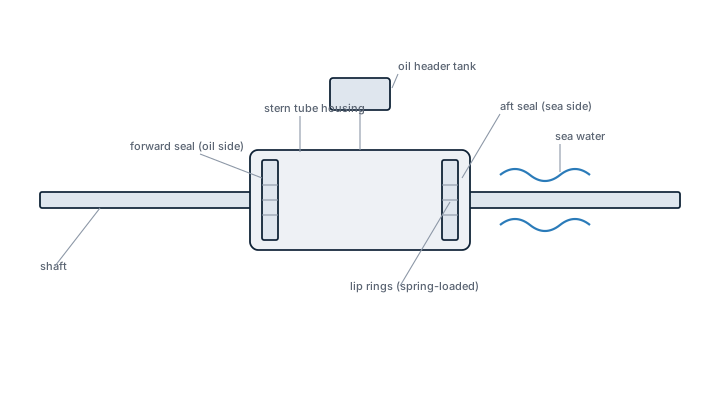
Main components
Forward and aft seal assemblies
Most stern tubes carry seals at both ends of the tube; the aft seal keeps seawater out, the forward seal keeps oil from migrating into the engine room, each typically built from multiple lip seal rings for redundancy.
Sealing rings / lip seals
Synthetic rubber rings running against a wear-resistant liner on the rotating shaft; multiple rings are stacked so a single ring's wear does not immediately result in a leak.
Shaft liner
A replaceable sleeve, historically bronze and increasingly synthetic composite, fitted over the shaft at the seal location so the seal rings run against a renewable wear surface rather than the shaft itself.
Lubricating oil system (oil-lubricated types)
A header tank feeding oil to the stern tube bearing at a pressure slightly above sea pressure, so any leak path runs oil out rather than water in, with oil level monitored as a leak indicator.
Air seal (on some designs)
A compressed air barrier between the forward and aft seal sets on some designs, providing an additional buffer and an early warning if either seal set starts to pass fluid.
Selection and sizing
- Shaft diameter and rotational speed, which determine seal ring size and the surface speed the lip seals must tolerate.
- Lubrication type - oil versus water-lubricated - driven by environmental regulation in the vessel's trading area as much as by mechanical preference.
- Environmentally acceptable lubricant (EAL) compatibility where required by the trading area, since not all seal materials tolerate every EAL formulation equally.
- Draft and immersion depth at the stern tube location, which sets the external sea pressure the seal must hold against.
Regulations and class
MARPOL Annex I addresses oil pollution prevention, and stern tube oil leakage is treated as a reportable discharge if it reaches the sea, which drives most flag states and charterers toward requiring EAL use or leak monitoring in environmentally sensitive areas. US EPA Vessel General Permit requirements specifically call out EAL use in stern tube lubrication for vessels operating in US waters where technically feasible. Class societies require periodic survey of the stern tube seal, typically opened for inspection at the shaft survey interval tied to the vessel's special survey cycle, with continuous monitoring arrangements available to extend that interval where oil condition and seal performance are logged.
Typical faults
| Fault | Cause | Consequence |
|---|---|---|
| Oil leakage into the sea | Worn lip seal rings or liner scoring from a previous seal failure | Pollution event, reportable discharge, potential fine or detention |
| Water ingress into the shaft tunnel | Aft seal failure, often following undetected liner wear | Bilge alarm activation, risk to bearing lubrication if oil is diluted |
| Rising oil consumption without visible leak | Slow seepage past a worn ring, not yet a visible drip | Early indicator often missed until the header tank needs frequent topping |
| Liner scoring | Debris ingress or a seal ring that has already failed and is cutting the liner | Repeated seal failure after replacement unless the liner is also renewed |
What to look for in a supplier
- Seal material confirmed compatible with the lubricant, EAL or mineral oil, actually in use aboard.
- Matched liner supply alongside the seal rings, since fitting new rings against a worn liner shortens the new seal's life sharply.
- Class-recognised type approval for the seal assembly matching the vessel's shaft diameter and speed.
- Monitoring system compatibility if the vessel uses continuous shaft survey arrangements requiring logged seal performance data.
Track oil top-up volume over time, not just oil level at a point in time - a seal that needs topping up more often each month is failing gradually, and that trend line will show it weeks before a visible leak does.
4 manufacturers · 17 models
Wärtsilä
14
- Effective protection against sand and debris ingress
- Reduces bearing wear and oil contamination, extending service intervals
- Fits a wide range of shaft diameters and speeds
- Straight‑forward retrofit on existing shafts
- Low routine maintenance compared with conventional lip seals
- Higher upfront cost than basic lip‑seal solutions
- Requires precise alignment during installation
- Proprietary spare parts can increase replacement lead time
- May be over‑engineered for vessels that never encounter sand‑laden waters
- Limited to shaft speed ranges specified by Wärtsilä
- Integrated sensor suite delivers temperature, vibration and oil quality data in one package
- Real‑time alarms and trend analysis support condition‑based maintenance and reduce unplanned downtime
- Seamless integration with Wärtsilä ship automation platforms (e.g., Fleet Operations Solution)
- Modular design allows scaling of monitoring points to match vessel size and complexity
- Proven track record on large commercial vessels with extensive field service support
- Higher upfront capital cost compared with basic mechanical seal alarms
- Installation requires access to shaft line internals and may be complex on retrofits
- Requires trained personnel for data interpretation and system calibration
- Potential for false positives if sensor fouling or wiring issues are not managed
- Limited benefit on small vessels where shaft line loads are low and simple monitoring suffices
- Very low leakage rates – meets IMO D‑2 requirements for oil containment
- Integrated wear and temperature monitoring reduces unplanned maintenance
- Dual‑lip carbon/ceramic material offers high durability across a wide speed range
- Modular design allows quick installation and replacement on new builds and retrofits
- Compatible with a broad range of shaft diameters and propeller types
- Higher upfront cost compared with basic lip‑seal solutions
- Requires periodic calibration of the monitoring sensors to maintain accuracy
- Installation space is larger than some compact proprietary seals, limiting use in very tight stern tube arrangements
- Complexity may demand specialised training for maintenance crews
- Long service interval (30 000–60 000 h) reduces dry‑dock frequency
- High wear resistance thanks to forged steel and Babbitt lining
- IMO oil‑pollution prevention compliance for environmentally sensitive routes
- Classed by DNV, LR, ABS and BV, facilitating certification on new builds or retrofits
- Designed for easy installation and alignment with Wärtsilä’s shaft line systems
- Higher upfront capital cost compared with basic rubber lip seals
- Requires specialised maintenance tools and trained personnel for optimal performance
- Spare parts may have longer lead times in remote ports
- Limited to shaft sizes covered by the specific Wärtsilä product range
- Oil‑free operation virtually eliminates environmental contamination from shaft seals.
- Integrated temperature and pressure sensors enable real‑time condition monitoring and predictive maintenance.
- Compact design fits a wide range of shaft diameters (typically 150 mm to 300 mm).
- Low friction reduces power loss and extends bearing life.
- Designed for easy installation and quick replacement during scheduled dry‑dock.
- Higher upfront capital cost compared with traditional gland‑packing seals.
- Requires precise shaft alignment and surface finish; tolerances are tighter than for packing.
- Limited to vessels where the propulsion system can accommodate the seal’s hydraulic pressure supply.
- Replacement parts and service must be sourced from authorised Wärtsilä dealers, potentially increasing lead time.
- Integrated bearing lubrication reduces separate oil circuits
- Proven reliability in high‑power propulsion applications
- Low friction and wear rates extend service intervals
- Straightforward installation with standard Wärtsilä fittings
- Requires a dedicated oil supply and filtration system
- Performance degrades if oil becomes contaminated or low in level
- Higher initial cost compared with basic mechanical seals
- Limited temperature range relative to some ceramic‑based alternatives
- Oil‑free sealing eliminates lubrication losses and reduces environmental discharge.
- Very low leakage rates compared with traditional packing (typically <0.5 L/h).
- Modular design allows easy installation and replacement on a wide range of shaft diameters.
- Integrated condition monitoring options enable early detection of wear or misalignment.
- Higher initial capital cost than conventional packed gland solutions.
- Requires precise alignment and may need auxiliary cooling for high‑power applications.
- Replacement parts and specialised service can be more expensive and less widely available in remote ports.
- Very low leakage rates even at high pressure differentials
- Integrated bearing reduces separate bearing inventory and alignment work
- Oil‑lubricated carbon ring gives long service intervals and good wear resistance
- Compact design fits in limited stern‑tube spaces on modern vessels
- Proven track record on a wide range of vessel classes
- Higher upfront cost compared with simple lip seals or gland packs
- Requires a dedicated oil supply and filtration system; contamination can cause premature wear
- Installation and replacement typically need dry‑docking, increasing downtime
- Maximum shaft speed limited (generally <200 rpm) for optimal performance
- Complexity of monitoring wear may require additional instrumentation
- Allows on‑board servicing without dry‑dock, reducing vessel downtime
- Double‑lip design provides low leakage rates and high reliability
- Compatible with a wide range of shaft diameters and speeds
- Straightforward installation and alignment procedures
- Class‑approved by major societies (e.g., DNV‑GL, ABS)
- Higher upfront capital cost compared with basic lip seals
- Requires trained personnel to perform in‑service maintenance correctly
- Oil consumption must be monitored; improper servicing can lead to wear
- Limited to vessels where shaft speed and pressure are within design limits
- Dual‑lip design gives high pressure resistance and minimal leakage
- Low wear rate reduces maintenance intervals and downtime
- Integrated condition‑monitoring sensors enable predictive maintenance
- Broad size range fits many shaft diameters and speeds
- Designed for harsh marine environments with temperature‑stable materials
- Higher initial purchase price compared with conventional lip seals
- Requires precise alignment and installation tolerances
- May need a dedicated lubrication system for optimal performance
- Replacement can be more complex than simple packing seals
- Limited to vessels that can accommodate its axial length
- Very low oil leakage – helps meet strict emission regulations
- Compact, lightweight design simplifies installation and retrofits
- Wide operating range (rpm, pressure) suitable for most merchant vessels
- Long service intervals due to wear‑resistant polymer elements
- Compatible with a variety of shaft line lubricants
- Maximum allowable shaft speed lower than high‑performance metal seals (~3 000 rpm)
- Polymer faces can be more sensitive to abrasive particles in seawater
- Requires precise alignment during installation to avoid premature wear
- Higher upfront cost compared with simple lip‑seal solutions
- Limited temperature range relative to all‑metal sealing systems
- Zero oil leakage – eliminates environmental risk from seal oil discharge
- Reduced routine maintenance (no oil changes or seal oil replenishment)
- Integrated condition monitoring compatible with Wärtsilä propulsion control systems
- Lower operating cost over the life‑cycle due to absence of oil handling and disposal
- Compact design that can be fitted on new builds or retrofitted onto existing shaft lines
- Requires high‑quality seawater filtration and temperature control to avoid corrosion and cavitation
- Limited to certain shaft speed/power ranges (typically up to ~200 rpm, medium‑power applications)
- Higher upfront capital cost compared with conventional oil‑lubricated mechanical seals
- Potential for increased wear if water quality is not maintained within specifications
- Additional auxiliary equipment needed (filters, cooling loop, monitoring sensors)
- High load capacity and low friction design suitable for a wide range of propeller sizes
- Integrated condition monitoring (vibration/temperature) reduces unplanned downtime
- Modular construction simplifies installation and replacement during dry‑dock periods
- Proven reliability on Wärtsilä engine platforms with extensive field service history
- Compatible with standard lubrication systems and offers optional oil‑free variants
- Higher purchase price compared with generic off‑the‑shelf bearing solutions
- Spare parts and service support are primarily through Wärtsilä networks, which may limit availability in remote ports
- Installation requires specific alignment tools and trained personnel
- Weight is greater than some lightweight aluminium alternatives, affecting overall shaft line mass budget
- Proprietary design can restrict use with non‑Wärtsilä propulsion arrangements

- Lip seal wear causing oil leakage
- Chromium liner scoring
- Air seal chamber pressure loss
- Spring tension loss
- Compact design saves space in the stern tube arrangement
- Integrated air chamber reduces oil leakage and supports MARPOL zero‑discharge goals
- Spring‑loaded lip provides consistent sealing pressure over a range of shaft speeds
- Relatively easy to install and replace during dry‑dock periods
- Compatible with standard chromium liners used on many vessel classes
- Lip wear can lead to oil leakage if not monitored; requires regular inspection
- Chromium liner may be scored by the lip seal over time, increasing maintenance
- Spring tension loss reduces sealing effectiveness and must be checked periodically
- Limited to certain shaft diameter ranges; not suitable for very large or high‑speed shafts without engineering review
- Air‑seal chamber pressure loss can occur if installation tolerances are not met
Blohm+Voss (Aegir)
1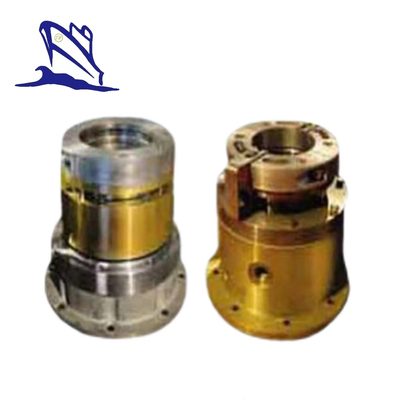
- Seal lip wear
- Air seal pressure fluctuation
- Liner surface damage
- Aft seal oil contamination with seawater
- Four‑seal configuration offers redundancy and high reliability
- Aft seal oil sampling point enables proactive detection of seawater contamination
- Robust liner material reduces wear and extends service intervals
- Standardized dimensions facilitate retrofit on existing shafts
- Proven track record on long‑haul ocean vessels
- Installation is complex and requires experienced personnel
- Higher upfront cost compared with single‑seal solutions
- Requires regular monitoring of aft seal oil condition
- Lip wear can increase under very high RPM or abrasive conditions
- Spare parts may have longer lead times due to specialized design
Duramax Marine
1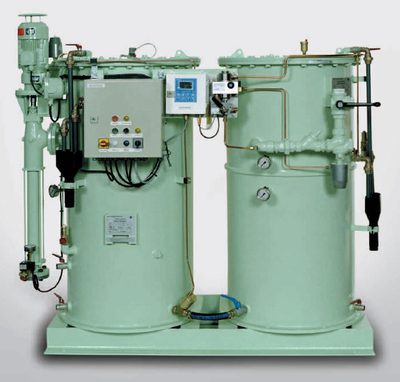
- Bearing surface wear
- Shaft sleeve corrosion
- Debris ingestion damage
- Oil‑free operation meets EPA VGP regulations, eliminating oil handling costs and environmental risk
- Composite material offers superior shock absorption and corrosion resistance compared with metal bearings
- Clearance can be monitored directly with a poker gauge, simplifying routine inspections
- Reduced maintenance intervals in clean water environments due to lack of oil degradation
- Bearing surface wear can accelerate if water quality is poor or debris ingress occurs
- Shaft sleeve corrosion may develop when operating in high‑salinity or low‑oxygen water without adequate cathodic protection
- Requires robust filtration and regular debris checks to prevent damage from foreign material
- Performance may be limited in very low‑speed applications where oil‑lubricated bearings provide better damping
Thordon Bearings
1
- Bearing stave wear
- Shaft sleeve erosion from sediment
- Water flow restriction
- Alignment issues
- Zero oil discharge – fully compliant with environmental regulations (EPA VGP).
- Simplified maintenance – no oil changes or disposal required.
- Corrosion‑resistant materials designed for long service in seawater environments.
- Lower operating cost when clean seawater is readily available.
- Higher susceptibility to wear if sediment or debris enters the water flow.
- Requires strict alignment and regular clearance monitoring; misalignment accelerates stave wear.
- Load capacity generally lower than comparable oil‑lubricated bearings, limiting use on very high‑power shafts.
- Performance degrades in low‑flow or highly turbulent water conditions.