What to check on a Ram Type Steering Gear.
Two hydraulic layouts dominate marine steering gear: rotary vane, where oil pressure acts directly on vanes fixed to the rudder stock inside a sealed housing, and ram type, where one or more hydraulic cylinders push and pull on a tiller arm keyed to the top of the stock. Ram type units scale better to high torque: a two- or four-ram arrangement can deliver the force needed to turn a large, deep rudder against the flow of a fully loaded hull, which is why the layout is standard on tankers, bulk…
What sets ram type steering gear apart
Two hydraulic layouts dominate marine steering gear: rotary vane, where oil pressure acts directly on vanes fixed to the rudder stock inside a sealed housing, and ram type, where one or more hydraulic cylinders push and pull on a tiller arm keyed to the top of the stock. Ram type units scale better to high torque: a two- or four-ram arrangement can deliver the force needed to turn a large, deep rudder against the flow of a fully loaded hull, which is why the layout is standard on tankers, bulk carriers and other large tonnage. Rotary vane units are lighter and more compact for a given torque but become impractical at the upper end of the torque range that VLCCs and large bulkers require.
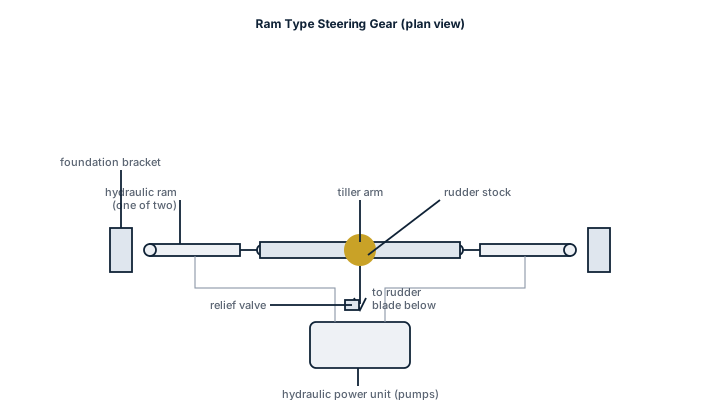
Main components
Tiller and rams
- Tiller arm, keyed or shrink-fitted to the rudder stock head, providing the lever arm the rams push against
- Two or four hydraulic rams (cylinders), arranged so opposing pairs work against each other to swing the tiller port and starboard
- Ram end connections, either a crosshead sliding in a guide or a direct pin joint, taking the side loads generated as the tiller angle changes through the swing
Hydraulic power unit
- Two independent pump sets as a minimum, each capable of moving the rudder alone, satisfying the redundancy requirement for main steering gear
- Variable-delivery or fixed-delivery pumps depending on design, feeding the rams through a manifold with relief and changeover valves
- Rudder angle transmitter feeding the bridge indicator and the autopilot/follow-up control loop
Selection and sizing
Sizing starts from the rudder torque calculation at the design speed and maximum rudder angle, which in turn sets the required ram bore, stroke and system working pressure. Class rules set the minimum performance: full rudder movement from 35 degrees one side to 30 degrees the other side within 28 seconds at maximum ahead service speed, using the main steering gear. Ram diameter and hydraulic pressure are traded off against each other within the space available in the steering flat, and the tiller arm length is fixed by the rudder stock geometry, so most of the engineering sits in matching pump delivery and pressure to the torque curve through the full swing, not just at the extremes.
Regulations and class
SOLAS Ch. II-1 requires a main steering gear capable of the 35/30-degree swing within 28 seconds, and an auxiliary steering gear able to move the rudder at a reduced rate if the main system fails, with independent power supplies for each so a single fault cannot take out both. Class rules require periodic testing of the changeover between main and auxiliary systems, and a steering gear failure test is a standard item at each annual survey. Emergency steering arrangements and communication between the bridge and steering flat are also checked as part of the same survey scope.
Typical faults
| Fault | Consequence |
|---|---|
| Ram seal wear | Internal leakage lets the rudder creep off the commanded angle under load, forcing the pump to hunt continuously |
| Air trapped in the hydraulic system after topping up | Spongy or delayed rudder response, and possible cavitation noise from the pumps |
| Worn crosshead guide or ram pin bushings | Excess play at the tiller, felt on the bridge as sluggish or imprecise steering |
| Relief valve set incorrectly or sticking | Either loss of full rudder torque, or pressure spikes that stress rams and pipework |
What to look for in a supplier
- Torque and swing-time figures backed by a type test or class approval for the specific rudder torque range, not a generic catalogue unit
- Ram seal and bushing kits available as standard spares, since these are the parts that wear fastest in normal service
- Compatibility with the existing hydraulic power unit if only the ram assembly is being replaced, particularly ram bore and stroke
- Documented interface for the rudder angle transmitter and follow-up control, matching the bridge autopilot system already fitted
After any work on the rams or hydraulic lines, bleed the system properly and run full lock-to-lock swings on both pump sets before signing off - trapped air shows up as a steering complaint days later, not as an obvious fault on the day.