Throw-Over Life Raft
A throw-over life raft has no davit; it is thrown overboard and inflates on the water by painter line pull or automatic hydrostatic release, which makes the release unit and painter line the parts that decide whether it launches at all.
Read more — Throw-Over Life Raft explained ▾
What defines this type
A throw-over life raft is stowed in a canister or valise, secured to the ship by a painter line, and launched by throwing it over the side and letting it inflate in the water — there is no davit, no powered lowering mechanism, and no requirement for a crane or launching arm. That makes it the standard fit for smaller vessels and for secondary or additional raft stations on larger ships where a davit-launched arrangement is not fitted, and it depends on a hydrostatic release unit to get it into the water automatically if the ship sinks before anyone reaches the stowage point.
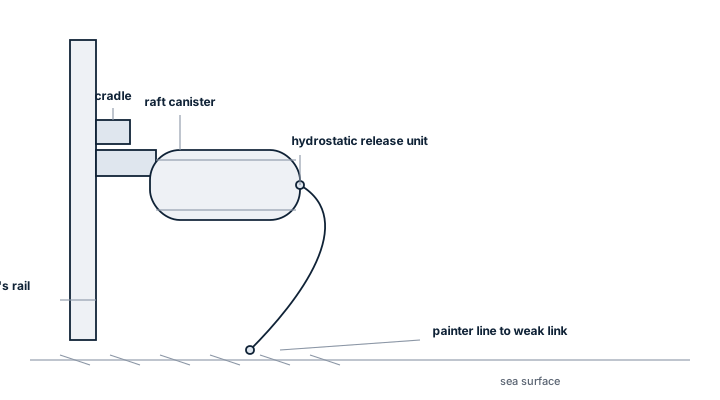
Main components
Container
A rigid GRP canister for open weather deck stowage, or a soft valise for sheltered or accommodation-area stowage; the canister protects the raft from UV and mechanical damage on an exposed deck, while the valise is lighter and easier to manhandle but only suitable where it is not directly exposed to weather.
Painter line and weak link
A line connecting the raft to the ship, used to trigger inflation by pulling it out to its full length and beyond, and fitted with a weak link designed to part at a defined load so a sinking ship does not drag the inflated raft down with it.
Hydrostatic release unit (HRU)
Releases the raft's lashing automatically at a shallow depth (typically around 1.5-4 metres) if the ship sinks without anyone launching the raft manually, letting it float free and then inflate as the painter line pays out.
Inflation cylinder and canopy
A CO2 or CO2/nitrogen cylinder inflates the buoyancy tubes and self-erecting canopy within roughly 30-60 seconds of the painter line pull, and the canopy provides shelter from exposure once occupied — often the single biggest survival factor after the first hours.
Selection / Sizing
| Parameter | What it drives |
|---|---|
| Rated capacity (persons) | Matched to muster station allocation, not vessel complement alone |
| Equipment pack (SOLAS A or B) | A-pack for long international voyages, B-pack for short/coastal service where permitted |
| Container type | Canister for exposed deck stowage; valise for sheltered stowage only |
| Stowage height | Must allow float-free launching within the HRU's operating depth as the ship sinks |
Stowage location has to give a clear drop path to the water with nothing to foul the raft on the way down, and cradle and lashing arrangements must be compatible with the specific HRU model fitted — mixing components from different manufacturers without an approved combination is a common source of survey findings.
Regulations / Class
SOLAS Chapter III and the LSA Code set the carriage, capacity and equipment pack requirements for life rafts, including the mandatory float-free arrangement via an HRU for rafts that are not davit-launched. The HRU itself has a manufacturer-stated service life (commonly two years) and must be replaced or serviced before expiry, checked at every safety equipment survey. Rafts require servicing at an approved service station at intervals set by the manufacturer and flag administration, typically annually, covering inflation testing, repacking, and inspection of the CO2 cylinder charge and painter line condition — a raft past its service due date is treated as not carried for survey purposes, regardless of physical presence on board.
Typical faults
- Expired or corroded HRU — the single point of failure for automatic float-free launching; an expired unit may not release at all, defeating the entire self-launching design.
- Canister seal degradation — UV and salt exposure over years can compromise the canister seal, letting moisture in and risking a raft that fails to inflate correctly when needed.
- Painter line incorrectly secured — attached to a point that does not hold under load, or led so it can foul on deck fittings during launch, preventing the inflation trigger from working as designed.
- Overdue servicing — the most common finding at port state control inspections; a raft outside its service interval is a detention-grade deficiency on most flags.
- Incorrect stowage height — a raft stowed too high for the HRU's rated release depth, or too low and exposed to routine wave damage, undermines the float-free arrangement it depends on.
What to look for in a supplier
- SOLAS/MED type approval for the specific raft and capacity, matched against the vessel's safety equipment certificate.
- Confirmed compatibility between the raft's cradle, the HRU model, and any weak link specified — not a generic "fits most" claim.
- A servicing station network that actually covers the vessel's trading pattern, since an overdue raft cannot simply wait for the home port.
- Clear documentation of pack contents (SOLAS A or B) so the equipment inside matches the voyage type the vessel actually undertakes.
Check the HRU expiry date at every monthly lifeboat drill, not just at annual survey — it is a small, easily overlooked component that determines whether the entire raft launches itself if no one is left to throw it.
7 manufacturers · 102 models
Survitec / RFD
20
- Canister, securing arrangement, painter, or release-system deterioration from weather exposure can prevent correct deployment
- Hydrostatic release or weak-link problems caused by expiry, incorrect rigging, or damage can prevent automatic release where such release is fitted
- Fabric, seam, valve, or inflation-system deterioration can cause loss of pressure or incomplete inflation
- Moisture ingress or damaged packaging can degrade survival equipment and raft components before use
- Incorrect servicing, missing equipment, or expired consumables may only become evident during inspection or deployment and can reduce emergency readiness
- Canister, securing arrangement, painter, or release-system deterioration from weather exposure can prevent correct deployment
- Hydrostatic release or weak-link problems caused by expiry, incorrect rigging, or damage can prevent automatic release where such release is fitted
- Fabric, seam, valve, or inflation-system deterioration can cause loss of pressure or incomplete inflation
- Moisture ingress or damaged packaging can degrade survival equipment and raft components before use
- Incorrect servicing, missing equipment, or expired consumables may only become evident during inspection or deployment and can reduce emergency readiness
- Canister, securing arrangement, painter, or release-system deterioration from weather exposure can prevent correct deployment
- Hydrostatic release or weak-link problems caused by expiry, incorrect rigging, or damage can prevent automatic release where such release is fitted
- Fabric, seam, valve, or inflation-system deterioration can cause loss of pressure or incomplete inflation
- Moisture ingress or damaged packaging can degrade survival equipment and raft components before use
- Incorrect servicing, missing equipment, or expired consumables may only become evident during inspection or deployment and can reduce emergency readiness
- Container, fabric, hull or protective-cover damage caused by weather exposure, impact or poor stowage can compromise readiness and may be visible during inspection
- Release, lashing or securing faults caused by corrosion, incorrect rigging or maintenance errors can prevent normal deployment or allow insecure stowage
- Inflation, starting or propulsion-system faults where applicable caused by depleted cylinders, battery issues, fuel problems or mechanical defects can prevent successful deployment or operation
- Missing, damaged or expired survival equipment caused by poor inventory control can be identified during statutory service or onboard checks
- Drainage blockage, corrosion or water ingress around the stowage location can deteriorate equipment and create seized fasteners or damaged containers
- Container, fabric, hull or protective-cover damage caused by weather exposure, impact or poor stowage can compromise readiness and may be visible during inspection
- Release, lashing or securing faults caused by corrosion, incorrect rigging or maintenance errors can prevent normal deployment or allow insecure stowage
- Inflation, starting or propulsion-system faults where applicable caused by depleted cylinders, battery issues, fuel problems or mechanical defects can prevent successful deployment or operation
- Missing, damaged or expired survival equipment caused by poor inventory control can be identified during statutory service or onboard checks
- Drainage blockage, corrosion or water ingress around the stowage location can deteriorate equipment and create seized fasteners or damaged containers
- Container, fabric, hull or protective-cover damage caused by weather exposure, impact or poor stowage can compromise readiness and may be visible during inspection
- Release, lashing or securing faults caused by corrosion, incorrect rigging or maintenance errors can prevent normal deployment or allow insecure stowage
- Inflation, starting or propulsion-system faults where applicable caused by depleted cylinders, battery issues, fuel problems or mechanical defects can prevent successful deployment or operation
- Missing, damaged or expired survival equipment caused by poor inventory control can be identified during statutory service or onboard checks
- Drainage blockage, corrosion or water ingress around the stowage location can deteriorate equipment and create seized fasteners or damaged containers
- Container, securing band or cradle damage from corrosion, impact or UV exposure, noticed as cracked housings, seized fasteners or obstructed release
- Painter chafe, incorrect routing or accidental over-securing, noticed during inspection and capable of preventing normal inflation sequence
- Hydrostatic release or weak-link deterioration where fitted, noticed as corrosion, expiry or incorrect assembly
- Cylinder, valve or inflation-system leakage developing during storage, usually discovered during approved servicing or by abnormal container condition
- Raft fabric, canopy or seam deterioration from age, contamination or water ingress, identified during service-station inflation and inspection
- Emergency-pack deterioration or missing contents after improper opening or repacking, identified during certified service
- Container, fabric, hull or protective-cover damage caused by weather exposure, impact or poor stowage can compromise readiness and may be visible during inspection
- Release, lashing or securing faults caused by corrosion, incorrect rigging or maintenance errors can prevent normal deployment or allow insecure stowage
- Inflation, starting or propulsion-system faults where applicable caused by depleted cylinders, battery issues, fuel problems or mechanical defects can prevent successful deployment or operation
- Missing, damaged or expired survival equipment caused by poor inventory control can be identified during statutory service or onboard checks
- Drainage blockage, corrosion or water ingress around the stowage location can deteriorate equipment and create seized fasteners or damaged containers
- Container, fabric, hull or protective-cover damage caused by weather exposure, impact or poor stowage can compromise readiness and may be visible during inspection
- Release, lashing or securing faults caused by corrosion, incorrect rigging or maintenance errors can prevent normal deployment or allow insecure stowage
- Inflation, starting or propulsion-system faults where applicable caused by depleted cylinders, battery issues, fuel problems or mechanical defects can prevent successful deployment or operation
- Missing, damaged or expired survival equipment caused by poor inventory control can be identified during statutory service or onboard checks
- Drainage blockage, corrosion or water ingress around the stowage location can deteriorate equipment and create seized fasteners or damaged containers
- Container, fabric, hull or protective-cover damage caused by weather exposure, impact or poor stowage can compromise readiness and may be visible during inspection
- Release, lashing or securing faults caused by corrosion, incorrect rigging or maintenance errors can prevent normal deployment or allow insecure stowage
- Inflation, starting or propulsion-system faults where applicable caused by depleted cylinders, battery issues, fuel problems or mechanical defects can prevent successful deployment or operation
- Missing, damaged or expired survival equipment caused by poor inventory control can be identified during statutory service or onboard checks
- Drainage blockage, corrosion or water ingress around the stowage location can deteriorate equipment and create seized fasteners or damaged containers
- Container, fabric, hull or protective-cover damage caused by weather exposure, impact or poor stowage can compromise readiness and may be visible during inspection
- Release, lashing or securing faults caused by corrosion, incorrect rigging or maintenance errors can prevent normal deployment or allow insecure stowage
- Inflation, starting or propulsion-system faults where applicable caused by depleted cylinders, battery issues, fuel problems or mechanical defects can prevent successful deployment or operation
- Missing, damaged or expired survival equipment caused by poor inventory control can be identified during statutory service or onboard checks
- Drainage blockage, corrosion or water ingress around the stowage location can deteriorate equipment and create seized fasteners or damaged containers
- Container, fabric, hull or protective-cover damage caused by weather exposure, impact or poor stowage can compromise readiness and may be visible during inspection
- Release, lashing or securing faults caused by corrosion, incorrect rigging or maintenance errors can prevent normal deployment or allow insecure stowage
- Inflation, starting or propulsion-system faults where applicable caused by depleted cylinders, battery issues, fuel problems or mechanical defects can prevent successful deployment or operation
- Missing, damaged or expired survival equipment caused by poor inventory control can be identified during statutory service or onboard checks
- Drainage blockage, corrosion or water ingress around the stowage location can deteriorate equipment and create seized fasteners or damaged containers
- Container, fabric, hull or protective-cover damage caused by weather exposure, impact or poor stowage can compromise readiness and may be visible during inspection
- Release, lashing or securing faults caused by corrosion, incorrect rigging or maintenance errors can prevent normal deployment or allow insecure stowage
- Inflation, starting or propulsion-system faults where applicable caused by depleted cylinders, battery issues, fuel problems or mechanical defects can prevent successful deployment or operation
- Missing, damaged or expired survival equipment caused by poor inventory control can be identified during statutory service or onboard checks
- Drainage blockage, corrosion or water ingress around the stowage location can deteriorate equipment and create seized fasteners or damaged containers
- Container, fabric, hull or protective-cover damage caused by weather exposure, impact or poor stowage can compromise readiness and may be visible during inspection
- Release, lashing or securing faults caused by corrosion, incorrect rigging or maintenance errors can prevent normal deployment or allow insecure stowage
- Inflation, starting or propulsion-system faults where applicable caused by depleted cylinders, battery issues, fuel problems or mechanical defects can prevent successful deployment or operation
- Missing, damaged or expired survival equipment caused by poor inventory control can be identified during statutory service or onboard checks
- Drainage blockage, corrosion or water ingress around the stowage location can deteriorate equipment and create seized fasteners or damaged containers
- Container, fabric, hull or protective-cover damage caused by weather exposure, impact or poor stowage can compromise readiness and may be visible during inspection
- Release, lashing or securing faults caused by corrosion, incorrect rigging or maintenance errors can prevent normal deployment or allow insecure stowage
- Inflation, starting or propulsion-system faults where applicable caused by depleted cylinders, battery issues, fuel problems or mechanical defects can prevent successful deployment or operation
- Missing, damaged or expired survival equipment caused by poor inventory control can be identified during statutory service or onboard checks
- Drainage blockage, corrosion or water ingress around the stowage location can deteriorate equipment and create seized fasteners or damaged containers
- Container, fabric, hull or protective-cover damage caused by weather exposure, impact or poor stowage can compromise readiness and may be visible during inspection
- Release, lashing or securing faults caused by corrosion, incorrect rigging or maintenance errors can prevent normal deployment or allow insecure stowage
- Inflation, starting or propulsion-system faults where applicable caused by depleted cylinders, battery issues, fuel problems or mechanical defects can prevent successful deployment or operation
- Missing, damaged or expired survival equipment caused by poor inventory control can be identified during statutory service or onboard checks
- Drainage blockage, corrosion or water ingress around the stowage location can deteriorate equipment and create seized fasteners or damaged containers
- Container, fabric, hull or protective-cover damage caused by weather exposure, impact or poor stowage can compromise readiness and may be visible during inspection
- Release, lashing or securing faults caused by corrosion, incorrect rigging or maintenance errors can prevent normal deployment or allow insecure stowage
- Inflation, starting or propulsion-system faults where applicable caused by depleted cylinders, battery issues, fuel problems or mechanical defects can prevent successful deployment or operation
- Missing, damaged or expired survival equipment caused by poor inventory control can be identified during statutory service or onboard checks
- Drainage blockage, corrosion or water ingress around the stowage location can deteriorate equipment and create seized fasteners or damaged containers
- Container, fabric, hull or protective-cover damage caused by weather exposure, impact or poor stowage can compromise readiness and may be visible during inspection
- Release, lashing or securing faults caused by corrosion, incorrect rigging or maintenance errors can prevent normal deployment or allow insecure stowage
- Inflation, starting or propulsion-system faults where applicable caused by depleted cylinders, battery issues, fuel problems or mechanical defects can prevent successful deployment or operation
- Missing, damaged or expired survival equipment caused by poor inventory control can be identified during statutory service or onboard checks
- Drainage blockage, corrosion or water ingress around the stowage location can deteriorate equipment and create seized fasteners or damaged containers
- Container, fabric, hull or protective-cover damage caused by weather exposure, impact or poor stowage can compromise readiness and may be visible during inspection
- Release, lashing or securing faults caused by corrosion, incorrect rigging or maintenance errors can prevent normal deployment or allow insecure stowage
- Inflation, starting or propulsion-system faults where applicable caused by depleted cylinders, battery issues, fuel problems or mechanical defects can prevent successful deployment or operation
- Missing, damaged or expired survival equipment caused by poor inventory control can be identified during statutory service or onboard checks
- Drainage blockage, corrosion or water ingress around the stowage location can deteriorate equipment and create seized fasteners or damaged containers
- Container, fabric, hull or protective-cover damage caused by weather exposure, impact or poor stowage can compromise readiness and may be visible during inspection
- Release, lashing or securing faults caused by corrosion, incorrect rigging or maintenance errors can prevent normal deployment or allow insecure stowage
- Inflation, starting or propulsion-system faults where applicable caused by depleted cylinders, battery issues, fuel problems or mechanical defects can prevent successful deployment or operation
- Missing, damaged or expired survival equipment caused by poor inventory control can be identified during statutory service or onboard checks
- Drainage blockage, corrosion or water ingress around the stowage location can deteriorate equipment and create seized fasteners or damaged containers
VIKING Life-Saving
20
- Kapazitätsbereich
- 4 bis 35 Personen (DK+ & DKF+ Serien)
- Behältertypen
- Rund, Quadratisch, Low-Profile (Fiberglas)
- Funktionstemperatur
- -30°C bis +65°C (Standard); -50°C für Polar-Versionen
- Inflation
- Automatic via painter line or CO2 cylinder; inflation within 1 minute (throw-overboard)
- Notfall-packungen
- SOLAS A (Standard) or SOLAS B
- Behälter-Material
- Starrer Fiberglas-Container mit Schaumstoff-Polsterung
- Stabilität
- Two independent buoyancy chambers; remains stable even with one deflated chamber
- DK+ Throw-overboard (4-35 Personen)
- DKF+ Davit-launched (12-35 Personen)
- S30 Extended Service Interval (all capacities)
- RescYou Recreational Series (Yachting)
- Area: Jährliches Service-Intervall (SOLAS)Check: Inspector checks for service label date (not older than 12 months); Standard SOLAS requires complete inspection, inflation test, cylinder control, equipment inventory (pyrotechnics, water, rations)
- Area: HRU (Hydrostatic Release Unit) - replacement maximum every 24 monthsCheck: Inspector verifies HRU expiration date independent of raft service date; PSC checks both dates separately; must be compatible with raft model; use Hammar H20 or similar certified models
- Area: Painter line and weak-link systemCheck: Inspector checks: Painter permanently connected to ship; weak-link correctly attached to HRU; weak-link breaking strength 1.6-2.0 kN; red color and 30 ft (approx. 10 m) length for throw-overboard; fastening must withstand hoisting force and break under raft weight during ship sinking
- Area: Container integrity and lashing strapsCheck: Inspector controls: Container for cracks, deformations, water damage; lashing straps tight and undamaged; cradle securely fastened; container stored horizontally stable; seals intact
- Area: Davit-System Prüfung (nur DKF+-Modelle)Check: Inspector checks: Davit connected with cables/ropes; raft attachment straps intact; lateral impact test: raft must withstand impact 3.5 m/s against ship hull; water immersion test from 3 m height without loss of function; document launching procedure
- Area: S30 Extended Service Interval - Jährliche Bordsinspektion (30-Monate-Option)Check: Inspector (crew) performs 3-step onboard inspection: test panel for environment in aluminum pouch; visual inspection container; no electrical equipment required; complete service every 30 months at certified Viking station (instead of 12 months standard); no interval extensions possible for S30
Type-universal inspection/service points for Life Rafts (Viking Life-Saving Equipment, Mega-Fleet 2026-06). Per-model specs not auto-populated.
- Kapazitätsbereich
- 4 bis 35 Personen (DK+ & DKF+ Serien)
- Behältertypen
- Rund, Quadratisch, Low-Profile (Fiberglas)
- Funktionstemperatur
- -30°C bis +65°C (Standard); -50°C für Polar-Versionen
- Inflation
- Automatic via painter line or CO2 cylinder; inflation within 1 minute (throw-overboard)
- Notfall-packungen
- SOLAS A (Standard) or SOLAS B
- Behälter-Material
- Starrer Fiberglas-Container mit Schaumstoff-Polsterung
- Stabilität
- Two independent buoyancy chambers; remains stable even with one deflated chamber
- DK+ Throw-overboard (4-35 Personen)
- DKF+ Davit-launched (12-35 Personen)
- S30 Extended Service Interval (all capacities)
- RescYou Recreational Series (Yachting)
- Area: Jährliches Service-Intervall (SOLAS)Check: Inspector checks for service label date (not older than 12 months); Standard SOLAS requires complete inspection, inflation test, cylinder control, equipment inventory (pyrotechnics, water, rations)
- Area: HRU (Hydrostatic Release Unit) - replacement maximum every 24 monthsCheck: Inspector verifies HRU expiration date independent of raft service date; PSC checks both dates separately; must be compatible with raft model; use Hammar H20 or similar certified models
- Area: Painter line and weak-link systemCheck: Inspector checks: Painter permanently connected to ship; weak-link correctly attached to HRU; weak-link breaking strength 1.6-2.0 kN; red color and 30 ft (approx. 10 m) length for throw-overboard; fastening must withstand hoisting force and break under raft weight during ship sinking
- Area: Container integrity and lashing strapsCheck: Inspector controls: Container for cracks, deformations, water damage; lashing straps tight and undamaged; cradle securely fastened; container stored horizontally stable; seals intact
- Area: Davit-System Prüfung (nur DKF+-Modelle)Check: Inspector checks: Davit connected with cables/ropes; raft attachment straps intact; lateral impact test: raft must withstand impact 3.5 m/s against ship hull; water immersion test from 3 m height without loss of function; document launching procedure
- Area: S30 Extended Service Interval - Jährliche Bordsinspektion (30-Monate-Option)Check: Inspector (crew) performs 3-step onboard inspection: test panel for environment in aluminum pouch; visual inspection container; no electrical equipment required; complete service every 30 months at certified Viking station (instead of 12 months standard); no interval extensions possible for S30
Type-universal inspection/service points for Life Rafts (Viking Life-Saving Equipment, Mega-Fleet 2026-06). Per-model specs not auto-populated.
- Kapazitätsbereich
- 4 bis 35 Personen (DK+ & DKF+ Serien)
- Behältertypen
- Rund, Quadratisch, Low-Profile (Fiberglas)
- Funktionstemperatur
- -30°C bis +65°C (Standard); -50°C für Polar-Versionen
- Inflation
- Automatic via painter line or CO2 cylinder; inflation within 1 minute (throw-overboard)
- Notfall-packungen
- SOLAS A (Standard) or SOLAS B
- Behälter-Material
- Starrer Fiberglas-Container mit Schaumstoff-Polsterung
- Stabilität
- Two independent buoyancy chambers; remains stable even with one deflated chamber
- DK+ Throw-overboard (4-35 Personen)
- DKF+ Davit-launched (12-35 Personen)
- S30 Extended Service Interval (all capacities)
- RescYou Recreational Series (Yachting)
- Area: Jährliches Service-Intervall (SOLAS)Check: Inspector checks for service label date (not older than 12 months); Standard SOLAS requires complete inspection, inflation test, cylinder control, equipment inventory (pyrotechnics, water, rations)
- Area: HRU (Hydrostatic Release Unit) - replacement maximum every 24 monthsCheck: Inspector verifies HRU expiration date independent of raft service date; PSC checks both dates separately; must be compatible with raft model; use Hammar H20 or similar certified models
- Area: Painter line and weak-link systemCheck: Inspector checks: Painter permanently connected to ship; weak-link correctly attached to HRU; weak-link breaking strength 1.6-2.0 kN; red color and 30 ft (approx. 10 m) length for throw-overboard; fastening must withstand hoisting force and break under raft weight during ship sinking
- Area: Container integrity and lashing strapsCheck: Inspector controls: Container for cracks, deformations, water damage; lashing straps tight and undamaged; cradle securely fastened; container stored horizontally stable; seals intact
- Area: Davit-System Prüfung (nur DKF+-Modelle)Check: Inspector checks: Davit connected with cables/ropes; raft attachment straps intact; lateral impact test: raft must withstand impact 3.5 m/s against ship hull; water immersion test from 3 m height without loss of function; document launching procedure
- Area: S30 Extended Service Interval - Jährliche Bordsinspektion (30-Monate-Option)Check: Inspector (crew) performs 3-step onboard inspection: test panel for environment in aluminum pouch; visual inspection container; no electrical equipment required; complete service every 30 months at certified Viking station (instead of 12 months standard); no interval extensions possible for S30
Type-universal inspection/service points for Life Rafts (Viking Life-Saving Equipment, Mega-Fleet 2026-06). Per-model specs not auto-populated.
- Kapazitätsbereich
- 4 bis 35 Personen (DK+ & DKF+ Serien)
- Behältertypen
- Rund, Quadratisch, Low-Profile (Fiberglas)
- Funktionstemperatur
- -30°C bis +65°C (Standard); -50°C für Polar-Versionen
- Inflation
- Automatic via painter line or CO2 cylinder; inflation within 1 minute (throw-overboard)
- Notfall-packungen
- SOLAS A (Standard) or SOLAS B
- Behälter-Material
- Starrer Fiberglas-Container mit Schaumstoff-Polsterung
- Stabilität
- Two independent buoyancy chambers; remains stable even with one deflated chamber
- DK+ Throw-overboard (4-35 Personen)
- DKF+ Davit-launched (12-35 Personen)
- S30 Extended Service Interval (all capacities)
- RescYou Recreational Series (Yachting)
- Area: Jährliches Service-Intervall (SOLAS)Check: Inspector checks for service label date (not older than 12 months); Standard SOLAS requires complete inspection, inflation test, cylinder control, equipment inventory (pyrotechnics, water, rations)
- Area: HRU (Hydrostatic Release Unit) - replacement maximum every 24 monthsCheck: Inspector verifies HRU expiration date independent of raft service date; PSC checks both dates separately; must be compatible with raft model; use Hammar H20 or similar certified models
- Area: Painter line and weak-link systemCheck: Inspector checks: Painter permanently connected to ship; weak-link correctly attached to HRU; weak-link breaking strength 1.6-2.0 kN; red color and 30 ft (approx. 10 m) length for throw-overboard; fastening must withstand hoisting force and break under raft weight during ship sinking
- Area: Container integrity and lashing strapsCheck: Inspector controls: Container for cracks, deformations, water damage; lashing straps tight and undamaged; cradle securely fastened; container stored horizontally stable; seals intact
- Area: Davit-System Prüfung (nur DKF+-Modelle)Check: Inspector checks: Davit connected with cables/ropes; raft attachment straps intact; lateral impact test: raft must withstand impact 3.5 m/s against ship hull; water immersion test from 3 m height without loss of function; document launching procedure
- Area: S30 Extended Service Interval - Jährliche Bordsinspektion (30-Monate-Option)Check: Inspector (crew) performs 3-step onboard inspection: test panel for environment in aluminum pouch; visual inspection container; no electrical equipment required; complete service every 30 months at certified Viking station (instead of 12 months standard); no interval extensions possible for S30
Type-universal inspection/service points for Life Rafts (Viking Life-Saving Equipment, Mega-Fleet 2026-06). Per-model specs not auto-populated.
- Kapazitätsbereich
- 4 bis 35 Personen (DK+ & DKF+ Serien)
- Behältertypen
- Rund, Quadratisch, Low-Profile (Fiberglas)
- Funktionstemperatur
- -30°C bis +65°C (Standard); -50°C für Polar-Versionen
- Inflation
- Automatic via painter line or CO2 cylinder; inflation within 1 minute (throw-overboard)
- Notfall-packungen
- SOLAS A (Standard) or SOLAS B
- Behälter-Material
- Starrer Fiberglas-Container mit Schaumstoff-Polsterung
- Stabilität
- Two independent buoyancy chambers; remains stable even with one deflated chamber
- DK+ Throw-overboard (4-35 Personen)
- DKF+ Davit-launched (12-35 Personen)
- S30 Extended Service Interval (all capacities)
- RescYou Recreational Series (Yachting)
- Area: Jährliches Service-Intervall (SOLAS)Check: Inspector checks for service label date (not older than 12 months); Standard SOLAS requires complete inspection, inflation test, cylinder control, equipment inventory (pyrotechnics, water, rations)
- Area: HRU (Hydrostatic Release Unit) - replacement maximum every 24 monthsCheck: Inspector verifies HRU expiration date independent of raft service date; PSC checks both dates separately; must be compatible with raft model; use Hammar H20 or similar certified models
- Area: Painter line and weak-link systemCheck: Inspector checks: Painter permanently connected to ship; weak-link correctly attached to HRU; weak-link breaking strength 1.6-2.0 kN; red color and 30 ft (approx. 10 m) length for throw-overboard; fastening must withstand hoisting force and break under raft weight during ship sinking
- Area: Container integrity and lashing strapsCheck: Inspector controls: Container for cracks, deformations, water damage; lashing straps tight and undamaged; cradle securely fastened; container stored horizontally stable; seals intact
- Area: Davit-System Prüfung (nur DKF+-Modelle)Check: Inspector checks: Davit connected with cables/ropes; raft attachment straps intact; lateral impact test: raft must withstand impact 3.5 m/s against ship hull; water immersion test from 3 m height without loss of function; document launching procedure
- Area: S30 Extended Service Interval - Jährliche Bordsinspektion (30-Monate-Option)Check: Inspector (crew) performs 3-step onboard inspection: test panel for environment in aluminum pouch; visual inspection container; no electrical equipment required; complete service every 30 months at certified Viking station (instead of 12 months standard); no interval extensions possible for S30
Type-universal inspection/service points for Life Rafts (Viking Life-Saving Equipment, Mega-Fleet 2026-06). Per-model specs not auto-populated.
- Kapazitätsbereich
- 4 bis 35 Personen (DK+ & DKF+ Serien)
- Behältertypen
- Rund, Quadratisch, Low-Profile (Fiberglas)
- Funktionstemperatur
- -30°C bis +65°C (Standard); -50°C für Polar-Versionen
- Inflation
- Automatic via painter line or CO2 cylinder; inflation within 1 minute (throw-overboard)
- Notfall-packungen
- SOLAS A (Standard) or SOLAS B
- Behälter-Material
- Starrer Fiberglas-Container mit Schaumstoff-Polsterung
- Stabilität
- Two independent buoyancy chambers; remains stable even with one deflated chamber
- DK+ Throw-overboard (4-35 Personen)
- DKF+ Davit-launched (12-35 Personen)
- S30 Extended Service Interval (all capacities)
- RescYou Recreational Series (Yachting)
- Area: Jährliches Service-Intervall (SOLAS)Check: Inspector checks for service label date (not older than 12 months); Standard SOLAS requires complete inspection, inflation test, cylinder control, equipment inventory (pyrotechnics, water, rations)
- Area: HRU (Hydrostatic Release Unit) - replacement maximum every 24 monthsCheck: Inspector verifies HRU expiration date independent of raft service date; PSC checks both dates separately; must be compatible with raft model; use Hammar H20 or similar certified models
- Area: Painter line and weak-link systemCheck: Inspector checks: Painter permanently connected to ship; weak-link correctly attached to HRU; weak-link breaking strength 1.6-2.0 kN; red color and 30 ft (approx. 10 m) length for throw-overboard; fastening must withstand hoisting force and break under raft weight during ship sinking
- Area: Container integrity and lashing strapsCheck: Inspector controls: Container for cracks, deformations, water damage; lashing straps tight and undamaged; cradle securely fastened; container stored horizontally stable; seals intact
- Area: Davit-System Prüfung (nur DKF+-Modelle)Check: Inspector checks: Davit connected with cables/ropes; raft attachment straps intact; lateral impact test: raft must withstand impact 3.5 m/s against ship hull; water immersion test from 3 m height without loss of function; document launching procedure
- Area: S30 Extended Service Interval - Jährliche Bordsinspektion (30-Monate-Option)Check: Inspector (crew) performs 3-step onboard inspection: test panel for environment in aluminum pouch; visual inspection container; no electrical equipment required; complete service every 30 months at certified Viking station (instead of 12 months standard); no interval extensions possible for S30
Type-universal inspection/service points for Life Rafts (Viking Life-Saving Equipment, Mega-Fleet 2026-06). Per-model specs not auto-populated.
- Kapazitätsbereich
- 4 bis 35 Personen (DK+ & DKF+ Serien)
- Behältertypen
- Rund, Quadratisch, Low-Profile (Fiberglas)
- Funktionstemperatur
- -30°C bis +65°C (Standard); -50°C für Polar-Versionen
- Inflation
- Automatic via painter line or CO2 cylinder; inflation within 1 minute (throw-overboard)
- Notfall-packungen
- SOLAS A (Standard) or SOLAS B
- Behälter-Material
- Starrer Fiberglas-Container mit Schaumstoff-Polsterung
- Stabilität
- Two independent buoyancy chambers; remains stable even with one deflated chamber
- DK+ Throw-overboard (4-35 Personen)
- DKF+ Davit-launched (12-35 Personen)
- S30 Extended Service Interval (all capacities)
- RescYou Recreational Series (Yachting)
- Area: Jährliches Service-Intervall (SOLAS)Check: Inspector checks for service label date (not older than 12 months); Standard SOLAS requires complete inspection, inflation test, cylinder control, equipment inventory (pyrotechnics, water, rations)
- Area: HRU (Hydrostatic Release Unit) - replacement maximum every 24 monthsCheck: Inspector verifies HRU expiration date independent of raft service date; PSC checks both dates separately; must be compatible with raft model; use Hammar H20 or similar certified models
- Area: Painter line and weak-link systemCheck: Inspector checks: Painter permanently connected to ship; weak-link correctly attached to HRU; weak-link breaking strength 1.6-2.0 kN; red color and 30 ft (approx. 10 m) length for throw-overboard; fastening must withstand hoisting force and break under raft weight during ship sinking
- Area: Container integrity and lashing strapsCheck: Inspector controls: Container for cracks, deformations, water damage; lashing straps tight and undamaged; cradle securely fastened; container stored horizontally stable; seals intact
- Area: Davit-System Prüfung (nur DKF+-Modelle)Check: Inspector checks: Davit connected with cables/ropes; raft attachment straps intact; lateral impact test: raft must withstand impact 3.5 m/s against ship hull; water immersion test from 3 m height without loss of function; document launching procedure
- Area: S30 Extended Service Interval - Jährliche Bordsinspektion (30-Monate-Option)Check: Inspector (crew) performs 3-step onboard inspection: test panel for environment in aluminum pouch; visual inspection container; no electrical equipment required; complete service every 30 months at certified Viking station (instead of 12 months standard); no interval extensions possible for S30
Type-universal inspection/service points for Life Rafts (Viking Life-Saving Equipment, Mega-Fleet 2026-06). Per-model specs not auto-populated.
- Kapazitätsbereich
- 4 bis 35 Personen (DK+ & DKF+ Serien)
- Behältertypen
- Rund, Quadratisch, Low-Profile (Fiberglas)
- Funktionstemperatur
- -30°C bis +65°C (Standard); -50°C für Polar-Versionen
- Inflation
- Automatic via painter line or CO2 cylinder; inflation within 1 minute (throw-overboard)
- Notfall-packungen
- SOLAS A (Standard) or SOLAS B
- Behälter-Material
- Starrer Fiberglas-Container mit Schaumstoff-Polsterung
- Stabilität
- Two independent buoyancy chambers; remains stable even with one deflated chamber
- DK+ Throw-overboard (4-35 Personen)
- DKF+ Davit-launched (12-35 Personen)
- S30 Extended Service Interval (all capacities)
- RescYou Recreational Series (Yachting)
- Area: Jährliches Service-Intervall (SOLAS)Check: Inspector checks for service label date (not older than 12 months); Standard SOLAS requires complete inspection, inflation test, cylinder control, equipment inventory (pyrotechnics, water, rations)
- Area: HRU (Hydrostatic Release Unit) - replacement maximum every 24 monthsCheck: Inspector verifies HRU expiration date independent of raft service date; PSC checks both dates separately; must be compatible with raft model; use Hammar H20 or similar certified models
- Area: Painter line and weak-link systemCheck: Inspector checks: Painter permanently connected to ship; weak-link correctly attached to HRU; weak-link breaking strength 1.6-2.0 kN; red color and 30 ft (approx. 10 m) length for throw-overboard; fastening must withstand hoisting force and break under raft weight during ship sinking
- Area: Container integrity and lashing strapsCheck: Inspector controls: Container for cracks, deformations, water damage; lashing straps tight and undamaged; cradle securely fastened; container stored horizontally stable; seals intact
- Area: Davit-System Prüfung (nur DKF+-Modelle)Check: Inspector checks: Davit connected with cables/ropes; raft attachment straps intact; lateral impact test: raft must withstand impact 3.5 m/s against ship hull; water immersion test from 3 m height without loss of function; document launching procedure
- Area: S30 Extended Service Interval - Jährliche Bordsinspektion (30-Monate-Option)Check: Inspector (crew) performs 3-step onboard inspection: test panel for environment in aluminum pouch; visual inspection container; no electrical equipment required; complete service every 30 months at certified Viking station (instead of 12 months standard); no interval extensions possible for S30
Type-universal inspection/service points for Life Rafts (Viking Life-Saving Equipment, Mega-Fleet 2026-06). Per-model specs not auto-populated.
- Kapazitätsbereich
- 4 bis 35 Personen (DK+ & DKF+ Serien)
- Behältertypen
- Rund, Quadratisch, Low-Profile (Fiberglas)
- Funktionstemperatur
- -30°C bis +65°C (Standard); -50°C für Polar-Versionen
- Inflation
- Automatic via painter line or CO2 cylinder; inflation within 1 minute (throw-overboard)
- Notfall-packungen
- SOLAS A (Standard) or SOLAS B
- Behälter-Material
- Starrer Fiberglas-Container mit Schaumstoff-Polsterung
- Stabilität
- Two independent buoyancy chambers; remains stable even with one deflated chamber
- DK+ Throw-overboard (4-35 Personen)
- DKF+ Davit-launched (12-35 Personen)
- S30 Extended Service Interval (all capacities)
- RescYou Recreational Series (Yachting)
- Area: Jährliches Service-Intervall (SOLAS)Check: Inspector checks for service label date (not older than 12 months); Standard SOLAS requires complete inspection, inflation test, cylinder control, equipment inventory (pyrotechnics, water, rations)
- Area: HRU (Hydrostatic Release Unit) - replacement maximum every 24 monthsCheck: Inspector verifies HRU expiration date independent of raft service date; PSC checks both dates separately; must be compatible with raft model; use Hammar H20 or similar certified models
- Area: Painter line and weak-link systemCheck: Inspector checks: Painter permanently connected to ship; weak-link correctly attached to HRU; weak-link breaking strength 1.6-2.0 kN; red color and 30 ft (approx. 10 m) length for throw-overboard; fastening must withstand hoisting force and break under raft weight during ship sinking
- Area: Container integrity and lashing strapsCheck: Inspector controls: Container for cracks, deformations, water damage; lashing straps tight and undamaged; cradle securely fastened; container stored horizontally stable; seals intact
- Area: Davit-System Prüfung (nur DKF+-Modelle)Check: Inspector checks: Davit connected with cables/ropes; raft attachment straps intact; lateral impact test: raft must withstand impact 3.5 m/s against ship hull; water immersion test from 3 m height without loss of function; document launching procedure
- Area: S30 Extended Service Interval - Jährliche Bordsinspektion (30-Monate-Option)Check: Inspector (crew) performs 3-step onboard inspection: test panel for environment in aluminum pouch; visual inspection container; no electrical equipment required; complete service every 30 months at certified Viking station (instead of 12 months standard); no interval extensions possible for S30
Type-universal inspection/service points for Life Rafts (Viking Life-Saving Equipment, Mega-Fleet 2026-06). Per-model specs not auto-populated.
- Kapazitätsbereich
- 4 bis 35 Personen (DK+ & DKF+ Serien)
- Behältertypen
- Rund, Quadratisch, Low-Profile (Fiberglas)
- Funktionstemperatur
- -30°C bis +65°C (Standard); -50°C für Polar-Versionen
- Inflation
- Automatic via painter line or CO2 cylinder; inflation within 1 minute (throw-overboard)
- Notfall-packungen
- SOLAS A (Standard) or SOLAS B
- Behälter-Material
- Starrer Fiberglas-Container mit Schaumstoff-Polsterung
- Stabilität
- Two independent buoyancy chambers; remains stable even with one deflated chamber
- DK+ Throw-overboard (4-35 Personen)
- DKF+ Davit-launched (12-35 Personen)
- S30 Extended Service Interval (all capacities)
- RescYou Recreational Series (Yachting)
- Area: Jährliches Service-Intervall (SOLAS)Check: Inspector checks for service label date (not older than 12 months); Standard SOLAS requires complete inspection, inflation test, cylinder control, equipment inventory (pyrotechnics, water, rations)
- Area: HRU (Hydrostatic Release Unit) - replacement maximum every 24 monthsCheck: Inspector verifies HRU expiration date independent of raft service date; PSC checks both dates separately; must be compatible with raft model; use Hammar H20 or similar certified models
- Area: Painter line and weak-link systemCheck: Inspector checks: Painter permanently connected to ship; weak-link correctly attached to HRU; weak-link breaking strength 1.6-2.0 kN; red color and 30 ft (approx. 10 m) length for throw-overboard; fastening must withstand hoisting force and break under raft weight during ship sinking
- Area: Container integrity and lashing strapsCheck: Inspector controls: Container for cracks, deformations, water damage; lashing straps tight and undamaged; cradle securely fastened; container stored horizontally stable; seals intact
- Area: Davit-System Prüfung (nur DKF+-Modelle)Check: Inspector checks: Davit connected with cables/ropes; raft attachment straps intact; lateral impact test: raft must withstand impact 3.5 m/s against ship hull; water immersion test from 3 m height without loss of function; document launching procedure
- Area: S30 Extended Service Interval - Jährliche Bordsinspektion (30-Monate-Option)Check: Inspector (crew) performs 3-step onboard inspection: test panel for environment in aluminum pouch; visual inspection container; no electrical equipment required; complete service every 30 months at certified Viking station (instead of 12 months standard); no interval extensions possible for S30
Type-universal inspection/service points for Life Rafts (Viking Life-Saving Equipment, Mega-Fleet 2026-06). Per-model specs not auto-populated.
- Kapazitätsbereich
- 4 bis 35 Personen (DK+ & DKF+ Serien)
- Behältertypen
- Rund, Quadratisch, Low-Profile (Fiberglas)
- Funktionstemperatur
- -30°C bis +65°C (Standard); -50°C für Polar-Versionen
- Inflation
- Automatic via painter line or CO2 cylinder; inflation within 1 minute (throw-overboard)
- Notfall-packungen
- SOLAS A (Standard) or SOLAS B
- Behälter-Material
- Starrer Fiberglas-Container mit Schaumstoff-Polsterung
- Stabilität
- Two independent buoyancy chambers; remains stable even with one deflated chamber
- DK+ Throw-overboard (4-35 Personen)
- DKF+ Davit-launched (12-35 Personen)
- S30 Extended Service Interval (all capacities)
- RescYou Recreational Series (Yachting)
- Area: Jährliches Service-Intervall (SOLAS)Check: Inspector checks for service label date (not older than 12 months); Standard SOLAS requires complete inspection, inflation test, cylinder control, equipment inventory (pyrotechnics, water, rations)
- Area: HRU (Hydrostatic Release Unit) - replacement maximum every 24 monthsCheck: Inspector verifies HRU expiration date independent of raft service date; PSC checks both dates separately; must be compatible with raft model; use Hammar H20 or similar certified models
- Area: Painter line and weak-link systemCheck: Inspector checks: Painter permanently connected to ship; weak-link correctly attached to HRU; weak-link breaking strength 1.6-2.0 kN; red color and 30 ft (approx. 10 m) length for throw-overboard; fastening must withstand hoisting force and break under raft weight during ship sinking
- Area: Container integrity and lashing strapsCheck: Inspector controls: Container for cracks, deformations, water damage; lashing straps tight and undamaged; cradle securely fastened; container stored horizontally stable; seals intact
- Area: Davit-System Prüfung (nur DKF+-Modelle)Check: Inspector checks: Davit connected with cables/ropes; raft attachment straps intact; lateral impact test: raft must withstand impact 3.5 m/s against ship hull; water immersion test from 3 m height without loss of function; document launching procedure
- Area: S30 Extended Service Interval - Jährliche Bordsinspektion (30-Monate-Option)Check: Inspector (crew) performs 3-step onboard inspection: test panel for environment in aluminum pouch; visual inspection container; no electrical equipment required; complete service every 30 months at certified Viking station (instead of 12 months standard); no interval extensions possible for S30
Type-universal inspection/service points for Life Rafts (Viking Life-Saving Equipment, Mega-Fleet 2026-06). Per-model specs not auto-populated.
- Kapazitätsbereich
- 4 bis 35 Personen (DK+ & DKF+ Serien)
- Behältertypen
- Rund, Quadratisch, Low-Profile (Fiberglas)
- Funktionstemperatur
- -30°C bis +65°C (Standard); -50°C für Polar-Versionen
- Inflation
- Automatic via painter line or CO2 cylinder; inflation within 1 minute (throw-overboard)
- Notfall-packungen
- SOLAS A (Standard) or SOLAS B
- Behälter-Material
- Starrer Fiberglas-Container mit Schaumstoff-Polsterung
- Stabilität
- Two independent buoyancy chambers; remains stable even with one deflated chamber
- DK+ Throw-overboard (4-35 Personen)
- DKF+ Davit-launched (12-35 Personen)
- S30 Extended Service Interval (all capacities)
- RescYou Recreational Series (Yachting)
- Area: Jährliches Service-Intervall (SOLAS)Check: Inspector checks for service label date (not older than 12 months); Standard SOLAS requires complete inspection, inflation test, cylinder control, equipment inventory (pyrotechnics, water, rations)
- Area: HRU (Hydrostatic Release Unit) - replacement maximum every 24 monthsCheck: Inspector verifies HRU expiration date independent of raft service date; PSC checks both dates separately; must be compatible with raft model; use Hammar H20 or similar certified models
- Area: Painter line and weak-link systemCheck: Inspector checks: Painter permanently connected to ship; weak-link correctly attached to HRU; weak-link breaking strength 1.6-2.0 kN; red color and 30 ft (approx. 10 m) length for throw-overboard; fastening must withstand hoisting force and break under raft weight during ship sinking
- Area: Container integrity and lashing strapsCheck: Inspector controls: Container for cracks, deformations, water damage; lashing straps tight and undamaged; cradle securely fastened; container stored horizontally stable; seals intact
- Area: Davit-System Prüfung (nur DKF+-Modelle)Check: Inspector checks: Davit connected with cables/ropes; raft attachment straps intact; lateral impact test: raft must withstand impact 3.5 m/s against ship hull; water immersion test from 3 m height without loss of function; document launching procedure
- Area: S30 Extended Service Interval - Jährliche Bordsinspektion (30-Monate-Option)Check: Inspector (crew) performs 3-step onboard inspection: test panel for environment in aluminum pouch; visual inspection container; no electrical equipment required; complete service every 30 months at certified Viking station (instead of 12 months standard); no interval extensions possible for S30
Type-universal inspection/service points for Life Rafts (Viking Life-Saving Equipment, Mega-Fleet 2026-06). Per-model specs not auto-populated.
- Kapazitätsbereich
- 4 bis 35 Personen (DK+ & DKF+ Serien)
- Behältertypen
- Rund, Quadratisch, Low-Profile (Fiberglas)
- Funktionstemperatur
- -30°C bis +65°C (Standard); -50°C für Polar-Versionen
- Inflation
- Automatic via painter line or CO2 cylinder; inflation within 1 minute (throw-overboard)
- Notfall-packungen
- SOLAS A (Standard) or SOLAS B
- Behälter-Material
- Starrer Fiberglas-Container mit Schaumstoff-Polsterung
- Stabilität
- Two independent buoyancy chambers; remains stable even with one deflated chamber
- DK+ Throw-overboard (4-35 Personen)
- DKF+ Davit-launched (12-35 Personen)
- S30 Extended Service Interval (all capacities)
- RescYou Recreational Series (Yachting)
- Area: Jährliches Service-Intervall (SOLAS)Check: Inspector checks for service label date (not older than 12 months); Standard SOLAS requires complete inspection, inflation test, cylinder control, equipment inventory (pyrotechnics, water, rations)
- Area: HRU (Hydrostatic Release Unit) - replacement maximum every 24 monthsCheck: Inspector verifies HRU expiration date independent of raft service date; PSC checks both dates separately; must be compatible with raft model; use Hammar H20 or similar certified models
- Area: Painter line and weak-link systemCheck: Inspector checks: Painter permanently connected to ship; weak-link correctly attached to HRU; weak-link breaking strength 1.6-2.0 kN; red color and 30 ft (approx. 10 m) length for throw-overboard; fastening must withstand hoisting force and break under raft weight during ship sinking
- Area: Container integrity and lashing strapsCheck: Inspector controls: Container for cracks, deformations, water damage; lashing straps tight and undamaged; cradle securely fastened; container stored horizontally stable; seals intact
- Area: Davit-System Prüfung (nur DKF+-Modelle)Check: Inspector checks: Davit connected with cables/ropes; raft attachment straps intact; lateral impact test: raft must withstand impact 3.5 m/s against ship hull; water immersion test from 3 m height without loss of function; document launching procedure
- Area: S30 Extended Service Interval - Jährliche Bordsinspektion (30-Monate-Option)Check: Inspector (crew) performs 3-step onboard inspection: test panel for environment in aluminum pouch; visual inspection container; no electrical equipment required; complete service every 30 months at certified Viking station (instead of 12 months standard); no interval extensions possible for S30
Type-universal inspection/service points for Life Rafts (Viking Life-Saving Equipment, Mega-Fleet 2026-06). Per-model specs not auto-populated.

- Kapazitätsbereich
- 4 bis 35 Personen (DK+ & DKF+ Serien)
- Behältertypen
- Rund, Quadratisch, Low-Profile (Fiberglas)
- Funktionstemperatur
- -30°C bis +65°C (Standard); -50°C für Polar-Versionen
- Inflation
- Automatic via painter line or CO2 cylinder; inflation within 1 minute (throw-overboard)
- Notfall-packungen
- SOLAS A (Standard) or SOLAS B
- Behälter-Material
- Starrer Fiberglas-Container mit Schaumstoff-Polsterung
- Stabilität
- Two independent buoyancy chambers; remains stable even with one deflated chamber
- DK+ Throw-overboard (4-35 Personen)
- DKF+ Davit-launched (12-35 Personen)
- S30 Extended Service Interval (all capacities)
- RescYou Recreational Series (Yachting)
- Area: Jährliches Service-Intervall (SOLAS)Check: Inspector checks for service label date (not older than 12 months); Standard SOLAS requires complete inspection, inflation test, cylinder control, equipment inventory (pyrotechnics, water, rations)
- Area: HRU (Hydrostatic Release Unit) - replacement maximum every 24 monthsCheck: Inspector verifies HRU expiration date independent of raft service date; PSC checks both dates separately; must be compatible with raft model; use Hammar H20 or similar certified models
- Area: Painter line and weak-link systemCheck: Inspector checks: Painter permanently connected to ship; weak-link correctly attached to HRU; weak-link breaking strength 1.6-2.0 kN; red color and 30 ft (approx. 10 m) length for throw-overboard; fastening must withstand hoisting force and break under raft weight during ship sinking
- Area: Container integrity and lashing strapsCheck: Inspector controls: Container for cracks, deformations, water damage; lashing straps tight and undamaged; cradle securely fastened; container stored horizontally stable; seals intact
- Area: Davit-System Prüfung (nur DKF+-Modelle)Check: Inspector checks: Davit connected with cables/ropes; raft attachment straps intact; lateral impact test: raft must withstand impact 3.5 m/s against ship hull; water immersion test from 3 m height without loss of function; document launching procedure
- Area: S30 Extended Service Interval - Jährliche Bordsinspektion (30-Monate-Option)Check: Inspector (crew) performs 3-step onboard inspection: test panel for environment in aluminum pouch; visual inspection container; no electrical equipment required; complete service every 30 months at certified Viking station (instead of 12 months standard); no interval extensions possible for S30
Type-universal inspection/service points for Life Rafts (Viking Life-Saving Equipment, Mega-Fleet 2026-06). Per-model specs not auto-populated.

- Kapazitätsbereich
- 4 bis 35 Personen (DK+ & DKF+ Serien)
- Behältertypen
- Rund, Quadratisch, Low-Profile (Fiberglas)
- Funktionstemperatur
- -30°C bis +65°C (Standard); -50°C für Polar-Versionen
- Inflation
- Automatic via painter line or CO2 cylinder; inflation within 1 minute (throw-overboard)
- Notfall-packungen
- SOLAS A (Standard) or SOLAS B
- Behälter-Material
- Starrer Fiberglas-Container mit Schaumstoff-Polsterung
- Stabilität
- Two independent buoyancy chambers; remains stable even with one deflated chamber
- DK+ Throw-overboard (4-35 Personen)
- DKF+ Davit-launched (12-35 Personen)
- S30 Extended Service Interval (all capacities)
- RescYou Recreational Series (Yachting)
- Area: Jährliches Service-Intervall (SOLAS)Check: Inspector checks for service label date (not older than 12 months); Standard SOLAS requires complete inspection, inflation test, cylinder control, equipment inventory (pyrotechnics, water, rations)
- Area: HRU (Hydrostatic Release Unit) - replacement maximum every 24 monthsCheck: Inspector verifies HRU expiration date independent of raft service date; PSC checks both dates separately; must be compatible with raft model; use Hammar H20 or similar certified models
- Area: Painter line and weak-link systemCheck: Inspector checks: Painter permanently connected to ship; weak-link correctly attached to HRU; weak-link breaking strength 1.6-2.0 kN; red color and 30 ft (approx. 10 m) length for throw-overboard; fastening must withstand hoisting force and break under raft weight during ship sinking
- Area: Container integrity and lashing strapsCheck: Inspector controls: Container for cracks, deformations, water damage; lashing straps tight and undamaged; cradle securely fastened; container stored horizontally stable; seals intact
- Area: Davit-System Prüfung (nur DKF+-Modelle)Check: Inspector checks: Davit connected with cables/ropes; raft attachment straps intact; lateral impact test: raft must withstand impact 3.5 m/s against ship hull; water immersion test from 3 m height without loss of function; document launching procedure
- Area: S30 Extended Service Interval - Jährliche Bordsinspektion (30-Monate-Option)Check: Inspector (crew) performs 3-step onboard inspection: test panel for environment in aluminum pouch; visual inspection container; no electrical equipment required; complete service every 30 months at certified Viking station (instead of 12 months standard); no interval extensions possible for S30
Type-universal inspection/service points for Life Rafts (Viking Life-Saving Equipment, Mega-Fleet 2026-06). Per-model specs not auto-populated.
- Kapazitätsbereich
- 4 bis 35 Personen (DK+ & DKF+ Serien)
- Behältertypen
- Rund, Quadratisch, Low-Profile (Fiberglas)
- Funktionstemperatur
- -30°C bis +65°C (Standard); -50°C für Polar-Versionen
- Inflation
- Automatic via painter line or CO2 cylinder; inflation within 1 minute (throw-overboard)
- Notfall-packungen
- SOLAS A (Standard) or SOLAS B
- Behälter-Material
- Starrer Fiberglas-Container mit Schaumstoff-Polsterung
- Stabilität
- Two independent buoyancy chambers; remains stable even with one deflated chamber
- DK+ Throw-overboard (4-35 Personen)
- DKF+ Davit-launched (12-35 Personen)
- S30 Extended Service Interval (all capacities)
- RescYou Recreational Series (Yachting)
- Area: Jährliches Service-Intervall (SOLAS)Check: Inspector checks for service label date (not older than 12 months); Standard SOLAS requires complete inspection, inflation test, cylinder control, equipment inventory (pyrotechnics, water, rations)
- Area: HRU (Hydrostatic Release Unit) - replacement maximum every 24 monthsCheck: Inspector verifies HRU expiration date independent of raft service date; PSC checks both dates separately; must be compatible with raft model; use Hammar H20 or similar certified models
- Area: Painter line and weak-link systemCheck: Inspector checks: Painter permanently connected to ship; weak-link correctly attached to HRU; weak-link breaking strength 1.6-2.0 kN; red color and 30 ft (approx. 10 m) length for throw-overboard; fastening must withstand hoisting force and break under raft weight during ship sinking
- Area: Container integrity and lashing strapsCheck: Inspector controls: Container for cracks, deformations, water damage; lashing straps tight and undamaged; cradle securely fastened; container stored horizontally stable; seals intact
- Area: Davit-System Prüfung (nur DKF+-Modelle)Check: Inspector checks: Davit connected with cables/ropes; raft attachment straps intact; lateral impact test: raft must withstand impact 3.5 m/s against ship hull; water immersion test from 3 m height without loss of function; document launching procedure
- Area: S30 Extended Service Interval - Jährliche Bordsinspektion (30-Monate-Option)Check: Inspector (crew) performs 3-step onboard inspection: test panel for environment in aluminum pouch; visual inspection container; no electrical equipment required; complete service every 30 months at certified Viking station (instead of 12 months standard); no interval extensions possible for S30
Type-universal inspection/service points for Life Rafts (Viking Life-Saving Equipment, Mega-Fleet 2026-06). Per-model specs not auto-populated.
- Kapazitätsbereich
- 4 bis 35 Personen (DK+ & DKF+ Serien)
- Behältertypen
- Rund, Quadratisch, Low-Profile (Fiberglas)
- Funktionstemperatur
- -30°C bis +65°C (Standard); -50°C für Polar-Versionen
- Inflation
- Automatic via painter line or CO2 cylinder; inflation within 1 minute (throw-overboard)
- Notfall-packungen
- SOLAS A (Standard) or SOLAS B
- Behälter-Material
- Starrer Fiberglas-Container mit Schaumstoff-Polsterung
- Stabilität
- Two independent buoyancy chambers; remains stable even with one deflated chamber
- DK+ Throw-overboard (4-35 Personen)
- DKF+ Davit-launched (12-35 Personen)
- S30 Extended Service Interval (all capacities)
- RescYou Recreational Series (Yachting)
- Area: Jährliches Service-Intervall (SOLAS)Check: Inspector checks for service label date (not older than 12 months); Standard SOLAS requires complete inspection, inflation test, cylinder control, equipment inventory (pyrotechnics, water, rations)
- Area: HRU (Hydrostatic Release Unit) - replacement maximum every 24 monthsCheck: Inspector verifies HRU expiration date independent of raft service date; PSC checks both dates separately; must be compatible with raft model; use Hammar H20 or similar certified models
- Area: Painter line and weak-link systemCheck: Inspector checks: Painter permanently connected to ship; weak-link correctly attached to HRU; weak-link breaking strength 1.6-2.0 kN; red color and 30 ft (approx. 10 m) length for throw-overboard; fastening must withstand hoisting force and break under raft weight during ship sinking
- Area: Container integrity and lashing strapsCheck: Inspector controls: Container for cracks, deformations, water damage; lashing straps tight and undamaged; cradle securely fastened; container stored horizontally stable; seals intact
- Area: Davit-System Prüfung (nur DKF+-Modelle)Check: Inspector checks: Davit connected with cables/ropes; raft attachment straps intact; lateral impact test: raft must withstand impact 3.5 m/s against ship hull; water immersion test from 3 m height without loss of function; document launching procedure
- Area: S30 Extended Service Interval - Jährliche Bordsinspektion (30-Monate-Option)Check: Inspector (crew) performs 3-step onboard inspection: test panel for environment in aluminum pouch; visual inspection container; no electrical equipment required; complete service every 30 months at certified Viking station (instead of 12 months standard); no interval extensions possible for S30
Type-universal inspection/service points for Life Rafts (Viking Life-Saving Equipment, Mega-Fleet 2026-06). Per-model specs not auto-populated.
- Kapazitätsbereich
- 4 bis 35 Personen (DK+ & DKF+ Serien)
- Behältertypen
- Rund, Quadratisch, Low-Profile (Fiberglas)
- Funktionstemperatur
- -30°C bis +65°C (Standard); -50°C für Polar-Versionen
- Inflation
- Automatic via painter line or CO2 cylinder; inflation within 1 minute (throw-overboard)
- Notfall-packungen
- SOLAS A (Standard) or SOLAS B
- Behälter-Material
- Starrer Fiberglas-Container mit Schaumstoff-Polsterung
- Stabilität
- Two independent buoyancy chambers; remains stable even with one deflated chamber
- DK+ Throw-overboard (4-35 Personen)
- DKF+ Davit-launched (12-35 Personen)
- S30 Extended Service Interval (all capacities)
- RescYou Recreational Series (Yachting)
- Area: Jährliches Service-Intervall (SOLAS)Check: Inspector checks for service label date (not older than 12 months); Standard SOLAS requires complete inspection, inflation test, cylinder control, equipment inventory (pyrotechnics, water, rations)
- Area: HRU (Hydrostatic Release Unit) - replacement maximum every 24 monthsCheck: Inspector verifies HRU expiration date independent of raft service date; PSC checks both dates separately; must be compatible with raft model; use Hammar H20 or similar certified models
- Area: Painter line and weak-link systemCheck: Inspector checks: Painter permanently connected to ship; weak-link correctly attached to HRU; weak-link breaking strength 1.6-2.0 kN; red color and 30 ft (approx. 10 m) length for throw-overboard; fastening must withstand hoisting force and break under raft weight during ship sinking
- Area: Container integrity and lashing strapsCheck: Inspector controls: Container for cracks, deformations, water damage; lashing straps tight and undamaged; cradle securely fastened; container stored horizontally stable; seals intact
- Area: Davit-System Prüfung (nur DKF+-Modelle)Check: Inspector checks: Davit connected with cables/ropes; raft attachment straps intact; lateral impact test: raft must withstand impact 3.5 m/s against ship hull; water immersion test from 3 m height without loss of function; document launching procedure
- Area: S30 Extended Service Interval - Jährliche Bordsinspektion (30-Monate-Option)Check: Inspector (crew) performs 3-step onboard inspection: test panel for environment in aluminum pouch; visual inspection container; no electrical equipment required; complete service every 30 months at certified Viking station (instead of 12 months standard); no interval extensions possible for S30
Type-universal inspection/service points for Life Rafts (Viking Life-Saving Equipment, Mega-Fleet 2026-06). Per-model specs not auto-populated.
- Kapazitätsbereich
- 4 bis 35 Personen (DK+ & DKF+ Serien)
- Behältertypen
- Rund, Quadratisch, Low-Profile (Fiberglas)
- Funktionstemperatur
- -30°C bis +65°C (Standard); -50°C für Polar-Versionen
- Inflation
- Automatic via painter line or CO2 cylinder; inflation within 1 minute (throw-overboard)
- Notfall-packungen
- SOLAS A (Standard) or SOLAS B
- Behälter-Material
- Starrer Fiberglas-Container mit Schaumstoff-Polsterung
- Stabilität
- Two independent buoyancy chambers; remains stable even with one deflated chamber
- DK+ Throw-overboard (4-35 Personen)
- DKF+ Davit-launched (12-35 Personen)
- S30 Extended Service Interval (all capacities)
- RescYou Recreational Series (Yachting)
- Area: Jährliches Service-Intervall (SOLAS)Check: Inspector checks for service label date (not older than 12 months); Standard SOLAS requires complete inspection, inflation test, cylinder control, equipment inventory (pyrotechnics, water, rations)
- Area: HRU (Hydrostatic Release Unit) - replacement maximum every 24 monthsCheck: Inspector verifies HRU expiration date independent of raft service date; PSC checks both dates separately; must be compatible with raft model; use Hammar H20 or similar certified models
- Area: Painter line and weak-link systemCheck: Inspector checks: Painter permanently connected to ship; weak-link correctly attached to HRU; weak-link breaking strength 1.6-2.0 kN; red color and 30 ft (approx. 10 m) length for throw-overboard; fastening must withstand hoisting force and break under raft weight during ship sinking
- Area: Container integrity and lashing strapsCheck: Inspector controls: Container for cracks, deformations, water damage; lashing straps tight and undamaged; cradle securely fastened; container stored horizontally stable; seals intact
- Area: Davit-System Prüfung (nur DKF+-Modelle)Check: Inspector checks: Davit connected with cables/ropes; raft attachment straps intact; lateral impact test: raft must withstand impact 3.5 m/s against ship hull; water immersion test from 3 m height without loss of function; document launching procedure
- Area: S30 Extended Service Interval - Jährliche Bordsinspektion (30-Monate-Option)Check: Inspector (crew) performs 3-step onboard inspection: test panel for environment in aluminum pouch; visual inspection container; no electrical equipment required; complete service every 30 months at certified Viking station (instead of 12 months standard); no interval extensions possible for S30
Type-universal inspection/service points for Life Rafts (Viking Life-Saving Equipment, Mega-Fleet 2026-06). Per-model specs not auto-populated.
- Kapazitätsbereich
- 4 bis 35 Personen (DK+ & DKF+ Serien)
- Behältertypen
- Rund, Quadratisch, Low-Profile (Fiberglas)
- Funktionstemperatur
- -30°C bis +65°C (Standard); -50°C für Polar-Versionen
- Inflation
- Automatic via painter line or CO2 cylinder; inflation within 1 minute (throw-overboard)
- Notfall-packungen
- SOLAS A (Standard) or SOLAS B
- Behälter-Material
- Starrer Fiberglas-Container mit Schaumstoff-Polsterung
- Stabilität
- Two independent buoyancy chambers; remains stable even with one deflated chamber
- DK+ Throw-overboard (4-35 Personen)
- DKF+ Davit-launched (12-35 Personen)
- S30 Extended Service Interval (all capacities)
- RescYou Recreational Series (Yachting)
- Area: Jährliches Service-Intervall (SOLAS)Check: Inspector checks for service label date (not older than 12 months); Standard SOLAS requires complete inspection, inflation test, cylinder control, equipment inventory (pyrotechnics, water, rations)
- Area: HRU (Hydrostatic Release Unit) - replacement maximum every 24 monthsCheck: Inspector verifies HRU expiration date independent of raft service date; PSC checks both dates separately; must be compatible with raft model; use Hammar H20 or similar certified models
- Area: Painter line and weak-link systemCheck: Inspector checks: Painter permanently connected to ship; weak-link correctly attached to HRU; weak-link breaking strength 1.6-2.0 kN; red color and 30 ft (approx. 10 m) length for throw-overboard; fastening must withstand hoisting force and break under raft weight during ship sinking
- Area: Container integrity and lashing strapsCheck: Inspector controls: Container for cracks, deformations, water damage; lashing straps tight and undamaged; cradle securely fastened; container stored horizontally stable; seals intact
- Area: Davit-System Prüfung (nur DKF+-Modelle)Check: Inspector checks: Davit connected with cables/ropes; raft attachment straps intact; lateral impact test: raft must withstand impact 3.5 m/s against ship hull; water immersion test from 3 m height without loss of function; document launching procedure
- Area: S30 Extended Service Interval - Jährliche Bordsinspektion (30-Monate-Option)Check: Inspector (crew) performs 3-step onboard inspection: test panel for environment in aluminum pouch; visual inspection container; no electrical equipment required; complete service every 30 months at certified Viking station (instead of 12 months standard); no interval extensions possible for S30
Type-universal inspection/service points for Life Rafts (Viking Life-Saving Equipment, Mega-Fleet 2026-06). Per-model specs not auto-populated.
Zodiac Marine
18- Engine, battery, inflation or release-system deterioration causes failed drills or unreliable deployment depending on the appliance
- Hook, release, painter, securing or interlock faults cause stiff operation, incorrect indication or unsafe deployment
- Hull, fabric, canopy, seal or container damage causes water ingress, pressure loss or reduced protection
- Propulsion, steering, fall or davit faults cause poor manoeuvrability or failed launching and recovery
- Missing, expired or damaged emergency inventory is detected during drills or statutory inspection
- Engine, battery, inflation or release-system deterioration causes failed drills or unreliable deployment depending on the appliance
- Hook, release, painter, securing or interlock faults cause stiff operation, incorrect indication or unsafe deployment
- Hull, fabric, canopy, seal or container damage causes water ingress, pressure loss or reduced protection
- Propulsion, steering, fall or davit faults cause poor manoeuvrability or failed launching and recovery
- Missing, expired or damaged emergency inventory is detected during drills or statutory inspection
- Engine, battery, inflation or release-system deterioration causes failed drills or unreliable deployment depending on the appliance
- Hook, release, painter, securing or interlock faults cause stiff operation, incorrect indication or unsafe deployment
- Hull, fabric, canopy, seal or container damage causes water ingress, pressure loss or reduced protection
- Propulsion, steering, fall or davit faults cause poor manoeuvrability or failed launching and recovery
- Missing, expired or damaged emergency inventory is detected during drills or statutory inspection
- Canister, securing arrangement, painter, or release-system deterioration from weather exposure can prevent correct deployment
- Hydrostatic release or weak-link problems caused by expiry, incorrect rigging, or damage can prevent automatic release where such release is fitted
- Fabric, seam, valve, or inflation-system deterioration can cause loss of pressure or incomplete inflation
- Moisture ingress or damaged packaging can degrade survival equipment and raft components before use
- Incorrect servicing, missing equipment, or expired consumables may only become evident during inspection or deployment and can reduce emergency readiness
- Canister, securing arrangement, painter, or release-system deterioration from weather exposure can prevent correct deployment
- Hydrostatic release or weak-link problems caused by expiry, incorrect rigging, or damage can prevent automatic release where such release is fitted
- Fabric, seam, valve, or inflation-system deterioration can cause loss of pressure or incomplete inflation
- Moisture ingress or damaged packaging can degrade survival equipment and raft components before use
- Incorrect servicing, missing equipment, or expired consumables may only become evident during inspection or deployment and can reduce emergency readiness
- Canister, securing arrangement, painter, or release-system deterioration from weather exposure can prevent correct deployment
- Hydrostatic release or weak-link problems caused by expiry, incorrect rigging, or damage can prevent automatic release where such release is fitted
- Fabric, seam, valve, or inflation-system deterioration can cause loss of pressure or incomplete inflation
- Moisture ingress or damaged packaging can degrade survival equipment and raft components before use
- Incorrect servicing, missing equipment, or expired consumables may only become evident during inspection or deployment and can reduce emergency readiness
- Canister, securing arrangement, painter, or release-system deterioration from weather exposure can prevent correct deployment
- Hydrostatic release or weak-link problems caused by expiry, incorrect rigging, or damage can prevent automatic release where such release is fitted
- Fabric, seam, valve, or inflation-system deterioration can cause loss of pressure or incomplete inflation
- Moisture ingress or damaged packaging can degrade survival equipment and raft components before use
- Incorrect servicing, missing equipment, or expired consumables may only become evident during inspection or deployment and can reduce emergency readiness
- Canister, securing arrangement, painter, or release-system deterioration from weather exposure can prevent correct deployment
- Hydrostatic release or weak-link problems caused by expiry, incorrect rigging, or damage can prevent automatic release where such release is fitted
- Fabric, seam, valve, or inflation-system deterioration can cause loss of pressure or incomplete inflation
- Moisture ingress or damaged packaging can degrade survival equipment and raft components before use
- Incorrect servicing, missing equipment, or expired consumables may only become evident during inspection or deployment and can reduce emergency readiness

- Canister, securing arrangement, painter, or release-system deterioration from weather exposure can prevent correct deployment
- Hydrostatic release or weak-link problems from expiry, incorrect rigging, or damage can prevent automatic release where fitted
- Fabric, seam, valve, or inflation-system deterioration can cause loss of pressure or incomplete inflation
- Moisture ingress or damaged packaging can degrade survival equipment and raft components before use
- Incorrect servicing, missing equipment, or expired consumables may only become evident during inspection or deployment and reduce emergency readiness
- Canister, securing arrangement, painter, or release-system deterioration from weather exposure can prevent correct deployment
- Hydrostatic release or weak-link problems from expiry, incorrect rigging, or damage can prevent automatic release where fitted
- Fabric, seam, valve, or inflation-system deterioration can cause loss of pressure or incomplete inflation
- Moisture ingress or damaged packaging can degrade survival equipment and raft components before use
- Incorrect servicing, missing equipment, or expired consumables may only become evident during inspection or deployment and reduce emergency readiness
- Canister, securing arrangement, painter, or release-system deterioration from weather exposure can prevent correct deployment
- Hydrostatic release or weak-link problems from expiry, incorrect rigging, or damage can prevent automatic release where fitted
- Fabric, seam, valve, or inflation-system deterioration can cause loss of pressure or incomplete inflation
- Moisture ingress or damaged packaging can degrade survival equipment and raft components before use
- Incorrect servicing, missing equipment, or expired consumables may only become evident during inspection or deployment and reduce emergency readiness
- Container, valise or securing damage from weather, impact or poor stowage, typically indicated by visible deterioration or inability to release the raft correctly
- Hydrostatic release or weak-link deterioration, typically indicated by expired or damaged release equipment or failed inspection
- Inflation-system leakage or cylinder/valve defect, typically indicated by failed or incomplete inflation during service test
- Fabric, seam or valve deterioration from age, moisture or contamination, typically indicated by leakage or pressure loss during approved service testing
- Missing or degraded survival-pack contents, typically indicated by incomplete service inventory or expired items
- Container, valise or securing damage from weather, impact or poor stowage, typically indicated by visible deterioration or inability to release the raft correctly
- Hydrostatic release or weak-link deterioration, typically indicated by expired or damaged release equipment or failed inspection
- Inflation-system leakage or cylinder/valve defect, typically indicated by failed or incomplete inflation during service test
- Fabric, seam or valve deterioration from age, moisture or contamination, typically indicated by leakage or pressure loss during approved service testing
- Missing or degraded survival-pack contents, typically indicated by incomplete service inventory or expired items
- Container, valise or securing damage from weather, impact or poor stowage, typically indicated by visible deterioration or inability to release the raft correctly
- Hydrostatic release or weak-link deterioration, typically indicated by expired or damaged release equipment or failed inspection
- Inflation-system leakage or cylinder/valve defect, typically indicated by failed or incomplete inflation during service test
- Fabric, seam or valve deterioration from age, moisture or contamination, typically indicated by leakage or pressure loss during approved service testing
- Missing or degraded survival-pack contents, typically indicated by incomplete service inventory or expired items
- Container, valise or securing damage from weather, impact or poor stowage, typically indicated by visible deterioration or inability to release the raft correctly
- Hydrostatic release or weak-link deterioration, typically indicated by expired or damaged release equipment or failed inspection
- Inflation-system leakage or cylinder/valve defect, typically indicated by failed or incomplete inflation during service test
- Fabric, seam or valve deterioration from age, moisture or contamination, typically indicated by leakage or pressure loss during approved service testing
- Missing or degraded survival-pack contents, typically indicated by incomplete service inventory or expired items
- Container, valise or securing damage from weather, impact or poor stowage, typically indicated by visible deterioration or inability to release the raft correctly
- Hydrostatic release or weak-link deterioration, typically indicated by expired or damaged release equipment or failed inspection
- Inflation-system leakage or cylinder/valve defect, typically indicated by failed or incomplete inflation during service test
- Fabric, seam or valve deterioration from age, moisture or contamination, typically indicated by leakage or pressure loss during approved service testing
- Missing or degraded survival-pack contents, typically indicated by incomplete service inventory or expired items
- Container, valise or securing damage from weather, impact or poor stowage, typically indicated by visible deterioration or inability to release the raft correctly
- Hydrostatic release or weak-link deterioration, typically indicated by expired or damaged release equipment or failed inspection
- Inflation-system leakage or cylinder/valve defect, typically indicated by failed or incomplete inflation during service test
- Fabric, seam or valve deterioration from age, moisture or contamination, typically indicated by leakage or pressure loss during approved service testing
- Missing or degraded survival-pack contents, typically indicated by incomplete service inventory or expired items
- Container, valise or securing damage from weather, impact or poor stowage, typically indicated by visible deterioration or inability to release the raft correctly
- Hydrostatic release or weak-link deterioration, typically indicated by expired or damaged release equipment or failed inspection
- Inflation-system leakage or cylinder/valve defect, typically indicated by failed or incomplete inflation during service test
- Fabric, seam or valve deterioration from age, moisture or contamination, typically indicated by leakage or pressure loss during approved service testing
- Missing or degraded survival-pack contents, typically indicated by incomplete service inventory or expired items
Fujikura
17- Canister, securing arrangement, painter, or release-system deterioration from weather exposure can prevent correct deployment
- Hydrostatic release or weak-link problems caused by expiry, incorrect rigging, or damage can prevent automatic release where such release is fitted
- Fabric, seam, valve, or inflation-system deterioration can cause loss of pressure or incomplete inflation
- Moisture ingress or damaged packaging can degrade survival equipment and raft components before use
- Incorrect servicing, missing equipment, or expired consumables may only become evident during inspection or deployment and can reduce emergency readiness
- Canister, securing arrangement, painter, or release-system deterioration from weather exposure can prevent correct deployment
- Hydrostatic release or weak-link problems caused by expiry, incorrect rigging, or damage can prevent automatic release where such release is fitted
- Fabric, seam, valve, or inflation-system deterioration can cause loss of pressure or incomplete inflation
- Moisture ingress or damaged packaging can degrade survival equipment and raft components before use
- Incorrect servicing, missing equipment, or expired consumables may only become evident during inspection or deployment and can reduce emergency readiness
- Canister, securing arrangement, painter, or release-system deterioration from weather exposure can prevent correct deployment
- Hydrostatic release or weak-link problems caused by expiry, incorrect rigging, or damage can prevent automatic release where such release is fitted
- Fabric, seam, valve, or inflation-system deterioration can cause loss of pressure or incomplete inflation
- Moisture ingress or damaged packaging can degrade survival equipment and raft components before use
- Incorrect servicing, missing equipment, or expired consumables may only become evident during inspection or deployment and can reduce emergency readiness
- Canister, securing arrangement, painter, or release-system deterioration from weather exposure can prevent correct deployment
- Hydrostatic release or weak-link problems caused by expiry, incorrect rigging, or damage can prevent automatic release where such release is fitted
- Fabric, seam, valve, or inflation-system deterioration can cause loss of pressure or incomplete inflation
- Moisture ingress or damaged packaging can degrade survival equipment and raft components before use
- Incorrect servicing, missing equipment, or expired consumables may only become evident during inspection or deployment and can reduce emergency readiness
- Canister, securing arrangement, painter, or release-system deterioration from weather exposure can prevent correct deployment
- Hydrostatic release or weak-link problems caused by expiry, incorrect rigging, or damage can prevent automatic release where such release is fitted
- Fabric, seam, valve, or inflation-system deterioration can cause loss of pressure or incomplete inflation
- Moisture ingress or damaged packaging can degrade survival equipment and raft components before use
- Incorrect servicing, missing equipment, or expired consumables may only become evident during inspection or deployment and can reduce emergency readiness
- Canister, securing arrangement, painter, or release-system deterioration from weather exposure can prevent correct deployment
- Hydrostatic release or weak-link problems caused by expiry, incorrect rigging, or damage can prevent automatic release where such release is fitted
- Fabric, seam, valve, or inflation-system deterioration can cause loss of pressure or incomplete inflation
- Moisture ingress or damaged packaging can degrade survival equipment and raft components before use
- Incorrect servicing, missing equipment, or expired consumables may only become evident during inspection or deployment and can reduce emergency readiness
- Canister, securing arrangement, painter, or release-system deterioration from weather exposure can prevent correct deployment
- Hydrostatic release or weak-link problems caused by expiry, incorrect rigging, or damage can prevent automatic release where such release is fitted
- Fabric, seam, valve, or inflation-system deterioration can cause loss of pressure or incomplete inflation
- Moisture ingress or damaged packaging can degrade survival equipment and raft components before use
- Incorrect servicing, missing equipment, or expired consumables may only become evident during inspection or deployment and can reduce emergency readiness
- Canister, securing arrangement, painter, or release-system deterioration from weather exposure can prevent correct deployment
- Hydrostatic release or weak-link problems caused by expiry, incorrect rigging, or damage can prevent automatic release where such release is fitted
- Fabric, seam, valve, or inflation-system deterioration can cause loss of pressure or incomplete inflation
- Moisture ingress or damaged packaging can degrade survival equipment and raft components before use
- Incorrect servicing, missing equipment, or expired consumables may only become evident during inspection or deployment and can reduce emergency readiness
- Canister, securing arrangement, painter, or release-system deterioration from weather exposure can prevent correct deployment
- Hydrostatic release or weak-link problems caused by expiry, incorrect rigging, or damage can prevent automatic release where such release is fitted
- Fabric, seam, valve, or inflation-system deterioration can cause loss of pressure or incomplete inflation
- Moisture ingress or damaged packaging can degrade survival equipment and raft components before use
- Incorrect servicing, missing equipment, or expired consumables may only become evident during inspection or deployment and can reduce emergency readiness
- Canister, securing arrangement, painter, or release-system deterioration from weather exposure can prevent correct deployment
- Hydrostatic release or weak-link problems caused by expiry, incorrect rigging, or damage can prevent automatic release where such release is fitted
- Fabric, seam, valve, or inflation-system deterioration can cause loss of pressure or incomplete inflation
- Moisture ingress or damaged packaging can degrade survival equipment and raft components before use
- Incorrect servicing, missing equipment, or expired consumables may only become evident during inspection or deployment and can reduce emergency readiness
- Canister, securing arrangement, painter, or release-system deterioration from weather exposure can prevent correct deployment
- Hydrostatic release or weak-link problems caused by expiry, incorrect rigging, or damage can prevent automatic release where such release is fitted
- Fabric, seam, valve, or inflation-system deterioration can cause loss of pressure or incomplete inflation
- Moisture ingress or damaged packaging can degrade survival equipment and raft components before use
- Incorrect servicing, missing equipment, or expired consumables may only become evident during inspection or deployment and can reduce emergency readiness
- Canister, securing arrangement, painter, or release-system deterioration from weather exposure can prevent correct deployment
- Hydrostatic release or weak-link problems caused by expiry, incorrect rigging, or damage can prevent automatic release where such release is fitted
- Fabric, seam, valve, or inflation-system deterioration can cause loss of pressure or incomplete inflation
- Moisture ingress or damaged packaging can degrade survival equipment and raft components before use
- Incorrect servicing, missing equipment, or expired consumables may only become evident during inspection or deployment and can reduce emergency readiness
- Canister, securing arrangement, painter, or release-system deterioration from weather exposure can prevent correct deployment
- Hydrostatic release or weak-link problems caused by expiry, incorrect rigging, or damage can prevent automatic release where such release is fitted
- Fabric, seam, valve, or inflation-system deterioration can cause loss of pressure or incomplete inflation
- Moisture ingress or damaged packaging can degrade survival equipment and raft components before use
- Incorrect servicing, missing equipment, or expired consumables may only become evident during inspection or deployment and can reduce emergency readiness
- Canister, securing arrangement, painter, or release-system deterioration from weather exposure can prevent correct deployment
- Hydrostatic release or weak-link problems caused by expiry, incorrect rigging, or damage can prevent automatic release where such release is fitted
- Fabric, seam, valve, or inflation-system deterioration can cause loss of pressure or incomplete inflation
- Moisture ingress or damaged packaging can degrade survival equipment and raft components before use
- Incorrect servicing, missing equipment, or expired consumables may only become evident during inspection or deployment and can reduce emergency readiness
- Canister, securing arrangement, painter, or release-system deterioration from weather exposure can prevent correct deployment
- Hydrostatic release or weak-link problems caused by expiry, incorrect rigging, or damage can prevent automatic release where such release is fitted
- Fabric, seam, valve, or inflation-system deterioration can cause loss of pressure or incomplete inflation
- Moisture ingress or damaged packaging can degrade survival equipment and raft components before use
- Incorrect servicing, missing equipment, or expired consumables may only become evident during inspection or deployment and can reduce emergency readiness
- Canister, securing arrangement, painter, or release-system deterioration from weather exposure can prevent correct deployment
- Hydrostatic release or weak-link problems caused by expiry, incorrect rigging, or damage can prevent automatic release where such release is fitted
- Fabric, seam, valve, or inflation-system deterioration can cause loss of pressure or incomplete inflation
- Moisture ingress or damaged packaging can degrade survival equipment and raft components before use
- Incorrect servicing, missing equipment, or expired consumables may only become evident during inspection or deployment and can reduce emergency readiness
- Canister, securing arrangement, painter, or release-system deterioration from weather exposure can prevent correct deployment
- Hydrostatic release or weak-link problems caused by expiry, incorrect rigging, or damage can prevent automatic release where such release is fitted
- Fabric, seam, valve, or inflation-system deterioration can cause loss of pressure or incomplete inflation
- Moisture ingress or damaged packaging can degrade survival equipment and raft components before use
- Incorrect servicing, missing equipment, or expired consumables may only become evident during inspection or deployment and can reduce emergency readiness
DSB Marine
10- Container, fabric, hull or protective-cover damage caused by weather exposure, impact or poor stowage can compromise readiness and may be visible during inspection
- Release, lashing or securing faults caused by corrosion, incorrect rigging or maintenance errors can prevent normal deployment or allow insecure stowage
- Inflation, starting or propulsion-system faults where applicable caused by depleted cylinders, battery issues, fuel problems or mechanical defects can prevent successful deployment or operation
- Missing, damaged or expired survival equipment caused by poor inventory control can be identified during statutory service or onboard checks
- Drainage blockage, corrosion or water ingress around the stowage location can deteriorate equipment and create seized fasteners or damaged containers
- Container, fabric, hull or protective-cover damage caused by weather exposure, impact or poor stowage can compromise readiness and may be visible during inspection
- Release, lashing or securing faults caused by corrosion, incorrect rigging or maintenance errors can prevent normal deployment or allow insecure stowage
- Inflation, starting or propulsion-system faults where applicable caused by depleted cylinders, battery issues, fuel problems or mechanical defects can prevent successful deployment or operation
- Missing, damaged or expired survival equipment caused by poor inventory control can be identified during statutory service or onboard checks
- Drainage blockage, corrosion or water ingress around the stowage location can deteriorate equipment and create seized fasteners or damaged containers
- Container, fabric, hull or protective-cover damage caused by weather exposure, impact or poor stowage can compromise readiness and may be visible during inspection
- Release, lashing or securing faults caused by corrosion, incorrect rigging or maintenance errors can prevent normal deployment or allow insecure stowage
- Inflation, starting or propulsion-system faults where applicable caused by depleted cylinders, battery issues, fuel problems or mechanical defects can prevent successful deployment or operation
- Missing, damaged or expired survival equipment caused by poor inventory control can be identified during statutory service or onboard checks
- Drainage blockage, corrosion or water ingress around the stowage location can deteriorate equipment and create seized fasteners or damaged containers
- Container, fabric, hull or protective-cover damage caused by weather exposure, impact or poor stowage can compromise readiness and may be visible during inspection
- Release, lashing or securing faults caused by corrosion, incorrect rigging or maintenance errors can prevent normal deployment or allow insecure stowage
- Inflation, starting or propulsion-system faults where applicable caused by depleted cylinders, battery issues, fuel problems or mechanical defects can prevent successful deployment or operation
- Missing, damaged or expired survival equipment caused by poor inventory control can be identified during statutory service or onboard checks
- Drainage blockage, corrosion or water ingress around the stowage location can deteriorate equipment and create seized fasteners or damaged containers
- Container, fabric, hull or protective-cover damage caused by weather exposure, impact or poor stowage can compromise readiness and may be visible during inspection
- Release, lashing or securing faults caused by corrosion, incorrect rigging or maintenance errors can prevent normal deployment or allow insecure stowage
- Inflation, starting or propulsion-system faults where applicable caused by depleted cylinders, battery issues, fuel problems or mechanical defects can prevent successful deployment or operation
- Missing, damaged or expired survival equipment caused by poor inventory control can be identified during statutory service or onboard checks
- Drainage blockage, corrosion or water ingress around the stowage location can deteriorate equipment and create seized fasteners or damaged containers
- Container, fabric, hull or protective-cover damage caused by weather exposure, impact or poor stowage can compromise readiness and may be visible during inspection
- Release, lashing or securing faults caused by corrosion, incorrect rigging or maintenance errors can prevent normal deployment or allow insecure stowage
- Inflation, starting or propulsion-system faults where applicable caused by depleted cylinders, battery issues, fuel problems or mechanical defects can prevent successful deployment or operation
- Missing, damaged or expired survival equipment caused by poor inventory control can be identified during statutory service or onboard checks
- Drainage blockage, corrosion or water ingress around the stowage location can deteriorate equipment and create seized fasteners or damaged containers
- Container, fabric, hull or protective-cover damage caused by weather exposure, impact or poor stowage can compromise readiness and may be visible during inspection
- Release, lashing or securing faults caused by corrosion, incorrect rigging or maintenance errors can prevent normal deployment or allow insecure stowage
- Inflation, starting or propulsion-system faults where applicable caused by depleted cylinders, battery issues, fuel problems or mechanical defects can prevent successful deployment or operation
- Missing, damaged or expired survival equipment caused by poor inventory control can be identified during statutory service or onboard checks
- Drainage blockage, corrosion or water ingress around the stowage location can deteriorate equipment and create seized fasteners or damaged containers
- Container, fabric, hull or protective-cover damage caused by weather exposure, impact or poor stowage can compromise readiness and may be visible during inspection
- Release, lashing or securing faults caused by corrosion, incorrect rigging or maintenance errors can prevent normal deployment or allow insecure stowage
- Inflation, starting or propulsion-system faults where applicable caused by depleted cylinders, battery issues, fuel problems or mechanical defects can prevent successful deployment or operation
- Missing, damaged or expired survival equipment caused by poor inventory control can be identified during statutory service or onboard checks
- Drainage blockage, corrosion or water ingress around the stowage location can deteriorate equipment and create seized fasteners or damaged containers

- Container, fabric, hull or protective-cover damage caused by weather exposure, impact or poor stowage can compromise readiness and may be visible during inspection
- Release, lashing or securing faults caused by corrosion, incorrect rigging or maintenance errors can prevent normal deployment or allow insecure stowage
- Inflation, starting or propulsion-system faults where applicable caused by depleted cylinders, battery issues, fuel problems or mechanical defects can prevent successful deployment or operation
- Missing, damaged or expired survival equipment caused by poor inventory control can be identified during statutory service or onboard checks
- Drainage blockage, corrosion or water ingress around the stowage location can deteriorate equipment and create seized fasteners or damaged containers
- Container, fabric, hull or protective-cover damage caused by weather exposure, impact or poor stowage can compromise readiness and may be visible during inspection
- Release, lashing or securing faults caused by corrosion, incorrect rigging or maintenance errors can prevent normal deployment or allow insecure stowage
- Inflation, starting or propulsion-system faults where applicable caused by depleted cylinders, battery issues, fuel problems or mechanical defects can prevent successful deployment or operation
- Missing, damaged or expired survival equipment caused by poor inventory control can be identified during statutory service or onboard checks
- Drainage blockage, corrosion or water ingress around the stowage location can deteriorate equipment and create seized fasteners or damaged containers
Toyo Rubber
10- Container, fabric, hull or protective-cover damage caused by weather exposure, impact or poor stowage can compromise readiness and may be visible during inspection
- Release, lashing or securing faults caused by corrosion, incorrect rigging or maintenance errors can prevent normal deployment or allow insecure stowage
- Inflation, starting or propulsion-system faults where applicable caused by depleted cylinders, battery issues, fuel problems or mechanical defects can prevent successful deployment or operation
- Missing, damaged or expired survival equipment caused by poor inventory control can be identified during statutory service or onboard checks
- Drainage blockage, corrosion or water ingress around the stowage location can deteriorate equipment and create seized fasteners or damaged containers
- Container, fabric, hull or protective-cover damage caused by weather exposure, impact or poor stowage can compromise readiness and may be visible during inspection
- Release, lashing or securing faults caused by corrosion, incorrect rigging or maintenance errors can prevent normal deployment or allow insecure stowage
- Inflation, starting or propulsion-system faults where applicable caused by depleted cylinders, battery issues, fuel problems or mechanical defects can prevent successful deployment or operation
- Missing, damaged or expired survival equipment caused by poor inventory control can be identified during statutory service or onboard checks
- Drainage blockage, corrosion or water ingress around the stowage location can deteriorate equipment and create seized fasteners or damaged containers
- Container, fabric, hull or protective-cover damage caused by weather exposure, impact or poor stowage can compromise readiness and may be visible during inspection
- Release, lashing or securing faults caused by corrosion, incorrect rigging or maintenance errors can prevent normal deployment or allow insecure stowage
- Inflation, starting or propulsion-system faults where applicable caused by depleted cylinders, battery issues, fuel problems or mechanical defects can prevent successful deployment or operation
- Missing, damaged or expired survival equipment caused by poor inventory control can be identified during statutory service or onboard checks
- Drainage blockage, corrosion or water ingress around the stowage location can deteriorate equipment and create seized fasteners or damaged containers
- Container, fabric, hull or protective-cover damage caused by weather exposure, impact or poor stowage can compromise readiness and may be visible during inspection
- Release, lashing or securing faults caused by corrosion, incorrect rigging or maintenance errors can prevent normal deployment or allow insecure stowage
- Inflation, starting or propulsion-system faults where applicable caused by depleted cylinders, battery issues, fuel problems or mechanical defects can prevent successful deployment or operation
- Missing, damaged or expired survival equipment caused by poor inventory control can be identified during statutory service or onboard checks
- Drainage blockage, corrosion or water ingress around the stowage location can deteriorate equipment and create seized fasteners or damaged containers
- Container, fabric, hull or protective-cover damage caused by weather exposure, impact or poor stowage can compromise readiness and may be visible during inspection
- Release, lashing or securing faults caused by corrosion, incorrect rigging or maintenance errors can prevent normal deployment or allow insecure stowage
- Inflation, starting or propulsion-system faults where applicable caused by depleted cylinders, battery issues, fuel problems or mechanical defects can prevent successful deployment or operation
- Missing, damaged or expired survival equipment caused by poor inventory control can be identified during statutory service or onboard checks
- Drainage blockage, corrosion or water ingress around the stowage location can deteriorate equipment and create seized fasteners or damaged containers
- Container, fabric, hull or protective-cover damage caused by weather exposure, impact or poor stowage can compromise readiness and may be visible during inspection
- Release, lashing or securing faults caused by corrosion, incorrect rigging or maintenance errors can prevent normal deployment or allow insecure stowage
- Inflation, starting or propulsion-system faults where applicable caused by depleted cylinders, battery issues, fuel problems or mechanical defects can prevent successful deployment or operation
- Missing, damaged or expired survival equipment caused by poor inventory control can be identified during statutory service or onboard checks
- Drainage blockage, corrosion or water ingress around the stowage location can deteriorate equipment and create seized fasteners or damaged containers
- Container, fabric, hull or protective-cover damage caused by weather exposure, impact or poor stowage can compromise readiness and may be visible during inspection
- Release, lashing or securing faults caused by corrosion, incorrect rigging or maintenance errors can prevent normal deployment or allow insecure stowage
- Inflation, starting or propulsion-system faults where applicable caused by depleted cylinders, battery issues, fuel problems or mechanical defects can prevent successful deployment or operation
- Missing, damaged or expired survival equipment caused by poor inventory control can be identified during statutory service or onboard checks
- Drainage blockage, corrosion or water ingress around the stowage location can deteriorate equipment and create seized fasteners or damaged containers
- Container, fabric, hull or protective-cover damage caused by weather exposure, impact or poor stowage can compromise readiness and may be visible during inspection
- Release, lashing or securing faults caused by corrosion, incorrect rigging or maintenance errors can prevent normal deployment or allow insecure stowage
- Inflation, starting or propulsion-system faults where applicable caused by depleted cylinders, battery issues, fuel problems or mechanical defects can prevent successful deployment or operation
- Missing, damaged or expired survival equipment caused by poor inventory control can be identified during statutory service or onboard checks
- Drainage blockage, corrosion or water ingress around the stowage location can deteriorate equipment and create seized fasteners or damaged containers
- Container, fabric, hull or protective-cover damage caused by weather exposure, impact or poor stowage can compromise readiness and may be visible during inspection
- Release, lashing or securing faults caused by corrosion, incorrect rigging or maintenance errors can prevent normal deployment or allow insecure stowage
- Inflation, starting or propulsion-system faults where applicable caused by depleted cylinders, battery issues, fuel problems or mechanical defects can prevent successful deployment or operation
- Missing, damaged or expired survival equipment caused by poor inventory control can be identified during statutory service or onboard checks
- Drainage blockage, corrosion or water ingress around the stowage location can deteriorate equipment and create seized fasteners or damaged containers
- Container, fabric, hull or protective-cover damage caused by weather exposure, impact or poor stowage can compromise readiness and may be visible during inspection
- Release, lashing or securing faults caused by corrosion, incorrect rigging or maintenance errors can prevent normal deployment or allow insecure stowage
- Inflation, starting or propulsion-system faults where applicable caused by depleted cylinders, battery issues, fuel problems or mechanical defects can prevent successful deployment or operation
- Missing, damaged or expired survival equipment caused by poor inventory control can be identified during statutory service or onboard checks
- Drainage blockage, corrosion or water ingress around the stowage location can deteriorate equipment and create seized fasteners or damaged containers
Shanghai Rongsheng
7- Container, securing or hydrostatic-release deterioration can prevent correct automatic or manual deployment
- Inflation-system leakage or cylinder problems prevent full inflation and are identified during certified servicing
- Fabric, seam or valve deterioration causes pressure loss or water ingress
- Painter-line, boarding-ladder or canopy damage delays boarding or reduces survival functionality
- Expired or missing emergency-pack contents are detected during service or inspection
- Container, securing or hydrostatic-release deterioration can prevent correct automatic or manual deployment
- Inflation-system leakage or cylinder problems prevent full inflation and are identified during certified servicing
- Fabric, seam or valve deterioration causes pressure loss or water ingress
- Painter-line, boarding-ladder or canopy damage delays boarding or reduces survival functionality
- Expired or missing emergency-pack contents are detected during service or inspection
- Container, securing or hydrostatic-release deterioration can prevent correct automatic or manual deployment
- Inflation-system leakage or cylinder problems prevent full inflation and are identified during certified servicing
- Fabric, seam or valve deterioration causes pressure loss or water ingress
- Painter-line, boarding-ladder or canopy damage delays boarding or reduces survival functionality
- Expired or missing emergency-pack contents are detected during service or inspection
- Container, securing or hydrostatic-release deterioration can prevent correct automatic or manual deployment
- Inflation-system leakage or cylinder problems prevent full inflation and are identified during certified servicing
- Fabric, seam or valve deterioration causes pressure loss or water ingress
- Painter-line, boarding-ladder or canopy damage delays boarding or reduces survival functionality
- Expired or missing emergency-pack contents are detected during service or inspection
- Container, securing or hydrostatic-release deterioration can prevent correct automatic or manual deployment
- Inflation-system leakage or cylinder problems prevent full inflation and are identified during certified servicing
- Fabric, seam or valve deterioration causes pressure loss or water ingress
- Painter-line, boarding-ladder or canopy damage delays boarding or reduces survival functionality
- Expired or missing emergency-pack contents are detected during service or inspection
- Container, securing or hydrostatic-release deterioration can prevent correct automatic or manual deployment
- Inflation-system leakage or cylinder problems prevent full inflation and are identified during certified servicing
- Fabric, seam or valve deterioration causes pressure loss or water ingress
- Painter-line, boarding-ladder or canopy damage delays boarding or reduces survival functionality
- Expired or missing emergency-pack contents are detected during service or inspection
- Container, securing or hydrostatic-release deterioration can prevent correct automatic or manual deployment
- Inflation-system leakage or cylinder problems prevent full inflation and are identified during certified servicing
- Fabric, seam or valve deterioration causes pressure loss or water ingress
- Painter-line, boarding-ladder or canopy damage delays boarding or reduces survival functionality
- Expired or missing emergency-pack contents are detected during service or inspection