What to check on a Totally Enclosed Lifeboat (TELB).
A totally enclosed lifeboat (TELB) differs from an open or partially enclosed lifeboat by fully closing the occupants inside a rigid, buoyant shell that protects them from weather and sea spray, and, for the fire-protected variant, from radiant heat during a launch past a burning ship's side. Occupants sit in fixed seats with lap or full harness belts, since a self-righting hull can genuinely roll through 360 degrees in a heavy sea and come back upright with everyone still inside. Tankers and gas carriers typically require the fire-protected version, rated…
What sets this type apart
A totally enclosed lifeboat (TELB) differs from an open or partially enclosed lifeboat by fully closing the occupants inside a rigid, buoyant shell that protects them from weather and sea spray, and, for the fire-protected variant, from radiant heat during a launch past a burning ship's side. Occupants sit in fixed seats with lap or full harness belts, since a self-righting hull can genuinely roll through 360 degrees in a heavy sea and come back upright with everyone still inside. Tankers and gas carriers typically require the fire-protected version, rated to survive a period of exposure to an external fire while people remain inside.
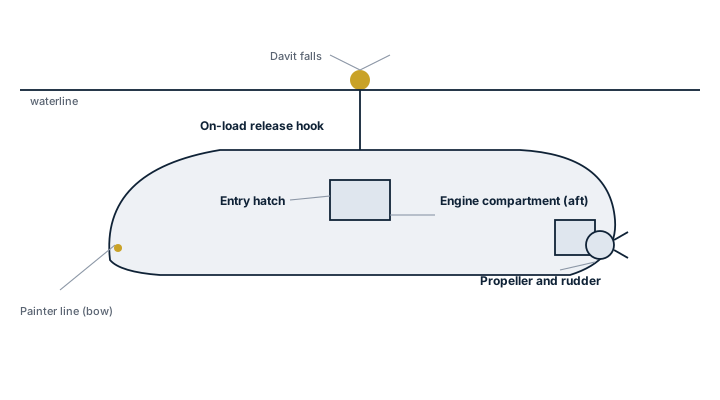
Main components
Hull and canopy
A one-piece or bonded fibre-reinforced plastic hull provides buoyancy and structural strength; the fire-protected variant adds an external water-spray or insulated skin so the shell can pass through burning fuel on the water without the interior becoming unsurvivable for the rated exposure time.
Engine and propulsion
A compression-ignition engine, often air-cooled or with a water-cooling system that keeps working during brief full immersion, drives a propeller through a simple gearbox. The engine must start and run reliably after long idle periods, which makes fuel and battery maintenance one of the more neglected items on the annual inspection.
On-load release hook and hydrostatic interlock
The on-load release system lets the crew release the boat from the falls while still waterborne under load, avoiding a fall that damages the boat or injures occupants. This mechanism has caused a disproportionate number of serious and fatal accidents worldwide, usually from accidental release during lowering or from crew misunderstanding the interlock meant to prevent release before the boat is waterborne.
Davit, falls and winch
Gravity davits lower the boat under brake control; the falls and winch brake must hold the boat's full loaded weight reliably at any point during lowering, and the brake is one of the items proof-loaded at survey.
Painter and release line
A painter line lets the boat be held clear of the ship's side or towed away after release, and on some arrangements includes a weak link intended to part before the falls, rather than the crew, take the strain if the boat is not properly released.
Selection and sizing
Capacity is set by the certified maximum number of persons the hull, seating and davit system can carry, not by internal volume alone; every seat has a rated occupant mass, and loading beyond the certified number is not permitted regardless of available space inside. Davit SWL and boat weight fully equipped and manned must match, with margin built into the davit and winch brake rating.
Regulations and class
Totally enclosed lifeboats fall under the SOLAS Life-Saving Appliances (LSA) Code, and after a string of on-load release hook accidents, IMO introduced amendments requiring on-load release gear on existing ships to be assessed and, where it does not meet the updated design standard, replaced. Annual inspection, five-yearly load testing of falls and davit, and periodic servicing of the release gear by an approved service provider are separate class and flag requirements, and a lifeboat found without current servicing documentation is routinely detained.
Typical faults
- Release hook misadjustment or wear - accidental release during lowering, or failure to release once waterborne; the leading cause of serious lifeboat accidents.
- Engine failing to start after prolonged idle - stale fuel, flat or sulphated battery, seized cooling water pump.
- Corroded or seized falls and blocks - uneven lowering, one end dropping faster than the other.
- Painter or weak link fitted incorrectly - boat not held clear after release, or premature parting under normal handling.
- Seat belt and seating hardware deterioration - reduced protection in a genuine capsize or heavy impact launch.
What to look for in a supplier
- An approved service provider certificate specific to the release gear maker and model fitted, not a general lifeboat service claim.
- Documented compliance path for the on-load release gear amendments where the ship's existing hook predates the updated standard.
- Availability of hull, canopy and seating spares matched to the boat's actual model year, since hook and davit interfaces have changed across production runs.
Treat any unexplained slack, stiffness or inconsistent feel in the release hook operating lever as a reason to stop and call the service provider, not as something to work around during the next drill.