OceanSphere
Engines

Reverse Osmosis Unit

medium 112 models total

A reverse osmosis unit forces seawater through a semi-permeable membrane at high pressure to strip out salt and produce freshwater, and it has largely displaced thermal evaporators on ships where waste heat is scarce or engine load is too variable to run a plant efficiently.

Read more — Reverse Osmosis Unit explained

What Sets Reverse Osmosis Apart

Where a thermal evaporator boils seawater under vacuum using waste heat from the jacket water circuit, an RO unit uses a high-pressure pump to push seawater across a membrane, rejecting dissolved salts and passing freshwater through. That makes RO independent of engine load and waste heat availability, which is why it is now the default choice on vessels that spend significant time at anchor or slow steaming, where an evaporator would starve for heat. The trade-off is a continuous, non-trivial electrical load to drive the high-pressure pump, and a membrane that fouls and degrades over time rather than a shell that mostly just needs descaling. RO also tolerates a wider range of feed temperatures without the vacuum-breaking problems that plague evaporators in warm tropical seawater.
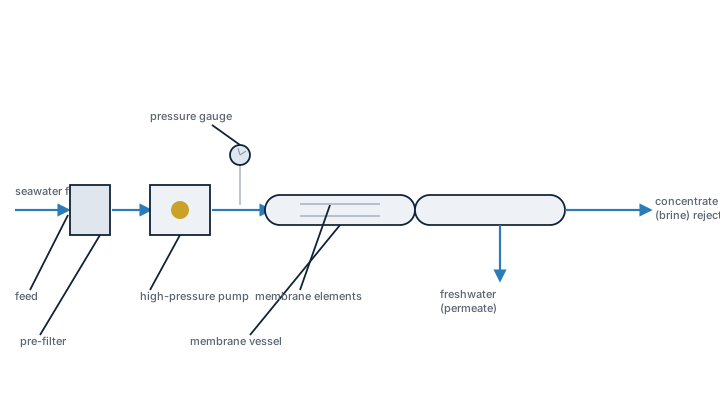
Reverse osmosis unit, flow schema
Flow schema of a reverse osmosis freshwater generator: seawater feed through a pre-filter and high-pressure pump into two membrane pressure vessels in series, splitting into freshwater permeate and a concentrate reject stream.

Main Components

Pretreatment Filters

Cartridge or media filters ahead of the high-pressure pump that remove suspended solids and protect the membranes from mechanical fouling.

High-Pressure Pump

Typically a multistage centrifugal or positive-displacement pump raising feed pressure to the range the membranes need to overcome osmotic pressure, commonly in the order of 55 to 70 bar for seawater RO.

Membrane Elements

Spiral-wound thin-film composite membranes housed in pressure vessels, arranged in series so the reject stream from one element feeds the next.

Energy Recovery Device

A pressure exchanger or turbine that recovers energy from the high-pressure reject brine and feeds it back into the process, substantially cutting the specific power consumption on larger plants.

Post-Treatment / Remineralization

A stage that adjusts pH and adds back minerals, since RO permeate is aggressive and unpalatable without it, before the water goes to the potable tank.

Selection and Sizing

  • Required daily freshwater output against crew or passenger complement and any process water demand.
  • Feed seawater temperature and salinity range for the trading area, since colder water needs more pressure for the same output.
  • Available electrical power and whether an energy recovery device is justified for the plant size.
  • Membrane fouling tendency of the intended trading waters, which drives pretreatment filter rating and cleaning frequency.

Regulations and Class

RO plant producing water for human consumption falls under the same potable water hygiene regime as other production methods, with product water quality checked against flag state or WHO-based guideline values. Class societies review the plant as part of the auxiliary machinery survey scope, and where the RO unit forms part of the ship's water supply redundancy required by SOLAS accommodation provisions, its availability is checked accordingly. There is no RO-specific IMO instrument beyond general potable water quality expectations.

Typical Faults

FaultCauseConsequence
Declining permeate flowMembrane fouling by biofilm, scale or suspended solidsFalling freshwater output at the same operating pressure
Rising salt passageMembrane degradation, o-ring failure, or oxidation damage from residual chlorine in feedProduct water salinity exceeds potable limits
High-pressure pump seal wearNormal wear under continuous high-pressure dutyLoss of feed pressure and reduced production
Pretreatment filter blindingHigh turbidity feed water or missed cartridge changeStarved feed to the high-pressure pump, cavitation risk

What to Look for in a Supplier

  • Membrane specification and rejection rate quoted at the actual feed salinity and temperature the ship will operate in, not a standard test condition figure.
  • Availability of spare membrane elements and pretreatment cartridges through the ship's normal supply chain.
  • Documented cleaning-in-place procedure and chemicals compatible with what the vessel can realistically stock and dispose of.
  • Energy recovery device efficiency data if fitted, since this materially affects daily power consumption over the plant's life.

Track permeate flow and salt passage at a fixed reference pressure and temperature, not raw daily output, otherwise seasonal seawater temperature swings will mask a membrane that is quietly fouling.

8 manufacturers · 112 models

Alfa Laval

19
Alfa Laval AQUA Blue 100 Marine
AQUA Blue 100 Marine unverified
Capacity (m³/h)
4.2
Treatment Type
Reverse Osmosis
Membrane type
TFC polyamide
Uv dose mj cm2
0
Common Failures & Inspection Points
  • Filter, membrane, separator or treatment-stage fouling caused by solids, oil, scale or biological contamination can reduce throughput and increase differential pressure
  • Pump or valve faults caused by wear, blockage or actuator problems can cause low flow, unstable pressure or failure to complete an operating sequence
  • Sensor or monitor contamination caused by dirty process fluid or poor maintenance can produce implausible readings, alarms or automatic discharge inhibition
  • Seal, gasket or piping leakage caused by corrosion, ageing or vibration can lead to visible leakage, air ingress or loss of process pressure
  • Control or treatment-component failure caused by electrical faults, lamp or cell deterioration where fitted, or software issues can lead to shutdown or inability to meet the required treatment condition
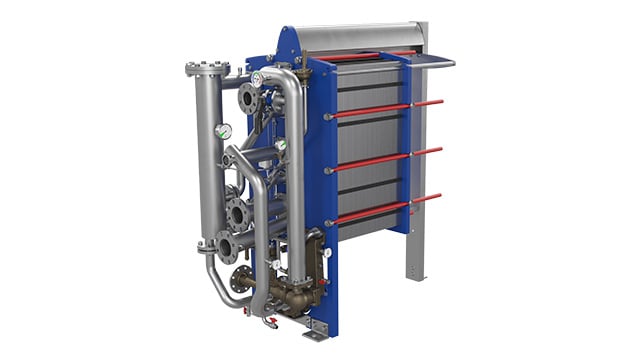
Service: Inspect filters or treatment elements, pumps, valves, piping, sampling points and monitors, and review trend data for loss of throughput or abnormal pressure. Verify alarms, automatic diversion or interlocks where applicable and check cleanliness of sensors and sample lines. Use statutory procedures and manufacturer documentation for exact discharge, treatment and calibration limits.
Spare Parts: Typical spares include filters or treatment elements, seal and gasket kits, pump service parts, lamps or electrodes where applicable, monitor consumables, sensors and valve or actuator repair items.
Use Cases: Bilge-water treatment, fuel or lube purification, freshwater production, potable-water conditioning and ballast-water management on commercial vessels.
Alfa Laval AQUA Blue 200 Marine
AQUA Blue 200 Marine unverified
Capacity (m³/h)
8.3
Treatment Type
Reverse Osmosis
Membrane type
TFC polyamide
Uv dose mj cm2
0
Common Failures & Inspection Points
  • Filter, membrane, separator or treatment-stage fouling caused by solids, oil, scale or biological contamination can reduce throughput and increase differential pressure
  • Pump or valve faults caused by wear, blockage or actuator problems can cause low flow, unstable pressure or failure to complete an operating sequence
  • Sensor or monitor contamination caused by dirty process fluid or poor maintenance can produce implausible readings, alarms or automatic discharge inhibition
  • Seal, gasket or piping leakage caused by corrosion, ageing or vibration can lead to visible leakage, air ingress or loss of process pressure
  • Control or treatment-component failure caused by electrical faults, lamp or cell deterioration where fitted, or software issues can lead to shutdown or inability to meet the required treatment condition
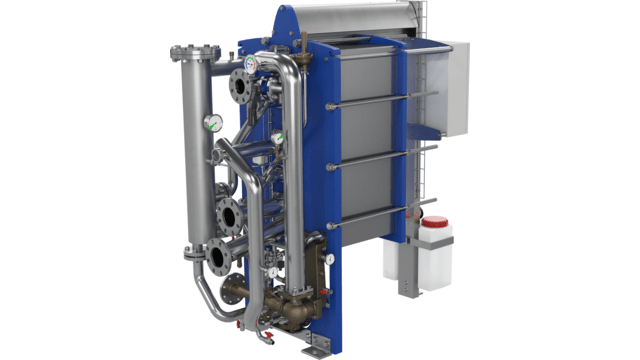
Service: Inspect filters or treatment elements, pumps, valves, piping, sampling points and monitors, and review trend data for loss of throughput or abnormal pressure. Verify alarms, automatic diversion or interlocks where applicable and check cleanliness of sensors and sample lines. Use statutory procedures and manufacturer documentation for exact discharge, treatment and calibration limits.
Spare Parts: Typical spares include filters or treatment elements, seal and gasket kits, pump service parts, lamps or electrodes where applicable, monitor consumables, sensors and valve or actuator repair items.
Use Cases: Bilge-water treatment, fuel or lube purification, freshwater production, potable-water conditioning and ballast-water management on commercial vessels.
Alfa Laval AQUA Blue 500 Marine
AQUA Blue 500 Marine unverified
Capacity (m³/h)
20.8
Treatment Type
Reverse Osmosis
Membrane type
TFC polyamide
Uv dose mj cm2
0
Common Failures & Inspection Points
  • Filter, membrane, separator or treatment-stage fouling caused by solids, oil, scale or biological contamination can reduce throughput and increase differential pressure
  • Pump or valve faults caused by wear, blockage or actuator problems can cause low flow, unstable pressure or failure to complete an operating sequence
  • Sensor or monitor contamination caused by dirty process fluid or poor maintenance can produce implausible readings, alarms or automatic discharge inhibition
  • Seal, gasket or piping leakage caused by corrosion, ageing or vibration can lead to visible leakage, air ingress or loss of process pressure
  • Control or treatment-component failure caused by electrical faults, lamp or cell deterioration where fitted, or software issues can lead to shutdown or inability to meet the required treatment condition
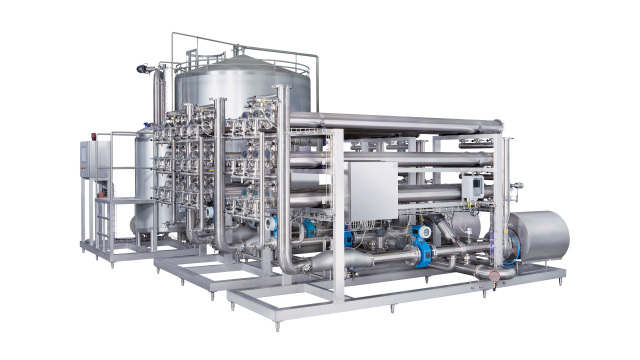
Service: Inspect filters or treatment elements, pumps, valves, piping, sampling points and monitors, and review trend data for loss of throughput or abnormal pressure. Verify alarms, automatic diversion or interlocks where applicable and check cleanliness of sensors and sample lines. Use statutory procedures and manufacturer documentation for exact discharge, treatment and calibration limits.
Spare Parts: Typical spares include filters or treatment elements, seal and gasket kits, pump service parts, lamps or electrodes where applicable, monitor consumables, sensors and valve or actuator repair items.
Use Cases: Bilge-water treatment, fuel or lube purification, freshwater production, potable-water conditioning and ballast-water management on commercial vessels.
Alfa Laval AQUA Fresh 100 Marine
AQUA Fresh 100 Marine unverified
Capacity (m³/h)
4.2
Treatment Type
Reverse Osmosis
Membrane type
TFC polyamide
Uv dose mj cm2
0
Common Failures & Inspection Points
  • Filter, membrane, separator or treatment-stage fouling caused by solids, oil, scale or biological contamination can reduce throughput and increase differential pressure
  • Pump or valve faults caused by wear, blockage or actuator problems can cause low flow, unstable pressure or failure to complete an operating sequence
  • Sensor or monitor contamination caused by dirty process fluid or poor maintenance can produce implausible readings, alarms or automatic discharge inhibition
  • Seal, gasket or piping leakage caused by corrosion, ageing or vibration can lead to visible leakage, air ingress or loss of process pressure
  • Control or treatment-component failure caused by electrical faults, lamp or cell deterioration where fitted, or software issues can lead to shutdown or inability to meet the required treatment condition
Service: Inspect filters or treatment elements, pumps, valves, piping, sampling points and monitors, and review trend data for loss of throughput or abnormal pressure. Verify alarms, automatic diversion or interlocks where applicable and check cleanliness of sensors and sample lines. Use statutory procedures and manufacturer documentation for exact discharge, treatment and calibration limits.
Spare Parts: Typical spares include filters or treatment elements, seal and gasket kits, pump service parts, lamps or electrodes where applicable, monitor consumables, sensors and valve or actuator repair items.
Use Cases: Bilge-water treatment, fuel or lube purification, freshwater production, potable-water conditioning and ballast-water management on commercial vessels.
AQUA Fresh 200 Marine unverified
Capacity (m³/h)
8.3
Treatment Type
Reverse Osmosis
Membrane type
TFC polyamide
Uv dose mj cm2
0
Common Failures & Inspection Points
  • Filter, membrane, separator or treatment-stage fouling caused by solids, oil, scale or biological contamination can reduce throughput and increase differential pressure
  • Pump or valve faults caused by wear, blockage or actuator problems can cause low flow, unstable pressure or failure to complete an operating sequence
  • Sensor or monitor contamination caused by dirty process fluid or poor maintenance can produce implausible readings, alarms or automatic discharge inhibition
  • Seal, gasket or piping leakage caused by corrosion, ageing or vibration can lead to visible leakage, air ingress or loss of process pressure
  • Control or treatment-component failure caused by electrical faults, lamp or cell deterioration where fitted, or software issues can lead to shutdown or inability to meet the required treatment condition
Service: Inspect filters or treatment elements, pumps, valves, piping, sampling points and monitors, and review trend data for loss of throughput or abnormal pressure. Verify alarms, automatic diversion or interlocks where applicable and check cleanliness of sensors and sample lines. Use statutory procedures and manufacturer documentation for exact discharge, treatment and calibration limits.
Spare Parts: Typical spares include filters or treatment elements, seal and gasket kits, pump service parts, lamps or electrodes where applicable, monitor consumables, sensors and valve or actuator repair items.
Use Cases: Bilge-water treatment, fuel or lube purification, freshwater production, potable-water conditioning and ballast-water management on commercial vessels.
AQUA Pure 100 Marine unverified
Capacity (m³/h)
4.2
Treatment Type
Reverse Osmosis
Membrane type
TFC polyamide
Uv dose mj cm2
0
Common Failures & Inspection Points
  • Filter, membrane, separator or treatment-stage fouling caused by solids, oil, scale or biological contamination can reduce throughput and increase differential pressure
  • Pump or valve faults caused by wear, blockage or actuator problems can cause low flow, unstable pressure or failure to complete an operating sequence
  • Sensor or monitor contamination caused by dirty process fluid or poor maintenance can produce implausible readings, alarms or automatic discharge inhibition
  • Seal, gasket or piping leakage caused by corrosion, ageing or vibration can lead to visible leakage, air ingress or loss of process pressure
  • Control or treatment-component failure caused by electrical faults, lamp or cell deterioration where fitted, or software issues can lead to shutdown or inability to meet the required treatment condition
Service: Inspect filters or treatment elements, pumps, valves, piping, sampling points and monitors, and review trend data for loss of throughput or abnormal pressure. Verify alarms, automatic diversion or interlocks where applicable and check cleanliness of sensors and sample lines. Use statutory procedures and manufacturer documentation for exact discharge, treatment and calibration limits.
Spare Parts: Typical spares include filters or treatment elements, seal and gasket kits, pump service parts, lamps or electrodes where applicable, monitor consumables, sensors and valve or actuator repair items.
Use Cases: Bilge-water treatment, fuel or lube purification, freshwater production, potable-water conditioning and ballast-water management on commercial vessels.
AQUA Pure 200 Marine unverified
Capacity (m³/h)
8.3
Treatment Type
Reverse Osmosis
Membrane type
TFC polyamide
Uv dose mj cm2
0
Common Failures & Inspection Points
  • Filter, membrane, separator or treatment-stage fouling caused by solids, oil, scale or biological contamination can reduce throughput and increase differential pressure
  • Pump or valve faults caused by wear, blockage or actuator problems can cause low flow, unstable pressure or failure to complete an operating sequence
  • Sensor or monitor contamination caused by dirty process fluid or poor maintenance can produce implausible readings, alarms or automatic discharge inhibition
  • Seal, gasket or piping leakage caused by corrosion, ageing or vibration can lead to visible leakage, air ingress or loss of process pressure
  • Control or treatment-component failure caused by electrical faults, lamp or cell deterioration where fitted, or software issues can lead to shutdown or inability to meet the required treatment condition
Service: Inspect filters or treatment elements, pumps, valves, piping, sampling points and monitors, and review trend data for loss of throughput or abnormal pressure. Verify alarms, automatic diversion or interlocks where applicable and check cleanliness of sensors and sample lines. Use statutory procedures and manufacturer documentation for exact discharge, treatment and calibration limits.
Spare Parts: Typical spares include filters or treatment elements, seal and gasket kits, pump service parts, lamps or electrodes where applicable, monitor consumables, sensors and valve or actuator repair items.
Use Cases: Bilge-water treatment, fuel or lube purification, freshwater production, potable-water conditioning and ballast-water management on commercial vessels.
Alfa Laval AQUA Pure 500 Marine
AQUA Pure 500 Marine unverified
Capacity (m³/h)
20.8
Treatment Type
Reverse Osmosis
Membrane type
TFC polyamide
Uv dose mj cm2
0
Common Failures & Inspection Points
  • Filter, membrane, separator or treatment-stage fouling caused by solids, oil, scale or biological contamination can reduce throughput and increase differential pressure
  • Pump or valve faults caused by wear, blockage or actuator problems can cause low flow, unstable pressure or failure to complete an operating sequence
  • Sensor or monitor contamination caused by dirty process fluid or poor maintenance can produce implausible readings, alarms or automatic discharge inhibition
  • Seal, gasket or piping leakage caused by corrosion, ageing or vibration can lead to visible leakage, air ingress or loss of process pressure
  • Control or treatment-component failure caused by electrical faults, lamp or cell deterioration where fitted, or software issues can lead to shutdown or inability to meet the required treatment condition
Service: Inspect filters or treatment elements, pumps, valves, piping, sampling points and monitors, and review trend data for loss of throughput or abnormal pressure. Verify alarms, automatic diversion or interlocks where applicable and check cleanliness of sensors and sample lines. Use statutory procedures and manufacturer documentation for exact discharge, treatment and calibration limits.
Spare Parts: Typical spares include filters or treatment elements, seal and gasket kits, pump service parts, lamps or electrodes where applicable, monitor consumables, sensors and valve or actuator repair items.
Use Cases: Bilge-water treatment, fuel or lube purification, freshwater production, potable-water conditioning and ballast-water management on commercial vessels.
Alfa Laval Reverse Osmosis Unit 0.5m3h Alfa Marine
Reverse Osmosis Unit 0.5m3h Alfa Marine unverified
Capacity (m³/h)
0.5
Treatment Type
Reverse Osmosis Unit
Common Failures & Inspection Points
  • Reduced treatment performance caused by fouled filters, exhausted media, scaled membranes, aged lamps or contaminated process surfaces, resulting in poor water quality or increased pressure drop
  • Dosing, regeneration or process-control failure caused by empty consumables, pump faults or control errors, resulting in incorrect treatment conditions
  • Sensor or conductivity fault caused by fouling, calibration drift or wiring problems, resulting in implausible readings or alarms
  • Pump or valve failure caused by wear, blockage or electrical faults, resulting in low treatment flow or inability to route water correctly
  • Leakage caused by seal, housing, membrane, pressure-vessel or piping deterioration, resulting in water loss and unstable process conditions
Service: Inspect filters, membranes, lamps, dosing equipment, treatment vessels, pumps, valves, sensors and sample points as applicable to the installed process. Maintain hygienic conditions during opening of potable-water equipment. Trend pressure drop and water-quality indications and investigate abnormal values promptly. Verify alarms, regeneration, diversion or shutdown functions after maintenance. Store chemicals and treatment media according to approved procedures. Refer to the manufacturer documentation for the exact figure for dosing, replacement, cleaning and water-quality settings.
Spare Parts: Keep filter elements, membrane or lamp components, approved treatment media, dosing-pump service parts, seals, valves, sensors and sampling consumables recommended for the installed process. Chemicals must be approved for the intended water service.
Use Cases: It is used for freshwater, potable-water and sanitary treatment on merchant ships, passenger vessels, offshore units or other vessel types where this equipment category is fitted.
Alfa Laval Reverse Osmosis Unit 1m3h Alfa Marine
Reverse Osmosis Unit 1m3h Alfa Marine unverified
Capacity (m³/h)
1
Treatment Type
Reverse Osmosis Unit
Common Failures & Inspection Points
  • Reduced treatment or sanitary performance caused by fouled filters, exhausted media, scaled membranes, aged lamps or blocked piping, resulting in poor water quality, low flow or system alarms
  • Dosing, regeneration or vacuum failure caused by empty chemical supply, pump faults, air leakage or control errors, resulting in incorrect water chemistry or poor sanitary operation
  • Sensor or conductivity fault caused by fouling, calibration drift or wiring problems, resulting in implausible readings or alarms
  • Pump or valve failure caused by wear, blockage or electrical faults, resulting in low treatment flow or inability to route water correctly
  • Leakage caused by seal, housing, membrane or piping deterioration, resulting in water loss, vacuum loss or unstable process conditions
Service: Inspect filters, membranes, lamps, dosing equipment, softener vessels, pumps, valves, vacuum equipment, sensors and sample points as applicable to the installed process. Maintain hygienic conditions during opening of potable-water treatment equipment. Trend pressure, vacuum and water-quality indications and investigate abnormal values promptly. Verify alarms, regeneration, diversion, flushing or shutdown functions after maintenance. Store chemicals and treatment media according to approved procedures. Refer to the manufacturer documentation for the exact figure for dosing, replacement, cleaning and operating settings.
Spare Parts: Keep filter elements, membrane or lamp components, approved treatment media, dosing-pump or vacuum-system service parts, seals, valves, sensors and sampling consumables recommended for the installed process. Chemicals must be approved for the intended water service. Confirm exact replacement parts against unit configuration.
Use Cases: Freshwater production, conditioning, disinfection, domestic hot-water and sanitary treatment on merchant ships, passenger vessels and offshore units.
Alfa Laval Reverse Osmosis Unit 2m3h Alfa Marine
Reverse Osmosis Unit 2m3h Alfa Marine unverified
Capacity (m³/h)
2
Treatment Type
Reverse Osmosis Unit
Common Failures & Inspection Points
  • Reduced treatment or sanitary performance caused by fouled filters, exhausted media, scaled membranes, aged lamps or blocked piping, resulting in poor water quality, low flow or system alarms
  • Dosing, regeneration or vacuum failure caused by empty chemical supply, pump faults, air leakage or control errors, resulting in incorrect water chemistry or poor sanitary operation
  • Sensor or conductivity fault caused by fouling, calibration drift or wiring problems, resulting in implausible readings or alarms
  • Pump or valve failure caused by wear, blockage or electrical faults, resulting in low treatment flow or inability to route water correctly
  • Leakage caused by seal, housing, membrane or piping deterioration, resulting in water loss, vacuum loss or unstable process conditions
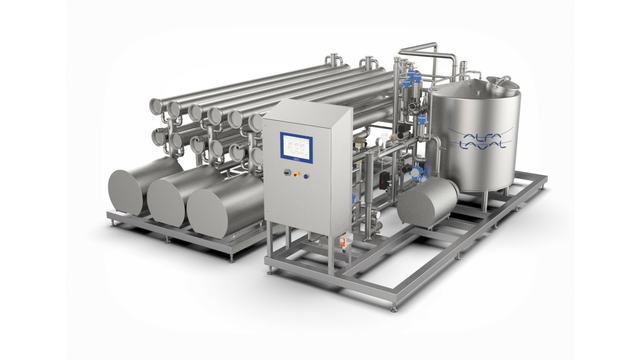
Service: Inspect filters, membranes, lamps, dosing equipment, softener vessels, pumps, valves, vacuum equipment, sensors and sample points as applicable to the installed process. Maintain hygienic conditions during opening of potable-water treatment equipment. Trend pressure, vacuum and water-quality indications and investigate abnormal values promptly. Verify alarms, regeneration, diversion, flushing or shutdown functions after maintenance. Store chemicals and treatment media according to approved procedures. Refer to the manufacturer documentation for the exact figure for dosing, replacement, cleaning and operating settings.
Spare Parts: Keep filter elements, membrane or lamp components, approved treatment media, dosing-pump or vacuum-system service parts, seals, valves, sensors and sampling consumables recommended for the installed process. Chemicals must be approved for the intended water service. Confirm exact replacement parts against unit configuration.
Use Cases: Freshwater production, conditioning, disinfection, domestic hot-water and sanitary treatment on merchant ships, passenger vessels and offshore units.
Alfa Laval Reverse Osmosis Unit 3m3h Alfa Marine
Reverse Osmosis Unit 3m3h Alfa Marine unverified
Capacity (m³/h)
3
Treatment Type
Reverse Osmosis Unit
Common Failures & Inspection Points
  • Reduced treatment or sanitary performance caused by fouled filters, exhausted media, scaled membranes, aged lamps or blocked piping, resulting in poor water quality, low flow or system alarms
  • Dosing, regeneration or vacuum failure caused by empty chemical supply, pump faults, air leakage or control errors, resulting in incorrect water chemistry or poor sanitary operation
  • Sensor or conductivity fault caused by fouling, calibration drift or wiring problems, resulting in implausible readings or alarms
  • Pump or valve failure caused by wear, blockage or electrical faults, resulting in low treatment flow or inability to route water correctly
  • Leakage caused by seal, housing, membrane or piping deterioration, resulting in water loss, vacuum loss or unstable process conditions
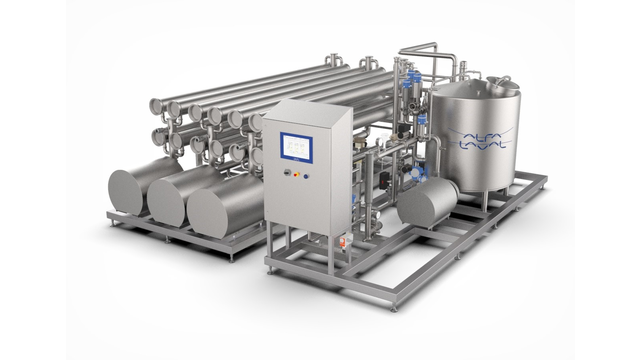
Service: Inspect filters, membranes, lamps, dosing equipment, softener vessels, pumps, valves, vacuum equipment, sensors and sample points as applicable to the installed process. Maintain hygienic conditions during opening of potable-water treatment equipment. Trend pressure, vacuum and water-quality indications and investigate abnormal values promptly. Verify alarms, regeneration, diversion, flushing or shutdown functions after maintenance. Store chemicals and treatment media according to approved procedures. Refer to the manufacturer documentation for the exact figure for dosing, replacement, cleaning and operating settings.
Spare Parts: Keep filter elements, membrane or lamp components, approved treatment media, dosing-pump or vacuum-system service parts, seals, valves, sensors and sampling consumables recommended for the installed process. Chemicals must be approved for the intended water service. Confirm exact replacement parts against unit configuration.
Use Cases: Freshwater production, conditioning, disinfection, domestic hot-water and sanitary treatment on merchant ships, passenger vessels and offshore units.
Reverse Osmosis Unit 5m3h Alfa Marine unverified
Capacity (m³/h)
5
Treatment Type
Reverse Osmosis Unit
Common Failures & Inspection Points
  • Reduced treatment or sanitary performance caused by fouled filters, exhausted media, scaled membranes, aged lamps or blocked piping, resulting in poor water quality, low flow or system alarms
  • Dosing, regeneration or vacuum failure caused by empty chemical supply, pump faults, air leakage or control errors, resulting in incorrect water chemistry or poor sanitary operation
  • Sensor or conductivity fault caused by fouling, calibration drift or wiring problems, resulting in implausible readings or alarms
  • Pump or valve failure caused by wear, blockage or electrical faults, resulting in low treatment flow or inability to route water correctly
  • Leakage caused by seal, housing, membrane or piping deterioration, resulting in water loss, vacuum loss or unstable process conditions
Service: Inspect filters, membranes, lamps, dosing equipment, softener vessels, pumps, valves, vacuum equipment, sensors and sample points as applicable to the installed process. Maintain hygienic conditions during opening of potable-water treatment equipment. Trend pressure, vacuum and water-quality indications and investigate abnormal values promptly. Verify alarms, regeneration, diversion, flushing or shutdown functions after maintenance. Store chemicals and treatment media according to approved procedures. Refer to the manufacturer documentation for the exact figure for dosing, replacement, cleaning and operating settings.
Spare Parts: Keep filter elements, membrane or lamp components, approved treatment media, dosing-pump or vacuum-system service parts, seals, valves, sensors and sampling consumables recommended for the installed process. Chemicals must be approved for the intended water service. Confirm exact replacement parts against unit configuration.
Use Cases: Freshwater production, conditioning, disinfection, domestic hot-water and sanitary treatment on merchant ships, passenger vessels and offshore units.
Alfa Laval Reverse Osmosis Unit 8m3h Alfa Marine
Reverse Osmosis Unit 8m3h Alfa Marine unverified
Capacity (m³/h)
8
Treatment Type
Reverse Osmosis Unit
Common Failures & Inspection Points
  • Reduced treatment or sanitary performance caused by fouled filters, exhausted media, scaled membranes, aged lamps or blocked piping, resulting in poor water quality, low flow or system alarms
  • Dosing, regeneration or vacuum failure caused by empty chemical supply, pump faults, air leakage or control errors, resulting in incorrect water chemistry or poor sanitary operation
  • Sensor or conductivity fault caused by fouling, calibration drift or wiring problems, resulting in implausible readings or alarms
  • Pump or valve failure caused by wear, blockage or electrical faults, resulting in low treatment flow or inability to route water correctly
  • Leakage caused by seal, housing, membrane or piping deterioration, resulting in water loss, vacuum loss or unstable process conditions
Service: Inspect filters, membranes, lamps, dosing equipment, softener vessels, pumps, valves, vacuum equipment, sensors and sample points as applicable to the installed process. Maintain hygienic conditions during opening of potable-water treatment equipment. Trend pressure, vacuum and water-quality indications and investigate abnormal values promptly. Verify alarms, regeneration, diversion, flushing or shutdown functions after maintenance. Store chemicals and treatment media according to approved procedures. Refer to the manufacturer documentation for the exact figure for dosing, replacement, cleaning and operating settings.
Spare Parts: Keep filter elements, membrane or lamp components, approved treatment media, dosing-pump or vacuum-system service parts, seals, valves, sensors and sampling consumables recommended for the installed process. Chemicals must be approved for the intended water service. Confirm exact replacement parts against unit configuration.
Use Cases: Freshwater production, conditioning, disinfection, domestic hot-water and sanitary treatment on merchant ships, passenger vessels and offshore units.
Alfa Laval Reverse Osmosis Unit 10m3h Alfa Marine
Reverse Osmosis Unit 10m3h Alfa Marine unverified
Capacity (m³/h)
10
Treatment Type
Reverse Osmosis Unit
Common Failures & Inspection Points
  • Reduced treatment performance caused by fouled filters, exhausted media, scaled membranes, aged lamps or contaminated process surfaces, resulting in poor water quality or increased pressure drop
  • Dosing, regeneration or process-control failure caused by empty consumables, pump faults or control errors, resulting in incorrect treatment conditions
  • Sensor or conductivity fault caused by fouling, calibration drift or wiring problems, resulting in implausible readings or alarms
  • Pump or valve failure caused by wear, blockage or electrical faults, resulting in low treatment flow or inability to route water correctly
  • Leakage caused by seal, housing, membrane, pressure-vessel or piping deterioration, resulting in water loss and unstable process conditions
Service: Inspect filters, membranes, lamps, dosing equipment, treatment vessels, pumps, valves, sensors and sample points as applicable to the installed process. Maintain hygienic conditions during opening of potable-water equipment. Trend pressure drop and water-quality indications and investigate abnormal values promptly. Verify alarms, regeneration, diversion or shutdown functions after maintenance. Store chemicals and treatment media according to approved procedures. Refer to the manufacturer documentation for the exact figure for dosing, replacement, cleaning and water-quality settings.
Spare Parts: Keep filter elements, membrane or lamp components, approved treatment media, dosing-pump service parts, seals, valves, sensors and sampling consumables recommended for the installed process. Chemicals must be approved for the intended water service.
Use Cases: It is used for freshwater, potable-water and sanitary treatment on merchant ships, passenger vessels, offshore units or other vessel types where this equipment category is fitted.
Alfa Laval Reverse Osmosis Unit 15m3h Alfa Marine
Reverse Osmosis Unit 15m3h Alfa Marine unverified
Capacity (m³/h)
15
Treatment Type
Reverse Osmosis Unit
Common Failures & Inspection Points
  • Reduced treatment performance caused by fouled filters, exhausted media, scaled membranes, aged lamps or contaminated process surfaces, resulting in poor water quality or increased pressure drop
  • Dosing, regeneration or process-control failure caused by empty consumables, pump faults or control errors, resulting in incorrect treatment conditions
  • Sensor or conductivity fault caused by fouling, calibration drift or wiring problems, resulting in implausible readings or alarms
  • Pump or valve failure caused by wear, blockage or electrical faults, resulting in low treatment flow or inability to route water correctly
  • Leakage caused by seal, housing, membrane, pressure-vessel or piping deterioration, resulting in water loss and unstable process conditions
Service: Inspect filters, membranes, lamps, dosing equipment, treatment vessels, pumps, valves, sensors and sample points as applicable to the installed process. Maintain hygienic conditions during opening of potable-water equipment. Trend pressure drop and water-quality indications and investigate abnormal values promptly. Verify alarms, regeneration, diversion or shutdown functions after maintenance. Store chemicals and treatment media according to approved procedures. Refer to the manufacturer documentation for the exact figure for dosing, replacement, cleaning and water-quality settings.
Spare Parts: Keep filter elements, membrane or lamp components, approved treatment media, dosing-pump service parts, seals, valves, sensors and sampling consumables recommended for the installed process. Chemicals must be approved for the intended water service.
Use Cases: It is used for freshwater, potable-water and sanitary treatment on merchant ships, passenger vessels, offshore units or other vessel types where this equipment category is fitted.
Reverse Osmosis Unit 20m3h Alfa Marine unverified
Capacity (m³/h)
20
Treatment Type
Reverse Osmosis Unit
Common Failures & Inspection Points
  • Reduced treatment performance caused by fouled filters, exhausted media, scaled membranes, aged lamps or contaminated process surfaces, resulting in poor water quality or increased pressure drop
  • Dosing, regeneration or process-control failure caused by empty consumables, pump faults or control errors, resulting in incorrect treatment conditions
  • Sensor or conductivity fault caused by fouling, calibration drift or wiring problems, resulting in implausible readings or alarms
  • Pump or valve failure caused by wear, blockage or electrical faults, resulting in low treatment flow or inability to route water correctly
  • Leakage caused by seal, housing, membrane, pressure-vessel or piping deterioration, resulting in water loss and unstable process conditions
Service: Inspect filters, membranes, lamps, dosing equipment, treatment vessels, pumps, valves, sensors and sample points as applicable to the installed process. Maintain hygienic conditions during opening of potable-water equipment. Trend pressure drop and water-quality indications and investigate abnormal values promptly. Verify alarms, regeneration, diversion or shutdown functions after maintenance. Store chemicals and treatment media according to approved procedures. Refer to the manufacturer documentation for the exact figure for dosing, replacement, cleaning and water-quality settings.
Spare Parts: Keep filter elements, membrane or lamp components, approved treatment media, dosing-pump service parts, seals, valves, sensors and sampling consumables recommended for the installed process. Chemicals must be approved for the intended water service.
Use Cases: It is used for freshwater, potable-water and sanitary treatment on merchant ships, passenger vessels, offshore units or other vessel types where this equipment category is fitted.
Alfa Laval Reverse Osmosis Unit 30m3h Alfa Marine
Reverse Osmosis Unit 30m3h Alfa Marine unverified
Capacity (m³/h)
30
Treatment Type
Reverse Osmosis Unit
Common Failures & Inspection Points
  • Reduced treatment performance caused by fouled filters, exhausted media, scaled membranes, aged lamps or contaminated process surfaces, resulting in poor water quality or increased pressure drop
  • Dosing, regeneration or process-control failure caused by empty consumables, pump faults or control errors, resulting in incorrect treatment conditions
  • Sensor or conductivity fault caused by fouling, calibration drift or wiring problems, resulting in implausible readings or alarms
  • Pump or valve failure caused by wear, blockage or electrical faults, resulting in low treatment flow or inability to route water correctly
  • Leakage caused by seal, housing, membrane, pressure-vessel or piping deterioration, resulting in water loss and unstable process conditions
Service: Inspect filters, membranes, lamps, dosing equipment, treatment vessels, pumps, valves, sensors and sample points as applicable to the installed process. Maintain hygienic conditions during opening of potable-water equipment. Trend pressure drop and water-quality indications and investigate abnormal values promptly. Verify alarms, regeneration, diversion or shutdown functions after maintenance. Store chemicals and treatment media according to approved procedures. Refer to the manufacturer documentation for the exact figure for dosing, replacement, cleaning and water-quality settings.
Spare Parts: Keep filter elements, membrane or lamp components, approved treatment media, dosing-pump service parts, seals, valves, sensors and sampling consumables recommended for the installed process. Chemicals must be approved for the intended water service.
Use Cases: It is used for freshwater, potable-water and sanitary treatment on merchant ships, passenger vessels, offshore units or other vessel types where this equipment category is fitted.
Alfa Laval Reverse Osmosis Unit 50m3h Alfa Marine
Reverse Osmosis Unit 50m3h Alfa Marine unverified
Capacity (m³/h)
50
Treatment Type
Reverse Osmosis Unit
Common Failures & Inspection Points
  • Reduced treatment performance caused by fouled filters, exhausted media, scaled membranes, aged lamps or contaminated process surfaces, resulting in poor water quality or increased pressure drop
  • Dosing, regeneration or process-control failure caused by empty consumables, pump faults or control errors, resulting in incorrect treatment conditions
  • Sensor or conductivity fault caused by fouling, calibration drift or wiring problems, resulting in implausible readings or alarms
  • Pump or valve failure caused by wear, blockage or electrical faults, resulting in low treatment flow or inability to route water correctly
  • Leakage caused by seal, housing, membrane, pressure-vessel or piping deterioration, resulting in water loss and unstable process conditions
Service: Inspect filters, membranes, lamps, dosing equipment, treatment vessels, pumps, valves, sensors and sample points as applicable to the installed process. Maintain hygienic conditions during opening of potable-water equipment. Trend pressure drop and water-quality indications and investigate abnormal values promptly. Verify alarms, regeneration, diversion or shutdown functions after maintenance. Store chemicals and treatment media according to approved procedures. Refer to the manufacturer documentation for the exact figure for dosing, replacement, cleaning and water-quality settings.
Spare Parts: Keep filter elements, membrane or lamp components, approved treatment media, dosing-pump service parts, seals, valves, sensors and sampling consumables recommended for the installed process. Chemicals must be approved for the intended water service.
Use Cases: It is used for freshwater, potable-water and sanitary treatment on merchant ships, passenger vessels, offshore units or other vessel types where this equipment category is fitted.

Sasakura

19
RO-200 Marine unverified
Capacity (m³/h)
8.3
Treatment Type
Reverse Osmosis
Membrane type
TFC polyamide
Uv dose mj cm2
0
Common Failures & Inspection Points
  • Fouling or scaling of heat-transfer surfaces, membranes or UV components reduces output or treatment effectiveness
  • Feed-pump wear or restricted strainers reduces flow and causes low-pressure or low-production alarms
  • Seal, hose or piping leakage causes loss of pressure and visible water leakage
  • Sensor or conductivity-monitor faults can reject acceptable product or permit unreliable quality indication
  • Control-valve or electrical faults can interrupt automatic sequencing and stop production
Service: Trend production rate and product-water quality, inspect feed strainers, pumps, valves, seals and the treatment element appropriate to the technology. Clean or replace membranes, heat-transfer surfaces or UV lamps only by approved procedures and verify alarms and automatic diversion or shutdown functions. Exact chemical-cleaning limits, pressures and water-quality criteria must follow manufacturer and vessel documentation.
Spare Parts: Typical spares include prefilter elements, pump seals, O-rings, conductivity or flow-sensor service parts and the technology-specific consumables such as membranes or UV lamps recommended by the manufacturer.
Use Cases: Used on merchant, offshore, passenger and naval vessels to produce or condition freshwater for domestic and technical services.
RO-400 Marine unverified
Capacity (m³/h)
16.7
Treatment Type
Reverse Osmosis
Membrane type
TFC polyamide
Uv dose mj cm2
0
Common Failures & Inspection Points
  • Fouling or scaling of heat-transfer surfaces, membranes or UV components reduces output or treatment effectiveness
  • Feed-pump wear or restricted strainers reduces flow and causes low-pressure or low-production alarms
  • Seal, hose or piping leakage causes loss of pressure and visible water leakage
  • Sensor or conductivity-monitor faults can reject acceptable product or permit unreliable quality indication
  • Control-valve or electrical faults can interrupt automatic sequencing and stop production
Service: Trend production rate and product-water quality, inspect feed strainers, pumps, valves, seals and the treatment element appropriate to the technology. Clean or replace membranes, heat-transfer surfaces or UV lamps only by approved procedures and verify alarms and automatic diversion or shutdown functions. Exact chemical-cleaning limits, pressures and water-quality criteria must follow manufacturer and vessel documentation.
Spare Parts: Typical spares include prefilter elements, pump seals, O-rings, conductivity or flow-sensor service parts and the technology-specific consumables such as membranes or UV lamps recommended by the manufacturer.
Use Cases: Used on merchant, offshore, passenger and naval vessels to produce or condition freshwater for domestic and technical services.
RO-600 Marine unverified
Capacity (m³/h)
25.0
Treatment Type
Reverse Osmosis
Membrane type
TFC polyamide
Uv dose mj cm2
0
Common Failures & Inspection Points
  • Fouling or scaling of heat-transfer surfaces, membranes or UV components reduces output or treatment effectiveness
  • Feed-pump wear or restricted strainers reduces flow and causes low-pressure or low-production alarms
  • Seal, hose or piping leakage causes loss of pressure and visible water leakage
  • Sensor or conductivity-monitor faults can reject acceptable product or permit unreliable quality indication
  • Control-valve or electrical faults can interrupt automatic sequencing and stop production
Service: Trend production rate and product-water quality, inspect feed strainers, pumps, valves, seals and the treatment element appropriate to the technology. Clean or replace membranes, heat-transfer surfaces or UV lamps only by approved procedures and verify alarms and automatic diversion or shutdown functions. Exact chemical-cleaning limits, pressures and water-quality criteria must follow manufacturer and vessel documentation.
Spare Parts: Typical spares include prefilter elements, pump seals, O-rings, conductivity or flow-sensor service parts and the technology-specific consumables such as membranes or UV lamps recommended by the manufacturer.
Use Cases: Used on merchant, offshore, passenger and naval vessels to produce or condition freshwater for domestic and technical services.
SEPS-100 Marine unverified
Capacity (m³/h)
4.2
Treatment Type
Reverse Osmosis
Membrane type
TFC polyamide
Uv dose mj cm2
0
Common Failures & Inspection Points
  • Reduced production caused by fouled heat-transfer surfaces, membranes or filters, resulting in lower product-water output
  • Poor product-water quality caused by membrane damage, carry-over, conductivity-sensor faults or process imbalance, resulting in high-salinity indications or rejected water
  • Feed, ejector or pump performance loss caused by clogged strainers, pump wear or seawater restriction, resulting in inadequate process flow
  • Scaling or biological fouling caused by unsuitable feedwater conditions or inadequate treatment, resulting in rising pressure drop or reduced capacity
  • Valve, seal or piping leakage caused by corrosion or wear, resulting in seawater leakage, loss of vacuum where applicable or unstable operation
Service: Trend product-water quantity and quality together with relevant pressures, temperatures or vacuum indications for the installed process. Maintain seawater strainers, filters and treatment or cleaning routines as specified for the unit. Inspect pumps, ejectors, membranes or evaporator surfaces as applicable and investigate any abrupt change in salinity or conductivity. Clean and preserve the system using only procedures compatible with the installed materials. Verify automatic product-water diversion or rejection arrangements after maintenance. Refer to manufacturer documentation for exact cleaning criteria, water-quality limits and operating conditions.
Spare Parts: Keep filter elements, seals, gaskets, conductivity or salinity-sensor service parts, pump seals and model-specific treatment components. Membrane elements, evaporator plates or ejector nozzles may be strategic spares depending on the actual process and vessel endurance. Confirm exact materials and parts from the unit documentation.
Use Cases: Freshwater production for accommodation, galley, sanitary and selected technical services on merchant ships, offshore units and vessels operating away from reliable shore-water supply.
SEPS-200 Marine unverified
Capacity (m³/h)
8.3
Treatment Type
Reverse Osmosis
Membrane type
TFC polyamide
Uv dose mj cm2
0
Common Failures & Inspection Points
  • Reduced production caused by fouled heat-transfer surfaces, membranes or filters, resulting in lower product-water output
  • Poor product-water quality caused by membrane damage, carry-over, conductivity-sensor faults or process imbalance, resulting in high-salinity indications or rejected water
  • Feed, ejector or pump performance loss caused by clogged strainers, pump wear or seawater restriction, resulting in inadequate process flow
  • Scaling or biological fouling caused by unsuitable feedwater conditions or inadequate treatment, resulting in rising pressure drop or reduced capacity
  • Valve, seal or piping leakage caused by corrosion or wear, resulting in seawater leakage, loss of vacuum where applicable or unstable operation
Service: Trend product-water quantity and quality together with relevant pressures, temperatures or vacuum indications for the installed process. Maintain seawater strainers, filters and treatment or cleaning routines as specified for the unit. Inspect pumps, ejectors, membranes or evaporator surfaces as applicable and investigate any abrupt change in salinity or conductivity. Clean and preserve the system using only procedures compatible with the installed materials. Verify automatic product-water diversion or rejection arrangements after maintenance. Refer to manufacturer documentation for exact cleaning criteria, water-quality limits and operating conditions.
Spare Parts: Keep filter elements, seals, gaskets, conductivity or salinity-sensor service parts, pump seals and model-specific treatment components. Membrane elements, evaporator plates or ejector nozzles may be strategic spares depending on the actual process and vessel endurance. Confirm exact materials and parts from the unit documentation.
Use Cases: Freshwater production for accommodation, galley, sanitary and selected technical services on merchant ships, offshore units and vessels operating away from reliable shore-water supply.
SEPS-400 Marine unverified
Capacity (m³/h)
16.7
Treatment Type
Reverse Osmosis
Membrane type
TFC polyamide
Uv dose mj cm2
0
Common Failures & Inspection Points
  • Scale, membrane fouling or dirty optical surfaces reduce treatment capacity or water quality
  • Pump, vacuum, lamp or power-supply faults cause low production, low treatment intensity or shutdown
  • Conductivity, salinity or intensity-sensor faults cause false acceptance, rejection or alarms
  • Seal, gasket or piping leakage causes loss of pressure, vacuum or visible water leakage
  • Pretreatment or strainer blockage reduces feed flow and causes unstable operation
Service: Inspect feed strainers, pumps, membranes or heat-transfer surfaces, UV lamps where fitted, product-water monitoring and diverting arrangements. Trend production and water quality. Keep pretreatment equipment clean and prevent doubtful product water from entering service tanks. Refer to the manufacturer documentation for the exact figure for pressure, cleaning and quality criteria.
Spare Parts: Carry filters, strainers, pump seals, membrane or UV components as applicable, conductivity or intensity sensors, valve parts and approved cleaning consumables.
Use Cases: Freshwater production and potable or process-water disinfection.
FWG-C 200 Marine unverified
Capacity (m³/h)
8.3
Treatment Type
Reverse Osmosis
Membrane type
TFC polyamide
Uv dose mj cm2
0
Common Failures & Inspection Points
  • Scale, membrane fouling or dirty optical surfaces reduce treatment capacity or water quality
  • Pump, vacuum, lamp or power-supply faults cause low production, low treatment intensity or shutdown
  • Conductivity, salinity or intensity-sensor faults cause false acceptance, rejection or alarms
  • Seal, gasket or piping leakage causes loss of pressure, vacuum or visible water leakage
  • Pretreatment or strainer blockage reduces feed flow and causes unstable operation
Service: Inspect feed strainers, pumps, membranes or heat-transfer surfaces, UV lamps where fitted, product-water monitoring and diverting arrangements. Trend production and water quality. Keep pretreatment equipment clean and prevent doubtful product water from entering service tanks. Refer to the manufacturer documentation for the exact figure for pressure, cleaning and quality criteria.
Spare Parts: Carry filters, strainers, pump seals, membrane or UV components as applicable, conductivity or intensity sensors, valve parts and approved cleaning consumables.
Use Cases: Freshwater production and potable or process-water disinfection.
FWG-C 400 Marine unverified
Capacity (m³/h)
16.7
Treatment Type
Reverse Osmosis
Membrane type
TFC polyamide
Uv dose mj cm2
0
Common Failures & Inspection Points
  • Loss of electrical, hydraulic, pneumatic, or other service supply caused by a tripped protection device, leakage, blockage, or upstream fault results in failed starting or loss of function
  • Mechanical wear, corrosion, fouling, or contamination of moving and wetted parts causes increased noise, leakage, sticking, vibration, or reduced performance
  • Seal, gasket, hose, cable, or connection deterioration from age, heat, vibration, or environmental exposure produces visible leakage, intermittent signals, or loss of pressure
  • Sensor, switch, actuator, relay, or control-system faults can cause incorrect indication, nuisance alarms, failed automatic sequences, or loss of remote control
  • Incorrect adjustment, assembly, or maintenance can lead to unstable operation, recurrent alarms, or performance that differs from the vessel's normal baseline
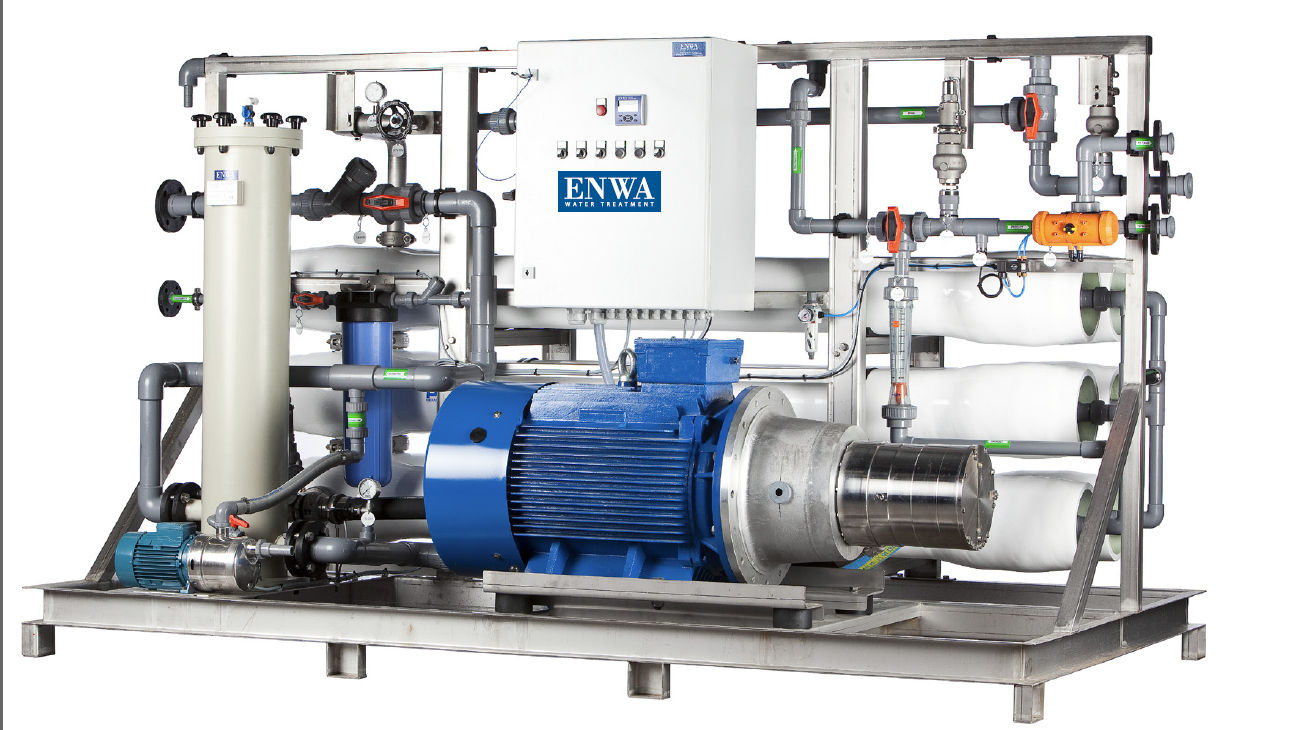
Service: Inspect the unit for leakage, corrosion, contamination, loose connections, abnormal noise or vibration, condition of guards and mountings, service supplies, controls, alarms, and functional performance. Use the vessel maintenance history to identify deterioration trends and refer to the manufacturer documentation for exact settings, tolerances, test values, and overhaul criteria.
Spare Parts: Keep the manufacturer-recommended seals and gaskets, filters where fitted, fuses or protection items, common sensors and switches, and critical actuator, control, or wear components appropriate to the installed configuration. Exact part numbers and quantities must come from the manufacturer spare-parts documentation.
Use Cases: Used on vessel types fitted with water treatment equipment, including merchant, offshore, passenger, fishing, or workboat installations where this specific reverse osmosis unit duty is required.
Reverse Osmosis Unit 0.5m3h Sasakura Marine unverified
Capacity (m³/h)
0.5
Treatment Type
Reverse Osmosis Unit
Common Failures & Inspection Points
  • Reduced treatment performance caused by fouled filters, exhausted media, scaled membranes, aged lamps or contaminated process surfaces, resulting in poor water quality or increased pressure drop
  • Dosing, regeneration or process-control failure caused by empty consumables, pump faults or control errors, resulting in incorrect treatment conditions
  • Sensor or conductivity fault caused by fouling, calibration drift or wiring problems, resulting in implausible readings or alarms
  • Pump or valve failure caused by wear, blockage or electrical faults, resulting in low treatment flow or inability to route water correctly
  • Leakage caused by seal, housing, membrane, pressure-vessel or piping deterioration, resulting in water loss and unstable process conditions
Service: Inspect filters, membranes, lamps, dosing equipment, treatment vessels, pumps, valves, sensors and sample points as applicable to the installed process. Maintain hygienic conditions during opening of potable-water equipment. Trend pressure drop and water-quality indications and investigate abnormal values promptly. Verify alarms, regeneration, diversion or shutdown functions after maintenance. Store chemicals and treatment media according to approved procedures. Refer to the manufacturer documentation for the exact figure for dosing, replacement, cleaning and water-quality settings.
Spare Parts: Keep filter elements, membrane or lamp components, approved treatment media, dosing-pump service parts, seals, valves, sensors and sampling consumables recommended for the installed process. Chemicals must be approved for the intended water service.
Use Cases: It is used for freshwater, potable-water and sanitary treatment on merchant ships, passenger vessels, offshore units or other vessel types where this equipment category is fitted.
Reverse Osmosis Unit 1m3h Sasakura Marine unverified
Capacity (m³/h)
1
Treatment Type
Reverse Osmosis Unit
Common Failures & Inspection Points
  • Reduced treatment performance caused by fouled filters, exhausted media, scaled membranes, aged lamps or contaminated process surfaces, resulting in poor water quality or increased pressure drop
  • Dosing, regeneration or process-control failure caused by empty consumables, pump faults or control errors, resulting in incorrect treatment conditions
  • Sensor or conductivity fault caused by fouling, calibration drift or wiring problems, resulting in implausible readings or alarms
  • Pump or valve failure caused by wear, blockage or electrical faults, resulting in low treatment flow or inability to route water correctly
  • Leakage caused by seal, housing, membrane, pressure-vessel or piping deterioration, resulting in water loss and unstable process conditions
Service: Inspect filters, membranes, lamps, dosing equipment, treatment vessels, pumps, valves, sensors and sample points as applicable to the installed process. Maintain hygienic conditions during opening of potable-water equipment. Trend pressure drop and water-quality indications and investigate abnormal values promptly. Verify alarms, regeneration, diversion or shutdown functions after maintenance. Store chemicals and treatment media according to approved procedures. Refer to the manufacturer documentation for the exact figure for dosing, replacement, cleaning and water-quality settings.
Spare Parts: Keep filter elements, membrane or lamp components, approved treatment media, dosing-pump service parts, seals, valves, sensors and sampling consumables recommended for the installed process. Chemicals must be approved for the intended water service.
Use Cases: It is used for freshwater, potable-water and sanitary treatment on merchant ships, passenger vessels, offshore units or other vessel types where this equipment category is fitted.
Reverse Osmosis Unit 2m3h Sasakura Marine unverified
Capacity (m³/h)
2
Treatment Type
Reverse Osmosis Unit
Common Failures & Inspection Points
  • Reduced treatment performance caused by fouled filters, exhausted media, scaled membranes, aged lamps or contaminated process surfaces, resulting in poor water quality or increased pressure drop
  • Dosing, regeneration or process-control failure caused by empty consumables, pump faults or control errors, resulting in incorrect treatment conditions
  • Sensor or conductivity fault caused by fouling, calibration drift or wiring problems, resulting in implausible readings or alarms
  • Pump or valve failure caused by wear, blockage or electrical faults, resulting in low treatment flow or inability to route water correctly
  • Leakage caused by seal, housing, membrane, pressure-vessel or piping deterioration, resulting in water loss and unstable process conditions
Service: Inspect filters, membranes, lamps, dosing equipment, treatment vessels, pumps, valves, sensors and sample points as applicable to the installed process. Maintain hygienic conditions during opening of potable-water equipment. Trend pressure drop and water-quality indications and investigate abnormal values promptly. Verify alarms, regeneration, diversion or shutdown functions after maintenance. Store chemicals and treatment media according to approved procedures. Refer to the manufacturer documentation for the exact figure for dosing, replacement, cleaning and water-quality settings.
Spare Parts: Keep filter elements, membrane or lamp components, approved treatment media, dosing-pump service parts, seals, valves, sensors and sampling consumables recommended for the installed process. Chemicals must be approved for the intended water service.
Use Cases: It is used for freshwater, potable-water and sanitary treatment on merchant ships, passenger vessels, offshore units or other vessel types where this equipment category is fitted.
Reverse Osmosis Unit 3m3h Sasakura Marine unverified
Capacity (m³/h)
3
Treatment Type
Reverse Osmosis Unit
Common Failures & Inspection Points
  • Reduced treatment performance caused by fouled filters, exhausted media, scaled membranes, aged lamps or contaminated process surfaces, resulting in poor water quality or increased pressure drop
  • Dosing, regeneration or process-control failure caused by empty consumables, pump faults or control errors, resulting in incorrect treatment conditions
  • Sensor or conductivity fault caused by fouling, calibration drift or wiring problems, resulting in implausible readings or alarms
  • Pump or valve failure caused by wear, blockage or electrical faults, resulting in low treatment flow or inability to route water correctly
  • Leakage caused by seal, housing, membrane, pressure-vessel or piping deterioration, resulting in water loss and unstable process conditions
Service: Inspect filters, membranes, lamps, dosing equipment, treatment vessels, pumps, valves, sensors and sample points as applicable to the installed process. Maintain hygienic conditions during opening of potable-water equipment. Trend pressure drop and water-quality indications and investigate abnormal values promptly. Verify alarms, regeneration, diversion or shutdown functions after maintenance. Store chemicals and treatment media according to approved procedures. Refer to the manufacturer documentation for the exact figure for dosing, replacement, cleaning and water-quality settings.
Spare Parts: Keep filter elements, membrane or lamp components, approved treatment media, dosing-pump service parts, seals, valves, sensors and sampling consumables recommended for the installed process. Chemicals must be approved for the intended water service.
Use Cases: It is used for freshwater, potable-water and sanitary treatment on merchant ships, passenger vessels, offshore units or other vessel types where this equipment category is fitted.
Reverse Osmosis Unit 5m3h Sasakura Marine unverified
Capacity (m³/h)
5
Treatment Type
Reverse Osmosis Unit
Common Failures & Inspection Points
  • Reduced treatment performance caused by fouled filters, exhausted media, scaled membranes, aged lamps or contaminated process surfaces, resulting in poor water quality or increased pressure drop
  • Dosing, regeneration or process-control failure caused by empty consumables, pump faults or control errors, resulting in incorrect treatment conditions
  • Sensor or conductivity fault caused by fouling, calibration drift or wiring problems, resulting in implausible readings or alarms
  • Pump or valve failure caused by wear, blockage or electrical faults, resulting in low treatment flow or inability to route water correctly
  • Leakage caused by seal, housing, membrane, pressure-vessel or piping deterioration, resulting in water loss and unstable process conditions
Service: Inspect filters, membranes, lamps, dosing equipment, treatment vessels, pumps, valves, sensors and sample points as applicable to the installed process. Maintain hygienic conditions during opening of potable-water equipment. Trend pressure drop and water-quality indications and investigate abnormal values promptly. Verify alarms, regeneration, diversion or shutdown functions after maintenance. Store chemicals and treatment media according to approved procedures. Refer to the manufacturer documentation for the exact figure for dosing, replacement, cleaning and water-quality settings.
Spare Parts: Keep filter elements, membrane or lamp components, approved treatment media, dosing-pump service parts, seals, valves, sensors and sampling consumables recommended for the installed process. Chemicals must be approved for the intended water service.
Use Cases: It is used for freshwater, potable-water and sanitary treatment on merchant ships, passenger vessels, offshore units or other vessel types where this equipment category is fitted.
Reverse Osmosis Unit 8m3h Sasakura Marine unverified
Capacity (m³/h)
8
Treatment Type
Reverse Osmosis Unit
Common Failures & Inspection Points
  • Reduced treatment performance caused by fouled filters, exhausted media, scaled membranes, aged lamps or contaminated process surfaces, resulting in poor water quality or increased pressure drop
  • Dosing, regeneration or process-control failure caused by empty consumables, pump faults or control errors, resulting in incorrect treatment conditions
  • Sensor or conductivity fault caused by fouling, calibration drift or wiring problems, resulting in implausible readings or alarms
  • Pump or valve failure caused by wear, blockage or electrical faults, resulting in low treatment flow or inability to route water correctly
  • Leakage caused by seal, housing, membrane, pressure-vessel or piping deterioration, resulting in water loss and unstable process conditions
Service: Inspect filters, membranes, lamps, dosing equipment, treatment vessels, pumps, valves, sensors and sample points as applicable to the installed process. Maintain hygienic conditions during opening of potable-water equipment. Trend pressure drop and water-quality indications and investigate abnormal values promptly. Verify alarms, regeneration, diversion or shutdown functions after maintenance. Store chemicals and treatment media according to approved procedures. Refer to the manufacturer documentation for the exact figure for dosing, replacement, cleaning and water-quality settings.
Spare Parts: Keep filter elements, membrane or lamp components, approved treatment media, dosing-pump service parts, seals, valves, sensors and sampling consumables recommended for the installed process. Chemicals must be approved for the intended water service.
Use Cases: It is used for freshwater, potable-water and sanitary treatment on merchant ships, passenger vessels, offshore units or other vessel types where this equipment category is fitted.
Reverse Osmosis Unit 10m3h Sasakura Marine unverified
Capacity (m³/h)
10
Treatment Type
Reverse Osmosis Unit
Common Failures & Inspection Points
  • Reduced treatment performance caused by fouled filters, exhausted media, scaled membranes, aged lamps or contaminated process surfaces, resulting in poor water quality or increased pressure drop
  • Dosing, regeneration or process-control failure caused by empty consumables, pump faults or control errors, resulting in incorrect treatment conditions
  • Sensor or conductivity fault caused by fouling, calibration drift or wiring problems, resulting in implausible readings or alarms
  • Pump or valve failure caused by wear, blockage or electrical faults, resulting in low treatment flow or inability to route water correctly
  • Leakage caused by seal, housing, membrane, pressure-vessel or piping deterioration, resulting in water loss and unstable process conditions
Service: Inspect filters, membranes, lamps, dosing equipment, treatment vessels, pumps, valves, sensors and sample points as applicable to the installed process. Maintain hygienic conditions during opening of potable-water equipment. Trend pressure drop and water-quality indications and investigate abnormal values promptly. Verify alarms, regeneration, diversion or shutdown functions after maintenance. Store chemicals and treatment media according to approved procedures. Refer to the manufacturer documentation for the exact figure for dosing, replacement, cleaning and water-quality settings.
Spare Parts: Keep filter elements, membrane or lamp components, approved treatment media, dosing-pump service parts, seals, valves, sensors and sampling consumables recommended for the installed process. Chemicals must be approved for the intended water service.
Use Cases: It is used for freshwater, potable-water and sanitary treatment on merchant ships, passenger vessels, offshore units or other vessel types where this equipment category is fitted.
Reverse Osmosis Unit 15m3h Sasakura Marine unverified
Capacity (m³/h)
15
Treatment Type
Reverse Osmosis Unit
Common Failures & Inspection Points
  • Reduced treatment performance caused by fouled filters, exhausted media, scaled membranes, aged lamps or contaminated process surfaces, resulting in poor water quality or increased pressure drop
  • Dosing, regeneration or process-control failure caused by empty consumables, pump faults or control errors, resulting in incorrect treatment conditions
  • Sensor or conductivity fault caused by fouling, calibration drift or wiring problems, resulting in implausible readings or alarms
  • Pump or valve failure caused by wear, blockage or electrical faults, resulting in low treatment flow or inability to route water correctly
  • Leakage caused by seal, housing, membrane, pressure-vessel or piping deterioration, resulting in water loss and unstable process conditions
Service: Inspect filters, membranes, lamps, dosing equipment, treatment vessels, pumps, valves, sensors and sample points as applicable to the installed process. Maintain hygienic conditions during opening of potable-water equipment. Trend pressure drop and water-quality indications and investigate abnormal values promptly. Verify alarms, regeneration, diversion or shutdown functions after maintenance. Store chemicals and treatment media according to approved procedures. Refer to the manufacturer documentation for the exact figure for dosing, replacement, cleaning and water-quality settings.
Spare Parts: Keep filter elements, membrane or lamp components, approved treatment media, dosing-pump service parts, seals, valves, sensors and sampling consumables recommended for the installed process. Chemicals must be approved for the intended water service.
Use Cases: It is used for freshwater, potable-water and sanitary treatment on merchant ships, passenger vessels, offshore units or other vessel types where this equipment category is fitted.
Reverse Osmosis Unit 20m3h Sasakura Marine unverified
Capacity (m³/h)
20
Treatment Type
Reverse Osmosis Unit
Common Failures & Inspection Points
  • Reduced treatment performance caused by fouled filters, exhausted media, scaled membranes, aged lamps or contaminated process surfaces, resulting in poor water quality or increased pressure drop
  • Dosing, regeneration or process-control failure caused by empty consumables, pump faults or control errors, resulting in incorrect treatment conditions
  • Sensor or conductivity fault caused by fouling, calibration drift or wiring problems, resulting in implausible readings or alarms
  • Pump or valve failure caused by wear, blockage or electrical faults, resulting in low treatment flow or inability to route water correctly
  • Leakage caused by seal, housing, membrane, pressure-vessel or piping deterioration, resulting in water loss and unstable process conditions
Service: Inspect filters, membranes, lamps, dosing equipment, treatment vessels, pumps, valves, sensors and sample points as applicable to the installed process. Maintain hygienic conditions during opening of potable-water equipment. Trend pressure drop and water-quality indications and investigate abnormal values promptly. Verify alarms, regeneration, diversion or shutdown functions after maintenance. Store chemicals and treatment media according to approved procedures. Refer to the manufacturer documentation for the exact figure for dosing, replacement, cleaning and water-quality settings.
Spare Parts: Keep filter elements, membrane or lamp components, approved treatment media, dosing-pump service parts, seals, valves, sensors and sampling consumables recommended for the installed process. Chemicals must be approved for the intended water service.
Use Cases: It is used for freshwater, potable-water and sanitary treatment on merchant ships, passenger vessels, offshore units or other vessel types where this equipment category is fitted.
Reverse Osmosis Unit 30m3h Sasakura Marine unverified
Capacity (m³/h)
30
Treatment Type
Reverse Osmosis Unit
Common Failures & Inspection Points
  • Reduced treatment performance caused by fouled filters, exhausted media, scaled membranes, aged lamps or contaminated process surfaces, resulting in poor water quality or increased pressure drop
  • Dosing, regeneration or process-control failure caused by empty consumables, pump faults or control errors, resulting in incorrect treatment conditions
  • Sensor or conductivity fault caused by fouling, calibration drift or wiring problems, resulting in implausible readings or alarms
  • Pump or valve failure caused by wear, blockage or electrical faults, resulting in low treatment flow or inability to route water correctly
  • Leakage caused by seal, housing, membrane, pressure-vessel or piping deterioration, resulting in water loss and unstable process conditions
Service: Inspect filters, membranes, lamps, dosing equipment, treatment vessels, pumps, valves, sensors and sample points as applicable to the installed process. Maintain hygienic conditions during opening of potable-water equipment. Trend pressure drop and water-quality indications and investigate abnormal values promptly. Verify alarms, regeneration, diversion or shutdown functions after maintenance. Store chemicals and treatment media according to approved procedures. Refer to the manufacturer documentation for the exact figure for dosing, replacement, cleaning and water-quality settings.
Spare Parts: Keep filter elements, membrane or lamp components, approved treatment media, dosing-pump service parts, seals, valves, sensors and sampling consumables recommended for the installed process. Chemicals must be approved for the intended water service.
Use Cases: It is used for freshwater, potable-water and sanitary treatment on merchant ships, passenger vessels, offshore units or other vessel types where this equipment category is fitted.
Reverse Osmosis Unit 50m3h Sasakura Marine unverified
Capacity (m³/h)
50
Treatment Type
Reverse Osmosis Unit
Common Failures & Inspection Points
  • Reduced treatment performance caused by fouled filters, exhausted media, scaled membranes, aged lamps or contaminated process surfaces, resulting in poor water quality or increased pressure drop
  • Dosing, regeneration or process-control failure caused by empty consumables, pump faults or control errors, resulting in incorrect treatment conditions
  • Sensor or conductivity fault caused by fouling, calibration drift or wiring problems, resulting in implausible readings or alarms
  • Pump or valve failure caused by wear, blockage or electrical faults, resulting in low treatment flow or inability to route water correctly
  • Leakage caused by seal, housing, membrane, pressure-vessel or piping deterioration, resulting in water loss and unstable process conditions
Service: Inspect filters, membranes, lamps, dosing equipment, treatment vessels, pumps, valves, sensors and sample points as applicable to the installed process. Maintain hygienic conditions during opening of potable-water equipment. Trend pressure drop and water-quality indications and investigate abnormal values promptly. Verify alarms, regeneration, diversion or shutdown functions after maintenance. Store chemicals and treatment media according to approved procedures. Refer to the manufacturer documentation for the exact figure for dosing, replacement, cleaning and water-quality settings.
Spare Parts: Keep filter elements, membrane or lamp components, approved treatment media, dosing-pump service parts, seals, valves, sensors and sampling consumables recommended for the installed process. Chemicals must be approved for the intended water service.
Use Cases: It is used for freshwater, potable-water and sanitary treatment on merchant ships, passenger vessels, offshore units or other vessel types where this equipment category is fitted.

ENWA Marine

14
MPC-100 Marine unverified
Capacity (m³/h)
4.2
Treatment Type
Reverse Osmosis
Membrane type
TFC polyamide
Uv dose mj cm2
0
Common Failures & Inspection Points
  • Loss of electrical, hydraulic, pneumatic, or other service supply caused by a tripped protection device, leakage, blockage, or upstream fault results in failed starting or loss of function
  • Mechanical wear, corrosion, fouling, or contamination of moving and wetted parts causes increased noise, leakage, sticking, vibration, or reduced performance
  • Seal, gasket, hose, cable, or connection deterioration from age, heat, vibration, or environmental exposure produces visible leakage, intermittent signals, or loss of pressure
  • Sensor, switch, actuator, relay, or control-system faults can cause incorrect indication, nuisance alarms, failed automatic sequences, or loss of remote control
  • Incorrect adjustment, assembly, or maintenance can lead to unstable operation, recurrent alarms, or performance that differs from the vessel's normal baseline
Service: Inspect the unit for leakage, corrosion, contamination, loose connections, abnormal noise or vibration, condition of guards and mountings, service supplies, controls, alarms, and functional performance. Use the vessel maintenance history to identify deterioration trends and refer to the manufacturer documentation for exact settings, tolerances, test values, and overhaul criteria.
Spare Parts: Keep the manufacturer-recommended seals and gaskets, filters where fitted, fuses or protection items, common sensors and switches, and critical actuator, control, or wear components appropriate to the installed configuration. Exact part numbers and quantities must come from the manufacturer spare-parts documentation.
Use Cases: Used on vessel types fitted with water treatment equipment, including merchant, offshore, passenger, fishing, or workboat installations where this specific reverse osmosis unit duty is required.
ENWA Marine MPC-200 Marine
MPC-200 Marine unverified
Capacity (m³/h)
8.3
Treatment Type
Reverse Osmosis
Membrane type
TFC polyamide
Uv dose mj cm2
0
Common Failures & Inspection Points
  • Loss of electrical, hydraulic, pneumatic, or other service supply caused by a tripped protection device, leakage, blockage, or upstream fault results in failed starting or loss of function
  • Mechanical wear, corrosion, fouling, or contamination of moving and wetted parts causes increased noise, leakage, sticking, vibration, or reduced performance
  • Seal, gasket, hose, cable, or connection deterioration from age, heat, vibration, or environmental exposure produces visible leakage, intermittent signals, or loss of pressure
  • Sensor, switch, actuator, relay, or control-system faults can cause incorrect indication, nuisance alarms, failed automatic sequences, or loss of remote control
  • Incorrect adjustment, assembly, or maintenance can lead to unstable operation, recurrent alarms, or performance that differs from the vessel's normal baseline
Service: Inspect the unit for leakage, corrosion, contamination, loose connections, abnormal noise or vibration, condition of guards and mountings, service supplies, controls, alarms, and functional performance. Use the vessel maintenance history to identify deterioration trends and refer to the manufacturer documentation for exact settings, tolerances, test values, and overhaul criteria.
Spare Parts: Keep the manufacturer-recommended seals and gaskets, filters where fitted, fuses or protection items, common sensors and switches, and critical actuator, control, or wear components appropriate to the installed configuration. Exact part numbers and quantities must come from the manufacturer spare-parts documentation.
Use Cases: Used on vessel types fitted with water treatment equipment, including merchant, offshore, passenger, fishing, or workboat installations where this specific reverse osmosis unit duty is required.
MPC-500 Marine unverified
Capacity (m³/h)
20.8
Treatment Type
Reverse Osmosis
Membrane type
TFC polyamide
Uv dose mj cm2
0
Common Failures & Inspection Points
  • Loss of electrical, hydraulic, pneumatic, or other service supply caused by a tripped protection device, leakage, blockage, or upstream fault results in failed starting or loss of function
  • Mechanical wear, corrosion, fouling, or contamination of moving and wetted parts causes increased noise, leakage, sticking, vibration, or reduced performance
  • Seal, gasket, hose, cable, or connection deterioration from age, heat, vibration, or environmental exposure produces visible leakage, intermittent signals, or loss of pressure
  • Sensor, switch, actuator, relay, or control-system faults can cause incorrect indication, nuisance alarms, failed automatic sequences, or loss of remote control
  • Incorrect adjustment, assembly, or maintenance can lead to unstable operation, recurrent alarms, or performance that differs from the vessel's normal baseline
Service: Inspect the unit for leakage, corrosion, contamination, loose connections, abnormal noise or vibration, condition of guards and mountings, service supplies, controls, alarms, and functional performance. Use the vessel maintenance history to identify deterioration trends and refer to the manufacturer documentation for exact settings, tolerances, test values, and overhaul criteria.
Spare Parts: Keep the manufacturer-recommended seals and gaskets, filters where fitted, fuses or protection items, common sensors and switches, and critical actuator, control, or wear components appropriate to the installed configuration. Exact part numbers and quantities must come from the manufacturer spare-parts documentation.
Use Cases: Used on vessel types fitted with water treatment equipment, including merchant, offshore, passenger, fishing, or workboat installations where this specific reverse osmosis unit duty is required.
ENWA Marine Reverse Osmosis Unit 0.5m3h ENWA Marine
Reverse Osmosis Unit 0.5m3h ENWA Marine unverified
Capacity (m³/h)
0.5
Treatment Type
Reverse Osmosis Unit
Common Failures & Inspection Points
  • Reduced treatment performance caused by fouled filters, exhausted media, scaled membranes, aged lamps or contaminated process surfaces, resulting in poor water quality or increased pressure drop
  • Dosing, regeneration or process-control failure caused by empty consumables, pump faults or control errors, resulting in incorrect treatment conditions
  • Sensor or conductivity fault caused by fouling, calibration drift or wiring problems, resulting in implausible readings or alarms
  • Pump or valve failure caused by wear, blockage or electrical faults, resulting in low treatment flow or inability to route water correctly
  • Leakage caused by seal, housing, membrane, pressure-vessel or piping deterioration, resulting in water loss and unstable process conditions
Service: Inspect filters, membranes, lamps, dosing equipment, treatment vessels, pumps, valves, sensors and sample points as applicable to the installed process. Maintain hygienic conditions during opening of potable-water equipment. Trend pressure drop and water-quality indications and investigate abnormal values promptly. Verify alarms, regeneration, diversion or shutdown functions after maintenance. Store chemicals and treatment media according to approved procedures. Refer to the manufacturer documentation for the exact figure for dosing, replacement, cleaning and water-quality settings.
Spare Parts: Keep filter elements, membrane or lamp components, approved treatment media, dosing-pump service parts, seals, valves, sensors and sampling consumables recommended for the installed process. Chemicals must be approved for the intended water service.
Use Cases: It is used for freshwater, potable-water and sanitary treatment on merchant ships, passenger vessels, offshore units or other vessel types where this equipment category is fitted.
ENWA Marine Reverse Osmosis Unit 1m3h ENWA Marine
Reverse Osmosis Unit 1m3h ENWA Marine unverified
Capacity (m³/h)
1
Treatment Type
Reverse Osmosis Unit
Common Failures & Inspection Points
  • Reduced treatment performance caused by fouled filters, exhausted media, scaled membranes, aged lamps or contaminated process surfaces, resulting in poor water quality or increased pressure drop
  • Dosing, regeneration or process-control failure caused by empty consumables, pump faults or control errors, resulting in incorrect treatment conditions
  • Sensor or conductivity fault caused by fouling, calibration drift or wiring problems, resulting in implausible readings or alarms
  • Pump or valve failure caused by wear, blockage or electrical faults, resulting in low treatment flow or inability to route water correctly
  • Leakage caused by seal, housing, membrane, pressure-vessel or piping deterioration, resulting in water loss and unstable process conditions
Service: Inspect filters, membranes, lamps, dosing equipment, treatment vessels, pumps, valves, sensors and sample points as applicable to the installed process. Maintain hygienic conditions during opening of potable-water equipment. Trend pressure drop and water-quality indications and investigate abnormal values promptly. Verify alarms, regeneration, diversion or shutdown functions after maintenance. Store chemicals and treatment media according to approved procedures. Refer to the manufacturer documentation for the exact figure for dosing, replacement, cleaning and water-quality settings.
Spare Parts: Keep filter elements, membrane or lamp components, approved treatment media, dosing-pump service parts, seals, valves, sensors and sampling consumables recommended for the installed process. Chemicals must be approved for the intended water service.
Use Cases: It is used for freshwater, potable-water and sanitary treatment on merchant ships, passenger vessels, offshore units or other vessel types where this equipment category is fitted.
ENWA Marine Reverse Osmosis Unit 2m3h ENWA Marine
Reverse Osmosis Unit 2m3h ENWA Marine unverified
Capacity (m³/h)
2
Treatment Type
Reverse Osmosis Unit
Common Failures & Inspection Points
  • Reduced treatment performance caused by fouled filters, exhausted media, scaled membranes, aged lamps or contaminated process surfaces, resulting in poor water quality or increased pressure drop
  • Dosing, regeneration or process-control failure caused by empty consumables, pump faults or control errors, resulting in incorrect treatment conditions
  • Sensor or conductivity fault caused by fouling, calibration drift or wiring problems, resulting in implausible readings or alarms
  • Pump or valve failure caused by wear, blockage or electrical faults, resulting in low treatment flow or inability to route water correctly
  • Leakage caused by seal, housing, membrane, pressure-vessel or piping deterioration, resulting in water loss and unstable process conditions
Service: Inspect filters, membranes, lamps, dosing equipment, treatment vessels, pumps, valves, sensors and sample points as applicable to the installed process. Maintain hygienic conditions during opening of potable-water equipment. Trend pressure drop and water-quality indications and investigate abnormal values promptly. Verify alarms, regeneration, diversion or shutdown functions after maintenance. Store chemicals and treatment media according to approved procedures. Refer to the manufacturer documentation for the exact figure for dosing, replacement, cleaning and water-quality settings.
Spare Parts: Keep filter elements, membrane or lamp components, approved treatment media, dosing-pump service parts, seals, valves, sensors and sampling consumables recommended for the installed process. Chemicals must be approved for the intended water service.
Use Cases: It is used for freshwater, potable-water and sanitary treatment on merchant ships, passenger vessels, offshore units or other vessel types where this equipment category is fitted.
ENWA Marine Reverse Osmosis Unit 3m3h ENWA Marine
Reverse Osmosis Unit 3m3h ENWA Marine unverified
Capacity (m³/h)
3
Treatment Type
Reverse Osmosis Unit
Common Failures & Inspection Points
  • Reduced treatment performance caused by fouled filters, exhausted media, scaled membranes, aged lamps or contaminated process surfaces, resulting in poor water quality or increased pressure drop
  • Dosing, regeneration or process-control failure caused by empty consumables, pump faults or control errors, resulting in incorrect treatment conditions
  • Sensor or conductivity fault caused by fouling, calibration drift or wiring problems, resulting in implausible readings or alarms
  • Pump or valve failure caused by wear, blockage or electrical faults, resulting in low treatment flow or inability to route water correctly
  • Leakage caused by seal, housing, membrane, pressure-vessel or piping deterioration, resulting in water loss and unstable process conditions
Service: Inspect filters, membranes, lamps, dosing equipment, treatment vessels, pumps, valves, sensors and sample points as applicable to the installed process. Maintain hygienic conditions during opening of potable-water equipment. Trend pressure drop and water-quality indications and investigate abnormal values promptly. Verify alarms, regeneration, diversion or shutdown functions after maintenance. Store chemicals and treatment media according to approved procedures. Refer to the manufacturer documentation for the exact figure for dosing, replacement, cleaning and water-quality settings.
Spare Parts: Keep filter elements, membrane or lamp components, approved treatment media, dosing-pump service parts, seals, valves, sensors and sampling consumables recommended for the installed process. Chemicals must be approved for the intended water service.
Use Cases: It is used for freshwater, potable-water and sanitary treatment on merchant ships, passenger vessels, offshore units or other vessel types where this equipment category is fitted.
ENWA Marine Reverse Osmosis Unit 5m3h ENWA Marine
Reverse Osmosis Unit 5m3h ENWA Marine unverified
Capacity (m³/h)
5
Treatment Type
Reverse Osmosis Unit
Common Failures & Inspection Points
  • Reduced treatment performance caused by fouled filters, exhausted media, scaled membranes, aged lamps or contaminated process surfaces, resulting in poor water quality or increased pressure drop
  • Dosing, regeneration or process-control failure caused by empty consumables, pump faults or control errors, resulting in incorrect treatment conditions
  • Sensor or conductivity fault caused by fouling, calibration drift or wiring problems, resulting in implausible readings or alarms
  • Pump or valve failure caused by wear, blockage or electrical faults, resulting in low treatment flow or inability to route water correctly
  • Leakage caused by seal, housing, membrane, pressure-vessel or piping deterioration, resulting in water loss and unstable process conditions
Service: Inspect filters, membranes, lamps, dosing equipment, treatment vessels, pumps, valves, sensors and sample points as applicable to the installed process. Maintain hygienic conditions during opening of potable-water equipment. Trend pressure drop and water-quality indications and investigate abnormal values promptly. Verify alarms, regeneration, diversion or shutdown functions after maintenance. Store chemicals and treatment media according to approved procedures. Refer to the manufacturer documentation for the exact figure for dosing, replacement, cleaning and water-quality settings.
Spare Parts: Keep filter elements, membrane or lamp components, approved treatment media, dosing-pump service parts, seals, valves, sensors and sampling consumables recommended for the installed process. Chemicals must be approved for the intended water service.
Use Cases: It is used for freshwater, potable-water and sanitary treatment on merchant ships, passenger vessels, offshore units or other vessel types where this equipment category is fitted.
ENWA Marine Reverse Osmosis Unit 8m3h ENWA Marine
Reverse Osmosis Unit 8m3h ENWA Marine unverified
Capacity (m³/h)
8
Treatment Type
Reverse Osmosis Unit
Common Failures & Inspection Points
  • Reduced treatment performance caused by fouled filters, exhausted media, scaled membranes, aged lamps or contaminated process surfaces, resulting in poor water quality or increased pressure drop
  • Dosing, regeneration or process-control failure caused by empty consumables, pump faults or control errors, resulting in incorrect treatment conditions
  • Sensor or conductivity fault caused by fouling, calibration drift or wiring problems, resulting in implausible readings or alarms
  • Pump or valve failure caused by wear, blockage or electrical faults, resulting in low treatment flow or inability to route water correctly
  • Leakage caused by seal, housing, membrane, pressure-vessel or piping deterioration, resulting in water loss and unstable process conditions
Service: Inspect filters, membranes, lamps, dosing equipment, treatment vessels, pumps, valves, sensors and sample points as applicable to the installed process. Maintain hygienic conditions during opening of potable-water equipment. Trend pressure drop and water-quality indications and investigate abnormal values promptly. Verify alarms, regeneration, diversion or shutdown functions after maintenance. Store chemicals and treatment media according to approved procedures. Refer to the manufacturer documentation for the exact figure for dosing, replacement, cleaning and water-quality settings.
Spare Parts: Keep filter elements, membrane or lamp components, approved treatment media, dosing-pump service parts, seals, valves, sensors and sampling consumables recommended for the installed process. Chemicals must be approved for the intended water service.
Use Cases: It is used for freshwater, potable-water and sanitary treatment on merchant ships, passenger vessels, offshore units or other vessel types where this equipment category is fitted.
ENWA Marine Reverse Osmosis Unit 10m3h ENWA Marine
Reverse Osmosis Unit 10m3h ENWA Marine unverified
Capacity (m³/h)
10
Treatment Type
Reverse Osmosis Unit
Common Failures & Inspection Points
  • Reduced treatment performance caused by fouled filters, exhausted media, scaled membranes, aged lamps or contaminated process surfaces, resulting in poor water quality or increased pressure drop
  • Dosing, regeneration or process-control failure caused by empty consumables, pump faults or control errors, resulting in incorrect treatment conditions
  • Sensor or conductivity fault caused by fouling, calibration drift or wiring problems, resulting in implausible readings or alarms
  • Pump or valve failure caused by wear, blockage or electrical faults, resulting in low treatment flow or inability to route water correctly
  • Leakage caused by seal, housing, membrane, pressure-vessel or piping deterioration, resulting in water loss and unstable process conditions
Service: Inspect filters, membranes, lamps, dosing equipment, treatment vessels, pumps, valves, sensors and sample points as applicable to the installed process. Maintain hygienic conditions during opening of potable-water equipment. Trend pressure drop and water-quality indications and investigate abnormal values promptly. Verify alarms, regeneration, diversion or shutdown functions after maintenance. Store chemicals and treatment media according to approved procedures. Refer to the manufacturer documentation for the exact figure for dosing, replacement, cleaning and water-quality settings.
Spare Parts: Keep filter elements, membrane or lamp components, approved treatment media, dosing-pump service parts, seals, valves, sensors and sampling consumables recommended for the installed process. Chemicals must be approved for the intended water service.
Use Cases: It is used for freshwater, potable-water and sanitary treatment on merchant ships, passenger vessels, offshore units or other vessel types where this equipment category is fitted.
ENWA Marine Reverse Osmosis Unit 15m3h ENWA Marine
Reverse Osmosis Unit 15m3h ENWA Marine unverified
Capacity (m³/h)
15
Treatment Type
Reverse Osmosis Unit
Common Failures & Inspection Points
  • Reduced treatment performance caused by fouled filters, exhausted media, scaled membranes, aged lamps or contaminated process surfaces, resulting in poor water quality or increased pressure drop
  • Dosing, regeneration or process-control failure caused by empty consumables, pump faults or control errors, resulting in incorrect treatment conditions
  • Sensor or conductivity fault caused by fouling, calibration drift or wiring problems, resulting in implausible readings or alarms
  • Pump or valve failure caused by wear, blockage or electrical faults, resulting in low treatment flow or inability to route water correctly
  • Leakage caused by seal, housing, membrane, pressure-vessel or piping deterioration, resulting in water loss and unstable process conditions
Service: Inspect filters, membranes, lamps, dosing equipment, treatment vessels, pumps, valves, sensors and sample points as applicable to the installed process. Maintain hygienic conditions during opening of potable-water equipment. Trend pressure drop and water-quality indications and investigate abnormal values promptly. Verify alarms, regeneration, diversion or shutdown functions after maintenance. Store chemicals and treatment media according to approved procedures. Refer to the manufacturer documentation for the exact figure for dosing, replacement, cleaning and water-quality settings.
Spare Parts: Keep filter elements, membrane or lamp components, approved treatment media, dosing-pump service parts, seals, valves, sensors and sampling consumables recommended for the installed process. Chemicals must be approved for the intended water service.
Use Cases: It is used for freshwater, potable-water and sanitary treatment on merchant ships, passenger vessels, offshore units or other vessel types where this equipment category is fitted.
ENWA Marine Reverse Osmosis Unit 20m3h ENWA Marine
Reverse Osmosis Unit 20m3h ENWA Marine unverified
Capacity (m³/h)
20
Treatment Type
Reverse Osmosis Unit
Common Failures & Inspection Points
  • Reduced treatment performance caused by fouled filters, exhausted media, scaled membranes, aged lamps or contaminated process surfaces, resulting in poor water quality or increased pressure drop
  • Dosing, regeneration or process-control failure caused by empty consumables, pump faults or control errors, resulting in incorrect treatment conditions
  • Sensor or conductivity fault caused by fouling, calibration drift or wiring problems, resulting in implausible readings or alarms
  • Pump or valve failure caused by wear, blockage or electrical faults, resulting in low treatment flow or inability to route water correctly
  • Leakage caused by seal, housing, membrane, pressure-vessel or piping deterioration, resulting in water loss and unstable process conditions
Service: Inspect filters, membranes, lamps, dosing equipment, treatment vessels, pumps, valves, sensors and sample points as applicable to the installed process. Maintain hygienic conditions during opening of potable-water equipment. Trend pressure drop and water-quality indications and investigate abnormal values promptly. Verify alarms, regeneration, diversion or shutdown functions after maintenance. Store chemicals and treatment media according to approved procedures. Refer to the manufacturer documentation for the exact figure for dosing, replacement, cleaning and water-quality settings.
Spare Parts: Keep filter elements, membrane or lamp components, approved treatment media, dosing-pump service parts, seals, valves, sensors and sampling consumables recommended for the installed process. Chemicals must be approved for the intended water service.
Use Cases: It is used for freshwater, potable-water and sanitary treatment on merchant ships, passenger vessels, offshore units or other vessel types where this equipment category is fitted.
ENWA Marine Reverse Osmosis Unit 30m3h ENWA Marine
Reverse Osmosis Unit 30m3h ENWA Marine unverified
Capacity (m³/h)
30
Treatment Type
Reverse Osmosis Unit
Common Failures & Inspection Points
  • Reduced treatment performance caused by fouled filters, exhausted media, scaled membranes, aged lamps or contaminated process surfaces, resulting in poor water quality or increased pressure drop
  • Dosing, regeneration or process-control failure caused by empty consumables, pump faults or control errors, resulting in incorrect treatment conditions
  • Sensor or conductivity fault caused by fouling, calibration drift or wiring problems, resulting in implausible readings or alarms
  • Pump or valve failure caused by wear, blockage or electrical faults, resulting in low treatment flow or inability to route water correctly
  • Leakage caused by seal, housing, membrane, pressure-vessel or piping deterioration, resulting in water loss and unstable process conditions
Service: Inspect filters, membranes, lamps, dosing equipment, treatment vessels, pumps, valves, sensors and sample points as applicable to the installed process. Maintain hygienic conditions during opening of potable-water equipment. Trend pressure drop and water-quality indications and investigate abnormal values promptly. Verify alarms, regeneration, diversion or shutdown functions after maintenance. Store chemicals and treatment media according to approved procedures. Refer to the manufacturer documentation for the exact figure for dosing, replacement, cleaning and water-quality settings.
Spare Parts: Keep filter elements, membrane or lamp components, approved treatment media, dosing-pump service parts, seals, valves, sensors and sampling consumables recommended for the installed process. Chemicals must be approved for the intended water service.
Use Cases: It is used for freshwater, potable-water and sanitary treatment on merchant ships, passenger vessels, offshore units or other vessel types where this equipment category is fitted.
ENWA Marine Reverse Osmosis Unit 50m3h ENWA Marine
Reverse Osmosis Unit 50m3h ENWA Marine unverified
Capacity (m³/h)
50
Treatment Type
Reverse Osmosis Unit
Common Failures & Inspection Points
  • Reduced treatment performance caused by fouled filters, exhausted media, scaled membranes, aged lamps or contaminated process surfaces, resulting in poor water quality or increased pressure drop
  • Dosing, regeneration or process-control failure caused by empty consumables, pump faults or control errors, resulting in incorrect treatment conditions
  • Sensor or conductivity fault caused by fouling, calibration drift or wiring problems, resulting in implausible readings or alarms
  • Pump or valve failure caused by wear, blockage or electrical faults, resulting in low treatment flow or inability to route water correctly
  • Leakage caused by seal, housing, membrane, pressure-vessel or piping deterioration, resulting in water loss and unstable process conditions
Service: Inspect filters, membranes, lamps, dosing equipment, treatment vessels, pumps, valves, sensors and sample points as applicable to the installed process. Maintain hygienic conditions during opening of potable-water equipment. Trend pressure drop and water-quality indications and investigate abnormal values promptly. Verify alarms, regeneration, diversion or shutdown functions after maintenance. Store chemicals and treatment media according to approved procedures. Refer to the manufacturer documentation for the exact figure for dosing, replacement, cleaning and water-quality settings.
Spare Parts: Keep filter elements, membrane or lamp components, approved treatment media, dosing-pump service parts, seals, valves, sensors and sampling consumables recommended for the installed process. Chemicals must be approved for the intended water service.
Use Cases: It is used for freshwater, potable-water and sanitary treatment on merchant ships, passenger vessels, offshore units or other vessel types where this equipment category is fitted.

RWO/Veolia

14
MinSea RO-100 Marine unverified
Capacity (m³/h)
4.2
Treatment Type
Reverse Osmosis
Membrane type
TFC polyamide
Uv dose mj cm2
0
Common Failures & Inspection Points
  • Filter, membrane, separator or treatment-stage fouling caused by solids, oil, scale or biological contamination can reduce throughput and increase differential pressure
  • Pump or valve faults caused by wear, blockage or actuator problems can cause low flow, unstable pressure or failure to complete an operating sequence
  • Sensor or monitor contamination caused by dirty process fluid or poor maintenance can produce implausible readings, alarms or automatic discharge inhibition
  • Seal, gasket or piping leakage caused by corrosion, ageing or vibration can lead to visible leakage, air ingress or loss of process pressure
  • Control or treatment-component failure caused by electrical faults, lamp or cell deterioration where fitted, or software issues can lead to shutdown or inability to meet the required treatment condition
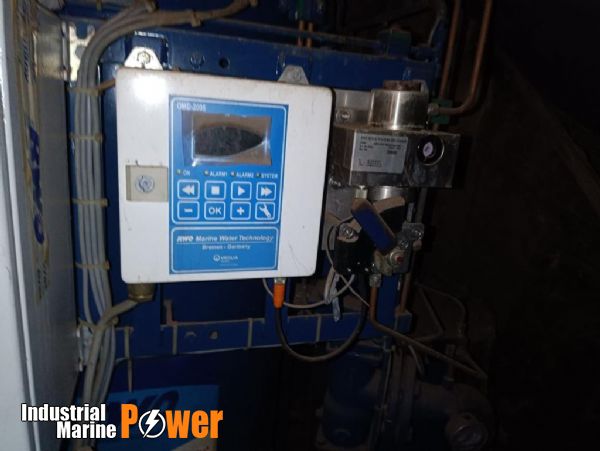
Service: Inspect filters or treatment elements, pumps, valves, piping, sampling points and monitors, and review trend data for loss of throughput or abnormal pressure. Verify alarms, automatic diversion or interlocks where applicable and check cleanliness of sensors and sample lines. Use statutory procedures and manufacturer documentation for exact discharge, treatment and calibration limits.
Spare Parts: Typical spares include filters or treatment elements, seal and gasket kits, pump service parts, lamps or electrodes where applicable, monitor consumables, sensors and valve or actuator repair items.
Use Cases: Bilge-water treatment, fuel or lube purification, freshwater production, potable-water conditioning and ballast-water management on commercial vessels.
RWO/Veolia MinSea RO-200 Marine
MinSea RO-200 Marine unverified
Capacity (m³/h)
8.3
Treatment Type
Reverse Osmosis
Membrane type
TFC polyamide
Uv dose mj cm2
0
Common Failures & Inspection Points
  • Filter, membrane, separator or treatment-stage fouling caused by solids, oil, scale or biological contamination can reduce throughput and increase differential pressure
  • Pump or valve faults caused by wear, blockage or actuator problems can cause low flow, unstable pressure or failure to complete an operating sequence
  • Sensor or monitor contamination caused by dirty process fluid or poor maintenance can produce implausible readings, alarms or automatic discharge inhibition
  • Seal, gasket or piping leakage caused by corrosion, ageing or vibration can lead to visible leakage, air ingress or loss of process pressure
  • Control or treatment-component failure caused by electrical faults, lamp or cell deterioration where fitted, or software issues can lead to shutdown or inability to meet the required treatment condition
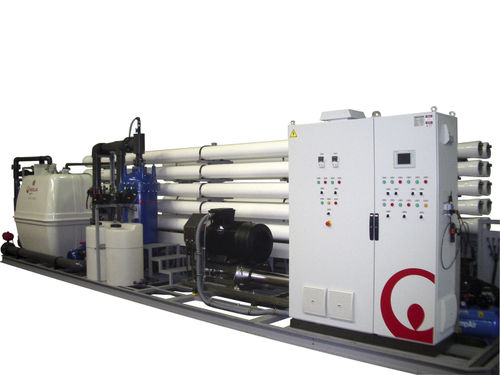
Service: Inspect filters or treatment elements, pumps, valves, piping, sampling points and monitors, and review trend data for loss of throughput or abnormal pressure. Verify alarms, automatic diversion or interlocks where applicable and check cleanliness of sensors and sample lines. Use statutory procedures and manufacturer documentation for exact discharge, treatment and calibration limits.
Spare Parts: Typical spares include filters or treatment elements, seal and gasket kits, pump service parts, lamps or electrodes where applicable, monitor consumables, sensors and valve or actuator repair items.
Use Cases: Bilge-water treatment, fuel or lube purification, freshwater production, potable-water conditioning and ballast-water management on commercial vessels.
MinSea RO-500 Marine unverified
Capacity (m³/h)
20.8
Treatment Type
Reverse Osmosis
Membrane type
TFC polyamide
Uv dose mj cm2
0
Common Failures & Inspection Points
  • Filter, membrane, separator or treatment-stage fouling caused by solids, oil, scale or biological contamination can reduce throughput and increase differential pressure
  • Pump or valve faults caused by wear, blockage or actuator problems can cause low flow, unstable pressure or failure to complete an operating sequence
  • Sensor or monitor contamination caused by dirty process fluid or poor maintenance can produce implausible readings, alarms or automatic discharge inhibition
  • Seal, gasket or piping leakage caused by corrosion, ageing or vibration can lead to visible leakage, air ingress or loss of process pressure
  • Control or treatment-component failure caused by electrical faults, lamp or cell deterioration where fitted, or software issues can lead to shutdown or inability to meet the required treatment condition
Service: Inspect filters or treatment elements, pumps, valves, piping, sampling points and monitors, and review trend data for loss of throughput or abnormal pressure. Verify alarms, automatic diversion or interlocks where applicable and check cleanliness of sensors and sample lines. Use statutory procedures and manufacturer documentation for exact discharge, treatment and calibration limits.
Spare Parts: Typical spares include filters or treatment elements, seal and gasket kits, pump service parts, lamps or electrodes where applicable, monitor consumables, sensors and valve or actuator repair items.
Use Cases: Bilge-water treatment, fuel or lube purification, freshwater production, potable-water conditioning and ballast-water management on commercial vessels.
RWO/Veolia Reverse Osmosis Unit 0.5m3h RWO/Veolia Marine
Reverse Osmosis Unit 0.5m3h RWO/Veolia Marine unverified
Capacity (m³/h)
0.5
Treatment Type
Reverse Osmosis Unit
Common Failures & Inspection Points
  • Fouling or exhausted treatment media can reduce treatment effectiveness, seen as deteriorating outlet-water quality or rising differential pressure
  • Dosing-pump or chemical-feed faults can interrupt treatment, noticed as unstable readings, low dosing indication or quality alarms
  • Blocked strainers or restricted piping can reduce flow, seen as low throughput or abnormal pump loading
  • Sensor drift or contamination can give incorrect control feedback, noticed as implausible readings or unnecessary alarms
  • Valve, seal or hose leakage can cause loss of treatment fluid or water, seen as wetness around the skid and inability to maintain normal operation
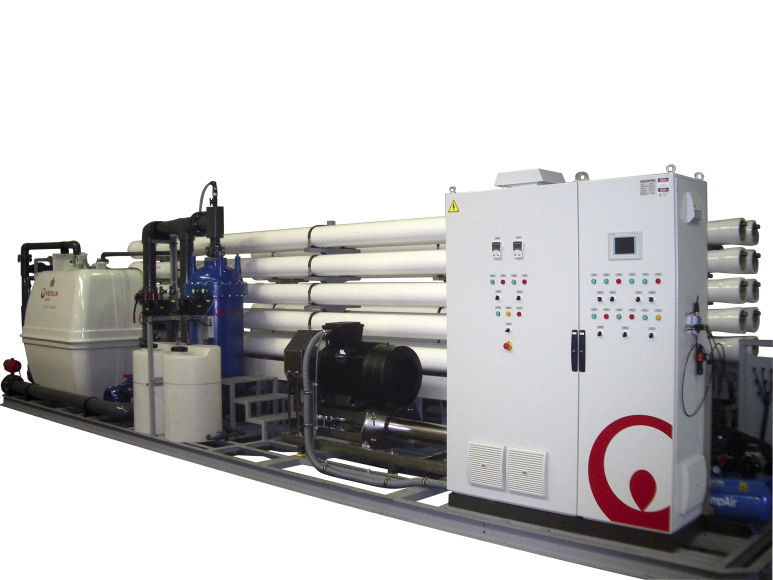
Service: Check water quality indicators, strainers, dosing points, media condition, pumps, valves, sensors and leak tightness. Confirm the unit changes state correctly between service, regeneration, flushing or standby modes where fitted. For chemical concentration, flow limits or replacement criteria not stated in the source entry, refer to the manufacturer documentation for the exact figure.
Spare Parts: Carry the maker-recommended filter elements or treatment consumables, dosing-pump service parts, seals, hoses, sensor consumables and common electrical fuses.
Use Cases: Applied to potable-water production and conditioning, domestic-water systems and other shipboard water services on merchant, passenger and offshore vessels.
RWO/Veolia Reverse Osmosis Unit 1m3h RWO/Veolia Marine
Reverse Osmosis Unit 1m3h RWO/Veolia Marine unverified
Capacity (m³/h)
1
Treatment Type
Reverse Osmosis Unit
Common Failures & Inspection Points
  • Reduced treatment performance caused by fouled filters, exhausted media, scaled membranes, aged lamps or contaminated process surfaces, resulting in poor water quality or increased pressure drop
  • Dosing, regeneration or process-control failure caused by empty consumables, pump faults or control errors, resulting in incorrect treatment conditions
  • Sensor or conductivity fault caused by fouling, calibration drift or wiring problems, resulting in implausible readings or alarms
  • Pump or valve failure caused by wear, blockage or electrical faults, resulting in low treatment flow or inability to route water correctly
  • Leakage caused by seal, housing, membrane, pressure-vessel or piping deterioration, resulting in water loss and unstable process conditions
Service: Inspect filters, membranes, lamps, dosing equipment, treatment vessels, pumps, valves, sensors and sample points as applicable to the installed process. Maintain hygienic conditions during opening of potable-water equipment. Trend pressure drop and water-quality indications and investigate abnormal values promptly. Verify alarms, regeneration, diversion or shutdown functions after maintenance. Store chemicals and treatment media according to approved procedures. Refer to the manufacturer documentation for the exact figure for dosing, replacement, cleaning and water-quality settings.
Spare Parts: Keep filter elements, membrane or lamp components, approved treatment media, dosing-pump service parts, seals, valves, sensors and sampling consumables recommended for the installed process. Chemicals must be approved for the intended water service.
Use Cases: It is used for freshwater, potable-water and sanitary treatment on merchant ships, passenger vessels, offshore units or other vessel types where this equipment category is fitted.
RWO/Veolia Reverse Osmosis Unit 2m3h RWO/Veolia Marine
Reverse Osmosis Unit 2m3h RWO/Veolia Marine unverified
Capacity (m³/h)
2
Treatment Type
Reverse Osmosis Unit
Common Failures & Inspection Points
  • Reduced treatment performance caused by fouled filters, exhausted media, scaled membranes, aged lamps or contaminated process surfaces, resulting in poor water quality or increased pressure drop
  • Dosing, regeneration or process-control failure caused by empty consumables, pump faults or control errors, resulting in incorrect treatment conditions
  • Sensor or conductivity fault caused by fouling, calibration drift or wiring problems, resulting in implausible readings or alarms
  • Pump or valve failure caused by wear, blockage or electrical faults, resulting in low treatment flow or inability to route water correctly
  • Leakage caused by seal, housing, membrane, pressure-vessel or piping deterioration, resulting in water loss and unstable process conditions
Service: Inspect filters, membranes, lamps, dosing equipment, treatment vessels, pumps, valves, sensors and sample points as applicable to the installed process. Maintain hygienic conditions during opening of potable-water equipment. Trend pressure drop and water-quality indications and investigate abnormal values promptly. Verify alarms, regeneration, diversion or shutdown functions after maintenance. Store chemicals and treatment media according to approved procedures. Refer to the manufacturer documentation for the exact figure for dosing, replacement, cleaning and water-quality settings.
Spare Parts: Keep filter elements, membrane or lamp components, approved treatment media, dosing-pump service parts, seals, valves, sensors and sampling consumables recommended for the installed process. Chemicals must be approved for the intended water service.
Use Cases: It is used for freshwater, potable-water and sanitary treatment on merchant ships, passenger vessels, offshore units or other vessel types where this equipment category is fitted.
RWO/Veolia Reverse Osmosis Unit 3m3h RWO/Veolia Marine
Reverse Osmosis Unit 3m3h RWO/Veolia Marine unverified
Capacity (m³/h)
3
Treatment Type
Reverse Osmosis Unit
Common Failures & Inspection Points
  • Reduced treatment performance caused by fouled filters, exhausted media, scaled membranes, aged lamps or contaminated process surfaces, resulting in poor water quality or increased pressure drop
  • Dosing, regeneration or process-control failure caused by empty consumables, pump faults or control errors, resulting in incorrect treatment conditions
  • Sensor or conductivity fault caused by fouling, calibration drift or wiring problems, resulting in implausible readings or alarms
  • Pump or valve failure caused by wear, blockage or electrical faults, resulting in low treatment flow or inability to route water correctly
  • Leakage caused by seal, housing, membrane, pressure-vessel or piping deterioration, resulting in water loss and unstable process conditions
Service: Inspect filters, membranes, lamps, dosing equipment, treatment vessels, pumps, valves, sensors and sample points as applicable to the installed process. Maintain hygienic conditions during opening of potable-water equipment. Trend pressure drop and water-quality indications and investigate abnormal values promptly. Verify alarms, regeneration, diversion or shutdown functions after maintenance. Store chemicals and treatment media according to approved procedures. Refer to the manufacturer documentation for the exact figure for dosing, replacement, cleaning and water-quality settings.
Spare Parts: Keep filter elements, membrane or lamp components, approved treatment media, dosing-pump service parts, seals, valves, sensors and sampling consumables recommended for the installed process. Chemicals must be approved for the intended water service.
Use Cases: It is used for freshwater, potable-water and sanitary treatment on merchant ships, passenger vessels, offshore units or other vessel types where this equipment category is fitted.
RWO/Veolia Reverse Osmosis Unit 5m3h RWO/Veolia Marine
Reverse Osmosis Unit 5m3h RWO/Veolia Marine unverified
Capacity (m³/h)
5
Treatment Type
Reverse Osmosis Unit
Common Failures & Inspection Points
  • Reduced treatment performance caused by fouled filters, exhausted media, scaled membranes, aged lamps or contaminated process surfaces, resulting in poor water quality or increased pressure drop
  • Dosing, regeneration or process-control failure caused by empty consumables, pump faults or control errors, resulting in incorrect treatment conditions
  • Sensor or conductivity fault caused by fouling, calibration drift or wiring problems, resulting in implausible readings or alarms
  • Pump or valve failure caused by wear, blockage or electrical faults, resulting in low treatment flow or inability to route water correctly
  • Leakage caused by seal, housing, membrane, pressure-vessel or piping deterioration, resulting in water loss and unstable process conditions
Service: Inspect filters, membranes, lamps, dosing equipment, treatment vessels, pumps, valves, sensors and sample points as applicable to the installed process. Maintain hygienic conditions during opening of potable-water equipment. Trend pressure drop and water-quality indications and investigate abnormal values promptly. Verify alarms, regeneration, diversion or shutdown functions after maintenance. Store chemicals and treatment media according to approved procedures. Refer to the manufacturer documentation for the exact figure for dosing, replacement, cleaning and water-quality settings.
Spare Parts: Keep filter elements, membrane or lamp components, approved treatment media, dosing-pump service parts, seals, valves, sensors and sampling consumables recommended for the installed process. Chemicals must be approved for the intended water service.
Use Cases: It is used for freshwater, potable-water and sanitary treatment on merchant ships, passenger vessels, offshore units or other vessel types where this equipment category is fitted.
RWO/Veolia Reverse Osmosis Unit 8m3h RWO/Veolia Marine
Reverse Osmosis Unit 8m3h RWO/Veolia Marine unverified
Capacity (m³/h)
8
Treatment Type
Reverse Osmosis Unit
Common Failures & Inspection Points
  • Reduced treatment performance caused by fouled filters, exhausted media, scaled membranes, aged lamps or contaminated process surfaces, resulting in poor water quality or increased pressure drop
  • Dosing, regeneration or process-control failure caused by empty consumables, pump faults or control errors, resulting in incorrect treatment conditions
  • Sensor or conductivity fault caused by fouling, calibration drift or wiring problems, resulting in implausible readings or alarms
  • Pump or valve failure caused by wear, blockage or electrical faults, resulting in low treatment flow or inability to route water correctly
  • Leakage caused by seal, housing, membrane, pressure-vessel or piping deterioration, resulting in water loss and unstable process conditions
Service: Inspect filters, membranes, lamps, dosing equipment, treatment vessels, pumps, valves, sensors and sample points as applicable to the installed process. Maintain hygienic conditions during opening of potable-water equipment. Trend pressure drop and water-quality indications and investigate abnormal values promptly. Verify alarms, regeneration, diversion or shutdown functions after maintenance. Store chemicals and treatment media according to approved procedures. Refer to the manufacturer documentation for the exact figure for dosing, replacement, cleaning and water-quality settings.
Spare Parts: Keep filter elements, membrane or lamp components, approved treatment media, dosing-pump service parts, seals, valves, sensors and sampling consumables recommended for the installed process. Chemicals must be approved for the intended water service.
Use Cases: It is used for freshwater, potable-water and sanitary treatment on merchant ships, passenger vessels, offshore units or other vessel types where this equipment category is fitted.
RWO/Veolia Reverse Osmosis Unit 10m3h RWO/Veolia Marine
Reverse Osmosis Unit 10m3h RWO/Veolia Marine unverified
Capacity (m³/h)
10
Treatment Type
Reverse Osmosis Unit
Common Failures & Inspection Points
  • Reduced treatment performance caused by fouled filters, exhausted media, scaled membranes, aged lamps or contaminated process surfaces, resulting in poor water quality or increased pressure drop
  • Dosing, regeneration or process-control failure caused by empty consumables, pump faults or control errors, resulting in incorrect treatment conditions
  • Sensor or conductivity fault caused by fouling, calibration drift or wiring problems, resulting in implausible readings or alarms
  • Pump or valve failure caused by wear, blockage or electrical faults, resulting in low treatment flow or inability to route water correctly
  • Leakage caused by seal, housing, membrane, pressure-vessel or piping deterioration, resulting in water loss and unstable process conditions
Service: Inspect filters, membranes, lamps, dosing equipment, treatment vessels, pumps, valves, sensors and sample points as applicable to the installed process. Maintain hygienic conditions during opening of potable-water equipment. Trend pressure drop and water-quality indications and investigate abnormal values promptly. Verify alarms, regeneration, diversion or shutdown functions after maintenance. Store chemicals and treatment media according to approved procedures. Refer to the manufacturer documentation for the exact figure for dosing, replacement, cleaning and water-quality settings.
Spare Parts: Keep filter elements, membrane or lamp components, approved treatment media, dosing-pump service parts, seals, valves, sensors and sampling consumables recommended for the installed process. Chemicals must be approved for the intended water service.
Use Cases: It is used for freshwater, potable-water and sanitary treatment on merchant ships, passenger vessels, offshore units or other vessel types where this equipment category is fitted.
RWO/Veolia Reverse Osmosis Unit 15m3h RWO/Veolia Marine
Reverse Osmosis Unit 15m3h RWO/Veolia Marine unverified
Capacity (m³/h)
15
Treatment Type
Reverse Osmosis Unit
Common Failures & Inspection Points
  • Reduced treatment performance caused by fouled filters, exhausted media, scaled membranes, aged lamps or contaminated process surfaces, resulting in poor water quality or increased pressure drop
  • Dosing, regeneration or process-control failure caused by empty consumables, pump faults or control errors, resulting in incorrect treatment conditions
  • Sensor or conductivity fault caused by fouling, calibration drift or wiring problems, resulting in implausible readings or alarms
  • Pump or valve failure caused by wear, blockage or electrical faults, resulting in low treatment flow or inability to route water correctly
  • Leakage caused by seal, housing, membrane, pressure-vessel or piping deterioration, resulting in water loss and unstable process conditions
Service: Inspect filters, membranes, lamps, dosing equipment, treatment vessels, pumps, valves, sensors and sample points as applicable to the installed process. Maintain hygienic conditions during opening of potable-water equipment. Trend pressure drop and water-quality indications and investigate abnormal values promptly. Verify alarms, regeneration, diversion or shutdown functions after maintenance. Store chemicals and treatment media according to approved procedures. Refer to the manufacturer documentation for the exact figure for dosing, replacement, cleaning and water-quality settings.
Spare Parts: Keep filter elements, membrane or lamp components, approved treatment media, dosing-pump service parts, seals, valves, sensors and sampling consumables recommended for the installed process. Chemicals must be approved for the intended water service.
Use Cases: It is used for freshwater, potable-water and sanitary treatment on merchant ships, passenger vessels, offshore units or other vessel types where this equipment category is fitted.
Reverse Osmosis Unit 20m3h RWO/Veolia Marine unverified
Capacity (m³/h)
20
Treatment Type
Reverse Osmosis Unit
Common Failures & Inspection Points
  • Reduced treatment performance caused by fouled filters, exhausted media, scaled membranes, aged lamps or contaminated process surfaces, resulting in poor water quality or increased pressure drop
  • Dosing, regeneration or process-control failure caused by empty consumables, pump faults or control errors, resulting in incorrect treatment conditions
  • Sensor or conductivity fault caused by fouling, calibration drift or wiring problems, resulting in implausible readings or alarms
  • Pump or valve failure caused by wear, blockage or electrical faults, resulting in low treatment flow or inability to route water correctly
  • Leakage caused by seal, housing, membrane, pressure-vessel or piping deterioration, resulting in water loss and unstable process conditions
Service: Inspect filters, membranes, lamps, dosing equipment, treatment vessels, pumps, valves, sensors and sample points as applicable to the installed process. Maintain hygienic conditions during opening of potable-water equipment. Trend pressure drop and water-quality indications and investigate abnormal values promptly. Verify alarms, regeneration, diversion or shutdown functions after maintenance. Store chemicals and treatment media according to approved procedures. Refer to the manufacturer documentation for the exact figure for dosing, replacement, cleaning and water-quality settings.
Spare Parts: Keep filter elements, membrane or lamp components, approved treatment media, dosing-pump service parts, seals, valves, sensors and sampling consumables recommended for the installed process. Chemicals must be approved for the intended water service.
Use Cases: It is used for freshwater, potable-water and sanitary treatment on merchant ships, passenger vessels, offshore units or other vessel types where this equipment category is fitted.
RWO/Veolia Reverse Osmosis Unit 30m3h RWO/Veolia Marine
Reverse Osmosis Unit 30m3h RWO/Veolia Marine unverified
Capacity (m³/h)
30
Treatment Type
Reverse Osmosis Unit
Common Failures & Inspection Points
  • Reduced treatment performance caused by fouled filters, exhausted media, scaled membranes, aged lamps or contaminated process surfaces, resulting in poor water quality or increased pressure drop
  • Dosing, regeneration or process-control failure caused by empty consumables, pump faults or control errors, resulting in incorrect treatment conditions
  • Sensor or conductivity fault caused by fouling, calibration drift or wiring problems, resulting in implausible readings or alarms
  • Pump or valve failure caused by wear, blockage or electrical faults, resulting in low treatment flow or inability to route water correctly
  • Leakage caused by seal, housing, membrane, pressure-vessel or piping deterioration, resulting in water loss and unstable process conditions
Service: Inspect filters, membranes, lamps, dosing equipment, treatment vessels, pumps, valves, sensors and sample points as applicable to the installed process. Maintain hygienic conditions during opening of potable-water equipment. Trend pressure drop and water-quality indications and investigate abnormal values promptly. Verify alarms, regeneration, diversion or shutdown functions after maintenance. Store chemicals and treatment media according to approved procedures. Refer to the manufacturer documentation for the exact figure for dosing, replacement, cleaning and water-quality settings.
Spare Parts: Keep filter elements, membrane or lamp components, approved treatment media, dosing-pump service parts, seals, valves, sensors and sampling consumables recommended for the installed process. Chemicals must be approved for the intended water service.
Use Cases: It is used for freshwater, potable-water and sanitary treatment on merchant ships, passenger vessels, offshore units or other vessel types where this equipment category is fitted.
RWO/Veolia Reverse Osmosis Unit 50m3h RWO/Veolia Marine
Reverse Osmosis Unit 50m3h RWO/Veolia Marine unverified
Capacity (m³/h)
50
Treatment Type
Reverse Osmosis Unit
Common Failures & Inspection Points
  • Reduced treatment performance caused by fouled filters, exhausted media, scaled membranes, aged lamps or contaminated process surfaces, resulting in poor water quality or increased pressure drop
  • Dosing, regeneration or process-control failure caused by empty consumables, pump faults or control errors, resulting in incorrect treatment conditions
  • Sensor or conductivity fault caused by fouling, calibration drift or wiring problems, resulting in implausible readings or alarms
  • Pump or valve failure caused by wear, blockage or electrical faults, resulting in low treatment flow or inability to route water correctly
  • Leakage caused by seal, housing, membrane, pressure-vessel or piping deterioration, resulting in water loss and unstable process conditions
Service: Inspect filters, membranes, lamps, dosing equipment, treatment vessels, pumps, valves, sensors and sample points as applicable to the installed process. Maintain hygienic conditions during opening of potable-water equipment. Trend pressure drop and water-quality indications and investigate abnormal values promptly. Verify alarms, regeneration, diversion or shutdown functions after maintenance. Store chemicals and treatment media according to approved procedures. Refer to the manufacturer documentation for the exact figure for dosing, replacement, cleaning and water-quality settings.
Spare Parts: Keep filter elements, membrane or lamp components, approved treatment media, dosing-pump service parts, seals, valves, sensors and sampling consumables recommended for the installed process. Chemicals must be approved for the intended water service.
Use Cases: It is used for freshwater, potable-water and sanitary treatment on merchant ships, passenger vessels, offshore units or other vessel types where this equipment category is fitted.

BWT Marine

13
AQA perla 100 Marine unverified
Capacity (m³/h)
4.2
Treatment Type
Reverse Osmosis
Membrane type
TFC polyamide
Uv dose mj cm2
0
Common Failures & Inspection Points
  • Filter, membrane, separator or treatment-stage fouling caused by solids, oil, scale or biological contamination can reduce throughput and increase differential pressure
  • Pump or valve faults caused by wear, blockage or actuator problems can cause low flow, unstable pressure or failure to complete an operating sequence
  • Sensor or monitor contamination caused by dirty process fluid or poor maintenance can produce implausible readings, alarms or automatic discharge inhibition
  • Seal, gasket or piping leakage caused by corrosion, ageing or vibration can lead to visible leakage, air ingress or loss of process pressure
  • Control or treatment-component failure caused by electrical faults, lamp or cell deterioration where fitted, or software issues can lead to shutdown or inability to meet the required treatment condition
Service: Inspect filters or treatment elements, pumps, valves, piping, sampling points and monitors, and review trend data for loss of throughput or abnormal pressure. Verify alarms, automatic diversion or interlocks where applicable and check cleanliness of sensors and sample lines. Use statutory procedures and manufacturer documentation for exact discharge, treatment and calibration limits.
Spare Parts: Typical spares include filters or treatment elements, seal and gasket kits, pump service parts, lamps or electrodes where applicable, monitor consumables, sensors and valve or actuator repair items.
Use Cases: Bilge-water treatment, fuel or lube purification, freshwater production, potable-water conditioning and ballast-water management on commercial vessels.
AQA perla 200 Marine unverified
Capacity (m³/h)
8.3
Treatment Type
Reverse Osmosis
Membrane type
TFC polyamide
Uv dose mj cm2
0
Common Failures & Inspection Points
  • Filter, membrane, separator or treatment-stage fouling caused by solids, oil, scale or biological contamination can reduce throughput and increase differential pressure
  • Pump or valve faults caused by wear, blockage or actuator problems can cause low flow, unstable pressure or failure to complete an operating sequence
  • Sensor or monitor contamination caused by dirty process fluid or poor maintenance can produce implausible readings, alarms or automatic discharge inhibition
  • Seal, gasket or piping leakage caused by corrosion, ageing or vibration can lead to visible leakage, air ingress or loss of process pressure
  • Control or treatment-component failure caused by electrical faults, lamp or cell deterioration where fitted, or software issues can lead to shutdown or inability to meet the required treatment condition
Service: Inspect filters or treatment elements, pumps, valves, piping, sampling points and monitors, and review trend data for loss of throughput or abnormal pressure. Verify alarms, automatic diversion or interlocks where applicable and check cleanliness of sensors and sample lines. Use statutory procedures and manufacturer documentation for exact discharge, treatment and calibration limits.
Spare Parts: Typical spares include filters or treatment elements, seal and gasket kits, pump service parts, lamps or electrodes where applicable, monitor consumables, sensors and valve or actuator repair items.
Use Cases: Bilge-water treatment, fuel or lube purification, freshwater production, potable-water conditioning and ballast-water management on commercial vessels.
Reverse Osmosis Unit 0.5m3h BWT Marine unverified
Capacity (m³/h)
0.5
Treatment Type
Reverse Osmosis Unit
Common Failures & Inspection Points
  • Reduced treatment performance caused by fouled filters, exhausted media, scaled membranes, aged lamps or contaminated process surfaces, resulting in poor water quality or increased pressure drop
  • Dosing, regeneration or process-control failure caused by empty consumables, pump faults or control errors, resulting in incorrect treatment conditions
  • Sensor or conductivity fault caused by fouling, calibration drift or wiring problems, resulting in implausible readings or alarms
  • Pump or valve failure caused by wear, blockage or electrical faults, resulting in low treatment flow or inability to route water correctly
  • Leakage caused by seal, housing, membrane, pressure-vessel or piping deterioration, resulting in water loss and unstable process conditions
Service: Inspect filters, membranes, lamps, dosing equipment, treatment vessels, pumps, valves, sensors and sample points as applicable to the installed process. Maintain hygienic conditions during opening of potable-water equipment. Trend pressure drop and water-quality indications and investigate abnormal values promptly. Verify alarms, regeneration, diversion or shutdown functions after maintenance. Store chemicals and treatment media according to approved procedures. Refer to the manufacturer documentation for the exact figure for dosing, replacement, cleaning and water-quality settings.
Spare Parts: Keep filter elements, membrane or lamp components, approved treatment media, dosing-pump service parts, seals, valves, sensors and sampling consumables recommended for the installed process. Chemicals must be approved for the intended water service.
Use Cases: It is used for freshwater, potable-water and sanitary treatment on merchant ships, passenger vessels, offshore units or other vessel types where this equipment category is fitted.
Reverse Osmosis Unit 1m3h BWT Marine unverified
Capacity (m³/h)
1
Treatment Type
Reverse Osmosis Unit
Common Failures & Inspection Points
  • Reduced treatment or sanitary performance caused by fouled filters, exhausted media, scaled membranes, aged lamps or blocked piping, resulting in poor water quality, low flow or system alarms
  • Dosing, regeneration or vacuum failure caused by empty chemical supply, pump faults, air leakage or control errors, resulting in incorrect water chemistry or poor sanitary operation
  • Sensor or conductivity fault caused by fouling, calibration drift or wiring problems, resulting in implausible readings or alarms
  • Pump or valve failure caused by wear, blockage or electrical faults, resulting in low treatment flow or inability to route water correctly
  • Leakage caused by seal, housing, membrane or piping deterioration, resulting in water loss, vacuum loss or unstable process conditions
Service: Inspect filters, membranes, lamps, dosing equipment, softener vessels, pumps, valves, vacuum equipment, sensors and sample points as applicable to the installed process. Maintain hygienic conditions during opening of potable-water treatment equipment. Trend pressure, vacuum and water-quality indications and investigate abnormal values promptly. Verify alarms, regeneration, diversion, flushing or shutdown functions after maintenance. Store chemicals and treatment media according to approved procedures. Refer to the manufacturer documentation for the exact figure for dosing, replacement, cleaning and operating settings.
Spare Parts: Keep filter elements, membrane or lamp components, approved treatment media, dosing-pump or vacuum-system service parts, seals, valves, sensors and sampling consumables recommended for the installed process. Chemicals must be approved for the intended water service. Confirm exact replacement parts against unit configuration.
Use Cases: Freshwater production, conditioning, disinfection, domestic hot-water and sanitary treatment on merchant ships, passenger vessels and offshore units.
Reverse Osmosis Unit 2m3h BWT Marine unverified
Capacity (m³/h)
2
Treatment Type
Reverse Osmosis Unit
Common Failures & Inspection Points
  • Reduced treatment or sanitary performance caused by fouled filters, exhausted media, scaled membranes, aged lamps or blocked piping, resulting in poor water quality, low flow or system alarms
  • Dosing, regeneration or vacuum failure caused by empty chemical supply, pump faults, air leakage or control errors, resulting in incorrect water chemistry or poor sanitary operation
  • Sensor or conductivity fault caused by fouling, calibration drift or wiring problems, resulting in implausible readings or alarms
  • Pump or valve failure caused by wear, blockage or electrical faults, resulting in low treatment flow or inability to route water correctly
  • Leakage caused by seal, housing, membrane or piping deterioration, resulting in water loss, vacuum loss or unstable process conditions
Service: Inspect filters, membranes, lamps, dosing equipment, softener vessels, pumps, valves, vacuum equipment, sensors and sample points as applicable to the installed process. Maintain hygienic conditions during opening of potable-water treatment equipment. Trend pressure, vacuum and water-quality indications and investigate abnormal values promptly. Verify alarms, regeneration, diversion, flushing or shutdown functions after maintenance. Store chemicals and treatment media according to approved procedures. Refer to the manufacturer documentation for the exact figure for dosing, replacement, cleaning and operating settings.
Spare Parts: Keep filter elements, membrane or lamp components, approved treatment media, dosing-pump or vacuum-system service parts, seals, valves, sensors and sampling consumables recommended for the installed process. Chemicals must be approved for the intended water service. Confirm exact replacement parts against unit configuration.
Use Cases: Freshwater production, conditioning, disinfection, domestic hot-water and sanitary treatment on merchant ships, passenger vessels and offshore units.
Reverse Osmosis Unit 3m3h BWT Marine unverified
Capacity (m³/h)
3
Treatment Type
Reverse Osmosis Unit
Common Failures & Inspection Points
  • Reduced treatment or sanitary performance caused by fouled filters, exhausted media, scaled membranes, aged lamps or blocked piping, resulting in poor water quality, low flow or system alarms
  • Dosing, regeneration or vacuum failure caused by empty chemical supply, pump faults, air leakage or control errors, resulting in incorrect water chemistry or poor sanitary operation
  • Sensor or conductivity fault caused by fouling, calibration drift or wiring problems, resulting in implausible readings or alarms
  • Pump or valve failure caused by wear, blockage or electrical faults, resulting in low treatment flow or inability to route water correctly
  • Leakage caused by seal, housing, membrane or piping deterioration, resulting in water loss, vacuum loss or unstable process conditions
Service: Inspect filters, membranes, lamps, dosing equipment, softener vessels, pumps, valves, vacuum equipment, sensors and sample points as applicable to the installed process. Maintain hygienic conditions during opening of potable-water treatment equipment. Trend pressure, vacuum and water-quality indications and investigate abnormal values promptly. Verify alarms, regeneration, diversion, flushing or shutdown functions after maintenance. Store chemicals and treatment media according to approved procedures. Refer to the manufacturer documentation for the exact figure for dosing, replacement, cleaning and operating settings.
Spare Parts: Keep filter elements, membrane or lamp components, approved treatment media, dosing-pump or vacuum-system service parts, seals, valves, sensors and sampling consumables recommended for the installed process. Chemicals must be approved for the intended water service. Confirm exact replacement parts against unit configuration.
Use Cases: Freshwater production, conditioning, disinfection, domestic hot-water and sanitary treatment on merchant ships, passenger vessels and offshore units.
Reverse Osmosis Unit 5m3h BWT Marine unverified
Capacity (m³/h)
5
Treatment Type
Reverse Osmosis Unit
Common Failures & Inspection Points
  • Reduced treatment or sanitary performance caused by fouled filters, exhausted media, scaled membranes, aged lamps or blocked piping, resulting in poor water quality, low flow or system alarms
  • Dosing, regeneration or vacuum failure caused by empty chemical supply, pump faults, air leakage or control errors, resulting in incorrect water chemistry or poor sanitary operation
  • Sensor or conductivity fault caused by fouling, calibration drift or wiring problems, resulting in implausible readings or alarms
  • Pump or valve failure caused by wear, blockage or electrical faults, resulting in low treatment flow or inability to route water correctly
  • Leakage caused by seal, housing, membrane or piping deterioration, resulting in water loss, vacuum loss or unstable process conditions
Service: Inspect filters, membranes, lamps, dosing equipment, softener vessels, pumps, valves, vacuum equipment, sensors and sample points as applicable to the installed process. Maintain hygienic conditions during opening of potable-water treatment equipment. Trend pressure, vacuum and water-quality indications and investigate abnormal values promptly. Verify alarms, regeneration, diversion, flushing or shutdown functions after maintenance. Store chemicals and treatment media according to approved procedures. Refer to the manufacturer documentation for the exact figure for dosing, replacement, cleaning and operating settings.
Spare Parts: Keep filter elements, membrane or lamp components, approved treatment media, dosing-pump or vacuum-system service parts, seals, valves, sensors and sampling consumables recommended for the installed process. Chemicals must be approved for the intended water service. Confirm exact replacement parts against unit configuration.
Use Cases: Freshwater production, conditioning, disinfection, domestic hot-water and sanitary treatment on merchant ships, passenger vessels and offshore units.
Reverse Osmosis Unit 8m3h BWT Marine unverified
Capacity (m³/h)
8
Treatment Type
Reverse Osmosis Unit
Common Failures & Inspection Points
  • Reduced treatment or sanitary performance caused by fouled filters, exhausted media, scaled membranes, aged lamps or blocked piping, resulting in poor water quality, low flow or system alarms
  • Dosing, regeneration or vacuum failure caused by empty chemical supply, pump faults, air leakage or control errors, resulting in incorrect water chemistry or poor sanitary operation
  • Sensor or conductivity fault caused by fouling, calibration drift or wiring problems, resulting in implausible readings or alarms
  • Pump or valve failure caused by wear, blockage or electrical faults, resulting in low treatment flow or inability to route water correctly
  • Leakage caused by seal, housing, membrane or piping deterioration, resulting in water loss, vacuum loss or unstable process conditions
Service: Inspect filters, membranes, lamps, dosing equipment, softener vessels, pumps, valves, vacuum equipment, sensors and sample points as applicable to the installed process. Maintain hygienic conditions during opening of potable-water treatment equipment. Trend pressure, vacuum and water-quality indications and investigate abnormal values promptly. Verify alarms, regeneration, diversion, flushing or shutdown functions after maintenance. Store chemicals and treatment media according to approved procedures. Refer to the manufacturer documentation for the exact figure for dosing, replacement, cleaning and operating settings.
Spare Parts: Keep filter elements, membrane or lamp components, approved treatment media, dosing-pump or vacuum-system service parts, seals, valves, sensors and sampling consumables recommended for the installed process. Chemicals must be approved for the intended water service. Confirm exact replacement parts against unit configuration.
Use Cases: Freshwater production, conditioning, disinfection, domestic hot-water and sanitary treatment on merchant ships, passenger vessels and offshore units.
Reverse Osmosis Unit 10m3h BWT Marine unverified
Capacity (m³/h)
10
Treatment Type
Reverse Osmosis Unit
Common Failures & Inspection Points
  • Reduced treatment performance caused by fouled filters, exhausted media, scaled membranes, aged lamps or contaminated process surfaces, resulting in poor water quality or increased pressure drop
  • Dosing, regeneration or process-control failure caused by empty consumables, pump faults or control errors, resulting in incorrect treatment conditions
  • Sensor or conductivity fault caused by fouling, calibration drift or wiring problems, resulting in implausible readings or alarms
  • Pump or valve failure caused by wear, blockage or electrical faults, resulting in low treatment flow or inability to route water correctly
  • Leakage caused by seal, housing, membrane, pressure-vessel or piping deterioration, resulting in water loss and unstable process conditions
Service: Inspect filters, membranes, lamps, dosing equipment, treatment vessels, pumps, valves, sensors and sample points as applicable to the installed process. Maintain hygienic conditions during opening of potable-water equipment. Trend pressure drop and water-quality indications and investigate abnormal values promptly. Verify alarms, regeneration, diversion or shutdown functions after maintenance. Store chemicals and treatment media according to approved procedures. Refer to the manufacturer documentation for the exact figure for dosing, replacement, cleaning and water-quality settings.
Spare Parts: Keep filter elements, membrane or lamp components, approved treatment media, dosing-pump service parts, seals, valves, sensors and sampling consumables recommended for the installed process. Chemicals must be approved for the intended water service.
Use Cases: It is used for freshwater, potable-water and sanitary treatment on merchant ships, passenger vessels, offshore units or other vessel types where this equipment category is fitted.
Reverse Osmosis Unit 15m3h BWT Marine unverified
Capacity (m³/h)
15
Treatment Type
Reverse Osmosis Unit
Common Failures & Inspection Points
  • Reduced treatment performance caused by fouled filters, exhausted media, scaled membranes, aged lamps or contaminated process surfaces, resulting in poor water quality or increased pressure drop
  • Dosing, regeneration or process-control failure caused by empty consumables, pump faults or control errors, resulting in incorrect treatment conditions
  • Sensor or conductivity fault caused by fouling, calibration drift or wiring problems, resulting in implausible readings or alarms
  • Pump or valve failure caused by wear, blockage or electrical faults, resulting in low treatment flow or inability to route water correctly
  • Leakage caused by seal, housing, membrane, pressure-vessel or piping deterioration, resulting in water loss and unstable process conditions
Service: Inspect filters, membranes, lamps, dosing equipment, treatment vessels, pumps, valves, sensors and sample points as applicable to the installed process. Maintain hygienic conditions during opening of potable-water equipment. Trend pressure drop and water-quality indications and investigate abnormal values promptly. Verify alarms, regeneration, diversion or shutdown functions after maintenance. Store chemicals and treatment media according to approved procedures. Refer to the manufacturer documentation for the exact figure for dosing, replacement, cleaning and water-quality settings.
Spare Parts: Keep filter elements, membrane or lamp components, approved treatment media, dosing-pump service parts, seals, valves, sensors and sampling consumables recommended for the installed process. Chemicals must be approved for the intended water service.
Use Cases: It is used for freshwater, potable-water and sanitary treatment on merchant ships, passenger vessels, offshore units or other vessel types where this equipment category is fitted.
Reverse Osmosis Unit 20m3h BWT Marine unverified
Capacity (m³/h)
20
Treatment Type
Reverse Osmosis Unit
Common Failures & Inspection Points
  • Reduced treatment performance caused by fouled filters, exhausted media, scaled membranes, aged lamps or contaminated process surfaces, resulting in poor water quality or increased pressure drop
  • Dosing, regeneration or process-control failure caused by empty consumables, pump faults or control errors, resulting in incorrect treatment conditions
  • Sensor or conductivity fault caused by fouling, calibration drift or wiring problems, resulting in implausible readings or alarms
  • Pump or valve failure caused by wear, blockage or electrical faults, resulting in low treatment flow or inability to route water correctly
  • Leakage caused by seal, housing, membrane, pressure-vessel or piping deterioration, resulting in water loss and unstable process conditions
Service: Inspect filters, membranes, lamps, dosing equipment, treatment vessels, pumps, valves, sensors and sample points as applicable to the installed process. Maintain hygienic conditions during opening of potable-water equipment. Trend pressure drop and water-quality indications and investigate abnormal values promptly. Verify alarms, regeneration, diversion or shutdown functions after maintenance. Store chemicals and treatment media according to approved procedures. Refer to the manufacturer documentation for the exact figure for dosing, replacement, cleaning and water-quality settings.
Spare Parts: Keep filter elements, membrane or lamp components, approved treatment media, dosing-pump service parts, seals, valves, sensors and sampling consumables recommended for the installed process. Chemicals must be approved for the intended water service.
Use Cases: It is used for freshwater, potable-water and sanitary treatment on merchant ships, passenger vessels, offshore units or other vessel types where this equipment category is fitted.
Reverse Osmosis Unit 30m3h BWT Marine unverified
Capacity (m³/h)
30
Treatment Type
Reverse Osmosis Unit
Common Failures & Inspection Points
  • Reduced treatment performance caused by fouled filters, exhausted media, scaled membranes, aged lamps or contaminated process surfaces, resulting in poor water quality or increased pressure drop
  • Dosing, regeneration or process-control failure caused by empty consumables, pump faults or control errors, resulting in incorrect treatment conditions
  • Sensor or conductivity fault caused by fouling, calibration drift or wiring problems, resulting in implausible readings or alarms
  • Pump or valve failure caused by wear, blockage or electrical faults, resulting in low treatment flow or inability to route water correctly
  • Leakage caused by seal, housing, membrane, pressure-vessel or piping deterioration, resulting in water loss and unstable process conditions
Service: Inspect filters, membranes, lamps, dosing equipment, treatment vessels, pumps, valves, sensors and sample points as applicable to the installed process. Maintain hygienic conditions during opening of potable-water equipment. Trend pressure drop and water-quality indications and investigate abnormal values promptly. Verify alarms, regeneration, diversion or shutdown functions after maintenance. Store chemicals and treatment media according to approved procedures. Refer to the manufacturer documentation for the exact figure for dosing, replacement, cleaning and water-quality settings.
Spare Parts: Keep filter elements, membrane or lamp components, approved treatment media, dosing-pump service parts, seals, valves, sensors and sampling consumables recommended for the installed process. Chemicals must be approved for the intended water service.
Use Cases: It is used for freshwater, potable-water and sanitary treatment on merchant ships, passenger vessels, offshore units or other vessel types where this equipment category is fitted.
Reverse Osmosis Unit 50m3h BWT Marine unverified
Capacity (m³/h)
50
Treatment Type
Reverse Osmosis Unit
Common Failures & Inspection Points
  • Reduced treatment performance caused by fouled filters, exhausted media, scaled membranes, aged lamps or contaminated process surfaces, resulting in poor water quality or increased pressure drop
  • Dosing, regeneration or process-control failure caused by empty consumables, pump faults or control errors, resulting in incorrect treatment conditions
  • Sensor or conductivity fault caused by fouling, calibration drift or wiring problems, resulting in implausible readings or alarms
  • Pump or valve failure caused by wear, blockage or electrical faults, resulting in low treatment flow or inability to route water correctly
  • Leakage caused by seal, housing, membrane, pressure-vessel or piping deterioration, resulting in water loss and unstable process conditions
Service: Inspect filters, membranes, lamps, dosing equipment, treatment vessels, pumps, valves, sensors and sample points as applicable to the installed process. Maintain hygienic conditions during opening of potable-water equipment. Trend pressure drop and water-quality indications and investigate abnormal values promptly. Verify alarms, regeneration, diversion or shutdown functions after maintenance. Store chemicals and treatment media according to approved procedures. Refer to the manufacturer documentation for the exact figure for dosing, replacement, cleaning and water-quality settings.
Spare Parts: Keep filter elements, membrane or lamp components, approved treatment media, dosing-pump service parts, seals, valves, sensors and sampling consumables recommended for the installed process. Chemicals must be approved for the intended water service.
Use Cases: It is used for freshwater, potable-water and sanitary treatment on merchant ships, passenger vessels, offshore units or other vessel types where this equipment category is fitted.

Evoqua/Xylem Marine

11
Reverse Osmosis Unit 0.5m3h Evoqua/Xylem Marine unverified
Capacity (m³/h)
0.5
Treatment Type
Reverse Osmosis Unit
Common Failures & Inspection Points
  • Fouling or exhausted treatment media can reduce treatment effectiveness, seen as deteriorating outlet-water quality or rising differential pressure
  • Dosing-pump or chemical-feed faults can interrupt treatment, noticed as unstable readings, low dosing indication or quality alarms
  • Blocked strainers or restricted piping can reduce flow, seen as low throughput or abnormal pump loading
  • Sensor drift or contamination can give incorrect control feedback, noticed as implausible readings or unnecessary alarms
  • Valve, seal or hose leakage can cause loss of treatment fluid or water, seen as wetness around the skid and inability to maintain normal operation
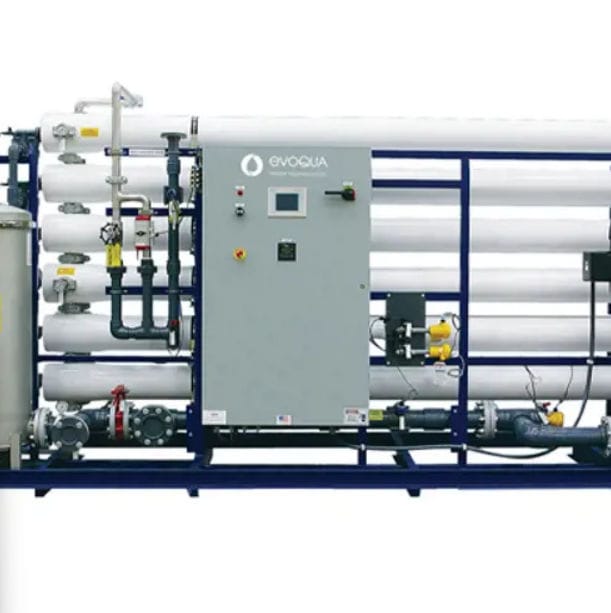
Service: Check water quality indicators, strainers, dosing points, media condition, pumps, valves, sensors and leak tightness. Confirm the unit changes state correctly between service, regeneration, flushing or standby modes where fitted. For chemical concentration, flow limits or replacement criteria not stated in the source entry, refer to the manufacturer documentation for the exact figure.
Spare Parts: Carry the maker-recommended filter elements or treatment consumables, dosing-pump service parts, seals, hoses, sensor consumables and common electrical fuses.
Use Cases: Applied to potable-water production and conditioning, domestic-water systems and other shipboard water services on merchant, passenger and offshore vessels.
Evoqua/Xylem Marine Reverse Osmosis Unit 1m3h Evoqua/Xylem Marine
Reverse Osmosis Unit 1m3h Evoqua/Xylem Marine unverified
Capacity (m³/h)
1
Treatment Type
Reverse Osmosis Unit
Common Failures & Inspection Points
  • Fouling or exhausted treatment media can reduce treatment effectiveness, seen as deteriorating outlet-water quality or rising differential pressure
  • Dosing-pump or chemical-feed faults can interrupt treatment, noticed as unstable readings, low dosing indication or quality alarms
  • Blocked strainers or restricted piping can reduce flow, seen as low throughput or abnormal pump loading
  • Sensor drift or contamination can give incorrect control feedback, noticed as implausible readings or unnecessary alarms
  • Valve, seal or hose leakage can cause loss of treatment fluid or water, seen as wetness around the skid and inability to maintain normal operation
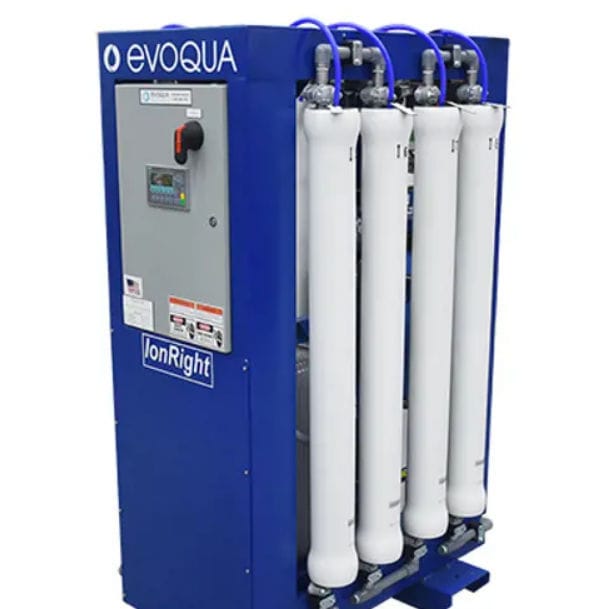
Service: Check water quality indicators, strainers, dosing points, media condition, pumps, valves, sensors and leak tightness. Confirm the unit changes state correctly between service, regeneration, flushing or standby modes where fitted. For chemical concentration, flow limits or replacement criteria not stated in the source entry, refer to the manufacturer documentation for the exact figure.
Spare Parts: Carry the maker-recommended filter elements or treatment consumables, dosing-pump service parts, seals, hoses, sensor consumables and common electrical fuses.
Use Cases: Applied to potable-water production and conditioning, domestic-water systems and other shipboard water services on merchant, passenger and offshore vessels.
Reverse Osmosis Unit 2m3h Evoqua/Xylem Marine unverified
Capacity (m³/h)
2
Treatment Type
Reverse Osmosis Unit
Common Failures & Inspection Points
  • Fouling or exhausted treatment media can reduce treatment effectiveness, seen as deteriorating outlet-water quality or rising differential pressure
  • Dosing-pump or chemical-feed faults can interrupt treatment, noticed as unstable readings, low dosing indication or quality alarms
  • Blocked strainers or restricted piping can reduce flow, seen as low throughput or abnormal pump loading
  • Sensor drift or contamination can give incorrect control feedback, noticed as implausible readings or unnecessary alarms
  • Valve, seal or hose leakage can cause loss of treatment fluid or water, seen as wetness around the skid and inability to maintain normal operation
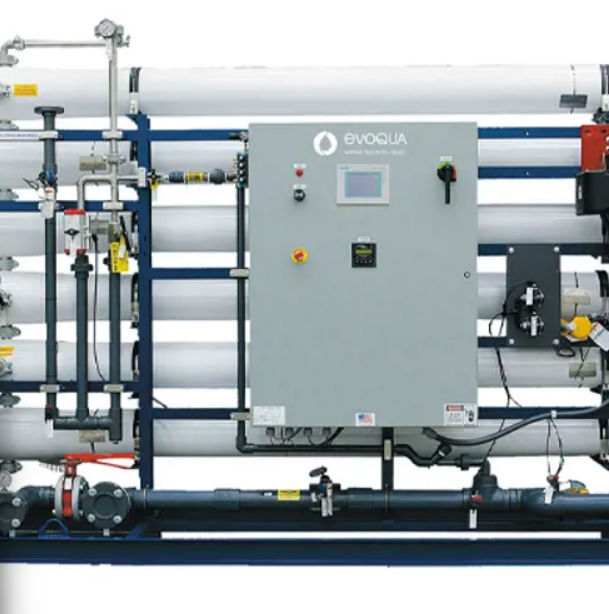
Service: Check water quality indicators, strainers, dosing points, media condition, pumps, valves, sensors and leak tightness. Confirm the unit changes state correctly between service, regeneration, flushing or standby modes where fitted. For chemical concentration, flow limits or replacement criteria not stated in the source entry, refer to the manufacturer documentation for the exact figure.
Spare Parts: Carry the maker-recommended filter elements or treatment consumables, dosing-pump service parts, seals, hoses, sensor consumables and common electrical fuses.
Use Cases: Applied to potable-water production and conditioning, domestic-water systems and other shipboard water services on merchant, passenger and offshore vessels.
Reverse Osmosis Unit 3m3h Evoqua/Xylem Marine unverified
Capacity (m³/h)
3
Treatment Type
Reverse Osmosis Unit
Common Failures & Inspection Points
  • Fouling or exhausted treatment media can reduce treatment effectiveness, seen as deteriorating outlet-water quality or rising differential pressure
  • Dosing-pump or chemical-feed faults can interrupt treatment, noticed as unstable readings, low dosing indication or quality alarms
  • Blocked strainers or restricted piping can reduce flow, seen as low throughput or abnormal pump loading
  • Sensor drift or contamination can give incorrect control feedback, noticed as implausible readings or unnecessary alarms
  • Valve, seal or hose leakage can cause loss of treatment fluid or water, seen as wetness around the skid and inability to maintain normal operation
Service: Check water quality indicators, strainers, dosing points, media condition, pumps, valves, sensors and leak tightness. Confirm the unit changes state correctly between service, regeneration, flushing or standby modes where fitted. For chemical concentration, flow limits or replacement criteria not stated in the source entry, refer to the manufacturer documentation for the exact figure.
Spare Parts: Carry the maker-recommended filter elements or treatment consumables, dosing-pump service parts, seals, hoses, sensor consumables and common electrical fuses.
Use Cases: Applied to potable-water production and conditioning, domestic-water systems and other shipboard water services on merchant, passenger and offshore vessels.
Evoqua/Xylem Marine Reverse Osmosis Unit 5m3h Evoqua/Xylem Marine
Reverse Osmosis Unit 5m3h Evoqua/Xylem Marine unverified
Capacity (m³/h)
5
Treatment Type
Reverse Osmosis Unit
Common Failures & Inspection Points
  • Fouling or exhausted treatment media can reduce treatment effectiveness, seen as deteriorating outlet-water quality or rising differential pressure
  • Dosing-pump or chemical-feed faults can interrupt treatment, noticed as unstable readings, low dosing indication or quality alarms
  • Blocked strainers or restricted piping can reduce flow, seen as low throughput or abnormal pump loading
  • Sensor drift or contamination can give incorrect control feedback, noticed as implausible readings or unnecessary alarms
  • Valve, seal or hose leakage can cause loss of treatment fluid or water, seen as wetness around the skid and inability to maintain normal operation
Service: Check water quality indicators, strainers, dosing points, media condition, pumps, valves, sensors and leak tightness. Confirm the unit changes state correctly between service, regeneration, flushing or standby modes where fitted. For chemical concentration, flow limits or replacement criteria not stated in the source entry, refer to the manufacturer documentation for the exact figure.
Spare Parts: Carry the maker-recommended filter elements or treatment consumables, dosing-pump service parts, seals, hoses, sensor consumables and common electrical fuses.
Use Cases: Applied to potable-water production and conditioning, domestic-water systems and other shipboard water services on merchant, passenger and offshore vessels.
Evoqua/Xylem Marine Reverse Osmosis Unit 8m3h Evoqua/Xylem Marine
Reverse Osmosis Unit 8m3h Evoqua/Xylem Marine unverified
Capacity (m³/h)
8
Treatment Type
Reverse Osmosis Unit
Common Failures & Inspection Points
  • Fouling or exhausted treatment media can reduce treatment effectiveness, seen as deteriorating outlet-water quality or rising differential pressure
  • Dosing-pump or chemical-feed faults can interrupt treatment, noticed as unstable readings, low dosing indication or quality alarms
  • Blocked strainers or restricted piping can reduce flow, seen as low throughput or abnormal pump loading
  • Sensor drift or contamination can give incorrect control feedback, noticed as implausible readings or unnecessary alarms
  • Valve, seal or hose leakage can cause loss of treatment fluid or water, seen as wetness around the skid and inability to maintain normal operation
Service: Check water quality indicators, strainers, dosing points, media condition, pumps, valves, sensors and leak tightness. Confirm the unit changes state correctly between service, regeneration, flushing or standby modes where fitted. For chemical concentration, flow limits or replacement criteria not stated in the source entry, refer to the manufacturer documentation for the exact figure.
Spare Parts: Carry the maker-recommended filter elements or treatment consumables, dosing-pump service parts, seals, hoses, sensor consumables and common electrical fuses.
Use Cases: Applied to potable-water production and conditioning, domestic-water systems and other shipboard water services on merchant, passenger and offshore vessels.
Evoqua/Xylem Marine Reverse Osmosis Unit 10m3h Evoqua/Xylem Marine
Reverse Osmosis Unit 10m3h Evoqua/Xylem Marine unverified
Capacity (m³/h)
10
Treatment Type
Reverse Osmosis Unit
Common Failures & Inspection Points
  • Fouling or exhausted treatment media can reduce treatment effectiveness, seen as deteriorating outlet-water quality or rising differential pressure
  • Dosing-pump or chemical-feed faults can interrupt treatment, noticed as unstable readings, low dosing indication or quality alarms
  • Blocked strainers or restricted piping can reduce flow, seen as low throughput or abnormal pump loading
  • Sensor drift or contamination can give incorrect control feedback, noticed as implausible readings or unnecessary alarms
  • Valve, seal or hose leakage can cause loss of treatment fluid or water, seen as wetness around the skid and inability to maintain normal operation
Service: Check water quality indicators, strainers, dosing points, media condition, pumps, valves, sensors and leak tightness. Confirm the unit changes state correctly between service, regeneration, flushing or standby modes where fitted. For chemical concentration, flow limits or replacement criteria not stated in the source entry, refer to the manufacturer documentation for the exact figure.
Spare Parts: Carry the maker-recommended filter elements or treatment consumables, dosing-pump service parts, seals, hoses, sensor consumables and common electrical fuses.
Use Cases: Applied to potable-water production and conditioning, domestic-water systems and other shipboard water services on merchant, passenger and offshore vessels.
Evoqua/Xylem Marine Reverse Osmosis Unit 15m3h Evoqua/Xylem Marine
Reverse Osmosis Unit 15m3h Evoqua/Xylem Marine unverified
Capacity (m³/h)
15
Treatment Type
Reverse Osmosis Unit
Common Failures & Inspection Points
  • Fouling or exhausted treatment media can reduce treatment effectiveness, seen as deteriorating outlet-water quality or rising differential pressure
  • Dosing-pump or chemical-feed faults can interrupt treatment, noticed as unstable readings, low dosing indication or quality alarms
  • Blocked strainers or restricted piping can reduce flow, seen as low throughput or abnormal pump loading
  • Sensor drift or contamination can give incorrect control feedback, noticed as implausible readings or unnecessary alarms
  • Valve, seal or hose leakage can cause loss of treatment fluid or water, seen as wetness around the skid and inability to maintain normal operation
Service: Check water quality indicators, strainers, dosing points, media condition, pumps, valves, sensors and leak tightness. Confirm the unit changes state correctly between service, regeneration, flushing or standby modes where fitted. For chemical concentration, flow limits or replacement criteria not stated in the source entry, refer to the manufacturer documentation for the exact figure.
Spare Parts: Carry the maker-recommended filter elements or treatment consumables, dosing-pump service parts, seals, hoses, sensor consumables and common electrical fuses.
Use Cases: Applied to potable-water production and conditioning, domestic-water systems and other shipboard water services on merchant, passenger and offshore vessels.
Reverse Osmosis Unit 20m3h Evoqua/Xylem Marine unverified
Capacity (m³/h)
20
Treatment Type
Reverse Osmosis Unit
Common Failures & Inspection Points
  • Fouling or exhausted treatment media can reduce treatment effectiveness, seen as deteriorating outlet-water quality or rising differential pressure
  • Dosing-pump or chemical-feed faults can interrupt treatment, noticed as unstable readings, low dosing indication or quality alarms
  • Blocked strainers or restricted piping can reduce flow, seen as low throughput or abnormal pump loading
  • Sensor drift or contamination can give incorrect control feedback, noticed as implausible readings or unnecessary alarms
  • Valve, seal or hose leakage can cause loss of treatment fluid or water, seen as wetness around the skid and inability to maintain normal operation
Service: Check water quality indicators, strainers, dosing points, media condition, pumps, valves, sensors and leak tightness. Confirm the unit changes state correctly between service, regeneration, flushing or standby modes where fitted. For chemical concentration, flow limits or replacement criteria not stated in the source entry, refer to the manufacturer documentation for the exact figure.
Spare Parts: Carry the maker-recommended filter elements or treatment consumables, dosing-pump service parts, seals, hoses, sensor consumables and common electrical fuses.
Use Cases: Applied to potable-water production and conditioning, domestic-water systems and other shipboard water services on merchant, passenger and offshore vessels.
Reverse Osmosis Unit 30m3h Evoqua/Xylem Marine unverified
Capacity (m³/h)
30
Treatment Type
Reverse Osmosis Unit
Common Failures & Inspection Points
  • Fouling or exhausted treatment media can reduce treatment effectiveness, seen as deteriorating outlet-water quality or rising differential pressure
  • Dosing-pump or chemical-feed faults can interrupt treatment, noticed as unstable readings, low dosing indication or quality alarms
  • Blocked strainers or restricted piping can reduce flow, seen as low throughput or abnormal pump loading
  • Sensor drift or contamination can give incorrect control feedback, noticed as implausible readings or unnecessary alarms
  • Valve, seal or hose leakage can cause loss of treatment fluid or water, seen as wetness around the skid and inability to maintain normal operation
Service: Check water quality indicators, strainers, dosing points, media condition, pumps, valves, sensors and leak tightness. Confirm the unit changes state correctly between service, regeneration, flushing or standby modes where fitted. For chemical concentration, flow limits or replacement criteria not stated in the source entry, refer to the manufacturer documentation for the exact figure.
Spare Parts: Carry the maker-recommended filter elements or treatment consumables, dosing-pump service parts, seals, hoses, sensor consumables and common electrical fuses.
Use Cases: Applied to potable-water production and conditioning, domestic-water systems and other shipboard water services on merchant, passenger and offshore vessels.
Reverse Osmosis Unit 50m3h Evoqua/Xylem Marine unverified
Capacity (m³/h)
50
Treatment Type
Reverse Osmosis Unit
Common Failures & Inspection Points
  • Fouling or exhausted treatment media can reduce treatment effectiveness, seen as deteriorating outlet-water quality or rising differential pressure
  • Dosing-pump or chemical-feed faults can interrupt treatment, noticed as unstable readings, low dosing indication or quality alarms
  • Blocked strainers or restricted piping can reduce flow, seen as low throughput or abnormal pump loading
  • Sensor drift or contamination can give incorrect control feedback, noticed as implausible readings or unnecessary alarms
  • Valve, seal or hose leakage can cause loss of treatment fluid or water, seen as wetness around the skid and inability to maintain normal operation
Service: Check water quality indicators, strainers, dosing points, media condition, pumps, valves, sensors and leak tightness. Confirm the unit changes state correctly between service, regeneration, flushing or standby modes where fitted. For chemical concentration, flow limits or replacement criteria not stated in the source entry, refer to the manufacturer documentation for the exact figure.
Spare Parts: Carry the maker-recommended filter elements or treatment consumables, dosing-pump service parts, seals, hoses, sensor consumables and common electrical fuses.
Use Cases: Applied to potable-water production and conditioning, domestic-water systems and other shipboard water services on merchant, passenger and offshore vessels.

Lutz-Jesco Marine

11
Reverse Osmosis Unit 0.5m3h Lutz-Jesco Marine unverified
Capacity (m³/h)
0.5
Treatment Type
Reverse Osmosis Unit
Common Failures & Inspection Points
  • Fouling or exhausted treatment media can reduce treatment effectiveness, seen as deteriorating outlet-water quality or rising differential pressure
  • Dosing-pump or chemical-feed faults can interrupt treatment, noticed as unstable readings, low dosing indication or quality alarms
  • Blocked strainers or restricted piping can reduce flow, seen as low throughput or abnormal pump loading
  • Sensor drift or contamination can give incorrect control feedback, noticed as implausible readings or unnecessary alarms
  • Valve, seal or hose leakage can cause loss of treatment fluid or water, seen as wetness around the skid and inability to maintain normal operation
Service: Check water quality indicators, strainers, dosing points, media condition, pumps, valves, sensors and leak tightness. Confirm the unit changes state correctly between service, regeneration, flushing or standby modes where fitted. For chemical concentration, flow limits or replacement criteria not stated in the source entry, refer to the manufacturer documentation for the exact figure.
Spare Parts: Carry the maker-recommended filter elements or treatment consumables, dosing-pump service parts, seals, hoses, sensor consumables and common electrical fuses.
Use Cases: Applied to potable-water production and conditioning, domestic-water systems and other shipboard water services on merchant, passenger and offshore vessels.
Reverse Osmosis Unit 1m3h Lutz-Jesco Marine unverified
Capacity (m³/h)
1
Treatment Type
Reverse Osmosis Unit
Common Failures & Inspection Points
  • Fouling or exhausted treatment media can reduce treatment effectiveness, seen as deteriorating outlet-water quality or rising differential pressure
  • Dosing-pump or chemical-feed faults can interrupt treatment, noticed as unstable readings, low dosing indication or quality alarms
  • Blocked strainers or restricted piping can reduce flow, seen as low throughput or abnormal pump loading
  • Sensor drift or contamination can give incorrect control feedback, noticed as implausible readings or unnecessary alarms
  • Valve, seal or hose leakage can cause loss of treatment fluid or water, seen as wetness around the skid and inability to maintain normal operation
Service: Check water quality indicators, strainers, dosing points, media condition, pumps, valves, sensors and leak tightness. Confirm the unit changes state correctly between service, regeneration, flushing or standby modes where fitted. For chemical concentration, flow limits or replacement criteria not stated in the source entry, refer to the manufacturer documentation for the exact figure.
Spare Parts: Carry the maker-recommended filter elements or treatment consumables, dosing-pump service parts, seals, hoses, sensor consumables and common electrical fuses.
Use Cases: Applied to potable-water production and conditioning, domestic-water systems and other shipboard water services on merchant, passenger and offshore vessels.
Reverse Osmosis Unit 2m3h Lutz-Jesco Marine unverified
Capacity (m³/h)
2
Treatment Type
Reverse Osmosis Unit
Common Failures & Inspection Points
  • Fouling or exhausted treatment media can reduce treatment effectiveness, seen as deteriorating outlet-water quality or rising differential pressure
  • Dosing-pump or chemical-feed faults can interrupt treatment, noticed as unstable readings, low dosing indication or quality alarms
  • Blocked strainers or restricted piping can reduce flow, seen as low throughput or abnormal pump loading
  • Sensor drift or contamination can give incorrect control feedback, noticed as implausible readings or unnecessary alarms
  • Valve, seal or hose leakage can cause loss of treatment fluid or water, seen as wetness around the skid and inability to maintain normal operation
Service: Check water quality indicators, strainers, dosing points, media condition, pumps, valves, sensors and leak tightness. Confirm the unit changes state correctly between service, regeneration, flushing or standby modes where fitted. For chemical concentration, flow limits or replacement criteria not stated in the source entry, refer to the manufacturer documentation for the exact figure.
Spare Parts: Carry the maker-recommended filter elements or treatment consumables, dosing-pump service parts, seals, hoses, sensor consumables and common electrical fuses.
Use Cases: Applied to potable-water production and conditioning, domestic-water systems and other shipboard water services on merchant, passenger and offshore vessels.
Reverse Osmosis Unit 3m3h Lutz-Jesco Marine unverified
Capacity (m³/h)
3
Treatment Type
Reverse Osmosis Unit
Common Failures & Inspection Points
  • Fouling or exhausted treatment media can reduce treatment effectiveness, seen as deteriorating outlet-water quality or rising differential pressure
  • Dosing-pump or chemical-feed faults can interrupt treatment, noticed as unstable readings, low dosing indication or quality alarms
  • Blocked strainers or restricted piping can reduce flow, seen as low throughput or abnormal pump loading
  • Sensor drift or contamination can give incorrect control feedback, noticed as implausible readings or unnecessary alarms
  • Valve, seal or hose leakage can cause loss of treatment fluid or water, seen as wetness around the skid and inability to maintain normal operation
Service: Check water quality indicators, strainers, dosing points, media condition, pumps, valves, sensors and leak tightness. Confirm the unit changes state correctly between service, regeneration, flushing or standby modes where fitted. For chemical concentration, flow limits or replacement criteria not stated in the source entry, refer to the manufacturer documentation for the exact figure.
Spare Parts: Carry the maker-recommended filter elements or treatment consumables, dosing-pump service parts, seals, hoses, sensor consumables and common electrical fuses.
Use Cases: Applied to potable-water production and conditioning, domestic-water systems and other shipboard water services on merchant, passenger and offshore vessels.
Reverse Osmosis Unit 5m3h Lutz-Jesco Marine unverified
Capacity (m³/h)
5
Treatment Type
Reverse Osmosis Unit
Common Failures & Inspection Points
  • Fouling or exhausted treatment media can reduce treatment effectiveness, seen as deteriorating outlet-water quality or rising differential pressure
  • Dosing-pump or chemical-feed faults can interrupt treatment, noticed as unstable readings, low dosing indication or quality alarms
  • Blocked strainers or restricted piping can reduce flow, seen as low throughput or abnormal pump loading
  • Sensor drift or contamination can give incorrect control feedback, noticed as implausible readings or unnecessary alarms
  • Valve, seal or hose leakage can cause loss of treatment fluid or water, seen as wetness around the skid and inability to maintain normal operation
Service: Check water quality indicators, strainers, dosing points, media condition, pumps, valves, sensors and leak tightness. Confirm the unit changes state correctly between service, regeneration, flushing or standby modes where fitted. For chemical concentration, flow limits or replacement criteria not stated in the source entry, refer to the manufacturer documentation for the exact figure.
Spare Parts: Carry the maker-recommended filter elements or treatment consumables, dosing-pump service parts, seals, hoses, sensor consumables and common electrical fuses.
Use Cases: Applied to potable-water production and conditioning, domestic-water systems and other shipboard water services on merchant, passenger and offshore vessels.
Reverse Osmosis Unit 8m3h Lutz-Jesco Marine unverified
Capacity (m³/h)
8
Treatment Type
Reverse Osmosis Unit
Common Failures & Inspection Points
  • Fouling or exhausted treatment media can reduce treatment effectiveness, seen as deteriorating outlet-water quality or rising differential pressure
  • Dosing-pump or chemical-feed faults can interrupt treatment, noticed as unstable readings, low dosing indication or quality alarms
  • Blocked strainers or restricted piping can reduce flow, seen as low throughput or abnormal pump loading
  • Sensor drift or contamination can give incorrect control feedback, noticed as implausible readings or unnecessary alarms
  • Valve, seal or hose leakage can cause loss of treatment fluid or water, seen as wetness around the skid and inability to maintain normal operation
Service: Check water quality indicators, strainers, dosing points, media condition, pumps, valves, sensors and leak tightness. Confirm the unit changes state correctly between service, regeneration, flushing or standby modes where fitted. For chemical concentration, flow limits or replacement criteria not stated in the source entry, refer to the manufacturer documentation for the exact figure.
Spare Parts: Carry the maker-recommended filter elements or treatment consumables, dosing-pump service parts, seals, hoses, sensor consumables and common electrical fuses.
Use Cases: Applied to potable-water production and conditioning, domestic-water systems and other shipboard water services on merchant, passenger and offshore vessels.
Reverse Osmosis Unit 10m3h Lutz-Jesco Marine unverified
Capacity (m³/h)
10
Treatment Type
Reverse Osmosis Unit
Common Failures & Inspection Points
  • Fouling or exhausted treatment media can reduce treatment effectiveness, seen as deteriorating outlet-water quality or rising differential pressure
  • Dosing-pump or chemical-feed faults can interrupt treatment, noticed as unstable readings, low dosing indication or quality alarms
  • Blocked strainers or restricted piping can reduce flow, seen as low throughput or abnormal pump loading
  • Sensor drift or contamination can give incorrect control feedback, noticed as implausible readings or unnecessary alarms
  • Valve, seal or hose leakage can cause loss of treatment fluid or water, seen as wetness around the skid and inability to maintain normal operation
Service: Check water quality indicators, strainers, dosing points, media condition, pumps, valves, sensors and leak tightness. Confirm the unit changes state correctly between service, regeneration, flushing or standby modes where fitted. For chemical concentration, flow limits or replacement criteria not stated in the source entry, refer to the manufacturer documentation for the exact figure.
Spare Parts: Carry the maker-recommended filter elements or treatment consumables, dosing-pump service parts, seals, hoses, sensor consumables and common electrical fuses.
Use Cases: Applied to potable-water production and conditioning, domestic-water systems and other shipboard water services on merchant, passenger and offshore vessels.
Reverse Osmosis Unit 15m3h Lutz-Jesco Marine unverified
Capacity (m³/h)
15
Treatment Type
Reverse Osmosis Unit
Common Failures & Inspection Points
  • Fouling or exhausted treatment media can reduce treatment effectiveness, seen as deteriorating outlet-water quality or rising differential pressure
  • Dosing-pump or chemical-feed faults can interrupt treatment, noticed as unstable readings, low dosing indication or quality alarms
  • Blocked strainers or restricted piping can reduce flow, seen as low throughput or abnormal pump loading
  • Sensor drift or contamination can give incorrect control feedback, noticed as implausible readings or unnecessary alarms
  • Valve, seal or hose leakage can cause loss of treatment fluid or water, seen as wetness around the skid and inability to maintain normal operation
Service: Check water quality indicators, strainers, dosing points, media condition, pumps, valves, sensors and leak tightness. Confirm the unit changes state correctly between service, regeneration, flushing or standby modes where fitted. For chemical concentration, flow limits or replacement criteria not stated in the source entry, refer to the manufacturer documentation for the exact figure.
Spare Parts: Carry the maker-recommended filter elements or treatment consumables, dosing-pump service parts, seals, hoses, sensor consumables and common electrical fuses.
Use Cases: Applied to potable-water production and conditioning, domestic-water systems and other shipboard water services on merchant, passenger and offshore vessels.
Reverse Osmosis Unit 20m3h Lutz-Jesco Marine unverified
Capacity (m³/h)
20
Treatment Type
Reverse Osmosis Unit
Common Failures & Inspection Points
  • Fouling or exhausted treatment media can reduce treatment effectiveness, seen as deteriorating outlet-water quality or rising differential pressure
  • Dosing-pump or chemical-feed faults can interrupt treatment, noticed as unstable readings, low dosing indication or quality alarms
  • Blocked strainers or restricted piping can reduce flow, seen as low throughput or abnormal pump loading
  • Sensor drift or contamination can give incorrect control feedback, noticed as implausible readings or unnecessary alarms
  • Valve, seal or hose leakage can cause loss of treatment fluid or water, seen as wetness around the skid and inability to maintain normal operation
Service: Check water quality indicators, strainers, dosing points, media condition, pumps, valves, sensors and leak tightness. Confirm the unit changes state correctly between service, regeneration, flushing or standby modes where fitted. For chemical concentration, flow limits or replacement criteria not stated in the source entry, refer to the manufacturer documentation for the exact figure.
Spare Parts: Carry the maker-recommended filter elements or treatment consumables, dosing-pump service parts, seals, hoses, sensor consumables and common electrical fuses.
Use Cases: Applied to potable-water production and conditioning, domestic-water systems and other shipboard water services on merchant, passenger and offshore vessels.
Reverse Osmosis Unit 30m3h Lutz-Jesco Marine unverified
Capacity (m³/h)
30
Treatment Type
Reverse Osmosis Unit
Common Failures & Inspection Points
  • Fouling or exhausted treatment media can reduce treatment effectiveness, seen as deteriorating outlet-water quality or rising differential pressure
  • Dosing-pump or chemical-feed faults can interrupt treatment, noticed as unstable readings, low dosing indication or quality alarms
  • Blocked strainers or restricted piping can reduce flow, seen as low throughput or abnormal pump loading
  • Sensor drift or contamination can give incorrect control feedback, noticed as implausible readings or unnecessary alarms
  • Valve, seal or hose leakage can cause loss of treatment fluid or water, seen as wetness around the skid and inability to maintain normal operation
Service: Check water quality indicators, strainers, dosing points, media condition, pumps, valves, sensors and leak tightness. Confirm the unit changes state correctly between service, regeneration, flushing or standby modes where fitted. For chemical concentration, flow limits or replacement criteria not stated in the source entry, refer to the manufacturer documentation for the exact figure.
Spare Parts: Carry the maker-recommended filter elements or treatment consumables, dosing-pump service parts, seals, hoses, sensor consumables and common electrical fuses.
Use Cases: Applied to potable-water production and conditioning, domestic-water systems and other shipboard water services on merchant, passenger and offshore vessels.
Reverse Osmosis Unit 50m3h Lutz-Jesco Marine unverified
Capacity (m³/h)
50
Treatment Type
Reverse Osmosis Unit
Common Failures & Inspection Points
  • Fouling or exhausted treatment media can reduce treatment effectiveness, seen as deteriorating outlet-water quality or rising differential pressure
  • Dosing-pump or chemical-feed faults can interrupt treatment, noticed as unstable readings, low dosing indication or quality alarms
  • Blocked strainers or restricted piping can reduce flow, seen as low throughput or abnormal pump loading
  • Sensor drift or contamination can give incorrect control feedback, noticed as implausible readings or unnecessary alarms
  • Valve, seal or hose leakage can cause loss of treatment fluid or water, seen as wetness around the skid and inability to maintain normal operation
Service: Check water quality indicators, strainers, dosing points, media condition, pumps, valves, sensors and leak tightness. Confirm the unit changes state correctly between service, regeneration, flushing or standby modes where fitted. For chemical concentration, flow limits or replacement criteria not stated in the source entry, refer to the manufacturer documentation for the exact figure.
Spare Parts: Carry the maker-recommended filter elements or treatment consumables, dosing-pump service parts, seals, hoses, sensor consumables and common electrical fuses.
Use Cases: Applied to potable-water production and conditioning, domestic-water systems and other shipboard water services on merchant, passenger and offshore vessels.

Prominent Marine

11
Reverse Osmosis Unit 0.5m3h Prominent Marine unverified
Capacity (m³/h)
0.5
Treatment Type
Reverse Osmosis Unit
Common Failures & Inspection Points
  • Fouling or exhausted treatment media can reduce treatment effectiveness, seen as deteriorating outlet-water quality or rising differential pressure
  • Dosing-pump or chemical-feed faults can interrupt treatment, noticed as unstable readings, low dosing indication or quality alarms
  • Blocked strainers or restricted piping can reduce flow, seen as low throughput or abnormal pump loading
  • Sensor drift or contamination can give incorrect control feedback, noticed as implausible readings or unnecessary alarms
  • Valve, seal or hose leakage can cause loss of treatment fluid or water, seen as wetness around the skid and inability to maintain normal operation
Service: Check water quality indicators, strainers, dosing points, media condition, pumps, valves, sensors and leak tightness. Confirm the unit changes state correctly between service, regeneration, flushing or standby modes where fitted. For chemical concentration, flow limits or replacement criteria not stated in the source entry, refer to the manufacturer documentation for the exact figure.
Spare Parts: Carry the maker-recommended filter elements or treatment consumables, dosing-pump service parts, seals, hoses, sensor consumables and common electrical fuses.
Use Cases: Applied to potable-water production and conditioning, domestic-water systems and other shipboard water services on merchant, passenger and offshore vessels.
Reverse Osmosis Unit 1m3h Prominent Marine unverified
Capacity (m³/h)
1
Treatment Type
Reverse Osmosis Unit
Common Failures & Inspection Points
  • Fouling or exhausted treatment media can reduce treatment effectiveness, seen as deteriorating outlet-water quality or rising differential pressure
  • Dosing-pump or chemical-feed faults can interrupt treatment, noticed as unstable readings, low dosing indication or quality alarms
  • Blocked strainers or restricted piping can reduce flow, seen as low throughput or abnormal pump loading
  • Sensor drift or contamination can give incorrect control feedback, noticed as implausible readings or unnecessary alarms
  • Valve, seal or hose leakage can cause loss of treatment fluid or water, seen as wetness around the skid and inability to maintain normal operation
Service: Check water quality indicators, strainers, dosing points, media condition, pumps, valves, sensors and leak tightness. Confirm the unit changes state correctly between service, regeneration, flushing or standby modes where fitted. For chemical concentration, flow limits or replacement criteria not stated in the source entry, refer to the manufacturer documentation for the exact figure.
Spare Parts: Carry the maker-recommended filter elements or treatment consumables, dosing-pump service parts, seals, hoses, sensor consumables and common electrical fuses.
Use Cases: Applied to potable-water production and conditioning, domestic-water systems and other shipboard water services on merchant, passenger and offshore vessels.
Prominent Marine Reverse Osmosis Unit 2m3h Prominent Marine
Reverse Osmosis Unit 2m3h Prominent Marine unverified
Capacity (m³/h)
2
Treatment Type
Reverse Osmosis Unit
Common Failures & Inspection Points
  • Fouling or exhausted treatment media can reduce treatment effectiveness, seen as deteriorating outlet-water quality or rising differential pressure
  • Dosing-pump or chemical-feed faults can interrupt treatment, noticed as unstable readings, low dosing indication or quality alarms
  • Blocked strainers or restricted piping can reduce flow, seen as low throughput or abnormal pump loading
  • Sensor drift or contamination can give incorrect control feedback, noticed as implausible readings or unnecessary alarms
  • Valve, seal or hose leakage can cause loss of treatment fluid or water, seen as wetness around the skid and inability to maintain normal operation
Service: Check water quality indicators, strainers, dosing points, media condition, pumps, valves, sensors and leak tightness. Confirm the unit changes state correctly between service, regeneration, flushing or standby modes where fitted. For chemical concentration, flow limits or replacement criteria not stated in the source entry, refer to the manufacturer documentation for the exact figure.
Spare Parts: Carry the maker-recommended filter elements or treatment consumables, dosing-pump service parts, seals, hoses, sensor consumables and common electrical fuses.
Use Cases: Applied to potable-water production and conditioning, domestic-water systems and other shipboard water services on merchant, passenger and offshore vessels.
Reverse Osmosis Unit 3m3h Prominent Marine unverified
Capacity (m³/h)
3
Treatment Type
Reverse Osmosis Unit
Common Failures & Inspection Points
  • Fouling or exhausted treatment media can reduce treatment effectiveness, seen as deteriorating outlet-water quality or rising differential pressure
  • Dosing-pump or chemical-feed faults can interrupt treatment, noticed as unstable readings, low dosing indication or quality alarms
  • Blocked strainers or restricted piping can reduce flow, seen as low throughput or abnormal pump loading
  • Sensor drift or contamination can give incorrect control feedback, noticed as implausible readings or unnecessary alarms
  • Valve, seal or hose leakage can cause loss of treatment fluid or water, seen as wetness around the skid and inability to maintain normal operation
Service: Check water quality indicators, strainers, dosing points, media condition, pumps, valves, sensors and leak tightness. Confirm the unit changes state correctly between service, regeneration, flushing or standby modes where fitted. For chemical concentration, flow limits or replacement criteria not stated in the source entry, refer to the manufacturer documentation for the exact figure.
Spare Parts: Carry the maker-recommended filter elements or treatment consumables, dosing-pump service parts, seals, hoses, sensor consumables and common electrical fuses.
Use Cases: Applied to potable-water production and conditioning, domestic-water systems and other shipboard water services on merchant, passenger and offshore vessels.
Reverse Osmosis Unit 5m3h Prominent Marine unverified
Capacity (m³/h)
5
Treatment Type
Reverse Osmosis Unit
Common Failures & Inspection Points
  • Fouling or exhausted treatment media can reduce treatment effectiveness, seen as deteriorating outlet-water quality or rising differential pressure
  • Dosing-pump or chemical-feed faults can interrupt treatment, noticed as unstable readings, low dosing indication or quality alarms
  • Blocked strainers or restricted piping can reduce flow, seen as low throughput or abnormal pump loading
  • Sensor drift or contamination can give incorrect control feedback, noticed as implausible readings or unnecessary alarms
  • Valve, seal or hose leakage can cause loss of treatment fluid or water, seen as wetness around the skid and inability to maintain normal operation
Service: Check water quality indicators, strainers, dosing points, media condition, pumps, valves, sensors and leak tightness. Confirm the unit changes state correctly between service, regeneration, flushing or standby modes where fitted. For chemical concentration, flow limits or replacement criteria not stated in the source entry, refer to the manufacturer documentation for the exact figure.
Spare Parts: Carry the maker-recommended filter elements or treatment consumables, dosing-pump service parts, seals, hoses, sensor consumables and common electrical fuses.
Use Cases: Applied to potable-water production and conditioning, domestic-water systems and other shipboard water services on merchant, passenger and offshore vessels.
Reverse Osmosis Unit 8m3h Prominent Marine unverified
Capacity (m³/h)
8
Treatment Type
Reverse Osmosis Unit
Common Failures & Inspection Points
  • Fouling or exhausted treatment media can reduce treatment effectiveness, seen as deteriorating outlet-water quality or rising differential pressure
  • Dosing-pump or chemical-feed faults can interrupt treatment, noticed as unstable readings, low dosing indication or quality alarms
  • Blocked strainers or restricted piping can reduce flow, seen as low throughput or abnormal pump loading
  • Sensor drift or contamination can give incorrect control feedback, noticed as implausible readings or unnecessary alarms
  • Valve, seal or hose leakage can cause loss of treatment fluid or water, seen as wetness around the skid and inability to maintain normal operation
Service: Check water quality indicators, strainers, dosing points, media condition, pumps, valves, sensors and leak tightness. Confirm the unit changes state correctly between service, regeneration, flushing or standby modes where fitted. For chemical concentration, flow limits or replacement criteria not stated in the source entry, refer to the manufacturer documentation for the exact figure.
Spare Parts: Carry the maker-recommended filter elements or treatment consumables, dosing-pump service parts, seals, hoses, sensor consumables and common electrical fuses.
Use Cases: Applied to potable-water production and conditioning, domestic-water systems and other shipboard water services on merchant, passenger and offshore vessels.
Reverse Osmosis Unit 10m3h Prominent Marine unverified
Capacity (m³/h)
10
Treatment Type
Reverse Osmosis Unit
Common Failures & Inspection Points
  • Fouling or exhausted treatment media can reduce treatment effectiveness, seen as deteriorating outlet-water quality or rising differential pressure
  • Dosing-pump or chemical-feed faults can interrupt treatment, noticed as unstable readings, low dosing indication or quality alarms
  • Blocked strainers or restricted piping can reduce flow, seen as low throughput or abnormal pump loading
  • Sensor drift or contamination can give incorrect control feedback, noticed as implausible readings or unnecessary alarms
  • Valve, seal or hose leakage can cause loss of treatment fluid or water, seen as wetness around the skid and inability to maintain normal operation
Service: Check water quality indicators, strainers, dosing points, media condition, pumps, valves, sensors and leak tightness. Confirm the unit changes state correctly between service, regeneration, flushing or standby modes where fitted. For chemical concentration, flow limits or replacement criteria not stated in the source entry, refer to the manufacturer documentation for the exact figure.
Spare Parts: Carry the maker-recommended filter elements or treatment consumables, dosing-pump service parts, seals, hoses, sensor consumables and common electrical fuses.
Use Cases: Applied to potable-water production and conditioning, domestic-water systems and other shipboard water services on merchant, passenger and offshore vessels.
Reverse Osmosis Unit 15m3h Prominent Marine unverified
Capacity (m³/h)
15
Treatment Type
Reverse Osmosis Unit
Common Failures & Inspection Points
  • Fouling or exhausted treatment media can reduce treatment effectiveness, seen as deteriorating outlet-water quality or rising differential pressure
  • Dosing-pump or chemical-feed faults can interrupt treatment, noticed as unstable readings, low dosing indication or quality alarms
  • Blocked strainers or restricted piping can reduce flow, seen as low throughput or abnormal pump loading
  • Sensor drift or contamination can give incorrect control feedback, noticed as implausible readings or unnecessary alarms
  • Valve, seal or hose leakage can cause loss of treatment fluid or water, seen as wetness around the skid and inability to maintain normal operation
Service: Check water quality indicators, strainers, dosing points, media condition, pumps, valves, sensors and leak tightness. Confirm the unit changes state correctly between service, regeneration, flushing or standby modes where fitted. For chemical concentration, flow limits or replacement criteria not stated in the source entry, refer to the manufacturer documentation for the exact figure.
Spare Parts: Carry the maker-recommended filter elements or treatment consumables, dosing-pump service parts, seals, hoses, sensor consumables and common electrical fuses.
Use Cases: Applied to potable-water production and conditioning, domestic-water systems and other shipboard water services on merchant, passenger and offshore vessels.
Reverse Osmosis Unit 20m3h Prominent Marine unverified
Capacity (m³/h)
20
Treatment Type
Reverse Osmosis Unit
Common Failures & Inspection Points
  • Fouling or exhausted treatment media can reduce treatment effectiveness, seen as deteriorating outlet-water quality or rising differential pressure
  • Dosing-pump or chemical-feed faults can interrupt treatment, noticed as unstable readings, low dosing indication or quality alarms
  • Blocked strainers or restricted piping can reduce flow, seen as low throughput or abnormal pump loading
  • Sensor drift or contamination can give incorrect control feedback, noticed as implausible readings or unnecessary alarms
  • Valve, seal or hose leakage can cause loss of treatment fluid or water, seen as wetness around the skid and inability to maintain normal operation
Service: Check water quality indicators, strainers, dosing points, media condition, pumps, valves, sensors and leak tightness. Confirm the unit changes state correctly between service, regeneration, flushing or standby modes where fitted. For chemical concentration, flow limits or replacement criteria not stated in the source entry, refer to the manufacturer documentation for the exact figure.
Spare Parts: Carry the maker-recommended filter elements or treatment consumables, dosing-pump service parts, seals, hoses, sensor consumables and common electrical fuses.
Use Cases: Applied to potable-water production and conditioning, domestic-water systems and other shipboard water services on merchant, passenger and offshore vessels.
Reverse Osmosis Unit 30m3h Prominent Marine unverified
Capacity (m³/h)
30
Treatment Type
Reverse Osmosis Unit
Common Failures & Inspection Points
  • Fouling or exhausted treatment media can reduce treatment effectiveness, seen as deteriorating outlet-water quality or rising differential pressure
  • Dosing-pump or chemical-feed faults can interrupt treatment, noticed as unstable readings, low dosing indication or quality alarms
  • Blocked strainers or restricted piping can reduce flow, seen as low throughput or abnormal pump loading
  • Sensor drift or contamination can give incorrect control feedback, noticed as implausible readings or unnecessary alarms
  • Valve, seal or hose leakage can cause loss of treatment fluid or water, seen as wetness around the skid and inability to maintain normal operation
Service: Check water quality indicators, strainers, dosing points, media condition, pumps, valves, sensors and leak tightness. Confirm the unit changes state correctly between service, regeneration, flushing or standby modes where fitted. For chemical concentration, flow limits or replacement criteria not stated in the source entry, refer to the manufacturer documentation for the exact figure.
Spare Parts: Carry the maker-recommended filter elements or treatment consumables, dosing-pump service parts, seals, hoses, sensor consumables and common electrical fuses.
Use Cases: Applied to potable-water production and conditioning, domestic-water systems and other shipboard water services on merchant, passenger and offshore vessels.
Reverse Osmosis Unit 50m3h Prominent Marine unverified
Capacity (m³/h)
50
Treatment Type
Reverse Osmosis Unit
Common Failures & Inspection Points
  • Fouling or exhausted treatment media can reduce treatment effectiveness, seen as deteriorating outlet-water quality or rising differential pressure
  • Dosing-pump or chemical-feed faults can interrupt treatment, noticed as unstable readings, low dosing indication or quality alarms
  • Blocked strainers or restricted piping can reduce flow, seen as low throughput or abnormal pump loading
  • Sensor drift or contamination can give incorrect control feedback, noticed as implausible readings or unnecessary alarms
  • Valve, seal or hose leakage can cause loss of treatment fluid or water, seen as wetness around the skid and inability to maintain normal operation
Service: Check water quality indicators, strainers, dosing points, media condition, pumps, valves, sensors and leak tightness. Confirm the unit changes state correctly between service, regeneration, flushing or standby modes where fitted. For chemical concentration, flow limits or replacement criteria not stated in the source entry, refer to the manufacturer documentation for the exact figure.
Spare Parts: Carry the maker-recommended filter elements or treatment consumables, dosing-pump service parts, seals, hoses, sensor consumables and common electrical fuses.
Use Cases: Applied to potable-water production and conditioning, domestic-water systems and other shipboard water services on merchant, passenger and offshore vessels.