What to check on a Self-Contained AC Unit.
7 models from MBC Marine in Self-Contained AC Unit. Below: the full model list.
What defines this type
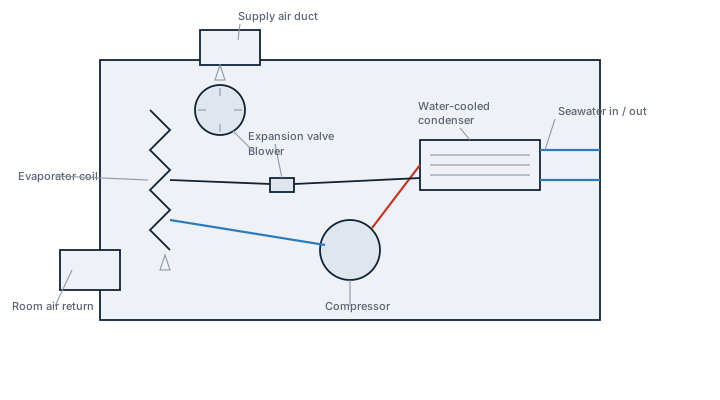
Unlike a split unit, a self-contained unit has no separate outdoor box: compressor, evaporator and condenser all sit in one cabinet inside or adjacent to the space it serves, typically the wheelhouse, ECR or a single dedicated compartment. Many marine self-contained units use a water-cooled condenser fed from the ship's seawater or a dedicated small seawater pump rather than an air-cooled coil, which removes the corrosion-prone exposed outdoor coil that a split system depends on, at the cost of needing a seawater strainer and overboard discharge to keep running.
Read the full guide
Main components
- Single packaged cabinet – compressor, evaporator coil, fan and filter built into one frame.
- Condenser – either an air-cooled coil similar to a split unit's outdoor coil, or a water-cooled shell-and-tube condenser fed from seawater.
- Seawater strainer and pump – on water-cooled models, a duplex strainer ahead of the condenser and either a dedicated pump or a tap from an existing seawater service.
- Control panel – thermostat, high/low pressure cutouts and, on water-cooled models, a water regulating valve that throttles seawater flow to condensing pressure.
- Condensate removal – gravity drain or small condensate pump where the unit sits below deck level.
Selection and sizing
Sizing follows the single space it serves, with the water-cooled versus air-cooled choice as the main selection decision:
- Cooling capacity against the compartment's heat load, including electronics heat in an ECR or wheelhouse console load.
- Seawater flow rate required at the condenser if water-cooled, and whether the ship's existing seawater service has spare capacity or a dedicated pump is needed.
- Available footprint, since the packaged cabinet must fit within the single compartment with clearance for filter and strainer access.
- Condenser tube material, cupronickel being the standard choice for seawater service over plain copper.
Regulations
Self-contained units in accommodation or control spaces carry the same general habitability and ventilation expectations as any accommodation cooling equipment. Where a unit is water-cooled from the ship's seawater system, the overboard discharge and any hull penetration for a dedicated pump fall under the vessel's general seawater system arrangements rather than a rule specific to the AC unit itself.
Typical faults
| Fault | Consequence |
|---|---|
| Seawater strainer fouled with marine growth or debris | Reduced condenser cooling, rising head pressure and eventual high-pressure trip |
| Condenser tube scaling or fouling | Gradual loss of capacity that mimics a refrigerant undercharge |
| Water regulating valve stuck | Either wasted seawater flow or insufficient condenser cooling depending on which way it sticks |
| Condensate pump or float switch failure | Water overflow into the compartment below or around the unit |
| Compressor failure from voltage fluctuation | Sudden total loss of cooling to a single, often critical, compartment |
What to look for in a supplier
- Water-cooled or air-cooled condenser option matched to where the unit will actually be sited.
- Cupronickel or equivalent corrosion-resistant tube material on any seawater-cooled condenser.
- Compact footprint and front or top service access for a unit that will likely be built into a tight compartment.
- Strainer and water regulating valve included as part of the supply package, not assumed to already exist on board.
On a water-cooled self-contained unit, check the strainer before opening the refrigerant circuit; a weak condenser flow looks exactly like a low refrigerant charge and wastes far more time to diagnose the wrong way round.