"> Self-Contained AC Unit - Equipment Database

Self-Contained AC Unit

medium 768 models total

A self-contained unit packages compressor, evaporator coil and condenser into one cabinet serving a single compartment, most often with the condenser cooled by seawater rather than the exposed air-cooled coil a split system relies on, trading outdoor-unit corrosion risk for a seawater strainer to keep clean.

Read more — Self-Contained AC Unit explained

What defines this type

Unlike a split unit, a self-contained unit has no separate outdoor box: compressor, evaporator and condenser all sit in one cabinet inside or adjacent to the space it serves, typically the wheelhouse, ECR or a single dedicated compartment. Many marine self-contained units use a water-cooled condenser fed from the ship's seawater or a dedicated small seawater pump rather than an air-cooled coil, which removes the corrosion-prone exposed outdoor coil that a split system depends on, at the cost of needing a seawater strainer and overboard discharge to keep running.
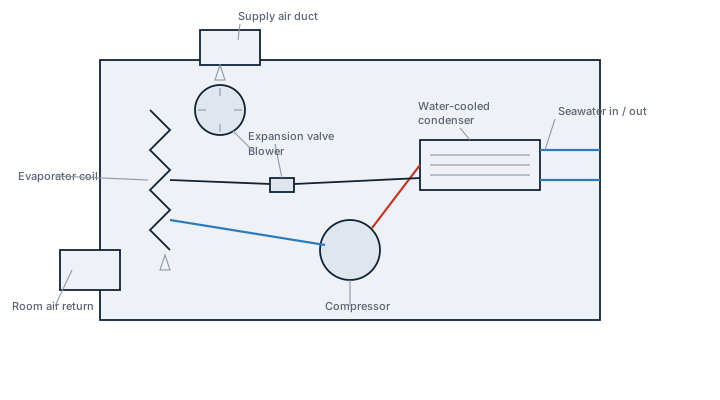
Self-contained water-cooled AC unit cross-section
Cross-section of a self-contained air conditioning unit showing the evaporator coil and blower on the room air side, the compressor, the water-cooled condenser with seawater in and out, and the expansion valve, all in one cabinet.

Main components

  • Single packaged cabinet – compressor, evaporator coil, fan and filter built into one frame.
  • Condenser – either an air-cooled coil similar to a split unit's outdoor coil, or a water-cooled shell-and-tube condenser fed from seawater.
  • Seawater strainer and pump – on water-cooled models, a duplex strainer ahead of the condenser and either a dedicated pump or a tap from an existing seawater service.
  • Control panel – thermostat, high/low pressure cutouts and, on water-cooled models, a water regulating valve that throttles seawater flow to condensing pressure.
  • Condensate removal – gravity drain or small condensate pump where the unit sits below deck level.

Selection and sizing

Sizing follows the single space it serves, with the water-cooled versus air-cooled choice as the main selection decision:

  • Cooling capacity against the compartment's heat load, including electronics heat in an ECR or wheelhouse console load.
  • Seawater flow rate required at the condenser if water-cooled, and whether the ship's existing seawater service has spare capacity or a dedicated pump is needed.
  • Available footprint, since the packaged cabinet must fit within the single compartment with clearance for filter and strainer access.
  • Condenser tube material, cupronickel being the standard choice for seawater service over plain copper.

Regulations

Self-contained units in accommodation or control spaces carry the same general habitability and ventilation expectations as any accommodation cooling equipment. Where a unit is water-cooled from the ship's seawater system, the overboard discharge and any hull penetration for a dedicated pump fall under the vessel's general seawater system arrangements rather than a rule specific to the AC unit itself.

Typical faults

FaultConsequence
Seawater strainer fouled with marine growth or debrisReduced condenser cooling, rising head pressure and eventual high-pressure trip
Condenser tube scaling or foulingGradual loss of capacity that mimics a refrigerant undercharge
Water regulating valve stuckEither wasted seawater flow or insufficient condenser cooling depending on which way it sticks
Condensate pump or float switch failureWater overflow into the compartment below or around the unit
Compressor failure from voltage fluctuationSudden total loss of cooling to a single, often critical, compartment

What to look for in a supplier

  • Water-cooled or air-cooled condenser option matched to where the unit will actually be sited.
  • Cupronickel or equivalent corrosion-resistant tube material on any seawater-cooled condenser.
  • Compact footprint and front or top service access for a unit that will likely be built into a tight compartment.
  • Strainer and water regulating valve included as part of the supply package, not assumed to already exist on board.

On a water-cooled self-contained unit, check the strainer before opening the refrigerant circuit; a weak condenser flow looks exactly like a low refrigerant charge and wastes far more time to diagnose the wrong way round.

8 manufacturers · 768 models

Carrier Marine

160
42CE Self-Contained 5kW R410A unverified
Cooling Capacity (kW)
5
Heating Capacity (kW)
4.0
Refrigerant
R410A
Voltage (V)
440
Air Flow (m³/h)
750
Common Failures & Inspection Points
  • Dirty filters, coils or air passages reduce airflow and cause poor temperature control or fan overload
  • Fan, motor, belt or bearing wear causes vibration, abnormal noise or reduced air circulation
  • Refrigerant or chilled-water leakage causes loss of cooling capacity and long running periods
  • Condensate drain blockage causes water leakage, corrosion or microbial growth
  • Sensor, thermostat, valve or control faults cause unstable temperature, icing or repeated protective trips
Service: Inspect filters, fans, bearings, belts or couplings, coils, refrigerant or water connections, condensate drains and controls. Clean heat-transfer surfaces and drains and check for corrosion, leakage and abnormal vibration. Verify temperature and airflow control using the approved system settings. Refer to the manufacturer documentation for the exact figure for refrigerant charge, airflow, pressure and control limits.
Spare Parts: Carry filters, belts, fan bearings or motors, temperature sensors, condensate parts, refrigeration valve or seal items, fuses and control relays.
Use Cases: Accommodation HVAC, control-room cooling, technical-space conditioning and machinery ventilation.
42CE Self-Contained 5kW R134a unverified
Cooling Capacity (kW)
5
Heating Capacity (kW)
4.0
Refrigerant
R134a
Voltage (V)
440
Air Flow (m³/h)
750
Common Failures & Inspection Points
  • Dirty filters, coils or air passages reduce airflow and cause poor temperature control or fan overload
  • Fan, motor, belt or bearing wear causes vibration, abnormal noise or reduced air circulation
  • Refrigerant or chilled-water leakage causes loss of cooling capacity and long running periods
  • Condensate drain blockage causes water leakage, corrosion or microbial growth
  • Sensor, thermostat, valve or control faults cause unstable temperature, icing or repeated protective trips
Service: Inspect filters, fans, bearings, belts or couplings, coils, refrigerant or water connections, condensate drains and controls. Clean heat-transfer surfaces and drains and check for corrosion, leakage and abnormal vibration. Verify temperature and airflow control using the approved system settings. Refer to the manufacturer documentation for the exact figure for refrigerant charge, airflow, pressure and control limits.
Spare Parts: Carry filters, belts, fan bearings or motors, temperature sensors, condensate parts, refrigeration valve or seal items, fuses and control relays.
Use Cases: Accommodation HVAC, control-room cooling, technical-space conditioning and machinery ventilation.
42CE Self-Contained 10kW R410A unverified
Cooling Capacity (kW)
10
Heating Capacity (kW)
8.0
Refrigerant
R410A
Voltage (V)
440
Air Flow (m³/h)
1500
Common Failures & Inspection Points
  • Loss of cooling caused by refrigerant leakage, resulting in long compressor run time, low capacity or protective trips
  • Condenser or evaporator fouling caused by dust, salt, scale or blocked flow, resulting in reduced capacity and abnormal refrigerant pressures
  • Fan, pump or compressor failure caused by bearing, motor or electrical faults, resulting in loss of airflow or cooling circulation
  • Condensate-drain blockage caused by dirt or poor drainage, resulting in water leakage around the unit
  • Sensor, expansion-control or electronic fault caused by component failure or poor calibration, resulting in unstable temperature, icing or repeated alarms
Service: Inspect refrigerant piping, compressors, heat exchangers, fans or pumps, filters, condensate drains and electrical terminals. Clean air and water-side heat-transfer surfaces and maintain unobstructed airflow or cooling-water flow. Investigate abnormal compressor cycling, icing or repeated pressure trips rather than resetting the unit without diagnosis. Check condensate drainage under cooling load and inspect insulation for moisture damage. Verify temperature sensors and control devices respond correctly. Refer to the manufacturer documentation for the exact figure for refrigerant charge, pressures, water flow, electrical settings and service values.
Spare Parts: Keep air filters, fan or pump service parts, temperature and pressure sensors, control boards or relays, drain parts and manufacturer-recommended refrigeration components. Refrigerant, compressor and expansion-control spares must match the exact approved system. Verify electrical supply and model compatibility before replacement.
Use Cases: Comfort and technical-space cooling on merchant ships, passenger vessels, offshore units and workboats.
42CE Self-Contained 10kW R134a unverified
Cooling Capacity (kW)
10
Heating Capacity (kW)
8.0
Refrigerant
R134a
Voltage (V)
440
Air Flow (m³/h)
1500
Common Failures & Inspection Points
  • Loss of cooling caused by refrigerant leakage, resulting in long compressor run time, low capacity or protective trips
  • Condenser or evaporator fouling caused by dust, salt, scale or blocked flow, resulting in reduced capacity and abnormal refrigerant pressures
  • Fan, pump or compressor failure caused by bearing, motor or electrical faults, resulting in loss of airflow or cooling circulation
  • Condensate-drain blockage caused by dirt or poor drainage, resulting in water leakage around the unit
  • Sensor, expansion-control or electronic fault caused by component failure or poor calibration, resulting in unstable temperature, icing or repeated alarms
Service: Inspect refrigerant piping, compressors, heat exchangers, fans or pumps, filters, condensate drains and electrical terminals. Clean air and water-side heat-transfer surfaces and maintain unobstructed airflow or cooling-water flow. Investigate abnormal compressor cycling, icing or repeated pressure trips rather than resetting the unit without diagnosis. Check condensate drainage under cooling load and inspect insulation for moisture damage. Verify temperature sensors and control devices respond correctly. Refer to the manufacturer documentation for the exact figure for refrigerant charge, pressures, water flow, electrical settings and service values.
Spare Parts: Keep air filters, fan or pump service parts, temperature and pressure sensors, control boards or relays, drain parts and manufacturer-recommended refrigeration components. Refrigerant, compressor and expansion-control spares must match the exact approved system. Verify electrical supply and model compatibility before replacement.
Use Cases: Comfort and technical-space cooling on merchant ships, passenger vessels, offshore units and workboats.
42CE Self-Contained 15kW R410A unverified
Cooling Capacity (kW)
15
Heating Capacity (kW)
12.0
Refrigerant
R410A
Voltage (V)
440
Air Flow (m³/h)
2250
Common Failures & Inspection Points
  • Loss of cooling caused by refrigerant leakage, resulting in long compressor run time, low capacity or protective trips
  • Condenser or evaporator fouling caused by dust, salt, scale or blocked flow, resulting in reduced capacity and abnormal refrigerant pressures
  • Fan, pump or compressor failure caused by bearing, motor or electrical faults, resulting in loss of airflow or cooling circulation
  • Condensate-drain blockage caused by dirt or poor drainage, resulting in water leakage around the unit
  • Sensor, expansion-control or electronic fault caused by component failure or poor calibration, resulting in unstable temperature, icing or repeated alarms
Service: Inspect refrigerant piping, compressors, heat exchangers, fans or pumps, filters, condensate drains and electrical terminals. Clean air and water-side heat-transfer surfaces and maintain unobstructed airflow or cooling-water flow. Investigate abnormal compressor cycling, icing or repeated pressure trips rather than resetting the unit without diagnosis. Check condensate drainage under cooling load and inspect insulation for moisture damage. Verify temperature sensors and control devices respond correctly. Refer to the manufacturer documentation for the exact figure for refrigerant charge, pressures, water flow, electrical settings and service values.
Spare Parts: Keep air filters, fan or pump service parts, temperature and pressure sensors, control boards or relays, drain parts and manufacturer-recommended refrigeration components. Refrigerant, compressor and expansion-control spares must match the exact approved system. Verify electrical supply and model compatibility before replacement.
Use Cases: Comfort and technical-space cooling on merchant ships, passenger vessels, offshore units and workboats.
42CE Self-Contained 15kW R134a unverified
Cooling Capacity (kW)
15
Heating Capacity (kW)
12.0
Refrigerant
R134a
Voltage (V)
440
Air Flow (m³/h)
2250
Common Failures & Inspection Points
  • Loss of cooling caused by refrigerant leakage, resulting in long compressor run time, low capacity or protective trips
  • Condenser or evaporator fouling caused by dust, salt, scale or blocked flow, resulting in reduced capacity and abnormal refrigerant pressures
  • Fan, pump or compressor failure caused by bearing, motor or electrical faults, resulting in loss of airflow or cooling circulation
  • Condensate-drain blockage caused by dirt or poor drainage, resulting in water leakage around the unit
  • Sensor, expansion-control or electronic fault caused by component failure or poor calibration, resulting in unstable temperature, icing or repeated alarms
Service: Inspect refrigerant piping, compressors, heat exchangers, fans or pumps, filters, condensate drains and electrical terminals. Clean air and water-side heat-transfer surfaces and maintain unobstructed airflow or cooling-water flow. Investigate abnormal compressor cycling, icing or repeated pressure trips rather than resetting the unit without diagnosis. Check condensate drainage under cooling load and inspect insulation for moisture damage. Verify temperature sensors and control devices respond correctly. Refer to the manufacturer documentation for the exact figure for refrigerant charge, pressures, water flow, electrical settings and service values.
Spare Parts: Keep air filters, fan or pump service parts, temperature and pressure sensors, control boards or relays, drain parts and manufacturer-recommended refrigeration components. Refrigerant, compressor and expansion-control spares must match the exact approved system. Verify electrical supply and model compatibility before replacement.
Use Cases: Comfort and technical-space cooling on merchant ships, passenger vessels, offshore units and workboats.
42CE Self-Contained 20kW R410A unverified
Cooling Capacity (kW)
20
Heating Capacity (kW)
16.0
Refrigerant
R410A
Voltage (V)
440
Air Flow (m³/h)
3000
Common Failures & Inspection Points
  • Loss of cooling caused by refrigerant leakage, resulting in long compressor run time, low capacity or protective trips
  • Condenser or evaporator fouling caused by dust, salt, scale or blocked flow, resulting in reduced capacity and abnormal refrigerant pressures
  • Fan, pump or compressor failure caused by bearing, motor or electrical faults, resulting in loss of airflow or cooling circulation
  • Condensate-drain blockage caused by dirt or poor drainage, resulting in water leakage around the unit
  • Sensor, expansion-control or electronic fault caused by component failure or poor calibration, resulting in unstable temperature, icing or repeated alarms
Service: Inspect refrigerant piping, compressors, heat exchangers, fans or pumps, filters, condensate drains and electrical terminals. Clean air and water-side heat-transfer surfaces and maintain unobstructed airflow or cooling-water flow. Investigate abnormal compressor cycling, icing or repeated pressure trips rather than resetting the unit without diagnosis. Check condensate drainage under cooling load and inspect insulation for moisture damage. Verify temperature sensors and control devices respond correctly. Refer to the manufacturer documentation for the exact figure for refrigerant charge, pressures, water flow, electrical settings and service values.
Spare Parts: Keep air filters, fan or pump service parts, temperature and pressure sensors, control boards or relays, drain parts and manufacturer-recommended refrigeration components. Refrigerant, compressor and expansion-control spares must match the exact approved system. Verify electrical supply and model compatibility before replacement.
Use Cases: Comfort and technical-space cooling on merchant ships, passenger vessels, offshore units and workboats.
42CE Self-Contained 20kW R134a unverified
Cooling Capacity (kW)
20
Heating Capacity (kW)
16.0
Refrigerant
R134a
Voltage (V)
440
Air Flow (m³/h)
3000
Common Failures & Inspection Points
  • Loss of cooling caused by refrigerant leakage, resulting in long compressor run time, low capacity or protective trips
  • Condenser or evaporator fouling caused by dust, salt, scale or blocked flow, resulting in reduced capacity and abnormal refrigerant pressures
  • Fan, pump or compressor failure caused by bearing, motor or electrical faults, resulting in loss of airflow or cooling circulation
  • Condensate-drain blockage caused by dirt or poor drainage, resulting in water leakage around the unit
  • Sensor, expansion-control or electronic fault caused by component failure or poor calibration, resulting in unstable temperature, icing or repeated alarms
Service: Inspect refrigerant piping, compressors, heat exchangers, fans or pumps, filters, condensate drains and electrical terminals. Clean air and water-side heat-transfer surfaces and maintain unobstructed airflow or cooling-water flow. Investigate abnormal compressor cycling, icing or repeated pressure trips rather than resetting the unit without diagnosis. Check condensate drainage under cooling load and inspect insulation for moisture damage. Verify temperature sensors and control devices respond correctly. Refer to the manufacturer documentation for the exact figure for refrigerant charge, pressures, water flow, electrical settings and service values.
Spare Parts: Keep air filters, fan or pump service parts, temperature and pressure sensors, control boards or relays, drain parts and manufacturer-recommended refrigeration components. Refrigerant, compressor and expansion-control spares must match the exact approved system. Verify electrical supply and model compatibility before replacement.
Use Cases: Comfort and technical-space cooling on merchant ships, passenger vessels, offshore units and workboats.
42CE Self-Contained 30kW R410A unverified
Cooling Capacity (kW)
30
Heating Capacity (kW)
24.0
Refrigerant
R410A
Voltage (V)
440
Air Flow (m³/h)
4500
Common Failures & Inspection Points
  • Loss of cooling caused by refrigerant leakage, resulting in long compressor run time, low capacity or protective trips
  • Condenser or evaporator fouling caused by dust, salt, scale or blocked flow, resulting in reduced capacity and abnormal refrigerant pressures
  • Fan, pump or compressor failure caused by bearing, motor or electrical faults, resulting in loss of airflow or cooling circulation
  • Condensate-drain blockage caused by dirt or poor drainage, resulting in water leakage around the unit
  • Sensor, expansion-control or electronic fault caused by component failure or poor calibration, resulting in unstable temperature, icing or repeated alarms
Service: Inspect refrigerant piping, compressors, heat exchangers, fans or pumps, filters, condensate drains and electrical terminals. Clean air and water-side heat-transfer surfaces and maintain unobstructed airflow or cooling-water flow. Investigate abnormal compressor cycling, icing or repeated pressure trips rather than resetting the unit without diagnosis. Check condensate drainage under cooling load and inspect insulation for moisture damage. Verify temperature sensors and control devices respond correctly. Refer to the manufacturer documentation for the exact figure for refrigerant charge, pressures, water flow, electrical settings and service values.
Spare Parts: Keep air filters, fan or pump service parts, temperature and pressure sensors, control boards or relays, drain parts and manufacturer-recommended refrigeration components. Refrigerant, compressor and expansion-control spares must match the exact approved system. Verify electrical supply and model compatibility before replacement.
Use Cases: Comfort and technical-space cooling on merchant ships, passenger vessels, offshore units and workboats.
42CE Self-Contained 30kW R134a unverified
Cooling Capacity (kW)
30
Heating Capacity (kW)
24.0
Refrigerant
R134a
Voltage (V)
440
Air Flow (m³/h)
4500
Common Failures & Inspection Points
  • Loss of cooling caused by refrigerant leakage, resulting in long compressor run time, low capacity or protective trips
  • Condenser or evaporator fouling caused by dust, salt, scale or blocked flow, resulting in reduced capacity and abnormal refrigerant pressures
  • Fan, pump or compressor failure caused by bearing, motor or electrical faults, resulting in loss of airflow or cooling circulation
  • Condensate-drain blockage caused by dirt or poor drainage, resulting in water leakage around the unit
  • Sensor, expansion-control or electronic fault caused by component failure or poor calibration, resulting in unstable temperature, icing or repeated alarms
Service: Inspect refrigerant piping, compressors, heat exchangers, fans or pumps, filters, condensate drains and electrical terminals. Clean air and water-side heat-transfer surfaces and maintain unobstructed airflow or cooling-water flow. Investigate abnormal compressor cycling, icing or repeated pressure trips rather than resetting the unit without diagnosis. Check condensate drainage under cooling load and inspect insulation for moisture damage. Verify temperature sensors and control devices respond correctly. Refer to the manufacturer documentation for the exact figure for refrigerant charge, pressures, water flow, electrical settings and service values.
Spare Parts: Keep air filters, fan or pump service parts, temperature and pressure sensors, control boards or relays, drain parts and manufacturer-recommended refrigeration components. Refrigerant, compressor and expansion-control spares must match the exact approved system. Verify electrical supply and model compatibility before replacement.
Use Cases: Comfort and technical-space cooling on merchant ships, passenger vessels, offshore units and workboats.
42CE Self-Contained 50kW R410A unverified
Cooling Capacity (kW)
50
Heating Capacity (kW)
40.0
Refrigerant
R410A
Voltage (V)
440
Air Flow (m³/h)
7500
Common Failures & Inspection Points
  • Loss of cooling caused by refrigerant leakage, resulting in long compressor run time, low capacity or protective trips
  • Condenser or evaporator fouling caused by dust, salt, scale or blocked flow, resulting in reduced capacity and abnormal refrigerant pressures
  • Fan, pump or compressor failure caused by bearing, motor or electrical faults, resulting in loss of airflow or cooling circulation
  • Condensate-drain blockage caused by dirt or poor drainage, resulting in water leakage around the unit
  • Sensor, expansion-control or electronic fault caused by component failure or poor calibration, resulting in unstable temperature, icing or repeated alarms
Service: Inspect refrigerant piping, compressors, heat exchangers, fans or pumps, filters, condensate drains and electrical terminals. Clean air and water-side heat-transfer surfaces and maintain unobstructed airflow or cooling-water flow. Investigate abnormal compressor cycling, icing or repeated pressure trips rather than resetting the unit without diagnosis. Check condensate drainage under cooling load and inspect insulation for moisture damage. Verify temperature sensors and control devices respond correctly. Refer to the manufacturer documentation for the exact figure for refrigerant charge, pressures, water flow, electrical settings and service values.
Spare Parts: Keep air filters, fan or pump service parts, temperature and pressure sensors, control boards or relays, drain parts and manufacturer-recommended refrigeration components. Refrigerant, compressor and expansion-control spares must match the exact approved system. Verify electrical supply and model compatibility before replacement.
Use Cases: Comfort and technical-space cooling on merchant ships, passenger vessels, offshore units and workboats.
42CE Self-Contained 50kW R134a unverified
Cooling Capacity (kW)
50
Heating Capacity (kW)
40.0
Refrigerant
R134a
Voltage (V)
440
Air Flow (m³/h)
7500
Common Failures & Inspection Points
  • Loss of cooling caused by refrigerant leakage, resulting in long compressor run time, low capacity or protective trips
  • Condenser or evaporator fouling caused by dust, salt, scale or blocked flow, resulting in reduced capacity and abnormal refrigerant pressures
  • Fan, pump or compressor failure caused by bearing, motor or electrical faults, resulting in loss of airflow or cooling circulation
  • Condensate-drain blockage caused by dirt or poor drainage, resulting in water leakage around the unit
  • Sensor, expansion-control or electronic fault caused by component failure or poor calibration, resulting in unstable temperature, icing or repeated alarms
Service: Inspect refrigerant piping, compressors, heat exchangers, fans or pumps, filters, condensate drains and electrical terminals. Clean air and water-side heat-transfer surfaces and maintain unobstructed airflow or cooling-water flow. Investigate abnormal compressor cycling, icing or repeated pressure trips rather than resetting the unit without diagnosis. Check condensate drainage under cooling load and inspect insulation for moisture damage. Verify temperature sensors and control devices respond correctly. Refer to the manufacturer documentation for the exact figure for refrigerant charge, pressures, water flow, electrical settings and service values.
Spare Parts: Keep air filters, fan or pump service parts, temperature and pressure sensors, control boards or relays, drain parts and manufacturer-recommended refrigeration components. Refrigerant, compressor and expansion-control spares must match the exact approved system. Verify electrical supply and model compatibility before replacement.
Use Cases: Comfort and technical-space cooling on merchant ships, passenger vessels, offshore units and workboats.
42CE Self-Contained 75kW R410A unverified
Cooling Capacity (kW)
75
Heating Capacity (kW)
60.0
Refrigerant
R410A
Voltage (V)
440
Air Flow (m³/h)
11250
Common Failures & Inspection Points
  • Loss of cooling caused by refrigerant leakage, resulting in long compressor run time, low capacity or protective trips
  • Condenser or evaporator fouling caused by dust, salt, scale or blocked flow, resulting in reduced capacity and abnormal refrigerant pressures
  • Fan, pump or compressor failure caused by bearing, motor or electrical faults, resulting in loss of airflow or cooling circulation
  • Condensate-drain blockage caused by dirt or poor drainage, resulting in water leakage around the unit
  • Sensor, expansion-control or electronic fault caused by component failure or poor calibration, resulting in unstable temperature, icing or repeated alarms
Service: Inspect refrigerant piping, compressors, heat exchangers, fans or pumps, filters, condensate drains and electrical terminals. Clean air and water-side heat-transfer surfaces and maintain unobstructed airflow or cooling-water flow. Investigate abnormal compressor cycling, icing or repeated pressure trips rather than resetting the unit without diagnosis. Check condensate drainage under cooling load and inspect insulation for moisture damage. Verify temperature sensors and control devices respond correctly. Refer to the manufacturer documentation for the exact figure for refrigerant charge, pressures, water flow, electrical settings and service values.
Spare Parts: Keep air filters, fan or pump service parts, temperature and pressure sensors, control boards or relays, drain parts and manufacturer-recommended refrigeration components. Refrigerant, compressor and expansion-control spares must match the exact approved system. Verify electrical supply and model compatibility before replacement.
Use Cases: Comfort and technical-space cooling on merchant ships, passenger vessels, offshore units and workboats.
42CE Self-Contained 75kW R134a unverified
Cooling Capacity (kW)
75
Heating Capacity (kW)
60.0
Refrigerant
R134a
Voltage (V)
440
Air Flow (m³/h)
11250
Common Failures & Inspection Points
  • Loss of cooling caused by refrigerant leakage, resulting in long compressor run time, low capacity or protective trips
  • Condenser or evaporator fouling caused by dust, salt, scale or blocked flow, resulting in reduced capacity and abnormal refrigerant pressures
  • Fan, pump or compressor failure caused by bearing, motor or electrical faults, resulting in loss of airflow or cooling circulation
  • Condensate-drain blockage caused by dirt or poor drainage, resulting in water leakage around the unit
  • Sensor, expansion-control or electronic fault caused by component failure or poor calibration, resulting in unstable temperature, icing or repeated alarms
Service: Inspect refrigerant piping, compressors, heat exchangers, fans or pumps, filters, condensate drains and electrical terminals. Clean air and water-side heat-transfer surfaces and maintain unobstructed airflow or cooling-water flow. Investigate abnormal compressor cycling, icing or repeated pressure trips rather than resetting the unit without diagnosis. Check condensate drainage under cooling load and inspect insulation for moisture damage. Verify temperature sensors and control devices respond correctly. Refer to the manufacturer documentation for the exact figure for refrigerant charge, pressures, water flow, electrical settings and service values.
Spare Parts: Keep air filters, fan or pump service parts, temperature and pressure sensors, control boards or relays, drain parts and manufacturer-recommended refrigeration components. Refrigerant, compressor and expansion-control spares must match the exact approved system. Verify electrical supply and model compatibility before replacement.
Use Cases: Comfort and technical-space cooling on merchant ships, passenger vessels, offshore units and workboats.
42CE Self-Contained 100kW R410A unverified
Cooling Capacity (kW)
100
Heating Capacity (kW)
80.0
Refrigerant
R410A
Voltage (V)
440
Air Flow (m³/h)
15000
Common Failures & Inspection Points
  • Loss of cooling caused by refrigerant leakage, resulting in long compressor run time, low capacity or protective trips
  • Condenser or evaporator fouling caused by dust, salt, scale or blocked flow, resulting in reduced capacity and abnormal refrigerant pressures
  • Fan, pump or compressor failure caused by bearing, motor or electrical faults, resulting in loss of airflow or cooling circulation
  • Condensate-drain blockage caused by dirt or poor drainage, resulting in water leakage around the unit
  • Sensor, expansion-control or electronic fault caused by component failure or poor calibration, resulting in unstable temperature, icing or repeated alarms
Service: Inspect refrigerant piping, compressors, heat exchangers, fans or pumps, filters, condensate drains and electrical terminals. Clean air and water-side heat-transfer surfaces and maintain unobstructed airflow or cooling-water flow. Investigate abnormal compressor cycling, icing or repeated pressure trips rather than resetting the unit without diagnosis. Check condensate drainage under cooling load and inspect insulation for moisture damage. Verify temperature sensors and control devices respond correctly. Refer to the manufacturer documentation for the exact figure for refrigerant charge, pressures, water flow, electrical settings and service values.
Spare Parts: Keep air filters, fan or pump service parts, temperature and pressure sensors, control boards or relays, drain parts and manufacturer-recommended refrigeration components. Refrigerant, compressor and expansion-control spares must match the exact approved system. Verify electrical supply and model compatibility before replacement.
Use Cases: Comfort and technical-space cooling on merchant ships, passenger vessels, offshore units and workboats.
42CE Self-Contained 100kW R134a unverified
Cooling Capacity (kW)
100
Heating Capacity (kW)
80.0
Refrigerant
R134a
Voltage (V)
440
Air Flow (m³/h)
15000
Common Failures & Inspection Points
  • Loss of cooling caused by refrigerant leakage, resulting in long compressor run time, low capacity or protective trips
  • Condenser or evaporator fouling caused by dust, salt, scale or blocked flow, resulting in reduced capacity and abnormal refrigerant pressures
  • Fan, pump or compressor failure caused by bearing, motor or electrical faults, resulting in loss of airflow or cooling circulation
  • Condensate-drain blockage caused by dirt or poor drainage, resulting in water leakage around the unit
  • Sensor, expansion-control or electronic fault caused by component failure or poor calibration, resulting in unstable temperature, icing or repeated alarms
Service: Inspect refrigerant piping, compressors, heat exchangers, fans or pumps, filters, condensate drains and electrical terminals. Clean air and water-side heat-transfer surfaces and maintain unobstructed airflow or cooling-water flow. Investigate abnormal compressor cycling, icing or repeated pressure trips rather than resetting the unit without diagnosis. Check condensate drainage under cooling load and inspect insulation for moisture damage. Verify temperature sensors and control devices respond correctly. Refer to the manufacturer documentation for the exact figure for refrigerant charge, pressures, water flow, electrical settings and service values.
Spare Parts: Keep air filters, fan or pump service parts, temperature and pressure sensors, control boards or relays, drain parts and manufacturer-recommended refrigeration components. Refrigerant, compressor and expansion-control spares must match the exact approved system. Verify electrical supply and model compatibility before replacement.
Use Cases: Comfort and technical-space cooling on merchant ships, passenger vessels, offshore units and workboats.
42CE Self-Contained 150kW R410A unverified
Cooling Capacity (kW)
150
Heating Capacity (kW)
120.0
Refrigerant
R410A
Voltage (V)
440
Air Flow (m³/h)
22500
Common Failures & Inspection Points
  • Loss of cooling caused by refrigerant leakage, resulting in long compressor run time, low capacity or protective trips
  • Condenser or evaporator fouling caused by dust, salt, scale or blocked flow, resulting in reduced capacity and abnormal refrigerant pressures
  • Fan, pump or compressor failure caused by bearing, motor or electrical faults, resulting in loss of airflow or cooling circulation
  • Condensate-drain blockage caused by dirt or poor drainage, resulting in water leakage around the unit
  • Sensor, expansion-control or electronic fault caused by component failure or poor calibration, resulting in unstable temperature, icing or repeated alarms
Service: Inspect refrigerant piping, compressors, heat exchangers, fans or pumps, filters, condensate drains and electrical terminals. Clean air and water-side heat-transfer surfaces and maintain unobstructed airflow or cooling-water flow. Investigate abnormal compressor cycling, icing or repeated pressure trips rather than resetting the unit without diagnosis. Check condensate drainage under cooling load and inspect insulation for moisture damage. Verify temperature sensors and control devices respond correctly. Refer to the manufacturer documentation for the exact figure for refrigerant charge, pressures, water flow, electrical settings and service values.
Spare Parts: Keep air filters, fan or pump service parts, temperature and pressure sensors, control boards or relays, drain parts and manufacturer-recommended refrigeration components. Refrigerant, compressor and expansion-control spares must match the exact approved system. Verify electrical supply and model compatibility before replacement.
Use Cases: Comfort and technical-space cooling on merchant ships, passenger vessels, offshore units and workboats.
42CE Self-Contained 150kW R134a unverified
Cooling Capacity (kW)
150
Heating Capacity (kW)
120.0
Refrigerant
R134a
Voltage (V)
440
Air Flow (m³/h)
22500
Common Failures & Inspection Points
  • Loss of cooling caused by refrigerant leakage, resulting in long compressor run time, low capacity or protective trips
  • Condenser or evaporator fouling caused by dust, salt, scale or blocked flow, resulting in reduced capacity and abnormal refrigerant pressures
  • Fan, pump or compressor failure caused by bearing, motor or electrical faults, resulting in loss of airflow or cooling circulation
  • Condensate-drain blockage caused by dirt or poor drainage, resulting in water leakage around the unit
  • Sensor, expansion-control or electronic fault caused by component failure or poor calibration, resulting in unstable temperature, icing or repeated alarms
Service: Inspect refrigerant piping, compressors, heat exchangers, fans or pumps, filters, condensate drains and electrical terminals. Clean air and water-side heat-transfer surfaces and maintain unobstructed airflow or cooling-water flow. Investigate abnormal compressor cycling, icing or repeated pressure trips rather than resetting the unit without diagnosis. Check condensate drainage under cooling load and inspect insulation for moisture damage. Verify temperature sensors and control devices respond correctly. Refer to the manufacturer documentation for the exact figure for refrigerant charge, pressures, water flow, electrical settings and service values.
Spare Parts: Keep air filters, fan or pump service parts, temperature and pressure sensors, control boards or relays, drain parts and manufacturer-recommended refrigeration components. Refrigerant, compressor and expansion-control spares must match the exact approved system. Verify electrical supply and model compatibility before replacement.
Use Cases: Comfort and technical-space cooling on merchant ships, passenger vessels, offshore units and workboats.
42CE Self-Contained 200kW R410A unverified
Cooling Capacity (kW)
200
Heating Capacity (kW)
160.0
Refrigerant
R410A
Voltage (V)
440
Air Flow (m³/h)
30000
42CE Self-Contained 200kW R134a unverified
Cooling Capacity (kW)
200
Heating Capacity (kW)
160.0
Refrigerant
R134a
Voltage (V)
440
Air Flow (m³/h)
30000
Common Failures & Inspection Points
  • Loss of cooling caused by refrigerant leakage, resulting in long compressor run time, low capacity or protective trips
  • Condenser or evaporator fouling caused by dust, salt, scale or blocked flow, resulting in reduced capacity and abnormal refrigerant pressures
  • Fan, pump or compressor failure caused by bearing, motor or electrical faults, resulting in loss of airflow or cooling circulation
  • Condensate-drain blockage caused by dirt or poor drainage, resulting in water leakage around the unit
  • Sensor, expansion-control or electronic fault caused by component failure or poor calibration, resulting in unstable temperature, icing or repeated alarms
Service: Inspect refrigerant piping, compressors, heat exchangers, fans or pumps, filters, condensate drains and electrical terminals. Clean air and water-side heat-transfer surfaces and maintain unobstructed airflow or cooling-water flow. Investigate abnormal compressor cycling, icing or repeated pressure trips rather than resetting the unit without diagnosis. Check condensate drainage under cooling load and inspect insulation for moisture damage. Verify temperature sensors and control devices respond correctly. Refer to the manufacturer documentation for the exact figure for refrigerant charge, pressures, water flow, electrical settings and service values.
Spare Parts: Keep air filters, fan or pump service parts, temperature and pressure sensors, control boards or relays, drain parts and manufacturer-recommended refrigeration components. Refrigerant, compressor and expansion-control spares must match the exact approved system. Verify electrical supply and model compatibility before replacement.
Use Cases: Comfort and technical-space cooling on merchant ships, passenger vessels, offshore units and workboats.
42CE Self-Contained 300kW R410A unverified
Cooling Capacity (kW)
300
Heating Capacity (kW)
240.0
Refrigerant
R410A
Voltage (V)
440
Air Flow (m³/h)
45000
Common Failures & Inspection Points
  • Loss of cooling caused by refrigerant leakage, resulting in long compressor run time, low capacity or protective trips
  • Condenser or evaporator fouling caused by dust, salt, scale or blocked flow, resulting in reduced capacity and abnormal refrigerant pressures
  • Fan, pump or compressor failure caused by bearing, motor or electrical faults, resulting in loss of airflow or cooling circulation
  • Condensate-drain blockage caused by dirt or poor drainage, resulting in water leakage around the unit
  • Sensor, expansion-control or electronic fault caused by component failure or poor calibration, resulting in unstable temperature, icing or repeated alarms
Service: Inspect refrigerant piping, compressors, heat exchangers, fans or pumps, filters, condensate drains and electrical terminals. Clean air and water-side heat-transfer surfaces and maintain unobstructed airflow or cooling-water flow. Investigate abnormal compressor cycling, icing or repeated pressure trips rather than resetting the unit without diagnosis. Check condensate drainage under cooling load and inspect insulation for moisture damage. Verify temperature sensors and control devices respond correctly. Refer to the manufacturer documentation for the exact figure for refrigerant charge, pressures, water flow, electrical settings and service values.
Spare Parts: Keep air filters, fan or pump service parts, temperature and pressure sensors, control boards or relays, drain parts and manufacturer-recommended refrigeration components. Refrigerant, compressor and expansion-control spares must match the exact approved system. Verify electrical supply and model compatibility before replacement.
Use Cases: Comfort and technical-space cooling on merchant ships, passenger vessels, offshore units and workboats.
42CE Self-Contained 300kW R134a unverified
Cooling Capacity (kW)
300
Heating Capacity (kW)
240.0
Refrigerant
R134a
Voltage (V)
440
Air Flow (m³/h)
45000
Common Failures & Inspection Points
  • Loss of cooling caused by refrigerant leakage, resulting in long compressor run time, low capacity or protective trips
  • Condenser or evaporator fouling caused by dust, salt, scale or blocked flow, resulting in reduced capacity and abnormal refrigerant pressures
  • Fan, pump or compressor failure caused by bearing, motor or electrical faults, resulting in loss of airflow or cooling circulation
  • Condensate-drain blockage caused by dirt or poor drainage, resulting in water leakage around the unit
  • Sensor, expansion-control or electronic fault caused by component failure or poor calibration, resulting in unstable temperature, icing or repeated alarms
Service: Inspect refrigerant piping, compressors, heat exchangers, fans or pumps, filters, condensate drains and electrical terminals. Clean air and water-side heat-transfer surfaces and maintain unobstructed airflow or cooling-water flow. Investigate abnormal compressor cycling, icing or repeated pressure trips rather than resetting the unit without diagnosis. Check condensate drainage under cooling load and inspect insulation for moisture damage. Verify temperature sensors and control devices respond correctly. Refer to the manufacturer documentation for the exact figure for refrigerant charge, pressures, water flow, electrical settings and service values.
Spare Parts: Keep air filters, fan or pump service parts, temperature and pressure sensors, control boards or relays, drain parts and manufacturer-recommended refrigeration components. Refrigerant, compressor and expansion-control spares must match the exact approved system. Verify electrical supply and model compatibility before replacement.
Use Cases: Comfort and technical-space cooling on merchant ships, passenger vessels, offshore units and workboats.
42CE Self-Contained 500kW R410A unverified
Cooling Capacity (kW)
500
Heating Capacity (kW)
400.0
Refrigerant
R410A
Voltage (V)
440
Air Flow (m³/h)
75000
Common Failures & Inspection Points
  • Loss of cooling caused by refrigerant leakage, resulting in long compressor run time, low capacity or protective trips
  • Condenser or evaporator fouling caused by dust, salt, scale or blocked flow, resulting in reduced capacity and abnormal refrigerant pressures
  • Fan, pump or compressor failure caused by bearing, motor or electrical faults, resulting in loss of airflow or cooling circulation
  • Condensate-drain blockage caused by dirt or poor drainage, resulting in water leakage around the unit
  • Sensor, expansion-control or electronic fault caused by component failure or poor calibration, resulting in unstable temperature, icing or repeated alarms
Service: Inspect refrigerant piping, compressors, heat exchangers, fans or pumps, filters, condensate drains and electrical terminals. Clean air and water-side heat-transfer surfaces and maintain unobstructed airflow or cooling-water flow. Investigate abnormal compressor cycling, icing or repeated pressure trips rather than resetting the unit without diagnosis. Check condensate drainage under cooling load and inspect insulation for moisture damage. Verify temperature sensors and control devices respond correctly. Refer to the manufacturer documentation for the exact figure for refrigerant charge, pressures, water flow, electrical settings and service values.
Spare Parts: Keep air filters, fan or pump service parts, temperature and pressure sensors, control boards or relays, drain parts and manufacturer-recommended refrigeration components. Refrigerant, compressor and expansion-control spares must match the exact approved system. Verify electrical supply and model compatibility before replacement.
Use Cases: Comfort and technical-space cooling on merchant ships, passenger vessels, offshore units and workboats.
42CE Self-Contained 500kW R134a unverified
Cooling Capacity (kW)
500
Heating Capacity (kW)
400.0
Refrigerant
R134a
Voltage (V)
440
Air Flow (m³/h)
75000
Common Failures & Inspection Points
  • Loss of cooling caused by refrigerant leakage, resulting in long compressor run time, low capacity or protective trips
  • Condenser or evaporator fouling caused by dust, salt, scale or blocked flow, resulting in reduced capacity and abnormal refrigerant pressures
  • Fan, pump or compressor failure caused by bearing, motor or electrical faults, resulting in loss of airflow or cooling circulation
  • Condensate-drain blockage caused by dirt or poor drainage, resulting in water leakage around the unit
  • Sensor, expansion-control or electronic fault caused by component failure or poor calibration, resulting in unstable temperature, icing or repeated alarms
Service: Inspect refrigerant piping, compressors, heat exchangers, fans or pumps, filters, condensate drains and electrical terminals. Clean air and water-side heat-transfer surfaces and maintain unobstructed airflow or cooling-water flow. Investigate abnormal compressor cycling, icing or repeated pressure trips rather than resetting the unit without diagnosis. Check condensate drainage under cooling load and inspect insulation for moisture damage. Verify temperature sensors and control devices respond correctly. Refer to the manufacturer documentation for the exact figure for refrigerant charge, pressures, water flow, electrical settings and service values.
Spare Parts: Keep air filters, fan or pump service parts, temperature and pressure sensors, control boards or relays, drain parts and manufacturer-recommended refrigeration components. Refrigerant, compressor and expansion-control spares must match the exact approved system. Verify electrical supply and model compatibility before replacement.
Use Cases: Comfort and technical-space cooling on merchant ships, passenger vessels, offshore units and workboats.
42CE Self-Contained 750kW R410A unverified
Cooling Capacity (kW)
750
Heating Capacity (kW)
600.0
Refrigerant
R410A
Voltage (V)
440
Air Flow (m³/h)
112500
Common Failures & Inspection Points
  • Loss of cooling caused by refrigerant leakage, resulting in long compressor run time, low capacity or protective trips
  • Condenser or evaporator fouling caused by dust, salt, scale or blocked flow, resulting in reduced capacity and abnormal refrigerant pressures
  • Fan, pump or compressor failure caused by bearing, motor or electrical faults, resulting in loss of airflow or cooling circulation
  • Condensate-drain blockage caused by dirt or poor drainage, resulting in water leakage around the unit
  • Sensor, expansion-control or electronic fault caused by component failure or poor calibration, resulting in unstable temperature, icing or repeated alarms
Service: Inspect refrigerant piping, compressors, heat exchangers, fans or pumps, filters, condensate drains and electrical terminals. Clean air and water-side heat-transfer surfaces and maintain unobstructed airflow or cooling-water flow. Investigate abnormal compressor cycling, icing or repeated pressure trips rather than resetting the unit without diagnosis. Check condensate drainage under cooling load and inspect insulation for moisture damage. Verify temperature sensors and control devices respond correctly. Refer to the manufacturer documentation for the exact figure for refrigerant charge, pressures, water flow, electrical settings and service values.
Spare Parts: Keep air filters, fan or pump service parts, temperature and pressure sensors, control boards or relays, drain parts and manufacturer-recommended refrigeration components. Refrigerant, compressor and expansion-control spares must match the exact approved system. Verify electrical supply and model compatibility before replacement.
Use Cases: Comfort and technical-space cooling on merchant ships, passenger vessels, offshore units and workboats.
42CE Self-Contained 750kW R134a unverified
Cooling Capacity (kW)
750
Heating Capacity (kW)
600.0
Refrigerant
R134a
Voltage (V)
440
Air Flow (m³/h)
112500
Common Failures & Inspection Points
  • Loss of cooling caused by refrigerant leakage, resulting in long compressor run time, low capacity or protective trips
  • Condenser or evaporator fouling caused by dust, salt, scale or blocked flow, resulting in reduced capacity and abnormal refrigerant pressures
  • Fan, pump or compressor failure caused by bearing, motor or electrical faults, resulting in loss of airflow or cooling circulation
  • Condensate-drain blockage caused by dirt or poor drainage, resulting in water leakage around the unit
  • Sensor, expansion-control or electronic fault caused by component failure or poor calibration, resulting in unstable temperature, icing or repeated alarms
Service: Inspect refrigerant piping, compressors, heat exchangers, fans or pumps, filters, condensate drains and electrical terminals. Clean air and water-side heat-transfer surfaces and maintain unobstructed airflow or cooling-water flow. Investigate abnormal compressor cycling, icing or repeated pressure trips rather than resetting the unit without diagnosis. Check condensate drainage under cooling load and inspect insulation for moisture damage. Verify temperature sensors and control devices respond correctly. Refer to the manufacturer documentation for the exact figure for refrigerant charge, pressures, water flow, electrical settings and service values.
Spare Parts: Keep air filters, fan or pump service parts, temperature and pressure sensors, control boards or relays, drain parts and manufacturer-recommended refrigeration components. Refrigerant, compressor and expansion-control spares must match the exact approved system. Verify electrical supply and model compatibility before replacement.
Use Cases: Comfort and technical-space cooling on merchant ships, passenger vessels, offshore units and workboats.
42CE Self-Contained 1000kW R410A unverified
Cooling Capacity (kW)
1000
Heating Capacity (kW)
800.0
Refrigerant
R410A
Voltage (V)
440
Air Flow (m³/h)
150000
Common Failures & Inspection Points
  • Loss of cooling caused by refrigerant leakage, resulting in long compressor run time, low capacity or protective trips
  • Condenser or evaporator fouling caused by dust, salt, scale or blocked flow, resulting in reduced capacity and abnormal refrigerant pressures
  • Fan, pump or compressor failure caused by bearing, motor or electrical faults, resulting in loss of airflow or cooling circulation
  • Condensate-drain blockage caused by dirt or poor drainage, resulting in water leakage around the unit
  • Sensor, expansion-control or electronic fault caused by component failure or poor calibration, resulting in unstable temperature, icing or repeated alarms
Service: Inspect refrigerant piping, compressors, heat exchangers, fans or pumps, filters, condensate drains and electrical terminals. Clean air and water-side heat-transfer surfaces and maintain unobstructed airflow or cooling-water flow. Investigate abnormal compressor cycling, icing or repeated pressure trips rather than resetting the unit without diagnosis. Check condensate drainage under cooling load and inspect insulation for moisture damage. Verify temperature sensors and control devices respond correctly. Refer to the manufacturer documentation for the exact figure for refrigerant charge, pressures, water flow, electrical settings and service values.
Spare Parts: Keep air filters, fan or pump service parts, temperature and pressure sensors, control boards or relays, drain parts and manufacturer-recommended refrigeration components. Refrigerant, compressor and expansion-control spares must match the exact approved system. Verify electrical supply and model compatibility before replacement.
Use Cases: Comfort and technical-space cooling on merchant ships, passenger vessels, offshore units and workboats.
42CE Self-Contained 1000kW R134a unverified
Cooling Capacity (kW)
1000
Heating Capacity (kW)
800.0
Refrigerant
R134a
Voltage (V)
440
Air Flow (m³/h)
150000
Common Failures & Inspection Points
  • Loss of cooling caused by refrigerant leakage, resulting in long compressor run time, low capacity or protective trips
  • Condenser or evaporator fouling caused by dust, salt, scale or blocked flow, resulting in reduced capacity and abnormal refrigerant pressures
  • Fan, pump or compressor failure caused by bearing, motor or electrical faults, resulting in loss of airflow or cooling circulation
  • Condensate-drain blockage caused by dirt or poor drainage, resulting in water leakage around the unit
  • Sensor, expansion-control or electronic fault caused by component failure or poor calibration, resulting in unstable temperature, icing or repeated alarms
Service: Inspect refrigerant piping, compressors, heat exchangers, fans or pumps, filters, condensate drains and electrical terminals. Clean air and water-side heat-transfer surfaces and maintain unobstructed airflow or cooling-water flow. Investigate abnormal compressor cycling, icing or repeated pressure trips rather than resetting the unit without diagnosis. Check condensate drainage under cooling load and inspect insulation for moisture damage. Verify temperature sensors and control devices respond correctly. Refer to the manufacturer documentation for the exact figure for refrigerant charge, pressures, water flow, electrical settings and service values.
Spare Parts: Keep air filters, fan or pump service parts, temperature and pressure sensors, control boards or relays, drain parts and manufacturer-recommended refrigeration components. Refrigerant, compressor and expansion-control spares must match the exact approved system. Verify electrical supply and model compatibility before replacement.
Use Cases: Comfort and technical-space cooling on merchant ships, passenger vessels, offshore units and workboats.
42CE Self-Contained 1500kW R410A unverified
Cooling Capacity (kW)
1500
Heating Capacity (kW)
1200.0
Refrigerant
R410A
Voltage (V)
440
Air Flow (m³/h)
225000
Common Failures & Inspection Points
  • Loss of cooling caused by refrigerant leakage, resulting in long compressor run time, low capacity or protective trips
  • Condenser or evaporator fouling caused by dust, salt, scale or blocked flow, resulting in reduced capacity and abnormal refrigerant pressures
  • Fan, pump or compressor failure caused by bearing, motor or electrical faults, resulting in loss of airflow or cooling circulation
  • Condensate-drain blockage caused by dirt or poor drainage, resulting in water leakage around the unit
  • Sensor, expansion-control or electronic fault caused by component failure or poor calibration, resulting in unstable temperature, icing or repeated alarms
Service: Inspect refrigerant piping, compressors, heat exchangers, fans or pumps, filters, condensate drains and electrical terminals. Clean air and water-side heat-transfer surfaces and maintain unobstructed airflow or cooling-water flow. Investigate abnormal compressor cycling, icing or repeated pressure trips rather than resetting the unit without diagnosis. Check condensate drainage under cooling load and inspect insulation for moisture damage. Verify temperature sensors and control devices respond correctly. Refer to the manufacturer documentation for the exact figure for refrigerant charge, pressures, water flow, electrical settings and service values.
Spare Parts: Keep air filters, fan or pump service parts, temperature and pressure sensors, control boards or relays, drain parts and manufacturer-recommended refrigeration components. Refrigerant, compressor and expansion-control spares must match the exact approved system. Verify electrical supply and model compatibility before replacement.
Use Cases: Comfort and technical-space cooling on merchant ships, passenger vessels, offshore units and workboats.
42CE Self-Contained 1500kW R134a unverified
Cooling Capacity (kW)
1500
Heating Capacity (kW)
1200.0
Refrigerant
R134a
Voltage (V)
440
Air Flow (m³/h)
225000
Common Failures & Inspection Points
  • Loss of cooling caused by refrigerant leakage, resulting in long compressor run time, low capacity or protective trips
  • Condenser or evaporator fouling caused by dust, salt, scale or blocked flow, resulting in reduced capacity and abnormal refrigerant pressures
  • Fan, pump or compressor failure caused by bearing, motor or electrical faults, resulting in loss of airflow or cooling circulation
  • Condensate-drain blockage caused by dirt or poor drainage, resulting in water leakage around the unit
  • Sensor, expansion-control or electronic fault caused by component failure or poor calibration, resulting in unstable temperature, icing or repeated alarms
Service: Inspect refrigerant piping, compressors, heat exchangers, fans or pumps, filters, condensate drains and electrical terminals. Clean air and water-side heat-transfer surfaces and maintain unobstructed airflow or cooling-water flow. Investigate abnormal compressor cycling, icing or repeated pressure trips rather than resetting the unit without diagnosis. Check condensate drainage under cooling load and inspect insulation for moisture damage. Verify temperature sensors and control devices respond correctly. Refer to the manufacturer documentation for the exact figure for refrigerant charge, pressures, water flow, electrical settings and service values.
Spare Parts: Keep air filters, fan or pump service parts, temperature and pressure sensors, control boards or relays, drain parts and manufacturer-recommended refrigeration components. Refrigerant, compressor and expansion-control spares must match the exact approved system. Verify electrical supply and model compatibility before replacement.
Use Cases: Comfort and technical-space cooling on merchant ships, passenger vessels, offshore units and workboats.
42CE Self-Contained 2000kW R410A unverified
Cooling Capacity (kW)
2000
Heating Capacity (kW)
1600.0
Refrigerant
R410A
Voltage (V)
440
Air Flow (m³/h)
300000
Common Failures & Inspection Points
  • Loss of cooling caused by refrigerant leakage, resulting in long compressor run time, low capacity or protective trips
  • Condenser or evaporator fouling caused by dust, salt, scale or blocked flow, resulting in reduced capacity and abnormal refrigerant pressures
  • Fan, pump or compressor failure caused by bearing, motor or electrical faults, resulting in loss of airflow or cooling circulation
  • Condensate-drain blockage caused by dirt or poor drainage, resulting in water leakage around the unit
  • Sensor, expansion-control or electronic fault caused by component failure or poor calibration, resulting in unstable temperature, icing or repeated alarms
Service: Inspect refrigerant piping, compressors, heat exchangers, fans or pumps, filters, condensate drains and electrical terminals. Clean air and water-side heat-transfer surfaces and maintain unobstructed airflow or cooling-water flow. Investigate abnormal compressor cycling, icing or repeated pressure trips rather than resetting the unit without diagnosis. Check condensate drainage under cooling load and inspect insulation for moisture damage. Verify temperature sensors and control devices respond correctly. Refer to the manufacturer documentation for the exact figure for refrigerant charge, pressures, water flow, electrical settings and service values.
Spare Parts: Keep air filters, fan or pump service parts, temperature and pressure sensors, control boards or relays, drain parts and manufacturer-recommended refrigeration components. Refrigerant, compressor and expansion-control spares must match the exact approved system. Verify electrical supply and model compatibility before replacement.
Use Cases: Comfort and technical-space cooling on merchant ships, passenger vessels, offshore units and workboats.
42CE Self-Contained 2000kW R134a unverified
Cooling Capacity (kW)
2000
Heating Capacity (kW)
1600.0
Refrigerant
R134a
Voltage (V)
440
Air Flow (m³/h)
300000
Common Failures & Inspection Points
  • Loss of cooling caused by refrigerant leakage, resulting in long compressor run time, low capacity or protective trips
  • Condenser or evaporator fouling caused by dust, salt, scale or blocked flow, resulting in reduced capacity and abnormal refrigerant pressures
  • Fan, pump or compressor failure caused by bearing, motor or electrical faults, resulting in loss of airflow or cooling circulation
  • Condensate-drain blockage caused by dirt or poor drainage, resulting in water leakage around the unit
  • Sensor, expansion-control or electronic fault caused by component failure or poor calibration, resulting in unstable temperature, icing or repeated alarms
Service: Inspect refrigerant piping, compressors, heat exchangers, fans or pumps, filters, condensate drains and electrical terminals. Clean air and water-side heat-transfer surfaces and maintain unobstructed airflow or cooling-water flow. Investigate abnormal compressor cycling, icing or repeated pressure trips rather than resetting the unit without diagnosis. Check condensate drainage under cooling load and inspect insulation for moisture damage. Verify temperature sensors and control devices respond correctly. Refer to the manufacturer documentation for the exact figure for refrigerant charge, pressures, water flow, electrical settings and service values.
Spare Parts: Keep air filters, fan or pump service parts, temperature and pressure sensors, control boards or relays, drain parts and manufacturer-recommended refrigeration components. Refrigerant, compressor and expansion-control spares must match the exact approved system. Verify electrical supply and model compatibility before replacement.
Use Cases: Comfort and technical-space cooling on merchant ships, passenger vessels, offshore units and workboats.
42CO Self-Contained 5kW R410A unverified
Cooling Capacity (kW)
5
Heating Capacity (kW)
4.0
Refrigerant
R410A
Voltage (V)
440
Air Flow (m³/h)
750
Common Failures & Inspection Points
  • Dirty filters, coils or air passages reduce airflow and cause poor temperature control or fan overload
  • Fan, motor, belt or bearing wear causes vibration, abnormal noise or reduced air circulation
  • Refrigerant or chilled-water leakage causes loss of cooling capacity and long running periods
  • Condensate drain blockage causes water leakage, corrosion or microbial growth
  • Sensor, thermostat, valve or control faults cause unstable temperature, icing or repeated protective trips
Service: Inspect filters, fans, bearings, belts or couplings, coils, refrigerant or water connections, condensate drains and controls. Clean heat-transfer surfaces and drains and check for corrosion, leakage and abnormal vibration. Verify temperature and airflow control using the approved system settings. Refer to the manufacturer documentation for the exact figure for refrigerant charge, airflow, pressure and control limits.
Spare Parts: Carry filters, belts, fan bearings or motors, temperature sensors, condensate parts, refrigeration valve or seal items, fuses and control relays.
Use Cases: Accommodation HVAC, control-room cooling, technical-space conditioning and machinery ventilation.
42CO Self-Contained 5kW R134a unverified
Cooling Capacity (kW)
5
Heating Capacity (kW)
4.0
Refrigerant
R134a
Voltage (V)
440
Air Flow (m³/h)
750
Common Failures & Inspection Points
  • Dirty filters, coils or air passages reduce airflow and cause poor temperature control or fan overload
  • Fan, motor, belt or bearing wear causes vibration, abnormal noise or reduced air circulation
  • Refrigerant or chilled-water leakage causes loss of cooling capacity and long running periods
  • Condensate drain blockage causes water leakage, corrosion or microbial growth
  • Sensor, thermostat, valve or control faults cause unstable temperature, icing or repeated protective trips
Service: Inspect filters, fans, bearings, belts or couplings, coils, refrigerant or water connections, condensate drains and controls. Clean heat-transfer surfaces and drains and check for corrosion, leakage and abnormal vibration. Verify temperature and airflow control using the approved system settings. Refer to the manufacturer documentation for the exact figure for refrigerant charge, airflow, pressure and control limits.
Spare Parts: Carry filters, belts, fan bearings or motors, temperature sensors, condensate parts, refrigeration valve or seal items, fuses and control relays.
Use Cases: Accommodation HVAC, control-room cooling, technical-space conditioning and machinery ventilation.
42CO Self-Contained 10kW R410A unverified
Cooling Capacity (kW)
10
Heating Capacity (kW)
8.0
Refrigerant
R410A
Voltage (V)
440
Air Flow (m³/h)
1500
Common Failures & Inspection Points
  • Loss of cooling caused by refrigerant leakage, resulting in long compressor run time, low capacity or protective trips
  • Condenser or evaporator fouling caused by dust, salt, scale or blocked flow, resulting in reduced capacity and abnormal refrigerant pressures
  • Fan, pump or compressor failure caused by bearing, motor or electrical faults, resulting in loss of airflow or cooling circulation
  • Condensate-drain blockage caused by dirt or poor drainage, resulting in water leakage around the unit
  • Sensor, expansion-control or electronic fault caused by component failure or poor calibration, resulting in unstable temperature, icing or repeated alarms
Service: Inspect refrigerant piping, compressors, heat exchangers, fans or pumps, filters, condensate drains and electrical terminals. Clean air and water-side heat-transfer surfaces and maintain unobstructed airflow or cooling-water flow. Investigate abnormal compressor cycling, icing or repeated pressure trips rather than resetting the unit without diagnosis. Check condensate drainage under cooling load and inspect insulation for moisture damage. Verify temperature sensors and control devices respond correctly. Refer to the manufacturer documentation for the exact figure for refrigerant charge, pressures, water flow, electrical settings and service values.
Spare Parts: Keep air filters, fan or pump service parts, temperature and pressure sensors, control boards or relays, drain parts and manufacturer-recommended refrigeration components. Refrigerant, compressor and expansion-control spares must match the exact approved system. Verify electrical supply and model compatibility before replacement.
Use Cases: Comfort and technical-space cooling on merchant ships, passenger vessels, offshore units and workboats.
42CO Self-Contained 10kW R134a unverified
Cooling Capacity (kW)
10
Heating Capacity (kW)
8.0
Refrigerant
R134a
Voltage (V)
440
Air Flow (m³/h)
1500
Common Failures & Inspection Points
  • Loss of cooling caused by refrigerant leakage, resulting in long compressor run time, low capacity or protective trips
  • Condenser or evaporator fouling caused by dust, salt, scale or blocked flow, resulting in reduced capacity and abnormal refrigerant pressures
  • Fan, pump or compressor failure caused by bearing, motor or electrical faults, resulting in loss of airflow or cooling circulation
  • Condensate-drain blockage caused by dirt or poor drainage, resulting in water leakage around the unit
  • Sensor, expansion-control or electronic fault caused by component failure or poor calibration, resulting in unstable temperature, icing or repeated alarms
Service: Inspect refrigerant piping, compressors, heat exchangers, fans or pumps, filters, condensate drains and electrical terminals. Clean air and water-side heat-transfer surfaces and maintain unobstructed airflow or cooling-water flow. Investigate abnormal compressor cycling, icing or repeated pressure trips rather than resetting the unit without diagnosis. Check condensate drainage under cooling load and inspect insulation for moisture damage. Verify temperature sensors and control devices respond correctly. Refer to the manufacturer documentation for the exact figure for refrigerant charge, pressures, water flow, electrical settings and service values.
Spare Parts: Keep air filters, fan or pump service parts, temperature and pressure sensors, control boards or relays, drain parts and manufacturer-recommended refrigeration components. Refrigerant, compressor and expansion-control spares must match the exact approved system. Verify electrical supply and model compatibility before replacement.
Use Cases: Comfort and technical-space cooling on merchant ships, passenger vessels, offshore units and workboats.
42CO Self-Contained 15kW R410A unverified
Cooling Capacity (kW)
15
Heating Capacity (kW)
12.0
Refrigerant
R410A
Voltage (V)
440
Air Flow (m³/h)
2250
Common Failures & Inspection Points
  • Loss of cooling caused by refrigerant leakage, resulting in long compressor run time, low capacity or protective trips
  • Condenser or evaporator fouling caused by dust, salt, scale or blocked flow, resulting in reduced capacity and abnormal refrigerant pressures
  • Fan, pump or compressor failure caused by bearing, motor or electrical faults, resulting in loss of airflow or cooling circulation
  • Condensate-drain blockage caused by dirt or poor drainage, resulting in water leakage around the unit
  • Sensor, expansion-control or electronic fault caused by component failure or poor calibration, resulting in unstable temperature, icing or repeated alarms
Service: Inspect refrigerant piping, compressors, heat exchangers, fans or pumps, filters, condensate drains and electrical terminals. Clean air and water-side heat-transfer surfaces and maintain unobstructed airflow or cooling-water flow. Investigate abnormal compressor cycling, icing or repeated pressure trips rather than resetting the unit without diagnosis. Check condensate drainage under cooling load and inspect insulation for moisture damage. Verify temperature sensors and control devices respond correctly. Refer to the manufacturer documentation for the exact figure for refrigerant charge, pressures, water flow, electrical settings and service values.
Spare Parts: Keep air filters, fan or pump service parts, temperature and pressure sensors, control boards or relays, drain parts and manufacturer-recommended refrigeration components. Refrigerant, compressor and expansion-control spares must match the exact approved system. Verify electrical supply and model compatibility before replacement.
Use Cases: Comfort and technical-space cooling on merchant ships, passenger vessels, offshore units and workboats.
42CO Self-Contained 15kW R134a unverified
Cooling Capacity (kW)
15
Heating Capacity (kW)
12.0
Refrigerant
R134a
Voltage (V)
440
Air Flow (m³/h)
2250
Common Failures & Inspection Points
  • Loss of cooling caused by refrigerant leakage, resulting in long compressor run time, low capacity or protective trips
  • Condenser or evaporator fouling caused by dust, salt, scale or blocked flow, resulting in reduced capacity and abnormal refrigerant pressures
  • Fan, pump or compressor failure caused by bearing, motor or electrical faults, resulting in loss of airflow or cooling circulation
  • Condensate-drain blockage caused by dirt or poor drainage, resulting in water leakage around the unit
  • Sensor, expansion-control or electronic fault caused by component failure or poor calibration, resulting in unstable temperature, icing or repeated alarms
Service: Inspect refrigerant piping, compressors, heat exchangers, fans or pumps, filters, condensate drains and electrical terminals. Clean air and water-side heat-transfer surfaces and maintain unobstructed airflow or cooling-water flow. Investigate abnormal compressor cycling, icing or repeated pressure trips rather than resetting the unit without diagnosis. Check condensate drainage under cooling load and inspect insulation for moisture damage. Verify temperature sensors and control devices respond correctly. Refer to the manufacturer documentation for the exact figure for refrigerant charge, pressures, water flow, electrical settings and service values.
Spare Parts: Keep air filters, fan or pump service parts, temperature and pressure sensors, control boards or relays, drain parts and manufacturer-recommended refrigeration components. Refrigerant, compressor and expansion-control spares must match the exact approved system. Verify electrical supply and model compatibility before replacement.
Use Cases: Comfort and technical-space cooling on merchant ships, passenger vessels, offshore units and workboats.
42CO Self-Contained 20kW R410A unverified
Cooling Capacity (kW)
20
Heating Capacity (kW)
16.0
Refrigerant
R410A
Voltage (V)
440
Air Flow (m³/h)
3000
Common Failures & Inspection Points
  • Loss of cooling caused by refrigerant leakage, resulting in long compressor run time, low capacity or protective trips
  • Condenser or evaporator fouling caused by dust, salt, scale or blocked flow, resulting in reduced capacity and abnormal refrigerant pressures
  • Fan, pump or compressor failure caused by bearing, motor or electrical faults, resulting in loss of airflow or cooling circulation
  • Condensate-drain blockage caused by dirt or poor drainage, resulting in water leakage around the unit
  • Sensor, expansion-control or electronic fault caused by component failure or poor calibration, resulting in unstable temperature, icing or repeated alarms
Service: Inspect refrigerant piping, compressors, heat exchangers, fans or pumps, filters, condensate drains and electrical terminals. Clean air and water-side heat-transfer surfaces and maintain unobstructed airflow or cooling-water flow. Investigate abnormal compressor cycling, icing or repeated pressure trips rather than resetting the unit without diagnosis. Check condensate drainage under cooling load and inspect insulation for moisture damage. Verify temperature sensors and control devices respond correctly. Refer to the manufacturer documentation for the exact figure for refrigerant charge, pressures, water flow, electrical settings and service values.
Spare Parts: Keep air filters, fan or pump service parts, temperature and pressure sensors, control boards or relays, drain parts and manufacturer-recommended refrigeration components. Refrigerant, compressor and expansion-control spares must match the exact approved system. Verify electrical supply and model compatibility before replacement.
Use Cases: Comfort and technical-space cooling on merchant ships, passenger vessels, offshore units and workboats.
42CO Self-Contained 20kW R134a unverified
Cooling Capacity (kW)
20
Heating Capacity (kW)
16.0
Refrigerant
R134a
Voltage (V)
440
Air Flow (m³/h)
3000
Common Failures & Inspection Points
  • Loss of cooling caused by refrigerant leakage, resulting in long compressor run time, low capacity or protective trips
  • Condenser or evaporator fouling caused by dust, salt, scale or blocked flow, resulting in reduced capacity and abnormal refrigerant pressures
  • Fan, pump or compressor failure caused by bearing, motor or electrical faults, resulting in loss of airflow or cooling circulation
  • Condensate-drain blockage caused by dirt or poor drainage, resulting in water leakage around the unit
  • Sensor, expansion-control or electronic fault caused by component failure or poor calibration, resulting in unstable temperature, icing or repeated alarms
Service: Inspect refrigerant piping, compressors, heat exchangers, fans or pumps, filters, condensate drains and electrical terminals. Clean air and water-side heat-transfer surfaces and maintain unobstructed airflow or cooling-water flow. Investigate abnormal compressor cycling, icing or repeated pressure trips rather than resetting the unit without diagnosis. Check condensate drainage under cooling load and inspect insulation for moisture damage. Verify temperature sensors and control devices respond correctly. Refer to the manufacturer documentation for the exact figure for refrigerant charge, pressures, water flow, electrical settings and service values.
Spare Parts: Keep air filters, fan or pump service parts, temperature and pressure sensors, control boards or relays, drain parts and manufacturer-recommended refrigeration components. Refrigerant, compressor and expansion-control spares must match the exact approved system. Verify electrical supply and model compatibility before replacement.
Use Cases: Comfort and technical-space cooling on merchant ships, passenger vessels, offshore units and workboats.
Carrier Marine 42CO Self-Contained 30kW R410A
42CO Self-Contained 30kW R410A unverified
Cooling Capacity (kW)
30
Heating Capacity (kW)
24.0
Refrigerant
R410A
Voltage (V)
440
Air Flow (m³/h)
4500
Common Failures & Inspection Points
  • Loss of cooling caused by refrigerant leakage, resulting in long compressor run time, low capacity or protective trips
  • Condenser or evaporator fouling caused by dust, salt, scale or blocked flow, resulting in reduced capacity and abnormal refrigerant pressures
  • Fan, pump or compressor failure caused by bearing, motor or electrical faults, resulting in loss of airflow or cooling circulation
  • Condensate-drain blockage caused by dirt or poor drainage, resulting in water leakage around the unit
  • Sensor, expansion-control or electronic fault caused by component failure or poor calibration, resulting in unstable temperature, icing or repeated alarms
Service: Inspect refrigerant piping, compressors, heat exchangers, fans or pumps, filters, condensate drains and electrical terminals. Clean air and water-side heat-transfer surfaces and maintain unobstructed airflow or cooling-water flow. Investigate abnormal compressor cycling, icing or repeated pressure trips rather than resetting the unit without diagnosis. Check condensate drainage under cooling load and inspect insulation for moisture damage. Verify temperature sensors and control devices respond correctly. Refer to the manufacturer documentation for the exact figure for refrigerant charge, pressures, water flow, electrical settings and service values.
Spare Parts: Keep air filters, fan or pump service parts, temperature and pressure sensors, control boards or relays, drain parts and manufacturer-recommended refrigeration components. Refrigerant, compressor and expansion-control spares must match the exact approved system. Verify electrical supply and model compatibility before replacement.
Use Cases: Comfort and technical-space cooling on merchant ships, passenger vessels, offshore units and workboats.
Carrier Marine 42CO Self-Contained 30kW R134a
42CO Self-Contained 30kW R134a unverified
Cooling Capacity (kW)
30
Heating Capacity (kW)
24.0
Refrigerant
R134a
Voltage (V)
440
Air Flow (m³/h)
4500
Common Failures & Inspection Points
  • Loss of cooling caused by refrigerant leakage, resulting in long compressor run time, low capacity or protective trips
  • Condenser or evaporator fouling caused by dust, salt, scale or blocked flow, resulting in reduced capacity and abnormal refrigerant pressures
  • Fan, pump or compressor failure caused by bearing, motor or electrical faults, resulting in loss of airflow or cooling circulation
  • Condensate-drain blockage caused by dirt or poor drainage, resulting in water leakage around the unit
  • Sensor, expansion-control or electronic fault caused by component failure or poor calibration, resulting in unstable temperature, icing or repeated alarms
Service: Inspect refrigerant piping, compressors, heat exchangers, fans or pumps, filters, condensate drains and electrical terminals. Clean air and water-side heat-transfer surfaces and maintain unobstructed airflow or cooling-water flow. Investigate abnormal compressor cycling, icing or repeated pressure trips rather than resetting the unit without diagnosis. Check condensate drainage under cooling load and inspect insulation for moisture damage. Verify temperature sensors and control devices respond correctly. Refer to the manufacturer documentation for the exact figure for refrigerant charge, pressures, water flow, electrical settings and service values.
Spare Parts: Keep air filters, fan or pump service parts, temperature and pressure sensors, control boards or relays, drain parts and manufacturer-recommended refrigeration components. Refrigerant, compressor and expansion-control spares must match the exact approved system. Verify electrical supply and model compatibility before replacement.
Use Cases: Comfort and technical-space cooling on merchant ships, passenger vessels, offshore units and workboats.
42CO Self-Contained 50kW R410A unverified
Cooling Capacity (kW)
50
Heating Capacity (kW)
40.0
Refrigerant
R410A
Voltage (V)
440
Air Flow (m³/h)
7500
Common Failures & Inspection Points
  • Loss of cooling caused by refrigerant leakage, resulting in long compressor run time, low capacity or protective trips
  • Condenser or evaporator fouling caused by dust, salt, scale or blocked flow, resulting in reduced capacity and abnormal refrigerant pressures
  • Fan, pump or compressor failure caused by bearing, motor or electrical faults, resulting in loss of airflow or cooling circulation
  • Condensate-drain blockage caused by dirt or poor drainage, resulting in water leakage around the unit
  • Sensor, expansion-control or electronic fault caused by component failure or poor calibration, resulting in unstable temperature, icing or repeated alarms
Service: Inspect refrigerant piping, compressors, heat exchangers, fans or pumps, filters, condensate drains and electrical terminals. Clean air and water-side heat-transfer surfaces and maintain unobstructed airflow or cooling-water flow. Investigate abnormal compressor cycling, icing or repeated pressure trips rather than resetting the unit without diagnosis. Check condensate drainage under cooling load and inspect insulation for moisture damage. Verify temperature sensors and control devices respond correctly. Refer to the manufacturer documentation for the exact figure for refrigerant charge, pressures, water flow, electrical settings and service values.
Spare Parts: Keep air filters, fan or pump service parts, temperature and pressure sensors, control boards or relays, drain parts and manufacturer-recommended refrigeration components. Refrigerant, compressor and expansion-control spares must match the exact approved system. Verify electrical supply and model compatibility before replacement.
Use Cases: Comfort and technical-space cooling on merchant ships, passenger vessels, offshore units and workboats.
42CO Self-Contained 50kW R134a unverified
Cooling Capacity (kW)
50
Heating Capacity (kW)
40.0
Refrigerant
R134a
Voltage (V)
440
Air Flow (m³/h)
7500
Common Failures & Inspection Points
  • Loss of cooling caused by refrigerant leakage, resulting in long compressor run time, low capacity or protective trips
  • Condenser or evaporator fouling caused by dust, salt, scale or blocked flow, resulting in reduced capacity and abnormal refrigerant pressures
  • Fan, pump or compressor failure caused by bearing, motor or electrical faults, resulting in loss of airflow or cooling circulation
  • Condensate-drain blockage caused by dirt or poor drainage, resulting in water leakage around the unit
  • Sensor, expansion-control or electronic fault caused by component failure or poor calibration, resulting in unstable temperature, icing or repeated alarms
Service: Inspect refrigerant piping, compressors, heat exchangers, fans or pumps, filters, condensate drains and electrical terminals. Clean air and water-side heat-transfer surfaces and maintain unobstructed airflow or cooling-water flow. Investigate abnormal compressor cycling, icing or repeated pressure trips rather than resetting the unit without diagnosis. Check condensate drainage under cooling load and inspect insulation for moisture damage. Verify temperature sensors and control devices respond correctly. Refer to the manufacturer documentation for the exact figure for refrigerant charge, pressures, water flow, electrical settings and service values.
Spare Parts: Keep air filters, fan or pump service parts, temperature and pressure sensors, control boards or relays, drain parts and manufacturer-recommended refrigeration components. Refrigerant, compressor and expansion-control spares must match the exact approved system. Verify electrical supply and model compatibility before replacement.
Use Cases: Comfort and technical-space cooling on merchant ships, passenger vessels, offshore units and workboats.
42CO Self-Contained 75kW R410A unverified
Cooling Capacity (kW)
75
Heating Capacity (kW)
60.0
Refrigerant
R410A
Voltage (V)
440
Air Flow (m³/h)
11250
Common Failures & Inspection Points
  • Loss of cooling caused by refrigerant leakage, resulting in long compressor run time, low capacity or protective trips
  • Condenser or evaporator fouling caused by dust, salt, scale or blocked flow, resulting in reduced capacity and abnormal refrigerant pressures
  • Fan, pump or compressor failure caused by bearing, motor or electrical faults, resulting in loss of airflow or cooling circulation
  • Condensate-drain blockage caused by dirt or poor drainage, resulting in water leakage around the unit
  • Sensor, expansion-control or electronic fault caused by component failure or poor calibration, resulting in unstable temperature, icing or repeated alarms
Service: Inspect refrigerant piping, compressors, heat exchangers, fans or pumps, filters, condensate drains and electrical terminals. Clean air and water-side heat-transfer surfaces and maintain unobstructed airflow or cooling-water flow. Investigate abnormal compressor cycling, icing or repeated pressure trips rather than resetting the unit without diagnosis. Check condensate drainage under cooling load and inspect insulation for moisture damage. Verify temperature sensors and control devices respond correctly. Refer to the manufacturer documentation for the exact figure for refrigerant charge, pressures, water flow, electrical settings and service values.
Spare Parts: Keep air filters, fan or pump service parts, temperature and pressure sensors, control boards or relays, drain parts and manufacturer-recommended refrigeration components. Refrigerant, compressor and expansion-control spares must match the exact approved system. Verify electrical supply and model compatibility before replacement.
Use Cases: Comfort and technical-space cooling on merchant ships, passenger vessels, offshore units and workboats.
42CO Self-Contained 75kW R134a unverified
Cooling Capacity (kW)
75
Heating Capacity (kW)
60.0
Refrigerant
R134a
Voltage (V)
440
Air Flow (m³/h)
11250
Common Failures & Inspection Points
  • Loss of cooling caused by refrigerant leakage, resulting in long compressor run time, low capacity or protective trips
  • Condenser or evaporator fouling caused by dust, salt, scale or blocked flow, resulting in reduced capacity and abnormal refrigerant pressures
  • Fan, pump or compressor failure caused by bearing, motor or electrical faults, resulting in loss of airflow or cooling circulation
  • Condensate-drain blockage caused by dirt or poor drainage, resulting in water leakage around the unit
  • Sensor, expansion-control or electronic fault caused by component failure or poor calibration, resulting in unstable temperature, icing or repeated alarms
Service: Inspect refrigerant piping, compressors, heat exchangers, fans or pumps, filters, condensate drains and electrical terminals. Clean air and water-side heat-transfer surfaces and maintain unobstructed airflow or cooling-water flow. Investigate abnormal compressor cycling, icing or repeated pressure trips rather than resetting the unit without diagnosis. Check condensate drainage under cooling load and inspect insulation for moisture damage. Verify temperature sensors and control devices respond correctly. Refer to the manufacturer documentation for the exact figure for refrigerant charge, pressures, water flow, electrical settings and service values.
Spare Parts: Keep air filters, fan or pump service parts, temperature and pressure sensors, control boards or relays, drain parts and manufacturer-recommended refrigeration components. Refrigerant, compressor and expansion-control spares must match the exact approved system. Verify electrical supply and model compatibility before replacement.
Use Cases: Comfort and technical-space cooling on merchant ships, passenger vessels, offshore units and workboats.
42CO Self-Contained 100kW R410A unverified
Cooling Capacity (kW)
100
Heating Capacity (kW)
80.0
Refrigerant
R410A
Voltage (V)
440
Air Flow (m³/h)
15000
Common Failures & Inspection Points
  • Loss of cooling caused by refrigerant leakage, resulting in long compressor run time, low capacity or protective trips
  • Condenser or evaporator fouling caused by dust, salt, scale or blocked flow, resulting in reduced capacity and abnormal refrigerant pressures
  • Fan, pump or compressor failure caused by bearing, motor or electrical faults, resulting in loss of airflow or cooling circulation
  • Condensate-drain blockage caused by dirt or poor drainage, resulting in water leakage around the unit
  • Sensor, expansion-control or electronic fault caused by component failure or poor calibration, resulting in unstable temperature, icing or repeated alarms
Service: Inspect refrigerant piping, compressors, heat exchangers, fans or pumps, filters, condensate drains and electrical terminals. Clean air and water-side heat-transfer surfaces and maintain unobstructed airflow or cooling-water flow. Investigate abnormal compressor cycling, icing or repeated pressure trips rather than resetting the unit without diagnosis. Check condensate drainage under cooling load and inspect insulation for moisture damage. Verify temperature sensors and control devices respond correctly. Refer to the manufacturer documentation for the exact figure for refrigerant charge, pressures, water flow, electrical settings and service values.
Spare Parts: Keep air filters, fan or pump service parts, temperature and pressure sensors, control boards or relays, drain parts and manufacturer-recommended refrigeration components. Refrigerant, compressor and expansion-control spares must match the exact approved system. Verify electrical supply and model compatibility before replacement.
Use Cases: Comfort and technical-space cooling on merchant ships, passenger vessels, offshore units and workboats.
42CO Self-Contained 100kW R134a unverified
Cooling Capacity (kW)
100
Heating Capacity (kW)
80.0
Refrigerant
R134a
Voltage (V)
440
Air Flow (m³/h)
15000
Common Failures & Inspection Points
  • Loss of cooling caused by refrigerant leakage, resulting in long compressor run time, low capacity or protective trips
  • Condenser or evaporator fouling caused by dust, salt, scale or blocked flow, resulting in reduced capacity and abnormal refrigerant pressures
  • Fan, pump or compressor failure caused by bearing, motor or electrical faults, resulting in loss of airflow or cooling circulation
  • Condensate-drain blockage caused by dirt or poor drainage, resulting in water leakage around the unit
  • Sensor, expansion-control or electronic fault caused by component failure or poor calibration, resulting in unstable temperature, icing or repeated alarms
Service: Inspect refrigerant piping, compressors, heat exchangers, fans or pumps, filters, condensate drains and electrical terminals. Clean air and water-side heat-transfer surfaces and maintain unobstructed airflow or cooling-water flow. Investigate abnormal compressor cycling, icing or repeated pressure trips rather than resetting the unit without diagnosis. Check condensate drainage under cooling load and inspect insulation for moisture damage. Verify temperature sensors and control devices respond correctly. Refer to the manufacturer documentation for the exact figure for refrigerant charge, pressures, water flow, electrical settings and service values.
Spare Parts: Keep air filters, fan or pump service parts, temperature and pressure sensors, control boards or relays, drain parts and manufacturer-recommended refrigeration components. Refrigerant, compressor and expansion-control spares must match the exact approved system. Verify electrical supply and model compatibility before replacement.
Use Cases: Comfort and technical-space cooling on merchant ships, passenger vessels, offshore units and workboats.
42CO Self-Contained 150kW R410A unverified
Cooling Capacity (kW)
150
Heating Capacity (kW)
120.0
Refrigerant
R410A
Voltage (V)
440
Air Flow (m³/h)
22500
Common Failures & Inspection Points
  • Loss of cooling caused by refrigerant leakage, resulting in long compressor run time, low capacity or protective trips
  • Condenser or evaporator fouling caused by dust, salt, scale or blocked flow, resulting in reduced capacity and abnormal refrigerant pressures
  • Fan, pump or compressor failure caused by bearing, motor or electrical faults, resulting in loss of airflow or cooling circulation
  • Condensate-drain blockage caused by dirt or poor drainage, resulting in water leakage around the unit
  • Sensor, expansion-control or electronic fault caused by component failure or poor calibration, resulting in unstable temperature, icing or repeated alarms
Service: Inspect refrigerant piping, compressors, heat exchangers, fans or pumps, filters, condensate drains and electrical terminals. Clean air and water-side heat-transfer surfaces and maintain unobstructed airflow or cooling-water flow. Investigate abnormal compressor cycling, icing or repeated pressure trips rather than resetting the unit without diagnosis. Check condensate drainage under cooling load and inspect insulation for moisture damage. Verify temperature sensors and control devices respond correctly. Refer to the manufacturer documentation for the exact figure for refrigerant charge, pressures, water flow, electrical settings and service values.
Spare Parts: Keep air filters, fan or pump service parts, temperature and pressure sensors, control boards or relays, drain parts and manufacturer-recommended refrigeration components. Refrigerant, compressor and expansion-control spares must match the exact approved system. Verify electrical supply and model compatibility before replacement.
Use Cases: Comfort and technical-space cooling on merchant ships, passenger vessels, offshore units and workboats.
Carrier Marine 42CO Self-Contained 150kW R134a
42CO Self-Contained 150kW R134a unverified
Cooling Capacity (kW)
150
Heating Capacity (kW)
120.0
Refrigerant
R134a
Voltage (V)
440
Air Flow (m³/h)
22500
Common Failures & Inspection Points
  • Loss of cooling caused by refrigerant leakage, resulting in long compressor run time, low capacity or protective trips
  • Condenser or evaporator fouling caused by dust, salt, scale or blocked flow, resulting in reduced capacity and abnormal refrigerant pressures
  • Fan, pump or compressor failure caused by bearing, motor or electrical faults, resulting in loss of airflow or cooling circulation
  • Condensate-drain blockage caused by dirt or poor drainage, resulting in water leakage around the unit
  • Sensor, expansion-control or electronic fault caused by component failure or poor calibration, resulting in unstable temperature, icing or repeated alarms
Service: Inspect refrigerant piping, compressors, heat exchangers, fans or pumps, filters, condensate drains and electrical terminals. Clean air and water-side heat-transfer surfaces and maintain unobstructed airflow or cooling-water flow. Investigate abnormal compressor cycling, icing or repeated pressure trips rather than resetting the unit without diagnosis. Check condensate drainage under cooling load and inspect insulation for moisture damage. Verify temperature sensors and control devices respond correctly. Refer to the manufacturer documentation for the exact figure for refrigerant charge, pressures, water flow, electrical settings and service values.
Spare Parts: Keep air filters, fan or pump service parts, temperature and pressure sensors, control boards or relays, drain parts and manufacturer-recommended refrigeration components. Refrigerant, compressor and expansion-control spares must match the exact approved system. Verify electrical supply and model compatibility before replacement.
Use Cases: Comfort and technical-space cooling on merchant ships, passenger vessels, offshore units and workboats.
42CO Self-Contained 200kW R410A unverified
Cooling Capacity (kW)
200
Heating Capacity (kW)
160.0
Refrigerant
R410A
Voltage (V)
440
Air Flow (m³/h)
30000
Common Failures & Inspection Points
  • Loss of cooling caused by refrigerant leakage, resulting in long compressor run time, low capacity or protective trips
  • Condenser or evaporator fouling caused by dust, salt, scale or blocked flow, resulting in reduced capacity and abnormal refrigerant pressures
  • Fan, pump or compressor failure caused by bearing, motor or electrical faults, resulting in loss of airflow or cooling circulation
  • Condensate-drain blockage caused by dirt or poor drainage, resulting in water leakage around the unit
  • Sensor, expansion-control or electronic fault caused by component failure or poor calibration, resulting in unstable temperature, icing or repeated alarms
Service: Inspect refrigerant piping, compressors, heat exchangers, fans or pumps, filters, condensate drains and electrical terminals. Clean air and water-side heat-transfer surfaces and maintain unobstructed airflow or cooling-water flow. Investigate abnormal compressor cycling, icing or repeated pressure trips rather than resetting the unit without diagnosis. Check condensate drainage under cooling load and inspect insulation for moisture damage. Verify temperature sensors and control devices respond correctly. Refer to the manufacturer documentation for the exact figure for refrigerant charge, pressures, water flow, electrical settings and service values.
Spare Parts: Keep air filters, fan or pump service parts, temperature and pressure sensors, control boards or relays, drain parts and manufacturer-recommended refrigeration components. Refrigerant, compressor and expansion-control spares must match the exact approved system. Verify electrical supply and model compatibility before replacement.
Use Cases: Comfort and technical-space cooling on merchant ships, passenger vessels, offshore units and workboats.
42CO Self-Contained 200kW R134a unverified
Cooling Capacity (kW)
200
Heating Capacity (kW)
160.0
Refrigerant
R134a
Voltage (V)
440
Air Flow (m³/h)
30000
Common Failures & Inspection Points
  • Loss of cooling caused by refrigerant leakage, resulting in long compressor run time, low capacity or protective trips
  • Condenser or evaporator fouling caused by dust, salt, scale or blocked flow, resulting in reduced capacity and abnormal refrigerant pressures
  • Fan, pump or compressor failure caused by bearing, motor or electrical faults, resulting in loss of airflow or cooling circulation
  • Condensate-drain blockage caused by dirt or poor drainage, resulting in water leakage around the unit
  • Sensor, expansion-control or electronic fault caused by component failure or poor calibration, resulting in unstable temperature, icing or repeated alarms
Service: Inspect refrigerant piping, compressors, heat exchangers, fans or pumps, filters, condensate drains and electrical terminals. Clean air and water-side heat-transfer surfaces and maintain unobstructed airflow or cooling-water flow. Investigate abnormal compressor cycling, icing or repeated pressure trips rather than resetting the unit without diagnosis. Check condensate drainage under cooling load and inspect insulation for moisture damage. Verify temperature sensors and control devices respond correctly. Refer to the manufacturer documentation for the exact figure for refrigerant charge, pressures, water flow, electrical settings and service values.
Spare Parts: Keep air filters, fan or pump service parts, temperature and pressure sensors, control boards or relays, drain parts and manufacturer-recommended refrigeration components. Refrigerant, compressor and expansion-control spares must match the exact approved system. Verify electrical supply and model compatibility before replacement.
Use Cases: Comfort and technical-space cooling on merchant ships, passenger vessels, offshore units and workboats.
Carrier Marine 42CO Self-Contained 300kW R410A
42CO Self-Contained 300kW R410A unverified
Cooling Capacity (kW)
300
Heating Capacity (kW)
240.0
Refrigerant
R410A
Voltage (V)
440
Air Flow (m³/h)
45000
Common Failures & Inspection Points
  • Loss of cooling caused by refrigerant leakage, resulting in long compressor run time, low capacity or protective trips
  • Condenser or evaporator fouling caused by dust, salt, scale or blocked flow, resulting in reduced capacity and abnormal refrigerant pressures
  • Fan, pump or compressor failure caused by bearing, motor or electrical faults, resulting in loss of airflow or cooling circulation
  • Condensate-drain blockage caused by dirt or poor drainage, resulting in water leakage around the unit
  • Sensor, expansion-control or electronic fault caused by component failure or poor calibration, resulting in unstable temperature, icing or repeated alarms
Service: Inspect refrigerant piping, compressors, heat exchangers, fans or pumps, filters, condensate drains and electrical terminals. Clean air and water-side heat-transfer surfaces and maintain unobstructed airflow or cooling-water flow. Investigate abnormal compressor cycling, icing or repeated pressure trips rather than resetting the unit without diagnosis. Check condensate drainage under cooling load and inspect insulation for moisture damage. Verify temperature sensors and control devices respond correctly. Refer to the manufacturer documentation for the exact figure for refrigerant charge, pressures, water flow, electrical settings and service values.
Spare Parts: Keep air filters, fan or pump service parts, temperature and pressure sensors, control boards or relays, drain parts and manufacturer-recommended refrigeration components. Refrigerant, compressor and expansion-control spares must match the exact approved system. Verify electrical supply and model compatibility before replacement.
Use Cases: Comfort and technical-space cooling on merchant ships, passenger vessels, offshore units and workboats.
42CO Self-Contained 300kW R134a unverified
Cooling Capacity (kW)
300
Heating Capacity (kW)
240.0
Refrigerant
R134a
Voltage (V)
440
Air Flow (m³/h)
45000
Common Failures & Inspection Points
  • Loss of cooling caused by refrigerant leakage, resulting in long compressor run time, low capacity or protective trips
  • Condenser or evaporator fouling caused by dust, salt, scale or blocked flow, resulting in reduced capacity and abnormal refrigerant pressures
  • Fan, pump or compressor failure caused by bearing, motor or electrical faults, resulting in loss of airflow or cooling circulation
  • Condensate-drain blockage caused by dirt or poor drainage, resulting in water leakage around the unit
  • Sensor, expansion-control or electronic fault caused by component failure or poor calibration, resulting in unstable temperature, icing or repeated alarms
Service: Inspect refrigerant piping, compressors, heat exchangers, fans or pumps, filters, condensate drains and electrical terminals. Clean air and water-side heat-transfer surfaces and maintain unobstructed airflow or cooling-water flow. Investigate abnormal compressor cycling, icing or repeated pressure trips rather than resetting the unit without diagnosis. Check condensate drainage under cooling load and inspect insulation for moisture damage. Verify temperature sensors and control devices respond correctly. Refer to the manufacturer documentation for the exact figure for refrigerant charge, pressures, water flow, electrical settings and service values.
Spare Parts: Keep air filters, fan or pump service parts, temperature and pressure sensors, control boards or relays, drain parts and manufacturer-recommended refrigeration components. Refrigerant, compressor and expansion-control spares must match the exact approved system. Verify electrical supply and model compatibility before replacement.
Use Cases: Comfort and technical-space cooling on merchant ships, passenger vessels, offshore units and workboats.
42CO Self-Contained 500kW R410A unverified
Cooling Capacity (kW)
500
Heating Capacity (kW)
400.0
Refrigerant
R410A
Voltage (V)
440
Air Flow (m³/h)
75000
Common Failures & Inspection Points
  • Loss of cooling caused by refrigerant leakage, resulting in long compressor run time, low capacity or protective trips
  • Condenser or evaporator fouling caused by dust, salt, scale or blocked flow, resulting in reduced capacity and abnormal refrigerant pressures
  • Fan, pump or compressor failure caused by bearing, motor or electrical faults, resulting in loss of airflow or cooling circulation
  • Condensate-drain blockage caused by dirt or poor drainage, resulting in water leakage around the unit
  • Sensor, expansion-control or electronic fault caused by component failure or poor calibration, resulting in unstable temperature, icing or repeated alarms
Service: Inspect refrigerant piping, compressors, heat exchangers, fans or pumps, filters, condensate drains and electrical terminals. Clean air and water-side heat-transfer surfaces and maintain unobstructed airflow or cooling-water flow. Investigate abnormal compressor cycling, icing or repeated pressure trips rather than resetting the unit without diagnosis. Check condensate drainage under cooling load and inspect insulation for moisture damage. Verify temperature sensors and control devices respond correctly. Refer to the manufacturer documentation for the exact figure for refrigerant charge, pressures, water flow, electrical settings and service values.
Spare Parts: Keep air filters, fan or pump service parts, temperature and pressure sensors, control boards or relays, drain parts and manufacturer-recommended refrigeration components. Refrigerant, compressor and expansion-control spares must match the exact approved system. Verify electrical supply and model compatibility before replacement.
Use Cases: Comfort and technical-space cooling on merchant ships, passenger vessels, offshore units and workboats.
42CO Self-Contained 500kW R134a unverified
Cooling Capacity (kW)
500
Heating Capacity (kW)
400.0
Refrigerant
R134a
Voltage (V)
440
Air Flow (m³/h)
75000
Common Failures & Inspection Points
  • Loss of cooling caused by refrigerant leakage, resulting in long compressor run time, low capacity or protective trips
  • Condenser or evaporator fouling caused by dust, salt, scale or blocked flow, resulting in reduced capacity and abnormal refrigerant pressures
  • Fan, pump or compressor failure caused by bearing, motor or electrical faults, resulting in loss of airflow or cooling circulation
  • Condensate-drain blockage caused by dirt or poor drainage, resulting in water leakage around the unit
  • Sensor, expansion-control or electronic fault caused by component failure or poor calibration, resulting in unstable temperature, icing or repeated alarms
Service: Inspect refrigerant piping, compressors, heat exchangers, fans or pumps, filters, condensate drains and electrical terminals. Clean air and water-side heat-transfer surfaces and maintain unobstructed airflow or cooling-water flow. Investigate abnormal compressor cycling, icing or repeated pressure trips rather than resetting the unit without diagnosis. Check condensate drainage under cooling load and inspect insulation for moisture damage. Verify temperature sensors and control devices respond correctly. Refer to the manufacturer documentation for the exact figure for refrigerant charge, pressures, water flow, electrical settings and service values.
Spare Parts: Keep air filters, fan or pump service parts, temperature and pressure sensors, control boards or relays, drain parts and manufacturer-recommended refrigeration components. Refrigerant, compressor and expansion-control spares must match the exact approved system. Verify electrical supply and model compatibility before replacement.
Use Cases: Comfort and technical-space cooling on merchant ships, passenger vessels, offshore units and workboats.
42CO Self-Contained 750kW R410A unverified
Cooling Capacity (kW)
750
Heating Capacity (kW)
600.0
Refrigerant
R410A
Voltage (V)
440
Air Flow (m³/h)
112500
Common Failures & Inspection Points
  • Loss of cooling caused by refrigerant leakage, resulting in long compressor run time, low capacity or protective trips
  • Condenser or evaporator fouling caused by dust, salt, scale or blocked flow, resulting in reduced capacity and abnormal refrigerant pressures
  • Fan, pump or compressor failure caused by bearing, motor or electrical faults, resulting in loss of airflow or cooling circulation
  • Condensate-drain blockage caused by dirt or poor drainage, resulting in water leakage around the unit
  • Sensor, expansion-control or electronic fault caused by component failure or poor calibration, resulting in unstable temperature, icing or repeated alarms
Service: Inspect refrigerant piping, compressors, heat exchangers, fans or pumps, filters, condensate drains and electrical terminals. Clean air and water-side heat-transfer surfaces and maintain unobstructed airflow or cooling-water flow. Investigate abnormal compressor cycling, icing or repeated pressure trips rather than resetting the unit without diagnosis. Check condensate drainage under cooling load and inspect insulation for moisture damage. Verify temperature sensors and control devices respond correctly. Refer to the manufacturer documentation for the exact figure for refrigerant charge, pressures, water flow, electrical settings and service values.
Spare Parts: Keep air filters, fan or pump service parts, temperature and pressure sensors, control boards or relays, drain parts and manufacturer-recommended refrigeration components. Refrigerant, compressor and expansion-control spares must match the exact approved system. Verify electrical supply and model compatibility before replacement.
Use Cases: Comfort and technical-space cooling on merchant ships, passenger vessels, offshore units and workboats.
42CO Self-Contained 750kW R134a unverified
Cooling Capacity (kW)
750
Heating Capacity (kW)
600.0
Refrigerant
R134a
Voltage (V)
440
Air Flow (m³/h)
112500
Common Failures & Inspection Points
  • Loss of cooling caused by refrigerant leakage, resulting in long compressor run time, low capacity or protective trips
  • Condenser or evaporator fouling caused by dust, salt, scale or blocked flow, resulting in reduced capacity and abnormal refrigerant pressures
  • Fan, pump or compressor failure caused by bearing, motor or electrical faults, resulting in loss of airflow or cooling circulation
  • Condensate-drain blockage caused by dirt or poor drainage, resulting in water leakage around the unit
  • Sensor, expansion-control or electronic fault caused by component failure or poor calibration, resulting in unstable temperature, icing or repeated alarms
Service: Inspect refrigerant piping, compressors, heat exchangers, fans or pumps, filters, condensate drains and electrical terminals. Clean air and water-side heat-transfer surfaces and maintain unobstructed airflow or cooling-water flow. Investigate abnormal compressor cycling, icing or repeated pressure trips rather than resetting the unit without diagnosis. Check condensate drainage under cooling load and inspect insulation for moisture damage. Verify temperature sensors and control devices respond correctly. Refer to the manufacturer documentation for the exact figure for refrigerant charge, pressures, water flow, electrical settings and service values.
Spare Parts: Keep air filters, fan or pump service parts, temperature and pressure sensors, control boards or relays, drain parts and manufacturer-recommended refrigeration components. Refrigerant, compressor and expansion-control spares must match the exact approved system. Verify electrical supply and model compatibility before replacement.
Use Cases: Comfort and technical-space cooling on merchant ships, passenger vessels, offshore units and workboats.
42CO Self-Contained 1000kW R410A unverified
Cooling Capacity (kW)
1000
Heating Capacity (kW)
800.0
Refrigerant
R410A
Voltage (V)
440
Air Flow (m³/h)
150000
Common Failures & Inspection Points
  • Loss of cooling caused by refrigerant leakage, resulting in long compressor run time, low capacity or protective trips
  • Condenser or evaporator fouling caused by dust, salt, scale or blocked flow, resulting in reduced capacity and abnormal refrigerant pressures
  • Fan, pump or compressor failure caused by bearing, motor or electrical faults, resulting in loss of airflow or cooling circulation
  • Condensate-drain blockage caused by dirt or poor drainage, resulting in water leakage around the unit
  • Sensor, expansion-control or electronic fault caused by component failure or poor calibration, resulting in unstable temperature, icing or repeated alarms
Service: Inspect refrigerant piping, compressors, heat exchangers, fans or pumps, filters, condensate drains and electrical terminals. Clean air and water-side heat-transfer surfaces and maintain unobstructed airflow or cooling-water flow. Investigate abnormal compressor cycling, icing or repeated pressure trips rather than resetting the unit without diagnosis. Check condensate drainage under cooling load and inspect insulation for moisture damage. Verify temperature sensors and control devices respond correctly. Refer to the manufacturer documentation for the exact figure for refrigerant charge, pressures, water flow, electrical settings and service values.
Spare Parts: Keep air filters, fan or pump service parts, temperature and pressure sensors, control boards or relays, drain parts and manufacturer-recommended refrigeration components. Refrigerant, compressor and expansion-control spares must match the exact approved system. Verify electrical supply and model compatibility before replacement.
Use Cases: Comfort and technical-space cooling on merchant ships, passenger vessels, offshore units and workboats.
42CO Self-Contained 1000kW R134a unverified
Cooling Capacity (kW)
1000
Heating Capacity (kW)
800.0
Refrigerant
R134a
Voltage (V)
440
Air Flow (m³/h)
150000
Common Failures & Inspection Points
  • Loss of cooling caused by refrigerant leakage, resulting in long compressor run time, low capacity or protective trips
  • Condenser or evaporator fouling caused by dust, salt, scale or blocked flow, resulting in reduced capacity and abnormal refrigerant pressures
  • Fan, pump or compressor failure caused by bearing, motor or electrical faults, resulting in loss of airflow or cooling circulation
  • Condensate-drain blockage caused by dirt or poor drainage, resulting in water leakage around the unit
  • Sensor, expansion-control or electronic fault caused by component failure or poor calibration, resulting in unstable temperature, icing or repeated alarms
Service: Inspect refrigerant piping, compressors, heat exchangers, fans or pumps, filters, condensate drains and electrical terminals. Clean air and water-side heat-transfer surfaces and maintain unobstructed airflow or cooling-water flow. Investigate abnormal compressor cycling, icing or repeated pressure trips rather than resetting the unit without diagnosis. Check condensate drainage under cooling load and inspect insulation for moisture damage. Verify temperature sensors and control devices respond correctly. Refer to the manufacturer documentation for the exact figure for refrigerant charge, pressures, water flow, electrical settings and service values.
Spare Parts: Keep air filters, fan or pump service parts, temperature and pressure sensors, control boards or relays, drain parts and manufacturer-recommended refrigeration components. Refrigerant, compressor and expansion-control spares must match the exact approved system. Verify electrical supply and model compatibility before replacement.
Use Cases: Comfort and technical-space cooling on merchant ships, passenger vessels, offshore units and workboats.
42CO Self-Contained 1500kW R410A unverified
Cooling Capacity (kW)
1500
Heating Capacity (kW)
1200.0
Refrigerant
R410A
Voltage (V)
440
Air Flow (m³/h)
225000
Common Failures & Inspection Points
  • Loss of cooling caused by refrigerant leakage, resulting in long compressor run time, low capacity or protective trips
  • Condenser or evaporator fouling caused by dust, salt, scale or blocked flow, resulting in reduced capacity and abnormal refrigerant pressures
  • Fan, pump or compressor failure caused by bearing, motor or electrical faults, resulting in loss of airflow or cooling circulation
  • Condensate-drain blockage caused by dirt or poor drainage, resulting in water leakage around the unit
  • Sensor, expansion-control or electronic fault caused by component failure or poor calibration, resulting in unstable temperature, icing or repeated alarms
Service: Inspect refrigerant piping, compressors, heat exchangers, fans or pumps, filters, condensate drains and electrical terminals. Clean air and water-side heat-transfer surfaces and maintain unobstructed airflow or cooling-water flow. Investigate abnormal compressor cycling, icing or repeated pressure trips rather than resetting the unit without diagnosis. Check condensate drainage under cooling load and inspect insulation for moisture damage. Verify temperature sensors and control devices respond correctly. Refer to the manufacturer documentation for the exact figure for refrigerant charge, pressures, water flow, electrical settings and service values.
Spare Parts: Keep air filters, fan or pump service parts, temperature and pressure sensors, control boards or relays, drain parts and manufacturer-recommended refrigeration components. Refrigerant, compressor and expansion-control spares must match the exact approved system. Verify electrical supply and model compatibility before replacement.
Use Cases: Comfort and technical-space cooling on merchant ships, passenger vessels, offshore units and workboats.
42CO Self-Contained 1500kW R134a unverified
Cooling Capacity (kW)
1500
Heating Capacity (kW)
1200.0
Refrigerant
R134a
Voltage (V)
440
Air Flow (m³/h)
225000
Common Failures & Inspection Points
  • Loss of cooling caused by refrigerant leakage, resulting in long compressor run time, low capacity or protective trips
  • Condenser or evaporator fouling caused by dust, salt, scale or blocked flow, resulting in reduced capacity and abnormal refrigerant pressures
  • Fan, pump or compressor failure caused by bearing, motor or electrical faults, resulting in loss of airflow or cooling circulation
  • Condensate-drain blockage caused by dirt or poor drainage, resulting in water leakage around the unit
  • Sensor, expansion-control or electronic fault caused by component failure or poor calibration, resulting in unstable temperature, icing or repeated alarms
Service: Inspect refrigerant piping, compressors, heat exchangers, fans or pumps, filters, condensate drains and electrical terminals. Clean air and water-side heat-transfer surfaces and maintain unobstructed airflow or cooling-water flow. Investigate abnormal compressor cycling, icing or repeated pressure trips rather than resetting the unit without diagnosis. Check condensate drainage under cooling load and inspect insulation for moisture damage. Verify temperature sensors and control devices respond correctly. Refer to the manufacturer documentation for the exact figure for refrigerant charge, pressures, water flow, electrical settings and service values.
Spare Parts: Keep air filters, fan or pump service parts, temperature and pressure sensors, control boards or relays, drain parts and manufacturer-recommended refrigeration components. Refrigerant, compressor and expansion-control spares must match the exact approved system. Verify electrical supply and model compatibility before replacement.
Use Cases: Comfort and technical-space cooling on merchant ships, passenger vessels, offshore units and workboats.
42CO Self-Contained 2000kW R410A unverified
Cooling Capacity (kW)
2000
Heating Capacity (kW)
1600.0
Refrigerant
R410A
Voltage (V)
440
Air Flow (m³/h)
300000
Common Failures & Inspection Points
  • Loss of cooling caused by refrigerant leakage, resulting in long compressor run time, low capacity or protective trips
  • Condenser or evaporator fouling caused by dust, salt, scale or blocked flow, resulting in reduced capacity and abnormal refrigerant pressures
  • Fan, pump or compressor failure caused by bearing, motor or electrical faults, resulting in loss of airflow or cooling circulation
  • Condensate-drain blockage caused by dirt or poor drainage, resulting in water leakage around the unit
  • Sensor, expansion-control or electronic fault caused by component failure or poor calibration, resulting in unstable temperature, icing or repeated alarms
Service: Inspect refrigerant piping, compressors, heat exchangers, fans or pumps, filters, condensate drains and electrical terminals. Clean air and water-side heat-transfer surfaces and maintain unobstructed airflow or cooling-water flow. Investigate abnormal compressor cycling, icing or repeated pressure trips rather than resetting the unit without diagnosis. Check condensate drainage under cooling load and inspect insulation for moisture damage. Verify temperature sensors and control devices respond correctly. Refer to the manufacturer documentation for the exact figure for refrigerant charge, pressures, water flow, electrical settings and service values.
Spare Parts: Keep air filters, fan or pump service parts, temperature and pressure sensors, control boards or relays, drain parts and manufacturer-recommended refrigeration components. Refrigerant, compressor and expansion-control spares must match the exact approved system. Verify electrical supply and model compatibility before replacement.
Use Cases: Comfort and technical-space cooling on merchant ships, passenger vessels, offshore units and workboats.
42CO Self-Contained 2000kW R134a unverified
Cooling Capacity (kW)
2000
Heating Capacity (kW)
1600.0
Refrigerant
R134a
Voltage (V)
440
Air Flow (m³/h)
300000
Common Failures & Inspection Points
  • Loss of cooling caused by refrigerant leakage, resulting in long compressor run time, low capacity or protective trips
  • Condenser or evaporator fouling caused by dust, salt, scale or blocked flow, resulting in reduced capacity and abnormal refrigerant pressures
  • Fan, pump or compressor failure caused by bearing, motor or electrical faults, resulting in loss of airflow or cooling circulation
  • Condensate-drain blockage caused by dirt or poor drainage, resulting in water leakage around the unit
  • Sensor, expansion-control or electronic fault caused by component failure or poor calibration, resulting in unstable temperature, icing or repeated alarms
Service: Inspect refrigerant piping, compressors, heat exchangers, fans or pumps, filters, condensate drains and electrical terminals. Clean air and water-side heat-transfer surfaces and maintain unobstructed airflow or cooling-water flow. Investigate abnormal compressor cycling, icing or repeated pressure trips rather than resetting the unit without diagnosis. Check condensate drainage under cooling load and inspect insulation for moisture damage. Verify temperature sensors and control devices respond correctly. Refer to the manufacturer documentation for the exact figure for refrigerant charge, pressures, water flow, electrical settings and service values.
Spare Parts: Keep air filters, fan or pump service parts, temperature and pressure sensors, control boards or relays, drain parts and manufacturer-recommended refrigeration components. Refrigerant, compressor and expansion-control spares must match the exact approved system. Verify electrical supply and model compatibility before replacement.
Use Cases: Comfort and technical-space cooling on merchant ships, passenger vessels, offshore units and workboats.
30XA Self-Contained 5kW R410A unverified
Cooling Capacity (kW)
5
Heating Capacity (kW)
4.0
Refrigerant
R410A
Voltage (V)
440
Air Flow (m³/h)
750
Common Failures & Inspection Points
  • Dirty filters, coils or air passages reduce airflow and cause poor temperature control or fan overload
  • Fan, motor, belt or bearing wear causes vibration, abnormal noise or reduced air circulation
  • Refrigerant or chilled-water leakage causes loss of cooling capacity and long running periods
  • Condensate drain blockage causes water leakage, corrosion or microbial growth
  • Sensor, thermostat, valve or control faults cause unstable temperature, icing or repeated protective trips
Service: Inspect filters, fans, bearings, belts or couplings, coils, refrigerant or water connections, condensate drains and controls. Clean heat-transfer surfaces and drains and check for corrosion, leakage and abnormal vibration. Verify temperature and airflow control using the approved system settings. Refer to the manufacturer documentation for the exact figure for refrigerant charge, airflow, pressure and control limits.
Spare Parts: Carry filters, belts, fan bearings or motors, temperature sensors, condensate parts, refrigeration valve or seal items, fuses and control relays.
Use Cases: Accommodation HVAC, control-room cooling, technical-space conditioning and machinery ventilation.
30XA Self-Contained 5kW R134a unverified
Cooling Capacity (kW)
5
Heating Capacity (kW)
4.0
Refrigerant
R134a
Voltage (V)
440
Air Flow (m³/h)
750
Common Failures & Inspection Points
  • Dirty filters, coils or air passages reduce airflow and cause poor temperature control or fan overload
  • Fan, motor, belt or bearing wear causes vibration, abnormal noise or reduced air circulation
  • Refrigerant or chilled-water leakage causes loss of cooling capacity and long running periods
  • Condensate drain blockage causes water leakage, corrosion or microbial growth
  • Sensor, thermostat, valve or control faults cause unstable temperature, icing or repeated protective trips
Service: Inspect filters, fans, bearings, belts or couplings, coils, refrigerant or water connections, condensate drains and controls. Clean heat-transfer surfaces and drains and check for corrosion, leakage and abnormal vibration. Verify temperature and airflow control using the approved system settings. Refer to the manufacturer documentation for the exact figure for refrigerant charge, airflow, pressure and control limits.
Spare Parts: Carry filters, belts, fan bearings or motors, temperature sensors, condensate parts, refrigeration valve or seal items, fuses and control relays.
Use Cases: Accommodation HVAC, control-room cooling, technical-space conditioning and machinery ventilation.
30XA Self-Contained 10kW R410A unverified
Cooling Capacity (kW)
10
Heating Capacity (kW)
8.0
Refrigerant
R410A
Voltage (V)
440
Air Flow (m³/h)
1500
Common Failures & Inspection Points
  • Loss of cooling caused by refrigerant leakage, resulting in long compressor run time, low capacity or protective trips
  • Condenser or evaporator fouling caused by dust, salt, scale or blocked flow, resulting in reduced capacity and abnormal refrigerant pressures
  • Fan, pump or compressor failure caused by bearing, motor or electrical faults, resulting in loss of airflow or cooling circulation
  • Condensate-drain blockage caused by dirt or poor drainage, resulting in water leakage around the unit
  • Sensor, expansion-control or electronic fault caused by component failure or poor calibration, resulting in unstable temperature, icing or repeated alarms
Service: Inspect refrigerant piping, compressors, heat exchangers, fans or pumps, filters, condensate drains and electrical terminals. Clean air and water-side heat-transfer surfaces and maintain unobstructed airflow or cooling-water flow. Investigate abnormal compressor cycling, icing or repeated pressure trips rather than resetting the unit without diagnosis. Check condensate drainage under cooling load and inspect insulation for moisture damage. Verify temperature sensors and control devices respond correctly. Refer to the manufacturer documentation for the exact figure for refrigerant charge, pressures, water flow, electrical settings and service values.
Spare Parts: Keep air filters, fan or pump service parts, temperature and pressure sensors, control boards or relays, drain parts and manufacturer-recommended refrigeration components. Refrigerant, compressor and expansion-control spares must match the exact approved system. Verify electrical supply and model compatibility before replacement.
Use Cases: Comfort and technical-space cooling on merchant ships, passenger vessels, offshore units and workboats.
30XA Self-Contained 10kW R134a unverified
Cooling Capacity (kW)
10
Heating Capacity (kW)
8.0
Refrigerant
R134a
Voltage (V)
440
Air Flow (m³/h)
1500
Common Failures & Inspection Points
  • Loss of cooling caused by refrigerant leakage, resulting in long compressor run time, low capacity or protective trips
  • Condenser or evaporator fouling caused by dust, salt, scale or blocked flow, resulting in reduced capacity and abnormal refrigerant pressures
  • Fan, pump or compressor failure caused by bearing, motor or electrical faults, resulting in loss of airflow or cooling circulation
  • Condensate-drain blockage caused by dirt or poor drainage, resulting in water leakage around the unit
  • Sensor, expansion-control or electronic fault caused by component failure or poor calibration, resulting in unstable temperature, icing or repeated alarms
Service: Inspect refrigerant piping, compressors, heat exchangers, fans or pumps, filters, condensate drains and electrical terminals. Clean air and water-side heat-transfer surfaces and maintain unobstructed airflow or cooling-water flow. Investigate abnormal compressor cycling, icing or repeated pressure trips rather than resetting the unit without diagnosis. Check condensate drainage under cooling load and inspect insulation for moisture damage. Verify temperature sensors and control devices respond correctly. Refer to the manufacturer documentation for the exact figure for refrigerant charge, pressures, water flow, electrical settings and service values.
Spare Parts: Keep air filters, fan or pump service parts, temperature and pressure sensors, control boards or relays, drain parts and manufacturer-recommended refrigeration components. Refrigerant, compressor and expansion-control spares must match the exact approved system. Verify electrical supply and model compatibility before replacement.
Use Cases: Comfort and technical-space cooling on merchant ships, passenger vessels, offshore units and workboats.
30XA Self-Contained 15kW R410A unverified
Cooling Capacity (kW)
15
Heating Capacity (kW)
12.0
Refrigerant
R410A
Voltage (V)
440
Air Flow (m³/h)
2250
Common Failures & Inspection Points
  • Loss of cooling caused by refrigerant leakage, resulting in long compressor run time, low capacity or protective trips
  • Condenser or evaporator fouling caused by dust, salt, scale or blocked flow, resulting in reduced capacity and abnormal refrigerant pressures
  • Fan, pump or compressor failure caused by bearing, motor or electrical faults, resulting in loss of airflow or cooling circulation
  • Condensate-drain blockage caused by dirt or poor drainage, resulting in water leakage around the unit
  • Sensor, expansion-control or electronic fault caused by component failure or poor calibration, resulting in unstable temperature, icing or repeated alarms
Service: Inspect refrigerant piping, compressors, heat exchangers, fans or pumps, filters, condensate drains and electrical terminals. Clean air and water-side heat-transfer surfaces and maintain unobstructed airflow or cooling-water flow. Investigate abnormal compressor cycling, icing or repeated pressure trips rather than resetting the unit without diagnosis. Check condensate drainage under cooling load and inspect insulation for moisture damage. Verify temperature sensors and control devices respond correctly. Refer to the manufacturer documentation for the exact figure for refrigerant charge, pressures, water flow, electrical settings and service values.
Spare Parts: Keep air filters, fan or pump service parts, temperature and pressure sensors, control boards or relays, drain parts and manufacturer-recommended refrigeration components. Refrigerant, compressor and expansion-control spares must match the exact approved system. Verify electrical supply and model compatibility before replacement.
Use Cases: Comfort and technical-space cooling on merchant ships, passenger vessels, offshore units and workboats.
30XA Self-Contained 15kW R134a unverified
Cooling Capacity (kW)
15
Heating Capacity (kW)
12.0
Refrigerant
R134a
Voltage (V)
440
Air Flow (m³/h)
2250
Common Failures & Inspection Points
  • Loss of cooling caused by refrigerant leakage, resulting in long compressor run time, low capacity or protective trips
  • Condenser or evaporator fouling caused by dust, salt, scale or blocked flow, resulting in reduced capacity and abnormal refrigerant pressures
  • Fan, pump or compressor failure caused by bearing, motor or electrical faults, resulting in loss of airflow or cooling circulation
  • Condensate-drain blockage caused by dirt or poor drainage, resulting in water leakage around the unit
  • Sensor, expansion-control or electronic fault caused by component failure or poor calibration, resulting in unstable temperature, icing or repeated alarms
Service: Inspect refrigerant piping, compressors, heat exchangers, fans or pumps, filters, condensate drains and electrical terminals. Clean air and water-side heat-transfer surfaces and maintain unobstructed airflow or cooling-water flow. Investigate abnormal compressor cycling, icing or repeated pressure trips rather than resetting the unit without diagnosis. Check condensate drainage under cooling load and inspect insulation for moisture damage. Verify temperature sensors and control devices respond correctly. Refer to the manufacturer documentation for the exact figure for refrigerant charge, pressures, water flow, electrical settings and service values.
Spare Parts: Keep air filters, fan or pump service parts, temperature and pressure sensors, control boards or relays, drain parts and manufacturer-recommended refrigeration components. Refrigerant, compressor and expansion-control spares must match the exact approved system. Verify electrical supply and model compatibility before replacement.
Use Cases: Comfort and technical-space cooling on merchant ships, passenger vessels, offshore units and workboats.
30XA Self-Contained 20kW R410A unverified
Cooling Capacity (kW)
20
Heating Capacity (kW)
16.0
Refrigerant
R410A
Voltage (V)
440
Air Flow (m³/h)
3000
Common Failures & Inspection Points
  • Loss of cooling caused by refrigerant leakage, resulting in long compressor run time, low capacity or protective trips
  • Condenser or evaporator fouling caused by dust, salt, scale or blocked flow, resulting in reduced capacity and abnormal refrigerant pressures
  • Fan, pump or compressor failure caused by bearing, motor or electrical faults, resulting in loss of airflow or cooling circulation
  • Condensate-drain blockage caused by dirt or poor drainage, resulting in water leakage around the unit
  • Sensor, expansion-control or electronic fault caused by component failure or poor calibration, resulting in unstable temperature, icing or repeated alarms
Service: Inspect refrigerant piping, compressors, heat exchangers, fans or pumps, filters, condensate drains and electrical terminals. Clean air and water-side heat-transfer surfaces and maintain unobstructed airflow or cooling-water flow. Investigate abnormal compressor cycling, icing or repeated pressure trips rather than resetting the unit without diagnosis. Check condensate drainage under cooling load and inspect insulation for moisture damage. Verify temperature sensors and control devices respond correctly. Refer to the manufacturer documentation for the exact figure for refrigerant charge, pressures, water flow, electrical settings and service values.
Spare Parts: Keep air filters, fan or pump service parts, temperature and pressure sensors, control boards or relays, drain parts and manufacturer-recommended refrigeration components. Refrigerant, compressor and expansion-control spares must match the exact approved system. Verify electrical supply and model compatibility before replacement.
Use Cases: Comfort and technical-space cooling on merchant ships, passenger vessels, offshore units and workboats.
30XA Self-Contained 20kW R134a unverified
Cooling Capacity (kW)
20
Heating Capacity (kW)
16.0
Refrigerant
R134a
Voltage (V)
440
Air Flow (m³/h)
3000
Common Failures & Inspection Points
  • Loss of cooling caused by refrigerant leakage, resulting in long compressor run time, low capacity or protective trips
  • Condenser or evaporator fouling caused by dust, salt, scale or blocked flow, resulting in reduced capacity and abnormal refrigerant pressures
  • Fan, pump or compressor failure caused by bearing, motor or electrical faults, resulting in loss of airflow or cooling circulation
  • Condensate-drain blockage caused by dirt or poor drainage, resulting in water leakage around the unit
  • Sensor, expansion-control or electronic fault caused by component failure or poor calibration, resulting in unstable temperature, icing or repeated alarms
Service: Inspect refrigerant piping, compressors, heat exchangers, fans or pumps, filters, condensate drains and electrical terminals. Clean air and water-side heat-transfer surfaces and maintain unobstructed airflow or cooling-water flow. Investigate abnormal compressor cycling, icing or repeated pressure trips rather than resetting the unit without diagnosis. Check condensate drainage under cooling load and inspect insulation for moisture damage. Verify temperature sensors and control devices respond correctly. Refer to the manufacturer documentation for the exact figure for refrigerant charge, pressures, water flow, electrical settings and service values.
Spare Parts: Keep air filters, fan or pump service parts, temperature and pressure sensors, control boards or relays, drain parts and manufacturer-recommended refrigeration components. Refrigerant, compressor and expansion-control spares must match the exact approved system. Verify electrical supply and model compatibility before replacement.
Use Cases: Comfort and technical-space cooling on merchant ships, passenger vessels, offshore units and workboats.
Carrier Marine 30XA Self-Contained 30kW R410A
30XA Self-Contained 30kW R410A unverified
Cooling Capacity (kW)
30
Heating Capacity (kW)
24.0
Refrigerant
R410A
Voltage (V)
440
Air Flow (m³/h)
4500
Common Failures & Inspection Points
  • Loss of cooling caused by refrigerant leakage, resulting in long compressor run time, low capacity or protective trips
  • Condenser or evaporator fouling caused by dust, salt, scale or blocked flow, resulting in reduced capacity and abnormal refrigerant pressures
  • Fan, pump or compressor failure caused by bearing, motor or electrical faults, resulting in loss of airflow or cooling circulation
  • Condensate-drain blockage caused by dirt or poor drainage, resulting in water leakage around the unit
  • Sensor, expansion-control or electronic fault caused by component failure or poor calibration, resulting in unstable temperature, icing or repeated alarms
Service: Inspect refrigerant piping, compressors, heat exchangers, fans or pumps, filters, condensate drains and electrical terminals. Clean air and water-side heat-transfer surfaces and maintain unobstructed airflow or cooling-water flow. Investigate abnormal compressor cycling, icing or repeated pressure trips rather than resetting the unit without diagnosis. Check condensate drainage under cooling load and inspect insulation for moisture damage. Verify temperature sensors and control devices respond correctly. Refer to the manufacturer documentation for the exact figure for refrigerant charge, pressures, water flow, electrical settings and service values.
Spare Parts: Keep air filters, fan or pump service parts, temperature and pressure sensors, control boards or relays, drain parts and manufacturer-recommended refrigeration components. Refrigerant, compressor and expansion-control spares must match the exact approved system. Verify electrical supply and model compatibility before replacement.
Use Cases: Comfort and technical-space cooling on merchant ships, passenger vessels, offshore units and workboats.
Carrier Marine 30XA Self-Contained 30kW R134a
30XA Self-Contained 30kW R134a unverified
Cooling Capacity (kW)
30
Heating Capacity (kW)
24.0
Refrigerant
R134a
Voltage (V)
440
Air Flow (m³/h)
4500
Common Failures & Inspection Points
  • Loss of cooling caused by refrigerant leakage, resulting in long compressor run time, low capacity or protective trips
  • Condenser or evaporator fouling caused by dust, salt, scale or blocked flow, resulting in reduced capacity and abnormal refrigerant pressures
  • Fan, pump or compressor failure caused by bearing, motor or electrical faults, resulting in loss of airflow or cooling circulation
  • Condensate-drain blockage caused by dirt or poor drainage, resulting in water leakage around the unit
  • Sensor, expansion-control or electronic fault caused by component failure or poor calibration, resulting in unstable temperature, icing or repeated alarms
Service: Inspect refrigerant piping, compressors, heat exchangers, fans or pumps, filters, condensate drains and electrical terminals. Clean air and water-side heat-transfer surfaces and maintain unobstructed airflow or cooling-water flow. Investigate abnormal compressor cycling, icing or repeated pressure trips rather than resetting the unit without diagnosis. Check condensate drainage under cooling load and inspect insulation for moisture damage. Verify temperature sensors and control devices respond correctly. Refer to the manufacturer documentation for the exact figure for refrigerant charge, pressures, water flow, electrical settings and service values.
Spare Parts: Keep air filters, fan or pump service parts, temperature and pressure sensors, control boards or relays, drain parts and manufacturer-recommended refrigeration components. Refrigerant, compressor and expansion-control spares must match the exact approved system. Verify electrical supply and model compatibility before replacement.
Use Cases: Comfort and technical-space cooling on merchant ships, passenger vessels, offshore units and workboats.
30XA Self-Contained 50kW R410A unverified
Cooling Capacity (kW)
50
Heating Capacity (kW)
40.0
Refrigerant
R410A
Voltage (V)
440
Air Flow (m³/h)
7500
Common Failures & Inspection Points
  • Loss of cooling caused by refrigerant leakage, resulting in long compressor run time, low capacity or protective trips
  • Condenser or evaporator fouling caused by dust, salt, scale or blocked flow, resulting in reduced capacity and abnormal refrigerant pressures
  • Fan, pump or compressor failure caused by bearing, motor or electrical faults, resulting in loss of airflow or cooling circulation
  • Condensate-drain blockage caused by dirt or poor drainage, resulting in water leakage around the unit
  • Sensor, expansion-control or electronic fault caused by component failure or poor calibration, resulting in unstable temperature, icing or repeated alarms
Service: Inspect refrigerant piping, compressors, heat exchangers, fans or pumps, filters, condensate drains and electrical terminals. Clean air and water-side heat-transfer surfaces and maintain unobstructed airflow or cooling-water flow. Investigate abnormal compressor cycling, icing or repeated pressure trips rather than resetting the unit without diagnosis. Check condensate drainage under cooling load and inspect insulation for moisture damage. Verify temperature sensors and control devices respond correctly. Refer to the manufacturer documentation for the exact figure for refrigerant charge, pressures, water flow, electrical settings and service values.
Spare Parts: Keep air filters, fan or pump service parts, temperature and pressure sensors, control boards or relays, drain parts and manufacturer-recommended refrigeration components. Refrigerant, compressor and expansion-control spares must match the exact approved system. Verify electrical supply and model compatibility before replacement.
Use Cases: Comfort and technical-space cooling on merchant ships, passenger vessels, offshore units and workboats.
30XA Self-Contained 50kW R134a unverified
Cooling Capacity (kW)
50
Heating Capacity (kW)
40.0
Refrigerant
R134a
Voltage (V)
440
Air Flow (m³/h)
7500
Common Failures & Inspection Points
  • Loss of cooling caused by refrigerant leakage, resulting in long compressor run time, low capacity or protective trips
  • Condenser or evaporator fouling caused by dust, salt, scale or blocked flow, resulting in reduced capacity and abnormal refrigerant pressures
  • Fan, pump or compressor failure caused by bearing, motor or electrical faults, resulting in loss of airflow or cooling circulation
  • Condensate-drain blockage caused by dirt or poor drainage, resulting in water leakage around the unit
  • Sensor, expansion-control or electronic fault caused by component failure or poor calibration, resulting in unstable temperature, icing or repeated alarms
Service: Inspect refrigerant piping, compressors, heat exchangers, fans or pumps, filters, condensate drains and electrical terminals. Clean air and water-side heat-transfer surfaces and maintain unobstructed airflow or cooling-water flow. Investigate abnormal compressor cycling, icing or repeated pressure trips rather than resetting the unit without diagnosis. Check condensate drainage under cooling load and inspect insulation for moisture damage. Verify temperature sensors and control devices respond correctly. Refer to the manufacturer documentation for the exact figure for refrigerant charge, pressures, water flow, electrical settings and service values.
Spare Parts: Keep air filters, fan or pump service parts, temperature and pressure sensors, control boards or relays, drain parts and manufacturer-recommended refrigeration components. Refrigerant, compressor and expansion-control spares must match the exact approved system. Verify electrical supply and model compatibility before replacement.
Use Cases: Comfort and technical-space cooling on merchant ships, passenger vessels, offshore units and workboats.
30XA Self-Contained 75kW R410A unverified
Cooling Capacity (kW)
75
Heating Capacity (kW)
60.0
Refrigerant
R410A
Voltage (V)
440
Air Flow (m³/h)
11250
Common Failures & Inspection Points
  • Loss of cooling caused by refrigerant leakage, resulting in long compressor run time, low capacity or protective trips
  • Condenser or evaporator fouling caused by dust, salt, scale or blocked flow, resulting in reduced capacity and abnormal refrigerant pressures
  • Fan, pump or compressor failure caused by bearing, motor or electrical faults, resulting in loss of airflow or cooling circulation
  • Condensate-drain blockage caused by dirt or poor drainage, resulting in water leakage around the unit
  • Sensor, expansion-control or electronic fault caused by component failure or poor calibration, resulting in unstable temperature, icing or repeated alarms
Service: Inspect refrigerant piping, compressors, heat exchangers, fans or pumps, filters, condensate drains and electrical terminals. Clean air and water-side heat-transfer surfaces and maintain unobstructed airflow or cooling-water flow. Investigate abnormal compressor cycling, icing or repeated pressure trips rather than resetting the unit without diagnosis. Check condensate drainage under cooling load and inspect insulation for moisture damage. Verify temperature sensors and control devices respond correctly. Refer to the manufacturer documentation for the exact figure for refrigerant charge, pressures, water flow, electrical settings and service values.
Spare Parts: Keep air filters, fan or pump service parts, temperature and pressure sensors, control boards or relays, drain parts and manufacturer-recommended refrigeration components. Refrigerant, compressor and expansion-control spares must match the exact approved system. Verify electrical supply and model compatibility before replacement.
Use Cases: Comfort and technical-space cooling on merchant ships, passenger vessels, offshore units and workboats.
30XA Self-Contained 75kW R134a unverified
Cooling Capacity (kW)
75
Heating Capacity (kW)
60.0
Refrigerant
R134a
Voltage (V)
440
Air Flow (m³/h)
11250
Common Failures & Inspection Points
  • Loss of cooling caused by refrigerant leakage, resulting in long compressor run time, low capacity or protective trips
  • Condenser or evaporator fouling caused by dust, salt, scale or blocked flow, resulting in reduced capacity and abnormal refrigerant pressures
  • Fan, pump or compressor failure caused by bearing, motor or electrical faults, resulting in loss of airflow or cooling circulation
  • Condensate-drain blockage caused by dirt or poor drainage, resulting in water leakage around the unit
  • Sensor, expansion-control or electronic fault caused by component failure or poor calibration, resulting in unstable temperature, icing or repeated alarms
Service: Inspect refrigerant piping, compressors, heat exchangers, fans or pumps, filters, condensate drains and electrical terminals. Clean air and water-side heat-transfer surfaces and maintain unobstructed airflow or cooling-water flow. Investigate abnormal compressor cycling, icing or repeated pressure trips rather than resetting the unit without diagnosis. Check condensate drainage under cooling load and inspect insulation for moisture damage. Verify temperature sensors and control devices respond correctly. Refer to the manufacturer documentation for the exact figure for refrigerant charge, pressures, water flow, electrical settings and service values.
Spare Parts: Keep air filters, fan or pump service parts, temperature and pressure sensors, control boards or relays, drain parts and manufacturer-recommended refrigeration components. Refrigerant, compressor and expansion-control spares must match the exact approved system. Verify electrical supply and model compatibility before replacement.
Use Cases: Comfort and technical-space cooling on merchant ships, passenger vessels, offshore units and workboats.
30XA Self-Contained 100kW R410A unverified
Cooling Capacity (kW)
100
Heating Capacity (kW)
80.0
Refrigerant
R410A
Voltage (V)
440
Air Flow (m³/h)
15000
Common Failures & Inspection Points
  • Loss of cooling caused by refrigerant leakage, resulting in long compressor run time, low capacity or protective trips
  • Condenser or evaporator fouling caused by dust, salt, scale or blocked flow, resulting in reduced capacity and abnormal refrigerant pressures
  • Fan, pump or compressor failure caused by bearing, motor or electrical faults, resulting in loss of airflow or cooling circulation
  • Condensate-drain blockage caused by dirt or poor drainage, resulting in water leakage around the unit
  • Sensor, expansion-control or electronic fault caused by component failure or poor calibration, resulting in unstable temperature, icing or repeated alarms
Service: Inspect refrigerant piping, compressors, heat exchangers, fans or pumps, filters, condensate drains and electrical terminals. Clean air and water-side heat-transfer surfaces and maintain unobstructed airflow or cooling-water flow. Investigate abnormal compressor cycling, icing or repeated pressure trips rather than resetting the unit without diagnosis. Check condensate drainage under cooling load and inspect insulation for moisture damage. Verify temperature sensors and control devices respond correctly. Refer to the manufacturer documentation for the exact figure for refrigerant charge, pressures, water flow, electrical settings and service values.
Spare Parts: Keep air filters, fan or pump service parts, temperature and pressure sensors, control boards or relays, drain parts and manufacturer-recommended refrigeration components. Refrigerant, compressor and expansion-control spares must match the exact approved system. Verify electrical supply and model compatibility before replacement.
Use Cases: Comfort and technical-space cooling on merchant ships, passenger vessels, offshore units and workboats.
30XA Self-Contained 100kW R134a unverified
Cooling Capacity (kW)
100
Heating Capacity (kW)
80.0
Refrigerant
R134a
Voltage (V)
440
Air Flow (m³/h)
15000
Common Failures & Inspection Points
  • Loss of cooling caused by refrigerant leakage, resulting in long compressor run time, low capacity or protective trips
  • Condenser or evaporator fouling caused by dust, salt, scale or blocked flow, resulting in reduced capacity and abnormal refrigerant pressures
  • Fan, pump or compressor failure caused by bearing, motor or electrical faults, resulting in loss of airflow or cooling circulation
  • Condensate-drain blockage caused by dirt or poor drainage, resulting in water leakage around the unit
  • Sensor, expansion-control or electronic fault caused by component failure or poor calibration, resulting in unstable temperature, icing or repeated alarms
Service: Inspect refrigerant piping, compressors, heat exchangers, fans or pumps, filters, condensate drains and electrical terminals. Clean air and water-side heat-transfer surfaces and maintain unobstructed airflow or cooling-water flow. Investigate abnormal compressor cycling, icing or repeated pressure trips rather than resetting the unit without diagnosis. Check condensate drainage under cooling load and inspect insulation for moisture damage. Verify temperature sensors and control devices respond correctly. Refer to the manufacturer documentation for the exact figure for refrigerant charge, pressures, water flow, electrical settings and service values.
Spare Parts: Keep air filters, fan or pump service parts, temperature and pressure sensors, control boards or relays, drain parts and manufacturer-recommended refrigeration components. Refrigerant, compressor and expansion-control spares must match the exact approved system. Verify electrical supply and model compatibility before replacement.
Use Cases: Comfort and technical-space cooling on merchant ships, passenger vessels, offshore units and workboats.
Carrier Marine 30XA Self-Contained 150kW R410A
30XA Self-Contained 150kW R410A unverified
Cooling Capacity (kW)
150
Heating Capacity (kW)
120.0
Refrigerant
R410A
Voltage (V)
440
Air Flow (m³/h)
22500
Common Failures & Inspection Points
  • Loss of cooling caused by refrigerant leakage, resulting in long compressor run time, low capacity or protective trips
  • Condenser or evaporator fouling caused by dust, salt, scale or blocked flow, resulting in reduced capacity and abnormal refrigerant pressures
  • Fan, pump or compressor failure caused by bearing, motor or electrical faults, resulting in loss of airflow or cooling circulation
  • Condensate-drain blockage caused by dirt or poor drainage, resulting in water leakage around the unit
  • Sensor, expansion-control or electronic fault caused by component failure or poor calibration, resulting in unstable temperature, icing or repeated alarms
Service: Inspect refrigerant piping, compressors, heat exchangers, fans or pumps, filters, condensate drains and electrical terminals. Clean air and water-side heat-transfer surfaces and maintain unobstructed airflow or cooling-water flow. Investigate abnormal compressor cycling, icing or repeated pressure trips rather than resetting the unit without diagnosis. Check condensate drainage under cooling load and inspect insulation for moisture damage. Verify temperature sensors and control devices respond correctly. Refer to the manufacturer documentation for the exact figure for refrigerant charge, pressures, water flow, electrical settings and service values.
Spare Parts: Keep air filters, fan or pump service parts, temperature and pressure sensors, control boards or relays, drain parts and manufacturer-recommended refrigeration components. Refrigerant, compressor and expansion-control spares must match the exact approved system. Verify electrical supply and model compatibility before replacement.
Use Cases: Comfort and technical-space cooling on merchant ships, passenger vessels, offshore units and workboats.
Carrier Marine 30XA Self-Contained 150kW R134a
30XA Self-Contained 150kW R134a unverified
Cooling Capacity (kW)
150
Heating Capacity (kW)
120.0
Refrigerant
R134a
Voltage (V)
440
Air Flow (m³/h)
22500
Common Failures & Inspection Points
  • Loss of cooling caused by refrigerant leakage, resulting in long compressor run time, low capacity or protective trips
  • Condenser or evaporator fouling caused by dust, salt, scale or blocked flow, resulting in reduced capacity and abnormal refrigerant pressures
  • Fan, pump or compressor failure caused by bearing, motor or electrical faults, resulting in loss of airflow or cooling circulation
  • Condensate-drain blockage caused by dirt or poor drainage, resulting in water leakage around the unit
  • Sensor, expansion-control or electronic fault caused by component failure or poor calibration, resulting in unstable temperature, icing or repeated alarms
Service: Inspect refrigerant piping, compressors, heat exchangers, fans or pumps, filters, condensate drains and electrical terminals. Clean air and water-side heat-transfer surfaces and maintain unobstructed airflow or cooling-water flow. Investigate abnormal compressor cycling, icing or repeated pressure trips rather than resetting the unit without diagnosis. Check condensate drainage under cooling load and inspect insulation for moisture damage. Verify temperature sensors and control devices respond correctly. Refer to the manufacturer documentation for the exact figure for refrigerant charge, pressures, water flow, electrical settings and service values.
Spare Parts: Keep air filters, fan or pump service parts, temperature and pressure sensors, control boards or relays, drain parts and manufacturer-recommended refrigeration components. Refrigerant, compressor and expansion-control spares must match the exact approved system. Verify electrical supply and model compatibility before replacement.
Use Cases: Comfort and technical-space cooling on merchant ships, passenger vessels, offshore units and workboats.
30XA Self-Contained 200kW R410A unverified
Cooling Capacity (kW)
200
Heating Capacity (kW)
160.0
Refrigerant
R410A
Voltage (V)
440
Air Flow (m³/h)
30000
Common Failures & Inspection Points
  • Loss of cooling caused by refrigerant leakage, resulting in long compressor run time, low capacity or protective trips
  • Condenser or evaporator fouling caused by dust, salt, scale or blocked flow, resulting in reduced capacity and abnormal refrigerant pressures
  • Fan, pump or compressor failure caused by bearing, motor or electrical faults, resulting in loss of airflow or cooling circulation
  • Condensate-drain blockage caused by dirt or poor drainage, resulting in water leakage around the unit
  • Sensor, expansion-control or electronic fault caused by component failure or poor calibration, resulting in unstable temperature, icing or repeated alarms
Service: Inspect refrigerant piping, compressors, heat exchangers, fans or pumps, filters, condensate drains and electrical terminals. Clean air and water-side heat-transfer surfaces and maintain unobstructed airflow or cooling-water flow. Investigate abnormal compressor cycling, icing or repeated pressure trips rather than resetting the unit without diagnosis. Check condensate drainage under cooling load and inspect insulation for moisture damage. Verify temperature sensors and control devices respond correctly. Refer to the manufacturer documentation for the exact figure for refrigerant charge, pressures, water flow, electrical settings and service values.
Spare Parts: Keep air filters, fan or pump service parts, temperature and pressure sensors, control boards or relays, drain parts and manufacturer-recommended refrigeration components. Refrigerant, compressor and expansion-control spares must match the exact approved system. Verify electrical supply and model compatibility before replacement.
Use Cases: Comfort and technical-space cooling on merchant ships, passenger vessels, offshore units and workboats.
30XA Self-Contained 200kW R134a unverified
Cooling Capacity (kW)
200
Heating Capacity (kW)
160.0
Refrigerant
R134a
Voltage (V)
440
Air Flow (m³/h)
30000
Common Failures & Inspection Points
  • Loss of cooling caused by refrigerant leakage, resulting in long compressor run time, low capacity or protective trips
  • Condenser or evaporator fouling caused by dust, salt, scale or blocked flow, resulting in reduced capacity and abnormal refrigerant pressures
  • Fan, pump or compressor failure caused by bearing, motor or electrical faults, resulting in loss of airflow or cooling circulation
  • Condensate-drain blockage caused by dirt or poor drainage, resulting in water leakage around the unit
  • Sensor, expansion-control or electronic fault caused by component failure or poor calibration, resulting in unstable temperature, icing or repeated alarms
Service: Inspect refrigerant piping, compressors, heat exchangers, fans or pumps, filters, condensate drains and electrical terminals. Clean air and water-side heat-transfer surfaces and maintain unobstructed airflow or cooling-water flow. Investigate abnormal compressor cycling, icing or repeated pressure trips rather than resetting the unit without diagnosis. Check condensate drainage under cooling load and inspect insulation for moisture damage. Verify temperature sensors and control devices respond correctly. Refer to the manufacturer documentation for the exact figure for refrigerant charge, pressures, water flow, electrical settings and service values.
Spare Parts: Keep air filters, fan or pump service parts, temperature and pressure sensors, control boards or relays, drain parts and manufacturer-recommended refrigeration components. Refrigerant, compressor and expansion-control spares must match the exact approved system. Verify electrical supply and model compatibility before replacement.
Use Cases: Comfort and technical-space cooling on merchant ships, passenger vessels, offshore units and workboats.
Carrier Marine 30XA Self-Contained 300kW R410A
30XA Self-Contained 300kW R410A unverified
Cooling Capacity (kW)
300
Heating Capacity (kW)
240.0
Refrigerant
R410A
Voltage (V)
440
Air Flow (m³/h)
45000
Common Failures & Inspection Points
  • Loss of cooling caused by refrigerant leakage, resulting in long compressor run time, low capacity or protective trips
  • Condenser or evaporator fouling caused by dust, salt, scale or blocked flow, resulting in reduced capacity and abnormal refrigerant pressures
  • Fan, pump or compressor failure caused by bearing, motor or electrical faults, resulting in loss of airflow or cooling circulation
  • Condensate-drain blockage caused by dirt or poor drainage, resulting in water leakage around the unit
  • Sensor, expansion-control or electronic fault caused by component failure or poor calibration, resulting in unstable temperature, icing or repeated alarms
Service: Inspect refrigerant piping, compressors, heat exchangers, fans or pumps, filters, condensate drains and electrical terminals. Clean air and water-side heat-transfer surfaces and maintain unobstructed airflow or cooling-water flow. Investigate abnormal compressor cycling, icing or repeated pressure trips rather than resetting the unit without diagnosis. Check condensate drainage under cooling load and inspect insulation for moisture damage. Verify temperature sensors and control devices respond correctly. Refer to the manufacturer documentation for the exact figure for refrigerant charge, pressures, water flow, electrical settings and service values.
Spare Parts: Keep air filters, fan or pump service parts, temperature and pressure sensors, control boards or relays, drain parts and manufacturer-recommended refrigeration components. Refrigerant, compressor and expansion-control spares must match the exact approved system. Verify electrical supply and model compatibility before replacement.
Use Cases: Comfort and technical-space cooling on merchant ships, passenger vessels, offshore units and workboats.
Carrier Marine 30XA Self-Contained 300kW R134a
30XA Self-Contained 300kW R134a unverified
Cooling Capacity (kW)
300
Heating Capacity (kW)
240.0
Refrigerant
R134a
Voltage (V)
440
Air Flow (m³/h)
45000
Common Failures & Inspection Points
  • Loss of cooling caused by refrigerant leakage, resulting in long compressor run time, low capacity or protective trips
  • Condenser or evaporator fouling caused by dust, salt, scale or blocked flow, resulting in reduced capacity and abnormal refrigerant pressures
  • Fan, pump or compressor failure caused by bearing, motor or electrical faults, resulting in loss of airflow or cooling circulation
  • Condensate-drain blockage caused by dirt or poor drainage, resulting in water leakage around the unit
  • Sensor, expansion-control or electronic fault caused by component failure or poor calibration, resulting in unstable temperature, icing or repeated alarms
Service: Inspect refrigerant piping, compressors, heat exchangers, fans or pumps, filters, condensate drains and electrical terminals. Clean air and water-side heat-transfer surfaces and maintain unobstructed airflow or cooling-water flow. Investigate abnormal compressor cycling, icing or repeated pressure trips rather than resetting the unit without diagnosis. Check condensate drainage under cooling load and inspect insulation for moisture damage. Verify temperature sensors and control devices respond correctly. Refer to the manufacturer documentation for the exact figure for refrigerant charge, pressures, water flow, electrical settings and service values.
Spare Parts: Keep air filters, fan or pump service parts, temperature and pressure sensors, control boards or relays, drain parts and manufacturer-recommended refrigeration components. Refrigerant, compressor and expansion-control spares must match the exact approved system. Verify electrical supply and model compatibility before replacement.
Use Cases: Comfort and technical-space cooling on merchant ships, passenger vessels, offshore units and workboats.
Carrier Marine 30XA Self-Contained 500kW R410A
30XA Self-Contained 500kW R410A unverified
Cooling Capacity (kW)
500
Heating Capacity (kW)
400.0
Refrigerant
R410A
Voltage (V)
440
Air Flow (m³/h)
75000
Common Failures & Inspection Points
  • Loss of cooling caused by refrigerant leakage, resulting in long compressor run time, low capacity or protective trips
  • Condenser or evaporator fouling caused by dust, salt, scale or blocked flow, resulting in reduced capacity and abnormal refrigerant pressures
  • Fan, pump or compressor failure caused by bearing, motor or electrical faults, resulting in loss of airflow or cooling circulation
  • Condensate-drain blockage caused by dirt or poor drainage, resulting in water leakage around the unit
  • Sensor, expansion-control or electronic fault caused by component failure or poor calibration, resulting in unstable temperature, icing or repeated alarms
Service: Inspect refrigerant piping, compressors, heat exchangers, fans or pumps, filters, condensate drains and electrical terminals. Clean air and water-side heat-transfer surfaces and maintain unobstructed airflow or cooling-water flow. Investigate abnormal compressor cycling, icing or repeated pressure trips rather than resetting the unit without diagnosis. Check condensate drainage under cooling load and inspect insulation for moisture damage. Verify temperature sensors and control devices respond correctly. Refer to the manufacturer documentation for the exact figure for refrigerant charge, pressures, water flow, electrical settings and service values.
Spare Parts: Keep air filters, fan or pump service parts, temperature and pressure sensors, control boards or relays, drain parts and manufacturer-recommended refrigeration components. Refrigerant, compressor and expansion-control spares must match the exact approved system. Verify electrical supply and model compatibility before replacement.
Use Cases: Comfort and technical-space cooling on merchant ships, passenger vessels, offshore units and workboats.
Carrier Marine 30XA Self-Contained 500kW R134a
30XA Self-Contained 500kW R134a unverified
Cooling Capacity (kW)
500
Heating Capacity (kW)
400.0
Refrigerant
R134a
Voltage (V)
440
Air Flow (m³/h)
75000
Common Failures & Inspection Points
  • Loss of cooling caused by refrigerant leakage, resulting in long compressor run time, low capacity or protective trips
  • Condenser or evaporator fouling caused by dust, salt, scale or blocked flow, resulting in reduced capacity and abnormal refrigerant pressures
  • Fan, pump or compressor failure caused by bearing, motor or electrical faults, resulting in loss of airflow or cooling circulation
  • Condensate-drain blockage caused by dirt or poor drainage, resulting in water leakage around the unit
  • Sensor, expansion-control or electronic fault caused by component failure or poor calibration, resulting in unstable temperature, icing or repeated alarms
Service: Inspect refrigerant piping, compressors, heat exchangers, fans or pumps, filters, condensate drains and electrical terminals. Clean air and water-side heat-transfer surfaces and maintain unobstructed airflow or cooling-water flow. Investigate abnormal compressor cycling, icing or repeated pressure trips rather than resetting the unit without diagnosis. Check condensate drainage under cooling load and inspect insulation for moisture damage. Verify temperature sensors and control devices respond correctly. Refer to the manufacturer documentation for the exact figure for refrigerant charge, pressures, water flow, electrical settings and service values.
Spare Parts: Keep air filters, fan or pump service parts, temperature and pressure sensors, control boards or relays, drain parts and manufacturer-recommended refrigeration components. Refrigerant, compressor and expansion-control spares must match the exact approved system. Verify electrical supply and model compatibility before replacement.
Use Cases: Comfort and technical-space cooling on merchant ships, passenger vessels, offshore units and workboats.
Carrier Marine 30XA Self-Contained 750kW R410A
30XA Self-Contained 750kW R410A unverified
Cooling Capacity (kW)
750
Heating Capacity (kW)
600.0
Refrigerant
R410A
Voltage (V)
440
Air Flow (m³/h)
112500
Common Failures & Inspection Points
  • Loss of cooling caused by refrigerant leakage, resulting in long compressor run time, low capacity or protective trips
  • Condenser or evaporator fouling caused by dust, salt, scale or blocked flow, resulting in reduced capacity and abnormal refrigerant pressures
  • Fan, pump or compressor failure caused by bearing, motor or electrical faults, resulting in loss of airflow or cooling circulation
  • Condensate-drain blockage caused by dirt or poor drainage, resulting in water leakage around the unit
  • Sensor, expansion-control or electronic fault caused by component failure or poor calibration, resulting in unstable temperature, icing or repeated alarms
Service: Inspect refrigerant piping, compressors, heat exchangers, fans or pumps, filters, condensate drains and electrical terminals. Clean air and water-side heat-transfer surfaces and maintain unobstructed airflow or cooling-water flow. Investigate abnormal compressor cycling, icing or repeated pressure trips rather than resetting the unit without diagnosis. Check condensate drainage under cooling load and inspect insulation for moisture damage. Verify temperature sensors and control devices respond correctly. Refer to the manufacturer documentation for the exact figure for refrigerant charge, pressures, water flow, electrical settings and service values.
Spare Parts: Keep air filters, fan or pump service parts, temperature and pressure sensors, control boards or relays, drain parts and manufacturer-recommended refrigeration components. Refrigerant, compressor and expansion-control spares must match the exact approved system. Verify electrical supply and model compatibility before replacement.
Use Cases: Comfort and technical-space cooling on merchant ships, passenger vessels, offshore units and workboats.
Carrier Marine 30XA Self-Contained 750kW R134a
30XA Self-Contained 750kW R134a unverified
Cooling Capacity (kW)
750
Heating Capacity (kW)
600.0
Refrigerant
R134a
Voltage (V)
440
Air Flow (m³/h)
112500
Common Failures & Inspection Points
  • Loss of cooling caused by refrigerant leakage, resulting in long compressor run time, low capacity or protective trips
  • Condenser or evaporator fouling caused by dust, salt, scale or blocked flow, resulting in reduced capacity and abnormal refrigerant pressures
  • Fan, pump or compressor failure caused by bearing, motor or electrical faults, resulting in loss of airflow or cooling circulation
  • Condensate-drain blockage caused by dirt or poor drainage, resulting in water leakage around the unit
  • Sensor, expansion-control or electronic fault caused by component failure or poor calibration, resulting in unstable temperature, icing or repeated alarms
Service: Inspect refrigerant piping, compressors, heat exchangers, fans or pumps, filters, condensate drains and electrical terminals. Clean air and water-side heat-transfer surfaces and maintain unobstructed airflow or cooling-water flow. Investigate abnormal compressor cycling, icing or repeated pressure trips rather than resetting the unit without diagnosis. Check condensate drainage under cooling load and inspect insulation for moisture damage. Verify temperature sensors and control devices respond correctly. Refer to the manufacturer documentation for the exact figure for refrigerant charge, pressures, water flow, electrical settings and service values.
Spare Parts: Keep air filters, fan or pump service parts, temperature and pressure sensors, control boards or relays, drain parts and manufacturer-recommended refrigeration components. Refrigerant, compressor and expansion-control spares must match the exact approved system. Verify electrical supply and model compatibility before replacement.
Use Cases: Comfort and technical-space cooling on merchant ships, passenger vessels, offshore units and workboats.
30XA Self-Contained 1000kW R410A unverified
Cooling Capacity (kW)
1000
Heating Capacity (kW)
800.0
Refrigerant
R410A
Voltage (V)
440
Air Flow (m³/h)
150000
Common Failures & Inspection Points
  • Loss of cooling caused by refrigerant leakage, resulting in long compressor run time, low capacity or protective trips
  • Condenser or evaporator fouling caused by dust, salt, scale or blocked flow, resulting in reduced capacity and abnormal refrigerant pressures
  • Fan, pump or compressor failure caused by bearing, motor or electrical faults, resulting in loss of airflow or cooling circulation
  • Condensate-drain blockage caused by dirt or poor drainage, resulting in water leakage around the unit
  • Sensor, expansion-control or electronic fault caused by component failure or poor calibration, resulting in unstable temperature, icing or repeated alarms
Service: Inspect refrigerant piping, compressors, heat exchangers, fans or pumps, filters, condensate drains and electrical terminals. Clean air and water-side heat-transfer surfaces and maintain unobstructed airflow or cooling-water flow. Investigate abnormal compressor cycling, icing or repeated pressure trips rather than resetting the unit without diagnosis. Check condensate drainage under cooling load and inspect insulation for moisture damage. Verify temperature sensors and control devices respond correctly. Refer to the manufacturer documentation for the exact figure for refrigerant charge, pressures, water flow, electrical settings and service values.
Spare Parts: Keep air filters, fan or pump service parts, temperature and pressure sensors, control boards or relays, drain parts and manufacturer-recommended refrigeration components. Refrigerant, compressor and expansion-control spares must match the exact approved system. Verify electrical supply and model compatibility before replacement.
Use Cases: Comfort and technical-space cooling on merchant ships, passenger vessels, offshore units and workboats.
30XA Self-Contained 1000kW R134a unverified
Cooling Capacity (kW)
1000
Heating Capacity (kW)
800.0
Refrigerant
R134a
Voltage (V)
440
Air Flow (m³/h)
150000
Common Failures & Inspection Points
  • Loss of cooling caused by refrigerant leakage, resulting in long compressor run time, low capacity or protective trips
  • Condenser or evaporator fouling caused by dust, salt, scale or blocked flow, resulting in reduced capacity and abnormal refrigerant pressures
  • Fan, pump or compressor failure caused by bearing, motor or electrical faults, resulting in loss of airflow or cooling circulation
  • Condensate-drain blockage caused by dirt or poor drainage, resulting in water leakage around the unit
  • Sensor, expansion-control or electronic fault caused by component failure or poor calibration, resulting in unstable temperature, icing or repeated alarms
Service: Inspect refrigerant piping, compressors, heat exchangers, fans or pumps, filters, condensate drains and electrical terminals. Clean air and water-side heat-transfer surfaces and maintain unobstructed airflow or cooling-water flow. Investigate abnormal compressor cycling, icing or repeated pressure trips rather than resetting the unit without diagnosis. Check condensate drainage under cooling load and inspect insulation for moisture damage. Verify temperature sensors and control devices respond correctly. Refer to the manufacturer documentation for the exact figure for refrigerant charge, pressures, water flow, electrical settings and service values.
Spare Parts: Keep air filters, fan or pump service parts, temperature and pressure sensors, control boards or relays, drain parts and manufacturer-recommended refrigeration components. Refrigerant, compressor and expansion-control spares must match the exact approved system. Verify electrical supply and model compatibility before replacement.
Use Cases: Comfort and technical-space cooling on merchant ships, passenger vessels, offshore units and workboats.
30XA Self-Contained 1500kW R410A unverified
Cooling Capacity (kW)
1500
Heating Capacity (kW)
1200.0
Refrigerant
R410A
Voltage (V)
440
Air Flow (m³/h)
225000
Common Failures & Inspection Points
  • Loss of cooling caused by refrigerant leakage, resulting in long compressor run time, low capacity or protective trips
  • Condenser or evaporator fouling caused by dust, salt, scale or blocked flow, resulting in reduced capacity and abnormal refrigerant pressures
  • Fan, pump or compressor failure caused by bearing, motor or electrical faults, resulting in loss of airflow or cooling circulation
  • Condensate-drain blockage caused by dirt or poor drainage, resulting in water leakage around the unit
  • Sensor, expansion-control or electronic fault caused by component failure or poor calibration, resulting in unstable temperature, icing or repeated alarms
Service: Inspect refrigerant piping, compressors, heat exchangers, fans or pumps, filters, condensate drains and electrical terminals. Clean air and water-side heat-transfer surfaces and maintain unobstructed airflow or cooling-water flow. Investigate abnormal compressor cycling, icing or repeated pressure trips rather than resetting the unit without diagnosis. Check condensate drainage under cooling load and inspect insulation for moisture damage. Verify temperature sensors and control devices respond correctly. Refer to the manufacturer documentation for the exact figure for refrigerant charge, pressures, water flow, electrical settings and service values.
Spare Parts: Keep air filters, fan or pump service parts, temperature and pressure sensors, control boards or relays, drain parts and manufacturer-recommended refrigeration components. Refrigerant, compressor and expansion-control spares must match the exact approved system. Verify electrical supply and model compatibility before replacement.
Use Cases: Comfort and technical-space cooling on merchant ships, passenger vessels, offshore units and workboats.
Carrier Marine 30XA Self-Contained 1500kW R134a
30XA Self-Contained 1500kW R134a unverified
Cooling Capacity (kW)
1500
Heating Capacity (kW)
1200.0
Refrigerant
R134a
Voltage (V)
440
Air Flow (m³/h)
225000
Common Failures & Inspection Points
  • Loss of cooling caused by refrigerant leakage, resulting in long compressor run time, low capacity or protective trips
  • Condenser or evaporator fouling caused by dust, salt, scale or blocked flow, resulting in reduced capacity and abnormal refrigerant pressures
  • Fan, pump or compressor failure caused by bearing, motor or electrical faults, resulting in loss of airflow or cooling circulation
  • Condensate-drain blockage caused by dirt or poor drainage, resulting in water leakage around the unit
  • Sensor, expansion-control or electronic fault caused by component failure or poor calibration, resulting in unstable temperature, icing or repeated alarms
Service: Inspect refrigerant piping, compressors, heat exchangers, fans or pumps, filters, condensate drains and electrical terminals. Clean air and water-side heat-transfer surfaces and maintain unobstructed airflow or cooling-water flow. Investigate abnormal compressor cycling, icing or repeated pressure trips rather than resetting the unit without diagnosis. Check condensate drainage under cooling load and inspect insulation for moisture damage. Verify temperature sensors and control devices respond correctly. Refer to the manufacturer documentation for the exact figure for refrigerant charge, pressures, water flow, electrical settings and service values.
Spare Parts: Keep air filters, fan or pump service parts, temperature and pressure sensors, control boards or relays, drain parts and manufacturer-recommended refrigeration components. Refrigerant, compressor and expansion-control spares must match the exact approved system. Verify electrical supply and model compatibility before replacement.
Use Cases: Comfort and technical-space cooling on merchant ships, passenger vessels, offshore units and workboats.
30XA Self-Contained 2000kW R410A unverified
Cooling Capacity (kW)
2000
Heating Capacity (kW)
1600.0
Refrigerant
R410A
Voltage (V)
440
Air Flow (m³/h)
300000
Common Failures & Inspection Points
  • Loss of cooling caused by refrigerant leakage, resulting in long compressor run time, low capacity or protective trips
  • Condenser or evaporator fouling caused by dust, salt, scale or blocked flow, resulting in reduced capacity and abnormal refrigerant pressures
  • Fan, pump or compressor failure caused by bearing, motor or electrical faults, resulting in loss of airflow or cooling circulation
  • Condensate-drain blockage caused by dirt or poor drainage, resulting in water leakage around the unit
  • Sensor, expansion-control or electronic fault caused by component failure or poor calibration, resulting in unstable temperature, icing or repeated alarms
Service: Inspect refrigerant piping, compressors, heat exchangers, fans or pumps, filters, condensate drains and electrical terminals. Clean air and water-side heat-transfer surfaces and maintain unobstructed airflow or cooling-water flow. Investigate abnormal compressor cycling, icing or repeated pressure trips rather than resetting the unit without diagnosis. Check condensate drainage under cooling load and inspect insulation for moisture damage. Verify temperature sensors and control devices respond correctly. Refer to the manufacturer documentation for the exact figure for refrigerant charge, pressures, water flow, electrical settings and service values.
Spare Parts: Keep air filters, fan or pump service parts, temperature and pressure sensors, control boards or relays, drain parts and manufacturer-recommended refrigeration components. Refrigerant, compressor and expansion-control spares must match the exact approved system. Verify electrical supply and model compatibility before replacement.
Use Cases: Comfort and technical-space cooling on merchant ships, passenger vessels, offshore units and workboats.
Carrier Marine 30XA Self-Contained 2000kW R134a
30XA Self-Contained 2000kW R134a unverified
Cooling Capacity (kW)
2000
Heating Capacity (kW)
1600.0
Refrigerant
R134a
Voltage (V)
440
Air Flow (m³/h)
300000
Common Failures & Inspection Points
  • Loss of cooling caused by refrigerant leakage, resulting in long compressor run time, low capacity or protective trips
  • Condenser or evaporator fouling caused by dust, salt, scale or blocked flow, resulting in reduced capacity and abnormal refrigerant pressures
  • Fan, pump or compressor failure caused by bearing, motor or electrical faults, resulting in loss of airflow or cooling circulation
  • Condensate-drain blockage caused by dirt or poor drainage, resulting in water leakage around the unit
  • Sensor, expansion-control or electronic fault caused by component failure or poor calibration, resulting in unstable temperature, icing or repeated alarms
Service: Inspect refrigerant piping, compressors, heat exchangers, fans or pumps, filters, condensate drains and electrical terminals. Clean air and water-side heat-transfer surfaces and maintain unobstructed airflow or cooling-water flow. Investigate abnormal compressor cycling, icing or repeated pressure trips rather than resetting the unit without diagnosis. Check condensate drainage under cooling load and inspect insulation for moisture damage. Verify temperature sensors and control devices respond correctly. Refer to the manufacturer documentation for the exact figure for refrigerant charge, pressures, water flow, electrical settings and service values.
Spare Parts: Keep air filters, fan or pump service parts, temperature and pressure sensors, control boards or relays, drain parts and manufacturer-recommended refrigeration components. Refrigerant, compressor and expansion-control spares must match the exact approved system. Verify electrical supply and model compatibility before replacement.
Use Cases: Comfort and technical-space cooling on merchant ships, passenger vessels, offshore units and workboats.
30HX Self-Contained 5kW R410A unverified
Cooling Capacity (kW)
5
Heating Capacity (kW)
4.0
Refrigerant
R410A
Voltage (V)
440
Air Flow (m³/h)
750
Common Failures & Inspection Points
  • Dirty filters, coils or air passages reduce airflow and cause poor temperature control or fan overload
  • Fan, motor, belt or bearing wear causes vibration, abnormal noise or reduced air circulation
  • Refrigerant or chilled-water leakage causes loss of cooling capacity and long running periods
  • Condensate drain blockage causes water leakage, corrosion or microbial growth
  • Sensor, thermostat, valve or control faults cause unstable temperature, icing or repeated protective trips
Service: Inspect filters, fans, bearings, belts or couplings, coils, refrigerant or water connections, condensate drains and controls. Clean heat-transfer surfaces and drains and check for corrosion, leakage and abnormal vibration. Verify temperature and airflow control using the approved system settings. Refer to the manufacturer documentation for the exact figure for refrigerant charge, airflow, pressure and control limits.
Spare Parts: Carry filters, belts, fan bearings or motors, temperature sensors, condensate parts, refrigeration valve or seal items, fuses and control relays.
Use Cases: Accommodation HVAC, control-room cooling, technical-space conditioning and machinery ventilation.
30HX Self-Contained 5kW R134a unverified
Cooling Capacity (kW)
5
Heating Capacity (kW)
4.0
Refrigerant
R134a
Voltage (V)
440
Air Flow (m³/h)
750
Common Failures & Inspection Points
  • Dirty filters, coils or air passages reduce airflow and cause poor temperature control or fan overload
  • Fan, motor, belt or bearing wear causes vibration, abnormal noise or reduced air circulation
  • Refrigerant or chilled-water leakage causes loss of cooling capacity and long running periods
  • Condensate drain blockage causes water leakage, corrosion or microbial growth
  • Sensor, thermostat, valve or control faults cause unstable temperature, icing or repeated protective trips
Service: Inspect filters, fans, bearings, belts or couplings, coils, refrigerant or water connections, condensate drains and controls. Clean heat-transfer surfaces and drains and check for corrosion, leakage and abnormal vibration. Verify temperature and airflow control using the approved system settings. Refer to the manufacturer documentation for the exact figure for refrigerant charge, airflow, pressure and control limits.
Spare Parts: Carry filters, belts, fan bearings or motors, temperature sensors, condensate parts, refrigeration valve or seal items, fuses and control relays.
Use Cases: Accommodation HVAC, control-room cooling, technical-space conditioning and machinery ventilation.
30HX Self-Contained 10kW R410A unverified
Cooling Capacity (kW)
10
Heating Capacity (kW)
8.0
Refrigerant
R410A
Voltage (V)
440
Air Flow (m³/h)
1500
Common Failures & Inspection Points
  • Loss of cooling caused by refrigerant leakage, resulting in long compressor run time, low capacity or protective trips
  • Condenser or evaporator fouling caused by dust, salt, scale or blocked flow, resulting in reduced capacity and abnormal refrigerant pressures
  • Fan, pump or compressor failure caused by bearing, motor or electrical faults, resulting in loss of airflow or cooling circulation
  • Condensate-drain blockage caused by dirt or poor drainage, resulting in water leakage around the unit
  • Sensor, expansion-control or electronic fault caused by component failure or poor calibration, resulting in unstable temperature, icing or repeated alarms
Service: Inspect refrigerant piping, compressors, heat exchangers, fans or pumps, filters, condensate drains and electrical terminals. Clean air and water-side heat-transfer surfaces and maintain unobstructed airflow or cooling-water flow. Investigate abnormal compressor cycling, icing or repeated pressure trips rather than resetting the unit without diagnosis. Check condensate drainage under cooling load and inspect insulation for moisture damage. Verify temperature sensors and control devices respond correctly. Refer to the manufacturer documentation for the exact figure for refrigerant charge, pressures, water flow, electrical settings and service values.
Spare Parts: Keep air filters, fan or pump service parts, temperature and pressure sensors, control boards or relays, drain parts and manufacturer-recommended refrigeration components. Refrigerant, compressor and expansion-control spares must match the exact approved system. Verify electrical supply and model compatibility before replacement.
Use Cases: Comfort and technical-space cooling on merchant ships, passenger vessels, offshore units and workboats.
30HX Self-Contained 10kW R134a unverified
Cooling Capacity (kW)
10
Heating Capacity (kW)
8.0
Refrigerant
R134a
Voltage (V)
440
Air Flow (m³/h)
1500
Common Failures & Inspection Points
  • Loss of cooling caused by refrigerant leakage, resulting in long compressor run time, low capacity or protective trips
  • Condenser or evaporator fouling caused by dust, salt, scale or blocked flow, resulting in reduced capacity and abnormal refrigerant pressures
  • Fan, pump or compressor failure caused by bearing, motor or electrical faults, resulting in loss of airflow or cooling circulation
  • Condensate-drain blockage caused by dirt or poor drainage, resulting in water leakage around the unit
  • Sensor, expansion-control or electronic fault caused by component failure or poor calibration, resulting in unstable temperature, icing or repeated alarms
Service: Inspect refrigerant piping, compressors, heat exchangers, fans or pumps, filters, condensate drains and electrical terminals. Clean air and water-side heat-transfer surfaces and maintain unobstructed airflow or cooling-water flow. Investigate abnormal compressor cycling, icing or repeated pressure trips rather than resetting the unit without diagnosis. Check condensate drainage under cooling load and inspect insulation for moisture damage. Verify temperature sensors and control devices respond correctly. Refer to the manufacturer documentation for the exact figure for refrigerant charge, pressures, water flow, electrical settings and service values.
Spare Parts: Keep air filters, fan or pump service parts, temperature and pressure sensors, control boards or relays, drain parts and manufacturer-recommended refrigeration components. Refrigerant, compressor and expansion-control spares must match the exact approved system. Verify electrical supply and model compatibility before replacement.
Use Cases: Comfort and technical-space cooling on merchant ships, passenger vessels, offshore units and workboats.
30HX Self-Contained 15kW R410A unverified
Cooling Capacity (kW)
15
Heating Capacity (kW)
12.0
Refrigerant
R410A
Voltage (V)
440
Air Flow (m³/h)
2250
Common Failures & Inspection Points
  • Loss of cooling caused by refrigerant leakage, resulting in long compressor run time, low capacity or protective trips
  • Condenser or evaporator fouling caused by dust, salt, scale or blocked flow, resulting in reduced capacity and abnormal refrigerant pressures
  • Fan, pump or compressor failure caused by bearing, motor or electrical faults, resulting in loss of airflow or cooling circulation
  • Condensate-drain blockage caused by dirt or poor drainage, resulting in water leakage around the unit
  • Sensor, expansion-control or electronic fault caused by component failure or poor calibration, resulting in unstable temperature, icing or repeated alarms
Service: Inspect refrigerant piping, compressors, heat exchangers, fans or pumps, filters, condensate drains and electrical terminals. Clean air and water-side heat-transfer surfaces and maintain unobstructed airflow or cooling-water flow. Investigate abnormal compressor cycling, icing or repeated pressure trips rather than resetting the unit without diagnosis. Check condensate drainage under cooling load and inspect insulation for moisture damage. Verify temperature sensors and control devices respond correctly. Refer to the manufacturer documentation for the exact figure for refrigerant charge, pressures, water flow, electrical settings and service values.
Spare Parts: Keep air filters, fan or pump service parts, temperature and pressure sensors, control boards or relays, drain parts and manufacturer-recommended refrigeration components. Refrigerant, compressor and expansion-control spares must match the exact approved system. Verify electrical supply and model compatibility before replacement.
Use Cases: Comfort and technical-space cooling on merchant ships, passenger vessels, offshore units and workboats.
30HX Self-Contained 15kW R134a unverified
Cooling Capacity (kW)
15
Heating Capacity (kW)
12.0
Refrigerant
R134a
Voltage (V)
440
Air Flow (m³/h)
2250
Common Failures & Inspection Points
  • Loss of cooling caused by refrigerant leakage, resulting in long compressor run time, low capacity or protective trips
  • Condenser or evaporator fouling caused by dust, salt, scale or blocked flow, resulting in reduced capacity and abnormal refrigerant pressures
  • Fan, pump or compressor failure caused by bearing, motor or electrical faults, resulting in loss of airflow or cooling circulation
  • Condensate-drain blockage caused by dirt or poor drainage, resulting in water leakage around the unit
  • Sensor, expansion-control or electronic fault caused by component failure or poor calibration, resulting in unstable temperature, icing or repeated alarms
Service: Inspect refrigerant piping, compressors, heat exchangers, fans or pumps, filters, condensate drains and electrical terminals. Clean air and water-side heat-transfer surfaces and maintain unobstructed airflow or cooling-water flow. Investigate abnormal compressor cycling, icing or repeated pressure trips rather than resetting the unit without diagnosis. Check condensate drainage under cooling load and inspect insulation for moisture damage. Verify temperature sensors and control devices respond correctly. Refer to the manufacturer documentation for the exact figure for refrigerant charge, pressures, water flow, electrical settings and service values.
Spare Parts: Keep air filters, fan or pump service parts, temperature and pressure sensors, control boards or relays, drain parts and manufacturer-recommended refrigeration components. Refrigerant, compressor and expansion-control spares must match the exact approved system. Verify electrical supply and model compatibility before replacement.
Use Cases: Comfort and technical-space cooling on merchant ships, passenger vessels, offshore units and workboats.
30HX Self-Contained 20kW R410A unverified
Cooling Capacity (kW)
20
Heating Capacity (kW)
16.0
Refrigerant
R410A
Voltage (V)
440
Air Flow (m³/h)
3000
Common Failures & Inspection Points
  • Loss of cooling caused by refrigerant leakage, resulting in long compressor run time, low capacity or protective trips
  • Condenser or evaporator fouling caused by dust, salt, scale or blocked flow, resulting in reduced capacity and abnormal refrigerant pressures
  • Fan, pump or compressor failure caused by bearing, motor or electrical faults, resulting in loss of airflow or cooling circulation
  • Condensate-drain blockage caused by dirt or poor drainage, resulting in water leakage around the unit
  • Sensor, expansion-control or electronic fault caused by component failure or poor calibration, resulting in unstable temperature, icing or repeated alarms
Service: Inspect refrigerant piping, compressors, heat exchangers, fans or pumps, filters, condensate drains and electrical terminals. Clean air and water-side heat-transfer surfaces and maintain unobstructed airflow or cooling-water flow. Investigate abnormal compressor cycling, icing or repeated pressure trips rather than resetting the unit without diagnosis. Check condensate drainage under cooling load and inspect insulation for moisture damage. Verify temperature sensors and control devices respond correctly. Refer to the manufacturer documentation for the exact figure for refrigerant charge, pressures, water flow, electrical settings and service values.
Spare Parts: Keep air filters, fan or pump service parts, temperature and pressure sensors, control boards or relays, drain parts and manufacturer-recommended refrigeration components. Refrigerant, compressor and expansion-control spares must match the exact approved system. Verify electrical supply and model compatibility before replacement.
Use Cases: Comfort and technical-space cooling on merchant ships, passenger vessels, offshore units and workboats.
30HX Self-Contained 20kW R134a unverified
Cooling Capacity (kW)
20
Heating Capacity (kW)
16.0
Refrigerant
R134a
Voltage (V)
440
Air Flow (m³/h)
3000
Common Failures & Inspection Points
  • Loss of cooling caused by refrigerant leakage, resulting in long compressor run time, low capacity or protective trips
  • Condenser or evaporator fouling caused by dust, salt, scale or blocked flow, resulting in reduced capacity and abnormal refrigerant pressures
  • Fan, pump or compressor failure caused by bearing, motor or electrical faults, resulting in loss of airflow or cooling circulation
  • Condensate-drain blockage caused by dirt or poor drainage, resulting in water leakage around the unit
  • Sensor, expansion-control or electronic fault caused by component failure or poor calibration, resulting in unstable temperature, icing or repeated alarms
Service: Inspect refrigerant piping, compressors, heat exchangers, fans or pumps, filters, condensate drains and electrical terminals. Clean air and water-side heat-transfer surfaces and maintain unobstructed airflow or cooling-water flow. Investigate abnormal compressor cycling, icing or repeated pressure trips rather than resetting the unit without diagnosis. Check condensate drainage under cooling load and inspect insulation for moisture damage. Verify temperature sensors and control devices respond correctly. Refer to the manufacturer documentation for the exact figure for refrigerant charge, pressures, water flow, electrical settings and service values.
Spare Parts: Keep air filters, fan or pump service parts, temperature and pressure sensors, control boards or relays, drain parts and manufacturer-recommended refrigeration components. Refrigerant, compressor and expansion-control spares must match the exact approved system. Verify electrical supply and model compatibility before replacement.
Use Cases: Comfort and technical-space cooling on merchant ships, passenger vessels, offshore units and workboats.
30HX Self-Contained 30kW R410A unverified
Cooling Capacity (kW)
30
Heating Capacity (kW)
24.0
Refrigerant
R410A
Voltage (V)
440
Air Flow (m³/h)
4500
Common Failures & Inspection Points
  • Loss of cooling caused by refrigerant leakage, resulting in long compressor run time, low capacity or protective trips
  • Condenser or evaporator fouling caused by dust, salt, scale or blocked flow, resulting in reduced capacity and abnormal refrigerant pressures
  • Fan, pump or compressor failure caused by bearing, motor or electrical faults, resulting in loss of airflow or cooling circulation
  • Condensate-drain blockage caused by dirt or poor drainage, resulting in water leakage around the unit
  • Sensor, expansion-control or electronic fault caused by component failure or poor calibration, resulting in unstable temperature, icing or repeated alarms
Service: Inspect refrigerant piping, compressors, heat exchangers, fans or pumps, filters, condensate drains and electrical terminals. Clean air and water-side heat-transfer surfaces and maintain unobstructed airflow or cooling-water flow. Investigate abnormal compressor cycling, icing or repeated pressure trips rather than resetting the unit without diagnosis. Check condensate drainage under cooling load and inspect insulation for moisture damage. Verify temperature sensors and control devices respond correctly. Refer to the manufacturer documentation for the exact figure for refrigerant charge, pressures, water flow, electrical settings and service values.
Spare Parts: Keep air filters, fan or pump service parts, temperature and pressure sensors, control boards or relays, drain parts and manufacturer-recommended refrigeration components. Refrigerant, compressor and expansion-control spares must match the exact approved system. Verify electrical supply and model compatibility before replacement.
Use Cases: Comfort and technical-space cooling on merchant ships, passenger vessels, offshore units and workboats.
30HX Self-Contained 30kW R134a unverified
Cooling Capacity (kW)
30
Heating Capacity (kW)
24.0
Refrigerant
R134a
Voltage (V)
440
Air Flow (m³/h)
4500
Common Failures & Inspection Points
  • Loss of cooling caused by refrigerant leakage, resulting in long compressor run time, low capacity or protective trips
  • Condenser or evaporator fouling caused by dust, salt, scale or blocked flow, resulting in reduced capacity and abnormal refrigerant pressures
  • Fan, pump or compressor failure caused by bearing, motor or electrical faults, resulting in loss of airflow or cooling circulation
  • Condensate-drain blockage caused by dirt or poor drainage, resulting in water leakage around the unit
  • Sensor, expansion-control or electronic fault caused by component failure or poor calibration, resulting in unstable temperature, icing or repeated alarms
Service: Inspect refrigerant piping, compressors, heat exchangers, fans or pumps, filters, condensate drains and electrical terminals. Clean air and water-side heat-transfer surfaces and maintain unobstructed airflow or cooling-water flow. Investigate abnormal compressor cycling, icing or repeated pressure trips rather than resetting the unit without diagnosis. Check condensate drainage under cooling load and inspect insulation for moisture damage. Verify temperature sensors and control devices respond correctly. Refer to the manufacturer documentation for the exact figure for refrigerant charge, pressures, water flow, electrical settings and service values.
Spare Parts: Keep air filters, fan or pump service parts, temperature and pressure sensors, control boards or relays, drain parts and manufacturer-recommended refrigeration components. Refrigerant, compressor and expansion-control spares must match the exact approved system. Verify electrical supply and model compatibility before replacement.
Use Cases: Comfort and technical-space cooling on merchant ships, passenger vessels, offshore units and workboats.
30HX Self-Contained 50kW R410A unverified
Cooling Capacity (kW)
50
Heating Capacity (kW)
40.0
Refrigerant
R410A
Voltage (V)
440
Air Flow (m³/h)
7500
Common Failures & Inspection Points
  • Loss of cooling caused by refrigerant leakage, resulting in long compressor run time, low capacity or protective trips
  • Condenser or evaporator fouling caused by dust, salt, scale or blocked flow, resulting in reduced capacity and abnormal refrigerant pressures
  • Fan, pump or compressor failure caused by bearing, motor or electrical faults, resulting in loss of airflow or cooling circulation
  • Condensate-drain blockage caused by dirt or poor drainage, resulting in water leakage around the unit
  • Sensor, expansion-control or electronic fault caused by component failure or poor calibration, resulting in unstable temperature, icing or repeated alarms
Service: Inspect refrigerant piping, compressors, heat exchangers, fans or pumps, filters, condensate drains and electrical terminals. Clean air and water-side heat-transfer surfaces and maintain unobstructed airflow or cooling-water flow. Investigate abnormal compressor cycling, icing or repeated pressure trips rather than resetting the unit without diagnosis. Check condensate drainage under cooling load and inspect insulation for moisture damage. Verify temperature sensors and control devices respond correctly. Refer to the manufacturer documentation for the exact figure for refrigerant charge, pressures, water flow, electrical settings and service values.
Spare Parts: Keep air filters, fan or pump service parts, temperature and pressure sensors, control boards or relays, drain parts and manufacturer-recommended refrigeration components. Refrigerant, compressor and expansion-control spares must match the exact approved system. Verify electrical supply and model compatibility before replacement.
Use Cases: Comfort and technical-space cooling on merchant ships, passenger vessels, offshore units and workboats.
30HX Self-Contained 50kW R134a unverified
Cooling Capacity (kW)
50
Heating Capacity (kW)
40.0
Refrigerant
R134a
Voltage (V)
440
Air Flow (m³/h)
7500
Common Failures & Inspection Points
  • Loss of cooling caused by refrigerant leakage, resulting in long compressor run time, low capacity or protective trips
  • Condenser or evaporator fouling caused by dust, salt, scale or blocked flow, resulting in reduced capacity and abnormal refrigerant pressures
  • Fan, pump or compressor failure caused by bearing, motor or electrical faults, resulting in loss of airflow or cooling circulation
  • Condensate-drain blockage caused by dirt or poor drainage, resulting in water leakage around the unit
  • Sensor, expansion-control or electronic fault caused by component failure or poor calibration, resulting in unstable temperature, icing or repeated alarms
Service: Inspect refrigerant piping, compressors, heat exchangers, fans or pumps, filters, condensate drains and electrical terminals. Clean air and water-side heat-transfer surfaces and maintain unobstructed airflow or cooling-water flow. Investigate abnormal compressor cycling, icing or repeated pressure trips rather than resetting the unit without diagnosis. Check condensate drainage under cooling load and inspect insulation for moisture damage. Verify temperature sensors and control devices respond correctly. Refer to the manufacturer documentation for the exact figure for refrigerant charge, pressures, water flow, electrical settings and service values.
Spare Parts: Keep air filters, fan or pump service parts, temperature and pressure sensors, control boards or relays, drain parts and manufacturer-recommended refrigeration components. Refrigerant, compressor and expansion-control spares must match the exact approved system. Verify electrical supply and model compatibility before replacement.
Use Cases: Comfort and technical-space cooling on merchant ships, passenger vessels, offshore units and workboats.
30HX Self-Contained 75kW R410A unverified
Cooling Capacity (kW)
75
Heating Capacity (kW)
60.0
Refrigerant
R410A
Voltage (V)
440
Air Flow (m³/h)
11250
Common Failures & Inspection Points
  • Loss of cooling caused by refrigerant leakage, resulting in long compressor run time, low capacity or protective trips
  • Condenser or evaporator fouling caused by dust, salt, scale or blocked flow, resulting in reduced capacity and abnormal refrigerant pressures
  • Fan, pump or compressor failure caused by bearing, motor or electrical faults, resulting in loss of airflow or cooling circulation
  • Condensate-drain blockage caused by dirt or poor drainage, resulting in water leakage around the unit
  • Sensor, expansion-control or electronic fault caused by component failure or poor calibration, resulting in unstable temperature, icing or repeated alarms
Service: Inspect refrigerant piping, compressors, heat exchangers, fans or pumps, filters, condensate drains and electrical terminals. Clean air and water-side heat-transfer surfaces and maintain unobstructed airflow or cooling-water flow. Investigate abnormal compressor cycling, icing or repeated pressure trips rather than resetting the unit without diagnosis. Check condensate drainage under cooling load and inspect insulation for moisture damage. Verify temperature sensors and control devices respond correctly. Refer to the manufacturer documentation for the exact figure for refrigerant charge, pressures, water flow, electrical settings and service values.
Spare Parts: Keep air filters, fan or pump service parts, temperature and pressure sensors, control boards or relays, drain parts and manufacturer-recommended refrigeration components. Refrigerant, compressor and expansion-control spares must match the exact approved system. Verify electrical supply and model compatibility before replacement.
Use Cases: Comfort and technical-space cooling on merchant ships, passenger vessels, offshore units and workboats.
30HX Self-Contained 75kW R134a unverified
Cooling Capacity (kW)
75
Heating Capacity (kW)
60.0
Refrigerant
R134a
Voltage (V)
440
Air Flow (m³/h)
11250
Common Failures & Inspection Points
  • Loss of cooling caused by refrigerant leakage, resulting in long compressor run time, low capacity or protective trips
  • Condenser or evaporator fouling caused by dust, salt, scale or blocked flow, resulting in reduced capacity and abnormal refrigerant pressures
  • Fan, pump or compressor failure caused by bearing, motor or electrical faults, resulting in loss of airflow or cooling circulation
  • Condensate-drain blockage caused by dirt or poor drainage, resulting in water leakage around the unit
  • Sensor, expansion-control or electronic fault caused by component failure or poor calibration, resulting in unstable temperature, icing or repeated alarms
Service: Inspect refrigerant piping, compressors, heat exchangers, fans or pumps, filters, condensate drains and electrical terminals. Clean air and water-side heat-transfer surfaces and maintain unobstructed airflow or cooling-water flow. Investigate abnormal compressor cycling, icing or repeated pressure trips rather than resetting the unit without diagnosis. Check condensate drainage under cooling load and inspect insulation for moisture damage. Verify temperature sensors and control devices respond correctly. Refer to the manufacturer documentation for the exact figure for refrigerant charge, pressures, water flow, electrical settings and service values.
Spare Parts: Keep air filters, fan or pump service parts, temperature and pressure sensors, control boards or relays, drain parts and manufacturer-recommended refrigeration components. Refrigerant, compressor and expansion-control spares must match the exact approved system. Verify electrical supply and model compatibility before replacement.
Use Cases: Comfort and technical-space cooling on merchant ships, passenger vessels, offshore units and workboats.
30HX Self-Contained 100kW R410A unverified
Cooling Capacity (kW)
100
Heating Capacity (kW)
80.0
Refrigerant
R410A
Voltage (V)
440
Air Flow (m³/h)
15000
Common Failures & Inspection Points
  • Loss of cooling caused by refrigerant leakage, resulting in long compressor run time, low capacity or protective trips
  • Condenser or evaporator fouling caused by dust, salt, scale or blocked flow, resulting in reduced capacity and abnormal refrigerant pressures
  • Fan, pump or compressor failure caused by bearing, motor or electrical faults, resulting in loss of airflow or cooling circulation
  • Condensate-drain blockage caused by dirt or poor drainage, resulting in water leakage around the unit
  • Sensor, expansion-control or electronic fault caused by component failure or poor calibration, resulting in unstable temperature, icing or repeated alarms
Service: Inspect refrigerant piping, compressors, heat exchangers, fans or pumps, filters, condensate drains and electrical terminals. Clean air and water-side heat-transfer surfaces and maintain unobstructed airflow or cooling-water flow. Investigate abnormal compressor cycling, icing or repeated pressure trips rather than resetting the unit without diagnosis. Check condensate drainage under cooling load and inspect insulation for moisture damage. Verify temperature sensors and control devices respond correctly. Refer to the manufacturer documentation for the exact figure for refrigerant charge, pressures, water flow, electrical settings and service values.
Spare Parts: Keep air filters, fan or pump service parts, temperature and pressure sensors, control boards or relays, drain parts and manufacturer-recommended refrigeration components. Refrigerant, compressor and expansion-control spares must match the exact approved system. Verify electrical supply and model compatibility before replacement.
Use Cases: Comfort and technical-space cooling on merchant ships, passenger vessels, offshore units and workboats.
30HX Self-Contained 100kW R134a unverified
Cooling Capacity (kW)
100
Heating Capacity (kW)
80.0
Refrigerant
R134a
Voltage (V)
440
Air Flow (m³/h)
15000
Common Failures & Inspection Points
  • Loss of cooling caused by refrigerant leakage, resulting in long compressor run time, low capacity or protective trips
  • Condenser or evaporator fouling caused by dust, salt, scale or blocked flow, resulting in reduced capacity and abnormal refrigerant pressures
  • Fan, pump or compressor failure caused by bearing, motor or electrical faults, resulting in loss of airflow or cooling circulation
  • Condensate-drain blockage caused by dirt or poor drainage, resulting in water leakage around the unit
  • Sensor, expansion-control or electronic fault caused by component failure or poor calibration, resulting in unstable temperature, icing or repeated alarms
Service: Inspect refrigerant piping, compressors, heat exchangers, fans or pumps, filters, condensate drains and electrical terminals. Clean air and water-side heat-transfer surfaces and maintain unobstructed airflow or cooling-water flow. Investigate abnormal compressor cycling, icing or repeated pressure trips rather than resetting the unit without diagnosis. Check condensate drainage under cooling load and inspect insulation for moisture damage. Verify temperature sensors and control devices respond correctly. Refer to the manufacturer documentation for the exact figure for refrigerant charge, pressures, water flow, electrical settings and service values.
Spare Parts: Keep air filters, fan or pump service parts, temperature and pressure sensors, control boards or relays, drain parts and manufacturer-recommended refrigeration components. Refrigerant, compressor and expansion-control spares must match the exact approved system. Verify electrical supply and model compatibility before replacement.
Use Cases: Comfort and technical-space cooling on merchant ships, passenger vessels, offshore units and workboats.
30HX Self-Contained 150kW R410A unverified
Cooling Capacity (kW)
150
Heating Capacity (kW)
120.0
Refrigerant
R410A
Voltage (V)
440
Air Flow (m³/h)
22500
Common Failures & Inspection Points
  • Loss of cooling caused by refrigerant leakage, resulting in long compressor run time, low capacity or protective trips
  • Condenser or evaporator fouling caused by dust, salt, scale or blocked flow, resulting in reduced capacity and abnormal refrigerant pressures
  • Fan, pump or compressor failure caused by bearing, motor or electrical faults, resulting in loss of airflow or cooling circulation
  • Condensate-drain blockage caused by dirt or poor drainage, resulting in water leakage around the unit
  • Sensor, expansion-control or electronic fault caused by component failure or poor calibration, resulting in unstable temperature, icing or repeated alarms
Service: Inspect refrigerant piping, compressors, heat exchangers, fans or pumps, filters, condensate drains and electrical terminals. Clean air and water-side heat-transfer surfaces and maintain unobstructed airflow or cooling-water flow. Investigate abnormal compressor cycling, icing or repeated pressure trips rather than resetting the unit without diagnosis. Check condensate drainage under cooling load and inspect insulation for moisture damage. Verify temperature sensors and control devices respond correctly. Refer to the manufacturer documentation for the exact figure for refrigerant charge, pressures, water flow, electrical settings and service values.
Spare Parts: Keep air filters, fan or pump service parts, temperature and pressure sensors, control boards or relays, drain parts and manufacturer-recommended refrigeration components. Refrigerant, compressor and expansion-control spares must match the exact approved system. Verify electrical supply and model compatibility before replacement.
Use Cases: Comfort and technical-space cooling on merchant ships, passenger vessels, offshore units and workboats.
30HX Self-Contained 150kW R134a unverified
Cooling Capacity (kW)
150
Heating Capacity (kW)
120.0
Refrigerant
R134a
Voltage (V)
440
Air Flow (m³/h)
22500
Common Failures & Inspection Points
  • Loss of cooling caused by refrigerant leakage, resulting in long compressor run time, low capacity or protective trips
  • Condenser or evaporator fouling caused by dust, salt, scale or blocked flow, resulting in reduced capacity and abnormal refrigerant pressures
  • Fan, pump or compressor failure caused by bearing, motor or electrical faults, resulting in loss of airflow or cooling circulation
  • Condensate-drain blockage caused by dirt or poor drainage, resulting in water leakage around the unit
  • Sensor, expansion-control or electronic fault caused by component failure or poor calibration, resulting in unstable temperature, icing or repeated alarms
Service: Inspect refrigerant piping, compressors, heat exchangers, fans or pumps, filters, condensate drains and electrical terminals. Clean air and water-side heat-transfer surfaces and maintain unobstructed airflow or cooling-water flow. Investigate abnormal compressor cycling, icing or repeated pressure trips rather than resetting the unit without diagnosis. Check condensate drainage under cooling load and inspect insulation for moisture damage. Verify temperature sensors and control devices respond correctly. Refer to the manufacturer documentation for the exact figure for refrigerant charge, pressures, water flow, electrical settings and service values.
Spare Parts: Keep air filters, fan or pump service parts, temperature and pressure sensors, control boards or relays, drain parts and manufacturer-recommended refrigeration components. Refrigerant, compressor and expansion-control spares must match the exact approved system. Verify electrical supply and model compatibility before replacement.
Use Cases: Comfort and technical-space cooling on merchant ships, passenger vessels, offshore units and workboats.
30HX Self-Contained 200kW R410A unverified
Cooling Capacity (kW)
200
Heating Capacity (kW)
160.0
Refrigerant
R410A
Voltage (V)
440
Air Flow (m³/h)
30000
Common Failures & Inspection Points
  • Loss of cooling caused by refrigerant leakage, resulting in long compressor run time, low capacity or protective trips
  • Condenser or evaporator fouling caused by dust, salt, scale or blocked flow, resulting in reduced capacity and abnormal refrigerant pressures
  • Fan, pump or compressor failure caused by bearing, motor or electrical faults, resulting in loss of airflow or cooling circulation
  • Condensate-drain blockage caused by dirt or poor drainage, resulting in water leakage around the unit
  • Sensor, expansion-control or electronic fault caused by component failure or poor calibration, resulting in unstable temperature, icing or repeated alarms
Service: Inspect refrigerant piping, compressors, heat exchangers, fans or pumps, filters, condensate drains and electrical terminals. Clean air and water-side heat-transfer surfaces and maintain unobstructed airflow or cooling-water flow. Investigate abnormal compressor cycling, icing or repeated pressure trips rather than resetting the unit without diagnosis. Check condensate drainage under cooling load and inspect insulation for moisture damage. Verify temperature sensors and control devices respond correctly. Refer to the manufacturer documentation for the exact figure for refrigerant charge, pressures, water flow, electrical settings and service values.
Spare Parts: Keep air filters, fan or pump service parts, temperature and pressure sensors, control boards or relays, drain parts and manufacturer-recommended refrigeration components. Refrigerant, compressor and expansion-control spares must match the exact approved system. Verify electrical supply and model compatibility before replacement.
Use Cases: Comfort and technical-space cooling on merchant ships, passenger vessels, offshore units and workboats.
30HX Self-Contained 200kW R134a unverified
Cooling Capacity (kW)
200
Heating Capacity (kW)
160.0
Refrigerant
R134a
Voltage (V)
440
Air Flow (m³/h)
30000
Common Failures & Inspection Points
  • Loss of cooling caused by refrigerant leakage, resulting in long compressor run time, low capacity or protective trips
  • Condenser or evaporator fouling caused by dust, salt, scale or blocked flow, resulting in reduced capacity and abnormal refrigerant pressures
  • Fan, pump or compressor failure caused by bearing, motor or electrical faults, resulting in loss of airflow or cooling circulation
  • Condensate-drain blockage caused by dirt or poor drainage, resulting in water leakage around the unit
  • Sensor, expansion-control or electronic fault caused by component failure or poor calibration, resulting in unstable temperature, icing or repeated alarms
Service: Inspect refrigerant piping, compressors, heat exchangers, fans or pumps, filters, condensate drains and electrical terminals. Clean air and water-side heat-transfer surfaces and maintain unobstructed airflow or cooling-water flow. Investigate abnormal compressor cycling, icing or repeated pressure trips rather than resetting the unit without diagnosis. Check condensate drainage under cooling load and inspect insulation for moisture damage. Verify temperature sensors and control devices respond correctly. Refer to the manufacturer documentation for the exact figure for refrigerant charge, pressures, water flow, electrical settings and service values.
Spare Parts: Keep air filters, fan or pump service parts, temperature and pressure sensors, control boards or relays, drain parts and manufacturer-recommended refrigeration components. Refrigerant, compressor and expansion-control spares must match the exact approved system. Verify electrical supply and model compatibility before replacement.
Use Cases: Comfort and technical-space cooling on merchant ships, passenger vessels, offshore units and workboats.
30HX Self-Contained 300kW R410A unverified
Cooling Capacity (kW)
300
Heating Capacity (kW)
240.0
Refrigerant
R410A
Voltage (V)
440
Air Flow (m³/h)
45000
Common Failures & Inspection Points
  • Loss of cooling caused by refrigerant leakage, resulting in long compressor run time, low capacity or protective trips
  • Condenser or evaporator fouling caused by dust, salt, scale or blocked flow, resulting in reduced capacity and abnormal refrigerant pressures
  • Fan, pump or compressor failure caused by bearing, motor or electrical faults, resulting in loss of airflow or cooling circulation
  • Condensate-drain blockage caused by dirt or poor drainage, resulting in water leakage around the unit
  • Sensor, expansion-control or electronic fault caused by component failure or poor calibration, resulting in unstable temperature, icing or repeated alarms
Service: Inspect refrigerant piping, compressors, heat exchangers, fans or pumps, filters, condensate drains and electrical terminals. Clean air and water-side heat-transfer surfaces and maintain unobstructed airflow or cooling-water flow. Investigate abnormal compressor cycling, icing or repeated pressure trips rather than resetting the unit without diagnosis. Check condensate drainage under cooling load and inspect insulation for moisture damage. Verify temperature sensors and control devices respond correctly. Refer to the manufacturer documentation for the exact figure for refrigerant charge, pressures, water flow, electrical settings and service values.
Spare Parts: Keep air filters, fan or pump service parts, temperature and pressure sensors, control boards or relays, drain parts and manufacturer-recommended refrigeration components. Refrigerant, compressor and expansion-control spares must match the exact approved system. Verify electrical supply and model compatibility before replacement.
Use Cases: Comfort and technical-space cooling on merchant ships, passenger vessels, offshore units and workboats.
30HX Self-Contained 300kW R134a unverified
Cooling Capacity (kW)
300
Heating Capacity (kW)
240.0
Refrigerant
R134a
Voltage (V)
440
Air Flow (m³/h)
45000
Common Failures & Inspection Points
  • Loss of cooling caused by refrigerant leakage, resulting in long compressor run time, low capacity or protective trips
  • Condenser or evaporator fouling caused by dust, salt, scale or blocked flow, resulting in reduced capacity and abnormal refrigerant pressures
  • Fan, pump or compressor failure caused by bearing, motor or electrical faults, resulting in loss of airflow or cooling circulation
  • Condensate-drain blockage caused by dirt or poor drainage, resulting in water leakage around the unit
  • Sensor, expansion-control or electronic fault caused by component failure or poor calibration, resulting in unstable temperature, icing or repeated alarms
Service: Inspect refrigerant piping, compressors, heat exchangers, fans or pumps, filters, condensate drains and electrical terminals. Clean air and water-side heat-transfer surfaces and maintain unobstructed airflow or cooling-water flow. Investigate abnormal compressor cycling, icing or repeated pressure trips rather than resetting the unit without diagnosis. Check condensate drainage under cooling load and inspect insulation for moisture damage. Verify temperature sensors and control devices respond correctly. Refer to the manufacturer documentation for the exact figure for refrigerant charge, pressures, water flow, electrical settings and service values.
Spare Parts: Keep air filters, fan or pump service parts, temperature and pressure sensors, control boards or relays, drain parts and manufacturer-recommended refrigeration components. Refrigerant, compressor and expansion-control spares must match the exact approved system. Verify electrical supply and model compatibility before replacement.
Use Cases: Comfort and technical-space cooling on merchant ships, passenger vessels, offshore units and workboats.
30HX Self-Contained 500kW R410A unverified
Cooling Capacity (kW)
500
Heating Capacity (kW)
400.0
Refrigerant
R410A
Voltage (V)
440
Air Flow (m³/h)
75000
Common Failures & Inspection Points
  • Loss of cooling caused by refrigerant leakage, resulting in long compressor run time, low capacity or protective trips
  • Condenser or evaporator fouling caused by dust, salt, scale or blocked flow, resulting in reduced capacity and abnormal refrigerant pressures
  • Fan, pump or compressor failure caused by bearing, motor or electrical faults, resulting in loss of airflow or cooling circulation
  • Condensate-drain blockage caused by dirt or poor drainage, resulting in water leakage around the unit
  • Sensor, expansion-control or electronic fault caused by component failure or poor calibration, resulting in unstable temperature, icing or repeated alarms
Service: Inspect refrigerant piping, compressors, heat exchangers, fans or pumps, filters, condensate drains and electrical terminals. Clean air and water-side heat-transfer surfaces and maintain unobstructed airflow or cooling-water flow. Investigate abnormal compressor cycling, icing or repeated pressure trips rather than resetting the unit without diagnosis. Check condensate drainage under cooling load and inspect insulation for moisture damage. Verify temperature sensors and control devices respond correctly. Refer to the manufacturer documentation for the exact figure for refrigerant charge, pressures, water flow, electrical settings and service values.
Spare Parts: Keep air filters, fan or pump service parts, temperature and pressure sensors, control boards or relays, drain parts and manufacturer-recommended refrigeration components. Refrigerant, compressor and expansion-control spares must match the exact approved system. Verify electrical supply and model compatibility before replacement.
Use Cases: Comfort and technical-space cooling on merchant ships, passenger vessels, offshore units and workboats.
30HX Self-Contained 500kW R134a unverified
Cooling Capacity (kW)
500
Heating Capacity (kW)
400.0
Refrigerant
R134a
Voltage (V)
440
Air Flow (m³/h)
75000
Common Failures & Inspection Points
  • Loss of cooling caused by refrigerant leakage, resulting in long compressor run time, low capacity or protective trips
  • Condenser or evaporator fouling caused by dust, salt, scale or blocked flow, resulting in reduced capacity and abnormal refrigerant pressures
  • Fan, pump or compressor failure caused by bearing, motor or electrical faults, resulting in loss of airflow or cooling circulation
  • Condensate-drain blockage caused by dirt or poor drainage, resulting in water leakage around the unit
  • Sensor, expansion-control or electronic fault caused by component failure or poor calibration, resulting in unstable temperature, icing or repeated alarms
Service: Inspect refrigerant piping, compressors, heat exchangers, fans or pumps, filters, condensate drains and electrical terminals. Clean air and water-side heat-transfer surfaces and maintain unobstructed airflow or cooling-water flow. Investigate abnormal compressor cycling, icing or repeated pressure trips rather than resetting the unit without diagnosis. Check condensate drainage under cooling load and inspect insulation for moisture damage. Verify temperature sensors and control devices respond correctly. Refer to the manufacturer documentation for the exact figure for refrigerant charge, pressures, water flow, electrical settings and service values.
Spare Parts: Keep air filters, fan or pump service parts, temperature and pressure sensors, control boards or relays, drain parts and manufacturer-recommended refrigeration components. Refrigerant, compressor and expansion-control spares must match the exact approved system. Verify electrical supply and model compatibility before replacement.
Use Cases: Comfort and technical-space cooling on merchant ships, passenger vessels, offshore units and workboats.
30HX Self-Contained 750kW R410A unverified
Cooling Capacity (kW)
750
Heating Capacity (kW)
600.0
Refrigerant
R410A
Voltage (V)
440
Air Flow (m³/h)
112500
Common Failures & Inspection Points
  • Loss of cooling caused by refrigerant leakage, resulting in long compressor run time, low capacity or protective trips
  • Condenser or evaporator fouling caused by dust, salt, scale or blocked flow, resulting in reduced capacity and abnormal refrigerant pressures
  • Fan, pump or compressor failure caused by bearing, motor or electrical faults, resulting in loss of airflow or cooling circulation
  • Condensate-drain blockage caused by dirt or poor drainage, resulting in water leakage around the unit
  • Sensor, expansion-control or electronic fault caused by component failure or poor calibration, resulting in unstable temperature, icing or repeated alarms
Service: Inspect refrigerant piping, compressors, heat exchangers, fans or pumps, filters, condensate drains and electrical terminals. Clean air and water-side heat-transfer surfaces and maintain unobstructed airflow or cooling-water flow. Investigate abnormal compressor cycling, icing or repeated pressure trips rather than resetting the unit without diagnosis. Check condensate drainage under cooling load and inspect insulation for moisture damage. Verify temperature sensors and control devices respond correctly. Refer to the manufacturer documentation for the exact figure for refrigerant charge, pressures, water flow, electrical settings and service values.
Spare Parts: Keep air filters, fan or pump service parts, temperature and pressure sensors, control boards or relays, drain parts and manufacturer-recommended refrigeration components. Refrigerant, compressor and expansion-control spares must match the exact approved system. Verify electrical supply and model compatibility before replacement.
Use Cases: Comfort and technical-space cooling on merchant ships, passenger vessels, offshore units and workboats.
30HX Self-Contained 750kW R134a unverified
Cooling Capacity (kW)
750
Heating Capacity (kW)
600.0
Refrigerant
R134a
Voltage (V)
440
Air Flow (m³/h)
112500
Common Failures & Inspection Points
  • Loss of cooling caused by refrigerant leakage, resulting in long compressor run time, low capacity or protective trips
  • Condenser or evaporator fouling caused by dust, salt, scale or blocked flow, resulting in reduced capacity and abnormal refrigerant pressures
  • Fan, pump or compressor failure caused by bearing, motor or electrical faults, resulting in loss of airflow or cooling circulation
  • Condensate-drain blockage caused by dirt or poor drainage, resulting in water leakage around the unit
  • Sensor, expansion-control or electronic fault caused by component failure or poor calibration, resulting in unstable temperature, icing or repeated alarms
Service: Inspect refrigerant piping, compressors, heat exchangers, fans or pumps, filters, condensate drains and electrical terminals. Clean air and water-side heat-transfer surfaces and maintain unobstructed airflow or cooling-water flow. Investigate abnormal compressor cycling, icing or repeated pressure trips rather than resetting the unit without diagnosis. Check condensate drainage under cooling load and inspect insulation for moisture damage. Verify temperature sensors and control devices respond correctly. Refer to the manufacturer documentation for the exact figure for refrigerant charge, pressures, water flow, electrical settings and service values.
Spare Parts: Keep air filters, fan or pump service parts, temperature and pressure sensors, control boards or relays, drain parts and manufacturer-recommended refrigeration components. Refrigerant, compressor and expansion-control spares must match the exact approved system. Verify electrical supply and model compatibility before replacement.
Use Cases: Comfort and technical-space cooling on merchant ships, passenger vessels, offshore units and workboats.
30HX Self-Contained 1000kW R410A unverified
Cooling Capacity (kW)
1000
Heating Capacity (kW)
800.0
Refrigerant
R410A
Voltage (V)
440
Air Flow (m³/h)
150000
Common Failures & Inspection Points
  • Loss of cooling caused by refrigerant leakage, resulting in long compressor run time, low capacity or protective trips
  • Condenser or evaporator fouling caused by dust, salt, scale or blocked flow, resulting in reduced capacity and abnormal refrigerant pressures
  • Fan, pump or compressor failure caused by bearing, motor or electrical faults, resulting in loss of airflow or cooling circulation
  • Condensate-drain blockage caused by dirt or poor drainage, resulting in water leakage around the unit
  • Sensor, expansion-control or electronic fault caused by component failure or poor calibration, resulting in unstable temperature, icing or repeated alarms
Service: Inspect refrigerant piping, compressors, heat exchangers, fans or pumps, filters, condensate drains and electrical terminals. Clean air and water-side heat-transfer surfaces and maintain unobstructed airflow or cooling-water flow. Investigate abnormal compressor cycling, icing or repeated pressure trips rather than resetting the unit without diagnosis. Check condensate drainage under cooling load and inspect insulation for moisture damage. Verify temperature sensors and control devices respond correctly. Refer to the manufacturer documentation for the exact figure for refrigerant charge, pressures, water flow, electrical settings and service values.
Spare Parts: Keep air filters, fan or pump service parts, temperature and pressure sensors, control boards or relays, drain parts and manufacturer-recommended refrigeration components. Refrigerant, compressor and expansion-control spares must match the exact approved system. Verify electrical supply and model compatibility before replacement.
Use Cases: Comfort and technical-space cooling on merchant ships, passenger vessels, offshore units and workboats.
30HX Self-Contained 1000kW R134a unverified
Cooling Capacity (kW)
1000
Heating Capacity (kW)
800.0
Refrigerant
R134a
Voltage (V)
440
Air Flow (m³/h)
150000
Common Failures & Inspection Points
  • Loss of cooling caused by refrigerant leakage, resulting in long compressor run time, low capacity or protective trips
  • Condenser or evaporator fouling caused by dust, salt, scale or blocked flow, resulting in reduced capacity and abnormal refrigerant pressures
  • Fan, pump or compressor failure caused by bearing, motor or electrical faults, resulting in loss of airflow or cooling circulation
  • Condensate-drain blockage caused by dirt or poor drainage, resulting in water leakage around the unit
  • Sensor, expansion-control or electronic fault caused by component failure or poor calibration, resulting in unstable temperature, icing or repeated alarms
Service: Inspect refrigerant piping, compressors, heat exchangers, fans or pumps, filters, condensate drains and electrical terminals. Clean air and water-side heat-transfer surfaces and maintain unobstructed airflow or cooling-water flow. Investigate abnormal compressor cycling, icing or repeated pressure trips rather than resetting the unit without diagnosis. Check condensate drainage under cooling load and inspect insulation for moisture damage. Verify temperature sensors and control devices respond correctly. Refer to the manufacturer documentation for the exact figure for refrigerant charge, pressures, water flow, electrical settings and service values.
Spare Parts: Keep air filters, fan or pump service parts, temperature and pressure sensors, control boards or relays, drain parts and manufacturer-recommended refrigeration components. Refrigerant, compressor and expansion-control spares must match the exact approved system. Verify electrical supply and model compatibility before replacement.
Use Cases: Comfort and technical-space cooling on merchant ships, passenger vessels, offshore units and workboats.
30HX Self-Contained 1500kW R410A unverified
Cooling Capacity (kW)
1500
Heating Capacity (kW)
1200.0
Refrigerant
R410A
Voltage (V)
440
Air Flow (m³/h)
225000
Common Failures & Inspection Points
  • Loss of cooling caused by refrigerant leakage, resulting in long compressor run time, low capacity or protective trips
  • Condenser or evaporator fouling caused by dust, salt, scale or blocked flow, resulting in reduced capacity and abnormal refrigerant pressures
  • Fan, pump or compressor failure caused by bearing, motor or electrical faults, resulting in loss of airflow or cooling circulation
  • Condensate-drain blockage caused by dirt or poor drainage, resulting in water leakage around the unit
  • Sensor, expansion-control or electronic fault caused by component failure or poor calibration, resulting in unstable temperature, icing or repeated alarms
Service: Inspect refrigerant piping, compressors, heat exchangers, fans or pumps, filters, condensate drains and electrical terminals. Clean air and water-side heat-transfer surfaces and maintain unobstructed airflow or cooling-water flow. Investigate abnormal compressor cycling, icing or repeated pressure trips rather than resetting the unit without diagnosis. Check condensate drainage under cooling load and inspect insulation for moisture damage. Verify temperature sensors and control devices respond correctly. Refer to the manufacturer documentation for the exact figure for refrigerant charge, pressures, water flow, electrical settings and service values.
Spare Parts: Keep air filters, fan or pump service parts, temperature and pressure sensors, control boards or relays, drain parts and manufacturer-recommended refrigeration components. Refrigerant, compressor and expansion-control spares must match the exact approved system. Verify electrical supply and model compatibility before replacement.
Use Cases: Comfort and technical-space cooling on merchant ships, passenger vessels, offshore units and workboats.
30HX Self-Contained 1500kW R134a unverified
Cooling Capacity (kW)
1500
Heating Capacity (kW)
1200.0
Refrigerant
R134a
Voltage (V)
440
Air Flow (m³/h)
225000
Common Failures & Inspection Points
  • Loss of cooling caused by refrigerant leakage, resulting in long compressor run time, low capacity or protective trips
  • Condenser or evaporator fouling caused by dust, salt, scale or blocked flow, resulting in reduced capacity and abnormal refrigerant pressures
  • Fan, pump or compressor failure caused by bearing, motor or electrical faults, resulting in loss of airflow or cooling circulation
  • Condensate-drain blockage caused by dirt or poor drainage, resulting in water leakage around the unit
  • Sensor, expansion-control or electronic fault caused by component failure or poor calibration, resulting in unstable temperature, icing or repeated alarms
Service: Inspect refrigerant piping, compressors, heat exchangers, fans or pumps, filters, condensate drains and electrical terminals. Clean air and water-side heat-transfer surfaces and maintain unobstructed airflow or cooling-water flow. Investigate abnormal compressor cycling, icing or repeated pressure trips rather than resetting the unit without diagnosis. Check condensate drainage under cooling load and inspect insulation for moisture damage. Verify temperature sensors and control devices respond correctly. Refer to the manufacturer documentation for the exact figure for refrigerant charge, pressures, water flow, electrical settings and service values.
Spare Parts: Keep air filters, fan or pump service parts, temperature and pressure sensors, control boards or relays, drain parts and manufacturer-recommended refrigeration components. Refrigerant, compressor and expansion-control spares must match the exact approved system. Verify electrical supply and model compatibility before replacement.
Use Cases: Comfort and technical-space cooling on merchant ships, passenger vessels, offshore units and workboats.
30HX Self-Contained 2000kW R410A unverified
Cooling Capacity (kW)
2000
Heating Capacity (kW)
1600.0
Refrigerant
R410A
Voltage (V)
440
Air Flow (m³/h)
300000
Common Failures & Inspection Points
  • Loss of cooling caused by refrigerant leakage, resulting in long compressor run time, low capacity or protective trips
  • Condenser or evaporator fouling caused by dust, salt, scale or blocked flow, resulting in reduced capacity and abnormal refrigerant pressures
  • Fan, pump or compressor failure caused by bearing, motor or electrical faults, resulting in loss of airflow or cooling circulation
  • Condensate-drain blockage caused by dirt or poor drainage, resulting in water leakage around the unit
  • Sensor, expansion-control or electronic fault caused by component failure or poor calibration, resulting in unstable temperature, icing or repeated alarms
Service: Inspect refrigerant piping, compressors, heat exchangers, fans or pumps, filters, condensate drains and electrical terminals. Clean air and water-side heat-transfer surfaces and maintain unobstructed airflow or cooling-water flow. Investigate abnormal compressor cycling, icing or repeated pressure trips rather than resetting the unit without diagnosis. Check condensate drainage under cooling load and inspect insulation for moisture damage. Verify temperature sensors and control devices respond correctly. Refer to the manufacturer documentation for the exact figure for refrigerant charge, pressures, water flow, electrical settings and service values.
Spare Parts: Keep air filters, fan or pump service parts, temperature and pressure sensors, control boards or relays, drain parts and manufacturer-recommended refrigeration components. Refrigerant, compressor and expansion-control spares must match the exact approved system. Verify electrical supply and model compatibility before replacement.
Use Cases: Comfort and technical-space cooling on merchant ships, passenger vessels, offshore units and workboats.
30HX Self-Contained 2000kW R134a unverified
Cooling Capacity (kW)
2000
Heating Capacity (kW)
1600.0
Refrigerant
R134a
Voltage (V)
440
Air Flow (m³/h)
300000
Common Failures & Inspection Points
  • Loss of cooling caused by refrigerant leakage, resulting in long compressor run time, low capacity or protective trips
  • Condenser or evaporator fouling caused by dust, salt, scale or blocked flow, resulting in reduced capacity and abnormal refrigerant pressures
  • Fan, pump or compressor failure caused by bearing, motor or electrical faults, resulting in loss of airflow or cooling circulation
  • Condensate-drain blockage caused by dirt or poor drainage, resulting in water leakage around the unit
  • Sensor, expansion-control or electronic fault caused by component failure or poor calibration, resulting in unstable temperature, icing or repeated alarms
Service: Inspect refrigerant piping, compressors, heat exchangers, fans or pumps, filters, condensate drains and electrical terminals. Clean air and water-side heat-transfer surfaces and maintain unobstructed airflow or cooling-water flow. Investigate abnormal compressor cycling, icing or repeated pressure trips rather than resetting the unit without diagnosis. Check condensate drainage under cooling load and inspect insulation for moisture damage. Verify temperature sensors and control devices respond correctly. Refer to the manufacturer documentation for the exact figure for refrigerant charge, pressures, water flow, electrical settings and service values.
Spare Parts: Keep air filters, fan or pump service parts, temperature and pressure sensors, control boards or relays, drain parts and manufacturer-recommended refrigeration components. Refrigerant, compressor and expansion-control spares must match the exact approved system. Verify electrical supply and model compatibility before replacement.
Use Cases: Comfort and technical-space cooling on merchant ships, passenger vessels, offshore units and workboats.
39SQ Self-Contained 5kW R410A unverified
Cooling Capacity (kW)
5
Heating Capacity (kW)
4.0
Refrigerant
R410A
Voltage (V)
440
Air Flow (m³/h)
750
Common Failures & Inspection Points
  • Dirty filters, coils or air passages reduce airflow and cause poor temperature control or fan overload
  • Fan, motor, belt or bearing wear causes vibration, abnormal noise or reduced air circulation
  • Refrigerant or chilled-water leakage causes loss of cooling capacity and long running periods
  • Condensate drain blockage causes water leakage, corrosion or microbial growth
  • Sensor, thermostat, valve or control faults cause unstable temperature, icing or repeated protective trips
Service: Inspect filters, fans, bearings, belts or couplings, coils, refrigerant or water connections, condensate drains and controls. Clean heat-transfer surfaces and drains and check for corrosion, leakage and abnormal vibration. Verify temperature and airflow control using the approved system settings. Refer to the manufacturer documentation for the exact figure for refrigerant charge, airflow, pressure and control limits.
Spare Parts: Carry filters, belts, fan bearings or motors, temperature sensors, condensate parts, refrigeration valve or seal items, fuses and control relays.
Use Cases: Accommodation HVAC, control-room cooling, technical-space conditioning and machinery ventilation.
39SQ Self-Contained 5kW R134a unverified
Cooling Capacity (kW)
5
Heating Capacity (kW)
4.0
Refrigerant
R134a
Voltage (V)
440
Air Flow (m³/h)
750
Common Failures & Inspection Points
  • Dirty filters, coils or air passages reduce airflow and cause poor temperature control or fan overload
  • Fan, motor, belt or bearing wear causes vibration, abnormal noise or reduced air circulation
  • Refrigerant or chilled-water leakage causes loss of cooling capacity and long running periods
  • Condensate drain blockage causes water leakage, corrosion or microbial growth
  • Sensor, thermostat, valve or control faults cause unstable temperature, icing or repeated protective trips
Service: Inspect filters, fans, bearings, belts or couplings, coils, refrigerant or water connections, condensate drains and controls. Clean heat-transfer surfaces and drains and check for corrosion, leakage and abnormal vibration. Verify temperature and airflow control using the approved system settings. Refer to the manufacturer documentation for the exact figure for refrigerant charge, airflow, pressure and control limits.
Spare Parts: Carry filters, belts, fan bearings or motors, temperature sensors, condensate parts, refrigeration valve or seal items, fuses and control relays.
Use Cases: Accommodation HVAC, control-room cooling, technical-space conditioning and machinery ventilation.
39SQ Self-Contained 10kW R410A unverified
Cooling Capacity (kW)
10
Heating Capacity (kW)
8.0
Refrigerant
R410A
Voltage (V)
440
Air Flow (m³/h)
1500
Common Failures & Inspection Points
  • Loss of cooling caused by refrigerant leakage, resulting in long compressor run time, low capacity or protective trips
  • Condenser or evaporator fouling caused by dust, salt, scale or blocked flow, resulting in reduced capacity and abnormal refrigerant pressures
  • Fan, pump or compressor failure caused by bearing, motor or electrical faults, resulting in loss of airflow or cooling circulation
  • Condensate-drain blockage caused by dirt or poor drainage, resulting in water leakage around the unit
  • Sensor, expansion-control or electronic fault caused by component failure or poor calibration, resulting in unstable temperature, icing or repeated alarms
Service: Inspect refrigerant piping, compressors, heat exchangers, fans or pumps, filters, condensate drains and electrical terminals. Clean air and water-side heat-transfer surfaces and maintain unobstructed airflow or cooling-water flow. Investigate abnormal compressor cycling, icing or repeated pressure trips rather than resetting the unit without diagnosis. Check condensate drainage under cooling load and inspect insulation for moisture damage. Verify temperature sensors and control devices respond correctly. Refer to the manufacturer documentation for the exact figure for refrigerant charge, pressures, water flow, electrical settings and service values.
Spare Parts: Keep air filters, fan or pump service parts, temperature and pressure sensors, control boards or relays, drain parts and manufacturer-recommended refrigeration components. Refrigerant, compressor and expansion-control spares must match the exact approved system. Verify electrical supply and model compatibility before replacement.
Use Cases: Comfort and technical-space cooling on merchant ships, passenger vessels, offshore units and workboats.
39SQ Self-Contained 10kW R134a unverified
Cooling Capacity (kW)
10
Heating Capacity (kW)
8.0
Refrigerant
R134a
Voltage (V)
440
Air Flow (m³/h)
1500
Common Failures & Inspection Points
  • Loss of cooling caused by refrigerant leakage, resulting in long compressor run time, low capacity or protective trips
  • Condenser or evaporator fouling caused by dust, salt, scale or blocked flow, resulting in reduced capacity and abnormal refrigerant pressures
  • Fan, pump or compressor failure caused by bearing, motor or electrical faults, resulting in loss of airflow or cooling circulation
  • Condensate-drain blockage caused by dirt or poor drainage, resulting in water leakage around the unit
  • Sensor, expansion-control or electronic fault caused by component failure or poor calibration, resulting in unstable temperature, icing or repeated alarms
Service: Inspect refrigerant piping, compressors, heat exchangers, fans or pumps, filters, condensate drains and electrical terminals. Clean air and water-side heat-transfer surfaces and maintain unobstructed airflow or cooling-water flow. Investigate abnormal compressor cycling, icing or repeated pressure trips rather than resetting the unit without diagnosis. Check condensate drainage under cooling load and inspect insulation for moisture damage. Verify temperature sensors and control devices respond correctly. Refer to the manufacturer documentation for the exact figure for refrigerant charge, pressures, water flow, electrical settings and service values.
Spare Parts: Keep air filters, fan or pump service parts, temperature and pressure sensors, control boards or relays, drain parts and manufacturer-recommended refrigeration components. Refrigerant, compressor and expansion-control spares must match the exact approved system. Verify electrical supply and model compatibility before replacement.
Use Cases: Comfort and technical-space cooling on merchant ships, passenger vessels, offshore units and workboats.
39SQ Self-Contained 15kW R410A unverified
Cooling Capacity (kW)
15
Heating Capacity (kW)
12.0
Refrigerant
R410A
Voltage (V)
440
Air Flow (m³/h)
2250
Common Failures & Inspection Points
  • Loss of cooling caused by refrigerant leakage, resulting in long compressor run time, low capacity or protective trips
  • Condenser or evaporator fouling caused by dust, salt, scale or blocked flow, resulting in reduced capacity and abnormal refrigerant pressures
  • Fan, pump or compressor failure caused by bearing, motor or electrical faults, resulting in loss of airflow or cooling circulation
  • Condensate-drain blockage caused by dirt or poor drainage, resulting in water leakage around the unit
  • Sensor, expansion-control or electronic fault caused by component failure or poor calibration, resulting in unstable temperature, icing or repeated alarms
Service: Inspect refrigerant piping, compressors, heat exchangers, fans or pumps, filters, condensate drains and electrical terminals. Clean air and water-side heat-transfer surfaces and maintain unobstructed airflow or cooling-water flow. Investigate abnormal compressor cycling, icing or repeated pressure trips rather than resetting the unit without diagnosis. Check condensate drainage under cooling load and inspect insulation for moisture damage. Verify temperature sensors and control devices respond correctly. Refer to the manufacturer documentation for the exact figure for refrigerant charge, pressures, water flow, electrical settings and service values.
Spare Parts: Keep air filters, fan or pump service parts, temperature and pressure sensors, control boards or relays, drain parts and manufacturer-recommended refrigeration components. Refrigerant, compressor and expansion-control spares must match the exact approved system. Verify electrical supply and model compatibility before replacement.
Use Cases: Comfort and technical-space cooling on merchant ships, passenger vessels, offshore units and workboats.
39SQ Self-Contained 15kW R134a unverified
Cooling Capacity (kW)
15
Heating Capacity (kW)
12.0
Refrigerant
R134a
Voltage (V)
440
Air Flow (m³/h)
2250
Common Failures & Inspection Points
  • Loss of cooling caused by refrigerant leakage, resulting in long compressor run time, low capacity or protective trips
  • Condenser or evaporator fouling caused by dust, salt, scale or blocked flow, resulting in reduced capacity and abnormal refrigerant pressures
  • Fan, pump or compressor failure caused by bearing, motor or electrical faults, resulting in loss of airflow or cooling circulation
  • Condensate-drain blockage caused by dirt or poor drainage, resulting in water leakage around the unit
  • Sensor, expansion-control or electronic fault caused by component failure or poor calibration, resulting in unstable temperature, icing or repeated alarms
Service: Inspect refrigerant piping, compressors, heat exchangers, fans or pumps, filters, condensate drains and electrical terminals. Clean air and water-side heat-transfer surfaces and maintain unobstructed airflow or cooling-water flow. Investigate abnormal compressor cycling, icing or repeated pressure trips rather than resetting the unit without diagnosis. Check condensate drainage under cooling load and inspect insulation for moisture damage. Verify temperature sensors and control devices respond correctly. Refer to the manufacturer documentation for the exact figure for refrigerant charge, pressures, water flow, electrical settings and service values.
Spare Parts: Keep air filters, fan or pump service parts, temperature and pressure sensors, control boards or relays, drain parts and manufacturer-recommended refrigeration components. Refrigerant, compressor and expansion-control spares must match the exact approved system. Verify electrical supply and model compatibility before replacement.
Use Cases: Comfort and technical-space cooling on merchant ships, passenger vessels, offshore units and workboats.
39SQ Self-Contained 20kW R410A unverified
Cooling Capacity (kW)
20
Heating Capacity (kW)
16.0
Refrigerant
R410A
Voltage (V)
440
Air Flow (m³/h)
3000
Common Failures & Inspection Points
  • Loss of cooling caused by refrigerant leakage, resulting in long compressor run time, low capacity or protective trips
  • Condenser or evaporator fouling caused by dust, salt, scale or blocked flow, resulting in reduced capacity and abnormal refrigerant pressures
  • Fan, pump or compressor failure caused by bearing, motor or electrical faults, resulting in loss of airflow or cooling circulation
  • Condensate-drain blockage caused by dirt or poor drainage, resulting in water leakage around the unit
  • Sensor, expansion-control or electronic fault caused by component failure or poor calibration, resulting in unstable temperature, icing or repeated alarms
Service: Inspect refrigerant piping, compressors, heat exchangers, fans or pumps, filters, condensate drains and electrical terminals. Clean air and water-side heat-transfer surfaces and maintain unobstructed airflow or cooling-water flow. Investigate abnormal compressor cycling, icing or repeated pressure trips rather than resetting the unit without diagnosis. Check condensate drainage under cooling load and inspect insulation for moisture damage. Verify temperature sensors and control devices respond correctly. Refer to the manufacturer documentation for the exact figure for refrigerant charge, pressures, water flow, electrical settings and service values.
Spare Parts: Keep air filters, fan or pump service parts, temperature and pressure sensors, control boards or relays, drain parts and manufacturer-recommended refrigeration components. Refrigerant, compressor and expansion-control spares must match the exact approved system. Verify electrical supply and model compatibility before replacement.
Use Cases: Comfort and technical-space cooling on merchant ships, passenger vessels, offshore units and workboats.
39SQ Self-Contained 20kW R134a unverified
Cooling Capacity (kW)
20
Heating Capacity (kW)
16.0
Refrigerant
R134a
Voltage (V)
440
Air Flow (m³/h)
3000
Common Failures & Inspection Points
  • Loss of cooling caused by refrigerant leakage, resulting in long compressor run time, low capacity or protective trips
  • Condenser or evaporator fouling caused by dust, salt, scale or blocked flow, resulting in reduced capacity and abnormal refrigerant pressures
  • Fan, pump or compressor failure caused by bearing, motor or electrical faults, resulting in loss of airflow or cooling circulation
  • Condensate-drain blockage caused by dirt or poor drainage, resulting in water leakage around the unit
  • Sensor, expansion-control or electronic fault caused by component failure or poor calibration, resulting in unstable temperature, icing or repeated alarms
Service: Inspect refrigerant piping, compressors, heat exchangers, fans or pumps, filters, condensate drains and electrical terminals. Clean air and water-side heat-transfer surfaces and maintain unobstructed airflow or cooling-water flow. Investigate abnormal compressor cycling, icing or repeated pressure trips rather than resetting the unit without diagnosis. Check condensate drainage under cooling load and inspect insulation for moisture damage. Verify temperature sensors and control devices respond correctly. Refer to the manufacturer documentation for the exact figure for refrigerant charge, pressures, water flow, electrical settings and service values.
Spare Parts: Keep air filters, fan or pump service parts, temperature and pressure sensors, control boards or relays, drain parts and manufacturer-recommended refrigeration components. Refrigerant, compressor and expansion-control spares must match the exact approved system. Verify electrical supply and model compatibility before replacement.
Use Cases: Comfort and technical-space cooling on merchant ships, passenger vessels, offshore units and workboats.
39SQ Self-Contained 30kW R410A unverified
Cooling Capacity (kW)
30
Heating Capacity (kW)
24.0
Refrigerant
R410A
Voltage (V)
440
Air Flow (m³/h)
4500
Common Failures & Inspection Points
  • Loss of cooling caused by refrigerant leakage, resulting in long compressor run time, low capacity or protective trips
  • Condenser or evaporator fouling caused by dust, salt, scale or blocked flow, resulting in reduced capacity and abnormal refrigerant pressures
  • Fan, pump or compressor failure caused by bearing, motor or electrical faults, resulting in loss of airflow or cooling circulation
  • Condensate-drain blockage caused by dirt or poor drainage, resulting in water leakage around the unit
  • Sensor, expansion-control or electronic fault caused by component failure or poor calibration, resulting in unstable temperature, icing or repeated alarms
Service: Inspect refrigerant piping, compressors, heat exchangers, fans or pumps, filters, condensate drains and electrical terminals. Clean air and water-side heat-transfer surfaces and maintain unobstructed airflow or cooling-water flow. Investigate abnormal compressor cycling, icing or repeated pressure trips rather than resetting the unit without diagnosis. Check condensate drainage under cooling load and inspect insulation for moisture damage. Verify temperature sensors and control devices respond correctly. Refer to the manufacturer documentation for the exact figure for refrigerant charge, pressures, water flow, electrical settings and service values.
Spare Parts: Keep air filters, fan or pump service parts, temperature and pressure sensors, control boards or relays, drain parts and manufacturer-recommended refrigeration components. Refrigerant, compressor and expansion-control spares must match the exact approved system. Verify electrical supply and model compatibility before replacement.
Use Cases: Comfort and technical-space cooling on merchant ships, passenger vessels, offshore units and workboats.
Carrier Marine 39SQ Self-Contained 30kW R134a
39SQ Self-Contained 30kW R134a unverified
Cooling Capacity (kW)
30
Heating Capacity (kW)
24.0
Refrigerant
R134a
Voltage (V)
440
Air Flow (m³/h)
4500
Common Failures & Inspection Points
  • Loss of cooling caused by refrigerant leakage, resulting in long compressor run time, low capacity or protective trips
  • Condenser or evaporator fouling caused by dust, salt, scale or blocked flow, resulting in reduced capacity and abnormal refrigerant pressures
  • Fan, pump or compressor failure caused by bearing, motor or electrical faults, resulting in loss of airflow or cooling circulation
  • Condensate-drain blockage caused by dirt or poor drainage, resulting in water leakage around the unit
  • Sensor, expansion-control or electronic fault caused by component failure or poor calibration, resulting in unstable temperature, icing or repeated alarms
Service: Inspect refrigerant piping, compressors, heat exchangers, fans or pumps, filters, condensate drains and electrical terminals. Clean air and water-side heat-transfer surfaces and maintain unobstructed airflow or cooling-water flow. Investigate abnormal compressor cycling, icing or repeated pressure trips rather than resetting the unit without diagnosis. Check condensate drainage under cooling load and inspect insulation for moisture damage. Verify temperature sensors and control devices respond correctly. Refer to the manufacturer documentation for the exact figure for refrigerant charge, pressures, water flow, electrical settings and service values.
Spare Parts: Keep air filters, fan or pump service parts, temperature and pressure sensors, control boards or relays, drain parts and manufacturer-recommended refrigeration components. Refrigerant, compressor and expansion-control spares must match the exact approved system. Verify electrical supply and model compatibility before replacement.
Use Cases: Comfort and technical-space cooling on merchant ships, passenger vessels, offshore units and workboats.
39SQ Self-Contained 50kW R410A unverified
Cooling Capacity (kW)
50
Heating Capacity (kW)
40.0
Refrigerant
R410A
Voltage (V)
440
Air Flow (m³/h)
7500
Common Failures & Inspection Points
  • Loss of cooling caused by refrigerant leakage, resulting in long compressor run time, low capacity or protective trips
  • Condenser or evaporator fouling caused by dust, salt, scale or blocked flow, resulting in reduced capacity and abnormal refrigerant pressures
  • Fan, pump or compressor failure caused by bearing, motor or electrical faults, resulting in loss of airflow or cooling circulation
  • Condensate-drain blockage caused by dirt or poor drainage, resulting in water leakage around the unit
  • Sensor, expansion-control or electronic fault caused by component failure or poor calibration, resulting in unstable temperature, icing or repeated alarms
Service: Inspect refrigerant piping, compressors, heat exchangers, fans or pumps, filters, condensate drains and electrical terminals. Clean air and water-side heat-transfer surfaces and maintain unobstructed airflow or cooling-water flow. Investigate abnormal compressor cycling, icing or repeated pressure trips rather than resetting the unit without diagnosis. Check condensate drainage under cooling load and inspect insulation for moisture damage. Verify temperature sensors and control devices respond correctly. Refer to the manufacturer documentation for the exact figure for refrigerant charge, pressures, water flow, electrical settings and service values.
Spare Parts: Keep air filters, fan or pump service parts, temperature and pressure sensors, control boards or relays, drain parts and manufacturer-recommended refrigeration components. Refrigerant, compressor and expansion-control spares must match the exact approved system. Verify electrical supply and model compatibility before replacement.
Use Cases: Comfort and technical-space cooling on merchant ships, passenger vessels, offshore units and workboats.
39SQ Self-Contained 50kW R134a unverified
Cooling Capacity (kW)
50
Heating Capacity (kW)
40.0
Refrigerant
R134a
Voltage (V)
440
Air Flow (m³/h)
7500
Common Failures & Inspection Points
  • Loss of cooling caused by refrigerant leakage, resulting in long compressor run time, low capacity or protective trips
  • Condenser or evaporator fouling caused by dust, salt, scale or blocked flow, resulting in reduced capacity and abnormal refrigerant pressures
  • Fan, pump or compressor failure caused by bearing, motor or electrical faults, resulting in loss of airflow or cooling circulation
  • Condensate-drain blockage caused by dirt or poor drainage, resulting in water leakage around the unit
  • Sensor, expansion-control or electronic fault caused by component failure or poor calibration, resulting in unstable temperature, icing or repeated alarms
Service: Inspect refrigerant piping, compressors, heat exchangers, fans or pumps, filters, condensate drains and electrical terminals. Clean air and water-side heat-transfer surfaces and maintain unobstructed airflow or cooling-water flow. Investigate abnormal compressor cycling, icing or repeated pressure trips rather than resetting the unit without diagnosis. Check condensate drainage under cooling load and inspect insulation for moisture damage. Verify temperature sensors and control devices respond correctly. Refer to the manufacturer documentation for the exact figure for refrigerant charge, pressures, water flow, electrical settings and service values.
Spare Parts: Keep air filters, fan or pump service parts, temperature and pressure sensors, control boards or relays, drain parts and manufacturer-recommended refrigeration components. Refrigerant, compressor and expansion-control spares must match the exact approved system. Verify electrical supply and model compatibility before replacement.
Use Cases: Comfort and technical-space cooling on merchant ships, passenger vessels, offshore units and workboats.
39SQ Self-Contained 75kW R410A unverified
Cooling Capacity (kW)
75
Heating Capacity (kW)
60.0
Refrigerant
R410A
Voltage (V)
440
Air Flow (m³/h)
11250
Common Failures & Inspection Points
  • Loss of cooling caused by refrigerant leakage, resulting in long compressor run time, low capacity or protective trips
  • Condenser or evaporator fouling caused by dust, salt, scale or blocked flow, resulting in reduced capacity and abnormal refrigerant pressures
  • Fan, pump or compressor failure caused by bearing, motor or electrical faults, resulting in loss of airflow or cooling circulation
  • Condensate-drain blockage caused by dirt or poor drainage, resulting in water leakage around the unit
  • Sensor, expansion-control or electronic fault caused by component failure or poor calibration, resulting in unstable temperature, icing or repeated alarms
Service: Inspect refrigerant piping, compressors, heat exchangers, fans or pumps, filters, condensate drains and electrical terminals. Clean air and water-side heat-transfer surfaces and maintain unobstructed airflow or cooling-water flow. Investigate abnormal compressor cycling, icing or repeated pressure trips rather than resetting the unit without diagnosis. Check condensate drainage under cooling load and inspect insulation for moisture damage. Verify temperature sensors and control devices respond correctly. Refer to the manufacturer documentation for the exact figure for refrigerant charge, pressures, water flow, electrical settings and service values.
Spare Parts: Keep air filters, fan or pump service parts, temperature and pressure sensors, control boards or relays, drain parts and manufacturer-recommended refrigeration components. Refrigerant, compressor and expansion-control spares must match the exact approved system. Verify electrical supply and model compatibility before replacement.
Use Cases: Comfort and technical-space cooling on merchant ships, passenger vessels, offshore units and workboats.
39SQ Self-Contained 75kW R134a unverified
Cooling Capacity (kW)
75
Heating Capacity (kW)
60.0
Refrigerant
R134a
Voltage (V)
440
Air Flow (m³/h)
11250
Common Failures & Inspection Points
  • Loss of cooling caused by refrigerant leakage, resulting in long compressor run time, low capacity or protective trips
  • Condenser or evaporator fouling caused by dust, salt, scale or blocked flow, resulting in reduced capacity and abnormal refrigerant pressures
  • Fan, pump or compressor failure caused by bearing, motor or electrical faults, resulting in loss of airflow or cooling circulation
  • Condensate-drain blockage caused by dirt or poor drainage, resulting in water leakage around the unit
  • Sensor, expansion-control or electronic fault caused by component failure or poor calibration, resulting in unstable temperature, icing or repeated alarms
Service: Inspect refrigerant piping, compressors, heat exchangers, fans or pumps, filters, condensate drains and electrical terminals. Clean air and water-side heat-transfer surfaces and maintain unobstructed airflow or cooling-water flow. Investigate abnormal compressor cycling, icing or repeated pressure trips rather than resetting the unit without diagnosis. Check condensate drainage under cooling load and inspect insulation for moisture damage. Verify temperature sensors and control devices respond correctly. Refer to the manufacturer documentation for the exact figure for refrigerant charge, pressures, water flow, electrical settings and service values.
Spare Parts: Keep air filters, fan or pump service parts, temperature and pressure sensors, control boards or relays, drain parts and manufacturer-recommended refrigeration components. Refrigerant, compressor and expansion-control spares must match the exact approved system. Verify electrical supply and model compatibility before replacement.
Use Cases: Comfort and technical-space cooling on merchant ships, passenger vessels, offshore units and workboats.
39SQ Self-Contained 100kW R410A unverified
Cooling Capacity (kW)
100
Heating Capacity (kW)
80.0
Refrigerant
R410A
Voltage (V)
440
Air Flow (m³/h)
15000
Common Failures & Inspection Points
  • Loss of cooling caused by refrigerant leakage, resulting in long compressor run time, low capacity or protective trips
  • Condenser or evaporator fouling caused by dust, salt, scale or blocked flow, resulting in reduced capacity and abnormal refrigerant pressures
  • Fan, pump or compressor failure caused by bearing, motor or electrical faults, resulting in loss of airflow or cooling circulation
  • Condensate-drain blockage caused by dirt or poor drainage, resulting in water leakage around the unit
  • Sensor, expansion-control or electronic fault caused by component failure or poor calibration, resulting in unstable temperature, icing or repeated alarms
Service: Inspect refrigerant piping, compressors, heat exchangers, fans or pumps, filters, condensate drains and electrical terminals. Clean air and water-side heat-transfer surfaces and maintain unobstructed airflow or cooling-water flow. Investigate abnormal compressor cycling, icing or repeated pressure trips rather than resetting the unit without diagnosis. Check condensate drainage under cooling load and inspect insulation for moisture damage. Verify temperature sensors and control devices respond correctly. Refer to the manufacturer documentation for the exact figure for refrigerant charge, pressures, water flow, electrical settings and service values.
Spare Parts: Keep air filters, fan or pump service parts, temperature and pressure sensors, control boards or relays, drain parts and manufacturer-recommended refrigeration components. Refrigerant, compressor and expansion-control spares must match the exact approved system. Verify electrical supply and model compatibility before replacement.
Use Cases: Comfort and technical-space cooling on merchant ships, passenger vessels, offshore units and workboats.
Carrier Marine 39SQ Self-Contained 100kW R134a
39SQ Self-Contained 100kW R134a unverified
Cooling Capacity (kW)
100
Heating Capacity (kW)
80.0
Refrigerant
R134a
Voltage (V)
440
Air Flow (m³/h)
15000
Common Failures & Inspection Points
  • Loss of cooling caused by refrigerant leakage, resulting in long compressor run time, low capacity or protective trips
  • Condenser or evaporator fouling caused by dust, salt, scale or blocked flow, resulting in reduced capacity and abnormal refrigerant pressures
  • Fan, pump or compressor failure caused by bearing, motor or electrical faults, resulting in loss of airflow or cooling circulation
  • Condensate-drain blockage caused by dirt or poor drainage, resulting in water leakage around the unit
  • Sensor, expansion-control or electronic fault caused by component failure or poor calibration, resulting in unstable temperature, icing or repeated alarms
Service: Inspect refrigerant piping, compressors, heat exchangers, fans or pumps, filters, condensate drains and electrical terminals. Clean air and water-side heat-transfer surfaces and maintain unobstructed airflow or cooling-water flow. Investigate abnormal compressor cycling, icing or repeated pressure trips rather than resetting the unit without diagnosis. Check condensate drainage under cooling load and inspect insulation for moisture damage. Verify temperature sensors and control devices respond correctly. Refer to the manufacturer documentation for the exact figure for refrigerant charge, pressures, water flow, electrical settings and service values.
Spare Parts: Keep air filters, fan or pump service parts, temperature and pressure sensors, control boards or relays, drain parts and manufacturer-recommended refrigeration components. Refrigerant, compressor and expansion-control spares must match the exact approved system. Verify electrical supply and model compatibility before replacement.
Use Cases: Comfort and technical-space cooling on merchant ships, passenger vessels, offshore units and workboats.
39SQ Self-Contained 150kW R410A unverified
Cooling Capacity (kW)
150
Heating Capacity (kW)
120.0
Refrigerant
R410A
Voltage (V)
440
Air Flow (m³/h)
22500
Common Failures & Inspection Points
  • Loss of cooling caused by refrigerant leakage, resulting in long compressor run time, low capacity or protective trips
  • Condenser or evaporator fouling caused by dust, salt, scale or blocked flow, resulting in reduced capacity and abnormal refrigerant pressures
  • Fan, pump or compressor failure caused by bearing, motor or electrical faults, resulting in loss of airflow or cooling circulation
  • Condensate-drain blockage caused by dirt or poor drainage, resulting in water leakage around the unit
  • Sensor, expansion-control or electronic fault caused by component failure or poor calibration, resulting in unstable temperature, icing or repeated alarms
Service: Inspect refrigerant piping, compressors, heat exchangers, fans or pumps, filters, condensate drains and electrical terminals. Clean air and water-side heat-transfer surfaces and maintain unobstructed airflow or cooling-water flow. Investigate abnormal compressor cycling, icing or repeated pressure trips rather than resetting the unit without diagnosis. Check condensate drainage under cooling load and inspect insulation for moisture damage. Verify temperature sensors and control devices respond correctly. Refer to the manufacturer documentation for the exact figure for refrigerant charge, pressures, water flow, electrical settings and service values.
Spare Parts: Keep air filters, fan or pump service parts, temperature and pressure sensors, control boards or relays, drain parts and manufacturer-recommended refrigeration components. Refrigerant, compressor and expansion-control spares must match the exact approved system. Verify electrical supply and model compatibility before replacement.
Use Cases: Comfort and technical-space cooling on merchant ships, passenger vessels, offshore units and workboats.
Carrier Marine 39SQ Self-Contained 150kW R134a
39SQ Self-Contained 150kW R134a unverified
Cooling Capacity (kW)
150
Heating Capacity (kW)
120.0
Refrigerant
R134a
Voltage (V)
440
Air Flow (m³/h)
22500
Common Failures & Inspection Points
  • Loss of cooling caused by refrigerant leakage, resulting in long compressor run time, low capacity or protective trips
  • Condenser or evaporator fouling caused by dust, salt, scale or blocked flow, resulting in reduced capacity and abnormal refrigerant pressures
  • Fan, pump or compressor failure caused by bearing, motor or electrical faults, resulting in loss of airflow or cooling circulation
  • Condensate-drain blockage caused by dirt or poor drainage, resulting in water leakage around the unit
  • Sensor, expansion-control or electronic fault caused by component failure or poor calibration, resulting in unstable temperature, icing or repeated alarms
Service: Inspect refrigerant piping, compressors, heat exchangers, fans or pumps, filters, condensate drains and electrical terminals. Clean air and water-side heat-transfer surfaces and maintain unobstructed airflow or cooling-water flow. Investigate abnormal compressor cycling, icing or repeated pressure trips rather than resetting the unit without diagnosis. Check condensate drainage under cooling load and inspect insulation for moisture damage. Verify temperature sensors and control devices respond correctly. Refer to the manufacturer documentation for the exact figure for refrigerant charge, pressures, water flow, electrical settings and service values.
Spare Parts: Keep air filters, fan or pump service parts, temperature and pressure sensors, control boards or relays, drain parts and manufacturer-recommended refrigeration components. Refrigerant, compressor and expansion-control spares must match the exact approved system. Verify electrical supply and model compatibility before replacement.
Use Cases: Comfort and technical-space cooling on merchant ships, passenger vessels, offshore units and workboats.
39SQ Self-Contained 200kW R410A unverified
Cooling Capacity (kW)
200
Heating Capacity (kW)
160.0
Refrigerant
R410A
Voltage (V)
440
Air Flow (m³/h)
30000
Common Failures & Inspection Points
  • Loss of cooling caused by refrigerant leakage, resulting in long compressor run time, low capacity or protective trips
  • Condenser or evaporator fouling caused by dust, salt, scale or blocked flow, resulting in reduced capacity and abnormal refrigerant pressures
  • Fan, pump or compressor failure caused by bearing, motor or electrical faults, resulting in loss of airflow or cooling circulation
  • Condensate-drain blockage caused by dirt or poor drainage, resulting in water leakage around the unit
  • Sensor, expansion-control or electronic fault caused by component failure or poor calibration, resulting in unstable temperature, icing or repeated alarms
Service: Inspect refrigerant piping, compressors, heat exchangers, fans or pumps, filters, condensate drains and electrical terminals. Clean air and water-side heat-transfer surfaces and maintain unobstructed airflow or cooling-water flow. Investigate abnormal compressor cycling, icing or repeated pressure trips rather than resetting the unit without diagnosis. Check condensate drainage under cooling load and inspect insulation for moisture damage. Verify temperature sensors and control devices respond correctly. Refer to the manufacturer documentation for the exact figure for refrigerant charge, pressures, water flow, electrical settings and service values.
Spare Parts: Keep air filters, fan or pump service parts, temperature and pressure sensors, control boards or relays, drain parts and manufacturer-recommended refrigeration components. Refrigerant, compressor and expansion-control spares must match the exact approved system. Verify electrical supply and model compatibility before replacement.
Use Cases: Comfort and technical-space cooling on merchant ships, passenger vessels, offshore units and workboats.
Carrier Marine 39SQ Self-Contained 200kW R134a
39SQ Self-Contained 200kW R134a unverified
Cooling Capacity (kW)
200
Heating Capacity (kW)
160.0
Refrigerant
R134a
Voltage (V)
440
Air Flow (m³/h)
30000
Common Failures & Inspection Points
  • Loss of cooling caused by refrigerant leakage, resulting in long compressor run time, low capacity or protective trips
  • Condenser or evaporator fouling caused by dust, salt, scale or blocked flow, resulting in reduced capacity and abnormal refrigerant pressures
  • Fan, pump or compressor failure caused by bearing, motor or electrical faults, resulting in loss of airflow or cooling circulation
  • Condensate-drain blockage caused by dirt or poor drainage, resulting in water leakage around the unit
  • Sensor, expansion-control or electronic fault caused by component failure or poor calibration, resulting in unstable temperature, icing or repeated alarms
Service: Inspect refrigerant piping, compressors, heat exchangers, fans or pumps, filters, condensate drains and electrical terminals. Clean air and water-side heat-transfer surfaces and maintain unobstructed airflow or cooling-water flow. Investigate abnormal compressor cycling, icing or repeated pressure trips rather than resetting the unit without diagnosis. Check condensate drainage under cooling load and inspect insulation for moisture damage. Verify temperature sensors and control devices respond correctly. Refer to the manufacturer documentation for the exact figure for refrigerant charge, pressures, water flow, electrical settings and service values.
Spare Parts: Keep air filters, fan or pump service parts, temperature and pressure sensors, control boards or relays, drain parts and manufacturer-recommended refrigeration components. Refrigerant, compressor and expansion-control spares must match the exact approved system. Verify electrical supply and model compatibility before replacement.
Use Cases: Comfort and technical-space cooling on merchant ships, passenger vessels, offshore units and workboats.
39SQ Self-Contained 300kW R410A unverified
Cooling Capacity (kW)
300
Heating Capacity (kW)
240.0
Refrigerant
R410A
Voltage (V)
440
Air Flow (m³/h)
45000
Common Failures & Inspection Points
  • Loss of cooling caused by refrigerant leakage, resulting in long compressor run time, low capacity or protective trips
  • Condenser or evaporator fouling caused by dust, salt, scale or blocked flow, resulting in reduced capacity and abnormal refrigerant pressures
  • Fan, pump or compressor failure caused by bearing, motor or electrical faults, resulting in loss of airflow or cooling circulation
  • Condensate-drain blockage caused by dirt or poor drainage, resulting in water leakage around the unit
  • Sensor, expansion-control or electronic fault caused by component failure or poor calibration, resulting in unstable temperature, icing or repeated alarms
Service: Inspect refrigerant piping, compressors, heat exchangers, fans or pumps, filters, condensate drains and electrical terminals. Clean air and water-side heat-transfer surfaces and maintain unobstructed airflow or cooling-water flow. Investigate abnormal compressor cycling, icing or repeated pressure trips rather than resetting the unit without diagnosis. Check condensate drainage under cooling load and inspect insulation for moisture damage. Verify temperature sensors and control devices respond correctly. Refer to the manufacturer documentation for the exact figure for refrigerant charge, pressures, water flow, electrical settings and service values.
Spare Parts: Keep air filters, fan or pump service parts, temperature and pressure sensors, control boards or relays, drain parts and manufacturer-recommended refrigeration components. Refrigerant, compressor and expansion-control spares must match the exact approved system. Verify electrical supply and model compatibility before replacement.
Use Cases: Comfort and technical-space cooling on merchant ships, passenger vessels, offshore units and workboats.
39SQ Self-Contained 300kW R134a unverified
Cooling Capacity (kW)
300
Heating Capacity (kW)
240.0
Refrigerant
R134a
Voltage (V)
440
Air Flow (m³/h)
45000
Common Failures & Inspection Points
  • Loss of cooling caused by refrigerant leakage, resulting in long compressor run time, low capacity or protective trips
  • Condenser or evaporator fouling caused by dust, salt, scale or blocked flow, resulting in reduced capacity and abnormal refrigerant pressures
  • Fan, pump or compressor failure caused by bearing, motor or electrical faults, resulting in loss of airflow or cooling circulation
  • Condensate-drain blockage caused by dirt or poor drainage, resulting in water leakage around the unit
  • Sensor, expansion-control or electronic fault caused by component failure or poor calibration, resulting in unstable temperature, icing or repeated alarms
Service: Inspect refrigerant piping, compressors, heat exchangers, fans or pumps, filters, condensate drains and electrical terminals. Clean air and water-side heat-transfer surfaces and maintain unobstructed airflow or cooling-water flow. Investigate abnormal compressor cycling, icing or repeated pressure trips rather than resetting the unit without diagnosis. Check condensate drainage under cooling load and inspect insulation for moisture damage. Verify temperature sensors and control devices respond correctly. Refer to the manufacturer documentation for the exact figure for refrigerant charge, pressures, water flow, electrical settings and service values.
Spare Parts: Keep air filters, fan or pump service parts, temperature and pressure sensors, control boards or relays, drain parts and manufacturer-recommended refrigeration components. Refrigerant, compressor and expansion-control spares must match the exact approved system. Verify electrical supply and model compatibility before replacement.
Use Cases: Comfort and technical-space cooling on merchant ships, passenger vessels, offshore units and workboats.
39SQ Self-Contained 500kW R410A unverified
Cooling Capacity (kW)
500
Heating Capacity (kW)
400.0
Refrigerant
R410A
Voltage (V)
440
Air Flow (m³/h)
75000
Common Failures & Inspection Points
  • Loss of cooling caused by refrigerant leakage, resulting in long compressor run time, low capacity or protective trips
  • Condenser or evaporator fouling caused by dust, salt, scale or blocked flow, resulting in reduced capacity and abnormal refrigerant pressures
  • Fan, pump or compressor failure caused by bearing, motor or electrical faults, resulting in loss of airflow or cooling circulation
  • Condensate-drain blockage caused by dirt or poor drainage, resulting in water leakage around the unit
  • Sensor, expansion-control or electronic fault caused by component failure or poor calibration, resulting in unstable temperature, icing or repeated alarms
Service: Inspect refrigerant piping, compressors, heat exchangers, fans or pumps, filters, condensate drains and electrical terminals. Clean air and water-side heat-transfer surfaces and maintain unobstructed airflow or cooling-water flow. Investigate abnormal compressor cycling, icing or repeated pressure trips rather than resetting the unit without diagnosis. Check condensate drainage under cooling load and inspect insulation for moisture damage. Verify temperature sensors and control devices respond correctly. Refer to the manufacturer documentation for the exact figure for refrigerant charge, pressures, water flow, electrical settings and service values.
Spare Parts: Keep air filters, fan or pump service parts, temperature and pressure sensors, control boards or relays, drain parts and manufacturer-recommended refrigeration components. Refrigerant, compressor and expansion-control spares must match the exact approved system. Verify electrical supply and model compatibility before replacement.
Use Cases: Comfort and technical-space cooling on merchant ships, passenger vessels, offshore units and workboats.
39SQ Self-Contained 500kW R134a unverified
Cooling Capacity (kW)
500
Heating Capacity (kW)
400.0
Refrigerant
R134a
Voltage (V)
440
Air Flow (m³/h)
75000
Common Failures & Inspection Points
  • Loss of cooling caused by refrigerant leakage, resulting in long compressor run time, low capacity or protective trips
  • Condenser or evaporator fouling caused by dust, salt, scale or blocked flow, resulting in reduced capacity and abnormal refrigerant pressures
  • Fan, pump or compressor failure caused by bearing, motor or electrical faults, resulting in loss of airflow or cooling circulation
  • Condensate-drain blockage caused by dirt or poor drainage, resulting in water leakage around the unit
  • Sensor, expansion-control or electronic fault caused by component failure or poor calibration, resulting in unstable temperature, icing or repeated alarms
Service: Inspect refrigerant piping, compressors, heat exchangers, fans or pumps, filters, condensate drains and electrical terminals. Clean air and water-side heat-transfer surfaces and maintain unobstructed airflow or cooling-water flow. Investigate abnormal compressor cycling, icing or repeated pressure trips rather than resetting the unit without diagnosis. Check condensate drainage under cooling load and inspect insulation for moisture damage. Verify temperature sensors and control devices respond correctly. Refer to the manufacturer documentation for the exact figure for refrigerant charge, pressures, water flow, electrical settings and service values.
Spare Parts: Keep air filters, fan or pump service parts, temperature and pressure sensors, control boards or relays, drain parts and manufacturer-recommended refrigeration components. Refrigerant, compressor and expansion-control spares must match the exact approved system. Verify electrical supply and model compatibility before replacement.
Use Cases: Comfort and technical-space cooling on merchant ships, passenger vessels, offshore units and workboats.
39SQ Self-Contained 750kW R410A unverified
Cooling Capacity (kW)
750
Heating Capacity (kW)
600.0
Refrigerant
R410A
Voltage (V)
440
Air Flow (m³/h)
112500
Common Failures & Inspection Points
  • Loss of cooling caused by refrigerant leakage, resulting in long compressor run time, low capacity or protective trips
  • Condenser or evaporator fouling caused by dust, salt, scale or blocked flow, resulting in reduced capacity and abnormal refrigerant pressures
  • Fan, pump or compressor failure caused by bearing, motor or electrical faults, resulting in loss of airflow or cooling circulation
  • Condensate-drain blockage caused by dirt or poor drainage, resulting in water leakage around the unit
  • Sensor, expansion-control or electronic fault caused by component failure or poor calibration, resulting in unstable temperature, icing or repeated alarms
Service: Inspect refrigerant piping, compressors, heat exchangers, fans or pumps, filters, condensate drains and electrical terminals. Clean air and water-side heat-transfer surfaces and maintain unobstructed airflow or cooling-water flow. Investigate abnormal compressor cycling, icing or repeated pressure trips rather than resetting the unit without diagnosis. Check condensate drainage under cooling load and inspect insulation for moisture damage. Verify temperature sensors and control devices respond correctly. Refer to the manufacturer documentation for the exact figure for refrigerant charge, pressures, water flow, electrical settings and service values.
Spare Parts: Keep air filters, fan or pump service parts, temperature and pressure sensors, control boards or relays, drain parts and manufacturer-recommended refrigeration components. Refrigerant, compressor and expansion-control spares must match the exact approved system. Verify electrical supply and model compatibility before replacement.
Use Cases: Comfort and technical-space cooling on merchant ships, passenger vessels, offshore units and workboats.
39SQ Self-Contained 750kW R134a unverified
Cooling Capacity (kW)
750
Heating Capacity (kW)
600.0
Refrigerant
R134a
Voltage (V)
440
Air Flow (m³/h)
112500
Common Failures & Inspection Points
  • Loss of cooling caused by refrigerant leakage, resulting in long compressor run time, low capacity or protective trips
  • Condenser or evaporator fouling caused by dust, salt, scale or blocked flow, resulting in reduced capacity and abnormal refrigerant pressures
  • Fan, pump or compressor failure caused by bearing, motor or electrical faults, resulting in loss of airflow or cooling circulation
  • Condensate-drain blockage caused by dirt or poor drainage, resulting in water leakage around the unit
  • Sensor, expansion-control or electronic fault caused by component failure or poor calibration, resulting in unstable temperature, icing or repeated alarms
Service: Inspect refrigerant piping, compressors, heat exchangers, fans or pumps, filters, condensate drains and electrical terminals. Clean air and water-side heat-transfer surfaces and maintain unobstructed airflow or cooling-water flow. Investigate abnormal compressor cycling, icing or repeated pressure trips rather than resetting the unit without diagnosis. Check condensate drainage under cooling load and inspect insulation for moisture damage. Verify temperature sensors and control devices respond correctly. Refer to the manufacturer documentation for the exact figure for refrigerant charge, pressures, water flow, electrical settings and service values.
Spare Parts: Keep air filters, fan or pump service parts, temperature and pressure sensors, control boards or relays, drain parts and manufacturer-recommended refrigeration components. Refrigerant, compressor and expansion-control spares must match the exact approved system. Verify electrical supply and model compatibility before replacement.
Use Cases: Comfort and technical-space cooling on merchant ships, passenger vessels, offshore units and workboats.
39SQ Self-Contained 1000kW R410A unverified
Cooling Capacity (kW)
1000
Heating Capacity (kW)
800.0
Refrigerant
R410A
Voltage (V)
440
Air Flow (m³/h)
150000
Common Failures & Inspection Points
  • Loss of cooling caused by refrigerant leakage, resulting in long compressor run time, low capacity or protective trips
  • Condenser or evaporator fouling caused by dust, salt, scale or blocked flow, resulting in reduced capacity and abnormal refrigerant pressures
  • Fan, pump or compressor failure caused by bearing, motor or electrical faults, resulting in loss of airflow or cooling circulation
  • Condensate-drain blockage caused by dirt or poor drainage, resulting in water leakage around the unit
  • Sensor, expansion-control or electronic fault caused by component failure or poor calibration, resulting in unstable temperature, icing or repeated alarms
Service: Inspect refrigerant piping, compressors, heat exchangers, fans or pumps, filters, condensate drains and electrical terminals. Clean air and water-side heat-transfer surfaces and maintain unobstructed airflow or cooling-water flow. Investigate abnormal compressor cycling, icing or repeated pressure trips rather than resetting the unit without diagnosis. Check condensate drainage under cooling load and inspect insulation for moisture damage. Verify temperature sensors and control devices respond correctly. Refer to the manufacturer documentation for the exact figure for refrigerant charge, pressures, water flow, electrical settings and service values.
Spare Parts: Keep air filters, fan or pump service parts, temperature and pressure sensors, control boards or relays, drain parts and manufacturer-recommended refrigeration components. Refrigerant, compressor and expansion-control spares must match the exact approved system. Verify electrical supply and model compatibility before replacement.
Use Cases: Comfort and technical-space cooling on merchant ships, passenger vessels, offshore units and workboats.
39SQ Self-Contained 1000kW R134a unverified
Cooling Capacity (kW)
1000
Heating Capacity (kW)
800.0
Refrigerant
R134a
Voltage (V)
440
Air Flow (m³/h)
150000
Common Failures & Inspection Points
  • Loss of cooling caused by refrigerant leakage, resulting in long compressor run time, low capacity or protective trips
  • Condenser or evaporator fouling caused by dust, salt, scale or blocked flow, resulting in reduced capacity and abnormal refrigerant pressures
  • Fan, pump or compressor failure caused by bearing, motor or electrical faults, resulting in loss of airflow or cooling circulation
  • Condensate-drain blockage caused by dirt or poor drainage, resulting in water leakage around the unit
  • Sensor, expansion-control or electronic fault caused by component failure or poor calibration, resulting in unstable temperature, icing or repeated alarms
Service: Inspect refrigerant piping, compressors, heat exchangers, fans or pumps, filters, condensate drains and electrical terminals. Clean air and water-side heat-transfer surfaces and maintain unobstructed airflow or cooling-water flow. Investigate abnormal compressor cycling, icing or repeated pressure trips rather than resetting the unit without diagnosis. Check condensate drainage under cooling load and inspect insulation for moisture damage. Verify temperature sensors and control devices respond correctly. Refer to the manufacturer documentation for the exact figure for refrigerant charge, pressures, water flow, electrical settings and service values.
Spare Parts: Keep air filters, fan or pump service parts, temperature and pressure sensors, control boards or relays, drain parts and manufacturer-recommended refrigeration components. Refrigerant, compressor and expansion-control spares must match the exact approved system. Verify electrical supply and model compatibility before replacement.
Use Cases: Comfort and technical-space cooling on merchant ships, passenger vessels, offshore units and workboats.
39SQ Self-Contained 1500kW R410A unverified
Cooling Capacity (kW)
1500
Heating Capacity (kW)
1200.0
Refrigerant
R410A
Voltage (V)
440
Air Flow (m³/h)
225000
Common Failures & Inspection Points
  • Loss of cooling caused by refrigerant leakage, resulting in long compressor run time, low capacity or protective trips
  • Condenser or evaporator fouling caused by dust, salt, scale or blocked flow, resulting in reduced capacity and abnormal refrigerant pressures
  • Fan, pump or compressor failure caused by bearing, motor or electrical faults, resulting in loss of airflow or cooling circulation
  • Condensate-drain blockage caused by dirt or poor drainage, resulting in water leakage around the unit
  • Sensor, expansion-control or electronic fault caused by component failure or poor calibration, resulting in unstable temperature, icing or repeated alarms
Service: Inspect refrigerant piping, compressors, heat exchangers, fans or pumps, filters, condensate drains and electrical terminals. Clean air and water-side heat-transfer surfaces and maintain unobstructed airflow or cooling-water flow. Investigate abnormal compressor cycling, icing or repeated pressure trips rather than resetting the unit without diagnosis. Check condensate drainage under cooling load and inspect insulation for moisture damage. Verify temperature sensors and control devices respond correctly. Refer to the manufacturer documentation for the exact figure for refrigerant charge, pressures, water flow, electrical settings and service values.
Spare Parts: Keep air filters, fan or pump service parts, temperature and pressure sensors, control boards or relays, drain parts and manufacturer-recommended refrigeration components. Refrigerant, compressor and expansion-control spares must match the exact approved system. Verify electrical supply and model compatibility before replacement.
Use Cases: Comfort and technical-space cooling on merchant ships, passenger vessels, offshore units and workboats.
39SQ Self-Contained 1500kW R134a unverified
Cooling Capacity (kW)
1500
Heating Capacity (kW)
1200.0
Refrigerant
R134a
Voltage (V)
440
Air Flow (m³/h)
225000
Common Failures & Inspection Points
  • Loss of cooling caused by refrigerant leakage, resulting in long compressor run time, low capacity or protective trips
  • Condenser or evaporator fouling caused by dust, salt, scale or blocked flow, resulting in reduced capacity and abnormal refrigerant pressures
  • Fan, pump or compressor failure caused by bearing, motor or electrical faults, resulting in loss of airflow or cooling circulation
  • Condensate-drain blockage caused by dirt or poor drainage, resulting in water leakage around the unit
  • Sensor, expansion-control or electronic fault caused by component failure or poor calibration, resulting in unstable temperature, icing or repeated alarms
Service: Inspect refrigerant piping, compressors, heat exchangers, fans or pumps, filters, condensate drains and electrical terminals. Clean air and water-side heat-transfer surfaces and maintain unobstructed airflow or cooling-water flow. Investigate abnormal compressor cycling, icing or repeated pressure trips rather than resetting the unit without diagnosis. Check condensate drainage under cooling load and inspect insulation for moisture damage. Verify temperature sensors and control devices respond correctly. Refer to the manufacturer documentation for the exact figure for refrigerant charge, pressures, water flow, electrical settings and service values.
Spare Parts: Keep air filters, fan or pump service parts, temperature and pressure sensors, control boards or relays, drain parts and manufacturer-recommended refrigeration components. Refrigerant, compressor and expansion-control spares must match the exact approved system. Verify electrical supply and model compatibility before replacement.
Use Cases: Comfort and technical-space cooling on merchant ships, passenger vessels, offshore units and workboats.
39SQ Self-Contained 2000kW R410A unverified
Cooling Capacity (kW)
2000
Heating Capacity (kW)
1600.0
Refrigerant
R410A
Voltage (V)
440
Air Flow (m³/h)
300000
Common Failures & Inspection Points
  • Loss of cooling caused by refrigerant leakage, resulting in long compressor run time, low capacity or protective trips
  • Condenser or evaporator fouling caused by dust, salt, scale or blocked flow, resulting in reduced capacity and abnormal refrigerant pressures
  • Fan, pump or compressor failure caused by bearing, motor or electrical faults, resulting in loss of airflow or cooling circulation
  • Condensate-drain blockage caused by dirt or poor drainage, resulting in water leakage around the unit
  • Sensor, expansion-control or electronic fault caused by component failure or poor calibration, resulting in unstable temperature, icing or repeated alarms
Service: Inspect refrigerant piping, compressors, heat exchangers, fans or pumps, filters, condensate drains and electrical terminals. Clean air and water-side heat-transfer surfaces and maintain unobstructed airflow or cooling-water flow. Investigate abnormal compressor cycling, icing or repeated pressure trips rather than resetting the unit without diagnosis. Check condensate drainage under cooling load and inspect insulation for moisture damage. Verify temperature sensors and control devices respond correctly. Refer to the manufacturer documentation for the exact figure for refrigerant charge, pressures, water flow, electrical settings and service values.
Spare Parts: Keep air filters, fan or pump service parts, temperature and pressure sensors, control boards or relays, drain parts and manufacturer-recommended refrigeration components. Refrigerant, compressor and expansion-control spares must match the exact approved system. Verify electrical supply and model compatibility before replacement.
Use Cases: Comfort and technical-space cooling on merchant ships, passenger vessels, offshore units and workboats.
39SQ Self-Contained 2000kW R134a unverified
Cooling Capacity (kW)
2000
Heating Capacity (kW)
1600.0
Refrigerant
R134a
Voltage (V)
440
Air Flow (m³/h)
300000
Common Failures & Inspection Points
  • Loss of cooling caused by refrigerant leakage, resulting in long compressor run time, low capacity or protective trips
  • Condenser or evaporator fouling caused by dust, salt, scale or blocked flow, resulting in reduced capacity and abnormal refrigerant pressures
  • Fan, pump or compressor failure caused by bearing, motor or electrical faults, resulting in loss of airflow or cooling circulation
  • Condensate-drain blockage caused by dirt or poor drainage, resulting in water leakage around the unit
  • Sensor, expansion-control or electronic fault caused by component failure or poor calibration, resulting in unstable temperature, icing or repeated alarms
Service: Inspect refrigerant piping, compressors, heat exchangers, fans or pumps, filters, condensate drains and electrical terminals. Clean air and water-side heat-transfer surfaces and maintain unobstructed airflow or cooling-water flow. Investigate abnormal compressor cycling, icing or repeated pressure trips rather than resetting the unit without diagnosis. Check condensate drainage under cooling load and inspect insulation for moisture damage. Verify temperature sensors and control devices respond correctly. Refer to the manufacturer documentation for the exact figure for refrigerant charge, pressures, water flow, electrical settings and service values.
Spare Parts: Keep air filters, fan or pump service parts, temperature and pressure sensors, control boards or relays, drain parts and manufacturer-recommended refrigeration components. Refrigerant, compressor and expansion-control spares must match the exact approved system. Verify electrical supply and model compatibility before replacement.
Use Cases: Comfort and technical-space cooling on merchant ships, passenger vessels, offshore units and workboats.

Daikin Marine

128
ZUV Self-Contained 5kW R410A unverified
Cooling Capacity (kW)
5
Heating Capacity (kW)
4.0
Refrigerant
R410A
Voltage (V)
440
Air Flow (m³/h)
750
Common Failures & Inspection Points
  • Dirty filters, coils or air passages reduce airflow and cause poor temperature control or fan overload
  • Fan, motor, belt or bearing wear causes vibration, abnormal noise or reduced air circulation
  • Refrigerant or chilled-water leakage causes loss of cooling capacity and long running periods
  • Condensate drain blockage causes water leakage, corrosion or microbial growth
  • Sensor, thermostat, valve or control faults cause unstable temperature, icing or repeated protective trips
Service: Inspect filters, fans, bearings, belts or couplings, coils, refrigerant or water connections, condensate drains and controls. Clean heat-transfer surfaces and drains and check for corrosion, leakage and abnormal vibration. Verify temperature and airflow control using the approved system settings. Refer to the manufacturer documentation for the exact figure for refrigerant charge, airflow, pressure and control limits.
Spare Parts: Carry filters, belts, fan bearings or motors, temperature sensors, condensate parts, refrigeration valve or seal items, fuses and control relays.
Use Cases: Accommodation HVAC, control-room cooling, technical-space conditioning and machinery ventilation.
ZUV Self-Contained 5kW R134a unverified
Cooling Capacity (kW)
5
Heating Capacity (kW)
4.0
Refrigerant
R134a
Voltage (V)
440
Air Flow (m³/h)
750
Common Failures & Inspection Points
  • Dirty filters, coils or air passages reduce airflow and cause poor temperature control or fan overload
  • Fan, motor, belt or bearing wear causes vibration, abnormal noise or reduced air circulation
  • Refrigerant or chilled-water leakage causes loss of cooling capacity and long running periods
  • Condensate drain blockage causes water leakage, corrosion or microbial growth
  • Sensor, thermostat, valve or control faults cause unstable temperature, icing or repeated protective trips
Service: Inspect filters, fans, bearings, belts or couplings, coils, refrigerant or water connections, condensate drains and controls. Clean heat-transfer surfaces and drains and check for corrosion, leakage and abnormal vibration. Verify temperature and airflow control using the approved system settings. Refer to the manufacturer documentation for the exact figure for refrigerant charge, airflow, pressure and control limits.
Spare Parts: Carry filters, belts, fan bearings or motors, temperature sensors, condensate parts, refrigeration valve or seal items, fuses and control relays.
Use Cases: Accommodation HVAC, control-room cooling, technical-space conditioning and machinery ventilation.
ZUV Self-Contained 10kW R410A unverified
Cooling Capacity (kW)
10
Heating Capacity (kW)
8.0
Refrigerant
R410A
Voltage (V)
440
Air Flow (m³/h)
1500
Common Failures & Inspection Points
  • Dirty filters, coils or air passages reduce airflow and cause poor temperature control or fan overload
  • Fan, motor, belt or bearing wear causes vibration, abnormal noise or reduced air circulation
  • Refrigerant or chilled-water leakage causes loss of cooling capacity and long running periods
  • Condensate drain blockage causes water leakage, corrosion or microbial growth
  • Sensor, thermostat, valve or control faults cause unstable temperature, icing or repeated protective trips
Service: Inspect filters, fans, bearings, belts or couplings, coils, refrigerant or water connections, condensate drains and controls. Clean heat-transfer surfaces and drains and check for corrosion, leakage and abnormal vibration. Verify temperature and airflow control using the approved system settings. Refer to the manufacturer documentation for the exact figure for refrigerant charge, airflow, pressure and control limits.
Spare Parts: Carry filters, belts, fan bearings or motors, temperature sensors, condensate parts, refrigeration valve or seal items, fuses and control relays.
Use Cases: Accommodation HVAC, control-room cooling, technical-space conditioning and machinery ventilation.
ZUV Self-Contained 10kW R134a unverified
Cooling Capacity (kW)
10
Heating Capacity (kW)
8.0
Refrigerant
R134a
Voltage (V)
440
Air Flow (m³/h)
1500
Common Failures & Inspection Points
  • Dirty filters, coils or air passages reduce airflow and cause poor temperature control or fan overload
  • Fan, motor, belt or bearing wear causes vibration, abnormal noise or reduced air circulation
  • Refrigerant or chilled-water leakage causes loss of cooling capacity and long running periods
  • Condensate drain blockage causes water leakage, corrosion or microbial growth
  • Sensor, thermostat, valve or control faults cause unstable temperature, icing or repeated protective trips
Service: Inspect filters, fans, bearings, belts or couplings, coils, refrigerant or water connections, condensate drains and controls. Clean heat-transfer surfaces and drains and check for corrosion, leakage and abnormal vibration. Verify temperature and airflow control using the approved system settings. Refer to the manufacturer documentation for the exact figure for refrigerant charge, airflow, pressure and control limits.
Spare Parts: Carry filters, belts, fan bearings or motors, temperature sensors, condensate parts, refrigeration valve or seal items, fuses and control relays.
Use Cases: Accommodation HVAC, control-room cooling, technical-space conditioning and machinery ventilation.
ZUV Self-Contained 15kW R410A unverified
Cooling Capacity (kW)
15
Heating Capacity (kW)
12.0
Refrigerant
R410A
Voltage (V)
440
Air Flow (m³/h)
2250
Common Failures & Inspection Points
  • Dirty filters, coils or air passages reduce airflow and cause poor temperature control or fan overload
  • Fan, motor, belt or bearing wear causes vibration, abnormal noise or reduced air circulation
  • Refrigerant or chilled-water leakage causes loss of cooling capacity and long running periods
  • Condensate drain blockage causes water leakage, corrosion or microbial growth
  • Sensor, thermostat, valve or control faults cause unstable temperature, icing or repeated protective trips
Service: Inspect filters, fans, bearings, belts or couplings, coils, refrigerant or water connections, condensate drains and controls. Clean heat-transfer surfaces and drains and check for corrosion, leakage and abnormal vibration. Verify temperature and airflow control using the approved system settings. Refer to the manufacturer documentation for the exact figure for refrigerant charge, airflow, pressure and control limits.
Spare Parts: Carry filters, belts, fan bearings or motors, temperature sensors, condensate parts, refrigeration valve or seal items, fuses and control relays.
Use Cases: Accommodation HVAC, control-room cooling, technical-space conditioning and machinery ventilation.
ZUV Self-Contained 15kW R134a unverified
Cooling Capacity (kW)
15
Heating Capacity (kW)
12.0
Refrigerant
R134a
Voltage (V)
440
Air Flow (m³/h)
2250
Common Failures & Inspection Points
  • Dirty filters, coils or air passages reduce airflow and cause poor temperature control or fan overload
  • Fan, motor, belt or bearing wear causes vibration, abnormal noise or reduced air circulation
  • Refrigerant or chilled-water leakage causes loss of cooling capacity and long running periods
  • Condensate drain blockage causes water leakage, corrosion or microbial growth
  • Sensor, thermostat, valve or control faults cause unstable temperature, icing or repeated protective trips
Service: Inspect filters, fans, bearings, belts or couplings, coils, refrigerant or water connections, condensate drains and controls. Clean heat-transfer surfaces and drains and check for corrosion, leakage and abnormal vibration. Verify temperature and airflow control using the approved system settings. Refer to the manufacturer documentation for the exact figure for refrigerant charge, airflow, pressure and control limits.
Spare Parts: Carry filters, belts, fan bearings or motors, temperature sensors, condensate parts, refrigeration valve or seal items, fuses and control relays.
Use Cases: Accommodation HVAC, control-room cooling, technical-space conditioning and machinery ventilation.
ZUV Self-Contained 20kW R410A unverified
Cooling Capacity (kW)
20
Heating Capacity (kW)
16.0
Refrigerant
R410A
Voltage (V)
440
Air Flow (m³/h)
3000
Common Failures & Inspection Points
  • Dirty filters, coils or air passages reduce airflow and cause poor temperature control or fan overload
  • Fan, motor, belt or bearing wear causes vibration, abnormal noise or reduced air circulation
  • Refrigerant or chilled-water leakage causes loss of cooling capacity and long running periods
  • Condensate drain blockage causes water leakage, corrosion or microbial growth
  • Sensor, thermostat, valve or control faults cause unstable temperature, icing or repeated protective trips
Service: Inspect filters, fans, bearings, belts or couplings, coils, refrigerant or water connections, condensate drains and controls. Clean heat-transfer surfaces and drains and check for corrosion, leakage and abnormal vibration. Verify temperature and airflow control using the approved system settings. Refer to the manufacturer documentation for the exact figure for refrigerant charge, airflow, pressure and control limits.
Spare Parts: Carry filters, belts, fan bearings or motors, temperature sensors, condensate parts, refrigeration valve or seal items, fuses and control relays.
Use Cases: Accommodation HVAC, control-room cooling, technical-space conditioning and machinery ventilation.
ZUV Self-Contained 20kW R134a unverified
Cooling Capacity (kW)
20
Heating Capacity (kW)
16.0
Refrigerant
R134a
Voltage (V)
440
Air Flow (m³/h)
3000
Common Failures & Inspection Points
  • Dirty filters, coils or air passages reduce airflow and cause poor temperature control or fan overload
  • Fan, motor, belt or bearing wear causes vibration, abnormal noise or reduced air circulation
  • Refrigerant or chilled-water leakage causes loss of cooling capacity and long running periods
  • Condensate drain blockage causes water leakage, corrosion or microbial growth
  • Sensor, thermostat, valve or control faults cause unstable temperature, icing or repeated protective trips
Service: Inspect filters, fans, bearings, belts or couplings, coils, refrigerant or water connections, condensate drains and controls. Clean heat-transfer surfaces and drains and check for corrosion, leakage and abnormal vibration. Verify temperature and airflow control using the approved system settings. Refer to the manufacturer documentation for the exact figure for refrigerant charge, airflow, pressure and control limits.
Spare Parts: Carry filters, belts, fan bearings or motors, temperature sensors, condensate parts, refrigeration valve or seal items, fuses and control relays.
Use Cases: Accommodation HVAC, control-room cooling, technical-space conditioning and machinery ventilation.
ZUV Self-Contained 30kW R410A unverified
Cooling Capacity (kW)
30
Heating Capacity (kW)
24.0
Refrigerant
R410A
Voltage (V)
440
Air Flow (m³/h)
4500
Common Failures & Inspection Points
  • Dirty filters, coils or air passages reduce airflow and cause poor temperature control or fan overload
  • Fan, motor, belt or bearing wear causes vibration, abnormal noise or reduced air circulation
  • Refrigerant or chilled-water leakage causes loss of cooling capacity and long running periods
  • Condensate drain blockage causes water leakage, corrosion or microbial growth
  • Sensor, thermostat, valve or control faults cause unstable temperature, icing or repeated protective trips
Service: Inspect filters, fans, bearings, belts or couplings, coils, refrigerant or water connections, condensate drains and controls. Clean heat-transfer surfaces and drains and check for corrosion, leakage and abnormal vibration. Verify temperature and airflow control using the approved system settings. Refer to the manufacturer documentation for the exact figure for refrigerant charge, airflow, pressure and control limits.
Spare Parts: Carry filters, belts, fan bearings or motors, temperature sensors, condensate parts, refrigeration valve or seal items, fuses and control relays.
Use Cases: Accommodation HVAC, control-room cooling, technical-space conditioning and machinery ventilation.
ZUV Self-Contained 30kW R134a unverified
Cooling Capacity (kW)
30
Heating Capacity (kW)
24.0
Refrigerant
R134a
Voltage (V)
440
Air Flow (m³/h)
4500
Common Failures & Inspection Points
  • Dirty filters, coils or air passages reduce airflow and cause poor temperature control or fan overload
  • Fan, motor, belt or bearing wear causes vibration, abnormal noise or reduced air circulation
  • Refrigerant or chilled-water leakage causes loss of cooling capacity and long running periods
  • Condensate drain blockage causes water leakage, corrosion or microbial growth
  • Sensor, thermostat, valve or control faults cause unstable temperature, icing or repeated protective trips
Service: Inspect filters, fans, bearings, belts or couplings, coils, refrigerant or water connections, condensate drains and controls. Clean heat-transfer surfaces and drains and check for corrosion, leakage and abnormal vibration. Verify temperature and airflow control using the approved system settings. Refer to the manufacturer documentation for the exact figure for refrigerant charge, airflow, pressure and control limits.
Spare Parts: Carry filters, belts, fan bearings or motors, temperature sensors, condensate parts, refrigeration valve or seal items, fuses and control relays.
Use Cases: Accommodation HVAC, control-room cooling, technical-space conditioning and machinery ventilation.
ZUV Self-Contained 50kW R410A unverified
Cooling Capacity (kW)
50
Heating Capacity (kW)
40.0
Refrigerant
R410A
Voltage (V)
440
Air Flow (m³/h)
7500
Common Failures & Inspection Points
  • Dirty filters, coils or air passages reduce airflow and cause poor temperature control or fan overload
  • Fan, motor, belt or bearing wear causes vibration, abnormal noise or reduced air circulation
  • Refrigerant or chilled-water leakage causes loss of cooling capacity and long running periods
  • Condensate drain blockage causes water leakage, corrosion or microbial growth
  • Sensor, thermostat, valve or control faults cause unstable temperature, icing or repeated protective trips
Service: Inspect filters, fans, bearings, belts or couplings, coils, refrigerant or water connections, condensate drains and controls. Clean heat-transfer surfaces and drains and check for corrosion, leakage and abnormal vibration. Verify temperature and airflow control using the approved system settings. Refer to the manufacturer documentation for the exact figure for refrigerant charge, airflow, pressure and control limits.
Spare Parts: Carry filters, belts, fan bearings or motors, temperature sensors, condensate parts, refrigeration valve or seal items, fuses and control relays.
Use Cases: Accommodation HVAC, control-room cooling, technical-space conditioning and machinery ventilation.
ZUV Self-Contained 50kW R134a unverified
Cooling Capacity (kW)
50
Heating Capacity (kW)
40.0
Refrigerant
R134a
Voltage (V)
440
Air Flow (m³/h)
7500
Common Failures & Inspection Points
  • Dirty filters, coils or air passages reduce airflow and cause poor temperature control or fan overload
  • Fan, motor, belt or bearing wear causes vibration, abnormal noise or reduced air circulation
  • Refrigerant or chilled-water leakage causes loss of cooling capacity and long running periods
  • Condensate drain blockage causes water leakage, corrosion or microbial growth
  • Sensor, thermostat, valve or control faults cause unstable temperature, icing or repeated protective trips
Service: Inspect filters, fans, bearings, belts or couplings, coils, refrigerant or water connections, condensate drains and controls. Clean heat-transfer surfaces and drains and check for corrosion, leakage and abnormal vibration. Verify temperature and airflow control using the approved system settings. Refer to the manufacturer documentation for the exact figure for refrigerant charge, airflow, pressure and control limits.
Spare Parts: Carry filters, belts, fan bearings or motors, temperature sensors, condensate parts, refrigeration valve or seal items, fuses and control relays.
Use Cases: Accommodation HVAC, control-room cooling, technical-space conditioning and machinery ventilation.
ZUV Self-Contained 75kW R410A unverified
Cooling Capacity (kW)
75
Heating Capacity (kW)
60.0
Refrigerant
R410A
Voltage (V)
440
Air Flow (m³/h)
11250
Common Failures & Inspection Points
  • Dirty filters, coils or air passages reduce airflow and cause poor temperature control or fan overload
  • Fan, motor, belt or bearing wear causes vibration, abnormal noise or reduced air circulation
  • Refrigerant or chilled-water leakage causes loss of cooling capacity and long running periods
  • Condensate drain blockage causes water leakage, corrosion or microbial growth
  • Sensor, thermostat, valve or control faults cause unstable temperature, icing or repeated protective trips
Service: Inspect filters, fans, bearings, belts or couplings, coils, refrigerant or water connections, condensate drains and controls. Clean heat-transfer surfaces and drains and check for corrosion, leakage and abnormal vibration. Verify temperature and airflow control using the approved system settings. Refer to the manufacturer documentation for the exact figure for refrigerant charge, airflow, pressure and control limits.
Spare Parts: Carry filters, belts, fan bearings or motors, temperature sensors, condensate parts, refrigeration valve or seal items, fuses and control relays.
Use Cases: Accommodation HVAC, control-room cooling, technical-space conditioning and machinery ventilation.
ZUV Self-Contained 75kW R134a unverified
Cooling Capacity (kW)
75
Heating Capacity (kW)
60.0
Refrigerant
R134a
Voltage (V)
440
Air Flow (m³/h)
11250
Common Failures & Inspection Points
  • Dirty filters, coils or air passages reduce airflow and cause poor temperature control or fan overload
  • Fan, motor, belt or bearing wear causes vibration, abnormal noise or reduced air circulation
  • Refrigerant or chilled-water leakage causes loss of cooling capacity and long running periods
  • Condensate drain blockage causes water leakage, corrosion or microbial growth
  • Sensor, thermostat, valve or control faults cause unstable temperature, icing or repeated protective trips
Service: Inspect filters, fans, bearings, belts or couplings, coils, refrigerant or water connections, condensate drains and controls. Clean heat-transfer surfaces and drains and check for corrosion, leakage and abnormal vibration. Verify temperature and airflow control using the approved system settings. Refer to the manufacturer documentation for the exact figure for refrigerant charge, airflow, pressure and control limits.
Spare Parts: Carry filters, belts, fan bearings or motors, temperature sensors, condensate parts, refrigeration valve or seal items, fuses and control relays.
Use Cases: Accommodation HVAC, control-room cooling, technical-space conditioning and machinery ventilation.
ZUV Self-Contained 100kW R410A unverified
Cooling Capacity (kW)
100
Heating Capacity (kW)
80.0
Refrigerant
R410A
Voltage (V)
440
Air Flow (m³/h)
15000
Common Failures & Inspection Points
  • Dirty filters, coils or air passages reduce airflow and cause poor temperature control or fan overload
  • Fan, motor, belt or bearing wear causes vibration, abnormal noise or reduced air circulation
  • Refrigerant or chilled-water leakage causes loss of cooling capacity and long running periods
  • Condensate drain blockage causes water leakage, corrosion or microbial growth
  • Sensor, thermostat, valve or control faults cause unstable temperature, icing or repeated protective trips
Service: Inspect filters, fans, bearings, belts or couplings, coils, refrigerant or water connections, condensate drains and controls. Clean heat-transfer surfaces and drains and check for corrosion, leakage and abnormal vibration. Verify temperature and airflow control using the approved system settings. Refer to the manufacturer documentation for the exact figure for refrigerant charge, airflow, pressure and control limits.
Spare Parts: Carry filters, belts, fan bearings or motors, temperature sensors, condensate parts, refrigeration valve or seal items, fuses and control relays.
Use Cases: Accommodation HVAC, control-room cooling, technical-space conditioning and machinery ventilation.
ZUV Self-Contained 100kW R134a unverified
Cooling Capacity (kW)
100
Heating Capacity (kW)
80.0
Refrigerant
R134a
Voltage (V)
440
Air Flow (m³/h)
15000
Common Failures & Inspection Points
  • Dirty filters, coils or air passages reduce airflow and cause poor temperature control or fan overload
  • Fan, motor, belt or bearing wear causes vibration, abnormal noise or reduced air circulation
  • Refrigerant or chilled-water leakage causes loss of cooling capacity and long running periods
  • Condensate drain blockage causes water leakage, corrosion or microbial growth
  • Sensor, thermostat, valve or control faults cause unstable temperature, icing or repeated protective trips
Service: Inspect filters, fans, bearings, belts or couplings, coils, refrigerant or water connections, condensate drains and controls. Clean heat-transfer surfaces and drains and check for corrosion, leakage and abnormal vibration. Verify temperature and airflow control using the approved system settings. Refer to the manufacturer documentation for the exact figure for refrigerant charge, airflow, pressure and control limits.
Spare Parts: Carry filters, belts, fan bearings or motors, temperature sensors, condensate parts, refrigeration valve or seal items, fuses and control relays.
Use Cases: Accommodation HVAC, control-room cooling, technical-space conditioning and machinery ventilation.
ZUV Self-Contained 150kW R410A unverified
Cooling Capacity (kW)
150
Heating Capacity (kW)
120.0
Refrigerant
R410A
Voltage (V)
440
Air Flow (m³/h)
22500
Common Failures & Inspection Points
  • Dirty filters, coils or air passages reduce airflow and cause poor temperature control or fan overload
  • Fan, motor, belt or bearing wear causes vibration, abnormal noise or reduced air circulation
  • Refrigerant or chilled-water leakage causes loss of cooling capacity and long running periods
  • Condensate drain blockage causes water leakage, corrosion or microbial growth
  • Sensor, thermostat, valve or control faults cause unstable temperature, icing or repeated protective trips
Service: Inspect filters, fans, bearings, belts or couplings, coils, refrigerant or water connections, condensate drains and controls. Clean heat-transfer surfaces and drains and check for corrosion, leakage and abnormal vibration. Verify temperature and airflow control using the approved system settings. Refer to the manufacturer documentation for the exact figure for refrigerant charge, airflow, pressure and control limits.
Spare Parts: Carry filters, belts, fan bearings or motors, temperature sensors, condensate parts, refrigeration valve or seal items, fuses and control relays.
Use Cases: Accommodation HVAC, control-room cooling, technical-space conditioning and machinery ventilation.
ZUV Self-Contained 150kW R134a unverified
Cooling Capacity (kW)
150
Heating Capacity (kW)
120.0
Refrigerant
R134a
Voltage (V)
440
Air Flow (m³/h)
22500
Common Failures & Inspection Points
  • Dirty filters, coils or air passages reduce airflow and cause poor temperature control or fan overload
  • Fan, motor, belt or bearing wear causes vibration, abnormal noise or reduced air circulation
  • Refrigerant or chilled-water leakage causes loss of cooling capacity and long running periods
  • Condensate drain blockage causes water leakage, corrosion or microbial growth
  • Sensor, thermostat, valve or control faults cause unstable temperature, icing or repeated protective trips
Service: Inspect filters, fans, bearings, belts or couplings, coils, refrigerant or water connections, condensate drains and controls. Clean heat-transfer surfaces and drains and check for corrosion, leakage and abnormal vibration. Verify temperature and airflow control using the approved system settings. Refer to the manufacturer documentation for the exact figure for refrigerant charge, airflow, pressure and control limits.
Spare Parts: Carry filters, belts, fan bearings or motors, temperature sensors, condensate parts, refrigeration valve or seal items, fuses and control relays.
Use Cases: Accommodation HVAC, control-room cooling, technical-space conditioning and machinery ventilation.
ZUV Self-Contained 200kW R410A unverified
Cooling Capacity (kW)
200
Heating Capacity (kW)
160.0
Refrigerant
R410A
Voltage (V)
440
Air Flow (m³/h)
30000
Common Failures & Inspection Points
  • Dirty filters, coils or air passages reduce airflow and cause poor temperature control or fan overload
  • Fan, motor, belt or bearing wear causes vibration, abnormal noise or reduced air circulation
  • Refrigerant or chilled-water leakage causes loss of cooling capacity and long running periods
  • Condensate drain blockage causes water leakage, corrosion or microbial growth
  • Sensor, thermostat, valve or control faults cause unstable temperature, icing or repeated protective trips
Service: Inspect filters, fans, bearings, belts or couplings, coils, refrigerant or water connections, condensate drains and controls. Clean heat-transfer surfaces and drains and check for corrosion, leakage and abnormal vibration. Verify temperature and airflow control using the approved system settings. Refer to the manufacturer documentation for the exact figure for refrigerant charge, airflow, pressure and control limits.
Spare Parts: Carry filters, belts, fan bearings or motors, temperature sensors, condensate parts, refrigeration valve or seal items, fuses and control relays.
Use Cases: Accommodation HVAC, control-room cooling, technical-space conditioning and machinery ventilation.
ZUV Self-Contained 200kW R134a unverified
Cooling Capacity (kW)
200
Heating Capacity (kW)
160.0
Refrigerant
R134a
Voltage (V)
440
Air Flow (m³/h)
30000
Common Failures & Inspection Points
  • Dirty filters, coils or air passages reduce airflow and cause poor temperature control or fan overload
  • Fan, motor, belt or bearing wear causes vibration, abnormal noise or reduced air circulation
  • Refrigerant or chilled-water leakage causes loss of cooling capacity and long running periods
  • Condensate drain blockage causes water leakage, corrosion or microbial growth
  • Sensor, thermostat, valve or control faults cause unstable temperature, icing or repeated protective trips
Service: Inspect filters, fans, bearings, belts or couplings, coils, refrigerant or water connections, condensate drains and controls. Clean heat-transfer surfaces and drains and check for corrosion, leakage and abnormal vibration. Verify temperature and airflow control using the approved system settings. Refer to the manufacturer documentation for the exact figure for refrigerant charge, airflow, pressure and control limits.
Spare Parts: Carry filters, belts, fan bearings or motors, temperature sensors, condensate parts, refrigeration valve or seal items, fuses and control relays.
Use Cases: Accommodation HVAC, control-room cooling, technical-space conditioning and machinery ventilation.
ZUV Self-Contained 300kW R410A unverified
Cooling Capacity (kW)
300
Heating Capacity (kW)
240.0
Refrigerant
R410A
Voltage (V)
440
Air Flow (m³/h)
45000
Common Failures & Inspection Points
  • Dirty filters, coils or air passages reduce airflow and cause poor temperature control or fan overload
  • Fan, motor, belt or bearing wear causes vibration, abnormal noise or reduced air circulation
  • Refrigerant or chilled-water leakage causes loss of cooling capacity and long running periods
  • Condensate drain blockage causes water leakage, corrosion or microbial growth
  • Sensor, thermostat, valve or control faults cause unstable temperature, icing or repeated protective trips
Service: Inspect filters, fans, bearings, belts or couplings, coils, refrigerant or water connections, condensate drains and controls. Clean heat-transfer surfaces and drains and check for corrosion, leakage and abnormal vibration. Verify temperature and airflow control using the approved system settings. Refer to the manufacturer documentation for the exact figure for refrigerant charge, airflow, pressure and control limits.
Spare Parts: Carry filters, belts, fan bearings or motors, temperature sensors, condensate parts, refrigeration valve or seal items, fuses and control relays.
Use Cases: Accommodation HVAC, control-room cooling, technical-space conditioning and machinery ventilation.
ZUV Self-Contained 300kW R134a unverified
Cooling Capacity (kW)
300
Heating Capacity (kW)
240.0
Refrigerant
R134a
Voltage (V)
440
Air Flow (m³/h)
45000
Common Failures & Inspection Points
  • Dirty filters, coils or air passages reduce airflow and cause poor temperature control or fan overload
  • Fan, motor, belt or bearing wear causes vibration, abnormal noise or reduced air circulation
  • Refrigerant or chilled-water leakage causes loss of cooling capacity and long running periods
  • Condensate drain blockage causes water leakage, corrosion or microbial growth
  • Sensor, thermostat, valve or control faults cause unstable temperature, icing or repeated protective trips
Service: Inspect filters, fans, bearings, belts or couplings, coils, refrigerant or water connections, condensate drains and controls. Clean heat-transfer surfaces and drains and check for corrosion, leakage and abnormal vibration. Verify temperature and airflow control using the approved system settings. Refer to the manufacturer documentation for the exact figure for refrigerant charge, airflow, pressure and control limits.
Spare Parts: Carry filters, belts, fan bearings or motors, temperature sensors, condensate parts, refrigeration valve or seal items, fuses and control relays.
Use Cases: Accommodation HVAC, control-room cooling, technical-space conditioning and machinery ventilation.
ZUV Self-Contained 500kW R410A unverified
Cooling Capacity (kW)
500
Heating Capacity (kW)
400.0
Refrigerant
R410A
Voltage (V)
440
Air Flow (m³/h)
75000
Common Failures & Inspection Points
  • Dirty filters, coils or air passages reduce airflow and cause poor temperature control or fan overload
  • Fan, motor, belt or bearing wear causes vibration, abnormal noise or reduced air circulation
  • Refrigerant or chilled-water leakage causes loss of cooling capacity and long running periods
  • Condensate drain blockage causes water leakage, corrosion or microbial growth
  • Sensor, thermostat, valve or control faults cause unstable temperature, icing or repeated protective trips
Service: Inspect filters, fans, bearings, belts or couplings, coils, refrigerant or water connections, condensate drains and controls. Clean heat-transfer surfaces and drains and check for corrosion, leakage and abnormal vibration. Verify temperature and airflow control using the approved system settings. Refer to the manufacturer documentation for the exact figure for refrigerant charge, airflow, pressure and control limits.
Spare Parts: Carry filters, belts, fan bearings or motors, temperature sensors, condensate parts, refrigeration valve or seal items, fuses and control relays.
Use Cases: Accommodation HVAC, control-room cooling, technical-space conditioning and machinery ventilation.
ZUV Self-Contained 500kW R134a unverified
Cooling Capacity (kW)
500
Heating Capacity (kW)
400.0
Refrigerant
R134a
Voltage (V)
440
Air Flow (m³/h)
75000
Common Failures & Inspection Points
  • Dirty filters, coils or air passages reduce airflow and cause poor temperature control or fan overload
  • Fan, motor, belt or bearing wear causes vibration, abnormal noise or reduced air circulation
  • Refrigerant or chilled-water leakage causes loss of cooling capacity and long running periods
  • Condensate drain blockage causes water leakage, corrosion or microbial growth
  • Sensor, thermostat, valve or control faults cause unstable temperature, icing or repeated protective trips
Service: Inspect filters, fans, bearings, belts or couplings, coils, refrigerant or water connections, condensate drains and controls. Clean heat-transfer surfaces and drains and check for corrosion, leakage and abnormal vibration. Verify temperature and airflow control using the approved system settings. Refer to the manufacturer documentation for the exact figure for refrigerant charge, airflow, pressure and control limits.
Spare Parts: Carry filters, belts, fan bearings or motors, temperature sensors, condensate parts, refrigeration valve or seal items, fuses and control relays.
Use Cases: Accommodation HVAC, control-room cooling, technical-space conditioning and machinery ventilation.
ZUV Self-Contained 750kW R410A unverified
Cooling Capacity (kW)
750
Heating Capacity (kW)
600.0
Refrigerant
R410A
Voltage (V)
440
Air Flow (m³/h)
112500
Common Failures & Inspection Points
  • Dirty filters, coils or air passages reduce airflow and cause poor temperature control or fan overload
  • Fan, motor, belt or bearing wear causes vibration, abnormal noise or reduced air circulation
  • Refrigerant or chilled-water leakage causes loss of cooling capacity and long running periods
  • Condensate drain blockage causes water leakage, corrosion or microbial growth
  • Sensor, thermostat, valve or control faults cause unstable temperature, icing or repeated protective trips
Service: Inspect filters, fans, bearings, belts or couplings, coils, refrigerant or water connections, condensate drains and controls. Clean heat-transfer surfaces and drains and check for corrosion, leakage and abnormal vibration. Verify temperature and airflow control using the approved system settings. Refer to the manufacturer documentation for the exact figure for refrigerant charge, airflow, pressure and control limits.
Spare Parts: Carry filters, belts, fan bearings or motors, temperature sensors, condensate parts, refrigeration valve or seal items, fuses and control relays.
Use Cases: Accommodation HVAC, control-room cooling, technical-space conditioning and machinery ventilation.
ZUV Self-Contained 750kW R134a unverified
Cooling Capacity (kW)
750
Heating Capacity (kW)
600.0
Refrigerant
R134a
Voltage (V)
440
Air Flow (m³/h)
112500
Common Failures & Inspection Points
  • Dirty filters, coils or air passages reduce airflow and cause poor temperature control or fan overload
  • Fan, motor, belt or bearing wear causes vibration, abnormal noise or reduced air circulation
  • Refrigerant or chilled-water leakage causes loss of cooling capacity and long running periods
  • Condensate drain blockage causes water leakage, corrosion or microbial growth
  • Sensor, thermostat, valve or control faults cause unstable temperature, icing or repeated protective trips
Service: Inspect filters, fans, bearings, belts or couplings, coils, refrigerant or water connections, condensate drains and controls. Clean heat-transfer surfaces and drains and check for corrosion, leakage and abnormal vibration. Verify temperature and airflow control using the approved system settings. Refer to the manufacturer documentation for the exact figure for refrigerant charge, airflow, pressure and control limits.
Spare Parts: Carry filters, belts, fan bearings or motors, temperature sensors, condensate parts, refrigeration valve or seal items, fuses and control relays.
Use Cases: Accommodation HVAC, control-room cooling, technical-space conditioning and machinery ventilation.
ZUV Self-Contained 1000kW R410A unverified
Cooling Capacity (kW)
1000
Heating Capacity (kW)
800.0
Refrigerant
R410A
Voltage (V)
440
Air Flow (m³/h)
150000
Common Failures & Inspection Points
  • Loss of cooling caused by refrigerant leakage, resulting in long compressor run time, low capacity or protective trips
  • Condenser or evaporator fouling caused by dust, salt, scale or blocked flow, resulting in reduced capacity and abnormal refrigerant pressures
  • Fan, pump or compressor failure caused by bearing, motor or electrical faults, resulting in loss of airflow or cooling circulation
  • Condensate-drain blockage caused by dirt or poor drainage, resulting in water leakage around the unit
  • Sensor, expansion-control or electronic fault caused by component failure or poor calibration, resulting in unstable temperature, icing or repeated alarms
Service: Inspect refrigerant piping, compressors, heat exchangers, fans or pumps, filters, condensate drains and electrical terminals. Clean air and water-side heat-transfer surfaces and maintain unobstructed airflow or cooling-water flow. Investigate abnormal compressor cycling, icing or repeated pressure trips rather than resetting the unit without diagnosis. Check condensate drainage under cooling load and inspect insulation for moisture damage. Verify temperature sensors and control devices respond correctly. Refer to the manufacturer documentation for the exact figure for refrigerant charge, pressures, water flow, electrical settings and service values.
Spare Parts: Keep air filters, fan or pump service parts, temperature and pressure sensors, control boards or relays, drain parts and manufacturer-recommended refrigeration components. Refrigerant, compressor and expansion-control spares must match the exact approved system. Verify electrical supply and model compatibility before replacement.
Use Cases: Comfort and technical-space cooling on merchant ships, passenger vessels, offshore units and workboats.
ZUV Self-Contained 1000kW R134a unverified
Cooling Capacity (kW)
1000
Heating Capacity (kW)
800.0
Refrigerant
R134a
Voltage (V)
440
Air Flow (m³/h)
150000
Common Failures & Inspection Points
  • Loss of cooling caused by refrigerant leakage, resulting in long compressor run time, low capacity or protective trips
  • Condenser or evaporator fouling caused by dust, salt, scale or blocked flow, resulting in reduced capacity and abnormal refrigerant pressures
  • Fan, pump or compressor failure caused by bearing, motor or electrical faults, resulting in loss of airflow or cooling circulation
  • Condensate-drain blockage caused by dirt or poor drainage, resulting in water leakage around the unit
  • Sensor, expansion-control or electronic fault caused by component failure or poor calibration, resulting in unstable temperature, icing or repeated alarms
Service: Inspect refrigerant piping, compressors, heat exchangers, fans or pumps, filters, condensate drains and electrical terminals. Clean air and water-side heat-transfer surfaces and maintain unobstructed airflow or cooling-water flow. Investigate abnormal compressor cycling, icing or repeated pressure trips rather than resetting the unit without diagnosis. Check condensate drainage under cooling load and inspect insulation for moisture damage. Verify temperature sensors and control devices respond correctly. Refer to the manufacturer documentation for the exact figure for refrigerant charge, pressures, water flow, electrical settings and service values.
Spare Parts: Keep air filters, fan or pump service parts, temperature and pressure sensors, control boards or relays, drain parts and manufacturer-recommended refrigeration components. Refrigerant, compressor and expansion-control spares must match the exact approved system. Verify electrical supply and model compatibility before replacement.
Use Cases: Comfort and technical-space cooling on merchant ships, passenger vessels, offshore units and workboats.
ZUV Self-Contained 1500kW R410A unverified
Cooling Capacity (kW)
1500
Heating Capacity (kW)
1200.0
Refrigerant
R410A
Voltage (V)
440
Air Flow (m³/h)
225000
Common Failures & Inspection Points
  • Loss of cooling caused by refrigerant leakage, resulting in long compressor run time, low capacity or protective trips
  • Condenser or evaporator fouling caused by dust, salt, scale or blocked flow, resulting in reduced capacity and abnormal refrigerant pressures
  • Fan, pump or compressor failure caused by bearing, motor or electrical faults, resulting in loss of airflow or cooling circulation
  • Condensate-drain blockage caused by dirt or poor drainage, resulting in water leakage around the unit
  • Sensor, expansion-control or electronic fault caused by component failure or poor calibration, resulting in unstable temperature, icing or repeated alarms
Service: Inspect refrigerant piping, compressors, heat exchangers, fans or pumps, filters, condensate drains and electrical terminals. Clean air and water-side heat-transfer surfaces and maintain unobstructed airflow or cooling-water flow. Investigate abnormal compressor cycling, icing or repeated pressure trips rather than resetting the unit without diagnosis. Check condensate drainage under cooling load and inspect insulation for moisture damage. Verify temperature sensors and control devices respond correctly. Refer to the manufacturer documentation for the exact figure for refrigerant charge, pressures, water flow, electrical settings and service values.
Spare Parts: Keep air filters, fan or pump service parts, temperature and pressure sensors, control boards or relays, drain parts and manufacturer-recommended refrigeration components. Refrigerant, compressor and expansion-control spares must match the exact approved system. Verify electrical supply and model compatibility before replacement.
Use Cases: Comfort and technical-space cooling on merchant ships, passenger vessels, offshore units and workboats.
ZUV Self-Contained 1500kW R134a unverified
Cooling Capacity (kW)
1500
Heating Capacity (kW)
1200.0
Refrigerant
R134a
Voltage (V)
440
Air Flow (m³/h)
225000
Common Failures & Inspection Points
  • Loss of cooling caused by refrigerant leakage, resulting in long compressor run time, low capacity or protective trips
  • Condenser or evaporator fouling caused by dust, salt, scale or blocked flow, resulting in reduced capacity and abnormal refrigerant pressures
  • Fan, pump or compressor failure caused by bearing, motor or electrical faults, resulting in loss of airflow or cooling circulation
  • Condensate-drain blockage caused by dirt or poor drainage, resulting in water leakage around the unit
  • Sensor, expansion-control or electronic fault caused by component failure or poor calibration, resulting in unstable temperature, icing or repeated alarms
Service: Inspect refrigerant piping, compressors, heat exchangers, fans or pumps, filters, condensate drains and electrical terminals. Clean air and water-side heat-transfer surfaces and maintain unobstructed airflow or cooling-water flow. Investigate abnormal compressor cycling, icing or repeated pressure trips rather than resetting the unit without diagnosis. Check condensate drainage under cooling load and inspect insulation for moisture damage. Verify temperature sensors and control devices respond correctly. Refer to the manufacturer documentation for the exact figure for refrigerant charge, pressures, water flow, electrical settings and service values.
Spare Parts: Keep air filters, fan or pump service parts, temperature and pressure sensors, control boards or relays, drain parts and manufacturer-recommended refrigeration components. Refrigerant, compressor and expansion-control spares must match the exact approved system. Verify electrical supply and model compatibility before replacement.
Use Cases: Comfort and technical-space cooling on merchant ships, passenger vessels, offshore units and workboats.
ZUV Self-Contained 2000kW R410A unverified
Cooling Capacity (kW)
2000
Heating Capacity (kW)
1600.0
Refrigerant
R410A
Voltage (V)
440
Air Flow (m³/h)
300000
Common Failures & Inspection Points
  • Loss of cooling caused by refrigerant leakage, resulting in long compressor run time, low capacity or protective trips
  • Condenser or evaporator fouling caused by dust, salt, scale or blocked flow, resulting in reduced capacity and abnormal refrigerant pressures
  • Fan, pump or compressor failure caused by bearing, motor or electrical faults, resulting in loss of airflow or cooling circulation
  • Condensate-drain blockage caused by dirt or poor drainage, resulting in water leakage around the unit
  • Sensor, expansion-control or electronic fault caused by component failure or poor calibration, resulting in unstable temperature, icing or repeated alarms
Service: Inspect refrigerant piping, compressors, heat exchangers, fans or pumps, filters, condensate drains and electrical terminals. Clean air and water-side heat-transfer surfaces and maintain unobstructed airflow or cooling-water flow. Investigate abnormal compressor cycling, icing or repeated pressure trips rather than resetting the unit without diagnosis. Check condensate drainage under cooling load and inspect insulation for moisture damage. Verify temperature sensors and control devices respond correctly. Refer to the manufacturer documentation for the exact figure for refrigerant charge, pressures, water flow, electrical settings and service values.
Spare Parts: Keep air filters, fan or pump service parts, temperature and pressure sensors, control boards or relays, drain parts and manufacturer-recommended refrigeration components. Refrigerant, compressor and expansion-control spares must match the exact approved system. Verify electrical supply and model compatibility before replacement.
Use Cases: Comfort and technical-space cooling on merchant ships, passenger vessels, offshore units and workboats.
ZUV Self-Contained 2000kW R134a unverified
Cooling Capacity (kW)
2000
Heating Capacity (kW)
1600.0
Refrigerant
R134a
Voltage (V)
440
Air Flow (m³/h)
300000
Common Failures & Inspection Points
  • Loss of cooling caused by refrigerant leakage, resulting in long compressor run time, low capacity or protective trips
  • Condenser or evaporator fouling caused by dust, salt, scale or blocked flow, resulting in reduced capacity and abnormal refrigerant pressures
  • Fan, pump or compressor failure caused by bearing, motor or electrical faults, resulting in loss of airflow or cooling circulation
  • Condensate-drain blockage caused by dirt or poor drainage, resulting in water leakage around the unit
  • Sensor, expansion-control or electronic fault caused by component failure or poor calibration, resulting in unstable temperature, icing or repeated alarms
Service: Inspect refrigerant piping, compressors, heat exchangers, fans or pumps, filters, condensate drains and electrical terminals. Clean air and water-side heat-transfer surfaces and maintain unobstructed airflow or cooling-water flow. Investigate abnormal compressor cycling, icing or repeated pressure trips rather than resetting the unit without diagnosis. Check condensate drainage under cooling load and inspect insulation for moisture damage. Verify temperature sensors and control devices respond correctly. Refer to the manufacturer documentation for the exact figure for refrigerant charge, pressures, water flow, electrical settings and service values.
Spare Parts: Keep air filters, fan or pump service parts, temperature and pressure sensors, control boards or relays, drain parts and manufacturer-recommended refrigeration components. Refrigerant, compressor and expansion-control spares must match the exact approved system. Verify electrical supply and model compatibility before replacement.
Use Cases: Comfort and technical-space cooling on merchant ships, passenger vessels, offshore units and workboats.
ZRQ Self-Contained 5kW R410A unverified
Cooling Capacity (kW)
5
Heating Capacity (kW)
4.0
Refrigerant
R410A
Voltage (V)
440
Air Flow (m³/h)
750
Common Failures & Inspection Points
  • Dirty filters, coils or air passages reduce airflow and cause poor temperature control or fan overload
  • Fan, motor, belt or bearing wear causes vibration, abnormal noise or reduced air circulation
  • Refrigerant or chilled-water leakage causes loss of cooling capacity and long running periods
  • Condensate drain blockage causes water leakage, corrosion or microbial growth
  • Sensor, thermostat, valve or control faults cause unstable temperature, icing or repeated protective trips
Service: Inspect filters, fans, bearings, belts or couplings, coils, refrigerant or water connections, condensate drains and controls. Clean heat-transfer surfaces and drains and check for corrosion, leakage and abnormal vibration. Verify temperature and airflow control using the approved system settings. Refer to the manufacturer documentation for the exact figure for refrigerant charge, airflow, pressure and control limits.
Spare Parts: Carry filters, belts, fan bearings or motors, temperature sensors, condensate parts, refrigeration valve or seal items, fuses and control relays.
Use Cases: Accommodation HVAC, control-room cooling, technical-space conditioning and machinery ventilation.
ZRQ Self-Contained 5kW R134a unverified
Cooling Capacity (kW)
5
Heating Capacity (kW)
4.0
Refrigerant
R134a
Voltage (V)
440
Air Flow (m³/h)
750
Common Failures & Inspection Points
  • Dirty filters, coils or air passages reduce airflow and cause poor temperature control or fan overload
  • Fan, motor, belt or bearing wear causes vibration, abnormal noise or reduced air circulation
  • Refrigerant or chilled-water leakage causes loss of cooling capacity and long running periods
  • Condensate drain blockage causes water leakage, corrosion or microbial growth
  • Sensor, thermostat, valve or control faults cause unstable temperature, icing or repeated protective trips
Service: Inspect filters, fans, bearings, belts or couplings, coils, refrigerant or water connections, condensate drains and controls. Clean heat-transfer surfaces and drains and check for corrosion, leakage and abnormal vibration. Verify temperature and airflow control using the approved system settings. Refer to the manufacturer documentation for the exact figure for refrigerant charge, airflow, pressure and control limits.
Spare Parts: Carry filters, belts, fan bearings or motors, temperature sensors, condensate parts, refrigeration valve or seal items, fuses and control relays.
Use Cases: Accommodation HVAC, control-room cooling, technical-space conditioning and machinery ventilation.
ZRQ Self-Contained 10kW R410A unverified
Cooling Capacity (kW)
10
Heating Capacity (kW)
8.0
Refrigerant
R410A
Voltage (V)
440
Air Flow (m³/h)
1500
Common Failures & Inspection Points
  • Dirty filters, coils or air passages reduce airflow and cause poor temperature control or fan overload
  • Fan, motor, belt or bearing wear causes vibration, abnormal noise or reduced air circulation
  • Refrigerant or chilled-water leakage causes loss of cooling capacity and long running periods
  • Condensate drain blockage causes water leakage, corrosion or microbial growth
  • Sensor, thermostat, valve or control faults cause unstable temperature, icing or repeated protective trips
Service: Inspect filters, fans, bearings, belts or couplings, coils, refrigerant or water connections, condensate drains and controls. Clean heat-transfer surfaces and drains and check for corrosion, leakage and abnormal vibration. Verify temperature and airflow control using the approved system settings. Refer to the manufacturer documentation for the exact figure for refrigerant charge, airflow, pressure and control limits.
Spare Parts: Carry filters, belts, fan bearings or motors, temperature sensors, condensate parts, refrigeration valve or seal items, fuses and control relays.
Use Cases: Accommodation HVAC, control-room cooling, technical-space conditioning and machinery ventilation.
ZRQ Self-Contained 10kW R134a unverified
Cooling Capacity (kW)
10
Heating Capacity (kW)
8.0
Refrigerant
R134a
Voltage (V)
440
Air Flow (m³/h)
1500
Common Failures & Inspection Points
  • Dirty filters, coils or air passages reduce airflow and cause poor temperature control or fan overload
  • Fan, motor, belt or bearing wear causes vibration, abnormal noise or reduced air circulation
  • Refrigerant or chilled-water leakage causes loss of cooling capacity and long running periods
  • Condensate drain blockage causes water leakage, corrosion or microbial growth
  • Sensor, thermostat, valve or control faults cause unstable temperature, icing or repeated protective trips
Service: Inspect filters, fans, bearings, belts or couplings, coils, refrigerant or water connections, condensate drains and controls. Clean heat-transfer surfaces and drains and check for corrosion, leakage and abnormal vibration. Verify temperature and airflow control using the approved system settings. Refer to the manufacturer documentation for the exact figure for refrigerant charge, airflow, pressure and control limits.
Spare Parts: Carry filters, belts, fan bearings or motors, temperature sensors, condensate parts, refrigeration valve or seal items, fuses and control relays.
Use Cases: Accommodation HVAC, control-room cooling, technical-space conditioning and machinery ventilation.
ZRQ Self-Contained 15kW R410A unverified
Cooling Capacity (kW)
15
Heating Capacity (kW)
12.0
Refrigerant
R410A
Voltage (V)
440
Air Flow (m³/h)
2250
Common Failures & Inspection Points
  • Dirty filters, coils or air passages reduce airflow and cause poor temperature control or fan overload
  • Fan, motor, belt or bearing wear causes vibration, abnormal noise or reduced air circulation
  • Refrigerant or chilled-water leakage causes loss of cooling capacity and long running periods
  • Condensate drain blockage causes water leakage, corrosion or microbial growth
  • Sensor, thermostat, valve or control faults cause unstable temperature, icing or repeated protective trips
Service: Inspect filters, fans, bearings, belts or couplings, coils, refrigerant or water connections, condensate drains and controls. Clean heat-transfer surfaces and drains and check for corrosion, leakage and abnormal vibration. Verify temperature and airflow control using the approved system settings. Refer to the manufacturer documentation for the exact figure for refrigerant charge, airflow, pressure and control limits.
Spare Parts: Carry filters, belts, fan bearings or motors, temperature sensors, condensate parts, refrigeration valve or seal items, fuses and control relays.
Use Cases: Accommodation HVAC, control-room cooling, technical-space conditioning and machinery ventilation.
ZRQ Self-Contained 15kW R134a unverified
Cooling Capacity (kW)
15
Heating Capacity (kW)
12.0
Refrigerant
R134a
Voltage (V)
440
Air Flow (m³/h)
2250
Common Failures & Inspection Points
  • Dirty filters, coils or air passages reduce airflow and cause poor temperature control or fan overload
  • Fan, motor, belt or bearing wear causes vibration, abnormal noise or reduced air circulation
  • Refrigerant or chilled-water leakage causes loss of cooling capacity and long running periods
  • Condensate drain blockage causes water leakage, corrosion or microbial growth
  • Sensor, thermostat, valve or control faults cause unstable temperature, icing or repeated protective trips
Service: Inspect filters, fans, bearings, belts or couplings, coils, refrigerant or water connections, condensate drains and controls. Clean heat-transfer surfaces and drains and check for corrosion, leakage and abnormal vibration. Verify temperature and airflow control using the approved system settings. Refer to the manufacturer documentation for the exact figure for refrigerant charge, airflow, pressure and control limits.
Spare Parts: Carry filters, belts, fan bearings or motors, temperature sensors, condensate parts, refrigeration valve or seal items, fuses and control relays.
Use Cases: Accommodation HVAC, control-room cooling, technical-space conditioning and machinery ventilation.
ZRQ Self-Contained 20kW R410A unverified
Cooling Capacity (kW)
20
Heating Capacity (kW)
16.0
Refrigerant
R410A
Voltage (V)
440
Air Flow (m³/h)
3000
Common Failures & Inspection Points
  • Dirty filters, coils or air passages reduce airflow and cause poor temperature control or fan overload
  • Fan, motor, belt or bearing wear causes vibration, abnormal noise or reduced air circulation
  • Refrigerant or chilled-water leakage causes loss of cooling capacity and long running periods
  • Condensate drain blockage causes water leakage, corrosion or microbial growth
  • Sensor, thermostat, valve or control faults cause unstable temperature, icing or repeated protective trips
Service: Inspect filters, fans, bearings, belts or couplings, coils, refrigerant or water connections, condensate drains and controls. Clean heat-transfer surfaces and drains and check for corrosion, leakage and abnormal vibration. Verify temperature and airflow control using the approved system settings. Refer to the manufacturer documentation for the exact figure for refrigerant charge, airflow, pressure and control limits.
Spare Parts: Carry filters, belts, fan bearings or motors, temperature sensors, condensate parts, refrigeration valve or seal items, fuses and control relays.
Use Cases: Accommodation HVAC, control-room cooling, technical-space conditioning and machinery ventilation.
ZRQ Self-Contained 20kW R134a unverified
Cooling Capacity (kW)
20
Heating Capacity (kW)
16.0
Refrigerant
R134a
Voltage (V)
440
Air Flow (m³/h)
3000
Common Failures & Inspection Points
  • Dirty filters, coils or air passages reduce airflow and cause poor temperature control or fan overload
  • Fan, motor, belt or bearing wear causes vibration, abnormal noise or reduced air circulation
  • Refrigerant or chilled-water leakage causes loss of cooling capacity and long running periods
  • Condensate drain blockage causes water leakage, corrosion or microbial growth
  • Sensor, thermostat, valve or control faults cause unstable temperature, icing or repeated protective trips
Service: Inspect filters, fans, bearings, belts or couplings, coils, refrigerant or water connections, condensate drains and controls. Clean heat-transfer surfaces and drains and check for corrosion, leakage and abnormal vibration. Verify temperature and airflow control using the approved system settings. Refer to the manufacturer documentation for the exact figure for refrigerant charge, airflow, pressure and control limits.
Spare Parts: Carry filters, belts, fan bearings or motors, temperature sensors, condensate parts, refrigeration valve or seal items, fuses and control relays.
Use Cases: Accommodation HVAC, control-room cooling, technical-space conditioning and machinery ventilation.
ZRQ Self-Contained 30kW R410A unverified
Cooling Capacity (kW)
30
Heating Capacity (kW)
24.0
Refrigerant
R410A
Voltage (V)
440
Air Flow (m³/h)
4500
Common Failures & Inspection Points
  • Dirty filters, coils or air passages reduce airflow and cause poor temperature control or fan overload
  • Fan, motor, belt or bearing wear causes vibration, abnormal noise or reduced air circulation
  • Refrigerant or chilled-water leakage causes loss of cooling capacity and long running periods
  • Condensate drain blockage causes water leakage, corrosion or microbial growth
  • Sensor, thermostat, valve or control faults cause unstable temperature, icing or repeated protective trips
Service: Inspect filters, fans, bearings, belts or couplings, coils, refrigerant or water connections, condensate drains and controls. Clean heat-transfer surfaces and drains and check for corrosion, leakage and abnormal vibration. Verify temperature and airflow control using the approved system settings. Refer to the manufacturer documentation for the exact figure for refrigerant charge, airflow, pressure and control limits.
Spare Parts: Carry filters, belts, fan bearings or motors, temperature sensors, condensate parts, refrigeration valve or seal items, fuses and control relays.
Use Cases: Accommodation HVAC, control-room cooling, technical-space conditioning and machinery ventilation.
ZRQ Self-Contained 30kW R134a unverified
Cooling Capacity (kW)
30
Heating Capacity (kW)
24.0
Refrigerant
R134a
Voltage (V)
440
Air Flow (m³/h)
4500
Common Failures & Inspection Points
  • Dirty filters, coils or air passages reduce airflow and cause poor temperature control or fan overload
  • Fan, motor, belt or bearing wear causes vibration, abnormal noise or reduced air circulation
  • Refrigerant or chilled-water leakage causes loss of cooling capacity and long running periods
  • Condensate drain blockage causes water leakage, corrosion or microbial growth
  • Sensor, thermostat, valve or control faults cause unstable temperature, icing or repeated protective trips
Service: Inspect filters, fans, bearings, belts or couplings, coils, refrigerant or water connections, condensate drains and controls. Clean heat-transfer surfaces and drains and check for corrosion, leakage and abnormal vibration. Verify temperature and airflow control using the approved system settings. Refer to the manufacturer documentation for the exact figure for refrigerant charge, airflow, pressure and control limits.
Spare Parts: Carry filters, belts, fan bearings or motors, temperature sensors, condensate parts, refrigeration valve or seal items, fuses and control relays.
Use Cases: Accommodation HVAC, control-room cooling, technical-space conditioning and machinery ventilation.
ZRQ Self-Contained 50kW R410A unverified
Cooling Capacity (kW)
50
Heating Capacity (kW)
40.0
Refrigerant
R410A
Voltage (V)
440
Air Flow (m³/h)
7500
Common Failures & Inspection Points
  • Dirty filters, coils or air passages reduce airflow and cause poor temperature control or fan overload
  • Fan, motor, belt or bearing wear causes vibration, abnormal noise or reduced air circulation
  • Refrigerant or chilled-water leakage causes loss of cooling capacity and long running periods
  • Condensate drain blockage causes water leakage, corrosion or microbial growth
  • Sensor, thermostat, valve or control faults cause unstable temperature, icing or repeated protective trips
Service: Inspect filters, fans, bearings, belts or couplings, coils, refrigerant or water connections, condensate drains and controls. Clean heat-transfer surfaces and drains and check for corrosion, leakage and abnormal vibration. Verify temperature and airflow control using the approved system settings. Refer to the manufacturer documentation for the exact figure for refrigerant charge, airflow, pressure and control limits.
Spare Parts: Carry filters, belts, fan bearings or motors, temperature sensors, condensate parts, refrigeration valve or seal items, fuses and control relays.
Use Cases: Accommodation HVAC, control-room cooling, technical-space conditioning and machinery ventilation.
ZRQ Self-Contained 50kW R134a unverified
Cooling Capacity (kW)
50
Heating Capacity (kW)
40.0
Refrigerant
R134a
Voltage (V)
440
Air Flow (m³/h)
7500
Common Failures & Inspection Points
  • Dirty filters, coils or air passages reduce airflow and cause poor temperature control or fan overload
  • Fan, motor, belt or bearing wear causes vibration, abnormal noise or reduced air circulation
  • Refrigerant or chilled-water leakage causes loss of cooling capacity and long running periods
  • Condensate drain blockage causes water leakage, corrosion or microbial growth
  • Sensor, thermostat, valve or control faults cause unstable temperature, icing or repeated protective trips
Service: Inspect filters, fans, bearings, belts or couplings, coils, refrigerant or water connections, condensate drains and controls. Clean heat-transfer surfaces and drains and check for corrosion, leakage and abnormal vibration. Verify temperature and airflow control using the approved system settings. Refer to the manufacturer documentation for the exact figure for refrigerant charge, airflow, pressure and control limits.
Spare Parts: Carry filters, belts, fan bearings or motors, temperature sensors, condensate parts, refrigeration valve or seal items, fuses and control relays.
Use Cases: Accommodation HVAC, control-room cooling, technical-space conditioning and machinery ventilation.
ZRQ Self-Contained 75kW R410A unverified
Cooling Capacity (kW)
75
Heating Capacity (kW)
60.0
Refrigerant
R410A
Voltage (V)
440
Air Flow (m³/h)
11250
Common Failures & Inspection Points
  • Dirty filters, coils or air passages reduce airflow and cause poor temperature control or fan overload
  • Fan, motor, belt or bearing wear causes vibration, abnormal noise or reduced air circulation
  • Refrigerant or chilled-water leakage causes loss of cooling capacity and long running periods
  • Condensate drain blockage causes water leakage, corrosion or microbial growth
  • Sensor, thermostat, valve or control faults cause unstable temperature, icing or repeated protective trips
Service: Inspect filters, fans, bearings, belts or couplings, coils, refrigerant or water connections, condensate drains and controls. Clean heat-transfer surfaces and drains and check for corrosion, leakage and abnormal vibration. Verify temperature and airflow control using the approved system settings. Refer to the manufacturer documentation for the exact figure for refrigerant charge, airflow, pressure and control limits.
Spare Parts: Carry filters, belts, fan bearings or motors, temperature sensors, condensate parts, refrigeration valve or seal items, fuses and control relays.
Use Cases: Accommodation HVAC, control-room cooling, technical-space conditioning and machinery ventilation.
ZRQ Self-Contained 75kW R134a unverified
Cooling Capacity (kW)
75
Heating Capacity (kW)
60.0
Refrigerant
R134a
Voltage (V)
440
Air Flow (m³/h)
11250
Common Failures & Inspection Points
  • Dirty filters, coils or air passages reduce airflow and cause poor temperature control or fan overload
  • Fan, motor, belt or bearing wear causes vibration, abnormal noise or reduced air circulation
  • Refrigerant or chilled-water leakage causes loss of cooling capacity and long running periods
  • Condensate drain blockage causes water leakage, corrosion or microbial growth
  • Sensor, thermostat, valve or control faults cause unstable temperature, icing or repeated protective trips
Service: Inspect filters, fans, bearings, belts or couplings, coils, refrigerant or water connections, condensate drains and controls. Clean heat-transfer surfaces and drains and check for corrosion, leakage and abnormal vibration. Verify temperature and airflow control using the approved system settings. Refer to the manufacturer documentation for the exact figure for refrigerant charge, airflow, pressure and control limits.
Spare Parts: Carry filters, belts, fan bearings or motors, temperature sensors, condensate parts, refrigeration valve or seal items, fuses and control relays.
Use Cases: Accommodation HVAC, control-room cooling, technical-space conditioning and machinery ventilation.
ZRQ Self-Contained 100kW R410A unverified
Cooling Capacity (kW)
100
Heating Capacity (kW)
80.0
Refrigerant
R410A
Voltage (V)
440
Air Flow (m³/h)
15000
Common Failures & Inspection Points
  • Dirty filters, coils or air passages reduce airflow and cause poor temperature control or fan overload
  • Fan, motor, belt or bearing wear causes vibration, abnormal noise or reduced air circulation
  • Refrigerant or chilled-water leakage causes loss of cooling capacity and long running periods
  • Condensate drain blockage causes water leakage, corrosion or microbial growth
  • Sensor, thermostat, valve or control faults cause unstable temperature, icing or repeated protective trips
Service: Inspect filters, fans, bearings, belts or couplings, coils, refrigerant or water connections, condensate drains and controls. Clean heat-transfer surfaces and drains and check for corrosion, leakage and abnormal vibration. Verify temperature and airflow control using the approved system settings. Refer to the manufacturer documentation for the exact figure for refrigerant charge, airflow, pressure and control limits.
Spare Parts: Carry filters, belts, fan bearings or motors, temperature sensors, condensate parts, refrigeration valve or seal items, fuses and control relays.
Use Cases: Accommodation HVAC, control-room cooling, technical-space conditioning and machinery ventilation.
ZRQ Self-Contained 100kW R134a unverified
Cooling Capacity (kW)
100
Heating Capacity (kW)
80.0
Refrigerant
R134a
Voltage (V)
440
Air Flow (m³/h)
15000
Common Failures & Inspection Points
  • Dirty filters, coils or air passages reduce airflow and cause poor temperature control or fan overload
  • Fan, motor, belt or bearing wear causes vibration, abnormal noise or reduced air circulation
  • Refrigerant or chilled-water leakage causes loss of cooling capacity and long running periods
  • Condensate drain blockage causes water leakage, corrosion or microbial growth
  • Sensor, thermostat, valve or control faults cause unstable temperature, icing or repeated protective trips
Service: Inspect filters, fans, bearings, belts or couplings, coils, refrigerant or water connections, condensate drains and controls. Clean heat-transfer surfaces and drains and check for corrosion, leakage and abnormal vibration. Verify temperature and airflow control using the approved system settings. Refer to the manufacturer documentation for the exact figure for refrigerant charge, airflow, pressure and control limits.
Spare Parts: Carry filters, belts, fan bearings or motors, temperature sensors, condensate parts, refrigeration valve or seal items, fuses and control relays.
Use Cases: Accommodation HVAC, control-room cooling, technical-space conditioning and machinery ventilation.
ZRQ Self-Contained 150kW R410A unverified
Cooling Capacity (kW)
150
Heating Capacity (kW)
120.0
Refrigerant
R410A
Voltage (V)
440
Air Flow (m³/h)
22500
Common Failures & Inspection Points
  • Dirty filters, coils or air passages reduce airflow and cause poor temperature control or fan overload
  • Fan, motor, belt or bearing wear causes vibration, abnormal noise or reduced air circulation
  • Refrigerant or chilled-water leakage causes loss of cooling capacity and long running periods
  • Condensate drain blockage causes water leakage, corrosion or microbial growth
  • Sensor, thermostat, valve or control faults cause unstable temperature, icing or repeated protective trips
Service: Inspect filters, fans, bearings, belts or couplings, coils, refrigerant or water connections, condensate drains and controls. Clean heat-transfer surfaces and drains and check for corrosion, leakage and abnormal vibration. Verify temperature and airflow control using the approved system settings. Refer to the manufacturer documentation for the exact figure for refrigerant charge, airflow, pressure and control limits.
Spare Parts: Carry filters, belts, fan bearings or motors, temperature sensors, condensate parts, refrigeration valve or seal items, fuses and control relays.
Use Cases: Accommodation HVAC, control-room cooling, technical-space conditioning and machinery ventilation.
ZRQ Self-Contained 150kW R134a unverified
Cooling Capacity (kW)
150
Heating Capacity (kW)
120.0
Refrigerant
R134a
Voltage (V)
440
Air Flow (m³/h)
22500
Common Failures & Inspection Points
  • Dirty filters, coils or air passages reduce airflow and cause poor temperature control or fan overload
  • Fan, motor, belt or bearing wear causes vibration, abnormal noise or reduced air circulation
  • Refrigerant or chilled-water leakage causes loss of cooling capacity and long running periods
  • Condensate drain blockage causes water leakage, corrosion or microbial growth
  • Sensor, thermostat, valve or control faults cause unstable temperature, icing or repeated protective trips
Service: Inspect filters, fans, bearings, belts or couplings, coils, refrigerant or water connections, condensate drains and controls. Clean heat-transfer surfaces and drains and check for corrosion, leakage and abnormal vibration. Verify temperature and airflow control using the approved system settings. Refer to the manufacturer documentation for the exact figure for refrigerant charge, airflow, pressure and control limits.
Spare Parts: Carry filters, belts, fan bearings or motors, temperature sensors, condensate parts, refrigeration valve or seal items, fuses and control relays.
Use Cases: Accommodation HVAC, control-room cooling, technical-space conditioning and machinery ventilation.
ZRQ Self-Contained 200kW R410A unverified
Cooling Capacity (kW)
200
Heating Capacity (kW)
160.0
Refrigerant
R410A
Voltage (V)
440
Air Flow (m³/h)
30000
Common Failures & Inspection Points
  • Dirty filters, coils or air passages reduce airflow and cause poor temperature control or fan overload
  • Fan, motor, belt or bearing wear causes vibration, abnormal noise or reduced air circulation
  • Refrigerant or chilled-water leakage causes loss of cooling capacity and long running periods
  • Condensate drain blockage causes water leakage, corrosion or microbial growth
  • Sensor, thermostat, valve or control faults cause unstable temperature, icing or repeated protective trips
Service: Inspect filters, fans, bearings, belts or couplings, coils, refrigerant or water connections, condensate drains and controls. Clean heat-transfer surfaces and drains and check for corrosion, leakage and abnormal vibration. Verify temperature and airflow control using the approved system settings. Refer to the manufacturer documentation for the exact figure for refrigerant charge, airflow, pressure and control limits.
Spare Parts: Carry filters, belts, fan bearings or motors, temperature sensors, condensate parts, refrigeration valve or seal items, fuses and control relays.
Use Cases: Accommodation HVAC, control-room cooling, technical-space conditioning and machinery ventilation.
ZRQ Self-Contained 200kW R134a unverified
Cooling Capacity (kW)
200
Heating Capacity (kW)
160.0
Refrigerant
R134a
Voltage (V)
440
Air Flow (m³/h)
30000
Common Failures & Inspection Points
  • Dirty filters, coils or air passages reduce airflow and cause poor temperature control or fan overload
  • Fan, motor, belt or bearing wear causes vibration, abnormal noise or reduced air circulation
  • Refrigerant or chilled-water leakage causes loss of cooling capacity and long running periods
  • Condensate drain blockage causes water leakage, corrosion or microbial growth
  • Sensor, thermostat, valve or control faults cause unstable temperature, icing or repeated protective trips
Service: Inspect filters, fans, bearings, belts or couplings, coils, refrigerant or water connections, condensate drains and controls. Clean heat-transfer surfaces and drains and check for corrosion, leakage and abnormal vibration. Verify temperature and airflow control using the approved system settings. Refer to the manufacturer documentation for the exact figure for refrigerant charge, airflow, pressure and control limits.
Spare Parts: Carry filters, belts, fan bearings or motors, temperature sensors, condensate parts, refrigeration valve or seal items, fuses and control relays.
Use Cases: Accommodation HVAC, control-room cooling, technical-space conditioning and machinery ventilation.
ZRQ Self-Contained 300kW R410A unverified
Cooling Capacity (kW)
300
Heating Capacity (kW)
240.0
Refrigerant
R410A
Voltage (V)
440
Air Flow (m³/h)
45000
Common Failures & Inspection Points
  • Dirty filters, coils or air passages reduce airflow and cause poor temperature control or fan overload
  • Fan, motor, belt or bearing wear causes vibration, abnormal noise or reduced air circulation
  • Refrigerant or chilled-water leakage causes loss of cooling capacity and long running periods
  • Condensate drain blockage causes water leakage, corrosion or microbial growth
  • Sensor, thermostat, valve or control faults cause unstable temperature, icing or repeated protective trips
Service: Inspect filters, fans, bearings, belts or couplings, coils, refrigerant or water connections, condensate drains and controls. Clean heat-transfer surfaces and drains and check for corrosion, leakage and abnormal vibration. Verify temperature and airflow control using the approved system settings. Refer to the manufacturer documentation for the exact figure for refrigerant charge, airflow, pressure and control limits.
Spare Parts: Carry filters, belts, fan bearings or motors, temperature sensors, condensate parts, refrigeration valve or seal items, fuses and control relays.
Use Cases: Accommodation HVAC, control-room cooling, technical-space conditioning and machinery ventilation.
ZRQ Self-Contained 300kW R134a unverified
Cooling Capacity (kW)
300
Heating Capacity (kW)
240.0
Refrigerant
R134a
Voltage (V)
440
Air Flow (m³/h)
45000
Common Failures & Inspection Points
  • Dirty filters, coils or air passages reduce airflow and cause poor temperature control or fan overload
  • Fan, motor, belt or bearing wear causes vibration, abnormal noise or reduced air circulation
  • Refrigerant or chilled-water leakage causes loss of cooling capacity and long running periods
  • Condensate drain blockage causes water leakage, corrosion or microbial growth
  • Sensor, thermostat, valve or control faults cause unstable temperature, icing or repeated protective trips
Service: Inspect filters, fans, bearings, belts or couplings, coils, refrigerant or water connections, condensate drains and controls. Clean heat-transfer surfaces and drains and check for corrosion, leakage and abnormal vibration. Verify temperature and airflow control using the approved system settings. Refer to the manufacturer documentation for the exact figure for refrigerant charge, airflow, pressure and control limits.
Spare Parts: Carry filters, belts, fan bearings or motors, temperature sensors, condensate parts, refrigeration valve or seal items, fuses and control relays.
Use Cases: Accommodation HVAC, control-room cooling, technical-space conditioning and machinery ventilation.
ZRQ Self-Contained 500kW R410A unverified
Cooling Capacity (kW)
500
Heating Capacity (kW)
400.0
Refrigerant
R410A
Voltage (V)
440
Air Flow (m³/h)
75000
Common Failures & Inspection Points
  • Dirty filters, coils or air passages reduce airflow and cause poor temperature control or fan overload
  • Fan, motor, belt or bearing wear causes vibration, abnormal noise or reduced air circulation
  • Refrigerant or chilled-water leakage causes loss of cooling capacity and long running periods
  • Condensate drain blockage causes water leakage, corrosion or microbial growth
  • Sensor, thermostat, valve or control faults cause unstable temperature, icing or repeated protective trips
Service: Inspect filters, fans, bearings, belts or couplings, coils, refrigerant or water connections, condensate drains and controls. Clean heat-transfer surfaces and drains and check for corrosion, leakage and abnormal vibration. Verify temperature and airflow control using the approved system settings. Refer to the manufacturer documentation for the exact figure for refrigerant charge, airflow, pressure and control limits.
Spare Parts: Carry filters, belts, fan bearings or motors, temperature sensors, condensate parts, refrigeration valve or seal items, fuses and control relays.
Use Cases: Accommodation HVAC, control-room cooling, technical-space conditioning and machinery ventilation.
ZRQ Self-Contained 500kW R134a unverified
Cooling Capacity (kW)
500
Heating Capacity (kW)
400.0
Refrigerant
R134a
Voltage (V)
440
Air Flow (m³/h)
75000
Common Failures & Inspection Points
  • Dirty filters, coils or air passages reduce airflow and cause poor temperature control or fan overload
  • Fan, motor, belt or bearing wear causes vibration, abnormal noise or reduced air circulation
  • Refrigerant or chilled-water leakage causes loss of cooling capacity and long running periods
  • Condensate drain blockage causes water leakage, corrosion or microbial growth
  • Sensor, thermostat, valve or control faults cause unstable temperature, icing or repeated protective trips
Service: Inspect filters, fans, bearings, belts or couplings, coils, refrigerant or water connections, condensate drains and controls. Clean heat-transfer surfaces and drains and check for corrosion, leakage and abnormal vibration. Verify temperature and airflow control using the approved system settings. Refer to the manufacturer documentation for the exact figure for refrigerant charge, airflow, pressure and control limits.
Spare Parts: Carry filters, belts, fan bearings or motors, temperature sensors, condensate parts, refrigeration valve or seal items, fuses and control relays.
Use Cases: Accommodation HVAC, control-room cooling, technical-space conditioning and machinery ventilation.
ZRQ Self-Contained 750kW R410A unverified
Cooling Capacity (kW)
750
Heating Capacity (kW)
600.0
Refrigerant
R410A
Voltage (V)
440
Air Flow (m³/h)
112500
Common Failures & Inspection Points
  • Dirty filters, coils or air passages reduce airflow and cause poor temperature control or fan overload
  • Fan, motor, belt or bearing wear causes vibration, abnormal noise or reduced air circulation
  • Refrigerant or chilled-water leakage causes loss of cooling capacity and long running periods
  • Condensate drain blockage causes water leakage, corrosion or microbial growth
  • Sensor, thermostat, valve or control faults cause unstable temperature, icing or repeated protective trips
Service: Inspect filters, fans, bearings, belts or couplings, coils, refrigerant or water connections, condensate drains and controls. Clean heat-transfer surfaces and drains and check for corrosion, leakage and abnormal vibration. Verify temperature and airflow control using the approved system settings. Refer to the manufacturer documentation for the exact figure for refrigerant charge, airflow, pressure and control limits.
Spare Parts: Carry filters, belts, fan bearings or motors, temperature sensors, condensate parts, refrigeration valve or seal items, fuses and control relays.
Use Cases: Accommodation HVAC, control-room cooling, technical-space conditioning and machinery ventilation.
ZRQ Self-Contained 750kW R134a unverified
Cooling Capacity (kW)
750
Heating Capacity (kW)
600.0
Refrigerant
R134a
Voltage (V)
440
Air Flow (m³/h)
112500
Common Failures & Inspection Points
  • Dirty filters, coils or air passages reduce airflow and cause poor temperature control or fan overload
  • Fan, motor, belt or bearing wear causes vibration, abnormal noise or reduced air circulation
  • Refrigerant or chilled-water leakage causes loss of cooling capacity and long running periods
  • Condensate drain blockage causes water leakage, corrosion or microbial growth
  • Sensor, thermostat, valve or control faults cause unstable temperature, icing or repeated protective trips
Service: Inspect filters, fans, bearings, belts or couplings, coils, refrigerant or water connections, condensate drains and controls. Clean heat-transfer surfaces and drains and check for corrosion, leakage and abnormal vibration. Verify temperature and airflow control using the approved system settings. Refer to the manufacturer documentation for the exact figure for refrigerant charge, airflow, pressure and control limits.
Spare Parts: Carry filters, belts, fan bearings or motors, temperature sensors, condensate parts, refrigeration valve or seal items, fuses and control relays.
Use Cases: Accommodation HVAC, control-room cooling, technical-space conditioning and machinery ventilation.
ZRQ Self-Contained 1000kW R410A unverified
Cooling Capacity (kW)
1000
Heating Capacity (kW)
800.0
Refrigerant
R410A
Voltage (V)
440
Air Flow (m³/h)
150000
Common Failures & Inspection Points
  • Loss of cooling caused by refrigerant leakage, resulting in long compressor run time, low capacity or protective trips
  • Condenser or evaporator fouling caused by dust, salt, scale or blocked flow, resulting in reduced capacity and abnormal refrigerant pressures
  • Fan, pump or compressor failure caused by bearing, motor or electrical faults, resulting in loss of airflow or cooling circulation
  • Condensate-drain blockage caused by dirt or poor drainage, resulting in water leakage around the unit
  • Sensor, expansion-control or electronic fault caused by component failure or poor calibration, resulting in unstable temperature, icing or repeated alarms
Service: Inspect refrigerant piping, compressors, heat exchangers, fans or pumps, filters, condensate drains and electrical terminals. Clean air and water-side heat-transfer surfaces and maintain unobstructed airflow or cooling-water flow. Investigate abnormal compressor cycling, icing or repeated pressure trips rather than resetting the unit without diagnosis. Check condensate drainage under cooling load and inspect insulation for moisture damage. Verify temperature sensors and control devices respond correctly. Refer to the manufacturer documentation for the exact figure for refrigerant charge, pressures, water flow, electrical settings and service values.
Spare Parts: Keep air filters, fan or pump service parts, temperature and pressure sensors, control boards or relays, drain parts and manufacturer-recommended refrigeration components. Refrigerant, compressor and expansion-control spares must match the exact approved system. Verify electrical supply and model compatibility before replacement.
Use Cases: Comfort and technical-space cooling on merchant ships, passenger vessels, offshore units and workboats.
ZRQ Self-Contained 1000kW R134a unverified
Cooling Capacity (kW)
1000
Heating Capacity (kW)
800.0
Refrigerant
R134a
Voltage (V)
440
Air Flow (m³/h)
150000
Common Failures & Inspection Points
  • Loss of cooling caused by refrigerant leakage, resulting in long compressor run time, low capacity or protective trips
  • Condenser or evaporator fouling caused by dust, salt, scale or blocked flow, resulting in reduced capacity and abnormal refrigerant pressures
  • Fan, pump or compressor failure caused by bearing, motor or electrical faults, resulting in loss of airflow or cooling circulation
  • Condensate-drain blockage caused by dirt or poor drainage, resulting in water leakage around the unit
  • Sensor, expansion-control or electronic fault caused by component failure or poor calibration, resulting in unstable temperature, icing or repeated alarms
Service: Inspect refrigerant piping, compressors, heat exchangers, fans or pumps, filters, condensate drains and electrical terminals. Clean air and water-side heat-transfer surfaces and maintain unobstructed airflow or cooling-water flow. Investigate abnormal compressor cycling, icing or repeated pressure trips rather than resetting the unit without diagnosis. Check condensate drainage under cooling load and inspect insulation for moisture damage. Verify temperature sensors and control devices respond correctly. Refer to the manufacturer documentation for the exact figure for refrigerant charge, pressures, water flow, electrical settings and service values.
Spare Parts: Keep air filters, fan or pump service parts, temperature and pressure sensors, control boards or relays, drain parts and manufacturer-recommended refrigeration components. Refrigerant, compressor and expansion-control spares must match the exact approved system. Verify electrical supply and model compatibility before replacement.
Use Cases: Comfort and technical-space cooling on merchant ships, passenger vessels, offshore units and workboats.
ZRQ Self-Contained 1500kW R410A unverified
Cooling Capacity (kW)
1500
Heating Capacity (kW)
1200.0
Refrigerant
R410A
Voltage (V)
440
Air Flow (m³/h)
225000
Common Failures & Inspection Points
  • Loss of cooling caused by refrigerant leakage, resulting in long compressor run time, low capacity or protective trips
  • Condenser or evaporator fouling caused by dust, salt, scale or blocked flow, resulting in reduced capacity and abnormal refrigerant pressures
  • Fan, pump or compressor failure caused by bearing, motor or electrical faults, resulting in loss of airflow or cooling circulation
  • Condensate-drain blockage caused by dirt or poor drainage, resulting in water leakage around the unit
  • Sensor, expansion-control or electronic fault caused by component failure or poor calibration, resulting in unstable temperature, icing or repeated alarms
Service: Inspect refrigerant piping, compressors, heat exchangers, fans or pumps, filters, condensate drains and electrical terminals. Clean air and water-side heat-transfer surfaces and maintain unobstructed airflow or cooling-water flow. Investigate abnormal compressor cycling, icing or repeated pressure trips rather than resetting the unit without diagnosis. Check condensate drainage under cooling load and inspect insulation for moisture damage. Verify temperature sensors and control devices respond correctly. Refer to the manufacturer documentation for the exact figure for refrigerant charge, pressures, water flow, electrical settings and service values.
Spare Parts: Keep air filters, fan or pump service parts, temperature and pressure sensors, control boards or relays, drain parts and manufacturer-recommended refrigeration components. Refrigerant, compressor and expansion-control spares must match the exact approved system. Verify electrical supply and model compatibility before replacement.
Use Cases: Comfort and technical-space cooling on merchant ships, passenger vessels, offshore units and workboats.
ZRQ Self-Contained 1500kW R134a unverified
Cooling Capacity (kW)
1500
Heating Capacity (kW)
1200.0
Refrigerant
R134a
Voltage (V)
440
Air Flow (m³/h)
225000
Common Failures & Inspection Points
  • Loss of cooling caused by refrigerant leakage, resulting in long compressor run time, low capacity or protective trips
  • Condenser or evaporator fouling caused by dust, salt, scale or blocked flow, resulting in reduced capacity and abnormal refrigerant pressures
  • Fan, pump or compressor failure caused by bearing, motor or electrical faults, resulting in loss of airflow or cooling circulation
  • Condensate-drain blockage caused by dirt or poor drainage, resulting in water leakage around the unit
  • Sensor, expansion-control or electronic fault caused by component failure or poor calibration, resulting in unstable temperature, icing or repeated alarms
Service: Inspect refrigerant piping, compressors, heat exchangers, fans or pumps, filters, condensate drains and electrical terminals. Clean air and water-side heat-transfer surfaces and maintain unobstructed airflow or cooling-water flow. Investigate abnormal compressor cycling, icing or repeated pressure trips rather than resetting the unit without diagnosis. Check condensate drainage under cooling load and inspect insulation for moisture damage. Verify temperature sensors and control devices respond correctly. Refer to the manufacturer documentation for the exact figure for refrigerant charge, pressures, water flow, electrical settings and service values.
Spare Parts: Keep air filters, fan or pump service parts, temperature and pressure sensors, control boards or relays, drain parts and manufacturer-recommended refrigeration components. Refrigerant, compressor and expansion-control spares must match the exact approved system. Verify electrical supply and model compatibility before replacement.
Use Cases: Comfort and technical-space cooling on merchant ships, passenger vessels, offshore units and workboats.
ZRQ Self-Contained 2000kW R410A unverified
Cooling Capacity (kW)
2000
Heating Capacity (kW)
1600.0
Refrigerant
R410A
Voltage (V)
440
Air Flow (m³/h)
300000
Common Failures & Inspection Points
  • Loss of cooling caused by refrigerant leakage, resulting in long compressor run time, low capacity or protective trips
  • Condenser or evaporator fouling caused by dust, salt, scale or blocked flow, resulting in reduced capacity and abnormal refrigerant pressures
  • Fan, pump or compressor failure caused by bearing, motor or electrical faults, resulting in loss of airflow or cooling circulation
  • Condensate-drain blockage caused by dirt or poor drainage, resulting in water leakage around the unit
  • Sensor, expansion-control or electronic fault caused by component failure or poor calibration, resulting in unstable temperature, icing or repeated alarms
Service: Inspect refrigerant piping, compressors, heat exchangers, fans or pumps, filters, condensate drains and electrical terminals. Clean air and water-side heat-transfer surfaces and maintain unobstructed airflow or cooling-water flow. Investigate abnormal compressor cycling, icing or repeated pressure trips rather than resetting the unit without diagnosis. Check condensate drainage under cooling load and inspect insulation for moisture damage. Verify temperature sensors and control devices respond correctly. Refer to the manufacturer documentation for the exact figure for refrigerant charge, pressures, water flow, electrical settings and service values.
Spare Parts: Keep air filters, fan or pump service parts, temperature and pressure sensors, control boards or relays, drain parts and manufacturer-recommended refrigeration components. Refrigerant, compressor and expansion-control spares must match the exact approved system. Verify electrical supply and model compatibility before replacement.
Use Cases: Comfort and technical-space cooling on merchant ships, passenger vessels, offshore units and workboats.
ZRQ Self-Contained 2000kW R134a unverified
Cooling Capacity (kW)
2000
Heating Capacity (kW)
1600.0
Refrigerant
R134a
Voltage (V)
440
Air Flow (m³/h)
300000
Common Failures & Inspection Points
  • Loss of cooling caused by refrigerant leakage, resulting in long compressor run time, low capacity or protective trips
  • Condenser or evaporator fouling caused by dust, salt, scale or blocked flow, resulting in reduced capacity and abnormal refrigerant pressures
  • Fan, pump or compressor failure caused by bearing, motor or electrical faults, resulting in loss of airflow or cooling circulation
  • Condensate-drain blockage caused by dirt or poor drainage, resulting in water leakage around the unit
  • Sensor, expansion-control or electronic fault caused by component failure or poor calibration, resulting in unstable temperature, icing or repeated alarms
Service: Inspect refrigerant piping, compressors, heat exchangers, fans or pumps, filters, condensate drains and electrical terminals. Clean air and water-side heat-transfer surfaces and maintain unobstructed airflow or cooling-water flow. Investigate abnormal compressor cycling, icing or repeated pressure trips rather than resetting the unit without diagnosis. Check condensate drainage under cooling load and inspect insulation for moisture damage. Verify temperature sensors and control devices respond correctly. Refer to the manufacturer documentation for the exact figure for refrigerant charge, pressures, water flow, electrical settings and service values.
Spare Parts: Keep air filters, fan or pump service parts, temperature and pressure sensors, control boards or relays, drain parts and manufacturer-recommended refrigeration components. Refrigerant, compressor and expansion-control spares must match the exact approved system. Verify electrical supply and model compatibility before replacement.
Use Cases: Comfort and technical-space cooling on merchant ships, passenger vessels, offshore units and workboats.
MCQ Self-Contained 5kW R410A unverified
Cooling Capacity (kW)
5
Heating Capacity (kW)
4.0
Refrigerant
R410A
Voltage (V)
440
Air Flow (m³/h)
750
Common Failures & Inspection Points
  • Dirty filters, coils or air passages reduce airflow and cause poor temperature control or fan overload
  • Fan, motor, belt or bearing wear causes vibration, abnormal noise or reduced air circulation
  • Refrigerant or chilled-water leakage causes loss of cooling capacity and long running periods
  • Condensate drain blockage causes water leakage, corrosion or microbial growth
  • Sensor, thermostat, valve or control faults cause unstable temperature, icing or repeated protective trips
Service: Inspect filters, fans, bearings, belts or couplings, coils, refrigerant or water connections, condensate drains and controls. Clean heat-transfer surfaces and drains and check for corrosion, leakage and abnormal vibration. Verify temperature and airflow control using the approved system settings. Refer to the manufacturer documentation for the exact figure for refrigerant charge, airflow, pressure and control limits.
Spare Parts: Carry filters, belts, fan bearings or motors, temperature sensors, condensate parts, refrigeration valve or seal items, fuses and control relays.
Use Cases: Accommodation HVAC, control-room cooling, technical-space conditioning and machinery ventilation.
MCQ Self-Contained 5kW R134a unverified
Cooling Capacity (kW)
5
Heating Capacity (kW)
4.0
Refrigerant
R134a
Voltage (V)
440
Air Flow (m³/h)
750
Common Failures & Inspection Points
  • Dirty filters, coils or air passages reduce airflow and cause poor temperature control or fan overload
  • Fan, motor, belt or bearing wear causes vibration, abnormal noise or reduced air circulation
  • Refrigerant or chilled-water leakage causes loss of cooling capacity and long running periods
  • Condensate drain blockage causes water leakage, corrosion or microbial growth
  • Sensor, thermostat, valve or control faults cause unstable temperature, icing or repeated protective trips
Service: Inspect filters, fans, bearings, belts or couplings, coils, refrigerant or water connections, condensate drains and controls. Clean heat-transfer surfaces and drains and check for corrosion, leakage and abnormal vibration. Verify temperature and airflow control using the approved system settings. Refer to the manufacturer documentation for the exact figure for refrigerant charge, airflow, pressure and control limits.
Spare Parts: Carry filters, belts, fan bearings or motors, temperature sensors, condensate parts, refrigeration valve or seal items, fuses and control relays.
Use Cases: Accommodation HVAC, control-room cooling, technical-space conditioning and machinery ventilation.
MCQ Self-Contained 10kW R410A unverified
Cooling Capacity (kW)
10
Heating Capacity (kW)
8.0
Refrigerant
R410A
Voltage (V)
440
Air Flow (m³/h)
1500
Common Failures & Inspection Points
  • Dirty filters, coils or air passages reduce airflow and cause poor temperature control or fan overload
  • Fan, motor, belt or bearing wear causes vibration, abnormal noise or reduced air circulation
  • Refrigerant or chilled-water leakage causes loss of cooling capacity and long running periods
  • Condensate drain blockage causes water leakage, corrosion or microbial growth
  • Sensor, thermostat, valve or control faults cause unstable temperature, icing or repeated protective trips
Service: Inspect filters, fans, bearings, belts or couplings, coils, refrigerant or water connections, condensate drains and controls. Clean heat-transfer surfaces and drains and check for corrosion, leakage and abnormal vibration. Verify temperature and airflow control using the approved system settings. Refer to the manufacturer documentation for the exact figure for refrigerant charge, airflow, pressure and control limits.
Spare Parts: Carry filters, belts, fan bearings or motors, temperature sensors, condensate parts, refrigeration valve or seal items, fuses and control relays.
Use Cases: Accommodation HVAC, control-room cooling, technical-space conditioning and machinery ventilation.
MCQ Self-Contained 10kW R134a unverified
Cooling Capacity (kW)
10
Heating Capacity (kW)
8.0
Refrigerant
R134a
Voltage (V)
440
Air Flow (m³/h)
1500
Common Failures & Inspection Points
  • Dirty filters, coils or air passages reduce airflow and cause poor temperature control or fan overload
  • Fan, motor, belt or bearing wear causes vibration, abnormal noise or reduced air circulation
  • Refrigerant or chilled-water leakage causes loss of cooling capacity and long running periods
  • Condensate drain blockage causes water leakage, corrosion or microbial growth
  • Sensor, thermostat, valve or control faults cause unstable temperature, icing or repeated protective trips
Service: Inspect filters, fans, bearings, belts or couplings, coils, refrigerant or water connections, condensate drains and controls. Clean heat-transfer surfaces and drains and check for corrosion, leakage and abnormal vibration. Verify temperature and airflow control using the approved system settings. Refer to the manufacturer documentation for the exact figure for refrigerant charge, airflow, pressure and control limits.
Spare Parts: Carry filters, belts, fan bearings or motors, temperature sensors, condensate parts, refrigeration valve or seal items, fuses and control relays.
Use Cases: Accommodation HVAC, control-room cooling, technical-space conditioning and machinery ventilation.
MCQ Self-Contained 15kW R410A unverified
Cooling Capacity (kW)
15
Heating Capacity (kW)
12.0
Refrigerant
R410A
Voltage (V)
440
Air Flow (m³/h)
2250
Common Failures & Inspection Points
  • Dirty filters, coils or air passages reduce airflow and cause poor temperature control or fan overload
  • Fan, motor, belt or bearing wear causes vibration, abnormal noise or reduced air circulation
  • Refrigerant or chilled-water leakage causes loss of cooling capacity and long running periods
  • Condensate drain blockage causes water leakage, corrosion or microbial growth
  • Sensor, thermostat, valve or control faults cause unstable temperature, icing or repeated protective trips
Service: Inspect filters, fans, bearings, belts or couplings, coils, refrigerant or water connections, condensate drains and controls. Clean heat-transfer surfaces and drains and check for corrosion, leakage and abnormal vibration. Verify temperature and airflow control using the approved system settings. Refer to the manufacturer documentation for the exact figure for refrigerant charge, airflow, pressure and control limits.
Spare Parts: Carry filters, belts, fan bearings or motors, temperature sensors, condensate parts, refrigeration valve or seal items, fuses and control relays.
Use Cases: Accommodation HVAC, control-room cooling, technical-space conditioning and machinery ventilation.
MCQ Self-Contained 15kW R134a unverified
Cooling Capacity (kW)
15
Heating Capacity (kW)
12.0
Refrigerant
R134a
Voltage (V)
440
Air Flow (m³/h)
2250
Common Failures & Inspection Points
  • Dirty filters, coils or air passages reduce airflow and cause poor temperature control or fan overload
  • Fan, motor, belt or bearing wear causes vibration, abnormal noise or reduced air circulation
  • Refrigerant or chilled-water leakage causes loss of cooling capacity and long running periods
  • Condensate drain blockage causes water leakage, corrosion or microbial growth
  • Sensor, thermostat, valve or control faults cause unstable temperature, icing or repeated protective trips
Service: Inspect filters, fans, bearings, belts or couplings, coils, refrigerant or water connections, condensate drains and controls. Clean heat-transfer surfaces and drains and check for corrosion, leakage and abnormal vibration. Verify temperature and airflow control using the approved system settings. Refer to the manufacturer documentation for the exact figure for refrigerant charge, airflow, pressure and control limits.
Spare Parts: Carry filters, belts, fan bearings or motors, temperature sensors, condensate parts, refrigeration valve or seal items, fuses and control relays.
Use Cases: Accommodation HVAC, control-room cooling, technical-space conditioning and machinery ventilation.
MCQ Self-Contained 20kW R410A unverified
Cooling Capacity (kW)
20
Heating Capacity (kW)
16.0
Refrigerant
R410A
Voltage (V)
440
Air Flow (m³/h)
3000
Common Failures & Inspection Points
  • Dirty filters, coils or air passages reduce airflow and cause poor temperature control or fan overload
  • Fan, motor, belt or bearing wear causes vibration, abnormal noise or reduced air circulation
  • Refrigerant or chilled-water leakage causes loss of cooling capacity and long running periods
  • Condensate drain blockage causes water leakage, corrosion or microbial growth
  • Sensor, thermostat, valve or control faults cause unstable temperature, icing or repeated protective trips
Service: Inspect filters, fans, bearings, belts or couplings, coils, refrigerant or water connections, condensate drains and controls. Clean heat-transfer surfaces and drains and check for corrosion, leakage and abnormal vibration. Verify temperature and airflow control using the approved system settings. Refer to the manufacturer documentation for the exact figure for refrigerant charge, airflow, pressure and control limits.
Spare Parts: Carry filters, belts, fan bearings or motors, temperature sensors, condensate parts, refrigeration valve or seal items, fuses and control relays.
Use Cases: Accommodation HVAC, control-room cooling, technical-space conditioning and machinery ventilation.
MCQ Self-Contained 20kW R134a unverified
Cooling Capacity (kW)
20
Heating Capacity (kW)
16.0
Refrigerant
R134a
Voltage (V)
440
Air Flow (m³/h)
3000
Common Failures & Inspection Points
  • Dirty filters, coils or air passages reduce airflow and cause poor temperature control or fan overload
  • Fan, motor, belt or bearing wear causes vibration, abnormal noise or reduced air circulation
  • Refrigerant or chilled-water leakage causes loss of cooling capacity and long running periods
  • Condensate drain blockage causes water leakage, corrosion or microbial growth
  • Sensor, thermostat, valve or control faults cause unstable temperature, icing or repeated protective trips
Service: Inspect filters, fans, bearings, belts or couplings, coils, refrigerant or water connections, condensate drains and controls. Clean heat-transfer surfaces and drains and check for corrosion, leakage and abnormal vibration. Verify temperature and airflow control using the approved system settings. Refer to the manufacturer documentation for the exact figure for refrigerant charge, airflow, pressure and control limits.
Spare Parts: Carry filters, belts, fan bearings or motors, temperature sensors, condensate parts, refrigeration valve or seal items, fuses and control relays.
Use Cases: Accommodation HVAC, control-room cooling, technical-space conditioning and machinery ventilation.
MCQ Self-Contained 30kW R410A unverified
Cooling Capacity (kW)
30
Heating Capacity (kW)
24.0
Refrigerant
R410A
Voltage (V)
440
Air Flow (m³/h)
4500
Common Failures & Inspection Points
  • Dirty filters, coils or air passages reduce airflow and cause poor temperature control or fan overload
  • Fan, motor, belt or bearing wear causes vibration, abnormal noise or reduced air circulation
  • Refrigerant or chilled-water leakage causes loss of cooling capacity and long running periods
  • Condensate drain blockage causes water leakage, corrosion or microbial growth
  • Sensor, thermostat, valve or control faults cause unstable temperature, icing or repeated protective trips
Service: Inspect filters, fans, bearings, belts or couplings, coils, refrigerant or water connections, condensate drains and controls. Clean heat-transfer surfaces and drains and check for corrosion, leakage and abnormal vibration. Verify temperature and airflow control using the approved system settings. Refer to the manufacturer documentation for the exact figure for refrigerant charge, airflow, pressure and control limits.
Spare Parts: Carry filters, belts, fan bearings or motors, temperature sensors, condensate parts, refrigeration valve or seal items, fuses and control relays.
Use Cases: Accommodation HVAC, control-room cooling, technical-space conditioning and machinery ventilation.
MCQ Self-Contained 30kW R134a unverified
Cooling Capacity (kW)
30
Heating Capacity (kW)
24.0
Refrigerant
R134a
Voltage (V)
440
Air Flow (m³/h)
4500
Common Failures & Inspection Points
  • Dirty filters, coils or air passages reduce airflow and cause poor temperature control or fan overload
  • Fan, motor, belt or bearing wear causes vibration, abnormal noise or reduced air circulation
  • Refrigerant or chilled-water leakage causes loss of cooling capacity and long running periods
  • Condensate drain blockage causes water leakage, corrosion or microbial growth
  • Sensor, thermostat, valve or control faults cause unstable temperature, icing or repeated protective trips
Service: Inspect filters, fans, bearings, belts or couplings, coils, refrigerant or water connections, condensate drains and controls. Clean heat-transfer surfaces and drains and check for corrosion, leakage and abnormal vibration. Verify temperature and airflow control using the approved system settings. Refer to the manufacturer documentation for the exact figure for refrigerant charge, airflow, pressure and control limits.
Spare Parts: Carry filters, belts, fan bearings or motors, temperature sensors, condensate parts, refrigeration valve or seal items, fuses and control relays.
Use Cases: Accommodation HVAC, control-room cooling, technical-space conditioning and machinery ventilation.
MCQ Self-Contained 50kW R410A unverified
Cooling Capacity (kW)
50
Heating Capacity (kW)
40.0
Refrigerant
R410A
Voltage (V)
440
Air Flow (m³/h)
7500
Common Failures & Inspection Points
  • Dirty filters, coils or air passages reduce airflow and cause poor temperature control or fan overload
  • Fan, motor, belt or bearing wear causes vibration, abnormal noise or reduced air circulation
  • Refrigerant or chilled-water leakage causes loss of cooling capacity and long running periods
  • Condensate drain blockage causes water leakage, corrosion or microbial growth
  • Sensor, thermostat, valve or control faults cause unstable temperature, icing or repeated protective trips
Service: Inspect filters, fans, bearings, belts or couplings, coils, refrigerant or water connections, condensate drains and controls. Clean heat-transfer surfaces and drains and check for corrosion, leakage and abnormal vibration. Verify temperature and airflow control using the approved system settings. Refer to the manufacturer documentation for the exact figure for refrigerant charge, airflow, pressure and control limits.
Spare Parts: Carry filters, belts, fan bearings or motors, temperature sensors, condensate parts, refrigeration valve or seal items, fuses and control relays.
Use Cases: Accommodation HVAC, control-room cooling, technical-space conditioning and machinery ventilation.
MCQ Self-Contained 50kW R134a unverified
Cooling Capacity (kW)
50
Heating Capacity (kW)
40.0
Refrigerant
R134a
Voltage (V)
440
Air Flow (m³/h)
7500
Common Failures & Inspection Points
  • Dirty filters, coils or air passages reduce airflow and cause poor temperature control or fan overload
  • Fan, motor, belt or bearing wear causes vibration, abnormal noise or reduced air circulation
  • Refrigerant or chilled-water leakage causes loss of cooling capacity and long running periods
  • Condensate drain blockage causes water leakage, corrosion or microbial growth
  • Sensor, thermostat, valve or control faults cause unstable temperature, icing or repeated protective trips
Service: Inspect filters, fans, bearings, belts or couplings, coils, refrigerant or water connections, condensate drains and controls. Clean heat-transfer surfaces and drains and check for corrosion, leakage and abnormal vibration. Verify temperature and airflow control using the approved system settings. Refer to the manufacturer documentation for the exact figure for refrigerant charge, airflow, pressure and control limits.
Spare Parts: Carry filters, belts, fan bearings or motors, temperature sensors, condensate parts, refrigeration valve or seal items, fuses and control relays.
Use Cases: Accommodation HVAC, control-room cooling, technical-space conditioning and machinery ventilation.
MCQ Self-Contained 75kW R410A unverified
Cooling Capacity (kW)
75
Heating Capacity (kW)
60.0
Refrigerant
R410A
Voltage (V)
440
Air Flow (m³/h)
11250
Common Failures & Inspection Points
  • Dirty filters, coils or air passages reduce airflow and cause poor temperature control or fan overload
  • Fan, motor, belt or bearing wear causes vibration, abnormal noise or reduced air circulation
  • Refrigerant or chilled-water leakage causes loss of cooling capacity and long running periods
  • Condensate drain blockage causes water leakage, corrosion or microbial growth
  • Sensor, thermostat, valve or control faults cause unstable temperature, icing or repeated protective trips
Service: Inspect filters, fans, bearings, belts or couplings, coils, refrigerant or water connections, condensate drains and controls. Clean heat-transfer surfaces and drains and check for corrosion, leakage and abnormal vibration. Verify temperature and airflow control using the approved system settings. Refer to the manufacturer documentation for the exact figure for refrigerant charge, airflow, pressure and control limits.
Spare Parts: Carry filters, belts, fan bearings or motors, temperature sensors, condensate parts, refrigeration valve or seal items, fuses and control relays.
Use Cases: Accommodation HVAC, control-room cooling, technical-space conditioning and machinery ventilation.
MCQ Self-Contained 75kW R134a unverified
Cooling Capacity (kW)
75
Heating Capacity (kW)
60.0
Refrigerant
R134a
Voltage (V)
440
Air Flow (m³/h)
11250
Common Failures & Inspection Points
  • Dirty filters, coils or air passages reduce airflow and cause poor temperature control or fan overload
  • Fan, motor, belt or bearing wear causes vibration, abnormal noise or reduced air circulation
  • Refrigerant or chilled-water leakage causes loss of cooling capacity and long running periods
  • Condensate drain blockage causes water leakage, corrosion or microbial growth
  • Sensor, thermostat, valve or control faults cause unstable temperature, icing or repeated protective trips
Service: Inspect filters, fans, bearings, belts or couplings, coils, refrigerant or water connections, condensate drains and controls. Clean heat-transfer surfaces and drains and check for corrosion, leakage and abnormal vibration. Verify temperature and airflow control using the approved system settings. Refer to the manufacturer documentation for the exact figure for refrigerant charge, airflow, pressure and control limits.
Spare Parts: Carry filters, belts, fan bearings or motors, temperature sensors, condensate parts, refrigeration valve or seal items, fuses and control relays.
Use Cases: Accommodation HVAC, control-room cooling, technical-space conditioning and machinery ventilation.
MCQ Self-Contained 100kW R410A unverified
Cooling Capacity (kW)
100
Heating Capacity (kW)
80.0
Refrigerant
R410A
Voltage (V)
440
Air Flow (m³/h)
15000
Common Failures & Inspection Points
  • Dirty filters, coils or air passages reduce airflow and cause poor temperature control or fan overload
  • Fan, motor, belt or bearing wear causes vibration, abnormal noise or reduced air circulation
  • Refrigerant or chilled-water leakage causes loss of cooling capacity and long running periods
  • Condensate drain blockage causes water leakage, corrosion or microbial growth
  • Sensor, thermostat, valve or control faults cause unstable temperature, icing or repeated protective trips
Service: Inspect filters, fans, bearings, belts or couplings, coils, refrigerant or water connections, condensate drains and controls. Clean heat-transfer surfaces and drains and check for corrosion, leakage and abnormal vibration. Verify temperature and airflow control using the approved system settings. Refer to the manufacturer documentation for the exact figure for refrigerant charge, airflow, pressure and control limits.
Spare Parts: Carry filters, belts, fan bearings or motors, temperature sensors, condensate parts, refrigeration valve or seal items, fuses and control relays.
Use Cases: Accommodation HVAC, control-room cooling, technical-space conditioning and machinery ventilation.
MCQ Self-Contained 100kW R134a unverified
Cooling Capacity (kW)
100
Heating Capacity (kW)
80.0
Refrigerant
R134a
Voltage (V)
440
Air Flow (m³/h)
15000
Common Failures & Inspection Points
  • Dirty filters, coils or air passages reduce airflow and cause poor temperature control or fan overload
  • Fan, motor, belt or bearing wear causes vibration, abnormal noise or reduced air circulation
  • Refrigerant or chilled-water leakage causes loss of cooling capacity and long running periods
  • Condensate drain blockage causes water leakage, corrosion or microbial growth
  • Sensor, thermostat, valve or control faults cause unstable temperature, icing or repeated protective trips
Service: Inspect filters, fans, bearings, belts or couplings, coils, refrigerant or water connections, condensate drains and controls. Clean heat-transfer surfaces and drains and check for corrosion, leakage and abnormal vibration. Verify temperature and airflow control using the approved system settings. Refer to the manufacturer documentation for the exact figure for refrigerant charge, airflow, pressure and control limits.
Spare Parts: Carry filters, belts, fan bearings or motors, temperature sensors, condensate parts, refrigeration valve or seal items, fuses and control relays.
Use Cases: Accommodation HVAC, control-room cooling, technical-space conditioning and machinery ventilation.
MCQ Self-Contained 150kW R410A unverified
Cooling Capacity (kW)
150
Heating Capacity (kW)
120.0
Refrigerant
R410A
Voltage (V)
440
Air Flow (m³/h)
22500
Common Failures & Inspection Points
  • Dirty filters, coils or air passages reduce airflow and cause poor temperature control or fan overload
  • Fan, motor, belt or bearing wear causes vibration, abnormal noise or reduced air circulation
  • Refrigerant or chilled-water leakage causes loss of cooling capacity and long running periods
  • Condensate drain blockage causes water leakage, corrosion or microbial growth
  • Sensor, thermostat, valve or control faults cause unstable temperature, icing or repeated protective trips
Service: Inspect filters, fans, bearings, belts or couplings, coils, refrigerant or water connections, condensate drains and controls. Clean heat-transfer surfaces and drains and check for corrosion, leakage and abnormal vibration. Verify temperature and airflow control using the approved system settings. Refer to the manufacturer documentation for the exact figure for refrigerant charge, airflow, pressure and control limits.
Spare Parts: Carry filters, belts, fan bearings or motors, temperature sensors, condensate parts, refrigeration valve or seal items, fuses and control relays.
Use Cases: Accommodation HVAC, control-room cooling, technical-space conditioning and machinery ventilation.
MCQ Self-Contained 150kW R134a unverified
Cooling Capacity (kW)
150
Heating Capacity (kW)
120.0
Refrigerant
R134a
Voltage (V)
440
Air Flow (m³/h)
22500
Common Failures & Inspection Points
  • Dirty filters, coils or air passages reduce airflow and cause poor temperature control or fan overload
  • Fan, motor, belt or bearing wear causes vibration, abnormal noise or reduced air circulation
  • Refrigerant or chilled-water leakage causes loss of cooling capacity and long running periods
  • Condensate drain blockage causes water leakage, corrosion or microbial growth
  • Sensor, thermostat, valve or control faults cause unstable temperature, icing or repeated protective trips
Service: Inspect filters, fans, bearings, belts or couplings, coils, refrigerant or water connections, condensate drains and controls. Clean heat-transfer surfaces and drains and check for corrosion, leakage and abnormal vibration. Verify temperature and airflow control using the approved system settings. Refer to the manufacturer documentation for the exact figure for refrigerant charge, airflow, pressure and control limits.
Spare Parts: Carry filters, belts, fan bearings or motors, temperature sensors, condensate parts, refrigeration valve or seal items, fuses and control relays.
Use Cases: Accommodation HVAC, control-room cooling, technical-space conditioning and machinery ventilation.
MCQ Self-Contained 200kW R410A unverified
Cooling Capacity (kW)
200
Heating Capacity (kW)
160.0
Refrigerant
R410A
Voltage (V)
440
Air Flow (m³/h)
30000
Common Failures & Inspection Points
  • Dirty filters, coils or air passages reduce airflow and cause poor temperature control or fan overload
  • Fan, motor, belt or bearing wear causes vibration, abnormal noise or reduced air circulation
  • Refrigerant or chilled-water leakage causes loss of cooling capacity and long running periods
  • Condensate drain blockage causes water leakage, corrosion or microbial growth
  • Sensor, thermostat, valve or control faults cause unstable temperature, icing or repeated protective trips
Service: Inspect filters, fans, bearings, belts or couplings, coils, refrigerant or water connections, condensate drains and controls. Clean heat-transfer surfaces and drains and check for corrosion, leakage and abnormal vibration. Verify temperature and airflow control using the approved system settings. Refer to the manufacturer documentation for the exact figure for refrigerant charge, airflow, pressure and control limits.
Spare Parts: Carry filters, belts, fan bearings or motors, temperature sensors, condensate parts, refrigeration valve or seal items, fuses and control relays.
Use Cases: Accommodation HVAC, control-room cooling, technical-space conditioning and machinery ventilation.
MCQ Self-Contained 200kW R134a unverified
Cooling Capacity (kW)
200
Heating Capacity (kW)
160.0
Refrigerant
R134a
Voltage (V)
440
Air Flow (m³/h)
30000
Common Failures & Inspection Points
  • Dirty filters, coils or air passages reduce airflow and cause poor temperature control or fan overload
  • Fan, motor, belt or bearing wear causes vibration, abnormal noise or reduced air circulation
  • Refrigerant or chilled-water leakage causes loss of cooling capacity and long running periods
  • Condensate drain blockage causes water leakage, corrosion or microbial growth
  • Sensor, thermostat, valve or control faults cause unstable temperature, icing or repeated protective trips
Service: Inspect filters, fans, bearings, belts or couplings, coils, refrigerant or water connections, condensate drains and controls. Clean heat-transfer surfaces and drains and check for corrosion, leakage and abnormal vibration. Verify temperature and airflow control using the approved system settings. Refer to the manufacturer documentation for the exact figure for refrigerant charge, airflow, pressure and control limits.
Spare Parts: Carry filters, belts, fan bearings or motors, temperature sensors, condensate parts, refrigeration valve or seal items, fuses and control relays.
Use Cases: Accommodation HVAC, control-room cooling, technical-space conditioning and machinery ventilation.
MCQ Self-Contained 300kW R410A unverified
Cooling Capacity (kW)
300
Heating Capacity (kW)
240.0
Refrigerant
R410A
Voltage (V)
440
Air Flow (m³/h)
45000
Common Failures & Inspection Points
  • Dirty filters, coils or air passages reduce airflow and cause poor temperature control or fan overload
  • Fan, motor, belt or bearing wear causes vibration, abnormal noise or reduced air circulation
  • Refrigerant or chilled-water leakage causes loss of cooling capacity and long running periods
  • Condensate drain blockage causes water leakage, corrosion or microbial growth
  • Sensor, thermostat, valve or control faults cause unstable temperature, icing or repeated protective trips
Service: Inspect filters, fans, bearings, belts or couplings, coils, refrigerant or water connections, condensate drains and controls. Clean heat-transfer surfaces and drains and check for corrosion, leakage and abnormal vibration. Verify temperature and airflow control using the approved system settings. Refer to the manufacturer documentation for the exact figure for refrigerant charge, airflow, pressure and control limits.
Spare Parts: Carry filters, belts, fan bearings or motors, temperature sensors, condensate parts, refrigeration valve or seal items, fuses and control relays.
Use Cases: Accommodation HVAC, control-room cooling, technical-space conditioning and machinery ventilation.
MCQ Self-Contained 300kW R134a unverified
Cooling Capacity (kW)
300
Heating Capacity (kW)
240.0
Refrigerant
R134a
Voltage (V)
440
Air Flow (m³/h)
45000
Common Failures & Inspection Points
  • Dirty filters, coils or air passages reduce airflow and cause poor temperature control or fan overload
  • Fan, motor, belt or bearing wear causes vibration, abnormal noise or reduced air circulation
  • Refrigerant or chilled-water leakage causes loss of cooling capacity and long running periods
  • Condensate drain blockage causes water leakage, corrosion or microbial growth
  • Sensor, thermostat, valve or control faults cause unstable temperature, icing or repeated protective trips
Service: Inspect filters, fans, bearings, belts or couplings, coils, refrigerant or water connections, condensate drains and controls. Clean heat-transfer surfaces and drains and check for corrosion, leakage and abnormal vibration. Verify temperature and airflow control using the approved system settings. Refer to the manufacturer documentation for the exact figure for refrigerant charge, airflow, pressure and control limits.
Spare Parts: Carry filters, belts, fan bearings or motors, temperature sensors, condensate parts, refrigeration valve or seal items, fuses and control relays.
Use Cases: Accommodation HVAC, control-room cooling, technical-space conditioning and machinery ventilation.
MCQ Self-Contained 500kW R410A unverified
Cooling Capacity (kW)
500
Heating Capacity (kW)
400.0
Refrigerant
R410A
Voltage (V)
440
Air Flow (m³/h)
75000
Common Failures & Inspection Points
  • Dirty filters, coils or air passages reduce airflow and cause poor temperature control or fan overload
  • Fan, motor, belt or bearing wear causes vibration, abnormal noise or reduced air circulation
  • Refrigerant or chilled-water leakage causes loss of cooling capacity and long running periods
  • Condensate drain blockage causes water leakage, corrosion or microbial growth
  • Sensor, thermostat, valve or control faults cause unstable temperature, icing or repeated protective trips
Service: Inspect filters, fans, bearings, belts or couplings, coils, refrigerant or water connections, condensate drains and controls. Clean heat-transfer surfaces and drains and check for corrosion, leakage and abnormal vibration. Verify temperature and airflow control using the approved system settings. Refer to the manufacturer documentation for the exact figure for refrigerant charge, airflow, pressure and control limits.
Spare Parts: Carry filters, belts, fan bearings or motors, temperature sensors, condensate parts, refrigeration valve or seal items, fuses and control relays.
Use Cases: Accommodation HVAC, control-room cooling, technical-space conditioning and machinery ventilation.
MCQ Self-Contained 500kW R134a unverified
Cooling Capacity (kW)
500
Heating Capacity (kW)
400.0
Refrigerant
R134a
Voltage (V)
440
Air Flow (m³/h)
75000
Common Failures & Inspection Points
  • Dirty filters, coils or air passages reduce airflow and cause poor temperature control or fan overload
  • Fan, motor, belt or bearing wear causes vibration, abnormal noise or reduced air circulation
  • Refrigerant or chilled-water leakage causes loss of cooling capacity and long running periods
  • Condensate drain blockage causes water leakage, corrosion or microbial growth
  • Sensor, thermostat, valve or control faults cause unstable temperature, icing or repeated protective trips
Service: Inspect filters, fans, bearings, belts or couplings, coils, refrigerant or water connections, condensate drains and controls. Clean heat-transfer surfaces and drains and check for corrosion, leakage and abnormal vibration. Verify temperature and airflow control using the approved system settings. Refer to the manufacturer documentation for the exact figure for refrigerant charge, airflow, pressure and control limits.
Spare Parts: Carry filters, belts, fan bearings or motors, temperature sensors, condensate parts, refrigeration valve or seal items, fuses and control relays.
Use Cases: Accommodation HVAC, control-room cooling, technical-space conditioning and machinery ventilation.
MCQ Self-Contained 750kW R410A unverified
Cooling Capacity (kW)
750
Heating Capacity (kW)
600.0
Refrigerant
R410A
Voltage (V)
440
Air Flow (m³/h)
112500
Common Failures & Inspection Points
  • Dirty filters, coils or air passages reduce airflow and cause poor temperature control or fan overload
  • Fan, motor, belt or bearing wear causes vibration, abnormal noise or reduced air circulation
  • Refrigerant or chilled-water leakage causes loss of cooling capacity and long running periods
  • Condensate drain blockage causes water leakage, corrosion or microbial growth
  • Sensor, thermostat, valve or control faults cause unstable temperature, icing or repeated protective trips
Service: Inspect filters, fans, bearings, belts or couplings, coils, refrigerant or water connections, condensate drains and controls. Clean heat-transfer surfaces and drains and check for corrosion, leakage and abnormal vibration. Verify temperature and airflow control using the approved system settings. Refer to the manufacturer documentation for the exact figure for refrigerant charge, airflow, pressure and control limits.
Spare Parts: Carry filters, belts, fan bearings or motors, temperature sensors, condensate parts, refrigeration valve or seal items, fuses and control relays.
Use Cases: Accommodation HVAC, control-room cooling, technical-space conditioning and machinery ventilation.
MCQ Self-Contained 750kW R134a unverified
Cooling Capacity (kW)
750
Heating Capacity (kW)
600.0
Refrigerant
R134a
Voltage (V)
440
Air Flow (m³/h)
112500
Common Failures & Inspection Points
  • Dirty filters, coils or air passages reduce airflow and cause poor temperature control or fan overload
  • Fan, motor, belt or bearing wear causes vibration, abnormal noise or reduced air circulation
  • Refrigerant or chilled-water leakage causes loss of cooling capacity and long running periods
  • Condensate drain blockage causes water leakage, corrosion or microbial growth
  • Sensor, thermostat, valve or control faults cause unstable temperature, icing or repeated protective trips
Service: Inspect filters, fans, bearings, belts or couplings, coils, refrigerant or water connections, condensate drains and controls. Clean heat-transfer surfaces and drains and check for corrosion, leakage and abnormal vibration. Verify temperature and airflow control using the approved system settings. Refer to the manufacturer documentation for the exact figure for refrigerant charge, airflow, pressure and control limits.
Spare Parts: Carry filters, belts, fan bearings or motors, temperature sensors, condensate parts, refrigeration valve or seal items, fuses and control relays.
Use Cases: Accommodation HVAC, control-room cooling, technical-space conditioning and machinery ventilation.
MCQ Self-Contained 1000kW R410A unverified
Cooling Capacity (kW)
1000
Heating Capacity (kW)
800.0
Refrigerant
R410A
Voltage (V)
440
Air Flow (m³/h)
150000
Common Failures & Inspection Points
  • Loss of cooling caused by refrigerant leakage, resulting in long compressor run time, low capacity or protective trips
  • Condenser or evaporator fouling caused by dust, salt, scale or blocked flow, resulting in reduced capacity and abnormal refrigerant pressures
  • Fan, pump or compressor failure caused by bearing, motor or electrical faults, resulting in loss of airflow or cooling circulation
  • Condensate-drain blockage caused by dirt or poor drainage, resulting in water leakage around the unit
  • Sensor, expansion-control or electronic fault caused by component failure or poor calibration, resulting in unstable temperature, icing or repeated alarms
Service: Inspect refrigerant piping, compressors, heat exchangers, fans or pumps, filters, condensate drains and electrical terminals. Clean air and water-side heat-transfer surfaces and maintain unobstructed airflow or cooling-water flow. Investigate abnormal compressor cycling, icing or repeated pressure trips rather than resetting the unit without diagnosis. Check condensate drainage under cooling load and inspect insulation for moisture damage. Verify temperature sensors and control devices respond correctly. Refer to the manufacturer documentation for the exact figure for refrigerant charge, pressures, water flow, electrical settings and service values.
Spare Parts: Keep air filters, fan or pump service parts, temperature and pressure sensors, control boards or relays, drain parts and manufacturer-recommended refrigeration components. Refrigerant, compressor and expansion-control spares must match the exact approved system. Verify electrical supply and model compatibility before replacement.
Use Cases: Comfort and technical-space cooling on merchant ships, passenger vessels, offshore units and workboats.
MCQ Self-Contained 1000kW R134a unverified
Cooling Capacity (kW)
1000
Heating Capacity (kW)
800.0
Refrigerant
R134a
Voltage (V)
440
Air Flow (m³/h)
150000
Common Failures & Inspection Points
  • Loss of cooling caused by refrigerant leakage, resulting in long compressor run time, low capacity or protective trips
  • Condenser or evaporator fouling caused by dust, salt, scale or blocked flow, resulting in reduced capacity and abnormal refrigerant pressures
  • Fan, pump or compressor failure caused by bearing, motor or electrical faults, resulting in loss of airflow or cooling circulation
  • Condensate-drain blockage caused by dirt or poor drainage, resulting in water leakage around the unit
  • Sensor, expansion-control or electronic fault caused by component failure or poor calibration, resulting in unstable temperature, icing or repeated alarms
Service: Inspect refrigerant piping, compressors, heat exchangers, fans or pumps, filters, condensate drains and electrical terminals. Clean air and water-side heat-transfer surfaces and maintain unobstructed airflow or cooling-water flow. Investigate abnormal compressor cycling, icing or repeated pressure trips rather than resetting the unit without diagnosis. Check condensate drainage under cooling load and inspect insulation for moisture damage. Verify temperature sensors and control devices respond correctly. Refer to the manufacturer documentation for the exact figure for refrigerant charge, pressures, water flow, electrical settings and service values.
Spare Parts: Keep air filters, fan or pump service parts, temperature and pressure sensors, control boards or relays, drain parts and manufacturer-recommended refrigeration components. Refrigerant, compressor and expansion-control spares must match the exact approved system. Verify electrical supply and model compatibility before replacement.
Use Cases: Comfort and technical-space cooling on merchant ships, passenger vessels, offshore units and workboats.
MCQ Self-Contained 1500kW R410A unverified
Cooling Capacity (kW)
1500
Heating Capacity (kW)
1200.0
Refrigerant
R410A
Voltage (V)
440
Air Flow (m³/h)
225000
Common Failures & Inspection Points
  • Loss of cooling caused by refrigerant leakage, resulting in long compressor run time, low capacity or protective trips
  • Condenser or evaporator fouling caused by dust, salt, scale or blocked flow, resulting in reduced capacity and abnormal refrigerant pressures
  • Fan, pump or compressor failure caused by bearing, motor or electrical faults, resulting in loss of airflow or cooling circulation
  • Condensate-drain blockage caused by dirt or poor drainage, resulting in water leakage around the unit
  • Sensor, expansion-control or electronic fault caused by component failure or poor calibration, resulting in unstable temperature, icing or repeated alarms
Service: Inspect refrigerant piping, compressors, heat exchangers, fans or pumps, filters, condensate drains and electrical terminals. Clean air and water-side heat-transfer surfaces and maintain unobstructed airflow or cooling-water flow. Investigate abnormal compressor cycling, icing or repeated pressure trips rather than resetting the unit without diagnosis. Check condensate drainage under cooling load and inspect insulation for moisture damage. Verify temperature sensors and control devices respond correctly. Refer to the manufacturer documentation for the exact figure for refrigerant charge, pressures, water flow, electrical settings and service values.
Spare Parts: Keep air filters, fan or pump service parts, temperature and pressure sensors, control boards or relays, drain parts and manufacturer-recommended refrigeration components. Refrigerant, compressor and expansion-control spares must match the exact approved system. Verify electrical supply and model compatibility before replacement.
Use Cases: Comfort and technical-space cooling on merchant ships, passenger vessels, offshore units and workboats.
MCQ Self-Contained 1500kW R134a unverified
Cooling Capacity (kW)
1500
Heating Capacity (kW)
1200.0
Refrigerant
R134a
Voltage (V)
440
Air Flow (m³/h)
225000
Common Failures & Inspection Points
  • Loss of cooling caused by refrigerant leakage, resulting in long compressor run time, low capacity or protective trips
  • Condenser or evaporator fouling caused by dust, salt, scale or blocked flow, resulting in reduced capacity and abnormal refrigerant pressures
  • Fan, pump or compressor failure caused by bearing, motor or electrical faults, resulting in loss of airflow or cooling circulation
  • Condensate-drain blockage caused by dirt or poor drainage, resulting in water leakage around the unit
  • Sensor, expansion-control or electronic fault caused by component failure or poor calibration, resulting in unstable temperature, icing or repeated alarms
Service: Inspect refrigerant piping, compressors, heat exchangers, fans or pumps, filters, condensate drains and electrical terminals. Clean air and water-side heat-transfer surfaces and maintain unobstructed airflow or cooling-water flow. Investigate abnormal compressor cycling, icing or repeated pressure trips rather than resetting the unit without diagnosis. Check condensate drainage under cooling load and inspect insulation for moisture damage. Verify temperature sensors and control devices respond correctly. Refer to the manufacturer documentation for the exact figure for refrigerant charge, pressures, water flow, electrical settings and service values.
Spare Parts: Keep air filters, fan or pump service parts, temperature and pressure sensors, control boards or relays, drain parts and manufacturer-recommended refrigeration components. Refrigerant, compressor and expansion-control spares must match the exact approved system. Verify electrical supply and model compatibility before replacement.
Use Cases: Comfort and technical-space cooling on merchant ships, passenger vessels, offshore units and workboats.
MCQ Self-Contained 2000kW R410A unverified
Cooling Capacity (kW)
2000
Heating Capacity (kW)
1600.0
Refrigerant
R410A
Voltage (V)
440
Air Flow (m³/h)
300000
Common Failures & Inspection Points
  • Loss of cooling caused by refrigerant leakage, resulting in long compressor run time, low capacity or protective trips
  • Condenser or evaporator fouling caused by dust, salt, scale or blocked flow, resulting in reduced capacity and abnormal refrigerant pressures
  • Fan, pump or compressor failure caused by bearing, motor or electrical faults, resulting in loss of airflow or cooling circulation
  • Condensate-drain blockage caused by dirt or poor drainage, resulting in water leakage around the unit
  • Sensor, expansion-control or electronic fault caused by component failure or poor calibration, resulting in unstable temperature, icing or repeated alarms
Service: Inspect refrigerant piping, compressors, heat exchangers, fans or pumps, filters, condensate drains and electrical terminals. Clean air and water-side heat-transfer surfaces and maintain unobstructed airflow or cooling-water flow. Investigate abnormal compressor cycling, icing or repeated pressure trips rather than resetting the unit without diagnosis. Check condensate drainage under cooling load and inspect insulation for moisture damage. Verify temperature sensors and control devices respond correctly. Refer to the manufacturer documentation for the exact figure for refrigerant charge, pressures, water flow, electrical settings and service values.
Spare Parts: Keep air filters, fan or pump service parts, temperature and pressure sensors, control boards or relays, drain parts and manufacturer-recommended refrigeration components. Refrigerant, compressor and expansion-control spares must match the exact approved system. Verify electrical supply and model compatibility before replacement.
Use Cases: Comfort and technical-space cooling on merchant ships, passenger vessels, offshore units and workboats.
MCQ Self-Contained 2000kW R134a unverified
Cooling Capacity (kW)
2000
Heating Capacity (kW)
1600.0
Refrigerant
R134a
Voltage (V)
440
Air Flow (m³/h)
300000
Common Failures & Inspection Points
  • Loss of cooling caused by refrigerant leakage, resulting in long compressor run time, low capacity or protective trips
  • Condenser or evaporator fouling caused by dust, salt, scale or blocked flow, resulting in reduced capacity and abnormal refrigerant pressures
  • Fan, pump or compressor failure caused by bearing, motor or electrical faults, resulting in loss of airflow or cooling circulation
  • Condensate-drain blockage caused by dirt or poor drainage, resulting in water leakage around the unit
  • Sensor, expansion-control or electronic fault caused by component failure or poor calibration, resulting in unstable temperature, icing or repeated alarms
Service: Inspect refrigerant piping, compressors, heat exchangers, fans or pumps, filters, condensate drains and electrical terminals. Clean air and water-side heat-transfer surfaces and maintain unobstructed airflow or cooling-water flow. Investigate abnormal compressor cycling, icing or repeated pressure trips rather than resetting the unit without diagnosis. Check condensate drainage under cooling load and inspect insulation for moisture damage. Verify temperature sensors and control devices respond correctly. Refer to the manufacturer documentation for the exact figure for refrigerant charge, pressures, water flow, electrical settings and service values.
Spare Parts: Keep air filters, fan or pump service parts, temperature and pressure sensors, control boards or relays, drain parts and manufacturer-recommended refrigeration components. Refrigerant, compressor and expansion-control spares must match the exact approved system. Verify electrical supply and model compatibility before replacement.
Use Cases: Comfort and technical-space cooling on merchant ships, passenger vessels, offshore units and workboats.
FWN Self-Contained 5kW R410A unverified
Cooling Capacity (kW)
5
Heating Capacity (kW)
4.0
Refrigerant
R410A
Voltage (V)
440
Air Flow (m³/h)
750
Common Failures & Inspection Points
  • Dirty filters, coils or air passages reduce airflow and cause poor temperature control or fan overload
  • Fan, motor, belt or bearing wear causes vibration, abnormal noise or reduced air circulation
  • Refrigerant or chilled-water leakage causes loss of cooling capacity and long running periods
  • Condensate drain blockage causes water leakage, corrosion or microbial growth
  • Sensor, thermostat, valve or control faults cause unstable temperature, icing or repeated protective trips
Service: Inspect filters, fans, bearings, belts or couplings, coils, refrigerant or water connections, condensate drains and controls. Clean heat-transfer surfaces and drains and check for corrosion, leakage and abnormal vibration. Verify temperature and airflow control using the approved system settings. Refer to the manufacturer documentation for the exact figure for refrigerant charge, airflow, pressure and control limits.
Spare Parts: Carry filters, belts, fan bearings or motors, temperature sensors, condensate parts, refrigeration valve or seal items, fuses and control relays.
Use Cases: Accommodation HVAC, control-room cooling, technical-space conditioning and machinery ventilation.
FWN Self-Contained 5kW R134a unverified
Cooling Capacity (kW)
5
Heating Capacity (kW)
4.0
Refrigerant
R134a
Voltage (V)
440
Air Flow (m³/h)
750
Common Failures & Inspection Points
  • Dirty filters, coils or air passages reduce airflow and cause poor temperature control or fan overload
  • Fan, motor, belt or bearing wear causes vibration, abnormal noise or reduced air circulation
  • Refrigerant or chilled-water leakage causes loss of cooling capacity and long running periods
  • Condensate drain blockage causes water leakage, corrosion or microbial growth
  • Sensor, thermostat, valve or control faults cause unstable temperature, icing or repeated protective trips
Service: Inspect filters, fans, bearings, belts or couplings, coils, refrigerant or water connections, condensate drains and controls. Clean heat-transfer surfaces and drains and check for corrosion, leakage and abnormal vibration. Verify temperature and airflow control using the approved system settings. Refer to the manufacturer documentation for the exact figure for refrigerant charge, airflow, pressure and control limits.
Spare Parts: Carry filters, belts, fan bearings or motors, temperature sensors, condensate parts, refrigeration valve or seal items, fuses and control relays.
Use Cases: Accommodation HVAC, control-room cooling, technical-space conditioning and machinery ventilation.
FWN Self-Contained 10kW R410A unverified
Cooling Capacity (kW)
10
Heating Capacity (kW)
8.0
Refrigerant
R410A
Voltage (V)
440
Air Flow (m³/h)
1500
Common Failures & Inspection Points
  • Dirty filters, coils or air passages reduce airflow and cause poor temperature control or fan overload
  • Fan, motor, belt or bearing wear causes vibration, abnormal noise or reduced air circulation
  • Refrigerant or chilled-water leakage causes loss of cooling capacity and long running periods
  • Condensate drain blockage causes water leakage, corrosion or microbial growth
  • Sensor, thermostat, valve or control faults cause unstable temperature, icing or repeated protective trips
Service: Inspect filters, fans, bearings, belts or couplings, coils, refrigerant or water connections, condensate drains and controls. Clean heat-transfer surfaces and drains and check for corrosion, leakage and abnormal vibration. Verify temperature and airflow control using the approved system settings. Refer to the manufacturer documentation for the exact figure for refrigerant charge, airflow, pressure and control limits.
Spare Parts: Carry filters, belts, fan bearings or motors, temperature sensors, condensate parts, refrigeration valve or seal items, fuses and control relays.
Use Cases: Accommodation HVAC, control-room cooling, technical-space conditioning and machinery ventilation.
FWN Self-Contained 10kW R134a unverified
Cooling Capacity (kW)
10
Heating Capacity (kW)
8.0
Refrigerant
R134a
Voltage (V)
440
Air Flow (m³/h)
1500
Common Failures & Inspection Points
  • Dirty filters, coils or air passages reduce airflow and cause poor temperature control or fan overload
  • Fan, motor, belt or bearing wear causes vibration, abnormal noise or reduced air circulation
  • Refrigerant or chilled-water leakage causes loss of cooling capacity and long running periods
  • Condensate drain blockage causes water leakage, corrosion or microbial growth
  • Sensor, thermostat, valve or control faults cause unstable temperature, icing or repeated protective trips
Service: Inspect filters, fans, bearings, belts or couplings, coils, refrigerant or water connections, condensate drains and controls. Clean heat-transfer surfaces and drains and check for corrosion, leakage and abnormal vibration. Verify temperature and airflow control using the approved system settings. Refer to the manufacturer documentation for the exact figure for refrigerant charge, airflow, pressure and control limits.
Spare Parts: Carry filters, belts, fan bearings or motors, temperature sensors, condensate parts, refrigeration valve or seal items, fuses and control relays.
Use Cases: Accommodation HVAC, control-room cooling, technical-space conditioning and machinery ventilation.
FWN Self-Contained 15kW R410A unverified
Cooling Capacity (kW)
15
Heating Capacity (kW)
12.0
Refrigerant
R410A
Voltage (V)
440
Air Flow (m³/h)
2250
Common Failures & Inspection Points
  • Dirty filters, coils or air passages reduce airflow and cause poor temperature control or fan overload
  • Fan, motor, belt or bearing wear causes vibration, abnormal noise or reduced air circulation
  • Refrigerant or chilled-water leakage causes loss of cooling capacity and long running periods
  • Condensate drain blockage causes water leakage, corrosion or microbial growth
  • Sensor, thermostat, valve or control faults cause unstable temperature, icing or repeated protective trips
Service: Inspect filters, fans, bearings, belts or couplings, coils, refrigerant or water connections, condensate drains and controls. Clean heat-transfer surfaces and drains and check for corrosion, leakage and abnormal vibration. Verify temperature and airflow control using the approved system settings. Refer to the manufacturer documentation for the exact figure for refrigerant charge, airflow, pressure and control limits.
Spare Parts: Carry filters, belts, fan bearings or motors, temperature sensors, condensate parts, refrigeration valve or seal items, fuses and control relays.
Use Cases: Accommodation HVAC, control-room cooling, technical-space conditioning and machinery ventilation.
FWN Self-Contained 15kW R134a unverified
Cooling Capacity (kW)
15
Heating Capacity (kW)
12.0
Refrigerant
R134a
Voltage (V)
440
Air Flow (m³/h)
2250
Common Failures & Inspection Points
  • Dirty filters, coils or air passages reduce airflow and cause poor temperature control or fan overload
  • Fan, motor, belt or bearing wear causes vibration, abnormal noise or reduced air circulation
  • Refrigerant or chilled-water leakage causes loss of cooling capacity and long running periods
  • Condensate drain blockage causes water leakage, corrosion or microbial growth
  • Sensor, thermostat, valve or control faults cause unstable temperature, icing or repeated protective trips
Service: Inspect filters, fans, bearings, belts or couplings, coils, refrigerant or water connections, condensate drains and controls. Clean heat-transfer surfaces and drains and check for corrosion, leakage and abnormal vibration. Verify temperature and airflow control using the approved system settings. Refer to the manufacturer documentation for the exact figure for refrigerant charge, airflow, pressure and control limits.
Spare Parts: Carry filters, belts, fan bearings or motors, temperature sensors, condensate parts, refrigeration valve or seal items, fuses and control relays.
Use Cases: Accommodation HVAC, control-room cooling, technical-space conditioning and machinery ventilation.
FWN Self-Contained 20kW R410A unverified
Cooling Capacity (kW)
20
Heating Capacity (kW)
16.0
Refrigerant
R410A
Voltage (V)
440
Air Flow (m³/h)
3000
Common Failures & Inspection Points
  • Dirty filters, coils or air passages reduce airflow and cause poor temperature control or fan overload
  • Fan, motor, belt or bearing wear causes vibration, abnormal noise or reduced air circulation
  • Refrigerant or chilled-water leakage causes loss of cooling capacity and long running periods
  • Condensate drain blockage causes water leakage, corrosion or microbial growth
  • Sensor, thermostat, valve or control faults cause unstable temperature, icing or repeated protective trips
Service: Inspect filters, fans, bearings, belts or couplings, coils, refrigerant or water connections, condensate drains and controls. Clean heat-transfer surfaces and drains and check for corrosion, leakage and abnormal vibration. Verify temperature and airflow control using the approved system settings. Refer to the manufacturer documentation for the exact figure for refrigerant charge, airflow, pressure and control limits.
Spare Parts: Carry filters, belts, fan bearings or motors, temperature sensors, condensate parts, refrigeration valve or seal items, fuses and control relays.
Use Cases: Accommodation HVAC, control-room cooling, technical-space conditioning and machinery ventilation.
FWN Self-Contained 20kW R134a unverified
Cooling Capacity (kW)
20
Heating Capacity (kW)
16.0
Refrigerant
R134a
Voltage (V)
440
Air Flow (m³/h)
3000
FWN Self-Contained 30kW R410A unverified
Cooling Capacity (kW)
30
Heating Capacity (kW)
24.0
Refrigerant
R410A
Voltage (V)
440
Air Flow (m³/h)
4500
Common Failures & Inspection Points
  • Dirty filters, coils or air passages reduce airflow and cause poor temperature control or fan overload
  • Fan, motor, belt or bearing wear causes vibration, abnormal noise or reduced air circulation
  • Refrigerant or chilled-water leakage causes loss of cooling capacity and long running periods
  • Condensate drain blockage causes water leakage, corrosion or microbial growth
  • Sensor, thermostat, valve or control faults cause unstable temperature, icing or repeated protective trips
Service: Inspect filters, fans, bearings, belts or couplings, coils, refrigerant or water connections, condensate drains and controls. Clean heat-transfer surfaces and drains and check for corrosion, leakage and abnormal vibration. Verify temperature and airflow control using the approved system settings. Refer to the manufacturer documentation for the exact figure for refrigerant charge, airflow, pressure and control limits.
Spare Parts: Carry filters, belts, fan bearings or motors, temperature sensors, condensate parts, refrigeration valve or seal items, fuses and control relays.
Use Cases: Accommodation HVAC, control-room cooling, technical-space conditioning and machinery ventilation.
FWN Self-Contained 30kW R134a unverified
Cooling Capacity (kW)
30
Heating Capacity (kW)
24.0
Refrigerant
R134a
Voltage (V)
440
Air Flow (m³/h)
4500
Common Failures & Inspection Points
  • Dirty filters, coils or air passages reduce airflow and cause poor temperature control or fan overload
  • Fan, motor, belt or bearing wear causes vibration, abnormal noise or reduced air circulation
  • Refrigerant or chilled-water leakage causes loss of cooling capacity and long running periods
  • Condensate drain blockage causes water leakage, corrosion or microbial growth
  • Sensor, thermostat, valve or control faults cause unstable temperature, icing or repeated protective trips
Service: Inspect filters, fans, bearings, belts or couplings, coils, refrigerant or water connections, condensate drains and controls. Clean heat-transfer surfaces and drains and check for corrosion, leakage and abnormal vibration. Verify temperature and airflow control using the approved system settings. Refer to the manufacturer documentation for the exact figure for refrigerant charge, airflow, pressure and control limits.
Spare Parts: Carry filters, belts, fan bearings or motors, temperature sensors, condensate parts, refrigeration valve or seal items, fuses and control relays.
Use Cases: Accommodation HVAC, control-room cooling, technical-space conditioning and machinery ventilation.
FWN Self-Contained 50kW R410A unverified
Cooling Capacity (kW)
50
Heating Capacity (kW)
40.0
Refrigerant
R410A
Voltage (V)
440
Air Flow (m³/h)
7500
Common Failures & Inspection Points
  • Dirty filters, coils or air passages reduce airflow and cause poor temperature control or fan overload
  • Fan, motor, belt or bearing wear causes vibration, abnormal noise or reduced air circulation
  • Refrigerant or chilled-water leakage causes loss of cooling capacity and long running periods
  • Condensate drain blockage causes water leakage, corrosion or microbial growth
  • Sensor, thermostat, valve or control faults cause unstable temperature, icing or repeated protective trips
Service: Inspect filters, fans, bearings, belts or couplings, coils, refrigerant or water connections, condensate drains and controls. Clean heat-transfer surfaces and drains and check for corrosion, leakage and abnormal vibration. Verify temperature and airflow control using the approved system settings. Refer to the manufacturer documentation for the exact figure for refrigerant charge, airflow, pressure and control limits.
Spare Parts: Carry filters, belts, fan bearings or motors, temperature sensors, condensate parts, refrigeration valve or seal items, fuses and control relays.
Use Cases: Accommodation HVAC, control-room cooling, technical-space conditioning and machinery ventilation.
FWN Self-Contained 50kW R134a unverified
Cooling Capacity (kW)
50
Heating Capacity (kW)
40.0
Refrigerant
R134a
Voltage (V)
440
Air Flow (m³/h)
7500
Common Failures & Inspection Points
  • Dirty filters, coils or air passages reduce airflow and cause poor temperature control or fan overload
  • Fan, motor, belt or bearing wear causes vibration, abnormal noise or reduced air circulation
  • Refrigerant or chilled-water leakage causes loss of cooling capacity and long running periods
  • Condensate drain blockage causes water leakage, corrosion or microbial growth
  • Sensor, thermostat, valve or control faults cause unstable temperature, icing or repeated protective trips
Service: Inspect filters, fans, bearings, belts or couplings, coils, refrigerant or water connections, condensate drains and controls. Clean heat-transfer surfaces and drains and check for corrosion, leakage and abnormal vibration. Verify temperature and airflow control using the approved system settings. Refer to the manufacturer documentation for the exact figure for refrigerant charge, airflow, pressure and control limits.
Spare Parts: Carry filters, belts, fan bearings or motors, temperature sensors, condensate parts, refrigeration valve or seal items, fuses and control relays.
Use Cases: Accommodation HVAC, control-room cooling, technical-space conditioning and machinery ventilation.
FWN Self-Contained 75kW R410A unverified
Cooling Capacity (kW)
75
Heating Capacity (kW)
60.0
Refrigerant
R410A
Voltage (V)
440
Air Flow (m³/h)
11250
Common Failures & Inspection Points
  • Dirty filters, coils or air passages reduce airflow and cause poor temperature control or fan overload
  • Fan, motor, belt or bearing wear causes vibration, abnormal noise or reduced air circulation
  • Refrigerant or chilled-water leakage causes loss of cooling capacity and long running periods
  • Condensate drain blockage causes water leakage, corrosion or microbial growth
  • Sensor, thermostat, valve or control faults cause unstable temperature, icing or repeated protective trips
Service: Inspect filters, fans, bearings, belts or couplings, coils, refrigerant or water connections, condensate drains and controls. Clean heat-transfer surfaces and drains and check for corrosion, leakage and abnormal vibration. Verify temperature and airflow control using the approved system settings. Refer to the manufacturer documentation for the exact figure for refrigerant charge, airflow, pressure and control limits.
Spare Parts: Carry filters, belts, fan bearings or motors, temperature sensors, condensate parts, refrigeration valve or seal items, fuses and control relays.
Use Cases: Accommodation HVAC, control-room cooling, technical-space conditioning and machinery ventilation.
FWN Self-Contained 75kW R134a unverified
Cooling Capacity (kW)
75
Heating Capacity (kW)
60.0
Refrigerant
R134a
Voltage (V)
440
Air Flow (m³/h)
11250
FWN Self-Contained 100kW R410A unverified
Cooling Capacity (kW)
100
Heating Capacity (kW)
80.0
Refrigerant
R410A
Voltage (V)
440
Air Flow (m³/h)
15000
Common Failures & Inspection Points
  • Dirty filters, coils or air passages reduce airflow and cause poor temperature control or fan overload
  • Fan, motor, belt or bearing wear causes vibration, abnormal noise or reduced air circulation
  • Refrigerant or chilled-water leakage causes loss of cooling capacity and long running periods
  • Condensate drain blockage causes water leakage, corrosion or microbial growth
  • Sensor, thermostat, valve or control faults cause unstable temperature, icing or repeated protective trips
Service: Inspect filters, fans, bearings, belts or couplings, coils, refrigerant or water connections, condensate drains and controls. Clean heat-transfer surfaces and drains and check for corrosion, leakage and abnormal vibration. Verify temperature and airflow control using the approved system settings. Refer to the manufacturer documentation for the exact figure for refrigerant charge, airflow, pressure and control limits.
Spare Parts: Carry filters, belts, fan bearings or motors, temperature sensors, condensate parts, refrigeration valve or seal items, fuses and control relays.
Use Cases: Accommodation HVAC, control-room cooling, technical-space conditioning and machinery ventilation.
FWN Self-Contained 100kW R134a unverified
Cooling Capacity (kW)
100
Heating Capacity (kW)
80.0
Refrigerant
R134a
Voltage (V)
440
Air Flow (m³/h)
15000
Common Failures & Inspection Points
  • Dirty filters, coils or air passages reduce airflow and cause poor temperature control or fan overload
  • Fan, motor, belt or bearing wear causes vibration, abnormal noise or reduced air circulation
  • Refrigerant or chilled-water leakage causes loss of cooling capacity and long running periods
  • Condensate drain blockage causes water leakage, corrosion or microbial growth
  • Sensor, thermostat, valve or control faults cause unstable temperature, icing or repeated protective trips
Service: Inspect filters, fans, bearings, belts or couplings, coils, refrigerant or water connections, condensate drains and controls. Clean heat-transfer surfaces and drains and check for corrosion, leakage and abnormal vibration. Verify temperature and airflow control using the approved system settings. Refer to the manufacturer documentation for the exact figure for refrigerant charge, airflow, pressure and control limits.
Spare Parts: Carry filters, belts, fan bearings or motors, temperature sensors, condensate parts, refrigeration valve or seal items, fuses and control relays.
Use Cases: Accommodation HVAC, control-room cooling, technical-space conditioning and machinery ventilation.
FWN Self-Contained 150kW R410A unverified
Cooling Capacity (kW)
150
Heating Capacity (kW)
120.0
Refrigerant
R410A
Voltage (V)
440
Air Flow (m³/h)
22500
Common Failures & Inspection Points
  • Dirty filters, coils or air passages reduce airflow and cause poor temperature control or fan overload
  • Fan, motor, belt or bearing wear causes vibration, abnormal noise or reduced air circulation
  • Refrigerant or chilled-water leakage causes loss of cooling capacity and long running periods
  • Condensate drain blockage causes water leakage, corrosion or microbial growth
  • Sensor, thermostat, valve or control faults cause unstable temperature, icing or repeated protective trips
Service: Inspect filters, fans, bearings, belts or couplings, coils, refrigerant or water connections, condensate drains and controls. Clean heat-transfer surfaces and drains and check for corrosion, leakage and abnormal vibration. Verify temperature and airflow control using the approved system settings. Refer to the manufacturer documentation for the exact figure for refrigerant charge, airflow, pressure and control limits.
Spare Parts: Carry filters, belts, fan bearings or motors, temperature sensors, condensate parts, refrigeration valve or seal items, fuses and control relays.
Use Cases: Accommodation HVAC, control-room cooling, technical-space conditioning and machinery ventilation.
FWN Self-Contained 150kW R134a unverified
Cooling Capacity (kW)
150
Heating Capacity (kW)
120.0
Refrigerant
R134a
Voltage (V)
440
Air Flow (m³/h)
22500
Common Failures & Inspection Points
  • Dirty filters, coils or air passages reduce airflow and cause poor temperature control or fan overload
  • Fan, motor, belt or bearing wear causes vibration, abnormal noise or reduced air circulation
  • Refrigerant or chilled-water leakage causes loss of cooling capacity and long running periods
  • Condensate drain blockage causes water leakage, corrosion or microbial growth
  • Sensor, thermostat, valve or control faults cause unstable temperature, icing or repeated protective trips
Service: Inspect filters, fans, bearings, belts or couplings, coils, refrigerant or water connections, condensate drains and controls. Clean heat-transfer surfaces and drains and check for corrosion, leakage and abnormal vibration. Verify temperature and airflow control using the approved system settings. Refer to the manufacturer documentation for the exact figure for refrigerant charge, airflow, pressure and control limits.
Spare Parts: Carry filters, belts, fan bearings or motors, temperature sensors, condensate parts, refrigeration valve or seal items, fuses and control relays.
Use Cases: Accommodation HVAC, control-room cooling, technical-space conditioning and machinery ventilation.
FWN Self-Contained 200kW R410A unverified
Cooling Capacity (kW)
200
Heating Capacity (kW)
160.0
Refrigerant
R410A
Voltage (V)
440
Air Flow (m³/h)
30000
Common Failures & Inspection Points
  • Dirty filters, coils or air passages reduce airflow and cause poor temperature control or fan overload
  • Fan, motor, belt or bearing wear causes vibration, abnormal noise or reduced air circulation
  • Refrigerant or chilled-water leakage causes loss of cooling capacity and long running periods
  • Condensate drain blockage causes water leakage, corrosion or microbial growth
  • Sensor, thermostat, valve or control faults cause unstable temperature, icing or repeated protective trips
Service: Inspect filters, fans, bearings, belts or couplings, coils, refrigerant or water connections, condensate drains and controls. Clean heat-transfer surfaces and drains and check for corrosion, leakage and abnormal vibration. Verify temperature and airflow control using the approved system settings. Refer to the manufacturer documentation for the exact figure for refrigerant charge, airflow, pressure and control limits.
Spare Parts: Carry filters, belts, fan bearings or motors, temperature sensors, condensate parts, refrigeration valve or seal items, fuses and control relays.
Use Cases: Accommodation HVAC, control-room cooling, technical-space conditioning and machinery ventilation.
FWN Self-Contained 200kW R134a unverified
Cooling Capacity (kW)
200
Heating Capacity (kW)
160.0
Refrigerant
R134a
Voltage (V)
440
Air Flow (m³/h)
30000
Common Failures & Inspection Points
  • Dirty filters, coils or air passages reduce airflow and cause poor temperature control or fan overload
  • Fan, motor, belt or bearing wear causes vibration, abnormal noise or reduced air circulation
  • Refrigerant or chilled-water leakage causes loss of cooling capacity and long running periods
  • Condensate drain blockage causes water leakage, corrosion or microbial growth
  • Sensor, thermostat, valve or control faults cause unstable temperature, icing or repeated protective trips
Service: Inspect filters, fans, bearings, belts or couplings, coils, refrigerant or water connections, condensate drains and controls. Clean heat-transfer surfaces and drains and check for corrosion, leakage and abnormal vibration. Verify temperature and airflow control using the approved system settings. Refer to the manufacturer documentation for the exact figure for refrigerant charge, airflow, pressure and control limits.
Spare Parts: Carry filters, belts, fan bearings or motors, temperature sensors, condensate parts, refrigeration valve or seal items, fuses and control relays.
Use Cases: Accommodation HVAC, control-room cooling, technical-space conditioning and machinery ventilation.
FWN Self-Contained 300kW R410A unverified
Cooling Capacity (kW)
300
Heating Capacity (kW)
240.0
Refrigerant
R410A
Voltage (V)
440
Air Flow (m³/h)
45000
Common Failures & Inspection Points
  • Dirty filters, coils or air passages reduce airflow and cause poor temperature control or fan overload
  • Fan, motor, belt or bearing wear causes vibration, abnormal noise or reduced air circulation
  • Refrigerant or chilled-water leakage causes loss of cooling capacity and long running periods
  • Condensate drain blockage causes water leakage, corrosion or microbial growth
  • Sensor, thermostat, valve or control faults cause unstable temperature, icing or repeated protective trips
Service: Inspect filters, fans, bearings, belts or couplings, coils, refrigerant or water connections, condensate drains and controls. Clean heat-transfer surfaces and drains and check for corrosion, leakage and abnormal vibration. Verify temperature and airflow control using the approved system settings. Refer to the manufacturer documentation for the exact figure for refrigerant charge, airflow, pressure and control limits.
Spare Parts: Carry filters, belts, fan bearings or motors, temperature sensors, condensate parts, refrigeration valve or seal items, fuses and control relays.
Use Cases: Accommodation HVAC, control-room cooling, technical-space conditioning and machinery ventilation.
FWN Self-Contained 300kW R134a unverified
Cooling Capacity (kW)
300
Heating Capacity (kW)
240.0
Refrigerant
R134a
Voltage (V)
440
Air Flow (m³/h)
45000
Common Failures & Inspection Points
  • Dirty filters, coils or air passages reduce airflow and cause poor temperature control or fan overload
  • Fan, motor, belt or bearing wear causes vibration, abnormal noise or reduced air circulation
  • Refrigerant or chilled-water leakage causes loss of cooling capacity and long running periods
  • Condensate drain blockage causes water leakage, corrosion or microbial growth
  • Sensor, thermostat, valve or control faults cause unstable temperature, icing or repeated protective trips
Service: Inspect filters, fans, bearings, belts or couplings, coils, refrigerant or water connections, condensate drains and controls. Clean heat-transfer surfaces and drains and check for corrosion, leakage and abnormal vibration. Verify temperature and airflow control using the approved system settings. Refer to the manufacturer documentation for the exact figure for refrigerant charge, airflow, pressure and control limits.
Spare Parts: Carry filters, belts, fan bearings or motors, temperature sensors, condensate parts, refrigeration valve or seal items, fuses and control relays.
Use Cases: Accommodation HVAC, control-room cooling, technical-space conditioning and machinery ventilation.
FWN Self-Contained 500kW R410A unverified
Cooling Capacity (kW)
500
Heating Capacity (kW)
400.0
Refrigerant
R410A
Voltage (V)
440
Air Flow (m³/h)
75000
Common Failures & Inspection Points
  • Dirty filters, coils or air passages reduce airflow and cause poor temperature control or fan overload
  • Fan, motor, belt or bearing wear causes vibration, abnormal noise or reduced air circulation
  • Refrigerant or chilled-water leakage causes loss of cooling capacity and long running periods
  • Condensate drain blockage causes water leakage, corrosion or microbial growth
  • Sensor, thermostat, valve or control faults cause unstable temperature, icing or repeated protective trips
Service: Inspect filters, fans, bearings, belts or couplings, coils, refrigerant or water connections, condensate drains and controls. Clean heat-transfer surfaces and drains and check for corrosion, leakage and abnormal vibration. Verify temperature and airflow control using the approved system settings. Refer to the manufacturer documentation for the exact figure for refrigerant charge, airflow, pressure and control limits.
Spare Parts: Carry filters, belts, fan bearings or motors, temperature sensors, condensate parts, refrigeration valve or seal items, fuses and control relays.
Use Cases: Accommodation HVAC, control-room cooling, technical-space conditioning and machinery ventilation.
FWN Self-Contained 500kW R134a unverified
Cooling Capacity (kW)
500
Heating Capacity (kW)
400.0
Refrigerant
R134a
Voltage (V)
440
Air Flow (m³/h)
75000
Common Failures & Inspection Points
  • Dirty filters, coils or air passages reduce airflow and cause poor temperature control or fan overload
  • Fan, motor, belt or bearing wear causes vibration, abnormal noise or reduced air circulation
  • Refrigerant or chilled-water leakage causes loss of cooling capacity and long running periods
  • Condensate drain blockage causes water leakage, corrosion or microbial growth
  • Sensor, thermostat, valve or control faults cause unstable temperature, icing or repeated protective trips
Service: Inspect filters, fans, bearings, belts or couplings, coils, refrigerant or water connections, condensate drains and controls. Clean heat-transfer surfaces and drains and check for corrosion, leakage and abnormal vibration. Verify temperature and airflow control using the approved system settings. Refer to the manufacturer documentation for the exact figure for refrigerant charge, airflow, pressure and control limits.
Spare Parts: Carry filters, belts, fan bearings or motors, temperature sensors, condensate parts, refrigeration valve or seal items, fuses and control relays.
Use Cases: Accommodation HVAC, control-room cooling, technical-space conditioning and machinery ventilation.
FWN Self-Contained 750kW R410A unverified
Cooling Capacity (kW)
750
Heating Capacity (kW)
600.0
Refrigerant
R410A
Voltage (V)
440
Air Flow (m³/h)
112500
Common Failures & Inspection Points
  • Dirty filters, coils or air passages reduce airflow and cause poor temperature control or fan overload
  • Fan, motor, belt or bearing wear causes vibration, abnormal noise or reduced air circulation
  • Refrigerant or chilled-water leakage causes loss of cooling capacity and long running periods
  • Condensate drain blockage causes water leakage, corrosion or microbial growth
  • Sensor, thermostat, valve or control faults cause unstable temperature, icing or repeated protective trips
Service: Inspect filters, fans, bearings, belts or couplings, coils, refrigerant or water connections, condensate drains and controls. Clean heat-transfer surfaces and drains and check for corrosion, leakage and abnormal vibration. Verify temperature and airflow control using the approved system settings. Refer to the manufacturer documentation for the exact figure for refrigerant charge, airflow, pressure and control limits.
Spare Parts: Carry filters, belts, fan bearings or motors, temperature sensors, condensate parts, refrigeration valve or seal items, fuses and control relays.
Use Cases: Accommodation HVAC, control-room cooling, technical-space conditioning and machinery ventilation.
FWN Self-Contained 750kW R134a unverified
Cooling Capacity (kW)
750
Heating Capacity (kW)
600.0
Refrigerant
R134a
Voltage (V)
440
Air Flow (m³/h)
112500
Common Failures & Inspection Points
  • Dirty filters, coils or air passages reduce airflow and cause poor temperature control or fan overload
  • Fan, motor, belt or bearing wear causes vibration, abnormal noise or reduced air circulation
  • Refrigerant or chilled-water leakage causes loss of cooling capacity and long running periods
  • Condensate drain blockage causes water leakage, corrosion or microbial growth
  • Sensor, thermostat, valve or control faults cause unstable temperature, icing or repeated protective trips
Service: Inspect filters, fans, bearings, belts or couplings, coils, refrigerant or water connections, condensate drains and controls. Clean heat-transfer surfaces and drains and check for corrosion, leakage and abnormal vibration. Verify temperature and airflow control using the approved system settings. Refer to the manufacturer documentation for the exact figure for refrigerant charge, airflow, pressure and control limits.
Spare Parts: Carry filters, belts, fan bearings or motors, temperature sensors, condensate parts, refrigeration valve or seal items, fuses and control relays.
Use Cases: Accommodation HVAC, control-room cooling, technical-space conditioning and machinery ventilation.
FWN Self-Contained 1000kW R410A unverified
Cooling Capacity (kW)
1000
Heating Capacity (kW)
800.0
Refrigerant
R410A
Voltage (V)
440
Air Flow (m³/h)
150000
Common Failures & Inspection Points
  • Loss of cooling caused by refrigerant leakage, resulting in long compressor run time, low capacity or protective trips
  • Condenser or evaporator fouling caused by dust, salt, scale or blocked flow, resulting in reduced capacity and abnormal refrigerant pressures
  • Fan, pump or compressor failure caused by bearing, motor or electrical faults, resulting in loss of airflow or cooling circulation
  • Condensate-drain blockage caused by dirt or poor drainage, resulting in water leakage around the unit
  • Sensor, expansion-control or electronic fault caused by component failure or poor calibration, resulting in unstable temperature, icing or repeated alarms
Service: Inspect refrigerant piping, compressors, heat exchangers, fans or pumps, filters, condensate drains and electrical terminals. Clean air and water-side heat-transfer surfaces and maintain unobstructed airflow or cooling-water flow. Investigate abnormal compressor cycling, icing or repeated pressure trips rather than resetting the unit without diagnosis. Check condensate drainage under cooling load and inspect insulation for moisture damage. Verify temperature sensors and control devices respond correctly. Refer to the manufacturer documentation for the exact figure for refrigerant charge, pressures, water flow, electrical settings and service values.
Spare Parts: Keep air filters, fan or pump service parts, temperature and pressure sensors, control boards or relays, drain parts and manufacturer-recommended refrigeration components. Refrigerant, compressor and expansion-control spares must match the exact approved system. Verify electrical supply and model compatibility before replacement.
Use Cases: Comfort and technical-space cooling on merchant ships, passenger vessels, offshore units and workboats.
FWN Self-Contained 1000kW R134a unverified
Cooling Capacity (kW)
1000
Heating Capacity (kW)
800.0
Refrigerant
R134a
Voltage (V)
440
Air Flow (m³/h)
150000
Common Failures & Inspection Points
  • Loss of cooling caused by refrigerant leakage, resulting in long compressor run time, low capacity or protective trips
  • Condenser or evaporator fouling caused by dust, salt, scale or blocked flow, resulting in reduced capacity and abnormal refrigerant pressures
  • Fan, pump or compressor failure caused by bearing, motor or electrical faults, resulting in loss of airflow or cooling circulation
  • Condensate-drain blockage caused by dirt or poor drainage, resulting in water leakage around the unit
  • Sensor, expansion-control or electronic fault caused by component failure or poor calibration, resulting in unstable temperature, icing or repeated alarms
Service: Inspect refrigerant piping, compressors, heat exchangers, fans or pumps, filters, condensate drains and electrical terminals. Clean air and water-side heat-transfer surfaces and maintain unobstructed airflow or cooling-water flow. Investigate abnormal compressor cycling, icing or repeated pressure trips rather than resetting the unit without diagnosis. Check condensate drainage under cooling load and inspect insulation for moisture damage. Verify temperature sensors and control devices respond correctly. Refer to the manufacturer documentation for the exact figure for refrigerant charge, pressures, water flow, electrical settings and service values.
Spare Parts: Keep air filters, fan or pump service parts, temperature and pressure sensors, control boards or relays, drain parts and manufacturer-recommended refrigeration components. Refrigerant, compressor and expansion-control spares must match the exact approved system. Verify electrical supply and model compatibility before replacement.
Use Cases: Comfort and technical-space cooling on merchant ships, passenger vessels, offshore units and workboats.
FWN Self-Contained 1500kW R410A unverified
Cooling Capacity (kW)
1500
Heating Capacity (kW)
1200.0
Refrigerant
R410A
Voltage (V)
440
Air Flow (m³/h)
225000
Common Failures & Inspection Points
  • Loss of cooling caused by refrigerant leakage, resulting in long compressor run time, low capacity or protective trips
  • Condenser or evaporator fouling caused by dust, salt, scale or blocked flow, resulting in reduced capacity and abnormal refrigerant pressures
  • Fan, pump or compressor failure caused by bearing, motor or electrical faults, resulting in loss of airflow or cooling circulation
  • Condensate-drain blockage caused by dirt or poor drainage, resulting in water leakage around the unit
  • Sensor, expansion-control or electronic fault caused by component failure or poor calibration, resulting in unstable temperature, icing or repeated alarms
Service: Inspect refrigerant piping, compressors, heat exchangers, fans or pumps, filters, condensate drains and electrical terminals. Clean air and water-side heat-transfer surfaces and maintain unobstructed airflow or cooling-water flow. Investigate abnormal compressor cycling, icing or repeated pressure trips rather than resetting the unit without diagnosis. Check condensate drainage under cooling load and inspect insulation for moisture damage. Verify temperature sensors and control devices respond correctly. Refer to the manufacturer documentation for the exact figure for refrigerant charge, pressures, water flow, electrical settings and service values.
Spare Parts: Keep air filters, fan or pump service parts, temperature and pressure sensors, control boards or relays, drain parts and manufacturer-recommended refrigeration components. Refrigerant, compressor and expansion-control spares must match the exact approved system. Verify electrical supply and model compatibility before replacement.
Use Cases: Comfort and technical-space cooling on merchant ships, passenger vessels, offshore units and workboats.
FWN Self-Contained 1500kW R134a unverified
Cooling Capacity (kW)
1500
Heating Capacity (kW)
1200.0
Refrigerant
R134a
Voltage (V)
440
Air Flow (m³/h)
225000
Common Failures & Inspection Points
  • Loss of cooling caused by refrigerant leakage, resulting in long compressor run time, low capacity or protective trips
  • Condenser or evaporator fouling caused by dust, salt, scale or blocked flow, resulting in reduced capacity and abnormal refrigerant pressures
  • Fan, pump or compressor failure caused by bearing, motor or electrical faults, resulting in loss of airflow or cooling circulation
  • Condensate-drain blockage caused by dirt or poor drainage, resulting in water leakage around the unit
  • Sensor, expansion-control or electronic fault caused by component failure or poor calibration, resulting in unstable temperature, icing or repeated alarms
Service: Inspect refrigerant piping, compressors, heat exchangers, fans or pumps, filters, condensate drains and electrical terminals. Clean air and water-side heat-transfer surfaces and maintain unobstructed airflow or cooling-water flow. Investigate abnormal compressor cycling, icing or repeated pressure trips rather than resetting the unit without diagnosis. Check condensate drainage under cooling load and inspect insulation for moisture damage. Verify temperature sensors and control devices respond correctly. Refer to the manufacturer documentation for the exact figure for refrigerant charge, pressures, water flow, electrical settings and service values.
Spare Parts: Keep air filters, fan or pump service parts, temperature and pressure sensors, control boards or relays, drain parts and manufacturer-recommended refrigeration components. Refrigerant, compressor and expansion-control spares must match the exact approved system. Verify electrical supply and model compatibility before replacement.
Use Cases: Comfort and technical-space cooling on merchant ships, passenger vessels, offshore units and workboats.
FWN Self-Contained 2000kW R410A unverified
Cooling Capacity (kW)
2000
Heating Capacity (kW)
1600.0
Refrigerant
R410A
Voltage (V)
440
Air Flow (m³/h)
300000
Common Failures & Inspection Points
  • Loss of cooling caused by refrigerant leakage, resulting in long compressor run time, low capacity or protective trips
  • Condenser or evaporator fouling caused by dust, salt, scale or blocked flow, resulting in reduced capacity and abnormal refrigerant pressures
  • Fan, pump or compressor failure caused by bearing, motor or electrical faults, resulting in loss of airflow or cooling circulation
  • Condensate-drain blockage caused by dirt or poor drainage, resulting in water leakage around the unit
  • Sensor, expansion-control or electronic fault caused by component failure or poor calibration, resulting in unstable temperature, icing or repeated alarms
Service: Inspect refrigerant piping, compressors, heat exchangers, fans or pumps, filters, condensate drains and electrical terminals. Clean air and water-side heat-transfer surfaces and maintain unobstructed airflow or cooling-water flow. Investigate abnormal compressor cycling, icing or repeated pressure trips rather than resetting the unit without diagnosis. Check condensate drainage under cooling load and inspect insulation for moisture damage. Verify temperature sensors and control devices respond correctly. Refer to the manufacturer documentation for the exact figure for refrigerant charge, pressures, water flow, electrical settings and service values.
Spare Parts: Keep air filters, fan or pump service parts, temperature and pressure sensors, control boards or relays, drain parts and manufacturer-recommended refrigeration components. Refrigerant, compressor and expansion-control spares must match the exact approved system. Verify electrical supply and model compatibility before replacement.
Use Cases: Comfort and technical-space cooling on merchant ships, passenger vessels, offshore units and workboats.
FWN Self-Contained 2000kW R134a unverified
Cooling Capacity (kW)
2000
Heating Capacity (kW)
1600.0
Refrigerant
R134a
Voltage (V)
440
Air Flow (m³/h)
300000
Common Failures & Inspection Points
  • Loss of cooling caused by refrigerant leakage, resulting in long compressor run time, low capacity or protective trips
  • Condenser or evaporator fouling caused by dust, salt, scale or blocked flow, resulting in reduced capacity and abnormal refrigerant pressures
  • Fan, pump or compressor failure caused by bearing, motor or electrical faults, resulting in loss of airflow or cooling circulation
  • Condensate-drain blockage caused by dirt or poor drainage, resulting in water leakage around the unit
  • Sensor, expansion-control or electronic fault caused by component failure or poor calibration, resulting in unstable temperature, icing or repeated alarms
Service: Inspect refrigerant piping, compressors, heat exchangers, fans or pumps, filters, condensate drains and electrical terminals. Clean air and water-side heat-transfer surfaces and maintain unobstructed airflow or cooling-water flow. Investigate abnormal compressor cycling, icing or repeated pressure trips rather than resetting the unit without diagnosis. Check condensate drainage under cooling load and inspect insulation for moisture damage. Verify temperature sensors and control devices respond correctly. Refer to the manufacturer documentation for the exact figure for refrigerant charge, pressures, water flow, electrical settings and service values.
Spare Parts: Keep air filters, fan or pump service parts, temperature and pressure sensors, control boards or relays, drain parts and manufacturer-recommended refrigeration components. Refrigerant, compressor and expansion-control spares must match the exact approved system. Verify electrical supply and model compatibility before replacement.
Use Cases: Comfort and technical-space cooling on merchant ships, passenger vessels, offshore units and workboats.

Heinen & Hopman

96
HAC Self-Contained 5kW R410A unverified
Cooling Capacity (kW)
5
Heating Capacity (kW)
4.0
Refrigerant
R410A
Voltage (V)
440
Air Flow (m³/h)
750
Common Failures & Inspection Points
  • Dirty filters, coils or air passages reduce airflow and cause poor temperature control or fan overload
  • Fan, motor, belt or bearing wear causes vibration, abnormal noise or reduced air circulation
  • Refrigerant or chilled-water leakage causes loss of cooling capacity and long running periods
  • Condensate drain blockage causes water leakage, corrosion or microbial growth
  • Sensor, thermostat, valve or control faults cause unstable temperature, icing or repeated protective trips
Service: Inspect filters, fans, bearings, belts or couplings, coils, refrigerant or water connections, condensate drains and controls. Clean heat-transfer surfaces and drains and check for corrosion, leakage and abnormal vibration. Verify temperature and airflow control using the approved system settings. Refer to the manufacturer documentation for the exact figure for refrigerant charge, airflow, pressure and control limits.
Spare Parts: Carry filters, belts, fan bearings or motors, temperature sensors, condensate parts, refrigeration valve or seal items, fuses and control relays.
Use Cases: Accommodation HVAC, control-room cooling, technical-space conditioning and machinery ventilation.
HAC Self-Contained 5kW R134a unverified
Cooling Capacity (kW)
5
Heating Capacity (kW)
4.0
Refrigerant
R134a
Voltage (V)
440
Air Flow (m³/h)
750
Common Failures & Inspection Points
  • Dirty filters, coils or air passages reduce airflow and cause poor temperature control or fan overload
  • Fan, motor, belt or bearing wear causes vibration, abnormal noise or reduced air circulation
  • Refrigerant or chilled-water leakage causes loss of cooling capacity and long running periods
  • Condensate drain blockage causes water leakage, corrosion or microbial growth
  • Sensor, thermostat, valve or control faults cause unstable temperature, icing or repeated protective trips
Service: Inspect filters, fans, bearings, belts or couplings, coils, refrigerant or water connections, condensate drains and controls. Clean heat-transfer surfaces and drains and check for corrosion, leakage and abnormal vibration. Verify temperature and airflow control using the approved system settings. Refer to the manufacturer documentation for the exact figure for refrigerant charge, airflow, pressure and control limits.
Spare Parts: Carry filters, belts, fan bearings or motors, temperature sensors, condensate parts, refrigeration valve or seal items, fuses and control relays.
Use Cases: Accommodation HVAC, control-room cooling, technical-space conditioning and machinery ventilation.
HAC Self-Contained 10kW R410A unverified
Cooling Capacity (kW)
10
Heating Capacity (kW)
8.0
Refrigerant
R410A
Voltage (V)
440
Air Flow (m³/h)
1500
Common Failures & Inspection Points
  • Loss of cooling caused by refrigerant leakage, resulting in long compressor run time, low capacity or protective trips
  • Condenser or evaporator fouling caused by dust, salt, scale or blocked flow, resulting in reduced capacity and abnormal refrigerant pressures
  • Fan, pump or compressor failure caused by bearing, motor or electrical faults, resulting in loss of airflow or cooling circulation
  • Condensate-drain blockage caused by dirt or poor drainage, resulting in water leakage around the unit
  • Sensor, expansion-control or electronic fault caused by component failure or poor calibration, resulting in unstable temperature, icing or repeated alarms
Service: Inspect refrigerant piping, compressors, heat exchangers, fans or pumps, filters, condensate drains and electrical terminals. Clean air and water-side heat-transfer surfaces and maintain unobstructed airflow or cooling-water flow. Investigate abnormal compressor cycling, icing or repeated pressure trips rather than resetting the unit without diagnosis. Check condensate drainage under cooling load and inspect insulation for moisture damage. Verify temperature sensors and control devices respond correctly. Refer to the manufacturer documentation for the exact figure for refrigerant charge, pressures, water flow, electrical settings and service values.
Spare Parts: Keep air filters, fan or pump service parts, temperature and pressure sensors, control boards or relays, drain parts and manufacturer-recommended refrigeration components. Refrigerant, compressor and expansion-control spares must match the exact approved system. Verify electrical supply and model compatibility before replacement.
Use Cases: Comfort and technical-space cooling on merchant ships, passenger vessels, offshore units and workboats.
HAC Self-Contained 10kW R134a unverified
Cooling Capacity (kW)
10
Heating Capacity (kW)
8.0
Refrigerant
R134a
Voltage (V)
440
Air Flow (m³/h)
1500
Common Failures & Inspection Points
  • Loss of cooling caused by refrigerant leakage, resulting in long compressor run time, low capacity or protective trips
  • Condenser or evaporator fouling caused by dust, salt, scale or blocked flow, resulting in reduced capacity and abnormal refrigerant pressures
  • Fan, pump or compressor failure caused by bearing, motor or electrical faults, resulting in loss of airflow or cooling circulation
  • Condensate-drain blockage caused by dirt or poor drainage, resulting in water leakage around the unit
  • Sensor, expansion-control or electronic fault caused by component failure or poor calibration, resulting in unstable temperature, icing or repeated alarms
Service: Inspect refrigerant piping, compressors, heat exchangers, fans or pumps, filters, condensate drains and electrical terminals. Clean air and water-side heat-transfer surfaces and maintain unobstructed airflow or cooling-water flow. Investigate abnormal compressor cycling, icing or repeated pressure trips rather than resetting the unit without diagnosis. Check condensate drainage under cooling load and inspect insulation for moisture damage. Verify temperature sensors and control devices respond correctly. Refer to the manufacturer documentation for the exact figure for refrigerant charge, pressures, water flow, electrical settings and service values.
Spare Parts: Keep air filters, fan or pump service parts, temperature and pressure sensors, control boards or relays, drain parts and manufacturer-recommended refrigeration components. Refrigerant, compressor and expansion-control spares must match the exact approved system. Verify electrical supply and model compatibility before replacement.
Use Cases: Comfort and technical-space cooling on merchant ships, passenger vessels, offshore units and workboats.
HAC Self-Contained 15kW R410A unverified
Cooling Capacity (kW)
15
Heating Capacity (kW)
12.0
Refrigerant
R410A
Voltage (V)
440
Air Flow (m³/h)
2250
Common Failures & Inspection Points
  • Loss of cooling caused by refrigerant leakage, resulting in long compressor run time, low capacity or protective trips
  • Condenser or evaporator fouling caused by dust, salt, scale or blocked flow, resulting in reduced capacity and abnormal refrigerant pressures
  • Fan, pump or compressor failure caused by bearing, motor or electrical faults, resulting in loss of airflow or cooling circulation
  • Condensate-drain blockage caused by dirt or poor drainage, resulting in water leakage around the unit
  • Sensor, expansion-control or electronic fault caused by component failure or poor calibration, resulting in unstable temperature, icing or repeated alarms
Service: Inspect refrigerant piping, compressors, heat exchangers, fans or pumps, filters, condensate drains and electrical terminals. Clean air and water-side heat-transfer surfaces and maintain unobstructed airflow or cooling-water flow. Investigate abnormal compressor cycling, icing or repeated pressure trips rather than resetting the unit without diagnosis. Check condensate drainage under cooling load and inspect insulation for moisture damage. Verify temperature sensors and control devices respond correctly. Refer to the manufacturer documentation for the exact figure for refrigerant charge, pressures, water flow, electrical settings and service values.
Spare Parts: Keep air filters, fan or pump service parts, temperature and pressure sensors, control boards or relays, drain parts and manufacturer-recommended refrigeration components. Refrigerant, compressor and expansion-control spares must match the exact approved system. Verify electrical supply and model compatibility before replacement.
Use Cases: Comfort and technical-space cooling on merchant ships, passenger vessels, offshore units and workboats.
HAC Self-Contained 15kW R134a unverified
Cooling Capacity (kW)
15
Heating Capacity (kW)
12.0
Refrigerant
R134a
Voltage (V)
440
Air Flow (m³/h)
2250
Common Failures & Inspection Points
  • Loss of cooling caused by refrigerant leakage, resulting in long compressor run time, low capacity or protective trips
  • Condenser or evaporator fouling caused by dust, salt, scale or blocked flow, resulting in reduced capacity and abnormal refrigerant pressures
  • Fan, pump or compressor failure caused by bearing, motor or electrical faults, resulting in loss of airflow or cooling circulation
  • Condensate-drain blockage caused by dirt or poor drainage, resulting in water leakage around the unit
  • Sensor, expansion-control or electronic fault caused by component failure or poor calibration, resulting in unstable temperature, icing or repeated alarms
Service: Inspect refrigerant piping, compressors, heat exchangers, fans or pumps, filters, condensate drains and electrical terminals. Clean air and water-side heat-transfer surfaces and maintain unobstructed airflow or cooling-water flow. Investigate abnormal compressor cycling, icing or repeated pressure trips rather than resetting the unit without diagnosis. Check condensate drainage under cooling load and inspect insulation for moisture damage. Verify temperature sensors and control devices respond correctly. Refer to the manufacturer documentation for the exact figure for refrigerant charge, pressures, water flow, electrical settings and service values.
Spare Parts: Keep air filters, fan or pump service parts, temperature and pressure sensors, control boards or relays, drain parts and manufacturer-recommended refrigeration components. Refrigerant, compressor and expansion-control spares must match the exact approved system. Verify electrical supply and model compatibility before replacement.
Use Cases: Comfort and technical-space cooling on merchant ships, passenger vessels, offshore units and workboats.
HAC Self-Contained 20kW R410A unverified
Cooling Capacity (kW)
20
Heating Capacity (kW)
16.0
Refrigerant
R410A
Voltage (V)
440
Air Flow (m³/h)
3000
Common Failures & Inspection Points
  • Loss of cooling caused by refrigerant leakage, resulting in long compressor run time, low capacity or protective trips
  • Condenser or evaporator fouling caused by dust, salt, scale or blocked flow, resulting in reduced capacity and abnormal refrigerant pressures
  • Fan, pump or compressor failure caused by bearing, motor or electrical faults, resulting in loss of airflow or cooling circulation
  • Condensate-drain blockage caused by dirt or poor drainage, resulting in water leakage around the unit
  • Sensor, expansion-control or electronic fault caused by component failure or poor calibration, resulting in unstable temperature, icing or repeated alarms
Service: Inspect refrigerant piping, compressors, heat exchangers, fans or pumps, filters, condensate drains and electrical terminals. Clean air and water-side heat-transfer surfaces and maintain unobstructed airflow or cooling-water flow. Investigate abnormal compressor cycling, icing or repeated pressure trips rather than resetting the unit without diagnosis. Check condensate drainage under cooling load and inspect insulation for moisture damage. Verify temperature sensors and control devices respond correctly. Refer to the manufacturer documentation for the exact figure for refrigerant charge, pressures, water flow, electrical settings and service values.
Spare Parts: Keep air filters, fan or pump service parts, temperature and pressure sensors, control boards or relays, drain parts and manufacturer-recommended refrigeration components. Refrigerant, compressor and expansion-control spares must match the exact approved system. Verify electrical supply and model compatibility before replacement.
Use Cases: Comfort and technical-space cooling on merchant ships, passenger vessels, offshore units and workboats.
HAC Self-Contained 20kW R134a unverified
Cooling Capacity (kW)
20
Heating Capacity (kW)
16.0
Refrigerant
R134a
Voltage (V)
440
Air Flow (m³/h)
3000
Common Failures & Inspection Points
  • Loss of cooling caused by refrigerant leakage, resulting in long compressor run time, low capacity or protective trips
  • Condenser or evaporator fouling caused by dust, salt, scale or blocked flow, resulting in reduced capacity and abnormal refrigerant pressures
  • Fan, pump or compressor failure caused by bearing, motor or electrical faults, resulting in loss of airflow or cooling circulation
  • Condensate-drain blockage caused by dirt or poor drainage, resulting in water leakage around the unit
  • Sensor, expansion-control or electronic fault caused by component failure or poor calibration, resulting in unstable temperature, icing or repeated alarms
Service: Inspect refrigerant piping, compressors, heat exchangers, fans or pumps, filters, condensate drains and electrical terminals. Clean air and water-side heat-transfer surfaces and maintain unobstructed airflow or cooling-water flow. Investigate abnormal compressor cycling, icing or repeated pressure trips rather than resetting the unit without diagnosis. Check condensate drainage under cooling load and inspect insulation for moisture damage. Verify temperature sensors and control devices respond correctly. Refer to the manufacturer documentation for the exact figure for refrigerant charge, pressures, water flow, electrical settings and service values.
Spare Parts: Keep air filters, fan or pump service parts, temperature and pressure sensors, control boards or relays, drain parts and manufacturer-recommended refrigeration components. Refrigerant, compressor and expansion-control spares must match the exact approved system. Verify electrical supply and model compatibility before replacement.
Use Cases: Comfort and technical-space cooling on merchant ships, passenger vessels, offshore units and workboats.
HAC Self-Contained 30kW R410A unverified
Cooling Capacity (kW)
30
Heating Capacity (kW)
24.0
Refrigerant
R410A
Voltage (V)
440
Air Flow (m³/h)
4500
Common Failures & Inspection Points
  • Loss of cooling caused by refrigerant leakage, resulting in long compressor run time, low capacity or protective trips
  • Condenser or evaporator fouling caused by dust, salt, scale or blocked flow, resulting in reduced capacity and abnormal refrigerant pressures
  • Fan, pump or compressor failure caused by bearing, motor or electrical faults, resulting in loss of airflow or cooling circulation
  • Condensate-drain blockage caused by dirt or poor drainage, resulting in water leakage around the unit
  • Sensor, expansion-control or electronic fault caused by component failure or poor calibration, resulting in unstable temperature, icing or repeated alarms
Service: Inspect refrigerant piping, compressors, heat exchangers, fans or pumps, filters, condensate drains and electrical terminals. Clean air and water-side heat-transfer surfaces and maintain unobstructed airflow or cooling-water flow. Investigate abnormal compressor cycling, icing or repeated pressure trips rather than resetting the unit without diagnosis. Check condensate drainage under cooling load and inspect insulation for moisture damage. Verify temperature sensors and control devices respond correctly. Refer to the manufacturer documentation for the exact figure for refrigerant charge, pressures, water flow, electrical settings and service values.
Spare Parts: Keep air filters, fan or pump service parts, temperature and pressure sensors, control boards or relays, drain parts and manufacturer-recommended refrigeration components. Refrigerant, compressor and expansion-control spares must match the exact approved system. Verify electrical supply and model compatibility before replacement.
Use Cases: Comfort and technical-space cooling on merchant ships, passenger vessels, offshore units and workboats.
HAC Self-Contained 30kW R134a unverified
Cooling Capacity (kW)
30
Heating Capacity (kW)
24.0
Refrigerant
R134a
Voltage (V)
440
Air Flow (m³/h)
4500
Common Failures & Inspection Points
  • Loss of cooling caused by refrigerant leakage, resulting in long compressor run time, low capacity or protective trips
  • Condenser or evaporator fouling caused by dust, salt, scale or blocked flow, resulting in reduced capacity and abnormal refrigerant pressures
  • Fan, pump or compressor failure caused by bearing, motor or electrical faults, resulting in loss of airflow or cooling circulation
  • Condensate-drain blockage caused by dirt or poor drainage, resulting in water leakage around the unit
  • Sensor, expansion-control or electronic fault caused by component failure or poor calibration, resulting in unstable temperature, icing or repeated alarms
Service: Inspect refrigerant piping, compressors, heat exchangers, fans or pumps, filters, condensate drains and electrical terminals. Clean air and water-side heat-transfer surfaces and maintain unobstructed airflow or cooling-water flow. Investigate abnormal compressor cycling, icing or repeated pressure trips rather than resetting the unit without diagnosis. Check condensate drainage under cooling load and inspect insulation for moisture damage. Verify temperature sensors and control devices respond correctly. Refer to the manufacturer documentation for the exact figure for refrigerant charge, pressures, water flow, electrical settings and service values.
Spare Parts: Keep air filters, fan or pump service parts, temperature and pressure sensors, control boards or relays, drain parts and manufacturer-recommended refrigeration components. Refrigerant, compressor and expansion-control spares must match the exact approved system. Verify electrical supply and model compatibility before replacement.
Use Cases: Comfort and technical-space cooling on merchant ships, passenger vessels, offshore units and workboats.
HAC Self-Contained 50kW R410A unverified
Cooling Capacity (kW)
50
Heating Capacity (kW)
40.0
Refrigerant
R410A
Voltage (V)
440
Air Flow (m³/h)
7500
Common Failures & Inspection Points
  • Loss of cooling caused by refrigerant leakage, resulting in long compressor run time, low capacity or protective trips
  • Condenser or evaporator fouling caused by dust, salt, scale or blocked flow, resulting in reduced capacity and abnormal refrigerant pressures
  • Fan, pump or compressor failure caused by bearing, motor or electrical faults, resulting in loss of airflow or cooling circulation
  • Condensate-drain blockage caused by dirt or poor drainage, resulting in water leakage around the unit
  • Sensor, expansion-control or electronic fault caused by component failure or poor calibration, resulting in unstable temperature, icing or repeated alarms
Service: Inspect refrigerant piping, compressors, heat exchangers, fans or pumps, filters, condensate drains and electrical terminals. Clean air and water-side heat-transfer surfaces and maintain unobstructed airflow or cooling-water flow. Investigate abnormal compressor cycling, icing or repeated pressure trips rather than resetting the unit without diagnosis. Check condensate drainage under cooling load and inspect insulation for moisture damage. Verify temperature sensors and control devices respond correctly. Refer to the manufacturer documentation for the exact figure for refrigerant charge, pressures, water flow, electrical settings and service values.
Spare Parts: Keep air filters, fan or pump service parts, temperature and pressure sensors, control boards or relays, drain parts and manufacturer-recommended refrigeration components. Refrigerant, compressor and expansion-control spares must match the exact approved system. Verify electrical supply and model compatibility before replacement.
Use Cases: Comfort and technical-space cooling on merchant ships, passenger vessels, offshore units and workboats.
HAC Self-Contained 50kW R134a unverified
Cooling Capacity (kW)
50
Heating Capacity (kW)
40.0
Refrigerant
R134a
Voltage (V)
440
Air Flow (m³/h)
7500
Common Failures & Inspection Points
  • Loss of cooling caused by refrigerant leakage, resulting in long compressor run time, low capacity or protective trips
  • Condenser or evaporator fouling caused by dust, salt, scale or blocked flow, resulting in reduced capacity and abnormal refrigerant pressures
  • Fan, pump or compressor failure caused by bearing, motor or electrical faults, resulting in loss of airflow or cooling circulation
  • Condensate-drain blockage caused by dirt or poor drainage, resulting in water leakage around the unit
  • Sensor, expansion-control or electronic fault caused by component failure or poor calibration, resulting in unstable temperature, icing or repeated alarms
Service: Inspect refrigerant piping, compressors, heat exchangers, fans or pumps, filters, condensate drains and electrical terminals. Clean air and water-side heat-transfer surfaces and maintain unobstructed airflow or cooling-water flow. Investigate abnormal compressor cycling, icing or repeated pressure trips rather than resetting the unit without diagnosis. Check condensate drainage under cooling load and inspect insulation for moisture damage. Verify temperature sensors and control devices respond correctly. Refer to the manufacturer documentation for the exact figure for refrigerant charge, pressures, water flow, electrical settings and service values.
Spare Parts: Keep air filters, fan or pump service parts, temperature and pressure sensors, control boards or relays, drain parts and manufacturer-recommended refrigeration components. Refrigerant, compressor and expansion-control spares must match the exact approved system. Verify electrical supply and model compatibility before replacement.
Use Cases: Comfort and technical-space cooling on merchant ships, passenger vessels, offshore units and workboats.
HAC Self-Contained 75kW R410A unverified
Cooling Capacity (kW)
75
Heating Capacity (kW)
60.0
Refrigerant
R410A
Voltage (V)
440
Air Flow (m³/h)
11250
Common Failures & Inspection Points
  • Loss of cooling caused by refrigerant leakage, resulting in long compressor run time, low capacity or protective trips
  • Condenser or evaporator fouling caused by dust, salt, scale or blocked flow, resulting in reduced capacity and abnormal refrigerant pressures
  • Fan, pump or compressor failure caused by bearing, motor or electrical faults, resulting in loss of airflow or cooling circulation
  • Condensate-drain blockage caused by dirt or poor drainage, resulting in water leakage around the unit
  • Sensor, expansion-control or electronic fault caused by component failure or poor calibration, resulting in unstable temperature, icing or repeated alarms
Service: Inspect refrigerant piping, compressors, heat exchangers, fans or pumps, filters, condensate drains and electrical terminals. Clean air and water-side heat-transfer surfaces and maintain unobstructed airflow or cooling-water flow. Investigate abnormal compressor cycling, icing or repeated pressure trips rather than resetting the unit without diagnosis. Check condensate drainage under cooling load and inspect insulation for moisture damage. Verify temperature sensors and control devices respond correctly. Refer to the manufacturer documentation for the exact figure for refrigerant charge, pressures, water flow, electrical settings and service values.
Spare Parts: Keep air filters, fan or pump service parts, temperature and pressure sensors, control boards or relays, drain parts and manufacturer-recommended refrigeration components. Refrigerant, compressor and expansion-control spares must match the exact approved system. Verify electrical supply and model compatibility before replacement.
Use Cases: Comfort and technical-space cooling on merchant ships, passenger vessels, offshore units and workboats.
HAC Self-Contained 75kW R134a unverified
Cooling Capacity (kW)
75
Heating Capacity (kW)
60.0
Refrigerant
R134a
Voltage (V)
440
Air Flow (m³/h)
11250
Common Failures & Inspection Points
  • Loss of cooling caused by refrigerant leakage, resulting in long compressor run time, low capacity or protective trips
  • Condenser or evaporator fouling caused by dust, salt, scale or blocked flow, resulting in reduced capacity and abnormal refrigerant pressures
  • Fan, pump or compressor failure caused by bearing, motor or electrical faults, resulting in loss of airflow or cooling circulation
  • Condensate-drain blockage caused by dirt or poor drainage, resulting in water leakage around the unit
  • Sensor, expansion-control or electronic fault caused by component failure or poor calibration, resulting in unstable temperature, icing or repeated alarms
Service: Inspect refrigerant piping, compressors, heat exchangers, fans or pumps, filters, condensate drains and electrical terminals. Clean air and water-side heat-transfer surfaces and maintain unobstructed airflow or cooling-water flow. Investigate abnormal compressor cycling, icing or repeated pressure trips rather than resetting the unit without diagnosis. Check condensate drainage under cooling load and inspect insulation for moisture damage. Verify temperature sensors and control devices respond correctly. Refer to the manufacturer documentation for the exact figure for refrigerant charge, pressures, water flow, electrical settings and service values.
Spare Parts: Keep air filters, fan or pump service parts, temperature and pressure sensors, control boards or relays, drain parts and manufacturer-recommended refrigeration components. Refrigerant, compressor and expansion-control spares must match the exact approved system. Verify electrical supply and model compatibility before replacement.
Use Cases: Comfort and technical-space cooling on merchant ships, passenger vessels, offshore units and workboats.
HAC Self-Contained 100kW R410A unverified
Cooling Capacity (kW)
100
Heating Capacity (kW)
80.0
Refrigerant
R410A
Voltage (V)
440
Air Flow (m³/h)
15000
Common Failures & Inspection Points
  • Loss of cooling caused by refrigerant leakage, resulting in long compressor run time, low capacity or protective trips
  • Condenser or evaporator fouling caused by dust, salt, scale or blocked flow, resulting in reduced capacity and abnormal refrigerant pressures
  • Fan, pump or compressor failure caused by bearing, motor or electrical faults, resulting in loss of airflow or cooling circulation
  • Condensate-drain blockage caused by dirt or poor drainage, resulting in water leakage around the unit
  • Sensor, expansion-control or electronic fault caused by component failure or poor calibration, resulting in unstable temperature, icing or repeated alarms
Service: Inspect refrigerant piping, compressors, heat exchangers, fans or pumps, filters, condensate drains and electrical terminals. Clean air and water-side heat-transfer surfaces and maintain unobstructed airflow or cooling-water flow. Investigate abnormal compressor cycling, icing or repeated pressure trips rather than resetting the unit without diagnosis. Check condensate drainage under cooling load and inspect insulation for moisture damage. Verify temperature sensors and control devices respond correctly. Refer to the manufacturer documentation for the exact figure for refrigerant charge, pressures, water flow, electrical settings and service values.
Spare Parts: Keep air filters, fan or pump service parts, temperature and pressure sensors, control boards or relays, drain parts and manufacturer-recommended refrigeration components. Refrigerant, compressor and expansion-control spares must match the exact approved system. Verify electrical supply and model compatibility before replacement.
Use Cases: Comfort and technical-space cooling on merchant ships, passenger vessels, offshore units and workboats.
HAC Self-Contained 100kW R134a unverified
Cooling Capacity (kW)
100
Heating Capacity (kW)
80.0
Refrigerant
R134a
Voltage (V)
440
Air Flow (m³/h)
15000
Common Failures & Inspection Points
  • Loss of cooling caused by refrigerant leakage, resulting in long compressor run time, low capacity or protective trips
  • Condenser or evaporator fouling caused by dust, salt, scale or blocked flow, resulting in reduced capacity and abnormal refrigerant pressures
  • Fan, pump or compressor failure caused by bearing, motor or electrical faults, resulting in loss of airflow or cooling circulation
  • Condensate-drain blockage caused by dirt or poor drainage, resulting in water leakage around the unit
  • Sensor, expansion-control or electronic fault caused by component failure or poor calibration, resulting in unstable temperature, icing or repeated alarms
Service: Inspect refrigerant piping, compressors, heat exchangers, fans or pumps, filters, condensate drains and electrical terminals. Clean air and water-side heat-transfer surfaces and maintain unobstructed airflow or cooling-water flow. Investigate abnormal compressor cycling, icing or repeated pressure trips rather than resetting the unit without diagnosis. Check condensate drainage under cooling load and inspect insulation for moisture damage. Verify temperature sensors and control devices respond correctly. Refer to the manufacturer documentation for the exact figure for refrigerant charge, pressures, water flow, electrical settings and service values.
Spare Parts: Keep air filters, fan or pump service parts, temperature and pressure sensors, control boards or relays, drain parts and manufacturer-recommended refrigeration components. Refrigerant, compressor and expansion-control spares must match the exact approved system. Verify electrical supply and model compatibility before replacement.
Use Cases: Comfort and technical-space cooling on merchant ships, passenger vessels, offshore units and workboats.
HAC Self-Contained 150kW R410A unverified
Cooling Capacity (kW)
150
Heating Capacity (kW)
120.0
Refrigerant
R410A
Voltage (V)
440
Air Flow (m³/h)
22500
Common Failures & Inspection Points
  • Loss of cooling caused by refrigerant leakage, resulting in long compressor run time, low capacity or protective trips
  • Condenser or evaporator fouling caused by dust, salt, scale or blocked flow, resulting in reduced capacity and abnormal refrigerant pressures
  • Fan, pump or compressor failure caused by bearing, motor or electrical faults, resulting in loss of airflow or cooling circulation
  • Condensate-drain blockage caused by dirt or poor drainage, resulting in water leakage around the unit
  • Sensor, expansion-control or electronic fault caused by component failure or poor calibration, resulting in unstable temperature, icing or repeated alarms
Service: Inspect refrigerant piping, compressors, heat exchangers, fans or pumps, filters, condensate drains and electrical terminals. Clean air and water-side heat-transfer surfaces and maintain unobstructed airflow or cooling-water flow. Investigate abnormal compressor cycling, icing or repeated pressure trips rather than resetting the unit without diagnosis. Check condensate drainage under cooling load and inspect insulation for moisture damage. Verify temperature sensors and control devices respond correctly. Refer to the manufacturer documentation for the exact figure for refrigerant charge, pressures, water flow, electrical settings and service values.
Spare Parts: Keep air filters, fan or pump service parts, temperature and pressure sensors, control boards or relays, drain parts and manufacturer-recommended refrigeration components. Refrigerant, compressor and expansion-control spares must match the exact approved system. Verify electrical supply and model compatibility before replacement.
Use Cases: Comfort and technical-space cooling on merchant ships, passenger vessels, offshore units and workboats.
HAC Self-Contained 150kW R134a unverified
Cooling Capacity (kW)
150
Heating Capacity (kW)
120.0
Refrigerant
R134a
Voltage (V)
440
Air Flow (m³/h)
22500
Common Failures & Inspection Points
  • Loss of cooling caused by refrigerant leakage, resulting in long compressor run time, low capacity or protective trips
  • Condenser or evaporator fouling caused by dust, salt, scale or blocked flow, resulting in reduced capacity and abnormal refrigerant pressures
  • Fan, pump or compressor failure caused by bearing, motor or electrical faults, resulting in loss of airflow or cooling circulation
  • Condensate-drain blockage caused by dirt or poor drainage, resulting in water leakage around the unit
  • Sensor, expansion-control or electronic fault caused by component failure or poor calibration, resulting in unstable temperature, icing or repeated alarms
Service: Inspect refrigerant piping, compressors, heat exchangers, fans or pumps, filters, condensate drains and electrical terminals. Clean air and water-side heat-transfer surfaces and maintain unobstructed airflow or cooling-water flow. Investigate abnormal compressor cycling, icing or repeated pressure trips rather than resetting the unit without diagnosis. Check condensate drainage under cooling load and inspect insulation for moisture damage. Verify temperature sensors and control devices respond correctly. Refer to the manufacturer documentation for the exact figure for refrigerant charge, pressures, water flow, electrical settings and service values.
Spare Parts: Keep air filters, fan or pump service parts, temperature and pressure sensors, control boards or relays, drain parts and manufacturer-recommended refrigeration components. Refrigerant, compressor and expansion-control spares must match the exact approved system. Verify electrical supply and model compatibility before replacement.
Use Cases: Comfort and technical-space cooling on merchant ships, passenger vessels, offshore units and workboats.
HAC Self-Contained 200kW R410A unverified
Cooling Capacity (kW)
200
Heating Capacity (kW)
160.0
Refrigerant
R410A
Voltage (V)
440
Air Flow (m³/h)
30000
Common Failures & Inspection Points
  • Loss of cooling caused by refrigerant leakage, resulting in long compressor run time, low capacity or protective trips
  • Condenser or evaporator fouling caused by dust, salt, scale or blocked flow, resulting in reduced capacity and abnormal refrigerant pressures
  • Fan, pump or compressor failure caused by bearing, motor or electrical faults, resulting in loss of airflow or cooling circulation
  • Condensate-drain blockage caused by dirt or poor drainage, resulting in water leakage around the unit
  • Sensor, expansion-control or electronic fault caused by component failure or poor calibration, resulting in unstable temperature, icing or repeated alarms
Service: Inspect refrigerant piping, compressors, heat exchangers, fans or pumps, filters, condensate drains and electrical terminals. Clean air and water-side heat-transfer surfaces and maintain unobstructed airflow or cooling-water flow. Investigate abnormal compressor cycling, icing or repeated pressure trips rather than resetting the unit without diagnosis. Check condensate drainage under cooling load and inspect insulation for moisture damage. Verify temperature sensors and control devices respond correctly. Refer to the manufacturer documentation for the exact figure for refrigerant charge, pressures, water flow, electrical settings and service values.
Spare Parts: Keep air filters, fan or pump service parts, temperature and pressure sensors, control boards or relays, drain parts and manufacturer-recommended refrigeration components. Refrigerant, compressor and expansion-control spares must match the exact approved system. Verify electrical supply and model compatibility before replacement.
Use Cases: Comfort and technical-space cooling on merchant ships, passenger vessels, offshore units and workboats.
HAC Self-Contained 200kW R134a unverified
Cooling Capacity (kW)
200
Heating Capacity (kW)
160.0
Refrigerant
R134a
Voltage (V)
440
Air Flow (m³/h)
30000
Common Failures & Inspection Points
  • Loss of cooling caused by refrigerant leakage, resulting in long compressor run time, low capacity or protective trips
  • Condenser or evaporator fouling caused by dust, salt, scale or blocked flow, resulting in reduced capacity and abnormal refrigerant pressures
  • Fan, pump or compressor failure caused by bearing, motor or electrical faults, resulting in loss of airflow or cooling circulation
  • Condensate-drain blockage caused by dirt or poor drainage, resulting in water leakage around the unit
  • Sensor, expansion-control or electronic fault caused by component failure or poor calibration, resulting in unstable temperature, icing or repeated alarms
Service: Inspect refrigerant piping, compressors, heat exchangers, fans or pumps, filters, condensate drains and electrical terminals. Clean air and water-side heat-transfer surfaces and maintain unobstructed airflow or cooling-water flow. Investigate abnormal compressor cycling, icing or repeated pressure trips rather than resetting the unit without diagnosis. Check condensate drainage under cooling load and inspect insulation for moisture damage. Verify temperature sensors and control devices respond correctly. Refer to the manufacturer documentation for the exact figure for refrigerant charge, pressures, water flow, electrical settings and service values.
Spare Parts: Keep air filters, fan or pump service parts, temperature and pressure sensors, control boards or relays, drain parts and manufacturer-recommended refrigeration components. Refrigerant, compressor and expansion-control spares must match the exact approved system. Verify electrical supply and model compatibility before replacement.
Use Cases: Comfort and technical-space cooling on merchant ships, passenger vessels, offshore units and workboats.
HAC Self-Contained 300kW R410A unverified
Cooling Capacity (kW)
300
Heating Capacity (kW)
240.0
Refrigerant
R410A
Voltage (V)
440
Air Flow (m³/h)
45000
Common Failures & Inspection Points
  • Loss of cooling caused by refrigerant leakage, resulting in long compressor run time, low capacity or protective trips
  • Condenser or evaporator fouling caused by dust, salt, scale or blocked flow, resulting in reduced capacity and abnormal refrigerant pressures
  • Fan, pump or compressor failure caused by bearing, motor or electrical faults, resulting in loss of airflow or cooling circulation
  • Condensate-drain blockage caused by dirt or poor drainage, resulting in water leakage around the unit
  • Sensor, expansion-control or electronic fault caused by component failure or poor calibration, resulting in unstable temperature, icing or repeated alarms
Service: Inspect refrigerant piping, compressors, heat exchangers, fans or pumps, filters, condensate drains and electrical terminals. Clean air and water-side heat-transfer surfaces and maintain unobstructed airflow or cooling-water flow. Investigate abnormal compressor cycling, icing or repeated pressure trips rather than resetting the unit without diagnosis. Check condensate drainage under cooling load and inspect insulation for moisture damage. Verify temperature sensors and control devices respond correctly. Refer to the manufacturer documentation for the exact figure for refrigerant charge, pressures, water flow, electrical settings and service values.
Spare Parts: Keep air filters, fan or pump service parts, temperature and pressure sensors, control boards or relays, drain parts and manufacturer-recommended refrigeration components. Refrigerant, compressor and expansion-control spares must match the exact approved system. Verify electrical supply and model compatibility before replacement.
Use Cases: Comfort and technical-space cooling on merchant ships, passenger vessels, offshore units and workboats.
HAC Self-Contained 300kW R134a unverified
Cooling Capacity (kW)
300
Heating Capacity (kW)
240.0
Refrigerant
R134a
Voltage (V)
440
Air Flow (m³/h)
45000
Common Failures & Inspection Points
  • Loss of cooling caused by refrigerant leakage, resulting in long compressor run time, low capacity or protective trips
  • Condenser or evaporator fouling caused by dust, salt, scale or blocked flow, resulting in reduced capacity and abnormal refrigerant pressures
  • Fan, pump or compressor failure caused by bearing, motor or electrical faults, resulting in loss of airflow or cooling circulation
  • Condensate-drain blockage caused by dirt or poor drainage, resulting in water leakage around the unit
  • Sensor, expansion-control or electronic fault caused by component failure or poor calibration, resulting in unstable temperature, icing or repeated alarms
Service: Inspect refrigerant piping, compressors, heat exchangers, fans or pumps, filters, condensate drains and electrical terminals. Clean air and water-side heat-transfer surfaces and maintain unobstructed airflow or cooling-water flow. Investigate abnormal compressor cycling, icing or repeated pressure trips rather than resetting the unit without diagnosis. Check condensate drainage under cooling load and inspect insulation for moisture damage. Verify temperature sensors and control devices respond correctly. Refer to the manufacturer documentation for the exact figure for refrigerant charge, pressures, water flow, electrical settings and service values.
Spare Parts: Keep air filters, fan or pump service parts, temperature and pressure sensors, control boards or relays, drain parts and manufacturer-recommended refrigeration components. Refrigerant, compressor and expansion-control spares must match the exact approved system. Verify electrical supply and model compatibility before replacement.
Use Cases: Comfort and technical-space cooling on merchant ships, passenger vessels, offshore units and workboats.
HAC Self-Contained 500kW R410A unverified
Cooling Capacity (kW)
500
Heating Capacity (kW)
400.0
Refrigerant
R410A
Voltage (V)
440
Air Flow (m³/h)
75000
Common Failures & Inspection Points
  • Loss of cooling caused by refrigerant leakage, resulting in long compressor run time, low capacity or protective trips
  • Condenser or evaporator fouling caused by dust, salt, scale or blocked flow, resulting in reduced capacity and abnormal refrigerant pressures
  • Fan, pump or compressor failure caused by bearing, motor or electrical faults, resulting in loss of airflow or cooling circulation
  • Condensate-drain blockage caused by dirt or poor drainage, resulting in water leakage around the unit
  • Sensor, expansion-control or electronic fault caused by component failure or poor calibration, resulting in unstable temperature, icing or repeated alarms
Service: Inspect refrigerant piping, compressors, heat exchangers, fans or pumps, filters, condensate drains and electrical terminals. Clean air and water-side heat-transfer surfaces and maintain unobstructed airflow or cooling-water flow. Investigate abnormal compressor cycling, icing or repeated pressure trips rather than resetting the unit without diagnosis. Check condensate drainage under cooling load and inspect insulation for moisture damage. Verify temperature sensors and control devices respond correctly. Refer to the manufacturer documentation for the exact figure for refrigerant charge, pressures, water flow, electrical settings and service values.
Spare Parts: Keep air filters, fan or pump service parts, temperature and pressure sensors, control boards or relays, drain parts and manufacturer-recommended refrigeration components. Refrigerant, compressor and expansion-control spares must match the exact approved system. Verify electrical supply and model compatibility before replacement.
Use Cases: Comfort and technical-space cooling on merchant ships, passenger vessels, offshore units and workboats.
HAC Self-Contained 500kW R134a unverified
Cooling Capacity (kW)
500
Heating Capacity (kW)
400.0
Refrigerant
R134a
Voltage (V)
440
Air Flow (m³/h)
75000
Common Failures & Inspection Points
  • Loss of cooling caused by refrigerant leakage, resulting in long compressor run time, low capacity or protective trips
  • Condenser or evaporator fouling caused by dust, salt, scale or blocked flow, resulting in reduced capacity and abnormal refrigerant pressures
  • Fan, pump or compressor failure caused by bearing, motor or electrical faults, resulting in loss of airflow or cooling circulation
  • Condensate-drain blockage caused by dirt or poor drainage, resulting in water leakage around the unit
  • Sensor, expansion-control or electronic fault caused by component failure or poor calibration, resulting in unstable temperature, icing or repeated alarms
Service: Inspect refrigerant piping, compressors, heat exchangers, fans or pumps, filters, condensate drains and electrical terminals. Clean air and water-side heat-transfer surfaces and maintain unobstructed airflow or cooling-water flow. Investigate abnormal compressor cycling, icing or repeated pressure trips rather than resetting the unit without diagnosis. Check condensate drainage under cooling load and inspect insulation for moisture damage. Verify temperature sensors and control devices respond correctly. Refer to the manufacturer documentation for the exact figure for refrigerant charge, pressures, water flow, electrical settings and service values.
Spare Parts: Keep air filters, fan or pump service parts, temperature and pressure sensors, control boards or relays, drain parts and manufacturer-recommended refrigeration components. Refrigerant, compressor and expansion-control spares must match the exact approved system. Verify electrical supply and model compatibility before replacement.
Use Cases: Comfort and technical-space cooling on merchant ships, passenger vessels, offshore units and workboats.
HAC Self-Contained 750kW R410A unverified
Cooling Capacity (kW)
750
Heating Capacity (kW)
600.0
Refrigerant
R410A
Voltage (V)
440
Air Flow (m³/h)
112500
Common Failures & Inspection Points
  • Loss of cooling caused by refrigerant leakage, resulting in long compressor run time, low capacity or protective trips
  • Condenser or evaporator fouling caused by dust, salt, scale or blocked flow, resulting in reduced capacity and abnormal refrigerant pressures
  • Fan, pump or compressor failure caused by bearing, motor or electrical faults, resulting in loss of airflow or cooling circulation
  • Condensate-drain blockage caused by dirt or poor drainage, resulting in water leakage around the unit
  • Sensor, expansion-control or electronic fault caused by component failure or poor calibration, resulting in unstable temperature, icing or repeated alarms
Service: Inspect refrigerant piping, compressors, heat exchangers, fans or pumps, filters, condensate drains and electrical terminals. Clean air and water-side heat-transfer surfaces and maintain unobstructed airflow or cooling-water flow. Investigate abnormal compressor cycling, icing or repeated pressure trips rather than resetting the unit without diagnosis. Check condensate drainage under cooling load and inspect insulation for moisture damage. Verify temperature sensors and control devices respond correctly. Refer to the manufacturer documentation for the exact figure for refrigerant charge, pressures, water flow, electrical settings and service values.
Spare Parts: Keep air filters, fan or pump service parts, temperature and pressure sensors, control boards or relays, drain parts and manufacturer-recommended refrigeration components. Refrigerant, compressor and expansion-control spares must match the exact approved system. Verify electrical supply and model compatibility before replacement.
Use Cases: Comfort and technical-space cooling on merchant ships, passenger vessels, offshore units and workboats.
HAC Self-Contained 750kW R134a unverified
Cooling Capacity (kW)
750
Heating Capacity (kW)
600.0
Refrigerant
R134a
Voltage (V)
440
Air Flow (m³/h)
112500
Common Failures & Inspection Points
  • Loss of cooling caused by refrigerant leakage, resulting in long compressor run time, low capacity or protective trips
  • Condenser or evaporator fouling caused by dust, salt, scale or blocked flow, resulting in reduced capacity and abnormal refrigerant pressures
  • Fan, pump or compressor failure caused by bearing, motor or electrical faults, resulting in loss of airflow or cooling circulation
  • Condensate-drain blockage caused by dirt or poor drainage, resulting in water leakage around the unit
  • Sensor, expansion-control or electronic fault caused by component failure or poor calibration, resulting in unstable temperature, icing or repeated alarms
Service: Inspect refrigerant piping, compressors, heat exchangers, fans or pumps, filters, condensate drains and electrical terminals. Clean air and water-side heat-transfer surfaces and maintain unobstructed airflow or cooling-water flow. Investigate abnormal compressor cycling, icing or repeated pressure trips rather than resetting the unit without diagnosis. Check condensate drainage under cooling load and inspect insulation for moisture damage. Verify temperature sensors and control devices respond correctly. Refer to the manufacturer documentation for the exact figure for refrigerant charge, pressures, water flow, electrical settings and service values.
Spare Parts: Keep air filters, fan or pump service parts, temperature and pressure sensors, control boards or relays, drain parts and manufacturer-recommended refrigeration components. Refrigerant, compressor and expansion-control spares must match the exact approved system. Verify electrical supply and model compatibility before replacement.
Use Cases: Comfort and technical-space cooling on merchant ships, passenger vessels, offshore units and workboats.
HAC Self-Contained 1000kW R410A unverified
Cooling Capacity (kW)
1000
Heating Capacity (kW)
800.0
Refrigerant
R410A
Voltage (V)
440
Air Flow (m³/h)
150000
Common Failures & Inspection Points
  • Loss of cooling caused by refrigerant leakage, resulting in long compressor run time, low capacity or protective trips
  • Condenser or evaporator fouling caused by dust, salt, scale or blocked flow, resulting in reduced capacity and abnormal refrigerant pressures
  • Fan, pump or compressor failure caused by bearing, motor or electrical faults, resulting in loss of airflow or cooling circulation
  • Condensate-drain blockage caused by dirt or poor drainage, resulting in water leakage around the unit
  • Sensor, expansion-control or electronic fault caused by component failure or poor calibration, resulting in unstable temperature, icing or repeated alarms
Service: Inspect refrigerant piping, compressors, heat exchangers, fans or pumps, filters, condensate drains and electrical terminals. Clean air and water-side heat-transfer surfaces and maintain unobstructed airflow or cooling-water flow. Investigate abnormal compressor cycling, icing or repeated pressure trips rather than resetting the unit without diagnosis. Check condensate drainage under cooling load and inspect insulation for moisture damage. Verify temperature sensors and control devices respond correctly. Refer to the manufacturer documentation for the exact figure for refrigerant charge, pressures, water flow, electrical settings and service values.
Spare Parts: Keep air filters, fan or pump service parts, temperature and pressure sensors, control boards or relays, drain parts and manufacturer-recommended refrigeration components. Refrigerant, compressor and expansion-control spares must match the exact approved system. Verify electrical supply and model compatibility before replacement.
Use Cases: Comfort and technical-space cooling on merchant ships, passenger vessels, offshore units and workboats.
HAC Self-Contained 1000kW R134a unverified
Cooling Capacity (kW)
1000
Heating Capacity (kW)
800.0
Refrigerant
R134a
Voltage (V)
440
Air Flow (m³/h)
150000
Common Failures & Inspection Points
  • Loss of cooling caused by refrigerant leakage, resulting in long compressor run time, low capacity or protective trips
  • Condenser or evaporator fouling caused by dust, salt, scale or blocked flow, resulting in reduced capacity and abnormal refrigerant pressures
  • Fan, pump or compressor failure caused by bearing, motor or electrical faults, resulting in loss of airflow or cooling circulation
  • Condensate-drain blockage caused by dirt or poor drainage, resulting in water leakage around the unit
  • Sensor, expansion-control or electronic fault caused by component failure or poor calibration, resulting in unstable temperature, icing or repeated alarms
Service: Inspect refrigerant piping, compressors, heat exchangers, fans or pumps, filters, condensate drains and electrical terminals. Clean air and water-side heat-transfer surfaces and maintain unobstructed airflow or cooling-water flow. Investigate abnormal compressor cycling, icing or repeated pressure trips rather than resetting the unit without diagnosis. Check condensate drainage under cooling load and inspect insulation for moisture damage. Verify temperature sensors and control devices respond correctly. Refer to the manufacturer documentation for the exact figure for refrigerant charge, pressures, water flow, electrical settings and service values.
Spare Parts: Keep air filters, fan or pump service parts, temperature and pressure sensors, control boards or relays, drain parts and manufacturer-recommended refrigeration components. Refrigerant, compressor and expansion-control spares must match the exact approved system. Verify electrical supply and model compatibility before replacement.
Use Cases: Comfort and technical-space cooling on merchant ships, passenger vessels, offshore units and workboats.
HAC Self-Contained 1500kW R410A unverified
Cooling Capacity (kW)
1500
Heating Capacity (kW)
1200.0
Refrigerant
R410A
Voltage (V)
440
Air Flow (m³/h)
225000
Common Failures & Inspection Points
  • Loss of cooling caused by refrigerant leakage, resulting in long compressor run time, low capacity or protective trips
  • Condenser or evaporator fouling caused by dust, salt, scale or blocked flow, resulting in reduced capacity and abnormal refrigerant pressures
  • Fan, pump or compressor failure caused by bearing, motor or electrical faults, resulting in loss of airflow or cooling circulation
  • Condensate-drain blockage caused by dirt or poor drainage, resulting in water leakage around the unit
  • Sensor, expansion-control or electronic fault caused by component failure or poor calibration, resulting in unstable temperature, icing or repeated alarms
Service: Inspect refrigerant piping, compressors, heat exchangers, fans or pumps, filters, condensate drains and electrical terminals. Clean air and water-side heat-transfer surfaces and maintain unobstructed airflow or cooling-water flow. Investigate abnormal compressor cycling, icing or repeated pressure trips rather than resetting the unit without diagnosis. Check condensate drainage under cooling load and inspect insulation for moisture damage. Verify temperature sensors and control devices respond correctly. Refer to the manufacturer documentation for the exact figure for refrigerant charge, pressures, water flow, electrical settings and service values.
Spare Parts: Keep air filters, fan or pump service parts, temperature and pressure sensors, control boards or relays, drain parts and manufacturer-recommended refrigeration components. Refrigerant, compressor and expansion-control spares must match the exact approved system. Verify electrical supply and model compatibility before replacement.
Use Cases: Comfort and technical-space cooling on merchant ships, passenger vessels, offshore units and workboats.
HAC Self-Contained 1500kW R134a unverified
Cooling Capacity (kW)
1500
Heating Capacity (kW)
1200.0
Refrigerant
R134a
Voltage (V)
440
Air Flow (m³/h)
225000
Common Failures & Inspection Points
  • Loss of cooling caused by refrigerant leakage, resulting in long compressor run time, low capacity or protective trips
  • Condenser or evaporator fouling caused by dust, salt, scale or blocked flow, resulting in reduced capacity and abnormal refrigerant pressures
  • Fan, pump or compressor failure caused by bearing, motor or electrical faults, resulting in loss of airflow or cooling circulation
  • Condensate-drain blockage caused by dirt or poor drainage, resulting in water leakage around the unit
  • Sensor, expansion-control or electronic fault caused by component failure or poor calibration, resulting in unstable temperature, icing or repeated alarms
Service: Inspect refrigerant piping, compressors, heat exchangers, fans or pumps, filters, condensate drains and electrical terminals. Clean air and water-side heat-transfer surfaces and maintain unobstructed airflow or cooling-water flow. Investigate abnormal compressor cycling, icing or repeated pressure trips rather than resetting the unit without diagnosis. Check condensate drainage under cooling load and inspect insulation for moisture damage. Verify temperature sensors and control devices respond correctly. Refer to the manufacturer documentation for the exact figure for refrigerant charge, pressures, water flow, electrical settings and service values.
Spare Parts: Keep air filters, fan or pump service parts, temperature and pressure sensors, control boards or relays, drain parts and manufacturer-recommended refrigeration components. Refrigerant, compressor and expansion-control spares must match the exact approved system. Verify electrical supply and model compatibility before replacement.
Use Cases: Comfort and technical-space cooling on merchant ships, passenger vessels, offshore units and workboats.
HAC Self-Contained 2000kW R410A unverified
Cooling Capacity (kW)
2000
Heating Capacity (kW)
1600.0
Refrigerant
R410A
Voltage (V)
440
Air Flow (m³/h)
300000
Common Failures & Inspection Points
  • Loss of cooling caused by refrigerant leakage, resulting in long compressor run time, low capacity or protective trips
  • Condenser or evaporator fouling caused by dust, salt, scale or blocked flow, resulting in reduced capacity and abnormal refrigerant pressures
  • Fan, pump or compressor failure caused by bearing, motor or electrical faults, resulting in loss of airflow or cooling circulation
  • Condensate-drain blockage caused by dirt or poor drainage, resulting in water leakage around the unit
  • Sensor, expansion-control or electronic fault caused by component failure or poor calibration, resulting in unstable temperature, icing or repeated alarms
Service: Inspect refrigerant piping, compressors, heat exchangers, fans or pumps, filters, condensate drains and electrical terminals. Clean air and water-side heat-transfer surfaces and maintain unobstructed airflow or cooling-water flow. Investigate abnormal compressor cycling, icing or repeated pressure trips rather than resetting the unit without diagnosis. Check condensate drainage under cooling load and inspect insulation for moisture damage. Verify temperature sensors and control devices respond correctly. Refer to the manufacturer documentation for the exact figure for refrigerant charge, pressures, water flow, electrical settings and service values.
Spare Parts: Keep air filters, fan or pump service parts, temperature and pressure sensors, control boards or relays, drain parts and manufacturer-recommended refrigeration components. Refrigerant, compressor and expansion-control spares must match the exact approved system. Verify electrical supply and model compatibility before replacement.
Use Cases: Comfort and technical-space cooling on merchant ships, passenger vessels, offshore units and workboats.
HAC Self-Contained 2000kW R134a unverified
Cooling Capacity (kW)
2000
Heating Capacity (kW)
1600.0
Refrigerant
R134a
Voltage (V)
440
Air Flow (m³/h)
300000
Common Failures & Inspection Points
  • Loss of cooling caused by refrigerant leakage, resulting in long compressor run time, low capacity or protective trips
  • Condenser or evaporator fouling caused by dust, salt, scale or blocked flow, resulting in reduced capacity and abnormal refrigerant pressures
  • Fan, pump or compressor failure caused by bearing, motor or electrical faults, resulting in loss of airflow or cooling circulation
  • Condensate-drain blockage caused by dirt or poor drainage, resulting in water leakage around the unit
  • Sensor, expansion-control or electronic fault caused by component failure or poor calibration, resulting in unstable temperature, icing or repeated alarms
Service: Inspect refrigerant piping, compressors, heat exchangers, fans or pumps, filters, condensate drains and electrical terminals. Clean air and water-side heat-transfer surfaces and maintain unobstructed airflow or cooling-water flow. Investigate abnormal compressor cycling, icing or repeated pressure trips rather than resetting the unit without diagnosis. Check condensate drainage under cooling load and inspect insulation for moisture damage. Verify temperature sensors and control devices respond correctly. Refer to the manufacturer documentation for the exact figure for refrigerant charge, pressures, water flow, electrical settings and service values.
Spare Parts: Keep air filters, fan or pump service parts, temperature and pressure sensors, control boards or relays, drain parts and manufacturer-recommended refrigeration components. Refrigerant, compressor and expansion-control spares must match the exact approved system. Verify electrical supply and model compatibility before replacement.
Use Cases: Comfort and technical-space cooling on merchant ships, passenger vessels, offshore units and workboats.
HFC Self-Contained 5kW R410A unverified
Cooling Capacity (kW)
5
Heating Capacity (kW)
4.0
Refrigerant
R410A
Voltage (V)
440
Air Flow (m³/h)
750
Common Failures & Inspection Points
  • Dirty filters, coils or air passages reduce airflow and cause poor temperature control or fan overload
  • Fan, motor, belt or bearing wear causes vibration, abnormal noise or reduced air circulation
  • Refrigerant or chilled-water leakage causes loss of cooling capacity and long running periods
  • Condensate drain blockage causes water leakage, corrosion or microbial growth
  • Sensor, thermostat, valve or control faults cause unstable temperature, icing or repeated protective trips
Service: Inspect filters, fans, bearings, belts or couplings, coils, refrigerant or water connections, condensate drains and controls. Clean heat-transfer surfaces and drains and check for corrosion, leakage and abnormal vibration. Verify temperature and airflow control using the approved system settings. Refer to the manufacturer documentation for the exact figure for refrigerant charge, airflow, pressure and control limits.
Spare Parts: Carry filters, belts, fan bearings or motors, temperature sensors, condensate parts, refrigeration valve or seal items, fuses and control relays.
Use Cases: Accommodation HVAC, control-room cooling, technical-space conditioning and machinery ventilation.
HFC Self-Contained 5kW R134a unverified
Cooling Capacity (kW)
5
Heating Capacity (kW)
4.0
Refrigerant
R134a
Voltage (V)
440
Air Flow (m³/h)
750
Common Failures & Inspection Points
  • Dirty filters, coils or air passages reduce airflow and cause poor temperature control or fan overload
  • Fan, motor, belt or bearing wear causes vibration, abnormal noise or reduced air circulation
  • Refrigerant or chilled-water leakage causes loss of cooling capacity and long running periods
  • Condensate drain blockage causes water leakage, corrosion or microbial growth
  • Sensor, thermostat, valve or control faults cause unstable temperature, icing or repeated protective trips
Service: Inspect filters, fans, bearings, belts or couplings, coils, refrigerant or water connections, condensate drains and controls. Clean heat-transfer surfaces and drains and check for corrosion, leakage and abnormal vibration. Verify temperature and airflow control using the approved system settings. Refer to the manufacturer documentation for the exact figure for refrigerant charge, airflow, pressure and control limits.
Spare Parts: Carry filters, belts, fan bearings or motors, temperature sensors, condensate parts, refrigeration valve or seal items, fuses and control relays.
Use Cases: Accommodation HVAC, control-room cooling, technical-space conditioning and machinery ventilation.
HFC Self-Contained 10kW R410A unverified
Cooling Capacity (kW)
10
Heating Capacity (kW)
8.0
Refrigerant
R410A
Voltage (V)
440
Air Flow (m³/h)
1500
Common Failures & Inspection Points
  • Loss of cooling caused by refrigerant leakage, resulting in long compressor run time, low capacity or protective trips
  • Condenser or evaporator fouling caused by dust, salt, scale or blocked flow, resulting in reduced capacity and abnormal refrigerant pressures
  • Fan, pump or compressor failure caused by bearing, motor or electrical faults, resulting in loss of airflow or cooling circulation
  • Condensate-drain blockage caused by dirt or poor drainage, resulting in water leakage around the unit
  • Sensor, expansion-control or electronic fault caused by component failure or poor calibration, resulting in unstable temperature, icing or repeated alarms
Service: Inspect refrigerant piping, compressors, heat exchangers, fans or pumps, filters, condensate drains and electrical terminals. Clean air and water-side heat-transfer surfaces and maintain unobstructed airflow or cooling-water flow. Investigate abnormal compressor cycling, icing or repeated pressure trips rather than resetting the unit without diagnosis. Check condensate drainage under cooling load and inspect insulation for moisture damage. Verify temperature sensors and control devices respond correctly. Refer to the manufacturer documentation for the exact figure for refrigerant charge, pressures, water flow, electrical settings and service values.
Spare Parts: Keep air filters, fan or pump service parts, temperature and pressure sensors, control boards or relays, drain parts and manufacturer-recommended refrigeration components. Refrigerant, compressor and expansion-control spares must match the exact approved system. Verify electrical supply and model compatibility before replacement.
Use Cases: Comfort and technical-space cooling on merchant ships, passenger vessels, offshore units and workboats.
HFC Self-Contained 10kW R134a unverified
Cooling Capacity (kW)
10
Heating Capacity (kW)
8.0
Refrigerant
R134a
Voltage (V)
440
Air Flow (m³/h)
1500
Common Failures & Inspection Points
  • Loss of cooling caused by refrigerant leakage, resulting in long compressor run time, low capacity or protective trips
  • Condenser or evaporator fouling caused by dust, salt, scale or blocked flow, resulting in reduced capacity and abnormal refrigerant pressures
  • Fan, pump or compressor failure caused by bearing, motor or electrical faults, resulting in loss of airflow or cooling circulation
  • Condensate-drain blockage caused by dirt or poor drainage, resulting in water leakage around the unit
  • Sensor, expansion-control or electronic fault caused by component failure or poor calibration, resulting in unstable temperature, icing or repeated alarms
Service: Inspect refrigerant piping, compressors, heat exchangers, fans or pumps, filters, condensate drains and electrical terminals. Clean air and water-side heat-transfer surfaces and maintain unobstructed airflow or cooling-water flow. Investigate abnormal compressor cycling, icing or repeated pressure trips rather than resetting the unit without diagnosis. Check condensate drainage under cooling load and inspect insulation for moisture damage. Verify temperature sensors and control devices respond correctly. Refer to the manufacturer documentation for the exact figure for refrigerant charge, pressures, water flow, electrical settings and service values.
Spare Parts: Keep air filters, fan or pump service parts, temperature and pressure sensors, control boards or relays, drain parts and manufacturer-recommended refrigeration components. Refrigerant, compressor and expansion-control spares must match the exact approved system. Verify electrical supply and model compatibility before replacement.
Use Cases: Comfort and technical-space cooling on merchant ships, passenger vessels, offshore units and workboats.
HFC Self-Contained 15kW R410A unverified
Cooling Capacity (kW)
15
Heating Capacity (kW)
12.0
Refrigerant
R410A
Voltage (V)
440
Air Flow (m³/h)
2250
Common Failures & Inspection Points
  • Loss of cooling caused by refrigerant leakage, resulting in long compressor run time, low capacity or protective trips
  • Condenser or evaporator fouling caused by dust, salt, scale or blocked flow, resulting in reduced capacity and abnormal refrigerant pressures
  • Fan, pump or compressor failure caused by bearing, motor or electrical faults, resulting in loss of airflow or cooling circulation
  • Condensate-drain blockage caused by dirt or poor drainage, resulting in water leakage around the unit
  • Sensor, expansion-control or electronic fault caused by component failure or poor calibration, resulting in unstable temperature, icing or repeated alarms
Service: Inspect refrigerant piping, compressors, heat exchangers, fans or pumps, filters, condensate drains and electrical terminals. Clean air and water-side heat-transfer surfaces and maintain unobstructed airflow or cooling-water flow. Investigate abnormal compressor cycling, icing or repeated pressure trips rather than resetting the unit without diagnosis. Check condensate drainage under cooling load and inspect insulation for moisture damage. Verify temperature sensors and control devices respond correctly. Refer to the manufacturer documentation for the exact figure for refrigerant charge, pressures, water flow, electrical settings and service values.
Spare Parts: Keep air filters, fan or pump service parts, temperature and pressure sensors, control boards or relays, drain parts and manufacturer-recommended refrigeration components. Refrigerant, compressor and expansion-control spares must match the exact approved system. Verify electrical supply and model compatibility before replacement.
Use Cases: Comfort and technical-space cooling on merchant ships, passenger vessels, offshore units and workboats.
HFC Self-Contained 15kW R134a unverified
Cooling Capacity (kW)
15
Heating Capacity (kW)
12.0
Refrigerant
R134a
Voltage (V)
440
Air Flow (m³/h)
2250
Common Failures & Inspection Points
  • Loss of cooling caused by refrigerant leakage, resulting in long compressor run time, low capacity or protective trips
  • Condenser or evaporator fouling caused by dust, salt, scale or blocked flow, resulting in reduced capacity and abnormal refrigerant pressures
  • Fan, pump or compressor failure caused by bearing, motor or electrical faults, resulting in loss of airflow or cooling circulation
  • Condensate-drain blockage caused by dirt or poor drainage, resulting in water leakage around the unit
  • Sensor, expansion-control or electronic fault caused by component failure or poor calibration, resulting in unstable temperature, icing or repeated alarms
Service: Inspect refrigerant piping, compressors, heat exchangers, fans or pumps, filters, condensate drains and electrical terminals. Clean air and water-side heat-transfer surfaces and maintain unobstructed airflow or cooling-water flow. Investigate abnormal compressor cycling, icing or repeated pressure trips rather than resetting the unit without diagnosis. Check condensate drainage under cooling load and inspect insulation for moisture damage. Verify temperature sensors and control devices respond correctly. Refer to the manufacturer documentation for the exact figure for refrigerant charge, pressures, water flow, electrical settings and service values.
Spare Parts: Keep air filters, fan or pump service parts, temperature and pressure sensors, control boards or relays, drain parts and manufacturer-recommended refrigeration components. Refrigerant, compressor and expansion-control spares must match the exact approved system. Verify electrical supply and model compatibility before replacement.
Use Cases: Comfort and technical-space cooling on merchant ships, passenger vessels, offshore units and workboats.
HFC Self-Contained 20kW R410A unverified
Cooling Capacity (kW)
20
Heating Capacity (kW)
16.0
Refrigerant
R410A
Voltage (V)
440
Air Flow (m³/h)
3000
Common Failures & Inspection Points
  • Loss of cooling caused by refrigerant leakage, resulting in long compressor run time, low capacity or protective trips
  • Condenser or evaporator fouling caused by dust, salt, scale or blocked flow, resulting in reduced capacity and abnormal refrigerant pressures
  • Fan, pump or compressor failure caused by bearing, motor or electrical faults, resulting in loss of airflow or cooling circulation
  • Condensate-drain blockage caused by dirt or poor drainage, resulting in water leakage around the unit
  • Sensor, expansion-control or electronic fault caused by component failure or poor calibration, resulting in unstable temperature, icing or repeated alarms
Service: Inspect refrigerant piping, compressors, heat exchangers, fans or pumps, filters, condensate drains and electrical terminals. Clean air and water-side heat-transfer surfaces and maintain unobstructed airflow or cooling-water flow. Investigate abnormal compressor cycling, icing or repeated pressure trips rather than resetting the unit without diagnosis. Check condensate drainage under cooling load and inspect insulation for moisture damage. Verify temperature sensors and control devices respond correctly. Refer to the manufacturer documentation for the exact figure for refrigerant charge, pressures, water flow, electrical settings and service values.
Spare Parts: Keep air filters, fan or pump service parts, temperature and pressure sensors, control boards or relays, drain parts and manufacturer-recommended refrigeration components. Refrigerant, compressor and expansion-control spares must match the exact approved system. Verify electrical supply and model compatibility before replacement.
Use Cases: Comfort and technical-space cooling on merchant ships, passenger vessels, offshore units and workboats.
HFC Self-Contained 20kW R134a unverified
Cooling Capacity (kW)
20
Heating Capacity (kW)
16.0
Refrigerant
R134a
Voltage (V)
440
Air Flow (m³/h)
3000
Common Failures & Inspection Points
  • Loss of cooling caused by refrigerant leakage, resulting in long compressor run time, low capacity or protective trips
  • Condenser or evaporator fouling caused by dust, salt, scale or blocked flow, resulting in reduced capacity and abnormal refrigerant pressures
  • Fan, pump or compressor failure caused by bearing, motor or electrical faults, resulting in loss of airflow or cooling circulation
  • Condensate-drain blockage caused by dirt or poor drainage, resulting in water leakage around the unit
  • Sensor, expansion-control or electronic fault caused by component failure or poor calibration, resulting in unstable temperature, icing or repeated alarms
Service: Inspect refrigerant piping, compressors, heat exchangers, fans or pumps, filters, condensate drains and electrical terminals. Clean air and water-side heat-transfer surfaces and maintain unobstructed airflow or cooling-water flow. Investigate abnormal compressor cycling, icing or repeated pressure trips rather than resetting the unit without diagnosis. Check condensate drainage under cooling load and inspect insulation for moisture damage. Verify temperature sensors and control devices respond correctly. Refer to the manufacturer documentation for the exact figure for refrigerant charge, pressures, water flow, electrical settings and service values.
Spare Parts: Keep air filters, fan or pump service parts, temperature and pressure sensors, control boards or relays, drain parts and manufacturer-recommended refrigeration components. Refrigerant, compressor and expansion-control spares must match the exact approved system. Verify electrical supply and model compatibility before replacement.
Use Cases: Comfort and technical-space cooling on merchant ships, passenger vessels, offshore units and workboats.
HFC Self-Contained 30kW R410A unverified
Cooling Capacity (kW)
30
Heating Capacity (kW)
24.0
Refrigerant
R410A
Voltage (V)
440
Air Flow (m³/h)
4500
Common Failures & Inspection Points
  • Loss of cooling caused by refrigerant leakage, resulting in long compressor run time, low capacity or protective trips
  • Condenser or evaporator fouling caused by dust, salt, scale or blocked flow, resulting in reduced capacity and abnormal refrigerant pressures
  • Fan, pump or compressor failure caused by bearing, motor or electrical faults, resulting in loss of airflow or cooling circulation
  • Condensate-drain blockage caused by dirt or poor drainage, resulting in water leakage around the unit
  • Sensor, expansion-control or electronic fault caused by component failure or poor calibration, resulting in unstable temperature, icing or repeated alarms
Service: Inspect refrigerant piping, compressors, heat exchangers, fans or pumps, filters, condensate drains and electrical terminals. Clean air and water-side heat-transfer surfaces and maintain unobstructed airflow or cooling-water flow. Investigate abnormal compressor cycling, icing or repeated pressure trips rather than resetting the unit without diagnosis. Check condensate drainage under cooling load and inspect insulation for moisture damage. Verify temperature sensors and control devices respond correctly. Refer to the manufacturer documentation for the exact figure for refrigerant charge, pressures, water flow, electrical settings and service values.
Spare Parts: Keep air filters, fan or pump service parts, temperature and pressure sensors, control boards or relays, drain parts and manufacturer-recommended refrigeration components. Refrigerant, compressor and expansion-control spares must match the exact approved system. Verify electrical supply and model compatibility before replacement.
Use Cases: Comfort and technical-space cooling on merchant ships, passenger vessels, offshore units and workboats.
HFC Self-Contained 30kW R134a unverified
Cooling Capacity (kW)
30
Heating Capacity (kW)
24.0
Refrigerant
R134a
Voltage (V)
440
Air Flow (m³/h)
4500
Common Failures & Inspection Points
  • Loss of cooling caused by refrigerant leakage, resulting in long compressor run time, low capacity or protective trips
  • Condenser or evaporator fouling caused by dust, salt, scale or blocked flow, resulting in reduced capacity and abnormal refrigerant pressures
  • Fan, pump or compressor failure caused by bearing, motor or electrical faults, resulting in loss of airflow or cooling circulation
  • Condensate-drain blockage caused by dirt or poor drainage, resulting in water leakage around the unit
  • Sensor, expansion-control or electronic fault caused by component failure or poor calibration, resulting in unstable temperature, icing or repeated alarms
Service: Inspect refrigerant piping, compressors, heat exchangers, fans or pumps, filters, condensate drains and electrical terminals. Clean air and water-side heat-transfer surfaces and maintain unobstructed airflow or cooling-water flow. Investigate abnormal compressor cycling, icing or repeated pressure trips rather than resetting the unit without diagnosis. Check condensate drainage under cooling load and inspect insulation for moisture damage. Verify temperature sensors and control devices respond correctly. Refer to the manufacturer documentation for the exact figure for refrigerant charge, pressures, water flow, electrical settings and service values.
Spare Parts: Keep air filters, fan or pump service parts, temperature and pressure sensors, control boards or relays, drain parts and manufacturer-recommended refrigeration components. Refrigerant, compressor and expansion-control spares must match the exact approved system. Verify electrical supply and model compatibility before replacement.
Use Cases: Comfort and technical-space cooling on merchant ships, passenger vessels, offshore units and workboats.
HFC Self-Contained 50kW R410A unverified
Cooling Capacity (kW)
50
Heating Capacity (kW)
40.0
Refrigerant
R410A
Voltage (V)
440
Air Flow (m³/h)
7500
Common Failures & Inspection Points
  • Loss of cooling caused by refrigerant leakage, resulting in long compressor run time, low capacity or protective trips
  • Condenser or evaporator fouling caused by dust, salt, scale or blocked flow, resulting in reduced capacity and abnormal refrigerant pressures
  • Fan, pump or compressor failure caused by bearing, motor or electrical faults, resulting in loss of airflow or cooling circulation
  • Condensate-drain blockage caused by dirt or poor drainage, resulting in water leakage around the unit
  • Sensor, expansion-control or electronic fault caused by component failure or poor calibration, resulting in unstable temperature, icing or repeated alarms
Service: Inspect refrigerant piping, compressors, heat exchangers, fans or pumps, filters, condensate drains and electrical terminals. Clean air and water-side heat-transfer surfaces and maintain unobstructed airflow or cooling-water flow. Investigate abnormal compressor cycling, icing or repeated pressure trips rather than resetting the unit without diagnosis. Check condensate drainage under cooling load and inspect insulation for moisture damage. Verify temperature sensors and control devices respond correctly. Refer to the manufacturer documentation for the exact figure for refrigerant charge, pressures, water flow, electrical settings and service values.
Spare Parts: Keep air filters, fan or pump service parts, temperature and pressure sensors, control boards or relays, drain parts and manufacturer-recommended refrigeration components. Refrigerant, compressor and expansion-control spares must match the exact approved system. Verify electrical supply and model compatibility before replacement.
Use Cases: Comfort and technical-space cooling on merchant ships, passenger vessels, offshore units and workboats.
HFC Self-Contained 50kW R134a unverified
Cooling Capacity (kW)
50
Heating Capacity (kW)
40.0
Refrigerant
R134a
Voltage (V)
440
Air Flow (m³/h)
7500
Common Failures & Inspection Points
  • Loss of cooling caused by refrigerant leakage, resulting in long compressor run time, low capacity or protective trips
  • Condenser or evaporator fouling caused by dust, salt, scale or blocked flow, resulting in reduced capacity and abnormal refrigerant pressures
  • Fan, pump or compressor failure caused by bearing, motor or electrical faults, resulting in loss of airflow or cooling circulation
  • Condensate-drain blockage caused by dirt or poor drainage, resulting in water leakage around the unit
  • Sensor, expansion-control or electronic fault caused by component failure or poor calibration, resulting in unstable temperature, icing or repeated alarms
Service: Inspect refrigerant piping, compressors, heat exchangers, fans or pumps, filters, condensate drains and electrical terminals. Clean air and water-side heat-transfer surfaces and maintain unobstructed airflow or cooling-water flow. Investigate abnormal compressor cycling, icing or repeated pressure trips rather than resetting the unit without diagnosis. Check condensate drainage under cooling load and inspect insulation for moisture damage. Verify temperature sensors and control devices respond correctly. Refer to the manufacturer documentation for the exact figure for refrigerant charge, pressures, water flow, electrical settings and service values.
Spare Parts: Keep air filters, fan or pump service parts, temperature and pressure sensors, control boards or relays, drain parts and manufacturer-recommended refrigeration components. Refrigerant, compressor and expansion-control spares must match the exact approved system. Verify electrical supply and model compatibility before replacement.
Use Cases: Comfort and technical-space cooling on merchant ships, passenger vessels, offshore units and workboats.
HFC Self-Contained 75kW R410A unverified
Cooling Capacity (kW)
75
Heating Capacity (kW)
60.0
Refrigerant
R410A
Voltage (V)
440
Air Flow (m³/h)
11250
Common Failures & Inspection Points
  • Loss of cooling caused by refrigerant leakage, resulting in long compressor run time, low capacity or protective trips
  • Condenser or evaporator fouling caused by dust, salt, scale or blocked flow, resulting in reduced capacity and abnormal refrigerant pressures
  • Fan, pump or compressor failure caused by bearing, motor or electrical faults, resulting in loss of airflow or cooling circulation
  • Condensate-drain blockage caused by dirt or poor drainage, resulting in water leakage around the unit
  • Sensor, expansion-control or electronic fault caused by component failure or poor calibration, resulting in unstable temperature, icing or repeated alarms
Service: Inspect refrigerant piping, compressors, heat exchangers, fans or pumps, filters, condensate drains and electrical terminals. Clean air and water-side heat-transfer surfaces and maintain unobstructed airflow or cooling-water flow. Investigate abnormal compressor cycling, icing or repeated pressure trips rather than resetting the unit without diagnosis. Check condensate drainage under cooling load and inspect insulation for moisture damage. Verify temperature sensors and control devices respond correctly. Refer to the manufacturer documentation for the exact figure for refrigerant charge, pressures, water flow, electrical settings and service values.
Spare Parts: Keep air filters, fan or pump service parts, temperature and pressure sensors, control boards or relays, drain parts and manufacturer-recommended refrigeration components. Refrigerant, compressor and expansion-control spares must match the exact approved system. Verify electrical supply and model compatibility before replacement.
Use Cases: Comfort and technical-space cooling on merchant ships, passenger vessels, offshore units and workboats.
HFC Self-Contained 75kW R134a unverified
Cooling Capacity (kW)
75
Heating Capacity (kW)
60.0
Refrigerant
R134a
Voltage (V)
440
Air Flow (m³/h)
11250
Common Failures & Inspection Points
  • Loss of cooling caused by refrigerant leakage, resulting in long compressor run time, low capacity or protective trips
  • Condenser or evaporator fouling caused by dust, salt, scale or blocked flow, resulting in reduced capacity and abnormal refrigerant pressures
  • Fan, pump or compressor failure caused by bearing, motor or electrical faults, resulting in loss of airflow or cooling circulation
  • Condensate-drain blockage caused by dirt or poor drainage, resulting in water leakage around the unit
  • Sensor, expansion-control or electronic fault caused by component failure or poor calibration, resulting in unstable temperature, icing or repeated alarms
Service: Inspect refrigerant piping, compressors, heat exchangers, fans or pumps, filters, condensate drains and electrical terminals. Clean air and water-side heat-transfer surfaces and maintain unobstructed airflow or cooling-water flow. Investigate abnormal compressor cycling, icing or repeated pressure trips rather than resetting the unit without diagnosis. Check condensate drainage under cooling load and inspect insulation for moisture damage. Verify temperature sensors and control devices respond correctly. Refer to the manufacturer documentation for the exact figure for refrigerant charge, pressures, water flow, electrical settings and service values.
Spare Parts: Keep air filters, fan or pump service parts, temperature and pressure sensors, control boards or relays, drain parts and manufacturer-recommended refrigeration components. Refrigerant, compressor and expansion-control spares must match the exact approved system. Verify electrical supply and model compatibility before replacement.
Use Cases: Comfort and technical-space cooling on merchant ships, passenger vessels, offshore units and workboats.
HFC Self-Contained 100kW R410A unverified
Cooling Capacity (kW)
100
Heating Capacity (kW)
80.0
Refrigerant
R410A
Voltage (V)
440
Air Flow (m³/h)
15000
Common Failures & Inspection Points
  • Loss of cooling caused by refrigerant leakage, resulting in long compressor run time, low capacity or protective trips
  • Condenser or evaporator fouling caused by dust, salt, scale or blocked flow, resulting in reduced capacity and abnormal refrigerant pressures
  • Fan, pump or compressor failure caused by bearing, motor or electrical faults, resulting in loss of airflow or cooling circulation
  • Condensate-drain blockage caused by dirt or poor drainage, resulting in water leakage around the unit
  • Sensor, expansion-control or electronic fault caused by component failure or poor calibration, resulting in unstable temperature, icing or repeated alarms
Service: Inspect refrigerant piping, compressors, heat exchangers, fans or pumps, filters, condensate drains and electrical terminals. Clean air and water-side heat-transfer surfaces and maintain unobstructed airflow or cooling-water flow. Investigate abnormal compressor cycling, icing or repeated pressure trips rather than resetting the unit without diagnosis. Check condensate drainage under cooling load and inspect insulation for moisture damage. Verify temperature sensors and control devices respond correctly. Refer to the manufacturer documentation for the exact figure for refrigerant charge, pressures, water flow, electrical settings and service values.
Spare Parts: Keep air filters, fan or pump service parts, temperature and pressure sensors, control boards or relays, drain parts and manufacturer-recommended refrigeration components. Refrigerant, compressor and expansion-control spares must match the exact approved system. Verify electrical supply and model compatibility before replacement.
Use Cases: Comfort and technical-space cooling on merchant ships, passenger vessels, offshore units and workboats.
HFC Self-Contained 100kW R134a unverified
Cooling Capacity (kW)
100
Heating Capacity (kW)
80.0
Refrigerant
R134a
Voltage (V)
440
Air Flow (m³/h)
15000
Common Failures & Inspection Points
  • Loss of cooling caused by refrigerant leakage, resulting in long compressor run time, low capacity or protective trips
  • Condenser or evaporator fouling caused by dust, salt, scale or blocked flow, resulting in reduced capacity and abnormal refrigerant pressures
  • Fan, pump or compressor failure caused by bearing, motor or electrical faults, resulting in loss of airflow or cooling circulation
  • Condensate-drain blockage caused by dirt or poor drainage, resulting in water leakage around the unit
  • Sensor, expansion-control or electronic fault caused by component failure or poor calibration, resulting in unstable temperature, icing or repeated alarms
Service: Inspect refrigerant piping, compressors, heat exchangers, fans or pumps, filters, condensate drains and electrical terminals. Clean air and water-side heat-transfer surfaces and maintain unobstructed airflow or cooling-water flow. Investigate abnormal compressor cycling, icing or repeated pressure trips rather than resetting the unit without diagnosis. Check condensate drainage under cooling load and inspect insulation for moisture damage. Verify temperature sensors and control devices respond correctly. Refer to the manufacturer documentation for the exact figure for refrigerant charge, pressures, water flow, electrical settings and service values.
Spare Parts: Keep air filters, fan or pump service parts, temperature and pressure sensors, control boards or relays, drain parts and manufacturer-recommended refrigeration components. Refrigerant, compressor and expansion-control spares must match the exact approved system. Verify electrical supply and model compatibility before replacement.
Use Cases: Comfort and technical-space cooling on merchant ships, passenger vessels, offshore units and workboats.
HFC Self-Contained 150kW R410A unverified
Cooling Capacity (kW)
150
Heating Capacity (kW)
120.0
Refrigerant
R410A
Voltage (V)
440
Air Flow (m³/h)
22500
Common Failures & Inspection Points
  • Loss of cooling caused by refrigerant leakage, resulting in long compressor run time, low capacity or protective trips
  • Condenser or evaporator fouling caused by dust, salt, scale or blocked flow, resulting in reduced capacity and abnormal refrigerant pressures
  • Fan, pump or compressor failure caused by bearing, motor or electrical faults, resulting in loss of airflow or cooling circulation
  • Condensate-drain blockage caused by dirt or poor drainage, resulting in water leakage around the unit
  • Sensor, expansion-control or electronic fault caused by component failure or poor calibration, resulting in unstable temperature, icing or repeated alarms
Service: Inspect refrigerant piping, compressors, heat exchangers, fans or pumps, filters, condensate drains and electrical terminals. Clean air and water-side heat-transfer surfaces and maintain unobstructed airflow or cooling-water flow. Investigate abnormal compressor cycling, icing or repeated pressure trips rather than resetting the unit without diagnosis. Check condensate drainage under cooling load and inspect insulation for moisture damage. Verify temperature sensors and control devices respond correctly. Refer to the manufacturer documentation for the exact figure for refrigerant charge, pressures, water flow, electrical settings and service values.
Spare Parts: Keep air filters, fan or pump service parts, temperature and pressure sensors, control boards or relays, drain parts and manufacturer-recommended refrigeration components. Refrigerant, compressor and expansion-control spares must match the exact approved system. Verify electrical supply and model compatibility before replacement.
Use Cases: Comfort and technical-space cooling on merchant ships, passenger vessels, offshore units and workboats.
HFC Self-Contained 150kW R134a unverified
Cooling Capacity (kW)
150
Heating Capacity (kW)
120.0
Refrigerant
R134a
Voltage (V)
440
Air Flow (m³/h)
22500
Common Failures & Inspection Points
  • Loss of cooling caused by refrigerant leakage, resulting in long compressor run time, low capacity or protective trips
  • Condenser or evaporator fouling caused by dust, salt, scale or blocked flow, resulting in reduced capacity and abnormal refrigerant pressures
  • Fan, pump or compressor failure caused by bearing, motor or electrical faults, resulting in loss of airflow or cooling circulation
  • Condensate-drain blockage caused by dirt or poor drainage, resulting in water leakage around the unit
  • Sensor, expansion-control or electronic fault caused by component failure or poor calibration, resulting in unstable temperature, icing or repeated alarms
Service: Inspect refrigerant piping, compressors, heat exchangers, fans or pumps, filters, condensate drains and electrical terminals. Clean air and water-side heat-transfer surfaces and maintain unobstructed airflow or cooling-water flow. Investigate abnormal compressor cycling, icing or repeated pressure trips rather than resetting the unit without diagnosis. Check condensate drainage under cooling load and inspect insulation for moisture damage. Verify temperature sensors and control devices respond correctly. Refer to the manufacturer documentation for the exact figure for refrigerant charge, pressures, water flow, electrical settings and service values.
Spare Parts: Keep air filters, fan or pump service parts, temperature and pressure sensors, control boards or relays, drain parts and manufacturer-recommended refrigeration components. Refrigerant, compressor and expansion-control spares must match the exact approved system. Verify electrical supply and model compatibility before replacement.
Use Cases: Comfort and technical-space cooling on merchant ships, passenger vessels, offshore units and workboats.
HFC Self-Contained 200kW R410A unverified
Cooling Capacity (kW)
200
Heating Capacity (kW)
160.0
Refrigerant
R410A
Voltage (V)
440
Air Flow (m³/h)
30000
Common Failures & Inspection Points
  • Loss of cooling caused by refrigerant leakage, resulting in long compressor run time, low capacity or protective trips
  • Condenser or evaporator fouling caused by dust, salt, scale or blocked flow, resulting in reduced capacity and abnormal refrigerant pressures
  • Fan, pump or compressor failure caused by bearing, motor or electrical faults, resulting in loss of airflow or cooling circulation
  • Condensate-drain blockage caused by dirt or poor drainage, resulting in water leakage around the unit
  • Sensor, expansion-control or electronic fault caused by component failure or poor calibration, resulting in unstable temperature, icing or repeated alarms
Service: Inspect refrigerant piping, compressors, heat exchangers, fans or pumps, filters, condensate drains and electrical terminals. Clean air and water-side heat-transfer surfaces and maintain unobstructed airflow or cooling-water flow. Investigate abnormal compressor cycling, icing or repeated pressure trips rather than resetting the unit without diagnosis. Check condensate drainage under cooling load and inspect insulation for moisture damage. Verify temperature sensors and control devices respond correctly. Refer to the manufacturer documentation for the exact figure for refrigerant charge, pressures, water flow, electrical settings and service values.
Spare Parts: Keep air filters, fan or pump service parts, temperature and pressure sensors, control boards or relays, drain parts and manufacturer-recommended refrigeration components. Refrigerant, compressor and expansion-control spares must match the exact approved system. Verify electrical supply and model compatibility before replacement.
Use Cases: Comfort and technical-space cooling on merchant ships, passenger vessels, offshore units and workboats.
HFC Self-Contained 200kW R134a unverified
Cooling Capacity (kW)
200
Heating Capacity (kW)
160.0
Refrigerant
R134a
Voltage (V)
440
Air Flow (m³/h)
30000
Common Failures & Inspection Points
  • Loss of cooling caused by refrigerant leakage, resulting in long compressor run time, low capacity or protective trips
  • Condenser or evaporator fouling caused by dust, salt, scale or blocked flow, resulting in reduced capacity and abnormal refrigerant pressures
  • Fan, pump or compressor failure caused by bearing, motor or electrical faults, resulting in loss of airflow or cooling circulation
  • Condensate-drain blockage caused by dirt or poor drainage, resulting in water leakage around the unit
  • Sensor, expansion-control or electronic fault caused by component failure or poor calibration, resulting in unstable temperature, icing or repeated alarms
Service: Inspect refrigerant piping, compressors, heat exchangers, fans or pumps, filters, condensate drains and electrical terminals. Clean air and water-side heat-transfer surfaces and maintain unobstructed airflow or cooling-water flow. Investigate abnormal compressor cycling, icing or repeated pressure trips rather than resetting the unit without diagnosis. Check condensate drainage under cooling load and inspect insulation for moisture damage. Verify temperature sensors and control devices respond correctly. Refer to the manufacturer documentation for the exact figure for refrigerant charge, pressures, water flow, electrical settings and service values.
Spare Parts: Keep air filters, fan or pump service parts, temperature and pressure sensors, control boards or relays, drain parts and manufacturer-recommended refrigeration components. Refrigerant, compressor and expansion-control spares must match the exact approved system. Verify electrical supply and model compatibility before replacement.
Use Cases: Comfort and technical-space cooling on merchant ships, passenger vessels, offshore units and workboats.
HFC Self-Contained 300kW R410A unverified
Cooling Capacity (kW)
300
Heating Capacity (kW)
240.0
Refrigerant
R410A
Voltage (V)
440
Air Flow (m³/h)
45000
Common Failures & Inspection Points
  • Loss of cooling caused by refrigerant leakage, resulting in long compressor run time, low capacity or protective trips
  • Condenser or evaporator fouling caused by dust, salt, scale or blocked flow, resulting in reduced capacity and abnormal refrigerant pressures
  • Fan, pump or compressor failure caused by bearing, motor or electrical faults, resulting in loss of airflow or cooling circulation
  • Condensate-drain blockage caused by dirt or poor drainage, resulting in water leakage around the unit
  • Sensor, expansion-control or electronic fault caused by component failure or poor calibration, resulting in unstable temperature, icing or repeated alarms
Service: Inspect refrigerant piping, compressors, heat exchangers, fans or pumps, filters, condensate drains and electrical terminals. Clean air and water-side heat-transfer surfaces and maintain unobstructed airflow or cooling-water flow. Investigate abnormal compressor cycling, icing or repeated pressure trips rather than resetting the unit without diagnosis. Check condensate drainage under cooling load and inspect insulation for moisture damage. Verify temperature sensors and control devices respond correctly. Refer to the manufacturer documentation for the exact figure for refrigerant charge, pressures, water flow, electrical settings and service values.
Spare Parts: Keep air filters, fan or pump service parts, temperature and pressure sensors, control boards or relays, drain parts and manufacturer-recommended refrigeration components. Refrigerant, compressor and expansion-control spares must match the exact approved system. Verify electrical supply and model compatibility before replacement.
Use Cases: Comfort and technical-space cooling on merchant ships, passenger vessels, offshore units and workboats.
HFC Self-Contained 300kW R134a unverified
Cooling Capacity (kW)
300
Heating Capacity (kW)
240.0
Refrigerant
R134a
Voltage (V)
440
Air Flow (m³/h)
45000
Common Failures & Inspection Points
  • Loss of cooling caused by refrigerant leakage, resulting in long compressor run time, low capacity or protective trips
  • Condenser or evaporator fouling caused by dust, salt, scale or blocked flow, resulting in reduced capacity and abnormal refrigerant pressures
  • Fan, pump or compressor failure caused by bearing, motor or electrical faults, resulting in loss of airflow or cooling circulation
  • Condensate-drain blockage caused by dirt or poor drainage, resulting in water leakage around the unit
  • Sensor, expansion-control or electronic fault caused by component failure or poor calibration, resulting in unstable temperature, icing or repeated alarms
Service: Inspect refrigerant piping, compressors, heat exchangers, fans or pumps, filters, condensate drains and electrical terminals. Clean air and water-side heat-transfer surfaces and maintain unobstructed airflow or cooling-water flow. Investigate abnormal compressor cycling, icing or repeated pressure trips rather than resetting the unit without diagnosis. Check condensate drainage under cooling load and inspect insulation for moisture damage. Verify temperature sensors and control devices respond correctly. Refer to the manufacturer documentation for the exact figure for refrigerant charge, pressures, water flow, electrical settings and service values.
Spare Parts: Keep air filters, fan or pump service parts, temperature and pressure sensors, control boards or relays, drain parts and manufacturer-recommended refrigeration components. Refrigerant, compressor and expansion-control spares must match the exact approved system. Verify electrical supply and model compatibility before replacement.
Use Cases: Comfort and technical-space cooling on merchant ships, passenger vessels, offshore units and workboats.
HFC Self-Contained 500kW R410A unverified
Cooling Capacity (kW)
500
Heating Capacity (kW)
400.0
Refrigerant
R410A
Voltage (V)
440
Air Flow (m³/h)
75000
Common Failures & Inspection Points
  • Loss of cooling caused by refrigerant leakage, resulting in long compressor run time, low capacity or protective trips
  • Condenser or evaporator fouling caused by dust, salt, scale or blocked flow, resulting in reduced capacity and abnormal refrigerant pressures
  • Fan, pump or compressor failure caused by bearing, motor or electrical faults, resulting in loss of airflow or cooling circulation
  • Condensate-drain blockage caused by dirt or poor drainage, resulting in water leakage around the unit
  • Sensor, expansion-control or electronic fault caused by component failure or poor calibration, resulting in unstable temperature, icing or repeated alarms
Service: Inspect refrigerant piping, compressors, heat exchangers, fans or pumps, filters, condensate drains and electrical terminals. Clean air and water-side heat-transfer surfaces and maintain unobstructed airflow or cooling-water flow. Investigate abnormal compressor cycling, icing or repeated pressure trips rather than resetting the unit without diagnosis. Check condensate drainage under cooling load and inspect insulation for moisture damage. Verify temperature sensors and control devices respond correctly. Refer to the manufacturer documentation for the exact figure for refrigerant charge, pressures, water flow, electrical settings and service values.
Spare Parts: Keep air filters, fan or pump service parts, temperature and pressure sensors, control boards or relays, drain parts and manufacturer-recommended refrigeration components. Refrigerant, compressor and expansion-control spares must match the exact approved system. Verify electrical supply and model compatibility before replacement.
Use Cases: Comfort and technical-space cooling on merchant ships, passenger vessels, offshore units and workboats.
HFC Self-Contained 500kW R134a unverified
Cooling Capacity (kW)
500
Heating Capacity (kW)
400.0
Refrigerant
R134a
Voltage (V)
440
Air Flow (m³/h)
75000
Common Failures & Inspection Points
  • Loss of cooling caused by refrigerant leakage, resulting in long compressor run time, low capacity or protective trips
  • Condenser or evaporator fouling caused by dust, salt, scale or blocked flow, resulting in reduced capacity and abnormal refrigerant pressures
  • Fan, pump or compressor failure caused by bearing, motor or electrical faults, resulting in loss of airflow or cooling circulation
  • Condensate-drain blockage caused by dirt or poor drainage, resulting in water leakage around the unit
  • Sensor, expansion-control or electronic fault caused by component failure or poor calibration, resulting in unstable temperature, icing or repeated alarms
Service: Inspect refrigerant piping, compressors, heat exchangers, fans or pumps, filters, condensate drains and electrical terminals. Clean air and water-side heat-transfer surfaces and maintain unobstructed airflow or cooling-water flow. Investigate abnormal compressor cycling, icing or repeated pressure trips rather than resetting the unit without diagnosis. Check condensate drainage under cooling load and inspect insulation for moisture damage. Verify temperature sensors and control devices respond correctly. Refer to the manufacturer documentation for the exact figure for refrigerant charge, pressures, water flow, electrical settings and service values.
Spare Parts: Keep air filters, fan or pump service parts, temperature and pressure sensors, control boards or relays, drain parts and manufacturer-recommended refrigeration components. Refrigerant, compressor and expansion-control spares must match the exact approved system. Verify electrical supply and model compatibility before replacement.
Use Cases: Comfort and technical-space cooling on merchant ships, passenger vessels, offshore units and workboats.
HFC Self-Contained 750kW R410A unverified
Cooling Capacity (kW)
750
Heating Capacity (kW)
600.0
Refrigerant
R410A
Voltage (V)
440
Air Flow (m³/h)
112500
Common Failures & Inspection Points
  • Loss of cooling caused by refrigerant leakage, resulting in long compressor run time, low capacity or protective trips
  • Condenser or evaporator fouling caused by dust, salt, scale or blocked flow, resulting in reduced capacity and abnormal refrigerant pressures
  • Fan, pump or compressor failure caused by bearing, motor or electrical faults, resulting in loss of airflow or cooling circulation
  • Condensate-drain blockage caused by dirt or poor drainage, resulting in water leakage around the unit
  • Sensor, expansion-control or electronic fault caused by component failure or poor calibration, resulting in unstable temperature, icing or repeated alarms
Service: Inspect refrigerant piping, compressors, heat exchangers, fans or pumps, filters, condensate drains and electrical terminals. Clean air and water-side heat-transfer surfaces and maintain unobstructed airflow or cooling-water flow. Investigate abnormal compressor cycling, icing or repeated pressure trips rather than resetting the unit without diagnosis. Check condensate drainage under cooling load and inspect insulation for moisture damage. Verify temperature sensors and control devices respond correctly. Refer to the manufacturer documentation for the exact figure for refrigerant charge, pressures, water flow, electrical settings and service values.
Spare Parts: Keep air filters, fan or pump service parts, temperature and pressure sensors, control boards or relays, drain parts and manufacturer-recommended refrigeration components. Refrigerant, compressor and expansion-control spares must match the exact approved system. Verify electrical supply and model compatibility before replacement.
Use Cases: Comfort and technical-space cooling on merchant ships, passenger vessels, offshore units and workboats.
HFC Self-Contained 750kW R134a unverified
Cooling Capacity (kW)
750
Heating Capacity (kW)
600.0
Refrigerant
R134a
Voltage (V)
440
Air Flow (m³/h)
112500
Common Failures & Inspection Points
  • Loss of cooling caused by refrigerant leakage, resulting in long compressor run time, low capacity or protective trips
  • Condenser or evaporator fouling caused by dust, salt, scale or blocked flow, resulting in reduced capacity and abnormal refrigerant pressures
  • Fan, pump or compressor failure caused by bearing, motor or electrical faults, resulting in loss of airflow or cooling circulation
  • Condensate-drain blockage caused by dirt or poor drainage, resulting in water leakage around the unit
  • Sensor, expansion-control or electronic fault caused by component failure or poor calibration, resulting in unstable temperature, icing or repeated alarms
Service: Inspect refrigerant piping, compressors, heat exchangers, fans or pumps, filters, condensate drains and electrical terminals. Clean air and water-side heat-transfer surfaces and maintain unobstructed airflow or cooling-water flow. Investigate abnormal compressor cycling, icing or repeated pressure trips rather than resetting the unit without diagnosis. Check condensate drainage under cooling load and inspect insulation for moisture damage. Verify temperature sensors and control devices respond correctly. Refer to the manufacturer documentation for the exact figure for refrigerant charge, pressures, water flow, electrical settings and service values.
Spare Parts: Keep air filters, fan or pump service parts, temperature and pressure sensors, control boards or relays, drain parts and manufacturer-recommended refrigeration components. Refrigerant, compressor and expansion-control spares must match the exact approved system. Verify electrical supply and model compatibility before replacement.
Use Cases: Comfort and technical-space cooling on merchant ships, passenger vessels, offshore units and workboats.
HFC Self-Contained 1000kW R410A unverified
Cooling Capacity (kW)
1000
Heating Capacity (kW)
800.0
Refrigerant
R410A
Voltage (V)
440
Air Flow (m³/h)
150000
Common Failures & Inspection Points
  • Loss of cooling caused by refrigerant leakage, resulting in long compressor run time, low capacity or protective trips
  • Condenser or evaporator fouling caused by dust, salt, scale or blocked flow, resulting in reduced capacity and abnormal refrigerant pressures
  • Fan, pump or compressor failure caused by bearing, motor or electrical faults, resulting in loss of airflow or cooling circulation
  • Condensate-drain blockage caused by dirt or poor drainage, resulting in water leakage around the unit
  • Sensor, expansion-control or electronic fault caused by component failure or poor calibration, resulting in unstable temperature, icing or repeated alarms
Service: Inspect refrigerant piping, compressors, heat exchangers, fans or pumps, filters, condensate drains and electrical terminals. Clean air and water-side heat-transfer surfaces and maintain unobstructed airflow or cooling-water flow. Investigate abnormal compressor cycling, icing or repeated pressure trips rather than resetting the unit without diagnosis. Check condensate drainage under cooling load and inspect insulation for moisture damage. Verify temperature sensors and control devices respond correctly. Refer to the manufacturer documentation for the exact figure for refrigerant charge, pressures, water flow, electrical settings and service values.
Spare Parts: Keep air filters, fan or pump service parts, temperature and pressure sensors, control boards or relays, drain parts and manufacturer-recommended refrigeration components. Refrigerant, compressor and expansion-control spares must match the exact approved system. Verify electrical supply and model compatibility before replacement.
Use Cases: Comfort and technical-space cooling on merchant ships, passenger vessels, offshore units and workboats.
HFC Self-Contained 1000kW R134a unverified
Cooling Capacity (kW)
1000
Heating Capacity (kW)
800.0
Refrigerant
R134a
Voltage (V)
440
Air Flow (m³/h)
150000
Common Failures & Inspection Points
  • Loss of cooling caused by refrigerant leakage, resulting in long compressor run time, low capacity or protective trips
  • Condenser or evaporator fouling caused by dust, salt, scale or blocked flow, resulting in reduced capacity and abnormal refrigerant pressures
  • Fan, pump or compressor failure caused by bearing, motor or electrical faults, resulting in loss of airflow or cooling circulation
  • Condensate-drain blockage caused by dirt or poor drainage, resulting in water leakage around the unit
  • Sensor, expansion-control or electronic fault caused by component failure or poor calibration, resulting in unstable temperature, icing or repeated alarms
Service: Inspect refrigerant piping, compressors, heat exchangers, fans or pumps, filters, condensate drains and electrical terminals. Clean air and water-side heat-transfer surfaces and maintain unobstructed airflow or cooling-water flow. Investigate abnormal compressor cycling, icing or repeated pressure trips rather than resetting the unit without diagnosis. Check condensate drainage under cooling load and inspect insulation for moisture damage. Verify temperature sensors and control devices respond correctly. Refer to the manufacturer documentation for the exact figure for refrigerant charge, pressures, water flow, electrical settings and service values.
Spare Parts: Keep air filters, fan or pump service parts, temperature and pressure sensors, control boards or relays, drain parts and manufacturer-recommended refrigeration components. Refrigerant, compressor and expansion-control spares must match the exact approved system. Verify electrical supply and model compatibility before replacement.
Use Cases: Comfort and technical-space cooling on merchant ships, passenger vessels, offshore units and workboats.
HFC Self-Contained 1500kW R410A unverified
Cooling Capacity (kW)
1500
Heating Capacity (kW)
1200.0
Refrigerant
R410A
Voltage (V)
440
Air Flow (m³/h)
225000
Common Failures & Inspection Points
  • Loss of cooling caused by refrigerant leakage, resulting in long compressor run time, low capacity or protective trips
  • Condenser or evaporator fouling caused by dust, salt, scale or blocked flow, resulting in reduced capacity and abnormal refrigerant pressures
  • Fan, pump or compressor failure caused by bearing, motor or electrical faults, resulting in loss of airflow or cooling circulation
  • Condensate-drain blockage caused by dirt or poor drainage, resulting in water leakage around the unit
  • Sensor, expansion-control or electronic fault caused by component failure or poor calibration, resulting in unstable temperature, icing or repeated alarms
Service: Inspect refrigerant piping, compressors, heat exchangers, fans or pumps, filters, condensate drains and electrical terminals. Clean air and water-side heat-transfer surfaces and maintain unobstructed airflow or cooling-water flow. Investigate abnormal compressor cycling, icing or repeated pressure trips rather than resetting the unit without diagnosis. Check condensate drainage under cooling load and inspect insulation for moisture damage. Verify temperature sensors and control devices respond correctly. Refer to the manufacturer documentation for the exact figure for refrigerant charge, pressures, water flow, electrical settings and service values.
Spare Parts: Keep air filters, fan or pump service parts, temperature and pressure sensors, control boards or relays, drain parts and manufacturer-recommended refrigeration components. Refrigerant, compressor and expansion-control spares must match the exact approved system. Verify electrical supply and model compatibility before replacement.
Use Cases: Comfort and technical-space cooling on merchant ships, passenger vessels, offshore units and workboats.
HFC Self-Contained 1500kW R134a unverified
Cooling Capacity (kW)
1500
Heating Capacity (kW)
1200.0
Refrigerant
R134a
Voltage (V)
440
Air Flow (m³/h)
225000
Common Failures & Inspection Points
  • Loss of cooling caused by refrigerant leakage, resulting in long compressor run time, low capacity or protective trips
  • Condenser or evaporator fouling caused by dust, salt, scale or blocked flow, resulting in reduced capacity and abnormal refrigerant pressures
  • Fan, pump or compressor failure caused by bearing, motor or electrical faults, resulting in loss of airflow or cooling circulation
  • Condensate-drain blockage caused by dirt or poor drainage, resulting in water leakage around the unit
  • Sensor, expansion-control or electronic fault caused by component failure or poor calibration, resulting in unstable temperature, icing or repeated alarms
Service: Inspect refrigerant piping, compressors, heat exchangers, fans or pumps, filters, condensate drains and electrical terminals. Clean air and water-side heat-transfer surfaces and maintain unobstructed airflow or cooling-water flow. Investigate abnormal compressor cycling, icing or repeated pressure trips rather than resetting the unit without diagnosis. Check condensate drainage under cooling load and inspect insulation for moisture damage. Verify temperature sensors and control devices respond correctly. Refer to the manufacturer documentation for the exact figure for refrigerant charge, pressures, water flow, electrical settings and service values.
Spare Parts: Keep air filters, fan or pump service parts, temperature and pressure sensors, control boards or relays, drain parts and manufacturer-recommended refrigeration components. Refrigerant, compressor and expansion-control spares must match the exact approved system. Verify electrical supply and model compatibility before replacement.
Use Cases: Comfort and technical-space cooling on merchant ships, passenger vessels, offshore units and workboats.
HFC Self-Contained 2000kW R410A unverified
Cooling Capacity (kW)
2000
Heating Capacity (kW)
1600.0
Refrigerant
R410A
Voltage (V)
440
Air Flow (m³/h)
300000
Common Failures & Inspection Points
  • Loss of cooling caused by refrigerant leakage, resulting in long compressor run time, low capacity or protective trips
  • Condenser or evaporator fouling caused by dust, salt, scale or blocked flow, resulting in reduced capacity and abnormal refrigerant pressures
  • Fan, pump or compressor failure caused by bearing, motor or electrical faults, resulting in loss of airflow or cooling circulation
  • Condensate-drain blockage caused by dirt or poor drainage, resulting in water leakage around the unit
  • Sensor, expansion-control or electronic fault caused by component failure or poor calibration, resulting in unstable temperature, icing or repeated alarms
Service: Inspect refrigerant piping, compressors, heat exchangers, fans or pumps, filters, condensate drains and electrical terminals. Clean air and water-side heat-transfer surfaces and maintain unobstructed airflow or cooling-water flow. Investigate abnormal compressor cycling, icing or repeated pressure trips rather than resetting the unit without diagnosis. Check condensate drainage under cooling load and inspect insulation for moisture damage. Verify temperature sensors and control devices respond correctly. Refer to the manufacturer documentation for the exact figure for refrigerant charge, pressures, water flow, electrical settings and service values.
Spare Parts: Keep air filters, fan or pump service parts, temperature and pressure sensors, control boards or relays, drain parts and manufacturer-recommended refrigeration components. Refrigerant, compressor and expansion-control spares must match the exact approved system. Verify electrical supply and model compatibility before replacement.
Use Cases: Comfort and technical-space cooling on merchant ships, passenger vessels, offshore units and workboats.
HFC Self-Contained 2000kW R134a unverified
Cooling Capacity (kW)
2000
Heating Capacity (kW)
1600.0
Refrigerant
R134a
Voltage (V)
440
Air Flow (m³/h)
300000
Common Failures & Inspection Points
  • Loss of cooling caused by refrigerant leakage, resulting in long compressor run time, low capacity or protective trips
  • Condenser or evaporator fouling caused by dust, salt, scale or blocked flow, resulting in reduced capacity and abnormal refrigerant pressures
  • Fan, pump or compressor failure caused by bearing, motor or electrical faults, resulting in loss of airflow or cooling circulation
  • Condensate-drain blockage caused by dirt or poor drainage, resulting in water leakage around the unit
  • Sensor, expansion-control or electronic fault caused by component failure or poor calibration, resulting in unstable temperature, icing or repeated alarms
Service: Inspect refrigerant piping, compressors, heat exchangers, fans or pumps, filters, condensate drains and electrical terminals. Clean air and water-side heat-transfer surfaces and maintain unobstructed airflow or cooling-water flow. Investigate abnormal compressor cycling, icing or repeated pressure trips rather than resetting the unit without diagnosis. Check condensate drainage under cooling load and inspect insulation for moisture damage. Verify temperature sensors and control devices respond correctly. Refer to the manufacturer documentation for the exact figure for refrigerant charge, pressures, water flow, electrical settings and service values.
Spare Parts: Keep air filters, fan or pump service parts, temperature and pressure sensors, control boards or relays, drain parts and manufacturer-recommended refrigeration components. Refrigerant, compressor and expansion-control spares must match the exact approved system. Verify electrical supply and model compatibility before replacement.
Use Cases: Comfort and technical-space cooling on merchant ships, passenger vessels, offshore units and workboats.
HAH Self-Contained 5kW R410A unverified
Cooling Capacity (kW)
5
Heating Capacity (kW)
4.0
Refrigerant
R410A
Voltage (V)
440
Air Flow (m³/h)
750
Common Failures & Inspection Points
  • Dirty filters, coils or air passages reduce airflow and cause poor temperature control or fan overload
  • Fan, motor, belt or bearing wear causes vibration, abnormal noise or reduced air circulation
  • Refrigerant or chilled-water leakage causes loss of cooling capacity and long running periods
  • Condensate drain blockage causes water leakage, corrosion or microbial growth
  • Sensor, thermostat, valve or control faults cause unstable temperature, icing or repeated protective trips
Service: Inspect filters, fans, bearings, belts or couplings, coils, refrigerant or water connections, condensate drains and controls. Clean heat-transfer surfaces and drains and check for corrosion, leakage and abnormal vibration. Verify temperature and airflow control using the approved system settings. Refer to the manufacturer documentation for the exact figure for refrigerant charge, airflow, pressure and control limits.
Spare Parts: Carry filters, belts, fan bearings or motors, temperature sensors, condensate parts, refrigeration valve or seal items, fuses and control relays.
Use Cases: Accommodation HVAC, control-room cooling, technical-space conditioning and machinery ventilation.
HAH Self-Contained 5kW R134a unverified
Cooling Capacity (kW)
5
Heating Capacity (kW)
4.0
Refrigerant
R134a
Voltage (V)
440
Air Flow (m³/h)
750
Common Failures & Inspection Points
  • Dirty filters, coils or air passages reduce airflow and cause poor temperature control or fan overload
  • Fan, motor, belt or bearing wear causes vibration, abnormal noise or reduced air circulation
  • Refrigerant or chilled-water leakage causes loss of cooling capacity and long running periods
  • Condensate drain blockage causes water leakage, corrosion or microbial growth
  • Sensor, thermostat, valve or control faults cause unstable temperature, icing or repeated protective trips
Service: Inspect filters, fans, bearings, belts or couplings, coils, refrigerant or water connections, condensate drains and controls. Clean heat-transfer surfaces and drains and check for corrosion, leakage and abnormal vibration. Verify temperature and airflow control using the approved system settings. Refer to the manufacturer documentation for the exact figure for refrigerant charge, airflow, pressure and control limits.
Spare Parts: Carry filters, belts, fan bearings or motors, temperature sensors, condensate parts, refrigeration valve or seal items, fuses and control relays.
Use Cases: Accommodation HVAC, control-room cooling, technical-space conditioning and machinery ventilation.
HAH Self-Contained 10kW R410A unverified
Cooling Capacity (kW)
10
Heating Capacity (kW)
8.0
Refrigerant
R410A
Voltage (V)
440
Air Flow (m³/h)
1500
Common Failures & Inspection Points
  • Loss of cooling caused by refrigerant leakage, resulting in long compressor run time, low capacity or protective trips
  • Condenser or evaporator fouling caused by dust, salt, scale or blocked flow, resulting in reduced capacity and abnormal refrigerant pressures
  • Fan, pump or compressor failure caused by bearing, motor or electrical faults, resulting in loss of airflow or cooling circulation
  • Condensate-drain blockage caused by dirt or poor drainage, resulting in water leakage around the unit
  • Sensor, expansion-control or electronic fault caused by component failure or poor calibration, resulting in unstable temperature, icing or repeated alarms
Service: Inspect refrigerant piping, compressors, heat exchangers, fans or pumps, filters, condensate drains and electrical terminals. Clean air and water-side heat-transfer surfaces and maintain unobstructed airflow or cooling-water flow. Investigate abnormal compressor cycling, icing or repeated pressure trips rather than resetting the unit without diagnosis. Check condensate drainage under cooling load and inspect insulation for moisture damage. Verify temperature sensors and control devices respond correctly. Refer to the manufacturer documentation for the exact figure for refrigerant charge, pressures, water flow, electrical settings and service values.
Spare Parts: Keep air filters, fan or pump service parts, temperature and pressure sensors, control boards or relays, drain parts and manufacturer-recommended refrigeration components. Refrigerant, compressor and expansion-control spares must match the exact approved system. Verify electrical supply and model compatibility before replacement.
Use Cases: Comfort and technical-space cooling on merchant ships, passenger vessels, offshore units and workboats.
HAH Self-Contained 10kW R134a unverified
Cooling Capacity (kW)
10
Heating Capacity (kW)
8.0
Refrigerant
R134a
Voltage (V)
440
Air Flow (m³/h)
1500
Common Failures & Inspection Points
  • Loss of cooling caused by refrigerant leakage, resulting in long compressor run time, low capacity or protective trips
  • Condenser or evaporator fouling caused by dust, salt, scale or blocked flow, resulting in reduced capacity and abnormal refrigerant pressures
  • Fan, pump or compressor failure caused by bearing, motor or electrical faults, resulting in loss of airflow or cooling circulation
  • Condensate-drain blockage caused by dirt or poor drainage, resulting in water leakage around the unit
  • Sensor, expansion-control or electronic fault caused by component failure or poor calibration, resulting in unstable temperature, icing or repeated alarms
Service: Inspect refrigerant piping, compressors, heat exchangers, fans or pumps, filters, condensate drains and electrical terminals. Clean air and water-side heat-transfer surfaces and maintain unobstructed airflow or cooling-water flow. Investigate abnormal compressor cycling, icing or repeated pressure trips rather than resetting the unit without diagnosis. Check condensate drainage under cooling load and inspect insulation for moisture damage. Verify temperature sensors and control devices respond correctly. Refer to the manufacturer documentation for the exact figure for refrigerant charge, pressures, water flow, electrical settings and service values.
Spare Parts: Keep air filters, fan or pump service parts, temperature and pressure sensors, control boards or relays, drain parts and manufacturer-recommended refrigeration components. Refrigerant, compressor and expansion-control spares must match the exact approved system. Verify electrical supply and model compatibility before replacement.
Use Cases: Comfort and technical-space cooling on merchant ships, passenger vessels, offshore units and workboats.
HAH Self-Contained 15kW R410A unverified
Cooling Capacity (kW)
15
Heating Capacity (kW)
12.0
Refrigerant
R410A
Voltage (V)
440
Air Flow (m³/h)
2250
Common Failures & Inspection Points
  • Loss of cooling caused by refrigerant leakage, resulting in long compressor run time, low capacity or protective trips
  • Condenser or evaporator fouling caused by dust, salt, scale or blocked flow, resulting in reduced capacity and abnormal refrigerant pressures
  • Fan, pump or compressor failure caused by bearing, motor or electrical faults, resulting in loss of airflow or cooling circulation
  • Condensate-drain blockage caused by dirt or poor drainage, resulting in water leakage around the unit
  • Sensor, expansion-control or electronic fault caused by component failure or poor calibration, resulting in unstable temperature, icing or repeated alarms
Service: Inspect refrigerant piping, compressors, heat exchangers, fans or pumps, filters, condensate drains and electrical terminals. Clean air and water-side heat-transfer surfaces and maintain unobstructed airflow or cooling-water flow. Investigate abnormal compressor cycling, icing or repeated pressure trips rather than resetting the unit without diagnosis. Check condensate drainage under cooling load and inspect insulation for moisture damage. Verify temperature sensors and control devices respond correctly. Refer to the manufacturer documentation for the exact figure for refrigerant charge, pressures, water flow, electrical settings and service values.
Spare Parts: Keep air filters, fan or pump service parts, temperature and pressure sensors, control boards or relays, drain parts and manufacturer-recommended refrigeration components. Refrigerant, compressor and expansion-control spares must match the exact approved system. Verify electrical supply and model compatibility before replacement.
Use Cases: Comfort and technical-space cooling on merchant ships, passenger vessels, offshore units and workboats.
HAH Self-Contained 15kW R134a unverified
Cooling Capacity (kW)
15
Heating Capacity (kW)
12.0
Refrigerant
R134a
Voltage (V)
440
Air Flow (m³/h)
2250
Common Failures & Inspection Points
  • Loss of cooling caused by refrigerant leakage, resulting in long compressor run time, low capacity or protective trips
  • Condenser or evaporator fouling caused by dust, salt, scale or blocked flow, resulting in reduced capacity and abnormal refrigerant pressures
  • Fan, pump or compressor failure caused by bearing, motor or electrical faults, resulting in loss of airflow or cooling circulation
  • Condensate-drain blockage caused by dirt or poor drainage, resulting in water leakage around the unit
  • Sensor, expansion-control or electronic fault caused by component failure or poor calibration, resulting in unstable temperature, icing or repeated alarms
Service: Inspect refrigerant piping, compressors, heat exchangers, fans or pumps, filters, condensate drains and electrical terminals. Clean air and water-side heat-transfer surfaces and maintain unobstructed airflow or cooling-water flow. Investigate abnormal compressor cycling, icing or repeated pressure trips rather than resetting the unit without diagnosis. Check condensate drainage under cooling load and inspect insulation for moisture damage. Verify temperature sensors and control devices respond correctly. Refer to the manufacturer documentation for the exact figure for refrigerant charge, pressures, water flow, electrical settings and service values.
Spare Parts: Keep air filters, fan or pump service parts, temperature and pressure sensors, control boards or relays, drain parts and manufacturer-recommended refrigeration components. Refrigerant, compressor and expansion-control spares must match the exact approved system. Verify electrical supply and model compatibility before replacement.
Use Cases: Comfort and technical-space cooling on merchant ships, passenger vessels, offshore units and workboats.
HAH Self-Contained 20kW R410A unverified
Cooling Capacity (kW)
20
Heating Capacity (kW)
16.0
Refrigerant
R410A
Voltage (V)
440
Air Flow (m³/h)
3000
Common Failures & Inspection Points
  • Loss of cooling caused by refrigerant leakage, resulting in long compressor run time, low capacity or protective trips
  • Condenser or evaporator fouling caused by dust, salt, scale or blocked flow, resulting in reduced capacity and abnormal refrigerant pressures
  • Fan, pump or compressor failure caused by bearing, motor or electrical faults, resulting in loss of airflow or cooling circulation
  • Condensate-drain blockage caused by dirt or poor drainage, resulting in water leakage around the unit
  • Sensor, expansion-control or electronic fault caused by component failure or poor calibration, resulting in unstable temperature, icing or repeated alarms
Service: Inspect refrigerant piping, compressors, heat exchangers, fans or pumps, filters, condensate drains and electrical terminals. Clean air and water-side heat-transfer surfaces and maintain unobstructed airflow or cooling-water flow. Investigate abnormal compressor cycling, icing or repeated pressure trips rather than resetting the unit without diagnosis. Check condensate drainage under cooling load and inspect insulation for moisture damage. Verify temperature sensors and control devices respond correctly. Refer to the manufacturer documentation for the exact figure for refrigerant charge, pressures, water flow, electrical settings and service values.
Spare Parts: Keep air filters, fan or pump service parts, temperature and pressure sensors, control boards or relays, drain parts and manufacturer-recommended refrigeration components. Refrigerant, compressor and expansion-control spares must match the exact approved system. Verify electrical supply and model compatibility before replacement.
Use Cases: Comfort and technical-space cooling on merchant ships, passenger vessels, offshore units and workboats.
HAH Self-Contained 20kW R134a unverified
Cooling Capacity (kW)
20
Heating Capacity (kW)
16.0
Refrigerant
R134a
Voltage (V)
440
Air Flow (m³/h)
3000
Common Failures & Inspection Points
  • Loss of cooling caused by refrigerant leakage, resulting in long compressor run time, low capacity or protective trips
  • Condenser or evaporator fouling caused by dust, salt, scale or blocked flow, resulting in reduced capacity and abnormal refrigerant pressures
  • Fan, pump or compressor failure caused by bearing, motor or electrical faults, resulting in loss of airflow or cooling circulation
  • Condensate-drain blockage caused by dirt or poor drainage, resulting in water leakage around the unit
  • Sensor, expansion-control or electronic fault caused by component failure or poor calibration, resulting in unstable temperature, icing or repeated alarms
Service: Inspect refrigerant piping, compressors, heat exchangers, fans or pumps, filters, condensate drains and electrical terminals. Clean air and water-side heat-transfer surfaces and maintain unobstructed airflow or cooling-water flow. Investigate abnormal compressor cycling, icing or repeated pressure trips rather than resetting the unit without diagnosis. Check condensate drainage under cooling load and inspect insulation for moisture damage. Verify temperature sensors and control devices respond correctly. Refer to the manufacturer documentation for the exact figure for refrigerant charge, pressures, water flow, electrical settings and service values.
Spare Parts: Keep air filters, fan or pump service parts, temperature and pressure sensors, control boards or relays, drain parts and manufacturer-recommended refrigeration components. Refrigerant, compressor and expansion-control spares must match the exact approved system. Verify electrical supply and model compatibility before replacement.
Use Cases: Comfort and technical-space cooling on merchant ships, passenger vessels, offshore units and workboats.
HAH Self-Contained 30kW R410A unverified
Cooling Capacity (kW)
30
Heating Capacity (kW)
24.0
Refrigerant
R410A
Voltage (V)
440
Air Flow (m³/h)
4500
Common Failures & Inspection Points
  • Loss of cooling caused by refrigerant leakage, resulting in long compressor run time, low capacity or protective trips
  • Condenser or evaporator fouling caused by dust, salt, scale or blocked flow, resulting in reduced capacity and abnormal refrigerant pressures
  • Fan, pump or compressor failure caused by bearing, motor or electrical faults, resulting in loss of airflow or cooling circulation
  • Condensate-drain blockage caused by dirt or poor drainage, resulting in water leakage around the unit
  • Sensor, expansion-control or electronic fault caused by component failure or poor calibration, resulting in unstable temperature, icing or repeated alarms
Service: Inspect refrigerant piping, compressors, heat exchangers, fans or pumps, filters, condensate drains and electrical terminals. Clean air and water-side heat-transfer surfaces and maintain unobstructed airflow or cooling-water flow. Investigate abnormal compressor cycling, icing or repeated pressure trips rather than resetting the unit without diagnosis. Check condensate drainage under cooling load and inspect insulation for moisture damage. Verify temperature sensors and control devices respond correctly. Refer to the manufacturer documentation for the exact figure for refrigerant charge, pressures, water flow, electrical settings and service values.
Spare Parts: Keep air filters, fan or pump service parts, temperature and pressure sensors, control boards or relays, drain parts and manufacturer-recommended refrigeration components. Refrigerant, compressor and expansion-control spares must match the exact approved system. Verify electrical supply and model compatibility before replacement.
Use Cases: Comfort and technical-space cooling on merchant ships, passenger vessels, offshore units and workboats.
HAH Self-Contained 30kW R134a unverified
Cooling Capacity (kW)
30
Heating Capacity (kW)
24.0
Refrigerant
R134a
Voltage (V)
440
Air Flow (m³/h)
4500
Common Failures & Inspection Points
  • Loss of cooling caused by refrigerant leakage, resulting in long compressor run time, low capacity or protective trips
  • Condenser or evaporator fouling caused by dust, salt, scale or blocked flow, resulting in reduced capacity and abnormal refrigerant pressures
  • Fan, pump or compressor failure caused by bearing, motor or electrical faults, resulting in loss of airflow or cooling circulation
  • Condensate-drain blockage caused by dirt or poor drainage, resulting in water leakage around the unit
  • Sensor, expansion-control or electronic fault caused by component failure or poor calibration, resulting in unstable temperature, icing or repeated alarms
Service: Inspect refrigerant piping, compressors, heat exchangers, fans or pumps, filters, condensate drains and electrical terminals. Clean air and water-side heat-transfer surfaces and maintain unobstructed airflow or cooling-water flow. Investigate abnormal compressor cycling, icing or repeated pressure trips rather than resetting the unit without diagnosis. Check condensate drainage under cooling load and inspect insulation for moisture damage. Verify temperature sensors and control devices respond correctly. Refer to the manufacturer documentation for the exact figure for refrigerant charge, pressures, water flow, electrical settings and service values.
Spare Parts: Keep air filters, fan or pump service parts, temperature and pressure sensors, control boards or relays, drain parts and manufacturer-recommended refrigeration components. Refrigerant, compressor and expansion-control spares must match the exact approved system. Verify electrical supply and model compatibility before replacement.
Use Cases: Comfort and technical-space cooling on merchant ships, passenger vessels, offshore units and workboats.
HAH Self-Contained 50kW R410A unverified
Cooling Capacity (kW)
50
Heating Capacity (kW)
40.0
Refrigerant
R410A
Voltage (V)
440
Air Flow (m³/h)
7500
Common Failures & Inspection Points
  • Loss of cooling caused by refrigerant leakage, resulting in long compressor run time, low capacity or protective trips
  • Condenser or evaporator fouling caused by dust, salt, scale or blocked flow, resulting in reduced capacity and abnormal refrigerant pressures
  • Fan, pump or compressor failure caused by bearing, motor or electrical faults, resulting in loss of airflow or cooling circulation
  • Condensate-drain blockage caused by dirt or poor drainage, resulting in water leakage around the unit
  • Sensor, expansion-control or electronic fault caused by component failure or poor calibration, resulting in unstable temperature, icing or repeated alarms
Service: Inspect refrigerant piping, compressors, heat exchangers, fans or pumps, filters, condensate drains and electrical terminals. Clean air and water-side heat-transfer surfaces and maintain unobstructed airflow or cooling-water flow. Investigate abnormal compressor cycling, icing or repeated pressure trips rather than resetting the unit without diagnosis. Check condensate drainage under cooling load and inspect insulation for moisture damage. Verify temperature sensors and control devices respond correctly. Refer to the manufacturer documentation for the exact figure for refrigerant charge, pressures, water flow, electrical settings and service values.
Spare Parts: Keep air filters, fan or pump service parts, temperature and pressure sensors, control boards or relays, drain parts and manufacturer-recommended refrigeration components. Refrigerant, compressor and expansion-control spares must match the exact approved system. Verify electrical supply and model compatibility before replacement.
Use Cases: Comfort and technical-space cooling on merchant ships, passenger vessels, offshore units and workboats.
HAH Self-Contained 50kW R134a unverified
Cooling Capacity (kW)
50
Heating Capacity (kW)
40.0
Refrigerant
R134a
Voltage (V)
440
Air Flow (m³/h)
7500
Common Failures & Inspection Points
  • Loss of cooling caused by refrigerant leakage, resulting in long compressor run time, low capacity or protective trips
  • Condenser or evaporator fouling caused by dust, salt, scale or blocked flow, resulting in reduced capacity and abnormal refrigerant pressures
  • Fan, pump or compressor failure caused by bearing, motor or electrical faults, resulting in loss of airflow or cooling circulation
  • Condensate-drain blockage caused by dirt or poor drainage, resulting in water leakage around the unit
  • Sensor, expansion-control or electronic fault caused by component failure or poor calibration, resulting in unstable temperature, icing or repeated alarms
Service: Inspect refrigerant piping, compressors, heat exchangers, fans or pumps, filters, condensate drains and electrical terminals. Clean air and water-side heat-transfer surfaces and maintain unobstructed airflow or cooling-water flow. Investigate abnormal compressor cycling, icing or repeated pressure trips rather than resetting the unit without diagnosis. Check condensate drainage under cooling load and inspect insulation for moisture damage. Verify temperature sensors and control devices respond correctly. Refer to the manufacturer documentation for the exact figure for refrigerant charge, pressures, water flow, electrical settings and service values.
Spare Parts: Keep air filters, fan or pump service parts, temperature and pressure sensors, control boards or relays, drain parts and manufacturer-recommended refrigeration components. Refrigerant, compressor and expansion-control spares must match the exact approved system. Verify electrical supply and model compatibility before replacement.
Use Cases: Comfort and technical-space cooling on merchant ships, passenger vessels, offshore units and workboats.
HAH Self-Contained 75kW R410A unverified
Cooling Capacity (kW)
75
Heating Capacity (kW)
60.0
Refrigerant
R410A
Voltage (V)
440
Air Flow (m³/h)
11250
Common Failures & Inspection Points
  • Loss of cooling caused by refrigerant leakage, resulting in long compressor run time, low capacity or protective trips
  • Condenser or evaporator fouling caused by dust, salt, scale or blocked flow, resulting in reduced capacity and abnormal refrigerant pressures
  • Fan, pump or compressor failure caused by bearing, motor or electrical faults, resulting in loss of airflow or cooling circulation
  • Condensate-drain blockage caused by dirt or poor drainage, resulting in water leakage around the unit
  • Sensor, expansion-control or electronic fault caused by component failure or poor calibration, resulting in unstable temperature, icing or repeated alarms
Service: Inspect refrigerant piping, compressors, heat exchangers, fans or pumps, filters, condensate drains and electrical terminals. Clean air and water-side heat-transfer surfaces and maintain unobstructed airflow or cooling-water flow. Investigate abnormal compressor cycling, icing or repeated pressure trips rather than resetting the unit without diagnosis. Check condensate drainage under cooling load and inspect insulation for moisture damage. Verify temperature sensors and control devices respond correctly. Refer to the manufacturer documentation for the exact figure for refrigerant charge, pressures, water flow, electrical settings and service values.
Spare Parts: Keep air filters, fan or pump service parts, temperature and pressure sensors, control boards or relays, drain parts and manufacturer-recommended refrigeration components. Refrigerant, compressor and expansion-control spares must match the exact approved system. Verify electrical supply and model compatibility before replacement.
Use Cases: Comfort and technical-space cooling on merchant ships, passenger vessels, offshore units and workboats.
HAH Self-Contained 75kW R134a unverified
Cooling Capacity (kW)
75
Heating Capacity (kW)
60.0
Refrigerant
R134a
Voltage (V)
440
Air Flow (m³/h)
11250
Common Failures & Inspection Points
  • Loss of cooling caused by refrigerant leakage, resulting in long compressor run time, low capacity or protective trips
  • Condenser or evaporator fouling caused by dust, salt, scale or blocked flow, resulting in reduced capacity and abnormal refrigerant pressures
  • Fan, pump or compressor failure caused by bearing, motor or electrical faults, resulting in loss of airflow or cooling circulation
  • Condensate-drain blockage caused by dirt or poor drainage, resulting in water leakage around the unit
  • Sensor, expansion-control or electronic fault caused by component failure or poor calibration, resulting in unstable temperature, icing or repeated alarms
Service: Inspect refrigerant piping, compressors, heat exchangers, fans or pumps, filters, condensate drains and electrical terminals. Clean air and water-side heat-transfer surfaces and maintain unobstructed airflow or cooling-water flow. Investigate abnormal compressor cycling, icing or repeated pressure trips rather than resetting the unit without diagnosis. Check condensate drainage under cooling load and inspect insulation for moisture damage. Verify temperature sensors and control devices respond correctly. Refer to the manufacturer documentation for the exact figure for refrigerant charge, pressures, water flow, electrical settings and service values.
Spare Parts: Keep air filters, fan or pump service parts, temperature and pressure sensors, control boards or relays, drain parts and manufacturer-recommended refrigeration components. Refrigerant, compressor and expansion-control spares must match the exact approved system. Verify electrical supply and model compatibility before replacement.
Use Cases: Comfort and technical-space cooling on merchant ships, passenger vessels, offshore units and workboats.
HAH Self-Contained 100kW R410A unverified
Cooling Capacity (kW)
100
Heating Capacity (kW)
80.0
Refrigerant
R410A
Voltage (V)
440
Air Flow (m³/h)
15000
Common Failures & Inspection Points
  • Loss of cooling caused by refrigerant leakage, resulting in long compressor run time, low capacity or protective trips
  • Condenser or evaporator fouling caused by dust, salt, scale or blocked flow, resulting in reduced capacity and abnormal refrigerant pressures
  • Fan, pump or compressor failure caused by bearing, motor or electrical faults, resulting in loss of airflow or cooling circulation
  • Condensate-drain blockage caused by dirt or poor drainage, resulting in water leakage around the unit
  • Sensor, expansion-control or electronic fault caused by component failure or poor calibration, resulting in unstable temperature, icing or repeated alarms
Service: Inspect refrigerant piping, compressors, heat exchangers, fans or pumps, filters, condensate drains and electrical terminals. Clean air and water-side heat-transfer surfaces and maintain unobstructed airflow or cooling-water flow. Investigate abnormal compressor cycling, icing or repeated pressure trips rather than resetting the unit without diagnosis. Check condensate drainage under cooling load and inspect insulation for moisture damage. Verify temperature sensors and control devices respond correctly. Refer to the manufacturer documentation for the exact figure for refrigerant charge, pressures, water flow, electrical settings and service values.
Spare Parts: Keep air filters, fan or pump service parts, temperature and pressure sensors, control boards or relays, drain parts and manufacturer-recommended refrigeration components. Refrigerant, compressor and expansion-control spares must match the exact approved system. Verify electrical supply and model compatibility before replacement.
Use Cases: Comfort and technical-space cooling on merchant ships, passenger vessels, offshore units and workboats.
HAH Self-Contained 100kW R134a unverified
Cooling Capacity (kW)
100
Heating Capacity (kW)
80.0
Refrigerant
R134a
Voltage (V)
440
Air Flow (m³/h)
15000
Common Failures & Inspection Points
  • Loss of cooling caused by refrigerant leakage, resulting in long compressor run time, low capacity or protective trips
  • Condenser or evaporator fouling caused by dust, salt, scale or blocked flow, resulting in reduced capacity and abnormal refrigerant pressures
  • Fan, pump or compressor failure caused by bearing, motor or electrical faults, resulting in loss of airflow or cooling circulation
  • Condensate-drain blockage caused by dirt or poor drainage, resulting in water leakage around the unit
  • Sensor, expansion-control or electronic fault caused by component failure or poor calibration, resulting in unstable temperature, icing or repeated alarms
Service: Inspect refrigerant piping, compressors, heat exchangers, fans or pumps, filters, condensate drains and electrical terminals. Clean air and water-side heat-transfer surfaces and maintain unobstructed airflow or cooling-water flow. Investigate abnormal compressor cycling, icing or repeated pressure trips rather than resetting the unit without diagnosis. Check condensate drainage under cooling load and inspect insulation for moisture damage. Verify temperature sensors and control devices respond correctly. Refer to the manufacturer documentation for the exact figure for refrigerant charge, pressures, water flow, electrical settings and service values.
Spare Parts: Keep air filters, fan or pump service parts, temperature and pressure sensors, control boards or relays, drain parts and manufacturer-recommended refrigeration components. Refrigerant, compressor and expansion-control spares must match the exact approved system. Verify electrical supply and model compatibility before replacement.
Use Cases: Comfort and technical-space cooling on merchant ships, passenger vessels, offshore units and workboats.
HAH Self-Contained 150kW R410A unverified
Cooling Capacity (kW)
150
Heating Capacity (kW)
120.0
Refrigerant
R410A
Voltage (V)
440
Air Flow (m³/h)
22500
Common Failures & Inspection Points
  • Loss of cooling caused by refrigerant leakage, resulting in long compressor run time, low capacity or protective trips
  • Condenser or evaporator fouling caused by dust, salt, scale or blocked flow, resulting in reduced capacity and abnormal refrigerant pressures
  • Fan, pump or compressor failure caused by bearing, motor or electrical faults, resulting in loss of airflow or cooling circulation
  • Condensate-drain blockage caused by dirt or poor drainage, resulting in water leakage around the unit
  • Sensor, expansion-control or electronic fault caused by component failure or poor calibration, resulting in unstable temperature, icing or repeated alarms
Service: Inspect refrigerant piping, compressors, heat exchangers, fans or pumps, filters, condensate drains and electrical terminals. Clean air and water-side heat-transfer surfaces and maintain unobstructed airflow or cooling-water flow. Investigate abnormal compressor cycling, icing or repeated pressure trips rather than resetting the unit without diagnosis. Check condensate drainage under cooling load and inspect insulation for moisture damage. Verify temperature sensors and control devices respond correctly. Refer to the manufacturer documentation for the exact figure for refrigerant charge, pressures, water flow, electrical settings and service values.
Spare Parts: Keep air filters, fan or pump service parts, temperature and pressure sensors, control boards or relays, drain parts and manufacturer-recommended refrigeration components. Refrigerant, compressor and expansion-control spares must match the exact approved system. Verify electrical supply and model compatibility before replacement.
Use Cases: Comfort and technical-space cooling on merchant ships, passenger vessels, offshore units and workboats.
HAH Self-Contained 150kW R134a unverified
Cooling Capacity (kW)
150
Heating Capacity (kW)
120.0
Refrigerant
R134a
Voltage (V)
440
Air Flow (m³/h)
22500
Common Failures & Inspection Points
  • Loss of cooling caused by refrigerant leakage, resulting in long compressor run time, low capacity or protective trips
  • Condenser or evaporator fouling caused by dust, salt, scale or blocked flow, resulting in reduced capacity and abnormal refrigerant pressures
  • Fan, pump or compressor failure caused by bearing, motor or electrical faults, resulting in loss of airflow or cooling circulation
  • Condensate-drain blockage caused by dirt or poor drainage, resulting in water leakage around the unit
  • Sensor, expansion-control or electronic fault caused by component failure or poor calibration, resulting in unstable temperature, icing or repeated alarms
Service: Inspect refrigerant piping, compressors, heat exchangers, fans or pumps, filters, condensate drains and electrical terminals. Clean air and water-side heat-transfer surfaces and maintain unobstructed airflow or cooling-water flow. Investigate abnormal compressor cycling, icing or repeated pressure trips rather than resetting the unit without diagnosis. Check condensate drainage under cooling load and inspect insulation for moisture damage. Verify temperature sensors and control devices respond correctly. Refer to the manufacturer documentation for the exact figure for refrigerant charge, pressures, water flow, electrical settings and service values.
Spare Parts: Keep air filters, fan or pump service parts, temperature and pressure sensors, control boards or relays, drain parts and manufacturer-recommended refrigeration components. Refrigerant, compressor and expansion-control spares must match the exact approved system. Verify electrical supply and model compatibility before replacement.
Use Cases: Comfort and technical-space cooling on merchant ships, passenger vessels, offshore units and workboats.
HAH Self-Contained 200kW R410A unverified
Cooling Capacity (kW)
200
Heating Capacity (kW)
160.0
Refrigerant
R410A
Voltage (V)
440
Air Flow (m³/h)
30000
Common Failures & Inspection Points
  • Loss of cooling caused by refrigerant leakage, resulting in long compressor run time, low capacity or protective trips
  • Condenser or evaporator fouling caused by dust, salt, scale or blocked flow, resulting in reduced capacity and abnormal refrigerant pressures
  • Fan, pump or compressor failure caused by bearing, motor or electrical faults, resulting in loss of airflow or cooling circulation
  • Condensate-drain blockage caused by dirt or poor drainage, resulting in water leakage around the unit
  • Sensor, expansion-control or electronic fault caused by component failure or poor calibration, resulting in unstable temperature, icing or repeated alarms
Service: Inspect refrigerant piping, compressors, heat exchangers, fans or pumps, filters, condensate drains and electrical terminals. Clean air and water-side heat-transfer surfaces and maintain unobstructed airflow or cooling-water flow. Investigate abnormal compressor cycling, icing or repeated pressure trips rather than resetting the unit without diagnosis. Check condensate drainage under cooling load and inspect insulation for moisture damage. Verify temperature sensors and control devices respond correctly. Refer to the manufacturer documentation for the exact figure for refrigerant charge, pressures, water flow, electrical settings and service values.
Spare Parts: Keep air filters, fan or pump service parts, temperature and pressure sensors, control boards or relays, drain parts and manufacturer-recommended refrigeration components. Refrigerant, compressor and expansion-control spares must match the exact approved system. Verify electrical supply and model compatibility before replacement.
Use Cases: Comfort and technical-space cooling on merchant ships, passenger vessels, offshore units and workboats.
HAH Self-Contained 200kW R134a unverified
Cooling Capacity (kW)
200
Heating Capacity (kW)
160.0
Refrigerant
R134a
Voltage (V)
440
Air Flow (m³/h)
30000
Common Failures & Inspection Points
  • Loss of cooling caused by refrigerant leakage, resulting in long compressor run time, low capacity or protective trips
  • Condenser or evaporator fouling caused by dust, salt, scale or blocked flow, resulting in reduced capacity and abnormal refrigerant pressures
  • Fan, pump or compressor failure caused by bearing, motor or electrical faults, resulting in loss of airflow or cooling circulation
  • Condensate-drain blockage caused by dirt or poor drainage, resulting in water leakage around the unit
  • Sensor, expansion-control or electronic fault caused by component failure or poor calibration, resulting in unstable temperature, icing or repeated alarms
Service: Inspect refrigerant piping, compressors, heat exchangers, fans or pumps, filters, condensate drains and electrical terminals. Clean air and water-side heat-transfer surfaces and maintain unobstructed airflow or cooling-water flow. Investigate abnormal compressor cycling, icing or repeated pressure trips rather than resetting the unit without diagnosis. Check condensate drainage under cooling load and inspect insulation for moisture damage. Verify temperature sensors and control devices respond correctly. Refer to the manufacturer documentation for the exact figure for refrigerant charge, pressures, water flow, electrical settings and service values.
Spare Parts: Keep air filters, fan or pump service parts, temperature and pressure sensors, control boards or relays, drain parts and manufacturer-recommended refrigeration components. Refrigerant, compressor and expansion-control spares must match the exact approved system. Verify electrical supply and model compatibility before replacement.
Use Cases: Comfort and technical-space cooling on merchant ships, passenger vessels, offshore units and workboats.
HAH Self-Contained 300kW R410A unverified
Cooling Capacity (kW)
300
Heating Capacity (kW)
240.0
Refrigerant
R410A
Voltage (V)
440
Air Flow (m³/h)
45000
Common Failures & Inspection Points
  • Loss of cooling caused by refrigerant leakage, resulting in long compressor run time, low capacity or protective trips
  • Condenser or evaporator fouling caused by dust, salt, scale or blocked flow, resulting in reduced capacity and abnormal refrigerant pressures
  • Fan, pump or compressor failure caused by bearing, motor or electrical faults, resulting in loss of airflow or cooling circulation
  • Condensate-drain blockage caused by dirt or poor drainage, resulting in water leakage around the unit
  • Sensor, expansion-control or electronic fault caused by component failure or poor calibration, resulting in unstable temperature, icing or repeated alarms
Service: Inspect refrigerant piping, compressors, heat exchangers, fans or pumps, filters, condensate drains and electrical terminals. Clean air and water-side heat-transfer surfaces and maintain unobstructed airflow or cooling-water flow. Investigate abnormal compressor cycling, icing or repeated pressure trips rather than resetting the unit without diagnosis. Check condensate drainage under cooling load and inspect insulation for moisture damage. Verify temperature sensors and control devices respond correctly. Refer to the manufacturer documentation for the exact figure for refrigerant charge, pressures, water flow, electrical settings and service values.
Spare Parts: Keep air filters, fan or pump service parts, temperature and pressure sensors, control boards or relays, drain parts and manufacturer-recommended refrigeration components. Refrigerant, compressor and expansion-control spares must match the exact approved system. Verify electrical supply and model compatibility before replacement.
Use Cases: Comfort and technical-space cooling on merchant ships, passenger vessels, offshore units and workboats.
HAH Self-Contained 300kW R134a unverified
Cooling Capacity (kW)
300
Heating Capacity (kW)
240.0
Refrigerant
R134a
Voltage (V)
440
Air Flow (m³/h)
45000
Common Failures & Inspection Points
  • Loss of cooling caused by refrigerant leakage, resulting in long compressor run time, low capacity or protective trips
  • Condenser or evaporator fouling caused by dust, salt, scale or blocked flow, resulting in reduced capacity and abnormal refrigerant pressures
  • Fan, pump or compressor failure caused by bearing, motor or electrical faults, resulting in loss of airflow or cooling circulation
  • Condensate-drain blockage caused by dirt or poor drainage, resulting in water leakage around the unit
  • Sensor, expansion-control or electronic fault caused by component failure or poor calibration, resulting in unstable temperature, icing or repeated alarms
Service: Inspect refrigerant piping, compressors, heat exchangers, fans or pumps, filters, condensate drains and electrical terminals. Clean air and water-side heat-transfer surfaces and maintain unobstructed airflow or cooling-water flow. Investigate abnormal compressor cycling, icing or repeated pressure trips rather than resetting the unit without diagnosis. Check condensate drainage under cooling load and inspect insulation for moisture damage. Verify temperature sensors and control devices respond correctly. Refer to the manufacturer documentation for the exact figure for refrigerant charge, pressures, water flow, electrical settings and service values.
Spare Parts: Keep air filters, fan or pump service parts, temperature and pressure sensors, control boards or relays, drain parts and manufacturer-recommended refrigeration components. Refrigerant, compressor and expansion-control spares must match the exact approved system. Verify electrical supply and model compatibility before replacement.
Use Cases: Comfort and technical-space cooling on merchant ships, passenger vessels, offshore units and workboats.
HAH Self-Contained 500kW R410A unverified
Cooling Capacity (kW)
500
Heating Capacity (kW)
400.0
Refrigerant
R410A
Voltage (V)
440
Air Flow (m³/h)
75000
Common Failures & Inspection Points
  • Loss of cooling caused by refrigerant leakage, resulting in long compressor run time, low capacity or protective trips
  • Condenser or evaporator fouling caused by dust, salt, scale or blocked flow, resulting in reduced capacity and abnormal refrigerant pressures
  • Fan, pump or compressor failure caused by bearing, motor or electrical faults, resulting in loss of airflow or cooling circulation
  • Condensate-drain blockage caused by dirt or poor drainage, resulting in water leakage around the unit
  • Sensor, expansion-control or electronic fault caused by component failure or poor calibration, resulting in unstable temperature, icing or repeated alarms
Service: Inspect refrigerant piping, compressors, heat exchangers, fans or pumps, filters, condensate drains and electrical terminals. Clean air and water-side heat-transfer surfaces and maintain unobstructed airflow or cooling-water flow. Investigate abnormal compressor cycling, icing or repeated pressure trips rather than resetting the unit without diagnosis. Check condensate drainage under cooling load and inspect insulation for moisture damage. Verify temperature sensors and control devices respond correctly. Refer to the manufacturer documentation for the exact figure for refrigerant charge, pressures, water flow, electrical settings and service values.
Spare Parts: Keep air filters, fan or pump service parts, temperature and pressure sensors, control boards or relays, drain parts and manufacturer-recommended refrigeration components. Refrigerant, compressor and expansion-control spares must match the exact approved system. Verify electrical supply and model compatibility before replacement.
Use Cases: Comfort and technical-space cooling on merchant ships, passenger vessels, offshore units and workboats.
HAH Self-Contained 500kW R134a unverified
Cooling Capacity (kW)
500
Heating Capacity (kW)
400.0
Refrigerant
R134a
Voltage (V)
440
Air Flow (m³/h)
75000
Common Failures & Inspection Points
  • Loss of cooling caused by refrigerant leakage, resulting in long compressor run time, low capacity or protective trips
  • Condenser or evaporator fouling caused by dust, salt, scale or blocked flow, resulting in reduced capacity and abnormal refrigerant pressures
  • Fan, pump or compressor failure caused by bearing, motor or electrical faults, resulting in loss of airflow or cooling circulation
  • Condensate-drain blockage caused by dirt or poor drainage, resulting in water leakage around the unit
  • Sensor, expansion-control or electronic fault caused by component failure or poor calibration, resulting in unstable temperature, icing or repeated alarms
Service: Inspect refrigerant piping, compressors, heat exchangers, fans or pumps, filters, condensate drains and electrical terminals. Clean air and water-side heat-transfer surfaces and maintain unobstructed airflow or cooling-water flow. Investigate abnormal compressor cycling, icing or repeated pressure trips rather than resetting the unit without diagnosis. Check condensate drainage under cooling load and inspect insulation for moisture damage. Verify temperature sensors and control devices respond correctly. Refer to the manufacturer documentation for the exact figure for refrigerant charge, pressures, water flow, electrical settings and service values.
Spare Parts: Keep air filters, fan or pump service parts, temperature and pressure sensors, control boards or relays, drain parts and manufacturer-recommended refrigeration components. Refrigerant, compressor and expansion-control spares must match the exact approved system. Verify electrical supply and model compatibility before replacement.
Use Cases: Comfort and technical-space cooling on merchant ships, passenger vessels, offshore units and workboats.
HAH Self-Contained 750kW R410A unverified
Cooling Capacity (kW)
750
Heating Capacity (kW)
600.0
Refrigerant
R410A
Voltage (V)
440
Air Flow (m³/h)
112500
Common Failures & Inspection Points
  • Loss of cooling caused by refrigerant leakage, resulting in long compressor run time, low capacity or protective trips
  • Condenser or evaporator fouling caused by dust, salt, scale or blocked flow, resulting in reduced capacity and abnormal refrigerant pressures
  • Fan, pump or compressor failure caused by bearing, motor or electrical faults, resulting in loss of airflow or cooling circulation
  • Condensate-drain blockage caused by dirt or poor drainage, resulting in water leakage around the unit
  • Sensor, expansion-control or electronic fault caused by component failure or poor calibration, resulting in unstable temperature, icing or repeated alarms
Service: Inspect refrigerant piping, compressors, heat exchangers, fans or pumps, filters, condensate drains and electrical terminals. Clean air and water-side heat-transfer surfaces and maintain unobstructed airflow or cooling-water flow. Investigate abnormal compressor cycling, icing or repeated pressure trips rather than resetting the unit without diagnosis. Check condensate drainage under cooling load and inspect insulation for moisture damage. Verify temperature sensors and control devices respond correctly. Refer to the manufacturer documentation for the exact figure for refrigerant charge, pressures, water flow, electrical settings and service values.
Spare Parts: Keep air filters, fan or pump service parts, temperature and pressure sensors, control boards or relays, drain parts and manufacturer-recommended refrigeration components. Refrigerant, compressor and expansion-control spares must match the exact approved system. Verify electrical supply and model compatibility before replacement.
Use Cases: Comfort and technical-space cooling on merchant ships, passenger vessels, offshore units and workboats.
HAH Self-Contained 750kW R134a unverified
Cooling Capacity (kW)
750
Heating Capacity (kW)
600.0
Refrigerant
R134a
Voltage (V)
440
Air Flow (m³/h)
112500
Common Failures & Inspection Points
  • Loss of cooling caused by refrigerant leakage, resulting in long compressor run time, low capacity or protective trips
  • Condenser or evaporator fouling caused by dust, salt, scale or blocked flow, resulting in reduced capacity and abnormal refrigerant pressures
  • Fan, pump or compressor failure caused by bearing, motor or electrical faults, resulting in loss of airflow or cooling circulation
  • Condensate-drain blockage caused by dirt or poor drainage, resulting in water leakage around the unit
  • Sensor, expansion-control or electronic fault caused by component failure or poor calibration, resulting in unstable temperature, icing or repeated alarms
Service: Inspect refrigerant piping, compressors, heat exchangers, fans or pumps, filters, condensate drains and electrical terminals. Clean air and water-side heat-transfer surfaces and maintain unobstructed airflow or cooling-water flow. Investigate abnormal compressor cycling, icing or repeated pressure trips rather than resetting the unit without diagnosis. Check condensate drainage under cooling load and inspect insulation for moisture damage. Verify temperature sensors and control devices respond correctly. Refer to the manufacturer documentation for the exact figure for refrigerant charge, pressures, water flow, electrical settings and service values.
Spare Parts: Keep air filters, fan or pump service parts, temperature and pressure sensors, control boards or relays, drain parts and manufacturer-recommended refrigeration components. Refrigerant, compressor and expansion-control spares must match the exact approved system. Verify electrical supply and model compatibility before replacement.
Use Cases: Comfort and technical-space cooling on merchant ships, passenger vessels, offshore units and workboats.
HAH Self-Contained 1000kW R410A unverified
Cooling Capacity (kW)
1000
Heating Capacity (kW)
800.0
Refrigerant
R410A
Voltage (V)
440
Air Flow (m³/h)
150000
Common Failures & Inspection Points
  • Loss of cooling caused by refrigerant leakage, resulting in long compressor run time, low capacity or protective trips
  • Condenser or evaporator fouling caused by dust, salt, scale or blocked flow, resulting in reduced capacity and abnormal refrigerant pressures
  • Fan, pump or compressor failure caused by bearing, motor or electrical faults, resulting in loss of airflow or cooling circulation
  • Condensate-drain blockage caused by dirt or poor drainage, resulting in water leakage around the unit
  • Sensor, expansion-control or electronic fault caused by component failure or poor calibration, resulting in unstable temperature, icing or repeated alarms
Service: Inspect refrigerant piping, compressors, heat exchangers, fans or pumps, filters, condensate drains and electrical terminals. Clean air and water-side heat-transfer surfaces and maintain unobstructed airflow or cooling-water flow. Investigate abnormal compressor cycling, icing or repeated pressure trips rather than resetting the unit without diagnosis. Check condensate drainage under cooling load and inspect insulation for moisture damage. Verify temperature sensors and control devices respond correctly. Refer to the manufacturer documentation for the exact figure for refrigerant charge, pressures, water flow, electrical settings and service values.
Spare Parts: Keep air filters, fan or pump service parts, temperature and pressure sensors, control boards or relays, drain parts and manufacturer-recommended refrigeration components. Refrigerant, compressor and expansion-control spares must match the exact approved system. Verify electrical supply and model compatibility before replacement.
Use Cases: Comfort and technical-space cooling on merchant ships, passenger vessels, offshore units and workboats.
HAH Self-Contained 1000kW R134a unverified
Cooling Capacity (kW)
1000
Heating Capacity (kW)
800.0
Refrigerant
R134a
Voltage (V)
440
Air Flow (m³/h)
150000
Common Failures & Inspection Points
  • Loss of cooling caused by refrigerant leakage, resulting in long compressor run time, low capacity or protective trips
  • Condenser or evaporator fouling caused by dust, salt, scale or blocked flow, resulting in reduced capacity and abnormal refrigerant pressures
  • Fan, pump or compressor failure caused by bearing, motor or electrical faults, resulting in loss of airflow or cooling circulation
  • Condensate-drain blockage caused by dirt or poor drainage, resulting in water leakage around the unit
  • Sensor, expansion-control or electronic fault caused by component failure or poor calibration, resulting in unstable temperature, icing or repeated alarms
Service: Inspect refrigerant piping, compressors, heat exchangers, fans or pumps, filters, condensate drains and electrical terminals. Clean air and water-side heat-transfer surfaces and maintain unobstructed airflow or cooling-water flow. Investigate abnormal compressor cycling, icing or repeated pressure trips rather than resetting the unit without diagnosis. Check condensate drainage under cooling load and inspect insulation for moisture damage. Verify temperature sensors and control devices respond correctly. Refer to the manufacturer documentation for the exact figure for refrigerant charge, pressures, water flow, electrical settings and service values.
Spare Parts: Keep air filters, fan or pump service parts, temperature and pressure sensors, control boards or relays, drain parts and manufacturer-recommended refrigeration components. Refrigerant, compressor and expansion-control spares must match the exact approved system. Verify electrical supply and model compatibility before replacement.
Use Cases: Comfort and technical-space cooling on merchant ships, passenger vessels, offshore units and workboats.
HAH Self-Contained 1500kW R410A unverified
Cooling Capacity (kW)
1500
Heating Capacity (kW)
1200.0
Refrigerant
R410A
Voltage (V)
440
Air Flow (m³/h)
225000
Common Failures & Inspection Points
  • Loss of cooling caused by refrigerant leakage, resulting in long compressor run time, low capacity or protective trips
  • Condenser or evaporator fouling caused by dust, salt, scale or blocked flow, resulting in reduced capacity and abnormal refrigerant pressures
  • Fan, pump or compressor failure caused by bearing, motor or electrical faults, resulting in loss of airflow or cooling circulation
  • Condensate-drain blockage caused by dirt or poor drainage, resulting in water leakage around the unit
  • Sensor, expansion-control or electronic fault caused by component failure or poor calibration, resulting in unstable temperature, icing or repeated alarms
Service: Inspect refrigerant piping, compressors, heat exchangers, fans or pumps, filters, condensate drains and electrical terminals. Clean air and water-side heat-transfer surfaces and maintain unobstructed airflow or cooling-water flow. Investigate abnormal compressor cycling, icing or repeated pressure trips rather than resetting the unit without diagnosis. Check condensate drainage under cooling load and inspect insulation for moisture damage. Verify temperature sensors and control devices respond correctly. Refer to the manufacturer documentation for the exact figure for refrigerant charge, pressures, water flow, electrical settings and service values.
Spare Parts: Keep air filters, fan or pump service parts, temperature and pressure sensors, control boards or relays, drain parts and manufacturer-recommended refrigeration components. Refrigerant, compressor and expansion-control spares must match the exact approved system. Verify electrical supply and model compatibility before replacement.
Use Cases: Comfort and technical-space cooling on merchant ships, passenger vessels, offshore units and workboats.
HAH Self-Contained 1500kW R134a unverified
Cooling Capacity (kW)
1500
Heating Capacity (kW)
1200.0
Refrigerant
R134a
Voltage (V)
440
Air Flow (m³/h)
225000
Common Failures & Inspection Points
  • Loss of cooling caused by refrigerant leakage, resulting in long compressor run time, low capacity or protective trips
  • Condenser or evaporator fouling caused by dust, salt, scale or blocked flow, resulting in reduced capacity and abnormal refrigerant pressures
  • Fan, pump or compressor failure caused by bearing, motor or electrical faults, resulting in loss of airflow or cooling circulation
  • Condensate-drain blockage caused by dirt or poor drainage, resulting in water leakage around the unit
  • Sensor, expansion-control or electronic fault caused by component failure or poor calibration, resulting in unstable temperature, icing or repeated alarms
Service: Inspect refrigerant piping, compressors, heat exchangers, fans or pumps, filters, condensate drains and electrical terminals. Clean air and water-side heat-transfer surfaces and maintain unobstructed airflow or cooling-water flow. Investigate abnormal compressor cycling, icing or repeated pressure trips rather than resetting the unit without diagnosis. Check condensate drainage under cooling load and inspect insulation for moisture damage. Verify temperature sensors and control devices respond correctly. Refer to the manufacturer documentation for the exact figure for refrigerant charge, pressures, water flow, electrical settings and service values.
Spare Parts: Keep air filters, fan or pump service parts, temperature and pressure sensors, control boards or relays, drain parts and manufacturer-recommended refrigeration components. Refrigerant, compressor and expansion-control spares must match the exact approved system. Verify electrical supply and model compatibility before replacement.
Use Cases: Comfort and technical-space cooling on merchant ships, passenger vessels, offshore units and workboats.
HAH Self-Contained 2000kW R410A unverified
Cooling Capacity (kW)
2000
Heating Capacity (kW)
1600.0
Refrigerant
R410A
Voltage (V)
440
Air Flow (m³/h)
300000
Common Failures & Inspection Points
  • Loss of cooling caused by refrigerant leakage, resulting in long compressor run time, low capacity or protective trips
  • Condenser or evaporator fouling caused by dust, salt, scale or blocked flow, resulting in reduced capacity and abnormal refrigerant pressures
  • Fan, pump or compressor failure caused by bearing, motor or electrical faults, resulting in loss of airflow or cooling circulation
  • Condensate-drain blockage caused by dirt or poor drainage, resulting in water leakage around the unit
  • Sensor, expansion-control or electronic fault caused by component failure or poor calibration, resulting in unstable temperature, icing or repeated alarms
Service: Inspect refrigerant piping, compressors, heat exchangers, fans or pumps, filters, condensate drains and electrical terminals. Clean air and water-side heat-transfer surfaces and maintain unobstructed airflow or cooling-water flow. Investigate abnormal compressor cycling, icing or repeated pressure trips rather than resetting the unit without diagnosis. Check condensate drainage under cooling load and inspect insulation for moisture damage. Verify temperature sensors and control devices respond correctly. Refer to the manufacturer documentation for the exact figure for refrigerant charge, pressures, water flow, electrical settings and service values.
Spare Parts: Keep air filters, fan or pump service parts, temperature and pressure sensors, control boards or relays, drain parts and manufacturer-recommended refrigeration components. Refrigerant, compressor and expansion-control spares must match the exact approved system. Verify electrical supply and model compatibility before replacement.
Use Cases: Comfort and technical-space cooling on merchant ships, passenger vessels, offshore units and workboats.
HAH Self-Contained 2000kW R134a unverified
Cooling Capacity (kW)
2000
Heating Capacity (kW)
1600.0
Refrigerant
R134a
Voltage (V)
440
Air Flow (m³/h)
300000
Common Failures & Inspection Points
  • Loss of cooling caused by refrigerant leakage, resulting in long compressor run time, low capacity or protective trips
  • Condenser or evaporator fouling caused by dust, salt, scale or blocked flow, resulting in reduced capacity and abnormal refrigerant pressures
  • Fan, pump or compressor failure caused by bearing, motor or electrical faults, resulting in loss of airflow or cooling circulation
  • Condensate-drain blockage caused by dirt or poor drainage, resulting in water leakage around the unit
  • Sensor, expansion-control or electronic fault caused by component failure or poor calibration, resulting in unstable temperature, icing or repeated alarms
Service: Inspect refrigerant piping, compressors, heat exchangers, fans or pumps, filters, condensate drains and electrical terminals. Clean air and water-side heat-transfer surfaces and maintain unobstructed airflow or cooling-water flow. Investigate abnormal compressor cycling, icing or repeated pressure trips rather than resetting the unit without diagnosis. Check condensate drainage under cooling load and inspect insulation for moisture damage. Verify temperature sensors and control devices respond correctly. Refer to the manufacturer documentation for the exact figure for refrigerant charge, pressures, water flow, electrical settings and service values.
Spare Parts: Keep air filters, fan or pump service parts, temperature and pressure sensors, control boards or relays, drain parts and manufacturer-recommended refrigeration components. Refrigerant, compressor and expansion-control spares must match the exact approved system. Verify electrical supply and model compatibility before replacement.
Use Cases: Comfort and technical-space cooling on merchant ships, passenger vessels, offshore units and workboats.

Trane Marine

96
RTAC Self-Contained 5kW R410A unverified
Cooling Capacity (kW)
5
Heating Capacity (kW)
4.0
Refrigerant
R410A
Voltage (V)
440
Air Flow (m³/h)
750
Common Failures & Inspection Points
  • Dirty filters, coils or air passages reduce airflow and cause poor temperature control or fan overload
  • Fan, motor, belt or bearing wear causes vibration, abnormal noise or reduced air circulation
  • Refrigerant or chilled-water leakage causes loss of cooling capacity and long running periods
  • Condensate drain blockage causes water leakage, corrosion or microbial growth
  • Sensor, thermostat, valve or control faults cause unstable temperature, icing or repeated protective trips
Service: Inspect filters, fans, bearings, belts or couplings, coils, refrigerant or water connections, condensate drains and controls. Clean heat-transfer surfaces and drains and check for corrosion, leakage and abnormal vibration. Verify temperature and airflow control using the approved system settings. Refer to the manufacturer documentation for the exact figure for refrigerant charge, airflow, pressure and control limits.
Spare Parts: Carry filters, belts, fan bearings or motors, temperature sensors, condensate parts, refrigeration valve or seal items, fuses and control relays.
Use Cases: Accommodation HVAC, control-room cooling, technical-space conditioning and machinery ventilation.
RTAC Self-Contained 5kW R134a unverified
Cooling Capacity (kW)
5
Heating Capacity (kW)
4.0
Refrigerant
R134a
Voltage (V)
440
Air Flow (m³/h)
750
Common Failures & Inspection Points
  • Dirty filters, coils or air passages reduce airflow and cause poor temperature control or fan overload
  • Fan, motor, belt or bearing wear causes vibration, abnormal noise or reduced air circulation
  • Refrigerant or chilled-water leakage causes loss of cooling capacity and long running periods
  • Condensate drain blockage causes water leakage, corrosion or microbial growth
  • Sensor, thermostat, valve or control faults cause unstable temperature, icing or repeated protective trips
Service: Inspect filters, fans, bearings, belts or couplings, coils, refrigerant or water connections, condensate drains and controls. Clean heat-transfer surfaces and drains and check for corrosion, leakage and abnormal vibration. Verify temperature and airflow control using the approved system settings. Refer to the manufacturer documentation for the exact figure for refrigerant charge, airflow, pressure and control limits.
Spare Parts: Carry filters, belts, fan bearings or motors, temperature sensors, condensate parts, refrigeration valve or seal items, fuses and control relays.
Use Cases: Accommodation HVAC, control-room cooling, technical-space conditioning and machinery ventilation.
RTAC Self-Contained 10kW R410A unverified
Cooling Capacity (kW)
10
Heating Capacity (kW)
8.0
Refrigerant
R410A
Voltage (V)
440
Air Flow (m³/h)
1500
Common Failures & Inspection Points
  • Dirty filters, coils or air passages reduce airflow and cause poor temperature control or fan overload
  • Fan, motor, belt or bearing wear causes vibration, abnormal noise or reduced air circulation
  • Refrigerant or chilled-water leakage causes loss of cooling capacity and long running periods
  • Condensate drain blockage causes water leakage, corrosion or microbial growth
  • Sensor, thermostat, valve or control faults cause unstable temperature, icing or repeated protective trips
Service: Inspect filters, fans, bearings, belts or couplings, coils, refrigerant or water connections, condensate drains and controls. Clean heat-transfer surfaces and drains and check for corrosion, leakage and abnormal vibration. Verify temperature and airflow control using the approved system settings. Refer to the manufacturer documentation for the exact figure for refrigerant charge, airflow, pressure and control limits.
Spare Parts: Carry filters, belts, fan bearings or motors, temperature sensors, condensate parts, refrigeration valve or seal items, fuses and control relays.
Use Cases: Accommodation HVAC, control-room cooling, technical-space conditioning and machinery ventilation.
RTAC Self-Contained 10kW R134a unverified
Cooling Capacity (kW)
10
Heating Capacity (kW)
8.0
Refrigerant
R134a
Voltage (V)
440
Air Flow (m³/h)
1500
Common Failures & Inspection Points
  • Dirty filters, coils or air passages reduce airflow and cause poor temperature control or fan overload
  • Fan, motor, belt or bearing wear causes vibration, abnormal noise or reduced air circulation
  • Refrigerant or chilled-water leakage causes loss of cooling capacity and long running periods
  • Condensate drain blockage causes water leakage, corrosion or microbial growth
  • Sensor, thermostat, valve or control faults cause unstable temperature, icing or repeated protective trips
Service: Inspect filters, fans, bearings, belts or couplings, coils, refrigerant or water connections, condensate drains and controls. Clean heat-transfer surfaces and drains and check for corrosion, leakage and abnormal vibration. Verify temperature and airflow control using the approved system settings. Refer to the manufacturer documentation for the exact figure for refrigerant charge, airflow, pressure and control limits.
Spare Parts: Carry filters, belts, fan bearings or motors, temperature sensors, condensate parts, refrigeration valve or seal items, fuses and control relays.
Use Cases: Accommodation HVAC, control-room cooling, technical-space conditioning and machinery ventilation.
RTAC Self-Contained 15kW R410A unverified
Cooling Capacity (kW)
15
Heating Capacity (kW)
12.0
Refrigerant
R410A
Voltage (V)
440
Air Flow (m³/h)
2250
Common Failures & Inspection Points
  • Dirty filters, coils or air passages reduce airflow and cause poor temperature control or fan overload
  • Fan, motor, belt or bearing wear causes vibration, abnormal noise or reduced air circulation
  • Refrigerant or chilled-water leakage causes loss of cooling capacity and long running periods
  • Condensate drain blockage causes water leakage, corrosion or microbial growth
  • Sensor, thermostat, valve or control faults cause unstable temperature, icing or repeated protective trips
Service: Inspect filters, fans, bearings, belts or couplings, coils, refrigerant or water connections, condensate drains and controls. Clean heat-transfer surfaces and drains and check for corrosion, leakage and abnormal vibration. Verify temperature and airflow control using the approved system settings. Refer to the manufacturer documentation for the exact figure for refrigerant charge, airflow, pressure and control limits.
Spare Parts: Carry filters, belts, fan bearings or motors, temperature sensors, condensate parts, refrigeration valve or seal items, fuses and control relays.
Use Cases: Accommodation HVAC, control-room cooling, technical-space conditioning and machinery ventilation.
RTAC Self-Contained 15kW R134a unverified
Cooling Capacity (kW)
15
Heating Capacity (kW)
12.0
Refrigerant
R134a
Voltage (V)
440
Air Flow (m³/h)
2250
Common Failures & Inspection Points
  • Dirty filters, coils or air passages reduce airflow and cause poor temperature control or fan overload
  • Fan, motor, belt or bearing wear causes vibration, abnormal noise or reduced air circulation
  • Refrigerant or chilled-water leakage causes loss of cooling capacity and long running periods
  • Condensate drain blockage causes water leakage, corrosion or microbial growth
  • Sensor, thermostat, valve or control faults cause unstable temperature, icing or repeated protective trips
Service: Inspect filters, fans, bearings, belts or couplings, coils, refrigerant or water connections, condensate drains and controls. Clean heat-transfer surfaces and drains and check for corrosion, leakage and abnormal vibration. Verify temperature and airflow control using the approved system settings. Refer to the manufacturer documentation for the exact figure for refrigerant charge, airflow, pressure and control limits.
Spare Parts: Carry filters, belts, fan bearings or motors, temperature sensors, condensate parts, refrigeration valve or seal items, fuses and control relays.
Use Cases: Accommodation HVAC, control-room cooling, technical-space conditioning and machinery ventilation.
RTAC Self-Contained 20kW R410A unverified
Cooling Capacity (kW)
20
Heating Capacity (kW)
16.0
Refrigerant
R410A
Voltage (V)
440
Air Flow (m³/h)
3000
Common Failures & Inspection Points
  • Dirty filters, coils or air passages reduce airflow and cause poor temperature control or fan overload
  • Fan, motor, belt or bearing wear causes vibration, abnormal noise or reduced air circulation
  • Refrigerant or chilled-water leakage causes loss of cooling capacity and long running periods
  • Condensate drain blockage causes water leakage, corrosion or microbial growth
  • Sensor, thermostat, valve or control faults cause unstable temperature, icing or repeated protective trips
Service: Inspect filters, fans, bearings, belts or couplings, coils, refrigerant or water connections, condensate drains and controls. Clean heat-transfer surfaces and drains and check for corrosion, leakage and abnormal vibration. Verify temperature and airflow control using the approved system settings. Refer to the manufacturer documentation for the exact figure for refrigerant charge, airflow, pressure and control limits.
Spare Parts: Carry filters, belts, fan bearings or motors, temperature sensors, condensate parts, refrigeration valve or seal items, fuses and control relays.
Use Cases: Accommodation HVAC, control-room cooling, technical-space conditioning and machinery ventilation.
RTAC Self-Contained 20kW R134a unverified
Cooling Capacity (kW)
20
Heating Capacity (kW)
16.0
Refrigerant
R134a
Voltage (V)
440
Air Flow (m³/h)
3000
Common Failures & Inspection Points
  • Dirty filters, coils or air passages reduce airflow and cause poor temperature control or fan overload
  • Fan, motor, belt or bearing wear causes vibration, abnormal noise or reduced air circulation
  • Refrigerant or chilled-water leakage causes loss of cooling capacity and long running periods
  • Condensate drain blockage causes water leakage, corrosion or microbial growth
  • Sensor, thermostat, valve or control faults cause unstable temperature, icing or repeated protective trips
Service: Inspect filters, fans, bearings, belts or couplings, coils, refrigerant or water connections, condensate drains and controls. Clean heat-transfer surfaces and drains and check for corrosion, leakage and abnormal vibration. Verify temperature and airflow control using the approved system settings. Refer to the manufacturer documentation for the exact figure for refrigerant charge, airflow, pressure and control limits.
Spare Parts: Carry filters, belts, fan bearings or motors, temperature sensors, condensate parts, refrigeration valve or seal items, fuses and control relays.
Use Cases: Accommodation HVAC, control-room cooling, technical-space conditioning and machinery ventilation.
RTAC Self-Contained 30kW R410A unverified
Cooling Capacity (kW)
30
Heating Capacity (kW)
24.0
Refrigerant
R410A
Voltage (V)
440
Air Flow (m³/h)
4500
Common Failures & Inspection Points
  • Dirty filters, coils or air passages reduce airflow and cause poor temperature control or fan overload
  • Fan, motor, belt or bearing wear causes vibration, abnormal noise or reduced air circulation
  • Refrigerant or chilled-water leakage causes loss of cooling capacity and long running periods
  • Condensate drain blockage causes water leakage, corrosion or microbial growth
  • Sensor, thermostat, valve or control faults cause unstable temperature, icing or repeated protective trips
Service: Inspect filters, fans, bearings, belts or couplings, coils, refrigerant or water connections, condensate drains and controls. Clean heat-transfer surfaces and drains and check for corrosion, leakage and abnormal vibration. Verify temperature and airflow control using the approved system settings. Refer to the manufacturer documentation for the exact figure for refrigerant charge, airflow, pressure and control limits.
Spare Parts: Carry filters, belts, fan bearings or motors, temperature sensors, condensate parts, refrigeration valve or seal items, fuses and control relays.
Use Cases: Accommodation HVAC, control-room cooling, technical-space conditioning and machinery ventilation.
RTAC Self-Contained 30kW R134a unverified
Cooling Capacity (kW)
30
Heating Capacity (kW)
24.0
Refrigerant
R134a
Voltage (V)
440
Air Flow (m³/h)
4500
Common Failures & Inspection Points
  • Dirty filters, coils or air passages reduce airflow and cause poor temperature control or fan overload
  • Fan, motor, belt or bearing wear causes vibration, abnormal noise or reduced air circulation
  • Refrigerant or chilled-water leakage causes loss of cooling capacity and long running periods
  • Condensate drain blockage causes water leakage, corrosion or microbial growth
  • Sensor, thermostat, valve or control faults cause unstable temperature, icing or repeated protective trips
Service: Inspect filters, fans, bearings, belts or couplings, coils, refrigerant or water connections, condensate drains and controls. Clean heat-transfer surfaces and drains and check for corrosion, leakage and abnormal vibration. Verify temperature and airflow control using the approved system settings. Refer to the manufacturer documentation for the exact figure for refrigerant charge, airflow, pressure and control limits.
Spare Parts: Carry filters, belts, fan bearings or motors, temperature sensors, condensate parts, refrigeration valve or seal items, fuses and control relays.
Use Cases: Accommodation HVAC, control-room cooling, technical-space conditioning and machinery ventilation.
RTAC Self-Contained 50kW R410A unverified
Cooling Capacity (kW)
50
Heating Capacity (kW)
40.0
Refrigerant
R410A
Voltage (V)
440
Air Flow (m³/h)
7500
Common Failures & Inspection Points
  • Dirty filters, coils or air passages reduce airflow and cause poor temperature control or fan overload
  • Fan, motor, belt or bearing wear causes vibration, abnormal noise or reduced air circulation
  • Refrigerant or chilled-water leakage causes loss of cooling capacity and long running periods
  • Condensate drain blockage causes water leakage, corrosion or microbial growth
  • Sensor, thermostat, valve or control faults cause unstable temperature, icing or repeated protective trips
Service: Inspect filters, fans, bearings, belts or couplings, coils, refrigerant or water connections, condensate drains and controls. Clean heat-transfer surfaces and drains and check for corrosion, leakage and abnormal vibration. Verify temperature and airflow control using the approved system settings. Refer to the manufacturer documentation for the exact figure for refrigerant charge, airflow, pressure and control limits.
Spare Parts: Carry filters, belts, fan bearings or motors, temperature sensors, condensate parts, refrigeration valve or seal items, fuses and control relays.
Use Cases: Accommodation HVAC, control-room cooling, technical-space conditioning and machinery ventilation.
RTAC Self-Contained 50kW R134a unverified
Cooling Capacity (kW)
50
Heating Capacity (kW)
40.0
Refrigerant
R134a
Voltage (V)
440
Air Flow (m³/h)
7500
Common Failures & Inspection Points
  • Dirty filters, coils or air passages reduce airflow and cause poor temperature control or fan overload
  • Fan, motor, belt or bearing wear causes vibration, abnormal noise or reduced air circulation
  • Refrigerant or chilled-water leakage causes loss of cooling capacity and long running periods
  • Condensate drain blockage causes water leakage, corrosion or microbial growth
  • Sensor, thermostat, valve or control faults cause unstable temperature, icing or repeated protective trips
Service: Inspect filters, fans, bearings, belts or couplings, coils, refrigerant or water connections, condensate drains and controls. Clean heat-transfer surfaces and drains and check for corrosion, leakage and abnormal vibration. Verify temperature and airflow control using the approved system settings. Refer to the manufacturer documentation for the exact figure for refrigerant charge, airflow, pressure and control limits.
Spare Parts: Carry filters, belts, fan bearings or motors, temperature sensors, condensate parts, refrigeration valve or seal items, fuses and control relays.
Use Cases: Accommodation HVAC, control-room cooling, technical-space conditioning and machinery ventilation.
RTAC Self-Contained 75kW R410A unverified
Cooling Capacity (kW)
75
Heating Capacity (kW)
60.0
Refrigerant
R410A
Voltage (V)
440
Air Flow (m³/h)
11250
Common Failures & Inspection Points
  • Dirty filters, coils or air passages reduce airflow and cause poor temperature control or fan overload
  • Fan, motor, belt or bearing wear causes vibration, abnormal noise or reduced air circulation
  • Refrigerant or chilled-water leakage causes loss of cooling capacity and long running periods
  • Condensate drain blockage causes water leakage, corrosion or microbial growth
  • Sensor, thermostat, valve or control faults cause unstable temperature, icing or repeated protective trips
Service: Inspect filters, fans, bearings, belts or couplings, coils, refrigerant or water connections, condensate drains and controls. Clean heat-transfer surfaces and drains and check for corrosion, leakage and abnormal vibration. Verify temperature and airflow control using the approved system settings. Refer to the manufacturer documentation for the exact figure for refrigerant charge, airflow, pressure and control limits.
Spare Parts: Carry filters, belts, fan bearings or motors, temperature sensors, condensate parts, refrigeration valve or seal items, fuses and control relays.
Use Cases: Accommodation HVAC, control-room cooling, technical-space conditioning and machinery ventilation.
RTAC Self-Contained 75kW R134a unverified
Cooling Capacity (kW)
75
Heating Capacity (kW)
60.0
Refrigerant
R134a
Voltage (V)
440
Air Flow (m³/h)
11250
Common Failures & Inspection Points
  • Dirty filters, coils or air passages reduce airflow and cause poor temperature control or fan overload
  • Fan, motor, belt or bearing wear causes vibration, abnormal noise or reduced air circulation
  • Refrigerant or chilled-water leakage causes loss of cooling capacity and long running periods
  • Condensate drain blockage causes water leakage, corrosion or microbial growth
  • Sensor, thermostat, valve or control faults cause unstable temperature, icing or repeated protective trips
Service: Inspect filters, fans, bearings, belts or couplings, coils, refrigerant or water connections, condensate drains and controls. Clean heat-transfer surfaces and drains and check for corrosion, leakage and abnormal vibration. Verify temperature and airflow control using the approved system settings. Refer to the manufacturer documentation for the exact figure for refrigerant charge, airflow, pressure and control limits.
Spare Parts: Carry filters, belts, fan bearings or motors, temperature sensors, condensate parts, refrigeration valve or seal items, fuses and control relays.
Use Cases: Accommodation HVAC, control-room cooling, technical-space conditioning and machinery ventilation.
RTAC Self-Contained 100kW R410A unverified
Cooling Capacity (kW)
100
Heating Capacity (kW)
80.0
Refrigerant
R410A
Voltage (V)
440
Air Flow (m³/h)
15000
Common Failures & Inspection Points
  • Dirty filters, coils or air passages reduce airflow and cause poor temperature control or fan overload
  • Fan, motor, belt or bearing wear causes vibration, abnormal noise or reduced air circulation
  • Refrigerant or chilled-water leakage causes loss of cooling capacity and long running periods
  • Condensate drain blockage causes water leakage, corrosion or microbial growth
  • Sensor, thermostat, valve or control faults cause unstable temperature, icing or repeated protective trips
Service: Inspect filters, fans, bearings, belts or couplings, coils, refrigerant or water connections, condensate drains and controls. Clean heat-transfer surfaces and drains and check for corrosion, leakage and abnormal vibration. Verify temperature and airflow control using the approved system settings. Refer to the manufacturer documentation for the exact figure for refrigerant charge, airflow, pressure and control limits.
Spare Parts: Carry filters, belts, fan bearings or motors, temperature sensors, condensate parts, refrigeration valve or seal items, fuses and control relays.
Use Cases: Accommodation HVAC, control-room cooling, technical-space conditioning and machinery ventilation.
RTAC Self-Contained 100kW R134a unverified
Cooling Capacity (kW)
100
Heating Capacity (kW)
80.0
Refrigerant
R134a
Voltage (V)
440
Air Flow (m³/h)
15000
Common Failures & Inspection Points
  • Dirty filters, coils or air passages reduce airflow and cause poor temperature control or fan overload
  • Fan, motor, belt or bearing wear causes vibration, abnormal noise or reduced air circulation
  • Refrigerant or chilled-water leakage causes loss of cooling capacity and long running periods
  • Condensate drain blockage causes water leakage, corrosion or microbial growth
  • Sensor, thermostat, valve or control faults cause unstable temperature, icing or repeated protective trips
Service: Inspect filters, fans, bearings, belts or couplings, coils, refrigerant or water connections, condensate drains and controls. Clean heat-transfer surfaces and drains and check for corrosion, leakage and abnormal vibration. Verify temperature and airflow control using the approved system settings. Refer to the manufacturer documentation for the exact figure for refrigerant charge, airflow, pressure and control limits.
Spare Parts: Carry filters, belts, fan bearings or motors, temperature sensors, condensate parts, refrigeration valve or seal items, fuses and control relays.
Use Cases: Accommodation HVAC, control-room cooling, technical-space conditioning and machinery ventilation.
RTAC Self-Contained 150kW R410A unverified
Cooling Capacity (kW)
150
Heating Capacity (kW)
120.0
Refrigerant
R410A
Voltage (V)
440
Air Flow (m³/h)
22500
Common Failures & Inspection Points
  • Dirty filters, coils or air passages reduce airflow and cause poor temperature control or fan overload
  • Fan, motor, belt or bearing wear causes vibration, abnormal noise or reduced air circulation
  • Refrigerant or chilled-water leakage causes loss of cooling capacity and long running periods
  • Condensate drain blockage causes water leakage, corrosion or microbial growth
  • Sensor, thermostat, valve or control faults cause unstable temperature, icing or repeated protective trips
Service: Inspect filters, fans, bearings, belts or couplings, coils, refrigerant or water connections, condensate drains and controls. Clean heat-transfer surfaces and drains and check for corrosion, leakage and abnormal vibration. Verify temperature and airflow control using the approved system settings. Refer to the manufacturer documentation for the exact figure for refrigerant charge, airflow, pressure and control limits.
Spare Parts: Carry filters, belts, fan bearings or motors, temperature sensors, condensate parts, refrigeration valve or seal items, fuses and control relays.
Use Cases: Accommodation HVAC, control-room cooling, technical-space conditioning and machinery ventilation.
RTAC Self-Contained 150kW R134a unverified
Cooling Capacity (kW)
150
Heating Capacity (kW)
120.0
Refrigerant
R134a
Voltage (V)
440
Air Flow (m³/h)
22500
Common Failures & Inspection Points
  • Dirty filters, coils or air passages reduce airflow and cause poor temperature control or fan overload
  • Fan, motor, belt or bearing wear causes vibration, abnormal noise or reduced air circulation
  • Refrigerant or chilled-water leakage causes loss of cooling capacity and long running periods
  • Condensate drain blockage causes water leakage, corrosion or microbial growth
  • Sensor, thermostat, valve or control faults cause unstable temperature, icing or repeated protective trips
Service: Inspect filters, fans, bearings, belts or couplings, coils, refrigerant or water connections, condensate drains and controls. Clean heat-transfer surfaces and drains and check for corrosion, leakage and abnormal vibration. Verify temperature and airflow control using the approved system settings. Refer to the manufacturer documentation for the exact figure for refrigerant charge, airflow, pressure and control limits.
Spare Parts: Carry filters, belts, fan bearings or motors, temperature sensors, condensate parts, refrigeration valve or seal items, fuses and control relays.
Use Cases: Accommodation HVAC, control-room cooling, technical-space conditioning and machinery ventilation.
Trane Marine RTAC Self-Contained 200kW R410A
RTAC Self-Contained 200kW R410A unverified
Cooling Capacity (kW)
200
Heating Capacity (kW)
160.0
Refrigerant
R410A
Voltage (V)
440
Air Flow (m³/h)
30000
Common Failures & Inspection Points
  • Dirty filters, coils or air passages reduce airflow and cause poor temperature control or fan overload
  • Fan, motor, belt or bearing wear causes vibration, abnormal noise or reduced air circulation
  • Refrigerant or chilled-water leakage causes loss of cooling capacity and long running periods
  • Condensate drain blockage causes water leakage, corrosion or microbial growth
  • Sensor, thermostat, valve or control faults cause unstable temperature, icing or repeated protective trips
Service: Inspect filters, fans, bearings, belts or couplings, coils, refrigerant or water connections, condensate drains and controls. Clean heat-transfer surfaces and drains and check for corrosion, leakage and abnormal vibration. Verify temperature and airflow control using the approved system settings. Refer to the manufacturer documentation for the exact figure for refrigerant charge, airflow, pressure and control limits.
Spare Parts: Carry filters, belts, fan bearings or motors, temperature sensors, condensate parts, refrigeration valve or seal items, fuses and control relays.
Use Cases: Accommodation HVAC, control-room cooling, technical-space conditioning and machinery ventilation.
Trane Marine RTAC Self-Contained 200kW R134a
RTAC Self-Contained 200kW R134a unverified
Cooling Capacity (kW)
200
Heating Capacity (kW)
160.0
Refrigerant
R134a
Voltage (V)
440
Air Flow (m³/h)
30000
Common Failures & Inspection Points
  • Dirty filters, coils or air passages reduce airflow and cause poor temperature control or fan overload
  • Fan, motor, belt or bearing wear causes vibration, abnormal noise or reduced air circulation
  • Refrigerant or chilled-water leakage causes loss of cooling capacity and long running periods
  • Condensate drain blockage causes water leakage, corrosion or microbial growth
  • Sensor, thermostat, valve or control faults cause unstable temperature, icing or repeated protective trips
Service: Inspect filters, fans, bearings, belts or couplings, coils, refrigerant or water connections, condensate drains and controls. Clean heat-transfer surfaces and drains and check for corrosion, leakage and abnormal vibration. Verify temperature and airflow control using the approved system settings. Refer to the manufacturer documentation for the exact figure for refrigerant charge, airflow, pressure and control limits.
Spare Parts: Carry filters, belts, fan bearings or motors, temperature sensors, condensate parts, refrigeration valve or seal items, fuses and control relays.
Use Cases: Accommodation HVAC, control-room cooling, technical-space conditioning and machinery ventilation.
RTAC Self-Contained 300kW R410A unverified
Cooling Capacity (kW)
300
Heating Capacity (kW)
240.0
Refrigerant
R410A
Voltage (V)
440
Air Flow (m³/h)
45000
Common Failures & Inspection Points
  • Dirty filters, coils or air passages reduce airflow and cause poor temperature control or fan overload
  • Fan, motor, belt or bearing wear causes vibration, abnormal noise or reduced air circulation
  • Refrigerant or chilled-water leakage causes loss of cooling capacity and long running periods
  • Condensate drain blockage causes water leakage, corrosion or microbial growth
  • Sensor, thermostat, valve or control faults cause unstable temperature, icing or repeated protective trips
Service: Inspect filters, fans, bearings, belts or couplings, coils, refrigerant or water connections, condensate drains and controls. Clean heat-transfer surfaces and drains and check for corrosion, leakage and abnormal vibration. Verify temperature and airflow control using the approved system settings. Refer to the manufacturer documentation for the exact figure for refrigerant charge, airflow, pressure and control limits.
Spare Parts: Carry filters, belts, fan bearings or motors, temperature sensors, condensate parts, refrigeration valve or seal items, fuses and control relays.
Use Cases: Accommodation HVAC, control-room cooling, technical-space conditioning and machinery ventilation.
RTAC Self-Contained 300kW R134a unverified
Cooling Capacity (kW)
300
Heating Capacity (kW)
240.0
Refrigerant
R134a
Voltage (V)
440
Air Flow (m³/h)
45000
Common Failures & Inspection Points
  • Dirty filters, coils or air passages reduce airflow and cause poor temperature control or fan overload
  • Fan, motor, belt or bearing wear causes vibration, abnormal noise or reduced air circulation
  • Refrigerant or chilled-water leakage causes loss of cooling capacity and long running periods
  • Condensate drain blockage causes water leakage, corrosion or microbial growth
  • Sensor, thermostat, valve or control faults cause unstable temperature, icing or repeated protective trips
Service: Inspect filters, fans, bearings, belts or couplings, coils, refrigerant or water connections, condensate drains and controls. Clean heat-transfer surfaces and drains and check for corrosion, leakage and abnormal vibration. Verify temperature and airflow control using the approved system settings. Refer to the manufacturer documentation for the exact figure for refrigerant charge, airflow, pressure and control limits.
Spare Parts: Carry filters, belts, fan bearings or motors, temperature sensors, condensate parts, refrigeration valve or seal items, fuses and control relays.
Use Cases: Accommodation HVAC, control-room cooling, technical-space conditioning and machinery ventilation.
RTAC Self-Contained 500kW R410A unverified
Cooling Capacity (kW)
500
Heating Capacity (kW)
400.0
Refrigerant
R410A
Voltage (V)
440
Air Flow (m³/h)
75000
Common Failures & Inspection Points
  • Dirty filters, coils or air passages reduce airflow and cause poor temperature control or fan overload
  • Fan, motor, belt or bearing wear causes vibration, abnormal noise or reduced air circulation
  • Refrigerant or chilled-water leakage causes loss of cooling capacity and long running periods
  • Condensate drain blockage causes water leakage, corrosion or microbial growth
  • Sensor, thermostat, valve or control faults cause unstable temperature, icing or repeated protective trips
Service: Inspect filters, fans, bearings, belts or couplings, coils, refrigerant or water connections, condensate drains and controls. Clean heat-transfer surfaces and drains and check for corrosion, leakage and abnormal vibration. Verify temperature and airflow control using the approved system settings. Refer to the manufacturer documentation for the exact figure for refrigerant charge, airflow, pressure and control limits.
Spare Parts: Carry filters, belts, fan bearings or motors, temperature sensors, condensate parts, refrigeration valve or seal items, fuses and control relays.
Use Cases: Accommodation HVAC, control-room cooling, technical-space conditioning and machinery ventilation.
RTAC Self-Contained 500kW R134a unverified
Cooling Capacity (kW)
500
Heating Capacity (kW)
400.0
Refrigerant
R134a
Voltage (V)
440
Air Flow (m³/h)
75000
Common Failures & Inspection Points
  • Dirty filters, coils or air passages reduce airflow and cause poor temperature control or fan overload
  • Fan, motor, belt or bearing wear causes vibration, abnormal noise or reduced air circulation
  • Refrigerant or chilled-water leakage causes loss of cooling capacity and long running periods
  • Condensate drain blockage causes water leakage, corrosion or microbial growth
  • Sensor, thermostat, valve or control faults cause unstable temperature, icing or repeated protective trips
Service: Inspect filters, fans, bearings, belts or couplings, coils, refrigerant or water connections, condensate drains and controls. Clean heat-transfer surfaces and drains and check for corrosion, leakage and abnormal vibration. Verify temperature and airflow control using the approved system settings. Refer to the manufacturer documentation for the exact figure for refrigerant charge, airflow, pressure and control limits.
Spare Parts: Carry filters, belts, fan bearings or motors, temperature sensors, condensate parts, refrigeration valve or seal items, fuses and control relays.
Use Cases: Accommodation HVAC, control-room cooling, technical-space conditioning and machinery ventilation.
RTAC Self-Contained 750kW R410A unverified
Cooling Capacity (kW)
750
Heating Capacity (kW)
600.0
Refrigerant
R410A
Voltage (V)
440
Air Flow (m³/h)
112500
Common Failures & Inspection Points
  • Dirty filters, coils or air passages reduce airflow and cause poor temperature control or fan overload
  • Fan, motor, belt or bearing wear causes vibration, abnormal noise or reduced air circulation
  • Refrigerant or chilled-water leakage causes loss of cooling capacity and long running periods
  • Condensate drain blockage causes water leakage, corrosion or microbial growth
  • Sensor, thermostat, valve or control faults cause unstable temperature, icing or repeated protective trips
Service: Inspect filters, fans, bearings, belts or couplings, coils, refrigerant or water connections, condensate drains and controls. Clean heat-transfer surfaces and drains and check for corrosion, leakage and abnormal vibration. Verify temperature and airflow control using the approved system settings. Refer to the manufacturer documentation for the exact figure for refrigerant charge, airflow, pressure and control limits.
Spare Parts: Carry filters, belts, fan bearings or motors, temperature sensors, condensate parts, refrigeration valve or seal items, fuses and control relays.
Use Cases: Accommodation HVAC, control-room cooling, technical-space conditioning and machinery ventilation.
RTAC Self-Contained 750kW R134a unverified
Cooling Capacity (kW)
750
Heating Capacity (kW)
600.0
Refrigerant
R134a
Voltage (V)
440
Air Flow (m³/h)
112500
Common Failures & Inspection Points
  • Dirty filters, coils or air passages reduce airflow and cause poor temperature control or fan overload
  • Fan, motor, belt or bearing wear causes vibration, abnormal noise or reduced air circulation
  • Refrigerant or chilled-water leakage causes loss of cooling capacity and long running periods
  • Condensate drain blockage causes water leakage, corrosion or microbial growth
  • Sensor, thermostat, valve or control faults cause unstable temperature, icing or repeated protective trips
Service: Inspect filters, fans, bearings, belts or couplings, coils, refrigerant or water connections, condensate drains and controls. Clean heat-transfer surfaces and drains and check for corrosion, leakage and abnormal vibration. Verify temperature and airflow control using the approved system settings. Refer to the manufacturer documentation for the exact figure for refrigerant charge, airflow, pressure and control limits.
Spare Parts: Carry filters, belts, fan bearings or motors, temperature sensors, condensate parts, refrigeration valve or seal items, fuses and control relays.
Use Cases: Accommodation HVAC, control-room cooling, technical-space conditioning and machinery ventilation.
RTAC Self-Contained 1000kW R410A unverified
Cooling Capacity (kW)
1000
Heating Capacity (kW)
800.0
Refrigerant
R410A
Voltage (V)
440
Air Flow (m³/h)
150000
Common Failures & Inspection Points
  • Loss of cooling caused by refrigerant leakage, resulting in long compressor run time, low capacity or protective trips
  • Condenser or evaporator fouling caused by dust, salt, scale or blocked flow, resulting in reduced capacity and abnormal refrigerant pressures
  • Fan, pump or compressor failure caused by bearing, motor or electrical faults, resulting in loss of airflow or cooling circulation
  • Condensate-drain blockage caused by dirt or poor drainage, resulting in water leakage around the unit
  • Sensor, expansion-control or electronic fault caused by component failure or poor calibration, resulting in unstable temperature, icing or repeated alarms
Service: Inspect refrigerant piping, compressors, heat exchangers, fans or pumps, filters, condensate drains and electrical terminals. Clean air and water-side heat-transfer surfaces and maintain unobstructed airflow or cooling-water flow. Investigate abnormal compressor cycling, icing or repeated pressure trips rather than resetting the unit without diagnosis. Check condensate drainage under cooling load and inspect insulation for moisture damage. Verify temperature sensors and control devices respond correctly. Refer to the manufacturer documentation for the exact figure for refrigerant charge, pressures, water flow, electrical settings and service values.
Spare Parts: Keep air filters, fan or pump service parts, temperature and pressure sensors, control boards or relays, drain parts and manufacturer-recommended refrigeration components. Refrigerant, compressor and expansion-control spares must match the exact approved system. Verify electrical supply and model compatibility before replacement.
Use Cases: Comfort and technical-space cooling on merchant ships, passenger vessels, offshore units and workboats.
RTAC Self-Contained 1000kW R134a unverified
Cooling Capacity (kW)
1000
Heating Capacity (kW)
800.0
Refrigerant
R134a
Voltage (V)
440
Air Flow (m³/h)
150000
Common Failures & Inspection Points
  • Loss of cooling caused by refrigerant leakage, resulting in long compressor run time, low capacity or protective trips
  • Condenser or evaporator fouling caused by dust, salt, scale or blocked flow, resulting in reduced capacity and abnormal refrigerant pressures
  • Fan, pump or compressor failure caused by bearing, motor or electrical faults, resulting in loss of airflow or cooling circulation
  • Condensate-drain blockage caused by dirt or poor drainage, resulting in water leakage around the unit
  • Sensor, expansion-control or electronic fault caused by component failure or poor calibration, resulting in unstable temperature, icing or repeated alarms
Service: Inspect refrigerant piping, compressors, heat exchangers, fans or pumps, filters, condensate drains and electrical terminals. Clean air and water-side heat-transfer surfaces and maintain unobstructed airflow or cooling-water flow. Investigate abnormal compressor cycling, icing or repeated pressure trips rather than resetting the unit without diagnosis. Check condensate drainage under cooling load and inspect insulation for moisture damage. Verify temperature sensors and control devices respond correctly. Refer to the manufacturer documentation for the exact figure for refrigerant charge, pressures, water flow, electrical settings and service values.
Spare Parts: Keep air filters, fan or pump service parts, temperature and pressure sensors, control boards or relays, drain parts and manufacturer-recommended refrigeration components. Refrigerant, compressor and expansion-control spares must match the exact approved system. Verify electrical supply and model compatibility before replacement.
Use Cases: Comfort and technical-space cooling on merchant ships, passenger vessels, offshore units and workboats.
RTAC Self-Contained 1500kW R410A unverified
Cooling Capacity (kW)
1500
Heating Capacity (kW)
1200.0
Refrigerant
R410A
Voltage (V)
440
Air Flow (m³/h)
225000
Common Failures & Inspection Points
  • Loss of cooling caused by refrigerant leakage, resulting in long compressor run time, low capacity or protective trips
  • Condenser or evaporator fouling caused by dust, salt, scale or blocked flow, resulting in reduced capacity and abnormal refrigerant pressures
  • Fan, pump or compressor failure caused by bearing, motor or electrical faults, resulting in loss of airflow or cooling circulation
  • Condensate-drain blockage caused by dirt or poor drainage, resulting in water leakage around the unit
  • Sensor, expansion-control or electronic fault caused by component failure or poor calibration, resulting in unstable temperature, icing or repeated alarms
Service: Inspect refrigerant piping, compressors, heat exchangers, fans or pumps, filters, condensate drains and electrical terminals. Clean air and water-side heat-transfer surfaces and maintain unobstructed airflow or cooling-water flow. Investigate abnormal compressor cycling, icing or repeated pressure trips rather than resetting the unit without diagnosis. Check condensate drainage under cooling load and inspect insulation for moisture damage. Verify temperature sensors and control devices respond correctly. Refer to the manufacturer documentation for the exact figure for refrigerant charge, pressures, water flow, electrical settings and service values.
Spare Parts: Keep air filters, fan or pump service parts, temperature and pressure sensors, control boards or relays, drain parts and manufacturer-recommended refrigeration components. Refrigerant, compressor and expansion-control spares must match the exact approved system. Verify electrical supply and model compatibility before replacement.
Use Cases: Comfort and technical-space cooling on merchant ships, passenger vessels, offshore units and workboats.
RTAC Self-Contained 1500kW R134a unverified
Cooling Capacity (kW)
1500
Heating Capacity (kW)
1200.0
Refrigerant
R134a
Voltage (V)
440
Air Flow (m³/h)
225000
Common Failures & Inspection Points
  • Loss of cooling caused by refrigerant leakage, resulting in long compressor run time, low capacity or protective trips
  • Condenser or evaporator fouling caused by dust, salt, scale or blocked flow, resulting in reduced capacity and abnormal refrigerant pressures
  • Fan, pump or compressor failure caused by bearing, motor or electrical faults, resulting in loss of airflow or cooling circulation
  • Condensate-drain blockage caused by dirt or poor drainage, resulting in water leakage around the unit
  • Sensor, expansion-control or electronic fault caused by component failure or poor calibration, resulting in unstable temperature, icing or repeated alarms
Service: Inspect refrigerant piping, compressors, heat exchangers, fans or pumps, filters, condensate drains and electrical terminals. Clean air and water-side heat-transfer surfaces and maintain unobstructed airflow or cooling-water flow. Investigate abnormal compressor cycling, icing or repeated pressure trips rather than resetting the unit without diagnosis. Check condensate drainage under cooling load and inspect insulation for moisture damage. Verify temperature sensors and control devices respond correctly. Refer to the manufacturer documentation for the exact figure for refrigerant charge, pressures, water flow, electrical settings and service values.
Spare Parts: Keep air filters, fan or pump service parts, temperature and pressure sensors, control boards or relays, drain parts and manufacturer-recommended refrigeration components. Refrigerant, compressor and expansion-control spares must match the exact approved system. Verify electrical supply and model compatibility before replacement.
Use Cases: Comfort and technical-space cooling on merchant ships, passenger vessels, offshore units and workboats.
RTAC Self-Contained 2000kW R410A unverified
Cooling Capacity (kW)
2000
Heating Capacity (kW)
1600.0
Refrigerant
R410A
Voltage (V)
440
Air Flow (m³/h)
300000
Common Failures & Inspection Points
  • Loss of cooling caused by refrigerant leakage, resulting in long compressor run time, low capacity or protective trips
  • Condenser or evaporator fouling caused by dust, salt, scale or blocked flow, resulting in reduced capacity and abnormal refrigerant pressures
  • Fan, pump or compressor failure caused by bearing, motor or electrical faults, resulting in loss of airflow or cooling circulation
  • Condensate-drain blockage caused by dirt or poor drainage, resulting in water leakage around the unit
  • Sensor, expansion-control or electronic fault caused by component failure or poor calibration, resulting in unstable temperature, icing or repeated alarms
Service: Inspect refrigerant piping, compressors, heat exchangers, fans or pumps, filters, condensate drains and electrical terminals. Clean air and water-side heat-transfer surfaces and maintain unobstructed airflow or cooling-water flow. Investigate abnormal compressor cycling, icing or repeated pressure trips rather than resetting the unit without diagnosis. Check condensate drainage under cooling load and inspect insulation for moisture damage. Verify temperature sensors and control devices respond correctly. Refer to the manufacturer documentation for the exact figure for refrigerant charge, pressures, water flow, electrical settings and service values.
Spare Parts: Keep air filters, fan or pump service parts, temperature and pressure sensors, control boards or relays, drain parts and manufacturer-recommended refrigeration components. Refrigerant, compressor and expansion-control spares must match the exact approved system. Verify electrical supply and model compatibility before replacement.
Use Cases: Comfort and technical-space cooling on merchant ships, passenger vessels, offshore units and workboats.
RTAC Self-Contained 2000kW R134a unverified
Cooling Capacity (kW)
2000
Heating Capacity (kW)
1600.0
Refrigerant
R134a
Voltage (V)
440
Air Flow (m³/h)
300000
Common Failures & Inspection Points
  • Loss of cooling caused by refrigerant leakage, resulting in long compressor run time, low capacity or protective trips
  • Condenser or evaporator fouling caused by dust, salt, scale or blocked flow, resulting in reduced capacity and abnormal refrigerant pressures
  • Fan, pump or compressor failure caused by bearing, motor or electrical faults, resulting in loss of airflow or cooling circulation
  • Condensate-drain blockage caused by dirt or poor drainage, resulting in water leakage around the unit
  • Sensor, expansion-control or electronic fault caused by component failure or poor calibration, resulting in unstable temperature, icing or repeated alarms
Service: Inspect refrigerant piping, compressors, heat exchangers, fans or pumps, filters, condensate drains and electrical terminals. Clean air and water-side heat-transfer surfaces and maintain unobstructed airflow or cooling-water flow. Investigate abnormal compressor cycling, icing or repeated pressure trips rather than resetting the unit without diagnosis. Check condensate drainage under cooling load and inspect insulation for moisture damage. Verify temperature sensors and control devices respond correctly. Refer to the manufacturer documentation for the exact figure for refrigerant charge, pressures, water flow, electrical settings and service values.
Spare Parts: Keep air filters, fan or pump service parts, temperature and pressure sensors, control boards or relays, drain parts and manufacturer-recommended refrigeration components. Refrigerant, compressor and expansion-control spares must match the exact approved system. Verify electrical supply and model compatibility before replacement.
Use Cases: Comfort and technical-space cooling on merchant ships, passenger vessels, offshore units and workboats.
Trane Marine CGAM Self-Contained 5kW R410A
CGAM Self-Contained 5kW R410A unverified
Cooling Capacity (kW)
5
Heating Capacity (kW)
4.0
Refrigerant
R410A
Voltage (V)
440
Air Flow (m³/h)
750
Common Failures & Inspection Points
  • Dirty filters, coils or air passages reduce airflow and cause poor temperature control or fan overload
  • Fan, motor, belt or bearing wear causes vibration, abnormal noise or reduced air circulation
  • Refrigerant or chilled-water leakage causes loss of cooling capacity and long running periods
  • Condensate drain blockage causes water leakage, corrosion or microbial growth
  • Sensor, thermostat, valve or control faults cause unstable temperature, icing or repeated protective trips
Service: Inspect filters, fans, bearings, belts or couplings, coils, refrigerant or water connections, condensate drains and controls. Clean heat-transfer surfaces and drains and check for corrosion, leakage and abnormal vibration. Verify temperature and airflow control using the approved system settings. Refer to the manufacturer documentation for the exact figure for refrigerant charge, airflow, pressure and control limits.
Spare Parts: Carry filters, belts, fan bearings or motors, temperature sensors, condensate parts, refrigeration valve or seal items, fuses and control relays.
Use Cases: Accommodation HVAC, control-room cooling, technical-space conditioning and machinery ventilation.
Trane Marine CGAM Self-Contained 5kW R134a
CGAM Self-Contained 5kW R134a unverified
Cooling Capacity (kW)
5
Heating Capacity (kW)
4.0
Refrigerant
R134a
Voltage (V)
440
Air Flow (m³/h)
750
Common Failures & Inspection Points
  • Dirty filters, coils or air passages reduce airflow and cause poor temperature control or fan overload
  • Fan, motor, belt or bearing wear causes vibration, abnormal noise or reduced air circulation
  • Refrigerant or chilled-water leakage causes loss of cooling capacity and long running periods
  • Condensate drain blockage causes water leakage, corrosion or microbial growth
  • Sensor, thermostat, valve or control faults cause unstable temperature, icing or repeated protective trips
Service: Inspect filters, fans, bearings, belts or couplings, coils, refrigerant or water connections, condensate drains and controls. Clean heat-transfer surfaces and drains and check for corrosion, leakage and abnormal vibration. Verify temperature and airflow control using the approved system settings. Refer to the manufacturer documentation for the exact figure for refrigerant charge, airflow, pressure and control limits.
Spare Parts: Carry filters, belts, fan bearings or motors, temperature sensors, condensate parts, refrigeration valve or seal items, fuses and control relays.
Use Cases: Accommodation HVAC, control-room cooling, technical-space conditioning and machinery ventilation.
Trane Marine CGAM Self-Contained 10kW R410A
CGAM Self-Contained 10kW R410A unverified
Cooling Capacity (kW)
10
Heating Capacity (kW)
8.0
Refrigerant
R410A
Voltage (V)
440
Air Flow (m³/h)
1500
Common Failures & Inspection Points
  • Dirty filters, coils or air passages reduce airflow and cause poor temperature control or fan overload
  • Fan, motor, belt or bearing wear causes vibration, abnormal noise or reduced air circulation
  • Refrigerant or chilled-water leakage causes loss of cooling capacity and long running periods
  • Condensate drain blockage causes water leakage, corrosion or microbial growth
  • Sensor, thermostat, valve or control faults cause unstable temperature, icing or repeated protective trips
Service: Inspect filters, fans, bearings, belts or couplings, coils, refrigerant or water connections, condensate drains and controls. Clean heat-transfer surfaces and drains and check for corrosion, leakage and abnormal vibration. Verify temperature and airflow control using the approved system settings. Refer to the manufacturer documentation for the exact figure for refrigerant charge, airflow, pressure and control limits.
Spare Parts: Carry filters, belts, fan bearings or motors, temperature sensors, condensate parts, refrigeration valve or seal items, fuses and control relays.
Use Cases: Accommodation HVAC, control-room cooling, technical-space conditioning and machinery ventilation.
Trane Marine CGAM Self-Contained 10kW R134a
CGAM Self-Contained 10kW R134a unverified
Cooling Capacity (kW)
10
Heating Capacity (kW)
8.0
Refrigerant
R134a
Voltage (V)
440
Air Flow (m³/h)
1500
Common Failures & Inspection Points
  • Dirty filters, coils or air passages reduce airflow and cause poor temperature control or fan overload
  • Fan, motor, belt or bearing wear causes vibration, abnormal noise or reduced air circulation
  • Refrigerant or chilled-water leakage causes loss of cooling capacity and long running periods
  • Condensate drain blockage causes water leakage, corrosion or microbial growth
  • Sensor, thermostat, valve or control faults cause unstable temperature, icing or repeated protective trips
Service: Inspect filters, fans, bearings, belts or couplings, coils, refrigerant or water connections, condensate drains and controls. Clean heat-transfer surfaces and drains and check for corrosion, leakage and abnormal vibration. Verify temperature and airflow control using the approved system settings. Refer to the manufacturer documentation for the exact figure for refrigerant charge, airflow, pressure and control limits.
Spare Parts: Carry filters, belts, fan bearings or motors, temperature sensors, condensate parts, refrigeration valve or seal items, fuses and control relays.
Use Cases: Accommodation HVAC, control-room cooling, technical-space conditioning and machinery ventilation.
Trane Marine CGAM Self-Contained 15kW R410A
CGAM Self-Contained 15kW R410A unverified
Cooling Capacity (kW)
15
Heating Capacity (kW)
12.0
Refrigerant
R410A
Voltage (V)
440
Air Flow (m³/h)
2250
Common Failures & Inspection Points
  • Dirty filters, coils or air passages reduce airflow and cause poor temperature control or fan overload
  • Fan, motor, belt or bearing wear causes vibration, abnormal noise or reduced air circulation
  • Refrigerant or chilled-water leakage causes loss of cooling capacity and long running periods
  • Condensate drain blockage causes water leakage, corrosion or microbial growth
  • Sensor, thermostat, valve or control faults cause unstable temperature, icing or repeated protective trips
Service: Inspect filters, fans, bearings, belts or couplings, coils, refrigerant or water connections, condensate drains and controls. Clean heat-transfer surfaces and drains and check for corrosion, leakage and abnormal vibration. Verify temperature and airflow control using the approved system settings. Refer to the manufacturer documentation for the exact figure for refrigerant charge, airflow, pressure and control limits.
Spare Parts: Carry filters, belts, fan bearings or motors, temperature sensors, condensate parts, refrigeration valve or seal items, fuses and control relays.
Use Cases: Accommodation HVAC, control-room cooling, technical-space conditioning and machinery ventilation.
CGAM Self-Contained 15kW R134a unverified
Cooling Capacity (kW)
15
Heating Capacity (kW)
12.0
Refrigerant
R134a
Voltage (V)
440
Air Flow (m³/h)
2250
Common Failures & Inspection Points
  • Dirty filters, coils or air passages reduce airflow and cause poor temperature control or fan overload
  • Fan, motor, belt or bearing wear causes vibration, abnormal noise or reduced air circulation
  • Refrigerant or chilled-water leakage causes loss of cooling capacity and long running periods
  • Condensate drain blockage causes water leakage, corrosion or microbial growth
  • Sensor, thermostat, valve or control faults cause unstable temperature, icing or repeated protective trips
Service: Inspect filters, fans, bearings, belts or couplings, coils, refrigerant or water connections, condensate drains and controls. Clean heat-transfer surfaces and drains and check for corrosion, leakage and abnormal vibration. Verify temperature and airflow control using the approved system settings. Refer to the manufacturer documentation for the exact figure for refrigerant charge, airflow, pressure and control limits.
Spare Parts: Carry filters, belts, fan bearings or motors, temperature sensors, condensate parts, refrigeration valve or seal items, fuses and control relays.
Use Cases: Accommodation HVAC, control-room cooling, technical-space conditioning and machinery ventilation.
Trane Marine CGAM Self-Contained 20kW R410A
CGAM Self-Contained 20kW R410A unverified
Cooling Capacity (kW)
20
Heating Capacity (kW)
16.0
Refrigerant
R410A
Voltage (V)
440
Air Flow (m³/h)
3000
Common Failures & Inspection Points
  • Dirty filters, coils or air passages reduce airflow and cause poor temperature control or fan overload
  • Fan, motor, belt or bearing wear causes vibration, abnormal noise or reduced air circulation
  • Refrigerant or chilled-water leakage causes loss of cooling capacity and long running periods
  • Condensate drain blockage causes water leakage, corrosion or microbial growth
  • Sensor, thermostat, valve or control faults cause unstable temperature, icing or repeated protective trips
Service: Inspect filters, fans, bearings, belts or couplings, coils, refrigerant or water connections, condensate drains and controls. Clean heat-transfer surfaces and drains and check for corrosion, leakage and abnormal vibration. Verify temperature and airflow control using the approved system settings. Refer to the manufacturer documentation for the exact figure for refrigerant charge, airflow, pressure and control limits.
Spare Parts: Carry filters, belts, fan bearings or motors, temperature sensors, condensate parts, refrigeration valve or seal items, fuses and control relays.
Use Cases: Accommodation HVAC, control-room cooling, technical-space conditioning and machinery ventilation.
Trane Marine CGAM Self-Contained 20kW R134a
CGAM Self-Contained 20kW R134a unverified
Cooling Capacity (kW)
20
Heating Capacity (kW)
16.0
Refrigerant
R134a
Voltage (V)
440
Air Flow (m³/h)
3000
Common Failures & Inspection Points
  • Dirty filters, coils or air passages reduce airflow and cause poor temperature control or fan overload
  • Fan, motor, belt or bearing wear causes vibration, abnormal noise or reduced air circulation
  • Refrigerant or chilled-water leakage causes loss of cooling capacity and long running periods
  • Condensate drain blockage causes water leakage, corrosion or microbial growth
  • Sensor, thermostat, valve or control faults cause unstable temperature, icing or repeated protective trips
Service: Inspect filters, fans, bearings, belts or couplings, coils, refrigerant or water connections, condensate drains and controls. Clean heat-transfer surfaces and drains and check for corrosion, leakage and abnormal vibration. Verify temperature and airflow control using the approved system settings. Refer to the manufacturer documentation for the exact figure for refrigerant charge, airflow, pressure and control limits.
Spare Parts: Carry filters, belts, fan bearings or motors, temperature sensors, condensate parts, refrigeration valve or seal items, fuses and control relays.
Use Cases: Accommodation HVAC, control-room cooling, technical-space conditioning and machinery ventilation.
Trane Marine CGAM Self-Contained 30kW R410A
CGAM Self-Contained 30kW R410A unverified
Cooling Capacity (kW)
30
Heating Capacity (kW)
24.0
Refrigerant
R410A
Voltage (V)
440
Air Flow (m³/h)
4500
Common Failures & Inspection Points
  • Dirty filters, coils or air passages reduce airflow and cause poor temperature control or fan overload
  • Fan, motor, belt or bearing wear causes vibration, abnormal noise or reduced air circulation
  • Refrigerant or chilled-water leakage causes loss of cooling capacity and long running periods
  • Condensate drain blockage causes water leakage, corrosion or microbial growth
  • Sensor, thermostat, valve or control faults cause unstable temperature, icing or repeated protective trips
Service: Inspect filters, fans, bearings, belts or couplings, coils, refrigerant or water connections, condensate drains and controls. Clean heat-transfer surfaces and drains and check for corrosion, leakage and abnormal vibration. Verify temperature and airflow control using the approved system settings. Refer to the manufacturer documentation for the exact figure for refrigerant charge, airflow, pressure and control limits.
Spare Parts: Carry filters, belts, fan bearings or motors, temperature sensors, condensate parts, refrigeration valve or seal items, fuses and control relays.
Use Cases: Accommodation HVAC, control-room cooling, technical-space conditioning and machinery ventilation.
Trane Marine CGAM Self-Contained 30kW R134a
CGAM Self-Contained 30kW R134a unverified
Cooling Capacity (kW)
30
Heating Capacity (kW)
24.0
Refrigerant
R134a
Voltage (V)
440
Air Flow (m³/h)
4500
Common Failures & Inspection Points
  • Dirty filters, coils or air passages reduce airflow and cause poor temperature control or fan overload
  • Fan, motor, belt or bearing wear causes vibration, abnormal noise or reduced air circulation
  • Refrigerant or chilled-water leakage causes loss of cooling capacity and long running periods
  • Condensate drain blockage causes water leakage, corrosion or microbial growth
  • Sensor, thermostat, valve or control faults cause unstable temperature, icing or repeated protective trips
Service: Inspect filters, fans, bearings, belts or couplings, coils, refrigerant or water connections, condensate drains and controls. Clean heat-transfer surfaces and drains and check for corrosion, leakage and abnormal vibration. Verify temperature and airflow control using the approved system settings. Refer to the manufacturer documentation for the exact figure for refrigerant charge, airflow, pressure and control limits.
Spare Parts: Carry filters, belts, fan bearings or motors, temperature sensors, condensate parts, refrigeration valve or seal items, fuses and control relays.
Use Cases: Accommodation HVAC, control-room cooling, technical-space conditioning and machinery ventilation.
Trane Marine CGAM Self-Contained 50kW R410A
CGAM Self-Contained 50kW R410A unverified
Cooling Capacity (kW)
50
Heating Capacity (kW)
40.0
Refrigerant
R410A
Voltage (V)
440
Air Flow (m³/h)
7500
Common Failures & Inspection Points
  • Dirty filters, coils or air passages reduce airflow and cause poor temperature control or fan overload
  • Fan, motor, belt or bearing wear causes vibration, abnormal noise or reduced air circulation
  • Refrigerant or chilled-water leakage causes loss of cooling capacity and long running periods
  • Condensate drain blockage causes water leakage, corrosion or microbial growth
  • Sensor, thermostat, valve or control faults cause unstable temperature, icing or repeated protective trips
Service: Inspect filters, fans, bearings, belts or couplings, coils, refrigerant or water connections, condensate drains and controls. Clean heat-transfer surfaces and drains and check for corrosion, leakage and abnormal vibration. Verify temperature and airflow control using the approved system settings. Refer to the manufacturer documentation for the exact figure for refrigerant charge, airflow, pressure and control limits.
Spare Parts: Carry filters, belts, fan bearings or motors, temperature sensors, condensate parts, refrigeration valve or seal items, fuses and control relays.
Use Cases: Accommodation HVAC, control-room cooling, technical-space conditioning and machinery ventilation.
Trane Marine CGAM Self-Contained 50kW R134a
CGAM Self-Contained 50kW R134a unverified
Cooling Capacity (kW)
50
Heating Capacity (kW)
40.0
Refrigerant
R134a
Voltage (V)
440
Air Flow (m³/h)
7500
Common Failures & Inspection Points
  • Dirty filters, coils or air passages reduce airflow and cause poor temperature control or fan overload
  • Fan, motor, belt or bearing wear causes vibration, abnormal noise or reduced air circulation
  • Refrigerant or chilled-water leakage causes loss of cooling capacity and long running periods
  • Condensate drain blockage causes water leakage, corrosion or microbial growth
  • Sensor, thermostat, valve or control faults cause unstable temperature, icing or repeated protective trips
Service: Inspect filters, fans, bearings, belts or couplings, coils, refrigerant or water connections, condensate drains and controls. Clean heat-transfer surfaces and drains and check for corrosion, leakage and abnormal vibration. Verify temperature and airflow control using the approved system settings. Refer to the manufacturer documentation for the exact figure for refrigerant charge, airflow, pressure and control limits.
Spare Parts: Carry filters, belts, fan bearings or motors, temperature sensors, condensate parts, refrigeration valve or seal items, fuses and control relays.
Use Cases: Accommodation HVAC, control-room cooling, technical-space conditioning and machinery ventilation.
Trane Marine CGAM Self-Contained 75kW R410A
CGAM Self-Contained 75kW R410A unverified
Cooling Capacity (kW)
75
Heating Capacity (kW)
60.0
Refrigerant
R410A
Voltage (V)
440
Air Flow (m³/h)
11250
Common Failures & Inspection Points
  • Dirty filters, coils or air passages reduce airflow and cause poor temperature control or fan overload
  • Fan, motor, belt or bearing wear causes vibration, abnormal noise or reduced air circulation
  • Refrigerant or chilled-water leakage causes loss of cooling capacity and long running periods
  • Condensate drain blockage causes water leakage, corrosion or microbial growth
  • Sensor, thermostat, valve or control faults cause unstable temperature, icing or repeated protective trips
Service: Inspect filters, fans, bearings, belts or couplings, coils, refrigerant or water connections, condensate drains and controls. Clean heat-transfer surfaces and drains and check for corrosion, leakage and abnormal vibration. Verify temperature and airflow control using the approved system settings. Refer to the manufacturer documentation for the exact figure for refrigerant charge, airflow, pressure and control limits.
Spare Parts: Carry filters, belts, fan bearings or motors, temperature sensors, condensate parts, refrigeration valve or seal items, fuses and control relays.
Use Cases: Accommodation HVAC, control-room cooling, technical-space conditioning and machinery ventilation.
Trane Marine CGAM Self-Contained 75kW R134a
CGAM Self-Contained 75kW R134a unverified
Cooling Capacity (kW)
75
Heating Capacity (kW)
60.0
Refrigerant
R134a
Voltage (V)
440
Air Flow (m³/h)
11250
Common Failures & Inspection Points
  • Dirty filters, coils or air passages reduce airflow and cause poor temperature control or fan overload
  • Fan, motor, belt or bearing wear causes vibration, abnormal noise or reduced air circulation
  • Refrigerant or chilled-water leakage causes loss of cooling capacity and long running periods
  • Condensate drain blockage causes water leakage, corrosion or microbial growth
  • Sensor, thermostat, valve or control faults cause unstable temperature, icing or repeated protective trips
Service: Inspect filters, fans, bearings, belts or couplings, coils, refrigerant or water connections, condensate drains and controls. Clean heat-transfer surfaces and drains and check for corrosion, leakage and abnormal vibration. Verify temperature and airflow control using the approved system settings. Refer to the manufacturer documentation for the exact figure for refrigerant charge, airflow, pressure and control limits.
Spare Parts: Carry filters, belts, fan bearings or motors, temperature sensors, condensate parts, refrigeration valve or seal items, fuses and control relays.
Use Cases: Accommodation HVAC, control-room cooling, technical-space conditioning and machinery ventilation.
Trane Marine CGAM Self-Contained 100kW R410A
CGAM Self-Contained 100kW R410A unverified
Cooling Capacity (kW)
100
Heating Capacity (kW)
80.0
Refrigerant
R410A
Voltage (V)
440
Air Flow (m³/h)
15000
Common Failures & Inspection Points
  • Dirty filters, coils or air passages reduce airflow and cause poor temperature control or fan overload
  • Fan, motor, belt or bearing wear causes vibration, abnormal noise or reduced air circulation
  • Refrigerant or chilled-water leakage causes loss of cooling capacity and long running periods
  • Condensate drain blockage causes water leakage, corrosion or microbial growth
  • Sensor, thermostat, valve or control faults cause unstable temperature, icing or repeated protective trips
Service: Inspect filters, fans, bearings, belts or couplings, coils, refrigerant or water connections, condensate drains and controls. Clean heat-transfer surfaces and drains and check for corrosion, leakage and abnormal vibration. Verify temperature and airflow control using the approved system settings. Refer to the manufacturer documentation for the exact figure for refrigerant charge, airflow, pressure and control limits.
Spare Parts: Carry filters, belts, fan bearings or motors, temperature sensors, condensate parts, refrigeration valve or seal items, fuses and control relays.
Use Cases: Accommodation HVAC, control-room cooling, technical-space conditioning and machinery ventilation.
Trane Marine CGAM Self-Contained 100kW R134a
CGAM Self-Contained 100kW R134a unverified
Cooling Capacity (kW)
100
Heating Capacity (kW)
80.0
Refrigerant
R134a
Voltage (V)
440
Air Flow (m³/h)
15000
Common Failures & Inspection Points
  • Dirty filters, coils or air passages reduce airflow and cause poor temperature control or fan overload
  • Fan, motor, belt or bearing wear causes vibration, abnormal noise or reduced air circulation
  • Refrigerant or chilled-water leakage causes loss of cooling capacity and long running periods
  • Condensate drain blockage causes water leakage, corrosion or microbial growth
  • Sensor, thermostat, valve or control faults cause unstable temperature, icing or repeated protective trips
Service: Inspect filters, fans, bearings, belts or couplings, coils, refrigerant or water connections, condensate drains and controls. Clean heat-transfer surfaces and drains and check for corrosion, leakage and abnormal vibration. Verify temperature and airflow control using the approved system settings. Refer to the manufacturer documentation for the exact figure for refrigerant charge, airflow, pressure and control limits.
Spare Parts: Carry filters, belts, fan bearings or motors, temperature sensors, condensate parts, refrigeration valve or seal items, fuses and control relays.
Use Cases: Accommodation HVAC, control-room cooling, technical-space conditioning and machinery ventilation.
Trane Marine CGAM Self-Contained 150kW R410A
CGAM Self-Contained 150kW R410A unverified
Cooling Capacity (kW)
150
Heating Capacity (kW)
120.0
Refrigerant
R410A
Voltage (V)
440
Air Flow (m³/h)
22500
Common Failures & Inspection Points
  • Dirty filters, coils or air passages reduce airflow and cause poor temperature control or fan overload
  • Fan, motor, belt or bearing wear causes vibration, abnormal noise or reduced air circulation
  • Refrigerant or chilled-water leakage causes loss of cooling capacity and long running periods
  • Condensate drain blockage causes water leakage, corrosion or microbial growth
  • Sensor, thermostat, valve or control faults cause unstable temperature, icing or repeated protective trips
Service: Inspect filters, fans, bearings, belts or couplings, coils, refrigerant or water connections, condensate drains and controls. Clean heat-transfer surfaces and drains and check for corrosion, leakage and abnormal vibration. Verify temperature and airflow control using the approved system settings. Refer to the manufacturer documentation for the exact figure for refrigerant charge, airflow, pressure and control limits.
Spare Parts: Carry filters, belts, fan bearings or motors, temperature sensors, condensate parts, refrigeration valve or seal items, fuses and control relays.
Use Cases: Accommodation HVAC, control-room cooling, technical-space conditioning and machinery ventilation.
CGAM Self-Contained 150kW R134a unverified
Cooling Capacity (kW)
150
Heating Capacity (kW)
120.0
Refrigerant
R134a
Voltage (V)
440
Air Flow (m³/h)
22500
Common Failures & Inspection Points
  • Dirty filters, coils or air passages reduce airflow and cause poor temperature control or fan overload
  • Fan, motor, belt or bearing wear causes vibration, abnormal noise or reduced air circulation
  • Refrigerant or chilled-water leakage causes loss of cooling capacity and long running periods
  • Condensate drain blockage causes water leakage, corrosion or microbial growth
  • Sensor, thermostat, valve or control faults cause unstable temperature, icing or repeated protective trips
Service: Inspect filters, fans, bearings, belts or couplings, coils, refrigerant or water connections, condensate drains and controls. Clean heat-transfer surfaces and drains and check for corrosion, leakage and abnormal vibration. Verify temperature and airflow control using the approved system settings. Refer to the manufacturer documentation for the exact figure for refrigerant charge, airflow, pressure and control limits.
Spare Parts: Carry filters, belts, fan bearings or motors, temperature sensors, condensate parts, refrigeration valve or seal items, fuses and control relays.
Use Cases: Accommodation HVAC, control-room cooling, technical-space conditioning and machinery ventilation.
Trane Marine CGAM Self-Contained 200kW R410A
CGAM Self-Contained 200kW R410A unverified
Cooling Capacity (kW)
200
Heating Capacity (kW)
160.0
Refrigerant
R410A
Voltage (V)
440
Air Flow (m³/h)
30000
Common Failures & Inspection Points
  • Dirty filters, coils or air passages reduce airflow and cause poor temperature control or fan overload
  • Fan, motor, belt or bearing wear causes vibration, abnormal noise or reduced air circulation
  • Refrigerant or chilled-water leakage causes loss of cooling capacity and long running periods
  • Condensate drain blockage causes water leakage, corrosion or microbial growth
  • Sensor, thermostat, valve or control faults cause unstable temperature, icing or repeated protective trips
Service: Inspect filters, fans, bearings, belts or couplings, coils, refrigerant or water connections, condensate drains and controls. Clean heat-transfer surfaces and drains and check for corrosion, leakage and abnormal vibration. Verify temperature and airflow control using the approved system settings. Refer to the manufacturer documentation for the exact figure for refrigerant charge, airflow, pressure and control limits.
Spare Parts: Carry filters, belts, fan bearings or motors, temperature sensors, condensate parts, refrigeration valve or seal items, fuses and control relays.
Use Cases: Accommodation HVAC, control-room cooling, technical-space conditioning and machinery ventilation.
Trane Marine CGAM Self-Contained 200kW R134a
CGAM Self-Contained 200kW R134a unverified
Cooling Capacity (kW)
200
Heating Capacity (kW)
160.0
Refrigerant
R134a
Voltage (V)
440
Air Flow (m³/h)
30000
Common Failures & Inspection Points
  • Dirty filters, coils or air passages reduce airflow and cause poor temperature control or fan overload
  • Fan, motor, belt or bearing wear causes vibration, abnormal noise or reduced air circulation
  • Refrigerant or chilled-water leakage causes loss of cooling capacity and long running periods
  • Condensate drain blockage causes water leakage, corrosion or microbial growth
  • Sensor, thermostat, valve or control faults cause unstable temperature, icing or repeated protective trips
Service: Inspect filters, fans, bearings, belts or couplings, coils, refrigerant or water connections, condensate drains and controls. Clean heat-transfer surfaces and drains and check for corrosion, leakage and abnormal vibration. Verify temperature and airflow control using the approved system settings. Refer to the manufacturer documentation for the exact figure for refrigerant charge, airflow, pressure and control limits.
Spare Parts: Carry filters, belts, fan bearings or motors, temperature sensors, condensate parts, refrigeration valve or seal items, fuses and control relays.
Use Cases: Accommodation HVAC, control-room cooling, technical-space conditioning and machinery ventilation.
Trane Marine CGAM Self-Contained 300kW R410A
CGAM Self-Contained 300kW R410A unverified
Cooling Capacity (kW)
300
Heating Capacity (kW)
240.0
Refrigerant
R410A
Voltage (V)
440
Air Flow (m³/h)
45000
Common Failures & Inspection Points
  • Dirty filters, coils or air passages reduce airflow and cause poor temperature control or fan overload
  • Fan, motor, belt or bearing wear causes vibration, abnormal noise or reduced air circulation
  • Refrigerant or chilled-water leakage causes loss of cooling capacity and long running periods
  • Condensate drain blockage causes water leakage, corrosion or microbial growth
  • Sensor, thermostat, valve or control faults cause unstable temperature, icing or repeated protective trips
Service: Inspect filters, fans, bearings, belts or couplings, coils, refrigerant or water connections, condensate drains and controls. Clean heat-transfer surfaces and drains and check for corrosion, leakage and abnormal vibration. Verify temperature and airflow control using the approved system settings. Refer to the manufacturer documentation for the exact figure for refrigerant charge, airflow, pressure and control limits.
Spare Parts: Carry filters, belts, fan bearings or motors, temperature sensors, condensate parts, refrigeration valve or seal items, fuses and control relays.
Use Cases: Accommodation HVAC, control-room cooling, technical-space conditioning and machinery ventilation.
Trane Marine CGAM Self-Contained 300kW R134a
CGAM Self-Contained 300kW R134a unverified
Cooling Capacity (kW)
300
Heating Capacity (kW)
240.0
Refrigerant
R134a
Voltage (V)
440
Air Flow (m³/h)
45000
Common Failures & Inspection Points
  • Dirty filters, coils or air passages reduce airflow and cause poor temperature control or fan overload
  • Fan, motor, belt or bearing wear causes vibration, abnormal noise or reduced air circulation
  • Refrigerant or chilled-water leakage causes loss of cooling capacity and long running periods
  • Condensate drain blockage causes water leakage, corrosion or microbial growth
  • Sensor, thermostat, valve or control faults cause unstable temperature, icing or repeated protective trips
Service: Inspect filters, fans, bearings, belts or couplings, coils, refrigerant or water connections, condensate drains and controls. Clean heat-transfer surfaces and drains and check for corrosion, leakage and abnormal vibration. Verify temperature and airflow control using the approved system settings. Refer to the manufacturer documentation for the exact figure for refrigerant charge, airflow, pressure and control limits.
Spare Parts: Carry filters, belts, fan bearings or motors, temperature sensors, condensate parts, refrigeration valve or seal items, fuses and control relays.
Use Cases: Accommodation HVAC, control-room cooling, technical-space conditioning and machinery ventilation.
Trane Marine CGAM Self-Contained 500kW R410A
CGAM Self-Contained 500kW R410A unverified
Cooling Capacity (kW)
500
Heating Capacity (kW)
400.0
Refrigerant
R410A
Voltage (V)
440
Air Flow (m³/h)
75000
Common Failures & Inspection Points
  • Dirty filters, coils or air passages reduce airflow and cause poor temperature control or fan overload
  • Fan, motor, belt or bearing wear causes vibration, abnormal noise or reduced air circulation
  • Refrigerant or chilled-water leakage causes loss of cooling capacity and long running periods
  • Condensate drain blockage causes water leakage, corrosion or microbial growth
  • Sensor, thermostat, valve or control faults cause unstable temperature, icing or repeated protective trips
Service: Inspect filters, fans, bearings, belts or couplings, coils, refrigerant or water connections, condensate drains and controls. Clean heat-transfer surfaces and drains and check for corrosion, leakage and abnormal vibration. Verify temperature and airflow control using the approved system settings. Refer to the manufacturer documentation for the exact figure for refrigerant charge, airflow, pressure and control limits.
Spare Parts: Carry filters, belts, fan bearings or motors, temperature sensors, condensate parts, refrigeration valve or seal items, fuses and control relays.
Use Cases: Accommodation HVAC, control-room cooling, technical-space conditioning and machinery ventilation.
Trane Marine CGAM Self-Contained 500kW R134a
CGAM Self-Contained 500kW R134a unverified
Cooling Capacity (kW)
500
Heating Capacity (kW)
400.0
Refrigerant
R134a
Voltage (V)
440
Air Flow (m³/h)
75000
Common Failures & Inspection Points
  • Dirty filters, coils or air passages reduce airflow and cause poor temperature control or fan overload
  • Fan, motor, belt or bearing wear causes vibration, abnormal noise or reduced air circulation
  • Refrigerant or chilled-water leakage causes loss of cooling capacity and long running periods
  • Condensate drain blockage causes water leakage, corrosion or microbial growth
  • Sensor, thermostat, valve or control faults cause unstable temperature, icing or repeated protective trips
Service: Inspect filters, fans, bearings, belts or couplings, coils, refrigerant or water connections, condensate drains and controls. Clean heat-transfer surfaces and drains and check for corrosion, leakage and abnormal vibration. Verify temperature and airflow control using the approved system settings. Refer to the manufacturer documentation for the exact figure for refrigerant charge, airflow, pressure and control limits.
Spare Parts: Carry filters, belts, fan bearings or motors, temperature sensors, condensate parts, refrigeration valve or seal items, fuses and control relays.
Use Cases: Accommodation HVAC, control-room cooling, technical-space conditioning and machinery ventilation.
Trane Marine CGAM Self-Contained 750kW R410A
CGAM Self-Contained 750kW R410A unverified
Cooling Capacity (kW)
750
Heating Capacity (kW)
600.0
Refrigerant
R410A
Voltage (V)
440
Air Flow (m³/h)
112500
Common Failures & Inspection Points
  • Dirty filters, coils or air passages reduce airflow and cause poor temperature control or fan overload
  • Fan, motor, belt or bearing wear causes vibration, abnormal noise or reduced air circulation
  • Refrigerant or chilled-water leakage causes loss of cooling capacity and long running periods
  • Condensate drain blockage causes water leakage, corrosion or microbial growth
  • Sensor, thermostat, valve or control faults cause unstable temperature, icing or repeated protective trips
Service: Inspect filters, fans, bearings, belts or couplings, coils, refrigerant or water connections, condensate drains and controls. Clean heat-transfer surfaces and drains and check for corrosion, leakage and abnormal vibration. Verify temperature and airflow control using the approved system settings. Refer to the manufacturer documentation for the exact figure for refrigerant charge, airflow, pressure and control limits.
Spare Parts: Carry filters, belts, fan bearings or motors, temperature sensors, condensate parts, refrigeration valve or seal items, fuses and control relays.
Use Cases: Accommodation HVAC, control-room cooling, technical-space conditioning and machinery ventilation.
Trane Marine CGAM Self-Contained 750kW R134a
CGAM Self-Contained 750kW R134a unverified
Cooling Capacity (kW)
750
Heating Capacity (kW)
600.0
Refrigerant
R134a
Voltage (V)
440
Air Flow (m³/h)
112500
Common Failures & Inspection Points
  • Dirty filters, coils or air passages reduce airflow and cause poor temperature control or fan overload
  • Fan, motor, belt or bearing wear causes vibration, abnormal noise or reduced air circulation
  • Refrigerant or chilled-water leakage causes loss of cooling capacity and long running periods
  • Condensate drain blockage causes water leakage, corrosion or microbial growth
  • Sensor, thermostat, valve or control faults cause unstable temperature, icing or repeated protective trips
Service: Inspect filters, fans, bearings, belts or couplings, coils, refrigerant or water connections, condensate drains and controls. Clean heat-transfer surfaces and drains and check for corrosion, leakage and abnormal vibration. Verify temperature and airflow control using the approved system settings. Refer to the manufacturer documentation for the exact figure for refrigerant charge, airflow, pressure and control limits.
Spare Parts: Carry filters, belts, fan bearings or motors, temperature sensors, condensate parts, refrigeration valve or seal items, fuses and control relays.
Use Cases: Accommodation HVAC, control-room cooling, technical-space conditioning and machinery ventilation.
Trane Marine CGAM Self-Contained 1000kW R410A
CGAM Self-Contained 1000kW R410A unverified
Cooling Capacity (kW)
1000
Heating Capacity (kW)
800.0
Refrigerant
R410A
Voltage (V)
440
Air Flow (m³/h)
150000
Common Failures & Inspection Points
  • Loss of cooling caused by refrigerant leakage, resulting in long compressor run time, low capacity or protective trips
  • Condenser or evaporator fouling caused by dust, salt, scale or blocked flow, resulting in reduced capacity and abnormal refrigerant pressures
  • Fan, pump or compressor failure caused by bearing, motor or electrical faults, resulting in loss of airflow or cooling circulation
  • Condensate-drain blockage caused by dirt or poor drainage, resulting in water leakage around the unit
  • Sensor, expansion-control or electronic fault caused by component failure or poor calibration, resulting in unstable temperature, icing or repeated alarms
Service: Inspect refrigerant piping, compressors, heat exchangers, fans or pumps, filters, condensate drains and electrical terminals. Clean air and water-side heat-transfer surfaces and maintain unobstructed airflow or cooling-water flow. Investigate abnormal compressor cycling, icing or repeated pressure trips rather than resetting the unit without diagnosis. Check condensate drainage under cooling load and inspect insulation for moisture damage. Verify temperature sensors and control devices respond correctly. Refer to the manufacturer documentation for the exact figure for refrigerant charge, pressures, water flow, electrical settings and service values.
Spare Parts: Keep air filters, fan or pump service parts, temperature and pressure sensors, control boards or relays, drain parts and manufacturer-recommended refrigeration components. Refrigerant, compressor and expansion-control spares must match the exact approved system. Verify electrical supply and model compatibility before replacement.
Use Cases: Comfort and technical-space cooling on merchant ships, passenger vessels, offshore units and workboats.
Trane Marine CGAM Self-Contained 1000kW R134a
CGAM Self-Contained 1000kW R134a unverified
Cooling Capacity (kW)
1000
Heating Capacity (kW)
800.0
Refrigerant
R134a
Voltage (V)
440
Air Flow (m³/h)
150000
Common Failures & Inspection Points
  • Loss of cooling caused by refrigerant leakage, resulting in long compressor run time, low capacity or protective trips
  • Condenser or evaporator fouling caused by dust, salt, scale or blocked flow, resulting in reduced capacity and abnormal refrigerant pressures
  • Fan, pump or compressor failure caused by bearing, motor or electrical faults, resulting in loss of airflow or cooling circulation
  • Condensate-drain blockage caused by dirt or poor drainage, resulting in water leakage around the unit
  • Sensor, expansion-control or electronic fault caused by component failure or poor calibration, resulting in unstable temperature, icing or repeated alarms
Service: Inspect refrigerant piping, compressors, heat exchangers, fans or pumps, filters, condensate drains and electrical terminals. Clean air and water-side heat-transfer surfaces and maintain unobstructed airflow or cooling-water flow. Investigate abnormal compressor cycling, icing or repeated pressure trips rather than resetting the unit without diagnosis. Check condensate drainage under cooling load and inspect insulation for moisture damage. Verify temperature sensors and control devices respond correctly. Refer to the manufacturer documentation for the exact figure for refrigerant charge, pressures, water flow, electrical settings and service values.
Spare Parts: Keep air filters, fan or pump service parts, temperature and pressure sensors, control boards or relays, drain parts and manufacturer-recommended refrigeration components. Refrigerant, compressor and expansion-control spares must match the exact approved system. Verify electrical supply and model compatibility before replacement.
Use Cases: Comfort and technical-space cooling on merchant ships, passenger vessels, offshore units and workboats.
Trane Marine CGAM Self-Contained 1500kW R410A
CGAM Self-Contained 1500kW R410A unverified
Cooling Capacity (kW)
1500
Heating Capacity (kW)
1200.0
Refrigerant
R410A
Voltage (V)
440
Air Flow (m³/h)
225000
Common Failures & Inspection Points
  • Loss of cooling caused by refrigerant leakage, resulting in long compressor run time, low capacity or protective trips
  • Condenser or evaporator fouling caused by dust, salt, scale or blocked flow, resulting in reduced capacity and abnormal refrigerant pressures
  • Fan, pump or compressor failure caused by bearing, motor or electrical faults, resulting in loss of airflow or cooling circulation
  • Condensate-drain blockage caused by dirt or poor drainage, resulting in water leakage around the unit
  • Sensor, expansion-control or electronic fault caused by component failure or poor calibration, resulting in unstable temperature, icing or repeated alarms
Service: Inspect refrigerant piping, compressors, heat exchangers, fans or pumps, filters, condensate drains and electrical terminals. Clean air and water-side heat-transfer surfaces and maintain unobstructed airflow or cooling-water flow. Investigate abnormal compressor cycling, icing or repeated pressure trips rather than resetting the unit without diagnosis. Check condensate drainage under cooling load and inspect insulation for moisture damage. Verify temperature sensors and control devices respond correctly. Refer to the manufacturer documentation for the exact figure for refrigerant charge, pressures, water flow, electrical settings and service values.
Spare Parts: Keep air filters, fan or pump service parts, temperature and pressure sensors, control boards or relays, drain parts and manufacturer-recommended refrigeration components. Refrigerant, compressor and expansion-control spares must match the exact approved system. Verify electrical supply and model compatibility before replacement.
Use Cases: Comfort and technical-space cooling on merchant ships, passenger vessels, offshore units and workboats.
Trane Marine CGAM Self-Contained 1500kW R134a
CGAM Self-Contained 1500kW R134a unverified
Cooling Capacity (kW)
1500
Heating Capacity (kW)
1200.0
Refrigerant
R134a
Voltage (V)
440
Air Flow (m³/h)
225000
Common Failures & Inspection Points
  • Loss of cooling caused by refrigerant leakage, resulting in long compressor run time, low capacity or protective trips
  • Condenser or evaporator fouling caused by dust, salt, scale or blocked flow, resulting in reduced capacity and abnormal refrigerant pressures
  • Fan, pump or compressor failure caused by bearing, motor or electrical faults, resulting in loss of airflow or cooling circulation
  • Condensate-drain blockage caused by dirt or poor drainage, resulting in water leakage around the unit
  • Sensor, expansion-control or electronic fault caused by component failure or poor calibration, resulting in unstable temperature, icing or repeated alarms
Service: Inspect refrigerant piping, compressors, heat exchangers, fans or pumps, filters, condensate drains and electrical terminals. Clean air and water-side heat-transfer surfaces and maintain unobstructed airflow or cooling-water flow. Investigate abnormal compressor cycling, icing or repeated pressure trips rather than resetting the unit without diagnosis. Check condensate drainage under cooling load and inspect insulation for moisture damage. Verify temperature sensors and control devices respond correctly. Refer to the manufacturer documentation for the exact figure for refrigerant charge, pressures, water flow, electrical settings and service values.
Spare Parts: Keep air filters, fan or pump service parts, temperature and pressure sensors, control boards or relays, drain parts and manufacturer-recommended refrigeration components. Refrigerant, compressor and expansion-control spares must match the exact approved system. Verify electrical supply and model compatibility before replacement.
Use Cases: Comfort and technical-space cooling on merchant ships, passenger vessels, offshore units and workboats.
Trane Marine CGAM Self-Contained 2000kW R410A
CGAM Self-Contained 2000kW R410A unverified
Cooling Capacity (kW)
2000
Heating Capacity (kW)
1600.0
Refrigerant
R410A
Voltage (V)
440
Air Flow (m³/h)
300000
Common Failures & Inspection Points
  • Loss of cooling caused by refrigerant leakage, resulting in long compressor run time, low capacity or protective trips
  • Condenser or evaporator fouling caused by dust, salt, scale or blocked flow, resulting in reduced capacity and abnormal refrigerant pressures
  • Fan, pump or compressor failure caused by bearing, motor or electrical faults, resulting in loss of airflow or cooling circulation
  • Condensate-drain blockage caused by dirt or poor drainage, resulting in water leakage around the unit
  • Sensor, expansion-control or electronic fault caused by component failure or poor calibration, resulting in unstable temperature, icing or repeated alarms
Service: Inspect refrigerant piping, compressors, heat exchangers, fans or pumps, filters, condensate drains and electrical terminals. Clean air and water-side heat-transfer surfaces and maintain unobstructed airflow or cooling-water flow. Investigate abnormal compressor cycling, icing or repeated pressure trips rather than resetting the unit without diagnosis. Check condensate drainage under cooling load and inspect insulation for moisture damage. Verify temperature sensors and control devices respond correctly. Refer to the manufacturer documentation for the exact figure for refrigerant charge, pressures, water flow, electrical settings and service values.
Spare Parts: Keep air filters, fan or pump service parts, temperature and pressure sensors, control boards or relays, drain parts and manufacturer-recommended refrigeration components. Refrigerant, compressor and expansion-control spares must match the exact approved system. Verify electrical supply and model compatibility before replacement.
Use Cases: Comfort and technical-space cooling on merchant ships, passenger vessels, offshore units and workboats.
Trane Marine CGAM Self-Contained 2000kW R134a
CGAM Self-Contained 2000kW R134a unverified
Cooling Capacity (kW)
2000
Heating Capacity (kW)
1600.0
Refrigerant
R134a
Voltage (V)
440
Air Flow (m³/h)
300000
Common Failures & Inspection Points
  • Loss of cooling caused by refrigerant leakage, resulting in long compressor run time, low capacity or protective trips
  • Condenser or evaporator fouling caused by dust, salt, scale or blocked flow, resulting in reduced capacity and abnormal refrigerant pressures
  • Fan, pump or compressor failure caused by bearing, motor or electrical faults, resulting in loss of airflow or cooling circulation
  • Condensate-drain blockage caused by dirt or poor drainage, resulting in water leakage around the unit
  • Sensor, expansion-control or electronic fault caused by component failure or poor calibration, resulting in unstable temperature, icing or repeated alarms
Service: Inspect refrigerant piping, compressors, heat exchangers, fans or pumps, filters, condensate drains and electrical terminals. Clean air and water-side heat-transfer surfaces and maintain unobstructed airflow or cooling-water flow. Investigate abnormal compressor cycling, icing or repeated pressure trips rather than resetting the unit without diagnosis. Check condensate drainage under cooling load and inspect insulation for moisture damage. Verify temperature sensors and control devices respond correctly. Refer to the manufacturer documentation for the exact figure for refrigerant charge, pressures, water flow, electrical settings and service values.
Spare Parts: Keep air filters, fan or pump service parts, temperature and pressure sensors, control boards or relays, drain parts and manufacturer-recommended refrigeration components. Refrigerant, compressor and expansion-control spares must match the exact approved system. Verify electrical supply and model compatibility before replacement.
Use Cases: Comfort and technical-space cooling on merchant ships, passenger vessels, offshore units and workboats.
CCUH Self-Contained 5kW R410A unverified
Cooling Capacity (kW)
5
Heating Capacity (kW)
4.0
Refrigerant
R410A
Voltage (V)
440
Air Flow (m³/h)
750
Common Failures & Inspection Points
  • Dirty filters, coils or air passages reduce airflow and cause poor temperature control or fan overload
  • Fan, motor, belt or bearing wear causes vibration, abnormal noise or reduced air circulation
  • Refrigerant or chilled-water leakage causes loss of cooling capacity and long running periods
  • Condensate drain blockage causes water leakage, corrosion or microbial growth
  • Sensor, thermostat, valve or control faults cause unstable temperature, icing or repeated protective trips
Service: Inspect filters, fans, bearings, belts or couplings, coils, refrigerant or water connections, condensate drains and controls. Clean heat-transfer surfaces and drains and check for corrosion, leakage and abnormal vibration. Verify temperature and airflow control using the approved system settings. Refer to the manufacturer documentation for the exact figure for refrigerant charge, airflow, pressure and control limits.
Spare Parts: Carry filters, belts, fan bearings or motors, temperature sensors, condensate parts, refrigeration valve or seal items, fuses and control relays.
Use Cases: Accommodation HVAC, control-room cooling, technical-space conditioning and machinery ventilation.
CCUH Self-Contained 5kW R134a unverified
Cooling Capacity (kW)
5
Heating Capacity (kW)
4.0
Refrigerant
R134a
Voltage (V)
440
Air Flow (m³/h)
750
Common Failures & Inspection Points
  • Dirty filters, coils or air passages reduce airflow and cause poor temperature control or fan overload
  • Fan, motor, belt or bearing wear causes vibration, abnormal noise or reduced air circulation
  • Refrigerant or chilled-water leakage causes loss of cooling capacity and long running periods
  • Condensate drain blockage causes water leakage, corrosion or microbial growth
  • Sensor, thermostat, valve or control faults cause unstable temperature, icing or repeated protective trips
Service: Inspect filters, fans, bearings, belts or couplings, coils, refrigerant or water connections, condensate drains and controls. Clean heat-transfer surfaces and drains and check for corrosion, leakage and abnormal vibration. Verify temperature and airflow control using the approved system settings. Refer to the manufacturer documentation for the exact figure for refrigerant charge, airflow, pressure and control limits.
Spare Parts: Carry filters, belts, fan bearings or motors, temperature sensors, condensate parts, refrigeration valve or seal items, fuses and control relays.
Use Cases: Accommodation HVAC, control-room cooling, technical-space conditioning and machinery ventilation.
CCUH Self-Contained 10kW R410A unverified
Cooling Capacity (kW)
10
Heating Capacity (kW)
8.0
Refrigerant
R410A
Voltage (V)
440
Air Flow (m³/h)
1500
Common Failures & Inspection Points
  • Dirty filters, coils or air passages reduce airflow and cause poor temperature control or fan overload
  • Fan, motor, belt or bearing wear causes vibration, abnormal noise or reduced air circulation
  • Refrigerant or chilled-water leakage causes loss of cooling capacity and long running periods
  • Condensate drain blockage causes water leakage, corrosion or microbial growth
  • Sensor, thermostat, valve or control faults cause unstable temperature, icing or repeated protective trips
Service: Inspect filters, fans, bearings, belts or couplings, coils, refrigerant or water connections, condensate drains and controls. Clean heat-transfer surfaces and drains and check for corrosion, leakage and abnormal vibration. Verify temperature and airflow control using the approved system settings. Refer to the manufacturer documentation for the exact figure for refrigerant charge, airflow, pressure and control limits.
Spare Parts: Carry filters, belts, fan bearings or motors, temperature sensors, condensate parts, refrigeration valve or seal items, fuses and control relays.
Use Cases: Accommodation HVAC, control-room cooling, technical-space conditioning and machinery ventilation.
CCUH Self-Contained 10kW R134a unverified
Cooling Capacity (kW)
10
Heating Capacity (kW)
8.0
Refrigerant
R134a
Voltage (V)
440
Air Flow (m³/h)
1500
Common Failures & Inspection Points
  • Dirty filters, coils or air passages reduce airflow and cause poor temperature control or fan overload
  • Fan, motor, belt or bearing wear causes vibration, abnormal noise or reduced air circulation
  • Refrigerant or chilled-water leakage causes loss of cooling capacity and long running periods
  • Condensate drain blockage causes water leakage, corrosion or microbial growth
  • Sensor, thermostat, valve or control faults cause unstable temperature, icing or repeated protective trips
Service: Inspect filters, fans, bearings, belts or couplings, coils, refrigerant or water connections, condensate drains and controls. Clean heat-transfer surfaces and drains and check for corrosion, leakage and abnormal vibration. Verify temperature and airflow control using the approved system settings. Refer to the manufacturer documentation for the exact figure for refrigerant charge, airflow, pressure and control limits.
Spare Parts: Carry filters, belts, fan bearings or motors, temperature sensors, condensate parts, refrigeration valve or seal items, fuses and control relays.
Use Cases: Accommodation HVAC, control-room cooling, technical-space conditioning and machinery ventilation.
CCUH Self-Contained 15kW R410A unverified
Cooling Capacity (kW)
15
Heating Capacity (kW)
12.0
Refrigerant
R410A
Voltage (V)
440
Air Flow (m³/h)
2250
Common Failures & Inspection Points
  • Dirty filters, coils or air passages reduce airflow and cause poor temperature control or fan overload
  • Fan, motor, belt or bearing wear causes vibration, abnormal noise or reduced air circulation
  • Refrigerant or chilled-water leakage causes loss of cooling capacity and long running periods
  • Condensate drain blockage causes water leakage, corrosion or microbial growth
  • Sensor, thermostat, valve or control faults cause unstable temperature, icing or repeated protective trips
Service: Inspect filters, fans, bearings, belts or couplings, coils, refrigerant or water connections, condensate drains and controls. Clean heat-transfer surfaces and drains and check for corrosion, leakage and abnormal vibration. Verify temperature and airflow control using the approved system settings. Refer to the manufacturer documentation for the exact figure for refrigerant charge, airflow, pressure and control limits.
Spare Parts: Carry filters, belts, fan bearings or motors, temperature sensors, condensate parts, refrigeration valve or seal items, fuses and control relays.
Use Cases: Accommodation HVAC, control-room cooling, technical-space conditioning and machinery ventilation.
CCUH Self-Contained 15kW R134a unverified
Cooling Capacity (kW)
15
Heating Capacity (kW)
12.0
Refrigerant
R134a
Voltage (V)
440
Air Flow (m³/h)
2250
Common Failures & Inspection Points
  • Dirty filters, coils or air passages reduce airflow and cause poor temperature control or fan overload
  • Fan, motor, belt or bearing wear causes vibration, abnormal noise or reduced air circulation
  • Refrigerant or chilled-water leakage causes loss of cooling capacity and long running periods
  • Condensate drain blockage causes water leakage, corrosion or microbial growth
  • Sensor, thermostat, valve or control faults cause unstable temperature, icing or repeated protective trips
Service: Inspect filters, fans, bearings, belts or couplings, coils, refrigerant or water connections, condensate drains and controls. Clean heat-transfer surfaces and drains and check for corrosion, leakage and abnormal vibration. Verify temperature and airflow control using the approved system settings. Refer to the manufacturer documentation for the exact figure for refrigerant charge, airflow, pressure and control limits.
Spare Parts: Carry filters, belts, fan bearings or motors, temperature sensors, condensate parts, refrigeration valve or seal items, fuses and control relays.
Use Cases: Accommodation HVAC, control-room cooling, technical-space conditioning and machinery ventilation.
CCUH Self-Contained 20kW R410A unverified
Cooling Capacity (kW)
20
Heating Capacity (kW)
16.0
Refrigerant
R410A
Voltage (V)
440
Air Flow (m³/h)
3000
Common Failures & Inspection Points
  • Dirty filters, coils or air passages reduce airflow and cause poor temperature control or fan overload
  • Fan, motor, belt or bearing wear causes vibration, abnormal noise or reduced air circulation
  • Refrigerant or chilled-water leakage causes loss of cooling capacity and long running periods
  • Condensate drain blockage causes water leakage, corrosion or microbial growth
  • Sensor, thermostat, valve or control faults cause unstable temperature, icing or repeated protective trips
Service: Inspect filters, fans, bearings, belts or couplings, coils, refrigerant or water connections, condensate drains and controls. Clean heat-transfer surfaces and drains and check for corrosion, leakage and abnormal vibration. Verify temperature and airflow control using the approved system settings. Refer to the manufacturer documentation for the exact figure for refrigerant charge, airflow, pressure and control limits.
Spare Parts: Carry filters, belts, fan bearings or motors, temperature sensors, condensate parts, refrigeration valve or seal items, fuses and control relays.
Use Cases: Accommodation HVAC, control-room cooling, technical-space conditioning and machinery ventilation.
CCUH Self-Contained 20kW R134a unverified
Cooling Capacity (kW)
20
Heating Capacity (kW)
16.0
Refrigerant
R134a
Voltage (V)
440
Air Flow (m³/h)
3000
Common Failures & Inspection Points
  • Dirty filters, coils or air passages reduce airflow and cause poor temperature control or fan overload
  • Fan, motor, belt or bearing wear causes vibration, abnormal noise or reduced air circulation
  • Refrigerant or chilled-water leakage causes loss of cooling capacity and long running periods
  • Condensate drain blockage causes water leakage, corrosion or microbial growth
  • Sensor, thermostat, valve or control faults cause unstable temperature, icing or repeated protective trips
Service: Inspect filters, fans, bearings, belts or couplings, coils, refrigerant or water connections, condensate drains and controls. Clean heat-transfer surfaces and drains and check for corrosion, leakage and abnormal vibration. Verify temperature and airflow control using the approved system settings. Refer to the manufacturer documentation for the exact figure for refrigerant charge, airflow, pressure and control limits.
Spare Parts: Carry filters, belts, fan bearings or motors, temperature sensors, condensate parts, refrigeration valve or seal items, fuses and control relays.
Use Cases: Accommodation HVAC, control-room cooling, technical-space conditioning and machinery ventilation.
CCUH Self-Contained 30kW R410A unverified
Cooling Capacity (kW)
30
Heating Capacity (kW)
24.0
Refrigerant
R410A
Voltage (V)
440
Air Flow (m³/h)
4500
Common Failures & Inspection Points
  • Dirty filters, coils or air passages reduce airflow and cause poor temperature control or fan overload
  • Fan, motor, belt or bearing wear causes vibration, abnormal noise or reduced air circulation
  • Refrigerant or chilled-water leakage causes loss of cooling capacity and long running periods
  • Condensate drain blockage causes water leakage, corrosion or microbial growth
  • Sensor, thermostat, valve or control faults cause unstable temperature, icing or repeated protective trips
Service: Inspect filters, fans, bearings, belts or couplings, coils, refrigerant or water connections, condensate drains and controls. Clean heat-transfer surfaces and drains and check for corrosion, leakage and abnormal vibration. Verify temperature and airflow control using the approved system settings. Refer to the manufacturer documentation for the exact figure for refrigerant charge, airflow, pressure and control limits.
Spare Parts: Carry filters, belts, fan bearings or motors, temperature sensors, condensate parts, refrigeration valve or seal items, fuses and control relays.
Use Cases: Accommodation HVAC, control-room cooling, technical-space conditioning and machinery ventilation.
CCUH Self-Contained 30kW R134a unverified
Cooling Capacity (kW)
30
Heating Capacity (kW)
24.0
Refrigerant
R134a
Voltage (V)
440
Air Flow (m³/h)
4500
Common Failures & Inspection Points
  • Dirty filters, coils or air passages reduce airflow and cause poor temperature control or fan overload
  • Fan, motor, belt or bearing wear causes vibration, abnormal noise or reduced air circulation
  • Refrigerant or chilled-water leakage causes loss of cooling capacity and long running periods
  • Condensate drain blockage causes water leakage, corrosion or microbial growth
  • Sensor, thermostat, valve or control faults cause unstable temperature, icing or repeated protective trips
Service: Inspect filters, fans, bearings, belts or couplings, coils, refrigerant or water connections, condensate drains and controls. Clean heat-transfer surfaces and drains and check for corrosion, leakage and abnormal vibration. Verify temperature and airflow control using the approved system settings. Refer to the manufacturer documentation for the exact figure for refrigerant charge, airflow, pressure and control limits.
Spare Parts: Carry filters, belts, fan bearings or motors, temperature sensors, condensate parts, refrigeration valve or seal items, fuses and control relays.
Use Cases: Accommodation HVAC, control-room cooling, technical-space conditioning and machinery ventilation.
CCUH Self-Contained 50kW R410A unverified
Cooling Capacity (kW)
50
Heating Capacity (kW)
40.0
Refrigerant
R410A
Voltage (V)
440
Air Flow (m³/h)
7500
Common Failures & Inspection Points
  • Dirty filters, coils or air passages reduce airflow and cause poor temperature control or fan overload
  • Fan, motor, belt or bearing wear causes vibration, abnormal noise or reduced air circulation
  • Refrigerant or chilled-water leakage causes loss of cooling capacity and long running periods
  • Condensate drain blockage causes water leakage, corrosion or microbial growth
  • Sensor, thermostat, valve or control faults cause unstable temperature, icing or repeated protective trips
Service: Inspect filters, fans, bearings, belts or couplings, coils, refrigerant or water connections, condensate drains and controls. Clean heat-transfer surfaces and drains and check for corrosion, leakage and abnormal vibration. Verify temperature and airflow control using the approved system settings. Refer to the manufacturer documentation for the exact figure for refrigerant charge, airflow, pressure and control limits.
Spare Parts: Carry filters, belts, fan bearings or motors, temperature sensors, condensate parts, refrigeration valve or seal items, fuses and control relays.
Use Cases: Accommodation HVAC, control-room cooling, technical-space conditioning and machinery ventilation.
CCUH Self-Contained 50kW R134a unverified
Cooling Capacity (kW)
50
Heating Capacity (kW)
40.0
Refrigerant
R134a
Voltage (V)
440
Air Flow (m³/h)
7500
Common Failures & Inspection Points
  • Dirty filters, coils or air passages reduce airflow and cause poor temperature control or fan overload
  • Fan, motor, belt or bearing wear causes vibration, abnormal noise or reduced air circulation
  • Refrigerant or chilled-water leakage causes loss of cooling capacity and long running periods
  • Condensate drain blockage causes water leakage, corrosion or microbial growth
  • Sensor, thermostat, valve or control faults cause unstable temperature, icing or repeated protective trips
Service: Inspect filters, fans, bearings, belts or couplings, coils, refrigerant or water connections, condensate drains and controls. Clean heat-transfer surfaces and drains and check for corrosion, leakage and abnormal vibration. Verify temperature and airflow control using the approved system settings. Refer to the manufacturer documentation for the exact figure for refrigerant charge, airflow, pressure and control limits.
Spare Parts: Carry filters, belts, fan bearings or motors, temperature sensors, condensate parts, refrigeration valve or seal items, fuses and control relays.
Use Cases: Accommodation HVAC, control-room cooling, technical-space conditioning and machinery ventilation.
CCUH Self-Contained 75kW R410A unverified
Cooling Capacity (kW)
75
Heating Capacity (kW)
60.0
Refrigerant
R410A
Voltage (V)
440
Air Flow (m³/h)
11250
Common Failures & Inspection Points
  • Dirty filters, coils or air passages reduce airflow and cause poor temperature control or fan overload
  • Fan, motor, belt or bearing wear causes vibration, abnormal noise or reduced air circulation
  • Refrigerant or chilled-water leakage causes loss of cooling capacity and long running periods
  • Condensate drain blockage causes water leakage, corrosion or microbial growth
  • Sensor, thermostat, valve or control faults cause unstable temperature, icing or repeated protective trips
Service: Inspect filters, fans, bearings, belts or couplings, coils, refrigerant or water connections, condensate drains and controls. Clean heat-transfer surfaces and drains and check for corrosion, leakage and abnormal vibration. Verify temperature and airflow control using the approved system settings. Refer to the manufacturer documentation for the exact figure for refrigerant charge, airflow, pressure and control limits.
Spare Parts: Carry filters, belts, fan bearings or motors, temperature sensors, condensate parts, refrigeration valve or seal items, fuses and control relays.
Use Cases: Accommodation HVAC, control-room cooling, technical-space conditioning and machinery ventilation.
CCUH Self-Contained 75kW R134a unverified
Cooling Capacity (kW)
75
Heating Capacity (kW)
60.0
Refrigerant
R134a
Voltage (V)
440
Air Flow (m³/h)
11250
Common Failures & Inspection Points
  • Dirty filters, coils or air passages reduce airflow and cause poor temperature control or fan overload
  • Fan, motor, belt or bearing wear causes vibration, abnormal noise or reduced air circulation
  • Refrigerant or chilled-water leakage causes loss of cooling capacity and long running periods
  • Condensate drain blockage causes water leakage, corrosion or microbial growth
  • Sensor, thermostat, valve or control faults cause unstable temperature, icing or repeated protective trips
Service: Inspect filters, fans, bearings, belts or couplings, coils, refrigerant or water connections, condensate drains and controls. Clean heat-transfer surfaces and drains and check for corrosion, leakage and abnormal vibration. Verify temperature and airflow control using the approved system settings. Refer to the manufacturer documentation for the exact figure for refrigerant charge, airflow, pressure and control limits.
Spare Parts: Carry filters, belts, fan bearings or motors, temperature sensors, condensate parts, refrigeration valve or seal items, fuses and control relays.
Use Cases: Accommodation HVAC, control-room cooling, technical-space conditioning and machinery ventilation.
CCUH Self-Contained 100kW R410A unverified
Cooling Capacity (kW)
100
Heating Capacity (kW)
80.0
Refrigerant
R410A
Voltage (V)
440
Air Flow (m³/h)
15000
Common Failures & Inspection Points
  • Dirty filters, coils or air passages reduce airflow and cause poor temperature control or fan overload
  • Fan, motor, belt or bearing wear causes vibration, abnormal noise or reduced air circulation
  • Refrigerant or chilled-water leakage causes loss of cooling capacity and long running periods
  • Condensate drain blockage causes water leakage, corrosion or microbial growth
  • Sensor, thermostat, valve or control faults cause unstable temperature, icing or repeated protective trips
Service: Inspect filters, fans, bearings, belts or couplings, coils, refrigerant or water connections, condensate drains and controls. Clean heat-transfer surfaces and drains and check for corrosion, leakage and abnormal vibration. Verify temperature and airflow control using the approved system settings. Refer to the manufacturer documentation for the exact figure for refrigerant charge, airflow, pressure and control limits.
Spare Parts: Carry filters, belts, fan bearings or motors, temperature sensors, condensate parts, refrigeration valve or seal items, fuses and control relays.
Use Cases: Accommodation HVAC, control-room cooling, technical-space conditioning and machinery ventilation.
CCUH Self-Contained 100kW R134a unverified
Cooling Capacity (kW)
100
Heating Capacity (kW)
80.0
Refrigerant
R134a
Voltage (V)
440
Air Flow (m³/h)
15000
Common Failures & Inspection Points
  • Dirty filters, coils or air passages reduce airflow and cause poor temperature control or fan overload
  • Fan, motor, belt or bearing wear causes vibration, abnormal noise or reduced air circulation
  • Refrigerant or chilled-water leakage causes loss of cooling capacity and long running periods
  • Condensate drain blockage causes water leakage, corrosion or microbial growth
  • Sensor, thermostat, valve or control faults cause unstable temperature, icing or repeated protective trips
Service: Inspect filters, fans, bearings, belts or couplings, coils, refrigerant or water connections, condensate drains and controls. Clean heat-transfer surfaces and drains and check for corrosion, leakage and abnormal vibration. Verify temperature and airflow control using the approved system settings. Refer to the manufacturer documentation for the exact figure for refrigerant charge, airflow, pressure and control limits.
Spare Parts: Carry filters, belts, fan bearings or motors, temperature sensors, condensate parts, refrigeration valve or seal items, fuses and control relays.
Use Cases: Accommodation HVAC, control-room cooling, technical-space conditioning and machinery ventilation.
CCUH Self-Contained 150kW R410A unverified
Cooling Capacity (kW)
150
Heating Capacity (kW)
120.0
Refrigerant
R410A
Voltage (V)
440
Air Flow (m³/h)
22500
Common Failures & Inspection Points
  • Dirty filters, coils or air passages reduce airflow and cause poor temperature control or fan overload
  • Fan, motor, belt or bearing wear causes vibration, abnormal noise or reduced air circulation
  • Refrigerant or chilled-water leakage causes loss of cooling capacity and long running periods
  • Condensate drain blockage causes water leakage, corrosion or microbial growth
  • Sensor, thermostat, valve or control faults cause unstable temperature, icing or repeated protective trips
Service: Inspect filters, fans, bearings, belts or couplings, coils, refrigerant or water connections, condensate drains and controls. Clean heat-transfer surfaces and drains and check for corrosion, leakage and abnormal vibration. Verify temperature and airflow control using the approved system settings. Refer to the manufacturer documentation for the exact figure for refrigerant charge, airflow, pressure and control limits.
Spare Parts: Carry filters, belts, fan bearings or motors, temperature sensors, condensate parts, refrigeration valve or seal items, fuses and control relays.
Use Cases: Accommodation HVAC, control-room cooling, technical-space conditioning and machinery ventilation.
CCUH Self-Contained 150kW R134a unverified
Cooling Capacity (kW)
150
Heating Capacity (kW)
120.0
Refrigerant
R134a
Voltage (V)
440
Air Flow (m³/h)
22500
Common Failures & Inspection Points
  • Dirty filters, coils or air passages reduce airflow and cause poor temperature control or fan overload
  • Fan, motor, belt or bearing wear causes vibration, abnormal noise or reduced air circulation
  • Refrigerant or chilled-water leakage causes loss of cooling capacity and long running periods
  • Condensate drain blockage causes water leakage, corrosion or microbial growth
  • Sensor, thermostat, valve or control faults cause unstable temperature, icing or repeated protective trips
Service: Inspect filters, fans, bearings, belts or couplings, coils, refrigerant or water connections, condensate drains and controls. Clean heat-transfer surfaces and drains and check for corrosion, leakage and abnormal vibration. Verify temperature and airflow control using the approved system settings. Refer to the manufacturer documentation for the exact figure for refrigerant charge, airflow, pressure and control limits.
Spare Parts: Carry filters, belts, fan bearings or motors, temperature sensors, condensate parts, refrigeration valve or seal items, fuses and control relays.
Use Cases: Accommodation HVAC, control-room cooling, technical-space conditioning and machinery ventilation.
CCUH Self-Contained 200kW R410A unverified
Cooling Capacity (kW)
200
Heating Capacity (kW)
160.0
Refrigerant
R410A
Voltage (V)
440
Air Flow (m³/h)
30000
Common Failures & Inspection Points
  • Dirty filters, coils or air passages reduce airflow and cause poor temperature control or fan overload
  • Fan, motor, belt or bearing wear causes vibration, abnormal noise or reduced air circulation
  • Refrigerant or chilled-water leakage causes loss of cooling capacity and long running periods
  • Condensate drain blockage causes water leakage, corrosion or microbial growth
  • Sensor, thermostat, valve or control faults cause unstable temperature, icing or repeated protective trips
Service: Inspect filters, fans, bearings, belts or couplings, coils, refrigerant or water connections, condensate drains and controls. Clean heat-transfer surfaces and drains and check for corrosion, leakage and abnormal vibration. Verify temperature and airflow control using the approved system settings. Refer to the manufacturer documentation for the exact figure for refrigerant charge, airflow, pressure and control limits.
Spare Parts: Carry filters, belts, fan bearings or motors, temperature sensors, condensate parts, refrigeration valve or seal items, fuses and control relays.
Use Cases: Accommodation HVAC, control-room cooling, technical-space conditioning and machinery ventilation.
CCUH Self-Contained 200kW R134a unverified
Cooling Capacity (kW)
200
Heating Capacity (kW)
160.0
Refrigerant
R134a
Voltage (V)
440
Air Flow (m³/h)
30000
Common Failures & Inspection Points
  • Dirty filters, coils or air passages reduce airflow and cause poor temperature control or fan overload
  • Fan, motor, belt or bearing wear causes vibration, abnormal noise or reduced air circulation
  • Refrigerant or chilled-water leakage causes loss of cooling capacity and long running periods
  • Condensate drain blockage causes water leakage, corrosion or microbial growth
  • Sensor, thermostat, valve or control faults cause unstable temperature, icing or repeated protective trips
Service: Inspect filters, fans, bearings, belts or couplings, coils, refrigerant or water connections, condensate drains and controls. Clean heat-transfer surfaces and drains and check for corrosion, leakage and abnormal vibration. Verify temperature and airflow control using the approved system settings. Refer to the manufacturer documentation for the exact figure for refrigerant charge, airflow, pressure and control limits.
Spare Parts: Carry filters, belts, fan bearings or motors, temperature sensors, condensate parts, refrigeration valve or seal items, fuses and control relays.
Use Cases: Accommodation HVAC, control-room cooling, technical-space conditioning and machinery ventilation.
CCUH Self-Contained 300kW R410A unverified
Cooling Capacity (kW)
300
Heating Capacity (kW)
240.0
Refrigerant
R410A
Voltage (V)
440
Air Flow (m³/h)
45000
Common Failures & Inspection Points
  • Dirty filters, coils or air passages reduce airflow and cause poor temperature control or fan overload
  • Fan, motor, belt or bearing wear causes vibration, abnormal noise or reduced air circulation
  • Refrigerant or chilled-water leakage causes loss of cooling capacity and long running periods
  • Condensate drain blockage causes water leakage, corrosion or microbial growth
  • Sensor, thermostat, valve or control faults cause unstable temperature, icing or repeated protective trips
Service: Inspect filters, fans, bearings, belts or couplings, coils, refrigerant or water connections, condensate drains and controls. Clean heat-transfer surfaces and drains and check for corrosion, leakage and abnormal vibration. Verify temperature and airflow control using the approved system settings. Refer to the manufacturer documentation for the exact figure for refrigerant charge, airflow, pressure and control limits.
Spare Parts: Carry filters, belts, fan bearings or motors, temperature sensors, condensate parts, refrigeration valve or seal items, fuses and control relays.
Use Cases: Accommodation HVAC, control-room cooling, technical-space conditioning and machinery ventilation.
CCUH Self-Contained 300kW R134a unverified
Cooling Capacity (kW)
300
Heating Capacity (kW)
240.0
Refrigerant
R134a
Voltage (V)
440
Air Flow (m³/h)
45000
Common Failures & Inspection Points
  • Dirty filters, coils or air passages reduce airflow and cause poor temperature control or fan overload
  • Fan, motor, belt or bearing wear causes vibration, abnormal noise or reduced air circulation
  • Refrigerant or chilled-water leakage causes loss of cooling capacity and long running periods
  • Condensate drain blockage causes water leakage, corrosion or microbial growth
  • Sensor, thermostat, valve or control faults cause unstable temperature, icing or repeated protective trips
Service: Inspect filters, fans, bearings, belts or couplings, coils, refrigerant or water connections, condensate drains and controls. Clean heat-transfer surfaces and drains and check for corrosion, leakage and abnormal vibration. Verify temperature and airflow control using the approved system settings. Refer to the manufacturer documentation for the exact figure for refrigerant charge, airflow, pressure and control limits.
Spare Parts: Carry filters, belts, fan bearings or motors, temperature sensors, condensate parts, refrigeration valve or seal items, fuses and control relays.
Use Cases: Accommodation HVAC, control-room cooling, technical-space conditioning and machinery ventilation.
CCUH Self-Contained 500kW R410A unverified
Cooling Capacity (kW)
500
Heating Capacity (kW)
400.0
Refrigerant
R410A
Voltage (V)
440
Air Flow (m³/h)
75000
Common Failures & Inspection Points
  • Dirty filters, coils or air passages reduce airflow and cause poor temperature control or fan overload
  • Fan, motor, belt or bearing wear causes vibration, abnormal noise or reduced air circulation
  • Refrigerant or chilled-water leakage causes loss of cooling capacity and long running periods
  • Condensate drain blockage causes water leakage, corrosion or microbial growth
  • Sensor, thermostat, valve or control faults cause unstable temperature, icing or repeated protective trips
Service: Inspect filters, fans, bearings, belts or couplings, coils, refrigerant or water connections, condensate drains and controls. Clean heat-transfer surfaces and drains and check for corrosion, leakage and abnormal vibration. Verify temperature and airflow control using the approved system settings. Refer to the manufacturer documentation for the exact figure for refrigerant charge, airflow, pressure and control limits.
Spare Parts: Carry filters, belts, fan bearings or motors, temperature sensors, condensate parts, refrigeration valve or seal items, fuses and control relays.
Use Cases: Accommodation HVAC, control-room cooling, technical-space conditioning and machinery ventilation.
CCUH Self-Contained 500kW R134a unverified
Cooling Capacity (kW)
500
Heating Capacity (kW)
400.0
Refrigerant
R134a
Voltage (V)
440
Air Flow (m³/h)
75000
Common Failures & Inspection Points
  • Dirty filters, coils or air passages reduce airflow and cause poor temperature control or fan overload
  • Fan, motor, belt or bearing wear causes vibration, abnormal noise or reduced air circulation
  • Refrigerant or chilled-water leakage causes loss of cooling capacity and long running periods
  • Condensate drain blockage causes water leakage, corrosion or microbial growth
  • Sensor, thermostat, valve or control faults cause unstable temperature, icing or repeated protective trips
Service: Inspect filters, fans, bearings, belts or couplings, coils, refrigerant or water connections, condensate drains and controls. Clean heat-transfer surfaces and drains and check for corrosion, leakage and abnormal vibration. Verify temperature and airflow control using the approved system settings. Refer to the manufacturer documentation for the exact figure for refrigerant charge, airflow, pressure and control limits.
Spare Parts: Carry filters, belts, fan bearings or motors, temperature sensors, condensate parts, refrigeration valve or seal items, fuses and control relays.
Use Cases: Accommodation HVAC, control-room cooling, technical-space conditioning and machinery ventilation.
CCUH Self-Contained 750kW R410A unverified
Cooling Capacity (kW)
750
Heating Capacity (kW)
600.0
Refrigerant
R410A
Voltage (V)
440
Air Flow (m³/h)
112500
Common Failures & Inspection Points
  • Dirty filters, coils or air passages reduce airflow and cause poor temperature control or fan overload
  • Fan, motor, belt or bearing wear causes vibration, abnormal noise or reduced air circulation
  • Refrigerant or chilled-water leakage causes loss of cooling capacity and long running periods
  • Condensate drain blockage causes water leakage, corrosion or microbial growth
  • Sensor, thermostat, valve or control faults cause unstable temperature, icing or repeated protective trips
Service: Inspect filters, fans, bearings, belts or couplings, coils, refrigerant or water connections, condensate drains and controls. Clean heat-transfer surfaces and drains and check for corrosion, leakage and abnormal vibration. Verify temperature and airflow control using the approved system settings. Refer to the manufacturer documentation for the exact figure for refrigerant charge, airflow, pressure and control limits.
Spare Parts: Carry filters, belts, fan bearings or motors, temperature sensors, condensate parts, refrigeration valve or seal items, fuses and control relays.
Use Cases: Accommodation HVAC, control-room cooling, technical-space conditioning and machinery ventilation.
CCUH Self-Contained 750kW R134a unverified
Cooling Capacity (kW)
750
Heating Capacity (kW)
600.0
Refrigerant
R134a
Voltage (V)
440
Air Flow (m³/h)
112500
Common Failures & Inspection Points
  • Dirty filters, coils or air passages reduce airflow and cause poor temperature control or fan overload
  • Fan, motor, belt or bearing wear causes vibration, abnormal noise or reduced air circulation
  • Refrigerant or chilled-water leakage causes loss of cooling capacity and long running periods
  • Condensate drain blockage causes water leakage, corrosion or microbial growth
  • Sensor, thermostat, valve or control faults cause unstable temperature, icing or repeated protective trips
Service: Inspect filters, fans, bearings, belts or couplings, coils, refrigerant or water connections, condensate drains and controls. Clean heat-transfer surfaces and drains and check for corrosion, leakage and abnormal vibration. Verify temperature and airflow control using the approved system settings. Refer to the manufacturer documentation for the exact figure for refrigerant charge, airflow, pressure and control limits.
Spare Parts: Carry filters, belts, fan bearings or motors, temperature sensors, condensate parts, refrigeration valve or seal items, fuses and control relays.
Use Cases: Accommodation HVAC, control-room cooling, technical-space conditioning and machinery ventilation.
CCUH Self-Contained 1000kW R410A unverified
Cooling Capacity (kW)
1000
Heating Capacity (kW)
800.0
Refrigerant
R410A
Voltage (V)
440
Air Flow (m³/h)
150000
Common Failures & Inspection Points
  • Loss of cooling caused by refrigerant leakage, resulting in long compressor run time, low capacity or protective trips
  • Condenser or evaporator fouling caused by dust, salt, scale or blocked flow, resulting in reduced capacity and abnormal refrigerant pressures
  • Fan, pump or compressor failure caused by bearing, motor or electrical faults, resulting in loss of airflow or cooling circulation
  • Condensate-drain blockage caused by dirt or poor drainage, resulting in water leakage around the unit
  • Sensor, expansion-control or electronic fault caused by component failure or poor calibration, resulting in unstable temperature, icing or repeated alarms
Service: Inspect refrigerant piping, compressors, heat exchangers, fans or pumps, filters, condensate drains and electrical terminals. Clean air and water-side heat-transfer surfaces and maintain unobstructed airflow or cooling-water flow. Investigate abnormal compressor cycling, icing or repeated pressure trips rather than resetting the unit without diagnosis. Check condensate drainage under cooling load and inspect insulation for moisture damage. Verify temperature sensors and control devices respond correctly. Refer to the manufacturer documentation for the exact figure for refrigerant charge, pressures, water flow, electrical settings and service values.
Spare Parts: Keep air filters, fan or pump service parts, temperature and pressure sensors, control boards or relays, drain parts and manufacturer-recommended refrigeration components. Refrigerant, compressor and expansion-control spares must match the exact approved system. Verify electrical supply and model compatibility before replacement.
Use Cases: Comfort and technical-space cooling on merchant ships, passenger vessels, offshore units and workboats.
CCUH Self-Contained 1000kW R134a unverified
Cooling Capacity (kW)
1000
Heating Capacity (kW)
800.0
Refrigerant
R134a
Voltage (V)
440
Air Flow (m³/h)
150000
Common Failures & Inspection Points
  • Loss of cooling caused by refrigerant leakage, resulting in long compressor run time, low capacity or protective trips
  • Condenser or evaporator fouling caused by dust, salt, scale or blocked flow, resulting in reduced capacity and abnormal refrigerant pressures
  • Fan, pump or compressor failure caused by bearing, motor or electrical faults, resulting in loss of airflow or cooling circulation
  • Condensate-drain blockage caused by dirt or poor drainage, resulting in water leakage around the unit
  • Sensor, expansion-control or electronic fault caused by component failure or poor calibration, resulting in unstable temperature, icing or repeated alarms
Service: Inspect refrigerant piping, compressors, heat exchangers, fans or pumps, filters, condensate drains and electrical terminals. Clean air and water-side heat-transfer surfaces and maintain unobstructed airflow or cooling-water flow. Investigate abnormal compressor cycling, icing or repeated pressure trips rather than resetting the unit without diagnosis. Check condensate drainage under cooling load and inspect insulation for moisture damage. Verify temperature sensors and control devices respond correctly. Refer to the manufacturer documentation for the exact figure for refrigerant charge, pressures, water flow, electrical settings and service values.
Spare Parts: Keep air filters, fan or pump service parts, temperature and pressure sensors, control boards or relays, drain parts and manufacturer-recommended refrigeration components. Refrigerant, compressor and expansion-control spares must match the exact approved system. Verify electrical supply and model compatibility before replacement.
Use Cases: Comfort and technical-space cooling on merchant ships, passenger vessels, offshore units and workboats.
CCUH Self-Contained 1500kW R410A unverified
Cooling Capacity (kW)
1500
Heating Capacity (kW)
1200.0
Refrigerant
R410A
Voltage (V)
440
Air Flow (m³/h)
225000
Common Failures & Inspection Points
  • Loss of cooling caused by refrigerant leakage, resulting in long compressor run time, low capacity or protective trips
  • Condenser or evaporator fouling caused by dust, salt, scale or blocked flow, resulting in reduced capacity and abnormal refrigerant pressures
  • Fan, pump or compressor failure caused by bearing, motor or electrical faults, resulting in loss of airflow or cooling circulation
  • Condensate-drain blockage caused by dirt or poor drainage, resulting in water leakage around the unit
  • Sensor, expansion-control or electronic fault caused by component failure or poor calibration, resulting in unstable temperature, icing or repeated alarms
Service: Inspect refrigerant piping, compressors, heat exchangers, fans or pumps, filters, condensate drains and electrical terminals. Clean air and water-side heat-transfer surfaces and maintain unobstructed airflow or cooling-water flow. Investigate abnormal compressor cycling, icing or repeated pressure trips rather than resetting the unit without diagnosis. Check condensate drainage under cooling load and inspect insulation for moisture damage. Verify temperature sensors and control devices respond correctly. Refer to the manufacturer documentation for the exact figure for refrigerant charge, pressures, water flow, electrical settings and service values.
Spare Parts: Keep air filters, fan or pump service parts, temperature and pressure sensors, control boards or relays, drain parts and manufacturer-recommended refrigeration components. Refrigerant, compressor and expansion-control spares must match the exact approved system. Verify electrical supply and model compatibility before replacement.
Use Cases: Comfort and technical-space cooling on merchant ships, passenger vessels, offshore units and workboats.
CCUH Self-Contained 1500kW R134a unverified
Cooling Capacity (kW)
1500
Heating Capacity (kW)
1200.0
Refrigerant
R134a
Voltage (V)
440
Air Flow (m³/h)
225000
Common Failures & Inspection Points
  • Loss of cooling caused by refrigerant leakage, resulting in long compressor run time, low capacity or protective trips
  • Condenser or evaporator fouling caused by dust, salt, scale or blocked flow, resulting in reduced capacity and abnormal refrigerant pressures
  • Fan, pump or compressor failure caused by bearing, motor or electrical faults, resulting in loss of airflow or cooling circulation
  • Condensate-drain blockage caused by dirt or poor drainage, resulting in water leakage around the unit
  • Sensor, expansion-control or electronic fault caused by component failure or poor calibration, resulting in unstable temperature, icing or repeated alarms
Service: Inspect refrigerant piping, compressors, heat exchangers, fans or pumps, filters, condensate drains and electrical terminals. Clean air and water-side heat-transfer surfaces and maintain unobstructed airflow or cooling-water flow. Investigate abnormal compressor cycling, icing or repeated pressure trips rather than resetting the unit without diagnosis. Check condensate drainage under cooling load and inspect insulation for moisture damage. Verify temperature sensors and control devices respond correctly. Refer to the manufacturer documentation for the exact figure for refrigerant charge, pressures, water flow, electrical settings and service values.
Spare Parts: Keep air filters, fan or pump service parts, temperature and pressure sensors, control boards or relays, drain parts and manufacturer-recommended refrigeration components. Refrigerant, compressor and expansion-control spares must match the exact approved system. Verify electrical supply and model compatibility before replacement.
Use Cases: Comfort and technical-space cooling on merchant ships, passenger vessels, offshore units and workboats.
CCUH Self-Contained 2000kW R410A unverified
Cooling Capacity (kW)
2000
Heating Capacity (kW)
1600.0
Refrigerant
R410A
Voltage (V)
440
Air Flow (m³/h)
300000
Common Failures & Inspection Points
  • Loss of cooling caused by refrigerant leakage, resulting in long compressor run time, low capacity or protective trips
  • Condenser or evaporator fouling caused by dust, salt, scale or blocked flow, resulting in reduced capacity and abnormal refrigerant pressures
  • Fan, pump or compressor failure caused by bearing, motor or electrical faults, resulting in loss of airflow or cooling circulation
  • Condensate-drain blockage caused by dirt or poor drainage, resulting in water leakage around the unit
  • Sensor, expansion-control or electronic fault caused by component failure or poor calibration, resulting in unstable temperature, icing or repeated alarms
Service: Inspect refrigerant piping, compressors, heat exchangers, fans or pumps, filters, condensate drains and electrical terminals. Clean air and water-side heat-transfer surfaces and maintain unobstructed airflow or cooling-water flow. Investigate abnormal compressor cycling, icing or repeated pressure trips rather than resetting the unit without diagnosis. Check condensate drainage under cooling load and inspect insulation for moisture damage. Verify temperature sensors and control devices respond correctly. Refer to the manufacturer documentation for the exact figure for refrigerant charge, pressures, water flow, electrical settings and service values.
Spare Parts: Keep air filters, fan or pump service parts, temperature and pressure sensors, control boards or relays, drain parts and manufacturer-recommended refrigeration components. Refrigerant, compressor and expansion-control spares must match the exact approved system. Verify electrical supply and model compatibility before replacement.
Use Cases: Comfort and technical-space cooling on merchant ships, passenger vessels, offshore units and workboats.
CCUH Self-Contained 2000kW R134a unverified
Cooling Capacity (kW)
2000
Heating Capacity (kW)
1600.0
Refrigerant
R134a
Voltage (V)
440
Air Flow (m³/h)
300000
Common Failures & Inspection Points
  • Loss of cooling caused by refrigerant leakage, resulting in long compressor run time, low capacity or protective trips
  • Condenser or evaporator fouling caused by dust, salt, scale or blocked flow, resulting in reduced capacity and abnormal refrigerant pressures
  • Fan, pump or compressor failure caused by bearing, motor or electrical faults, resulting in loss of airflow or cooling circulation
  • Condensate-drain blockage caused by dirt or poor drainage, resulting in water leakage around the unit
  • Sensor, expansion-control or electronic fault caused by component failure or poor calibration, resulting in unstable temperature, icing or repeated alarms
Service: Inspect refrigerant piping, compressors, heat exchangers, fans or pumps, filters, condensate drains and electrical terminals. Clean air and water-side heat-transfer surfaces and maintain unobstructed airflow or cooling-water flow. Investigate abnormal compressor cycling, icing or repeated pressure trips rather than resetting the unit without diagnosis. Check condensate drainage under cooling load and inspect insulation for moisture damage. Verify temperature sensors and control devices respond correctly. Refer to the manufacturer documentation for the exact figure for refrigerant charge, pressures, water flow, electrical settings and service values.
Spare Parts: Keep air filters, fan or pump service parts, temperature and pressure sensors, control boards or relays, drain parts and manufacturer-recommended refrigeration components. Refrigerant, compressor and expansion-control spares must match the exact approved system. Verify electrical supply and model compatibility before replacement.
Use Cases: Comfort and technical-space cooling on merchant ships, passenger vessels, offshore units and workboats.

York/Johnson

96
YCAL Self-Contained 5kW R410A unverified
Cooling Capacity (kW)
5
Heating Capacity (kW)
4.0
Refrigerant
R410A
Voltage (V)
440
Air Flow (m³/h)
750
Common Failures & Inspection Points
  • Dirty filters, coils or air passages reduce airflow and cause poor temperature control or fan overload
  • Fan, motor, belt or bearing wear causes vibration, abnormal noise or reduced air circulation
  • Refrigerant or chilled-water leakage causes loss of cooling capacity and long running periods
  • Condensate drain blockage causes water leakage, corrosion or microbial growth
  • Sensor, thermostat, valve or control faults cause unstable temperature, icing or repeated protective trips
Service: Inspect filters, fans, bearings, belts or couplings, coils, refrigerant or water connections, condensate drains and controls. Clean heat-transfer surfaces and drains and check for corrosion, leakage and abnormal vibration. Verify temperature and airflow control using the approved system settings. Refer to the manufacturer documentation for the exact figure for refrigerant charge, airflow, pressure and control limits.
Spare Parts: Carry filters, belts, fan bearings or motors, temperature sensors, condensate parts, refrigeration valve or seal items, fuses and control relays.
Use Cases: Accommodation HVAC, control-room cooling, technical-space conditioning and machinery ventilation.
YCAL Self-Contained 5kW R134a unverified
Cooling Capacity (kW)
5
Heating Capacity (kW)
4.0
Refrigerant
R134a
Voltage (V)
440
Air Flow (m³/h)
750
Common Failures & Inspection Points
  • Dirty filters, coils or air passages reduce airflow and cause poor temperature control or fan overload
  • Fan, motor, belt or bearing wear causes vibration, abnormal noise or reduced air circulation
  • Refrigerant or chilled-water leakage causes loss of cooling capacity and long running periods
  • Condensate drain blockage causes water leakage, corrosion or microbial growth
  • Sensor, thermostat, valve or control faults cause unstable temperature, icing or repeated protective trips
Service: Inspect filters, fans, bearings, belts or couplings, coils, refrigerant or water connections, condensate drains and controls. Clean heat-transfer surfaces and drains and check for corrosion, leakage and abnormal vibration. Verify temperature and airflow control using the approved system settings. Refer to the manufacturer documentation for the exact figure for refrigerant charge, airflow, pressure and control limits.
Spare Parts: Carry filters, belts, fan bearings or motors, temperature sensors, condensate parts, refrigeration valve or seal items, fuses and control relays.
Use Cases: Accommodation HVAC, control-room cooling, technical-space conditioning and machinery ventilation.
YCAL Self-Contained 10kW R410A unverified
Cooling Capacity (kW)
10
Heating Capacity (kW)
8.0
Refrigerant
R410A
Voltage (V)
440
Air Flow (m³/h)
1500
Common Failures & Inspection Points
  • Dirty filters, coils or air passages reduce airflow and cause poor temperature control or fan overload
  • Fan, motor, belt or bearing wear causes vibration, abnormal noise or reduced air circulation
  • Refrigerant or chilled-water leakage causes loss of cooling capacity and long running periods
  • Condensate drain blockage causes water leakage, corrosion or microbial growth
  • Sensor, thermostat, valve or control faults cause unstable temperature, icing or repeated protective trips
Service: Inspect filters, fans, bearings, belts or couplings, coils, refrigerant or water connections, condensate drains and controls. Clean heat-transfer surfaces and drains and check for corrosion, leakage and abnormal vibration. Verify temperature and airflow control using the approved system settings. Refer to the manufacturer documentation for the exact figure for refrigerant charge, airflow, pressure and control limits.
Spare Parts: Carry filters, belts, fan bearings or motors, temperature sensors, condensate parts, refrigeration valve or seal items, fuses and control relays.
Use Cases: Accommodation HVAC, control-room cooling, technical-space conditioning and machinery ventilation.
YCAL Self-Contained 10kW R134a unverified
Cooling Capacity (kW)
10
Heating Capacity (kW)
8.0
Refrigerant
R134a
Voltage (V)
440
Air Flow (m³/h)
1500
Common Failures & Inspection Points
  • Dirty filters, coils or air passages reduce airflow and cause poor temperature control or fan overload
  • Fan, motor, belt or bearing wear causes vibration, abnormal noise or reduced air circulation
  • Refrigerant or chilled-water leakage causes loss of cooling capacity and long running periods
  • Condensate drain blockage causes water leakage, corrosion or microbial growth
  • Sensor, thermostat, valve or control faults cause unstable temperature, icing or repeated protective trips
Service: Inspect filters, fans, bearings, belts or couplings, coils, refrigerant or water connections, condensate drains and controls. Clean heat-transfer surfaces and drains and check for corrosion, leakage and abnormal vibration. Verify temperature and airflow control using the approved system settings. Refer to the manufacturer documentation for the exact figure for refrigerant charge, airflow, pressure and control limits.
Spare Parts: Carry filters, belts, fan bearings or motors, temperature sensors, condensate parts, refrigeration valve or seal items, fuses and control relays.
Use Cases: Accommodation HVAC, control-room cooling, technical-space conditioning and machinery ventilation.
YCAL Self-Contained 15kW R410A unverified
Cooling Capacity (kW)
15
Heating Capacity (kW)
12.0
Refrigerant
R410A
Voltage (V)
440
Air Flow (m³/h)
2250
Common Failures & Inspection Points
  • Dirty filters, coils or air passages reduce airflow and cause poor temperature control or fan overload
  • Fan, motor, belt or bearing wear causes vibration, abnormal noise or reduced air circulation
  • Refrigerant or chilled-water leakage causes loss of cooling capacity and long running periods
  • Condensate drain blockage causes water leakage, corrosion or microbial growth
  • Sensor, thermostat, valve or control faults cause unstable temperature, icing or repeated protective trips
Service: Inspect filters, fans, bearings, belts or couplings, coils, refrigerant or water connections, condensate drains and controls. Clean heat-transfer surfaces and drains and check for corrosion, leakage and abnormal vibration. Verify temperature and airflow control using the approved system settings. Refer to the manufacturer documentation for the exact figure for refrigerant charge, airflow, pressure and control limits.
Spare Parts: Carry filters, belts, fan bearings or motors, temperature sensors, condensate parts, refrigeration valve or seal items, fuses and control relays.
Use Cases: Accommodation HVAC, control-room cooling, technical-space conditioning and machinery ventilation.
YCAL Self-Contained 15kW R134a unverified
Cooling Capacity (kW)
15
Heating Capacity (kW)
12.0
Refrigerant
R134a
Voltage (V)
440
Air Flow (m³/h)
2250
Common Failures & Inspection Points
  • Dirty filters, coils or air passages reduce airflow and cause poor temperature control or fan overload
  • Fan, motor, belt or bearing wear causes vibration, abnormal noise or reduced air circulation
  • Refrigerant or chilled-water leakage causes loss of cooling capacity and long running periods
  • Condensate drain blockage causes water leakage, corrosion or microbial growth
  • Sensor, thermostat, valve or control faults cause unstable temperature, icing or repeated protective trips
Service: Inspect filters, fans, bearings, belts or couplings, coils, refrigerant or water connections, condensate drains and controls. Clean heat-transfer surfaces and drains and check for corrosion, leakage and abnormal vibration. Verify temperature and airflow control using the approved system settings. Refer to the manufacturer documentation for the exact figure for refrigerant charge, airflow, pressure and control limits.
Spare Parts: Carry filters, belts, fan bearings or motors, temperature sensors, condensate parts, refrigeration valve or seal items, fuses and control relays.
Use Cases: Accommodation HVAC, control-room cooling, technical-space conditioning and machinery ventilation.
YCAL Self-Contained 20kW R410A unverified
Cooling Capacity (kW)
20
Heating Capacity (kW)
16.0
Refrigerant
R410A
Voltage (V)
440
Air Flow (m³/h)
3000
Common Failures & Inspection Points
  • Dirty filters, coils or air passages reduce airflow and cause poor temperature control or fan overload
  • Fan, motor, belt or bearing wear causes vibration, abnormal noise or reduced air circulation
  • Refrigerant or chilled-water leakage causes loss of cooling capacity and long running periods
  • Condensate drain blockage causes water leakage, corrosion or microbial growth
  • Sensor, thermostat, valve or control faults cause unstable temperature, icing or repeated protective trips
Service: Inspect filters, fans, bearings, belts or couplings, coils, refrigerant or water connections, condensate drains and controls. Clean heat-transfer surfaces and drains and check for corrosion, leakage and abnormal vibration. Verify temperature and airflow control using the approved system settings. Refer to the manufacturer documentation for the exact figure for refrigerant charge, airflow, pressure and control limits.
Spare Parts: Carry filters, belts, fan bearings or motors, temperature sensors, condensate parts, refrigeration valve or seal items, fuses and control relays.
Use Cases: Accommodation HVAC, control-room cooling, technical-space conditioning and machinery ventilation.
YCAL Self-Contained 20kW R134a unverified
Cooling Capacity (kW)
20
Heating Capacity (kW)
16.0
Refrigerant
R134a
Voltage (V)
440
Air Flow (m³/h)
3000
Common Failures & Inspection Points
  • Dirty filters, coils or air passages reduce airflow and cause poor temperature control or fan overload
  • Fan, motor, belt or bearing wear causes vibration, abnormal noise or reduced air circulation
  • Refrigerant or chilled-water leakage causes loss of cooling capacity and long running periods
  • Condensate drain blockage causes water leakage, corrosion or microbial growth
  • Sensor, thermostat, valve or control faults cause unstable temperature, icing or repeated protective trips
Service: Inspect filters, fans, bearings, belts or couplings, coils, refrigerant or water connections, condensate drains and controls. Clean heat-transfer surfaces and drains and check for corrosion, leakage and abnormal vibration. Verify temperature and airflow control using the approved system settings. Refer to the manufacturer documentation for the exact figure for refrigerant charge, airflow, pressure and control limits.
Spare Parts: Carry filters, belts, fan bearings or motors, temperature sensors, condensate parts, refrigeration valve or seal items, fuses and control relays.
Use Cases: Accommodation HVAC, control-room cooling, technical-space conditioning and machinery ventilation.
York/Johnson YCAL Self-Contained 30kW R410A
YCAL Self-Contained 30kW R410A unverified
Cooling Capacity (kW)
30
Heating Capacity (kW)
24.0
Refrigerant
R410A
Voltage (V)
440
Air Flow (m³/h)
4500
Common Failures & Inspection Points
  • Dirty filters, coils or air passages reduce airflow and cause poor temperature control or fan overload
  • Fan, motor, belt or bearing wear causes vibration, abnormal noise or reduced air circulation
  • Refrigerant or chilled-water leakage causes loss of cooling capacity and long running periods
  • Condensate drain blockage causes water leakage, corrosion or microbial growth
  • Sensor, thermostat, valve or control faults cause unstable temperature, icing or repeated protective trips
Service: Inspect filters, fans, bearings, belts or couplings, coils, refrigerant or water connections, condensate drains and controls. Clean heat-transfer surfaces and drains and check for corrosion, leakage and abnormal vibration. Verify temperature and airflow control using the approved system settings. Refer to the manufacturer documentation for the exact figure for refrigerant charge, airflow, pressure and control limits.
Spare Parts: Carry filters, belts, fan bearings or motors, temperature sensors, condensate parts, refrigeration valve or seal items, fuses and control relays.
Use Cases: Accommodation HVAC, control-room cooling, technical-space conditioning and machinery ventilation.
YCAL Self-Contained 30kW R134a unverified
Cooling Capacity (kW)
30
Heating Capacity (kW)
24.0
Refrigerant
R134a
Voltage (V)
440
Air Flow (m³/h)
4500
Common Failures & Inspection Points
  • Dirty filters, coils or air passages reduce airflow and cause poor temperature control or fan overload
  • Fan, motor, belt or bearing wear causes vibration, abnormal noise or reduced air circulation
  • Refrigerant or chilled-water leakage causes loss of cooling capacity and long running periods
  • Condensate drain blockage causes water leakage, corrosion or microbial growth
  • Sensor, thermostat, valve or control faults cause unstable temperature, icing or repeated protective trips
Service: Inspect filters, fans, bearings, belts or couplings, coils, refrigerant or water connections, condensate drains and controls. Clean heat-transfer surfaces and drains and check for corrosion, leakage and abnormal vibration. Verify temperature and airflow control using the approved system settings. Refer to the manufacturer documentation for the exact figure for refrigerant charge, airflow, pressure and control limits.
Spare Parts: Carry filters, belts, fan bearings or motors, temperature sensors, condensate parts, refrigeration valve or seal items, fuses and control relays.
Use Cases: Accommodation HVAC, control-room cooling, technical-space conditioning and machinery ventilation.
YCAL Self-Contained 50kW R410A unverified
Cooling Capacity (kW)
50
Heating Capacity (kW)
40.0
Refrigerant
R410A
Voltage (V)
440
Air Flow (m³/h)
7500
Common Failures & Inspection Points
  • Dirty filters, coils or air passages reduce airflow and cause poor temperature control or fan overload
  • Fan, motor, belt or bearing wear causes vibration, abnormal noise or reduced air circulation
  • Refrigerant or chilled-water leakage causes loss of cooling capacity and long running periods
  • Condensate drain blockage causes water leakage, corrosion or microbial growth
  • Sensor, thermostat, valve or control faults cause unstable temperature, icing or repeated protective trips
Service: Inspect filters, fans, bearings, belts or couplings, coils, refrigerant or water connections, condensate drains and controls. Clean heat-transfer surfaces and drains and check for corrosion, leakage and abnormal vibration. Verify temperature and airflow control using the approved system settings. Refer to the manufacturer documentation for the exact figure for refrigerant charge, airflow, pressure and control limits.
Spare Parts: Carry filters, belts, fan bearings or motors, temperature sensors, condensate parts, refrigeration valve or seal items, fuses and control relays.
Use Cases: Accommodation HVAC, control-room cooling, technical-space conditioning and machinery ventilation.
YCAL Self-Contained 50kW R134a unverified
Cooling Capacity (kW)
50
Heating Capacity (kW)
40.0
Refrigerant
R134a
Voltage (V)
440
Air Flow (m³/h)
7500
Common Failures & Inspection Points
  • Dirty filters, coils or air passages reduce airflow and cause poor temperature control or fan overload
  • Fan, motor, belt or bearing wear causes vibration, abnormal noise or reduced air circulation
  • Refrigerant or chilled-water leakage causes loss of cooling capacity and long running periods
  • Condensate drain blockage causes water leakage, corrosion or microbial growth
  • Sensor, thermostat, valve or control faults cause unstable temperature, icing or repeated protective trips
Service: Inspect filters, fans, bearings, belts or couplings, coils, refrigerant or water connections, condensate drains and controls. Clean heat-transfer surfaces and drains and check for corrosion, leakage and abnormal vibration. Verify temperature and airflow control using the approved system settings. Refer to the manufacturer documentation for the exact figure for refrigerant charge, airflow, pressure and control limits.
Spare Parts: Carry filters, belts, fan bearings or motors, temperature sensors, condensate parts, refrigeration valve or seal items, fuses and control relays.
Use Cases: Accommodation HVAC, control-room cooling, technical-space conditioning and machinery ventilation.
York/Johnson YCAL Self-Contained 75kW R410A
YCAL Self-Contained 75kW R410A unverified
Cooling Capacity (kW)
75
Heating Capacity (kW)
60.0
Refrigerant
R410A
Voltage (V)
440
Air Flow (m³/h)
11250
Common Failures & Inspection Points
  • Dirty filters, coils or air passages reduce airflow and cause poor temperature control or fan overload
  • Fan, motor, belt or bearing wear causes vibration, abnormal noise or reduced air circulation
  • Refrigerant or chilled-water leakage causes loss of cooling capacity and long running periods
  • Condensate drain blockage causes water leakage, corrosion or microbial growth
  • Sensor, thermostat, valve or control faults cause unstable temperature, icing or repeated protective trips
Service: Inspect filters, fans, bearings, belts or couplings, coils, refrigerant or water connections, condensate drains and controls. Clean heat-transfer surfaces and drains and check for corrosion, leakage and abnormal vibration. Verify temperature and airflow control using the approved system settings. Refer to the manufacturer documentation for the exact figure for refrigerant charge, airflow, pressure and control limits.
Spare Parts: Carry filters, belts, fan bearings or motors, temperature sensors, condensate parts, refrigeration valve or seal items, fuses and control relays.
Use Cases: Accommodation HVAC, control-room cooling, technical-space conditioning and machinery ventilation.
YCAL Self-Contained 75kW R134a unverified
Cooling Capacity (kW)
75
Heating Capacity (kW)
60.0
Refrigerant
R134a
Voltage (V)
440
Air Flow (m³/h)
11250
Common Failures & Inspection Points
  • Dirty filters, coils or air passages reduce airflow and cause poor temperature control or fan overload
  • Fan, motor, belt or bearing wear causes vibration, abnormal noise or reduced air circulation
  • Refrigerant or chilled-water leakage causes loss of cooling capacity and long running periods
  • Condensate drain blockage causes water leakage, corrosion or microbial growth
  • Sensor, thermostat, valve or control faults cause unstable temperature, icing or repeated protective trips
Service: Inspect filters, fans, bearings, belts or couplings, coils, refrigerant or water connections, condensate drains and controls. Clean heat-transfer surfaces and drains and check for corrosion, leakage and abnormal vibration. Verify temperature and airflow control using the approved system settings. Refer to the manufacturer documentation for the exact figure for refrigerant charge, airflow, pressure and control limits.
Spare Parts: Carry filters, belts, fan bearings or motors, temperature sensors, condensate parts, refrigeration valve or seal items, fuses and control relays.
Use Cases: Accommodation HVAC, control-room cooling, technical-space conditioning and machinery ventilation.
YCAL Self-Contained 100kW R410A unverified
Cooling Capacity (kW)
100
Heating Capacity (kW)
80.0
Refrigerant
R410A
Voltage (V)
440
Air Flow (m³/h)
15000
Common Failures & Inspection Points
  • Dirty filters, coils or air passages reduce airflow and cause poor temperature control or fan overload
  • Fan, motor, belt or bearing wear causes vibration, abnormal noise or reduced air circulation
  • Refrigerant or chilled-water leakage causes loss of cooling capacity and long running periods
  • Condensate drain blockage causes water leakage, corrosion or microbial growth
  • Sensor, thermostat, valve or control faults cause unstable temperature, icing or repeated protective trips
Service: Inspect filters, fans, bearings, belts or couplings, coils, refrigerant or water connections, condensate drains and controls. Clean heat-transfer surfaces and drains and check for corrosion, leakage and abnormal vibration. Verify temperature and airflow control using the approved system settings. Refer to the manufacturer documentation for the exact figure for refrigerant charge, airflow, pressure and control limits.
Spare Parts: Carry filters, belts, fan bearings or motors, temperature sensors, condensate parts, refrigeration valve or seal items, fuses and control relays.
Use Cases: Accommodation HVAC, control-room cooling, technical-space conditioning and machinery ventilation.
YCAL Self-Contained 100kW R134a unverified
Cooling Capacity (kW)
100
Heating Capacity (kW)
80.0
Refrigerant
R134a
Voltage (V)
440
Air Flow (m³/h)
15000
Common Failures & Inspection Points
  • Dirty filters, coils or air passages reduce airflow and cause poor temperature control or fan overload
  • Fan, motor, belt or bearing wear causes vibration, abnormal noise or reduced air circulation
  • Refrigerant or chilled-water leakage causes loss of cooling capacity and long running periods
  • Condensate drain blockage causes water leakage, corrosion or microbial growth
  • Sensor, thermostat, valve or control faults cause unstable temperature, icing or repeated protective trips
Service: Inspect filters, fans, bearings, belts or couplings, coils, refrigerant or water connections, condensate drains and controls. Clean heat-transfer surfaces and drains and check for corrosion, leakage and abnormal vibration. Verify temperature and airflow control using the approved system settings. Refer to the manufacturer documentation for the exact figure for refrigerant charge, airflow, pressure and control limits.
Spare Parts: Carry filters, belts, fan bearings or motors, temperature sensors, condensate parts, refrigeration valve or seal items, fuses and control relays.
Use Cases: Accommodation HVAC, control-room cooling, technical-space conditioning and machinery ventilation.
YCAL Self-Contained 150kW R410A unverified
Cooling Capacity (kW)
150
Heating Capacity (kW)
120.0
Refrigerant
R410A
Voltage (V)
440
Air Flow (m³/h)
22500
Common Failures & Inspection Points
  • Dirty filters, coils or air passages reduce airflow and cause poor temperature control or fan overload
  • Fan, motor, belt or bearing wear causes vibration, abnormal noise or reduced air circulation
  • Refrigerant or chilled-water leakage causes loss of cooling capacity and long running periods
  • Condensate drain blockage causes water leakage, corrosion or microbial growth
  • Sensor, thermostat, valve or control faults cause unstable temperature, icing or repeated protective trips
Service: Inspect filters, fans, bearings, belts or couplings, coils, refrigerant or water connections, condensate drains and controls. Clean heat-transfer surfaces and drains and check for corrosion, leakage and abnormal vibration. Verify temperature and airflow control using the approved system settings. Refer to the manufacturer documentation for the exact figure for refrigerant charge, airflow, pressure and control limits.
Spare Parts: Carry filters, belts, fan bearings or motors, temperature sensors, condensate parts, refrigeration valve or seal items, fuses and control relays.
Use Cases: Accommodation HVAC, control-room cooling, technical-space conditioning and machinery ventilation.
York/Johnson YCAL Self-Contained 150kW R134a
YCAL Self-Contained 150kW R134a unverified
Cooling Capacity (kW)
150
Heating Capacity (kW)
120.0
Refrigerant
R134a
Voltage (V)
440
Air Flow (m³/h)
22500
Common Failures & Inspection Points
  • Dirty filters, coils or air passages reduce airflow and cause poor temperature control or fan overload
  • Fan, motor, belt or bearing wear causes vibration, abnormal noise or reduced air circulation
  • Refrigerant or chilled-water leakage causes loss of cooling capacity and long running periods
  • Condensate drain blockage causes water leakage, corrosion or microbial growth
  • Sensor, thermostat, valve or control faults cause unstable temperature, icing or repeated protective trips
Service: Inspect filters, fans, bearings, belts or couplings, coils, refrigerant or water connections, condensate drains and controls. Clean heat-transfer surfaces and drains and check for corrosion, leakage and abnormal vibration. Verify temperature and airflow control using the approved system settings. Refer to the manufacturer documentation for the exact figure for refrigerant charge, airflow, pressure and control limits.
Spare Parts: Carry filters, belts, fan bearings or motors, temperature sensors, condensate parts, refrigeration valve or seal items, fuses and control relays.
Use Cases: Accommodation HVAC, control-room cooling, technical-space conditioning and machinery ventilation.
YCAL Self-Contained 200kW R410A unverified
Cooling Capacity (kW)
200
Heating Capacity (kW)
160.0
Refrigerant
R410A
Voltage (V)
440
Air Flow (m³/h)
30000
Common Failures & Inspection Points
  • Dirty filters, coils or air passages reduce airflow and cause poor temperature control or fan overload
  • Fan, motor, belt or bearing wear causes vibration, abnormal noise or reduced air circulation
  • Refrigerant or chilled-water leakage causes loss of cooling capacity and long running periods
  • Condensate drain blockage causes water leakage, corrosion or microbial growth
  • Sensor, thermostat, valve or control faults cause unstable temperature, icing or repeated protective trips
Service: Inspect filters, fans, bearings, belts or couplings, coils, refrigerant or water connections, condensate drains and controls. Clean heat-transfer surfaces and drains and check for corrosion, leakage and abnormal vibration. Verify temperature and airflow control using the approved system settings. Refer to the manufacturer documentation for the exact figure for refrigerant charge, airflow, pressure and control limits.
Spare Parts: Carry filters, belts, fan bearings or motors, temperature sensors, condensate parts, refrigeration valve or seal items, fuses and control relays.
Use Cases: Accommodation HVAC, control-room cooling, technical-space conditioning and machinery ventilation.
York/Johnson YCAL Self-Contained 200kW R134a
YCAL Self-Contained 200kW R134a unverified
Cooling Capacity (kW)
200
Heating Capacity (kW)
160.0
Refrigerant
R134a
Voltage (V)
440
Air Flow (m³/h)
30000
Common Failures & Inspection Points
  • Dirty filters, coils or air passages reduce airflow and cause poor temperature control or fan overload
  • Fan, motor, belt or bearing wear causes vibration, abnormal noise or reduced air circulation
  • Refrigerant or chilled-water leakage causes loss of cooling capacity and long running periods
  • Condensate drain blockage causes water leakage, corrosion or microbial growth
  • Sensor, thermostat, valve or control faults cause unstable temperature, icing or repeated protective trips
Service: Inspect filters, fans, bearings, belts or couplings, coils, refrigerant or water connections, condensate drains and controls. Clean heat-transfer surfaces and drains and check for corrosion, leakage and abnormal vibration. Verify temperature and airflow control using the approved system settings. Refer to the manufacturer documentation for the exact figure for refrigerant charge, airflow, pressure and control limits.
Spare Parts: Carry filters, belts, fan bearings or motors, temperature sensors, condensate parts, refrigeration valve or seal items, fuses and control relays.
Use Cases: Accommodation HVAC, control-room cooling, technical-space conditioning and machinery ventilation.
YCAL Self-Contained 300kW R410A unverified
Cooling Capacity (kW)
300
Heating Capacity (kW)
240.0
Refrigerant
R410A
Voltage (V)
440
Air Flow (m³/h)
45000
Common Failures & Inspection Points
  • Dirty filters, coils or air passages reduce airflow and cause poor temperature control or fan overload
  • Fan, motor, belt or bearing wear causes vibration, abnormal noise or reduced air circulation
  • Refrigerant or chilled-water leakage causes loss of cooling capacity and long running periods
  • Condensate drain blockage causes water leakage, corrosion or microbial growth
  • Sensor, thermostat, valve or control faults cause unstable temperature, icing or repeated protective trips
Service: Inspect filters, fans, bearings, belts or couplings, coils, refrigerant or water connections, condensate drains and controls. Clean heat-transfer surfaces and drains and check for corrosion, leakage and abnormal vibration. Verify temperature and airflow control using the approved system settings. Refer to the manufacturer documentation for the exact figure for refrigerant charge, airflow, pressure and control limits.
Spare Parts: Carry filters, belts, fan bearings or motors, temperature sensors, condensate parts, refrigeration valve or seal items, fuses and control relays.
Use Cases: Accommodation HVAC, control-room cooling, technical-space conditioning and machinery ventilation.
York/Johnson YCAL Self-Contained 300kW R134a
YCAL Self-Contained 300kW R134a unverified
Cooling Capacity (kW)
300
Heating Capacity (kW)
240.0
Refrigerant
R134a
Voltage (V)
440
Air Flow (m³/h)
45000
Common Failures & Inspection Points
  • Dirty filters, coils or air passages reduce airflow and cause poor temperature control or fan overload
  • Fan, motor, belt or bearing wear causes vibration, abnormal noise or reduced air circulation
  • Refrigerant or chilled-water leakage causes loss of cooling capacity and long running periods
  • Condensate drain blockage causes water leakage, corrosion or microbial growth
  • Sensor, thermostat, valve or control faults cause unstable temperature, icing or repeated protective trips
Service: Inspect filters, fans, bearings, belts or couplings, coils, refrigerant or water connections, condensate drains and controls. Clean heat-transfer surfaces and drains and check for corrosion, leakage and abnormal vibration. Verify temperature and airflow control using the approved system settings. Refer to the manufacturer documentation for the exact figure for refrigerant charge, airflow, pressure and control limits.
Spare Parts: Carry filters, belts, fan bearings or motors, temperature sensors, condensate parts, refrigeration valve or seal items, fuses and control relays.
Use Cases: Accommodation HVAC, control-room cooling, technical-space conditioning and machinery ventilation.
YCAL Self-Contained 500kW R410A unverified
Cooling Capacity (kW)
500
Heating Capacity (kW)
400.0
Refrigerant
R410A
Voltage (V)
440
Air Flow (m³/h)
75000
Common Failures & Inspection Points
  • Dirty filters, coils or air passages reduce airflow and cause poor temperature control or fan overload
  • Fan, motor, belt or bearing wear causes vibration, abnormal noise or reduced air circulation
  • Refrigerant or chilled-water leakage causes loss of cooling capacity and long running periods
  • Condensate drain blockage causes water leakage, corrosion or microbial growth
  • Sensor, thermostat, valve or control faults cause unstable temperature, icing or repeated protective trips
Service: Inspect filters, fans, bearings, belts or couplings, coils, refrigerant or water connections, condensate drains and controls. Clean heat-transfer surfaces and drains and check for corrosion, leakage and abnormal vibration. Verify temperature and airflow control using the approved system settings. Refer to the manufacturer documentation for the exact figure for refrigerant charge, airflow, pressure and control limits.
Spare Parts: Carry filters, belts, fan bearings or motors, temperature sensors, condensate parts, refrigeration valve or seal items, fuses and control relays.
Use Cases: Accommodation HVAC, control-room cooling, technical-space conditioning and machinery ventilation.
YCAL Self-Contained 500kW R134a unverified
Cooling Capacity (kW)
500
Heating Capacity (kW)
400.0
Refrigerant
R134a
Voltage (V)
440
Air Flow (m³/h)
75000
Common Failures & Inspection Points
  • Dirty filters, coils or air passages reduce airflow and cause poor temperature control or fan overload
  • Fan, motor, belt or bearing wear causes vibration, abnormal noise or reduced air circulation
  • Refrigerant or chilled-water leakage causes loss of cooling capacity and long running periods
  • Condensate drain blockage causes water leakage, corrosion or microbial growth
  • Sensor, thermostat, valve or control faults cause unstable temperature, icing or repeated protective trips
Service: Inspect filters, fans, bearings, belts or couplings, coils, refrigerant or water connections, condensate drains and controls. Clean heat-transfer surfaces and drains and check for corrosion, leakage and abnormal vibration. Verify temperature and airflow control using the approved system settings. Refer to the manufacturer documentation for the exact figure for refrigerant charge, airflow, pressure and control limits.
Spare Parts: Carry filters, belts, fan bearings or motors, temperature sensors, condensate parts, refrigeration valve or seal items, fuses and control relays.
Use Cases: Accommodation HVAC, control-room cooling, technical-space conditioning and machinery ventilation.
YCAL Self-Contained 750kW R410A unverified
Cooling Capacity (kW)
750
Heating Capacity (kW)
600.0
Refrigerant
R410A
Voltage (V)
440
Air Flow (m³/h)
112500
Common Failures & Inspection Points
  • Dirty filters, coils or air passages reduce airflow and cause poor temperature control or fan overload
  • Fan, motor, belt or bearing wear causes vibration, abnormal noise or reduced air circulation
  • Refrigerant or chilled-water leakage causes loss of cooling capacity and long running periods
  • Condensate drain blockage causes water leakage, corrosion or microbial growth
  • Sensor, thermostat, valve or control faults cause unstable temperature, icing or repeated protective trips
Service: Inspect filters, fans, bearings, belts or couplings, coils, refrigerant or water connections, condensate drains and controls. Clean heat-transfer surfaces and drains and check for corrosion, leakage and abnormal vibration. Verify temperature and airflow control using the approved system settings. Refer to the manufacturer documentation for the exact figure for refrigerant charge, airflow, pressure and control limits.
Spare Parts: Carry filters, belts, fan bearings or motors, temperature sensors, condensate parts, refrigeration valve or seal items, fuses and control relays.
Use Cases: Accommodation HVAC, control-room cooling, technical-space conditioning and machinery ventilation.
YCAL Self-Contained 750kW R134a unverified
Cooling Capacity (kW)
750
Heating Capacity (kW)
600.0
Refrigerant
R134a
Voltage (V)
440
Air Flow (m³/h)
112500
Common Failures & Inspection Points
  • Dirty filters, coils or air passages reduce airflow and cause poor temperature control or fan overload
  • Fan, motor, belt or bearing wear causes vibration, abnormal noise or reduced air circulation
  • Refrigerant or chilled-water leakage causes loss of cooling capacity and long running periods
  • Condensate drain blockage causes water leakage, corrosion or microbial growth
  • Sensor, thermostat, valve or control faults cause unstable temperature, icing or repeated protective trips
Service: Inspect filters, fans, bearings, belts or couplings, coils, refrigerant or water connections, condensate drains and controls. Clean heat-transfer surfaces and drains and check for corrosion, leakage and abnormal vibration. Verify temperature and airflow control using the approved system settings. Refer to the manufacturer documentation for the exact figure for refrigerant charge, airflow, pressure and control limits.
Spare Parts: Carry filters, belts, fan bearings or motors, temperature sensors, condensate parts, refrigeration valve or seal items, fuses and control relays.
Use Cases: Accommodation HVAC, control-room cooling, technical-space conditioning and machinery ventilation.
YCAL Self-Contained 1000kW R410A unverified
Cooling Capacity (kW)
1000
Heating Capacity (kW)
800.0
Refrigerant
R410A
Voltage (V)
440
Air Flow (m³/h)
150000
Common Failures & Inspection Points
  • Loss of cooling caused by refrigerant leakage, resulting in long compressor run time, low capacity or protective trips
  • Condenser or evaporator fouling caused by dust, salt, scale or blocked flow, resulting in reduced capacity and abnormal refrigerant pressures
  • Fan, pump or compressor failure caused by bearing, motor or electrical faults, resulting in loss of airflow or cooling circulation
  • Condensate-drain blockage caused by dirt or poor drainage, resulting in water leakage around the unit
  • Sensor, expansion-control or electronic fault caused by component failure or poor calibration, resulting in unstable temperature, icing or repeated alarms
Service: Inspect refrigerant piping, compressors, heat exchangers, fans or pumps, filters, condensate drains and electrical terminals. Clean air and water-side heat-transfer surfaces and maintain unobstructed airflow or cooling-water flow. Investigate abnormal compressor cycling, icing or repeated pressure trips rather than resetting the unit without diagnosis. Check condensate drainage under cooling load and inspect insulation for moisture damage. Verify temperature sensors and control devices respond correctly. Refer to the manufacturer documentation for the exact figure for refrigerant charge, pressures, water flow, electrical settings and service values.
Spare Parts: Keep air filters, fan or pump service parts, temperature and pressure sensors, control boards or relays, drain parts and manufacturer-recommended refrigeration components. Refrigerant, compressor and expansion-control spares must match the exact approved system. Verify electrical supply and model compatibility before replacement.
Use Cases: Comfort and technical-space cooling on merchant ships, passenger vessels, offshore units and workboats.
YCAL Self-Contained 1000kW R134a unverified
Cooling Capacity (kW)
1000
Heating Capacity (kW)
800.0
Refrigerant
R134a
Voltage (V)
440
Air Flow (m³/h)
150000
Common Failures & Inspection Points
  • Loss of cooling caused by refrigerant leakage, resulting in long compressor run time, low capacity or protective trips
  • Condenser or evaporator fouling caused by dust, salt, scale or blocked flow, resulting in reduced capacity and abnormal refrigerant pressures
  • Fan, pump or compressor failure caused by bearing, motor or electrical faults, resulting in loss of airflow or cooling circulation
  • Condensate-drain blockage caused by dirt or poor drainage, resulting in water leakage around the unit
  • Sensor, expansion-control or electronic fault caused by component failure or poor calibration, resulting in unstable temperature, icing or repeated alarms
Service: Inspect refrigerant piping, compressors, heat exchangers, fans or pumps, filters, condensate drains and electrical terminals. Clean air and water-side heat-transfer surfaces and maintain unobstructed airflow or cooling-water flow. Investigate abnormal compressor cycling, icing or repeated pressure trips rather than resetting the unit without diagnosis. Check condensate drainage under cooling load and inspect insulation for moisture damage. Verify temperature sensors and control devices respond correctly. Refer to the manufacturer documentation for the exact figure for refrigerant charge, pressures, water flow, electrical settings and service values.
Spare Parts: Keep air filters, fan or pump service parts, temperature and pressure sensors, control boards or relays, drain parts and manufacturer-recommended refrigeration components. Refrigerant, compressor and expansion-control spares must match the exact approved system. Verify electrical supply and model compatibility before replacement.
Use Cases: Comfort and technical-space cooling on merchant ships, passenger vessels, offshore units and workboats.
YCAL Self-Contained 1500kW R410A unverified
Cooling Capacity (kW)
1500
Heating Capacity (kW)
1200.0
Refrigerant
R410A
Voltage (V)
440
Air Flow (m³/h)
225000
Common Failures & Inspection Points
  • Loss of cooling caused by refrigerant leakage, resulting in long compressor run time, low capacity or protective trips
  • Condenser or evaporator fouling caused by dust, salt, scale or blocked flow, resulting in reduced capacity and abnormal refrigerant pressures
  • Fan, pump or compressor failure caused by bearing, motor or electrical faults, resulting in loss of airflow or cooling circulation
  • Condensate-drain blockage caused by dirt or poor drainage, resulting in water leakage around the unit
  • Sensor, expansion-control or electronic fault caused by component failure or poor calibration, resulting in unstable temperature, icing or repeated alarms
Service: Inspect refrigerant piping, compressors, heat exchangers, fans or pumps, filters, condensate drains and electrical terminals. Clean air and water-side heat-transfer surfaces and maintain unobstructed airflow or cooling-water flow. Investigate abnormal compressor cycling, icing or repeated pressure trips rather than resetting the unit without diagnosis. Check condensate drainage under cooling load and inspect insulation for moisture damage. Verify temperature sensors and control devices respond correctly. Refer to the manufacturer documentation for the exact figure for refrigerant charge, pressures, water flow, electrical settings and service values.
Spare Parts: Keep air filters, fan or pump service parts, temperature and pressure sensors, control boards or relays, drain parts and manufacturer-recommended refrigeration components. Refrigerant, compressor and expansion-control spares must match the exact approved system. Verify electrical supply and model compatibility before replacement.
Use Cases: Comfort and technical-space cooling on merchant ships, passenger vessels, offshore units and workboats.
YCAL Self-Contained 1500kW R134a unverified
Cooling Capacity (kW)
1500
Heating Capacity (kW)
1200.0
Refrigerant
R134a
Voltage (V)
440
Air Flow (m³/h)
225000
Common Failures & Inspection Points
  • Loss of cooling caused by refrigerant leakage, resulting in long compressor run time, low capacity or protective trips
  • Condenser or evaporator fouling caused by dust, salt, scale or blocked flow, resulting in reduced capacity and abnormal refrigerant pressures
  • Fan, pump or compressor failure caused by bearing, motor or electrical faults, resulting in loss of airflow or cooling circulation
  • Condensate-drain blockage caused by dirt or poor drainage, resulting in water leakage around the unit
  • Sensor, expansion-control or electronic fault caused by component failure or poor calibration, resulting in unstable temperature, icing or repeated alarms
Service: Inspect refrigerant piping, compressors, heat exchangers, fans or pumps, filters, condensate drains and electrical terminals. Clean air and water-side heat-transfer surfaces and maintain unobstructed airflow or cooling-water flow. Investigate abnormal compressor cycling, icing or repeated pressure trips rather than resetting the unit without diagnosis. Check condensate drainage under cooling load and inspect insulation for moisture damage. Verify temperature sensors and control devices respond correctly. Refer to the manufacturer documentation for the exact figure for refrigerant charge, pressures, water flow, electrical settings and service values.
Spare Parts: Keep air filters, fan or pump service parts, temperature and pressure sensors, control boards or relays, drain parts and manufacturer-recommended refrigeration components. Refrigerant, compressor and expansion-control spares must match the exact approved system. Verify electrical supply and model compatibility before replacement.
Use Cases: Comfort and technical-space cooling on merchant ships, passenger vessels, offshore units and workboats.
YCAL Self-Contained 2000kW R410A unverified
Cooling Capacity (kW)
2000
Heating Capacity (kW)
1600.0
Refrigerant
R410A
Voltage (V)
440
Air Flow (m³/h)
300000
Common Failures & Inspection Points
  • Loss of cooling caused by refrigerant leakage, resulting in long compressor run time, low capacity or protective trips
  • Condenser or evaporator fouling caused by dust, salt, scale or blocked flow, resulting in reduced capacity and abnormal refrigerant pressures
  • Fan, pump or compressor failure caused by bearing, motor or electrical faults, resulting in loss of airflow or cooling circulation
  • Condensate-drain blockage caused by dirt or poor drainage, resulting in water leakage around the unit
  • Sensor, expansion-control or electronic fault caused by component failure or poor calibration, resulting in unstable temperature, icing or repeated alarms
Service: Inspect refrigerant piping, compressors, heat exchangers, fans or pumps, filters, condensate drains and electrical terminals. Clean air and water-side heat-transfer surfaces and maintain unobstructed airflow or cooling-water flow. Investigate abnormal compressor cycling, icing or repeated pressure trips rather than resetting the unit without diagnosis. Check condensate drainage under cooling load and inspect insulation for moisture damage. Verify temperature sensors and control devices respond correctly. Refer to the manufacturer documentation for the exact figure for refrigerant charge, pressures, water flow, electrical settings and service values.
Spare Parts: Keep air filters, fan or pump service parts, temperature and pressure sensors, control boards or relays, drain parts and manufacturer-recommended refrigeration components. Refrigerant, compressor and expansion-control spares must match the exact approved system. Verify electrical supply and model compatibility before replacement.
Use Cases: Comfort and technical-space cooling on merchant ships, passenger vessels, offshore units and workboats.
YCAL Self-Contained 2000kW R134a unverified
Cooling Capacity (kW)
2000
Heating Capacity (kW)
1600.0
Refrigerant
R134a
Voltage (V)
440
Air Flow (m³/h)
300000
Common Failures & Inspection Points
  • Loss of cooling caused by refrigerant leakage, resulting in long compressor run time, low capacity or protective trips
  • Condenser or evaporator fouling caused by dust, salt, scale or blocked flow, resulting in reduced capacity and abnormal refrigerant pressures
  • Fan, pump or compressor failure caused by bearing, motor or electrical faults, resulting in loss of airflow or cooling circulation
  • Condensate-drain blockage caused by dirt or poor drainage, resulting in water leakage around the unit
  • Sensor, expansion-control or electronic fault caused by component failure or poor calibration, resulting in unstable temperature, icing or repeated alarms
Service: Inspect refrigerant piping, compressors, heat exchangers, fans or pumps, filters, condensate drains and electrical terminals. Clean air and water-side heat-transfer surfaces and maintain unobstructed airflow or cooling-water flow. Investigate abnormal compressor cycling, icing or repeated pressure trips rather than resetting the unit without diagnosis. Check condensate drainage under cooling load and inspect insulation for moisture damage. Verify temperature sensors and control devices respond correctly. Refer to the manufacturer documentation for the exact figure for refrigerant charge, pressures, water flow, electrical settings and service values.
Spare Parts: Keep air filters, fan or pump service parts, temperature and pressure sensors, control boards or relays, drain parts and manufacturer-recommended refrigeration components. Refrigerant, compressor and expansion-control spares must match the exact approved system. Verify electrical supply and model compatibility before replacement.
Use Cases: Comfort and technical-space cooling on merchant ships, passenger vessels, offshore units and workboats.
York/Johnson YCIV Self-Contained 5kW R410A
YCIV Self-Contained 5kW R410A unverified
Cooling Capacity (kW)
5
Heating Capacity (kW)
4.0
Refrigerant
R410A
Voltage (V)
440
Air Flow (m³/h)
750
Common Failures & Inspection Points
  • Dirty filters, coils or air passages reduce airflow and cause poor temperature control or fan overload
  • Fan, motor, belt or bearing wear causes vibration, abnormal noise or reduced air circulation
  • Refrigerant or chilled-water leakage causes loss of cooling capacity and long running periods
  • Condensate drain blockage causes water leakage, corrosion or microbial growth
  • Sensor, thermostat, valve or control faults cause unstable temperature, icing or repeated protective trips
Service: Inspect filters, fans, bearings, belts or couplings, coils, refrigerant or water connections, condensate drains and controls. Clean heat-transfer surfaces and drains and check for corrosion, leakage and abnormal vibration. Verify temperature and airflow control using the approved system settings. Refer to the manufacturer documentation for the exact figure for refrigerant charge, airflow, pressure and control limits.
Spare Parts: Carry filters, belts, fan bearings or motors, temperature sensors, condensate parts, refrigeration valve or seal items, fuses and control relays.
Use Cases: Accommodation HVAC, control-room cooling, technical-space conditioning and machinery ventilation.
York/Johnson YCIV Self-Contained 5kW R134a
YCIV Self-Contained 5kW R134a unverified
Cooling Capacity (kW)
5
Heating Capacity (kW)
4.0
Refrigerant
R134a
Voltage (V)
440
Air Flow (m³/h)
750
Common Failures & Inspection Points
  • Dirty filters, coils or air passages reduce airflow and cause poor temperature control or fan overload
  • Fan, motor, belt or bearing wear causes vibration, abnormal noise or reduced air circulation
  • Refrigerant or chilled-water leakage causes loss of cooling capacity and long running periods
  • Condensate drain blockage causes water leakage, corrosion or microbial growth
  • Sensor, thermostat, valve or control faults cause unstable temperature, icing or repeated protective trips
Service: Inspect filters, fans, bearings, belts or couplings, coils, refrigerant or water connections, condensate drains and controls. Clean heat-transfer surfaces and drains and check for corrosion, leakage and abnormal vibration. Verify temperature and airflow control using the approved system settings. Refer to the manufacturer documentation for the exact figure for refrigerant charge, airflow, pressure and control limits.
Spare Parts: Carry filters, belts, fan bearings or motors, temperature sensors, condensate parts, refrigeration valve or seal items, fuses and control relays.
Use Cases: Accommodation HVAC, control-room cooling, technical-space conditioning and machinery ventilation.
YCIV Self-Contained 10kW R410A unverified
Cooling Capacity (kW)
10
Heating Capacity (kW)
8.0
Refrigerant
R410A
Voltage (V)
440
Air Flow (m³/h)
1500
Common Failures & Inspection Points
  • Dirty filters, coils or air passages reduce airflow and cause poor temperature control or fan overload
  • Fan, motor, belt or bearing wear causes vibration, abnormal noise or reduced air circulation
  • Refrigerant or chilled-water leakage causes loss of cooling capacity and long running periods
  • Condensate drain blockage causes water leakage, corrosion or microbial growth
  • Sensor, thermostat, valve or control faults cause unstable temperature, icing or repeated protective trips
Service: Inspect filters, fans, bearings, belts or couplings, coils, refrigerant or water connections, condensate drains and controls. Clean heat-transfer surfaces and drains and check for corrosion, leakage and abnormal vibration. Verify temperature and airflow control using the approved system settings. Refer to the manufacturer documentation for the exact figure for refrigerant charge, airflow, pressure and control limits.
Spare Parts: Carry filters, belts, fan bearings or motors, temperature sensors, condensate parts, refrigeration valve or seal items, fuses and control relays.
Use Cases: Accommodation HVAC, control-room cooling, technical-space conditioning and machinery ventilation.
York/Johnson YCIV Self-Contained 10kW R134a
YCIV Self-Contained 10kW R134a unverified
Cooling Capacity (kW)
10
Heating Capacity (kW)
8.0
Refrigerant
R134a
Voltage (V)
440
Air Flow (m³/h)
1500
Common Failures & Inspection Points
  • Dirty filters, coils or air passages reduce airflow and cause poor temperature control or fan overload
  • Fan, motor, belt or bearing wear causes vibration, abnormal noise or reduced air circulation
  • Refrigerant or chilled-water leakage causes loss of cooling capacity and long running periods
  • Condensate drain blockage causes water leakage, corrosion or microbial growth
  • Sensor, thermostat, valve or control faults cause unstable temperature, icing or repeated protective trips
Service: Inspect filters, fans, bearings, belts or couplings, coils, refrigerant or water connections, condensate drains and controls. Clean heat-transfer surfaces and drains and check for corrosion, leakage and abnormal vibration. Verify temperature and airflow control using the approved system settings. Refer to the manufacturer documentation for the exact figure for refrigerant charge, airflow, pressure and control limits.
Spare Parts: Carry filters, belts, fan bearings or motors, temperature sensors, condensate parts, refrigeration valve or seal items, fuses and control relays.
Use Cases: Accommodation HVAC, control-room cooling, technical-space conditioning and machinery ventilation.
YCIV Self-Contained 15kW R410A unverified
Cooling Capacity (kW)
15
Heating Capacity (kW)
12.0
Refrigerant
R410A
Voltage (V)
440
Air Flow (m³/h)
2250
Common Failures & Inspection Points
  • Dirty filters, coils or air passages reduce airflow and cause poor temperature control or fan overload
  • Fan, motor, belt or bearing wear causes vibration, abnormal noise or reduced air circulation
  • Refrigerant or chilled-water leakage causes loss of cooling capacity and long running periods
  • Condensate drain blockage causes water leakage, corrosion or microbial growth
  • Sensor, thermostat, valve or control faults cause unstable temperature, icing or repeated protective trips
Service: Inspect filters, fans, bearings, belts or couplings, coils, refrigerant or water connections, condensate drains and controls. Clean heat-transfer surfaces and drains and check for corrosion, leakage and abnormal vibration. Verify temperature and airflow control using the approved system settings. Refer to the manufacturer documentation for the exact figure for refrigerant charge, airflow, pressure and control limits.
Spare Parts: Carry filters, belts, fan bearings or motors, temperature sensors, condensate parts, refrigeration valve or seal items, fuses and control relays.
Use Cases: Accommodation HVAC, control-room cooling, technical-space conditioning and machinery ventilation.
York/Johnson YCIV Self-Contained 15kW R134a
YCIV Self-Contained 15kW R134a unverified
Cooling Capacity (kW)
15
Heating Capacity (kW)
12.0
Refrigerant
R134a
Voltage (V)
440
Air Flow (m³/h)
2250
Common Failures & Inspection Points
  • Dirty filters, coils or air passages reduce airflow and cause poor temperature control or fan overload
  • Fan, motor, belt or bearing wear causes vibration, abnormal noise or reduced air circulation
  • Refrigerant or chilled-water leakage causes loss of cooling capacity and long running periods
  • Condensate drain blockage causes water leakage, corrosion or microbial growth
  • Sensor, thermostat, valve or control faults cause unstable temperature, icing or repeated protective trips
Service: Inspect filters, fans, bearings, belts or couplings, coils, refrigerant or water connections, condensate drains and controls. Clean heat-transfer surfaces and drains and check for corrosion, leakage and abnormal vibration. Verify temperature and airflow control using the approved system settings. Refer to the manufacturer documentation for the exact figure for refrigerant charge, airflow, pressure and control limits.
Spare Parts: Carry filters, belts, fan bearings or motors, temperature sensors, condensate parts, refrigeration valve or seal items, fuses and control relays.
Use Cases: Accommodation HVAC, control-room cooling, technical-space conditioning and machinery ventilation.
YCIV Self-Contained 20kW R410A unverified
Cooling Capacity (kW)
20
Heating Capacity (kW)
16.0
Refrigerant
R410A
Voltage (V)
440
Air Flow (m³/h)
3000
Common Failures & Inspection Points
  • Dirty filters, coils or air passages reduce airflow and cause poor temperature control or fan overload
  • Fan, motor, belt or bearing wear causes vibration, abnormal noise or reduced air circulation
  • Refrigerant or chilled-water leakage causes loss of cooling capacity and long running periods
  • Condensate drain blockage causes water leakage, corrosion or microbial growth
  • Sensor, thermostat, valve or control faults cause unstable temperature, icing or repeated protective trips
Service: Inspect filters, fans, bearings, belts or couplings, coils, refrigerant or water connections, condensate drains and controls. Clean heat-transfer surfaces and drains and check for corrosion, leakage and abnormal vibration. Verify temperature and airflow control using the approved system settings. Refer to the manufacturer documentation for the exact figure for refrigerant charge, airflow, pressure and control limits.
Spare Parts: Carry filters, belts, fan bearings or motors, temperature sensors, condensate parts, refrigeration valve or seal items, fuses and control relays.
Use Cases: Accommodation HVAC, control-room cooling, technical-space conditioning and machinery ventilation.
York/Johnson YCIV Self-Contained 20kW R134a
YCIV Self-Contained 20kW R134a unverified
Cooling Capacity (kW)
20
Heating Capacity (kW)
16.0
Refrigerant
R134a
Voltage (V)
440
Air Flow (m³/h)
3000
Common Failures & Inspection Points
  • Dirty filters, coils or air passages reduce airflow and cause poor temperature control or fan overload
  • Fan, motor, belt or bearing wear causes vibration, abnormal noise or reduced air circulation
  • Refrigerant or chilled-water leakage causes loss of cooling capacity and long running periods
  • Condensate drain blockage causes water leakage, corrosion or microbial growth
  • Sensor, thermostat, valve or control faults cause unstable temperature, icing or repeated protective trips
Service: Inspect filters, fans, bearings, belts or couplings, coils, refrigerant or water connections, condensate drains and controls. Clean heat-transfer surfaces and drains and check for corrosion, leakage and abnormal vibration. Verify temperature and airflow control using the approved system settings. Refer to the manufacturer documentation for the exact figure for refrigerant charge, airflow, pressure and control limits.
Spare Parts: Carry filters, belts, fan bearings or motors, temperature sensors, condensate parts, refrigeration valve or seal items, fuses and control relays.
Use Cases: Accommodation HVAC, control-room cooling, technical-space conditioning and machinery ventilation.
YCIV Self-Contained 30kW R410A unverified
Cooling Capacity (kW)
30
Heating Capacity (kW)
24.0
Refrigerant
R410A
Voltage (V)
440
Air Flow (m³/h)
4500
Common Failures & Inspection Points
  • Dirty filters, coils or air passages reduce airflow and cause poor temperature control or fan overload
  • Fan, motor, belt or bearing wear causes vibration, abnormal noise or reduced air circulation
  • Refrigerant or chilled-water leakage causes loss of cooling capacity and long running periods
  • Condensate drain blockage causes water leakage, corrosion or microbial growth
  • Sensor, thermostat, valve or control faults cause unstable temperature, icing or repeated protective trips
Service: Inspect filters, fans, bearings, belts or couplings, coils, refrigerant or water connections, condensate drains and controls. Clean heat-transfer surfaces and drains and check for corrosion, leakage and abnormal vibration. Verify temperature and airflow control using the approved system settings. Refer to the manufacturer documentation for the exact figure for refrigerant charge, airflow, pressure and control limits.
Spare Parts: Carry filters, belts, fan bearings or motors, temperature sensors, condensate parts, refrigeration valve or seal items, fuses and control relays.
Use Cases: Accommodation HVAC, control-room cooling, technical-space conditioning and machinery ventilation.
YCIV Self-Contained 30kW R134a unverified
Cooling Capacity (kW)
30
Heating Capacity (kW)
24.0
Refrigerant
R134a
Voltage (V)
440
Air Flow (m³/h)
4500
Common Failures & Inspection Points
  • Dirty filters, coils or air passages reduce airflow and cause poor temperature control or fan overload
  • Fan, motor, belt or bearing wear causes vibration, abnormal noise or reduced air circulation
  • Refrigerant or chilled-water leakage causes loss of cooling capacity and long running periods
  • Condensate drain blockage causes water leakage, corrosion or microbial growth
  • Sensor, thermostat, valve or control faults cause unstable temperature, icing or repeated protective trips
Service: Inspect filters, fans, bearings, belts or couplings, coils, refrigerant or water connections, condensate drains and controls. Clean heat-transfer surfaces and drains and check for corrosion, leakage and abnormal vibration. Verify temperature and airflow control using the approved system settings. Refer to the manufacturer documentation for the exact figure for refrigerant charge, airflow, pressure and control limits.
Spare Parts: Carry filters, belts, fan bearings or motors, temperature sensors, condensate parts, refrigeration valve or seal items, fuses and control relays.
Use Cases: Accommodation HVAC, control-room cooling, technical-space conditioning and machinery ventilation.
York/Johnson YCIV Self-Contained 50kW R410A
YCIV Self-Contained 50kW R410A unverified
Cooling Capacity (kW)
50
Heating Capacity (kW)
40.0
Refrigerant
R410A
Voltage (V)
440
Air Flow (m³/h)
7500
Common Failures & Inspection Points
  • Dirty filters, coils or air passages reduce airflow and cause poor temperature control or fan overload
  • Fan, motor, belt or bearing wear causes vibration, abnormal noise or reduced air circulation
  • Refrigerant or chilled-water leakage causes loss of cooling capacity and long running periods
  • Condensate drain blockage causes water leakage, corrosion or microbial growth
  • Sensor, thermostat, valve or control faults cause unstable temperature, icing or repeated protective trips
Service: Inspect filters, fans, bearings, belts or couplings, coils, refrigerant or water connections, condensate drains and controls. Clean heat-transfer surfaces and drains and check for corrosion, leakage and abnormal vibration. Verify temperature and airflow control using the approved system settings. Refer to the manufacturer documentation for the exact figure for refrigerant charge, airflow, pressure and control limits.
Spare Parts: Carry filters, belts, fan bearings or motors, temperature sensors, condensate parts, refrigeration valve or seal items, fuses and control relays.
Use Cases: Accommodation HVAC, control-room cooling, technical-space conditioning and machinery ventilation.
York/Johnson YCIV Self-Contained 50kW R134a
YCIV Self-Contained 50kW R134a unverified
Cooling Capacity (kW)
50
Heating Capacity (kW)
40.0
Refrigerant
R134a
Voltage (V)
440
Air Flow (m³/h)
7500
Common Failures & Inspection Points
  • Dirty filters, coils or air passages reduce airflow and cause poor temperature control or fan overload
  • Fan, motor, belt or bearing wear causes vibration, abnormal noise or reduced air circulation
  • Refrigerant or chilled-water leakage causes loss of cooling capacity and long running periods
  • Condensate drain blockage causes water leakage, corrosion or microbial growth
  • Sensor, thermostat, valve or control faults cause unstable temperature, icing or repeated protective trips
Service: Inspect filters, fans, bearings, belts or couplings, coils, refrigerant or water connections, condensate drains and controls. Clean heat-transfer surfaces and drains and check for corrosion, leakage and abnormal vibration. Verify temperature and airflow control using the approved system settings. Refer to the manufacturer documentation for the exact figure for refrigerant charge, airflow, pressure and control limits.
Spare Parts: Carry filters, belts, fan bearings or motors, temperature sensors, condensate parts, refrigeration valve or seal items, fuses and control relays.
Use Cases: Accommodation HVAC, control-room cooling, technical-space conditioning and machinery ventilation.
York/Johnson YCIV Self-Contained 75kW R410A
YCIV Self-Contained 75kW R410A unverified
Cooling Capacity (kW)
75
Heating Capacity (kW)
60.0
Refrigerant
R410A
Voltage (V)
440
Air Flow (m³/h)
11250
Common Failures & Inspection Points
  • Dirty filters, coils or air passages reduce airflow and cause poor temperature control or fan overload
  • Fan, motor, belt or bearing wear causes vibration, abnormal noise or reduced air circulation
  • Refrigerant or chilled-water leakage causes loss of cooling capacity and long running periods
  • Condensate drain blockage causes water leakage, corrosion or microbial growth
  • Sensor, thermostat, valve or control faults cause unstable temperature, icing or repeated protective trips
Service: Inspect filters, fans, bearings, belts or couplings, coils, refrigerant or water connections, condensate drains and controls. Clean heat-transfer surfaces and drains and check for corrosion, leakage and abnormal vibration. Verify temperature and airflow control using the approved system settings. Refer to the manufacturer documentation for the exact figure for refrigerant charge, airflow, pressure and control limits.
Spare Parts: Carry filters, belts, fan bearings or motors, temperature sensors, condensate parts, refrigeration valve or seal items, fuses and control relays.
Use Cases: Accommodation HVAC, control-room cooling, technical-space conditioning and machinery ventilation.
York/Johnson YCIV Self-Contained 75kW R134a
YCIV Self-Contained 75kW R134a unverified
Cooling Capacity (kW)
75
Heating Capacity (kW)
60.0
Refrigerant
R134a
Voltage (V)
440
Air Flow (m³/h)
11250
Common Failures & Inspection Points
  • Dirty filters, coils or air passages reduce airflow and cause poor temperature control or fan overload
  • Fan, motor, belt or bearing wear causes vibration, abnormal noise or reduced air circulation
  • Refrigerant or chilled-water leakage causes loss of cooling capacity and long running periods
  • Condensate drain blockage causes water leakage, corrosion or microbial growth
  • Sensor, thermostat, valve or control faults cause unstable temperature, icing or repeated protective trips
Service: Inspect filters, fans, bearings, belts or couplings, coils, refrigerant or water connections, condensate drains and controls. Clean heat-transfer surfaces and drains and check for corrosion, leakage and abnormal vibration. Verify temperature and airflow control using the approved system settings. Refer to the manufacturer documentation for the exact figure for refrigerant charge, airflow, pressure and control limits.
Spare Parts: Carry filters, belts, fan bearings or motors, temperature sensors, condensate parts, refrigeration valve or seal items, fuses and control relays.
Use Cases: Accommodation HVAC, control-room cooling, technical-space conditioning and machinery ventilation.
YCIV Self-Contained 100kW R410A unverified
Cooling Capacity (kW)
100
Heating Capacity (kW)
80.0
Refrigerant
R410A
Voltage (V)
440
Air Flow (m³/h)
15000
Common Failures & Inspection Points
  • Dirty filters, coils or air passages reduce airflow and cause poor temperature control or fan overload
  • Fan, motor, belt or bearing wear causes vibration, abnormal noise or reduced air circulation
  • Refrigerant or chilled-water leakage causes loss of cooling capacity and long running periods
  • Condensate drain blockage causes water leakage, corrosion or microbial growth
  • Sensor, thermostat, valve or control faults cause unstable temperature, icing or repeated protective trips
Service: Inspect filters, fans, bearings, belts or couplings, coils, refrigerant or water connections, condensate drains and controls. Clean heat-transfer surfaces and drains and check for corrosion, leakage and abnormal vibration. Verify temperature and airflow control using the approved system settings. Refer to the manufacturer documentation for the exact figure for refrigerant charge, airflow, pressure and control limits.
Spare Parts: Carry filters, belts, fan bearings or motors, temperature sensors, condensate parts, refrigeration valve or seal items, fuses and control relays.
Use Cases: Accommodation HVAC, control-room cooling, technical-space conditioning and machinery ventilation.
York/Johnson YCIV Self-Contained 100kW R134a
YCIV Self-Contained 100kW R134a unverified
Cooling Capacity (kW)
100
Heating Capacity (kW)
80.0
Refrigerant
R134a
Voltage (V)
440
Air Flow (m³/h)
15000
Common Failures & Inspection Points
  • Dirty filters, coils or air passages reduce airflow and cause poor temperature control or fan overload
  • Fan, motor, belt or bearing wear causes vibration, abnormal noise or reduced air circulation
  • Refrigerant or chilled-water leakage causes loss of cooling capacity and long running periods
  • Condensate drain blockage causes water leakage, corrosion or microbial growth
  • Sensor, thermostat, valve or control faults cause unstable temperature, icing or repeated protective trips
Service: Inspect filters, fans, bearings, belts or couplings, coils, refrigerant or water connections, condensate drains and controls. Clean heat-transfer surfaces and drains and check for corrosion, leakage and abnormal vibration. Verify temperature and airflow control using the approved system settings. Refer to the manufacturer documentation for the exact figure for refrigerant charge, airflow, pressure and control limits.
Spare Parts: Carry filters, belts, fan bearings or motors, temperature sensors, condensate parts, refrigeration valve or seal items, fuses and control relays.
Use Cases: Accommodation HVAC, control-room cooling, technical-space conditioning and machinery ventilation.
YCIV Self-Contained 150kW R410A unverified
Cooling Capacity (kW)
150
Heating Capacity (kW)
120.0
Refrigerant
R410A
Voltage (V)
440
Air Flow (m³/h)
22500
Common Failures & Inspection Points
  • Dirty filters, coils or air passages reduce airflow and cause poor temperature control or fan overload
  • Fan, motor, belt or bearing wear causes vibration, abnormal noise or reduced air circulation
  • Refrigerant or chilled-water leakage causes loss of cooling capacity and long running periods
  • Condensate drain blockage causes water leakage, corrosion or microbial growth
  • Sensor, thermostat, valve or control faults cause unstable temperature, icing or repeated protective trips
Service: Inspect filters, fans, bearings, belts or couplings, coils, refrigerant or water connections, condensate drains and controls. Clean heat-transfer surfaces and drains and check for corrosion, leakage and abnormal vibration. Verify temperature and airflow control using the approved system settings. Refer to the manufacturer documentation for the exact figure for refrigerant charge, airflow, pressure and control limits.
Spare Parts: Carry filters, belts, fan bearings or motors, temperature sensors, condensate parts, refrigeration valve or seal items, fuses and control relays.
Use Cases: Accommodation HVAC, control-room cooling, technical-space conditioning and machinery ventilation.
YCIV Self-Contained 150kW R134a unverified
Cooling Capacity (kW)
150
Heating Capacity (kW)
120.0
Refrigerant
R134a
Voltage (V)
440
Air Flow (m³/h)
22500
Common Failures & Inspection Points
  • Dirty filters, coils or air passages reduce airflow and cause poor temperature control or fan overload
  • Fan, motor, belt or bearing wear causes vibration, abnormal noise or reduced air circulation
  • Refrigerant or chilled-water leakage causes loss of cooling capacity and long running periods
  • Condensate drain blockage causes water leakage, corrosion or microbial growth
  • Sensor, thermostat, valve or control faults cause unstable temperature, icing or repeated protective trips
Service: Inspect filters, fans, bearings, belts or couplings, coils, refrigerant or water connections, condensate drains and controls. Clean heat-transfer surfaces and drains and check for corrosion, leakage and abnormal vibration. Verify temperature and airflow control using the approved system settings. Refer to the manufacturer documentation for the exact figure for refrigerant charge, airflow, pressure and control limits.
Spare Parts: Carry filters, belts, fan bearings or motors, temperature sensors, condensate parts, refrigeration valve or seal items, fuses and control relays.
Use Cases: Accommodation HVAC, control-room cooling, technical-space conditioning and machinery ventilation.
YCIV Self-Contained 200kW R410A unverified
Cooling Capacity (kW)
200
Heating Capacity (kW)
160.0
Refrigerant
R410A
Voltage (V)
440
Air Flow (m³/h)
30000
Common Failures & Inspection Points
  • Dirty filters, coils or air passages reduce airflow and cause poor temperature control or fan overload
  • Fan, motor, belt or bearing wear causes vibration, abnormal noise or reduced air circulation
  • Refrigerant or chilled-water leakage causes loss of cooling capacity and long running periods
  • Condensate drain blockage causes water leakage, corrosion or microbial growth
  • Sensor, thermostat, valve or control faults cause unstable temperature, icing or repeated protective trips
Service: Inspect filters, fans, bearings, belts or couplings, coils, refrigerant or water connections, condensate drains and controls. Clean heat-transfer surfaces and drains and check for corrosion, leakage and abnormal vibration. Verify temperature and airflow control using the approved system settings. Refer to the manufacturer documentation for the exact figure for refrigerant charge, airflow, pressure and control limits.
Spare Parts: Carry filters, belts, fan bearings or motors, temperature sensors, condensate parts, refrigeration valve or seal items, fuses and control relays.
Use Cases: Accommodation HVAC, control-room cooling, technical-space conditioning and machinery ventilation.
YCIV Self-Contained 200kW R134a unverified
Cooling Capacity (kW)
200
Heating Capacity (kW)
160.0
Refrigerant
R134a
Voltage (V)
440
Air Flow (m³/h)
30000
Common Failures & Inspection Points
  • Dirty filters, coils or air passages reduce airflow and cause poor temperature control or fan overload
  • Fan, motor, belt or bearing wear causes vibration, abnormal noise or reduced air circulation
  • Refrigerant or chilled-water leakage causes loss of cooling capacity and long running periods
  • Condensate drain blockage causes water leakage, corrosion or microbial growth
  • Sensor, thermostat, valve or control faults cause unstable temperature, icing or repeated protective trips
Service: Inspect filters, fans, bearings, belts or couplings, coils, refrigerant or water connections, condensate drains and controls. Clean heat-transfer surfaces and drains and check for corrosion, leakage and abnormal vibration. Verify temperature and airflow control using the approved system settings. Refer to the manufacturer documentation for the exact figure for refrigerant charge, airflow, pressure and control limits.
Spare Parts: Carry filters, belts, fan bearings or motors, temperature sensors, condensate parts, refrigeration valve or seal items, fuses and control relays.
Use Cases: Accommodation HVAC, control-room cooling, technical-space conditioning and machinery ventilation.
YCIV Self-Contained 300kW R410A unverified
Cooling Capacity (kW)
300
Heating Capacity (kW)
240.0
Refrigerant
R410A
Voltage (V)
440
Air Flow (m³/h)
45000
Common Failures & Inspection Points
  • Dirty filters, coils or air passages reduce airflow and cause poor temperature control or fan overload
  • Fan, motor, belt or bearing wear causes vibration, abnormal noise or reduced air circulation
  • Refrigerant or chilled-water leakage causes loss of cooling capacity and long running periods
  • Condensate drain blockage causes water leakage, corrosion or microbial growth
  • Sensor, thermostat, valve or control faults cause unstable temperature, icing or repeated protective trips
Service: Inspect filters, fans, bearings, belts or couplings, coils, refrigerant or water connections, condensate drains and controls. Clean heat-transfer surfaces and drains and check for corrosion, leakage and abnormal vibration. Verify temperature and airflow control using the approved system settings. Refer to the manufacturer documentation for the exact figure for refrigerant charge, airflow, pressure and control limits.
Spare Parts: Carry filters, belts, fan bearings or motors, temperature sensors, condensate parts, refrigeration valve or seal items, fuses and control relays.
Use Cases: Accommodation HVAC, control-room cooling, technical-space conditioning and machinery ventilation.
YCIV Self-Contained 300kW R134a unverified
Cooling Capacity (kW)
300
Heating Capacity (kW)
240.0
Refrigerant
R134a
Voltage (V)
440
Air Flow (m³/h)
45000
Common Failures & Inspection Points
  • Dirty filters, coils or air passages reduce airflow and cause poor temperature control or fan overload
  • Fan, motor, belt or bearing wear causes vibration, abnormal noise or reduced air circulation
  • Refrigerant or chilled-water leakage causes loss of cooling capacity and long running periods
  • Condensate drain blockage causes water leakage, corrosion or microbial growth
  • Sensor, thermostat, valve or control faults cause unstable temperature, icing or repeated protective trips
Service: Inspect filters, fans, bearings, belts or couplings, coils, refrigerant or water connections, condensate drains and controls. Clean heat-transfer surfaces and drains and check for corrosion, leakage and abnormal vibration. Verify temperature and airflow control using the approved system settings. Refer to the manufacturer documentation for the exact figure for refrigerant charge, airflow, pressure and control limits.
Spare Parts: Carry filters, belts, fan bearings or motors, temperature sensors, condensate parts, refrigeration valve or seal items, fuses and control relays.
Use Cases: Accommodation HVAC, control-room cooling, technical-space conditioning and machinery ventilation.
YCIV Self-Contained 500kW R410A unverified
Cooling Capacity (kW)
500
Heating Capacity (kW)
400.0
Refrigerant
R410A
Voltage (V)
440
Air Flow (m³/h)
75000
Common Failures & Inspection Points
  • Dirty filters, coils or air passages reduce airflow and cause poor temperature control or fan overload
  • Fan, motor, belt or bearing wear causes vibration, abnormal noise or reduced air circulation
  • Refrigerant or chilled-water leakage causes loss of cooling capacity and long running periods
  • Condensate drain blockage causes water leakage, corrosion or microbial growth
  • Sensor, thermostat, valve or control faults cause unstable temperature, icing or repeated protective trips
Service: Inspect filters, fans, bearings, belts or couplings, coils, refrigerant or water connections, condensate drains and controls. Clean heat-transfer surfaces and drains and check for corrosion, leakage and abnormal vibration. Verify temperature and airflow control using the approved system settings. Refer to the manufacturer documentation for the exact figure for refrigerant charge, airflow, pressure and control limits.
Spare Parts: Carry filters, belts, fan bearings or motors, temperature sensors, condensate parts, refrigeration valve or seal items, fuses and control relays.
Use Cases: Accommodation HVAC, control-room cooling, technical-space conditioning and machinery ventilation.
York/Johnson YCIV Self-Contained 500kW R134a
YCIV Self-Contained 500kW R134a unverified
Cooling Capacity (kW)
500
Heating Capacity (kW)
400.0
Refrigerant
R134a
Voltage (V)
440
Air Flow (m³/h)
75000
Common Failures & Inspection Points
  • Dirty filters, coils or air passages reduce airflow and cause poor temperature control or fan overload
  • Fan, motor, belt or bearing wear causes vibration, abnormal noise or reduced air circulation
  • Refrigerant or chilled-water leakage causes loss of cooling capacity and long running periods
  • Condensate drain blockage causes water leakage, corrosion or microbial growth
  • Sensor, thermostat, valve or control faults cause unstable temperature, icing or repeated protective trips
Service: Inspect filters, fans, bearings, belts or couplings, coils, refrigerant or water connections, condensate drains and controls. Clean heat-transfer surfaces and drains and check for corrosion, leakage and abnormal vibration. Verify temperature and airflow control using the approved system settings. Refer to the manufacturer documentation for the exact figure for refrigerant charge, airflow, pressure and control limits.
Spare Parts: Carry filters, belts, fan bearings or motors, temperature sensors, condensate parts, refrigeration valve or seal items, fuses and control relays.
Use Cases: Accommodation HVAC, control-room cooling, technical-space conditioning and machinery ventilation.
York/Johnson YCIV Self-Contained 750kW R410A
YCIV Self-Contained 750kW R410A unverified
Cooling Capacity (kW)
750
Heating Capacity (kW)
600.0
Refrigerant
R410A
Voltage (V)
440
Air Flow (m³/h)
112500
Common Failures & Inspection Points
  • Dirty filters, coils or air passages reduce airflow and cause poor temperature control or fan overload
  • Fan, motor, belt or bearing wear causes vibration, abnormal noise or reduced air circulation
  • Refrigerant or chilled-water leakage causes loss of cooling capacity and long running periods
  • Condensate drain blockage causes water leakage, corrosion or microbial growth
  • Sensor, thermostat, valve or control faults cause unstable temperature, icing or repeated protective trips
Service: Inspect filters, fans, bearings, belts or couplings, coils, refrigerant or water connections, condensate drains and controls. Clean heat-transfer surfaces and drains and check for corrosion, leakage and abnormal vibration. Verify temperature and airflow control using the approved system settings. Refer to the manufacturer documentation for the exact figure for refrigerant charge, airflow, pressure and control limits.
Spare Parts: Carry filters, belts, fan bearings or motors, temperature sensors, condensate parts, refrigeration valve or seal items, fuses and control relays.
Use Cases: Accommodation HVAC, control-room cooling, technical-space conditioning and machinery ventilation.
York/Johnson YCIV Self-Contained 750kW R134a
YCIV Self-Contained 750kW R134a unverified
Cooling Capacity (kW)
750
Heating Capacity (kW)
600.0
Refrigerant
R134a
Voltage (V)
440
Air Flow (m³/h)
112500
Common Failures & Inspection Points
  • Dirty filters, coils or air passages reduce airflow and cause poor temperature control or fan overload
  • Fan, motor, belt or bearing wear causes vibration, abnormal noise or reduced air circulation
  • Refrigerant or chilled-water leakage causes loss of cooling capacity and long running periods
  • Condensate drain blockage causes water leakage, corrosion or microbial growth
  • Sensor, thermostat, valve or control faults cause unstable temperature, icing or repeated protective trips
Service: Inspect filters, fans, bearings, belts or couplings, coils, refrigerant or water connections, condensate drains and controls. Clean heat-transfer surfaces and drains and check for corrosion, leakage and abnormal vibration. Verify temperature and airflow control using the approved system settings. Refer to the manufacturer documentation for the exact figure for refrigerant charge, airflow, pressure and control limits.
Spare Parts: Carry filters, belts, fan bearings or motors, temperature sensors, condensate parts, refrigeration valve or seal items, fuses and control relays.
Use Cases: Accommodation HVAC, control-room cooling, technical-space conditioning and machinery ventilation.
York/Johnson YCIV Self-Contained 1000kW R410A
YCIV Self-Contained 1000kW R410A unverified
Cooling Capacity (kW)
1000
Heating Capacity (kW)
800.0
Refrigerant
R410A
Voltage (V)
440
Air Flow (m³/h)
150000
Common Failures & Inspection Points
  • Loss of cooling caused by refrigerant leakage, resulting in long compressor run time, low capacity or protective trips
  • Condenser or evaporator fouling caused by dust, salt, scale or blocked flow, resulting in reduced capacity and abnormal refrigerant pressures
  • Fan, pump or compressor failure caused by bearing, motor or electrical faults, resulting in loss of airflow or cooling circulation
  • Condensate-drain blockage caused by dirt or poor drainage, resulting in water leakage around the unit
  • Sensor, expansion-control or electronic fault caused by component failure or poor calibration, resulting in unstable temperature, icing or repeated alarms
Service: Inspect refrigerant piping, compressors, heat exchangers, fans or pumps, filters, condensate drains and electrical terminals. Clean air and water-side heat-transfer surfaces and maintain unobstructed airflow or cooling-water flow. Investigate abnormal compressor cycling, icing or repeated pressure trips rather than resetting the unit without diagnosis. Check condensate drainage under cooling load and inspect insulation for moisture damage. Verify temperature sensors and control devices respond correctly. Refer to the manufacturer documentation for the exact figure for refrigerant charge, pressures, water flow, electrical settings and service values.
Spare Parts: Keep air filters, fan or pump service parts, temperature and pressure sensors, control boards or relays, drain parts and manufacturer-recommended refrigeration components. Refrigerant, compressor and expansion-control spares must match the exact approved system. Verify electrical supply and model compatibility before replacement.
Use Cases: Comfort and technical-space cooling on merchant ships, passenger vessels, offshore units and workboats.
York/Johnson YCIV Self-Contained 1000kW R134a
YCIV Self-Contained 1000kW R134a unverified
Cooling Capacity (kW)
1000
Heating Capacity (kW)
800.0
Refrigerant
R134a
Voltage (V)
440
Air Flow (m³/h)
150000
Common Failures & Inspection Points
  • Loss of cooling caused by refrigerant leakage, resulting in long compressor run time, low capacity or protective trips
  • Condenser or evaporator fouling caused by dust, salt, scale or blocked flow, resulting in reduced capacity and abnormal refrigerant pressures
  • Fan, pump or compressor failure caused by bearing, motor or electrical faults, resulting in loss of airflow or cooling circulation
  • Condensate-drain blockage caused by dirt or poor drainage, resulting in water leakage around the unit
  • Sensor, expansion-control or electronic fault caused by component failure or poor calibration, resulting in unstable temperature, icing or repeated alarms
Service: Inspect refrigerant piping, compressors, heat exchangers, fans or pumps, filters, condensate drains and electrical terminals. Clean air and water-side heat-transfer surfaces and maintain unobstructed airflow or cooling-water flow. Investigate abnormal compressor cycling, icing or repeated pressure trips rather than resetting the unit without diagnosis. Check condensate drainage under cooling load and inspect insulation for moisture damage. Verify temperature sensors and control devices respond correctly. Refer to the manufacturer documentation for the exact figure for refrigerant charge, pressures, water flow, electrical settings and service values.
Spare Parts: Keep air filters, fan or pump service parts, temperature and pressure sensors, control boards or relays, drain parts and manufacturer-recommended refrigeration components. Refrigerant, compressor and expansion-control spares must match the exact approved system. Verify electrical supply and model compatibility before replacement.
Use Cases: Comfort and technical-space cooling on merchant ships, passenger vessels, offshore units and workboats.
YCIV Self-Contained 1500kW R410A unverified
Cooling Capacity (kW)
1500
Heating Capacity (kW)
1200.0
Refrigerant
R410A
Voltage (V)
440
Air Flow (m³/h)
225000
Common Failures & Inspection Points
  • Loss of cooling caused by refrigerant leakage, resulting in long compressor run time, low capacity or protective trips
  • Condenser or evaporator fouling caused by dust, salt, scale or blocked flow, resulting in reduced capacity and abnormal refrigerant pressures
  • Fan, pump or compressor failure caused by bearing, motor or electrical faults, resulting in loss of airflow or cooling circulation
  • Condensate-drain blockage caused by dirt or poor drainage, resulting in water leakage around the unit
  • Sensor, expansion-control or electronic fault caused by component failure or poor calibration, resulting in unstable temperature, icing or repeated alarms
Service: Inspect refrigerant piping, compressors, heat exchangers, fans or pumps, filters, condensate drains and electrical terminals. Clean air and water-side heat-transfer surfaces and maintain unobstructed airflow or cooling-water flow. Investigate abnormal compressor cycling, icing or repeated pressure trips rather than resetting the unit without diagnosis. Check condensate drainage under cooling load and inspect insulation for moisture damage. Verify temperature sensors and control devices respond correctly. Refer to the manufacturer documentation for the exact figure for refrigerant charge, pressures, water flow, electrical settings and service values.
Spare Parts: Keep air filters, fan or pump service parts, temperature and pressure sensors, control boards or relays, drain parts and manufacturer-recommended refrigeration components. Refrigerant, compressor and expansion-control spares must match the exact approved system. Verify electrical supply and model compatibility before replacement.
Use Cases: Comfort and technical-space cooling on merchant ships, passenger vessels, offshore units and workboats.
York/Johnson YCIV Self-Contained 1500kW R134a
YCIV Self-Contained 1500kW R134a unverified
Cooling Capacity (kW)
1500
Heating Capacity (kW)
1200.0
Refrigerant
R134a
Voltage (V)
440
Air Flow (m³/h)
225000
Common Failures & Inspection Points
  • Loss of cooling caused by refrigerant leakage, resulting in long compressor run time, low capacity or protective trips
  • Condenser or evaporator fouling caused by dust, salt, scale or blocked flow, resulting in reduced capacity and abnormal refrigerant pressures
  • Fan, pump or compressor failure caused by bearing, motor or electrical faults, resulting in loss of airflow or cooling circulation
  • Condensate-drain blockage caused by dirt or poor drainage, resulting in water leakage around the unit
  • Sensor, expansion-control or electronic fault caused by component failure or poor calibration, resulting in unstable temperature, icing or repeated alarms
Service: Inspect refrigerant piping, compressors, heat exchangers, fans or pumps, filters, condensate drains and electrical terminals. Clean air and water-side heat-transfer surfaces and maintain unobstructed airflow or cooling-water flow. Investigate abnormal compressor cycling, icing or repeated pressure trips rather than resetting the unit without diagnosis. Check condensate drainage under cooling load and inspect insulation for moisture damage. Verify temperature sensors and control devices respond correctly. Refer to the manufacturer documentation for the exact figure for refrigerant charge, pressures, water flow, electrical settings and service values.
Spare Parts: Keep air filters, fan or pump service parts, temperature and pressure sensors, control boards or relays, drain parts and manufacturer-recommended refrigeration components. Refrigerant, compressor and expansion-control spares must match the exact approved system. Verify electrical supply and model compatibility before replacement.
Use Cases: Comfort and technical-space cooling on merchant ships, passenger vessels, offshore units and workboats.
YCIV Self-Contained 2000kW R410A unverified
Cooling Capacity (kW)
2000
Heating Capacity (kW)
1600.0
Refrigerant
R410A
Voltage (V)
440
Air Flow (m³/h)
300000
Common Failures & Inspection Points
  • Loss of cooling caused by refrigerant leakage, resulting in long compressor run time, low capacity or protective trips
  • Condenser or evaporator fouling caused by dust, salt, scale or blocked flow, resulting in reduced capacity and abnormal refrigerant pressures
  • Fan, pump or compressor failure caused by bearing, motor or electrical faults, resulting in loss of airflow or cooling circulation
  • Condensate-drain blockage caused by dirt or poor drainage, resulting in water leakage around the unit
  • Sensor, expansion-control or electronic fault caused by component failure or poor calibration, resulting in unstable temperature, icing or repeated alarms
Service: Inspect refrigerant piping, compressors, heat exchangers, fans or pumps, filters, condensate drains and electrical terminals. Clean air and water-side heat-transfer surfaces and maintain unobstructed airflow or cooling-water flow. Investigate abnormal compressor cycling, icing or repeated pressure trips rather than resetting the unit without diagnosis. Check condensate drainage under cooling load and inspect insulation for moisture damage. Verify temperature sensors and control devices respond correctly. Refer to the manufacturer documentation for the exact figure for refrigerant charge, pressures, water flow, electrical settings and service values.
Spare Parts: Keep air filters, fan or pump service parts, temperature and pressure sensors, control boards or relays, drain parts and manufacturer-recommended refrigeration components. Refrigerant, compressor and expansion-control spares must match the exact approved system. Verify electrical supply and model compatibility before replacement.
Use Cases: Comfort and technical-space cooling on merchant ships, passenger vessels, offshore units and workboats.
York/Johnson YCIV Self-Contained 2000kW R134a
YCIV Self-Contained 2000kW R134a unverified
Cooling Capacity (kW)
2000
Heating Capacity (kW)
1600.0
Refrigerant
R134a
Voltage (V)
440
Air Flow (m³/h)
300000
Common Failures & Inspection Points
  • Loss of cooling caused by refrigerant leakage, resulting in long compressor run time, low capacity or protective trips
  • Condenser or evaporator fouling caused by dust, salt, scale or blocked flow, resulting in reduced capacity and abnormal refrigerant pressures
  • Fan, pump or compressor failure caused by bearing, motor or electrical faults, resulting in loss of airflow or cooling circulation
  • Condensate-drain blockage caused by dirt or poor drainage, resulting in water leakage around the unit
  • Sensor, expansion-control or electronic fault caused by component failure or poor calibration, resulting in unstable temperature, icing or repeated alarms
Service: Inspect refrigerant piping, compressors, heat exchangers, fans or pumps, filters, condensate drains and electrical terminals. Clean air and water-side heat-transfer surfaces and maintain unobstructed airflow or cooling-water flow. Investigate abnormal compressor cycling, icing or repeated pressure trips rather than resetting the unit without diagnosis. Check condensate drainage under cooling load and inspect insulation for moisture damage. Verify temperature sensors and control devices respond correctly. Refer to the manufacturer documentation for the exact figure for refrigerant charge, pressures, water flow, electrical settings and service values.
Spare Parts: Keep air filters, fan or pump service parts, temperature and pressure sensors, control boards or relays, drain parts and manufacturer-recommended refrigeration components. Refrigerant, compressor and expansion-control spares must match the exact approved system. Verify electrical supply and model compatibility before replacement.
Use Cases: Comfort and technical-space cooling on merchant ships, passenger vessels, offshore units and workboats.
YSDM Self-Contained 5kW R410A unverified
Cooling Capacity (kW)
5
Heating Capacity (kW)
4.0
Refrigerant
R410A
Voltage (V)
440
Air Flow (m³/h)
750
Common Failures & Inspection Points
  • Dirty filters, coils or air passages reduce airflow and cause poor temperature control or fan overload
  • Fan, motor, belt or bearing wear causes vibration, abnormal noise or reduced air circulation
  • Refrigerant or chilled-water leakage causes loss of cooling capacity and long running periods
  • Condensate drain blockage causes water leakage, corrosion or microbial growth
  • Sensor, thermostat, valve or control faults cause unstable temperature, icing or repeated protective trips
Service: Inspect filters, fans, bearings, belts or couplings, coils, refrigerant or water connections, condensate drains and controls. Clean heat-transfer surfaces and drains and check for corrosion, leakage and abnormal vibration. Verify temperature and airflow control using the approved system settings. Refer to the manufacturer documentation for the exact figure for refrigerant charge, airflow, pressure and control limits.
Spare Parts: Carry filters, belts, fan bearings or motors, temperature sensors, condensate parts, refrigeration valve or seal items, fuses and control relays.
Use Cases: Accommodation HVAC, control-room cooling, technical-space conditioning and machinery ventilation.
YSDM Self-Contained 5kW R134a unverified
Cooling Capacity (kW)
5
Heating Capacity (kW)
4.0
Refrigerant
R134a
Voltage (V)
440
Air Flow (m³/h)
750
Common Failures & Inspection Points
  • Dirty filters, coils or air passages reduce airflow and cause poor temperature control or fan overload
  • Fan, motor, belt or bearing wear causes vibration, abnormal noise or reduced air circulation
  • Refrigerant or chilled-water leakage causes loss of cooling capacity and long running periods
  • Condensate drain blockage causes water leakage, corrosion or microbial growth
  • Sensor, thermostat, valve or control faults cause unstable temperature, icing or repeated protective trips
Service: Inspect filters, fans, bearings, belts or couplings, coils, refrigerant or water connections, condensate drains and controls. Clean heat-transfer surfaces and drains and check for corrosion, leakage and abnormal vibration. Verify temperature and airflow control using the approved system settings. Refer to the manufacturer documentation for the exact figure for refrigerant charge, airflow, pressure and control limits.
Spare Parts: Carry filters, belts, fan bearings or motors, temperature sensors, condensate parts, refrigeration valve or seal items, fuses and control relays.
Use Cases: Accommodation HVAC, control-room cooling, technical-space conditioning and machinery ventilation.
YSDM Self-Contained 10kW R410A unverified
Cooling Capacity (kW)
10
Heating Capacity (kW)
8.0
Refrigerant
R410A
Voltage (V)
440
Air Flow (m³/h)
1500
Common Failures & Inspection Points
  • Dirty filters, coils or air passages reduce airflow and cause poor temperature control or fan overload
  • Fan, motor, belt or bearing wear causes vibration, abnormal noise or reduced air circulation
  • Refrigerant or chilled-water leakage causes loss of cooling capacity and long running periods
  • Condensate drain blockage causes water leakage, corrosion or microbial growth
  • Sensor, thermostat, valve or control faults cause unstable temperature, icing or repeated protective trips
Service: Inspect filters, fans, bearings, belts or couplings, coils, refrigerant or water connections, condensate drains and controls. Clean heat-transfer surfaces and drains and check for corrosion, leakage and abnormal vibration. Verify temperature and airflow control using the approved system settings. Refer to the manufacturer documentation for the exact figure for refrigerant charge, airflow, pressure and control limits.
Spare Parts: Carry filters, belts, fan bearings or motors, temperature sensors, condensate parts, refrigeration valve or seal items, fuses and control relays.
Use Cases: Accommodation HVAC, control-room cooling, technical-space conditioning and machinery ventilation.
York/Johnson YSDM Self-Contained 10kW R134a
YSDM Self-Contained 10kW R134a unverified
Cooling Capacity (kW)
10
Heating Capacity (kW)
8.0
Refrigerant
R134a
Voltage (V)
440
Air Flow (m³/h)
1500
Common Failures & Inspection Points
  • Dirty filters, coils or air passages reduce airflow and cause poor temperature control or fan overload
  • Fan, motor, belt or bearing wear causes vibration, abnormal noise or reduced air circulation
  • Refrigerant or chilled-water leakage causes loss of cooling capacity and long running periods
  • Condensate drain blockage causes water leakage, corrosion or microbial growth
  • Sensor, thermostat, valve or control faults cause unstable temperature, icing or repeated protective trips
Service: Inspect filters, fans, bearings, belts or couplings, coils, refrigerant or water connections, condensate drains and controls. Clean heat-transfer surfaces and drains and check for corrosion, leakage and abnormal vibration. Verify temperature and airflow control using the approved system settings. Refer to the manufacturer documentation for the exact figure for refrigerant charge, airflow, pressure and control limits.
Spare Parts: Carry filters, belts, fan bearings or motors, temperature sensors, condensate parts, refrigeration valve or seal items, fuses and control relays.
Use Cases: Accommodation HVAC, control-room cooling, technical-space conditioning and machinery ventilation.
YSDM Self-Contained 15kW R410A unverified
Cooling Capacity (kW)
15
Heating Capacity (kW)
12.0
Refrigerant
R410A
Voltage (V)
440
Air Flow (m³/h)
2250
Common Failures & Inspection Points
  • Dirty filters, coils or air passages reduce airflow and cause poor temperature control or fan overload
  • Fan, motor, belt or bearing wear causes vibration, abnormal noise or reduced air circulation
  • Refrigerant or chilled-water leakage causes loss of cooling capacity and long running periods
  • Condensate drain blockage causes water leakage, corrosion or microbial growth
  • Sensor, thermostat, valve or control faults cause unstable temperature, icing or repeated protective trips
Service: Inspect filters, fans, bearings, belts or couplings, coils, refrigerant or water connections, condensate drains and controls. Clean heat-transfer surfaces and drains and check for corrosion, leakage and abnormal vibration. Verify temperature and airflow control using the approved system settings. Refer to the manufacturer documentation for the exact figure for refrigerant charge, airflow, pressure and control limits.
Spare Parts: Carry filters, belts, fan bearings or motors, temperature sensors, condensate parts, refrigeration valve or seal items, fuses and control relays.
Use Cases: Accommodation HVAC, control-room cooling, technical-space conditioning and machinery ventilation.
York/Johnson YSDM Self-Contained 15kW R134a
YSDM Self-Contained 15kW R134a unverified
Cooling Capacity (kW)
15
Heating Capacity (kW)
12.0
Refrigerant
R134a
Voltage (V)
440
Air Flow (m³/h)
2250
Common Failures & Inspection Points
  • Dirty filters, coils or air passages reduce airflow and cause poor temperature control or fan overload
  • Fan, motor, belt or bearing wear causes vibration, abnormal noise or reduced air circulation
  • Refrigerant or chilled-water leakage causes loss of cooling capacity and long running periods
  • Condensate drain blockage causes water leakage, corrosion or microbial growth
  • Sensor, thermostat, valve or control faults cause unstable temperature, icing or repeated protective trips
Service: Inspect filters, fans, bearings, belts or couplings, coils, refrigerant or water connections, condensate drains and controls. Clean heat-transfer surfaces and drains and check for corrosion, leakage and abnormal vibration. Verify temperature and airflow control using the approved system settings. Refer to the manufacturer documentation for the exact figure for refrigerant charge, airflow, pressure and control limits.
Spare Parts: Carry filters, belts, fan bearings or motors, temperature sensors, condensate parts, refrigeration valve or seal items, fuses and control relays.
Use Cases: Accommodation HVAC, control-room cooling, technical-space conditioning and machinery ventilation.
YSDM Self-Contained 20kW R410A unverified
Cooling Capacity (kW)
20
Heating Capacity (kW)
16.0
Refrigerant
R410A
Voltage (V)
440
Air Flow (m³/h)
3000
Common Failures & Inspection Points
  • Dirty filters, coils or air passages reduce airflow and cause poor temperature control or fan overload
  • Fan, motor, belt or bearing wear causes vibration, abnormal noise or reduced air circulation
  • Refrigerant or chilled-water leakage causes loss of cooling capacity and long running periods
  • Condensate drain blockage causes water leakage, corrosion or microbial growth
  • Sensor, thermostat, valve or control faults cause unstable temperature, icing or repeated protective trips
Service: Inspect filters, fans, bearings, belts or couplings, coils, refrigerant or water connections, condensate drains and controls. Clean heat-transfer surfaces and drains and check for corrosion, leakage and abnormal vibration. Verify temperature and airflow control using the approved system settings. Refer to the manufacturer documentation for the exact figure for refrigerant charge, airflow, pressure and control limits.
Spare Parts: Carry filters, belts, fan bearings or motors, temperature sensors, condensate parts, refrigeration valve or seal items, fuses and control relays.
Use Cases: Accommodation HVAC, control-room cooling, technical-space conditioning and machinery ventilation.
YSDM Self-Contained 20kW R134a unverified
Cooling Capacity (kW)
20
Heating Capacity (kW)
16.0
Refrigerant
R134a
Voltage (V)
440
Air Flow (m³/h)
3000
Common Failures & Inspection Points
  • Dirty filters, coils or air passages reduce airflow and cause poor temperature control or fan overload
  • Fan, motor, belt or bearing wear causes vibration, abnormal noise or reduced air circulation
  • Refrigerant or chilled-water leakage causes loss of cooling capacity and long running periods
  • Condensate drain blockage causes water leakage, corrosion or microbial growth
  • Sensor, thermostat, valve or control faults cause unstable temperature, icing or repeated protective trips
Service: Inspect filters, fans, bearings, belts or couplings, coils, refrigerant or water connections, condensate drains and controls. Clean heat-transfer surfaces and drains and check for corrosion, leakage and abnormal vibration. Verify temperature and airflow control using the approved system settings. Refer to the manufacturer documentation for the exact figure for refrigerant charge, airflow, pressure and control limits.
Spare Parts: Carry filters, belts, fan bearings or motors, temperature sensors, condensate parts, refrigeration valve or seal items, fuses and control relays.
Use Cases: Accommodation HVAC, control-room cooling, technical-space conditioning and machinery ventilation.
YSDM Self-Contained 30kW R410A unverified
Cooling Capacity (kW)
30
Heating Capacity (kW)
24.0
Refrigerant
R410A
Voltage (V)
440
Air Flow (m³/h)
4500
Common Failures & Inspection Points
  • Dirty filters, coils or air passages reduce airflow and cause poor temperature control or fan overload
  • Fan, motor, belt or bearing wear causes vibration, abnormal noise or reduced air circulation
  • Refrigerant or chilled-water leakage causes loss of cooling capacity and long running periods
  • Condensate drain blockage causes water leakage, corrosion or microbial growth
  • Sensor, thermostat, valve or control faults cause unstable temperature, icing or repeated protective trips
Service: Inspect filters, fans, bearings, belts or couplings, coils, refrigerant or water connections, condensate drains and controls. Clean heat-transfer surfaces and drains and check for corrosion, leakage and abnormal vibration. Verify temperature and airflow control using the approved system settings. Refer to the manufacturer documentation for the exact figure for refrigerant charge, airflow, pressure and control limits.
Spare Parts: Carry filters, belts, fan bearings or motors, temperature sensors, condensate parts, refrigeration valve or seal items, fuses and control relays.
Use Cases: Accommodation HVAC, control-room cooling, technical-space conditioning and machinery ventilation.
YSDM Self-Contained 30kW R134a unverified
Cooling Capacity (kW)
30
Heating Capacity (kW)
24.0
Refrigerant
R134a
Voltage (V)
440
Air Flow (m³/h)
4500
Common Failures & Inspection Points
  • Dirty filters, coils or air passages reduce airflow and cause poor temperature control or fan overload
  • Fan, motor, belt or bearing wear causes vibration, abnormal noise or reduced air circulation
  • Refrigerant or chilled-water leakage causes loss of cooling capacity and long running periods
  • Condensate drain blockage causes water leakage, corrosion or microbial growth
  • Sensor, thermostat, valve or control faults cause unstable temperature, icing or repeated protective trips
Service: Inspect filters, fans, bearings, belts or couplings, coils, refrigerant or water connections, condensate drains and controls. Clean heat-transfer surfaces and drains and check for corrosion, leakage and abnormal vibration. Verify temperature and airflow control using the approved system settings. Refer to the manufacturer documentation for the exact figure for refrigerant charge, airflow, pressure and control limits.
Spare Parts: Carry filters, belts, fan bearings or motors, temperature sensors, condensate parts, refrigeration valve or seal items, fuses and control relays.
Use Cases: Accommodation HVAC, control-room cooling, technical-space conditioning and machinery ventilation.
YSDM Self-Contained 50kW R410A unverified
Cooling Capacity (kW)
50
Heating Capacity (kW)
40.0
Refrigerant
R410A
Voltage (V)
440
Air Flow (m³/h)
7500
Common Failures & Inspection Points
  • Dirty filters, coils or air passages reduce airflow and cause poor temperature control or fan overload
  • Fan, motor, belt or bearing wear causes vibration, abnormal noise or reduced air circulation
  • Refrigerant or chilled-water leakage causes loss of cooling capacity and long running periods
  • Condensate drain blockage causes water leakage, corrosion or microbial growth
  • Sensor, thermostat, valve or control faults cause unstable temperature, icing or repeated protective trips
Service: Inspect filters, fans, bearings, belts or couplings, coils, refrigerant or water connections, condensate drains and controls. Clean heat-transfer surfaces and drains and check for corrosion, leakage and abnormal vibration. Verify temperature and airflow control using the approved system settings. Refer to the manufacturer documentation for the exact figure for refrigerant charge, airflow, pressure and control limits.
Spare Parts: Carry filters, belts, fan bearings or motors, temperature sensors, condensate parts, refrigeration valve or seal items, fuses and control relays.
Use Cases: Accommodation HVAC, control-room cooling, technical-space conditioning and machinery ventilation.
York/Johnson YSDM Self-Contained 50kW R134a
YSDM Self-Contained 50kW R134a unverified
Cooling Capacity (kW)
50
Heating Capacity (kW)
40.0
Refrigerant
R134a
Voltage (V)
440
Air Flow (m³/h)
7500
Common Failures & Inspection Points
  • Dirty filters, coils or air passages reduce airflow and cause poor temperature control or fan overload
  • Fan, motor, belt or bearing wear causes vibration, abnormal noise or reduced air circulation
  • Refrigerant or chilled-water leakage causes loss of cooling capacity and long running periods
  • Condensate drain blockage causes water leakage, corrosion or microbial growth
  • Sensor, thermostat, valve or control faults cause unstable temperature, icing or repeated protective trips
Service: Inspect filters, fans, bearings, belts or couplings, coils, refrigerant or water connections, condensate drains and controls. Clean heat-transfer surfaces and drains and check for corrosion, leakage and abnormal vibration. Verify temperature and airflow control using the approved system settings. Refer to the manufacturer documentation for the exact figure for refrigerant charge, airflow, pressure and control limits.
Spare Parts: Carry filters, belts, fan bearings or motors, temperature sensors, condensate parts, refrigeration valve or seal items, fuses and control relays.
Use Cases: Accommodation HVAC, control-room cooling, technical-space conditioning and machinery ventilation.
YSDM Self-Contained 75kW R410A unverified
Cooling Capacity (kW)
75
Heating Capacity (kW)
60.0
Refrigerant
R410A
Voltage (V)
440
Air Flow (m³/h)
11250
Common Failures & Inspection Points
  • Dirty filters, coils or air passages reduce airflow and cause poor temperature control or fan overload
  • Fan, motor, belt or bearing wear causes vibration, abnormal noise or reduced air circulation
  • Refrigerant or chilled-water leakage causes loss of cooling capacity and long running periods
  • Condensate drain blockage causes water leakage, corrosion or microbial growth
  • Sensor, thermostat, valve or control faults cause unstable temperature, icing or repeated protective trips
Service: Inspect filters, fans, bearings, belts or couplings, coils, refrigerant or water connections, condensate drains and controls. Clean heat-transfer surfaces and drains and check for corrosion, leakage and abnormal vibration. Verify temperature and airflow control using the approved system settings. Refer to the manufacturer documentation for the exact figure for refrigerant charge, airflow, pressure and control limits.
Spare Parts: Carry filters, belts, fan bearings or motors, temperature sensors, condensate parts, refrigeration valve or seal items, fuses and control relays.
Use Cases: Accommodation HVAC, control-room cooling, technical-space conditioning and machinery ventilation.
YSDM Self-Contained 75kW R134a unverified
Cooling Capacity (kW)
75
Heating Capacity (kW)
60.0
Refrigerant
R134a
Voltage (V)
440
Air Flow (m³/h)
11250
Common Failures & Inspection Points
  • Dirty filters, coils or air passages reduce airflow and cause poor temperature control or fan overload
  • Fan, motor, belt or bearing wear causes vibration, abnormal noise or reduced air circulation
  • Refrigerant or chilled-water leakage causes loss of cooling capacity and long running periods
  • Condensate drain blockage causes water leakage, corrosion or microbial growth
  • Sensor, thermostat, valve or control faults cause unstable temperature, icing or repeated protective trips
Service: Inspect filters, fans, bearings, belts or couplings, coils, refrigerant or water connections, condensate drains and controls. Clean heat-transfer surfaces and drains and check for corrosion, leakage and abnormal vibration. Verify temperature and airflow control using the approved system settings. Refer to the manufacturer documentation for the exact figure for refrigerant charge, airflow, pressure and control limits.
Spare Parts: Carry filters, belts, fan bearings or motors, temperature sensors, condensate parts, refrigeration valve or seal items, fuses and control relays.
Use Cases: Accommodation HVAC, control-room cooling, technical-space conditioning and machinery ventilation.
YSDM Self-Contained 100kW R410A unverified
Cooling Capacity (kW)
100
Heating Capacity (kW)
80.0
Refrigerant
R410A
Voltage (V)
440
Air Flow (m³/h)
15000
Common Failures & Inspection Points
  • Dirty filters, coils or air passages reduce airflow and cause poor temperature control or fan overload
  • Fan, motor, belt or bearing wear causes vibration, abnormal noise or reduced air circulation
  • Refrigerant or chilled-water leakage causes loss of cooling capacity and long running periods
  • Condensate drain blockage causes water leakage, corrosion or microbial growth
  • Sensor, thermostat, valve or control faults cause unstable temperature, icing or repeated protective trips
Service: Inspect filters, fans, bearings, belts or couplings, coils, refrigerant or water connections, condensate drains and controls. Clean heat-transfer surfaces and drains and check for corrosion, leakage and abnormal vibration. Verify temperature and airflow control using the approved system settings. Refer to the manufacturer documentation for the exact figure for refrigerant charge, airflow, pressure and control limits.
Spare Parts: Carry filters, belts, fan bearings or motors, temperature sensors, condensate parts, refrigeration valve or seal items, fuses and control relays.
Use Cases: Accommodation HVAC, control-room cooling, technical-space conditioning and machinery ventilation.
YSDM Self-Contained 100kW R134a unverified
Cooling Capacity (kW)
100
Heating Capacity (kW)
80.0
Refrigerant
R134a
Voltage (V)
440
Air Flow (m³/h)
15000
Common Failures & Inspection Points
  • Dirty filters, coils or air passages reduce airflow and cause poor temperature control or fan overload
  • Fan, motor, belt or bearing wear causes vibration, abnormal noise or reduced air circulation
  • Refrigerant or chilled-water leakage causes loss of cooling capacity and long running periods
  • Condensate drain blockage causes water leakage, corrosion or microbial growth
  • Sensor, thermostat, valve or control faults cause unstable temperature, icing or repeated protective trips
Service: Inspect filters, fans, bearings, belts or couplings, coils, refrigerant or water connections, condensate drains and controls. Clean heat-transfer surfaces and drains and check for corrosion, leakage and abnormal vibration. Verify temperature and airflow control using the approved system settings. Refer to the manufacturer documentation for the exact figure for refrigerant charge, airflow, pressure and control limits.
Spare Parts: Carry filters, belts, fan bearings or motors, temperature sensors, condensate parts, refrigeration valve or seal items, fuses and control relays.
Use Cases: Accommodation HVAC, control-room cooling, technical-space conditioning and machinery ventilation.
YSDM Self-Contained 150kW R410A unverified
Cooling Capacity (kW)
150
Heating Capacity (kW)
120.0
Refrigerant
R410A
Voltage (V)
440
Air Flow (m³/h)
22500
Common Failures & Inspection Points
  • Dirty filters, coils or air passages reduce airflow and cause poor temperature control or fan overload
  • Fan, motor, belt or bearing wear causes vibration, abnormal noise or reduced air circulation
  • Refrigerant or chilled-water leakage causes loss of cooling capacity and long running periods
  • Condensate drain blockage causes water leakage, corrosion or microbial growth
  • Sensor, thermostat, valve or control faults cause unstable temperature, icing or repeated protective trips
Service: Inspect filters, fans, bearings, belts or couplings, coils, refrigerant or water connections, condensate drains and controls. Clean heat-transfer surfaces and drains and check for corrosion, leakage and abnormal vibration. Verify temperature and airflow control using the approved system settings. Refer to the manufacturer documentation for the exact figure for refrigerant charge, airflow, pressure and control limits.
Spare Parts: Carry filters, belts, fan bearings or motors, temperature sensors, condensate parts, refrigeration valve or seal items, fuses and control relays.
Use Cases: Accommodation HVAC, control-room cooling, technical-space conditioning and machinery ventilation.
York/Johnson YSDM Self-Contained 150kW R134a
YSDM Self-Contained 150kW R134a unverified
Cooling Capacity (kW)
150
Heating Capacity (kW)
120.0
Refrigerant
R134a
Voltage (V)
440
Air Flow (m³/h)
22500
Common Failures & Inspection Points
  • Dirty filters, coils or air passages reduce airflow and cause poor temperature control or fan overload
  • Fan, motor, belt or bearing wear causes vibration, abnormal noise or reduced air circulation
  • Refrigerant or chilled-water leakage causes loss of cooling capacity and long running periods
  • Condensate drain blockage causes water leakage, corrosion or microbial growth
  • Sensor, thermostat, valve or control faults cause unstable temperature, icing or repeated protective trips
Service: Inspect filters, fans, bearings, belts or couplings, coils, refrigerant or water connections, condensate drains and controls. Clean heat-transfer surfaces and drains and check for corrosion, leakage and abnormal vibration. Verify temperature and airflow control using the approved system settings. Refer to the manufacturer documentation for the exact figure for refrigerant charge, airflow, pressure and control limits.
Spare Parts: Carry filters, belts, fan bearings or motors, temperature sensors, condensate parts, refrigeration valve or seal items, fuses and control relays.
Use Cases: Accommodation HVAC, control-room cooling, technical-space conditioning and machinery ventilation.
YSDM Self-Contained 200kW R410A unverified
Cooling Capacity (kW)
200
Heating Capacity (kW)
160.0
Refrigerant
R410A
Voltage (V)
440
Air Flow (m³/h)
30000
Common Failures & Inspection Points
  • Dirty filters, coils or air passages reduce airflow and cause poor temperature control or fan overload
  • Fan, motor, belt or bearing wear causes vibration, abnormal noise or reduced air circulation
  • Refrigerant or chilled-water leakage causes loss of cooling capacity and long running periods
  • Condensate drain blockage causes water leakage, corrosion or microbial growth
  • Sensor, thermostat, valve or control faults cause unstable temperature, icing or repeated protective trips
Service: Inspect filters, fans, bearings, belts or couplings, coils, refrigerant or water connections, condensate drains and controls. Clean heat-transfer surfaces and drains and check for corrosion, leakage and abnormal vibration. Verify temperature and airflow control using the approved system settings. Refer to the manufacturer documentation for the exact figure for refrigerant charge, airflow, pressure and control limits.
Spare Parts: Carry filters, belts, fan bearings or motors, temperature sensors, condensate parts, refrigeration valve or seal items, fuses and control relays.
Use Cases: Accommodation HVAC, control-room cooling, technical-space conditioning and machinery ventilation.
YSDM Self-Contained 200kW R134a unverified
Cooling Capacity (kW)
200
Heating Capacity (kW)
160.0
Refrigerant
R134a
Voltage (V)
440
Air Flow (m³/h)
30000
Common Failures & Inspection Points
  • Dirty filters, coils or air passages reduce airflow and cause poor temperature control or fan overload
  • Fan, motor, belt or bearing wear causes vibration, abnormal noise or reduced air circulation
  • Refrigerant or chilled-water leakage causes loss of cooling capacity and long running periods
  • Condensate drain blockage causes water leakage, corrosion or microbial growth
  • Sensor, thermostat, valve or control faults cause unstable temperature, icing or repeated protective trips
Service: Inspect filters, fans, bearings, belts or couplings, coils, refrigerant or water connections, condensate drains and controls. Clean heat-transfer surfaces and drains and check for corrosion, leakage and abnormal vibration. Verify temperature and airflow control using the approved system settings. Refer to the manufacturer documentation for the exact figure for refrigerant charge, airflow, pressure and control limits.
Spare Parts: Carry filters, belts, fan bearings or motors, temperature sensors, condensate parts, refrigeration valve or seal items, fuses and control relays.
Use Cases: Accommodation HVAC, control-room cooling, technical-space conditioning and machinery ventilation.
York/Johnson YSDM Self-Contained 300kW R410A
YSDM Self-Contained 300kW R410A unverified
Cooling Capacity (kW)
300
Heating Capacity (kW)
240.0
Refrigerant
R410A
Voltage (V)
440
Air Flow (m³/h)
45000
Common Failures & Inspection Points
  • Dirty filters, coils or air passages reduce airflow and cause poor temperature control or fan overload
  • Fan, motor, belt or bearing wear causes vibration, abnormal noise or reduced air circulation
  • Refrigerant or chilled-water leakage causes loss of cooling capacity and long running periods
  • Condensate drain blockage causes water leakage, corrosion or microbial growth
  • Sensor, thermostat, valve or control faults cause unstable temperature, icing or repeated protective trips
Service: Inspect filters, fans, bearings, belts or couplings, coils, refrigerant or water connections, condensate drains and controls. Clean heat-transfer surfaces and drains and check for corrosion, leakage and abnormal vibration. Verify temperature and airflow control using the approved system settings. Refer to the manufacturer documentation for the exact figure for refrigerant charge, airflow, pressure and control limits.
Spare Parts: Carry filters, belts, fan bearings or motors, temperature sensors, condensate parts, refrigeration valve or seal items, fuses and control relays.
Use Cases: Accommodation HVAC, control-room cooling, technical-space conditioning and machinery ventilation.
York/Johnson YSDM Self-Contained 300kW R134a
YSDM Self-Contained 300kW R134a unverified
Cooling Capacity (kW)
300
Heating Capacity (kW)
240.0
Refrigerant
R134a
Voltage (V)
440
Air Flow (m³/h)
45000
Common Failures & Inspection Points
  • Dirty filters, coils or air passages reduce airflow and cause poor temperature control or fan overload
  • Fan, motor, belt or bearing wear causes vibration, abnormal noise or reduced air circulation
  • Refrigerant or chilled-water leakage causes loss of cooling capacity and long running periods
  • Condensate drain blockage causes water leakage, corrosion or microbial growth
  • Sensor, thermostat, valve or control faults cause unstable temperature, icing or repeated protective trips
Service: Inspect filters, fans, bearings, belts or couplings, coils, refrigerant or water connections, condensate drains and controls. Clean heat-transfer surfaces and drains and check for corrosion, leakage and abnormal vibration. Verify temperature and airflow control using the approved system settings. Refer to the manufacturer documentation for the exact figure for refrigerant charge, airflow, pressure and control limits.
Spare Parts: Carry filters, belts, fan bearings or motors, temperature sensors, condensate parts, refrigeration valve or seal items, fuses and control relays.
Use Cases: Accommodation HVAC, control-room cooling, technical-space conditioning and machinery ventilation.
YSDM Self-Contained 500kW R410A unverified
Cooling Capacity (kW)
500
Heating Capacity (kW)
400.0
Refrigerant
R410A
Voltage (V)
440
Air Flow (m³/h)
75000
Common Failures & Inspection Points
  • Dirty filters, coils or air passages reduce airflow and cause poor temperature control or fan overload
  • Fan, motor, belt or bearing wear causes vibration, abnormal noise or reduced air circulation
  • Refrigerant or chilled-water leakage causes loss of cooling capacity and long running periods
  • Condensate drain blockage causes water leakage, corrosion or microbial growth
  • Sensor, thermostat, valve or control faults cause unstable temperature, icing or repeated protective trips
Service: Inspect filters, fans, bearings, belts or couplings, coils, refrigerant or water connections, condensate drains and controls. Clean heat-transfer surfaces and drains and check for corrosion, leakage and abnormal vibration. Verify temperature and airflow control using the approved system settings. Refer to the manufacturer documentation for the exact figure for refrigerant charge, airflow, pressure and control limits.
Spare Parts: Carry filters, belts, fan bearings or motors, temperature sensors, condensate parts, refrigeration valve or seal items, fuses and control relays.
Use Cases: Accommodation HVAC, control-room cooling, technical-space conditioning and machinery ventilation.
YSDM Self-Contained 500kW R134a unverified
Cooling Capacity (kW)
500
Heating Capacity (kW)
400.0
Refrigerant
R134a
Voltage (V)
440
Air Flow (m³/h)
75000
Common Failures & Inspection Points
  • Dirty filters, coils or air passages reduce airflow and cause poor temperature control or fan overload
  • Fan, motor, belt or bearing wear causes vibration, abnormal noise or reduced air circulation
  • Refrigerant or chilled-water leakage causes loss of cooling capacity and long running periods
  • Condensate drain blockage causes water leakage, corrosion or microbial growth
  • Sensor, thermostat, valve or control faults cause unstable temperature, icing or repeated protective trips
Service: Inspect filters, fans, bearings, belts or couplings, coils, refrigerant or water connections, condensate drains and controls. Clean heat-transfer surfaces and drains and check for corrosion, leakage and abnormal vibration. Verify temperature and airflow control using the approved system settings. Refer to the manufacturer documentation for the exact figure for refrigerant charge, airflow, pressure and control limits.
Spare Parts: Carry filters, belts, fan bearings or motors, temperature sensors, condensate parts, refrigeration valve or seal items, fuses and control relays.
Use Cases: Accommodation HVAC, control-room cooling, technical-space conditioning and machinery ventilation.
YSDM Self-Contained 750kW R410A unverified
Cooling Capacity (kW)
750
Heating Capacity (kW)
600.0
Refrigerant
R410A
Voltage (V)
440
Air Flow (m³/h)
112500
Common Failures & Inspection Points
  • Dirty filters, coils or air passages reduce airflow and cause poor temperature control or fan overload
  • Fan, motor, belt or bearing wear causes vibration, abnormal noise or reduced air circulation
  • Refrigerant or chilled-water leakage causes loss of cooling capacity and long running periods
  • Condensate drain blockage causes water leakage, corrosion or microbial growth
  • Sensor, thermostat, valve or control faults cause unstable temperature, icing or repeated protective trips
Service: Inspect filters, fans, bearings, belts or couplings, coils, refrigerant or water connections, condensate drains and controls. Clean heat-transfer surfaces and drains and check for corrosion, leakage and abnormal vibration. Verify temperature and airflow control using the approved system settings. Refer to the manufacturer documentation for the exact figure for refrigerant charge, airflow, pressure and control limits.
Spare Parts: Carry filters, belts, fan bearings or motors, temperature sensors, condensate parts, refrigeration valve or seal items, fuses and control relays.
Use Cases: Accommodation HVAC, control-room cooling, technical-space conditioning and machinery ventilation.
York/Johnson YSDM Self-Contained 750kW R134a
YSDM Self-Contained 750kW R134a unverified
Cooling Capacity (kW)
750
Heating Capacity (kW)
600.0
Refrigerant
R134a
Voltage (V)
440
Air Flow (m³/h)
112500
Common Failures & Inspection Points
  • Dirty filters, coils or air passages reduce airflow and cause poor temperature control or fan overload
  • Fan, motor, belt or bearing wear causes vibration, abnormal noise or reduced air circulation
  • Refrigerant or chilled-water leakage causes loss of cooling capacity and long running periods
  • Condensate drain blockage causes water leakage, corrosion or microbial growth
  • Sensor, thermostat, valve or control faults cause unstable temperature, icing or repeated protective trips
Service: Inspect filters, fans, bearings, belts or couplings, coils, refrigerant or water connections, condensate drains and controls. Clean heat-transfer surfaces and drains and check for corrosion, leakage and abnormal vibration. Verify temperature and airflow control using the approved system settings. Refer to the manufacturer documentation for the exact figure for refrigerant charge, airflow, pressure and control limits.
Spare Parts: Carry filters, belts, fan bearings or motors, temperature sensors, condensate parts, refrigeration valve or seal items, fuses and control relays.
Use Cases: Accommodation HVAC, control-room cooling, technical-space conditioning and machinery ventilation.
YSDM Self-Contained 1000kW R410A unverified
Cooling Capacity (kW)
1000
Heating Capacity (kW)
800.0
Refrigerant
R410A
Voltage (V)
440
Air Flow (m³/h)
150000
Common Failures & Inspection Points
  • Loss of cooling caused by refrigerant leakage, resulting in long compressor run time, low capacity or protective trips
  • Condenser or evaporator fouling caused by dust, salt, scale or blocked flow, resulting in reduced capacity and abnormal refrigerant pressures
  • Fan, pump or compressor failure caused by bearing, motor or electrical faults, resulting in loss of airflow or cooling circulation
  • Condensate-drain blockage caused by dirt or poor drainage, resulting in water leakage around the unit
  • Sensor, expansion-control or electronic fault caused by component failure or poor calibration, resulting in unstable temperature, icing or repeated alarms
Service: Inspect refrigerant piping, compressors, heat exchangers, fans or pumps, filters, condensate drains and electrical terminals. Clean air and water-side heat-transfer surfaces and maintain unobstructed airflow or cooling-water flow. Investigate abnormal compressor cycling, icing or repeated pressure trips rather than resetting the unit without diagnosis. Check condensate drainage under cooling load and inspect insulation for moisture damage. Verify temperature sensors and control devices respond correctly. Refer to the manufacturer documentation for the exact figure for refrigerant charge, pressures, water flow, electrical settings and service values.
Spare Parts: Keep air filters, fan or pump service parts, temperature and pressure sensors, control boards or relays, drain parts and manufacturer-recommended refrigeration components. Refrigerant, compressor and expansion-control spares must match the exact approved system. Verify electrical supply and model compatibility before replacement.
Use Cases: Comfort and technical-space cooling on merchant ships, passenger vessels, offshore units and workboats.
York/Johnson YSDM Self-Contained 1000kW R134a
YSDM Self-Contained 1000kW R134a unverified
Cooling Capacity (kW)
1000
Heating Capacity (kW)
800.0
Refrigerant
R134a
Voltage (V)
440
Air Flow (m³/h)
150000
Common Failures & Inspection Points
  • Loss of cooling caused by refrigerant leakage, resulting in long compressor run time, low capacity or protective trips
  • Condenser or evaporator fouling caused by dust, salt, scale or blocked flow, resulting in reduced capacity and abnormal refrigerant pressures
  • Fan, pump or compressor failure caused by bearing, motor or electrical faults, resulting in loss of airflow or cooling circulation
  • Condensate-drain blockage caused by dirt or poor drainage, resulting in water leakage around the unit
  • Sensor, expansion-control or electronic fault caused by component failure or poor calibration, resulting in unstable temperature, icing or repeated alarms
Service: Inspect refrigerant piping, compressors, heat exchangers, fans or pumps, filters, condensate drains and electrical terminals. Clean air and water-side heat-transfer surfaces and maintain unobstructed airflow or cooling-water flow. Investigate abnormal compressor cycling, icing or repeated pressure trips rather than resetting the unit without diagnosis. Check condensate drainage under cooling load and inspect insulation for moisture damage. Verify temperature sensors and control devices respond correctly. Refer to the manufacturer documentation for the exact figure for refrigerant charge, pressures, water flow, electrical settings and service values.
Spare Parts: Keep air filters, fan or pump service parts, temperature and pressure sensors, control boards or relays, drain parts and manufacturer-recommended refrigeration components. Refrigerant, compressor and expansion-control spares must match the exact approved system. Verify electrical supply and model compatibility before replacement.
Use Cases: Comfort and technical-space cooling on merchant ships, passenger vessels, offshore units and workboats.
YSDM Self-Contained 1500kW R410A unverified
Cooling Capacity (kW)
1500
Heating Capacity (kW)
1200.0
Refrigerant
R410A
Voltage (V)
440
Air Flow (m³/h)
225000
Common Failures & Inspection Points
  • Loss of cooling caused by refrigerant leakage, resulting in long compressor run time, low capacity or protective trips
  • Condenser or evaporator fouling caused by dust, salt, scale or blocked flow, resulting in reduced capacity and abnormal refrigerant pressures
  • Fan, pump or compressor failure caused by bearing, motor or electrical faults, resulting in loss of airflow or cooling circulation
  • Condensate-drain blockage caused by dirt or poor drainage, resulting in water leakage around the unit
  • Sensor, expansion-control or electronic fault caused by component failure or poor calibration, resulting in unstable temperature, icing or repeated alarms
Service: Inspect refrigerant piping, compressors, heat exchangers, fans or pumps, filters, condensate drains and electrical terminals. Clean air and water-side heat-transfer surfaces and maintain unobstructed airflow or cooling-water flow. Investigate abnormal compressor cycling, icing or repeated pressure trips rather than resetting the unit without diagnosis. Check condensate drainage under cooling load and inspect insulation for moisture damage. Verify temperature sensors and control devices respond correctly. Refer to the manufacturer documentation for the exact figure for refrigerant charge, pressures, water flow, electrical settings and service values.
Spare Parts: Keep air filters, fan or pump service parts, temperature and pressure sensors, control boards or relays, drain parts and manufacturer-recommended refrigeration components. Refrigerant, compressor and expansion-control spares must match the exact approved system. Verify electrical supply and model compatibility before replacement.
Use Cases: Comfort and technical-space cooling on merchant ships, passenger vessels, offshore units and workboats.
YSDM Self-Contained 1500kW R134a unverified
Cooling Capacity (kW)
1500
Heating Capacity (kW)
1200.0
Refrigerant
R134a
Voltage (V)
440
Air Flow (m³/h)
225000
Common Failures & Inspection Points
  • Loss of cooling caused by refrigerant leakage, resulting in long compressor run time, low capacity or protective trips
  • Condenser or evaporator fouling caused by dust, salt, scale or blocked flow, resulting in reduced capacity and abnormal refrigerant pressures
  • Fan, pump or compressor failure caused by bearing, motor or electrical faults, resulting in loss of airflow or cooling circulation
  • Condensate-drain blockage caused by dirt or poor drainage, resulting in water leakage around the unit
  • Sensor, expansion-control or electronic fault caused by component failure or poor calibration, resulting in unstable temperature, icing or repeated alarms
Service: Inspect refrigerant piping, compressors, heat exchangers, fans or pumps, filters, condensate drains and electrical terminals. Clean air and water-side heat-transfer surfaces and maintain unobstructed airflow or cooling-water flow. Investigate abnormal compressor cycling, icing or repeated pressure trips rather than resetting the unit without diagnosis. Check condensate drainage under cooling load and inspect insulation for moisture damage. Verify temperature sensors and control devices respond correctly. Refer to the manufacturer documentation for the exact figure for refrigerant charge, pressures, water flow, electrical settings and service values.
Spare Parts: Keep air filters, fan or pump service parts, temperature and pressure sensors, control boards or relays, drain parts and manufacturer-recommended refrigeration components. Refrigerant, compressor and expansion-control spares must match the exact approved system. Verify electrical supply and model compatibility before replacement.
Use Cases: Comfort and technical-space cooling on merchant ships, passenger vessels, offshore units and workboats.
YSDM Self-Contained 2000kW R410A unverified
Cooling Capacity (kW)
2000
Heating Capacity (kW)
1600.0
Refrigerant
R410A
Voltage (V)
440
Air Flow (m³/h)
300000
Common Failures & Inspection Points
  • Loss of cooling caused by refrigerant leakage, resulting in long compressor run time, low capacity or protective trips
  • Condenser or evaporator fouling caused by dust, salt, scale or blocked flow, resulting in reduced capacity and abnormal refrigerant pressures
  • Fan, pump or compressor failure caused by bearing, motor or electrical faults, resulting in loss of airflow or cooling circulation
  • Condensate-drain blockage caused by dirt or poor drainage, resulting in water leakage around the unit
  • Sensor, expansion-control or electronic fault caused by component failure or poor calibration, resulting in unstable temperature, icing or repeated alarms
Service: Inspect refrigerant piping, compressors, heat exchangers, fans or pumps, filters, condensate drains and electrical terminals. Clean air and water-side heat-transfer surfaces and maintain unobstructed airflow or cooling-water flow. Investigate abnormal compressor cycling, icing or repeated pressure trips rather than resetting the unit without diagnosis. Check condensate drainage under cooling load and inspect insulation for moisture damage. Verify temperature sensors and control devices respond correctly. Refer to the manufacturer documentation for the exact figure for refrigerant charge, pressures, water flow, electrical settings and service values.
Spare Parts: Keep air filters, fan or pump service parts, temperature and pressure sensors, control boards or relays, drain parts and manufacturer-recommended refrigeration components. Refrigerant, compressor and expansion-control spares must match the exact approved system. Verify electrical supply and model compatibility before replacement.
Use Cases: Comfort and technical-space cooling on merchant ships, passenger vessels, offshore units and workboats.
YSDM Self-Contained 2000kW R134a unverified
Cooling Capacity (kW)
2000
Heating Capacity (kW)
1600.0
Refrigerant
R134a
Voltage (V)
440
Air Flow (m³/h)
300000
Common Failures & Inspection Points
  • Loss of cooling caused by refrigerant leakage, resulting in long compressor run time, low capacity or protective trips
  • Condenser or evaporator fouling caused by dust, salt, scale or blocked flow, resulting in reduced capacity and abnormal refrigerant pressures
  • Fan, pump or compressor failure caused by bearing, motor or electrical faults, resulting in loss of airflow or cooling circulation
  • Condensate-drain blockage caused by dirt or poor drainage, resulting in water leakage around the unit
  • Sensor, expansion-control or electronic fault caused by component failure or poor calibration, resulting in unstable temperature, icing or repeated alarms
Service: Inspect refrigerant piping, compressors, heat exchangers, fans or pumps, filters, condensate drains and electrical terminals. Clean air and water-side heat-transfer surfaces and maintain unobstructed airflow or cooling-water flow. Investigate abnormal compressor cycling, icing or repeated pressure trips rather than resetting the unit without diagnosis. Check condensate drainage under cooling load and inspect insulation for moisture damage. Verify temperature sensors and control devices respond correctly. Refer to the manufacturer documentation for the exact figure for refrigerant charge, pressures, water flow, electrical settings and service values.
Spare Parts: Keep air filters, fan or pump service parts, temperature and pressure sensors, control boards or relays, drain parts and manufacturer-recommended refrigeration components. Refrigerant, compressor and expansion-control spares must match the exact approved system. Verify electrical supply and model compatibility before replacement.
Use Cases: Comfort and technical-space cooling on merchant ships, passenger vessels, offshore units and workboats.

Bronswerk Marine

64
BAC Self-Contained 5kW R410A unverified
Cooling Capacity (kW)
5
Heating Capacity (kW)
4.0
Refrigerant
R410A
Voltage (V)
440
Air Flow (m³/h)
750
Common Failures & Inspection Points
  • Loss of cooling caused by refrigerant leakage, resulting in long compressor run time, low capacity or protective trips
  • Condenser or evaporator fouling caused by dust, salt, scale or blocked flow, resulting in reduced capacity and abnormal refrigerant pressures
  • Fan, pump or compressor failure caused by bearing, motor or electrical faults, resulting in loss of airflow or cooling circulation
  • Condensate-drain blockage caused by dirt or poor drainage, resulting in water leakage around the unit
  • Sensor, expansion-control or electronic fault caused by component failure or poor calibration, resulting in unstable temperature, icing or repeated alarms
Service: Inspect refrigerant piping, compressors, heat exchangers, fans or pumps, filters, condensate drains and electrical terminals. Clean air and water-side heat-transfer surfaces and maintain unobstructed airflow or cooling-water flow. Investigate abnormal compressor cycling, icing or repeated pressure trips rather than resetting the unit without diagnosis. Check condensate drainage under cooling load and inspect insulation for moisture damage. Verify temperature sensors and control devices respond correctly. Refer to the manufacturer documentation for the exact figure for refrigerant charge, pressures, water flow, electrical settings and service values.
Spare Parts: Keep air filters, fan or pump service parts, temperature and pressure sensors, control boards or relays, drain parts and manufacturer-recommended refrigeration components. Refrigerant, compressor and expansion-control spares must match the exact approved system. Verify electrical supply and model compatibility before replacement.
Use Cases: Comfort and technical-space cooling on merchant ships, passenger vessels, offshore units and workboats.
BAC Self-Contained 5kW R134a unverified
Cooling Capacity (kW)
5
Heating Capacity (kW)
4.0
Refrigerant
R134a
Voltage (V)
440
Air Flow (m³/h)
750
Common Failures & Inspection Points
  • Loss of cooling caused by refrigerant leakage, resulting in long compressor run time, low capacity or protective trips
  • Condenser or evaporator fouling caused by dust, salt, scale or blocked flow, resulting in reduced capacity and abnormal refrigerant pressures
  • Fan, pump or compressor failure caused by bearing, motor or electrical faults, resulting in loss of airflow or cooling circulation
  • Condensate-drain blockage caused by dirt or poor drainage, resulting in water leakage around the unit
  • Sensor, expansion-control or electronic fault caused by component failure or poor calibration, resulting in unstable temperature, icing or repeated alarms
Service: Inspect refrigerant piping, compressors, heat exchangers, fans or pumps, filters, condensate drains and electrical terminals. Clean air and water-side heat-transfer surfaces and maintain unobstructed airflow or cooling-water flow. Investigate abnormal compressor cycling, icing or repeated pressure trips rather than resetting the unit without diagnosis. Check condensate drainage under cooling load and inspect insulation for moisture damage. Verify temperature sensors and control devices respond correctly. Refer to the manufacturer documentation for the exact figure for refrigerant charge, pressures, water flow, electrical settings and service values.
Spare Parts: Keep air filters, fan or pump service parts, temperature and pressure sensors, control boards or relays, drain parts and manufacturer-recommended refrigeration components. Refrigerant, compressor and expansion-control spares must match the exact approved system. Verify electrical supply and model compatibility before replacement.
Use Cases: Comfort and technical-space cooling on merchant ships, passenger vessels, offshore units and workboats.
BAC Self-Contained 10kW R410A unverified
Cooling Capacity (kW)
10
Heating Capacity (kW)
8.0
Refrigerant
R410A
Voltage (V)
440
Air Flow (m³/h)
1500
Common Failures & Inspection Points
  • Loss of cooling caused by refrigerant leakage, resulting in long compressor run time, low capacity or protective trips
  • Condenser or evaporator fouling caused by dust, salt, scale or blocked flow, resulting in reduced capacity and abnormal refrigerant pressures
  • Fan, pump or compressor failure caused by bearing, motor or electrical faults, resulting in loss of airflow or cooling circulation
  • Condensate-drain blockage caused by dirt or poor drainage, resulting in water leakage around the unit
  • Sensor, expansion-control or electronic fault caused by component failure or poor calibration, resulting in unstable temperature, icing or repeated alarms
Service: Inspect refrigerant piping, compressors, heat exchangers, fans or pumps, filters, condensate drains and electrical terminals. Clean air and water-side heat-transfer surfaces and maintain unobstructed airflow or cooling-water flow. Investigate abnormal compressor cycling, icing or repeated pressure trips rather than resetting the unit without diagnosis. Check condensate drainage under cooling load and inspect insulation for moisture damage. Verify temperature sensors and control devices respond correctly. Refer to the manufacturer documentation for the exact figure for refrigerant charge, pressures, water flow, electrical settings and service values.
Spare Parts: Keep air filters, fan or pump service parts, temperature and pressure sensors, control boards or relays, drain parts and manufacturer-recommended refrigeration components. Refrigerant, compressor and expansion-control spares must match the exact approved system. Verify electrical supply and model compatibility before replacement.
Use Cases: Comfort and technical-space cooling on merchant ships, passenger vessels, offshore units and workboats.
BAC Self-Contained 10kW R134a unverified
Cooling Capacity (kW)
10
Heating Capacity (kW)
8.0
Refrigerant
R134a
Voltage (V)
440
Air Flow (m³/h)
1500
Common Failures & Inspection Points
  • Loss of cooling caused by refrigerant leakage, resulting in long compressor run time, low capacity or protective trips
  • Condenser or evaporator fouling caused by dust, salt, scale or blocked flow, resulting in reduced capacity and abnormal refrigerant pressures
  • Fan, pump or compressor failure caused by bearing, motor or electrical faults, resulting in loss of airflow or cooling circulation
  • Condensate-drain blockage caused by dirt or poor drainage, resulting in water leakage around the unit
  • Sensor, expansion-control or electronic fault caused by component failure or poor calibration, resulting in unstable temperature, icing or repeated alarms
Service: Inspect refrigerant piping, compressors, heat exchangers, fans or pumps, filters, condensate drains and electrical terminals. Clean air and water-side heat-transfer surfaces and maintain unobstructed airflow or cooling-water flow. Investigate abnormal compressor cycling, icing or repeated pressure trips rather than resetting the unit without diagnosis. Check condensate drainage under cooling load and inspect insulation for moisture damage. Verify temperature sensors and control devices respond correctly. Refer to the manufacturer documentation for the exact figure for refrigerant charge, pressures, water flow, electrical settings and service values.
Spare Parts: Keep air filters, fan or pump service parts, temperature and pressure sensors, control boards or relays, drain parts and manufacturer-recommended refrigeration components. Refrigerant, compressor and expansion-control spares must match the exact approved system. Verify electrical supply and model compatibility before replacement.
Use Cases: Comfort and technical-space cooling on merchant ships, passenger vessels, offshore units and workboats.
BAC Self-Contained 15kW R410A unverified
Cooling Capacity (kW)
15
Heating Capacity (kW)
12.0
Refrigerant
R410A
Voltage (V)
440
Air Flow (m³/h)
2250
Common Failures & Inspection Points
  • Loss of cooling caused by refrigerant leakage, resulting in long compressor run time, low capacity or protective trips
  • Condenser or evaporator fouling caused by dust, salt, scale or blocked flow, resulting in reduced capacity and abnormal refrigerant pressures
  • Fan, pump or compressor failure caused by bearing, motor or electrical faults, resulting in loss of airflow or cooling circulation
  • Condensate-drain blockage caused by dirt or poor drainage, resulting in water leakage around the unit
  • Sensor, expansion-control or electronic fault caused by component failure or poor calibration, resulting in unstable temperature, icing or repeated alarms
Service: Inspect refrigerant piping, compressors, heat exchangers, fans or pumps, filters, condensate drains and electrical terminals. Clean air and water-side heat-transfer surfaces and maintain unobstructed airflow or cooling-water flow. Investigate abnormal compressor cycling, icing or repeated pressure trips rather than resetting the unit without diagnosis. Check condensate drainage under cooling load and inspect insulation for moisture damage. Verify temperature sensors and control devices respond correctly. Refer to the manufacturer documentation for the exact figure for refrigerant charge, pressures, water flow, electrical settings and service values.
Spare Parts: Keep air filters, fan or pump service parts, temperature and pressure sensors, control boards or relays, drain parts and manufacturer-recommended refrigeration components. Refrigerant, compressor and expansion-control spares must match the exact approved system. Verify electrical supply and model compatibility before replacement.
Use Cases: Comfort and technical-space cooling on merchant ships, passenger vessels, offshore units and workboats.
BAC Self-Contained 15kW R134a unverified
Cooling Capacity (kW)
15
Heating Capacity (kW)
12.0
Refrigerant
R134a
Voltage (V)
440
Air Flow (m³/h)
2250
Common Failures & Inspection Points
  • Loss of cooling caused by refrigerant leakage, resulting in long compressor run time, low capacity or protective trips
  • Condenser or evaporator fouling caused by dust, salt, scale or blocked flow, resulting in reduced capacity and abnormal refrigerant pressures
  • Fan, pump or compressor failure caused by bearing, motor or electrical faults, resulting in loss of airflow or cooling circulation
  • Condensate-drain blockage caused by dirt or poor drainage, resulting in water leakage around the unit
  • Sensor, expansion-control or electronic fault caused by component failure or poor calibration, resulting in unstable temperature, icing or repeated alarms
Service: Inspect refrigerant piping, compressors, heat exchangers, fans or pumps, filters, condensate drains and electrical terminals. Clean air and water-side heat-transfer surfaces and maintain unobstructed airflow or cooling-water flow. Investigate abnormal compressor cycling, icing or repeated pressure trips rather than resetting the unit without diagnosis. Check condensate drainage under cooling load and inspect insulation for moisture damage. Verify temperature sensors and control devices respond correctly. Refer to the manufacturer documentation for the exact figure for refrigerant charge, pressures, water flow, electrical settings and service values.
Spare Parts: Keep air filters, fan or pump service parts, temperature and pressure sensors, control boards or relays, drain parts and manufacturer-recommended refrigeration components. Refrigerant, compressor and expansion-control spares must match the exact approved system. Verify electrical supply and model compatibility before replacement.
Use Cases: Comfort and technical-space cooling on merchant ships, passenger vessels, offshore units and workboats.
BAC Self-Contained 20kW R410A unverified
Cooling Capacity (kW)
20
Heating Capacity (kW)
16.0
Refrigerant
R410A
Voltage (V)
440
Air Flow (m³/h)
3000
Common Failures & Inspection Points
  • Loss of cooling caused by refrigerant leakage, resulting in long compressor run time, low capacity or protective trips
  • Condenser or evaporator fouling caused by dust, salt, scale or blocked flow, resulting in reduced capacity and abnormal refrigerant pressures
  • Fan, pump or compressor failure caused by bearing, motor or electrical faults, resulting in loss of airflow or cooling circulation
  • Condensate-drain blockage caused by dirt or poor drainage, resulting in water leakage around the unit
  • Sensor, expansion-control or electronic fault caused by component failure or poor calibration, resulting in unstable temperature, icing or repeated alarms
Service: Inspect refrigerant piping, compressors, heat exchangers, fans or pumps, filters, condensate drains and electrical terminals. Clean air and water-side heat-transfer surfaces and maintain unobstructed airflow or cooling-water flow. Investigate abnormal compressor cycling, icing or repeated pressure trips rather than resetting the unit without diagnosis. Check condensate drainage under cooling load and inspect insulation for moisture damage. Verify temperature sensors and control devices respond correctly. Refer to the manufacturer documentation for the exact figure for refrigerant charge, pressures, water flow, electrical settings and service values.
Spare Parts: Keep air filters, fan or pump service parts, temperature and pressure sensors, control boards or relays, drain parts and manufacturer-recommended refrigeration components. Refrigerant, compressor and expansion-control spares must match the exact approved system. Verify electrical supply and model compatibility before replacement.
Use Cases: Comfort and technical-space cooling on merchant ships, passenger vessels, offshore units and workboats.
BAC Self-Contained 20kW R134a unverified
Cooling Capacity (kW)
20
Heating Capacity (kW)
16.0
Refrigerant
R134a
Voltage (V)
440
Air Flow (m³/h)
3000
Common Failures & Inspection Points
  • Loss of cooling caused by refrigerant leakage, resulting in long compressor run time, low capacity or protective trips
  • Condenser or evaporator fouling caused by dust, salt, scale or blocked flow, resulting in reduced capacity and abnormal refrigerant pressures
  • Fan, pump or compressor failure caused by bearing, motor or electrical faults, resulting in loss of airflow or cooling circulation
  • Condensate-drain blockage caused by dirt or poor drainage, resulting in water leakage around the unit
  • Sensor, expansion-control or electronic fault caused by component failure or poor calibration, resulting in unstable temperature, icing or repeated alarms
Service: Inspect refrigerant piping, compressors, heat exchangers, fans or pumps, filters, condensate drains and electrical terminals. Clean air and water-side heat-transfer surfaces and maintain unobstructed airflow or cooling-water flow. Investigate abnormal compressor cycling, icing or repeated pressure trips rather than resetting the unit without diagnosis. Check condensate drainage under cooling load and inspect insulation for moisture damage. Verify temperature sensors and control devices respond correctly. Refer to the manufacturer documentation for the exact figure for refrigerant charge, pressures, water flow, electrical settings and service values.
Spare Parts: Keep air filters, fan or pump service parts, temperature and pressure sensors, control boards or relays, drain parts and manufacturer-recommended refrigeration components. Refrigerant, compressor and expansion-control spares must match the exact approved system. Verify electrical supply and model compatibility before replacement.
Use Cases: Comfort and technical-space cooling on merchant ships, passenger vessels, offshore units and workboats.
BAC Self-Contained 30kW R410A unverified
Cooling Capacity (kW)
30
Heating Capacity (kW)
24.0
Refrigerant
R410A
Voltage (V)
440
Air Flow (m³/h)
4500
Common Failures & Inspection Points
  • Loss of cooling caused by refrigerant leakage, resulting in long compressor run time, low capacity or protective trips
  • Condenser or evaporator fouling caused by dust, salt, scale or blocked flow, resulting in reduced capacity and abnormal refrigerant pressures
  • Fan, pump or compressor failure caused by bearing, motor or electrical faults, resulting in loss of airflow or cooling circulation
  • Condensate-drain blockage caused by dirt or poor drainage, resulting in water leakage around the unit
  • Sensor, expansion-control or electronic fault caused by component failure or poor calibration, resulting in unstable temperature, icing or repeated alarms
Service: Inspect refrigerant piping, compressors, heat exchangers, fans or pumps, filters, condensate drains and electrical terminals. Clean air and water-side heat-transfer surfaces and maintain unobstructed airflow or cooling-water flow. Investigate abnormal compressor cycling, icing or repeated pressure trips rather than resetting the unit without diagnosis. Check condensate drainage under cooling load and inspect insulation for moisture damage. Verify temperature sensors and control devices respond correctly. Refer to the manufacturer documentation for the exact figure for refrigerant charge, pressures, water flow, electrical settings and service values.
Spare Parts: Keep air filters, fan or pump service parts, temperature and pressure sensors, control boards or relays, drain parts and manufacturer-recommended refrigeration components. Refrigerant, compressor and expansion-control spares must match the exact approved system. Verify electrical supply and model compatibility before replacement.
Use Cases: Comfort and technical-space cooling on merchant ships, passenger vessels, offshore units and workboats.
BAC Self-Contained 30kW R134a unverified
Cooling Capacity (kW)
30
Heating Capacity (kW)
24.0
Refrigerant
R134a
Voltage (V)
440
Air Flow (m³/h)
4500
Common Failures & Inspection Points
  • Loss of cooling caused by refrigerant leakage, resulting in long compressor run time, low capacity or protective trips
  • Condenser or evaporator fouling caused by dust, salt, scale or blocked flow, resulting in reduced capacity and abnormal refrigerant pressures
  • Fan, pump or compressor failure caused by bearing, motor or electrical faults, resulting in loss of airflow or cooling circulation
  • Condensate-drain blockage caused by dirt or poor drainage, resulting in water leakage around the unit
  • Sensor, expansion-control or electronic fault caused by component failure or poor calibration, resulting in unstable temperature, icing or repeated alarms
Service: Inspect refrigerant piping, compressors, heat exchangers, fans or pumps, filters, condensate drains and electrical terminals. Clean air and water-side heat-transfer surfaces and maintain unobstructed airflow or cooling-water flow. Investigate abnormal compressor cycling, icing or repeated pressure trips rather than resetting the unit without diagnosis. Check condensate drainage under cooling load and inspect insulation for moisture damage. Verify temperature sensors and control devices respond correctly. Refer to the manufacturer documentation for the exact figure for refrigerant charge, pressures, water flow, electrical settings and service values.
Spare Parts: Keep air filters, fan or pump service parts, temperature and pressure sensors, control boards or relays, drain parts and manufacturer-recommended refrigeration components. Refrigerant, compressor and expansion-control spares must match the exact approved system. Verify electrical supply and model compatibility before replacement.
Use Cases: Comfort and technical-space cooling on merchant ships, passenger vessels, offshore units and workboats.
BAC Self-Contained 50kW R410A unverified
Cooling Capacity (kW)
50
Heating Capacity (kW)
40.0
Refrigerant
R410A
Voltage (V)
440
Air Flow (m³/h)
7500
Common Failures & Inspection Points
  • Loss of cooling caused by refrigerant leakage, resulting in long compressor run time, low capacity or protective trips
  • Condenser or evaporator fouling caused by dust, salt, scale or blocked flow, resulting in reduced capacity and abnormal refrigerant pressures
  • Fan, pump or compressor failure caused by bearing, motor or electrical faults, resulting in loss of airflow or cooling circulation
  • Condensate-drain blockage caused by dirt or poor drainage, resulting in water leakage around the unit
  • Sensor, expansion-control or electronic fault caused by component failure or poor calibration, resulting in unstable temperature, icing or repeated alarms
Service: Inspect refrigerant piping, compressors, heat exchangers, fans or pumps, filters, condensate drains and electrical terminals. Clean air and water-side heat-transfer surfaces and maintain unobstructed airflow or cooling-water flow. Investigate abnormal compressor cycling, icing or repeated pressure trips rather than resetting the unit without diagnosis. Check condensate drainage under cooling load and inspect insulation for moisture damage. Verify temperature sensors and control devices respond correctly. Refer to the manufacturer documentation for the exact figure for refrigerant charge, pressures, water flow, electrical settings and service values.
Spare Parts: Keep air filters, fan or pump service parts, temperature and pressure sensors, control boards or relays, drain parts and manufacturer-recommended refrigeration components. Refrigerant, compressor and expansion-control spares must match the exact approved system. Verify electrical supply and model compatibility before replacement.
Use Cases: Comfort and technical-space cooling on merchant ships, passenger vessels, offshore units and workboats.
BAC Self-Contained 50kW R134a unverified
Cooling Capacity (kW)
50
Heating Capacity (kW)
40.0
Refrigerant
R134a
Voltage (V)
440
Air Flow (m³/h)
7500
Common Failures & Inspection Points
  • Loss of cooling caused by refrigerant leakage, resulting in long compressor run time, low capacity or protective trips
  • Condenser or evaporator fouling caused by dust, salt, scale or blocked flow, resulting in reduced capacity and abnormal refrigerant pressures
  • Fan, pump or compressor failure caused by bearing, motor or electrical faults, resulting in loss of airflow or cooling circulation
  • Condensate-drain blockage caused by dirt or poor drainage, resulting in water leakage around the unit
  • Sensor, expansion-control or electronic fault caused by component failure or poor calibration, resulting in unstable temperature, icing or repeated alarms
Service: Inspect refrigerant piping, compressors, heat exchangers, fans or pumps, filters, condensate drains and electrical terminals. Clean air and water-side heat-transfer surfaces and maintain unobstructed airflow or cooling-water flow. Investigate abnormal compressor cycling, icing or repeated pressure trips rather than resetting the unit without diagnosis. Check condensate drainage under cooling load and inspect insulation for moisture damage. Verify temperature sensors and control devices respond correctly. Refer to the manufacturer documentation for the exact figure for refrigerant charge, pressures, water flow, electrical settings and service values.
Spare Parts: Keep air filters, fan or pump service parts, temperature and pressure sensors, control boards or relays, drain parts and manufacturer-recommended refrigeration components. Refrigerant, compressor and expansion-control spares must match the exact approved system. Verify electrical supply and model compatibility before replacement.
Use Cases: Comfort and technical-space cooling on merchant ships, passenger vessels, offshore units and workboats.
BAC Self-Contained 75kW R410A unverified
Cooling Capacity (kW)
75
Heating Capacity (kW)
60.0
Refrigerant
R410A
Voltage (V)
440
Air Flow (m³/h)
11250
Common Failures & Inspection Points
  • Loss of cooling caused by refrigerant leakage, resulting in long compressor run time, low capacity or protective trips
  • Condenser or evaporator fouling caused by dust, salt, scale or blocked flow, resulting in reduced capacity and abnormal refrigerant pressures
  • Fan, pump or compressor failure caused by bearing, motor or electrical faults, resulting in loss of airflow or cooling circulation
  • Condensate-drain blockage caused by dirt or poor drainage, resulting in water leakage around the unit
  • Sensor, expansion-control or electronic fault caused by component failure or poor calibration, resulting in unstable temperature, icing or repeated alarms
Service: Inspect refrigerant piping, compressors, heat exchangers, fans or pumps, filters, condensate drains and electrical terminals. Clean air and water-side heat-transfer surfaces and maintain unobstructed airflow or cooling-water flow. Investigate abnormal compressor cycling, icing or repeated pressure trips rather than resetting the unit without diagnosis. Check condensate drainage under cooling load and inspect insulation for moisture damage. Verify temperature sensors and control devices respond correctly. Refer to the manufacturer documentation for the exact figure for refrigerant charge, pressures, water flow, electrical settings and service values.
Spare Parts: Keep air filters, fan or pump service parts, temperature and pressure sensors, control boards or relays, drain parts and manufacturer-recommended refrigeration components. Refrigerant, compressor and expansion-control spares must match the exact approved system. Verify electrical supply and model compatibility before replacement.
Use Cases: Comfort and technical-space cooling on merchant ships, passenger vessels, offshore units and workboats.
BAC Self-Contained 75kW R134a unverified
Cooling Capacity (kW)
75
Heating Capacity (kW)
60.0
Refrigerant
R134a
Voltage (V)
440
Air Flow (m³/h)
11250
Common Failures & Inspection Points
  • Loss of cooling caused by refrigerant leakage, resulting in long compressor run time, low capacity or protective trips
  • Condenser or evaporator fouling caused by dust, salt, scale or blocked flow, resulting in reduced capacity and abnormal refrigerant pressures
  • Fan, pump or compressor failure caused by bearing, motor or electrical faults, resulting in loss of airflow or cooling circulation
  • Condensate-drain blockage caused by dirt or poor drainage, resulting in water leakage around the unit
  • Sensor, expansion-control or electronic fault caused by component failure or poor calibration, resulting in unstable temperature, icing or repeated alarms
Service: Inspect refrigerant piping, compressors, heat exchangers, fans or pumps, filters, condensate drains and electrical terminals. Clean air and water-side heat-transfer surfaces and maintain unobstructed airflow or cooling-water flow. Investigate abnormal compressor cycling, icing or repeated pressure trips rather than resetting the unit without diagnosis. Check condensate drainage under cooling load and inspect insulation for moisture damage. Verify temperature sensors and control devices respond correctly. Refer to the manufacturer documentation for the exact figure for refrigerant charge, pressures, water flow, electrical settings and service values.
Spare Parts: Keep air filters, fan or pump service parts, temperature and pressure sensors, control boards or relays, drain parts and manufacturer-recommended refrigeration components. Refrigerant, compressor and expansion-control spares must match the exact approved system. Verify electrical supply and model compatibility before replacement.
Use Cases: Comfort and technical-space cooling on merchant ships, passenger vessels, offshore units and workboats.
BAC Self-Contained 100kW R410A unverified
Cooling Capacity (kW)
100
Heating Capacity (kW)
80.0
Refrigerant
R410A
Voltage (V)
440
Air Flow (m³/h)
15000
Common Failures & Inspection Points
  • Loss of cooling caused by refrigerant leakage, resulting in long compressor run time, low capacity or protective trips
  • Condenser or evaporator fouling caused by dust, salt, scale or blocked flow, resulting in reduced capacity and abnormal refrigerant pressures
  • Fan, pump or compressor failure caused by bearing, motor or electrical faults, resulting in loss of airflow or cooling circulation
  • Condensate-drain blockage caused by dirt or poor drainage, resulting in water leakage around the unit
  • Sensor, expansion-control or electronic fault caused by component failure or poor calibration, resulting in unstable temperature, icing or repeated alarms
Service: Inspect refrigerant piping, compressors, heat exchangers, fans or pumps, filters, condensate drains and electrical terminals. Clean air and water-side heat-transfer surfaces and maintain unobstructed airflow or cooling-water flow. Investigate abnormal compressor cycling, icing or repeated pressure trips rather than resetting the unit without diagnosis. Check condensate drainage under cooling load and inspect insulation for moisture damage. Verify temperature sensors and control devices respond correctly. Refer to the manufacturer documentation for the exact figure for refrigerant charge, pressures, water flow, electrical settings and service values.
Spare Parts: Keep air filters, fan or pump service parts, temperature and pressure sensors, control boards or relays, drain parts and manufacturer-recommended refrigeration components. Refrigerant, compressor and expansion-control spares must match the exact approved system. Verify electrical supply and model compatibility before replacement.
Use Cases: Comfort and technical-space cooling on merchant ships, passenger vessels, offshore units and workboats.
BAC Self-Contained 100kW R134a unverified
Cooling Capacity (kW)
100
Heating Capacity (kW)
80.0
Refrigerant
R134a
Voltage (V)
440
Air Flow (m³/h)
15000
Common Failures & Inspection Points
  • Loss of cooling caused by refrigerant leakage, resulting in long compressor run time, low capacity or protective trips
  • Condenser or evaporator fouling caused by dust, salt, scale or blocked flow, resulting in reduced capacity and abnormal refrigerant pressures
  • Fan, pump or compressor failure caused by bearing, motor or electrical faults, resulting in loss of airflow or cooling circulation
  • Condensate-drain blockage caused by dirt or poor drainage, resulting in water leakage around the unit
  • Sensor, expansion-control or electronic fault caused by component failure or poor calibration, resulting in unstable temperature, icing or repeated alarms
Service: Inspect refrigerant piping, compressors, heat exchangers, fans or pumps, filters, condensate drains and electrical terminals. Clean air and water-side heat-transfer surfaces and maintain unobstructed airflow or cooling-water flow. Investigate abnormal compressor cycling, icing or repeated pressure trips rather than resetting the unit without diagnosis. Check condensate drainage under cooling load and inspect insulation for moisture damage. Verify temperature sensors and control devices respond correctly. Refer to the manufacturer documentation for the exact figure for refrigerant charge, pressures, water flow, electrical settings and service values.
Spare Parts: Keep air filters, fan or pump service parts, temperature and pressure sensors, control boards or relays, drain parts and manufacturer-recommended refrigeration components. Refrigerant, compressor and expansion-control spares must match the exact approved system. Verify electrical supply and model compatibility before replacement.
Use Cases: Comfort and technical-space cooling on merchant ships, passenger vessels, offshore units and workboats.
BAC Self-Contained 150kW R410A unverified
Cooling Capacity (kW)
150
Heating Capacity (kW)
120.0
Refrigerant
R410A
Voltage (V)
440
Air Flow (m³/h)
22500
Common Failures & Inspection Points
  • Loss of cooling caused by refrigerant leakage, resulting in long compressor run time, low capacity or protective trips
  • Condenser or evaporator fouling caused by dust, salt, scale or blocked flow, resulting in reduced capacity and abnormal refrigerant pressures
  • Fan, pump or compressor failure caused by bearing, motor or electrical faults, resulting in loss of airflow or cooling circulation
  • Condensate-drain blockage caused by dirt or poor drainage, resulting in water leakage around the unit
  • Sensor, expansion-control or electronic fault caused by component failure or poor calibration, resulting in unstable temperature, icing or repeated alarms
Service: Inspect refrigerant piping, compressors, heat exchangers, fans or pumps, filters, condensate drains and electrical terminals. Clean air and water-side heat-transfer surfaces and maintain unobstructed airflow or cooling-water flow. Investigate abnormal compressor cycling, icing or repeated pressure trips rather than resetting the unit without diagnosis. Check condensate drainage under cooling load and inspect insulation for moisture damage. Verify temperature sensors and control devices respond correctly. Refer to the manufacturer documentation for the exact figure for refrigerant charge, pressures, water flow, electrical settings and service values.
Spare Parts: Keep air filters, fan or pump service parts, temperature and pressure sensors, control boards or relays, drain parts and manufacturer-recommended refrigeration components. Refrigerant, compressor and expansion-control spares must match the exact approved system. Verify electrical supply and model compatibility before replacement.
Use Cases: Comfort and technical-space cooling on merchant ships, passenger vessels, offshore units and workboats.
BAC Self-Contained 150kW R134a unverified
Cooling Capacity (kW)
150
Heating Capacity (kW)
120.0
Refrigerant
R134a
Voltage (V)
440
Air Flow (m³/h)
22500
Common Failures & Inspection Points
  • Loss of cooling caused by refrigerant leakage, resulting in long compressor run time, low capacity or protective trips
  • Condenser or evaporator fouling caused by dust, salt, scale or blocked flow, resulting in reduced capacity and abnormal refrigerant pressures
  • Fan, pump or compressor failure caused by bearing, motor or electrical faults, resulting in loss of airflow or cooling circulation
  • Condensate-drain blockage caused by dirt or poor drainage, resulting in water leakage around the unit
  • Sensor, expansion-control or electronic fault caused by component failure or poor calibration, resulting in unstable temperature, icing or repeated alarms
Service: Inspect refrigerant piping, compressors, heat exchangers, fans or pumps, filters, condensate drains and electrical terminals. Clean air and water-side heat-transfer surfaces and maintain unobstructed airflow or cooling-water flow. Investigate abnormal compressor cycling, icing or repeated pressure trips rather than resetting the unit without diagnosis. Check condensate drainage under cooling load and inspect insulation for moisture damage. Verify temperature sensors and control devices respond correctly. Refer to the manufacturer documentation for the exact figure for refrigerant charge, pressures, water flow, electrical settings and service values.
Spare Parts: Keep air filters, fan or pump service parts, temperature and pressure sensors, control boards or relays, drain parts and manufacturer-recommended refrigeration components. Refrigerant, compressor and expansion-control spares must match the exact approved system. Verify electrical supply and model compatibility before replacement.
Use Cases: Comfort and technical-space cooling on merchant ships, passenger vessels, offshore units and workboats.
BAC Self-Contained 200kW R410A unverified
Cooling Capacity (kW)
200
Heating Capacity (kW)
160.0
Refrigerant
R410A
Voltage (V)
440
Air Flow (m³/h)
30000
Common Failures & Inspection Points
  • Loss of cooling caused by refrigerant leakage, resulting in long compressor run time, low capacity or protective trips
  • Condenser or evaporator fouling caused by dust, salt, scale or blocked flow, resulting in reduced capacity and abnormal refrigerant pressures
  • Fan, pump or compressor failure caused by bearing, motor or electrical faults, resulting in loss of airflow or cooling circulation
  • Condensate-drain blockage caused by dirt or poor drainage, resulting in water leakage around the unit
  • Sensor, expansion-control or electronic fault caused by component failure or poor calibration, resulting in unstable temperature, icing or repeated alarms
Service: Inspect refrigerant piping, compressors, heat exchangers, fans or pumps, filters, condensate drains and electrical terminals. Clean air and water-side heat-transfer surfaces and maintain unobstructed airflow or cooling-water flow. Investigate abnormal compressor cycling, icing or repeated pressure trips rather than resetting the unit without diagnosis. Check condensate drainage under cooling load and inspect insulation for moisture damage. Verify temperature sensors and control devices respond correctly. Refer to the manufacturer documentation for the exact figure for refrigerant charge, pressures, water flow, electrical settings and service values.
Spare Parts: Keep air filters, fan or pump service parts, temperature and pressure sensors, control boards or relays, drain parts and manufacturer-recommended refrigeration components. Refrigerant, compressor and expansion-control spares must match the exact approved system. Verify electrical supply and model compatibility before replacement.
Use Cases: Comfort and technical-space cooling on merchant ships, passenger vessels, offshore units and workboats.
BAC Self-Contained 200kW R134a unverified
Cooling Capacity (kW)
200
Heating Capacity (kW)
160.0
Refrigerant
R134a
Voltage (V)
440
Air Flow (m³/h)
30000
Common Failures & Inspection Points
  • Loss of cooling caused by refrigerant leakage, resulting in long compressor run time, low capacity or protective trips
  • Condenser or evaporator fouling caused by dust, salt, scale or blocked flow, resulting in reduced capacity and abnormal refrigerant pressures
  • Fan, pump or compressor failure caused by bearing, motor or electrical faults, resulting in loss of airflow or cooling circulation
  • Condensate-drain blockage caused by dirt or poor drainage, resulting in water leakage around the unit
  • Sensor, expansion-control or electronic fault caused by component failure or poor calibration, resulting in unstable temperature, icing or repeated alarms
Service: Inspect refrigerant piping, compressors, heat exchangers, fans or pumps, filters, condensate drains and electrical terminals. Clean air and water-side heat-transfer surfaces and maintain unobstructed airflow or cooling-water flow. Investigate abnormal compressor cycling, icing or repeated pressure trips rather than resetting the unit without diagnosis. Check condensate drainage under cooling load and inspect insulation for moisture damage. Verify temperature sensors and control devices respond correctly. Refer to the manufacturer documentation for the exact figure for refrigerant charge, pressures, water flow, electrical settings and service values.
Spare Parts: Keep air filters, fan or pump service parts, temperature and pressure sensors, control boards or relays, drain parts and manufacturer-recommended refrigeration components. Refrigerant, compressor and expansion-control spares must match the exact approved system. Verify electrical supply and model compatibility before replacement.
Use Cases: Comfort and technical-space cooling on merchant ships, passenger vessels, offshore units and workboats.
BAC Self-Contained 300kW R410A unverified
Cooling Capacity (kW)
300
Heating Capacity (kW)
240.0
Refrigerant
R410A
Voltage (V)
440
Air Flow (m³/h)
45000
Common Failures & Inspection Points
  • Loss of cooling caused by refrigerant leakage, resulting in long compressor run time, low capacity or protective trips
  • Condenser or evaporator fouling caused by dust, salt, scale or blocked flow, resulting in reduced capacity and abnormal refrigerant pressures
  • Fan, pump or compressor failure caused by bearing, motor or electrical faults, resulting in loss of airflow or cooling circulation
  • Condensate-drain blockage caused by dirt or poor drainage, resulting in water leakage around the unit
  • Sensor, expansion-control or electronic fault caused by component failure or poor calibration, resulting in unstable temperature, icing or repeated alarms
Service: Inspect refrigerant piping, compressors, heat exchangers, fans or pumps, filters, condensate drains and electrical terminals. Clean air and water-side heat-transfer surfaces and maintain unobstructed airflow or cooling-water flow. Investigate abnormal compressor cycling, icing or repeated pressure trips rather than resetting the unit without diagnosis. Check condensate drainage under cooling load and inspect insulation for moisture damage. Verify temperature sensors and control devices respond correctly. Refer to the manufacturer documentation for the exact figure for refrigerant charge, pressures, water flow, electrical settings and service values.
Spare Parts: Keep air filters, fan or pump service parts, temperature and pressure sensors, control boards or relays, drain parts and manufacturer-recommended refrigeration components. Refrigerant, compressor and expansion-control spares must match the exact approved system. Verify electrical supply and model compatibility before replacement.
Use Cases: Comfort and technical-space cooling on merchant ships, passenger vessels, offshore units and workboats.
BAC Self-Contained 300kW R134a unverified
Cooling Capacity (kW)
300
Heating Capacity (kW)
240.0
Refrigerant
R134a
Voltage (V)
440
Air Flow (m³/h)
45000
Common Failures & Inspection Points
  • Loss of cooling caused by refrigerant leakage, resulting in long compressor run time, low capacity or protective trips
  • Condenser or evaporator fouling caused by dust, salt, scale or blocked flow, resulting in reduced capacity and abnormal refrigerant pressures
  • Fan, pump or compressor failure caused by bearing, motor or electrical faults, resulting in loss of airflow or cooling circulation
  • Condensate-drain blockage caused by dirt or poor drainage, resulting in water leakage around the unit
  • Sensor, expansion-control or electronic fault caused by component failure or poor calibration, resulting in unstable temperature, icing or repeated alarms
Service: Inspect refrigerant piping, compressors, heat exchangers, fans or pumps, filters, condensate drains and electrical terminals. Clean air and water-side heat-transfer surfaces and maintain unobstructed airflow or cooling-water flow. Investigate abnormal compressor cycling, icing or repeated pressure trips rather than resetting the unit without diagnosis. Check condensate drainage under cooling load and inspect insulation for moisture damage. Verify temperature sensors and control devices respond correctly. Refer to the manufacturer documentation for the exact figure for refrigerant charge, pressures, water flow, electrical settings and service values.
Spare Parts: Keep air filters, fan or pump service parts, temperature and pressure sensors, control boards or relays, drain parts and manufacturer-recommended refrigeration components. Refrigerant, compressor and expansion-control spares must match the exact approved system. Verify electrical supply and model compatibility before replacement.
Use Cases: Comfort and technical-space cooling on merchant ships, passenger vessels, offshore units and workboats.
BAC Self-Contained 500kW R410A unverified
Cooling Capacity (kW)
500
Heating Capacity (kW)
400.0
Refrigerant
R410A
Voltage (V)
440
Air Flow (m³/h)
75000
Common Failures & Inspection Points
  • Loss of cooling caused by refrigerant leakage, resulting in long compressor run time, low capacity or protective trips
  • Condenser or evaporator fouling caused by dust, salt, scale or blocked flow, resulting in reduced capacity and abnormal refrigerant pressures
  • Fan, pump or compressor failure caused by bearing, motor or electrical faults, resulting in loss of airflow or cooling circulation
  • Condensate-drain blockage caused by dirt or poor drainage, resulting in water leakage around the unit
  • Sensor, expansion-control or electronic fault caused by component failure or poor calibration, resulting in unstable temperature, icing or repeated alarms
Service: Inspect refrigerant piping, compressors, heat exchangers, fans or pumps, filters, condensate drains and electrical terminals. Clean air and water-side heat-transfer surfaces and maintain unobstructed airflow or cooling-water flow. Investigate abnormal compressor cycling, icing or repeated pressure trips rather than resetting the unit without diagnosis. Check condensate drainage under cooling load and inspect insulation for moisture damage. Verify temperature sensors and control devices respond correctly. Refer to the manufacturer documentation for the exact figure for refrigerant charge, pressures, water flow, electrical settings and service values.
Spare Parts: Keep air filters, fan or pump service parts, temperature and pressure sensors, control boards or relays, drain parts and manufacturer-recommended refrigeration components. Refrigerant, compressor and expansion-control spares must match the exact approved system. Verify electrical supply and model compatibility before replacement.
Use Cases: Comfort and technical-space cooling on merchant ships, passenger vessels, offshore units and workboats.
BAC Self-Contained 500kW R134a unverified
Cooling Capacity (kW)
500
Heating Capacity (kW)
400.0
Refrigerant
R134a
Voltage (V)
440
Air Flow (m³/h)
75000
Common Failures & Inspection Points
  • Loss of cooling caused by refrigerant leakage, resulting in long compressor run time, low capacity or protective trips
  • Condenser or evaporator fouling caused by dust, salt, scale or blocked flow, resulting in reduced capacity and abnormal refrigerant pressures
  • Fan, pump or compressor failure caused by bearing, motor or electrical faults, resulting in loss of airflow or cooling circulation
  • Condensate-drain blockage caused by dirt or poor drainage, resulting in water leakage around the unit
  • Sensor, expansion-control or electronic fault caused by component failure or poor calibration, resulting in unstable temperature, icing or repeated alarms
Service: Inspect refrigerant piping, compressors, heat exchangers, fans or pumps, filters, condensate drains and electrical terminals. Clean air and water-side heat-transfer surfaces and maintain unobstructed airflow or cooling-water flow. Investigate abnormal compressor cycling, icing or repeated pressure trips rather than resetting the unit without diagnosis. Check condensate drainage under cooling load and inspect insulation for moisture damage. Verify temperature sensors and control devices respond correctly. Refer to the manufacturer documentation for the exact figure for refrigerant charge, pressures, water flow, electrical settings and service values.
Spare Parts: Keep air filters, fan or pump service parts, temperature and pressure sensors, control boards or relays, drain parts and manufacturer-recommended refrigeration components. Refrigerant, compressor and expansion-control spares must match the exact approved system. Verify electrical supply and model compatibility before replacement.
Use Cases: Comfort and technical-space cooling on merchant ships, passenger vessels, offshore units and workboats.
BAC Self-Contained 750kW R410A unverified
Cooling Capacity (kW)
750
Heating Capacity (kW)
600.0
Refrigerant
R410A
Voltage (V)
440
Air Flow (m³/h)
112500
Common Failures & Inspection Points
  • Loss of cooling caused by refrigerant leakage, resulting in long compressor run time, low capacity or protective trips
  • Condenser or evaporator fouling caused by dust, salt, scale or blocked flow, resulting in reduced capacity and abnormal refrigerant pressures
  • Fan, pump or compressor failure caused by bearing, motor or electrical faults, resulting in loss of airflow or cooling circulation
  • Condensate-drain blockage caused by dirt or poor drainage, resulting in water leakage around the unit
  • Sensor, expansion-control or electronic fault caused by component failure or poor calibration, resulting in unstable temperature, icing or repeated alarms
Service: Inspect refrigerant piping, compressors, heat exchangers, fans or pumps, filters, condensate drains and electrical terminals. Clean air and water-side heat-transfer surfaces and maintain unobstructed airflow or cooling-water flow. Investigate abnormal compressor cycling, icing or repeated pressure trips rather than resetting the unit without diagnosis. Check condensate drainage under cooling load and inspect insulation for moisture damage. Verify temperature sensors and control devices respond correctly. Refer to the manufacturer documentation for the exact figure for refrigerant charge, pressures, water flow, electrical settings and service values.
Spare Parts: Keep air filters, fan or pump service parts, temperature and pressure sensors, control boards or relays, drain parts and manufacturer-recommended refrigeration components. Refrigerant, compressor and expansion-control spares must match the exact approved system. Verify electrical supply and model compatibility before replacement.
Use Cases: Comfort and technical-space cooling on merchant ships, passenger vessels, offshore units and workboats.
BAC Self-Contained 750kW R134a unverified
Cooling Capacity (kW)
750
Heating Capacity (kW)
600.0
Refrigerant
R134a
Voltage (V)
440
Air Flow (m³/h)
112500
Common Failures & Inspection Points
  • Loss of cooling caused by refrigerant leakage, resulting in long compressor run time, low capacity or protective trips
  • Condenser or evaporator fouling caused by dust, salt, scale or blocked flow, resulting in reduced capacity and abnormal refrigerant pressures
  • Fan, pump or compressor failure caused by bearing, motor or electrical faults, resulting in loss of airflow or cooling circulation
  • Condensate-drain blockage caused by dirt or poor drainage, resulting in water leakage around the unit
  • Sensor, expansion-control or electronic fault caused by component failure or poor calibration, resulting in unstable temperature, icing or repeated alarms
Service: Inspect refrigerant piping, compressors, heat exchangers, fans or pumps, filters, condensate drains and electrical terminals. Clean air and water-side heat-transfer surfaces and maintain unobstructed airflow or cooling-water flow. Investigate abnormal compressor cycling, icing or repeated pressure trips rather than resetting the unit without diagnosis. Check condensate drainage under cooling load and inspect insulation for moisture damage. Verify temperature sensors and control devices respond correctly. Refer to the manufacturer documentation for the exact figure for refrigerant charge, pressures, water flow, electrical settings and service values.
Spare Parts: Keep air filters, fan or pump service parts, temperature and pressure sensors, control boards or relays, drain parts and manufacturer-recommended refrigeration components. Refrigerant, compressor and expansion-control spares must match the exact approved system. Verify electrical supply and model compatibility before replacement.
Use Cases: Comfort and technical-space cooling on merchant ships, passenger vessels, offshore units and workboats.
BAC Self-Contained 1000kW R410A unverified
Cooling Capacity (kW)
1000
Heating Capacity (kW)
800.0
Refrigerant
R410A
Voltage (V)
440
Air Flow (m³/h)
150000
Common Failures & Inspection Points
  • Loss of cooling caused by refrigerant leakage, resulting in long compressor run time, low capacity or protective trips
  • Condenser or evaporator fouling caused by dust, salt, scale or blocked flow, resulting in reduced capacity and abnormal refrigerant pressures
  • Fan, pump or compressor failure caused by bearing, motor or electrical faults, resulting in loss of airflow or cooling circulation
  • Condensate-drain blockage caused by dirt or poor drainage, resulting in water leakage around the unit
  • Sensor, expansion-control or electronic fault caused by component failure or poor calibration, resulting in unstable temperature, icing or repeated alarms
Service: Inspect refrigerant piping, compressors, heat exchangers, fans or pumps, filters, condensate drains and electrical terminals. Clean air and water-side heat-transfer surfaces and maintain unobstructed airflow or cooling-water flow. Investigate abnormal compressor cycling, icing or repeated pressure trips rather than resetting the unit without diagnosis. Check condensate drainage under cooling load and inspect insulation for moisture damage. Verify temperature sensors and control devices respond correctly. Refer to the manufacturer documentation for the exact figure for refrigerant charge, pressures, water flow, electrical settings and service values.
Spare Parts: Keep air filters, fan or pump service parts, temperature and pressure sensors, control boards or relays, drain parts and manufacturer-recommended refrigeration components. Refrigerant, compressor and expansion-control spares must match the exact approved system. Verify electrical supply and model compatibility before replacement.
Use Cases: Comfort and technical-space cooling on merchant ships, passenger vessels, offshore units and workboats.
BAC Self-Contained 1000kW R134a unverified
Cooling Capacity (kW)
1000
Heating Capacity (kW)
800.0
Refrigerant
R134a
Voltage (V)
440
Air Flow (m³/h)
150000
Common Failures & Inspection Points
  • Loss of cooling caused by refrigerant leakage, resulting in long compressor run time, low capacity or protective trips
  • Condenser or evaporator fouling caused by dust, salt, scale or blocked flow, resulting in reduced capacity and abnormal refrigerant pressures
  • Fan, pump or compressor failure caused by bearing, motor or electrical faults, resulting in loss of airflow or cooling circulation
  • Condensate-drain blockage caused by dirt or poor drainage, resulting in water leakage around the unit
  • Sensor, expansion-control or electronic fault caused by component failure or poor calibration, resulting in unstable temperature, icing or repeated alarms
Service: Inspect refrigerant piping, compressors, heat exchangers, fans or pumps, filters, condensate drains and electrical terminals. Clean air and water-side heat-transfer surfaces and maintain unobstructed airflow or cooling-water flow. Investigate abnormal compressor cycling, icing or repeated pressure trips rather than resetting the unit without diagnosis. Check condensate drainage under cooling load and inspect insulation for moisture damage. Verify temperature sensors and control devices respond correctly. Refer to the manufacturer documentation for the exact figure for refrigerant charge, pressures, water flow, electrical settings and service values.
Spare Parts: Keep air filters, fan or pump service parts, temperature and pressure sensors, control boards or relays, drain parts and manufacturer-recommended refrigeration components. Refrigerant, compressor and expansion-control spares must match the exact approved system. Verify electrical supply and model compatibility before replacement.
Use Cases: Comfort and technical-space cooling on merchant ships, passenger vessels, offshore units and workboats.
BAC Self-Contained 1500kW R410A unverified
Cooling Capacity (kW)
1500
Heating Capacity (kW)
1200.0
Refrigerant
R410A
Voltage (V)
440
Air Flow (m³/h)
225000
Common Failures & Inspection Points
  • Loss of cooling caused by refrigerant leakage, resulting in long compressor run time, low capacity or protective trips
  • Condenser or evaporator fouling caused by dust, salt, scale or blocked flow, resulting in reduced capacity and abnormal refrigerant pressures
  • Fan, pump or compressor failure caused by bearing, motor or electrical faults, resulting in loss of airflow or cooling circulation
  • Condensate-drain blockage caused by dirt or poor drainage, resulting in water leakage around the unit
  • Sensor, expansion-control or electronic fault caused by component failure or poor calibration, resulting in unstable temperature, icing or repeated alarms
Service: Inspect refrigerant piping, compressors, heat exchangers, fans or pumps, filters, condensate drains and electrical terminals. Clean air and water-side heat-transfer surfaces and maintain unobstructed airflow or cooling-water flow. Investigate abnormal compressor cycling, icing or repeated pressure trips rather than resetting the unit without diagnosis. Check condensate drainage under cooling load and inspect insulation for moisture damage. Verify temperature sensors and control devices respond correctly. Refer to the manufacturer documentation for the exact figure for refrigerant charge, pressures, water flow, electrical settings and service values.
Spare Parts: Keep air filters, fan or pump service parts, temperature and pressure sensors, control boards or relays, drain parts and manufacturer-recommended refrigeration components. Refrigerant, compressor and expansion-control spares must match the exact approved system. Verify electrical supply and model compatibility before replacement.
Use Cases: Comfort and technical-space cooling on merchant ships, passenger vessels, offshore units and workboats.
BAC Self-Contained 1500kW R134a unverified
Cooling Capacity (kW)
1500
Heating Capacity (kW)
1200.0
Refrigerant
R134a
Voltage (V)
440
Air Flow (m³/h)
225000
Common Failures & Inspection Points
  • Loss of cooling caused by refrigerant leakage, resulting in long compressor run time, low capacity or protective trips
  • Condenser or evaporator fouling caused by dust, salt, scale or blocked flow, resulting in reduced capacity and abnormal refrigerant pressures
  • Fan, pump or compressor failure caused by bearing, motor or electrical faults, resulting in loss of airflow or cooling circulation
  • Condensate-drain blockage caused by dirt or poor drainage, resulting in water leakage around the unit
  • Sensor, expansion-control or electronic fault caused by component failure or poor calibration, resulting in unstable temperature, icing or repeated alarms
Service: Inspect refrigerant piping, compressors, heat exchangers, fans or pumps, filters, condensate drains and electrical terminals. Clean air and water-side heat-transfer surfaces and maintain unobstructed airflow or cooling-water flow. Investigate abnormal compressor cycling, icing or repeated pressure trips rather than resetting the unit without diagnosis. Check condensate drainage under cooling load and inspect insulation for moisture damage. Verify temperature sensors and control devices respond correctly. Refer to the manufacturer documentation for the exact figure for refrigerant charge, pressures, water flow, electrical settings and service values.
Spare Parts: Keep air filters, fan or pump service parts, temperature and pressure sensors, control boards or relays, drain parts and manufacturer-recommended refrigeration components. Refrigerant, compressor and expansion-control spares must match the exact approved system. Verify electrical supply and model compatibility before replacement.
Use Cases: Comfort and technical-space cooling on merchant ships, passenger vessels, offshore units and workboats.
BAC Self-Contained 2000kW R410A unverified
Cooling Capacity (kW)
2000
Heating Capacity (kW)
1600.0
Refrigerant
R410A
Voltage (V)
440
Air Flow (m³/h)
300000
Common Failures & Inspection Points
  • Loss of cooling caused by refrigerant leakage, resulting in long compressor run time, low capacity or protective trips
  • Condenser or evaporator fouling caused by dust, salt, scale or blocked flow, resulting in reduced capacity and abnormal refrigerant pressures
  • Fan, pump or compressor failure caused by bearing, motor or electrical faults, resulting in loss of airflow or cooling circulation
  • Condensate-drain blockage caused by dirt or poor drainage, resulting in water leakage around the unit
  • Sensor, expansion-control or electronic fault caused by component failure or poor calibration, resulting in unstable temperature, icing or repeated alarms
Service: Inspect refrigerant piping, compressors, heat exchangers, fans or pumps, filters, condensate drains and electrical terminals. Clean air and water-side heat-transfer surfaces and maintain unobstructed airflow or cooling-water flow. Investigate abnormal compressor cycling, icing or repeated pressure trips rather than resetting the unit without diagnosis. Check condensate drainage under cooling load and inspect insulation for moisture damage. Verify temperature sensors and control devices respond correctly. Refer to the manufacturer documentation for the exact figure for refrigerant charge, pressures, water flow, electrical settings and service values.
Spare Parts: Keep air filters, fan or pump service parts, temperature and pressure sensors, control boards or relays, drain parts and manufacturer-recommended refrigeration components. Refrigerant, compressor and expansion-control spares must match the exact approved system. Verify electrical supply and model compatibility before replacement.
Use Cases: Comfort and technical-space cooling on merchant ships, passenger vessels, offshore units and workboats.
BAC Self-Contained 2000kW R134a unverified
Cooling Capacity (kW)
2000
Heating Capacity (kW)
1600.0
Refrigerant
R134a
Voltage (V)
440
Air Flow (m³/h)
300000
Common Failures & Inspection Points
  • Loss of cooling caused by refrigerant leakage, resulting in long compressor run time, low capacity or protective trips
  • Condenser or evaporator fouling caused by dust, salt, scale or blocked flow, resulting in reduced capacity and abnormal refrigerant pressures
  • Fan, pump or compressor failure caused by bearing, motor or electrical faults, resulting in loss of airflow or cooling circulation
  • Condensate-drain blockage caused by dirt or poor drainage, resulting in water leakage around the unit
  • Sensor, expansion-control or electronic fault caused by component failure or poor calibration, resulting in unstable temperature, icing or repeated alarms
Service: Inspect refrigerant piping, compressors, heat exchangers, fans or pumps, filters, condensate drains and electrical terminals. Clean air and water-side heat-transfer surfaces and maintain unobstructed airflow or cooling-water flow. Investigate abnormal compressor cycling, icing or repeated pressure trips rather than resetting the unit without diagnosis. Check condensate drainage under cooling load and inspect insulation for moisture damage. Verify temperature sensors and control devices respond correctly. Refer to the manufacturer documentation for the exact figure for refrigerant charge, pressures, water flow, electrical settings and service values.
Spare Parts: Keep air filters, fan or pump service parts, temperature and pressure sensors, control boards or relays, drain parts and manufacturer-recommended refrigeration components. Refrigerant, compressor and expansion-control spares must match the exact approved system. Verify electrical supply and model compatibility before replacement.
Use Cases: Comfort and technical-space cooling on merchant ships, passenger vessels, offshore units and workboats.
BFC Self-Contained 5kW R410A unverified
Cooling Capacity (kW)
5
Heating Capacity (kW)
4.0
Refrigerant
R410A
Voltage (V)
440
Air Flow (m³/h)
750
Common Failures & Inspection Points
  • Loss of cooling caused by refrigerant leakage, resulting in long compressor run time, low capacity or protective trips
  • Condenser or evaporator fouling caused by dust, salt, scale or blocked flow, resulting in reduced capacity and abnormal refrigerant pressures
  • Fan, pump or compressor failure caused by bearing, motor or electrical faults, resulting in loss of airflow or cooling circulation
  • Condensate-drain blockage caused by dirt or poor drainage, resulting in water leakage around the unit
  • Sensor, expansion-control or electronic fault caused by component failure or poor calibration, resulting in unstable temperature, icing or repeated alarms
Service: Inspect refrigerant piping, compressors, heat exchangers, fans or pumps, filters, condensate drains and electrical terminals. Clean air and water-side heat-transfer surfaces and maintain unobstructed airflow or cooling-water flow. Investigate abnormal compressor cycling, icing or repeated pressure trips rather than resetting the unit without diagnosis. Check condensate drainage under cooling load and inspect insulation for moisture damage. Verify temperature sensors and control devices respond correctly. Refer to the manufacturer documentation for the exact figure for refrigerant charge, pressures, water flow, electrical settings and service values.
Spare Parts: Keep air filters, fan or pump service parts, temperature and pressure sensors, control boards or relays, drain parts and manufacturer-recommended refrigeration components. Refrigerant, compressor and expansion-control spares must match the exact approved system. Verify electrical supply and model compatibility before replacement.
Use Cases: Comfort and technical-space cooling on merchant ships, passenger vessels, offshore units and workboats.
BFC Self-Contained 5kW R134a unverified
Cooling Capacity (kW)
5
Heating Capacity (kW)
4.0
Refrigerant
R134a
Voltage (V)
440
Air Flow (m³/h)
750
Common Failures & Inspection Points
  • Loss of cooling caused by refrigerant leakage, resulting in long compressor run time, low capacity or protective trips
  • Condenser or evaporator fouling caused by dust, salt, scale or blocked flow, resulting in reduced capacity and abnormal refrigerant pressures
  • Fan, pump or compressor failure caused by bearing, motor or electrical faults, resulting in loss of airflow or cooling circulation
  • Condensate-drain blockage caused by dirt or poor drainage, resulting in water leakage around the unit
  • Sensor, expansion-control or electronic fault caused by component failure or poor calibration, resulting in unstable temperature, icing or repeated alarms
Service: Inspect refrigerant piping, compressors, heat exchangers, fans or pumps, filters, condensate drains and electrical terminals. Clean air and water-side heat-transfer surfaces and maintain unobstructed airflow or cooling-water flow. Investigate abnormal compressor cycling, icing or repeated pressure trips rather than resetting the unit without diagnosis. Check condensate drainage under cooling load and inspect insulation for moisture damage. Verify temperature sensors and control devices respond correctly. Refer to the manufacturer documentation for the exact figure for refrigerant charge, pressures, water flow, electrical settings and service values.
Spare Parts: Keep air filters, fan or pump service parts, temperature and pressure sensors, control boards or relays, drain parts and manufacturer-recommended refrigeration components. Refrigerant, compressor and expansion-control spares must match the exact approved system. Verify electrical supply and model compatibility before replacement.
Use Cases: Comfort and technical-space cooling on merchant ships, passenger vessels, offshore units and workboats.
BFC Self-Contained 10kW R410A unverified
Cooling Capacity (kW)
10
Heating Capacity (kW)
8.0
Refrigerant
R410A
Voltage (V)
440
Air Flow (m³/h)
1500
Common Failures & Inspection Points
  • Loss of cooling caused by refrigerant leakage, resulting in long compressor run time, low capacity or protective trips
  • Condenser or evaporator fouling caused by dust, salt, scale or blocked flow, resulting in reduced capacity and abnormal refrigerant pressures
  • Fan, pump or compressor failure caused by bearing, motor or electrical faults, resulting in loss of airflow or cooling circulation
  • Condensate-drain blockage caused by dirt or poor drainage, resulting in water leakage around the unit
  • Sensor, expansion-control or electronic fault caused by component failure or poor calibration, resulting in unstable temperature, icing or repeated alarms
Service: Inspect refrigerant piping, compressors, heat exchangers, fans or pumps, filters, condensate drains and electrical terminals. Clean air and water-side heat-transfer surfaces and maintain unobstructed airflow or cooling-water flow. Investigate abnormal compressor cycling, icing or repeated pressure trips rather than resetting the unit without diagnosis. Check condensate drainage under cooling load and inspect insulation for moisture damage. Verify temperature sensors and control devices respond correctly. Refer to the manufacturer documentation for the exact figure for refrigerant charge, pressures, water flow, electrical settings and service values.
Spare Parts: Keep air filters, fan or pump service parts, temperature and pressure sensors, control boards or relays, drain parts and manufacturer-recommended refrigeration components. Refrigerant, compressor and expansion-control spares must match the exact approved system. Verify electrical supply and model compatibility before replacement.
Use Cases: Comfort and technical-space cooling on merchant ships, passenger vessels, offshore units and workboats.
BFC Self-Contained 10kW R134a unverified
Cooling Capacity (kW)
10
Heating Capacity (kW)
8.0
Refrigerant
R134a
Voltage (V)
440
Air Flow (m³/h)
1500
Common Failures & Inspection Points
  • Loss of cooling caused by refrigerant leakage, resulting in long compressor run time, low capacity or protective trips
  • Condenser or evaporator fouling caused by dust, salt, scale or blocked flow, resulting in reduced capacity and abnormal refrigerant pressures
  • Fan, pump or compressor failure caused by bearing, motor or electrical faults, resulting in loss of airflow or cooling circulation
  • Condensate-drain blockage caused by dirt or poor drainage, resulting in water leakage around the unit
  • Sensor, expansion-control or electronic fault caused by component failure or poor calibration, resulting in unstable temperature, icing or repeated alarms
Service: Inspect refrigerant piping, compressors, heat exchangers, fans or pumps, filters, condensate drains and electrical terminals. Clean air and water-side heat-transfer surfaces and maintain unobstructed airflow or cooling-water flow. Investigate abnormal compressor cycling, icing or repeated pressure trips rather than resetting the unit without diagnosis. Check condensate drainage under cooling load and inspect insulation for moisture damage. Verify temperature sensors and control devices respond correctly. Refer to the manufacturer documentation for the exact figure for refrigerant charge, pressures, water flow, electrical settings and service values.
Spare Parts: Keep air filters, fan or pump service parts, temperature and pressure sensors, control boards or relays, drain parts and manufacturer-recommended refrigeration components. Refrigerant, compressor and expansion-control spares must match the exact approved system. Verify electrical supply and model compatibility before replacement.
Use Cases: Comfort and technical-space cooling on merchant ships, passenger vessels, offshore units and workboats.
BFC Self-Contained 15kW R410A unverified
Cooling Capacity (kW)
15
Heating Capacity (kW)
12.0
Refrigerant
R410A
Voltage (V)
440
Air Flow (m³/h)
2250
Common Failures & Inspection Points
  • Loss of cooling caused by refrigerant leakage, resulting in long compressor run time, low capacity or protective trips
  • Condenser or evaporator fouling caused by dust, salt, scale or blocked flow, resulting in reduced capacity and abnormal refrigerant pressures
  • Fan, pump or compressor failure caused by bearing, motor or electrical faults, resulting in loss of airflow or cooling circulation
  • Condensate-drain blockage caused by dirt or poor drainage, resulting in water leakage around the unit
  • Sensor, expansion-control or electronic fault caused by component failure or poor calibration, resulting in unstable temperature, icing or repeated alarms
Service: Inspect refrigerant piping, compressors, heat exchangers, fans or pumps, filters, condensate drains and electrical terminals. Clean air and water-side heat-transfer surfaces and maintain unobstructed airflow or cooling-water flow. Investigate abnormal compressor cycling, icing or repeated pressure trips rather than resetting the unit without diagnosis. Check condensate drainage under cooling load and inspect insulation for moisture damage. Verify temperature sensors and control devices respond correctly. Refer to the manufacturer documentation for the exact figure for refrigerant charge, pressures, water flow, electrical settings and service values.
Spare Parts: Keep air filters, fan or pump service parts, temperature and pressure sensors, control boards or relays, drain parts and manufacturer-recommended refrigeration components. Refrigerant, compressor and expansion-control spares must match the exact approved system. Verify electrical supply and model compatibility before replacement.
Use Cases: Comfort and technical-space cooling on merchant ships, passenger vessels, offshore units and workboats.
BFC Self-Contained 15kW R134a unverified
Cooling Capacity (kW)
15
Heating Capacity (kW)
12.0
Refrigerant
R134a
Voltage (V)
440
Air Flow (m³/h)
2250
Common Failures & Inspection Points
  • Loss of cooling caused by refrigerant leakage, resulting in long compressor run time, low capacity or protective trips
  • Condenser or evaporator fouling caused by dust, salt, scale or blocked flow, resulting in reduced capacity and abnormal refrigerant pressures
  • Fan, pump or compressor failure caused by bearing, motor or electrical faults, resulting in loss of airflow or cooling circulation
  • Condensate-drain blockage caused by dirt or poor drainage, resulting in water leakage around the unit
  • Sensor, expansion-control or electronic fault caused by component failure or poor calibration, resulting in unstable temperature, icing or repeated alarms
Service: Inspect refrigerant piping, compressors, heat exchangers, fans or pumps, filters, condensate drains and electrical terminals. Clean air and water-side heat-transfer surfaces and maintain unobstructed airflow or cooling-water flow. Investigate abnormal compressor cycling, icing or repeated pressure trips rather than resetting the unit without diagnosis. Check condensate drainage under cooling load and inspect insulation for moisture damage. Verify temperature sensors and control devices respond correctly. Refer to the manufacturer documentation for the exact figure for refrigerant charge, pressures, water flow, electrical settings and service values.
Spare Parts: Keep air filters, fan or pump service parts, temperature and pressure sensors, control boards or relays, drain parts and manufacturer-recommended refrigeration components. Refrigerant, compressor and expansion-control spares must match the exact approved system. Verify electrical supply and model compatibility before replacement.
Use Cases: Comfort and technical-space cooling on merchant ships, passenger vessels, offshore units and workboats.
BFC Self-Contained 20kW R410A unverified
Cooling Capacity (kW)
20
Heating Capacity (kW)
16.0
Refrigerant
R410A
Voltage (V)
440
Air Flow (m³/h)
3000
Common Failures & Inspection Points
  • Loss of cooling caused by refrigerant leakage, resulting in long compressor run time, low capacity or protective trips
  • Condenser or evaporator fouling caused by dust, salt, scale or blocked flow, resulting in reduced capacity and abnormal refrigerant pressures
  • Fan, pump or compressor failure caused by bearing, motor or electrical faults, resulting in loss of airflow or cooling circulation
  • Condensate-drain blockage caused by dirt or poor drainage, resulting in water leakage around the unit
  • Sensor, expansion-control or electronic fault caused by component failure or poor calibration, resulting in unstable temperature, icing or repeated alarms
Service: Inspect refrigerant piping, compressors, heat exchangers, fans or pumps, filters, condensate drains and electrical terminals. Clean air and water-side heat-transfer surfaces and maintain unobstructed airflow or cooling-water flow. Investigate abnormal compressor cycling, icing or repeated pressure trips rather than resetting the unit without diagnosis. Check condensate drainage under cooling load and inspect insulation for moisture damage. Verify temperature sensors and control devices respond correctly. Refer to the manufacturer documentation for the exact figure for refrigerant charge, pressures, water flow, electrical settings and service values.
Spare Parts: Keep air filters, fan or pump service parts, temperature and pressure sensors, control boards or relays, drain parts and manufacturer-recommended refrigeration components. Refrigerant, compressor and expansion-control spares must match the exact approved system. Verify electrical supply and model compatibility before replacement.
Use Cases: Comfort and technical-space cooling on merchant ships, passenger vessels, offshore units and workboats.
BFC Self-Contained 20kW R134a unverified
Cooling Capacity (kW)
20
Heating Capacity (kW)
16.0
Refrigerant
R134a
Voltage (V)
440
Air Flow (m³/h)
3000
Common Failures & Inspection Points
  • Loss of cooling caused by refrigerant leakage, resulting in long compressor run time, low capacity or protective trips
  • Condenser or evaporator fouling caused by dust, salt, scale or blocked flow, resulting in reduced capacity and abnormal refrigerant pressures
  • Fan, pump or compressor failure caused by bearing, motor or electrical faults, resulting in loss of airflow or cooling circulation
  • Condensate-drain blockage caused by dirt or poor drainage, resulting in water leakage around the unit
  • Sensor, expansion-control or electronic fault caused by component failure or poor calibration, resulting in unstable temperature, icing or repeated alarms
Service: Inspect refrigerant piping, compressors, heat exchangers, fans or pumps, filters, condensate drains and electrical terminals. Clean air and water-side heat-transfer surfaces and maintain unobstructed airflow or cooling-water flow. Investigate abnormal compressor cycling, icing or repeated pressure trips rather than resetting the unit without diagnosis. Check condensate drainage under cooling load and inspect insulation for moisture damage. Verify temperature sensors and control devices respond correctly. Refer to the manufacturer documentation for the exact figure for refrigerant charge, pressures, water flow, electrical settings and service values.
Spare Parts: Keep air filters, fan or pump service parts, temperature and pressure sensors, control boards or relays, drain parts and manufacturer-recommended refrigeration components. Refrigerant, compressor and expansion-control spares must match the exact approved system. Verify electrical supply and model compatibility before replacement.
Use Cases: Comfort and technical-space cooling on merchant ships, passenger vessels, offshore units and workboats.
BFC Self-Contained 30kW R410A unverified
Cooling Capacity (kW)
30
Heating Capacity (kW)
24.0
Refrigerant
R410A
Voltage (V)
440
Air Flow (m³/h)
4500
Common Failures & Inspection Points
  • Loss of cooling caused by refrigerant leakage, resulting in long compressor run time, low capacity or protective trips
  • Condenser or evaporator fouling caused by dust, salt, scale or blocked flow, resulting in reduced capacity and abnormal refrigerant pressures
  • Fan, pump or compressor failure caused by bearing, motor or electrical faults, resulting in loss of airflow or cooling circulation
  • Condensate-drain blockage caused by dirt or poor drainage, resulting in water leakage around the unit
  • Sensor, expansion-control or electronic fault caused by component failure or poor calibration, resulting in unstable temperature, icing or repeated alarms
Service: Inspect refrigerant piping, compressors, heat exchangers, fans or pumps, filters, condensate drains and electrical terminals. Clean air and water-side heat-transfer surfaces and maintain unobstructed airflow or cooling-water flow. Investigate abnormal compressor cycling, icing or repeated pressure trips rather than resetting the unit without diagnosis. Check condensate drainage under cooling load and inspect insulation for moisture damage. Verify temperature sensors and control devices respond correctly. Refer to the manufacturer documentation for the exact figure for refrigerant charge, pressures, water flow, electrical settings and service values.
Spare Parts: Keep air filters, fan or pump service parts, temperature and pressure sensors, control boards or relays, drain parts and manufacturer-recommended refrigeration components. Refrigerant, compressor and expansion-control spares must match the exact approved system. Verify electrical supply and model compatibility before replacement.
Use Cases: Comfort and technical-space cooling on merchant ships, passenger vessels, offshore units and workboats.
BFC Self-Contained 30kW R134a unverified
Cooling Capacity (kW)
30
Heating Capacity (kW)
24.0
Refrigerant
R134a
Voltage (V)
440
Air Flow (m³/h)
4500
Common Failures & Inspection Points
  • Loss of cooling caused by refrigerant leakage, resulting in long compressor run time, low capacity or protective trips
  • Condenser or evaporator fouling caused by dust, salt, scale or blocked flow, resulting in reduced capacity and abnormal refrigerant pressures
  • Fan, pump or compressor failure caused by bearing, motor or electrical faults, resulting in loss of airflow or cooling circulation
  • Condensate-drain blockage caused by dirt or poor drainage, resulting in water leakage around the unit
  • Sensor, expansion-control or electronic fault caused by component failure or poor calibration, resulting in unstable temperature, icing or repeated alarms
Service: Inspect refrigerant piping, compressors, heat exchangers, fans or pumps, filters, condensate drains and electrical terminals. Clean air and water-side heat-transfer surfaces and maintain unobstructed airflow or cooling-water flow. Investigate abnormal compressor cycling, icing or repeated pressure trips rather than resetting the unit without diagnosis. Check condensate drainage under cooling load and inspect insulation for moisture damage. Verify temperature sensors and control devices respond correctly. Refer to the manufacturer documentation for the exact figure for refrigerant charge, pressures, water flow, electrical settings and service values.
Spare Parts: Keep air filters, fan or pump service parts, temperature and pressure sensors, control boards or relays, drain parts and manufacturer-recommended refrigeration components. Refrigerant, compressor and expansion-control spares must match the exact approved system. Verify electrical supply and model compatibility before replacement.
Use Cases: Comfort and technical-space cooling on merchant ships, passenger vessels, offshore units and workboats.
BFC Self-Contained 50kW R410A unverified
Cooling Capacity (kW)
50
Heating Capacity (kW)
40.0
Refrigerant
R410A
Voltage (V)
440
Air Flow (m³/h)
7500
Common Failures & Inspection Points
  • Loss of cooling caused by refrigerant leakage, resulting in long compressor run time, low capacity or protective trips
  • Condenser or evaporator fouling caused by dust, salt, scale or blocked flow, resulting in reduced capacity and abnormal refrigerant pressures
  • Fan, pump or compressor failure caused by bearing, motor or electrical faults, resulting in loss of airflow or cooling circulation
  • Condensate-drain blockage caused by dirt or poor drainage, resulting in water leakage around the unit
  • Sensor, expansion-control or electronic fault caused by component failure or poor calibration, resulting in unstable temperature, icing or repeated alarms
Service: Inspect refrigerant piping, compressors, heat exchangers, fans or pumps, filters, condensate drains and electrical terminals. Clean air and water-side heat-transfer surfaces and maintain unobstructed airflow or cooling-water flow. Investigate abnormal compressor cycling, icing or repeated pressure trips rather than resetting the unit without diagnosis. Check condensate drainage under cooling load and inspect insulation for moisture damage. Verify temperature sensors and control devices respond correctly. Refer to the manufacturer documentation for the exact figure for refrigerant charge, pressures, water flow, electrical settings and service values.
Spare Parts: Keep air filters, fan or pump service parts, temperature and pressure sensors, control boards or relays, drain parts and manufacturer-recommended refrigeration components. Refrigerant, compressor and expansion-control spares must match the exact approved system. Verify electrical supply and model compatibility before replacement.
Use Cases: Comfort and technical-space cooling on merchant ships, passenger vessels, offshore units and workboats.
BFC Self-Contained 50kW R134a unverified
Cooling Capacity (kW)
50
Heating Capacity (kW)
40.0
Refrigerant
R134a
Voltage (V)
440
Air Flow (m³/h)
7500
Common Failures & Inspection Points
  • Loss of cooling caused by refrigerant leakage, resulting in long compressor run time, low capacity or protective trips
  • Condenser or evaporator fouling caused by dust, salt, scale or blocked flow, resulting in reduced capacity and abnormal refrigerant pressures
  • Fan, pump or compressor failure caused by bearing, motor or electrical faults, resulting in loss of airflow or cooling circulation
  • Condensate-drain blockage caused by dirt or poor drainage, resulting in water leakage around the unit
  • Sensor, expansion-control or electronic fault caused by component failure or poor calibration, resulting in unstable temperature, icing or repeated alarms
Service: Inspect refrigerant piping, compressors, heat exchangers, fans or pumps, filters, condensate drains and electrical terminals. Clean air and water-side heat-transfer surfaces and maintain unobstructed airflow or cooling-water flow. Investigate abnormal compressor cycling, icing or repeated pressure trips rather than resetting the unit without diagnosis. Check condensate drainage under cooling load and inspect insulation for moisture damage. Verify temperature sensors and control devices respond correctly. Refer to the manufacturer documentation for the exact figure for refrigerant charge, pressures, water flow, electrical settings and service values.
Spare Parts: Keep air filters, fan or pump service parts, temperature and pressure sensors, control boards or relays, drain parts and manufacturer-recommended refrigeration components. Refrigerant, compressor and expansion-control spares must match the exact approved system. Verify electrical supply and model compatibility before replacement.
Use Cases: Comfort and technical-space cooling on merchant ships, passenger vessels, offshore units and workboats.
BFC Self-Contained 75kW R410A unverified
Cooling Capacity (kW)
75
Heating Capacity (kW)
60.0
Refrigerant
R410A
Voltage (V)
440
Air Flow (m³/h)
11250
Common Failures & Inspection Points
  • Loss of cooling caused by refrigerant leakage, resulting in long compressor run time, low capacity or protective trips
  • Condenser or evaporator fouling caused by dust, salt, scale or blocked flow, resulting in reduced capacity and abnormal refrigerant pressures
  • Fan, pump or compressor failure caused by bearing, motor or electrical faults, resulting in loss of airflow or cooling circulation
  • Condensate-drain blockage caused by dirt or poor drainage, resulting in water leakage around the unit
  • Sensor, expansion-control or electronic fault caused by component failure or poor calibration, resulting in unstable temperature, icing or repeated alarms
Service: Inspect refrigerant piping, compressors, heat exchangers, fans or pumps, filters, condensate drains and electrical terminals. Clean air and water-side heat-transfer surfaces and maintain unobstructed airflow or cooling-water flow. Investigate abnormal compressor cycling, icing or repeated pressure trips rather than resetting the unit without diagnosis. Check condensate drainage under cooling load and inspect insulation for moisture damage. Verify temperature sensors and control devices respond correctly. Refer to the manufacturer documentation for the exact figure for refrigerant charge, pressures, water flow, electrical settings and service values.
Spare Parts: Keep air filters, fan or pump service parts, temperature and pressure sensors, control boards or relays, drain parts and manufacturer-recommended refrigeration components. Refrigerant, compressor and expansion-control spares must match the exact approved system. Verify electrical supply and model compatibility before replacement.
Use Cases: Comfort and technical-space cooling on merchant ships, passenger vessels, offshore units and workboats.
BFC Self-Contained 75kW R134a unverified
Cooling Capacity (kW)
75
Heating Capacity (kW)
60.0
Refrigerant
R134a
Voltage (V)
440
Air Flow (m³/h)
11250
Common Failures & Inspection Points
  • Loss of cooling caused by refrigerant leakage, resulting in long compressor run time, low capacity or protective trips
  • Condenser or evaporator fouling caused by dust, salt, scale or blocked flow, resulting in reduced capacity and abnormal refrigerant pressures
  • Fan, pump or compressor failure caused by bearing, motor or electrical faults, resulting in loss of airflow or cooling circulation
  • Condensate-drain blockage caused by dirt or poor drainage, resulting in water leakage around the unit
  • Sensor, expansion-control or electronic fault caused by component failure or poor calibration, resulting in unstable temperature, icing or repeated alarms
Service: Inspect refrigerant piping, compressors, heat exchangers, fans or pumps, filters, condensate drains and electrical terminals. Clean air and water-side heat-transfer surfaces and maintain unobstructed airflow or cooling-water flow. Investigate abnormal compressor cycling, icing or repeated pressure trips rather than resetting the unit without diagnosis. Check condensate drainage under cooling load and inspect insulation for moisture damage. Verify temperature sensors and control devices respond correctly. Refer to the manufacturer documentation for the exact figure for refrigerant charge, pressures, water flow, electrical settings and service values.
Spare Parts: Keep air filters, fan or pump service parts, temperature and pressure sensors, control boards or relays, drain parts and manufacturer-recommended refrigeration components. Refrigerant, compressor and expansion-control spares must match the exact approved system. Verify electrical supply and model compatibility before replacement.
Use Cases: Comfort and technical-space cooling on merchant ships, passenger vessels, offshore units and workboats.
BFC Self-Contained 100kW R410A unverified
Cooling Capacity (kW)
100
Heating Capacity (kW)
80.0
Refrigerant
R410A
Voltage (V)
440
Air Flow (m³/h)
15000
Common Failures & Inspection Points
  • Loss of cooling caused by refrigerant leakage, resulting in long compressor run time, low capacity or protective trips
  • Condenser or evaporator fouling caused by dust, salt, scale or blocked flow, resulting in reduced capacity and abnormal refrigerant pressures
  • Fan, pump or compressor failure caused by bearing, motor or electrical faults, resulting in loss of airflow or cooling circulation
  • Condensate-drain blockage caused by dirt or poor drainage, resulting in water leakage around the unit
  • Sensor, expansion-control or electronic fault caused by component failure or poor calibration, resulting in unstable temperature, icing or repeated alarms
Service: Inspect refrigerant piping, compressors, heat exchangers, fans or pumps, filters, condensate drains and electrical terminals. Clean air and water-side heat-transfer surfaces and maintain unobstructed airflow or cooling-water flow. Investigate abnormal compressor cycling, icing or repeated pressure trips rather than resetting the unit without diagnosis. Check condensate drainage under cooling load and inspect insulation for moisture damage. Verify temperature sensors and control devices respond correctly. Refer to the manufacturer documentation for the exact figure for refrigerant charge, pressures, water flow, electrical settings and service values.
Spare Parts: Keep air filters, fan or pump service parts, temperature and pressure sensors, control boards or relays, drain parts and manufacturer-recommended refrigeration components. Refrigerant, compressor and expansion-control spares must match the exact approved system. Verify electrical supply and model compatibility before replacement.
Use Cases: Comfort and technical-space cooling on merchant ships, passenger vessels, offshore units and workboats.
BFC Self-Contained 100kW R134a unverified
Cooling Capacity (kW)
100
Heating Capacity (kW)
80.0
Refrigerant
R134a
Voltage (V)
440
Air Flow (m³/h)
15000
Common Failures & Inspection Points
  • Loss of cooling caused by refrigerant leakage, resulting in long compressor run time, low capacity or protective trips
  • Condenser or evaporator fouling caused by dust, salt, scale or blocked flow, resulting in reduced capacity and abnormal refrigerant pressures
  • Fan, pump or compressor failure caused by bearing, motor or electrical faults, resulting in loss of airflow or cooling circulation
  • Condensate-drain blockage caused by dirt or poor drainage, resulting in water leakage around the unit
  • Sensor, expansion-control or electronic fault caused by component failure or poor calibration, resulting in unstable temperature, icing or repeated alarms
Service: Inspect refrigerant piping, compressors, heat exchangers, fans or pumps, filters, condensate drains and electrical terminals. Clean air and water-side heat-transfer surfaces and maintain unobstructed airflow or cooling-water flow. Investigate abnormal compressor cycling, icing or repeated pressure trips rather than resetting the unit without diagnosis. Check condensate drainage under cooling load and inspect insulation for moisture damage. Verify temperature sensors and control devices respond correctly. Refer to the manufacturer documentation for the exact figure for refrigerant charge, pressures, water flow, electrical settings and service values.
Spare Parts: Keep air filters, fan or pump service parts, temperature and pressure sensors, control boards or relays, drain parts and manufacturer-recommended refrigeration components. Refrigerant, compressor and expansion-control spares must match the exact approved system. Verify electrical supply and model compatibility before replacement.
Use Cases: Comfort and technical-space cooling on merchant ships, passenger vessels, offshore units and workboats.
BFC Self-Contained 150kW R410A unverified
Cooling Capacity (kW)
150
Heating Capacity (kW)
120.0
Refrigerant
R410A
Voltage (V)
440
Air Flow (m³/h)
22500
Common Failures & Inspection Points
  • Loss of cooling caused by refrigerant leakage, resulting in long compressor run time, low capacity or protective trips
  • Condenser or evaporator fouling caused by dust, salt, scale or blocked flow, resulting in reduced capacity and abnormal refrigerant pressures
  • Fan, pump or compressor failure caused by bearing, motor or electrical faults, resulting in loss of airflow or cooling circulation
  • Condensate-drain blockage caused by dirt or poor drainage, resulting in water leakage around the unit
  • Sensor, expansion-control or electronic fault caused by component failure or poor calibration, resulting in unstable temperature, icing or repeated alarms
Service: Inspect refrigerant piping, compressors, heat exchangers, fans or pumps, filters, condensate drains and electrical terminals. Clean air and water-side heat-transfer surfaces and maintain unobstructed airflow or cooling-water flow. Investigate abnormal compressor cycling, icing or repeated pressure trips rather than resetting the unit without diagnosis. Check condensate drainage under cooling load and inspect insulation for moisture damage. Verify temperature sensors and control devices respond correctly. Refer to the manufacturer documentation for the exact figure for refrigerant charge, pressures, water flow, electrical settings and service values.
Spare Parts: Keep air filters, fan or pump service parts, temperature and pressure sensors, control boards or relays, drain parts and manufacturer-recommended refrigeration components. Refrigerant, compressor and expansion-control spares must match the exact approved system. Verify electrical supply and model compatibility before replacement.
Use Cases: Comfort and technical-space cooling on merchant ships, passenger vessels, offshore units and workboats.
BFC Self-Contained 150kW R134a unverified
Cooling Capacity (kW)
150
Heating Capacity (kW)
120.0
Refrigerant
R134a
Voltage (V)
440
Air Flow (m³/h)
22500
Common Failures & Inspection Points
  • Loss of cooling caused by refrigerant leakage, resulting in long compressor run time, low capacity or protective trips
  • Condenser or evaporator fouling caused by dust, salt, scale or blocked flow, resulting in reduced capacity and abnormal refrigerant pressures
  • Fan, pump or compressor failure caused by bearing, motor or electrical faults, resulting in loss of airflow or cooling circulation
  • Condensate-drain blockage caused by dirt or poor drainage, resulting in water leakage around the unit
  • Sensor, expansion-control or electronic fault caused by component failure or poor calibration, resulting in unstable temperature, icing or repeated alarms
Service: Inspect refrigerant piping, compressors, heat exchangers, fans or pumps, filters, condensate drains and electrical terminals. Clean air and water-side heat-transfer surfaces and maintain unobstructed airflow or cooling-water flow. Investigate abnormal compressor cycling, icing or repeated pressure trips rather than resetting the unit without diagnosis. Check condensate drainage under cooling load and inspect insulation for moisture damage. Verify temperature sensors and control devices respond correctly. Refer to the manufacturer documentation for the exact figure for refrigerant charge, pressures, water flow, electrical settings and service values.
Spare Parts: Keep air filters, fan or pump service parts, temperature and pressure sensors, control boards or relays, drain parts and manufacturer-recommended refrigeration components. Refrigerant, compressor and expansion-control spares must match the exact approved system. Verify electrical supply and model compatibility before replacement.
Use Cases: Comfort and technical-space cooling on merchant ships, passenger vessels, offshore units and workboats.
BFC Self-Contained 200kW R410A unverified
Cooling Capacity (kW)
200
Heating Capacity (kW)
160.0
Refrigerant
R410A
Voltage (V)
440
Air Flow (m³/h)
30000
Common Failures & Inspection Points
  • Loss of cooling caused by refrigerant leakage, resulting in long compressor run time, low capacity or protective trips
  • Condenser or evaporator fouling caused by dust, salt, scale or blocked flow, resulting in reduced capacity and abnormal refrigerant pressures
  • Fan, pump or compressor failure caused by bearing, motor or electrical faults, resulting in loss of airflow or cooling circulation
  • Condensate-drain blockage caused by dirt or poor drainage, resulting in water leakage around the unit
  • Sensor, expansion-control or electronic fault caused by component failure or poor calibration, resulting in unstable temperature, icing or repeated alarms
Service: Inspect refrigerant piping, compressors, heat exchangers, fans or pumps, filters, condensate drains and electrical terminals. Clean air and water-side heat-transfer surfaces and maintain unobstructed airflow or cooling-water flow. Investigate abnormal compressor cycling, icing or repeated pressure trips rather than resetting the unit without diagnosis. Check condensate drainage under cooling load and inspect insulation for moisture damage. Verify temperature sensors and control devices respond correctly. Refer to the manufacturer documentation for the exact figure for refrigerant charge, pressures, water flow, electrical settings and service values.
Spare Parts: Keep air filters, fan or pump service parts, temperature and pressure sensors, control boards or relays, drain parts and manufacturer-recommended refrigeration components. Refrigerant, compressor and expansion-control spares must match the exact approved system. Verify electrical supply and model compatibility before replacement.
Use Cases: Comfort and technical-space cooling on merchant ships, passenger vessels, offshore units and workboats.
BFC Self-Contained 200kW R134a unverified
Cooling Capacity (kW)
200
Heating Capacity (kW)
160.0
Refrigerant
R134a
Voltage (V)
440
Air Flow (m³/h)
30000
Common Failures & Inspection Points
  • Loss of cooling caused by refrigerant leakage, resulting in long compressor run time, low capacity or protective trips
  • Condenser or evaporator fouling caused by dust, salt, scale or blocked flow, resulting in reduced capacity and abnormal refrigerant pressures
  • Fan, pump or compressor failure caused by bearing, motor or electrical faults, resulting in loss of airflow or cooling circulation
  • Condensate-drain blockage caused by dirt or poor drainage, resulting in water leakage around the unit
  • Sensor, expansion-control or electronic fault caused by component failure or poor calibration, resulting in unstable temperature, icing or repeated alarms
Service: Inspect refrigerant piping, compressors, heat exchangers, fans or pumps, filters, condensate drains and electrical terminals. Clean air and water-side heat-transfer surfaces and maintain unobstructed airflow or cooling-water flow. Investigate abnormal compressor cycling, icing or repeated pressure trips rather than resetting the unit without diagnosis. Check condensate drainage under cooling load and inspect insulation for moisture damage. Verify temperature sensors and control devices respond correctly. Refer to the manufacturer documentation for the exact figure for refrigerant charge, pressures, water flow, electrical settings and service values.
Spare Parts: Keep air filters, fan or pump service parts, temperature and pressure sensors, control boards or relays, drain parts and manufacturer-recommended refrigeration components. Refrigerant, compressor and expansion-control spares must match the exact approved system. Verify electrical supply and model compatibility before replacement.
Use Cases: Comfort and technical-space cooling on merchant ships, passenger vessels, offshore units and workboats.
BFC Self-Contained 300kW R410A unverified
Cooling Capacity (kW)
300
Heating Capacity (kW)
240.0
Refrigerant
R410A
Voltage (V)
440
Air Flow (m³/h)
45000
Common Failures & Inspection Points
  • Loss of cooling caused by refrigerant leakage, resulting in long compressor run time, low capacity or protective trips
  • Condenser or evaporator fouling caused by dust, salt, scale or blocked flow, resulting in reduced capacity and abnormal refrigerant pressures
  • Fan, pump or compressor failure caused by bearing, motor or electrical faults, resulting in loss of airflow or cooling circulation
  • Condensate-drain blockage caused by dirt or poor drainage, resulting in water leakage around the unit
  • Sensor, expansion-control or electronic fault caused by component failure or poor calibration, resulting in unstable temperature, icing or repeated alarms
Service: Inspect refrigerant piping, compressors, heat exchangers, fans or pumps, filters, condensate drains and electrical terminals. Clean air and water-side heat-transfer surfaces and maintain unobstructed airflow or cooling-water flow. Investigate abnormal compressor cycling, icing or repeated pressure trips rather than resetting the unit without diagnosis. Check condensate drainage under cooling load and inspect insulation for moisture damage. Verify temperature sensors and control devices respond correctly. Refer to the manufacturer documentation for the exact figure for refrigerant charge, pressures, water flow, electrical settings and service values.
Spare Parts: Keep air filters, fan or pump service parts, temperature and pressure sensors, control boards or relays, drain parts and manufacturer-recommended refrigeration components. Refrigerant, compressor and expansion-control spares must match the exact approved system. Verify electrical supply and model compatibility before replacement.
Use Cases: Comfort and technical-space cooling on merchant ships, passenger vessels, offshore units and workboats.
BFC Self-Contained 300kW R134a unverified
Cooling Capacity (kW)
300
Heating Capacity (kW)
240.0
Refrigerant
R134a
Voltage (V)
440
Air Flow (m³/h)
45000
Common Failures & Inspection Points
  • Loss of cooling caused by refrigerant leakage, resulting in long compressor run time, low capacity or protective trips
  • Condenser or evaporator fouling caused by dust, salt, scale or blocked flow, resulting in reduced capacity and abnormal refrigerant pressures
  • Fan, pump or compressor failure caused by bearing, motor or electrical faults, resulting in loss of airflow or cooling circulation
  • Condensate-drain blockage caused by dirt or poor drainage, resulting in water leakage around the unit
  • Sensor, expansion-control or electronic fault caused by component failure or poor calibration, resulting in unstable temperature, icing or repeated alarms
Service: Inspect refrigerant piping, compressors, heat exchangers, fans or pumps, filters, condensate drains and electrical terminals. Clean air and water-side heat-transfer surfaces and maintain unobstructed airflow or cooling-water flow. Investigate abnormal compressor cycling, icing or repeated pressure trips rather than resetting the unit without diagnosis. Check condensate drainage under cooling load and inspect insulation for moisture damage. Verify temperature sensors and control devices respond correctly. Refer to the manufacturer documentation for the exact figure for refrigerant charge, pressures, water flow, electrical settings and service values.
Spare Parts: Keep air filters, fan or pump service parts, temperature and pressure sensors, control boards or relays, drain parts and manufacturer-recommended refrigeration components. Refrigerant, compressor and expansion-control spares must match the exact approved system. Verify electrical supply and model compatibility before replacement.
Use Cases: Comfort and technical-space cooling on merchant ships, passenger vessels, offshore units and workboats.
BFC Self-Contained 500kW R410A unverified
Cooling Capacity (kW)
500
Heating Capacity (kW)
400.0
Refrigerant
R410A
Voltage (V)
440
Air Flow (m³/h)
75000
Common Failures & Inspection Points
  • Loss of cooling caused by refrigerant leakage, resulting in long compressor run time, low capacity or protective trips
  • Condenser or evaporator fouling caused by dust, salt, scale or blocked flow, resulting in reduced capacity and abnormal refrigerant pressures
  • Fan, pump or compressor failure caused by bearing, motor or electrical faults, resulting in loss of airflow or cooling circulation
  • Condensate-drain blockage caused by dirt or poor drainage, resulting in water leakage around the unit
  • Sensor, expansion-control or electronic fault caused by component failure or poor calibration, resulting in unstable temperature, icing or repeated alarms
Service: Inspect refrigerant piping, compressors, heat exchangers, fans or pumps, filters, condensate drains and electrical terminals. Clean air and water-side heat-transfer surfaces and maintain unobstructed airflow or cooling-water flow. Investigate abnormal compressor cycling, icing or repeated pressure trips rather than resetting the unit without diagnosis. Check condensate drainage under cooling load and inspect insulation for moisture damage. Verify temperature sensors and control devices respond correctly. Refer to the manufacturer documentation for the exact figure for refrigerant charge, pressures, water flow, electrical settings and service values.
Spare Parts: Keep air filters, fan or pump service parts, temperature and pressure sensors, control boards or relays, drain parts and manufacturer-recommended refrigeration components. Refrigerant, compressor and expansion-control spares must match the exact approved system. Verify electrical supply and model compatibility before replacement.
Use Cases: Comfort and technical-space cooling on merchant ships, passenger vessels, offshore units and workboats.
BFC Self-Contained 500kW R134a unverified
Cooling Capacity (kW)
500
Heating Capacity (kW)
400.0
Refrigerant
R134a
Voltage (V)
440
Air Flow (m³/h)
75000
Common Failures & Inspection Points
  • Loss of cooling caused by refrigerant leakage, resulting in long compressor run time, low capacity or protective trips
  • Condenser or evaporator fouling caused by dust, salt, scale or blocked flow, resulting in reduced capacity and abnormal refrigerant pressures
  • Fan, pump or compressor failure caused by bearing, motor or electrical faults, resulting in loss of airflow or cooling circulation
  • Condensate-drain blockage caused by dirt or poor drainage, resulting in water leakage around the unit
  • Sensor, expansion-control or electronic fault caused by component failure or poor calibration, resulting in unstable temperature, icing or repeated alarms
Service: Inspect refrigerant piping, compressors, heat exchangers, fans or pumps, filters, condensate drains and electrical terminals. Clean air and water-side heat-transfer surfaces and maintain unobstructed airflow or cooling-water flow. Investigate abnormal compressor cycling, icing or repeated pressure trips rather than resetting the unit without diagnosis. Check condensate drainage under cooling load and inspect insulation for moisture damage. Verify temperature sensors and control devices respond correctly. Refer to the manufacturer documentation for the exact figure for refrigerant charge, pressures, water flow, electrical settings and service values.
Spare Parts: Keep air filters, fan or pump service parts, temperature and pressure sensors, control boards or relays, drain parts and manufacturer-recommended refrigeration components. Refrigerant, compressor and expansion-control spares must match the exact approved system. Verify electrical supply and model compatibility before replacement.
Use Cases: Comfort and technical-space cooling on merchant ships, passenger vessels, offshore units and workboats.
BFC Self-Contained 750kW R410A unverified
Cooling Capacity (kW)
750
Heating Capacity (kW)
600.0
Refrigerant
R410A
Voltage (V)
440
Air Flow (m³/h)
112500
Common Failures & Inspection Points
  • Loss of cooling caused by refrigerant leakage, resulting in long compressor run time, low capacity or protective trips
  • Condenser or evaporator fouling caused by dust, salt, scale or blocked flow, resulting in reduced capacity and abnormal refrigerant pressures
  • Fan, pump or compressor failure caused by bearing, motor or electrical faults, resulting in loss of airflow or cooling circulation
  • Condensate-drain blockage caused by dirt or poor drainage, resulting in water leakage around the unit
  • Sensor, expansion-control or electronic fault caused by component failure or poor calibration, resulting in unstable temperature, icing or repeated alarms
Service: Inspect refrigerant piping, compressors, heat exchangers, fans or pumps, filters, condensate drains and electrical terminals. Clean air and water-side heat-transfer surfaces and maintain unobstructed airflow or cooling-water flow. Investigate abnormal compressor cycling, icing or repeated pressure trips rather than resetting the unit without diagnosis. Check condensate drainage under cooling load and inspect insulation for moisture damage. Verify temperature sensors and control devices respond correctly. Refer to the manufacturer documentation for the exact figure for refrigerant charge, pressures, water flow, electrical settings and service values.
Spare Parts: Keep air filters, fan or pump service parts, temperature and pressure sensors, control boards or relays, drain parts and manufacturer-recommended refrigeration components. Refrigerant, compressor and expansion-control spares must match the exact approved system. Verify electrical supply and model compatibility before replacement.
Use Cases: Comfort and technical-space cooling on merchant ships, passenger vessels, offshore units and workboats.
BFC Self-Contained 750kW R134a unverified
Cooling Capacity (kW)
750
Heating Capacity (kW)
600.0
Refrigerant
R134a
Voltage (V)
440
Air Flow (m³/h)
112500
Common Failures & Inspection Points
  • Loss of cooling caused by refrigerant leakage, resulting in long compressor run time, low capacity or protective trips
  • Condenser or evaporator fouling caused by dust, salt, scale or blocked flow, resulting in reduced capacity and abnormal refrigerant pressures
  • Fan, pump or compressor failure caused by bearing, motor or electrical faults, resulting in loss of airflow or cooling circulation
  • Condensate-drain blockage caused by dirt or poor drainage, resulting in water leakage around the unit
  • Sensor, expansion-control or electronic fault caused by component failure or poor calibration, resulting in unstable temperature, icing or repeated alarms
Service: Inspect refrigerant piping, compressors, heat exchangers, fans or pumps, filters, condensate drains and electrical terminals. Clean air and water-side heat-transfer surfaces and maintain unobstructed airflow or cooling-water flow. Investigate abnormal compressor cycling, icing or repeated pressure trips rather than resetting the unit without diagnosis. Check condensate drainage under cooling load and inspect insulation for moisture damage. Verify temperature sensors and control devices respond correctly. Refer to the manufacturer documentation for the exact figure for refrigerant charge, pressures, water flow, electrical settings and service values.
Spare Parts: Keep air filters, fan or pump service parts, temperature and pressure sensors, control boards or relays, drain parts and manufacturer-recommended refrigeration components. Refrigerant, compressor and expansion-control spares must match the exact approved system. Verify electrical supply and model compatibility before replacement.
Use Cases: Comfort and technical-space cooling on merchant ships, passenger vessels, offshore units and workboats.
BFC Self-Contained 1000kW R410A unverified
Cooling Capacity (kW)
1000
Heating Capacity (kW)
800.0
Refrigerant
R410A
Voltage (V)
440
Air Flow (m³/h)
150000
Common Failures & Inspection Points
  • Loss of cooling caused by refrigerant leakage, resulting in long compressor run time, low capacity or protective trips
  • Condenser or evaporator fouling caused by dust, salt, scale or blocked flow, resulting in reduced capacity and abnormal refrigerant pressures
  • Fan, pump or compressor failure caused by bearing, motor or electrical faults, resulting in loss of airflow or cooling circulation
  • Condensate-drain blockage caused by dirt or poor drainage, resulting in water leakage around the unit
  • Sensor, expansion-control or electronic fault caused by component failure or poor calibration, resulting in unstable temperature, icing or repeated alarms
Service: Inspect refrigerant piping, compressors, heat exchangers, fans or pumps, filters, condensate drains and electrical terminals. Clean air and water-side heat-transfer surfaces and maintain unobstructed airflow or cooling-water flow. Investigate abnormal compressor cycling, icing or repeated pressure trips rather than resetting the unit without diagnosis. Check condensate drainage under cooling load and inspect insulation for moisture damage. Verify temperature sensors and control devices respond correctly. Refer to the manufacturer documentation for the exact figure for refrigerant charge, pressures, water flow, electrical settings and service values.
Spare Parts: Keep air filters, fan or pump service parts, temperature and pressure sensors, control boards or relays, drain parts and manufacturer-recommended refrigeration components. Refrigerant, compressor and expansion-control spares must match the exact approved system. Verify electrical supply and model compatibility before replacement.
Use Cases: Comfort and technical-space cooling on merchant ships, passenger vessels, offshore units and workboats.
BFC Self-Contained 1000kW R134a unverified
Cooling Capacity (kW)
1000
Heating Capacity (kW)
800.0
Refrigerant
R134a
Voltage (V)
440
Air Flow (m³/h)
150000
Common Failures & Inspection Points
  • Loss of cooling caused by refrigerant leakage, resulting in long compressor run time, low capacity or protective trips
  • Condenser or evaporator fouling caused by dust, salt, scale or blocked flow, resulting in reduced capacity and abnormal refrigerant pressures
  • Fan, pump or compressor failure caused by bearing, motor or electrical faults, resulting in loss of airflow or cooling circulation
  • Condensate-drain blockage caused by dirt or poor drainage, resulting in water leakage around the unit
  • Sensor, expansion-control or electronic fault caused by component failure or poor calibration, resulting in unstable temperature, icing or repeated alarms
Service: Inspect refrigerant piping, compressors, heat exchangers, fans or pumps, filters, condensate drains and electrical terminals. Clean air and water-side heat-transfer surfaces and maintain unobstructed airflow or cooling-water flow. Investigate abnormal compressor cycling, icing or repeated pressure trips rather than resetting the unit without diagnosis. Check condensate drainage under cooling load and inspect insulation for moisture damage. Verify temperature sensors and control devices respond correctly. Refer to the manufacturer documentation for the exact figure for refrigerant charge, pressures, water flow, electrical settings and service values.
Spare Parts: Keep air filters, fan or pump service parts, temperature and pressure sensors, control boards or relays, drain parts and manufacturer-recommended refrigeration components. Refrigerant, compressor and expansion-control spares must match the exact approved system. Verify electrical supply and model compatibility before replacement.
Use Cases: Comfort and technical-space cooling on merchant ships, passenger vessels, offshore units and workboats.
BFC Self-Contained 1500kW R410A unverified
Cooling Capacity (kW)
1500
Heating Capacity (kW)
1200.0
Refrigerant
R410A
Voltage (V)
440
Air Flow (m³/h)
225000
Common Failures & Inspection Points
  • Loss of cooling caused by refrigerant leakage, resulting in long compressor run time, low capacity or protective trips
  • Condenser or evaporator fouling caused by dust, salt, scale or blocked flow, resulting in reduced capacity and abnormal refrigerant pressures
  • Fan, pump or compressor failure caused by bearing, motor or electrical faults, resulting in loss of airflow or cooling circulation
  • Condensate-drain blockage caused by dirt or poor drainage, resulting in water leakage around the unit
  • Sensor, expansion-control or electronic fault caused by component failure or poor calibration, resulting in unstable temperature, icing or repeated alarms
Service: Inspect refrigerant piping, compressors, heat exchangers, fans or pumps, filters, condensate drains and electrical terminals. Clean air and water-side heat-transfer surfaces and maintain unobstructed airflow or cooling-water flow. Investigate abnormal compressor cycling, icing or repeated pressure trips rather than resetting the unit without diagnosis. Check condensate drainage under cooling load and inspect insulation for moisture damage. Verify temperature sensors and control devices respond correctly. Refer to the manufacturer documentation for the exact figure for refrigerant charge, pressures, water flow, electrical settings and service values.
Spare Parts: Keep air filters, fan or pump service parts, temperature and pressure sensors, control boards or relays, drain parts and manufacturer-recommended refrigeration components. Refrigerant, compressor and expansion-control spares must match the exact approved system. Verify electrical supply and model compatibility before replacement.
Use Cases: Comfort and technical-space cooling on merchant ships, passenger vessels, offshore units and workboats.
BFC Self-Contained 1500kW R134a unverified
Cooling Capacity (kW)
1500
Heating Capacity (kW)
1200.0
Refrigerant
R134a
Voltage (V)
440
Air Flow (m³/h)
225000
Common Failures & Inspection Points
  • Loss of cooling caused by refrigerant leakage, resulting in long compressor run time, low capacity or protective trips
  • Condenser or evaporator fouling caused by dust, salt, scale or blocked flow, resulting in reduced capacity and abnormal refrigerant pressures
  • Fan, pump or compressor failure caused by bearing, motor or electrical faults, resulting in loss of airflow or cooling circulation
  • Condensate-drain blockage caused by dirt or poor drainage, resulting in water leakage around the unit
  • Sensor, expansion-control or electronic fault caused by component failure or poor calibration, resulting in unstable temperature, icing or repeated alarms
Service: Inspect refrigerant piping, compressors, heat exchangers, fans or pumps, filters, condensate drains and electrical terminals. Clean air and water-side heat-transfer surfaces and maintain unobstructed airflow or cooling-water flow. Investigate abnormal compressor cycling, icing or repeated pressure trips rather than resetting the unit without diagnosis. Check condensate drainage under cooling load and inspect insulation for moisture damage. Verify temperature sensors and control devices respond correctly. Refer to the manufacturer documentation for the exact figure for refrigerant charge, pressures, water flow, electrical settings and service values.
Spare Parts: Keep air filters, fan or pump service parts, temperature and pressure sensors, control boards or relays, drain parts and manufacturer-recommended refrigeration components. Refrigerant, compressor and expansion-control spares must match the exact approved system. Verify electrical supply and model compatibility before replacement.
Use Cases: Comfort and technical-space cooling on merchant ships, passenger vessels, offshore units and workboats.
BFC Self-Contained 2000kW R410A unverified
Cooling Capacity (kW)
2000
Heating Capacity (kW)
1600.0
Refrigerant
R410A
Voltage (V)
440
Air Flow (m³/h)
300000
Common Failures & Inspection Points
  • Loss of cooling caused by refrigerant leakage, resulting in long compressor run time, low capacity or protective trips
  • Condenser or evaporator fouling caused by dust, salt, scale or blocked flow, resulting in reduced capacity and abnormal refrigerant pressures
  • Fan, pump or compressor failure caused by bearing, motor or electrical faults, resulting in loss of airflow or cooling circulation
  • Condensate-drain blockage caused by dirt or poor drainage, resulting in water leakage around the unit
  • Sensor, expansion-control or electronic fault caused by component failure or poor calibration, resulting in unstable temperature, icing or repeated alarms
Service: Inspect refrigerant piping, compressors, heat exchangers, fans or pumps, filters, condensate drains and electrical terminals. Clean air and water-side heat-transfer surfaces and maintain unobstructed airflow or cooling-water flow. Investigate abnormal compressor cycling, icing or repeated pressure trips rather than resetting the unit without diagnosis. Check condensate drainage under cooling load and inspect insulation for moisture damage. Verify temperature sensors and control devices respond correctly. Refer to the manufacturer documentation for the exact figure for refrigerant charge, pressures, water flow, electrical settings and service values.
Spare Parts: Keep air filters, fan or pump service parts, temperature and pressure sensors, control boards or relays, drain parts and manufacturer-recommended refrigeration components. Refrigerant, compressor and expansion-control spares must match the exact approved system. Verify electrical supply and model compatibility before replacement.
Use Cases: Comfort and technical-space cooling on merchant ships, passenger vessels, offshore units and workboats.
BFC Self-Contained 2000kW R134a unverified
Cooling Capacity (kW)
2000
Heating Capacity (kW)
1600.0
Refrigerant
R134a
Voltage (V)
440
Air Flow (m³/h)
300000
Common Failures & Inspection Points
  • Loss of cooling caused by refrigerant leakage, resulting in long compressor run time, low capacity or protective trips
  • Condenser or evaporator fouling caused by dust, salt, scale or blocked flow, resulting in reduced capacity and abnormal refrigerant pressures
  • Fan, pump or compressor failure caused by bearing, motor or electrical faults, resulting in loss of airflow or cooling circulation
  • Condensate-drain blockage caused by dirt or poor drainage, resulting in water leakage around the unit
  • Sensor, expansion-control or electronic fault caused by component failure or poor calibration, resulting in unstable temperature, icing or repeated alarms
Service: Inspect refrigerant piping, compressors, heat exchangers, fans or pumps, filters, condensate drains and electrical terminals. Clean air and water-side heat-transfer surfaces and maintain unobstructed airflow or cooling-water flow. Investigate abnormal compressor cycling, icing or repeated pressure trips rather than resetting the unit without diagnosis. Check condensate drainage under cooling load and inspect insulation for moisture damage. Verify temperature sensors and control devices respond correctly. Refer to the manufacturer documentation for the exact figure for refrigerant charge, pressures, water flow, electrical settings and service values.
Spare Parts: Keep air filters, fan or pump service parts, temperature and pressure sensors, control boards or relays, drain parts and manufacturer-recommended refrigeration components. Refrigerant, compressor and expansion-control spares must match the exact approved system. Verify electrical supply and model compatibility before replacement.
Use Cases: Comfort and technical-space cooling on merchant ships, passenger vessels, offshore units and workboats.

McQuay Marine

64
AWS Self-Contained 5kW R410A unverified
Cooling Capacity (kW)
5
Heating Capacity (kW)
4.0
Refrigerant
R410A
Voltage (V)
440
Air Flow (m³/h)
750
Common Failures & Inspection Points
  • Dirty filters, coils or air passages reduce airflow and cause poor temperature control or fan overload
  • Fan, motor, belt or bearing wear causes vibration, abnormal noise or reduced air circulation
  • Refrigerant or chilled-water leakage causes loss of cooling capacity and long running periods
  • Condensate drain blockage causes water leakage, corrosion or microbial growth
  • Sensor, thermostat, valve or control faults cause unstable temperature, icing or repeated protective trips
Service: Inspect filters, fans, bearings, belts or couplings, coils, refrigerant or water connections, condensate drains and controls. Clean heat-transfer surfaces and drains and check for corrosion, leakage and abnormal vibration. Verify temperature and airflow control using the approved system settings. Refer to the manufacturer documentation for the exact figure for refrigerant charge, airflow, pressure and control limits.
Spare Parts: Carry filters, belts, fan bearings or motors, temperature sensors, condensate parts, refrigeration valve or seal items, fuses and control relays.
Use Cases: Accommodation HVAC, control-room cooling, technical-space conditioning and machinery ventilation.
AWS Self-Contained 5kW R134a unverified
Cooling Capacity (kW)
5
Heating Capacity (kW)
4.0
Refrigerant
R134a
Voltage (V)
440
Air Flow (m³/h)
750
Common Failures & Inspection Points
  • Dirty filters, coils or air passages reduce airflow and cause poor temperature control or fan overload
  • Fan, motor, belt or bearing wear causes vibration, abnormal noise or reduced air circulation
  • Refrigerant or chilled-water leakage causes loss of cooling capacity and long running periods
  • Condensate drain blockage causes water leakage, corrosion or microbial growth
  • Sensor, thermostat, valve or control faults cause unstable temperature, icing or repeated protective trips
Service: Inspect filters, fans, bearings, belts or couplings, coils, refrigerant or water connections, condensate drains and controls. Clean heat-transfer surfaces and drains and check for corrosion, leakage and abnormal vibration. Verify temperature and airflow control using the approved system settings. Refer to the manufacturer documentation for the exact figure for refrigerant charge, airflow, pressure and control limits.
Spare Parts: Carry filters, belts, fan bearings or motors, temperature sensors, condensate parts, refrigeration valve or seal items, fuses and control relays.
Use Cases: Accommodation HVAC, control-room cooling, technical-space conditioning and machinery ventilation.
AWS Self-Contained 10kW R410A unverified
Cooling Capacity (kW)
10
Heating Capacity (kW)
8.0
Refrigerant
R410A
Voltage (V)
440
Air Flow (m³/h)
1500
Common Failures & Inspection Points
  • Dirty filters, coils or air passages reduce airflow and cause poor temperature control or fan overload
  • Fan, motor, belt or bearing wear causes vibration, abnormal noise or reduced air circulation
  • Refrigerant or chilled-water leakage causes loss of cooling capacity and long running periods
  • Condensate drain blockage causes water leakage, corrosion or microbial growth
  • Sensor, thermostat, valve or control faults cause unstable temperature, icing or repeated protective trips
Service: Inspect filters, fans, bearings, belts or couplings, coils, refrigerant or water connections, condensate drains and controls. Clean heat-transfer surfaces and drains and check for corrosion, leakage and abnormal vibration. Verify temperature and airflow control using the approved system settings. Refer to the manufacturer documentation for the exact figure for refrigerant charge, airflow, pressure and control limits.
Spare Parts: Carry filters, belts, fan bearings or motors, temperature sensors, condensate parts, refrigeration valve or seal items, fuses and control relays.
Use Cases: Accommodation HVAC, control-room cooling, technical-space conditioning and machinery ventilation.
AWS Self-Contained 10kW R134a unverified
Cooling Capacity (kW)
10
Heating Capacity (kW)
8.0
Refrigerant
R134a
Voltage (V)
440
Air Flow (m³/h)
1500
Common Failures & Inspection Points
  • Dirty filters, coils or air passages reduce airflow and cause poor temperature control or fan overload
  • Fan, motor, belt or bearing wear causes vibration, abnormal noise or reduced air circulation
  • Refrigerant or chilled-water leakage causes loss of cooling capacity and long running periods
  • Condensate drain blockage causes water leakage, corrosion or microbial growth
  • Sensor, thermostat, valve or control faults cause unstable temperature, icing or repeated protective trips
Service: Inspect filters, fans, bearings, belts or couplings, coils, refrigerant or water connections, condensate drains and controls. Clean heat-transfer surfaces and drains and check for corrosion, leakage and abnormal vibration. Verify temperature and airflow control using the approved system settings. Refer to the manufacturer documentation for the exact figure for refrigerant charge, airflow, pressure and control limits.
Spare Parts: Carry filters, belts, fan bearings or motors, temperature sensors, condensate parts, refrigeration valve or seal items, fuses and control relays.
Use Cases: Accommodation HVAC, control-room cooling, technical-space conditioning and machinery ventilation.
AWS Self-Contained 15kW R410A unverified
Cooling Capacity (kW)
15
Heating Capacity (kW)
12.0
Refrigerant
R410A
Voltage (V)
440
Air Flow (m³/h)
2250
Common Failures & Inspection Points
  • Dirty filters, coils or air passages reduce airflow and cause poor temperature control or fan overload
  • Fan, motor, belt or bearing wear causes vibration, abnormal noise or reduced air circulation
  • Refrigerant or chilled-water leakage causes loss of cooling capacity and long running periods
  • Condensate drain blockage causes water leakage, corrosion or microbial growth
  • Sensor, thermostat, valve or control faults cause unstable temperature, icing or repeated protective trips
Service: Inspect filters, fans, bearings, belts or couplings, coils, refrigerant or water connections, condensate drains and controls. Clean heat-transfer surfaces and drains and check for corrosion, leakage and abnormal vibration. Verify temperature and airflow control using the approved system settings. Refer to the manufacturer documentation for the exact figure for refrigerant charge, airflow, pressure and control limits.
Spare Parts: Carry filters, belts, fan bearings or motors, temperature sensors, condensate parts, refrigeration valve or seal items, fuses and control relays.
Use Cases: Accommodation HVAC, control-room cooling, technical-space conditioning and machinery ventilation.
AWS Self-Contained 15kW R134a unverified
Cooling Capacity (kW)
15
Heating Capacity (kW)
12.0
Refrigerant
R134a
Voltage (V)
440
Air Flow (m³/h)
2250
Common Failures & Inspection Points
  • Dirty filters, coils or air passages reduce airflow and cause poor temperature control or fan overload
  • Fan, motor, belt or bearing wear causes vibration, abnormal noise or reduced air circulation
  • Refrigerant or chilled-water leakage causes loss of cooling capacity and long running periods
  • Condensate drain blockage causes water leakage, corrosion or microbial growth
  • Sensor, thermostat, valve or control faults cause unstable temperature, icing or repeated protective trips
Service: Inspect filters, fans, bearings, belts or couplings, coils, refrigerant or water connections, condensate drains and controls. Clean heat-transfer surfaces and drains and check for corrosion, leakage and abnormal vibration. Verify temperature and airflow control using the approved system settings. Refer to the manufacturer documentation for the exact figure for refrigerant charge, airflow, pressure and control limits.
Spare Parts: Carry filters, belts, fan bearings or motors, temperature sensors, condensate parts, refrigeration valve or seal items, fuses and control relays.
Use Cases: Accommodation HVAC, control-room cooling, technical-space conditioning and machinery ventilation.
AWS Self-Contained 20kW R410A unverified
Cooling Capacity (kW)
20
Heating Capacity (kW)
16.0
Refrigerant
R410A
Voltage (V)
440
Air Flow (m³/h)
3000
Common Failures & Inspection Points
  • Dirty filters, coils or air passages reduce airflow and cause poor temperature control or fan overload
  • Fan, motor, belt or bearing wear causes vibration, abnormal noise or reduced air circulation
  • Refrigerant or chilled-water leakage causes loss of cooling capacity and long running periods
  • Condensate drain blockage causes water leakage, corrosion or microbial growth
  • Sensor, thermostat, valve or control faults cause unstable temperature, icing or repeated protective trips
Service: Inspect filters, fans, bearings, belts or couplings, coils, refrigerant or water connections, condensate drains and controls. Clean heat-transfer surfaces and drains and check for corrosion, leakage and abnormal vibration. Verify temperature and airflow control using the approved system settings. Refer to the manufacturer documentation for the exact figure for refrigerant charge, airflow, pressure and control limits.
Spare Parts: Carry filters, belts, fan bearings or motors, temperature sensors, condensate parts, refrigeration valve or seal items, fuses and control relays.
Use Cases: Accommodation HVAC, control-room cooling, technical-space conditioning and machinery ventilation.
AWS Self-Contained 20kW R134a unverified
Cooling Capacity (kW)
20
Heating Capacity (kW)
16.0
Refrigerant
R134a
Voltage (V)
440
Air Flow (m³/h)
3000
Common Failures & Inspection Points
  • Dirty filters, coils or air passages reduce airflow and cause poor temperature control or fan overload
  • Fan, motor, belt or bearing wear causes vibration, abnormal noise or reduced air circulation
  • Refrigerant or chilled-water leakage causes loss of cooling capacity and long running periods
  • Condensate drain blockage causes water leakage, corrosion or microbial growth
  • Sensor, thermostat, valve or control faults cause unstable temperature, icing or repeated protective trips
Service: Inspect filters, fans, bearings, belts or couplings, coils, refrigerant or water connections, condensate drains and controls. Clean heat-transfer surfaces and drains and check for corrosion, leakage and abnormal vibration. Verify temperature and airflow control using the approved system settings. Refer to the manufacturer documentation for the exact figure for refrigerant charge, airflow, pressure and control limits.
Spare Parts: Carry filters, belts, fan bearings or motors, temperature sensors, condensate parts, refrigeration valve or seal items, fuses and control relays.
Use Cases: Accommodation HVAC, control-room cooling, technical-space conditioning and machinery ventilation.
AWS Self-Contained 30kW R410A unverified
Cooling Capacity (kW)
30
Heating Capacity (kW)
24.0
Refrigerant
R410A
Voltage (V)
440
Air Flow (m³/h)
4500
Common Failures & Inspection Points
  • Dirty filters, coils or air passages reduce airflow and cause poor temperature control or fan overload
  • Fan, motor, belt or bearing wear causes vibration, abnormal noise or reduced air circulation
  • Refrigerant or chilled-water leakage causes loss of cooling capacity and long running periods
  • Condensate drain blockage causes water leakage, corrosion or microbial growth
  • Sensor, thermostat, valve or control faults cause unstable temperature, icing or repeated protective trips
Service: Inspect filters, fans, bearings, belts or couplings, coils, refrigerant or water connections, condensate drains and controls. Clean heat-transfer surfaces and drains and check for corrosion, leakage and abnormal vibration. Verify temperature and airflow control using the approved system settings. Refer to the manufacturer documentation for the exact figure for refrigerant charge, airflow, pressure and control limits.
Spare Parts: Carry filters, belts, fan bearings or motors, temperature sensors, condensate parts, refrigeration valve or seal items, fuses and control relays.
Use Cases: Accommodation HVAC, control-room cooling, technical-space conditioning and machinery ventilation.
AWS Self-Contained 30kW R134a unverified
Cooling Capacity (kW)
30
Heating Capacity (kW)
24.0
Refrigerant
R134a
Voltage (V)
440
Air Flow (m³/h)
4500
Common Failures & Inspection Points
  • Dirty filters, coils or air passages reduce airflow and cause poor temperature control or fan overload
  • Fan, motor, belt or bearing wear causes vibration, abnormal noise or reduced air circulation
  • Refrigerant or chilled-water leakage causes loss of cooling capacity and long running periods
  • Condensate drain blockage causes water leakage, corrosion or microbial growth
  • Sensor, thermostat, valve or control faults cause unstable temperature, icing or repeated protective trips
Service: Inspect filters, fans, bearings, belts or couplings, coils, refrigerant or water connections, condensate drains and controls. Clean heat-transfer surfaces and drains and check for corrosion, leakage and abnormal vibration. Verify temperature and airflow control using the approved system settings. Refer to the manufacturer documentation for the exact figure for refrigerant charge, airflow, pressure and control limits.
Spare Parts: Carry filters, belts, fan bearings or motors, temperature sensors, condensate parts, refrigeration valve or seal items, fuses and control relays.
Use Cases: Accommodation HVAC, control-room cooling, technical-space conditioning and machinery ventilation.
AWS Self-Contained 50kW R410A unverified
Cooling Capacity (kW)
50
Heating Capacity (kW)
40.0
Refrigerant
R410A
Voltage (V)
440
Air Flow (m³/h)
7500
Common Failures & Inspection Points
  • Dirty filters, coils or air passages reduce airflow and cause poor temperature control or fan overload
  • Fan, motor, belt or bearing wear causes vibration, abnormal noise or reduced air circulation
  • Refrigerant or chilled-water leakage causes loss of cooling capacity and long running periods
  • Condensate drain blockage causes water leakage, corrosion or microbial growth
  • Sensor, thermostat, valve or control faults cause unstable temperature, icing or repeated protective trips
Service: Inspect filters, fans, bearings, belts or couplings, coils, refrigerant or water connections, condensate drains and controls. Clean heat-transfer surfaces and drains and check for corrosion, leakage and abnormal vibration. Verify temperature and airflow control using the approved system settings. Refer to the manufacturer documentation for the exact figure for refrigerant charge, airflow, pressure and control limits.
Spare Parts: Carry filters, belts, fan bearings or motors, temperature sensors, condensate parts, refrigeration valve or seal items, fuses and control relays.
Use Cases: Accommodation HVAC, control-room cooling, technical-space conditioning and machinery ventilation.
AWS Self-Contained 50kW R134a unverified
Cooling Capacity (kW)
50
Heating Capacity (kW)
40.0
Refrigerant
R134a
Voltage (V)
440
Air Flow (m³/h)
7500
Common Failures & Inspection Points
  • Dirty filters, coils or air passages reduce airflow and cause poor temperature control or fan overload
  • Fan, motor, belt or bearing wear causes vibration, abnormal noise or reduced air circulation
  • Refrigerant or chilled-water leakage causes loss of cooling capacity and long running periods
  • Condensate drain blockage causes water leakage, corrosion or microbial growth
  • Sensor, thermostat, valve or control faults cause unstable temperature, icing or repeated protective trips
Service: Inspect filters, fans, bearings, belts or couplings, coils, refrigerant or water connections, condensate drains and controls. Clean heat-transfer surfaces and drains and check for corrosion, leakage and abnormal vibration. Verify temperature and airflow control using the approved system settings. Refer to the manufacturer documentation for the exact figure for refrigerant charge, airflow, pressure and control limits.
Spare Parts: Carry filters, belts, fan bearings or motors, temperature sensors, condensate parts, refrigeration valve or seal items, fuses and control relays.
Use Cases: Accommodation HVAC, control-room cooling, technical-space conditioning and machinery ventilation.
AWS Self-Contained 75kW R410A unverified
Cooling Capacity (kW)
75
Heating Capacity (kW)
60.0
Refrigerant
R410A
Voltage (V)
440
Air Flow (m³/h)
11250
Common Failures & Inspection Points
  • Dirty filters, coils or air passages reduce airflow and cause poor temperature control or fan overload
  • Fan, motor, belt or bearing wear causes vibration, abnormal noise or reduced air circulation
  • Refrigerant or chilled-water leakage causes loss of cooling capacity and long running periods
  • Condensate drain blockage causes water leakage, corrosion or microbial growth
  • Sensor, thermostat, valve or control faults cause unstable temperature, icing or repeated protective trips
Service: Inspect filters, fans, bearings, belts or couplings, coils, refrigerant or water connections, condensate drains and controls. Clean heat-transfer surfaces and drains and check for corrosion, leakage and abnormal vibration. Verify temperature and airflow control using the approved system settings. Refer to the manufacturer documentation for the exact figure for refrigerant charge, airflow, pressure and control limits.
Spare Parts: Carry filters, belts, fan bearings or motors, temperature sensors, condensate parts, refrigeration valve or seal items, fuses and control relays.
Use Cases: Accommodation HVAC, control-room cooling, technical-space conditioning and machinery ventilation.
AWS Self-Contained 75kW R134a unverified
Cooling Capacity (kW)
75
Heating Capacity (kW)
60.0
Refrigerant
R134a
Voltage (V)
440
Air Flow (m³/h)
11250
Common Failures & Inspection Points
  • Dirty filters, coils or air passages reduce airflow and cause poor temperature control or fan overload
  • Fan, motor, belt or bearing wear causes vibration, abnormal noise or reduced air circulation
  • Refrigerant or chilled-water leakage causes loss of cooling capacity and long running periods
  • Condensate drain blockage causes water leakage, corrosion or microbial growth
  • Sensor, thermostat, valve or control faults cause unstable temperature, icing or repeated protective trips
Service: Inspect filters, fans, bearings, belts or couplings, coils, refrigerant or water connections, condensate drains and controls. Clean heat-transfer surfaces and drains and check for corrosion, leakage and abnormal vibration. Verify temperature and airflow control using the approved system settings. Refer to the manufacturer documentation for the exact figure for refrigerant charge, airflow, pressure and control limits.
Spare Parts: Carry filters, belts, fan bearings or motors, temperature sensors, condensate parts, refrigeration valve or seal items, fuses and control relays.
Use Cases: Accommodation HVAC, control-room cooling, technical-space conditioning and machinery ventilation.
AWS Self-Contained 100kW R410A unverified
Cooling Capacity (kW)
100
Heating Capacity (kW)
80.0
Refrigerant
R410A
Voltage (V)
440
Air Flow (m³/h)
15000
Common Failures & Inspection Points
  • Dirty filters, coils or air passages reduce airflow and cause poor temperature control or fan overload
  • Fan, motor, belt or bearing wear causes vibration, abnormal noise or reduced air circulation
  • Refrigerant or chilled-water leakage causes loss of cooling capacity and long running periods
  • Condensate drain blockage causes water leakage, corrosion or microbial growth
  • Sensor, thermostat, valve or control faults cause unstable temperature, icing or repeated protective trips
Service: Inspect filters, fans, bearings, belts or couplings, coils, refrigerant or water connections, condensate drains and controls. Clean heat-transfer surfaces and drains and check for corrosion, leakage and abnormal vibration. Verify temperature and airflow control using the approved system settings. Refer to the manufacturer documentation for the exact figure for refrigerant charge, airflow, pressure and control limits.
Spare Parts: Carry filters, belts, fan bearings or motors, temperature sensors, condensate parts, refrigeration valve or seal items, fuses and control relays.
Use Cases: Accommodation HVAC, control-room cooling, technical-space conditioning and machinery ventilation.
AWS Self-Contained 100kW R134a unverified
Cooling Capacity (kW)
100
Heating Capacity (kW)
80.0
Refrigerant
R134a
Voltage (V)
440
Air Flow (m³/h)
15000
Common Failures & Inspection Points
  • Dirty filters, coils or air passages reduce airflow and cause poor temperature control or fan overload
  • Fan, motor, belt or bearing wear causes vibration, abnormal noise or reduced air circulation
  • Refrigerant or chilled-water leakage causes loss of cooling capacity and long running periods
  • Condensate drain blockage causes water leakage, corrosion or microbial growth
  • Sensor, thermostat, valve or control faults cause unstable temperature, icing or repeated protective trips
Service: Inspect filters, fans, bearings, belts or couplings, coils, refrigerant or water connections, condensate drains and controls. Clean heat-transfer surfaces and drains and check for corrosion, leakage and abnormal vibration. Verify temperature and airflow control using the approved system settings. Refer to the manufacturer documentation for the exact figure for refrigerant charge, airflow, pressure and control limits.
Spare Parts: Carry filters, belts, fan bearings or motors, temperature sensors, condensate parts, refrigeration valve or seal items, fuses and control relays.
Use Cases: Accommodation HVAC, control-room cooling, technical-space conditioning and machinery ventilation.
AWS Self-Contained 150kW R410A unverified
Cooling Capacity (kW)
150
Heating Capacity (kW)
120.0
Refrigerant
R410A
Voltage (V)
440
Air Flow (m³/h)
22500
Common Failures & Inspection Points
  • Dirty filters, coils or air passages reduce airflow and cause poor temperature control or fan overload
  • Fan, motor, belt or bearing wear causes vibration, abnormal noise or reduced air circulation
  • Refrigerant or chilled-water leakage causes loss of cooling capacity and long running periods
  • Condensate drain blockage causes water leakage, corrosion or microbial growth
  • Sensor, thermostat, valve or control faults cause unstable temperature, icing or repeated protective trips
Service: Inspect filters, fans, bearings, belts or couplings, coils, refrigerant or water connections, condensate drains and controls. Clean heat-transfer surfaces and drains and check for corrosion, leakage and abnormal vibration. Verify temperature and airflow control using the approved system settings. Refer to the manufacturer documentation for the exact figure for refrigerant charge, airflow, pressure and control limits.
Spare Parts: Carry filters, belts, fan bearings or motors, temperature sensors, condensate parts, refrigeration valve or seal items, fuses and control relays.
Use Cases: Accommodation HVAC, control-room cooling, technical-space conditioning and machinery ventilation.
AWS Self-Contained 150kW R134a unverified
Cooling Capacity (kW)
150
Heating Capacity (kW)
120.0
Refrigerant
R134a
Voltage (V)
440
Air Flow (m³/h)
22500
Common Failures & Inspection Points
  • Dirty filters, coils or air passages reduce airflow and cause poor temperature control or fan overload
  • Fan, motor, belt or bearing wear causes vibration, abnormal noise or reduced air circulation
  • Refrigerant or chilled-water leakage causes loss of cooling capacity and long running periods
  • Condensate drain blockage causes water leakage, corrosion or microbial growth
  • Sensor, thermostat, valve or control faults cause unstable temperature, icing or repeated protective trips
Service: Inspect filters, fans, bearings, belts or couplings, coils, refrigerant or water connections, condensate drains and controls. Clean heat-transfer surfaces and drains and check for corrosion, leakage and abnormal vibration. Verify temperature and airflow control using the approved system settings. Refer to the manufacturer documentation for the exact figure for refrigerant charge, airflow, pressure and control limits.
Spare Parts: Carry filters, belts, fan bearings or motors, temperature sensors, condensate parts, refrigeration valve or seal items, fuses and control relays.
Use Cases: Accommodation HVAC, control-room cooling, technical-space conditioning and machinery ventilation.
AWS Self-Contained 200kW R410A unverified
Cooling Capacity (kW)
200
Heating Capacity (kW)
160.0
Refrigerant
R410A
Voltage (V)
440
Air Flow (m³/h)
30000
Common Failures & Inspection Points
  • Dirty filters, coils or air passages reduce airflow and cause poor temperature control or fan overload
  • Fan, motor, belt or bearing wear causes vibration, abnormal noise or reduced air circulation
  • Refrigerant or chilled-water leakage causes loss of cooling capacity and long running periods
  • Condensate drain blockage causes water leakage, corrosion or microbial growth
  • Sensor, thermostat, valve or control faults cause unstable temperature, icing or repeated protective trips
Service: Inspect filters, fans, bearings, belts or couplings, coils, refrigerant or water connections, condensate drains and controls. Clean heat-transfer surfaces and drains and check for corrosion, leakage and abnormal vibration. Verify temperature and airflow control using the approved system settings. Refer to the manufacturer documentation for the exact figure for refrigerant charge, airflow, pressure and control limits.
Spare Parts: Carry filters, belts, fan bearings or motors, temperature sensors, condensate parts, refrigeration valve or seal items, fuses and control relays.
Use Cases: Accommodation HVAC, control-room cooling, technical-space conditioning and machinery ventilation.
AWS Self-Contained 200kW R134a unverified
Cooling Capacity (kW)
200
Heating Capacity (kW)
160.0
Refrigerant
R134a
Voltage (V)
440
Air Flow (m³/h)
30000
Common Failures & Inspection Points
  • Dirty filters, coils or air passages reduce airflow and cause poor temperature control or fan overload
  • Fan, motor, belt or bearing wear causes vibration, abnormal noise or reduced air circulation
  • Refrigerant or chilled-water leakage causes loss of cooling capacity and long running periods
  • Condensate drain blockage causes water leakage, corrosion or microbial growth
  • Sensor, thermostat, valve or control faults cause unstable temperature, icing or repeated protective trips
Service: Inspect filters, fans, bearings, belts or couplings, coils, refrigerant or water connections, condensate drains and controls. Clean heat-transfer surfaces and drains and check for corrosion, leakage and abnormal vibration. Verify temperature and airflow control using the approved system settings. Refer to the manufacturer documentation for the exact figure for refrigerant charge, airflow, pressure and control limits.
Spare Parts: Carry filters, belts, fan bearings or motors, temperature sensors, condensate parts, refrigeration valve or seal items, fuses and control relays.
Use Cases: Accommodation HVAC, control-room cooling, technical-space conditioning and machinery ventilation.
AWS Self-Contained 300kW R410A unverified
Cooling Capacity (kW)
300
Heating Capacity (kW)
240.0
Refrigerant
R410A
Voltage (V)
440
Air Flow (m³/h)
45000
Common Failures & Inspection Points
  • Dirty filters, coils or air passages reduce airflow and cause poor temperature control or fan overload
  • Fan, motor, belt or bearing wear causes vibration, abnormal noise or reduced air circulation
  • Refrigerant or chilled-water leakage causes loss of cooling capacity and long running periods
  • Condensate drain blockage causes water leakage, corrosion or microbial growth
  • Sensor, thermostat, valve or control faults cause unstable temperature, icing or repeated protective trips
Service: Inspect filters, fans, bearings, belts or couplings, coils, refrigerant or water connections, condensate drains and controls. Clean heat-transfer surfaces and drains and check for corrosion, leakage and abnormal vibration. Verify temperature and airflow control using the approved system settings. Refer to the manufacturer documentation for the exact figure for refrigerant charge, airflow, pressure and control limits.
Spare Parts: Carry filters, belts, fan bearings or motors, temperature sensors, condensate parts, refrigeration valve or seal items, fuses and control relays.
Use Cases: Accommodation HVAC, control-room cooling, technical-space conditioning and machinery ventilation.
AWS Self-Contained 300kW R134a unverified
Cooling Capacity (kW)
300
Heating Capacity (kW)
240.0
Refrigerant
R134a
Voltage (V)
440
Air Flow (m³/h)
45000
Common Failures & Inspection Points
  • Dirty filters, coils or air passages reduce airflow and cause poor temperature control or fan overload
  • Fan, motor, belt or bearing wear causes vibration, abnormal noise or reduced air circulation
  • Refrigerant or chilled-water leakage causes loss of cooling capacity and long running periods
  • Condensate drain blockage causes water leakage, corrosion or microbial growth
  • Sensor, thermostat, valve or control faults cause unstable temperature, icing or repeated protective trips
Service: Inspect filters, fans, bearings, belts or couplings, coils, refrigerant or water connections, condensate drains and controls. Clean heat-transfer surfaces and drains and check for corrosion, leakage and abnormal vibration. Verify temperature and airflow control using the approved system settings. Refer to the manufacturer documentation for the exact figure for refrigerant charge, airflow, pressure and control limits.
Spare Parts: Carry filters, belts, fan bearings or motors, temperature sensors, condensate parts, refrigeration valve or seal items, fuses and control relays.
Use Cases: Accommodation HVAC, control-room cooling, technical-space conditioning and machinery ventilation.
AWS Self-Contained 500kW R410A unverified
Cooling Capacity (kW)
500
Heating Capacity (kW)
400.0
Refrigerant
R410A
Voltage (V)
440
Air Flow (m³/h)
75000
Common Failures & Inspection Points
  • Dirty filters, coils or air passages reduce airflow and cause poor temperature control or fan overload
  • Fan, motor, belt or bearing wear causes vibration, abnormal noise or reduced air circulation
  • Refrigerant or chilled-water leakage causes loss of cooling capacity and long running periods
  • Condensate drain blockage causes water leakage, corrosion or microbial growth
  • Sensor, thermostat, valve or control faults cause unstable temperature, icing or repeated protective trips
Service: Inspect filters, fans, bearings, belts or couplings, coils, refrigerant or water connections, condensate drains and controls. Clean heat-transfer surfaces and drains and check for corrosion, leakage and abnormal vibration. Verify temperature and airflow control using the approved system settings. Refer to the manufacturer documentation for the exact figure for refrigerant charge, airflow, pressure and control limits.
Spare Parts: Carry filters, belts, fan bearings or motors, temperature sensors, condensate parts, refrigeration valve or seal items, fuses and control relays.
Use Cases: Accommodation HVAC, control-room cooling, technical-space conditioning and machinery ventilation.
AWS Self-Contained 500kW R134a unverified
Cooling Capacity (kW)
500
Heating Capacity (kW)
400.0
Refrigerant
R134a
Voltage (V)
440
Air Flow (m³/h)
75000
Common Failures & Inspection Points
  • Dirty filters, coils or air passages reduce airflow and cause poor temperature control or fan overload
  • Fan, motor, belt or bearing wear causes vibration, abnormal noise or reduced air circulation
  • Refrigerant or chilled-water leakage causes loss of cooling capacity and long running periods
  • Condensate drain blockage causes water leakage, corrosion or microbial growth
  • Sensor, thermostat, valve or control faults cause unstable temperature, icing or repeated protective trips
Service: Inspect filters, fans, bearings, belts or couplings, coils, refrigerant or water connections, condensate drains and controls. Clean heat-transfer surfaces and drains and check for corrosion, leakage and abnormal vibration. Verify temperature and airflow control using the approved system settings. Refer to the manufacturer documentation for the exact figure for refrigerant charge, airflow, pressure and control limits.
Spare Parts: Carry filters, belts, fan bearings or motors, temperature sensors, condensate parts, refrigeration valve or seal items, fuses and control relays.
Use Cases: Accommodation HVAC, control-room cooling, technical-space conditioning and machinery ventilation.
AWS Self-Contained 750kW R410A unverified
Cooling Capacity (kW)
750
Heating Capacity (kW)
600.0
Refrigerant
R410A
Voltage (V)
440
Air Flow (m³/h)
112500
Common Failures & Inspection Points
  • Dirty filters, coils or air passages reduce airflow and cause poor temperature control or fan overload
  • Fan, motor, belt or bearing wear causes vibration, abnormal noise or reduced air circulation
  • Refrigerant or chilled-water leakage causes loss of cooling capacity and long running periods
  • Condensate drain blockage causes water leakage, corrosion or microbial growth
  • Sensor, thermostat, valve or control faults cause unstable temperature, icing or repeated protective trips
Service: Inspect filters, fans, bearings, belts or couplings, coils, refrigerant or water connections, condensate drains and controls. Clean heat-transfer surfaces and drains and check for corrosion, leakage and abnormal vibration. Verify temperature and airflow control using the approved system settings. Refer to the manufacturer documentation for the exact figure for refrigerant charge, airflow, pressure and control limits.
Spare Parts: Carry filters, belts, fan bearings or motors, temperature sensors, condensate parts, refrigeration valve or seal items, fuses and control relays.
Use Cases: Accommodation HVAC, control-room cooling, technical-space conditioning and machinery ventilation.
AWS Self-Contained 750kW R134a unverified
Cooling Capacity (kW)
750
Heating Capacity (kW)
600.0
Refrigerant
R134a
Voltage (V)
440
Air Flow (m³/h)
112500
Common Failures & Inspection Points
  • Dirty filters, coils or air passages reduce airflow and cause poor temperature control or fan overload
  • Fan, motor, belt or bearing wear causes vibration, abnormal noise or reduced air circulation
  • Refrigerant or chilled-water leakage causes loss of cooling capacity and long running periods
  • Condensate drain blockage causes water leakage, corrosion or microbial growth
  • Sensor, thermostat, valve or control faults cause unstable temperature, icing or repeated protective trips
Service: Inspect filters, fans, bearings, belts or couplings, coils, refrigerant or water connections, condensate drains and controls. Clean heat-transfer surfaces and drains and check for corrosion, leakage and abnormal vibration. Verify temperature and airflow control using the approved system settings. Refer to the manufacturer documentation for the exact figure for refrigerant charge, airflow, pressure and control limits.
Spare Parts: Carry filters, belts, fan bearings or motors, temperature sensors, condensate parts, refrigeration valve or seal items, fuses and control relays.
Use Cases: Accommodation HVAC, control-room cooling, technical-space conditioning and machinery ventilation.
AWS Self-Contained 1000kW R410A unverified
Cooling Capacity (kW)
1000
Heating Capacity (kW)
800.0
Refrigerant
R410A
Voltage (V)
440
Air Flow (m³/h)
150000
Common Failures & Inspection Points
  • Loss of cooling caused by refrigerant leakage, resulting in long compressor run time, low capacity or protective trips
  • Condenser or evaporator fouling caused by dust, salt, scale or blocked flow, resulting in reduced capacity and abnormal refrigerant pressures
  • Fan, pump or compressor failure caused by bearing, motor or electrical faults, resulting in loss of airflow or cooling circulation
  • Condensate-drain blockage caused by dirt or poor drainage, resulting in water leakage around the unit
  • Sensor, expansion-control or electronic fault caused by component failure or poor calibration, resulting in unstable temperature, icing or repeated alarms
Service: Inspect refrigerant piping, compressors, heat exchangers, fans or pumps, filters, condensate drains and electrical terminals. Clean air and water-side heat-transfer surfaces and maintain unobstructed airflow or cooling-water flow. Investigate abnormal compressor cycling, icing or repeated pressure trips rather than resetting the unit without diagnosis. Check condensate drainage under cooling load and inspect insulation for moisture damage. Verify temperature sensors and control devices respond correctly. Refer to the manufacturer documentation for the exact figure for refrigerant charge, pressures, water flow, electrical settings and service values.
Spare Parts: Keep air filters, fan or pump service parts, temperature and pressure sensors, control boards or relays, drain parts and manufacturer-recommended refrigeration components. Refrigerant, compressor and expansion-control spares must match the exact approved system. Verify electrical supply and model compatibility before replacement.
Use Cases: Comfort and technical-space cooling on merchant ships, passenger vessels, offshore units and workboats.
AWS Self-Contained 1000kW R134a unverified
Cooling Capacity (kW)
1000
Heating Capacity (kW)
800.0
Refrigerant
R134a
Voltage (V)
440
Air Flow (m³/h)
150000
Common Failures & Inspection Points
  • Loss of cooling caused by refrigerant leakage, resulting in long compressor run time, low capacity or protective trips
  • Condenser or evaporator fouling caused by dust, salt, scale or blocked flow, resulting in reduced capacity and abnormal refrigerant pressures
  • Fan, pump or compressor failure caused by bearing, motor or electrical faults, resulting in loss of airflow or cooling circulation
  • Condensate-drain blockage caused by dirt or poor drainage, resulting in water leakage around the unit
  • Sensor, expansion-control or electronic fault caused by component failure or poor calibration, resulting in unstable temperature, icing or repeated alarms
Service: Inspect refrigerant piping, compressors, heat exchangers, fans or pumps, filters, condensate drains and electrical terminals. Clean air and water-side heat-transfer surfaces and maintain unobstructed airflow or cooling-water flow. Investigate abnormal compressor cycling, icing or repeated pressure trips rather than resetting the unit without diagnosis. Check condensate drainage under cooling load and inspect insulation for moisture damage. Verify temperature sensors and control devices respond correctly. Refer to the manufacturer documentation for the exact figure for refrigerant charge, pressures, water flow, electrical settings and service values.
Spare Parts: Keep air filters, fan or pump service parts, temperature and pressure sensors, control boards or relays, drain parts and manufacturer-recommended refrigeration components. Refrigerant, compressor and expansion-control spares must match the exact approved system. Verify electrical supply and model compatibility before replacement.
Use Cases: Comfort and technical-space cooling on merchant ships, passenger vessels, offshore units and workboats.
AWS Self-Contained 1500kW R410A unverified
Cooling Capacity (kW)
1500
Heating Capacity (kW)
1200.0
Refrigerant
R410A
Voltage (V)
440
Air Flow (m³/h)
225000
Common Failures & Inspection Points
  • Loss of cooling caused by refrigerant leakage, resulting in long compressor run time, low capacity or protective trips
  • Condenser or evaporator fouling caused by dust, salt, scale or blocked flow, resulting in reduced capacity and abnormal refrigerant pressures
  • Fan, pump or compressor failure caused by bearing, motor or electrical faults, resulting in loss of airflow or cooling circulation
  • Condensate-drain blockage caused by dirt or poor drainage, resulting in water leakage around the unit
  • Sensor, expansion-control or electronic fault caused by component failure or poor calibration, resulting in unstable temperature, icing or repeated alarms
Service: Inspect refrigerant piping, compressors, heat exchangers, fans or pumps, filters, condensate drains and electrical terminals. Clean air and water-side heat-transfer surfaces and maintain unobstructed airflow or cooling-water flow. Investigate abnormal compressor cycling, icing or repeated pressure trips rather than resetting the unit without diagnosis. Check condensate drainage under cooling load and inspect insulation for moisture damage. Verify temperature sensors and control devices respond correctly. Refer to the manufacturer documentation for the exact figure for refrigerant charge, pressures, water flow, electrical settings and service values.
Spare Parts: Keep air filters, fan or pump service parts, temperature and pressure sensors, control boards or relays, drain parts and manufacturer-recommended refrigeration components. Refrigerant, compressor and expansion-control spares must match the exact approved system. Verify electrical supply and model compatibility before replacement.
Use Cases: Comfort and technical-space cooling on merchant ships, passenger vessels, offshore units and workboats.
AWS Self-Contained 1500kW R134a unverified
Cooling Capacity (kW)
1500
Heating Capacity (kW)
1200.0
Refrigerant
R134a
Voltage (V)
440
Air Flow (m³/h)
225000
Common Failures & Inspection Points
  • Loss of cooling caused by refrigerant leakage, resulting in long compressor run time, low capacity or protective trips
  • Condenser or evaporator fouling caused by dust, salt, scale or blocked flow, resulting in reduced capacity and abnormal refrigerant pressures
  • Fan, pump or compressor failure caused by bearing, motor or electrical faults, resulting in loss of airflow or cooling circulation
  • Condensate-drain blockage caused by dirt or poor drainage, resulting in water leakage around the unit
  • Sensor, expansion-control or electronic fault caused by component failure or poor calibration, resulting in unstable temperature, icing or repeated alarms
Service: Inspect refrigerant piping, compressors, heat exchangers, fans or pumps, filters, condensate drains and electrical terminals. Clean air and water-side heat-transfer surfaces and maintain unobstructed airflow or cooling-water flow. Investigate abnormal compressor cycling, icing or repeated pressure trips rather than resetting the unit without diagnosis. Check condensate drainage under cooling load and inspect insulation for moisture damage. Verify temperature sensors and control devices respond correctly. Refer to the manufacturer documentation for the exact figure for refrigerant charge, pressures, water flow, electrical settings and service values.
Spare Parts: Keep air filters, fan or pump service parts, temperature and pressure sensors, control boards or relays, drain parts and manufacturer-recommended refrigeration components. Refrigerant, compressor and expansion-control spares must match the exact approved system. Verify electrical supply and model compatibility before replacement.
Use Cases: Comfort and technical-space cooling on merchant ships, passenger vessels, offshore units and workboats.
AWS Self-Contained 2000kW R410A unverified
Cooling Capacity (kW)
2000
Heating Capacity (kW)
1600.0
Refrigerant
R410A
Voltage (V)
440
Air Flow (m³/h)
300000
Common Failures & Inspection Points
  • Loss of cooling caused by refrigerant leakage, resulting in long compressor run time, low capacity or protective trips
  • Condenser or evaporator fouling caused by dust, salt, scale or blocked flow, resulting in reduced capacity and abnormal refrigerant pressures
  • Fan, pump or compressor failure caused by bearing, motor or electrical faults, resulting in loss of airflow or cooling circulation
  • Condensate-drain blockage caused by dirt or poor drainage, resulting in water leakage around the unit
  • Sensor, expansion-control or electronic fault caused by component failure or poor calibration, resulting in unstable temperature, icing or repeated alarms
Service: Inspect refrigerant piping, compressors, heat exchangers, fans or pumps, filters, condensate drains and electrical terminals. Clean air and water-side heat-transfer surfaces and maintain unobstructed airflow or cooling-water flow. Investigate abnormal compressor cycling, icing or repeated pressure trips rather than resetting the unit without diagnosis. Check condensate drainage under cooling load and inspect insulation for moisture damage. Verify temperature sensors and control devices respond correctly. Refer to the manufacturer documentation for the exact figure for refrigerant charge, pressures, water flow, electrical settings and service values.
Spare Parts: Keep air filters, fan or pump service parts, temperature and pressure sensors, control boards or relays, drain parts and manufacturer-recommended refrigeration components. Refrigerant, compressor and expansion-control spares must match the exact approved system. Verify electrical supply and model compatibility before replacement.
Use Cases: Comfort and technical-space cooling on merchant ships, passenger vessels, offshore units and workboats.
AWS Self-Contained 2000kW R134a unverified
Cooling Capacity (kW)
2000
Heating Capacity (kW)
1600.0
Refrigerant
R134a
Voltage (V)
440
Air Flow (m³/h)
300000
Common Failures & Inspection Points
  • Loss of cooling caused by refrigerant leakage, resulting in long compressor run time, low capacity or protective trips
  • Condenser or evaporator fouling caused by dust, salt, scale or blocked flow, resulting in reduced capacity and abnormal refrigerant pressures
  • Fan, pump or compressor failure caused by bearing, motor or electrical faults, resulting in loss of airflow or cooling circulation
  • Condensate-drain blockage caused by dirt or poor drainage, resulting in water leakage around the unit
  • Sensor, expansion-control or electronic fault caused by component failure or poor calibration, resulting in unstable temperature, icing or repeated alarms
Service: Inspect refrigerant piping, compressors, heat exchangers, fans or pumps, filters, condensate drains and electrical terminals. Clean air and water-side heat-transfer surfaces and maintain unobstructed airflow or cooling-water flow. Investigate abnormal compressor cycling, icing or repeated pressure trips rather than resetting the unit without diagnosis. Check condensate drainage under cooling load and inspect insulation for moisture damage. Verify temperature sensors and control devices respond correctly. Refer to the manufacturer documentation for the exact figure for refrigerant charge, pressures, water flow, electrical settings and service values.
Spare Parts: Keep air filters, fan or pump service parts, temperature and pressure sensors, control boards or relays, drain parts and manufacturer-recommended refrigeration components. Refrigerant, compressor and expansion-control spares must match the exact approved system. Verify electrical supply and model compatibility before replacement.
Use Cases: Comfort and technical-space cooling on merchant ships, passenger vessels, offshore units and workboats.
ALS Self-Contained 5kW R410A unverified
Cooling Capacity (kW)
5
Heating Capacity (kW)
4.0
Refrigerant
R410A
Voltage (V)
440
Air Flow (m³/h)
750
Common Failures & Inspection Points
  • Dirty filters, coils or air passages reduce airflow and cause poor temperature control or fan overload
  • Fan, motor, belt or bearing wear causes vibration, abnormal noise or reduced air circulation
  • Refrigerant or chilled-water leakage causes loss of cooling capacity and long running periods
  • Condensate drain blockage causes water leakage, corrosion or microbial growth
  • Sensor, thermostat, valve or control faults cause unstable temperature, icing or repeated protective trips
Service: Inspect filters, fans, bearings, belts or couplings, coils, refrigerant or water connections, condensate drains and controls. Clean heat-transfer surfaces and drains and check for corrosion, leakage and abnormal vibration. Verify temperature and airflow control using the approved system settings. Refer to the manufacturer documentation for the exact figure for refrigerant charge, airflow, pressure and control limits.
Spare Parts: Carry filters, belts, fan bearings or motors, temperature sensors, condensate parts, refrigeration valve or seal items, fuses and control relays.
Use Cases: Accommodation HVAC, control-room cooling, technical-space conditioning and machinery ventilation.
ALS Self-Contained 5kW R134a unverified
Cooling Capacity (kW)
5
Heating Capacity (kW)
4.0
Refrigerant
R134a
Voltage (V)
440
Air Flow (m³/h)
750
Common Failures & Inspection Points
  • Dirty filters, coils or air passages reduce airflow and cause poor temperature control or fan overload
  • Fan, motor, belt or bearing wear causes vibration, abnormal noise or reduced air circulation
  • Refrigerant or chilled-water leakage causes loss of cooling capacity and long running periods
  • Condensate drain blockage causes water leakage, corrosion or microbial growth
  • Sensor, thermostat, valve or control faults cause unstable temperature, icing or repeated protective trips
Service: Inspect filters, fans, bearings, belts or couplings, coils, refrigerant or water connections, condensate drains and controls. Clean heat-transfer surfaces and drains and check for corrosion, leakage and abnormal vibration. Verify temperature and airflow control using the approved system settings. Refer to the manufacturer documentation for the exact figure for refrigerant charge, airflow, pressure and control limits.
Spare Parts: Carry filters, belts, fan bearings or motors, temperature sensors, condensate parts, refrigeration valve or seal items, fuses and control relays.
Use Cases: Accommodation HVAC, control-room cooling, technical-space conditioning and machinery ventilation.
ALS Self-Contained 10kW R410A unverified
Cooling Capacity (kW)
10
Heating Capacity (kW)
8.0
Refrigerant
R410A
Voltage (V)
440
Air Flow (m³/h)
1500
Common Failures & Inspection Points
  • Dirty filters, coils or air passages reduce airflow and cause poor temperature control or fan overload
  • Fan, motor, belt or bearing wear causes vibration, abnormal noise or reduced air circulation
  • Refrigerant or chilled-water leakage causes loss of cooling capacity and long running periods
  • Condensate drain blockage causes water leakage, corrosion or microbial growth
  • Sensor, thermostat, valve or control faults cause unstable temperature, icing or repeated protective trips
Service: Inspect filters, fans, bearings, belts or couplings, coils, refrigerant or water connections, condensate drains and controls. Clean heat-transfer surfaces and drains and check for corrosion, leakage and abnormal vibration. Verify temperature and airflow control using the approved system settings. Refer to the manufacturer documentation for the exact figure for refrigerant charge, airflow, pressure and control limits.
Spare Parts: Carry filters, belts, fan bearings or motors, temperature sensors, condensate parts, refrigeration valve or seal items, fuses and control relays.
Use Cases: Accommodation HVAC, control-room cooling, technical-space conditioning and machinery ventilation.
ALS Self-Contained 10kW R134a unverified
Cooling Capacity (kW)
10
Heating Capacity (kW)
8.0
Refrigerant
R134a
Voltage (V)
440
Air Flow (m³/h)
1500
Common Failures & Inspection Points
  • Dirty filters, coils or air passages reduce airflow and cause poor temperature control or fan overload
  • Fan, motor, belt or bearing wear causes vibration, abnormal noise or reduced air circulation
  • Refrigerant or chilled-water leakage causes loss of cooling capacity and long running periods
  • Condensate drain blockage causes water leakage, corrosion or microbial growth
  • Sensor, thermostat, valve or control faults cause unstable temperature, icing or repeated protective trips
Service: Inspect filters, fans, bearings, belts or couplings, coils, refrigerant or water connections, condensate drains and controls. Clean heat-transfer surfaces and drains and check for corrosion, leakage and abnormal vibration. Verify temperature and airflow control using the approved system settings. Refer to the manufacturer documentation for the exact figure for refrigerant charge, airflow, pressure and control limits.
Spare Parts: Carry filters, belts, fan bearings or motors, temperature sensors, condensate parts, refrigeration valve or seal items, fuses and control relays.
Use Cases: Accommodation HVAC, control-room cooling, technical-space conditioning and machinery ventilation.
ALS Self-Contained 15kW R410A unverified
Cooling Capacity (kW)
15
Heating Capacity (kW)
12.0
Refrigerant
R410A
Voltage (V)
440
Air Flow (m³/h)
2250
Common Failures & Inspection Points
  • Dirty filters, coils or air passages reduce airflow and cause poor temperature control or fan overload
  • Fan, motor, belt or bearing wear causes vibration, abnormal noise or reduced air circulation
  • Refrigerant or chilled-water leakage causes loss of cooling capacity and long running periods
  • Condensate drain blockage causes water leakage, corrosion or microbial growth
  • Sensor, thermostat, valve or control faults cause unstable temperature, icing or repeated protective trips
Service: Inspect filters, fans, bearings, belts or couplings, coils, refrigerant or water connections, condensate drains and controls. Clean heat-transfer surfaces and drains and check for corrosion, leakage and abnormal vibration. Verify temperature and airflow control using the approved system settings. Refer to the manufacturer documentation for the exact figure for refrigerant charge, airflow, pressure and control limits.
Spare Parts: Carry filters, belts, fan bearings or motors, temperature sensors, condensate parts, refrigeration valve or seal items, fuses and control relays.
Use Cases: Accommodation HVAC, control-room cooling, technical-space conditioning and machinery ventilation.
ALS Self-Contained 15kW R134a unverified
Cooling Capacity (kW)
15
Heating Capacity (kW)
12.0
Refrigerant
R134a
Voltage (V)
440
Air Flow (m³/h)
2250
Common Failures & Inspection Points
  • Dirty filters, coils or air passages reduce airflow and cause poor temperature control or fan overload
  • Fan, motor, belt or bearing wear causes vibration, abnormal noise or reduced air circulation
  • Refrigerant or chilled-water leakage causes loss of cooling capacity and long running periods
  • Condensate drain blockage causes water leakage, corrosion or microbial growth
  • Sensor, thermostat, valve or control faults cause unstable temperature, icing or repeated protective trips
Service: Inspect filters, fans, bearings, belts or couplings, coils, refrigerant or water connections, condensate drains and controls. Clean heat-transfer surfaces and drains and check for corrosion, leakage and abnormal vibration. Verify temperature and airflow control using the approved system settings. Refer to the manufacturer documentation for the exact figure for refrigerant charge, airflow, pressure and control limits.
Spare Parts: Carry filters, belts, fan bearings or motors, temperature sensors, condensate parts, refrigeration valve or seal items, fuses and control relays.
Use Cases: Accommodation HVAC, control-room cooling, technical-space conditioning and machinery ventilation.
ALS Self-Contained 20kW R410A unverified
Cooling Capacity (kW)
20
Heating Capacity (kW)
16.0
Refrigerant
R410A
Voltage (V)
440
Air Flow (m³/h)
3000
Common Failures & Inspection Points
  • Dirty filters, coils or air passages reduce airflow and cause poor temperature control or fan overload
  • Fan, motor, belt or bearing wear causes vibration, abnormal noise or reduced air circulation
  • Refrigerant or chilled-water leakage causes loss of cooling capacity and long running periods
  • Condensate drain blockage causes water leakage, corrosion or microbial growth
  • Sensor, thermostat, valve or control faults cause unstable temperature, icing or repeated protective trips
Service: Inspect filters, fans, bearings, belts or couplings, coils, refrigerant or water connections, condensate drains and controls. Clean heat-transfer surfaces and drains and check for corrosion, leakage and abnormal vibration. Verify temperature and airflow control using the approved system settings. Refer to the manufacturer documentation for the exact figure for refrigerant charge, airflow, pressure and control limits.
Spare Parts: Carry filters, belts, fan bearings or motors, temperature sensors, condensate parts, refrigeration valve or seal items, fuses and control relays.
Use Cases: Accommodation HVAC, control-room cooling, technical-space conditioning and machinery ventilation.
ALS Self-Contained 20kW R134a unverified
Cooling Capacity (kW)
20
Heating Capacity (kW)
16.0
Refrigerant
R134a
Voltage (V)
440
Air Flow (m³/h)
3000
Common Failures & Inspection Points
  • Dirty filters, coils or air passages reduce airflow and cause poor temperature control or fan overload
  • Fan, motor, belt or bearing wear causes vibration, abnormal noise or reduced air circulation
  • Refrigerant or chilled-water leakage causes loss of cooling capacity and long running periods
  • Condensate drain blockage causes water leakage, corrosion or microbial growth
  • Sensor, thermostat, valve or control faults cause unstable temperature, icing or repeated protective trips
Service: Inspect filters, fans, bearings, belts or couplings, coils, refrigerant or water connections, condensate drains and controls. Clean heat-transfer surfaces and drains and check for corrosion, leakage and abnormal vibration. Verify temperature and airflow control using the approved system settings. Refer to the manufacturer documentation for the exact figure for refrigerant charge, airflow, pressure and control limits.
Spare Parts: Carry filters, belts, fan bearings or motors, temperature sensors, condensate parts, refrigeration valve or seal items, fuses and control relays.
Use Cases: Accommodation HVAC, control-room cooling, technical-space conditioning and machinery ventilation.
ALS Self-Contained 30kW R410A unverified
Cooling Capacity (kW)
30
Heating Capacity (kW)
24.0
Refrigerant
R410A
Voltage (V)
440
Air Flow (m³/h)
4500
Common Failures & Inspection Points
  • Dirty filters, coils or air passages reduce airflow and cause poor temperature control or fan overload
  • Fan, motor, belt or bearing wear causes vibration, abnormal noise or reduced air circulation
  • Refrigerant or chilled-water leakage causes loss of cooling capacity and long running periods
  • Condensate drain blockage causes water leakage, corrosion or microbial growth
  • Sensor, thermostat, valve or control faults cause unstable temperature, icing or repeated protective trips
Service: Inspect filters, fans, bearings, belts or couplings, coils, refrigerant or water connections, condensate drains and controls. Clean heat-transfer surfaces and drains and check for corrosion, leakage and abnormal vibration. Verify temperature and airflow control using the approved system settings. Refer to the manufacturer documentation for the exact figure for refrigerant charge, airflow, pressure and control limits.
Spare Parts: Carry filters, belts, fan bearings or motors, temperature sensors, condensate parts, refrigeration valve or seal items, fuses and control relays.
Use Cases: Accommodation HVAC, control-room cooling, technical-space conditioning and machinery ventilation.
ALS Self-Contained 30kW R134a unverified
Cooling Capacity (kW)
30
Heating Capacity (kW)
24.0
Refrigerant
R134a
Voltage (V)
440
Air Flow (m³/h)
4500
Common Failures & Inspection Points
  • Dirty filters, coils or air passages reduce airflow and cause poor temperature control or fan overload
  • Fan, motor, belt or bearing wear causes vibration, abnormal noise or reduced air circulation
  • Refrigerant or chilled-water leakage causes loss of cooling capacity and long running periods
  • Condensate drain blockage causes water leakage, corrosion or microbial growth
  • Sensor, thermostat, valve or control faults cause unstable temperature, icing or repeated protective trips
Service: Inspect filters, fans, bearings, belts or couplings, coils, refrigerant or water connections, condensate drains and controls. Clean heat-transfer surfaces and drains and check for corrosion, leakage and abnormal vibration. Verify temperature and airflow control using the approved system settings. Refer to the manufacturer documentation for the exact figure for refrigerant charge, airflow, pressure and control limits.
Spare Parts: Carry filters, belts, fan bearings or motors, temperature sensors, condensate parts, refrigeration valve or seal items, fuses and control relays.
Use Cases: Accommodation HVAC, control-room cooling, technical-space conditioning and machinery ventilation.
ALS Self-Contained 50kW R410A unverified
Cooling Capacity (kW)
50
Heating Capacity (kW)
40.0
Refrigerant
R410A
Voltage (V)
440
Air Flow (m³/h)
7500
Common Failures & Inspection Points
  • Dirty filters, coils or air passages reduce airflow and cause poor temperature control or fan overload
  • Fan, motor, belt or bearing wear causes vibration, abnormal noise or reduced air circulation
  • Refrigerant or chilled-water leakage causes loss of cooling capacity and long running periods
  • Condensate drain blockage causes water leakage, corrosion or microbial growth
  • Sensor, thermostat, valve or control faults cause unstable temperature, icing or repeated protective trips
Service: Inspect filters, fans, bearings, belts or couplings, coils, refrigerant or water connections, condensate drains and controls. Clean heat-transfer surfaces and drains and check for corrosion, leakage and abnormal vibration. Verify temperature and airflow control using the approved system settings. Refer to the manufacturer documentation for the exact figure for refrigerant charge, airflow, pressure and control limits.
Spare Parts: Carry filters, belts, fan bearings or motors, temperature sensors, condensate parts, refrigeration valve or seal items, fuses and control relays.
Use Cases: Accommodation HVAC, control-room cooling, technical-space conditioning and machinery ventilation.
ALS Self-Contained 50kW R134a unverified
Cooling Capacity (kW)
50
Heating Capacity (kW)
40.0
Refrigerant
R134a
Voltage (V)
440
Air Flow (m³/h)
7500
Common Failures & Inspection Points
  • Dirty filters, coils or air passages reduce airflow and cause poor temperature control or fan overload
  • Fan, motor, belt or bearing wear causes vibration, abnormal noise or reduced air circulation
  • Refrigerant or chilled-water leakage causes loss of cooling capacity and long running periods
  • Condensate drain blockage causes water leakage, corrosion or microbial growth
  • Sensor, thermostat, valve or control faults cause unstable temperature, icing or repeated protective trips
Service: Inspect filters, fans, bearings, belts or couplings, coils, refrigerant or water connections, condensate drains and controls. Clean heat-transfer surfaces and drains and check for corrosion, leakage and abnormal vibration. Verify temperature and airflow control using the approved system settings. Refer to the manufacturer documentation for the exact figure for refrigerant charge, airflow, pressure and control limits.
Spare Parts: Carry filters, belts, fan bearings or motors, temperature sensors, condensate parts, refrigeration valve or seal items, fuses and control relays.
Use Cases: Accommodation HVAC, control-room cooling, technical-space conditioning and machinery ventilation.
ALS Self-Contained 75kW R410A unverified
Cooling Capacity (kW)
75
Heating Capacity (kW)
60.0
Refrigerant
R410A
Voltage (V)
440
Air Flow (m³/h)
11250
Common Failures & Inspection Points
  • Dirty filters, coils or air passages reduce airflow and cause poor temperature control or fan overload
  • Fan, motor, belt or bearing wear causes vibration, abnormal noise or reduced air circulation
  • Refrigerant or chilled-water leakage causes loss of cooling capacity and long running periods
  • Condensate drain blockage causes water leakage, corrosion or microbial growth
  • Sensor, thermostat, valve or control faults cause unstable temperature, icing or repeated protective trips
Service: Inspect filters, fans, bearings, belts or couplings, coils, refrigerant or water connections, condensate drains and controls. Clean heat-transfer surfaces and drains and check for corrosion, leakage and abnormal vibration. Verify temperature and airflow control using the approved system settings. Refer to the manufacturer documentation for the exact figure for refrigerant charge, airflow, pressure and control limits.
Spare Parts: Carry filters, belts, fan bearings or motors, temperature sensors, condensate parts, refrigeration valve or seal items, fuses and control relays.
Use Cases: Accommodation HVAC, control-room cooling, technical-space conditioning and machinery ventilation.
ALS Self-Contained 75kW R134a unverified
Cooling Capacity (kW)
75
Heating Capacity (kW)
60.0
Refrigerant
R134a
Voltage (V)
440
Air Flow (m³/h)
11250
Common Failures & Inspection Points
  • Dirty filters, coils or air passages reduce airflow and cause poor temperature control or fan overload
  • Fan, motor, belt or bearing wear causes vibration, abnormal noise or reduced air circulation
  • Refrigerant or chilled-water leakage causes loss of cooling capacity and long running periods
  • Condensate drain blockage causes water leakage, corrosion or microbial growth
  • Sensor, thermostat, valve or control faults cause unstable temperature, icing or repeated protective trips
Service: Inspect filters, fans, bearings, belts or couplings, coils, refrigerant or water connections, condensate drains and controls. Clean heat-transfer surfaces and drains and check for corrosion, leakage and abnormal vibration. Verify temperature and airflow control using the approved system settings. Refer to the manufacturer documentation for the exact figure for refrigerant charge, airflow, pressure and control limits.
Spare Parts: Carry filters, belts, fan bearings or motors, temperature sensors, condensate parts, refrigeration valve or seal items, fuses and control relays.
Use Cases: Accommodation HVAC, control-room cooling, technical-space conditioning and machinery ventilation.
ALS Self-Contained 100kW R410A unverified
Cooling Capacity (kW)
100
Heating Capacity (kW)
80.0
Refrigerant
R410A
Voltage (V)
440
Air Flow (m³/h)
15000
Common Failures & Inspection Points
  • Dirty filters, coils or air passages reduce airflow and cause poor temperature control or fan overload
  • Fan, motor, belt or bearing wear causes vibration, abnormal noise or reduced air circulation
  • Refrigerant or chilled-water leakage causes loss of cooling capacity and long running periods
  • Condensate drain blockage causes water leakage, corrosion or microbial growth
  • Sensor, thermostat, valve or control faults cause unstable temperature, icing or repeated protective trips
Service: Inspect filters, fans, bearings, belts or couplings, coils, refrigerant or water connections, condensate drains and controls. Clean heat-transfer surfaces and drains and check for corrosion, leakage and abnormal vibration. Verify temperature and airflow control using the approved system settings. Refer to the manufacturer documentation for the exact figure for refrigerant charge, airflow, pressure and control limits.
Spare Parts: Carry filters, belts, fan bearings or motors, temperature sensors, condensate parts, refrigeration valve or seal items, fuses and control relays.
Use Cases: Accommodation HVAC, control-room cooling, technical-space conditioning and machinery ventilation.
ALS Self-Contained 100kW R134a unverified
Cooling Capacity (kW)
100
Heating Capacity (kW)
80.0
Refrigerant
R134a
Voltage (V)
440
Air Flow (m³/h)
15000
Common Failures & Inspection Points
  • Dirty filters, coils or air passages reduce airflow and cause poor temperature control or fan overload
  • Fan, motor, belt or bearing wear causes vibration, abnormal noise or reduced air circulation
  • Refrigerant or chilled-water leakage causes loss of cooling capacity and long running periods
  • Condensate drain blockage causes water leakage, corrosion or microbial growth
  • Sensor, thermostat, valve or control faults cause unstable temperature, icing or repeated protective trips
Service: Inspect filters, fans, bearings, belts or couplings, coils, refrigerant or water connections, condensate drains and controls. Clean heat-transfer surfaces and drains and check for corrosion, leakage and abnormal vibration. Verify temperature and airflow control using the approved system settings. Refer to the manufacturer documentation for the exact figure for refrigerant charge, airflow, pressure and control limits.
Spare Parts: Carry filters, belts, fan bearings or motors, temperature sensors, condensate parts, refrigeration valve or seal items, fuses and control relays.
Use Cases: Accommodation HVAC, control-room cooling, technical-space conditioning and machinery ventilation.
ALS Self-Contained 150kW R410A unverified
Cooling Capacity (kW)
150
Heating Capacity (kW)
120.0
Refrigerant
R410A
Voltage (V)
440
Air Flow (m³/h)
22500
Common Failures & Inspection Points
  • Dirty filters, coils or air passages reduce airflow and cause poor temperature control or fan overload
  • Fan, motor, belt or bearing wear causes vibration, abnormal noise or reduced air circulation
  • Refrigerant or chilled-water leakage causes loss of cooling capacity and long running periods
  • Condensate drain blockage causes water leakage, corrosion or microbial growth
  • Sensor, thermostat, valve or control faults cause unstable temperature, icing or repeated protective trips
Service: Inspect filters, fans, bearings, belts or couplings, coils, refrigerant or water connections, condensate drains and controls. Clean heat-transfer surfaces and drains and check for corrosion, leakage and abnormal vibration. Verify temperature and airflow control using the approved system settings. Refer to the manufacturer documentation for the exact figure for refrigerant charge, airflow, pressure and control limits.
Spare Parts: Carry filters, belts, fan bearings or motors, temperature sensors, condensate parts, refrigeration valve or seal items, fuses and control relays.
Use Cases: Accommodation HVAC, control-room cooling, technical-space conditioning and machinery ventilation.
ALS Self-Contained 150kW R134a unverified
Cooling Capacity (kW)
150
Heating Capacity (kW)
120.0
Refrigerant
R134a
Voltage (V)
440
Air Flow (m³/h)
22500
Common Failures & Inspection Points
  • Dirty filters, coils or air passages reduce airflow and cause poor temperature control or fan overload
  • Fan, motor, belt or bearing wear causes vibration, abnormal noise or reduced air circulation
  • Refrigerant or chilled-water leakage causes loss of cooling capacity and long running periods
  • Condensate drain blockage causes water leakage, corrosion or microbial growth
  • Sensor, thermostat, valve or control faults cause unstable temperature, icing or repeated protective trips
Service: Inspect filters, fans, bearings, belts or couplings, coils, refrigerant or water connections, condensate drains and controls. Clean heat-transfer surfaces and drains and check for corrosion, leakage and abnormal vibration. Verify temperature and airflow control using the approved system settings. Refer to the manufacturer documentation for the exact figure for refrigerant charge, airflow, pressure and control limits.
Spare Parts: Carry filters, belts, fan bearings or motors, temperature sensors, condensate parts, refrigeration valve or seal items, fuses and control relays.
Use Cases: Accommodation HVAC, control-room cooling, technical-space conditioning and machinery ventilation.
ALS Self-Contained 200kW R410A unverified
Cooling Capacity (kW)
200
Heating Capacity (kW)
160.0
Refrigerant
R410A
Voltage (V)
440
Air Flow (m³/h)
30000
Common Failures & Inspection Points
  • Dirty filters, coils or air passages reduce airflow and cause poor temperature control or fan overload
  • Fan, motor, belt or bearing wear causes vibration, abnormal noise or reduced air circulation
  • Refrigerant or chilled-water leakage causes loss of cooling capacity and long running periods
  • Condensate drain blockage causes water leakage, corrosion or microbial growth
  • Sensor, thermostat, valve or control faults cause unstable temperature, icing or repeated protective trips
Service: Inspect filters, fans, bearings, belts or couplings, coils, refrigerant or water connections, condensate drains and controls. Clean heat-transfer surfaces and drains and check for corrosion, leakage and abnormal vibration. Verify temperature and airflow control using the approved system settings. Refer to the manufacturer documentation for the exact figure for refrigerant charge, airflow, pressure and control limits.
Spare Parts: Carry filters, belts, fan bearings or motors, temperature sensors, condensate parts, refrigeration valve or seal items, fuses and control relays.
Use Cases: Accommodation HVAC, control-room cooling, technical-space conditioning and machinery ventilation.
ALS Self-Contained 200kW R134a unverified
Cooling Capacity (kW)
200
Heating Capacity (kW)
160.0
Refrigerant
R134a
Voltage (V)
440
Air Flow (m³/h)
30000
Common Failures & Inspection Points
  • Dirty filters, coils or air passages reduce airflow and cause poor temperature control or fan overload
  • Fan, motor, belt or bearing wear causes vibration, abnormal noise or reduced air circulation
  • Refrigerant or chilled-water leakage causes loss of cooling capacity and long running periods
  • Condensate drain blockage causes water leakage, corrosion or microbial growth
  • Sensor, thermostat, valve or control faults cause unstable temperature, icing or repeated protective trips
Service: Inspect filters, fans, bearings, belts or couplings, coils, refrigerant or water connections, condensate drains and controls. Clean heat-transfer surfaces and drains and check for corrosion, leakage and abnormal vibration. Verify temperature and airflow control using the approved system settings. Refer to the manufacturer documentation for the exact figure for refrigerant charge, airflow, pressure and control limits.
Spare Parts: Carry filters, belts, fan bearings or motors, temperature sensors, condensate parts, refrigeration valve or seal items, fuses and control relays.
Use Cases: Accommodation HVAC, control-room cooling, technical-space conditioning and machinery ventilation.
ALS Self-Contained 300kW R410A unverified
Cooling Capacity (kW)
300
Heating Capacity (kW)
240.0
Refrigerant
R410A
Voltage (V)
440
Air Flow (m³/h)
45000
Common Failures & Inspection Points
  • Dirty filters, coils or air passages reduce airflow and cause poor temperature control or fan overload
  • Fan, motor, belt or bearing wear causes vibration, abnormal noise or reduced air circulation
  • Refrigerant or chilled-water leakage causes loss of cooling capacity and long running periods
  • Condensate drain blockage causes water leakage, corrosion or microbial growth
  • Sensor, thermostat, valve or control faults cause unstable temperature, icing or repeated protective trips
Service: Inspect filters, fans, bearings, belts or couplings, coils, refrigerant or water connections, condensate drains and controls. Clean heat-transfer surfaces and drains and check for corrosion, leakage and abnormal vibration. Verify temperature and airflow control using the approved system settings. Refer to the manufacturer documentation for the exact figure for refrigerant charge, airflow, pressure and control limits.
Spare Parts: Carry filters, belts, fan bearings or motors, temperature sensors, condensate parts, refrigeration valve or seal items, fuses and control relays.
Use Cases: Accommodation HVAC, control-room cooling, technical-space conditioning and machinery ventilation.
ALS Self-Contained 300kW R134a unverified
Cooling Capacity (kW)
300
Heating Capacity (kW)
240.0
Refrigerant
R134a
Voltage (V)
440
Air Flow (m³/h)
45000
Common Failures & Inspection Points
  • Dirty filters, coils or air passages reduce airflow and cause poor temperature control or fan overload
  • Fan, motor, belt or bearing wear causes vibration, abnormal noise or reduced air circulation
  • Refrigerant or chilled-water leakage causes loss of cooling capacity and long running periods
  • Condensate drain blockage causes water leakage, corrosion or microbial growth
  • Sensor, thermostat, valve or control faults cause unstable temperature, icing or repeated protective trips
Service: Inspect filters, fans, bearings, belts or couplings, coils, refrigerant or water connections, condensate drains and controls. Clean heat-transfer surfaces and drains and check for corrosion, leakage and abnormal vibration. Verify temperature and airflow control using the approved system settings. Refer to the manufacturer documentation for the exact figure for refrigerant charge, airflow, pressure and control limits.
Spare Parts: Carry filters, belts, fan bearings or motors, temperature sensors, condensate parts, refrigeration valve or seal items, fuses and control relays.
Use Cases: Accommodation HVAC, control-room cooling, technical-space conditioning and machinery ventilation.
ALS Self-Contained 500kW R410A unverified
Cooling Capacity (kW)
500
Heating Capacity (kW)
400.0
Refrigerant
R410A
Voltage (V)
440
Air Flow (m³/h)
75000
Common Failures & Inspection Points
  • Dirty filters, coils or air passages reduce airflow and cause poor temperature control or fan overload
  • Fan, motor, belt or bearing wear causes vibration, abnormal noise or reduced air circulation
  • Refrigerant or chilled-water leakage causes loss of cooling capacity and long running periods
  • Condensate drain blockage causes water leakage, corrosion or microbial growth
  • Sensor, thermostat, valve or control faults cause unstable temperature, icing or repeated protective trips
Service: Inspect filters, fans, bearings, belts or couplings, coils, refrigerant or water connections, condensate drains and controls. Clean heat-transfer surfaces and drains and check for corrosion, leakage and abnormal vibration. Verify temperature and airflow control using the approved system settings. Refer to the manufacturer documentation for the exact figure for refrigerant charge, airflow, pressure and control limits.
Spare Parts: Carry filters, belts, fan bearings or motors, temperature sensors, condensate parts, refrigeration valve or seal items, fuses and control relays.
Use Cases: Accommodation HVAC, control-room cooling, technical-space conditioning and machinery ventilation.
ALS Self-Contained 500kW R134a unverified
Cooling Capacity (kW)
500
Heating Capacity (kW)
400.0
Refrigerant
R134a
Voltage (V)
440
Air Flow (m³/h)
75000
Common Failures & Inspection Points
  • Dirty filters, coils or air passages reduce airflow and cause poor temperature control or fan overload
  • Fan, motor, belt or bearing wear causes vibration, abnormal noise or reduced air circulation
  • Refrigerant or chilled-water leakage causes loss of cooling capacity and long running periods
  • Condensate drain blockage causes water leakage, corrosion or microbial growth
  • Sensor, thermostat, valve or control faults cause unstable temperature, icing or repeated protective trips
Service: Inspect filters, fans, bearings, belts or couplings, coils, refrigerant or water connections, condensate drains and controls. Clean heat-transfer surfaces and drains and check for corrosion, leakage and abnormal vibration. Verify temperature and airflow control using the approved system settings. Refer to the manufacturer documentation for the exact figure for refrigerant charge, airflow, pressure and control limits.
Spare Parts: Carry filters, belts, fan bearings or motors, temperature sensors, condensate parts, refrigeration valve or seal items, fuses and control relays.
Use Cases: Accommodation HVAC, control-room cooling, technical-space conditioning and machinery ventilation.
ALS Self-Contained 750kW R410A unverified
Cooling Capacity (kW)
750
Heating Capacity (kW)
600.0
Refrigerant
R410A
Voltage (V)
440
Air Flow (m³/h)
112500
Common Failures & Inspection Points
  • Dirty filters, coils or air passages reduce airflow and cause poor temperature control or fan overload
  • Fan, motor, belt or bearing wear causes vibration, abnormal noise or reduced air circulation
  • Refrigerant or chilled-water leakage causes loss of cooling capacity and long running periods
  • Condensate drain blockage causes water leakage, corrosion or microbial growth
  • Sensor, thermostat, valve or control faults cause unstable temperature, icing or repeated protective trips
Service: Inspect filters, fans, bearings, belts or couplings, coils, refrigerant or water connections, condensate drains and controls. Clean heat-transfer surfaces and drains and check for corrosion, leakage and abnormal vibration. Verify temperature and airflow control using the approved system settings. Refer to the manufacturer documentation for the exact figure for refrigerant charge, airflow, pressure and control limits.
Spare Parts: Carry filters, belts, fan bearings or motors, temperature sensors, condensate parts, refrigeration valve or seal items, fuses and control relays.
Use Cases: Accommodation HVAC, control-room cooling, technical-space conditioning and machinery ventilation.
ALS Self-Contained 750kW R134a unverified
Cooling Capacity (kW)
750
Heating Capacity (kW)
600.0
Refrigerant
R134a
Voltage (V)
440
Air Flow (m³/h)
112500
Common Failures & Inspection Points
  • Dirty filters, coils or air passages reduce airflow and cause poor temperature control or fan overload
  • Fan, motor, belt or bearing wear causes vibration, abnormal noise or reduced air circulation
  • Refrigerant or chilled-water leakage causes loss of cooling capacity and long running periods
  • Condensate drain blockage causes water leakage, corrosion or microbial growth
  • Sensor, thermostat, valve or control faults cause unstable temperature, icing or repeated protective trips
Service: Inspect filters, fans, bearings, belts or couplings, coils, refrigerant or water connections, condensate drains and controls. Clean heat-transfer surfaces and drains and check for corrosion, leakage and abnormal vibration. Verify temperature and airflow control using the approved system settings. Refer to the manufacturer documentation for the exact figure for refrigerant charge, airflow, pressure and control limits.
Spare Parts: Carry filters, belts, fan bearings or motors, temperature sensors, condensate parts, refrigeration valve or seal items, fuses and control relays.
Use Cases: Accommodation HVAC, control-room cooling, technical-space conditioning and machinery ventilation.
ALS Self-Contained 1000kW R410A unverified
Cooling Capacity (kW)
1000
Heating Capacity (kW)
800.0
Refrigerant
R410A
Voltage (V)
440
Air Flow (m³/h)
150000
Common Failures & Inspection Points
  • Loss of cooling caused by refrigerant leakage, resulting in long compressor run time, low capacity or protective trips
  • Condenser or evaporator fouling caused by dust, salt, scale or blocked flow, resulting in reduced capacity and abnormal refrigerant pressures
  • Fan, pump or compressor failure caused by bearing, motor or electrical faults, resulting in loss of airflow or cooling circulation
  • Condensate-drain blockage caused by dirt or poor drainage, resulting in water leakage around the unit
  • Sensor, expansion-control or electronic fault caused by component failure or poor calibration, resulting in unstable temperature, icing or repeated alarms
Service: Inspect refrigerant piping, compressors, heat exchangers, fans or pumps, filters, condensate drains and electrical terminals. Clean air and water-side heat-transfer surfaces and maintain unobstructed airflow or cooling-water flow. Investigate abnormal compressor cycling, icing or repeated pressure trips rather than resetting the unit without diagnosis. Check condensate drainage under cooling load and inspect insulation for moisture damage. Verify temperature sensors and control devices respond correctly. Refer to the manufacturer documentation for the exact figure for refrigerant charge, pressures, water flow, electrical settings and service values.
Spare Parts: Keep air filters, fan or pump service parts, temperature and pressure sensors, control boards or relays, drain parts and manufacturer-recommended refrigeration components. Refrigerant, compressor and expansion-control spares must match the exact approved system. Verify electrical supply and model compatibility before replacement.
Use Cases: Comfort and technical-space cooling on merchant ships, passenger vessels, offshore units and workboats.
ALS Self-Contained 1000kW R134a unverified
Cooling Capacity (kW)
1000
Heating Capacity (kW)
800.0
Refrigerant
R134a
Voltage (V)
440
Air Flow (m³/h)
150000
Common Failures & Inspection Points
  • Loss of cooling caused by refrigerant leakage, resulting in long compressor run time, low capacity or protective trips
  • Condenser or evaporator fouling caused by dust, salt, scale or blocked flow, resulting in reduced capacity and abnormal refrigerant pressures
  • Fan, pump or compressor failure caused by bearing, motor or electrical faults, resulting in loss of airflow or cooling circulation
  • Condensate-drain blockage caused by dirt or poor drainage, resulting in water leakage around the unit
  • Sensor, expansion-control or electronic fault caused by component failure or poor calibration, resulting in unstable temperature, icing or repeated alarms
Service: Inspect refrigerant piping, compressors, heat exchangers, fans or pumps, filters, condensate drains and electrical terminals. Clean air and water-side heat-transfer surfaces and maintain unobstructed airflow or cooling-water flow. Investigate abnormal compressor cycling, icing or repeated pressure trips rather than resetting the unit without diagnosis. Check condensate drainage under cooling load and inspect insulation for moisture damage. Verify temperature sensors and control devices respond correctly. Refer to the manufacturer documentation for the exact figure for refrigerant charge, pressures, water flow, electrical settings and service values.
Spare Parts: Keep air filters, fan or pump service parts, temperature and pressure sensors, control boards or relays, drain parts and manufacturer-recommended refrigeration components. Refrigerant, compressor and expansion-control spares must match the exact approved system. Verify electrical supply and model compatibility before replacement.
Use Cases: Comfort and technical-space cooling on merchant ships, passenger vessels, offshore units and workboats.
ALS Self-Contained 1500kW R410A unverified
Cooling Capacity (kW)
1500
Heating Capacity (kW)
1200.0
Refrigerant
R410A
Voltage (V)
440
Air Flow (m³/h)
225000
Common Failures & Inspection Points
  • Loss of cooling caused by refrigerant leakage, resulting in long compressor run time, low capacity or protective trips
  • Condenser or evaporator fouling caused by dust, salt, scale or blocked flow, resulting in reduced capacity and abnormal refrigerant pressures
  • Fan, pump or compressor failure caused by bearing, motor or electrical faults, resulting in loss of airflow or cooling circulation
  • Condensate-drain blockage caused by dirt or poor drainage, resulting in water leakage around the unit
  • Sensor, expansion-control or electronic fault caused by component failure or poor calibration, resulting in unstable temperature, icing or repeated alarms
Service: Inspect refrigerant piping, compressors, heat exchangers, fans or pumps, filters, condensate drains and electrical terminals. Clean air and water-side heat-transfer surfaces and maintain unobstructed airflow or cooling-water flow. Investigate abnormal compressor cycling, icing or repeated pressure trips rather than resetting the unit without diagnosis. Check condensate drainage under cooling load and inspect insulation for moisture damage. Verify temperature sensors and control devices respond correctly. Refer to the manufacturer documentation for the exact figure for refrigerant charge, pressures, water flow, electrical settings and service values.
Spare Parts: Keep air filters, fan or pump service parts, temperature and pressure sensors, control boards or relays, drain parts and manufacturer-recommended refrigeration components. Refrigerant, compressor and expansion-control spares must match the exact approved system. Verify electrical supply and model compatibility before replacement.
Use Cases: Comfort and technical-space cooling on merchant ships, passenger vessels, offshore units and workboats.
ALS Self-Contained 1500kW R134a unverified
Cooling Capacity (kW)
1500
Heating Capacity (kW)
1200.0
Refrigerant
R134a
Voltage (V)
440
Air Flow (m³/h)
225000
Common Failures & Inspection Points
  • Loss of cooling caused by refrigerant leakage, resulting in long compressor run time, low capacity or protective trips
  • Condenser or evaporator fouling caused by dust, salt, scale or blocked flow, resulting in reduced capacity and abnormal refrigerant pressures
  • Fan, pump or compressor failure caused by bearing, motor or electrical faults, resulting in loss of airflow or cooling circulation
  • Condensate-drain blockage caused by dirt or poor drainage, resulting in water leakage around the unit
  • Sensor, expansion-control or electronic fault caused by component failure or poor calibration, resulting in unstable temperature, icing or repeated alarms
Service: Inspect refrigerant piping, compressors, heat exchangers, fans or pumps, filters, condensate drains and electrical terminals. Clean air and water-side heat-transfer surfaces and maintain unobstructed airflow or cooling-water flow. Investigate abnormal compressor cycling, icing or repeated pressure trips rather than resetting the unit without diagnosis. Check condensate drainage under cooling load and inspect insulation for moisture damage. Verify temperature sensors and control devices respond correctly. Refer to the manufacturer documentation for the exact figure for refrigerant charge, pressures, water flow, electrical settings and service values.
Spare Parts: Keep air filters, fan or pump service parts, temperature and pressure sensors, control boards or relays, drain parts and manufacturer-recommended refrigeration components. Refrigerant, compressor and expansion-control spares must match the exact approved system. Verify electrical supply and model compatibility before replacement.
Use Cases: Comfort and technical-space cooling on merchant ships, passenger vessels, offshore units and workboats.
ALS Self-Contained 2000kW R410A unverified
Cooling Capacity (kW)
2000
Heating Capacity (kW)
1600.0
Refrigerant
R410A
Voltage (V)
440
Air Flow (m³/h)
300000
Common Failures & Inspection Points
  • Loss of cooling caused by refrigerant leakage, resulting in long compressor run time, low capacity or protective trips
  • Condenser or evaporator fouling caused by dust, salt, scale or blocked flow, resulting in reduced capacity and abnormal refrigerant pressures
  • Fan, pump or compressor failure caused by bearing, motor or electrical faults, resulting in loss of airflow or cooling circulation
  • Condensate-drain blockage caused by dirt or poor drainage, resulting in water leakage around the unit
  • Sensor, expansion-control or electronic fault caused by component failure or poor calibration, resulting in unstable temperature, icing or repeated alarms
Service: Inspect refrigerant piping, compressors, heat exchangers, fans or pumps, filters, condensate drains and electrical terminals. Clean air and water-side heat-transfer surfaces and maintain unobstructed airflow or cooling-water flow. Investigate abnormal compressor cycling, icing or repeated pressure trips rather than resetting the unit without diagnosis. Check condensate drainage under cooling load and inspect insulation for moisture damage. Verify temperature sensors and control devices respond correctly. Refer to the manufacturer documentation for the exact figure for refrigerant charge, pressures, water flow, electrical settings and service values.
Spare Parts: Keep air filters, fan or pump service parts, temperature and pressure sensors, control boards or relays, drain parts and manufacturer-recommended refrigeration components. Refrigerant, compressor and expansion-control spares must match the exact approved system. Verify electrical supply and model compatibility before replacement.
Use Cases: Comfort and technical-space cooling on merchant ships, passenger vessels, offshore units and workboats.
ALS Self-Contained 2000kW R134a unverified
Cooling Capacity (kW)
2000
Heating Capacity (kW)
1600.0
Refrigerant
R134a
Voltage (V)
440
Air Flow (m³/h)
300000
Common Failures & Inspection Points
  • Loss of cooling caused by refrigerant leakage, resulting in long compressor run time, low capacity or protective trips
  • Condenser or evaporator fouling caused by dust, salt, scale or blocked flow, resulting in reduced capacity and abnormal refrigerant pressures
  • Fan, pump or compressor failure caused by bearing, motor or electrical faults, resulting in loss of airflow or cooling circulation
  • Condensate-drain blockage caused by dirt or poor drainage, resulting in water leakage around the unit
  • Sensor, expansion-control or electronic fault caused by component failure or poor calibration, resulting in unstable temperature, icing or repeated alarms
Service: Inspect refrigerant piping, compressors, heat exchangers, fans or pumps, filters, condensate drains and electrical terminals. Clean air and water-side heat-transfer surfaces and maintain unobstructed airflow or cooling-water flow. Investigate abnormal compressor cycling, icing or repeated pressure trips rather than resetting the unit without diagnosis. Check condensate drainage under cooling load and inspect insulation for moisture damage. Verify temperature sensors and control devices respond correctly. Refer to the manufacturer documentation for the exact figure for refrigerant charge, pressures, water flow, electrical settings and service values.
Spare Parts: Keep air filters, fan or pump service parts, temperature and pressure sensors, control boards or relays, drain parts and manufacturer-recommended refrigeration components. Refrigerant, compressor and expansion-control spares must match the exact approved system. Verify electrical supply and model compatibility before replacement.
Use Cases: Comfort and technical-space cooling on merchant ships, passenger vessels, offshore units and workboats.

Novenco Marine & Offshore

64
AHU-M Self-Contained 5kW R410A unverified
Cooling Capacity (kW)
5
Heating Capacity (kW)
4.0
Refrigerant
R410A
Voltage (V)
440
Air Flow (m³/h)
750
Common Failures & Inspection Points
  • Loss of cooling caused by refrigerant leakage, resulting in long compressor run time, low capacity or protective trips
  • Condenser or evaporator fouling caused by dust, salt, scale or blocked flow, resulting in reduced capacity and abnormal refrigerant pressures
  • Fan, pump or compressor failure caused by bearing, motor or electrical faults, resulting in loss of airflow or cooling circulation
  • Condensate-drain blockage caused by dirt or poor drainage, resulting in water leakage around the unit
  • Sensor, expansion-control or electronic fault caused by component failure or poor calibration, resulting in unstable temperature, icing or repeated alarms
Service: Inspect refrigerant piping, compressors, heat exchangers, fans or pumps, filters, condensate drains and electrical terminals. Clean air and water-side heat-transfer surfaces and maintain unobstructed airflow or cooling-water flow. Investigate abnormal compressor cycling, icing or repeated pressure trips rather than resetting the unit without diagnosis. Check condensate drainage under cooling load and inspect insulation for moisture damage. Verify temperature sensors and control devices respond correctly. Refer to the manufacturer documentation for the exact figure for refrigerant charge, pressures, water flow, electrical settings and service values.
Spare Parts: Keep air filters, fan or pump service parts, temperature and pressure sensors, control boards or relays, drain parts and manufacturer-recommended refrigeration components. Refrigerant, compressor and expansion-control spares must match the exact approved system. Verify electrical supply and model compatibility before replacement.
Use Cases: Comfort and technical-space cooling on merchant ships, passenger vessels, offshore units and workboats.
Novenco Marine AHU-M Self-Contained 5kW R134a
AHU-M Self-Contained 5kW R134a unverified
Cooling Capacity (kW)
5
Heating Capacity (kW)
4.0
Refrigerant
R134a
Voltage (V)
440
Air Flow (m³/h)
750
Common Failures & Inspection Points
  • Loss of cooling caused by refrigerant leakage, resulting in long compressor run time, low capacity or protective trips
  • Condenser or evaporator fouling caused by dust, salt, scale or blocked flow, resulting in reduced capacity and abnormal refrigerant pressures
  • Fan, pump or compressor failure caused by bearing, motor or electrical faults, resulting in loss of airflow or cooling circulation
  • Condensate-drain blockage caused by dirt or poor drainage, resulting in water leakage around the unit
  • Sensor, expansion-control or electronic fault caused by component failure or poor calibration, resulting in unstable temperature, icing or repeated alarms
Service: Inspect refrigerant piping, compressors, heat exchangers, fans or pumps, filters, condensate drains and electrical terminals. Clean air and water-side heat-transfer surfaces and maintain unobstructed airflow or cooling-water flow. Investigate abnormal compressor cycling, icing or repeated pressure trips rather than resetting the unit without diagnosis. Check condensate drainage under cooling load and inspect insulation for moisture damage. Verify temperature sensors and control devices respond correctly. Refer to the manufacturer documentation for the exact figure for refrigerant charge, pressures, water flow, electrical settings and service values.
Spare Parts: Keep air filters, fan or pump service parts, temperature and pressure sensors, control boards or relays, drain parts and manufacturer-recommended refrigeration components. Refrigerant, compressor and expansion-control spares must match the exact approved system. Verify electrical supply and model compatibility before replacement.
Use Cases: Comfort and technical-space cooling on merchant ships, passenger vessels, offshore units and workboats.
Novenco Marine AHU-M Self-Contained 10kW R410A
AHU-M Self-Contained 10kW R410A unverified
Cooling Capacity (kW)
10
Heating Capacity (kW)
8.0
Refrigerant
R410A
Voltage (V)
440
Air Flow (m³/h)
1500
Common Failures & Inspection Points
  • Loss of cooling caused by refrigerant leakage, resulting in long compressor run time, low capacity or protective trips
  • Condenser or evaporator fouling caused by dust, salt, scale or blocked flow, resulting in reduced capacity and abnormal refrigerant pressures
  • Fan, pump or compressor failure caused by bearing, motor or electrical faults, resulting in loss of airflow or cooling circulation
  • Condensate-drain blockage caused by dirt or poor drainage, resulting in water leakage around the unit
  • Sensor, expansion-control or electronic fault caused by component failure or poor calibration, resulting in unstable temperature, icing or repeated alarms
Service: Inspect refrigerant piping, compressors, heat exchangers, fans or pumps, filters, condensate drains and electrical terminals. Clean air and water-side heat-transfer surfaces and maintain unobstructed airflow or cooling-water flow. Investigate abnormal compressor cycling, icing or repeated pressure trips rather than resetting the unit without diagnosis. Check condensate drainage under cooling load and inspect insulation for moisture damage. Verify temperature sensors and control devices respond correctly. Refer to the manufacturer documentation for the exact figure for refrigerant charge, pressures, water flow, electrical settings and service values.
Spare Parts: Keep air filters, fan or pump service parts, temperature and pressure sensors, control boards or relays, drain parts and manufacturer-recommended refrigeration components. Refrigerant, compressor and expansion-control spares must match the exact approved system. Verify electrical supply and model compatibility before replacement.
Use Cases: Comfort and technical-space cooling on merchant ships, passenger vessels, offshore units and workboats.
Novenco Marine AHU-M Self-Contained 10kW R134a
AHU-M Self-Contained 10kW R134a unverified
Cooling Capacity (kW)
10
Heating Capacity (kW)
8.0
Refrigerant
R134a
Voltage (V)
440
Air Flow (m³/h)
1500
Common Failures & Inspection Points
  • Loss of cooling caused by refrigerant leakage, resulting in long compressor run time, low capacity or protective trips
  • Condenser or evaporator fouling caused by dust, salt, scale or blocked flow, resulting in reduced capacity and abnormal refrigerant pressures
  • Fan, pump or compressor failure caused by bearing, motor or electrical faults, resulting in loss of airflow or cooling circulation
  • Condensate-drain blockage caused by dirt or poor drainage, resulting in water leakage around the unit
  • Sensor, expansion-control or electronic fault caused by component failure or poor calibration, resulting in unstable temperature, icing or repeated alarms
Service: Inspect refrigerant piping, compressors, heat exchangers, fans or pumps, filters, condensate drains and electrical terminals. Clean air and water-side heat-transfer surfaces and maintain unobstructed airflow or cooling-water flow. Investigate abnormal compressor cycling, icing or repeated pressure trips rather than resetting the unit without diagnosis. Check condensate drainage under cooling load and inspect insulation for moisture damage. Verify temperature sensors and control devices respond correctly. Refer to the manufacturer documentation for the exact figure for refrigerant charge, pressures, water flow, electrical settings and service values.
Spare Parts: Keep air filters, fan or pump service parts, temperature and pressure sensors, control boards or relays, drain parts and manufacturer-recommended refrigeration components. Refrigerant, compressor and expansion-control spares must match the exact approved system. Verify electrical supply and model compatibility before replacement.
Use Cases: Comfort and technical-space cooling on merchant ships, passenger vessels, offshore units and workboats.
AHU-M Self-Contained 15kW R410A unverified
Cooling Capacity (kW)
15
Heating Capacity (kW)
12.0
Refrigerant
R410A
Voltage (V)
440
Air Flow (m³/h)
2250
Common Failures & Inspection Points
  • Loss of cooling caused by refrigerant leakage, resulting in long compressor run time, low capacity or protective trips
  • Condenser or evaporator fouling caused by dust, salt, scale or blocked flow, resulting in reduced capacity and abnormal refrigerant pressures
  • Fan, pump or compressor failure caused by bearing, motor or electrical faults, resulting in loss of airflow or cooling circulation
  • Condensate-drain blockage caused by dirt or poor drainage, resulting in water leakage around the unit
  • Sensor, expansion-control or electronic fault caused by component failure or poor calibration, resulting in unstable temperature, icing or repeated alarms
Service: Inspect refrigerant piping, compressors, heat exchangers, fans or pumps, filters, condensate drains and electrical terminals. Clean air and water-side heat-transfer surfaces and maintain unobstructed airflow or cooling-water flow. Investigate abnormal compressor cycling, icing or repeated pressure trips rather than resetting the unit without diagnosis. Check condensate drainage under cooling load and inspect insulation for moisture damage. Verify temperature sensors and control devices respond correctly. Refer to the manufacturer documentation for the exact figure for refrigerant charge, pressures, water flow, electrical settings and service values.
Spare Parts: Keep air filters, fan or pump service parts, temperature and pressure sensors, control boards or relays, drain parts and manufacturer-recommended refrigeration components. Refrigerant, compressor and expansion-control spares must match the exact approved system. Verify electrical supply and model compatibility before replacement.
Use Cases: Comfort and technical-space cooling on merchant ships, passenger vessels, offshore units and workboats.
Novenco Marine AHU-M Self-Contained 15kW R134a
AHU-M Self-Contained 15kW R134a unverified
Cooling Capacity (kW)
15
Heating Capacity (kW)
12.0
Refrigerant
R134a
Voltage (V)
440
Air Flow (m³/h)
2250
Common Failures & Inspection Points
  • Loss of cooling caused by refrigerant leakage, resulting in long compressor run time, low capacity or protective trips
  • Condenser or evaporator fouling caused by dust, salt, scale or blocked flow, resulting in reduced capacity and abnormal refrigerant pressures
  • Fan, pump or compressor failure caused by bearing, motor or electrical faults, resulting in loss of airflow or cooling circulation
  • Condensate-drain blockage caused by dirt or poor drainage, resulting in water leakage around the unit
  • Sensor, expansion-control or electronic fault caused by component failure or poor calibration, resulting in unstable temperature, icing or repeated alarms
Service: Inspect refrigerant piping, compressors, heat exchangers, fans or pumps, filters, condensate drains and electrical terminals. Clean air and water-side heat-transfer surfaces and maintain unobstructed airflow or cooling-water flow. Investigate abnormal compressor cycling, icing or repeated pressure trips rather than resetting the unit without diagnosis. Check condensate drainage under cooling load and inspect insulation for moisture damage. Verify temperature sensors and control devices respond correctly. Refer to the manufacturer documentation for the exact figure for refrigerant charge, pressures, water flow, electrical settings and service values.
Spare Parts: Keep air filters, fan or pump service parts, temperature and pressure sensors, control boards or relays, drain parts and manufacturer-recommended refrigeration components. Refrigerant, compressor and expansion-control spares must match the exact approved system. Verify electrical supply and model compatibility before replacement.
Use Cases: Comfort and technical-space cooling on merchant ships, passenger vessels, offshore units and workboats.
Novenco Marine AHU-M Self-Contained 20kW R410A
AHU-M Self-Contained 20kW R410A unverified
Cooling Capacity (kW)
20
Heating Capacity (kW)
16.0
Refrigerant
R410A
Voltage (V)
440
Air Flow (m³/h)
3000
Common Failures & Inspection Points
  • Loss of cooling caused by refrigerant leakage, resulting in long compressor run time, low capacity or protective trips
  • Condenser or evaporator fouling caused by dust, salt, scale or blocked flow, resulting in reduced capacity and abnormal refrigerant pressures
  • Fan, pump or compressor failure caused by bearing, motor or electrical faults, resulting in loss of airflow or cooling circulation
  • Condensate-drain blockage caused by dirt or poor drainage, resulting in water leakage around the unit
  • Sensor, expansion-control or electronic fault caused by component failure or poor calibration, resulting in unstable temperature, icing or repeated alarms
Service: Inspect refrigerant piping, compressors, heat exchangers, fans or pumps, filters, condensate drains and electrical terminals. Clean air and water-side heat-transfer surfaces and maintain unobstructed airflow or cooling-water flow. Investigate abnormal compressor cycling, icing or repeated pressure trips rather than resetting the unit without diagnosis. Check condensate drainage under cooling load and inspect insulation for moisture damage. Verify temperature sensors and control devices respond correctly. Refer to the manufacturer documentation for the exact figure for refrigerant charge, pressures, water flow, electrical settings and service values.
Spare Parts: Keep air filters, fan or pump service parts, temperature and pressure sensors, control boards or relays, drain parts and manufacturer-recommended refrigeration components. Refrigerant, compressor and expansion-control spares must match the exact approved system. Verify electrical supply and model compatibility before replacement.
Use Cases: Comfort and technical-space cooling on merchant ships, passenger vessels, offshore units and workboats.
Novenco Marine AHU-M Self-Contained 20kW R134a
AHU-M Self-Contained 20kW R134a unverified
Cooling Capacity (kW)
20
Heating Capacity (kW)
16.0
Refrigerant
R134a
Voltage (V)
440
Air Flow (m³/h)
3000
Common Failures & Inspection Points
  • Loss of cooling caused by refrigerant leakage, resulting in long compressor run time, low capacity or protective trips
  • Condenser or evaporator fouling caused by dust, salt, scale or blocked flow, resulting in reduced capacity and abnormal refrigerant pressures
  • Fan, pump or compressor failure caused by bearing, motor or electrical faults, resulting in loss of airflow or cooling circulation
  • Condensate-drain blockage caused by dirt or poor drainage, resulting in water leakage around the unit
  • Sensor, expansion-control or electronic fault caused by component failure or poor calibration, resulting in unstable temperature, icing or repeated alarms
Service: Inspect refrigerant piping, compressors, heat exchangers, fans or pumps, filters, condensate drains and electrical terminals. Clean air and water-side heat-transfer surfaces and maintain unobstructed airflow or cooling-water flow. Investigate abnormal compressor cycling, icing or repeated pressure trips rather than resetting the unit without diagnosis. Check condensate drainage under cooling load and inspect insulation for moisture damage. Verify temperature sensors and control devices respond correctly. Refer to the manufacturer documentation for the exact figure for refrigerant charge, pressures, water flow, electrical settings and service values.
Spare Parts: Keep air filters, fan or pump service parts, temperature and pressure sensors, control boards or relays, drain parts and manufacturer-recommended refrigeration components. Refrigerant, compressor and expansion-control spares must match the exact approved system. Verify electrical supply and model compatibility before replacement.
Use Cases: Comfort and technical-space cooling on merchant ships, passenger vessels, offshore units and workboats.
Novenco Marine AHU-M Self-Contained 30kW R410A
AHU-M Self-Contained 30kW R410A unverified
Cooling Capacity (kW)
30
Heating Capacity (kW)
24.0
Refrigerant
R410A
Voltage (V)
440
Air Flow (m³/h)
4500
Common Failures & Inspection Points
  • Loss of cooling caused by refrigerant leakage, resulting in long compressor run time, low capacity or protective trips
  • Condenser or evaporator fouling caused by dust, salt, scale or blocked flow, resulting in reduced capacity and abnormal refrigerant pressures
  • Fan, pump or compressor failure caused by bearing, motor or electrical faults, resulting in loss of airflow or cooling circulation
  • Condensate-drain blockage caused by dirt or poor drainage, resulting in water leakage around the unit
  • Sensor, expansion-control or electronic fault caused by component failure or poor calibration, resulting in unstable temperature, icing or repeated alarms
Service: Inspect refrigerant piping, compressors, heat exchangers, fans or pumps, filters, condensate drains and electrical terminals. Clean air and water-side heat-transfer surfaces and maintain unobstructed airflow or cooling-water flow. Investigate abnormal compressor cycling, icing or repeated pressure trips rather than resetting the unit without diagnosis. Check condensate drainage under cooling load and inspect insulation for moisture damage. Verify temperature sensors and control devices respond correctly. Refer to the manufacturer documentation for the exact figure for refrigerant charge, pressures, water flow, electrical settings and service values.
Spare Parts: Keep air filters, fan or pump service parts, temperature and pressure sensors, control boards or relays, drain parts and manufacturer-recommended refrigeration components. Refrigerant, compressor and expansion-control spares must match the exact approved system. Verify electrical supply and model compatibility before replacement.
Use Cases: Comfort and technical-space cooling on merchant ships, passenger vessels, offshore units and workboats.
Novenco Marine AHU-M Self-Contained 30kW R134a
AHU-M Self-Contained 30kW R134a unverified
Cooling Capacity (kW)
30
Heating Capacity (kW)
24.0
Refrigerant
R134a
Voltage (V)
440
Air Flow (m³/h)
4500
Common Failures & Inspection Points
  • Loss of cooling caused by refrigerant leakage, resulting in long compressor run time, low capacity or protective trips
  • Condenser or evaporator fouling caused by dust, salt, scale or blocked flow, resulting in reduced capacity and abnormal refrigerant pressures
  • Fan, pump or compressor failure caused by bearing, motor or electrical faults, resulting in loss of airflow or cooling circulation
  • Condensate-drain blockage caused by dirt or poor drainage, resulting in water leakage around the unit
  • Sensor, expansion-control or electronic fault caused by component failure or poor calibration, resulting in unstable temperature, icing or repeated alarms
Service: Inspect refrigerant piping, compressors, heat exchangers, fans or pumps, filters, condensate drains and electrical terminals. Clean air and water-side heat-transfer surfaces and maintain unobstructed airflow or cooling-water flow. Investigate abnormal compressor cycling, icing or repeated pressure trips rather than resetting the unit without diagnosis. Check condensate drainage under cooling load and inspect insulation for moisture damage. Verify temperature sensors and control devices respond correctly. Refer to the manufacturer documentation for the exact figure for refrigerant charge, pressures, water flow, electrical settings and service values.
Spare Parts: Keep air filters, fan or pump service parts, temperature and pressure sensors, control boards or relays, drain parts and manufacturer-recommended refrigeration components. Refrigerant, compressor and expansion-control spares must match the exact approved system. Verify electrical supply and model compatibility before replacement.
Use Cases: Comfort and technical-space cooling on merchant ships, passenger vessels, offshore units and workboats.
AHU-M Self-Contained 50kW R410A unverified
Cooling Capacity (kW)
50
Heating Capacity (kW)
40.0
Refrigerant
R410A
Voltage (V)
440
Air Flow (m³/h)
7500
Common Failures & Inspection Points
  • Loss of cooling caused by refrigerant leakage, resulting in long compressor run time, low capacity or protective trips
  • Condenser or evaporator fouling caused by dust, salt, scale or blocked flow, resulting in reduced capacity and abnormal refrigerant pressures
  • Fan, pump or compressor failure caused by bearing, motor or electrical faults, resulting in loss of airflow or cooling circulation
  • Condensate-drain blockage caused by dirt or poor drainage, resulting in water leakage around the unit
  • Sensor, expansion-control or electronic fault caused by component failure or poor calibration, resulting in unstable temperature, icing or repeated alarms
Service: Inspect refrigerant piping, compressors, heat exchangers, fans or pumps, filters, condensate drains and electrical terminals. Clean air and water-side heat-transfer surfaces and maintain unobstructed airflow or cooling-water flow. Investigate abnormal compressor cycling, icing or repeated pressure trips rather than resetting the unit without diagnosis. Check condensate drainage under cooling load and inspect insulation for moisture damage. Verify temperature sensors and control devices respond correctly. Refer to the manufacturer documentation for the exact figure for refrigerant charge, pressures, water flow, electrical settings and service values.
Spare Parts: Keep air filters, fan or pump service parts, temperature and pressure sensors, control boards or relays, drain parts and manufacturer-recommended refrigeration components. Refrigerant, compressor and expansion-control spares must match the exact approved system. Verify electrical supply and model compatibility before replacement.
Use Cases: Comfort and technical-space cooling on merchant ships, passenger vessels, offshore units and workboats.
AHU-M Self-Contained 50kW R134a unverified
Cooling Capacity (kW)
50
Heating Capacity (kW)
40.0
Refrigerant
R134a
Voltage (V)
440
Air Flow (m³/h)
7500
Common Failures & Inspection Points
  • Loss of cooling caused by refrigerant leakage, resulting in long compressor run time, low capacity or protective trips
  • Condenser or evaporator fouling caused by dust, salt, scale or blocked flow, resulting in reduced capacity and abnormal refrigerant pressures
  • Fan, pump or compressor failure caused by bearing, motor or electrical faults, resulting in loss of airflow or cooling circulation
  • Condensate-drain blockage caused by dirt or poor drainage, resulting in water leakage around the unit
  • Sensor, expansion-control or electronic fault caused by component failure or poor calibration, resulting in unstable temperature, icing or repeated alarms
Service: Inspect refrigerant piping, compressors, heat exchangers, fans or pumps, filters, condensate drains and electrical terminals. Clean air and water-side heat-transfer surfaces and maintain unobstructed airflow or cooling-water flow. Investigate abnormal compressor cycling, icing or repeated pressure trips rather than resetting the unit without diagnosis. Check condensate drainage under cooling load and inspect insulation for moisture damage. Verify temperature sensors and control devices respond correctly. Refer to the manufacturer documentation for the exact figure for refrigerant charge, pressures, water flow, electrical settings and service values.
Spare Parts: Keep air filters, fan or pump service parts, temperature and pressure sensors, control boards or relays, drain parts and manufacturer-recommended refrigeration components. Refrigerant, compressor and expansion-control spares must match the exact approved system. Verify electrical supply and model compatibility before replacement.
Use Cases: Comfort and technical-space cooling on merchant ships, passenger vessels, offshore units and workboats.
AHU-M Self-Contained 75kW R410A unverified
Cooling Capacity (kW)
75
Heating Capacity (kW)
60.0
Refrigerant
R410A
Voltage (V)
440
Air Flow (m³/h)
11250
Common Failures & Inspection Points
  • Loss of cooling caused by refrigerant leakage, resulting in long compressor run time, low capacity or protective trips
  • Condenser or evaporator fouling caused by dust, salt, scale or blocked flow, resulting in reduced capacity and abnormal refrigerant pressures
  • Fan, pump or compressor failure caused by bearing, motor or electrical faults, resulting in loss of airflow or cooling circulation
  • Condensate-drain blockage caused by dirt or poor drainage, resulting in water leakage around the unit
  • Sensor, expansion-control or electronic fault caused by component failure or poor calibration, resulting in unstable temperature, icing or repeated alarms
Service: Inspect refrigerant piping, compressors, heat exchangers, fans or pumps, filters, condensate drains and electrical terminals. Clean air and water-side heat-transfer surfaces and maintain unobstructed airflow or cooling-water flow. Investigate abnormal compressor cycling, icing or repeated pressure trips rather than resetting the unit without diagnosis. Check condensate drainage under cooling load and inspect insulation for moisture damage. Verify temperature sensors and control devices respond correctly. Refer to the manufacturer documentation for the exact figure for refrigerant charge, pressures, water flow, electrical settings and service values.
Spare Parts: Keep air filters, fan or pump service parts, temperature and pressure sensors, control boards or relays, drain parts and manufacturer-recommended refrigeration components. Refrigerant, compressor and expansion-control spares must match the exact approved system. Verify electrical supply and model compatibility before replacement.
Use Cases: Comfort and technical-space cooling on merchant ships, passenger vessels, offshore units and workboats.
AHU-M Self-Contained 75kW R134a unverified
Cooling Capacity (kW)
75
Heating Capacity (kW)
60.0
Refrigerant
R134a
Voltage (V)
440
Air Flow (m³/h)
11250
Common Failures & Inspection Points
  • Loss of cooling caused by refrigerant leakage, resulting in long compressor run time, low capacity or protective trips
  • Condenser or evaporator fouling caused by dust, salt, scale or blocked flow, resulting in reduced capacity and abnormal refrigerant pressures
  • Fan, pump or compressor failure caused by bearing, motor or electrical faults, resulting in loss of airflow or cooling circulation
  • Condensate-drain blockage caused by dirt or poor drainage, resulting in water leakage around the unit
  • Sensor, expansion-control or electronic fault caused by component failure or poor calibration, resulting in unstable temperature, icing or repeated alarms
Service: Inspect refrigerant piping, compressors, heat exchangers, fans or pumps, filters, condensate drains and electrical terminals. Clean air and water-side heat-transfer surfaces and maintain unobstructed airflow or cooling-water flow. Investigate abnormal compressor cycling, icing or repeated pressure trips rather than resetting the unit without diagnosis. Check condensate drainage under cooling load and inspect insulation for moisture damage. Verify temperature sensors and control devices respond correctly. Refer to the manufacturer documentation for the exact figure for refrigerant charge, pressures, water flow, electrical settings and service values.
Spare Parts: Keep air filters, fan or pump service parts, temperature and pressure sensors, control boards or relays, drain parts and manufacturer-recommended refrigeration components. Refrigerant, compressor and expansion-control spares must match the exact approved system. Verify electrical supply and model compatibility before replacement.
Use Cases: Comfort and technical-space cooling on merchant ships, passenger vessels, offshore units and workboats.
AHU-M Self-Contained 100kW R410A unverified
Cooling Capacity (kW)
100
Heating Capacity (kW)
80.0
Refrigerant
R410A
Voltage (V)
440
Air Flow (m³/h)
15000
Common Failures & Inspection Points
  • Loss of cooling caused by refrigerant leakage, resulting in long compressor run time, low capacity or protective trips
  • Condenser or evaporator fouling caused by dust, salt, scale or blocked flow, resulting in reduced capacity and abnormal refrigerant pressures
  • Fan, pump or compressor failure caused by bearing, motor or electrical faults, resulting in loss of airflow or cooling circulation
  • Condensate-drain blockage caused by dirt or poor drainage, resulting in water leakage around the unit
  • Sensor, expansion-control or electronic fault caused by component failure or poor calibration, resulting in unstable temperature, icing or repeated alarms
Service: Inspect refrigerant piping, compressors, heat exchangers, fans or pumps, filters, condensate drains and electrical terminals. Clean air and water-side heat-transfer surfaces and maintain unobstructed airflow or cooling-water flow. Investigate abnormal compressor cycling, icing or repeated pressure trips rather than resetting the unit without diagnosis. Check condensate drainage under cooling load and inspect insulation for moisture damage. Verify temperature sensors and control devices respond correctly. Refer to the manufacturer documentation for the exact figure for refrigerant charge, pressures, water flow, electrical settings and service values.
Spare Parts: Keep air filters, fan or pump service parts, temperature and pressure sensors, control boards or relays, drain parts and manufacturer-recommended refrigeration components. Refrigerant, compressor and expansion-control spares must match the exact approved system. Verify electrical supply and model compatibility before replacement.
Use Cases: Comfort and technical-space cooling on merchant ships, passenger vessels, offshore units and workboats.
Novenco Marine AHU-M Self-Contained 100kW R134a
AHU-M Self-Contained 100kW R134a unverified
Cooling Capacity (kW)
100
Heating Capacity (kW)
80.0
Refrigerant
R134a
Voltage (V)
440
Air Flow (m³/h)
15000
Common Failures & Inspection Points
  • Loss of cooling caused by refrigerant leakage, resulting in long compressor run time, low capacity or protective trips
  • Condenser or evaporator fouling caused by dust, salt, scale or blocked flow, resulting in reduced capacity and abnormal refrigerant pressures
  • Fan, pump or compressor failure caused by bearing, motor or electrical faults, resulting in loss of airflow or cooling circulation
  • Condensate-drain blockage caused by dirt or poor drainage, resulting in water leakage around the unit
  • Sensor, expansion-control or electronic fault caused by component failure or poor calibration, resulting in unstable temperature, icing or repeated alarms
Service: Inspect refrigerant piping, compressors, heat exchangers, fans or pumps, filters, condensate drains and electrical terminals. Clean air and water-side heat-transfer surfaces and maintain unobstructed airflow or cooling-water flow. Investigate abnormal compressor cycling, icing or repeated pressure trips rather than resetting the unit without diagnosis. Check condensate drainage under cooling load and inspect insulation for moisture damage. Verify temperature sensors and control devices respond correctly. Refer to the manufacturer documentation for the exact figure for refrigerant charge, pressures, water flow, electrical settings and service values.
Spare Parts: Keep air filters, fan or pump service parts, temperature and pressure sensors, control boards or relays, drain parts and manufacturer-recommended refrigeration components. Refrigerant, compressor and expansion-control spares must match the exact approved system. Verify electrical supply and model compatibility before replacement.
Use Cases: Comfort and technical-space cooling on merchant ships, passenger vessels, offshore units and workboats.
AHU-M Self-Contained 150kW R410A unverified
Cooling Capacity (kW)
150
Heating Capacity (kW)
120.0
Refrigerant
R410A
Voltage (V)
440
Air Flow (m³/h)
22500
Common Failures & Inspection Points
  • Loss of cooling caused by refrigerant leakage, resulting in long compressor run time, low capacity or protective trips
  • Condenser or evaporator fouling caused by dust, salt, scale or blocked flow, resulting in reduced capacity and abnormal refrigerant pressures
  • Fan, pump or compressor failure caused by bearing, motor or electrical faults, resulting in loss of airflow or cooling circulation
  • Condensate-drain blockage caused by dirt or poor drainage, resulting in water leakage around the unit
  • Sensor, expansion-control or electronic fault caused by component failure or poor calibration, resulting in unstable temperature, icing or repeated alarms
Service: Inspect refrigerant piping, compressors, heat exchangers, fans or pumps, filters, condensate drains and electrical terminals. Clean air and water-side heat-transfer surfaces and maintain unobstructed airflow or cooling-water flow. Investigate abnormal compressor cycling, icing or repeated pressure trips rather than resetting the unit without diagnosis. Check condensate drainage under cooling load and inspect insulation for moisture damage. Verify temperature sensors and control devices respond correctly. Refer to the manufacturer documentation for the exact figure for refrigerant charge, pressures, water flow, electrical settings and service values.
Spare Parts: Keep air filters, fan or pump service parts, temperature and pressure sensors, control boards or relays, drain parts and manufacturer-recommended refrigeration components. Refrigerant, compressor and expansion-control spares must match the exact approved system. Verify electrical supply and model compatibility before replacement.
Use Cases: Comfort and technical-space cooling on merchant ships, passenger vessels, offshore units and workboats.
Novenco Marine AHU-M Self-Contained 150kW R134a
AHU-M Self-Contained 150kW R134a unverified
Cooling Capacity (kW)
150
Heating Capacity (kW)
120.0
Refrigerant
R134a
Voltage (V)
440
Air Flow (m³/h)
22500
Common Failures & Inspection Points
  • Loss of cooling caused by refrigerant leakage, resulting in long compressor run time, low capacity or protective trips
  • Condenser or evaporator fouling caused by dust, salt, scale or blocked flow, resulting in reduced capacity and abnormal refrigerant pressures
  • Fan, pump or compressor failure caused by bearing, motor or electrical faults, resulting in loss of airflow or cooling circulation
  • Condensate-drain blockage caused by dirt or poor drainage, resulting in water leakage around the unit
  • Sensor, expansion-control or electronic fault caused by component failure or poor calibration, resulting in unstable temperature, icing or repeated alarms
Service: Inspect refrigerant piping, compressors, heat exchangers, fans or pumps, filters, condensate drains and electrical terminals. Clean air and water-side heat-transfer surfaces and maintain unobstructed airflow or cooling-water flow. Investigate abnormal compressor cycling, icing or repeated pressure trips rather than resetting the unit without diagnosis. Check condensate drainage under cooling load and inspect insulation for moisture damage. Verify temperature sensors and control devices respond correctly. Refer to the manufacturer documentation for the exact figure for refrigerant charge, pressures, water flow, electrical settings and service values.
Spare Parts: Keep air filters, fan or pump service parts, temperature and pressure sensors, control boards or relays, drain parts and manufacturer-recommended refrigeration components. Refrigerant, compressor and expansion-control spares must match the exact approved system. Verify electrical supply and model compatibility before replacement.
Use Cases: Comfort and technical-space cooling on merchant ships, passenger vessels, offshore units and workboats.
Novenco Marine AHU-M Self-Contained 200kW R410A
AHU-M Self-Contained 200kW R410A unverified
Cooling Capacity (kW)
200
Heating Capacity (kW)
160.0
Refrigerant
R410A
Voltage (V)
440
Air Flow (m³/h)
30000
Common Failures & Inspection Points
  • Loss of cooling caused by refrigerant leakage, resulting in long compressor run time, low capacity or protective trips
  • Condenser or evaporator fouling caused by dust, salt, scale or blocked flow, resulting in reduced capacity and abnormal refrigerant pressures
  • Fan, pump or compressor failure caused by bearing, motor or electrical faults, resulting in loss of airflow or cooling circulation
  • Condensate-drain blockage caused by dirt or poor drainage, resulting in water leakage around the unit
  • Sensor, expansion-control or electronic fault caused by component failure or poor calibration, resulting in unstable temperature, icing or repeated alarms
Service: Inspect refrigerant piping, compressors, heat exchangers, fans or pumps, filters, condensate drains and electrical terminals. Clean air and water-side heat-transfer surfaces and maintain unobstructed airflow or cooling-water flow. Investigate abnormal compressor cycling, icing or repeated pressure trips rather than resetting the unit without diagnosis. Check condensate drainage under cooling load and inspect insulation for moisture damage. Verify temperature sensors and control devices respond correctly. Refer to the manufacturer documentation for the exact figure for refrigerant charge, pressures, water flow, electrical settings and service values.
Spare Parts: Keep air filters, fan or pump service parts, temperature and pressure sensors, control boards or relays, drain parts and manufacturer-recommended refrigeration components. Refrigerant, compressor and expansion-control spares must match the exact approved system. Verify electrical supply and model compatibility before replacement.
Use Cases: Comfort and technical-space cooling on merchant ships, passenger vessels, offshore units and workboats.
Novenco Marine AHU-M Self-Contained 200kW R134a
AHU-M Self-Contained 200kW R134a unverified
Cooling Capacity (kW)
200
Heating Capacity (kW)
160.0
Refrigerant
R134a
Voltage (V)
440
Air Flow (m³/h)
30000
Common Failures & Inspection Points
  • Loss of cooling caused by refrigerant leakage, resulting in long compressor run time, low capacity or protective trips
  • Condenser or evaporator fouling caused by dust, salt, scale or blocked flow, resulting in reduced capacity and abnormal refrigerant pressures
  • Fan, pump or compressor failure caused by bearing, motor or electrical faults, resulting in loss of airflow or cooling circulation
  • Condensate-drain blockage caused by dirt or poor drainage, resulting in water leakage around the unit
  • Sensor, expansion-control or electronic fault caused by component failure or poor calibration, resulting in unstable temperature, icing or repeated alarms
Service: Inspect refrigerant piping, compressors, heat exchangers, fans or pumps, filters, condensate drains and electrical terminals. Clean air and water-side heat-transfer surfaces and maintain unobstructed airflow or cooling-water flow. Investigate abnormal compressor cycling, icing or repeated pressure trips rather than resetting the unit without diagnosis. Check condensate drainage under cooling load and inspect insulation for moisture damage. Verify temperature sensors and control devices respond correctly. Refer to the manufacturer documentation for the exact figure for refrigerant charge, pressures, water flow, electrical settings and service values.
Spare Parts: Keep air filters, fan or pump service parts, temperature and pressure sensors, control boards or relays, drain parts and manufacturer-recommended refrigeration components. Refrigerant, compressor and expansion-control spares must match the exact approved system. Verify electrical supply and model compatibility before replacement.
Use Cases: Comfort and technical-space cooling on merchant ships, passenger vessels, offshore units and workboats.
AHU-M Self-Contained 300kW R410A unverified
Cooling Capacity (kW)
300
Heating Capacity (kW)
240.0
Refrigerant
R410A
Voltage (V)
440
Air Flow (m³/h)
45000
Common Failures & Inspection Points
  • Loss of cooling caused by refrigerant leakage, resulting in long compressor run time, low capacity or protective trips
  • Condenser or evaporator fouling caused by dust, salt, scale or blocked flow, resulting in reduced capacity and abnormal refrigerant pressures
  • Fan, pump or compressor failure caused by bearing, motor or electrical faults, resulting in loss of airflow or cooling circulation
  • Condensate-drain blockage caused by dirt or poor drainage, resulting in water leakage around the unit
  • Sensor, expansion-control or electronic fault caused by component failure or poor calibration, resulting in unstable temperature, icing or repeated alarms
Service: Inspect refrigerant piping, compressors, heat exchangers, fans or pumps, filters, condensate drains and electrical terminals. Clean air and water-side heat-transfer surfaces and maintain unobstructed airflow or cooling-water flow. Investigate abnormal compressor cycling, icing or repeated pressure trips rather than resetting the unit without diagnosis. Check condensate drainage under cooling load and inspect insulation for moisture damage. Verify temperature sensors and control devices respond correctly. Refer to the manufacturer documentation for the exact figure for refrigerant charge, pressures, water flow, electrical settings and service values.
Spare Parts: Keep air filters, fan or pump service parts, temperature and pressure sensors, control boards or relays, drain parts and manufacturer-recommended refrigeration components. Refrigerant, compressor and expansion-control spares must match the exact approved system. Verify electrical supply and model compatibility before replacement.
Use Cases: Comfort and technical-space cooling on merchant ships, passenger vessels, offshore units and workboats.
Novenco Marine AHU-M Self-Contained 300kW R134a
AHU-M Self-Contained 300kW R134a unverified
Cooling Capacity (kW)
300
Heating Capacity (kW)
240.0
Refrigerant
R134a
Voltage (V)
440
Air Flow (m³/h)
45000
Common Failures & Inspection Points
  • Loss of cooling caused by refrigerant leakage, resulting in long compressor run time, low capacity or protective trips
  • Condenser or evaporator fouling caused by dust, salt, scale or blocked flow, resulting in reduced capacity and abnormal refrigerant pressures
  • Fan, pump or compressor failure caused by bearing, motor or electrical faults, resulting in loss of airflow or cooling circulation
  • Condensate-drain blockage caused by dirt or poor drainage, resulting in water leakage around the unit
  • Sensor, expansion-control or electronic fault caused by component failure or poor calibration, resulting in unstable temperature, icing or repeated alarms
Service: Inspect refrigerant piping, compressors, heat exchangers, fans or pumps, filters, condensate drains and electrical terminals. Clean air and water-side heat-transfer surfaces and maintain unobstructed airflow or cooling-water flow. Investigate abnormal compressor cycling, icing or repeated pressure trips rather than resetting the unit without diagnosis. Check condensate drainage under cooling load and inspect insulation for moisture damage. Verify temperature sensors and control devices respond correctly. Refer to the manufacturer documentation for the exact figure for refrigerant charge, pressures, water flow, electrical settings and service values.
Spare Parts: Keep air filters, fan or pump service parts, temperature and pressure sensors, control boards or relays, drain parts and manufacturer-recommended refrigeration components. Refrigerant, compressor and expansion-control spares must match the exact approved system. Verify electrical supply and model compatibility before replacement.
Use Cases: Comfort and technical-space cooling on merchant ships, passenger vessels, offshore units and workboats.
AHU-M Self-Contained 500kW R410A unverified
Cooling Capacity (kW)
500
Heating Capacity (kW)
400.0
Refrigerant
R410A
Voltage (V)
440
Air Flow (m³/h)
75000
Common Failures & Inspection Points
  • Loss of cooling caused by refrigerant leakage, resulting in long compressor run time, low capacity or protective trips
  • Condenser or evaporator fouling caused by dust, salt, scale or blocked flow, resulting in reduced capacity and abnormal refrigerant pressures
  • Fan, pump or compressor failure caused by bearing, motor or electrical faults, resulting in loss of airflow or cooling circulation
  • Condensate-drain blockage caused by dirt or poor drainage, resulting in water leakage around the unit
  • Sensor, expansion-control or electronic fault caused by component failure or poor calibration, resulting in unstable temperature, icing or repeated alarms
Service: Inspect refrigerant piping, compressors, heat exchangers, fans or pumps, filters, condensate drains and electrical terminals. Clean air and water-side heat-transfer surfaces and maintain unobstructed airflow or cooling-water flow. Investigate abnormal compressor cycling, icing or repeated pressure trips rather than resetting the unit without diagnosis. Check condensate drainage under cooling load and inspect insulation for moisture damage. Verify temperature sensors and control devices respond correctly. Refer to the manufacturer documentation for the exact figure for refrigerant charge, pressures, water flow, electrical settings and service values.
Spare Parts: Keep air filters, fan or pump service parts, temperature and pressure sensors, control boards or relays, drain parts and manufacturer-recommended refrigeration components. Refrigerant, compressor and expansion-control spares must match the exact approved system. Verify electrical supply and model compatibility before replacement.
Use Cases: Comfort and technical-space cooling on merchant ships, passenger vessels, offshore units and workboats.
Novenco Marine AHU-M Self-Contained 500kW R134a
AHU-M Self-Contained 500kW R134a unverified
Cooling Capacity (kW)
500
Heating Capacity (kW)
400.0
Refrigerant
R134a
Voltage (V)
440
Air Flow (m³/h)
75000
Common Failures & Inspection Points
  • Loss of cooling caused by refrigerant leakage, resulting in long compressor run time, low capacity or protective trips
  • Condenser or evaporator fouling caused by dust, salt, scale or blocked flow, resulting in reduced capacity and abnormal refrigerant pressures
  • Fan, pump or compressor failure caused by bearing, motor or electrical faults, resulting in loss of airflow or cooling circulation
  • Condensate-drain blockage caused by dirt or poor drainage, resulting in water leakage around the unit
  • Sensor, expansion-control or electronic fault caused by component failure or poor calibration, resulting in unstable temperature, icing or repeated alarms
Service: Inspect refrigerant piping, compressors, heat exchangers, fans or pumps, filters, condensate drains and electrical terminals. Clean air and water-side heat-transfer surfaces and maintain unobstructed airflow or cooling-water flow. Investigate abnormal compressor cycling, icing or repeated pressure trips rather than resetting the unit without diagnosis. Check condensate drainage under cooling load and inspect insulation for moisture damage. Verify temperature sensors and control devices respond correctly. Refer to the manufacturer documentation for the exact figure for refrigerant charge, pressures, water flow, electrical settings and service values.
Spare Parts: Keep air filters, fan or pump service parts, temperature and pressure sensors, control boards or relays, drain parts and manufacturer-recommended refrigeration components. Refrigerant, compressor and expansion-control spares must match the exact approved system. Verify electrical supply and model compatibility before replacement.
Use Cases: Comfort and technical-space cooling on merchant ships, passenger vessels, offshore units and workboats.
AHU-M Self-Contained 750kW R410A unverified
Cooling Capacity (kW)
750
Heating Capacity (kW)
600.0
Refrigerant
R410A
Voltage (V)
440
Air Flow (m³/h)
112500
Common Failures & Inspection Points
  • Loss of cooling caused by refrigerant leakage, resulting in long compressor run time, low capacity or protective trips
  • Condenser or evaporator fouling caused by dust, salt, scale or blocked flow, resulting in reduced capacity and abnormal refrigerant pressures
  • Fan, pump or compressor failure caused by bearing, motor or electrical faults, resulting in loss of airflow or cooling circulation
  • Condensate-drain blockage caused by dirt or poor drainage, resulting in water leakage around the unit
  • Sensor, expansion-control or electronic fault caused by component failure or poor calibration, resulting in unstable temperature, icing or repeated alarms
Service: Inspect refrigerant piping, compressors, heat exchangers, fans or pumps, filters, condensate drains and electrical terminals. Clean air and water-side heat-transfer surfaces and maintain unobstructed airflow or cooling-water flow. Investigate abnormal compressor cycling, icing or repeated pressure trips rather than resetting the unit without diagnosis. Check condensate drainage under cooling load and inspect insulation for moisture damage. Verify temperature sensors and control devices respond correctly. Refer to the manufacturer documentation for the exact figure for refrigerant charge, pressures, water flow, electrical settings and service values.
Spare Parts: Keep air filters, fan or pump service parts, temperature and pressure sensors, control boards or relays, drain parts and manufacturer-recommended refrigeration components. Refrigerant, compressor and expansion-control spares must match the exact approved system. Verify electrical supply and model compatibility before replacement.
Use Cases: Comfort and technical-space cooling on merchant ships, passenger vessels, offshore units and workboats.
AHU-M Self-Contained 750kW R134a unverified
Cooling Capacity (kW)
750
Heating Capacity (kW)
600.0
Refrigerant
R134a
Voltage (V)
440
Air Flow (m³/h)
112500
Common Failures & Inspection Points
  • Loss of cooling caused by refrigerant leakage, resulting in long compressor run time, low capacity or protective trips
  • Condenser or evaporator fouling caused by dust, salt, scale or blocked flow, resulting in reduced capacity and abnormal refrigerant pressures
  • Fan, pump or compressor failure caused by bearing, motor or electrical faults, resulting in loss of airflow or cooling circulation
  • Condensate-drain blockage caused by dirt or poor drainage, resulting in water leakage around the unit
  • Sensor, expansion-control or electronic fault caused by component failure or poor calibration, resulting in unstable temperature, icing or repeated alarms
Service: Inspect refrigerant piping, compressors, heat exchangers, fans or pumps, filters, condensate drains and electrical terminals. Clean air and water-side heat-transfer surfaces and maintain unobstructed airflow or cooling-water flow. Investigate abnormal compressor cycling, icing or repeated pressure trips rather than resetting the unit without diagnosis. Check condensate drainage under cooling load and inspect insulation for moisture damage. Verify temperature sensors and control devices respond correctly. Refer to the manufacturer documentation for the exact figure for refrigerant charge, pressures, water flow, electrical settings and service values.
Spare Parts: Keep air filters, fan or pump service parts, temperature and pressure sensors, control boards or relays, drain parts and manufacturer-recommended refrigeration components. Refrigerant, compressor and expansion-control spares must match the exact approved system. Verify electrical supply and model compatibility before replacement.
Use Cases: Comfort and technical-space cooling on merchant ships, passenger vessels, offshore units and workboats.
AHU-M Self-Contained 1000kW R410A unverified
Cooling Capacity (kW)
1000
Heating Capacity (kW)
800.0
Refrigerant
R410A
Voltage (V)
440
Air Flow (m³/h)
150000
Common Failures & Inspection Points
  • Loss of cooling caused by refrigerant leakage, resulting in long compressor run time, low capacity or protective trips
  • Condenser or evaporator fouling caused by dust, salt, scale or blocked flow, resulting in reduced capacity and abnormal refrigerant pressures
  • Fan, pump or compressor failure caused by bearing, motor or electrical faults, resulting in loss of airflow or cooling circulation
  • Condensate-drain blockage caused by dirt or poor drainage, resulting in water leakage around the unit
  • Sensor, expansion-control or electronic fault caused by component failure or poor calibration, resulting in unstable temperature, icing or repeated alarms
Service: Inspect refrigerant piping, compressors, heat exchangers, fans or pumps, filters, condensate drains and electrical terminals. Clean air and water-side heat-transfer surfaces and maintain unobstructed airflow or cooling-water flow. Investigate abnormal compressor cycling, icing or repeated pressure trips rather than resetting the unit without diagnosis. Check condensate drainage under cooling load and inspect insulation for moisture damage. Verify temperature sensors and control devices respond correctly. Refer to the manufacturer documentation for the exact figure for refrigerant charge, pressures, water flow, electrical settings and service values.
Spare Parts: Keep air filters, fan or pump service parts, temperature and pressure sensors, control boards or relays, drain parts and manufacturer-recommended refrigeration components. Refrigerant, compressor and expansion-control spares must match the exact approved system. Verify electrical supply and model compatibility before replacement.
Use Cases: Comfort and technical-space cooling on merchant ships, passenger vessels, offshore units and workboats.
AHU-M Self-Contained 1000kW R134a unverified
Cooling Capacity (kW)
1000
Heating Capacity (kW)
800.0
Refrigerant
R134a
Voltage (V)
440
Air Flow (m³/h)
150000
Common Failures & Inspection Points
  • Loss of cooling caused by refrigerant leakage, resulting in long compressor run time, low capacity or protective trips
  • Condenser or evaporator fouling caused by dust, salt, scale or blocked flow, resulting in reduced capacity and abnormal refrigerant pressures
  • Fan, pump or compressor failure caused by bearing, motor or electrical faults, resulting in loss of airflow or cooling circulation
  • Condensate-drain blockage caused by dirt or poor drainage, resulting in water leakage around the unit
  • Sensor, expansion-control or electronic fault caused by component failure or poor calibration, resulting in unstable temperature, icing or repeated alarms
Service: Inspect refrigerant piping, compressors, heat exchangers, fans or pumps, filters, condensate drains and electrical terminals. Clean air and water-side heat-transfer surfaces and maintain unobstructed airflow or cooling-water flow. Investigate abnormal compressor cycling, icing or repeated pressure trips rather than resetting the unit without diagnosis. Check condensate drainage under cooling load and inspect insulation for moisture damage. Verify temperature sensors and control devices respond correctly. Refer to the manufacturer documentation for the exact figure for refrigerant charge, pressures, water flow, electrical settings and service values.
Spare Parts: Keep air filters, fan or pump service parts, temperature and pressure sensors, control boards or relays, drain parts and manufacturer-recommended refrigeration components. Refrigerant, compressor and expansion-control spares must match the exact approved system. Verify electrical supply and model compatibility before replacement.
Use Cases: Comfort and technical-space cooling on merchant ships, passenger vessels, offshore units and workboats.
Novenco Marine AHU-M Self-Contained 1500kW R410A
AHU-M Self-Contained 1500kW R410A unverified
Cooling Capacity (kW)
1500
Heating Capacity (kW)
1200.0
Refrigerant
R410A
Voltage (V)
440
Air Flow (m³/h)
225000
Common Failures & Inspection Points
  • Loss of cooling caused by refrigerant leakage, resulting in long compressor run time, low capacity or protective trips
  • Condenser or evaporator fouling caused by dust, salt, scale or blocked flow, resulting in reduced capacity and abnormal refrigerant pressures
  • Fan, pump or compressor failure caused by bearing, motor or electrical faults, resulting in loss of airflow or cooling circulation
  • Condensate-drain blockage caused by dirt or poor drainage, resulting in water leakage around the unit
  • Sensor, expansion-control or electronic fault caused by component failure or poor calibration, resulting in unstable temperature, icing or repeated alarms
Service: Inspect refrigerant piping, compressors, heat exchangers, fans or pumps, filters, condensate drains and electrical terminals. Clean air and water-side heat-transfer surfaces and maintain unobstructed airflow or cooling-water flow. Investigate abnormal compressor cycling, icing or repeated pressure trips rather than resetting the unit without diagnosis. Check condensate drainage under cooling load and inspect insulation for moisture damage. Verify temperature sensors and control devices respond correctly. Refer to the manufacturer documentation for the exact figure for refrigerant charge, pressures, water flow, electrical settings and service values.
Spare Parts: Keep air filters, fan or pump service parts, temperature and pressure sensors, control boards or relays, drain parts and manufacturer-recommended refrigeration components. Refrigerant, compressor and expansion-control spares must match the exact approved system. Verify electrical supply and model compatibility before replacement.
Use Cases: Comfort and technical-space cooling on merchant ships, passenger vessels, offshore units and workboats.
Novenco Marine AHU-M Self-Contained 1500kW R134a
AHU-M Self-Contained 1500kW R134a unverified
Cooling Capacity (kW)
1500
Heating Capacity (kW)
1200.0
Refrigerant
R134a
Voltage (V)
440
Air Flow (m³/h)
225000
Common Failures & Inspection Points
  • Loss of cooling caused by refrigerant leakage, resulting in long compressor run time, low capacity or protective trips
  • Condenser or evaporator fouling caused by dust, salt, scale or blocked flow, resulting in reduced capacity and abnormal refrigerant pressures
  • Fan, pump or compressor failure caused by bearing, motor or electrical faults, resulting in loss of airflow or cooling circulation
  • Condensate-drain blockage caused by dirt or poor drainage, resulting in water leakage around the unit
  • Sensor, expansion-control or electronic fault caused by component failure or poor calibration, resulting in unstable temperature, icing or repeated alarms
Service: Inspect refrigerant piping, compressors, heat exchangers, fans or pumps, filters, condensate drains and electrical terminals. Clean air and water-side heat-transfer surfaces and maintain unobstructed airflow or cooling-water flow. Investigate abnormal compressor cycling, icing or repeated pressure trips rather than resetting the unit without diagnosis. Check condensate drainage under cooling load and inspect insulation for moisture damage. Verify temperature sensors and control devices respond correctly. Refer to the manufacturer documentation for the exact figure for refrigerant charge, pressures, water flow, electrical settings and service values.
Spare Parts: Keep air filters, fan or pump service parts, temperature and pressure sensors, control boards or relays, drain parts and manufacturer-recommended refrigeration components. Refrigerant, compressor and expansion-control spares must match the exact approved system. Verify electrical supply and model compatibility before replacement.
Use Cases: Comfort and technical-space cooling on merchant ships, passenger vessels, offshore units and workboats.
AHU-M Self-Contained 2000kW R410A unverified
Cooling Capacity (kW)
2000
Heating Capacity (kW)
1600.0
Refrigerant
R410A
Voltage (V)
440
Air Flow (m³/h)
300000
Common Failures & Inspection Points
  • Loss of cooling caused by refrigerant leakage, resulting in long compressor run time, low capacity or protective trips
  • Condenser or evaporator fouling caused by dust, salt, scale or blocked flow, resulting in reduced capacity and abnormal refrigerant pressures
  • Fan, pump or compressor failure caused by bearing, motor or electrical faults, resulting in loss of airflow or cooling circulation
  • Condensate-drain blockage caused by dirt or poor drainage, resulting in water leakage around the unit
  • Sensor, expansion-control or electronic fault caused by component failure or poor calibration, resulting in unstable temperature, icing or repeated alarms
Service: Inspect refrigerant piping, compressors, heat exchangers, fans or pumps, filters, condensate drains and electrical terminals. Clean air and water-side heat-transfer surfaces and maintain unobstructed airflow or cooling-water flow. Investigate abnormal compressor cycling, icing or repeated pressure trips rather than resetting the unit without diagnosis. Check condensate drainage under cooling load and inspect insulation for moisture damage. Verify temperature sensors and control devices respond correctly. Refer to the manufacturer documentation for the exact figure for refrigerant charge, pressures, water flow, electrical settings and service values.
Spare Parts: Keep air filters, fan or pump service parts, temperature and pressure sensors, control boards or relays, drain parts and manufacturer-recommended refrigeration components. Refrigerant, compressor and expansion-control spares must match the exact approved system. Verify electrical supply and model compatibility before replacement.
Use Cases: Comfort and technical-space cooling on merchant ships, passenger vessels, offshore units and workboats.
Novenco Marine AHU-M Self-Contained 2000kW R134a
AHU-M Self-Contained 2000kW R134a unverified
Cooling Capacity (kW)
2000
Heating Capacity (kW)
1600.0
Refrigerant
R134a
Voltage (V)
440
Air Flow (m³/h)
300000
Common Failures & Inspection Points
  • Loss of cooling caused by refrigerant leakage, resulting in long compressor run time, low capacity or protective trips
  • Condenser or evaporator fouling caused by dust, salt, scale or blocked flow, resulting in reduced capacity and abnormal refrigerant pressures
  • Fan, pump or compressor failure caused by bearing, motor or electrical faults, resulting in loss of airflow or cooling circulation
  • Condensate-drain blockage caused by dirt or poor drainage, resulting in water leakage around the unit
  • Sensor, expansion-control or electronic fault caused by component failure or poor calibration, resulting in unstable temperature, icing or repeated alarms
Service: Inspect refrigerant piping, compressors, heat exchangers, fans or pumps, filters, condensate drains and electrical terminals. Clean air and water-side heat-transfer surfaces and maintain unobstructed airflow or cooling-water flow. Investigate abnormal compressor cycling, icing or repeated pressure trips rather than resetting the unit without diagnosis. Check condensate drainage under cooling load and inspect insulation for moisture damage. Verify temperature sensors and control devices respond correctly. Refer to the manufacturer documentation for the exact figure for refrigerant charge, pressures, water flow, electrical settings and service values.
Spare Parts: Keep air filters, fan or pump service parts, temperature and pressure sensors, control boards or relays, drain parts and manufacturer-recommended refrigeration components. Refrigerant, compressor and expansion-control spares must match the exact approved system. Verify electrical supply and model compatibility before replacement.
Use Cases: Comfort and technical-space cooling on merchant ships, passenger vessels, offshore units and workboats.
BC-M Self-Contained 5kW R410A unverified
Cooling Capacity (kW)
5
Heating Capacity (kW)
4.0
Refrigerant
R410A
Voltage (V)
440
Air Flow (m³/h)
750
Common Failures & Inspection Points
  • Dirty filters, coils or air passages reduce airflow and cause poor temperature control or fan overload
  • Fan, motor, belt or bearing wear causes vibration, abnormal noise or reduced air circulation
  • Refrigerant or chilled-water leakage causes loss of cooling capacity and long running periods
  • Condensate drain blockage causes water leakage, corrosion or microbial growth
  • Sensor, thermostat, valve or control faults cause unstable temperature, icing or repeated protective trips
Service: Inspect filters, fans, bearings, belts or couplings, coils, refrigerant or water connections, condensate drains and controls. Clean heat-transfer surfaces and drains and check for corrosion, leakage and abnormal vibration. Verify temperature and airflow control using the approved system settings. Refer to the manufacturer documentation for the exact figure for refrigerant charge, airflow, pressure and control limits.
Spare Parts: Carry filters, belts, fan bearings or motors, temperature sensors, condensate parts, refrigeration valve or seal items, fuses and control relays.
Use Cases: Accommodation HVAC, control-room cooling, technical-space conditioning and machinery ventilation.
BC-M Self-Contained 5kW R134a unverified
Cooling Capacity (kW)
5
Heating Capacity (kW)
4.0
Refrigerant
R134a
Voltage (V)
440
Air Flow (m³/h)
750
Common Failures & Inspection Points
  • Dirty filters, coils or air passages reduce airflow and cause poor temperature control or fan overload
  • Fan, motor, belt or bearing wear causes vibration, abnormal noise or reduced air circulation
  • Refrigerant or chilled-water leakage causes loss of cooling capacity and long running periods
  • Condensate drain blockage causes water leakage, corrosion or microbial growth
  • Sensor, thermostat, valve or control faults cause unstable temperature, icing or repeated protective trips
Service: Inspect filters, fans, bearings, belts or couplings, coils, refrigerant or water connections, condensate drains and controls. Clean heat-transfer surfaces and drains and check for corrosion, leakage and abnormal vibration. Verify temperature and airflow control using the approved system settings. Refer to the manufacturer documentation for the exact figure for refrigerant charge, airflow, pressure and control limits.
Spare Parts: Carry filters, belts, fan bearings or motors, temperature sensors, condensate parts, refrigeration valve or seal items, fuses and control relays.
Use Cases: Accommodation HVAC, control-room cooling, technical-space conditioning and machinery ventilation.
BC-M Self-Contained 10kW R410A unverified
Cooling Capacity (kW)
10
Heating Capacity (kW)
8.0
Refrigerant
R410A
Voltage (V)
440
Air Flow (m³/h)
1500
Common Failures & Inspection Points
  • Loss of cooling caused by refrigerant leakage, resulting in long compressor run time, low capacity or protective trips
  • Condenser or evaporator fouling caused by dust, salt, scale or blocked flow, resulting in reduced capacity and abnormal refrigerant pressures
  • Fan, pump or compressor failure caused by bearing, motor or electrical faults, resulting in loss of airflow or cooling circulation
  • Condensate-drain blockage caused by dirt or poor drainage, resulting in water leakage around the unit
  • Sensor, expansion-control or electronic fault caused by component failure or poor calibration, resulting in unstable temperature, icing or repeated alarms
Service: Inspect refrigerant piping, compressors, heat exchangers, fans or pumps, filters, condensate drains and electrical terminals. Clean air and water-side heat-transfer surfaces and maintain unobstructed airflow or cooling-water flow. Investigate abnormal compressor cycling, icing or repeated pressure trips rather than resetting the unit without diagnosis. Check condensate drainage under cooling load and inspect insulation for moisture damage. Verify temperature sensors and control devices respond correctly. Refer to the manufacturer documentation for the exact figure for refrigerant charge, pressures, water flow, electrical settings and service values.
Spare Parts: Keep air filters, fan or pump service parts, temperature and pressure sensors, control boards or relays, drain parts and manufacturer-recommended refrigeration components. Refrigerant, compressor and expansion-control spares must match the exact approved system. Verify electrical supply and model compatibility before replacement.
Use Cases: Comfort and technical-space cooling on merchant ships, passenger vessels, offshore units and workboats.
BC-M Self-Contained 10kW R134a unverified
Cooling Capacity (kW)
10
Heating Capacity (kW)
8.0
Refrigerant
R134a
Voltage (V)
440
Air Flow (m³/h)
1500
Common Failures & Inspection Points
  • Loss of cooling caused by refrigerant leakage, resulting in long compressor run time, low capacity or protective trips
  • Condenser or evaporator fouling caused by dust, salt, scale or blocked flow, resulting in reduced capacity and abnormal refrigerant pressures
  • Fan, pump or compressor failure caused by bearing, motor or electrical faults, resulting in loss of airflow or cooling circulation
  • Condensate-drain blockage caused by dirt or poor drainage, resulting in water leakage around the unit
  • Sensor, expansion-control or electronic fault caused by component failure or poor calibration, resulting in unstable temperature, icing or repeated alarms
Service: Inspect refrigerant piping, compressors, heat exchangers, fans or pumps, filters, condensate drains and electrical terminals. Clean air and water-side heat-transfer surfaces and maintain unobstructed airflow or cooling-water flow. Investigate abnormal compressor cycling, icing or repeated pressure trips rather than resetting the unit without diagnosis. Check condensate drainage under cooling load and inspect insulation for moisture damage. Verify temperature sensors and control devices respond correctly. Refer to the manufacturer documentation for the exact figure for refrigerant charge, pressures, water flow, electrical settings and service values.
Spare Parts: Keep air filters, fan or pump service parts, temperature and pressure sensors, control boards or relays, drain parts and manufacturer-recommended refrigeration components. Refrigerant, compressor and expansion-control spares must match the exact approved system. Verify electrical supply and model compatibility before replacement.
Use Cases: Comfort and technical-space cooling on merchant ships, passenger vessels, offshore units and workboats.
BC-M Self-Contained 15kW R410A unverified
Cooling Capacity (kW)
15
Heating Capacity (kW)
12.0
Refrigerant
R410A
Voltage (V)
440
Air Flow (m³/h)
2250
Common Failures & Inspection Points
  • Loss of cooling caused by refrigerant leakage, resulting in long compressor run time, low capacity or protective trips
  • Condenser or evaporator fouling caused by dust, salt, scale or blocked flow, resulting in reduced capacity and abnormal refrigerant pressures
  • Fan, pump or compressor failure caused by bearing, motor or electrical faults, resulting in loss of airflow or cooling circulation
  • Condensate-drain blockage caused by dirt or poor drainage, resulting in water leakage around the unit
  • Sensor, expansion-control or electronic fault caused by component failure or poor calibration, resulting in unstable temperature, icing or repeated alarms
Service: Inspect refrigerant piping, compressors, heat exchangers, fans or pumps, filters, condensate drains and electrical terminals. Clean air and water-side heat-transfer surfaces and maintain unobstructed airflow or cooling-water flow. Investigate abnormal compressor cycling, icing or repeated pressure trips rather than resetting the unit without diagnosis. Check condensate drainage under cooling load and inspect insulation for moisture damage. Verify temperature sensors and control devices respond correctly. Refer to the manufacturer documentation for the exact figure for refrigerant charge, pressures, water flow, electrical settings and service values.
Spare Parts: Keep air filters, fan or pump service parts, temperature and pressure sensors, control boards or relays, drain parts and manufacturer-recommended refrigeration components. Refrigerant, compressor and expansion-control spares must match the exact approved system. Verify electrical supply and model compatibility before replacement.
Use Cases: Comfort and technical-space cooling on merchant ships, passenger vessels, offshore units and workboats.
BC-M Self-Contained 15kW R134a unverified
Cooling Capacity (kW)
15
Heating Capacity (kW)
12.0
Refrigerant
R134a
Voltage (V)
440
Air Flow (m³/h)
2250
Common Failures & Inspection Points
  • Loss of cooling caused by refrigerant leakage, resulting in long compressor run time, low capacity or protective trips
  • Condenser or evaporator fouling caused by dust, salt, scale or blocked flow, resulting in reduced capacity and abnormal refrigerant pressures
  • Fan, pump or compressor failure caused by bearing, motor or electrical faults, resulting in loss of airflow or cooling circulation
  • Condensate-drain blockage caused by dirt or poor drainage, resulting in water leakage around the unit
  • Sensor, expansion-control or electronic fault caused by component failure or poor calibration, resulting in unstable temperature, icing or repeated alarms
Service: Inspect refrigerant piping, compressors, heat exchangers, fans or pumps, filters, condensate drains and electrical terminals. Clean air and water-side heat-transfer surfaces and maintain unobstructed airflow or cooling-water flow. Investigate abnormal compressor cycling, icing or repeated pressure trips rather than resetting the unit without diagnosis. Check condensate drainage under cooling load and inspect insulation for moisture damage. Verify temperature sensors and control devices respond correctly. Refer to the manufacturer documentation for the exact figure for refrigerant charge, pressures, water flow, electrical settings and service values.
Spare Parts: Keep air filters, fan or pump service parts, temperature and pressure sensors, control boards or relays, drain parts and manufacturer-recommended refrigeration components. Refrigerant, compressor and expansion-control spares must match the exact approved system. Verify electrical supply and model compatibility before replacement.
Use Cases: Comfort and technical-space cooling on merchant ships, passenger vessels, offshore units and workboats.
BC-M Self-Contained 20kW R410A unverified
Cooling Capacity (kW)
20
Heating Capacity (kW)
16.0
Refrigerant
R410A
Voltage (V)
440
Air Flow (m³/h)
3000
Common Failures & Inspection Points
  • Loss of cooling caused by refrigerant leakage, resulting in long compressor run time, low capacity or protective trips
  • Condenser or evaporator fouling caused by dust, salt, scale or blocked flow, resulting in reduced capacity and abnormal refrigerant pressures
  • Fan, pump or compressor failure caused by bearing, motor or electrical faults, resulting in loss of airflow or cooling circulation
  • Condensate-drain blockage caused by dirt or poor drainage, resulting in water leakage around the unit
  • Sensor, expansion-control or electronic fault caused by component failure or poor calibration, resulting in unstable temperature, icing or repeated alarms
Service: Inspect refrigerant piping, compressors, heat exchangers, fans or pumps, filters, condensate drains and electrical terminals. Clean air and water-side heat-transfer surfaces and maintain unobstructed airflow or cooling-water flow. Investigate abnormal compressor cycling, icing or repeated pressure trips rather than resetting the unit without diagnosis. Check condensate drainage under cooling load and inspect insulation for moisture damage. Verify temperature sensors and control devices respond correctly. Refer to the manufacturer documentation for the exact figure for refrigerant charge, pressures, water flow, electrical settings and service values.
Spare Parts: Keep air filters, fan or pump service parts, temperature and pressure sensors, control boards or relays, drain parts and manufacturer-recommended refrigeration components. Refrigerant, compressor and expansion-control spares must match the exact approved system. Verify electrical supply and model compatibility before replacement.
Use Cases: Comfort and technical-space cooling on merchant ships, passenger vessels, offshore units and workboats.
BC-M Self-Contained 20kW R134a unverified
Cooling Capacity (kW)
20
Heating Capacity (kW)
16.0
Refrigerant
R134a
Voltage (V)
440
Air Flow (m³/h)
3000
Common Failures & Inspection Points
  • Loss of cooling caused by refrigerant leakage, resulting in long compressor run time, low capacity or protective trips
  • Condenser or evaporator fouling caused by dust, salt, scale or blocked flow, resulting in reduced capacity and abnormal refrigerant pressures
  • Fan, pump or compressor failure caused by bearing, motor or electrical faults, resulting in loss of airflow or cooling circulation
  • Condensate-drain blockage caused by dirt or poor drainage, resulting in water leakage around the unit
  • Sensor, expansion-control or electronic fault caused by component failure or poor calibration, resulting in unstable temperature, icing or repeated alarms
Service: Inspect refrigerant piping, compressors, heat exchangers, fans or pumps, filters, condensate drains and electrical terminals. Clean air and water-side heat-transfer surfaces and maintain unobstructed airflow or cooling-water flow. Investigate abnormal compressor cycling, icing or repeated pressure trips rather than resetting the unit without diagnosis. Check condensate drainage under cooling load and inspect insulation for moisture damage. Verify temperature sensors and control devices respond correctly. Refer to the manufacturer documentation for the exact figure for refrigerant charge, pressures, water flow, electrical settings and service values.
Spare Parts: Keep air filters, fan or pump service parts, temperature and pressure sensors, control boards or relays, drain parts and manufacturer-recommended refrigeration components. Refrigerant, compressor and expansion-control spares must match the exact approved system. Verify electrical supply and model compatibility before replacement.
Use Cases: Comfort and technical-space cooling on merchant ships, passenger vessels, offshore units and workboats.
BC-M Self-Contained 30kW R410A unverified
Cooling Capacity (kW)
30
Heating Capacity (kW)
24.0
Refrigerant
R410A
Voltage (V)
440
Air Flow (m³/h)
4500
Common Failures & Inspection Points
  • Loss of cooling caused by refrigerant leakage, resulting in long compressor run time, low capacity or protective trips
  • Condenser or evaporator fouling caused by dust, salt, scale or blocked flow, resulting in reduced capacity and abnormal refrigerant pressures
  • Fan, pump or compressor failure caused by bearing, motor or electrical faults, resulting in loss of airflow or cooling circulation
  • Condensate-drain blockage caused by dirt or poor drainage, resulting in water leakage around the unit
  • Sensor, expansion-control or electronic fault caused by component failure or poor calibration, resulting in unstable temperature, icing or repeated alarms
Service: Inspect refrigerant piping, compressors, heat exchangers, fans or pumps, filters, condensate drains and electrical terminals. Clean air and water-side heat-transfer surfaces and maintain unobstructed airflow or cooling-water flow. Investigate abnormal compressor cycling, icing or repeated pressure trips rather than resetting the unit without diagnosis. Check condensate drainage under cooling load and inspect insulation for moisture damage. Verify temperature sensors and control devices respond correctly. Refer to the manufacturer documentation for the exact figure for refrigerant charge, pressures, water flow, electrical settings and service values.
Spare Parts: Keep air filters, fan or pump service parts, temperature and pressure sensors, control boards or relays, drain parts and manufacturer-recommended refrigeration components. Refrigerant, compressor and expansion-control spares must match the exact approved system. Verify electrical supply and model compatibility before replacement.
Use Cases: Comfort and technical-space cooling on merchant ships, passenger vessels, offshore units and workboats.
BC-M Self-Contained 30kW R134a unverified
Cooling Capacity (kW)
30
Heating Capacity (kW)
24.0
Refrigerant
R134a
Voltage (V)
440
Air Flow (m³/h)
4500
Common Failures & Inspection Points
  • Loss of cooling caused by refrigerant leakage, resulting in long compressor run time, low capacity or protective trips
  • Condenser or evaporator fouling caused by dust, salt, scale or blocked flow, resulting in reduced capacity and abnormal refrigerant pressures
  • Fan, pump or compressor failure caused by bearing, motor or electrical faults, resulting in loss of airflow or cooling circulation
  • Condensate-drain blockage caused by dirt or poor drainage, resulting in water leakage around the unit
  • Sensor, expansion-control or electronic fault caused by component failure or poor calibration, resulting in unstable temperature, icing or repeated alarms
Service: Inspect refrigerant piping, compressors, heat exchangers, fans or pumps, filters, condensate drains and electrical terminals. Clean air and water-side heat-transfer surfaces and maintain unobstructed airflow or cooling-water flow. Investigate abnormal compressor cycling, icing or repeated pressure trips rather than resetting the unit without diagnosis. Check condensate drainage under cooling load and inspect insulation for moisture damage. Verify temperature sensors and control devices respond correctly. Refer to the manufacturer documentation for the exact figure for refrigerant charge, pressures, water flow, electrical settings and service values.
Spare Parts: Keep air filters, fan or pump service parts, temperature and pressure sensors, control boards or relays, drain parts and manufacturer-recommended refrigeration components. Refrigerant, compressor and expansion-control spares must match the exact approved system. Verify electrical supply and model compatibility before replacement.
Use Cases: Comfort and technical-space cooling on merchant ships, passenger vessels, offshore units and workboats.
BC-M Self-Contained 50kW R410A unverified
Cooling Capacity (kW)
50
Heating Capacity (kW)
40.0
Refrigerant
R410A
Voltage (V)
440
Air Flow (m³/h)
7500
Common Failures & Inspection Points
  • Loss of cooling caused by refrigerant leakage, resulting in long compressor run time, low capacity or protective trips
  • Condenser or evaporator fouling caused by dust, salt, scale or blocked flow, resulting in reduced capacity and abnormal refrigerant pressures
  • Fan, pump or compressor failure caused by bearing, motor or electrical faults, resulting in loss of airflow or cooling circulation
  • Condensate-drain blockage caused by dirt or poor drainage, resulting in water leakage around the unit
  • Sensor, expansion-control or electronic fault caused by component failure or poor calibration, resulting in unstable temperature, icing or repeated alarms
Service: Inspect refrigerant piping, compressors, heat exchangers, fans or pumps, filters, condensate drains and electrical terminals. Clean air and water-side heat-transfer surfaces and maintain unobstructed airflow or cooling-water flow. Investigate abnormal compressor cycling, icing or repeated pressure trips rather than resetting the unit without diagnosis. Check condensate drainage under cooling load and inspect insulation for moisture damage. Verify temperature sensors and control devices respond correctly. Refer to the manufacturer documentation for the exact figure for refrigerant charge, pressures, water flow, electrical settings and service values.
Spare Parts: Keep air filters, fan or pump service parts, temperature and pressure sensors, control boards or relays, drain parts and manufacturer-recommended refrigeration components. Refrigerant, compressor and expansion-control spares must match the exact approved system. Verify electrical supply and model compatibility before replacement.
Use Cases: Comfort and technical-space cooling on merchant ships, passenger vessels, offshore units and workboats.
BC-M Self-Contained 50kW R134a unverified
Cooling Capacity (kW)
50
Heating Capacity (kW)
40.0
Refrigerant
R134a
Voltage (V)
440
Air Flow (m³/h)
7500
Common Failures & Inspection Points
  • Loss of cooling caused by refrigerant leakage, resulting in long compressor run time, low capacity or protective trips
  • Condenser or evaporator fouling caused by dust, salt, scale or blocked flow, resulting in reduced capacity and abnormal refrigerant pressures
  • Fan, pump or compressor failure caused by bearing, motor or electrical faults, resulting in loss of airflow or cooling circulation
  • Condensate-drain blockage caused by dirt or poor drainage, resulting in water leakage around the unit
  • Sensor, expansion-control or electronic fault caused by component failure or poor calibration, resulting in unstable temperature, icing or repeated alarms
Service: Inspect refrigerant piping, compressors, heat exchangers, fans or pumps, filters, condensate drains and electrical terminals. Clean air and water-side heat-transfer surfaces and maintain unobstructed airflow or cooling-water flow. Investigate abnormal compressor cycling, icing or repeated pressure trips rather than resetting the unit without diagnosis. Check condensate drainage under cooling load and inspect insulation for moisture damage. Verify temperature sensors and control devices respond correctly. Refer to the manufacturer documentation for the exact figure for refrigerant charge, pressures, water flow, electrical settings and service values.
Spare Parts: Keep air filters, fan or pump service parts, temperature and pressure sensors, control boards or relays, drain parts and manufacturer-recommended refrigeration components. Refrigerant, compressor and expansion-control spares must match the exact approved system. Verify electrical supply and model compatibility before replacement.
Use Cases: Comfort and technical-space cooling on merchant ships, passenger vessels, offshore units and workboats.
Novenco Marine BC-M Self-Contained 75kW R410A
BC-M Self-Contained 75kW R410A unverified
Cooling Capacity (kW)
75
Heating Capacity (kW)
60.0
Refrigerant
R410A
Voltage (V)
440
Air Flow (m³/h)
11250
Common Failures & Inspection Points
  • Loss of cooling caused by refrigerant leakage, resulting in long compressor run time, low capacity or protective trips
  • Condenser or evaporator fouling caused by dust, salt, scale or blocked flow, resulting in reduced capacity and abnormal refrigerant pressures
  • Fan, pump or compressor failure caused by bearing, motor or electrical faults, resulting in loss of airflow or cooling circulation
  • Condensate-drain blockage caused by dirt or poor drainage, resulting in water leakage around the unit
  • Sensor, expansion-control or electronic fault caused by component failure or poor calibration, resulting in unstable temperature, icing or repeated alarms
Service: Inspect refrigerant piping, compressors, heat exchangers, fans or pumps, filters, condensate drains and electrical terminals. Clean air and water-side heat-transfer surfaces and maintain unobstructed airflow or cooling-water flow. Investigate abnormal compressor cycling, icing or repeated pressure trips rather than resetting the unit without diagnosis. Check condensate drainage under cooling load and inspect insulation for moisture damage. Verify temperature sensors and control devices respond correctly. Refer to the manufacturer documentation for the exact figure for refrigerant charge, pressures, water flow, electrical settings and service values.
Spare Parts: Keep air filters, fan or pump service parts, temperature and pressure sensors, control boards or relays, drain parts and manufacturer-recommended refrigeration components. Refrigerant, compressor and expansion-control spares must match the exact approved system. Verify electrical supply and model compatibility before replacement.
Use Cases: Comfort and technical-space cooling on merchant ships, passenger vessels, offshore units and workboats.
BC-M Self-Contained 75kW R134a unverified
Cooling Capacity (kW)
75
Heating Capacity (kW)
60.0
Refrigerant
R134a
Voltage (V)
440
Air Flow (m³/h)
11250
Common Failures & Inspection Points
  • Loss of cooling caused by refrigerant leakage, resulting in long compressor run time, low capacity or protective trips
  • Condenser or evaporator fouling caused by dust, salt, scale or blocked flow, resulting in reduced capacity and abnormal refrigerant pressures
  • Fan, pump or compressor failure caused by bearing, motor or electrical faults, resulting in loss of airflow or cooling circulation
  • Condensate-drain blockage caused by dirt or poor drainage, resulting in water leakage around the unit
  • Sensor, expansion-control or electronic fault caused by component failure or poor calibration, resulting in unstable temperature, icing or repeated alarms
Service: Inspect refrigerant piping, compressors, heat exchangers, fans or pumps, filters, condensate drains and electrical terminals. Clean air and water-side heat-transfer surfaces and maintain unobstructed airflow or cooling-water flow. Investigate abnormal compressor cycling, icing or repeated pressure trips rather than resetting the unit without diagnosis. Check condensate drainage under cooling load and inspect insulation for moisture damage. Verify temperature sensors and control devices respond correctly. Refer to the manufacturer documentation for the exact figure for refrigerant charge, pressures, water flow, electrical settings and service values.
Spare Parts: Keep air filters, fan or pump service parts, temperature and pressure sensors, control boards or relays, drain parts and manufacturer-recommended refrigeration components. Refrigerant, compressor and expansion-control spares must match the exact approved system. Verify electrical supply and model compatibility before replacement.
Use Cases: Comfort and technical-space cooling on merchant ships, passenger vessels, offshore units and workboats.
BC-M Self-Contained 100kW R410A unverified
Cooling Capacity (kW)
100
Heating Capacity (kW)
80.0
Refrigerant
R410A
Voltage (V)
440
Air Flow (m³/h)
15000
Common Failures & Inspection Points
  • Loss of cooling caused by refrigerant leakage, resulting in long compressor run time, low capacity or protective trips
  • Condenser or evaporator fouling caused by dust, salt, scale or blocked flow, resulting in reduced capacity and abnormal refrigerant pressures
  • Fan, pump or compressor failure caused by bearing, motor or electrical faults, resulting in loss of airflow or cooling circulation
  • Condensate-drain blockage caused by dirt or poor drainage, resulting in water leakage around the unit
  • Sensor, expansion-control or electronic fault caused by component failure or poor calibration, resulting in unstable temperature, icing or repeated alarms
Service: Inspect refrigerant piping, compressors, heat exchangers, fans or pumps, filters, condensate drains and electrical terminals. Clean air and water-side heat-transfer surfaces and maintain unobstructed airflow or cooling-water flow. Investigate abnormal compressor cycling, icing or repeated pressure trips rather than resetting the unit without diagnosis. Check condensate drainage under cooling load and inspect insulation for moisture damage. Verify temperature sensors and control devices respond correctly. Refer to the manufacturer documentation for the exact figure for refrigerant charge, pressures, water flow, electrical settings and service values.
Spare Parts: Keep air filters, fan or pump service parts, temperature and pressure sensors, control boards or relays, drain parts and manufacturer-recommended refrigeration components. Refrigerant, compressor and expansion-control spares must match the exact approved system. Verify electrical supply and model compatibility before replacement.
Use Cases: Comfort and technical-space cooling on merchant ships, passenger vessels, offshore units and workboats.
BC-M Self-Contained 100kW R134a unverified
Cooling Capacity (kW)
100
Heating Capacity (kW)
80.0
Refrigerant
R134a
Voltage (V)
440
Air Flow (m³/h)
15000
Common Failures & Inspection Points
  • Loss of cooling caused by refrigerant leakage, resulting in long compressor run time, low capacity or protective trips
  • Condenser or evaporator fouling caused by dust, salt, scale or blocked flow, resulting in reduced capacity and abnormal refrigerant pressures
  • Fan, pump or compressor failure caused by bearing, motor or electrical faults, resulting in loss of airflow or cooling circulation
  • Condensate-drain blockage caused by dirt or poor drainage, resulting in water leakage around the unit
  • Sensor, expansion-control or electronic fault caused by component failure or poor calibration, resulting in unstable temperature, icing or repeated alarms
Service: Inspect refrigerant piping, compressors, heat exchangers, fans or pumps, filters, condensate drains and electrical terminals. Clean air and water-side heat-transfer surfaces and maintain unobstructed airflow or cooling-water flow. Investigate abnormal compressor cycling, icing or repeated pressure trips rather than resetting the unit without diagnosis. Check condensate drainage under cooling load and inspect insulation for moisture damage. Verify temperature sensors and control devices respond correctly. Refer to the manufacturer documentation for the exact figure for refrigerant charge, pressures, water flow, electrical settings and service values.
Spare Parts: Keep air filters, fan or pump service parts, temperature and pressure sensors, control boards or relays, drain parts and manufacturer-recommended refrigeration components. Refrigerant, compressor and expansion-control spares must match the exact approved system. Verify electrical supply and model compatibility before replacement.
Use Cases: Comfort and technical-space cooling on merchant ships, passenger vessels, offshore units and workboats.
BC-M Self-Contained 150kW R410A unverified
Cooling Capacity (kW)
150
Heating Capacity (kW)
120.0
Refrigerant
R410A
Voltage (V)
440
Air Flow (m³/h)
22500
Common Failures & Inspection Points
  • Loss of cooling caused by refrigerant leakage, resulting in long compressor run time, low capacity or protective trips
  • Condenser or evaporator fouling caused by dust, salt, scale or blocked flow, resulting in reduced capacity and abnormal refrigerant pressures
  • Fan, pump or compressor failure caused by bearing, motor or electrical faults, resulting in loss of airflow or cooling circulation
  • Condensate-drain blockage caused by dirt or poor drainage, resulting in water leakage around the unit
  • Sensor, expansion-control or electronic fault caused by component failure or poor calibration, resulting in unstable temperature, icing or repeated alarms
Service: Inspect refrigerant piping, compressors, heat exchangers, fans or pumps, filters, condensate drains and electrical terminals. Clean air and water-side heat-transfer surfaces and maintain unobstructed airflow or cooling-water flow. Investigate abnormal compressor cycling, icing or repeated pressure trips rather than resetting the unit without diagnosis. Check condensate drainage under cooling load and inspect insulation for moisture damage. Verify temperature sensors and control devices respond correctly. Refer to the manufacturer documentation for the exact figure for refrigerant charge, pressures, water flow, electrical settings and service values.
Spare Parts: Keep air filters, fan or pump service parts, temperature and pressure sensors, control boards or relays, drain parts and manufacturer-recommended refrigeration components. Refrigerant, compressor and expansion-control spares must match the exact approved system. Verify electrical supply and model compatibility before replacement.
Use Cases: Comfort and technical-space cooling on merchant ships, passenger vessels, offshore units and workboats.
BC-M Self-Contained 150kW R134a unverified
Cooling Capacity (kW)
150
Heating Capacity (kW)
120.0
Refrigerant
R134a
Voltage (V)
440
Air Flow (m³/h)
22500
Common Failures & Inspection Points
  • Loss of cooling caused by refrigerant leakage, resulting in long compressor run time, low capacity or protective trips
  • Condenser or evaporator fouling caused by dust, salt, scale or blocked flow, resulting in reduced capacity and abnormal refrigerant pressures
  • Fan, pump or compressor failure caused by bearing, motor or electrical faults, resulting in loss of airflow or cooling circulation
  • Condensate-drain blockage caused by dirt or poor drainage, resulting in water leakage around the unit
  • Sensor, expansion-control or electronic fault caused by component failure or poor calibration, resulting in unstable temperature, icing or repeated alarms
Service: Inspect refrigerant piping, compressors, heat exchangers, fans or pumps, filters, condensate drains and electrical terminals. Clean air and water-side heat-transfer surfaces and maintain unobstructed airflow or cooling-water flow. Investigate abnormal compressor cycling, icing or repeated pressure trips rather than resetting the unit without diagnosis. Check condensate drainage under cooling load and inspect insulation for moisture damage. Verify temperature sensors and control devices respond correctly. Refer to the manufacturer documentation for the exact figure for refrigerant charge, pressures, water flow, electrical settings and service values.
Spare Parts: Keep air filters, fan or pump service parts, temperature and pressure sensors, control boards or relays, drain parts and manufacturer-recommended refrigeration components. Refrigerant, compressor and expansion-control spares must match the exact approved system. Verify electrical supply and model compatibility before replacement.
Use Cases: Comfort and technical-space cooling on merchant ships, passenger vessels, offshore units and workboats.
BC-M Self-Contained 200kW R410A unverified
Cooling Capacity (kW)
200
Heating Capacity (kW)
160.0
Refrigerant
R410A
Voltage (V)
440
Air Flow (m³/h)
30000
Common Failures & Inspection Points
  • Loss of cooling caused by refrigerant leakage, resulting in long compressor run time, low capacity or protective trips
  • Condenser or evaporator fouling caused by dust, salt, scale or blocked flow, resulting in reduced capacity and abnormal refrigerant pressures
  • Fan, pump or compressor failure caused by bearing, motor or electrical faults, resulting in loss of airflow or cooling circulation
  • Condensate-drain blockage caused by dirt or poor drainage, resulting in water leakage around the unit
  • Sensor, expansion-control or electronic fault caused by component failure or poor calibration, resulting in unstable temperature, icing or repeated alarms
Service: Inspect refrigerant piping, compressors, heat exchangers, fans or pumps, filters, condensate drains and electrical terminals. Clean air and water-side heat-transfer surfaces and maintain unobstructed airflow or cooling-water flow. Investigate abnormal compressor cycling, icing or repeated pressure trips rather than resetting the unit without diagnosis. Check condensate drainage under cooling load and inspect insulation for moisture damage. Verify temperature sensors and control devices respond correctly. Refer to the manufacturer documentation for the exact figure for refrigerant charge, pressures, water flow, electrical settings and service values.
Spare Parts: Keep air filters, fan or pump service parts, temperature and pressure sensors, control boards or relays, drain parts and manufacturer-recommended refrigeration components. Refrigerant, compressor and expansion-control spares must match the exact approved system. Verify electrical supply and model compatibility before replacement.
Use Cases: Comfort and technical-space cooling on merchant ships, passenger vessels, offshore units and workboats.
BC-M Self-Contained 200kW R134a unverified
Cooling Capacity (kW)
200
Heating Capacity (kW)
160.0
Refrigerant
R134a
Voltage (V)
440
Air Flow (m³/h)
30000
Common Failures & Inspection Points
  • Loss of cooling caused by refrigerant leakage, resulting in long compressor run time, low capacity or protective trips
  • Condenser or evaporator fouling caused by dust, salt, scale or blocked flow, resulting in reduced capacity and abnormal refrigerant pressures
  • Fan, pump or compressor failure caused by bearing, motor or electrical faults, resulting in loss of airflow or cooling circulation
  • Condensate-drain blockage caused by dirt or poor drainage, resulting in water leakage around the unit
  • Sensor, expansion-control or electronic fault caused by component failure or poor calibration, resulting in unstable temperature, icing or repeated alarms
Service: Inspect refrigerant piping, compressors, heat exchangers, fans or pumps, filters, condensate drains and electrical terminals. Clean air and water-side heat-transfer surfaces and maintain unobstructed airflow or cooling-water flow. Investigate abnormal compressor cycling, icing or repeated pressure trips rather than resetting the unit without diagnosis. Check condensate drainage under cooling load and inspect insulation for moisture damage. Verify temperature sensors and control devices respond correctly. Refer to the manufacturer documentation for the exact figure for refrigerant charge, pressures, water flow, electrical settings and service values.
Spare Parts: Keep air filters, fan or pump service parts, temperature and pressure sensors, control boards or relays, drain parts and manufacturer-recommended refrigeration components. Refrigerant, compressor and expansion-control spares must match the exact approved system. Verify electrical supply and model compatibility before replacement.
Use Cases: Comfort and technical-space cooling on merchant ships, passenger vessels, offshore units and workboats.
BC-M Self-Contained 300kW R410A unverified
Cooling Capacity (kW)
300
Heating Capacity (kW)
240.0
Refrigerant
R410A
Voltage (V)
440
Air Flow (m³/h)
45000
Common Failures & Inspection Points
  • Loss of cooling caused by refrigerant leakage, resulting in long compressor run time, low capacity or protective trips
  • Condenser or evaporator fouling caused by dust, salt, scale or blocked flow, resulting in reduced capacity and abnormal refrigerant pressures
  • Fan, pump or compressor failure caused by bearing, motor or electrical faults, resulting in loss of airflow or cooling circulation
  • Condensate-drain blockage caused by dirt or poor drainage, resulting in water leakage around the unit
  • Sensor, expansion-control or electronic fault caused by component failure or poor calibration, resulting in unstable temperature, icing or repeated alarms
Service: Inspect refrigerant piping, compressors, heat exchangers, fans or pumps, filters, condensate drains and electrical terminals. Clean air and water-side heat-transfer surfaces and maintain unobstructed airflow or cooling-water flow. Investigate abnormal compressor cycling, icing or repeated pressure trips rather than resetting the unit without diagnosis. Check condensate drainage under cooling load and inspect insulation for moisture damage. Verify temperature sensors and control devices respond correctly. Refer to the manufacturer documentation for the exact figure for refrigerant charge, pressures, water flow, electrical settings and service values.
Spare Parts: Keep air filters, fan or pump service parts, temperature and pressure sensors, control boards or relays, drain parts and manufacturer-recommended refrigeration components. Refrigerant, compressor and expansion-control spares must match the exact approved system. Verify electrical supply and model compatibility before replacement.
Use Cases: Comfort and technical-space cooling on merchant ships, passenger vessels, offshore units and workboats.
BC-M Self-Contained 300kW R134a unverified
Cooling Capacity (kW)
300
Heating Capacity (kW)
240.0
Refrigerant
R134a
Voltage (V)
440
Air Flow (m³/h)
45000
Common Failures & Inspection Points
  • Loss of cooling caused by refrigerant leakage, resulting in long compressor run time, low capacity or protective trips
  • Condenser or evaporator fouling caused by dust, salt, scale or blocked flow, resulting in reduced capacity and abnormal refrigerant pressures
  • Fan, pump or compressor failure caused by bearing, motor or electrical faults, resulting in loss of airflow or cooling circulation
  • Condensate-drain blockage caused by dirt or poor drainage, resulting in water leakage around the unit
  • Sensor, expansion-control or electronic fault caused by component failure or poor calibration, resulting in unstable temperature, icing or repeated alarms
Service: Inspect refrigerant piping, compressors, heat exchangers, fans or pumps, filters, condensate drains and electrical terminals. Clean air and water-side heat-transfer surfaces and maintain unobstructed airflow or cooling-water flow. Investigate abnormal compressor cycling, icing or repeated pressure trips rather than resetting the unit without diagnosis. Check condensate drainage under cooling load and inspect insulation for moisture damage. Verify temperature sensors and control devices respond correctly. Refer to the manufacturer documentation for the exact figure for refrigerant charge, pressures, water flow, electrical settings and service values.
Spare Parts: Keep air filters, fan or pump service parts, temperature and pressure sensors, control boards or relays, drain parts and manufacturer-recommended refrigeration components. Refrigerant, compressor and expansion-control spares must match the exact approved system. Verify electrical supply and model compatibility before replacement.
Use Cases: Comfort and technical-space cooling on merchant ships, passenger vessels, offshore units and workboats.
BC-M Self-Contained 500kW R410A unverified
Cooling Capacity (kW)
500
Heating Capacity (kW)
400.0
Refrigerant
R410A
Voltage (V)
440
Air Flow (m³/h)
75000
Common Failures & Inspection Points
  • Loss of cooling caused by refrigerant leakage, resulting in long compressor run time, low capacity or protective trips
  • Condenser or evaporator fouling caused by dust, salt, scale or blocked flow, resulting in reduced capacity and abnormal refrigerant pressures
  • Fan, pump or compressor failure caused by bearing, motor or electrical faults, resulting in loss of airflow or cooling circulation
  • Condensate-drain blockage caused by dirt or poor drainage, resulting in water leakage around the unit
  • Sensor, expansion-control or electronic fault caused by component failure or poor calibration, resulting in unstable temperature, icing or repeated alarms
Service: Inspect refrigerant piping, compressors, heat exchangers, fans or pumps, filters, condensate drains and electrical terminals. Clean air and water-side heat-transfer surfaces and maintain unobstructed airflow or cooling-water flow. Investigate abnormal compressor cycling, icing or repeated pressure trips rather than resetting the unit without diagnosis. Check condensate drainage under cooling load and inspect insulation for moisture damage. Verify temperature sensors and control devices respond correctly. Refer to the manufacturer documentation for the exact figure for refrigerant charge, pressures, water flow, electrical settings and service values.
Spare Parts: Keep air filters, fan or pump service parts, temperature and pressure sensors, control boards or relays, drain parts and manufacturer-recommended refrigeration components. Refrigerant, compressor and expansion-control spares must match the exact approved system. Verify electrical supply and model compatibility before replacement.
Use Cases: Comfort and technical-space cooling on merchant ships, passenger vessels, offshore units and workboats.
BC-M Self-Contained 500kW R134a unverified
Cooling Capacity (kW)
500
Heating Capacity (kW)
400.0
Refrigerant
R134a
Voltage (V)
440
Air Flow (m³/h)
75000
Common Failures & Inspection Points
  • Loss of cooling caused by refrigerant leakage, resulting in long compressor run time, low capacity or protective trips
  • Condenser or evaporator fouling caused by dust, salt, scale or blocked flow, resulting in reduced capacity and abnormal refrigerant pressures
  • Fan, pump or compressor failure caused by bearing, motor or electrical faults, resulting in loss of airflow or cooling circulation
  • Condensate-drain blockage caused by dirt or poor drainage, resulting in water leakage around the unit
  • Sensor, expansion-control or electronic fault caused by component failure or poor calibration, resulting in unstable temperature, icing or repeated alarms
Service: Inspect refrigerant piping, compressors, heat exchangers, fans or pumps, filters, condensate drains and electrical terminals. Clean air and water-side heat-transfer surfaces and maintain unobstructed airflow or cooling-water flow. Investigate abnormal compressor cycling, icing or repeated pressure trips rather than resetting the unit without diagnosis. Check condensate drainage under cooling load and inspect insulation for moisture damage. Verify temperature sensors and control devices respond correctly. Refer to the manufacturer documentation for the exact figure for refrigerant charge, pressures, water flow, electrical settings and service values.
Spare Parts: Keep air filters, fan or pump service parts, temperature and pressure sensors, control boards or relays, drain parts and manufacturer-recommended refrigeration components. Refrigerant, compressor and expansion-control spares must match the exact approved system. Verify electrical supply and model compatibility before replacement.
Use Cases: Comfort and technical-space cooling on merchant ships, passenger vessels, offshore units and workboats.
BC-M Self-Contained 750kW R410A unverified
Cooling Capacity (kW)
750
Heating Capacity (kW)
600.0
Refrigerant
R410A
Voltage (V)
440
Air Flow (m³/h)
112500
Common Failures & Inspection Points
  • Loss of cooling caused by refrigerant leakage, resulting in long compressor run time, low capacity or protective trips
  • Condenser or evaporator fouling caused by dust, salt, scale or blocked flow, resulting in reduced capacity and abnormal refrigerant pressures
  • Fan, pump or compressor failure caused by bearing, motor or electrical faults, resulting in loss of airflow or cooling circulation
  • Condensate-drain blockage caused by dirt or poor drainage, resulting in water leakage around the unit
  • Sensor, expansion-control or electronic fault caused by component failure or poor calibration, resulting in unstable temperature, icing or repeated alarms
Service: Inspect refrigerant piping, compressors, heat exchangers, fans or pumps, filters, condensate drains and electrical terminals. Clean air and water-side heat-transfer surfaces and maintain unobstructed airflow or cooling-water flow. Investigate abnormal compressor cycling, icing or repeated pressure trips rather than resetting the unit without diagnosis. Check condensate drainage under cooling load and inspect insulation for moisture damage. Verify temperature sensors and control devices respond correctly. Refer to the manufacturer documentation for the exact figure for refrigerant charge, pressures, water flow, electrical settings and service values.
Spare Parts: Keep air filters, fan or pump service parts, temperature and pressure sensors, control boards or relays, drain parts and manufacturer-recommended refrigeration components. Refrigerant, compressor and expansion-control spares must match the exact approved system. Verify electrical supply and model compatibility before replacement.
Use Cases: Comfort and technical-space cooling on merchant ships, passenger vessels, offshore units and workboats.
Novenco Marine BC-M Self-Contained 750kW R134a
BC-M Self-Contained 750kW R134a unverified
Cooling Capacity (kW)
750
Heating Capacity (kW)
600.0
Refrigerant
R134a
Voltage (V)
440
Air Flow (m³/h)
112500
Common Failures & Inspection Points
  • Loss of cooling caused by refrigerant leakage, resulting in long compressor run time, low capacity or protective trips
  • Condenser or evaporator fouling caused by dust, salt, scale or blocked flow, resulting in reduced capacity and abnormal refrigerant pressures
  • Fan, pump or compressor failure caused by bearing, motor or electrical faults, resulting in loss of airflow or cooling circulation
  • Condensate-drain blockage caused by dirt or poor drainage, resulting in water leakage around the unit
  • Sensor, expansion-control or electronic fault caused by component failure or poor calibration, resulting in unstable temperature, icing or repeated alarms
Service: Inspect refrigerant piping, compressors, heat exchangers, fans or pumps, filters, condensate drains and electrical terminals. Clean air and water-side heat-transfer surfaces and maintain unobstructed airflow or cooling-water flow. Investigate abnormal compressor cycling, icing or repeated pressure trips rather than resetting the unit without diagnosis. Check condensate drainage under cooling load and inspect insulation for moisture damage. Verify temperature sensors and control devices respond correctly. Refer to the manufacturer documentation for the exact figure for refrigerant charge, pressures, water flow, electrical settings and service values.
Spare Parts: Keep air filters, fan or pump service parts, temperature and pressure sensors, control boards or relays, drain parts and manufacturer-recommended refrigeration components. Refrigerant, compressor and expansion-control spares must match the exact approved system. Verify electrical supply and model compatibility before replacement.
Use Cases: Comfort and technical-space cooling on merchant ships, passenger vessels, offshore units and workboats.
BC-M Self-Contained 1000kW R410A unverified
Cooling Capacity (kW)
1000
Heating Capacity (kW)
800.0
Refrigerant
R410A
Voltage (V)
440
Air Flow (m³/h)
150000
Common Failures & Inspection Points
  • Loss of cooling caused by refrigerant leakage, resulting in long compressor run time, low capacity or protective trips
  • Condenser or evaporator fouling caused by dust, salt, scale or blocked flow, resulting in reduced capacity and abnormal refrigerant pressures
  • Fan, pump or compressor failure caused by bearing, motor or electrical faults, resulting in loss of airflow or cooling circulation
  • Condensate-drain blockage caused by dirt or poor drainage, resulting in water leakage around the unit
  • Sensor, expansion-control or electronic fault caused by component failure or poor calibration, resulting in unstable temperature, icing or repeated alarms
Service: Inspect refrigerant piping, compressors, heat exchangers, fans or pumps, filters, condensate drains and electrical terminals. Clean air and water-side heat-transfer surfaces and maintain unobstructed airflow or cooling-water flow. Investigate abnormal compressor cycling, icing or repeated pressure trips rather than resetting the unit without diagnosis. Check condensate drainage under cooling load and inspect insulation for moisture damage. Verify temperature sensors and control devices respond correctly. Refer to the manufacturer documentation for the exact figure for refrigerant charge, pressures, water flow, electrical settings and service values.
Spare Parts: Keep air filters, fan or pump service parts, temperature and pressure sensors, control boards or relays, drain parts and manufacturer-recommended refrigeration components. Refrigerant, compressor and expansion-control spares must match the exact approved system. Verify electrical supply and model compatibility before replacement.
Use Cases: Comfort and technical-space cooling on merchant ships, passenger vessels, offshore units and workboats.
BC-M Self-Contained 1000kW R134a unverified
Cooling Capacity (kW)
1000
Heating Capacity (kW)
800.0
Refrigerant
R134a
Voltage (V)
440
Air Flow (m³/h)
150000
Common Failures & Inspection Points
  • Loss of cooling caused by refrigerant leakage, resulting in long compressor run time, low capacity or protective trips
  • Condenser or evaporator fouling caused by dust, salt, scale or blocked flow, resulting in reduced capacity and abnormal refrigerant pressures
  • Fan, pump or compressor failure caused by bearing, motor or electrical faults, resulting in loss of airflow or cooling circulation
  • Condensate-drain blockage caused by dirt or poor drainage, resulting in water leakage around the unit
  • Sensor, expansion-control or electronic fault caused by component failure or poor calibration, resulting in unstable temperature, icing or repeated alarms
Service: Inspect refrigerant piping, compressors, heat exchangers, fans or pumps, filters, condensate drains and electrical terminals. Clean air and water-side heat-transfer surfaces and maintain unobstructed airflow or cooling-water flow. Investigate abnormal compressor cycling, icing or repeated pressure trips rather than resetting the unit without diagnosis. Check condensate drainage under cooling load and inspect insulation for moisture damage. Verify temperature sensors and control devices respond correctly. Refer to the manufacturer documentation for the exact figure for refrigerant charge, pressures, water flow, electrical settings and service values.
Spare Parts: Keep air filters, fan or pump service parts, temperature and pressure sensors, control boards or relays, drain parts and manufacturer-recommended refrigeration components. Refrigerant, compressor and expansion-control spares must match the exact approved system. Verify electrical supply and model compatibility before replacement.
Use Cases: Comfort and technical-space cooling on merchant ships, passenger vessels, offshore units and workboats.
BC-M Self-Contained 1500kW R410A unverified
Cooling Capacity (kW)
1500
Heating Capacity (kW)
1200.0
Refrigerant
R410A
Voltage (V)
440
Air Flow (m³/h)
225000
Common Failures & Inspection Points
  • Loss of cooling caused by refrigerant leakage, resulting in long compressor run time, low capacity or protective trips
  • Condenser or evaporator fouling caused by dust, salt, scale or blocked flow, resulting in reduced capacity and abnormal refrigerant pressures
  • Fan, pump or compressor failure caused by bearing, motor or electrical faults, resulting in loss of airflow or cooling circulation
  • Condensate-drain blockage caused by dirt or poor drainage, resulting in water leakage around the unit
  • Sensor, expansion-control or electronic fault caused by component failure or poor calibration, resulting in unstable temperature, icing or repeated alarms
Service: Inspect refrigerant piping, compressors, heat exchangers, fans or pumps, filters, condensate drains and electrical terminals. Clean air and water-side heat-transfer surfaces and maintain unobstructed airflow or cooling-water flow. Investigate abnormal compressor cycling, icing or repeated pressure trips rather than resetting the unit without diagnosis. Check condensate drainage under cooling load and inspect insulation for moisture damage. Verify temperature sensors and control devices respond correctly. Refer to the manufacturer documentation for the exact figure for refrigerant charge, pressures, water flow, electrical settings and service values.
Spare Parts: Keep air filters, fan or pump service parts, temperature and pressure sensors, control boards or relays, drain parts and manufacturer-recommended refrigeration components. Refrigerant, compressor and expansion-control spares must match the exact approved system. Verify electrical supply and model compatibility before replacement.
Use Cases: Comfort and technical-space cooling on merchant ships, passenger vessels, offshore units and workboats.
Novenco Marine BC-M Self-Contained 1500kW R134a
BC-M Self-Contained 1500kW R134a unverified
Cooling Capacity (kW)
1500
Heating Capacity (kW)
1200.0
Refrigerant
R134a
Voltage (V)
440
Air Flow (m³/h)
225000
Common Failures & Inspection Points
  • Loss of cooling caused by refrigerant leakage, resulting in long compressor run time, low capacity or protective trips
  • Condenser or evaporator fouling caused by dust, salt, scale or blocked flow, resulting in reduced capacity and abnormal refrigerant pressures
  • Fan, pump or compressor failure caused by bearing, motor or electrical faults, resulting in loss of airflow or cooling circulation
  • Condensate-drain blockage caused by dirt or poor drainage, resulting in water leakage around the unit
  • Sensor, expansion-control or electronic fault caused by component failure or poor calibration, resulting in unstable temperature, icing or repeated alarms
Service: Inspect refrigerant piping, compressors, heat exchangers, fans or pumps, filters, condensate drains and electrical terminals. Clean air and water-side heat-transfer surfaces and maintain unobstructed airflow or cooling-water flow. Investigate abnormal compressor cycling, icing or repeated pressure trips rather than resetting the unit without diagnosis. Check condensate drainage under cooling load and inspect insulation for moisture damage. Verify temperature sensors and control devices respond correctly. Refer to the manufacturer documentation for the exact figure for refrigerant charge, pressures, water flow, electrical settings and service values.
Spare Parts: Keep air filters, fan or pump service parts, temperature and pressure sensors, control boards or relays, drain parts and manufacturer-recommended refrigeration components. Refrigerant, compressor and expansion-control spares must match the exact approved system. Verify electrical supply and model compatibility before replacement.
Use Cases: Comfort and technical-space cooling on merchant ships, passenger vessels, offshore units and workboats.
Novenco Marine BC-M Self-Contained 2000kW R410A
BC-M Self-Contained 2000kW R410A unverified
Cooling Capacity (kW)
2000
Heating Capacity (kW)
1600.0
Refrigerant
R410A
Voltage (V)
440
Air Flow (m³/h)
300000
Common Failures & Inspection Points
  • Loss of cooling caused by refrigerant leakage, resulting in long compressor run time, low capacity or protective trips
  • Condenser or evaporator fouling caused by dust, salt, scale or blocked flow, resulting in reduced capacity and abnormal refrigerant pressures
  • Fan, pump or compressor failure caused by bearing, motor or electrical faults, resulting in loss of airflow or cooling circulation
  • Condensate-drain blockage caused by dirt or poor drainage, resulting in water leakage around the unit
  • Sensor, expansion-control or electronic fault caused by component failure or poor calibration, resulting in unstable temperature, icing or repeated alarms
Service: Inspect refrigerant piping, compressors, heat exchangers, fans or pumps, filters, condensate drains and electrical terminals. Clean air and water-side heat-transfer surfaces and maintain unobstructed airflow or cooling-water flow. Investigate abnormal compressor cycling, icing or repeated pressure trips rather than resetting the unit without diagnosis. Check condensate drainage under cooling load and inspect insulation for moisture damage. Verify temperature sensors and control devices respond correctly. Refer to the manufacturer documentation for the exact figure for refrigerant charge, pressures, water flow, electrical settings and service values.
Spare Parts: Keep air filters, fan or pump service parts, temperature and pressure sensors, control boards or relays, drain parts and manufacturer-recommended refrigeration components. Refrigerant, compressor and expansion-control spares must match the exact approved system. Verify electrical supply and model compatibility before replacement.
Use Cases: Comfort and technical-space cooling on merchant ships, passenger vessels, offshore units and workboats.
BC-M Self-Contained 2000kW R134a unverified
Cooling Capacity (kW)
2000
Heating Capacity (kW)
1600.0
Refrigerant
R134a
Voltage (V)
440
Air Flow (m³/h)
300000
Common Failures & Inspection Points
  • Loss of cooling caused by refrigerant leakage, resulting in long compressor run time, low capacity or protective trips
  • Condenser or evaporator fouling caused by dust, salt, scale or blocked flow, resulting in reduced capacity and abnormal refrigerant pressures
  • Fan, pump or compressor failure caused by bearing, motor or electrical faults, resulting in loss of airflow or cooling circulation
  • Condensate-drain blockage caused by dirt or poor drainage, resulting in water leakage around the unit
  • Sensor, expansion-control or electronic fault caused by component failure or poor calibration, resulting in unstable temperature, icing or repeated alarms
Service: Inspect refrigerant piping, compressors, heat exchangers, fans or pumps, filters, condensate drains and electrical terminals. Clean air and water-side heat-transfer surfaces and maintain unobstructed airflow or cooling-water flow. Investigate abnormal compressor cycling, icing or repeated pressure trips rather than resetting the unit without diagnosis. Check condensate drainage under cooling load and inspect insulation for moisture damage. Verify temperature sensors and control devices respond correctly. Refer to the manufacturer documentation for the exact figure for refrigerant charge, pressures, water flow, electrical settings and service values.
Spare Parts: Keep air filters, fan or pump service parts, temperature and pressure sensors, control boards or relays, drain parts and manufacturer-recommended refrigeration components. Refrigerant, compressor and expansion-control spares must match the exact approved system. Verify electrical supply and model compatibility before replacement.
Use Cases: Comfort and technical-space cooling on merchant ships, passenger vessels, offshore units and workboats.