What to check on a High Velocity Vent Valve.
7 models from Parker Hannifin in High Velocity Vent Valve. Below: the full model list.
What Sets a High Velocity Vent Valve Apart
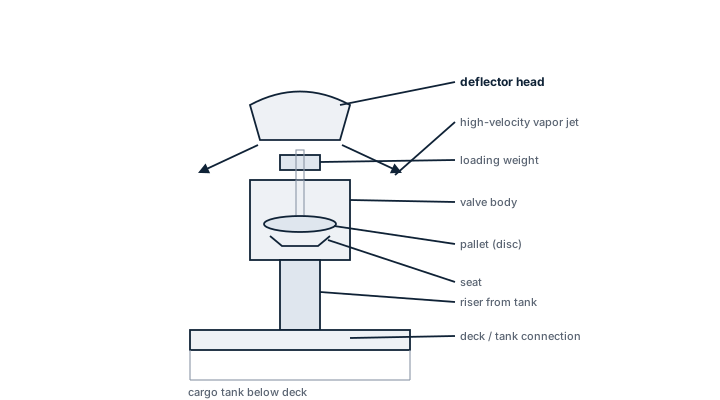
Standard PV valves protect the tank against over- and under-pressure but do little to control where the vented vapor goes once it leaves the valve. A high velocity vent valve is built with a narrowed outlet orifice so that, once it opens, gas escapes at high jet speed, typically well above 30 metres per second, so the flammable vapor cloud is thrown clear of the deck instead of rolling across it toward accommodation or ignition sources. It is not a separate protective function from the PV valve, it is the same overpressure and vacuum protection built with a discharge geometry aimed at safe dispersal. On tankers venting flammable cargo vapor this dispersal behaviour is the entire point of the design, and it is why these valves are fitted at the top of the venting mast rather than lower on the tank.
Read the full guide
Main Components
Pressure Pallet and Vacuum Pallet
Two independent, spring-loaded discs that lift at their respective set pressures, one for overpressure relief on loading or heating, one for vacuum relief on discharge or cooling.
High Velocity Outlet Head
The shaped nozzle section that accelerates the escaping gas, distinguishing this valve from a low-velocity or free-vent design.
Flame Screen or Deflagration Element
Where fitted for cargoes requiring it, a screen intended to arrest flame propagation into the tank; not all high velocity valves carry one, and the valve should not be assumed fire-safe without checking the specific approval.
Weather Cover / Bird Guard
A cap that keeps rain, salt spray and debris off the pallets without restricting the vent path when the valve lifts.
Selection and Sizing
- Required venting capacity in cubic metres per hour, sized against the tank's maximum loading and discharge rates plus thermal venting.
- Set pressures for both the pressure and vacuum pallets, matched to the tank design pressure and the cargo's vapour characteristics.
- Discharge velocity achieved at the design flow, which must clear the deck safety distance required for the cargo class carried.
- Material compatibility with the cargo vapour, since some chemical cargoes attack standard valve trim materials.
Regulations and Class
High velocity vent valves on tankers fall under SOLAS Chapter II-2 venting arrangements for cargo tanks and under MARPOL Annex I or II venting provisions depending on cargo type, with set pressures and capacities reviewed against the ship's approved venting calculations. Class rules require these valves to be type-tested and certified for their rated capacity and set pressure, and they are subject to periodic testing, typically annually, to confirm the pallets lift and reseat within tolerance. A valve found stuck or fouled at survey is a recurring deficiency category on tanker inspections.
Typical Faults
| Fault | Cause | Consequence |
|---|---|---|
| Pallet stuck closed | Polymerized cargo residue, corrosion, or paint overspray on the seat | Tank overpressure during loading or heating, risk of structural failure |
| Pallet stuck open | Debris on the seat or spring fatigue | Continuous vapour loss and loss of tank inerting or gas-free status |
| Set pressure drift | Spring fatigue or incorrect adjustment after maintenance | Valve lifts too early or too late relative to design intent |
| Blocked flame screen | Residue buildup not cleaned during routine maintenance | Restricted flow area, effective venting capacity below rated value |
What to Look for in a Supplier
- Type approval certificate showing tested capacity and velocity at the specific set pressures ordered, not a generic catalogue figure.
- Trim materials confirmed against the cargo list the vessel actually carries, especially for chemical tankers with varying cargoes.
- A maintenance kit and seat material that can be serviced on board without returning the whole valve ashore.
- Documented annual test procedure compatible with the ship's own test rig or portable test equipment.
A high velocity vent valve that lifts quietly and closes with a solid seated feel is doing its job; one that seeps continuously after closing has already lost its dispersal margin, not just a little cargo.