What to check on a Pressure/DP Transmitter.
1 models from samson in Pressure/DP Transmitter. Below: the full model list.
What defines this type
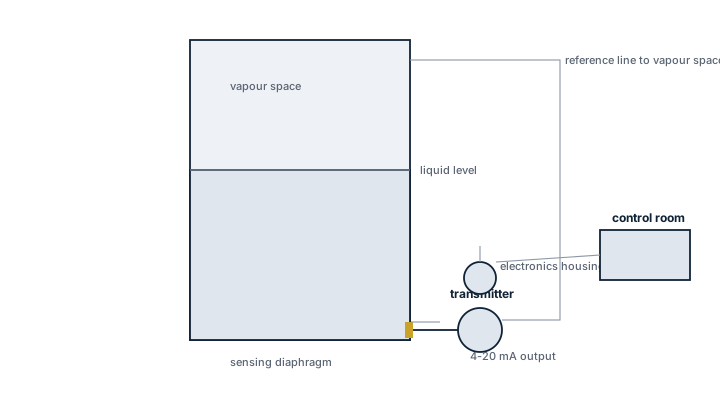
A pressure transmitter measures the hydrostatic pressure at the bottom of a cargo tank and converts it to a level reading using the known or assumed liquid density, while a differential-pressure transmitter takes that same bottom reading and subtracts the vapour space pressure measured at the top, cancelling out the effect of tank pressurisation or inert gas blanketing on the reading. This makes DP transmitters the standard choice on pressurised or inerted tanks, while a simple pressure transmitter is enough on an atmospheric tank. Both differ fundamentally from radar or servo float gauges, which measure the physical distance to the liquid surface rather than inferring level from pressure, so both are sensitive to cargo density changes that a radar gauge is not.
Read the full guide
Main components
- Sensing diaphragm, typically ceramic capacitive or piezoresistive, isolated from the cargo by a chemically compatible fill fluid and secondary diaphragm
- Impulse piping or capillary connecting the transmitter body to the tank tapping points, at the bottom for a pressure reading and at both top and bottom for DP
- Transmitter electronics housing converting the sensed pressure into a 4-20 mA or digital fieldbus signal
- Isolation and equalising valves at the tank connections, allowing the transmitter to be zeroed or removed without gas-freeing the tank
- Heat tracing on the impulse lines where the cargo is heated or prone to wax or crystallisation
Selection and sizing
- Cargo density range, since the transmitter's level output is a calculation that assumes a density figure entered or updated by the operator
- Pressure range and static pressure rating matched to full tank head plus any tank pressurisation
- Wetted-parts material compatible with the specific cargo, particularly for chemical tankers carrying corrosive or reactive products
- Hazardous area certification appropriate to the tank's zone classification
- Accuracy class required for custody transfer versus operational monitoring only
Regulations and class
Cargo tank gauging on tankers falls under SOLAS Chapter II-2 requirements for closed gauging systems that avoid opening the tank to atmosphere during loading and discharge, and MARPOL Annex I requirements for oil tankers include level and high-level alarm arrangements tied to overfill prevention. The IMO International Bulk Chemical Code (IBC Code) sets gauging and overfill alarm requirements for chemical tankers, with class societies verifying the fitted system meets the applicable category. Custody-transfer-grade accuracy claims are generally the subject of a separate calibration and verification regime rather than class survey alone.
Typical faults
| Fault | Cause | Consequence |
|---|---|---|
| Level reading drifts from actual | Cargo density changed from the value programmed into the transmitter | Loading or discharge figures disagree with shore or independent gauging |
| Zero shift after tank cleaning | Impulse line partially blocked or trapped air/liquid in the DP legs | Transmitter reads a level offset even with an empty tank |
| Erratic signal in rough weather | Sloshing causing pressure spikes not filtered by the transmitter's damping setting | Alarm chatter or false high-level alarms during normal operation |
| Diaphragm damage | Incompatible cargo attacking the wetted-parts material | Fill fluid leak into the cargo or complete loss of signal |
What to look for in a supplier
- Wetted-parts material list checked against the vessel's actual cargo list, not just a generic chemical-service claim
- Hazardous area certificate matching the specific tank zone and gas group
- Calibration and configuration support for density updates between cargoes
- Compatibility with the vessel's existing cargo monitoring and overfill alarm system without a full system replacement
A DP transmitter that suddenly reads high on a tank you know is nearly empty is more often a trapped-liquid impulse line than a real level, so bleed the legs before trusting the number.