6X72
The WinGD X72 is a high‑power, low‑speed 2‑stroke marine main engine (6 cylinders, 21 MW) featuring camshaftless common‑rail injection and the WiDE control system, with variants for diesel, LNG, methanol or ammonia fuels.
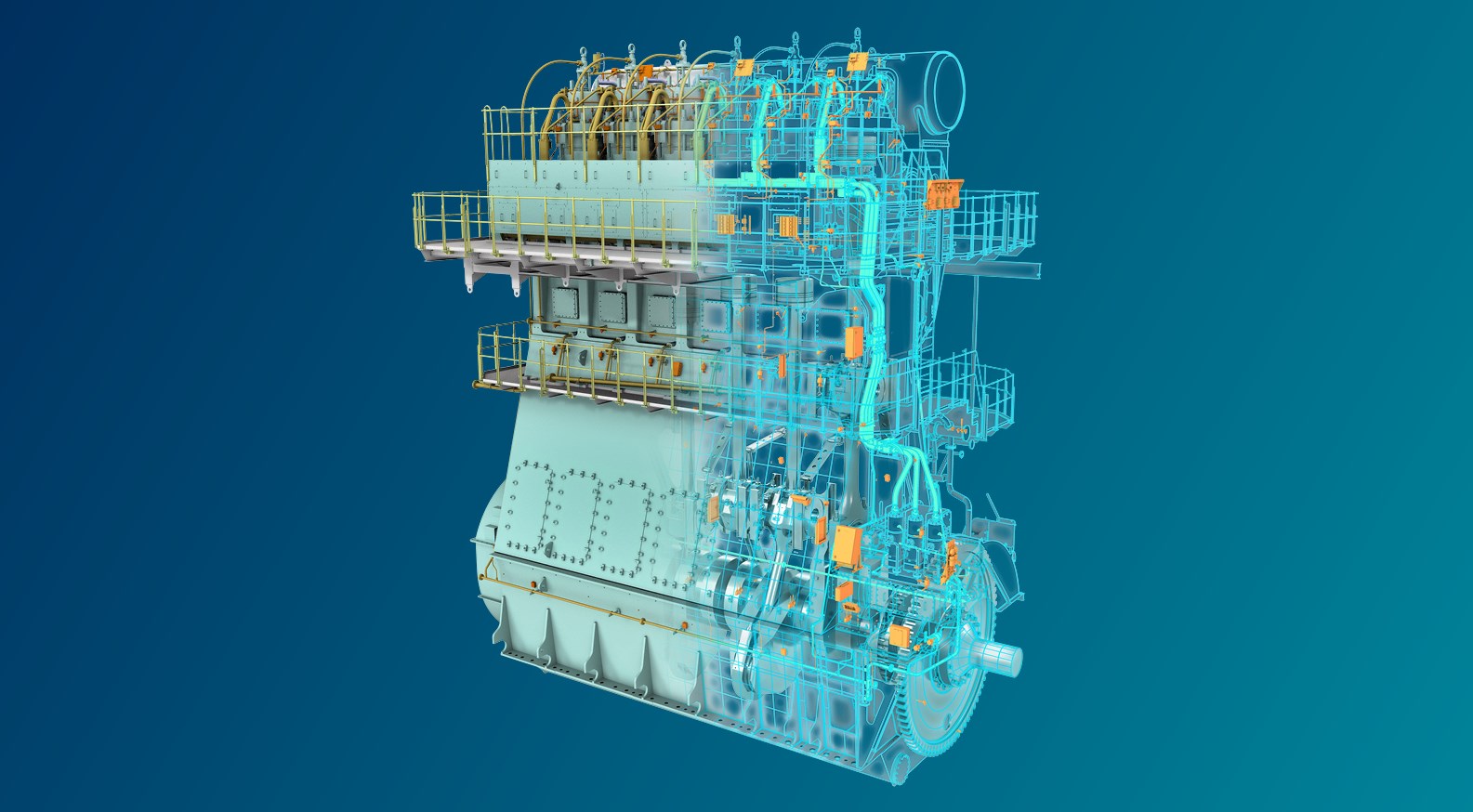
Engine Specifications
Inspector Detail
✓ verified
▸
Designation decoded
WinGD 6X72 – 6-Zylinder-Zweitakt-Kreuzkopfmotor, Bohrung 720 mm, Hub 3086 mm, Standardversion, vollelektronisch ohne Nockenwelle
Background
The 6X72 is a large two-stroke engine of the WinGD X-series with 720 mm bore and 3086 mm stroke. Camshaftless design with UNIC electronic control, common-rail high-pressure fuel injection and FlexCam exhaust valve actuation. Employed on large container ships, VLCCs and Capesize bulkers. 6-cylinder configuration with good mass balance. Delta tuning for various operating profiles, iCER option for Tier III compliance.
Calculated metrics
Inspector checklist
Logbook reference values
| Parameter | Expected | Deviation means |
|---|---|---|
| Zünddrücke (Pmax) | Gemäß Shoptest-Protokoll ±5 bar Zylinderabweichung | Injection or compression problem |
| Exhaust gas temperatures per cylinder | Innerhalb ±25 °C vom Mittelwert | Verbrennungsungleichmäßigkeit |
| Zylinderschmierölverbrauch | 0,6–1,0 g/kWh | Piston ring or cylinder liner wear |
| Ladeluftdruck | Lastabhängig gemäß Herstellerangabe | Turbocharger or charge air cooler problem |
| Common-Rail-Druck | Manufacturer specification depending on load point | Pump wear or rail leakage |
| Kühlwassertemperatur Zylinder | Eintritt/Austritt gemäß Betriebsanleitung | Cooling deficit or thermostat failure |
| Kurbelgehäuse-Ölnebelkonzentration | Unter Alarmgrenzwert, stabil | Bearing damage or piston problem |
| Grundlager-Temperatur | Gemäß Herstellerangabe, keine Einzelabweichung >5 °C | Bearing wear or lubrication oil shortage |
Common Failure Modes
Expert tips
- 💡 Bei der 720-mm-Bohrung auf gleichmäßige Laufbuchsentemperaturen achten – ungleichmäßige Kühlung führt schnell zu Cloverleafing
- 💡 Crosshead guide surfaces to be visually inspected at each crankcase inspection – scoring indicates lubrication problem
- 💡 For 6-cylinder engines, check damping system condition especially with long shaft lines
Related components
Classification & regulatory
Tier-II standard in accordance with MARPOL Annex VI. Tier-III via iCER or SCR system. For 720 mm engines increased attention to EEXI requirements – Engine Power Limitation (EPL) may be required. Class special survey for pistons and cylinder liners after prescribed operating hours.
Reference content for inspector orientation. Always verify against manufacturer's manual, latest service letters and class society requirements.
Other Cylinder Configurations 50
Components & Design
Component data being added…
Technical Data
🤖 Ask about this model
One free question — answered like a marine engineer. No account needed.
Common failures & inspection points
Verify fuel rail pressure within spec; check power supply and wiring to fuel control
Inspect nozzle tips at ~8,000–10,000 operating hours; replace spare kit per schedule
Verify centrifugal separator bypass operation; monitor oil condition via sampling; check crankcase drain integrity
Monitor cylinder pressure diagrams; verify pilot fuel injection timing/quantity; track exhaust temps and emission compliance
Install filtration for dust-prone routes; schedule periodic cooler inspection and cleaning; monitor scavenge air temperature trend
Type-general inspection and maintenance points for this equipment category — not model-specific.
Suppliers & Spare Parts
Direct links to manufacturer, datasheet, spare-parts portal and dealers — request access below.
📄 Request sourcing links & documentsCases, daily reports, timesheets and AI troubleshooting in the OceanSphere Marine app — free for 14 days.
Start free trial →Find manufacturers, repair shops and spare-part dealers in the Maritime Network — our global company directory.
Maritime Network →