D13 MG Marine Generator Set
Volvo Penta D13 marine genset engine for commercial craft and auxiliary power.
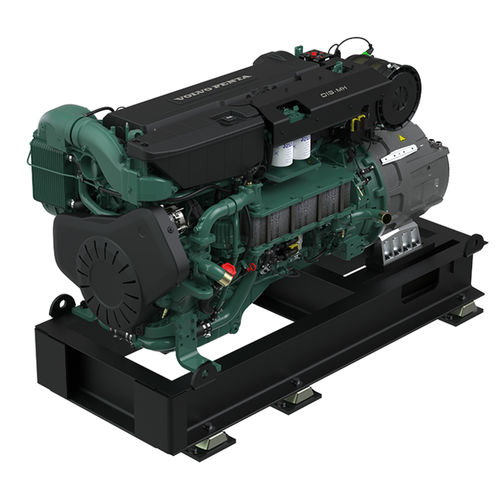
Inspector Detail
✓ verified
▸
Common issues
- Injector faults causing uneven exhaust temperatures and potential misfires, often due to fuel quality or wear.
- Charge-air cooler fouling (internal or external), leading to reduced engine efficiency, increased exhaust temperatures, and potential derating.
- Electronic sensor faults (e.g., speed, oil pressure, coolant temperature) causing engine derating, erratic operation, or unexpected shutdowns.
- Coolant system issues: leaks from hoses, pump seals, or heat exchanger, or contamination leading to overheating.
- Fuel system blockages: clogged primary or secondary fuel filters due to poor fuel quality or microbial growth.
- Vibration due to worn or deteriorated engine mounts, or misalignment between the engine and generator.
- Turbocharger bearing wear or damage to compressor/turbine wheels, indicated by unusual noise or smoke.
- Consequences of prolonged light-load operation: carbon buildup in combustion chambers and exhaust system, leading to 'wet stacking' and reduced performance.
Inspection checklist
- **Visual Leak Check**: Inspect for oil, fuel, coolant, and exhaust gas leaks around the engine, turbocharger, and associated piping.
- **Exhaust Gas Temperature (EGT) Monitoring**: Check individual cylinder EGTs for uniformity. A deviation of more than +/- 50°C from average can indicate injector issues.
- **Charge-Air Cooler Inspection**: Visually check external fins for cleanliness. Look for signs of internal fouling (e.g., oil residue in drain port) or corrosion.
- **Fluid Levels & Condition**: Verify engine oil, coolant, and fuel tank levels. Check oil and coolant for contamination (e.g., water in oil, oil in coolant).
- **Belt Condition & Tension**: Inspect all drive belts (alternator, coolant pump) for cracks, fraying, glazing, and ensure correct tension.
- **Engine Mounts**: Check for signs of deterioration, cracking, excessive compression, or detachment, which can lead to increased vibration.
- **Sensor Wiring & Connections**: Inspect for loose, corroded, or damaged wiring to critical sensors (e.g., speed, pressure, temperature, exhaust gas).
- **Load Test Performance**: Perform a controlled load test (e.g., 50-75% load for 1-2 hours) to assess voltage/frequency stability, fuel consumption, and overall engine parameter stability.
- **Noise & Vibration Analysis**: Listen for unusual noises (knocking, rattling, whistling) and feel for excessive vibration during operation.
- **Alarm Panel Functionality**: Test critical alarms (low oil pressure, high coolant temperature, overspeed) and emergency stop buttons for proper operation.
Service intervals
| Engine Oil & Filter | Every 500 hours or annually, whichever comes first. |
| Fuel Filters (Primary & Secondary) | Every 500 hours or annually. |
| Coolant System Check | Daily/Weekly visual check; change coolant every 2-4 years or 2000-4000 hours. |
| Air Filter | Every 500-1000 hours or annually, more frequently in dusty environments. |
| Valve Clearance Adjustment | Every 1000-2000 hours. |
| Charge-Air Cooler Cleaning (internal) | Every 1000-2000 hours, depending on operating conditions and fuel quality. |
| Injector Nozzle Test/Replacement | Every 2000-4000 hours or as indicated by performance/EGT analysis. |
| Load Test | Monthly or quarterly, especially if operating frequently at light loads. |
Typical wear limits
| Crankshaft Deflection | Maximum 0.05 mm (for a 6-cylinder inline engine). |
| Cylinder Liner Wear | Maximum 0.15 - 0.20 mm ovality or taper. |
| Piston Ring End Gap (worn) | Maximum 1.0 - 1.5 mm (refer to specific Volvo Penta D13 manual for exact values). |
| Main & Connecting Rod Bearing Clearances | Maximum 0.15 - 0.20 mm (worn). |
| Turbocharger Rotor Axial Play | Maximum 0.10 - 0.15 mm (check specific turbocharger model manual). |
| Injector Opening Pressure | Varies by specific injector type, typically 250-300 bar for common rail systems. Deviation between injectors should be minimal (e.g., <5 bar). |
| Engine Mount Compression | Maximum 10-15% reduction from original height. |
Ranges are typical for this design class. Always confirm against the manufacturer documentation for your serial number.
Critical spares
- Complete set of Fuel Filters (primary and secondary elements).
- Complete set of Engine Oil Filters.
- Air Filter element.
- Set of Drive Belts (alternator, coolant pump, etc.).
- At least one spare Injector (or a full set if budget/criticality allows).
- Critical Electronic Sensors (e.g., oil pressure, coolant temperature, engine speed sensor).
- Coolant Pump repair kit or a complete spare pump.
- Starter Motor (especially for single genset vessels or critical applications).
Safety
- **Hot Surfaces**: Exhaust manifold, turbocharger, and exhaust piping reach extreme temperatures; ensure proper insulation and guards to prevent burns.
- **Rotating Machinery**: Belts, pulleys, and flywheel pose entanglement hazards; ensure all protective guards are securely in place.
- **High-Pressure Fuel**: Leaks from high-pressure fuel lines can create a fine, highly flammable mist that can penetrate skin and cause severe injury or fire.
- **Electrical Hazards**: Live electrical components (alternator, starter, control panel) present shock risks. Always isolate power before maintenance.
- **Exhaust Gas Leaks**: Carbon monoxide (CO) is an odorless, colorless, and deadly gas. Ensure exhaust system integrity and adequate engine room ventilation.
- **Fire Risk**: Fuel and oil leaks, combined with hot surfaces, create a significant fire hazard. Maintain good housekeeping and ensure fire fighting equipment is readily accessible.
Class survey
A class surveyor will typically focus on: 1. **Documentation**: Verification of engine logbook entries, maintenance records, and valid statutory certificates (e.g., Type Approval, EIAPP). 2. **Safety Devices**: Testing of overspeed trip, low lubricating oil pressure shutdown, high coolant temperature shutdown, and emergency stop buttons for functionality. 3. **Alarm System**: Functionality check of all critical alarms on the local and bridge panels. 4. **Fuel System Integrity**: Inspection of fuel lines, filters, pumps, and valves for leaks, proper securing, and fire safety arrangements (e.g., quick closing valves, drip trays, double-walled piping). 5. **Lubricating Oil System**: Check for leaks, proper oil level, and condition. Verification of oil pressure at various loads. 6. **Cooling System**: Inspection of heat exchangers, pumps, piping, and expansion tank for leaks, corrosion, and proper operation. 7. **Exhaust System**: Integrity check of exhaust piping, insulation, silencer, and expansion bellows for leaks, proper support, and fire safety. 8. **Starting Arrangements**: Verification of primary (e.g., electric starter) and secondary (e.g., air start or emergency battery) starting methods. 9. **Load Test**: Observation of the genset under typical operating load to confirm stable voltage, frequency, and satisfactory engine parameters (temperatures, pressures). 10. **Engine Room Ventilation**: Confirmation of adequate ventilation and proper operation of fire dampers. 11. **Mounting & Alignment**: Visual check of engine mounts and generator alignment for excessive vibration or wear. 12. **Fire Fighting Appliances**: Availability and condition of local fire fighting equipment (e.g., CO2 extinguishers, fire blankets).
Components & Design
Component data being added…
Technical Data
🤖 Ask about this model
One free question — answered like a marine engineer. No account needed.
Common failures & inspection points
Service & Maintenance
Carry out scheduled oil/filter changes, coolant checks and diagnostics. Avoid prolonged light-load operation and perform periodic load test.
Suppliers & Spare Parts
Direct links to manufacturer, datasheet, spare-parts portal and dealers — request access below.
📄 Request sourcing links & documentsCases, daily reports, timesheets and AI troubleshooting in the OceanSphere Marine app — free for 14 days.
Start free trial →Find manufacturers, repair shops and spare-part dealers in the Maritime Network — our global company directory.
Maritime Network →