METxxMB
The Mitsubishi METxxMB is a marine turbocharger built for medium‑speed diesel propulsion engines, offering an integrated turbine‑compressor unit with corrosion‑resistant housing and DNV‑approved design.
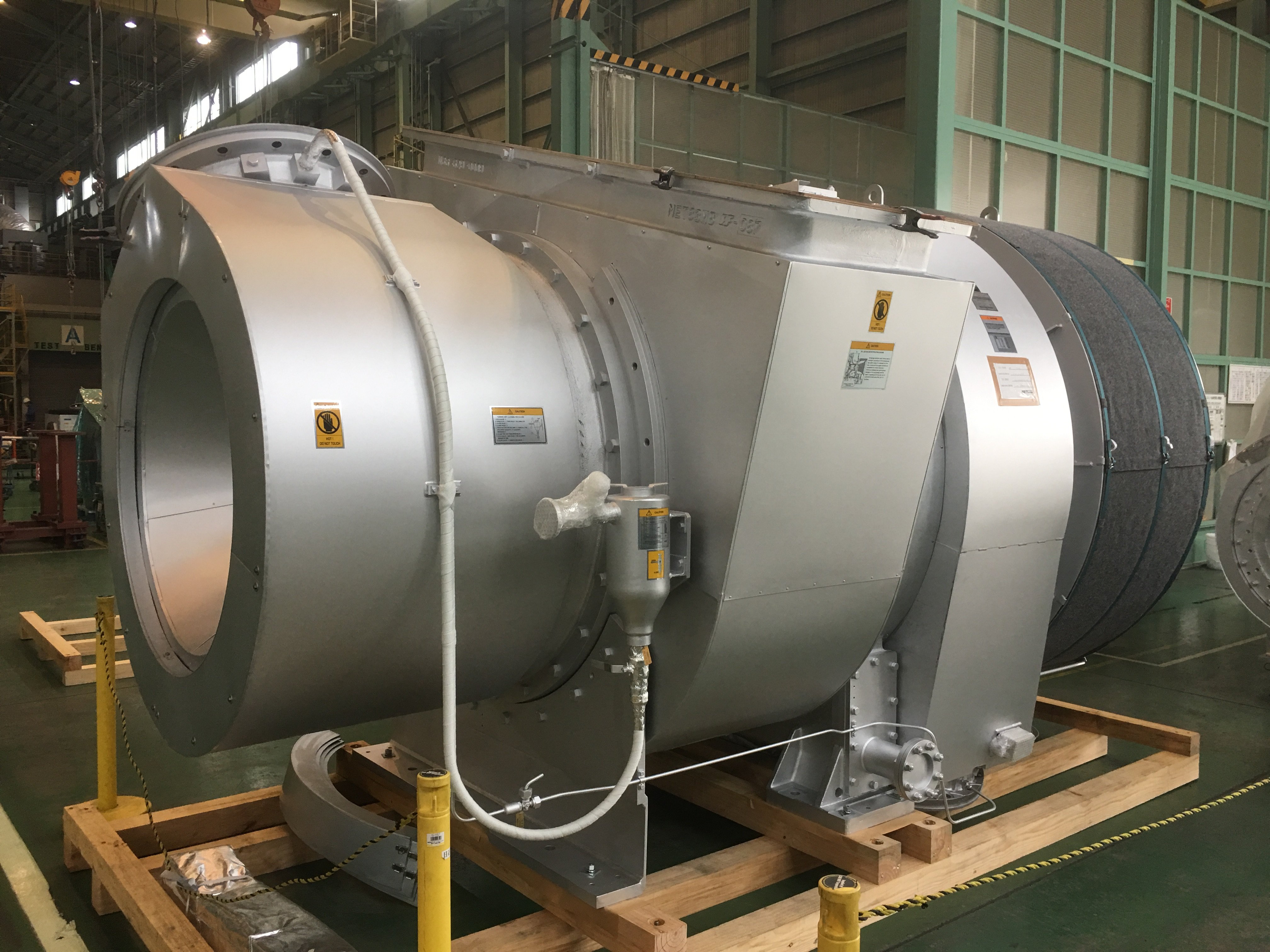
Inspector Detail
▸
Common issues
- Bearing wear (radial and thrust bearings) leading to increased rotor clearances and vibration.
- Fouling of compressor wheel and diffuser due to airborne contaminants, reducing efficiency.
- Fouling or erosion of turbine blades and nozzle ring due to exhaust gas quality, affecting performance and potentially causing imbalance.
- Oil leakage from bearing seals or casing joints, posing fire hazards and indicating seal wear.
- Exhaust gas leakage from turbine casing joints or expansion bellows, indicating seal/gasket failure or cracking.
- Corrosion on compressor casing components, especially in high-humidity or salty environments.
- Malfunction of speed sensor or associated electronic control components due to vibration, moisture, or age.
- Foreign object damage (FOD) to compressor or turbine blades, causing imbalance and potential catastrophic failure.
Inspection checklist
- Observe turbocharger for abnormal noise, vibration, or surging during operation.
- Visually inspect for any oil, exhaust gas, or cooling water leaks from casing joints, seals, and associated piping.
- Check bearing temperatures (if sensors fitted) and lubricating oil pressure (if separate system) against manufacturer's limits.
- Inspect the air filter element for cleanliness, damage, and proper seating.
- Verify rotor axial and radial clearances (static check, engine stopped and cool) against wear limits using a dial gauge.
- Inspect compressor wheel and diffuser for fouling, erosion, or foreign object damage (FOD) via inspection ports or by opening the casing.
- Inspect turbine blades and nozzle ring for fouling, erosion, cracks, or FOD via inspection ports or by opening the casing.
- Check the condition of flexible bellows/expansion joints on the exhaust gas inlet and outlet for cracks or leaks.
- Verify functionality of the speed sensor and associated alarm/shutdown systems by checking readings and alarm setpoints.
- Inspect all casing bolts, foundation bolts, and anti-vibration mounts for tightness, corrosion, and integrity.
Service intervals
| Daily/Weekly Operational Check | Visual check for leaks, abnormal noise, and performance parameters. |
| Air Filter Cleaning/Replacement | 500-1,000 running hours or as indicated by pressure drop across filter. |
| Compressor Water Washing (if fitted) | 250-500 running hours or as needed to maintain performance. |
| Turbine Water Washing (if fitted) | 500-1,000 running hours or as needed. |
| Bearing Inspection/Replacement | 4,000 - 8,000 running hours or annually, whichever comes first. |
| Nozzle Ring/Turbine Blade Inspection | 8,000 - 12,000 running hours, involving opening the turbine casing. |
| Major Overhaul (full disassembly, rotor balancing, comprehensive inspection) | 16,000 - 24,000 running hours, depending on operating conditions and fuel type. |
| Class Survey Inspection | Annually, as per Class requirements. |
Typical wear limits
| Rotor Axial Clearance | New: 0.15 - 0.30 mm. Wear limit: Typically an increase of 0.10 - 0.20 mm from new, or a maximum absolute value of 0.45 - 0.55 mm. (Always refer to specific METxxMBII manual for exact values). |
| Rotor Radial Clearance | New: 0.08 - 0.15 mm. Wear limit: Typically an increase of 0.05 - 0.10 mm from new, or a maximum absolute value of 0.20 - 0.25 mm. (Always refer to specific METxxMBII manual for exact values). |
| Bearing Shell Wear | Max allowable wear/ovality typically 0.05 - 0.10 mm on diameter. Any scoring, pitting, or delamination requires immediate replacement. |
| Nozzle Ring Gap | Max allowable increase in gap due to erosion, typically 1.0 - 2.0 mm from new specification. Significant burning or cracking requires replacement. |
| Turbine/Compressor Blades | No cracks, significant erosion (e.g., >10% blade thickness), or foreign object damage (FOD) allowed. Minor fouling is acceptable if performance is not affected. |
Ranges are typical for this design class. Always confirm against the manufacturer documentation for your serial number.
Critical spares
- Complete set of main bearings (radial and thrust bearings).
- Full set of O-rings and gaskets for casing and oil/air seals.
- Turbocharger speed sensor.
- Air filter element(s).
- Lubricating oil filter elements (if separate lubrication system).
- Balancing weights for rotor re-balancing.
- Emergency repair kit for minor casing damage (e.g., high-temperature sealant, specific fasteners).
Safety
- High Surface Temperatures: Casing and exhaust piping operate at very high temperatures (up to 400-500°C), posing severe burn risks. Ensure insulation is intact and guarding is in place.
- High Rotational Speed & Potential for Disintegration: The rotor operates at extremely high RPMs (e.g., 10,000-20,000+ RPM). Catastrophic failure due to imbalance, bearing seizure, or FOD can lead to disintegration, projecting fragments at high velocity.
- Noise Hazard: High noise levels during operation require mandatory hearing protection in the vicinity of the turbocharger.
- Hot Exhaust Gas/Oil Leaks: Leaks from casing joints or oil lines can cause severe burns, fire hazards, and create slippery surfaces.
- Pressurized Systems: Intake air and exhaust gas are under pressure; ensure proper depressurization procedures are followed before opening any part of the turbocharger or its associated piping.
Class survey
During annual Class Survey, the surveyor will typically check the overall external condition, cleanliness, and integrity of the turbocharger, including insulation and guarding. They will verify maintenance records, service reports, and logbook entries to ensure compliance with manufacturer's service schedule and Class requirements. Functionality of safety devices (e.g., overspeed trip, alarm systems) and availability of critical spare parts will be confirmed. If the turbocharger is opened for maintenance during the survey period, the surveyor may witness rotor clearance measurements and internal component inspections. Any reported defects or repairs will be reviewed.
Components & Design
Component data being added…
Technical Data
🤖 Ask about this model
One free question — answered like a marine engineer. No account needed.
Common failures & inspection points
Service & Maintenance
Maintenance per manufacturer manual and classification society requirements. Annual inspection at class survey. Stock spare parts per manufacturer specification.
Suppliers & Spare Parts
Direct links to manufacturer, datasheet, spare-parts portal and dealers — request access below.
📄 Request sourcing links & documentsCases, daily reports, timesheets and AI troubleshooting in the OceanSphere Marine app — free for 14 days.
Start free trial →Find manufacturers, repair shops and spare-part dealers in the Maritime Network — our global company directory.
Maritime Network →