MET-MBII
The MET-MBII is an axial‑flow marine turbocharger designed by Mitsubishi for large low‑speed two‑stroke main engines, providing high pressure boost in a compact package.
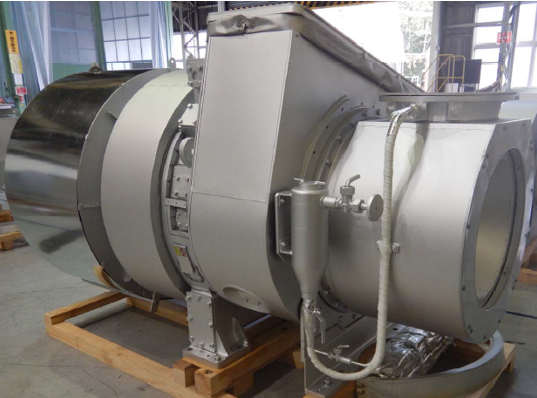
Inspector Detail
✓ verified
▸
Common issues
- Turbine nozzle ring and blade fouling (carbon deposits from exhaust gas)
- Compressor impeller and diffuser fouling (oil mist, dust, salt)
- Radial and thrust bearing wear due to contaminated lubricating oil or high loads
- Rotor imbalance and vibration from uneven deposits or blade damage
- Labyrinth seal ring wear leading to oil leakage into air/gas streams
- Exhaust gas casing cracks due to thermal stress cycling
- Air filter clogging reducing turbocharger efficiency and increasing surging risk
- Surging events caused by engine load fluctuations, fouling, or operational issues
Inspection checklist
- Monitor operational parameters: RPM, exhaust gas temperatures (in/out), charge air pressure/temperature, lube oil pressure/temperature (in/out).
- Perform visual inspection for external oil/gas leaks, casing cracks, loose fastenings, and general cleanliness.
- Check air filter condition and clean/replace as necessary.
- Listen for abnormal noises (whining, grinding) and monitor vibration levels (using portable or fixed sensors).
- Inspect compressor and turbine sides (via inspection ports or during opening) for fouling, blade damage, and foreign object damage (FOD).
- Verify proper functioning of the water washing system for both compressor and turbine.
- Check lube oil quality and level, ensuring no contamination.
- Conduct an overspeed trip test annually, witnessed by Class Surveyor.
- During overhaul, measure rotor axial and radial clearances, and inspect bearing surfaces for wear, scoring, or pitting.
Service intervals
| Water washing (compressor/turbine) | Daily to Weekly, depending on engine load and fuel quality |
| Visual inspection (external, air filter) | Every 250-500 running hours |
| Compressor/Turbine side inspection (via ports) | Every 2,000-4,000 running hours |
| Bearing inspection and replacement | Every 8,000-12,000 running hours |
| Major overhaul (bearings, seals, rotor balance check) | Every 16,000-24,000 running hours |
| Full overhaul/Replacement of critical components (e.g., rotor shaft, casings NDT) | Every 48,000-60,000 running hours |
| Class Survey Inspection | Annually |
Typical wear limits
| Rotor axial clearance | New: 0.15-0.35 mm. Max allowable: New + 0.1 mm (e.g., 0.45 mm) |
| Rotor radial clearance (at bearings) | New: 0.20-0.40 mm. Max allowable: New + 0.15 mm (e.g., 0.55 mm) |
| Bearing shell wear | Max 0.1 mm reduction in thickness or visible scoring/pitting/cracks |
| Blade tip clearance | Visual inspection for rubbing marks; no direct measurement limit typically given for in-situ checks. |
| Nozzle ring deformation | Max 0.5 mm distortion or cracks affecting gas flow |
Ranges are typical for this design class. Always confirm against the manufacturer documentation for your serial number.
Critical spares
- Complete set of radial and thrust bearings
- Labyrinth seal rings (compressor and turbine side)
- O-rings and gaskets for all casing sections
- Air filter elements
- Cleaning nozzles/lances for water washing system
- Lube oil filter elements (if dedicated system)
- Spare rotor cartridge (for critical operations or extended voyages)
Safety
- High rotational speed: Risk of rotor disintegration if overspeed or severe imbalance occurs. Always follow strict lockout/tagout procedures.
- High temperatures: Exhaust gas casing and turbine components operate at extreme temperatures. Risk of severe burns.
- Pressurized systems: Charge air and exhaust gas systems are under pressure. Ensure depressurization before opening.
- Hot lubricating oil: Risk of burns and fire if leaks occur onto hot surfaces.
- Noise levels: High noise during operation requires hearing protection in the vicinity.
Class survey
For annual survey, the surveyor typically checks operational parameters, external condition, reviews logbook entries for maintenance and abnormal events, and witnesses the overspeed trip test. For intermediate/special surveys, internal inspection of the compressor and turbine sides, bearing inspection, NDT (Non-Destructive Testing) of critical components (e.g., rotor shaft, casing welds), measurement of clearances, and verification of spare parts inventory are usually required. All maintenance records and manufacturer's service schedules must be available and up-to-date.
Components & Design
Component data being added…
Technical Data
🤖 Ask about this model
One free question — answered like a marine engineer. No account needed.
Common failures & inspection points
Service & Maintenance
Maintenance per manufacturer manual and classification society requirements. Annual inspection at class survey. Stock spare parts per manufacturer specification.
Suppliers & Spare Parts
Direct links to manufacturer, datasheet, spare-parts portal and dealers — request access below.
📄 Request sourcing links & documentsCases, daily reports, timesheets and AI troubleshooting in the OceanSphere Marine app — free for 14 days.
Start free trial →Find manufacturers, repair shops and spare-part dealers in the Maritime Network — our global company directory.
Maritime Network →