16VS16U-MPTK
The Mitsubishi Heavy Industries 16VS16U-MPTK is a 16‑cylinder V‑type, medium‑speed (≈1230 rpm) four‑stroke marine diesel engine delivering about 2 800 kW for ship propulsion.
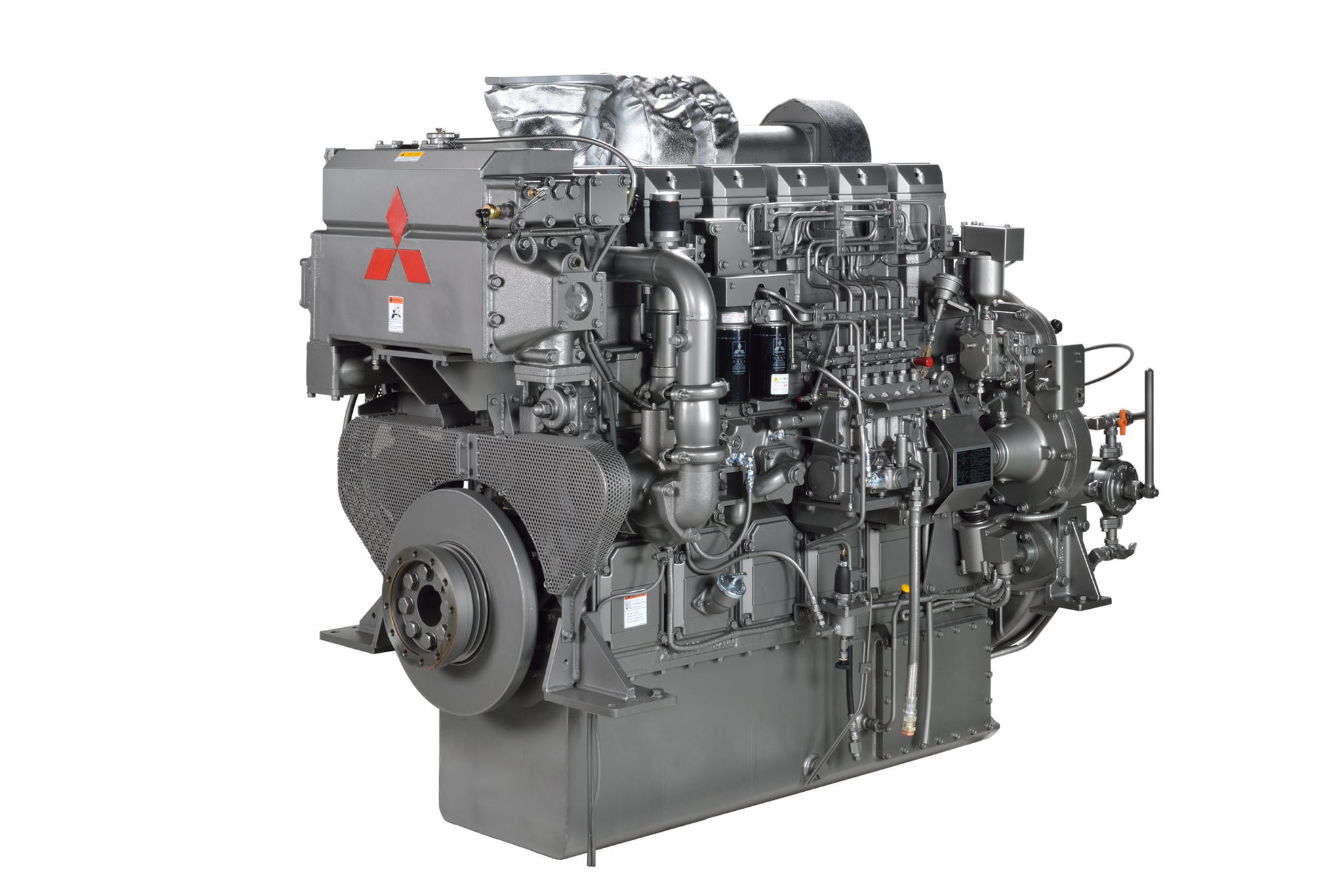
Engine Specifications
Inspector Detail
✓ verified
▸
Common issues
- Piston ring wear and breakage due to insufficient ring-to-groove clearance, leading to sticking at operating temperatures (as noted in provided data). This often manifests as increased blow-by, high lube oil consumption, and reduced compression.
- Fuel injector nozzle fouling or wear, particularly when operating on HFO, leading to poor atomization, increased exhaust temperatures, and potential cylinder liner scuffing.
- Turbocharger bearing wear (axial and radial play) or compressor/turbine fouling, resulting in reduced boost pressure, higher exhaust temperatures, and decreased engine efficiency.
- Valve seat recession or valve stem wear, leading to poor sealing, loss of compression, and increased exhaust gas temperatures for affected cylinders.
- Lubricating oil degradation or contamination, causing accelerated bearing wear (main and connecting rod bearings) and potential filter clogging.
- Cooling water system issues, such as heat exchanger fouling, pump wear, or leaks, leading to elevated engine temperatures and reduced component lifespan.
- Crankshaft deflection exceeding limits, especially in a 16-cylinder V-configuration, indicating potential main bearing issues or foundation problems.
Inspection checklist
- **Crankcase Inspection:** Open inspection doors. Check for abnormal oil mist, metal particles in the sump, bearing discoloration, and general cleanliness. Perform crankshaft deflection readings at regular intervals (e.g., every 6,000-8,000 hours or during major surveys).
- **Cylinder Unit Condition:** Check exhaust gas temperatures for uniformity. If possible, inspect piston crowns and cylinder liners via indicator cocks or scavenge ports (if applicable) for signs of scuffing, carbon buildup, or blow-by. Monitor lube oil consumption per cylinder.
- **Fuel Injection System:** Visually inspect high-pressure fuel lines for leaks or signs of fatigue. Check fuel filter differential pressure. Monitor fuel pump rack positions for evenness across cylinders.
- **Turbocharger Inspection:** Check axial and radial play of the rotor by hand. Inspect compressor and turbine blades for fouling, erosion, or damage. Verify air filter cleanliness.
- **Lubricating Oil System:** Verify correct oil pressure and temperature. Check differential pressure across lube oil filters. Review recent lube oil analysis reports for wear metals, TBN, viscosity, and water content.
- **Cooling Water System:** Check for leaks in pipes, pumps, and heat exchangers. Verify cooling water pressures and temperatures. Inspect heat exchanger tubes for fouling or blockages.
- **Valve Train:** Check valve clearances (cold) and visually inspect rocker arms, pushrods, and valve springs for wear or damage. Listen for abnormal noises during operation.
- **Engine Mounts & Coupling:** Inspect engine mounts for signs of degradation, cracking, or excessive compression. Check coupling alignment and condition for signs of wear or vibration.
Service intervals
| Fuel Injector Overhaul | 3,000 - 6,000 hours (depending on fuel quality and operating profile) |
| Piston Overhaul/Inspection (first ring inspection) | 6,000 - 8,000 hours (critical due to known ring issues, then 12,000 hours) |
| Cylinder Head Overhaul | 6,000 - 12,000 hours |
| Turbocharger Overhaul | 8,000 - 16,000 hours (depending on condition and type) |
| Main & Connecting Rod Bearing Inspection | 12,000 - 18,000 hours |
| Major Overhaul (full engine inspection, bearings, liners, etc.) | 24,000 - 36,000 hours |
| Lubricating Oil Change | 250 - 500 hours (or based on oil analysis results) |
Typical wear limits
| Cylinder Liner Wear (max diameter increase) | 0.6 - 0.8 mm (measured at top ring TDC position) |
| Piston Ring Groove Wear (max axial clearance increase) | 0.15 - 0.20 mm (over new specification) |
| Crankshaft Main/Connecting Rod Bearing Clearances (max increase over new) | 0.15 - 0.25 mm |
| Valve Seat Recession (max depth) | 0.5 - 1.0 mm (check specific manual for exact value) |
| Turbocharger Rotor Axial Play | Typically 0.10 - 0.20 mm (refer to MHI manual for specific model) |
| Turbocharger Rotor Radial Play | Typically 0.30 - 0.50 mm (refer to MHI manual for specific model) |
Ranges are typical for this design class. Always confirm against the manufacturer documentation for your serial number.
Critical spares
- Piston ring set (complete for at least one cylinder, preferably two)
- Fuel injector nozzle tips (or complete injector units, at least one per bank)
- Full set of fuel filter elements (primary and secondary)
- Full set of lubricating oil filter elements
- Gasket and O-ring kit for cylinder head and fuel system components
- Valve springs (exhaust and inlet, at least one set)
- Turbocharger bearing cartridge or repair kit
- High-pressure fuel pipe (one unit, common failure point)
Safety
- **Crankcase Explosion:** Ensure crankcase oil mist detector is functional and calibrated. Adhere to proper procedures for opening crankcase doors after shutdown.
- **High-Pressure Fuel Leaks:** Regularly inspect high-pressure fuel lines and connections for leaks. Ensure spray shields are in place to prevent fuel spray onto hot surfaces (fire hazard).
- **Hot Surfaces:** Engine surfaces (exhaust manifold, turbocharger, cylinder heads) operate at high temperatures. Ensure insulation is intact and personnel are aware of burn hazards.
- **Rotating Machinery:** All rotating parts (flywheel, coupling, fan belts) must have appropriate guards in place. Implement strict lockout/tagout procedures during maintenance.
- **Overspeed Protection:** Verify the functionality of the overspeed trip mechanism at prescribed intervals. This is a critical safety device for engine protection.
Class survey
Class surveyors will typically focus on verifying the overall structural integrity and operational safety of the engine. Key checks include: Review of engine running hours and maintenance records; verification of crankshaft deflection readings against limits; inspection of main and connecting rod bearing clearances (during major surveys); functional testing of all engine safety devices (overspeed trip, low lube oil pressure, high cooling water/lube oil temperature shutdowns); inspection of fuel oil system integrity, including high-pressure pipe shielding and fire-fighting arrangements; review of lubricating oil analysis trends; inspection of engine foundation and mounting bolts; and general assessment of engine room cleanliness and fire prevention measures. Exhaust gas temperature and cylinder pressure balance will also be observed.
Components & Design
Component data being added…
Technical Data
🤖 Ask about this model
One free question — answered like a marine engineer. No account needed.
Common failures & inspection points
Measure piston ring gap and perform ring movement test in grooves; monitor abnormal smoke development
Inspect turbocharger for abnormal noise, measure charge pressure, check blades for damage
Review maintenance logbook, track operating hours, document exhaust color, monitor oil consumption
Spüllufttemperatur kontinuierlich überwachen (Sollwert: 50°C), Luftkühler-Entwässerung regelmäßig durchführen
Check injection timing, maintain fuel temperature at approximately 50 °C, test injectors for pressure loss
Type-general inspection and maintenance points for this equipment category — not model-specific.
Suppliers & Spare Parts
Direct links to manufacturer, datasheet, spare-parts portal and dealers — request access below.
📄 Request sourcing links & documentsCases, daily reports, timesheets and AI troubleshooting in the OceanSphere Marine app — free for 14 days.
Start free trial →Find manufacturers, repair shops and spare-part dealers in the Maritime Network — our global company directory.
Maritime Network →