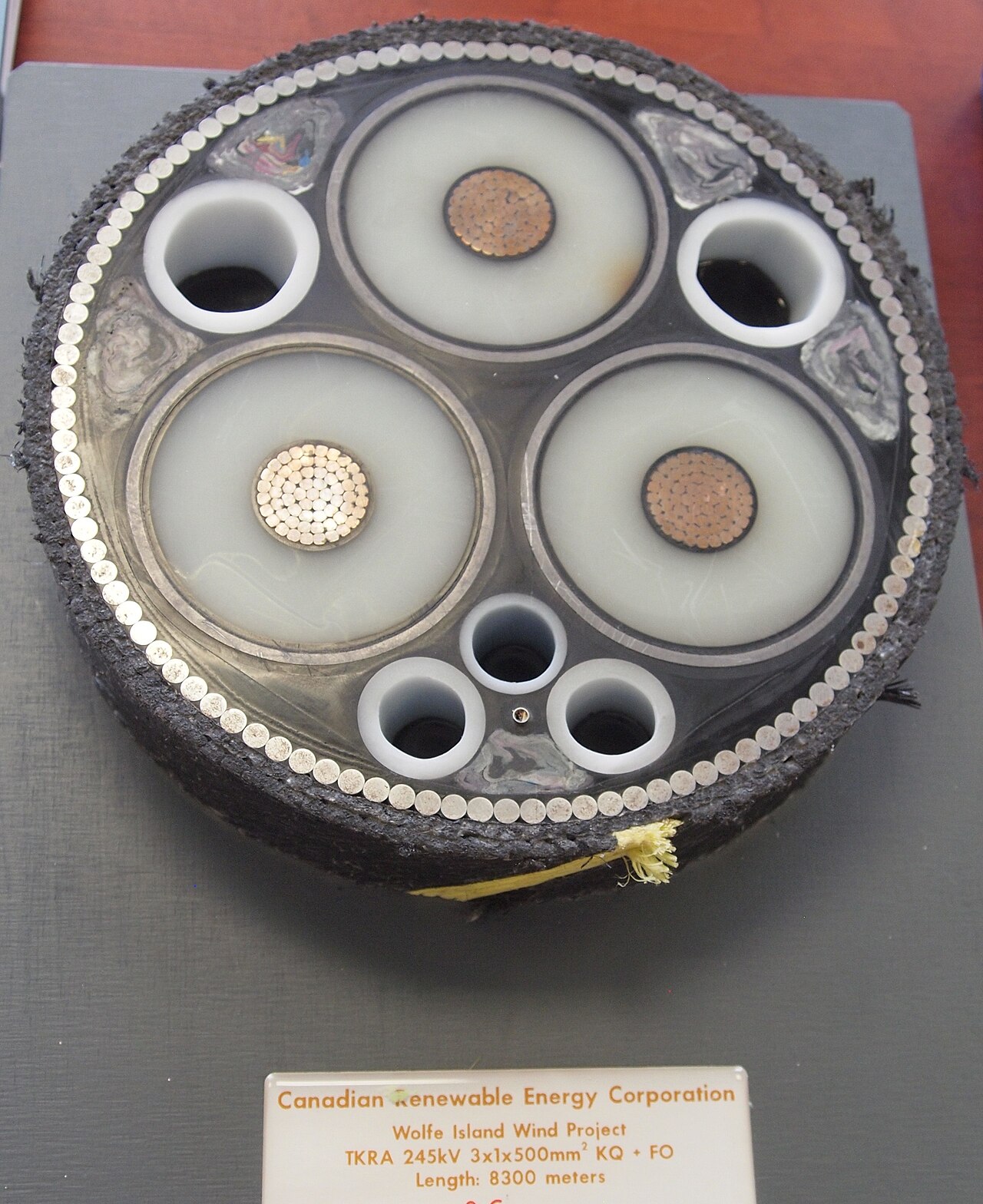
What to check on a Power Cable (6/10 kV).
18 models from NKT Marine in Power Cable (6/10 kV). Below: the full model list.
What defines 6/10 kV shipboard power cable
The 6/10 kV rating describes a cable insulated for 6 kV phase-to-earth and 10 kV phase-to-phase, the medium-voltage band used aboard ships with large electrical loads — cruise ships, LNG carriers, drillships, large offshore vessels — where generator output and main bus distribution run above the low-voltage range covered by standard 0.6/1 kV shipboard cable. What separates it from onshore medium-voltage cable of the same rating is the insulation and armouring built for continuous vibration, tight bend radii in cable trunking, and the flame and smoke performance ships require.
Read the full guide
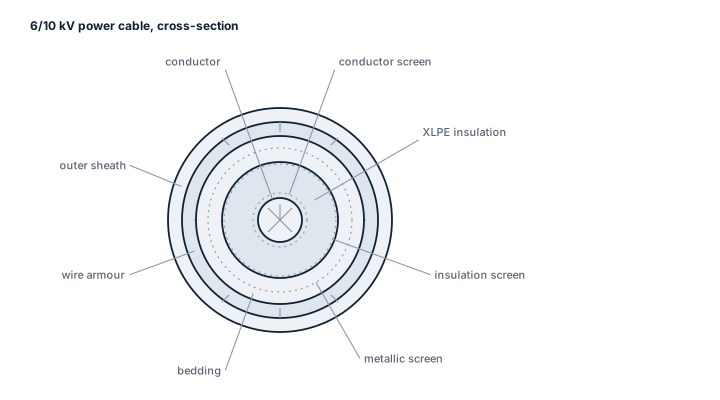
Main components
Conductor
Stranded copper conductor, sized to the load current with a derating applied for the number of cables run together in a trunk and for engine room ambient temperatures well above onshore assumptions.
Semiconducting and insulation screen
At this voltage the insulation needs a semiconducting layer bonded to both the conductor and the outer screen to control the electrical stress field evenly; without it, voids at the insulation surface cause partial discharge that erodes the cable from the inside over years of service.
Insulation
Cross-linked polyethylene (XLPE) or ethylene propylene rubber (EPR), chosen for dielectric strength, thermal rating and, on EPR types, better flexibility for tight shipboard routing.
Metallic screen and armour
A copper wire or tape screen carries fault current to earth and controls electromagnetic emission; galvanised steel wire armour or braid gives mechanical protection through cable trunking and at penetrations, and both layers double as part of the earth-fault protection scheme.
Outer sheath
Low-smoke, halogen-free (LSHF) compound as standard on passenger and most commercial tonnage, chosen so a cable fire does not add toxic, corrosive smoke to a compartment crew may need to fight through.
Selection and sizing
- Load current and short-circuit rating of the switchboard it connects to, since medium-voltage cable must survive fault current for the time the protection takes to clear
- Number of cables grouped in one trunk, which derates current-carrying capacity sharply compared with a single cable in free air
- Bend radius achievable in the actual routing, which is tighter on a ship than in a shore installation
- Fire performance class — flame retardant as a minimum, fire resistant on circuits that must stay live during a fire, such as emergency switchboard feeders or fire pump supply
Regulations and class
SOLAS Ch. II-1 sets requirements for electrical installations including cable routing away from and protection through machinery spaces, segregation of essential services, and fire integrity of cabling for services required to remain operational during a fire. Class societies apply their own rules for medium-voltage cable type approval, testing including partial discharge testing at manufacture, and installation practice, and require cable routes for duplicated essential systems to be physically segregated so one damaged trunk cannot take out both the main and the standby feed.
Typical faults
| Fault | Consequence |
|---|---|
| Semiconducting screen damaged or misaligned during termination | Localised electrical stress, partial discharge and eventual insulation breakdown |
| Cable overloaded through under-rated derating for trunk fill | Progressive insulation ageing, shortened cable life |
| Armour or screen not properly earthed at glands | Fault current has no controlled path to earth, protection may not trip correctly |
| Minimum bend radius exceeded during installation | Insulation and screen stressed unevenly, early failure at the bend |
What to look for in a supplier
- Type approval certificate from the relevant class society for the specific construction supplied
- Partial discharge test records from manufacture, not just a general conformity statement
- LSHF sheath compound confirmed for passenger or high-fire-risk tonnage where required
- Termination and jointing kits rated to match, since a mismatched termination undoes the cable's own screening design
Have medium-voltage terminations made only by personnel trained on that specific kit — a rushed or misaligned semiconducting layer at a joint is invisible until it fails, often years later and usually under load.