OceanSphere
Engines

Marine UPS System

medium 251 / 251 models (Inspector)

A marine UPS bridges the seconds between a mains failure and the emergency generator picking up load, and its battery chemistry - vented lead-acid, valve-regulated lead-acid or lithium - decides how much maintenance, ventilation and space the installation actually needs.

Read more — Marine UPS System explained

What distinguishes this UPS from a shore installation

A marine UPS is built to hold navigation, radio, alarm and automation circuits on line through the blackout gap before the emergency generator starts and takes load, typically measured in tens of seconds to a few minutes, not the extended runtimes common ashore. It must tolerate the ship's own electrical environment: voltage transients from large motor starts, higher ambient temperatures in machinery spaces, vibration, and salt-laden air. Static UPS units used on board are almost always double-conversion, running the load continuously through the inverter so there is no transfer time when mains fails, which matters for equipment that cannot tolerate even a short interruption.
Marine UPS system
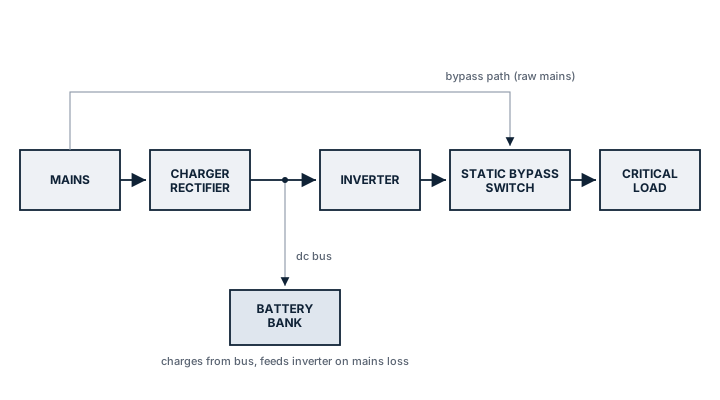
Block diagram of a marine uninterruptible power supply showing the charger, DC bus with battery bank, inverter, static bypass switch and the raw-mains bypass path to the critical load.

Main components

Rectifier/charger

Converts incoming AC to DC to power the inverter and float-charge the battery simultaneously.

Battery bank

Vented lead-acid batteries need a dedicated, ventilated battery room due to hydrogen gassing on charge; valve-regulated lead-acid (VRLA) batteries are sealed and tolerate a cabinet installation but have a shorter service life at high temperature; lithium battery UPS units are more compact and tolerant of partial charge cycling but need a battery management system and different fire risk considerations.

Inverter

Converts the battery DC back to clean AC for the protected bus, continuously in double-conversion designs.

Static bypass switch

Transfers the load directly to raw mains, without going through the inverter, if the UPS itself faults, so a UPS failure does not black out its own load.

Selection and sizing

  • Load in kVA and its power factor, sized with margin for future additions rather than the exact present load.
  • Required autonomy time, set by how long the emergency generator realistically takes to start, synchronise and pick up load on that particular vessel.
  • Battery chemistry versus available space and ventilation - a VLA bank needs a certified battery room, a VRLA or lithium bank does not.
  • Ambient temperature at the installation location, since lead-acid capacity and life both fall sharply above around 25 to 30 degrees C.

Regulations and class

SOLAS Chapter II-1 sets requirements for emergency power and for the transitional source of emergency power that a UPS often serves on vessels required to carry one. Class rules require battery rooms for vented lead-acid batteries to have independent ventilation to prevent hydrogen accumulation, and require periodic testing of battery capacity and of automatic changeover to confirm the UPS still delivers its rated autonomy, not just that it powers up.

Typical faults

FaultCauseConsequence
Autonomy shorter than ratedAged or sulfated battery cells, one weak cell dragging the stringLoad drops before the emergency generator picks up
UPS runs on battery with mains presentFaulty rectifier/charger, blown input fuseBattery discharges continuously; no reserve left when a real mains loss occurs
Failure to transfer to bypassStatic switch fault, wrong bypass settings after a load changeProtected bus blacks out instead of failing safe to raw mains
Hydrogen alarm in battery roomVentilation fan failure or blocked ducting on a VLA installationExplosion risk if charging continues unventilated

What to look for in a supplier

  • Battery chemistry and expected service life stated for the specific ambient temperature on board, not a datasheet figure at 20 degrees C.
  • Type approval for marine use covering vibration, temperature and EMC, not an industrial-only certification.
  • Battery monitoring capability - individual cell voltage or impedance trending catches a weak cell before it takes the whole string down.
  • Physical footprint and weight compatible with the intended battery room or cabinet space.

Test autonomy by actually running the UPS on battery under real load for a timed interval at the survey, not just by checking the charger's float voltage - a battery bank can look fine on a voltmeter and still fail under load.

Inspector Mode Show All 251 / 251 with inspector value

6 manufacturers · 251 models

Eaton UPS Marine

64
93PM 15kVA Marine 230V unverified
Capacity (kWh)
2.2
Voltage (V)
230
Chemistry
VRLA
Cycle Life
300
C rate
1.0
Class Approval
DNV GL
Common Failures & Inspection Points
  • Cell or battery ageing causes reduced usable capacity, voltage imbalance or low-runtime alarms
  • Cooling or ventilation failure causes rising battery temperature, thermal alarms or derating
  • BMS, charger, inverter or communication faults cause loss of availability, bypass operation or automatic isolation
  • Insulation deterioration or DC earth faults cause insulation alarms and may block connection to the electrical system
  • Loose high-current terminals or degraded interconnections cause local heating, voltage drop or intermittent supply
Service: Review battery or BMS alarms, voltage and temperature trends, insulation monitoring, charging, cooling and emergency isolation. Inspect enclosures, terminals and cable joints for heat damage, corrosion or movement. Verify charger, inverter, bypass and backup functions under the approved vessel procedure. Refer to the manufacturer documentation for the exact figure for voltage, state-of-charge, temperature and replacement limits.
Spare Parts: Carry approved fuses, contactors, charger or inverter modules where supported, temperature or voltage sensors, cooling components and replacement battery modules according to the vessel support plan.
Use Cases: Emergency power support, control-system UPS service, hybrid propulsion, peak shaving and shipboard electrical energy storage.
93PM 15kVA Marine 400V unverified
Capacity (kWh)
2.2
Voltage (V)
400
Chemistry
VRLA
Cycle Life
300
C rate
1.0
Class Approval
DNV GL
Common Failures & Inspection Points
  • Cell or battery ageing causes reduced usable capacity, voltage imbalance or low-runtime alarms
  • Cooling or ventilation failure causes rising battery temperature, thermal alarms or derating
  • BMS, charger, inverter or communication faults cause loss of availability, bypass operation or automatic isolation
  • Insulation deterioration or DC earth faults cause insulation alarms and may block connection to the electrical system
  • Loose high-current terminals or degraded interconnections cause local heating, voltage drop or intermittent supply
Service: Review battery or BMS alarms, voltage and temperature trends, insulation monitoring, charging, cooling and emergency isolation. Inspect enclosures, terminals and cable joints for heat damage, corrosion or movement. Verify charger, inverter, bypass and backup functions under the approved vessel procedure. Refer to the manufacturer documentation for the exact figure for voltage, state-of-charge, temperature and replacement limits.
Spare Parts: Carry approved fuses, contactors, charger or inverter modules where supported, temperature or voltage sensors, cooling components and replacement battery modules according to the vessel support plan.
Use Cases: Emergency power support, control-system UPS service, hybrid propulsion, peak shaving and shipboard electrical energy storage.
93PM 20kVA Marine 230V unverified
Capacity (kWh)
3.0
Voltage (V)
230
Chemistry
VRLA
Cycle Life
300
C rate
1.0
Class Approval
DNV GL
Common Failures & Inspection Points
  • Cell or battery ageing causes reduced usable capacity, voltage imbalance or low-runtime alarms
  • Cooling or ventilation failure causes rising battery temperature, thermal alarms or derating
  • BMS, charger, inverter or communication faults cause loss of availability, bypass operation or automatic isolation
  • Insulation deterioration or DC earth faults cause insulation alarms and may block connection to the electrical system
  • Loose high-current terminals or degraded interconnections cause local heating, voltage drop or intermittent supply
Service: Review battery or BMS alarms, voltage and temperature trends, insulation monitoring, charging, cooling and emergency isolation. Inspect enclosures, terminals and cable joints for heat damage, corrosion or movement. Verify charger, inverter, bypass and backup functions under the approved vessel procedure. Refer to the manufacturer documentation for the exact figure for voltage, state-of-charge, temperature and replacement limits.
Spare Parts: Carry approved fuses, contactors, charger or inverter modules where supported, temperature or voltage sensors, cooling components and replacement battery modules according to the vessel support plan.
Use Cases: Emergency power support, control-system UPS service, hybrid propulsion, peak shaving and shipboard electrical energy storage.
93PM 20kVA Marine 400V unverified
Capacity (kWh)
3.0
Voltage (V)
400
Chemistry
VRLA
Cycle Life
300
C rate
1.0
Class Approval
DNV GL
Common Failures & Inspection Points
  • Cell or battery ageing causes reduced usable capacity, voltage imbalance or low-runtime alarms
  • Cooling or ventilation failure causes rising battery temperature, thermal alarms or derating
  • BMS, charger, inverter or communication faults cause loss of availability, bypass operation or automatic isolation
  • Insulation deterioration or DC earth faults cause insulation alarms and may block connection to the electrical system
  • Loose high-current terminals or degraded interconnections cause local heating, voltage drop or intermittent supply
Service: Review battery or BMS alarms, voltage and temperature trends, insulation monitoring, charging, cooling and emergency isolation. Inspect enclosures, terminals and cable joints for heat damage, corrosion or movement. Verify charger, inverter, bypass and backup functions under the approved vessel procedure. Refer to the manufacturer documentation for the exact figure for voltage, state-of-charge, temperature and replacement limits.
Spare Parts: Carry approved fuses, contactors, charger or inverter modules where supported, temperature or voltage sensors, cooling components and replacement battery modules according to the vessel support plan.
Use Cases: Emergency power support, control-system UPS service, hybrid propulsion, peak shaving and shipboard electrical energy storage.
93PM 30kVA Marine 230V unverified
Capacity (kWh)
4.5
Voltage (V)
230
Chemistry
VRLA
Cycle Life
300
C rate
1.0
Class Approval
DNV GL
Common Failures & Inspection Points
  • Cell or battery ageing causes reduced usable capacity, voltage imbalance or low-runtime alarms
  • Cooling or ventilation failure causes rising battery temperature, thermal alarms or derating
  • BMS, charger, inverter or communication faults cause loss of availability, bypass operation or automatic isolation
  • Insulation deterioration or DC earth faults cause insulation alarms and may block connection to the electrical system
  • Loose high-current terminals or degraded interconnections cause local heating, voltage drop or intermittent supply
Service: Review battery or BMS alarms, voltage and temperature trends, insulation monitoring, charging, cooling and emergency isolation. Inspect enclosures, terminals and cable joints for heat damage, corrosion or movement. Verify charger, inverter, bypass and backup functions under the approved vessel procedure. Refer to the manufacturer documentation for the exact figure for voltage, state-of-charge, temperature and replacement limits.
Spare Parts: Carry approved fuses, contactors, charger or inverter modules where supported, temperature or voltage sensors, cooling components and replacement battery modules according to the vessel support plan.
Use Cases: Emergency power support, control-system UPS service, hybrid propulsion, peak shaving and shipboard electrical energy storage.
93PM 30kVA Marine 400V unverified
Capacity (kWh)
4.5
Voltage (V)
400
Chemistry
VRLA
Cycle Life
300
C rate
1.0
Class Approval
DNV GL
Common Failures & Inspection Points
  • Cell or battery ageing causes reduced usable capacity, voltage imbalance or low-runtime alarms
  • Cooling or ventilation failure causes rising battery temperature, thermal alarms or derating
  • BMS, charger, inverter or communication faults cause loss of availability, bypass operation or automatic isolation
  • Insulation deterioration or DC earth faults cause insulation alarms and may block connection to the electrical system
  • Loose high-current terminals or degraded interconnections cause local heating, voltage drop or intermittent supply
Service: Review battery or BMS alarms, voltage and temperature trends, insulation monitoring, charging, cooling and emergency isolation. Inspect enclosures, terminals and cable joints for heat damage, corrosion or movement. Verify charger, inverter, bypass and backup functions under the approved vessel procedure. Refer to the manufacturer documentation for the exact figure for voltage, state-of-charge, temperature and replacement limits.
Spare Parts: Carry approved fuses, contactors, charger or inverter modules where supported, temperature or voltage sensors, cooling components and replacement battery modules according to the vessel support plan.
Use Cases: Emergency power support, control-system UPS service, hybrid propulsion, peak shaving and shipboard electrical energy storage.
93PM 40kVA Marine 230V unverified
Capacity (kWh)
6.0
Voltage (V)
230
Chemistry
VRLA
Cycle Life
300
C rate
1.0
Class Approval
DNV GL
Common Failures & Inspection Points
  • Cell or battery ageing causes reduced usable capacity, voltage imbalance or low-runtime alarms
  • Cooling or ventilation failure causes rising battery temperature, thermal alarms or derating
  • BMS, charger, inverter or communication faults cause loss of availability, bypass operation or automatic isolation
  • Insulation deterioration or DC earth faults cause insulation alarms and may block connection to the electrical system
  • Loose high-current terminals or degraded interconnections cause local heating, voltage drop or intermittent supply
Service: Review battery or BMS alarms, voltage and temperature trends, insulation monitoring, charging, cooling and emergency isolation. Inspect enclosures, terminals and cable joints for heat damage, corrosion or movement. Verify charger, inverter, bypass and backup functions under the approved vessel procedure. Refer to the manufacturer documentation for the exact figure for voltage, state-of-charge, temperature and replacement limits.
Spare Parts: Carry approved fuses, contactors, charger or inverter modules where supported, temperature or voltage sensors, cooling components and replacement battery modules according to the vessel support plan.
Use Cases: Emergency power support, control-system UPS service, hybrid propulsion, peak shaving and shipboard electrical energy storage.
93PM 40kVA Marine 400V unverified
Capacity (kWh)
6.0
Voltage (V)
400
Chemistry
VRLA
Cycle Life
300
C rate
1.0
Class Approval
DNV GL
Common Failures & Inspection Points
  • Cell or battery ageing causes reduced usable capacity, voltage imbalance or low-runtime alarms
  • Cooling or ventilation failure causes rising battery temperature, thermal alarms or derating
  • BMS, charger, inverter or communication faults cause loss of availability, bypass operation or automatic isolation
  • Insulation deterioration or DC earth faults cause insulation alarms and may block connection to the electrical system
  • Loose high-current terminals or degraded interconnections cause local heating, voltage drop or intermittent supply
Service: Review battery or BMS alarms, voltage and temperature trends, insulation monitoring, charging, cooling and emergency isolation. Inspect enclosures, terminals and cable joints for heat damage, corrosion or movement. Verify charger, inverter, bypass and backup functions under the approved vessel procedure. Refer to the manufacturer documentation for the exact figure for voltage, state-of-charge, temperature and replacement limits.
Spare Parts: Carry approved fuses, contactors, charger or inverter modules where supported, temperature or voltage sensors, cooling components and replacement battery modules according to the vessel support plan.
Use Cases: Emergency power support, control-system UPS service, hybrid propulsion, peak shaving and shipboard electrical energy storage.
93PM 50kVA Marine 230V unverified
Capacity (kWh)
7.5
Voltage (V)
230
Chemistry
VRLA
Cycle Life
300
C rate
1.0
Class Approval
DNV GL
Common Failures & Inspection Points
  • Cell or battery ageing causes reduced usable capacity, voltage imbalance or low-runtime alarms
  • Cooling or ventilation failure causes rising battery temperature, thermal alarms or derating
  • BMS, charger, inverter or communication faults cause loss of availability, bypass operation or automatic isolation
  • Insulation deterioration or DC earth faults cause insulation alarms and may block connection to the electrical system
  • Loose high-current terminals or degraded interconnections cause local heating, voltage drop or intermittent supply
Service: Review battery or BMS alarms, voltage and temperature trends, insulation monitoring, charging, cooling and emergency isolation. Inspect enclosures, terminals and cable joints for heat damage, corrosion or movement. Verify charger, inverter, bypass and backup functions under the approved vessel procedure. Refer to the manufacturer documentation for the exact figure for voltage, state-of-charge, temperature and replacement limits.
Spare Parts: Carry approved fuses, contactors, charger or inverter modules where supported, temperature or voltage sensors, cooling components and replacement battery modules according to the vessel support plan.
Use Cases: Emergency power support, control-system UPS service, hybrid propulsion, peak shaving and shipboard electrical energy storage.
93PM 50kVA Marine 400V unverified
Capacity (kWh)
7.5
Voltage (V)
400
Chemistry
VRLA
Cycle Life
300
C rate
1.0
Class Approval
DNV GL
Common Failures & Inspection Points
  • Cell or battery ageing causes reduced usable capacity, voltage imbalance or low-runtime alarms
  • Cooling or ventilation failure causes rising battery temperature, thermal alarms or derating
  • BMS, charger, inverter or communication faults cause loss of availability, bypass operation or automatic isolation
  • Insulation deterioration or DC earth faults cause insulation alarms and may block connection to the electrical system
  • Loose high-current terminals or degraded interconnections cause local heating, voltage drop or intermittent supply
Service: Review battery or BMS alarms, voltage and temperature trends, insulation monitoring, charging, cooling and emergency isolation. Inspect enclosures, terminals and cable joints for heat damage, corrosion or movement. Verify charger, inverter, bypass and backup functions under the approved vessel procedure. Refer to the manufacturer documentation for the exact figure for voltage, state-of-charge, temperature and replacement limits.
Spare Parts: Carry approved fuses, contactors, charger or inverter modules where supported, temperature or voltage sensors, cooling components and replacement battery modules according to the vessel support plan.
Use Cases: Emergency power support, control-system UPS service, hybrid propulsion, peak shaving and shipboard electrical energy storage.
93PM 60kVA Marine 230V unverified
Capacity (kWh)
9.0
Voltage (V)
230
Chemistry
VRLA
Cycle Life
300
C rate
1.0
Class Approval
DNV GL
Common Failures & Inspection Points
  • Cell or battery ageing causes reduced usable capacity, voltage imbalance or low-runtime alarms
  • Cooling or ventilation failure causes rising battery temperature, thermal alarms or derating
  • BMS, charger, inverter or communication faults cause loss of availability, bypass operation or automatic isolation
  • Insulation deterioration or DC earth faults cause insulation alarms and may block connection to the electrical system
  • Loose high-current terminals or degraded interconnections cause local heating, voltage drop or intermittent supply
Service: Review battery or BMS alarms, voltage and temperature trends, insulation monitoring, charging, cooling and emergency isolation. Inspect enclosures, terminals and cable joints for heat damage, corrosion or movement. Verify charger, inverter, bypass and backup functions under the approved vessel procedure. Refer to the manufacturer documentation for the exact figure for voltage, state-of-charge, temperature and replacement limits.
Spare Parts: Carry approved fuses, contactors, charger or inverter modules where supported, temperature or voltage sensors, cooling components and replacement battery modules according to the vessel support plan.
Use Cases: Emergency power support, control-system UPS service, hybrid propulsion, peak shaving and shipboard electrical energy storage.
93PM 60kVA Marine 400V unverified
Capacity (kWh)
9.0
Voltage (V)
400
Chemistry
VRLA
Cycle Life
300
C rate
1.0
Class Approval
DNV GL
Common Failures & Inspection Points
  • Cell or battery ageing causes reduced usable capacity, voltage imbalance or low-runtime alarms
  • Cooling or ventilation failure causes rising battery temperature, thermal alarms or derating
  • BMS, charger, inverter or communication faults cause loss of availability, bypass operation or automatic isolation
  • Insulation deterioration or DC earth faults cause insulation alarms and may block connection to the electrical system
  • Loose high-current terminals or degraded interconnections cause local heating, voltage drop or intermittent supply
Service: Review battery or BMS alarms, voltage and temperature trends, insulation monitoring, charging, cooling and emergency isolation. Inspect enclosures, terminals and cable joints for heat damage, corrosion or movement. Verify charger, inverter, bypass and backup functions under the approved vessel procedure. Refer to the manufacturer documentation for the exact figure for voltage, state-of-charge, temperature and replacement limits.
Spare Parts: Carry approved fuses, contactors, charger or inverter modules where supported, temperature or voltage sensors, cooling components and replacement battery modules according to the vessel support plan.
Use Cases: Emergency power support, control-system UPS service, hybrid propulsion, peak shaving and shipboard electrical energy storage.
93PM 80kVA Marine 230V unverified
Capacity (kWh)
12.0
Voltage (V)
230
Chemistry
VRLA
Cycle Life
300
C rate
1.0
Class Approval
DNV GL
Common Failures & Inspection Points
  • Cell or battery ageing causes reduced usable capacity, voltage imbalance or low-runtime alarms
  • Cooling or ventilation failure causes rising battery temperature, thermal alarms or derating
  • BMS, charger, inverter or communication faults cause loss of availability, bypass operation or automatic isolation
  • Insulation deterioration or DC earth faults cause insulation alarms and may block connection to the electrical system
  • Loose high-current terminals or degraded interconnections cause local heating, voltage drop or intermittent supply
Service: Review battery or BMS alarms, voltage and temperature trends, insulation monitoring, charging, cooling and emergency isolation. Inspect enclosures, terminals and cable joints for heat damage, corrosion or movement. Verify charger, inverter, bypass and backup functions under the approved vessel procedure. Refer to the manufacturer documentation for the exact figure for voltage, state-of-charge, temperature and replacement limits.
Spare Parts: Carry approved fuses, contactors, charger or inverter modules where supported, temperature or voltage sensors, cooling components and replacement battery modules according to the vessel support plan.
Use Cases: Emergency power support, control-system UPS service, hybrid propulsion, peak shaving and shipboard electrical energy storage.
93PM 80kVA Marine 400V unverified
Capacity (kWh)
12.0
Voltage (V)
400
Chemistry
VRLA
Cycle Life
300
C rate
1.0
Class Approval
DNV GL
Common Failures & Inspection Points
  • Cell or battery ageing causes reduced usable capacity, voltage imbalance or low-runtime alarms
  • Cooling or ventilation failure causes rising battery temperature, thermal alarms or derating
  • BMS, charger, inverter or communication faults cause loss of availability, bypass operation or automatic isolation
  • Insulation deterioration or DC earth faults cause insulation alarms and may block connection to the electrical system
  • Loose high-current terminals or degraded interconnections cause local heating, voltage drop or intermittent supply
Service: Review battery or BMS alarms, voltage and temperature trends, insulation monitoring, charging, cooling and emergency isolation. Inspect enclosures, terminals and cable joints for heat damage, corrosion or movement. Verify charger, inverter, bypass and backup functions under the approved vessel procedure. Refer to the manufacturer documentation for the exact figure for voltage, state-of-charge, temperature and replacement limits.
Spare Parts: Carry approved fuses, contactors, charger or inverter modules where supported, temperature or voltage sensors, cooling components and replacement battery modules according to the vessel support plan.
Use Cases: Emergency power support, control-system UPS service, hybrid propulsion, peak shaving and shipboard electrical energy storage.
93PM 100kVA Marine 230V unverified
Capacity (kWh)
15.0
Voltage (V)
230
Chemistry
VRLA
Cycle Life
300
C rate
1.0
Class Approval
DNV GL
Common Failures & Inspection Points
  • Battery cell or module imbalance caused by aging, temperature difference or internal deterioration, resulting in warnings, reduced autonomy or protective limitation
  • Cooling or ventilation failure caused by fan, pump, filter or control faults, resulting in elevated temperature and derating or shutdown
  • Power-module, inverter or rectifier failure caused by electrical stress or component aging, resulting in loss of protected output or a UPS alarm
  • Battery-management, sensor or communication failure caused by wiring, electronics or network faults, resulting in missing data, alarms or protective shutdown
  • Insulation, contactor or connection deterioration caused by moisture, contamination or electrical stress, resulting in ground-fault alarms, overheating or loss of availability
Service: Review alarms, battery or DC-link condition, temperatures, load, bypass status and insulation monitoring without overriding protective functions. Inspect cooling, ventilation, cable connections, racks, contactors, fuses and fire-protection interfaces for abnormal condition. Verify emergency shutdown, bypass or isolation functions using approved procedures. Keep battery and electrical spaces clean, dry and within specified environmental conditions. Preserve event logs and configuration before approved module or software replacement. Refer to the manufacturer documentation for the exact figure for cell limits, autonomy, transfer criteria and electrical tests.
Spare Parts: Keep approved fuses, contactors, sensors, cooling fans or pumps, filters, power modules and manufacturer-recommended control electronics. Battery modules or cells must only be replaced with approved compatible units using the required safety procedure. Preserve configuration and commissioning tools for critical systems.
Use Cases: Emergency power continuity, bridge and automation backup, hybrid propulsion, peak shaving and other shipboard energy-storage duties according to the listed system.
93PM 100kVA Marine 400V unverified
Capacity (kWh)
15.0
Voltage (V)
400
Chemistry
VRLA
Cycle Life
300
C rate
1.0
Class Approval
DNV GL
Common Failures & Inspection Points
  • Battery cell or module imbalance caused by aging, temperature difference or internal deterioration, resulting in warnings, reduced autonomy or protective limitation
  • Cooling or ventilation failure caused by fan, pump, filter or control faults, resulting in elevated temperature and derating or shutdown
  • Power-module, inverter or rectifier failure caused by electrical stress or component aging, resulting in loss of protected output or a UPS alarm
  • Battery-management, sensor or communication failure caused by wiring, electronics or network faults, resulting in missing data, alarms or protective shutdown
  • Insulation, contactor or connection deterioration caused by moisture, contamination or electrical stress, resulting in ground-fault alarms, overheating or loss of availability
Service: Review alarms, battery or DC-link condition, temperatures, load, bypass status and insulation monitoring without overriding protective functions. Inspect cooling, ventilation, cable connections, racks, contactors, fuses and fire-protection interfaces for abnormal condition. Verify emergency shutdown, bypass or isolation functions using approved procedures. Keep battery and electrical spaces clean, dry and within specified environmental conditions. Preserve event logs and configuration before approved module or software replacement. Refer to the manufacturer documentation for the exact figure for cell limits, autonomy, transfer criteria and electrical tests.
Spare Parts: Keep approved fuses, contactors, sensors, cooling fans or pumps, filters, power modules and manufacturer-recommended control electronics. Battery modules or cells must only be replaced with approved compatible units using the required safety procedure. Preserve configuration and commissioning tools for critical systems.
Use Cases: Emergency power continuity, bridge and automation backup, hybrid propulsion, peak shaving and other shipboard energy-storage duties according to the listed system.
93PM 150kVA Marine 230V unverified
Capacity (kWh)
22.5
Voltage (V)
230
Chemistry
VRLA
Cycle Life
300
C rate
1.0
Class Approval
DNV GL
Common Failures & Inspection Points
  • Battery cell or module imbalance caused by aging, temperature difference or internal deterioration, resulting in warnings, reduced autonomy or protective limitation
  • Cooling or ventilation failure caused by fan, pump, filter or control faults, resulting in elevated temperature and derating or shutdown
  • Power-module, inverter or rectifier failure caused by electrical stress or component aging, resulting in loss of protected output or a UPS alarm
  • Battery-management, sensor or communication failure caused by wiring, electronics or network faults, resulting in missing data, alarms or protective shutdown
  • Insulation, contactor or connection deterioration caused by moisture, contamination or electrical stress, resulting in ground-fault alarms, overheating or loss of availability
Service: Review alarms, battery or DC-link condition, temperatures, load, bypass status and insulation monitoring without overriding protective functions. Inspect cooling, ventilation, cable connections, racks, contactors, fuses and fire-protection interfaces for abnormal condition. Verify emergency shutdown, bypass or isolation functions using approved procedures. Keep battery and electrical spaces clean, dry and within specified environmental conditions. Preserve event logs and configuration before approved module or software replacement. Refer to the manufacturer documentation for the exact figure for cell limits, autonomy, transfer criteria and electrical tests.
Spare Parts: Keep approved fuses, contactors, sensors, cooling fans or pumps, filters, power modules and manufacturer-recommended control electronics. Battery modules or cells must only be replaced with approved compatible units using the required safety procedure. Preserve configuration and commissioning tools for critical systems.
Use Cases: Emergency power continuity, bridge and automation backup, hybrid propulsion, peak shaving and other shipboard energy-storage duties according to the listed system.
93PM 150kVA Marine 400V unverified
Capacity (kWh)
22.5
Voltage (V)
400
Chemistry
VRLA
Cycle Life
300
C rate
1.0
Class Approval
DNV GL
Common Failures & Inspection Points
  • Battery cell or module imbalance caused by aging, temperature difference or internal deterioration, resulting in warnings, reduced autonomy or protective limitation
  • Cooling or ventilation failure caused by fan, pump, filter or control faults, resulting in elevated temperature and derating or shutdown
  • Power-module, inverter or rectifier failure caused by electrical stress or component aging, resulting in loss of protected output or a UPS alarm
  • Battery-management, sensor or communication failure caused by wiring, electronics or network faults, resulting in missing data, alarms or protective shutdown
  • Insulation, contactor or connection deterioration caused by moisture, contamination or electrical stress, resulting in ground-fault alarms, overheating or loss of availability
Service: Review alarms, battery or DC-link condition, temperatures, load, bypass status and insulation monitoring without overriding protective functions. Inspect cooling, ventilation, cable connections, racks, contactors, fuses and fire-protection interfaces for abnormal condition. Verify emergency shutdown, bypass or isolation functions using approved procedures. Keep battery and electrical spaces clean, dry and within specified environmental conditions. Preserve event logs and configuration before approved module or software replacement. Refer to the manufacturer documentation for the exact figure for cell limits, autonomy, transfer criteria and electrical tests.
Spare Parts: Keep approved fuses, contactors, sensors, cooling fans or pumps, filters, power modules and manufacturer-recommended control electronics. Battery modules or cells must only be replaced with approved compatible units using the required safety procedure. Preserve configuration and commissioning tools for critical systems.
Use Cases: Emergency power continuity, bridge and automation backup, hybrid propulsion, peak shaving and other shipboard energy-storage duties according to the listed system.
93PM 200kVA Marine 230V unverified
Capacity (kWh)
30.0
Voltage (V)
230
Chemistry
VRLA
Cycle Life
300
C rate
1.0
Class Approval
DNV GL
Common Failures & Inspection Points
  • Battery cell or module imbalance caused by aging, temperature difference or internal deterioration, resulting in warnings, reduced autonomy or protective limitation
  • Cooling or ventilation failure caused by fan, pump, filter or control faults, resulting in elevated temperature and derating or shutdown
  • Power-module, inverter or rectifier failure caused by electrical stress or component aging, resulting in loss of protected output or a UPS alarm
  • Battery-management, sensor or communication failure caused by wiring, electronics or network faults, resulting in missing data, alarms or protective shutdown
  • Insulation, contactor or connection deterioration caused by moisture, contamination or electrical stress, resulting in ground-fault alarms, overheating or loss of availability
Service: Review alarms, battery or DC-link condition, temperatures, load, bypass status and insulation monitoring without overriding protective functions. Inspect cooling, ventilation, cable connections, racks, contactors, fuses and fire-protection interfaces for abnormal condition. Verify emergency shutdown, bypass or isolation functions using approved procedures. Keep battery and electrical spaces clean, dry and within specified environmental conditions. Preserve event logs and configuration before approved module or software replacement. Refer to the manufacturer documentation for the exact figure for cell limits, autonomy, transfer criteria and electrical tests.
Spare Parts: Keep approved fuses, contactors, sensors, cooling fans or pumps, filters, power modules and manufacturer-recommended control electronics. Battery modules or cells must only be replaced with approved compatible units using the required safety procedure. Preserve configuration and commissioning tools for critical systems.
Use Cases: Emergency power continuity, bridge and automation backup, hybrid propulsion, peak shaving and other shipboard energy-storage duties according to the listed system.
93PM 200kVA Marine 400V unverified
Capacity (kWh)
30.0
Voltage (V)
400
Chemistry
VRLA
Cycle Life
300
C rate
1.0
Class Approval
DNV GL
Common Failures & Inspection Points
  • Battery cell or module imbalance caused by aging, temperature difference or internal deterioration, resulting in warnings, reduced autonomy or protective limitation
  • Cooling or ventilation failure caused by fan, pump, filter or control faults, resulting in elevated temperature and derating or shutdown
  • Power-module, inverter or rectifier failure caused by electrical stress or component aging, resulting in loss of protected output or a UPS alarm
  • Battery-management, sensor or communication failure caused by wiring, electronics or network faults, resulting in missing data, alarms or protective shutdown
  • Insulation, contactor or connection deterioration caused by moisture, contamination or electrical stress, resulting in ground-fault alarms, overheating or loss of availability
Service: Review alarms, battery or DC-link condition, temperatures, load, bypass status and insulation monitoring without overriding protective functions. Inspect cooling, ventilation, cable connections, racks, contactors, fuses and fire-protection interfaces for abnormal condition. Verify emergency shutdown, bypass or isolation functions using approved procedures. Keep battery and electrical spaces clean, dry and within specified environmental conditions. Preserve event logs and configuration before approved module or software replacement. Refer to the manufacturer documentation for the exact figure for cell limits, autonomy, transfer criteria and electrical tests.
Spare Parts: Keep approved fuses, contactors, sensors, cooling fans or pumps, filters, power modules and manufacturer-recommended control electronics. Battery modules or cells must only be replaced with approved compatible units using the required safety procedure. Preserve configuration and commissioning tools for critical systems.
Use Cases: Emergency power continuity, bridge and automation backup, hybrid propulsion, peak shaving and other shipboard energy-storage duties according to the listed system.
93PR 25kVA Marine 230V unverified
Capacity (kWh)
3.8
Voltage (V)
230
Chemistry
VRLA
Cycle Life
300
C rate
1.0
Class Approval
DNV GL
Common Failures & Inspection Points
  • Cell or battery ageing causes reduced usable capacity, voltage imbalance or low-runtime alarms
  • Cooling or ventilation failure causes rising battery temperature, thermal alarms or derating
  • BMS, charger, inverter or communication faults cause loss of availability, bypass operation or automatic isolation
  • Insulation deterioration or DC earth faults cause insulation alarms and may block connection to the electrical system
  • Loose high-current terminals or degraded interconnections cause local heating, voltage drop or intermittent supply
Service: Review battery or BMS alarms, voltage and temperature trends, insulation monitoring, charging, cooling and emergency isolation. Inspect enclosures, terminals and cable joints for heat damage, corrosion or movement. Verify charger, inverter, bypass and backup functions under the approved vessel procedure. Refer to the manufacturer documentation for the exact figure for voltage, state-of-charge, temperature and replacement limits.
Spare Parts: Carry approved fuses, contactors, charger or inverter modules where supported, temperature or voltage sensors, cooling components and replacement battery modules according to the vessel support plan.
Use Cases: Emergency power support, control-system UPS service, hybrid propulsion, peak shaving and shipboard electrical energy storage.
93PR 25kVA Marine 400V unverified
Capacity (kWh)
3.8
Voltage (V)
400
Chemistry
VRLA
Cycle Life
300
C rate
1.0
Class Approval
DNV GL
Common Failures & Inspection Points
  • Cell or battery ageing causes reduced usable capacity, voltage imbalance or low-runtime alarms
  • Cooling or ventilation failure causes rising battery temperature, thermal alarms or derating
  • BMS, charger, inverter or communication faults cause loss of availability, bypass operation or automatic isolation
  • Insulation deterioration or DC earth faults cause insulation alarms and may block connection to the electrical system
  • Loose high-current terminals or degraded interconnections cause local heating, voltage drop or intermittent supply
Service: Review battery or BMS alarms, voltage and temperature trends, insulation monitoring, charging, cooling and emergency isolation. Inspect enclosures, terminals and cable joints for heat damage, corrosion or movement. Verify charger, inverter, bypass and backup functions under the approved vessel procedure. Refer to the manufacturer documentation for the exact figure for voltage, state-of-charge, temperature and replacement limits.
Spare Parts: Carry approved fuses, contactors, charger or inverter modules where supported, temperature or voltage sensors, cooling components and replacement battery modules according to the vessel support plan.
Use Cases: Emergency power support, control-system UPS service, hybrid propulsion, peak shaving and shipboard electrical energy storage.
93PR 50kVA Marine 230V unverified
Capacity (kWh)
7.5
Voltage (V)
230
Chemistry
VRLA
Cycle Life
300
C rate
1.0
Class Approval
DNV GL
Common Failures & Inspection Points
  • Cell or battery ageing causes reduced usable capacity, voltage imbalance or low-runtime alarms
  • Cooling or ventilation failure causes rising battery temperature, thermal alarms or derating
  • BMS, charger, inverter or communication faults cause loss of availability, bypass operation or automatic isolation
  • Insulation deterioration or DC earth faults cause insulation alarms and may block connection to the electrical system
  • Loose high-current terminals or degraded interconnections cause local heating, voltage drop or intermittent supply
Service: Review battery or BMS alarms, voltage and temperature trends, insulation monitoring, charging, cooling and emergency isolation. Inspect enclosures, terminals and cable joints for heat damage, corrosion or movement. Verify charger, inverter, bypass and backup functions under the approved vessel procedure. Refer to the manufacturer documentation for the exact figure for voltage, state-of-charge, temperature and replacement limits.
Spare Parts: Carry approved fuses, contactors, charger or inverter modules where supported, temperature or voltage sensors, cooling components and replacement battery modules according to the vessel support plan.
Use Cases: Emergency power support, control-system UPS service, hybrid propulsion, peak shaving and shipboard electrical energy storage.
93PR 50kVA Marine 400V unverified
Capacity (kWh)
7.5
Voltage (V)
400
Chemistry
VRLA
Cycle Life
300
C rate
1.0
Class Approval
DNV GL
Common Failures & Inspection Points
  • Cell or battery ageing causes reduced usable capacity, voltage imbalance or low-runtime alarms
  • Cooling or ventilation failure causes rising battery temperature, thermal alarms or derating
  • BMS, charger, inverter or communication faults cause loss of availability, bypass operation or automatic isolation
  • Insulation deterioration or DC earth faults cause insulation alarms and may block connection to the electrical system
  • Loose high-current terminals or degraded interconnections cause local heating, voltage drop or intermittent supply
Service: Review battery or BMS alarms, voltage and temperature trends, insulation monitoring, charging, cooling and emergency isolation. Inspect enclosures, terminals and cable joints for heat damage, corrosion or movement. Verify charger, inverter, bypass and backup functions under the approved vessel procedure. Refer to the manufacturer documentation for the exact figure for voltage, state-of-charge, temperature and replacement limits.
Spare Parts: Carry approved fuses, contactors, charger or inverter modules where supported, temperature or voltage sensors, cooling components and replacement battery modules according to the vessel support plan.
Use Cases: Emergency power support, control-system UPS service, hybrid propulsion, peak shaving and shipboard electrical energy storage.
93PR 75kVA Marine 230V unverified
Capacity (kWh)
11.2
Voltage (V)
230
Chemistry
VRLA
Cycle Life
300
C rate
1.0
Class Approval
DNV GL
Common Failures & Inspection Points
  • Cell or battery ageing causes reduced usable capacity, voltage imbalance or low-runtime alarms
  • Cooling or ventilation failure causes rising battery temperature, thermal alarms or derating
  • BMS, charger, inverter or communication faults cause loss of availability, bypass operation or automatic isolation
  • Insulation deterioration or DC earth faults cause insulation alarms and may block connection to the electrical system
  • Loose high-current terminals or degraded interconnections cause local heating, voltage drop or intermittent supply
Service: Review battery or BMS alarms, voltage and temperature trends, insulation monitoring, charging, cooling and emergency isolation. Inspect enclosures, terminals and cable joints for heat damage, corrosion or movement. Verify charger, inverter, bypass and backup functions under the approved vessel procedure. Refer to the manufacturer documentation for the exact figure for voltage, state-of-charge, temperature and replacement limits.
Spare Parts: Carry approved fuses, contactors, charger or inverter modules where supported, temperature or voltage sensors, cooling components and replacement battery modules according to the vessel support plan.
Use Cases: Emergency power support, control-system UPS service, hybrid propulsion, peak shaving and shipboard electrical energy storage.
93PR 75kVA Marine 400V unverified
Capacity (kWh)
11.2
Voltage (V)
400
Chemistry
VRLA
Cycle Life
300
C rate
1.0
Class Approval
DNV GL
Common Failures & Inspection Points
  • Cell or battery ageing causes reduced usable capacity, voltage imbalance or low-runtime alarms
  • Cooling or ventilation failure causes rising battery temperature, thermal alarms or derating
  • BMS, charger, inverter or communication faults cause loss of availability, bypass operation or automatic isolation
  • Insulation deterioration or DC earth faults cause insulation alarms and may block connection to the electrical system
  • Loose high-current terminals or degraded interconnections cause local heating, voltage drop or intermittent supply
Service: Review battery or BMS alarms, voltage and temperature trends, insulation monitoring, charging, cooling and emergency isolation. Inspect enclosures, terminals and cable joints for heat damage, corrosion or movement. Verify charger, inverter, bypass and backup functions under the approved vessel procedure. Refer to the manufacturer documentation for the exact figure for voltage, state-of-charge, temperature and replacement limits.
Spare Parts: Carry approved fuses, contactors, charger or inverter modules where supported, temperature or voltage sensors, cooling components and replacement battery modules according to the vessel support plan.
Use Cases: Emergency power support, control-system UPS service, hybrid propulsion, peak shaving and shipboard electrical energy storage.
93PR 100kVA Marine 230V unverified
Capacity (kWh)
15.0
Voltage (V)
230
Chemistry
VRLA
Cycle Life
300
C rate
1.0
Class Approval
DNV GL
Common Failures & Inspection Points
  • Battery cell or module imbalance caused by aging, temperature difference or internal deterioration, resulting in warnings, reduced autonomy or protective limitation
  • Cooling or ventilation failure caused by fan, pump, filter or control faults, resulting in elevated temperature and derating or shutdown
  • Power-module, inverter or rectifier failure caused by electrical stress or component aging, resulting in loss of protected output or a UPS alarm
  • Battery-management, sensor or communication failure caused by wiring, electronics or network faults, resulting in missing data, alarms or protective shutdown
  • Insulation, contactor or connection deterioration caused by moisture, contamination or electrical stress, resulting in ground-fault alarms, overheating or loss of availability
Service: Review alarms, battery or DC-link condition, temperatures, load, bypass status and insulation monitoring without overriding protective functions. Inspect cooling, ventilation, cable connections, racks, contactors, fuses and fire-protection interfaces for abnormal condition. Verify emergency shutdown, bypass or isolation functions using approved procedures. Keep battery and electrical spaces clean, dry and within specified environmental conditions. Preserve event logs and configuration before approved module or software replacement. Refer to the manufacturer documentation for the exact figure for cell limits, autonomy, transfer criteria and electrical tests.
Spare Parts: Keep approved fuses, contactors, sensors, cooling fans or pumps, filters, power modules and manufacturer-recommended control electronics. Battery modules or cells must only be replaced with approved compatible units using the required safety procedure. Preserve configuration and commissioning tools for critical systems.
Use Cases: Emergency power continuity, bridge and automation backup, hybrid propulsion, peak shaving and other shipboard energy-storage duties according to the listed system.
93PR 100kVA Marine 400V unverified
Capacity (kWh)
15.0
Voltage (V)
400
Chemistry
VRLA
Cycle Life
300
C rate
1.0
Class Approval
DNV GL
Common Failures & Inspection Points
  • Battery cell or module imbalance caused by aging, temperature difference or internal deterioration, resulting in warnings, reduced autonomy or protective limitation
  • Cooling or ventilation failure caused by fan, pump, filter or control faults, resulting in elevated temperature and derating or shutdown
  • Power-module, inverter or rectifier failure caused by electrical stress or component aging, resulting in loss of protected output or a UPS alarm
  • Battery-management, sensor or communication failure caused by wiring, electronics or network faults, resulting in missing data, alarms or protective shutdown
  • Insulation, contactor or connection deterioration caused by moisture, contamination or electrical stress, resulting in ground-fault alarms, overheating or loss of availability
Service: Review alarms, battery or DC-link condition, temperatures, load, bypass status and insulation monitoring without overriding protective functions. Inspect cooling, ventilation, cable connections, racks, contactors, fuses and fire-protection interfaces for abnormal condition. Verify emergency shutdown, bypass or isolation functions using approved procedures. Keep battery and electrical spaces clean, dry and within specified environmental conditions. Preserve event logs and configuration before approved module or software replacement. Refer to the manufacturer documentation for the exact figure for cell limits, autonomy, transfer criteria and electrical tests.
Spare Parts: Keep approved fuses, contactors, sensors, cooling fans or pumps, filters, power modules and manufacturer-recommended control electronics. Battery modules or cells must only be replaced with approved compatible units using the required safety procedure. Preserve configuration and commissioning tools for critical systems.
Use Cases: Emergency power continuity, bridge and automation backup, hybrid propulsion, peak shaving and other shipboard energy-storage duties according to the listed system.
UPS 3kVA 230V Marine unverified
Capacity (kWh)
0.4
Voltage (V)
230
Chemistry
Li-Ion
Cycle Life
3000
C rate
1.0
Class Approval
DNV GL
Common Failures & Inspection Points
  • Cell or battery ageing causes reduced usable capacity, voltage imbalance or low-runtime alarms
  • Cooling or ventilation failure causes rising battery temperature, thermal alarms or derating
  • BMS, charger, inverter or communication faults cause loss of availability, bypass operation or automatic isolation
  • Insulation deterioration or DC earth faults cause insulation alarms and may block connection to the electrical system
  • Loose high-current terminals or degraded interconnections cause local heating, voltage drop or intermittent supply
Service: Review battery or BMS alarms, voltage and temperature trends, insulation monitoring, charging, cooling and emergency isolation. Inspect enclosures, terminals and cable joints for heat damage, corrosion or movement. Verify charger, inverter, bypass and backup functions under the approved vessel procedure. Refer to the manufacturer documentation for the exact figure for voltage, state-of-charge, temperature and replacement limits.
Spare Parts: Carry approved fuses, contactors, charger or inverter modules where supported, temperature or voltage sensors, cooling components and replacement battery modules according to the vessel support plan.
Use Cases: Emergency power support, control-system UPS service, hybrid propulsion, peak shaving and shipboard electrical energy storage.
UPS 3kVA 400V Marine unverified
Capacity (kWh)
0.4
Voltage (V)
400
Chemistry
Li-Ion
Cycle Life
3000
C rate
1.0
Class Approval
DNV GL
Common Failures & Inspection Points
  • Cell or battery ageing causes reduced usable capacity, voltage imbalance or low-runtime alarms
  • Cooling or ventilation failure causes rising battery temperature, thermal alarms or derating
  • BMS, charger, inverter or communication faults cause loss of availability, bypass operation or automatic isolation
  • Insulation deterioration or DC earth faults cause insulation alarms and may block connection to the electrical system
  • Loose high-current terminals or degraded interconnections cause local heating, voltage drop or intermittent supply
Service: Review battery or BMS alarms, voltage and temperature trends, insulation monitoring, charging, cooling and emergency isolation. Inspect enclosures, terminals and cable joints for heat damage, corrosion or movement. Verify charger, inverter, bypass and backup functions under the approved vessel procedure. Refer to the manufacturer documentation for the exact figure for voltage, state-of-charge, temperature and replacement limits.
Spare Parts: Carry approved fuses, contactors, charger or inverter modules where supported, temperature or voltage sensors, cooling components and replacement battery modules according to the vessel support plan.
Use Cases: Emergency power support, control-system UPS service, hybrid propulsion, peak shaving and shipboard electrical energy storage.
UPS 6kVA 230V Marine unverified
Capacity (kWh)
0.9
Voltage (V)
230
Chemistry
Li-Ion
Cycle Life
3000
C rate
1.0
Class Approval
DNV GL
Common Failures & Inspection Points
  • Cell or battery ageing causes reduced usable capacity, voltage imbalance or low-runtime alarms
  • Cooling or ventilation failure causes rising battery temperature, thermal alarms or derating
  • BMS, charger, inverter or communication faults cause loss of availability, bypass operation or automatic isolation
  • Insulation deterioration or DC earth faults cause insulation alarms and may block connection to the electrical system
  • Loose high-current terminals or degraded interconnections cause local heating, voltage drop or intermittent supply
Service: Review battery or BMS alarms, voltage and temperature trends, insulation monitoring, charging, cooling and emergency isolation. Inspect enclosures, terminals and cable joints for heat damage, corrosion or movement. Verify charger, inverter, bypass and backup functions under the approved vessel procedure. Refer to the manufacturer documentation for the exact figure for voltage, state-of-charge, temperature and replacement limits.
Spare Parts: Carry approved fuses, contactors, charger or inverter modules where supported, temperature or voltage sensors, cooling components and replacement battery modules according to the vessel support plan.
Use Cases: Emergency power support, control-system UPS service, hybrid propulsion, peak shaving and shipboard electrical energy storage.
UPS 6kVA 400V Marine unverified
Capacity (kWh)
0.9
Voltage (V)
400
Chemistry
Li-Ion
Cycle Life
3000
C rate
1.0
Class Approval
DNV GL
Common Failures & Inspection Points
  • Cell or battery ageing causes reduced usable capacity, voltage imbalance or low-runtime alarms
  • Cooling or ventilation failure causes rising battery temperature, thermal alarms or derating
  • BMS, charger, inverter or communication faults cause loss of availability, bypass operation or automatic isolation
  • Insulation deterioration or DC earth faults cause insulation alarms and may block connection to the electrical system
  • Loose high-current terminals or degraded interconnections cause local heating, voltage drop or intermittent supply
Service: Review battery or BMS alarms, voltage and temperature trends, insulation monitoring, charging, cooling and emergency isolation. Inspect enclosures, terminals and cable joints for heat damage, corrosion or movement. Verify charger, inverter, bypass and backup functions under the approved vessel procedure. Refer to the manufacturer documentation for the exact figure for voltage, state-of-charge, temperature and replacement limits.
Spare Parts: Carry approved fuses, contactors, charger or inverter modules where supported, temperature or voltage sensors, cooling components and replacement battery modules according to the vessel support plan.
Use Cases: Emergency power support, control-system UPS service, hybrid propulsion, peak shaving and shipboard electrical energy storage.
UPS 10kVA 230V Marine unverified
Capacity (kWh)
1.5
Voltage (V)
230
Chemistry
Li-Ion
Cycle Life
3000
C rate
1.0
Class Approval
DNV GL
Common Failures & Inspection Points
  • Cell or battery ageing causes reduced usable capacity, voltage imbalance or low-runtime alarms
  • Cooling or ventilation failure causes rising battery temperature, thermal alarms or derating
  • BMS, charger, inverter or communication faults cause loss of availability, bypass operation or automatic isolation
  • Insulation deterioration or DC earth faults cause insulation alarms and may block connection to the electrical system
  • Loose high-current terminals or degraded interconnections cause local heating, voltage drop or intermittent supply
Service: Review battery or BMS alarms, voltage and temperature trends, insulation monitoring, charging, cooling and emergency isolation. Inspect enclosures, terminals and cable joints for heat damage, corrosion or movement. Verify charger, inverter, bypass and backup functions under the approved vessel procedure. Refer to the manufacturer documentation for the exact figure for voltage, state-of-charge, temperature and replacement limits.
Spare Parts: Carry approved fuses, contactors, charger or inverter modules where supported, temperature or voltage sensors, cooling components and replacement battery modules according to the vessel support plan.
Use Cases: Emergency power support, control-system UPS service, hybrid propulsion, peak shaving and shipboard electrical energy storage.
UPS 10kVA 400V Marine unverified
Capacity (kWh)
1.5
Voltage (V)
400
Chemistry
Li-Ion
Cycle Life
3000
C rate
1.0
Class Approval
DNV GL
Common Failures & Inspection Points
  • Cell or battery ageing causes reduced usable capacity, voltage imbalance or low-runtime alarms
  • Cooling or ventilation failure causes rising battery temperature, thermal alarms or derating
  • BMS, charger, inverter or communication faults cause loss of availability, bypass operation or automatic isolation
  • Insulation deterioration or DC earth faults cause insulation alarms and may block connection to the electrical system
  • Loose high-current terminals or degraded interconnections cause local heating, voltage drop or intermittent supply
Service: Review battery or BMS alarms, voltage and temperature trends, insulation monitoring, charging, cooling and emergency isolation. Inspect enclosures, terminals and cable joints for heat damage, corrosion or movement. Verify charger, inverter, bypass and backup functions under the approved vessel procedure. Refer to the manufacturer documentation for the exact figure for voltage, state-of-charge, temperature and replacement limits.
Spare Parts: Carry approved fuses, contactors, charger or inverter modules where supported, temperature or voltage sensors, cooling components and replacement battery modules according to the vessel support plan.
Use Cases: Emergency power support, control-system UPS service, hybrid propulsion, peak shaving and shipboard electrical energy storage.
UPS 15kVA 230V Marine unverified
Capacity (kWh)
2.2
Voltage (V)
230
Chemistry
Li-Ion
Cycle Life
3000
C rate
1.0
Class Approval
DNV GL
Common Failures & Inspection Points
  • Cell or battery ageing causes reduced usable capacity, voltage imbalance or low-runtime alarms
  • Cooling or ventilation failure causes rising battery temperature, thermal alarms or derating
  • BMS, charger, inverter or communication faults cause loss of availability, bypass operation or automatic isolation
  • Insulation deterioration or DC earth faults cause insulation alarms and may block connection to the electrical system
  • Loose high-current terminals or degraded interconnections cause local heating, voltage drop or intermittent supply
Service: Review battery or BMS alarms, voltage and temperature trends, insulation monitoring, charging, cooling and emergency isolation. Inspect enclosures, terminals and cable joints for heat damage, corrosion or movement. Verify charger, inverter, bypass and backup functions under the approved vessel procedure. Refer to the manufacturer documentation for the exact figure for voltage, state-of-charge, temperature and replacement limits.
Spare Parts: Carry approved fuses, contactors, charger or inverter modules where supported, temperature or voltage sensors, cooling components and replacement battery modules according to the vessel support plan.
Use Cases: Emergency power support, control-system UPS service, hybrid propulsion, peak shaving and shipboard electrical energy storage.
UPS 15kVA 400V Marine unverified
Capacity (kWh)
2.2
Voltage (V)
400
Chemistry
Li-Ion
Cycle Life
3000
C rate
1.0
Class Approval
DNV GL
Common Failures & Inspection Points
  • Cell or battery ageing causes reduced usable capacity, voltage imbalance or low-runtime alarms
  • Cooling or ventilation failure causes rising battery temperature, thermal alarms or derating
  • BMS, charger, inverter or communication faults cause loss of availability, bypass operation or automatic isolation
  • Insulation deterioration or DC earth faults cause insulation alarms and may block connection to the electrical system
  • Loose high-current terminals or degraded interconnections cause local heating, voltage drop or intermittent supply
Service: Review battery or BMS alarms, voltage and temperature trends, insulation monitoring, charging, cooling and emergency isolation. Inspect enclosures, terminals and cable joints for heat damage, corrosion or movement. Verify charger, inverter, bypass and backup functions under the approved vessel procedure. Refer to the manufacturer documentation for the exact figure for voltage, state-of-charge, temperature and replacement limits.
Spare Parts: Carry approved fuses, contactors, charger or inverter modules where supported, temperature or voltage sensors, cooling components and replacement battery modules according to the vessel support plan.
Use Cases: Emergency power support, control-system UPS service, hybrid propulsion, peak shaving and shipboard electrical energy storage.
UPS 20kVA 230V Marine unverified
Capacity (kWh)
3.0
Voltage (V)
230
Chemistry
Li-Ion
Cycle Life
3000
C rate
1.0
Class Approval
DNV GL
Common Failures & Inspection Points
  • Cell or battery ageing causes reduced usable capacity, voltage imbalance or low-runtime alarms
  • Cooling or ventilation failure causes rising battery temperature, thermal alarms or derating
  • BMS, charger, inverter or communication faults cause loss of availability, bypass operation or automatic isolation
  • Insulation deterioration or DC earth faults cause insulation alarms and may block connection to the electrical system
  • Loose high-current terminals or degraded interconnections cause local heating, voltage drop or intermittent supply
Service: Review battery or BMS alarms, voltage and temperature trends, insulation monitoring, charging, cooling and emergency isolation. Inspect enclosures, terminals and cable joints for heat damage, corrosion or movement. Verify charger, inverter, bypass and backup functions under the approved vessel procedure. Refer to the manufacturer documentation for the exact figure for voltage, state-of-charge, temperature and replacement limits.
Spare Parts: Carry approved fuses, contactors, charger or inverter modules where supported, temperature or voltage sensors, cooling components and replacement battery modules according to the vessel support plan.
Use Cases: Emergency power support, control-system UPS service, hybrid propulsion, peak shaving and shipboard electrical energy storage.
UPS 20kVA 400V Marine unverified
Capacity (kWh)
3.0
Voltage (V)
400
Chemistry
Li-Ion
Cycle Life
3000
C rate
1.0
Class Approval
DNV GL
Common Failures & Inspection Points
  • Cell or battery ageing causes reduced usable capacity, voltage imbalance or low-runtime alarms
  • Cooling or ventilation failure causes rising battery temperature, thermal alarms or derating
  • BMS, charger, inverter or communication faults cause loss of availability, bypass operation or automatic isolation
  • Insulation deterioration or DC earth faults cause insulation alarms and may block connection to the electrical system
  • Loose high-current terminals or degraded interconnections cause local heating, voltage drop or intermittent supply
Service: Review battery or BMS alarms, voltage and temperature trends, insulation monitoring, charging, cooling and emergency isolation. Inspect enclosures, terminals and cable joints for heat damage, corrosion or movement. Verify charger, inverter, bypass and backup functions under the approved vessel procedure. Refer to the manufacturer documentation for the exact figure for voltage, state-of-charge, temperature and replacement limits.
Spare Parts: Carry approved fuses, contactors, charger or inverter modules where supported, temperature or voltage sensors, cooling components and replacement battery modules according to the vessel support plan.
Use Cases: Emergency power support, control-system UPS service, hybrid propulsion, peak shaving and shipboard electrical energy storage.
UPS 30kVA 230V Marine unverified
Capacity (kWh)
4.5
Voltage (V)
230
Chemistry
Li-Ion
Cycle Life
3000
C rate
1.0
Class Approval
DNV GL
Common Failures & Inspection Points
  • Cell or battery ageing causes reduced usable capacity, voltage imbalance or low-runtime alarms
  • Cooling or ventilation failure causes rising battery temperature, thermal alarms or derating
  • BMS, charger, inverter or communication faults cause loss of availability, bypass operation or automatic isolation
  • Insulation deterioration or DC earth faults cause insulation alarms and may block connection to the electrical system
  • Loose high-current terminals or degraded interconnections cause local heating, voltage drop or intermittent supply
Service: Review battery or BMS alarms, voltage and temperature trends, insulation monitoring, charging, cooling and emergency isolation. Inspect enclosures, terminals and cable joints for heat damage, corrosion or movement. Verify charger, inverter, bypass and backup functions under the approved vessel procedure. Refer to the manufacturer documentation for the exact figure for voltage, state-of-charge, temperature and replacement limits.
Spare Parts: Carry approved fuses, contactors, charger or inverter modules where supported, temperature or voltage sensors, cooling components and replacement battery modules according to the vessel support plan.
Use Cases: Emergency power support, control-system UPS service, hybrid propulsion, peak shaving and shipboard electrical energy storage.
UPS 30kVA 400V Marine unverified
Capacity (kWh)
4.5
Voltage (V)
400
Chemistry
Li-Ion
Cycle Life
3000
C rate
1.0
Class Approval
DNV GL
Common Failures & Inspection Points
  • Cell or battery ageing causes reduced usable capacity, voltage imbalance or low-runtime alarms
  • Cooling or ventilation failure causes rising battery temperature, thermal alarms or derating
  • BMS, charger, inverter or communication faults cause loss of availability, bypass operation or automatic isolation
  • Insulation deterioration or DC earth faults cause insulation alarms and may block connection to the electrical system
  • Loose high-current terminals or degraded interconnections cause local heating, voltage drop or intermittent supply
Service: Review battery or BMS alarms, voltage and temperature trends, insulation monitoring, charging, cooling and emergency isolation. Inspect enclosures, terminals and cable joints for heat damage, corrosion or movement. Verify charger, inverter, bypass and backup functions under the approved vessel procedure. Refer to the manufacturer documentation for the exact figure for voltage, state-of-charge, temperature and replacement limits.
Spare Parts: Carry approved fuses, contactors, charger or inverter modules where supported, temperature or voltage sensors, cooling components and replacement battery modules according to the vessel support plan.
Use Cases: Emergency power support, control-system UPS service, hybrid propulsion, peak shaving and shipboard electrical energy storage.
UPS 40kVA 230V Marine unverified
Capacity (kWh)
6.0
Voltage (V)
230
Chemistry
Li-Ion
Cycle Life
3000
C rate
1.0
Class Approval
DNV GL
Common Failures & Inspection Points
  • Cell or battery ageing causes reduced usable capacity, voltage imbalance or low-runtime alarms
  • Cooling or ventilation failure causes rising battery temperature, thermal alarms or derating
  • BMS, charger, inverter or communication faults cause loss of availability, bypass operation or automatic isolation
  • Insulation deterioration or DC earth faults cause insulation alarms and may block connection to the electrical system
  • Loose high-current terminals or degraded interconnections cause local heating, voltage drop or intermittent supply
Service: Review battery or BMS alarms, voltage and temperature trends, insulation monitoring, charging, cooling and emergency isolation. Inspect enclosures, terminals and cable joints for heat damage, corrosion or movement. Verify charger, inverter, bypass and backup functions under the approved vessel procedure. Refer to the manufacturer documentation for the exact figure for voltage, state-of-charge, temperature and replacement limits.
Spare Parts: Carry approved fuses, contactors, charger or inverter modules where supported, temperature or voltage sensors, cooling components and replacement battery modules according to the vessel support plan.
Use Cases: Emergency power support, control-system UPS service, hybrid propulsion, peak shaving and shipboard electrical energy storage.
UPS 40kVA 400V Marine unverified
Capacity (kWh)
6.0
Voltage (V)
400
Chemistry
Li-Ion
Cycle Life
3000
C rate
1.0
Class Approval
DNV GL
Common Failures & Inspection Points
  • Cell or battery ageing causes reduced usable capacity, voltage imbalance or low-runtime alarms
  • Cooling or ventilation failure causes rising battery temperature, thermal alarms or derating
  • BMS, charger, inverter or communication faults cause loss of availability, bypass operation or automatic isolation
  • Insulation deterioration or DC earth faults cause insulation alarms and may block connection to the electrical system
  • Loose high-current terminals or degraded interconnections cause local heating, voltage drop or intermittent supply
Service: Review battery or BMS alarms, voltage and temperature trends, insulation monitoring, charging, cooling and emergency isolation. Inspect enclosures, terminals and cable joints for heat damage, corrosion or movement. Verify charger, inverter, bypass and backup functions under the approved vessel procedure. Refer to the manufacturer documentation for the exact figure for voltage, state-of-charge, temperature and replacement limits.
Spare Parts: Carry approved fuses, contactors, charger or inverter modules where supported, temperature or voltage sensors, cooling components and replacement battery modules according to the vessel support plan.
Use Cases: Emergency power support, control-system UPS service, hybrid propulsion, peak shaving and shipboard electrical energy storage.
UPS 50kVA 230V Marine unverified
Capacity (kWh)
7.5
Voltage (V)
230
Chemistry
Li-Ion
Cycle Life
3000
C rate
1.0
Class Approval
DNV GL
Common Failures & Inspection Points
  • Cell or battery ageing causes reduced usable capacity, voltage imbalance or low-runtime alarms
  • Cooling or ventilation failure causes rising battery temperature, thermal alarms or derating
  • BMS, charger, inverter or communication faults cause loss of availability, bypass operation or automatic isolation
  • Insulation deterioration or DC earth faults cause insulation alarms and may block connection to the electrical system
  • Loose high-current terminals or degraded interconnections cause local heating, voltage drop or intermittent supply
Service: Review battery or BMS alarms, voltage and temperature trends, insulation monitoring, charging, cooling and emergency isolation. Inspect enclosures, terminals and cable joints for heat damage, corrosion or movement. Verify charger, inverter, bypass and backup functions under the approved vessel procedure. Refer to the manufacturer documentation for the exact figure for voltage, state-of-charge, temperature and replacement limits.
Spare Parts: Carry approved fuses, contactors, charger or inverter modules where supported, temperature or voltage sensors, cooling components and replacement battery modules according to the vessel support plan.
Use Cases: Emergency power support, control-system UPS service, hybrid propulsion, peak shaving and shipboard electrical energy storage.
UPS 50kVA 400V Marine unverified
Capacity (kWh)
7.5
Voltage (V)
400
Chemistry
Li-Ion
Cycle Life
3000
C rate
1.0
Class Approval
DNV GL
Common Failures & Inspection Points
  • Cell or battery ageing causes reduced usable capacity, voltage imbalance or low-runtime alarms
  • Cooling or ventilation failure causes rising battery temperature, thermal alarms or derating
  • BMS, charger, inverter or communication faults cause loss of availability, bypass operation or automatic isolation
  • Insulation deterioration or DC earth faults cause insulation alarms and may block connection to the electrical system
  • Loose high-current terminals or degraded interconnections cause local heating, voltage drop or intermittent supply
Service: Review battery or BMS alarms, voltage and temperature trends, insulation monitoring, charging, cooling and emergency isolation. Inspect enclosures, terminals and cable joints for heat damage, corrosion or movement. Verify charger, inverter, bypass and backup functions under the approved vessel procedure. Refer to the manufacturer documentation for the exact figure for voltage, state-of-charge, temperature and replacement limits.
Spare Parts: Carry approved fuses, contactors, charger or inverter modules where supported, temperature or voltage sensors, cooling components and replacement battery modules according to the vessel support plan.
Use Cases: Emergency power support, control-system UPS service, hybrid propulsion, peak shaving and shipboard electrical energy storage.
UPS 60kVA 230V Marine unverified
Capacity (kWh)
9.0
Voltage (V)
230
Chemistry
Li-Ion
Cycle Life
3000
C rate
1.0
Class Approval
DNV GL
Common Failures & Inspection Points
  • Cell or battery ageing causes reduced usable capacity, voltage imbalance or low-runtime alarms
  • Cooling or ventilation failure causes rising battery temperature, thermal alarms or derating
  • BMS, charger, inverter or communication faults cause loss of availability, bypass operation or automatic isolation
  • Insulation deterioration or DC earth faults cause insulation alarms and may block connection to the electrical system
  • Loose high-current terminals or degraded interconnections cause local heating, voltage drop or intermittent supply
Service: Review battery or BMS alarms, voltage and temperature trends, insulation monitoring, charging, cooling and emergency isolation. Inspect enclosures, terminals and cable joints for heat damage, corrosion or movement. Verify charger, inverter, bypass and backup functions under the approved vessel procedure. Refer to the manufacturer documentation for the exact figure for voltage, state-of-charge, temperature and replacement limits.
Spare Parts: Carry approved fuses, contactors, charger or inverter modules where supported, temperature or voltage sensors, cooling components and replacement battery modules according to the vessel support plan.
Use Cases: Emergency power support, control-system UPS service, hybrid propulsion, peak shaving and shipboard electrical energy storage.
UPS 60kVA 400V Marine unverified
Capacity (kWh)
9.0
Voltage (V)
400
Chemistry
Li-Ion
Cycle Life
3000
C rate
1.0
Class Approval
DNV GL
Common Failures & Inspection Points
  • Cell or battery ageing causes reduced usable capacity, voltage imbalance or low-runtime alarms
  • Cooling or ventilation failure causes rising battery temperature, thermal alarms or derating
  • BMS, charger, inverter or communication faults cause loss of availability, bypass operation or automatic isolation
  • Insulation deterioration or DC earth faults cause insulation alarms and may block connection to the electrical system
  • Loose high-current terminals or degraded interconnections cause local heating, voltage drop or intermittent supply
Service: Review battery or BMS alarms, voltage and temperature trends, insulation monitoring, charging, cooling and emergency isolation. Inspect enclosures, terminals and cable joints for heat damage, corrosion or movement. Verify charger, inverter, bypass and backup functions under the approved vessel procedure. Refer to the manufacturer documentation for the exact figure for voltage, state-of-charge, temperature and replacement limits.
Spare Parts: Carry approved fuses, contactors, charger or inverter modules where supported, temperature or voltage sensors, cooling components and replacement battery modules according to the vessel support plan.
Use Cases: Emergency power support, control-system UPS service, hybrid propulsion, peak shaving and shipboard electrical energy storage.
UPS 80kVA 230V Marine unverified
Capacity (kWh)
12.0
Voltage (V)
230
Chemistry
Li-Ion
Cycle Life
3000
C rate
1.0
Class Approval
DNV GL
Common Failures & Inspection Points
  • Cell or battery ageing causes reduced usable capacity, voltage imbalance or low-runtime alarms
  • Cooling or ventilation failure causes rising battery temperature, thermal alarms or derating
  • BMS, charger, inverter or communication faults cause loss of availability, bypass operation or automatic isolation
  • Insulation deterioration or DC earth faults cause insulation alarms and may block connection to the electrical system
  • Loose high-current terminals or degraded interconnections cause local heating, voltage drop or intermittent supply
Service: Review battery or BMS alarms, voltage and temperature trends, insulation monitoring, charging, cooling and emergency isolation. Inspect enclosures, terminals and cable joints for heat damage, corrosion or movement. Verify charger, inverter, bypass and backup functions under the approved vessel procedure. Refer to the manufacturer documentation for the exact figure for voltage, state-of-charge, temperature and replacement limits.
Spare Parts: Carry approved fuses, contactors, charger or inverter modules where supported, temperature or voltage sensors, cooling components and replacement battery modules according to the vessel support plan.
Use Cases: Emergency power support, control-system UPS service, hybrid propulsion, peak shaving and shipboard electrical energy storage.
UPS 80kVA 400V Marine unverified
Capacity (kWh)
12.0
Voltage (V)
400
Chemistry
Li-Ion
Cycle Life
3000
C rate
1.0
Class Approval
DNV GL
Common Failures & Inspection Points
  • Cell or battery ageing causes reduced usable capacity, voltage imbalance or low-runtime alarms
  • Cooling or ventilation failure causes rising battery temperature, thermal alarms or derating
  • BMS, charger, inverter or communication faults cause loss of availability, bypass operation or automatic isolation
  • Insulation deterioration or DC earth faults cause insulation alarms and may block connection to the electrical system
  • Loose high-current terminals or degraded interconnections cause local heating, voltage drop or intermittent supply
Service: Review battery or BMS alarms, voltage and temperature trends, insulation monitoring, charging, cooling and emergency isolation. Inspect enclosures, terminals and cable joints for heat damage, corrosion or movement. Verify charger, inverter, bypass and backup functions under the approved vessel procedure. Refer to the manufacturer documentation for the exact figure for voltage, state-of-charge, temperature and replacement limits.
Spare Parts: Carry approved fuses, contactors, charger or inverter modules where supported, temperature or voltage sensors, cooling components and replacement battery modules according to the vessel support plan.
Use Cases: Emergency power support, control-system UPS service, hybrid propulsion, peak shaving and shipboard electrical energy storage.
UPS 100kVA 230V Marine unverified
Capacity (kWh)
15.0
Voltage (V)
230
Chemistry
Li-Ion
Cycle Life
3000
C rate
1.0
Class Approval
DNV GL
Common Failures & Inspection Points
  • Cell or battery ageing causes reduced usable capacity, voltage imbalance or low-runtime alarms
  • Cooling or ventilation failure causes rising battery temperature, thermal alarms or derating
  • BMS, charger, inverter or communication faults cause loss of availability, bypass operation or automatic isolation
  • Insulation deterioration or DC earth faults cause insulation alarms and may block connection to the electrical system
  • Loose high-current terminals or degraded interconnections cause local heating, voltage drop or intermittent supply
Service: Review battery or BMS alarms, voltage and temperature trends, insulation monitoring, charging, cooling and emergency isolation. Inspect enclosures, terminals and cable joints for heat damage, corrosion or movement. Verify charger, inverter, bypass and backup functions under the approved vessel procedure. Refer to the manufacturer documentation for the exact figure for voltage, state-of-charge, temperature and replacement limits.
Spare Parts: Carry approved fuses, contactors, charger or inverter modules where supported, temperature or voltage sensors, cooling components and replacement battery modules according to the vessel support plan.
Use Cases: Emergency power support, control-system UPS service, hybrid propulsion, peak shaving and shipboard electrical energy storage.
UPS 100kVA 400V Marine unverified
Capacity (kWh)
15.0
Voltage (V)
400
Chemistry
Li-Ion
Cycle Life
3000
C rate
1.0
Class Approval
DNV GL
Common Failures & Inspection Points
  • Cell or battery ageing causes reduced usable capacity, voltage imbalance or low-runtime alarms
  • Cooling or ventilation failure causes rising battery temperature, thermal alarms or derating
  • BMS, charger, inverter or communication faults cause loss of availability, bypass operation or automatic isolation
  • Insulation deterioration or DC earth faults cause insulation alarms and may block connection to the electrical system
  • Loose high-current terminals or degraded interconnections cause local heating, voltage drop or intermittent supply
Service: Review battery or BMS alarms, voltage and temperature trends, insulation monitoring, charging, cooling and emergency isolation. Inspect enclosures, terminals and cable joints for heat damage, corrosion or movement. Verify charger, inverter, bypass and backup functions under the approved vessel procedure. Refer to the manufacturer documentation for the exact figure for voltage, state-of-charge, temperature and replacement limits.
Spare Parts: Carry approved fuses, contactors, charger or inverter modules where supported, temperature or voltage sensors, cooling components and replacement battery modules according to the vessel support plan.
Use Cases: Emergency power support, control-system UPS service, hybrid propulsion, peak shaving and shipboard electrical energy storage.
UPS 120kVA 230V Marine unverified
Capacity (kWh)
18.0
Voltage (V)
230
Chemistry
Li-Ion
Cycle Life
3000
C rate
1.0
Class Approval
DNV GL
Common Failures & Inspection Points
  • Cell or battery ageing causes reduced usable capacity, voltage imbalance or low-runtime alarms
  • Cooling or ventilation failure causes rising battery temperature, thermal alarms or derating
  • BMS, charger, inverter or communication faults cause loss of availability, bypass operation or automatic isolation
  • Insulation deterioration or DC earth faults cause insulation alarms and may block connection to the electrical system
  • Loose high-current terminals or degraded interconnections cause local heating, voltage drop or intermittent supply
Service: Review battery or BMS alarms, voltage and temperature trends, insulation monitoring, charging, cooling and emergency isolation. Inspect enclosures, terminals and cable joints for heat damage, corrosion or movement. Verify charger, inverter, bypass and backup functions under the approved vessel procedure. Refer to the manufacturer documentation for the exact figure for voltage, state-of-charge, temperature and replacement limits.
Spare Parts: Carry approved fuses, contactors, charger or inverter modules where supported, temperature or voltage sensors, cooling components and replacement battery modules according to the vessel support plan.
Use Cases: Emergency power support, control-system UPS service, hybrid propulsion, peak shaving and shipboard electrical energy storage.
UPS 120kVA 400V Marine unverified
Capacity (kWh)
18.0
Voltage (V)
400
Chemistry
Li-Ion
Cycle Life
3000
C rate
1.0
Class Approval
DNV GL
Common Failures & Inspection Points
  • Cell or battery ageing causes reduced usable capacity, voltage imbalance or low-runtime alarms
  • Cooling or ventilation failure causes rising battery temperature, thermal alarms or derating
  • BMS, charger, inverter or communication faults cause loss of availability, bypass operation or automatic isolation
  • Insulation deterioration or DC earth faults cause insulation alarms and may block connection to the electrical system
  • Loose high-current terminals or degraded interconnections cause local heating, voltage drop or intermittent supply
Service: Review battery or BMS alarms, voltage and temperature trends, insulation monitoring, charging, cooling and emergency isolation. Inspect enclosures, terminals and cable joints for heat damage, corrosion or movement. Verify charger, inverter, bypass and backup functions under the approved vessel procedure. Refer to the manufacturer documentation for the exact figure for voltage, state-of-charge, temperature and replacement limits.
Spare Parts: Carry approved fuses, contactors, charger or inverter modules where supported, temperature or voltage sensors, cooling components and replacement battery modules according to the vessel support plan.
Use Cases: Emergency power support, control-system UPS service, hybrid propulsion, peak shaving and shipboard electrical energy storage.
UPS 160kVA 230V Marine unverified
Capacity (kWh)
24.0
Voltage (V)
230
Chemistry
Li-Ion
Cycle Life
3000
C rate
1.0
Class Approval
DNV GL
Common Failures & Inspection Points
  • Cell or battery ageing causes reduced usable capacity, voltage imbalance or low-runtime alarms
  • Cooling or ventilation failure causes rising battery temperature, thermal alarms or derating
  • BMS, charger, inverter or communication faults cause loss of availability, bypass operation or automatic isolation
  • Insulation deterioration or DC earth faults cause insulation alarms and may block connection to the electrical system
  • Loose high-current terminals or degraded interconnections cause local heating, voltage drop or intermittent supply
Service: Review battery or BMS alarms, voltage and temperature trends, insulation monitoring, charging, cooling and emergency isolation. Inspect enclosures, terminals and cable joints for heat damage, corrosion or movement. Verify charger, inverter, bypass and backup functions under the approved vessel procedure. Refer to the manufacturer documentation for the exact figure for voltage, state-of-charge, temperature and replacement limits.
Spare Parts: Carry approved fuses, contactors, charger or inverter modules where supported, temperature or voltage sensors, cooling components and replacement battery modules according to the vessel support plan.
Use Cases: Emergency power support, control-system UPS service, hybrid propulsion, peak shaving and shipboard electrical energy storage.
UPS 160kVA 400V Marine unverified
Capacity (kWh)
24.0
Voltage (V)
400
Chemistry
Li-Ion
Cycle Life
3000
C rate
1.0
Class Approval
DNV GL
Common Failures & Inspection Points
  • Cell or battery ageing causes reduced usable capacity, voltage imbalance or low-runtime alarms
  • Cooling or ventilation failure causes rising battery temperature, thermal alarms or derating
  • BMS, charger, inverter or communication faults cause loss of availability, bypass operation or automatic isolation
  • Insulation deterioration or DC earth faults cause insulation alarms and may block connection to the electrical system
  • Loose high-current terminals or degraded interconnections cause local heating, voltage drop or intermittent supply
Service: Review battery or BMS alarms, voltage and temperature trends, insulation monitoring, charging, cooling and emergency isolation. Inspect enclosures, terminals and cable joints for heat damage, corrosion or movement. Verify charger, inverter, bypass and backup functions under the approved vessel procedure. Refer to the manufacturer documentation for the exact figure for voltage, state-of-charge, temperature and replacement limits.
Spare Parts: Carry approved fuses, contactors, charger or inverter modules where supported, temperature or voltage sensors, cooling components and replacement battery modules according to the vessel support plan.
Use Cases: Emergency power support, control-system UPS service, hybrid propulsion, peak shaving and shipboard electrical energy storage.
UPS 200kVA 230V Marine unverified
Capacity (kWh)
30.0
Voltage (V)
230
Chemistry
Li-Ion
Cycle Life
3000
C rate
1.0
Class Approval
DNV GL
Common Failures & Inspection Points
  • Cell or battery ageing causes reduced usable capacity, voltage imbalance or low-runtime alarms
  • Cooling or ventilation failure causes rising battery temperature, thermal alarms or derating
  • BMS, charger, inverter or communication faults cause loss of availability, bypass operation or automatic isolation
  • Insulation deterioration or DC earth faults cause insulation alarms and may block connection to the electrical system
  • Loose high-current terminals or degraded interconnections cause local heating, voltage drop or intermittent supply
Service: Review battery or BMS alarms, voltage and temperature trends, insulation monitoring, charging, cooling and emergency isolation. Inspect enclosures, terminals and cable joints for heat damage, corrosion or movement. Verify charger, inverter, bypass and backup functions under the approved vessel procedure. Refer to the manufacturer documentation for the exact figure for voltage, state-of-charge, temperature and replacement limits.
Spare Parts: Carry approved fuses, contactors, charger or inverter modules where supported, temperature or voltage sensors, cooling components and replacement battery modules according to the vessel support plan.
Use Cases: Emergency power support, control-system UPS service, hybrid propulsion, peak shaving and shipboard electrical energy storage.
UPS 200kVA 400V Marine unverified
Capacity (kWh)
30.0
Voltage (V)
400
Chemistry
Li-Ion
Cycle Life
3000
C rate
1.0
Class Approval
DNV GL
Common Failures & Inspection Points
  • Cell or battery ageing causes reduced usable capacity, voltage imbalance or low-runtime alarms
  • Cooling or ventilation failure causes rising battery temperature, thermal alarms or derating
  • BMS, charger, inverter or communication faults cause loss of availability, bypass operation or automatic isolation
  • Insulation deterioration or DC earth faults cause insulation alarms and may block connection to the electrical system
  • Loose high-current terminals or degraded interconnections cause local heating, voltage drop or intermittent supply
Service: Review battery or BMS alarms, voltage and temperature trends, insulation monitoring, charging, cooling and emergency isolation. Inspect enclosures, terminals and cable joints for heat damage, corrosion or movement. Verify charger, inverter, bypass and backup functions under the approved vessel procedure. Refer to the manufacturer documentation for the exact figure for voltage, state-of-charge, temperature and replacement limits.
Spare Parts: Carry approved fuses, contactors, charger or inverter modules where supported, temperature or voltage sensors, cooling components and replacement battery modules according to the vessel support plan.
Use Cases: Emergency power support, control-system UPS service, hybrid propulsion, peak shaving and shipboard electrical energy storage.
UPS 250kVA 230V Marine unverified
Capacity (kWh)
37.5
Voltage (V)
230
Chemistry
Li-Ion
Cycle Life
3000
C rate
1.0
Class Approval
DNV GL
Common Failures & Inspection Points
  • Cell or battery ageing causes reduced usable capacity, voltage imbalance or low-runtime alarms
  • Cooling or ventilation failure causes rising battery temperature, thermal alarms or derating
  • BMS, charger, inverter or communication faults cause loss of availability, bypass operation or automatic isolation
  • Insulation deterioration or DC earth faults cause insulation alarms and may block connection to the electrical system
  • Loose high-current terminals or degraded interconnections cause local heating, voltage drop or intermittent supply
Service: Review battery or BMS alarms, voltage and temperature trends, insulation monitoring, charging, cooling and emergency isolation. Inspect enclosures, terminals and cable joints for heat damage, corrosion or movement. Verify charger, inverter, bypass and backup functions under the approved vessel procedure. Refer to the manufacturer documentation for the exact figure for voltage, state-of-charge, temperature and replacement limits.
Spare Parts: Carry approved fuses, contactors, charger or inverter modules where supported, temperature or voltage sensors, cooling components and replacement battery modules according to the vessel support plan.
Use Cases: Emergency power support, control-system UPS service, hybrid propulsion, peak shaving and shipboard electrical energy storage.
UPS 250kVA 400V Marine unverified
Capacity (kWh)
37.5
Voltage (V)
400
Chemistry
Li-Ion
Cycle Life
3000
C rate
1.0
Class Approval
DNV GL
Common Failures & Inspection Points
  • Cell or battery ageing causes reduced usable capacity, voltage imbalance or low-runtime alarms
  • Cooling or ventilation failure causes rising battery temperature, thermal alarms or derating
  • BMS, charger, inverter or communication faults cause loss of availability, bypass operation or automatic isolation
  • Insulation deterioration or DC earth faults cause insulation alarms and may block connection to the electrical system
  • Loose high-current terminals or degraded interconnections cause local heating, voltage drop or intermittent supply
Service: Review battery or BMS alarms, voltage and temperature trends, insulation monitoring, charging, cooling and emergency isolation. Inspect enclosures, terminals and cable joints for heat damage, corrosion or movement. Verify charger, inverter, bypass and backup functions under the approved vessel procedure. Refer to the manufacturer documentation for the exact figure for voltage, state-of-charge, temperature and replacement limits.
Spare Parts: Carry approved fuses, contactors, charger or inverter modules where supported, temperature or voltage sensors, cooling components and replacement battery modules according to the vessel support plan.
Use Cases: Emergency power support, control-system UPS service, hybrid propulsion, peak shaving and shipboard electrical energy storage.
UPS 300kVA 230V Marine unverified
Capacity (kWh)
45.0
Voltage (V)
230
Chemistry
Li-Ion
Cycle Life
3000
C rate
1.0
Class Approval
DNV GL
Common Failures & Inspection Points
  • Cell or battery ageing causes reduced usable capacity, voltage imbalance or low-runtime alarms
  • Cooling or ventilation failure causes rising battery temperature, thermal alarms or derating
  • BMS, charger, inverter or communication faults cause loss of availability, bypass operation or automatic isolation
  • Insulation deterioration or DC earth faults cause insulation alarms and may block connection to the electrical system
  • Loose high-current terminals or degraded interconnections cause local heating, voltage drop or intermittent supply
Service: Review battery or BMS alarms, voltage and temperature trends, insulation monitoring, charging, cooling and emergency isolation. Inspect enclosures, terminals and cable joints for heat damage, corrosion or movement. Verify charger, inverter, bypass and backup functions under the approved vessel procedure. Refer to the manufacturer documentation for the exact figure for voltage, state-of-charge, temperature and replacement limits.
Spare Parts: Carry approved fuses, contactors, charger or inverter modules where supported, temperature or voltage sensors, cooling components and replacement battery modules according to the vessel support plan.
Use Cases: Emergency power support, control-system UPS service, hybrid propulsion, peak shaving and shipboard electrical energy storage.
UPS 300kVA 400V Marine unverified
Capacity (kWh)
45.0
Voltage (V)
400
Chemistry
Li-Ion
Cycle Life
3000
C rate
1.0
Class Approval
DNV GL
Common Failures & Inspection Points
  • Cell or battery ageing causes reduced usable capacity, voltage imbalance or low-runtime alarms
  • Cooling or ventilation failure causes rising battery temperature, thermal alarms or derating
  • BMS, charger, inverter or communication faults cause loss of availability, bypass operation or automatic isolation
  • Insulation deterioration or DC earth faults cause insulation alarms and may block connection to the electrical system
  • Loose high-current terminals or degraded interconnections cause local heating, voltage drop or intermittent supply
Service: Review battery or BMS alarms, voltage and temperature trends, insulation monitoring, charging, cooling and emergency isolation. Inspect enclosures, terminals and cable joints for heat damage, corrosion or movement. Verify charger, inverter, bypass and backup functions under the approved vessel procedure. Refer to the manufacturer documentation for the exact figure for voltage, state-of-charge, temperature and replacement limits.
Spare Parts: Carry approved fuses, contactors, charger or inverter modules where supported, temperature or voltage sensors, cooling components and replacement battery modules according to the vessel support plan.
Use Cases: Emergency power support, control-system UPS service, hybrid propulsion, peak shaving and shipboard electrical energy storage.
UPS 400kVA 230V Marine unverified
Capacity (kWh)
60.0
Voltage (V)
230
Chemistry
Li-Ion
Cycle Life
3000
C rate
1.0
Class Approval
DNV GL
Common Failures & Inspection Points
  • Cell or battery ageing causes reduced usable capacity, voltage imbalance or low-runtime alarms
  • Cooling or ventilation failure causes rising battery temperature, thermal alarms or derating
  • BMS, charger, inverter or communication faults cause loss of availability, bypass operation or automatic isolation
  • Insulation deterioration or DC earth faults cause insulation alarms and may block connection to the electrical system
  • Loose high-current terminals or degraded interconnections cause local heating, voltage drop or intermittent supply
Service: Review battery or BMS alarms, voltage and temperature trends, insulation monitoring, charging, cooling and emergency isolation. Inspect enclosures, terminals and cable joints for heat damage, corrosion or movement. Verify charger, inverter, bypass and backup functions under the approved vessel procedure. Refer to the manufacturer documentation for the exact figure for voltage, state-of-charge, temperature and replacement limits.
Spare Parts: Carry approved fuses, contactors, charger or inverter modules where supported, temperature or voltage sensors, cooling components and replacement battery modules according to the vessel support plan.
Use Cases: Emergency power support, control-system UPS service, hybrid propulsion, peak shaving and shipboard electrical energy storage.
UPS 400kVA 400V Marine unverified
Capacity (kWh)
60.0
Voltage (V)
400
Chemistry
Li-Ion
Cycle Life
3000
C rate
1.0
Class Approval
DNV GL
Common Failures & Inspection Points
  • Cell or battery ageing causes reduced usable capacity, voltage imbalance or low-runtime alarms
  • Cooling or ventilation failure causes rising battery temperature, thermal alarms or derating
  • BMS, charger, inverter or communication faults cause loss of availability, bypass operation or automatic isolation
  • Insulation deterioration or DC earth faults cause insulation alarms and may block connection to the electrical system
  • Loose high-current terminals or degraded interconnections cause local heating, voltage drop or intermittent supply
Service: Review battery or BMS alarms, voltage and temperature trends, insulation monitoring, charging, cooling and emergency isolation. Inspect enclosures, terminals and cable joints for heat damage, corrosion or movement. Verify charger, inverter, bypass and backup functions under the approved vessel procedure. Refer to the manufacturer documentation for the exact figure for voltage, state-of-charge, temperature and replacement limits.
Spare Parts: Carry approved fuses, contactors, charger or inverter modules where supported, temperature or voltage sensors, cooling components and replacement battery modules according to the vessel support plan.
Use Cases: Emergency power support, control-system UPS service, hybrid propulsion, peak shaving and shipboard electrical energy storage.
UPS 500kVA 230V Marine unverified
Capacity (kWh)
75.0
Voltage (V)
230
Chemistry
Li-Ion
Cycle Life
3000
C rate
1.0
Class Approval
DNV GL
Common Failures & Inspection Points
  • Cell or battery ageing causes reduced usable capacity, voltage imbalance or low-runtime alarms
  • Cooling or ventilation failure causes rising battery temperature, thermal alarms or derating
  • BMS, charger, inverter or communication faults cause loss of availability, bypass operation or automatic isolation
  • Insulation deterioration or DC earth faults cause insulation alarms and may block connection to the electrical system
  • Loose high-current terminals or degraded interconnections cause local heating, voltage drop or intermittent supply
Service: Review battery or BMS alarms, voltage and temperature trends, insulation monitoring, charging, cooling and emergency isolation. Inspect enclosures, terminals and cable joints for heat damage, corrosion or movement. Verify charger, inverter, bypass and backup functions under the approved vessel procedure. Refer to the manufacturer documentation for the exact figure for voltage, state-of-charge, temperature and replacement limits.
Spare Parts: Carry approved fuses, contactors, charger or inverter modules where supported, temperature or voltage sensors, cooling components and replacement battery modules according to the vessel support plan.
Use Cases: Emergency power support, control-system UPS service, hybrid propulsion, peak shaving and shipboard electrical energy storage.
UPS 500kVA 400V Marine unverified
Capacity (kWh)
75.0
Voltage (V)
400
Chemistry
Li-Ion
Cycle Life
3000
C rate
1.0
Class Approval
DNV GL
Common Failures & Inspection Points
  • Cell or battery ageing causes reduced usable capacity, voltage imbalance or low-runtime alarms
  • Cooling or ventilation failure causes rising battery temperature, thermal alarms or derating
  • BMS, charger, inverter or communication faults cause loss of availability, bypass operation or automatic isolation
  • Insulation deterioration or DC earth faults cause insulation alarms and may block connection to the electrical system
  • Loose high-current terminals or degraded interconnections cause local heating, voltage drop or intermittent supply
Service: Review battery or BMS alarms, voltage and temperature trends, insulation monitoring, charging, cooling and emergency isolation. Inspect enclosures, terminals and cable joints for heat damage, corrosion or movement. Verify charger, inverter, bypass and backup functions under the approved vessel procedure. Refer to the manufacturer documentation for the exact figure for voltage, state-of-charge, temperature and replacement limits.
Spare Parts: Carry approved fuses, contactors, charger or inverter modules where supported, temperature or voltage sensors, cooling components and replacement battery modules according to the vessel support plan.
Use Cases: Emergency power support, control-system UPS service, hybrid propulsion, peak shaving and shipboard electrical energy storage.

Riello UPS Marine

58
Sentinel Tower 6kVA 230V unverified
Capacity (kWh)
0.9
Voltage (V)
230
Chemistry
VRLA
Cycle Life
300
C rate
1.0
Class Approval
DNV GL
Common Failures & Inspection Points
  • Battery cell or module imbalance caused by aging, temperature difference or internal deterioration, resulting in warnings, reduced autonomy or protective limitation
  • Cooling or ventilation failure caused by fan, pump, filter or control faults, resulting in elevated temperature and derating or shutdown
  • Power-module, inverter or rectifier failure caused by electrical stress or component aging, resulting in loss of protected output or a UPS alarm
  • Battery-management, sensor or communication failure caused by wiring, electronics or network faults, resulting in missing data, alarms or protective shutdown
  • Insulation, contactor or connection deterioration caused by moisture, contamination or electrical stress, resulting in ground-fault alarms, overheating or loss of availability
Service: Review alarms, battery or DC-link condition, temperatures, load, bypass status and insulation monitoring without overriding protective functions. Inspect cooling, ventilation, cable connections, racks, contactors, fuses and fire-protection interfaces for abnormal condition. Verify emergency shutdown, bypass or isolation functions using approved procedures. Keep battery and electrical spaces clean, dry and within specified environmental conditions. Preserve event logs and configuration before approved module or software replacement. Refer to the manufacturer documentation for the exact figure for cell limits, autonomy, transfer criteria and electrical tests.
Spare Parts: Keep approved fuses, contactors, sensors, cooling fans or pumps, filters, power modules and manufacturer-recommended control electronics. Battery modules or cells must only be replaced with approved compatible units using the required safety procedure. Preserve configuration and commissioning tools for critical systems.
Use Cases: Emergency power continuity, bridge and automation backup, hybrid propulsion, peak shaving and other shipboard energy-storage duties according to the listed system.
Sentinel Tower 6kVA 400V unverified
Capacity (kWh)
0.9
Voltage (V)
400
Chemistry
VRLA
Cycle Life
300
C rate
1.0
Class Approval
DNV GL
Common Failures & Inspection Points
  • Battery cell or module imbalance caused by aging, temperature difference or internal deterioration, resulting in warnings, reduced autonomy or protective limitation
  • Cooling or ventilation failure caused by fan, pump, filter or control faults, resulting in elevated temperature and derating or shutdown
  • Power-module, inverter or rectifier failure caused by electrical stress or component aging, resulting in loss of protected output or a UPS alarm
  • Battery-management, sensor or communication failure caused by wiring, electronics or network faults, resulting in missing data, alarms or protective shutdown
  • Insulation, contactor or connection deterioration caused by moisture, contamination or electrical stress, resulting in ground-fault alarms, overheating or loss of availability
Service: Review alarms, battery or DC-link condition, temperatures, load, bypass status and insulation monitoring without overriding protective functions. Inspect cooling, ventilation, cable connections, racks, contactors, fuses and fire-protection interfaces for abnormal condition. Verify emergency shutdown, bypass or isolation functions using approved procedures. Keep battery and electrical spaces clean, dry and within specified environmental conditions. Preserve event logs and configuration before approved module or software replacement. Refer to the manufacturer documentation for the exact figure for cell limits, autonomy, transfer criteria and electrical tests.
Spare Parts: Keep approved fuses, contactors, sensors, cooling fans or pumps, filters, power modules and manufacturer-recommended control electronics. Battery modules or cells must only be replaced with approved compatible units using the required safety procedure. Preserve configuration and commissioning tools for critical systems.
Use Cases: Emergency power continuity, bridge and automation backup, hybrid propulsion, peak shaving and other shipboard energy-storage duties according to the listed system.
Sentinel Tower 10kVA 230V unverified
Capacity (kWh)
1.5
Voltage (V)
230
Chemistry
VRLA
Cycle Life
300
C rate
1.0
Class Approval
DNV GL
Common Failures & Inspection Points
  • Battery cell or module imbalance caused by aging, temperature difference or internal deterioration, resulting in warnings, reduced autonomy or protective limitation
  • Cooling or ventilation failure caused by fan, pump, filter or control faults, resulting in elevated temperature and derating or shutdown
  • Power-module, inverter or rectifier failure caused by electrical stress or component aging, resulting in loss of protected output or a UPS alarm
  • Battery-management, sensor or communication failure caused by wiring, electronics or network faults, resulting in missing data, alarms or protective shutdown
  • Insulation, contactor or connection deterioration caused by moisture, contamination or electrical stress, resulting in ground-fault alarms, overheating or loss of availability
Service: Review alarms, battery or DC-link condition, temperatures, load, bypass status and insulation monitoring without overriding protective functions. Inspect cooling, ventilation, cable connections, racks, contactors, fuses and fire-protection interfaces for abnormal condition. Verify emergency shutdown, bypass or isolation functions using approved procedures. Keep battery and electrical spaces clean, dry and within specified environmental conditions. Preserve event logs and configuration before approved module or software replacement. Refer to the manufacturer documentation for the exact figure for cell limits, autonomy, transfer criteria and electrical tests.
Spare Parts: Keep approved fuses, contactors, sensors, cooling fans or pumps, filters, power modules and manufacturer-recommended control electronics. Battery modules or cells must only be replaced with approved compatible units using the required safety procedure. Preserve configuration and commissioning tools for critical systems.
Use Cases: Emergency power continuity, bridge and automation backup, hybrid propulsion, peak shaving and other shipboard energy-storage duties according to the listed system.
Sentinel Tower 10kVA 400V unverified
Capacity (kWh)
1.5
Voltage (V)
400
Chemistry
VRLA
Cycle Life
300
C rate
1.0
Class Approval
DNV GL
Common Failures & Inspection Points
  • Battery cell or module imbalance caused by aging, temperature difference or internal deterioration, resulting in warnings, reduced autonomy or protective limitation
  • Cooling or ventilation failure caused by fan, pump, filter or control faults, resulting in elevated temperature and derating or shutdown
  • Power-module, inverter or rectifier failure caused by electrical stress or component aging, resulting in loss of protected output or a UPS alarm
  • Battery-management, sensor or communication failure caused by wiring, electronics or network faults, resulting in missing data, alarms or protective shutdown
  • Insulation, contactor or connection deterioration caused by moisture, contamination or electrical stress, resulting in ground-fault alarms, overheating or loss of availability
Service: Review alarms, battery or DC-link condition, temperatures, load, bypass status and insulation monitoring without overriding protective functions. Inspect cooling, ventilation, cable connections, racks, contactors, fuses and fire-protection interfaces for abnormal condition. Verify emergency shutdown, bypass or isolation functions using approved procedures. Keep battery and electrical spaces clean, dry and within specified environmental conditions. Preserve event logs and configuration before approved module or software replacement. Refer to the manufacturer documentation for the exact figure for cell limits, autonomy, transfer criteria and electrical tests.
Spare Parts: Keep approved fuses, contactors, sensors, cooling fans or pumps, filters, power modules and manufacturer-recommended control electronics. Battery modules or cells must only be replaced with approved compatible units using the required safety procedure. Preserve configuration and commissioning tools for critical systems.
Use Cases: Emergency power continuity, bridge and automation backup, hybrid propulsion, peak shaving and other shipboard energy-storage duties according to the listed system.
Sentinel Tower 15kVA 230V unverified
Capacity (kWh)
2.2
Voltage (V)
230
Chemistry
VRLA
Cycle Life
300
C rate
1.0
Class Approval
DNV GL
Common Failures & Inspection Points
  • Battery cell or module imbalance caused by aging, temperature difference or internal deterioration, resulting in warnings, reduced autonomy or protective limitation
  • Cooling or ventilation failure caused by fan, pump, filter or control faults, resulting in elevated temperature and derating or shutdown
  • Power-module, inverter or rectifier failure caused by electrical stress or component aging, resulting in loss of protected output or a UPS alarm
  • Battery-management, sensor or communication failure caused by wiring, electronics or network faults, resulting in missing data, alarms or protective shutdown
  • Insulation, contactor or connection deterioration caused by moisture, contamination or electrical stress, resulting in ground-fault alarms, overheating or loss of availability
Service: Review alarms, battery or DC-link condition, temperatures, load, bypass status and insulation monitoring without overriding protective functions. Inspect cooling, ventilation, cable connections, racks, contactors, fuses and fire-protection interfaces for abnormal condition. Verify emergency shutdown, bypass or isolation functions using approved procedures. Keep battery and electrical spaces clean, dry and within specified environmental conditions. Preserve event logs and configuration before approved module or software replacement. Refer to the manufacturer documentation for the exact figure for cell limits, autonomy, transfer criteria and electrical tests.
Spare Parts: Keep approved fuses, contactors, sensors, cooling fans or pumps, filters, power modules and manufacturer-recommended control electronics. Battery modules or cells must only be replaced with approved compatible units using the required safety procedure. Preserve configuration and commissioning tools for critical systems.
Use Cases: Emergency power continuity, bridge and automation backup, hybrid propulsion, peak shaving and other shipboard energy-storage duties according to the listed system.
Sentinel Tower 15kVA 400V unverified
Capacity (kWh)
2.2
Voltage (V)
400
Chemistry
VRLA
Cycle Life
300
C rate
1.0
Class Approval
DNV GL
Common Failures & Inspection Points
  • Battery cell or module imbalance caused by aging, temperature difference or internal deterioration, resulting in warnings, reduced autonomy or protective limitation
  • Cooling or ventilation failure caused by fan, pump, filter or control faults, resulting in elevated temperature and derating or shutdown
  • Power-module, inverter or rectifier failure caused by electrical stress or component aging, resulting in loss of protected output or a UPS alarm
  • Battery-management, sensor or communication failure caused by wiring, electronics or network faults, resulting in missing data, alarms or protective shutdown
  • Insulation, contactor or connection deterioration caused by moisture, contamination or electrical stress, resulting in ground-fault alarms, overheating or loss of availability
Service: Review alarms, battery or DC-link condition, temperatures, load, bypass status and insulation monitoring without overriding protective functions. Inspect cooling, ventilation, cable connections, racks, contactors, fuses and fire-protection interfaces for abnormal condition. Verify emergency shutdown, bypass or isolation functions using approved procedures. Keep battery and electrical spaces clean, dry and within specified environmental conditions. Preserve event logs and configuration before approved module or software replacement. Refer to the manufacturer documentation for the exact figure for cell limits, autonomy, transfer criteria and electrical tests.
Spare Parts: Keep approved fuses, contactors, sensors, cooling fans or pumps, filters, power modules and manufacturer-recommended control electronics. Battery modules or cells must only be replaced with approved compatible units using the required safety procedure. Preserve configuration and commissioning tools for critical systems.
Use Cases: Emergency power continuity, bridge and automation backup, hybrid propulsion, peak shaving and other shipboard energy-storage duties according to the listed system.
Sentinel Tower 20kVA 230V unverified
Capacity (kWh)
3.0
Voltage (V)
230
Chemistry
VRLA
Cycle Life
300
C rate
1.0
Class Approval
DNV GL
Common Failures & Inspection Points
  • Battery cell or module imbalance caused by aging, temperature difference or internal deterioration, resulting in warnings, reduced autonomy or protective limitation
  • Cooling or ventilation failure caused by fan, pump, filter or control faults, resulting in elevated temperature and derating or shutdown
  • Power-module, inverter or rectifier failure caused by electrical stress or component aging, resulting in loss of protected output or a UPS alarm
  • Battery-management, sensor or communication failure caused by wiring, electronics or network faults, resulting in missing data, alarms or protective shutdown
  • Insulation, contactor or connection deterioration caused by moisture, contamination or electrical stress, resulting in ground-fault alarms, overheating or loss of availability
Service: Review alarms, battery or DC-link condition, temperatures, load, bypass status and insulation monitoring without overriding protective functions. Inspect cooling, ventilation, cable connections, racks, contactors, fuses and fire-protection interfaces for abnormal condition. Verify emergency shutdown, bypass or isolation functions using approved procedures. Keep battery and electrical spaces clean, dry and within specified environmental conditions. Preserve event logs and configuration before approved module or software replacement. Refer to the manufacturer documentation for the exact figure for cell limits, autonomy, transfer criteria and electrical tests.
Spare Parts: Keep approved fuses, contactors, sensors, cooling fans or pumps, filters, power modules and manufacturer-recommended control electronics. Battery modules or cells must only be replaced with approved compatible units using the required safety procedure. Preserve configuration and commissioning tools for critical systems.
Use Cases: Emergency power continuity, bridge and automation backup, hybrid propulsion, peak shaving and other shipboard energy-storage duties according to the listed system.
Sentinel Tower 20kVA 400V unverified
Capacity (kWh)
3.0
Voltage (V)
400
Chemistry
VRLA
Cycle Life
300
C rate
1.0
Class Approval
DNV GL
Common Failures & Inspection Points
  • Battery cell or module imbalance caused by aging, temperature difference or internal deterioration, resulting in warnings, reduced autonomy or protective limitation
  • Cooling or ventilation failure caused by fan, pump, filter or control faults, resulting in elevated temperature and derating or shutdown
  • Power-module, inverter or rectifier failure caused by electrical stress or component aging, resulting in loss of protected output or a UPS alarm
  • Battery-management, sensor or communication failure caused by wiring, electronics or network faults, resulting in missing data, alarms or protective shutdown
  • Insulation, contactor or connection deterioration caused by moisture, contamination or electrical stress, resulting in ground-fault alarms, overheating or loss of availability
Service: Review alarms, battery or DC-link condition, temperatures, load, bypass status and insulation monitoring without overriding protective functions. Inspect cooling, ventilation, cable connections, racks, contactors, fuses and fire-protection interfaces for abnormal condition. Verify emergency shutdown, bypass or isolation functions using approved procedures. Keep battery and electrical spaces clean, dry and within specified environmental conditions. Preserve event logs and configuration before approved module or software replacement. Refer to the manufacturer documentation for the exact figure for cell limits, autonomy, transfer criteria and electrical tests.
Spare Parts: Keep approved fuses, contactors, sensors, cooling fans or pumps, filters, power modules and manufacturer-recommended control electronics. Battery modules or cells must only be replaced with approved compatible units using the required safety procedure. Preserve configuration and commissioning tools for critical systems.
Use Cases: Emergency power continuity, bridge and automation backup, hybrid propulsion, peak shaving and other shipboard energy-storage duties according to the listed system.
Sentinel Tower 30kVA 230V unverified
Capacity (kWh)
4.5
Voltage (V)
230
Chemistry
VRLA
Cycle Life
300
C rate
1.0
Class Approval
DNV GL
Common Failures & Inspection Points
  • Battery cell or module imbalance caused by aging, temperature difference or internal deterioration, resulting in warnings, reduced autonomy or protective limitation
  • Cooling or ventilation failure caused by fan, pump, filter or control faults, resulting in elevated temperature and derating or shutdown
  • Power-module, inverter or rectifier failure caused by electrical stress or component aging, resulting in loss of protected output or a UPS alarm
  • Battery-management, sensor or communication failure caused by wiring, electronics or network faults, resulting in missing data, alarms or protective shutdown
  • Insulation, contactor or connection deterioration caused by moisture, contamination or electrical stress, resulting in ground-fault alarms, overheating or loss of availability
Service: Review alarms, battery or DC-link condition, temperatures, load, bypass status and insulation monitoring without overriding protective functions. Inspect cooling, ventilation, cable connections, racks, contactors, fuses and fire-protection interfaces for abnormal condition. Verify emergency shutdown, bypass or isolation functions using approved procedures. Keep battery and electrical spaces clean, dry and within specified environmental conditions. Preserve event logs and configuration before approved module or software replacement. Refer to the manufacturer documentation for the exact figure for cell limits, autonomy, transfer criteria and electrical tests.
Spare Parts: Keep approved fuses, contactors, sensors, cooling fans or pumps, filters, power modules and manufacturer-recommended control electronics. Battery modules or cells must only be replaced with approved compatible units using the required safety procedure. Preserve configuration and commissioning tools for critical systems.
Use Cases: Emergency power continuity, bridge and automation backup, hybrid propulsion, peak shaving and other shipboard energy-storage duties according to the listed system.
Sentinel Tower 30kVA 400V unverified
Capacity (kWh)
4.5
Voltage (V)
400
Chemistry
VRLA
Cycle Life
300
C rate
1.0
Class Approval
DNV GL
Common Failures & Inspection Points
  • Battery cell or module imbalance caused by aging, temperature difference or internal deterioration, resulting in warnings, reduced autonomy or protective limitation
  • Cooling or ventilation failure caused by fan, pump, filter or control faults, resulting in elevated temperature and derating or shutdown
  • Power-module, inverter or rectifier failure caused by electrical stress or component aging, resulting in loss of protected output or a UPS alarm
  • Battery-management, sensor or communication failure caused by wiring, electronics or network faults, resulting in missing data, alarms or protective shutdown
  • Insulation, contactor or connection deterioration caused by moisture, contamination or electrical stress, resulting in ground-fault alarms, overheating or loss of availability
Service: Review alarms, battery or DC-link condition, temperatures, load, bypass status and insulation monitoring without overriding protective functions. Inspect cooling, ventilation, cable connections, racks, contactors, fuses and fire-protection interfaces for abnormal condition. Verify emergency shutdown, bypass or isolation functions using approved procedures. Keep battery and electrical spaces clean, dry and within specified environmental conditions. Preserve event logs and configuration before approved module or software replacement. Refer to the manufacturer documentation for the exact figure for cell limits, autonomy, transfer criteria and electrical tests.
Spare Parts: Keep approved fuses, contactors, sensors, cooling fans or pumps, filters, power modules and manufacturer-recommended control electronics. Battery modules or cells must only be replaced with approved compatible units using the required safety procedure. Preserve configuration and commissioning tools for critical systems.
Use Cases: Emergency power continuity, bridge and automation backup, hybrid propulsion, peak shaving and other shipboard energy-storage duties according to the listed system.
Sentinel Tower 40kVA 230V unverified
Capacity (kWh)
6.0
Voltage (V)
230
Chemistry
VRLA
Cycle Life
300
C rate
1.0
Class Approval
DNV GL
Common Failures & Inspection Points
  • Battery cell or module imbalance caused by aging, temperature difference or internal deterioration, resulting in warnings, reduced autonomy or protective limitation
  • Cooling or ventilation failure caused by fan, pump, filter or control faults, resulting in elevated temperature and derating or shutdown
  • Power-module, inverter or rectifier failure caused by electrical stress or component aging, resulting in loss of protected output or a UPS alarm
  • Battery-management, sensor or communication failure caused by wiring, electronics or network faults, resulting in missing data, alarms or protective shutdown
  • Insulation, contactor or connection deterioration caused by moisture, contamination or electrical stress, resulting in ground-fault alarms, overheating or loss of availability
Service: Review alarms, battery or DC-link condition, temperatures, load, bypass status and insulation monitoring without overriding protective functions. Inspect cooling, ventilation, cable connections, racks, contactors, fuses and fire-protection interfaces for abnormal condition. Verify emergency shutdown, bypass or isolation functions using approved procedures. Keep battery and electrical spaces clean, dry and within specified environmental conditions. Preserve event logs and configuration before approved module or software replacement. Refer to the manufacturer documentation for the exact figure for cell limits, autonomy, transfer criteria and electrical tests.
Spare Parts: Keep approved fuses, contactors, sensors, cooling fans or pumps, filters, power modules and manufacturer-recommended control electronics. Battery modules or cells must only be replaced with approved compatible units using the required safety procedure. Preserve configuration and commissioning tools for critical systems.
Use Cases: Emergency power continuity, bridge and automation backup, hybrid propulsion, peak shaving and other shipboard energy-storage duties according to the listed system.
Sentinel Tower 40kVA 400V unverified
Capacity (kWh)
6.0
Voltage (V)
400
Chemistry
VRLA
Cycle Life
300
C rate
1.0
Class Approval
DNV GL
Common Failures & Inspection Points
  • Battery cell or module imbalance caused by aging, temperature difference or internal deterioration, resulting in warnings, reduced autonomy or protective limitation
  • Cooling or ventilation failure caused by fan, pump, filter or control faults, resulting in elevated temperature and derating or shutdown
  • Power-module, inverter or rectifier failure caused by electrical stress or component aging, resulting in loss of protected output or a UPS alarm
  • Battery-management, sensor or communication failure caused by wiring, electronics or network faults, resulting in missing data, alarms or protective shutdown
  • Insulation, contactor or connection deterioration caused by moisture, contamination or electrical stress, resulting in ground-fault alarms, overheating or loss of availability
Service: Review alarms, battery or DC-link condition, temperatures, load, bypass status and insulation monitoring without overriding protective functions. Inspect cooling, ventilation, cable connections, racks, contactors, fuses and fire-protection interfaces for abnormal condition. Verify emergency shutdown, bypass or isolation functions using approved procedures. Keep battery and electrical spaces clean, dry and within specified environmental conditions. Preserve event logs and configuration before approved module or software replacement. Refer to the manufacturer documentation for the exact figure for cell limits, autonomy, transfer criteria and electrical tests.
Spare Parts: Keep approved fuses, contactors, sensors, cooling fans or pumps, filters, power modules and manufacturer-recommended control electronics. Battery modules or cells must only be replaced with approved compatible units using the required safety procedure. Preserve configuration and commissioning tools for critical systems.
Use Cases: Emergency power continuity, bridge and automation backup, hybrid propulsion, peak shaving and other shipboard energy-storage duties according to the listed system.
Sentinel Rack 1kVA 230V unverified
Capacity (kWh)
0.1
Voltage (V)
230
Chemistry
VRLA
Cycle Life
300
C rate
1.0
Class Approval
DNV GL
Common Failures & Inspection Points
  • Battery cell or module imbalance caused by aging, temperature difference or internal deterioration, resulting in warnings, reduced autonomy or protective limitation
  • Cooling or ventilation failure caused by fan, pump, filter or control faults, resulting in elevated temperature and derating or shutdown
  • Power-module, inverter or rectifier failure caused by electrical stress or component aging, resulting in loss of protected output or a UPS alarm
  • Battery-management, sensor or communication failure caused by wiring, electronics or network faults, resulting in missing data, alarms or protective shutdown
  • Insulation, contactor or connection deterioration caused by moisture, contamination or electrical stress, resulting in ground-fault alarms, overheating or loss of availability
Service: Review alarms, battery or DC-link condition, temperatures, load, bypass status and insulation monitoring without overriding protective functions. Inspect cooling, ventilation, cable connections, racks, contactors, fuses and fire-protection interfaces for abnormal condition. Verify emergency shutdown, bypass or isolation functions using approved procedures. Keep battery and electrical spaces clean, dry and within specified environmental conditions. Preserve event logs and configuration before approved module or software replacement. Refer to the manufacturer documentation for the exact figure for cell limits, autonomy, transfer criteria and electrical tests.
Spare Parts: Keep approved fuses, contactors, sensors, cooling fans or pumps, filters, power modules and manufacturer-recommended control electronics. Battery modules or cells must only be replaced with approved compatible units using the required safety procedure. Preserve configuration and commissioning tools for critical systems.
Use Cases: Emergency power continuity, bridge and automation backup, hybrid propulsion, peak shaving and other shipboard energy-storage duties according to the listed system.
Sentinel Rack 1kVA 400V unverified
Capacity (kWh)
0.1
Voltage (V)
400
Chemistry
VRLA
Cycle Life
300
C rate
1.0
Class Approval
DNV GL
Common Failures & Inspection Points
  • Battery cell or module imbalance caused by aging, temperature difference or internal deterioration, resulting in warnings, reduced autonomy or protective limitation
  • Cooling or ventilation failure caused by fan, pump, filter or control faults, resulting in elevated temperature and derating or shutdown
  • Power-module, inverter or rectifier failure caused by electrical stress or component aging, resulting in loss of protected output or a UPS alarm
  • Battery-management, sensor or communication failure caused by wiring, electronics or network faults, resulting in missing data, alarms or protective shutdown
  • Insulation, contactor or connection deterioration caused by moisture, contamination or electrical stress, resulting in ground-fault alarms, overheating or loss of availability
Service: Review alarms, battery or DC-link condition, temperatures, load, bypass status and insulation monitoring without overriding protective functions. Inspect cooling, ventilation, cable connections, racks, contactors, fuses and fire-protection interfaces for abnormal condition. Verify emergency shutdown, bypass or isolation functions using approved procedures. Keep battery and electrical spaces clean, dry and within specified environmental conditions. Preserve event logs and configuration before approved module or software replacement. Refer to the manufacturer documentation for the exact figure for cell limits, autonomy, transfer criteria and electrical tests.
Spare Parts: Keep approved fuses, contactors, sensors, cooling fans or pumps, filters, power modules and manufacturer-recommended control electronics. Battery modules or cells must only be replaced with approved compatible units using the required safety procedure. Preserve configuration and commissioning tools for critical systems.
Use Cases: Emergency power continuity, bridge and automation backup, hybrid propulsion, peak shaving and other shipboard energy-storage duties according to the listed system.
Sentinel Rack 2kVA 230V unverified
Capacity (kWh)
0.3
Voltage (V)
230
Chemistry
VRLA
Cycle Life
300
C rate
1.0
Class Approval
DNV GL
Common Failures & Inspection Points
  • Battery cell or module imbalance caused by aging, temperature difference or internal deterioration, resulting in warnings, reduced autonomy or protective limitation
  • Cooling or ventilation failure caused by fan, pump, filter or control faults, resulting in elevated temperature and derating or shutdown
  • Power-module, inverter or rectifier failure caused by electrical stress or component aging, resulting in loss of protected output or a UPS alarm
  • Battery-management, sensor or communication failure caused by wiring, electronics or network faults, resulting in missing data, alarms or protective shutdown
  • Insulation, contactor or connection deterioration caused by moisture, contamination or electrical stress, resulting in ground-fault alarms, overheating or loss of availability
Service: Review alarms, battery or DC-link condition, temperatures, load, bypass status and insulation monitoring without overriding protective functions. Inspect cooling, ventilation, cable connections, racks, contactors, fuses and fire-protection interfaces for abnormal condition. Verify emergency shutdown, bypass or isolation functions using approved procedures. Keep battery and electrical spaces clean, dry and within specified environmental conditions. Preserve event logs and configuration before approved module or software replacement. Refer to the manufacturer documentation for the exact figure for cell limits, autonomy, transfer criteria and electrical tests.
Spare Parts: Keep approved fuses, contactors, sensors, cooling fans or pumps, filters, power modules and manufacturer-recommended control electronics. Battery modules or cells must only be replaced with approved compatible units using the required safety procedure. Preserve configuration and commissioning tools for critical systems.
Use Cases: Emergency power continuity, bridge and automation backup, hybrid propulsion, peak shaving and other shipboard energy-storage duties according to the listed system.
Sentinel Rack 2kVA 400V unverified
Capacity (kWh)
0.3
Voltage (V)
400
Chemistry
VRLA
Cycle Life
300
C rate
1.0
Class Approval
DNV GL
Common Failures & Inspection Points
  • Battery cell or module imbalance caused by aging, temperature difference or internal deterioration, resulting in warnings, reduced autonomy or protective limitation
  • Cooling or ventilation failure caused by fan, pump, filter or control faults, resulting in elevated temperature and derating or shutdown
  • Power-module, inverter or rectifier failure caused by electrical stress or component aging, resulting in loss of protected output or a UPS alarm
  • Battery-management, sensor or communication failure caused by wiring, electronics or network faults, resulting in missing data, alarms or protective shutdown
  • Insulation, contactor or connection deterioration caused by moisture, contamination or electrical stress, resulting in ground-fault alarms, overheating or loss of availability
Service: Review alarms, battery or DC-link condition, temperatures, load, bypass status and insulation monitoring without overriding protective functions. Inspect cooling, ventilation, cable connections, racks, contactors, fuses and fire-protection interfaces for abnormal condition. Verify emergency shutdown, bypass or isolation functions using approved procedures. Keep battery and electrical spaces clean, dry and within specified environmental conditions. Preserve event logs and configuration before approved module or software replacement. Refer to the manufacturer documentation for the exact figure for cell limits, autonomy, transfer criteria and electrical tests.
Spare Parts: Keep approved fuses, contactors, sensors, cooling fans or pumps, filters, power modules and manufacturer-recommended control electronics. Battery modules or cells must only be replaced with approved compatible units using the required safety procedure. Preserve configuration and commissioning tools for critical systems.
Use Cases: Emergency power continuity, bridge and automation backup, hybrid propulsion, peak shaving and other shipboard energy-storage duties according to the listed system.
Sentinel Rack 3kVA 230V unverified
Capacity (kWh)
0.4
Voltage (V)
230
Chemistry
VRLA
Cycle Life
300
C rate
1.0
Class Approval
DNV GL
Common Failures & Inspection Points
  • Battery cell or module imbalance caused by aging, temperature difference or internal deterioration, resulting in warnings, reduced autonomy or protective limitation
  • Cooling or ventilation failure caused by fan, pump, filter or control faults, resulting in elevated temperature and derating or shutdown
  • Power-module, inverter or rectifier failure caused by electrical stress or component aging, resulting in loss of protected output or a UPS alarm
  • Battery-management, sensor or communication failure caused by wiring, electronics or network faults, resulting in missing data, alarms or protective shutdown
  • Insulation, contactor or connection deterioration caused by moisture, contamination or electrical stress, resulting in ground-fault alarms, overheating or loss of availability
Service: Review alarms, battery or DC-link condition, temperatures, load, bypass status and insulation monitoring without overriding protective functions. Inspect cooling, ventilation, cable connections, racks, contactors, fuses and fire-protection interfaces for abnormal condition. Verify emergency shutdown, bypass or isolation functions using approved procedures. Keep battery and electrical spaces clean, dry and within specified environmental conditions. Preserve event logs and configuration before approved module or software replacement. Refer to the manufacturer documentation for the exact figure for cell limits, autonomy, transfer criteria and electrical tests.
Spare Parts: Keep approved fuses, contactors, sensors, cooling fans or pumps, filters, power modules and manufacturer-recommended control electronics. Battery modules or cells must only be replaced with approved compatible units using the required safety procedure. Preserve configuration and commissioning tools for critical systems.
Use Cases: Emergency power continuity, bridge and automation backup, hybrid propulsion, peak shaving and other shipboard energy-storage duties according to the listed system.
Sentinel Rack 3kVA 400V unverified
Capacity (kWh)
0.4
Voltage (V)
400
Chemistry
VRLA
Cycle Life
300
C rate
1.0
Class Approval
DNV GL
Common Failures & Inspection Points
  • Battery cell or module imbalance caused by aging, temperature difference or internal deterioration, resulting in warnings, reduced autonomy or protective limitation
  • Cooling or ventilation failure caused by fan, pump, filter or control faults, resulting in elevated temperature and derating or shutdown
  • Power-module, inverter or rectifier failure caused by electrical stress or component aging, resulting in loss of protected output or a UPS alarm
  • Battery-management, sensor or communication failure caused by wiring, electronics or network faults, resulting in missing data, alarms or protective shutdown
  • Insulation, contactor or connection deterioration caused by moisture, contamination or electrical stress, resulting in ground-fault alarms, overheating or loss of availability
Service: Review alarms, battery or DC-link condition, temperatures, load, bypass status and insulation monitoring without overriding protective functions. Inspect cooling, ventilation, cable connections, racks, contactors, fuses and fire-protection interfaces for abnormal condition. Verify emergency shutdown, bypass or isolation functions using approved procedures. Keep battery and electrical spaces clean, dry and within specified environmental conditions. Preserve event logs and configuration before approved module or software replacement. Refer to the manufacturer documentation for the exact figure for cell limits, autonomy, transfer criteria and electrical tests.
Spare Parts: Keep approved fuses, contactors, sensors, cooling fans or pumps, filters, power modules and manufacturer-recommended control electronics. Battery modules or cells must only be replaced with approved compatible units using the required safety procedure. Preserve configuration and commissioning tools for critical systems.
Use Cases: Emergency power continuity, bridge and automation backup, hybrid propulsion, peak shaving and other shipboard energy-storage duties according to the listed system.
Sentinel Rack 6kVA 230V unverified
Capacity (kWh)
0.9
Voltage (V)
230
Chemistry
VRLA
Cycle Life
300
C rate
1.0
Class Approval
DNV GL
Common Failures & Inspection Points
  • Battery cell or module imbalance caused by aging, temperature difference or internal deterioration, resulting in warnings, reduced autonomy or protective limitation
  • Cooling or ventilation failure caused by fan, pump, filter or control faults, resulting in elevated temperature and derating or shutdown
  • Power-module, inverter or rectifier failure caused by electrical stress or component aging, resulting in loss of protected output or a UPS alarm
  • Battery-management, sensor or communication failure caused by wiring, electronics or network faults, resulting in missing data, alarms or protective shutdown
  • Insulation, contactor or connection deterioration caused by moisture, contamination or electrical stress, resulting in ground-fault alarms, overheating or loss of availability
Service: Review alarms, battery or DC-link condition, temperatures, load, bypass status and insulation monitoring without overriding protective functions. Inspect cooling, ventilation, cable connections, racks, contactors, fuses and fire-protection interfaces for abnormal condition. Verify emergency shutdown, bypass or isolation functions using approved procedures. Keep battery and electrical spaces clean, dry and within specified environmental conditions. Preserve event logs and configuration before approved module or software replacement. Refer to the manufacturer documentation for the exact figure for cell limits, autonomy, transfer criteria and electrical tests.
Spare Parts: Keep approved fuses, contactors, sensors, cooling fans or pumps, filters, power modules and manufacturer-recommended control electronics. Battery modules or cells must only be replaced with approved compatible units using the required safety procedure. Preserve configuration and commissioning tools for critical systems.
Use Cases: Emergency power continuity, bridge and automation backup, hybrid propulsion, peak shaving and other shipboard energy-storage duties according to the listed system.
Sentinel Rack 6kVA 400V unverified
Capacity (kWh)
0.9
Voltage (V)
400
Chemistry
VRLA
Cycle Life
300
C rate
1.0
Class Approval
DNV GL
Common Failures & Inspection Points
  • Battery cell or module imbalance caused by aging, temperature difference or internal deterioration, resulting in warnings, reduced autonomy or protective limitation
  • Cooling or ventilation failure caused by fan, pump, filter or control faults, resulting in elevated temperature and derating or shutdown
  • Power-module, inverter or rectifier failure caused by electrical stress or component aging, resulting in loss of protected output or a UPS alarm
  • Battery-management, sensor or communication failure caused by wiring, electronics or network faults, resulting in missing data, alarms or protective shutdown
  • Insulation, contactor or connection deterioration caused by moisture, contamination or electrical stress, resulting in ground-fault alarms, overheating or loss of availability
Service: Review alarms, battery or DC-link condition, temperatures, load, bypass status and insulation monitoring without overriding protective functions. Inspect cooling, ventilation, cable connections, racks, contactors, fuses and fire-protection interfaces for abnormal condition. Verify emergency shutdown, bypass or isolation functions using approved procedures. Keep battery and electrical spaces clean, dry and within specified environmental conditions. Preserve event logs and configuration before approved module or software replacement. Refer to the manufacturer documentation for the exact figure for cell limits, autonomy, transfer criteria and electrical tests.
Spare Parts: Keep approved fuses, contactors, sensors, cooling fans or pumps, filters, power modules and manufacturer-recommended control electronics. Battery modules or cells must only be replaced with approved compatible units using the required safety procedure. Preserve configuration and commissioning tools for critical systems.
Use Cases: Emergency power continuity, bridge and automation backup, hybrid propulsion, peak shaving and other shipboard energy-storage duties according to the listed system.
Sentinel Rack 10kVA 230V unverified
Capacity (kWh)
1.5
Voltage (V)
230
Chemistry
VRLA
Cycle Life
300
C rate
1.0
Class Approval
DNV GL
Common Failures & Inspection Points
  • Battery cell or module imbalance caused by aging, temperature difference or internal deterioration, resulting in warnings, reduced autonomy or protective limitation
  • Cooling or ventilation failure caused by fan, pump, filter or control faults, resulting in elevated temperature and derating or shutdown
  • Power-module, inverter or rectifier failure caused by electrical stress or component aging, resulting in loss of protected output or a UPS alarm
  • Battery-management, sensor or communication failure caused by wiring, electronics or network faults, resulting in missing data, alarms or protective shutdown
  • Insulation, contactor or connection deterioration caused by moisture, contamination or electrical stress, resulting in ground-fault alarms, overheating or loss of availability
Service: Review alarms, battery or DC-link condition, temperatures, load, bypass status and insulation monitoring without overriding protective functions. Inspect cooling, ventilation, cable connections, racks, contactors, fuses and fire-protection interfaces for abnormal condition. Verify emergency shutdown, bypass or isolation functions using approved procedures. Keep battery and electrical spaces clean, dry and within specified environmental conditions. Preserve event logs and configuration before approved module or software replacement. Refer to the manufacturer documentation for the exact figure for cell limits, autonomy, transfer criteria and electrical tests.
Spare Parts: Keep approved fuses, contactors, sensors, cooling fans or pumps, filters, power modules and manufacturer-recommended control electronics. Battery modules or cells must only be replaced with approved compatible units using the required safety procedure. Preserve configuration and commissioning tools for critical systems.
Use Cases: Emergency power continuity, bridge and automation backup, hybrid propulsion, peak shaving and other shipboard energy-storage duties according to the listed system.
Sentinel Rack 10kVA 400V unverified
Capacity (kWh)
1.5
Voltage (V)
400
Chemistry
VRLA
Cycle Life
300
C rate
1.0
Class Approval
DNV GL
Common Failures & Inspection Points
  • Battery cell or module imbalance caused by aging, temperature difference or internal deterioration, resulting in warnings, reduced autonomy or protective limitation
  • Cooling or ventilation failure caused by fan, pump, filter or control faults, resulting in elevated temperature and derating or shutdown
  • Power-module, inverter or rectifier failure caused by electrical stress or component aging, resulting in loss of protected output or a UPS alarm
  • Battery-management, sensor or communication failure caused by wiring, electronics or network faults, resulting in missing data, alarms or protective shutdown
  • Insulation, contactor or connection deterioration caused by moisture, contamination or electrical stress, resulting in ground-fault alarms, overheating or loss of availability
Service: Review alarms, battery or DC-link condition, temperatures, load, bypass status and insulation monitoring without overriding protective functions. Inspect cooling, ventilation, cable connections, racks, contactors, fuses and fire-protection interfaces for abnormal condition. Verify emergency shutdown, bypass or isolation functions using approved procedures. Keep battery and electrical spaces clean, dry and within specified environmental conditions. Preserve event logs and configuration before approved module or software replacement. Refer to the manufacturer documentation for the exact figure for cell limits, autonomy, transfer criteria and electrical tests.
Spare Parts: Keep approved fuses, contactors, sensors, cooling fans or pumps, filters, power modules and manufacturer-recommended control electronics. Battery modules or cells must only be replaced with approved compatible units using the required safety procedure. Preserve configuration and commissioning tools for critical systems.
Use Cases: Emergency power continuity, bridge and automation backup, hybrid propulsion, peak shaving and other shipboard energy-storage duties according to the listed system.
UPS 3kVA 230V Marine unverified
Capacity (kWh)
0.4
Voltage (V)
230
Chemistry
Li-Ion
Cycle Life
3000
C rate
1.0
Class Approval
DNV GL
Common Failures & Inspection Points
  • Cell or battery ageing causes reduced usable capacity, voltage imbalance or low-runtime alarms
  • Cooling or ventilation failure causes rising battery temperature, thermal alarms or derating
  • BMS, charger, inverter or communication faults cause loss of availability, bypass operation or automatic isolation
  • Insulation deterioration or DC earth faults cause insulation alarms and may block connection to the electrical system
  • Loose high-current terminals or degraded interconnections cause local heating, voltage drop or intermittent supply
Service: Review battery or BMS alarms, voltage and temperature trends, insulation monitoring, charging, cooling and emergency isolation. Inspect enclosures, terminals and cable joints for heat damage, corrosion or movement. Verify charger, inverter, bypass and backup functions under the approved vessel procedure. Refer to the manufacturer documentation for the exact figure for voltage, state-of-charge, temperature and replacement limits.
Spare Parts: Carry approved fuses, contactors, charger or inverter modules where supported, temperature or voltage sensors, cooling components and replacement battery modules according to the vessel support plan.
Use Cases: Emergency power support, control-system UPS service, hybrid propulsion, peak shaving and shipboard electrical energy storage.
UPS 3kVA 400V Marine unverified
Capacity (kWh)
0.4
Voltage (V)
400
Chemistry
Li-Ion
Cycle Life
3000
C rate
1.0
Class Approval
DNV GL
Common Failures & Inspection Points
  • Cell or battery ageing causes reduced usable capacity, voltage imbalance or low-runtime alarms
  • Cooling or ventilation failure causes rising battery temperature, thermal alarms or derating
  • BMS, charger, inverter or communication faults cause loss of availability, bypass operation or automatic isolation
  • Insulation deterioration or DC earth faults cause insulation alarms and may block connection to the electrical system
  • Loose high-current terminals or degraded interconnections cause local heating, voltage drop or intermittent supply
Service: Review battery or BMS alarms, voltage and temperature trends, insulation monitoring, charging, cooling and emergency isolation. Inspect enclosures, terminals and cable joints for heat damage, corrosion or movement. Verify charger, inverter, bypass and backup functions under the approved vessel procedure. Refer to the manufacturer documentation for the exact figure for voltage, state-of-charge, temperature and replacement limits.
Spare Parts: Carry approved fuses, contactors, charger or inverter modules where supported, temperature or voltage sensors, cooling components and replacement battery modules according to the vessel support plan.
Use Cases: Emergency power support, control-system UPS service, hybrid propulsion, peak shaving and shipboard electrical energy storage.
UPS 6kVA 230V Marine unverified
Capacity (kWh)
0.9
Voltage (V)
230
Chemistry
Li-Ion
Cycle Life
3000
C rate
1.0
Class Approval
DNV GL
Common Failures & Inspection Points
  • Cell or battery ageing causes reduced usable capacity, voltage imbalance or low-runtime alarms
  • Cooling or ventilation failure causes rising battery temperature, thermal alarms or derating
  • BMS, charger, inverter or communication faults cause loss of availability, bypass operation or automatic isolation
  • Insulation deterioration or DC earth faults cause insulation alarms and may block connection to the electrical system
  • Loose high-current terminals or degraded interconnections cause local heating, voltage drop or intermittent supply
Service: Review battery or BMS alarms, voltage and temperature trends, insulation monitoring, charging, cooling and emergency isolation. Inspect enclosures, terminals and cable joints for heat damage, corrosion or movement. Verify charger, inverter, bypass and backup functions under the approved vessel procedure. Refer to the manufacturer documentation for the exact figure for voltage, state-of-charge, temperature and replacement limits.
Spare Parts: Carry approved fuses, contactors, charger or inverter modules where supported, temperature or voltage sensors, cooling components and replacement battery modules according to the vessel support plan.
Use Cases: Emergency power support, control-system UPS service, hybrid propulsion, peak shaving and shipboard electrical energy storage.
UPS 6kVA 400V Marine unverified
Capacity (kWh)
0.9
Voltage (V)
400
Chemistry
Li-Ion
Cycle Life
3000
C rate
1.0
Class Approval
DNV GL
Common Failures & Inspection Points
  • Cell or battery ageing causes reduced usable capacity, voltage imbalance or low-runtime alarms
  • Cooling or ventilation failure causes rising battery temperature, thermal alarms or derating
  • BMS, charger, inverter or communication faults cause loss of availability, bypass operation or automatic isolation
  • Insulation deterioration or DC earth faults cause insulation alarms and may block connection to the electrical system
  • Loose high-current terminals or degraded interconnections cause local heating, voltage drop or intermittent supply
Service: Review battery or BMS alarms, voltage and temperature trends, insulation monitoring, charging, cooling and emergency isolation. Inspect enclosures, terminals and cable joints for heat damage, corrosion or movement. Verify charger, inverter, bypass and backup functions under the approved vessel procedure. Refer to the manufacturer documentation for the exact figure for voltage, state-of-charge, temperature and replacement limits.
Spare Parts: Carry approved fuses, contactors, charger or inverter modules where supported, temperature or voltage sensors, cooling components and replacement battery modules according to the vessel support plan.
Use Cases: Emergency power support, control-system UPS service, hybrid propulsion, peak shaving and shipboard electrical energy storage.
UPS 10kVA 230V Marine unverified
Capacity (kWh)
1.5
Voltage (V)
230
Chemistry
Li-Ion
Cycle Life
3000
C rate
1.0
Class Approval
DNV GL
Common Failures & Inspection Points
  • Cell or battery ageing causes reduced usable capacity, voltage imbalance or low-runtime alarms
  • Cooling or ventilation failure causes rising battery temperature, thermal alarms or derating
  • BMS, charger, inverter or communication faults cause loss of availability, bypass operation or automatic isolation
  • Insulation deterioration or DC earth faults cause insulation alarms and may block connection to the electrical system
  • Loose high-current terminals or degraded interconnections cause local heating, voltage drop or intermittent supply
Service: Review battery or BMS alarms, voltage and temperature trends, insulation monitoring, charging, cooling and emergency isolation. Inspect enclosures, terminals and cable joints for heat damage, corrosion or movement. Verify charger, inverter, bypass and backup functions under the approved vessel procedure. Refer to the manufacturer documentation for the exact figure for voltage, state-of-charge, temperature and replacement limits.
Spare Parts: Carry approved fuses, contactors, charger or inverter modules where supported, temperature or voltage sensors, cooling components and replacement battery modules according to the vessel support plan.
Use Cases: Emergency power support, control-system UPS service, hybrid propulsion, peak shaving and shipboard electrical energy storage.
UPS 10kVA 400V Marine unverified
Capacity (kWh)
1.5
Voltage (V)
400
Chemistry
Li-Ion
Cycle Life
3000
C rate
1.0
Class Approval
DNV GL
Common Failures & Inspection Points
  • Cell or battery ageing causes reduced usable capacity, voltage imbalance or low-runtime alarms
  • Cooling or ventilation failure causes rising battery temperature, thermal alarms or derating
  • BMS, charger, inverter or communication faults cause loss of availability, bypass operation or automatic isolation
  • Insulation deterioration or DC earth faults cause insulation alarms and may block connection to the electrical system
  • Loose high-current terminals or degraded interconnections cause local heating, voltage drop or intermittent supply
Service: Review battery or BMS alarms, voltage and temperature trends, insulation monitoring, charging, cooling and emergency isolation. Inspect enclosures, terminals and cable joints for heat damage, corrosion or movement. Verify charger, inverter, bypass and backup functions under the approved vessel procedure. Refer to the manufacturer documentation for the exact figure for voltage, state-of-charge, temperature and replacement limits.
Spare Parts: Carry approved fuses, contactors, charger or inverter modules where supported, temperature or voltage sensors, cooling components and replacement battery modules according to the vessel support plan.
Use Cases: Emergency power support, control-system UPS service, hybrid propulsion, peak shaving and shipboard electrical energy storage.
UPS 15kVA 230V Marine unverified
Capacity (kWh)
2.2
Voltage (V)
230
Chemistry
Li-Ion
Cycle Life
3000
C rate
1.0
Class Approval
DNV GL
Common Failures & Inspection Points
  • Cell or battery ageing causes reduced usable capacity, voltage imbalance or low-runtime alarms
  • Cooling or ventilation failure causes rising battery temperature, thermal alarms or derating
  • BMS, charger, inverter or communication faults cause loss of availability, bypass operation or automatic isolation
  • Insulation deterioration or DC earth faults cause insulation alarms and may block connection to the electrical system
  • Loose high-current terminals or degraded interconnections cause local heating, voltage drop or intermittent supply
Service: Review battery or BMS alarms, voltage and temperature trends, insulation monitoring, charging, cooling and emergency isolation. Inspect enclosures, terminals and cable joints for heat damage, corrosion or movement. Verify charger, inverter, bypass and backup functions under the approved vessel procedure. Refer to the manufacturer documentation for the exact figure for voltage, state-of-charge, temperature and replacement limits.
Spare Parts: Carry approved fuses, contactors, charger or inverter modules where supported, temperature or voltage sensors, cooling components and replacement battery modules according to the vessel support plan.
Use Cases: Emergency power support, control-system UPS service, hybrid propulsion, peak shaving and shipboard electrical energy storage.
UPS 15kVA 400V Marine unverified
Capacity (kWh)
2.2
Voltage (V)
400
Chemistry
Li-Ion
Cycle Life
3000
C rate
1.0
Class Approval
DNV GL
Common Failures & Inspection Points
  • Cell or battery ageing causes reduced usable capacity, voltage imbalance or low-runtime alarms
  • Cooling or ventilation failure causes rising battery temperature, thermal alarms or derating
  • BMS, charger, inverter or communication faults cause loss of availability, bypass operation or automatic isolation
  • Insulation deterioration or DC earth faults cause insulation alarms and may block connection to the electrical system
  • Loose high-current terminals or degraded interconnections cause local heating, voltage drop or intermittent supply
Service: Review battery or BMS alarms, voltage and temperature trends, insulation monitoring, charging, cooling and emergency isolation. Inspect enclosures, terminals and cable joints for heat damage, corrosion or movement. Verify charger, inverter, bypass and backup functions under the approved vessel procedure. Refer to the manufacturer documentation for the exact figure for voltage, state-of-charge, temperature and replacement limits.
Spare Parts: Carry approved fuses, contactors, charger or inverter modules where supported, temperature or voltage sensors, cooling components and replacement battery modules according to the vessel support plan.
Use Cases: Emergency power support, control-system UPS service, hybrid propulsion, peak shaving and shipboard electrical energy storage.
UPS 20kVA 230V Marine unverified
Capacity (kWh)
3.0
Voltage (V)
230
Chemistry
Li-Ion
Cycle Life
3000
C rate
1.0
Class Approval
DNV GL
Common Failures & Inspection Points
  • Cell or battery ageing causes reduced usable capacity, voltage imbalance or low-runtime alarms
  • Cooling or ventilation failure causes rising battery temperature, thermal alarms or derating
  • BMS, charger, inverter or communication faults cause loss of availability, bypass operation or automatic isolation
  • Insulation deterioration or DC earth faults cause insulation alarms and may block connection to the electrical system
  • Loose high-current terminals or degraded interconnections cause local heating, voltage drop or intermittent supply
Service: Review battery or BMS alarms, voltage and temperature trends, insulation monitoring, charging, cooling and emergency isolation. Inspect enclosures, terminals and cable joints for heat damage, corrosion or movement. Verify charger, inverter, bypass and backup functions under the approved vessel procedure. Refer to the manufacturer documentation for the exact figure for voltage, state-of-charge, temperature and replacement limits.
Spare Parts: Carry approved fuses, contactors, charger or inverter modules where supported, temperature or voltage sensors, cooling components and replacement battery modules according to the vessel support plan.
Use Cases: Emergency power support, control-system UPS service, hybrid propulsion, peak shaving and shipboard electrical energy storage.
UPS 20kVA 400V Marine unverified
Capacity (kWh)
3.0
Voltage (V)
400
Chemistry
Li-Ion
Cycle Life
3000
C rate
1.0
Class Approval
DNV GL
Common Failures & Inspection Points
  • Cell or battery ageing causes reduced usable capacity, voltage imbalance or low-runtime alarms
  • Cooling or ventilation failure causes rising battery temperature, thermal alarms or derating
  • BMS, charger, inverter or communication faults cause loss of availability, bypass operation or automatic isolation
  • Insulation deterioration or DC earth faults cause insulation alarms and may block connection to the electrical system
  • Loose high-current terminals or degraded interconnections cause local heating, voltage drop or intermittent supply
Service: Review battery or BMS alarms, voltage and temperature trends, insulation monitoring, charging, cooling and emergency isolation. Inspect enclosures, terminals and cable joints for heat damage, corrosion or movement. Verify charger, inverter, bypass and backup functions under the approved vessel procedure. Refer to the manufacturer documentation for the exact figure for voltage, state-of-charge, temperature and replacement limits.
Spare Parts: Carry approved fuses, contactors, charger or inverter modules where supported, temperature or voltage sensors, cooling components and replacement battery modules according to the vessel support plan.
Use Cases: Emergency power support, control-system UPS service, hybrid propulsion, peak shaving and shipboard electrical energy storage.
UPS 30kVA 230V Marine unverified
Capacity (kWh)
4.5
Voltage (V)
230
Chemistry
Li-Ion
Cycle Life
3000
C rate
1.0
Class Approval
DNV GL
Common Failures & Inspection Points
  • Cell or battery ageing causes reduced usable capacity, voltage imbalance or low-runtime alarms
  • Cooling or ventilation failure causes rising battery temperature, thermal alarms or derating
  • BMS, charger, inverter or communication faults cause loss of availability, bypass operation or automatic isolation
  • Insulation deterioration or DC earth faults cause insulation alarms and may block connection to the electrical system
  • Loose high-current terminals or degraded interconnections cause local heating, voltage drop or intermittent supply
Service: Review battery or BMS alarms, voltage and temperature trends, insulation monitoring, charging, cooling and emergency isolation. Inspect enclosures, terminals and cable joints for heat damage, corrosion or movement. Verify charger, inverter, bypass and backup functions under the approved vessel procedure. Refer to the manufacturer documentation for the exact figure for voltage, state-of-charge, temperature and replacement limits.
Spare Parts: Carry approved fuses, contactors, charger or inverter modules where supported, temperature or voltage sensors, cooling components and replacement battery modules according to the vessel support plan.
Use Cases: Emergency power support, control-system UPS service, hybrid propulsion, peak shaving and shipboard electrical energy storage.
UPS 30kVA 400V Marine unverified
Capacity (kWh)
4.5
Voltage (V)
400
Chemistry
Li-Ion
Cycle Life
3000
C rate
1.0
Class Approval
DNV GL
Common Failures & Inspection Points
  • Cell or battery ageing causes reduced usable capacity, voltage imbalance or low-runtime alarms
  • Cooling or ventilation failure causes rising battery temperature, thermal alarms or derating
  • BMS, charger, inverter or communication faults cause loss of availability, bypass operation or automatic isolation
  • Insulation deterioration or DC earth faults cause insulation alarms and may block connection to the electrical system
  • Loose high-current terminals or degraded interconnections cause local heating, voltage drop or intermittent supply
Service: Review battery or BMS alarms, voltage and temperature trends, insulation monitoring, charging, cooling and emergency isolation. Inspect enclosures, terminals and cable joints for heat damage, corrosion or movement. Verify charger, inverter, bypass and backup functions under the approved vessel procedure. Refer to the manufacturer documentation for the exact figure for voltage, state-of-charge, temperature and replacement limits.
Spare Parts: Carry approved fuses, contactors, charger or inverter modules where supported, temperature or voltage sensors, cooling components and replacement battery modules according to the vessel support plan.
Use Cases: Emergency power support, control-system UPS service, hybrid propulsion, peak shaving and shipboard electrical energy storage.
UPS 40kVA 230V Marine unverified
Capacity (kWh)
6.0
Voltage (V)
230
Chemistry
Li-Ion
Cycle Life
3000
C rate
1.0
Class Approval
DNV GL
Common Failures & Inspection Points
  • Cell or battery ageing causes reduced usable capacity, voltage imbalance or low-runtime alarms
  • Cooling or ventilation failure causes rising battery temperature, thermal alarms or derating
  • BMS, charger, inverter or communication faults cause loss of availability, bypass operation or automatic isolation
  • Insulation deterioration or DC earth faults cause insulation alarms and may block connection to the electrical system
  • Loose high-current terminals or degraded interconnections cause local heating, voltage drop or intermittent supply
Service: Review battery or BMS alarms, voltage and temperature trends, insulation monitoring, charging, cooling and emergency isolation. Inspect enclosures, terminals and cable joints for heat damage, corrosion or movement. Verify charger, inverter, bypass and backup functions under the approved vessel procedure. Refer to the manufacturer documentation for the exact figure for voltage, state-of-charge, temperature and replacement limits.
Spare Parts: Carry approved fuses, contactors, charger or inverter modules where supported, temperature or voltage sensors, cooling components and replacement battery modules according to the vessel support plan.
Use Cases: Emergency power support, control-system UPS service, hybrid propulsion, peak shaving and shipboard electrical energy storage.
UPS 40kVA 400V Marine unverified
Capacity (kWh)
6.0
Voltage (V)
400
Chemistry
Li-Ion
Cycle Life
3000
C rate
1.0
Class Approval
DNV GL
Common Failures & Inspection Points
  • Cell or battery ageing causes reduced usable capacity, voltage imbalance or low-runtime alarms
  • Cooling or ventilation failure causes rising battery temperature, thermal alarms or derating
  • BMS, charger, inverter or communication faults cause loss of availability, bypass operation or automatic isolation
  • Insulation deterioration or DC earth faults cause insulation alarms and may block connection to the electrical system
  • Loose high-current terminals or degraded interconnections cause local heating, voltage drop or intermittent supply
Service: Review battery or BMS alarms, voltage and temperature trends, insulation monitoring, charging, cooling and emergency isolation. Inspect enclosures, terminals and cable joints for heat damage, corrosion or movement. Verify charger, inverter, bypass and backup functions under the approved vessel procedure. Refer to the manufacturer documentation for the exact figure for voltage, state-of-charge, temperature and replacement limits.
Spare Parts: Carry approved fuses, contactors, charger or inverter modules where supported, temperature or voltage sensors, cooling components and replacement battery modules according to the vessel support plan.
Use Cases: Emergency power support, control-system UPS service, hybrid propulsion, peak shaving and shipboard electrical energy storage.
UPS 50kVA 230V Marine unverified
Capacity (kWh)
7.5
Voltage (V)
230
Chemistry
Li-Ion
Cycle Life
3000
C rate
1.0
Class Approval
DNV GL
Common Failures & Inspection Points
  • Cell or battery ageing causes reduced usable capacity, voltage imbalance or low-runtime alarms
  • Cooling or ventilation failure causes rising battery temperature, thermal alarms or derating
  • BMS, charger, inverter or communication faults cause loss of availability, bypass operation or automatic isolation
  • Insulation deterioration or DC earth faults cause insulation alarms and may block connection to the electrical system
  • Loose high-current terminals or degraded interconnections cause local heating, voltage drop or intermittent supply
Service: Review battery or BMS alarms, voltage and temperature trends, insulation monitoring, charging, cooling and emergency isolation. Inspect enclosures, terminals and cable joints for heat damage, corrosion or movement. Verify charger, inverter, bypass and backup functions under the approved vessel procedure. Refer to the manufacturer documentation for the exact figure for voltage, state-of-charge, temperature and replacement limits.
Spare Parts: Carry approved fuses, contactors, charger or inverter modules where supported, temperature or voltage sensors, cooling components and replacement battery modules according to the vessel support plan.
Use Cases: Emergency power support, control-system UPS service, hybrid propulsion, peak shaving and shipboard electrical energy storage.
UPS 50kVA 400V Marine unverified
Capacity (kWh)
7.5
Voltage (V)
400
Chemistry
Li-Ion
Cycle Life
3000
C rate
1.0
Class Approval
DNV GL
Common Failures & Inspection Points
  • Cell or battery ageing causes reduced usable capacity, voltage imbalance or low-runtime alarms
  • Cooling or ventilation failure causes rising battery temperature, thermal alarms or derating
  • BMS, charger, inverter or communication faults cause loss of availability, bypass operation or automatic isolation
  • Insulation deterioration or DC earth faults cause insulation alarms and may block connection to the electrical system
  • Loose high-current terminals or degraded interconnections cause local heating, voltage drop or intermittent supply
Service: Review battery or BMS alarms, voltage and temperature trends, insulation monitoring, charging, cooling and emergency isolation. Inspect enclosures, terminals and cable joints for heat damage, corrosion or movement. Verify charger, inverter, bypass and backup functions under the approved vessel procedure. Refer to the manufacturer documentation for the exact figure for voltage, state-of-charge, temperature and replacement limits.
Spare Parts: Carry approved fuses, contactors, charger or inverter modules where supported, temperature or voltage sensors, cooling components and replacement battery modules according to the vessel support plan.
Use Cases: Emergency power support, control-system UPS service, hybrid propulsion, peak shaving and shipboard electrical energy storage.
UPS 60kVA 230V Marine unverified
Capacity (kWh)
9.0
Voltage (V)
230
Chemistry
Li-Ion
Cycle Life
3000
C rate
1.0
Class Approval
DNV GL
Common Failures & Inspection Points
  • Cell or battery ageing causes reduced usable capacity, voltage imbalance or low-runtime alarms
  • Cooling or ventilation failure causes rising battery temperature, thermal alarms or derating
  • BMS, charger, inverter or communication faults cause loss of availability, bypass operation or automatic isolation
  • Insulation deterioration or DC earth faults cause insulation alarms and may block connection to the electrical system
  • Loose high-current terminals or degraded interconnections cause local heating, voltage drop or intermittent supply
Service: Review battery or BMS alarms, voltage and temperature trends, insulation monitoring, charging, cooling and emergency isolation. Inspect enclosures, terminals and cable joints for heat damage, corrosion or movement. Verify charger, inverter, bypass and backup functions under the approved vessel procedure. Refer to the manufacturer documentation for the exact figure for voltage, state-of-charge, temperature and replacement limits.
Spare Parts: Carry approved fuses, contactors, charger or inverter modules where supported, temperature or voltage sensors, cooling components and replacement battery modules according to the vessel support plan.
Use Cases: Emergency power support, control-system UPS service, hybrid propulsion, peak shaving and shipboard electrical energy storage.
UPS 60kVA 400V Marine unverified
Capacity (kWh)
9.0
Voltage (V)
400
Chemistry
Li-Ion
Cycle Life
3000
C rate
1.0
Class Approval
DNV GL
Common Failures & Inspection Points
  • Cell or battery ageing causes reduced usable capacity, voltage imbalance or low-runtime alarms
  • Cooling or ventilation failure causes rising battery temperature, thermal alarms or derating
  • BMS, charger, inverter or communication faults cause loss of availability, bypass operation or automatic isolation
  • Insulation deterioration or DC earth faults cause insulation alarms and may block connection to the electrical system
  • Loose high-current terminals or degraded interconnections cause local heating, voltage drop or intermittent supply
Service: Review battery or BMS alarms, voltage and temperature trends, insulation monitoring, charging, cooling and emergency isolation. Inspect enclosures, terminals and cable joints for heat damage, corrosion or movement. Verify charger, inverter, bypass and backup functions under the approved vessel procedure. Refer to the manufacturer documentation for the exact figure for voltage, state-of-charge, temperature and replacement limits.
Spare Parts: Carry approved fuses, contactors, charger or inverter modules where supported, temperature or voltage sensors, cooling components and replacement battery modules according to the vessel support plan.
Use Cases: Emergency power support, control-system UPS service, hybrid propulsion, peak shaving and shipboard electrical energy storage.
UPS 80kVA 230V Marine unverified
Capacity (kWh)
12.0
Voltage (V)
230
Chemistry
Li-Ion
Cycle Life
3000
C rate
1.0
Class Approval
DNV GL
Common Failures & Inspection Points
  • Cell or battery ageing causes reduced usable capacity, voltage imbalance or low-runtime alarms
  • Cooling or ventilation failure causes rising battery temperature, thermal alarms or derating
  • BMS, charger, inverter or communication faults cause loss of availability, bypass operation or automatic isolation
  • Insulation deterioration or DC earth faults cause insulation alarms and may block connection to the electrical system
  • Loose high-current terminals or degraded interconnections cause local heating, voltage drop or intermittent supply
Service: Review battery or BMS alarms, voltage and temperature trends, insulation monitoring, charging, cooling and emergency isolation. Inspect enclosures, terminals and cable joints for heat damage, corrosion or movement. Verify charger, inverter, bypass and backup functions under the approved vessel procedure. Refer to the manufacturer documentation for the exact figure for voltage, state-of-charge, temperature and replacement limits.
Spare Parts: Carry approved fuses, contactors, charger or inverter modules where supported, temperature or voltage sensors, cooling components and replacement battery modules according to the vessel support plan.
Use Cases: Emergency power support, control-system UPS service, hybrid propulsion, peak shaving and shipboard electrical energy storage.
UPS 80kVA 400V Marine unverified
Capacity (kWh)
12.0
Voltage (V)
400
Chemistry
Li-Ion
Cycle Life
3000
C rate
1.0
Class Approval
DNV GL
Common Failures & Inspection Points
  • Cell or battery ageing causes reduced usable capacity, voltage imbalance or low-runtime alarms
  • Cooling or ventilation failure causes rising battery temperature, thermal alarms or derating
  • BMS, charger, inverter or communication faults cause loss of availability, bypass operation or automatic isolation
  • Insulation deterioration or DC earth faults cause insulation alarms and may block connection to the electrical system
  • Loose high-current terminals or degraded interconnections cause local heating, voltage drop or intermittent supply
Service: Review battery or BMS alarms, voltage and temperature trends, insulation monitoring, charging, cooling and emergency isolation. Inspect enclosures, terminals and cable joints for heat damage, corrosion or movement. Verify charger, inverter, bypass and backup functions under the approved vessel procedure. Refer to the manufacturer documentation for the exact figure for voltage, state-of-charge, temperature and replacement limits.
Spare Parts: Carry approved fuses, contactors, charger or inverter modules where supported, temperature or voltage sensors, cooling components and replacement battery modules according to the vessel support plan.
Use Cases: Emergency power support, control-system UPS service, hybrid propulsion, peak shaving and shipboard electrical energy storage.
UPS 100kVA 230V Marine unverified
Capacity (kWh)
15.0
Voltage (V)
230
Chemistry
Li-Ion
Cycle Life
3000
C rate
1.0
Class Approval
DNV GL
Common Failures & Inspection Points
  • Battery cell or module imbalance caused by aging, temperature difference or internal deterioration, resulting in warnings, reduced autonomy or protective limitation
  • Cooling or ventilation failure caused by fan, pump, filter or control faults, resulting in elevated temperature and derating or shutdown
  • Power-module, inverter or rectifier failure caused by electrical stress or component aging, resulting in loss of protected output or a UPS alarm
  • Battery-management, sensor or communication failure caused by wiring, electronics or network faults, resulting in missing data, alarms or protective shutdown
  • Insulation, contactor or connection deterioration caused by moisture, contamination or electrical stress, resulting in ground-fault alarms, overheating or loss of availability
Service: Review alarms, battery or DC-link condition, temperatures, load, bypass status and insulation monitoring without overriding protective functions. Inspect cooling, ventilation, cable connections, racks, contactors, fuses and fire-protection interfaces for abnormal condition. Verify emergency shutdown, bypass or isolation functions using approved procedures. Keep battery and electrical spaces clean, dry and within specified environmental conditions. Preserve event logs and configuration before approved module or software replacement. Refer to the manufacturer documentation for the exact figure for cell limits, autonomy, transfer criteria and electrical tests.
Spare Parts: Keep approved fuses, contactors, sensors, cooling fans or pumps, filters, power modules and manufacturer-recommended control electronics. Battery modules or cells must only be replaced with approved compatible units using the required safety procedure. Preserve configuration and commissioning tools for critical systems.
Use Cases: Emergency power continuity, bridge and automation backup, hybrid propulsion, peak shaving and other shipboard energy-storage duties according to the listed system.
UPS 100kVA 400V Marine unverified
Capacity (kWh)
15.0
Voltage (V)
400
Chemistry
Li-Ion
Cycle Life
3000
C rate
1.0
Class Approval
DNV GL
Common Failures & Inspection Points
  • Battery cell or module imbalance caused by aging, temperature difference or internal deterioration, resulting in warnings, reduced autonomy or protective limitation
  • Cooling or ventilation failure caused by fan, pump, filter or control faults, resulting in elevated temperature and derating or shutdown
  • Power-module, inverter or rectifier failure caused by electrical stress or component aging, resulting in loss of protected output or a UPS alarm
  • Battery-management, sensor or communication failure caused by wiring, electronics or network faults, resulting in missing data, alarms or protective shutdown
  • Insulation, contactor or connection deterioration caused by moisture, contamination or electrical stress, resulting in ground-fault alarms, overheating or loss of availability
Service: Review alarms, battery or DC-link condition, temperatures, load, bypass status and insulation monitoring without overriding protective functions. Inspect cooling, ventilation, cable connections, racks, contactors, fuses and fire-protection interfaces for abnormal condition. Verify emergency shutdown, bypass or isolation functions using approved procedures. Keep battery and electrical spaces clean, dry and within specified environmental conditions. Preserve event logs and configuration before approved module or software replacement. Refer to the manufacturer documentation for the exact figure for cell limits, autonomy, transfer criteria and electrical tests.
Spare Parts: Keep approved fuses, contactors, sensors, cooling fans or pumps, filters, power modules and manufacturer-recommended control electronics. Battery modules or cells must only be replaced with approved compatible units using the required safety procedure. Preserve configuration and commissioning tools for critical systems.
Use Cases: Emergency power continuity, bridge and automation backup, hybrid propulsion, peak shaving and other shipboard energy-storage duties according to the listed system.
UPS 120kVA 230V Marine unverified
Capacity (kWh)
18.0
Voltage (V)
230
Chemistry
Li-Ion
Cycle Life
3000
C rate
1.0
Class Approval
DNV GL
Common Failures & Inspection Points
  • Battery cell or module imbalance caused by aging, temperature difference or internal deterioration, resulting in warnings, reduced autonomy or protective limitation
  • Cooling or ventilation failure caused by fan, pump, filter or control faults, resulting in elevated temperature and derating or shutdown
  • Power-module, inverter or rectifier failure caused by electrical stress or component aging, resulting in loss of protected output or a UPS alarm
  • Battery-management, sensor or communication failure caused by wiring, electronics or network faults, resulting in missing data, alarms or protective shutdown
  • Insulation, contactor or connection deterioration caused by moisture, contamination or electrical stress, resulting in ground-fault alarms, overheating or loss of availability
Service: Review alarms, battery or DC-link condition, temperatures, load, bypass status and insulation monitoring without overriding protective functions. Inspect cooling, ventilation, cable connections, racks, contactors, fuses and fire-protection interfaces for abnormal condition. Verify emergency shutdown, bypass or isolation functions using approved procedures. Keep battery and electrical spaces clean, dry and within specified environmental conditions. Preserve event logs and configuration before approved module or software replacement. Refer to the manufacturer documentation for the exact figure for cell limits, autonomy, transfer criteria and electrical tests.
Spare Parts: Keep approved fuses, contactors, sensors, cooling fans or pumps, filters, power modules and manufacturer-recommended control electronics. Battery modules or cells must only be replaced with approved compatible units using the required safety procedure. Preserve configuration and commissioning tools for critical systems.
Use Cases: Emergency power continuity, bridge and automation backup, hybrid propulsion, peak shaving and other shipboard energy-storage duties according to the listed system.
UPS 120kVA 400V Marine unverified
Capacity (kWh)
18.0
Voltage (V)
400
Chemistry
Li-Ion
Cycle Life
3000
C rate
1.0
Class Approval
DNV GL
Common Failures & Inspection Points
  • Battery cell or module imbalance caused by aging, temperature difference or internal deterioration, resulting in warnings, reduced autonomy or protective limitation
  • Cooling or ventilation failure caused by fan, pump, filter or control faults, resulting in elevated temperature and derating or shutdown
  • Power-module, inverter or rectifier failure caused by electrical stress or component aging, resulting in loss of protected output or a UPS alarm
  • Battery-management, sensor or communication failure caused by wiring, electronics or network faults, resulting in missing data, alarms or protective shutdown
  • Insulation, contactor or connection deterioration caused by moisture, contamination or electrical stress, resulting in ground-fault alarms, overheating or loss of availability
Service: Review alarms, battery or DC-link condition, temperatures, load, bypass status and insulation monitoring without overriding protective functions. Inspect cooling, ventilation, cable connections, racks, contactors, fuses and fire-protection interfaces for abnormal condition. Verify emergency shutdown, bypass or isolation functions using approved procedures. Keep battery and electrical spaces clean, dry and within specified environmental conditions. Preserve event logs and configuration before approved module or software replacement. Refer to the manufacturer documentation for the exact figure for cell limits, autonomy, transfer criteria and electrical tests.
Spare Parts: Keep approved fuses, contactors, sensors, cooling fans or pumps, filters, power modules and manufacturer-recommended control electronics. Battery modules or cells must only be replaced with approved compatible units using the required safety procedure. Preserve configuration and commissioning tools for critical systems.
Use Cases: Emergency power continuity, bridge and automation backup, hybrid propulsion, peak shaving and other shipboard energy-storage duties according to the listed system.
UPS 160kVA 230V Marine unverified
Capacity (kWh)
24.0
Voltage (V)
230
Chemistry
Li-Ion
Cycle Life
3000
C rate
1.0
Class Approval
DNV GL
Common Failures & Inspection Points
  • Battery cell or module imbalance caused by aging, temperature difference or internal deterioration, resulting in warnings, reduced autonomy or protective limitation
  • Cooling or ventilation failure caused by fan, pump, filter or control faults, resulting in elevated temperature and derating or shutdown
  • Power-module, inverter or rectifier failure caused by electrical stress or component aging, resulting in loss of protected output or a UPS alarm
  • Battery-management, sensor or communication failure caused by wiring, electronics or network faults, resulting in missing data, alarms or protective shutdown
  • Insulation, contactor or connection deterioration caused by moisture, contamination or electrical stress, resulting in ground-fault alarms, overheating or loss of availability
Service: Review alarms, battery or DC-link condition, temperatures, load, bypass status and insulation monitoring without overriding protective functions. Inspect cooling, ventilation, cable connections, racks, contactors, fuses and fire-protection interfaces for abnormal condition. Verify emergency shutdown, bypass or isolation functions using approved procedures. Keep battery and electrical spaces clean, dry and within specified environmental conditions. Preserve event logs and configuration before approved module or software replacement. Refer to the manufacturer documentation for the exact figure for cell limits, autonomy, transfer criteria and electrical tests.
Spare Parts: Keep approved fuses, contactors, sensors, cooling fans or pumps, filters, power modules and manufacturer-recommended control electronics. Battery modules or cells must only be replaced with approved compatible units using the required safety procedure. Preserve configuration and commissioning tools for critical systems.
Use Cases: Emergency power continuity, bridge and automation backup, hybrid propulsion, peak shaving and other shipboard energy-storage duties according to the listed system.
UPS 160kVA 400V Marine unverified
Capacity (kWh)
24.0
Voltage (V)
400
Chemistry
Li-Ion
Cycle Life
3000
C rate
1.0
Class Approval
DNV GL
Common Failures & Inspection Points
  • Battery cell or module imbalance caused by aging, temperature difference or internal deterioration, resulting in warnings, reduced autonomy or protective limitation
  • Cooling or ventilation failure caused by fan, pump, filter or control faults, resulting in elevated temperature and derating or shutdown
  • Power-module, inverter or rectifier failure caused by electrical stress or component aging, resulting in loss of protected output or a UPS alarm
  • Battery-management, sensor or communication failure caused by wiring, electronics or network faults, resulting in missing data, alarms or protective shutdown
  • Insulation, contactor or connection deterioration caused by moisture, contamination or electrical stress, resulting in ground-fault alarms, overheating or loss of availability
Service: Review alarms, battery or DC-link condition, temperatures, load, bypass status and insulation monitoring without overriding protective functions. Inspect cooling, ventilation, cable connections, racks, contactors, fuses and fire-protection interfaces for abnormal condition. Verify emergency shutdown, bypass or isolation functions using approved procedures. Keep battery and electrical spaces clean, dry and within specified environmental conditions. Preserve event logs and configuration before approved module or software replacement. Refer to the manufacturer documentation for the exact figure for cell limits, autonomy, transfer criteria and electrical tests.
Spare Parts: Keep approved fuses, contactors, sensors, cooling fans or pumps, filters, power modules and manufacturer-recommended control electronics. Battery modules or cells must only be replaced with approved compatible units using the required safety procedure. Preserve configuration and commissioning tools for critical systems.
Use Cases: Emergency power continuity, bridge and automation backup, hybrid propulsion, peak shaving and other shipboard energy-storage duties according to the listed system.
UPS 200kVA 230V Marine unverified
Capacity (kWh)
30.0
Voltage (V)
230
Chemistry
Li-Ion
Cycle Life
3000
C rate
1.0
Class Approval
DNV GL
Common Failures & Inspection Points
  • Battery cell or module imbalance caused by aging, temperature difference or internal deterioration, resulting in warnings, reduced autonomy or protective limitation
  • Cooling or ventilation failure caused by fan, pump, filter or control faults, resulting in elevated temperature and derating or shutdown
  • Power-module, inverter or rectifier failure caused by electrical stress or component aging, resulting in loss of protected output or a UPS alarm
  • Battery-management, sensor or communication failure caused by wiring, electronics or network faults, resulting in missing data, alarms or protective shutdown
  • Insulation, contactor or connection deterioration caused by moisture, contamination or electrical stress, resulting in ground-fault alarms, overheating or loss of availability
Service: Review alarms, battery or DC-link condition, temperatures, load, bypass status and insulation monitoring without overriding protective functions. Inspect cooling, ventilation, cable connections, racks, contactors, fuses and fire-protection interfaces for abnormal condition. Verify emergency shutdown, bypass or isolation functions using approved procedures. Keep battery and electrical spaces clean, dry and within specified environmental conditions. Preserve event logs and configuration before approved module or software replacement. Refer to the manufacturer documentation for the exact figure for cell limits, autonomy, transfer criteria and electrical tests.
Spare Parts: Keep approved fuses, contactors, sensors, cooling fans or pumps, filters, power modules and manufacturer-recommended control electronics. Battery modules or cells must only be replaced with approved compatible units using the required safety procedure. Preserve configuration and commissioning tools for critical systems.
Use Cases: Emergency power continuity, bridge and automation backup, hybrid propulsion, peak shaving and other shipboard energy-storage duties according to the listed system.
UPS 200kVA 400V Marine unverified
Capacity (kWh)
30.0
Voltage (V)
400
Chemistry
Li-Ion
Cycle Life
3000
C rate
1.0
Class Approval
DNV GL
Common Failures & Inspection Points
  • Battery cell or module imbalance caused by aging, temperature difference or internal deterioration, resulting in warnings, reduced autonomy or protective limitation
  • Cooling or ventilation failure caused by fan, pump, filter or control faults, resulting in elevated temperature and derating or shutdown
  • Power-module, inverter or rectifier failure caused by electrical stress or component aging, resulting in loss of protected output or a UPS alarm
  • Battery-management, sensor or communication failure caused by wiring, electronics or network faults, resulting in missing data, alarms or protective shutdown
  • Insulation, contactor or connection deterioration caused by moisture, contamination or electrical stress, resulting in ground-fault alarms, overheating or loss of availability
Service: Review alarms, battery or DC-link condition, temperatures, load, bypass status and insulation monitoring without overriding protective functions. Inspect cooling, ventilation, cable connections, racks, contactors, fuses and fire-protection interfaces for abnormal condition. Verify emergency shutdown, bypass or isolation functions using approved procedures. Keep battery and electrical spaces clean, dry and within specified environmental conditions. Preserve event logs and configuration before approved module or software replacement. Refer to the manufacturer documentation for the exact figure for cell limits, autonomy, transfer criteria and electrical tests.
Spare Parts: Keep approved fuses, contactors, sensors, cooling fans or pumps, filters, power modules and manufacturer-recommended control electronics. Battery modules or cells must only be replaced with approved compatible units using the required safety procedure. Preserve configuration and commissioning tools for critical systems.
Use Cases: Emergency power continuity, bridge and automation backup, hybrid propulsion, peak shaving and other shipboard energy-storage duties according to the listed system.
UPS 250kVA 230V Marine unverified
Capacity (kWh)
37.5
Voltage (V)
230
Chemistry
Li-Ion
Cycle Life
3000
C rate
1.0
Class Approval
DNV GL
Common Failures & Inspection Points
  • Battery cell or module imbalance caused by aging, temperature difference or internal deterioration, resulting in warnings, reduced autonomy or protective limitation
  • Cooling or ventilation failure caused by fan, pump, filter or control faults, resulting in elevated temperature and derating or shutdown
  • Power-module, inverter or rectifier failure caused by electrical stress or component aging, resulting in loss of protected output or a UPS alarm
  • Battery-management, sensor or communication failure caused by wiring, electronics or network faults, resulting in missing data, alarms or protective shutdown
  • Insulation, contactor or connection deterioration caused by moisture, contamination or electrical stress, resulting in ground-fault alarms, overheating or loss of availability
Service: Review alarms, battery or DC-link condition, temperatures, load, bypass status and insulation monitoring without overriding protective functions. Inspect cooling, ventilation, cable connections, racks, contactors, fuses and fire-protection interfaces for abnormal condition. Verify emergency shutdown, bypass or isolation functions using approved procedures. Keep battery and electrical spaces clean, dry and within specified environmental conditions. Preserve event logs and configuration before approved module or software replacement. Refer to the manufacturer documentation for the exact figure for cell limits, autonomy, transfer criteria and electrical tests.
Spare Parts: Keep approved fuses, contactors, sensors, cooling fans or pumps, filters, power modules and manufacturer-recommended control electronics. Battery modules or cells must only be replaced with approved compatible units using the required safety procedure. Preserve configuration and commissioning tools for critical systems.
Use Cases: Emergency power continuity, bridge and automation backup, hybrid propulsion, peak shaving and other shipboard energy-storage duties according to the listed system.
UPS 250kVA 400V Marine unverified
Capacity (kWh)
37.5
Voltage (V)
400
Chemistry
Li-Ion
Cycle Life
3000
C rate
1.0
Class Approval
DNV GL
Common Failures & Inspection Points
  • Battery cell or module imbalance caused by aging, temperature difference or internal deterioration, resulting in warnings, reduced autonomy or protective limitation
  • Cooling or ventilation failure caused by fan, pump, filter or control faults, resulting in elevated temperature and derating or shutdown
  • Power-module, inverter or rectifier failure caused by electrical stress or component aging, resulting in loss of protected output or a UPS alarm
  • Battery-management, sensor or communication failure caused by wiring, electronics or network faults, resulting in missing data, alarms or protective shutdown
  • Insulation, contactor or connection deterioration caused by moisture, contamination or electrical stress, resulting in ground-fault alarms, overheating or loss of availability
Service: Review alarms, battery or DC-link condition, temperatures, load, bypass status and insulation monitoring without overriding protective functions. Inspect cooling, ventilation, cable connections, racks, contactors, fuses and fire-protection interfaces for abnormal condition. Verify emergency shutdown, bypass or isolation functions using approved procedures. Keep battery and electrical spaces clean, dry and within specified environmental conditions. Preserve event logs and configuration before approved module or software replacement. Refer to the manufacturer documentation for the exact figure for cell limits, autonomy, transfer criteria and electrical tests.
Spare Parts: Keep approved fuses, contactors, sensors, cooling fans or pumps, filters, power modules and manufacturer-recommended control electronics. Battery modules or cells must only be replaced with approved compatible units using the required safety procedure. Preserve configuration and commissioning tools for critical systems.
Use Cases: Emergency power continuity, bridge and automation backup, hybrid propulsion, peak shaving and other shipboard energy-storage duties according to the listed system.
UPS 300kVA 230V Marine unverified
Capacity (kWh)
45.0
Voltage (V)
230
Chemistry
Li-Ion
Cycle Life
3000
C rate
1.0
Class Approval
DNV GL
Common Failures & Inspection Points
  • Battery cell or module imbalance caused by aging, temperature difference or internal deterioration, resulting in warnings, reduced autonomy or protective limitation
  • Cooling or ventilation failure caused by fan, pump, filter or control faults, resulting in elevated temperature and derating or shutdown
  • Power-module, inverter or rectifier failure caused by electrical stress or component aging, resulting in loss of protected output or a UPS alarm
  • Battery-management, sensor or communication failure caused by wiring, electronics or network faults, resulting in missing data, alarms or protective shutdown
  • Insulation, contactor or connection deterioration caused by moisture, contamination or electrical stress, resulting in ground-fault alarms, overheating or loss of availability
Service: Review alarms, battery or DC-link condition, temperatures, load, bypass status and insulation monitoring without overriding protective functions. Inspect cooling, ventilation, cable connections, racks, contactors, fuses and fire-protection interfaces for abnormal condition. Verify emergency shutdown, bypass or isolation functions using approved procedures. Keep battery and electrical spaces clean, dry and within specified environmental conditions. Preserve event logs and configuration before approved module or software replacement. Refer to the manufacturer documentation for the exact figure for cell limits, autonomy, transfer criteria and electrical tests.
Spare Parts: Keep approved fuses, contactors, sensors, cooling fans or pumps, filters, power modules and manufacturer-recommended control electronics. Battery modules or cells must only be replaced with approved compatible units using the required safety procedure. Preserve configuration and commissioning tools for critical systems.
Use Cases: Emergency power continuity, bridge and automation backup, hybrid propulsion, peak shaving and other shipboard energy-storage duties according to the listed system.
UPS 300kVA 400V Marine unverified
Capacity (kWh)
45.0
Voltage (V)
400
Chemistry
Li-Ion
Cycle Life
3000
C rate
1.0
Class Approval
DNV GL
Common Failures & Inspection Points
  • Battery cell or module imbalance caused by aging, temperature difference or internal deterioration, resulting in warnings, reduced autonomy or protective limitation
  • Cooling or ventilation failure caused by fan, pump, filter or control faults, resulting in elevated temperature and derating or shutdown
  • Power-module, inverter or rectifier failure caused by electrical stress or component aging, resulting in loss of protected output or a UPS alarm
  • Battery-management, sensor or communication failure caused by wiring, electronics or network faults, resulting in missing data, alarms or protective shutdown
  • Insulation, contactor or connection deterioration caused by moisture, contamination or electrical stress, resulting in ground-fault alarms, overheating or loss of availability
Service: Review alarms, battery or DC-link condition, temperatures, load, bypass status and insulation monitoring without overriding protective functions. Inspect cooling, ventilation, cable connections, racks, contactors, fuses and fire-protection interfaces for abnormal condition. Verify emergency shutdown, bypass or isolation functions using approved procedures. Keep battery and electrical spaces clean, dry and within specified environmental conditions. Preserve event logs and configuration before approved module or software replacement. Refer to the manufacturer documentation for the exact figure for cell limits, autonomy, transfer criteria and electrical tests.
Spare Parts: Keep approved fuses, contactors, sensors, cooling fans or pumps, filters, power modules and manufacturer-recommended control electronics. Battery modules or cells must only be replaced with approved compatible units using the required safety procedure. Preserve configuration and commissioning tools for critical systems.
Use Cases: Emergency power continuity, bridge and automation backup, hybrid propulsion, peak shaving and other shipboard energy-storage duties according to the listed system.
UPS 400kVA 230V Marine unverified
Capacity (kWh)
60.0
Voltage (V)
230
Chemistry
Li-Ion
Cycle Life
3000
C rate
1.0
Class Approval
DNV GL
Common Failures & Inspection Points
  • Battery cell or module imbalance caused by aging, temperature difference or internal deterioration, resulting in warnings, reduced autonomy or protective limitation
  • Cooling or ventilation failure caused by fan, pump, filter or control faults, resulting in elevated temperature and derating or shutdown
  • Power-module, inverter or rectifier failure caused by electrical stress or component aging, resulting in loss of protected output or a UPS alarm
  • Battery-management, sensor or communication failure caused by wiring, electronics or network faults, resulting in missing data, alarms or protective shutdown
  • Insulation, contactor or connection deterioration caused by moisture, contamination or electrical stress, resulting in ground-fault alarms, overheating or loss of availability
Service: Review alarms, battery or DC-link condition, temperatures, load, bypass status and insulation monitoring without overriding protective functions. Inspect cooling, ventilation, cable connections, racks, contactors, fuses and fire-protection interfaces for abnormal condition. Verify emergency shutdown, bypass or isolation functions using approved procedures. Keep battery and electrical spaces clean, dry and within specified environmental conditions. Preserve event logs and configuration before approved module or software replacement. Refer to the manufacturer documentation for the exact figure for cell limits, autonomy, transfer criteria and electrical tests.
Spare Parts: Keep approved fuses, contactors, sensors, cooling fans or pumps, filters, power modules and manufacturer-recommended control electronics. Battery modules or cells must only be replaced with approved compatible units using the required safety procedure. Preserve configuration and commissioning tools for critical systems.
Use Cases: Emergency power continuity, bridge and automation backup, hybrid propulsion, peak shaving and other shipboard energy-storage duties according to the listed system.
UPS 400kVA 400V Marine unverified
Capacity (kWh)
60.0
Voltage (V)
400
Chemistry
Li-Ion
Cycle Life
3000
C rate
1.0
Class Approval
DNV GL
Common Failures & Inspection Points
  • Battery cell or module imbalance caused by aging, temperature difference or internal deterioration, resulting in warnings, reduced autonomy or protective limitation
  • Cooling or ventilation failure caused by fan, pump, filter or control faults, resulting in elevated temperature and derating or shutdown
  • Power-module, inverter or rectifier failure caused by electrical stress or component aging, resulting in loss of protected output or a UPS alarm
  • Battery-management, sensor or communication failure caused by wiring, electronics or network faults, resulting in missing data, alarms or protective shutdown
  • Insulation, contactor or connection deterioration caused by moisture, contamination or electrical stress, resulting in ground-fault alarms, overheating or loss of availability
Service: Review alarms, battery or DC-link condition, temperatures, load, bypass status and insulation monitoring without overriding protective functions. Inspect cooling, ventilation, cable connections, racks, contactors, fuses and fire-protection interfaces for abnormal condition. Verify emergency shutdown, bypass or isolation functions using approved procedures. Keep battery and electrical spaces clean, dry and within specified environmental conditions. Preserve event logs and configuration before approved module or software replacement. Refer to the manufacturer documentation for the exact figure for cell limits, autonomy, transfer criteria and electrical tests.
Spare Parts: Keep approved fuses, contactors, sensors, cooling fans or pumps, filters, power modules and manufacturer-recommended control electronics. Battery modules or cells must only be replaced with approved compatible units using the required safety procedure. Preserve configuration and commissioning tools for critical systems.
Use Cases: Emergency power continuity, bridge and automation backup, hybrid propulsion, peak shaving and other shipboard energy-storage duties according to the listed system.
UPS 500kVA 230V Marine unverified
Capacity (kWh)
75.0
Voltage (V)
230
Chemistry
Li-Ion
Cycle Life
3000
C rate
1.0
Class Approval
DNV GL
Common Failures & Inspection Points
  • Battery cell or module imbalance caused by aging, temperature difference or internal deterioration, resulting in warnings, reduced autonomy or protective limitation
  • Cooling or ventilation failure caused by fan, pump, filter or control faults, resulting in elevated temperature and derating or shutdown
  • Power-module, inverter or rectifier failure caused by electrical stress or component aging, resulting in loss of protected output or a UPS alarm
  • Battery-management, sensor or communication failure caused by wiring, electronics or network faults, resulting in missing data, alarms or protective shutdown
  • Insulation, contactor or connection deterioration caused by moisture, contamination or electrical stress, resulting in ground-fault alarms, overheating or loss of availability
Service: Review alarms, battery or DC-link condition, temperatures, load, bypass status and insulation monitoring without overriding protective functions. Inspect cooling, ventilation, cable connections, racks, contactors, fuses and fire-protection interfaces for abnormal condition. Verify emergency shutdown, bypass or isolation functions using approved procedures. Keep battery and electrical spaces clean, dry and within specified environmental conditions. Preserve event logs and configuration before approved module or software replacement. Refer to the manufacturer documentation for the exact figure for cell limits, autonomy, transfer criteria and electrical tests.
Spare Parts: Keep approved fuses, contactors, sensors, cooling fans or pumps, filters, power modules and manufacturer-recommended control electronics. Battery modules or cells must only be replaced with approved compatible units using the required safety procedure. Preserve configuration and commissioning tools for critical systems.
Use Cases: Emergency power continuity, bridge and automation backup, hybrid propulsion, peak shaving and other shipboard energy-storage duties according to the listed system.
UPS 500kVA 400V Marine unverified
Capacity (kWh)
75.0
Voltage (V)
400
Chemistry
Li-Ion
Cycle Life
3000
C rate
1.0
Class Approval
DNV GL
Common Failures & Inspection Points
  • Battery cell or module imbalance caused by aging, temperature difference or internal deterioration, resulting in warnings, reduced autonomy or protective limitation
  • Cooling or ventilation failure caused by fan, pump, filter or control faults, resulting in elevated temperature and derating or shutdown
  • Power-module, inverter or rectifier failure caused by electrical stress or component aging, resulting in loss of protected output or a UPS alarm
  • Battery-management, sensor or communication failure caused by wiring, electronics or network faults, resulting in missing data, alarms or protective shutdown
  • Insulation, contactor or connection deterioration caused by moisture, contamination or electrical stress, resulting in ground-fault alarms, overheating or loss of availability
Service: Review alarms, battery or DC-link condition, temperatures, load, bypass status and insulation monitoring without overriding protective functions. Inspect cooling, ventilation, cable connections, racks, contactors, fuses and fire-protection interfaces for abnormal condition. Verify emergency shutdown, bypass or isolation functions using approved procedures. Keep battery and electrical spaces clean, dry and within specified environmental conditions. Preserve event logs and configuration before approved module or software replacement. Refer to the manufacturer documentation for the exact figure for cell limits, autonomy, transfer criteria and electrical tests.
Spare Parts: Keep approved fuses, contactors, sensors, cooling fans or pumps, filters, power modules and manufacturer-recommended control electronics. Battery modules or cells must only be replaced with approved compatible units using the required safety procedure. Preserve configuration and commissioning tools for critical systems.
Use Cases: Emergency power continuity, bridge and automation backup, hybrid propulsion, peak shaving and other shipboard energy-storage duties according to the listed system.

Vertiv Marine

56
Liebert NXL 10kVA 230V unverified
Capacity (kWh)
1.5
Voltage (V)
230
Chemistry
VRLA
Cycle Life
300
C rate
1.0
Class Approval
DNV GL
Common Failures & Inspection Points
  • Cell degradation or imbalance from ageing, temperature stress or repeated cycling, typically indicated by reduced autonomy, abnormal cell voltages or BMS alarms
  • Loose or corroded battery connections, typically indicated by voltage drop, heating or intermittent supply
  • Charger or inverter failure from power-electronic or cooling faults, typically indicated by loss of charging, transfer alarms or UPS bypass operation
  • Cooling or ventilation failure, typically indicated by high battery/cabinet temperature, derating or protective shutdown
  • BMS or monitoring fault from sensor or communication failure, typically indicated by incorrect state-of-charge indication, alarms or inhibited operation
Service: Inspect cells/modules, connections, temperature and ventilation, charger/inverter status, BMS alarms, insulation and enclosure condition; carry out approved capacity or functional tests and use manufacturer documentation for exact limits and replacement criteria.
Spare Parts: Keep approved fuses, contactors, monitoring sensors, cooling fans, charger/inverter modules where practical, communication components and battery interconnect hardware; replacement cells/modules must match the approved system.
Use Cases: Used for emergency power, bridge and radio backup, automation continuity, dynamic-positioning support and hybrid/ESS propulsion support on many vessel types. This entry applies specifically to the Marine UPS System variant identified as Vertiv Marine Liebert NXL 10kVA 230V.
Liebert NXL 10kVA 400V unverified
Capacity (kWh)
1.5
Voltage (V)
400
Chemistry
VRLA
Cycle Life
300
C rate
1.0
Class Approval
DNV GL
Common Failures & Inspection Points
  • Cell degradation or imbalance from ageing, temperature stress or repeated cycling, typically indicated by reduced autonomy, abnormal cell voltages or BMS alarms
  • Loose or corroded battery connections, typically indicated by voltage drop, heating or intermittent supply
  • Charger or inverter failure from power-electronic or cooling faults, typically indicated by loss of charging, transfer alarms or UPS bypass operation
  • Cooling or ventilation failure, typically indicated by high battery/cabinet temperature, derating or protective shutdown
  • BMS or monitoring fault from sensor or communication failure, typically indicated by incorrect state-of-charge indication, alarms or inhibited operation
Service: Inspect cells/modules, connections, temperature and ventilation, charger/inverter status, BMS alarms, insulation and enclosure condition; carry out approved capacity or functional tests and use manufacturer documentation for exact limits and replacement criteria.
Spare Parts: Keep approved fuses, contactors, monitoring sensors, cooling fans, charger/inverter modules where practical, communication components and battery interconnect hardware; replacement cells/modules must match the approved system.
Use Cases: Used for emergency power, bridge and radio backup, automation continuity, dynamic-positioning support and hybrid/ESS propulsion support on many vessel types. This entry applies specifically to the Marine UPS System variant identified as Vertiv Marine Liebert NXL 10kVA 400V.
Liebert NXL 20kVA 230V unverified
Capacity (kWh)
3.0
Voltage (V)
230
Chemistry
VRLA
Cycle Life
300
C rate
1.0
Class Approval
DNV GL
Common Failures & Inspection Points
  • Cell degradation or imbalance from ageing, temperature stress or repeated cycling, typically indicated by reduced autonomy, abnormal cell voltages or BMS alarms
  • Loose or corroded battery connections, typically indicated by voltage drop, heating or intermittent supply
  • Charger or inverter failure from power-electronic or cooling faults, typically indicated by loss of charging, transfer alarms or UPS bypass operation
  • Cooling or ventilation failure, typically indicated by high battery/cabinet temperature, derating or protective shutdown
  • BMS or monitoring fault from sensor or communication failure, typically indicated by incorrect state-of-charge indication, alarms or inhibited operation
Service: Inspect cells/modules, connections, temperature and ventilation, charger/inverter status, BMS alarms, insulation and enclosure condition; carry out approved capacity or functional tests and use manufacturer documentation for exact limits and replacement criteria.
Spare Parts: Keep approved fuses, contactors, monitoring sensors, cooling fans, charger/inverter modules where practical, communication components and battery interconnect hardware; replacement cells/modules must match the approved system.
Use Cases: Used for emergency power, bridge and radio backup, automation continuity, dynamic-positioning support and hybrid/ESS propulsion support on many vessel types. This entry applies specifically to the Marine UPS System variant identified as Vertiv Marine Liebert NXL 20kVA 230V.
Liebert NXL 20kVA 400V unverified
Capacity (kWh)
3.0
Voltage (V)
400
Chemistry
VRLA
Cycle Life
300
C rate
1.0
Class Approval
DNV GL
Common Failures & Inspection Points
  • Cell degradation or imbalance from ageing, temperature stress or repeated cycling, typically indicated by reduced autonomy, abnormal cell voltages or BMS alarms
  • Loose or corroded battery connections, typically indicated by voltage drop, heating or intermittent supply
  • Charger or inverter failure from power-electronic or cooling faults, typically indicated by loss of charging, transfer alarms or UPS bypass operation
  • Cooling or ventilation failure, typically indicated by high battery/cabinet temperature, derating or protective shutdown
  • BMS or monitoring fault from sensor or communication failure, typically indicated by incorrect state-of-charge indication, alarms or inhibited operation
Service: Inspect cells/modules, connections, temperature and ventilation, charger/inverter status, BMS alarms, insulation and enclosure condition; carry out approved capacity or functional tests and use manufacturer documentation for exact limits and replacement criteria.
Spare Parts: Keep approved fuses, contactors, monitoring sensors, cooling fans, charger/inverter modules where practical, communication components and battery interconnect hardware; replacement cells/modules must match the approved system.
Use Cases: Used for emergency power, bridge and radio backup, automation continuity, dynamic-positioning support and hybrid/ESS propulsion support on many vessel types. This entry applies specifically to the Marine UPS System variant identified as Vertiv Marine Liebert NXL 20kVA 400V.
Liebert NXL 40kVA 230V unverified
Capacity (kWh)
6.0
Voltage (V)
230
Chemistry
VRLA
Cycle Life
300
C rate
1.0
Class Approval
DNV GL
Common Failures & Inspection Points
  • Cell degradation or imbalance from ageing, temperature stress or repeated cycling, typically indicated by reduced autonomy, abnormal cell voltages or BMS alarms
  • Loose or corroded battery connections, typically indicated by voltage drop, heating or intermittent supply
  • Charger or inverter failure from power-electronic or cooling faults, typically indicated by loss of charging, transfer alarms or UPS bypass operation
  • Cooling or ventilation failure, typically indicated by high battery/cabinet temperature, derating or protective shutdown
  • BMS or monitoring fault from sensor or communication failure, typically indicated by incorrect state-of-charge indication, alarms or inhibited operation
Service: Inspect cells/modules, connections, temperature and ventilation, charger/inverter status, BMS alarms, insulation and enclosure condition; carry out approved capacity or functional tests and use manufacturer documentation for exact limits and replacement criteria.
Spare Parts: Keep approved fuses, contactors, monitoring sensors, cooling fans, charger/inverter modules where practical, communication components and battery interconnect hardware; replacement cells/modules must match the approved system.
Use Cases: Used for emergency power, bridge and radio backup, automation continuity, dynamic-positioning support and hybrid/ESS propulsion support on many vessel types. This entry applies specifically to the Marine UPS System variant identified as Vertiv Marine Liebert NXL 40kVA 230V.
Liebert NXL 40kVA 400V unverified
Capacity (kWh)
6.0
Voltage (V)
400
Chemistry
VRLA
Cycle Life
300
C rate
1.0
Class Approval
DNV GL
Common Failures & Inspection Points
  • Cell degradation or imbalance from ageing, temperature stress or repeated cycling, typically indicated by reduced autonomy, abnormal cell voltages or BMS alarms
  • Loose or corroded battery connections, typically indicated by voltage drop, heating or intermittent supply
  • Charger or inverter failure from power-electronic or cooling faults, typically indicated by loss of charging, transfer alarms or UPS bypass operation
  • Cooling or ventilation failure, typically indicated by high battery/cabinet temperature, derating or protective shutdown
  • BMS or monitoring fault from sensor or communication failure, typically indicated by incorrect state-of-charge indication, alarms or inhibited operation
Service: Inspect cells/modules, connections, temperature and ventilation, charger/inverter status, BMS alarms, insulation and enclosure condition; carry out approved capacity or functional tests and use manufacturer documentation for exact limits and replacement criteria.
Spare Parts: Keep approved fuses, contactors, monitoring sensors, cooling fans, charger/inverter modules where practical, communication components and battery interconnect hardware; replacement cells/modules must match the approved system.
Use Cases: Used for emergency power, bridge and radio backup, automation continuity, dynamic-positioning support and hybrid/ESS propulsion support on many vessel types. This entry applies specifically to the Marine UPS System variant identified as Vertiv Marine Liebert NXL 40kVA 400V.
Liebert NXL 60kVA 230V unverified
Capacity (kWh)
9.0
Voltage (V)
230
Chemistry
VRLA
Cycle Life
300
C rate
1.0
Class Approval
DNV GL
Common Failures & Inspection Points
  • Cell degradation or imbalance from ageing, temperature stress or repeated cycling, typically indicated by reduced autonomy, abnormal cell voltages or BMS alarms
  • Loose or corroded battery connections, typically indicated by voltage drop, heating or intermittent supply
  • Charger or inverter failure from power-electronic or cooling faults, typically indicated by loss of charging, transfer alarms or UPS bypass operation
  • Cooling or ventilation failure, typically indicated by high battery/cabinet temperature, derating or protective shutdown
  • BMS or monitoring fault from sensor or communication failure, typically indicated by incorrect state-of-charge indication, alarms or inhibited operation
Service: Inspect cells/modules, connections, temperature and ventilation, charger/inverter status, BMS alarms, insulation and enclosure condition; carry out approved capacity or functional tests and use manufacturer documentation for exact limits and replacement criteria.
Spare Parts: Keep approved fuses, contactors, monitoring sensors, cooling fans, charger/inverter modules where practical, communication components and battery interconnect hardware; replacement cells/modules must match the approved system.
Use Cases: Used for emergency power, bridge and radio backup, automation continuity, dynamic-positioning support and hybrid/ESS propulsion support on many vessel types. This entry applies specifically to the Marine UPS System variant identified as Vertiv Marine Liebert NXL 60kVA 230V.
Liebert NXL 60kVA 400V unverified
Capacity (kWh)
9.0
Voltage (V)
400
Chemistry
VRLA
Cycle Life
300
C rate
1.0
Class Approval
DNV GL
Common Failures & Inspection Points
  • Cell degradation or imbalance from ageing, temperature stress or repeated cycling, typically indicated by reduced autonomy, abnormal cell voltages or BMS alarms
  • Loose or corroded battery connections, typically indicated by voltage drop, heating or intermittent supply
  • Charger or inverter failure from power-electronic or cooling faults, typically indicated by loss of charging, transfer alarms or UPS bypass operation
  • Cooling or ventilation failure, typically indicated by high battery/cabinet temperature, derating or protective shutdown
  • BMS or monitoring fault from sensor or communication failure, typically indicated by incorrect state-of-charge indication, alarms or inhibited operation
Service: Inspect cells/modules, connections, temperature and ventilation, charger/inverter status, BMS alarms, insulation and enclosure condition; carry out approved capacity or functional tests and use manufacturer documentation for exact limits and replacement criteria.
Spare Parts: Keep approved fuses, contactors, monitoring sensors, cooling fans, charger/inverter modules where practical, communication components and battery interconnect hardware; replacement cells/modules must match the approved system.
Use Cases: Used for emergency power, bridge and radio backup, automation continuity, dynamic-positioning support and hybrid/ESS propulsion support on many vessel types. This entry applies specifically to the Marine UPS System variant identified as Vertiv Marine Liebert NXL 60kVA 400V.
Liebert NXL 80kVA 230V unverified
Capacity (kWh)
12.0
Voltage (V)
230
Chemistry
VRLA
Cycle Life
300
C rate
1.0
Class Approval
DNV GL
Common Failures & Inspection Points
  • Cell degradation or imbalance from ageing, temperature stress or repeated cycling, typically indicated by reduced autonomy, abnormal cell voltages or BMS alarms
  • Loose or corroded battery connections, typically indicated by voltage drop, heating or intermittent supply
  • Charger or inverter failure from power-electronic or cooling faults, typically indicated by loss of charging, transfer alarms or UPS bypass operation
  • Cooling or ventilation failure, typically indicated by high battery/cabinet temperature, derating or protective shutdown
  • BMS or monitoring fault from sensor or communication failure, typically indicated by incorrect state-of-charge indication, alarms or inhibited operation
Service: Inspect cells/modules, connections, temperature and ventilation, charger/inverter status, BMS alarms, insulation and enclosure condition; carry out approved capacity or functional tests and use manufacturer documentation for exact limits and replacement criteria.
Spare Parts: Keep approved fuses, contactors, monitoring sensors, cooling fans, charger/inverter modules where practical, communication components and battery interconnect hardware; replacement cells/modules must match the approved system.
Use Cases: Used for emergency power, bridge and radio backup, automation continuity, dynamic-positioning support and hybrid/ESS propulsion support on many vessel types. This entry applies specifically to the Marine UPS System variant identified as Vertiv Marine Liebert NXL 80kVA 230V.
Liebert NXL 80kVA 400V unverified
Capacity (kWh)
12.0
Voltage (V)
400
Chemistry
VRLA
Cycle Life
300
C rate
1.0
Class Approval
DNV GL
Common Failures & Inspection Points
  • Cell degradation or imbalance from ageing, temperature stress or repeated cycling, typically indicated by reduced autonomy, abnormal cell voltages or BMS alarms
  • Loose or corroded battery connections, typically indicated by voltage drop, heating or intermittent supply
  • Charger or inverter failure from power-electronic or cooling faults, typically indicated by loss of charging, transfer alarms or UPS bypass operation
  • Cooling or ventilation failure, typically indicated by high battery/cabinet temperature, derating or protective shutdown
  • BMS or monitoring fault from sensor or communication failure, typically indicated by incorrect state-of-charge indication, alarms or inhibited operation
Service: Inspect cells/modules, connections, temperature and ventilation, charger/inverter status, BMS alarms, insulation and enclosure condition; carry out approved capacity or functional tests and use manufacturer documentation for exact limits and replacement criteria.
Spare Parts: Keep approved fuses, contactors, monitoring sensors, cooling fans, charger/inverter modules where practical, communication components and battery interconnect hardware; replacement cells/modules must match the approved system.
Use Cases: Used for emergency power, bridge and radio backup, automation continuity, dynamic-positioning support and hybrid/ESS propulsion support on many vessel types. This entry applies specifically to the Marine UPS System variant identified as Vertiv Marine Liebert NXL 80kVA 400V.
Liebert NXL 100kVA 230V unverified
Capacity (kWh)
15.0
Voltage (V)
230
Chemistry
VRLA
Cycle Life
300
C rate
1.0
Class Approval
DNV GL
Common Failures & Inspection Points
  • Cell or battery ageing causes reduced usable capacity, voltage imbalance or low-runtime alarms
  • Cooling or ventilation failure causes rising battery temperature, thermal alarms or derating
  • BMS, charger, inverter or communication faults cause loss of availability, bypass operation or automatic isolation
  • Insulation deterioration or DC earth faults cause insulation alarms and may block connection to the electrical system
  • Loose high-current terminals or degraded interconnections cause local heating, voltage drop or intermittent supply
Service: Review battery or BMS alarms, voltage and temperature trends, insulation monitoring, charging, cooling and emergency isolation. Inspect enclosures, terminals and cable joints for heat damage, corrosion or movement. Verify charger, inverter, bypass and backup functions under the approved vessel procedure. Refer to the manufacturer documentation for the exact figure for voltage, state-of-charge, temperature and replacement limits.
Spare Parts: Carry approved fuses, contactors, charger or inverter modules where supported, temperature or voltage sensors, cooling components and replacement battery modules according to the vessel support plan.
Use Cases: Emergency power support, control-system UPS service, hybrid propulsion, peak shaving and shipboard electrical energy storage.
Liebert NXL 100kVA 400V unverified
Capacity (kWh)
15.0
Voltage (V)
400
Chemistry
VRLA
Cycle Life
300
C rate
1.0
Class Approval
DNV GL
Common Failures & Inspection Points
  • Cell or battery ageing causes reduced usable capacity, voltage imbalance or low-runtime alarms
  • Cooling or ventilation failure causes rising battery temperature, thermal alarms or derating
  • BMS, charger, inverter or communication faults cause loss of availability, bypass operation or automatic isolation
  • Insulation deterioration or DC earth faults cause insulation alarms and may block connection to the electrical system
  • Loose high-current terminals or degraded interconnections cause local heating, voltage drop or intermittent supply
Service: Review battery or BMS alarms, voltage and temperature trends, insulation monitoring, charging, cooling and emergency isolation. Inspect enclosures, terminals and cable joints for heat damage, corrosion or movement. Verify charger, inverter, bypass and backup functions under the approved vessel procedure. Refer to the manufacturer documentation for the exact figure for voltage, state-of-charge, temperature and replacement limits.
Spare Parts: Carry approved fuses, contactors, charger or inverter modules where supported, temperature or voltage sensors, cooling components and replacement battery modules according to the vessel support plan.
Use Cases: Emergency power support, control-system UPS service, hybrid propulsion, peak shaving and shipboard electrical energy storage.
Liebert APM 15kVA 230V unverified
Capacity (kWh)
2.2
Voltage (V)
230
Chemistry
VRLA
Cycle Life
300
C rate
1.0
Class Approval
DNV GL
Common Failures & Inspection Points
  • Cell degradation or imbalance from ageing, temperature stress or repeated cycling, typically indicated by reduced autonomy, abnormal cell voltages or BMS alarms
  • Loose or corroded battery connections, typically indicated by voltage drop, heating or intermittent supply
  • Charger or inverter failure from power-electronic or cooling faults, typically indicated by loss of charging, transfer alarms or UPS bypass operation
  • Cooling or ventilation failure, typically indicated by high battery/cabinet temperature, derating or protective shutdown
  • BMS or monitoring fault from sensor or communication failure, typically indicated by incorrect state-of-charge indication, alarms or inhibited operation
Service: Inspect cells/modules, connections, temperature and ventilation, charger/inverter status, BMS alarms, insulation and enclosure condition; carry out approved capacity or functional tests and use manufacturer documentation for exact limits and replacement criteria.
Spare Parts: Keep approved fuses, contactors, monitoring sensors, cooling fans, charger/inverter modules where practical, communication components and battery interconnect hardware; replacement cells/modules must match the approved system.
Use Cases: Used for emergency power, bridge and radio backup, automation continuity, dynamic-positioning support and hybrid/ESS propulsion support on many vessel types. This entry applies specifically to the Marine UPS System variant identified as Vertiv Marine Liebert APM 15kVA 230V.
Liebert APM 15kVA 400V unverified
Capacity (kWh)
2.2
Voltage (V)
400
Chemistry
VRLA
Cycle Life
300
C rate
1.0
Class Approval
DNV GL
Common Failures & Inspection Points
  • Cell degradation or imbalance from ageing, temperature stress or repeated cycling, typically indicated by reduced autonomy, abnormal cell voltages or BMS alarms
  • Loose or corroded battery connections, typically indicated by voltage drop, heating or intermittent supply
  • Charger or inverter failure from power-electronic or cooling faults, typically indicated by loss of charging, transfer alarms or UPS bypass operation
  • Cooling or ventilation failure, typically indicated by high battery/cabinet temperature, derating or protective shutdown
  • BMS or monitoring fault from sensor or communication failure, typically indicated by incorrect state-of-charge indication, alarms or inhibited operation
Service: Inspect cells/modules, connections, temperature and ventilation, charger/inverter status, BMS alarms, insulation and enclosure condition; carry out approved capacity or functional tests and use manufacturer documentation for exact limits and replacement criteria.
Spare Parts: Keep approved fuses, contactors, monitoring sensors, cooling fans, charger/inverter modules where practical, communication components and battery interconnect hardware; replacement cells/modules must match the approved system.
Use Cases: Used for emergency power, bridge and radio backup, automation continuity, dynamic-positioning support and hybrid/ESS propulsion support on many vessel types. This entry applies specifically to the Marine UPS System variant identified as Vertiv Marine Liebert APM 15kVA 400V.
Liebert APM 30kVA 230V unverified
Capacity (kWh)
4.5
Voltage (V)
230
Chemistry
VRLA
Cycle Life
300
C rate
1.0
Class Approval
DNV GL
Common Failures & Inspection Points
  • Cell degradation or imbalance from ageing, temperature stress or repeated cycling, typically indicated by reduced autonomy, abnormal cell voltages or BMS alarms
  • Loose or corroded battery connections, typically indicated by voltage drop, heating or intermittent supply
  • Charger or inverter failure from power-electronic or cooling faults, typically indicated by loss of charging, transfer alarms or UPS bypass operation
  • Cooling or ventilation failure, typically indicated by high battery/cabinet temperature, derating or protective shutdown
  • BMS or monitoring fault from sensor or communication failure, typically indicated by incorrect state-of-charge indication, alarms or inhibited operation
Service: Inspect cells/modules, connections, temperature and ventilation, charger/inverter status, BMS alarms, insulation and enclosure condition; carry out approved capacity or functional tests and use manufacturer documentation for exact limits and replacement criteria.
Spare Parts: Keep approved fuses, contactors, monitoring sensors, cooling fans, charger/inverter modules where practical, communication components and battery interconnect hardware; replacement cells/modules must match the approved system.
Use Cases: Used for emergency power, bridge and radio backup, automation continuity, dynamic-positioning support and hybrid/ESS propulsion support on many vessel types. This entry applies specifically to the Marine UPS System variant identified as Vertiv Marine Liebert APM 30kVA 230V.
Liebert APM 30kVA 400V unverified
Capacity (kWh)
4.5
Voltage (V)
400
Chemistry
VRLA
Cycle Life
300
C rate
1.0
Class Approval
DNV GL
Common Failures & Inspection Points
  • Cell degradation or imbalance from ageing, temperature stress or repeated cycling, typically indicated by reduced autonomy, abnormal cell voltages or BMS alarms
  • Loose or corroded battery connections, typically indicated by voltage drop, heating or intermittent supply
  • Charger or inverter failure from power-electronic or cooling faults, typically indicated by loss of charging, transfer alarms or UPS bypass operation
  • Cooling or ventilation failure, typically indicated by high battery/cabinet temperature, derating or protective shutdown
  • BMS or monitoring fault from sensor or communication failure, typically indicated by incorrect state-of-charge indication, alarms or inhibited operation
Service: Inspect cells/modules, connections, temperature and ventilation, charger/inverter status, BMS alarms, insulation and enclosure condition; carry out approved capacity or functional tests and use manufacturer documentation for exact limits and replacement criteria.
Spare Parts: Keep approved fuses, contactors, monitoring sensors, cooling fans, charger/inverter modules where practical, communication components and battery interconnect hardware; replacement cells/modules must match the approved system.
Use Cases: Used for emergency power, bridge and radio backup, automation continuity, dynamic-positioning support and hybrid/ESS propulsion support on many vessel types. This entry applies specifically to the Marine UPS System variant identified as Vertiv Marine Liebert APM 30kVA 400V.
Liebert APM 60kVA 230V unverified
Capacity (kWh)
9.0
Voltage (V)
230
Chemistry
VRLA
Cycle Life
300
C rate
1.0
Class Approval
DNV GL
Common Failures & Inspection Points
  • Cell degradation or imbalance from ageing, temperature stress or repeated cycling, typically indicated by reduced autonomy, abnormal cell voltages or BMS alarms
  • Loose or corroded battery connections, typically indicated by voltage drop, heating or intermittent supply
  • Charger or inverter failure from power-electronic or cooling faults, typically indicated by loss of charging, transfer alarms or UPS bypass operation
  • Cooling or ventilation failure, typically indicated by high battery/cabinet temperature, derating or protective shutdown
  • BMS or monitoring fault from sensor or communication failure, typically indicated by incorrect state-of-charge indication, alarms or inhibited operation
Service: Inspect cells/modules, connections, temperature and ventilation, charger/inverter status, BMS alarms, insulation and enclosure condition; carry out approved capacity or functional tests and use manufacturer documentation for exact limits and replacement criteria.
Spare Parts: Keep approved fuses, contactors, monitoring sensors, cooling fans, charger/inverter modules where practical, communication components and battery interconnect hardware; replacement cells/modules must match the approved system.
Use Cases: Used for emergency power, bridge and radio backup, automation continuity, dynamic-positioning support and hybrid/ESS propulsion support on many vessel types. This entry applies specifically to the Marine UPS System variant identified as Vertiv Marine Liebert APM 60kVA 230V.
Liebert APM 60kVA 400V unverified
Capacity (kWh)
9.0
Voltage (V)
400
Chemistry
VRLA
Cycle Life
300
C rate
1.0
Class Approval
DNV GL
Common Failures & Inspection Points
  • Cell degradation or imbalance from ageing, temperature stress or repeated cycling, typically indicated by reduced autonomy, abnormal cell voltages or BMS alarms
  • Loose or corroded battery connections, typically indicated by voltage drop, heating or intermittent supply
  • Charger or inverter failure from power-electronic or cooling faults, typically indicated by loss of charging, transfer alarms or UPS bypass operation
  • Cooling or ventilation failure, typically indicated by high battery/cabinet temperature, derating or protective shutdown
  • BMS or monitoring fault from sensor or communication failure, typically indicated by incorrect state-of-charge indication, alarms or inhibited operation
Service: Inspect cells/modules, connections, temperature and ventilation, charger/inverter status, BMS alarms, insulation and enclosure condition; carry out approved capacity or functional tests and use manufacturer documentation for exact limits and replacement criteria.
Spare Parts: Keep approved fuses, contactors, monitoring sensors, cooling fans, charger/inverter modules where practical, communication components and battery interconnect hardware; replacement cells/modules must match the approved system.
Use Cases: Used for emergency power, bridge and radio backup, automation continuity, dynamic-positioning support and hybrid/ESS propulsion support on many vessel types. This entry applies specifically to the Marine UPS System variant identified as Vertiv Marine Liebert APM 60kVA 400V.
Liebert APM 90kVA 230V unverified
Capacity (kWh)
13.5
Voltage (V)
230
Chemistry
VRLA
Cycle Life
300
C rate
1.0
Class Approval
DNV GL
Common Failures & Inspection Points
  • Cell degradation or imbalance from ageing, temperature stress or repeated cycling, typically indicated by reduced autonomy, abnormal cell voltages or BMS alarms
  • Loose or corroded battery connections, typically indicated by voltage drop, heating or intermittent supply
  • Charger or inverter failure from power-electronic or cooling faults, typically indicated by loss of charging, transfer alarms or UPS bypass operation
  • Cooling or ventilation failure, typically indicated by high battery/cabinet temperature, derating or protective shutdown
  • BMS or monitoring fault from sensor or communication failure, typically indicated by incorrect state-of-charge indication, alarms or inhibited operation
Service: Inspect cells/modules, connections, temperature and ventilation, charger/inverter status, BMS alarms, insulation and enclosure condition; carry out approved capacity or functional tests and use manufacturer documentation for exact limits and replacement criteria.
Spare Parts: Keep approved fuses, contactors, monitoring sensors, cooling fans, charger/inverter modules where practical, communication components and battery interconnect hardware; replacement cells/modules must match the approved system.
Use Cases: Used for emergency power, bridge and radio backup, automation continuity, dynamic-positioning support and hybrid/ESS propulsion support on many vessel types. This entry applies specifically to the Marine UPS System variant identified as Vertiv Marine Liebert APM 90kVA 230V.
Liebert APM 90kVA 400V unverified
Capacity (kWh)
13.5
Voltage (V)
400
Chemistry
VRLA
Cycle Life
300
C rate
1.0
Class Approval
DNV GL
Common Failures & Inspection Points
  • Cell degradation or imbalance from ageing, temperature stress or repeated cycling, typically indicated by reduced autonomy, abnormal cell voltages or BMS alarms
  • Loose or corroded battery connections, typically indicated by voltage drop, heating or intermittent supply
  • Charger or inverter failure from power-electronic or cooling faults, typically indicated by loss of charging, transfer alarms or UPS bypass operation
  • Cooling or ventilation failure, typically indicated by high battery/cabinet temperature, derating or protective shutdown
  • BMS or monitoring fault from sensor or communication failure, typically indicated by incorrect state-of-charge indication, alarms or inhibited operation
Service: Inspect cells/modules, connections, temperature and ventilation, charger/inverter status, BMS alarms, insulation and enclosure condition; carry out approved capacity or functional tests and use manufacturer documentation for exact limits and replacement criteria.
Spare Parts: Keep approved fuses, contactors, monitoring sensors, cooling fans, charger/inverter modules where practical, communication components and battery interconnect hardware; replacement cells/modules must match the approved system.
Use Cases: Used for emergency power, bridge and radio backup, automation continuity, dynamic-positioning support and hybrid/ESS propulsion support on many vessel types. This entry applies specifically to the Marine UPS System variant identified as Vertiv Marine Liebert APM 90kVA 400V.
UPS 3kVA 230V Marine unverified
Capacity (kWh)
0.4
Voltage (V)
230
Chemistry
Li-Ion
Cycle Life
3000
C rate
1.0
Class Approval
DNV GL
Common Failures & Inspection Points
  • Cell degradation or imbalance from ageing, temperature stress or repeated cycling, typically indicated by reduced autonomy, abnormal cell voltages or BMS alarms
  • Loose or corroded battery connections, typically indicated by voltage drop, heating or intermittent supply
  • Charger or inverter failure from power-electronic or cooling faults, typically indicated by loss of charging, transfer alarms or UPS bypass operation
  • Cooling or ventilation failure, typically indicated by high battery/cabinet temperature, derating or protective shutdown
  • BMS or monitoring fault from sensor or communication failure, typically indicated by incorrect state-of-charge indication, alarms or inhibited operation
Service: Inspect cells/modules, connections, temperature and ventilation, charger/inverter status, BMS alarms, insulation and enclosure condition; carry out approved capacity or functional tests and use manufacturer documentation for exact limits and replacement criteria.
Spare Parts: Keep approved fuses, contactors, monitoring sensors, cooling fans, charger/inverter modules where practical, communication components and battery interconnect hardware; replacement cells/modules must match the approved system.
Use Cases: Used for emergency power, bridge and radio backup, automation continuity, dynamic-positioning support and hybrid/ESS propulsion support on many vessel types. This entry applies specifically to the Marine UPS System variant identified as Vertiv Marine UPS 3kVA 230V Marine.
UPS 3kVA 400V Marine unverified
Capacity (kWh)
0.4
Voltage (V)
400
Chemistry
Li-Ion
Cycle Life
3000
C rate
1.0
Class Approval
DNV GL
Common Failures & Inspection Points
  • Cell degradation or imbalance from ageing, temperature stress or repeated cycling, typically indicated by reduced autonomy, abnormal cell voltages or BMS alarms
  • Loose or corroded battery connections, typically indicated by voltage drop, heating or intermittent supply
  • Charger or inverter failure from power-electronic or cooling faults, typically indicated by loss of charging, transfer alarms or UPS bypass operation
  • Cooling or ventilation failure, typically indicated by high battery/cabinet temperature, derating or protective shutdown
  • BMS or monitoring fault from sensor or communication failure, typically indicated by incorrect state-of-charge indication, alarms or inhibited operation
Service: Inspect cells/modules, connections, temperature and ventilation, charger/inverter status, BMS alarms, insulation and enclosure condition; carry out approved capacity or functional tests and use manufacturer documentation for exact limits and replacement criteria.
Spare Parts: Keep approved fuses, contactors, monitoring sensors, cooling fans, charger/inverter modules where practical, communication components and battery interconnect hardware; replacement cells/modules must match the approved system.
Use Cases: Used for emergency power, bridge and radio backup, automation continuity, dynamic-positioning support and hybrid/ESS propulsion support on many vessel types. This entry applies specifically to the Marine UPS System variant identified as Vertiv Marine UPS 3kVA 400V Marine.
UPS 6kVA 230V Marine unverified
Capacity (kWh)
0.9
Voltage (V)
230
Chemistry
Li-Ion
Cycle Life
3000
C rate
1.0
Class Approval
DNV GL
Common Failures & Inspection Points
  • Cell degradation or imbalance from ageing, temperature stress or repeated cycling, typically indicated by reduced autonomy, abnormal cell voltages or BMS alarms
  • Loose or corroded battery connections, typically indicated by voltage drop, heating or intermittent supply
  • Charger or inverter failure from power-electronic or cooling faults, typically indicated by loss of charging, transfer alarms or UPS bypass operation
  • Cooling or ventilation failure, typically indicated by high battery/cabinet temperature, derating or protective shutdown
  • BMS or monitoring fault from sensor or communication failure, typically indicated by incorrect state-of-charge indication, alarms or inhibited operation
Service: Inspect cells/modules, connections, temperature and ventilation, charger/inverter status, BMS alarms, insulation and enclosure condition; carry out approved capacity or functional tests and use manufacturer documentation for exact limits and replacement criteria.
Spare Parts: Keep approved fuses, contactors, monitoring sensors, cooling fans, charger/inverter modules where practical, communication components and battery interconnect hardware; replacement cells/modules must match the approved system.
Use Cases: Used for emergency power, bridge and radio backup, automation continuity, dynamic-positioning support and hybrid/ESS propulsion support on many vessel types. This entry applies specifically to the Marine UPS System variant identified as Vertiv Marine UPS 6kVA 230V Marine.
UPS 6kVA 400V Marine unverified
Capacity (kWh)
0.9
Voltage (V)
400
Chemistry
Li-Ion
Cycle Life
3000
C rate
1.0
Class Approval
DNV GL
Common Failures & Inspection Points
  • Cell degradation or imbalance from ageing, temperature stress or repeated cycling, typically indicated by reduced autonomy, abnormal cell voltages or BMS alarms
  • Loose or corroded battery connections, typically indicated by voltage drop, heating or intermittent supply
  • Charger or inverter failure from power-electronic or cooling faults, typically indicated by loss of charging, transfer alarms or UPS bypass operation
  • Cooling or ventilation failure, typically indicated by high battery/cabinet temperature, derating or protective shutdown
  • BMS or monitoring fault from sensor or communication failure, typically indicated by incorrect state-of-charge indication, alarms or inhibited operation
Service: Inspect cells/modules, connections, temperature and ventilation, charger/inverter status, BMS alarms, insulation and enclosure condition; carry out approved capacity or functional tests and use manufacturer documentation for exact limits and replacement criteria.
Spare Parts: Keep approved fuses, contactors, monitoring sensors, cooling fans, charger/inverter modules where practical, communication components and battery interconnect hardware; replacement cells/modules must match the approved system.
Use Cases: Used for emergency power, bridge and radio backup, automation continuity, dynamic-positioning support and hybrid/ESS propulsion support on many vessel types. This entry applies specifically to the Marine UPS System variant identified as Vertiv Marine UPS 6kVA 400V Marine.
UPS 10kVA 230V Marine unverified
Capacity (kWh)
1.5
Voltage (V)
230
Chemistry
Li-Ion
Cycle Life
3000
C rate
1.0
Class Approval
DNV GL
Common Failures & Inspection Points
  • Cell degradation or imbalance from ageing, temperature stress or repeated cycling, typically indicated by reduced autonomy, abnormal cell voltages or BMS alarms
  • Loose or corroded battery connections, typically indicated by voltage drop, heating or intermittent supply
  • Charger or inverter failure from power-electronic or cooling faults, typically indicated by loss of charging, transfer alarms or UPS bypass operation
  • Cooling or ventilation failure, typically indicated by high battery/cabinet temperature, derating or protective shutdown
  • BMS or monitoring fault from sensor or communication failure, typically indicated by incorrect state-of-charge indication, alarms or inhibited operation
Service: Inspect cells/modules, connections, temperature and ventilation, charger/inverter status, BMS alarms, insulation and enclosure condition; carry out approved capacity or functional tests and use manufacturer documentation for exact limits and replacement criteria.
Spare Parts: Keep approved fuses, contactors, monitoring sensors, cooling fans, charger/inverter modules where practical, communication components and battery interconnect hardware; replacement cells/modules must match the approved system.
Use Cases: Used for emergency power, bridge and radio backup, automation continuity, dynamic-positioning support and hybrid/ESS propulsion support on many vessel types. This entry applies specifically to the Marine UPS System variant identified as Vertiv Marine UPS 10kVA 230V Marine.
UPS 10kVA 400V Marine unverified
Capacity (kWh)
1.5
Voltage (V)
400
Chemistry
Li-Ion
Cycle Life
3000
C rate
1.0
Class Approval
DNV GL
Common Failures & Inspection Points
  • Cell degradation or imbalance from ageing, temperature stress or repeated cycling, typically indicated by reduced autonomy, abnormal cell voltages or BMS alarms
  • Loose or corroded battery connections, typically indicated by voltage drop, heating or intermittent supply
  • Charger or inverter failure from power-electronic or cooling faults, typically indicated by loss of charging, transfer alarms or UPS bypass operation
  • Cooling or ventilation failure, typically indicated by high battery/cabinet temperature, derating or protective shutdown
  • BMS or monitoring fault from sensor or communication failure, typically indicated by incorrect state-of-charge indication, alarms or inhibited operation
Service: Inspect cells/modules, connections, temperature and ventilation, charger/inverter status, BMS alarms, insulation and enclosure condition; carry out approved capacity or functional tests and use manufacturer documentation for exact limits and replacement criteria.
Spare Parts: Keep approved fuses, contactors, monitoring sensors, cooling fans, charger/inverter modules where practical, communication components and battery interconnect hardware; replacement cells/modules must match the approved system.
Use Cases: Used for emergency power, bridge and radio backup, automation continuity, dynamic-positioning support and hybrid/ESS propulsion support on many vessel types. This entry applies specifically to the Marine UPS System variant identified as Vertiv Marine UPS 10kVA 400V Marine.
UPS 15kVA 230V Marine unverified
Capacity (kWh)
2.2
Voltage (V)
230
Chemistry
Li-Ion
Cycle Life
3000
C rate
1.0
Class Approval
DNV GL
Common Failures & Inspection Points
  • Cell degradation or imbalance from ageing, temperature stress or repeated cycling, typically indicated by reduced autonomy, abnormal cell voltages or BMS alarms
  • Loose or corroded battery connections, typically indicated by voltage drop, heating or intermittent supply
  • Charger or inverter failure from power-electronic or cooling faults, typically indicated by loss of charging, transfer alarms or UPS bypass operation
  • Cooling or ventilation failure, typically indicated by high battery/cabinet temperature, derating or protective shutdown
  • BMS or monitoring fault from sensor or communication failure, typically indicated by incorrect state-of-charge indication, alarms or inhibited operation
Service: Inspect cells/modules, connections, temperature and ventilation, charger/inverter status, BMS alarms, insulation and enclosure condition; carry out approved capacity or functional tests and use manufacturer documentation for exact limits and replacement criteria.
Spare Parts: Keep approved fuses, contactors, monitoring sensors, cooling fans, charger/inverter modules where practical, communication components and battery interconnect hardware; replacement cells/modules must match the approved system.
Use Cases: Used for emergency power, bridge and radio backup, automation continuity, dynamic-positioning support and hybrid/ESS propulsion support on many vessel types. This entry applies specifically to the Marine UPS System variant identified as Vertiv Marine UPS 15kVA 230V Marine.
UPS 15kVA 400V Marine unverified
Capacity (kWh)
2.2
Voltage (V)
400
Chemistry
Li-Ion
Cycle Life
3000
C rate
1.0
Class Approval
DNV GL
Common Failures & Inspection Points
  • Cell degradation or imbalance from ageing, temperature stress or repeated cycling, typically indicated by reduced autonomy, abnormal cell voltages or BMS alarms
  • Loose or corroded battery connections, typically indicated by voltage drop, heating or intermittent supply
  • Charger or inverter failure from power-electronic or cooling faults, typically indicated by loss of charging, transfer alarms or UPS bypass operation
  • Cooling or ventilation failure, typically indicated by high battery/cabinet temperature, derating or protective shutdown
  • BMS or monitoring fault from sensor or communication failure, typically indicated by incorrect state-of-charge indication, alarms or inhibited operation
Service: Inspect cells/modules, connections, temperature and ventilation, charger/inverter status, BMS alarms, insulation and enclosure condition; carry out approved capacity or functional tests and use manufacturer documentation for exact limits and replacement criteria.
Spare Parts: Keep approved fuses, contactors, monitoring sensors, cooling fans, charger/inverter modules where practical, communication components and battery interconnect hardware; replacement cells/modules must match the approved system.
Use Cases: Used for emergency power, bridge and radio backup, automation continuity, dynamic-positioning support and hybrid/ESS propulsion support on many vessel types. This entry applies specifically to the Marine UPS System variant identified as Vertiv Marine UPS 15kVA 400V Marine.
UPS 20kVA 230V Marine unverified
Capacity (kWh)
3.0
Voltage (V)
230
Chemistry
Li-Ion
Cycle Life
3000
C rate
1.0
Class Approval
DNV GL
Common Failures & Inspection Points
  • Cell degradation or imbalance from ageing, temperature stress or repeated cycling, typically indicated by reduced autonomy, abnormal cell voltages or BMS alarms
  • Loose or corroded battery connections, typically indicated by voltage drop, heating or intermittent supply
  • Charger or inverter failure from power-electronic or cooling faults, typically indicated by loss of charging, transfer alarms or UPS bypass operation
  • Cooling or ventilation failure, typically indicated by high battery/cabinet temperature, derating or protective shutdown
  • BMS or monitoring fault from sensor or communication failure, typically indicated by incorrect state-of-charge indication, alarms or inhibited operation
Service: Inspect cells/modules, connections, temperature and ventilation, charger/inverter status, BMS alarms, insulation and enclosure condition; carry out approved capacity or functional tests and use manufacturer documentation for exact limits and replacement criteria.
Spare Parts: Keep approved fuses, contactors, monitoring sensors, cooling fans, charger/inverter modules where practical, communication components and battery interconnect hardware; replacement cells/modules must match the approved system.
Use Cases: Used for emergency power, bridge and radio backup, automation continuity, dynamic-positioning support and hybrid/ESS propulsion support on many vessel types. This entry applies specifically to the Marine UPS System variant identified as Vertiv Marine UPS 20kVA 230V Marine.
UPS 20kVA 400V Marine unverified
Capacity (kWh)
3.0
Voltage (V)
400
Chemistry
Li-Ion
Cycle Life
3000
C rate
1.0
Class Approval
DNV GL
Common Failures & Inspection Points
  • Cell degradation or imbalance from ageing, temperature stress or repeated cycling, typically indicated by reduced autonomy, abnormal cell voltages or BMS alarms
  • Loose or corroded battery connections, typically indicated by voltage drop, heating or intermittent supply
  • Charger or inverter failure from power-electronic or cooling faults, typically indicated by loss of charging, transfer alarms or UPS bypass operation
  • Cooling or ventilation failure, typically indicated by high battery/cabinet temperature, derating or protective shutdown
  • BMS or monitoring fault from sensor or communication failure, typically indicated by incorrect state-of-charge indication, alarms or inhibited operation
Service: Inspect cells/modules, connections, temperature and ventilation, charger/inverter status, BMS alarms, insulation and enclosure condition; carry out approved capacity or functional tests and use manufacturer documentation for exact limits and replacement criteria.
Spare Parts: Keep approved fuses, contactors, monitoring sensors, cooling fans, charger/inverter modules where practical, communication components and battery interconnect hardware; replacement cells/modules must match the approved system.
Use Cases: Used for emergency power, bridge and radio backup, automation continuity, dynamic-positioning support and hybrid/ESS propulsion support on many vessel types. This entry applies specifically to the Marine UPS System variant identified as Vertiv Marine UPS 20kVA 400V Marine.
UPS 30kVA 230V Marine unverified
Capacity (kWh)
4.5
Voltage (V)
230
Chemistry
Li-Ion
Cycle Life
3000
C rate
1.0
Class Approval
DNV GL
Common Failures & Inspection Points
  • Cell degradation or imbalance from ageing, temperature stress or repeated cycling, typically indicated by reduced autonomy, abnormal cell voltages or BMS alarms
  • Loose or corroded battery connections, typically indicated by voltage drop, heating or intermittent supply
  • Charger or inverter failure from power-electronic or cooling faults, typically indicated by loss of charging, transfer alarms or UPS bypass operation
  • Cooling or ventilation failure, typically indicated by high battery/cabinet temperature, derating or protective shutdown
  • BMS or monitoring fault from sensor or communication failure, typically indicated by incorrect state-of-charge indication, alarms or inhibited operation
Service: Inspect cells/modules, connections, temperature and ventilation, charger/inverter status, BMS alarms, insulation and enclosure condition; carry out approved capacity or functional tests and use manufacturer documentation for exact limits and replacement criteria.
Spare Parts: Keep approved fuses, contactors, monitoring sensors, cooling fans, charger/inverter modules where practical, communication components and battery interconnect hardware; replacement cells/modules must match the approved system.
Use Cases: Used for emergency power, bridge and radio backup, automation continuity, dynamic-positioning support and hybrid/ESS propulsion support on many vessel types. This entry applies specifically to the Marine UPS System variant identified as Vertiv Marine UPS 30kVA 230V Marine.
UPS 30kVA 400V Marine unverified
Capacity (kWh)
4.5
Voltage (V)
400
Chemistry
Li-Ion
Cycle Life
3000
C rate
1.0
Class Approval
DNV GL
Common Failures & Inspection Points
  • Cell degradation or imbalance from ageing, temperature stress or repeated cycling, typically indicated by reduced autonomy, abnormal cell voltages or BMS alarms
  • Loose or corroded battery connections, typically indicated by voltage drop, heating or intermittent supply
  • Charger or inverter failure from power-electronic or cooling faults, typically indicated by loss of charging, transfer alarms or UPS bypass operation
  • Cooling or ventilation failure, typically indicated by high battery/cabinet temperature, derating or protective shutdown
  • BMS or monitoring fault from sensor or communication failure, typically indicated by incorrect state-of-charge indication, alarms or inhibited operation
Service: Inspect cells/modules, connections, temperature and ventilation, charger/inverter status, BMS alarms, insulation and enclosure condition; carry out approved capacity or functional tests and use manufacturer documentation for exact limits and replacement criteria.
Spare Parts: Keep approved fuses, contactors, monitoring sensors, cooling fans, charger/inverter modules where practical, communication components and battery interconnect hardware; replacement cells/modules must match the approved system.
Use Cases: Used for emergency power, bridge and radio backup, automation continuity, dynamic-positioning support and hybrid/ESS propulsion support on many vessel types. This entry applies specifically to the Marine UPS System variant identified as Vertiv Marine UPS 30kVA 400V Marine.
UPS 40kVA 230V Marine unverified
Capacity (kWh)
6.0
Voltage (V)
230
Chemistry
Li-Ion
Cycle Life
3000
C rate
1.0
Class Approval
DNV GL
Common Failures & Inspection Points
  • Cell degradation or imbalance from ageing, temperature stress or repeated cycling, typically indicated by reduced autonomy, abnormal cell voltages or BMS alarms
  • Loose or corroded battery connections, typically indicated by voltage drop, heating or intermittent supply
  • Charger or inverter failure from power-electronic or cooling faults, typically indicated by loss of charging, transfer alarms or UPS bypass operation
  • Cooling or ventilation failure, typically indicated by high battery/cabinet temperature, derating or protective shutdown
  • BMS or monitoring fault from sensor or communication failure, typically indicated by incorrect state-of-charge indication, alarms or inhibited operation
Service: Inspect cells/modules, connections, temperature and ventilation, charger/inverter status, BMS alarms, insulation and enclosure condition; carry out approved capacity or functional tests and use manufacturer documentation for exact limits and replacement criteria.
Spare Parts: Keep approved fuses, contactors, monitoring sensors, cooling fans, charger/inverter modules where practical, communication components and battery interconnect hardware; replacement cells/modules must match the approved system.
Use Cases: Used for emergency power, bridge and radio backup, automation continuity, dynamic-positioning support and hybrid/ESS propulsion support on many vessel types. This entry applies specifically to the Marine UPS System variant identified as Vertiv Marine UPS 40kVA 230V Marine.
UPS 40kVA 400V Marine unverified
Capacity (kWh)
6.0
Voltage (V)
400
Chemistry
Li-Ion
Cycle Life
3000
C rate
1.0
Class Approval
DNV GL
Common Failures & Inspection Points
  • Cell degradation or imbalance from ageing, temperature stress or repeated cycling, typically indicated by reduced autonomy, abnormal cell voltages or BMS alarms
  • Loose or corroded battery connections, typically indicated by voltage drop, heating or intermittent supply
  • Charger or inverter failure from power-electronic or cooling faults, typically indicated by loss of charging, transfer alarms or UPS bypass operation
  • Cooling or ventilation failure, typically indicated by high battery/cabinet temperature, derating or protective shutdown
  • BMS or monitoring fault from sensor or communication failure, typically indicated by incorrect state-of-charge indication, alarms or inhibited operation
Service: Inspect cells/modules, connections, temperature and ventilation, charger/inverter status, BMS alarms, insulation and enclosure condition; carry out approved capacity or functional tests and use manufacturer documentation for exact limits and replacement criteria.
Spare Parts: Keep approved fuses, contactors, monitoring sensors, cooling fans, charger/inverter modules where practical, communication components and battery interconnect hardware; replacement cells/modules must match the approved system.
Use Cases: Used for emergency power, bridge and radio backup, automation continuity, dynamic-positioning support and hybrid/ESS propulsion support on many vessel types. This entry applies specifically to the Marine UPS System variant identified as Vertiv Marine UPS 40kVA 400V Marine.
UPS 50kVA 230V Marine unverified
Capacity (kWh)
7.5
Voltage (V)
230
Chemistry
Li-Ion
Cycle Life
3000
C rate
1.0
Class Approval
DNV GL
Common Failures & Inspection Points
  • Cell degradation or imbalance from ageing, temperature stress or repeated cycling, typically indicated by reduced autonomy, abnormal cell voltages or BMS alarms
  • Loose or corroded battery connections, typically indicated by voltage drop, heating or intermittent supply
  • Charger or inverter failure from power-electronic or cooling faults, typically indicated by loss of charging, transfer alarms or UPS bypass operation
  • Cooling or ventilation failure, typically indicated by high battery/cabinet temperature, derating or protective shutdown
  • BMS or monitoring fault from sensor or communication failure, typically indicated by incorrect state-of-charge indication, alarms or inhibited operation
Service: Inspect cells/modules, connections, temperature and ventilation, charger/inverter status, BMS alarms, insulation and enclosure condition; carry out approved capacity or functional tests and use manufacturer documentation for exact limits and replacement criteria.
Spare Parts: Keep approved fuses, contactors, monitoring sensors, cooling fans, charger/inverter modules where practical, communication components and battery interconnect hardware; replacement cells/modules must match the approved system.
Use Cases: Used for emergency power, bridge and radio backup, automation continuity, dynamic-positioning support and hybrid/ESS propulsion support on many vessel types. This entry applies specifically to the Marine UPS System variant identified as Vertiv Marine UPS 50kVA 230V Marine.
UPS 50kVA 400V Marine unverified
Capacity (kWh)
7.5
Voltage (V)
400
Chemistry
Li-Ion
Cycle Life
3000
C rate
1.0
Class Approval
DNV GL
Common Failures & Inspection Points
  • Cell degradation or imbalance from ageing, temperature stress or repeated cycling, typically indicated by reduced autonomy, abnormal cell voltages or BMS alarms
  • Loose or corroded battery connections, typically indicated by voltage drop, heating or intermittent supply
  • Charger or inverter failure from power-electronic or cooling faults, typically indicated by loss of charging, transfer alarms or UPS bypass operation
  • Cooling or ventilation failure, typically indicated by high battery/cabinet temperature, derating or protective shutdown
  • BMS or monitoring fault from sensor or communication failure, typically indicated by incorrect state-of-charge indication, alarms or inhibited operation
Service: Inspect cells/modules, connections, temperature and ventilation, charger/inverter status, BMS alarms, insulation and enclosure condition; carry out approved capacity or functional tests and use manufacturer documentation for exact limits and replacement criteria.
Spare Parts: Keep approved fuses, contactors, monitoring sensors, cooling fans, charger/inverter modules where practical, communication components and battery interconnect hardware; replacement cells/modules must match the approved system.
Use Cases: Used for emergency power, bridge and radio backup, automation continuity, dynamic-positioning support and hybrid/ESS propulsion support on many vessel types. This entry applies specifically to the Marine UPS System variant identified as Vertiv Marine UPS 50kVA 400V Marine.
UPS 60kVA 230V Marine unverified
Capacity (kWh)
9.0
Voltage (V)
230
Chemistry
Li-Ion
Cycle Life
3000
C rate
1.0
Class Approval
DNV GL
Common Failures & Inspection Points
  • Cell degradation or imbalance from ageing, temperature stress or repeated cycling, typically indicated by reduced autonomy, abnormal cell voltages or BMS alarms
  • Loose or corroded battery connections, typically indicated by voltage drop, heating or intermittent supply
  • Charger or inverter failure from power-electronic or cooling faults, typically indicated by loss of charging, transfer alarms or UPS bypass operation
  • Cooling or ventilation failure, typically indicated by high battery/cabinet temperature, derating or protective shutdown
  • BMS or monitoring fault from sensor or communication failure, typically indicated by incorrect state-of-charge indication, alarms or inhibited operation
Service: Inspect cells/modules, connections, temperature and ventilation, charger/inverter status, BMS alarms, insulation and enclosure condition; carry out approved capacity or functional tests and use manufacturer documentation for exact limits and replacement criteria.
Spare Parts: Keep approved fuses, contactors, monitoring sensors, cooling fans, charger/inverter modules where practical, communication components and battery interconnect hardware; replacement cells/modules must match the approved system.
Use Cases: Used for emergency power, bridge and radio backup, automation continuity, dynamic-positioning support and hybrid/ESS propulsion support on many vessel types. This entry applies specifically to the Marine UPS System variant identified as Vertiv Marine UPS 60kVA 230V Marine.
UPS 60kVA 400V Marine unverified
Capacity (kWh)
9.0
Voltage (V)
400
Chemistry
Li-Ion
Cycle Life
3000
C rate
1.0
Class Approval
DNV GL
Common Failures & Inspection Points
  • Cell degradation or imbalance from ageing, temperature stress or repeated cycling, typically indicated by reduced autonomy, abnormal cell voltages or BMS alarms
  • Loose or corroded battery connections, typically indicated by voltage drop, heating or intermittent supply
  • Charger or inverter failure from power-electronic or cooling faults, typically indicated by loss of charging, transfer alarms or UPS bypass operation
  • Cooling or ventilation failure, typically indicated by high battery/cabinet temperature, derating or protective shutdown
  • BMS or monitoring fault from sensor or communication failure, typically indicated by incorrect state-of-charge indication, alarms or inhibited operation
Service: Inspect cells/modules, connections, temperature and ventilation, charger/inverter status, BMS alarms, insulation and enclosure condition; carry out approved capacity or functional tests and use manufacturer documentation for exact limits and replacement criteria.
Spare Parts: Keep approved fuses, contactors, monitoring sensors, cooling fans, charger/inverter modules where practical, communication components and battery interconnect hardware; replacement cells/modules must match the approved system.
Use Cases: Used for emergency power, bridge and radio backup, automation continuity, dynamic-positioning support and hybrid/ESS propulsion support on many vessel types. This entry applies specifically to the Marine UPS System variant identified as Vertiv Marine UPS 60kVA 400V Marine.
UPS 80kVA 230V Marine unverified
Capacity (kWh)
12.0
Voltage (V)
230
Chemistry
Li-Ion
Cycle Life
3000
C rate
1.0
Class Approval
DNV GL
Common Failures & Inspection Points
  • Cell degradation or imbalance from ageing, temperature stress or repeated cycling, typically indicated by reduced autonomy, abnormal cell voltages or BMS alarms
  • Loose or corroded battery connections, typically indicated by voltage drop, heating or intermittent supply
  • Charger or inverter failure from power-electronic or cooling faults, typically indicated by loss of charging, transfer alarms or UPS bypass operation
  • Cooling or ventilation failure, typically indicated by high battery/cabinet temperature, derating or protective shutdown
  • BMS or monitoring fault from sensor or communication failure, typically indicated by incorrect state-of-charge indication, alarms or inhibited operation
Service: Inspect cells/modules, connections, temperature and ventilation, charger/inverter status, BMS alarms, insulation and enclosure condition; carry out approved capacity or functional tests and use manufacturer documentation for exact limits and replacement criteria.
Spare Parts: Keep approved fuses, contactors, monitoring sensors, cooling fans, charger/inverter modules where practical, communication components and battery interconnect hardware; replacement cells/modules must match the approved system.
Use Cases: Used for emergency power, bridge and radio backup, automation continuity, dynamic-positioning support and hybrid/ESS propulsion support on many vessel types. This entry applies specifically to the Marine UPS System variant identified as Vertiv Marine UPS 80kVA 230V Marine.
UPS 80kVA 400V Marine unverified
Capacity (kWh)
12.0
Voltage (V)
400
Chemistry
Li-Ion
Cycle Life
3000
C rate
1.0
Class Approval
DNV GL
Common Failures & Inspection Points
  • Cell degradation or imbalance from ageing, temperature stress or repeated cycling, typically indicated by reduced autonomy, abnormal cell voltages or BMS alarms
  • Loose or corroded battery connections, typically indicated by voltage drop, heating or intermittent supply
  • Charger or inverter failure from power-electronic or cooling faults, typically indicated by loss of charging, transfer alarms or UPS bypass operation
  • Cooling or ventilation failure, typically indicated by high battery/cabinet temperature, derating or protective shutdown
  • BMS or monitoring fault from sensor or communication failure, typically indicated by incorrect state-of-charge indication, alarms or inhibited operation
Service: Inspect cells/modules, connections, temperature and ventilation, charger/inverter status, BMS alarms, insulation and enclosure condition; carry out approved capacity or functional tests and use manufacturer documentation for exact limits and replacement criteria.
Spare Parts: Keep approved fuses, contactors, monitoring sensors, cooling fans, charger/inverter modules where practical, communication components and battery interconnect hardware; replacement cells/modules must match the approved system.
Use Cases: Used for emergency power, bridge and radio backup, automation continuity, dynamic-positioning support and hybrid/ESS propulsion support on many vessel types. This entry applies specifically to the Marine UPS System variant identified as Vertiv Marine UPS 80kVA 400V Marine.
UPS 100kVA 230V Marine unverified
Capacity (kWh)
15.0
Voltage (V)
230
Chemistry
Li-Ion
Cycle Life
3000
C rate
1.0
Class Approval
DNV GL
Common Failures & Inspection Points
  • Cell degradation or imbalance from ageing, temperature stress or repeated cycling, typically indicated by reduced autonomy, abnormal cell voltages or BMS alarms
  • Loose or corroded battery connections, typically indicated by voltage drop, heating or intermittent supply
  • Charger or inverter failure from power-electronic or cooling faults, typically indicated by loss of charging, transfer alarms or UPS bypass operation
  • Cooling or ventilation failure, typically indicated by high battery/cabinet temperature, derating or protective shutdown
  • BMS or monitoring fault from sensor or communication failure, typically indicated by incorrect state-of-charge indication, alarms or inhibited operation
Service: Inspect cells/modules, connections, temperature and ventilation, charger/inverter status, BMS alarms, insulation and enclosure condition; carry out approved capacity or functional tests and use manufacturer documentation for exact limits and replacement criteria.
Spare Parts: Keep approved fuses, contactors, monitoring sensors, cooling fans, charger/inverter modules where practical, communication components and battery interconnect hardware; replacement cells/modules must match the approved system.
Use Cases: Used for emergency power, bridge and radio backup, automation continuity, dynamic-positioning support and hybrid/ESS propulsion support on many vessel types. This entry applies specifically to the Marine UPS System variant identified as Vertiv Marine UPS 100kVA 230V Marine.
UPS 100kVA 400V Marine unverified
Capacity (kWh)
15.0
Voltage (V)
400
Chemistry
Li-Ion
Cycle Life
3000
C rate
1.0
Class Approval
DNV GL
Common Failures & Inspection Points
  • Cell degradation or imbalance from ageing, temperature stress or repeated cycling, typically indicated by reduced autonomy, abnormal cell voltages or BMS alarms
  • Loose or corroded battery connections, typically indicated by voltage drop, heating or intermittent supply
  • Charger or inverter failure from power-electronic or cooling faults, typically indicated by loss of charging, transfer alarms or UPS bypass operation
  • Cooling or ventilation failure, typically indicated by high battery/cabinet temperature, derating or protective shutdown
  • BMS or monitoring fault from sensor or communication failure, typically indicated by incorrect state-of-charge indication, alarms or inhibited operation
Service: Inspect cells/modules, connections, temperature and ventilation, charger/inverter status, BMS alarms, insulation and enclosure condition; carry out approved capacity or functional tests and use manufacturer documentation for exact limits and replacement criteria.
Spare Parts: Keep approved fuses, contactors, monitoring sensors, cooling fans, charger/inverter modules where practical, communication components and battery interconnect hardware; replacement cells/modules must match the approved system.
Use Cases: Used for emergency power, bridge and radio backup, automation continuity, dynamic-positioning support and hybrid/ESS propulsion support on many vessel types. This entry applies specifically to the Marine UPS System variant identified as Vertiv Marine UPS 100kVA 400V Marine.
UPS 120kVA 230V Marine unverified
Capacity (kWh)
18.0
Voltage (V)
230
Chemistry
Li-Ion
Cycle Life
3000
C rate
1.0
Class Approval
DNV GL
Common Failures & Inspection Points
  • Cell degradation or imbalance from ageing, temperature stress or repeated cycling, typically indicated by reduced autonomy, abnormal cell voltages or BMS alarms
  • Loose or corroded battery connections, typically indicated by voltage drop, heating or intermittent supply
  • Charger or inverter failure from power-electronic or cooling faults, typically indicated by loss of charging, transfer alarms or UPS bypass operation
  • Cooling or ventilation failure, typically indicated by high battery/cabinet temperature, derating or protective shutdown
  • BMS or monitoring fault from sensor or communication failure, typically indicated by incorrect state-of-charge indication, alarms or inhibited operation
Service: Inspect cells/modules, connections, temperature and ventilation, charger/inverter status, BMS alarms, insulation and enclosure condition; carry out approved capacity or functional tests and use manufacturer documentation for exact limits and replacement criteria.
Spare Parts: Keep approved fuses, contactors, monitoring sensors, cooling fans, charger/inverter modules where practical, communication components and battery interconnect hardware; replacement cells/modules must match the approved system.
Use Cases: Used for emergency power, bridge and radio backup, automation continuity, dynamic-positioning support and hybrid/ESS propulsion support on many vessel types. This entry applies specifically to the Marine UPS System variant identified as Vertiv Marine UPS 120kVA 230V Marine.
UPS 120kVA 400V Marine unverified
Capacity (kWh)
18.0
Voltage (V)
400
Chemistry
Li-Ion
Cycle Life
3000
C rate
1.0
Class Approval
DNV GL
Common Failures & Inspection Points
  • Cell degradation or imbalance from ageing, temperature stress or repeated cycling, typically indicated by reduced autonomy, abnormal cell voltages or BMS alarms
  • Loose or corroded battery connections, typically indicated by voltage drop, heating or intermittent supply
  • Charger or inverter failure from power-electronic or cooling faults, typically indicated by loss of charging, transfer alarms or UPS bypass operation
  • Cooling or ventilation failure, typically indicated by high battery/cabinet temperature, derating or protective shutdown
  • BMS or monitoring fault from sensor or communication failure, typically indicated by incorrect state-of-charge indication, alarms or inhibited operation
Service: Inspect cells/modules, connections, temperature and ventilation, charger/inverter status, BMS alarms, insulation and enclosure condition; carry out approved capacity or functional tests and use manufacturer documentation for exact limits and replacement criteria.
Spare Parts: Keep approved fuses, contactors, monitoring sensors, cooling fans, charger/inverter modules where practical, communication components and battery interconnect hardware; replacement cells/modules must match the approved system.
Use Cases: Used for emergency power, bridge and radio backup, automation continuity, dynamic-positioning support and hybrid/ESS propulsion support on many vessel types. This entry applies specifically to the Marine UPS System variant identified as Vertiv Marine UPS 120kVA 400V Marine.
UPS 160kVA 230V Marine unverified
Capacity (kWh)
24.0
Voltage (V)
230
Chemistry
Li-Ion
Cycle Life
3000
C rate
1.0
Class Approval
DNV GL
Common Failures & Inspection Points
  • Cell degradation or imbalance from ageing, temperature stress or repeated cycling, typically indicated by reduced autonomy, abnormal cell voltages or BMS alarms
  • Loose or corroded battery connections, typically indicated by voltage drop, heating or intermittent supply
  • Charger or inverter failure from power-electronic or cooling faults, typically indicated by loss of charging, transfer alarms or UPS bypass operation
  • Cooling or ventilation failure, typically indicated by high battery/cabinet temperature, derating or protective shutdown
  • BMS or monitoring fault from sensor or communication failure, typically indicated by incorrect state-of-charge indication, alarms or inhibited operation
Service: Inspect cells/modules, connections, temperature and ventilation, charger/inverter status, BMS alarms, insulation and enclosure condition; carry out approved capacity or functional tests and use manufacturer documentation for exact limits and replacement criteria.
Spare Parts: Keep approved fuses, contactors, monitoring sensors, cooling fans, charger/inverter modules where practical, communication components and battery interconnect hardware; replacement cells/modules must match the approved system.
Use Cases: Used for emergency power, bridge and radio backup, automation continuity, dynamic-positioning support and hybrid/ESS propulsion support on many vessel types. This entry applies specifically to the Marine UPS System variant identified as Vertiv Marine UPS 160kVA 230V Marine.
UPS 160kVA 400V Marine unverified
Capacity (kWh)
24.0
Voltage (V)
400
Chemistry
Li-Ion
Cycle Life
3000
C rate
1.0
Class Approval
DNV GL
Common Failures & Inspection Points
  • Cell degradation or imbalance from ageing, temperature stress or repeated cycling, typically indicated by reduced autonomy, abnormal cell voltages or BMS alarms
  • Loose or corroded battery connections, typically indicated by voltage drop, heating or intermittent supply
  • Charger or inverter failure from power-electronic or cooling faults, typically indicated by loss of charging, transfer alarms or UPS bypass operation
  • Cooling or ventilation failure, typically indicated by high battery/cabinet temperature, derating or protective shutdown
  • BMS or monitoring fault from sensor or communication failure, typically indicated by incorrect state-of-charge indication, alarms or inhibited operation
Service: Inspect cells/modules, connections, temperature and ventilation, charger/inverter status, BMS alarms, insulation and enclosure condition; carry out approved capacity or functional tests and use manufacturer documentation for exact limits and replacement criteria.
Spare Parts: Keep approved fuses, contactors, monitoring sensors, cooling fans, charger/inverter modules where practical, communication components and battery interconnect hardware; replacement cells/modules must match the approved system.
Use Cases: Used for emergency power, bridge and radio backup, automation continuity, dynamic-positioning support and hybrid/ESS propulsion support on many vessel types. This entry applies specifically to the Marine UPS System variant identified as Vertiv Marine UPS 160kVA 400V Marine.
UPS 200kVA 230V Marine unverified
Capacity (kWh)
30.0
Voltage (V)
230
Chemistry
Li-Ion
Cycle Life
3000
C rate
1.0
Class Approval
DNV GL
Common Failures & Inspection Points
  • Cell degradation or imbalance from ageing, temperature stress or repeated cycling, typically indicated by reduced autonomy, abnormal cell voltages or BMS alarms
  • Loose or corroded battery connections, typically indicated by voltage drop, heating or intermittent supply
  • Charger or inverter failure from power-electronic or cooling faults, typically indicated by loss of charging, transfer alarms or UPS bypass operation
  • Cooling or ventilation failure, typically indicated by high battery/cabinet temperature, derating or protective shutdown
  • BMS or monitoring fault from sensor or communication failure, typically indicated by incorrect state-of-charge indication, alarms or inhibited operation
Service: Inspect cells/modules, connections, temperature and ventilation, charger/inverter status, BMS alarms, insulation and enclosure condition; carry out approved capacity or functional tests and use manufacturer documentation for exact limits and replacement criteria.
Spare Parts: Keep approved fuses, contactors, monitoring sensors, cooling fans, charger/inverter modules where practical, communication components and battery interconnect hardware; replacement cells/modules must match the approved system.
Use Cases: Used for emergency power, bridge and radio backup, automation continuity, dynamic-positioning support and hybrid/ESS propulsion support on many vessel types. This entry applies specifically to the Marine UPS System variant identified as Vertiv Marine UPS 200kVA 230V Marine.
UPS 200kVA 400V Marine unverified
Capacity (kWh)
30.0
Voltage (V)
400
Chemistry
Li-Ion
Cycle Life
3000
C rate
1.0
Class Approval
DNV GL
Common Failures & Inspection Points
  • Cell degradation or imbalance from ageing, temperature stress or repeated cycling, typically indicated by reduced autonomy, abnormal cell voltages or BMS alarms
  • Loose or corroded battery connections, typically indicated by voltage drop, heating or intermittent supply
  • Charger or inverter failure from power-electronic or cooling faults, typically indicated by loss of charging, transfer alarms or UPS bypass operation
  • Cooling or ventilation failure, typically indicated by high battery/cabinet temperature, derating or protective shutdown
  • BMS or monitoring fault from sensor or communication failure, typically indicated by incorrect state-of-charge indication, alarms or inhibited operation
Service: Inspect cells/modules, connections, temperature and ventilation, charger/inverter status, BMS alarms, insulation and enclosure condition; carry out approved capacity or functional tests and use manufacturer documentation for exact limits and replacement criteria.
Spare Parts: Keep approved fuses, contactors, monitoring sensors, cooling fans, charger/inverter modules where practical, communication components and battery interconnect hardware; replacement cells/modules must match the approved system.
Use Cases: Used for emergency power, bridge and radio backup, automation continuity, dynamic-positioning support and hybrid/ESS propulsion support on many vessel types. This entry applies specifically to the Marine UPS System variant identified as Vertiv Marine UPS 200kVA 400V Marine.
UPS 250kVA 230V Marine unverified
Capacity (kWh)
37.5
Voltage (V)
230
Chemistry
Li-Ion
Cycle Life
3000
C rate
1.0
Class Approval
DNV GL
Common Failures & Inspection Points
  • Cell degradation or imbalance from ageing, temperature stress or repeated cycling, typically indicated by reduced autonomy, abnormal cell voltages or BMS alarms
  • Loose or corroded battery connections, typically indicated by voltage drop, heating or intermittent supply
  • Charger or inverter failure from power-electronic or cooling faults, typically indicated by loss of charging, transfer alarms or UPS bypass operation
  • Cooling or ventilation failure, typically indicated by high battery/cabinet temperature, derating or protective shutdown
  • BMS or monitoring fault from sensor or communication failure, typically indicated by incorrect state-of-charge indication, alarms or inhibited operation
Service: Inspect cells/modules, connections, temperature and ventilation, charger/inverter status, BMS alarms, insulation and enclosure condition; carry out approved capacity or functional tests and use manufacturer documentation for exact limits and replacement criteria.
Spare Parts: Keep approved fuses, contactors, monitoring sensors, cooling fans, charger/inverter modules where practical, communication components and battery interconnect hardware; replacement cells/modules must match the approved system.
Use Cases: Used for emergency power, bridge and radio backup, automation continuity, dynamic-positioning support and hybrid/ESS propulsion support on many vessel types. This entry applies specifically to the Marine UPS System variant identified as Vertiv Marine UPS 250kVA 230V Marine.
UPS 250kVA 400V Marine unverified
Capacity (kWh)
37.5
Voltage (V)
400
Chemistry
Li-Ion
Cycle Life
3000
C rate
1.0
Class Approval
DNV GL
Common Failures & Inspection Points
  • Cell degradation or imbalance from ageing, temperature stress or repeated cycling, typically indicated by reduced autonomy, abnormal cell voltages or BMS alarms
  • Loose or corroded battery connections, typically indicated by voltage drop, heating or intermittent supply
  • Charger or inverter failure from power-electronic or cooling faults, typically indicated by loss of charging, transfer alarms or UPS bypass operation
  • Cooling or ventilation failure, typically indicated by high battery/cabinet temperature, derating or protective shutdown
  • BMS or monitoring fault from sensor or communication failure, typically indicated by incorrect state-of-charge indication, alarms or inhibited operation
Service: Inspect cells/modules, connections, temperature and ventilation, charger/inverter status, BMS alarms, insulation and enclosure condition; carry out approved capacity or functional tests and use manufacturer documentation for exact limits and replacement criteria.
Spare Parts: Keep approved fuses, contactors, monitoring sensors, cooling fans, charger/inverter modules where practical, communication components and battery interconnect hardware; replacement cells/modules must match the approved system.
Use Cases: Used for emergency power, bridge and radio backup, automation continuity, dynamic-positioning support and hybrid/ESS propulsion support on many vessel types. This entry applies specifically to the Marine UPS System variant identified as Vertiv Marine UPS 250kVA 400V Marine.
UPS 300kVA 230V Marine unverified
Capacity (kWh)
45.0
Voltage (V)
230
Chemistry
Li-Ion
Cycle Life
3000
C rate
1.0
Class Approval
DNV GL
Common Failures & Inspection Points
  • Cell degradation or imbalance from ageing, temperature stress or repeated cycling, typically indicated by reduced autonomy, abnormal cell voltages or BMS alarms
  • Loose or corroded battery connections, typically indicated by voltage drop, heating or intermittent supply
  • Charger or inverter failure from power-electronic or cooling faults, typically indicated by loss of charging, transfer alarms or UPS bypass operation
  • Cooling or ventilation failure, typically indicated by high battery/cabinet temperature, derating or protective shutdown
  • BMS or monitoring fault from sensor or communication failure, typically indicated by incorrect state-of-charge indication, alarms or inhibited operation
Service: Inspect cells/modules, connections, temperature and ventilation, charger/inverter status, BMS alarms, insulation and enclosure condition; carry out approved capacity or functional tests and use manufacturer documentation for exact limits and replacement criteria.
Spare Parts: Keep approved fuses, contactors, monitoring sensors, cooling fans, charger/inverter modules where practical, communication components and battery interconnect hardware; replacement cells/modules must match the approved system.
Use Cases: Used for emergency power, bridge and radio backup, automation continuity, dynamic-positioning support and hybrid/ESS propulsion support on many vessel types. This entry applies specifically to the Marine UPS System variant identified as Vertiv Marine UPS 300kVA 230V Marine.
UPS 300kVA 400V Marine unverified
Capacity (kWh)
45.0
Voltage (V)
400
Chemistry
Li-Ion
Cycle Life
3000
C rate
1.0
Class Approval
DNV GL
Common Failures & Inspection Points
  • Cell degradation or imbalance from ageing, temperature stress or repeated cycling, typically indicated by reduced autonomy, abnormal cell voltages or BMS alarms
  • Loose or corroded battery connections, typically indicated by voltage drop, heating or intermittent supply
  • Charger or inverter failure from power-electronic or cooling faults, typically indicated by loss of charging, transfer alarms or UPS bypass operation
  • Cooling or ventilation failure, typically indicated by high battery/cabinet temperature, derating or protective shutdown
  • BMS or monitoring fault from sensor or communication failure, typically indicated by incorrect state-of-charge indication, alarms or inhibited operation
Service: Inspect cells/modules, connections, temperature and ventilation, charger/inverter status, BMS alarms, insulation and enclosure condition; carry out approved capacity or functional tests and use manufacturer documentation for exact limits and replacement criteria.
Spare Parts: Keep approved fuses, contactors, monitoring sensors, cooling fans, charger/inverter modules where practical, communication components and battery interconnect hardware; replacement cells/modules must match the approved system.
Use Cases: Used for emergency power, bridge and radio backup, automation continuity, dynamic-positioning support and hybrid/ESS propulsion support on many vessel types. This entry applies specifically to the Marine UPS System variant identified as Vertiv Marine UPS 300kVA 400V Marine.
UPS 400kVA 230V Marine unverified
Capacity (kWh)
60.0
Voltage (V)
230
Chemistry
Li-Ion
Cycle Life
3000
C rate
1.0
Class Approval
DNV GL
Common Failures & Inspection Points
  • Cell degradation or imbalance from ageing, temperature stress or repeated cycling, typically indicated by reduced autonomy, abnormal cell voltages or BMS alarms
  • Loose or corroded battery connections, typically indicated by voltage drop, heating or intermittent supply
  • Charger or inverter failure from power-electronic or cooling faults, typically indicated by loss of charging, transfer alarms or UPS bypass operation
  • Cooling or ventilation failure, typically indicated by high battery/cabinet temperature, derating or protective shutdown
  • BMS or monitoring fault from sensor or communication failure, typically indicated by incorrect state-of-charge indication, alarms or inhibited operation
Service: Inspect cells/modules, connections, temperature and ventilation, charger/inverter status, BMS alarms, insulation and enclosure condition; carry out approved capacity or functional tests and use manufacturer documentation for exact limits and replacement criteria.
Spare Parts: Keep approved fuses, contactors, monitoring sensors, cooling fans, charger/inverter modules where practical, communication components and battery interconnect hardware; replacement cells/modules must match the approved system.
Use Cases: Used for emergency power, bridge and radio backup, automation continuity, dynamic-positioning support and hybrid/ESS propulsion support on many vessel types. This entry applies specifically to the Marine UPS System variant identified as Vertiv Marine UPS 400kVA 230V Marine.
UPS 400kVA 400V Marine unverified
Capacity (kWh)
60.0
Voltage (V)
400
Chemistry
Li-Ion
Cycle Life
3000
C rate
1.0
Class Approval
DNV GL
Common Failures & Inspection Points
  • Cell degradation or imbalance from ageing, temperature stress or repeated cycling, typically indicated by reduced autonomy, abnormal cell voltages or BMS alarms
  • Loose or corroded battery connections, typically indicated by voltage drop, heating or intermittent supply
  • Charger or inverter failure from power-electronic or cooling faults, typically indicated by loss of charging, transfer alarms or UPS bypass operation
  • Cooling or ventilation failure, typically indicated by high battery/cabinet temperature, derating or protective shutdown
  • BMS or monitoring fault from sensor or communication failure, typically indicated by incorrect state-of-charge indication, alarms or inhibited operation
Service: Inspect cells/modules, connections, temperature and ventilation, charger/inverter status, BMS alarms, insulation and enclosure condition; carry out approved capacity or functional tests and use manufacturer documentation for exact limits and replacement criteria.
Spare Parts: Keep approved fuses, contactors, monitoring sensors, cooling fans, charger/inverter modules where practical, communication components and battery interconnect hardware; replacement cells/modules must match the approved system.
Use Cases: Used for emergency power, bridge and radio backup, automation continuity, dynamic-positioning support and hybrid/ESS propulsion support on many vessel types. This entry applies specifically to the Marine UPS System variant identified as Vertiv Marine UPS 400kVA 400V Marine.
UPS 500kVA 230V Marine unverified
Capacity (kWh)
75.0
Voltage (V)
230
Chemistry
Li-Ion
Cycle Life
3000
C rate
1.0
Class Approval
DNV GL
Common Failures & Inspection Points
  • Cell degradation or imbalance from ageing, temperature stress or repeated cycling, typically indicated by reduced autonomy, abnormal cell voltages or BMS alarms
  • Loose or corroded battery connections, typically indicated by voltage drop, heating or intermittent supply
  • Charger or inverter failure from power-electronic or cooling faults, typically indicated by loss of charging, transfer alarms or UPS bypass operation
  • Cooling or ventilation failure, typically indicated by high battery/cabinet temperature, derating or protective shutdown
  • BMS or monitoring fault from sensor or communication failure, typically indicated by incorrect state-of-charge indication, alarms or inhibited operation
Service: Inspect cells/modules, connections, temperature and ventilation, charger/inverter status, BMS alarms, insulation and enclosure condition; carry out approved capacity or functional tests and use manufacturer documentation for exact limits and replacement criteria.
Spare Parts: Keep approved fuses, contactors, monitoring sensors, cooling fans, charger/inverter modules where practical, communication components and battery interconnect hardware; replacement cells/modules must match the approved system.
Use Cases: Used for emergency power, bridge and radio backup, automation continuity, dynamic-positioning support and hybrid/ESS propulsion support on many vessel types. This entry applies specifically to the Marine UPS System variant identified as Vertiv Marine UPS 500kVA 230V Marine.
UPS 500kVA 400V Marine unverified
Capacity (kWh)
75.0
Voltage (V)
400
Chemistry
Li-Ion
Cycle Life
3000
C rate
1.0
Class Approval
DNV GL
Common Failures & Inspection Points
  • Cell degradation or imbalance from ageing, temperature stress or repeated cycling, typically indicated by reduced autonomy, abnormal cell voltages or BMS alarms
  • Loose or corroded battery connections, typically indicated by voltage drop, heating or intermittent supply
  • Charger or inverter failure from power-electronic or cooling faults, typically indicated by loss of charging, transfer alarms or UPS bypass operation
  • Cooling or ventilation failure, typically indicated by high battery/cabinet temperature, derating or protective shutdown
  • BMS or monitoring fault from sensor or communication failure, typically indicated by incorrect state-of-charge indication, alarms or inhibited operation
Service: Inspect cells/modules, connections, temperature and ventilation, charger/inverter status, BMS alarms, insulation and enclosure condition; carry out approved capacity or functional tests and use manufacturer documentation for exact limits and replacement criteria.
Spare Parts: Keep approved fuses, contactors, monitoring sensors, cooling fans, charger/inverter modules where practical, communication components and battery interconnect hardware; replacement cells/modules must match the approved system.
Use Cases: Used for emergency power, bridge and radio backup, automation continuity, dynamic-positioning support and hybrid/ESS propulsion support on many vessel types. This entry applies specifically to the Marine UPS System variant identified as Vertiv Marine UPS 500kVA 400V Marine.

ABB UPS Marine

36
ABB UPS Marine UPS 3kVA 230V Marine
UPS 3kVA 230V Marine unverified
Capacity (kWh)
0.4
Voltage (V)
230
Chemistry
Li-Ion
Cycle Life
3000
C rate
1.0
Class Approval
DNV GL
Common Failures & Inspection Points
  • Cell degradation or imbalance from ageing, temperature stress or repeated cycling, typically indicated by reduced autonomy, abnormal cell voltages or BMS alarms
  • Loose or corroded battery connections, typically indicated by voltage drop, heating or intermittent supply
  • Charger or inverter failure from power-electronic or cooling faults, typically indicated by loss of charging, transfer alarms or UPS bypass operation
  • Cooling or ventilation failure, typically indicated by high battery/cabinet temperature, derating or protective shutdown
  • BMS or monitoring fault from sensor or communication failure, typically indicated by incorrect state-of-charge indication, alarms or inhibited operation
Service: Inspect cells/modules, connections, temperature and ventilation, charger/inverter status, BMS alarms, insulation and enclosure condition; carry out approved capacity or functional tests and use manufacturer documentation for exact limits and replacement criteria.
Spare Parts: Keep approved fuses, contactors, monitoring sensors, cooling fans, charger/inverter modules where practical, communication components and battery interconnect hardware; replacement cells/modules must match the approved system.
Use Cases: Used for emergency power, bridge and radio backup, automation continuity, dynamic-positioning support and hybrid/ESS propulsion support on many vessel types. This entry applies specifically to the Marine UPS System variant identified as ABB UPS Marine UPS 3kVA 230V Marine.
ABB UPS Marine UPS 3kVA 400V Marine
UPS 3kVA 400V Marine unverified
Capacity (kWh)
0.4
Voltage (V)
400
Chemistry
Li-Ion
Cycle Life
3000
C rate
1.0
Class Approval
DNV GL
Common Failures & Inspection Points
  • Cell degradation or imbalance from ageing, temperature stress or repeated cycling, typically indicated by reduced autonomy, abnormal cell voltages or BMS alarms
  • Loose or corroded battery connections, typically indicated by voltage drop, heating or intermittent supply
  • Charger or inverter failure from power-electronic or cooling faults, typically indicated by loss of charging, transfer alarms or UPS bypass operation
  • Cooling or ventilation failure, typically indicated by high battery/cabinet temperature, derating or protective shutdown
  • BMS or monitoring fault from sensor or communication failure, typically indicated by incorrect state-of-charge indication, alarms or inhibited operation
Service: Inspect cells/modules, connections, temperature and ventilation, charger/inverter status, BMS alarms, insulation and enclosure condition; carry out approved capacity or functional tests and use manufacturer documentation for exact limits and replacement criteria.
Spare Parts: Keep approved fuses, contactors, monitoring sensors, cooling fans, charger/inverter modules where practical, communication components and battery interconnect hardware; replacement cells/modules must match the approved system.
Use Cases: Used for emergency power, bridge and radio backup, automation continuity, dynamic-positioning support and hybrid/ESS propulsion support on many vessel types. This entry applies specifically to the Marine UPS System variant identified as ABB UPS Marine UPS 3kVA 400V Marine.
ABB UPS Marine UPS 6kVA 230V Marine
UPS 6kVA 230V Marine unverified
Capacity (kWh)
0.9
Voltage (V)
230
Chemistry
Li-Ion
Cycle Life
3000
C rate
1.0
Class Approval
DNV GL
Common Failures & Inspection Points
  • Cell degradation or imbalance from ageing, temperature stress or repeated cycling, typically indicated by reduced autonomy, abnormal cell voltages or BMS alarms
  • Loose or corroded battery connections, typically indicated by voltage drop, heating or intermittent supply
  • Charger or inverter failure from power-electronic or cooling faults, typically indicated by loss of charging, transfer alarms or UPS bypass operation
  • Cooling or ventilation failure, typically indicated by high battery/cabinet temperature, derating or protective shutdown
  • BMS or monitoring fault from sensor or communication failure, typically indicated by incorrect state-of-charge indication, alarms or inhibited operation
Service: Inspect cells/modules, connections, temperature and ventilation, charger/inverter status, BMS alarms, insulation and enclosure condition; carry out approved capacity or functional tests and use manufacturer documentation for exact limits and replacement criteria.
Spare Parts: Keep approved fuses, contactors, monitoring sensors, cooling fans, charger/inverter modules where practical, communication components and battery interconnect hardware; replacement cells/modules must match the approved system.
Use Cases: Used for emergency power, bridge and radio backup, automation continuity, dynamic-positioning support and hybrid/ESS propulsion support on many vessel types. This entry applies specifically to the Marine UPS System variant identified as ABB UPS Marine UPS 6kVA 230V Marine.
ABB UPS Marine UPS 6kVA 400V Marine
UPS 6kVA 400V Marine unverified
Capacity (kWh)
0.9
Voltage (V)
400
Chemistry
Li-Ion
Cycle Life
3000
C rate
1.0
Class Approval
DNV GL
Common Failures & Inspection Points
  • Cell degradation or imbalance from ageing, temperature stress or repeated cycling, typically indicated by reduced autonomy, abnormal cell voltages or BMS alarms
  • Loose or corroded battery connections, typically indicated by voltage drop, heating or intermittent supply
  • Charger or inverter failure from power-electronic or cooling faults, typically indicated by loss of charging, transfer alarms or UPS bypass operation
  • Cooling or ventilation failure, typically indicated by high battery/cabinet temperature, derating or protective shutdown
  • BMS or monitoring fault from sensor or communication failure, typically indicated by incorrect state-of-charge indication, alarms or inhibited operation
Service: Inspect cells/modules, connections, temperature and ventilation, charger/inverter status, BMS alarms, insulation and enclosure condition; carry out approved capacity or functional tests and use manufacturer documentation for exact limits and replacement criteria.
Spare Parts: Keep approved fuses, contactors, monitoring sensors, cooling fans, charger/inverter modules where practical, communication components and battery interconnect hardware; replacement cells/modules must match the approved system.
Use Cases: Used for emergency power, bridge and radio backup, automation continuity, dynamic-positioning support and hybrid/ESS propulsion support on many vessel types. This entry applies specifically to the Marine UPS System variant identified as ABB UPS Marine UPS 6kVA 400V Marine.
ABB UPS Marine UPS 10kVA 230V Marine
UPS 10kVA 230V Marine unverified
Capacity (kWh)
1.5
Voltage (V)
230
Chemistry
Li-Ion
Cycle Life
3000
C rate
1.0
Class Approval
DNV GL
Common Failures & Inspection Points
  • Cell degradation or imbalance from ageing, temperature stress or repeated cycling, typically indicated by reduced autonomy, abnormal cell voltages or BMS alarms
  • Loose or corroded battery connections, typically indicated by voltage drop, heating or intermittent supply
  • Charger or inverter failure from power-electronic or cooling faults, typically indicated by loss of charging, transfer alarms or UPS bypass operation
  • Cooling or ventilation failure, typically indicated by high battery/cabinet temperature, derating or protective shutdown
  • BMS or monitoring fault from sensor or communication failure, typically indicated by incorrect state-of-charge indication, alarms or inhibited operation
Service: Inspect cells/modules, connections, temperature and ventilation, charger/inverter status, BMS alarms, insulation and enclosure condition; carry out approved capacity or functional tests and use manufacturer documentation for exact limits and replacement criteria.
Spare Parts: Keep approved fuses, contactors, monitoring sensors, cooling fans, charger/inverter modules where practical, communication components and battery interconnect hardware; replacement cells/modules must match the approved system.
Use Cases: Used for emergency power, bridge and radio backup, automation continuity, dynamic-positioning support and hybrid/ESS propulsion support on many vessel types. This entry applies specifically to the Marine UPS System variant identified as ABB UPS Marine UPS 10kVA 230V Marine.
ABB UPS Marine UPS 10kVA 400V Marine
UPS 10kVA 400V Marine unverified
Capacity (kWh)
1.5
Voltage (V)
400
Chemistry
Li-Ion
Cycle Life
3000
C rate
1.0
Class Approval
DNV GL
Common Failures & Inspection Points
  • Cell degradation or imbalance from ageing, temperature stress or repeated cycling, typically indicated by reduced autonomy, abnormal cell voltages or BMS alarms
  • Loose or corroded battery connections, typically indicated by voltage drop, heating or intermittent supply
  • Charger or inverter failure from power-electronic or cooling faults, typically indicated by loss of charging, transfer alarms or UPS bypass operation
  • Cooling or ventilation failure, typically indicated by high battery/cabinet temperature, derating or protective shutdown
  • BMS or monitoring fault from sensor or communication failure, typically indicated by incorrect state-of-charge indication, alarms or inhibited operation
Service: Inspect cells/modules, connections, temperature and ventilation, charger/inverter status, BMS alarms, insulation and enclosure condition; carry out approved capacity or functional tests and use manufacturer documentation for exact limits and replacement criteria.
Spare Parts: Keep approved fuses, contactors, monitoring sensors, cooling fans, charger/inverter modules where practical, communication components and battery interconnect hardware; replacement cells/modules must match the approved system.
Use Cases: Used for emergency power, bridge and radio backup, automation continuity, dynamic-positioning support and hybrid/ESS propulsion support on many vessel types. This entry applies specifically to the Marine UPS System variant identified as ABB UPS Marine UPS 10kVA 400V Marine.
ABB UPS Marine UPS 15kVA 230V Marine
UPS 15kVA 230V Marine unverified
Capacity (kWh)
2.2
Voltage (V)
230
Chemistry
Li-Ion
Cycle Life
3000
C rate
1.0
Class Approval
DNV GL
Common Failures & Inspection Points
  • Cell degradation or imbalance from ageing, temperature stress or repeated cycling, typically indicated by reduced autonomy, abnormal cell voltages or BMS alarms
  • Loose or corroded battery connections, typically indicated by voltage drop, heating or intermittent supply
  • Charger or inverter failure from power-electronic or cooling faults, typically indicated by loss of charging, transfer alarms or UPS bypass operation
  • Cooling or ventilation failure, typically indicated by high battery/cabinet temperature, derating or protective shutdown
  • BMS or monitoring fault from sensor or communication failure, typically indicated by incorrect state-of-charge indication, alarms or inhibited operation
Service: Inspect cells/modules, connections, temperature and ventilation, charger/inverter status, BMS alarms, insulation and enclosure condition; carry out approved capacity or functional tests and use manufacturer documentation for exact limits and replacement criteria.
Spare Parts: Keep approved fuses, contactors, monitoring sensors, cooling fans, charger/inverter modules where practical, communication components and battery interconnect hardware; replacement cells/modules must match the approved system.
Use Cases: Used for emergency power, bridge and radio backup, automation continuity, dynamic-positioning support and hybrid/ESS propulsion support on many vessel types. This entry applies specifically to the Marine UPS System variant identified as ABB UPS Marine UPS 15kVA 230V Marine.
ABB UPS Marine UPS 15kVA 400V Marine
UPS 15kVA 400V Marine unverified
Capacity (kWh)
2.2
Voltage (V)
400
Chemistry
Li-Ion
Cycle Life
3000
C rate
1.0
Class Approval
DNV GL
Common Failures & Inspection Points
  • Cell degradation or imbalance from ageing, temperature stress or repeated cycling, typically indicated by reduced autonomy, abnormal cell voltages or BMS alarms
  • Loose or corroded battery connections, typically indicated by voltage drop, heating or intermittent supply
  • Charger or inverter failure from power-electronic or cooling faults, typically indicated by loss of charging, transfer alarms or UPS bypass operation
  • Cooling or ventilation failure, typically indicated by high battery/cabinet temperature, derating or protective shutdown
  • BMS or monitoring fault from sensor or communication failure, typically indicated by incorrect state-of-charge indication, alarms or inhibited operation
Service: Inspect cells/modules, connections, temperature and ventilation, charger/inverter status, BMS alarms, insulation and enclosure condition; carry out approved capacity or functional tests and use manufacturer documentation for exact limits and replacement criteria.
Spare Parts: Keep approved fuses, contactors, monitoring sensors, cooling fans, charger/inverter modules where practical, communication components and battery interconnect hardware; replacement cells/modules must match the approved system.
Use Cases: Used for emergency power, bridge and radio backup, automation continuity, dynamic-positioning support and hybrid/ESS propulsion support on many vessel types. This entry applies specifically to the Marine UPS System variant identified as ABB UPS Marine UPS 15kVA 400V Marine.
ABB UPS Marine UPS 20kVA 230V Marine
UPS 20kVA 230V Marine unverified
Capacity (kWh)
3.0
Voltage (V)
230
Chemistry
Li-Ion
Cycle Life
3000
C rate
1.0
Class Approval
DNV GL
Common Failures & Inspection Points
  • Cell degradation or imbalance from ageing, temperature stress or repeated cycling, typically indicated by reduced autonomy, abnormal cell voltages or BMS alarms
  • Loose or corroded battery connections, typically indicated by voltage drop, heating or intermittent supply
  • Charger or inverter failure from power-electronic or cooling faults, typically indicated by loss of charging, transfer alarms or UPS bypass operation
  • Cooling or ventilation failure, typically indicated by high battery/cabinet temperature, derating or protective shutdown
  • BMS or monitoring fault from sensor or communication failure, typically indicated by incorrect state-of-charge indication, alarms or inhibited operation
Service: Inspect cells/modules, connections, temperature and ventilation, charger/inverter status, BMS alarms, insulation and enclosure condition; carry out approved capacity or functional tests and use manufacturer documentation for exact limits and replacement criteria.
Spare Parts: Keep approved fuses, contactors, monitoring sensors, cooling fans, charger/inverter modules where practical, communication components and battery interconnect hardware; replacement cells/modules must match the approved system.
Use Cases: Used for emergency power, bridge and radio backup, automation continuity, dynamic-positioning support and hybrid/ESS propulsion support on many vessel types. This entry applies specifically to the Marine UPS System variant identified as ABB UPS Marine UPS 20kVA 230V Marine.
ABB UPS Marine UPS 20kVA 400V Marine
UPS 20kVA 400V Marine unverified
Capacity (kWh)
3.0
Voltage (V)
400
Chemistry
Li-Ion
Cycle Life
3000
C rate
1.0
Class Approval
DNV GL
Common Failures & Inspection Points
  • Cell degradation or imbalance from ageing, temperature stress or repeated cycling, typically indicated by reduced autonomy, abnormal cell voltages or BMS alarms
  • Loose or corroded battery connections, typically indicated by voltage drop, heating or intermittent supply
  • Charger or inverter failure from power-electronic or cooling faults, typically indicated by loss of charging, transfer alarms or UPS bypass operation
  • Cooling or ventilation failure, typically indicated by high battery/cabinet temperature, derating or protective shutdown
  • BMS or monitoring fault from sensor or communication failure, typically indicated by incorrect state-of-charge indication, alarms or inhibited operation
Service: Inspect cells/modules, connections, temperature and ventilation, charger/inverter status, BMS alarms, insulation and enclosure condition; carry out approved capacity or functional tests and use manufacturer documentation for exact limits and replacement criteria.
Spare Parts: Keep approved fuses, contactors, monitoring sensors, cooling fans, charger/inverter modules where practical, communication components and battery interconnect hardware; replacement cells/modules must match the approved system.
Use Cases: Used for emergency power, bridge and radio backup, automation continuity, dynamic-positioning support and hybrid/ESS propulsion support on many vessel types. This entry applies specifically to the Marine UPS System variant identified as ABB UPS Marine UPS 20kVA 400V Marine.
ABB UPS Marine UPS 30kVA 230V Marine
UPS 30kVA 230V Marine unverified
Capacity (kWh)
4.5
Voltage (V)
230
Chemistry
Li-Ion
Cycle Life
3000
C rate
1.0
Class Approval
DNV GL
Common Failures & Inspection Points
  • Cell degradation or imbalance from ageing, temperature stress or repeated cycling, typically indicated by reduced autonomy, abnormal cell voltages or BMS alarms
  • Loose or corroded battery connections, typically indicated by voltage drop, heating or intermittent supply
  • Charger or inverter failure from power-electronic or cooling faults, typically indicated by loss of charging, transfer alarms or UPS bypass operation
  • Cooling or ventilation failure, typically indicated by high battery/cabinet temperature, derating or protective shutdown
  • BMS or monitoring fault from sensor or communication failure, typically indicated by incorrect state-of-charge indication, alarms or inhibited operation
Service: Inspect cells/modules, connections, temperature and ventilation, charger/inverter status, BMS alarms, insulation and enclosure condition; carry out approved capacity or functional tests and use manufacturer documentation for exact limits and replacement criteria.
Spare Parts: Keep approved fuses, contactors, monitoring sensors, cooling fans, charger/inverter modules where practical, communication components and battery interconnect hardware; replacement cells/modules must match the approved system.
Use Cases: Used for emergency power, bridge and radio backup, automation continuity, dynamic-positioning support and hybrid/ESS propulsion support on many vessel types. This entry applies specifically to the Marine UPS System variant identified as ABB UPS Marine UPS 30kVA 230V Marine.
ABB UPS Marine UPS 30kVA 400V Marine
UPS 30kVA 400V Marine unverified
Capacity (kWh)
4.5
Voltage (V)
400
Chemistry
Li-Ion
Cycle Life
3000
C rate
1.0
Class Approval
DNV GL
Common Failures & Inspection Points
  • Cell degradation or imbalance from ageing, temperature stress or repeated cycling, typically indicated by reduced autonomy, abnormal cell voltages or BMS alarms
  • Loose or corroded battery connections, typically indicated by voltage drop, heating or intermittent supply
  • Charger or inverter failure from power-electronic or cooling faults, typically indicated by loss of charging, transfer alarms or UPS bypass operation
  • Cooling or ventilation failure, typically indicated by high battery/cabinet temperature, derating or protective shutdown
  • BMS or monitoring fault from sensor or communication failure, typically indicated by incorrect state-of-charge indication, alarms or inhibited operation
Service: Inspect cells/modules, connections, temperature and ventilation, charger/inverter status, BMS alarms, insulation and enclosure condition; carry out approved capacity or functional tests and use manufacturer documentation for exact limits and replacement criteria.
Spare Parts: Keep approved fuses, contactors, monitoring sensors, cooling fans, charger/inverter modules where practical, communication components and battery interconnect hardware; replacement cells/modules must match the approved system.
Use Cases: Used for emergency power, bridge and radio backup, automation continuity, dynamic-positioning support and hybrid/ESS propulsion support on many vessel types. This entry applies specifically to the Marine UPS System variant identified as ABB UPS Marine UPS 30kVA 400V Marine.
ABB UPS Marine UPS 40kVA 230V Marine
UPS 40kVA 230V Marine unverified
Capacity (kWh)
6.0
Voltage (V)
230
Chemistry
Li-Ion
Cycle Life
3000
C rate
1.0
Class Approval
DNV GL
Common Failures & Inspection Points
  • Cell degradation or imbalance from ageing, temperature stress or repeated cycling, typically indicated by reduced autonomy, abnormal cell voltages or BMS alarms
  • Loose or corroded battery connections, typically indicated by voltage drop, heating or intermittent supply
  • Charger or inverter failure from power-electronic or cooling faults, typically indicated by loss of charging, transfer alarms or UPS bypass operation
  • Cooling or ventilation failure, typically indicated by high battery/cabinet temperature, derating or protective shutdown
  • BMS or monitoring fault from sensor or communication failure, typically indicated by incorrect state-of-charge indication, alarms or inhibited operation
Service: Inspect cells/modules, connections, temperature and ventilation, charger/inverter status, BMS alarms, insulation and enclosure condition; carry out approved capacity or functional tests and use manufacturer documentation for exact limits and replacement criteria.
Spare Parts: Keep approved fuses, contactors, monitoring sensors, cooling fans, charger/inverter modules where practical, communication components and battery interconnect hardware; replacement cells/modules must match the approved system.
Use Cases: Used for emergency power, bridge and radio backup, automation continuity, dynamic-positioning support and hybrid/ESS propulsion support on many vessel types. This entry applies specifically to the Marine UPS System variant identified as ABB UPS Marine UPS 40kVA 230V Marine.
ABB UPS Marine UPS 40kVA 400V Marine
UPS 40kVA 400V Marine unverified
Capacity (kWh)
6.0
Voltage (V)
400
Chemistry
Li-Ion
Cycle Life
3000
C rate
1.0
Class Approval
DNV GL
Common Failures & Inspection Points
  • Cell degradation or imbalance from ageing, temperature stress or repeated cycling, typically indicated by reduced autonomy, abnormal cell voltages or BMS alarms
  • Loose or corroded battery connections, typically indicated by voltage drop, heating or intermittent supply
  • Charger or inverter failure from power-electronic or cooling faults, typically indicated by loss of charging, transfer alarms or UPS bypass operation
  • Cooling or ventilation failure, typically indicated by high battery/cabinet temperature, derating or protective shutdown
  • BMS or monitoring fault from sensor or communication failure, typically indicated by incorrect state-of-charge indication, alarms or inhibited operation
Service: Inspect cells/modules, connections, temperature and ventilation, charger/inverter status, BMS alarms, insulation and enclosure condition; carry out approved capacity or functional tests and use manufacturer documentation for exact limits and replacement criteria.
Spare Parts: Keep approved fuses, contactors, monitoring sensors, cooling fans, charger/inverter modules where practical, communication components and battery interconnect hardware; replacement cells/modules must match the approved system.
Use Cases: Used for emergency power, bridge and radio backup, automation continuity, dynamic-positioning support and hybrid/ESS propulsion support on many vessel types. This entry applies specifically to the Marine UPS System variant identified as ABB UPS Marine UPS 40kVA 400V Marine.
ABB UPS Marine UPS 50kVA 230V Marine
UPS 50kVA 230V Marine unverified
Capacity (kWh)
7.5
Voltage (V)
230
Chemistry
Li-Ion
Cycle Life
3000
C rate
1.0
Class Approval
DNV GL
Common Failures & Inspection Points
  • Cell degradation or imbalance from ageing, temperature stress or repeated cycling, typically indicated by reduced autonomy, abnormal cell voltages or BMS alarms
  • Loose or corroded battery connections, typically indicated by voltage drop, heating or intermittent supply
  • Charger or inverter failure from power-electronic or cooling faults, typically indicated by loss of charging, transfer alarms or UPS bypass operation
  • Cooling or ventilation failure, typically indicated by high battery/cabinet temperature, derating or protective shutdown
  • BMS or monitoring fault from sensor or communication failure, typically indicated by incorrect state-of-charge indication, alarms or inhibited operation
Service: Inspect cells/modules, connections, temperature and ventilation, charger/inverter status, BMS alarms, insulation and enclosure condition; carry out approved capacity or functional tests and use manufacturer documentation for exact limits and replacement criteria.
Spare Parts: Keep approved fuses, contactors, monitoring sensors, cooling fans, charger/inverter modules where practical, communication components and battery interconnect hardware; replacement cells/modules must match the approved system.
Use Cases: Used for emergency power, bridge and radio backup, automation continuity, dynamic-positioning support and hybrid/ESS propulsion support on many vessel types. This entry applies specifically to the Marine UPS System variant identified as ABB UPS Marine UPS 50kVA 230V Marine.
ABB UPS Marine UPS 50kVA 400V Marine
UPS 50kVA 400V Marine unverified
Capacity (kWh)
7.5
Voltage (V)
400
Chemistry
Li-Ion
Cycle Life
3000
C rate
1.0
Class Approval
DNV GL
Common Failures & Inspection Points
  • Cell degradation or imbalance from ageing, temperature stress or repeated cycling, typically indicated by reduced autonomy, abnormal cell voltages or BMS alarms
  • Loose or corroded battery connections, typically indicated by voltage drop, heating or intermittent supply
  • Charger or inverter failure from power-electronic or cooling faults, typically indicated by loss of charging, transfer alarms or UPS bypass operation
  • Cooling or ventilation failure, typically indicated by high battery/cabinet temperature, derating or protective shutdown
  • BMS or monitoring fault from sensor or communication failure, typically indicated by incorrect state-of-charge indication, alarms or inhibited operation
Service: Inspect cells/modules, connections, temperature and ventilation, charger/inverter status, BMS alarms, insulation and enclosure condition; carry out approved capacity or functional tests and use manufacturer documentation for exact limits and replacement criteria.
Spare Parts: Keep approved fuses, contactors, monitoring sensors, cooling fans, charger/inverter modules where practical, communication components and battery interconnect hardware; replacement cells/modules must match the approved system.
Use Cases: Used for emergency power, bridge and radio backup, automation continuity, dynamic-positioning support and hybrid/ESS propulsion support on many vessel types. This entry applies specifically to the Marine UPS System variant identified as ABB UPS Marine UPS 50kVA 400V Marine.
ABB UPS Marine UPS 60kVA 230V Marine
UPS 60kVA 230V Marine unverified
Capacity (kWh)
9.0
Voltage (V)
230
Chemistry
Li-Ion
Cycle Life
3000
C rate
1.0
Class Approval
DNV GL
Common Failures & Inspection Points
  • Cell degradation or imbalance from ageing, temperature stress or repeated cycling, typically indicated by reduced autonomy, abnormal cell voltages or BMS alarms
  • Loose or corroded battery connections, typically indicated by voltage drop, heating or intermittent supply
  • Charger or inverter failure from power-electronic or cooling faults, typically indicated by loss of charging, transfer alarms or UPS bypass operation
  • Cooling or ventilation failure, typically indicated by high battery/cabinet temperature, derating or protective shutdown
  • BMS or monitoring fault from sensor or communication failure, typically indicated by incorrect state-of-charge indication, alarms or inhibited operation
Service: Inspect cells/modules, connections, temperature and ventilation, charger/inverter status, BMS alarms, insulation and enclosure condition; carry out approved capacity or functional tests and use manufacturer documentation for exact limits and replacement criteria.
Spare Parts: Keep approved fuses, contactors, monitoring sensors, cooling fans, charger/inverter modules where practical, communication components and battery interconnect hardware; replacement cells/modules must match the approved system.
Use Cases: Used for emergency power, bridge and radio backup, automation continuity, dynamic-positioning support and hybrid/ESS propulsion support on many vessel types. This entry applies specifically to the Marine UPS System variant identified as ABB UPS Marine UPS 60kVA 230V Marine.
ABB UPS Marine UPS 60kVA 400V Marine
UPS 60kVA 400V Marine unverified
Capacity (kWh)
9.0
Voltage (V)
400
Chemistry
Li-Ion
Cycle Life
3000
C rate
1.0
Class Approval
DNV GL
Common Failures & Inspection Points
  • Cell degradation or imbalance from ageing, temperature stress or repeated cycling, typically indicated by reduced autonomy, abnormal cell voltages or BMS alarms
  • Loose or corroded battery connections, typically indicated by voltage drop, heating or intermittent supply
  • Charger or inverter failure from power-electronic or cooling faults, typically indicated by loss of charging, transfer alarms or UPS bypass operation
  • Cooling or ventilation failure, typically indicated by high battery/cabinet temperature, derating or protective shutdown
  • BMS or monitoring fault from sensor or communication failure, typically indicated by incorrect state-of-charge indication, alarms or inhibited operation
Service: Inspect cells/modules, connections, temperature and ventilation, charger/inverter status, BMS alarms, insulation and enclosure condition; carry out approved capacity or functional tests and use manufacturer documentation for exact limits and replacement criteria.
Spare Parts: Keep approved fuses, contactors, monitoring sensors, cooling fans, charger/inverter modules where practical, communication components and battery interconnect hardware; replacement cells/modules must match the approved system.
Use Cases: Used for emergency power, bridge and radio backup, automation continuity, dynamic-positioning support and hybrid/ESS propulsion support on many vessel types. This entry applies specifically to the Marine UPS System variant identified as ABB UPS Marine UPS 60kVA 400V Marine.
ABB UPS Marine UPS 80kVA 230V Marine
UPS 80kVA 230V Marine unverified
Capacity (kWh)
12.0
Voltage (V)
230
Chemistry
Li-Ion
Cycle Life
3000
C rate
1.0
Class Approval
DNV GL
Common Failures & Inspection Points
  • Cell degradation or imbalance from ageing, temperature stress or repeated cycling, typically indicated by reduced autonomy, abnormal cell voltages or BMS alarms
  • Loose or corroded battery connections, typically indicated by voltage drop, heating or intermittent supply
  • Charger or inverter failure from power-electronic or cooling faults, typically indicated by loss of charging, transfer alarms or UPS bypass operation
  • Cooling or ventilation failure, typically indicated by high battery/cabinet temperature, derating or protective shutdown
  • BMS or monitoring fault from sensor or communication failure, typically indicated by incorrect state-of-charge indication, alarms or inhibited operation
Service: Inspect cells/modules, connections, temperature and ventilation, charger/inverter status, BMS alarms, insulation and enclosure condition; carry out approved capacity or functional tests and use manufacturer documentation for exact limits and replacement criteria.
Spare Parts: Keep approved fuses, contactors, monitoring sensors, cooling fans, charger/inverter modules where practical, communication components and battery interconnect hardware; replacement cells/modules must match the approved system.
Use Cases: Used for emergency power, bridge and radio backup, automation continuity, dynamic-positioning support and hybrid/ESS propulsion support on many vessel types. This entry applies specifically to the Marine UPS System variant identified as ABB UPS Marine UPS 80kVA 230V Marine.
ABB UPS Marine UPS 80kVA 400V Marine
UPS 80kVA 400V Marine unverified
Capacity (kWh)
12.0
Voltage (V)
400
Chemistry
Li-Ion
Cycle Life
3000
C rate
1.0
Class Approval
DNV GL
Common Failures & Inspection Points
  • Cell degradation or imbalance from ageing, temperature stress or repeated cycling, typically indicated by reduced autonomy, abnormal cell voltages or BMS alarms
  • Loose or corroded battery connections, typically indicated by voltage drop, heating or intermittent supply
  • Charger or inverter failure from power-electronic or cooling faults, typically indicated by loss of charging, transfer alarms or UPS bypass operation
  • Cooling or ventilation failure, typically indicated by high battery/cabinet temperature, derating or protective shutdown
  • BMS or monitoring fault from sensor or communication failure, typically indicated by incorrect state-of-charge indication, alarms or inhibited operation
Service: Inspect cells/modules, connections, temperature and ventilation, charger/inverter status, BMS alarms, insulation and enclosure condition; carry out approved capacity or functional tests and use manufacturer documentation for exact limits and replacement criteria.
Spare Parts: Keep approved fuses, contactors, monitoring sensors, cooling fans, charger/inverter modules where practical, communication components and battery interconnect hardware; replacement cells/modules must match the approved system.
Use Cases: Used for emergency power, bridge and radio backup, automation continuity, dynamic-positioning support and hybrid/ESS propulsion support on many vessel types. This entry applies specifically to the Marine UPS System variant identified as ABB UPS Marine UPS 80kVA 400V Marine.
ABB UPS Marine UPS 100kVA 230V Marine
UPS 100kVA 230V Marine unverified
Capacity (kWh)
15.0
Voltage (V)
230
Chemistry
Li-Ion
Cycle Life
3000
C rate
1.0
Class Approval
DNV GL
Common Failures & Inspection Points
  • Cell or battery ageing causes reduced usable capacity, voltage imbalance or low-runtime alarms
  • Cooling or ventilation failure causes rising battery temperature, thermal alarms or derating
  • BMS, charger, inverter or communication faults cause loss of availability, bypass operation or automatic isolation
  • Insulation deterioration or DC earth faults cause insulation alarms and may block connection to the electrical system
  • Loose high-current terminals or degraded interconnections cause local heating, voltage drop or intermittent supply
Service: Review battery or BMS alarms, voltage and temperature trends, insulation monitoring, charging, cooling and emergency isolation. Inspect enclosures, terminals and cable joints for heat damage, corrosion or movement. Verify charger, inverter, bypass and backup functions under the approved vessel procedure. Refer to the manufacturer documentation for the exact figure for voltage, state-of-charge, temperature and replacement limits.
Spare Parts: Carry approved fuses, contactors, charger or inverter modules where supported, temperature or voltage sensors, cooling components and replacement battery modules according to the vessel support plan.
Use Cases: Emergency power support, control-system UPS service, hybrid propulsion, peak shaving and shipboard electrical energy storage.
ABB UPS Marine UPS 100kVA 400V Marine
UPS 100kVA 400V Marine unverified
Capacity (kWh)
15.0
Voltage (V)
400
Chemistry
Li-Ion
Cycle Life
3000
C rate
1.0
Class Approval
DNV GL
Common Failures & Inspection Points
  • Cell or battery ageing causes reduced usable capacity, voltage imbalance or low-runtime alarms
  • Cooling or ventilation failure causes rising battery temperature, thermal alarms or derating
  • BMS, charger, inverter or communication faults cause loss of availability, bypass operation or automatic isolation
  • Insulation deterioration or DC earth faults cause insulation alarms and may block connection to the electrical system
  • Loose high-current terminals or degraded interconnections cause local heating, voltage drop or intermittent supply
Service: Review battery or BMS alarms, voltage and temperature trends, insulation monitoring, charging, cooling and emergency isolation. Inspect enclosures, terminals and cable joints for heat damage, corrosion or movement. Verify charger, inverter, bypass and backup functions under the approved vessel procedure. Refer to the manufacturer documentation for the exact figure for voltage, state-of-charge, temperature and replacement limits.
Spare Parts: Carry approved fuses, contactors, charger or inverter modules where supported, temperature or voltage sensors, cooling components and replacement battery modules according to the vessel support plan.
Use Cases: Emergency power support, control-system UPS service, hybrid propulsion, peak shaving and shipboard electrical energy storage.
ABB UPS Marine UPS 120kVA 230V Marine
UPS 120kVA 230V Marine unverified
Capacity (kWh)
18.0
Voltage (V)
230
Chemistry
Li-Ion
Cycle Life
3000
C rate
1.0
Class Approval
DNV GL
Common Failures & Inspection Points
  • Cell or battery ageing causes reduced usable capacity, voltage imbalance or low-runtime alarms
  • Cooling or ventilation failure causes rising battery temperature, thermal alarms or derating
  • BMS, charger, inverter or communication faults cause loss of availability, bypass operation or automatic isolation
  • Insulation deterioration or DC earth faults cause insulation alarms and may block connection to the electrical system
  • Loose high-current terminals or degraded interconnections cause local heating, voltage drop or intermittent supply
Service: Review battery or BMS alarms, voltage and temperature trends, insulation monitoring, charging, cooling and emergency isolation. Inspect enclosures, terminals and cable joints for heat damage, corrosion or movement. Verify charger, inverter, bypass and backup functions under the approved vessel procedure. Refer to the manufacturer documentation for the exact figure for voltage, state-of-charge, temperature and replacement limits.
Spare Parts: Carry approved fuses, contactors, charger or inverter modules where supported, temperature or voltage sensors, cooling components and replacement battery modules according to the vessel support plan.
Use Cases: Emergency power support, control-system UPS service, hybrid propulsion, peak shaving and shipboard electrical energy storage.
ABB UPS Marine UPS 120kVA 400V Marine
UPS 120kVA 400V Marine unverified
Capacity (kWh)
18.0
Voltage (V)
400
Chemistry
Li-Ion
Cycle Life
3000
C rate
1.0
Class Approval
DNV GL
Common Failures & Inspection Points
  • Cell or battery ageing causes reduced usable capacity, voltage imbalance or low-runtime alarms
  • Cooling or ventilation failure causes rising battery temperature, thermal alarms or derating
  • BMS, charger, inverter or communication faults cause loss of availability, bypass operation or automatic isolation
  • Insulation deterioration or DC earth faults cause insulation alarms and may block connection to the electrical system
  • Loose high-current terminals or degraded interconnections cause local heating, voltage drop or intermittent supply
Service: Review battery or BMS alarms, voltage and temperature trends, insulation monitoring, charging, cooling and emergency isolation. Inspect enclosures, terminals and cable joints for heat damage, corrosion or movement. Verify charger, inverter, bypass and backup functions under the approved vessel procedure. Refer to the manufacturer documentation for the exact figure for voltage, state-of-charge, temperature and replacement limits.
Spare Parts: Carry approved fuses, contactors, charger or inverter modules where supported, temperature or voltage sensors, cooling components and replacement battery modules according to the vessel support plan.
Use Cases: Emergency power support, control-system UPS service, hybrid propulsion, peak shaving and shipboard electrical energy storage.
ABB UPS Marine UPS 160kVA 230V Marine
UPS 160kVA 230V Marine unverified
Capacity (kWh)
24.0
Voltage (V)
230
Chemistry
Li-Ion
Cycle Life
3000
C rate
1.0
Class Approval
DNV GL
Common Failures & Inspection Points
  • Cell or battery ageing causes reduced usable capacity, voltage imbalance or low-runtime alarms
  • Cooling or ventilation failure causes rising battery temperature, thermal alarms or derating
  • BMS, charger, inverter or communication faults cause loss of availability, bypass operation or automatic isolation
  • Insulation deterioration or DC earth faults cause insulation alarms and may block connection to the electrical system
  • Loose high-current terminals or degraded interconnections cause local heating, voltage drop or intermittent supply
Service: Review battery or BMS alarms, voltage and temperature trends, insulation monitoring, charging, cooling and emergency isolation. Inspect enclosures, terminals and cable joints for heat damage, corrosion or movement. Verify charger, inverter, bypass and backup functions under the approved vessel procedure. Refer to the manufacturer documentation for the exact figure for voltage, state-of-charge, temperature and replacement limits.
Spare Parts: Carry approved fuses, contactors, charger or inverter modules where supported, temperature or voltage sensors, cooling components and replacement battery modules according to the vessel support plan.
Use Cases: Emergency power support, control-system UPS service, hybrid propulsion, peak shaving and shipboard electrical energy storage.
ABB UPS Marine UPS 160kVA 400V Marine
UPS 160kVA 400V Marine unverified
Capacity (kWh)
24.0
Voltage (V)
400
Chemistry
Li-Ion
Cycle Life
3000
C rate
1.0
Class Approval
DNV GL
Common Failures & Inspection Points
  • Cell or battery ageing causes reduced usable capacity, voltage imbalance or low-runtime alarms
  • Cooling or ventilation failure causes rising battery temperature, thermal alarms or derating
  • BMS, charger, inverter or communication faults cause loss of availability, bypass operation or automatic isolation
  • Insulation deterioration or DC earth faults cause insulation alarms and may block connection to the electrical system
  • Loose high-current terminals or degraded interconnections cause local heating, voltage drop or intermittent supply
Service: Review battery or BMS alarms, voltage and temperature trends, insulation monitoring, charging, cooling and emergency isolation. Inspect enclosures, terminals and cable joints for heat damage, corrosion or movement. Verify charger, inverter, bypass and backup functions under the approved vessel procedure. Refer to the manufacturer documentation for the exact figure for voltage, state-of-charge, temperature and replacement limits.
Spare Parts: Carry approved fuses, contactors, charger or inverter modules where supported, temperature or voltage sensors, cooling components and replacement battery modules according to the vessel support plan.
Use Cases: Emergency power support, control-system UPS service, hybrid propulsion, peak shaving and shipboard electrical energy storage.
ABB UPS Marine UPS 200kVA 230V Marine
UPS 200kVA 230V Marine unverified
Capacity (kWh)
30.0
Voltage (V)
230
Chemistry
Li-Ion
Cycle Life
3000
C rate
1.0
Class Approval
DNV GL
Common Failures & Inspection Points
  • Cell or battery ageing causes reduced usable capacity, voltage imbalance or low-runtime alarms
  • Cooling or ventilation failure causes rising battery temperature, thermal alarms or derating
  • BMS, charger, inverter or communication faults cause loss of availability, bypass operation or automatic isolation
  • Insulation deterioration or DC earth faults cause insulation alarms and may block connection to the electrical system
  • Loose high-current terminals or degraded interconnections cause local heating, voltage drop or intermittent supply
Service: Review battery or BMS alarms, voltage and temperature trends, insulation monitoring, charging, cooling and emergency isolation. Inspect enclosures, terminals and cable joints for heat damage, corrosion or movement. Verify charger, inverter, bypass and backup functions under the approved vessel procedure. Refer to the manufacturer documentation for the exact figure for voltage, state-of-charge, temperature and replacement limits.
Spare Parts: Carry approved fuses, contactors, charger or inverter modules where supported, temperature or voltage sensors, cooling components and replacement battery modules according to the vessel support plan.
Use Cases: Emergency power support, control-system UPS service, hybrid propulsion, peak shaving and shipboard electrical energy storage.
ABB UPS Marine UPS 200kVA 400V Marine
UPS 200kVA 400V Marine unverified
Capacity (kWh)
30.0
Voltage (V)
400
Chemistry
Li-Ion
Cycle Life
3000
C rate
1.0
Class Approval
DNV GL
Common Failures & Inspection Points
  • Cell or battery ageing causes reduced usable capacity, voltage imbalance or low-runtime alarms
  • Cooling or ventilation failure causes rising battery temperature, thermal alarms or derating
  • BMS, charger, inverter or communication faults cause loss of availability, bypass operation or automatic isolation
  • Insulation deterioration or DC earth faults cause insulation alarms and may block connection to the electrical system
  • Loose high-current terminals or degraded interconnections cause local heating, voltage drop or intermittent supply
Service: Review battery or BMS alarms, voltage and temperature trends, insulation monitoring, charging, cooling and emergency isolation. Inspect enclosures, terminals and cable joints for heat damage, corrosion or movement. Verify charger, inverter, bypass and backup functions under the approved vessel procedure. Refer to the manufacturer documentation for the exact figure for voltage, state-of-charge, temperature and replacement limits.
Spare Parts: Carry approved fuses, contactors, charger or inverter modules where supported, temperature or voltage sensors, cooling components and replacement battery modules according to the vessel support plan.
Use Cases: Emergency power support, control-system UPS service, hybrid propulsion, peak shaving and shipboard electrical energy storage.
ABB UPS Marine UPS 250kVA 230V Marine
UPS 250kVA 230V Marine unverified
Capacity (kWh)
37.5
Voltage (V)
230
Chemistry
Li-Ion
Cycle Life
3000
C rate
1.0
Class Approval
DNV GL
Common Failures & Inspection Points
  • Cell or battery ageing causes reduced usable capacity, voltage imbalance or low-runtime alarms
  • Cooling or ventilation failure causes rising battery temperature, thermal alarms or derating
  • BMS, charger, inverter or communication faults cause loss of availability, bypass operation or automatic isolation
  • Insulation deterioration or DC earth faults cause insulation alarms and may block connection to the electrical system
  • Loose high-current terminals or degraded interconnections cause local heating, voltage drop or intermittent supply
Service: Review battery or BMS alarms, voltage and temperature trends, insulation monitoring, charging, cooling and emergency isolation. Inspect enclosures, terminals and cable joints for heat damage, corrosion or movement. Verify charger, inverter, bypass and backup functions under the approved vessel procedure. Refer to the manufacturer documentation for the exact figure for voltage, state-of-charge, temperature and replacement limits.
Spare Parts: Carry approved fuses, contactors, charger or inverter modules where supported, temperature or voltage sensors, cooling components and replacement battery modules according to the vessel support plan.
Use Cases: Emergency power support, control-system UPS service, hybrid propulsion, peak shaving and shipboard electrical energy storage.
ABB UPS Marine UPS 250kVA 400V Marine
UPS 250kVA 400V Marine unverified
Capacity (kWh)
37.5
Voltage (V)
400
Chemistry
Li-Ion
Cycle Life
3000
C rate
1.0
Class Approval
DNV GL
Common Failures & Inspection Points
  • Cell or battery ageing causes reduced usable capacity, voltage imbalance or low-runtime alarms
  • Cooling or ventilation failure causes rising battery temperature, thermal alarms or derating
  • BMS, charger, inverter or communication faults cause loss of availability, bypass operation or automatic isolation
  • Insulation deterioration or DC earth faults cause insulation alarms and may block connection to the electrical system
  • Loose high-current terminals or degraded interconnections cause local heating, voltage drop or intermittent supply
Service: Review battery or BMS alarms, voltage and temperature trends, insulation monitoring, charging, cooling and emergency isolation. Inspect enclosures, terminals and cable joints for heat damage, corrosion or movement. Verify charger, inverter, bypass and backup functions under the approved vessel procedure. Refer to the manufacturer documentation for the exact figure for voltage, state-of-charge, temperature and replacement limits.
Spare Parts: Carry approved fuses, contactors, charger or inverter modules where supported, temperature or voltage sensors, cooling components and replacement battery modules according to the vessel support plan.
Use Cases: Emergency power support, control-system UPS service, hybrid propulsion, peak shaving and shipboard electrical energy storage.
ABB UPS Marine UPS 300kVA 230V Marine
UPS 300kVA 230V Marine unverified
Capacity (kWh)
45.0
Voltage (V)
230
Chemistry
Li-Ion
Cycle Life
3000
C rate
1.0
Class Approval
DNV GL
Common Failures & Inspection Points
  • Cell or battery ageing causes reduced usable capacity, voltage imbalance or low-runtime alarms
  • Cooling or ventilation failure causes rising battery temperature, thermal alarms or derating
  • BMS, charger, inverter or communication faults cause loss of availability, bypass operation or automatic isolation
  • Insulation deterioration or DC earth faults cause insulation alarms and may block connection to the electrical system
  • Loose high-current terminals or degraded interconnections cause local heating, voltage drop or intermittent supply
Service: Review battery or BMS alarms, voltage and temperature trends, insulation monitoring, charging, cooling and emergency isolation. Inspect enclosures, terminals and cable joints for heat damage, corrosion or movement. Verify charger, inverter, bypass and backup functions under the approved vessel procedure. Refer to the manufacturer documentation for the exact figure for voltage, state-of-charge, temperature and replacement limits.
Spare Parts: Carry approved fuses, contactors, charger or inverter modules where supported, temperature or voltage sensors, cooling components and replacement battery modules according to the vessel support plan.
Use Cases: Emergency power support, control-system UPS service, hybrid propulsion, peak shaving and shipboard electrical energy storage.
ABB UPS Marine UPS 300kVA 400V Marine
UPS 300kVA 400V Marine unverified
Capacity (kWh)
45.0
Voltage (V)
400
Chemistry
Li-Ion
Cycle Life
3000
C rate
1.0
Class Approval
DNV GL
Common Failures & Inspection Points
  • Cell or battery ageing causes reduced usable capacity, voltage imbalance or low-runtime alarms
  • Cooling or ventilation failure causes rising battery temperature, thermal alarms or derating
  • BMS, charger, inverter or communication faults cause loss of availability, bypass operation or automatic isolation
  • Insulation deterioration or DC earth faults cause insulation alarms and may block connection to the electrical system
  • Loose high-current terminals or degraded interconnections cause local heating, voltage drop or intermittent supply
Service: Review battery or BMS alarms, voltage and temperature trends, insulation monitoring, charging, cooling and emergency isolation. Inspect enclosures, terminals and cable joints for heat damage, corrosion or movement. Verify charger, inverter, bypass and backup functions under the approved vessel procedure. Refer to the manufacturer documentation for the exact figure for voltage, state-of-charge, temperature and replacement limits.
Spare Parts: Carry approved fuses, contactors, charger or inverter modules where supported, temperature or voltage sensors, cooling components and replacement battery modules according to the vessel support plan.
Use Cases: Emergency power support, control-system UPS service, hybrid propulsion, peak shaving and shipboard electrical energy storage.
ABB UPS Marine UPS 400kVA 230V Marine
UPS 400kVA 230V Marine unverified
Capacity (kWh)
60.0
Voltage (V)
230
Chemistry
Li-Ion
Cycle Life
3000
C rate
1.0
Class Approval
DNV GL
Common Failures & Inspection Points
  • Cell or battery ageing causes reduced usable capacity, voltage imbalance or low-runtime alarms
  • Cooling or ventilation failure causes rising battery temperature, thermal alarms or derating
  • BMS, charger, inverter or communication faults cause loss of availability, bypass operation or automatic isolation
  • Insulation deterioration or DC earth faults cause insulation alarms and may block connection to the electrical system
  • Loose high-current terminals or degraded interconnections cause local heating, voltage drop or intermittent supply
Service: Review battery or BMS alarms, voltage and temperature trends, insulation monitoring, charging, cooling and emergency isolation. Inspect enclosures, terminals and cable joints for heat damage, corrosion or movement. Verify charger, inverter, bypass and backup functions under the approved vessel procedure. Refer to the manufacturer documentation for the exact figure for voltage, state-of-charge, temperature and replacement limits.
Spare Parts: Carry approved fuses, contactors, charger or inverter modules where supported, temperature or voltage sensors, cooling components and replacement battery modules according to the vessel support plan.
Use Cases: Emergency power support, control-system UPS service, hybrid propulsion, peak shaving and shipboard electrical energy storage.
ABB UPS Marine UPS 400kVA 400V Marine
UPS 400kVA 400V Marine unverified
Capacity (kWh)
60.0
Voltage (V)
400
Chemistry
Li-Ion
Cycle Life
3000
C rate
1.0
Class Approval
DNV GL
Common Failures & Inspection Points
  • Cell or battery ageing causes reduced usable capacity, voltage imbalance or low-runtime alarms
  • Cooling or ventilation failure causes rising battery temperature, thermal alarms or derating
  • BMS, charger, inverter or communication faults cause loss of availability, bypass operation or automatic isolation
  • Insulation deterioration or DC earth faults cause insulation alarms and may block connection to the electrical system
  • Loose high-current terminals or degraded interconnections cause local heating, voltage drop or intermittent supply
Service: Review battery or BMS alarms, voltage and temperature trends, insulation monitoring, charging, cooling and emergency isolation. Inspect enclosures, terminals and cable joints for heat damage, corrosion or movement. Verify charger, inverter, bypass and backup functions under the approved vessel procedure. Refer to the manufacturer documentation for the exact figure for voltage, state-of-charge, temperature and replacement limits.
Spare Parts: Carry approved fuses, contactors, charger or inverter modules where supported, temperature or voltage sensors, cooling components and replacement battery modules according to the vessel support plan.
Use Cases: Emergency power support, control-system UPS service, hybrid propulsion, peak shaving and shipboard electrical energy storage.
ABB UPS Marine UPS 500kVA 230V Marine
UPS 500kVA 230V Marine unverified
Capacity (kWh)
75.0
Voltage (V)
230
Chemistry
Li-Ion
Cycle Life
3000
C rate
1.0
Class Approval
DNV GL
Common Failures & Inspection Points
  • Cell or battery ageing causes reduced usable capacity, voltage imbalance or low-runtime alarms
  • Cooling or ventilation failure causes rising battery temperature, thermal alarms or derating
  • BMS, charger, inverter or communication faults cause loss of availability, bypass operation or automatic isolation
  • Insulation deterioration or DC earth faults cause insulation alarms and may block connection to the electrical system
  • Loose high-current terminals or degraded interconnections cause local heating, voltage drop or intermittent supply
Service: Review battery or BMS alarms, voltage and temperature trends, insulation monitoring, charging, cooling and emergency isolation. Inspect enclosures, terminals and cable joints for heat damage, corrosion or movement. Verify charger, inverter, bypass and backup functions under the approved vessel procedure. Refer to the manufacturer documentation for the exact figure for voltage, state-of-charge, temperature and replacement limits.
Spare Parts: Carry approved fuses, contactors, charger or inverter modules where supported, temperature or voltage sensors, cooling components and replacement battery modules according to the vessel support plan.
Use Cases: Emergency power support, control-system UPS service, hybrid propulsion, peak shaving and shipboard electrical energy storage.
ABB UPS Marine UPS 500kVA 400V Marine
UPS 500kVA 400V Marine unverified
Capacity (kWh)
75.0
Voltage (V)
400
Chemistry
Li-Ion
Cycle Life
3000
C rate
1.0
Class Approval
DNV GL
Common Failures & Inspection Points
  • Cell or battery ageing causes reduced usable capacity, voltage imbalance or low-runtime alarms
  • Cooling or ventilation failure causes rising battery temperature, thermal alarms or derating
  • BMS, charger, inverter or communication faults cause loss of availability, bypass operation or automatic isolation
  • Insulation deterioration or DC earth faults cause insulation alarms and may block connection to the electrical system
  • Loose high-current terminals or degraded interconnections cause local heating, voltage drop or intermittent supply
Service: Review battery or BMS alarms, voltage and temperature trends, insulation monitoring, charging, cooling and emergency isolation. Inspect enclosures, terminals and cable joints for heat damage, corrosion or movement. Verify charger, inverter, bypass and backup functions under the approved vessel procedure. Refer to the manufacturer documentation for the exact figure for voltage, state-of-charge, temperature and replacement limits.
Spare Parts: Carry approved fuses, contactors, charger or inverter modules where supported, temperature or voltage sensors, cooling components and replacement battery modules according to the vessel support plan.
Use Cases: Emergency power support, control-system UPS service, hybrid propulsion, peak shaving and shipboard electrical energy storage.

Schneider UPS Marine

36
UPS 3kVA 230V Marine unverified
Capacity (kWh)
0.4
Voltage (V)
230
Chemistry
Li-Ion
Cycle Life
3000
C rate
1.0
Class Approval
DNV GL
Common Failures & Inspection Points
  • Battery cell or module imbalance caused by aging, temperature difference or internal deterioration, resulting in warnings, reduced autonomy or protective limitation
  • Cooling or ventilation failure caused by fan, pump, filter or control faults, resulting in elevated temperature and derating or shutdown
  • Power-module, inverter or rectifier failure caused by electrical stress or component aging, resulting in loss of protected output or a UPS alarm
  • Battery-management, sensor or communication failure caused by wiring, electronics or network faults, resulting in missing data, alarms or protective shutdown
  • Insulation, contactor or connection deterioration caused by moisture, contamination or electrical stress, resulting in ground-fault alarms, overheating or loss of availability
Service: Review alarms, battery or DC-link condition, temperatures, load, bypass status and insulation monitoring without overriding protective functions. Inspect cooling, ventilation, cable connections, racks, contactors, fuses and fire-protection interfaces for abnormal condition. Verify emergency shutdown, bypass or isolation functions using approved procedures. Keep battery and electrical spaces clean, dry and within specified environmental conditions. Preserve event logs and configuration before approved module or software replacement. Refer to the manufacturer documentation for the exact figure for cell limits, autonomy, transfer criteria and electrical tests.
Spare Parts: Keep approved fuses, contactors, sensors, cooling fans or pumps, filters, power modules and manufacturer-recommended control electronics. Battery modules or cells must only be replaced with approved compatible units using the required safety procedure. Preserve configuration and commissioning tools for critical systems.
Use Cases: Emergency power continuity, bridge and automation backup, hybrid propulsion, peak shaving and other shipboard energy-storage duties according to the listed system.
UPS 3kVA 400V Marine unverified
Capacity (kWh)
0.4
Voltage (V)
400
Chemistry
Li-Ion
Cycle Life
3000
C rate
1.0
Class Approval
DNV GL
Common Failures & Inspection Points
  • Battery cell or module imbalance caused by aging, temperature difference or internal deterioration, resulting in warnings, reduced autonomy or protective limitation
  • Cooling or ventilation failure caused by fan, pump, filter or control faults, resulting in elevated temperature and derating or shutdown
  • Power-module, inverter or rectifier failure caused by electrical stress or component aging, resulting in loss of protected output or a UPS alarm
  • Battery-management, sensor or communication failure caused by wiring, electronics or network faults, resulting in missing data, alarms or protective shutdown
  • Insulation, contactor or connection deterioration caused by moisture, contamination or electrical stress, resulting in ground-fault alarms, overheating or loss of availability
Service: Review alarms, battery or DC-link condition, temperatures, load, bypass status and insulation monitoring without overriding protective functions. Inspect cooling, ventilation, cable connections, racks, contactors, fuses and fire-protection interfaces for abnormal condition. Verify emergency shutdown, bypass or isolation functions using approved procedures. Keep battery and electrical spaces clean, dry and within specified environmental conditions. Preserve event logs and configuration before approved module or software replacement. Refer to the manufacturer documentation for the exact figure for cell limits, autonomy, transfer criteria and electrical tests.
Spare Parts: Keep approved fuses, contactors, sensors, cooling fans or pumps, filters, power modules and manufacturer-recommended control electronics. Battery modules or cells must only be replaced with approved compatible units using the required safety procedure. Preserve configuration and commissioning tools for critical systems.
Use Cases: Emergency power continuity, bridge and automation backup, hybrid propulsion, peak shaving and other shipboard energy-storage duties according to the listed system.
UPS 6kVA 230V Marine unverified
Capacity (kWh)
0.9
Voltage (V)
230
Chemistry
Li-Ion
Cycle Life
3000
C rate
1.0
Class Approval
DNV GL
Common Failures & Inspection Points
  • Battery cell or module imbalance caused by aging, temperature difference or internal deterioration, resulting in warnings, reduced autonomy or protective limitation
  • Cooling or ventilation failure caused by fan, pump, filter or control faults, resulting in elevated temperature and derating or shutdown
  • Power-module, inverter or rectifier failure caused by electrical stress or component aging, resulting in loss of protected output or a UPS alarm
  • Battery-management, sensor or communication failure caused by wiring, electronics or network faults, resulting in missing data, alarms or protective shutdown
  • Insulation, contactor or connection deterioration caused by moisture, contamination or electrical stress, resulting in ground-fault alarms, overheating or loss of availability
Service: Review alarms, battery or DC-link condition, temperatures, load, bypass status and insulation monitoring without overriding protective functions. Inspect cooling, ventilation, cable connections, racks, contactors, fuses and fire-protection interfaces for abnormal condition. Verify emergency shutdown, bypass or isolation functions using approved procedures. Keep battery and electrical spaces clean, dry and within specified environmental conditions. Preserve event logs and configuration before approved module or software replacement. Refer to the manufacturer documentation for the exact figure for cell limits, autonomy, transfer criteria and electrical tests.
Spare Parts: Keep approved fuses, contactors, sensors, cooling fans or pumps, filters, power modules and manufacturer-recommended control electronics. Battery modules or cells must only be replaced with approved compatible units using the required safety procedure. Preserve configuration and commissioning tools for critical systems.
Use Cases: Emergency power continuity, bridge and automation backup, hybrid propulsion, peak shaving and other shipboard energy-storage duties according to the listed system.
UPS 6kVA 400V Marine unverified
Capacity (kWh)
0.9
Voltage (V)
400
Chemistry
Li-Ion
Cycle Life
3000
C rate
1.0
Class Approval
DNV GL
Common Failures & Inspection Points
  • Battery cell or module imbalance caused by aging, temperature difference or internal deterioration, resulting in warnings, reduced autonomy or protective limitation
  • Cooling or ventilation failure caused by fan, pump, filter or control faults, resulting in elevated temperature and derating or shutdown
  • Power-module, inverter or rectifier failure caused by electrical stress or component aging, resulting in loss of protected output or a UPS alarm
  • Battery-management, sensor or communication failure caused by wiring, electronics or network faults, resulting in missing data, alarms or protective shutdown
  • Insulation, contactor or connection deterioration caused by moisture, contamination or electrical stress, resulting in ground-fault alarms, overheating or loss of availability
Service: Review alarms, battery or DC-link condition, temperatures, load, bypass status and insulation monitoring without overriding protective functions. Inspect cooling, ventilation, cable connections, racks, contactors, fuses and fire-protection interfaces for abnormal condition. Verify emergency shutdown, bypass or isolation functions using approved procedures. Keep battery and electrical spaces clean, dry and within specified environmental conditions. Preserve event logs and configuration before approved module or software replacement. Refer to the manufacturer documentation for the exact figure for cell limits, autonomy, transfer criteria and electrical tests.
Spare Parts: Keep approved fuses, contactors, sensors, cooling fans or pumps, filters, power modules and manufacturer-recommended control electronics. Battery modules or cells must only be replaced with approved compatible units using the required safety procedure. Preserve configuration and commissioning tools for critical systems.
Use Cases: Emergency power continuity, bridge and automation backup, hybrid propulsion, peak shaving and other shipboard energy-storage duties according to the listed system.
UPS 10kVA 230V Marine unverified
Capacity (kWh)
1.5
Voltage (V)
230
Chemistry
Li-Ion
Cycle Life
3000
C rate
1.0
Class Approval
DNV GL
Common Failures & Inspection Points
  • Battery cell or module imbalance caused by aging, temperature difference or internal deterioration, resulting in warnings, reduced autonomy or protective limitation
  • Cooling or ventilation failure caused by fan, pump, filter or control faults, resulting in elevated temperature and derating or shutdown
  • Power-module, inverter or rectifier failure caused by electrical stress or component aging, resulting in loss of protected output or a UPS alarm
  • Battery-management, sensor or communication failure caused by wiring, electronics or network faults, resulting in missing data, alarms or protective shutdown
  • Insulation, contactor or connection deterioration caused by moisture, contamination or electrical stress, resulting in ground-fault alarms, overheating or loss of availability
Service: Review alarms, battery or DC-link condition, temperatures, load, bypass status and insulation monitoring without overriding protective functions. Inspect cooling, ventilation, cable connections, racks, contactors, fuses and fire-protection interfaces for abnormal condition. Verify emergency shutdown, bypass or isolation functions using approved procedures. Keep battery and electrical spaces clean, dry and within specified environmental conditions. Preserve event logs and configuration before approved module or software replacement. Refer to the manufacturer documentation for the exact figure for cell limits, autonomy, transfer criteria and electrical tests.
Spare Parts: Keep approved fuses, contactors, sensors, cooling fans or pumps, filters, power modules and manufacturer-recommended control electronics. Battery modules or cells must only be replaced with approved compatible units using the required safety procedure. Preserve configuration and commissioning tools for critical systems.
Use Cases: Emergency power continuity, bridge and automation backup, hybrid propulsion, peak shaving and other shipboard energy-storage duties according to the listed system.
UPS 10kVA 400V Marine unverified
Capacity (kWh)
1.5
Voltage (V)
400
Chemistry
Li-Ion
Cycle Life
3000
C rate
1.0
Class Approval
DNV GL
Common Failures & Inspection Points
  • Battery cell or module imbalance caused by aging, temperature difference or internal deterioration, resulting in warnings, reduced autonomy or protective limitation
  • Cooling or ventilation failure caused by fan, pump, filter or control faults, resulting in elevated temperature and derating or shutdown
  • Power-module, inverter or rectifier failure caused by electrical stress or component aging, resulting in loss of protected output or a UPS alarm
  • Battery-management, sensor or communication failure caused by wiring, electronics or network faults, resulting in missing data, alarms or protective shutdown
  • Insulation, contactor or connection deterioration caused by moisture, contamination or electrical stress, resulting in ground-fault alarms, overheating or loss of availability
Service: Review alarms, battery or DC-link condition, temperatures, load, bypass status and insulation monitoring without overriding protective functions. Inspect cooling, ventilation, cable connections, racks, contactors, fuses and fire-protection interfaces for abnormal condition. Verify emergency shutdown, bypass or isolation functions using approved procedures. Keep battery and electrical spaces clean, dry and within specified environmental conditions. Preserve event logs and configuration before approved module or software replacement. Refer to the manufacturer documentation for the exact figure for cell limits, autonomy, transfer criteria and electrical tests.
Spare Parts: Keep approved fuses, contactors, sensors, cooling fans or pumps, filters, power modules and manufacturer-recommended control electronics. Battery modules or cells must only be replaced with approved compatible units using the required safety procedure. Preserve configuration and commissioning tools for critical systems.
Use Cases: Emergency power continuity, bridge and automation backup, hybrid propulsion, peak shaving and other shipboard energy-storage duties according to the listed system.
UPS 15kVA 230V Marine unverified
Capacity (kWh)
2.2
Voltage (V)
230
Chemistry
Li-Ion
Cycle Life
3000
C rate
1.0
Class Approval
DNV GL
Common Failures & Inspection Points
  • Battery cell or module imbalance caused by aging, temperature difference or internal deterioration, resulting in warnings, reduced autonomy or protective limitation
  • Cooling or ventilation failure caused by fan, pump, filter or control faults, resulting in elevated temperature and derating or shutdown
  • Power-module, inverter or rectifier failure caused by electrical stress or component aging, resulting in loss of protected output or a UPS alarm
  • Battery-management, sensor or communication failure caused by wiring, electronics or network faults, resulting in missing data, alarms or protective shutdown
  • Insulation, contactor or connection deterioration caused by moisture, contamination or electrical stress, resulting in ground-fault alarms, overheating or loss of availability
Service: Review alarms, battery or DC-link condition, temperatures, load, bypass status and insulation monitoring without overriding protective functions. Inspect cooling, ventilation, cable connections, racks, contactors, fuses and fire-protection interfaces for abnormal condition. Verify emergency shutdown, bypass or isolation functions using approved procedures. Keep battery and electrical spaces clean, dry and within specified environmental conditions. Preserve event logs and configuration before approved module or software replacement. Refer to the manufacturer documentation for the exact figure for cell limits, autonomy, transfer criteria and electrical tests.
Spare Parts: Keep approved fuses, contactors, sensors, cooling fans or pumps, filters, power modules and manufacturer-recommended control electronics. Battery modules or cells must only be replaced with approved compatible units using the required safety procedure. Preserve configuration and commissioning tools for critical systems.
Use Cases: Emergency power continuity, bridge and automation backup, hybrid propulsion, peak shaving and other shipboard energy-storage duties according to the listed system.
UPS 15kVA 400V Marine unverified
Capacity (kWh)
2.2
Voltage (V)
400
Chemistry
Li-Ion
Cycle Life
3000
C rate
1.0
Class Approval
DNV GL
Common Failures & Inspection Points
  • Battery cell or module imbalance caused by aging, temperature difference or internal deterioration, resulting in warnings, reduced autonomy or protective limitation
  • Cooling or ventilation failure caused by fan, pump, filter or control faults, resulting in elevated temperature and derating or shutdown
  • Power-module, inverter or rectifier failure caused by electrical stress or component aging, resulting in loss of protected output or a UPS alarm
  • Battery-management, sensor or communication failure caused by wiring, electronics or network faults, resulting in missing data, alarms or protective shutdown
  • Insulation, contactor or connection deterioration caused by moisture, contamination or electrical stress, resulting in ground-fault alarms, overheating or loss of availability
Service: Review alarms, battery or DC-link condition, temperatures, load, bypass status and insulation monitoring without overriding protective functions. Inspect cooling, ventilation, cable connections, racks, contactors, fuses and fire-protection interfaces for abnormal condition. Verify emergency shutdown, bypass or isolation functions using approved procedures. Keep battery and electrical spaces clean, dry and within specified environmental conditions. Preserve event logs and configuration before approved module or software replacement. Refer to the manufacturer documentation for the exact figure for cell limits, autonomy, transfer criteria and electrical tests.
Spare Parts: Keep approved fuses, contactors, sensors, cooling fans or pumps, filters, power modules and manufacturer-recommended control electronics. Battery modules or cells must only be replaced with approved compatible units using the required safety procedure. Preserve configuration and commissioning tools for critical systems.
Use Cases: Emergency power continuity, bridge and automation backup, hybrid propulsion, peak shaving and other shipboard energy-storage duties according to the listed system.
UPS 20kVA 230V Marine unverified
Capacity (kWh)
3.0
Voltage (V)
230
Chemistry
Li-Ion
Cycle Life
3000
C rate
1.0
Class Approval
DNV GL
Common Failures & Inspection Points
  • Battery cell or module imbalance caused by aging, temperature difference or internal deterioration, resulting in warnings, reduced autonomy or protective limitation
  • Cooling or ventilation failure caused by fan, pump, filter or control faults, resulting in elevated temperature and derating or shutdown
  • Power-module, inverter or rectifier failure caused by electrical stress or component aging, resulting in loss of protected output or a UPS alarm
  • Battery-management, sensor or communication failure caused by wiring, electronics or network faults, resulting in missing data, alarms or protective shutdown
  • Insulation, contactor or connection deterioration caused by moisture, contamination or electrical stress, resulting in ground-fault alarms, overheating or loss of availability
Service: Review alarms, battery or DC-link condition, temperatures, load, bypass status and insulation monitoring without overriding protective functions. Inspect cooling, ventilation, cable connections, racks, contactors, fuses and fire-protection interfaces for abnormal condition. Verify emergency shutdown, bypass or isolation functions using approved procedures. Keep battery and electrical spaces clean, dry and within specified environmental conditions. Preserve event logs and configuration before approved module or software replacement. Refer to the manufacturer documentation for the exact figure for cell limits, autonomy, transfer criteria and electrical tests.
Spare Parts: Keep approved fuses, contactors, sensors, cooling fans or pumps, filters, power modules and manufacturer-recommended control electronics. Battery modules or cells must only be replaced with approved compatible units using the required safety procedure. Preserve configuration and commissioning tools for critical systems.
Use Cases: Emergency power continuity, bridge and automation backup, hybrid propulsion, peak shaving and other shipboard energy-storage duties according to the listed system.
UPS 20kVA 400V Marine unverified
Capacity (kWh)
3.0
Voltage (V)
400
Chemistry
Li-Ion
Cycle Life
3000
C rate
1.0
Class Approval
DNV GL
Common Failures & Inspection Points
  • Battery cell or module imbalance caused by aging, temperature difference or internal deterioration, resulting in warnings, reduced autonomy or protective limitation
  • Cooling or ventilation failure caused by fan, pump, filter or control faults, resulting in elevated temperature and derating or shutdown
  • Power-module, inverter or rectifier failure caused by electrical stress or component aging, resulting in loss of protected output or a UPS alarm
  • Battery-management, sensor or communication failure caused by wiring, electronics or network faults, resulting in missing data, alarms or protective shutdown
  • Insulation, contactor or connection deterioration caused by moisture, contamination or electrical stress, resulting in ground-fault alarms, overheating or loss of availability
Service: Review alarms, battery or DC-link condition, temperatures, load, bypass status and insulation monitoring without overriding protective functions. Inspect cooling, ventilation, cable connections, racks, contactors, fuses and fire-protection interfaces for abnormal condition. Verify emergency shutdown, bypass or isolation functions using approved procedures. Keep battery and electrical spaces clean, dry and within specified environmental conditions. Preserve event logs and configuration before approved module or software replacement. Refer to the manufacturer documentation for the exact figure for cell limits, autonomy, transfer criteria and electrical tests.
Spare Parts: Keep approved fuses, contactors, sensors, cooling fans or pumps, filters, power modules and manufacturer-recommended control electronics. Battery modules or cells must only be replaced with approved compatible units using the required safety procedure. Preserve configuration and commissioning tools for critical systems.
Use Cases: Emergency power continuity, bridge and automation backup, hybrid propulsion, peak shaving and other shipboard energy-storage duties according to the listed system.
UPS 30kVA 230V Marine unverified
Capacity (kWh)
4.5
Voltage (V)
230
Chemistry
Li-Ion
Cycle Life
3000
C rate
1.0
Class Approval
DNV GL
Common Failures & Inspection Points
  • Battery cell or module imbalance caused by aging, temperature difference or internal deterioration, resulting in warnings, reduced autonomy or protective limitation
  • Cooling or ventilation failure caused by fan, pump, filter or control faults, resulting in elevated temperature and derating or shutdown
  • Power-module, inverter or rectifier failure caused by electrical stress or component aging, resulting in loss of protected output or a UPS alarm
  • Battery-management, sensor or communication failure caused by wiring, electronics or network faults, resulting in missing data, alarms or protective shutdown
  • Insulation, contactor or connection deterioration caused by moisture, contamination or electrical stress, resulting in ground-fault alarms, overheating or loss of availability
Service: Review alarms, battery or DC-link condition, temperatures, load, bypass status and insulation monitoring without overriding protective functions. Inspect cooling, ventilation, cable connections, racks, contactors, fuses and fire-protection interfaces for abnormal condition. Verify emergency shutdown, bypass or isolation functions using approved procedures. Keep battery and electrical spaces clean, dry and within specified environmental conditions. Preserve event logs and configuration before approved module or software replacement. Refer to the manufacturer documentation for the exact figure for cell limits, autonomy, transfer criteria and electrical tests.
Spare Parts: Keep approved fuses, contactors, sensors, cooling fans or pumps, filters, power modules and manufacturer-recommended control electronics. Battery modules or cells must only be replaced with approved compatible units using the required safety procedure. Preserve configuration and commissioning tools for critical systems.
Use Cases: Emergency power continuity, bridge and automation backup, hybrid propulsion, peak shaving and other shipboard energy-storage duties according to the listed system.
UPS 30kVA 400V Marine unverified
Capacity (kWh)
4.5
Voltage (V)
400
Chemistry
Li-Ion
Cycle Life
3000
C rate
1.0
Class Approval
DNV GL
Common Failures & Inspection Points
  • Battery cell or module imbalance caused by aging, temperature difference or internal deterioration, resulting in warnings, reduced autonomy or protective limitation
  • Cooling or ventilation failure caused by fan, pump, filter or control faults, resulting in elevated temperature and derating or shutdown
  • Power-module, inverter or rectifier failure caused by electrical stress or component aging, resulting in loss of protected output or a UPS alarm
  • Battery-management, sensor or communication failure caused by wiring, electronics or network faults, resulting in missing data, alarms or protective shutdown
  • Insulation, contactor or connection deterioration caused by moisture, contamination or electrical stress, resulting in ground-fault alarms, overheating or loss of availability
Service: Review alarms, battery or DC-link condition, temperatures, load, bypass status and insulation monitoring without overriding protective functions. Inspect cooling, ventilation, cable connections, racks, contactors, fuses and fire-protection interfaces for abnormal condition. Verify emergency shutdown, bypass or isolation functions using approved procedures. Keep battery and electrical spaces clean, dry and within specified environmental conditions. Preserve event logs and configuration before approved module or software replacement. Refer to the manufacturer documentation for the exact figure for cell limits, autonomy, transfer criteria and electrical tests.
Spare Parts: Keep approved fuses, contactors, sensors, cooling fans or pumps, filters, power modules and manufacturer-recommended control electronics. Battery modules or cells must only be replaced with approved compatible units using the required safety procedure. Preserve configuration and commissioning tools for critical systems.
Use Cases: Emergency power continuity, bridge and automation backup, hybrid propulsion, peak shaving and other shipboard energy-storage duties according to the listed system.
UPS 40kVA 230V Marine unverified
Capacity (kWh)
6.0
Voltage (V)
230
Chemistry
Li-Ion
Cycle Life
3000
C rate
1.0
Class Approval
DNV GL
Common Failures & Inspection Points
  • Battery cell or module imbalance caused by aging, temperature difference or internal deterioration, resulting in warnings, reduced autonomy or protective limitation
  • Cooling or ventilation failure caused by fan, pump, filter or control faults, resulting in elevated temperature and derating or shutdown
  • Power-module, inverter or rectifier failure caused by electrical stress or component aging, resulting in loss of protected output or a UPS alarm
  • Battery-management, sensor or communication failure caused by wiring, electronics or network faults, resulting in missing data, alarms or protective shutdown
  • Insulation, contactor or connection deterioration caused by moisture, contamination or electrical stress, resulting in ground-fault alarms, overheating or loss of availability
Service: Review alarms, battery or DC-link condition, temperatures, load, bypass status and insulation monitoring without overriding protective functions. Inspect cooling, ventilation, cable connections, racks, contactors, fuses and fire-protection interfaces for abnormal condition. Verify emergency shutdown, bypass or isolation functions using approved procedures. Keep battery and electrical spaces clean, dry and within specified environmental conditions. Preserve event logs and configuration before approved module or software replacement. Refer to the manufacturer documentation for the exact figure for cell limits, autonomy, transfer criteria and electrical tests.
Spare Parts: Keep approved fuses, contactors, sensors, cooling fans or pumps, filters, power modules and manufacturer-recommended control electronics. Battery modules or cells must only be replaced with approved compatible units using the required safety procedure. Preserve configuration and commissioning tools for critical systems.
Use Cases: Emergency power continuity, bridge and automation backup, hybrid propulsion, peak shaving and other shipboard energy-storage duties according to the listed system.
UPS 40kVA 400V Marine unverified
Capacity (kWh)
6.0
Voltage (V)
400
Chemistry
Li-Ion
Cycle Life
3000
C rate
1.0
Class Approval
DNV GL
Common Failures & Inspection Points
  • Battery cell or module imbalance caused by aging, temperature difference or internal deterioration, resulting in warnings, reduced autonomy or protective limitation
  • Cooling or ventilation failure caused by fan, pump, filter or control faults, resulting in elevated temperature and derating or shutdown
  • Power-module, inverter or rectifier failure caused by electrical stress or component aging, resulting in loss of protected output or a UPS alarm
  • Battery-management, sensor or communication failure caused by wiring, electronics or network faults, resulting in missing data, alarms or protective shutdown
  • Insulation, contactor or connection deterioration caused by moisture, contamination or electrical stress, resulting in ground-fault alarms, overheating or loss of availability
Service: Review alarms, battery or DC-link condition, temperatures, load, bypass status and insulation monitoring without overriding protective functions. Inspect cooling, ventilation, cable connections, racks, contactors, fuses and fire-protection interfaces for abnormal condition. Verify emergency shutdown, bypass or isolation functions using approved procedures. Keep battery and electrical spaces clean, dry and within specified environmental conditions. Preserve event logs and configuration before approved module or software replacement. Refer to the manufacturer documentation for the exact figure for cell limits, autonomy, transfer criteria and electrical tests.
Spare Parts: Keep approved fuses, contactors, sensors, cooling fans or pumps, filters, power modules and manufacturer-recommended control electronics. Battery modules or cells must only be replaced with approved compatible units using the required safety procedure. Preserve configuration and commissioning tools for critical systems.
Use Cases: Emergency power continuity, bridge and automation backup, hybrid propulsion, peak shaving and other shipboard energy-storage duties according to the listed system.
UPS 50kVA 230V Marine unverified
Capacity (kWh)
7.5
Voltage (V)
230
Chemistry
Li-Ion
Cycle Life
3000
C rate
1.0
Class Approval
DNV GL
Common Failures & Inspection Points
  • Battery cell or module imbalance caused by aging, temperature difference or internal deterioration, resulting in warnings, reduced autonomy or protective limitation
  • Cooling or ventilation failure caused by fan, pump, filter or control faults, resulting in elevated temperature and derating or shutdown
  • Power-module, inverter or rectifier failure caused by electrical stress or component aging, resulting in loss of protected output or a UPS alarm
  • Battery-management, sensor or communication failure caused by wiring, electronics or network faults, resulting in missing data, alarms or protective shutdown
  • Insulation, contactor or connection deterioration caused by moisture, contamination or electrical stress, resulting in ground-fault alarms, overheating or loss of availability
Service: Review alarms, battery or DC-link condition, temperatures, load, bypass status and insulation monitoring without overriding protective functions. Inspect cooling, ventilation, cable connections, racks, contactors, fuses and fire-protection interfaces for abnormal condition. Verify emergency shutdown, bypass or isolation functions using approved procedures. Keep battery and electrical spaces clean, dry and within specified environmental conditions. Preserve event logs and configuration before approved module or software replacement. Refer to the manufacturer documentation for the exact figure for cell limits, autonomy, transfer criteria and electrical tests.
Spare Parts: Keep approved fuses, contactors, sensors, cooling fans or pumps, filters, power modules and manufacturer-recommended control electronics. Battery modules or cells must only be replaced with approved compatible units using the required safety procedure. Preserve configuration and commissioning tools for critical systems.
Use Cases: Emergency power continuity, bridge and automation backup, hybrid propulsion, peak shaving and other shipboard energy-storage duties according to the listed system.
UPS 50kVA 400V Marine unverified
Capacity (kWh)
7.5
Voltage (V)
400
Chemistry
Li-Ion
Cycle Life
3000
C rate
1.0
Class Approval
DNV GL
Common Failures & Inspection Points
  • Battery cell or module imbalance caused by aging, temperature difference or internal deterioration, resulting in warnings, reduced autonomy or protective limitation
  • Cooling or ventilation failure caused by fan, pump, filter or control faults, resulting in elevated temperature and derating or shutdown
  • Power-module, inverter or rectifier failure caused by electrical stress or component aging, resulting in loss of protected output or a UPS alarm
  • Battery-management, sensor or communication failure caused by wiring, electronics or network faults, resulting in missing data, alarms or protective shutdown
  • Insulation, contactor or connection deterioration caused by moisture, contamination or electrical stress, resulting in ground-fault alarms, overheating or loss of availability
Service: Review alarms, battery or DC-link condition, temperatures, load, bypass status and insulation monitoring without overriding protective functions. Inspect cooling, ventilation, cable connections, racks, contactors, fuses and fire-protection interfaces for abnormal condition. Verify emergency shutdown, bypass or isolation functions using approved procedures. Keep battery and electrical spaces clean, dry and within specified environmental conditions. Preserve event logs and configuration before approved module or software replacement. Refer to the manufacturer documentation for the exact figure for cell limits, autonomy, transfer criteria and electrical tests.
Spare Parts: Keep approved fuses, contactors, sensors, cooling fans or pumps, filters, power modules and manufacturer-recommended control electronics. Battery modules or cells must only be replaced with approved compatible units using the required safety procedure. Preserve configuration and commissioning tools for critical systems.
Use Cases: Emergency power continuity, bridge and automation backup, hybrid propulsion, peak shaving and other shipboard energy-storage duties according to the listed system.
UPS 60kVA 230V Marine unverified
Capacity (kWh)
9.0
Voltage (V)
230
Chemistry
Li-Ion
Cycle Life
3000
C rate
1.0
Class Approval
DNV GL
Common Failures & Inspection Points
  • Battery cell or module imbalance caused by aging, temperature difference or internal deterioration, resulting in warnings, reduced autonomy or protective limitation
  • Cooling or ventilation failure caused by fan, pump, filter or control faults, resulting in elevated temperature and derating or shutdown
  • Power-module, inverter or rectifier failure caused by electrical stress or component aging, resulting in loss of protected output or a UPS alarm
  • Battery-management, sensor or communication failure caused by wiring, electronics or network faults, resulting in missing data, alarms or protective shutdown
  • Insulation, contactor or connection deterioration caused by moisture, contamination or electrical stress, resulting in ground-fault alarms, overheating or loss of availability
Service: Review alarms, battery or DC-link condition, temperatures, load, bypass status and insulation monitoring without overriding protective functions. Inspect cooling, ventilation, cable connections, racks, contactors, fuses and fire-protection interfaces for abnormal condition. Verify emergency shutdown, bypass or isolation functions using approved procedures. Keep battery and electrical spaces clean, dry and within specified environmental conditions. Preserve event logs and configuration before approved module or software replacement. Refer to the manufacturer documentation for the exact figure for cell limits, autonomy, transfer criteria and electrical tests.
Spare Parts: Keep approved fuses, contactors, sensors, cooling fans or pumps, filters, power modules and manufacturer-recommended control electronics. Battery modules or cells must only be replaced with approved compatible units using the required safety procedure. Preserve configuration and commissioning tools for critical systems.
Use Cases: Emergency power continuity, bridge and automation backup, hybrid propulsion, peak shaving and other shipboard energy-storage duties according to the listed system.
UPS 60kVA 400V Marine unverified
Capacity (kWh)
9.0
Voltage (V)
400
Chemistry
Li-Ion
Cycle Life
3000
C rate
1.0
Class Approval
DNV GL
Common Failures & Inspection Points
  • Battery cell or module imbalance caused by aging, temperature difference or internal deterioration, resulting in warnings, reduced autonomy or protective limitation
  • Cooling or ventilation failure caused by fan, pump, filter or control faults, resulting in elevated temperature and derating or shutdown
  • Power-module, inverter or rectifier failure caused by electrical stress or component aging, resulting in loss of protected output or a UPS alarm
  • Battery-management, sensor or communication failure caused by wiring, electronics or network faults, resulting in missing data, alarms or protective shutdown
  • Insulation, contactor or connection deterioration caused by moisture, contamination or electrical stress, resulting in ground-fault alarms, overheating or loss of availability
Service: Review alarms, battery or DC-link condition, temperatures, load, bypass status and insulation monitoring without overriding protective functions. Inspect cooling, ventilation, cable connections, racks, contactors, fuses and fire-protection interfaces for abnormal condition. Verify emergency shutdown, bypass or isolation functions using approved procedures. Keep battery and electrical spaces clean, dry and within specified environmental conditions. Preserve event logs and configuration before approved module or software replacement. Refer to the manufacturer documentation for the exact figure for cell limits, autonomy, transfer criteria and electrical tests.
Spare Parts: Keep approved fuses, contactors, sensors, cooling fans or pumps, filters, power modules and manufacturer-recommended control electronics. Battery modules or cells must only be replaced with approved compatible units using the required safety procedure. Preserve configuration and commissioning tools for critical systems.
Use Cases: Emergency power continuity, bridge and automation backup, hybrid propulsion, peak shaving and other shipboard energy-storage duties according to the listed system.
UPS 80kVA 230V Marine unverified
Capacity (kWh)
12.0
Voltage (V)
230
Chemistry
Li-Ion
Cycle Life
3000
C rate
1.0
Class Approval
DNV GL
Common Failures & Inspection Points
  • Battery cell or module imbalance caused by aging, temperature difference or internal deterioration, resulting in warnings, reduced autonomy or protective limitation
  • Cooling or ventilation failure caused by fan, pump, filter or control faults, resulting in elevated temperature and derating or shutdown
  • Power-module, inverter or rectifier failure caused by electrical stress or component aging, resulting in loss of protected output or a UPS alarm
  • Battery-management, sensor or communication failure caused by wiring, electronics or network faults, resulting in missing data, alarms or protective shutdown
  • Insulation, contactor or connection deterioration caused by moisture, contamination or electrical stress, resulting in ground-fault alarms, overheating or loss of availability
Service: Review alarms, battery or DC-link condition, temperatures, load, bypass status and insulation monitoring without overriding protective functions. Inspect cooling, ventilation, cable connections, racks, contactors, fuses and fire-protection interfaces for abnormal condition. Verify emergency shutdown, bypass or isolation functions using approved procedures. Keep battery and electrical spaces clean, dry and within specified environmental conditions. Preserve event logs and configuration before approved module or software replacement. Refer to the manufacturer documentation for the exact figure for cell limits, autonomy, transfer criteria and electrical tests.
Spare Parts: Keep approved fuses, contactors, sensors, cooling fans or pumps, filters, power modules and manufacturer-recommended control electronics. Battery modules or cells must only be replaced with approved compatible units using the required safety procedure. Preserve configuration and commissioning tools for critical systems.
Use Cases: Emergency power continuity, bridge and automation backup, hybrid propulsion, peak shaving and other shipboard energy-storage duties according to the listed system.
UPS 80kVA 400V Marine unverified
Capacity (kWh)
12.0
Voltage (V)
400
Chemistry
Li-Ion
Cycle Life
3000
C rate
1.0
Class Approval
DNV GL
Common Failures & Inspection Points
  • Battery cell or module imbalance caused by aging, temperature difference or internal deterioration, resulting in warnings, reduced autonomy or protective limitation
  • Cooling or ventilation failure caused by fan, pump, filter or control faults, resulting in elevated temperature and derating or shutdown
  • Power-module, inverter or rectifier failure caused by electrical stress or component aging, resulting in loss of protected output or a UPS alarm
  • Battery-management, sensor or communication failure caused by wiring, electronics or network faults, resulting in missing data, alarms or protective shutdown
  • Insulation, contactor or connection deterioration caused by moisture, contamination or electrical stress, resulting in ground-fault alarms, overheating or loss of availability
Service: Review alarms, battery or DC-link condition, temperatures, load, bypass status and insulation monitoring without overriding protective functions. Inspect cooling, ventilation, cable connections, racks, contactors, fuses and fire-protection interfaces for abnormal condition. Verify emergency shutdown, bypass or isolation functions using approved procedures. Keep battery and electrical spaces clean, dry and within specified environmental conditions. Preserve event logs and configuration before approved module or software replacement. Refer to the manufacturer documentation for the exact figure for cell limits, autonomy, transfer criteria and electrical tests.
Spare Parts: Keep approved fuses, contactors, sensors, cooling fans or pumps, filters, power modules and manufacturer-recommended control electronics. Battery modules or cells must only be replaced with approved compatible units using the required safety procedure. Preserve configuration and commissioning tools for critical systems.
Use Cases: Emergency power continuity, bridge and automation backup, hybrid propulsion, peak shaving and other shipboard energy-storage duties according to the listed system.
UPS 100kVA 230V Marine unverified
Capacity (kWh)
15.0
Voltage (V)
230
Chemistry
Li-Ion
Cycle Life
3000
C rate
1.0
Class Approval
DNV GL
Common Failures & Inspection Points
  • Battery cell or module imbalance caused by aging, temperature difference or internal deterioration, resulting in warnings, reduced autonomy or protective limitation
  • Cooling or ventilation failure caused by fan, pump, filter or control faults, resulting in elevated temperature and derating or shutdown
  • Power-module, inverter or rectifier failure caused by electrical stress or component aging, resulting in loss of protected output or a UPS alarm
  • Battery-management, sensor or communication failure caused by wiring, electronics or network faults, resulting in missing data, alarms or protective shutdown
  • Insulation, contactor or connection deterioration caused by moisture, contamination or electrical stress, resulting in ground-fault alarms, overheating or loss of availability
Service: Review alarms, battery or DC-link condition, temperatures, load, bypass status and insulation monitoring without overriding protective functions. Inspect cooling, ventilation, cable connections, racks, contactors, fuses and fire-protection interfaces for abnormal condition. Verify emergency shutdown, bypass or isolation functions using approved procedures. Keep battery and electrical spaces clean, dry and within specified environmental conditions. Preserve event logs and configuration before approved module or software replacement. Refer to the manufacturer documentation for the exact figure for cell limits, autonomy, transfer criteria and electrical tests.
Spare Parts: Keep approved fuses, contactors, sensors, cooling fans or pumps, filters, power modules and manufacturer-recommended control electronics. Battery modules or cells must only be replaced with approved compatible units using the required safety procedure. Preserve configuration and commissioning tools for critical systems.
Use Cases: Emergency power continuity, bridge and automation backup, hybrid propulsion, peak shaving and other shipboard energy-storage duties according to the listed system.
UPS 100kVA 400V Marine unverified
Capacity (kWh)
15.0
Voltage (V)
400
Chemistry
Li-Ion
Cycle Life
3000
C rate
1.0
Class Approval
DNV GL
Common Failures & Inspection Points
  • Battery cell or module imbalance caused by aging, temperature difference or internal deterioration, resulting in warnings, reduced autonomy or protective limitation
  • Cooling or ventilation failure caused by fan, pump, filter or control faults, resulting in elevated temperature and derating or shutdown
  • Power-module, inverter or rectifier failure caused by electrical stress or component aging, resulting in loss of protected output or a UPS alarm
  • Battery-management, sensor or communication failure caused by wiring, electronics or network faults, resulting in missing data, alarms or protective shutdown
  • Insulation, contactor or connection deterioration caused by moisture, contamination or electrical stress, resulting in ground-fault alarms, overheating or loss of availability
Service: Review alarms, battery or DC-link condition, temperatures, load, bypass status and insulation monitoring without overriding protective functions. Inspect cooling, ventilation, cable connections, racks, contactors, fuses and fire-protection interfaces for abnormal condition. Verify emergency shutdown, bypass or isolation functions using approved procedures. Keep battery and electrical spaces clean, dry and within specified environmental conditions. Preserve event logs and configuration before approved module or software replacement. Refer to the manufacturer documentation for the exact figure for cell limits, autonomy, transfer criteria and electrical tests.
Spare Parts: Keep approved fuses, contactors, sensors, cooling fans or pumps, filters, power modules and manufacturer-recommended control electronics. Battery modules or cells must only be replaced with approved compatible units using the required safety procedure. Preserve configuration and commissioning tools for critical systems.
Use Cases: Emergency power continuity, bridge and automation backup, hybrid propulsion, peak shaving and other shipboard energy-storage duties according to the listed system.
UPS 120kVA 230V Marine unverified
Capacity (kWh)
18.0
Voltage (V)
230
Chemistry
Li-Ion
Cycle Life
3000
C rate
1.0
Class Approval
DNV GL
Common Failures & Inspection Points
  • Battery cell or module imbalance caused by aging, temperature difference or internal deterioration, resulting in warnings, reduced autonomy or protective limitation
  • Cooling or ventilation failure caused by fan, pump, filter or control faults, resulting in elevated temperature and derating or shutdown
  • Power-module, inverter or rectifier failure caused by electrical stress or component aging, resulting in loss of protected output or a UPS alarm
  • Battery-management, sensor or communication failure caused by wiring, electronics or network faults, resulting in missing data, alarms or protective shutdown
  • Insulation, contactor or connection deterioration caused by moisture, contamination or electrical stress, resulting in ground-fault alarms, overheating or loss of availability
Service: Review alarms, battery or DC-link condition, temperatures, load, bypass status and insulation monitoring without overriding protective functions. Inspect cooling, ventilation, cable connections, racks, contactors, fuses and fire-protection interfaces for abnormal condition. Verify emergency shutdown, bypass or isolation functions using approved procedures. Keep battery and electrical spaces clean, dry and within specified environmental conditions. Preserve event logs and configuration before approved module or software replacement. Refer to the manufacturer documentation for the exact figure for cell limits, autonomy, transfer criteria and electrical tests.
Spare Parts: Keep approved fuses, contactors, sensors, cooling fans or pumps, filters, power modules and manufacturer-recommended control electronics. Battery modules or cells must only be replaced with approved compatible units using the required safety procedure. Preserve configuration and commissioning tools for critical systems.
Use Cases: Emergency power continuity, bridge and automation backup, hybrid propulsion, peak shaving and other shipboard energy-storage duties according to the listed system.
UPS 120kVA 400V Marine unverified
Capacity (kWh)
18.0
Voltage (V)
400
Chemistry
Li-Ion
Cycle Life
3000
C rate
1.0
Class Approval
DNV GL
Common Failures & Inspection Points
  • Battery cell or module imbalance caused by aging, temperature difference or internal deterioration, resulting in warnings, reduced autonomy or protective limitation
  • Cooling or ventilation failure caused by fan, pump, filter or control faults, resulting in elevated temperature and derating or shutdown
  • Power-module, inverter or rectifier failure caused by electrical stress or component aging, resulting in loss of protected output or a UPS alarm
  • Battery-management, sensor or communication failure caused by wiring, electronics or network faults, resulting in missing data, alarms or protective shutdown
  • Insulation, contactor or connection deterioration caused by moisture, contamination or electrical stress, resulting in ground-fault alarms, overheating or loss of availability
Service: Review alarms, battery or DC-link condition, temperatures, load, bypass status and insulation monitoring without overriding protective functions. Inspect cooling, ventilation, cable connections, racks, contactors, fuses and fire-protection interfaces for abnormal condition. Verify emergency shutdown, bypass or isolation functions using approved procedures. Keep battery and electrical spaces clean, dry and within specified environmental conditions. Preserve event logs and configuration before approved module or software replacement. Refer to the manufacturer documentation for the exact figure for cell limits, autonomy, transfer criteria and electrical tests.
Spare Parts: Keep approved fuses, contactors, sensors, cooling fans or pumps, filters, power modules and manufacturer-recommended control electronics. Battery modules or cells must only be replaced with approved compatible units using the required safety procedure. Preserve configuration and commissioning tools for critical systems.
Use Cases: Emergency power continuity, bridge and automation backup, hybrid propulsion, peak shaving and other shipboard energy-storage duties according to the listed system.
UPS 160kVA 230V Marine unverified
Capacity (kWh)
24.0
Voltage (V)
230
Chemistry
Li-Ion
Cycle Life
3000
C rate
1.0
Class Approval
DNV GL
Common Failures & Inspection Points
  • Battery cell or module imbalance caused by aging, temperature difference or internal deterioration, resulting in warnings, reduced autonomy or protective limitation
  • Cooling or ventilation failure caused by fan, pump, filter or control faults, resulting in elevated temperature and derating or shutdown
  • Power-module, inverter or rectifier failure caused by electrical stress or component aging, resulting in loss of protected output or a UPS alarm
  • Battery-management, sensor or communication failure caused by wiring, electronics or network faults, resulting in missing data, alarms or protective shutdown
  • Insulation, contactor or connection deterioration caused by moisture, contamination or electrical stress, resulting in ground-fault alarms, overheating or loss of availability
Service: Review alarms, battery or DC-link condition, temperatures, load, bypass status and insulation monitoring without overriding protective functions. Inspect cooling, ventilation, cable connections, racks, contactors, fuses and fire-protection interfaces for abnormal condition. Verify emergency shutdown, bypass or isolation functions using approved procedures. Keep battery and electrical spaces clean, dry and within specified environmental conditions. Preserve event logs and configuration before approved module or software replacement. Refer to the manufacturer documentation for the exact figure for cell limits, autonomy, transfer criteria and electrical tests.
Spare Parts: Keep approved fuses, contactors, sensors, cooling fans or pumps, filters, power modules and manufacturer-recommended control electronics. Battery modules or cells must only be replaced with approved compatible units using the required safety procedure. Preserve configuration and commissioning tools for critical systems.
Use Cases: Emergency power continuity, bridge and automation backup, hybrid propulsion, peak shaving and other shipboard energy-storage duties according to the listed system.
UPS 160kVA 400V Marine unverified
Capacity (kWh)
24.0
Voltage (V)
400
Chemistry
Li-Ion
Cycle Life
3000
C rate
1.0
Class Approval
DNV GL
Common Failures & Inspection Points
  • Battery cell or module imbalance caused by aging, temperature difference or internal deterioration, resulting in warnings, reduced autonomy or protective limitation
  • Cooling or ventilation failure caused by fan, pump, filter or control faults, resulting in elevated temperature and derating or shutdown
  • Power-module, inverter or rectifier failure caused by electrical stress or component aging, resulting in loss of protected output or a UPS alarm
  • Battery-management, sensor or communication failure caused by wiring, electronics or network faults, resulting in missing data, alarms or protective shutdown
  • Insulation, contactor or connection deterioration caused by moisture, contamination or electrical stress, resulting in ground-fault alarms, overheating or loss of availability
Service: Review alarms, battery or DC-link condition, temperatures, load, bypass status and insulation monitoring without overriding protective functions. Inspect cooling, ventilation, cable connections, racks, contactors, fuses and fire-protection interfaces for abnormal condition. Verify emergency shutdown, bypass or isolation functions using approved procedures. Keep battery and electrical spaces clean, dry and within specified environmental conditions. Preserve event logs and configuration before approved module or software replacement. Refer to the manufacturer documentation for the exact figure for cell limits, autonomy, transfer criteria and electrical tests.
Spare Parts: Keep approved fuses, contactors, sensors, cooling fans or pumps, filters, power modules and manufacturer-recommended control electronics. Battery modules or cells must only be replaced with approved compatible units using the required safety procedure. Preserve configuration and commissioning tools for critical systems.
Use Cases: Emergency power continuity, bridge and automation backup, hybrid propulsion, peak shaving and other shipboard energy-storage duties according to the listed system.
UPS 200kVA 230V Marine unverified
Capacity (kWh)
30.0
Voltage (V)
230
Chemistry
Li-Ion
Cycle Life
3000
C rate
1.0
Class Approval
DNV GL
Common Failures & Inspection Points
  • Battery cell or module imbalance caused by aging, temperature difference or internal deterioration, resulting in warnings, reduced autonomy or protective limitation
  • Cooling or ventilation failure caused by fan, pump, filter or control faults, resulting in elevated temperature and derating or shutdown
  • Power-module, inverter or rectifier failure caused by electrical stress or component aging, resulting in loss of protected output or a UPS alarm
  • Battery-management, sensor or communication failure caused by wiring, electronics or network faults, resulting in missing data, alarms or protective shutdown
  • Insulation, contactor or connection deterioration caused by moisture, contamination or electrical stress, resulting in ground-fault alarms, overheating or loss of availability
Service: Review alarms, battery or DC-link condition, temperatures, load, bypass status and insulation monitoring without overriding protective functions. Inspect cooling, ventilation, cable connections, racks, contactors, fuses and fire-protection interfaces for abnormal condition. Verify emergency shutdown, bypass or isolation functions using approved procedures. Keep battery and electrical spaces clean, dry and within specified environmental conditions. Preserve event logs and configuration before approved module or software replacement. Refer to the manufacturer documentation for the exact figure for cell limits, autonomy, transfer criteria and electrical tests.
Spare Parts: Keep approved fuses, contactors, sensors, cooling fans or pumps, filters, power modules and manufacturer-recommended control electronics. Battery modules or cells must only be replaced with approved compatible units using the required safety procedure. Preserve configuration and commissioning tools for critical systems.
Use Cases: Emergency power continuity, bridge and automation backup, hybrid propulsion, peak shaving and other shipboard energy-storage duties according to the listed system.
UPS 200kVA 400V Marine unverified
Capacity (kWh)
30.0
Voltage (V)
400
Chemistry
Li-Ion
Cycle Life
3000
C rate
1.0
Class Approval
DNV GL
Common Failures & Inspection Points
  • Battery cell or module imbalance caused by aging, temperature difference or internal deterioration, resulting in warnings, reduced autonomy or protective limitation
  • Cooling or ventilation failure caused by fan, pump, filter or control faults, resulting in elevated temperature and derating or shutdown
  • Power-module, inverter or rectifier failure caused by electrical stress or component aging, resulting in loss of protected output or a UPS alarm
  • Battery-management, sensor or communication failure caused by wiring, electronics or network faults, resulting in missing data, alarms or protective shutdown
  • Insulation, contactor or connection deterioration caused by moisture, contamination or electrical stress, resulting in ground-fault alarms, overheating or loss of availability
Service: Review alarms, battery or DC-link condition, temperatures, load, bypass status and insulation monitoring without overriding protective functions. Inspect cooling, ventilation, cable connections, racks, contactors, fuses and fire-protection interfaces for abnormal condition. Verify emergency shutdown, bypass or isolation functions using approved procedures. Keep battery and electrical spaces clean, dry and within specified environmental conditions. Preserve event logs and configuration before approved module or software replacement. Refer to the manufacturer documentation for the exact figure for cell limits, autonomy, transfer criteria and electrical tests.
Spare Parts: Keep approved fuses, contactors, sensors, cooling fans or pumps, filters, power modules and manufacturer-recommended control electronics. Battery modules or cells must only be replaced with approved compatible units using the required safety procedure. Preserve configuration and commissioning tools for critical systems.
Use Cases: Emergency power continuity, bridge and automation backup, hybrid propulsion, peak shaving and other shipboard energy-storage duties according to the listed system.
UPS 250kVA 230V Marine unverified
Capacity (kWh)
37.5
Voltage (V)
230
Chemistry
Li-Ion
Cycle Life
3000
C rate
1.0
Class Approval
DNV GL
Common Failures & Inspection Points
  • Battery cell or module imbalance caused by aging, temperature difference or internal deterioration, resulting in warnings, reduced autonomy or protective limitation
  • Cooling or ventilation failure caused by fan, pump, filter or control faults, resulting in elevated temperature and derating or shutdown
  • Power-module, inverter or rectifier failure caused by electrical stress or component aging, resulting in loss of protected output or a UPS alarm
  • Battery-management, sensor or communication failure caused by wiring, electronics or network faults, resulting in missing data, alarms or protective shutdown
  • Insulation, contactor or connection deterioration caused by moisture, contamination or electrical stress, resulting in ground-fault alarms, overheating or loss of availability
Service: Review alarms, battery or DC-link condition, temperatures, load, bypass status and insulation monitoring without overriding protective functions. Inspect cooling, ventilation, cable connections, racks, contactors, fuses and fire-protection interfaces for abnormal condition. Verify emergency shutdown, bypass or isolation functions using approved procedures. Keep battery and electrical spaces clean, dry and within specified environmental conditions. Preserve event logs and configuration before approved module or software replacement. Refer to the manufacturer documentation for the exact figure for cell limits, autonomy, transfer criteria and electrical tests.
Spare Parts: Keep approved fuses, contactors, sensors, cooling fans or pumps, filters, power modules and manufacturer-recommended control electronics. Battery modules or cells must only be replaced with approved compatible units using the required safety procedure. Preserve configuration and commissioning tools for critical systems.
Use Cases: Emergency power continuity, bridge and automation backup, hybrid propulsion, peak shaving and other shipboard energy-storage duties according to the listed system.
UPS 250kVA 400V Marine unverified
Capacity (kWh)
37.5
Voltage (V)
400
Chemistry
Li-Ion
Cycle Life
3000
C rate
1.0
Class Approval
DNV GL
Common Failures & Inspection Points
  • Battery cell or module imbalance caused by aging, temperature difference or internal deterioration, resulting in warnings, reduced autonomy or protective limitation
  • Cooling or ventilation failure caused by fan, pump, filter or control faults, resulting in elevated temperature and derating or shutdown
  • Power-module, inverter or rectifier failure caused by electrical stress or component aging, resulting in loss of protected output or a UPS alarm
  • Battery-management, sensor or communication failure caused by wiring, electronics or network faults, resulting in missing data, alarms or protective shutdown
  • Insulation, contactor or connection deterioration caused by moisture, contamination or electrical stress, resulting in ground-fault alarms, overheating or loss of availability
Service: Review alarms, battery or DC-link condition, temperatures, load, bypass status and insulation monitoring without overriding protective functions. Inspect cooling, ventilation, cable connections, racks, contactors, fuses and fire-protection interfaces for abnormal condition. Verify emergency shutdown, bypass or isolation functions using approved procedures. Keep battery and electrical spaces clean, dry and within specified environmental conditions. Preserve event logs and configuration before approved module or software replacement. Refer to the manufacturer documentation for the exact figure for cell limits, autonomy, transfer criteria and electrical tests.
Spare Parts: Keep approved fuses, contactors, sensors, cooling fans or pumps, filters, power modules and manufacturer-recommended control electronics. Battery modules or cells must only be replaced with approved compatible units using the required safety procedure. Preserve configuration and commissioning tools for critical systems.
Use Cases: Emergency power continuity, bridge and automation backup, hybrid propulsion, peak shaving and other shipboard energy-storage duties according to the listed system.
UPS 300kVA 230V Marine unverified
Capacity (kWh)
45.0
Voltage (V)
230
Chemistry
Li-Ion
Cycle Life
3000
C rate
1.0
Class Approval
DNV GL
Common Failures & Inspection Points
  • Battery cell or module imbalance caused by aging, temperature difference or internal deterioration, resulting in warnings, reduced autonomy or protective limitation
  • Cooling or ventilation failure caused by fan, pump, filter or control faults, resulting in elevated temperature and derating or shutdown
  • Power-module, inverter or rectifier failure caused by electrical stress or component aging, resulting in loss of protected output or a UPS alarm
  • Battery-management, sensor or communication failure caused by wiring, electronics or network faults, resulting in missing data, alarms or protective shutdown
  • Insulation, contactor or connection deterioration caused by moisture, contamination or electrical stress, resulting in ground-fault alarms, overheating or loss of availability
Service: Review alarms, battery or DC-link condition, temperatures, load, bypass status and insulation monitoring without overriding protective functions. Inspect cooling, ventilation, cable connections, racks, contactors, fuses and fire-protection interfaces for abnormal condition. Verify emergency shutdown, bypass or isolation functions using approved procedures. Keep battery and electrical spaces clean, dry and within specified environmental conditions. Preserve event logs and configuration before approved module or software replacement. Refer to the manufacturer documentation for the exact figure for cell limits, autonomy, transfer criteria and electrical tests.
Spare Parts: Keep approved fuses, contactors, sensors, cooling fans or pumps, filters, power modules and manufacturer-recommended control electronics. Battery modules or cells must only be replaced with approved compatible units using the required safety procedure. Preserve configuration and commissioning tools for critical systems.
Use Cases: Emergency power continuity, bridge and automation backup, hybrid propulsion, peak shaving and other shipboard energy-storage duties according to the listed system.
UPS 300kVA 400V Marine unverified
Capacity (kWh)
45.0
Voltage (V)
400
Chemistry
Li-Ion
Cycle Life
3000
C rate
1.0
Class Approval
DNV GL
Common Failures & Inspection Points
  • Battery cell or module imbalance caused by aging, temperature difference or internal deterioration, resulting in warnings, reduced autonomy or protective limitation
  • Cooling or ventilation failure caused by fan, pump, filter or control faults, resulting in elevated temperature and derating or shutdown
  • Power-module, inverter or rectifier failure caused by electrical stress or component aging, resulting in loss of protected output or a UPS alarm
  • Battery-management, sensor or communication failure caused by wiring, electronics or network faults, resulting in missing data, alarms or protective shutdown
  • Insulation, contactor or connection deterioration caused by moisture, contamination or electrical stress, resulting in ground-fault alarms, overheating or loss of availability
Service: Review alarms, battery or DC-link condition, temperatures, load, bypass status and insulation monitoring without overriding protective functions. Inspect cooling, ventilation, cable connections, racks, contactors, fuses and fire-protection interfaces for abnormal condition. Verify emergency shutdown, bypass or isolation functions using approved procedures. Keep battery and electrical spaces clean, dry and within specified environmental conditions. Preserve event logs and configuration before approved module or software replacement. Refer to the manufacturer documentation for the exact figure for cell limits, autonomy, transfer criteria and electrical tests.
Spare Parts: Keep approved fuses, contactors, sensors, cooling fans or pumps, filters, power modules and manufacturer-recommended control electronics. Battery modules or cells must only be replaced with approved compatible units using the required safety procedure. Preserve configuration and commissioning tools for critical systems.
Use Cases: Emergency power continuity, bridge and automation backup, hybrid propulsion, peak shaving and other shipboard energy-storage duties according to the listed system.
UPS 400kVA 230V Marine unverified
Capacity (kWh)
60.0
Voltage (V)
230
Chemistry
Li-Ion
Cycle Life
3000
C rate
1.0
Class Approval
DNV GL
Common Failures & Inspection Points
  • Battery cell or module imbalance caused by aging, temperature difference or internal deterioration, resulting in warnings, reduced autonomy or protective limitation
  • Cooling or ventilation failure caused by fan, pump, filter or control faults, resulting in elevated temperature and derating or shutdown
  • Power-module, inverter or rectifier failure caused by electrical stress or component aging, resulting in loss of protected output or a UPS alarm
  • Battery-management, sensor or communication failure caused by wiring, electronics or network faults, resulting in missing data, alarms or protective shutdown
  • Insulation, contactor or connection deterioration caused by moisture, contamination or electrical stress, resulting in ground-fault alarms, overheating or loss of availability
Service: Review alarms, battery or DC-link condition, temperatures, load, bypass status and insulation monitoring without overriding protective functions. Inspect cooling, ventilation, cable connections, racks, contactors, fuses and fire-protection interfaces for abnormal condition. Verify emergency shutdown, bypass or isolation functions using approved procedures. Keep battery and electrical spaces clean, dry and within specified environmental conditions. Preserve event logs and configuration before approved module or software replacement. Refer to the manufacturer documentation for the exact figure for cell limits, autonomy, transfer criteria and electrical tests.
Spare Parts: Keep approved fuses, contactors, sensors, cooling fans or pumps, filters, power modules and manufacturer-recommended control electronics. Battery modules or cells must only be replaced with approved compatible units using the required safety procedure. Preserve configuration and commissioning tools for critical systems.
Use Cases: Emergency power continuity, bridge and automation backup, hybrid propulsion, peak shaving and other shipboard energy-storage duties according to the listed system.
UPS 400kVA 400V Marine unverified
Capacity (kWh)
60.0
Voltage (V)
400
Chemistry
Li-Ion
Cycle Life
3000
C rate
1.0
Class Approval
DNV GL
Common Failures & Inspection Points
  • Battery cell or module imbalance caused by aging, temperature difference or internal deterioration, resulting in warnings, reduced autonomy or protective limitation
  • Cooling or ventilation failure caused by fan, pump, filter or control faults, resulting in elevated temperature and derating or shutdown
  • Power-module, inverter or rectifier failure caused by electrical stress or component aging, resulting in loss of protected output or a UPS alarm
  • Battery-management, sensor or communication failure caused by wiring, electronics or network faults, resulting in missing data, alarms or protective shutdown
  • Insulation, contactor or connection deterioration caused by moisture, contamination or electrical stress, resulting in ground-fault alarms, overheating or loss of availability
Service: Review alarms, battery or DC-link condition, temperatures, load, bypass status and insulation monitoring without overriding protective functions. Inspect cooling, ventilation, cable connections, racks, contactors, fuses and fire-protection interfaces for abnormal condition. Verify emergency shutdown, bypass or isolation functions using approved procedures. Keep battery and electrical spaces clean, dry and within specified environmental conditions. Preserve event logs and configuration before approved module or software replacement. Refer to the manufacturer documentation for the exact figure for cell limits, autonomy, transfer criteria and electrical tests.
Spare Parts: Keep approved fuses, contactors, sensors, cooling fans or pumps, filters, power modules and manufacturer-recommended control electronics. Battery modules or cells must only be replaced with approved compatible units using the required safety procedure. Preserve configuration and commissioning tools for critical systems.
Use Cases: Emergency power continuity, bridge and automation backup, hybrid propulsion, peak shaving and other shipboard energy-storage duties according to the listed system.
UPS 500kVA 230V Marine unverified
Capacity (kWh)
75.0
Voltage (V)
230
Chemistry
Li-Ion
Cycle Life
3000
C rate
1.0
Class Approval
DNV GL
Common Failures & Inspection Points
  • Battery cell or module imbalance caused by aging, temperature difference or internal deterioration, resulting in warnings, reduced autonomy or protective limitation
  • Cooling or ventilation failure caused by fan, pump, filter or control faults, resulting in elevated temperature and derating or shutdown
  • Power-module, inverter or rectifier failure caused by electrical stress or component aging, resulting in loss of protected output or a UPS alarm
  • Battery-management, sensor or communication failure caused by wiring, electronics or network faults, resulting in missing data, alarms or protective shutdown
  • Insulation, contactor or connection deterioration caused by moisture, contamination or electrical stress, resulting in ground-fault alarms, overheating or loss of availability
Service: Review alarms, battery or DC-link condition, temperatures, load, bypass status and insulation monitoring without overriding protective functions. Inspect cooling, ventilation, cable connections, racks, contactors, fuses and fire-protection interfaces for abnormal condition. Verify emergency shutdown, bypass or isolation functions using approved procedures. Keep battery and electrical spaces clean, dry and within specified environmental conditions. Preserve event logs and configuration before approved module or software replacement. Refer to the manufacturer documentation for the exact figure for cell limits, autonomy, transfer criteria and electrical tests.
Spare Parts: Keep approved fuses, contactors, sensors, cooling fans or pumps, filters, power modules and manufacturer-recommended control electronics. Battery modules or cells must only be replaced with approved compatible units using the required safety procedure. Preserve configuration and commissioning tools for critical systems.
Use Cases: Emergency power continuity, bridge and automation backup, hybrid propulsion, peak shaving and other shipboard energy-storage duties according to the listed system.
UPS 500kVA 400V Marine unverified
Capacity (kWh)
75.0
Voltage (V)
400
Chemistry
Li-Ion
Cycle Life
3000
C rate
1.0
Class Approval
DNV GL
Common Failures & Inspection Points
  • Battery cell or module imbalance caused by aging, temperature difference or internal deterioration, resulting in warnings, reduced autonomy or protective limitation
  • Cooling or ventilation failure caused by fan, pump, filter or control faults, resulting in elevated temperature and derating or shutdown
  • Power-module, inverter or rectifier failure caused by electrical stress or component aging, resulting in loss of protected output or a UPS alarm
  • Battery-management, sensor or communication failure caused by wiring, electronics or network faults, resulting in missing data, alarms or protective shutdown
  • Insulation, contactor or connection deterioration caused by moisture, contamination or electrical stress, resulting in ground-fault alarms, overheating or loss of availability
Service: Review alarms, battery or DC-link condition, temperatures, load, bypass status and insulation monitoring without overriding protective functions. Inspect cooling, ventilation, cable connections, racks, contactors, fuses and fire-protection interfaces for abnormal condition. Verify emergency shutdown, bypass or isolation functions using approved procedures. Keep battery and electrical spaces clean, dry and within specified environmental conditions. Preserve event logs and configuration before approved module or software replacement. Refer to the manufacturer documentation for the exact figure for cell limits, autonomy, transfer criteria and electrical tests.
Spare Parts: Keep approved fuses, contactors, sensors, cooling fans or pumps, filters, power modules and manufacturer-recommended control electronics. Battery modules or cells must only be replaced with approved compatible units using the required safety procedure. Preserve configuration and commissioning tools for critical systems.
Use Cases: Emergency power continuity, bridge and automation backup, hybrid propulsion, peak shaving and other shipboard energy-storage duties according to the listed system.

Schneider Electric

1
Galaxy VS 3ph UPS
Model Number
TAE00004A2