Steam Boiler
A steam boiler raises steam by burning fuel in its own furnace, unlike an exhaust gas economiser which recovers heat from the main engine gas stream; the fired boiler alone can supply steam in port or at low load when the economiser has nothing to work with.
Read more — Steam Boiler explained ▾
What makes a steam boiler different
An auxiliary steam boiler is a self-contained, oil-fired pressure vessel: a burner fires into a refractory-lined furnace, and the hot gas gives up heat to water either inside straight smoke tubes surrounded by water (smoke-tube design) or outside water-filled tubes arranged around the furnace (water-tube design). Because it carries its own burner and fuel supply, it can make steam whenever it is lit, independent of main engine load - the point where it differs from an exhaust gas economiser, which only produces steam when the main engine is running and producing enough exhaust flow. On most cargo ships the two work together: the economiser covers steam demand at sea, the fired boiler covers port stays, manoeuvring and any shortfall.

Main components
Furnace and burner
A rotary cup or pressure-jet burner atomises heavy fuel oil or marine diesel oil into the furnace, with a flame scanner and purge sequence controlling ignition. Combustion air comes from a forced draught fan sized to the burner's firing rate.
Tube bank
Smoke-tube boilers are simpler to maintain and tolerant of load swings; water-tube boilers reach higher pressures and raise steam faster, at the cost of tighter water treatment demands.
Steam and water drums
The drum separates steam from water and provides the reserve volume that keeps the water level stable as demand changes. Internal baffles and dry pipes limit carryover of water droplets into the steam line.
Feed water system
Feed pumps, a feed check valve and a deaerating feed tank keep the boiler supplied with treated, de-oxygenated water. Water treatment dosing controls scale formation and corrosion.
Safety mountings
Spring-loaded safety valves, a low water level alarm and cutout, water gauge glasses and pressure gauges are fitted directly to the drum or steam space and cannot be isolated during operation.
Selection and sizing
The boiler is sized on evaporation rate in kilograms of steam per hour and design working pressure in bar, set against the ship's peak steam demand: fuel oil heating and purifying, tank heating on a tanker, accommodation heating and, on some ships, turbo-generator drive. Oversizing wastes fuel through excessive standby losses; undersizing leaves the vessel short of steam in port when the economiser is idle. Fuel type (heavy fuel oil versus marine diesel oil) affects burner design and the need for fuel heating and viscosity control upstream of the burner.
Regulations and class
SOLAS Chapter II-2 requires safety arrangements for boiler spaces including remote fuel shutoff and adequate ventilation. Class rules call for periodic internal and external boiler surveys, hydrostatic testing after major repair, and function testing of safety valves and low water protection at intervals set by the class society. Safety valves are set and sealed by an authorised surveyor and must not be adjusted by the crew.
Typical faults
- Scale and sludge buildup on tubes - caused by poor feed water treatment; reduces heat transfer and can lead to local overheating and tube rupture.
- Oil contamination of feed water - usually from a leaking fuel oil heater; causes foaming and carryover, fouling the steam side and damaging downstream equipment.
- Flame failure on the burner - a fouled flame scanner or worn nozzle lets fuel accumulate unburned in the furnace; the risk is a furnace explosion on the next ignition attempt.
- Low water level from a failed feed pump or level control - if the cutout also fails, the boiler is dry-fired and tubes overheat within minutes.
- Safety valve seat leakage - wire-drawn or corroded seats let the valve simmer or fail to reseat cleanly, wasting steam and pointing to an overdue overhaul.
What to look for in a supplier
- Class-approved pressure vessel design with a stamped nameplate and full manufacturing data book.
- Hydrostatic test and non-destructive examination certificates for the drum and tube welds.
- A burner and control package with parts commonality to what is already fitted in the fleet, to simplify spares holding.
- Documented water treatment guidance matched to the boiler's actual operating pressure and feed water quality.
Never defeat the low water alarm or cutout to keep a boiler running through a suspected sensor fault - find and fix the sensor; a dry-fired tube bank fails in minutes, not hours.
6 manufacturers · 184 models
Clayton Marine
80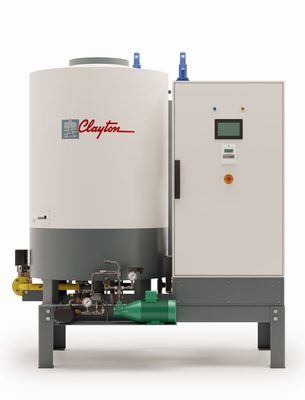
Forbes Marshall
30
Parat Halvorsen
30
Miura
19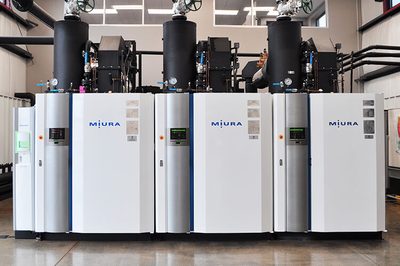
Garioni Naval
16
Cochran
9