OceanSphere
Engines

Fixed-Pitch Propeller

medium 402 / 402 models (Inspector)

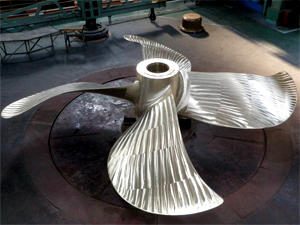
A fixed-pitch propeller casts blade angle into the design once, at the point of highest efficiency for one speed and load — simpler, cheaper and more robust than a controllable-pitch unit, but reversing the ship means reversing the engine or gearbox rather than just the blades.

Read more — Fixed-Pitch Propeller explained

What sets the fixed-pitch propeller apart

A fixed-pitch propeller (FPP) has its blade angle set once, during casting and machining, for one design speed and load condition. There is no hydraulic hub, no pitch-control oil system and no slip ring assembly running through the shaft — which is exactly why it remains the default choice for the large majority of the world fleet. The cost of that simplicity is flexibility: to go astern, the engine itself must reverse (direct-reversing diesels) or a reversing/reduction gearbox must reverse the output shaft, and efficiency away from the design point — light running, towing, or heavy weather — falls off faster than on a controllable-pitch unit that can re-pitch to match the load.
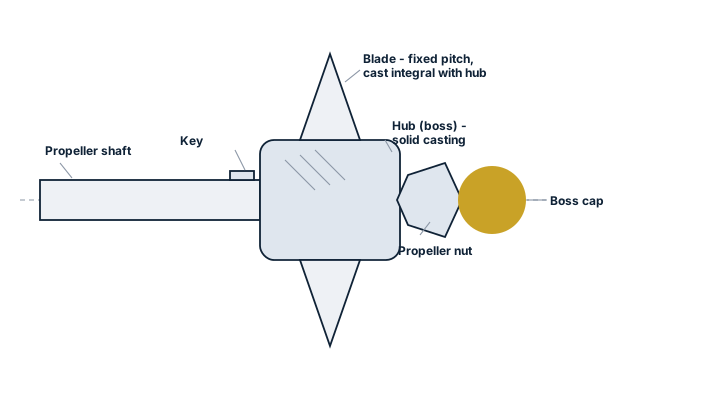
Fixed-pitch propeller assembly
Side section of a fixed-pitch propeller showing the tapered shaft and key, the solid hub with blades cast in one piece, the propeller nut and the boss cap.

Main components

Hub and blades

Blades are cast as one piece with the hub, or separately cast and bolted/keyed to it on larger propellers to ease casting and allow individual blade replacement after damage. Blade number (typically 3 to 6) trades off efficiency against vibration and cavitation-induced hull excitation — fewer blades are more efficient, more blades run smoother.

Shaft fit

The propeller mounts on a taper at the aft end of the tailshaft, historically keyed and increasingly keyless, secured by a large retaining nut and locked against rotation by friction from a calculated interference fit. A keyless fit relies entirely on that calculated push-up length and pressure being achieved and recorded during fitting.

Material

Nickel-aluminium-bronze (Nibral) is the standard material for its corrosion resistance and strength; stainless steel and cast iron appear on smaller or specialised craft. Ice-class propellers use thicker blade sections and tougher alloys to survive ice impact loads that a standard open-water design is not calculated for.

Selection and sizing

  • Diameter and pitch matched to the engine's power/RPM curve and the hull's resistance curve at design speed — an undersized or mismatched propeller leaves the engine unable to reach rated power (light running) or overloads it (heavy running)
  • Expanded area ratio (blade area relative to disc area), which sets the cavitation margin at a given loading
  • Blade number, chosen partly for efficiency and partly to avoid exciting hull or shafting natural frequencies
  • Skew (blade sweep) used on many modern designs to reduce pressure-pulse induced hull vibration and noise

Regulations and class

Class societies require submission and approval of the propeller design calculation (blade root stress, material properties) before manufacture, and issue a certificate against material test results from the casting. Periodic survey includes visual inspection of blades at each dry-docking for erosion, cavitation damage and cracks, and the propeller is removed as part of the tailshaft withdrawal survey interval, where the shaft taper and key (if fitted) are also examined.

Typical faults

CauseConsequence
Cavitation from operating outside the design loading (overload, wrong pitch for the hull)Progressive erosion of blade tips and trailing edges, loss of efficiency, eventual blade thinning requiring repair
Grounding contact or debris/net impactBent or chipped blade tips, resulting imbalance causing shaft and stern tube vibration
Keyless taper fit push-up not achieved or recorded correctly at fittingPropeller creep on the shaft under load, eventually loosening and risking loss of the propeller
Repair welding or blade straightening without re-balancingPersistent hull vibration even though the visible damage appears fixed

What to look for in a supplier

  • Class-approved design calculation on file for the specific vessel and loading condition, not a stock catalogue propeller resized by rule of thumb
  • Material mill certificates traceable to the specific casting
  • Dynamic balancing certificate delivered with the propeller, with balancing grade stated
  • Demonstrated capability for blade repair and re-balancing, since most propeller work over a ship's life is repair rather than replacement

A new vibration that appears after any grounding, net snag or dry-dock propeller repair should be treated as a balance problem until proven otherwise — running on a damaged or poorly repaired propeller accelerates shaft bearing and stern tube seal wear well beyond the propeller itself.

Marine screw propeller and rudder
Marine screw propeller and rudder, seen with the draught marks on the stern. Photo: Foto von Stahlkocher, CC BY-SA 3.0, via Wikimedia Commons
Inspector Mode Show All 402 / 402 with inspector value

14 manufacturers · 402 models

Veth Propulsion

11 ✓ 11 verified
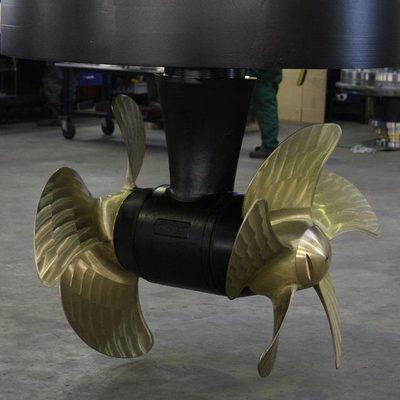
Veth Propulsion VZ-200
VZ-200 ✓ verified
Application
Azimuth Z-Drive rudder propeller (360° steerable marine thruster)
Common Failures & Inspection Points
  • Area: Blade surface inspection for cracks, corrosion pits, cavitation burns, and erosion damage on blade faces
    Check: Blade surface inspection for cracks, corrosion pits, cavitation burns, and erosion damage on blade faces
  • Area: Leading edge and blade tip examination for nicks, chips, and damage that may cause vibration or cavitation
    Check: Leading edge and blade tip examination for nicks, chips, and damage that may cause vibration or cavitation
  • Area: Detection of bent or warped blades through visual inspection and dynamic vibration monitoring during operation
    Check: Detection of bent or warped blades through visual inspection and dynamic vibration monitoring during operation
  • Area: Propeller shaft inspection for bending, wobble, and deviation from axial alignment using runout measurement
    Check: Propeller shaft inspection for bending, wobble, and deviation from axial alignment using runout measurement
  • Area: Hub condition assessment, particularly rubber hub wear and degradation in service (critical for hubs >10 years old)
    Check: Hub condition assessment, particularly rubber hub wear and degradation in service (critical for hubs >10 years old)
  • Area: Fastener integrity check including propeller nuts, bolts, cotter pins, and keyway components for corrosion and looseness
    Check: Fastener integrity check including propeller nuts, bolts, cotter pins, and keyway components for corrosion and looseness
  • Area: Propeller-shaft seal inspection for deterioration, fishing line damage, and mechanical wear
    Check: Propeller-shaft seal inspection for deterioration, fishing line damage, and mechanical wear
  • Area: Gearbox and bearing lubrication condition and adequate marine grease application to shaft and transmission interfaces
    Check: Gearbox and bearing lubrication condition and adequate marine grease application to shaft and transmission interfaces

Typ-universelle Inspektionspunkte fuer Shaft Line & Propulsion (verifiziert, 2026-06).
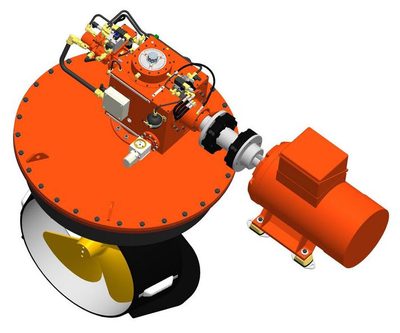
Veth Propulsion VZ-320
VZ-320 ✓ verified
Application
Azimuth Z-Drive rudder propeller for medium-duty marine vessels
Common Failures & Inspection Points
  • Area: Blade surface inspection for cracks, corrosion pits, cavitation burns, and erosion damage on blade faces
    Check: Blade surface inspection for cracks, corrosion pits, cavitation burns, and erosion damage on blade faces
  • Area: Leading edge and blade tip examination for nicks, chips, and damage that may cause vibration or cavitation
    Check: Leading edge and blade tip examination for nicks, chips, and damage that may cause vibration or cavitation
  • Area: Detection of bent or warped blades through visual inspection and dynamic vibration monitoring during operation
    Check: Detection of bent or warped blades through visual inspection and dynamic vibration monitoring during operation
  • Area: Propeller shaft inspection for bending, wobble, and deviation from axial alignment using runout measurement
    Check: Propeller shaft inspection for bending, wobble, and deviation from axial alignment using runout measurement
  • Area: Hub condition assessment, particularly rubber hub wear and degradation in service (critical for hubs >10 years old)
    Check: Hub condition assessment, particularly rubber hub wear and degradation in service (critical for hubs >10 years old)
  • Area: Fastener integrity check including propeller nuts, bolts, cotter pins, and keyway components for corrosion and looseness
    Check: Fastener integrity check including propeller nuts, bolts, cotter pins, and keyway components for corrosion and looseness
  • Area: Propeller-shaft seal inspection for deterioration, fishing line damage, and mechanical wear
    Check: Propeller-shaft seal inspection for deterioration, fishing line damage, and mechanical wear
  • Area: Gearbox and bearing lubrication condition and adequate marine grease application to shaft and transmission interfaces
    Check: Gearbox and bearing lubrication condition and adequate marine grease application to shaft and transmission interfaces

Typ-universelle Inspektionspunkte fuer Shaft Line & Propulsion (verifiziert, 2026-06).
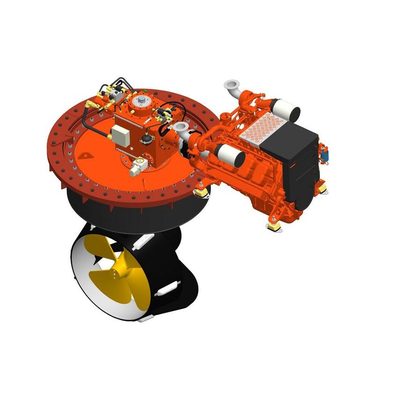
Veth Propulsion VZ-450-CR
VZ-450-CR ✓ verified
Application
Azimuth Z-Drive rudder propeller with counter-rotating propellers
Common Failures & Inspection Points
  • Area: Blade surface inspection for cracks, corrosion pits, cavitation burns, and erosion damage on blade faces
    Check: Blade surface inspection for cracks, corrosion pits, cavitation burns, and erosion damage on blade faces
  • Area: Leading edge and blade tip examination for nicks, chips, and damage that may cause vibration or cavitation
    Check: Leading edge and blade tip examination for nicks, chips, and damage that may cause vibration or cavitation
  • Area: Detection of bent or warped blades through visual inspection and dynamic vibration monitoring during operation
    Check: Detection of bent or warped blades through visual inspection and dynamic vibration monitoring during operation
  • Area: Propeller shaft inspection for bending, wobble, and deviation from axial alignment using runout measurement
    Check: Propeller shaft inspection for bending, wobble, and deviation from axial alignment using runout measurement
  • Area: Hub condition assessment, particularly rubber hub wear and degradation in service (critical for hubs >10 years old)
    Check: Hub condition assessment, particularly rubber hub wear and degradation in service (critical for hubs >10 years old)
  • Area: Fastener integrity check including propeller nuts, bolts, cotter pins, and keyway components for corrosion and looseness
    Check: Fastener integrity check including propeller nuts, bolts, cotter pins, and keyway components for corrosion and looseness
  • Area: Propeller-shaft seal inspection for deterioration, fishing line damage, and mechanical wear
    Check: Propeller-shaft seal inspection for deterioration, fishing line damage, and mechanical wear
  • Area: Gearbox and bearing lubrication condition and adequate marine grease application to shaft and transmission interfaces
    Check: Gearbox and bearing lubrication condition and adequate marine grease application to shaft and transmission interfaces

Typ-universelle Inspektionspunkte fuer Shaft Line & Propulsion (verifiziert, 2026-06).
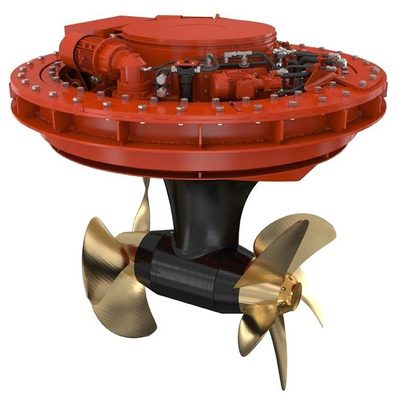
Veth Propulsion VZ-700-CR
VZ-700-CR ✓ verified
Application
Azimuth Z-Drive rudder propeller for medium-power vessel propulsion
Common Failures & Inspection Points
  • Area: Blade surface inspection for cracks, corrosion pits, cavitation burns, and erosion damage on blade faces
    Check: Blade surface inspection for cracks, corrosion pits, cavitation burns, and erosion damage on blade faces
  • Area: Leading edge and blade tip examination for nicks, chips, and damage that may cause vibration or cavitation
    Check: Leading edge and blade tip examination for nicks, chips, and damage that may cause vibration or cavitation
  • Area: Detection of bent or warped blades through visual inspection and dynamic vibration monitoring during operation
    Check: Detection of bent or warped blades through visual inspection and dynamic vibration monitoring during operation
  • Area: Propeller shaft inspection for bending, wobble, and deviation from axial alignment using runout measurement
    Check: Propeller shaft inspection for bending, wobble, and deviation from axial alignment using runout measurement
  • Area: Hub condition assessment, particularly rubber hub wear and degradation in service (critical for hubs >10 years old)
    Check: Hub condition assessment, particularly rubber hub wear and degradation in service (critical for hubs >10 years old)
  • Area: Fastener integrity check including propeller nuts, bolts, cotter pins, and keyway components for corrosion and looseness
    Check: Fastener integrity check including propeller nuts, bolts, cotter pins, and keyway components for corrosion and looseness
  • Area: Propeller-shaft seal inspection for deterioration, fishing line damage, and mechanical wear
    Check: Propeller-shaft seal inspection for deterioration, fishing line damage, and mechanical wear
  • Area: Gearbox and bearing lubrication condition and adequate marine grease application to shaft and transmission interfaces
    Check: Gearbox and bearing lubrication condition and adequate marine grease application to shaft and transmission interfaces

Typ-universelle Inspektionspunkte fuer Shaft Line & Propulsion (verifiziert, 2026-06).
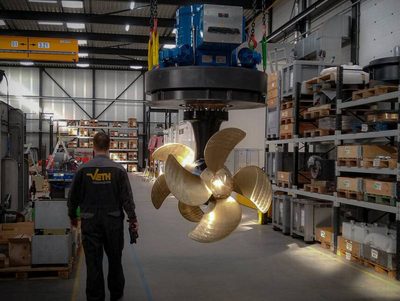
Veth Propulsion VZ-900-CR
VZ-900-CR ✓ verified
Application
Azimuth Z-Drive rudder propeller for high-power vessels (ferries, cruise ships)
Common Failures & Inspection Points
  • Area: Blade surface inspection for cracks, corrosion pits, cavitation burns, and erosion damage on blade faces
    Check: Blade surface inspection for cracks, corrosion pits, cavitation burns, and erosion damage on blade faces
  • Area: Leading edge and blade tip examination for nicks, chips, and damage that may cause vibration or cavitation
    Check: Leading edge and blade tip examination for nicks, chips, and damage that may cause vibration or cavitation
  • Area: Detection of bent or warped blades through visual inspection and dynamic vibration monitoring during operation
    Check: Detection of bent or warped blades through visual inspection and dynamic vibration monitoring during operation
  • Area: Propeller shaft inspection for bending, wobble, and deviation from axial alignment using runout measurement
    Check: Propeller shaft inspection for bending, wobble, and deviation from axial alignment using runout measurement
  • Area: Hub condition assessment, particularly rubber hub wear and degradation in service (critical for hubs >10 years old)
    Check: Hub condition assessment, particularly rubber hub wear and degradation in service (critical for hubs >10 years old)
  • Area: Fastener integrity check including propeller nuts, bolts, cotter pins, and keyway components for corrosion and looseness
    Check: Fastener integrity check including propeller nuts, bolts, cotter pins, and keyway components for corrosion and looseness
  • Area: Propeller-shaft seal inspection for deterioration, fishing line damage, and mechanical wear
    Check: Propeller-shaft seal inspection for deterioration, fishing line damage, and mechanical wear
  • Area: Gearbox and bearing lubrication condition and adequate marine grease application to shaft and transmission interfaces
    Check: Gearbox and bearing lubrication condition and adequate marine grease application to shaft and transmission interfaces

Typ-universelle Inspektionspunkte fuer Shaft Line & Propulsion (verifiziert, 2026-06).
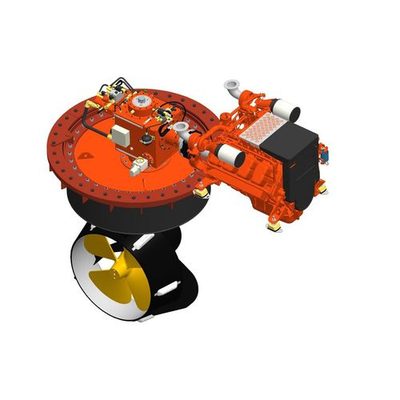
Veth Propulsion VZ-1250-CR
VZ-1250-CR ✓ verified
Application
Azimuth Z-Drive rudder propeller for large vessel propulsion (1350 kW at 1600 rpm)
Common Failures & Inspection Points
  • Area: Blade surface inspection for cracks, corrosion pits, cavitation burns, and erosion damage on blade faces
    Check: Blade surface inspection for cracks, corrosion pits, cavitation burns, and erosion damage on blade faces
  • Area: Leading edge and blade tip examination for nicks, chips, and damage that may cause vibration or cavitation
    Check: Leading edge and blade tip examination for nicks, chips, and damage that may cause vibration or cavitation
  • Area: Detection of bent or warped blades through visual inspection and dynamic vibration monitoring during operation
    Check: Detection of bent or warped blades through visual inspection and dynamic vibration monitoring during operation
  • Area: Propeller shaft inspection for bending, wobble, and deviation from axial alignment using runout measurement
    Check: Propeller shaft inspection for bending, wobble, and deviation from axial alignment using runout measurement
  • Area: Hub condition assessment, particularly rubber hub wear and degradation in service (critical for hubs >10 years old)
    Check: Hub condition assessment, particularly rubber hub wear and degradation in service (critical for hubs >10 years old)
  • Area: Fastener integrity check including propeller nuts, bolts, cotter pins, and keyway components for corrosion and looseness
    Check: Fastener integrity check including propeller nuts, bolts, cotter pins, and keyway components for corrosion and looseness
  • Area: Propeller-shaft seal inspection for deterioration, fishing line damage, and mechanical wear
    Check: Propeller-shaft seal inspection for deterioration, fishing line damage, and mechanical wear
  • Area: Gearbox and bearing lubrication condition and adequate marine grease application to shaft and transmission interfaces
    Check: Gearbox and bearing lubrication condition and adequate marine grease application to shaft and transmission interfaces

Typ-universelle Inspektionspunkte fuer Shaft Line & Propulsion (verifiziert, 2026-06).

Veth Propulsion VL-250(si)-CR
VL-250(si)-CR ✓ verified
Application
Integrated L-Drive rudder propeller with counter-rotating propellers
Common Failures & Inspection Points
  • Area: Blade surface inspection for cracks, corrosion pits, cavitation burns, and erosion damage on blade faces
    Check: Blade surface inspection for cracks, corrosion pits, cavitation burns, and erosion damage on blade faces
  • Area: Leading edge and blade tip examination for nicks, chips, and damage that may cause vibration or cavitation
    Check: Leading edge and blade tip examination for nicks, chips, and damage that may cause vibration or cavitation
  • Area: Detection of bent or warped blades through visual inspection and dynamic vibration monitoring during operation
    Check: Detection of bent or warped blades through visual inspection and dynamic vibration monitoring during operation
  • Area: Propeller shaft inspection for bending, wobble, and deviation from axial alignment using runout measurement
    Check: Propeller shaft inspection for bending, wobble, and deviation from axial alignment using runout measurement
  • Area: Hub condition assessment, particularly rubber hub wear and degradation in service (critical for hubs >10 years old)
    Check: Hub condition assessment, particularly rubber hub wear and degradation in service (critical for hubs >10 years old)
  • Area: Fastener integrity check including propeller nuts, bolts, cotter pins, and keyway components for corrosion and looseness
    Check: Fastener integrity check including propeller nuts, bolts, cotter pins, and keyway components for corrosion and looseness
  • Area: Propeller-shaft seal inspection for deterioration, fishing line damage, and mechanical wear
    Check: Propeller-shaft seal inspection for deterioration, fishing line damage, and mechanical wear
  • Area: Gearbox and bearing lubrication condition and adequate marine grease application to shaft and transmission interfaces
    Check: Gearbox and bearing lubrication condition and adequate marine grease application to shaft and transmission interfaces

Typ-universelle Inspektionspunkte fuer Shaft Line & Propulsion (verifiziert, 2026-06).

Veth Propulsion VL-400(si)
VL-400(si) ✓ verified
Application
Integrated L-Drive rudder propeller for electric propulsion
Common Failures & Inspection Points
  • Area: Blade surface inspection for cracks, corrosion pits, cavitation burns, and erosion damage on blade faces
    Check: Blade surface inspection for cracks, corrosion pits, cavitation burns, and erosion damage on blade faces
  • Area: Leading edge and blade tip examination for nicks, chips, and damage that may cause vibration or cavitation
    Check: Leading edge and blade tip examination for nicks, chips, and damage that may cause vibration or cavitation
  • Area: Detection of bent or warped blades through visual inspection and dynamic vibration monitoring during operation
    Check: Detection of bent or warped blades through visual inspection and dynamic vibration monitoring during operation
  • Area: Propeller shaft inspection for bending, wobble, and deviation from axial alignment using runout measurement
    Check: Propeller shaft inspection for bending, wobble, and deviation from axial alignment using runout measurement
  • Area: Hub condition assessment, particularly rubber hub wear and degradation in service (critical for hubs >10 years old)
    Check: Hub condition assessment, particularly rubber hub wear and degradation in service (critical for hubs >10 years old)
  • Area: Fastener integrity check including propeller nuts, bolts, cotter pins, and keyway components for corrosion and looseness
    Check: Fastener integrity check including propeller nuts, bolts, cotter pins, and keyway components for corrosion and looseness
  • Area: Propeller-shaft seal inspection for deterioration, fishing line damage, and mechanical wear
    Check: Propeller-shaft seal inspection for deterioration, fishing line damage, and mechanical wear
  • Area: Gearbox and bearing lubrication condition and adequate marine grease application to shaft and transmission interfaces
    Check: Gearbox and bearing lubrication condition and adequate marine grease application to shaft and transmission interfaces

Typ-universelle Inspektionspunkte fuer Shaft Line & Propulsion (verifiziert, 2026-06).

Veth Propulsion VL-550(si)
VL-550(si) ✓ verified
Application
Integrated L-Drive rudder propeller for medium-power electric propulsion
Common Failures & Inspection Points
  • Area: Blade surface inspection for cracks, corrosion pits, cavitation burns, and erosion damage on blade faces
    Check: Blade surface inspection for cracks, corrosion pits, cavitation burns, and erosion damage on blade faces
  • Area: Leading edge and blade tip examination for nicks, chips, and damage that may cause vibration or cavitation
    Check: Leading edge and blade tip examination for nicks, chips, and damage that may cause vibration or cavitation
  • Area: Detection of bent or warped blades through visual inspection and dynamic vibration monitoring during operation
    Check: Detection of bent or warped blades through visual inspection and dynamic vibration monitoring during operation
  • Area: Propeller shaft inspection for bending, wobble, and deviation from axial alignment using runout measurement
    Check: Propeller shaft inspection for bending, wobble, and deviation from axial alignment using runout measurement
  • Area: Hub condition assessment, particularly rubber hub wear and degradation in service (critical for hubs >10 years old)
    Check: Hub condition assessment, particularly rubber hub wear and degradation in service (critical for hubs >10 years old)
  • Area: Fastener integrity check including propeller nuts, bolts, cotter pins, and keyway components for corrosion and looseness
    Check: Fastener integrity check including propeller nuts, bolts, cotter pins, and keyway components for corrosion and looseness
  • Area: Propeller-shaft seal inspection for deterioration, fishing line damage, and mechanical wear
    Check: Propeller-shaft seal inspection for deterioration, fishing line damage, and mechanical wear
  • Area: Gearbox and bearing lubrication condition and adequate marine grease application to shaft and transmission interfaces
    Check: Gearbox and bearing lubrication condition and adequate marine grease application to shaft and transmission interfaces

Typ-universelle Inspektionspunkte fuer Shaft Line & Propulsion (verifiziert, 2026-06).

Veth Propulsion VL-700
VL-700 ✓ verified
Application
L-Drive rudder propeller for vessel propulsion
Common Failures & Inspection Points
  • Area: Blade surface inspection for cracks, corrosion pits, cavitation burns, and erosion damage on blade faces
    Check: Blade surface inspection for cracks, corrosion pits, cavitation burns, and erosion damage on blade faces
  • Area: Leading edge and blade tip examination for nicks, chips, and damage that may cause vibration or cavitation
    Check: Leading edge and blade tip examination for nicks, chips, and damage that may cause vibration or cavitation
  • Area: Detection of bent or warped blades through visual inspection and dynamic vibration monitoring during operation
    Check: Detection of bent or warped blades through visual inspection and dynamic vibration monitoring during operation
  • Area: Propeller shaft inspection for bending, wobble, and deviation from axial alignment using runout measurement
    Check: Propeller shaft inspection for bending, wobble, and deviation from axial alignment using runout measurement
  • Area: Hub condition assessment, particularly rubber hub wear and degradation in service (critical for hubs >10 years old)
    Check: Hub condition assessment, particularly rubber hub wear and degradation in service (critical for hubs >10 years old)
  • Area: Fastener integrity check including propeller nuts, bolts, cotter pins, and keyway components for corrosion and looseness
    Check: Fastener integrity check including propeller nuts, bolts, cotter pins, and keyway components for corrosion and looseness
  • Area: Propeller-shaft seal inspection for deterioration, fishing line damage, and mechanical wear
    Check: Propeller-shaft seal inspection for deterioration, fishing line damage, and mechanical wear
  • Area: Gearbox and bearing lubrication condition and adequate marine grease application to shaft and transmission interfaces
    Check: Gearbox and bearing lubrication condition and adequate marine grease application to shaft and transmission interfaces

Typ-universelle Inspektionspunkte fuer Shaft Line & Propulsion (verifiziert, 2026-06).

Veth Propulsion VL-900
VL-900 ✓ verified
Application
L-Drive rudder propeller for high-power vessel propulsion
Common Failures & Inspection Points
  • Area: Blade surface inspection for cracks, corrosion pits, cavitation burns, and erosion damage on blade faces
    Check: Blade surface inspection for cracks, corrosion pits, cavitation burns, and erosion damage on blade faces
  • Area: Leading edge and blade tip examination for nicks, chips, and damage that may cause vibration or cavitation
    Check: Leading edge and blade tip examination for nicks, chips, and damage that may cause vibration or cavitation
  • Area: Detection of bent or warped blades through visual inspection and dynamic vibration monitoring during operation
    Check: Detection of bent or warped blades through visual inspection and dynamic vibration monitoring during operation
  • Area: Propeller shaft inspection for bending, wobble, and deviation from axial alignment using runout measurement
    Check: Propeller shaft inspection for bending, wobble, and deviation from axial alignment using runout measurement
  • Area: Hub condition assessment, particularly rubber hub wear and degradation in service (critical for hubs >10 years old)
    Check: Hub condition assessment, particularly rubber hub wear and degradation in service (critical for hubs >10 years old)
  • Area: Fastener integrity check including propeller nuts, bolts, cotter pins, and keyway components for corrosion and looseness
    Check: Fastener integrity check including propeller nuts, bolts, cotter pins, and keyway components for corrosion and looseness
  • Area: Propeller-shaft seal inspection for deterioration, fishing line damage, and mechanical wear
    Check: Propeller-shaft seal inspection for deterioration, fishing line damage, and mechanical wear
  • Area: Gearbox and bearing lubrication condition and adequate marine grease application to shaft and transmission interfaces
    Check: Gearbox and bearing lubrication condition and adequate marine grease application to shaft and transmission interfaces

Typ-universelle Inspektionspunkte fuer Shaft Line & Propulsion (verifiziert, 2026-06).

Schottel

6 ✓ 6 verified
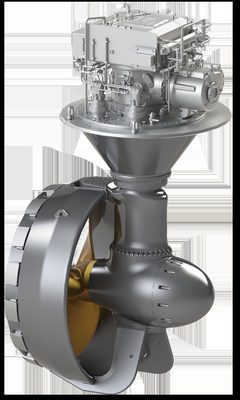
Schottel SRP 430 FP (Fixed Pitch)
SRP 430 FP (Fixed Pitch) ✓ verified
Application
Tugboat, general maritime propulsion, steerable propulsion with 360-degree azimuth control
Common Failures & Inspection Points
  • Area: Visual inspection of propeller blade surfaces for cracks, erosion, corrosion, nicks, dents, and deformation
    Check: Visual inspection of propeller blade surfaces for cracks, erosion, corrosion, nicks, dents, and deformation
  • Area: Checking propeller hub and blade attachment points for corrosion, crevice corrosion, and structural integrity
    Check: Checking propeller hub and blade attachment points for corrosion, crevice corrosion, and structural integrity
  • Area: Condition assessment of gearbox lubricating oil (color, water content, particle contamination via magnetic plug inspection)
    Check: Condition assessment of gearbox lubricating oil (color, water content, particle contamination via magnetic plug inspection)
  • Area: Inspection and tightening of screw connections and fasteners on propeller assembly and azimuth joint
    Check: Inspection and tightening of screw connections and fasteners on propeller assembly and azimuth joint
  • Area: Checking propeller hub water seal condition and integrity to prevent internal corrosion
    Check: Checking propeller hub water seal condition and integrity to prevent internal corrosion
  • Area: Alignment verification of azimuth steering mechanism (360-degree rotation functionality)
    Check: Alignment verification of azimuth steering mechanism (360-degree rotation functionality)
  • Area: Anode condition inspection (zinc, aluminum, or sacrificial anodes) for corrosion protection
    Check: Anode condition inspection (zinc, aluminum, or sacrificial anodes) for corrosion protection
  • Area: Lubrication level and condition check in azimuth bearing cavity and gearbox sump
    Check: Lubrication level and condition check in azimuth bearing cavity and gearbox sump

Typ-universelle Inspektionspunkte fuer Shaft Line & Propulsion (verifiziert, 2026-06).

Schottel SRP 150 FP (Fixed Pitch)
SRP 150 FP (Fixed Pitch) ✓ verified
Application
Small to medium maritime vessels, U.S. Navy workboat propulsion
Common Failures & Inspection Points
  • Area: Visual inspection of propeller blade surfaces for cracks, erosion, corrosion, nicks, dents, and deformation
    Check: Visual inspection of propeller blade surfaces for cracks, erosion, corrosion, nicks, dents, and deformation
  • Area: Checking propeller hub and blade attachment points for corrosion, crevice corrosion, and structural integrity
    Check: Checking propeller hub and blade attachment points for corrosion, crevice corrosion, and structural integrity
  • Area: Condition assessment of gearbox lubricating oil (color, water content, particle contamination via magnetic plug inspection)
    Check: Condition assessment of gearbox lubricating oil (color, water content, particle contamination via magnetic plug inspection)
  • Area: Inspection and tightening of screw connections and fasteners on propeller assembly and azimuth joint
    Check: Inspection and tightening of screw connections and fasteners on propeller assembly and azimuth joint
  • Area: Checking propeller hub water seal condition and integrity to prevent internal corrosion
    Check: Checking propeller hub water seal condition and integrity to prevent internal corrosion
  • Area: Alignment verification of azimuth steering mechanism (360-degree rotation functionality)
    Check: Alignment verification of azimuth steering mechanism (360-degree rotation functionality)
  • Area: Anode condition inspection (zinc, aluminum, or sacrificial anodes) for corrosion protection
    Check: Anode condition inspection (zinc, aluminum, or sacrificial anodes) for corrosion protection
  • Area: Lubrication level and condition check in azimuth bearing cavity and gearbox sump
    Check: Lubrication level and condition check in azimuth bearing cavity and gearbox sump

Typ-universelle Inspektionspunkte fuer Shaft Line & Propulsion (verifiziert, 2026-06).
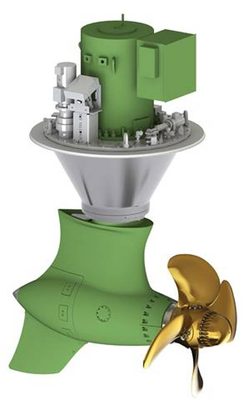
Schottel SRP 1012 FP (Fixed Pitch)
SRP 1012 FP (Fixed Pitch) ✓ verified
Application
Tugboat, medium-sized marine propulsion with steerable azimuth design
Common Failures & Inspection Points
  • Area: Visual inspection of propeller blade surfaces for cracks, erosion, corrosion, nicks, dents, and deformation
    Check: Visual inspection of propeller blade surfaces for cracks, erosion, corrosion, nicks, dents, and deformation
  • Area: Checking propeller hub and blade attachment points for corrosion, crevice corrosion, and structural integrity
    Check: Checking propeller hub and blade attachment points for corrosion, crevice corrosion, and structural integrity
  • Area: Condition assessment of gearbox lubricating oil (color, water content, particle contamination via magnetic plug inspection)
    Check: Condition assessment of gearbox lubricating oil (color, water content, particle contamination via magnetic plug inspection)
  • Area: Inspection and tightening of screw connections and fasteners on propeller assembly and azimuth joint
    Check: Inspection and tightening of screw connections and fasteners on propeller assembly and azimuth joint
  • Area: Checking propeller hub water seal condition and integrity to prevent internal corrosion
    Check: Checking propeller hub water seal condition and integrity to prevent internal corrosion
  • Area: Alignment verification of azimuth steering mechanism (360-degree rotation functionality)
    Check: Alignment verification of azimuth steering mechanism (360-degree rotation functionality)
  • Area: Anode condition inspection (zinc, aluminum, or sacrificial anodes) for corrosion protection
    Check: Anode condition inspection (zinc, aluminum, or sacrificial anodes) for corrosion protection
  • Area: Lubrication level and condition check in azimuth bearing cavity and gearbox sump
    Check: Lubrication level and condition check in azimuth bearing cavity and gearbox sump

Typ-universelle Inspektionspunkte fuer Shaft Line & Propulsion (verifiziert, 2026-06).

Schottel SRP 710 FP (Fixed Pitch)
SRP 710 FP (Fixed Pitch) ✓ verified
Application
Large salvage tug, heavy-duty maritime propulsion
Common Failures & Inspection Points
  • Area: Visual inspection of propeller blade surfaces for cracks, erosion, corrosion, nicks, dents, and deformation
    Check: Visual inspection of propeller blade surfaces for cracks, erosion, corrosion, nicks, dents, and deformation
  • Area: Checking propeller hub and blade attachment points for corrosion, crevice corrosion, and structural integrity
    Check: Checking propeller hub and blade attachment points for corrosion, crevice corrosion, and structural integrity
  • Area: Condition assessment of gearbox lubricating oil (color, water content, particle contamination via magnetic plug inspection)
    Check: Condition assessment of gearbox lubricating oil (color, water content, particle contamination via magnetic plug inspection)
  • Area: Inspection and tightening of screw connections and fasteners on propeller assembly and azimuth joint
    Check: Inspection and tightening of screw connections and fasteners on propeller assembly and azimuth joint
  • Area: Checking propeller hub water seal condition and integrity to prevent internal corrosion
    Check: Checking propeller hub water seal condition and integrity to prevent internal corrosion
  • Area: Alignment verification of azimuth steering mechanism (360-degree rotation functionality)
    Check: Alignment verification of azimuth steering mechanism (360-degree rotation functionality)
  • Area: Anode condition inspection (zinc, aluminum, or sacrificial anodes) for corrosion protection
    Check: Anode condition inspection (zinc, aluminum, or sacrificial anodes) for corrosion protection
  • Area: Lubrication level and condition check in azimuth bearing cavity and gearbox sump
    Check: Lubrication level and condition check in azimuth bearing cavity and gearbox sump

Typ-universelle Inspektionspunkte fuer Shaft Line & Propulsion (verifiziert, 2026-06).

Schottel SRP 1515 FP (Fixed Pitch)
SRP 1515 FP (Fixed Pitch) ✓ verified
Application
Medium-sized tugboat with enhanced propulsion capability
Common Failures & Inspection Points
  • Area: Visual inspection of propeller blade surfaces for cracks, erosion, corrosion, nicks, dents, and deformation
    Check: Visual inspection of propeller blade surfaces for cracks, erosion, corrosion, nicks, dents, and deformation
  • Area: Checking propeller hub and blade attachment points for corrosion, crevice corrosion, and structural integrity
    Check: Checking propeller hub and blade attachment points for corrosion, crevice corrosion, and structural integrity
  • Area: Condition assessment of gearbox lubricating oil (color, water content, particle contamination via magnetic plug inspection)
    Check: Condition assessment of gearbox lubricating oil (color, water content, particle contamination via magnetic plug inspection)
  • Area: Inspection and tightening of screw connections and fasteners on propeller assembly and azimuth joint
    Check: Inspection and tightening of screw connections and fasteners on propeller assembly and azimuth joint
  • Area: Checking propeller hub water seal condition and integrity to prevent internal corrosion
    Check: Checking propeller hub water seal condition and integrity to prevent internal corrosion
  • Area: Alignment verification of azimuth steering mechanism (360-degree rotation functionality)
    Check: Alignment verification of azimuth steering mechanism (360-degree rotation functionality)
  • Area: Anode condition inspection (zinc, aluminum, or sacrificial anodes) for corrosion protection
    Check: Anode condition inspection (zinc, aluminum, or sacrificial anodes) for corrosion protection
  • Area: Lubrication level and condition check in azimuth bearing cavity and gearbox sump
    Check: Lubrication level and condition check in azimuth bearing cavity and gearbox sump

Typ-universelle Inspektionspunkte fuer Shaft Line & Propulsion (verifiziert, 2026-06).

Schottel SRE 340 FP (Fixed Pitch EcoPeller)
SRE 340 FP (Fixed Pitch EcoPeller) ✓ verified
Application
Ferry and passenger vessel propulsion, efficient medium-speed vessels
Common Failures & Inspection Points
  • Area: Visual inspection of propeller blade surfaces for cracks, erosion, corrosion, nicks, dents, and deformation
    Check: Visual inspection of propeller blade surfaces for cracks, erosion, corrosion, nicks, dents, and deformation
  • Area: Checking propeller hub and blade attachment points for corrosion, crevice corrosion, and structural integrity
    Check: Checking propeller hub and blade attachment points for corrosion, crevice corrosion, and structural integrity
  • Area: Condition assessment of gearbox lubricating oil (color, water content, particle contamination via magnetic plug inspection)
    Check: Condition assessment of gearbox lubricating oil (color, water content, particle contamination via magnetic plug inspection)
  • Area: Inspection and tightening of screw connections and fasteners on propeller assembly and azimuth joint
    Check: Inspection and tightening of screw connections and fasteners on propeller assembly and azimuth joint
  • Area: Checking propeller hub water seal condition and integrity to prevent internal corrosion
    Check: Checking propeller hub water seal condition and integrity to prevent internal corrosion
  • Area: Alignment verification of azimuth steering mechanism (360-degree rotation functionality)
    Check: Alignment verification of azimuth steering mechanism (360-degree rotation functionality)
  • Area: Anode condition inspection (zinc, aluminum, or sacrificial anodes) for corrosion protection
    Check: Anode condition inspection (zinc, aluminum, or sacrificial anodes) for corrosion protection
  • Area: Lubrication level and condition check in azimuth bearing cavity and gearbox sump
    Check: Lubrication level and condition check in azimuth bearing cavity and gearbox sump

Typ-universelle Inspektionspunkte fuer Shaft Line & Propulsion (verifiziert, 2026-06).

Wärtsilä

90
Wärtsilä Wartsila FPP 2000mm 4B NiAlBz
Wartsila FPP 2000mm 4B NiAlBz unverified
· Fixed-pitch marine propeller
Propeller Diameter (mm)
2000
Speed (rpm)
120
Blade count
4
Material
NiAlBz
Strengths
  • High strength and corrosion resistance of NiAlBz alloy ensures long service life
  • Blade geometry optimised for the typical 120 rpm design point gives excellent propulsive efficiency at that speed
  • Simple, robust construction with no pitch‑control mechanisms reduces initial cost and maintenance complexity
  • Directly compatible with standard low‑speed shaft lines used on many merchant vessels
Weaknesses
  • Fixed pitch provides limited thrust‑reversal capability; manoeuvring relies on rudders or separate reversing gear
  • Efficiency drops off‑design, making it less suitable for vessels with wide speed ranges
  • Heavy bronze material increases rotating mass, affecting engine start‑up torque and shaft vibration
  • No in‑service pitch adjustment means reduced flexibility when cargo load conditions vary significantly
Typical Vessels: Bulk CarrierOil TankerContainer Ship
Certifications: DNV
Decision Guide: Choose if the vessel operates at a relatively constant design speed with a low‑speed diesel engine and values proven durability and lower upfront cost. Avoid if frequent speed changes, thrust reversal via pitch control, or maximum off‑design efficiency are required.
Use Cases: Main propulsion on large merchant ships (e.g., bulk carriers, tankers, container vessels) equipped with low‑speed two‑stroke or four‑stroke diesel engines; also used in retrofits where a simple, robust propeller replacement is needed.
Wärtsilä Wartsila FPP 2000mm 4B MnBz
Wartsila FPP 2000mm 4B MnBz unverified
· fixed‑pitch manganese‑bronze propeller
Propeller Diameter (mm)
2000
Speed (rpm)
120
Blade count
4
Material
MnBz
Strengths
  • High strength and excellent corrosion resistance of MnBz suitable for seawater service
  • Simple fixed‑pitch design gives reliable operation with low maintenance
  • Optimised blade geometry for efficient thrust at low engine speeds (≈120 rpm)
  • Four‑blade configuration provides a good balance between cavitation resistance and vibration levels
  • Standardised dimensions simplify integration on many Wärtsilä medium‑speed engine installations
Weaknesses
  • Relatively heavy compared with modern composite or aluminium propellers, affecting overall vessel weight
  • Fixed pitch limits flexibility for vessels that operate over a wide speed range
  • Noise and vibration can be higher than optimized controllable‑pitch or skewed designs
  • No built‑in thrust reversal; requires separate shaft brake or ducting for stopping manoeuvres
  • Limited to applications where 2 m diameter matches hull geometry – not suitable for very large ships
Typical Vessels: Coastal tankerOffshore supply vesselFerry (short‑route)Medium‑size bulk carrierFishing trawler
Decision Guide: Choose if: the vessel uses a medium‑speed diesel engine operating around 120 rpm, requires a robust and low‑maintenance propeller, and fits within a 2 m shaft line envelope. Avoid if: high‑speed operation, need for variable pitch thrust, or weight savings are critical.
Use Cases: Commonly installed on mid‑size cargo and service vessels where Wärtsilä medium‑speed engines drive a fixed‑pitch shaft line; used in coastal trade routes, offshore support missions, and short‑haul passenger ferries that benefit from the durability of manganese bronze at low rotational speeds.
Wärtsilä Wartsila FPP 2000mm 5B NiAlBz
Wartsila FPP 2000mm 5B NiAlBz unverified
· nickel‑aluminium bronze fixed‑pitch propeller
Propeller Diameter (mm)
2000
Speed (rpm)
120
Blade count
5
Material
NiAlBz
Strengths
  • High strength and corrosion resistance of NiAlBz suitable for harsh marine environments
  • Robust design with five blades provides strong thrust at low rpm (≈120 rpm)
  • Simple, maintenance‑free operation – no pitch‑control mechanisms required
  • Good cavitation resistance for tug and offshore workboats
  • Standardised dimensions simplify integration with Wärtsilä shaft line packages
Weaknesses
  • Fixed pitch limits efficiency when vessel speed varies widely from design point
  • Relatively heavy compared with composite or aluminium propellers, affecting overall weight balance
  • Higher noise and vibration at off‑design loads
  • No built‑in thrust reversal – requires separate gear or controllable‑pitch solution for rapid stopping
  • Limited suitability for high‑speed container or cruise ships where larger diameters are impractical
Typical Vessels: TugboatOffshore supply vesselCoastal ferryWorkboat / harbor service craftSmall bulk carrier or feeder container ship (≤10 kn design speed)
Decision Guide: Choose if the vessel needs a durable, low‑speed propeller that delivers high thrust and can tolerate harsh seawater conditions – typical for tugs, offshore support and short‑haul ferries. Avoid if variable pitch or peak fuel efficiency at a wide speed range is required, such as on fast container ships or cruise liners.
Use Cases: Deployed on vessels that operate primarily at low to moderate speeds with frequent manoeuvring demands – e.g., harbor tugs pulling heavy loads, offshore supply ships delivering equipment to rigs, and coastal ferries making short runs where reliability outweighs the need for fine speed control.
Wärtsilä Wartsila FPP 2000mm 5B MnBz
Wartsila FPP 2000mm 5B MnBz unverified
· Fixed-pitch manganese‑bronze propeller
Propeller Diameter (mm)
2000
Speed (rpm)
120
Blade count
5
Material
MnBz
Strengths
  • High strength and corrosion resistance of MnBz material
  • Low operating rpm reduces vibration and improves fuel efficiency at design speed
  • Five‑blade geometry provides good thrust while limiting cavitation
  • Simple, robust construction with low maintenance compared to controllable‑pitch systems
  • Broad compatibility with medium‑speed diesel engines
Weaknesses
  • Fixed pitch limits adaptability to varying load or speed conditions
  • Large 2 m diameter requires ample stern clearance and can affect maneuverability in confined ports
  • Not suited for high‑speed vessels that operate at higher rpm
  • Manganese‑bronze is heavier than some modern composite alternatives, impacting weight balance
  • Less advanced cavitation mitigation compared with skewed or ducted propeller designs
Typical Vessels: Bulk CarrierOil TankerGeneral Cargo ShipContainer Ship (slow‑speed)
Certifications: ABSDNV GLLloyd's Register
Decision Guide: Choose if: the vessel operates at low to medium speed, needs a robust and low‑maintenance propeller, and has sufficient stern space for a 2 m diameter fixed‑pitch unit. Avoid if: high speed or rapid thrust reversal is required, port maneuverability is critical, or weight savings demand composite or controllable‑pitch solutions.
Use Cases: Commonly installed on bulk carriers, tankers and other cargo vessels powered by medium‑speed diesel engines where a reliable, low‑maintenance fixed‑pitch propeller provides efficient propulsion at design speed. It is favored in routes with steady loading conditions and where class approvals (ABS, DNV GL, LR) are required.
Wärtsilä Wartsila FPP 2000mm 6B NiAlBz
Wartsila FPP 2000mm 6B NiAlBz unverified
· Nickel‑aluminum bronze fixed‑pitch propeller
Propeller Diameter (mm)
2000
Speed (rpm)
120
Blade count
6
Material
NiAlBz
Strengths
  • Large diameter and optimized blade geometry deliver high thrust efficiency at low engine speeds (≈120 rpm).
  • NiAlBz alloy provides excellent corrosion resistance in seawater and superior cavitation performance.
  • Fixed‑pitch design eliminates complex gearing or hydraulic mechanisms, reducing maintenance and downtime.
  • Tailored for Wärtsilä low‑speed engine families, ensuring good matching of power curves and fuel consumption.
  • Robust construction suitable for heavy‑load vessels with high bollard pull requirements.
Weaknesses
  • Fixed pitch limits operational flexibility; efficiency drops when vessel speed deviates from design point.
  • NiAlBz alloy is relatively heavy, increasing propeller mass and shaft bearing loads.
  • Large diameter may require deeper draft or larger hull openings, restricting use on shallow‑water vessels.
  • Not appropriate for high‑speed ships that operate above 150 rpm or need controllable‑pitch solutions.
  • Performance is tightly tied to the specified 120 rpm range; mismatched engines reduce overall efficiency.
Typical Vessels: Bulk CarrierOil TankerContainer ShipRo‑Ro VesselCruise Ship
Decision Guide: Choose if the vessel uses a low‑speed diesel engine around 120 rpm and requires high thrust efficiency, corrosion resistance, and minimal mechanical complexity. Avoid if the ship needs variable pitch for wide speed ranges, operates at higher rpm, or has draft constraints that limit large‑diameter propellers.
Use Cases: Commonly installed on large merchant vessels such as Panamax and Capesize bulk carriers, VLCCs, and cruise ships equipped with Wärtsilä low‑speed engine series, where reliable, high‑efficiency propulsion at a fixed operating speed is essential.
Wärtsilä Wartsila FPP 2000mm 6B MnBz
Wartsila FPP 2000mm 6B MnBz unverified
· Manganese‑bronze fixed‑pitch propeller
Propeller Diameter (mm)
2000
Speed (rpm)
120
Blade count
6
Material
MnBz
Strengths
  • Robust MnBz construction provides excellent corrosion resistance and impact strength for harsh marine environments.
  • Six‑blade geometry is optimized for low‑speed operation, delivering high thrust efficiency at around 120 rpm.
  • Standard 2 m size fits a wide range of medium‑size vessels without requiring custom shaft modifications.
  • Fixed‑pitch design offers lower initial cost and simpler maintenance compared with controllable‑pitch alternatives.
Weaknesses
  • Fixed pitch limits thrust reversal speed and maneuverability versus controllable‑pitch or azimuth thrusters.
  • Efficiency drops off at higher ship speeds where a larger blade area or variable pitch would be advantageous.
  • Manganese bronze is heavier than composite propeller materials, potentially increasing shaft line inertia.
  • Spare blades for this specific 2000 mm model may have longer lead times due to limited production runs.
Typical Vessels: Coastal tankerRo‑Ro ferryOffshore supply vesselPatrol boatResearch vessel
Decision Guide: Choose if the vessel operates at a relatively constant low speed, needs a durable and cost‑effective propeller, and does not require rapid thrust reversal. Avoid if the ship requires high maneuverability, frequent speed changes, or benefits from variable pitch for fuel savings.
Use Cases: Commonly installed on medium‑speed diesel‑driven ships used in coastal trade, offshore support, and patrol duties where reliability and corrosion resistance are paramount.
Wärtsilä Wartsila FPP 2500mm 4B NiAlBz
Wartsila FPP 2500mm 4B NiAlBz unverified
· fixed-pitch bronze propeller
Propeller Diameter (mm)
2500
Speed (rpm)
120
Blade count
4
Material
NiAlBz
Strengths
  • High tensile strength and excellent seawater corrosion resistance of NiAlBz alloy
  • Optimised blade geometry reduces cavitation and improves thrust at design RPM (120 rpm)
  • Proven track record on large bulk carriers and tankers with Wärtsilä engine‑control integration
  • Standardised dimensions simplify spare‑part logistics and installation
  • Class‑approved by major societies, facilitating certification processes
Weaknesses
  • Fixed pitch limits efficiency when vessel operates far from design speed or load profile
  • NiAlBz alloy is heavier than composite alternatives, affecting overall propeller weight
  • Requires precise alignment; any mis‑fit can increase vibration and wear
  • Limited adjustability for retrofits – a new propeller may be needed for major power changes
Typical Vessels: Bulk CarrierOil TankerContainer Ship (large, low‑speed main engine)Cruise VesselOffshore Supply Vessel
Certifications: DNV GL approvalABS approvalLloyd's Register approval
Decision Guide: Choose if: the vessel uses a low‑speed diesel engine around 120 rpm, requires robust corrosion‑resistant blades, and operates primarily at a design speed where fixed pitch offers optimal efficiency. Avoid if: the ship needs wide speed range flexibility, weight savings are critical, or a controllable‑pitch solution is preferred for maneuverability.
Use Cases: This propeller is typically installed on newbuilds of large bulk carriers and tankers powered by Wärtsilä low‑speed main engines, as well as retrofits where the existing shaft line matches the 2.5 m diameter and 120 rpm design point. It is also used on cruise ships and offshore supply vessels that value durability and class approval over variable‑pitch flexibility.
Wärtsilä Wartsila FPP 2500mm 4B MnBz
Wartsila FPP 2500mm 4B MnBz unverified
· fixed-pitch propeller
Propeller Diameter (mm)
2500
Speed (rpm)
120
Blade count
4
Material
MnBz
Strengths
  • Robust MnBz construction offers high resistance to cavitation and corrosion.
  • Simple, proven design with low maintenance requirements.
  • Optimised blade geometry delivers good efficiency at the design point (≈120 rpm).
  • Straightforward installation and alignment on shaft lines.
  • Cost‑effective compared with controllable‑pitch or composite alternatives for constant‑speed applications.
Weaknesses
  • Fixed pitch limits thrust control across a wide speed range.
  • Thrust reversal must be achieved by gear or engine reversal, not by blade angle change.
  • Heavier than modern composite propellers, affecting overall vessel weight balance.
  • Potential for higher noise and vibration at speeds beyond the design point.
  • Not suited for high‑speed vessels where variable pitch offers performance benefits.
Typical Vessels: TugWorkboatOffshore supply vessel (OSV)Coastal ferryPatrol boat
Decision Guide: Choose if: you need a reliable, low‑maintenance propeller for vessels operating at a constant low speed with limited maneuvering complexity. Avoid if: the vessel requires rapid thrust reversal, wide speed range efficiency, or weight savings offered by composite or controllable‑pitch solutions.
Use Cases: Commonly installed on tugs, workboats and small ferries where a durable, simple propeller matches a low‑speed diesel engine, providing steady thrust for harbor operations and short coastal runs.
Wärtsilä Wartsila FPP 2500mm 5B NiAlBz
Wartsila FPP 2500mm 5B NiAlBz unverified
· Nickel‑aluminum bronze fixed‑pitch propeller
Propeller Diameter (mm)
2500
Speed (rpm)
120
Blade count
5
Material
NiAlBz
Strengths
  • High strength and excellent corrosion resistance of NiAlBz material
  • Simple, robust design with no moving pitch mechanisms – lower maintenance
  • Optimised blade geometry for efficient cavitation performance at low rpm
  • Suitable for high thrust requirements on large cargo vessels
Weaknesses
  • Fixed pitch limits thrust reversibility and maneuverability compared with CP propellers
  • Heavier than composite or aluminium alternatives, affecting overall propulsion weight
  • No in‑service adjustability – design must match vessel speed/power envelope precisely
  • Potentially higher vibration if not perfectly aligned with engine shaft
Typical Vessels: Very Large Crude Carrier (VLCC)Bulk carrier (Handymax and larger)Container ship (post‑Panamax and larger)Ro‑Ro / ferry vessels with low‑speed engines
Decision Guide: Choose if: the vessel uses a low‑speed diesel engine, requires a durable simple propeller with proven performance at ~120 rpm, and operates on long voyages where maintenance intervals are critical. Avoid if: frequent thrust reversal or fine maneuvering is needed, or if weight savings from advanced composite props are a priority.
Use Cases: Main propulsion on large ocean‑going cargo ships where a fixed‑pitch propeller provides reliable thrust over a narrow speed range, typically installed in new builds or major retrofits of vessels powered by low‑speed two‑stroke engines.
Wärtsilä Wartsila FPP 2500mm 5B MnBz
Wartsila FPP 2500mm 5B MnBz unverified
· Fixed-pitch manganese‑bronze propeller
Propeller Diameter (mm)
2500
Speed (rpm)
120
Blade count
5
Material
MnBz
Strengths
  • High strength and corrosion resistance of MnBz suitable for harsh marine environments
  • Five blades deliver smoother thrust and reduced vibration at low rpm
  • Fixed‑pitch design offers simplicity, lower maintenance and high reliability
  • Optimised for 120 rpm matches typical low‑speed diesel engine output, enhancing fuel efficiency
  • Standard dimensions ease integration with existing shaft lines
Weaknesses
  • Fixed pitch limits flexibility for varying speed or load conditions compared to controllable‑pitch propellers
  • Large 2.5 m diameter requires adequate hull clearance and may affect aft design
  • MnBz is heavier than composite alternatives, adding rotating mass
  • Less suitable for vessels needing rapid reversal or very high maneuverability
  • Not ideal for ultra‑high speed applications where smaller, higher‑rpm propellers are preferred
Typical Vessels: Product tankerFeeder container shipCoastal bulk carrierOffshore supply vesselCoastal ferry
Decision Guide: Choose if: the vessel operates at low to medium speed with a relatively constant engine rpm around 120 rpm, requires robust and low‑maintenance propulsion, and has sufficient aft clearance for a 2.5 m propeller. Avoid if: variable speed operation, space constraints, or high maneuverability/reverse thrust demands make controllable‑pitch or smaller‑diameter solutions more appropriate.
Use Cases: Typically installed on medium‑size bulk carriers, product tankers, offshore supply vessels and coastal ferries where a reliable fixed‑pitch propeller driven by low‑speed diesel engines provides steady thrust for economical cruising.
Wärtsilä Wartsila FPP 2500mm 6B NiAlBz
Wartsila FPP 2500mm 6B NiAlBz unverified
· fixed-pitch propeller
Propeller Diameter (mm)
2500
Speed (rpm)
120
Blade count
6
Material
NiAlBz
Strengths
  • Nickel‑aluminium bronze provides excellent corrosion resistance in seawater and high mechanical strength.
  • Six‑blade layout delivers smooth thrust with reduced vibration and noise, beneficial for crew comfort.
  • Optimised geometry for 120 rpm yields high propulsive efficiency on medium‑speed main engines.
  • Robust construction suitable for heavy‑duty service on bulk carriers, tankers and container ships.
Weaknesses
  • Fixed pitch limits operational flexibility compared with controllable‑pitch or azimuth thrusters.
  • Large 2.5 m diameter may restrict maneuverability in confined ports or shallow drafts.
  • Higher initial capital cost than standard steel propellers of similar size.
  • Cavitation risk increases if not precisely matched to engine power and hull form.
Typical Vessels: Bulk CarrierOil TankerContainer ShipGeneral Cargo Vessel
Certifications: DNV Class ApprovalABS Classification
Decision Guide: Choose if: you need a high‑strength, corrosion‑resistant propeller for vessels operating at low RPM with a focus on efficiency and low vibration. Avoid if: the vessel requires rapid thrust reversal, variable pitch operation, or operates in very tight harbours where a smaller diameter is essential.
Use Cases: Commonly installed on medium‑speed diesel‑driven merchant ships such as bulk carriers and tankers that cruise at service speeds of 12–15 knots. The propeller’s durability makes it suitable for long‑haul routes with minimal maintenance stops.
Wärtsilä Wartsila FPP 2500mm 6B MnBz
Wartsila FPP 2500mm 6B MnBz unverified
· fixed‑pitch manganese‑bronze propeller
Propeller Diameter (mm)
2500
Speed (rpm)
120
Blade count
6
Material
MnBz
Strengths
  • Robust MnBz alloy provides excellent corrosion resistance and high tensile strength
  • Simple design with no moving pitch mechanisms reduces maintenance and initial cost
  • Optimised blade geometry for the 120 rpm design point delivers high propulsive efficiency on slow‑speed engines
  • Proven Wärtsilä manufacturing quality and long service history in merchant fleets
Weaknesses
  • Fixed pitch limits thrust control; maneuverability relies on engine speed changes or auxiliary thrusters
  • Efficiency drops off‑design (e.g., at higher RPMs or varying load conditions)
  • Relatively heavy compared with composite alternatives, affecting overall vessel weight budget
  • Cavitation risk increases if operated outside the designed RPM/advance ratio envelope
Typical Vessels: Bulk CarrierOil TankerContainer ShipGeneral Cargo VesselCruise Ship (main propulsion)
Decision Guide: Choose if: the vessel uses a low‑speed diesel engine around 120 rpm, you need a durable, low‑maintenance main propeller and can accept fixed thrust characteristics. Avoid if: frequent speed changes, high maneuverability, or variable pitch capability are required (e.g., tugs, offshore supply vessels).
Use Cases: This propeller is commonly installed as the primary propulsion device on large merchant ships where engine speed matches the propeller design point, providing reliable thrust for long‑haul voyages with minimal upkeep.
Wärtsilä Wartsila FPP 3000mm 4B NiAlBz
Wartsila FPP 3000mm 4B NiAlBz unverified
· Fixed-pitch propeller
Propeller Diameter (mm)
3000
Speed (rpm)
120
Blade count
4
Material
NiAlBz
Strengths
  • High strength and corrosion resistance of NiAlBz material, suitable for harsh seawater environments
  • Simple mechanical design – no hydraulic or control systems required, resulting in lower maintenance costs
  • Optimised blade geometry for efficient operation at low rpm typical of large slow‑speed engines
  • Proven track record with major shipowners and class societies, ensuring reliable performance
Weaknesses
  • Fixed pitch limits thrust optimisation when vessel speed or load varies; a controllable‑pitch propeller would offer better fuel flexibility
  • NiAlBz is heavier than composite alternatives, increasing shaft line inertia
  • Potential for cavitation at higher rpm or off‑design conditions if not matched precisely to engine power curve
  • No built‑in thrust reversal – requires separate reversing gear or ducted system
Typical Vessels: Bulk carrierOil tankerContainer ship (up to 8 000 TEU)Offshore supply vesselRo‑Ro ferry
Certifications: DNV GLABSLloyd's Register
Decision Guide: Choose if: the vessel uses a low‑speed diesel engine operating around 120 rpm, you need a robust and low‑maintenance propeller with proven class approvals, and thrust reversal can be handled by other means. Avoid if: you require frequent speed changes, high fuel‑efficiency optimisation across a wide power band, or a lightweight solution for very high‑speed craft.
Use Cases: The Wärtsilä FPP 3000 mm 4B NiAlBz is typically installed on medium to large merchant ships where engine speed is low and reliability is paramount – e.g., newbuild bulk carriers and tankers operating on long voyages, as well as offshore supply vessels that need a durable propeller for harsh sea conditions.
Wärtsilä Wartsila FPP 3000mm 4B MnBz
Wartsila FPP 3000mm 4B MnBz unverified
· fixed-pitch propeller
Propeller Diameter (mm)
3000
Speed (rpm)
120
Blade count
4
Material
MnBz
Strengths
  • Manganese‑bronze construction provides high strength and good corrosion resistance in seawater
  • Four‑blade geometry offers a balance of thrust and reduced cavitation at moderate speeds
  • Proven Wärtsilä design with extensive field experience and spare‑part support
  • Simple, robust mechanism – no hydraulic or mechanical pitch control required
Weaknesses
  • Heavier than aluminium or composite alternatives, increasing shaft line loads
  • Fixed pitch limits efficiency when vessel speed varies widely; no on‑the‑fly thrust reversal
  • Performance drops off at very low or very high rpm compared with controllable‑pitch options
  • Requires regular inspection and maintenance to prevent bronze fouling in warm waters
Typical Vessels: Product tankerSmall bulk carrierGeneral cargo shipOffshore supply vessel
Decision Guide: Choose if: you need a durable, low‑maintenance propeller for a medium‑speed diesel engine operating around a fixed rpm range and value proven Wärtsilä support. Avoid if: the vessel requires variable pitch for wide speed ranges, rapid thrust reversal, or weight savings are critical.
Use Cases: Commonly installed on vessels powered by medium‑speed engines (≈8 000–12 000 kW) where a reliable fixed‑pitch solution is preferred, such as product tankers and small bulk carriers operating on regular liner routes.
Wärtsilä Wartsila FPP 3000mm 5B NiAlBz
Wartsila FPP 3000mm 5B NiAlBz unverified
· Fixed-pitch propeller
Propeller Diameter (mm)
3000
Speed (rpm)
120
Blade count
5
Material
NiAlBz
Strengths
  • NiAlBz (nickel‑aluminium bronze) offers excellent corrosion resistance and high strength in seawater environments.
  • Five‑blade geometry provides smoother torque transmission and reduced vibration compared with lower blade counts.
  • Compact 3 m diameter suits vessels with limited stern space or those requiring higher shaft speeds (~120 rpm).
  • Wärtsilä’s long‑standing manufacturing quality ensures dimensional accuracy and long service life.
  • Fixed pitch eliminates the complexity and maintenance of controllable‑pitch mechanisms.
Weaknesses
  • Lacks the operational flexibility of a controllable‑pitch propeller for rapid speed changes or maneuvering under varying loads.
  • NiAlBz is heavier than some modern composite materials, potentially increasing shaft line inertia.
  • Diameter may be insufficient for high‑power, large‑tonnage ships that need greater thrust per revolution.
  • Higher design rpm can increase cavitation risk if not precisely matched to the engine and hull form.
  • Spare‑part availability may be limited in remote ports compared with more common standard sizes.
Typical Vessels: Coastal tankerContainer feederOffshore supply vesselFerryPatrol boat
Decision Guide: Choose if you need a robust, low‑maintenance propeller for medium‑speed engines operating around 120 rpm and space constraints limit larger diameters. Avoid if the vessel requires variable pitch for frequent speed changes, very high thrust levels, or if weight savings are critical.
Use Cases: Commonly installed on coastal and feeder vessels where a compact yet durable propeller is required, such as offshore support ships, short‑sea ferries, and patrol craft operating in harsh sea conditions with medium‑speed diesel propulsion.
Wärtsilä Wartsila FPP 3000mm 5B MnBz
Wartsila FPP 3000mm 5B MnBz unverified
· Fixed‑pitch manganese bronze propeller
Propeller Diameter (mm)
3000
Speed (rpm)
120
Blade count
5
Material
MnBz
Strengths
  • High strength and excellent corrosion resistance of MnBz material
  • Simple construction – no moving pitch mechanisms, resulting in lower maintenance
  • Optimised blade geometry for peak efficiency at the design point (≈120 rpm)
  • Proven track record on large bulk carriers, tankers and container ships
  • Lower upfront cost compared with controllable‑pitch alternatives
Weaknesses
  • Fixed pitch limits thrust reversal and off‑design efficiency
  • Less flexible for vessels that require wide speed range or frequent manoeuvring
  • Heavier than composite or aluminium propellers, affecting overall weight budget
  • No built‑in vibration damping – requires careful shaft alignment
  • Performance drops noticeably if engine rpm deviates from design value
Typical Vessels: Bulk CarrierOil TankerContainer Ship (large, low‑speed main engine)General Cargo Vessel
Certifications: DNVABSLR
Decision Guide: Choose if: the vessel runs a low‑speed diesel engine at a relatively constant rpm, you need a robust and cost‑effective solution with proven service history, and thrust reversal can be handled by the rudder or separate reversing gear. Avoid if: the ship requires frequent speed changes, high manoeuvrability, or an integrated pitch‑control system for optimal fuel savings across a wide operating envelope.
Use Cases: This propeller is typically installed on large ocean‐going vessels where the main engine operates around 120 rpm, such as Capesize bulk carriers and Very Large Crude Carriers. It is favoured in fleets that prioritise reliability and ease of maintenance over the flexibility offered by controllable‑pitch designs.
Wärtsilä Wartsila FPP 3000mm 6B NiAlBz
Wartsila FPP 3000mm 6B NiAlBz unverified
· Fixed‑pitch propeller
Propeller Diameter (mm)
3000
Speed (rpm)
120
Blade count
6
Material
NiAlBz
Strengths
  • High hydrodynamic efficiency at the design point (120 rpm) due to optimized blade geometry and NiAlBz material
  • Excellent corrosion resistance and cavitation performance of nickel‑aluminium bronze, extending service life in seawater
  • Robust construction with low maintenance requirements compared with composite or controllable‑pitch alternatives
  • Straightforward integration with medium‑speed diesel engines common on tankers, bulk carriers and container ships
Weaknesses
  • Fixed pitch limits adaptability to off‑design speeds; fuel consumption rises when vessel operates far from the design point
  • Heavier than modern composite propellers, which can affect overall ship weight budgeting
  • No thrust reversal capability inherent to the blade; requires separate shaft or rudder system for reversing
  • Performance optimisation is engine‑specific; a change in main engine may require a new propeller design
Typical Vessels: Bulk CarrierOil TankerContainer ShipGeneral Cargo VesselCruise Ferry (mid‑size)
Certifications: DNV GL Type ApprovalABS Propeller Certification
Decision Guide: Choose if: the vessel operates at a relatively constant speed around 120 rpm, requires proven durability in harsh seawater, and cost‑effective maintenance is a priority. Avoid if: the ship needs wide speed range operation, thrust reversal without additional gear, or weight savings from composite propellers are critical.
Use Cases: This propeller is typically installed on newbuilds of medium‑size tankers and bulk carriers where the main engine runs at a fixed low speed (≈120 rpm). It is also retrofitted on existing vessels seeking to replace worn bronze props with a reliable, class‑approved design that matches their current power plant.
Wärtsilä Wartsila FPP 3000mm 6B MnBz
Wartsila FPP 3000mm 6B MnBz unverified
· fixed‑pitch manganese‑bronze propeller
Propeller Diameter (mm)
3000
Speed (rpm)
120
Blade count
6
Material
MnBz
Strengths
  • High hydrodynamic efficiency at low shaft speeds (≈120 rpm)
  • Manganese‑bronze construction offers excellent corrosion resistance and fatigue strength
  • Simple, robust design with no moving pitch mechanisms – lower maintenance
  • Six‑blade layout provides smooth thrust and reduced vibration
  • Wärtsilä’s proven engineering pedigree ensures reliable performance
Weaknesses
  • Fixed pitch limits adaptability to varying load or speed conditions
  • Relatively heavy MnBz material increases rotating mass and shaft inertia
  • Large diameter may require wider hull clearance and stronger shafting
  • Not optimal for high‑speed vessels where higher rpm propellers are preferred
  • May need custom stern design to accommodate the 3 m blade span
Typical Vessels: Very Large Crude Carrier (VLCC)Bulk carrier (>150 kt)Container ship (large, slow‑speed class)Cruise liner (low‑speed propulsion)Offshore supply vessel (high thrust requirement)
Decision Guide: Choose if: the vessel operates at low engine rpm, needs maximum thrust and durability, and a simple maintenance regime is preferred. Avoid if: frequent speed changes or reverse thrust efficiency are critical, or if hull geometry cannot accommodate a 3 m diameter propeller.
Use Cases: Deployed as the main propulsion element on large, slow‑speed cargo ships and tankers where engine power is transmitted at low rpm to generate high thrust. Also used on cruise ships and offshore vessels that value reliability and corrosion resistance in harsh sea water environments.
Wärtsilä Wartsila FPP 3500mm 4B NiAlBz
Wartsila FPP 3500mm 4B NiAlBz unverified
· Fixed-pitch propeller
Propeller Diameter (mm)
3500
Speed (rpm)
120
Blade count
4
Material
NiAlBz
Strengths
  • High strength and excellent corrosion resistance of NiAlBz suitable for long service life in seawater
  • Optimised blade geometry for low cavitation at the typical 120 rpm operating speed
  • Robust, low‑maintenance design with no moving pitch mechanisms
  • Standardised dimensions (3500 mm) simplify integration with common low‑speed diesel engine arrangements
Weaknesses
  • Fixed pitch limits thrust control; not suitable where rapid maneuverability or variable thrust is required
  • Heavier than composite alternatives, potentially increasing shaft line loads
  • No built‑in brake or reverse capability – requires separate reversing gear or controllable‑pitch arrangement on the vessel
  • Performance optimisation is limited to a single design point (120 rpm), reducing flexibility for speed changes
Typical Vessels: VLCC tankerBulk carrier (Handymax, Panamax)Container ship (up to 10 000 TEU)General cargo vesselCruise ship with low‑speed diesel propulsion
Certifications: DNVABS
Decision Guide: Choose if the vessel uses a low‑speed diesel engine operating around 120 rpm and requires a durable, low‑maintenance propeller with proven cavitation performance. Avoid if variable pitch or rapid thrust reversal is essential, or when weight savings from composite props are a priority.
Use Cases: Commonly installed on large ocean‑going tankers, bulk carriers and container ships where the main engine runs at low rpm and the operational profile favours steady cruising speeds with occasional manoeuvring using bow thrusters rather than propeller pitch changes.
Wärtsilä Wartsila FPP 3500mm 4B MnBz
Wartsila FPP 3500mm 4B MnBz unverified
· Fixed‑pitch manganese‑bronze propeller
Propeller Diameter (mm)
3500
Speed (rpm)
120
Blade count
4
Material
MnBz
Strengths
  • High strength and corrosion resistance of MnBz material ensures long service life in seawater.
  • Four‑blade geometry provides a good balance between thrust efficiency and cavitation resistance at low rpm.
  • Standardised dimensions (3500 mm) match many existing shaft line designs, simplifying retrofits.
  • Wärtsilä’s engineering support includes detailed performance curves for engine‑propeller matching.
Weaknesses
  • Fixed pitch limits on‑the‑fly thrust control; requires engine speed changes for manoeuvring adjustments.
  • Manganese‑bronze is heavier than composite alternatives, affecting overall shaft line weight.
  • No built‑in vibration damping; may need additional bearings or flexible couplings on high‑vibration installations.
  • Limited blade count options (only 4B offered for this size) compared with some competitors that provide 5‑blade variants for noise reduction.
Typical Vessels: Bulk carrierOil tankerGeneral cargo shipContainer feeder
Decision Guide: Choose if: you need a robust, low‑speed propeller for vessels with engines around 120 rpm and prefer proven manganese‑bronze construction; you value Wärtsilä’s global support and compatibility with existing shaft line standards. Avoid if: you require variable pitch for fine thrust control, ultra‑lightweight solutions, or a higher blade count to meet strict noise regulations.
Use Cases: Commonly installed on medium‑size bulk carriers and tankers where engine speed is fixed around 120 rpm; used in new builds as well as retrofits when replacing worn out propellers with a reliable, class‑approved design that matches existing shaft dimensions.
Wärtsilä Wartsila FPP 3500mm 5B NiAlBz
Wartsila FPP 3500mm 5B NiAlBz unverified
· Fixed‑pitch nickel‑aluminium bronze propeller
Propeller Diameter (mm)
3500
Speed (rpm)
120
Blade count
5
Material
NiAlBz
Strengths
  • High thrust efficiency at the low shaft speed (≈120 rpm) typical of slow‑speed main engines.
  • NiAlBz alloy provides excellent corrosion resistance and cavitation performance, extending service life.
  • Five‑blade geometry offers smoother flow and reduced vibration compared with three‑blade designs.
  • Robust fixed‑pitch construction requires less complex control systems and lower maintenance than controllable‑pitch units.
  • Optimised for bulk carrier and tanker hull forms, delivering good propulsive efficiency at design load.
Weaknesses
  • Fixed pitch limits manoeuvring flexibility; thrust cannot be varied without changing engine speed.
  • Higher initial cost and weight compared with lighter aluminium or composite alternatives.
  • Designed for a specific shaft speed (≈120 rpm); unsuitable for vessels with higher RPM shafts.
  • Replacement or retrofit can be costly due to the large 3.5 m diameter and material.
  • Less adaptable to future propulsion concepts such as hybrid or electric drives.
Typical Vessels: Bulk CarrierTankerContainer Ship (Handymax/Feeder)Ro‑Ro Vessel
Decision Guide: Choose if the vessel runs a low‑speed diesel engine at a constant shaft speed, needs durable high‑efficiency propulsion and can accommodate a fixed‑pitch layout. Avoid if frequent thrust changes, variable RPM operation or advanced manoeuvring (e.g., dynamic positioning) are required.
Use Cases: Main propulsion on medium‑size cargo ships such as bulk carriers and tankers that operate at a constant low shaft speed; retrofit projects where a robust, low‑maintenance propeller is preferred over controllable‑pitch alternatives.
Wärtsilä Wartsila FPP 3500mm 5B MnBz
Wartsila FPP 3500mm 5B MnBz unverified
· Fixed-pitch manganese bronze propeller
Propeller Diameter (mm)
3500
Speed (rpm)
120
Blade count
5
Material
MnBz
Strengths
  • High durability and corrosion resistance due to MnBz alloy
  • Simple mechanical design – no pitch control mechanisms required
  • Optimised blade geometry for efficient thrust at low rpm (≈120 rpm)
  • Proven track record in medium‑speed diesel propulsion systems
Weaknesses
  • Heavier than composite or aluminium alternatives, increasing shaft line loads
  • Fixed pitch limits flexibility for varying operating conditions compared with CPPs
  • May be less fuel‑efficient at off‑design speeds
  • Installation and alignment require precise shipyard work due to large diameter
Typical Vessels: Bulk CarrierOil TankerGeneral Cargo ShipRo‑Ro Vessel
Decision Guide: Choose if: the vessel operates primarily at a constant low speed, requires robust and low‑maintenance propulsion, and has sufficient shaft line capacity for a heavy propeller. Avoid if: frequent speed changes are needed, weight savings are critical, or a controllable‑pitch solution is preferred for fuel optimisation.
Use Cases: Commonly installed on medium‑speed diesel driven bulk carriers and tankers where the engine runs at around 120 rpm, providing reliable thrust for long voyages with minimal mechanical complexity.
Wärtsilä Wartsila FPP 3500mm 6B NiAlBz
Wartsila FPP 3500mm 6B NiAlBz unverified
· fixed-pitch bronze propeller
Propeller Diameter (mm)
3500
Speed (rpm)
120
Blade count
6
Material
NiAlBz
Strengths
  • High strength and excellent corrosion resistance of NiAlBz alloy
  • Optimised blade geometry delivers high efficiency at the design point (≈120 rpm)
  • Robust, low‑maintenance solution for slow‑speed diesel engines
  • Reduced vibration and noise compared with some controllable‑pitch alternatives
  • Proven track record on long‑haul bulk carriers and tankers
Weaknesses
  • Fixed pitch limits thrust control; maneuverability relies on engine reversals or thrusters
  • Relatively heavy compared with composite or aluminium propellers
  • Performance drops off sharply if operated outside the design RPM range, increasing cavitation risk
  • Higher upfront cost than standard carbon‑steel props of similar size
  • Replacement requires dry‑dock and alignment work
Typical Vessels: Bulk CarrierOil TankerContainer Ship (slow‑speed)General Cargo VesselCruise Liner (propulsion only)
Decision Guide: Choose if: vessel uses a low‑speed, high‑torque diesel engine and values durability and efficiency at a fixed operating speed; you have sufficient space for a large‑diameter propeller and can accept limited thrust variability. Avoid if: the ship requires frequent speed changes, precise thrust control, or operates over a wide RPM range where a controllable‑pitch propeller would be more efficient.
Use Cases: Main propulsion on long‑haul cargo ships that cruise at constant low speeds (≈15–18 kn) and need reliable, high‑thrust performance; also used in retrofits where existing shaft line geometry matches a 3.5 m diameter fixed‑pitch propeller.
Wärtsilä Wartsila FPP 3500mm 6B MnBz
Wartsila FPP 3500mm 6B MnBz unverified
· fixed-pitch propeller
Propeller Diameter (mm)
3500
Speed (rpm)
120
Blade count
6
Material
MnBz
Strengths
  • High structural strength and corrosion resistance thanks to MnBz alloy
  • Simple mechanical arrangement – no pitch control mechanisms required
  • Proven Wärtsilä design delivers high efficiency at the intended operating point
  • Low maintenance cost compared with controllable‑pitch systems
  • Compact hub size suitable for vessels with limited shaft‑line space
Weaknesses
  • Performance drops off when vessel speed or load deviates from the design point
  • No thrust reversal capability – requires separate rudder or brake system
  • Fixed pitch limits flexibility for multi‑speed engine arrangements
  • Potential for cavitation if not precisely matched to hull form and RPM
  • Higher vibration levels at off‑design speeds compared with controllable‑pitch alternatives
Typical Vessels: Feeder container ships (up to ~3,000 TEU)Coastal tankers and product carriersGeneral cargo vesselsOffshore supply vesselsRo‑Ro ferries with medium‑speed diesel propulsion
Decision Guide: Choose if the vessel operates at a relatively constant speed, needs a robust low‑maintenance propeller and can accept a fixed thrust setting. Avoid if frequent speed changes, thrust reversal or fine‑tuned efficiency across a wide power range are required.
Use Cases: Typically installed on medium‑speed diesel‑driven ships where the propulsion plant runs at a steady RPM, such as short‑sea trade routes, coastal bulk carriers and offshore support vessels. The propeller is matched to hull forms that favour high propulsive efficiency at the design point.
Wärtsilä Wartsila FPP 4000mm 4B NiAlBz
Wartsila FPP 4000mm 4B NiAlBz unverified
· fixed-pitch propeller
Propeller Diameter (mm)
4000
Speed (rpm)
120
Blade count
4
Material
NiAlBz
Strengths
  • High hydrodynamic efficiency at the design speed and rpm (≈120 rpm).
  • Nickel‑aluminium bronze provides excellent corrosion resistance and fatigue strength in seawater.
  • Robust, low‑maintenance design with a proven track record on long‑haul vessels.
  • Simple shaft line arrangement – no hydraulic or mechanical pitch control systems required.
Weaknesses
  • Fixed pitch cannot be altered to optimise performance across a wide speed range.
  • Relatively heavy compared with composite or aluminium propellers, increasing shaft bearing loads.
  • May generate higher vibration if not precisely matched to the engine‑shaft system.
  • Limited suitability for vessels that require rapid manoeuvring or frequent speed changes.
Typical Vessels: Bulk carrierOil tankerContainer ship (medium‑speed)General cargo vessel
Decision Guide: Choose if: the vessel operates at a constant low rpm, needs a durable propeller for long service intervals, and prioritises simplicity over variable pitch control. Avoid if: frequent speed changes, high manoeuvrability, or fuel‑saving strategies that rely on adjustable pitch are required.
Use Cases: Commonly installed as the main propulsion propeller on large merchant ships where engine power is transmitted at low rpm (≈120 rpm) and a fixed geometry provides reliable thrust over the vessel's design speed range.
Wärtsilä Wartsila FPP 4000mm 4B MnBz
Wartsila FPP 4000mm 4B MnBz unverified
· fixed-pitch manganese bronze propeller
Propeller Diameter (mm)
4000
Speed (rpm)
120
Blade count
4
Material
MnBz
Strengths
  • High strength and corrosion resistance of MnBz material ensures long service life in seawater.
  • Large diameter at low rpm provides high thrust efficiency for slow‑speed main engines.
  • Four‑blade layout reduces vibration and improves smooth operation.
  • Simple fixed‑pitch design means lower maintenance and no hydraulic or mechanical pitch control systems.
  • Wärtsilä engineering guarantees compatibility with their engine product range.
Weaknesses
  • Fixed pitch limits maneuverability compared with controllable‑pitch propellers, especially during rapid speed changes.
  • Heavy blade construction can increase shaft line loads and requires robust bearings.
  • Cavitation risk rises if operated outside the designed low‑speed regime.
  • Less suitable for vessels that need frequent thrust reversal or variable pitch for fuel‑saving strategies.
Typical Vessels: Bulk CarrierTankerContainer ShipGeneral Cargo Vessel
Decision Guide: Choose if the vessel runs a slow‑speed diesel engine at a constant low rpm, needs a robust and low‑maintenance propeller, and operates primarily on long ocean voyages. Avoid if the ship requires high maneuverability, frequent speed changes, or benefits from variable pitch for fuel optimisation.
Use Cases: Commonly installed on large ocean‑going cargo ships where the main engine directly drives a fixed‑pitch propeller at around 120 rpm, providing reliable thrust for steady cruising speeds across transoceanic routes.
Wärtsilä Wartsila FPP 4000mm 5B NiAlBz
Wartsila FPP 4000mm 5B NiAlBz unverified
· fixed-pitch NiAlBz propeller
Propeller Diameter (mm)
4000
Speed (rpm)
120
Blade count
5
Material
NiAlBz
Strengths
  • High strength and excellent corrosion resistance of NiAlBz suitable for seawater service
  • Optimised blade geometry for efficient cavitation performance at low RPM (≈120 rpm)
  • Robust, low‑maintenance design ideal for long‑haul vessels with continuous operation
  • Proven Wärtsilä manufacturing quality and compatibility with their engine families
Weaknesses
  • Higher material cost compared with steel or composite propellers
  • Fixed pitch limits on‑the‑fly thrust optimisation; not suitable where variable speed control is critical
  • Large diameter requires substantial shaft line clearance and reinforced bearings
  • Weight of a 4 m NiAlBz propeller can increase overall propulsion system mass
Typical Vessels: Bulk CarrierOil TankerLNG/LPG CarrierContainer Ship (large‑size)Cruise Vessel
Certifications: DNV
Decision Guide: Choose if: you need a durable, low‑speed propeller for high‑tonnage vessels operating continuously in seawater and you already use Wärtsilä slow‑speed engines. Avoid if: the vessel requires frequent speed changes, variable thrust control, or you are highly cost‑sensitive to material price.
Use Cases: Commonly installed on deep‑sea bulk carriers and tankers where a single large‑diameter propeller drives a low‑speed two‑stroke engine at around 120 rpm, providing efficient propulsion over long voyages with minimal maintenance stops.
Wärtsilä Wartsila FPP 4000mm 5B MnBz
Wartsila FPP 4000mm 5B MnBz unverified
· Fixed‑Pitch Propeller
Propeller Diameter (mm)
4000
Speed (rpm)
120
Blade count
5
Material
MnBz
Strengths
  • High hydrodynamic efficiency at the design speed due to optimized blade geometry
  • Robust MnBz construction provides excellent corrosion resistance and long service life
  • Simple, maintenance‑friendly design with no moving pitch mechanisms
  • Proven Wärtsilä engineering integrates well with their low‑speed engine families
  • Class‑approved (DNV, ABS) for a wide range of ocean‑going vessels
Weaknesses
  • Fixed pitch limits flexibility for vessels that require frequent speed changes or reverse thrust without using the rudder
  • Heavy construction can increase shaft line loads and requires adequate bearing capacity
  • Optimal performance is confined to a narrow rpm band (around 120 rpm); off‑design operation reduces efficiency
  • May generate higher vibration when operated far from design point
Typical Vessels: Bulk CarrierOil TankerContainer ShipGeneral Cargo VesselCruise Ship (low‑speed propulsion)
Certifications: DNVABS
Decision Guide: Choose if: the vessel runs at a relatively constant speed, needs maximum propulsive efficiency and low maintenance, and operates with a low‑speed diesel engine around 120 rpm. Avoid if: frequent speed variations, high maneuverability requirements, or weight constraints make a controllable‑pitch solution more appropriate.
Use Cases: The Wärtsilä FPP 4000 mm 5B MnBz propeller is typically installed as the main propulsion device on large ocean‑going ships that use low‑speed two‑stroke or four‑stroke diesel engines, such as 12–20 MW bulk carriers and tankers. It delivers high thrust at design speed while offering a durable, class‑approved solution for long‑haul voyages.
Wärtsilä Wartsila FPP 4000mm 6B NiAlBz
Wartsila FPP 4000mm 6B NiAlBz unverified
· NiAlBz fixed-pitch propeller
Propeller Diameter (mm)
4000
Speed (rpm)
120
Blade count
6
Material
NiAlBz
Strengths
  • High corrosion and erosion resistance due to NiAlBz alloy, suitable for heavy fuel oil service
  • Good cavitation performance at the design point, delivering high propulsive efficiency
  • Robust construction with proven long‑term durability in ocean‑going applications
  • Optimised blade geometry for low‑rpm engines, reducing vibration and shaft torque spikes
Weaknesses
  • Fixed pitch limits thrust reversal capability and fine manoeuvring compared to controllable‑pitch propellers
  • Relatively heavy compared with modern composite or aluminium alternatives, affecting overall vessel weight balance
  • Efficiency drops off‑design (e.g., at higher speeds or different loading conditions)
  • Requires sufficient hull clearance; large diameter may be unsuitable for vessels with restricted tunnel space
Typical Vessels: Bulk carrierOil tankerContainer ship (slow‑speed service)Ro‑Ro vesselGeneral cargo ship
Decision Guide: Choose if: the vessel is powered by a low‑speed diesel engine, operates primarily at a fixed design speed, and needs a durable, corrosion‑resistant propeller with proven service life. Avoid if: frequent thrust reversal or high manoeuvrability is required, weight savings are critical, or the ship operates over a wide speed range where a controllable‑pitch solution would be more efficient.
Use Cases: Main propulsion on ocean‑going merchant ships that use slow‑speed two‑stroke diesel engines, such as bulk carriers and tankers, where a reliable, low‑maintenance fixed‑pitch propeller is preferred.
Wärtsilä Wartsila FPP 4000mm 6B MnBz
Wartsila FPP 4000mm 6B MnBz unverified
· fixed-pitch manganese‑bronze propeller
Propeller Diameter (mm)
4000
Speed (rpm)
120
Blade count
6
Material
MnBz
Strengths
  • Robust MnBz construction provides excellent corrosion resistance and long service life in seawater.
  • Simple mechanical design – no pitch‑control mechanisms, resulting in lower initial cost and reduced maintenance.
  • High propulsive efficiency at the designed ship speed and engine rpm range.
  • Straightforward installation and alignment on standard shaft lines.
Weaknesses
  • Lacks pitch adjustability; performance drops when operating far from the design point.
  • Reduced maneuverability compared with controllable‑pitch or azimuth thrusters, especially in tight ports.
  • Potential for increased vibration/noise at off‑design speeds due to fixed blade geometry.
  • Thrust reversal relies on mechanical reversing gear or ducted systems rather than pitch change.
Typical Vessels: Bulk carrierProduct tankerFeeder container shipGeneral cargo vessel
Decision Guide: Choose if the vessel operates at a relatively constant speed and power setting, budget favours lower capital cost, and a durable, low‑maintenance propeller is required. Avoid if frequent speed changes, high manoeuvring demands, or thrust reversal without gear are critical.
Use Cases: Commonly fitted on new‑build medium‑speed cargo ships such as 30–50 kDWT bulk carriers and product tankers where the propulsion plant runs at a fixed rpm range. Also used on feeder container vessels with similar shaft line configurations.
Wärtsilä Wartsila FPP 4500mm 4B NiAlBz
Wartsila FPP 4500mm 4B NiAlBz unverified
· fixed‑pitch NiAlBz propeller
Propeller Diameter (mm)
4500
Speed (rpm)
120
Blade count
4
Material
NiAlBz
Strengths
  • Large diameter provides high thrust at low engine rpm, improving fuel efficiency on slow‑speed diesel engines.
  • Four‑blade design offers smooth cavitation performance and reduced vibration.
  • NiAlBz alloy gives excellent corrosion resistance in seawater and long service life.
  • Fixed‑pitch simplicity reduces mechanical complexity and maintenance compared with controllable‑pitch systems.
  • Optimised geometry for Wärtsilä low‑speed engine line, ensuring good matching of power curves.
Weaknesses
  • Fixed pitch limits operational flexibility; not ideal where wide speed range or rapid reversal is required.
  • Large physical size may restrict installation in vessels with limited hull clearance or narrow aft sections.
  • Higher material cost and weight compared with aluminium or composite alternatives.
  • Performance optimisation is engine‑specific; less suitable for retrofit on unrelated propulsion plants.
  • May require specialised handling equipment during installation due to size and weight.
Typical Vessels: Bulk CarrierTankerContainer ShipRo‑Ro VesselCruise Ship
Decision Guide: Choose if the vessel operates with a low‑speed Wärtsilä diesel engine, needs high thrust at ~120 rpm, and values corrosion resistance and long life. Avoid if you require variable pitch for wide speed ranges, have tight aft‑space constraints, or are looking to minimise upfront propeller cost.
Use Cases: Main propulsion on large ocean‑going cargo ships, tankers and cruise liners equipped with slow‑speed diesel engines where a robust, low‑maintenance fixed‑pitch solution is preferred.
Wärtsilä Wartsila FPP 4500mm 4B MnBz
Wartsila FPP 4500mm 4B MnBz unverified
· Manganese‑bronze fixed‑pitch propeller
Propeller Diameter (mm)
4500
Speed (rpm)
120
Blade count
4
Material
MnBz
Strengths
  • High thrust and efficiency at the design speed
  • Robust manganese‑bronze construction gives excellent corrosion resistance and fatigue life
  • Simple, no moving pitch mechanisms → lower maintenance and higher reliability
  • Directly compatible with standard low‑speed diesel or dual‑fuel engines used on large vessels
  • Proven track record within Wärtsilä’s propeller portfolio
Weaknesses
  • Fixed pitch limits efficiency when operating far from the design speed
  • Requires gearbox ratio changes for different service speeds; less flexible than controllable‑pitch props
  • Large diameter may impose hull clearance and draft constraints
  • Potential for higher vibration if not precisely matched to engine power curve
  • Replacement or retrofit can be costly due to size
Typical Vessels: Bulk CarrierOil TankerContainer ShipGeneral Cargo VesselRo‑Ro Ferry
Decision Guide: Choose if the vessel runs at a relatively constant service speed, uses a conventional low‑speed engine, and prioritises durability and low maintenance. Avoid if frequent speed changes, high maneuverability, or fuel‑saving pitch control are required.
Use Cases: Commonly installed on newbuilds of large merchant ships—such as 8–12 MW bulk carriers, tankers, and container vessels—where a single low‑speed engine drives the propeller. Also used in retrofits where simplicity and proven reliability outweigh the need for pitch variability.
Wärtsilä Wartsila FPP 4500mm 5B NiAlBz
Wartsila FPP 4500mm 5B NiAlBz unverified
· fixed‑pitch NiAl bronze propeller
Propeller Diameter (mm)
4500
Speed (rpm)
120
Blade count
5
Material
NiAlBz
Strengths
  • Large diameter provides high thrust and good fuel efficiency at low engine speeds
  • Nickel‑aluminium bronze offers excellent corrosion resistance and impact strength
  • Proven Wärtsilä design with extensive field experience and spare‑part support
  • Simple fixed‑pitch geometry reduces mechanical complexity and maintenance needs
Weaknesses
  • Fixed pitch limits flexibility for rapid speed changes or maneuvering under varying loads
  • Large blade size requires a spacious shaft tunnel and heavier stern structure
  • Heavier than composite alternatives, affecting overall ship weight distribution
  • Vibration sensitivity if alignment or bearing condition is sub‑optimal
Typical Vessels: Bulk carrierOil tankerContainer vesselCruise linerGeneral cargo ship
Decision Guide: Choose if the vessel operates with a slow‑speed diesel engine, needs high thrust at low rpm, and values proven material durability. Avoid if space constraints demand a smaller or controllable‑pitch propeller, or if variable pitch is required for frequent speed changes.
Use Cases: Main propulsion on medium to large merchant ships (typically >30 000 dwt) where a robust, efficient fixed‑pitch propeller driven by a low‑speed engine is standard practice.
Wärtsilä Wartsila FPP 4500mm 5B MnBz
Wartsila FPP 4500mm 5B MnBz unverified
· Fixed-pitch manganese‑bronze propeller
Propeller Diameter (mm)
4500
Speed (rpm)
120
Blade count
5
Material
MnBz
Strengths
  • High cavitation resistance and corrosion durability thanks to MnBz alloy
  • Optimised blade geometry delivers good efficiency at the design point (≈120 rpm)
  • Simple construction – no pitch‑control mechanisms, resulting in lower maintenance costs
  • Robust and proven for long service life on commercial vessels
  • Compatible with standard shaft line components for medium‑speed main engines
Weaknesses
  • Fixed pitch limits efficiency when vessel speed or load varies widely
  • Heavier than modern composite or aluminium propellers, affecting overall weight balance
  • Less optimal off‑design performance compared to controllable‑pitch alternatives
  • No built‑in thrust reversal; requires separate reversible gear or ducting if needed
  • Vibration levels can increase at certain RPM ranges if not properly balanced
Typical Vessels: Bulk CarrierProduct TankerContainer Ship (up to ~30 k DWT)Ro‑Ro VesselOffshore Supply Vessel
Decision Guide: Choose if: the vessel runs at a relatively constant speed and load, you need a rugged low‑maintenance propeller, and cost/weight are not primary constraints. Avoid if: frequent speed changes, requirement for thrust reversal via pitch change, or weight savings are critical.
Use Cases: Commonly installed as the main propulsion propeller on medium‑speed diesel‑driven cargo ships where a reliable, long‑lasting solution is preferred; also used in retrofits when existing shaft line matches the 120 rpm design speed.
Wärtsilä Wartsila FPP 4500mm 6B NiAlBz
Wartsila FPP 4500mm 6B NiAlBz unverified
· Fixed‑pitch NiAlBz propeller
Propeller Diameter (mm)
4500
Speed (rpm)
120
Blade count
6
Material
NiAlBz
Strengths
  • High strength and corrosion resistance of NiAlBz material ensures long service life in seawater.
  • Optimised six‑blade geometry for 120 rpm provides good thrust efficiency on low‑speed diesel engines.
  • Robust fixed‑pitch design requires minimal moving parts, reducing maintenance complexity.
  • Large diameter delivers high propulsive power with relatively low blade loading, lowering cavitation risk.
Weaknesses
  • Fixed pitch limits operational flexibility; thrust reversal must be achieved by other means (e.g., controllable pitch or reversible shaft).
  • Heavy mass of a 4.5 m NiAlBz propeller increases shaft line loads and may require reinforced bearings.
  • Blade geometry is fixed, so performance cannot be tuned for varying speed regimes.
  • Installation and removal are labour‑intensive due to size and weight.
Typical Vessels: Very Large Crude Carrier (VLCC)Bulk carrierContainer ship (large, low‑speed engine)Ro‑Ro / ferry with low‑speed diesel propulsion
Decision Guide: Choose if the vessel uses a low‑speed two‑stroke or slow‑running four‑stroke main engine and requires a durable, high‑efficiency propeller with minimal maintenance. Avoid if thrust reversal or on‑the‑fly pitch adjustment is required, or if shaft line weight limits are critical.
Use Cases: Commonly installed on ocean‑going tankers, bulk carriers and large container ships where a single‑speed, low‑rpm propulsion system drives a massive propeller for maximum fuel efficiency over long voyages.
Wärtsilä Wartsila FPP 4500mm 6B MnBz
Wartsila FPP 4500mm 6B MnBz unverified
· Fixed‑pitch manganese‑bronze propeller
Propeller Diameter (mm)
4500
Speed (rpm)
120
Blade count
6
Material
MnBz
Strengths
  • High cavitation resistance and durability thanks to MnBz alloy
  • Optimized six‑blade geometry for the typical 120 rpm low‑speed engine range, delivering high thrust efficiency at design speed
  • Proven reliability with Wärtsilä’s integrated propulsion systems and extensive service history
  • Low maintenance requirements compared with controllable‑pitch alternatives
Weaknesses
  • Fixed pitch limits flexibility for off‑design speeds and reduces maneuverability in tight ports
  • Relatively heavy casting increases shaft line loads and may require reinforced bearings
  • Efficiency drops noticeably when operating far from the design point (e.g., large speed variations)
  • Longer lead time for custom blade manufacturing compared with standard modular propellers
Typical Vessels: Very Large Crude Carrier (VLCC)Aframax TankerPanamax Bulk CarrierContainer Ship (≥8 000 TEU)Cruise Vessel
Certifications: DNV
Decision Guide: Choose if the vessel uses a low‑speed diesel engine around 120 rpm, needs robust, high‑thrust propulsion with proven long‑term reliability and can accept a fixed‑pitch solution. Avoid if frequent speed changes, tight maneuvering requirements or weight constraints favor a controllable‑pitch or lighter alloy propeller.
Use Cases: Main propulsion on large cargo and passenger ships where the engine operates at a constant low rpm, providing efficient thrust for long transits while minimizing maintenance downtime.
Wärtsilä Wartsila FPP 5000mm 4B NiAlBz
Wartsila FPP 5000mm 4B NiAlBz unverified
· Nickel-aluminum bronze fixed-pitch propeller
Propeller Diameter (mm)
5000
Speed (rpm)
120
Blade count
4
Material
NiAlBz
Strengths
  • Large 5 m diameter provides high thrust at low RPM, matching low‑speed diesel engines.
  • Four‑blade geometry offers good cavitation resistance and smooth operation.
  • NiAlBz material gives excellent corrosion resistance and high strength in seawater environments.
  • Wärtsilä’s optimized blade profile improves fuel efficiency at the vessel’s design speed.
  • Modular hub design allows relatively easy blade or hub replacement during maintenance.
Weaknesses
  • Fixed‑pitch cannot be altered for varying load conditions, limiting flexibility compared with controllable‑pitch propellers.
  • Large diameter may restrict installation on vessels with limited draft or hull clearance.
  • NiAlBz is heavier than composite alternatives, increasing overall shaft line weight.
  • Higher upfront cost due to premium alloy and precision manufacturing.
  • Requires careful galvanic isolation from steel structures to avoid corrosion at fittings.
Typical Vessels: Aframax tankerPanamax bulk carrierLarge container ship (8‑12 k TEU)Cruise linerOffshore supply vessel
Decision Guide: Choose if the vessel runs at a constant design speed with low‑speed diesel engines, needs robust corrosion‑resistant propulsion and has sufficient hull clearance for a 5 m propeller. Avoid if variable speed operation or rapid thrust changes are required, weight savings are critical, or installation space is limited.
Use Cases: Main propulsion on newbuilds such as Aframax tankers, Panamax bulk carriers and large container ships, as well as retrofits where a reliable, low‑maintenance fixed‑pitch solution is preferred for steady‑state cruising.
Wärtsilä Wartsila FPP 5000mm 4B MnBz
Wartsila FPP 5000mm 4B MnBz unverified
· fixed-pitch propeller
Propeller Diameter (mm)
5000
Speed (rpm)
120
Blade count
4
Material
MnBz
Strengths
  • High hydrodynamic efficiency at the design point due to large diameter and low rpm
  • Manganese‑bronze construction offers excellent corrosion resistance and fatigue strength
  • Wärtsilä engineering ensures tight tolerances and proven reliability for long‑haul service
  • Four‑blade layout provides a good balance between thrust and vibration levels
Weaknesses
  • Fixed pitch limits operational flexibility; performance drops off when load conditions deviate from design point
  • Large physical size may restrict installation on vessels with limited hull clearance or narrow stern sections
  • Heavier than composite or aluminum alternatives, increasing overall propulsion system weight
  • Reverse thrust requires additional gear (e.g., reversing gearbox) because the blade pitch cannot be altered
Typical Vessels: Aframax TankerPanamax Bulk CarrierContainer Ship (up to 8 000 TEU)Cruise VesselGeneral Cargo Ship
Decision Guide: Choose if: the vessel uses a low‑speed diesel engine, requires high propulsive efficiency at a fixed design speed, and has sufficient stern space for a 5 m propeller. Avoid if: variable pitch capability is needed for frequent speed changes, hull geometry limits large‑diameter props, or weight savings are a primary concern.
Use Cases: Main propulsion on large merchant ships where a single, robust fixed‑pitch propeller provides the bulk of thrust—e.g., long‑haul tankers and bulk carriers operating at constant service speeds.
Wärtsilä Wartsila FPP 5000mm 5B NiAlBz
Wartsila FPP 5000mm 5B NiAlBz unverified
· Fixed-pitch propeller
Propeller Diameter (mm)
5000
Speed (rpm)
120
Blade count
5
Material
NiAlBz
Strengths
  • Large 5 m diameter provides high thrust at low engine speeds, improving fuel efficiency on slow‑speed vessels.
  • Nickel‑aluminium bronze (NiAlBz) offers excellent corrosion resistance in seawater and good cavitation performance.
  • Five‑blade configuration reduces vibration and noise while delivering smooth propulsion.
  • Simple fixed‑pitch design means lower maintenance requirements and reduced mechanical complexity compared with controllable‑pitch systems.
  • Wärtsilä’s proven engineering heritage ensures reliable manufacturing tolerances and long service life.
Weaknesses
  • Fixed pitch limits operational flexibility; not suitable for vessels that need frequent speed changes or reverse thrust without a separate reversing gear.
  • Large diameter and blade mass increase rotational inertia, leading to slower response to engine speed adjustments.
  • Requires adequate shaft line clearance and robust bearing support due to size and weight.
  • Optimised for a narrow RPM band (≈120 rpm); performance drops off outside this range.
  • Higher upfront cost than smaller or standard‑size propellers of comparable material.
Typical Vessels: Bulk carrierOil tankerLNG/LPG carrierGeneral cargo shipRo‑Ro vessel with slow‑speed main engine
Decision Guide: Choose if the vessel operates primarily at a constant low speed, needs high thrust efficiency and robust corrosion resistance, and can accommodate a large fixed‑pitch propeller. Avoid if frequent speed changes, rapid manoeuvring, or space constraints on the shaft line are critical.
Use Cases: Commonly installed on large bulk carriers and tankers powered by slow‑speed two‑stroke diesel engines where fuel efficiency at design speed is paramount. Also used on LNG carriers with similar propulsion arrangements that favour a simple, low‑maintenance propeller solution.
Wärtsilä Wartsila FPP 5000mm 5B MnBz
Wartsila FPP 5000mm 5B MnBz unverified
· fixed‑pitch manganese‑bronze propeller
Propeller Diameter (mm)
5000
Speed (rpm)
120
Blade count
5
Material
MnBz
Strengths
  • High thrust capability at low rpm, matching slow‑speed two‑stroke diesel engines.
  • Manganese bronze offers excellent corrosion resistance and long service life in seawater.
  • Five‑blade design provides smoother operation and reduced vibration compared with three‑blade units.
  • Proven Wärtsilä engineering ensures good cavitation performance at the design point.
  • Robust construction simplifies maintenance and spare‑part logistics.
Weaknesses
  • Fixed pitch limits flexibility for vessels that require wide speed ranges or frequent thrust reversal.
  • Manganese bronze is relatively heavy, increasing shaft line loads and installation space requirements.
  • Optimised for a narrow design point; efficiency drops off‑design compared with controllable‑pitch alternatives.
  • Higher initial cost than standard steel propellers of similar size.
  • May require larger tunnel or stern clearance due to 5 m diameter.
Typical Vessels: Very Large Crude Carrier (VLCC)Aframax TankerPanamax Bulk CarrierLarge Container Ship (≈5,000 TEU)Ro‑Ro/Passenger Ferry with slow‑speed main engine
Certifications: DNV
Decision Guide: Choose if the vessel operates at a relatively constant design speed, uses a low‑rpm two‑stroke diesel engine and needs a durable, high‑thrust propeller with proven cavitation performance. Avoid if frequent speed changes, variable load profiles or thrust‑reversal flexibility are required, in which case a controllable‑pitch or lighter composite propeller may be more suitable.
Use Cases: This propeller is typically installed on ocean‑going tankers and bulk carriers that run at a fixed service speed (≈13–15 kn) with slow‑speed main engines. It is also used on large container ships where fuel efficiency at the design point outweighs the need for pitch control, and on Ro‑Ro vessels that favour robustness over operational flexibility.
Wärtsilä Wartsila FPP 5000mm 6B NiAlBz
Wartsila FPP 5000mm 6B NiAlBz unverified
· Fixed-pitch propeller
Propeller Diameter (mm)
5000
Speed (rpm)
120
Blade count
6
Material
NiAlBz
Strengths
  • High hydrodynamic efficiency at the design point due to large diameter and optimized blade geometry.
  • Robust NiAlBz alloy provides excellent corrosion resistance in seawater and high fatigue life.
  • Simple mechanical arrangement – no pitch‑control mechanisms, reducing maintenance and failure points.
  • Optimised for low‑speed (≈120 rpm) main engines, matching the torque curve of large two‑stroke or slow‑speed four‑stroke diesels.
  • Standardised dimensions allow integration with existing shaft line designs from major shipyards.
Weaknesses
  • Fixed pitch limits manoeuvrability and thrust reversal capability compared with controllable‑pitch propellers.
  • Large diameter requires proportionally larger stern opening, hull reinforcement and bearing capacity.
  • Higher weight leads to increased shaft torque and bearing loads, potentially raising installation cost.
  • Cavitation risk rises if operated far off the design rpm or at high thrust settings.
  • Manufacturing tolerances for a 5 m propeller are tight, making lead times and price higher than smaller units.
Typical Vessels: VLCC tankerCapesize bulk carrierLarge container ship (≥10 000 TEU)Ro‑Ro/Passenger ferry with slow‑speed main engineOffshore supply vessel (high‑power variant)
Decision Guide: Choose if the vessel uses a low‑speed diesel engine, needs maximum propulsive efficiency at a fixed operating speed, and can accommodate a large stern opening. Avoid if frequent thrust reversal, variable pitch operation, or tight manoeuvring in confined ports is required.
Use Cases: The Wärtsilä FPP 5000mm 6B NiAlBz is typically installed as the primary propulsion propeller on long‑haul oil tankers and bulk carriers where engine rpm stays around 120 rpm, delivering high fuel efficiency over transoceanic voyages. It is also used on large container ships that favour a simple, durable shaft line for extended service intervals.
Wärtsilä Wartsila FPP 5000mm 6B MnBz
Wartsila FPP 5000mm 6B MnBz unverified
· Fixed-pitch manganese‑bronze propeller
Propeller Diameter (mm)
5000
Speed (rpm)
120
Blade count
6
Material
MnBz
Strengths
  • High hydrodynamic efficiency at the design speed and load point
  • Robust MnBz material offers excellent corrosion resistance and cavitation tolerance
  • Proven Wärtsilä manufacturing quality with long service life
  • Simple construction – no pitch‑control mechanisms, resulting in lower maintenance
  • Standardised dimensions fit common shaft line arrangements on large cargo vessels
Weaknesses
  • No pitch adjustment – performance drops off‑design or during speed changes
  • Relatively heavy compared with composite or aluminium propellers
  • Higher vibration levels can occur at certain low‑speed operating points
  • Not suitable for high‑speed, high‑RPM vessels where smaller diameter props are required
  • Fixed geometry limits optimisation for multi‑fuel or variable load scenarios
Typical Vessels: Bulk CarrierTankerContainer ShipRo‑Ro FerryGeneral Cargo Vessel
Decision Guide: Choose if: the vessel operates at low speed with a slow‑speed diesel engine, requires a durable and maintenance‑light propeller, and benefits from proven Wärtsilä quality. Avoid if: variable pitch is needed for fuel‑flexibility, the ship demands high‑speed operation, or weight savings are critical.
Use Cases: Commonly installed on large bulk carriers, tankers and container ships equipped with low‑speed two‑stroke or four‑stroke diesel engines, where a fixed‑pitch propeller provides optimal efficiency at the vessel's design service speed.
Wärtsilä Wartsila FPP 5500mm 4B NiAlBz
Wartsila FPP 5500mm 4B NiAlBz unverified
· fixed-pitch propeller
Propeller Diameter (mm)
5500
Speed (rpm)
120
Blade count
4
Material
NiAlBz
Strengths
  • High cavitation resistance and durability of NiAlBz alloy in harsh seawater environments
  • Optimised blade geometry for peak efficiency around the design speed (≈120 rpm)
  • Simple mechanical arrangement – no hydraulic or electronic pitch‑control systems, reducing installation complexity and maintenance
  • Proven track record on a wide range of merchant vessels
Weaknesses
  • Fixed pitch limits thrust reversal to mechanical gear arrangements; less flexible than controllable‑pitch propellers for rapid speed changes
  • Efficiency drops off more sharply outside the design RPM range, making it unsuitable for vessels with highly variable operating speeds
  • Relatively heavy compared with composite or aluminium alternatives, affecting overall propulsion system weight budgeting
Typical Vessels: Bulk carrierProduct tankerGeneral cargo shipRo‑Ro vesselMedium‑speed container feeder
Decision Guide: Choose if: the vessel operates at a fairly constant design speed, requires a robust low‑maintenance propeller and can accommodate the weight of a bronze fixed‑pitch unit. Avoid if: frequent speed changes, rapid thrust reversal or weight‑critical applications demand a controllable‑pitch or lighter composite propeller.
Use Cases: Commonly installed as the primary propulsion element on medium‑speed merchant ships where reliability and long service intervals are paramount – e.g., newbuild bulk carriers or tankers with engine ratings that match a 120 rpm propeller speed.
Wärtsilä Wartsila FPP 5500mm 4B MnBz
Wartsila FPP 5500mm 4B MnBz unverified
· Fixed-pitch propeller
Propeller Diameter (mm)
5500
Speed (rpm)
120
Blade count
4
Material
MnBz
Strengths
  • High propulsive efficiency at low rpm due to large diameter and optimized blade geometry
  • Manganese‑bronze construction offers excellent cavitation resistance and long service life in harsh seawater environments
  • Robust, low‑maintenance design with no moving pitch mechanisms
  • Well suited for vessels with slow‑turning diesel or dual‑fuel engines, providing smooth torque transmission
  • Standardized dimensions simplify integration with Wärtsilä shaft line packages
Weaknesses
  • Heavy weight compared with composite or aluminium alternatives, increasing shaft bearing loads
  • Fixed pitch limits maneuverability and thrust reversal capability; requires separate rudder or controllable‑pitch thrusters for fine control
  • Size may restrict installation in vessels with limited aft clearance or narrow hull forms
  • No built‑in pitch adjustment means sub‑optimal performance when operating far from design speed
  • Higher initial cost than generic off‑the‑shelf propellers of similar size
Typical Vessels: Bulk carrier (Handymax to Panamax)Oil tanker (MR, LR2)Container ship (Feeder to 8,000 TEU)General cargo vesselCruise liner (mid‑size)
Decision Guide: Choose if: you need a durable, high‑efficiency propeller for a low‑speed engine with constant pitch operation and have sufficient aft space. Avoid if: the ship requires frequent thrust reversal, variable pitch for optimal fuel savings across a wide speed range, or has strict weight constraints.
Use Cases: The Wärtsilä FPP 5500 mm 4B MnBz is typically installed as the main propulsion propeller on medium‑to‑large commercial vessels that run at around 120 rpm, such as Panamax bulk carriers and MR tankers. It pairs with Wärtsilä low‑speed diesel or dual‑fuel engines in a fixed‑pitch shaft line, delivering reliable service for long voyages where fuel efficiency and component longevity are paramount.
Wärtsilä Wartsila FPP 5500mm 5B NiAlBz
Wartsila FPP 5500mm 5B NiAlBz unverified
· fixed-pitch propeller
Propeller Diameter (mm)
5500
Speed (rpm)
120
Blade count
5
Material
NiAlBz
Strengths
  • High hydrodynamic efficiency at the designed operating point
  • Nickel‑aluminium bronze (NiAlBz) offers excellent corrosion resistance and cavitation strength
  • Robust, low‑maintenance design suited for long service intervals
  • Optimised for direct drive from low‑speed engines, reducing gearbox complexity
  • Proven track record on large merchant vessels
Weaknesses
  • Fixed pitch limits thrust control and maneuverability compared with controllable‑pitch propellers
  • Relatively heavy metal construction increases shaft bearing loads
  • Efficiency drops off‑design when vessel speed or load varies widely
  • Requires precise alignment; installation tolerances are tighter than for composite props
  • Limited to vessels with low‑rpm main engines (≈120 rpm)
Typical Vessels: Bulk CarrierOil TankerContainer ShipGeneral Cargo VesselOffshore Supply Vessel
Decision Guide: Choose if the vessel runs a low‑speed diesel engine at a constant design speed, needs a durable metal propeller with proven corrosion resistance and low maintenance. Avoid if frequent thrust changes, high manoeuvrability or variable speed operation are required – in those cases a controllable‑pitch or ducted propeller may be more suitable.
Use Cases: Main propulsion on large merchant ships where the engine operates around 120 rpm, such as Panamax bulk carriers and Aframax tankers. Also used on offshore supply vessels with low‑speed main engines that demand high thrust reliability over long voyages.
Wärtsilä Wartsila FPP 5500mm 5B MnBz
Wartsila FPP 5500mm 5B MnBz unverified
· fixed‑pitch manganese‑bronze propeller
Propeller Diameter (mm)
5500
Speed (rpm)
120
Blade count
5
Material
MnBz
Strengths
  • High hydrodynamic efficiency at the designed low rpm point
  • Manganese‑bronze construction offers excellent corrosion resistance and durability in seawater
  • Simple, robust design with no moving pitch mechanisms – lower maintenance and higher reliability
  • Five‑blade layout provides good cavitation performance for large merchant vessels
Weaknesses
  • Fixed pitch limits thrust reversal capability compared with controllable‑pitch propellers
  • Less adaptable to wide speed ranges or rapid load changes
  • Manganese‑bronze is heavier than modern composite alternatives, affecting overall propulsion weight
  • Performance drops off more sharply if the vessel operates far from the design point
Typical Vessels: Bulk CarrierOil TankerContainer ShipGeneral Cargo VesselCruise Ship (main propulsion)
Decision Guide: Choose if the vessel runs at a relatively constant speed with a low‑speed engine, needs a proven, low‑maintenance propeller and values corrosion resistance. Avoid if frequent thrust reversal, wide speed variation or weight savings are critical, in which case a controllable‑pitch or composite propeller may be preferable.
Use Cases: Commonly installed as the main propulsion propeller on large merchant ships such as bulk carriers and tankers that use low‑speed two‑stroke diesel engines. It is also used on cruise liners and other vessels where reliability and simplicity outweigh the need for variable thrust control.
Wärtsilä Wartsila FPP 5500mm 6B NiAlBz
Wartsila FPP 5500mm 6B NiAlBz unverified
· Nickel‑aluminum bronze fixed‑pitch propeller
Propeller Diameter (mm)
5500
Speed (rpm)
120
Blade count
6
Material
NiAlBz
Strengths
  • High tensile strength and excellent corrosion resistance of NiAlBz material, extending service life in seawater.
  • Optimised blade geometry for peak efficiency at the design point (≈120 rpm), delivering strong thrust for bulk carriers and tankers.
  • Robust fixed‑pitch construction simplifies installation and reduces maintenance compared with controllable‑pitch units.
  • Large diameter provides high propulsive coefficient, lowering fuel consumption on slow‑speed vessels.
Weaknesses
  • Fixed pitch limits operational flexibility; efficiency drops off‑design when speed or load varies significantly.
  • NiAlBz alloy is heavier than composite alternatives, increasing shaft line weight and potentially affecting hull clearance.
  • Large 5.5 m diameter may require additional stern space and careful integration on vessels with limited aft draft.
  • Cavitation resistance is adequate for low‑speed service but less suitable for higher‑rpm applications.
Typical Vessels: Bulk CarrierProduct TankerGeneral Cargo ShipRo‑Ro Vessel (slow‑speed variants)
Decision Guide: Choose if the vessel operates at low engine speeds (≈100–130 rpm) and needs a durable, high‑thrust propeller with proven corrosion resistance. Avoid if variable pitch is required for wide speed ranges or if weight and stern space constraints are critical.
Use Cases: Commonly fitted on medium‑size bulk carriers (8 000–20 000 dwt) and product tankers where a single‑screw, low‑speed propulsion system is standard. Also used on some Ro‑Ro ships with slow‑speed diesel main engines.
Wärtsilä Wartsila FPP 5500mm 6B MnBz
Wartsila FPP 5500mm 6B MnBz unverified
· Fixed-pitch propeller
Propeller Diameter (mm)
5500
Speed (rpm)
120
Blade count
6
Material
MnBz
Strengths
  • Large 5500 mm diameter provides high thrust efficiency at low engine speeds.
  • Manganese‑bronze construction offers excellent strength and corrosion resistance in seawater.
  • Six‑blade layout reduces vibration and improves smoothness of propulsion.
  • Designed to match Wärtsilä low‑speed diesel engines, ensuring optimal hydrodynamic performance.
  • Standardised hub allows straightforward installation and maintenance.
Weaknesses
  • Fixed pitch cannot be altered for varying load or speed conditions.
  • Manganese bronze is heavier and more expensive than aluminium alloys.
  • Large diameter may require increased stern clearance and affect hull design.
  • Not suitable for high‑speed vessels that operate at much higher rpm.
  • Limited to applications where the engine operates near its design point (≈120 rpm).
Typical Vessels: Very Large Crude Carrier (VLCC)Bulk carrierContainer shipGeneral cargo vesselCruise liner with low‑speed diesel propulsion
Decision Guide: Choose if the vessel uses a low‑speed Wärtsilä diesel engine around 120 rpm, needs robust material for long service life, and benefits from high thrust efficiency of a large‑diameter fixed‑pitch propeller. Avoid if variable‑pitch capability, higher shaft speeds, or weight/cost constraints are primary concerns.
Use Cases: Commonly installed on large ocean‐going cargo ships and tankers where a low‑speed main engine drives a single screw; favoured in new builds that require proven, class‑approved propulsion components with long‑term durability.
Wärtsilä Wartsila FPP 6000mm 4B NiAlBz
Wartsila FPP 6000mm 4B NiAlBz unverified
· fixed-pitch NiAlBz propeller
Propeller Diameter (mm)
6000
Speed (rpm)
120
Blade count
4
Material
NiAlBz
Strengths
  • High hydrodynamic efficiency at the design RPM, delivering strong thrust for large vessels
  • Nickel‑aluminium bronze provides excellent corrosion resistance and cavitation performance in seawater
  • Robust monoblock construction reduces maintenance intervals compared with composite or alloy alternatives
  • Standardised geometry (4B) simplifies integration with Wärtsilä low‑speed diesel engines
Weaknesses
  • Fixed pitch limits flexibility for off‑design speed or load conditions; no thrust reversal without additional gear
  • Heavy monoblock casting increases overall propulsion system weight and may affect vessel trim
  • Higher upfront cost due to premium NiAlBz material and large casting size
  • Vibration levels can rise if the engine operates significantly away from its design RPM
Typical Vessels: Bulk CarrierOil TankerContainer ShipGeneral Cargo VesselCruise Ship (mid‑size)
Certifications: IMO D-2
Decision Guide: Choose if: the vessel operates at a relatively constant engine speed, requires maximum thrust efficiency and durability in harsh seawater, and can accommodate the propeller’s weight. Avoid if: variable pitch or rapid thrust reversal is needed, weight budget is tight, or the propulsion system will frequently run far from its design RPM.
Use Cases: The Wärtsilä FPP 6000mm 4B NiAlBz is typically installed as the main propeller on large merchant ships powered by low‑speed two‑stroke diesel engines, where a single fixed‑pitch unit provides reliable, high‑power transmission for long voyages at steady service speeds.
Wärtsilä Wartsila FPP 6000mm 4B MnBz
Wartsila FPP 6000mm 4B MnBz unverified
· Manganese‑bronze fixed‑pitch propeller
Propeller Diameter (mm)
6000
Speed (rpm)
120
Blade count
4
Material
MnBz
Strengths
  • High thrust capability at very low shaft speed, matching slow‑speed diesel engines
  • Robust MnBz alloy provides excellent resistance to corrosion and cavitation wear
  • Simple mechanical design – no pitch‑control mechanisms, resulting in lower maintenance
  • Four‑blade layout gives good balance between propulsion efficiency and vibration reduction
  • Proven track record on bulk carriers and tankers with DNV/ABS class approvals
Weaknesses
  • No pitch variation – fuel efficiency drops when vessel operates far from design speed
  • Heavier than composite or aluminium alternatives, increasing shaft line loads
  • Larger diameter may require wider stern clearance and stronger bearings
  • Limited maneuverability compared with controllable‑pitch or azimuth thrusters
  • Higher initial procurement cost for the large MnBz casting
Typical Vessels: Very Large Crude Carrier (VLCC)Aframax TankerSupramax/Handymax Bulk CarrierPost‑Panamax Container ShipCruise / Passenger Vessel with low‑speed main engine
Certifications: DNV GL Type ApprovalABS Propeller CertificationLloyd's Register (LR) Approval
Decision Guide: Choose if the vessel runs a slow‑speed diesel at a relatively constant service speed, needs maximum durability and low maintenance, and has sufficient stern space for a large diameter propeller. Avoid if the ship requires frequent speed changes, high fuel‑efficiency across a wide operating range, or tight maneuvering capability where controllable‑pitch or azimuth thrusters are preferable.
Use Cases: Main propulsion on large bulk carriers, oil tankers and container ships equipped with low‑speed two‑stroke engines; also used on cruise liners and offshore supply vessels where reliability and cavitation resistance are critical.
Wärtsilä Wartsila FPP 6000mm 5B NiAlBz
Wartsila FPP 6000mm 5B NiAlBz unverified
· fixed-pitch propeller
Propeller Diameter (mm)
6000
Speed (rpm)
120
Blade count
5
Material
NiAlBz
Strengths
  • High propulsive efficiency at the design point due to large diameter and optimized blade geometry
  • Nickel‑aluminium bronze offers excellent corrosion resistance and cavitation strength
  • Simple mechanical arrangement with no pitch control reduces maintenance complexity
  • Integrated with Wärtsilä engine‑propeller optimisation tools for matched performance
  • Robust construction suitable for high thrust loads on large vessels
Weaknesses
  • Fixed pitch limits flexibility for wide speed ranges or rapid reversing
  • Large diameter may restrict installation in ships with limited draft clearance
  • Higher initial cost and weight compared with standard steel propellers
  • Requires engine speed changes or gearbox solutions to achieve reverse thrust
  • Installation and alignment demand precise shaft line engineering
Typical Vessels: Bulk CarrierOil TankerContainer ShipGeneral Cargo Vessel
Decision Guide: Choose if: the vessel runs at a relatively constant low speed, has sufficient hull clearance for a 6 m propeller, and needs durable, high‑efficiency propulsion. Avoid if: frequent speed changes, rapid reversing, or draft limitations are critical, or when budget constraints favour simpler steel props.
Use Cases: Commonly fitted on large slow‑speed vessels such as Capesize bulk carriers, VLCC tankers and container ships where the main engine operates near 120 rpm, providing optimal thrust and fuel efficiency for long‑haul voyages.
Wärtsilä Wartsila FPP 6000mm 5B MnBz
Wartsila FPP 6000mm 5B MnBz unverified
· fixed-pitch manganese‑bronze propeller
Propeller Diameter (mm)
6000
Speed (rpm)
120
Blade count
5
Material
MnBz
Strengths
  • High hydrodynamic efficiency at the design speed range typical of slow‑speed diesel engines
  • Robust MnBz alloy offers excellent corrosion resistance and long service life in seawater
  • Proven track record on a wide variety of ocean‑going vessels, with extensive field data for reliability
  • Relatively simple installation and maintenance compared to controllable‑pitch systems
Weaknesses
  • No pitch‑adjustment capability; thrust must be varied by engine speed only
  • Heavier than composite or aluminium alternatives, impacting shaft line weight budget
  • Performance drops off more quickly when operating far from the design point (e.g., low‑speed maneuvering)
  • Vibration and cavitation can become issues on vessels with highly variable speed profiles
Typical Vessels: Bulk CarrierOil TankerContainer ShipGeneral Cargo VesselCruise Ship (low‑speed diesel propulsion)
Decision Guide: Choose if: the vessel operates mainly at a constant, low speed with a slow‑speed diesel engine and needs a durable, high‑efficiency propeller that is easy to maintain. Avoid if: frequent speed changes, thrust reversal via pitch control, or strict weight limits are required, in which case a controllable‑pitch or lighter composite propeller may be preferable.
Use Cases: This propeller is typically installed on large ocean‑going ships where the main engine runs at low rpm (≈120 rpm) and delivers high torque, such as bulk carriers and tankers. It is favored in fleets that prioritize long service intervals and proven reliability over the flexibility of variable‑pitch solutions.
Wärtsilä Wartsila FPP 6000mm 6B NiAlBz
Wartsila FPP 6000mm 6B NiAlBz unverified
· Fixed‑Pitch Propeller (NiAlBz alloy)
Propeller Diameter (mm)
6000
Speed (rpm)
120
Blade count
6
Material
NiAlBz
Strengths
  • High thrust efficiency at low engine speeds due to the 6 m diameter
  • Nickel‑aluminium bronze provides excellent corrosion resistance and structural strength
  • Six‑blade layout reduces vibration and improves cavitation performance
  • Wärtsilä’s proprietary blade geometry is tuned for fuel‑efficient operation in bulk carriers and similar vessels
  • Proven service record on large, slow‑speed ships
Weaknesses
  • Heavy solid‑bronze construction can increase overall vessel weight and affect stability margins
  • Fixed pitch limits maneuverability compared with controllable‑pitch or azimuth thrusters
  • Optimal efficiency is confined to the design speed (≈120 rpm); performance drops outside this narrow band
  • Large diameter may require deeper draft clearance and larger hull openings
  • Longer manufacturing lead time for custom large‑diameter bronze propellers
Typical Vessels: Bulk CarrierOre CarrierContainer ShipGeneral Cargo Vessel
Decision Guide: Choose if: you need a robust, high‑efficiency propeller for a low‑speed, high‑power main engine (≈120 rpm) on large bulk or ore carriers where weight and draft allowances are acceptable. Avoid if: the vessel requires frequent speed changes, tight maneuvering, or operates over a wide RPM range; or if weight and draft constraints preclude a 6 m bronze propeller.
Use Cases: Typically installed on new‑build or major‑refit bulk carriers, ore carriers and large container ships that run low‑speed two‑stroke diesel engines. The propeller’s size and material make it suitable for vessels where fuel efficiency at constant cruise speed is a priority and where the hull design can accommodate the 6 m diameter.
Wärtsilä Wartsila FPP 6000mm 6B MnBz
Wartsila FPP 6000mm 6B MnBz unverified
· Fixed‑Pitch Propeller
Propeller Diameter (mm)
6000
Speed (rpm)
120
Blade count
6
Material
MnBz
Strengths
  • Low rpm design matches slow‑speed diesel engines, delivering high thrust efficiently.
  • Manganese‑bronze construction provides excellent strength, corrosion resistance and cavitation tolerance.
  • Six‑blade layout gives smoother vibration and reduced pulsation compared with fewer blades.
  • Fixed‑pitch eliminates complex gearing or hydraulic systems, lowering maintenance needs.
  • Standardised dimensions simplify integration on new builds and retrofits of large vessels.
Weaknesses
  • Large diameter requires ample clearance in the hull and may limit installation on smaller ships.
  • Fixed pitch cannot be altered for thrust reversal or variable‑speed operation, reducing maneuverability.
  • Manganese bronze is relatively costly compared with aluminium alloys.
  • Heavy overall weight (exact mass not disclosed) can increase shaft line loads.
  • Design optimisation is critical; mismatched engine power may cause cavitation or reduced efficiency.
Typical Vessels: Bulk CarrierOil TankerContainer ShipGeneral Cargo Vessel
Decision Guide: Choose if: the vessel uses a low‑speed diesel engine with a constant operating speed, needs a durable propeller for high thrust and long service intervals, and has sufficient hull clearance for a 6 m diameter unit. Avoid if: frequent thrust reversal or variable pitch is required, shaft space is limited, or cost sensitivity outweighs the benefits of manganese‑bronze durability.
Use Cases: Commonly installed as the main propulsion propeller on large merchant ships where slow‑speed engines dominate – e.g., new builds or retrofits of bulk carriers and tankers that demand reliable, low‑maintenance thrust generation at around 120 rpm.
Wärtsilä Wartsila FPP 6500mm 4B NiAlBz
Wartsila FPP 6500mm 4B NiAlBz unverified
· Fixed-pitch marine propeller
Propeller Diameter (mm)
6500
Speed (rpm)
120
Blade count
4
Material
NiAlBz
Strengths
  • High hydrodynamic efficiency due to optimized blade geometry for low‑speed, high‑displacement ships
  • Nickel‑aluminium bronze (NiAlBz) offers excellent corrosion resistance and strength in seawater
  • Robust design tolerates high thrust loads from large low‑speed diesel or dual‑fuel engines
  • Low vibration and noise levels compared with some controllable‑pitch alternatives
  • Standardised dimensions simplify integration with existing shaft line arrangements
Weaknesses
  • Fixed pitch limits manoeuvring flexibility; speed changes rely on engine RPM adjustments only
  • Relatively heavy component, increasing overall shaft line mass and handling requirements during installation
  • Higher upfront cost than generic steel propellers of similar size
  • Cavitation performance can degrade at very high RPMs or in highly variable operating conditions
  • Replacement or repair requires specialised casting facilities for NiAlBz material
Typical Vessels: Crude oil tankerProduct tankerBulk carrierContainer ship (large‑size)Cruise linerRo‑Ro vessel
Certifications: DNVABS
Decision Guide: Choose if: the vessel operates at a relatively constant speed, requires high propulsive efficiency and corrosion resistance, and has a low‑to‑medium RPM main engine where a fixed‑pitch solution is acceptable. Avoid if: frequent rapid speed changes or reverse thrust are needed (e.g., tugs, offshore supply vessels) or when weight savings outweigh the durability benefits of NiAlBz.
Use Cases: This propeller is typically installed as the primary propulsion device on large merchant ships such as tankers and bulk carriers that run low‑speed two‑stroke or slow‑speed four‑stroke diesel engines. It is also used on cruise ships and Ro‑Ro vessels where steady cruising speeds dominate the operational profile.
Wärtsilä Wartsila FPP 6500mm 4B MnBz
Wartsila FPP 6500mm 4B MnBz unverified
· fixed-pitch propeller
Propeller Diameter (mm)
6500
Speed (rpm)
120
Blade count
4
Material
MnBz
Strengths
  • High hydrodynamic efficiency at the design RPM (≈120 rpm)
  • Robust MnBz alloy provides excellent corrosion and cavitation resistance
  • Proven track record on bulk carriers, tankers and container vessels
  • Simple mechanical arrangement – no pitch‑control mechanisms required
  • Ease of inspection and routine maintenance
Weaknesses
  • Fixed pitch limits operational flexibility when vessel speed varies widely
  • Relatively heavy compared with composite or aluminium alternatives
  • Requires precise matching to engine RPM; off‑design operation reduces efficiency
  • Potential for increased vibration if not correctly aligned with shaft line
  • Large blade area may demand more clearance in tight berths
Typical Vessels: Bulk CarrierOil TankerContainer ShipGeneral Cargo VesselCruise Ship (low‑speed diesel propulsion)
Certifications: DNV GLABS
Decision Guide: Choose if the vessel operates at a constant low speed with a single‑speed engine and needs a durable, high‑efficiency propeller that can be serviced easily. Avoid if frequent speed changes or variable thrust are required, or when weight savings outweigh the benefits of manganese bronze.
Use Cases: Commonly installed on large merchant ships (30 000–80 000 DWT) powered by low‑speed two‑stroke or four‑stroke diesel engines, where a fixed‑pitch solution offers reliable performance and straightforward maintenance in long‑haul service.
Wärtsilä Wartsila FPP 6500mm 5B NiAlBz
Wartsila FPP 6500mm 5B NiAlBz unverified
· fixed‑pitch bronze propeller
Propeller Diameter (mm)
6500
Speed (rpm)
120
Blade count
5
Material
NiAlBz
Strengths
  • High hydrodynamic efficiency at the design speed and rpm (120 rpm).
  • Robust NiAlBz alloy offers excellent cavitation resistance and long service life.
  • Simple mechanical arrangement – no pitch‑control mechanisms, reducing maintenance complexity.
  • Well suited to slow‑speed two‑stroke diesel engines common on bulk carriers and tankers.
Weaknesses
  • Performance drops off quickly when vessel speed or engine rpm deviates from the design point.
  • No thrust‑reversal capability without additional gear or ducting, limiting maneuverability in confined ports.
  • Relatively heavy compared with composite or controllable‑pitch alternatives.
  • Fixed pitch limits fine‑tuning of fuel consumption across a wide operating profile.
Typical Vessels: Bulk CarrierOil TankerContainer Ship (slow‑speed service)General Cargo Vessel
Certifications: ABSDNV GL
Decision Guide: Choose if: the vessel operates at a constant design speed, uses a low‑speed diesel engine matched to ~120 rpm, and requires a durable, low‑maintenance propulsion solution. Avoid if: frequent speed changes, need for rapid thrust reversal, or desire for optimal fuel efficiency across a broad speed range.
Use Cases: This propeller is typically installed as the primary drive on large merchant ships where engine rpm matches the propeller’s design point – e.g., a 12 MW two‑stroke diesel driving a 6.5 m fixed‑pitch bronze propeller on a Panamax bulk carrier making 13–14 knots.
Wärtsilä Wartsila FPP 6500mm 5B MnBz
Wartsila FPP 6500mm 5B MnBz unverified
· fixed‑pitch manganese‑bronze propeller
Propeller Diameter (mm)
6500
Speed (rpm)
120
Blade count
5
Material
MnBz
Strengths
  • High thrust capability at low shaft speed (≈120 rpm), ideal for large slow‑speed engines
  • Manganese bronze offers excellent corrosion resistance and long service life in seawater
  • Simple, robust design with no moving pitch mechanisms – lower maintenance and higher reliability
  • Large diameter reduces cavitation risk and improves propulsive efficiency at design load
Weaknesses
  • Fixed pitch limits operational flexibility; performance drops off when vessel speed or load varies widely
  • Manganese bronze is heavy, increasing shaft line loads and requiring stronger bearings and support structures
  • Higher upfront cost compared with cast iron or composite alternatives
  • Installation requires precise alignment; any misalignment can cause vibration and premature wear
Typical Vessels: Very Large Crude Carrier (VLCC)Ultra‑Large Crude Carrier (ULCC)Panamax / Capesize bulk carrierContainer ship with low‑speed main engineCruise liner using diesel‑electric propulsion
Decision Guide: Choose if the vessel uses a low‑speed, high‑torque engine and needs a durable, low‑maintenance propeller that delivers maximum thrust at a fixed low rpm. Avoid if variable pitch is required for wide speed ranges or if weight penalties on the shaft line are a critical design constraint.
Use Cases: Commonly installed on large oil tankers, bulk carriers and cruise ships where a single, slow‑turning propeller drives the main propulsion shaft, providing reliable thrust in long‑haul operations under heavy load conditions.
Wärtsilä Wartsila FPP 6500mm 6B NiAlBz
Wartsila FPP 6500mm 6B NiAlBz unverified
· Nickel‑Aluminium Bronze Fixed‑Pitch Propeller
Propeller Diameter (mm)
6500
Speed (rpm)
120
Blade count
6
Material
NiAlBz
Strengths
  • High strength and excellent corrosion resistance in seawater due to NiAlBz alloy
  • Robust and low‑maintenance – no moving pitch mechanisms
  • Optimised for high thrust at the design speed of slow‑speed diesel engines
  • Proven track record on large merchant vessels with constant‑speed operation
Weaknesses
  • Fixed pitch limits flexibility; performance drops off‑design or during manoeuvring
  • Heavy compared with composite or aluminium alternatives, affecting hull weight budget
  • Large diameter requires ample hull clearance and may increase draft constraints
  • Higher material cost than standard steel propellers
Typical Vessels: Bulk CarrierOil TankerContainer ShipCruise VesselLNG Carrier
Decision Guide: Choose if: you need a durable, low‑maintenance propeller for a constant‑speed, slow‑speed diesel engine on a large vessel and hull geometry can accommodate the 6.5 m diameter. Avoid if: variable thrust or pitch control is required (e.g., dynamic positioning, frequent speed changes) or weight/space constraints make a lighter or controllable‑pitch solution preferable.
Use Cases: Main propulsion on deep‑sea merchant ships where engine RPM is fixed and high thrust efficiency at the design point is critical; commonly installed on newbuilds of bulk carriers, tankers and large cruise liners that use low‑speed two‑stroke diesel engines.
Wärtsilä Wartsila FPP 6500mm 6B MnBz
Wartsila FPP 6500mm 6B MnBz unverified
· Fixed‑pitch propeller
Propeller Diameter (mm)
6500
Speed (rpm)
120
Blade count
6
Material
MnBz
Strengths
  • High thrust efficiency at low RPM typical of two‑stroke main engines
  • Robust MnBz alloy provides excellent corrosion resistance and fatigue life
  • Six‑blade geometry offers a good balance between cavitation resistance and propulsion efficiency
  • Standardized size (6.5 m) matches many existing shaft line designs, simplifying installation
Weaknesses
  • Fixed pitch limits on‑the‑fly thrust reversal; requires separate reversible gear or controllable‑pitch system for rapid maneuvering
  • Heavy MnBz construction increases overall propeller weight and handling difficulty during maintenance
  • Noise and vibration can be higher than optimized skewed or ducted designs at certain operating points
  • Limited blade count flexibility – six blades may not suit all hull forms where fewer or more blades are optimal
Typical Vessels: VLCC (Very Large Crude Carrier)Capesize bulk carrierPanamax container shipLarge Ro‑Ro ferry with low‑speed engine
Certifications: DNV GL Type ApprovalABS Classification
Decision Guide: Choose if: the vessel uses a low‑speed two‑stroke main engine, requires proven durability and high thrust at ~120 rpm, and operates on routes where fixed‑pitch simplicity is valued. Avoid if: frequent rapid reversals or fine thrust control are needed, or if weight savings and noise reduction are top priorities.
Use Cases: This propeller is typically installed as the primary propulsion device on ocean‑going tankers, bulk carriers and large container ships that run low‑speed diesel engines; it provides reliable, high‑efficiency thrust for long‑haul voyages where maneuverability demands are modest.
Wärtsilä Wartsila FPP 7000mm 4B NiAlBz
Wartsila FPP 7000mm 4B NiAlBz unverified
· nickel-aluminum bronze fixed-pitch propeller
Propeller Diameter (mm)
7000
Speed (rpm)
120
Blade count
4
Material
NiAlBz
Strengths
  • Large diameter provides high thrust at low engine rpm, improving fuel efficiency on slow‑turning engines
  • NiAlBz alloy offers excellent corrosion resistance and long service life in seawater
  • Four‑blade geometry reduces vibration and noise compared with higher blade counts
  • Robust construction suited for heavy‑load applications such as tankers and bulk carriers
Weaknesses
  • Fixed pitch limits maneuverability and rapid speed changes; not ideal for vessels requiring frequent thrust modulation
  • Heavy weight increases shaft line loads and may require reinforced bearings
  • Cavitation risk rises at higher vessel speeds due to the large blade area
  • Spare‑part availability can be limited for this specific 7 m NiAlBz design
Typical Vessels: VLCC tankerULCC tankerLarge bulk carrierCruise shipLNG carrier (slow‑speed engine configuration)
Decision Guide: Choose if the vessel uses a low‑speed diesel or dual‑fuel engine operating around 120 rpm and needs high thrust with durable material for long voyages. Avoid if the ship requires frequent thrust adjustments, tight weight margins, or operates at higher propeller speeds where controllable‑pitch or lighter alloys are preferable.
Use Cases: Installed on deep‑sea tankers, bulk carriers and cruise ships equipped with low‑speed two‑stroke engines (≈10–15 MW per shaft) where fuel efficiency and blade durability outweigh the need for rapid thrust changes.
Wärtsilä Wartsila FPP 7000mm 4B MnBz
Wartsila FPP 7000mm 4B MnBz unverified
· Fixed-Pitch Propeller
Propeller Diameter (mm)
7000
Speed (rpm)
120
Blade count
4
Material
MnBz
Strengths
  • High hydrodynamic efficiency at the design speed and rpm (≈120 rpm).
  • Manganese‑bronze construction offers excellent strength, corrosion resistance and impact tolerance.
  • Simple mechanical arrangement – no pitch‑control mechanisms, resulting in lower initial cost and easier maintenance.
  • Proven reliability on a wide range of large ocean‑going vessels.
Weaknesses
  • No thrust reversal capability without auxiliary systems (e.g., shaft brake or controllable‑pitch retrofit).
  • Fixed geometry limits flexibility for varying load conditions; performance drops off if operating far from design point.
  • Relatively heavy compared with composite or aluminium alternatives, affecting overall vessel weight distribution.
  • Vibration and noise can increase if not precisely matched to the engine’s torque curve.
Typical Vessels: VLCC / Aframax TankerLarge Bulk Carrier (≥150 k dwt)Ultra‑large Container ShipCruise ShipOffshore Supply Vessel
Decision Guide: Choose if: the vessel operates at a constant low rpm, requires robust and low‑maintenance propulsion, and benefits from high thrust at design speed. Avoid if: frequent speed changes, rapid reversal, or weight‑critical designs demand a controllable‑pitch or lighter‑weight propeller.
Use Cases: Main propulsion on large ocean‑going ships where the engine runs at around 120 rpm; typical installations are on tankers, bulk carriers and container vessels that prioritize efficiency and durability over variable pitch control.
Wärtsilä Wartsila FPP 7000mm 5B NiAlBz
Wartsila FPP 7000mm 5B NiAlBz unverified
· Fixed‑pitch propeller
Propeller Diameter (mm)
7000
Speed (rpm)
120
Blade count
5
Material
NiAlBz
Strengths
  • High hydrodynamic efficiency at the design rpm (≈120 rpm) typical of large two‑stroke diesel engines.
  • Nickel‑aluminium bronze provides excellent corrosion resistance and fatigue strength in seawater.
  • Robust construction suitable for continuous operation on very large vessels with high thrust requirements.
  • Simple geometry gives low vibration and easy alignment with the shaft line.
  • Standardised dimensions (7000 mm diameter, 5 blades) match many existing hull‑propeller design curves.
Weaknesses
  • Fixed pitch limits operational flexibility; no on‑the‑fly thrust reversal or speed variation.
  • Large mass and size increase handling difficulty during installation and maintenance.
  • Manufacturing of large NiAl bronze blanks is costly and may have longer lead times.
  • Cavitation risk if not precisely matched to hull form and engine power curve.
  • Limited suitability for high‑speed vessels that operate at much higher rpm.
Typical Vessels: VLCCULCCLarge bulk carriersContainer ships (>10,000 TEU)LNG carriers with low‑speed engines
Decision Guide: Choose if: the vessel uses a low‑speed diesel engine (≈120 rpm) and requires a durable, high‑efficiency propeller for long‑haul service; you value proven material performance in aggressive seawater environments. Avoid if: variable pitch or rapid thrust reversal is required, or the ship operates at significantly higher shaft speeds where a smaller, higher‑rpm propeller would be more efficient.
Use Cases: Main propulsion on ultra‑large crude carriers, bulk carriers and large container ships that run on low‑speed two‑stroke engines; also employed on LNG carriers and other deep‑sea vessels where a single, robust fixed‑pitch propeller provides reliable thrust over long voyages.
Wärtsilä Wartsila FPP 7000mm 5B MnBz
Wartsila FPP 7000mm 5B MnBz unverified
· Fixed-pitch propeller
Propeller Diameter (mm)
7000
Speed (rpm)
120
Blade count
5
Material
MnBz
Strengths
  • High hydrodynamic efficiency at the design point due to optimized blade geometry.
  • Robust MnBz construction provides excellent resistance to corrosion and cavitation wear.
  • Simple mechanical arrangement – no pitch‑control mechanisms, reducing maintenance complexity.
  • Proven track record on long‑haul vessels; readily available spares through Wärtsilä’s global network.
Weaknesses
  • Lacks the flexibility of controllable‑pitch propellers for rapid speed changes or maneuvering in confined waters.
  • Relatively heavy casting can increase shaft line loads and affect vessel weight budgeting.
  • Fixed pitch must be precisely matched to engine RPM; any deviation reduces efficiency.
  • Installation requires precise alignment; retrofitting on existing ships may be costly.
Typical Vessels: Very Large Crude Carrier (VLCC)Aframax tankerPanamax bulk carrierContainer ship (≥8 000 TEU class)Cruise liner with low‑speed diesel main engine
Decision Guide: Choose if: the vessel uses a low‑speed diesel engine operating around 120 rpm, requires high thrust and fuel efficiency at a constant service speed, and operates on long ocean voyages where simplicity and durability are priorities. Avoid if: frequent speed changes, tight port maneuvering, or a need for rapid reverse thrust are critical, as a controllable‑pitch propeller would be more suitable.
Use Cases: Typically installed on newbuilds of large tankers, bulk carriers and container ships that run on slow‑speed two‑stroke diesel engines. Also fitted on cruise vessels where the propulsion plant is designed for steady cruising speeds and minimal mechanical complexity.
Wärtsilä Wartsila FPP 7000mm 6B NiAlBz
Wartsila FPP 7000mm 6B NiAlBz unverified
· Nickel‑Aluminium Bronze Fixed‑Pitch Propeller
Propeller Diameter (mm)
7000
Speed (rpm)
120
Blade count
6
Material
NiAlBz
Strengths
  • High strength and excellent corrosion resistance of NiAlBz material, extending service life in seawater.
  • Optimised blade geometry for low cavitation risk at the typical 120 rpm operating speed.
  • Simple fixed‑pitch design reduces moving parts and maintenance compared with controllable‑pitch units.
  • Proven performance on large bulk carriers and tankers equipped with Wärtsilä low‑speed diesel engines.
  • Full class‑approval documentation available, facilitating shipyard installation and certification.
Weaknesses
  • Fixed pitch limits thrust reversal to gear or brake systems; not suitable where rapid pitch change is required.
  • Large hub diameter may impose clearance constraints in tight aft spaces or with certain shaft line arrangements.
  • Nickel‑aluminium bronze is more expensive than standard steel alloys, increasing upfront cost.
  • Heavy overall weight can affect shaft bearing loads and requires robust support structures.
  • Potential for harmonic vibration if not precisely matched to engine speed and hull form.
Typical Vessels: Bulk CarrierOil TankerLNG CarrierContainer Ship (large)Ro‑Ro Vessel
Certifications: DNVABSLR
Decision Guide: Choose if: the vessel operates at low rpm with high thrust demand, needs a robust low‑maintenance propeller, and is built to DNV/ABS/LR class standards. Avoid if: variable pitch or rapid thrust reversal is required, space constraints limit hub size, or budget constraints prohibit premium alloy material.
Use Cases: Deployed on ocean‑going vessels powered by Wärtsilä low‑speed two‑stroke diesel engines (typically 8–12 MW per shaft) where long‑haul efficiency and durability are paramount—e.g., 150 k TEU container ships, 300 kt deadweight bulk carriers, or VLCCs.
Wärtsilä Wartsila FPP 7000mm 6B MnBz
Wartsila FPP 7000mm 6B MnBz unverified
· Fixed-pitch manganese bronze propeller
Propeller Diameter (mm)
7000
Speed (rpm)
120
Blade count
6
Material
MnBz
Strengths
  • High hydrodynamic efficiency at the design speed due to large diameter and optimized blade geometry
  • Robust MnBz alloy provides excellent corrosion resistance and impact strength for long service life
  • Simple fixed‑pitch design reduces mechanical complexity and maintenance compared with controllable‑pitch systems
  • Wärtsilä’s engineering pedigree ensures tight tolerances and proven performance on large vessels
  • Well suited to low‑speed, high‑torque diesel engines common in bulk carriers and tankers
Weaknesses
  • No thrust‑reversal capability; requires separate reversible thrusters or ducted systems for maneuvering
  • Fixed pitch limits flexibility when operating off‑design speeds or under varying load conditions
  • Large diameter demands ample shaft‑line clearance and may increase hull resistance if not optimally integrated
  • Higher weight compared with composite alternatives can affect overall propulsion system balance
  • Installation and alignment are critical; any misalignment can lead to vibration and premature wear
Typical Vessels: Very Large Crude Carrier (VLCC)Ultra‑Large Crude Carrier (ULCC)Panamax / Capesize Bulk CarrierAframax TankerContainer ship with low‑speed main engine
Decision Guide: Choose if: the vessel runs at a constant low speed, has sufficient shaft‑line space for a 7 m propeller, and values high steady‑state efficiency and low maintenance. Avoid if: thrust reversal or frequent off‑design operation is required, hull form limits large‑diameter props, or weight/space constraints are critical.
Use Cases: This propeller is typically installed on large oil tankers, bulk carriers and container ships powered by low‑speed two‑stroke diesel engines where a single, highly efficient thrust setting dominates the vessel’s operating profile. It is also used in newbuilds that prioritize fuel savings over maneuverability flexibility.
Wärtsilä Wartsila FPP 7500mm 4B NiAlBz
Wartsila FPP 7500mm 4B NiAlBz unverified
· Fixed‑pitch bronze propeller
Propeller Diameter (mm)
7500
Speed (rpm)
120
Blade count
4
Material
NiAlBz
Strengths
  • High strength and corrosion resistance of NiAlBz material
  • Robust construction with low maintenance requirements
  • Optimised hydrodynamic design for high thrust at low rpm
  • Proven track record on large bulk carriers and tankers
  • Simplified shaft line layout compared to controllable‑pitch systems
Weaknesses
  • Fixed pitch limits operational flexibility and fuel‑efficiency across a wide speed range
  • Relatively heavy blade mass can increase shaft vibration
  • Cavitation risk if operated outside the designed low‑rpm envelope
  • No on‑board pitch adjustment for rapid manoeuvring or emergency stopping
Typical Vessels: Bulk CarrierOil TankerLNG/LPG CarrierGeneral Cargo ShipCruise Vessel (mid‑size)
Decision Guide: Choose if: the vessel operates at a constant low speed, needs a durable low‑maintenance propeller and has sufficient shaft power for a large fixed‑pitch blade. Avoid if: variable pitch is required for fuel optimisation, frequent speed changes, or enhanced manoeuvrability.
Use Cases: Main propulsion on large, slow‑turning diesel‑engine driven ships where reliability and thrust are paramount – e.g., bulk carriers transporting ore or coal, crude oil tankers, and LNG carriers with low‑speed main engines.
Wärtsilä Wartsila FPP 7500mm 4B MnBz
Wartsila FPP 7500mm 4B MnBz unverified
· Fixed-pitch manganese‑bronze propeller
Propeller Diameter (mm)
7500
Speed (rpm)
120
Blade count
4
Material
MnBz
Strengths
  • High mechanical strength and corrosion resistance of MnBz suitable for long service life
  • Optimised blade geometry delivers high propulsion efficiency at the design speed
  • Simple, robust construction with low maintenance requirements compared to controllable‑pitch units
  • Well suited to direct‑drive low‑speed diesel engines common on large bulk carriers and tankers
Weaknesses
  • Fixed pitch limits thrust adjustment; performance drops off‑design or during rapid speed changes
  • Heavier than aluminium or composite alternatives, affecting overall shaft line weight
  • Limited built‑in thrust reversal capability – requires separate reverse gear or ducted systems
  • Cavitation risk if operated outside the designed RPM/advance ratio envelope
Typical Vessels: Bulk CarrierCrude Oil TankerLNG/LPG CarrierContainer Ship (large, >8 000 TEU)General Cargo Vessel
Decision Guide: Choose if the vessel runs a low‑speed diesel at a relatively constant RPM and needs a durable, high‑efficiency propeller with minimal maintenance. Avoid if frequent speed changes, thrust reversal, or fine manoeuvring are required, in which case a controllable‑pitch or ducted propeller may be more appropriate.
Use Cases: Main propulsion on large merchant ships where engine‑propeller matching is fixed, such as long‑haul bulk carriers and tankers operating at design speed for maximum fuel efficiency.
Wärtsilä Wartsila FPP 7500mm 5B NiAlBz
Wartsila FPP 7500mm 5B NiAlBz unverified
· Nickel‑Aluminium Bronze Fixed‑Pitch Propeller
Propeller Diameter (mm)
7500
Speed (rpm)
120
Blade count
5
Material
NiAlBz
Strengths
  • High hydrodynamic efficiency at the design speed due to optimized blade geometry.
  • Robust NiAlBz alloy provides excellent corrosion resistance and long service life in seawater.
  • No moving pitch mechanism – lower maintenance costs and higher reliability.
  • Proven track record on large bulk carriers, tankers and container ships.
  • Compatible with standard shaft line arrangements and thrust bearings.
Weaknesses
  • Fixed pitch limits efficiency when vessel operates far from design speed or in variable‑speed service.
  • No inherent thrust‑reversal capability – requires separate reversible gear or ducting for stopping/astern maneuvers.
  • Heavy casting; installation may require reinforced shaft brackets and handling equipment.
  • Higher upfront manufacturing cost compared with standard carbon‑steel propellers of similar size.
  • Limited adjustability after delivery; any performance change needs a new propeller.
Typical Vessels: Very Large Crude Carrier (VLCC)Aframax TankerPanamax Bulk CarrierPost‑Panamax Container ShipCruise Liner (fixed‑speed service)
Certifications: DNV GL Propeller Type ApprovalABS Propeller Certification
Decision Guide: Choose if: the vessel operates at a relatively constant design speed, requires a durable low‑maintenance propeller and can accommodate the weight of a large NiAlBz casting. Avoid if: thrust reversal or wide speed range efficiency is critical, or if weight penalties outweigh the durability benefits.
Use Cases: Deployed on long‑haul tankers, bulk carriers and container ships where the engine runs at a fixed rpm (e.g., 120 rpm) for optimal fuel consumption. Also used on cruise vessels with fixed‑speed propulsion plants that value reliability over pitch flexibility.
Wärtsilä Wartsila FPP 7500mm 5B MnBz
Wartsila FPP 7500mm 5B MnBz unverified
· Fixed‑pitch manganese‑bronze propeller
Propeller Diameter (mm)
7500
Speed (rpm)
120
Blade count
5
Material
MnBz
Strengths
  • High cavitation resistance and long service life due to MnBz alloy
  • Optimised 5‑blade geometry delivers excellent thrust at the design rpm of 120 rev/min
  • Large diameter provides high propulsive efficiency for slow‑speed vessels
  • Standardised dimensions simplify integration with Wärtsilä low‑speed engine lines
  • Widely class‑approved (DNV, ABS) and supported by Wärtsilä’s global service network
Weaknesses
  • Fixed pitch cannot be altered to match off‑design conditions, limiting manoeuvrability in variable load profiles
  • Manganese bronze is heavy, increasing propeller inertia and shaft torque transients during start/stop
  • Higher upfront cost compared with aluminium or composite alternatives
  • Requires precise alignment and regular monitoring of blade wear due to large size
  • Limited suitability for high‑speed vessels where smaller, higher‑rpm propellers are preferred
Typical Vessels: VLCC / Crude Oil TankerCapesize Bulk CarrierLarge Container Ship (≥150 000 dwt)Ro‑Ro/Passenger ships with low‑speed propulsion
Certifications: DNV GL Class ApprovalABS Class Approval
Decision Guide: Choose if: you need a robust, high‑efficiency propeller for slow‑speed, high‑power vessels (e.g., tankers or bulk carriers) and can operate at a fixed design rpm. Avoid if: the vessel requires variable pitch for frequent speed changes, operates at higher rpm, or has strict weight‑saving constraints.
Use Cases: Typically installed on large ocean‐going tankers and bulk carriers equipped with Wärtsilä low‑speed diesel engines, where the propeller runs at around 120 rpm to drive the ship efficiently over long voyages. The design is also used on some high‑capacity container ships that adopt a slow‑speed propulsion concept.
Wärtsilä Wartsila FPP 7500mm 6B NiAlBz
Wartsila FPP 7500mm 6B NiAlBz unverified
· NiAlBz fixed-pitch propeller
Propeller Diameter (mm)
7500
Speed (rpm)
120
Blade count
6
Material
NiAlBz
Strengths
  • High strength and excellent corrosion resistance of NiAlBz suitable for seawater service
  • Optimised blade geometry for high efficiency at low rpm, reducing fuel consumption
  • Robust construction with six blades provides strong thrust for heavy‑load vessels
  • Simple mechanical design – no pitch control system required, lowering maintenance complexity
Weaknesses
  • Fixed pitch limits flexibility in speed and thrust modulation compared with controllable‑pitch propellers
  • Potential for cavitation at off‑design operating points if hull form is not optimised
  • Higher vibration levels can be transmitted to the shaft line on certain load spectra
  • Large diameter may require deeper draft or special stern design accommodations
Typical Vessels: VLCCULCCBulk carrier (Capesize, Panamax)Container ship (large‑size)Cruise liner (high‑displacement)
Decision Guide: Choose if you need a durable, high‑thrust propeller for low‑speed main propulsion on large, deep‑draft vessels and want to minimise mechanical complexity. Avoid if the vessel requires frequent speed changes, fine manoeuvring, or operates primarily at higher rpm where a controllable‑pitch or ducted propeller would be more efficient.
Use Cases: Commonly installed as the primary drive on very large crude carriers, bulk carriers, and large container ships that run low‑speed two‑stroke diesel engines around 120 rpm. Also used on cruise ships and naval auxiliaries where reliability and corrosion resistance are paramount.
Wärtsilä Wartsila FPP 7500mm 6B MnBz
Wartsila FPP 7500mm 6B MnBz unverified
· Fixed‑pitch manganese bronze propeller
Propeller Diameter (mm)
7500
Speed (rpm)
120
Blade count
6
Material
MnBz
Strengths
  • High thrust efficiency at the design low speed (≈120 rpm)
  • Robust MnBz alloy offers excellent corrosion and cavitation resistance
  • Six‑blade geometry provides smooth flow and reduced vibration
  • Optimised for slow‑speed diesel engines common on bulk carriers and tankers
  • Wärtsilä engineering guarantees long service life and proven reliability
Weaknesses
  • Fixed pitch limits manoeuvring flexibility compared with controllable‑pitch propellers
  • Large 7.5 m diameter requires ample hull clearance and larger tunnel or shaft brackets
  • Performance drops off sharply if operated far from the design rpm
  • Higher vibration potential on vessels with mismatched engine speed or hull form
  • No built‑in thrust reversal; relies on separate rudder or brake system
Typical Vessels: Bulk CarrierTankerContainer ShipRo‑Ro Vessel
Decision Guide: Choose if the vessel uses a low‑speed diesel engine around 120 rpm, needs high thrust efficiency and a durable propeller for long voyages. Avoid if you require variable pitch for frequent speed changes, tight manoeuvring in confined ports, or have limited hull clearance for a large‑diameter propeller.
Use Cases: Main propulsion on large merchant ships such as bulk carriers, oil tankers and container vessels that operate at constant service speeds with slow‑speed engines. Frequently installed on new builds where fuel efficiency and cavitation resistance are priorities.
Wärtsilä Wartsila FPP 8000mm 4B NiAlBz
Wartsila FPP 8000mm 4B NiAlBz unverified
· NiAl bronze fixed‑pitch propeller
Propeller Diameter (mm)
8000
Speed (rpm)
120
Blade count
4
Material
NiAlBz
Strengths
  • High propulsive efficiency at low shaft speeds (≈120 rpm)
  • Robust NiAlBz alloy offers excellent corrosion and wear resistance in seawater
  • Simple mechanical design – no pitch control mechanisms, resulting in lower maintenance
  • Large blade area provides strong thrust for high‑displacement vessels
Weaknesses
  • Fixed pitch limits maneuverability and optimal efficiency across a wide speed range
  • Heavy casting increases shaft line loads and may require reinforced bearings
  • Cavitation risk if not precisely matched to hull form and operating point
  • Less flexible for vessels that need frequent speed changes or reverse thrust without additional gear
Typical Vessels: Very Large Crude Carriers (VLCC)Bulk carriers (>150 kt)Container ships (≥8,000 TEU)Cruise linersLarge Ro‑Ro vessels
Decision Guide: Choose if: the vessel runs at a relatively constant service speed, needs maximum thrust with low engine rpm, and values simple, durable propulsion hardware. Avoid if: frequent speed variations, tight maneuvering requirements, or a need for rapid reverse thrust are critical, as a controllable‑pitch or azimuth thruster would be more suitable.
Use Cases: Commonly installed on the main shaft line of large ocean‐going carriers and cruise ships where the engine operates at low rpm and the propeller can be matched to a fixed pitch for optimal hull efficiency. Often paired with reduction gears but sometimes used in direct‑drive configurations for ultra‑large vessels.
Wärtsilä Wartsila FPP 8000mm 4B MnBz
Wartsila FPP 8000mm 4B MnBz unverified
· fixed-pitch propeller
Propeller Diameter (mm)
8000
Speed (rpm)
120
Blade count
4
Material
MnBz
Strengths
  • High thrust efficiency at the design point (low rpm, large diameter).
  • Manganese‑bronze construction offers excellent cavitation resistance and long service life.
  • Proven Wärtsilä design with extensive field experience on large vessels.
  • Simple mechanical arrangement – no pitch‑control mechanisms required.
  • Standard hub dimensions compatible with most shaft‑line configurations.
Weaknesses
  • Fixed pitch limits flexibility for vessels that need wide speed ranges or rapid maneuvering.
  • Heavy MnBz construction increases overall propeller weight and handling effort during installation.
  • Requires precise alignment; any misalignment can cause vibration and premature wear.
  • Large diameter may restrict clearance in confined engine rooms or retrofit projects.
  • Limited suitability for high‑rpm, high‑speed craft where controllable‑pitch solutions are preferred.
Typical Vessels: Very Large Crude Carrier (VLCC)Ultra‑Large Crude Carrier (ULCC)Bulk carrier (>150 kt)Oil tanker (>80 kt)Large container ship (≥15,000 TEU)Cruise liner
Certifications: DNV GLABS
Decision Guide: Choose if the vessel operates at a constant low speed with high thrust demand, has ample shaft‑line space for an 8 m propeller and values durability over pitch flexibility. Avoid if the ship requires frequent speed changes, tight maneuverability, or has restrictive hull/engine‑room clearances that cannot accommodate a large fixed‑pitch unit.
Use Cases: This propeller is typically installed on long‑haul bulk carriers, VLCCs/ULCCs and large tankers where a single‑speed, high‑efficiency propulsion system is preferred. It also appears on mega‑container ships and cruise vessels that run at design speed most of the time, benefiting from its low cavitation and robust construction.
Wärtsilä Wartsila FPP 8000mm 5B NiAlBz
Wartsila FPP 8000mm 5B NiAlBz unverified
· fixed-pitch NiAlBz propeller
Propeller Diameter (mm)
8000
Speed (rpm)
120
Blade count
5
Material
NiAlBz
Strengths
  • High hydrodynamic efficiency at the design speed range typical of large ocean‑going vessels.
  • Nickel‑aluminium bronze provides excellent corrosion and cavitation resistance, extending service life.
  • Simple mechanical arrangement – no gearboxes or pitch control mechanisms – resulting in lower maintenance costs.
  • Proven track record on a wide variety of bulk carriers, tankers and container ships.
  • Low vibration and noise levels improve crew comfort and reduce hull fatigue.
Weaknesses
  • No thrust reversal capability without auxiliary systems (e.g., shaft brake or controllable‑pitch retrofit).
  • Less flexible for vessels that operate over a wide speed range or require frequent maneuvering at low speeds.
  • Heavy weight compared with composite or aluminium propellers, impacting shaft line design.
  • Installation requires ample clearance due to the 8 m diameter and five‑blade geometry.
  • Performance drops off more sharply when operating far from its design point.
Typical Vessels: VLCC / Suezmax TankerPanamax & Post‑Panamax Bulk CarrierLarge Container Ship (20 k TEU+)Cruise ShipRo‑Ro Passenger Vessel
Certifications: ABSDNV GLLloyd's Register
Decision Guide: Choose if: the vessel runs at a relatively constant service speed, needs a durable low‑maintenance main propeller and operates in harsh seawater environments. Avoid if: frequent thrust reversal or wide speed variability is required (e.g., tugs, ferries) or weight/space constraints are critical.
Use Cases: The Wärtsilä FPP 8000mm 5B NiAlBz is typically installed on large ocean‑going ships where a single fixed‑pitch propeller provides the main thrust – such as VLCCs, Panamax bulk carriers, and high‑capacity container vessels. Its robust material makes it suitable for long voyages through corrosive sea water, while its efficiency benefits fuel‑cost economics on steady‑speed routes.
Wärtsilä Wartsila FPP 8000mm 5B MnBz
Wartsila FPP 8000mm 5B MnBz unverified
· Fixed-pitch MnBz propeller
Propeller Diameter (mm)
8000
Speed (rpm)
120
Blade count
5
Material
MnBz
Strengths
  • High hydrodynamic efficiency at the design speed typical of slow‑speed vessels
  • Manganese‑bronze construction offers excellent cavitation resistance and long service life
  • Simple, robust design with low maintenance requirements compared to controllable‑pitch units
  • Well suited for direct‑drive coupling with large two‑stroke diesel engines
  • Proven performance on a wide range of bulk carriers and tankers
Weaknesses
  • Fixed pitch limits thrust reversal and maneuverability; requires separate rudder or thruster for stopping power
  • Efficiency drops off significantly when operating away from the design RPM (120 rpm)
  • Heavy weight can increase shaft line loads and affect vibration characteristics
  • Not adaptable to variable‑speed propulsion strategies such as hybrid or LNG‑powered ships
  • Installation requires precise alignment; retrofitting on existing shafts may be costly
Typical Vessels: Bulk CarrierOil TankerContainer Ship (large, slow‑speed class)Cruise Liner (propulsion segment)LNG Carrier (conventional propulsion)
Decision Guide: Choose if: you need a reliable, low‑maintenance propeller for a newbuild with a direct‑drive low‑speed engine and the vessel operates mainly at a constant design speed. Avoid if: you require frequent thrust reversal, high maneuverability in confined ports, or plan to use variable‑speed or hybrid propulsion concepts.
Use Cases: This propeller is typically installed as the main propulsion device on large merchant vessels where a single, fixed‑pitch screw drives the ship at around 120 rpm, providing efficient long‑haul performance and durability under heavy load conditions.
Wärtsilä Wartsila FPP 8000mm 6B NiAlBz
Wartsila FPP 8000mm 6B NiAlBz unverified
· Nickel‑aluminium bronze fixed‑pitch propeller
Propeller Diameter (mm)
8000
Speed (rpm)
120
Blade count
6
Material
NiAlBz
Strengths
  • High corrosion resistance and cavitation strength due to NiAlBz alloy
  • Optimised blade geometry for high thrust at the design speed of ~120 rpm
  • Robust, low‑maintenance construction suitable for long ocean voyages
  • Standard 6‑blade layout provides smooth torque transmission and reduced vibration
Weaknesses
  • Fixed pitch – no on‑board adjustment for off‑design operating points
  • Heavy casting compared with composite alternatives (weight not specified)
  • Long lead time for custom large‑diameter castings
  • Higher material cost than standard steel or aluminium propellers
Typical Vessels: Bulk carrierVLCC / LR2 tankerLarge container shipCruise liner (high‑displacement hulls)
Decision Guide: Choose if the vessel uses a low‑speed diesel engine operating around 120 rpm and requires a durable, high‑thrust propeller for long‑haul service. Avoid if variable pitch is required, if the ship operates at significantly higher rpm, or when weight savings are critical.
Use Cases: Main propulsion on large ocean‑going vessels such as bulk carriers and tankers where a single‑screw, low‑speed engine drives an 8 m fixed‑pitch propeller for maximum fuel efficiency and reliability over multi‑year service intervals.
Wärtsilä Wartsila FPP 8000mm 6B MnBz
Wartsila FPP 8000mm 6B MnBz unverified
· Fixed-pitch propeller
Propeller Diameter (mm)
8000
Speed (rpm)
120
Blade count
6
Material
MnBz
Strengths
  • High hydrodynamic efficiency at the design speed range typical of large bulk carriers and tankers
  • Robust MnBz alloy provides excellent corrosion resistance and long service life in seawater
  • Simple mechanical arrangement – no hydraulic or electronic control systems required, reducing maintenance complexity
  • Proven track record on Wärtsilä‑engine installations worldwide
Weaknesses
  • No thrust‑reversal capability; requires separate reversible shaft or duct for stopping/astern manoeuvres
  • Fixed pitch limits flexibility when operating far from the design point (e.g., wide speed range)
  • Heavy weight compared with composite or aluminium propellers, affecting shaft line loads
  • Cavitation risk if not precisely matched to hull form and engine RPM
Typical Vessels: Very Large Crude Carrier (VLCC)Aframax / Panamax bulk carrierContainer ship (12 000‑20 000 TEU class)Ro‑Ro/Passenger ferry with low‑speed diesel propulsion
Decision Guide: Choose if: you need a durable, high‑efficiency propeller for a vessel that operates at a relatively constant low speed and uses a slow‑speed diesel engine; you prefer a simple, low‑maintenance solution. Avoid if: the ship requires frequent speed changes, thrust reversal, or a lightweight propeller for high‑speed applications.
Use Cases: Typically installed as the primary propulsion element on new‑build large tankers, bulk carriers and container ships equipped with two‑stroke low‑speed engines, where design speed is fixed and fuel efficiency is paramount. Also used in retrofits where existing shaft line geometry matches an 8 m diameter propeller.
Wärtsilä Wartsila FPP 8500mm 4B NiAlBz
Wartsila FPP 8500mm 4B NiAlBz unverified
· Fixed-pitch propeller
Propeller Diameter (mm)
8500
Speed (rpm)
120
Blade count
4
Material
NiAlBz
Strengths
  • High propulsive efficiency at the design point (120 rpm) typical of slow‑speed diesel engines.
  • Robust NiAlBz alloy offers excellent corrosion resistance in seawater and good cavitation performance.
  • Four‑blade configuration reduces vibration and provides smoother thrust compared with three‑blade designs.
  • Standardised dimensions simplify integration on new builds and retrofits for large vessels.
Weaknesses
  • Fixed pitch limits operational flexibility; speed changes require engine RPM adjustments rather than blade angle variation.
  • Large diameter and heavy alloy result in higher installation weight and handling complexity.
  • Optimised for a narrow rpm range; off‑design performance drops more quickly than controllable‑pitch alternatives.
  • Higher hub stress may necessitate reinforced shafting on very high‑power applications.
Typical Vessels: Very Large Crude Carriers (VLCC)Bulk carriers (>150 kt)Container ships with slow‑speed main enginesLNG carriers using low‑speed diesel propulsion
Decision Guide: Choose if the vessel uses a low‑speed, high‑torque engine operating around 120 rpm and requires a durable, high‑efficiency propeller for long‑haul service. Avoid if frequent speed changes or rapid manoeuvring are required, or if weight and installation space constraints preclude an 8.5 m diameter fixed‑pitch unit.
Use Cases: Commonly installed on new builds of large tankers and bulk carriers where the main engine runs at a constant low speed for fuel efficiency, as well as in retrofits where a proven, corrosion‑resistant alloy is preferred for harsh sea conditions.
Wärtsilä Wartsila FPP 8500mm 4B MnBz
Wartsila FPP 8500mm 4B MnBz unverified
· fixed-pitch manganese bronze propeller
Propeller Diameter (mm)
8500
Speed (rpm)
120
Blade count
4
Material
MnBz
Strengths
  • High strength and excellent corrosion resistance of MnBz extends service life in seawater.
  • Optimised blade geometry for efficient propulsion at very low rpm typical of large slow‑speed diesel engines.
  • Proven reliability on long‑haul vessels; easy to inspect and repair with standard propeller workshops.
  • Large diameter provides high thrust without requiring excessively high shaft power.
Weaknesses
  • Heavy component increases overall shaft line weight and may affect vessel trim.
  • Fixed pitch limits manoeuvrability and eliminates in‑service thrust reversal via pitch change.
  • Very large blade span can be restrictive in confined ports or when draft clearance is limited.
  • Higher initial cost compared with smaller or aluminium propellers.
Typical Vessels: VLCC / ULCC oil tankersLarge bulk carriers (Handymax and above)Very large container ships (>8,000 TEU)LNG carriers with low‑speed main engines
Decision Guide: Choose if the vessel relies on a low‑speed diesel engine that operates around 120 rpm and needs maximum thrust efficiency and long service intervals. Avoid if frequent manoeuvring, shallow‑draft constraints or variable‑pitch capability are required.
Use Cases: This propeller is commonly installed as the primary propulsion device on ocean‑going tankers, bulk carriers and large container ships where a single‑screw, low‑speed engine drives a massive fixed‑pitch blade to achieve high fuel efficiency over long voyages.
Wärtsilä Wartsila FPP 8500mm 5B NiAlBz
Wartsila FPP 8500mm 5B NiAlBz unverified
· fixed-pitch steel‑propeller
Propeller Diameter (mm)
8500
Speed (rpm)
120
Blade count
5
Material
NiAlBz
Strengths
  • High thrust efficiency at low rpm, matching slow‑speed diesel engines
  • Nickel‑Aluminium Bronze offers excellent corrosion and cavitation resistance
  • Wärtsilä’s proven design integrates well with standard shaft‑line arrangements
  • Robust construction suitable for heavy‑load vessels and long service intervals
Weaknesses
  • Large physical size limits installation to vessels with sufficient hull clearance
  • Heavier than composite or controllable‑pitch alternatives, affecting overall weight budget
  • Fixed pitch provides no on‑the‑fly thrust adjustment – less flexible for wide speed ranges
  • Higher upfront manufacturing cost compared with standard steel propellers
Typical Vessels: Bulk CarrierOil TankerContainer ShipCruise LinerLNG Carrier (slow‑speed engine configuration)
Certifications: DNVGL Propeller Type ApprovalIMO Type Approval
Decision Guide: Choose if the vessel operates with a low‑speed diesel main engine, requires high thrust at ~120 rpm and values long‑term durability in harsh seawater. Avoid if the ship needs rapid speed changes, variable pitch control, or has limited hull space for an 8.5 m propeller.
Use Cases: Main propulsion on large ocean‑going cargo ships and tankers that run on two‑stroke slow‑speed engines; also fitted to cruise ships where quiet, efficient low‑rpm operation is critical.
Wärtsilä Wartsila FPP 8500mm 5B MnBz
Wartsila FPP 8500mm 5B MnBz unverified
· fixed-pitch manganese‑bronze propeller
Propeller Diameter (mm)
8500
Speed (rpm)
120
Blade count
5
Material
MnBz
Strengths
  • High thrust efficiency at low engine speeds due to the 8.5 m diameter and five‑blade design
  • Manganese‑bronze construction provides excellent corrosion resistance and mechanical strength for long service life
  • Fixed‑pitch simplicity reduces moving parts, lowering maintenance compared with controllable‑pitch systems
  • Five blades minimise vibration and improve smoothness of operation, beneficial for crew comfort and hull stress
  • Optimised blade geometry for low cavitation rates, enhancing fuel efficiency on slow‑speed diesel engines
Weaknesses
  • Large hub diameter requires ample stern clearance and may limit installation on vessels with space constraints
  • Higher weight than aluminium or composite alternatives can increase shaft bearing loads
  • Fixed pitch eliminates built‑in thrust reversal, necessitating separate astern propulsion arrangements
  • Manganese bronze is more costly than some alloy options and demands regular inspection to prevent dezincification
  • Design is tailored to low‑rpm engines; not ideal for high‑speed or diesel‑electric propulsion setups
Typical Vessels: VLCCSuezmax tankerCapesize bulk carrierLarge container ship (≥8,000 TEU)Heavy‑load offshore supply vessel
Decision Guide: Choose if the vessel operates with a low‑speed main engine, needs maximum propulsive efficiency and can accommodate an 8.5 m diameter propeller; avoid if space at the stern is limited, thrust reversal is required without additional systems, or the propulsion concept relies on high‑speed or controllable‑pitch technology.
Use Cases: Primarily installed as main propulsion on large tankers, bulk carriers and container ships that run slow‑speed two‑stroke diesel engines, often in new builds or major retrofits aimed at reducing fuel consumption and emissions.
Wärtsilä Wartsila FPP 8500mm 6B NiAlBz
Wartsila FPP 8500mm 6B NiAlBz unverified
· Fixed-Pitch Propeller
Propeller Diameter (mm)
8500
Speed (rpm)
120
Blade count
6
Material
NiAlBz
Strengths
  • High propulsion efficiency at low engine speeds, matching large slow‑running diesel or dual‑fuel engines.
  • Nickel‑aluminium bronze construction offers excellent corrosion resistance in seawater and good cavitation performance.
  • Six‑blade geometry provides smoother thrust and reduced vibration compared with lower blade counts.
  • Robust design suitable for heavy‑load service on bulk carriers, tankers and cruise ships.
Weaknesses
  • Fixed pitch limits flexibility; speed changes must be achieved by engine RPM variation or gearing, not propeller adjustment.
  • Large diameter requires substantial shaft line space and may increase hull resistance if clearance is insufficient.
  • Higher blade count adds weight and manufacturing cost relative to simpler three‑blade designs.
  • Potential for cavitation at very high thrust loads if operating conditions deviate from design point.
Typical Vessels: Bulk CarrierOil TankerContainer Ship (large, slow‑speed vessels)Cruise LinerRo‑Ro / Car Carrier (high‑power variants)
Decision Guide: Choose if: the vessel uses a low‑speed main engine (≈120 rpm) and requires high thrust efficiency, robust corrosion resistance, and smooth operation; space for an 8.5 m propeller is available. Avoid if: frequent speed changes are needed without altering engine RPM, hull design cannot accommodate the large diameter, or cost sensitivity outweighs performance benefits.
Use Cases: Commonly installed on deep‑sea bulk carriers and tankers equipped with large two‑stroke low‑speed diesel engines, where a single fixed‑pitch propeller provides optimal fuel economy at service speed. Also used on cruise ships that prioritize quiet operation and vibration reduction.
Wärtsilä Wartsila FPP 8500mm 6B MnBz
Wartsila FPP 8500mm 6B MnBz unverified
· Manganese‑bronze fixed‑pitch propeller
Propeller Diameter (mm)
8500
Speed (rpm)
120
Blade count
6
Material
MnBz
Strengths
  • Large diameter provides high thrust at low engine rpm, improving fuel efficiency on slow‑speed vessels.
  • Six‑blade design reduces vibration and cavitation risk compared with lower blade counts.
  • Manganese bronze offers excellent strength, corrosion resistance and fatigue life for demanding service.
  • Wärtsilä’s proprietary hydrodynamic design optimises propulsive coefficient across a wide load range.
  • Standardised hub dimensions facilitate integration with common shaft line arrangements.
Weaknesses
  • Fixed‑pitch geometry limits thrust reversal and maneuverability compared with controllable‑pitch or azimuth thrusters.
  • The 8.5 m diameter requires ample clearance; not suitable for vessels with restricted draft or tight hull forms.
  • Manganese bronze is heavier than some composite alternatives, increasing overall propeller weight.
  • Wear on the blade leading edges can be higher if operating near cavitation limits without proper monitoring.
  • Hub and shaft bearings must be robustly designed to handle low‑rpm high‑torque loads.
Typical Vessels: Very Large Crude Carrier (VLCC)Ultra Large Container Vessel (ULCV)Bulk CarrierContainer ShipLNG Carrier
Decision Guide: Choose if: you need a highly efficient, low‑speed propulsion solution for large, deep‑draft vessels and have sufficient hull clearance for an 8.5 m propeller. Avoid if: the ship requires rapid thrust reversal, tight maneuvering, or operates in draft‑restricted waters where a smaller or controllable‑pitch device is preferable.
Use Cases: Commonly installed on deep‑draft, slow‑speed diesel‑driven ships such as VLCCs, large bulk carriers and container vessels that run long voyages at constant speed, where fuel efficiency and reliability are paramount.
Wärtsilä Wartsila FPP 9000mm 4B NiAlBz
Wartsila FPP 9000mm 4B NiAlBz unverified
· Fixed-pitch low-speed propeller
Propeller Diameter (mm)
9000
Speed (rpm)
120
Blade count
4
Material
NiAlBz
Strengths
  • High hydrodynamic efficiency at the design speed (≈120 rpm)
  • Robust NiAlBz alloy offers excellent corrosion and cavitation resistance
  • Four‑blade layout provides strong thrust with reduced vibration
  • Optimised for Wärtsilä engine‑propeller integration, simplifying installation and alignment
  • Proven performance on large bulk carriers and tankers
Weaknesses
  • Very large diameter requires deep draft and ample clearance in the hull form
  • Heavy weight can affect ship stability and increase structural loads
  • Fixed pitch limits flexibility for varying speed or load conditions
  • Higher upfront cost compared with standard steel propellers
  • Retrofitting on existing vessels may be constrained by shaft line geometry
Typical Vessels: VLCCULCCCapesize bulk carrierPanamax container shipLarge LNG carrier
Certifications: DNV GLABS
Decision Guide: Choose if: you need a high‑efficiency, low‑rpm propulsion solution for new builds with ample draft and shaft line space; you operate large bulk carriers or tankers where fuel savings outweigh the higher capital cost. Avoid if: vessel draft is limited, you require variable pitch for wide speed ranges, or retrofitting on an existing hull with tight clearance.
Use Cases: Main propulsion on newly built very large crude carriers, capesize bulk carriers and other high‑displacement vessels where low‑speed diesel engines are paired with a fixed‑pitch propeller to maximise fuel efficiency and thrust at design service speed.
Wärtsilä Wartsila FPP 9000mm 4B MnBz
Wartsila FPP 9000mm 4B MnBz unverified
· fixed-pitch manganese‑bronze propeller
Propeller Diameter (mm)
9000
Speed (rpm)
120
Blade count
4
Material
MnBz
Strengths
  • High thrust efficiency at low engine speeds (≈120 rpm)
  • Manganese‑bronze provides excellent corrosion resistance and fatigue strength
  • Four‑blade design balances thrust and vibration, suitable for large vessels
  • Simple fixed‑pitch geometry means lower maintenance and no pitch‑control systems
Weaknesses
  • Very large diameter may limit installation in ships with restricted aft space or narrow hull forms
  • Fixed pitch cannot be adjusted for optimal performance across a wide speed range
  • Heavy construction (typical of MnBz props) can increase shaft line loads and require robust bearings
  • Higher risk of cavitation if operated above design rpm or at high thrust angles
Typical Vessels: Bulk CarrierOil TankerContainer ShipGeneral Cargo VesselCruise Ship (low‑speed propulsion)
Decision Guide: Choose if: you need a robust, low‑speed propeller for large merchant ships with engines around 120 rpm and prefer simple maintenance. Avoid if: variable pitch is required for high maneuverability or the vessel has limited aft clearance.
Use Cases: Main propulsion on deep‑sea bulk carriers, tankers and container vessels that run slow‑speed two‑stroke diesel engines; also used on cruise ships where a fixed‑pitch propeller drives a single large shaft line.
Wärtsilä Wartsila FPP 9000mm 5B NiAlBz
Wartsila FPP 9000mm 5B NiAlBz unverified
· Nickel‑aluminum bronze fixed‑pitch propeller
Propeller Diameter (mm)
9000
Speed (rpm)
120
Blade count
5
Material
NiAlBz
Strengths
  • High mechanical strength and excellent corrosion resistance of NiAlBz suitable for long sea service.
  • Large diameter with five blades provides strong thrust at low rpm, matching low‑speed diesel engines.
  • Fixed‑pitch design offers simple, reliable operation with minimal moving parts.
  • Proven Wärtsilä engineering ensures tight dimensional tolerances and balanced performance.
Weaknesses
  • Heavy weight compared with composite or aluminum alternatives, increasing shaft line loads.
  • No pitch‑adjustability; efficiency drops if vessel operating profile changes significantly.
  • Large diameter may limit installation in vessels with restricted aft clearance.
  • Higher cavitation risk at higher ship speeds due to fixed geometry.
Typical Vessels: Very Large Crude Carrier (VLCC)Bulk CarrierContainer Ship (>10,000 TEU)LNG CarrierCruise Ship
Decision Guide: Choose if the vessel uses a low‑speed engine and requires a robust, high‑thrust propeller with minimal maintenance. Avoid if variable pitch is needed for fuel‑efficiency across a wide speed range or if weight and clearance constraints are critical.
Use Cases: Main propulsion on large ocean‑going vessels where the engine runs at ~120 rpm, such as VLCCs, bulk carriers and large container ships, providing reliable thrust in heavy‑load conditions.
Wärtsilä Wartsila FPP 9000mm 5B MnBz
Wartsila FPP 9000mm 5B MnBz unverified
· Fixed-pitch manganese‑bronze propeller
Propeller Diameter (mm)
9000
Speed (rpm)
120
Blade count
5
Material
MnBz
Strengths
  • High strength and corrosion resistance of MnBz suitable for long service life in seawater
  • Large diameter provides excellent thrust for low‑rpm, slow‑speed diesel engines
  • Simple fixed‑pitch design reduces mechanical complexity and maintenance compared with controllable‑pitch systems
  • Optimised five‑blade geometry offers a good balance between cavitation resistance and propulsive efficiency
Weaknesses
  • Fixed pitch limits flexibility for vessels that operate over wide speed ranges or require rapid manoeuvring
  • Large size (9 m) demands substantial shaft line clearance and handling infrastructure during installation
  • Higher hub loading can increase vibration if not matched precisely to engine torque characteristics
  • MnBz material is heavier than composite alternatives, affecting overall propeller weight
Typical Vessels: Very Large Crude Carrier (VLCC)Ultra‑Large Container Ship (ULCS)Panamax/Bulk CarrierCruise shipLNG carrier with slow‑speed engine
Decision Guide: Choose if: the vessel uses a low‑rpm, high‑torque diesel engine and needs robust, low‑maintenance propulsion for steady‑state service. Avoid if: variable pitch or rapid speed changes are required, or when weight savings from composite propellers are a priority.
Use Cases: Commonly installed as the main thrust device on large ocean‐going vessels where a single fixed‑pitch propeller drives the ship at a constant design speed, such as VLCCs, bulk carriers and cruise liners operating on slow‑speed diesel plants.
Wärtsilä Wartsila FPP 9000mm 6B NiAlBz
Wartsila FPP 9000mm 6B NiAlBz unverified
· fixed‑pitch propeller
Propeller Diameter (mm)
9000
Speed (rpm)
120
Blade count
6
Material
NiAlBz
Strengths
  • High thrust efficiency at low rpm (≈120 rpm) suitable for slow‑speed diesel engines
  • Nickel‑aluminium bronze construction offers excellent corrosion resistance and fatigue strength
  • Six‑blade geometry provides smoother cavitation performance and lower vibration
  • Robust design with long service intervals, reducing maintenance downtime
  • Standardised dimensions simplify integration on new builds and retrofits
Weaknesses
  • Heavy blade weight increases overall propeller mass and handling difficulty during installation
  • Fixed pitch limits operational flexibility; not optimal for vessels requiring wide speed ranges or rapid reversals
  • Large diameter may require deeper draft or larger hull openings, restricting use on shallow‑water ships
  • Higher initial capital cost compared with smaller aluminium or composite alternatives
  • Cavitation risk rises if operated above design rpm or in highly aerated flow conditions
Typical Vessels: Very Large Crude Carrier (VLCC)Bulk carrier (Handymax to Capesize)Container ship (12 k‑20 k TEU)LNG carrier (low‑speed propulsion)Cruise liner with low‑speed diesel plant
Decision Guide: Choose if: the vessel uses a low‑speed two‑stroke engine, requires high thrust at ~120 rpm, operates in corrosive seawater environments, and benefits from a proven, low‑maintenance propeller. Avoid if: variable pitch is needed for wide speed envelopes, draft constraints limit large diameters, or weight penalties outweigh efficiency gains.
Use Cases: Deployed as the primary propulsion element on large ocean‑going carriers where engine rpm matches the propeller design point, providing reliable thrust for long voyages and heavy cargo loads. Commonly installed during new‑build projects for VLCCs, Capesize bulkers, and high‑capacity container ships, as well as in retrofits where a durable, low‑maintenance solution is required.
Wärtsilä Wartsila FPP 9000mm 6B MnBz
Wartsila FPP 9000mm 6B MnBz unverified
· fixed-pitch propeller
Propeller Diameter (mm)
9000
Speed (rpm)
120
Blade count
6
Material
MnBz
Strengths
  • High propulsive efficiency at the design low rpm (≈120 rpm) typical of slow‑speed diesel engines
  • Manganese‑bronze construction offers excellent corrosion resistance and long service life
  • Robust, simple design with no moving pitch mechanisms – lower maintenance and higher reliability
  • Six‑blade layout provides good cavitation resistance and smooth thrust delivery
Weaknesses
  • Heavy weight compared with composite or aluminium alternatives, impacting shaft line loads
  • Fixed pitch limits thrust control; not suitable for vessels requiring rapid speed changes or reverse thrust without a separate reversing gear
  • Large diameter demands sufficient hull clearance and may increase draft constraints
  • Optimised for a narrow rpm band – efficiency drops off if engine speed varies widely
Typical Vessels: Very Large Crude Carrier (VLCC)Bulk carrier (Handymax, Panamax, Capesize)Container ship (large feeder to ultra‑large container vessels)Cruise linerRo‑Ro / ferry with slow‑speed diesel propulsion
Decision Guide: Choose if the vessel operates a low‑speed two‑stroke main engine at around 120 rpm and needs a durable, high‑efficiency propeller with minimal maintenance. Avoid if variable pitch thrust is required, hull clearance is limited, or the propulsion system runs at higher rpm where a fixed‑pitch design loses efficiency.
Use Cases: Main propulsion on large ocean‑going carriers and passenger ships that run on slow‑speed diesel engines; typically installed as part of a conventional shaft line with a reduction gear and no thrust‑reversing mechanism, delivering continuous forward thrust for long voyages.

Nakashima Propeller

39
Nakashima Propeller Nakashima FPP 2000mm 4B
Nakashima FPP 2000mm 4B unverified
· fixed‑pitch metal propeller
Propeller Diameter (mm)
2000
Speed (rpm)
110
Blade count
4
Material
NiAlBz
Strengths
  • High cavitation resistance and fatigue strength due to NiAl bronze construction
  • Efficient thrust generation at the design RPM (≈110 r/min) for bulk carrier / tanker service speeds
  • Robust, low‑maintenance solution with proven long service life in marine environments
  • Standard 4‑blade geometry provides good balance between thrust and vibration
Weaknesses
  • Fixed pitch limits maneuverability compared with controllable‑pitch or azimuth thrusters
  • All‑metal construction is heavier than composite alternatives, affecting weight‑critical designs
  • Performance drops off‑design (e.g., at significantly higher speeds or loads)
  • Requires precise shaft alignment; misalignment can increase vibration
Typical Vessels: Handysize bulk carrierProduct tankerSmall container shipOffshore supply vesselRo‑Ro ferry
Certifications: ABSDNV‑GL
Decision Guide: Choose if the vessel operates at a relatively constant speed with low RPM, needs a durable metal propeller and class approval is required. Avoid if you need variable pitch for frequent speed changes, ultra‑low vibration, or weight savings that favour composite or controllable‑pitch solutions.
Use Cases: Main propulsion on medium‑speed diesel driven bulk carriers (10–20 kt service speed), product tankers, and other vessels where a reliable, low‑maintenance fixed‑pitch propeller is preferred for steady‑state operation.
Nakashima Propeller Nakashima FPP 2000mm 5B
Nakashima FPP 2000mm 5B unverified
· Nickel-aluminum bronze fixed-pitch propeller
Propeller Diameter (mm)
2000
Speed (rpm)
110
Blade count
5
Material
NiAlBz
Strengths
  • Large 2000 mm diameter delivers high thrust at low engine rpm, improving fuel efficiency for slow‑speed vessels.
  • Five blades provide smoother torque delivery and lower vibration compared with three‑blade designs.
  • NiAlBz alloy offers excellent seawater corrosion resistance and good cavitation performance.
  • Fixed‑pitch construction eliminates complex pitch‑control mechanisms, reducing maintenance and initial cost.
  • Optimised blade geometry for 110 rpm operation matches typical low‑speed diesel main engines.
Weaknesses
  • Fixed pitch limits efficiency when vessel speed or load varies widely; no on‑the‑fly adjustment.
  • 2000 mm diameter requires ample hull clearance and may necessitate larger shaft tunnels or stern design modifications.
  • Five‑blade layout increases wetted surface area, slightly raising drag at higher speeds.
  • Nickel‑aluminum bronze is heavier and more expensive than composite alternatives.
  • Limited suitability for high‑speed craft that operate above 20 knots.
Typical Vessels: Bulk CarrierTankerContainer Ship (slow‑speed service)General Cargo VesselOffshore Supply Vessel
Decision Guide: Choose if: the vessel runs a low‑speed diesel engine around 110 rpm, requires robust corrosion resistance and smooth torque, and operates primarily at moderate speeds (10–15 kn). Avoid if: the ship needs variable pitch for wide speed ranges, operates at high service speeds, or has strict weight/space constraints that favour lighter composite props.
Use Cases: Commonly installed on large merchant ships with slow‑speed main engines where a reliable, low‑maintenance propeller is essential—e.g., bulk carriers and tankers transiting long routes, as well as offshore supply vessels needing durable propulsion in harsh sea conditions.
Nakashima Propeller Nakashima FPP 2000mm 6B
Nakashima FPP 2000mm 6B unverified
· Fixed‑pitch NiAlBz propeller
Propeller Diameter (mm)
2000
Speed (rpm)
110
Blade count
6
Material
NiAlBz
Strengths
  • Nickel‑aluminum bronze offers excellent corrosion resistance in seawater.
  • Six‑blade layout provides smoother thrust and reduced vibration at low to moderate speeds.
  • Robust fixed‑pitch design is simple to install, inspect and maintain.
  • Optimised for vessels operating around 110 rpm, delivering good cavitation performance.
Weaknesses
  • Fixed pitch limits efficiency when vessel speed or load varies widely.
  • NiAlBz material is heavier than modern composite alternatives, affecting overall weight budget.
  • Six‑blade geometry may be less suitable for high‑speed vessels that favour fewer blades.
  • No built‑in thrust reversal; requires separate shaft brake or rudder system.
Typical Vessels: Coastal cargo shipsFerries (medium speed)Small tankers and product carriersOffshore supply vesselsFishing trawlers
Decision Guide: Choose if: you need a durable, low‑maintenance propeller for moderate power vessels that run at ~110 rpm and operate in harsh seawater environments. Avoid if: the vessel requires high efficiency across a wide speed range, very high speeds, or weight savings that favour composite or controllable‑pitch solutions.
Use Cases: Commonly installed on medium‑speed merchant ships and offshore support vessels where reliability and corrosion resistance are paramount, especially in coastal and regional trade routes with frequent port calls.
Nakashima Propeller Nakashima FPP 2500mm 4B
Nakashima FPP 2500mm 4B unverified
· fixed-pitch propeller
Propeller Diameter (mm)
2500
Speed (rpm)
110
Blade count
4
Material
NiAlBz
Strengths
  • Large 2500 mm diameter provides high thrust at low engine speeds.
  • Four‑blade design offers smoother operation and reduced vibration.
  • NiAlBz alloy gives excellent strength, wear resistance and corrosion protection in seawater.
  • Fixed‑pitch simplicity results in lower maintenance and higher reliability.
  • Well suited to conventional low‑speed two‑stroke diesel engines common on bulk carriers and tankers.
Weaknesses
  • Fixed pitch limits thrust reversal and fine‑tuning of propulsive efficiency compared with controllable‑pitch units.
  • Large diameter may restrict installation in vessels with limited stern clearance or shallow draft.
  • NiAlBz material can be more costly than traditional bronze alloys.
  • Optimised for a narrow rpm range (≈110 rpm); less flexible for engines operating outside that band.
Typical Vessels: Bulk CarrierProduct TankerContainer ShipGeneral Cargo Vessel
Decision Guide: Choose if you need a robust, low‑maintenance propeller for a large vessel operating at ~110 rpm with conventional diesel engines and value high thrust and durability. Avoid if the ship requires thrust reversal, variable pitch control, or has tight stern space constraints.
Use Cases: Commonly installed on ocean‑going bulk carriers (15–30 k DWT), product tankers and medium‑size container ships that run low‑speed two‑stroke main engines around 110 rpm, where simplicity and long service life are paramount.
Nakashima Propeller Nakashima FPP 2500mm 5B
Nakashima FPP 2500mm 5B unverified
· fixed-pitch marine propeller
Propeller Diameter (mm)
2500
Speed (rpm)
110
Blade count
5
Material
NiAlBz
Strengths
  • High thrust efficiency at low shaft speeds typical of slow‑speed diesel engines
  • Robust NiAl bronze construction offers excellent cavitation resistance and long service life
  • Simple, proven design with low maintenance compared to controllable‑pitch units
  • Five‑blade layout provides smoother operation and reduced vibration
Weaknesses
  • Fixed pitch limits flexibility for speed changes or rapid reversal; not ideal for vessels requiring variable thrust
  • Large diameter may restrict installation in ships with limited hull clearance or tight maneuvering spaces
  • Heavier than composite alternatives, increasing shaft bearing loads
  • Performance is highly dependent on precise matching to engine and hull form; off‑design operation reduces efficiency
Typical Vessels: Bulk CarrierOil TankerContainer Ship (slow‑speed class)General Cargo VesselCruise Liner (propulsion shaft)
Decision Guide: Choose if the vessel runs at a constant, low speed with a slow‑speed diesel engine and needs a durable, high‑efficiency propeller that tolerates cavitation. Avoid if frequent speed changes, rapid reversing, or space constraints demand a controllable‑pitch or smaller‑diameter solution.
Use Cases: Main propulsion on large merchant ships where the engine operates around 100 rpm, such as VLCCs, Panamax bulk carriers, and container vessels using slow‑speed two‑stroke engines. The propeller is typically installed on a single or twin‑shaft arrangement with a skeg or duct to optimise thrust.
Nakashima Propeller Nakashima FPP 2500mm 6B
Nakashima FPP 2500mm 6B unverified
· NiAlBz fixed‑pitch propeller
Propeller Diameter (mm)
2500
Speed (rpm)
110
Blade count
6
Material
NiAlBz
Strengths
  • Six blades provide high thrust at low shaft speed, improving manoeuvrability in confined ports.
  • Nickel‑aluminium bronze offers excellent corrosion resistance and impact strength for harsh seawater environments.
  • Standardised 2 500 mm diameter fits a wide range of medium‑speed diesel propulsion lines without custom machining.
  • Low operating rpm (≈110) reduces cavitation risk and prolongs bearing life.
  • Proven design widely used in commercial fleets, facilitating spare‑part availability.
Weaknesses
  • Fixed pitch cannot be optimised for varying speed regimes, leading to lower fuel efficiency on vessels with wide service speeds.
  • NiAlBz is heavier than modern composite materials, adding to overall propeller mass and shaft line inertia.
  • Six‑blade geometry may generate higher vibration levels at certain load points compared with four‑blade alternatives.
  • Large diameter may limit installation in ships with restricted aft clearance or shallow draft requirements.
  • No documented advanced features such as blade‑tip modifications for cavitation suppression.
Typical Vessels: Bulk carrierGeneral cargo shipCoastal tankerOffshore supply vesselRo‑Ro ferry
Decision Guide: Choose if: the vessel runs at a relatively constant, low speed (≈10–12 kn) with a medium‑speed diesel engine, needs a robust propeller for abrasive or corrosive water, and has sufficient aft clearance for a 2.5 m diameter unit. Avoid if: the ship requires high fuel efficiency across a wide speed range, operates at higher shaft speeds, or weight/space constraints demand a lighter composite or controllable‑pitch solution.
Use Cases: This propeller is typically installed on medium‑speed cargo vessels and coastal tankers that operate on fixed service speeds, where durability and reliable thrust are prioritized over peak efficiency. It is common in fleets that value ease of maintenance and spare‑part standardisation.
Nakashima Propeller Nakashima FPP 3000mm 4B
Nakashima FPP 3000mm 4B unverified
· fixed-pitch marine propeller
Propeller Diameter (mm)
3000
Speed (rpm)
110
Blade count
4
Material
NiAlBz
Strengths
  • Nickel‑aluminium bronze provides excellent corrosion resistance and high strength for heavy-duty service.
  • Four‑blade geometry optimised for low cavitation at the design speed of ~110 rpm, giving good propulsion efficiency.
  • Standardised shaft line dimensions simplify installation and alignment on medium‑speed diesel engines.
  • Proven track record in commercial cargo vessels with reliable long‑term performance.
Weaknesses
  • Fixed pitch cannot be adjusted to changing load conditions, limiting flexibility for variable speed operations.
  • All‑metal construction makes the propeller heavier than composite alternatives, increasing shaft and bearing loads.
  • Higher initial procurement cost compared with basic cast iron or lower‑grade bronze props.
  • Optimised for a specific rpm range; performance drops if the engine operates significantly outside 110 rpm.
Typical Vessels: Bulk CarrierContainer ShipTanker (medium size)Ro‑Ro VesselOffshore Supply Vessel
Decision Guide: Choose if the vessel runs a medium‑speed diesel engine at a relatively constant low rpm, needs a durable metal propeller with proven cavitation performance, and can accommodate the shaft line loads. Avoid if variable‑pitch capability is required, the ship operates over a wide speed range, or weight reduction is a primary design driver.
Use Cases: Commonly installed on cargo ships of 10 000–30 000 DWT that use medium‑speed diesel propulsion, as well as offshore supply vessels where robust, low‑cavitation performance at around 110 rpm is critical.
Nakashima Propeller Nakashima FPP 3000mm 5B
Nakashima FPP 3000mm 5B unverified
· fixed-pitch marine propeller
Propeller Diameter (mm)
3000
Speed (rpm)
110
Blade count
5
Material
NiAlBz
Strengths
  • High thrust at low rpm suitable for large displacement vessels
  • Nickel‑aluminium bronze offers excellent corrosion resistance in seawater
  • Five‑blade design provides smoother operation and reduced vibration
  • Robust construction tolerates heavy duty service and overload conditions
Weaknesses
  • Fixed pitch limits efficiency when vessel speed varies widely
  • NiAlBz alloy is heavier than composite alternatives, increasing shaft line weight
  • Manufacturing tolerances are critical; any deviation can affect cavitation performance
  • Limited adjustability may require a gearbox or controllable‑pitch system for optimal fuel savings
Typical Vessels: Bulk CarrierOil TankerContainer Ship (slow‑speed service)General Cargo Vessel
Decision Guide: Choose if the vessel operates at a constant low speed and needs reliable high thrust with proven material durability. Avoid if the ship requires frequent speed changes, fuel‑efficiency optimisation via variable pitch, or weight‑critical shaft line designs.
Use Cases: Commonly installed on large merchant ships where a single‑speed, low‑rpm propulsion system is used – e.g., 30 000–80 000 dwt bulk carriers and tankers employing slow‑speed diesel engines.
Nakashima Propeller Nakashima FPP 3000mm 6B
Nakashima FPP 3000mm 6B unverified
· Fixed‑pitch propeller
Propeller Diameter (mm)
3000
Speed (rpm)
110
Blade count
6
Material
NiAlBz
Strengths
  • High hydrodynamic efficiency at the design point due to optimized 6‑blade geometry
  • Nickel‑aluminium bronze construction offers excellent corrosion and cavitation resistance
  • Robust, low‑maintenance design – no pitch‑control mechanisms required
  • Suitable for low‑rpm engines common on bulk carriers and tankers, providing smooth thrust
  • Standardized dimensions simplify shaft line integration and spare‑part logistics
Weaknesses
  • Fixed pitch limits performance flexibility when vessel speed or load varies widely
  • Heavier than composite or aluminium alternatives, affecting overall propulsion weight budget
  • No built‑in thrust reversal; requires separate reversing gear or ducted system
  • Performance drops off sharply outside the design RPM range (e.g., high‑speed service)
  • Blade count and diameter may require larger tunnel clearance on some hull forms
Typical Vessels: Handymax bulk carrierProduct tankerFeeder container shipOffshore supply vesselMedium‑size cruise or ferry
Decision Guide: Choose if the vessel runs at a relatively constant low speed with a medium‑speed diesel engine, needs a durable propeller that tolerates cavitation and requires minimal maintenance. Avoid if the ship demands wide speed range, frequent thrust reversal, or weight‑critical propulsion where a controllable‑pitch or lightweight composite propeller would be preferable.
Use Cases: Main propulsion on vessels of 5 000–30 000 dwt that operate on fixed routes with steady service speeds (≈12–14 kn), such as bulk carriers, product tankers and offshore supply ships. Frequently installed on new builds where class societies approve NiAlBz fixed‑pitch props for their reliability.
Nakashima Propeller Nakashima FPP 3500mm 4B
Nakashima FPP 3500mm 4B unverified
· NiAl bronze fixed‑pitch propeller
Propeller Diameter (mm)
3500
Speed (rpm)
110
Blade count
4
Material
NiAlBz
Strengths
  • High cavitation resistance and corrosion tolerance due to NiAlBz alloy
  • Optimised blade geometry for low‑speed, high‑torque engines delivering good thrust efficiency
  • Robust construction suitable for heavy‑duty service on bulk carriers and tankers
  • Four‑blade layout reduces vibration and provides smoother operation
Weaknesses
  • Fixed pitch limits maneuverability compared with controllable‑pitch alternatives
  • Relatively heavy material can increase shaft line mass and affect handling
  • Performance drops off at higher RPMs; not ideal for fast‑service vessels
  • Higher upfront cost than standard cast‑iron propellers
Typical Vessels: Bulk CarrierProduct TankerContainer Ship (mid‑size)Offshore Supply Vessel
Decision Guide: Choose if the vessel runs a low‑speed diesel engine at around 100–120 rpm, needs durable bronze construction and high cavitation resistance, and operates primarily in heavy‑load service. Avoid if variable pitch is required for frequent speed changes or if the ship targets high‑speed operation where a lighter, higher‑RPM propeller would be more efficient.
Use Cases: Commonly installed as the main propulsion propeller on medium‑size cargo vessels (30–80 k DWT) and offshore support ships that use slow‑speed two‑stroke or four‑stroke diesel engines. The design balances thrust efficiency with durability in harsh sea conditions.
Nakashima Propeller Nakashima FPP 3500mm 5B
Nakashima FPP 3500mm 5B unverified
· Fixed-pitch propeller
Propeller Diameter (mm)
3500
Speed (rpm)
110
Blade count
5
Material
NiAlBz
Strengths
  • Large 3500 mm diameter provides high thrust at low engine speeds, improving fuel efficiency on slow‑speed vessels.
  • Five‑blade configuration reduces vibration and noise compared with three‑blade designs.
  • Nickel‑aluminium bronze (NiAlBz) alloy offers excellent corrosion resistance and mechanical strength in seawater environments.
  • Simple fixed‑pitch geometry results in low maintenance and high reliability over long service periods.
  • Designed for direct‑drive or reduction‑gear setups, minimizing power losses.
Weaknesses
  • Fixed pitch limits thrust reversal and fine speed control compared with controllable‑pitch propellers.
  • Heavier than composite alternatives, potentially increasing overall vessel weight and affecting trim.
  • Cavitation risk rises if operated above the rated 110 rpm or at off‑design loads.
  • Spare blade lead times can be longer for this specific size and material.
  • Not optimal for high‑speed vessels that require higher RPM propellers.
Typical Vessels: Bulk CarrierOil TankerContainer ShipCruise VesselOffshore Supply Vessel
Decision Guide: Choose if the vessel uses a low‑speed diesel engine with direct drive or reduction gear, needs a robust and corrosion‑resistant propeller, and values simplicity and low maintenance. Avoid if thrust reversal, variable pitch, or high‑speed operation are required.
Use Cases: Commonly installed on large commercial ships such as bulk carriers and tankers of 30 000–300 000 DWT, medium‑size container vessels, cruise liners, and offshore supply ships that operate at low shaft speeds and demand durable, low‑maintenance propulsion components.
Nakashima Propeller Nakashima FPP 3500mm 6B
Nakashima FPP 3500mm 6B unverified
· Fixed-pitch propeller
Propeller Diameter (mm)
3500
Speed (rpm)
110
Blade count
6
Material
NiAlBz
Strengths
  • Robust NiAlBz construction offers excellent corrosion resistance in seawater.
  • Six‑blade design provides high thrust and smoother vibration at the relatively low rpm (≈110).
  • Simple fixed‑pitch geometry means lower initial cost and easy maintenance compared to controllable‑pitch units.
  • Proven performance on a wide range of merchant vessels; widely stocked by shipyards.
Weaknesses
  • Fixed pitch limits efficiency when vessel speed or load varies frequently.
  • Heavier than composite alternatives, potentially increasing shaft line loads.
  • Less maneuverability in tight ports compared with controllable‑pitch or azimuth thrusters.
  • No built‑in thrust reversal; requires separate reversible gearing or ducting.
Typical Vessels: Bulk CarrierOil TankerGeneral Cargo/Container Ship (mid‑size)Offshore Supply Vessel
Certifications: ABSDNV GL
Decision Guide: Choose if the vessel operates at a relatively constant speed and load, needs a durable low‑maintenance propeller, and cost sensitivity favours fixed‑pitch solutions. Avoid if frequent speed changes, high maneuverability, or thrust reversal are critical, in which case a controllable‑pitch or azimuth thruster may be more suitable.
Use Cases: Commonly installed as the main propulsion propeller on medium‑speed diesel‑driven bulk carriers and tankers where a steady cruising speed is maintained. Also used on offshore supply vessels that require reliable thrust with minimal downtime.
Nakashima Propeller Nakashima FPP 4000mm 4B
Nakashima FPP 4000mm 4B unverified
· fixed-pitch propeller
Propeller Diameter (mm)
4000
Speed (rpm)
110
Blade count
4
Material
NiAlBz
Strengths
  • Large 4000 mm diameter delivers high thrust at low engine rpm, improving fuel efficiency on slow‑turning engines.
  • Four‑blade geometry provides good cavitation resistance and smoother vibration characteristics.
  • Nickel‑aluminum bronze (NiAlBz) offers excellent seawater corrosion resistance and long service life.
  • Fixed‑pitch design is mechanically simple, resulting in lower maintenance costs compared with controllable‑pitch units.
Weaknesses
  • Fixed pitch limits operational flexibility; efficiency drops when vessel speed or load deviates from the design point.
  • Four‑meter diameter requires ample hull clearance and may be unsuitable for vessels with restricted draft or tight maneuvering spaces.
  • Higher rotational inertia can slow acceleration/deceleration, affecting manoeuvrability in ports.
  • Initial procurement cost is typically higher than standard steel propellers of similar size.
Typical Vessels: Bulk CarrierOil TankerContainer ShipRo‑Ro Vessel
Decision Guide: Choose if the ship operates at a relatively constant service speed, has sufficient aft clearance for a 4 m propeller, and values long‑term corrosion resistance and low maintenance. Avoid if frequent speed changes, high manoeuvrability, or space constraints are critical, or if a controllable‑pitch solution is required.
Use Cases: Main propulsion on deep‑sea cargo carriers and tankers that run at low rpm for optimal fuel consumption; commonly installed on vessels where the engine‑propeller match is fixed and hull form allows a large diameter propeller.
Nakashima Propeller Nakashima FPP 4000mm 5B
Nakashima FPP 4000mm 5B unverified
· fixed-pitch bronze propeller
Propeller Diameter (mm)
4000
Speed (rpm)
110
Blade count
5
Material
NiAlBz
Strengths
  • Large 4 m diameter provides high thrust at low engine rpm, improving fuel efficiency on slow‑speed diesel engines.
  • Five‑blade design offers smoother torque transmission and reduced vibration compared with three‑blade units.
  • Nickel‑aluminum bronze (NiAlBz) gives excellent corrosion resistance in seawater and high mechanical strength for long service life.
  • Simple fixed‑pitch geometry means lower maintenance complexity and cost versus controllable‑pitch systems.
Weaknesses
  • Fixed pitch cannot be altered to optimise performance across a wide speed range, limiting flexibility for vessels with variable operating profiles.
  • The large diameter may restrict maneuverability in confined ports or require larger clearance from hull structures.
  • Bronze alloy is heavier and more expensive than some composite alternatives.
  • No built‑in thrust reversal; relies on engine/reversing gear for astern operation.
Typical Vessels: Bulk CarrierOil TankerContainer ShipCruise LinerOffshore Supply Vessel
Decision Guide: Choose if the vessel uses a low‑speed diesel engine and needs high thrust at ~110 rpm, values long‑term durability and corrosion resistance, and operates in open waters where maneuverability constraints are minimal. Avoid if variable pitch control or tight port maneuvering is required, or if weight/cost of bronze alloy is prohibitive.
Use Cases: Main propulsion on large merchant ships and offshore vessels equipped with low‑speed two‑stroke diesel engines; often installed as part of new builds or major retrofits aimed at improving propulsive efficiency and reducing vibration.
Nakashima Propeller Nakashima FPP 4000mm 6B
Nakashima FPP 4000mm 6B unverified
· Fixed-pitch marine propeller
Propeller Diameter (mm)
4000
Speed (rpm)
110
Blade count
6
Material
NiAlBz
Strengths
  • High thrust coefficient and cavitation resistance thanks to the six‑blade geometry.
  • Robust NiAlBz alloy provides excellent corrosion resistance in seawater and long service life.
  • Optimised for low‑speed engines (≈110 rpm), delivering efficient power transmission for bulk carriers and tankers.
  • Simple, no moving pitch mechanisms – lower maintenance and reduced failure points.
  • Widely recognised Nakashima design with proven performance on many DNV/ABS‑class ships.
Weaknesses
  • Fixed pitch limits flexibility; maneuverability relies solely on rudder and engine speed changes.
  • Relatively large diameter may require greater stern clearance or tunnel space.
  • Efficiency drops noticeably if operated far outside the design RPM range.
  • Heavier than composite alternatives, potentially increasing shaft line loads.
  • No built‑in thrust reversal – requires separate reversing gear or ducted system.
Typical Vessels: Bulk CarrierOil TankerContainer ShipGeneral Cargo
Decision Guide: Choose if: you need a reliable, low‑speed propeller for high‑displacement vessels where simplicity and durability outweigh the need for pitch control. Avoid if: vessel requires frequent speed changes, tight maneuvering, or operates at higher RPMs where a controllable‑pitch or smaller‑diameter propeller would be more efficient.
Use Cases: Commonly installed on newbuild and retrofitted vessels in the dry bulk and tanker trades that run low‑speed two‑stroke or slow‑speed four‑stroke diesel engines. Deployed on ships with shaft lines designed for a 4 m diameter propeller, often paired with conventional rudders and no thrust‑reversing ducts.
Nakashima Propeller Nakashima FPP 4500mm 4B
Nakashima FPP 4500mm 4B unverified
· fixed-pitch propeller
Propeller Diameter (mm)
4500
Speed (rpm)
110
Blade count
4
Material
NiAlBz
Strengths
  • Large diameter provides high thrust at low engine speed, improving fuel efficiency on constant‑speed voyages.
  • Four‑blade geometry offers smoother vibration and lower noise compared with two‑blade designs.
  • NiAlBz alloy gives excellent corrosion resistance and high strength for long service life.
  • Simple fixed‑pitch design reduces mechanical complexity and maintenance requirements.
  • Well suited to low‑speed, directly coupled diesel engines common on bulk carriers and tankers.
Weaknesses
  • Fixed pitch limits rapid reversal; requires gear or separate reversing gear for astern operation.
  • Large size adds significant weight and handling difficulty during installation or replacement.
  • Efficiency drops off‑design if vessel operates over a wide speed range or at high RPMs.
  • Potential cavitation issues if not matched precisely to hull form and operating depth.
  • NiAlBz material can be more expensive and may need specialised repair facilities.
Typical Vessels: Bulk CarrierOil TankerGeneral Cargo ShipContainer Vessel (mid‑size)Ro‑Ro/Passenger Ferry with low‑speed engine
Decision Guide: Choose if the vessel runs a low‑speed diesel at ~110 rpm, needs a robust and low‑maintenance main propeller, and operates primarily at a constant service speed. Avoid if frequent speed changes, rapid astern manoeuvring or variable‑pitch capability are required, or if weight and installation space are critical constraints.
Use Cases: Installed as the primary propulsion propeller on new‑build bulk carriers and tankers of 30–80 kDWT, or retrofitted onto existing ships where engine RPM matches the 110 rpm design point. Commonly paired with fixed‑pitch shaft lines in vessels that prioritise fuel efficiency and reliability over manoeuvring flexibility.
Nakashima Propeller Nakashima FPP 4500mm 5B
Nakashima FPP 4500mm 5B unverified
· fixed-pitch bronze propeller
Propeller Diameter (mm)
4500
Speed (rpm)
110
Blade count
5
Material
NiAlBz
Strengths
  • Large diameter at low rpm delivers high propulsive efficiency for slow‑speed diesel engines
  • Nickel‑aluminium bronze (NiAlBz) offers excellent seawater corrosion resistance and durability
  • Five‑blade design reduces vibration and provides smoother thrust compared with three‑blade units
  • Robust, simple construction with no moving pitch mechanisms – lower maintenance
  • Well suited to high‑power, heavy‑load vessels requiring steady thrust
Weaknesses
  • Fixed pitch limits flexibility for vessels that need wide speed ranges or rapid reversals
  • Large diameter may restrict maneuverability in confined ports and increase draft clearance requirements
  • Heavier than composite alternatives, potentially adding to overall propulsion system weight
  • Cavitation risk rises if operated above design rpm or at high thrust angles
  • May require larger shaft bearings and support structures due to size
Typical Vessels: Bulk CarrierOil TankerContainer Ship (slow‑speed main engine)Cruise Liner (low‑speed propulsion)Ro-Ro/Car Carrier with slow‑speed diesel plant
Decision Guide: Choose if the vessel runs a low‑speed, constant‑rpm diesel engine and needs a durable, high‑efficiency propeller for heavy thrust at around 110 rpm. Avoid if the ship requires frequent speed changes, rapid reversing, or operates in tight harbours where a smaller, controllable‑pitch unit would be advantageous.
Use Cases: Main propulsion on large ocean‑going cargo and tanker ships equipped with slow‑speed two‑stroke or four‑stroke diesel engines; also used on cruise vessels where steady cruising speed and fuel efficiency are priorities.
Nakashima Propeller Nakashima FPP 4500mm 6B
Nakashima FPP 4500mm 6B unverified
· Fixed-pitch marine propeller
Propeller Diameter (mm)
4500
Speed (rpm)
110
Blade count
6
Material
NiAlBz
Strengths
  • Robust NiAlBz construction provides excellent corrosion resistance in seawater.
  • Simple fixed‑pitch design requires no hydraulic or mechanical pitch control systems, reducing maintenance.
  • Optimised blade geometry for low‑speed operation (≈110 rpm) yields good cavitation performance at design load.
  • Six‑blade configuration offers a balance of thrust and vibration characteristics for large vessels.
Weaknesses
  • Lacks the flexibility of controllable‑pitch propellers; efficiency drops off‑design when speed or load varies.
  • Relatively heavy compared with composite alternatives, affecting shaft line weight budgeting.
  • Fixed pitch cannot be adjusted for maneuvering in tight ports, potentially requiring larger rudders or thrusters.
  • Performance is tied to a narrow RPM range; not suitable for high‑speed diesel or gas turbine applications.
Typical Vessels: Bulk CarrierProduct TankerContainer Ship (slow‑speed service)Ro‑Ro Vessel
Decision Guide: Choose if: you need a durable, low‑maintenance propeller for a low‑speed diesel engine on medium to large cargo vessels and the operating profile is relatively constant. Avoid if: variable speed operation, high‑speed propulsion, or pitch control for fuel‑saving strategies are required.
Use Cases: Commonly installed on newbuilds or as retrofit replacements in bulk carriers and tankers employing low‑speed two‑stroke or four‑stroke main engines, where a simple, reliable propeller is preferred over more complex controllable‑pitch systems.
Nakashima Propeller Nakashima FPP 5000mm 4B
Nakashima FPP 5000mm 4B unverified
· fixed-pitch propeller
Propeller Diameter (mm)
5000
Speed (rpm)
110
Blade count
4
Material
NiAlBz
Strengths
  • High hydrodynamic efficiency at the design point, delivering strong thrust for large vessels
  • Robust NiAlBz alloy provides excellent corrosion and cavitation resistance
  • Simple mechanical arrangement – no pitch‑control mechanisms, resulting in lower maintenance costs
  • Well suited to low‑speed diesel engines common on bulk carriers and tankers
Weaknesses
  • Lacks the flexibility of controllable‑pitch propellers for wide speed ranges or rapid maneuvering
  • Large diameter may limit installation clearance in confined hull forms
  • Higher vibration risk if not precisely matched to engine rpm and hull geometry
  • Heavier than composite alternatives, affecting overall propulsion weight budget
Typical Vessels: Bulk CarrierTankerContainer Ship (large)Cruise ShipLNG Carrier (slow‑speed)
Certifications: DNV
Decision Guide: Choose if the vessel uses a low‑speed diesel engine with a relatively constant operating speed and requires high propulsive efficiency and durability. Avoid if the ship needs frequent speed changes, tight maneuverability (e.g., tugs, offshore supply vessels) or when weight and clearance constraints preclude a large‑diameter fixed blade.
Use Cases: Main propulsion on large commercial ships such as bulk carriers, tankers and cruise liners where the engine runs at a fixed low rpm; often installed in new builds or major retrofits seeking reliable, high‑efficiency thrust without the complexity of pitch control systems.
Nakashima Propeller Nakashima FPP 5000mm 5B
Nakashima FPP 5000mm 5B unverified
· Fixed-pitch propeller
Propeller Diameter (mm)
5000
Speed (rpm)
110
Blade count
5
Material
NiAlBz
Strengths
  • High strength and excellent corrosion resistance due to NiAlBz alloy
  • Robust design with low maintenance requirements for long service intervals
  • Optimised blade geometry for good cavitation performance at the rated 110 rpm
  • Simple installation and alignment compared with controllable‑pitch units
Weaknesses
  • Fixed pitch limits efficiency when vessel operates far from its design speed or load condition
  • Relatively heavy compared with composite or aluminium propellers, affecting shaft bearing loads
  • No on‑board thrust reversal; requires separate shaft brake or ducted system for rapid stopping
  • Limited maneuverability in tight ports relative to controllable‑pitch or azimuth thrusters
Typical Vessels: Bulk carrier (20–50 kt)Product tankerGeneral cargo shipMedium‑size container vessel (up to ~4,000 TEU)Ro‑Ro/Passenger ferry with single screw
Decision Guide: Choose if the vessel runs a medium‑speed diesel engine at a constant design rpm and needs a durable, low‑maintenance propeller with proven cavitation performance. Avoid if variable pitch or high maneuverability is required, or if weight savings are critical for ultra‑large vessels.
Use Cases: Commonly installed as the primary propulsion element on single‑screw merchant ships where engine speed is matched to the propeller design point, such as bulk carriers and tankers operating on fixed routes with stable loading conditions.
Nakashima Propeller Nakashima FPP 5000mm 6B
Nakashima FPP 5000mm 6B unverified
· Fixed-pitch NiAlBz propeller
Propeller Diameter (mm)
5000
Speed (rpm)
110
Blade count
6
Material
NiAlBz
Strengths
  • Large 5 m diameter provides high thrust at low RPM, suitable for slow‑speed diesel engines.
  • Six‑blade layout reduces vibration and improves smoothness of propulsion.
  • Nickel‑aluminium bronze offers excellent seawater corrosion resistance and good fatigue strength.
  • Fixed‑pitch design is simple, reliable and requires minimal maintenance.
Weaknesses
  • Large diameter may limit installation in vessels with restricted aft clearance or shallow draft.
  • Fixed pitch cannot be adjusted for optimal efficiency across a wide speed range.
  • NiAlBz alloy is heavier than composite alternatives, potentially increasing shaft line loads.
  • Cavitation risk if not precisely matched to hull form and operating conditions.
Typical Vessels: Bulk carrierOil tankerContainer shipCruise linerOffshore supply vessel
Decision Guide: Choose if: you need a durable, low‑speed propeller for large vessels where high thrust and vibration reduction are priorities, and the hull design accommodates a 5 m diameter. Avoid if: space constraints limit propeller size, or the vessel operates over a wide speed range that would benefit from a controllable‑pitch solution.
Use Cases: Commonly installed on deep‑draft, slow‑speed ships such as bulk carriers and tankers where the main engine runs at around 110 rpm. The propeller’s robust construction makes it suitable for long‑haul routes with heavy loading cycles and exposure to aggressive seawater environments.
Nakashima Propeller Nakashima FPP 5500mm 4B
Nakashima FPP 5500mm 4B unverified
· Nickel‑Aluminium Bronze Fixed‑Pitch Propeller
Propeller Diameter (mm)
5500
Speed (rpm)
110
Blade count
4
Material
NiAlBz
Strengths
  • Excellent corrosion resistance and cavitation tolerance due to NiAlBz alloy.
  • Optimised four‑blade geometry delivers strong thrust at low rpm, matching large slow‑speed diesel engines.
  • Long service life with extended overhaul intervals.
  • Reduced vibration and noise compared with higher blade‑count designs.
  • Standardised hub dimensions simplify integration with common shaft line arrangements.
Weaknesses
  • Fixed pitch limits adaptability to wide speed ranges; less efficient at off‑design conditions.
  • Higher material density makes the propeller heavier, complicating handling during installation or replacement.
  • Initial purchase cost is higher than conventional cast bronze props.
  • Sensitive to shaft mis‑alignment; improper alignment can accelerate wear on bearings and blades.
  • Spare blade availability may be limited in remote ports, affecting quick repairs.
Typical Vessels: Bulk CarrierOil TankerContainer ShipCruise VesselOffshore Supply Vessel
Certifications: ABSDNV GL
Decision Guide: Choose if: you need a robust, low‑speed propeller for large diesel engines where high thrust efficiency and long life outweigh the need for pitch variability. Avoid if: vessel operates over a wide RPM range or requires frequent speed changes, or if weight and upfront cost are primary constraints.
Use Cases: Commonly installed on deep‑sea bulk carriers and tankers with slow‑speed main propulsion plants, as well as cruise ships and offshore supply vessels that prioritize reliability and low vibration in long voyages.
Nakashima Propeller Nakashima FPP 5500mm 5B
Nakashima FPP 5500mm 5B unverified
· Fixed‑pitch NiAlBz propeller
Propeller Diameter (mm)
5500
Speed (rpm)
110
Blade count
5
Material
NiAlBz
Strengths
  • High corrosion resistance and strength from nickel‑aluminium bronze construction
  • Optimised blade geometry for peak efficiency around the design speed of 110 rpm
  • Five‑blade layout provides a good balance between thrust smoothness and cavitation resistance
  • Robust, low‑maintenance design suitable for long‑term service on ocean‑going vessels
Weaknesses
  • Fixed pitch limits adaptability to off‑design speeds or load conditions
  • Large 5.5 m diameter may require increased hull clearance and affect aft space planning
  • Performance drops sharply if the engine operates significantly above or below the design rpm
  • Heavier than composite alternatives, potentially increasing overall propulsion system weight
Typical Vessels: Bulk carrierContainer shipProduct tankerGeneral cargo vessel
Decision Guide: Choose if the ship’s main engine runs near 110 rpm, you need a durable bronze propeller with proven cavitation performance and low maintenance. Avoid if variable‑pitch capability or operation at widely varying speeds is required, or if hull geometry cannot accommodate a 5.5 m diameter.
Use Cases: Main propulsion on medium‑speed diesel‑driven cargo vessels where the engine’s design speed matches the propeller’s optimum rpm, typically in the 30–80 kt service speed range for bulk carriers and tankers of up to ~150 k DWT.
Nakashima Propeller Nakashima FPP 5500mm 6B
Nakashima FPP 5500mm 6B unverified
· fixed-pitch propeller
Propeller Diameter (mm)
5500
Speed (rpm)
110
Blade count
6
Material
NiAlBz
Strengths
  • Large 5.5 m diameter delivers high thrust at low rpm, enhancing propulsive efficiency for slow‑speed vessels.
  • Six‑blade configuration reduces vibration and provides smoother cavitation characteristics.
  • Nickel‑aluminum bronze construction offers excellent seawater corrosion resistance and strong impact durability.
  • Fixed‑pitch design is mechanically simple, resulting in lower maintenance compared with controllable‑pitch systems.
Weaknesses
  • The 5.5 m diameter may require larger hull openings and can be restrictive for vessels with limited shaft line space.
  • Fixed pitch cannot be altered to match varying operating conditions, limiting flexibility versus CPP solutions.
  • Nickel‑aluminum bronze is relatively costly and heavier than some modern composite materials.
  • Large blade area increases the potential for fouling if regular cleaning is not performed.
Decision Guide: Choose if you need a robust, low‑rpm propulsion solution for large displacement vessels where simplicity and durability outweigh the need for pitch control. Avoid if vessel design constraints limit propeller diameter or if operational profiles require frequent speed changes that benefit from controllable‑pitch propellers.
Use Cases: Commonly installed as the main propulsor on bulk carriers, tankers, and other slow‑speed cargo ships operating around 110 rpm, especially in harsh marine environments where corrosion resistance is critical.
Nakashima Propeller Nakashima FPP 6000mm 4B
Nakashima FPP 6000mm 4B unverified
· fixed-pitch propeller
Propeller Diameter (mm)
6000
Speed (rpm)
110
Blade count
4
Material
NiAlBz
Strengths
  • High thrust efficiency at low engine speeds due to large diameter and optimized four‑blade geometry
  • Nickel‑aluminium bronze construction offers excellent corrosion resistance in seawater and good fatigue strength
  • Simple, robust design with no moving pitch mechanisms – lower maintenance and lifecycle cost
  • Well suited for vessels that operate continuously at a constant speed/engine RPM
Weaknesses
  • Fixed pitch limits flexibility; not ideal where variable thrust or rapid reversal is required
  • Large diameter may restrict maneuverability in tight ports or require deeper stern clearance
  • Heavier than composite alternatives, potentially increasing shaft line loads
  • Vibration and cavitation can become noticeable if the vessel operates far from the design RPM
Typical Vessels: Bulk carrierProduct tankerContainer ship (mid‑size)General cargo vessel
Decision Guide: Choose if: you need a durable, low‑maintenance propeller for a vessel that runs at a constant low RPM and has sufficient stern clearance. Avoid if: the ship requires rapid thrust changes, frequent reversing, or operates in confined waterways where a smaller diameter or controllable‑pitch unit is advantageous.
Use Cases: Commonly installed as the primary propulsion device on mid‑size cargo ships (30–80 kt DWT) that use low‑speed diesel engines, especially when operating on long, steady voyages where fuel efficiency and reliability outweigh the need for pitch control.
Nakashima Propeller Nakashima FPP 6000mm 5B
Nakashima FPP 6000mm 5B unverified
· fixed-pitch propeller
Propeller Diameter (mm)
6000
Speed (rpm)
110
Blade count
5
Material
NiAlBz
Strengths
  • High propulsive efficiency at low shaft speeds typical of slow‑speed diesel engines
  • Robust NiAlBz alloy offers excellent corrosion and cavitation resistance
  • Simple fixed‑pitch design reduces mechanical complexity and maintenance costs
  • Five‑blade configuration provides smoother thrust and reduced vibration
  • Large diameter delivers high thrust for heavy displacement vessels
Weaknesses
  • Fixed pitch limits flexibility for varying speed or load conditions
  • Heavy alloy construction can increase shaft line weight and require stronger bearings
  • No built‑in thrust reversal; requires separate reversing gear or ducted system
  • Large diameter may demand greater hull clearance and larger tunnel/shaft tunnels
  • Manufacturing lead times can be longer for custom large‑diameter bronze props
Typical Vessels: Bulk CarrierOil TankerContainer Ship (slow‑speed class)General Cargo VesselCruise Liner (propulsion only)
Decision Guide: Choose if the vessel runs a low‑rpm, constant‑speed engine and needs durable, high‑efficiency propulsion with minimal mechanical complexity. Avoid if frequent speed changes, thrust reversal, or weight constraints are critical, as a fixed‑pitch design offers less operational flexibility.
Use Cases: Commonly installed as the main propulsive element on large merchant ships equipped with slow‑speed two‑stroke diesel engines, where the propeller operates continuously at around 110 rpm to drive vessels of 30 000–150 000 dwt across long voyages.
Nakashima Propeller Nakashima FPP 6000mm 6B
Nakashima FPP 6000mm 6B unverified
· fixed-pitch marine propeller
Propeller Diameter (mm)
6000
Speed (rpm)
110
Blade count
6
Material
NiAlBz
Strengths
  • Large 6 m diameter delivers high thrust at low engine rpm, improving fuel efficiency on slow‑speed diesel engines.
  • Six‑blade layout reduces vibration and cavitation risk, extending service life in heavy‑load conditions.
  • NiAlBz alloy provides excellent corrosion resistance and structural strength for long sea‑water exposure.
  • Fixed pitch eliminates the complexity and maintenance of controllable‑pitch mechanisms.
  • Standardised geometry fits common shaft line arrangements on bulk carriers and tankers.
Weaknesses
  • Fixed pitch cannot be adjusted for varying speed or load, limiting operational flexibility.
  • Large diameter may require increased stern clearance and can be incompatible with vessels having restricted aft space.
  • Six blades increase wetted surface area, potentially raising drag at higher service speeds.
  • Special alloy material can raise procurement cost compared with conventional bronze propellers.
  • Designed for a narrow rpm range (≈110 rpm), unsuitable for high‑speed engine applications.
Typical Vessels: Bulk CarrierOil TankerContainer ShipRo‑Ro VesselCruise Ship
Decision Guide: Choose if the vessel operates with a low‑speed main engine, needs robust high‑thrust performance at ~110 rpm, and has sufficient stern clearance for a 6 m propeller. Avoid if variable pitch is required, the ship runs at higher rpm, or space constraints prevent installation of a large‑diameter fixed‑pitch unit.
Use Cases: Commonly installed as the primary propulsion propeller on large ocean‑going carriers and tankers where fuel efficiency at low engine speeds is paramount, as well as on cruise ships that favour reliable, low‑maintenance fixed‑pitch solutions.
Nakashima Propeller Nakashima FPP 6500mm 4B
Nakashima FPP 6500mm 4B unverified
· fixed-pitch marine propeller
Propeller Diameter (mm)
6500
Speed (rpm)
110
Blade count
4
Material
NiAlBz
Strengths
  • Large diameter provides high thrust efficiency at the design speed of slow‑speed diesel engines.
  • Nickel‑aluminium bronze (NiAlBz) offers excellent corrosion resistance and fatigue strength in seawater.
  • Four‑blade geometry balances cavitation performance with vibration levels for low‑rpm operation.
  • Fixed‑pitch simplifies shaft line layout and reduces moving‑part maintenance compared with controllable‑pitch units.
Weaknesses
  • Large blade span may be incompatible with vessels that have limited hull clearance or draft restrictions.
  • Fixed pitch cannot be altered to optimise performance across a wide range of operating conditions.
  • NiAlBz material is heavier and more expensive than modern composite propeller alternatives.
  • Installation requires precise alignment; any mismatch can increase vibration and wear.
Typical Vessels: Bulk CarrierOil TankerContainer Ship (slow‑speed)General Cargo Vessel
Decision Guide: Choose if the vessel is powered by a low‑speed diesel engine around 110 rpm, needs high propulsive efficiency and corrosion resistance, and has sufficient hull clearance for a 6.5 m diameter propeller. Avoid if space constraints, variable speed requirements, or cost sensitivity favour a controllable‑pitch or composite propeller.
Use Cases: Commonly fitted on new‑build ocean‑going bulk carriers and tankers of 50–200 k DWT to maximise fuel efficiency at design service speed; also used in retrofits where increased bollard pull is required without changing the engine.
Nakashima Propeller Nakashima FPP 6500mm 5B
Nakashima FPP 6500mm 5B unverified
· Fixed‑pitch marine propeller
Propeller Diameter (mm)
6500
Speed (rpm)
110
Blade count
5
Material
NiAlBz
Strengths
  • Large 6.5 m diameter provides high thrust efficiency at the low engine speed (≈110 rpm).
  • Five‑blade design reduces vibration and improves smoothness of operation.
  • Construction in NiAlBz alloy offers excellent corrosion resistance and wear durability for long service intervals.
  • Simple fixed‑pitch geometry results in lower maintenance compared with controllable‑pitch units.
Weaknesses
  • Fixed pitch cannot be altered to optimise performance across a wide speed range; less flexible than CPP systems.
  • Large diameter requires substantial shaft line space and robust bearings, increasing installation complexity.
  • Higher cavitation risk if not precisely matched to hull form and operating conditions.
  • Weight and inertia are higher than smaller or controllable‑pitch alternatives (exact figures unavailable).
Typical Vessels: VLCCULCVCapesize Bulk CarrierPost‑Panamax Container ShipLarge Cruise Vessel
Decision Guide: Choose if the vessel operates at a constant low speed with a high‑power slow‑turning engine and needs a robust, low‑maintenance propeller. Avoid if variable pitch is required for wide speed envelopes or if hull space constraints limit large‑diameter shafts.
Use Cases: Main propulsion on ocean‑going tankers, bulk carriers and container ships equipped with low‑speed two‑stroke diesel engines; also used on cruise liners where a single, reliable propeller is preferred.
Nakashima Propeller Nakashima FPP 6500mm 6B
Nakashima FPP 6500mm 6B unverified
· Fixed-pitch marine propeller
Propeller Diameter (mm)
6500
Speed (rpm)
110
Blade count
6
Material
NiAlBz
Strengths
  • High thrust efficiency at the design speed due to large diameter and optimized blade geometry
  • Nickel‑aluminum bronze construction offers excellent corrosion resistance in seawater and good strength-to-weight ratio
  • Six‑blade configuration reduces vibration and provides smoother cavitation characteristics compared with lower‑blade counts
  • Robust, low‑maintenance design suitable for long‑haul vessels operating at constant speeds
Weaknesses
  • Fixed pitch limits adaptability to varying speed or load conditions; performance drops off outside the design point
  • Relatively heavy and large, requiring substantial shaft line support and alignment precision
  • Less maneuverable than controllable‑pitch or azimuth thruster solutions for vessels needing frequent speed changes
  • Potential cavitation issues if operated at higher rpm than specified (110 rpm) or in shallow water
Typical Vessels: Bulk CarrierOil TankerContainer ShipGeneral Cargo VesselCruise Ferry (mid‑size)
Decision Guide: Choose if: you need a durable, high‑efficiency propeller for a vessel that operates at a relatively constant low speed (≈110 rpm) and values low maintenance. Avoid if: the ship requires frequent speed changes, high maneuverability, or operates at significantly higher rpm where cavitation becomes critical.
Use Cases: Commonly installed on medium‑speed diesel‑driven merchant ships such as bulk carriers and tankers that cruise at a steady service speed, where the fixed‑pitch design maximises fuel efficiency and reliability over long voyages.
Nakashima Propeller Nakashima FPP 7000mm 4B
Nakashima FPP 7000mm 4B unverified
· fixed-pitch skewed propeller
Propeller Diameter (mm)
7000
Speed (rpm)
110
Blade count
4
Material
NiAlBz
Strengths
  • High thrust at low rpm (≈110 rpm), suitable for slow‑turning shaft lines and fuel‑efficient operation.
  • Four‑blade configuration offers a good balance of cavitation resistance and vibration control.
  • NiAlBz alloy provides excellent corrosion resistance in seawater and high strength for heavy loads.
  • Proven design heritage from Nakashima, known for low‑vibration skewed blades that improve propulsive efficiency.
  • Standardized dimensions simplify integration with existing shaft line layouts on large bulk carriers and tankers.
Weaknesses
  • Fixed pitch limits on‑the‑fly thrust reversal; requires separate reversible gear or controllable‑pitch system for rapid maneuvering.
  • Large diameter may restrict installation in vessels with limited draft clearance or tight aft space.
  • Higher manufacturing cost compared with generic cast iron propellers due to alloy material and precision machining.
  • Requires careful alignment and shaft support because of high bending moments at 7 m diameter.
Typical Vessels: Very Large Crude Carrier (VLCC)Bulk carrier (Handymax, Panamax, Capesize)Container ship (large‑size, >10 000 TEU)LNG carrierCruise liner
Decision Guide: Choose if: you need a high‑efficiency, low‑rpm propeller for large, deep‑draft vessels where fuel savings and vibration reduction are priorities. Avoid if: the vessel has tight aft space constraints, requires frequent rapid thrust reversal, or operates at higher shaft speeds where a controllable‑pitch or smaller‑diameter propeller would be more suitable.
Use Cases: Typically installed on newbuilds of VLCCs, Capesize bulk carriers and large container ships to meet stringent fuel‑efficiency targets. Also retrofitted on existing vessels during major propulsion upgrades when a low‑speed shaft line is present.
Nakashima Propeller Nakashima FPP 7000mm 5B
Nakashima FPP 7000mm 5B unverified
· fixed-pitch propeller
Propeller Diameter (mm)
7000
Speed (rpm)
110
Blade count
5
Material
NiAlBz
Strengths
  • High hydrodynamic efficiency at the design point due to large diameter and optimized 5‑blade geometry
  • Robust NiAl bronze construction offers excellent corrosion resistance and long service life in seawater
  • Simple, no moving parts – lower maintenance compared with controllable‑pitch or azimuth thrusters
  • Low cavitation tendency when matched to a low‑speed diesel engine, reducing blade erosion
  • Proven track record on large bulk carriers and tankers for reliable thrust delivery
Weaknesses
  • Fixed pitch limits efficiency when vessel speed or load deviates from the design condition
  • Heavy weight increases shaft line loads and may require reinforced bearings and stern tube
  • No built‑in thrust reversal; relies on engine reversal or separate reversing gear
  • Installation and removal are labour‑intensive due to size
  • Performance can be sensitive to fouling; regular cleaning required to maintain efficiency
Typical Vessels: Bulk CarrierOil TankerContainer Ship (large, slow‑speed vessels)Cruise Liner (propulsion only)LNG Carrier (conventional propulsion)
Decision Guide: Choose if: the vessel uses a low‑speed diesel engine operating around 110 rpm, requires a simple and durable main propeller with high efficiency at a fixed design speed, and operates in harsh seawater environments. Avoid if: variable speed operation or thrust reversal via pitch control is needed, weight penalties are critical, or the ship employs azimuthing thrusters for maneuverability.
Use Cases: The Nakashima FPP 7000mm 5B is typically installed as the primary propulsion propeller on deep‑draft cargo vessels such as Capesize bulk carriers and VLCC tankers, where a single large‑diameter fixed‑pitch blade set provides reliable thrust at low engine speeds. It is also used on cruise ships and LNG carriers that favour conventional shaft line arrangements over podded or azimuth thrusters.
Nakashima Propeller Nakashima FPP 7000mm 6B
Nakashima FPP 7000mm 6B unverified
· Fixed-Pitch Propeller
Propeller Diameter (mm)
7000
Speed (rpm)
110
Blade count
6
Material
NiAlBz
Strengths
  • High hydrodynamic efficiency at low RPM (≈110 rpm) delivering strong thrust for large vessels.
  • Robust NiAlBz construction provides excellent corrosion resistance and long service life in seawater.
  • Optimised blade geometry reduces cavitation, lowering vibration and noise levels.
  • Customisable pitch and rake allow fine‑tuning to specific hull forms and engine characteristics.
Weaknesses
  • Fixed pitch limits operational flexibility; not suitable where variable thrust or reverse thrust is required without a separate reversing gear.
  • Heavy mass increases shaft bearing loads and may require reinforced stern structures.
  • Higher upfront cost compared with standard cast‑iron or generic propellers.
Typical Vessels: VLCCULCCAframax TankerBulk Carrier (Handymax to Capesize)Container Ship (12,000–20,000 TEU)
Decision Guide: Choose if the vessel operates with a low‑speed diesel engine at around 110 rpm and needs maximum thrust efficiency, durability and cavitation resistance for long voyages. Avoid if you require pitch control for frequent speed changes, rapid reversing, or if weight penalties on the shaft line are a critical concern.
Use Cases: Commonly installed as the primary propulsion propeller on large oil tankers, bulk carriers and high‑capacity container ships that run low‑speed two‑stroke or four‑stroke main engines. It is also used on cruise liners and offshore support vessels where steady cruising speed and fuel efficiency are paramount.
Nakashima Propeller Nakashima FPP 7500mm 4B
Nakashima FPP 7500mm 4B unverified
· Fixed-pitch marine propeller
Propeller Diameter (mm)
7500
Speed (rpm)
110
Blade count
4
Material
NiAlBz
Strengths
  • High propulsive efficiency at the design speed due to large diameter and optimized blade geometry
  • Robust NiAlBz alloy offers excellent corrosion resistance in seawater and good cavitation performance
  • Simple mechanical arrangement – no gearing or hydraulic systems required, reducing maintenance complexity
  • Four‑blade configuration provides a good balance between thrust smoothness and vibration levels
  • Proven track record on bulk carriers and tankers for reliable long‑term service
Weaknesses
  • Fixed pitch limits flexibility; performance drops off when operating far from the design point
  • Large diameter requires substantial shaft and stern tube sizing, increasing installation cost
  • Heavier than composite alternatives, potentially affecting weight distribution on smaller vessels
  • May require larger clearance in the hull form, influencing shipyard modifications
  • No built‑in thrust reversal; relies on engine or rudder for stopping manoeuvres
Typical Vessels: Bulk CarrierCrude Oil TankerProduct TankerContainer Ship (slow‑speed main engine)Cruise Liner (propulsion only)
Decision Guide: Choose if: the vessel operates at a relatively constant speed and load, needs maximum fuel efficiency on long voyages, and has sufficient stern space for a large‑diameter propeller. Avoid if: frequent speed changes, high maneuverability requirements, or limited shaft line dimensions make a controllable‑pitch or smaller‑diameter solution more appropriate.
Use Cases: The FPP 7500mm 4B is typically installed as the primary propulsion device on large, slow‑speed diesel‑driven ships such as 150 k–300 k DWT bulk carriers and tankers, where its high efficiency at design RPM (≈110) translates into lower fuel consumption and emissions over transoceanic routes.
Nakashima Propeller Nakashima FPP 7500mm 5B
Nakashima FPP 7500mm 5B unverified
· fixed-pitch propeller
Propeller Diameter (mm)
7500
Speed (rpm)
110
Blade count
5
Material
NiAlBz
Strengths
  • High thrust capability at low rpm (≈110 rpm), suitable for slow‑turning diesel engines
  • Nickel‑aluminum bronze construction provides excellent corrosion resistance and cavitation durability
  • Five‑blade geometry reduces vibration and improves smoothness of operation compared with three‑blade designs
  • Standardized dimensions allow integration with common shaft line arrangements on bulk carriers, tankers and container ships
  • Proven design lineage from Nakashima, a reputable Japanese propeller manufacturer
Weaknesses
  • Large physical size and weight increase handling and installation effort
  • Fixed‑pitch limits flexibility for vessels that require variable thrust or speed ranges
  • Optimised for low rpm; efficiency drops if paired with higher‑speed engines
  • Custom casting lead times can be long, affecting project schedules
  • Higher material cost compared with plain steel propellers
Typical Vessels: Bulk CarrierOil TankerContainer Ship (large, slow‑speed)General Cargo Vessel
Decision Guide: Choose if: you need a robust, low‑rpm propeller for high‑displacement cargo vessels and value proven corrosion resistance. Avoid if: the vessel requires variable pitch operation, operates at higher engine speeds, or has strict weight/space constraints.
Use Cases: Commonly installed on large merchant ships with slow‑speed two‑stroke or four‑stroke diesel engines where a single‑speed propeller provides reliable thrust for long voyages, such as Panamax bulk carriers and VLCC tankers operating in open ocean routes.
Nakashima Propeller Nakashima FPP 7500mm 6B
Nakashima FPP 7500mm 6B unverified
· Fixed‑pitch propeller
Propeller Diameter (mm)
7500
Speed (rpm)
110
Blade count
6
Material
NiAlBz
Strengths
  • High propulsive efficiency at the design speed due to optimized blade geometry.
  • Nickel‑aluminum bronze construction offers excellent corrosion resistance and cavitation performance.
  • Six‑blade layout provides smoother thrust delivery and reduced vibration compared with fewer blades.
  • Robust, low‑maintenance design suited for long‑haul service intervals.
  • Proven track record from Nakashima in large ocean‑going vessels.
Weaknesses
  • Fixed pitch limits adaptability to wide speed or load ranges; not suitable for vessels requiring variable thrust settings.
  • Large diameter demands ample hull clearance and a reinforced shaft line, increasing installation complexity.
  • Heavy material adds bearing and structural loads on the propulsion system.
  • Potential for bio‑fouling in warm waters if anti‑fouling measures are not applied.
  • Higher upfront cost compared with standard cast‑iron or lower‑spec propellers.
Typical Vessels: Bulk CarrierOil TankerContainer Ship (slow‑speed)General Cargo VesselCruise Liner (propulsion segment)
Decision Guide: Choose if the vessel operates at a relatively constant low speed, needs maximum fuel efficiency and durability, and has sufficient hull clearance for a large‑diameter propeller. Avoid if the ship requires frequent speed changes, variable pitch capability, or has restricted aft space.
Use Cases: Commonly installed on ocean‑going cargo ships powered by low‑speed diesel engines where the propeller runs near its design rpm (≈110 rpm) to achieve optimal fuel consumption and long service intervals. Typical for routes requiring steady cruising speeds over long distances.
Nakashima Propeller Nakashima FPP 8000mm 4B
Nakashima FPP 8000mm 4B unverified
· Fixed-pitch propeller
Propeller Diameter (mm)
8000
Speed (rpm)
110
Blade count
4
Material
NiAlBz
Strengths
  • High thrust capability suitable for heavy displacement ships
  • Nickel‑aluminium bronze offers excellent corrosion resistance and cavitation performance
  • Simple mechanical design with no moving pitch mechanisms, reducing maintenance
  • Proven track record in long‑haul bulk carriers and tankers
  • Compatible with standard shaft line arrangements for low‑speed diesel engines
Weaknesses
  • Fixed pitch limits efficiency when vessel speed or load varies widely
  • Large diameter may require deeper draft or special tunnel clearance
  • Higher vibration levels compared with controllable‑pitch alternatives at off‑design points
  • Initial procurement cost can be higher than generic cast iron propellers
Typical Vessels: Bulk CarrierTankerContainer ShipGeneral Cargo VesselRo‑Ro
Certifications: ABSDNV
Decision Guide: Choose if: you need a robust, low‑maintenance propeller for a vessel operating at a relatively constant service speed and high displacement; corrosion resistance and cavitation performance are critical. Avoid if: the ship requires frequent speed changes, tight maneuverability, or operates in shallow waters where an 8 m diameter is problematic.
Use Cases: The FPP 8000mm 4B is typically installed on large ocean‑going bulk carriers (e.g., Capesize, Panamax) and crude oil tankers that run at low engine RPM (~110) for fuel efficiency. It is also used on container ships of similar size where a fixed‑pitch solution simplifies shaft line design and reduces lifecycle costs.
Nakashima Propeller Nakashima FPP 8000mm 5B
Nakashima FPP 8000mm 5B unverified
· fixed-pitch propeller
Propeller Diameter (mm)
8000
Speed (rpm)
110
Blade count
5
Material
NiAlBz
Strengths
  • High propulsive efficiency at the design RPM (≈110 rpm) typical of slow‑speed vessels
  • Robust NiAlBz alloy provides excellent corrosion resistance in seawater and long service life
  • Five‑blade layout reduces vibration and improves smooth torque transmission
  • Proven Nakashima manufacturing quality with tight tolerances and repeatable performance
  • Simple fixed‑pitch design means lower maintenance compared to controllable‑pitch systems
Weaknesses
  • Lacks pitch adjustability, so off‑design speed or load conditions reduce efficiency
  • Large 8 m diameter may limit maneuverability in confined ports or require larger clearance
  • Higher shaft torque demand can necessitate oversized gearboxes or shafts
  • Potential for cavitation if operated far from the design point, especially at higher RPMs
  • Weight and inertia are significant, impacting start‑up time and braking distance
Typical Vessels: Very Large Crude Carrier (VLCC)Bulk carrier (Handymax to Capesize)Container ship (slow‑speed service)Ro‑Ro / ferry vessels with low‑speed diesel enginesOffshore supply vessel (low‑speed propulsion)
Certifications: ABSDNV
Decision Guide: Choose if the vessel operates at a constant low speed (~110 rpm) and values high propulsive efficiency, corrosion resistance, and low maintenance. Avoid if frequent speed changes, tight port maneuvering, or variable‑pitch capability are required.
Use Cases: Commonly installed on large ocean‐going tankers, bulk carriers and container ships that use slow‑speed two‑stroke diesel engines; also fitted to offshore supply vessels where a reliable, high‑thrust propeller is needed for long transits.
Nakashima Propeller Nakashima FPP 8000mm 6B
Nakashima FPP 8000mm 6B unverified
· Fixed‑pitch NiAlBz propeller
Propeller Diameter (mm)
8000
Speed (rpm)
110
Blade count
6
Material
NiAlBz
Strengths
  • High thrust efficiency due to large diameter at low RPM
  • Six‑blade layout reduces vibration and improves smoothness
  • Nickel‑aluminum bronze provides excellent corrosion resistance in seawater
  • Robust, proven design for deep‑draft cargo vessels
  • Simple mechanical arrangement – no pitch‑control mechanisms required
Weaknesses
  • Fixed pitch limits maneuverability compared with controllable‑pitch propellers
  • Large diameter requires ample hull clearance and may increase draft constraints
  • Higher shaft torque demands stronger bearings and shaft line components
  • Potential for cavitation if operated outside the designed low‑speed envelope
  • Material cost of NiAlBz is higher than standard steel alloys
Typical Vessels: Bulk CarrierOil TankerContainer Ship (slow‑speed)Ro‑Ro VesselCruise Ship (propulsion only)
Decision Guide: Choose if the vessel runs at low shaft speed, needs maximum propulsive efficiency and corrosion resistance, and has sufficient hull clearance for an 8 m propeller. Avoid if variable pitch is required for rapid maneuvering, if the ship operates at higher RPMs, or if space constraints prevent installation of a large‑diameter propeller.
Use Cases: Main propulsion on deep‑draft cargo ships such as bulk carriers and tankers that cruise at service speeds around 12–15 knots with shaft revolutions near 110 rpm. Also used on cruise liners and Ro‑Ro vessels where a reliable, low‑maintenance fixed‑pitch solution is preferred.

DSME Propeller

30
DSME Propeller DSME FPP 2000mm 4B
DSME FPP 2000mm 4B unverified
· fixed-pitch marine propeller
Propeller Diameter (mm)
2000
Speed (rpm)
110
Blade count
4
Material
NiAlBz
Strengths
  • High thrust capability at the design point thanks to its large 2000 mm diameter
  • Durable NiAlBz alloy provides excellent corrosion and cavitation resistance
  • Simple fixed‑pitch construction reduces mechanical complexity and maintenance requirements
  • Blade geometry optimised for fuel efficiency on low‑speed diesel engines (≈110 rpm)
  • Manufactured by DSME, a shipyard with extensive experience integrating large propellers
Weaknesses
  • No pitch adjustability limits performance outside the design speed or during tight manoeuvring
  • Large diameter may demand greater hull clearance and a robust shaft line
  • Fixed pitch can increase vibration if engine speed varies significantly from the design point
  • Higher upfront cost compared with standard off‑the‑shelf propellers of similar size
  • Rotating mass is substantial, affecting acceleration/deceleration characteristics
Typical Vessels: Very Large Crude Carrier (VLCC)Aframax TankerPanamax Bulk CarrierContainer Ship (30–50k TEU)Cruise Ship
Decision Guide: Choose if the vessel operates at a constant low speed, needs maximum thrust and durability, and can accommodate a large‑diameter fixed‑pitch propeller. Avoid if frequent speed changes, high manoeuvrability, or pitch control are required.
Use Cases: Main propulsion on large tankers, bulk carriers and container ships powered by low‑speed diesel engines where fuel efficiency and reliability are paramount. Also used on cruise vessels with similar propulsion arrangements.
DSME Propeller DSME FPP 2000mm 5B
DSME FPP 2000mm 5B unverified
· Nickel-aluminum bronze fixed-pitch propeller
Propeller Diameter (mm)
2000
Speed (rpm)
110
Blade count
5
Material
NiAlBz
Strengths
  • High strength and corrosion resistance of NiAlBz suitable for seawater service
  • Five‑blade geometry offers good thrust while limiting vibration
  • Fixed‑pitch design provides reliable, low‑maintenance operation
  • Standardised 2000 mm diameter fits a wide range of medium‑speed engine outputs
Weaknesses
  • Fixed pitch limits efficiency when vessel speed or load varies widely
  • Metal construction is heavier than composite alternatives, affecting shaft line loads
  • Design optimisation (e.g., skew, rake) may be limited compared with custom‑designed propellers
  • Requires precise alignment and balancing; installation tolerances are tight
Typical Vessels: Bulk carrierProduct tankerGeneral cargo shipOffshore supply vesselMedium‑size container ship
Decision Guide: Choose if the vessel operates at a relatively constant service speed, needs a durable metal propeller for harsh seawater exposure, and values low maintenance. Avoid if the ship requires variable pitch for fuel‑efficiency optimisation across wide speed ranges or if weight savings are critical.
Use Cases: Commonly installed as the main propulsion element on medium‑speed diesel‑driven cargo vessels where a robust, proven metal propeller is preferred for long‑term reliability and ease of service.
DSME Propeller DSME FPP 2500mm 4B
DSME FPP 2500mm 4B unverified
· fixed-pitch propeller
Propeller Diameter (mm)
2500
Speed (rpm)
110
Blade count
4
Material
NiAlBz
Strengths
  • High cavitation resistance and durability thanks to NiAlBz alloy
  • Optimised blade geometry for peak efficiency at the design point (~110 rpm)
  • Simple, robust construction with low maintenance compared to controllable‑pitch units
  • Good thrust generation for heavy displacement vessels
Weaknesses
  • Fixed pitch limits efficiency when operating far from the design speed
  • Relatively heavy component, increasing shaft line loads
  • Less maneuverability than controllable‑pitch or azimuth thrusters
  • Noise and vibration can be higher at off‑design conditions
Typical Vessels: VLCC / LR2 tankersLarge bulk carriersContainer ships (20 k–30 k TEU)Cruise linersProduct/chemical tankers
Decision Guide: Choose if the vessel runs at a constant low speed, needs a proven, low‑maintenance propulsion solution and can accept a fixed pitch. Avoid if you require wide‑range efficiency, frequent speed changes, or enhanced maneuverability that controllable‑pitch or azimuth units provide.
Use Cases: Main propulsion on large displacement ships where the main engine operates at a fixed low rpm; commonly installed on new builds from major shipyards for tankers, bulk carriers and cruise vessels seeking reliable, class‑approved propellers.
DSME Propeller DSME FPP 2500mm 5B
DSME FPP 2500mm 5B unverified
· fixed-pitch propeller
Propeller Diameter (mm)
2500
Speed (rpm)
110
Blade count
5
Material
NiAlBz
Strengths
  • Five‑blade layout (5B) provides smooth thrust and low vibration, beneficial for bulk carriers and tankers.
  • Nickel‑aluminum bronze construction offers excellent corrosion resistance in seawater and good cavitation performance at the design speed of 110 rpm.
  • Large diameter (2500 mm) yields high propulsive efficiency for vessels with relatively low shaft speeds.
  • Standardized geometry matches DSME’s own engine‑shaft line designs, simplifying installation and alignment.
Weaknesses
  • Fixed pitch cannot be altered to optimise performance across a wide range of operating conditions; less flexible than controllable‑pitch options.
  • The 2.5 m diameter may limit use in vessels with restricted aft space or narrow hull forms.
  • Nickel‑aluminum bronze is heavier and more expensive than some alternative alloys, increasing material cost and shaft line weight.
  • Optimised for around 110 rpm; unsuitable for high‑speed applications requiring >200 rpm.
Typical Vessels: Bulk CarrierProduct TankerGeneral Cargo ShipRo‑Ro (medium‑size)Container Vessel (up to ~30 k DWT)
Decision Guide: Choose if: the vessel uses a medium‑speed diesel engine around 100–120 rpm, requires high thrust with low vibration, and has sufficient aft clearance for a 2.5 m propeller. Avoid if: variable pitch is needed for wide speed ranges, hull geometry restricts large diameter props, or the propulsion system operates at much higher shaft speeds.
Use Cases: Commonly installed on DSME‑built bulk carriers and tankers of 20–35 k DWT where a robust, low‑vibration propeller is required for steady cruising. Also used on general cargo ships that favour proven fixed‑pitch solutions over more complex controllable‑pitch systems.
DSME Propeller DSME FPP 3000mm 4B
DSME FPP 3000mm 4B unverified
· Fixed-pitch propeller
Propeller Diameter (mm)
3000
Speed (rpm)
110
Blade count
4
Material
NiAlBz
Strengths
  • High thrust efficiency at the design point due to large diameter and four‑blade geometry
  • Nickel‑aluminium bronze offers excellent corrosion resistance and long service life in seawater
  • Simple, robust construction with low maintenance compared to controllable‑pitch units
  • Optimised for low‑speed diesel engines common on bulk carriers and tankers
Weaknesses
  • Fixed pitch limits flexibility when operating off‑design speed or load conditions
  • Large diameter may restrict maneuverability in confined ports or require larger rudders
  • Potential for cavitation if run at higher rpm than intended
  • Heavier than composite alternatives, affecting overall propulsion system weight
Typical Vessels: VLCCSuezmax tankerLarge bulk carrier (Handymax and above)Container ship (>8,000 TEU)
Decision Guide: Choose if the vessel needs a robust, low‑maintenance propeller for high thrust at around 110 rpm and operates primarily on slow‑speed diesel engines. Avoid if variable pitch is required for frequent speed changes or if tight maneuvering space limits the use of a large‑diameter fixed‑pitch unit.
Use Cases: Main propulsion on long‑haul tankers, bulk carriers and large container ships where engine speed matches the propeller design point, providing reliable service over many years with minimal downtime.
DSME Propeller DSME FPP 3000mm 5B
DSME FPP 3000mm 5B unverified
· Fixed-pitch propeller
Propeller Diameter (mm)
3000
Speed (rpm)
110
Blade count
5
Material
NiAlBz
Strengths
  • Robust NiAlBz construction provides excellent corrosion resistance in seawater.
  • Five‑blade design delivers smooth thrust and reduced vibration at the rated 110 rpm.
  • Fixed‑pitch simplicity reduces mechanical complexity and maintenance requirements.
  • Optimised for low‑speed, high‑torque diesel engines typical on bulk carriers and tankers.
  • Standardised dimensions facilitate replacement and spare‑part availability from DSME.
Weaknesses
  • Inability to change pitch limits fuel efficiency compared with controllable‑pitch propellers under variable loads.
  • Five‑blade configuration can increase blade area ratio, raising cavitation risk at higher speeds.
  • NiAlBz material is heavier than modern composite alternatives, adding shaft line weight.
  • Limited thrust reversal capability; requires reversible engine or additional ducting.
  • Specific performance data are not publicly disclosed, necessitating sea trials for exact matching.
Typical Vessels: Bulk CarrierOil TankerGeneral Cargo ShipContainer Vessel (slow‑speed)Ro-Ro Ferry
Decision Guide: Choose if: you need a durable, low‑maintenance propeller for a vessel operating at constant low RPM with high torque, and you prefer the simplicity of a fixed‑pitch design. Avoid if: the ship requires frequent speed changes, optimal fuel efficiency across a wide power band, or thrust reversal without engine reversal.
Use Cases: Commonly installed on medium‑speed diesel‑driven bulk carriers and tankers of 30–80 kW per shaft, where the propulsion system runs at around 110 rpm. Also used on some Ro‑Ro ferries and general cargo ships that prioritize reliability over variable‑pitch efficiency.
DSME Propeller DSME FPP 3500mm 4B
DSME FPP 3500mm 4B unverified
· fixed-pitch marine propeller
Propeller Diameter (mm)
3500
Speed (rpm)
110
Blade count
4
Material
NiAlBz
Strengths
  • Nickel‑aluminium bronze construction provides excellent corrosion resistance in seawater.
  • Four‑blade geometry delivers high thrust efficiency at the design RPM while reducing vibration.
  • Robust casting tolerates harsh operating conditions and low maintenance intervals.
  • Optimised for medium‑speed diesel engines commonly used on cargo vessels.
  • Standardised dimensions simplify integration with existing shaft lines.
Weaknesses
  • Fixed pitch limits performance flexibility when vessel speed varies from the design point.
  • Large 3.5 m diameter may require a wider shaft tunnel and stronger bearing arrangements.
  • Potential for increased cavitation if operated significantly above or below the rated 110 rpm.
  • Heavier NiAlBz material adds rotational inertia, affecting acceleration/deceleration response.
  • Not suitable for vessels that rely on controllable‑pitch propellers for maneuverability.
Typical Vessels: Bulk CarrierProduct TankerGeneral Cargo ShipContainer Vessel (mid‑size)Cruise Ferry (medium speed)
Decision Guide: Choose if: the vessel operates at a relatively constant service speed near 110 rpm, requires a durable propeller for corrosive seawater environments, and benefits from a proven fixed‑pitch design. Avoid if: variable speed operation, need for pitch control, or shaft line constraints prevent installation of a 3.5 m diameter propeller.
Use Cases: Commonly installed on medium‑speed diesel‑driven cargo ships such as bulk carriers and product tankers where the propulsion system runs at a steady design RPM, providing reliable thrust with low lifecycle maintenance costs.
DSME Propeller DSME FPP 3500mm 5B
DSME FPP 3500mm 5B unverified
· Nickel‑aluminum bronze fixed‑pitch propeller
Propeller Diameter (mm)
3500
Speed (rpm)
110
Blade count
5
Material
NiAlBz
Strengths
  • High strength and excellent corrosion resistance of NiAlBz material
  • Five‑blade design provides smooth thrust with reduced vibration and cavitation
  • Optimised for low‑speed (≈110 rpm) engines, delivering high propulsive efficiency
  • Robust and long‑lasting, suitable for heavy‑duty service on large vessels
  • Standardised dimensions simplify integration with existing shaft lines
Weaknesses
  • Fixed pitch limits manoeuvring flexibility compared with controllable‑pitch or azimuth thrusters
  • Relatively heavy casting increases overall propulsion system weight
  • Large diameter may restrict use in shallow‑draft vessels or tight aft spaces
  • Long lead time for custom casting and balancing
  • Higher initial cost than simpler two‑blade designs
Typical Vessels: VLCC TankerAframax Bulk CarrierPanamax Container ShipCruise Vessel (low‑speed main propulsion)Large Ro‑Ro / Ferry
Certifications: DNV
Decision Guide: Choose if you need a durable, high‑efficiency fixed‑pitch propeller for low‑speed diesel engines on large commercial vessels where weight and manoeuvre flexibility are secondary. Avoid if the vessel requires variable pitch operation, tight aft clearance, or ultra‑lightweight propulsion components.
Use Cases: Commonly installed as the main propulsion propeller on long‑haul tankers, bulk carriers and container ships powered by low‑speed two‑stroke diesel engines, providing reliable thrust for sustained cruising speeds.
DSME Propeller DSME FPP 4000mm 4B
DSME FPP 4000mm 4B unverified
· fixed‑pitch bronze propeller
Propeller Diameter (mm)
4000
Speed (rpm)
110
Blade count
4
Material
NiAlBz
Strengths
  • High corrosion resistance and strength from NiAlBz alloy
  • Robust construction suitable for continuous service in harsh sea water
  • Optimised geometry for a design point of 110 rpm, delivering good propulsive efficiency on large vessels
  • Proven manufacturer (DSME) with extensive shipbuilding experience
Weaknesses
  • Fixed pitch limits adaptability to off‑design speeds and load conditions
  • Relatively heavy compared with newer composite or ducted designs
  • Cavitation performance is fixed; cannot be tuned in operation like controllable‑pitch propellers
  • May require larger shaft bearings due to 4 m diameter
Typical Vessels: Very Large Crude Carrier (VLCC)Bulk carrier (>150 kt)Container ship (≥8,000 TEU)Cruise liner (large displacement) LNG carrier (low‑speed diesel driven)
Decision Guide: Choose if the vessel uses a low‑speed diesel engine with a fixed shaft speed around 110 rpm and requires a durable, corrosion‑resistant propeller for long‑term service. Avoid if variable pitch or high maneuverability is needed, or if weight savings are critical.
Use Cases: Main propulsion on large ocean‑going ships where the operating point is well defined – e.g., VLCCs, bulk carriers and mega‑container vessels that run at low shaft speeds and demand a reliable, low‑maintenance propeller.
DSME Propeller DSME FPP 4000mm 5B
DSME FPP 4000mm 5B unverified
· Fixed-pitch bronze propeller
Propeller Diameter (mm)
4000
Speed (rpm)
110
Blade count
5
Material
NiAlBz
Strengths
  • High strength and excellent corrosion resistance due to NiAlBz alloy
  • Optimised five‑blade geometry provides good thrust coefficient at 110 rpm, suitable for large slow‑speed engines
  • Standardised dimensions simplify integration with existing shaft lines and stern tube arrangements
  • Proven track record on Korean‑built vessels, facilitating class society approvals
  • Low maintenance compared with controllable‑pitch alternatives
Weaknesses
  • Fixed pitch limits fine‑tuning of thrust for varying operating conditions
  • Relatively heavy (bronze construction) increases shaft line loads and may require reinforced bearings
  • Large diameter demands ample clearance aft, restricting use on vessels with limited stern space
  • No built‑in vibration damping; requires careful alignment to avoid harmonic issues
  • Replacement or retrofit can be costly due to size and material
Typical Vessels: Very Large Crude Carrier (VLCC)Aframax TankerPanamax Bulk CarrierPost‑Panamax Container ShipGeneral Cargo Vessel (>30 000 DWT)
Decision Guide: Choose if you need a robust, high‑thrust propeller for large low‑speed diesel installations where pitch flexibility is not required and weight can be accommodated. Avoid if the vessel requires variable pitch for fuel‑efficiency optimisation, has tight stern clearance, or demands lightweight alloys for high‑speed applications.
Use Cases: Typically installed on new builds from DSME and other major shipyards for ocean‑going tankers, bulk carriers and container ships operating at design speeds of 13–15 knots. Frequently paired with low‑speed two‑stroke diesel engines in the 10 000–20 000 kW power class.
DSME Propeller DSME FPP 4500mm 4B
DSME FPP 4500mm 4B unverified
· fixed-pitch propeller
Propeller Diameter (mm)
4500
Speed (rpm)
110
Blade count
4
Material
NiAlBz
Strengths
  • High hydrodynamic efficiency at the design point for low‑rpm engines
  • Nickel‑aluminium bronze offers excellent cavitation resistance and corrosion durability
  • Four‑blade layout reduces vibration and provides smoother thrust
  • Proven DSME manufacturing quality with good track record in service
  • Simple, robust construction – no pitch‑control mechanisms to maintain
Weaknesses
  • Fixed pitch limits efficiency when operating far from the design speed or load
  • Large diameter requires ample hull clearance and may increase draft constraints
  • Relatively heavy compared with modern composite or ducted alternatives
  • Not suitable for high‑speed vessels that require smaller, higher‑rpm propellers
  • Off‑design cavitation can become an issue if engine speed varies widely
Typical Vessels: Bulk CarrierOil TankerContainer Ship (slow‑speed class)LNG Carrier (low‑speed propulsion)Cruise Ship (main propulsion)
Certifications: DNVABS
Decision Guide: Choose if the vessel uses a low‑speed diesel engine with a design speed close to 110 rpm, needs a durable metal propeller for heavy service and prefers simple maintenance. Avoid if the ship operates over a wide speed range, requires variable pitch or high‑speed propulsion, or has strict draft/clearance limits.
Use Cases: Main propulsion on large merchant ships where a single‑screw, low‑rpm arrangement is standard – e.g., 12 000–20 000 kW slow‑speed engines driving a 4.5 m four‑blade propeller for efficient thrust at service speed.
DSME Propeller DSME FPP 4500mm 5B
DSME FPP 4500mm 5B unverified
· Fixed-pitch propeller
Propeller Diameter (mm)
4500
Speed (rpm)
110
Blade count
5
Material
NiAlBz
Strengths
  • Large 4500 mm diameter provides high thrust at low engine speeds, ideal for slow‑running two‑stroke main engines.
  • Five‑blade layout reduces vibration and improves smoothness of propulsion compared with three‑blade designs.
  • Nickel‑aluminium bronze (NiAlBz) offers excellent strength, wear resistance and corrosion protection in seawater environments.
  • DSME’s proven manufacturing tolerances ensure blade geometry accuracy for efficient cavitation performance at the design rpm.
Weaknesses
  • Large diameter may increase draft constraints and limit use on vessels with shallow under‑keel clearance.
  • Five blades can incur a modest efficiency penalty versus optimized three‑blade propellers in some operating points.
  • Material cost of NiAlBz is higher than standard bronze alloys, impacting procurement price.
  • Optimised for low rpm; not suitable for high‑speed diesel or gas turbine applications.
Typical Vessels: Bulk CarrierOil TankerContainer ShipGeneral Cargo
Decision Guide: Choose if the vessel uses a low‑speed main engine (≈100–120 rpm) and requires high thrust with robust, corrosion‑resistant blades. Avoid if the ship has draft limitations, operates at higher propeller speeds, or seeks maximum efficiency from a three‑blade design.
Use Cases: Commonly installed on large merchant vessels such as bulk carriers and tankers equipped with two‑stroke low‑speed diesel engines, where reliable thrust generation and blade durability are critical for long voyages.
DSME Propeller DSME FPP 5000mm 4B
DSME FPP 5000mm 4B unverified
· fixed-pitch bronze propeller
Propeller Diameter (mm)
5000
Speed (rpm)
110
Blade count
4
Material
NiAlBz
Strengths
  • Large 5 m diameter provides high thrust at low engine RPM, improving fuel efficiency on slow‑turning engines.
  • Nickel‑aluminium bronze offers excellent corrosion resistance in seawater and good strength-to-weight ratio.
  • Four‑blade design reduces vibration and noise compared with three‑blade variants, enhancing crew comfort.
  • Optimised blade geometry for 110 rpm matches typical low‑speed diesel main engine curves, delivering efficient cavitation performance.
Weaknesses
  • Fixed pitch limits manoeuvring flexibility; reversing requires gear or shaft reversal rather than blade angle change.
  • Heavy construction can increase overall propeller weight and affect shaft line design constraints.
  • Cavitation risk rises if operated above the designed RPM range, limiting suitability for high‑speed vessels.
  • Larger diameter may restrict use in shallow drafts or vessels with limited stern clearance.
Typical Vessels: Very Large Crude Carrier (VLCC)Bulk carrierContainer shipRo‑Ro passenger ferryCruise liner
Decision Guide: Choose if the vessel uses a low‑speed diesel engine operating around 110 rpm, requires robust corrosion‑resistant material, and benefits from high thrust at low shaft speed. Avoid if variable‑pitch capability or operation at higher RPMs is required, or if stern clearance/draft constraints limit large‑diameter propellers.
Use Cases: Commonly installed on ocean‑going tankers, bulk carriers and cruise ships where a single‑speed main engine drives a slow‑turning shaft; ideal for applications demanding high propulsion efficiency and durability in harsh seawater environments.
DSME Propeller DSME FPP 5000mm 5B
DSME FPP 5000mm 5B unverified
· Fixed-pitch bronze propeller
Propeller Diameter (mm)
5000
Speed (rpm)
110
Blade count
5
Material
NiAlBz
Strengths
  • High thrust efficiency at low RPM (110 r/min) suitable for slow‑speed diesel engines
  • Robust NiAlBz alloy provides excellent corrosion resistance in seawater and high fatigue life
  • Five‑blade layout offers smoother cavitation behaviour and reduced vibration compared with three‑blade designs
  • Simple fixed‑pitch geometry reduces mechanical complexity and maintenance costs
  • Standardised dimensions facilitate integration on a wide range of large bulk carriers and tankers
Weaknesses
  • Fixed pitch limits operational flexibility for vessels that require rapid speed changes or frequent manoeuvring
  • Large 5 m diameter may impose hull‑form constraints in ships with limited aft clearance
  • Higher torque demand on the shafting compared with smaller, higher‑rpm propellers
  • Heavier than composite or alloy alternatives, potentially affecting overall propulsion system weight balance
  • No built‑in thrust reversal; requires separate rudder or ducted systems for stopping
Typical Vessels: Bulk CarrierOil TankerContainer Ship (large class)LNG Carrier (slow‑speed type)General Cargo Vessel
Certifications: DNV
Decision Guide: Choose if: you need a reliable, low‑maintenance propeller for a large slow‑speed vessel where high thrust at ~110 r/min is required and hull clearance accommodates a 5 m diameter. Avoid if: the ship demands frequent speed changes, rapid manoeuvring, or operates in restricted aft spaces where a smaller or controllable‑pitch propeller would be more suitable.
Use Cases: Commonly installed on newbuilds of bulk carriers and tankers employing low‑speed two‑stroke diesel engines; also retrofitted on existing vessels seeking to improve fuel efficiency by matching propeller geometry to engine characteristics while keeping maintenance simple.
DSME Propeller DSME FPP 5500mm 4B
DSME FPP 5500mm 4B unverified
· Fixed‑pitch NiAlBz propeller
Propeller Diameter (mm)
5500
Speed (rpm)
110
Blade count
4
Material
NiAlBz
Strengths
  • High cavitation resistance and corrosion durability due to nickel‑aluminium bronze construction
  • Optimised blade geometry for the design speed of ~110 rpm, delivering high propulsive efficiency at the intended operating point
  • Robust and simple – no hydraulic or mechanical pitch‑control systems, resulting in lower maintenance requirements
  • Proven track record on DSME‑built tankers, bulk carriers and container ships
Weaknesses
  • Fixed pitch limits thrust‑reversal capability and off‑design efficiency compared with controllable‑pitch propellers
  • Relatively heavy casting increases shaft line loads and may require reinforced bearings
  • Not ideal for vessels that operate over a wide speed range or need rapid maneuverability
  • Manufacturing lead time can be longer than for standard commercial‑off‑the‑shelf propeller sizes
Typical Vessels: Crude oil tankerProduct tankerBulk carrierContainer shipGeneral cargo vessel
Certifications: DNV
Decision Guide: Choose if: you need a durable, high‑efficiency propeller for a vessel that runs at a relatively constant design speed and rpm, and you prefer lower maintenance complexity. Avoid if: the ship requires frequent thrust reversal, wide speed variation, or rapid maneuverability where a controllable‑pitch or azimuth thruster would be more suitable.
Use Cases: Typically installed as the main propulsion propeller on new‑build merchant ships constructed at DSME or other major yards, especially those designed for low‑speed diesel engines operating around 110 rpm. Used in long‑haul routes where fuel efficiency and reliability are paramount.
DSME Propeller DSME FPP 5500mm 5B
DSME FPP 5500mm 5B unverified
· fixed‑pitch marine propeller
Propeller Diameter (mm)
5500
Speed (rpm)
110
Blade count
5
Material
NiAlBz
Strengths
  • High thrust at low engine rpm, matching typical low‑speed diesel main engines
  • Robust NiAl bronze construction offers excellent corrosion resistance and fatigue life
  • Five‑blade geometry reduces vibration and improves cavitation performance compared with three‑blade designs
  • Optimised for high propulsive efficiency on vessels in the 30–50 kton range
  • Standardised dimensions simplify integration with DSME shaft line packages
Weaknesses
  • Fixed pitch limits manoeuvring flexibility; thrust reversal relies on engine/brake reversal or separate rudder system
  • Relatively heavy compared with composite or aluminium propellers, affecting ship weight balance
  • Design is tuned for a narrow rpm band (≈110 rpm); off‑design operation can increase cavitation and fuel consumption
  • Higher initial cost than generic off‑the‑shelf propellers due to custom casting and finish
  • Replacement spares may have longer lead times because of the large size and specialised alloy
Typical Vessels: VLCC (Very Large Crude Carrier)Suezmax tankerPanamax bulk carrierLarge container ship (≈8‑10 k TEU)General cargo vessel in the 30‑50 kton class
Decision Guide: Choose if you need a proven, high‑efficiency propeller for low‑speed main engines on large tankers or bulk carriers and value durability of NiAl bronze. Avoid if your vessel requires variable pitch, rapid thrust reversal, or operates at significantly higher rpm where a different blade count or material would be more efficient.
Use Cases: Commonly installed as the primary propulsion element on VLCCs and Suezmax tankers powered by two‑stroke low‑speed diesel engines delivering around 20 000–30 000 kW, where the engine runs at ~110 rpm. Also fitted to large bulk carriers and high‑capacity container ships that operate in the same speed regime.
DSME Propeller DSME FPP 6000mm 4B
DSME FPP 6000mm 4B unverified
· Fixed-Pitch Propeller
Propeller Diameter (mm)
6000
Speed (rpm)
110
Blade count
4
Material
NiAlBz
Strengths
  • High thrust at low RPM suitable for large slow‑speed diesel engines
  • Nickel‑aluminium bronze (NiAlBz) offers excellent corrosion resistance in seawater
  • Four‑blade design provides smoother vibration and lower noise than three‑blade versions
  • Robust, proven construction reduces maintenance intervals
  • Standardized geometry simplifies integration with existing shaft line designs
Weaknesses
  • Fixed pitch limits operational flexibility compared to controllable‑pitch propellers
  • Large 6 m diameter may restrict maneuverability in confined ports or waterways
  • Heavier than composite alternatives, increasing overall propulsion system weight
  • Potential for cavitation if operated above its design speed range
  • Requires precise alignment; any misalignment can cause premature wear
Typical Vessels: Bulk CarrierOil TankerContainer ShipGeneral Cargo Vessel
Decision Guide: Choose if the vessel uses a low‑speed diesel engine, needs reliable high thrust at around 110 rpm, and operates primarily on open routes where maneuverability constraints are minimal. Avoid if variable pitch control is required for frequent speed changes, or if port access demands a smaller diameter propeller.
Use Cases: Main propulsion on large merchant ships (30–80 k DWT) equipped with slow‑speed two‑stroke engines, such as bulk carriers and tankers undertaking long‑haul voyages where fuel efficiency and durability are paramount.
DSME Propeller DSME FPP 6000mm 5B
DSME FPP 6000mm 5B unverified
· Fixed-pitch low-speed marine propeller
Propeller Diameter (mm)
6000
Speed (rpm)
110
Blade count
5
Material
NiAlBz
Strengths
  • Large 6000 mm diameter provides high thrust efficiency at low engine speeds, reducing fuel consumption.
  • Five‑blade layout improves cavitation resistance and reduces vibration compared with three‑blade designs.
  • Nickel‑aluminium bronze (NiAlBz) offers excellent corrosion resistance and mechanical strength for long service life.
  • DSME’s precision casting and balancing ensure tight tolerances and reliable performance.
  • Optimised blade geometry is suited to slow‑turning two‑stroke diesel engines common on large carriers.
Weaknesses
  • Fixed pitch cannot be altered for varying load conditions, limiting flexibility versus controllable‑pitch propellers.
  • Large diameter requires ample hull clearance and may increase draft constraints.
  • Installation and handling are more complex due to the propeller’s size and weight.
  • At higher ship speeds cavitation risk rises faster than with larger‑blade or CPP alternatives.
  • Less suitable for vessels that need frequent rapid speed changes or high maneuverability.
Typical Vessels: VLCCULCCLarge Crude Oil TankerBulk CarrierContainer Ship (≥8,000 TEU)General Cargo Vessel
Decision Guide: Choose if the vessel operates with low‑speed diesel engines, requires maximum propulsion efficiency and fuel economy, and has sufficient hull clearance for a 6 m propeller. Avoid if variable pitch control is needed for frequent speed changes, tight draft constraints exist, or high maneuverability is a priority.
Use Cases: Main propulsion propeller on newbuilds or major retrofits of large tankers, bulk carriers and container ships that run at low rpm, where fuel efficiency and durability are paramount.
DSME Propeller DSME FPP 6500mm 4B
DSME FPP 6500mm 4B unverified
· Fixed-pitch propeller
Propeller Diameter (mm)
6500
Speed (rpm)
110
Blade count
4
Material
NiAlBz
Strengths
  • High hydrodynamic efficiency at the design rpm (≈110 rpm)
  • Robust NiAlBz alloy offers excellent corrosion and cavitation resistance
  • Four‑blade layout reduces vibration and improves smooth operation
  • Simple, low‑maintenance design compared with controllable‑pitch units
  • Optimised for low‑speed two‑stroke diesel engines common on large merchant ships
Weaknesses
  • Fixed pitch limits thrust reversal efficiency and adaptability to varying speeds
  • Large diameter requires ample hull clearance and may increase draft constraints
  • Higher susceptibility to damage from floating debris due to blade size
  • Less flexible for vessels that need frequent speed changes or high maneuverability
  • Installation and alignment tolerances are critical; misalignment can cause premature wear
Typical Vessels: Aframax tankerVLCC (Very Large Crude Carrier)Panamax bulk carrierContainer ship (8‑12 k TEU)General cargo vessel
Decision Guide: Choose if: the vessel operates at a relatively constant speed and load, has sufficient hull clearance for a 6.5 m propeller, and prioritises fuel efficiency with low maintenance. Avoid if: variable thrust control or rapid speed changes are required, or if draft/hull‑space constraints limit large‑diameter props.
Use Cases: Main propulsion on large ocean‑going merchant ships powered by low‑speed diesel engines, where a fixed‑pitch design delivers optimal fuel economy and reliability over long voyages.
DSME Propeller DSME FPP 6500mm 5B
DSME FPP 6500mm 5B unverified
· Fixed-pitch low-speed propeller
Propeller Diameter (mm)
6500
Speed (rpm)
110
Blade count
5
Material
NiAlBz
Strengths
  • High hydrodynamic efficiency at the design speed due to optimized blade geometry
  • Robust NiAl bronze construction offers excellent cavitation resistance and long service life
  • Simple, no moving parts – lower maintenance compared with controllable‑pitch units
  • Suitable for large thrust requirements of bulk carriers, tankers and container ships
Weaknesses
  • Lacks pitch variability, reducing flexibility for speed changes or fuel‑saving maneuvers
  • Large diameter may limit installation in vessels with restricted aft clearance or shallow draft
  • Higher weight than composite alternatives can increase shaft line loads
  • Performance drops off sharply outside the design RPM range
Typical Vessels: Bulk CarrierOil TankerContainer ShipGeneral Cargo VesselCruise Ship (low‑speed main engine)
Certifications: DNV
Decision Guide: Choose if the vessel operates a low‑speed diesel engine at a relatively constant RPM and requires maximum thrust with minimal maintenance. Avoid if frequent speed changes, fuel‑saving trim‑optimisation or space constraints demand a controllable‑pitch propeller.
Use Cases: Main propulsion on newbuilds of large commercial ships where a single design point is acceptable – e.g., a 150 kt bulk carrier using a slow‑speed two‑stroke engine, an Aframax tanker, or a container vessel cruising at constant service speed.
DSME Propeller DSME FPP 7000mm 4B
DSME FPP 7000mm 4B unverified
· fixed‑pitch low‑speed propeller
Propeller Diameter (mm)
7000
Speed (rpm)
110
Blade count
4
Material
NiAlBz
Strengths
  • Large diameter provides high thrust efficiency at low engine rpm
  • Four‑blade layout reduces vibration and improves smooth operation
  • Nickel‑aluminium bronze (NiAlBz) offers excellent corrosion resistance and strength in seawater
  • DSME’s proven manufacturing quality ensures dimensional accuracy and long service life
  • Optimised for high‑power, low‑speed diesel engines common on large ocean‑going vessels
Weaknesses
  • Fixed pitch limits maneuverability compared with controllable‑pitch or azimuth thrusters
  • Physical size may restrict installation on ships with limited stern clearance or draft constraints
  • Higher material cost and weight relative to composite alternatives
  • Cavitation risk increases if operated above design rpm (110 rpm) or in adverse inflow conditions
  • Replacement and overhaul require specialised facilities due to large dimensions
Typical Vessels: Very Large Crude Carrier (VLCC)Ultra‑Large Container Ship (ULCS)Large Bulk Carrier (>200 kDWT)LNG carrier (large class)Offshore support vessel with high‑power main engine
Decision Guide: Choose if: you need a highly efficient, robust main propeller for low‑speed, high‑power engines on large ocean‑going ships and have sufficient stern space. Avoid if: the vessel requires variable pitch operation, tight maneuvering capability, or has restrictive aft geometry that cannot accommodate a 7 m diameter propeller.
Use Cases: Employed as the primary propulsion device on long‑haul tankers, container vessels and bulk carriers where fuel efficiency at cruise speed is paramount. Also fitted on large LNG carriers and offshore supply ships that run slow‑speed two‑stroke diesel engines.
DSME Propeller DSME FPP 7000mm 5B
DSME FPP 7000mm 5B unverified
· Fixed-Pitch Propeller
Propeller Diameter (mm)
7000
Speed (rpm)
110
Blade count
5
Material
NiAlBz
Strengths
  • Large 7 m diameter provides high thrust at low engine rpm, improving fuel efficiency on slow‑speed vessels.
  • Five‑blade layout reduces vibration and noise compared with three‑blade designs.
  • Nickel‑aluminium bronze (NiAlBz) offers excellent corrosion resistance in seawater and good fatigue strength.
  • Optimised blade geometry minimizes cavitation, extending propeller life.
  • Robust hub design suited to high torque transmission from large low‑speed engines.
Weaknesses
  • Very large diameter requires a correspondingly large stern tube and shaft, increasing installation cost and space requirements.
  • Fixed pitch limits maneuverability and thrust reversal compared with controllable‑pitch propellers.
  • High torque demand may necessitate reinforced engine bearings and gearbox components.
  • Weight and size can raise vessel vibration levels if not properly balanced.
  • Spare parts for this specific 7 m, five‑blade model may be less readily available than standard sizes.
Typical Vessels: Very Large Crude Carrier (VLCC)Ultra Large Crude Carrier (ULCC)Bulk CarrierOil TankerLNG CarrierCruise Ship
Decision Guide: Choose if: the vessel uses a low‑speed diesel engine, requires high thrust at ~110 rpm, operates in corrosive seawater environments and values long propeller life. Avoid if: space for a 7 m propeller is limited, variable pitch control is needed for frequent speed changes, or initial capital cost must be minimised.
Use Cases: Deployed on large, slow‑speed ships where fuel efficiency and durability are paramount—e.g., VLCCs transporting crude oil across long routes, bulk carriers hauling ore or coal, LNG carriers with low‑speed main engines, and cruise liners needing quiet operation at cruising speed.
DSME Propeller DSME FPP 7500mm 4B
DSME FPP 7500mm 4B unverified
· Fixed-pitch propeller
Propeller Diameter (mm)
7500
Speed (rpm)
110
Blade count
4
Material
NiAlBz
Strengths
  • High thrust at low engine rpm (110 rpm) suitable for slow‑speed diesel main engines
  • Nickel‑aluminium bronze construction offers excellent corrosion resistance and fatigue strength
  • Four‑blade geometry provides good cavitation performance and lower vibration than higher‑blade counts
  • Simple fixed‑pitch design reduces mechanical complexity and maintenance costs
  • Proven DSME manufacturing quality with tight tolerances for shaft alignment
Weaknesses
  • Fixed pitch limits operational flexibility when load or speed varies
  • Large 7.5 m diameter requires ample hull clearance and may increase draft constraints
  • Heavier than composite or alloy alternatives, affecting overall ship weight balance
  • Less efficient at higher service speeds compared with controllable‑pitch or ducted propellers
  • Maneuverability is lower than azimuth thrusters or podded propulsion systems
Typical Vessels: Bulk CarrierOil TankerProduct/Chemical TankerVery Large Crude Carrier (VLCC)General Cargo Ship
Decision Guide: Choose if: the vessel operates at a constant low speed with high thrust demand, you need a robust and low‑maintenance solution, and class societies accept conventional fixed‑pitch propellers. Avoid if: frequent speed changes, high maneuverability, or ultra‑high efficiency at higher speeds are required.
Use Cases: Main propulsion on large deadweight tonnage vessels such as 150–300 kDWT bulk carriers, VLCCs and product tankers that run on low‑speed two‑stroke diesel engines; also used in retrofits where a proven, durable propeller is preferred over more complex controllable‑pitch or pod systems.
DSME Propeller DSME FPP 7500mm 5B
DSME FPP 7500mm 5B unverified
· fixed-pitch marine propeller
Propeller Diameter (mm)
7500
Speed (rpm)
110
Blade count
5
Material
NiAlBz
Strengths
  • High thrust at low engine rpm, matching slow‑speed diesel engines common on tankers and bulk carriers
  • Nickel‑aluminium bronze construction offers excellent corrosion resistance in seawater and good cavitation performance
  • Five‑blade design reduces vibration and provides smoother operation compared with three‑blade types
  • Proven DSME manufacturing quality with tight tolerances for balanced rotation
  • Simple, no moving pitch mechanisms – lower maintenance and higher reliability
Weaknesses
  • Fixed pitch limits operational flexibility; cannot optimise thrust across a wide speed range like controllable‑pitch propellers
  • Large diameter may restrict installation in vessels with limited aft space or narrow shaft tunnels
  • Heavier than composite or aluminium alternatives, increasing overall propulsion system weight
  • Higher hub torque can transmit more vibration to the shaft line if not properly damped
  • Limited suitability for high‑speed vessels that operate above 120 rpm
Typical Vessels: VLCCULCCLarge crude oil tankerBulk carrier (Handymax and larger)Container ship (≥8,000 TEU class)LNG carrier (large low‑speed engine types)
Decision Guide: Choose if: the vessel uses a low‑speed main engine (~110 rpm), requires robust high‑thrust propulsion for heavy loads, and has sufficient aft space for a 7.5 m propeller. Avoid if: variable pitch is needed for fuel‑efficiency across wide speed ranges, hull form limits propeller diameter, or weight savings are critical.
Use Cases: Main propulsion on very large crude carriers, bulk carriers and other deep‑sea merchant ships that run on low‑speed two‑stroke diesel engines. Typically installed on new builds where the designer specifies a five‑blade NiAlBz fixed‑pitch propeller to meet required bollard pull and fuel‑efficiency targets.
DSME Propeller DSME FPP 8000mm 4B
DSME FPP 8000mm 4B unverified
· Four-blade fixed-pitch propeller
Propeller Diameter (mm)
8000
Speed (rpm)
110
Blade count
4
Material
NiAlBz
Strengths
  • High hydrodynamic efficiency at the design speed (≈110 rpm) typical of slow‑speed diesel engines.
  • Nickel‑aluminum bronze provides excellent corrosion resistance and cavitation durability for long service lives.
  • Proven DSME manufacturing quality with extensive field experience on large ocean‑going vessels.
  • Standardized geometry simplifies integration with existing shaft line designs and class approvals.
  • Suitable for high thrust requirements of very large tankers and bulk carriers.
Weaknesses
  • Fixed pitch limits operational flexibility; performance drops off if engine speed varies significantly from design point.
  • Large diameter imposes constraints on hull clearance and may require extensive stern modifications for retrofits.
  • Relatively heavy compared with composite or advanced alloy alternatives (weight not specified).
  • Potential for increased vibration and noise if operating outside optimal rpm range.
  • Four‑blade layout can produce higher blade loading than a five‑blade design, affecting cavitation in some conditions.
Typical Vessels: VLCCULCCCapesize bulk carrierPanamax container shipLarge LNG carrier
Certifications: ABSDNV GL
Decision Guide: Choose if: the vessel is a new build requiring a reliable, class‑approved propeller for low‑speed diesel propulsion with high thrust; operating profile matches the design rpm and blade count. Avoid if: variable pitch or higher speed operation is needed, retrofitting space is limited, or weight savings are a primary concern.
Use Cases: Main propulsion on large ocean‑going tankers, bulk carriers and container ships equipped with slow‑speed two‑stroke diesel engines; commonly installed during new‑build construction for vessels over 150 kDWT where durability and class approval are critical.
DSME Propeller DSME FPP 8000mm 5B
DSME FPP 8000mm 5B unverified
· Fixed-pitch NiAlBz propeller
Propeller Diameter (mm)
8000
Speed (rpm)
110
Blade count
5
Material
NiAlBz
Strengths
  • High thrust capability at low shaft RPM (≈110 rpm) suitable for slow‑speed diesel engines
  • Nickel‑aluminium bronze offers excellent corrosion resistance and impact strength in seawater
  • Five‑blade geometry provides good cavitation performance and smoother vibration compared with three‑blade designs
  • Proven OEM design from DSME, facilitating integration with their shaft line packages
Weaknesses
  • Fixed pitch limits efficiency when operating far off the design point (e.g., during speed changes)
  • Large diameter requires substantial hull clearance and robust shaft line support, increasing installation cost
  • Heavier than composite or aluminium alternatives, affecting overall vessel weight budget
  • Maneuverability at low speeds can be poorer than controllable‑pitch or azimuth thruster solutions
Typical Vessels: Very Large Crude Carriers (VLCC)Ultra‑Large Container Vessels (ULCV)Bulk carriers >150 ktLNG carriers with low‑speed engines
Decision Guide: Choose if the vessel needs a robust, high‑thrust propeller for low‑speed main propulsion and can accommodate an 8 m diameter shaft line. Avoid if variable pitch or tight maneuvering is required, or if hull form limits large‑diameter installations.
Use Cases: Installed as the primary drive on large merchant ships where a slow‑speed diesel engine runs at ~110 rpm, delivering efficient propulsion for long‑haul voyages while tolerating harsh marine environments.
DSME Propeller DSME FPP 8500mm 4B
DSME FPP 8500mm 4B unverified
· Fixed‑pitch NiAlBz propeller
Propeller Diameter (mm)
8500
Speed (rpm)
110
Blade count
4
Material
NiAlBz
Strengths
  • High hydrodynamic efficiency at the design speed due to optimized blade geometry.
  • Robust nickel‑aluminum bronze alloy provides excellent corrosion resistance and long service life.
  • Simple construction with no pitch‑control mechanisms reduces maintenance complexity.
  • Low cavitation tendency for a four‑blade layout, improving thrust stability.
Weaknesses
  • Fixed pitch limits flexibility; performance drops off when vessel speed or load varies significantly.
  • Relatively heavy compared with composite alternatives, affecting overall shaft line weight.
  • Vibration and noise can increase at off‑design rpm because blade angle cannot be adjusted.
  • Requires precise matching to engine RPM; not suitable for vessels that need wide speed ranges.
Typical Vessels: Very Large Crude Carrier (VLCC)Aframax / Suezmax TankerPanamax Bulk CarrierLarge Container Ship (15 k‑20 k TEU)
Decision Guide: Choose if the vessel operates at a relatively constant speed with a low‑speed diesel engine matched to ~110 rpm, and durability/maintenance simplicity are priorities. Avoid if variable pitch is required for frequent speed changes, high maneuverability, or if weight savings are critical.
Use Cases: Main propulsion on large ocean‑going tankers, bulk carriers and container ships where a single, reliable propeller delivers optimal fuel efficiency at the vessel's design service speed.
DSME Propeller DSME FPP 8500mm 5B
DSME FPP 8500mm 5B unverified
· Fixed-pitch propeller
Propeller Diameter (mm)
8500
Speed (rpm)
110
Blade count
5
Material
NiAlBz
Strengths
  • High thrust efficiency at the design speed of 110 rpm, ideal for slow‑speed diesel engines.
  • Nickel‑aluminium bronze (NiAlBz) provides excellent corrosion resistance and high strength in seawater.
  • Five‑blade layout reduces vibration and delivers smoother operation compared with three‑blade versions.
  • Large diameter gives a good propulsive coefficient for bulk carriers, tankers and other heavy‑load vessels.
  • Proven DSME design with extensive shipyard experience and support.
Weaknesses
  • Fixed pitch cannot be adjusted to changing load conditions, limiting operational flexibility.
  • The 8.5 m diameter requires ample stern clearance and stronger shafting, increasing installation cost.
  • Heavier than composite or aluminum alternatives, affecting overall weight budgeting.
  • Potential for cavitation at high thrust coefficients if not precisely matched with the engine power curve.
  • Not suitable for high‑speed vessels that operate above typical slow‑speed service speeds.
Typical Vessels: Bulk CarrierOil TankerContainer Ship (slow‑speed)LNG Carrier (low speed)
Certifications: DNV
Decision Guide: Choose if you need a robust, high‑efficiency propeller for large, slow‑speed vessels with ample stern space and a nickel‑aluminium bronze construction. Avoid if the vessel requires variable pitch capability, operates at higher speeds, or has strict weight/space constraints.
Use Cases: Commonly installed on newbuild bulk carriers, oil tankers and other deep‑draft ships built by DSME or its partners, where low‑speed two‑stroke or four‑stroke diesel engines drive a single screw at around 110 rpm. The propeller is matched to hull forms that benefit from high thrust at low rotational speeds.
DSME Propeller DSME FPP 9000mm 4B
DSME FPP 9000mm 4B unverified
· low-speed fixed-pitch propeller
Propeller Diameter (mm)
9000
Speed (rpm)
110
Blade count
4
Material
NiAlBz
Strengths
  • Delivers high thrust at low rpm, reducing gearbox load and improving fuel efficiency.
  • Four‑blade geometry provides good cavitation resistance and smoother vibration characteristics.
  • Nickel‑aluminium bronze construction offers excellent seawater corrosion resistance and long service life.
  • Large diameter enhances propulsive efficiency for slow‑speed diesel engines common on bulk carriers and tankers.
  • Manufactured by DSME, ensuring tight tolerances and integration with their shaft line designs.
Weaknesses
  • Very large diameter may limit installation in vessels with restricted draft or hull geometry constraints.
  • Fixed pitch cannot be altered for varying load conditions, reducing operational flexibility compared to controllable‑pitch propellers.
  • Heavy material adds to overall propeller weight, impacting handling during installation and maintenance.
  • Requires precise matching with engine rpm; unsuitable for high‑speed propulsion systems.
  • Potential for increased vibration if alignment or balance is not meticulously controlled.
Typical Vessels: Very Large Crude Carrier (VLCC)Bulk CarrierContainer ShipLNG CarrierCruise Ship
Decision Guide: Choose if the vessel operates at low engine RPM with a need for high thrust and has sufficient hull clearance for a large‑diameter propeller. Avoid if variable pitch capability is required, draft constraints are tight, or the propulsion system runs at higher speeds.
Use Cases: Commonly installed on large, slow‑speed diesel‑propelled ships where fuel efficiency and durability are critical, such as VLCCs, bulk carriers, container vessels, LNG carriers, and cruise liners operating on main engines around 110 rpm.
DSME Propeller DSME FPP 9000mm 5B
DSME FPP 9000mm 5B unverified
· Fixed-Pitch Propeller
Propeller Diameter (mm)
9000
Speed (rpm)
110
Blade count
5
Material
NiAlBz
Strengths
  • High propulsion efficiency due to large 9 m diameter and optimized five‑blade geometry
  • Nickel‑aluminium bronze construction offers excellent corrosion resistance and cavitation strength
  • Robust design suited for continuous operation on slow‑speed diesel engines
  • Proven track record from DSME, a major shipbuilding and marine equipment supplier
Weaknesses
  • Fixed pitch limits thrust reversal and fine speed control compared with controllable‑pitch propellers
  • Large diameter may restrict use in vessels with shallow draft or limited stern space
  • Heavier than composite alternatives, affecting overall shaft line weight
  • Blade replacement can be time‑consuming and requires specialized tooling
Typical Vessels: Very Large Crude Carrier (VLCC)Aframax TankerPanamax Bulk CarrierLarge Container Ship
Decision Guide: Choose if the vessel operates with a low‑speed diesel engine, needs high thrust at low rpm, and has sufficient stern clearance for a 9 m propeller. Avoid if variable pitch control, shallow draft, or weight savings are primary design drivers.
Use Cases: Main propulsion on ocean‑going tankers and bulk carriers of 150 000 + DWT, where reliable, high‑efficiency thrust is required for long voyages under slow‑speed engine operation.

Hyundai Heavy Industries Power Systems

30
Hyundai Heavy Industries Hyundai FPP 2000mm 4B
Hyundai FPP 2000mm 4B unverified
· Fixed-pitch propeller
Propeller Diameter (mm)
2000
Speed (rpm)
110
Blade count
4
Material
NiAlBz
Strengths
  • Nickel‑aluminum bronze construction offers excellent corrosion resistance and high strength in seawater.
  • Large 2000 mm diameter provides efficient thrust at low engine speeds, matching slow‑speed diesel main engines.
  • Four‑blade design balances cavitation performance with vibration reduction.
  • Fixed‑pitch simplicity reduces mechanical complexity and maintenance compared to controllable‑pitch systems.
  • Hyundai Heavy Industries’ proven manufacturing quality ensures tight tolerances and repeatability.
Weaknesses
  • Fixed pitch cannot be adjusted for varying operating conditions, limiting flexibility.
  • Large diameter may restrict installation in vessels with limited stern clearance or shallow draft.
  • Nickel‑aluminum bronze is relatively heavy, increasing shaft line inertia.
  • Not optimal for high‑speed vessels that operate at higher rpm ranges.
  • Blade count fixed at four; vessels requiring finer thrust control may prefer more blades.
Typical Vessels: Bulk CarrierOil TankerGeneral Cargo ShipLNG/LPG Carrier (low‑speed propulsion)Ro‑Ro Vessel with slow‑speed engine
Decision Guide: Choose if: the vessel uses a low‑speed diesel main engine, requires robust corrosion‑resistant construction, and operates at around 100–120 rpm where a fixed‑pitch propeller offers high efficiency. Avoid if: variable pitch is needed for maneuverability or speed changes, the ship has tight stern clearance constraints, or the propulsion system runs at higher rpm typical of fast ferries or naval vessels.
Use Cases: Commonly installed on large merchant ships (30 k–80 k DWT bulk carriers and tankers) where a single‑speed low‑rpm engine drives a fixed‑pitch propeller for economical long‑haul voyages. Also used on some LNG/LPG carriers with slow‑speed propulsion to maximise fuel efficiency.
Hyundai Heavy Industries Hyundai FPP 2000mm 5B
Hyundai FPP 2000mm 5B unverified
· large-diameter fixed-pitch propeller
Propeller Diameter (mm)
2000
Speed (rpm)
110
Blade count
5
Material
NiAlBz
Strengths
  • High thrust at low rpm reduces engine wear and improves fuel efficiency in slow‑turning diesel plants.
  • Five‑blade design offers smoother vibration characteristics compared with three‑blade types.
  • NiAlBz alloy provides excellent corrosion resistance and long service life in seawater.
  • Fixed‑pitch simplicity means lower maintenance costs and no hydraulic or mechanical pitch control systems.
  • Standardised dimensions (2000 mm) match many existing hull designs, easing replacement programmes.
Weaknesses
  • Large diameter may require deeper stern clearance and can limit applicability on vessels with restricted draft or aft space.
  • Fixed‑pitch cannot be adjusted for optimal performance across a wide speed range, reducing flexibility in variable‑speed operations.
  • Higher blade count adds weight and inertia, potentially lengthening stopping distance during manoeuvres.
  • Cavitation risk rises if the propeller is not precisely matched to hull form and engine power curve.
  • Replacement parts for the specific NiAlBz alloy may have longer lead times compared with more common bronze alloys.
Typical Vessels: Bulk CarrierOil TankerContainer Ship (mid‑size)General Cargo VesselRo‑Ro/Passenger Ferry (slow‑speed variants)
Decision Guide: Choose if: you need a robust, low‑rpm propulsion solution for a vessel with sufficient stern clearance and prefer minimal mechanical complexity. Avoid if: the ship requires rapid speed changes, variable pitch for maneuverability, or operates in confined ports where propeller diameter is a limiting factor.
Use Cases: The Hyundai FPP 2000mm 5B is typically installed as the primary propulsion propeller on large merchant ships that run low‑speed two‑stroke or slow‑turning four‑stroke diesel engines. It is common on newbuilds and as a retrofit replacement where owners seek improved corrosion resistance and reduced vibration while maintaining existing engine‑propeller matchings.
Hyundai Heavy Industries Hyundai FPP 2500mm 4B
Hyundai FPP 2500mm 4B unverified
· Fixed-Pitch Propeller
Propeller Diameter (mm)
2500
Speed (rpm)
110
Blade count
4
Material
NiAlBz
Strengths
  • High thrust efficiency at the design rpm of 110, matching medium‑speed diesel engines.
  • Nickel‑Aluminum Bronze construction provides excellent corrosion resistance and durability in seawater.
  • Four‑blade geometry yields smooth cavitation behavior and reduced vibration.
  • Standardized 2.5 m diameter eases replacement on many existing shaft lines.
  • Low maintenance due to solid casting and proven material longevity.
Weaknesses
  • Fixed pitch limits adaptability to varying load or speed conditions.
  • Heavier than modern composite alternatives, affecting overall propulsion weight budget.
  • Efficiency drops noticeably when operating off the design point.
  • Not suitable for high‑speed vessels that require higher rpm propellers.
  • Requires precise alignment; mismatched shaft power can induce cavitation.
Typical Vessels: Bulk CarrierOil TankerContainer ShipGeneral Cargo VesselOffshore Supply Vessel
Decision Guide: Choose if: the vessel operates at a relatively constant speed and power, uses a medium‑speed diesel engine, needs a robust low‑maintenance solution, and the shaft line matches a 2.5 m diameter propeller. Avoid if: a wide speed range or maximum off‑design efficiency is required, or weight savings are critical (e.g., high‑speed container ships).
Use Cases: Commonly installed on new builds of 30–50 k DWT bulk carriers and tankers, as well as retrofits where a proven fixed‑pitch propeller is needed for reliable service in harsh sea conditions.
Hyundai Heavy Industries Hyundai FPP 2500mm 5B
Hyundai FPP 2500mm 5B unverified
· Fixed-pitch propeller
Propeller Diameter (mm)
2500
Speed (rpm)
110
Blade count
5
Material
NiAlBz
Strengths
  • High hydrodynamic efficiency at the design speed of ~110 rpm, delivering strong thrust with lower fuel consumption.
  • Nickel‑aluminum bronze (NiAlBz) offers excellent corrosion resistance and mechanical strength in seawater environments.
  • Robust simple geometry reduces manufacturing complexity and eases on‑site installation and maintenance.
  • Five‑blade layout provides smoother operation and reduced vibration compared to three‑blade designs.
Weaknesses
  • Fixed pitch limits adaptability to varying load conditions; thrust cannot be altered without changing engine speed.
  • Large diameter may restrict maneuverability in confined ports or require larger clearance under the hull.
  • Heavier than comparable composite or alloy alternatives, potentially increasing overall propulsion system weight.
Typical Vessels: Bulk carrierOil tankerGeneral cargo shipContainer vessel (slow‑speed class)Cruise liner (low‑speed diesel propulsion)
Decision Guide: Choose if the vessel operates with a low‑speed, high‑torque engine and requires a durable, efficient propeller for steady cruising; avoid if frequent thrust modulation or high‑speed operation is needed, or when hull clearance limits large‑diameter props.
Use Cases: Main propulsion on large merchant ships where fuel efficiency at service speed is paramount—e.g., bulk carriers and tankers equipped with slow‑speed two‑stroke diesel engines operating around 110 rpm.
Hyundai Heavy Industries Hyundai FPP 3000mm 4B
Hyundai FPP 3000mm 4B unverified
· Fixed-pitch propeller
Propeller Diameter (mm)
3000
Speed (rpm)
110
Blade count
4
Material
NiAlBz
Strengths
  • High cavitation resistance and durability thanks to NiAlBz alloy
  • Optimised blade geometry for good thrust efficiency at low rpm (≈110 rpm)
  • Simple, robust design with no pitch‑control mechanisms – lower maintenance
  • Four‑blade layout provides a balance of smooth operation and reduced vibration
Weaknesses
  • Lacks the operational flexibility of controllable‑pitch propellers for varying speed regimes
  • Relatively heavy compared with composite or aluminium alternatives
  • Fixed pitch may limit fuel‑efficiency optimisation on routes with wide speed variations
  • Noise and vibration can increase at off‑design speeds
Typical Vessels: Handymax bulk carrierProduct tanker (10 000–30 000 DWT)Feeder container shipGeneral cargo vessel
Decision Guide: Choose if: you need a reliable, low‑maintenance propeller for vessels operating at a constant design speed around 110 rpm and value material durability in corrosive seawater. Avoid if: the vessel requires frequent speed changes, optimal fuel‑efficiency across a wide power band, or weight savings are critical.
Use Cases: Commonly installed on medium‑size cargo ships where engine power matches the propeller’s design point, providing steady thrust for long‑haul voyages with minimal downtime for propeller servicing.
Hyundai Heavy Industries Hyundai FPP 3000mm 5B
Hyundai FPP 3000mm 5B unverified
· Nickel-aluminum bronze fixed-pitch propeller
Propeller Diameter (mm)
3000
Speed (rpm)
110
Blade count
5
Material
NiAlBz
Strengths
  • High cavitation resistance and corrosion durability due to NiAlBz alloy
  • Robust construction with proven HHI manufacturing quality, leading to long service life
  • Optimised blade geometry for good efficiency at the design speed (≈110 rpm)
  • Modular hub design facilitates relatively easy inspection and replacement
  • Five‑blade layout provides smoother thrust and reduced vibration compared with lower blade counts
Weaknesses
  • Fixed pitch limits thrust reversal and manoeuvring flexibility versus controllable‑pitch propellers
  • Heavy weight can increase shaft line loads and affect fuel consumption at off‑design speeds
  • Performance drops noticeably if vessel operates far from the design RPM range
  • Higher initial procurement cost than standard carbon‑steel props of similar size
  • May require larger tunnel or stern clearance due to 3 m diameter
Typical Vessels: Bulk carrierOil tankerContainer ship (up to ~30 000 dwt)General cargo vesselRo‑Ro ferry with medium‑speed engines
Certifications: ABSDNV GL
Decision Guide: Choose if the vessel runs at a relatively constant speed and engine RPM, needs a durable propeller for harsh seawater conditions, and values low maintenance over variable thrust capability. Avoid if frequent thrust reversal, high manoeuvrability, or operation across a wide speed range is required, as a controllable‑pitch or azimuth thruster would be more suitable.
Use Cases: Commonly installed as the main propulsion propeller on medium‑speed diesel‑driven bulk carriers and tankers where the service profile is steady cruising at design speed. Also used on container ships and ferries that favour proven, low‑maintenance fixed‑pitch solutions for primary thrust generation.
Hyundai Heavy Industries Hyundai FPP 3500mm 4B
Hyundai FPP 3500mm 4B unverified
· Fixed-pitch propeller
Propeller Diameter (mm)
3500
Speed (rpm)
110
Blade count
4
Material
NiAlBz
Strengths
  • High propulsive efficiency at the design speed of ~110 rpm
  • Robust NiAl bronze construction provides excellent corrosion resistance and long service life
  • Hyundai Heavy Industries' proven manufacturing quality and repeatability
  • Four‑blade layout offers a good balance between thrust and vibration for large vessels
  • Fixed pitch simplifies installation and reduces maintenance compared to controllable‑pitch systems
Weaknesses
  • No pitch adjustability, limiting maneuverability and off‑design efficiency
  • Relatively heavy metal construction compared with modern composite propellers
  • Cavitation risk if not precisely matched to hull form and engine power
  • Performance drops more noticeably outside the design RPM range
  • Limited suitability for vessels requiring rapid thrust reversal or variable pitch operation
Typical Vessels: Bulk CarrierOil TankerContainer ShipGeneral Cargo Vessel
Certifications: DNV
Decision Guide: Choose if the vessel operates at a constant low speed (~110 rpm), needs high thrust and durability, and does not require variable pitch for maneuvering. Avoid if frequent speed changes, rapid thrust reversal, or fine‑tuned efficiency across a wide speed range are required.
Use Cases: This propeller is commonly installed as the main propulsion device on large merchant ships such as bulk carriers and tankers that use low‑speed diesel engines. It is suited for new builds where a reliable, cost‑effective fixed‑pitch solution is preferred, and for retrofits where engine speed matches the 110 rpm design point.
Hyundai Heavy Industries Hyundai FPP 3500mm 5B
Hyundai FPP 3500mm 5B unverified
· NiAlBz fixed-pitch propeller
Propeller Diameter (mm)
3500
Speed (rpm)
110
Blade count
5
Material
NiAlBz
Strengths
  • Robust NiAlBz alloy provides excellent corrosion resistance in seawater and high strength for heavy loads.
  • Five‑blade layout delivers smooth thrust with reduced vibration and cavitation, beneficial for comfort and hull fatigue life.
  • Low design rpm (≈110 rpm) matches low‑speed main engines, allowing direct drive without reduction gearing.
  • Fixed‑pitch simplicity results in low maintenance costs and high reliability over long service periods.
Weaknesses
  • Fixed pitch cannot be altered for optimal efficiency across a wide speed range; performance drops off at off‑design conditions.
  • Five blades slightly lower propulsive efficiency compared with four‑blade designs at higher ship speeds.
  • Large 3.5 m diameter requires ample stern clearance and may increase hull resistance in confined waterways.
  • NiAlBz material is heavier and more expensive than composite alternatives.
Typical Vessels: Handysize Bulk CarrierPanamax Bulk CarrierAframax TankerGeneral Cargo ShipContainer Vessel (slow‑speed)
Decision Guide: Choose if the vessel operates at low engine rpm, needs a durable and low‑maintenance propeller, and values reduced vibration for crew comfort. Avoid if the ship requires high efficiency over a broad speed range or must fit within tight stern clearance constraints where a smaller diameter or controllable‑pitch solution would be preferable.
Use Cases: Commonly installed on newbuild bulk carriers and tankers equipped with low‑speed two‑stroke or four‑stroke diesel engines, especially in trades where fuel consumption stability and equipment reliability outweigh the marginal efficiency loss of a fixed‑pitch design.
Hyundai Heavy Industries Hyundai FPP 4000mm 4B
Hyundai FPP 4000mm 4B unverified
· Fixed-pitch bronze propeller
Propeller Diameter (mm)
4000
Speed (rpm)
110
Blade count
4
Material
NiAlBz
Strengths
  • Four‑blade geometry delivers balanced thrust and lower vibration compared with higher blade counts.
  • Nickel‑aluminium bronze construction provides excellent corrosion resistance and high strength in seawater.
  • Optimised for low‑speed (≈110 rpm) operation, matching the power curve of large slow‑speed diesel engines.
  • Hyundai Heavy Industries’ manufacturing reputation ensures tight tolerances and long service life.
  • Large diameter offers high propulsive efficiency at design speed, reducing fuel consumption.
Weaknesses
  • Fixed pitch cannot be altered for off‑design speeds, limiting flexibility in variable‑speed operations.
  • The 4 m diameter requires sufficient hull clearance and may increase draft or shaft tunnel size.
  • Higher initial cost than standard cast‑iron propellers due to alloy material and precision machining.
  • If operated above the design rpm, cavitation risk rises sharply, potentially reducing blade life.
  • Replacement or retrofit is more complex because of the large size and specific hub dimensions.
Typical Vessels: Bulk CarrierOil Tanker (VLCC/LR2)Container Ship (large feeder/ULCS)General Cargo Vessel
Decision Guide: Choose if the vessel runs at a relatively constant low speed, needs high thrust and durability, and has sufficient hull clearance for a 4 m propeller. Avoid if the ship requires frequent speed changes, variable‑pitch optimisation, or operates in shallow drafts where large diameter is problematic.
Use Cases: Commonly installed on large bulk carriers, very large crude carriers and container ships equipped with low‑speed two‑stroke diesel engines, where a robust, high‑efficiency fixed‑pitch propeller maximises fuel economy at the vessel’s design service speed.
Hyundai Heavy Industries Hyundai FPP 4000mm 5B
Hyundai FPP 4000mm 5B unverified
· Fixed-pitch propeller
Propeller Diameter (mm)
4000
Speed (rpm)
110
Blade count
5
Material
NiAlBz
Strengths
  • High thrust at low rpm suitable for large slow‑speed diesel engines
  • Durable NiAlBz alloy resists corrosion and cavitation
  • Five‑blade layout provides smoother vibration and lower noise than three‑blade equivalents
  • Standardised dimensions simplify integration with existing shaft lines
  • Class‑approved (ABS, DNV) for worldwide commercial service
Weaknesses
  • Fixed pitch limits operational flexibility; speed changes require engine RPM shift only
  • Heavier than composite or aluminium alternatives, affecting overall propulsion weight budget
  • Optimised for a narrow design point – off‑design efficiency drops faster than controllable‑pitch units
  • Installation requires precise alignment; retrofits can be labour intensive
Typical Vessels: Very Large Crude Carrier (VLCC)Bulk carrier (>30 kt)Container ship (slow‑speed main engine)Cruise liner (low‑speed propulsion)LNG carrier (propulsion side)
Certifications: ABSDNV
Decision Guide: Choose if the vessel uses a low‑speed diesel engine and needs a robust, high‑thrust propeller at around 110 rpm with proven class approval. Avoid if variable pitch is required for frequent speed changes or if weight savings are critical.
Use Cases: Main propulsion on large ocean‑going vessels where a fixed‑pitch, low‑speed propeller provides optimal efficiency and reliability; commonly installed on new builds and major retrofits of tankers, bulk carriers and cruise ships.
Hyundai Heavy Industries Hyundai FPP 4500mm 4B
Hyundai FPP 4500mm 4B unverified
· Nickel‑aluminum bronze fixed‑pitch propeller
Propeller Diameter (mm)
4500
Speed (rpm)
110
Blade count
4
Material
NiAlBz
Strengths
  • High strength and corrosion resistance from NiAlBz alloy
  • Large diameter at low rpm delivers excellent thrust efficiency for slow‑speed diesel engines
  • Four‑blade layout reduces vibration and improves cavitation performance
  • Hyundai Heavy Industries’ proven manufacturing quality and repeatability
  • Well suited to high‑deadweight vessels where durability is critical
Weaknesses
  • Fixed pitch limits maneuverability and efficiency outside the design speed
  • Heavy alloy increases propeller inertia, affecting acceleration/deceleration response
  • Optimised for a narrow rpm range; off‑design operation can raise cavitation risk
  • Higher upfront cost compared with standard carbon‑steel alternatives
  • May require larger shaft bearings due to increased mass
Typical Vessels: Bulk CarrierOil TankerLNG Carrier (slow‑speed)General Cargo ShipContainer Vessel (large, low‑speed)
Decision Guide: Choose if you need a robust, low‑speed propeller with proven durability for high‑deadweight vessels and can operate at a fixed design speed. Avoid if your vessel requires variable pitch control, operates over a wide rpm range, or prioritises minimal weight and cost over long‑term wear resistance.
Use Cases: Main propulsion on large bulk carriers, tankers and other deadweight ships driven by low‑speed two‑stroke diesel engines where high thrust at ~110 rpm is required. Frequently installed on new builds and retrofits where reliability and cavitation resistance are paramount.
Hyundai Heavy Industries Hyundai FPP 4500mm 5B
Hyundai FPP 4500mm 5B unverified
· Fixed-pitch propeller
Propeller Diameter (mm)
4500
Speed (rpm)
110
Blade count
5
Material
NiAlBz
Strengths
  • Nickel‑aluminium bronze (NiAlBz) offers excellent corrosion resistance and high strength in seawater.
  • Five‑blade geometry provides a good balance of thrust and reduced vibration for medium‑speed shafts.
  • Optimised for a design point around 110 rpm, delivering high propulsive efficiency at the intended service speed.
  • Robust, low‑maintenance design compared with controllable‑pitch alternatives.
  • Standardised dimensions simplify integration on single‑screw vessels up to ~80 kDWT.
Weaknesses
  • Fixed pitch limits flexibility; performance drops off if vessel operates far from the design speed or load condition.
  • Higher cavitation risk at off‑design RPMs compared with controllable‑pitch or ducted propellers.
  • Relatively heavy casting can increase shaft bearing loads on smaller vessels.
  • No built‑in thrust reversal capability – requires separate rudder or gearbox solutions.
  • Replacement and repair require specialised NiAlBz welding facilities.
Typical Vessels: Bulk CarrierTankerContainer Ship
Decision Guide: Choose if: the vessel uses a single medium‑speed diesel engine around 110 rpm, operates primarily at a fixed service speed, and values durability and low maintenance. Avoid if: variable speed operation, frequent thrust reversal, or high maneuverability (e.g., offshore support vessels) are required, or if weight penalties on smaller hulls are critical.
Use Cases: Commonly installed on newbuild bulk carriers, product tankers and container ships in the 30–80 kDWT range where a single‑screw propulsion layout is standard. Also used as retrofit replacements for aging propellers on similar vessels seeking improved efficiency without redesigning the shaft line.
Hyundai Heavy Industries Hyundai FPP 5000mm 4B
Hyundai FPP 5000mm 4B unverified
· Nickel‑aluminum bronze fixed‑pitch propeller
Propeller Diameter (mm)
5000
Speed (rpm)
110
Blade count
4
Material
NiAlBz
Strengths
  • Large 5 m diameter provides high thrust efficiency at low engine speeds typical of slow‑speed diesel plants.
  • Four‑blade layout offers good cavitation resistance and smoother run‑in compared with three‑blade designs.
  • Nickel‑aluminum bronze (NiAlBz) gives excellent corrosion resistance in seawater and high mechanical strength.
  • Hyundai Heavy Industries’ manufacturing reputation ensures tight tolerances and long service life.
  • Optimised for 110 rpm operation, matching the power curves of many large bulk carrier and tanker main engines.
Weaknesses
  • Fixed‑pitch design lacks the flexibility of controllable‑pitch propellers for rapid load changes or maneuvering at varying speeds.
  • 5 m diameter may exceed stern clearance limits on vessels with restricted aft space or shallow draft.
  • Heavy material results in higher shaft line loads and may require reinforced bearings and couplings.
  • Higher upfront cost compared with standard commercial off‑the‑shelf propellers of similar size.
Typical Vessels: Very Large Crude Carrier (VLCC)Aframax / Panamax bulk carrierContainer ship > 8,000 TEUCruise liner with diesel propulsionLNG carrier (slow‑speed engine configuration)
Decision Guide: Choose if the vessel operates a low‑speed diesel main engine around 110 rpm, needs high thrust efficiency and corrosion‑resistant material, and has sufficient stern clearance for a 5 m propeller. Avoid if variable pitch is required for frequent speed changes, space constraints limit propeller diameter, or budget constraints favour a lighter, cheaper standard design.
Use Cases: Main propulsion on large ocean‑going carriers (crude oil tankers, bulk carriers) and cruise ships where a robust, low‑speed fixed‑pitch propeller delivers optimal fuel efficiency and durability in harsh sea conditions.
Hyundai Heavy Industries Hyundai FPP 5000mm 5B
Hyundai FPP 5000mm 5B unverified
· large‑diameter fixed‑pitch propeller
Propeller Diameter (mm)
5000
Speed (rpm)
110
Blade count
5
Material
NiAlBz
Strengths
  • High thrust efficiency at the design speed due to optimized blade geometry and large diameter
  • Robust NiAlBz (nickel‑aluminium bronze) construction offers excellent corrosion resistance and impact strength
  • Simple, low‑maintenance design with no moving pitch mechanisms
  • Optimised for low‑speed diesel engines common on bulk carriers and tankers, providing good fuel economy
Weaknesses
  • Fixed pitch limits flexibility for off‑design operating conditions or rapid speed changes
  • Large diameter may require deeper draft and larger stern clearance, restricting installation on some vessels
  • Thrust reversal capability is limited compared to controllable‑pitch propellers
  • Higher vibration levels can occur if not precisely matched to engine RPM
Typical Vessels: Very Large Crude Carrier (VLCC)Aframax TankerPanamax Bulk CarrierContainer Ship (>8 000 TEU)Cruise liner with low‑speed diesel plant
Decision Guide: Choose if: the vessel uses a low‑speed main engine, operates primarily at a constant design speed, and requires a durable, low‑maintenance propeller with proven fuel efficiency. Avoid if: frequent speed variations, need for rapid thrust reversal, or stern space constraints make a controllable‑pitch or smaller‑diameter propeller more suitable.
Use Cases: This propeller is typically installed as the primary propulsion device on large ocean‐going vessels where a low‑speed diesel engine drives a single screw at around 100–120 rpm. It is common on VLCCs, Aframax tankers, and Panamax bulk carriers that prioritize fuel economy and reliability over maneuverability.
Hyundai Heavy Industries Hyundai FPP 5500mm 4B
Hyundai FPP 5500mm 4B unverified
· Four-blade fixed-pitch propeller
Propeller Diameter (mm)
5500
Speed (rpm)
110
Blade count
4
Material
NiAlBz
Strengths
  • Robust NiAlBz construction offers excellent corrosion resistance in seawater.
  • Large 5.5 m diameter provides high thrust at low shaft speed, reducing engine wear.
  • Simple fixed‑pitch design minimizes mechanical complexity and maintenance.
  • Four‑blade layout gives smoother vibration characteristics compared with two‑blade types.
  • Optimised for medium‑speed diesel engines common on bulk carriers and tankers.
Weaknesses
  • Fixed pitch limits adaptability to varying load or speed conditions; efficiency drops off at higher vessel speeds.
  • NiAlBz is heavier than modern composite blades, increasing propeller inertia.
  • Cavitation performance may be inferior to specially‑shaped controllable‑pitch or skewed designs in high‑power applications.
  • Large diameter requires ample clearance and may restrict installation on vessels with limited stern space.
Typical Vessels: Bulk CarrierOil TankerContainer Ship (mid‑size)General Cargo VesselCruise Ferry
Decision Guide: Choose if: you need a reliable, low‑maintenance propeller for a vessel operating at ~110 rpm with moderate speed and high thrust requirements; you prefer the proven durability of NiAlBz in harsh seawater environments. Avoid if: the ship requires variable pitch for optimal fuel efficiency across a wide speed range, or if weight savings and cavitation resistance are critical (e.g., high‑speed container ships).
Use Cases: This propeller is typically installed on medium‑speed diesel‑driven merchant vessels where engine RPM matches the 110 rpm design point, such as bulk carriers and tankers operating on long haul routes. It is favored in fleets that prioritize durability and low lifecycle maintenance over peak efficiency at high speeds.
Hyundai Heavy Industries Hyundai FPP 5500mm 5B
Hyundai FPP 5500mm 5B unverified
· Fixed-pitch nickel-aluminum bronze propeller
Propeller Diameter (mm)
5500
Speed (rpm)
110
Blade count
5
Material
NiAlBz
Strengths
  • High corrosion resistance and strength from NiAlBz alloy, suitable for seawater service
  • Five‑blade design provides smoother thrust and reduced vibration compared with three‑blade types
  • Optimised for low‑speed (≈110 rpm) engines, delivering good propulsive efficiency at the design point
  • Hyundai’s long production history ensures proven manufacturing quality and availability of spares
Weaknesses
  • Fixed pitch limits thrust adjustment; less flexible than controllable‑pitch propellers for variable speed operations
  • Relatively heavy compared with composite alternatives, increasing shaft line loads
  • Efficiency drops noticeably if the vessel operates far from the design speed or load condition
  • Higher cavitation risk at high thrust settings due to larger blade area
Typical Vessels: Bulk CarrierProduct TankerContainer Ship (up to mid‑size)General Cargo Vessel
Decision Guide: Choose if the vessel runs at a fairly constant speed and power, needs a robust low‑speed propeller with proven durability, and operates in corrosive seawater environments. Avoid if frequent speed changes, high maneuverability or variable thrust are required, or if weight savings are a primary concern.
Use Cases: Commonly installed on medium‑speed diesel‑driven bulk carriers and tankers of 20 000–60 000 DWT where the engine operates around 110 rpm. Also fitted to mid‑size container ships and general cargo vessels that prioritize reliability over pitch flexibility.
Hyundai Heavy Industries Hyundai FPP 6000mm 4B
Hyundai FPP 6000mm 4B unverified
· fixed-pitch steel propeller
Propeller Diameter (mm)
6000
Speed (rpm)
110
Blade count
4
Material
NiAlBz
Strengths
  • Robust NiAlBz alloy provides excellent wear resistance in abrasive seawater conditions
  • Four‑blade design offers good thrust while keeping cavitation levels moderate at 110 rpm
  • Fixed‑pitch simplicity reduces mechanical complexity and maintenance compared with controllable‑pitch units
  • Optimised for low‑speed, high‑torque engines typical of large merchant vessels
Weaknesses
  • Lacks pitch‑adjustability, limiting manoeuvring flexibility in tight ports or during dynamic positioning
  • Heavy alloy construction can increase shaft line weight and require stronger bearings
  • Fixed geometry may be less efficient at off‑design speeds compared with variable‑pitch alternatives
  • No integrated hub features (e.g., thrust bearing housing) are documented, possibly requiring additional components
Typical Vessels: Crude oil tankerBulk carrierContainer shipLNG/LPG carrierRo‑Ro vessel
Decision Guide: Choose if: you need a durable, low‑maintenance propeller for a single‑screw large merchant ship operating at a constant low rpm and can accept fixed pitch. Avoid if: the vessel requires frequent speed changes, high manoeuvrability, or dynamic positioning where controllable‑pitch or azimuth thrusters are preferred.
Use Cases: Commonly installed as the main propulsion propeller on newbuilds of large tankers, bulk carriers and container vessels built by HHI or shipyards using HHI‑supplied shaft lines. It is suited for ships powered by low‑speed two‑stroke diesel engines delivering several tens of thousands of kW.
Hyundai Heavy Industries Hyundai FPP 6000mm 5B
Hyundai FPP 6000mm 5B unverified
· Nickel-Aluminum Bronze Fixed-Pitch Propeller
Propeller Diameter (mm)
6000
Speed (rpm)
110
Blade count
5
Material
NiAlBz
Strengths
  • High propulsion efficiency at the design low rpm (≈110 rpm)
  • Robust material offering excellent corrosion resistance in seawater
  • Simple mechanical design – no pitch‑control mechanisms, resulting in lower maintenance
  • Proven reliability for long‑haul service on bulk carriers and tankers
Weaknesses
  • Fixed pitch limits maneuverability and optimal efficiency across a wide speed range
  • Relatively heavy compared with modern composite or ducted propellers
  • Cavitation risk increases if operated outside the designed low‑speed regime
  • No in‑service thrust reversal – requires separate shaft brake or rudder assistance
Typical Vessels: Bulk CarrierOil TankerLNG CarrierContainer Ship (slow‑speed main engine)Ro‑Ro/Passenger vessels with low‑speed diesel engines
Decision Guide: Choose if: the vessel uses a low‑speed, directly coupled diesel engine and needs a durable, low‑maintenance propeller delivering high thrust at ~110 rpm. Avoid if: variable pitch or high‑speed operation is required, or weight savings are critical for performance.
Use Cases: Widely installed on large merchant ships where the main engine runs at low rpm (e.g., 100–120 rpm) and a fixed‑pitch propeller provides reliable thrust for long voyages. Typical in bulk carriers transporting ore or coal, crude oil tankers, and LNG carriers that prioritize durability over pitch flexibility.
Hyundai Heavy Industries Hyundai FPP 6500mm 4B
Hyundai FPP 6500mm 4B unverified
· Fixed-Pitch Propeller
Propeller Diameter (mm)
6500
Speed (rpm)
110
Blade count
4
Material
NiAlBz
Strengths
  • High thrust and fuel efficiency at the design point (≈110 rpm).
  • Durable NiAlBz construction offers excellent corrosion resistance and wear life in seawater.
  • Standardised 4‑blade geometry simplifies spare‑part logistics and installation on new builds.
Weaknesses
  • Fixed pitch cannot be adjusted for off‑design loads, reducing efficiency when speed varies widely.
  • Large 6.5 m diameter may increase draft and limit maneuverability in shallow or confined ports.
  • Requires precise shaft line alignment; any misalignment can cause vibration and premature wear.
Typical Vessels: VLCCAframax tankerPanamax bulk carrierSlow‑speed container ship
Decision Guide: Choose if the vessel needs a robust, high‑efficiency main propeller for steady low‑speed operation on large tankers or bulk carriers and spare‑part commonality is important. Avoid if the ship requires variable pitch capability, frequent speed changes, or operates in shallow waters where a smaller diameter would be advantageous.
Use Cases: Commonly installed as the primary propulsion propeller on newbuilds of large crude oil tankers, product tankers, and bulk carriers that run at service speeds around 13–15 knots with low‑speed diesel engines. Also used on retrofits where a proven, corrosion‑resistant fixed‑pitch solution is preferred.
Hyundai Heavy Industries Hyundai FPP 6500mm 5B
Hyundai FPP 6500mm 5B unverified
· fixed‑pitch propeller
Propeller Diameter (mm)
6500
Speed (rpm)
110
Blade count
5
Material
NiAlBz
Strengths
  • High hydrodynamic efficiency at the design point due to optimized blade geometry
  • Nickel‑aluminum bronze (NiAlBz) provides excellent corrosion resistance and fatigue strength
  • Proven HHI manufacturing quality with tight tolerances and balanced blades
  • Suitable for high thrust requirements of large bulk carriers, tankers and container ships
  • Low maintenance compared to controllable‑pitch alternatives
Weaknesses
  • Fixed pitch limits operational flexibility; performance drops off‑design speed or load
  • Relatively heavy hub and blade mass can increase shaft line loads
  • Requires precise matching with engine RPM; not ideal for vessels needing wide speed range
  • Higher initial procurement cost than standard commercial propellers of similar size
  • Potential for increased vibration if operated far from design point
Typical Vessels: Bulk CarrierOil TankerContainer ShipGeneral Cargo VesselCruise Ship (large displacement hulls)
Decision Guide: Choose if: the vessel uses a low‑speed diesel engine with a fixed RPM range, needs maximum thrust and durability for long voyages, and operates primarily at design speed. Avoid if: variable pitch or rapid speed changes are required, maneuverability is critical (e.g., ferries, offshore support vessels), or weight/space constraints limit hub size.
Use Cases: Deployed on large ocean‑going cargo ships where a single, robust propeller provides the main propulsion for efficient cruising at low revolutions per minute. Commonly found on newbuilds of bulk carriers and tankers built to DNV or ABS class specifications, as well as retrofits where engine‑propeller matching is essential.
Hyundai Heavy Industries Hyundai FPP 7000mm 4B
Hyundai FPP 7000mm 4B unverified
· large-diameter fixed-pitch propeller
Propeller Diameter (mm)
7000
Speed (rpm)
110
Blade count
4
Material
NiAlBz
Strengths
  • High hydrodynamic efficiency at the design speed of low‑speed diesel engines (≈110 rpm).
  • Robust NiAlBz alloy provides excellent corrosion and cavitation resistance for long service intervals.
  • Simple mechanical arrangement – no hydraulic or electronic control systems, reducing initial cost and maintenance complexity.
  • Proven track record on large bulk carriers and tankers worldwide.
Weaknesses
  • No thrust reversal capability; requires separate reversing gear or ducted thrusters for maneuvering.
  • Fixed pitch limits flexibility when operating far from the design point (e.g., speed changes, fuel‑saving slow steaming).
  • Relatively heavy compared with composite or controllable‑pitch alternatives, impacting shaft line weight and balance.
  • Vibration and noise can increase if blade geometry is not perfectly matched to the engine’s torque curve.
Typical Vessels: VLCC / Suezmax tankersAframax tankersLarge dry bulk carriers (≥150 kt)Panamax container ships with low‑speed main engines
Decision Guide: Choose if the vessel uses a low‑speed two‑stroke or four‑stroke diesel engine operating at a constant design speed, cost and durability are priorities, and thrust reversal can be handled by other means. Avoid if frequent speed changes, fuel‑saving slow‑steaming strategies, or rapid reversing maneuvers are required, in which case a controllable‑pitch propeller or azimuth thruster would be more suitable.
Use Cases: Main propulsion on long‑haul tankers and bulk carriers where the engine runs at a fixed low rpm for optimal fuel efficiency; installed as part of a conventional shaft line with a reversing gear or stern tube arrangement.
Hyundai Heavy Industries Hyundai FPP 7000mm 5B
Hyundai FPP 7000mm 5B unverified
· Fixed-pitch propeller
Propeller Diameter (mm)
7000
Speed (rpm)
110
Blade count
5
Material
NiAlBz
Strengths
  • Nickel‑aluminum bronze construction offers excellent corrosion resistance and fatigue strength in seawater.
  • Large 7 m diameter provides high thrust at relatively low shaft rpm (≈110), ideal for slow‑speed vessels.
  • Five blades reduce cavitation risk and deliver smoother operation compared with three‑blade designs.
  • Fixed pitch eliminates complex hydraulic or mechanical systems, lowering maintenance costs and increasing reliability.
  • Hyundai Heavy Industries’ proven manufacturing quality ensures tight tolerances and balanced performance.
Weaknesses
  • Fixed‑pitch geometry limits thrust reversal and maneuverability; controllable‑pitch propellers are preferable for vessels requiring frequent speed changes.
  • The 7 m diameter may restrict installation on ships with limited stern clearance or short shaft lines.
  • Nickel‑aluminum bronze is more expensive than cast iron or steel alternatives, increasing upfront cost.
  • Heavy blade weight can impose higher loads on the shafting and bearings, requiring robust design.
  • Performance is optimized for a specific rpm range; deviation may lead to reduced efficiency or increased vibration.
Typical Vessels: VLCC (Very Large Crude Carrier)Suezmax tankerCapesize bulk carrierPanamax container shipLarge offshore supply vessel
Decision Guide: Choose if the vessel needs a robust, low‑maintenance main propeller delivering high thrust at low rpm and operates in open‑sea service where maneuverability demands are moderate. Avoid if space constraints limit stern diameter, or if frequent speed changes, rapid reversal, or fine thrust control are required (e.g., ferries, cruise ships, tugboats).
Use Cases: The Hyundai FPP 7000 mm 5B is typically installed as the primary propulsion propeller on large oil tankers and bulk carriers, providing reliable thrust for long‑haul voyages. It is also used on some large container vessels where a simple, durable propeller suits the steady cruising profile.
Hyundai Heavy Industries Hyundai FPP 7500mm 4B
Hyundai FPP 7500mm 4B unverified
· Fixed-pitch propeller
Propeller Diameter (mm)
7500
Speed (rpm)
110
Blade count
4
Material
NiAlBz
Strengths
  • High propulsion efficiency at low rpm due to large diameter and optimized blade geometry
  • Robust NiAlBz alloy provides excellent corrosion resistance and long service life
  • Four‑blade design offers a good balance of thrust, vibration reduction and cavitation control
  • Manufactured by Hyundai Heavy Industries – proven quality and global support network
  • Standardized dimensions simplify integration with common shaft line arrangements
Weaknesses
  • Fixed pitch limits thrust reversibility and maneuverability compared with controllable‑pitch propellers
  • Large physical size may restrict installation on vessels with limited stern space or draft constraints
  • Higher blade loading can increase cavitation risk if not matched precisely to engine power curve
  • Weight is substantial, affecting overall shaft line design (requires robust bearings and supports)
  • No built‑in thrust‑reversal mechanism; requires separate reversing gear or ducted system
Typical Vessels: Aframax TankerVLCCPanamax Bulk CarrierSupramax Bulk CarrierLarge Container Ship (8–12 k TEU)
Certifications: ABSDNV GL
Decision Guide: Choose if: you need a high‑efficiency, low‑rpm main propeller for large bulk carriers or tankers and have sufficient stern clearance; you prefer proven material durability and global OEM support. Avoid if: the vessel requires frequent thrust reversal, tight maneuvering in confined ports, or has space constraints that preclude a 7.5 m diameter propeller.
Use Cases: Typically installed as the primary propulsion element on large, slow‑speed vessels such as Aframax/VLCC tankers and Panamax bulk carriers, where engine power is delivered at ~110 rpm and fuel efficiency is paramount.
Hyundai Heavy Industries Hyundai FPP 7500mm 5B
Hyundai FPP 7500mm 5B unverified
· Fixed‑Pitch Propeller
Propeller Diameter (mm)
7500
Speed (rpm)
110
Blade count
5
Material
NiAlBz
Strengths
  • Large 7500 mm diameter provides high thrust at low engine speeds (≈110 rpm).
  • Five blades give smoother torque delivery and reduced vibration compared with three‑blade designs.
  • NiAlBz alloy construction offers good corrosion resistance and structural strength for heavy‑duty service.
  • Proven HHI manufacturing quality and repeatability for large commercial vessels.
Weaknesses
  • Fixed pitch limits maneuverability and fine speed control versus controllable‑pitch propellers.
  • 7.5 m diameter requires ample hull clearance and may increase draft constraints.
  • Heavier than smaller or lower‑blade‑count alternatives, impacting handling during installation.
  • Optimised for low‑rpm engines; not suitable for high‑speed propulsion systems.
Typical Vessels: Bulk CarrierTankerContainer ShipGeneral Cargo Vessel
Decision Guide: Choose if the vessel uses a low‑speed diesel engine around 110 rpm, needs high thrust with smooth operation and can accommodate a 7.5 m propeller diameter. Avoid if variable pitch control, tight hull clearance, or high‑speed propulsion is required.
Use Cases: Commonly installed on ocean‑going bulk carriers, tankers and large container ships that operate at service speeds of 12–15 knots with slow‑speed two‑stroke engines, where fuel efficiency and reliable thrust are paramount.
Hyundai Heavy Industries Hyundai FPP 8000mm 4B
Hyundai FPP 8000mm 4B unverified
· Fixed-pitch propeller
Propeller Diameter (mm)
8000
Speed (rpm)
110
Blade count
4
Material
NiAlBz
Strengths
  • High propulsion efficiency at the design speed due to optimized 4‑blade geometry
  • Nickel‑aluminum bronze construction offers excellent corrosion resistance in seawater
  • Robust, low‑maintenance design compared with controllable‑pitch alternatives
  • Suitable for high power output of low‑speed marine diesel engines
  • Standardized dimensions simplify integration on new builds and major retrofits
Weaknesses
  • Fixed pitch limits thrust control; not ideal for vessels requiring frequent speed changes or rapid reversals
  • Large 8 m diameter may restrict maneuverability in shallow or confined ports
  • Higher initial cost and weight compared with smaller propeller options
  • Blade wear patterns are less adaptable to varying load conditions, potentially reducing efficiency over time
  • Requires precise alignment and shaft line design; installation tolerances are tight
Typical Vessels: VLCC (Very Large Crude Carrier)ULCC (Ultra‑Large Crude Carrier)Large bulk carriers (>150 k DWT)Aframax tankersLarge container ships (≥10,000 TEU)
Decision Guide: Choose if: the vessel operates at a relatively constant service speed, needs maximum propulsive efficiency and low maintenance, and has sufficient draft clearance for an 8 m diameter propeller. Avoid if: frequent speed variations, rapid maneuvering in restricted waters, or weight‑sensitive designs are primary concerns.
Use Cases: This propeller is typically installed as the main propulsion unit on very large oil tankers, bulk carriers and container ships where a single, high‑power low‑speed diesel engine drives a fixed‑pitch propeller for optimal fuel economy over long voyages.
Hyundai Heavy Industries Hyundai FPP 8000mm 5B
Hyundai FPP 8000mm 5B unverified
· Fixed-pitch propeller
Propeller Diameter (mm)
8000
Speed (rpm)
110
Blade count
5
Material
NiAlBz
Strengths
  • Large diameter provides high thrust for low‑speed diesel engines.
  • Nickel‑aluminium bronze offers excellent corrosion resistance and cavitation performance.
  • Robust construction suitable for heavy‑duty service on large vessels.
  • Standardized five‑blade geometry simplifies design integration and spare‑part logistics.
Weaknesses
  • Fixed pitch cannot be adjusted for varying load conditions, reducing flexibility compared with controllable‑pitch propellers.
  • Heavy weight increases shaft line loads and may require reinforced bearings.
  • Installation tolerances are tight; misalignment can lead to vibration and premature wear.
  • Higher fuel consumption at off‑design speeds relative to variable‑pitch solutions.
Typical Vessels: Very Large Crude Carrier (VLCC)Ultra‑Large Container ShipBulk carrier (>150 kt)LNG carrierCruise ship
Decision Guide: Choose if the vessel operates at a constant low speed, needs maximum thrust and durability, and the extra weight can be accommodated. Avoid if frequent speed changes, high maneuverability, or fuel‑efficiency optimisation across a wide operating range are required.
Use Cases: Commonly installed as the main propulsion propeller on single‑screw ocean‑going ships where a low‑speed two‑stroke or slow‑speed four‑stroke diesel engine drives the shaft at about 100–120 rpm, providing reliable thrust for long voyages.
Hyundai Heavy Industries Hyundai FPP 8500mm 4B
Hyundai FPP 8500mm 4B unverified
· Fixed-pitch propeller
Propeller Diameter (mm)
8500
Speed (rpm)
110
Blade count
4
Material
NiAlBz
Strengths
  • Very high thrust due to the 8.5 m diameter, ideal for slow‑speed diesel engines.
  • Low cavitation risk at the design speed of ~110 rpm, giving good fuel efficiency.
  • Durable NiAlBz (nickel‑aluminium bronze) construction provides excellent corrosion and wear resistance.
  • Simple mechanical layout – no pitch‑control mechanisms – reduces maintenance compared with controllable‑pitch units.
  • Optimised blade geometry delivers high propulsive efficiency for steady‑speed service.
Weaknesses
  • Fixed pitch limits optimal performance across a wide speed range; less flexible than CP propellers.
  • Large diameter demands ample hull clearance and a robust shaft line, increasing installation complexity.
  • Higher mass and rotational inertia can affect engine start‑up/shut‑down transients.
  • Not suited for vessels that require frequent rapid reversal or variable RPM operation.
  • Replacement cost is high because of size and material.
Typical Vessels: Bulk CarrierTanker (Aframax/Handymax)Container ShipCruise ShipRo‑Ro Vessel
Certifications: ABSDNV GL
Decision Guide: Choose if the ship runs at a constant low RPM with a slow‑speed diesel engine, needs maximum thrust and high efficiency, and can accommodate a large propeller diameter. Avoid if you require frequent speed changes, rapid reversal, or want the flexibility of controllable‑pitch for maneuvering in confined ports.
Use Cases: Main propulsion on medium to large ocean‑going vessels such as bulk carriers, tankers and cruise ships that operate at fixed low speeds; commonly installed on new builds where hull form allows an 8.5 m propeller and the owner prioritises fuel efficiency and durability over pitch‑adjustability.
Hyundai Heavy Industries Hyundai FPP 8500mm 5B
Hyundai FPP 8500mm 5B unverified
· fixed-pitch propeller
Propeller Diameter (mm)
8500
Speed (rpm)
110
Blade count
5
Material
NiAlBz
Strengths
  • High propulsive efficiency at the low engine speed of ~110 rpm typical of slow‑speed diesels.
  • Robust NiAl bronze construction offers excellent corrosion resistance and impact strength for long service life.
  • Five‑blade design reduces vibration and improves smooth thrust delivery, beneficial for crew comfort and machinery wear.
  • Standardised dimensions simplify integration with existing shaft line layouts on large cargo vessels.
  • Hyundai Heavy Industries’ reputation for quality control and after‑sales support.
Weaknesses
  • Large diameter requires ample stern clearance and may limit applicability to ships with restricted draft or hull form constraints.
  • Fixed pitch provides no thrust modulation; maneuverability relies on engine speed changes and rudder, which can be less responsive than controllable‑pitch solutions.
  • Higher overall weight compared with lighter alloy or composite alternatives, potentially affecting shaft line bearing loads.
  • Cavitation risk increases if the propeller is not precisely matched to hull form and operating conditions.
  • Limited suitability for vessels that need rapid thrust reversal or frequent speed changes (e.g., high‑speed ferries).
Typical Vessels: Bulk CarrierOil TankerContainer ShipLNG CarrierCruise Liner
Decision Guide: Choose if the vessel operates at low engine speeds, has sufficient stern clearance for an 8.5 m propeller, and prioritises fuel‑efficiency and durability over thrust flexibility. Avoid if you need variable pitch capability, have tight hull constraints, or operate primarily in high‑speed regimes where a smaller, controllable‑pitch propeller is advantageous.
Use Cases: Main propulsion on new‑build large cargo ships (e.g., 150 k–300 k DWT bulk carriers and tankers) and retrofits aimed at improving fuel consumption. Frequently installed on vessels with slow‑speed two‑stroke or four‑stroke diesel engines where a fixed‑pitch, high‑efficiency propeller is standard.
Hyundai Heavy Industries Hyundai FPP 9000mm 4B
Hyundai FPP 9000mm 4B unverified
· Fixed‑pitch propeller
Propeller Diameter (mm)
9000
Speed (rpm)
110
Blade count
4
Material
NiAlBz
Strengths
  • High hydrodynamic efficiency at the design point (low rpm, high thrust)
  • Robust NiAlBz alloy provides excellent corrosion and wear resistance
  • Simple mechanical arrangement – no pitch‑control mechanisms, reducing maintenance
  • Optimised for slow‑speed two‑stroke diesel engines common on bulk carriers and tankers
Weaknesses
  • No ability to vary blade pitch, limiting efficiency outside the design speed range
  • Heavy weight compared with composite or controllable‑pitch alternatives
  • Larger diameter may require deeper draft or wider hull clearance
  • Vibration sensitivity if not precisely matched to engine and shaft line
Typical Vessels: Aframax tankerSuezmax tankerPanamax bulk carrierHandymax container shipLarge cruise vessel (when fixed‑pitch is specified)
Certifications: DNV GL Type ApprovalABS Classification
Decision Guide: Choose if the vessel uses a low‑speed diesel engine with a fixed operating speed, needs maximum thrust at around 110 rpm and values durability over pitch flexibility. Avoid if frequent speed changes, high maneuverability or fuel‑efficiency optimisation across a wide speed range are required, as a controllable‑pitch propeller would be more suitable.
Use Cases: Main propulsion on deep‑sea tankers, bulk carriers and large container ships where the engine runs at a constant low rpm. Frequently installed on newbuilds that prioritize reliability and lower lifecycle maintenance costs.
Hyundai Heavy Industries Hyundai FPP 9000mm 5B
Hyundai FPP 9000mm 5B unverified
· Nickel‑aluminum bronze fixed‑pitch propeller
Propeller Diameter (mm)
9000
Speed (rpm)
110
Blade count
5
Material
NiAlBz
Strengths
  • Large 9 m diameter delivers high thrust at low shaft speed, ideal for bulk carriers and tankers.
  • NiAlBz alloy provides excellent corrosion resistance in seawater and superior cavitation performance.
  • Five‑blade layout offers a good compromise between propulsion efficiency and vibration/noise reduction.
  • Fixed‑pitch design simplifies the shaft line, reducing mechanical complexity and maintenance requirements.
  • Blade geometry optimized for 110 rpm matches typical low‑speed diesel engine outputs on large vessels.
Weaknesses
  • Fixed pitch cannot be adjusted to optimise performance across a wide range of operating conditions.
  • Heavy NiAlBz construction increases propeller weight, raising bearing loads and shaft line stresses.
  • Large diameter may limit applicability in ships with restricted draft or stern clearance.
  • Higher material and manufacturing cost compared with cast‑iron or composite alternatives.
  • Potential for increased acoustic signature at certain off‑design speeds.
Typical Vessels: Bulk CarrierOil TankerContainer ShipLNG Carrier
Decision Guide: Choose if you need a robust, high‑thrust propeller for low‑speed, high‑displacement vessels where simplicity and durability outweigh the need for pitch flexibility. Avoid if vessel draft or stern clearance is limited, or if operational profiles demand variable pitch for fuel‑efficiency optimisation.
Use Cases: Commonly installed on large ocean‐going bulk carriers, crude oil tankers, and container ships equipped with low‑speed two‑stroke diesel engines operating around 110 rpm. Used where a proven, corrosion‑resistant alloy and straightforward maintenance are priorities.

Mecklenburger Metallguss

30
Mecklenburger Metallguss Mecklenburger FPP 2000mm 4B
Mecklenburger FPP 2000mm 4B unverified
· Fixed‑pitch bronze propeller
Propeller Diameter (mm)
2000
Speed (rpm)
110
Blade count
4
Material
NiAlBz
Strengths
  • NiAlBz alloy provides excellent seawater corrosion resistance and strength
  • Four‑blade design delivers smooth thrust with low vibration
  • Precise casting ensures good balance and reduced bearing wear
  • Fixed pitch simplifies shaft line layout and reduces control system complexity
  • Optimised for 110 rpm, matching many medium‑speed diesel engines
Weaknesses
  • Fixed pitch limits manoeuvrability compared with controllable‑pitch propellers
  • Heavy alloy increases rotating mass and may affect acceleration
  • Diameter of 2 m requires sufficient hull clearance and may be unsuitable for narrow aft spaces
  • Designed for a specific RPM range; not ideal for high‑speed vessels
  • Higher upfront cost than standard cast‑iron propellers
Typical Vessels: Bulk Carrier (10–30 kt)Product TankerFeeder Container ShipOffshore Supply VesselGeneral Cargo Ship
Certifications: IMO Type Approval (Propeller)
Decision Guide: Choose if the vessel operates at moderate speeds with a medium‑speed diesel engine, needs a durable low‑vibration propeller and can accommodate a fixed‑pitch design. Avoid if high manoeuvrability, variable thrust or very high RPM operation is required.
Use Cases: Commonly installed on the main propulsion line of mid‑size cargo vessels where reliability and corrosion resistance are critical, often paired with shaft bearings and reduction gears in conventional shaft‑line arrangements.
Mecklenburger Metallguss Mecklenburger FPP 2000mm 5B
Mecklenburger FPP 2000mm 5B unverified
· fixed-pitch propeller
Propeller Diameter (mm)
2000
Speed (rpm)
110
Blade count
5
Material
NiAlBz
Strengths
  • Nickel‑aluminium bronze provides excellent corrosion resistance in seawater and high strength.
  • Five‑blade design delivers smooth thrust with reduced vibration and cavitation at the rated 110 rpm.
  • Robust fixed‑pitch construction requires less maintenance than controllable‑pitch units.
  • Standardised hub dimensions allow straightforward installation on existing shaft lines.
Weaknesses
  • Fixed pitch limits thrust reversal and fine speed control compared with CP propellers.
  • NiAlBz material is heavier than modern composite alternatives, increasing rotating mass.
  • Optimised for a specific design point; off‑design efficiency drops faster than variable‑pitch solutions.
  • Large diameter may demand oversized shaft bearings and stern tube modifications on smaller vessels.
Typical Vessels: Bulk CarrierProduct TankerGeneral Cargo ShipOffshore Supply Vessel
Decision Guide: Choose this propeller if you need a durable, corrosion‑resistant fixed‑pitch solution for medium‑speed vessels operating around 110 rpm and value low maintenance. Avoid it when precise thrust control, rapid reversal, or weight savings are critical, such as in high‑speed container ships or vessels requiring controllable‑pitch propellers.
Use Cases: Commonly installed on mid‑size bulk carriers and product tankers of 20–50 kt service speed, where the 2 m diameter matches shaft power ratings of 5–10 MW. Also used on offshore supply vessels that require reliable propulsion in harsh sea conditions without the complexity of CP systems.
Mecklenburger Metallguss Mecklenburger FPP 2500mm 4B
Mecklenburger FPP 2500mm 4B unverified
· Fixed-pitch propeller
Propeller Diameter (mm)
2500
Speed (rpm)
110
Blade count
4
Material
NiAlBz
Strengths
  • High corrosion resistance and strength due to NiAlBz alloy
  • Simple design – no pitch‑control mechanisms, resulting in lower maintenance
  • Optimised cavitation performance at the specified 110 rpm design point
  • Lower upfront cost compared with controllable‑pitch alternatives
  • Proven reliability on vessels that run at a constant service speed
Weaknesses
  • No thrust or pitch adjustment – efficiency drops off‑design speed
  • Heavier than some modern composite propellers, affecting weight budget
  • Limited maneuverability aid; relies on rudders and engine reversal for steering
  • Potential vibration issues if not precisely matched to the shaft line
Typical Vessels: Bulk CarrierOil TankerContainer ShipGeneral Cargo Vessel
Decision Guide: Choose if: vessel operates at a relatively constant speed, uses a low‑speed diesel engine around 110 rpm, and cost‑effective, robust propulsion is required. Avoid if: frequent speed changes, high maneuverability or thrust reversal via pitch control are needed, or weight savings are critical.
Use Cases: Commonly installed on medium‑size merchant ships (≈8 000–30 000 DWT) where the main engine runs at low rpm and a fixed‑pitch propeller provides optimal fuel efficiency at the design speed, such as Atlantic bulk carriers or product tankers.
Mecklenburger Metallguss Mecklenburger FPP 2500mm 5B
Mecklenburger FPP 2500mm 5B unverified
· fixed-pitch propeller
Propeller Diameter (mm)
2500
Speed (rpm)
110
Blade count
5
Material
NiAlBz
Strengths
  • Robust NiAlBz construction provides excellent corrosion resistance and high strength in seawater.
  • Large diameter at low rpm delivers high thrust efficiency for slow‑turning main engines.
  • Five‑blade layout gives smoother operation, reduced vibration and lower noise compared with three‑blade designs.
  • Standardised dimensions (2500 mm) simplify integration on a wide range of merchant vessels.
Weaknesses
  • Large blade span may limit installation in ships with restricted hull clearance or shallow draft.
  • Fixed pitch cannot be altered for varying load conditions, reducing flexibility versus controllable‑pitch propellers.
  • Nickel‑aluminium bronze is relatively heavy, increasing rotational inertia and stopping distance.
  • Five blades can raise manufacturing cost compared with simpler three‑blade variants.
Typical Vessels: Bulk CarrierTankerContainer Ship (medium size)General Cargo VesselOffshore Supply Vessel
Decision Guide: Choose if the vessel uses a low‑speed diesel engine around 110 rpm, needs a durable corrosion‑resistant propeller and has sufficient hull clearance for a 2.5 m diameter screw. Avoid if high maneuverability or variable pitch is required, or if draft/clearance constraints prevent installation of a large fixed‑pitch propeller.
Use Cases: Main propulsion on single‑screw merchant ships where reliability and efficiency at low engine speeds are paramount; also suitable for retrofit projects replacing worn screws with a proven, corrosion‑resistant design.
Mecklenburger Metallguss Mecklenburger FPP 3000mm 4B
Mecklenburger FPP 3000mm 4B unverified
· fixed-pitch propeller
Propeller Diameter (mm)
3000
Speed (rpm)
110
Blade count
4
Material
NiAlBz
Strengths
  • High thrust at low rpm suitable for slow‑speed diesel engines
  • Nickel‑aluminium bronze offers excellent corrosion resistance and cavitation durability
  • Robust monoblock construction reduces maintenance intervals
  • Four‑blade geometry provides a good balance of vibration reduction and propulsion efficiency
Weaknesses
  • Fixed pitch limits maneuverability compared with controllable‑pitch propellers
  • Heavy material increases overall propeller weight and shaft loading
  • Less efficient at higher ship speeds or when operating far from design rpm
  • Limited adjustability for fuel‑efficiency optimisation in variable‑speed service
Typical Vessels: Very Large Crude Carrier (VLCC)Bulk carrier (>30 kt)Container ship (large, slow‑speed class)Cruise liner with low‑speed main engineRo‑Ro/Passenger ferry using two‑stroke diesel
Decision Guide: Choose if the vessel uses a low‑speed, constant‑rpm main engine and requires a durable, high‑thrust propeller for long‑haul service. Avoid if frequent speed changes, tight manoeuvring requirements or fuel‑efficiency optimisation demand a controllable‑pitch solution.
Use Cases: Main propulsion on large ocean‑going tankers, bulk carriers and cruise ships where the engine runs at around 110 rpm; also used in retrofits where a proven, class‑approved fixed‑pitch propeller is preferred for reliability.
Mecklenburger Metallguss Mecklenburger FPP 3000mm 5B
Mecklenburger FPP 3000mm 5B unverified
· Fixed-pitch propeller
Propeller Diameter (mm)
3000
Speed (rpm)
110
Blade count
5
Material
NiAlBz
Strengths
  • High strength and excellent corrosion resistance due to NiAlBz alloy, suitable for seawater service.
  • Large diameter and five blades provide high thrust at low RPM, matching slow‑speed diesel engines.
  • Simple mechanical design – no moving pitch mechanisms, resulting in lower maintenance and higher reliability.
  • Proven track record in heavy‑load applications such as tankers and bulk carriers.
Weaknesses
  • Fixed pitch limits efficiency when vessel speed or load varies; not optimal for vessels requiring frequent speed changes.
  • Heavy alloy construction increases propeller weight, affecting handling during installation and shaft alignment.
  • Cavitation performance can be less favorable than advanced skewed or controllable‑pitch designs at higher speeds.
  • Limited to relatively low RPM ranges; unsuitable for high‑speed craft.
Typical Vessels: TankerBulk CarrierContainer Ship (large, slow‑speed)Ro‑Ro/Car Carrier (high displacement)Cruise Ship (main propulsion)
Decision Guide: Choose if the vessel uses a low‑speed main engine, requires robust and corrosion‑resistant hardware, and operates primarily at a constant service speed. Avoid if the ship needs high efficiency across a wide speed range, rapid maneuverability, or weight‑critical installations where a lighter or controllable‑pitch propeller would be preferable.
Use Cases: Commonly installed on single‑screw merchant vessels with slow‑speed diesel engines, providing reliable thrust for long‑haul voyages. Frequently found on new builds and retrofits where durability and low maintenance are prioritized over variable‑speed efficiency.
Mecklenburger Metallguss Mecklenburger FPP 3500mm 4B
Mecklenburger FPP 3500mm 4B unverified
· Fixed-pitch propeller
Propeller Diameter (mm)
3500
Speed (rpm)
110
Blade count
4
Material
NiAlBz
Strengths
  • High strength and corrosion resistance from NiAl bronze construction
  • Optimised four‑blade geometry delivers good efficiency at the design point (≈110 rpm)
  • Simple, robust design with no moving pitch mechanisms – low maintenance
  • Proven track record of Mecklenburger propellers in merchant fleets
  • Compatible with standard shaft line arrangements for single‑screw vessels
Weaknesses
  • Fixed pitch limits adaptability to off‑design speed or load changes
  • Potential cavitation if operated significantly outside the design rpm/advance ratio
  • Relatively heavy casting compared with composite alternatives (weight not specified)
  • Long lead time for custom castings typical of large bronze propellers
  • Not suitable for vessels requiring rapid thrust reversal or high maneuverability
Typical Vessels: Product tankerBulk carrier (handy‑size to medium)Container ship (up to ~5,000 TEU)General cargo vesselOffshore supply vessel with low‑speed diesel propulsion
Decision Guide: Choose if you need a durable, high‑efficiency propeller for a single‑screw ship operating at a fixed low speed (≈110 rpm) and value simplicity of maintenance. Avoid if the vessel requires variable pitch, frequent speed changes, or superior cavitation resistance in highly variable operating conditions.
Use Cases: Commonly installed on merchant ships with low‑speed diesel main engines where a reliable, class‑approved fixed‑pitch propeller is required – e.g., product tankers, bulk carriers and medium‑size container vessels operating on steady cruise speeds.
Mecklenburger Metallguss Mecklenburger FPP 3500mm 5B
Mecklenburger FPP 3500mm 5B unverified
· fixed-pitch metal propeller
Propeller Diameter (mm)
3500
Speed (rpm)
110
Blade count
5
Material
NiAlBz
Strengths
  • High thrust efficiency at the design speed of ~110 rpm
  • Nickel‑aluminium bronze (NiAlBz) offers excellent corrosion and cavitation resistance
  • Robust German engineering with a long service record in ocean‑going vessels
  • Simple fixed‑pitch geometry reduces moving parts and maintenance requirements
  • Well suited to high‑power, low‑speed propulsion applications
Weaknesses
  • Fixed pitch limits optimisation of fuel consumption across varying speeds
  • Heavier than comparable composite propellers, affecting overall shaft line weight
  • Performance is narrow‑band; off‑design RPMs can lead to reduced efficiency and higher vibration
  • Longer manufacturing lead time for custom castings
  • May require larger shaft diameter due to metal construction
Typical Vessels: Bulk CarrierOil TankerContainer ShipCruise ShipOffshore Supply Vessel
Certifications: DNVABS
Decision Guide: Choose if the vessel operates at a relatively constant low speed with high power demand, needs a durable metal propeller resistant to cavitation and corrosion, and values simple maintenance. Avoid if variable pitch is required for fuel‑efficiency across a wide speed range, weight savings are critical, or the ship uses advanced composite propulsion solutions.
Use Cases: Main propulsion on large ocean‑going vessels such as bulk carriers, tankers and cruise ships where a reliable, high‑thrust metal propeller is preferred. Also used on offshore supply vessels that require robust performance in harsh sea conditions and limited pitch variability.
Mecklenburger Metallguss Mecklenburger FPP 4000mm 4B
Mecklenburger FPP 4000mm 4B unverified
· fixed‑pitch bronze propeller
Propeller Diameter (mm)
4000
Speed (rpm)
110
Blade count
4
Material
NiAlBz
Strengths
  • High thrust at low RPM, ideal for large slow‑speed vessels
  • Nickel‑aluminium bronze offers excellent corrosion resistance and cavitation performance
  • Proven design lineage from Mecklenburger with long service history in deep‑sea applications
  • Modular blade construction allows on‑site repair or replacement of individual blades
  • Optimised for high propulsive efficiency at the designed operating point
Weaknesses
  • Fixed pitch limits adaptability to off‑design load conditions compared with controllable‑pitch units
  • Relatively heavy alloy increases shaft line inertia and may require stronger bearings
  • Higher upfront cost than standard carbon‑steel or lower‑grade bronze propellers
  • Long lead times for custom casting of large diameters
  • Performance drops noticeably if operated significantly outside the design RPM range
Typical Vessels: Very Large Crude Carrier (VLCC)Aframax / Suezmax TankerPanamax and Post‑Panamax Bulk CarrierLarge Container Ship (20 k TEU+)Cruise liner with low‑speed propulsion
Decision Guide: Choose if: you need a robust, high‑efficiency propeller for a low‑speed diesel main engine on large cargo or passenger vessels and can accept a fixed‑pitch solution. Avoid if: the vessel requires frequent speed changes, variable thrust control, or operates at higher RPMs where a controllable‑pitch or smaller‑diameter propeller would be more suitable.
Use Cases: Typically installed on deep‑sea tankers, bulk carriers and large container ships that run low‑speed two‑stroke or four‑stroke diesel engines around 100–120 rpm. The propeller’s size and material make it well suited for long trans‑ocean voyages where fuel efficiency and durability are paramount.
Mecklenburger Metallguss Mecklenburger FPP 4000mm 5B
Mecklenburger FPP 4000mm 5B unverified
· fixed-pitch bronze propeller
Propeller Diameter (mm)
4000
Speed (rpm)
110
Blade count
5
Material
NiAlBz
Strengths
  • Large 4000 mm diameter delivers high thrust at low engine rpm, matching slow‑speed diesel plants.
  • NiAlBz alloy provides excellent seawater corrosion resistance and cavitation performance.
  • Fixed‑pitch design is mechanically simple, requiring no hydraulic or electronic pitch control systems.
  • Five‑blade layout gives smoother vibration and better maneuverability than comparable four‑blade units.
  • Mecklenburger’s high‑precision casting ensures dimensional stability and long service life.
Weaknesses
  • Very large diameter may be incompatible with vessels that have limited hull clearance or draft constraints.
  • Fixed pitch cannot be altered for off‑design conditions, so fuel efficiency drops at speeds far from the design point.
  • Bronze construction results in high weight, increasing shaft line loads and bearing requirements.
  • Custom casting lead times can be long, affecting project schedules.
  • Performance degrades if operated above the rated 110 rpm, raising cavitation risk.
Typical Vessels: Bulk CarrierOil TankerContainer ShipRo‑Ro VesselCruise Ship (slow‑speed propulsion)Offshore Supply Vessel
Certifications: DNVABS
Decision Guide: Choose if the vessel uses a low‑speed diesel engine operating around 110 rpm, needs a robust low‑maintenance propeller with high thrust and good vibration characteristics. Avoid if variable pitch is required for wide speed ranges, or if hull geometry limits installation of a 4 m diameter propeller.
Use Cases: Main propulsion on large merchant ships equipped with slow‑speed two‑stroke diesel engines; also employed on ice‑class vessels where durability and resistance to cavitation are critical.
Mecklenburger Metallguss Mecklenburger FPP 4500mm 4B
Mecklenburger FPP 4500mm 4B unverified
· Nickel-aluminum bronze fixed-pitch propeller
Propeller Diameter (mm)
4500
Speed (rpm)
110
Blade count
4
Material
NiAlBz
Strengths
  • High corrosion resistance and durability due to NiAlBz alloy
  • Simple, robust design with low maintenance requirements
  • Optimised for low‑speed engines (≈110 rpm) delivering good thrust at cruise conditions
  • Four‑blade layout provides balanced vibration and smooth operation
  • Large diameter yields high propulsive efficiency for steady‑state service
Weaknesses
  • Fixed pitch limits manoeuvrability and reverse thrust capability
  • Heavy bronze construction increases shaft line loads and bearing wear
  • Large diameter may require greater hull clearance and affect draft
  • Less efficient when operating far from the design point (e.g., wide speed range)
  • Higher cavitation risk if run at excessive rpm or low inflow pressure
Typical Vessels: Handymax/Supramax bulk carrierProduct tankerFeeder container shipGeneral cargo vesselCruise liner (mid‑size) with medium‑speed diesel plant
Decision Guide: Choose if the vessel runs at a relatively constant speed with a low‑rpm engine and values reliability, corrosion resistance and low maintenance. Avoid if frequent speed changes, high manoeuvring performance or tight hull clearance are required.
Use Cases: Main propulsion on medium‑speed diesel‑driven merchant ships such as bulk carriers, tankers and feeder containers where the engine operates around 110 rpm and a durable, low‑maintenance propeller is preferred. Also used in retrofits to replace worn controllable‑pitch units with a simpler fixed‑pitch solution.
Mecklenburger Metallguss Mecklenburger FPP 4500mm 5B
Mecklenburger FPP 4500mm 5B unverified
· fixed-pitch propeller
Propeller Diameter (mm)
4500
Speed (rpm)
110
Blade count
5
Material
NiAlBz
Strengths
  • High structural strength and corrosion resistance from NiAlBz alloy
  • Optimised blade geometry for high propulsive efficiency at the design point (≈110 rpm)
  • Simple, rugged construction with low maintenance requirements compared to controllable‑pitch units
  • Five‑blade layout provides smoother thrust and reduced vibration on large vessels
Weaknesses
  • Performance drops off sharply outside the narrow design speed range; not suitable for variable‑speed operation
  • Fixed pitch limits manoeuvrability and rapid thrust reversal, requiring additional steering aids (e.g., rudders or bow thrusters)
  • Large diameter demands substantial hull clearance and robust shafting, increasing installation complexity
  • Higher cavitation risk if mismatched with engine power or vessel speed
Typical Vessels: Bulk CarrierOil TankerContainer Ship (mid‑size)General Cargo VesselOffshore Supply Vessel
Decision Guide: Choose if the vessel operates at a constant low speed with a single‑speed diesel engine, needs a durable and low‑maintenance propeller, and has sufficient hull clearance for a 4.5 m diameter unit. Avoid if frequent speed changes, rapid thrust reversal, or high manoeuvrability are required (e.g., tugs, ferries, ice‑class ships).
Use Cases: Main propulsion on ocean‑going bulk carriers, tankers and mid‑size container ships where a fixed‑pitch, low‑speed propeller provides optimal fuel efficiency and reliability. Also fitted to offshore supply vessels that run at steady cruise speeds.
Mecklenburger Metallguss Mecklenburger FPP 5000mm 4B
Mecklenburger FPP 5000mm 4B unverified
· Fixed-pitch propeller
Propeller Diameter (mm)
5000
Speed (rpm)
110
Blade count
4
Material
NiAlBz
Strengths
  • Nickel‑aluminium bronze construction offers excellent corrosion resistance and mechanical strength in seawater environments.
  • Large 5 m diameter with four blades provides high thrust at the low engine speed of 110 rpm, matching slow‑speed diesel main engines.
  • German precision casting delivers tight dimensional tolerances and balanced rotation, reducing vibration and bearing wear.
  • Mecklenburger’s long history in propeller manufacturing gives a proven reliability record for heavy‑load service.
Weaknesses
  • Fixed pitch limits thrust optimisation across a wide speed range; not suitable where variable pitch is required.
  • The 5 m diameter demands ample hull clearance and may increase draft constraints on some vessels.
  • Heavy casting adds significant weight to the shaft line, affecting bearing loads and installation handling.
  • Spare blades or replacement parts for this specific model can have longer lead times due to limited production runs.
Typical Vessels: Bulk CarrierOil TankerLNG CarrierGeneral Cargo Ship
Decision Guide: Choose if: you need a durable, low‑speed propeller with high thrust for bulk carriers or tankers operating around 110 rpm and value proven material resistance. Avoid if: the vessel requires variable pitch control, tight maneuverability in confined ports, or has limited hull clearance for a 5 m diameter propeller.
Use Cases: Commonly installed on large, slow‑speed diesel‑driven vessels that transport heavy cargoes over long distances, where robust construction and high thrust at low rpm are critical.
Mecklenburger Metallguss Mecklenburger FPP 5000mm 5B
Mecklenburger FPP 5000mm 5B unverified
· nickel-aluminium bronze fixed-pitch propeller
Propeller Diameter (mm)
5000
Speed (rpm)
110
Blade count
5
Material
NiAlBz
Strengths
  • High strength and excellent corrosion resistance due to NiAlBz alloy
  • Five‑blade design provides smooth thrust and reduced vibration at low RPM (≈110)
  • Simple, robust construction with no moving pitch mechanisms – lower maintenance
  • Optimised for high bollard pull, suitable for large displacement vessels
Weaknesses
  • Fixed pitch limits efficiency when vessel speed or load varies
  • Large diameter and heavy weight increase installation complexity and shaft line loads
  • Not ideal for vessels requiring rapid manoeuvring or frequent speed changes
  • Performance drops at higher RPMs; designed specifically for low‑speed operation
Typical Vessels: Very Large Crude Carrier (VLCC)Bulk carrier (>150,000 dwt)Oil tanker (LR2/LR3)Container ship (large, slow‑speed class)Cruise liner (single‑screw, low‑speed propulsion)
Decision Guide: Choose if the vessel operates at a constant low speed with high thrust demand, values simplicity and durability, and has limited budget for controllable‑pitch systems. Avoid if frequent speed changes, high manoeuvrability, or fuel‑efficiency optimisation across a wide speed range are required.
Use Cases: Main propulsion on large ocean‑going ships where a single screw drives the vessel at low revolutions per minute, such as VLCCs, bulk carriers and tankers. Frequently installed in new builds that prioritize reliability and lower lifecycle maintenance costs over variable‑pitch flexibility.
Mecklenburger Metallguss Mecklenburger FPP 5500mm 4B
Mecklenburger FPP 5500mm 4B unverified
· Fixed‑pitch propeller
Propeller Diameter (mm)
5500
Speed (rpm)
110
Blade count
4
Material
NiAlBz
Strengths
  • High cavitation resistance thanks to NiAlBz alloy
  • Blade geometry optimized for the design point of 110 rpm
  • Robust and long‑lasting material suitable for harsh seawater environments
  • Low vibration and noise levels at the rated speed
  • Standardised shaft line interface simplifies installation
Weaknesses
  • Efficiency drops noticeably when operating far from the design RPM
  • Heavier than modern composite or aluminium propellers, affecting weight distribution
  • No inherent thrust‑reversal capability; requires additional gear or ducting
  • Long lead time for custom casting of large bronze blades
  • Bronze alloy can be susceptible to galvanic corrosion if not properly protected
Typical Vessels: Bulk CarrierOil TankerContainer ShipGeneral Cargo Vessel
Certifications: DNV Class Approved Propeller
Decision Guide: Choose if the vessel runs at a relatively constant speed and RPM, needs a durable low‑maintenance propeller, and operates in corrosive seawater. Avoid if frequent speed changes, high off‑design efficiency, or thrust‑reversal flexibility are required.
Use Cases: Main propulsion on medium‑speed diesel driven bulk carriers, tankers and container ships of 30–80 kDWT, as well as retrofits where a proven fixed‑pitch solution is preferred over controllable‑pitch alternatives.
Mecklenburger Metallguss Mecklenburger FPP 5500mm 5B
Mecklenburger FPP 5500mm 5B unverified
· Nickel‑aluminum bronze fixed‑pitch propeller
Propeller Diameter (mm)
5500
Speed (rpm)
110
Blade count
5
Material
NiAlBz
Strengths
  • Robust NiAlBz alloy provides excellent corrosion resistance in seawater and high strength under load
  • Large diameter with five blades delivers high thrust at low engine rpm, improving fuel efficiency on slow‑speed diesel engines
  • Fixed‑pitch design is mechanically simple, resulting in low maintenance costs and high reliability
  • Five‑blade configuration reduces vibration and noise compared with three‑blade designs
  • Standardised dimensions allow straightforward integration into existing shaft line layouts
Weaknesses
  • Fixed pitch limits maneuverability and efficiency outside the design point; not suitable for vessels requiring rapid speed changes
  • Large physical size may restrict installation on ships with limited hull clearance or narrow stern sections
  • Heavier than composite or aluminium alternatives, potentially increasing overall shaft line weight
  • Cavitation risk rises if operated at higher rpm than specified (110 rpm) or in high‑speed service
  • No built‑in thrust reversal; requires separate rudder or controllable‑pitch system for rapid stopping
Typical Vessels: Bulk CarrierOil TankerContainer Ship (slow‑speed service)General Cargo VesselOffshore Supply Vessel
Decision Guide: Choose if: you need a durable, low‑maintenance propeller for a slow‑speed diesel main engine on a large merchant ship and space allows a 5.5 m diameter unit. Avoid if: the vessel requires variable pitch for frequent speed changes, has tight stern clearance, or prioritises weight savings over robustness.
Use Cases: Commonly installed on new‑build bulk carriers and tankers as the primary propulsion element of low‑speed two‑stroke or four‑stroke diesel engines, providing economical cruising performance and long service intervals in harsh marine environments.
Mecklenburger Metallguss Mecklenburger FPP 6000mm 4B
Mecklenburger FPP 6000mm 4B unverified
· Fixed‑Pitch Propeller
Propeller Diameter (mm)
6000
Speed (rpm)
110
Blade count
4
Material
NiAlBz
Strengths
  • High thrust at low RPM suitable for slow‑speed diesel engines
  • Nickel‑Aluminium Bronze (NiAlBz) offers excellent corrosion resistance and cavitation performance
  • Four‑blade design provides a good balance of efficiency and vibration reduction
  • Standardised dimensions simplify integration with existing shaft lines
  • Widely accepted by classification societies for newbuilds
Weaknesses
  • Heavy compared with composite or aluminium alternatives, impacting overall vessel weight budget
  • Fixed pitch limits flexibility for varying operating conditions; no on‑the‑fly thrust adjustment
  • Large diameter may require deeper draft or special hull design considerations
  • Higher manufacturing cost than standard commercial propellers of similar size
  • Potential for increased vibration if not precisely aligned with shaft line
Typical Vessels: Bulk CarrierOil TankerContainer ShipCruise Liner (mid‑size)Offshore Supply Vessel
Certifications: DNV
Decision Guide: Choose if the vessel uses a low‑speed diesel engine, needs maximum thrust at ~110 rpm and values durability in harsh seawater environments. Avoid if variable pitch is required, weight savings are critical, or the ship operates at higher shaft speeds where a smaller, high‑rpm propeller would be more efficient.
Use Cases: Main propulsion on large merchant ships and offshore vessels that run on slow‑speed two‑stroke engines; commonly installed on newbuilds where design optimisation for fuel efficiency and cavitation resistance is a priority.
Mecklenburger Metallguss Mecklenburger FPP 6000mm 5B
Mecklenburger FPP 6000mm 5B unverified
· fixed-pitch propeller
Propeller Diameter (mm)
6000
Speed (rpm)
110
Blade count
5
Material
NiAlBz
Strengths
  • Large 6000 mm diameter provides high propulsive efficiency at low engine rpm (≈110 rpm).
  • Nickel‑aluminum bronze (NiAlBz) offers excellent corrosion resistance in seawater and good cavitation performance.
  • Five‑blade layout reduces vibration and improves smoothness of thrust, beneficial for crew comfort and hull fatigue life.
  • Robust casting process from Mecklenburger Metallguss ensures high structural integrity and long service life.
Weaknesses
  • Fixed pitch limits operational flexibility; not suitable where variable thrust or reverse thrust is required without a separate reversing gear.
  • Heavy weight compared with composite or aluminum alternatives can increase shaft line loads and affect bearing sizing.
  • Large physical size may restrict installation on vessels with limited aft space or low draft.
  • Higher upfront cost and longer lead‑time typical for custom large‑diameter bronze propellers.
Typical Vessels: Bulk CarrierOil TankerGeneral Cargo ShipContainer Vessel (slow‑speed class)Ro‑Ro/Passenger Ferry with low‑speed diesel propulsion
Decision Guide: Choose if the vessel operates at low engine speed, needs maximum thrust efficiency and durability in harsh seawater conditions, and has sufficient aft space for a 6 m propeller. Avoid if variable pitch control, weight savings, or compact installation are primary concerns.
Use Cases: Commonly installed as the main propulsion propeller on large, slow‑speed merchant ships such as bulk carriers of 30–80 kDWT and tankers where fuel efficiency at low rpm is critical. Also used on newbuilds requiring robust, long‑life bronze propellers for extended service intervals.
Mecklenburger Metallguss Mecklenburger FPP 6500mm 4B
Mecklenburger FPP 6500mm 4B unverified
· fixed-pitch propeller
Propeller Diameter (mm)
6500
Speed (rpm)
110
Blade count
4
Material
NiAlBz
Strengths
  • High thrust efficiency at low rpm, suitable for slow‑speed diesel main engines.
  • Robust NiAlBz material offers excellent corrosion resistance in seawater and good cavitation performance.
  • Four‑blade configuration provides a good balance between vibration reduction and propulsion power.
  • Standardized 6500 mm diameter matches many existing shaft line designs, simplifying retrofits.
Weaknesses
  • Fixed pitch limits flexibility for varying operating conditions; not optimal when speed changes are frequent.
  • Large diameter requires ample hull clearance and may increase draft constraints.
  • Manufacturing lead times can be long for custom‑size castings.
  • Higher hub torque transmission demands reinforced shaft bearings.
Typical Vessels: Very Large Crude Carrier (VLCC)Ultra‑Large Container ShipPanamax Bulk CarrierLNG carrier with slow‑speed engine
Decision Guide: Choose if: the vessel uses a low‑speed diesel engine operating around 110 rpm, needs high thrust at a single fixed pitch and has sufficient hull clearance for a 6.5 m propeller. Avoid if: frequent speed changes are required, space constraints limit propeller diameter, or a controllable‑pitch solution is preferred.
Use Cases: Typically installed on large ocean‑going vessels where fuel efficiency at constant service speed is paramount—e.g., long‑haul tankers and bulk carriers that run on slow‑speed two‑stroke engines. Also used in new builds where the shaft line has been designed around a 6.5 m, four‑blade fixed pitch propeller.
Mecklenburger Metallguss Mecklenburger FPP 6500mm 5B
Mecklenburger FPP 6500mm 5B unverified
· large‑diameter fixed‑pitch propeller
Propeller Diameter (mm)
6500
Speed (rpm)
110
Blade count
5
Material
NiAlBz
Strengths
  • High hydrodynamic efficiency at the low rpm typical of slow‑speed main engines
  • Robust NiAl bronze alloy offers excellent cavitation resistance and long service life
  • Simple, no moving pitch mechanisms – lower initial cost and reduced maintenance
  • 5‑blade layout provides a good balance between thrust and vibration for large ships
  • Well suited to single‑screw vessels with constant speed operation
Weaknesses
  • No thrust reversal capability without additional shaft brake or reversible engine
  • Higher rotational inertia can affect maneuverability and increase stopping distance
  • Fixed pitch limits flexibility for varying load conditions compared with controllable‑pitch propellers
  • Heavy material may require stronger shafting and bearings, increasing overall propulsion system weight
  • Installation tolerances are critical; any misalignment can lead to vibration or premature wear
Typical Vessels: Bulk CarrierOil TankerContainer Ship (slow‑speed)General Cargo VesselLNG/LPG Carrier (low‑speed propulsion)
Decision Guide: Choose if: the vessel operates at a constant low speed, you need high propulsive efficiency and a durable, low‑maintenance solution, and budget constraints preclude controllable‑pitch systems. Avoid if: frequent thrust reversal or rapid speed changes are required, or if the ship relies on highly maneuverable propulsion for port operations.
Use Cases: This propeller is typically installed as the main drive on large merchant ships equipped with low‑speed two‑stroke or four‑stroke diesel engines, providing reliable forward thrust for long ocean voyages. It is common on vessels where fuel efficiency and component longevity outweigh the need for variable pitch control.
Mecklenburger Metallguss Mecklenburger FPP 7000mm 4B
Mecklenburger FPP 7000mm 4B unverified
· NiAlBz fixed‑pitch propeller
Propeller Diameter (mm)
7000
Speed (rpm)
110
Blade count
4
Material
NiAlBz
Strengths
  • Large diameter provides high thrust efficiency at low shaft speeds typical of slow‑speed diesel engines.
  • Nickel‑aluminium bronze offers excellent corrosion resistance and cavitation performance in seawater.
  • Four‑blade geometry balances thrust, vibration reduction and maneuverability.
  • Fixed‑pitch design is mechanically simple, resulting in lower maintenance and higher reliability.
Weaknesses
  • Very large physical size limits installation to vessels with sufficient stern clearance and shaft bearing capacity.
  • Fixed pitch cannot be adjusted for optimal performance across a wide speed range; less flexible than controllable‑pitch propellers.
  • Higher hub diameter may increase shaft torque loads, requiring robust bearings and alignment procedures.
Typical Vessels: Bulk CarrierOil TankerContainer ShipGeneral Cargo Vessel
Decision Guide: Choose if the vessel operates at low service speeds, needs high thrust efficiency and a durable material for long‑term seawater exposure. Avoid if variable pitch capability is required or if stern space and shaft bearing capacity are constrained.
Use Cases: Commonly fitted on deep‑draft, slow‑speed vessels such as bulk carriers (10 000–80 000 dwt) and tankers where a single‑speed diesel engine runs at ~110 rpm, providing reliable propulsion for long‑haul routes.
Mecklenburger Metallguss Mecklenburger FPP 7000mm 5B
Mecklenburger FPP 7000mm 5B unverified
· Nickel‑aluminum bronze fixed‑pitch propeller
Propeller Diameter (mm)
7000
Speed (rpm)
110
Blade count
5
Material
NiAlBz
Strengths
  • High propulsion efficiency at low revolutions (≈110 rpm) due to large diameter and optimized blade geometry
  • Robust NiAlBz alloy provides excellent corrosion resistance and cavitation tolerance for long service life
  • Five‑blade configuration offers good balance, reduced vibration and smoother torque transmission
  • Standardised dimensions simplify integration with existing shaft line designs from major shipyards
  • Proven track record of Mecklenburger Metallguss in heavy‑duty marine propulsion
Weaknesses
  • Fixed pitch cannot be altered for optimal performance across a wide speed range, limiting maneuverability
  • Heavy alloy mass increases shaft line loads and may require reinforced bearings or couplings
  • Large diameter demands sufficient hull clearance and deeper draft, restricting use on shallow‑water vessels
  • Installation and removal are more labour‑intensive compared with smaller, modular propellers
  • Higher upfront material cost relative to cast iron or composite alternatives
Typical Vessels: Very Large Crude Carrier (VLCC)Bulk carrier (Handymax and larger)Container ship (12 k TEU and above)Cruise linerLNG carrier (large class)
Decision Guide: Choose if: the vessel operates at low shaft speed, requires high thrust efficiency, and has sufficient hull clearance for a 7 m propeller; the operator values durability in corrosive seawater environments. Avoid if: frequent speed changes demand variable pitch, the ship has draft or clearance constraints, or weight‑sensitive designs limit allowable shaft line loads.
Use Cases: Typically installed on large ocean‑going tankers and bulk carriers where a single low‑speed diesel engine drives a massive fixed‑pitch propeller for fuel‑efficient long‑haul voyages. Also found on cruise ships and LNG carriers that favour reliable, low‑maintenance propulsion over pitch‑adjustable systems.
Mecklenburger Metallguss Mecklenburger FPP 7500mm 4B
Mecklenburger FPP 7500mm 4B unverified
· Fixed-pitch propeller
Propeller Diameter (mm)
7500
Speed (rpm)
110
Blade count
4
Material
NiAlBz
Strengths
  • High thrust efficiency due to large diameter and low rpm operation
  • Nickel‑aluminium bronze construction provides excellent corrosion resistance in seawater
  • Four‑blade geometry offers a good balance between cavitation resistance, noise and vibration
  • Robust cast design from Mecklenburger Metallguss known for dimensional accuracy and long service life
  • Suitable for vessels with constant‑speed diesel engines, enabling fuel‑efficient operation
Weaknesses
  • Fixed pitch limits maneuverability and thrust reversal compared with controllable‑pitch propellers
  • Large physical size may restrict installation on ships with limited stern clearance or draft constraints
  • Higher torque transmission requirements can demand reinforced shafting and bearings
  • Generally more expensive than standard steel propellers of similar size
  • Weight is substantial, affecting overall propulsion system mass (exact weight not disclosed)
Typical Vessels: Bulk CarrierOil TankerProduct TankerContainer ShipGeneral Cargo Vessel
Decision Guide: Choose if: the vessel runs at a constant low rpm, requires high propulsive efficiency and corrosion resistance, and has sufficient stern space for a 7.5 m diameter propeller. Avoid if: variable speed operation, frequent thrust reversal, or tight clearance limits make a controllable‑pitch or smaller‑diameter propeller more appropriate.
Use Cases: Commonly installed as the main propulsion propeller on new‑build bulk carriers and tankers in the 8 000–30 000 DWT range, or as a retrofit to improve fuel efficiency on existing vessels with compatible shaft lines.
Mecklenburger Metallguss Mecklenburger FPP 7500mm 5B
Mecklenburger FPP 7500mm 5B unverified
· Fixed-pitch marine propeller
Propeller Diameter (mm)
7500
Speed (rpm)
110
Blade count
5
Material
NiAlBz
Strengths
  • Large diameter provides high thrust at the low rpm typical of slow‑speed diesel engines
  • Five blades give good cavitation resistance and lower vibration compared with three‑blade designs
  • NiAlBz alloy offers excellent corrosion resistance in seawater and long service life
  • Robust casting suitable for heavy‑duty applications on very large vessels
Weaknesses
  • Heavy weight increases shaft line loads and may require reinforced bearings
  • Fixed pitch limits flexibility; not optimal for vessels that need variable thrust or speed range
  • Design is tuned to a narrow rpm band (≈110 rpm); performance drops off outside this range
  • Installation and alignment are more demanding on large shafts
Typical Vessels: VLCC tankerSuezmax tankerLarge bulk carrier (>150 k DWT)Cruise ship with slow‑speed main engineLNG carrier (slow‑speed propulsion)
Decision Guide: Choose if the vessel uses a low‑speed diesel plant, needs high thrust at ~110 rpm and values durability in harsh seawater. Avoid if variable pitch or higher rpm efficiency is required, or if weight penalties on the shaft line are a concern.
Use Cases: Main propulsion on very large tankers, bulk carriers and cruise ships where a single‑speed, low‑rpm engine drives a massive fixed‑pitch propeller for fuel‑efficient long‑haul voyages.
Mecklenburger Metallguss Mecklenburger FPP 8000mm 4B
Mecklenburger FPP 8000mm 4B unverified
· Fixed-Pitch Bronze Propeller
Propeller Diameter (mm)
8000
Speed (rpm)
110
Blade count
4
Material
NiAlBz
Strengths
  • Large 8 m diameter provides high thrust efficiency at low engine speeds
  • Four‑blade layout reduces vibration and improves smooth operation
  • Nickel‑aluminium bronze (NiAlBz) offers excellent corrosion resistance and mechanical strength
  • Optimised blade geometry lowers cavitation risk, extending service life
  • Mecklenburger’s proven manufacturing quality and long‑term field experience
Weaknesses
  • Fixed pitch limits manoeuvring flexibility compared with controllable‑pitch propellers
  • Large diameter may require a wider shaft tunnel and affect hull design constraints
  • Higher weight (relative to smaller or composite props) can increase bearing loads
  • Longer lead time for custom casting and balancing
  • Not suited for high‑speed vessels that operate above 15 kn at higher rpm
Typical Vessels: Bulk CarrierOil TankerLNG CarrierVery Large Crude Carrier (VLCC)Cruise Ship (slow‑speed propulsion)
Decision Guide: Choose if the vessel needs a robust, low‑cavitation propeller for high thrust at ~110 rpm and operates at moderate speeds; especially suitable for large bulk carriers or tankers with slow‑speed diesel engines. Avoid if variable pitch control is required, if hull space limits a large diameter propeller, or if the ship operates at high speed where a smaller, higher‑rpm propeller would be more efficient.
Use Cases: Typically installed on deep‑draft, low‑speed vessels such as 150–300 k dwt bulk carriers and tankers that run two‑stroke or slow‑speed four‑stroke diesel engines. The propeller’s size and material make it ideal for routes with heavy loading where durability and cavitation resistance are critical, e.g., trans‑Atlantic ore trades or long‑haul crude oil transport.
Mecklenburger Metallguss Mecklenburger FPP 8000mm 5B
Mecklenburger FPP 8000mm 5B unverified
· fixed-pitch NiAl bronze propeller
Propeller Diameter (mm)
8000
Speed (rpm)
110
Blade count
5
Material
NiAlBz
Strengths
  • High thrust at low rpm suitable for slow‑speed diesel propulsion
  • Robust NiAl bronze alloy offers excellent corrosion and cavitation resistance
  • Five‑blade design provides smoother torque and reduced vibration
  • Optimised blade geometry improves fuel efficiency on long voyages
  • Proven track record in heavy‑load bulk carriers and tankers
Weaknesses
  • Fixed pitch limits rapid reversal; requires reversible engine or gear for astern operation
  • Large diameter results in high weight, demanding reinforced shaft and stern tube
  • Manufacturing cost is higher than standard cast iron propellers
  • May generate increased vibration at certain off‑design speeds
  • Not optimal for high‑speed vessels where smaller, higher‑rpm props are preferred
Typical Vessels: Bulk CarrierOil TankerContainer Ship (30–70 kt)General Cargo Vessel
Certifications: ABSDNV‑GL
Decision Guide: Choose if you need a durable, high‑thrust propeller for low‑speed diesel main engines on large bulk carriers or tankers and value long service life and fuel efficiency. Avoid if the vessel requires rapid astern response, operates at high rpm, or has strict weight constraints.
Use Cases: Commonly installed on ocean‑going bulk carriers, oil tankers and large container ships equipped with low‑speed two‑stroke or four‑stroke main engines, operating on long‑haul routes where fuel economy and propeller durability are critical.
Mecklenburger Metallguss Mecklenburger FPP 8500mm 4B
Mecklenburger FPP 8500mm 4B unverified
· fixed-pitch propeller
Propeller Diameter (mm)
8500
Speed (rpm)
110
Blade count
4
Material
NiAlBz
Strengths
  • High propulsive efficiency at the design point due to large diameter and optimized blade geometry
  • Nickel‑aluminium bronze (NiAlBz) offers excellent corrosion resistance and cavitation durability
  • Robust construction suitable for heavy‑load, long‑duration service on bulk carriers and tankers
  • Low vibration and noise levels compared with controllable‑pitch alternatives at the same operating speed
  • Class‑approved by major societies (DNV, ABS) providing confidence in structural integrity
Weaknesses
  • Very large physical size limits installation to vessels with ample aft space and strong shafting structures
  • Higher upfront cost and heavier weight than smaller or composite propellers (weight not disclosed)
  • Fixed pitch provides limited flexibility for off‑design speed ranges; less suitable for vessels requiring frequent speed changes
  • Requires a low‑speed, high‑torque engine and correspondingly large bearings and shaft line components
  • Long lead time for custom casting and balancing of an 8.5 m propeller
Typical Vessels: Very Large Crude Carrier (VLCC)Ultra‑Large Crude Carrier (ULCC)Panamax / Post‑Panamax bulk carrierAframax tankerLarge container ship with low‑speed main engine
Certifications: DNVABS
Decision Guide: Choose if the vessel uses a low‑speed diesel engine, needs maximum thrust at a single design speed, and has sufficient aft space for an 8.5 m propeller; avoid if the ship requires rapid speed changes, operates at higher rpm, or has hull constraints that preclude a large fixed‑pitch unit.
Use Cases: Main propulsion on long‑haul tankers and bulk carriers where fuel efficiency at cruise speed is paramount, as well as on ice‑class vessels that benefit from the strength of NiAlBz alloy. Frequently installed on ships with single‑screw arrangements and shaft lines designed for low‑speed, high‑torque operation.
Mecklenburger Metallguss Mecklenburger FPP 8500mm 5B
Mecklenburger FPP 8500mm 5B unverified
· fixed‑pitch propeller
Propeller Diameter (mm)
8500
Speed (rpm)
110
Blade count
5
Material
NiAlBz
Strengths
  • Very high thrust at low shaft speed (110 rpm) suitable for slow‑running cargo ships
  • Five‑blade layout reduces vibration and improves cavitation resistance
  • Nickel‑aluminium bronze (NiAlBz) offers excellent corrosion and erosion resistance in seawater
  • Modular hub design allows relatively easy removal and re‑balancing during maintenance
  • Mecklenburger’s long heritage provides proven reliability for large commercial vessels
Weaknesses
  • Fixed pitch limits maneuverability compared with controllable‑pitch or azimuth thrusters
  • Large diameter requires deep shaft tunnels and may restrict installation on smaller hulls
  • Higher hub mass increases rotational inertia, affecting acceleration/deceleration response
  • Manufacturing cost is higher than standard steel propellers of similar size
  • Optimised for low rpm; not ideal for high‑speed vessels that operate above 150 rpm
Typical Vessels: Very Large Crude Carrier (VLCC)Aframax / Panamax bulk carrierContainer ship (slow‑speed, geared)Cruise liner (low‑speed propulsion)LNG carrier (low‑speed diesel engine)
Certifications: DNVGL Propeller Type ApprovalABS Propeller Certification
Decision Guide: Choose if: the vessel operates at low shaft speed, requires maximum thrust for heavy loads, and values long‑term durability in harsh seawater. Avoid if: high maneuverability or variable pitch is required, the hull cannot accommodate an 8.5 m diameter propeller, or the propulsion system runs at higher rpm.
Use Cases: Installed on large ocean‑going cargo ships such as VLCCs, Panamax bulk carriers and cruise liners where a low‑speed diesel engine drives a single fixed‑pitch propeller for efficient fuel consumption and reliable thrust. Also used on LNG carriers with slow‑speed propulsion plants that demand high cavitation resistance.
Mecklenburger Metallguss Mecklenburger FPP 9000mm 4B
Mecklenburger FPP 9000mm 4B unverified
· Fixed-pitch propeller
Propeller Diameter (mm)
9000
Speed (rpm)
110
Blade count
4
Material
NiAlBz
Strengths
  • Large 9000 mm diameter delivers high propulsion efficiency at the low rpm (≈110) typical of slow‑speed diesel engines.
  • NiAlBz alloy provides excellent cavitation resistance and long service life in harsh marine environments.
  • Four‑blade configuration balances vibration, noise and thrust while keeping blade loading moderate.
  • Simple fixed‑pitch design means lower maintenance complexity compared with controllable‑pitch units.
  • Optimised for direct drive from low‑speed main engines, reducing gear losses.
Weaknesses
  • Very large physical size limits installation to vessels with ample stern clearance; not suitable for smaller ships.
  • Fixed pitch cannot be altered for off‑design conditions, reducing flexibility in speed or load variations.
  • High torque transmission requires robust shafting and bearings, increasing overall propulsion line cost.
  • Heavier than composite or aluminium alternatives, potentially affecting weight distribution.
  • Cavitation performance may degrade if the propeller is operated above its design rpm range.
Typical Vessels: VLCCULCCVery Large Bulk CarrierLarge Container Ship (>150 000 gt)Offshore support vessel (large class)
Decision Guide: Choose if the ship needs maximum thrust at low engine speed, has sufficient stern space for a 9 m propeller and benefits from a robust alloy against cavitation. Avoid if variable pitch is required, the vessel’s draft or stern geometry cannot accommodate the diameter, or weight savings are a primary concern.
Use Cases: Employed as the main propulsion propeller on ultra‑large crude carriers, super‑tankers and large bulk carriers where slow‑speed two‑stroke diesel engines drive directly at ~110 rpm. Also fitted on some very large container ships and offshore supply vessels that prioritize fuel efficiency over pitch flexibility.
Mecklenburger Metallguss Mecklenburger FPP 9000mm 5B
Mecklenburger FPP 9000mm 5B unverified
· fixed-pitch marine propeller
Propeller Diameter (mm)
9000
Speed (rpm)
110
Blade count
5
Material
NiAlBz
Strengths
  • High thrust capability due to large 9 m diameter, ideal for slow‑speed diesel engines
  • Nickel‑aluminium bronze (NiAlBz) offers excellent corrosion resistance and fatigue strength in seawater
  • Five‑blade design reduces vibration and improves cavitation performance at the design point
  • Proven track record of Mecklenburger Metallguss propellers in deep‑water bulk carriers and tankers
  • Standardized dimensions simplify integration with existing shaft line layouts
Weaknesses
  • Fixed pitch limits operational flexibility compared with controllable‑pitch propellers
  • Large diameter may be incompatible with vessels that have restricted draft or clearance behind the stern
  • Higher weight (unspecified) can increase shaft bearing loads and affect fuel consumption at off‑design speeds
  • Cavitation risk rises if operated far from its design RPM or in highly variable load conditions
Typical Vessels: Very Large Crude Carrier (VLCC)Aframax / Panamax bulk carrierContainer ship (large, low‑speed propulsion)LNG carrier (slow‑speed engine)Cruise liner with conventional diesel plant
Certifications: DNVABS
Decision Guide: Choose if: the vessel has sufficient stern clearance for a 9 m propeller, operates at low RPM (~110) on a slow‑speed diesel engine, and requires robust, high‑thrust propulsion with minimal vibration. Avoid if: space constraints demand a smaller or controllable‑pitch solution, or the operational profile includes frequent large speed changes where pitch variability is advantageous.
Use Cases: Typically installed as the main propulsive element on deep‑water bulk carriers, tankers and large container ships that run low‑speed two‑stroke diesel engines. The propeller provides efficient thrust for long voyages at constant speeds, especially in heavy load conditions where high bollard pull is required.

Mitsubishi Marine Propeller

30
Mitsubishi Marine Propeller Mitsubishi FPP 2000mm 4B
Mitsubishi FPP 2000mm 4B unverified
· Fixed-pitch propeller
Propeller Diameter (mm)
2000
Speed (rpm)
110
Blade count
4
Material
NiAlBz
Strengths
  • High hydrodynamic efficiency at the design rpm (≈110 rpm) typical of slow‑speed diesel engines
  • Robust NiAl bronze construction offers excellent corrosion resistance and cavitation durability
  • Simple, no moving pitch mechanisms – lower maintenance and higher reliability
  • Proven Mitsubishi engineering with long service history in bulk carriers and tankers
  • Compatible with standard shaft line arrangements for 4‑blade configurations
Weaknesses
  • Fixed pitch limits adaptability to varying operating speeds or load conditions
  • Large 2000 mm diameter requires sufficient hull clearance and may increase draft constraints
  • Metal construction is heavier than modern composite alternatives, affecting overall weight balance
  • Performance can drop off sharply if the vessel operates outside the design rpm range
  • No built‑in thrust reversal; requires separate shaft brake or ducted system for stopping
Typical Vessels: Bulk CarrierOil TankerContainer Ship (slow‑speed)General Cargo VesselRo‑Ro Ferry (large displacement)
Decision Guide: Choose if the vessel runs at a constant low speed, needs a durable metal propeller with proven service life, and has sufficient hull clearance for a 2 m diameter. Avoid if variable pitch or high maneuverability is required, or if weight savings from composite props are a priority.
Use Cases: Main propulsion on medium‑to‑large bulk carriers (30–80 k DWT) and tankers where engine rpm matches the propeller design point, providing reliable thrust with minimal maintenance in harsh sea conditions.
Mitsubishi Marine Propeller Mitsubishi FPP 2000mm 5B
Mitsubishi FPP 2000mm 5B unverified
· Fixed-pitch propeller
Propeller Diameter (mm)
2000
Speed (rpm)
110
Blade count
5
Material
NiAlBz
Strengths
  • High hydrodynamic efficiency from Mitsubishi’s optimized blade geometry
  • Nickel‑Aluminium Bronze (NiAlBz) offers excellent corrosion resistance and cavitation durability
  • Robust, low‑maintenance design suited to long‑haul service intervals
  • Proven track record on bulk carriers and tankers worldwide
  • Compatible with standard shaft line arrangements without need for complex control systems
Weaknesses
  • Fixed pitch limits thrust reversal flexibility compared with controllable‑pitch units
  • Relatively heavy casting can increase overall propulsion system weight
  • Performance is optimized for a narrow RPM band (around 110 rpm), reducing versatility
  • Higher initial procurement cost than generic off‑the‑shelf propellers
  • Replacement or retrofit requires specialized handling due to size and material
Typical Vessels: Handymax Bulk CarrierProduct TankerFeeder Container ShipGeneral Cargo VesselCruise Ferry (mid‑size)
Decision Guide: Choose if you need a reliable, high‑efficiency fixed‑pitch propeller for low‑speed diesel propulsion on vessels up to about 15 kW per shaft and value long service intervals. Avoid if your vessel requires frequent thrust reversal, variable pitch operation, or operates outside the 100–120 rpm range.
Use Cases: The FPP 2000mm 5B is typically installed as the main propeller on conventional shaft lines of medium‑size merchant ships, providing forward thrust for long‑haul voyages where fuel efficiency and durability are paramount. It is common in new builds and retrofits where space constraints preclude larger diameter or controllable‑pitch solutions.
Mitsubishi Marine Propeller Mitsubishi FPP 2500mm 4B
Mitsubishi FPP 2500mm 4B unverified
· Fixed-pitch marine propeller
Propeller Diameter (mm)
2500
Speed (rpm)
110
Blade count
4
Material
NiAlBz
Strengths
  • Nickel‑aluminum bronze construction offers excellent corrosion resistance in seawater.
  • Four‑blade design provides a good balance of thrust and cavitation performance at the intended 110 rpm operating point.
  • Mitsubishi’s long track record ensures proven reliability and availability of spare parts.
  • Fixed‑pitch simplicity reduces mechanical complexity and maintenance costs compared with controllable‑pitch units.
Weaknesses
  • Fixed pitch limits thrust reversal and maneuverability; auxiliary thrusters may be required for precise handling.
  • Large 2.5 m diameter demands sufficient hull clearance and a robust shaft line, increasing installation constraints.
  • Optimised for low‑speed operation only; unsuitable for high‑speed vessels that run above ~15 knots or >150 rpm.
  • Nickel‑aluminum bronze is heavier than some composite alternatives, potentially affecting overall propulsion weight budget.
Typical Vessels: Bulk carrierOil tankerContainer ship (slow‑speed service)General cargo vesselCruise liner (low‑speed diesel main engine)
Certifications: ABSDNV
Decision Guide: Choose if the vessel uses a low‑speed diesel engine around 100–120 rpm, requires a robust and corrosion‑resistant propeller with proven service history, and can accommodate a large diameter fixed‑pitch unit. Avoid if high maneuverability, thrust reversal without additional thrusters, or operation at higher shaft speeds is required.
Use Cases: Main propulsion on large merchant ships where the engine operates at low rpm, such as bulk carriers and tankers; also used in retrofits where a reliable, low‑maintenance fixed‑pitch solution is preferred over controllable‑pitch alternatives.
Mitsubishi Marine Propeller Mitsubishi FPP 2500mm 5B
Mitsubishi FPP 2500mm 5B unverified
· fixed-pitch propeller
Propeller Diameter (mm)
2500
Speed (rpm)
110
Blade count
5
Material
NiAlBz
Strengths
  • High corrosion resistance and strength from NiAlBz alloy, suitable for seawater service.
  • Optimised blade geometry for efficient thrust generation at low rpm, reducing fuel consumption on steady‑speed voyages.
  • Robust, low‑maintenance design with no moving pitch mechanisms.
  • Five‑blade layout provides smoother cavitation behaviour and reduced vibration compared with three‑blade units.
Weaknesses
  • Fixed pitch limits adaptability to wide speed ranges or rapid load changes; may require gear reduction for optimal performance.
  • Relatively heavy alloy increases shaft line loads and may demand stronger bearings and couplings.
  • Large diameter requires adequate hull clearance and may not fit vessels with restricted aft space.
  • Manufacturing lead times can be longer for custom‑size NiAlBz propellers.
Typical Vessels: Bulk carrierOil tankerContainer ship (mid‑size)General cargo vessel
Decision Guide: Choose if: the vessel operates at a constant low speed, needs a durable propeller for long‑term seawater exposure, and has sufficient aft clearance for a 2.5 m diameter unit. Avoid if: frequent speed changes, high maneuverability requirements, or space constraints make a controllable‑pitch or smaller‑diameter propeller more appropriate.
Use Cases: Commonly installed as the main propulsion propeller on medium‑to‑large cargo ships where a reliable, low‑maintenance fixed‑pitch solution is preferred for steady cruise speeds, such as Panamax bulk carriers and product tankers operating on long voyages.
Mitsubishi Marine Propeller Mitsubishi FPP 3000mm 4B
Mitsubishi FPP 3000mm 4B unverified
· fixed-pitch propeller
Propeller Diameter (mm)
3000
Speed (rpm)
110
Blade count
4
Material
NiAlBz
Strengths
  • High strength and corrosion resistance from NiAlBz alloy
  • Optimised blade geometry for efficient operation at design rpm (~110)
  • Simple, robust construction with no pitch‑control mechanisms – low maintenance
  • Proven Mitsubishi engineering reputation and wide class approvals
Weaknesses
  • Fixed pitch limits flexibility when operating far from design speed
  • Relatively heavy compared with composite alternatives
  • May produce higher vibration if engine load varies widely
  • Not suitable for vessels requiring rapid thrust reversal or high maneuverability
Typical Vessels: Bulk CarrierOil TankerContainer ShipGeneral Cargo Vessel
Certifications: ABSDNV
Decision Guide: Choose if: you need a durable, low‑maintenance propeller for a vessel that runs at a relatively constant low speed and values proven class approvals. Avoid if: the ship requires variable pitch for wide operating ranges, high maneuverability, or weight savings beyond what a bronze fixed‑pitch can offer.
Use Cases: Main propulsion on medium‑size tankers, dry bulk carriers and container ships where the main engine operates around 110 rpm, providing reliable thrust in steady‑state cruising conditions.
Mitsubishi Marine Propeller Mitsubishi FPP 3000mm 5B
Mitsubishi FPP 3000mm 5B unverified
· Nickel‑aluminum bronze fixed‑pitch propeller
Propeller Diameter (mm)
3000
Speed (rpm)
110
Blade count
5
Material
NiAlBz
Strengths
  • High strength and corrosion resistance of NiAlBz alloy
  • Five‑blade design provides smooth thrust and reduced vibration
  • Optimised for low‑speed (≈110 rpm) diesel engines, delivering good fuel efficiency
  • Mitsubishi’s proven design heritage ensures reliable long‑term performance
  • Large diameter offers high thrust for heavy‑load vessels
Weaknesses
  • Fixed pitch limits flexibility for varying speed or load conditions
  • Heavy alloy increases propeller inertia and may affect manoeuvrability
  • Requires sufficient hull clearance due to 3 m diameter
  • Higher cavitation risk if operated above design RPM or at very high ship speeds
  • Limited suitability for high‑speed, low‑draft vessels
Typical Vessels: Bulk carrierGeneral cargoContainer feederProduct tanker (mid‑size)Ro‑Ro / ferry (medium speed)
Decision Guide: Choose if the vessel runs on a medium‑speed diesel engine at around 100–120 rpm, needs robust, low‑maintenance propulsion and operates in moderate to heavy load conditions. Avoid if variable pitch is required for frequent speed changes, or if the ship demands high‑speed operation with tight draft constraints.
Use Cases: Commonly installed as the main propeller on mid‑size bulk carriers, product tankers and general cargo ships where a reliable, low‑rpm fixed‑pitch solution is preferred for fuel efficiency and durability.
Mitsubishi Marine Propeller Mitsubishi FPP 3500mm 4B
Mitsubishi FPP 3500mm 4B unverified
· Fixed-pitch propeller
Propeller Diameter (mm)
3500
Speed (rpm)
110
Blade count
4
Material
NiAlBz
Strengths
  • High propulsive efficiency at the design point due to large diameter and low rpm
  • Robust NiAlBz alloy provides excellent corrosion resistance and long service life
  • Four‑blade layout reduces vibration and improves cavitation performance compared with three‑blade designs
  • Mitsubishi’s proven manufacturing quality and worldwide support network
  • Well suited to slow‑speed diesel main engines common on large bulk carriers and tankers
Weaknesses
  • Fixed pitch limits flexibility for rapid speed changes or precise maneuvering versus controllable‑pitch alternatives
  • Large diameter requires ample hull clearance and may increase draft constraints
  • Heavier than modern composite propellers, affecting overall shaft line weight
  • Performance drops off sharply if operated far from the design rpm/advance ratio
  • Higher initial cost compared with standard off‑the‑shelf generic propellers
Typical Vessels: Bulk CarrierOil TankerLNG CarrierContainer Ship (slow‑speed class)Cruise Ship (large displacement hull)
Decision Guide: Choose if the vessel uses a low‑rpm, slow‑speed diesel engine and needs maximum thrust efficiency with proven durability. Avoid if you require variable pitch for frequent speed changes, have limited aft clearance, or are looking to minimise shaft line weight.
Use Cases: Deployed on large commercial vessels where propulsion efficiency at a single design point is critical – e.g., new builds of bulk carriers and tankers, retrofits replacing worn propellers on existing ships, and cruise liners with slow‑speed main engines that benefit from the robust NiAlBz construction.
Mitsubishi Marine Propeller Mitsubishi FPP 3500mm 5B
Mitsubishi FPP 3500mm 5B unverified
· Fixed-pitch marine propeller
Propeller Diameter (mm)
3500
Speed (rpm)
110
Blade count
5
Material
NiAlBz
Strengths
  • Nickel‑aluminium bronze (NiAlBz) provides excellent corrosion resistance in seawater.
  • Blade geometry optimised for a design speed of ~110 rpm, delivering high thrust efficiency at the intended operating point.
  • Mitsubishi’s manufacturing tolerances and long service history give reliable performance and low failure rates.
  • Fixed‑pitch design eliminates complex pitch‑control mechanisms, reducing maintenance requirements.
  • Suitable for a wide range of engine powers typical of bulk carriers and tankers.
Weaknesses
  • Fixed pitch limits flexibility; efficiency drops off when operating far from the design point.
  • Large 3.5 m diameter may impose clearance constraints in some hull forms.
  • Metal construction is heavier than modern composite alternatives, affecting weight distribution.
  • Not appropriate for high‑speed vessels that operate above ~200 rpm.
  • Limited to standard shaft line configurations; retrofits may require redesign.
Typical Vessels: Bulk CarrierOil TankerContainer ShipGeneral Cargo Vessel
Decision Guide: Choose if the vessel runs a low‑speed diesel engine (~100 rpm), needs robust corrosion‑resistant material, and values simplicity and proven reliability. Avoid if variable pitch is required for wide speed ranges, hull clearance is tight, or the ship operates at high shaft speeds where a smaller, lighter propeller would be more efficient.
Use Cases: Main propulsion on large merchant ships such as bulk carriers, tankers and container vessels that use low‑speed two‑stroke or four‑stroke diesel engines. Typically installed in new builds where hull geometry accommodates the 3.5 m diameter and where a fixed‑pitch solution meets the operational profile.
Mitsubishi Marine Propeller Mitsubishi FPP 4000mm 4B
Mitsubishi FPP 4000mm 4B unverified
· Fixed-pitch propeller
Propeller Diameter (mm)
4000
Speed (rpm)
110
Blade count
4
Material
NiAlBz
Strengths
  • Large 4 m diameter provides high thrust at low rpm, improving fuel efficiency for slow‑speed engines.
  • Four‑blade geometry reduces vibration and noise compared with higher blade counts.
  • Nickel‑aluminum bronze (NiAlBz) offers excellent corrosion resistance and mechanical strength in seawater.
  • Mitsubishi’s precision casting ensures tight balance and long service life under heavy loads.
  • Standardized design is approved by major classification societies, simplifying installation and certification.
Weaknesses
  • Fixed pitch limits maneuverability and thrust reversal compared with controllable‑pitch or azimuth thrusters.
  • Large diameter may restrict use in vessels with limited draft clearance or tight hull geometry.
  • Heavier than modern composite propellers, potentially increasing shaft bearing loads.
  • Cavitation risk rises if operated near design limit RPM or at high blade loading.
  • Limited to low‑speed engine ranges; not optimal for high‑rpm diesel generators.
Typical Vessels: TankerBulk CarrierContainer ShipRo‑Ro VesselCruise Ship
Certifications: ABSDNV GLIMO Type Approval
Decision Guide: Choose if you need a robust, low‑speed propeller for large displacement vessels with constant speed operation and proven class approvals. Avoid if the vessel requires high maneuverability, thrust reversal, or operates at higher shaft speeds where controllable‑pitch or azimuth thrusters are more suitable.
Use Cases: Commonly installed as main propulsion on Panamax and larger bulk carriers, product tankers, VLCCs, and cruise ships operating with low‑speed two‑stroke diesel engines; also used on Ro‑Ro vessels where a reliable, high‑thrust fixed‑pitch solution is preferred.
Mitsubishi Marine Propeller Mitsubishi FPP 4000mm 5B
Mitsubishi FPP 4000mm 5B unverified
· fixed-pitch marine propeller
Propeller Diameter (mm)
4000
Speed (rpm)
110
Blade count
5
Material
NiAlBz
Strengths
  • Large 4 m diameter provides high thrust at low engine speeds, ideal for slow‑turning diesel engines.
  • Five‑blade configuration reduces vibration and improves smoothness of operation.
  • NiAlBz alloy offers excellent corrosion resistance in seawater and high mechanical strength.
  • Mitsubishi’s precision casting ensures tight tolerances and balanced rotation, extending bearing life.
  • Optimised blade geometry for 110 rpm maximises propulsive efficiency in bulk carrier and tanker applications.
Weaknesses
  • Fixed‑pitch design cannot be altered to match varying load conditions; less flexible than controllable‑pitch options.
  • Four‑metre diameter may exceed clearance limits on vessels with restricted aft space or shallow drafts.
  • NiAlBz material, while durable, adds significant weight to the shaft line, increasing bearing and coupling loads.
  • Performance is tightly tied to the specified 110 rpm range; mismatched engine speeds can cause cavitation or loss of efficiency.
  • Limited availability of on‑board adjustment means any performance tuning must be done during dry‑dock periods.
Typical Vessels: Bulk CarrierOil TankerContainer Ship (mid‑size)General Cargo VesselOffshore Supply Vessel
Decision Guide: Choose if the vessel uses a low‑speed diesel engine around 110 rpm, requires a robust and corrosion‑resistant propeller, and has sufficient aft clearance for a 4 m diameter fixed‑pitch unit. Avoid if variable pitch capability is needed, space constraints limit propeller size, or the propulsion system operates at significantly higher RPMs.
Use Cases: Commonly installed as the primary propulsion propeller on medium‑to‑large merchant ships such as 15–30 k DWT bulk carriers and tankers, where a reliable fixed‑pitch solution matched to low‑speed engines provides optimal fuel efficiency and durability in harsh sea conditions.
Mitsubishi Marine Propeller Mitsubishi FPP 4500mm 4B
Mitsubishi FPP 4500mm 4B unverified
· Fixed-pitch propeller
Propeller Diameter (mm)
4500
Speed (rpm)
110
Blade count
4
Material
NiAlBz
Strengths
  • Nickel‑aluminium bronze construction provides excellent corrosion resistance and mechanical strength.
  • Optimised four‑blade geometry gives low cavitation and good fuel efficiency at the design speed.
  • Standard class approvals (ABS, DNV GL) simplify certification for new builds or retrofits.
  • Robust design tolerates harsh sea conditions and heavy loading cycles.
  • Relatively simple installation and maintenance compared with controllable‑pitch units.
Weaknesses
  • Fixed pitch limits thrust adjustment; less flexible than controllable‑pitch propellers for variable speed operations.
  • Higher weight can increase shaft line loads and affect vibration characteristics.
  • Performance drops off more sharply when operating far from the design RPM or load point.
  • Noise and vibration may be higher at off‑design speeds.
  • Longer lead time for custom blade casting compared with standard CP propellers.
Typical Vessels: Bulk carrierContainer shipGeneral cargo vesselRo‑Ro ferryProduct tanker
Certifications: ABSDNV GL
Decision Guide: Choose if the vessel runs at a relatively constant speed and load, needs a durable low‑maintenance propeller, and cost/weight are more critical than rapid thrust reversal. Avoid if frequent speed changes, high maneuverability, or quick response to load variations are required, as a controllable‑pitch or azimuth thruster would be more suitable.
Use Cases: The Mitsubishi FPP 4500 mm 4B is commonly installed on medium‑speed diesel‑driven bulk carriers and container ships of 15–30 kgt deadweight, where the propulsion system operates near a fixed design point. It is also used on Ro‑Ro ferries and product tankers that prioritize reliability and fuel efficiency over variable thrust capability.
Mitsubishi Marine Propeller Mitsubishi FPP 4500mm 5B
Mitsubishi FPP 4500mm 5B unverified
· NiAl bronze fixed-pitch propeller
Propeller Diameter (mm)
4500
Speed (rpm)
110
Blade count
5
Material
NiAlBz
Strengths
  • High strength and corrosion resistance of nickel‑aluminum bronze material
  • Five‑blade design provides smooth thrust and low vibration
  • Optimised geometry for efficient operation at 110 rpm, reducing cavitation
  • Robust and low‑maintenance – no pitch‑control mechanisms required
  • Widely compatible with medium‑speed diesel engines common on bulk carriers and tankers
Weaknesses
  • Fixed pitch limits flexibility for vessels that require wide speed range or frequent load changes
  • Relatively heavy material can increase shaft line loads compared to composite alternatives
  • Design is tuned to a specific RPM; mismatched engine speeds reduce efficiency
  • May require larger tunnel clearance than some controllable‑pitch options
Typical Vessels: Bulk CarrierProduct TankerContainer Ship (Handymax class)General Cargo VesselOffshore Supply Vessel
Decision Guide: Choose if the vessel runs at a fairly constant speed, uses a medium‑speed engine around 110 rpm and values durability with low maintenance. Avoid if variable speed operation or thrust reversal flexibility is required, or if weight savings are critical.
Use Cases: Main propulsion on medium‑speed diesel‑driven bulk carriers, product tankers and similar vessels where a reliable, high‑efficiency fixed‑pitch propeller is preferred; also common in retrofit projects that keep the existing shaft line speed.
Mitsubishi Marine Propeller Mitsubishi FPP 5000mm 4B
Mitsubishi FPP 5000mm 4B unverified
· Fixed-pitch propeller
Propeller Diameter (mm)
5000
Speed (rpm)
110
Blade count
4
Material
NiAlBz
Strengths
  • High hydrodynamic efficiency from optimized four‑blade geometry.
  • Robust NiAl bronze construction offers excellent corrosion resistance and fatigue strength.
  • Simple, maintenance‑free design – no hydraulic or mechanical pitch control system required.
  • Proven track record in large cargo vessels with steady speed profiles.
  • Compatible with low‑speed diesel engines common on bulk carriers and tankers.
Weaknesses
  • Fixed pitch cannot be altered for off‑design operating conditions, limiting flexibility.
  • Large 5 m diameter may restrict installation in ships with limited hull clearance or draft constraints.
  • Nickel‑aluminium bronze is heavier and more costly than some alternative alloys.
  • Potential for cavitation if operated far outside the design point (e.g., high rpm).
  • Vibration levels can increase on certain speed ranges without proper shaft alignment.
Typical Vessels: Bulk CarrierOil TankerContainer ShipGeneral Cargo VesselLNG Carrier
Certifications: ABS Type ApprovalDNV‑GL Class Approval
Decision Guide: Choose if: you need a reliable, low‑maintenance propulsion solution for a large vessel with a steady speed profile and sufficient hull clearance for a 5 m propeller. Avoid if: variable pitch capability is required, space constraints limit propeller diameter, or budget constraints prohibit premium NiAl bronze material.
Use Cases: Main propulsion on newbuilds or retrofits of large merchant ships (e.g., bulk carriers, tankers) where a fixed‑pitch, high‑efficiency propeller matches the engine’s low‑speed characteristics and operational profile.
Mitsubishi Marine Propeller Mitsubishi FPP 5000mm 5B
Mitsubishi FPP 5000mm 5B unverified
· Fixed-Pitch Propeller
Propeller Diameter (mm)
5000
Speed (rpm)
110
Blade count
5
Material
NiAlBz
Strengths
  • High hydrodynamic efficiency at the design rpm (≈110 rpm) delivering strong thrust for large displacement vessels.
  • Robust NiAl bronze construction provides excellent corrosion resistance and long service life in seawater.
  • Simple, no‑pitch‑control mechanism reduces mechanical complexity and maintenance costs.
  • Proven Mitsubishi manufacturing quality with tight tolerances that minimise cavitation.
  • Suitable for high‑power diesel engines typical on bulk carriers and tankers.
Weaknesses
  • Fixed pitch limits flexibility; performance drops off when vessel speed or load deviates from design point.
  • Relatively heavy compared with composite or aluminium propellers, increasing shaft line loads.
  • Higher noise and vibration at off‑design speeds due to fixed blade geometry.
  • No built‑in thrust reversal; requires separate rudder or controllable pitch system for rapid stopping.
Typical Vessels: Bulk CarrierOil TankerContainer Ship (slow‑speed service)General Cargo VesselRo‑Ro/Passenger Ferry with diesel propulsion
Certifications: IMO D-2
Decision Guide: Choose if: the vessel operates at a constant low speed (~110 rpm), needs a durable, high‑thrust propeller for heavy cargo loads, and prefers lower maintenance complexity. Avoid if: variable pitch or rapid maneuverability is required, weight saving is critical, or the propulsion system runs at significantly higher rpm where a fixed‑pitch design would be inefficient.
Use Cases: This propeller is typically installed on large displacement ships powered by low‑speed two‑stroke diesel engines, such as bulk carriers and tankers, where a single‑speed, high‑efficiency thrust source is preferred for economical long‑haul voyages. It also sees use on some Ro‑Ro ferries and passenger vessels that employ similar propulsion arrangements.
Mitsubishi Marine Propeller Mitsubishi FPP 5500mm 4B
Mitsubishi FPP 5500mm 4B unverified
· fixed-pitch marine propeller
Propeller Diameter (mm)
5500
Speed (rpm)
110
Blade count
4
Material
NiAlBz
Strengths
  • Nickel‑aluminium bronze (NiAlBz) offers excellent corrosion resistance and cavitation performance in seawater.
  • Large diameter and four‑blade geometry provide high thrust at the low rpm typical of slow‑speed main engines.
  • Mitsubishi’s proven design delivers predictable hydrodynamic efficiency and long service life with minimal maintenance.
  • Fixed‑pitch simplicity reduces mechanical complexity compared to controllable‑pitch systems.
Weaknesses
  • Lacks pitch variability, limiting maneuverability and thrust reversal capability on vessels that require fine speed control.
  • Higher shaft torque requirements can demand reinforced bearings and shafting compared with smaller or higher‑rpm propellers.
  • Fixed geometry may be less efficient at off‑design speeds, leading to higher fuel consumption in variable‑speed operations.
  • Heavy metal construction adds weight to the stern, influencing vessel trim and ballast calculations.
Typical Vessels: VLCC (Very Large Crude Carrier)Suezmax tankerCapesize bulk carrierPanamax bulk carrierMedium‑speed container ship
Decision Guide: Choose if: the vessel uses a low‑speed diesel engine, requires high thrust at ~110 rpm, and values durability and low maintenance over pitch flexibility. Avoid if: frequent speed changes, tight maneuvering, or thrust reversal are critical, in which case a controllable‑pitch propeller would be preferable.
Use Cases: This propeller is typically installed as the main propulsion unit on large slow‑speed vessels such as crude oil tankers and bulk carriers, where it operates continuously at design speed to deliver efficient, reliable thrust over long voyages.
Mitsubishi Marine Propeller Mitsubishi FPP 5500mm 5B
Mitsubishi FPP 5500mm 5B unverified
· fixed-pitch bronze propeller
Propeller Diameter (mm)
5500
Speed (rpm)
110
Blade count
5
Material
NiAlBz
Strengths
  • High corrosion resistance and durability due to NiAlBz alloy
  • Efficient thrust generation at the rated 110 rpm, suitable for large merchant vessels
  • Robust construction tolerates harsh sea conditions and impact loads
  • Low vibration and noise compared with steel propellers of similar size
Weaknesses
  • Fixed pitch limits thrust reversal and fine‑tuning of propulsion performance
  • Relatively heavy compared with composite or aluminium alternatives, affecting overall vessel weight balance
  • Cavitation risk increases if operated far off the design point (e.g., high rpm or low inflow pressure)
  • Requires regular inspection for wear on blade edges in abrasive service
Typical Vessels: Bulk CarrierOil TankerContainer ShipGeneral Cargo VesselCruise Ship (mid‑size)
Decision Guide: Choose if: you need a proven, low‑maintenance propeller for a medium‑speed engine operating at a relatively constant rpm and value corrosion resistance. Avoid if: you require variable pitch for rapid thrust reversal, ultra‑lightweight components, or operation far outside the design speed range.
Use Cases: Main propulsion on large merchant ships where a fixed‑pitch bronze propeller provides reliable, long‑term service—e.g., bulk carriers and tankers cruising at steady speeds on transoceanic routes.
Mitsubishi Marine Propeller Mitsubishi FPP 6000mm 4B
Mitsubishi FPP 6000mm 4B unverified
· fixed-pitch propeller
Propeller Diameter (mm)
6000
Speed (rpm)
110
Blade count
4
Material
NiAlBz
Strengths
  • High thrust efficiency at the design speed due to large diameter and optimized blade geometry
  • Nickel‑aluminium bronze construction provides excellent corrosion resistance and structural strength
  • Four‑blade layout delivers smooth operation with reduced vibration and noise
  • Proven reliability for long‑haul vessels; low maintenance requirements
  • Compatible with standard shaft line dimensions used on many low‑speed engine installations
Weaknesses
  • Fixed pitch limits flexibility across varying speeds and load conditions
  • Large diameter demands substantial hull clearance and robust shafting, raising installation cost
  • Heavier than composite alternatives, impacting overall weight budget
  • Cavitation risk if not precisely matched to the vessel’s operating profile
  • Not suitable for high‑speed vessels that require higher rpm ranges
Typical Vessels: Very Large Crude Carrier (VLCC)Aframax TankerPanamax Bulk CarrierContainer Ship (12,000 TEU+)Cruise Ship
Certifications: ABSDNV
Decision Guide: Choose if: you need a robust, high‑efficiency propeller for low‑speed, large‑displacement vessels operating around 110 rpm and value proven metal construction. Avoid if: the vessel requires variable pitch operation, operates at higher rpm, or has strict weight/space constraints that favour lighter composite props.
Use Cases: Typically installed on large tankers, bulk carriers, and cruise ships powered by low‑speed two‑stroke diesel engines where a fixed‑pitch metal propeller provides reliable thrust over long voyages. The design is favored for routes with steady speed profiles and where durability in harsh seawater environments is critical.
Mitsubishi Marine Propeller Mitsubishi FPP 6000mm 5B
Mitsubishi FPP 6000mm 5B unverified
· Fixed-pitch marine propeller
Propeller Diameter (mm)
6000
Speed (rpm)
110
Blade count
5
Material
NiAlBz
Strengths
  • Large 6000 mm diameter delivers high thrust at low engine speeds, improving fuel efficiency for slow‑speed diesel engines.
  • Five‑blade design reduces vibration and provides smoother operation compared with three‑blade types.
  • Nickel‑aluminium bronze (NiAlBz) offers excellent corrosion resistance in seawater and good cavitation performance.
  • Mitsubishi’s precision casting and balancing ensure high reliability and long service life.
  • Standardised dimensions simplify integration on a wide range of hull forms.
Weaknesses
  • Fixed pitch limits operational flexibility; not suitable where variable thrust or reverse thrust control is required without additional gear.
  • The 6 m diameter occupies significant stern space, restricting use on vessels with limited aft clearance.
  • Nickel‑aluminium bronze is relatively heavy, adding to overall propeller weight and shaft line loads.
  • Optimal performance is tied to a narrow RPM band (≈110 rpm); mismatched engine speeds can reduce efficiency.
  • Higher blade count may increase manufacturing cost compared with simpler three‑blade designs.
Typical Vessels: Bulk carrierOil tankerContainer shipGeneral cargo vessel
Decision Guide: Choose if: the vessel uses a slow‑speed diesel engine around 110 rpm, requires high thrust and robust corrosion resistance, and has sufficient stern space for a 6 m propeller. Avoid if: variable pitch capability is needed, hull form limits large diameter aft installations, or weight savings are critical.
Use Cases: Commonly installed as the primary propulsion propeller on large merchant ships such as Panamax bulk carriers and Aframax tankers, where the combination of low engine speed and high thrust efficiency is essential for economical long‑haul operation.
Mitsubishi Marine Propeller Mitsubishi FPP 6500mm 4B
Mitsubishi FPP 6500mm 4B unverified
· Fixed-pitch propeller
Propeller Diameter (mm)
6500
Speed (rpm)
110
Blade count
4
Material
NiAlBz
Strengths
  • High hydrodynamic efficiency at the design RPM (≈110 rpm) thanks to optimized blade geometry.
  • Nickel‑aluminum bronze material offers excellent corrosion resistance and fatigue strength for long service life.
  • Four‑blade layout provides a good balance of thrust, reduced cavitation risk and lower vibration compared with higher‑blade counts.
  • Mitsubishi’s proven manufacturing quality and global support network simplify spare‑parts logistics.
  • Suitable for high‑power applications on large merchant vessels where a fixed pitch is preferred.
Weaknesses
  • Fixed pitch limits flexibility; thrust cannot be varied without changing engine speed or using thrusters.
  • Large 6.5 m diameter may restrict maneuverability in confined ports and increase draft clearance requirements.
  • Relatively heavy compared with composite alternatives, potentially affecting overall shaft line weight budget.
  • Performance drops off sharply outside the narrow optimal RPM range (≈110 rpm).
  • Higher initial cost than standard generic propellers of similar size.
Typical Vessels: Bulk CarrierOil TankerContainer ShipGeneral Cargo Vessel
Decision Guide: Choose if you need a robust, high‑efficiency propeller for large vessels operating at a constant low to medium shaft speed and value Mitsubishi’s after‑sales support. Avoid if your vessel requires variable pitch control, frequent speed changes, or operates in restricted waterways where a smaller diameter or controllable‑pitch solution is advantageous.
Use Cases: Main propulsion on long‑haul merchant ships such as bulk carriers, tankers and container vessels that run at steady service speeds on oceanic routes, often paired with low‑speed diesel engines or dual‑fuel units.
Mitsubishi Marine Propeller Mitsubishi FPP 6500mm 5B
Mitsubishi FPP 6500mm 5B unverified
· Fixed-pitch propeller
Propeller Diameter (mm)
6500
Speed (rpm)
110
Blade count
5
Material
NiAlBz
Strengths
  • High hydrodynamic efficiency at low rpm, delivering strong thrust for bulk carriers and tankers.
  • Robust NiAlBz alloy provides excellent corrosion resistance in seawater and high fatigue life.
  • Five‑blade configuration balances cavitation resistance with vibration reduction.
  • Standardized dimensions simplify integration with Mitsubishi and other OEM low‑speed engine families.
Weaknesses
  • Fixed pitch limits maneuverability compared with controllable‑pitch or azimuth thrusters, especially in tight ports.
  • Large diameter requires ample hull clearance; not suitable for vessels with restricted aft space.
  • Optimised for a narrow rpm range (≈110 rpm); performance drops off if engine speed varies widely.
Typical Vessels: Bulk CarrierOil TankerGeneral Cargo / Container Ship (up to ~80 kDWT)Ro‑Ro/Passenger ferries with low‑speed propulsion
Decision Guide: Choose if the vessel operates at a constant low speed, needs a durable high‑thrust propeller and has sufficient aft clearance. Avoid if variable pitch is required for frequent speed changes, if space constraints limit propeller diameter, or if the ship relies on highly manoeuvrable azimuth thrusters.
Use Cases: Commonly installed on mid‑size to large bulk carriers and tankers powered by low‑speed two‑stroke diesel engines, where a single fixed‑pitch propeller provides economical cruise performance at service speeds of 12–15 knots. Also used on some Ro‑Ro ferries that run on a set schedule with minimal speed variation.
Mitsubishi Marine Propeller Mitsubishi FPP 7000mm 4B
Mitsubishi FPP 7000mm 4B unverified
· Fixed-pitch propeller
Propeller Diameter (mm)
7000
Speed (rpm)
110
Blade count
4
Material
NiAlBz
Strengths
  • Large 7 m diameter delivers high thrust at low engine rpm, matching low‑speed two‑stroke main engines.
  • Nickel‑aluminium bronze construction provides excellent corrosion resistance and mechanical strength in seawater.
  • Mitsubishi’s proven design reduces cavitation and improves propulsive efficiency at the design point.
  • Fixed‑pitch arrangement simplifies installation and maintenance, with no gearing or pitch‑control mechanisms.
  • Optimised blade geometry tailored for low‑rpm operation enhances fuel savings on long voyages.
Weaknesses
  • Fixed pitch limits adaptability to wide speed ranges; off‑design efficiency drops compared with controllable‑pitch props.
  • 7 m diameter requires substantial hull clearance and may increase draft constraints in shallow ports.
  • Heavy NiAlBz material adds handling difficulty during installation and replacement.
  • Higher initial cost than standard cast‑iron or composite propellers of similar size.
  • Not ideal for high‑speed vessels that need smaller, high‑rpm propellers.
Typical Vessels: VLCC (Very Large Crude Carrier)Suezmax tankerPanamax bulk carrierLarge container ship (>8,000 TEU)Cruise liner
Certifications: ABSDNV
Decision Guide: Choose if the vessel operates at low rpm with a need for high thrust and long service life in corrosive seawater; especially suitable for large tankers, bulk carriers and cruise ships where hull clearance permits a 7 m propeller. Avoid if the ship requires variable pitch control, operates over a wide speed range, or has limited draft/clearance that cannot accommodate a large‑diameter propeller.
Use Cases: Main propulsion on large ocean‑going vessels equipped with low‑speed two‑stroke diesel engines, typically in long‑haul trade routes where fuel efficiency and durability are paramount. Commonly installed on tankers, bulk carriers, and cruise ships that benefit from the high thrust of a large‑diameter fixed‑pitch propeller.
Mitsubishi Marine Propeller Mitsubishi FPP 7000mm 5B
Mitsubishi FPP 7000mm 5B unverified
· fixed-pitch propeller
Propeller Diameter (mm)
7000
Speed (rpm)
110
Blade count
5
Material
NiAlBz
Strengths
  • High cavitation resistance and corrosion tolerance of NiAl bronze material
  • Five‑blade geometry provides smoother thrust and reduced vibration at design RPM
  • Mitsubishi’s precision casting yields tight blade tolerances for optimal hydrodynamic efficiency
  • Well suited to low‑speed, high‑torque marine diesel engines common on bulk carriers and tankers
Weaknesses
  • Fixed pitch limits maneuverability and reverse thrust compared with controllable‑pitch propellers
  • Large 7 m diameter may restrict installation in vessels with limited hull clearance or draft constraints
  • Heavier than modern composite alternatives, increasing shaft line loads
  • Performance drops off sharply if operating far from the design RPM (110 rpm)
Typical Vessels: Bulk CarrierOil TankerContainer Ship (mid‑size)General Cargo Vessel
Decision Guide: Choose if: you need a robust, low‑maintenance propeller for a vessel operating at a fixed design speed with ample hull clearance and prefer proven metal construction. Avoid if: you require variable pitch control, have tight draft or stern space limitations, or are targeting weight‑critical installations.
Use Cases: Deployed as the primary propulsion device on long‑haul bulk carriers and tankers where steady cruising speeds around 110 rpm are maintained, providing reliable thrust over many years of service with minimal blade wear.
Mitsubishi Marine Propeller Mitsubishi FPP 7500mm 4B
Mitsubishi FPP 7500mm 4B unverified
· Fixed-pitch propeller
Propeller Diameter (mm)
7500
Speed (rpm)
110
Blade count
4
Material
NiAlBz
Strengths
  • High thrust efficiency at low engine RPM (≈110 rpm) suitable for slow‑speed diesel main engines
  • Robust NiAlBz alloy provides excellent corrosion resistance and impact strength in seawater
  • Four‑blade geometry reduces vibration and cavitation compared with higher blade counts
  • Simple, no moving pitch mechanisms – lower maintenance and high reliability
  • Mitsubishi’s proven design lineage offers long service history on large commercial ships
Weaknesses
  • Fixed pitch limits operational flexibility; not ideal for vessels requiring variable thrust or speed range
  • Large diameter demands ample hull clearance and may increase draft constraints
  • Heavier than composite alternatives, affecting overall propulsive weight budget
  • Higher upfront cost compared with standard off‑the‑shelf propellers of similar size
  • Performance drops if engine RPM deviates significantly from the design point (≈110 rpm)
Typical Vessels: Very Large Crude Carrier (VLCC)Aframax / Panamax bulk carrierContainer ship (≥8,000 TEU class)LNG carrier (slow‑speed propulsion)Cruise liner (large displacement hull)
Certifications: DNVABS
Decision Guide: Choose if the vessel operates at low engine speeds with a need for high, steady thrust and values durability and low maintenance; ideal for large bulk carriers, tankers and LNG ships. Avoid if you require variable pitch control, operate at higher RPM ranges, or have strict hull‑clearance limits that preclude a 7.5 m diameter propeller.
Use Cases: Main propulsion on deep‑sea merchant vessels equipped with low‑speed two‑stroke or four‑stroke diesel engines (≈10–20 MW), where the propeller runs at about 110 rpm to deliver optimal fuel efficiency and reduced cavitation in open ocean service.
Mitsubishi Marine Propeller Mitsubishi FPP 7500mm 5B
Mitsubishi FPP 7500mm 5B unverified
· fixed-pitch propeller
Propeller Diameter (mm)
7500
Speed (rpm)
110
Blade count
5
Material
NiAlBz
Strengths
  • High propulsion efficiency at low rpm (≈110 rpm), ideal for slow‑speed diesel engines.
  • Robust NiAlBz alloy provides excellent corrosion and cavitation resistance, extending service life.
  • Five‑blade configuration delivers smoother thrust and reduced vibration compared with three‑blade units.
  • Mitsubishi’s proven manufacturing quality and worldwide support network.
  • Optimised for large vessels where high bollard pull is required.
Weaknesses
  • Large diameter may limit installation in ships with restricted hull clearances or shallow drafts.
  • Fixed pitch eliminates the flexibility of controllable‑pitch propellers for rapid speed changes or maneuvering.
  • Higher upfront cost and longer lead time compared with standard off‑the‑shelf propellers.
  • Requires correspondingly large shaft, bearings and tunnel dimensions, increasing overall propulsion system weight.
  • Spare parts specific to this size/model may have limited availability in remote ports.
Typical Vessels: VLCCULCCLarge Container ShipBulk CarrierLNG CarrierCruise Ship
Certifications: ABSDNV
Decision Guide: Choose if the vessel operates with a low‑speed engine around 110 rpm, needs maximum thrust and durability for long trans‑ocean voyages, and has sufficient hull clearance for a 7.5 m propeller. Avoid if frequent speed changes, high maneuverability, or tight draft/clearance constraints are critical, in which case a controllable‑pitch or smaller‑diameter propeller may be preferable.
Use Cases: Main propulsion on very large crude carriers, bulk carriers and container ships where the engine runs at low rpm; also employed on LNG carriers and cruise vessels that require reliable, high‑thrust fixed‑pitch solutions for sustained cruising speeds.
Mitsubishi Marine Propeller Mitsubishi FPP 8000mm 4B
Mitsubishi FPP 8000mm 4B unverified
· Fixed-pitch propeller
Propeller Diameter (mm)
8000
Speed (rpm)
110
Blade count
4
Material
NiAlBz
Strengths
  • High propulsion efficiency at the design speed due to optimized blade geometry and large diameter.
  • Robust NiAlBz (nickel‑aluminium bronze) construction offers excellent corrosion resistance and impact strength.
  • Four‑blade layout reduces vibration and noise compared with higher‑blade counts.
  • Mitsubishi’s proven manufacturing quality ensures long service life and reliable performance.
  • Well suited to deep‑draft vessels where low‑rpm, high‑torque engines are used.
Weaknesses
  • Fixed pitch limits flexibility for vessels that require wide speed ranges or frequent thrust changes.
  • Large 8 m diameter demands ample hull clearance and may restrict maneuverability in confined ports.
  • Higher cavitation risk if operated significantly off the design point (e.g., at very low ship speeds).
  • Heavier than composite alternatives, potentially increasing shaft line loads.
  • Installation and maintenance require specialized handling due to size and material.
Typical Vessels: Bulk CarrierOil TankerContainer ShipGeneral Cargo Vessel
Decision Guide: Choose if the vessel operates at a relatively constant service speed, uses a low‑speed diesel engine around 110 rpm, and has sufficient draft clearance for an 8 m propeller. Avoid if the ship needs frequent speed changes, operates in shallow or restricted waters, or would benefit from a controllable‑pitch or lighter composite propeller.
Use Cases: The FPP 8000 mm 4B is typically installed as the main propulsion propeller on deep‑draft, high‑displacement ships such as bulk carriers and tankers that run on low‑speed two‑stroke or four‑stroke diesel engines. It provides the thrust required for heavy cargo loads while maintaining fuel efficiency over long voyages.
Mitsubishi Marine Propeller Mitsubishi FPP 8000mm 5B
Mitsubishi FPP 8000mm 5B unverified
· fixed-pitch marine propeller
Propeller Diameter (mm)
8000
Speed (rpm)
110
Blade count
5
Material
NiAlBz
Strengths
  • High thrust capability at low engine rpm (≈110 rpm)
  • Robust NiAlBz alloy provides excellent corrosion resistance and fatigue life
  • Five‑blade layout offers smoother operation and reduced vibration compared to three‑blade designs
  • Mitsubishi’s proven design heritage ensures reliability in heavy‑load service
  • Suitable for vessels with constant speed profiles, maximizing propulsive efficiency
Weaknesses
  • Fixed pitch limits optimal efficiency when vessel speed varies widely
  • Large 8 m diameter requires ample hull clearance and may increase draft constraints
  • Heavier than modern composite or skewed‑blade alternatives, affecting overall ship weight balance
  • Higher cavitation risk at very high thrust settings compared with skewed or controllable‑pitch props
  • Typically higher upfront cost than standard commercial off‑the‑shelf propellers
Typical Vessels: Bulk CarrierOil TankerLNG CarrierLarge Container ShipCruise Ship (propulsion segment)
Decision Guide: Choose if the vessel operates at a relatively constant low speed, has sufficient hull clearance for an 8 m propeller, and requires proven durability under heavy load. Avoid if variable‑speed operation, limited draft, or weight savings are primary concerns, or if a controllable‑pitch solution would deliver better fuel efficiency.
Use Cases: Main propulsion on large displacement ships such as 150–200 k DWT bulk carriers, VLCCs and large container vessels where the engine runs at low rpm. Also used in retrofits where a reliable fixed‑pitch propeller is preferred over more complex controllable‑pitch systems.
Mitsubishi Marine Propeller Mitsubishi FPP 8500mm 4B
Mitsubishi FPP 8500mm 4B unverified
· Fixed-pitch propeller
Propeller Diameter (mm)
8500
Speed (rpm)
110
Blade count
4
Material
NiAlBz
Strengths
  • High thrust efficiency at low engine rpm (110 rpm) suitable for slow‑speed diesel main engines
  • Nickel‑aluminum bronze construction offers excellent corrosion resistance and long service life in seawater
  • Four‑blade design provides a good balance of cavitation resistance and vibration control
  • Large 8.5 m diameter delivers high propulsive power for very large vessels
Weaknesses
  • Very large physical size may limit installation on ships with restricted shaft line clearance
  • Fixed pitch cannot be adjusted for varying operating conditions, reducing flexibility compared with controllable‑pitch props
  • Heavy metal alloy increases overall propulsion system weight versus composite alternatives
  • Higher manufacturing cost typical of premium bronze alloys
Typical Vessels: VLCC/TankerBulk Carrier (Panamax, Capesize)Container Ship (large, low‑speed designs)LNG Carrier (slow‑speed propulsion)
Decision Guide: Choose if: you need a robust, corrosion‑resistant propeller that delivers maximum thrust at low rpm for very large, deep‑draft vessels and you have sufficient shaft line space. Avoid if: the vessel requires variable pitch for maneuverability, has tight clearance constraints, or weight savings are critical.
Use Cases: Commonly installed as the primary propulsion element on ultra‑large crude carriers, capesize bulk carriers, and other deep‑water cargo ships that operate with low‑speed two‑stroke or four‑stroke diesel engines. The propeller’s size and material make it ideal for long‑haul routes where durability and fuel efficiency are paramount.
Mitsubishi Marine Propeller Mitsubishi FPP 8500mm 5B
Mitsubishi FPP 8500mm 5B unverified
· Fixed-pitch propeller
Propeller Diameter (mm)
8500
Speed (rpm)
110
Blade count
5
Material
NiAlBz
Strengths
  • High propulsive efficiency at the design speed due to optimized blade geometry
  • Nickel‑aluminum bronze construction provides excellent corrosion resistance and durability in seawater
  • Five‑blade layout delivers smoother thrust with reduced vibration and noise
  • Mitsubishi’s proven manufacturing quality ensures dimensional accuracy and long service life
  • Well suited for high‑power low‑speed diesel engines common on large cargo vessels
Weaknesses
  • Fixed pitch limits adaptability to off‑design loads or speed changes
  • Large diameter may require deeper draft clearance and restrict use in shallow ports
  • Higher risk of cavitation if operated significantly away from the design RPM
  • Heavy construction increases shaft line loads and handling difficulty during installation
  • Higher initial cost compared with smaller or standard‑size propellers
Typical Vessels: Bulk CarrierOil TankerContainer ShipGeneral Cargo VesselRo‑Ro Ferry
Decision Guide: Choose if: the vessel operates at a relatively constant low speed, needs maximum fuel efficiency, and has sufficient hull clearance for an 8.5 m propeller; the operating environment is harsh and corrosion resistance is critical. Avoid if: frequent speed changes or variable load conditions are expected, draft restrictions prevent installation of a large‑diameter propeller, or a controllable‑pitch solution is required.
Use Cases: Typically installed on ocean‑going bulk carriers, tankers and other large cargo ships powered by low‑speed two‑stroke diesel engines, where the propeller runs near its design point to achieve optimal fuel consumption and reliability over long voyages.
Mitsubishi Marine Propeller Mitsubishi FPP 9000mm 4B
Mitsubishi FPP 9000mm 4B unverified
· Fixed-pitch marine propeller
Propeller Diameter (mm)
9000
Speed (rpm)
110
Blade count
4
Material
NiAlBz
Strengths
  • High hydrodynamic efficiency at the design speed due to optimized blade geometry and four‑blade layout.
  • Nickel‑aluminum bronze construction offers excellent corrosion resistance and impact strength for heavy‑duty service.
  • Mitsubishi’s proven manufacturing tolerances ensure low vibration and long service intervals.
  • Simple fixed‑pitch mechanism reduces mechanical complexity and maintenance compared with controllable‑pitch units.
Weaknesses
  • Limited thrust‑reversal capability; requires separate shaft brake or reversible engine for stopping/astern manoeuvres.
  • Fixed pitch cannot be optimised for wide speed ranges, leading to reduced efficiency at off‑design conditions.
  • Large diameter and heavy construction demand robust stern structure and precise alignment during installation.
  • Higher cavitation risk if operated significantly above the design rpm.
Typical Vessels: Crude oil tankerProduct tankerBulk carrier (handy‑size to cape‑size)Container ship (large, slow‑speed vessels)Ro‑Ro/Passenger ferry with diesel propulsion
Decision Guide: Choose if: the vessel operates at a relatively constant service speed around 110 rpm, needs a robust low‑maintenance propeller for high thrust and corrosion resistance, and budget favours fixed‑pitch simplicity. Avoid if: frequent speed changes or rapid manoeuvring are required, or if thrust reversal without engine reversal is essential.
Use Cases: Typically installed on large diesel‑driven merchant ships where the propulsion plant runs at low rpm with a direct‑drive gearbox, providing reliable forward thrust for long transits and steady cruising conditions.
Mitsubishi Marine Propeller Mitsubishi FPP 9000mm 5B
Mitsubishi FPP 9000mm 5B unverified
· fixed-pitch propeller
Propeller Diameter (mm)
9000
Speed (rpm)
110
Blade count
5
Material
NiAlBz
Strengths
  • Large 9 m diameter delivers high thrust at low engine rpm, improving fuel efficiency on slow‑speed diesel plants.
  • Nickel‑aluminum bronze (NiAlBz) provides excellent corrosion resistance and cavitation performance in seawater.
  • Five‑blade configuration offers a good compromise between vibration reduction and propulsive efficiency.
  • Fixed‑pitch design is mechanically simple, resulting in lower maintenance requirements compared with controllable‑pitch systems.
Weaknesses
  • Physical size demands ample stern clearance; may be unsuitable for vessels with limited aft space or retrofits.
  • Lack of pitch adjustability limits operational flexibility across a wide speed range.
  • Efficiency can decline at higher ship speeds relative to skewed or controllable‑pitch alternatives.
  • Custom large‑diameter units often have long manufacturing lead times.
Typical Vessels: VLCCULCCCapesize bulk carrierLarge container ship (>10,000 TEU)Cruise liner
Decision Guide: Choose if: the vessel operates at a constant low speed with high shaft power, requires a robust and low‑maintenance propulsion solution, and has sufficient stern space for a large diameter propeller. Avoid if: variable pitch capability is needed for maneuverability or fuel savings across a wide speed envelope, or if aft clearance constraints prevent installation of a 9 m propeller.
Use Cases: Primarily used as the main propulsion propeller on very large crude carriers, ultra‑large tankers, capesize bulk carriers and mega container ships where low‑speed two‑stroke diesel engines drive the shaft at around 110 rpm. Also fitted on some cruise vessels requiring reliable, high‑thrust fixed‑pitch solutions.

Samsung Heavy Industries

30
Samsung Heavy Industries Samsung FPP 2000mm 4B
Samsung FPP 2000mm 4B unverified
· NiAlBz fixed-pitch propeller
Propeller Diameter (mm)
2000
Speed (rpm)
110
Blade count
4
Material
NiAlBz
Strengths
  • High corrosion resistance and strength due to NiAlBz alloy, suitable for seawater service
  • Robust simple design with no moving pitch mechanism – lower maintenance and higher reliability
  • Optimized blade geometry for peak efficiency at the design point (≈110 rpm)
  • Compact diameter (2 m) fits medium‑size hull forms while delivering adequate thrust
Weaknesses
  • Fixed pitch limits flexibility; performance drops off outside the design speed range
  • May require larger shaft power compared with controllable‑pitch alternatives for variable load profiles
  • No built‑in vibration damping – installation must address harmonic resonance
  • Limited to vessels where a 2 m propeller fits the stern geometry
Typical Vessels: Coastal tankerOffshore supply vessel (OSV)Ferry / Ro‑RoSmall bulk carrierMedium‑size container ship
Decision Guide: Choose if you need a durable, low‑maintenance propeller for vessels operating at a relatively constant low speed and shaft power, especially where corrosion resistance is critical. Avoid if the vessel requires wide speed variation, frequent thrust reversal, or benefits from pitch control for fuel‑efficiency optimisation.
Use Cases: Commonly installed on offshore support ships, shuttle tankers and regional ferries that run at a fixed service speed with diesel engines in the 5–10 MW range. The propeller’s size and material make it well suited to harsh marine environments and moderate thrust requirements.
Samsung Heavy Industries Samsung FPP 2000mm 5B
Samsung FPP 2000mm 5B unverified
· Fixed-pitch propeller
Propeller Diameter (mm)
2000
Speed (rpm)
110
Blade count
5
Material
NiAlBz
Strengths
  • High hydrodynamic efficiency at the design point due to optimized blade geometry.
  • Robust NiAlBz construction offers excellent corrosion resistance and long service life.
  • Simple mechanical arrangement – no pitch‑control mechanisms, reducing initial cost and maintenance complexity.
  • Proven track record on Samsung‑built vessels, facilitating spare‑part availability and technical support.
Weaknesses
  • Limited maneuverability compared with controllable‑pitch or azimuth thrusters; relies on rudders for steering.
  • Performance drops off significantly outside the design speed range, leading to higher fuel consumption at off‑design RPMs.
  • Relatively heavy casting increases shaft and bearing loads, requiring stronger drivetrain components.
  • Fixed pitch cannot be adjusted for varying load conditions, reducing flexibility in multi‑speed operations.
Typical Vessels: Aframax tankerHandymax bulk carrierMedium‑size container ship (≈5 000–8 000 TEU)General cargo vessel
Decision Guide: Choose if the vessel operates at a relatively constant low speed, needs a durable and cost‑effective propulsion solution, and has sufficient shaft capacity for a heavy fixed‑pitch unit. Avoid if frequent speed changes, high maneuverability, or thrust reversal performance are critical requirements.
Use Cases: Most commonly installed as the main propeller on newbuilds from Samsung Heavy Industries in the mid‑size tanker and bulk carrier market, where engine power is matched to a low‑rpm, high‑thrust fixed‑pitch design for optimal fuel efficiency over long voyages.
Samsung Heavy Industries Samsung FPP 2500mm 4B
Samsung FPP 2500mm 4B unverified
· Fixed-pitch marine propeller
Propeller Diameter (mm)
2500
Speed (rpm)
110
Blade count
4
Material
NiAlBz
Strengths
  • Optimised 4‑blade geometry delivers high efficiency at the design speed of ~110 rpm.
  • Nickel‑aluminum bronze (NiAlBz) provides excellent corrosion resistance and cavitation durability.
  • Fixed pitch eliminates complex hydraulic or mechanical pitch control, reducing maintenance.
  • Directly compatible with standard medium‑speed diesel engines used on many cargo vessels.
  • Manufactured by Samsung Heavy Industries, offering proven quality and support.
Weaknesses
  • No pitch variability limits efficiency across a wide range of operating speeds.
  • Heavier than modern composite propellers, increasing shaft bearing loads.
  • Fixed geometry may be sub‑optimal in off‑design conditions such as heavy weather or ballast voyages.
  • Requires precise alignment and tight installation tolerances.
  • Not suitable for vessels that need rapid thrust reversal without additional gear arrangements.
Typical Vessels: Container shipBulk carrierProduct tankerOffshore supply vesselRo‑Ro ferry
Decision Guide: Choose if the vessel operates at a relatively constant speed and RPM, needs a robust low‑maintenance propeller, and values proven metal construction. Avoid if variable pitch control, weight reduction, or high efficiency over a broad speed range are critical.
Use Cases: Main propulsion on medium‑speed diesel‑driven cargo vessels (e.g., bulk carriers, tankers, container ships) that run at around 110 rpm, as well as offshore supply and ferry applications where simplicity and durability are priorities.
Samsung Heavy Industries Samsung FPP 2500mm 5B
Samsung FPP 2500mm 5B unverified
· fixed-pitch marine propeller
Propeller Diameter (mm)
2500
Speed (rpm)
110
Blade count
5
Material
NiAlBz
Strengths
  • High thrust efficiency at the design low rpm due to large diameter
  • Nickel‑aluminium bronze provides excellent corrosion resistance in seawater
  • Five‑blade layout reduces vibration and improves smooth operation
  • Simple, robust construction with no moving pitch mechanisms – low maintenance
  • Optimised for single‑screw, low‑speed diesel engine installations
Weaknesses
  • Fixed pitch limits flexibility for speed or load variations compared to controllable‑pitch propellers
  • Large diameter may restrict use in vessels with limited stern clearance or shallow drafts
  • Potential for cavitation at high thrust loads if not matched precisely to hull form
  • Heavier than composite alternatives, affecting overall shaft line weight
  • Not suited for vessels requiring rapid reversal or high manoeuvrability (e.g., tugs)
Typical Vessels: Crude oil tankerProduct tankerBulk carrierContainer shipCruise liner
Decision Guide: Choose if the vessel uses a low‑speed diesel engine, needs a durable, low‑maintenance propeller and can accommodate a 2.5 m diameter shaft line. Avoid if variable pitch is required for speed control, if hull geometry limits propeller size, or if high manoeuvrability is a priority.
Use Cases: Employed as the primary propulsion device on deep‑draft, single‑screw merchant ships where fuel efficiency at design speed is paramount; commonly installed during newbuilds of large tankers and bulk carriers or in retrofits replacing worn fixed‑pitch units.
Samsung Heavy Industries Samsung FPP 3000mm 4B
Samsung FPP 3000mm 4B unverified
· fixed-pitch propeller
Propeller Diameter (mm)
3000
Speed (rpm)
110
Blade count
4
Material
NiAlBz
Strengths
  • Nickel‑aluminium bronze (NiAlBz) offers excellent corrosion resistance and high strength in seawater.
  • Optimised blade geometry for low RPM (≈110 rpm) provides high thrust efficiency on slow‑speed diesel engines.
  • Four‑blade design balances cavitation resistance with vibration control, suitable for large commercial vessels.
  • Robust solid construction reduces maintenance intervals and downtime.
  • Proven track record in SHI‑built bulk carriers and tankers.
Weaknesses
  • Fixed pitch limits thrust reversal capability compared to controllable‑pitch propellers.
  • Less adaptable to wide speed ranges; optimal performance only near design RPM.
  • Higher unsprung mass can increase shaft line vibration if not properly damped.
  • Custom manufacturing lead times are longer than standard off‑the‑shelf sizes.
  • No built‑in pitch adjustment means reduced fuel‑saving flexibility for variable load profiles.
Typical Vessels: Bulk CarrierOil TankerContainer ShipGeneral Cargo
Decision Guide: Choose if the vessel operates at a constant low speed with a slow‑speed diesel engine and requires a durable, high‑thrust propeller with minimal maintenance. Avoid if frequent speed changes, thrust reversal, or fuel‑optimisation through pitch control are critical.
Use Cases: Commonly installed on SHI‑built bulk carriers (≈30–80 k dwt), product tankers, and medium‑size container ships where a reliable fixed‑pitch solution is preferred for steady cruising at low RPMs.
Samsung Heavy Industries Samsung FPP 3000mm 5B
Samsung FPP 3000mm 5B unverified
· fixed-pitch propeller
Propeller Diameter (mm)
3000
Speed (rpm)
110
Blade count
5
Material
NiAlBz
Strengths
  • High thrust generation at low rpm suitable for large slow‑speed diesel engines
  • Nickel‑aluminium bronze provides excellent corrosion resistance in seawater and durability under heavy loads
  • Optimised five‑blade geometry reduces cavitation and improves fuel efficiency at design speed
  • Proven integration with Samsung Heavy Industries' own shipbuilding projects, ensuring fit‑and‑finish compatibility
  • Standardised dimensions simplify shaft line alignment and maintenance
Weaknesses
  • Fixed pitch limits manoeuvrability compared with controllable‑pitch or azimuth thrusters
  • Large 3 m diameter requires ample hull clearance and may increase draft constraints
  • Heavier than composite or aluminium alternatives, impacting overall propulsion system weight
  • Not suitable for vessels that operate at higher rpm or require rapid speed changes
  • Potentially higher vibration levels if not precisely matched to engine characteristics
Typical Vessels: Bulk CarrierCrude Oil TankerProduct TankerContainer Ship (large, slow‑speed) LNG Carrier (conventional hull)
Decision Guide: Choose if the vessel needs a robust, low‑rpm propulsion solution with proven corrosion resistance and high thrust, especially for new builds by Samsung Heavy Industries. Avoid if you require variable pitch control, have tight hull clearance, or operate at higher engine speeds where a lighter or controllable‑pitch propeller would be more efficient.
Use Cases: Typically installed on large merchant ships such as bulk carriers and tankers built in shipyards that favour standardised shaft line components. Used as the main propulsion element for slow‑speed two‑stroke or four‑stroke diesel engines delivering several tens of thousands of kW, where reliability and cavitation resistance are critical.
Samsung Heavy Industries Samsung FPP 3500mm 4B
Samsung FPP 3500mm 4B unverified
· NiAlBz fixed-pitch propeller
Propeller Diameter (mm)
3500
Speed (rpm)
110
Blade count
4
Material
NiAlBz
Strengths
  • High strength and corrosion resistance of NiAlBz alloy, suitable for long service in seawater.
  • Optimised blade geometry for a design speed of ~110 rpm, delivering good cavitation performance at the intended operating point.
  • Simple mechanical arrangement – no pitch‑control mechanisms, resulting in lower initial cost and reduced maintenance.
  • Proven track record from Samsung Heavy Industries on medium‑size bulk carriers, tankers and feeder vessels.
Weaknesses
  • No thrust variation; efficiency drops when the vessel operates far off its design speed or load.
  • Heavier than composite or aluminium alternatives, increasing shaft line loads.
  • Fixed geometry limits maneuverability compared with controllable‑pitch or azimuth thrusters on DP‑required ships.
  • Limited to power ranges compatible with a 3.5 m diameter at 110 rpm; unsuitable for very high‑power main engines.
Typical Vessels: Product tankerFeeder container shipHandysize bulk carrierGeneral cargo vessel
Decision Guide: Choose if: the vessel uses a low‑speed two‑stroke main engine around 110 rpm, requires a robust and low‑maintenance propeller, and operates primarily at its design speed. Avoid if: variable thrust is needed for DP operations, high maneuverability, or if weight savings are critical for very large vessels.
Use Cases: Commonly installed on newbuilds of medium‑size tankers, bulk carriers and feeder container ships where a fixed‑pitch bronze propeller provides reliable propulsion over the vessel's service life.
Samsung Heavy Industries Samsung FPP 3500mm 5B
Samsung FPP 3500mm 5B unverified
· fixed‑pitch propeller
Propeller Diameter (mm)
3500
Speed (rpm)
110
Blade count
5
Material
NiAlBz
Strengths
  • High thrust efficiency at low engine speeds typical of large diesel engines
  • Robust NiAlBz alloy offers excellent corrosion resistance and fatigue life
  • Five‑blade design reduces vibration and improves smoothness of operation
  • Optimised geometry for fuel‑saving performance on long‑haul voyages
  • Manufactured by Samsung Heavy Industries, a recognised shipbuilding and marine equipment supplier
Weaknesses
  • Fixed pitch limits flexibility; not suitable where variable thrust or rapid reversal is required
  • Relatively heavy compared with composite alternatives, affecting overall shaft line weight
  • Installation tolerances are tight – mismatching to engine rpm can cause cavitation
  • Higher upfront cost than standard off‑the‑shelf propellers of similar size
  • Limited to vessels that operate around the design 110 rpm speed range
Typical Vessels: VLCC (Very Large Crude Carrier)Suezmax tankerPanamax bulk carrierLarge container ship (≈10,000‑12,000 TEU)Ro‑Ro/Passenger vessels with low‑speed main engines
Decision Guide: Choose if: you need a proven, high‑efficiency propeller for a large vessel operating at a fixed low rpm and value durability in harsh seawater environments. Avoid if: the ship requires controllable‑pitch operation, frequent speed changes, or ultra‑lightweight shaft line components.
Use Cases: Typically installed as the primary propulsion device on new‑build tankers, bulk carriers and large container ships where fuel efficiency over long voyages is a priority and the engine operates at a constant low speed. Often paired with a reduction gear and a conventional shaft line layout.
Samsung Heavy Industries Samsung FPP 4000mm 4B
Samsung FPP 4000mm 4B unverified
· fixed-pitch propeller
Propeller Diameter (mm)
4000
Speed (rpm)
110
Blade count
4
Material
NiAlBz
Strengths
  • Robust NiAlBz alloy provides high corrosion resistance and cavitation strength.
  • Simple mechanical design – no hydraulic or electronic control systems, resulting in lower maintenance costs.
  • Optimised blade geometry for a specific design speed gives high propulsive efficiency at the intended operating point.
  • Large diameter and low rpm reduce vibration and noise, beneficial for crew comfort and regulatory compliance.
Weaknesses
  • Lacks thrust‑reversing capability without additional shaft brake or duct, limiting maneuverability in confined ports.
  • Fixed pitch cannot be altered to match off‑design speeds, leading to reduced fuel efficiency when the vessel operates far from its design speed.
  • Installation tolerances are critical; any misalignment can cause increased bearing loads and premature wear.
  • Higher initial cost compared with standard cast‑iron propellers of similar size.
Typical Vessels: Handymax bulk carrierPanamax container shipCoastal tankerOffshore supply vesselFerry
Decision Guide: Choose if the vessel runs a low‑speed engine at a relatively constant service speed, requires a durable propeller with minimal maintenance and can accommodate a shaft brake for reversing. Avoid if frequent speed changes, high maneuverability requirements or reversible thrust without additional gear are essential.
Use Cases: Commonly installed on medium‑size cargo ships and offshore support vessels where the engine operates at ~110 rpm and the design point is well defined. The propeller’s size and material make it suitable for routes with moderate to heavy sea states, providing reliable propulsion over long voyages.
Samsung Heavy Industries Samsung FPP 4000mm 5B
Samsung FPP 4000mm 5B unverified
· Nickel-aluminium bronze fixed-pitch propeller
Propeller Diameter (mm)
4000
Speed (rpm)
110
Blade count
5
Material
NiAlBz
Strengths
  • High thrust efficiency at the design RPM of about 110 rev/min
  • Durable NiAlBz alloy provides excellent corrosion and cavitation resistance
  • Simple fixed‑pitch geometry reduces mechanical complexity and maintenance requirements
  • Proven performance on Samsung‑built tankers and bulk carriers
  • Well suited to medium‑speed diesel engines commonly used in the 30–40 kDWT range
Weaknesses
  • Fixed pitch limits efficiency when operating away from the design speed or load point
  • Relatively heavy compared with composite or ducted propeller alternatives
  • Reversing thrust requires a change of shaft rotation direction or additional gearing
  • Potential for higher vibration if not precisely matched to engine characteristics
  • Replacement cost can be high due to large size and material
Typical Vessels: Aframax TankerHandysize Bulk CarrierFeeder Container ShipGeneral Cargo Vessel
Decision Guide: Choose if: the vessel operates at a relatively constant speed/RPM, needs robust low‑speed thrust and high corrosion resistance, and benefits from simple maintenance. Avoid if: wide‑range speed control or fuel‑saving variable‑pitch operation is required, or weight savings are a primary concern.
Use Cases: Main propulsion on medium‑speed diesel driven tankers and bulk carriers constructed at Samsung Heavy Industries; also employed as auxiliary propellers on offshore support vessels where a reliable fixed‑pitch solution is preferred.
Samsung Heavy Industries Samsung FPP 4500mm 4B
Samsung FPP 4500mm 4B unverified
· Fixed‑pitch propeller
Propeller Diameter (mm)
4500
Speed (rpm)
110
Blade count
4
Material
NiAlBz
Strengths
  • High hydrodynamic efficiency at the design point due to optimized blade geometry and large diameter.
  • Robust NiAlBz construction offers excellent corrosion resistance and cavitation strength for long service life.
  • Simple mechanical arrangement – no pitch‑control mechanisms, resulting in lower initial cost and easier maintenance.
  • Well suited to low‑speed (≈110 rpm) diesel main engines common on large tankers and bulk carriers.
Weaknesses
  • Fixed pitch limits flexibility; performance drops when vessel operates far from the design speed or load condition.
  • Heavier than modern composite propellers, which can affect shaft line dynamics and fuel consumption at higher speeds.
  • Noise and vibration may be higher compared with controllable‑pitch or skew‑back designs in certain operating regimes.
  • No built‑in thrust reversal; requires separate reversible engine or ducted system for stopping.
Typical Vessels: VLCC (Very Large Crude Carrier)Aframax tankerCapesize bulk carrierLarge container ship (slow‑speed main engine)Cruise liner with low‑speed propulsion
Decision Guide: Choose if the vessel uses a low‑speed diesel engine, needs high thrust at ~110 rpm, and prioritises durability and lower upfront cost. Avoid if variable pitch is required for frequent speed changes, if weight savings are critical, or if the ship operates over a wide range of speeds where fixed‑pitch efficiency would suffer.
Use Cases: Main propulsion on large oil tankers, bulk carriers and container ships that run at low revolutions per minute, typically in long‑haul trades where engine load is relatively constant and fuel efficiency at design speed is paramount.
Samsung Heavy Industries Samsung FPP 4500mm 5B
Samsung FPP 4500mm 5B unverified
· Fixed-pitch propeller
Propeller Diameter (mm)
4500
Speed (rpm)
110
Blade count
5
Material
NiAlBz
Strengths
  • High hydrodynamic efficiency at the design point due to optimized 5‑blade geometry
  • Robust NiAlBz (nickel‑aluminium bronze) alloy provides excellent corrosion resistance and fatigue strength
  • Simple, low‑maintenance design – no pitch‑control mechanisms required
  • Well suited to constant‑speed diesel engines typical of bulk carriers and tankers
Weaknesses
  • Lacks thrust‑reversal or variable‑pitch capability, limiting maneuverability in restricted waters
  • Fixed geometry means off‑design efficiency drops faster than with controllable‑pitch propellers
  • Relatively heavy casting compared with composite alternatives
  • Higher upfront cost for large‑diameter bronze casting
Typical Vessels: Bulk carrierOil tankerContainer ship (mid‑size)General cargo vessel
Decision Guide: Choose if: you need a durable, high‑efficiency propeller for a constant‑speed engine and can accept fixed thrust characteristics. Avoid if: the vessel requires frequent speed changes, thrust reversal, or weight‑critical propulsion solutions.
Use Cases: Main propulsion on large merchant ships where the main engine runs at a steady low rpm (≈100–120 rpm), such as bulk carriers, tankers and mid‑size container vessels operating on long voyages with minimal maneuvering demands.
Samsung Heavy Industries Samsung FPP 5000mm 4B
Samsung FPP 5000mm 4B unverified
· Fixed-pitch bronze propeller
Propeller Diameter (mm)
5000
Speed (rpm)
110
Blade count
4
Material
NiAlBz
Strengths
  • High hydrodynamic efficiency at the design point (110 rpm) for large slow‑speed engines
  • Nickel‑Aluminium Bronze (NiAlBz) offers excellent cavitation resistance and corrosion durability in seawater
  • Four‑blade geometry reduces vibration and noise, improving crew comfort and hull fatigue life
  • Proven performance on VLCCs, Aframaxes and Capesize bulk carriers with long service histories
  • Standardized shaft line dimensions simplify integration into existing low‑speed propulsion systems
Weaknesses
  • Fixed pitch limits operational flexibility when vessel speed or load varies significantly
  • Bronze alloy is heavier than modern composite alternatives, affecting overall propulsive weight budget
  • Custom casting and machining lead times can be longer compared with off‑the‑shelf options
  • Requires regular inspection and polishing to prevent surface degradation of the bronze alloy
  • Not optimal for high‑speed vessels where smaller diameter, higher rpm propellers are preferred
Typical Vessels: Very Large Crude Carrier (VLCC)Aframax TankerCapesize Bulk CarrierLarge Container Ship
Decision Guide: Choose if: you need a robust, low‑speed propeller for high‑displacement vessels with a proven track record and are willing to accept the fixed‑pitch limitation. Avoid if: vessel operates over a wide speed range, requires lightweight solutions, or demands rapid lead times for replacement.
Use Cases: This propeller is typically installed on large oil tankers and bulk carriers powered by low‑speed two‑stroke diesel engines, where maximum thrust at a single design rpm is critical. It is also used on some large container ships that employ slow‑speed main propulsion to maximise fuel efficiency on long voyages.
Samsung Heavy Industries Samsung FPP 5000mm 5B
Samsung FPP 5000mm 5B unverified
· Nickel-aluminum bronze fixed-pitch propeller
Propeller Diameter (mm)
5000
Speed (rpm)
110
Blade count
5
Material
NiAlBz
Strengths
  • Large 5 m diameter provides high thrust at low engine speeds, ideal for slow‑speed vessels.
  • Five‑blade design reduces vibration and improves smoothness of operation.
  • NiAlBz material offers excellent corrosion resistance in seawater and good fatigue strength.
  • Optimised blade geometry for 110 rpm matches the typical operating range of large diesel engines used on tankers and bulk carriers.
  • Manufactured by Samsung Heavy Industries, a recognised shipyard with proven quality control.
Weaknesses
  • Fixed‑pitch cannot be altered to suit varying load conditions, limiting fuel‑efficiency flexibility.
  • Heavy construction increases overall propeller weight and may raise shaft line loads.
  • Large diameter can cause cavitation in shallow waters or when operating at higher RPMs.
  • Higher manufacturing cost compared with standard steel or composite propellers.
  • Installation requires sufficient clearance aft; not suitable for vessels with restricted draft.
Typical Vessels: VLCC TankerAframax / Suezmax TankerPanamax Bulk CarrierCapesize Bulk CarrierLarge Container Ship (slow‑speed)Cruise Vessel (low‑speed propulsion)
Decision Guide: Choose if: you need a high‑thrust, low‑rpm propeller for large, deep‑draft vessels where corrosion resistance and vibration reduction are priorities. Avoid if: the ship operates frequently in shallow water, requires variable pitch for fuel optimisation, or has strict weight‑budget constraints.
Use Cases: Deployed on long‑haul oil tankers, bulk carriers and large container ships that run at low engine speeds (≈110 rpm) to maximise propulsive efficiency. Commonly installed on new builds from major shipyards where class approval and durability are critical.
Samsung Heavy Industries Samsung FPP 5500mm 4B
Samsung FPP 5500mm 4B unverified
· large-diameter fixed-pitch propeller
Propeller Diameter (mm)
5500
Speed (rpm)
110
Blade count
4
Material
NiAlBz
Strengths
  • Robust NiAlBz construction offers excellent corrosion resistance and long service life.
  • High thrust coefficient suitable for slow‑speed, high‑displacement vessels.
  • Simple mechanical design with no pitch‑control mechanisms, resulting in lower maintenance.
  • Optimised blade geometry reduces cavitation at the specified 110 rpm operating point.
Weaknesses
  • Fixed pitch limits operational flexibility; not ideal for vessels requiring frequent speed changes or reverse thrust optimisation.
  • Heavy weight increases shaft line loads and may require reinforced bearings and stern tube design.
  • Limited to a narrow RPM range; efficiency drops sharply outside the design point.
  • Installation and alignment tolerances are critical due to large diameter.
Typical Vessels: Very Large Crude Carrier (VLCC)Ultra‑Large Bulk CarrierPanamax / Post‑Panamax Container Ship (slow‑speed)LNG carrier (propulsion‑only configuration)
Decision Guide: Choose if: the vessel operates at a constant, low design speed, needs a durable and low‑maintenance propulsion solution, and has sufficient shaft line capacity for a large propeller. Avoid if: frequent speed variations, high manoeuvrability, or reverse thrust optimisation are required, in which case a controllable‑pitch or ducted propeller would be preferable.
Use Cases: Deployed as the main propulsion propeller on large, slow‑speed merchant ships where fuel efficiency at cruise speed is paramount and operational profiles are relatively steady.
Samsung Heavy Industries Samsung FPP 5500mm 5B
Samsung FPP 5500mm 5B unverified
· low-speed fixed-pitch propeller
Propeller Diameter (mm)
5500
Speed (rpm)
110
Blade count
5
Material
NiAlBz
Strengths
  • High cavitation resistance and corrosion durability thanks to NiAlBz alloy.
  • Optimised blade geometry for peak efficiency at the design point (≈110 rpm).
  • Robust, low‑maintenance solution with no moving pitch mechanisms.
  • Proven track record from Samsung Heavy Industries on large ocean‑going vessels.
Weaknesses
  • Fixed pitch limits thrust reversal and fine speed control compared to controllable‑pitch propellers.
  • Efficiency drops off noticeably outside the design speed/engine RPM range.
  • Relatively heavy casting increases shaft line inertia.
  • No built‑in vibration damping; requires careful alignment and bearing support.
Typical Vessels: Very Large Crude Carrier (VLCC)Bulk carrier (>150 kt)Container ship (≥8,000 TEU)LNG carrier with low‑speed diesel engine
Decision Guide: Choose if: you need a robust, low‑maintenance propeller for a large vessel powered by a low‑speed diesel engine operating near its design RPM and you value proven material durability. Avoid if: the ship requires frequent thrust reversal, wide speed range operation, or you prefer the flexibility of a controllable‑pitch system.
Use Cases: This propeller is typically installed on deep‑sea tankers, bulk carriers and large container ships where a single‑speed low‑rpm main engine drives a fixed‑pitch propeller for maximum fuel efficiency at service speed. It is also used on LNG carriers with similar propulsion layouts.
Samsung Heavy Industries Samsung FPP 6000mm 4B
Samsung FPP 6000mm 4B unverified
· Fixed-pitch propeller
Propeller Diameter (mm)
6000
Speed (rpm)
110
Blade count
4
Material
NiAlBz
Strengths
  • Large diameter (6000 mm) and low design rpm (110) give high thrust efficiency at the vessel’s optimal speed.
  • Nickel‑aluminium bronze (NiAlBz) provides excellent corrosion resistance and mechanical strength in seawater environments.
  • Fixed‑pitch design is mechanically simple, resulting in lower maintenance costs compared with controllable‑pitch systems.
  • Four‑blade configuration balances cavitation resistance and vibration levels for large bulk carriers and tankers.
  • Manufactured by Samsung Heavy Industries, a reputable shipyard with extensive experience in propulsion components.
Weaknesses
  • Fixed pitch cannot be altered to match varying load conditions, reducing operational flexibility.
  • The 6 m diameter may limit installation on vessels with restricted stern clearance or shallow draft.
  • All‑metal construction is heavier than modern composite propellers, potentially increasing overall propulsion weight.
  • Optimised for a narrow rpm range (≈110 rpm); not suitable for high‑speed or high‑rpm engine applications.
  • No built‑in thrust reversal; requires separate shaft brake or ducted system for stopping manoeuvres.
Typical Vessels: Very Large Crude Carrier (VLCC)Aframax TankerPanamax Bulk CarrierContainer Ship (slow‑speed main engine)Cruise Liner (low‑speed diesel propulsion)
Decision Guide: Choose if: you need a robust, high‑efficiency propeller for a low‑speed diesel driven vessel with ample stern clearance and value simplicity over pitch control. Avoid if: the ship operates at variable speeds, requires rapid thrust reversal, or has tight aft space constraints that preclude a 6 m diameter propeller.
Use Cases: This propeller is typically installed on large ocean‐going carriers and cruise ships powered by low‑speed two‑stroke diesel engines, where fuel efficiency at design speed and durability in harsh seawater are paramount. It is common on new builds from shipyards that partner with Samsung Heavy Industries for integrated propulsion solutions.
Samsung Heavy Industries Samsung FPP 6000mm 5B
Samsung FPP 6000mm 5B unverified
· NiAlBz fixed-pitch propeller
Propeller Diameter (mm)
6000
Speed (rpm)
110
Blade count
5
Material
NiAlBz
Strengths
  • High thrust efficiency at low engine speeds (≈110 rpm) typical of large slow‑speed main engines.
  • Robust NiAlBz alloy provides excellent corrosion resistance and impact strength for heavy‑duty service.
  • Five‑blade configuration reduces vibration and improves smoothness compared with three‑blade designs.
  • Optimised geometry for high bollard pull, making it suitable for vessels requiring strong maneuvering capability.
Weaknesses
  • Fixed pitch cannot be altered to match varying operating conditions, limiting flexibility versus controllable‑pitch propellers.
  • Relatively heavy construction may increase shaft line loads and affect fuel consumption at off‑design speeds.
  • Cavitation risk rises if the propeller is mismatched with hull form or engine power curve.
  • Higher manufacturing cost compared with standard three‑blade, lower‑grade alloys.
Typical Vessels: Very Large Crude Carrier (VLCC)Bulk carrierContainer shipLNG carrierCruise liner
Decision Guide: Choose if: you need a durable, high‑thrust propeller for low‑speed engines on large cargo or passenger vessels and can accept a fixed pitch. Avoid if: you require variable pitch capability for fuel‑optimal operation across a wide speed range or have strict weight constraints.
Use Cases: Commonly installed on newbuilds of ultra‑large tankers, bulk carriers and container ships built by Samsung Heavy Industries where the main engine runs at about 110 rpm and high propulsion efficiency is critical. Also used in retrofits when replacing worn propellers with a proven, corrosion‑resistant design.
Samsung Heavy Industries Samsung FPP 6500mm 4B
Samsung FPP 6500mm 4B unverified
· Fixed-pitch marine propeller
Propeller Diameter (mm)
6500
Speed (rpm)
110
Blade count
4
Material
NiAlBz
Strengths
  • High thrust generation at low rpm (≈110 rpm), suitable for slow‑speed diesel engines
  • Nickel‑aluminium bronze provides excellent corrosion resistance and cavitation performance
  • Robust, low‑maintenance design with long service life in harsh seawater environments
  • Four‑blade configuration offers a good balance of efficiency and reduced vibration compared to higher blade counts
Weaknesses
  • Fixed pitch limits operational flexibility; not optimal for vessels requiring wide speed range or rapid maneuvering
  • Relatively heavy compared with composite or alloy alternatives, affecting overall propulsion weight budget
  • Noise and vibration can increase at higher rpm or off‑design conditions
  • Replacement or retrofit is costly due to large size and specialized material
Typical Vessels: Very Large Crude Carrier (VLCC)Bulk carrier (Handymax, Panamax)Container ship (large feeder, Panamax)Cruise linerRo‑Ro / ferry
Decision Guide: Choose if: the vessel operates at a constant low speed with a slow‑speed diesel engine and needs a durable, high‑efficiency propeller; you value proven material performance in corrosive seawater. Avoid if: variable pitch or rapid speed changes are required, weight savings are critical, or you need a quieter propulsion system for passenger comfort.
Use Cases: This propeller is typically installed on large ocean‑going cargo and passenger ships that run at low revolutions per minute, such as tankers, bulk carriers, and cruise vessels. It is favored where long service intervals and resistance to cavitation are paramount.
Samsung Heavy Industries Samsung FPP 6500mm 5B
Samsung FPP 6500mm 5B unverified
· Fixed-Pitch Propeller
Propeller Diameter (mm)
6500
Speed (rpm)
110
Blade count
5
Material
NiAlBz
Strengths
  • Large diameter provides high thrust and good fuel efficiency at low rpm
  • Five‑blade layout reduces vibration and improves smoothness of operation
  • NiAlBz alloy offers excellent corrosion resistance and mechanical strength in seawater
  • Simple fixed‑pitch design reduces gearing complexity and maintenance compared with controllable‑pitch units
Weaknesses
  • Fixed pitch limits thrust reversal and maneuverability versus controllable‑pitch propellers
  • Large diameter may require greater hull clearance and larger tunnel or shaft line space
  • Nickel‑aluminium bronze is more expensive than standard steel alloys
  • Optimised for a narrow rpm range; performance drops if vessel speed varies widely
Typical Vessels: Very Large Crude Carrier (VLCC)Bulk carrier (Handymax and larger)Container ship (12,000‑TEU class and up)Cruise linerRo‑Ro passenger vessel
Decision Guide: Choose if: you need a robust, low‑rpm propeller for large, slow‑speed vessels where fuel efficiency and durability are priorities, and the ship design can accommodate a 6.5 m diameter fixed‑pitch unit. Avoid if: frequent speed changes, rapid thrust reversal, or space constraints make a controllable‑pitch or smaller‑diameter propeller more suitable.
Use Cases: Commonly installed on large ocean‐going tankers and bulk carriers operating at service speeds of 13–15 knots, where the low rpm matches slow‑speed diesel engines. Also used on cruise ships and Ro‑Ro vessels that favour simple, reliable propulsion lines.
Samsung Heavy Industries Samsung FPP 7000mm 4B
Samsung FPP 7000mm 4B unverified
· fixed-pitch propeller
Propeller Diameter (mm)
7000
Speed (rpm)
110
Blade count
4
Material
NiAlBz
Strengths
  • Large 7 m diameter delivers high propulsive efficiency at low engine rpm.
  • Four‑blade design provides a good balance of thrust and reduced vibration.
  • NiAlBz alloy offers excellent corrosion and erosion resistance in seawater.
  • Optimised blade geometry reduces cavitation risk on slow‑speed vessels.
  • Proven design from Samsung Heavy Industries, widely used in newbuilds.
Weaknesses
  • Fixed pitch limits thrust reversal and maneuverability compared with controllable‑pitch propellers.
  • Heavy alloy construction increases shaft line loads and may require reinforced bearings.
  • Large diameter demands sufficient hull clearance and can restrict aft design options.
  • Not suitable for high‑speed vessels that operate at higher rpm.
  • Blade pitch cannot be altered after installation, limiting adaptability to future engine changes.
Typical Vessels: Bulk CarrierOil TankerContainer ShipGeneral Cargo Vessel
Decision Guide: Choose if you need a robust, high‑efficiency propeller for low‑speed diesel‑driven tankers or bulk carriers where simplicity and durability are priorities. Avoid if the vessel requires frequent thrust reversal, variable pitch control, or operates at higher speeds where a controllable‑pitch or smaller‑diameter propeller is more appropriate.
Use Cases: This propeller is typically installed on large ocean‐going vessels with low‑speed two‑stroke or slow‑speed four‑stroke diesel engines, such as Aframax tankers, Panamax bulk carriers, and feeder container ships, where maximizing fuel efficiency and minimizing cavitation are critical.
Samsung Heavy Industries Samsung FPP 7000mm 5B
Samsung FPP 7000mm 5B unverified
· Fixed-pitch marine propeller
Propeller Diameter (mm)
7000
Speed (rpm)
110
Blade count
5
Material
NiAlBz
Strengths
  • High propulsion efficiency at the design speed (≈110 rpm) due to optimized blade geometry and large diameter.
  • Robust NiAlBz construction offers excellent corrosion resistance and cavitation performance for long service life.
  • Simple, non‑adjustable pitch reduces mechanical complexity and maintenance requirements.
  • Ideal for vessels operating at constant speeds, providing stable thrust and lower vibration.
  • Proven design from Samsung Heavy Industries with extensive field experience on large ships.
Weaknesses
  • No pitch control limits flexibility for varying speed or load conditions.
  • Large diameter demands sufficient hull clearance and may increase draft constraints.
  • Higher weight compared to smaller propellers can affect shaft line design and bearing loads.
  • Less adaptable to vessels requiring rapid maneuverability or frequent speed changes.
  • Initial procurement cost is typically higher than standard off‑the‑shelf propellers.
Typical Vessels: VLCCULCCLarge crude oil tankerCapesize bulk carrierContainer ship (>10,000 TEU)
Decision Guide: Choose if the vessel runs a low‑speed two‑stroke engine at a constant design speed and has sufficient hull clearance for a 7 m propeller; it offers high efficiency and durability. Avoid if variable pitch is required, the ship operates over a wide speed range, or draft/hull geometry limits large‑diameter installations.
Use Cases: Commonly installed as the main propulsion propeller on very large tankers and bulk carriers equipped with low‑speed diesel engines, where fuel efficiency and long service intervals are critical. Also used on large container ships that maintain steady cruising speeds.
Samsung Heavy Industries Samsung FPP 7500mm 4B
Samsung FPP 7500mm 4B unverified
· Fixed-pitch propeller
Propeller Diameter (mm)
7500
Speed (rpm)
110
Blade count
4
Material
NiAlBz
Strengths
  • Large 7500 mm diameter provides high thrust at low engine rpm (≈110 rpm), improving fuel efficiency on slow‑speed diesel engines.
  • Four‑blade design offers good cavitation resistance and lower vibration compared with three‑blade versions.
  • Nickel‑aluminum bronze construction gives excellent corrosion resistance and mechanical strength for long service life.
  • Manufactured by Samsung Heavy Industries, known for tight tolerances and high quality balance of blades.
Weaknesses
  • Large diameter requires ample stern clearance; may limit maneuverability in confined ports or shallow drafts.
  • Fixed‑pitch geometry cannot be altered to optimise performance across a wide range of operating conditions.
  • Higher hub weight can increase shaft line loads and affect bearing wear compared with lighter steel props.
  • Long lead times for custom large‑diameter propellers may impact project schedules.
Typical Vessels: Bulk CarrierOil TankerContainer ShipLNG Carrier
Decision Guide: Choose if the vessel uses a slow‑speed diesel engine around 110 rpm, needs maximum thrust and fuel efficiency at a fixed design speed, operates in seawater where corrosion resistance is critical, and can accommodate a 7.5 m propeller clearance. Avoid if variable pitch capability is required, the ship frequently calls at shallow or restricted ports, or budget constraints favour smaller, lower‑cost steel props.
Use Cases: Main propulsion on large ocean‑going bulk carriers, tankers and container vessels where a single‑speed, high‑efficiency propeller is preferred; also suitable for retrofits aiming to improve cavitation performance and durability.
Samsung Heavy Industries Samsung FPP 7500mm 5B
Samsung FPP 7500mm 5B unverified
· fixed-pitch propeller
Propeller Diameter (mm)
7500
Speed (rpm)
110
Blade count
5
Material
NiAlBz
Strengths
  • Large 7500 mm diameter delivers high thrust at low engine RPM (≈110 rpm).
  • Five‑blade design reduces vibration and provides smoother operation.
  • Nickel‑aluminium bronze construction offers excellent corrosion resistance and mechanical strength in seawater.
  • Simple fixed‑pitch geometry minimizes moving parts, lowering maintenance costs and downtime.
  • Optimised for low‑speed two‑stroke diesel engines common on large ocean‑going vessels.
Weaknesses
  • Fixed pitch limits efficiency when operating away from the design speed compared with controllable‑pitch propellers.
  • Heavier metal construction than modern composite alternatives, affecting overall propulsion weight.
  • Reduced manoeuvrability and thrust reversal capability in confined ports.
  • Potential for higher cavitation risk at very high loads due to blade geometry.
  • No built‑in pitch adjustment means less flexibility for varying service conditions.
Typical Vessels: Bulk CarrierOil TankerContainer ShipGeneral Cargo VesselCruise Ship
Decision Guide: Choose if: the vessel operates at a constant, low RPM with a large low‑speed diesel engine and values robustness, low maintenance and high thrust. Avoid if: frequent speed changes, tight manoeuvring requirements or maximum propulsive efficiency across a wide speed range are critical.
Use Cases: Deployed as the main propulsion propeller on large ocean‑going ships where a fixed‑pitch, low‑speed design matches the engine’s operating profile—e.g., bulk carriers and tankers cruising at steady service speeds on long voyages.
Samsung Heavy Industries Samsung FPP 8000mm 4B
Samsung FPP 8000mm 4B unverified
· fixed-pitch propeller
Propeller Diameter (mm)
8000
Speed (rpm)
110
Blade count
4
Material
NiAlBz
Strengths
  • Large 8 m diameter provides high thrust efficiency at low engine rpm (≈110 rpm).
  • Four‑blade design offers good cavitation resistance and reduced vibration compared with three‑blade types.
  • NiAlBz alloy gives excellent corrosion resistance in seawater and high strength for heavy loads.
  • Optimised blade geometry from Samsung Heavy Industries improves fuel economy on slow‑speed diesel engines.
Weaknesses
  • Fixed pitch limits maneuverability and thrust reversal compared with controllable‑pitch propellers.
  • Physical size requires ample hull clearance; not suitable for vessels with restricted shaft line space.
  • Higher hub torque can demand reinforced stern tube and shaft bearings, increasing installation cost.
  • Weight is substantial (exact mass not disclosed), affecting ballast calculations.
Typical Vessels: VLCC tankerLR2 oil tankerCapesize bulk carrierVery large container ship (≥15 000 TEU)Cruise liner
Decision Guide: Choose if the vessel operates at low engine speed, needs maximum propulsive efficiency and has sufficient stern clearance for an 8 m diameter propeller. Avoid if high maneuverability or rapid thrust reversal is required, or if hull design limits propeller size.
Use Cases: Commonly installed as the main propulsion propeller on deep‑sea carriers and large passenger ships where fuel efficiency at service speed is paramount. Used in newbuilds from Samsung Heavy Industries that employ slow‑speed two‑stroke diesel engines.
Samsung Heavy Industries Samsung FPP 8000mm 5B
Samsung FPP 8000mm 5B unverified
· Fixed-pitch propeller
Propeller Diameter (mm)
8000
Speed (rpm)
110
Blade count
5
Material
NiAlBz
Strengths
  • High thrust efficiency at the design point (110 rpm) due to large diameter and optimized blade geometry
  • Robust NiAlBz alloy offers good corrosion resistance and high strength for heavy‑load service
  • Five‑blade layout reduces cavitation risk and provides smoother operation compared with three‑blade designs
  • Simple, low‑maintenance design without pitch‑control mechanisms
Weaknesses
  • Fixed pitch limits flexibility in speed or thrust reversal, reducing maneuverability in port
  • Large diameter requires substantial shaft line space and structural support
  • Higher weight compared with lighter alloy options can increase overall propulsion system mass
  • Less suitable for vessels that need frequent rapid speed changes or variable‑pitch operation
Typical Vessels: Bulk CarrierCrude Oil TankerContainer ShipLNG Carrier
Decision Guide: Choose if: the vessel runs at a relatively constant service speed, uses a low‑speed diesel engine around 110 rpm, and requires a durable, low‑maintenance propeller. Avoid if: frequent speed changes, tight maneuvering, or thrust reversal are critical, or if space for a large shaft line is limited.
Use Cases: Main propulsion on large ocean‑going cargo vessels where the engine operates at low rpm and the ship’s operational profile is steady cruising, such as long‑haul bulk carriers and tankers.
Samsung Heavy Industries Samsung FPP 8500mm 4B
Samsung FPP 8500mm 4B unverified
· Fixed-pitch propeller
Propeller Diameter (mm)
8500
Speed (rpm)
110
Blade count
4
Material
NiAlBz
Strengths
  • High thrust efficiency at the design speed due to large diameter and optimized 4‑blade geometry
  • Nickel‑aluminium bronze construction provides excellent corrosion resistance and cavitation durability
  • Simple, robust design with no moving pitch mechanisms – lower maintenance and higher reliability
  • Well suited to low‑rpm diesel or slow‑speed steam turbine drives common on bulk carriers and tankers
Weaknesses
  • Fixed pitch limits thrust reversal and maneuverability compared with controllable‑pitch propellers
  • Heavy weight increases shaft bearing loads and may require reinforced stern structures
  • Performance drops off at speeds far from the design point, reducing fuel efficiency in variable‑speed operations
  • Higher initial manufacturing cost for large NiAlBz blades
Typical Vessels: Bulk CarrierCrude Oil TankerProduct TankerContainer ShipLNG Carrier
Decision Guide: Choose if the vessel runs at a relatively constant service speed, needs a durable low‑maintenance propulsion solution and can accommodate a fixed‑pitch arrangement. Avoid if frequent thrust reversal, wide speed range operation or variable pitch control is required for maneuverability.
Use Cases: Main propulsion on new‑build large cargo ships (e.g., 150–250 m bulk carriers, Aframax tankers) built by Samsung Heavy Industries or similar yards where a simple, high‑efficiency fixed‑pitch propeller matches the low‑speed main engine. Also used in retrofits where replacing a worn CP propeller with a robust FP unit is desired.
Samsung Heavy Industries Samsung FPP 8500mm 5B
Samsung FPP 8500mm 5B unverified
· fixed-pitch propeller
Propeller Diameter (mm)
8500
Speed (rpm)
110
Blade count
5
Material
NiAlBz
Strengths
  • High thrust capability due to large diameter and five‑blade geometry
  • Robust Nickel‑Aluminium Bronze construction offers excellent corrosion resistance and long service life
  • Optimized for low‑speed (≈110 rpm) diesel engines common on VLCCs and bulk carriers, delivering high propulsive efficiency at design point
  • Proven manufacturer with extensive shipyard experience and after‑sales support
Weaknesses
  • Fixed pitch limits efficiency when vessel speed or load deviates from the design condition
  • Heavy weight requires reinforced shaft line, bearings and foundation structures
  • Reduced maneuverability compared with controllable‑pitch or azimuth thrusters; reverse thrust relies on engine reversal or gear arrangement
  • Higher vibration levels possible at off‑design rpm, potentially increasing maintenance of surrounding machinery
Typical Vessels: VLCC (Very Large Crude Carrier)Suezmax tankerLarge bulk carrier (>200 k dwt)Ultra‑large container ship (10 000+ TEU)Cruise liner with low‑speed main engine
Decision Guide: Choose if the vessel uses a low‑speed diesel engine operating near 110 rpm, requires maximum thrust and durability, and operates primarily at a constant service speed. Avoid if frequent speed changes, high maneuverability, or reverse thrust performance are critical, as a controllable‑pitch or azimuth propeller would be more suitable.
Use Cases: Main propulsion on long‑haul oil tankers, bulk carriers and large container ships where the engine runs at a fixed low rpm for optimal fuel efficiency. Also fitted on cruise vessels with traditional shaft line arrangements that value reliability over variable pitch control.
Samsung Heavy Industries Samsung FPP 9000mm 4B
Samsung FPP 9000mm 4B unverified
· large‑diameter fixed‑pitch propeller
Propeller Diameter (mm)
9000
Speed (rpm)
110
Blade count
4
Material
NiAlBz
Strengths
  • High thrust at low engine rpm (≈110 rpm) suitable for slow‑speed diesel plants
  • Nickel‑aluminium bronze construction offers excellent corrosion resistance in seawater
  • Four‑blade design reduces vibration and cavitation compared with three‑blade versions
  • Fixed pitch provides robust, low‑maintenance operation over long voyages
Weaknesses
  • Large physical size limits installation to vessels with sufficient stern clearance
  • Higher material cost than standard steel or lower‑grade alloys
  • Fixed‑pitch geometry cannot be altered for optimal efficiency across a wide speed range
  • Weight and inertia may increase shaft line stresses during rapid manoeuvres
Typical Vessels: Very Large Crude Carrier (VLCC)Ultra‑Large Container Ship (ULCS)Panamax/Bulk CarrierLNG carrier (large class)
Decision Guide: Choose if the vessel runs a low‑speed diesel engine, needs maximum thrust at cruise speed, and operates in harsh seawater environments where corrosion resistance is critical. Avoid if you require variable pitch for frequent speed changes, have limited stern space, or prioritize lower upfront cost over long‑term durability.
Use Cases: Main propulsion on ocean‑going bulk carriers, tankers and large container ships where a single, robust propeller provides reliable thrust for continuous, long‑haul service. Often paired with controllable‑pitch rudders to aid manoeuvrability despite the fixed‑pitch nature of the propeller.
Samsung Heavy Industries Samsung FPP 9000mm 5B
Samsung FPP 9000mm 5B unverified
· NiAlBz fixed-pitch propeller
Propeller Diameter (mm)
9000
Speed (rpm)
110
Blade count
5
Material
NiAlBz
Strengths
  • Very high thrust capability due to 9 m diameter and five‑blade design
  • Low optimal RPM (≈110) matches slow‑speed marine diesel engines, improving fuel efficiency
  • Nickel‑aluminum bronze construction offers excellent corrosion resistance and long service life
  • Samsung Heavy Industries’ engineering reputation ensures tight tolerances and balanced operation
  • Five blades provide smoother vibration characteristics compared with three‑blade units
Weaknesses
  • Large physical size limits installation to vessels with ample stern space and robust shafting
  • Fixed pitch eliminates on‑the‑fly thrust reversal, reducing maneuverability versus controllable‑pitch propellers
  • Higher blade area can increase cavitation risk if operated above design speed
  • Heavier than smaller diameter alternatives, requiring stronger bearings and shaft line components
  • Limited suitability for vessels that need rapid speed changes or high‑speed operation
Typical Vessels: VLCC (Very Large Crude Carrier)ULCC (Ultra Large Crude Carrier)Large LNG carrierBulk carrier >200 k DWTContainer ship with low‑speed main engine
Decision Guide: Choose if: you need maximum thrust at low RPM for a very large vessel, prioritize durability and corrosion resistance, and have sufficient stern space. Avoid if: the vessel requires variable pitch control, operates at high speeds where cavitation becomes critical, or has limited shaft line capacity.
Use Cases: Primarily installed as the main propulsion propeller on ultra‑large tankers and bulk carriers where low‑speed diesel engines drive a massive thrust load; also used on large LNG carriers where steady, efficient cruising is essential.

Daewoo Propeller

26
Daewoo Propeller Daewoo FPP 2000mm 4B
Daewoo FPP 2000mm 4B unverified
· Fixed‑pitch marine propeller
Propeller Diameter (mm)
2000
Speed (rpm)
120
Blade count
4
Material
NiAlBz
Strengths
  • Nickel‑aluminium bronze (NiAlBz) provides high strength and excellent corrosion resistance in seawater.
  • Four‑blade geometry offers a good balance of thrust and vibration reduction for medium‑speed applications.
  • Fixed‑pitch design is simple, low‑maintenance and inexpensive compared with controllable‑pitch alternatives.
  • Standardised dimensions (2000 mm dia., 120 rpm) match many medium‑size shaft lines, easing installation.
Weaknesses
  • Lacks thrust‑reversal capability unless a special hub is fitted.
  • Fixed pitch limits efficiency when vessel speed or load varies widely.
  • NiAlBz is heavier than composite alternatives, affecting overall propeller weight and inertia.
  • At higher rpm the four‑blade layout can be prone to cavitation if not matched precisely with hull form.
Typical Vessels: Coastal cargo shipOffshore supply vesselSmall ferryPatrol craftMedium‑size tug
Decision Guide: Choose if the vessel runs at a relatively constant speed, uses a medium‑speed diesel engine around 120 rpm and requires a robust, low‑maintenance propeller. Avoid if frequent speed changes, thrust reversal or high maneuverability are required, or if weight savings from composite props are critical.
Use Cases: Commonly installed on vessels that operate in coastal waters or short sea routes where propulsion loads are steady and reliability is paramount – e.g., supply boats servicing offshore platforms, regional ferries, and small cargo carriers.
Daewoo Propeller Daewoo FPP 2000mm 5B
Daewoo FPP 2000mm 5B unverified
· fixed-pitch propeller
Propeller Diameter (mm)
2000
Speed (rpm)
120
Blade count
5
Material
NiAlBz
Strengths
  • Nickel‑aluminium bronze (NiAlBz) offers high strength, corrosion resistance and long service life.
  • Simple fixed‑pitch design eliminates complex pitch‑control mechanisms, reducing maintenance and downtime.
  • Five‑blade layout provides smoother thrust and lower vibration compared with three‑blade versions.
  • Optimised for low rpm operation (~120 rpm), delivering good propulsive efficiency on bulk carriers and tankers.
  • Daewoo’s established manufacturing quality ensures compatibility with standard shaft lines and easy integration.
Weaknesses
  • No pitch adjustability limits optimisation across a wide speed range, potentially increasing fuel consumption at off‑design speeds.
  • Larger 2 m diameter may require additional hull clearance and can be unsuitable for vessels with tight aft spaces.
  • Fixed geometry can lead to cavitation if operated above the design rpm or in low‑pressure water conditions.
  • Higher initial cost compared with basic three‑blade propellers of similar size.
  • Spare parts are tied to Daewoo’s supply chain, which may affect availability in remote ports.
Typical Vessels: Bulk CarrierOil TankerContainer ShipGeneral Cargo Vessel
Decision Guide: Choose if you need a robust, low‑maintenance propeller for vessels operating at a constant low speed (≈120 rpm) where thrust smoothness and corrosion resistance are priorities. Avoid if the ship requires frequent speed changes, pitch optimisation, or has limited aft clearance that cannot accommodate a 2 m diameter propeller.
Use Cases: Commonly installed on medium‑speed bulk carriers, product tankers and container ships that cruise at steady service speeds, providing reliable thrust for long voyages while minimizing maintenance visits. Also used in offshore supply vessels where durability and simplicity are valued over variable pitch performance.
Daewoo Propeller Daewoo FPP 2500mm 4B
Daewoo FPP 2500mm 4B unverified
· Fixed-pitch propeller
Propeller Diameter (mm)
2500
Speed (rpm)
120
Blade count
4
Material
NiAlBz
Strengths
  • Robust NiAlBz (nickel‑aluminum bronze) material provides excellent corrosion resistance in seawater.
  • Four‑blade geometry offers smooth thrust and reduced vibration at the design speed.
  • Simple, low‑maintenance design without moving pitch mechanisms.
  • Optimised for 120 rpm, matching many medium‑speed engine‑gearbox arrangements.
  • Daewoo’s long track record gives confidence in manufacturing quality.
Weaknesses
  • Fixed pitch limits thrust reversal and maneuverability compared with controllable‑pitch propellers.
  • Efficiency drops off‑design; not ideal for vessels with widely varying speed profiles.
  • Requires a reduction gear to match the relatively low rpm, adding cost and space.
  • Cavitation performance may be less optimal on high‑power, high‑load conditions if not precisely matched to hull form.
Typical Vessels: Coastal bulk carriersSmall tankers (up to ~15 000 DWT)Offshore supply vesselsFerries and passenger craftFishing vessels with medium‑speed diesels
Decision Guide: Choose if the vessel runs at a fairly constant speed, needs a durable low‑maintenance propeller, and operates within the 120 rpm design range. Avoid if you require rapid thrust reversal, variable pitch for high maneuverability, or peak efficiency across a wide speed envelope.
Use Cases: Commonly installed on medium‑speed diesel‑driven cargo ships and offshore supply vessels that operate on fixed routes with steady engine loads, where reliability and corrosion resistance are paramount.
Daewoo Propeller Daewoo FPP 2500mm 5B
Daewoo FPP 2500mm 5B unverified
· Fixed-pitch propeller
Propeller Diameter (mm)
2500
Speed (rpm)
120
Blade count
5
Material
NiAlBz
Strengths
  • Large 2500 mm diameter provides high thrust at modest RPM (≈120), ideal for vessels with constant service speed.
  • Five‑blade layout reduces vibration and cavitation risk, improving hull‑propeller interaction.
  • Nickel‑aluminium bronze (NiAlBz) offers excellent corrosion resistance in seawater and good mechanical strength.
  • Fixed‑pitch design is simple, low maintenance and has no moving pitch mechanisms to fail.
  • Standardized dimensions simplify retrofits on existing shaft lines.
Weaknesses
  • Fixed pitch cannot be altered for varying load conditions; efficiency drops off at speeds far from the design point.
  • Large diameter may limit installation in vessels with restricted stern clearance or short shafts.
  • Five blades increase wetted surface area compared with four‑blade designs, slightly reducing top‑speed efficiency.
  • NiAl bronze is heavier than composite alternatives, potentially raising shaft power requirements for high speeds.
  • No built‑in thrust reversal; requires separate rudder or gearbox solutions for stopping.
Typical Vessels: Bulk carrierProduct tankerGeneral cargo shipContainer vessel (up to 8,000 TEU)Offshore supply vessel
Decision Guide: Choose if the vessel operates at a relatively constant speed, needs a robust low‑maintenance propeller and has sufficient stern space for a 2.5 m diameter unit. Avoid if variable pitch control is required for wide speed ranges, if maximum fuel efficiency at high speeds is critical, or if installation constraints prohibit a large‑diameter fixed‑pitch propeller.
Use Cases: Commonly installed on medium‑speed diesel‑driven cargo ships and tankers where the propulsion system runs at around 120 RPM, delivering reliable thrust for service speeds of 12–15 knots. Also used in offshore supply vessels that prioritize durability over pitch flexibility.
Daewoo Propeller Daewoo FPP 3000mm 4B
Daewoo FPP 3000mm 4B unverified
· fixed-pitch propeller
Propeller Diameter (mm)
3000
Speed (rpm)
120
Blade count
4
Material
NiAlBz
Strengths
  • High corrosion resistance and strength from NiAlBz alloy
  • Optimised blade geometry for efficient thrust at the design speed of ~120 rpm
  • Simple, robust construction – no moving pitch mechanisms, reducing maintenance
  • Proven track record on medium‑size commercial vessels
  • Low vibration and noise levels due to balanced four‑blade layout
Weaknesses
  • Fixed pitch limits flexibility for vessels that require wide speed ranges or rapid manoeuvring
  • Large diameter may restrict installation in ships with limited stern clearance
  • Heavier than composite alternatives, affecting overall weight balance
  • Not suited for high‑speed, high‑rpm applications where controllable‑pitch or skewed designs perform better
Typical Vessels: Handysize bulk carrierProduct tankerOffshore supply vesselSmall container ship (up to 10 000 dwt)Coastal cruise ferry
Decision Guide: Choose if: the vessel operates at a relatively constant low speed, needs a durable metal propeller for corrosive seawater environments, and values simple maintenance. Avoid if: the ship requires frequent speed changes, high manoeuvrability, or must fit within tight stern‑space constraints where a smaller or controllable‑pitch propeller would be preferable.
Use Cases: Commonly installed on medium‑speed diesel‑driven ships engaged in coastal trade, regional tanker routes, and offshore support operations where reliability and corrosion resistance are paramount.
Daewoo Propeller Daewoo FPP 3000mm 5B
Daewoo FPP 3000mm 5B unverified
· fixed‑pitch NiAl bronze propeller
Propeller Diameter (mm)
3000
Speed (rpm)
120
Blade count
5
Material
NiAlBz
Strengths
  • High strength and excellent corrosion resistance from NiAl bronze construction
  • Five‑blade design offers good thrust while reducing vibration and cavitation at the design point
  • Proven, low‑maintenance solution for conventional shaft lines
  • Optimised for low‑speed diesel propulsion common on bulk carriers and tankers
Weaknesses
  • Fixed pitch cannot be altered to match off‑design speed or load conditions
  • Relatively heavy compared with composite or aluminium alternatives
  • Performance drops noticeably if ship operates far from the design RPM/advance ratio
  • May require larger shaft bearings due to higher blade count and diameter
Typical Vessels: Bulk CarrierProduct TankerCrude Oil TankerContainer Ship (mid‑size)General Cargo Vessel
Decision Guide: Choose if: you need a robust, low‑speed propeller for vessels in the 10 000–80 000 dwt range where reliability and ease of maintenance outweigh the benefit of variable pitch. Avoid if: the vessel requires frequent speed changes, high‑speed operation, or weight‑critical installations that favour composite or controllable‑pitch solutions.
Use Cases: Commonly installed on medium‑size bulk carriers and tankers operating at a constant cruise speed around 12–14 knots, where the fixed‑pitch design delivers optimal fuel efficiency and low vibration for long voyages.
Daewoo Propeller Daewoo FPP 3500mm 4B
Daewoo FPP 3500mm 4B unverified
· fixed-pitch marine propeller
Propeller Diameter (mm)
3500
Speed (rpm)
120
Blade count
4
Material
NiAlBz
Strengths
  • Robust NiAlBz alloy provides excellent corrosion resistance in seawater.
  • Optimised blade geometry for low‑rpm operation (≈120 RPM) yields high thrust efficiency on slow‑speed ships.
  • Simple, mechanically robust design with no moving pitch mechanisms – lower maintenance and higher reliability.
  • Standardised dimensions simplify integration into existing shaft lines and reverse gear arrangements.
  • Cost‑effective compared with controllable‑pitch alternatives for vessels with steady speed profiles.
Weaknesses
  • No thrust reversal capability; requires a separate reversing gearbox or ducted thruster for astern manoeuvring.
  • Fixed pitch limits flexibility when operating across a wide range of speeds or loads.
  • Heavier than modern composite propellers, potentially increasing shaft line inertia.
  • Vibration and cavitation performance are highly dependent on precise matching with hull form; mismatches can reduce efficiency.
  • Not suitable for high‑speed vessels where higher RPM and variable pitch are advantageous.
Typical Vessels: Bulk CarrierOil TankerContainer Ship (slow‑speed service)General Cargo VesselCruise Ship (main propulsion)
Decision Guide: Choose this propeller if the vessel operates at low speeds (≈10–15 knots), needs a durable, low‑maintenance solution and has a relatively constant power requirement. It is ideal for new builds or repowering projects where cost and reliability outweigh the need for thrust reversibility or variable pitch. Avoid it on high‑speed ferries, naval ships, or vessels that require rapid speed changes, frequent astern manoeuvres, or the efficiency gains of controllable‑pitch technology.
Use Cases: The Daewoo FPP 3500 mm 4B is typically installed as the main propulsion propeller on large commercial ships with slow‑speed diesel engines. It is common in new builds and repowering projects for bulk carriers, tankers, and container vessels where a single‑speed, high‑thrust solution is preferred. The propeller is also used on some cruise ships for steady cruising speeds.
Daewoo Propeller Daewoo FPP 3500mm 5B
Daewoo FPP 3500mm 5B unverified
· 5‑blade fixed‑pitch propeller
Propeller Diameter (mm)
3500
Speed (rpm)
120
Blade count
5
Material
NiAlBz
Strengths
  • Nickel‑aluminium bronze (NiAlBz) offers excellent corrosion resistance in seawater and high cavitation strength.
  • Optimised blade geometry for 120 rpm provides good thrust at the typical operating speeds of bulk carriers, tankers and container ships.
  • Fixed‑pitch design is mechanically simple, requiring no hydraulic or mechanical pitch control systems – lower initial cost and easier maintenance.
  • Proven Daewoo manufacturing quality with a long service history in commercial shipping fleets.
  • 5‑blade layout gives smoother thrust pulsation compared with 3‑blade designs, reducing vibration on the shaft line.
Weaknesses
  • Lack of pitch variability limits efficiency when vessel speed or load conditions change significantly.
  • All‑metal construction is heavier than modern composite or skewed propellers, potentially increasing fuel consumption at off‑design speeds.
  • Standard (non‑skewed) blade shape can generate higher noise and cavitation in certain operating regimes.
  • Fixed geometry may require a larger diameter to achieve the same thrust as a controllable‑pitch unit on some vessels.
  • Replacement or retrofit costs are higher than for smaller, off‑the‑shelf propeller types.
Typical Vessels: Bulk CarrierOil TankerContainer ShipGeneral Cargo Vessel
Decision Guide: Choose if the ship runs a medium‑speed diesel engine at a constant low rpm, you need a robust, low‑maintenance propeller and budget constraints preclude a controllable‑pitch unit. Avoid if the vessel requires high efficiency over a wide speed range, operates with variable loads, or noise/cavitation limits are critical – in those cases a skewed or controllable‑pitch propeller may be preferable.
Use Cases: Commonly installed on newbuilds and retrofits of mid‑size bulk carriers (≈15–30 kt service speed) and product tankers where the propulsion plant is designed around a fixed low‑speed diesel engine. The propeller’s durability makes it popular for vessels operating in harsh sea conditions or with limited shore‑side maintenance facilities.
Daewoo Propeller Daewoo FPP 4000mm 4B
Daewoo FPP 4000mm 4B unverified
· Four-blade fixed-pitch propeller
Propeller Diameter (mm)
4000
Speed (rpm)
120
Blade count
4
Material
NiAlBz
Strengths
  • Large 4 m diameter provides high thrust at low shaft speeds, improving fuel efficiency on slow‑speed vessels.
  • Nickel‑aluminium bronze construction offers excellent corrosion resistance in seawater and good cavitation performance.
  • Four‑blade geometry balances propulsion efficiency with reduced vibration compared to higher blade counts.
  • Daewoo’s manufacturing reputation ensures tight tolerances and long service life under heavy loads.
Weaknesses
  • Fixed pitch limits maneuverability and thrust reversal capability versus controllable‑pitch propellers.
  • Designed for a nominal 120 rpm; not suitable for high‑speed vessels requiring higher shaft speeds.
  • Large diameter may impose draft or clearance constraints in shallow ports or tight hull arrangements.
  • NiAlBz material, while durable, adds weight and inertia, affecting acceleration response.
Typical Vessels: Bulk CarrierOil TankerContainer Ship (slow‑speed service)General Cargo Vessel
Decision Guide: Choose if: you need a robust, low‑speed propeller for large displacement vessels where fuel efficiency and corrosion resistance are priorities. Avoid if: the vessel requires frequent thrust reversal, high maneuverability, or operates at shaft speeds significantly above 120 rpm.
Use Cases: Commonly installed on ocean‑going bulk carriers and tankers operating at service speeds of 12–15 knots, where a single‑speed, low‑RPM propulsion line is standard. Also used on some container ships with slow‑speed main engines and on offshore supply vessels that prioritize durability over rapid speed changes.
Daewoo Propeller Daewoo FPP 4000mm 5B
Daewoo FPP 4000mm 5B unverified
· fixed‑pitch propeller
Propeller Diameter (mm)
4000
Speed (rpm)
120
Blade count
5
Material
NiAlBz
Strengths
  • NiAlBz alloy provides high strength and excellent corrosion resistance in seawater
  • Five‑blade layout reduces vibration and improves smoothness of thrust delivery
  • Optimised for a design speed of ~120 rpm, delivering good propulsive efficiency at that point
  • Robust, low‑maintenance design with no moving pitch mechanisms
  • Standardised dimensions simplify integration on many medium‑speed vessel shaft lines
Weaknesses
  • Fixed pitch limits flexibility; performance drops off if operating far from the design RPM or load
  • Heavier than comparable aluminium or composite propellers, affecting overall shaft line weight
  • May exhibit cavitation if run at higher speeds or lower inflow pressures without proper hub design
  • Less suitable for vessels requiring rapid thrust reversal or fine‑tuned maneuverability (e.g., tugboats)
  • Replacement cost can be high due to large diameter and specialised alloy
Typical Vessels: Bulk CarrierOil TankerContainer ShipGeneral Cargo Vessel
Decision Guide: Choose if: the vessel uses a medium‑speed diesel engine at ~120 rpm, needs a durable high‑strength propeller for long service intervals, and values reduced vibration. Avoid if: variable pitch is required for frequent speed changes, low‑speed operation (<80 rpm) is planned, or weight savings are critical.
Use Cases: Main propulsion on new builds or retrofits of bulk carriers, tankers and container ships where the shaft line matches a 4 m, 5‑blade fixed‑pitch propeller running at about 120 rpm. Commonly installed in shipyards that source Daewoo propellers for standard medium‑speed applications.
Daewoo Propeller Daewoo FPP 4500mm 4B
Daewoo FPP 4500mm 4B unverified
· Fixed-pitch propeller
Propeller Diameter (mm)
4500
Speed (rpm)
120
Blade count
4
Material
NiAlBz
Strengths
  • High strength and corrosion resistance from NiAlBz alloy
  • Four‑blade design provides good cavitation resistance at the target rpm
  • Simple fixed‑pitch construction reduces maintenance and eliminates gear complexity
  • Optimised for high thrust in bulk carrier, tanker and container ship service speeds
  • Standard Daewoo dimensions ensure easy integration with conventional shaft lines
Weaknesses
  • Fixed pitch limits efficiency when operating off‑design speed or load
  • Large 4.5 m diameter requires ample hull clearance, restricting use on smaller vessels
  • Four‑blade configuration can be noisier than five‑blade designs at certain rpm ranges
  • No built‑in thrust reversal; additional rudder or shaft brake needed for stopping
  • NiAlBz material is heavier than modern composite alternatives
Typical Vessels: Bulk CarrierProduct TankerContainer ShipGeneral Cargo Vessel
Decision Guide: Choose if: vessel operates at a constant low speed (~120 rpm), needs robust low‑maintenance propulsion and has sufficient aft clearance for a 4.5 m propeller. Avoid if: variable‑speed operation, requirement for peak efficiency across wide load ranges, or limited space in the stern.
Use Cases: Main propulsion on medium‑size bulk carriers, product tankers and container ships (approximately 20–40 k DWT) equipped with low‑speed diesel engines; also employed on offshore supply vessels where reliability and durability are paramount.
Daewoo Propeller Daewoo FPP 4500mm 5B
Daewoo FPP 4500mm 5B unverified
· fixed‑pitch marine propeller
Propeller Diameter (mm)
4500
Speed (rpm)
120
Blade count
5
Material
NiAlBz
Strengths
  • Large 4.5 m diameter provides high thrust at low engine rpm, matching low‑speed diesel engines common on bulk carriers and tankers.
  • Nickel‑aluminium bronze (NiAlBz) construction offers excellent corrosion resistance in seawater and good cavitation performance.
  • Five‑blade layout reduces vibration and improves smoothness of operation compared with three‑blade designs.
  • Fixed‑pitch simplicity results in lower maintenance costs and fewer moving parts than controllable‑pitch systems.
  • Daewoo’s long production history gives confidence in material quality and dimensional tolerances.
Weaknesses
  • Fixed pitch limits thrust reversal and maneuverability; vessels must rely on rudders or bow thrusters for stopping power.
  • Large diameter requires a proportionally large shaft line, bearings and tunnel clearance, increasing installation space.
  • Efficiency drops at off‑design speeds because blade pitch cannot be adjusted to match varying engine loads.
  • Higher mass compared with smaller propellers can increase shaft torque transients during rapid speed changes.
  • Limited suitability for high‑speed vessels that operate above 150 rpm where a smaller, higher‑rpm propeller is preferred.
Typical Vessels: Aframax tankerPanamax bulk carrierVLCC (very large crude carrier)Large container ship (10–15 k TEU)General cargo vessel of 30 000–50 000 dwt
Decision Guide: Choose if the vessel runs a low‑speed diesel engine at ~120 rpm, needs robust corrosion‑resistant blades and prefers simple, low‑maintenance propulsion. Avoid if frequent speed changes, thrust reversal or high‑speed operation are required, as a controllable‑pitch or higher‑rpm propeller would be more efficient.
Use Cases: The FPP 4500mm 5B is typically installed on the main shaft line of large oil tankers and bulk carriers, driving directly from reduction gears to provide steady thrust for long ocean voyages. It is also used on some large container ships where a low‑speed propulsion arrangement is employed.
Daewoo Propeller Daewoo FPP 5000mm 4B
Daewoo FPP 5000mm 4B unverified
· Fixed-pitch propeller
Propeller Diameter (mm)
5000
Speed (rpm)
120
Blade count
4
Material
NiAlBz
Strengths
  • Large 5 m diameter delivers high thrust at low engine rpm, improving fuel efficiency on slow‑turning engines.
  • Four‑blade layout provides a good balance between vibration reduction and cavitation resistance.
  • Nickel‑aluminum bronze construction offers excellent corrosion resistance and mechanical strength for long service life.
  • Daewoo’s proprietary blade geometry is optimized for low‑speed, high‑power applications, yielding higher propulsive efficiency.
  • Proven design widely used on ocean‑going vessels, facilitating familiarity among shipyards and maintenance crews.
Weaknesses
  • Fixed pitch limits maneuverability compared with controllable‑pitch or azimuth thrusters, especially in tight ports.
  • Large diameter may restrict use on vessels with shallow draft or limited hull clearance.
  • Higher initial procurement cost relative to standard cast‑iron propellers of similar size.
  • Spare blade or hub parts can be less readily available if the specific model is phased out.
  • Weight (not specified) typically higher than lighter alloy alternatives, affecting overall propulsion system mass.
Typical Vessels: Bulk CarrierTankerContainer ShipLNG CarrierCruise Ship
Decision Guide: Choose if the vessel operates with a low‑speed, high‑power engine and requires maximum thrust efficiency at a fixed pitch, especially on deep‑draft ocean‑going ships. Avoid if frequent speed changes, tight maneuvering, or shallow water operations demand variable‑pitch or smaller‑diameter solutions.
Use Cases: Commonly installed as the main propulsion propeller on large cargo vessels, tankers and cruise liners equipped with slow‑turning diesel engines, where fuel efficiency and durability are paramount. Also used on LNG carriers and other high‑displacement ships that benefit from a robust NiAlBz fixed‑pitch design.
Daewoo Propeller Daewoo FPP 5000mm 5B
Daewoo FPP 5000mm 5B unverified
· 5‑blade fixed-pitch propeller
Propeller Diameter (mm)
5000
Speed (rpm)
120
Blade count
5
Material
NiAlBz
Strengths
  • Large 5 000 mm diameter provides high thrust at low rpm (≈120), ideal for slow‑running bulk carriers and tankers.
  • Nickel‑aluminum bronze (NiAlBz) offers excellent corrosion resistance in seawater and good fatigue strength.
  • Five‑blade design reduces cavitation risk and delivers smoother thrust with lower vibration compared to 3‑blade types.
  • Fixed‑pitch simplicity results in low maintenance and high reliability over long service periods.
Weaknesses
  • Fixed pitch limits maneuverability and efficiency when operating outside the design speed range; not suitable for vessels requiring variable thrust control.
  • Large diameter and five blades increase propeller weight and may demand a larger shaft line and stronger bearings.
  • Higher manufacturing cost relative to simpler 3‑blade or alloy alternatives.
  • Potential for reduced fuel efficiency at higher speeds compared with controllable‑pitch or advanced skewed designs.
Typical Vessels: Bulk CarrierOil TankerContainer ShipGeneral Cargo Vessel
Decision Guide: Choose if: you need a robust, low‑maintenance propeller for large, slow‑speed vessels where high thrust and cavitation resistance are critical. Avoid if: the vessel requires variable pitch operation, tight maneuvering envelopes (e.g., ferries, offshore support ships), or weight/space constraints on the shaft line.
Use Cases: Commonly installed as the main propulsion propeller on ocean‑going bulk carriers, tankers and large container ships that operate at around 120 rpm, providing reliable thrust for long voyages with minimal upkeep.
Daewoo Propeller Daewoo FPP 5500mm 4B
Daewoo FPP 5500mm 4B unverified
· Fixed-Pitch NiAlBz Propeller
Propeller Diameter (mm)
5500
Speed (rpm)
120
Blade count
4
Material
NiAlBz
Strengths
  • Large 5.5 m diameter provides high thrust at low engine speeds typical of slow‑speed diesel plants.
  • Four‑blade layout offers good cavitation resistance and smooth vibration characteristics.
  • Nickel‑aluminum bronze (NiAlBz) gives excellent corrosion resistance in seawater and high mechanical strength.
  • Daewoo’s long production history ensures proven manufacturing quality and availability of spares.
  • Optimised blade geometry for 120 rpm matches many bulk carrier, tanker and container ship engine curves.
Weaknesses
  • Fixed‑pitch design limits manoeuvring flexibility compared with controllable‑pitch propellers.
  • Relatively heavy construction may require reinforced shafting and bearings.
  • Efficiency drops off‑design; not ideal for vessels that operate over a wide speed range.
  • Large diameter demands sufficient hull clearance and may increase draft constraints.
  • Not suitable for high‑speed ships that run at >200 rpm.
Typical Vessels: Bulk CarrierOil TankerContainer Ship (30–80 kDWT)General Cargo Vessel
Decision Guide: Choose if: the vessel uses a low‑speed diesel engine around 120 rpm, needs robust high‑thrust propulsion for heavy loads, and prefers a proven, readily serviceable propeller. Avoid if: variable pitch or rapid speed changes are required, hull form limits large-diameter props, or the ship operates at higher shaft speeds where a smaller, high‑speed propeller would be more efficient.
Use Cases: Main propulsion on long‑haul bulk carriers and tankers that cruise at moderate service speeds (≈13–15 kn) with slow‑speed engines. Also fitted on container ships of similar power class where fuel efficiency and durability are priorities.
Daewoo Propeller Daewoo FPP 5500mm 5B
Daewoo FPP 5500mm 5B unverified
· fixed-pitch marine propeller
Propeller Diameter (mm)
5500
Speed (rpm)
120
Blade count
5
Material
NiAlBz
Strengths
  • Large 5.5 m diameter delivers high thrust at low shaft RPM (≈120), ideal for slow‑stepping vessels.
  • Five blades provide smoother operation and lower vibration compared with three‑blade designs.
  • Nickel‑aluminum bronze construction offers excellent seawater corrosion resistance and good strength-to-weight ratio.
  • Daewoo’s precision casting ensures tight dimensional tolerances, improving cavitation performance.
  • Well suited for vessels that require a single fixed‑pitch screw for reliable, low‑maintenance operation.
Weaknesses
  • Fixed pitch cannot be altered to optimise efficiency across a wide speed range.
  • Large diameter may limit manoeuvrability in confined ports or waterways.
  • Higher initial cost than standard steel propellers of similar size.
  • Spare parts (blades, hub) are specific to the 5.5 m, 5‑blade configuration and may have longer lead times.
  • Potential for increased cavitation if not matched with an appropriate hull form or operating condition.
Typical Vessels: Bulk CarrierOil TankerContainer ShipGeneral Cargo Vessel
Decision Guide: Choose if the vessel operates at low shaft RPM, needs high thrust and values corrosion‑resistant bronze construction for long service life. Avoid if variable pitch is required for fuel‑efficiency across a wide speed envelope or if port manoeuvrability with a smaller diameter propeller is critical.
Use Cases: Commonly installed on large ocean‑going single‑screw ships such as bulk carriers, tankers and container vessels that run at low revolutions per minute to achieve efficient propulsion while minimizing vibration and wear.
Daewoo Propeller Daewoo FPP 6000mm 4B
Daewoo FPP 6000mm 4B unverified
· Fixed-pitch marine propeller
Propeller Diameter (mm)
6000
Speed (rpm)
120
Blade count
4
Material
NiAlBz
Strengths
  • Large diameter provides high thrust at low engine rpm, matching slow‑speed diesel engines.
  • Nickel‑aluminium bronze (NiAlBz) offers excellent corrosion resistance and mechanical strength in seawater.
  • Four‑blade configuration reduces vibration and cavitation compared with higher blade counts.
  • Daewoo’s long production history gives proven reliability and availability of spares.
  • Simple fixed‑pitch design has lower maintenance complexity than controllable‑pitch units.
Weaknesses
  • Fixed pitch cannot be altered for varying operating conditions; less flexible than CPP systems.
  • Heavy construction may increase shaft line loads and require robust bearings.
  • Optimised only for a narrow rpm range (≈120 rpm); unsuitable for high‑speed vessels.
  • Installation tolerances are tight – misalignment can lead to premature wear.
  • No built‑in thrust reversal; requires separate reversing gear or ducted system.
Typical Vessels: Bulk carrierOil tankerContainer shipGeneral cargo vesselCruise liner (slow‑speed propulsion)
Decision Guide: Choose if: the vessel uses a low‑speed main engine (≈100–130 rpm), needs a robust, corrosion‑resistant propeller with high thrust and low vibration, and operates at constant speed. Avoid if: variable pitch is required for frequent speed changes, the ship operates at higher rpm or demands rapid thrust reversal without additional gear.
Use Cases: Commonly installed as the primary propulsion device on large merchant ships powered by slow‑speed two‑stroke diesel engines, where a fixed‑pitch propeller provides efficient power transfer and long service intervals.
Daewoo Propeller Daewoo FPP 6000mm 5B
Daewoo FPP 6000mm 5B unverified
· fixed-pitch marine propeller
Propeller Diameter (mm)
6000
Speed (rpm)
120
Blade count
5
Material
NiAlBz
Strengths
  • Large diameter provides high thrust at low engine speeds, improving fuel efficiency for slow‑speed diesel engines.
  • Nickel‑aluminum bronze (NiAlBz) offers excellent corrosion resistance and mechanical strength in seawater environments.
  • Five‑blade design reduces vibration and noise while maintaining good cavitation performance at the design RPM.
  • Daewoo’s manufacturing tolerances ensure balanced blades and consistent hydrodynamic performance.
  • Optimised blade geometry for 120 rpm gives peak efficiency at the intended operating point.
Weaknesses
  • Fixed pitch limits adaptability to varying speed or load conditions; a change in engine RPM requires a different propeller size.
  • The large 6 m diameter demands sufficient hull clearance and may restrict use on vessels with limited aft space.
  • Nickel‑aluminum bronze is heavier than some composite alternatives, adding to overall propulsion system weight.
  • If not precisely matched to the engine’s power curve, cavitation can increase wear and reduce efficiency.
  • Higher upfront cost compared with standard carbon‑steel propellers.
Typical Vessels: Bulk CarrierOil TankerContainer ShipGeneral Cargo Vessel
Decision Guide: Choose if: the vessel runs at a relatively constant low speed with a slow‑speed diesel engine, requires high thrust efficiency and long‑term durability, and has sufficient aft clearance for a 6 m propeller. Avoid if: the ship needs frequent speed changes, operates over a wide RPM range, or has limited stern space that cannot accommodate a large fixed‑pitch unit.
Use Cases: Main propulsion on medium to large merchant ships (handymax bulk carriers, Aframax tankers, feeder container vessels) where a single‑speed diesel engine drives a large, efficient propeller. Also used in retrofits aiming to improve fuel consumption by matching a new low‑speed engine to an optimized fixed‑pitch design.
Daewoo Propeller Daewoo FPP 6500mm 4B
Daewoo FPP 6500mm 4B unverified
· Fixed‑pitch bronze propeller
Propeller Diameter (mm)
6500
Speed (rpm)
120
Blade count
4
Material
NiAlBz
Strengths
  • High cavitation resistance and corrosion durability thanks to NiAlBz alloy
  • Optimised efficiency at the design point for low‑speed, high‑power diesel engines
  • Simple construction with no pitch‑control mechanisms – lower maintenance and higher reliability
  • Proven track record on bulk carriers, tankers and container vessels
  • Large diameter and four‑blade layout provide good thrust while limiting vibration
Weaknesses
  • No variable pitch – performance drops when operating away from the design speed or load
  • Relatively heavy compared with composite or aluminium alternatives, affecting shaft dynamics
  • Fixed geometry limits manoeuvrability improvements that controllable‑pitch propellers can offer
  • Requires precise matching to engine rpm; any change in power plant speed may need a new propeller
  • Potential for higher fuel consumption on vessels with wide speed ranges
Typical Vessels: Bulk CarrierOil TankerContainer ShipGeneral Cargo VesselCruise Ship (low‑speed diesel)
Decision Guide: Choose if: the vessel runs at a constant, low rpm with a fixed‑speed engine, you need a robust, low‑maintenance propeller and have limited budget for pitch‑control systems. Avoid if: the ship requires frequent speed changes, high manoeuvrability, or operates over a wide power range where a controllable‑pitch or ducted propeller would be more efficient.
Use Cases: Main propulsion on large ocean‑going vessels equipped with low‑speed diesel engines (≈10–20 MW) that operate at a steady service speed. Commonly installed on bulk carriers, tankers and container ships where simplicity, durability and cost‑effectiveness outweigh the need for variable thrust control.
Daewoo Propeller Daewoo FPP 6500mm 5B
Daewoo FPP 6500mm 5B unverified
· Fixed‑pitch bronze propeller
Propeller Diameter (mm)
6500
Speed (rpm)
120
Blade count
5
Material
NiAlBz
Strengths
  • High hydrodynamic efficiency at low RPM due to optimized 5‑blade geometry
  • Nickel‑aluminum bronze construction offers excellent corrosion resistance and fatigue strength
  • Proven track record in bulk carriers, tankers and container ships
  • Simple mechanical arrangement – no pitch‑control mechanisms, reducing maintenance complexity
  • Standardized dimensions simplify integration with existing shaft line designs
Weaknesses
  • Fixed pitch limits thrust reversal and maneuverability compared with controllable‑pitch propellers
  • Relatively heavy casting can increase shaft line inertia
  • Performance drops off if engine speed deviates significantly from the design point (≈120 rpm)
  • Higher upfront cost than generic off‑the‑shelf propellers of similar size
  • Cavitation risk rises at high thrust settings on shallow drafts
Typical Vessels: Bulk CarrierOil TankerContainer ShipGeneral Cargo VesselCruise Ship (large diesel‑powered units)
Certifications: DNV GL Class ApprovalABS ClassificationLloyd's Register Type Approval
Decision Guide: Choose if: you need a durable, high‑efficiency propeller for low‑speed diesel engines on large vessels and prefer a simple, maintenance‑light solution. Avoid if: frequent speed changes, rapid thrust reversal or fine maneuvering are required, as a controllable‑pitch or azimuth thruster would be more suitable.
Use Cases: Main propulsion on 20 000–80 000 dwt bulk carriers, VLCCs and container ships operating at service speeds of 13–16 knots, where the engine runs near its design speed of ~120 rpm. Also fitted on cruise liners with large low‑speed diesel plants for steady cruising.
Daewoo Propeller Daewoo FPP 7000mm 4B
Daewoo FPP 7000mm 4B unverified
· Fixed-pitch propeller
Propeller Diameter (mm)
7000
Speed (rpm)
120
Blade count
4
Material
NiAlBz
Strengths
  • Large 7 m diameter provides high thrust at low engine speeds
  • Four‑blade NiAlBz construction offers good cavitation resistance and corrosion durability
  • Simple fixed‑pitch design reduces mechanical complexity and maintenance compared with controllable‑pitch systems
  • Daewoo manufacturing reputation for tight tolerances and repeatability
Weaknesses
  • Large diameter requires ample hull clearance and may limit use on vessels with restricted draft or tunnel thrusters
  • Fixed pitch cannot be adjusted for optimal efficiency across a wide range of operating conditions
  • Heavier than composite alternatives, affecting overall shaft line weight
  • Potential for higher vibration at certain speeds if not matched precisely to engine characteristics
Typical Vessels: Bulk carrierOil tankerContainer shipGeneral cargo vesselCruise liner (large displacement)
Decision Guide: Choose if you need a robust, low‑speed propeller for high‑thrust applications on large vessels and have sufficient hull clearance; avoid if variable pitch capability or weight savings are critical, or if the vessel’s draft limits installation of a 7 m diameter propeller.
Use Cases: Commonly installed as the primary propulsion device on new‑build bulk carriers and tankers in the 30–150 k dwt range, where engine speeds around 120 rpm match the propeller design for optimal fuel efficiency and reliability.
Daewoo Propeller Daewoo FPP 7000mm 5B
Daewoo FPP 7000mm 5B unverified
· Fixed-pitch marine propeller
Propeller Diameter (mm)
7000
Speed (rpm)
120
Blade count
5
Material
NiAlBz
Strengths
  • High propulsion efficiency at low engine speeds due to large diameter and five‑blade design
  • Robust NiAl bronze construction offers excellent corrosion resistance and long service life
  • Simple, proven geometry reduces manufacturing lead time and maintenance complexity
  • Optimised for slow‑speed diesel engines common on bulk carriers and tankers
  • Standardized dimensions facilitate integration with existing shaft line designs
Weaknesses
  • Fixed pitch limits thrust reversal and maneuverability compared with controllable‑pitch propellers
  • Large size and weight impose significant stern clearance and structural requirements
  • Higher cavitation risk if operated outside the designed RPM/advance‑ratio envelope
  • Not suitable for vessels that need rapid speed changes or variable thrust settings
  • Initial cost can be high due to material volume and casting complexity
Typical Vessels: Bulk carrierOil tankerLNG carrierContainer ship (large, slow‑speed)Ro‑Ro vessel with main engine propulsion
Decision Guide: Choose if: the vessel uses a low‑speed diesel engine, requires high cruising efficiency, and has sufficient stern space for a 7 m propeller. Avoid if: variable pitch is needed for frequent speed changes, the hull design limits clearance, or weight penalties are critical.
Use Cases: Commonly installed as the primary propulsion element on newbuilds of 30‑80 k DWT bulk carriers and tankers, where fuel economy at service speed is a priority. Also used on LNG carriers and large container ships that employ slow‑speed main engines.
Daewoo Propeller Daewoo FPP 7500mm 4B
Daewoo FPP 7500mm 4B unverified
· Fixed-Pitch Propeller
Propeller Diameter (mm)
7500
Speed (rpm)
120
Blade count
4
Material
NiAlBz
Strengths
  • High thrust efficiency at the design speed due to large diameter and optimized blade geometry.
  • Nickel‑aluminium bronze construction offers excellent corrosion resistance and impact strength in seawater.
  • Simple mechanical arrangement – no pitch‑control mechanisms, resulting in lower maintenance complexity.
  • Proven track record on large ocean‑going vessels with reliable long‑term service life.
Weaknesses
  • Fixed pitch limits maneuverability and efficiency when operating far from the design point (e.g., low speed or reverse).
  • Large diameter requires ample hull clearance and may increase draft constraints in shallow ports.
  • Heavier than composite alternatives, potentially adding to overall propulsion system weight.
  • Higher vibration levels at off‑design RPMs compared with controllable‑pitch solutions.
Typical Vessels: Very Large Crude Carrier (VLCC)Bulk carrier (>80 k dwt)Container ship (large, >10,000 TEU)Cruise linerLNG carrier
Decision Guide: Choose if you need a robust, low‑maintenance propeller for high‑power, constant‑speed service on large vessels with sufficient hull clearance. Avoid if the vessel requires frequent speed changes, reverse thrust optimisation, or operates in shallow waters where a smaller diameter is mandatory.
Use Cases: The FPP 7500mm 4B is typically installed as the primary propulsion propeller on ultra‑large tankers, bulk carriers and cruise ships that run at a fixed service speed around 12–15 knots, providing reliable thrust with minimal mechanical complexity.
Daewoo Propeller Daewoo FPP 7500mm 5B
Daewoo FPP 7500mm 5B unverified
· Fixed‑Pitch Propeller
Propeller Diameter (mm)
7500
Speed (rpm)
120
Blade count
5
Material
NiAlBz
Strengths
  • Large 7.5 m diameter delivers high thrust at low engine speeds, improving fuel efficiency on slow‑speed vessels.
  • Five‑blade design offers smoother cavitation behavior and reduced vibration compared with three‑blade units.
  • Nickel‑aluminum bronze construction provides excellent corrosion resistance in seawater and good mechanical strength.
  • Simple fixed‑pitch geometry means lower maintenance and fewer moving parts than controllable‑pitch alternatives.
  • Standardized dimensions fit common stern tunnel arrangements on bulk carriers, tankers and container ships.
Weaknesses
  • Fixed pitch limits operational flexibility; thrust cannot be varied without changing engine speed or using a gearbox.
  • Heavy material results in higher propeller weight, affecting handling during installation and requiring robust shafting.
  • Large diameter may require increased stern clearance and can be unsuitable for vessels with restricted aft space.
  • At very high thrust settings the five‑blade configuration can generate higher acoustic noise levels.
  • Design is optimized for a narrow RPM range (≈120 rpm); performance drops off outside this band.
Typical Vessels: Bulk CarrierOil TankerContainer ShipGeneral Cargo Vessel
Decision Guide: Choose if: the vessel operates with a low‑speed diesel engine around 120 rpm, needs high thrust efficiency and prefers a robust, low‑maintenance propeller. Avoid if: variable pitch control is required for frequent speed changes, stern space is limited, or weight savings are critical.
Use Cases: Commonly installed on large commercial ships such as bulk carriers and tankers that run slow‑speed two‑stroke or four‑stroke diesel engines, where a fixed‑pitch, high‑efficiency propeller maximises fuel economy and reliability during long voyages.
Daewoo Propeller Daewoo FPP 8000mm 4B
Daewoo FPP 8000mm 4B unverified
· Nickel‑aluminium bronze fixed‑pitch propeller
Propeller Diameter (mm)
8000
Speed (rpm)
120
Blade count
4
Material
NiAlBz
Strengths
  • Robust NiAlBz alloy provides excellent corrosion resistance in seawater.
  • Large 8 m diameter delivers high thrust at low shaft rpm (≈120 rpm).
  • Simple fixed‑pitch design reduces mechanical complexity and maintenance costs.
  • Daewoo manufacturing reputation ensures dimensional accuracy and repeatability.
  • Well suited to heavy‑displacement vessels where constant speed operation is typical.
Weaknesses
  • Fixed pitch limits efficiency when vessel speed or load varies.
  • Large diameter requires ample hull clearance and may increase draft constraints.
  • Optimised for a narrow rpm band; off‑design speeds can cause cavitation or vibration.
  • Less maneuverable than controllable‑pitch or azimuth thrusters during low‑speed operations.
Typical Vessels: Bulk CarrierProduct TankerChemical TankerGeneral Cargo ShipOffshore Supply Vessel
Decision Guide: Choose if the vessel runs at a relatively constant low rpm, needs a durable and low‑maintenance propeller, and operates in harsh seawater environments. Avoid if frequent speed changes, high‑speed service, or advanced maneuverability (e.g., dynamic positioning) are required.
Use Cases: Main propulsion on medium‑speed merchant ships such as bulk carriers and tankers of 150–300 m length, where a reliable, high‑thrust fixed‑pitch propeller is preferred for economical long‑haul voyages.
Daewoo Propeller Daewoo FPP 8000mm 5B
Daewoo FPP 8000mm 5B unverified
· Fixed-pitch marine propeller
Propeller Diameter (mm)
8000
Speed (rpm)
120
Blade count
5
Material
NiAlBz
Strengths
  • High thrust capability at low rpm (≈120 rpm) suitable for bulk carriers and tankers with service speeds around 12–14 knots
  • Robust NiAlBz alloy provides excellent corrosion resistance in seawater and high fatigue life
  • Simple mechanical design – no pitch‑control mechanisms, resulting in lower maintenance and higher reliability
  • Standardized dimensions allow easy integration into existing shaft line layouts
Weaknesses
  • Fixed pitch limits efficiency when vessel operates far from its design speed or load condition
  • Relatively heavy blade mass can increase shaft bearing loads compared with composite alternatives
  • No on‑board adjustability; any performance optimisation requires propeller change or retrofit
  • Large diameter may require deeper draft and larger tunnel clearance
Typical Vessels: Bulk CarrierOil TankerContainer Ship (slow‑speed service)General Cargo Vessel
Certifications: ABSDNV
Decision Guide: Choose if: you need a proven, low‑maintenance propeller for a large, slow‑speed vessel where operating speed is close to design point and corrosion resistance is critical. Avoid if: the ship requires wide speed range operation, pitch flexibility (e.g., frequent load changes), or weight‑critical shaft line designs.
Use Cases: The FPP 8000mm 5B is typically installed on deep‑draft bulk carriers and tankers of 30 000–80 000 dwt that cruise at low revolutions per minute, providing reliable thrust for long voyages with minimal downtime. It is also used on some container ships employing slow‑speed diesel engines where fuel efficiency at a narrow speed band is paramount.

IHI Marine Propeller

26
IHI Marine Propeller IHI FPP 2000mm 4B
IHI FPP 2000mm 4B unverified
· Fixed-pitch propeller
Propeller Diameter (mm)
2000
Speed (rpm)
120
Blade count
4
Material
NiAlBz
Strengths
  • High hydrodynamic efficiency at the design operating point due to optimized blade geometry
  • Robust NiAlBz (nickel‑aluminium bronze) construction provides excellent corrosion resistance and impact strength
  • Simple mechanical arrangement – no pitch‑control mechanisms, resulting in lower maintenance and higher reliability
  • Compact hub size suitable for retrofit on existing shaft lines
Weaknesses
  • Fixed pitch limits adaptability to off‑design loads; efficiency drops when vessel speed or load varies widely
  • Cavitation risk increases at high thrust coefficients or low inflow pressure, requiring careful matching with hull form and engine power
  • Relatively heavy compared with composite alternatives, affecting overall shaft line weight budget
  • No built‑in reversing capability – requires gear or reversible engine for astern operation
Typical Vessels: Bulk carrier (handy‑size to panamax)Product tankerGeneral cargo vesselContainer ship (up to ~5,000 TEU)
Decision Guide: Choose if: the vessel operates at a relatively constant speed and power rating, needs a durable low‑maintenance propeller, and the hull form is matched to a fixed‑pitch design. Avoid if: frequent speed changes, variable loading conditions, or requirement for rapid reversal without a reversible gear are critical.
Use Cases: Commonly installed on medium‑size bulk carriers and tankers where engine RPM matches the propeller’s design point (≈120 rpm) and a simple, reliable thrust source is preferred. Often selected for new builds or retrofit projects where space constraints favour a compact hub and the operating profile is steady.
IHI Marine Propeller IHI FPP 2000mm 5B
IHI FPP 2000mm 5B unverified
· Fixed-Pitch Propeller
Propeller Diameter (mm)
2000
Speed (rpm)
120
Blade count
5
Material
NiAlBz
Strengths
  • Large diameter and low rpm provide high thrust efficiency for slow‑speed diesel engines.
  • Five‑blade design reduces vibration and improves smoothness of operation.
  • NiAlBz alloy offers excellent corrosion resistance in seawater and good cavitation performance.
  • Robust construction suitable for heavy‑duty service on bulk carriers, tankers and similar vessels.
Weaknesses
  • Fixed pitch limits thrust reversal and maneuverability compared with controllable‑pitch propellers.
  • Heavy alloy increases rotating mass, leading to higher inertia and slower acceleration/deceleration.
  • Optimised for a narrow rpm range; mismatched engine speed can reduce efficiency.
  • Higher manufacturing cost than standard carbon‑steel or lower‑grade bronze props.
Typical Vessels: Bulk CarrierOil TankerChemical TankerContainer Ship (mid‑size)General Cargo Vessel
Certifications: IMO Type ApprovalDNV
Decision Guide: Choose if the vessel uses a slow‑speed diesel engine operating around 120 rpm, requires high thrust efficiency and durability in harsh seawater conditions, and does not need rapid thrust reversal. Avoid if you need variable pitch for fine maneuvering, quick acceleration/deceleration, or if weight and inertia are critical constraints.
Use Cases: Commonly installed as the primary propulsion propeller on medium‑to‑large bulk carriers and tankers (≈10 000–30 000 dwt) where a low‑speed engine drives a large-diameter fixed‑pitch propeller for fuel‑efficient cruising. Also used on some container ships of similar power class that favour simplicity and robustness over pitch control.
IHI Marine Propeller IHI FPP 2500mm 4B
IHI FPP 2500mm 4B unverified
· Fixed-pitch marine propeller
Propeller Diameter (mm)
2500
Speed (rpm)
120
Blade count
4
Material
NiAlBz
Strengths
  • High cavitation resistance and corrosion tolerance thanks to NiAlBz alloy
  • Simple, low‑maintenance design with no pitch‑control mechanisms
  • Optimised blade geometry for good efficiency at the designed operating point (≈120 rpm)
  • Robust construction suitable for harsh sea conditions and frequent load cycles
Weaknesses
  • No variable pitch – performance drops when vessel speed or loading deviates from design point
  • Heavier than composite alternatives, affecting overall ship weight balance
  • Limited thrust‑reversal capability compared with controllable‑pitch propellers
  • Potential for increased vibration if installed on engines with wide rpm range
Typical Vessels: Coastal tankerGeneral cargo vesselOffshore supply vesselFerry (medium speed)Small bulk carrier
Certifications: ABS Type ApprovalDNV GL Class Approval
Decision Guide: Choose if the ship operates at a relatively constant engine speed, needs a durable low‑maintenance propeller and values proven material performance. Avoid if you require variable pitch for wide speed ranges, rapid thrust reversal, or weight savings offered by advanced composite props.
Use Cases: Commonly fitted on medium‑speed diesel‑driven vessels in coastal trade, offshore support and short‑sea ferry services where the propulsion system runs at a fixed rpm around 120 rev/min and reliability is paramount.
IHI Marine Propeller IHI FPP 2500mm 5B
IHI FPP 2500mm 5B unverified
· Fixed-pitch propeller
Propeller Diameter (mm)
2500
Speed (rpm)
120
Blade count
5
Material
NiAlBz
Strengths
  • High hydrodynamic efficiency at the design point (≈120 rpm) due to optimized blade geometry and NiAlBz material.
  • Robust, corrosion‑resistant construction; NiAlBz offers excellent strength and cavitation resistance for long service life.
  • Simple mechanical arrangement – no pitch‑control mechanisms, resulting in lower maintenance costs and higher reliability.
  • Five‑blade layout provides smoother thrust and reduced vibration compared with three‑blade designs of similar size.
  • Proven IHI design lineage with extensive field experience on medium‑size bulk carriers and tankers.
Weaknesses
  • Fixed pitch limits operational flexibility; not suitable for vessels requiring wide speed ranges or frequent thrust reversal.
  • Large 2.5 m diameter may restrict installation in ships with limited aft clearance or shallow draft.
  • Higher blade count can increase overall propeller weight, affecting shaft bearing loads.
  • Performance drops off sharply if the engine operates far from the design rpm (e.g., >150 rpm).
  • No built‑in pitch‑adjustment means any efficiency loss must be compensated by engine throttling.
Typical Vessels: Product Tanker (10–30 kt)Handymax Bulk CarrierGeneral Cargo ShipOffshore Supply Vessel with medium‑speed dieselRo‑Ro/Passenger ferry of similar power class
Certifications: ABSDNV
Decision Guide: Choose if the vessel runs a single‑speed or narrow‑range engine at ~120 rpm, needs a durable low‑maintenance propeller and operates in moderate to deep water where cavitation risk is manageable. Avoid if thrust reversal, wide speed variability, or very tight aft space are required; consider controllable‑pitch alternatives in those cases.
Use Cases: The IHI FPP 2500 mm 5B is commonly installed on medium‑size product tankers and bulk carriers that cruise at a constant service speed, as well as offshore supply vessels where reliability and corrosion resistance are paramount. It excels on routes with long steady legs where the engine can stay near its design rpm.
IHI Marine Propeller IHI FPP 3000mm 4B
IHI FPP 3000mm 4B unverified
· fixed-pitch propeller
Propeller Diameter (mm)
3000
Speed (rpm)
120
Blade count
4
Material
NiAlBz
Strengths
  • High hydrodynamic efficiency at the design rpm (≈120 rev/min).
  • Durable NiAlBz alloy provides excellent cavitation resistance and long service life.
  • Four‑blade layout reduces vibration and noise compared with higher blade counts.
  • Proven IHI design heritage ensures reliable performance on a wide range of commercial vessels.
Weaknesses
  • Fixed pitch limits adaptability to varying operating conditions; not suitable for ships requiring variable thrust control.
  • Optimised for a specific rpm range; efficiency drops off if the engine operates far outside 120 rev/min.
  • Relatively heavy construction compared with newer composite propellers, affecting overall propulsion system weight.
  • May require larger shaft diameter and bearing capacity due to blade size and material strength.
Typical Vessels: Bulk CarrierOil TankerContainer ShipGeneral Cargo VesselCruise Ferry (medium‑speed diesel driven)
Decision Guide: Choose if you need a robust, high‑efficiency propeller for medium‑speed diesel engines operating around 120 rpm and value proven metal construction. Avoid if the vessel requires variable‑pitch operation, ultra‑low vibration composite solutions, or operates significantly outside the design rpm range.
Use Cases: Commonly installed as the main propulsion propeller on commercial ships powered by medium‑speed diesel engines, especially where a balance of thrust, durability and noise control is required, such as in bulk carriers, tankers and container vessels navigating long voyages.
IHI Marine Propeller IHI FPP 3000mm 5B
IHI FPP 3000mm 5B unverified
· fixed-pitch propeller
Propeller Diameter (mm)
3000
Speed (rpm)
120
Blade count
5
Material
NiAlBz
Strengths
  • High hydrodynamic efficiency at the design speed due to optimized blade geometry.
  • Robust NiAlBz alloy provides excellent cavitation resistance and long service life in harsh seawater environments.
  • Proven track record on large commercial vessels; easy to inspect and repair on‑site.
  • Low vibration and noise levels when matched correctly with engine RPM.
  • Standardized dimensions simplify integration with existing shaft line components.
Weaknesses
  • Fixed pitch limits flexibility for varying speed or load conditions; may require auxiliary thrusters for maneuvering.
  • Relatively heavy compared with composite alternatives, impacting overall shaft line weight.
  • Performance drops off sharply if operating away from the design point (e.g., off‑design RPM).
  • Requires precise alignment and careful installation to avoid premature wear.
Typical Vessels: Bulk CarrierOil TankerContainer ShipGeneral Cargo VesselCruise Ship (low‑speed diesel driven)
Certifications: ABSDNV GLLloyd's Register
Decision Guide: Choose if the vessel uses a low‑speed diesel engine operating near a fixed design speed, needs proven durability in heavy service, and values high propulsive efficiency. Avoid if frequent speed changes, high maneuverability, or weight savings are critical, as a controllable‑pitch or composite propeller may be more suitable.
Use Cases: Commonly installed on large ocean‑going merchant ships where the main engine runs at low RPM (≈100–130 rpm). It is favoured for long‑haul routes where fuel efficiency and component reliability outweigh the need for variable thrust control.
IHI Marine Propeller IHI FPP 3500mm 4B
IHI FPP 3500mm 4B unverified
· fixed-pitch propeller
Propeller Diameter (mm)
3500
Speed (rpm)
120
Blade count
4
Material
NiAlBz
Strengths
  • High cavitation resistance and smooth operation thanks to the four‑blade geometry.
  • Robust NiAlBz alloy provides excellent corrosion resistance in seawater and high mechanical strength.
  • Optimised for peak efficiency at the design point (≈120 rpm), reducing fuel consumption on medium‑speed engines.
  • Simple, low‑maintenance design compared with controllable‑pitch alternatives.
Weaknesses
  • Fixed pitch limits flexibility; performance drops off outside the design speed range.
  • Relatively large diameter may restrict installation in vessels with limited hull clearance.
  • Heavier than composite or aluminium propellers, impacting overall shaft line weight.
  • No built‑in thrust reversal capability; requires separate rudder or duct for stopping manoeuvres.
Typical Vessels: Handymax bulk carrierProduct tanker (≤30 kt)Medium‑size container shipCruise vessel with medium‑speed diesel plant
Decision Guide: Choose if the vessel uses a medium‑speed diesel engine at around 120 rpm, needs a durable, low‑maintenance propeller and can accommodate a 3.5 m diameter unit. Avoid if variable pitch is required for wide speed ranges, if hull geometry limits large diameters, or if weight savings are critical.
Use Cases: Commonly installed as the main propulsion propeller on medium‑speed ships where reliability and fuel efficiency at a fixed operating point are priorities – e.g., bulk carriers, product tankers, and cruise ships navigating moderate speed routes.
IHI Marine Propeller IHI FPP 3500mm 5B
IHI FPP 3500mm 5B unverified
· Fixed-Pitch Propeller
Propeller Diameter (mm)
3500
Speed (rpm)
120
Blade count
5
Material
NiAlBz
Strengths
  • High hydrodynamic efficiency at the design point due to optimized 5‑blade geometry
  • Robust NiAlBz alloy provides excellent corrosion resistance and long service life in seawater
  • Simple, no moving parts – easy installation and low maintenance compared with controllable‑pitch units
  • Well suited for engines operating at a constant low rpm, delivering reliable thrust
  • Proven track record on medium‑size commercial vessels
Weaknesses
  • Fixed pitch cannot be altered to match off‑design speed or load conditions, reducing overall efficiency in variable operation
  • Heavier than composite or skewed propeller alternatives, impacting weight‑critical installations
  • Higher cavitation risk at very high thrust coefficients compared with highly skewed designs
  • Limited maneuverability aid – no pitch reversal for rapid stopping or reverse thrust
  • Performance optimisation is confined to a narrow speed range
Typical Vessels: Product TankerChemical TankerCoastal Bulk CarrierOffshore Supply VesselSmall LNG Carrier
Decision Guide: Choose if the vessel runs at a relatively constant speed and load, uses a low‑speed diesel or medium‑speed engine around 120 rpm, and requires a durable, low‑maintenance propeller. Avoid if the ship needs frequent speed changes, high maneuverability, or operates over a wide range of thrust conditions where a controllable‑pitch or highly skewed propeller would be more efficient.
Use Cases: The FPP 3500mm 5B is typically installed on medium‑size commercial ships that operate on short to medium routes with steady service speeds – for example, coastal tankers transporting refined products, offshore supply vessels shuttling between platforms, and small bulk carriers on regional trades. Its robust construction makes it suitable for harsh sea conditions and frequent loading cycles.
IHI Marine Propeller IHI FPP 4000mm 4B
IHI FPP 4000mm 4B unverified
· Fixed-Pitch Propeller
Propeller Diameter (mm)
4000
Speed (rpm)
120
Blade count
4
Material
NiAlBz
Strengths
  • High strength and corrosion resistance from NiAlBz alloy
  • Optimised blade geometry for efficient thrust at low to medium RPM (≈120)
  • Proven reliability with long service intervals – ideal for vessels that run at constant speed
  • Simple, robust design with no moving pitch mechanisms, reducing maintenance
  • Widely accepted by major classification societies
Weaknesses
  • Fixed pitch limits efficiency when vessel speed or load varies widely
  • Relatively heavy compared with composite or aluminium alternatives
  • Higher vibration and noise than skewed or controllable‑pitch designs at certain operating points
  • Less maneuverability flexibility for vessels that require rapid thrust reversal
Typical Vessels: Bulk CarrierOil TankerContainer ShipGeneral Cargo VesselOffshore Supply Vessel
Certifications: IMO Type ApprovalDNV Class CertificationABS Classification
Decision Guide: Choose if the vessel runs at a fairly constant shaft speed (≈120 rpm), needs a durable propeller with proven corrosion resistance, and values low maintenance. Avoid if you require variable‑pitch operation for fuel‑efficiency across a wide speed range or need the lowest possible acoustic signature.
Use Cases: Commonly installed on medium‑speed diesel‑driven merchant ships (10–50 kDWT) where reliability and cavitation resistance are critical, such as bulk carriers, tankers and container vessels. Also used on offshore supply ships that operate at steady cruise speeds and demand robust propulsion hardware.
IHI Marine Propeller IHI FPP 4000mm 5B
IHI FPP 4000mm 5B unverified
· Fixed-pitch marine propeller
Propeller Diameter (mm)
4000
Speed (rpm)
120
Blade count
5
Material
NiAlBz
Strengths
  • Large diameter and five‑blade design give high thrust at low rpm, matching slow‑speed diesel engines.
  • Nickel‑aluminium bronze construction provides excellent corrosion resistance in seawater and good cavitation performance.
  • Simple mechanical arrangement – no hydraulic or electronic pitch control systems – resulting in lower initial cost and higher reliability.
  • Proven track record on bulk carriers, tankers and container ships with DNV/ABS class approvals.
Weaknesses
  • Fixed‑pitch limits thrust reversal and maneuverability compared with controllable‑pitch propellers.
  • Large diameter may increase draft clearance requirements and can be heavier than comparable CP units.
  • Not optimal for vessels that operate over a wide speed range or require frequent speed changes.
  • No built‑in pitch‑adjustment means performance must be matched precisely to engine characteristics; any mismatch reduces fuel efficiency.
Typical Vessels: Bulk CarrierOil Tanker (VLCC, Aframax)Container Ship (slow‑speed main engine)General Cargo Vessel
Certifications: DNVABS
Decision Guide: Choose if: the vessel runs at a constant low speed with a slow‑speed diesel engine, you need a robust, corrosion‑resistant propeller and want to minimise capital cost and maintenance complexity. Avoid if: frequent speed changes, high maneuverability or thrust reversal are required, or the ship uses a controllable‑pitch propulsion system.
Use Cases: Typically installed on large merchant ships (150 k–300 k DWT bulk carriers, VLCCs, Aframax tankers, and container vessels) where the main engine operates around 120 rpm. Also used on offshore supply vessels that favour a simple, durable propeller for long‑haul voyages.
IHI Marine Propeller IHI FPP 4500mm 4B
IHI FPP 4500mm 4B unverified
· fixed-pitch marine propeller
Propeller Diameter (mm)
4500
Speed (rpm)
120
Blade count
4
Material
NiAlBz
Strengths
  • High propulsion efficiency at the design speed of ~120 rpm due to large diameter
  • Robust NiAlBz alloy provides excellent corrosion and cavitation resistance
  • Simple fixed‑pitch design reduces mechanical complexity and maintenance requirements
  • Four‑blade configuration balances thrust output with reduced vibration for slow‑speed vessels
  • Proven performance record in bulk carriers, tankers and other large displacement ships
Weaknesses
  • No pitch control limits adaptability to varying load or speed conditions
  • Heavier than composite or aluminum alternatives, increasing shaft line loads
  • Large diameter may require greater hull clearance and can affect maneuverability in confined ports
  • Fixed pitch can lead to sub‑optimal fuel consumption when operating off the design point
  • Installation and replacement are labor‑intensive because of size and weight
Typical Vessels: Bulk CarrierOil TankerLNG CarrierContainer Ship (slow‑speed)General Cargo Vessel
Decision Guide: Choose if you need a reliable, low‑rpm propulsion solution for large displacement vessels where fuel efficiency and durability are priorities. Avoid if the vessel requires frequent speed changes, high maneuverability, or operates at higher rpm where a controllable‑pitch or smaller diameter propeller would be more suitable.
Use Cases: Commonly installed on deep‑seated slow‑speed diesel engines of bulk carriers and tankers for transoceanic voyages, providing steady thrust at around 120 rpm. Also used in LNG carriers with low‑speed main engines where cavitation resistance is critical.
IHI Marine Propeller IHI FPP 4500mm 5B
IHI FPP 4500mm 5B unverified
· fixed-pitch propeller
Propeller Diameter (mm)
4500
Speed (rpm)
120
Blade count
5
Material
NiAlBz
Strengths
  • High thrust at low rpm suitable for large displacement vessels
  • Five‑blade design reduces vibration and improves cavitation resistance
  • Nickel‑aluminium bronze construction offers excellent corrosion resistance and strength
  • IHI precision casting ensures dimensional accuracy and long service life
  • Optimised blade geometry enhances fuel efficiency during steady cruising
Weaknesses
  • Fixed pitch limits adaptability to varying load or speed conditions
  • Large 4.5 m diameter requires ample aft clearance, restricting use on vessels with limited space
  • Higher blade count can increase drag at higher speeds, reducing top‑speed performance
  • NiAlBz material is costly and may be harder to repair in remote locations
  • Installation demands tight alignment tolerances compared with simpler propellers
Typical Vessels: VLCCSuezmax TankerPanamax Bulk CarrierLarge Container Ship (12k TEU)Ro‑Ro Ferry
Certifications: IMO Type ApprovalDNV
Decision Guide: Choose if you need a robust, low‑speed propeller delivering high thrust for large displacement vessels with steady cruising speeds, where cavitation resistance and vibration reduction are priorities. Avoid if the vessel operates over a wide speed range, requires variable pitch for maneuverability, or has limited aft clearance.
Use Cases: Typically installed on deep‑draft tankers and bulk carriers powered by low‑speed two‑stroke or four‑stroke diesel engines running at about 120 rpm. Used on long‑haul routes where fuel efficiency and reliability are critical, such as crude oil transport between the Middle East and Asia.
IHI Marine Propeller IHI FPP 5000mm 4B
IHI FPP 5000mm 4B unverified
· Fixed-pitch propeller
Propeller Diameter (mm)
5000
Speed (rpm)
120
Blade count
4
Material
NiAlBz
Strengths
  • Large 5 m diameter provides high thrust at low engine speeds, improving fuel efficiency for constant‑speed vessels.
  • Nickel‑aluminium bronze (NiAlBz) offers excellent corrosion resistance and cavitation durability in seawater.
  • Four‑blade configuration balances vibration reduction with good propulsive efficiency.
  • IHI’s precision casting ensures tight dimensional tolerances and consistent performance over the propeller life.
  • Robust, low‑maintenance design suitable for long voyages without frequent overhauls.
Weaknesses
  • Fixed pitch limits adaptability to varying load or speed conditions; efficiency drops off outside the design point.
  • 5 m diameter requires ample hull clearance and may increase draft constraints in shallow ports.
  • Heavier than modern composite alternatives, potentially adding to overall propulsion system weight.
  • Not optimized for high‑speed applications where larger blade counts or controllable‑pitch props are preferred.
  • Limited to moderate rpm ranges (≈120 rpm); unsuitable for very low‑speed or ultra‑high‑speed engines.
Typical Vessels: Bulk CarrierTankerContainer ShipGeneral Cargo Vessel
Decision Guide: Choose if: the vessel runs at a relatively constant speed/engine rpm, has sufficient hull clearance for a 5 m propeller, and requires a durable low‑maintenance solution. Avoid if: variable speed operation is needed, space constraints limit propeller diameter, or maximum efficiency across a wide load range is critical.
Use Cases: Commonly installed on medium‑speed diesel‑driven cargo ships (e.g., 30–80 k DWT bulk carriers or tankers) employing single‑screw propulsion with shaft line speeds up to about 120 rpm, where reliability and corrosion resistance are paramount.
IHI Marine Propeller IHI FPP 5000mm 5B
IHI FPP 5000mm 5B unverified
· fixed-pitch propeller
Propeller Diameter (mm)
5000
Speed (rpm)
120
Blade count
5
Material
NiAlBz
Strengths
  • Five‑blade NiAlBz construction provides excellent corrosion resistance and structural strength.
  • Large 5 m diameter delivers high thrust at low rpm, improving fuel efficiency on slow‑speed engines.
  • IHI’s precision blade geometry reduces cavitation and vibration, extending service life.
  • Robust design suited for continuous operation in harsh sea conditions.
Weaknesses
  • Fixed pitch limits thrust reversal flexibility; maneuvering relies on engine reversing or rudders.
  • Large diameter may restrict clearance in confined ports or dry‑dock facilities.
  • Higher initial capital cost compared with standard commercial propellers.
  • Weight (not specified) can increase shaft line loads and affect vessel stability calculations.
Typical Vessels: VLCCBulk CarrierContainer ShipCrude Oil TankerLNG Carrier
Decision Guide: Choose if the vessel operates with a low‑speed diesel engine at ~100–120 rpm and requires maximum propulsion efficiency, durability, and low vibration. Avoid if frequent thrust reversal or tight maneuvering is critical, or if hull clearance cannot accommodate a 5 m propeller.
Use Cases: Commonly installed on large ocean‑going cargo vessels—such as tankers, bulk carriers, and container ships—that run at low shaft speeds and demand high propulsion efficiency over long voyages.
IHI Marine Propeller IHI FPP 5500mm 4B
IHI FPP 5500mm 4B unverified
· fixed-pitch propeller
Propeller Diameter (mm)
5500
Speed (rpm)
120
Blade count
4
Material
NiAlBz
Strengths
  • High strength and cavitation resistance from NiAlBz alloy
  • Optimised blade geometry for efficient thrust at low rpm (≈120 rpm)
  • Proven IHI design with extensive service history on bulk carriers and tankers
  • Robust construction requiring minimal routine maintenance
Weaknesses
  • Fixed pitch limits flexibility when operating off‑design speed or load
  • Large diameter may restrict maneuverability in confined ports or shallow drafts
  • Relatively heavy compared with composite alternatives, affecting shaft bearing loads
  • No built‑in thrust reversal; requires separate rudder or duct for stopping
Typical Vessels: Bulk CarrierOil TankerContainer Ship (mid‑size)General Cargo VesselOffshore Supply Vessel
Certifications: ABSDNV GL
Decision Guide: Choose if the vessel operates at a constant low speed, needs a durable high‑thrust propeller and has sufficient shaft power for a 5.5 m fixed‑pitch unit. Avoid if frequent speed changes, reverse thrust requirements or space constraints make a controllable‑pitch or smaller‑diameter propeller more suitable.
Use Cases: Commonly installed on long‑haul bulk carriers and tankers that cruise at service speeds of 13–15 knots with low‑speed diesel engines; also used on offshore supply ships where reliability and cavitation resistance are critical during continuous operations.
IHI Marine Propeller IHI FPP 5500mm 5B
IHI FPP 5500mm 5B unverified
· fixed-pitch propeller
Propeller Diameter (mm)
5500
Speed (rpm)
120
Blade count
5
Material
NiAlBz
Strengths
  • High hydrodynamic efficiency at the design point due to optimized blade geometry
  • Nickel‑aluminium bronze (NiAlBz) offers excellent corrosion resistance and strength in seawater
  • Simple, robust construction with no pitch‑control mechanisms – low maintenance
  • Five‑blade layout provides smoother thrust and reduced vibration compared with three‑blade types
Weaknesses
  • No thrust reversal capability; requires separate shaft brake or reversible engine for backing
  • Performance drops off when vessel speed deviates far from the design point, limiting flexibility
  • Relatively heavy casting compared with composite alternatives, affecting overall propulsion weight budget
  • Fixed pitch cannot be optimized for varying load conditions such as ballast vs. full cargo
Typical Vessels: Bulk CarrierContainer ShipTankerGeneral Cargo Vessel
Certifications: ABSDNV
Decision Guide: Choose if the vessel runs at a fairly constant speed and power rating, needs a durable low‑maintenance propeller, and does not require frequent thrust reversal. Avoid if the ship requires wide speed ranges, rapid maneuvering with reverse thrust, or weight‑critical installations where lighter composite props are preferred.
Use Cases: Commonly installed as the main propulsion propeller on medium‑speed diesel‑driven cargo ships (e.g., bulk carriers and tankers) where a reliable, long‑life fixed‑pitch solution is favored over controllable‑pitch systems.
IHI Marine Propeller IHI FPP 6000mm 4B
IHI FPP 6000mm 4B unverified
· Nickel‑aluminum bronze fixed‑pitch propeller
Propeller Diameter (mm)
6000
Speed (rpm)
120
Blade count
4
Material
NiAlBz
Strengths
  • High hydrodynamic efficiency at the design speed and rpm
  • Robust NiAlBz alloy offers excellent corrosion resistance in seawater
  • Simple, no moving parts – lower maintenance compared to controllable‑pitch systems
  • Proven track record on large merchant vessels with slow‑speed engines
  • Reduced cavitation risk due to optimized blade geometry
Weaknesses
  • No thrust reversal capability without a separate reversing gear or ducted system
  • Performance drops off outside the design speed range – less flexible for variable‑speed operations
  • Relatively heavy compared with composite or aluminum propellers
  • Vibration can become an issue if not precisely matched to shaft line dynamics
  • Installation and alignment require careful engineering due to large diameter
Typical Vessels: Crude oil tankerProduct tankerBulk carrier (30‑50 kt)Container ship (up to 8,000 TEU)General cargo vessel
Decision Guide: Choose if the vessel runs at a constant design speed with a slow‑speed diesel engine and values high efficiency and low maintenance. Avoid if frequent speed changes, thrust reversal, or weight savings are critical, in which case a controllable‑pitch or lighter material propeller may be preferable.
Use Cases: Main propulsion for large merchant ships where the engine operates at a fixed rpm around 120 rev/min, such as tankers and bulk carriers on long‑haul routes. Often paired with a reduction gear and used in conjunction with traditional shaft line arrangements.
IHI Marine Propeller IHI FPP 6000mm 5B
IHI FPP 6000mm 5B unverified
· Fixed-pitch propeller
Propeller Diameter (mm)
6000
Speed (rpm)
120
Blade count
5
Material
NiAlBz
Strengths
  • High thrust capability due to large diameter and five blades
  • Nickel‑aluminium bronze (NiAlBz) offers excellent corrosion resistance and cavitation performance
  • Proven IHI design with extensive service history on ocean‑going vessels
  • Low vibration and noise at the typical 120 rpm operating speed
Weaknesses
  • Fixed pitch limits efficiency when vessel speed or load varies widely
  • Large diameter may restrict maneuverability in confined ports or require deeper drafts
  • Relatively heavy compared with composite alternatives (weight not specified)
  • No built‑in thrust reversal; requires separate shaft or rudder system for reversing
Typical Vessels: Bulk carrierOil tankerContainer shipGeneral cargo vesselCruise liner
Certifications: IMO Type Approval
Decision Guide: Choose if the vessel operates at a constant low speed, needs robust material for long‑term corrosion resistance, and benefits from high thrust in a single‑speed configuration. Avoid if variable pitch or space constraints demand a smaller diameter or if weight savings are critical.
Use Cases: Main propulsion on large ocean‑going cargo ships and tankers that use low‑speed diesel engines; also fitted to cruise ships and other vessels where a reliable, high‑thrust fixed‑pitch propeller is preferred.
IHI Marine Propeller IHI FPP 6500mm 4B
IHI FPP 6500mm 4B unverified
· fixed-pitch marine propeller
Propeller Diameter (mm)
6500
Speed (rpm)
120
Blade count
4
Material
NiAlBz
Strengths
  • High thrust efficiency at the design point due to large diameter and low rpm
  • Nickel‑aluminium bronze provides excellent corrosion resistance in seawater
  • Robust, low‑maintenance construction suitable for long service intervals
  • Four‑blade layout offers a good balance of cavitation resistance and vibration control
Weaknesses
  • Fixed pitch limits adaptability to off‑design conditions or speed changes
  • Heavy material adds to overall propulsion system weight
  • Cavitation risk increases if operated significantly away from the design rpm
  • Higher initial cost compared with standard steel propellers of similar size
Typical Vessels: Bulk carrierOil tankerContainer shipGeneral cargo vesselCruise liner (mid‑size)
Decision Guide: Choose if the vessel uses a low‑speed diesel engine and needs a durable, high‑efficiency propeller for steady cruising at around 120 rpm. Avoid if variable pitch or frequent speed changes are required, or when weight savings outweigh corrosion resistance.
Use Cases: Commonly installed as the main propulsion propeller on large merchant ships such as bulk carriers and tankers where a single‑speed engine operates at low rpm, providing reliable thrust over long voyages.
IHI Marine Propeller IHI FPP 6500mm 5B
IHI FPP 6500mm 5B unverified
· fixed-pitch propeller
Propeller Diameter (mm)
6500
Speed (rpm)
120
Blade count
5
Material
NiAlBz
Strengths
  • Delivers high thrust at low rpm, ideal for large slow‑speed vessels.
  • Nickel‑aluminium bronze (NiAlBz) provides excellent corrosion and erosion resistance in seawater.
  • Five‑blade layout reduces vibration and yields smoother cavitation patterns.
  • Simple mechanical design with no pitch‑control mechanisms, lowering maintenance complexity.
  • Widely used on bulk carriers and tankers with a proven reliability record.
Weaknesses
  • No pitch adjustability; performance drops when operating away from the design point.
  • Large diameter may restrict installation in ships with limited aft clearance.
  • Fixed‑pitch operation can lead to higher fuel consumption at off‑design speeds.
  • Heavier than comparable composite or alloy propellers, affecting overall shaft line weight.
  • Cavitation risk rises if rpm exceeds the design limit.
Typical Vessels: Bulk CarrierOil TankerContainer ShipCruise ShipRo‑Ro Vessel
Certifications: DNVABS
Decision Guide: Choose if: you need a robust, low‑speed propeller for high‑displacement vessels where simplicity and durability outweigh the need for pitch control. Avoid if: vessel operations require frequent speed changes, high fuel‑efficiency optimisation across a wide range, or space constraints that limit large-diameter props.
Use Cases: Commonly installed on large merchant ships such as bulk carriers, tankers and cruise liners operating at service speeds of 12–16 knots. The propeller’s size and blade count suit vessels with powerful low‑speed diesel engines where a fixed pitch offers reliable thrust and minimal mechanical complexity.
IHI Marine Propeller IHI FPP 7000mm 4B
IHI FPP 7000mm 4B unverified
· fixed-pitch marine propeller
Propeller Diameter (mm)
7000
Speed (rpm)
120
Blade count
4
Material
NiAlBz
Strengths
  • High thrust capability at low rpm, ideal for slow‑turning main engines of VLCCs and bulk carriers
  • Nickel‑aluminium bronze construction offers excellent corrosion resistance and cavitation performance
  • Proven IHI design with long service history and straightforward maintenance due to fixed pitch
  • Four‑blade layout provides a good balance between vibration, noise and propulsion efficiency
Weaknesses
  • Large diameter may limit installation in vessels with restricted draft or tight clearance around the hull
  • Fixed pitch cannot be adjusted for optimal performance across wide speed ranges, reducing flexibility
  • Heavy blade mass can increase shaft torque transients if not matched precisely to engine characteristics
  • Manufacturing lead‑time and cost are higher than standard off‑the‑shelf propellers
Typical Vessels: Very Large Crude Carrier (VLCC)Ultra‑Large Crude Carrier (ULCC)Capesize Bulk CarrierLarge LNG carrierSuper‑size container ship (>15 000 TEU)
Certifications: ABSDNV
Decision Guide: Choose if: you need a high‑thrust, low‑rpm propeller for very large, slow‑turning vessels and can accommodate the 7 m diameter clearance. Avoid if: vessel design constraints limit propeller size or you require variable pitch for frequent speed changes.
Use Cases: Typically installed on the main propulsion line of ultra‑large tankers and bulk carriers where a single low‑speed engine drives a large fixed‑pitch propeller to achieve high fuel efficiency at service speeds around 12–15 knots.
IHI Marine Propeller IHI FPP 7000mm 5B
IHI FPP 7000mm 5B unverified
· NiAlBz fixed-pitch propeller
Propeller Diameter (mm)
7000
Speed (rpm)
120
Blade count
5
Material
NiAlBz
Strengths
  • High propulsive efficiency at the design point due to large diameter and optimized blade geometry
  • Robust NiAlBz alloy provides excellent resistance to cavitation, corrosion and marine growth
  • Simple construction with no pitch‑control mechanisms reduces maintenance complexity and cost
  • Proven IHI design lineage offers reliable performance on long‑haul merchant vessels
  • Suitable for low‑speed (≈120 rpm) main engines common in bulk carriers and tankers
Weaknesses
  • Fixed pitch limits adaptability to off‑design loads, reducing efficiency during speed changes or heavy maneuvering
  • Relatively heavy compared with composite or aluminium propellers, impacting overall ship weight balance
  • Higher initial capital cost than standard generic propeller models
  • Potential for increased vibration if not precisely matched to engine and hull form
  • Not ideal for vessels requiring rapid thrust reversal (e.g., tugs, ferries)
Typical Vessels: Bulk CarrierOil TankerContainer ShipLNG CarrierCruise Ship
Decision Guide: Choose if the vessel uses a low‑speed main engine with constant RPM, needs high thrust and durability, and operates on long oceanic voyages where efficiency at design speed is critical. Avoid if variable pitch or rapid maneuverability is required, such as in tugs, ferries, or vessels that frequently change speed.
Use Cases: Main propulsion propeller for large merchant ships—especially bulk carriers, tankers and LNG carriers—that run on low‑speed diesel engines around 120 rpm. Commonly installed on new builds where IHI’s design heritage and material durability are valued.
IHI Marine Propeller IHI FPP 7500mm 4B
IHI FPP 7500mm 4B unverified
· Fixed-pitch propeller
Propeller Diameter (mm)
7500
Speed (rpm)
120
Blade count
4
Material
NiAlBz
Strengths
  • High thrust capability suitable for low‑speed diesel main engines
  • Robust NiAlBz alloy provides excellent wear and corrosion resistance
  • Proven IHI design offers good cavitation performance and low vibration
  • Simple, maintenance‑free operation compared with controllable‑pitch systems
Weaknesses
  • Fixed pitch limits flexibility for varying speed or load conditions
  • Large diameter requires sufficient hull clearance and larger tunnel space
  • Heavier than composite alternatives, affecting overall ship weight balance
  • Long lead time for custom casting and machining of a 7.5 m propeller
Typical Vessels: Bulk carrier (30‑50 k DWT)Crude oil tanker (30‑80 k DWT)Container ship (slow‑speed, >10 000 TEU)LNG carrier (low‑speed propulsion)Cruise ship (large displacement)
Decision Guide: Choose if the vessel operates at a fixed design speed with a low‑speed diesel engine and needs a durable, high‑efficiency propeller that requires minimal operational adjustment. Avoid if frequent speed changes, high maneuverability, or variable pitch control are required, or if hull form limits installation of a 7.5 m diameter propeller.
Use Cases: Typically installed on large merchant ships where the propulsion plant is optimized for a single design point, such as bulk carriers and tankers using low‑speed two‑stroke or four‑stroke diesel engines. The propeller provides reliable thrust over long voyages with minimal maintenance downtime.
IHI Marine Propeller IHI FPP 7500mm 5B
IHI FPP 7500mm 5B unverified
· fixed-pitch propeller
Propeller Diameter (mm)
7500
Speed (rpm)
120
Blade count
5
Material
NiAlBz
Strengths
  • High thrust at low rpm suitable for slow‑turning engines
  • Nickel‑aluminum bronze (NiAlBz) offers excellent corrosion resistance and strength
  • Five‑blade layout reduces vibration and cavitation compared with three‑blade designs
  • IHI’s proven manufacturing tolerances ensure dimensional stability and long service life
  • Well suited to vessels requiring high bollard pull or constant‑speed operation
Weaknesses
  • Large diameter may limit installation on ships with restricted stern clearance
  • Fixed pitch provides no flexibility for wide speed ranges, potentially reducing fuel efficiency at off‑design speeds
  • Heavier than composite or alloy alternatives, increasing shaft bearing loads
  • Higher initial cost compared with standard three‑blade propellers of similar size
  • Requires careful matching with engine and hull form to avoid excessive vibration
Typical Vessels: Bulk CarrierOil TankerContainer ShipRo‑Ro VesselLNG Carrier (slow‑speed variant)
Decision Guide: Choose if: you need a robust, high‑thrust propeller for low‑speed, large‑displacement ships and have sufficient stern clearance. Avoid if: the vessel operates over a wide speed range requiring variable pitch, or weight/space constraints make a smaller or lighter propeller preferable.
Use Cases: Commonly installed on deep‑draft bulk carriers, tankers and other long‑haul vessels that run at constant low speeds, where durability and steady thrust are critical. Also favoured for ice‑class ships where the strong NiAlBz material resists impact with ice.
IHI Marine Propeller IHI FPP 8000mm 4B
IHI FPP 8000mm 4B unverified
· Fixed-pitch marine propeller
Propeller Diameter (mm)
8000
Speed (rpm)
120
Blade count
4
Material
NiAlBz
Strengths
  • High thrust efficiency at low rpm due to large diameter and four‑blade geometry
  • Nickel‑aluminium bronze offers excellent corrosion resistance and fatigue strength
  • Simple, robust design with no hydraulic or mechanical pitch‑control system – lower maintenance
  • Proven performance record on VLCCs and bulk carriers worldwide
  • Low vibration and noise levels at the typical 120 rpm operating speed
Weaknesses
  • Large physical size limits installation to vessels with sufficient stern clearance
  • Fixed pitch cannot be optimised for wide range of operating conditions (e.g., heavy load vs. light load)
  • Higher shaft torque requirement compared with smaller, higher‑rpm propellers
  • Potential for cavitation if operated above design speed or in shallow water
  • Weight and inertia increase bearing loads on the shaft line
Typical Vessels: VLCC (Very Large Crude Carrier)Suezmax TankerPanamax Bulk CarrierLarge Container Ship (≈12 000 TEU)Cruise Ship
Certifications: ABSDNV‑GL
Decision Guide: Choose if the vessel needs high thrust at low rpm, has ample stern space and benefits from a simple, low‑maintenance propulsion system. Avoid if variable pitch is required for frequent speed changes, maneuverability in confined ports, or when installation envelope is restricted.
Use Cases: Main propulsion on large oil tankers, bulk carriers, and cruise liners operating at service speeds of 12–15 knots; also used in retrofit projects where the existing shaft line matches a 120 rpm low‑speed engine.
IHI Marine Propeller IHI FPP 8000mm 5B
IHI FPP 8000mm 5B unverified
· Fixed-pitch propeller
Propeller Diameter (mm)
8000
Speed (rpm)
120
Blade count
5
Material
NiAlBz
Strengths
  • Large 8 m diameter provides high thrust efficiency at low engine rpm
  • Five‑blade layout reduces vibration and improves cavitation resistance
  • NiAlBz construction offers excellent corrosion resistance and mechanical strength
  • Optimised blade geometry from IHI delivers good fuel economy for constant‑speed operation
  • Robust, low‑maintenance design suitable for long‑haul voyages
Weaknesses
  • Fixed pitch limits flexibility when operating at widely varying loads or speeds
  • Physical size may restrict installation on vessels with limited stern clearance
  • Higher torque demand on the shaft line compared with smaller or controllable‑pitch alternatives
  • Heavier than composite propellers, potentially increasing overall propulsion weight
  • Manufacturing cost is higher than standard carbon‑steel designs
Typical Vessels: Bulk carrierOil tanker (VLCC/ULCC)Container shipGeneral cargo vesselCruise liner (large displacement)
Certifications: IMO Type Approval
Decision Guide: Choose if the vessel runs at a constant low speed, needs maximum propulsive efficiency and has sufficient stern space for an 8 m diameter propeller. Avoid if variable pitch capability is required, the ship’s hull form or clearance limits large‑diameter props, or weight savings are a primary concern.
Use Cases: Main propulsion on large, slow‑speed ships such as VLCCs, bulk carriers over 30 kt deadweight, and high‑capacity container vessels where fuel efficiency at design speed is critical. Frequently installed on new builds that adopt IHI’s integrated shaft line solutions.

Kawasaki Marine Propeller

26
Kawasaki Marine Propeller Kawasaki FPP 2000mm 4B
Kawasaki FPP 2000mm 4B unverified
· fixed-pitch propeller
Propeller Diameter (mm)
2000
Speed (rpm)
120
Blade count
4
Material
NiAlBz
Strengths
  • Nickel‑aluminum bronze construction offers excellent corrosion resistance in seawater.
  • Four‑blade geometry provides a good balance of thrust and cavitation performance at low rpm.
  • Robust, simple design with no moving pitch mechanisms – lower maintenance and high reliability.
  • Optimised for medium‑speed diesel engines commonly found on coastal and offshore vessels.
Weaknesses
  • Fixed pitch limits efficiency when vessel speed or load varies widely.
  • Heavy alloy material increases overall propeller weight compared with composite alternatives.
  • Large diameter may require larger shaft bearings and tunnel clearance.
  • Performance is less adaptable to high‑speed, low‑draft applications.
Typical Vessels: Coastal cargo shipFerryOffshore supply vesselSmall bulk carrierTug (medium power)
Decision Guide: Choose if the vessel operates at a relatively constant low speed, needs a durable propeller for harsh seawater exposure, and prefers simple maintenance. Avoid if variable‑pitch capability or weight savings are critical, such as in high‑speed ferries or vessels with frequent load changes.
Use Cases: Commonly installed on medium‑speed diesel‑driven ships engaged in short sea trade, passenger ferry services, and offshore supply missions where a reliable, corrosion‑resistant fixed‑pitch propeller is required.
Kawasaki Marine Propeller Kawasaki FPP 2000mm 5B
Kawasaki FPP 2000mm 5B unverified
· fixed-pitch bronze propeller
Propeller Diameter (mm)
2000
Speed (rpm)
120
Blade count
5
Material
NiAlBz
Strengths
  • High cavitation resistance due to NiAlBz alloy and optimized blade geometry
  • Robust construction suitable for heavy‑load service in bulk carriers and tankers
  • Low maintenance – no pitch‑control mechanisms required
  • Proven Kawasaki manufacturing quality with long service life
Weaknesses
  • Fixed pitch limits efficiency when vessel speed or load varies widely
  • Bronze alloy is heavier than composite alternatives, affecting overall shaft line weight
  • Higher initial cost compared with standard cast‑iron propellers of similar size
  • Design RPM range is narrow; unsuitable for high‑speed applications
Typical Vessels: Bulk CarrierProduct TankerGeneral Cargo ShipContainer Vessel (up to 8,000 gt)
Decision Guide: Choose if you need a durable, low‑cavitation propeller for a medium‑speed vessel operating at a relatively constant speed and load. Avoid if the ship requires frequent speed changes, high‑speed service, or weight‑critical shaft line designs.
Use Cases: Commonly installed on mid‑size bulk carriers and product tankers where the propulsion plant runs at ~120 rpm, providing reliable thrust for long voyages with minimal downtime.
Kawasaki Marine Propeller Kawasaki FPP 2500mm 4B
Kawasaki FPP 2500mm 4B unverified
· Fixed-pitch propeller
Propeller Diameter (mm)
2500
Speed (rpm)
120
Blade count
4
Material
NiAlBz
Strengths
  • High corrosion resistance and durability thanks to NiAlBz alloy
  • Optimised blade geometry for efficient thrust at the design speed of ~120 rpm
  • Four‑blade layout provides a good balance between vibration reduction and cavitation resistance
  • Robust construction suitable for heavy‑duty service in bulk carriers and tankers
Weaknesses
  • Fixed pitch limits thrust reversal and fine‑tuning of performance across a wide speed range
  • Relatively large diameter may require larger stern clearance and stronger shafting
  • Higher weight compared with composite or aluminium propellers, impacting overall propulsion system mass
  • Performance drops off‑design if vessel operates significantly above or below the design rpm
Typical Vessels: Product TankerBulk CarrierGeneral Cargo ShipOffshore Supply Vessel
Decision Guide: Choose if: you need a proven, corrosion‑resistant propeller for low‑speed vessels with a constant operating rpm around 120 rpm and value reliability over variable pitch flexibility. Avoid if: the vessel requires frequent thrust reversal, wide speed range operation, or has strict stern‑space constraints.
Use Cases: Commonly installed as the primary propulsion propeller on medium‑size bulk carriers, product tankers and offshore supply vessels where a durable, low‑speed fixed‑pitch solution is preferred for long‑term service.
Kawasaki Marine Propeller Kawasaki FPP 2500mm 5B
Kawasaki FPP 2500mm 5B unverified
· fixed-pitch metal propeller
Propeller Diameter (mm)
2500
Speed (rpm)
120
Blade count
5
Material
NiAlBz
Strengths
  • High strength and corrosion resistance from NiAlBz (nickel‑aluminum bronze) construction
  • Five‑blade geometry provides good thrust efficiency and reduced vibration at moderate rpm
  • Proven reliability of Kawasaki’s marine propeller line with extensive service history
  • Straightforward installation and maintenance compared with controllable‑pitch systems
Weaknesses
  • Fixed pitch limits thrust optimisation for varying load or speed conditions
  • Relatively large diameter may restrict use in vessels with limited aft clearance
  • Heavier than composite or aluminium alternatives, affecting overall shaft line weight
  • Cavitation risk increases if operated above design rpm or at very low inflow pressure
Typical Vessels: Handymax bulk carrierProduct tanker (up to ~30 000 dwt)Mid‑size container ship (8–10 k TEU)Offshore supply vesselCruise ferry with medium‑speed diesel propulsion
Certifications: IMO Type Approval
Decision Guide: Choose if you need a robust, low‑maintenance metal propeller for a vessel that runs at a constant moderate speed and values durability and efficiency over pitch flexibility. Avoid if the ship requires thrust reversal, frequent speed changes, or weight‑critical shaft line design where a controllable‑pitch or lighter composite propeller would be preferable.
Use Cases: Most commonly installed as the main propulsion propeller on medium‑speed diesel‑driven cargo vessels that operate on fixed schedules and routes, where the engine‑propeller match is optimised for a single design speed. Also used on offshore support ships where reliability in harsh sea conditions is paramount.
Kawasaki Marine Propeller Kawasaki FPP 3000mm 4B
Kawasaki FPP 3000mm 4B unverified
· fixed-pitch propeller
Propeller Diameter (mm)
3000
Speed (rpm)
120
Blade count
4
Material
NiAlBz
Strengths
  • Large 3000 mm diameter delivers high thrust at low shaft speed, improving fuel efficiency on slow‑speed vessels.
  • Nickel‑aluminium bronze construction provides excellent corrosion resistance and cavitation performance in seawater.
  • Four‑blade design offers smoother operation with reduced vibration and noise compared with two‑blade types.
  • Kawasaki’s proven manufacturing quality ensures dimensional accuracy and long service life.
  • Well suited to vessels that operate at a relatively constant speed and power rating.
Weaknesses
  • Fixed pitch cannot be adjusted for varying operating conditions, limiting flexibility on ships with wide speed ranges.
  • The large diameter and dense material result in higher weight and require larger shaft/tunnel clearances.
  • Not optimal for vessels that need rapid thrust reversal or frequent maneuvering via pitch change.
  • Higher initial procurement cost compared with standard cast‑iron propellers of similar size.
  • Installation may demand reinforced stern structure due to increased bending moments.
Typical Vessels: Bulk CarrierOil TankerContainer Ship (slow‑speed)General Cargo Vessel
Certifications: ABSDNV
Decision Guide: Choose if: the vessel operates at a relatively constant low speed, requires high thrust per shaft power, and values corrosion resistance for long sea service. Avoid if: the ship needs variable pitch capability, frequent rapid maneuvering, or has strict weight/space constraints on the stern.
Use Cases: Commonly installed as the main propulsion propeller on bulk carriers and tankers of 20‑50 kDWT that run at about 120 rpm, providing reliable thrust for long voyages with minimal maintenance. Also used on slow‑speed container ships where fuel efficiency at a fixed operating point is critical.
Kawasaki Marine Propeller Kawasaki FPP 3000mm 5B
Kawasaki FPP 3000mm 5B unverified
· fixed-pitch propeller
Propeller Diameter (mm)
3000
Speed (rpm)
120
Blade count
5
Material
NiAlBz
Strengths
  • High propulsion efficiency at the design RPM (≈120 rpm) typical of slow‑speed main engines
  • Robust NiAl bronze construction offers excellent corrosion resistance in seawater and long service life
  • Five‑blade layout reduces vibration and provides smoother thrust compared with three‑blade designs
  • Low cavitation tendency, suitable for vessels operating at relatively low speeds and high loads
Weaknesses
  • Fixed pitch limits flexibility; not optimal for vessels requiring wide speed range or frequent maneuvering changes
  • Large diameter increases draft and may require deeper hull openings or special stern design
  • Heavier than composite alternatives, potentially adding to overall vessel weight
  • Manufacturing lead time can be longer for custom large‑diameter bronze propellers
Typical Vessels: Bulk carrierOil tankerContainer ship (slow‑speed class)General cargo vesselCruise liner (propulsion side)
Decision Guide: Choose if the vessel uses a low‑speed diesel engine, needs high thrust at ~120 rpm, operates primarily on steady cruise speeds and values durability in harsh seawater. Avoid if the ship requires variable pitch control, very shallow draft, or rapid speed changes such as fast ferries or naval vessels.
Use Cases: Commonly installed as the primary propulsion propeller on deep‑sea cargo carriers and tankers where a single large fixed‑pitch bronze propeller provides reliable thrust for long voyages. Also used on cruise ships and other large merchant vessels that run at low engine speeds to maximise fuel efficiency.
Kawasaki Marine Propeller Kawasaki FPP 3500mm 4B
Kawasaki FPP 3500mm 4B unverified
· Nickel‑aluminum bronze fixed‑pitch propeller
Propeller Diameter (mm)
3500
Speed (rpm)
120
Blade count
4
Material
NiAlBz
Strengths
  • High strength and excellent corrosion resistance of NiAlBz material
  • Four‑blade design provides good thrust efficiency at low RPM (≈120 rpm)
  • Kawasaki’s reputation for tight tolerances and long service life
  • Optimised hydrodynamic profile reduces cavitation on slow‑speed engines
  • Straightforward installation and maintenance compared with controllable‑pitch units
Weaknesses
  • Fixed pitch limits operational flexibility; not suitable where thrust reversal or variable pitch is required
  • Heavy bronze construction increases propeller inertia, affecting start‑up torque
  • Noise and vibration can be higher than advanced skewed or ducted designs at certain loads
  • Limited to vessels with shaft speeds around 120 rpm; unsuitable for high‑speed craft
  • Higher upfront cost relative to standard carbon‑steel props
Typical Vessels: Very Large Crude Carrier (VLCC)Bulk carrier (Handymax and larger)Container ship (slow‑speed main engine)Cruise liner (low‑speed propulsion)Offshore supply vessel with slow‑speed diesel
Decision Guide: Choose if: the vessel uses a low‑speed diesel or dual‑fuel engine operating around 120 rpm, needs a durable high‑strength propeller and values Kawasaki’s proven reliability. Avoid if: variable pitch capability, very high shaft speeds, or ultra‑low noise requirements are essential.
Use Cases: Main propulsion on large ocean‑going cargo ships and tankers where a fixed‑pitch, low‑speed propeller provides optimal thrust efficiency and long service intervals; also employed on cruise ships and offshore vessels with similar engine configurations.
Kawasaki Marine Propeller Kawasaki FPP 3500mm 5B
Kawasaki FPP 3500mm 5B unverified
· fixed-pitch propeller
Propeller Diameter (mm)
3500
Speed (rpm)
120
Blade count
5
Material
NiAlBz
Strengths
  • Nickel‑aluminum bronze construction offers excellent corrosion resistance in seawater and high strength at low speeds.
  • Five‑blade layout provides smoother thrust and reduced vibration compared with three‑blade designs, improving passenger comfort on mixed cargo vessels.
  • Large diameter (3.5 m) matched to 120 rpm engine curves yields high propulsive efficiency for slow‑speed ships.
  • Kawasaki’s long track record ensures reliable manufacturing tolerances and repeatable performance data.
Weaknesses
  • Fixed‑pitch geometry limits on‑the‑fly thrust reversal; requires separate shaft brake or controllable pitch system for rapid stopping.
  • Large diameter may demand increased clearance in tight aft spaces, restricting installation on smaller hull forms.
  • Higher blade count adds to manufacturing cost and weight compared with three‑blade equivalents.
  • Performance is optimized for a narrow rpm range; mismatched engine speeds can reduce efficiency.
Typical Vessels: Bulk CarrierTankerContainer ShipGeneral Cargo
Decision Guide: Choose if: you need a robust, low‑speed propeller for large displacement vessels with a slow‑turning main engine and value corrosion resistance. Avoid if: the vessel requires rapid thrust reversal, has limited aft clearance, or operates at higher shaft speeds where a controllable‑pitch or smaller‑diameter propeller would be more efficient.
Use Cases: Commonly installed on ocean‑going bulk carriers and tankers powered by low‑speed two‑stroke diesel engines, especially in routes where fuel efficiency at cruise speed is critical. Also used on some container ships with similar engine configurations.
Kawasaki Marine Propeller Kawasaki FPP 4000mm 4B
Kawasaki FPP 4000mm 4B unverified
· Fixed-pitch marine propeller
Propeller Diameter (mm)
4000
Speed (rpm)
120
Blade count
4
Material
NiAlBz
Strengths
  • Nickel‑aluminum bronze (NiAlBz) offers excellent corrosion resistance in seawater and good fatigue strength.
  • Four‑blade geometry provides smoother operation and lower vibration compared with two‑blade designs.
  • Optimised for low‑speed diesel engines, delivering high thrust at 120 rpm without the need for gear reduction.
  • Kawasaki’s long track record ensures dimensional accuracy and repeatable performance.
  • Simple fixed‑pitch design means lower maintenance costs and no hydraulic or electronic control systems.
Weaknesses
  • Fixed pitch limits manoeuvrability; thrust direction cannot be altered without changing engine speed or using a rudder.
  • Large 4 m diameter requires ample hull clearance and may necessitate a larger shaft line, increasing installation complexity.
  • Heavier than composite alternatives, potentially adding to overall vessel weight.
  • Cavitation risk rises if the propeller is not precisely matched to the engine’s power curve or operating conditions.
  • Not suitable for high‑speed vessels that operate at much higher rpm.
Typical Vessels: Bulk CarrierOil TankerContainer ShipGeneral Cargo VesselCruise Liner (main propulsion)Offshore Supply Vessel
Decision Guide: Choose if the vessel runs a low‑speed diesel engine, needs a robust and corrosion‑resistant propeller, and operates at around 120 rpm with limited need for rapid thrust reversal. Avoid if you require variable pitch control, operate at high shaft speeds, or have strict weight‑saving constraints.
Use Cases: Main propulsion on large merchant ships where reliability and low maintenance are paramount—e.g., new builds or retrofits of bulk carriers, tankers, and container vessels that use slow‑turning two‑stroke or four‑stroke diesel engines.
Kawasaki Marine Propeller Kawasaki FPP 4000mm 5B
Kawasaki FPP 4000mm 5B unverified
· fixed-pitch propeller
Propeller Diameter (mm)
4000
Speed (rpm)
120
Blade count
5
Material
NiAlBz
Strengths
  • Nickel‑aluminum bronze (NiAlBz) offers excellent corrosion resistance in seawater.
  • Large diameter and five blades provide high thrust at low rpm, ideal for heavy‑load vessels.
  • Robust, proven design with long service life under continuous operation.
  • Standard dimensions match many class‑society approved shaft line packages.
Weaknesses
  • Fixed pitch limits maneuverability compared with controllable‑pitch propellers.
  • Relatively heavy metal construction versus modern composite alternatives.
  • Optimised for low rpm; efficiency drops at higher shaft speeds typical of fast vessels.
  • Blade count fixed at five, reducing flexibility for fine‑tuning cavitation performance.
Typical Vessels: Bulk CarrierOil TankerContainer Ship (slow‑speed service)General Cargo Vessel
Decision Guide: Choose if the vessel operates at low to moderate speeds, requires a durable metal propeller with proven class‑society acceptance, and values corrosion resistance. Avoid if you need variable pitch control, high‑speed operation, or want to minimise weight with composite blades.
Use Cases: Main propulsion on large merchant ships that cruise around 10–15 knots, such as bulk carriers and tankers, where a reliable, low‑rpm thrust source is critical.
Kawasaki Marine Propeller Kawasaki FPP 4500mm 4B
Kawasaki FPP 4500mm 4B unverified
· fixed‑pitch metal propeller
Propeller Diameter (mm)
4500
Speed (rpm)
120
Blade count
4
Material
NiAlBz
Strengths
  • High corrosion resistance and durability thanks to NiAl bronze construction
  • Four‑blade design provides good thrust while limiting vibration and noise
  • Optimised for low rpm (≈120 rpm) operation, delivering high propulsive efficiency at the vessel’s design speed
  • Simple mechanical arrangement – no pitch‑control mechanisms, resulting in lower maintenance costs
  • Kawasaki’s proven manufacturing quality and widespread class approvals
Weaknesses
  • Fixed pitch limits flexibility; performance drops when operating significantly off the design point
  • Metal construction is heavier than modern composite blades, affecting overall shaft line weight
  • Potential for cavitation if the propeller is overloaded or operated at higher rpm than intended
  • No on‑board thrust reversal capability without additional gear or ducting
  • Limited suitability for high‑speed vessels that require higher rpm and finer blade geometry
Typical Vessels: Aframax / VLCC tankersPanamax & Capesize bulk carriersLarge container ships (8–12 k TEU)Cruise liners with low‑speed propulsionOffshore supply vessels using reduction gear sets
Certifications: ABS approvalDNV classification
Decision Guide: Choose if the vessel operates at a fixed, low shaft speed and needs a robust, low‑maintenance propeller with proven metal durability. Avoid if variable pitch control, weight savings, or operation over a wide speed range are critical requirements.
Use Cases: Main propulsion on large merchant ships where a reduction gear set drives a low‑speed shaft at around 120 rpm; commonly installed on tankers and bulk carriers for efficient thrust generation in steady‑state cruising conditions.
Kawasaki Marine Propeller Kawasaki FPP 4500mm 5B
Kawasaki FPP 4500mm 5B unverified
· Nickel‑aluminum bronze fixed‑pitch propeller
Propeller Diameter (mm)
4500
Speed (rpm)
120
Blade count
5
Material
NiAlBz
Strengths
  • High thrust at low engine rpm due to large diameter
  • Five‑blade design reduces vibration and improves smoothness
  • NiAlBz alloy offers excellent corrosion resistance in seawater
  • Robust metal construction provides long service life under heavy loads
  • Kawasaki’s reputation for tight dimensional tolerances ensures efficient cavitation performance
Weaknesses
  • Large diameter requires ample hull clearance and may limit installation on smaller vessels
  • Fixed pitch cannot be altered for optimal efficiency across a wide speed range
  • Metal propeller is heavier than composite alternatives, affecting overall weight balance
  • Spare‑part availability can be limited in remote ports compared to more common standard sizes
Typical Vessels: Bulk carrierOil tankerContainer shipGeneral cargo vessel
Decision Guide: Choose if the vessel runs a low‑speed diesel engine, needs high thrust at modest rpm, and operates in harsh seawater where metal durability is critical. Avoid if space constraints limit propeller diameter, variable pitch control is required for maneuverability, or weight savings are a primary concern.
Use Cases: Commonly installed as the main propulsion propeller on slow‑speed, large‑displacement ships such as tankers and bulk carriers, where reliable, high‑efficiency thrust is needed over long voyages.
Kawasaki Marine Propeller Kawasaki FPP 5000mm 4B
Kawasaki FPP 5000mm 4B unverified
· fixed-pitch marine propeller
Propeller Diameter (mm)
5000
Speed (rpm)
120
Blade count
4
Material
NiAlBz
Strengths
  • Robust NiAlBz alloy provides excellent corrosion resistance and fatigue strength
  • Simple fixed‑pitch design eliminates hydraulic/mechanical pitch control systems, reducing maintenance
  • Optimised blade geometry for high efficiency at the rated 120 rpm operating point
  • Kawasaki’s long track record ensures dimensional accuracy and repeatability
Weaknesses
  • Lacks pitch variability; fuel efficiency drops when vessel speed or load deviates from design point
  • Large 5 m diameter may restrict use on vessels with limited draft or tight maneuvering spaces
  • Higher rotational inertia can increase engine start‑up loads and affect transient response
  • Fixed‑pitch propellers are more sensitive to cavitation if installed without precise pitch matching
Typical Vessels: Panamax bulk carrierAframax tankerFeeder container shipCruise liner (mid‑size)Offshore supply vessel
Decision Guide: Choose if the vessel operates at a relatively constant speed and load, where simplicity, reliability and low maintenance are paramount. Avoid if variable pitch is required for wide speed ranges, fuel‑saving strategies, or enhanced maneuverability in confined ports.
Use Cases: Main propulsion on single‑screw merchant ships that run at a fixed engine rpm, such as bulk carriers, tankers and medium‑size container vessels, where the propeller can be matched to the engine’s optimal power curve.
Kawasaki Marine Propeller Kawasaki FPP 5000mm 5B
Kawasaki FPP 5000mm 5B unverified
· Fixed-pitch nickel-aluminum bronze propeller
Propeller Diameter (mm)
5000
Speed (rpm)
120
Blade count
5
Material
NiAlBz
Strengths
  • High strength and corrosion resistance of NiAlBz material extends service life in seawater.
  • Five blades provide smoother thrust and reduced vibration at low RPMs.
  • Robust fixed‑pitch design minimizes moving parts, lowering maintenance requirements.
  • Kawasaki’s precision casting ensures tight tolerances for efficient cavitation performance.
  • Optimised blade geometry for constant‑speed diesel engines improves fuel efficiency in steady‑state operation.
Weaknesses
  • Fixed pitch limits thrust reversal and fine speed control compared with controllable‑pitch propellers.
  • Relatively heavy bronze construction increases shaft inertia, affecting acceleration/deceleration response.
  • Not ideal for vessels that require frequent speed changes or high‑speed service.
  • Higher upfront cost than generic cast‑iron or composite propellers of similar size.
  • Limited availability of spare blades in remote ports may affect lead times.
Typical Vessels: Bulk carrierProduct tankerGeneral cargo shipContainer feederOffshore supply vessel
Decision Guide: Choose if the vessel runs at a constant low speed (≈120 rpm), needs durable, low‑maintenance propulsion and operates in harsh seawater environments. Avoid if frequent speed changes, rapid maneuvering or thrust reversal are critical, as a controllable‑pitch or lighter material propeller would be more suitable.
Use Cases: Commonly installed as the main drive on medium‑speed diesel‑driven bulk carriers and tankers of 10 000–30 000 dwt, where steady cruising speed and reliability outweigh the need for variable pitch control. Also fitted on offshore supply vessels that operate at fixed engine RPMs during transit.
Kawasaki Marine Propeller Kawasaki FPP 5500mm 4B
Kawasaki FPP 5500mm 4B unverified
· Fixed‑pitch nickel‑aluminum bronze propeller
Propeller Diameter (mm)
5500
Speed (rpm)
120
Blade count
4
Material
NiAlBz
Strengths
  • High cavitation resistance and durability in seawater due to NiAlBz alloy
  • Simple mechanical design – no pitch control mechanisms, resulting in lower maintenance
  • Optimised blade geometry for high efficiency at the designed low rpm
  • Proven track record on bulk carriers, tankers and container ships
Weaknesses
  • No inherent thrust‑reversal capability; requires separate reversing gear or controllable‑pitch alternative
  • Performance drops off‑design (e.g., large speed variations) compared with CP propellers
  • Relatively heavy construction limits use on vessels where weight is critical
  • Fixed pitch cannot be adjusted for changing load conditions
Typical Vessels: Bulk CarrierOil TankerContainer ShipCruise VesselOffshore Supply Vessel
Certifications: DNV
Decision Guide: Choose if the vessel operates at a relatively constant speed and low rpm, needs a robust low‑maintenance propeller, and can accommodate a fixed‑pitch thrust reversal system. Avoid if frequent speed changes, rapid maneuvering or on‑the‑fly thrust reversal are required, in which case a controllable‑pitch propeller may be more suitable.
Use Cases: Main propulsion for large merchant ships where the engine runs at low rpm (≈120 rpm) and the operating profile is steady, such as long‑haul bulk carriers or tankers crossing oceans. Also fitted on cruise ships and offshore supply vessels that value durability and simplicity over variable thrust control.
Kawasaki Marine Propeller Kawasaki FPP 5500mm 5B
Kawasaki FPP 5500mm 5B unverified
· Fixed-pitch marine propeller
Propeller Diameter (mm)
5500
Speed (rpm)
120
Blade count
5
Material
NiAlBz
Strengths
  • Large diameter provides high thrust at low engine speeds, improving fuel efficiency on slow‑running diesel engines.
  • Nickel‑aluminium bronze construction offers excellent corrosion resistance and mechanical strength for heavy‑duty service.
  • Five‑blade design delivers smoother torque and reduced vibration compared with three‑blade types.
  • Proven track record in long‑haul ocean vessels, backed by Kawasaki’s engineering reputation.
  • Relatively simple installation and maintenance due to fixed‑pitch geometry.
Weaknesses
  • Fixed pitch limits maneuverability; thrust cannot be varied without changing engine speed or using thrusters.
  • Heavy construction can increase shaft line loads and may require reinforced bearings.
  • Cavitation risk rises if operated at higher speeds than the design point (≈120 rpm).
  • Not suitable for vessels that need rapid speed changes or high‑speed operation.
  • Large diameter may restrict use in shallow‑water ports or restricted draft zones.
Typical Vessels: Bulk CarrierOil TankerContainer ShipGeneral Cargo Vessel
Certifications: ABSDNV
Decision Guide: Choose if the vessel runs a low‑speed diesel engine (≈100–130 rpm) and needs a robust, fuel‑efficient propeller for constant‑speed service. Avoid if you require variable pitch control, high‑speed operation, or operate in very shallow waters where the large diameter is restrictive.
Use Cases: Main propulsion on ocean‑going bulk carriers, tankers and container ships equipped with low‑speed two‑stroke diesel engines; commonly installed on vessels of Panamax to Capesize size where thrust efficiency at low rpm is critical.
Kawasaki Marine Propeller Kawasaki FPP 6000mm 4B
Kawasaki FPP 6000mm 4B unverified
· Fixed-pitch propeller
Propeller Diameter (mm)
6000
Speed (rpm)
120
Blade count
4
Material
NiAlBz
Strengths
  • Robust NiAlBz (nickel‑aluminium bronze) alloy offers excellent corrosion resistance and long service life.
  • Four‑blade geometry is optimized for low vibration and smooth operation at the design speed of 120 rpm.
  • Large 6000 mm diameter provides high thrust suitable for slow‑speed diesel engines on bulk carriers and tankers.
  • Kawasaki’s proven manufacturing quality ensures dimensional accuracy and repeatable performance.
  • Fixed‑pitch simplicity reduces mechanical complexity and maintenance compared with controllable‑pitch systems.
Weaknesses
  • Fixed pitch limits flexibility; thrust cannot be varied without changing engine speed or gearing.
  • Relatively heavy construction can increase shaft line loads and affect fuel efficiency if not properly matched.
  • Higher upfront cost than generic off‑the‑shelf propellers of similar size.
  • Cavitation risk rises if operated significantly away from the design rpm or in high‑speed conditions.
  • Limited to vessels whose main engine operates around 120 rpm; unsuitable for higher‑speed applications.
Typical Vessels: Handymax bulk carrierSupramax bulk carrierMedium‑size oil tanker (e.g., Aframax)Container ship (up to ~30,000 TEU class)LNG carrier with slow‑speed propulsion
Decision Guide: Choose if the vessel uses a low‑speed diesel engine around 120 rpm and requires a durable, high‑thrust propeller for long‑haul service in harsh seawater. Avoid if variable pitch or high maneuverability is needed, or if the propulsion system operates at significantly higher shaft speeds.
Use Cases: Main propulsion on large commercial ships where engine speed is low and constant, such as bulk carriers, tankers and mid‑size container vessels operating on slow‑speed diesel engines. Typically installed on new builds or major retrofits requiring a reliable, high‑efficiency fixed‑pitch solution.
Kawasaki Marine Propeller Kawasaki FPP 6000mm 5B
Kawasaki FPP 6000mm 5B unverified
· Fixed-pitch marine propeller
Propeller Diameter (mm)
6000
Speed (rpm)
120
Blade count
5
Material
NiAlBz
Strengths
  • High propulsive efficiency at the design point due to large diameter and optimized 5‑blade geometry
  • Nickel‑aluminium bronze construction offers excellent corrosion resistance and cavitation durability
  • Robust, low‑maintenance design with no pitch‑control mechanisms
  • Smooth thrust delivery reduces vibration and fatigue on the shafting system
  • Kawasaki’s proven manufacturing quality and long service life
Weaknesses
  • Fixed pitch limits maneuverability and rapid thrust reversal compared with controllable‑pitch propellers
  • Large diameter requires sufficient hull clearance and may increase draft constraints
  • Higher hub torque can demand reinforced shaft line components
  • Less flexible for vessels that operate over a wide speed range or need frequent RPM changes
  • Potentially longer lead times for custom large‑diameter blades
Typical Vessels: Bulk CarrierCrude Oil TankerProduct TankerContainer Ship (large, low‑speed engine)General Cargo Vessel
Decision Guide: Choose if the vessel uses a low‑speed diesel engine around 120 rpm, needs maximum efficiency and durability, and has adequate hull clearance for a 6 m propeller. Avoid if frequent thrust reversal, variable speed operation, or space constraints are critical, or if a controllable‑pitch solution is required.
Use Cases: Commonly installed on newbuilds of 150–300 k DWT bulk carriers and long‑haul tankers where engine‑propeller matching at low RPM yields fuel savings. Also used in retrofits where the existing shaft line can accommodate a large‑diameter fixed‑pitch propeller.
Kawasaki Marine Propeller Kawasaki FPP 6500mm 4B
Kawasaki FPP 6500mm 4B unverified
· Fixed-pitch marine propeller
Propeller Diameter (mm)
6500
Speed (rpm)
120
Blade count
4
Material
NiAlBz
Strengths
  • High thrust at low rpm suitable for large single‑screw vessels
  • Nickel‑aluminium bronze offers excellent corrosion and cavitation resistance
  • Four‑blade layout provides smoother vibration and lower noise than three‑blade designs
  • Simple, robust construction with no moving pitch mechanisms – low maintenance
Weaknesses
  • Fixed pitch cannot be adjusted for optimal efficiency across a wide speed range
  • Large diameter requires substantial hull clearance and stronger shafting
  • Higher weight compared with composite or aluminum alternatives
  • May be less efficient on vessels that operate frequently at variable speeds
Typical Vessels: Bulk carrierOil tankerContainer shipCruise linerLNG carrier
Certifications: ABSDNV
Decision Guide: Choose if you need a durable, low‑rpm propeller for high‑power ships where pitch flexibility is not required and hull clearance permits a large diameter. Avoid if the vessel demands frequent speed changes, variable pitch operation, or has limited aft space.
Use Cases: Commonly installed as the main propulsion propeller on large cargo vessels and passenger ships that run at constant service speeds, providing reliable thrust with minimal maintenance over long voyages.
Kawasaki Marine Propeller Kawasaki FPP 6500mm 5B
Kawasaki FPP 6500mm 5B unverified
· nickel-aluminum bronze fixed-pitch propeller
Propeller Diameter (mm)
6500
Speed (rpm)
120
Blade count
5
Material
NiAlBz
Strengths
  • High corrosion resistance and durability due to NiAlBz alloy
  • Five‑blade design offers good cavitation resistance and smooth thrust at the rated 120 rpm
  • Kawasaki’s reputation for tight tolerances ensures low vibration and high efficiency at design point
  • Suitable for high‑torque, low‑speed diesel engines common on bulk carriers and tankers
Weaknesses
  • Fixed pitch limits maneuverability compared with controllable‑pitch or azimuth thrusters
  • Large 6.5 m diameter requires ample hull clearance and may increase draft constraints
  • Heavy bronze construction adds to rotating mass, affecting acceleration/deceleration response
  • Optimised for a single design speed (≈120 rpm); performance drops off at higher RPMs
Typical Vessels: Bulk CarrierOil TankerContainer Ship (slow‑speed class)General Cargo VesselCruise Ship (propulsion line)
Decision Guide: Choose if the vessel operates at low speed with a high‑torque diesel engine, needs long service life and excellent cavitation resistance, and has sufficient hull clearance for a 6.5 m propeller. Avoid if variable pitch control, high‑speed operation, or tight draft constraints are required.
Use Cases: Main propulsion on deep‑sea cargo vessels where a single, robust fixed‑pitch propeller provides reliable thrust at the engine’s design speed; commonly installed on newbuilds and retrofits for bulk carriers, tankers, and large container ships.
Kawasaki Marine Propeller Kawasaki FPP 7000mm 4B
Kawasaki FPP 7000mm 4B unverified
· Fixed-pitch marine propeller
Propeller Diameter (mm)
7000
Speed (rpm)
120
Blade count
4
Material
NiAlBz
Strengths
  • High propulsive efficiency at the design RPM (≈120 rpm) due to optimized blade geometry and large diameter
  • Robust NiAlBz alloy provides excellent corrosion resistance and long service life in seawater
  • Four‑blade layout reduces cavitation risk while delivering strong thrust for heavy displacement vessels
  • Simple, no moving parts – lower maintenance compared with controllable‑pitch alternatives
Weaknesses
  • Fixed pitch limits efficiency when operating far from the design speed or load condition
  • Large 7 m diameter may restrict maneuverability in confined ports and increase draft clearance requirements
  • Higher weight and inertia can lead to slower response during rapid engine reversals or emergency stops
  • Vibration and harmonic issues must be carefully matched with shaft line dynamics
Typical Vessels: Bulk CarrierOil TankerContainer Ship (large‑size)General Cargo VesselRo‑Ro/Passenger Ferry (low‑speed diesel)
Certifications: ABSDNV
Decision Guide: Choose if the vessel operates with a low‑speed, high‑torque engine at a relatively constant service speed and requires maximum thrust efficiency and durability. Avoid if frequent speed changes, variable loading, or tight maneuvering in restricted waterways are primary concerns, as a controllable‑pitch or smaller‑diameter propeller would be more suitable.
Use Cases: Typically installed on ocean‑going bulk carriers, tankers and large container ships powered by low‑speed two‑stroke diesel engines where the design speed is fixed and high propulsive efficiency is paramount. Also used on some Ro‑Ro ferries with similar propulsion arrangements.
Kawasaki Marine Propeller Kawasaki FPP 7000mm 5B
Kawasaki FPP 7000mm 5B unverified
· Fixed-pitch propeller
Propeller Diameter (mm)
7000
Speed (rpm)
120
Blade count
5
Material
NiAlBz
Strengths
  • High thrust generation at low shaft speed, suitable for slow‑turning diesel engines common on bulk carriers and tankers.
  • Nickel‑aluminum bronze construction offers excellent corrosion resistance in seawater and good cavitation performance.
  • Simple mechanical design with no moving pitch mechanisms, resulting in lower maintenance requirements and high reliability.
  • Five‑blade layout provides smoother propulsion flow and reduced vibration compared with three‑blade designs.
Weaknesses
  • Fixed pitch limits efficiency when vessel speed or load varies; not as adaptable as controllable‑pitch propellers.
  • Large 7 m diameter may require deeper draft clearance and larger hull openings, restricting use on vessels with shallow drafts.
  • Heavier than composite alternatives, potentially increasing overall propulsion system weight.
  • Maneuverability at low speeds can be poorer than that of azimuth thrusters or controllable‑pitch units.
Typical Vessels: Very Large Crude Carriers (VLCC)Bulk carriers (Handymax, Panamax)Container ships (large feeder and mainline vessels)Cruise linersOffshore supply vessels with low‑speed diesel propulsion
Decision Guide: Choose if: you need a robust, low‑maintenance propeller for a large vessel operating at constant low rpm with high thrust demand and have sufficient draft clearance. Avoid if: the ship requires frequent speed changes, high maneuverability, or operates in shallow waters where a 7 m diameter is restrictive.
Use Cases: This Kawasaki FPP 7000mm 5B propeller is typically installed on deep‑draft, long‑haul merchant ships that run low‑speed two‑stroke or four‑stroke diesel engines. It is favored for routes where fuel efficiency at a steady cruising speed outweighs the need for rapid thrust modulation, such as transoceanic bulk transport or crude oil carriage.
Kawasaki Marine Propeller Kawasaki FPP 7500mm 4B
Kawasaki FPP 7500mm 4B unverified
· Fixed‑pitch NiAlBz propeller
Propeller Diameter (mm)
7500
Speed (rpm)
120
Blade count
4
Material
NiAlBz
Strengths
  • High corrosion resistance and strength from NiAlBz alloy, suitable for seawater service
  • Large diameter at low rpm gives excellent propulsive efficiency for slow‑speed ships
  • Four‑blade geometry provides good cavitation performance and reduced vibration
  • Proven Kawasaki manufacturing quality with long service life
  • Simple fixed‑pitch design means lower maintenance complexity compared with controllable‑pitch units
Weaknesses
  • Heavy component; requires robust shaft, bearings and stern‑tube sizing
  • No thrust‑reversal capability – must rely on separate reversing gear or bow thrusters
  • Fixed pitch limits flexibility for varying speed/efficiency envelopes
  • Higher upfront cost than standard carbon‑steel propellers of similar size
  • Installation tolerances are tight; misalignment can cause premature wear
Typical Vessels: VLCC (Very Large Crude Carrier)Bulk carrierContainer shipOil tankerLNG carrier
Decision Guide: Choose if you need a robust, low‑speed main propeller with high efficiency and proven durability for large deep‑draft vessels. Avoid if your vessel requires thrust reversal, variable pitch operation, or has strict weight‑budget constraints.
Use Cases: Commonly installed as the primary propulsion propeller on long‑haul bulk carriers, tankers and other slow‑speed ships where a single fixed‑pitch unit drives a low‑rpm diesel engine. It is also used on LNG carriers with similar propulsion layouts.
Kawasaki Marine Propeller Kawasaki FPP 7500mm 5B
Kawasaki FPP 7500mm 5B unverified
· fixed‑pitch marine propeller
Propeller Diameter (mm)
7500
Speed (rpm)
120
Blade count
5
Material
NiAlBz
Strengths
  • Large diameter and five‑blade design deliver high thrust at the low rpm (≈120) typical of slow‑speed main engines.
  • Nickel‑aluminium bronze construction offers excellent corrosion resistance in seawater and good fatigue strength.
  • Simple, robust design with no pitch‑control mechanisms reduces maintenance complexity and cost.
  • Kawasaki’s long track record provides confidence in manufacturing tolerances and balance quality.
Weaknesses
  • Fixed pitch limits efficiency when the vessel operates far from its design speed or load condition.
  • Large diameter may require increased clearance in tight berths and can raise cavitation risk if not matched to hull form.
  • Heavier than composite alternatives, potentially affecting overall shaft line weight budget.
  • No built‑in thrust reversal; reverse operation must rely on engine reversal or separate reversing gear.
Typical Vessels: Very Large Crude Carrier (VLCC)Bulk carrier (>150 kt)Oil tankerContainer ship (large, slow‑speed class)Cruise liner (propulsion only)
Certifications: ABSDNV GL
Decision Guide: Choose if: you need a durable, high‑thrust propeller for a low‑speed main engine on a large cargo or tanker vessel and prefer the lower lifecycle cost of a fixed‑pitch design. Avoid if: the ship requires frequent speed changes, high maneuverability, or thrust reversal without auxiliary gear, or if weight and clearance constraints are critical.
Use Cases: Commonly installed as the primary propulsion propeller on deep‑water bulk carriers, tankers and large cruise ships where a single‑speed low‑rpm diesel engine drives a massive shaft line. The propeller’s size and material make it suitable for long‑haul voyages with steady speed profiles.
Kawasaki Marine Propeller Kawasaki FPP 8000mm 4B
Kawasaki FPP 8000mm 4B unverified
· Fixed-pitch marine propeller
Propeller Diameter (mm)
8000
Speed (rpm)
120
Blade count
4
Material
NiAlBz
Strengths
  • Large 8 m diameter provides high thrust at low engine RPM, improving fuel efficiency on slow‑speed vessels.
  • Nickel‑aluminum bronze material offers excellent corrosion resistance in seawater and good cavitation performance.
  • Four‑blade configuration reduces vibration and noise compared with higher blade counts.
  • Optimised for 120 rpm operation, matching typical low‑speed diesel main engines.
  • Kawasaki’s reputation for tight manufacturing tolerances ensures dimensional stability and long service life.
Weaknesses
  • Fixed pitch limits fine‑tuning of thrust during manoeuvring; no on‑the‑fly adjustment.
  • NiAlBz construction results in a relatively heavy propeller, increasing shaft line loads.
  • The 8 m diameter requires ample hull clearance and may limit use in vessels with restricted draft or tunnel thrusters.
  • Potential for cavitation if operated outside the designed low‑speed envelope (e.g., higher RPM regimes).
  • Spare‑part availability can be limited to Kawasaki’s distribution network, affecting lead times.
Typical Vessels: Bulk CarrierOil TankerContainer ShipGeneral Cargo VesselCruise Ship (main propulsion)
Decision Guide: Choose if: you need a robust, high‑efficiency propeller for a large slow‑speed vessel with a low‑RPM diesel engine and can accommodate the required hull clearance. Avoid if: you require variable pitch capability, operate at higher shaft speeds, or have strict weight constraints on the propulsion line.
Use Cases: The FPP 8000mm 4B is typically installed as the main propeller on deep‑sea bulk carriers, tankers and large container ships where a low‑speed two‑stroke or four‑stroke diesel engine drives the shaft at around 120 rpm. It is also used on cruise liners for primary propulsion, providing reliable thrust with minimal maintenance over long voyages.
Kawasaki Marine Propeller Kawasaki FPP 8000mm 5B
Kawasaki FPP 8000mm 5B unverified
· NiAlBz fixed‑pitch propeller
Propeller Diameter (mm)
8000
Speed (rpm)
120
Blade count
5
Material
NiAlBz
Strengths
  • High cavitation resistance due to nickel‑aluminum bronze alloy
  • Robust mechanical strength suitable for high thrust loads at low RPM (≈120 rpm)
  • Excellent long‑term durability and corrosion resistance in seawater
  • Optimised blade geometry for fuel‑efficient operation on slow‑speed diesel engines
Weaknesses
  • Relatively heavy compared with lighter alloy or composite alternatives
  • Higher upfront cost than standard cast‑iron propellers
  • Fixed pitch limits flexibility for vessels that require variable thrust control
  • Requires compatible low‑speed shafting and bearing arrangements
Typical Vessels: Very Large Crude Carrier (VLCC)Bulk Carrier (>150 k DWT)Container Ship (10,000+ TEU class)Ro‑Ro / Passenger Ferry with low‑speed main engine
Decision Guide: Choose if the vessel operates at low shaft speed (~100–130 rpm) and needs a durable, high‑efficiency propeller for heavy thrust applications such as tankers or bulk carriers. Avoid if variable pitch is required, if weight savings are critical, or if the propulsion system runs at higher RPM where a smaller, faster‑turning propeller would be more appropriate.
Use Cases: Main propulsion on large ocean‑going ships that use low‑speed two‑stroke or four‑stroke diesel engines, typically in long‑haul crude oil transport, dry bulk carriage, and high‑capacity container services where fuel efficiency and blade longevity are paramount.

Kongsberg

22
Rolls-Royce/Kongsberg Kamewa FPP 2000mm 4B
Kamewa FPP 2000mm 4B unverified
· Skewed NiAlB fixed-pitch propeller
Propeller Diameter (mm)
2000
Speed (rpm)
140
Blade count
4
Material
NiAlBz
Strengths
  • High hydrodynamic efficiency at the design speed (≈140 rpm)
  • Robust NiAlB construction offers excellent corrosion and fatigue resistance
  • Proven track record on large tankers and bulk carriers
  • Simple, low‑maintenance fixed‑pitch arrangement
  • Skewed blade geometry reduces vibration and noise
Weaknesses
  • Fixed pitch limits flexibility for vessels with wide speed ranges
  • Thrust reversal relies on reversing engine rotation or using a separate reversible gearbox
  • Heavier than composite alternatives, affecting shaft line design
  • Optimization required for each vessel; off‑design performance can drop
Typical Vessels: Crude oil tankerProduct tankerBulk carrierContainer ship (large, low‑speed vessels)Cruise liner
Decision Guide: Choose if the vessel operates at a relatively constant low speed with high thrust demand and values proven durability and low maintenance. Avoid if frequent speed changes, rapid acceleration/deceleration, or reversible thrust without engine reversal are required, as a controllable‑pitch propeller would be more suitable.
Use Cases: Widely installed on large merchant ships where the main engine runs at a fixed low rpm (≈120–150 rpm), providing primary propulsion for long‑haul voyages. Typical installations include the aft shaft line of crude tankers, bulk carriers and cruise ships that prioritize fuel efficiency and reliability over variable thrust control.
Rolls-Royce/Kongsberg Kamewa FPP 2000mm 5B
Kamewa FPP 2000mm 5B unverified
· fixed-pitch marine propeller
Propeller Diameter (mm)
2000
Speed (rpm)
140
Blade count
5
Material
NiAlBz
Strengths
  • High cavitation resistance due to NiAlBz alloy, extending service life in abrasive or high‑load conditions
  • Optimised blade geometry for peak efficiency at low rpm (≈140 rpm), ideal for vessels with slower turning gear
  • Simple mechanical arrangement – no pitch‑control mechanisms, resulting in lower installation and maintenance costs
  • Proven track record from Rolls‑Royce/Kongsberg with extensive field data supporting reliability
Weaknesses
  • Lacks variable pitch, so efficiency drops off‑design when vessel speed or load varies widely
  • Heavier than composite or aluminium alternatives, impacting overall propulsion system weight budget
  • Fixed geometry limits fine‑tuning for specific hull forms; may require redesign of shafting to match optimal thrust
  • Limited to power ranges compatible with 2 m diameter at 140 rpm – not suitable for high‑speed or very large vessels
Typical Vessels: Coastal tankersFeeder container shipsRo‑Ro ferriesOffshore supply vesselsPassenger ferries
Certifications: DNVABS
Decision Guide: Choose if: you need a robust, low‑rpm propeller for medium‑speed vessels where simplicity and durability outweigh the need for pitch control. Avoid if: the vessel operates over a wide speed range, requires maximum off‑design efficiency, or weight savings are critical.
Use Cases: The FPP 2000mm 5B is commonly installed on coastal trade ships and ferries that run at constant service speeds, as well as offshore supply vessels where reliability in harsh sea conditions is paramount. Its fixed‑pitch design suits applications with a single, well‑defined operating point.
Rolls-Royce/Kongsberg Kamewa FPP 2500mm 4B
Kamewa FPP 2500mm 4B unverified
· fixed-pitch propeller
Propeller Diameter (mm)
2500
Speed (rpm)
140
Blade count
4
Material
NiAlBz
Strengths
  • High hydrodynamic efficiency at the design speed due to optimized blade geometry
  • Robust NiAlBz alloy provides excellent corrosion resistance and long service life
  • Simple mechanical arrangement – no pitch‑control mechanisms, resulting in lower maintenance costs
  • Proven track record on bulk carriers and tankers with low‑speed diesel engines
  • Good cavitation performance at typical operating RPMs
Weaknesses
  • Fixed pitch limits efficiency when vessel operates far from the design point
  • Less maneuverability compared with controllable‑pitch or azimuth thrusters, especially during rapid speed changes
  • Relatively heavy blade mass can increase shaft line loads
  • Requires precise matching to engine RPM and hull form; redesign needed for major speed profile changes
Typical Vessels: Bulk CarrierOil TankerGeneral Cargo ShipContainer Vessel (mid‑size)Offshore Supply Vessel
Decision Guide: Choose if: you need a durable, low‑maintenance propeller for vessels that run at a constant low speed and value high efficiency at the design point. Avoid if: the ship requires wide speed ranges, frequent maneuvering, or variable thrust control such as in cruise ships, LNG carriers, or vessels using dynamic positioning.
Use Cases: The FPP 2500mm 4B is typically installed on conventional merchant ships where a low‑speed diesel engine drives a single shaft at around 140 rpm. It is common on bulk carriers and tankers of 30–80 k DWT, providing reliable propulsion for long voyages with minimal downtime.
Rolls-Royce/Kongsberg Kamewa FPP 2500mm 5B
Kamewa FPP 2500mm 5B unverified
· fixed-pitch propeller
Propeller Diameter (mm)
2500
Speed (rpm)
140
Blade count
5
Material
NiAlBz
Strengths
  • High hydrodynamic efficiency at the design point due to optimized blade geometry.
  • Robust NiAlBz (nickel‑aluminium bronze) construction provides excellent cavitation resistance and long service life.
  • Simple, low‑maintenance design without complex pitch control mechanisms.
  • Well suited for medium‑speed diesel engines common on bulk carriers and tankers.
  • Proven track record from Rolls‑Royce/Kongsberg with extensive field experience.
Weaknesses
  • Fixed pitch limits thrust reversal capability; requires separate shaft brake or reversible engine for stopping.
  • Efficiency drops off‑design when vessel speed varies widely, unlike controllable‑pitch alternatives.
  • Large 2.5 m diameter may restrict installation in vessels with limited hull clearance or tight aft spaces.
  • Higher vibration potential at certain low‑speed regimes if not matched precisely to engine characteristics.
  • No built‑in pitch adjustment means less flexibility for fuel‑saving strategies across varying loads.
Typical Vessels: Bulk CarrierProduct TankerGeneral Cargo ShipContainer Vessel (mid‑size)Cruise Ferry (medium speed diesel)
Decision Guide: Choose if the vessel uses a medium‑speed diesel engine operating around 140 rpm, requires a durable low‑maintenance propeller and does not need frequent thrust reversal or wide‑range efficiency tuning. Avoid if high maneuverability, rapid thrust reversal, or variable‑speed fuel‑optimisation are critical, in which case a controllable‑pitch or ducted propeller may be preferable.
Use Cases: The FPP 2500 mm 5B is typically installed on new‑build cargo vessels of 20–50 k DWT where the propulsion plant runs at low to medium rpm. It is common on bulk carriers and product tankers that prioritize reliability and straightforward maintenance over advanced maneuvering capabilities.
Rolls-Royce/Kongsberg Kamewa FPP 3000mm 4B
Kamewa FPP 3000mm 4B unverified
· fixed-pitch marine propeller
Propeller Diameter (mm)
3000
Speed (rpm)
140
Blade count
4
Material
NiAlBz
Strengths
  • High hydrodynamic efficiency at the design RPM (≈140 rpm) due to optimized blade geometry.
  • Robust NiAlBz construction offers excellent fatigue life and resistance to seawater corrosion.
  • Simple mechanical arrangement – no pitch‑control system, resulting in lower installation and maintenance costs.
  • Four‑blade layout provides a good balance between thrust smoothness and cavitation resistance for vessels of 10 000–30 000 dwt.
  • Widely supported by Rolls‑Royce/Kongsberg service network worldwide.
Weaknesses
  • Fixed pitch limits flexibility; not optimal for vessels requiring wide speed ranges or frequent maneuvering.
  • Performance drops off if operating significantly away from the design RPM, leading to higher fuel consumption.
  • Large diameter (3 m) may require deeper hull clearance and larger stern tunnel space.
  • No built‑in thrust reversal – requires separate rudder or ducted system for stopping manoeuvres.
  • Initial procurement cost can be higher than generic off‑the‑shelf propellers of similar size.
Typical Vessels: Product TankerBulk Carrier (Handymax/Supramax)Container Ship (Feeder class)Cruise FerryOffshore Supply Vessel
Certifications: DNV GL Class ApprovedABS Approved
Decision Guide: Choose if: the vessel operates at a relatively constant design speed, you need a durable low‑maintenance propeller with proven efficiency in the 140 rpm range, and you have sufficient stern clearance for a 3 m diameter. Avoid if: the ship requires variable pitch for wide speed envelopes, high maneuverability (e.g., tug or icebreaker), or space constraints that preclude a large fixed‑pitch unit.
Use Cases: The FPP 3000mm 4B is commonly installed on mid‑size product tankers and bulk carriers where the engine runs at a steady low speed, delivering reliable thrust for long voyages. It also appears on cruise ferries and offshore supply vessels that favour simplicity and durability over pitch‑control flexibility.
Rolls-Royce/Kongsberg Kamewa FPP 3000mm 5B
Kamewa FPP 3000mm 5B unverified
· fixed-pitch marine propeller
Propeller Diameter (mm)
3000
Speed (rpm)
140
Blade count
5
Material
NiAlBz
Strengths
  • Robust NiAlBz alloy provides high strength and excellent cavitation resistance.
  • Optimised five‑blade geometry delivers good thrust at low engine speeds, reducing fuel consumption for constant‑speed service.
  • Simple mechanical design – no pitch‑control mechanisms – leads to lower maintenance and higher reliability.
  • Proven Rolls‑Royce/Kongsberg manufacturing quality with long service history in commercial fleets.
Weaknesses
  • Lacks variable pitch; less efficient when operating far from the design point or during frequent speed changes.
  • Fixed geometry can result in higher vibration/noise at certain RPM ranges compared with controllable‑pitch alternatives.
  • Heavier than modern composite propellers, which may affect overall vessel weight budgeting.
  • Limited maneuverability aid – no thrust reversal capability inherent to fixed‑pitch design.
Typical Vessels: Product TankerSmall Bulk CarrierGeneral Cargo ShipRo‑Ro VesselContainer Ship (up to ~10 000 TEU)
Decision Guide: Choose if the vessel operates at a relatively constant service speed, needs a durable low‑rpm propeller with proven reliability and cavitation resistance. Avoid if the ship requires frequent speed changes, thrust reversal, or the highest possible efficiency across a wide operating envelope where controllable‑pitch or advanced skewed designs would be preferable.
Use Cases: Commonly installed on medium‑speed diesel‑driven merchant ships such as product tankers and small bulk carriers where a single‑screw fixed‑pitch solution provides a balance of durability, fuel efficiency at design speed, and straightforward maintenance. It is also used on some Ro‑Ro and general cargo vessels that prioritize simplicity over variable thrust control.
Rolls-Royce/Kongsberg Kamewa FPP 3500mm 4B
Kamewa FPP 3500mm 4B unverified
· fixed-pitch marine propeller
Propeller Diameter (mm)
3500
Speed (rpm)
140
Blade count
4
Material
NiAlBz
Strengths
  • Large 3.5 m diameter provides high thrust at low shaft speeds (≈140 rpm).
  • Four‑blade geometry offers good cavitation resistance and smooth operation.
  • NiAlBz (nickel‑aluminium bronze) construction gives excellent corrosion resistance and mechanical strength.
  • Proven Kamewa design with extensive service history in bulk carriers and tankers.
  • Simple, robust system with no pitch‑control mechanisms – lower maintenance.
Weaknesses
  • Fixed pitch limits maneuverability and reverse thrust compared with controllable‑pitch propellers.
  • Requires a relatively large shaft line and gearbox to match low rpm, increasing installation space.
  • Less efficient at higher vessel speeds; not suited for fast container ships or high‑speed ferries.
  • Vibration levels can be higher if the propeller is not precisely matched to hull form.
Typical Vessels: Bulk carrier (30–50 kDWT)Product tankerGeneral cargo shipOffshore supply vesselCruise ship (mid‑size)
Certifications: ABSDNV GL
Decision Guide: Choose if: the vessel operates at low shaft speeds, needs a durable and low‑maintenance propeller, and maneuverability requirements are modest. Avoid if: high speed or frequent reversing is required, or if variable pitch control is essential for operational flexibility.
Use Cases: The propeller is typically installed on medium‑size cargo vessels where a reliable, high‑thrust fixed‑pitch solution is preferred – e.g., bulk carriers transporting coal or ore, product tankers moving refined fuels, and offshore supply ships that require robust propulsion with minimal mechanical complexity.
Rolls-Royce/Kongsberg Kamewa FPP 3500mm 5B
Kamewa FPP 3500mm 5B unverified
· Fixed-Pitch Propeller
Propeller Diameter (mm)
3500
Speed (rpm)
140
Blade count
5
Material
NiAlBz
Strengths
  • High hydrodynamic efficiency at the design speed point.
  • Robust NiAlBz construction provides excellent corrosion resistance and cavitation tolerance.
  • Simple mechanical layout with no pitch‑control gear, resulting in lower maintenance requirements.
  • DNV‑approved design with a proven service record on bulk carriers and tankers.
  • Compact hub size suitable for vessels with restricted stern space.
Weaknesses
  • Limited thrust reversal capability; relies on engine reversal or auxiliary thrusters.
  • Efficiency declines off‑design when vessel speed varies widely.
  • Reduced maneuverability compared with controllable‑pitch propellers.
  • Not ideal for ships that require frequent speed changes or high‑speed operation.
  • Replacement typically requires dry‑dock due to the large diameter.
Typical Vessels: Product TankerBulk CarrierGeneral Cargo ShipContainer Vessel (up to ~30,000 DWT)Offshore Supply Vessel
Certifications: DNV Type ApprovedABS Approved
Decision Guide: Choose if: the vessel operates at a relatively constant speed with a medium‑speed diesel engine, prioritises low maintenance and proven durability, and has limited stern space. Avoid if: frequent thrust reversal or high maneuverability is required, the ship runs over a wide speed range, or fuel‑efficiency optimisation across many operating points is critical.
Use Cases: Commonly installed on mid‑size product tankers and bulk carriers where the main engine runs at a fixed rpm, providing reliable propulsion with minimal upkeep. Also used on offshore supply vessels that benefit from its robust construction and straightforward integration.
Rolls-Royce/Kongsberg Kamewa FPP 4000mm 4B
Kamewa FPP 4000mm 4B unverified
· fixed‑pitch marine propeller
Propeller Diameter (mm)
4000
Speed (rpm)
140
Blade count
4
Material
NiAlBz
Strengths
  • High propulsion efficiency at the designed low‑speed point (≈140 rpm) due to large diameter and optimized blade geometry.
  • Robust NiAlBz construction provides excellent corrosion resistance and impact strength for heavy‑duty service.
  • Simple, maintenance‑friendly design – no hydraulic or mechanical pitch control systems required.
  • Proven Rolls‑Royce/Kongsberg pedigree with extensive field experience on large merchant vessels.
Weaknesses
  • Fixed pitch limits flexibility; performance drops off outside the narrow design speed range.
  • Large diameter may require deeper draft and larger stern clearance, restricting installation on some hull forms.
  • Higher hub loads can increase bearing wear compared with smaller‑diameter or controllable‑pitch alternatives.
  • No ability to reverse thrust quickly – requires engine reversal or gear change.
Typical Vessels: Very Large Crude Carrier (VLCC)Bulk carrier (>150 kt)Container ship (≥8,000 TEU)LNG carrierCruise liner
Decision Guide: Choose if: the vessel uses a low‑speed diesel engine around 140 rpm, needs maximum thrust and durability, and can accommodate a 4 m diameter propeller. Avoid if: variable pitch is required for wide speed ranges, draft or stern clearance is limited, or rapid reversing capability is critical.
Use Cases: Deployed as the main propulsion element on large, deep‑draft merchant ships where a single fixed‑pitch propeller provides the bulk of thrust at the engine’s design speed. Commonly paired with controllable‑pitch rudders and shaft line monitoring systems on vessels that operate on long, steady voyages.
Rolls-Royce/Kongsberg Kamewa FPP 4000mm 5B
Kamewa FPP 4000mm 5B unverified
· nickel‑aluminium bronze fixed‑pitch propeller
Propeller Diameter (mm)
4000
Speed (rpm)
140
Blade count
5
Material
NiAlBz
Strengths
  • High hydrodynamic efficiency at the design operating point
  • Robust NiAlBz alloy offers excellent corrosion and cavitation resistance
  • Simple construction – no pitch‑control mechanisms, resulting in lower maintenance
  • Proven reliability on a wide range of commercial vessels
  • Low vibration and noise levels compared with some controllable‑pitch alternatives
Weaknesses
  • Fixed pitch limits efficiency when vessel speed or load varies significantly
  • Large diameter can increase draft constraints and reduce maneuverability in tight ports
  • Higher shaft torque requirement may demand stronger bearings and couplings
  • No on‑board thrust reversal capability – relies on separate reversing gear or ducting
Typical Vessels: Bulk CarrierOil TankerContainer ShipRo‑Ro FerryOffshore Supply Vessel
Decision Guide: Choose if the vessel operates at a relatively constant speed and load, needs a durable low‑maintenance propeller, and values peak efficiency at its design point. Avoid if frequent speed changes, wide operating envelope or rapid maneuvering are required, in which case a controllable‑pitch or ducted propeller may be more suitable.
Use Cases: Main propulsion on medium to large commercial ships powered by slow‑speed diesel engines where the operating profile is steady and peak efficiency at low rpm (≈140 rpm) is critical. Commonly installed on newbuilds and retrofits for bulk carriers, tankers and ferries that prioritize reliability and simple maintenance.
Rolls-Royce/Kongsberg Kamewa FPP 4500mm 4B
Kamewa FPP 4500mm 4B unverified
· Fixed-Pitch Propeller
Propeller Diameter (mm)
4500
Speed (rpm)
140
Blade count
4
Material
NiAlBz
Strengths
  • High thrust output at low RPM (140 r/min) suitable for large vessels with slow‑turning engines
  • Robust NiAlBz (nickel‑aluminium bronze) construction provides excellent corrosion resistance and fatigue life
  • Four‑blade geometry offers good vibration characteristics and reduced noise
  • Proven Rolls‑Royce/Kongsberg design reputation for reliability and performance
  • Optimised hydrodynamics for efficient bollard pull in bulk carriers, tankers and cruise ships
Weaknesses
  • Fixed pitch limits manoeuvring flexibility compared with controllable‑pitch propellers
  • Large diameter requires sufficient hull clearance and may increase shaft line length
  • Design RPM range is narrow; not suitable for vessels requiring high speed or wide speed variation
  • Higher initial procurement and installation cost relative to standard off‑the‑shelf propellers
  • Potential cavitation risk if operated far from the design point or with mismatched hull form
Typical Vessels: Bulk CarrierTankerContainer ShipCruise LinerOffshore Supply Vessel
Decision Guide: Choose if: you need a durable, high‑thrust propeller for a large vessel operating at low shaft speeds and prefer the simplicity of a fixed‑pitch design. Avoid if: variable pitch control, very high service speed, or tight hull clearance are critical requirements.
Use Cases: Commonly installed as the main propulsion propeller on deep‑sea bulk carriers, product tankers and cruise ships where engine power is transmitted at low RPM to achieve high bollard pull and fuel efficiency. Also used on offshore supply vessels that require reliable thrust for station‑keeping and heavy load handling.
Rolls-Royce/Kongsberg Kamewa FPP 4500mm 5B
Kamewa FPP 4500mm 5B unverified
· Fixed-pitch propeller
Propeller Diameter (mm)
4500
Speed (rpm)
140
Blade count
5
Material
NiAlBz
Strengths
  • High thrust at low rpm suitable for slow‑turning main engines
  • Five‑blade design provides smoother vibration and reduced cavitation
  • Nickel‑aluminium bronze construction offers excellent corrosion resistance and strength
  • Simple, robust design with no moving pitch mechanisms – lower maintenance
  • Proven class‑approved design widely used on large ocean‑going vessels
Weaknesses
  • Large diameter requires ample hull clearance and may limit installation in narrow aft sections
  • Fixed pitch cannot be adjusted for optimal efficiency across a wide speed range
  • Heavier than smaller or composite propellers, impacting overall propulsion weight budget
  • Performance is tightly coupled to engine rpm; mismatches can cause reduced fuel efficiency
  • Higher initial cost compared with standard off‑the‑shelf propeller blanks
Typical Vessels: VLCC/TankerBulk CarrierContainer ShipCruise LinerRo‑Ro/Passenger Ferry (large)
Certifications: DNV GL Class ApprovalABS Class ApprovalLloyd's Register Type Approval
Decision Guide: Choose if: the vessel uses a low‑speed diesel engine, requires high thrust at ~140 rpm, has sufficient aft clearance for a 4.5 m propeller, and values proven reliability with minimal moving parts. Avoid if: variable pitch is needed for wide speed envelopes, hull geometry limits large‑diameter props, or weight/space constraints are critical.
Use Cases: Deployed on long‑haul tankers, bulk carriers and container ships where a single low‑speed engine drives a large fixed‑pitch propeller to deliver efficient propulsion at cruising speeds. Also fitted on cruise liners and large ferries that prioritize smooth operation and low vibration over pitch flexibility.
Rolls-Royce/Kongsberg Kamewa FPP 5000mm 4B
Kamewa FPP 5000mm 4B unverified
· Fixed-pitch marine propeller
Propeller Diameter (mm)
5000
Speed (rpm)
140
Blade count
4
Material
NiAlBz
Strengths
  • High hydrodynamic efficiency at the design point, delivering strong thrust for large slow‑speed engines
  • Robust NiAlBz alloy provides excellent corrosion resistance and long service life in seawater
  • Simple mechanical arrangement – no pitch control system, resulting in lower initial cost and reduced maintenance
  • Proven track record on a wide range of bulk carriers and tankers with class society approvals
Weaknesses
  • Fixed pitch limits flexibility; performance drops off‑design and reverse thrust requires gear or reversing the engine
  • Cavitation risk increases if operated outside the designed RPM/advance ratio envelope
  • Relatively heavy compared with composite or aluminium propellers of similar size
  • No built‑in thrust reversal capability, which may be a drawback for vessels requiring rapid stopping
Typical Vessels: VLCC tankerAframax tankerPanamax bulk carrierPost‑Panamax container shipCruise liner (slow‑speed propulsion)
Certifications: DNVABS
Decision Guide: Choose if: the vessel operates at a relatively constant speed with a slow‑speed diesel engine, you need a durable low‑maintenance propeller and have limited budget for pitch‑control systems. Avoid if: frequent speed changes, rapid thrust reversal, or variable operating conditions are required, as a controllable‑pitch or azimuth thruster would be more suitable.
Use Cases: The Kamewa FPP 5000mm 4B is typically installed as the main propulsion propeller on large merchant ships that run at fixed low RPMs – e.g., VLCCs and Panamax bulk carriers – where a reliable, high‑efficiency fixed‑pitch solution is preferred over more complex controllable‑pitch arrangements.
Rolls-Royce/Kongsberg Kamewa FPP 5000mm 5B
Kamewa FPP 5000mm 5B unverified
· fixed‑pitch marine propeller
Propeller Diameter (mm)
5000
Speed (rpm)
140
Blade count
5
Material
NiAlBz
Strengths
  • High hydrodynamic efficiency at the design point (low rpm, large diameter).
  • Robust NiAlBz construction provides excellent cavitation resistance and long service life.
  • Proven reliability on a wide range of deep‑sea vessels; low maintenance compared with controllable‑pitch units.
  • Simple installation – no hydraulic or control systems required.
Weaknesses
  • Fixed pitch limits thrust optimisation when vessel speed varies; efficiency drops off‑design.
  • No built‑in thrust reversal, requiring separate reversing gear or ducted system for rapid astern manoeuvring.
  • Large diameter and weight may restrict installation in vessels with limited aft clearance.
  • Less flexible for ships that need frequent speed changes (e.g., ferries, offshore supply vessels).
Typical Vessels: VLCCAframax tankerCapesize bulk carrierPanamax bulk carrierLarge container ship
Certifications: DNV
Decision Guide: Choose if: the vessel operates primarily at a constant low speed, requires high thrust and durability, and can accommodate a large-diameter fixed‑pitch propeller. Avoid if: frequent speed changes, rapid reverse manoeuvring or space constraints make a controllable‑pitch or ducted propeller more suitable.
Use Cases: The Kamewa FPP 5000 mm 5B is typically installed as the main propulsion propeller on deep‑sea tankers and bulk carriers where a single, robust, low‑rpm propeller delivers maximum efficiency for long voyages. It is also used on large container ships that run at steady service speeds.
Rolls-Royce/Kongsberg Kamewa FPP 5500mm 4B
Kamewa FPP 5500mm 4B unverified
· fixed-pitch propeller
Propeller Diameter (mm)
5500
Speed (rpm)
140
Blade count
4
Material
NiAlBz
Strengths
  • Robust NiAlBz alloy provides excellent corrosion resistance and long service life in seawater.
  • Four‑blade geometry gives good cavitation performance and high thrust at low rpm, ideal for heavy‑load vessels.
  • Simple mechanical design – no pitch‑control mechanisms – results in lower installation cost and easier maintenance.
  • Optimised for large diesel or dual‑fuel engines commonly used on tankers and bulk carriers.
Weaknesses
  • Fixed pitch cannot be adjusted to match varying speed/ load conditions, leading to reduced fuel efficiency at off‑design points.
  • Heavier than modern composite or ducted propellers, which may affect overall vessel weight budgeting.
  • Vibration levels can be higher on certain hull forms compared with controllable‑pitch alternatives.
  • Limited suitability for vessels that require rapid thrust reversal or fine manoeuvring control.
Typical Vessels: Crude oil tankerProduct tankerBulk carrierContainer ship (large, low‑speed main engine)Offshore supply vessel with single screw
Decision Guide: Choose if: you need a proven, low‑maintenance propeller that delivers high thrust at low rpm for large, heavy‑load vessels and you operate primarily at a constant service speed. Avoid if: your operational profile requires frequent speed changes, optimal fuel efficiency across a wide range, or rapid thrust reversal where a controllable‑pitch or ducted propeller would be more appropriate.
Use Cases: The Kamewa FPP 5500mm 4B is typically installed on single‑screw ships powered by low‑speed diesel or dual‑fuel engines in the 15–30 MW class. It is favoured for long‑haul tankers and bulk carriers where a reliable, high‑thrust propeller is critical and the vessel runs at a relatively constant cruising speed.
Rolls-Royce/Kongsberg Kamewa FPP 5500mm 5B
Kamewa FPP 5500mm 5B unverified
· Fixed-pitch propeller
Propeller Diameter (mm)
5500
Speed (rpm)
140
Blade count
5
Material
NiAlBz
Strengths
  • High propulsive efficiency at the design speed due to optimized blade geometry.
  • Robust NiAlBz alloy provides excellent corrosion resistance and long service life.
  • Simple mechanical arrangement – no pitch‑control gear, reducing installation complexity and maintenance.
  • Proven performance on large bulk carriers and tankers with low‑speed diesel engines.
  • Good cavitation characteristics at the typical 140 rpm operating range.
Weaknesses
  • Efficiency drops off significantly when vessel speed or load deviates from design point; no pitch flexibility.
  • Thrust reversal must be achieved by gear or shaft braking, not by blade pitch change.
  • Relatively heavy compared with composite or aluminium propellers of similar size.
  • Limited suitability for vessels requiring frequent speed changes or dynamic positioning.
  • Replacement or retrofit can be costly due to large diameter and material.
Typical Vessels: Bulk CarrierOil TankerContainer Ship (large, low‑speed main engine)Cruise Liner (propulsion only)Offshore Supply Vessel with low‑speed diesel
Certifications: DNVABS
Decision Guide: Choose if the vessel operates at a relatively constant speed with a low‑speed main engine, needs high steady‑state efficiency and robust construction, and does not require rapid thrust reversal via pitch. Avoid if the ship requires frequent speed changes, dynamic positioning, or a controllable‑pitch solution for maneuverability.
Use Cases: Widely installed as the primary propeller on large merchant ships such as bulk carriers and tankers that run on low‑speed two‑stroke or four‑stroke diesel engines; also used on cruise ships where quiet, efficient propulsion at a fixed service speed is desired.
Rolls-Royce/Kongsberg Kamewa FPP 6000mm 4B
Kamewa FPP 6000mm 4B unverified
· fixed-pitch marine propeller
Propeller Diameter (mm)
6000
Speed (rpm)
140
Blade count
4
Material
NiAlBz
Strengths
  • High hydrodynamic efficiency at low shaft speeds (≈140 rpm)
  • Robust nickel‑aluminium bronze construction offers excellent corrosion resistance and fatigue life
  • Simple, rugged design with no moving pitch mechanisms – lower maintenance and higher reliability
  • Low cavitation tendency due to large diameter and optimized blade geometry
Weaknesses
  • No thrust variation capability – unsuitable where speed or load changes require rapid pitch adjustment
  • Relatively heavy compared with composite or aluminium propellers of similar size
  • Optimised for a narrow RPM band; mismatched engine speeds can reduce efficiency
  • Installation requires precise alignment and adequate shaft support to avoid vibration
Typical Vessels: Very Large Crude Carrier (VLCC)Ultra‑Large Crude Carrier (ULCC)Bulk carrier (>150 kt)Container ship (large, low‑speed engine)Cruise liner with low‑speed diesel plant
Certifications: DNVABS
Decision Guide: Choose if: the vessel uses a low‑speed diesel or dual‑fuel engine operating around 140 rpm, requires a durable high‑thrust propeller and values simplicity/low maintenance. Avoid if: variable pitch is needed for rapid speed changes, the propulsion system runs at higher RPMs, or weight savings are critical.
Use Cases: Main propulsion on large oil tankers, bulk carriers and cruise ships where a single‑speed low‑rpm engine drives a massive fixed‑pitch propeller to achieve fuel‑efficient cruising speeds over long voyages.
Rolls-Royce/Kongsberg Kamewa FPP 6000mm 5B
Kamewa FPP 6000mm 5B unverified
· Fixed-pitch propeller
Propeller Diameter (mm)
6000
Speed (rpm)
140
Blade count
5
Material
NiAlBz
Strengths
  • High hydrodynamic efficiency at the design speed thanks to optimized 5‑blade geometry.
  • Robust NiAlBz (nickel‑aluminum bronze) construction offers excellent corrosion resistance and fatigue life.
  • Simple fixed‑pitch arrangement eliminates pitch‑control mechanisms, reducing maintenance and downtime.
  • Optimised for low‑speed operation (~140 rpm), matching the power curves of large diesel or gas‑turbine engines.
  • Fully compatible with Rolls‑Royce/Kongsberg propulsion packages and control systems.
Weaknesses
  • No pitch variability, so efficiency drops when operating away from the design point.
  • Large diameter requires adequate stern clearance and reinforced shafting structures.
  • Higher susceptibility to cavitation under off‑design loads compared with controllable‑pitch propellers.
  • Fixed geometry can increase vibration and noise in vessels with widely varying speed profiles.
  • Installation demands precise alignment; retrofitting on existing ships may be complex.
Typical Vessels: Aframax TankerVLCCHandymax Bulk CarrierSlow‑speed Container ShipRo‑Ro Ferry (low speed)
Certifications: DNVABS
Decision Guide: Choose if the vessel operates at a relatively constant low speed with high shaft power and values low maintenance and proven reliability. Avoid if frequent speed changes, variable thrust requirements, or tight maneuverability demand a controllable‑pitch solution.
Use Cases: Commonly installed as the main propeller on large crude oil tankers, bulk carriers and other slow‑speed cargo ships, often paired with Rolls‑Royce/Kongsberg engine‑propulsion systems for efficient long‑haul service.
Rolls-Royce/Kongsberg Kamewa FPP 6500mm 4B
Kamewa FPP 6500mm 4B unverified
· Fixed-pitch propeller
Propeller Diameter (mm)
6500
Speed (rpm)
140
Blade count
4
Material
NiAlBz
Strengths
  • High propulsive efficiency at the design point due to large diameter and low rpm
  • Robust nickel‑aluminium bronze (NiAlBz) construction offers excellent corrosion resistance and fatigue life
  • Proven reliability on long‑haul merchant ships with simple, maintenance‑free fixed‑pitch geometry
  • Lower cavitation risk compared with smaller, higher‑rpm propellers
  • Standardised dimensions simplify integration with existing shafting arrangements
Weaknesses
  • Fixed pitch limits manoeuvrability and thrust reversal capability versus controllable‑pitch alternatives
  • Large diameter may require increased hull clearance and larger tunnel or skeg design
  • Heavier than composite or aluminium propellers, impacting overall propulsion system weight
  • Off‑design efficiency drops more sharply when vessel speed varies widely
  • Not optimal for high‑speed vessels that operate at significantly higher rpm
Typical Vessels: VLCCSuezmax/Aframax tankerLarge bulk carrierContainer ship (≥8 000 TEU)Cruise liner
Certifications: DNVABS
Decision Guide: Choose if the vessel runs at a constant low speed with a slow‑speed diesel engine, needs a durable, high‑efficiency propeller and can accommodate a large diameter. Avoid if frequent thrust reversal, variable pitch control or high‑speed operation is required.
Use Cases: Main propulsion on large merchant vessels where a single‑screw, low‑rpm arrangement provides optimal fuel consumption – e.g., crude oil tankers, bulk carriers, and long‑range container ships operating on slow‑speed main engines.
Rolls-Royce/Kongsberg Kamewa FPP 6500mm 5B
Kamewa FPP 6500mm 5B unverified
· nickel-aluminium bronze fixed-pitch propeller
Propeller Diameter (mm)
6500
Speed (rpm)
140
Blade count
5
Material
NiAlBz
Strengths
  • High thrust at very low shaft speed – ideal for large vessels with slow‑turning engines.
  • Robust NiAlBz alloy provides excellent corrosion resistance and long service life in seawater.
  • Five‑blade geometry offers a good compromise between cavitation resistance and propulsion efficiency at design point.
  • Proven heritage from Rolls‑Royce/Kongsberg Kamewa line, with extensive field experience on ocean‑going ships.
Weaknesses
  • Fixed pitch limits operational flexibility; efficiency drops when vessel speed or load deviates from the design condition.
  • Large diameter may require increased clearance in hull tunnels and stronger shafting components.
  • Higher vibration levels compared with controllable‑pitch alternatives at off‑design speeds.
  • Replacement or retrofit is costly due to size and material.
Typical Vessels: Very Large Crude Carriers (VLCC)Ultra‑Large Container VesselsBulk carriers (>150 kt)Cruise ships with low‑speed diesel enginesOffshore supply vessels
Certifications: DNV
Decision Guide: Choose if: the vessel uses a low‑speed main engine (≈140 rpm) and requires maximum thrust at a single design speed, especially for large tankers or bulk carriers where durability is critical. Avoid if: you need wide operating range efficiency, frequent speed changes, or have tight hull‑space constraints that limit propeller diameter.
Use Cases: The FPP 6500mm 5B is typically installed on deep‑draft ocean‐going ships where a single‑speed low‑rpm engine drives a large propeller for optimal fuel consumption at service speed. It is common on VLCCs and ultra‑large container vessels that prioritize bollard pull and long‑term reliability over flexible thrust control.
Rolls-Royce/Kongsberg Kamewa FPP 7000mm 4B
Kamewa FPP 7000mm 4B unverified
· Fixed-pitch propeller
Propeller Diameter (mm)
7000
Speed (rpm)
140
Blade count
4
Material
NiAlBz
Strengths
  • Very high propulsive efficiency at the design speed due to large diameter and low rpm
  • Robust NiAlBz construction gives excellent corrosion resistance and long service life
  • Simple mechanical layout – no pitch‑control gear, reducing installation complexity and maintenance
  • Low cavitation tendency, suitable for heavy‑load, slow‑turning applications
  • Widely proven in large bulk carriers and tankers with extensive field experience
Weaknesses
  • No thrust reversal capability without a separate reversing gearbox or ducted system
  • Limited flexibility for rapid speed changes compared with controllable‑pitch propellers
  • Higher shaft torque transmission requirements due to fixed pitch, demanding stronger bearings and couplings
  • Heavier than modern composite or aluminium alternatives, affecting overall vessel weight budget
  • Performance drops off outside the narrow design point (e.g., at very low speeds)
Typical Vessels: VLCC / Suezmax TankerLarge Bulk Carrier (200 k DWT and above)Ro‑Ro FerryHeavy‑lift VesselOffshore Supply Ship
Certifications: DNVABSLloyd's Register
Decision Guide: Choose if the vessel operates mainly at a constant, high power output with low rpm – e.g., large tankers or bulk carriers where simplicity, durability and peak efficiency are paramount. Avoid if frequent speed changes, rapid reversing, or highly maneuverable operations are required, as a controllable‑pitch propeller would be more suitable.
Use Cases: The Kamewa FPP 7000 mm 4B is typically installed as the main propulsion propeller on large, slow‑speed ships that run on low‑speed diesel engines. It is common on oil tankers and bulk carriers where a single, robust propeller provides reliable thrust over long voyages, often paired with a reduction gear and a conventional shaft line.
Rolls-Royce/Kongsberg Kamewa FPP 7000mm 5B
Kamewa FPP 7000mm 5B unverified
· Fixed‑Pitch Propeller
Propeller Diameter (mm)
7000
Speed (rpm)
140
Blade count
5
Material
NiAlBz
Strengths
  • Very high propulsion efficiency at the design point (low rpm, high thrust).
  • Nickel‑aluminium bronze (NiAlBz) construction offers excellent corrosion resistance and fatigue strength.
  • Simple mechanical arrangement – no pitch‑control gear, reducing maintenance complexity.
  • Proven performance on a wide range of large commercial ships; extensive field data available.
  • Compatible with both conventional shaft lines and diesel‑electric propulsion arrangements.
Weaknesses
  • Lack of pitch variability limits optimisation for varying load or speed conditions.
  • Relatively heavy compared with composite or aluminium alternatives, affecting weight distribution.
  • Higher risk of cavitation when operated off‑design, which can increase vibration and noise.
  • Long lead times for custom blade geometry due to the size and material requirements.
  • Fixed‑pitch design may require larger shaft bearings and support structures.
Typical Vessels: Container ShipCrude Oil TankerProduct TankerBulk CarrierCruise ShipLNG Carrier
Certifications: DNV GL Type ApprovalABS Class ApprovalLR (Lloyd's Register) Type Approval
Decision Guide: Choose if: you need a robust, high‑efficiency propeller for a large single‑screw vessel operating at a fixed low speed and value simplicity of maintenance. Avoid if: the ship requires frequent speed changes, variable thrust or advanced maneuverability that benefits from controllable‑pitch or azimuth thrusters.
Use Cases: The Kamewa FPP 7000 mm 5B is typically installed on deep‑sea bulk carriers, tankers and cruise ships where a single large screw delivers the required bollard pull at around 140 rpm. It is also used on LNG carriers with diesel‑electric drives that run at constant low speeds for optimal fuel consumption.

Brunvoll

6
Brunvoll Brunvoll FPP 1500mm
Brunvoll FPP 1500mm unverified
· fixed-pitch marine propeller
Propeller Diameter (mm)
1500
Speed (rpm)
250
Blade count
4
Material
NiAlBz
Strengths
  • Robust nickel‑aluminium bronze construction gives excellent corrosion resistance and fatigue strength
  • Four‑blade design provides smooth thrust with reduced vibration at low rpm (≈250 rpm)
  • Large diameter delivers high static thrust, ideal for tugging or low‑speed propulsion
  • Simple fixed‑pitch geometry means lower maintenance and no hydraulic/control systems
  • Brunvoll’s long track record ensures proven manufacturing quality and spare‑part support
Weaknesses
  • Fixed pitch limits efficiency outside the design operating point; not suitable for vessels requiring wide speed range
  • Relatively heavy metal alloy compared with modern composite propellers, affecting overall vessel weight budget
  • Cavitation risk increases if operated above its optimal rpm or in high‑speed regimes
  • Four‑blade configuration may be less efficient than higher‑blade-count designs at very low speeds
  • Limited to vessels that can accommodate a 1.5 m propeller hub and clearance
Typical Vessels: TugOffshore supply vessel (OSV)Coastal ferryWorkboat / service craftSmall container feeder
Decision Guide: Choose if: you need a durable, low‑speed propeller with high static thrust for tugging, DP‑assisted workboats or short‑haul ferries and prefer simple maintenance. Avoid if: the vessel requires variable pitch control, operates at higher speeds where cavitation becomes critical, or weight savings are paramount.
Use Cases: Primarily used as main propulsion on low‑speed work vessels and tugs, or as a secondary/auxiliary propeller on offshore supply ships for maneuvering and dynamic positioning where reliable thrust is essential.
Brunvoll Brunvoll FPP 2000mm
Brunvoll FPP 2000mm unverified
· fixed‑pitch propeller
Propeller Diameter (mm)
2000
Speed (rpm)
250
Blade count
4
Material
NiAlBz
Strengths
  • High strength and corrosion resistance thanks to NiAlBz alloy
  • Optimised 4‑blade geometry delivers good thrust at low RPMs
  • Simple, robust design with no moving pitch mechanisms – lower maintenance
  • Proven performance on medium‑speed diesel applications
  • Compatible with standard shaft line configurations for vessels up to ~30 000 dwt
Weaknesses
  • Fixed pitch limits operational flexibility compared with CPP solutions
  • Relatively heavy casting can increase shaft line loads
  • May require larger diameter or higher RPM for high‑speed vessels
  • No built‑in thrust reversal – requires separate rudder or gear arrangement
  • Performance highly dependent on correct matching to engine and hull form
Typical Vessels: Bulk CarrierProduct TankerContainer Ship (up to 30 000 dwt)General Cargo VesselOffshore Supply Vessel
Decision Guide: Choose if: you need a reliable, low‑maintenance propeller for low‑speed diesel engines and can accept a fixed pitch. Avoid if: the vessel requires frequent speed changes, thrust reversal, or operates at higher RPMs where a controllable‑pitch propeller would be more efficient.
Use Cases: Commonly installed as main propulsion on medium‑size bulk carriers and product tankers operating in the 10 000–30 000 dwt range, where engine speeds are around 200–250 rpm and a robust, low‑maintenance solution is preferred.
Brunvoll Brunvoll FPP 2500mm
Brunvoll FPP 2500mm unverified
· Fixed-pitch marine propeller
Propeller Diameter (mm)
2500
Speed (rpm)
250
Blade count
4
Material
NiAlBz
Strengths
  • High thrust efficiency at low rpm typical of slow‑speed main engines
  • Durable NiAlBz alloy resists corrosion and erosion in harsh sea water
  • Simple mechanical design – no pitch‑control mechanisms, resulting in lower maintenance
  • Good cavitation resistance when matched to the vessel’s designed operating point
  • Proven track record on large bulk carriers and tankers
Weaknesses
  • No pitch adjustment – limited flexibility for speed or thrust changes
  • Heavier than comparable composite or aluminum propellers, affecting shaft line loads
  • Requires precise matching to engine rpm; off‑design operation reduces efficiency
  • Thrust reversal must be achieved by separate mechanisms (e.g., reversible shaft) rather than pitch change
  • Large diameter may demand wider hull clearance and stronger bearings
Typical Vessels: Bulk CarrierOil TankerContainer ShipGeneral Cargo Vessel
Decision Guide: Choose if: the vessel runs at a constant, low rpm with a slow‑speed diesel engine and values reliability and low maintenance over thrust flexibility. Avoid if: variable speed operation, frequent thrust reversal, or weight/space constraints make a controllable‑pitch or lighter propeller more appropriate.
Use Cases: Main propulsion on large, slow‑speed ships such as Panamax bulk carriers, Aframax tankers, and feeder container vessels where the engine operates at around 250 rpm and a fixed thrust setting is acceptable. Often installed on new builds that prioritize proven, low‑maintenance propulsion components.
Brunvoll Brunvoll FPP 3000mm
Brunvoll FPP 3000mm unverified
· Fixed-pitch propeller
Propeller Diameter (mm)
3000
Speed (rpm)
250
Blade count
4
Material
NiAlBz
Strengths
  • Robust NiAlBz alloy offers excellent corrosion resistance in seawater and good cavitation performance at low rpm.
  • Four‑blade geometry provides a good balance of thrust, vibration reduction and fuel efficiency for single‑screw ships.
  • Standardised dimensions (3000 mm dia, 250 rpm) match many existing shaft line designs, simplifying retrofits and new builds.
  • Brunvoll’s long service history and global support network ensure reliable spare parts supply.
Weaknesses
  • Fixed pitch limits optimisation for varying load conditions; vessels needing wide speed range may prefer controllable‑pitch or azimuth thrusters.
  • Large diameter requires ample clearance in the hull tunnel and may increase draft, restricting use on shallow‑water ships.
  • NiAlBz material is heavier than some composite alternatives, potentially adding to overall propulsion weight.
  • No built‑in pitch‑adjustment means performance tuning relies on blade geometry changes, which are costly.
Typical Vessels: VLCC / Suezmax TankerAframax TankerBulk Carrier (150 k–200 k DWT)Container Ship (10 k‑12 k TEU)Cruise Ship (mid‑size)Offshore Supply Vessel
Certifications: DNV
Decision Guide: Choose if: you need a proven, low‑speed propeller for high thrust on large single‑screw vessels, operate in corrosive seawater environments, and have sufficient hull clearance for a 3 m diameter. Avoid if: the ship requires variable pitch for wide speed ranges, operates in shallow drafts, or weight savings are critical.
Use Cases: The FPP 3000 mm is typically installed as the main propulsion propeller on deep‑draft oil tankers, bulk carriers and large container ships where a single, robust screw delivers the required thrust at around 250 rpm. It is also used on cruise vessels and offshore supply ships that prioritize reliability and low cavitation over pitch flexibility.
Brunvoll Brunvoll FPP 3500mm
Brunvoll FPP 3500mm unverified
· fixed-pitch propeller
Propeller Diameter (mm)
3500
Speed (rpm)
250
Blade count
4
Material
NiAlBz
Strengths
  • High cavitation resistance thanks to NiAlBz alloy
  • Optimised blade geometry delivers peak thrust at the design rpm (≈250 rpm)
  • Simple mechanical design – no pitch‑control system, resulting in lower maintenance and higher reliability
  • Proven performance on bulk carriers and tankers worldwide
  • Standard interface fits most conventional shaft lines
Weaknesses
  • Fixed pitch limits efficiency when operating far off the design speed/load point
  • Heavier than modern composite or aluminium alternatives, affecting overall vessel weight balance
  • No on‑board pitch adjustment – maneuverability and fuel‑saving flexibility are reduced compared with CPPs
  • Installation requires precise alignment; retrofitting can be labour‑intensive
  • Spare blade availability for a 3500 mm size may involve longer lead times
Typical Vessels: Bulk CarrierOil TankerContainer ShipGeneral Cargo VesselCruise Ship (main propulsion)
Certifications: DNVABS
Decision Guide: Choose if: the vessel operates at a relatively constant speed and load, you need a robust low‑maintenance solution, and class approval from DNV/ABS is required. Avoid if: you require wide speed range, frequent manoeuvring or fuel‑optimisation across many operating points that benefit from a controllable‑pitch propeller.
Use Cases: Typically installed as the primary propulsion propeller on large ocean‑going bulk carriers, tankers and container ships where engine rpm is fixed around 250 rpm. Also used on cruise liners and offshore supply vessels with low‑speed diesel main engines that run at a steady design point.
Brunvoll Brunvoll FPP 4000mm
Brunvoll FPP 4000mm unverified
· Fixed-pitch propeller
Propeller Diameter (mm)
4000
Speed (rpm)
250
Blade count
4
Material
NiAlBz
Strengths
  • High propulsive efficiency when operated near its design point
  • Robust NiAlBz alloy construction with excellent corrosion resistance
  • Low maintenance requirements compared to controllable‑pitch alternatives
  • Proven track record on bulk carriers and tankers in harsh sea conditions
  • Customizable blade geometry to match specific hull forms
Weaknesses
  • Fixed pitch limits flexibility for wide speed ranges or rapid load changes
  • Relatively heavy, requiring reinforced shaft line components
  • Optimal performance only within a narrow rpm band (typically around 200‑250 rpm)
  • Long lead time for custom blade design and manufacturing
Typical Vessels: Bulk CarrierOil TankerContainer Ship (large, slow‑speed vessels)Ro‑Ro/Car CarrierOffshore Supply Vessel (low‑speed diesel driven)
Certifications: DNV
Decision Guide: Choose if the vessel operates at a relatively constant service speed, needs maximum fuel efficiency and low maintenance, and can accommodate a fixed‑pitch layout. Avoid if frequent speed changes, variable load conditions, or rapid maneuverability are required, as a controllable‑pitch propeller would be more suitable.
Use Cases: Commonly installed on new‑build bulk carriers of 30–50 k dwt and medium‑size tankers where the engine runs at ~250 rpm. Also used on offshore supply vessels that prioritize fuel economy over pitch flexibility, especially in routes with steady cruising speeds.