Epoxy Anticorrosive Primer
An epoxy anticorrosive primer is the first coat applied to bare or blasted steel, formulated to bond directly to the substrate and carry corrosion-inhibiting pigment, and every coat applied over it depends on how well this base layer was prepared and cured.
Read more — Epoxy Anticorrosive Primer explained ▾
What sets an epoxy anticorrosive primer apart
Within a paint and coating system, the primer is the layer that has to bond to bare steel rather than to another coat of paint, so its chemistry is built around adhesion and corrosion inhibition rather than gloss, colour or abrasion resistance. Two-component epoxy primers cure through a chemical reaction between resin and hardener rather than solvent evaporation alone, giving a dense film with low permeability to water and oxygen, the two ingredients corrosion needs to get started on unprotected steel.
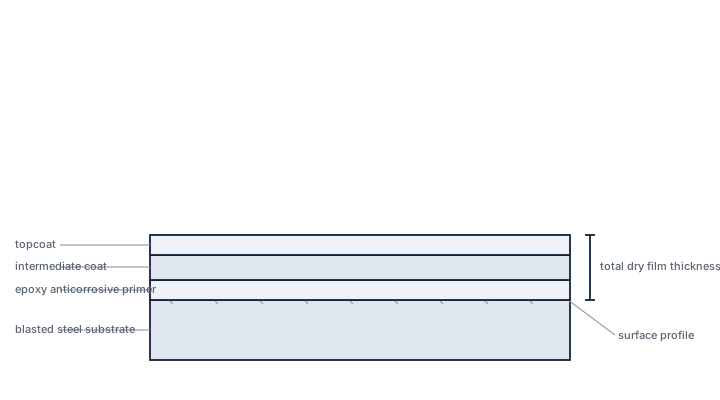
Main components of the system
Resin and hardener
Supplied as two components mixed shortly before application, typically an epoxy resin base and a polyamide or amine hardener, with a limited pot life once combined.
Anticorrosive pigment
Zinc phosphate, zinc dust or similar pigments carried in the film to inhibit corrosion at the steel surface, either by sacrificial action or by forming a passive layer.
Surface tolerance versus standard grades
Standard epoxy primers require near-white or better blast cleaning and a dry surface, while surface-tolerant epoxy primers accept some residual rust, moisture or hand tool preparation, at the cost of a shorter expected service life.
Selection and sizing
- Surface preparation achievable in the actual application conditions, drydock blast versus afloat touch-up, which decides between standard and surface-tolerant grades.
- Dry film thickness specified per coat, since epoxy primers are typically applied to a target range and under-thickness leaves inadequate barrier protection.
- Compatibility with the topcoat system, since not every finish coat is formulated to bond to every primer chemistry.
- Service environment: ballast tank, cargo tank, external hull or deck, each with a different exposure and a matching primer specification.
Regulations and class
IMO's Performance Standard for Protective Coatings applies to dedicated seawater ballast tanks and double-side skin spaces on bulk carriers, and to void spaces on tankers, setting minimum coating system life, surface preparation grade and dry film thickness requirements that an epoxy primer must be part of to achieve a Good condition rating. Class societies survey coating condition in these spaces on a defined schedule, and coating breakdown found during survey can trigger earlier renewal requirements than originally planned.
Typical faults
| Fault | Consequence |
|---|---|
| Insufficient blast profile or contamination left on steel | Poor adhesion, early flaking and pinpoint rusting through the film |
| Primer applied below minimum dry film thickness | Reduced barrier protection, corrosion breakthrough ahead of schedule |
| Overcoating interval exceeded before topcoat application | Poor intercoat adhesion, delamination between primer and topcoat |
| Application in high humidity or near dew point | Moisture entrapment in the film, blistering during service |
What to look for in a supplier
- Approval to the IMO Performance Standard for Protective Coatings where the primer is intended for ballast tanks or void spaces covered by that standard.
- Clear technical data on surface preparation grade, dry film thickness range and overcoating window.
- Documented compatibility with the specific topcoat system intended for the project, confirmed rather than assumed.
- Batch traceability and technical field support during application, since primer failures are as often a workmanship issue as a product issue.
Dry film thickness is worth checking wet during application with a comb gauge as well as after cure, since a thin patch found only after the topcoat is on means stripping back through both coats to fix it.
2 manufacturers · 46 models
Hempel
38- DFT Standard (Hempadur PSPC)
- 320 µm total / 2×160 µm pro Schicht
- DFT (Globic Antifouling)
- 100 µm Trockenfilm
- Aushärtungszeit (Hempadur)
- 1–2 months full cure; 5–47 hours reworking window (temperature dependent)
- Oberflächenrauhheit Anforderung
- Sa 2.5 ISO 8501-1, Rugotest No. 3 or ISO roughness mean (G)
- Haftungs-Mindestwert (Pull-off)
- ≥2,5 MPa allgemein; ≥5 MPa Immersion; ≥8 MPa >250 µm Gesamtdicke
- Brennstoff-Ersparnis (Hempaguard X7)
- 21% über 90-Monats-Docking-Intervall (DNV validiert)
- Aushärtungs-Temperaturkorrektionen
- T ↓10°C → Aushärtungszeit ×2; T ↑10°C → ÷2
- Hempadur (epoxy primers and intermediate coats)
- Hempaguard (Silicon-Hydrogel Rumpfbeschichtung fuer Brennstoffeffizienz)
- Globic (Antifouling mit Nano-Acrylat-Technologie)
- • Bewaehrte Epoxy-Technologie
- • Guter Langzeit-Korrosionsschutz
- • Breites Anwendungsspektrum
- • Erfordert gute Oberflaechenvorbereitung (min. Sa 2.5)
- • Temperatursensitive Haertung
- Area: Insufficient surface roughness or preparation before coatingCheck: Sa 2.5 (ISO 8501-1) surface roughness with Rugotest No. 3 or ISO comparator rough-medium inspect; visual inspection white surface
- Area: Salt contamination reduces adhesion and causes blisteringCheck: Ion tester before/after blast cleaning (ISO 8502-1/2/3); limit value <50 mg/m² PSPC
- Area: Dry film thickness <80% specification or >120% causes failureCheck: DFT meter use; 90% measured values ≥256 µm at 320 µm nominal; edges with stripe coating; all values document
- Area: Unvollständige Aushärtung → schlechte Schicht-Bindung, Wassereintritt, BlasenbildungCheck: Cure time per manufacturer instructions (Hempadur 15570: 5-47 hours); temperature monitoring (T ↓10°C ×2); full cure 1-2 months before test
- Area: Intercoat adhesion failure (<2.5 MPa) causes peeling and corrosionCheck: ISO 4624 pull-off test after 1-2 months full cure; minimum adhesion ≥5 MPa immersion; ≥8 MPa >250 µm; 3 measurements/100 m²
- Area: Oberflächenmängel (Blasen, Risse, Kratzer, ungleichmäßige Deckkraft) ermöglichen WassereintrittCheck: Visual 100% inspection for blisters/scratches/peeling; surface roughness global max. 125 µm inspect; finish standard per ship class
Type-universal inspection/maintenance points for paint & coating systems (Hempel, Mega-Swarm 2026-06). Per-model specs not auto-populated.
- Bewaehrte Epoxy-Technologie
- Guter Langzeit-Korrosionsschutz
- Breites Anwendungsspektrum
- Erfordert gute Oberflaechenvorbereitung (min. Sa 2.5)
- Temperatursensitive Haertung
- DFT Standard (Hempadur PSPC)
- 320 µm total / 2×160 µm pro Schicht
- DFT (Globic Antifouling)
- 100 µm Trockenfilm
- Aushärtungszeit (Hempadur)
- 1–2 months full cure; 5–47 hours reworking window (temperature dependent)
- Oberflächenrauhheit Anforderung
- Sa 2.5 ISO 8501-1, Rugotest No. 3 or ISO roughness mean (G)
- Haftungs-Mindestwert (Pull-off)
- ≥2,5 MPa allgemein; ≥5 MPa Immersion; ≥8 MPa >250 µm Gesamtdicke
- Brennstoff-Ersparnis (Hempaguard X7)
- 21% über 90-Monats-Docking-Intervall (DNV validiert)
- Aushärtungs-Temperaturkorrektionen
- T ↓10°C → Aushärtungszeit ×2; T ↑10°C → ÷2
- Hempadur (epoxy primers and intermediate coats)
- Hempaguard (Silicon-Hydrogel Rumpfbeschichtung fuer Brennstoffeffizienz)
- Globic (Antifouling mit Nano-Acrylat-Technologie)
- • Oberflaechen-tolerant — haftet auf St 3 (Handentrostung)
- • Hohe Schichtdicke in einem Arbeitsgang
- • Versatile as intermediate and topcoat application
- • Nicht die hoechste chemische Bestaendigkeit
- • Rauere Oberflaeche als Standard-Epoxy
- Area: Insufficient surface roughness or preparation before coatingCheck: Sa 2.5 (ISO 8501-1) surface roughness with Rugotest No. 3 or ISO comparator rough-medium inspect; visual inspection white surface
- Area: Salt contamination reduces adhesion and causes blisteringCheck: Ion tester before/after blast cleaning (ISO 8502-1/2/3); limit value <50 mg/m² PSPC
- Area: Dry film thickness <80% specification or >120% causes failureCheck: DFT meter use; 90% measured values ≥256 µm at 320 µm nominal; edges with stripe coating; all values document
- Area: Unvollständige Aushärtung → schlechte Schicht-Bindung, Wassereintritt, BlasenbildungCheck: Cure time per manufacturer instructions (Hempadur 15570: 5-47 hours); temperature monitoring (T ↓10°C ×2); full cure 1-2 months before test
- Area: Intercoat adhesion failure (<2.5 MPa) causes peeling and corrosionCheck: ISO 4624 pull-off test after 1-2 months full cure; minimum adhesion ≥5 MPa immersion; ≥8 MPa >250 µm; 3 measurements/100 m²
- Area: Oberflächenmängel (Blasen, Risse, Kratzer, ungleichmäßige Deckkraft) ermöglichen WassereintrittCheck: Visual 100% inspection for blisters/scratches/peeling; surface roughness global max. 125 µm inspect; finish standard per ship class
Type-universal inspection/maintenance points for paint & coating systems (Hempel, Mega-Swarm 2026-06). Per-model specs not auto-populated.
- Oberflaechen-tolerant — haftet auf St 3 (Handentrostung)
- Hohe Schichtdicke in einem Arbeitsgang
- Versatile as intermediate and topcoat application
- Nicht die hoechste chemische Bestaendigkeit
- Rauere Oberflaeche als Standard-Epoxy
- DFT Standard (Hempadur PSPC)
- 320 µm total / 2×160 µm pro Schicht
- DFT (Globic Antifouling)
- 100 µm Trockenfilm
- Aushärtungszeit (Hempadur)
- 1–2 months full cure; 5–47 hours reworking window (temperature dependent)
- Oberflächenrauhheit Anforderung
- Sa 2.5 ISO 8501-1, Rugotest No. 3 or ISO roughness mean (G)
- Haftungs-Mindestwert (Pull-off)
- ≥2,5 MPa allgemein; ≥5 MPa Immersion; ≥8 MPa >250 µm Gesamtdicke
- Brennstoff-Ersparnis (Hempaguard X7)
- 21% über 90-Monats-Docking-Intervall (DNV validiert)
- Aushärtungs-Temperaturkorrektionen
- T ↓10°C → Aushärtungszeit ×2; T ↑10°C → ÷2
- Hempadur (epoxy primers and intermediate coats)
- Hempaguard (Silicon-Hydrogel Rumpfbeschichtung fuer Brennstoffeffizienz)
- Globic (Antifouling mit Nano-Acrylat-Technologie)
- • IMO-PSPC-konform
- • Lange Standzeit in Ballasttanks
- • Guter Kantenschutz
- • Erfordert sorgfaeltige Oberflaechenvorbereitung (Sa 2.5)
- • Temperatursensitive Applikation
- Area: Insufficient surface roughness or preparation before coatingCheck: Sa 2.5 (ISO 8501-1) surface roughness with Rugotest No. 3 or ISO comparator rough-medium inspect; visual inspection white surface
- Area: Salt contamination reduces adhesion and causes blisteringCheck: Ion tester before/after blast cleaning (ISO 8502-1/2/3); limit value <50 mg/m² PSPC
- Area: Dry film thickness <80% specification or >120% causes failureCheck: DFT meter use; 90% measured values ≥256 µm at 320 µm nominal; edges with stripe coating; all values document
- Area: Unvollständige Aushärtung → schlechte Schicht-Bindung, Wassereintritt, BlasenbildungCheck: Cure time per manufacturer instructions (Hempadur 15570: 5-47 hours); temperature monitoring (T ↓10°C ×2); full cure 1-2 months before test
- Area: Intercoat adhesion failure (<2.5 MPa) causes peeling and corrosionCheck: ISO 4624 pull-off test after 1-2 months full cure; minimum adhesion ≥5 MPa immersion; ≥8 MPa >250 µm; 3 measurements/100 m²
- Area: Oberflächenmängel (Blasen, Risse, Kratzer, ungleichmäßige Deckkraft) ermöglichen WassereintrittCheck: Visual 100% inspection for blisters/scratches/peeling; surface roughness global max. 125 µm inspect; finish standard per ship class
Type-universal inspection/maintenance points for paint & coating systems (Hempel, Mega-Swarm 2026-06). Per-model specs not auto-populated.
- IMO-PSPC-konform
- Lange Standzeit in Ballasttanks
- Guter Kantenschutz
- Erfordert sorgfaeltige Oberflaechenvorbereitung (Sa 2.5)
- Temperatursensitive Applikation

- DFT Standard (Hempadur PSPC)
- 320 µm total / 2×160 µm pro Schicht
- DFT (Globic Antifouling)
- 100 µm Trockenfilm
- Aushärtungszeit (Hempadur)
- 1–2 months full cure; 5–47 hours reworking window (temperature dependent)
- Oberflächenrauhheit Anforderung
- Sa 2.5 ISO 8501-1, Rugotest No. 3 or ISO roughness mean (G)
- Haftungs-Mindestwert (Pull-off)
- ≥2,5 MPa allgemein; ≥5 MPa Immersion; ≥8 MPa >250 µm Gesamtdicke
- Brennstoff-Ersparnis (Hempaguard X7)
- 21% über 90-Monats-Docking-Intervall (DNV validiert)
- Aushärtungs-Temperaturkorrektionen
- T ↓10°C → Aushärtungszeit ×2; T ↑10°C → ÷2
- Hempadur (epoxy primers and intermediate coats)
- Hempaguard (Silicon-Hydrogel Rumpfbeschichtung fuer Brennstoffeffizienz)
- Globic (Antifouling mit Nano-Acrylat-Technologie)
- • Oberflaechen-tolerant — haftet auf St 3 (Handentrostung)
- • Hohe Schichtdicke in einem Arbeitsgang
- • Versatile as intermediate and topcoat application
- • Nicht die hoechste chemische Bestaendigkeit
- • Rauere Oberflaeche als Standard-Epoxy
- Area: Insufficient surface roughness or preparation before coatingCheck: Sa 2.5 (ISO 8501-1) surface roughness with Rugotest No. 3 or ISO comparator rough-medium inspect; visual inspection white surface
- Area: Salt contamination reduces adhesion and causes blisteringCheck: Ion tester before/after blast cleaning (ISO 8502-1/2/3); limit value <50 mg/m² PSPC
- Area: Dry film thickness <80% specification or >120% causes failureCheck: DFT meter use; 90% measured values ≥256 µm at 320 µm nominal; edges with stripe coating; all values document
- Area: Unvollständige Aushärtung → schlechte Schicht-Bindung, Wassereintritt, BlasenbildungCheck: Cure time per manufacturer instructions (Hempadur 15570: 5-47 hours); temperature monitoring (T ↓10°C ×2); full cure 1-2 months before test
- Area: Intercoat adhesion failure (<2.5 MPa) causes peeling and corrosionCheck: ISO 4624 pull-off test after 1-2 months full cure; minimum adhesion ≥5 MPa immersion; ≥8 MPa >250 µm; 3 measurements/100 m²
- Area: Oberflächenmängel (Blasen, Risse, Kratzer, ungleichmäßige Deckkraft) ermöglichen WassereintrittCheck: Visual 100% inspection for blisters/scratches/peeling; surface roughness global max. 125 µm inspect; finish standard per ship class
Type-universal inspection/maintenance points for paint & coating systems (Hempel, Mega-Swarm 2026-06). Per-model specs not auto-populated.
- Oberflaechen-tolerant — haftet auf St 3 (Handentrostung)
- Hohe Schichtdicke in einem Arbeitsgang
- Versatile as intermediate and topcoat application
- Nicht die hoechste chemische Bestaendigkeit
- Rauere Oberflaeche als Standard-Epoxy
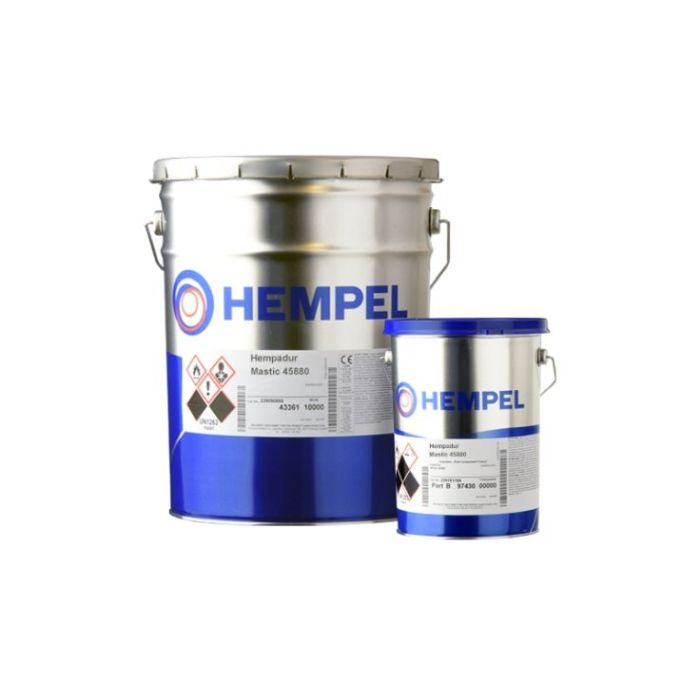
- DFT Standard (Hempadur PSPC)
- 320 µm total / 2×160 µm pro Schicht
- DFT (Globic Antifouling)
- 100 µm Trockenfilm
- Aushärtungszeit (Hempadur)
- 1–2 months full cure; 5–47 hours reworking window (temperature dependent)
- Oberflächenrauhheit Anforderung
- Sa 2.5 ISO 8501-1, Rugotest No. 3 or ISO roughness mean (G)
- Haftungs-Mindestwert (Pull-off)
- ≥2,5 MPa allgemein; ≥5 MPa Immersion; ≥8 MPa >250 µm Gesamtdicke
- Brennstoff-Ersparnis (Hempaguard X7)
- 21% über 90-Monats-Docking-Intervall (DNV validiert)
- Aushärtungs-Temperaturkorrektionen
- T ↓10°C → Aushärtungszeit ×2; T ↑10°C → ÷2
- Hempadur (epoxy primers and intermediate coats)
- Hempaguard (Silicon-Hydrogel Rumpfbeschichtung fuer Brennstoffeffizienz)
- Globic (Antifouling mit Nano-Acrylat-Technologie)
- • Oberflaechen-tolerant — haftet auf St 3 (Handentrostung)
- • Hohe Schichtdicke in einem Arbeitsgang
- • Versatile as intermediate and topcoat application
- • Nicht die hoechste chemische Bestaendigkeit
- • Rauere Oberflaeche als Standard-Epoxy
- Area: Insufficient surface roughness or preparation before coatingCheck: Sa 2.5 (ISO 8501-1) surface roughness with Rugotest No. 3 or ISO comparator rough-medium inspect; visual inspection white surface
- Area: Salt contamination reduces adhesion and causes blisteringCheck: Ion tester before/after blast cleaning (ISO 8502-1/2/3); limit value <50 mg/m² PSPC
- Area: Dry film thickness <80% specification or >120% causes failureCheck: DFT meter use; 90% measured values ≥256 µm at 320 µm nominal; edges with stripe coating; all values document
- Area: Unvollständige Aushärtung → schlechte Schicht-Bindung, Wassereintritt, BlasenbildungCheck: Cure time per manufacturer instructions (Hempadur 15570: 5-47 hours); temperature monitoring (T ↓10°C ×2); full cure 1-2 months before test
- Area: Intercoat adhesion failure (<2.5 MPa) causes peeling and corrosionCheck: ISO 4624 pull-off test after 1-2 months full cure; minimum adhesion ≥5 MPa immersion; ≥8 MPa >250 µm; 3 measurements/100 m²
- Area: Oberflächenmängel (Blasen, Risse, Kratzer, ungleichmäßige Deckkraft) ermöglichen WassereintrittCheck: Visual 100% inspection for blisters/scratches/peeling; surface roughness global max. 125 µm inspect; finish standard per ship class
Type-universal inspection/maintenance points for paint & coating systems (Hempel, Mega-Swarm 2026-06). Per-model specs not auto-populated.
- Oberflaechen-tolerant — haftet auf St 3 (Handentrostung)
- Hohe Schichtdicke in einem Arbeitsgang
- Versatile as intermediate and topcoat application
- Nicht die hoechste chemische Bestaendigkeit
- Rauere Oberflaeche als Standard-Epoxy
- DFT Standard (Hempadur PSPC)
- 320 µm total / 2×160 µm pro Schicht
- DFT (Globic Antifouling)
- 100 µm Trockenfilm
- Aushärtungszeit (Hempadur)
- 1–2 months full cure; 5–47 hours reworking window (temperature dependent)
- Oberflächenrauhheit Anforderung
- Sa 2.5 ISO 8501-1, Rugotest No. 3 or ISO roughness mean (G)
- Haftungs-Mindestwert (Pull-off)
- ≥2,5 MPa allgemein; ≥5 MPa Immersion; ≥8 MPa >250 µm Gesamtdicke
- Brennstoff-Ersparnis (Hempaguard X7)
- 21% über 90-Monats-Docking-Intervall (DNV validiert)
- Aushärtungs-Temperaturkorrektionen
- T ↓10°C → Aushärtungszeit ×2; T ↑10°C → ÷2
- Hempadur (epoxy primers and intermediate coats)
- Hempaguard (Silicon-Hydrogel Rumpfbeschichtung fuer Brennstoffeffizienz)
- Globic (Antifouling mit Nano-Acrylat-Technologie)
- • Oberflaechen-tolerant — haftet auf St 3 (Handentrostung)
- • Hohe Schichtdicke in einem Arbeitsgang
- • Versatile as intermediate and topcoat application
- • Nicht die hoechste chemische Bestaendigkeit
- • Rauere Oberflaeche als Standard-Epoxy
- Area: Insufficient surface roughness or preparation before coatingCheck: Sa 2.5 (ISO 8501-1) surface roughness with Rugotest No. 3 or ISO comparator rough-medium inspect; visual inspection white surface
- Area: Salt contamination reduces adhesion and causes blisteringCheck: Ion tester before/after blast cleaning (ISO 8502-1/2/3); limit value <50 mg/m² PSPC
- Area: Dry film thickness <80% specification or >120% causes failureCheck: DFT meter use; 90% measured values ≥256 µm at 320 µm nominal; edges with stripe coating; all values document
- Area: Unvollständige Aushärtung → schlechte Schicht-Bindung, Wassereintritt, BlasenbildungCheck: Cure time per manufacturer instructions (Hempadur 15570: 5-47 hours); temperature monitoring (T ↓10°C ×2); full cure 1-2 months before test
- Area: Intercoat adhesion failure (<2.5 MPa) causes peeling and corrosionCheck: ISO 4624 pull-off test after 1-2 months full cure; minimum adhesion ≥5 MPa immersion; ≥8 MPa >250 µm; 3 measurements/100 m²
- Area: Oberflächenmängel (Blasen, Risse, Kratzer, ungleichmäßige Deckkraft) ermöglichen WassereintrittCheck: Visual 100% inspection for blisters/scratches/peeling; surface roughness global max. 125 µm inspect; finish standard per ship class
Type-universal inspection/maintenance points for paint & coating systems (Hempel, Mega-Swarm 2026-06). Per-model specs not auto-populated.
- Oberflaechen-tolerant — haftet auf St 3 (Handentrostung)
- Hohe Schichtdicke in einem Arbeitsgang
- Versatile as intermediate and topcoat application
- Nicht die hoechste chemische Bestaendigkeit
- Rauere Oberflaeche als Standard-Epoxy
- DFT Standard (Hempadur PSPC)
- 320 µm total / 2×160 µm pro Schicht
- DFT (Globic Antifouling)
- 100 µm Trockenfilm
- Aushärtungszeit (Hempadur)
- 1–2 months full cure; 5–47 hours reworking window (temperature dependent)
- Oberflächenrauhheit Anforderung
- Sa 2.5 ISO 8501-1, Rugotest No. 3 or ISO roughness mean (G)
- Haftungs-Mindestwert (Pull-off)
- ≥2,5 MPa allgemein; ≥5 MPa Immersion; ≥8 MPa >250 µm Gesamtdicke
- Brennstoff-Ersparnis (Hempaguard X7)
- 21% über 90-Monats-Docking-Intervall (DNV validiert)
- Aushärtungs-Temperaturkorrektionen
- T ↓10°C → Aushärtungszeit ×2; T ↑10°C → ÷2
- Hempadur (epoxy primers and intermediate coats)
- Hempaguard (Silicon-Hydrogel Rumpfbeschichtung fuer Brennstoffeffizienz)
- Globic (Antifouling mit Nano-Acrylat-Technologie)
- • DNV-zertifiziertes Komplettsystem
- • Abgestimmte Schichtfolge fuer optimalen Schutz
- • Definierte Performance-Garantie
- • Less flexibility in product combination.
- • Alle Komponenten muessen vom gleichen Hersteller sein
- Area: Insufficient surface roughness or preparation before coatingCheck: Sa 2.5 (ISO 8501-1) surface roughness with Rugotest No. 3 or ISO comparator rough-medium inspect; visual inspection white surface
- Area: Salt contamination reduces adhesion and causes blisteringCheck: Ion tester before/after blast cleaning (ISO 8502-1/2/3); limit value <50 mg/m² PSPC
- Area: Dry film thickness <80% specification or >120% causes failureCheck: DFT meter use; 90% measured values ≥256 µm at 320 µm nominal; edges with stripe coating; all values document
- Area: Unvollständige Aushärtung → schlechte Schicht-Bindung, Wassereintritt, BlasenbildungCheck: Cure time per manufacturer instructions (Hempadur 15570: 5-47 hours); temperature monitoring (T ↓10°C ×2); full cure 1-2 months before test
- Area: Intercoat adhesion failure (<2.5 MPa) causes peeling and corrosionCheck: ISO 4624 pull-off test after 1-2 months full cure; minimum adhesion ≥5 MPa immersion; ≥8 MPa >250 µm; 3 measurements/100 m²
- Area: Oberflächenmängel (Blasen, Risse, Kratzer, ungleichmäßige Deckkraft) ermöglichen WassereintrittCheck: Visual 100% inspection for blisters/scratches/peeling; surface roughness global max. 125 µm inspect; finish standard per ship class
Type-universal inspection/maintenance points for paint & coating systems (Hempel, Mega-Swarm 2026-06). Per-model specs not auto-populated.
- DNV-zertifiziertes Komplettsystem
- Abgestimmte Schichtfolge fuer optimalen Schutz
- Definierte Performance-Garantie
- Less flexibility in product combination.
- Alle Komponenten muessen vom gleichen Hersteller sein

- DFT Standard (Hempadur PSPC)
- 320 µm total / 2×160 µm pro Schicht
- DFT (Globic Antifouling)
- 100 µm Trockenfilm
- Aushärtungszeit (Hempadur)
- 1–2 months full cure; 5–47 hours reworking window (temperature dependent)
- Oberflächenrauhheit Anforderung
- Sa 2.5 ISO 8501-1, Rugotest No. 3 or ISO roughness mean (G)
- Haftungs-Mindestwert (Pull-off)
- ≥2,5 MPa allgemein; ≥5 MPa Immersion; ≥8 MPa >250 µm Gesamtdicke
- Brennstoff-Ersparnis (Hempaguard X7)
- 21% über 90-Monats-Docking-Intervall (DNV validiert)
- Aushärtungs-Temperaturkorrektionen
- T ↓10°C → Aushärtungszeit ×2; T ↑10°C → ÷2
- Hempadur (epoxy primers and intermediate coats)
- Hempaguard (Silicon-Hydrogel Rumpfbeschichtung fuer Brennstoffeffizienz)
- Globic (Antifouling mit Nano-Acrylat-Technologie)
- • Ein Produkt fuer viele Anwendungen — reduziert Produktvielfalt an Bord
- • Hohe Schichtdicke pro Gang
- • IMO-PSPC-konform fuer Ballasttanks
- • Jack-of-all-trades — spezialisierte Produkte leisten in Einzelbereichen mehr
- Area: Insufficient surface roughness or preparation before coatingCheck: Sa 2.5 (ISO 8501-1) surface roughness with Rugotest No. 3 or ISO comparator rough-medium inspect; visual inspection white surface
- Area: Salt contamination reduces adhesion and causes blisteringCheck: Ion tester before/after blast cleaning (ISO 8502-1/2/3); limit value <50 mg/m² PSPC
- Area: Dry film thickness <80% specification or >120% causes failureCheck: DFT meter use; 90% measured values ≥256 µm at 320 µm nominal; edges with stripe coating; all values document
- Area: Unvollständige Aushärtung → schlechte Schicht-Bindung, Wassereintritt, BlasenbildungCheck: Cure time per manufacturer instructions (Hempadur 15570: 5-47 hours); temperature monitoring (T ↓10°C ×2); full cure 1-2 months before test
- Area: Intercoat adhesion failure (<2.5 MPa) causes peeling and corrosionCheck: ISO 4624 pull-off test after 1-2 months full cure; minimum adhesion ≥5 MPa immersion; ≥8 MPa >250 µm; 3 measurements/100 m²
- Area: Oberflächenmängel (Blasen, Risse, Kratzer, ungleichmäßige Deckkraft) ermöglichen WassereintrittCheck: Visual 100% inspection for blisters/scratches/peeling; surface roughness global max. 125 µm inspect; finish standard per ship class
Type-universal inspection/maintenance points for paint & coating systems (Hempel, Mega-Swarm 2026-06). Per-model specs not auto-populated.
- Ein Produkt fuer viele Anwendungen — reduziert Produktvielfalt an Bord
- Hohe Schichtdicke pro Gang
- IMO-PSPC-konform fuer Ballasttanks
- Jack-of-all-trades — spezialisierte Produkte leisten in Einzelbereichen mehr
- DFT Standard (Hempadur PSPC)
- 320 µm total / 2×160 µm pro Schicht
- DFT (Globic Antifouling)
- 100 µm Trockenfilm
- Aushärtungszeit (Hempadur)
- 1–2 months full cure; 5–47 hours reworking window (temperature dependent)
- Oberflächenrauhheit Anforderung
- Sa 2.5 ISO 8501-1, Rugotest No. 3 or ISO roughness mean (G)
- Haftungs-Mindestwert (Pull-off)
- ≥2,5 MPa allgemein; ≥5 MPa Immersion; ≥8 MPa >250 µm Gesamtdicke
- Brennstoff-Ersparnis (Hempaguard X7)
- 21% über 90-Monats-Docking-Intervall (DNV validiert)
- Aushärtungs-Temperaturkorrektionen
- T ↓10°C → Aushärtungszeit ×2; T ↑10°C → ÷2
- Hempadur (epoxy primers and intermediate coats)
- Hempaguard (Silicon-Hydrogel Rumpfbeschichtung fuer Brennstoffeffizienz)
- Globic (Antifouling mit Nano-Acrylat-Technologie)
- • DNV-zertifiziertes Komplettsystem
- • Abgestimmte Schichtfolge fuer optimalen Schutz
- • Definierte Performance-Garantie
- • Less flexibility in product combination.
- • Alle Komponenten muessen vom gleichen Hersteller sein
- Area: Insufficient surface roughness or preparation before coatingCheck: Sa 2.5 (ISO 8501-1) surface roughness with Rugotest No. 3 or ISO comparator rough-medium inspect; visual inspection white surface
- Area: Salt contamination reduces adhesion and causes blisteringCheck: Ion tester before/after blast cleaning (ISO 8502-1/2/3); limit value <50 mg/m² PSPC
- Area: Dry film thickness <80% specification or >120% causes failureCheck: DFT meter use; 90% measured values ≥256 µm at 320 µm nominal; edges with stripe coating; all values document
- Area: Unvollständige Aushärtung → schlechte Schicht-Bindung, Wassereintritt, BlasenbildungCheck: Cure time per manufacturer instructions (Hempadur 15570: 5-47 hours); temperature monitoring (T ↓10°C ×2); full cure 1-2 months before test
- Area: Intercoat adhesion failure (<2.5 MPa) causes peeling and corrosionCheck: ISO 4624 pull-off test after 1-2 months full cure; minimum adhesion ≥5 MPa immersion; ≥8 MPa >250 µm; 3 measurements/100 m²
- Area: Oberflächenmängel (Blasen, Risse, Kratzer, ungleichmäßige Deckkraft) ermöglichen WassereintrittCheck: Visual 100% inspection for blisters/scratches/peeling; surface roughness global max. 125 µm inspect; finish standard per ship class
Type-universal inspection/maintenance points for paint & coating systems (Hempel, Mega-Swarm 2026-06). Per-model specs not auto-populated.
- DNV-zertifiziertes Komplettsystem
- Abgestimmte Schichtfolge fuer optimalen Schutz
- Definierte Performance-Garantie
- Less flexibility in product combination.
- Alle Komponenten muessen vom gleichen Hersteller sein
- DFT Standard (Hempadur PSPC)
- 320 µm total / 2×160 µm pro Schicht
- DFT (Globic Antifouling)
- 100 µm Trockenfilm
- Aushärtungszeit (Hempadur)
- 1–2 months full cure; 5–47 hours reworking window (temperature dependent)
- Oberflächenrauhheit Anforderung
- Sa 2.5 ISO 8501-1, Rugotest No. 3 or ISO roughness mean (G)
- Haftungs-Mindestwert (Pull-off)
- ≥2,5 MPa allgemein; ≥5 MPa Immersion; ≥8 MPa >250 µm Gesamtdicke
- Brennstoff-Ersparnis (Hempaguard X7)
- 21% über 90-Monats-Docking-Intervall (DNV validiert)
- Aushärtungs-Temperaturkorrektionen
- T ↓10°C → Aushärtungszeit ×2; T ↑10°C → ÷2
- Hempadur (epoxy primers and intermediate coats)
- Hempaguard (Silicon-Hydrogel Rumpfbeschichtung fuer Brennstoffeffizienz)
- Globic (Antifouling mit Nano-Acrylat-Technologie)
- • Ein Produkt fuer viele Anwendungen — reduziert Produktvielfalt an Bord
- • Hohe Schichtdicke pro Gang
- • IMO-PSPC-konform fuer Ballasttanks
- • Jack-of-all-trades — spezialisierte Produkte leisten in Einzelbereichen mehr
- Area: Insufficient surface roughness or preparation before coatingCheck: Sa 2.5 (ISO 8501-1) surface roughness with Rugotest No. 3 or ISO comparator rough-medium inspect; visual inspection white surface
- Area: Salt contamination reduces adhesion and causes blisteringCheck: Ion tester before/after blast cleaning (ISO 8502-1/2/3); limit value <50 mg/m² PSPC
- Area: Dry film thickness <80% specification or >120% causes failureCheck: DFT meter use; 90% measured values ≥256 µm at 320 µm nominal; edges with stripe coating; all values document
- Area: Unvollständige Aushärtung → schlechte Schicht-Bindung, Wassereintritt, BlasenbildungCheck: Cure time per manufacturer instructions (Hempadur 15570: 5-47 hours); temperature monitoring (T ↓10°C ×2); full cure 1-2 months before test
- Area: Intercoat adhesion failure (<2.5 MPa) causes peeling and corrosionCheck: ISO 4624 pull-off test after 1-2 months full cure; minimum adhesion ≥5 MPa immersion; ≥8 MPa >250 µm; 3 measurements/100 m²
- Area: Oberflächenmängel (Blasen, Risse, Kratzer, ungleichmäßige Deckkraft) ermöglichen WassereintrittCheck: Visual 100% inspection for blisters/scratches/peeling; surface roughness global max. 125 µm inspect; finish standard per ship class
Type-universal inspection/maintenance points for paint & coating systems (Hempel, Mega-Swarm 2026-06). Per-model specs not auto-populated.
- Ein Produkt fuer viele Anwendungen — reduziert Produktvielfalt an Bord
- Hohe Schichtdicke pro Gang
- IMO-PSPC-konform fuer Ballasttanks
- Jack-of-all-trades — spezialisierte Produkte leisten in Einzelbereichen mehr
- DFT Standard (Hempadur PSPC)
- 320 µm total / 2×160 µm pro Schicht
- DFT (Globic Antifouling)
- 100 µm Trockenfilm
- Aushärtungszeit (Hempadur)
- 1–2 months full cure; 5–47 hours reworking window (temperature dependent)
- Oberflächenrauhheit Anforderung
- Sa 2.5 ISO 8501-1, Rugotest No. 3 or ISO roughness mean (G)
- Haftungs-Mindestwert (Pull-off)
- ≥2,5 MPa allgemein; ≥5 MPa Immersion; ≥8 MPa >250 µm Gesamtdicke
- Brennstoff-Ersparnis (Hempaguard X7)
- 21% über 90-Monats-Docking-Intervall (DNV validiert)
- Aushärtungs-Temperaturkorrektionen
- T ↓10°C → Aushärtungszeit ×2; T ↑10°C → ÷2
- Hempadur (epoxy primers and intermediate coats)
- Hempaguard (Silicon-Hydrogel Rumpfbeschichtung fuer Brennstoffeffizienz)
- Globic (Antifouling mit Nano-Acrylat-Technologie)
- • Ein Produkt fuer viele Anwendungen — reduziert Produktvielfalt an Bord
- • Hohe Schichtdicke pro Gang
- • IMO-PSPC-konform fuer Ballasttanks
- • Jack-of-all-trades — spezialisierte Produkte leisten in Einzelbereichen mehr
- Area: Insufficient surface roughness or preparation before coatingCheck: Sa 2.5 (ISO 8501-1) surface roughness with Rugotest No. 3 or ISO comparator rough-medium inspect; visual inspection white surface
- Area: Salt contamination reduces adhesion and causes blisteringCheck: Ion tester before/after blast cleaning (ISO 8502-1/2/3); limit value <50 mg/m² PSPC
- Area: Dry film thickness <80% specification or >120% causes failureCheck: DFT meter use; 90% measured values ≥256 µm at 320 µm nominal; edges with stripe coating; all values document
- Area: Unvollständige Aushärtung → schlechte Schicht-Bindung, Wassereintritt, BlasenbildungCheck: Cure time per manufacturer instructions (Hempadur 15570: 5-47 hours); temperature monitoring (T ↓10°C ×2); full cure 1-2 months before test
- Area: Intercoat adhesion failure (<2.5 MPa) causes peeling and corrosionCheck: ISO 4624 pull-off test after 1-2 months full cure; minimum adhesion ≥5 MPa immersion; ≥8 MPa >250 µm; 3 measurements/100 m²
- Area: Oberflächenmängel (Blasen, Risse, Kratzer, ungleichmäßige Deckkraft) ermöglichen WassereintrittCheck: Visual 100% inspection for blisters/scratches/peeling; surface roughness global max. 125 µm inspect; finish standard per ship class
Type-universal inspection/maintenance points for paint & coating systems (Hempel, Mega-Swarm 2026-06). Per-model specs not auto-populated.
- Ein Produkt fuer viele Anwendungen — reduziert Produktvielfalt an Bord
- Hohe Schichtdicke pro Gang
- IMO-PSPC-konform fuer Ballasttanks
- Jack-of-all-trades — spezialisierte Produkte leisten in Einzelbereichen mehr
- DFT Standard (Hempadur PSPC)
- 320 µm total / 2×160 µm pro Schicht
- DFT (Globic Antifouling)
- 100 µm Trockenfilm
- Aushärtungszeit (Hempadur)
- 1–2 months full cure; 5–47 hours reworking window (temperature dependent)
- Oberflächenrauhheit Anforderung
- Sa 2.5 ISO 8501-1, Rugotest No. 3 or ISO roughness mean (G)
- Haftungs-Mindestwert (Pull-off)
- ≥2,5 MPa allgemein; ≥5 MPa Immersion; ≥8 MPa >250 µm Gesamtdicke
- Brennstoff-Ersparnis (Hempaguard X7)
- 21% über 90-Monats-Docking-Intervall (DNV validiert)
- Aushärtungs-Temperaturkorrektionen
- T ↓10°C → Aushärtungszeit ×2; T ↑10°C → ÷2
- Hempadur (epoxy primers and intermediate coats)
- Hempaguard (Silicon-Hydrogel Rumpfbeschichtung fuer Brennstoffeffizienz)
- Globic (Antifouling mit Nano-Acrylat-Technologie)
- • Oberflaechen-tolerant — haftet auf St 3 (Handentrostung)
- • Hohe Schichtdicke in einem Arbeitsgang
- • Versatile as intermediate and topcoat application
- • Nicht die hoechste chemische Bestaendigkeit
- • Rauere Oberflaeche als Standard-Epoxy
- Area: Insufficient surface roughness or preparation before coatingCheck: Sa 2.5 (ISO 8501-1) surface roughness with Rugotest No. 3 or ISO comparator rough-medium inspect; visual inspection white surface
- Area: Salt contamination reduces adhesion and causes blisteringCheck: Ion tester before/after blast cleaning (ISO 8502-1/2/3); limit value <50 mg/m² PSPC
- Area: Dry film thickness <80% specification or >120% causes failureCheck: DFT meter use; 90% measured values ≥256 µm at 320 µm nominal; edges with stripe coating; all values document
- Area: Unvollständige Aushärtung → schlechte Schicht-Bindung, Wassereintritt, BlasenbildungCheck: Cure time per manufacturer instructions (Hempadur 15570: 5-47 hours); temperature monitoring (T ↓10°C ×2); full cure 1-2 months before test
- Area: Intercoat adhesion failure (<2.5 MPa) causes peeling and corrosionCheck: ISO 4624 pull-off test after 1-2 months full cure; minimum adhesion ≥5 MPa immersion; ≥8 MPa >250 µm; 3 measurements/100 m²
- Area: Oberflächenmängel (Blasen, Risse, Kratzer, ungleichmäßige Deckkraft) ermöglichen WassereintrittCheck: Visual 100% inspection for blisters/scratches/peeling; surface roughness global max. 125 µm inspect; finish standard per ship class
Type-universal inspection/maintenance points for paint & coating systems (Hempel, Mega-Swarm 2026-06). Per-model specs not auto-populated.
- Oberflaechen-tolerant — haftet auf St 3 (Handentrostung)
- Hohe Schichtdicke in einem Arbeitsgang
- Versatile as intermediate and topcoat application
- Nicht die hoechste chemische Bestaendigkeit
- Rauere Oberflaeche als Standard-Epoxy
- DFT Standard (Hempadur PSPC)
- 320 µm total / 2×160 µm pro Schicht
- DFT (Globic Antifouling)
- 100 µm Trockenfilm
- Aushärtungszeit (Hempadur)
- 1–2 months full cure; 5–47 hours reworking window (temperature dependent)
- Oberflächenrauhheit Anforderung
- Sa 2.5 ISO 8501-1, Rugotest No. 3 or ISO roughness mean (G)
- Haftungs-Mindestwert (Pull-off)
- ≥2,5 MPa allgemein; ≥5 MPa Immersion; ≥8 MPa >250 µm Gesamtdicke
- Brennstoff-Ersparnis (Hempaguard X7)
- 21% über 90-Monats-Docking-Intervall (DNV validiert)
- Aushärtungs-Temperaturkorrektionen
- T ↓10°C → Aushärtungszeit ×2; T ↑10°C → ÷2
- Hempadur (epoxy primers and intermediate coats)
- Hempaguard (Silicon-Hydrogel Rumpfbeschichtung fuer Brennstoffeffizienz)
- Globic (Antifouling mit Nano-Acrylat-Technologie)
- • DNV-zertifiziertes Komplettsystem
- • Abgestimmte Schichtfolge fuer optimalen Schutz
- • Definierte Performance-Garantie
- • Less flexibility in product combination.
- • Alle Komponenten muessen vom gleichen Hersteller sein
- Area: Insufficient surface roughness or preparation before coatingCheck: Sa 2.5 (ISO 8501-1) surface roughness with Rugotest No. 3 or ISO comparator rough-medium inspect; visual inspection white surface
- Area: Salt contamination reduces adhesion and causes blisteringCheck: Ion tester before/after blast cleaning (ISO 8502-1/2/3); limit value <50 mg/m² PSPC
- Area: Dry film thickness <80% specification or >120% causes failureCheck: DFT meter use; 90% measured values ≥256 µm at 320 µm nominal; edges with stripe coating; all values document
- Area: Unvollständige Aushärtung → schlechte Schicht-Bindung, Wassereintritt, BlasenbildungCheck: Cure time per manufacturer instructions (Hempadur 15570: 5-47 hours); temperature monitoring (T ↓10°C ×2); full cure 1-2 months before test
- Area: Intercoat adhesion failure (<2.5 MPa) causes peeling and corrosionCheck: ISO 4624 pull-off test after 1-2 months full cure; minimum adhesion ≥5 MPa immersion; ≥8 MPa >250 µm; 3 measurements/100 m²
- Area: Oberflächenmängel (Blasen, Risse, Kratzer, ungleichmäßige Deckkraft) ermöglichen WassereintrittCheck: Visual 100% inspection for blisters/scratches/peeling; surface roughness global max. 125 µm inspect; finish standard per ship class
Type-universal inspection/maintenance points for paint & coating systems (Hempel, Mega-Swarm 2026-06). Per-model specs not auto-populated.
- DNV-zertifiziertes Komplettsystem
- Abgestimmte Schichtfolge fuer optimalen Schutz
- Definierte Performance-Garantie
- Less flexibility in product combination.
- Alle Komponenten muessen vom gleichen Hersteller sein
- DFT Standard (Hempadur PSPC)
- 320 µm total / 2×160 µm pro Schicht
- DFT (Globic Antifouling)
- 100 µm Trockenfilm
- Aushärtungszeit (Hempadur)
- 1–2 months full cure; 5–47 hours reworking window (temperature dependent)
- Oberflächenrauhheit Anforderung
- Sa 2.5 ISO 8501-1, Rugotest No. 3 or ISO roughness mean (G)
- Haftungs-Mindestwert (Pull-off)
- ≥2,5 MPa allgemein; ≥5 MPa Immersion; ≥8 MPa >250 µm Gesamtdicke
- Brennstoff-Ersparnis (Hempaguard X7)
- 21% über 90-Monats-Docking-Intervall (DNV validiert)
- Aushärtungs-Temperaturkorrektionen
- T ↓10°C → Aushärtungszeit ×2; T ↑10°C → ÷2
- Hempadur (epoxy primers and intermediate coats)
- Hempaguard (Silicon-Hydrogel Rumpfbeschichtung fuer Brennstoffeffizienz)
- Globic (Antifouling mit Nano-Acrylat-Technologie)
- • Ein Produkt fuer viele Anwendungen — reduziert Produktvielfalt an Bord
- • Hohe Schichtdicke pro Gang
- • IMO-PSPC-konform fuer Ballasttanks
- • Jack-of-all-trades — spezialisierte Produkte leisten in Einzelbereichen mehr
- Area: Insufficient surface roughness or preparation before coatingCheck: Sa 2.5 (ISO 8501-1) surface roughness with Rugotest No. 3 or ISO comparator rough-medium inspect; visual inspection white surface
- Area: Salt contamination reduces adhesion and causes blisteringCheck: Ion tester before/after blast cleaning (ISO 8502-1/2/3); limit value <50 mg/m² PSPC
- Area: Dry film thickness <80% specification or >120% causes failureCheck: DFT meter use; 90% measured values ≥256 µm at 320 µm nominal; edges with stripe coating; all values document
- Area: Unvollständige Aushärtung → schlechte Schicht-Bindung, Wassereintritt, BlasenbildungCheck: Cure time per manufacturer instructions (Hempadur 15570: 5-47 hours); temperature monitoring (T ↓10°C ×2); full cure 1-2 months before test
- Area: Intercoat adhesion failure (<2.5 MPa) causes peeling and corrosionCheck: ISO 4624 pull-off test after 1-2 months full cure; minimum adhesion ≥5 MPa immersion; ≥8 MPa >250 µm; 3 measurements/100 m²
- Area: Oberflächenmängel (Blasen, Risse, Kratzer, ungleichmäßige Deckkraft) ermöglichen WassereintrittCheck: Visual 100% inspection for blisters/scratches/peeling; surface roughness global max. 125 µm inspect; finish standard per ship class
Type-universal inspection/maintenance points for paint & coating systems (Hempel, Mega-Swarm 2026-06). Per-model specs not auto-populated.
- Ein Produkt fuer viele Anwendungen — reduziert Produktvielfalt an Bord
- Hohe Schichtdicke pro Gang
- IMO-PSPC-konform fuer Ballasttanks
- Jack-of-all-trades — spezialisierte Produkte leisten in Einzelbereichen mehr
- DFT Standard (Hempadur PSPC)
- 320 µm total / 2×160 µm pro Schicht
- DFT (Globic Antifouling)
- 100 µm Trockenfilm
- Aushärtungszeit (Hempadur)
- 1–2 months full cure; 5–47 hours reworking window (temperature dependent)
- Oberflächenrauhheit Anforderung
- Sa 2.5 ISO 8501-1, Rugotest No. 3 or ISO roughness mean (G)
- Haftungs-Mindestwert (Pull-off)
- ≥2,5 MPa allgemein; ≥5 MPa Immersion; ≥8 MPa >250 µm Gesamtdicke
- Brennstoff-Ersparnis (Hempaguard X7)
- 21% über 90-Monats-Docking-Intervall (DNV validiert)
- Aushärtungs-Temperaturkorrektionen
- T ↓10°C → Aushärtungszeit ×2; T ↑10°C → ÷2
- Hempadur (epoxy primers and intermediate coats)
- Hempaguard (Silicon-Hydrogel Rumpfbeschichtung fuer Brennstoffeffizienz)
- Globic (Antifouling mit Nano-Acrylat-Technologie)
- • Einfache Verarbeitung
- • Oberflaechentolerant
- • Gute Schichtdicke pro Gang
- • Geringere Chemikalienbestaendigkeit als High-Performance-Epoxies
- Area: Insufficient surface roughness or preparation before coatingCheck: Sa 2.5 (ISO 8501-1) surface roughness with Rugotest No. 3 or ISO comparator rough-medium inspect; visual inspection white surface
- Area: Salt contamination reduces adhesion and causes blisteringCheck: Ion tester before/after blast cleaning (ISO 8502-1/2/3); limit value <50 mg/m² PSPC
- Area: Dry film thickness <80% specification or >120% causes failureCheck: DFT meter use; 90% measured values ≥256 µm at 320 µm nominal; edges with stripe coating; all values document
- Area: Unvollständige Aushärtung → schlechte Schicht-Bindung, Wassereintritt, BlasenbildungCheck: Cure time per manufacturer instructions (Hempadur 15570: 5-47 hours); temperature monitoring (T ↓10°C ×2); full cure 1-2 months before test
- Area: Intercoat adhesion failure (<2.5 MPa) causes peeling and corrosionCheck: ISO 4624 pull-off test after 1-2 months full cure; minimum adhesion ≥5 MPa immersion; ≥8 MPa >250 µm; 3 measurements/100 m²
- Area: Oberflächenmängel (Blasen, Risse, Kratzer, ungleichmäßige Deckkraft) ermöglichen WassereintrittCheck: Visual 100% inspection for blisters/scratches/peeling; surface roughness global max. 125 µm inspect; finish standard per ship class
Type-universal inspection/maintenance points for paint & coating systems (Hempel, Mega-Swarm 2026-06). Per-model specs not auto-populated.
- Einfache Verarbeitung
- Oberflaechentolerant
- Gute Schichtdicke pro Gang
- Geringere Chemikalienbestaendigkeit als High-Performance-Epoxies
- DFT Standard (Hempadur PSPC)
- 320 µm total / 2×160 µm pro Schicht
- DFT (Globic Antifouling)
- 100 µm Trockenfilm
- Aushärtungszeit (Hempadur)
- 1–2 months full cure; 5–47 hours reworking window (temperature dependent)
- Oberflächenrauhheit Anforderung
- Sa 2.5 ISO 8501-1, Rugotest No. 3 or ISO roughness mean (G)
- Haftungs-Mindestwert (Pull-off)
- ≥2,5 MPa allgemein; ≥5 MPa Immersion; ≥8 MPa >250 µm Gesamtdicke
- Brennstoff-Ersparnis (Hempaguard X7)
- 21% über 90-Monats-Docking-Intervall (DNV validiert)
- Aushärtungs-Temperaturkorrektionen
- T ↓10°C → Aushärtungszeit ×2; T ↑10°C → ÷2
- Hempadur (epoxy primers and intermediate coats)
- Hempaguard (Silicon-Hydrogel Rumpfbeschichtung fuer Brennstoffeffizienz)
- Globic (Antifouling mit Nano-Acrylat-Technologie)
- • Oberflaechen-tolerant — haftet auf St 3 (Handentrostung)
- • Hohe Schichtdicke in einem Arbeitsgang
- • Versatile as intermediate and topcoat application
- • Nicht die hoechste chemische Bestaendigkeit
- • Rauere Oberflaeche als Standard-Epoxy
- Area: Insufficient surface roughness or preparation before coatingCheck: Sa 2.5 (ISO 8501-1) surface roughness with Rugotest No. 3 or ISO comparator rough-medium inspect; visual inspection white surface
- Area: Salt contamination reduces adhesion and causes blisteringCheck: Ion tester before/after blast cleaning (ISO 8502-1/2/3); limit value <50 mg/m² PSPC
- Area: Dry film thickness <80% specification or >120% causes failureCheck: DFT meter use; 90% measured values ≥256 µm at 320 µm nominal; edges with stripe coating; all values document
- Area: Unvollständige Aushärtung → schlechte Schicht-Bindung, Wassereintritt, BlasenbildungCheck: Cure time per manufacturer instructions (Hempadur 15570: 5-47 hours); temperature monitoring (T ↓10°C ×2); full cure 1-2 months before test
- Area: Intercoat adhesion failure (<2.5 MPa) causes peeling and corrosionCheck: ISO 4624 pull-off test after 1-2 months full cure; minimum adhesion ≥5 MPa immersion; ≥8 MPa >250 µm; 3 measurements/100 m²
- Area: Oberflächenmängel (Blasen, Risse, Kratzer, ungleichmäßige Deckkraft) ermöglichen WassereintrittCheck: Visual 100% inspection for blisters/scratches/peeling; surface roughness global max. 125 µm inspect; finish standard per ship class
Type-universal inspection/maintenance points for paint & coating systems (Hempel, Mega-Swarm 2026-06). Per-model specs not auto-populated.
- Oberflaechen-tolerant — haftet auf St 3 (Handentrostung)
- Hohe Schichtdicke in einem Arbeitsgang
- Versatile as intermediate and topcoat application
- Nicht die hoechste chemische Bestaendigkeit
- Rauere Oberflaeche als Standard-Epoxy

- DFT Standard (Hempadur PSPC)
- 320 µm total / 2×160 µm pro Schicht
- DFT (Globic Antifouling)
- 100 µm Trockenfilm
- Aushärtungszeit (Hempadur)
- 1–2 months full cure; 5–47 hours reworking window (temperature dependent)
- Oberflächenrauhheit Anforderung
- Sa 2.5 ISO 8501-1, Rugotest No. 3 or ISO roughness mean (G)
- Haftungs-Mindestwert (Pull-off)
- ≥2,5 MPa allgemein; ≥5 MPa Immersion; ≥8 MPa >250 µm Gesamtdicke
- Brennstoff-Ersparnis (Hempaguard X7)
- 21% über 90-Monats-Docking-Intervall (DNV validiert)
- Aushärtungs-Temperaturkorrektionen
- T ↓10°C → Aushärtungszeit ×2; T ↑10°C → ÷2
- Hempadur (epoxy primers and intermediate coats)
- Hempaguard (Silicon-Hydrogel Rumpfbeschichtung fuer Brennstoffeffizienz)
- Globic (Antifouling mit Nano-Acrylat-Technologie)
- • Oberflaechen-tolerant — haftet auf St 3 (Handentrostung)
- • Hohe Schichtdicke in einem Arbeitsgang
- • Versatile as intermediate and topcoat application
- • Nicht die hoechste chemische Bestaendigkeit
- • Rauere Oberflaeche als Standard-Epoxy
- Area: Insufficient surface roughness or preparation before coatingCheck: Sa 2.5 (ISO 8501-1) surface roughness with Rugotest No. 3 or ISO comparator rough-medium inspect; visual inspection white surface
- Area: Salt contamination reduces adhesion and causes blisteringCheck: Ion tester before/after blast cleaning (ISO 8502-1/2/3); limit value <50 mg/m² PSPC
- Area: Dry film thickness <80% specification or >120% causes failureCheck: DFT meter use; 90% measured values ≥256 µm at 320 µm nominal; edges with stripe coating; all values document
- Area: Unvollständige Aushärtung → schlechte Schicht-Bindung, Wassereintritt, BlasenbildungCheck: Cure time per manufacturer instructions (Hempadur 15570: 5-47 hours); temperature monitoring (T ↓10°C ×2); full cure 1-2 months before test
- Area: Intercoat adhesion failure (<2.5 MPa) causes peeling and corrosionCheck: ISO 4624 pull-off test after 1-2 months full cure; minimum adhesion ≥5 MPa immersion; ≥8 MPa >250 µm; 3 measurements/100 m²
- Area: Oberflächenmängel (Blasen, Risse, Kratzer, ungleichmäßige Deckkraft) ermöglichen WassereintrittCheck: Visual 100% inspection for blisters/scratches/peeling; surface roughness global max. 125 µm inspect; finish standard per ship class
Type-universal inspection/maintenance points for paint & coating systems (Hempel, Mega-Swarm 2026-06). Per-model specs not auto-populated.
- Oberflaechen-tolerant — haftet auf St 3 (Handentrostung)
- Hohe Schichtdicke in einem Arbeitsgang
- Versatile as intermediate and topcoat application
- Nicht die hoechste chemische Bestaendigkeit
- Rauere Oberflaeche als Standard-Epoxy

- DFT Standard (Hempadur PSPC)
- 320 µm total / 2×160 µm pro Schicht
- DFT (Globic Antifouling)
- 100 µm Trockenfilm
- Aushärtungszeit (Hempadur)
- 1–2 months full cure; 5–47 hours reworking window (temperature dependent)
- Oberflächenrauhheit Anforderung
- Sa 2.5 ISO 8501-1, Rugotest No. 3 or ISO roughness mean (G)
- Haftungs-Mindestwert (Pull-off)
- ≥2,5 MPa allgemein; ≥5 MPa Immersion; ≥8 MPa >250 µm Gesamtdicke
- Brennstoff-Ersparnis (Hempaguard X7)
- 21% über 90-Monats-Docking-Intervall (DNV validiert)
- Aushärtungs-Temperaturkorrektionen
- T ↓10°C → Aushärtungszeit ×2; T ↑10°C → ÷2
- Hempadur (epoxy primers and intermediate coats)
- Hempaguard (Silicon-Hydrogel Rumpfbeschichtung fuer Brennstoffeffizienz)
- Globic (Antifouling mit Nano-Acrylat-Technologie)
- • Ein Produkt fuer viele Anwendungen — reduziert Produktvielfalt an Bord
- • Hohe Schichtdicke pro Gang
- • IMO-PSPC-konform fuer Ballasttanks
- • Jack-of-all-trades — spezialisierte Produkte leisten in Einzelbereichen mehr
- Area: Insufficient surface roughness or preparation before coatingCheck: Sa 2.5 (ISO 8501-1) surface roughness with Rugotest No. 3 or ISO comparator rough-medium inspect; visual inspection white surface
- Area: Salt contamination reduces adhesion and causes blisteringCheck: Ion tester before/after blast cleaning (ISO 8502-1/2/3); limit value <50 mg/m² PSPC
- Area: Dry film thickness <80% specification or >120% causes failureCheck: DFT meter use; 90% measured values ≥256 µm at 320 µm nominal; edges with stripe coating; all values document
- Area: Unvollständige Aushärtung → schlechte Schicht-Bindung, Wassereintritt, BlasenbildungCheck: Cure time per manufacturer instructions (Hempadur 15570: 5-47 hours); temperature monitoring (T ↓10°C ×2); full cure 1-2 months before test
- Area: Intercoat adhesion failure (<2.5 MPa) causes peeling and corrosionCheck: ISO 4624 pull-off test after 1-2 months full cure; minimum adhesion ≥5 MPa immersion; ≥8 MPa >250 µm; 3 measurements/100 m²
- Area: Oberflächenmängel (Blasen, Risse, Kratzer, ungleichmäßige Deckkraft) ermöglichen WassereintrittCheck: Visual 100% inspection for blisters/scratches/peeling; surface roughness global max. 125 µm inspect; finish standard per ship class
Type-universal inspection/maintenance points for paint & coating systems (Hempel, Mega-Swarm 2026-06). Per-model specs not auto-populated.
- Ein Produkt fuer viele Anwendungen — reduziert Produktvielfalt an Bord
- Hohe Schichtdicke pro Gang
- IMO-PSPC-konform fuer Ballasttanks
- Jack-of-all-trades — spezialisierte Produkte leisten in Einzelbereichen mehr
- DFT Standard (Hempadur PSPC)
- 320 µm total / 2×160 µm pro Schicht
- DFT (Globic Antifouling)
- 100 µm Trockenfilm
- Aushärtungszeit (Hempadur)
- 1–2 months full cure; 5–47 hours reworking window (temperature dependent)
- Oberflächenrauhheit Anforderung
- Sa 2.5 ISO 8501-1, Rugotest No. 3 or ISO roughness mean (G)
- Haftungs-Mindestwert (Pull-off)
- ≥2,5 MPa allgemein; ≥5 MPa Immersion; ≥8 MPa >250 µm Gesamtdicke
- Brennstoff-Ersparnis (Hempaguard X7)
- 21% über 90-Monats-Docking-Intervall (DNV validiert)
- Aushärtungs-Temperaturkorrektionen
- T ↓10°C → Aushärtungszeit ×2; T ↑10°C → ÷2
- Hempadur (epoxy primers and intermediate coats)
- Hempaguard (Silicon-Hydrogel Rumpfbeschichtung fuer Brennstoffeffizienz)
- Globic (Antifouling mit Nano-Acrylat-Technologie)
- • DNV-zertifiziertes Komplettsystem
- • Abgestimmte Schichtfolge fuer optimalen Schutz
- • Definierte Performance-Garantie
- • Less flexibility in product combination.
- • Alle Komponenten muessen vom gleichen Hersteller sein
- Area: Insufficient surface roughness or preparation before coatingCheck: Sa 2.5 (ISO 8501-1) surface roughness with Rugotest No. 3 or ISO comparator rough-medium inspect; visual inspection white surface
- Area: Salt contamination reduces adhesion and causes blisteringCheck: Ion tester before/after blast cleaning (ISO 8502-1/2/3); limit value <50 mg/m² PSPC
- Area: Dry film thickness <80% specification or >120% causes failureCheck: DFT meter use; 90% measured values ≥256 µm at 320 µm nominal; edges with stripe coating; all values document
- Area: Unvollständige Aushärtung → schlechte Schicht-Bindung, Wassereintritt, BlasenbildungCheck: Cure time per manufacturer instructions (Hempadur 15570: 5-47 hours); temperature monitoring (T ↓10°C ×2); full cure 1-2 months before test
- Area: Intercoat adhesion failure (<2.5 MPa) causes peeling and corrosionCheck: ISO 4624 pull-off test after 1-2 months full cure; minimum adhesion ≥5 MPa immersion; ≥8 MPa >250 µm; 3 measurements/100 m²
- Area: Oberflächenmängel (Blasen, Risse, Kratzer, ungleichmäßige Deckkraft) ermöglichen WassereintrittCheck: Visual 100% inspection for blisters/scratches/peeling; surface roughness global max. 125 µm inspect; finish standard per ship class
Type-universal inspection/maintenance points for paint & coating systems (Hempel, Mega-Swarm 2026-06). Per-model specs not auto-populated.
- DNV-zertifiziertes Komplettsystem
- Abgestimmte Schichtfolge fuer optimalen Schutz
- Definierte Performance-Garantie
- Less flexibility in product combination.
- Alle Komponenten muessen vom gleichen Hersteller sein
- DFT Standard (Hempadur PSPC)
- 320 µm total / 2×160 µm pro Schicht
- DFT (Globic Antifouling)
- 100 µm Trockenfilm
- Aushärtungszeit (Hempadur)
- 1–2 months full cure; 5–47 hours reworking window (temperature dependent)
- Oberflächenrauhheit Anforderung
- Sa 2.5 ISO 8501-1, Rugotest No. 3 or ISO roughness mean (G)
- Haftungs-Mindestwert (Pull-off)
- ≥2,5 MPa allgemein; ≥5 MPa Immersion; ≥8 MPa >250 µm Gesamtdicke
- Brennstoff-Ersparnis (Hempaguard X7)
- 21% über 90-Monats-Docking-Intervall (DNV validiert)
- Aushärtungs-Temperaturkorrektionen
- T ↓10°C → Aushärtungszeit ×2; T ↑10°C → ÷2
- Hempadur (epoxy primers and intermediate coats)
- Hempaguard (Silicon-Hydrogel Rumpfbeschichtung fuer Brennstoffeffizienz)
- Globic (Antifouling mit Nano-Acrylat-Technologie)
- • Ein Produkt fuer viele Anwendungen — reduziert Produktvielfalt an Bord
- • Hohe Schichtdicke pro Gang
- • IMO-PSPC-konform fuer Ballasttanks
- • Jack-of-all-trades — spezialisierte Produkte leisten in Einzelbereichen mehr
- Area: Insufficient surface roughness or preparation before coatingCheck: Sa 2.5 (ISO 8501-1) surface roughness with Rugotest No. 3 or ISO comparator rough-medium inspect; visual inspection white surface
- Area: Salt contamination reduces adhesion and causes blisteringCheck: Ion tester before/after blast cleaning (ISO 8502-1/2/3); limit value <50 mg/m² PSPC
- Area: Dry film thickness <80% specification or >120% causes failureCheck: DFT meter use; 90% measured values ≥256 µm at 320 µm nominal; edges with stripe coating; all values document
- Area: Unvollständige Aushärtung → schlechte Schicht-Bindung, Wassereintritt, BlasenbildungCheck: Cure time per manufacturer instructions (Hempadur 15570: 5-47 hours); temperature monitoring (T ↓10°C ×2); full cure 1-2 months before test
- Area: Intercoat adhesion failure (<2.5 MPa) causes peeling and corrosionCheck: ISO 4624 pull-off test after 1-2 months full cure; minimum adhesion ≥5 MPa immersion; ≥8 MPa >250 µm; 3 measurements/100 m²
- Area: Oberflächenmängel (Blasen, Risse, Kratzer, ungleichmäßige Deckkraft) ermöglichen WassereintrittCheck: Visual 100% inspection for blisters/scratches/peeling; surface roughness global max. 125 µm inspect; finish standard per ship class
Type-universal inspection/maintenance points for paint & coating systems (Hempel, Mega-Swarm 2026-06). Per-model specs not auto-populated.
- Ein Produkt fuer viele Anwendungen — reduziert Produktvielfalt an Bord
- Hohe Schichtdicke pro Gang
- IMO-PSPC-konform fuer Ballasttanks
- Jack-of-all-trades — spezialisierte Produkte leisten in Einzelbereichen mehr
- DFT Standard (Hempadur PSPC)
- 320 µm total / 2×160 µm pro Schicht
- DFT (Globic Antifouling)
- 100 µm Trockenfilm
- Aushärtungszeit (Hempadur)
- 1–2 months full cure; 5–47 hours reworking window (temperature dependent)
- Oberflächenrauhheit Anforderung
- Sa 2.5 ISO 8501-1, Rugotest No. 3 or ISO roughness mean (G)
- Haftungs-Mindestwert (Pull-off)
- ≥2,5 MPa allgemein; ≥5 MPa Immersion; ≥8 MPa >250 µm Gesamtdicke
- Brennstoff-Ersparnis (Hempaguard X7)
- 21% über 90-Monats-Docking-Intervall (DNV validiert)
- Aushärtungs-Temperaturkorrektionen
- T ↓10°C → Aushärtungszeit ×2; T ↑10°C → ÷2
- Hempadur (epoxy primers and intermediate coats)
- Hempaguard (Silicon-Hydrogel Rumpfbeschichtung fuer Brennstoffeffizienz)
- Globic (Antifouling mit Nano-Acrylat-Technologie)
- • Ein Produkt fuer viele Anwendungen — reduziert Produktvielfalt an Bord
- • Hohe Schichtdicke pro Gang
- • IMO-PSPC-konform fuer Ballasttanks
- • Jack-of-all-trades — spezialisierte Produkte leisten in Einzelbereichen mehr
- Area: Insufficient surface roughness or preparation before coatingCheck: Sa 2.5 (ISO 8501-1) surface roughness with Rugotest No. 3 or ISO comparator rough-medium inspect; visual inspection white surface
- Area: Salt contamination reduces adhesion and causes blisteringCheck: Ion tester before/after blast cleaning (ISO 8502-1/2/3); limit value <50 mg/m² PSPC
- Area: Dry film thickness <80% specification or >120% causes failureCheck: DFT meter use; 90% measured values ≥256 µm at 320 µm nominal; edges with stripe coating; all values document
- Area: Unvollständige Aushärtung → schlechte Schicht-Bindung, Wassereintritt, BlasenbildungCheck: Cure time per manufacturer instructions (Hempadur 15570: 5-47 hours); temperature monitoring (T ↓10°C ×2); full cure 1-2 months before test
- Area: Intercoat adhesion failure (<2.5 MPa) causes peeling and corrosionCheck: ISO 4624 pull-off test after 1-2 months full cure; minimum adhesion ≥5 MPa immersion; ≥8 MPa >250 µm; 3 measurements/100 m²
- Area: Oberflächenmängel (Blasen, Risse, Kratzer, ungleichmäßige Deckkraft) ermöglichen WassereintrittCheck: Visual 100% inspection for blisters/scratches/peeling; surface roughness global max. 125 µm inspect; finish standard per ship class
Type-universal inspection/maintenance points for paint & coating systems (Hempel, Mega-Swarm 2026-06). Per-model specs not auto-populated.
- Ein Produkt fuer viele Anwendungen — reduziert Produktvielfalt an Bord
- Hohe Schichtdicke pro Gang
- IMO-PSPC-konform fuer Ballasttanks
- Jack-of-all-trades — spezialisierte Produkte leisten in Einzelbereichen mehr
- DFT Standard (Hempadur PSPC)
- 320 µm total / 2×160 µm pro Schicht
- DFT (Globic Antifouling)
- 100 µm Trockenfilm
- Aushärtungszeit (Hempadur)
- 1–2 months full cure; 5–47 hours reworking window (temperature dependent)
- Oberflächenrauhheit Anforderung
- Sa 2.5 ISO 8501-1, Rugotest No. 3 or ISO roughness mean (G)
- Haftungs-Mindestwert (Pull-off)
- ≥2,5 MPa allgemein; ≥5 MPa Immersion; ≥8 MPa >250 µm Gesamtdicke
- Brennstoff-Ersparnis (Hempaguard X7)
- 21% über 90-Monats-Docking-Intervall (DNV validiert)
- Aushärtungs-Temperaturkorrektionen
- T ↓10°C → Aushärtungszeit ×2; T ↑10°C → ÷2
- Hempadur (epoxy primers and intermediate coats)
- Hempaguard (Silicon-Hydrogel Rumpfbeschichtung fuer Brennstoffeffizienz)
- Globic (Antifouling mit Nano-Acrylat-Technologie)
- • Ein Produkt fuer viele Anwendungen — reduziert Produktvielfalt an Bord
- • Hohe Schichtdicke pro Gang
- • IMO-PSPC-konform fuer Ballasttanks
- • Jack-of-all-trades — spezialisierte Produkte leisten in Einzelbereichen mehr
- Area: Insufficient surface roughness or preparation before coatingCheck: Sa 2.5 (ISO 8501-1) surface roughness with Rugotest No. 3 or ISO comparator rough-medium inspect; visual inspection white surface
- Area: Salt contamination reduces adhesion and causes blisteringCheck: Ion tester before/after blast cleaning (ISO 8502-1/2/3); limit value <50 mg/m² PSPC
- Area: Dry film thickness <80% specification or >120% causes failureCheck: DFT meter use; 90% measured values ≥256 µm at 320 µm nominal; edges with stripe coating; all values document
- Area: Unvollständige Aushärtung → schlechte Schicht-Bindung, Wassereintritt, BlasenbildungCheck: Cure time per manufacturer instructions (Hempadur 15570: 5-47 hours); temperature monitoring (T ↓10°C ×2); full cure 1-2 months before test
- Area: Intercoat adhesion failure (<2.5 MPa) causes peeling and corrosionCheck: ISO 4624 pull-off test after 1-2 months full cure; minimum adhesion ≥5 MPa immersion; ≥8 MPa >250 µm; 3 measurements/100 m²
- Area: Oberflächenmängel (Blasen, Risse, Kratzer, ungleichmäßige Deckkraft) ermöglichen WassereintrittCheck: Visual 100% inspection for blisters/scratches/peeling; surface roughness global max. 125 µm inspect; finish standard per ship class
Type-universal inspection/maintenance points for paint & coating systems (Hempel, Mega-Swarm 2026-06). Per-model specs not auto-populated.
- Ein Produkt fuer viele Anwendungen — reduziert Produktvielfalt an Bord
- Hohe Schichtdicke pro Gang
- IMO-PSPC-konform fuer Ballasttanks
- Jack-of-all-trades — spezialisierte Produkte leisten in Einzelbereichen mehr

- DFT Standard (Hempadur PSPC)
- 320 µm total / 2×160 µm pro Schicht
- DFT (Globic Antifouling)
- 100 µm Trockenfilm
- Aushärtungszeit (Hempadur)
- 1–2 months full cure; 5–47 hours reworking window (temperature dependent)
- Oberflächenrauhheit Anforderung
- Sa 2.5 ISO 8501-1, Rugotest No. 3 or ISO roughness mean (G)
- Haftungs-Mindestwert (Pull-off)
- ≥2,5 MPa allgemein; ≥5 MPa Immersion; ≥8 MPa >250 µm Gesamtdicke
- Brennstoff-Ersparnis (Hempaguard X7)
- 21% über 90-Monats-Docking-Intervall (DNV validiert)
- Aushärtungs-Temperaturkorrektionen
- T ↓10°C → Aushärtungszeit ×2; T ↑10°C → ÷2
- Hempadur (epoxy primers and intermediate coats)
- Hempaguard (Silicon-Hydrogel Rumpfbeschichtung fuer Brennstoffeffizienz)
- Globic (Antifouling mit Nano-Acrylat-Technologie)
- • Ein Produkt fuer viele Anwendungen — reduziert Produktvielfalt an Bord
- • Hohe Schichtdicke pro Gang
- • IMO-PSPC-konform fuer Ballasttanks
- • Jack-of-all-trades — spezialisierte Produkte leisten in Einzelbereichen mehr
- Area: Insufficient surface roughness or preparation before coatingCheck: Sa 2.5 (ISO 8501-1) surface roughness with Rugotest No. 3 or ISO comparator rough-medium inspect; visual inspection white surface
- Area: Salt contamination reduces adhesion and causes blisteringCheck: Ion tester before/after blast cleaning (ISO 8502-1/2/3); limit value <50 mg/m² PSPC
- Area: Dry film thickness <80% specification or >120% causes failureCheck: DFT meter use; 90% measured values ≥256 µm at 320 µm nominal; edges with stripe coating; all values document
- Area: Unvollständige Aushärtung → schlechte Schicht-Bindung, Wassereintritt, BlasenbildungCheck: Cure time per manufacturer instructions (Hempadur 15570: 5-47 hours); temperature monitoring (T ↓10°C ×2); full cure 1-2 months before test
- Area: Intercoat adhesion failure (<2.5 MPa) causes peeling and corrosionCheck: ISO 4624 pull-off test after 1-2 months full cure; minimum adhesion ≥5 MPa immersion; ≥8 MPa >250 µm; 3 measurements/100 m²
- Area: Oberflächenmängel (Blasen, Risse, Kratzer, ungleichmäßige Deckkraft) ermöglichen WassereintrittCheck: Visual 100% inspection for blisters/scratches/peeling; surface roughness global max. 125 µm inspect; finish standard per ship class
Type-universal inspection/maintenance points for paint & coating systems (Hempel, Mega-Swarm 2026-06). Per-model specs not auto-populated.
- Ein Produkt fuer viele Anwendungen — reduziert Produktvielfalt an Bord
- Hohe Schichtdicke pro Gang
- IMO-PSPC-konform fuer Ballasttanks
- Jack-of-all-trades — spezialisierte Produkte leisten in Einzelbereichen mehr
- DFT Standard (Hempadur PSPC)
- 320 µm total / 2×160 µm pro Schicht
- DFT (Globic Antifouling)
- 100 µm Trockenfilm
- Aushärtungszeit (Hempadur)
- 1–2 months full cure; 5–47 hours reworking window (temperature dependent)
- Oberflächenrauhheit Anforderung
- Sa 2.5 ISO 8501-1, Rugotest No. 3 or ISO roughness mean (G)
- Haftungs-Mindestwert (Pull-off)
- ≥2,5 MPa allgemein; ≥5 MPa Immersion; ≥8 MPa >250 µm Gesamtdicke
- Brennstoff-Ersparnis (Hempaguard X7)
- 21% über 90-Monats-Docking-Intervall (DNV validiert)
- Aushärtungs-Temperaturkorrektionen
- T ↓10°C → Aushärtungszeit ×2; T ↑10°C → ÷2
- Hempadur (epoxy primers and intermediate coats)
- Hempaguard (Silicon-Hydrogel Rumpfbeschichtung fuer Brennstoffeffizienz)
- Globic (Antifouling mit Nano-Acrylat-Technologie)
- • Ein Produkt fuer viele Anwendungen — reduziert Produktvielfalt an Bord
- • Hohe Schichtdicke pro Gang
- • IMO-PSPC-konform fuer Ballasttanks
- • Jack-of-all-trades — spezialisierte Produkte leisten in Einzelbereichen mehr
- Area: Insufficient surface roughness or preparation before coatingCheck: Sa 2.5 (ISO 8501-1) surface roughness with Rugotest No. 3 or ISO comparator rough-medium inspect; visual inspection white surface
- Area: Salt contamination reduces adhesion and causes blisteringCheck: Ion tester before/after blast cleaning (ISO 8502-1/2/3); limit value <50 mg/m² PSPC
- Area: Dry film thickness <80% specification or >120% causes failureCheck: DFT meter use; 90% measured values ≥256 µm at 320 µm nominal; edges with stripe coating; all values document
- Area: Unvollständige Aushärtung → schlechte Schicht-Bindung, Wassereintritt, BlasenbildungCheck: Cure time per manufacturer instructions (Hempadur 15570: 5-47 hours); temperature monitoring (T ↓10°C ×2); full cure 1-2 months before test
- Area: Intercoat adhesion failure (<2.5 MPa) causes peeling and corrosionCheck: ISO 4624 pull-off test after 1-2 months full cure; minimum adhesion ≥5 MPa immersion; ≥8 MPa >250 µm; 3 measurements/100 m²
- Area: Oberflächenmängel (Blasen, Risse, Kratzer, ungleichmäßige Deckkraft) ermöglichen WassereintrittCheck: Visual 100% inspection for blisters/scratches/peeling; surface roughness global max. 125 µm inspect; finish standard per ship class
Type-universal inspection/maintenance points for paint & coating systems (Hempel, Mega-Swarm 2026-06). Per-model specs not auto-populated.
- Ein Produkt fuer viele Anwendungen — reduziert Produktvielfalt an Bord
- Hohe Schichtdicke pro Gang
- IMO-PSPC-konform fuer Ballasttanks
- Jack-of-all-trades — spezialisierte Produkte leisten in Einzelbereichen mehr
- DFT Standard (Hempadur PSPC)
- 320 µm total / 2×160 µm pro Schicht
- DFT (Globic Antifouling)
- 100 µm Trockenfilm
- Aushärtungszeit (Hempadur)
- 1–2 months full cure; 5–47 hours reworking window (temperature dependent)
- Oberflächenrauhheit Anforderung
- Sa 2.5 ISO 8501-1, Rugotest No. 3 or ISO roughness mean (G)
- Haftungs-Mindestwert (Pull-off)
- ≥2,5 MPa allgemein; ≥5 MPa Immersion; ≥8 MPa >250 µm Gesamtdicke
- Brennstoff-Ersparnis (Hempaguard X7)
- 21% über 90-Monats-Docking-Intervall (DNV validiert)
- Aushärtungs-Temperaturkorrektionen
- T ↓10°C → Aushärtungszeit ×2; T ↑10°C → ÷2
- Hempadur (epoxy primers and intermediate coats)
- Hempaguard (Silicon-Hydrogel Rumpfbeschichtung fuer Brennstoffeffizienz)
- Globic (Antifouling mit Nano-Acrylat-Technologie)
- • Ein Produkt fuer viele Anwendungen — reduziert Produktvielfalt an Bord
- • Hohe Schichtdicke pro Gang
- • IMO-PSPC-konform fuer Ballasttanks
- • Jack-of-all-trades — spezialisierte Produkte leisten in Einzelbereichen mehr
- Area: Insufficient surface roughness or preparation before coatingCheck: Sa 2.5 (ISO 8501-1) surface roughness with Rugotest No. 3 or ISO comparator rough-medium inspect; visual inspection white surface
- Area: Salt contamination reduces adhesion and causes blisteringCheck: Ion tester before/after blast cleaning (ISO 8502-1/2/3); limit value <50 mg/m² PSPC
- Area: Dry film thickness <80% specification or >120% causes failureCheck: DFT meter use; 90% measured values ≥256 µm at 320 µm nominal; edges with stripe coating; all values document
- Area: Unvollständige Aushärtung → schlechte Schicht-Bindung, Wassereintritt, BlasenbildungCheck: Cure time per manufacturer instructions (Hempadur 15570: 5-47 hours); temperature monitoring (T ↓10°C ×2); full cure 1-2 months before test
- Area: Intercoat adhesion failure (<2.5 MPa) causes peeling and corrosionCheck: ISO 4624 pull-off test after 1-2 months full cure; minimum adhesion ≥5 MPa immersion; ≥8 MPa >250 µm; 3 measurements/100 m²
- Area: Oberflächenmängel (Blasen, Risse, Kratzer, ungleichmäßige Deckkraft) ermöglichen WassereintrittCheck: Visual 100% inspection for blisters/scratches/peeling; surface roughness global max. 125 µm inspect; finish standard per ship class
Type-universal inspection/maintenance points for paint & coating systems (Hempel, Mega-Swarm 2026-06). Per-model specs not auto-populated.
- Ein Produkt fuer viele Anwendungen — reduziert Produktvielfalt an Bord
- Hohe Schichtdicke pro Gang
- IMO-PSPC-konform fuer Ballasttanks
- Jack-of-all-trades — spezialisierte Produkte leisten in Einzelbereichen mehr
- DFT Standard (Hempadur PSPC)
- 320 µm total / 2×160 µm pro Schicht
- DFT (Globic Antifouling)
- 100 µm Trockenfilm
- Aushärtungszeit (Hempadur)
- 1–2 months full cure; 5–47 hours reworking window (temperature dependent)
- Oberflächenrauhheit Anforderung
- Sa 2.5 ISO 8501-1, Rugotest No. 3 or ISO roughness mean (G)
- Haftungs-Mindestwert (Pull-off)
- ≥2,5 MPa allgemein; ≥5 MPa Immersion; ≥8 MPa >250 µm Gesamtdicke
- Brennstoff-Ersparnis (Hempaguard X7)
- 21% über 90-Monats-Docking-Intervall (DNV validiert)
- Aushärtungs-Temperaturkorrektionen
- T ↓10°C → Aushärtungszeit ×2; T ↑10°C → ÷2
- Hempadur (epoxy primers and intermediate coats)
- Hempaguard (Silicon-Hydrogel Rumpfbeschichtung fuer Brennstoffeffizienz)
- Globic (Antifouling mit Nano-Acrylat-Technologie)
- • Ein Produkt fuer viele Anwendungen — reduziert Produktvielfalt an Bord
- • Hohe Schichtdicke pro Gang
- • IMO-PSPC-konform fuer Ballasttanks
- • Jack-of-all-trades — spezialisierte Produkte leisten in Einzelbereichen mehr
- Area: Insufficient surface roughness or preparation before coatingCheck: Sa 2.5 (ISO 8501-1) surface roughness with Rugotest No. 3 or ISO comparator rough-medium inspect; visual inspection white surface
- Area: Salt contamination reduces adhesion and causes blisteringCheck: Ion tester before/after blast cleaning (ISO 8502-1/2/3); limit value <50 mg/m² PSPC
- Area: Dry film thickness <80% specification or >120% causes failureCheck: DFT meter use; 90% measured values ≥256 µm at 320 µm nominal; edges with stripe coating; all values document
- Area: Unvollständige Aushärtung → schlechte Schicht-Bindung, Wassereintritt, BlasenbildungCheck: Cure time per manufacturer instructions (Hempadur 15570: 5-47 hours); temperature monitoring (T ↓10°C ×2); full cure 1-2 months before test
- Area: Intercoat adhesion failure (<2.5 MPa) causes peeling and corrosionCheck: ISO 4624 pull-off test after 1-2 months full cure; minimum adhesion ≥5 MPa immersion; ≥8 MPa >250 µm; 3 measurements/100 m²
- Area: Oberflächenmängel (Blasen, Risse, Kratzer, ungleichmäßige Deckkraft) ermöglichen WassereintrittCheck: Visual 100% inspection for blisters/scratches/peeling; surface roughness global max. 125 µm inspect; finish standard per ship class
Type-universal inspection/maintenance points for paint & coating systems (Hempel, Mega-Swarm 2026-06). Per-model specs not auto-populated.
- Ein Produkt fuer viele Anwendungen — reduziert Produktvielfalt an Bord
- Hohe Schichtdicke pro Gang
- IMO-PSPC-konform fuer Ballasttanks
- Jack-of-all-trades — spezialisierte Produkte leisten in Einzelbereichen mehr
- DFT Standard (Hempadur PSPC)
- 320 µm total / 2×160 µm pro Schicht
- DFT (Globic Antifouling)
- 100 µm Trockenfilm
- Aushärtungszeit (Hempadur)
- 1–2 months full cure; 5–47 hours reworking window (temperature dependent)
- Oberflächenrauhheit Anforderung
- Sa 2.5 ISO 8501-1, Rugotest No. 3 or ISO roughness mean (G)
- Haftungs-Mindestwert (Pull-off)
- ≥2,5 MPa allgemein; ≥5 MPa Immersion; ≥8 MPa >250 µm Gesamtdicke
- Brennstoff-Ersparnis (Hempaguard X7)
- 21% über 90-Monats-Docking-Intervall (DNV validiert)
- Aushärtungs-Temperaturkorrektionen
- T ↓10°C → Aushärtungszeit ×2; T ↑10°C → ÷2
- Hempadur (epoxy primers and intermediate coats)
- Hempaguard (Silicon-Hydrogel Rumpfbeschichtung fuer Brennstoffeffizienz)
- Globic (Antifouling mit Nano-Acrylat-Technologie)
- • Ein Produkt fuer viele Anwendungen — reduziert Produktvielfalt an Bord
- • Hohe Schichtdicke pro Gang
- • IMO-PSPC-konform fuer Ballasttanks
- • Jack-of-all-trades — spezialisierte Produkte leisten in Einzelbereichen mehr
- Area: Insufficient surface roughness or preparation before coatingCheck: Sa 2.5 (ISO 8501-1) surface roughness with Rugotest No. 3 or ISO comparator rough-medium inspect; visual inspection white surface
- Area: Salt contamination reduces adhesion and causes blisteringCheck: Ion tester before/after blast cleaning (ISO 8502-1/2/3); limit value <50 mg/m² PSPC
- Area: Dry film thickness <80% specification or >120% causes failureCheck: DFT meter use; 90% measured values ≥256 µm at 320 µm nominal; edges with stripe coating; all values document
- Area: Unvollständige Aushärtung → schlechte Schicht-Bindung, Wassereintritt, BlasenbildungCheck: Cure time per manufacturer instructions (Hempadur 15570: 5-47 hours); temperature monitoring (T ↓10°C ×2); full cure 1-2 months before test
- Area: Intercoat adhesion failure (<2.5 MPa) causes peeling and corrosionCheck: ISO 4624 pull-off test after 1-2 months full cure; minimum adhesion ≥5 MPa immersion; ≥8 MPa >250 µm; 3 measurements/100 m²
- Area: Oberflächenmängel (Blasen, Risse, Kratzer, ungleichmäßige Deckkraft) ermöglichen WassereintrittCheck: Visual 100% inspection for blisters/scratches/peeling; surface roughness global max. 125 µm inspect; finish standard per ship class
Type-universal inspection/maintenance points for paint & coating systems (Hempel, Mega-Swarm 2026-06). Per-model specs not auto-populated.
- Ein Produkt fuer viele Anwendungen — reduziert Produktvielfalt an Bord
- Hohe Schichtdicke pro Gang
- IMO-PSPC-konform fuer Ballasttanks
- Jack-of-all-trades — spezialisierte Produkte leisten in Einzelbereichen mehr
- DFT Standard (Hempadur PSPC)
- 320 µm total / 2×160 µm pro Schicht
- DFT (Globic Antifouling)
- 100 µm Trockenfilm
- Aushärtungszeit (Hempadur)
- 1–2 months full cure; 5–47 hours reworking window (temperature dependent)
- Oberflächenrauhheit Anforderung
- Sa 2.5 ISO 8501-1, Rugotest No. 3 or ISO roughness mean (G)
- Haftungs-Mindestwert (Pull-off)
- ≥2,5 MPa allgemein; ≥5 MPa Immersion; ≥8 MPa >250 µm Gesamtdicke
- Brennstoff-Ersparnis (Hempaguard X7)
- 21% über 90-Monats-Docking-Intervall (DNV validiert)
- Aushärtungs-Temperaturkorrektionen
- T ↓10°C → Aushärtungszeit ×2; T ↑10°C → ÷2
- Hempadur (epoxy primers and intermediate coats)
- Hempaguard (Silicon-Hydrogel Rumpfbeschichtung fuer Brennstoffeffizienz)
- Globic (Antifouling mit Nano-Acrylat-Technologie)
- • Ein Produkt fuer viele Anwendungen — reduziert Produktvielfalt an Bord
- • Hohe Schichtdicke pro Gang
- • IMO-PSPC-konform fuer Ballasttanks
- • Jack-of-all-trades — spezialisierte Produkte leisten in Einzelbereichen mehr
- Area: Insufficient surface roughness or preparation before coatingCheck: Sa 2.5 (ISO 8501-1) surface roughness with Rugotest No. 3 or ISO comparator rough-medium inspect; visual inspection white surface
- Area: Salt contamination reduces adhesion and causes blisteringCheck: Ion tester before/after blast cleaning (ISO 8502-1/2/3); limit value <50 mg/m² PSPC
- Area: Dry film thickness <80% specification or >120% causes failureCheck: DFT meter use; 90% measured values ≥256 µm at 320 µm nominal; edges with stripe coating; all values document
- Area: Unvollständige Aushärtung → schlechte Schicht-Bindung, Wassereintritt, BlasenbildungCheck: Cure time per manufacturer instructions (Hempadur 15570: 5-47 hours); temperature monitoring (T ↓10°C ×2); full cure 1-2 months before test
- Area: Intercoat adhesion failure (<2.5 MPa) causes peeling and corrosionCheck: ISO 4624 pull-off test after 1-2 months full cure; minimum adhesion ≥5 MPa immersion; ≥8 MPa >250 µm; 3 measurements/100 m²
- Area: Oberflächenmängel (Blasen, Risse, Kratzer, ungleichmäßige Deckkraft) ermöglichen WassereintrittCheck: Visual 100% inspection for blisters/scratches/peeling; surface roughness global max. 125 µm inspect; finish standard per ship class
Type-universal inspection/maintenance points for paint & coating systems (Hempel, Mega-Swarm 2026-06). Per-model specs not auto-populated.
- Ein Produkt fuer viele Anwendungen — reduziert Produktvielfalt an Bord
- Hohe Schichtdicke pro Gang
- IMO-PSPC-konform fuer Ballasttanks
- Jack-of-all-trades — spezialisierte Produkte leisten in Einzelbereichen mehr
- DFT Standard (Hempadur PSPC)
- 320 µm total / 2×160 µm pro Schicht
- DFT (Globic Antifouling)
- 100 µm Trockenfilm
- Aushärtungszeit (Hempadur)
- 1–2 months full cure; 5–47 hours reworking window (temperature dependent)
- Oberflächenrauhheit Anforderung
- Sa 2.5 ISO 8501-1, Rugotest No. 3 or ISO roughness mean (G)
- Haftungs-Mindestwert (Pull-off)
- ≥2,5 MPa allgemein; ≥5 MPa Immersion; ≥8 MPa >250 µm Gesamtdicke
- Brennstoff-Ersparnis (Hempaguard X7)
- 21% über 90-Monats-Docking-Intervall (DNV validiert)
- Aushärtungs-Temperaturkorrektionen
- T ↓10°C → Aushärtungszeit ×2; T ↑10°C → ÷2
- Hempadur (epoxy primers and intermediate coats)
- Hempaguard (Silicon-Hydrogel Rumpfbeschichtung fuer Brennstoffeffizienz)
- Globic (Antifouling mit Nano-Acrylat-Technologie)
- • Ein Produkt fuer viele Anwendungen — reduziert Produktvielfalt an Bord
- • Hohe Schichtdicke pro Gang
- • IMO-PSPC-konform fuer Ballasttanks
- • Jack-of-all-trades — spezialisierte Produkte leisten in Einzelbereichen mehr
- Area: Insufficient surface roughness or preparation before coatingCheck: Sa 2.5 (ISO 8501-1) surface roughness with Rugotest No. 3 or ISO comparator rough-medium inspect; visual inspection white surface
- Area: Salt contamination reduces adhesion and causes blisteringCheck: Ion tester before/after blast cleaning (ISO 8502-1/2/3); limit value <50 mg/m² PSPC
- Area: Dry film thickness <80% specification or >120% causes failureCheck: DFT meter use; 90% measured values ≥256 µm at 320 µm nominal; edges with stripe coating; all values document
- Area: Unvollständige Aushärtung → schlechte Schicht-Bindung, Wassereintritt, BlasenbildungCheck: Cure time per manufacturer instructions (Hempadur 15570: 5-47 hours); temperature monitoring (T ↓10°C ×2); full cure 1-2 months before test
- Area: Intercoat adhesion failure (<2.5 MPa) causes peeling and corrosionCheck: ISO 4624 pull-off test after 1-2 months full cure; minimum adhesion ≥5 MPa immersion; ≥8 MPa >250 µm; 3 measurements/100 m²
- Area: Oberflächenmängel (Blasen, Risse, Kratzer, ungleichmäßige Deckkraft) ermöglichen WassereintrittCheck: Visual 100% inspection for blisters/scratches/peeling; surface roughness global max. 125 µm inspect; finish standard per ship class
Type-universal inspection/maintenance points for paint & coating systems (Hempel, Mega-Swarm 2026-06). Per-model specs not auto-populated.
- Ein Produkt fuer viele Anwendungen — reduziert Produktvielfalt an Bord
- Hohe Schichtdicke pro Gang
- IMO-PSPC-konform fuer Ballasttanks
- Jack-of-all-trades — spezialisierte Produkte leisten in Einzelbereichen mehr
- DFT Standard (Hempadur PSPC)
- 320 µm total / 2×160 µm pro Schicht
- DFT (Globic Antifouling)
- 100 µm Trockenfilm
- Aushärtungszeit (Hempadur)
- 1–2 months full cure; 5–47 hours reworking window (temperature dependent)
- Oberflächenrauhheit Anforderung
- Sa 2.5 ISO 8501-1, Rugotest No. 3 or ISO roughness mean (G)
- Haftungs-Mindestwert (Pull-off)
- ≥2,5 MPa allgemein; ≥5 MPa Immersion; ≥8 MPa >250 µm Gesamtdicke
- Brennstoff-Ersparnis (Hempaguard X7)
- 21% über 90-Monats-Docking-Intervall (DNV validiert)
- Aushärtungs-Temperaturkorrektionen
- T ↓10°C → Aushärtungszeit ×2; T ↑10°C → ÷2
- Hempadur (epoxy primers and intermediate coats)
- Hempaguard (Silicon-Hydrogel Rumpfbeschichtung fuer Brennstoffeffizienz)
- Globic (Antifouling mit Nano-Acrylat-Technologie)
- • Bewaehrte Epoxy-Technologie
- • Guter Langzeit-Korrosionsschutz
- • Breites Anwendungsspektrum
- • Erfordert gute Oberflaechenvorbereitung (min. Sa 2.5)
- • Temperatursensitive Haertung
- Area: Insufficient surface roughness or preparation before coatingCheck: Sa 2.5 (ISO 8501-1) surface roughness with Rugotest No. 3 or ISO comparator rough-medium inspect; visual inspection white surface
- Area: Salt contamination reduces adhesion and causes blisteringCheck: Ion tester before/after blast cleaning (ISO 8502-1/2/3); limit value <50 mg/m² PSPC
- Area: Dry film thickness <80% specification or >120% causes failureCheck: DFT meter use; 90% measured values ≥256 µm at 320 µm nominal; edges with stripe coating; all values document
- Area: Unvollständige Aushärtung → schlechte Schicht-Bindung, Wassereintritt, BlasenbildungCheck: Cure time per manufacturer instructions (Hempadur 15570: 5-47 hours); temperature monitoring (T ↓10°C ×2); full cure 1-2 months before test
- Area: Intercoat adhesion failure (<2.5 MPa) causes peeling and corrosionCheck: ISO 4624 pull-off test after 1-2 months full cure; minimum adhesion ≥5 MPa immersion; ≥8 MPa >250 µm; 3 measurements/100 m²
- Area: Oberflächenmängel (Blasen, Risse, Kratzer, ungleichmäßige Deckkraft) ermöglichen WassereintrittCheck: Visual 100% inspection for blisters/scratches/peeling; surface roughness global max. 125 µm inspect; finish standard per ship class
Type-universal inspection/maintenance points for paint & coating systems (Hempel, Mega-Swarm 2026-06). Per-model specs not auto-populated.
- Bewaehrte Epoxy-Technologie
- Guter Langzeit-Korrosionsschutz
- Breites Anwendungsspektrum
- Erfordert gute Oberflaechenvorbereitung (min. Sa 2.5)
- Temperatursensitive Haertung
- DFT Standard (Hempadur PSPC)
- 320 µm total / 2×160 µm pro Schicht
- DFT (Globic Antifouling)
- 100 µm Trockenfilm
- Aushärtungszeit (Hempadur)
- 1–2 months full cure; 5–47 hours reworking window (temperature dependent)
- Oberflächenrauhheit Anforderung
- Sa 2.5 ISO 8501-1, Rugotest No. 3 or ISO roughness mean (G)
- Haftungs-Mindestwert (Pull-off)
- ≥2,5 MPa allgemein; ≥5 MPa Immersion; ≥8 MPa >250 µm Gesamtdicke
- Brennstoff-Ersparnis (Hempaguard X7)
- 21% über 90-Monats-Docking-Intervall (DNV validiert)
- Aushärtungs-Temperaturkorrektionen
- T ↓10°C → Aushärtungszeit ×2; T ↑10°C → ÷2
- Hempadur (epoxy primers and intermediate coats)
- Hempaguard (Silicon-Hydrogel Rumpfbeschichtung fuer Brennstoffeffizienz)
- Globic (Antifouling mit Nano-Acrylat-Technologie)
- • Bewaehrte Epoxy-Technologie
- • Guter Langzeit-Korrosionsschutz
- • Breites Anwendungsspektrum
- • Erfordert gute Oberflaechenvorbereitung (min. Sa 2.5)
- • Temperatursensitive Haertung
- Area: Insufficient surface roughness or preparation before coatingCheck: Sa 2.5 (ISO 8501-1) surface roughness with Rugotest No. 3 or ISO comparator rough-medium inspect; visual inspection white surface
- Area: Salt contamination reduces adhesion and causes blisteringCheck: Ion tester before/after blast cleaning (ISO 8502-1/2/3); limit value <50 mg/m² PSPC
- Area: Dry film thickness <80% specification or >120% causes failureCheck: DFT meter use; 90% measured values ≥256 µm at 320 µm nominal; edges with stripe coating; all values document
- Area: Unvollständige Aushärtung → schlechte Schicht-Bindung, Wassereintritt, BlasenbildungCheck: Cure time per manufacturer instructions (Hempadur 15570: 5-47 hours); temperature monitoring (T ↓10°C ×2); full cure 1-2 months before test
- Area: Intercoat adhesion failure (<2.5 MPa) causes peeling and corrosionCheck: ISO 4624 pull-off test after 1-2 months full cure; minimum adhesion ≥5 MPa immersion; ≥8 MPa >250 µm; 3 measurements/100 m²
- Area: Oberflächenmängel (Blasen, Risse, Kratzer, ungleichmäßige Deckkraft) ermöglichen WassereintrittCheck: Visual 100% inspection for blisters/scratches/peeling; surface roughness global max. 125 µm inspect; finish standard per ship class
Type-universal inspection/maintenance points for paint & coating systems (Hempel, Mega-Swarm 2026-06). Per-model specs not auto-populated.
- Bewaehrte Epoxy-Technologie
- Guter Langzeit-Korrosionsschutz
- Breites Anwendungsspektrum
- Erfordert gute Oberflaechenvorbereitung (min. Sa 2.5)
- Temperatursensitive Haertung

- DFT Standard (Hempadur PSPC)
- 320 µm total / 2×160 µm pro Schicht
- DFT (Globic Antifouling)
- 100 µm Trockenfilm
- Aushärtungszeit (Hempadur)
- 1–2 months full cure; 5–47 hours reworking window (temperature dependent)
- Oberflächenrauhheit Anforderung
- Sa 2.5 ISO 8501-1, Rugotest No. 3 or ISO roughness mean (G)
- Haftungs-Mindestwert (Pull-off)
- ≥2,5 MPa allgemein; ≥5 MPa Immersion; ≥8 MPa >250 µm Gesamtdicke
- Brennstoff-Ersparnis (Hempaguard X7)
- 21% über 90-Monats-Docking-Intervall (DNV validiert)
- Aushärtungs-Temperaturkorrektionen
- T ↓10°C → Aushärtungszeit ×2; T ↑10°C → ÷2
- Hempadur (epoxy primers and intermediate coats)
- Hempaguard (Silicon-Hydrogel Rumpfbeschichtung fuer Brennstoffeffizienz)
- Globic (Antifouling mit Nano-Acrylat-Technologie)
- • Ein Produkt fuer viele Anwendungen — reduziert Produktvielfalt an Bord
- • Hohe Schichtdicke pro Gang
- • IMO-PSPC-konform fuer Ballasttanks
- • Jack-of-all-trades — spezialisierte Produkte leisten in Einzelbereichen mehr
- Area: Insufficient surface roughness or preparation before coatingCheck: Sa 2.5 (ISO 8501-1) surface roughness with Rugotest No. 3 or ISO comparator rough-medium inspect; visual inspection white surface
- Area: Salt contamination reduces adhesion and causes blisteringCheck: Ion tester before/after blast cleaning (ISO 8502-1/2/3); limit value <50 mg/m² PSPC
- Area: Dry film thickness <80% specification or >120% causes failureCheck: DFT meter use; 90% measured values ≥256 µm at 320 µm nominal; edges with stripe coating; all values document
- Area: Unvollständige Aushärtung → schlechte Schicht-Bindung, Wassereintritt, BlasenbildungCheck: Cure time per manufacturer instructions (Hempadur 15570: 5-47 hours); temperature monitoring (T ↓10°C ×2); full cure 1-2 months before test
- Area: Intercoat adhesion failure (<2.5 MPa) causes peeling and corrosionCheck: ISO 4624 pull-off test after 1-2 months full cure; minimum adhesion ≥5 MPa immersion; ≥8 MPa >250 µm; 3 measurements/100 m²
- Area: Oberflächenmängel (Blasen, Risse, Kratzer, ungleichmäßige Deckkraft) ermöglichen WassereintrittCheck: Visual 100% inspection for blisters/scratches/peeling; surface roughness global max. 125 µm inspect; finish standard per ship class
Type-universal inspection/maintenance points for paint & coating systems (Hempel, Mega-Swarm 2026-06). Per-model specs not auto-populated.
- Ein Produkt fuer viele Anwendungen — reduziert Produktvielfalt an Bord
- Hohe Schichtdicke pro Gang
- IMO-PSPC-konform fuer Ballasttanks
- Jack-of-all-trades — spezialisierte Produkte leisten in Einzelbereichen mehr
- DFT Standard (Hempadur PSPC)
- 320 µm total / 2×160 µm pro Schicht
- DFT (Globic Antifouling)
- 100 µm Trockenfilm
- Aushärtungszeit (Hempadur)
- 1–2 months full cure; 5–47 hours reworking window (temperature dependent)
- Oberflächenrauhheit Anforderung
- Sa 2.5 ISO 8501-1, Rugotest No. 3 or ISO roughness mean (G)
- Haftungs-Mindestwert (Pull-off)
- ≥2,5 MPa allgemein; ≥5 MPa Immersion; ≥8 MPa >250 µm Gesamtdicke
- Brennstoff-Ersparnis (Hempaguard X7)
- 21% über 90-Monats-Docking-Intervall (DNV validiert)
- Aushärtungs-Temperaturkorrektionen
- T ↓10°C → Aushärtungszeit ×2; T ↑10°C → ÷2
- Hempadur (epoxy primers and intermediate coats)
- Hempaguard (Silicon-Hydrogel Rumpfbeschichtung fuer Brennstoffeffizienz)
- Globic (Antifouling mit Nano-Acrylat-Technologie)
- • Ein Produkt fuer viele Anwendungen — reduziert Produktvielfalt an Bord
- • Hohe Schichtdicke pro Gang
- • IMO-PSPC-konform fuer Ballasttanks
- • Jack-of-all-trades — spezialisierte Produkte leisten in Einzelbereichen mehr
- Area: Insufficient surface roughness or preparation before coatingCheck: Sa 2.5 (ISO 8501-1) surface roughness with Rugotest No. 3 or ISO comparator rough-medium inspect; visual inspection white surface
- Area: Salt contamination reduces adhesion and causes blisteringCheck: Ion tester before/after blast cleaning (ISO 8502-1/2/3); limit value <50 mg/m² PSPC
- Area: Dry film thickness <80% specification or >120% causes failureCheck: DFT meter use; 90% measured values ≥256 µm at 320 µm nominal; edges with stripe coating; all values document
- Area: Unvollständige Aushärtung → schlechte Schicht-Bindung, Wassereintritt, BlasenbildungCheck: Cure time per manufacturer instructions (Hempadur 15570: 5-47 hours); temperature monitoring (T ↓10°C ×2); full cure 1-2 months before test
- Area: Intercoat adhesion failure (<2.5 MPa) causes peeling and corrosionCheck: ISO 4624 pull-off test after 1-2 months full cure; minimum adhesion ≥5 MPa immersion; ≥8 MPa >250 µm; 3 measurements/100 m²
- Area: Oberflächenmängel (Blasen, Risse, Kratzer, ungleichmäßige Deckkraft) ermöglichen WassereintrittCheck: Visual 100% inspection for blisters/scratches/peeling; surface roughness global max. 125 µm inspect; finish standard per ship class
Type-universal inspection/maintenance points for paint & coating systems (Hempel, Mega-Swarm 2026-06). Per-model specs not auto-populated.
- Ein Produkt fuer viele Anwendungen — reduziert Produktvielfalt an Bord
- Hohe Schichtdicke pro Gang
- IMO-PSPC-konform fuer Ballasttanks
- Jack-of-all-trades — spezialisierte Produkte leisten in Einzelbereichen mehr
- DFT Standard (Hempadur PSPC)
- 320 µm total / 2×160 µm pro Schicht
- DFT (Globic Antifouling)
- 100 µm Trockenfilm
- Aushärtungszeit (Hempadur)
- 1–2 months full cure; 5–47 hours reworking window (temperature dependent)
- Oberflächenrauhheit Anforderung
- Sa 2.5 ISO 8501-1, Rugotest No. 3 or ISO roughness mean (G)
- Haftungs-Mindestwert (Pull-off)
- ≥2,5 MPa allgemein; ≥5 MPa Immersion; ≥8 MPa >250 µm Gesamtdicke
- Brennstoff-Ersparnis (Hempaguard X7)
- 21% über 90-Monats-Docking-Intervall (DNV validiert)
- Aushärtungs-Temperaturkorrektionen
- T ↓10°C → Aushärtungszeit ×2; T ↑10°C → ÷2
- Hempadur (epoxy primers and intermediate coats)
- Hempaguard (Silicon-Hydrogel Rumpfbeschichtung fuer Brennstoffeffizienz)
- Globic (Antifouling mit Nano-Acrylat-Technologie)
- • Bewaehrte Epoxy-Technologie
- • Guter Langzeit-Korrosionsschutz
- • Breites Anwendungsspektrum
- • Erfordert gute Oberflaechenvorbereitung (min. Sa 2.5)
- • Temperatursensitive Haertung
- Area: Insufficient surface roughness or preparation before coatingCheck: Sa 2.5 (ISO 8501-1) surface roughness with Rugotest No. 3 or ISO comparator rough-medium inspect; visual inspection white surface
- Area: Salt contamination reduces adhesion and causes blisteringCheck: Ion tester before/after blast cleaning (ISO 8502-1/2/3); limit value <50 mg/m² PSPC
- Area: Dry film thickness <80% specification or >120% causes failureCheck: DFT meter use; 90% measured values ≥256 µm at 320 µm nominal; edges with stripe coating; all values document
- Area: Unvollständige Aushärtung → schlechte Schicht-Bindung, Wassereintritt, BlasenbildungCheck: Cure time per manufacturer instructions (Hempadur 15570: 5-47 hours); temperature monitoring (T ↓10°C ×2); full cure 1-2 months before test
- Area: Intercoat adhesion failure (<2.5 MPa) causes peeling and corrosionCheck: ISO 4624 pull-off test after 1-2 months full cure; minimum adhesion ≥5 MPa immersion; ≥8 MPa >250 µm; 3 measurements/100 m²
- Area: Oberflächenmängel (Blasen, Risse, Kratzer, ungleichmäßige Deckkraft) ermöglichen WassereintrittCheck: Visual 100% inspection for blisters/scratches/peeling; surface roughness global max. 125 µm inspect; finish standard per ship class
Type-universal inspection/maintenance points for paint & coating systems (Hempel, Mega-Swarm 2026-06). Per-model specs not auto-populated.
- Bewaehrte Epoxy-Technologie
- Guter Langzeit-Korrosionsschutz
- Breites Anwendungsspektrum
- Erfordert gute Oberflaechenvorbereitung (min. Sa 2.5)
- Temperatursensitive Haertung
- DFT Standard (Hempadur PSPC)
- 320 µm total / 2×160 µm pro Schicht
- DFT (Globic Antifouling)
- 100 µm Trockenfilm
- Aushärtungszeit (Hempadur)
- 1–2 months full cure; 5–47 hours reworking window (temperature dependent)
- Oberflächenrauhheit Anforderung
- Sa 2.5 ISO 8501-1, Rugotest No. 3 or ISO roughness mean (G)
- Haftungs-Mindestwert (Pull-off)
- ≥2,5 MPa allgemein; ≥5 MPa Immersion; ≥8 MPa >250 µm Gesamtdicke
- Brennstoff-Ersparnis (Hempaguard X7)
- 21% über 90-Monats-Docking-Intervall (DNV validiert)
- Aushärtungs-Temperaturkorrektionen
- T ↓10°C → Aushärtungszeit ×2; T ↑10°C → ÷2
- Hempadur (epoxy primers and intermediate coats)
- Hempaguard (Silicon-Hydrogel Rumpfbeschichtung fuer Brennstoffeffizienz)
- Globic (Antifouling mit Nano-Acrylat-Technologie)
- • Schnelle Haertung — verkuerzt Dockzeiten
- • Gute mechanische Eigenschaften
- • Kuerzere Verarbeitungszeit (Topfzeit) erfordert erfahrene Applikateure
- Area: Insufficient surface roughness or preparation before coatingCheck: Sa 2.5 (ISO 8501-1) surface roughness with Rugotest No. 3 or ISO comparator rough-medium inspect; visual inspection white surface
- Area: Salt contamination reduces adhesion and causes blisteringCheck: Ion tester before/after blast cleaning (ISO 8502-1/2/3); limit value <50 mg/m² PSPC
- Area: Dry film thickness <80% specification or >120% causes failureCheck: DFT meter use; 90% measured values ≥256 µm at 320 µm nominal; edges with stripe coating; all values document
- Area: Unvollständige Aushärtung → schlechte Schicht-Bindung, Wassereintritt, BlasenbildungCheck: Cure time per manufacturer instructions (Hempadur 15570: 5-47 hours); temperature monitoring (T ↓10°C ×2); full cure 1-2 months before test
- Area: Intercoat adhesion failure (<2.5 MPa) causes peeling and corrosionCheck: ISO 4624 pull-off test after 1-2 months full cure; minimum adhesion ≥5 MPa immersion; ≥8 MPa >250 µm; 3 measurements/100 m²
- Area: Oberflächenmängel (Blasen, Risse, Kratzer, ungleichmäßige Deckkraft) ermöglichen WassereintrittCheck: Visual 100% inspection for blisters/scratches/peeling; surface roughness global max. 125 µm inspect; finish standard per ship class
Type-universal inspection/maintenance points for paint & coating systems (Hempel, Mega-Swarm 2026-06). Per-model specs not auto-populated.
- Schnelle Haertung — verkuerzt Dockzeiten
- Gute mechanische Eigenschaften
- Kuerzere Verarbeitungszeit (Topfzeit) erfordert erfahrene Applikateure
- DFT Standard (Hempadur PSPC)
- 320 µm total / 2×160 µm pro Schicht
- DFT (Globic Antifouling)
- 100 µm Trockenfilm
- Aushärtungszeit (Hempadur)
- 1–2 months full cure; 5–47 hours reworking window (temperature dependent)
- Oberflächenrauhheit Anforderung
- Sa 2.5 ISO 8501-1, Rugotest No. 3 or ISO roughness mean (G)
- Haftungs-Mindestwert (Pull-off)
- ≥2,5 MPa allgemein; ≥5 MPa Immersion; ≥8 MPa >250 µm Gesamtdicke
- Brennstoff-Ersparnis (Hempaguard X7)
- 21% über 90-Monats-Docking-Intervall (DNV validiert)
- Aushärtungs-Temperaturkorrektionen
- T ↓10°C → Aushärtungszeit ×2; T ↑10°C → ÷2
- Hempadur (epoxy primers and intermediate coats)
- Hempaguard (Silicon-Hydrogel Rumpfbeschichtung fuer Brennstoffeffizienz)
- Globic (Antifouling mit Nano-Acrylat-Technologie)
- • Oberflaechen-tolerant — haftet auf St 3 (Handentrostung)
- • Hohe Schichtdicke in einem Arbeitsgang
- • Versatile as intermediate and topcoat application
- • Nicht die hoechste chemische Bestaendigkeit
- • Rauere Oberflaeche als Standard-Epoxy
- Area: Insufficient surface roughness or preparation before coatingCheck: Sa 2.5 (ISO 8501-1) surface roughness with Rugotest No. 3 or ISO comparator rough-medium inspect; visual inspection white surface
- Area: Salt contamination reduces adhesion and causes blisteringCheck: Ion tester before/after blast cleaning (ISO 8502-1/2/3); limit value <50 mg/m² PSPC
- Area: Dry film thickness <80% specification or >120% causes failureCheck: DFT meter use; 90% measured values ≥256 µm at 320 µm nominal; edges with stripe coating; all values document
- Area: Unvollständige Aushärtung → schlechte Schicht-Bindung, Wassereintritt, BlasenbildungCheck: Cure time per manufacturer instructions (Hempadur 15570: 5-47 hours); temperature monitoring (T ↓10°C ×2); full cure 1-2 months before test
- Area: Intercoat adhesion failure (<2.5 MPa) causes peeling and corrosionCheck: ISO 4624 pull-off test after 1-2 months full cure; minimum adhesion ≥5 MPa immersion; ≥8 MPa >250 µm; 3 measurements/100 m²
- Area: Oberflächenmängel (Blasen, Risse, Kratzer, ungleichmäßige Deckkraft) ermöglichen WassereintrittCheck: Visual 100% inspection for blisters/scratches/peeling; surface roughness global max. 125 µm inspect; finish standard per ship class
Type-universal inspection/maintenance points for paint & coating systems (Hempel, Mega-Swarm 2026-06). Per-model specs not auto-populated.
- Oberflaechen-tolerant — haftet auf St 3 (Handentrostung)
- Hohe Schichtdicke in einem Arbeitsgang
- Versatile as intermediate and topcoat application
- Nicht die hoechste chemische Bestaendigkeit
- Rauere Oberflaeche als Standard-Epoxy
- DFT Standard (Hempadur PSPC)
- 320 µm total / 2×160 µm pro Schicht
- DFT (Globic Antifouling)
- 100 µm Trockenfilm
- Aushärtungszeit (Hempadur)
- 1–2 months full cure; 5–47 hours reworking window (temperature dependent)
- Oberflächenrauhheit Anforderung
- Sa 2.5 ISO 8501-1, Rugotest No. 3 or ISO roughness mean (G)
- Haftungs-Mindestwert (Pull-off)
- ≥2,5 MPa allgemein; ≥5 MPa Immersion; ≥8 MPa >250 µm Gesamtdicke
- Brennstoff-Ersparnis (Hempaguard X7)
- 21% über 90-Monats-Docking-Intervall (DNV validiert)
- Aushärtungs-Temperaturkorrektionen
- T ↓10°C → Aushärtungszeit ×2; T ↑10°C → ÷2
- Hempadur (epoxy primers and intermediate coats)
- Hempaguard (Silicon-Hydrogel Rumpfbeschichtung fuer Brennstoffeffizienz)
- Globic (Antifouling mit Nano-Acrylat-Technologie)
- • Ein Produkt fuer viele Anwendungen — reduziert Produktvielfalt an Bord
- • Hohe Schichtdicke pro Gang
- • IMO-PSPC-konform fuer Ballasttanks
- • Jack-of-all-trades — spezialisierte Produkte leisten in Einzelbereichen mehr
- Area: Insufficient surface roughness or preparation before coatingCheck: Sa 2.5 (ISO 8501-1) surface roughness with Rugotest No. 3 or ISO comparator rough-medium inspect; visual inspection white surface
- Area: Salt contamination reduces adhesion and causes blisteringCheck: Ion tester before/after blast cleaning (ISO 8502-1/2/3); limit value <50 mg/m² PSPC
- Area: Dry film thickness <80% specification or >120% causes failureCheck: DFT meter use; 90% measured values ≥256 µm at 320 µm nominal; edges with stripe coating; all values document
- Area: Unvollständige Aushärtung → schlechte Schicht-Bindung, Wassereintritt, BlasenbildungCheck: Cure time per manufacturer instructions (Hempadur 15570: 5-47 hours); temperature monitoring (T ↓10°C ×2); full cure 1-2 months before test
- Area: Intercoat adhesion failure (<2.5 MPa) causes peeling and corrosionCheck: ISO 4624 pull-off test after 1-2 months full cure; minimum adhesion ≥5 MPa immersion; ≥8 MPa >250 µm; 3 measurements/100 m²
- Area: Oberflächenmängel (Blasen, Risse, Kratzer, ungleichmäßige Deckkraft) ermöglichen WassereintrittCheck: Visual 100% inspection for blisters/scratches/peeling; surface roughness global max. 125 µm inspect; finish standard per ship class
Type-universal inspection/maintenance points for paint & coating systems (Hempel, Mega-Swarm 2026-06). Per-model specs not auto-populated.
- Ein Produkt fuer viele Anwendungen — reduziert Produktvielfalt an Bord
- Hohe Schichtdicke pro Gang
- IMO-PSPC-konform fuer Ballasttanks
- Jack-of-all-trades — spezialisierte Produkte leisten in Einzelbereichen mehr
- DFT Standard (Hempadur PSPC)
- 320 µm total / 2×160 µm pro Schicht
- DFT (Globic Antifouling)
- 100 µm Trockenfilm
- Aushärtungszeit (Hempadur)
- 1–2 months full cure; 5–47 hours reworking window (temperature dependent)
- Oberflächenrauhheit Anforderung
- Sa 2.5 ISO 8501-1, Rugotest No. 3 or ISO roughness mean (G)
- Haftungs-Mindestwert (Pull-off)
- ≥2,5 MPa allgemein; ≥5 MPa Immersion; ≥8 MPa >250 µm Gesamtdicke
- Brennstoff-Ersparnis (Hempaguard X7)
- 21% über 90-Monats-Docking-Intervall (DNV validiert)
- Aushärtungs-Temperaturkorrektionen
- T ↓10°C → Aushärtungszeit ×2; T ↑10°C → ÷2
- Hempadur (epoxy primers and intermediate coats)
- Hempaguard (Silicon-Hydrogel Rumpfbeschichtung fuer Brennstoffeffizienz)
- Globic (Antifouling mit Nano-Acrylat-Technologie)
- • Bewaehrte Epoxy-Technologie
- • Guter Langzeit-Korrosionsschutz
- • Breites Anwendungsspektrum
- • Erfordert gute Oberflaechenvorbereitung (min. Sa 2.5)
- • Temperatursensitive Haertung
- Area: Insufficient surface roughness or preparation before coatingCheck: Sa 2.5 (ISO 8501-1) surface roughness with Rugotest No. 3 or ISO comparator rough-medium inspect; visual inspection white surface
- Area: Salt contamination reduces adhesion and causes blisteringCheck: Ion tester before/after blast cleaning (ISO 8502-1/2/3); limit value <50 mg/m² PSPC
- Area: Dry film thickness <80% specification or >120% causes failureCheck: DFT meter use; 90% measured values ≥256 µm at 320 µm nominal; edges with stripe coating; all values document
- Area: Unvollständige Aushärtung → schlechte Schicht-Bindung, Wassereintritt, BlasenbildungCheck: Cure time per manufacturer instructions (Hempadur 15570: 5-47 hours); temperature monitoring (T ↓10°C ×2); full cure 1-2 months before test
- Area: Intercoat adhesion failure (<2.5 MPa) causes peeling and corrosionCheck: ISO 4624 pull-off test after 1-2 months full cure; minimum adhesion ≥5 MPa immersion; ≥8 MPa >250 µm; 3 measurements/100 m²
- Area: Oberflächenmängel (Blasen, Risse, Kratzer, ungleichmäßige Deckkraft) ermöglichen WassereintrittCheck: Visual 100% inspection for blisters/scratches/peeling; surface roughness global max. 125 µm inspect; finish standard per ship class
Type-universal inspection/maintenance points for paint & coating systems (Hempel, Mega-Swarm 2026-06). Per-model specs not auto-populated.
- Bewaehrte Epoxy-Technologie
- Guter Langzeit-Korrosionsschutz
- Breites Anwendungsspektrum
- Erfordert gute Oberflaechenvorbereitung (min. Sa 2.5)
- Temperatursensitive Haertung
Jotun
8- Jotamastic 90 DFT
- 100 µm (Trockenfilm-Dicke)
- Marathon IQ2 Maximum DFT
- bis 500 µm, solidentfrei (98% Volumen)
- Penguard Primer DFT
- 60–120 µm typisch
- SeaQuantum Ultra VOC-Gehalt
- Niedrig (<340 g/l); IMO AFS/CONF/26 konform
- Haftungs-anforderung
- ≥5 MPa; ASTM D3359 Level 0–1
- Salzsprühwiderstand (ASTM B117)
- >1,000 hours typical; Marine Heavy-Duty 500–2,000 h
- Jotamastic 90/87/80 (Epoxy Mastic Primer)
- Marathon IQ2 (solventfrei Epoxy Topcoat)
- Penguard Primer/HB/Universal (High-MW Epoxy Primer)
- SeaQuantum Ultra III/S/SP (Antifouling Silyl-Acrylat)
- SeaForce Shield/Active/Active Plus (Biozidbasierte Antifouling)
- • Ueberlegene Oberflaechentoleranz
- • Hohe Schichtdicke pro Gang
- • Bewaehrte Maintenance-Beschichtung
- • Hoeherer Materialpreis als Standard-Epoxy
- • Rauere Oberflaeche
- Area: Unzureichende Schichtdicke (DFT) = Keine Korrosionsschutz-GarantieCheck: Measure with coating thickness gauge (gage) per SSPC-PA2. Example: Jotamastic 90 shall be 100 µm = passed; <75 µm = rework required. Statistical sampling: minimum 20 points/m².
- Area: Schlechte Haftung (Adhesion-Versagen) = Abblätterung/DelaminierungCheck: Cross-Hatch-Adhäsionstest (ASTM D3359) durchführen: 6mm Rasterabstände, Klebeband aufreißen. Bewertung: Level 0 = beste Haftung (0% Verlust). Level ≥3 = Schicht-Versagen → Nacharbeiten. Alternativ: Pull-off Test >5 MPa.
- Area: Unvollständige Aushärtung = Weiche/klebrige Oberfläche, reduzierte HärteCheck: Pencil hardness test (ASTM D3363) perform: guide pencil at 45° angle with pressure over surface. Expected for epoxy after 7 days: ≥H (hard). Observe test duration per TDS (typically 24–48h hard-dry, 7 days full cure).
- Area: Surface preparation non-conforming (too rough/too smooth surface) = adhesion defectCheck: Surface roughness inspect: ISO 8501-1 grade Sa 2½ (medium roughness) or white-metal. Surface roughness: 30–85 µm (ISO 8503-2, fine–medium). Visual + surface roughness gauge (profile gauge) use.
- Area: Holiday/Pinhole-Defekte = lokale Korrosion trotz BeschichtungCheck: Holiday detector (spark tester for >250 µm; low-volt sponge for <500 µm) guide over entire area systematically. Defects localize and mark with red marking → must be repaired before operation.
- Area: PSPC/IMO non-conformity = tanks fail classification (ballast/cargo)Check: IMO PSPC certificate of coating system inspect (ballast tank coatings, COT = cargo oil tank). Salt spray test references (ASTM B117) ≥500 hours for ballast, ≥1000–2000h for heavy marine applications inspect. Certificates: ClassNK, Lloyd's Register.
Type-universal inspection/maintenance points for paint & coating systems (Jotun, Mega-Schwarm 2026-06). Per-model specs not auto-filled.
- Ueberlegene Oberflaechentoleranz
- Hohe Schichtdicke pro Gang
- Bewaehrte Maintenance-Beschichtung
- Hoeherer Materialpreis als Standard-Epoxy
- Rauere Oberflaeche
- Jotamastic 90 DFT
- 100 µm (Trockenfilm-Dicke)
- Marathon IQ2 Maximum DFT
- bis 500 µm, solidentfrei (98% Volumen)
- Penguard Primer DFT
- 60–120 µm typisch
- SeaQuantum Ultra VOC-Gehalt
- Niedrig (<340 g/l); IMO AFS/CONF/26 konform
- Haftungs-anforderung
- ≥5 MPa; ASTM D3359 Level 0–1
- Salzsprühwiderstand (ASTM B117)
- >1,000 hours typical; Marine Heavy-Duty 500–2,000 h
- Jotamastic 90/87/80 (Epoxy Mastic Primer)
- Marathon IQ2 (solventfrei Epoxy Topcoat)
- Penguard Primer/HB/Universal (High-MW Epoxy Primer)
- SeaQuantum Ultra III/S/SP (Antifouling Silyl-Acrylat)
- SeaForce Shield/Active/Active Plus (Biozidbasierte Antifouling)
- • Oberflaechentoleranter Primer spart Vorbereitungszeit
- • Abgestimmtes System
- • Dekorativer Finish
- • Nicht die hoechste Langzeitbestaendigkeit
- • Mehrere Arbeitsgaenge erforderlich
- Area: Unzureichende Schichtdicke (DFT) = Keine Korrosionsschutz-GarantieCheck: Measure with coating thickness gauge (gage) per SSPC-PA2. Example: Jotamastic 90 shall be 100 µm = passed; <75 µm = rework required. Statistical sampling: minimum 20 points/m².
- Area: Schlechte Haftung (Adhesion-Versagen) = Abblätterung/DelaminierungCheck: Cross-Hatch-Adhäsionstest (ASTM D3359) durchführen: 6mm Rasterabstände, Klebeband aufreißen. Bewertung: Level 0 = beste Haftung (0% Verlust). Level ≥3 = Schicht-Versagen → Nacharbeiten. Alternativ: Pull-off Test >5 MPa.
- Area: Unvollständige Aushärtung = Weiche/klebrige Oberfläche, reduzierte HärteCheck: Pencil hardness test (ASTM D3363) perform: guide pencil at 45° angle with pressure over surface. Expected for epoxy after 7 days: ≥H (hard). Observe test duration per TDS (typically 24–48h hard-dry, 7 days full cure).
- Area: Surface preparation non-conforming (too rough/too smooth surface) = adhesion defectCheck: Surface roughness inspect: ISO 8501-1 grade Sa 2½ (medium roughness) or white-metal. Surface roughness: 30–85 µm (ISO 8503-2, fine–medium). Visual + surface roughness gauge (profile gauge) use.
- Area: Holiday/Pinhole-Defekte = lokale Korrosion trotz BeschichtungCheck: Holiday detector (spark tester for >250 µm; low-volt sponge for <500 µm) guide over entire area systematically. Defects localize and mark with red marking → must be repaired before operation.
- Area: PSPC/IMO non-conformity = tanks fail classification (ballast/cargo)Check: IMO PSPC certificate of coating system inspect (ballast tank coatings, COT = cargo oil tank). Salt spray test references (ASTM B117) ≥500 hours for ballast, ≥1000–2000h for heavy marine applications inspect. Certificates: ClassNK, Lloyd's Register.
Type-universal inspection/maintenance points for paint & coating systems (Jotun, Mega-Schwarm 2026-06). Per-model specs not auto-filled.
- Oberflaechentoleranter Primer spart Vorbereitungszeit
- Abgestimmtes System
- Dekorativer Finish
- Nicht die hoechste Langzeitbestaendigkeit
- Mehrere Arbeitsgaenge erforderlich
- Jotamastic 90 DFT
- 100 µm (Trockenfilm-Dicke)
- Marathon IQ2 Maximum DFT
- bis 500 µm, solidentfrei (98% Volumen)
- Penguard Primer DFT
- 60–120 µm typisch
- SeaQuantum Ultra VOC-Gehalt
- Niedrig (<340 g/l); IMO AFS/CONF/26 konform
- Haftungs-anforderung
- ≥5 MPa; ASTM D3359 Level 0–1
- Salzsprühwiderstand (ASTM B117)
- >1,000 hours typical; Marine Heavy-Duty 500–2,000 h
- Jotamastic 90/87/80 (Epoxy Mastic Primer)
- Marathon IQ2 (solventfrei Epoxy Topcoat)
- Penguard Primer/HB/Universal (High-MW Epoxy Primer)
- SeaQuantum Ultra III/S/SP (Antifouling Silyl-Acrylat)
- SeaForce Shield/Active/Active Plus (Biozidbasierte Antifouling)
- • Oberflaechentoleranter Primer spart Vorbereitungszeit
- • Abgestimmtes System
- • Dekorativer Finish
- • Nicht die hoechste Langzeitbestaendigkeit
- • Mehrere Arbeitsgaenge erforderlich
- Area: Unzureichende Schichtdicke (DFT) = Keine Korrosionsschutz-GarantieCheck: Measure with coating thickness gauge (gage) per SSPC-PA2. Example: Jotamastic 90 shall be 100 µm = passed; <75 µm = rework required. Statistical sampling: minimum 20 points/m².
- Area: Schlechte Haftung (Adhesion-Versagen) = Abblätterung/DelaminierungCheck: Cross-Hatch-Adhäsionstest (ASTM D3359) durchführen: 6mm Rasterabstände, Klebeband aufreißen. Bewertung: Level 0 = beste Haftung (0% Verlust). Level ≥3 = Schicht-Versagen → Nacharbeiten. Alternativ: Pull-off Test >5 MPa.
- Area: Unvollständige Aushärtung = Weiche/klebrige Oberfläche, reduzierte HärteCheck: Pencil hardness test (ASTM D3363) perform: guide pencil at 45° angle with pressure over surface. Expected for epoxy after 7 days: ≥H (hard). Observe test duration per TDS (typically 24–48h hard-dry, 7 days full cure).
- Area: Surface preparation non-conforming (too rough/too smooth surface) = adhesion defectCheck: Surface roughness inspect: ISO 8501-1 grade Sa 2½ (medium roughness) or white-metal. Surface roughness: 30–85 µm (ISO 8503-2, fine–medium). Visual + surface roughness gauge (profile gauge) use.
- Area: Holiday/Pinhole-Defekte = lokale Korrosion trotz BeschichtungCheck: Holiday detector (spark tester for >250 µm; low-volt sponge for <500 µm) guide over entire area systematically. Defects localize and mark with red marking → must be repaired before operation.
- Area: PSPC/IMO non-conformity = tanks fail classification (ballast/cargo)Check: IMO PSPC certificate of coating system inspect (ballast tank coatings, COT = cargo oil tank). Salt spray test references (ASTM B117) ≥500 hours for ballast, ≥1000–2000h for heavy marine applications inspect. Certificates: ClassNK, Lloyd's Register.
Type-universal inspection/maintenance points for paint & coating systems (Jotun, Mega-Schwarm 2026-06). Per-model specs not auto-filled.
- Oberflaechentoleranter Primer spart Vorbereitungszeit
- Abgestimmtes System
- Dekorativer Finish
- Nicht die hoechste Langzeitbestaendigkeit
- Mehrere Arbeitsgaenge erforderlich

- Jotamastic 90 DFT
- 100 µm (Trockenfilm-Dicke)
- Marathon IQ2 Maximum DFT
- bis 500 µm, solidentfrei (98% Volumen)
- Penguard Primer DFT
- 60–120 µm typisch
- SeaQuantum Ultra VOC-Gehalt
- Niedrig (<340 g/l); IMO AFS/CONF/26 konform
- Haftungs-anforderung
- ≥5 MPa; ASTM D3359 Level 0–1
- Salzsprühwiderstand (ASTM B117)
- >1,000 hours typical; Marine Heavy-Duty 500–2,000 h
- Jotamastic 90/87/80 (Epoxy Mastic Primer)
- Marathon IQ2 (solventfrei Epoxy Topcoat)
- Penguard Primer/HB/Universal (High-MW Epoxy Primer)
- SeaQuantum Ultra III/S/SP (Antifouling Silyl-Acrylat)
- SeaForce Shield/Active/Active Plus (Biozidbasierte Antifouling)
- • Oberflaechentoleranter Primer spart Vorbereitungszeit
- • Abgestimmtes System
- • Dekorativer Finish
- • Nicht die hoechste Langzeitbestaendigkeit
- • Mehrere Arbeitsgaenge erforderlich
- Area: Unzureichende Schichtdicke (DFT) = Keine Korrosionsschutz-GarantieCheck: Measure with coating thickness gauge (gage) per SSPC-PA2. Example: Jotamastic 90 shall be 100 µm = passed; <75 µm = rework required. Statistical sampling: minimum 20 points/m².
- Area: Schlechte Haftung (Adhesion-Versagen) = Abblätterung/DelaminierungCheck: Cross-Hatch-Adhäsionstest (ASTM D3359) durchführen: 6mm Rasterabstände, Klebeband aufreißen. Bewertung: Level 0 = beste Haftung (0% Verlust). Level ≥3 = Schicht-Versagen → Nacharbeiten. Alternativ: Pull-off Test >5 MPa.
- Area: Unvollständige Aushärtung = Weiche/klebrige Oberfläche, reduzierte HärteCheck: Pencil hardness test (ASTM D3363) perform: guide pencil at 45° angle with pressure over surface. Expected for epoxy after 7 days: ≥H (hard). Observe test duration per TDS (typically 24–48h hard-dry, 7 days full cure).
- Area: Surface preparation non-conforming (too rough/too smooth surface) = adhesion defectCheck: Surface roughness inspect: ISO 8501-1 grade Sa 2½ (medium roughness) or white-metal. Surface roughness: 30–85 µm (ISO 8503-2, fine–medium). Visual + surface roughness gauge (profile gauge) use.
- Area: Holiday/Pinhole-Defekte = lokale Korrosion trotz BeschichtungCheck: Holiday detector (spark tester for >250 µm; low-volt sponge for <500 µm) guide over entire area systematically. Defects localize and mark with red marking → must be repaired before operation.
- Area: PSPC/IMO non-conformity = tanks fail classification (ballast/cargo)Check: IMO PSPC certificate of coating system inspect (ballast tank coatings, COT = cargo oil tank). Salt spray test references (ASTM B117) ≥500 hours for ballast, ≥1000–2000h for heavy marine applications inspect. Certificates: ClassNK, Lloyd's Register.
Type-universal inspection/maintenance points for paint & coating systems (Jotun, Mega-Schwarm 2026-06). Per-model specs not auto-filled.
- Oberflaechentoleranter Primer spart Vorbereitungszeit
- Abgestimmtes System
- Dekorativer Finish
- Nicht die hoechste Langzeitbestaendigkeit
- Mehrere Arbeitsgaenge erforderlich

- Jotamastic 90 DFT
- 100 µm (Trockenfilm-Dicke)
- Marathon IQ2 Maximum DFT
- bis 500 µm, solidentfrei (98% Volumen)
- Penguard Primer DFT
- 60–120 µm typisch
- SeaQuantum Ultra VOC-Gehalt
- Niedrig (<340 g/l); IMO AFS/CONF/26 konform
- Haftungs-anforderung
- ≥5 MPa; ASTM D3359 Level 0–1
- Salzsprühwiderstand (ASTM B117)
- >1,000 hours typical; Marine Heavy-Duty 500–2,000 h
- Jotamastic 90/87/80 (Epoxy Mastic Primer)
- Marathon IQ2 (solventfrei Epoxy Topcoat)
- Penguard Primer/HB/Universal (High-MW Epoxy Primer)
- SeaQuantum Ultra III/S/SP (Antifouling Silyl-Acrylat)
- SeaForce Shield/Active/Active Plus (Biozidbasierte Antifouling)
- • Ueberlegene Oberflaechentoleranz
- • Hohe Schichtdicke pro Gang
- • Bewaehrte Maintenance-Beschichtung
- • Hoeherer Materialpreis als Standard-Epoxy
- • Rauere Oberflaeche
- Area: Unzureichende Schichtdicke (DFT) = Keine Korrosionsschutz-GarantieCheck: Measure with coating thickness gauge (gage) per SSPC-PA2. Example: Jotamastic 90 shall be 100 µm = passed; <75 µm = rework required. Statistical sampling: minimum 20 points/m².
- Area: Schlechte Haftung (Adhesion-Versagen) = Abblätterung/DelaminierungCheck: Cross-Hatch-Adhäsionstest (ASTM D3359) durchführen: 6mm Rasterabstände, Klebeband aufreißen. Bewertung: Level 0 = beste Haftung (0% Verlust). Level ≥3 = Schicht-Versagen → Nacharbeiten. Alternativ: Pull-off Test >5 MPa.
- Area: Unvollständige Aushärtung = Weiche/klebrige Oberfläche, reduzierte HärteCheck: Pencil hardness test (ASTM D3363) perform: guide pencil at 45° angle with pressure over surface. Expected for epoxy after 7 days: ≥H (hard). Observe test duration per TDS (typically 24–48h hard-dry, 7 days full cure).
- Area: Surface preparation non-conforming (too rough/too smooth surface) = adhesion defectCheck: Surface roughness inspect: ISO 8501-1 grade Sa 2½ (medium roughness) or white-metal. Surface roughness: 30–85 µm (ISO 8503-2, fine–medium). Visual + surface roughness gauge (profile gauge) use.
- Area: Holiday/Pinhole-Defekte = lokale Korrosion trotz BeschichtungCheck: Holiday detector (spark tester for >250 µm; low-volt sponge for <500 µm) guide over entire area systematically. Defects localize and mark with red marking → must be repaired before operation.
- Area: PSPC/IMO non-conformity = tanks fail classification (ballast/cargo)Check: IMO PSPC certificate of coating system inspect (ballast tank coatings, COT = cargo oil tank). Salt spray test references (ASTM B117) ≥500 hours for ballast, ≥1000–2000h for heavy marine applications inspect. Certificates: ClassNK, Lloyd's Register.
Type-universal inspection/maintenance points for paint & coating systems (Jotun, Mega-Schwarm 2026-06). Per-model specs not auto-filled.
- Ueberlegene Oberflaechentoleranz
- Hohe Schichtdicke pro Gang
- Bewaehrte Maintenance-Beschichtung
- Hoeherer Materialpreis als Standard-Epoxy
- Rauere Oberflaeche
- Jotamastic 90 DFT
- 100 µm (Trockenfilm-Dicke)
- Marathon IQ2 Maximum DFT
- bis 500 µm, solidentfrei (98% Volumen)
- Penguard Primer DFT
- 60–120 µm typisch
- SeaQuantum Ultra VOC-Gehalt
- Niedrig (<340 g/l); IMO AFS/CONF/26 konform
- Haftungs-anforderung
- ≥5 MPa; ASTM D3359 Level 0–1
- Salzsprühwiderstand (ASTM B117)
- >1,000 hours typical; Marine Heavy-Duty 500–2,000 h
- Jotamastic 90/87/80 (Epoxy Mastic Primer)
- Marathon IQ2 (solventfrei Epoxy Topcoat)
- Penguard Primer/HB/Universal (High-MW Epoxy Primer)
- SeaQuantum Ultra III/S/SP (Antifouling Silyl-Acrylat)
- SeaForce Shield/Active/Active Plus (Biozidbasierte Antifouling)
- • Ueberlegene Oberflaechentoleranz
- • Hohe Schichtdicke pro Gang
- • Bewaehrte Maintenance-Beschichtung
- • Hoeherer Materialpreis als Standard-Epoxy
- • Rauere Oberflaeche
- Area: Unzureichende Schichtdicke (DFT) = Keine Korrosionsschutz-GarantieCheck: Measure with coating thickness gauge (gage) per SSPC-PA2. Example: Jotamastic 90 shall be 100 µm = passed; <75 µm = rework required. Statistical sampling: minimum 20 points/m².
- Area: Schlechte Haftung (Adhesion-Versagen) = Abblätterung/DelaminierungCheck: Cross-Hatch-Adhäsionstest (ASTM D3359) durchführen: 6mm Rasterabstände, Klebeband aufreißen. Bewertung: Level 0 = beste Haftung (0% Verlust). Level ≥3 = Schicht-Versagen → Nacharbeiten. Alternativ: Pull-off Test >5 MPa.
- Area: Unvollständige Aushärtung = Weiche/klebrige Oberfläche, reduzierte HärteCheck: Pencil hardness test (ASTM D3363) perform: guide pencil at 45° angle with pressure over surface. Expected for epoxy after 7 days: ≥H (hard). Observe test duration per TDS (typically 24–48h hard-dry, 7 days full cure).
- Area: Surface preparation non-conforming (too rough/too smooth surface) = adhesion defectCheck: Surface roughness inspect: ISO 8501-1 grade Sa 2½ (medium roughness) or white-metal. Surface roughness: 30–85 µm (ISO 8503-2, fine–medium). Visual + surface roughness gauge (profile gauge) use.
- Area: Holiday/Pinhole-Defekte = lokale Korrosion trotz BeschichtungCheck: Holiday detector (spark tester for >250 µm; low-volt sponge for <500 µm) guide over entire area systematically. Defects localize and mark with red marking → must be repaired before operation.
- Area: PSPC/IMO non-conformity = tanks fail classification (ballast/cargo)Check: IMO PSPC certificate of coating system inspect (ballast tank coatings, COT = cargo oil tank). Salt spray test references (ASTM B117) ≥500 hours for ballast, ≥1000–2000h for heavy marine applications inspect. Certificates: ClassNK, Lloyd's Register.
Type-universal inspection/maintenance points for paint & coating systems (Jotun, Mega-Schwarm 2026-06). Per-model specs not auto-filled.
- Ueberlegene Oberflaechentoleranz
- Hohe Schichtdicke pro Gang
- Bewaehrte Maintenance-Beschichtung
- Hoeherer Materialpreis als Standard-Epoxy
- Rauere Oberflaeche

- Jotamastic 90 DFT
- 100 µm (Trockenfilm-Dicke)
- Marathon IQ2 Maximum DFT
- bis 500 µm, solidentfrei (98% Volumen)
- Penguard Primer DFT
- 60–120 µm typisch
- SeaQuantum Ultra VOC-Gehalt
- Niedrig (<340 g/l); IMO AFS/CONF/26 konform
- Haftungs-anforderung
- ≥5 MPa; ASTM D3359 Level 0–1
- Salzsprühwiderstand (ASTM B117)
- >1,000 hours typical; Marine Heavy-Duty 500–2,000 h
- Jotamastic 90/87/80 (Epoxy Mastic Primer)
- Marathon IQ2 (solventfrei Epoxy Topcoat)
- Penguard Primer/HB/Universal (High-MW Epoxy Primer)
- SeaQuantum Ultra III/S/SP (Antifouling Silyl-Acrylat)
- SeaForce Shield/Active/Active Plus (Biozidbasierte Antifouling)
- • Ueberlegene Oberflaechentoleranz
- • Hohe Schichtdicke pro Gang
- • Bewaehrte Maintenance-Beschichtung
- • Hoeherer Materialpreis als Standard-Epoxy
- • Rauere Oberflaeche
- Area: Unzureichende Schichtdicke (DFT) = Keine Korrosionsschutz-GarantieCheck: Measure with coating thickness gauge (gage) per SSPC-PA2. Example: Jotamastic 90 shall be 100 µm = passed; <75 µm = rework required. Statistical sampling: minimum 20 points/m².
- Area: Schlechte Haftung (Adhesion-Versagen) = Abblätterung/DelaminierungCheck: Cross-Hatch-Adhäsionstest (ASTM D3359) durchführen: 6mm Rasterabstände, Klebeband aufreißen. Bewertung: Level 0 = beste Haftung (0% Verlust). Level ≥3 = Schicht-Versagen → Nacharbeiten. Alternativ: Pull-off Test >5 MPa.
- Area: Unvollständige Aushärtung = Weiche/klebrige Oberfläche, reduzierte HärteCheck: Pencil hardness test (ASTM D3363) perform: guide pencil at 45° angle with pressure over surface. Expected for epoxy after 7 days: ≥H (hard). Observe test duration per TDS (typically 24–48h hard-dry, 7 days full cure).
- Area: Surface preparation non-conforming (too rough/too smooth surface) = adhesion defectCheck: Surface roughness inspect: ISO 8501-1 grade Sa 2½ (medium roughness) or white-metal. Surface roughness: 30–85 µm (ISO 8503-2, fine–medium). Visual + surface roughness gauge (profile gauge) use.
- Area: Holiday/Pinhole-Defekte = lokale Korrosion trotz BeschichtungCheck: Holiday detector (spark tester for >250 µm; low-volt sponge for <500 µm) guide over entire area systematically. Defects localize and mark with red marking → must be repaired before operation.
- Area: PSPC/IMO non-conformity = tanks fail classification (ballast/cargo)Check: IMO PSPC certificate of coating system inspect (ballast tank coatings, COT = cargo oil tank). Salt spray test references (ASTM B117) ≥500 hours for ballast, ≥1000–2000h for heavy marine applications inspect. Certificates: ClassNK, Lloyd's Register.
Type-universal inspection/maintenance points for paint & coating systems (Jotun, Mega-Schwarm 2026-06). Per-model specs not auto-filled.
- Ueberlegene Oberflaechentoleranz
- Hohe Schichtdicke pro Gang
- Bewaehrte Maintenance-Beschichtung
- Hoeherer Materialpreis als Standard-Epoxy
- Rauere Oberflaeche
- Jotamastic 90 DFT
- 100 µm (Trockenfilm-Dicke)
- Marathon IQ2 Maximum DFT
- bis 500 µm, solidentfrei (98% Volumen)
- Penguard Primer DFT
- 60–120 µm typisch
- SeaQuantum Ultra VOC-Gehalt
- Niedrig (<340 g/l); IMO AFS/CONF/26 konform
- Haftungs-anforderung
- ≥5 MPa; ASTM D3359 Level 0–1
- Salzsprühwiderstand (ASTM B117)
- >1,000 hours typical; Marine Heavy-Duty 500–2,000 h
- Jotamastic 90/87/80 (Epoxy Mastic Primer)
- Marathon IQ2 (solventfrei Epoxy Topcoat)
- Penguard Primer/HB/Universal (High-MW Epoxy Primer)
- SeaQuantum Ultra III/S/SP (Antifouling Silyl-Acrylat)
- SeaForce Shield/Active/Active Plus (Biozidbasierte Antifouling)
- • Ueberlegene Oberflaechentoleranz
- • Hohe Schichtdicke pro Gang
- • Bewaehrte Maintenance-Beschichtung
- • Hoeherer Materialpreis als Standard-Epoxy
- • Rauere Oberflaeche
- Area: Unzureichende Schichtdicke (DFT) = Keine Korrosionsschutz-GarantieCheck: Measure with coating thickness gauge (gage) per SSPC-PA2. Example: Jotamastic 90 shall be 100 µm = passed; <75 µm = rework required. Statistical sampling: minimum 20 points/m².
- Area: Schlechte Haftung (Adhesion-Versagen) = Abblätterung/DelaminierungCheck: Cross-Hatch-Adhäsionstest (ASTM D3359) durchführen: 6mm Rasterabstände, Klebeband aufreißen. Bewertung: Level 0 = beste Haftung (0% Verlust). Level ≥3 = Schicht-Versagen → Nacharbeiten. Alternativ: Pull-off Test >5 MPa.
- Area: Unvollständige Aushärtung = Weiche/klebrige Oberfläche, reduzierte HärteCheck: Pencil hardness test (ASTM D3363) perform: guide pencil at 45° angle with pressure over surface. Expected for epoxy after 7 days: ≥H (hard). Observe test duration per TDS (typically 24–48h hard-dry, 7 days full cure).
- Area: Surface preparation non-conforming (too rough/too smooth surface) = adhesion defectCheck: Surface roughness inspect: ISO 8501-1 grade Sa 2½ (medium roughness) or white-metal. Surface roughness: 30–85 µm (ISO 8503-2, fine–medium). Visual + surface roughness gauge (profile gauge) use.
- Area: Holiday/Pinhole-Defekte = lokale Korrosion trotz BeschichtungCheck: Holiday detector (spark tester for >250 µm; low-volt sponge for <500 µm) guide over entire area systematically. Defects localize and mark with red marking → must be repaired before operation.
- Area: PSPC/IMO non-conformity = tanks fail classification (ballast/cargo)Check: IMO PSPC certificate of coating system inspect (ballast tank coatings, COT = cargo oil tank). Salt spray test references (ASTM B117) ≥500 hours for ballast, ≥1000–2000h for heavy marine applications inspect. Certificates: ClassNK, Lloyd's Register.
Type-universal inspection/maintenance points for paint & coating systems (Jotun, Mega-Schwarm 2026-06). Per-model specs not auto-filled.
- Ueberlegene Oberflaechentoleranz
- Hohe Schichtdicke pro Gang
- Bewaehrte Maintenance-Beschichtung
- Hoeherer Materialpreis als Standard-Epoxy
- Rauere Oberflaeche