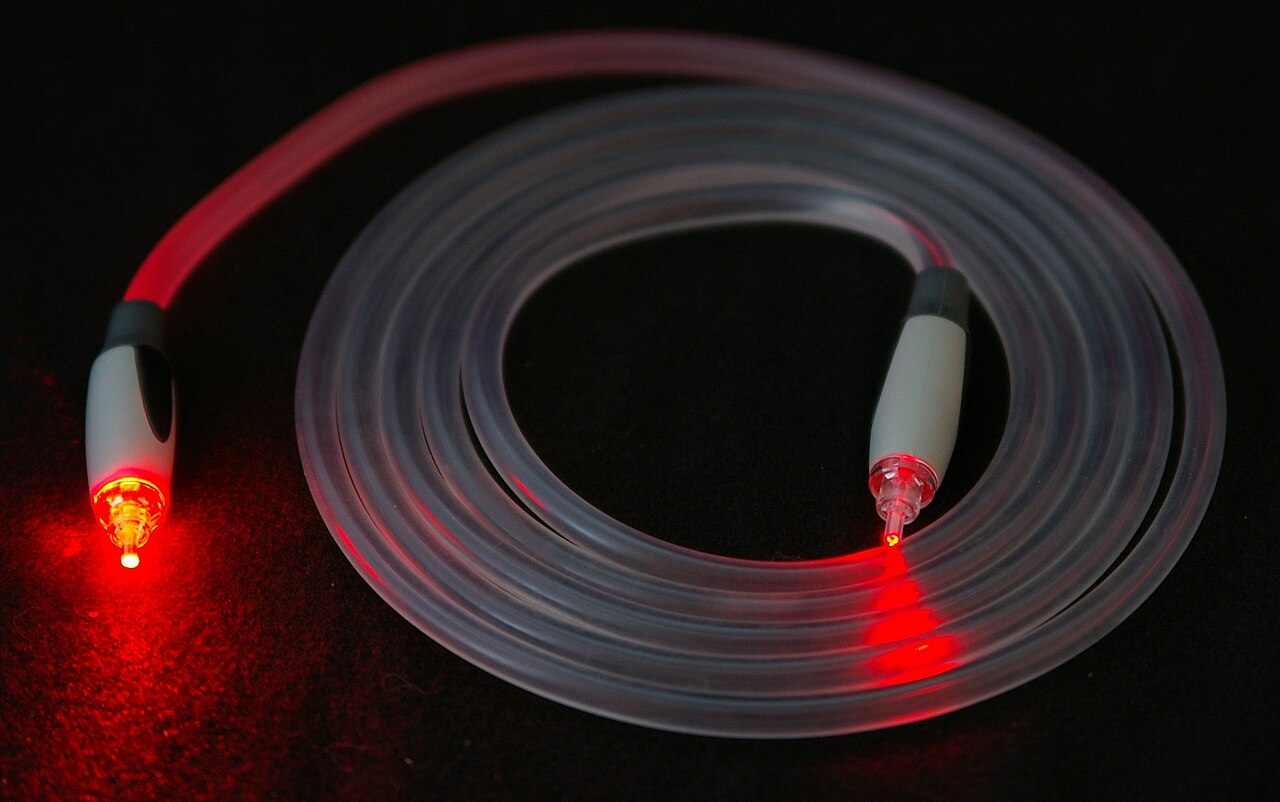
What to check on a Fiber Optic Cables.
The case for fiber on board is not bandwidth alone — it is immunity. A copper data cable run near a variable-frequency drive, a large motor starter or a radar transmitter picks up induced noise that has to be filtered or shielded against; fiber carries no electrical signal at all, so it cannot pick up electromagnetic interference and cannot itself become a source of sparking in a hazardous area. That makes it the standard choice for backbone data links between the bridge, engine control room and CCTV or navigation networks…
What sets fiber apart from copper marine cable
The case for fiber on board is not bandwidth alone — it is immunity. A copper data cable run near a variable-frequency drive, a large motor starter or a radar transmitter picks up induced noise that has to be filtered or shielded against; fiber carries no electrical signal at all, so it cannot pick up electromagnetic interference and cannot itself become a source of sparking in a hazardous area. That makes it the standard choice for backbone data links between the bridge, engine control room and CCTV or navigation networks on any vessel with serious electrical noise in the way.
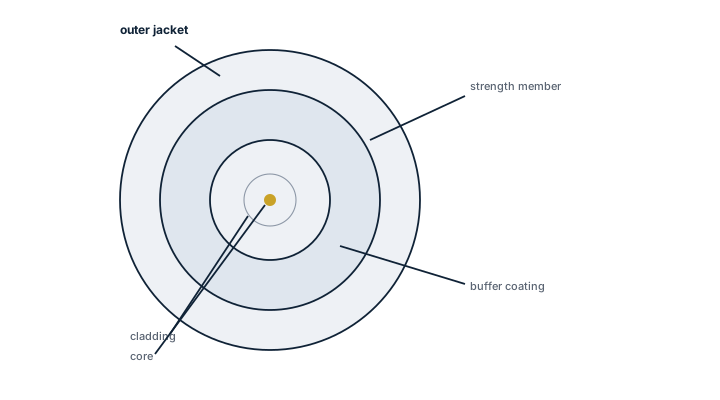
Main components
Single-mode fiber
A narrow core, around 9 micron, that carries one light path, used for long backbone runs across the ship or between superstructure and engine room where low signal loss over distance matters more than cost.
Multi-mode fiber
A wider core, 50 or 62.5 micron, that carries several light paths at once, cheaper to terminate and tolerant of less precise alignment, used for shorter in-compartment runs where distance is not the limiting factor.
Armour and sheath
Marine fiber is built with a loose-tube or tight-buffered construction, steel or aramid yarn strength members to take tensile load during pulling, and a flame-retardant, low-smoke sheath rated for the same fire performance requirements as marine electrical cable, since fiber runs through the same cable trays and bulkhead penetrations.
Connectors and patch panels
LC, SC or ST connectors terminate the fiber at patch panels; termination quality, a clean, correctly polished end face, matters more for fiber than for copper, since a poor splice or connector introduces loss that a multimeter cannot detect but an optical power meter will.
Selection and sizing
- Run length and expected attenuation budget — single-mode for long backbone runs, multi-mode for short compartment links
- Fire performance class matching the cable route, IEC 60332-3 for flame retardance where cables run in bunches
- Armour type suited to the route — areas with rodent risk or heavy mechanical handling need steel wire armour, not just aramid yarn
- Connector standard matching the ship's existing network electronics, to avoid a mixed inventory of adapters
Regulations and class
Marine cable, fiber included, is assessed under IACS UR E11 for construction, and class societies require type approval testing for flame retardance, smoke and toxicity where cables are grouped in cable ways per SOLAS Ch. II-2 fire safety requirements. Fiber itself carries no independent SOLAS carriage requirement — it is qualified as cabling infrastructure supporting whatever system, navigation, communication, CCTV or integrated automation, it serves, and inherits that system's approval requirements rather than having its own.
Typical faults
| Fault | Consequence |
|---|---|
| Bend radius exceeded during installation | Micro-cracking in the fiber core, gradual signal loss that worsens with vibration |
| Contaminated or poorly polished connector end face | High insertion loss, intermittent link errors hard to trace to the cause |
| Armour breach at a bulkhead penetration | Moisture ingress along the cable, eventual fiber degradation at the breach point |
| Mixed single-mode and multi-mode patch cords in one link | Signal loss or complete link failure from core mismatch |
What to look for in a supplier
- Type approval certificate covering the specific flame, smoke and toxicity class the route requires
- Factory test data, attenuation per kilometre, supplied with the reel, not just a generic datasheet figure
- Termination and splicing service or training, since field termination quality drives most in-service faults
- Stock of matching connectors and patch panels for the exact fiber type ordered
Test every fiber run with an optical power meter after installation, not just a continuity check — a cable that passes a light-through-the-tube test can still carry enough loss from a bad bend or a dirty connector to fail under real network load.