Electrolysis BWTS
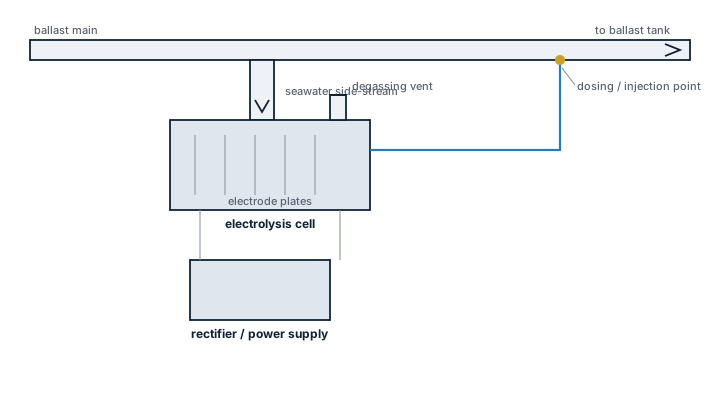
Electrolysis BWTS generate their own disinfectant by running an electric current through a side stream of seawater, which removes the need to carry chemical stock but ties treatment performance directly to salinity.
Read more — Electrolysis BWTS explained ▾
What makes this type
Electrochlorination systems pass a portion of the ballast flow through an electrolytic cell, splitting seawater into sodium hypochlorite and other oxidants that are then injected into the main ballast stream to disinfect it, before the residual is neutralised prior to discharge. The advantage over UV treatment is that performance is largely independent of water clarity, since the active substance does the work rather than light penetration, which makes electrolysis systems a common choice for ships regularly ballasting in turbid or sediment-heavy ports. The dependency it trades in is salinity: the electrolytic cell needs a minimum chloride concentration to generate enough oxidant, which is why fresh and brackish water performance is the main limitation of this type.
Main components
Filtration stage
A self-backwashing screen filter ahead of treatment removes larger organisms and debris, reducing organic load on the downstream disinfection stage.
Electrolytic cell
A side-stream of ballast water passes through electrode plates carrying a DC current, generating sodium hypochlorite from the chloride naturally present in seawater; the produced oxidant is then dosed into the main flow.
Dosing and mixing system
Metering pumps inject the generated oxidant into the main ballast line at a controlled concentration, with static mixers ensuring even distribution before the water reaches the tanks.
Neutralisation and residual control
Before discharge, a neutralising agent such as sodium bisulphite is dosed to bring total residual oxidant down to the level the D-2 standard and local discharge rules allow, monitored by an inline residual oxidant sensor.
Selection and sizing
Sizing follows the ship's maximum ballast flow rate the same as other BWTS types, but the electrolytic cell also has to be matched to the lowest salinity the ship regularly ballasts in; a cell sized only for open ocean seawater will underperform or fail to activate in brackish estuaries and needs a documented low-salinity operating mode or is simply unsuitable for that trade.
Regulations and class
- The IMO Ballast Water Management Convention requires an approved system on essentially all seagoing ships from the 2024 compliance deadline onward.
- Type approval under the BWMS Code confirms the system meets the D-2 discharge standard and, for active substance systems, includes a separate assessment of the chemicals produced under the Basic and Final Approval process for active substances.
- Residual oxidant discharge limits must be met at the point of discharge, verified during commissioning testing and periodic performance checks.
- Handling and storage of the neutralising chemical is subject to the ship's chemical safety data sheet requirements and crew PPE procedures.
Typical faults
| Fault | Consequence |
|---|---|
| Electrode scaling from calcium and magnesium deposits | Oxidant output drops, treatment falls short of D-2 requirement |
| Cell operated below its rated salinity threshold | Insufficient chlorine generated, organisms survive treatment |
| Neutralising agent dosing pump miscalibrated | Residual oxidant discharged above permitted limit |
| Residual oxidant sensor fouled or uncalibrated | False confidence in compliant discharge, undetected by the crew |
What to look for in a supplier
- Type approval documentation covering both the system and the active substance under the current BWMS Code cycle.
- A stated minimum operating salinity and, if the ship trades into brackish or fresh water, a genuine low-salinity mode rather than a marketing claim.
- Electrode cleaning or acid-wash procedure and spare electrode plate availability, since scaling is the main wear mechanism.
- Neutralising chemical supply chain reachable at the ship's regular ports, since this is a consumable, not a one-time purchase.
Log ballast source salinity alongside the treatment cycle every time; a compliance failure traced back months later is far easier to explain, and to fix, when the water's salinity at the time is already on record.
10 manufacturers · 30 models
Techcross
6
- Electrode erosion
- TRO sensor calibration drift
- Power supply failure
- Neutralization system malfunction
- IMO D-2 and USCG Type Approval confirmed for the model
- Compact unit suitable for retrofit installations
- No need for external chemical storage; chlorine is generated on‑site
- Integrated TRO sensor provides real‑time compliance monitoring
- Proven market presence with strong after‑sales support in Korea
- Electrode erosion requires scheduled replacement, increasing maintenance downtime
- TRO sensor can drift and needs periodic calibration
- Power supply failures have been reported, requiring robust electrical design
- Neutralization system malfunction may affect discharge quality if not monitored
- Higher electricity consumption compared with some UV‑based systems
De Nora
5
Panasia
5
Sunrui
5
Wärtsilä
4
- Filtration
- 40 Mikron Rückspülfilter mit automatischer Selbstreinigung, Differenzdrucksensor triggert automatischen Reinigungszyklus, modernes Manta-Filtersystem mit OneMotion-Scanner
- UV-Technologie (Aquarius UV)
- Mitteldruck-UV-Reaktor mit selbstreinigendem Quarzschlauch, mechanischer Wischer zur Leistungsverwaltung, 2-stufiger Prozess (Filtration + UV-Bestrahlung)
- EC-Technologie (Aquarius EC)
- Seitenstrom-Elektro-Chlorierung, statischer Mischer für Desinfektionsmittel-Injektion, maximale Dosierung 10 ppm Chlor im Ballastwasser
- Zulassungen
- IMO Typ-Zulassung (MEPC.300(72) ab 2019), USCG Typ-Zulassung, ATEX/IECEx für Aquarius UVX (Zone 1 IIC T4)
- Betrieb
- Vollautomatisch, minimale Crew-Interaktion (nur jährliche Wartung + Überwachung), benutzerfreundliche Bedienung
- Aquarius UV
- Aquarius EC (Electro-Chlorination)
- Aquarius UVX (Zone 1 IIC T4 hazardous area)
- Area: UV-Lampen-Leistungsverlust durch Alterung und VerschleißungCheck: Vierteljährliche Reinigung der Quarzschläuche, jährliche Sichtprüfung der UV-Lampen, Überprüfung der UV-Intensitätsmessungen durch kalibrierte Sensoren, Dokumentation der Laufstunden
- Area: Filterdifferenzdruck-Anstieg durch Schmutzablagerung und SensorfehlerCheck: Differenzdrucksensor-Funktionsprüfung (sollte automatisch Rückspülzyklus bei ca. 0,3 bar auslösen), Sichtprüfung des Filterelements auf Beschädigungen/Verstopfungen, Überprüfung des Differenzdrucks nach Rückspülung (sollte < 0,1 bar erreichen)
- Area: UV-Intensitätssensor-Fehlkalibrierung und -fehlerCheck: Jährliche Sensor-Kalibrierung (bevorzugt beim Hersteller), metrische Prüfung der gemessenen UV-Intensität gegen Referenzwerte, Isolationsprüfung des Sensors vor Umwelteinflusses, Überprüfung der Alarmgrenzen und Signalübertragung
- Area: Elektrochlorier-Zelle (EC-Systeme) - Verschleiß und chemische EffektivitätCheck: Überprüfung des Gesamtresidualchlors (TRO) nach Behandlung (muss ≤ 0,1 mg/L bleiben), visueller Zustand der EC-Zelle auf Korrosion/Verschleiß, Überprüfung der statischen Mischer auf Verstopfung, Messung der Spannungsverhältnisse an EC-Elektroden
- Area: Automatische Rückspülventile und Hydraulik-FehlerCheck: Funktionsprüfung der automatischen Backflush-Ventile (sollten bei Sensorsignal zuverlässig ansprechen), Sichtprüfung aller Hydraulikleitungen und Anschlüsse auf Lecks, Überprüfung des Pumpendruck-Reglers, Durchflussmengen-Verifizierung gegen Hersteller-Spezifikation
- Area: Zulassungs- und KonformitätsdokumentationCheck: Überprüfung auf gültige Typ-Zulassungszertifikate (IMO MEPC.300(72), USCG), Kontrolle des Ballastwasser-Kontrollbuches mit aktuellen Einträgen, Verifizierung der durchgeführten biologischen Inbetriebnahmeversuche (erforderlich ab 01.06.2022), Überprüfung der Wartungsprotokolle und Service-Records
Typ-universelle Inspektions-/Wartungspunkte fuer Ballast Water Treatment Systems (Wärtsilä, Mega-Schwarm 2026-06). Per-Modell-Specs nicht auto-gefuellt.
- Filtration
- 40 Mikron Rückspülfilter mit automatischer Selbstreinigung, Differenzdrucksensor triggert automatischen Reinigungszyklus, modernes Manta-Filtersystem mit OneMotion-Scanner
- UV-Technologie (Aquarius UV)
- Mitteldruck-UV-Reaktor mit selbstreinigendem Quarzschlauch, mechanischer Wischer zur Leistungsverwaltung, 2-stufiger Prozess (Filtration + UV-Bestrahlung)
- EC-Technologie (Aquarius EC)
- Seitenstrom-Elektro-Chlorierung, statischer Mischer für Desinfektionsmittel-Injektion, maximale Dosierung 10 ppm Chlor im Ballastwasser
- Zulassungen
- IMO Typ-Zulassung (MEPC.300(72) ab 2019), USCG Typ-Zulassung, ATEX/IECEx für Aquarius UVX (Zone 1 IIC T4)
- Betrieb
- Vollautomatisch, minimale Crew-Interaktion (nur jährliche Wartung + Überwachung), benutzerfreundliche Bedienung
- Aquarius UV
- Aquarius EC (Electro-Chlorination)
- Aquarius UVX (Zone 1 IIC T4 hazardous area)
- Area: UV-Lampen-Leistungsverlust durch Alterung und VerschleißungCheck: Vierteljährliche Reinigung der Quarzschläuche, jährliche Sichtprüfung der UV-Lampen, Überprüfung der UV-Intensitätsmessungen durch kalibrierte Sensoren, Dokumentation der Laufstunden
- Area: Filterdifferenzdruck-Anstieg durch Schmutzablagerung und SensorfehlerCheck: Differenzdrucksensor-Funktionsprüfung (sollte automatisch Rückspülzyklus bei ca. 0,3 bar auslösen), Sichtprüfung des Filterelements auf Beschädigungen/Verstopfungen, Überprüfung des Differenzdrucks nach Rückspülung (sollte < 0,1 bar erreichen)
- Area: UV-Intensitätssensor-Fehlkalibrierung und -fehlerCheck: Jährliche Sensor-Kalibrierung (bevorzugt beim Hersteller), metrische Prüfung der gemessenen UV-Intensität gegen Referenzwerte, Isolationsprüfung des Sensors vor Umwelteinflusses, Überprüfung der Alarmgrenzen und Signalübertragung
- Area: Elektrochlorier-Zelle (EC-Systeme) - Verschleiß und chemische EffektivitätCheck: Überprüfung des Gesamtresidualchlors (TRO) nach Behandlung (muss ≤ 0,1 mg/L bleiben), visueller Zustand der EC-Zelle auf Korrosion/Verschleiß, Überprüfung der statischen Mischer auf Verstopfung, Messung der Spannungsverhältnisse an EC-Elektroden
- Area: Automatische Rückspülventile und Hydraulik-FehlerCheck: Funktionsprüfung der automatischen Backflush-Ventile (sollten bei Sensorsignal zuverlässig ansprechen), Sichtprüfung aller Hydraulikleitungen und Anschlüsse auf Lecks, Überprüfung des Pumpendruck-Reglers, Durchflussmengen-Verifizierung gegen Hersteller-Spezifikation
- Area: Zulassungs- und KonformitätsdokumentationCheck: Überprüfung auf gültige Typ-Zulassungszertifikate (IMO MEPC.300(72), USCG), Kontrolle des Ballastwasser-Kontrollbuches mit aktuellen Einträgen, Verifizierung der durchgeführten biologischen Inbetriebnahmeversuche (erforderlich ab 01.06.2022), Überprüfung der Wartungsprotokolle und Service-Records
Typ-universelle Inspektions-/Wartungspunkte fuer Ballast Water Treatment Systems (Wärtsilä, Mega-Schwarm 2026-06). Per-Modell-Specs nicht auto-gefuellt.
- Filtration
- 40 Mikron Rückspülfilter mit automatischer Selbstreinigung, Differenzdrucksensor triggert automatischen Reinigungszyklus, modernes Manta-Filtersystem mit OneMotion-Scanner
- UV-Technologie (Aquarius UV)
- Mitteldruck-UV-Reaktor mit selbstreinigendem Quarzschlauch, mechanischer Wischer zur Leistungsverwaltung, 2-stufiger Prozess (Filtration + UV-Bestrahlung)
- EC-Technologie (Aquarius EC)
- Seitenstrom-Elektro-Chlorierung, statischer Mischer für Desinfektionsmittel-Injektion, maximale Dosierung 10 ppm Chlor im Ballastwasser
- Zulassungen
- IMO Typ-Zulassung (MEPC.300(72) ab 2019), USCG Typ-Zulassung, ATEX/IECEx für Aquarius UVX (Zone 1 IIC T4)
- Betrieb
- Vollautomatisch, minimale Crew-Interaktion (nur jährliche Wartung + Überwachung), benutzerfreundliche Bedienung
- Aquarius UV
- Aquarius EC (Electro-Chlorination)
- Aquarius UVX (Zone 1 IIC T4 hazardous area)
- Area: UV-Lampen-Leistungsverlust durch Alterung und VerschleißungCheck: Vierteljährliche Reinigung der Quarzschläuche, jährliche Sichtprüfung der UV-Lampen, Überprüfung der UV-Intensitätsmessungen durch kalibrierte Sensoren, Dokumentation der Laufstunden
- Area: Filterdifferenzdruck-Anstieg durch Schmutzablagerung und SensorfehlerCheck: Differenzdrucksensor-Funktionsprüfung (sollte automatisch Rückspülzyklus bei ca. 0,3 bar auslösen), Sichtprüfung des Filterelements auf Beschädigungen/Verstopfungen, Überprüfung des Differenzdrucks nach Rückspülung (sollte < 0,1 bar erreichen)
- Area: UV-Intensitätssensor-Fehlkalibrierung und -fehlerCheck: Jährliche Sensor-Kalibrierung (bevorzugt beim Hersteller), metrische Prüfung der gemessenen UV-Intensität gegen Referenzwerte, Isolationsprüfung des Sensors vor Umwelteinflusses, Überprüfung der Alarmgrenzen und Signalübertragung
- Area: Elektrochlorier-Zelle (EC-Systeme) - Verschleiß und chemische EffektivitätCheck: Überprüfung des Gesamtresidualchlors (TRO) nach Behandlung (muss ≤ 0,1 mg/L bleiben), visueller Zustand der EC-Zelle auf Korrosion/Verschleiß, Überprüfung der statischen Mischer auf Verstopfung, Messung der Spannungsverhältnisse an EC-Elektroden
- Area: Automatische Rückspülventile und Hydraulik-FehlerCheck: Funktionsprüfung der automatischen Backflush-Ventile (sollten bei Sensorsignal zuverlässig ansprechen), Sichtprüfung aller Hydraulikleitungen und Anschlüsse auf Lecks, Überprüfung des Pumpendruck-Reglers, Durchflussmengen-Verifizierung gegen Hersteller-Spezifikation
- Area: Zulassungs- und KonformitätsdokumentationCheck: Überprüfung auf gültige Typ-Zulassungszertifikate (IMO MEPC.300(72), USCG), Kontrolle des Ballastwasser-Kontrollbuches mit aktuellen Einträgen, Verifizierung der durchgeführten biologischen Inbetriebnahmeversuche (erforderlich ab 01.06.2022), Überprüfung der Wartungsprotokolle und Service-Records
Typ-universelle Inspektions-/Wartungspunkte fuer Ballast Water Treatment Systems (Wärtsilä, Mega-Schwarm 2026-06). Per-Modell-Specs nicht auto-gefuellt.
- Filtration
- 40 Mikron Rückspülfilter mit automatischer Selbstreinigung, Differenzdrucksensor triggert automatischen Reinigungszyklus, modernes Manta-Filtersystem mit OneMotion-Scanner
- UV-Technologie (Aquarius UV)
- Mitteldruck-UV-Reaktor mit selbstreinigendem Quarzschlauch, mechanischer Wischer zur Leistungsverwaltung, 2-stufiger Prozess (Filtration + UV-Bestrahlung)
- EC-Technologie (Aquarius EC)
- Seitenstrom-Elektro-Chlorierung, statischer Mischer für Desinfektionsmittel-Injektion, maximale Dosierung 10 ppm Chlor im Ballastwasser
- Zulassungen
- IMO Typ-Zulassung (MEPC.300(72) ab 2019), USCG Typ-Zulassung, ATEX/IECEx für Aquarius UVX (Zone 1 IIC T4)
- Betrieb
- Vollautomatisch, minimale Crew-Interaktion (nur jährliche Wartung + Überwachung), benutzerfreundliche Bedienung
- Aquarius UV
- Aquarius EC (Electro-Chlorination)
- Aquarius UVX (Zone 1 IIC T4 hazardous area)
- Area: UV-Lampen-Leistungsverlust durch Alterung und VerschleißungCheck: Vierteljährliche Reinigung der Quarzschläuche, jährliche Sichtprüfung der UV-Lampen, Überprüfung der UV-Intensitätsmessungen durch kalibrierte Sensoren, Dokumentation der Laufstunden
- Area: Filterdifferenzdruck-Anstieg durch Schmutzablagerung und SensorfehlerCheck: Differenzdrucksensor-Funktionsprüfung (sollte automatisch Rückspülzyklus bei ca. 0,3 bar auslösen), Sichtprüfung des Filterelements auf Beschädigungen/Verstopfungen, Überprüfung des Differenzdrucks nach Rückspülung (sollte < 0,1 bar erreichen)
- Area: UV-Intensitätssensor-Fehlkalibrierung und -fehlerCheck: Jährliche Sensor-Kalibrierung (bevorzugt beim Hersteller), metrische Prüfung der gemessenen UV-Intensität gegen Referenzwerte, Isolationsprüfung des Sensors vor Umwelteinflusses, Überprüfung der Alarmgrenzen und Signalübertragung
- Area: Elektrochlorier-Zelle (EC-Systeme) - Verschleiß und chemische EffektivitätCheck: Überprüfung des Gesamtresidualchlors (TRO) nach Behandlung (muss ≤ 0,1 mg/L bleiben), visueller Zustand der EC-Zelle auf Korrosion/Verschleiß, Überprüfung der statischen Mischer auf Verstopfung, Messung der Spannungsverhältnisse an EC-Elektroden
- Area: Automatische Rückspülventile und Hydraulik-FehlerCheck: Funktionsprüfung der automatischen Backflush-Ventile (sollten bei Sensorsignal zuverlässig ansprechen), Sichtprüfung aller Hydraulikleitungen und Anschlüsse auf Lecks, Überprüfung des Pumpendruck-Reglers, Durchflussmengen-Verifizierung gegen Hersteller-Spezifikation
- Area: Zulassungs- und KonformitätsdokumentationCheck: Überprüfung auf gültige Typ-Zulassungszertifikate (IMO MEPC.300(72), USCG), Kontrolle des Ballastwasser-Kontrollbuches mit aktuellen Einträgen, Verifizierung der durchgeführten biologischen Inbetriebnahmeversuche (erforderlich ab 01.06.2022), Überprüfung der Wartungsprotokolle und Service-Records
Typ-universelle Inspektions-/Wartungspunkte fuer Ballast Water Treatment Systems (Wärtsilä, Mega-Schwarm 2026-06). Per-Modell-Specs nicht auto-gefuellt.
Ecochlor
1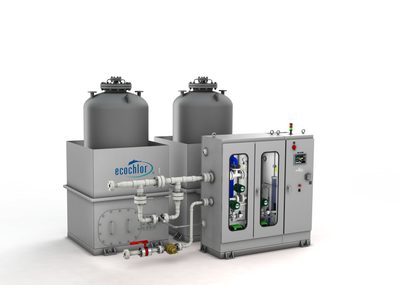
- ClO2 generator failure
- Chemical supply depletion
- Neutralization imbalance
- Dosing pump failure
- Proven biocidal efficacy against bacteria, viruses, algae and plankton
- No need for bulk storage of hazardous chlorine gas; generates disinfectant on‑demand
- IMO Type‑Approval (D‑2) and USCG type approval available for many models
- Compact modular design suitable for retrofits on a range of vessel sizes
- Requires continuous supply of sodium chlorite feedstock and periodic chemical resupply
- Electrolyser and dosing pump are mechanical components that can fail (generator or pump failures reported)
- Power consumption can be significant on low‑power vessels
- Neutralisation system must be carefully balanced to avoid excess chlorine dioxide discharge
JFE Engineering
1
- Electrode degradation
- Electrolysis cell scaling
- Control system failure
- Chemical‑free operation – no storage or handling of hazardous reagents
- Compact footprint suitable for retrofits on existing vessels
- Real‑time electrode life monitoring reduces unexpected downtime
- Low consumable cost after installation (no chemicals to purchase)
- Proven IMO D-2 approval indicating compliance with the international ballast water standard
- Electrode degradation over time requires scheduled replacement
- Scaling of electrolysis cells in high‑hardness waters can reduce efficiency
- Control system reliability issues reported; may need redundant monitoring
- Higher electrical power demand compared with some UV or filtration systems
- Performance can be sensitive to water chemistry variations
NK
1
- Electrode erosion
- TRO sensor drift
- Power supply failure
- Hydrogen gas ventilation issue
- Chemical‑free operation – no need for stored biocides or reagents
- Compact footprint suitable for vessels with limited installation space
- IMO D-2 approval provides direct compliance with the Ballast Water Management Convention
- Integrated hydrogen generation monitoring helps meet safety requirements
- Electrode erosion requires scheduled replacement and adds lifecycle cost
- TRO (Total Residual Oxidant) sensor drift can affect performance if not regularly calibrated
- High electrical power demand may be challenging for vessels with limited power margin
- Hydrogen gas venting must be carefully managed to avoid safety hazards
Panasonic (GS-YUASA)
1
- Electrode failure
- Control board malfunction
- TRO measurement error
- Compact footprint suitable for vessels with limited space
- No need to store or handle chemicals on board
- Automated control logic from a reputable electronics manufacturer
- Relatively low power consumption compared with thermal systems
- Straight‑forward installation and integration
- Electrode wear requires scheduled replacement
- Effectiveness can be reduced in water with high organic load or certain resistant organisms
- Known issues with control board reliability
- May lack IMO D‑2 certification without additional validation
- Performance depends on stable power supply and proper water chemistry
Samsung Heavy Industries
1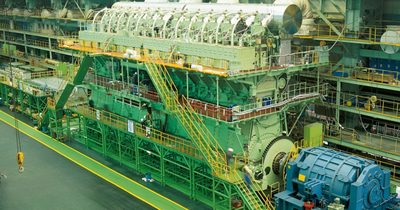
- Electrode wear
- TRO sensor failure
- Power module malfunction
- Chemical‑free operation – no storage or handling of biocides required
- Compact unit size suitable for vessels with limited installation space
- IMO D-2 approval confirming compliance with the Ballast Water Management Convention
- Proven track record on new builds at Korean shipyards, facilitating factory integration
- Relatively low consumable cost after initial installation
- Electrode wear necessitates scheduled replacement and associated downtime
- Sensitive to water quality; TRO (Total Residual Oxidant) sensor failures have been reported
- Higher electrical power demand compared with some UV‑based systems
- Power module malfunctions can require specialist support from the manufacturer
- Maintenance expertise for electrolysis components may be limited on vessels operating far from Korean yards
Who can you trust with this job?
Brand coverage, certificates and contact routes for maritime suppliers.
Open network →Sanctions and the shadow fleet
Ownership, insurance and class records on ageing tankers under sanctions.
18 reports →Sourcing this part?
One request. You get suppliers who actually carry it, not a search page.
Request parts →Can't read the plate?
Photograph it. We identify make and model.
Try it →Who can you trust with this job?
Brand coverage, certificates and contact routes for maritime suppliers.
Open network →Sourcing this part?
One request. You get suppliers who actually carry it, not a search page.
Request parts →Sanctions and the shadow fleet
Ownership, insurance and class records on ageing tankers under sanctions.
18 reports →Can't read the plate?
Photograph it. We identify make and model.
Try it →