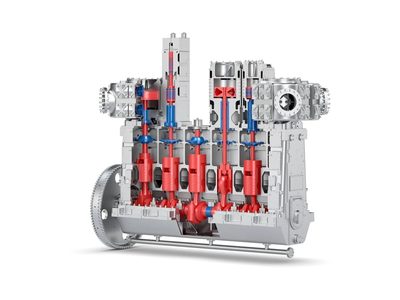
Cargo Compressor
A cargo compressor moves cargo vapour, not starting air, and on a gas carrier it has to run oil-free or with a lubricant compatible with the cargo, because even trace contamination can spoil an entire shipment.
Read more — Cargo Compressor explained ▾
What sets a cargo compressor apart from a starting air compressor
A starting air compressor moves ordinary atmospheric air and tolerates the usual oil lubrication of its cylinders because the compressed air only has to start an engine. A cargo compressor on a gas carrier compresses the cargo's own vapour, whether that is LPG, LNG boil-off or another liquefied gas, and moves it during loading, discharging, tank cooldown and reliquefaction. Because the compressed vapour goes back into the cargo tank or the shore terminal, oil carryover or any contamination is a cargo quality problem as much as a machinery one, which drives most of the design choices that make a cargo compressor look and run differently from any other compressor on board.

Main components
Compression stage
Reciprocating compressors remain common for smaller LPG carriers and for boosting low-pressure boil-off, screw compressors handle larger continuous flows with fewer moving parts in contact with cargo, and centrifugal compressors are used on large LNG carriers for the high volumetric flow reliquefaction and boil-off management demands.
Lubrication and sealing arrangement
Oil-free or labyrinth-piston designs avoid any lubricant contact with cargo vapour entirely; where oil lubrication is used, the oil grade has to be chemically compatible with the specific cargo and the system includes an oil separator to strip carryover before the vapour returns to the tank or shore line.
Cooling system
Intercoolers and aftercoolers remove the heat of compression between stages, since cargo vapour compressed without adequate cooling can rise to temperatures that risk polymerisation or decomposition depending on the specific cargo carried.
Instrumentation and trips
High discharge temperature, high discharge pressure, low suction pressure and vibration trips protect both the compressor and the cargo, shutting the unit down automatically rather than relying on watchkeeper response time.
Selection and sizing
Sizing follows the vessel's required loading and discharge rates plus its boil-off management duty, and the compressor type follows the cargo range the vessel is built to carry, since a compressor optimised for LPG service is not automatically suitable for the much lower temperatures and different vapour properties of LNG.
Regulations and class
The IGC Code governs gas carrier cargo systems including compressor design, materials and safety devices, with class rules setting survey and testing intervals for pressure vessels, relief devices and the trip and alarm system protecting the compressor. Materials in contact with cargo vapour have to be compatible with the specific cargoes the vessel is certified to carry, and that certification is checked against the compressor's actual material specification during survey.
Typical faults
- Oil carryover into cargo — from a degraded oil separator, contaminating the cargo and potentially triggering a rejection at the receiving terminal.
- Valve plate wear — on reciprocating units, reducing compression efficiency and raising discharge temperature toward the trip setting.
- Seal degradation — allowing cargo vapour leakage into the compressor room atmosphere, a serious hazard given the flammable or toxic nature of most cargo vapours.
- Fouled intercooler — reduces cooling effectiveness, pushing discharge temperature up and cutting effective capacity.
What to look for in a supplier
- Cargo compatibility certification matched to the vessel's actual approved cargo list.
- Documented capacity curve at the specific suction and discharge conditions the vessel operates at, not a single nominal rating.
- Materials certification for all wetted parts against the cargo range.
- Spare parts support for seals and valve components, which are the parts with the shortest service life.
Track discharge temperature trend over time, not just against the trip setting — a slow upward creep usually means fouling or valve wear well before the compressor actually trips.
2 manufacturers · 51 models
Daikin Marine
34
Burckhardt
17