VDR / S-VDR (Voyage Data Recorder)
A Voyage Data Recorder continuously stores bridge audio, radar, AIS, GPS and helm/engine order data in a protected capsule so investigators can reconstruct the last hours before an incident; an S-VDR carries a reduced data set for smaller and older vessels under a lighter retrofit requirement.
Read more — VDR / S-VDR (Voyage Data Recorder) explained ▾
What Sets This Type Apart
A VDR is a recording system, not a monitoring or alarm system: it takes feeds already present on the bridge, radar image, ECDIS data, AIS, gyro heading, speed log, bridge audio, VHF audio, and rudder or engine order telegraph status, and stores them continuously in a rolling buffer, with the last twelve hours always available for playback. Its purpose is exclusively forensic. Unlike a data logger used for performance monitoring, a VDR is built around a protected storage capsule designed to survive fire, shock and deep submersion so the record outlives the casualty that created it.
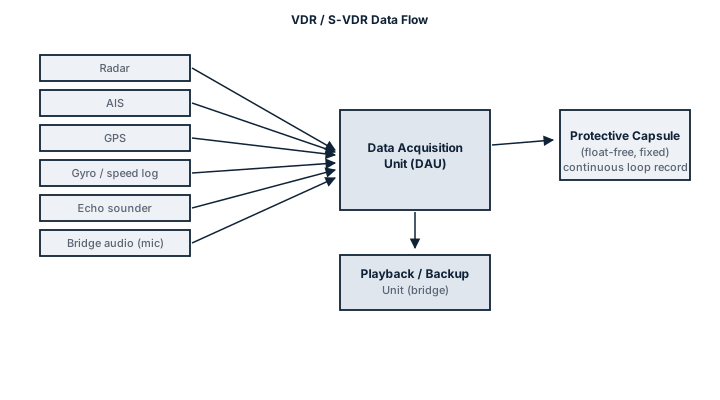
An S-VDR (simplified VDR) fulfils the same SOLAS requirement for cargo ships built before the full VDR carriage date, but with a reduced mandatory data set; it may omit radar image capture and some sensor inputs that a full VDR must record.
Main Components
Data acquisition unit
Interfaces with each bridge sensor and system, timestamps every input, and compresses it for storage. Radar and ECDIS image capture is the most data-intensive stream and the first thing dropped from the simplified variant.
Protective capsule
A fixed or float-free unit, orange for visibility, rated to survive fire, a deep-water pressure equivalent to several thousand metres, and a significant shock load. It holds at least the last 48 hours of data on modern units, with the final voyage segment protected against overwrite.
Recording control unit / interface
The bridge-mounted unit that lets crew verify the system is recording, run the required playback test, and, on some installations, initiate a manual save of the current data ahead of an expected incident.
Microphones
Fixed at the conning position, chart table and bridge wings to capture bridge team communication; audio is one of the most scrutinised data streams in any investigation.
Selection and Sizing
There is little sizing in the mechanical sense; the decision is which variant and which interfaces are needed.
- Full VDR versus S-VDR, driven by the vessel's keel-laying date and SOLAS applicability rather than owner preference.
- Fixed capsule versus float-free capsule, the latter releasing automatically if the ship sinks so it can be recovered floating.
- Number and type of sensor interfaces available on the bridge; retrofits on older vessels often need signal converters where equipment predates standard data protocols.
- Storage duration beyond the regulatory minimum, useful for owners who want a longer operational record for their own review.
Regulations and Class
SOLAS Chapter V Regulation 20 sets the carriage requirement, with the S-VDR alternative for existing cargo ships. Performance standards come from IMO resolutions covering VDR and S-VDR data content and capsule survivability, and equipment must carry type approval to those standards. Class and flag administration require an annual performance test by an approved service provider or manufacturer's representative, checking that all required data channels are actually being captured and are recoverable, not merely that the unit powers on.
Typical Faults
| Fault | Cause | Consequence |
|---|---|---|
| Missing audio channel | Failed or disconnected microphone, often after bridge refit work | Incomplete evidentiary record; flagged at annual performance test |
| No radar/ECDIS image capture | Interface card fault or firmware mismatch after an ECDIS software update | Loss of the most valuable playback data for a grounding or collision investigation |
| Capsule communication failure | Corroded connector or damaged cable to the protective capsule | Recording continues locally but cannot be confirmed reachable; capsule may not be recoverable data-intact |
| Data overwritten early | Storage smaller than the required retention period, or clock/time-sync fault corrupting the index | Loss of the specific hours investigators need |
What to Look for in a Supplier
- Type approval certificate matched to the correct IMO performance standard for VDR or S-VDR, not a generic data logger.
- A service network able to carry out the annual performance test and issue the required certificate, not just sell the hardware.
- Clear documentation of which bridge signals are actually interfaced versus optional, before committing to a retrofit quote.
- Float-free capsule compatibility with the vessel's float-free EPIRB/liferaft release arrangement if fitted in the same area, to avoid interference.
After any incident, however minor, the bridge team's first move should be to protect the VDR data, saving it before the buffer rolls over, because a twelve-hour recording window does not wait for the paperwork to catch up.
Typical Manufacturers
2 manufacturers · 2 models
Furuno
1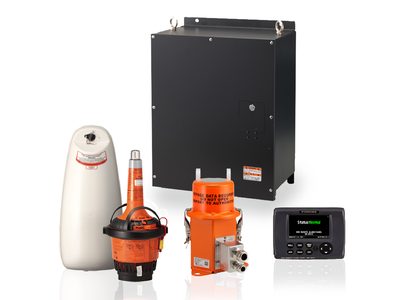
Kongsberg Maritime
1
- Komponenten-Verschleiß durch Betriebsstunden und Umgebungsbedingungen
- Korrosion durch Seewasser-/Salzluft-Exposition
- Elektronik-/Steuerungsausfall durch Feuchtigkeit oder Vibration
- Wartungsintervall-Überschreitung verursacht vorzeitigen Ausfall
- Modular architecture allows easy addition of new sensors and subsystems
- Built‑in VDR/S‑VDR compliance simplifies meeting IMO SOLAS requirements
- High reliability with redundant hardware and fault‑tolerant software
- Remote diagnostics and over‑the‑air updates reduce maintenance downtime
- Seamless integration with other Kongsberg bridge and automation products
- Higher upfront cost compared with basic VDR units
- Complex installation and configuration require specialised engineering support
- Vendor lock‑in – optimal performance achieved when used with other Kongsberg systems
- Software updates may necessitate scheduled downtime for validation
- Training requirements for crew and technical staff are extensive