GMDSS VHF Radio
A GMDSS VHF set differs from an ordinary marine VHF mainly in one function most crews never use: digital selective calling on channel 70, which can send an automated distress alert with position and identity in seconds, before anyone even picks up the handset.
Read more — GMDSS VHF Radio explained ▾
What makes this type
A GMDSS VHF radio is a marine VHF transceiver built to a specific SOLAS-mandated standard that adds Digital Selective Calling (DSC) on channel 70, distress, urgency and safety call handling, and integration with GPS position input so a distress alert automatically carries the vessel's position and MMSI identity. Where a standard leisure VHF only offers voice on the working channels, GMDSS-approved sets must support automated DSC distress alerting, controlled test call functions, and continuous watchkeeping on channel 70, which is what makes them the mandatory equipment class for GMDSS sea area A1 coverage and a component of area A2-A4 fits alongside MF/HF and satellite equipment.
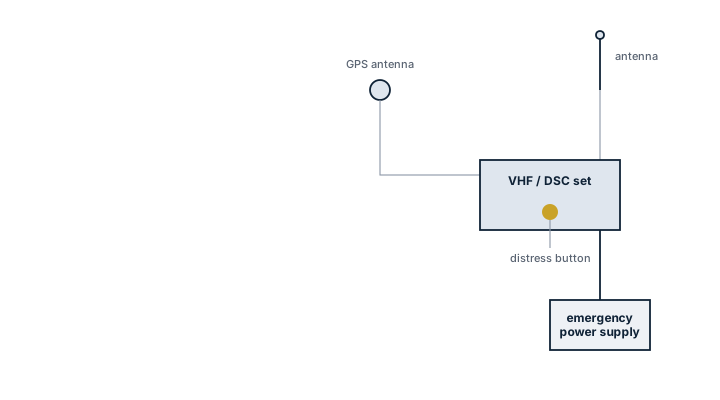
Main components
Transceiver unit
The main radio, providing voice communication on marine VHF channels and DSC on channel 70, usually with a dedicated distress button under a spring-loaded cover.
DSC controller
Encodes and decodes digital selective calling messages, handling distress, all-ships, individual and group calls, and formats them per the ITU-R M.493 protocol.
GPS interface
Receives position data, typically via NMEA 0183 or 2000 from the ship's GPS, so a distress alert transmits current position without manual entry.
Antenna and coaxial run
A dedicated VHF antenna, usually masthead-mounted for maximum line-of-sight range, with the coax run length affecting signal loss over longer installations.
Handset / remote stations
Bridge wing or secondary handsets on larger vessels, wired back to the main transceiver so calls can be placed from multiple positions.
Selection / Sizing
- GMDSS sea area notation of the vessel (A1 through A4), which determines whether VHF DSC alone satisfies the radio fit or must be paired with MF/HF and Inmarsat equipment.
- Number of stations required: bridge, bridge wings, and any secondary conning position.
- Integration requirements with the ship's existing GPS, AIS and voyage data recorder for position feed and call logging.
- Battery backup arrangement to meet the minimum operating time required if main and emergency power are lost.
Regulations / Class
SOLAS Ch. IV mandates GMDSS radio equipment scaled to the ship's sea area notation, and GMDSS VHF with DSC is required on virtually all SOLAS vessels regardless of area since it covers the minimum A1 range. The set must carry wheelmark or equivalent type approval confirming compliance with the relevant IMO performance standards and ITU-R recommendations for DSC. Flag administrations require a valid radio survey and a GMDSS radio operator's certificate for the crew member responsible for distress communications, and the equipment is checked at each periodic radio survey along with battery and antenna condition.
Typical faults
| Fault | Consequence |
|---|---|
| Antenna cable or connector corrosion | Reduced transmit range, sometimes not apparent until an actual distress call fails to reach shore |
| GPS feed loss or wrong NMEA configuration | DSC distress alert transmits without position data, delaying search and rescue response |
| Battery backup failure or expired cells | Set drops out during a blackout, exactly when it is most likely to be needed |
| MMSI programmed incorrectly or left at default | Distress alerts are misidentified or rejected by coast stations, delaying response |
| Routine test calls not logged or channel 70 watch left off | Deficiency at port state control, and a real reduction in the ship's ability to receive alerts |
What to look for in a supplier
- Wheelmark type approval matching the flag state's accepted equipment list, confirmed before ordering rather than after installation.
- Documented compatibility with the ship's existing GPS and AIS data feeds to avoid a separate integration project.
- Availability of an approved installer for the antenna and coax run, since poor installation is a common cause of range complaints unrelated to the set itself.
- Spare parts and service support recognised by the flag administration for warranty and survey purposes.
Test the DSC distress function using the controlled test call procedure, never a live distress call, and confirm the GPS position field is actually populating before signing off the radio survey as complete.
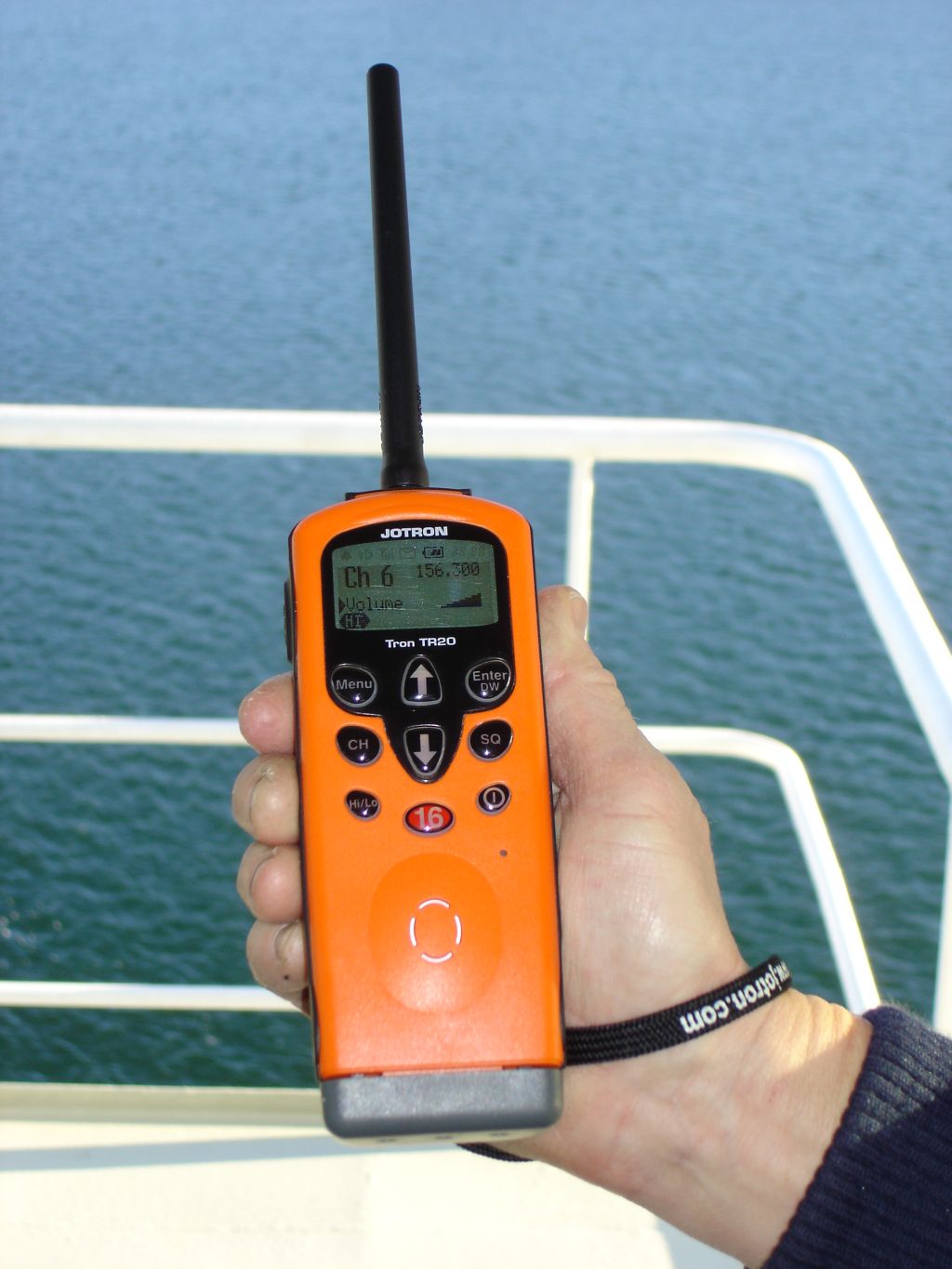
6 manufacturers · 12 models
Sailor / Cobham
4
- DSC controller lockup
- Channel selector wear
- Antenna connector corrosion
- Full 25 W output delivers long‑range coverage on all international maritime channels
- DSC Class A meets the highest GMDSS requirements for distress alerting and routine calls
- Widely installed worldwide, so spare parts and service expertise are readily available
- Simple, proven user interface familiar to most bridge crews
- Reported DSC controller lock‑up can require firmware update or replacement of the control board
- Mechanical channel selector may wear after high cycle use, leading to selection errors
- Antenna connector prone to corrosion in harsh marine environments; regular inspection needed
- Lacks built‑in AIS and modern NMEA 2000 networking found on newer integrated radios
- Battery expiry
- Waterproof seal deterioration
- Antenna damage in storage
- Integrated SOLAS pack meets mandatory survival‑craft requirements
- Waterproof sealed construction suitable for harsh marine environments
- Compact size and low power consumption (5 W) ideal for lifeboats
- Simple battery replacement schedule aligned with expiry dates
- Limited transmission range due to 5 W output compared with higher‑power ship radios
- Battery must be replaced regularly; expiry can lead to loss of capability
- Waterproof seal may deteriorate over time if not inspected
- Antenna is prone to damage during storage or handling
- Channel selector failure
- Mic connector corrosion
- Speaker distortion
- Robust 25 W output suitable for short‑range ship‑to‑shore contact
- Simple analog interface – easy to operate and train crew on
- Compact, weather‑sealed housing fits standard bridge panels
- Low power consumption compared with higher‑power DSC units
- Cost‑effective backup solution for vessels already equipped with a primary GMDSS radio
- No Digital Selective Calling (DSC) – cannot serve as a primary GMDSS transmitter
- Reported channel selector mechanism failures in older installations
- Mic connector corrosion leading to intermittent audio loss
- Speaker distortion can develop after prolonged marine exposure
- Limited integration options – no built‑in AIS or NMEA output
- Squelch control failure
- Handset cord break
- Channel knob wear
- Solid 25 W output provides reliable line‑of‑sight range for coastal operations
- Simple analog interface – easy to train crew and operate
- Low power consumption compared with higher‑power DSC units
- Direct handset jack allows quick hand‑held use without extra accessories
- Cost‑effective backup radio for vessels that already have a primary GMDSS set
- No Digital Selective Calling (DSC) – cannot serve as a primary GMDSS transmitter
- Reported squelch control failures can cause loss of receive capability
- Handset cord is prone to breakage under repeated use
- Channel selector knob may wear, affecting precise tuning over time
- Lacks modern digital features such as AIS integration or remote monitoring
Icom Marine
3
- AIS receiver sensitivity
- Class D DSC limitations
- LCD display contrast loss
- 25 W output delivers reliable short‑range VHF coverage
- Built‑in AIS receiver displays nearby ship information without extra hardware
- Compact LCD interface combines channel, DSC and AIS data for quick situational awareness
- Class D DSC allows basic digital calling while keeping installation simple
- Low power consumption suitable for vessels with limited electrical capacity
- AIS receiver sensitivity is lower than dedicated AIS units, limiting detection range in congested areas
- Class D DSC lacks full GMDSS functionality (no Class A features such as distress alerts to all ships)
- LCD contrast can fade over time, especially in harsh marine lighting conditions
- No built‑in GPS; external antenna or interface required for position data
- Not suitable as the primary GMDSS radio on vessels that must meet IMO Class A requirements
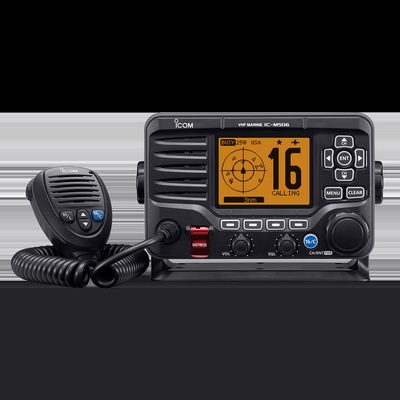
- NMEA 2000 bus communication issues
- AIS target display limitations
- Mic connector wear
- 25 W power output provides strong coverage on coastal routes
- Built‑in AIS receiver eliminates the need for a separate AIS unit
- Native NMEA 2000 interface simplifies integration into modern bridge networks
- DSC Class D compliance meets GMDSS requirements for most commercial vessels
- Compact, single‑rack design saves space in small to medium bridge consoles
- Reported intermittent NMEA 2000 bus communication problems on some installations
- AIS target display limited to a relatively low number of tracks (≈100)
- Microphone connector prone to wear after extensive use
- No built‑in GPS; external source required for position data
- Limited channel set compared with higher‑end multi‑band units

- Battery shelf life
- Antenna flexibility
- Button membrane aging
- Compact size fits tight installation spaces on lifeboats and workboats
- Integrated SOLAS pack provides DSC, GPS position reporting and alarm functions in one unit
- Water‑proof (IP66) construction suitable for harsh marine environments
- 5 W output meets GMDSS requirements for short‑range distress calling
- Simple button interface with clear display for quick operation
- Limited 5 W power restricts communication range compared with higher‑power VHF units
- Battery shelf life can be short; periodic replacement is required to maintain reliability
- Antenna flexibility issues may affect mounting on small, moving platforms
- Button membranes are prone to aging and may require service after extended use
- No built‑in AIS or VDL capability for enhanced digital communication
JRC
2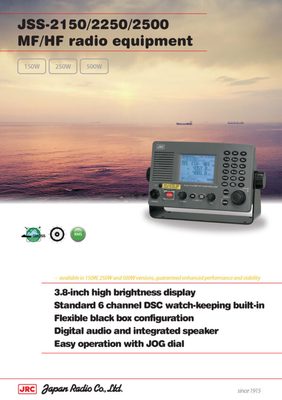
- DSC processor board failure
- Squelch control issues
- Interface cable oxidation
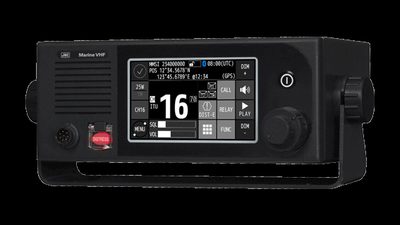
- High‑power 25 W voice transmission for long‑range VHF coverage
- Full Class A DSC functionality meeting GMDSS requirements
- Modular design allows quick replacement of known failure points (processor board, squelch control)
- Direct integration with JRC MF/HF radios to form a complete GMDSS station
- Robust marine‑grade construction and proven sea‑going reliability
- Reported failures of DSC processor boards, squelch controls and interface cable oxidation require preventive maintenance
- VHF‑only; no built‑in MF/HF or AIS capability, requiring separate equipment for full GMDSS compliance
- Proprietary JRC interface cables can be difficult to source in remote ports
- Older firmware versions may lack the latest digital safety features found on newer units
- Relatively high power consumption compared with low‑power VHF alternatives
- Battery aging
- Keypad membrane wear
- Antenna stub damage
- Compact, lightweight and fully portable – easy to carry on bridge or lifeboat stations
- Waterproof (IP‑68) design suitable for harsh marine environments
- SOLAS‑compliant with built-in Digital Selective Calling (DSC) for distress alerts
- 5 W output meets the minimum power requirement for ship‑to‑ship and ship‑shore VHF communication
- Replaceable battery pack allows field servicing
- Battery aging is a known issue; performance degrades after several years
- Keypad membrane can wear, affecting input reliability
- Antenna stub is prone to damage if mishandled or exposed to impact
- Limited range compared with higher‑power fixed VHF installations (5 W only)
- No integrated GPS module on this specific model
Entel
1
- Battery contact corrosion
- Antenna SWR
- Water ingress at charging port
- Explosion‑proof (ATEX) rating suitable for gas‑laden environments
- Portable, compact unit that can be quickly deployed on bridge or deck
- Standard GMDSS VHF functionality with 5 W output meets basic communication range requirements
- Battery operation provides redundancy in power loss situations
- Reported battery contact corrosion leading to intermittent power loss
- Antenna SWR issues can reduce effective transmission range if not properly tuned
- Water ingress at the charging port has been observed on some units
- Limited transmit power (5 W) compared with higher‑power VHF radios
McMurdo
1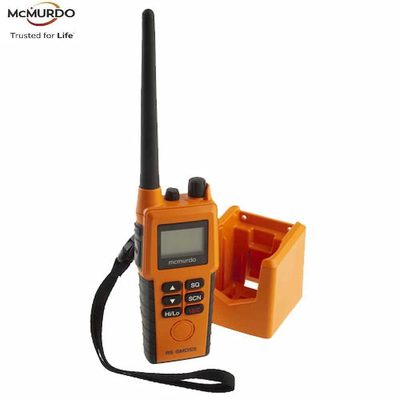
- GPS signal in enclosed spaces
- Battery life
- Membrane keypad wear
- GMDSS approved – meets SOLAS requirements for commercial vessels
- Integrated GPS enables one‑touch DSC distress alerts with position data
- Compact, low‑profile design suitable for limited bridge space
- Simple installation and intuitive user interface
- Proven reliability from McMurdo’s long‑standing marine radio heritage
- Limited transmit power (5 W) may reduce range in adverse conditions
- GPS reception can be poor when the antenna is obstructed or indoors
- Keypad membrane tends to wear with frequent use
- Battery backup life is relatively short, requiring regular replacement
- No built‑in AIS functionality – separate AIS unit required for vessel tracking
Standard Horizon
1
- Touchkey wear
- AIS processing lag with many targets
- Memory reset issues
- 25 W power output provides strong voice range in coastal environments
- Integrated AIS receiver enhances situational awareness without separate unit
- DSC Class D supports basic distress alerting and selective calling
- Compact, bridge‑mountable design simplifies installation on medium‑size vessels
- User‑friendly interface for routine ship‑to‑shore operations
- Touchkey wear reported after moderate use, leading to input reliability issues
- AIS processing can lag when handling a high number of targets
- Occasional memory reset problems observed in field service reports
- Not certified as a primary GMDSS radio; unsuitable where full compliance is required
- Limited advanced DSC functions compared with higher‑class units