RoRo Ramp
A RoRo ramp carries wheeled cargo on and off the ship under its own power, unlike a hatch cover that seals a hold from above. It doubles as a closing appliance against flooding when stowed, which puts it under a stricter watch than ordinary cargo access equipment.
Read more — RoRo Ramp explained ▾
What sets a RoRo ramp apart
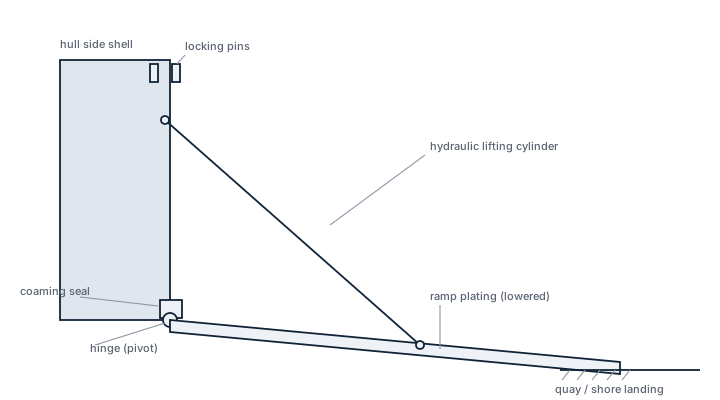
Hatch covers seal a cargo hold and are rarely opened outside port; a RoRo ramp is a working piece of machinery cycled every port call, carrying the full weight of trucks, trailers and container handling equipment as they drive on and off. Stern ramps, quarter ramps and side ramps handle the connection to the quay or another vessel, while internal ramps move vehicles between decks once aboard. When closed and secured, the outer ramp also forms part of the ship's watertight or weathertight boundary, so a ramp fault is a stability and flooding concern, not just a cargo-handling inconvenience.
Main components
Ramp platform
A steel structure sized for the design axle loading, often reinforced along wheel-track lines where repeated point loads concentrate wear.
Hoisting and actuation
Hydraulic cylinders or wire hoists raise, lower and, on stern ramps, luff the platform to match varying quay heights and tidal range.
Hinges and locking devices
Heavy pintle hinges carry the ramp's weight and the cargo load transmitted through it; locking pins or cleats secure the ramp in the closed, watertight position.
Hydraulic power pack
Supplies pressure to the actuating cylinders, typically with a manual backup pump for operation during a power failure.
Selection and sizing
Load rating is set by the heaviest vehicle or unit expected to cross the ramp, expressed as axle load and total distributed load, not just gross vehicle weight. Ramp length and achievable angle must suit the quay heights and tidal range of the ship's regular ports; a ramp too short for the trade forces a steep, difficult crossing angle for wheeled cargo. Width is set by the widest vehicle class the ship is designed to carry, with clearance margin for driver error.
Regulations and class requirements
SOLAS Chapter II-1 sets special stability and structural requirements for RoRo vessels, recognizing the flooding risk a large open vehicle deck represents. Ramps that form part of the watertight or weathertight boundary are treated as closing appliances under class rules, with position indicators and alarms required on the bridge to confirm the ramp is fully closed and secured before departure. Structural and hydraulic system surveys follow class intervals tied to the ramp's role in the vessel's damage stability case.
Typical faults
- Hydraulic cylinder seal leakage, causing slow ramp creep or loss of holding pressure when stopped mid-travel.
- Hinge and pintle wear from repeated heavy cycling, introducing play that shows up as misalignment when closing.
- Structural corrosion on the ramp plating and stiffeners, accelerated by seawater spray and vehicle traffic wearing through protective coating.
- Locking mechanism failure or misalignment, the single fault most directly tied to flooding risk if the ramp cannot be confirmed fully secured.
- Position indicator or alarm sensor faults, which can mask a genuine closure problem from the bridge.
What to look for in a supplier
- Structural design verified against the vessel's actual axle loading and the ramp's role in the approved stability case.
- Hydraulic components rated for continuous heavy-duty cycling, not a light industrial equivalent.
- Class-approved design documentation for any ramp modification or renewal, since this affects the ship's damage stability certificate.
- Spare parts availability for hinges, locking pins and hydraulic seals without a full system replacement.
Never accept a ramp position indicator reading without confirming the physical lock visually at least once per voyage cycle; a stuck sensor and a genuinely secured ramp look identical on the bridge panel.
5 manufacturers · 19 models
MacGregor
9- Hydraulic system failure
- Structural fatigue cracking
- Locking mechanism wear
- High load capacity (up to 30‑40 t per lane) suitable for heavy vehicles
- Compact internal installation saves valuable deck space
- Integrated hydraulic locking mechanism ensures safe, repeatable positioning
- Class‑approved design with proven service history on car carriers and ROPAX vessels
- Ease of maintenance through standardized hydraulic components
- Hydraulic system adds complexity and requires regular leak checks and fluid management
- Limited angle adjustment compared with some electric or manual ramps
- Weight of the ramp structure can affect overall vessel stability if not accounted for in design
- Potential wear on locking pins necessitates periodic replacement
- Annual load testing required to maintain certification

- Antriebssystem
- Hydraulic cylinders or motors with slow to medium speed, integrated load-holding valves
- Paneelbauart
- Two to six panels per cargo hatch, double steel skins (folded covers) or single steel skins (rolling covers)
- Dichtungssysteme
- FlexSeal, Cat-Profile, C-Seal, Omega, Omega Lite or foam rubber with compression rods
- Lagerpads
- Fixpad, Flexipad, Lubripad or Unipad — weight transfer during ship movement
- Hydraulik-Befüllung
- Speziell für Seeeinsatz ausgelegt, integrierte Heiz-/Kühlanlage, Tank-Größe minimal zur Decklatzersparnis
- Korrosionsschutz
- Stainless steel piston rods or stainless steel sleeves, bronze ball bearings, lubrication nipples between seal rings
- Side-Rolling (standard Panamax/Capesize)
- Folding (Handysize/Handymax)
- Piggy-Back (space-constrained decks)
- Lift-On/Lift-Off (multi-purpose)
- Single-Flap (compact design)
- Stacking (weather decks)
- Hydraulic-Pivoting (vertical stowage)
- Area: Rubber seals (gaskets) age/harden through ozone and UV or show wear signsCheck: Visual inspection for discoloration, cracks, deformation; tactile inspection of elasticity. Damaged sections (minimum 1 m length) must be replaced. Do not apply oil/grease products. Validate with ultrasonic leak detection test.
- Area: Compression rods corrode, bend or show rough surfaces — compromises sealing and destroys rubberCheck: Surface inspection for corrosion and scratches. Check straightness with steel ruler. Damaged rods must be properly replaced/repaired and realigned (alignment critical for even compression).
- Area: Hydraulic cylinder leaks, piston rods corroded or oil contamination reduces functionalityCheck: Check oil level. Take oil samples and analyze quarterly for contamination. Oil change every 5 years; replace filter annually. Inspect piston rods for corrosion/scratches. For leaks inspect seal rings and cylinder block. Lubricate grease nipples between seal rings.
- Area: Drainage system clogged or check valves not functioning — water backs up and causes rusting/water ingress into cargo holdCheck: Inspect drainage channels for blockage (visual, if necessary with wire probe). Test check valves opening/closing manually (ball should move freely, not be hardened). Inspect drainage holes in cargo hold corners. Clean or replace if fouled.
- Area: Bearing pads (Bearing Pads: Fixpad, Flexipad, Lubripad, Unipad) worn — reduced height no longer compresses rubber correctly or increases wearCheck: Measure pad height against manufacturer specification. Wear of 4 mm or more destroys rubber seal. Damaged pads must be replaced with original spare parts of same size and material (involve specialists). Check movement between panel and cargo hold edge with pencil test.
- Area: Leaks at compression/sealing joints undetectable or compression strength insufficient (flat or corroded steel surfaces)Check: Perform ultrasonic tightness test: place ultrasonic generator in closed cargo hold, run sensor receiver outside around all joints. Signal strength shows compression quality. Additionally chalk test: rub compression rods with chalk, imprint shows uneven compression. Hose test in empty cargo holds (0.5 m/s, 12 mm nozzle, 1–1.5 m distance) as validation.
Typ-universelle Inspektions-/Wartungspunkte fuer Hatch Covers & Cargo Access (MacGregor + DNV/OSHA, 2026-06). Per-Modell-Specs NICHT auto-gefuellt.
- High axle load capacity of up to 50 tonnes per wheel pair
- Compact footprint thanks to 2–6 panel folding design, suitable for limited deck space
- Corrosion‑resistant components (stainless‑steel rods, bronze bearings) designed for sea service
- Integrated heating/cooling in the hydraulic circuit prevents fluid thickening in cold water
- Multiple seal options (FlexSeal, Cat‑Profile, Omega, etc.) allow tailoring to environmental exposure
- Complex hydraulic system requires regular oil analysis, filter changes and greasing of hinge pins
- Numerous moving parts increase inspection workload and potential for leaks or seal degradation
- Maximum opening width (≈12 m) may be insufficient for very wide cargoes compared with side‑rolling ramps
- Weight of the structure can affect vessel stability when fully deployed
- Seal materials are susceptible to ozone/UV ageing; frequent gasket inspections are mandatory
- Antriebssystem
- Hydraulic cylinders or motors with slow to medium speed, integrated load-holding valves
- Paneelbauart
- Two to six panels per cargo hatch, double steel skins (folded covers) or single steel skins (rolling covers)
- Dichtungssysteme
- FlexSeal, Cat-Profile, C-Seal, Omega, Omega Lite or foam rubber with compression rods
- Lagerpads
- Fixpad, Flexipad, Lubripad or Unipad — weight transfer during ship movement
- Hydraulik-Befüllung
- Speziell für Seeeinsatz ausgelegt, integrierte Heiz-/Kühlanlage, Tank-Größe minimal zur Decklatzersparnis
- Korrosionsschutz
- Stainless steel piston rods or stainless steel sleeves, bronze ball bearings, lubrication nipples between seal rings
- Side-Rolling (standard Panamax/Capesize)
- Folding (Handysize/Handymax)
- Piggy-Back (space-constrained decks)
- Lift-On/Lift-Off (multi-purpose)
- Single-Flap (compact design)
- Stacking (weather decks)
- Hydraulic-Pivoting (vertical stowage)
- Area: Rubber seals (gaskets) age/harden through ozone and UV or show wear signsCheck: Visual inspection for discoloration, cracks, deformation; tactile inspection of elasticity. Damaged sections (minimum 1 m length) must be replaced. Do not apply oil/grease products. Validate with ultrasonic leak detection test.
- Area: Compression rods corrode, bend or show rough surfaces — compromises sealing and destroys rubberCheck: Surface inspection for corrosion and scratches. Check straightness with steel ruler. Damaged rods must be properly replaced/repaired and realigned (alignment critical for even compression).
- Area: Hydraulic cylinder leaks, piston rods corroded or oil contamination reduces functionalityCheck: Check oil level. Take oil samples and analyze quarterly for contamination. Oil change every 5 years; replace filter annually. Inspect piston rods for corrosion/scratches. For leaks inspect seal rings and cylinder block. Lubricate grease nipples between seal rings.
- Area: Drainage system clogged or check valves not functioning — water backs up and causes rusting/water ingress into cargo holdCheck: Inspect drainage channels for blockage (visual, if necessary with wire probe). Test check valves opening/closing manually (ball should move freely, not be hardened). Inspect drainage holes in cargo hold corners. Clean or replace if fouled.
- Area: Bearing pads (Bearing Pads: Fixpad, Flexipad, Lubripad, Unipad) worn — reduced height no longer compresses rubber correctly or increases wearCheck: Measure pad height against manufacturer specification. Wear of 4 mm or more destroys rubber seal. Damaged pads must be replaced with original spare parts of same size and material (involve specialists). Check movement between panel and cargo hold edge with pencil test.
- Area: Leaks at compression/sealing joints undetectable or compression strength insufficient (flat or corroded steel surfaces)Check: Perform ultrasonic tightness test: place ultrasonic generator in closed cargo hold, run sensor receiver outside around all joints. Signal strength shows compression quality. Additionally chalk test: rub compression rods with chalk, imprint shows uneven compression. Hose test in empty cargo holds (0.5 m/s, 12 mm nozzle, 1–1.5 m distance) as validation.
Typ-universelle Inspektions-/Wartungspunkte fuer Hatch Covers & Cargo Access (MacGregor + DNV/OSHA, 2026-06). Per-Modell-Specs NICHT auto-gefuellt.
- High axle‑load rating (60 t) suitable for heavy vehicles and machinery
- Wide 15 m opening maximises cargo throughput on large RoRo ships
- Modular panel layout (2–6 panels) allows flexible installation and easy replacement
- Robust corrosion protection – stainless‑steel rods, bronze bearings and optional heated hydraulic circuits for sea‑water service
- Multiple sealing options (FlexSeal, Cat‑Profile, Omega etc.) to meet diverse weather‑deck requirements
- Complex seal maintenance – gaskets prone to ozone/UV hardening and require frequent inspection
- Hydraulic system needs regular oil analysis and periodic filter changes; leaks can impair operation
- Compression struts and bearing pads wear and must be monitored for corrosion and height loss
- Drainage channels can become blocked, leading to water accumulation if not cleaned regularly
- Weight of the ramp assembly may limit retrofit on vessels with low deck‑strength margins
- Antriebssystem
- Hydraulic cylinders or motors with slow to medium speed, integrated load-holding valves
- Paneelbauart
- Two to six panels per cargo hatch, double steel skins (folded covers) or single steel skins (rolling covers)
- Dichtungssysteme
- FlexSeal, Cat-Profile, C-Seal, Omega, Omega Lite or foam rubber with compression rods
- Lagerpads
- Fixpad, Flexipad, Lubripad or Unipad — weight transfer during ship movement
- Hydraulik-Befüllung
- Speziell für Seeeinsatz ausgelegt, integrierte Heiz-/Kühlanlage, Tank-Größe minimal zur Decklatzersparnis
- Korrosionsschutz
- Stainless steel piston rods or stainless steel sleeves, bronze ball bearings, lubrication nipples between seal rings
- Side-Rolling (standard Panamax/Capesize)
- Folding (Handysize/Handymax)
- Piggy-Back (space-constrained decks)
- Lift-On/Lift-Off (multi-purpose)
- Single-Flap (compact design)
- Stacking (weather decks)
- Hydraulic-Pivoting (vertical stowage)
- Area: Rubber seals (gaskets) age/harden through ozone and UV or show wear signsCheck: Visual inspection for discoloration, cracks, deformation; tactile inspection of elasticity. Damaged sections (minimum 1 m length) must be replaced. Do not apply oil/grease products. Validate with ultrasonic leak detection test.
- Area: Compression rods corrode, bend or show rough surfaces — compromises sealing and destroys rubberCheck: Surface inspection for corrosion and scratches. Check straightness with steel ruler. Damaged rods must be properly replaced/repaired and realigned (alignment critical for even compression).
- Area: Hydraulic cylinder leaks, piston rods corroded or oil contamination reduces functionalityCheck: Check oil level. Take oil samples and analyze quarterly for contamination. Oil change every 5 years; replace filter annually. Inspect piston rods for corrosion/scratches. For leaks inspect seal rings and cylinder block. Lubricate grease nipples between seal rings.
- Area: Drainage system clogged or check valves not functioning — water backs up and causes rusting/water ingress into cargo holdCheck: Inspect drainage channels for blockage (visual, if necessary with wire probe). Test check valves opening/closing manually (ball should move freely, not be hardened). Inspect drainage holes in cargo hold corners. Clean or replace if fouled.
- Area: Bearing pads (Bearing Pads: Fixpad, Flexipad, Lubripad, Unipad) worn — reduced height no longer compresses rubber correctly or increases wearCheck: Measure pad height against manufacturer specification. Wear of 4 mm or more destroys rubber seal. Damaged pads must be replaced with original spare parts of same size and material (involve specialists). Check movement between panel and cargo hold edge with pencil test.
- Area: Leaks at compression/sealing joints undetectable or compression strength insufficient (flat or corroded steel surfaces)Check: Perform ultrasonic tightness test: place ultrasonic generator in closed cargo hold, run sensor receiver outside around all joints. Signal strength shows compression quality. Additionally chalk test: rub compression rods with chalk, imprint shows uneven compression. Hose test in empty cargo holds (0.5 m/s, 12 mm nozzle, 1–1.5 m distance) as validation.
Typ-universelle Inspektions-/Wartungspunkte fuer Hatch Covers & Cargo Access (MacGregor + DNV/OSHA, 2026-06). Per-Modell-Specs NICHT auto-gefuellt.
- High axle load capacity (40 t) suitable for heavy machinery and containers
- Modular panel design (2–6 panels) allows flexible deck integration and space saving
- Multiple sealing options (FlexSeal, Cat‑Profile, Omega, etc.) provide excellent watertight integrity
- Corrosion‑resistant components (stainless steel rods, bronze bearings) extend service life in marine environments
- Hydraulic system equipped with heating/cooling and low‑profile tanks for reliable operation at sea
- Complex hydraulic maintenance – requires regular oil analysis, filter changes and cylinder inspections
- Sealing elements (gaskets, compression rods) are prone to ageing from UV/ozone and need frequent visual checks
- Drainage and non‑return valves can become clogged, risking water ingress if not inspected periodically
- Higher initial capital cost compared with simpler fixed‑flap or manual ramps
- Antriebssystem
- Hydraulic cylinders or motors with slow to medium speed, integrated load-holding valves
- Paneelbauart
- Two to six panels per cargo hatch, double steel skins (folded covers) or single steel skins (rolling covers)
- Dichtungssysteme
- FlexSeal, Cat-Profile, C-Seal, Omega, Omega Lite or foam rubber with compression rods
- Lagerpads
- Fixpad, Flexipad, Lubripad or Unipad — weight transfer during ship movement
- Hydraulik-Befüllung
- Speziell für Seeeinsatz ausgelegt, integrierte Heiz-/Kühlanlage, Tank-Größe minimal zur Decklatzersparnis
- Korrosionsschutz
- Stainless steel piston rods or stainless steel sleeves, bronze ball bearings, lubrication nipples between seal rings
- Side-Rolling (standard Panamax/Capesize)
- Folding (Handysize/Handymax)
- Piggy-Back (space-constrained decks)
- Lift-On/Lift-Off (multi-purpose)
- Single-Flap (compact design)
- Stacking (weather decks)
- Hydraulic-Pivoting (vertical stowage)
- Area: Rubber seals (gaskets) age/harden through ozone and UV or show wear signsCheck: Visual inspection for discoloration, cracks, deformation; tactile inspection of elasticity. Damaged sections (minimum 1 m length) must be replaced. Do not apply oil/grease products. Validate with ultrasonic leak detection test.
- Area: Compression rods corrode, bend or show rough surfaces — compromises sealing and destroys rubberCheck: Surface inspection for corrosion and scratches. Check straightness with steel ruler. Damaged rods must be properly replaced/repaired and realigned (alignment critical for even compression).
- Area: Hydraulic cylinder leaks, piston rods corroded or oil contamination reduces functionalityCheck: Check oil level. Take oil samples and analyze quarterly for contamination. Oil change every 5 years; replace filter annually. Inspect piston rods for corrosion/scratches. For leaks inspect seal rings and cylinder block. Lubricate grease nipples between seal rings.
- Area: Drainage system clogged or check valves not functioning — water backs up and causes rusting/water ingress into cargo holdCheck: Inspect drainage channels for blockage (visual, if necessary with wire probe). Test check valves opening/closing manually (ball should move freely, not be hardened). Inspect drainage holes in cargo hold corners. Clean or replace if fouled.
- Area: Bearing pads (Bearing Pads: Fixpad, Flexipad, Lubripad, Unipad) worn — reduced height no longer compresses rubber correctly or increases wearCheck: Measure pad height against manufacturer specification. Wear of 4 mm or more destroys rubber seal. Damaged pads must be replaced with original spare parts of same size and material (involve specialists). Check movement between panel and cargo hold edge with pencil test.
- Area: Leaks at compression/sealing joints undetectable or compression strength insufficient (flat or corroded steel surfaces)Check: Perform ultrasonic tightness test: place ultrasonic generator in closed cargo hold, run sensor receiver outside around all joints. Signal strength shows compression quality. Additionally chalk test: rub compression rods with chalk, imprint shows uneven compression. Hose test in empty cargo holds (0.5 m/s, 12 mm nozzle, 1–1.5 m distance) as validation.
Typ-universelle Inspektions-/Wartungspunkte fuer Hatch Covers & Cargo Access (MacGregor + DNV/OSHA, 2026-06). Per-Modell-Specs NICHT auto-gefuellt.
- High axle‑load capacity (80 t) for heavy wheeled cargo
- Compact internal stowage frees deck space when retracted
- Modular panel options (2–6 panels, folded or rolling) adapt to various hatch sizes
- Corrosion‑protected hydraulic cylinders and stainless‑steel components extend service life in marine environments
- Fast operation with hydraulic drive and optional heating/cooling for cold climates
- Complex hydraulic system requires regular oil analysis and filter changes
- Gasket and compression‑rod wear are critical maintenance items, especially in high UV/ozone exposure zones
- Internal volume occupied by the ramp reduces usable cargo space compared with external ramps
- Initial procurement cost is higher than simple manual or external roll‑on ramps
- Weight of the system (≈ 10–12 t) adds to vessel deadweight and may affect stability calculations
- Hydraulic cylinder seal leak
- Hinge pin wear
- Ramp flap mechanism failure
- Hydraulic power pack overheating
- High load capacity suitable for heavy vehicle cargo
- Fast deployment and retraction via hydraulic actuation
- Modular design allows retrofit on existing vessels
- MacGregor’s proven engineering reputation and widespread support network
- Easy access to hydraulic components for routine maintenance
- Hydraulic cylinder seals are prone to leakage if not inspected regularly
- Hinge pins can experience wear, requiring NDT at dry‑dock intervals
- Power pack may overheat in high ambient temperature or continuous operation
- Requires dedicated hydraulic power source and associated piping
- Weight of the system is higher than some newer electric‑actuated alternatives
- Door seal leakage
- Hydraulic actuator failure
- Hinge bearing wear
- Weather‑tight seal designed for harsh sea conditions
- Hydraulic actuation enables rapid opening/closing with minimal crew effort
- Side mounting saves valuable bow space and allows flexible vehicle flow
- Modular design facilitates retrofit on existing vessels
- Integrated hinge bearing system reduces deck intrusion when open
- Seal leakage can occur if regular testing is neglected
- Hydraulic system adds complexity and requires periodic maintenance
- Hinge bearings are subject to wear and may need replacement after high‑cycle use
- Opening width is limited compared to full bow doors, restricting oversized cargo
- Initial procurement cost higher than simple manual ramps
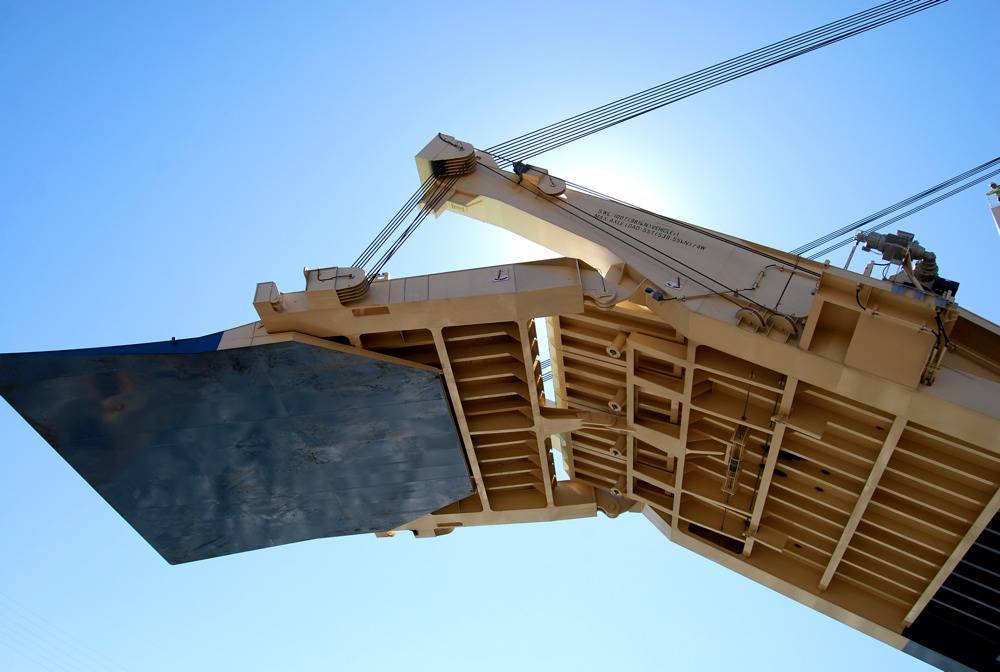
- Stern Ramp
- Quarter Ramp
- Slewing Ramp
- 30
- 200
- Antriebssystem
- Hydraulic cylinders or motors with slow to medium speed, integrated load-holding valves
- Paneelbauart
- Two to six panels per cargo hatch, double steel skins (folded covers) or single steel skins (rolling covers)
- Dichtungssysteme
- FlexSeal, Cat-Profile, C-Seal, Omega, Omega Lite or foam rubber with compression rods
- Lagerpads
- Fixpad, Flexipad, Lubripad or Unipad — weight transfer during ship movement
- Hydraulik-Befüllung
- Speziell für Seeeinsatz ausgelegt, integrierte Heiz-/Kühlanlage, Tank-Größe minimal zur Decklatzersparnis
- Korrosionsschutz
- Stainless steel piston rods or stainless steel sleeves, bronze ball bearings, lubrication nipples between seal rings
- Side-Rolling (standard Panamax/Capesize)
- Folding (Handysize/Handymax)
- Piggy-Back (space-constrained decks)
- Lift-On/Lift-Off (multi-purpose)
- Single-Flap (compact design)
- Stacking (weather decks)
- Hydraulic-Pivoting (vertical stowage)
- Area: Rubber seals (gaskets) age/harden through ozone and UV or show wear signsCheck: Visual inspection for discoloration, cracks, deformation; tactile inspection of elasticity. Damaged sections (minimum 1 m length) must be replaced. Do not apply oil/grease products. Validate with ultrasonic leak detection test.
- Area: Compression rods corrode, bend or show rough surfaces — compromises sealing and destroys rubberCheck: Surface inspection for corrosion and scratches. Check straightness with steel ruler. Damaged rods must be properly replaced/repaired and realigned (alignment critical for even compression).
- Area: Hydraulic cylinder leaks, piston rods corroded or oil contamination reduces functionalityCheck: Check oil level. Take oil samples and analyze quarterly for contamination. Oil change every 5 years; replace filter annually. Inspect piston rods for corrosion/scratches. For leaks inspect seal rings and cylinder block. Lubricate grease nipples between seal rings.
- Area: Drainage system clogged or check valves not functioning — water backs up and causes rusting/water ingress into cargo holdCheck: Inspect drainage channels for blockage (visual, if necessary with wire probe). Test check valves opening/closing manually (ball should move freely, not be hardened). Inspect drainage holes in cargo hold corners. Clean or replace if fouled.
- Area: Bearing pads (Bearing Pads: Fixpad, Flexipad, Lubripad, Unipad) worn — reduced height no longer compresses rubber correctly or increases wearCheck: Measure pad height against manufacturer specification. Wear of 4 mm or more destroys rubber seal. Damaged pads must be replaced with original spare parts of same size and material (involve specialists). Check movement between panel and cargo hold edge with pencil test.
- Area: Leaks at compression/sealing joints undetectable or compression strength insufficient (flat or corroded steel surfaces)Check: Perform ultrasonic tightness test: place ultrasonic generator in closed cargo hold, run sensor receiver outside around all joints. Signal strength shows compression quality. Additionally chalk test: rub compression rods with chalk, imprint shows uneven compression. Hose test in empty cargo holds (0.5 m/s, 12 mm nozzle, 1–1.5 m distance) as validation.
Typ-universelle Inspektions-/Wartungspunkte fuer Hatch Covers & Cargo Access (MacGregor + DNV/OSHA, 2026-06). Per-Modell-Specs NICHT auto-gefuellt.
- Fixed Internal Ramp
- Hoistable Ramp
- 15
- 75
- Antriebssystem
- Hydraulic cylinders or motors with slow to medium speed, integrated load-holding valves
- Paneelbauart
- Two to six panels per cargo hatch, double steel skins (folded covers) or single steel skins (rolling covers)
- Dichtungssysteme
- FlexSeal, Cat-Profile, C-Seal, Omega, Omega Lite or foam rubber with compression rods
- Lagerpads
- Fixpad, Flexipad, Lubripad or Unipad — weight transfer during ship movement
- Hydraulik-Befüllung
- Speziell für Seeeinsatz ausgelegt, integrierte Heiz-/Kühlanlage, Tank-Größe minimal zur Decklatzersparnis
- Korrosionsschutz
- Stainless steel piston rods or stainless steel sleeves, bronze ball bearings, lubrication nipples between seal rings
- Side-Rolling (standard Panamax/Capesize)
- Folding (Handysize/Handymax)
- Piggy-Back (space-constrained decks)
- Lift-On/Lift-Off (multi-purpose)
- Single-Flap (compact design)
- Stacking (weather decks)
- Hydraulic-Pivoting (vertical stowage)
- Area: Rubber seals (gaskets) age/harden through ozone and UV or show wear signsCheck: Visual inspection for discoloration, cracks, deformation; tactile inspection of elasticity. Damaged sections (minimum 1 m length) must be replaced. Do not apply oil/grease products. Validate with ultrasonic leak detection test.
- Area: Compression rods corrode, bend or show rough surfaces — compromises sealing and destroys rubberCheck: Surface inspection for corrosion and scratches. Check straightness with steel ruler. Damaged rods must be properly replaced/repaired and realigned (alignment critical for even compression).
- Area: Hydraulic cylinder leaks, piston rods corroded or oil contamination reduces functionalityCheck: Check oil level. Take oil samples and analyze quarterly for contamination. Oil change every 5 years; replace filter annually. Inspect piston rods for corrosion/scratches. For leaks inspect seal rings and cylinder block. Lubricate grease nipples between seal rings.
- Area: Drainage system clogged or check valves not functioning — water backs up and causes rusting/water ingress into cargo holdCheck: Inspect drainage channels for blockage (visual, if necessary with wire probe). Test check valves opening/closing manually (ball should move freely, not be hardened). Inspect drainage holes in cargo hold corners. Clean or replace if fouled.
- Area: Bearing pads (Bearing Pads: Fixpad, Flexipad, Lubripad, Unipad) worn — reduced height no longer compresses rubber correctly or increases wearCheck: Measure pad height against manufacturer specification. Wear of 4 mm or more destroys rubber seal. Damaged pads must be replaced with original spare parts of same size and material (involve specialists). Check movement between panel and cargo hold edge with pencil test.
- Area: Leaks at compression/sealing joints undetectable or compression strength insufficient (flat or corroded steel surfaces)Check: Perform ultrasonic tightness test: place ultrasonic generator in closed cargo hold, run sensor receiver outside around all joints. Signal strength shows compression quality. Additionally chalk test: rub compression rods with chalk, imprint shows uneven compression. Hose test in empty cargo holds (0.5 m/s, 12 mm nozzle, 1–1.5 m distance) as validation.
Typ-universelle Inspektions-/Wartungspunkte fuer Hatch Covers & Cargo Access (MacGregor + DNV/OSHA, 2026-06). Per-Modell-Specs NICHT auto-gefuellt.
Damen Marine
5- Wire-rope, chain, roller or line-contact wear caused by loaded movement, corrosion or poor lubrication, resulting in visible damage, rough operation or accelerated rope wear
- Brake, locking or clutch deterioration caused by repeated loading or contamination, resulting in poor holding or excessive travel
- Hydraulic or electric drive failure caused by leakage, motor faults or control problems, resulting in slow, weak or unavailable movement
- Bearing, pin, hinge or structural wear caused by cyclic loading and corrosion, resulting in play, vibration, misalignment or abnormal noise
- Limit, interlock or control-system fault caused by sensor, wiring or calibration problems, resulting in inhibited movement, alarms or loss of protective functions
- Wire-rope, chain, roller or line-contact wear caused by loaded movement, corrosion or poor lubrication, resulting in visible damage, rough operation or accelerated rope wear
- Brake, locking or clutch deterioration caused by repeated loading or contamination, resulting in poor holding or excessive travel
- Hydraulic or electric drive failure caused by leakage, motor faults or control problems, resulting in slow, weak or unavailable movement
- Bearing, pin, hinge or structural wear caused by cyclic loading and corrosion, resulting in play, vibration, misalignment or abnormal noise
- Limit, interlock or control-system fault caused by sensor, wiring or calibration problems, resulting in inhibited movement, alarms or loss of protective functions
- Wire-rope, chain, roller or line-contact wear caused by loaded movement, corrosion or poor lubrication, resulting in visible damage, rough operation or accelerated rope wear
- Brake, locking or clutch deterioration caused by repeated loading or contamination, resulting in poor holding or excessive travel
- Hydraulic or electric drive failure caused by leakage, motor faults or control problems, resulting in slow, weak or unavailable movement
- Bearing, pin, hinge or structural wear caused by cyclic loading and corrosion, resulting in play, vibration, misalignment or abnormal noise
- Limit, interlock or control-system fault caused by sensor, wiring or calibration problems, resulting in inhibited movement, alarms or loss of protective functions
- Hydraulic leakage or actuator failure caused by hose, cylinder, pump or valve faults, resulting in slow, uneven or unavailable movement
- Hinge, roller, bearing or pin wear caused by cyclic loading and corrosion, resulting in play, noise or misalignment
- Locking-device or interlock failure caused by wear, contamination or sensor faults, resulting in inability to secure the opening or persistent alarms
- Seal deterioration caused by compression set, damage or contamination, resulting in water ingress or failure of the required closing condition
- Structural cracking or deformation caused by impact, overload or fatigue, resulting in visible distortion or survey findings
- Hydraulic leakage or actuator failure caused by hose, cylinder, pump or valve faults, resulting in slow, uneven or unavailable movement
- Hinge, roller, bearing or pin wear caused by cyclic loading and corrosion, resulting in play, noise or misalignment
- Locking-device or interlock failure caused by wear, contamination or sensor faults, resulting in inability to secure the opening or persistent alarms
- Seal deterioration caused by compression set, damage or contamination, resulting in water ingress or failure of the required closing condition
- Structural cracking or deformation caused by impact, overload or fatigue, resulting in visible distortion or survey findings
TTS Marine
3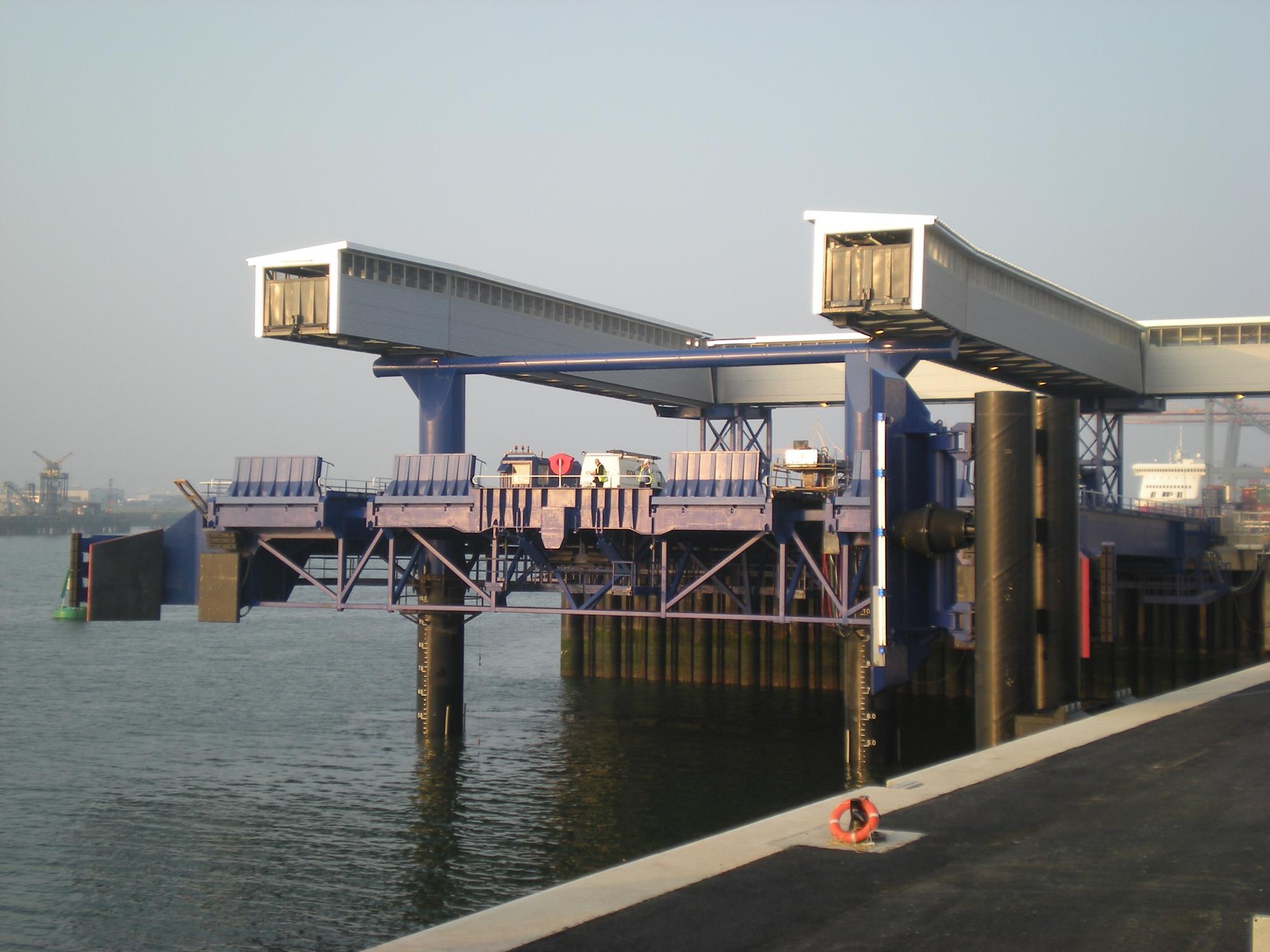
- Hydraulic, chain, wire or electric-drive faults cause uneven movement, drift or inability to open or close
- Hinge, wheel, rail or bearing wear causes misalignment, binding or abnormal noise
- Locking-device or limit-switch faults cause incomplete secure indication or blocked operating sequence
- Seal damage, compression loss or coaming corrosion causes water ingress
- Structural cracking, corrosion or deformation causes poor fit and unsafe load transfer
- High axle‑load rating of 60 t enables handling of heavy trucks and equipment
- Integrated hydraulic tide‑compensation allows operation over wide tidal ranges
- Modular handrail and walkway design simplifies inspection and replacement
- Proven TTS Marine build quality with a long service history in RoRo ports
- Tidal compensation cylinder can drift, requiring daily testing
- Handrails are prone to damage and need weekly inspections
- Flap hinges have reported corrosion issues in salt‑water environments
- Maintenance intensity is higher than simpler fixed ramps
- Hydraulic, chain, wire or electric-drive faults cause uneven movement, drift or inability to open or close
- Hinge, wheel, rail or bearing wear causes misalignment, binding or abnormal noise
- Locking-device or limit-switch faults cause incomplete secure indication or blocked operating sequence
- Seal damage, compression loss or coaming corrosion causes water ingress
- Structural cracking, corrosion or deformation causes poor fit and unsafe load transfer
- High axle‑load capacity of 45 t enables handling of heavy vehicles and equipment.
- Quarter‑stern location frees up mid‑ship hatch space for other cargo or structures.
- Fast opening/closing via integrated hydraulic system reduces turnaround time.
- Standardized door seal design allows scheduled replacement (every 3 years) to maintain watertight integrity.
- Compact footprint suitable for vessels with limited stern clearance.
- Door seals are a known failure point and require regular replacement.
- Hydraulic pump can overheat under prolonged or heavy use, demanding monitoring.
- Steering mechanism wear may increase maintenance intervals.
- Limited vertical clearance angle may restrict very tall cargo loads.
- Requires dedicated hydraulic power supply and associated control hardware.
- Hydraulic, chain, wire or electric-drive faults cause uneven movement, drift or inability to open or close
- Hinge, wheel, rail or bearing wear causes misalignment, binding or abnormal noise
- Locking-device or limit-switch faults cause incomplete secure indication or blocked operating sequence
- Seal damage, compression loss or coaming corrosion causes water ingress
- Structural cracking, corrosion or deformation causes poor fit and unsafe load transfer
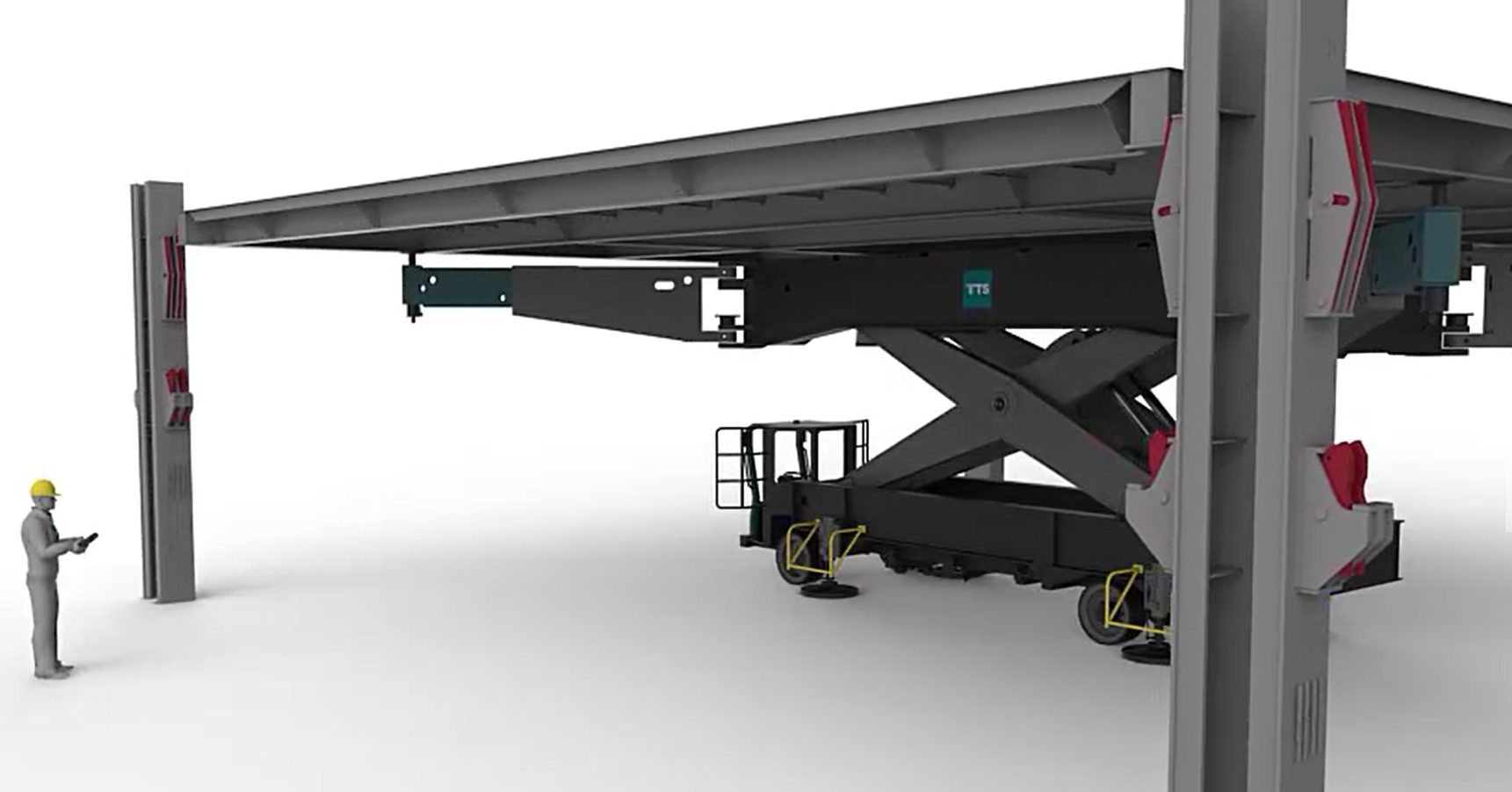
- Adjustable deck height enables loading of different vehicle types without structural modifications
- Relatively low axle load (3.5 t) reduces stress on hull and simplifies integration on medium‑size RoRo ships
- Quick hoisting operation speeds up turnaround time in port
- Standardized guide rails allow repeatable alignment for successive loads
- Hoisting chain elongation requires quarterly measurement and periodic replacement
- Deck panels can warp under repeated loading, necessitating dry‑dock inspections
- Guide rail wear may lead to misalignment if not regularly lubricated and inspected
- Maximum axle load of 3.5 t limits use with heavy trucks or oversized cargo
Hyundai Maritime / HHI (South Korea)
1- HHI Stern Ramp
- HHI Internal Ramp
- 30
- 150
- Hydraulic cylinder seal issues
- Structural fatigue from high-cycle loading
- Hinge pin wear
Rapp Marine Group (Norway)
1
- Small Ferry Ramp
- Medium Ferry Ramp
- 10
- 50
- Hydraulic cylinder seal leak
- Hinge mechanism wear from tidal cycling
- Non-skid surface deterioration
- Sealing gasket failure