What to check on a Medium-Speed Diesel Engine.
A slow-speed two-stroke crosshead engine turns the propeller shaft directly at 60 to 120 rpm with no gearbox in between. A medium-speed four-stroke engine runs several times faster and produces its power in a compact trunk-piston design, which means it needs a reduction gearbox for direct propulsion, or feeds a generator for diesel-electric propulsion, where speed reduction is not an issue at all. This makes medium-speed engines the standard choice for ferries, offshore support vessels, cruise ships and the auxiliary generator sets on almost every ship type, including those whose…
What sets the medium-speed engine apart
A slow-speed two-stroke crosshead engine turns the propeller shaft directly at 60 to 120 rpm with no gearbox in between. A medium-speed four-stroke engine runs several times faster and produces its power in a compact trunk-piston design, which means it needs a reduction gearbox for direct propulsion, or feeds a generator for diesel-electric propulsion, where speed reduction is not an issue at all. This makes medium-speed engines the standard choice for ferries, offshore support vessels, cruise ships and the auxiliary generator sets on almost every ship type, including those whose main propulsion is a slow-speed two-stroke.
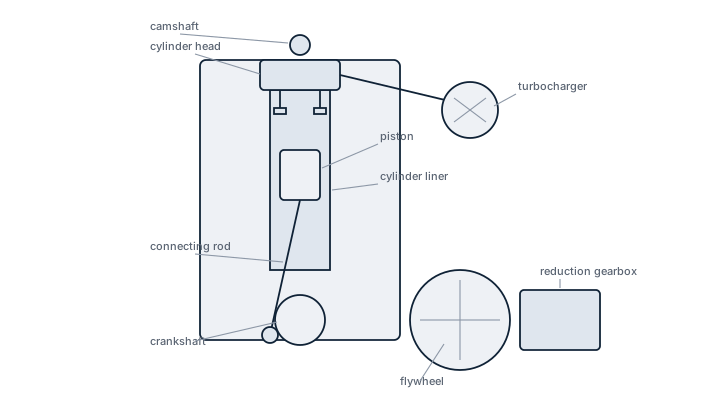
Main components
Cylinder liner and piston
Trunk-piston design where the piston itself takes the side thrust from the connecting rod, unlike the crosshead arrangement on slow-speed engines; this is the defining mechanical difference between the two engine families.
Crankshaft and bearings
A multi-throw forged or semi-built crankshaft supported on main bearings sized for the higher rotational speed and correspondingly higher inertial loads.
Camshaft and valve train
Drives fuel injection timing and valve actuation; some designs use a common-rail fuel system decoupling injection timing and pressure from engine speed entirely.
Turbocharger and charge air system
Compresses combustion air, with a charge air cooler bringing the compressed air back to a workable temperature before it enters the cylinder.
Lubricating oil system
Circulates oil under pressure to bearings, piston cooling galleries and the valve train, with a separate cylinder lubrication system on larger units.
Selection and sizing
Output is specified in kW at a rated speed, with cylinder count and configuration (inline or V) chosen to fit the available engine room footprint and the required power. Fuel flexibility varies by model: marine diesel oil only, heavy fuel oil capable with the associated fuel treatment plant, or dual-fuel designs able to run on LNG with diesel pilot injection. Speed rating and application (direct mechanical drive through a gearbox, or diesel-electric via a generator) are decided early since they affect the whole propulsion arrangement, not just the engine choice.
Regulations and class requirements
MARPOL Annex VI sets NOx emission limits by Tier, with Tier III requiring additional abatement (such as selective catalytic reduction or exhaust gas recirculation) inside designated Emission Control Areas. Every engine carries an EIAPP certificate confirming compliance with its approved NOx technical file, and any parameter or component change affecting emissions must be checked against that file. Class rules set periodic survey and overhaul intervals based on running hours and manufacturer recommendations.
Typical faults
- Turbocharger surge from fouled compressor or turbine blades, reducing charge air pressure and pushing exhaust temperatures up.
- Fuel injector wear causing poor atomization, leading to incomplete combustion, increased smoke and higher fuel consumption.
- Cylinder liner scuffing from inadequate lubrication or cooling water contamination in the liner cooling jacket.
- Main or big-end bearing wear from oil contamination or extended intervals beyond the recommended oil analysis trigger points.
- Charge air cooler fouling on the seawater side, reducing cooling effectiveness and pushing combustion temperatures higher than designed.
What to look for in a supplier
- Manufacturer support network covering the vessel's trading routes, since medium-speed engines run on tight service schedules.
- Genuine spare parts with traceability, particularly for injectors, turbocharger cartridges and bearing shells.
- Documented compliance with the engine's EIAPP certificate for any parts or settings supplied.
- Market leaders in this segment include MAN Energy Solutions, Wärtsilä and Caterpillar's MaK range, each with differing service footprints by region.
Track exhaust gas temperature spread across cylinders, not just the average; a single cylinder drifting off the others is often the first sign of an injector or valve problem long before it shows up anywhere else.