OceanSphere
Engines

Conventional Fire Detection Panel

medium 53 models total

A conventional fire detection panel reports an alarm by zone, not by individual detector, so a triggered circuit tells the bridge which compartment group has a fire without saying which detector on that circuit tripped.

Read more — Conventional Fire Detection Panel explained

What sets a conventional panel apart from an addressable system

On an addressable fire detection system, every detector has its own electronic address and reports its identity individually to the panel. A conventional panel has none of that: detectors are wired in parallel groups onto a shared zone circuit, and the panel can only tell the crew that a device somewhere on that zone has activated, not which one. That simplicity is the whole point — conventional panels are cheaper to install, easier to wire, and remain common on smaller vessels and older tonnage where the number of zones is manageable enough that "somewhere in the engine room" or "somewhere on this accommodation deck" is enough information to send a crew member to investigate.
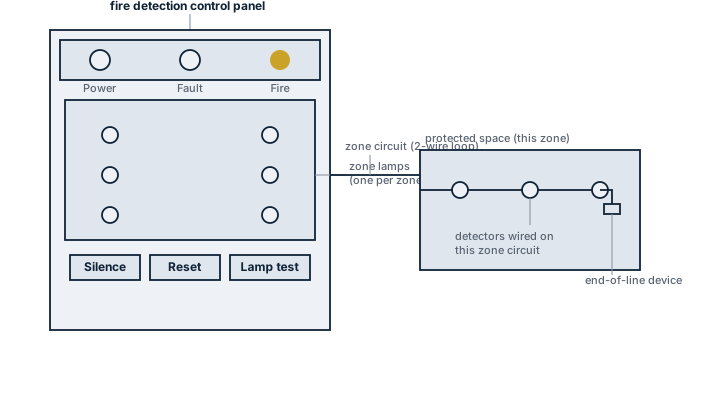
Conventional fire detection panel and zone wiring
A conventional fire detection panel with power, fault and fire lamps and one lamp per zone, wired to a single zone circuit that strings several detectors together and ends in an end-of-line device.

Main components

Zone circuits

Each zone is a two-wire loop, typically covering one compartment or a small group of adjacent spaces, with detectors and manual call points wired across the same pair of conductors.

End-of-line resistor

A fixed resistor at the far end of each zone loop lets the panel electronically distinguish a normal standby state from an open circuit fault or a short circuit, both of which are reported as faults distinct from an actual fire alarm.

Zone indicator panel

A row of LEDs or a small annunciator, one per zone, lights to show which zone has alarmed; there is no display naming the specific detector or device.

Power supply and battery backup

A charger and standby battery keep the panel and connected sounders operating through a mains supply failure, sized to cover the required standby and alarm duration set by class.

Selection considerations

The main decision point is zone resolution against vessel size: a conventional panel with finely divided zones, one per small compartment, gives nearly the same practical response speed as an addressable system at lower installation cost, while a conventional panel with large zones covering multiple spaces forces crew to search a wider area on every alarm. Detector type per zone also needs matching to the space, since a zone mixing smoke and heat detectors on the same circuit still only reports "zone alarm" without telling responders which detection principle triggered.

Regulations and class

SOLAS Chapter II-2 sets requirements for fixed fire detection coverage, zone boundaries and the maximum floor area or number of spaces a single zone may cover, along with response and fault-indication requirements the panel has to meet regardless of whether it is conventional or addressable. Class surveys check zone identification labelling at the panel against the actual compartments served, since a mislabelled zone list defeats the entire purpose of a conventional system.

Typical faults

  • Open zone circuit — from a corroded terminal or damaged cable, showing as a fault rather than an alarm but leaving that whole zone blind to fire.
  • Ground fault on a zone — often from moisture ingress in a junction box, which can mask or falsely trigger alarms depending on where it sits on the circuit.
  • Dust-contaminated detectors — give false alarms or, if contamination is severe enough to block the sensing chamber, fail to detect a real fire.
  • Outdated zone labelling — after compartment changes or refits, leaving the panel's zone list out of step with the actual layout.

What to look for in a supplier

  • Type approval for marine use and compatibility with the vessel's existing detector wiring if this is a panel replacement.
  • Clear documentation matching each zone number to its physical coverage area.
  • Battery capacity calculation showing it meets the required standby and alarm duration.
  • Availability of end-of-line resistors and compatible detector types as ongoing spares.

Walk every zone physically against the panel's zone list at least once a year — an alarm that sends the crew to the wrong compartment is worse than no alarm at all.

5 manufacturers · 53 models

Autronica / Honeywell

13
Autro Conv 2-Zone unverified
Zones
2
Common Failures & Inspection Points
  • Detector contamination or sensor aging caused by dust, grease, moisture or long service, resulting in false alarms, slow response or fault indication
  • Loop or cable fault caused by damaged wiring, loose terminals or earth leakage, resulting in missing devices, intermittent faults or a loop alarm
  • Addressing or configuration error caused by replacement or software changes, resulting in incorrect device identification or unavailable zones
  • Power-supply or backup-battery deterioration caused by charger faults, aged batteries or wiring problems, resulting in power alarms or reduced standby capability
  • Panel, relay or communication failure caused by electronics faults, resulting in missing alarms, failed outputs or loss of connection to other safety systems
Service: Inspect detectors, call points, panels, loops, power supplies and interfaces according to the approved fire-system test plan. Keep sensing openings clean and protect devices from paint, steam and dust during maintenance. Function-test alarms, zone identification, sounders and required output relays using approved test tools and procedures. Check backup batteries and power-failure indications and record any isolated zone or disabled device. Restore all bypasses and isolations after work. Refer to the manufacturer documentation for the exact figure for test frequencies, detector limits and replacement procedures.
Spare Parts: Keep approved detector heads, bases, manual-call-point elements, loop modules, fuses, batteries, relays and selected panel components compatible with the installed system. Replacement devices must preserve addressing and type approval. Maintain approved test tools and detector-specific service accessories.
Use Cases: Automatic and manual fire detection in machinery spaces, accommodation, cargo areas and other protected shipboard spaces.
Autro Conv 4-Zone unverified
Zones
4
Common Failures & Inspection Points
  • Detector contamination or sensor aging caused by dust, grease, moisture or long service, resulting in false alarms, slow response or fault indication
  • Loop or cable fault caused by damaged wiring, loose terminals or earth leakage, resulting in missing devices, intermittent faults or a loop alarm
  • Addressing or configuration error caused by replacement or software changes, resulting in incorrect device identification or unavailable zones
  • Power-supply or backup-battery deterioration caused by charger faults, aged batteries or wiring problems, resulting in power alarms or reduced standby capability
  • Panel, relay or communication failure caused by electronics faults, resulting in missing alarms, failed outputs or loss of connection to other safety systems
Service: Inspect detectors, call points, panels, loops, power supplies and interfaces according to the approved fire-system test plan. Keep sensing openings clean and protect devices from paint, steam and dust during maintenance. Function-test alarms, zone identification, sounders and required output relays using approved test tools and procedures. Check backup batteries and power-failure indications and record any isolated zone or disabled device. Restore all bypasses and isolations after work. Refer to the manufacturer documentation for the exact figure for test frequencies, detector limits and replacement procedures.
Spare Parts: Keep approved detector heads, bases, manual-call-point elements, loop modules, fuses, batteries, relays and selected panel components compatible with the installed system. Replacement devices must preserve addressing and type approval. Maintain approved test tools and detector-specific service accessories.
Use Cases: Automatic and manual fire detection in machinery spaces, accommodation, cargo areas and other protected shipboard spaces.
Autronica / Honeywell Autro Conv 8-Zone
Autro Conv 8-Zone unverified
Zones
8
Common Failures & Inspection Points
  • Detector contamination or sensor aging caused by dust, grease, moisture or long service, resulting in false alarms, slow response or fault indication
  • Loop or cable fault caused by damaged wiring, loose terminals or earth leakage, resulting in missing devices, intermittent faults or a loop alarm
  • Addressing or configuration error caused by replacement or software changes, resulting in incorrect device identification or unavailable zones
  • Power-supply or backup-battery deterioration caused by charger faults, aged batteries or wiring problems, resulting in power alarms or reduced standby capability
  • Panel, relay or communication failure caused by electronics faults, resulting in missing alarms, failed outputs or loss of connection to other safety systems
Service: Inspect detectors, call points, panels, loops, power supplies and interfaces according to the approved fire-system test plan. Keep sensing openings clean and protect devices from paint, steam and dust during maintenance. Function-test alarms, zone identification, sounders and required output relays using approved test tools and procedures. Check backup batteries and power-failure indications and record any isolated zone or disabled device. Restore all bypasses and isolations after work. Refer to the manufacturer documentation for the exact figure for test frequencies, detector limits and replacement procedures.
Spare Parts: Keep approved detector heads, bases, manual-call-point elements, loop modules, fuses, batteries, relays and selected panel components compatible with the installed system. Replacement devices must preserve addressing and type approval. Maintain approved test tools and detector-specific service accessories.
Use Cases: Automatic and manual fire detection in machinery spaces, accommodation, cargo areas and other protected shipboard spaces.
Autro Conv 16-Zone unverified
Zones
16
Common Failures & Inspection Points
  • Detector contamination or sensor aging caused by dust, grease, moisture or long service, resulting in false alarms, slow response or fault indication
  • Loop or cable fault caused by damaged wiring, loose terminals or earth leakage, resulting in missing devices, intermittent faults or a loop alarm
  • Addressing or configuration error caused by replacement or software changes, resulting in incorrect device identification or unavailable zones
  • Power-supply or backup-battery deterioration caused by charger faults, aged batteries or wiring problems, resulting in power alarms or reduced standby capability
  • Panel, relay or communication failure caused by electronics faults, resulting in missing alarms, failed outputs or loss of connection to other safety systems
Service: Inspect detectors, call points, panels, loops, power supplies and interfaces according to the approved fire-system test plan. Keep sensing openings clean and protect devices from paint, steam and dust during maintenance. Function-test alarms, zone identification, sounders and required output relays using approved test tools and procedures. Check backup batteries and power-failure indications and record any isolated zone or disabled device. Restore all bypasses and isolations after work. Refer to the manufacturer documentation for the exact figure for test frequencies, detector limits and replacement procedures.
Spare Parts: Keep approved detector heads, bases, manual-call-point elements, loop modules, fuses, batteries, relays and selected panel components compatible with the installed system. Replacement devices must preserve addressing and type approval. Maintain approved test tools and detector-specific service accessories.
Use Cases: Automatic and manual fire detection in machinery spaces, accommodation, cargo areas and other protected shipboard spaces.
Autro Conv 24-Zone unverified
Zones
24
Common Failures & Inspection Points
  • Detector contamination or sensor aging caused by dust, grease, moisture or long service, resulting in false alarms, slow response or fault indication
  • Loop or cable fault caused by damaged wiring, loose terminals or earth leakage, resulting in missing devices, intermittent faults or a loop alarm
  • Addressing or configuration error caused by replacement or software changes, resulting in incorrect device identification or unavailable zones
  • Power-supply or backup-battery deterioration caused by charger faults, aged batteries or wiring problems, resulting in power alarms or reduced standby capability
  • Panel, relay or communication failure caused by electronics faults, resulting in missing alarms, failed outputs or loss of connection to other safety systems
Service: Inspect detectors, call points, panels, loops, power supplies and interfaces according to the approved fire-system test plan. Keep sensing openings clean and protect devices from paint, steam and dust during maintenance. Function-test alarms, zone identification, sounders and required output relays using approved test tools and procedures. Check backup batteries and power-failure indications and record any isolated zone or disabled device. Restore all bypasses and isolations after work. Refer to the manufacturer documentation for the exact figure for test frequencies, detector limits and replacement procedures.
Spare Parts: Keep approved detector heads, bases, manual-call-point elements, loop modules, fuses, batteries, relays and selected panel components compatible with the installed system. Replacement devices must preserve addressing and type approval. Maintain approved test tools and detector-specific service accessories.
Use Cases: Automatic and manual fire detection in machinery spaces, accommodation, cargo areas and other protected shipboard spaces.
Autro Conv 32-Zone unverified
Zones
32
Common Failures & Inspection Points
  • Detector contamination or sensor aging caused by dust, grease, moisture or long service, resulting in false alarms, slow response or fault indication
  • Loop or cable fault caused by damaged wiring, loose terminals or earth leakage, resulting in missing devices, intermittent faults or a loop alarm
  • Addressing or configuration error caused by replacement or software changes, resulting in incorrect device identification or unavailable zones
  • Power-supply or backup-battery deterioration caused by charger faults, aged batteries or wiring problems, resulting in power alarms or reduced standby capability
  • Panel, relay or communication failure caused by electronics faults, resulting in missing alarms, failed outputs or loss of connection to other safety systems
Service: Inspect detectors, call points, panels, loops, power supplies and interfaces according to the approved fire-system test plan. Keep sensing openings clean and protect devices from paint, steam and dust during maintenance. Function-test alarms, zone identification, sounders and required output relays using approved test tools and procedures. Check backup batteries and power-failure indications and record any isolated zone or disabled device. Restore all bypasses and isolations after work. Refer to the manufacturer documentation for the exact figure for test frequencies, detector limits and replacement procedures.
Spare Parts: Keep approved detector heads, bases, manual-call-point elements, loop modules, fuses, batteries, relays and selected panel components compatible with the installed system. Replacement devices must preserve addressing and type approval. Maintain approved test tools and detector-specific service accessories.
Use Cases: Automatic and manual fire detection in machinery spaces, accommodation, cargo areas and other protected shipboard spaces.
Autronica Conv-2Z Mk2 unverified
Zones
2
Conventional
ja
Common Failures & Inspection Points
  • Detector or sensing-element contamination caused by dust, grease, moisture or aging, resulting in false alarms, slow response or fault indication
  • Loop or cable fault caused by damaged wiring, loose terminals or earth leakage, resulting in missing devices or intermittent system faults
  • Addressing or configuration error caused by replacement or software changes, resulting in incorrect device identification or unavailable zones
  • Power-supply or backup-battery deterioration caused by charger faults or aged batteries, resulting in power alarms or reduced standby capability
  • Panel, relay or communication failure caused by electronics faults, resulting in missing alarms, failed outputs or loss of connection to other safety systems
Service: Inspect detectors, call points, panels, loops, power supplies and interfaces according to the approved fire-system test plan. Keep sensing openings clean and protect devices from paint, steam and dust. Function-test alarms, zone identification, sounders and required output relays using approved test tools and procedures. Check backup batteries and power-failure indications and record any isolated zone or disabled device. Restore all bypasses and isolations after work. Refer to the manufacturer documentation for the exact figure for test frequency, detector limits and replacement procedures.
Spare Parts: Keep approved detector heads, bases, call-point elements, loop modules, fuses, batteries, relays and selected panel components compatible with the installed system. Replacement devices must preserve addressing and type approval.
Use Cases: It is used for shipboard fire detection on merchant ships, passenger vessels, offshore units or other vessel types where this equipment category is fitted.
Autronica Conv-4Z Mk2 unverified
Zones
4
Conventional
ja
Common Failures & Inspection Points
  • Detector or sensing-element contamination caused by dust, grease, moisture or aging, resulting in false alarms, slow response or fault indication
  • Loop or cable fault caused by damaged wiring, loose terminals or earth leakage, resulting in missing devices or intermittent system faults
  • Addressing or configuration error caused by replacement or software changes, resulting in incorrect device identification or unavailable zones
  • Power-supply or backup-battery deterioration caused by charger faults or aged batteries, resulting in power alarms or reduced standby capability
  • Panel, relay or communication failure caused by electronics faults, resulting in missing alarms, failed outputs or loss of connection to other safety systems
Service: Inspect detectors, call points, panels, loops, power supplies and interfaces according to the approved fire-system test plan. Keep sensing openings clean and protect devices from paint, steam and dust. Function-test alarms, zone identification, sounders and required output relays using approved test tools and procedures. Check backup batteries and power-failure indications and record any isolated zone or disabled device. Restore all bypasses and isolations after work. Refer to the manufacturer documentation for the exact figure for test frequency, detector limits and replacement procedures.
Spare Parts: Keep approved detector heads, bases, call-point elements, loop modules, fuses, batteries, relays and selected panel components compatible with the installed system. Replacement devices must preserve addressing and type approval.
Use Cases: It is used for shipboard fire detection on merchant ships, passenger vessels, offshore units or other vessel types where this equipment category is fitted.
Autronica Conv-8Z Mk2 unverified
Zones
8
Conventional
ja
Common Failures & Inspection Points
  • Detector or sensing-element contamination caused by dust, grease, moisture or aging, resulting in false alarms, slow response or fault indication
  • Loop or cable fault caused by damaged wiring, loose terminals or earth leakage, resulting in missing devices or intermittent system faults
  • Addressing or configuration error caused by replacement or software changes, resulting in incorrect device identification or unavailable zones
  • Power-supply or backup-battery deterioration caused by charger faults or aged batteries, resulting in power alarms or reduced standby capability
  • Panel, relay or communication failure caused by electronics faults, resulting in missing alarms, failed outputs or loss of connection to other safety systems
Service: Inspect detectors, call points, panels, loops, power supplies and interfaces according to the approved fire-system test plan. Keep sensing openings clean and protect devices from paint, steam and dust. Function-test alarms, zone identification, sounders and required output relays using approved test tools and procedures. Check backup batteries and power-failure indications and record any isolated zone or disabled device. Restore all bypasses and isolations after work. Refer to the manufacturer documentation for the exact figure for test frequency, detector limits and replacement procedures.
Spare Parts: Keep approved detector heads, bases, call-point elements, loop modules, fuses, batteries, relays and selected panel components compatible with the installed system. Replacement devices must preserve addressing and type approval.
Use Cases: It is used for shipboard fire detection on merchant ships, passenger vessels, offshore units or other vessel types where this equipment category is fitted.
Autronica Conv-12Z Mk2 unverified
Zones
12
Conventional
ja
Common Failures & Inspection Points
  • Detector or sensing-element contamination caused by dust, grease, moisture or aging, resulting in false alarms, slow response or fault indication
  • Loop or cable fault caused by damaged wiring, loose terminals or earth leakage, resulting in missing devices or intermittent system faults
  • Addressing or configuration error caused by replacement or software changes, resulting in incorrect device identification or unavailable zones
  • Power-supply or backup-battery deterioration caused by charger faults or aged batteries, resulting in power alarms or reduced standby capability
  • Panel, relay or communication failure caused by electronics faults, resulting in missing alarms, failed outputs or loss of connection to other safety systems
Service: Inspect detectors, call points, panels, loops, power supplies and interfaces according to the approved fire-system test plan. Keep sensing openings clean and protect devices from paint, steam and dust. Function-test alarms, zone identification, sounders and required output relays using approved test tools and procedures. Check backup batteries and power-failure indications and record any isolated zone or disabled device. Restore all bypasses and isolations after work. Refer to the manufacturer documentation for the exact figure for test frequency, detector limits and replacement procedures.
Spare Parts: Keep approved detector heads, bases, call-point elements, loop modules, fuses, batteries, relays and selected panel components compatible with the installed system. Replacement devices must preserve addressing and type approval.
Use Cases: It is used for shipboard fire detection on merchant ships, passenger vessels, offshore units or other vessel types where this equipment category is fitted.
Autronica Conv-16Z Mk2 unverified
Zones
16
Conventional
ja
Common Failures & Inspection Points
  • Detector or sensing-element contamination caused by dust, grease, moisture or aging, resulting in false alarms, slow response or fault indication
  • Loop or cable fault caused by damaged wiring, loose terminals or earth leakage, resulting in missing devices or intermittent system faults
  • Addressing or configuration error caused by replacement or software changes, resulting in incorrect device identification or unavailable zones
  • Power-supply or backup-battery deterioration caused by charger faults or aged batteries, resulting in power alarms or reduced standby capability
  • Panel, relay or communication failure caused by electronics faults, resulting in missing alarms, failed outputs or loss of connection to other safety systems
Service: Inspect detectors, call points, panels, loops, power supplies and interfaces according to the approved fire-system test plan. Keep sensing openings clean and protect devices from paint, steam and dust. Function-test alarms, zone identification, sounders and required output relays using approved test tools and procedures. Check backup batteries and power-failure indications and record any isolated zone or disabled device. Restore all bypasses and isolations after work. Refer to the manufacturer documentation for the exact figure for test frequency, detector limits and replacement procedures.
Spare Parts: Keep approved detector heads, bases, call-point elements, loop modules, fuses, batteries, relays and selected panel components compatible with the installed system. Replacement devices must preserve addressing and type approval.
Use Cases: It is used for shipboard fire detection on merchant ships, passenger vessels, offshore units or other vessel types where this equipment category is fitted.
Autronica Conv-24Z Mk2 unverified
Zones
24
Conventional
ja
Common Failures & Inspection Points
  • Detector or sensing-element contamination caused by dust, grease, moisture or aging, resulting in false alarms, slow response or fault indication
  • Loop or cable fault caused by damaged wiring, loose terminals or earth leakage, resulting in missing devices or intermittent system faults
  • Addressing or configuration error caused by replacement or software changes, resulting in incorrect device identification or unavailable zones
  • Power-supply or backup-battery deterioration caused by charger faults or aged batteries, resulting in power alarms or reduced standby capability
  • Panel, relay or communication failure caused by electronics faults, resulting in missing alarms, failed outputs or loss of connection to other safety systems
Service: Inspect detectors, call points, panels, loops, power supplies and interfaces according to the approved fire-system test plan. Keep sensing openings clean and protect devices from paint, steam and dust. Function-test alarms, zone identification, sounders and required output relays using approved test tools and procedures. Check backup batteries and power-failure indications and record any isolated zone or disabled device. Restore all bypasses and isolations after work. Refer to the manufacturer documentation for the exact figure for test frequency, detector limits and replacement procedures.
Spare Parts: Keep approved detector heads, bases, call-point elements, loop modules, fuses, batteries, relays and selected panel components compatible with the installed system. Replacement devices must preserve addressing and type approval.
Use Cases: It is used for shipboard fire detection on merchant ships, passenger vessels, offshore units or other vessel types where this equipment category is fitted.
Autronica Conv-32Z Mk2 unverified
Zones
32
Conventional
ja
Common Failures & Inspection Points
  • Detector or sensing-element contamination caused by dust, grease, moisture or aging, resulting in false alarms, slow response or fault indication
  • Loop or cable fault caused by damaged wiring, loose terminals or earth leakage, resulting in missing devices or intermittent system faults
  • Addressing or configuration error caused by replacement or software changes, resulting in incorrect device identification or unavailable zones
  • Power-supply or backup-battery deterioration caused by charger faults or aged batteries, resulting in power alarms or reduced standby capability
  • Panel, relay or communication failure caused by electronics faults, resulting in missing alarms, failed outputs or loss of connection to other safety systems
Service: Inspect detectors, call points, panels, loops, power supplies and interfaces according to the approved fire-system test plan. Keep sensing openings clean and protect devices from paint, steam and dust. Function-test alarms, zone identification, sounders and required output relays using approved test tools and procedures. Check backup batteries and power-failure indications and record any isolated zone or disabled device. Restore all bypasses and isolations after work. Refer to the manufacturer documentation for the exact figure for test frequency, detector limits and replacement procedures.
Spare Parts: Keep approved detector heads, bases, call-point elements, loop modules, fuses, batteries, relays and selected panel components compatible with the installed system. Replacement devices must preserve addressing and type approval.
Use Cases: It is used for shipboard fire detection on merchant ships, passenger vessels, offshore units or other vessel types where this equipment category is fitted.

Consilium Marine

13
Salwico Conv 2-Zone unverified
Zones
2
IMO Compliant
ja
Common Failures & Inspection Points
  • Loop or zone wiring faults cause open-circuit, short-circuit or missing-device indications
  • Backup-battery or power-supply faults cause charger alarms, reduced standby capability or panel reset
  • Detector addressing or configuration errors cause incorrect alarm location or missing devices
  • Display, processor or communication faults cause frozen indications or loss of remote repeater information
  • Relay or output-interface faults prevent required remote alarms, fan stops or fire-safety actions
Service: Review panel faults, loop or zone status, batteries, charger, repeaters and output interfaces. Test representative detectors and verify correct location text and remote alarm transmission under the approved fire-testing procedure. Maintain controlled backups of address and cause-and-effect configuration where applicable. Refer to the manufacturer and fire-control documentation for the exact figure for battery, loop and test limits.
Spare Parts: Carry compatible detector bases or loop modules, fuses, backup batteries, power supplies, relays and supported panel or repeater modules.
Use Cases: Central fire detection and alarm supervision on commercial, passenger and offshore vessels.
Salwico Conv 4-Zone unverified
Zones
4
IMO Compliant
ja
Common Failures & Inspection Points
  • Loop or zone wiring faults cause open-circuit, short-circuit or missing-device indications
  • Backup-battery or power-supply faults cause charger alarms, reduced standby capability or panel reset
  • Detector addressing or configuration errors cause incorrect alarm location or missing devices
  • Display, processor or communication faults cause frozen indications or loss of remote repeater information
  • Relay or output-interface faults prevent required remote alarms, fan stops or fire-safety actions
Service: Review panel faults, loop or zone status, batteries, charger, repeaters and output interfaces. Test representative detectors and verify correct location text and remote alarm transmission under the approved fire-testing procedure. Maintain controlled backups of address and cause-and-effect configuration where applicable. Refer to the manufacturer and fire-control documentation for the exact figure for battery, loop and test limits.
Spare Parts: Carry compatible detector bases or loop modules, fuses, backup batteries, power supplies, relays and supported panel or repeater modules.
Use Cases: Central fire detection and alarm supervision on commercial, passenger and offshore vessels.
Salwico Conv 8-Zone unverified
Zones
8
IMO Compliant
ja
Common Failures & Inspection Points
  • Loop or zone wiring faults cause open-circuit, short-circuit or missing-device indications
  • Backup-battery or power-supply faults cause charger alarms, reduced standby capability or panel reset
  • Detector addressing or configuration errors cause incorrect alarm location or missing devices
  • Display, processor or communication faults cause frozen indications or loss of remote repeater information
  • Relay or output-interface faults prevent required remote alarms, fan stops or fire-safety actions
Service: Review panel faults, loop or zone status, batteries, charger, repeaters and output interfaces. Test representative detectors and verify correct location text and remote alarm transmission under the approved fire-testing procedure. Maintain controlled backups of address and cause-and-effect configuration where applicable. Refer to the manufacturer and fire-control documentation for the exact figure for battery, loop and test limits.
Spare Parts: Carry compatible detector bases or loop modules, fuses, backup batteries, power supplies, relays and supported panel or repeater modules.
Use Cases: Central fire detection and alarm supervision on commercial, passenger and offshore vessels.
Salwico Conv 16-Zone unverified
Zones
16
IMO Compliant
ja
Common Failures & Inspection Points
  • Loop or zone wiring faults cause open-circuit, short-circuit or missing-device indications
  • Backup-battery or power-supply faults cause charger alarms, reduced standby capability or panel reset
  • Detector addressing or configuration errors cause incorrect alarm location or missing devices
  • Display, processor or communication faults cause frozen indications or loss of remote repeater information
  • Relay or output-interface faults prevent required remote alarms, fan stops or fire-safety actions
Service: Review panel faults, loop or zone status, batteries, charger, repeaters and output interfaces. Test representative detectors and verify correct location text and remote alarm transmission under the approved fire-testing procedure. Maintain controlled backups of address and cause-and-effect configuration where applicable. Refer to the manufacturer and fire-control documentation for the exact figure for battery, loop and test limits.
Spare Parts: Carry compatible detector bases or loop modules, fuses, backup batteries, power supplies, relays and supported panel or repeater modules.
Use Cases: Central fire detection and alarm supervision on commercial, passenger and offshore vessels.
Salwico Conv 24-Zone unverified
Zones
24
IMO Compliant
ja
Common Failures & Inspection Points
  • Loop or zone wiring faults cause open-circuit, short-circuit or missing-device indications
  • Backup-battery or power-supply faults cause charger alarms, reduced standby capability or panel reset
  • Detector addressing or configuration errors cause incorrect alarm location or missing devices
  • Display, processor or communication faults cause frozen indications or loss of remote repeater information
  • Relay or output-interface faults prevent required remote alarms, fan stops or fire-safety actions
Service: Review panel faults, loop or zone status, batteries, charger, repeaters and output interfaces. Test representative detectors and verify correct location text and remote alarm transmission under the approved fire-testing procedure. Maintain controlled backups of address and cause-and-effect configuration where applicable. Refer to the manufacturer and fire-control documentation for the exact figure for battery, loop and test limits.
Spare Parts: Carry compatible detector bases or loop modules, fuses, backup batteries, power supplies, relays and supported panel or repeater modules.
Use Cases: Central fire detection and alarm supervision on commercial, passenger and offshore vessels.
Salwico Conv 32-Zone unverified
Zones
32
IMO Compliant
ja
Common Failures & Inspection Points
  • Loop or zone wiring faults cause open-circuit, short-circuit or missing-device indications
  • Backup-battery or power-supply faults cause charger alarms, reduced standby capability or panel reset
  • Detector addressing or configuration errors cause incorrect alarm location or missing devices
  • Display, processor or communication faults cause frozen indications or loss of remote repeater information
  • Relay or output-interface faults prevent required remote alarms, fan stops or fire-safety actions
Service: Review panel faults, loop or zone status, batteries, charger, repeaters and output interfaces. Test representative detectors and verify correct location text and remote alarm transmission under the approved fire-testing procedure. Maintain controlled backups of address and cause-and-effect configuration where applicable. Refer to the manufacturer and fire-control documentation for the exact figure for battery, loop and test limits.
Spare Parts: Carry compatible detector bases or loop modules, fuses, backup batteries, power supplies, relays and supported panel or repeater modules.
Use Cases: Central fire detection and alarm supervision on commercial, passenger and offshore vessels.
Consilium Marine Conv-2Z Mk2 unverified
Zones
2
Conventional
ja
Common Failures & Inspection Points
  • Detector or sensing-element contamination caused by dust, grease, moisture or aging, resulting in false alarms, slow response or fault indication
  • Loop or cable fault caused by damaged wiring, loose terminals or earth leakage, resulting in missing devices or intermittent system faults
  • Addressing or configuration error caused by replacement or software changes, resulting in incorrect device identification or unavailable zones
  • Power-supply or backup-battery deterioration caused by charger faults or aged batteries, resulting in power alarms or reduced standby capability
  • Panel, relay or communication failure caused by electronics faults, resulting in missing alarms, failed outputs or loss of connection to other safety systems
Service: Inspect detectors, call points, panels, loops, power supplies and interfaces according to the approved fire-system test plan. Keep sensing openings clean and protect devices from paint, steam and dust. Function-test alarms, zone identification, sounders and required output relays using approved test tools and procedures. Check backup batteries and power-failure indications and record any isolated zone or disabled device. Restore all bypasses and isolations after work. Refer to the manufacturer documentation for the exact figure for test frequency, detector limits and replacement procedures.
Spare Parts: Keep approved detector heads, bases, call-point elements, loop modules, fuses, batteries, relays and selected panel components compatible with the installed system. Replacement devices must preserve addressing and type approval.
Use Cases: It is used for shipboard fire detection on merchant ships, passenger vessels, offshore units or other vessel types where this equipment category is fitted.
Consilium Marine Conv-4Z Mk2 unverified
Zones
4
Conventional
ja
Common Failures & Inspection Points
  • Detector or sensing-element contamination caused by dust, grease, moisture or aging, resulting in false alarms, slow response or fault indication
  • Loop or cable fault caused by damaged wiring, loose terminals or earth leakage, resulting in missing devices or intermittent system faults
  • Addressing or configuration error caused by replacement or software changes, resulting in incorrect device identification or unavailable zones
  • Power-supply or backup-battery deterioration caused by charger faults or aged batteries, resulting in power alarms or reduced standby capability
  • Panel, relay or communication failure caused by electronics faults, resulting in missing alarms, failed outputs or loss of connection to other safety systems
Service: Inspect detectors, call points, panels, loops, power supplies and interfaces according to the approved fire-system test plan. Keep sensing openings clean and protect devices from paint, steam and dust. Function-test alarms, zone identification, sounders and required output relays using approved test tools and procedures. Check backup batteries and power-failure indications and record any isolated zone or disabled device. Restore all bypasses and isolations after work. Refer to the manufacturer documentation for the exact figure for test frequency, detector limits and replacement procedures.
Spare Parts: Keep approved detector heads, bases, call-point elements, loop modules, fuses, batteries, relays and selected panel components compatible with the installed system. Replacement devices must preserve addressing and type approval.
Use Cases: It is used for shipboard fire detection on merchant ships, passenger vessels, offshore units or other vessel types where this equipment category is fitted.
Consilium Marine Conv-8Z Mk2 unverified
Zones
8
Conventional
ja
Common Failures & Inspection Points
  • Detector or sensing-element contamination caused by dust, grease, moisture or aging, resulting in false alarms, slow response or fault indication
  • Loop or cable fault caused by damaged wiring, loose terminals or earth leakage, resulting in missing devices or intermittent system faults
  • Addressing or configuration error caused by replacement or software changes, resulting in incorrect device identification or unavailable zones
  • Power-supply or backup-battery deterioration caused by charger faults or aged batteries, resulting in power alarms or reduced standby capability
  • Panel, relay or communication failure caused by electronics faults, resulting in missing alarms, failed outputs or loss of connection to other safety systems
Service: Inspect detectors, call points, panels, loops, power supplies and interfaces according to the approved fire-system test plan. Keep sensing openings clean and protect devices from paint, steam and dust. Function-test alarms, zone identification, sounders and required output relays using approved test tools and procedures. Check backup batteries and power-failure indications and record any isolated zone or disabled device. Restore all bypasses and isolations after work. Refer to the manufacturer documentation for the exact figure for test frequency, detector limits and replacement procedures.
Spare Parts: Keep approved detector heads, bases, call-point elements, loop modules, fuses, batteries, relays and selected panel components compatible with the installed system. Replacement devices must preserve addressing and type approval.
Use Cases: It is used for shipboard fire detection on merchant ships, passenger vessels, offshore units or other vessel types where this equipment category is fitted.
Consilium Marine Conv-12Z Mk2 unverified
Zones
12
Conventional
ja
Common Failures & Inspection Points
  • Detector or sensing-element contamination caused by dust, grease, moisture or aging, resulting in false alarms, slow response or fault indication
  • Loop or cable fault caused by damaged wiring, loose terminals or earth leakage, resulting in missing devices or intermittent system faults
  • Addressing or configuration error caused by replacement or software changes, resulting in incorrect device identification or unavailable zones
  • Power-supply or backup-battery deterioration caused by charger faults or aged batteries, resulting in power alarms or reduced standby capability
  • Panel, relay or communication failure caused by electronics faults, resulting in missing alarms, failed outputs or loss of connection to other safety systems
Service: Inspect detectors, call points, panels, loops, power supplies and interfaces according to the approved fire-system test plan. Keep sensing openings clean and protect devices from paint, steam and dust. Function-test alarms, zone identification, sounders and required output relays using approved test tools and procedures. Check backup batteries and power-failure indications and record any isolated zone or disabled device. Restore all bypasses and isolations after work. Refer to the manufacturer documentation for the exact figure for test frequency, detector limits and replacement procedures.
Spare Parts: Keep approved detector heads, bases, call-point elements, loop modules, fuses, batteries, relays and selected panel components compatible with the installed system. Replacement devices must preserve addressing and type approval.
Use Cases: It is used for shipboard fire detection on merchant ships, passenger vessels, offshore units or other vessel types where this equipment category is fitted.
Consilium Marine Conv-16Z Mk2 unverified
Zones
16
Conventional
ja
Common Failures & Inspection Points
  • Detector or sensing-element contamination caused by dust, grease, moisture or aging, resulting in false alarms, slow response or fault indication
  • Loop or cable fault caused by damaged wiring, loose terminals or earth leakage, resulting in missing devices or intermittent system faults
  • Addressing or configuration error caused by replacement or software changes, resulting in incorrect device identification or unavailable zones
  • Power-supply or backup-battery deterioration caused by charger faults or aged batteries, resulting in power alarms or reduced standby capability
  • Panel, relay or communication failure caused by electronics faults, resulting in missing alarms, failed outputs or loss of connection to other safety systems
Service: Inspect detectors, call points, panels, loops, power supplies and interfaces according to the approved fire-system test plan. Keep sensing openings clean and protect devices from paint, steam and dust. Function-test alarms, zone identification, sounders and required output relays using approved test tools and procedures. Check backup batteries and power-failure indications and record any isolated zone or disabled device. Restore all bypasses and isolations after work. Refer to the manufacturer documentation for the exact figure for test frequency, detector limits and replacement procedures.
Spare Parts: Keep approved detector heads, bases, call-point elements, loop modules, fuses, batteries, relays and selected panel components compatible with the installed system. Replacement devices must preserve addressing and type approval.
Use Cases: It is used for shipboard fire detection on merchant ships, passenger vessels, offshore units or other vessel types where this equipment category is fitted.
Consilium Marine Conv-24Z Mk2 unverified
Zones
24
Conventional
ja
Common Failures & Inspection Points
  • Detector or sensing-element contamination caused by dust, grease, moisture or aging, resulting in false alarms, slow response or fault indication
  • Loop or cable fault caused by damaged wiring, loose terminals or earth leakage, resulting in missing devices or intermittent system faults
  • Addressing or configuration error caused by replacement or software changes, resulting in incorrect device identification or unavailable zones
  • Power-supply or backup-battery deterioration caused by charger faults or aged batteries, resulting in power alarms or reduced standby capability
  • Panel, relay or communication failure caused by electronics faults, resulting in missing alarms, failed outputs or loss of connection to other safety systems
Service: Inspect detectors, call points, panels, loops, power supplies and interfaces according to the approved fire-system test plan. Keep sensing openings clean and protect devices from paint, steam and dust. Function-test alarms, zone identification, sounders and required output relays using approved test tools and procedures. Check backup batteries and power-failure indications and record any isolated zone or disabled device. Restore all bypasses and isolations after work. Refer to the manufacturer documentation for the exact figure for test frequency, detector limits and replacement procedures.
Spare Parts: Keep approved detector heads, bases, call-point elements, loop modules, fuses, batteries, relays and selected panel components compatible with the installed system. Replacement devices must preserve addressing and type approval.
Use Cases: It is used for shipboard fire detection on merchant ships, passenger vessels, offshore units or other vessel types where this equipment category is fitted.
Consilium Marine Conv-32Z Mk2 unverified
Zones
32
Conventional
ja
Common Failures & Inspection Points
  • Detector or sensing-element contamination caused by dust, grease, moisture or aging, resulting in false alarms, slow response or fault indication
  • Loop or cable fault caused by damaged wiring, loose terminals or earth leakage, resulting in missing devices or intermittent system faults
  • Addressing or configuration error caused by replacement or software changes, resulting in incorrect device identification or unavailable zones
  • Power-supply or backup-battery deterioration caused by charger faults or aged batteries, resulting in power alarms or reduced standby capability
  • Panel, relay or communication failure caused by electronics faults, resulting in missing alarms, failed outputs or loss of connection to other safety systems
Service: Inspect detectors, call points, panels, loops, power supplies and interfaces according to the approved fire-system test plan. Keep sensing openings clean and protect devices from paint, steam and dust. Function-test alarms, zone identification, sounders and required output relays using approved test tools and procedures. Check backup batteries and power-failure indications and record any isolated zone or disabled device. Restore all bypasses and isolations after work. Refer to the manufacturer documentation for the exact figure for test frequency, detector limits and replacement procedures.
Spare Parts: Keep approved detector heads, bases, call-point elements, loop modules, fuses, batteries, relays and selected panel components compatible with the installed system. Replacement devices must preserve addressing and type approval.
Use Cases: It is used for shipboard fire detection on merchant ships, passenger vessels, offshore units or other vessel types where this equipment category is fitted.

Hochiki Marine

13
Hochiki Conv 2-Zone unverified
Zones
2
Common Failures & Inspection Points
  • Detector contamination or ageing, typically indicated by false alarms, reduced sensitivity or detector fault indication
  • Loop wiring open/short circuit from cable or terminal damage, typically indicated by zone/loop fault alarms and loss of multiple devices
  • Power-supply or backup-battery failure, typically indicated by panel power alarms or loss of standby capability
  • Addressable module or panel electronics fault, typically indicated by missing devices, communication errors or unstable indications
  • Incorrect detector placement/obstruction or damaged sensing path, typically indicated by slow or unreliable detection during testing
Service: Inspect panel status, loop integrity, detector cleanliness and accessibility, manual call points, sounders, backup supply, shutdown interfaces and alarm history; perform detector and cause/effect testing under the vessel's approved fire plan.
Spare Parts: Keep compatible detectors, bases, loop isolators/modules, fuses, backup batteries where applicable, sounders and critical panel power-supply components.
Use Cases: Used on all regulated ships and offshore units for early fire detection and alarm throughout accommodation, machinery and cargo-related spaces. This entry applies specifically to the Conventional Fire Detection Panel variant identified as Hochiki Marine Hochiki Conv 2-Zone.
Hochiki Conv 4-Zone unverified
Zones
4
Common Failures & Inspection Points
  • Detector contamination or ageing, typically indicated by false alarms, reduced sensitivity or detector fault indication
  • Loop wiring open/short circuit from cable or terminal damage, typically indicated by zone/loop fault alarms and loss of multiple devices
  • Power-supply or backup-battery failure, typically indicated by panel power alarms or loss of standby capability
  • Addressable module or panel electronics fault, typically indicated by missing devices, communication errors or unstable indications
  • Incorrect detector placement/obstruction or damaged sensing path, typically indicated by slow or unreliable detection during testing
Service: Inspect panel status, loop integrity, detector cleanliness and accessibility, manual call points, sounders, backup supply, shutdown interfaces and alarm history; perform detector and cause/effect testing under the vessel's approved fire plan.
Spare Parts: Keep compatible detectors, bases, loop isolators/modules, fuses, backup batteries where applicable, sounders and critical panel power-supply components.
Use Cases: Used on all regulated ships and offshore units for early fire detection and alarm throughout accommodation, machinery and cargo-related spaces. This entry applies specifically to the Conventional Fire Detection Panel variant identified as Hochiki Marine Hochiki Conv 4-Zone.
Hochiki Conv 8-Zone unverified
Zones
8
Common Failures & Inspection Points
  • Detector contamination or ageing, typically indicated by false alarms, reduced sensitivity or detector fault indication
  • Loop wiring open/short circuit from cable or terminal damage, typically indicated by zone/loop fault alarms and loss of multiple devices
  • Power-supply or backup-battery failure, typically indicated by panel power alarms or loss of standby capability
  • Addressable module or panel electronics fault, typically indicated by missing devices, communication errors or unstable indications
  • Incorrect detector placement/obstruction or damaged sensing path, typically indicated by slow or unreliable detection during testing
Service: Inspect panel status, loop integrity, detector cleanliness and accessibility, manual call points, sounders, backup supply, shutdown interfaces and alarm history; perform detector and cause/effect testing under the vessel's approved fire plan.
Spare Parts: Keep compatible detectors, bases, loop isolators/modules, fuses, backup batteries where applicable, sounders and critical panel power-supply components.
Use Cases: Used on all regulated ships and offshore units for early fire detection and alarm throughout accommodation, machinery and cargo-related spaces. This entry applies specifically to the Conventional Fire Detection Panel variant identified as Hochiki Marine Hochiki Conv 8-Zone.
Hochiki Conv 16-Zone unverified
Zones
16
Common Failures & Inspection Points
  • Loop or zone wiring faults cause open-circuit, short-circuit or missing-device indications
  • Backup-battery or power-supply faults cause charger alarms, reduced standby capability or panel reset
  • Detector addressing or configuration errors cause incorrect alarm location or missing devices
  • Display, processor or communication faults cause frozen indications or loss of remote repeater information
  • Relay or output-interface faults prevent required remote alarms, fan stops or fire-safety actions
Service: Review panel faults, loop or zone status, batteries, charger, repeaters and output interfaces. Test representative detectors and verify correct location text and remote alarm transmission under the approved fire-testing procedure. Maintain controlled backups of address and cause-and-effect configuration where applicable. Refer to the manufacturer and fire-control documentation for the exact figure for battery, loop and test limits.
Spare Parts: Carry compatible detector bases or loop modules, fuses, backup batteries, power supplies, relays and supported panel or repeater modules.
Use Cases: Central fire detection and alarm supervision on commercial, passenger and offshore vessels.
Hochiki Conv 24-Zone unverified
Zones
24
Common Failures & Inspection Points
  • Loop or zone wiring faults cause open-circuit, short-circuit or missing-device indications
  • Backup-battery or power-supply faults cause charger alarms, reduced standby capability or panel reset
  • Detector addressing or configuration errors cause incorrect alarm location or missing devices
  • Display, processor or communication faults cause frozen indications or loss of remote repeater information
  • Relay or output-interface faults prevent required remote alarms, fan stops or fire-safety actions
Service: Review panel faults, loop or zone status, batteries, charger, repeaters and output interfaces. Test representative detectors and verify correct location text and remote alarm transmission under the approved fire-testing procedure. Maintain controlled backups of address and cause-and-effect configuration where applicable. Refer to the manufacturer and fire-control documentation for the exact figure for battery, loop and test limits.
Spare Parts: Carry compatible detector bases or loop modules, fuses, backup batteries, power supplies, relays and supported panel or repeater modules.
Use Cases: Central fire detection and alarm supervision on commercial, passenger and offshore vessels.
Hochiki Conv 32-Zone unverified
Zones
32
Common Failures & Inspection Points
  • Loop or zone wiring faults cause open-circuit, short-circuit or missing-device indications
  • Backup-battery or power-supply faults cause charger alarms, reduced standby capability or panel reset
  • Detector addressing or configuration errors cause incorrect alarm location or missing devices
  • Display, processor or communication faults cause frozen indications or loss of remote repeater information
  • Relay or output-interface faults prevent required remote alarms, fan stops or fire-safety actions
Service: Review panel faults, loop or zone status, batteries, charger, repeaters and output interfaces. Test representative detectors and verify correct location text and remote alarm transmission under the approved fire-testing procedure. Maintain controlled backups of address and cause-and-effect configuration where applicable. Refer to the manufacturer and fire-control documentation for the exact figure for battery, loop and test limits.
Spare Parts: Carry compatible detector bases or loop modules, fuses, backup batteries, power supplies, relays and supported panel or repeater modules.
Use Cases: Central fire detection and alarm supervision on commercial, passenger and offshore vessels.
Hochiki Marine Conv-2Z Mk2 unverified
Zones
2
Conventional
ja
Common Failures & Inspection Points
  • Detector contamination or sensor aging caused by dust, grease, moisture or long service, resulting in false alarms, slow response or fault indication
  • Loop or cable fault caused by damaged wiring, loose terminals or earth leakage, resulting in missing devices, intermittent faults or a loop alarm
  • Addressing or configuration error caused by replacement or software changes, resulting in incorrect device identification or unavailable zones
  • Power-supply or backup-battery deterioration caused by charger faults, aged batteries or wiring problems, resulting in power alarms or reduced standby capability
  • Panel, relay or communication failure caused by electronics faults, resulting in missing alarms, failed outputs or loss of connection to other safety systems
Service: Inspect detectors, call points, panels, loops, power supplies and interfaces according to the approved fire-system test plan. Keep sensing openings clean and protect devices from paint, steam and dust during maintenance. Function-test alarms, zone identification, sounders and required output relays using approved test tools and procedures. Check backup batteries and power-failure indications and record any isolated zone or disabled device. Restore all bypasses and isolations after work. Refer to the manufacturer documentation for the exact figure for test frequencies, detector limits and replacement procedures.
Spare Parts: Keep approved detector heads, bases, manual-call-point elements, loop modules, fuses, batteries, relays and selected panel components compatible with the installed system. Replacement devices must preserve addressing and type approval. Maintain approved test tools and detector-specific service accessories.
Use Cases: Automatic and manual fire detection in machinery spaces, accommodation, cargo areas and other protected shipboard spaces.
Hochiki Marine Conv-4Z Mk2 unverified
Zones
4
Conventional
ja
Common Failures & Inspection Points
  • Detector contamination or sensor aging caused by dust, grease, moisture or long service, resulting in false alarms, slow response or fault indication
  • Loop or cable fault caused by damaged wiring, loose terminals or earth leakage, resulting in missing devices, intermittent faults or a loop alarm
  • Addressing or configuration error caused by replacement or software changes, resulting in incorrect device identification or unavailable zones
  • Power-supply or backup-battery deterioration caused by charger faults, aged batteries or wiring problems, resulting in power alarms or reduced standby capability
  • Panel, relay or communication failure caused by electronics faults, resulting in missing alarms, failed outputs or loss of connection to other safety systems
Service: Inspect detectors, call points, panels, loops, power supplies and interfaces according to the approved fire-system test plan. Keep sensing openings clean and protect devices from paint, steam and dust during maintenance. Function-test alarms, zone identification, sounders and required output relays using approved test tools and procedures. Check backup batteries and power-failure indications and record any isolated zone or disabled device. Restore all bypasses and isolations after work. Refer to the manufacturer documentation for the exact figure for test frequencies, detector limits and replacement procedures.
Spare Parts: Keep approved detector heads, bases, manual-call-point elements, loop modules, fuses, batteries, relays and selected panel components compatible with the installed system. Replacement devices must preserve addressing and type approval. Maintain approved test tools and detector-specific service accessories.
Use Cases: Automatic and manual fire detection in machinery spaces, accommodation, cargo areas and other protected shipboard spaces.
Hochiki Marine Conv-8Z Mk2 unverified
Zones
8
Conventional
ja
Common Failures & Inspection Points
  • Detector contamination or sensor aging caused by dust, grease, moisture or long service, resulting in false alarms, slow response or fault indication
  • Loop or cable fault caused by damaged wiring, loose terminals or earth leakage, resulting in missing devices, intermittent faults or a loop alarm
  • Addressing or configuration error caused by replacement or software changes, resulting in incorrect device identification or unavailable zones
  • Power-supply or backup-battery deterioration caused by charger faults, aged batteries or wiring problems, resulting in power alarms or reduced standby capability
  • Panel, relay or communication failure caused by electronics faults, resulting in missing alarms, failed outputs or loss of connection to other safety systems
Service: Inspect detectors, call points, panels, loops, power supplies and interfaces according to the approved fire-system test plan. Keep sensing openings clean and protect devices from paint, steam and dust during maintenance. Function-test alarms, zone identification, sounders and required output relays using approved test tools and procedures. Check backup batteries and power-failure indications and record any isolated zone or disabled device. Restore all bypasses and isolations after work. Refer to the manufacturer documentation for the exact figure for test frequencies, detector limits and replacement procedures.
Spare Parts: Keep approved detector heads, bases, manual-call-point elements, loop modules, fuses, batteries, relays and selected panel components compatible with the installed system. Replacement devices must preserve addressing and type approval. Maintain approved test tools and detector-specific service accessories.
Use Cases: Automatic and manual fire detection in machinery spaces, accommodation, cargo areas and other protected shipboard spaces.
Hochiki Marine Conv-12Z Mk2 unverified
Zones
12
Conventional
ja
Common Failures & Inspection Points
  • Detector or sensing-element contamination caused by dust, grease, moisture or aging, resulting in false alarms, slow response or fault indication
  • Loop or cable fault caused by damaged wiring, loose terminals or earth leakage, resulting in missing devices or intermittent system faults
  • Addressing or configuration error caused by replacement or software changes, resulting in incorrect device identification or unavailable zones
  • Power-supply or backup-battery deterioration caused by charger faults or aged batteries, resulting in power alarms or reduced standby capability
  • Panel, relay or communication failure caused by electronics faults, resulting in missing alarms, failed outputs or loss of connection to other safety systems
Service: Inspect detectors, call points, panels, loops, power supplies and interfaces according to the approved fire-system test plan. Keep sensing openings clean and protect devices from paint, steam and dust. Function-test alarms, zone identification, sounders and required output relays using approved test tools and procedures. Check backup batteries and power-failure indications and record any isolated zone or disabled device. Restore all bypasses and isolations after work. Refer to the manufacturer documentation for the exact figure for test frequency, detector limits and replacement procedures.
Spare Parts: Keep approved detector heads, bases, call-point elements, loop modules, fuses, batteries, relays and selected panel components compatible with the installed system. Replacement devices must preserve addressing and type approval.
Use Cases: It is used for shipboard fire detection on merchant ships, passenger vessels, offshore units or other vessel types where this equipment category is fitted.
Hochiki Marine Conv-16Z Mk2 unverified
Zones
16
Conventional
ja
Common Failures & Inspection Points
  • Detector or sensing-element contamination caused by dust, grease, moisture or aging, resulting in false alarms, slow response or fault indication
  • Loop or cable fault caused by damaged wiring, loose terminals or earth leakage, resulting in missing devices or intermittent system faults
  • Addressing or configuration error caused by replacement or software changes, resulting in incorrect device identification or unavailable zones
  • Power-supply or backup-battery deterioration caused by charger faults or aged batteries, resulting in power alarms or reduced standby capability
  • Panel, relay or communication failure caused by electronics faults, resulting in missing alarms, failed outputs or loss of connection to other safety systems
Service: Inspect detectors, call points, panels, loops, power supplies and interfaces according to the approved fire-system test plan. Keep sensing openings clean and protect devices from paint, steam and dust. Function-test alarms, zone identification, sounders and required output relays using approved test tools and procedures. Check backup batteries and power-failure indications and record any isolated zone or disabled device. Restore all bypasses and isolations after work. Refer to the manufacturer documentation for the exact figure for test frequency, detector limits and replacement procedures.
Spare Parts: Keep approved detector heads, bases, call-point elements, loop modules, fuses, batteries, relays and selected panel components compatible with the installed system. Replacement devices must preserve addressing and type approval.
Use Cases: It is used for shipboard fire detection on merchant ships, passenger vessels, offshore units or other vessel types where this equipment category is fitted.
Hochiki Marine Conv-24Z Mk2 unverified
Zones
24
Conventional
ja
Common Failures & Inspection Points
  • Detector or sensing-element contamination caused by dust, grease, moisture or aging, resulting in false alarms, slow response or fault indication
  • Loop or cable fault caused by damaged wiring, loose terminals or earth leakage, resulting in missing devices or intermittent system faults
  • Addressing or configuration error caused by replacement or software changes, resulting in incorrect device identification or unavailable zones
  • Power-supply or backup-battery deterioration caused by charger faults or aged batteries, resulting in power alarms or reduced standby capability
  • Panel, relay or communication failure caused by electronics faults, resulting in missing alarms, failed outputs or loss of connection to other safety systems
Service: Inspect detectors, call points, panels, loops, power supplies and interfaces according to the approved fire-system test plan. Keep sensing openings clean and protect devices from paint, steam and dust. Function-test alarms, zone identification, sounders and required output relays using approved test tools and procedures. Check backup batteries and power-failure indications and record any isolated zone or disabled device. Restore all bypasses and isolations after work. Refer to the manufacturer documentation for the exact figure for test frequency, detector limits and replacement procedures.
Spare Parts: Keep approved detector heads, bases, call-point elements, loop modules, fuses, batteries, relays and selected panel components compatible with the installed system. Replacement devices must preserve addressing and type approval.
Use Cases: It is used for shipboard fire detection on merchant ships, passenger vessels, offshore units or other vessel types where this equipment category is fitted.
Hochiki Marine Conv-32Z Mk2 unverified
Zones
32
Conventional
ja
Common Failures & Inspection Points
  • Detector or sensing-element contamination caused by dust, grease, moisture or aging, resulting in false alarms, slow response or fault indication
  • Loop or cable fault caused by damaged wiring, loose terminals or earth leakage, resulting in missing devices or intermittent system faults
  • Addressing or configuration error caused by replacement or software changes, resulting in incorrect device identification or unavailable zones
  • Power-supply or backup-battery deterioration caused by charger faults or aged batteries, resulting in power alarms or reduced standby capability
  • Panel, relay or communication failure caused by electronics faults, resulting in missing alarms, failed outputs or loss of connection to other safety systems
Service: Inspect detectors, call points, panels, loops, power supplies and interfaces according to the approved fire-system test plan. Keep sensing openings clean and protect devices from paint, steam and dust. Function-test alarms, zone identification, sounders and required output relays using approved test tools and procedures. Check backup batteries and power-failure indications and record any isolated zone or disabled device. Restore all bypasses and isolations after work. Refer to the manufacturer documentation for the exact figure for test frequency, detector limits and replacement procedures.
Spare Parts: Keep approved detector heads, bases, call-point elements, loop modules, fuses, batteries, relays and selected panel components compatible with the installed system. Replacement devices must preserve addressing and type approval.
Use Cases: It is used for shipboard fire detection on merchant ships, passenger vessels, offshore units or other vessel types where this equipment category is fitted.

Apollo Fire Detectors

7
Apollo Fire Detectors Conv-2Z Mk2 unverified
Zones
2
Conventional
ja
Common Failures & Inspection Points
  • Detector contamination or sensor aging can cause nuisance alarms or reduced sensitivity, noticed as repeated false alarms or failed tests
  • Open or short circuits in loops and zones can isolate devices, shown by fault indications at the panel
  • Power-supply or battery faults can reduce system availability, seen as charger, supply or standby-power alarms
  • Addressing or configuration errors can identify the wrong device or zone, noticed during functional testing
  • Moisture, corrosion or loose terminals can create intermittent faults, seen as unstable loop status or recurring device communication alarms
Service: Test representative detectors, manual inputs, sounders, panel indications, loop integrity and standby power in accordance with the vessel’s approved regime. Inspect devices for contamination, paint, obstruction and corrosion. Sensitivity limits and replacement criteria must follow manufacturer documentation.
Spare Parts: Carry compatible detectors, bases, manual-call-point elements, fuses, batteries or approved standby-power parts and common loop/interface modules as recommended.
Use Cases: Installed on virtually all SOLAS-class merchant ships and on many offshore and passenger vessels for early fire detection and alarm.
Apollo Fire Detectors Conv-4Z Mk2 unverified
Zones
4
Conventional
ja
Common Failures & Inspection Points
  • Detector contamination or sensor aging can cause nuisance alarms or reduced sensitivity, noticed as repeated false alarms or failed tests
  • Open or short circuits in loops and zones can isolate devices, shown by fault indications at the panel
  • Power-supply or battery faults can reduce system availability, seen as charger, supply or standby-power alarms
  • Addressing or configuration errors can identify the wrong device or zone, noticed during functional testing
  • Moisture, corrosion or loose terminals can create intermittent faults, seen as unstable loop status or recurring device communication alarms
Service: Test representative detectors, manual inputs, sounders, panel indications, loop integrity and standby power in accordance with the vessel’s approved regime. Inspect devices for contamination, paint, obstruction and corrosion. Sensitivity limits and replacement criteria must follow manufacturer documentation.
Spare Parts: Carry compatible detectors, bases, manual-call-point elements, fuses, batteries or approved standby-power parts and common loop/interface modules as recommended.
Use Cases: Installed on virtually all SOLAS-class merchant ships and on many offshore and passenger vessels for early fire detection and alarm.
Apollo Fire Detectors Conv-8Z Mk2 unverified
Zones
8
Conventional
ja
Common Failures & Inspection Points
  • Detector contamination or sensor aging can cause nuisance alarms or reduced sensitivity, noticed as repeated false alarms or failed tests
  • Open or short circuits in loops and zones can isolate devices, shown by fault indications at the panel
  • Power-supply or battery faults can reduce system availability, seen as charger, supply or standby-power alarms
  • Addressing or configuration errors can identify the wrong device or zone, noticed during functional testing
  • Moisture, corrosion or loose terminals can create intermittent faults, seen as unstable loop status or recurring device communication alarms
Service: Test representative detectors, manual inputs, sounders, panel indications, loop integrity and standby power in accordance with the vessel’s approved regime. Inspect devices for contamination, paint, obstruction and corrosion. Sensitivity limits and replacement criteria must follow manufacturer documentation.
Spare Parts: Carry compatible detectors, bases, manual-call-point elements, fuses, batteries or approved standby-power parts and common loop/interface modules as recommended.
Use Cases: Installed on virtually all SOLAS-class merchant ships and on many offshore and passenger vessels for early fire detection and alarm.
Apollo Fire Detectors Conv-12Z Mk2 unverified
Zones
12
Conventional
ja
Common Failures & Inspection Points
  • Detector contamination or sensor aging can cause nuisance alarms or reduced sensitivity, noticed as repeated false alarms or failed tests
  • Open or short circuits in loops and zones can isolate devices, shown by fault indications at the panel
  • Power-supply or battery faults can reduce system availability, seen as charger, supply or standby-power alarms
  • Addressing or configuration errors can identify the wrong device or zone, noticed during functional testing
  • Moisture, corrosion or loose terminals can create intermittent faults, seen as unstable loop status or recurring device communication alarms
Service: Test representative detectors, manual inputs, sounders, panel indications, loop integrity and standby power in accordance with the vessel’s approved regime. Inspect devices for contamination, paint, obstruction and corrosion. Sensitivity limits and replacement criteria must follow manufacturer documentation.
Spare Parts: Carry compatible detectors, bases, manual-call-point elements, fuses, batteries or approved standby-power parts and common loop/interface modules as recommended.
Use Cases: Installed on virtually all SOLAS-class merchant ships and on many offshore and passenger vessels for early fire detection and alarm.
Apollo Fire Detectors Conv-16Z Mk2 unverified
Zones
16
Conventional
ja
Common Failures & Inspection Points
  • Detector contamination or sensor aging can cause nuisance alarms or reduced sensitivity, noticed as repeated false alarms or failed tests
  • Open or short circuits in loops and zones can isolate devices, shown by fault indications at the panel
  • Power-supply or battery faults can reduce system availability, seen as charger, supply or standby-power alarms
  • Addressing or configuration errors can identify the wrong device or zone, noticed during functional testing
  • Moisture, corrosion or loose terminals can create intermittent faults, seen as unstable loop status or recurring device communication alarms
Service: Test representative detectors, manual inputs, sounders, panel indications, loop integrity and standby power in accordance with the vessel’s approved regime. Inspect devices for contamination, paint, obstruction and corrosion. Sensitivity limits and replacement criteria must follow manufacturer documentation.
Spare Parts: Carry compatible detectors, bases, manual-call-point elements, fuses, batteries or approved standby-power parts and common loop/interface modules as recommended.
Use Cases: Installed on virtually all SOLAS-class merchant ships and on many offshore and passenger vessels for early fire detection and alarm.
Apollo Fire Detectors Conv-24Z Mk2 unverified
Zones
24
Conventional
ja
Common Failures & Inspection Points
  • Detector contamination or sensor aging can cause nuisance alarms or reduced sensitivity, noticed as repeated false alarms or failed tests
  • Open or short circuits in loops and zones can isolate devices, shown by fault indications at the panel
  • Power-supply or battery faults can reduce system availability, seen as charger, supply or standby-power alarms
  • Addressing or configuration errors can identify the wrong device or zone, noticed during functional testing
  • Moisture, corrosion or loose terminals can create intermittent faults, seen as unstable loop status or recurring device communication alarms
Service: Test representative detectors, manual inputs, sounders, panel indications, loop integrity and standby power in accordance with the vessel’s approved regime. Inspect devices for contamination, paint, obstruction and corrosion. Sensitivity limits and replacement criteria must follow manufacturer documentation.
Spare Parts: Carry compatible detectors, bases, manual-call-point elements, fuses, batteries or approved standby-power parts and common loop/interface modules as recommended.
Use Cases: Installed on virtually all SOLAS-class merchant ships and on many offshore and passenger vessels for early fire detection and alarm.
Apollo Fire Detectors Conv-32Z Mk2 unverified
Zones
32
Conventional
ja
Common Failures & Inspection Points
  • Detector contamination or sensor aging can cause nuisance alarms or reduced sensitivity, noticed as repeated false alarms or failed tests
  • Open or short circuits in loops and zones can isolate devices, shown by fault indications at the panel
  • Power-supply or battery faults can reduce system availability, seen as charger, supply or standby-power alarms
  • Addressing or configuration errors can identify the wrong device or zone, noticed during functional testing
  • Moisture, corrosion or loose terminals can create intermittent faults, seen as unstable loop status or recurring device communication alarms
Service: Test representative detectors, manual inputs, sounders, panel indications, loop integrity and standby power in accordance with the vessel’s approved regime. Inspect devices for contamination, paint, obstruction and corrosion. Sensitivity limits and replacement criteria must follow manufacturer documentation.
Spare Parts: Carry compatible detectors, bases, manual-call-point elements, fuses, batteries or approved standby-power parts and common loop/interface modules as recommended.
Use Cases: Installed on virtually all SOLAS-class merchant ships and on many offshore and passenger vessels for early fire detection and alarm.

Siemens Fire Safety

7
Siemens Fire Safety Conv-2Z Mk2 unverified
Zones
2
Conventional
ja
Common Failures & Inspection Points
  • Detector contamination or sensor aging can cause nuisance alarms or reduced sensitivity, noticed as repeated false alarms or failed tests
  • Open or short circuits in loops and zones can isolate devices, shown by fault indications at the panel
  • Power-supply or battery faults can reduce system availability, seen as charger, supply or standby-power alarms
  • Addressing or configuration errors can identify the wrong device or zone, noticed during functional testing
  • Moisture, corrosion or loose terminals can create intermittent faults, seen as unstable loop status or recurring device communication alarms
Service: Test representative detectors, manual inputs, sounders, panel indications, loop integrity and standby power in accordance with the vessel’s approved regime. Inspect devices for contamination, paint, obstruction and corrosion. Sensitivity limits and replacement criteria must follow manufacturer documentation.
Spare Parts: Carry compatible detectors, bases, manual-call-point elements, fuses, batteries or approved standby-power parts and common loop/interface modules as recommended.
Use Cases: Installed on virtually all SOLAS-class merchant ships and on many offshore and passenger vessels for early fire detection and alarm.
Siemens Fire Safety Conv-4Z Mk2 unverified
Zones
4
Conventional
ja
Common Failures & Inspection Points
  • Detector contamination or sensor aging can cause nuisance alarms or reduced sensitivity, noticed as repeated false alarms or failed tests
  • Open or short circuits in loops and zones can isolate devices, shown by fault indications at the panel
  • Power-supply or battery faults can reduce system availability, seen as charger, supply or standby-power alarms
  • Addressing or configuration errors can identify the wrong device or zone, noticed during functional testing
  • Moisture, corrosion or loose terminals can create intermittent faults, seen as unstable loop status or recurring device communication alarms
Service: Test representative detectors, manual inputs, sounders, panel indications, loop integrity and standby power in accordance with the vessel’s approved regime. Inspect devices for contamination, paint, obstruction and corrosion. Sensitivity limits and replacement criteria must follow manufacturer documentation.
Spare Parts: Carry compatible detectors, bases, manual-call-point elements, fuses, batteries or approved standby-power parts and common loop/interface modules as recommended.
Use Cases: Installed on virtually all SOLAS-class merchant ships and on many offshore and passenger vessels for early fire detection and alarm.
Siemens Fire Safety Conv-8Z Mk2 unverified
Zones
8
Conventional
ja
Common Failures & Inspection Points
  • Detector contamination or sensor aging can cause nuisance alarms or reduced sensitivity, noticed as repeated false alarms or failed tests
  • Open or short circuits in loops and zones can isolate devices, shown by fault indications at the panel
  • Power-supply or battery faults can reduce system availability, seen as charger, supply or standby-power alarms
  • Addressing or configuration errors can identify the wrong device or zone, noticed during functional testing
  • Moisture, corrosion or loose terminals can create intermittent faults, seen as unstable loop status or recurring device communication alarms
Service: Test representative detectors, manual inputs, sounders, panel indications, loop integrity and standby power in accordance with the vessel’s approved regime. Inspect devices for contamination, paint, obstruction and corrosion. Sensitivity limits and replacement criteria must follow manufacturer documentation.
Spare Parts: Carry compatible detectors, bases, manual-call-point elements, fuses, batteries or approved standby-power parts and common loop/interface modules as recommended.
Use Cases: Installed on virtually all SOLAS-class merchant ships and on many offshore and passenger vessels for early fire detection and alarm.
Siemens Fire Safety Conv-12Z Mk2 unverified
Zones
12
Conventional
ja
Common Failures & Inspection Points
  • Detector contamination or sensor aging can cause nuisance alarms or reduced sensitivity, noticed as repeated false alarms or failed tests
  • Open or short circuits in loops and zones can isolate devices, shown by fault indications at the panel
  • Power-supply or battery faults can reduce system availability, seen as charger, supply or standby-power alarms
  • Addressing or configuration errors can identify the wrong device or zone, noticed during functional testing
  • Moisture, corrosion or loose terminals can create intermittent faults, seen as unstable loop status or recurring device communication alarms
Service: Test representative detectors, manual inputs, sounders, panel indications, loop integrity and standby power in accordance with the vessel’s approved regime. Inspect devices for contamination, paint, obstruction and corrosion. Sensitivity limits and replacement criteria must follow manufacturer documentation.
Spare Parts: Carry compatible detectors, bases, manual-call-point elements, fuses, batteries or approved standby-power parts and common loop/interface modules as recommended.
Use Cases: Installed on virtually all SOLAS-class merchant ships and on many offshore and passenger vessels for early fire detection and alarm.
Siemens Fire Safety Conv-16Z Mk2 unverified
Zones
16
Conventional
ja
Common Failures & Inspection Points
  • Detector contamination or sensor aging can cause nuisance alarms or reduced sensitivity, noticed as repeated false alarms or failed tests
  • Open or short circuits in loops and zones can isolate devices, shown by fault indications at the panel
  • Power-supply or battery faults can reduce system availability, seen as charger, supply or standby-power alarms
  • Addressing or configuration errors can identify the wrong device or zone, noticed during functional testing
  • Moisture, corrosion or loose terminals can create intermittent faults, seen as unstable loop status or recurring device communication alarms
Service: Test representative detectors, manual inputs, sounders, panel indications, loop integrity and standby power in accordance with the vessel’s approved regime. Inspect devices for contamination, paint, obstruction and corrosion. Sensitivity limits and replacement criteria must follow manufacturer documentation.
Spare Parts: Carry compatible detectors, bases, manual-call-point elements, fuses, batteries or approved standby-power parts and common loop/interface modules as recommended.
Use Cases: Installed on virtually all SOLAS-class merchant ships and on many offshore and passenger vessels for early fire detection and alarm.
Siemens Fire Safety Conv-24Z Mk2 unverified
Zones
24
Conventional
ja
Common Failures & Inspection Points
  • Detector contamination or sensor aging can cause nuisance alarms or reduced sensitivity, noticed as repeated false alarms or failed tests
  • Open or short circuits in loops and zones can isolate devices, shown by fault indications at the panel
  • Power-supply or battery faults can reduce system availability, seen as charger, supply or standby-power alarms
  • Addressing or configuration errors can identify the wrong device or zone, noticed during functional testing
  • Moisture, corrosion or loose terminals can create intermittent faults, seen as unstable loop status or recurring device communication alarms
Service: Test representative detectors, manual inputs, sounders, panel indications, loop integrity and standby power in accordance with the vessel’s approved regime. Inspect devices for contamination, paint, obstruction and corrosion. Sensitivity limits and replacement criteria must follow manufacturer documentation.
Spare Parts: Carry compatible detectors, bases, manual-call-point elements, fuses, batteries or approved standby-power parts and common loop/interface modules as recommended.
Use Cases: Installed on virtually all SOLAS-class merchant ships and on many offshore and passenger vessels for early fire detection and alarm.
Siemens Fire Safety Conv-32Z Mk2 unverified
Zones
32
Conventional
ja
Common Failures & Inspection Points
  • Detector contamination or sensor aging can cause nuisance alarms or reduced sensitivity, noticed as repeated false alarms or failed tests
  • Open or short circuits in loops and zones can isolate devices, shown by fault indications at the panel
  • Power-supply or battery faults can reduce system availability, seen as charger, supply or standby-power alarms
  • Addressing or configuration errors can identify the wrong device or zone, noticed during functional testing
  • Moisture, corrosion or loose terminals can create intermittent faults, seen as unstable loop status or recurring device communication alarms
Service: Test representative detectors, manual inputs, sounders, panel indications, loop integrity and standby power in accordance with the vessel’s approved regime. Inspect devices for contamination, paint, obstruction and corrosion. Sensitivity limits and replacement criteria must follow manufacturer documentation.
Spare Parts: Carry compatible detectors, bases, manual-call-point elements, fuses, batteries or approved standby-power parts and common loop/interface modules as recommended.
Use Cases: Installed on virtually all SOLAS-class merchant ships and on many offshore and passenger vessels for early fire detection and alarm.