OceanSphere
Engines

Stripping Pump

medium 84 / 84 models (Inspector)

A stripping pump does the job the main cargo pumps cannot finish: pulling the last centimetres of liquid and trapped vapour out of a tank once suction breaks, which is why it is a positive-displacement design rather than a centrifugal one.

Read more — Stripping Pump explained

What sets a stripping pump apart

Main cargo pumps are centrifugal machines built for high flow rates against a reasonably full suction; once the tank level drops and the pump starts drawing air, a centrifugal impeller loses its prime and cannot recover on its own. A stripping pump is a positive-displacement unit -- reciprocating, screw or eductor-driven -- built to keep moving liquid even as the suction turns to a slug of vapour and residue. Its job is not speed, it is the last one to two percent of the cargo that decides how clean the tank certificate can be.

Stripping pump arrangement
A cargo tank with a sloped bottom to a sump, showing the main deepwell cargo pump suction alongside a separate stripping line to a positive-displacement stripping pump in the pump room, discharging to the cargo manifold.

Main components

Pump element

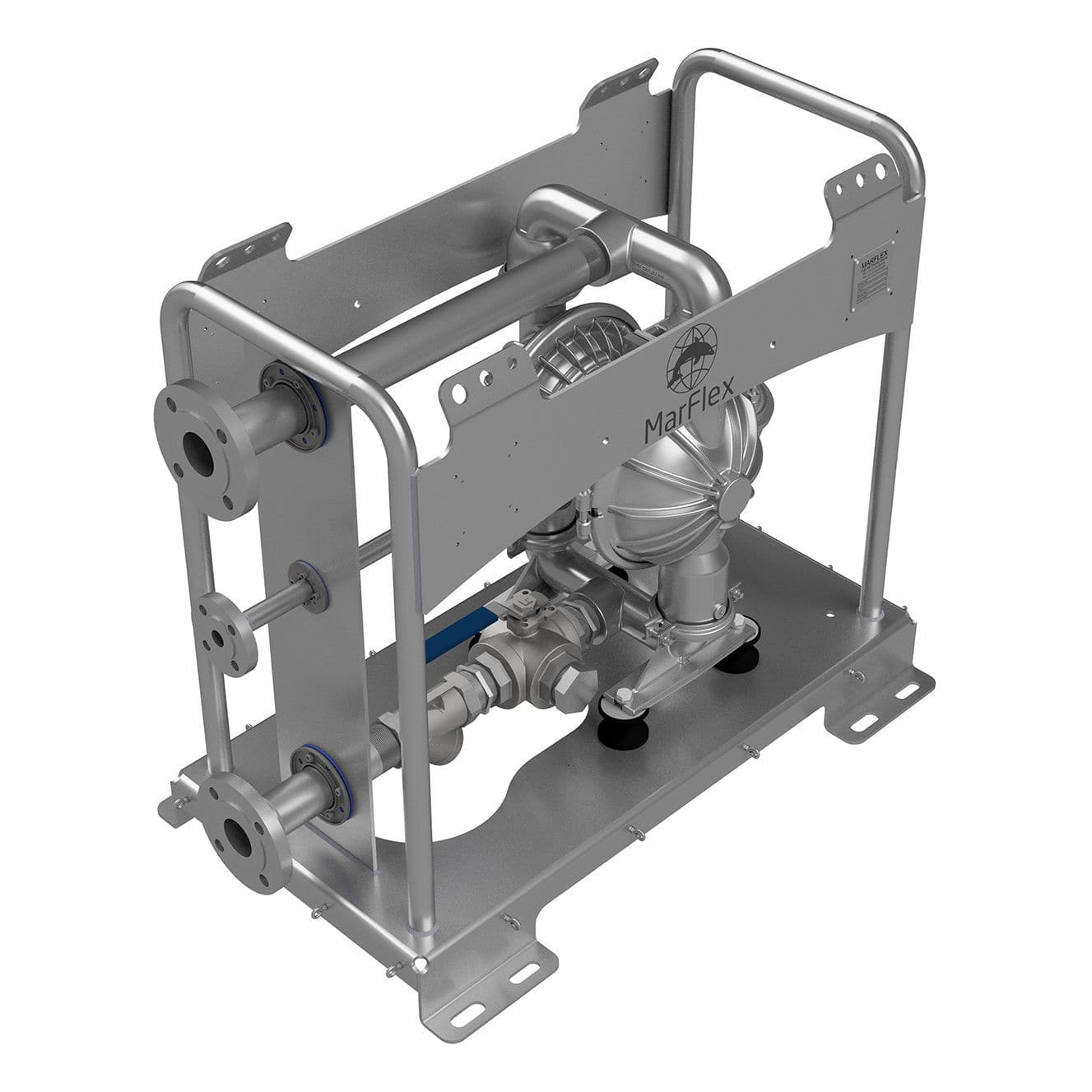
Typically a positive-displacement reciprocating or twin-screw unit, or on many modern tankers a steam or water-driven eductor with no moving parts in the cargo stream at all.

Stripping line and manifold

A dedicated small-bore line separate from the main cargo line, run to a low point in each tank so the last liquid can be drawn without competing with main-pump suction.

Vapour handling

A gas-liquid separator or vent arrangement ahead of the pump, since stripping duty routinely ingests a mixed liquid-vapour stream that would cavitate a centrifugal pump instantly.

Selection criteria

  • Cargo viscosity and vapour pressure -- eductors need a driving fluid supply and lose efficiency on high-viscosity products; reciprocating pumps handle a wider range but need more maintenance.
  • Stripping rate specified by the charter party or terminal, often expressed as a minimum final ullage or a maximum time to complete.
  • Compatibility with the cargo grade, since stripping systems on chemical tankers must be segregated per tank the same way the main system is.

Regulations and class

MARPOL Annex I and Annex II set the standard for how completely a tank must be stripped before ballasting or tank washing, and the stripping system's effectiveness directly determines the residue quantity that ends up in a slop tank rather than overboard. Class rules require the stripping system to be tested during cargo trials and included in the pump room's periodic survey.

Typical faults

  • Air ingress through a worn suction valve, which reads as low stripping rate and is often misdiagnosed as a worn pump.
  • Eductor driving-fluid pressure too low, common when the driving pump is shared with another duty and demand peaks simultaneously.
  • Stripping line blockage from wax or polymer buildup on cargoes prone to solidifying at ambient tank temperature.
  • Packing gland leakage on reciprocating types, a slow failure that shows up as cargo loss rather than a sudden alarm.

What to look for in a supplier

  • Cargo compatibility data for the actual product range the vessel trades, not a generic chemical resistance chart.
  • Spare parts commonality with the main cargo pumps where the fleet standardises on one manufacturer.
  • Documented stripping performance curves at realistic end-of-discharge suction conditions, not just clean-water test figures.

A stripping pump that looks fine on a water test can still fail the charterer's dry-tank requirement on a viscous cargo -- always check the stripping curve at the actual cargo viscosity and temperature, not the manufacturer's default figure.

Inspector Mode Show All 84 / 84 with inspector value

4 manufacturers · 84 models

Framo

21
Stripping Pump 25m3h crude unverified
Flow Rate (m³/h)
25
Head (m)
100
Cargo Type
crude
Material
SS316L
Common Failures & Inspection Points
  • Loss of suction from low tank level, vapor ingestion, blocked suction, or incorrect valve line-up causes cavitation, low discharge pressure, or loss of flow
  • Seal, bearing, shaft, impeller, hydraulic-drive, or electric-motor wear causes leakage, vibration, noise, or reduced capacity
  • Cargo deposits, corrosion, or foreign material restrict internal passages and reduce pump performance
  • Drive, hydraulic power, electrical protection, or control faults cause failed starting, trips, or unstable speed
  • Dry running, inadequate cooling, or operation outside the approved envelope causes rapid wear, overheating, or protective shutdown
Service: Check cargo compatibility, suction and discharge conditions, leakage, vibration, drive-system condition, bearings, seals, stripping performance, controls, emergency stops, and alarm history. Internal clearances and performance limits must be taken from manufacturer documentation and cargo-system procedures.
Spare Parts: Typical spares include seals, gaskets, bearings, wear components, hydraulic seal items where fitted, motor or starter parts, and critical sensors or control components specified by the manufacturer.
Use Cases: Used on oil, product, chemical, and other liquid-cargo vessels for loading, discharge, stripping, tank transfer, and recirculation duties.
Stripping Pump 25m3h product unverified
Flow Rate (m³/h)
25
Head (m)
100
Cargo Type
product
Material
SS316L
Common Failures & Inspection Points
  • Loss of suction from low tank level, vapor ingestion, blocked suction, or incorrect valve line-up causes cavitation, low discharge pressure, or loss of flow
  • Seal, bearing, shaft, impeller, hydraulic-drive, or electric-motor wear causes leakage, vibration, noise, or reduced capacity
  • Cargo deposits, corrosion, or foreign material restrict internal passages and reduce pump performance
  • Drive, hydraulic power, electrical protection, or control faults cause failed starting, trips, or unstable speed
  • Dry running, inadequate cooling, or operation outside the approved envelope causes rapid wear, overheating, or protective shutdown
Service: Check cargo compatibility, suction and discharge conditions, leakage, vibration, drive-system condition, bearings, seals, stripping performance, controls, emergency stops, and alarm history. Internal clearances and performance limits must be taken from manufacturer documentation and cargo-system procedures.
Spare Parts: Typical spares include seals, gaskets, bearings, wear components, hydraulic seal items where fitted, motor or starter parts, and critical sensors or control components specified by the manufacturer.
Use Cases: Used on oil, product, chemical, and other liquid-cargo vessels for loading, discharge, stripping, tank transfer, and recirculation duties.
Stripping Pump 25m3h chemical unverified
Flow Rate (m³/h)
25
Head (m)
100
Cargo Type
chemical
Material
SS316L
Common Failures & Inspection Points
  • Seal or packing leakage from wear, chemical attack or misalignment, typically indicated by visible cargo leakage, odor or pressure loss
  • Valve or pump internal wear from solids, cavitation or corrosive cargo, typically indicated by reduced transfer rate, abnormal noise or poor shutoff
  • Drive, hydraulic or electrical fault from contamination, overheating or control failure, typically indicated by slow response, inability to operate or trip alarms
  • Blocked suction, stripping or vent path from sediment, icing or debris, typically indicated by poor cargo flow, abnormal tank pressure or incomplete stripping
  • Instrumentation or remote-control failure from sensor, cabling or actuator faults, typically indicated by incorrect indication, failed remote operation or alarm discrepancies
Service: Inspect containment, seals, valves, pumps or vent components as applicable, verify remote controls and ESD interfaces, review leakage and alarm history, and confirm cargo compatibility; exact pressure, temperature and test criteria must come from approved manufacturer and vessel documentation.
Spare Parts: Carry seals, gaskets, packing, actuator seal kits, critical sensors/switches and approved valve or pump wear parts matched to the installed cargo service.
Use Cases: Used on oil, product, chemical and gas tankers and on offshore cargo-transfer installations according to the specific cargo-system duty. This entry applies specifically to the Stripping Pump variant identified as Framo Stripping Pump 25m3h chemical.
Stripping Pump 50m3h crude unverified
Flow Rate (m³/h)
50
Head (m)
100
Cargo Type
crude
Material
SS316L
Common Failures & Inspection Points
  • Loss of suction from low tank level, vapor ingestion, blocked suction, or incorrect valve line-up causes cavitation, low discharge pressure, or loss of flow
  • Seal, bearing, shaft, impeller, hydraulic-drive, or electric-motor wear causes leakage, vibration, noise, or reduced capacity
  • Cargo deposits, corrosion, or foreign material restrict internal passages and reduce pump performance
  • Drive, hydraulic power, electrical protection, or control faults cause failed starting, trips, or unstable speed
  • Dry running, inadequate cooling, or operation outside the approved envelope causes rapid wear, overheating, or protective shutdown
Service: Check cargo compatibility, suction and discharge conditions, leakage, vibration, drive-system condition, bearings, seals, stripping performance, controls, emergency stops, and alarm history. Internal clearances and performance limits must be taken from manufacturer documentation and cargo-system procedures.
Spare Parts: Typical spares include seals, gaskets, bearings, wear components, hydraulic seal items where fitted, motor or starter parts, and critical sensors or control components specified by the manufacturer.
Use Cases: Used on oil, product, chemical, and other liquid-cargo vessels for loading, discharge, stripping, tank transfer, and recirculation duties.
Stripping Pump 50m3h product unverified
Flow Rate (m³/h)
50
Head (m)
100
Cargo Type
product
Material
SS316L
Common Failures & Inspection Points
  • Loss of suction from low tank level, vapor ingestion, blocked suction, or incorrect valve line-up causes cavitation, low discharge pressure, or loss of flow
  • Seal, bearing, shaft, impeller, hydraulic-drive, or electric-motor wear causes leakage, vibration, noise, or reduced capacity
  • Cargo deposits, corrosion, or foreign material restrict internal passages and reduce pump performance
  • Drive, hydraulic power, electrical protection, or control faults cause failed starting, trips, or unstable speed
  • Dry running, inadequate cooling, or operation outside the approved envelope causes rapid wear, overheating, or protective shutdown
Service: Check cargo compatibility, suction and discharge conditions, leakage, vibration, drive-system condition, bearings, seals, stripping performance, controls, emergency stops, and alarm history. Internal clearances and performance limits must be taken from manufacturer documentation and cargo-system procedures.
Spare Parts: Typical spares include seals, gaskets, bearings, wear components, hydraulic seal items where fitted, motor or starter parts, and critical sensors or control components specified by the manufacturer.
Use Cases: Used on oil, product, chemical, and other liquid-cargo vessels for loading, discharge, stripping, tank transfer, and recirculation duties.
Stripping Pump 50m3h chemical unverified
Flow Rate (m³/h)
50
Head (m)
100
Cargo Type
chemical
Material
SS316L
Common Failures & Inspection Points
  • Seal or packing leakage from wear, chemical attack or misalignment, typically indicated by visible cargo leakage, odor or pressure loss
  • Valve or pump internal wear from solids, cavitation or corrosive cargo, typically indicated by reduced transfer rate, abnormal noise or poor shutoff
  • Drive, hydraulic or electrical fault from contamination, overheating or control failure, typically indicated by slow response, inability to operate or trip alarms
  • Blocked suction, stripping or vent path from sediment, icing or debris, typically indicated by poor cargo flow, abnormal tank pressure or incomplete stripping
  • Instrumentation or remote-control failure from sensor, cabling or actuator faults, typically indicated by incorrect indication, failed remote operation or alarm discrepancies
Service: Inspect containment, seals, valves, pumps or vent components as applicable, verify remote controls and ESD interfaces, review leakage and alarm history, and confirm cargo compatibility; exact pressure, temperature and test criteria must come from approved manufacturer and vessel documentation.
Spare Parts: Carry seals, gaskets, packing, actuator seal kits, critical sensors/switches and approved valve or pump wear parts matched to the installed cargo service.
Use Cases: Used on oil, product, chemical and gas tankers and on offshore cargo-transfer installations according to the specific cargo-system duty. This entry applies specifically to the Stripping Pump variant identified as Framo Stripping Pump 50m3h chemical.
Stripping Pump 75m3h crude unverified
Flow Rate (m³/h)
75
Head (m)
100
Cargo Type
crude
Material
SS316L
Common Failures & Inspection Points
  • Loss of suction from low tank level, vapor ingestion, blocked suction, or incorrect valve line-up causes cavitation, low discharge pressure, or loss of flow
  • Seal, bearing, shaft, impeller, hydraulic-drive, or electric-motor wear causes leakage, vibration, noise, or reduced capacity
  • Cargo deposits, corrosion, or foreign material restrict internal passages and reduce pump performance
  • Drive, hydraulic power, electrical protection, or control faults cause failed starting, trips, or unstable speed
  • Dry running, inadequate cooling, or operation outside the approved envelope causes rapid wear, overheating, or protective shutdown
Service: Check cargo compatibility, suction and discharge conditions, leakage, vibration, drive-system condition, bearings, seals, stripping performance, controls, emergency stops, and alarm history. Internal clearances and performance limits must be taken from manufacturer documentation and cargo-system procedures.
Spare Parts: Typical spares include seals, gaskets, bearings, wear components, hydraulic seal items where fitted, motor or starter parts, and critical sensors or control components specified by the manufacturer.
Use Cases: Used on oil, product, chemical, and other liquid-cargo vessels for loading, discharge, stripping, tank transfer, and recirculation duties.
Stripping Pump 75m3h product unverified
Flow Rate (m³/h)
75
Head (m)
100
Cargo Type
product
Material
SS316L
Common Failures & Inspection Points
  • Loss of suction from low tank level, vapor ingestion, blocked suction, or incorrect valve line-up causes cavitation, low discharge pressure, or loss of flow
  • Seal, bearing, shaft, impeller, hydraulic-drive, or electric-motor wear causes leakage, vibration, noise, or reduced capacity
  • Cargo deposits, corrosion, or foreign material restrict internal passages and reduce pump performance
  • Drive, hydraulic power, electrical protection, or control faults cause failed starting, trips, or unstable speed
  • Dry running, inadequate cooling, or operation outside the approved envelope causes rapid wear, overheating, or protective shutdown
Service: Check cargo compatibility, suction and discharge conditions, leakage, vibration, drive-system condition, bearings, seals, stripping performance, controls, emergency stops, and alarm history. Internal clearances and performance limits must be taken from manufacturer documentation and cargo-system procedures.
Spare Parts: Typical spares include seals, gaskets, bearings, wear components, hydraulic seal items where fitted, motor or starter parts, and critical sensors or control components specified by the manufacturer.
Use Cases: Used on oil, product, chemical, and other liquid-cargo vessels for loading, discharge, stripping, tank transfer, and recirculation duties.
Stripping Pump 75m3h chemical unverified
Flow Rate (m³/h)
75
Head (m)
100
Cargo Type
chemical
Material
SS316L
Common Failures & Inspection Points
  • Seal or packing leakage from wear, chemical attack or misalignment, typically indicated by visible cargo leakage, odor or pressure loss
  • Valve or pump internal wear from solids, cavitation or corrosive cargo, typically indicated by reduced transfer rate, abnormal noise or poor shutoff
  • Drive, hydraulic or electrical fault from contamination, overheating or control failure, typically indicated by slow response, inability to operate or trip alarms
  • Blocked suction, stripping or vent path from sediment, icing or debris, typically indicated by poor cargo flow, abnormal tank pressure or incomplete stripping
  • Instrumentation or remote-control failure from sensor, cabling or actuator faults, typically indicated by incorrect indication, failed remote operation or alarm discrepancies
Service: Inspect containment, seals, valves, pumps or vent components as applicable, verify remote controls and ESD interfaces, review leakage and alarm history, and confirm cargo compatibility; exact pressure, temperature and test criteria must come from approved manufacturer and vessel documentation.
Spare Parts: Carry seals, gaskets, packing, actuator seal kits, critical sensors/switches and approved valve or pump wear parts matched to the installed cargo service.
Use Cases: Used on oil, product, chemical and gas tankers and on offshore cargo-transfer installations according to the specific cargo-system duty. This entry applies specifically to the Stripping Pump variant identified as Framo Stripping Pump 75m3h chemical.
Stripping Pump 100m3h crude unverified
Flow Rate (m³/h)
100
Head (m)
100
Cargo Type
crude
Material
SS316L
Common Failures & Inspection Points
  • Loss of suction from low tank level, vapor ingestion, blocked suction, or incorrect valve line-up causes cavitation, low discharge pressure, or loss of flow
  • Seal, bearing, shaft, impeller, hydraulic-drive, or electric-motor wear causes leakage, vibration, noise, or reduced capacity
  • Cargo deposits, corrosion, or foreign material restrict internal passages and reduce pump performance
  • Drive, hydraulic power, electrical protection, or control faults cause failed starting, trips, or unstable speed
  • Dry running, inadequate cooling, or operation outside the approved envelope causes rapid wear, overheating, or protective shutdown
Service: Check cargo compatibility, suction and discharge conditions, leakage, vibration, drive-system condition, bearings, seals, stripping performance, controls, emergency stops, and alarm history. Internal clearances and performance limits must be taken from manufacturer documentation and cargo-system procedures.
Spare Parts: Typical spares include seals, gaskets, bearings, wear components, hydraulic seal items where fitted, motor or starter parts, and critical sensors or control components specified by the manufacturer.
Use Cases: Used on oil, product, chemical, and other liquid-cargo vessels for loading, discharge, stripping, tank transfer, and recirculation duties.
Stripping Pump 100m3h product unverified
Flow Rate (m³/h)
100
Head (m)
100
Cargo Type
product
Material
SS316L
Common Failures & Inspection Points
  • Seal or packing leakage from wear, chemical attack or misalignment, typically indicated by visible cargo leakage, odor or pressure loss
  • Valve or pump internal wear from solids, cavitation or corrosive cargo, typically indicated by reduced transfer rate, abnormal noise or poor shutoff
  • Drive, hydraulic or electrical fault from contamination, overheating or control failure, typically indicated by slow response, inability to operate or trip alarms
  • Blocked suction, stripping or vent path from sediment, icing or debris, typically indicated by poor cargo flow, abnormal tank pressure or incomplete stripping
  • Instrumentation or remote-control failure from sensor, cabling or actuator faults, typically indicated by incorrect indication, failed remote operation or alarm discrepancies
Service: Inspect containment, seals, valves, pumps or vent components as applicable, verify remote controls and ESD interfaces, review leakage and alarm history, and confirm cargo compatibility; exact pressure, temperature and test criteria must come from approved manufacturer and vessel documentation.
Spare Parts: Carry seals, gaskets, packing, actuator seal kits, critical sensors/switches and approved valve or pump wear parts matched to the installed cargo service.
Use Cases: Used on oil, product, chemical and gas tankers and on offshore cargo-transfer installations according to the specific cargo-system duty. This entry applies specifically to the Stripping Pump variant identified as Framo Stripping Pump 100m3h product.
Stripping Pump 100m3h chemical unverified
Flow Rate (m³/h)
100
Head (m)
100
Cargo Type
chemical
Material
SS316L
Common Failures & Inspection Points
  • Seal or packing leakage from wear, chemical attack or misalignment, typically indicated by visible cargo leakage, odor or pressure loss
  • Valve or pump internal wear from solids, cavitation or corrosive cargo, typically indicated by reduced transfer rate, abnormal noise or poor shutoff
  • Drive, hydraulic or electrical fault from contamination, overheating or control failure, typically indicated by slow response, inability to operate or trip alarms
  • Blocked suction, stripping or vent path from sediment, icing or debris, typically indicated by poor cargo flow, abnormal tank pressure or incomplete stripping
  • Instrumentation or remote-control failure from sensor, cabling or actuator faults, typically indicated by incorrect indication, failed remote operation or alarm discrepancies
Service: Inspect containment, seals, valves, pumps or vent components as applicable, verify remote controls and ESD interfaces, review leakage and alarm history, and confirm cargo compatibility; exact pressure, temperature and test criteria must come from approved manufacturer and vessel documentation.
Spare Parts: Carry seals, gaskets, packing, actuator seal kits, critical sensors/switches and approved valve or pump wear parts matched to the installed cargo service.
Use Cases: Used on oil, product, chemical and gas tankers and on offshore cargo-transfer installations according to the specific cargo-system duty. This entry applies specifically to the Stripping Pump variant identified as Framo Stripping Pump 100m3h chemical.
Stripping Pump 150m3h crude unverified
Flow Rate (m³/h)
150
Head (m)
100
Cargo Type
crude
Material
SS316L
Common Failures & Inspection Points
  • Loss of suction from low tank level, vapor ingestion, blocked suction, or incorrect valve line-up causes cavitation, low discharge pressure, or loss of flow
  • Seal, bearing, shaft, impeller, hydraulic-drive, or electric-motor wear causes leakage, vibration, noise, or reduced capacity
  • Cargo deposits, corrosion, or foreign material restrict internal passages and reduce pump performance
  • Drive, hydraulic power, electrical protection, or control faults cause failed starting, trips, or unstable speed
  • Dry running, inadequate cooling, or operation outside the approved envelope causes rapid wear, overheating, or protective shutdown
Service: Check cargo compatibility, suction and discharge conditions, leakage, vibration, drive-system condition, bearings, seals, stripping performance, controls, emergency stops, and alarm history. Internal clearances and performance limits must be taken from manufacturer documentation and cargo-system procedures.
Spare Parts: Typical spares include seals, gaskets, bearings, wear components, hydraulic seal items where fitted, motor or starter parts, and critical sensors or control components specified by the manufacturer.
Use Cases: Used on oil, product, chemical, and other liquid-cargo vessels for loading, discharge, stripping, tank transfer, and recirculation duties.
Stripping Pump 150m3h product unverified
Flow Rate (m³/h)
150
Head (m)
100
Cargo Type
product
Material
SS316L
Common Failures & Inspection Points
  • Seal or packing leakage from wear, chemical attack or misalignment, typically indicated by visible cargo leakage, odor or pressure loss
  • Valve or pump internal wear from solids, cavitation or corrosive cargo, typically indicated by reduced transfer rate, abnormal noise or poor shutoff
  • Drive, hydraulic or electrical fault from contamination, overheating or control failure, typically indicated by slow response, inability to operate or trip alarms
  • Blocked suction, stripping or vent path from sediment, icing or debris, typically indicated by poor cargo flow, abnormal tank pressure or incomplete stripping
  • Instrumentation or remote-control failure from sensor, cabling or actuator faults, typically indicated by incorrect indication, failed remote operation or alarm discrepancies
Service: Inspect containment, seals, valves, pumps or vent components as applicable, verify remote controls and ESD interfaces, review leakage and alarm history, and confirm cargo compatibility; exact pressure, temperature and test criteria must come from approved manufacturer and vessel documentation.
Spare Parts: Carry seals, gaskets, packing, actuator seal kits, critical sensors/switches and approved valve or pump wear parts matched to the installed cargo service.
Use Cases: Used on oil, product, chemical and gas tankers and on offshore cargo-transfer installations according to the specific cargo-system duty. This entry applies specifically to the Stripping Pump variant identified as Framo Stripping Pump 150m3h product.
Stripping Pump 150m3h chemical unverified
Flow Rate (m³/h)
150
Head (m)
100
Cargo Type
chemical
Material
SS316L
Common Failures & Inspection Points
  • Seal or packing leakage from wear, chemical attack or misalignment, typically indicated by visible cargo leakage, odor or pressure loss
  • Valve or pump internal wear from solids, cavitation or corrosive cargo, typically indicated by reduced transfer rate, abnormal noise or poor shutoff
  • Drive, hydraulic or electrical fault from contamination, overheating or control failure, typically indicated by slow response, inability to operate or trip alarms
  • Blocked suction, stripping or vent path from sediment, icing or debris, typically indicated by poor cargo flow, abnormal tank pressure or incomplete stripping
  • Instrumentation or remote-control failure from sensor, cabling or actuator faults, typically indicated by incorrect indication, failed remote operation or alarm discrepancies
Service: Inspect containment, seals, valves, pumps or vent components as applicable, verify remote controls and ESD interfaces, review leakage and alarm history, and confirm cargo compatibility; exact pressure, temperature and test criteria must come from approved manufacturer and vessel documentation.
Spare Parts: Carry seals, gaskets, packing, actuator seal kits, critical sensors/switches and approved valve or pump wear parts matched to the installed cargo service.
Use Cases: Used on oil, product, chemical and gas tankers and on offshore cargo-transfer installations according to the specific cargo-system duty. This entry applies specifically to the Stripping Pump variant identified as Framo Stripping Pump 150m3h chemical.
Stripping Pump 200m3h crude unverified
Flow Rate (m³/h)
200
Head (m)
100
Cargo Type
crude
Material
SS316L
Common Failures & Inspection Points
  • Loss of suction from low tank level, vapor ingestion, blocked suction, or incorrect valve line-up causes cavitation, low discharge pressure, or loss of flow
  • Seal, bearing, shaft, impeller, hydraulic-drive, or electric-motor wear causes leakage, vibration, noise, or reduced capacity
  • Cargo deposits, corrosion, or foreign material restrict internal passages and reduce pump performance
  • Drive, hydraulic power, electrical protection, or control faults cause failed starting, trips, or unstable speed
  • Dry running, inadequate cooling, or operation outside the approved envelope causes rapid wear, overheating, or protective shutdown
Service: Check cargo compatibility, suction and discharge conditions, leakage, vibration, drive-system condition, bearings, seals, stripping performance, controls, emergency stops, and alarm history. Internal clearances and performance limits must be taken from manufacturer documentation and cargo-system procedures.
Spare Parts: Typical spares include seals, gaskets, bearings, wear components, hydraulic seal items where fitted, motor or starter parts, and critical sensors or control components specified by the manufacturer.
Use Cases: Used on oil, product, chemical, and other liquid-cargo vessels for loading, discharge, stripping, tank transfer, and recirculation duties.
Stripping Pump 200m3h product unverified
Flow Rate (m³/h)
200
Head (m)
100
Cargo Type
product
Material
SS316L
Common Failures & Inspection Points
  • Seal or packing leakage from wear, chemical attack or misalignment, typically indicated by visible cargo leakage, odor or pressure loss
  • Valve or pump internal wear from solids, cavitation or corrosive cargo, typically indicated by reduced transfer rate, abnormal noise or poor shutoff
  • Drive, hydraulic or electrical fault from contamination, overheating or control failure, typically indicated by slow response, inability to operate or trip alarms
  • Blocked suction, stripping or vent path from sediment, icing or debris, typically indicated by poor cargo flow, abnormal tank pressure or incomplete stripping
  • Instrumentation or remote-control failure from sensor, cabling or actuator faults, typically indicated by incorrect indication, failed remote operation or alarm discrepancies
Service: Inspect containment, seals, valves, pumps or vent components as applicable, verify remote controls and ESD interfaces, review leakage and alarm history, and confirm cargo compatibility; exact pressure, temperature and test criteria must come from approved manufacturer and vessel documentation.
Spare Parts: Carry seals, gaskets, packing, actuator seal kits, critical sensors/switches and approved valve or pump wear parts matched to the installed cargo service.
Use Cases: Used on oil, product, chemical and gas tankers and on offshore cargo-transfer installations according to the specific cargo-system duty. This entry applies specifically to the Stripping Pump variant identified as Framo Stripping Pump 200m3h product.
Stripping Pump 200m3h chemical unverified
Flow Rate (m³/h)
200
Head (m)
100
Cargo Type
chemical
Material
SS316L
Common Failures & Inspection Points
  • Seal or packing leakage from wear, chemical attack or misalignment, typically indicated by visible cargo leakage, odor or pressure loss
  • Valve or pump internal wear from solids, cavitation or corrosive cargo, typically indicated by reduced transfer rate, abnormal noise or poor shutoff
  • Drive, hydraulic or electrical fault from contamination, overheating or control failure, typically indicated by slow response, inability to operate or trip alarms
  • Blocked suction, stripping or vent path from sediment, icing or debris, typically indicated by poor cargo flow, abnormal tank pressure or incomplete stripping
  • Instrumentation or remote-control failure from sensor, cabling or actuator faults, typically indicated by incorrect indication, failed remote operation or alarm discrepancies
Service: Inspect containment, seals, valves, pumps or vent components as applicable, verify remote controls and ESD interfaces, review leakage and alarm history, and confirm cargo compatibility; exact pressure, temperature and test criteria must come from approved manufacturer and vessel documentation.
Spare Parts: Carry seals, gaskets, packing, actuator seal kits, critical sensors/switches and approved valve or pump wear parts matched to the installed cargo service.
Use Cases: Used on oil, product, chemical and gas tankers and on offshore cargo-transfer installations according to the specific cargo-system duty. This entry applies specifically to the Stripping Pump variant identified as Framo Stripping Pump 200m3h chemical.
Stripping Pump 300m3h crude unverified
Flow Rate (m³/h)
300
Head (m)
100
Cargo Type
crude
Material
SS316L
Common Failures & Inspection Points
  • Loss of suction from low tank level, vapor ingestion, blocked suction, or incorrect valve line-up causes cavitation, low discharge pressure, or loss of flow
  • Seal, bearing, shaft, impeller, hydraulic-drive, or electric-motor wear causes leakage, vibration, noise, or reduced capacity
  • Cargo deposits, corrosion, or foreign material restrict internal passages and reduce pump performance
  • Drive, hydraulic power, electrical protection, or control faults cause failed starting, trips, or unstable speed
  • Dry running, inadequate cooling, or operation outside the approved envelope causes rapid wear, overheating, or protective shutdown
Service: Check cargo compatibility, suction and discharge conditions, leakage, vibration, drive-system condition, bearings, seals, stripping performance, controls, emergency stops, and alarm history. Internal clearances and performance limits must be taken from manufacturer documentation and cargo-system procedures.
Spare Parts: Typical spares include seals, gaskets, bearings, wear components, hydraulic seal items where fitted, motor or starter parts, and critical sensors or control components specified by the manufacturer.
Use Cases: Used on oil, product, chemical, and other liquid-cargo vessels for loading, discharge, stripping, tank transfer, and recirculation duties.
Stripping Pump 300m3h product unverified
Flow Rate (m³/h)
300
Head (m)
100
Cargo Type
product
Material
SS316L
Common Failures & Inspection Points
  • Seal or packing leakage from wear, chemical attack or misalignment, typically indicated by visible cargo leakage, odor or pressure loss
  • Valve or pump internal wear from solids, cavitation or corrosive cargo, typically indicated by reduced transfer rate, abnormal noise or poor shutoff
  • Drive, hydraulic or electrical fault from contamination, overheating or control failure, typically indicated by slow response, inability to operate or trip alarms
  • Blocked suction, stripping or vent path from sediment, icing or debris, typically indicated by poor cargo flow, abnormal tank pressure or incomplete stripping
  • Instrumentation or remote-control failure from sensor, cabling or actuator faults, typically indicated by incorrect indication, failed remote operation or alarm discrepancies
Service: Inspect containment, seals, valves, pumps or vent components as applicable, verify remote controls and ESD interfaces, review leakage and alarm history, and confirm cargo compatibility; exact pressure, temperature and test criteria must come from approved manufacturer and vessel documentation.
Spare Parts: Carry seals, gaskets, packing, actuator seal kits, critical sensors/switches and approved valve or pump wear parts matched to the installed cargo service.
Use Cases: Used on oil, product, chemical and gas tankers and on offshore cargo-transfer installations according to the specific cargo-system duty. This entry applies specifically to the Stripping Pump variant identified as Framo Stripping Pump 300m3h product.
Stripping Pump 300m3h chemical unverified
Flow Rate (m³/h)
300
Head (m)
100
Cargo Type
chemical
Material
SS316L
Common Failures & Inspection Points
  • Seal or packing leakage from wear, chemical attack or misalignment, typically indicated by visible cargo leakage, odor or pressure loss
  • Valve or pump internal wear from solids, cavitation or corrosive cargo, typically indicated by reduced transfer rate, abnormal noise or poor shutoff
  • Drive, hydraulic or electrical fault from contamination, overheating or control failure, typically indicated by slow response, inability to operate or trip alarms
  • Blocked suction, stripping or vent path from sediment, icing or debris, typically indicated by poor cargo flow, abnormal tank pressure or incomplete stripping
  • Instrumentation or remote-control failure from sensor, cabling or actuator faults, typically indicated by incorrect indication, failed remote operation or alarm discrepancies
Service: Inspect containment, seals, valves, pumps or vent components as applicable, verify remote controls and ESD interfaces, review leakage and alarm history, and confirm cargo compatibility; exact pressure, temperature and test criteria must come from approved manufacturer and vessel documentation.
Spare Parts: Carry seals, gaskets, packing, actuator seal kits, critical sensors/switches and approved valve or pump wear parts matched to the installed cargo service.
Use Cases: Used on oil, product, chemical and gas tankers and on offshore cargo-transfer installations according to the specific cargo-system duty. This entry applies specifically to the Stripping Pump variant identified as Framo Stripping Pump 300m3h chemical.

Marflex

21
Marflex Stripping Pump 25m3h crude
Stripping Pump 25m3h crude unverified
Flow Rate (m³/h)
25
Head (m)
100
Cargo Type
crude
Material
SS316L
Common Failures & Inspection Points
  • Loss of suction from low tank level, vapor ingestion, blocked suction, or incorrect valve line-up causes cavitation, low discharge pressure, or loss of flow
  • Seal, bearing, shaft, impeller, hydraulic-drive, or electric-motor wear causes leakage, vibration, noise, or reduced capacity
  • Cargo deposits, corrosion, or foreign material restrict internal passages and reduce pump performance
  • Drive, hydraulic power, electrical protection, or control faults cause failed starting, trips, or unstable speed
  • Dry running, inadequate cooling, or operation outside the approved envelope causes rapid wear, overheating, or protective shutdown
Service: Check cargo compatibility, suction and discharge conditions, leakage, vibration, drive-system condition, bearings, seals, stripping performance, controls, emergency stops, and alarm history. Internal clearances and performance limits must be taken from manufacturer documentation and cargo-system procedures.
Spare Parts: Typical spares include seals, gaskets, bearings, wear components, hydraulic seal items where fitted, motor or starter parts, and critical sensors or control components specified by the manufacturer.
Use Cases: Used on oil, product, chemical, and other liquid-cargo vessels for loading, discharge, stripping, tank transfer, and recirculation duties.
Marflex Stripping Pump 25m3h product
Stripping Pump 25m3h product unverified
Flow Rate (m³/h)
25
Head (m)
100
Cargo Type
product
Material
SS316L
Common Failures & Inspection Points
  • Seal or packing leakage from wear, chemical attack or misalignment, typically indicated by visible cargo leakage, odor or pressure loss
  • Valve or pump internal wear from solids, cavitation or corrosive cargo, typically indicated by reduced transfer rate, abnormal noise or poor shutoff
  • Drive, hydraulic or electrical fault from contamination, overheating or control failure, typically indicated by slow response, inability to operate or trip alarms
  • Blocked suction, stripping or vent path from sediment, icing or debris, typically indicated by poor cargo flow, abnormal tank pressure or incomplete stripping
  • Instrumentation or remote-control failure from sensor, cabling or actuator faults, typically indicated by incorrect indication, failed remote operation or alarm discrepancies
Service: Inspect containment, seals, valves, pumps or vent components as applicable, verify remote controls and ESD interfaces, review leakage and alarm history, and confirm cargo compatibility; exact pressure, temperature and test criteria must come from approved manufacturer and vessel documentation.
Spare Parts: Carry seals, gaskets, packing, actuator seal kits, critical sensors/switches and approved valve or pump wear parts matched to the installed cargo service.
Use Cases: Used on oil, product, chemical and gas tankers and on offshore cargo-transfer installations according to the specific cargo-system duty. This entry applies specifically to the Stripping Pump variant identified as Marflex Stripping Pump 25m3h product.
Marflex Stripping Pump 25m3h chemical
Stripping Pump 25m3h chemical unverified
Flow Rate (m³/h)
25
Head (m)
100
Cargo Type
chemical
Material
SS316L
Common Failures & Inspection Points
  • Seal or packing leakage from wear, chemical attack or misalignment, typically indicated by visible cargo leakage, odor or pressure loss
  • Valve or pump internal wear from solids, cavitation or corrosive cargo, typically indicated by reduced transfer rate, abnormal noise or poor shutoff
  • Drive, hydraulic or electrical fault from contamination, overheating or control failure, typically indicated by slow response, inability to operate or trip alarms
  • Blocked suction, stripping or vent path from sediment, icing or debris, typically indicated by poor cargo flow, abnormal tank pressure or incomplete stripping
  • Instrumentation or remote-control failure from sensor, cabling or actuator faults, typically indicated by incorrect indication, failed remote operation or alarm discrepancies
Service: Inspect containment, seals, valves, pumps or vent components as applicable, verify remote controls and ESD interfaces, review leakage and alarm history, and confirm cargo compatibility; exact pressure, temperature and test criteria must come from approved manufacturer and vessel documentation.
Spare Parts: Carry seals, gaskets, packing, actuator seal kits, critical sensors/switches and approved valve or pump wear parts matched to the installed cargo service.
Use Cases: Used on oil, product, chemical and gas tankers and on offshore cargo-transfer installations according to the specific cargo-system duty. This entry applies specifically to the Stripping Pump variant identified as Marflex Stripping Pump 25m3h chemical.
Marflex Stripping Pump 50m3h crude
Stripping Pump 50m3h crude unverified
Flow Rate (m³/h)
50
Head (m)
100
Cargo Type
crude
Material
SS316L
Common Failures & Inspection Points
  • Loss of suction from low tank level, vapor ingestion, blocked suction, or incorrect valve line-up causes cavitation, low discharge pressure, or loss of flow
  • Seal, bearing, shaft, impeller, hydraulic-drive, or electric-motor wear causes leakage, vibration, noise, or reduced capacity
  • Cargo deposits, corrosion, or foreign material restrict internal passages and reduce pump performance
  • Drive, hydraulic power, electrical protection, or control faults cause failed starting, trips, or unstable speed
  • Dry running, inadequate cooling, or operation outside the approved envelope causes rapid wear, overheating, or protective shutdown
Service: Check cargo compatibility, suction and discharge conditions, leakage, vibration, drive-system condition, bearings, seals, stripping performance, controls, emergency stops, and alarm history. Internal clearances and performance limits must be taken from manufacturer documentation and cargo-system procedures.
Spare Parts: Typical spares include seals, gaskets, bearings, wear components, hydraulic seal items where fitted, motor or starter parts, and critical sensors or control components specified by the manufacturer.
Use Cases: Used on oil, product, chemical, and other liquid-cargo vessels for loading, discharge, stripping, tank transfer, and recirculation duties.
Marflex Stripping Pump 50m3h product
Stripping Pump 50m3h product unverified
Flow Rate (m³/h)
50
Head (m)
100
Cargo Type
product
Material
SS316L
Common Failures & Inspection Points
  • Seal or packing leakage from wear, chemical attack or misalignment, typically indicated by visible cargo leakage, odor or pressure loss
  • Valve or pump internal wear from solids, cavitation or corrosive cargo, typically indicated by reduced transfer rate, abnormal noise or poor shutoff
  • Drive, hydraulic or electrical fault from contamination, overheating or control failure, typically indicated by slow response, inability to operate or trip alarms
  • Blocked suction, stripping or vent path from sediment, icing or debris, typically indicated by poor cargo flow, abnormal tank pressure or incomplete stripping
  • Instrumentation or remote-control failure from sensor, cabling or actuator faults, typically indicated by incorrect indication, failed remote operation or alarm discrepancies
Service: Inspect containment, seals, valves, pumps or vent components as applicable, verify remote controls and ESD interfaces, review leakage and alarm history, and confirm cargo compatibility; exact pressure, temperature and test criteria must come from approved manufacturer and vessel documentation.
Spare Parts: Carry seals, gaskets, packing, actuator seal kits, critical sensors/switches and approved valve or pump wear parts matched to the installed cargo service.
Use Cases: Used on oil, product, chemical and gas tankers and on offshore cargo-transfer installations according to the specific cargo-system duty. This entry applies specifically to the Stripping Pump variant identified as Marflex Stripping Pump 50m3h product.
Marflex Stripping Pump 50m3h chemical
Stripping Pump 50m3h chemical unverified
Flow Rate (m³/h)
50
Head (m)
100
Cargo Type
chemical
Material
SS316L
Common Failures & Inspection Points
  • Seal or packing leakage from wear, chemical attack or misalignment, typically indicated by visible cargo leakage, odor or pressure loss
  • Valve or pump internal wear from solids, cavitation or corrosive cargo, typically indicated by reduced transfer rate, abnormal noise or poor shutoff
  • Drive, hydraulic or electrical fault from contamination, overheating or control failure, typically indicated by slow response, inability to operate or trip alarms
  • Blocked suction, stripping or vent path from sediment, icing or debris, typically indicated by poor cargo flow, abnormal tank pressure or incomplete stripping
  • Instrumentation or remote-control failure from sensor, cabling or actuator faults, typically indicated by incorrect indication, failed remote operation or alarm discrepancies
Service: Inspect containment, seals, valves, pumps or vent components as applicable, verify remote controls and ESD interfaces, review leakage and alarm history, and confirm cargo compatibility; exact pressure, temperature and test criteria must come from approved manufacturer and vessel documentation.
Spare Parts: Carry seals, gaskets, packing, actuator seal kits, critical sensors/switches and approved valve or pump wear parts matched to the installed cargo service.
Use Cases: Used on oil, product, chemical and gas tankers and on offshore cargo-transfer installations according to the specific cargo-system duty. This entry applies specifically to the Stripping Pump variant identified as Marflex Stripping Pump 50m3h chemical.
Stripping Pump 75m3h crude unverified
Flow Rate (m³/h)
75
Head (m)
100
Cargo Type
crude
Material
SS316L
Common Failures & Inspection Points
  • Loss of suction from low tank level, vapor ingestion, blocked suction, or incorrect valve line-up causes cavitation, low discharge pressure, or loss of flow
  • Seal, bearing, shaft, impeller, hydraulic-drive, or electric-motor wear causes leakage, vibration, noise, or reduced capacity
  • Cargo deposits, corrosion, or foreign material restrict internal passages and reduce pump performance
  • Drive, hydraulic power, electrical protection, or control faults cause failed starting, trips, or unstable speed
  • Dry running, inadequate cooling, or operation outside the approved envelope causes rapid wear, overheating, or protective shutdown
Service: Check cargo compatibility, suction and discharge conditions, leakage, vibration, drive-system condition, bearings, seals, stripping performance, controls, emergency stops, and alarm history. Internal clearances and performance limits must be taken from manufacturer documentation and cargo-system procedures.
Spare Parts: Typical spares include seals, gaskets, bearings, wear components, hydraulic seal items where fitted, motor or starter parts, and critical sensors or control components specified by the manufacturer.
Use Cases: Used on oil, product, chemical, and other liquid-cargo vessels for loading, discharge, stripping, tank transfer, and recirculation duties.
Marflex Stripping Pump 75m3h product
Stripping Pump 75m3h product unverified
Flow Rate (m³/h)
75
Head (m)
100
Cargo Type
product
Material
SS316L
Common Failures & Inspection Points
  • Seal or packing leakage from wear, chemical attack or misalignment, typically indicated by visible cargo leakage, odor or pressure loss
  • Valve or pump internal wear from solids, cavitation or corrosive cargo, typically indicated by reduced transfer rate, abnormal noise or poor shutoff
  • Drive, hydraulic or electrical fault from contamination, overheating or control failure, typically indicated by slow response, inability to operate or trip alarms
  • Blocked suction, stripping or vent path from sediment, icing or debris, typically indicated by poor cargo flow, abnormal tank pressure or incomplete stripping
  • Instrumentation or remote-control failure from sensor, cabling or actuator faults, typically indicated by incorrect indication, failed remote operation or alarm discrepancies
Service: Inspect containment, seals, valves, pumps or vent components as applicable, verify remote controls and ESD interfaces, review leakage and alarm history, and confirm cargo compatibility; exact pressure, temperature and test criteria must come from approved manufacturer and vessel documentation.
Spare Parts: Carry seals, gaskets, packing, actuator seal kits, critical sensors/switches and approved valve or pump wear parts matched to the installed cargo service.
Use Cases: Used on oil, product, chemical and gas tankers and on offshore cargo-transfer installations according to the specific cargo-system duty. This entry applies specifically to the Stripping Pump variant identified as Marflex Stripping Pump 75m3h product.
Marflex Stripping Pump 75m3h chemical
Stripping Pump 75m3h chemical unverified
Flow Rate (m³/h)
75
Head (m)
100
Cargo Type
chemical
Material
SS316L
Common Failures & Inspection Points
  • Seal or packing leakage from wear, chemical attack or misalignment, typically indicated by visible cargo leakage, odor or pressure loss
  • Valve or pump internal wear from solids, cavitation or corrosive cargo, typically indicated by reduced transfer rate, abnormal noise or poor shutoff
  • Drive, hydraulic or electrical fault from contamination, overheating or control failure, typically indicated by slow response, inability to operate or trip alarms
  • Blocked suction, stripping or vent path from sediment, icing or debris, typically indicated by poor cargo flow, abnormal tank pressure or incomplete stripping
  • Instrumentation or remote-control failure from sensor, cabling or actuator faults, typically indicated by incorrect indication, failed remote operation or alarm discrepancies
Service: Inspect containment, seals, valves, pumps or vent components as applicable, verify remote controls and ESD interfaces, review leakage and alarm history, and confirm cargo compatibility; exact pressure, temperature and test criteria must come from approved manufacturer and vessel documentation.
Spare Parts: Carry seals, gaskets, packing, actuator seal kits, critical sensors/switches and approved valve or pump wear parts matched to the installed cargo service.
Use Cases: Used on oil, product, chemical and gas tankers and on offshore cargo-transfer installations according to the specific cargo-system duty. This entry applies specifically to the Stripping Pump variant identified as Marflex Stripping Pump 75m3h chemical.
Stripping Pump 100m3h crude unverified
Flow Rate (m³/h)
100
Head (m)
100
Cargo Type
crude
Material
SS316L
Common Failures & Inspection Points
  • Seal or packing leakage from wear, chemical attack or misalignment, typically indicated by visible cargo leakage, odor or pressure loss
  • Valve or pump internal wear from solids, cavitation or corrosive cargo, typically indicated by reduced transfer rate, abnormal noise or poor shutoff
  • Drive, hydraulic or electrical fault from contamination, overheating or control failure, typically indicated by slow response, inability to operate or trip alarms
  • Blocked suction, stripping or vent path from sediment, icing or debris, typically indicated by poor cargo flow, abnormal tank pressure or incomplete stripping
  • Instrumentation or remote-control failure from sensor, cabling or actuator faults, typically indicated by incorrect indication, failed remote operation or alarm discrepancies
Service: Inspect containment, seals, valves, pumps or vent components as applicable, verify remote controls and ESD interfaces, review leakage and alarm history, and confirm cargo compatibility; exact pressure, temperature and test criteria must come from approved manufacturer and vessel documentation.
Spare Parts: Carry seals, gaskets, packing, actuator seal kits, critical sensors/switches and approved valve or pump wear parts matched to the installed cargo service.
Use Cases: Used on oil, product, chemical and gas tankers and on offshore cargo-transfer installations according to the specific cargo-system duty. This entry applies specifically to the Stripping Pump variant identified as Marflex Stripping Pump 100m3h crude.
Marflex Stripping Pump 100m3h product
Stripping Pump 100m3h product unverified
Flow Rate (m³/h)
100
Head (m)
100
Cargo Type
product
Material
SS316L
Common Failures & Inspection Points
  • Seal or packing leakage from wear, chemical attack or misalignment, typically indicated by visible cargo leakage, odor or pressure loss
  • Valve or pump internal wear from solids, cavitation or corrosive cargo, typically indicated by reduced transfer rate, abnormal noise or poor shutoff
  • Drive, hydraulic or electrical fault from contamination, overheating or control failure, typically indicated by slow response, inability to operate or trip alarms
  • Blocked suction, stripping or vent path from sediment, icing or debris, typically indicated by poor cargo flow, abnormal tank pressure or incomplete stripping
  • Instrumentation or remote-control failure from sensor, cabling or actuator faults, typically indicated by incorrect indication, failed remote operation or alarm discrepancies
Service: Inspect containment, seals, valves, pumps or vent components as applicable, verify remote controls and ESD interfaces, review leakage and alarm history, and confirm cargo compatibility; exact pressure, temperature and test criteria must come from approved manufacturer and vessel documentation.
Spare Parts: Carry seals, gaskets, packing, actuator seal kits, critical sensors/switches and approved valve or pump wear parts matched to the installed cargo service.
Use Cases: Used on oil, product, chemical and gas tankers and on offshore cargo-transfer installations according to the specific cargo-system duty. This entry applies specifically to the Stripping Pump variant identified as Marflex Stripping Pump 100m3h product.
Marflex Stripping Pump 100m3h chemical
Stripping Pump 100m3h chemical unverified
Flow Rate (m³/h)
100
Head (m)
100
Cargo Type
chemical
Material
SS316L
Common Failures & Inspection Points
  • Cavitation from poor suction, low tank level or restricted valves causes vibration, noise and reduced cargo rate
  • Mechanical-seal or shaft-seal wear causes cargo leakage into the pump room
  • Bearing, shaft or coupling wear causes abnormal vibration, noise or rising temperature
  • Impeller erosion, corrosion or fouling reduces discharge pressure and capacity
  • Drive, governor, steam, electric or control faults as applicable cause reduced speed, inability to start or protective shutdown
Service: Inspect seals, bearings, coupling or drive, vibration, suction and discharge condition and pump-room leakage. Confirm valve line-up and stripping practice follow the approved cargo procedure. Monitor pump-room atmosphere and investigate cargo leakage promptly. Refer to the manufacturer documentation for the exact figure for clearances, pressure and wear limits.
Spare Parts: Carry seal kits, bearings where approved for onboard service, coupling parts, gaskets, critical impeller or wear parts and drive-control spares.
Use Cases: Oil, product and chemical tanker cargo discharge and circulation.
Stripping Pump 150m3h crude unverified
Flow Rate (m³/h)
150
Head (m)
100
Cargo Type
crude
Material
SS316L
Common Failures & Inspection Points
  • Seal or packing leakage from wear, chemical attack or misalignment, typically indicated by visible cargo leakage, odor or pressure loss
  • Valve or pump internal wear from solids, cavitation or corrosive cargo, typically indicated by reduced transfer rate, abnormal noise or poor shutoff
  • Drive, hydraulic or electrical fault from contamination, overheating or control failure, typically indicated by slow response, inability to operate or trip alarms
  • Blocked suction, stripping or vent path from sediment, icing or debris, typically indicated by poor cargo flow, abnormal tank pressure or incomplete stripping
  • Instrumentation or remote-control failure from sensor, cabling or actuator faults, typically indicated by incorrect indication, failed remote operation or alarm discrepancies
Service: Inspect containment, seals, valves, pumps or vent components as applicable, verify remote controls and ESD interfaces, review leakage and alarm history, and confirm cargo compatibility; exact pressure, temperature and test criteria must come from approved manufacturer and vessel documentation.
Spare Parts: Carry seals, gaskets, packing, actuator seal kits, critical sensors/switches and approved valve or pump wear parts matched to the installed cargo service.
Use Cases: Used on oil, product, chemical and gas tankers and on offshore cargo-transfer installations according to the specific cargo-system duty. This entry applies specifically to the Stripping Pump variant identified as Marflex Stripping Pump 150m3h crude.
Marflex Stripping Pump 150m3h product
Stripping Pump 150m3h product unverified
Flow Rate (m³/h)
150
Head (m)
100
Cargo Type
product
Material
SS316L
Common Failures & Inspection Points
  • Seal or packing leakage from wear, chemical attack or misalignment, typically indicated by visible cargo leakage, odor or pressure loss
  • Valve or pump internal wear from solids, cavitation or corrosive cargo, typically indicated by reduced transfer rate, abnormal noise or poor shutoff
  • Drive, hydraulic or electrical fault from contamination, overheating or control failure, typically indicated by slow response, inability to operate or trip alarms
  • Blocked suction, stripping or vent path from sediment, icing or debris, typically indicated by poor cargo flow, abnormal tank pressure or incomplete stripping
  • Instrumentation or remote-control failure from sensor, cabling or actuator faults, typically indicated by incorrect indication, failed remote operation or alarm discrepancies
Service: Inspect containment, seals, valves, pumps or vent components as applicable, verify remote controls and ESD interfaces, review leakage and alarm history, and confirm cargo compatibility; exact pressure, temperature and test criteria must come from approved manufacturer and vessel documentation.
Spare Parts: Carry seals, gaskets, packing, actuator seal kits, critical sensors/switches and approved valve or pump wear parts matched to the installed cargo service.
Use Cases: Used on oil, product, chemical and gas tankers and on offshore cargo-transfer installations according to the specific cargo-system duty. This entry applies specifically to the Stripping Pump variant identified as Marflex Stripping Pump 150m3h product.
Marflex Stripping Pump 150m3h chemical
Stripping Pump 150m3h chemical unverified
Flow Rate (m³/h)
150
Head (m)
100
Cargo Type
chemical
Material
SS316L
Common Failures & Inspection Points
  • Cavitation from poor suction, low tank level or restricted valves causes vibration, noise and reduced cargo rate
  • Mechanical-seal or shaft-seal wear causes cargo leakage into the pump room
  • Bearing, shaft or coupling wear causes abnormal vibration, noise or rising temperature
  • Impeller erosion, corrosion or fouling reduces discharge pressure and capacity
  • Drive, governor, steam, electric or control faults as applicable cause reduced speed, inability to start or protective shutdown
Service: Inspect seals, bearings, coupling or drive, vibration, suction and discharge condition and pump-room leakage. Confirm valve line-up and stripping practice follow the approved cargo procedure. Monitor pump-room atmosphere and investigate cargo leakage promptly. Refer to the manufacturer documentation for the exact figure for clearances, pressure and wear limits.
Spare Parts: Carry seal kits, bearings where approved for onboard service, coupling parts, gaskets, critical impeller or wear parts and drive-control spares.
Use Cases: Oil, product and chemical tanker cargo discharge and circulation.
Stripping Pump 200m3h crude unverified
Flow Rate (m³/h)
200
Head (m)
100
Cargo Type
crude
Material
SS316L
Common Failures & Inspection Points
  • Seal or packing leakage from wear, chemical attack or misalignment, typically indicated by visible cargo leakage, odor or pressure loss
  • Valve or pump internal wear from solids, cavitation or corrosive cargo, typically indicated by reduced transfer rate, abnormal noise or poor shutoff
  • Drive, hydraulic or electrical fault from contamination, overheating or control failure, typically indicated by slow response, inability to operate or trip alarms
  • Blocked suction, stripping or vent path from sediment, icing or debris, typically indicated by poor cargo flow, abnormal tank pressure or incomplete stripping
  • Instrumentation or remote-control failure from sensor, cabling or actuator faults, typically indicated by incorrect indication, failed remote operation or alarm discrepancies
Service: Inspect containment, seals, valves, pumps or vent components as applicable, verify remote controls and ESD interfaces, review leakage and alarm history, and confirm cargo compatibility; exact pressure, temperature and test criteria must come from approved manufacturer and vessel documentation.
Spare Parts: Carry seals, gaskets, packing, actuator seal kits, critical sensors/switches and approved valve or pump wear parts matched to the installed cargo service.
Use Cases: Used on oil, product, chemical and gas tankers and on offshore cargo-transfer installations according to the specific cargo-system duty. This entry applies specifically to the Stripping Pump variant identified as Marflex Stripping Pump 200m3h crude.
Marflex Stripping Pump 200m3h product
Stripping Pump 200m3h product unverified
Flow Rate (m³/h)
200
Head (m)
100
Cargo Type
product
Material
SS316L
Common Failures & Inspection Points
  • Seal or packing leakage from wear, chemical attack or misalignment, typically indicated by visible cargo leakage, odor or pressure loss
  • Valve or pump internal wear from solids, cavitation or corrosive cargo, typically indicated by reduced transfer rate, abnormal noise or poor shutoff
  • Drive, hydraulic or electrical fault from contamination, overheating or control failure, typically indicated by slow response, inability to operate or trip alarms
  • Blocked suction, stripping or vent path from sediment, icing or debris, typically indicated by poor cargo flow, abnormal tank pressure or incomplete stripping
  • Instrumentation or remote-control failure from sensor, cabling or actuator faults, typically indicated by incorrect indication, failed remote operation or alarm discrepancies
Service: Inspect containment, seals, valves, pumps or vent components as applicable, verify remote controls and ESD interfaces, review leakage and alarm history, and confirm cargo compatibility; exact pressure, temperature and test criteria must come from approved manufacturer and vessel documentation.
Spare Parts: Carry seals, gaskets, packing, actuator seal kits, critical sensors/switches and approved valve or pump wear parts matched to the installed cargo service.
Use Cases: Used on oil, product, chemical and gas tankers and on offshore cargo-transfer installations according to the specific cargo-system duty. This entry applies specifically to the Stripping Pump variant identified as Marflex Stripping Pump 200m3h product.
Stripping Pump 200m3h chemical unverified
Flow Rate (m³/h)
200
Head (m)
100
Cargo Type
chemical
Material
SS316L
Common Failures & Inspection Points
  • Cavitation from poor suction, low tank level or restricted valves causes vibration, noise and reduced cargo rate
  • Mechanical-seal or shaft-seal wear causes cargo leakage into the pump room
  • Bearing, shaft or coupling wear causes abnormal vibration, noise or rising temperature
  • Impeller erosion, corrosion or fouling reduces discharge pressure and capacity
  • Drive, governor, steam, electric or control faults as applicable cause reduced speed, inability to start or protective shutdown
Service: Inspect seals, bearings, coupling or drive, vibration, suction and discharge condition and pump-room leakage. Confirm valve line-up and stripping practice follow the approved cargo procedure. Monitor pump-room atmosphere and investigate cargo leakage promptly. Refer to the manufacturer documentation for the exact figure for clearances, pressure and wear limits.
Spare Parts: Carry seal kits, bearings where approved for onboard service, coupling parts, gaskets, critical impeller or wear parts and drive-control spares.
Use Cases: Oil, product and chemical tanker cargo discharge and circulation.
Stripping Pump 300m3h crude unverified
Flow Rate (m³/h)
300
Head (m)
100
Cargo Type
crude
Material
SS316L
Common Failures & Inspection Points
  • Seal or packing leakage from wear, chemical attack or misalignment, typically indicated by visible cargo leakage, odor or pressure loss
  • Valve or pump internal wear from solids, cavitation or corrosive cargo, typically indicated by reduced transfer rate, abnormal noise or poor shutoff
  • Drive, hydraulic or electrical fault from contamination, overheating or control failure, typically indicated by slow response, inability to operate or trip alarms
  • Blocked suction, stripping or vent path from sediment, icing or debris, typically indicated by poor cargo flow, abnormal tank pressure or incomplete stripping
  • Instrumentation or remote-control failure from sensor, cabling or actuator faults, typically indicated by incorrect indication, failed remote operation or alarm discrepancies
Service: Inspect containment, seals, valves, pumps or vent components as applicable, verify remote controls and ESD interfaces, review leakage and alarm history, and confirm cargo compatibility; exact pressure, temperature and test criteria must come from approved manufacturer and vessel documentation.
Spare Parts: Carry seals, gaskets, packing, actuator seal kits, critical sensors/switches and approved valve or pump wear parts matched to the installed cargo service.
Use Cases: Used on oil, product, chemical and gas tankers and on offshore cargo-transfer installations according to the specific cargo-system duty. This entry applies specifically to the Stripping Pump variant identified as Marflex Stripping Pump 300m3h crude.
Marflex Stripping Pump 300m3h product
Stripping Pump 300m3h product unverified
Flow Rate (m³/h)
300
Head (m)
100
Cargo Type
product
Material
SS316L
Common Failures & Inspection Points
  • Seal or packing leakage from wear, chemical attack or misalignment, typically indicated by visible cargo leakage, odor or pressure loss
  • Valve or pump internal wear from solids, cavitation or corrosive cargo, typically indicated by reduced transfer rate, abnormal noise or poor shutoff
  • Drive, hydraulic or electrical fault from contamination, overheating or control failure, typically indicated by slow response, inability to operate or trip alarms
  • Blocked suction, stripping or vent path from sediment, icing or debris, typically indicated by poor cargo flow, abnormal tank pressure or incomplete stripping
  • Instrumentation or remote-control failure from sensor, cabling or actuator faults, typically indicated by incorrect indication, failed remote operation or alarm discrepancies
Service: Inspect containment, seals, valves, pumps or vent components as applicable, verify remote controls and ESD interfaces, review leakage and alarm history, and confirm cargo compatibility; exact pressure, temperature and test criteria must come from approved manufacturer and vessel documentation.
Spare Parts: Carry seals, gaskets, packing, actuator seal kits, critical sensors/switches and approved valve or pump wear parts matched to the installed cargo service.
Use Cases: Used on oil, product, chemical and gas tankers and on offshore cargo-transfer installations according to the specific cargo-system duty. This entry applies specifically to the Stripping Pump variant identified as Marflex Stripping Pump 300m3h product.
Marflex Stripping Pump 300m3h chemical
Stripping Pump 300m3h chemical unverified
Flow Rate (m³/h)
300
Head (m)
100
Cargo Type
chemical
Material
SS316L
Common Failures & Inspection Points
  • Cavitation from poor suction, low tank level or restricted valves causes vibration, noise and reduced cargo rate
  • Mechanical-seal or shaft-seal wear causes cargo leakage into the pump room
  • Bearing, shaft or coupling wear causes abnormal vibration, noise or rising temperature
  • Impeller erosion, corrosion or fouling reduces discharge pressure and capacity
  • Drive, governor, steam, electric or control faults as applicable cause reduced speed, inability to start or protective shutdown
Service: Inspect seals, bearings, coupling or drive, vibration, suction and discharge condition and pump-room leakage. Confirm valve line-up and stripping practice follow the approved cargo procedure. Monitor pump-room atmosphere and investigate cargo leakage promptly. Refer to the manufacturer documentation for the exact figure for clearances, pressure and wear limits.
Spare Parts: Carry seal kits, bearings where approved for onboard service, coupling parts, gaskets, critical impeller or wear parts and drive-control spares.
Use Cases: Oil, product and chemical tanker cargo discharge and circulation.

SVANEHØJ

21
Stripping Pump 25m3h crude unverified
Flow Rate (m³/h)
25
Head (m)
100
Cargo Type
crude
Material
SS316L
Common Failures & Inspection Points
  • Seal or packing leakage from wear, chemical attack or misalignment, typically indicated by visible cargo leakage, odor or pressure loss
  • Valve or pump internal wear from solids, cavitation or corrosive cargo, typically indicated by reduced transfer rate, abnormal noise or poor shutoff
  • Drive, hydraulic or electrical fault from contamination, overheating or control failure, typically indicated by slow response, inability to operate or trip alarms
  • Blocked suction, stripping or vent path from sediment, icing or debris, typically indicated by poor cargo flow, abnormal tank pressure or incomplete stripping
  • Instrumentation or remote-control failure from sensor, cabling or actuator faults, typically indicated by incorrect indication, failed remote operation or alarm discrepancies
Service: Inspect containment, seals, valves, pumps or vent components as applicable, verify remote controls and ESD interfaces, review leakage and alarm history, and confirm cargo compatibility; exact pressure, temperature and test criteria must come from approved manufacturer and vessel documentation.
Spare Parts: Carry seals, gaskets, packing, actuator seal kits, critical sensors/switches and approved valve or pump wear parts matched to the installed cargo service.
Use Cases: Used on oil, product, chemical and gas tankers and on offshore cargo-transfer installations according to the specific cargo-system duty. This entry applies specifically to the Stripping Pump variant identified as SVANEHØJ Stripping Pump 25m3h crude.
Stripping Pump 25m3h product unverified
Flow Rate (m³/h)
25
Head (m)
100
Cargo Type
product
Material
SS316L
Common Failures & Inspection Points
  • Seal or packing leakage from wear, chemical attack or misalignment, typically indicated by visible cargo leakage, odor or pressure loss
  • Valve or pump internal wear from solids, cavitation or corrosive cargo, typically indicated by reduced transfer rate, abnormal noise or poor shutoff
  • Drive, hydraulic or electrical fault from contamination, overheating or control failure, typically indicated by slow response, inability to operate or trip alarms
  • Blocked suction, stripping or vent path from sediment, icing or debris, typically indicated by poor cargo flow, abnormal tank pressure or incomplete stripping
  • Instrumentation or remote-control failure from sensor, cabling or actuator faults, typically indicated by incorrect indication, failed remote operation or alarm discrepancies
Service: Inspect containment, seals, valves, pumps or vent components as applicable, verify remote controls and ESD interfaces, review leakage and alarm history, and confirm cargo compatibility; exact pressure, temperature and test criteria must come from approved manufacturer and vessel documentation.
Spare Parts: Carry seals, gaskets, packing, actuator seal kits, critical sensors/switches and approved valve or pump wear parts matched to the installed cargo service.
Use Cases: Used on oil, product, chemical and gas tankers and on offshore cargo-transfer installations according to the specific cargo-system duty. This entry applies specifically to the Stripping Pump variant identified as SVANEHØJ Stripping Pump 25m3h product.
Stripping Pump 25m3h chemical unverified
Flow Rate (m³/h)
25
Head (m)
100
Cargo Type
chemical
Material
SS316L
Common Failures & Inspection Points
  • Cavitation from poor suction, low tank level or restricted valves causes vibration, noise and reduced cargo rate
  • Mechanical-seal or shaft-seal wear causes cargo leakage into the pump room
  • Bearing, shaft or coupling wear causes abnormal vibration, noise or rising temperature
  • Impeller erosion, corrosion or fouling reduces discharge pressure and capacity
  • Drive, governor, steam, electric or control faults as applicable cause reduced speed, inability to start or protective shutdown
Service: Inspect seals, bearings, coupling or drive, vibration, suction and discharge condition and pump-room leakage. Confirm valve line-up and stripping practice follow the approved cargo procedure. Monitor pump-room atmosphere and investigate cargo leakage promptly. Refer to the manufacturer documentation for the exact figure for clearances, pressure and wear limits.
Spare Parts: Carry seal kits, bearings where approved for onboard service, coupling parts, gaskets, critical impeller or wear parts and drive-control spares.
Use Cases: Oil, product and chemical tanker cargo discharge and circulation.
Stripping Pump 50m3h crude unverified
Flow Rate (m³/h)
50
Head (m)
100
Cargo Type
crude
Material
SS316L
Common Failures & Inspection Points
  • Seal or packing leakage from wear, chemical attack or misalignment, typically indicated by visible cargo leakage, odor or pressure loss
  • Valve or pump internal wear from solids, cavitation or corrosive cargo, typically indicated by reduced transfer rate, abnormal noise or poor shutoff
  • Drive, hydraulic or electrical fault from contamination, overheating or control failure, typically indicated by slow response, inability to operate or trip alarms
  • Blocked suction, stripping or vent path from sediment, icing or debris, typically indicated by poor cargo flow, abnormal tank pressure or incomplete stripping
  • Instrumentation or remote-control failure from sensor, cabling or actuator faults, typically indicated by incorrect indication, failed remote operation or alarm discrepancies
Service: Inspect containment, seals, valves, pumps or vent components as applicable, verify remote controls and ESD interfaces, review leakage and alarm history, and confirm cargo compatibility; exact pressure, temperature and test criteria must come from approved manufacturer and vessel documentation.
Spare Parts: Carry seals, gaskets, packing, actuator seal kits, critical sensors/switches and approved valve or pump wear parts matched to the installed cargo service.
Use Cases: Used on oil, product, chemical and gas tankers and on offshore cargo-transfer installations according to the specific cargo-system duty. This entry applies specifically to the Stripping Pump variant identified as SVANEHØJ Stripping Pump 50m3h crude.
Stripping Pump 50m3h product unverified
Flow Rate (m³/h)
50
Head (m)
100
Cargo Type
product
Material
SS316L
Common Failures & Inspection Points
  • Seal or packing leakage from wear, chemical attack or misalignment, typically indicated by visible cargo leakage, odor or pressure loss
  • Valve or pump internal wear from solids, cavitation or corrosive cargo, typically indicated by reduced transfer rate, abnormal noise or poor shutoff
  • Drive, hydraulic or electrical fault from contamination, overheating or control failure, typically indicated by slow response, inability to operate or trip alarms
  • Blocked suction, stripping or vent path from sediment, icing or debris, typically indicated by poor cargo flow, abnormal tank pressure or incomplete stripping
  • Instrumentation or remote-control failure from sensor, cabling or actuator faults, typically indicated by incorrect indication, failed remote operation or alarm discrepancies
Service: Inspect containment, seals, valves, pumps or vent components as applicable, verify remote controls and ESD interfaces, review leakage and alarm history, and confirm cargo compatibility; exact pressure, temperature and test criteria must come from approved manufacturer and vessel documentation.
Spare Parts: Carry seals, gaskets, packing, actuator seal kits, critical sensors/switches and approved valve or pump wear parts matched to the installed cargo service.
Use Cases: Used on oil, product, chemical and gas tankers and on offshore cargo-transfer installations according to the specific cargo-system duty. This entry applies specifically to the Stripping Pump variant identified as SVANEHØJ Stripping Pump 50m3h product.
Stripping Pump 50m3h chemical unverified
Flow Rate (m³/h)
50
Head (m)
100
Cargo Type
chemical
Material
SS316L
Common Failures & Inspection Points
  • Cavitation from poor suction, low tank level or restricted valves causes vibration, noise and reduced cargo rate
  • Mechanical-seal or shaft-seal wear causes cargo leakage into the pump room
  • Bearing, shaft or coupling wear causes abnormal vibration, noise or rising temperature
  • Impeller erosion, corrosion or fouling reduces discharge pressure and capacity
  • Drive, governor, steam, electric or control faults as applicable cause reduced speed, inability to start or protective shutdown
Service: Inspect seals, bearings, coupling or drive, vibration, suction and discharge condition and pump-room leakage. Confirm valve line-up and stripping practice follow the approved cargo procedure. Monitor pump-room atmosphere and investigate cargo leakage promptly. Refer to the manufacturer documentation for the exact figure for clearances, pressure and wear limits.
Spare Parts: Carry seal kits, bearings where approved for onboard service, coupling parts, gaskets, critical impeller or wear parts and drive-control spares.
Use Cases: Oil, product and chemical tanker cargo discharge and circulation.
Stripping Pump 75m3h crude unverified
Flow Rate (m³/h)
75
Head (m)
100
Cargo Type
crude
Material
SS316L
Common Failures & Inspection Points
  • Seal or packing leakage from wear, chemical attack or misalignment, typically indicated by visible cargo leakage, odor or pressure loss
  • Valve or pump internal wear from solids, cavitation or corrosive cargo, typically indicated by reduced transfer rate, abnormal noise or poor shutoff
  • Drive, hydraulic or electrical fault from contamination, overheating or control failure, typically indicated by slow response, inability to operate or trip alarms
  • Blocked suction, stripping or vent path from sediment, icing or debris, typically indicated by poor cargo flow, abnormal tank pressure or incomplete stripping
  • Instrumentation or remote-control failure from sensor, cabling or actuator faults, typically indicated by incorrect indication, failed remote operation or alarm discrepancies
Service: Inspect containment, seals, valves, pumps or vent components as applicable, verify remote controls and ESD interfaces, review leakage and alarm history, and confirm cargo compatibility; exact pressure, temperature and test criteria must come from approved manufacturer and vessel documentation.
Spare Parts: Carry seals, gaskets, packing, actuator seal kits, critical sensors/switches and approved valve or pump wear parts matched to the installed cargo service.
Use Cases: Used on oil, product, chemical and gas tankers and on offshore cargo-transfer installations according to the specific cargo-system duty. This entry applies specifically to the Stripping Pump variant identified as SVANEHØJ Stripping Pump 75m3h crude.
Stripping Pump 75m3h product unverified
Flow Rate (m³/h)
75
Head (m)
100
Cargo Type
product
Material
SS316L
Common Failures & Inspection Points
  • Seal or packing leakage from wear, chemical attack or misalignment, typically indicated by visible cargo leakage, odor or pressure loss
  • Valve or pump internal wear from solids, cavitation or corrosive cargo, typically indicated by reduced transfer rate, abnormal noise or poor shutoff
  • Drive, hydraulic or electrical fault from contamination, overheating or control failure, typically indicated by slow response, inability to operate or trip alarms
  • Blocked suction, stripping or vent path from sediment, icing or debris, typically indicated by poor cargo flow, abnormal tank pressure or incomplete stripping
  • Instrumentation or remote-control failure from sensor, cabling or actuator faults, typically indicated by incorrect indication, failed remote operation or alarm discrepancies
Service: Inspect containment, seals, valves, pumps or vent components as applicable, verify remote controls and ESD interfaces, review leakage and alarm history, and confirm cargo compatibility; exact pressure, temperature and test criteria must come from approved manufacturer and vessel documentation.
Spare Parts: Carry seals, gaskets, packing, actuator seal kits, critical sensors/switches and approved valve or pump wear parts matched to the installed cargo service.
Use Cases: Used on oil, product, chemical and gas tankers and on offshore cargo-transfer installations according to the specific cargo-system duty. This entry applies specifically to the Stripping Pump variant identified as SVANEHØJ Stripping Pump 75m3h product.
Stripping Pump 75m3h chemical unverified
Flow Rate (m³/h)
75
Head (m)
100
Cargo Type
chemical
Material
SS316L
Common Failures & Inspection Points
  • Cavitation from poor suction, low tank level or restricted valves causes vibration, noise and reduced cargo rate
  • Mechanical-seal or shaft-seal wear causes cargo leakage into the pump room
  • Bearing, shaft or coupling wear causes abnormal vibration, noise or rising temperature
  • Impeller erosion, corrosion or fouling reduces discharge pressure and capacity
  • Drive, governor, steam, electric or control faults as applicable cause reduced speed, inability to start or protective shutdown
Service: Inspect seals, bearings, coupling or drive, vibration, suction and discharge condition and pump-room leakage. Confirm valve line-up and stripping practice follow the approved cargo procedure. Monitor pump-room atmosphere and investigate cargo leakage promptly. Refer to the manufacturer documentation for the exact figure for clearances, pressure and wear limits.
Spare Parts: Carry seal kits, bearings where approved for onboard service, coupling parts, gaskets, critical impeller or wear parts and drive-control spares.
Use Cases: Oil, product and chemical tanker cargo discharge and circulation.
Stripping Pump 100m3h crude unverified
Flow Rate (m³/h)
100
Head (m)
100
Cargo Type
crude
Material
SS316L
Common Failures & Inspection Points
  • Seal or packing leakage from wear, chemical attack or misalignment, typically indicated by visible cargo leakage, odor or pressure loss
  • Valve or pump internal wear from solids, cavitation or corrosive cargo, typically indicated by reduced transfer rate, abnormal noise or poor shutoff
  • Drive, hydraulic or electrical fault from contamination, overheating or control failure, typically indicated by slow response, inability to operate or trip alarms
  • Blocked suction, stripping or vent path from sediment, icing or debris, typically indicated by poor cargo flow, abnormal tank pressure or incomplete stripping
  • Instrumentation or remote-control failure from sensor, cabling or actuator faults, typically indicated by incorrect indication, failed remote operation or alarm discrepancies
Service: Inspect containment, seals, valves, pumps or vent components as applicable, verify remote controls and ESD interfaces, review leakage and alarm history, and confirm cargo compatibility; exact pressure, temperature and test criteria must come from approved manufacturer and vessel documentation.
Spare Parts: Carry seals, gaskets, packing, actuator seal kits, critical sensors/switches and approved valve or pump wear parts matched to the installed cargo service.
Use Cases: Used on oil, product, chemical and gas tankers and on offshore cargo-transfer installations according to the specific cargo-system duty. This entry applies specifically to the Stripping Pump variant identified as SVANEHØJ Stripping Pump 100m3h crude.
Stripping Pump 100m3h product unverified
Flow Rate (m³/h)
100
Head (m)
100
Cargo Type
product
Material
SS316L
Common Failures & Inspection Points
  • Cavitation from poor suction, low tank level or restricted valves causes vibration, noise and reduced cargo rate
  • Mechanical-seal or shaft-seal wear causes cargo leakage into the pump room
  • Bearing, shaft or coupling wear causes abnormal vibration, noise or rising temperature
  • Impeller erosion, corrosion or fouling reduces discharge pressure and capacity
  • Drive, governor, steam, electric or control faults as applicable cause reduced speed, inability to start or protective shutdown
Service: Inspect seals, bearings, coupling or drive, vibration, suction and discharge condition and pump-room leakage. Confirm valve line-up and stripping practice follow the approved cargo procedure. Monitor pump-room atmosphere and investigate cargo leakage promptly. Refer to the manufacturer documentation for the exact figure for clearances, pressure and wear limits.
Spare Parts: Carry seal kits, bearings where approved for onboard service, coupling parts, gaskets, critical impeller or wear parts and drive-control spares.
Use Cases: Oil, product and chemical tanker cargo discharge and circulation.
Stripping Pump 100m3h chemical unverified
Flow Rate (m³/h)
100
Head (m)
100
Cargo Type
chemical
Material
SS316L
Common Failures & Inspection Points
  • Cavitation from poor suction, low tank level or restricted valves causes vibration, noise and reduced cargo rate
  • Mechanical-seal or shaft-seal wear causes cargo leakage into the pump room
  • Bearing, shaft or coupling wear causes abnormal vibration, noise or rising temperature
  • Impeller erosion, corrosion or fouling reduces discharge pressure and capacity
  • Drive, governor, steam, electric or control faults as applicable cause reduced speed, inability to start or protective shutdown
Service: Inspect seals, bearings, coupling or drive, vibration, suction and discharge condition and pump-room leakage. Confirm valve line-up and stripping practice follow the approved cargo procedure. Monitor pump-room atmosphere and investigate cargo leakage promptly. Refer to the manufacturer documentation for the exact figure for clearances, pressure and wear limits.
Spare Parts: Carry seal kits, bearings where approved for onboard service, coupling parts, gaskets, critical impeller or wear parts and drive-control spares.
Use Cases: Oil, product and chemical tanker cargo discharge and circulation.
Stripping Pump 150m3h crude unverified
Flow Rate (m³/h)
150
Head (m)
100
Cargo Type
crude
Material
SS316L
Common Failures & Inspection Points
  • Seal or packing leakage from wear, chemical attack or misalignment, typically indicated by visible cargo leakage, odor or pressure loss
  • Valve or pump internal wear from solids, cavitation or corrosive cargo, typically indicated by reduced transfer rate, abnormal noise or poor shutoff
  • Drive, hydraulic or electrical fault from contamination, overheating or control failure, typically indicated by slow response, inability to operate or trip alarms
  • Blocked suction, stripping or vent path from sediment, icing or debris, typically indicated by poor cargo flow, abnormal tank pressure or incomplete stripping
  • Instrumentation or remote-control failure from sensor, cabling or actuator faults, typically indicated by incorrect indication, failed remote operation or alarm discrepancies
Service: Inspect containment, seals, valves, pumps or vent components as applicable, verify remote controls and ESD interfaces, review leakage and alarm history, and confirm cargo compatibility; exact pressure, temperature and test criteria must come from approved manufacturer and vessel documentation.
Spare Parts: Carry seals, gaskets, packing, actuator seal kits, critical sensors/switches and approved valve or pump wear parts matched to the installed cargo service.
Use Cases: Used on oil, product, chemical and gas tankers and on offshore cargo-transfer installations according to the specific cargo-system duty. This entry applies specifically to the Stripping Pump variant identified as SVANEHØJ Stripping Pump 150m3h crude.
Stripping Pump 150m3h product unverified
Flow Rate (m³/h)
150
Head (m)
100
Cargo Type
product
Material
SS316L
Common Failures & Inspection Points
  • Cavitation from poor suction, low tank level or restricted valves causes vibration, noise and reduced cargo rate
  • Mechanical-seal or shaft-seal wear causes cargo leakage into the pump room
  • Bearing, shaft or coupling wear causes abnormal vibration, noise or rising temperature
  • Impeller erosion, corrosion or fouling reduces discharge pressure and capacity
  • Drive, governor, steam, electric or control faults as applicable cause reduced speed, inability to start or protective shutdown
Service: Inspect seals, bearings, coupling or drive, vibration, suction and discharge condition and pump-room leakage. Confirm valve line-up and stripping practice follow the approved cargo procedure. Monitor pump-room atmosphere and investigate cargo leakage promptly. Refer to the manufacturer documentation for the exact figure for clearances, pressure and wear limits.
Spare Parts: Carry seal kits, bearings where approved for onboard service, coupling parts, gaskets, critical impeller or wear parts and drive-control spares.
Use Cases: Oil, product and chemical tanker cargo discharge and circulation.
Stripping Pump 150m3h chemical unverified
Flow Rate (m³/h)
150
Head (m)
100
Cargo Type
chemical
Material
SS316L
Common Failures & Inspection Points
  • Cavitation from poor suction, low tank level or restricted valves causes vibration, noise and reduced cargo rate
  • Mechanical-seal or shaft-seal wear causes cargo leakage into the pump room
  • Bearing, shaft or coupling wear causes abnormal vibration, noise or rising temperature
  • Impeller erosion, corrosion or fouling reduces discharge pressure and capacity
  • Drive, governor, steam, electric or control faults as applicable cause reduced speed, inability to start or protective shutdown
Service: Inspect seals, bearings, coupling or drive, vibration, suction and discharge condition and pump-room leakage. Confirm valve line-up and stripping practice follow the approved cargo procedure. Monitor pump-room atmosphere and investigate cargo leakage promptly. Refer to the manufacturer documentation for the exact figure for clearances, pressure and wear limits.
Spare Parts: Carry seal kits, bearings where approved for onboard service, coupling parts, gaskets, critical impeller or wear parts and drive-control spares.
Use Cases: Oil, product and chemical tanker cargo discharge and circulation.
Stripping Pump 200m3h crude unverified
Flow Rate (m³/h)
200
Head (m)
100
Cargo Type
crude
Material
SS316L
Common Failures & Inspection Points
  • Seal or packing leakage from wear, chemical attack or misalignment, typically indicated by visible cargo leakage, odor or pressure loss
  • Valve or pump internal wear from solids, cavitation or corrosive cargo, typically indicated by reduced transfer rate, abnormal noise or poor shutoff
  • Drive, hydraulic or electrical fault from contamination, overheating or control failure, typically indicated by slow response, inability to operate or trip alarms
  • Blocked suction, stripping or vent path from sediment, icing or debris, typically indicated by poor cargo flow, abnormal tank pressure or incomplete stripping
  • Instrumentation or remote-control failure from sensor, cabling or actuator faults, typically indicated by incorrect indication, failed remote operation or alarm discrepancies
Service: Inspect containment, seals, valves, pumps or vent components as applicable, verify remote controls and ESD interfaces, review leakage and alarm history, and confirm cargo compatibility; exact pressure, temperature and test criteria must come from approved manufacturer and vessel documentation.
Spare Parts: Carry seals, gaskets, packing, actuator seal kits, critical sensors/switches and approved valve or pump wear parts matched to the installed cargo service.
Use Cases: Used on oil, product, chemical and gas tankers and on offshore cargo-transfer installations according to the specific cargo-system duty. This entry applies specifically to the Stripping Pump variant identified as SVANEHØJ Stripping Pump 200m3h crude.
Stripping Pump 200m3h product unverified
Flow Rate (m³/h)
200
Head (m)
100
Cargo Type
product
Material
SS316L
Common Failures & Inspection Points
  • Cavitation from poor suction, low tank level or restricted valves causes vibration, noise and reduced cargo rate
  • Mechanical-seal or shaft-seal wear causes cargo leakage into the pump room
  • Bearing, shaft or coupling wear causes abnormal vibration, noise or rising temperature
  • Impeller erosion, corrosion or fouling reduces discharge pressure and capacity
  • Drive, governor, steam, electric or control faults as applicable cause reduced speed, inability to start or protective shutdown
Service: Inspect seals, bearings, coupling or drive, vibration, suction and discharge condition and pump-room leakage. Confirm valve line-up and stripping practice follow the approved cargo procedure. Monitor pump-room atmosphere and investigate cargo leakage promptly. Refer to the manufacturer documentation for the exact figure for clearances, pressure and wear limits.
Spare Parts: Carry seal kits, bearings where approved for onboard service, coupling parts, gaskets, critical impeller or wear parts and drive-control spares.
Use Cases: Oil, product and chemical tanker cargo discharge and circulation.
Stripping Pump 200m3h chemical unverified
Flow Rate (m³/h)
200
Head (m)
100
Cargo Type
chemical
Material
SS316L
Common Failures & Inspection Points
  • Cavitation from poor suction, low tank level or restricted valves causes vibration, noise and reduced cargo rate
  • Mechanical-seal or shaft-seal wear causes cargo leakage into the pump room
  • Bearing, shaft or coupling wear causes abnormal vibration, noise or rising temperature
  • Impeller erosion, corrosion or fouling reduces discharge pressure and capacity
  • Drive, governor, steam, electric or control faults as applicable cause reduced speed, inability to start or protective shutdown
Service: Inspect seals, bearings, coupling or drive, vibration, suction and discharge condition and pump-room leakage. Confirm valve line-up and stripping practice follow the approved cargo procedure. Monitor pump-room atmosphere and investigate cargo leakage promptly. Refer to the manufacturer documentation for the exact figure for clearances, pressure and wear limits.
Spare Parts: Carry seal kits, bearings where approved for onboard service, coupling parts, gaskets, critical impeller or wear parts and drive-control spares.
Use Cases: Oil, product and chemical tanker cargo discharge and circulation.
Stripping Pump 300m3h crude unverified
Flow Rate (m³/h)
300
Head (m)
100
Cargo Type
crude
Material
SS316L
Common Failures & Inspection Points
  • Seal or packing leakage from wear, chemical attack or misalignment, typically indicated by visible cargo leakage, odor or pressure loss
  • Valve or pump internal wear from solids, cavitation or corrosive cargo, typically indicated by reduced transfer rate, abnormal noise or poor shutoff
  • Drive, hydraulic or electrical fault from contamination, overheating or control failure, typically indicated by slow response, inability to operate or trip alarms
  • Blocked suction, stripping or vent path from sediment, icing or debris, typically indicated by poor cargo flow, abnormal tank pressure or incomplete stripping
  • Instrumentation or remote-control failure from sensor, cabling or actuator faults, typically indicated by incorrect indication, failed remote operation or alarm discrepancies
Service: Inspect containment, seals, valves, pumps or vent components as applicable, verify remote controls and ESD interfaces, review leakage and alarm history, and confirm cargo compatibility; exact pressure, temperature and test criteria must come from approved manufacturer and vessel documentation.
Spare Parts: Carry seals, gaskets, packing, actuator seal kits, critical sensors/switches and approved valve or pump wear parts matched to the installed cargo service.
Use Cases: Used on oil, product, chemical and gas tankers and on offshore cargo-transfer installations according to the specific cargo-system duty. This entry applies specifically to the Stripping Pump variant identified as SVANEHØJ Stripping Pump 300m3h crude.
Stripping Pump 300m3h product unverified
Flow Rate (m³/h)
300
Head (m)
100
Cargo Type
product
Material
SS316L
Common Failures & Inspection Points
  • Cavitation from poor suction, low tank level or restricted valves causes vibration, noise and reduced cargo rate
  • Mechanical-seal or shaft-seal wear causes cargo leakage into the pump room
  • Bearing, shaft or coupling wear causes abnormal vibration, noise or rising temperature
  • Impeller erosion, corrosion or fouling reduces discharge pressure and capacity
  • Drive, governor, steam, electric or control faults as applicable cause reduced speed, inability to start or protective shutdown
Service: Inspect seals, bearings, coupling or drive, vibration, suction and discharge condition and pump-room leakage. Confirm valve line-up and stripping practice follow the approved cargo procedure. Monitor pump-room atmosphere and investigate cargo leakage promptly. Refer to the manufacturer documentation for the exact figure for clearances, pressure and wear limits.
Spare Parts: Carry seal kits, bearings where approved for onboard service, coupling parts, gaskets, critical impeller or wear parts and drive-control spares.
Use Cases: Oil, product and chemical tanker cargo discharge and circulation.
Stripping Pump 300m3h chemical unverified
Flow Rate (m³/h)
300
Head (m)
100
Cargo Type
chemical
Material
SS316L
Common Failures & Inspection Points
  • Cavitation from poor suction, low tank level or restricted valves causes vibration, noise and reduced cargo rate
  • Mechanical-seal or shaft-seal wear causes cargo leakage into the pump room
  • Bearing, shaft or coupling wear causes abnormal vibration, noise or rising temperature
  • Impeller erosion, corrosion or fouling reduces discharge pressure and capacity
  • Drive, governor, steam, electric or control faults as applicable cause reduced speed, inability to start or protective shutdown
Service: Inspect seals, bearings, coupling or drive, vibration, suction and discharge condition and pump-room leakage. Confirm valve line-up and stripping practice follow the approved cargo procedure. Monitor pump-room atmosphere and investigate cargo leakage promptly. Refer to the manufacturer documentation for the exact figure for clearances, pressure and wear limits.
Spare Parts: Carry seal kits, bearings where approved for onboard service, coupling parts, gaskets, critical impeller or wear parts and drive-control spares.
Use Cases: Oil, product and chemical tanker cargo discharge and circulation.

Wärtsilä

21
Stripping Pump 25m3h crude unverified
Flow Rate (m³/h)
25
Head (m)
100
Cargo Type
crude
Material
SS316L
Common Failures & Inspection Points
  • Seal, gasket or process-connection leakage caused by wear, thermal cycling, corrosion or cargo incompatibility, resulting in cargo or vapor leakage
  • Valve, actuator, pump or drive failure caused by sticking, wear, electrical or hydraulic faults, resulting in incorrect routing or reduced cargo-handling capacity
  • Sensor or measuring-element fouling or drift caused by cargo deposits, contamination or calibration error, resulting in implausible readings or alarms
  • Process fouling, icing or blockage caused by cargo residue, temperature conditions or debris, resulting in restricted flow or unstable operation
  • Control, shutdown or hazardous-area electrical fault caused by wiring, electronics or configuration problems, resulting in unavailable remote operation or protective trips
Service: Inspect process connections, seals, valves, actuators, pumps, sensors, piping and supports applicable to the listed cargo equipment. Maintain material compatibility with the actual cargo and clean deposits before they restrict movement or measurement. Trend pressure, temperature, level, flow or operating response against established normal conditions. Function-test remote controls, alarms, shutdowns and emergency stops before cargo operations. Inspect hazardous-area electrical and bonding arrangements for integrity. Refer to the manufacturer documentation for the exact figure for cargo compatibility, calibration, operating limits and wear criteria.
Spare Parts: Keep cargo-compatible seals and gaskets, valve service kits, sensors, cable glands, pump or actuator parts and manufacturer-recommended process components. Replacement materials must match the certified cargo service and hazardous-area approval.
Use Cases: It is used for oil, product and chemical tanker cargo operations on merchant ships, passenger vessels, offshore units or other vessel types where this equipment category is fitted.
Stripping Pump 25m3h product unverified
Flow Rate (m³/h)
25
Head (m)
100
Cargo Type
product
Material
SS316L
Common Failures & Inspection Points
  • Seal, gasket or process-connection leakage caused by wear, thermal cycling, corrosion or cargo incompatibility, resulting in cargo or vapor leakage
  • Valve, actuator, pump or drive failure caused by sticking, wear, electrical or hydraulic faults, resulting in incorrect routing or reduced cargo-handling capacity
  • Sensor or measuring-element fouling or drift caused by cargo deposits, contamination or calibration error, resulting in implausible readings or alarms
  • Process fouling, icing or blockage caused by cargo residue, temperature conditions or debris, resulting in restricted flow or unstable operation
  • Control, shutdown or hazardous-area electrical fault caused by wiring, electronics or configuration problems, resulting in unavailable remote operation or protective trips
Service: Inspect process connections, seals, valves, actuators, pumps, sensors, piping and supports applicable to the listed cargo equipment. Maintain material compatibility with the actual cargo and clean deposits before they restrict movement or measurement. Trend pressure, temperature, level, flow or operating response against established normal conditions. Function-test remote controls, alarms, shutdowns and emergency stops before cargo operations. Inspect hazardous-area electrical and bonding arrangements for integrity. Refer to the manufacturer documentation for the exact figure for cargo compatibility, calibration, operating limits and wear criteria.
Spare Parts: Keep cargo-compatible seals and gaskets, valve service kits, sensors, cable glands, pump or actuator parts and manufacturer-recommended process components. Replacement materials must match the certified cargo service and hazardous-area approval.
Use Cases: It is used for oil, product and chemical tanker cargo operations on merchant ships, passenger vessels, offshore units or other vessel types where this equipment category is fitted.
Stripping Pump 25m3h chemical unverified
Flow Rate (m³/h)
25
Head (m)
100
Cargo Type
chemical
Material
SS316L
Common Failures & Inspection Points
  • Seal, gasket or process-connection leakage caused by wear, thermal cycling, corrosion or cargo incompatibility, resulting in cargo or vapor leakage
  • Valve, actuator, pump or drive failure caused by sticking, wear, electrical or hydraulic faults, resulting in incorrect routing or reduced cargo-handling capacity
  • Sensor or measuring-element fouling or drift caused by cargo deposits, contamination or calibration error, resulting in implausible readings or alarms
  • Process fouling, icing or blockage caused by cargo residue, temperature conditions or debris, resulting in restricted flow or unstable operation
  • Control, shutdown or hazardous-area electrical fault caused by wiring, electronics or configuration problems, resulting in unavailable remote operation or protective trips
Service: Inspect process connections, seals, valves, actuators, pumps, sensors, piping and supports applicable to the listed cargo equipment. Maintain material compatibility with the actual cargo and clean deposits before they restrict movement or measurement. Trend pressure, temperature, level, flow or operating response against established normal conditions. Function-test remote controls, alarms, shutdowns and emergency stops before cargo operations. Inspect hazardous-area electrical and bonding arrangements for integrity. Refer to the manufacturer documentation for the exact figure for cargo compatibility, calibration, operating limits and wear criteria.
Spare Parts: Keep cargo-compatible seals and gaskets, valve service kits, sensors, cable glands, pump or actuator parts and manufacturer-recommended process components. Replacement materials must match the certified cargo service and hazardous-area approval.
Use Cases: It is used for oil, product and chemical tanker cargo operations on merchant ships, passenger vessels, offshore units or other vessel types where this equipment category is fitted.
Stripping Pump 50m3h crude unverified
Flow Rate (m³/h)
50
Head (m)
100
Cargo Type
crude
Material
SS316L
Common Failures & Inspection Points
  • Seal, gasket or process-connection leakage caused by wear, thermal cycling, corrosion or cargo incompatibility, resulting in cargo or vapor leakage
  • Valve, actuator, pump or drive failure caused by sticking, wear, electrical or hydraulic faults, resulting in incorrect routing or reduced cargo-handling capacity
  • Sensor or measuring-element fouling or drift caused by cargo deposits, contamination or calibration error, resulting in implausible readings or alarms
  • Process fouling, icing or blockage caused by cargo residue, temperature conditions or debris, resulting in restricted flow or unstable operation
  • Control, shutdown or hazardous-area electrical fault caused by wiring, electronics or configuration problems, resulting in unavailable remote operation or protective trips
Service: Inspect process connections, seals, valves, actuators, pumps, sensors, piping and supports applicable to the listed cargo equipment. Maintain material compatibility with the actual cargo and clean deposits before they restrict movement or measurement. Trend pressure, temperature, level, flow or operating response against established normal conditions. Function-test remote controls, alarms, shutdowns and emergency stops before cargo operations. Inspect hazardous-area electrical and bonding arrangements for integrity. Refer to the manufacturer documentation for the exact figure for cargo compatibility, calibration, operating limits and wear criteria.
Spare Parts: Keep cargo-compatible seals and gaskets, valve service kits, sensors, cable glands, pump or actuator parts and manufacturer-recommended process components. Replacement materials must match the certified cargo service and hazardous-area approval.
Use Cases: It is used for oil, product and chemical tanker cargo operations on merchant ships, passenger vessels, offshore units or other vessel types where this equipment category is fitted.
Stripping Pump 50m3h product unverified
Flow Rate (m³/h)
50
Head (m)
100
Cargo Type
product
Material
SS316L
Common Failures & Inspection Points
  • Seal, gasket or process-connection leakage caused by wear, thermal cycling, corrosion or cargo incompatibility, resulting in cargo or vapor leakage
  • Valve, actuator, pump or drive failure caused by sticking, wear, electrical or hydraulic faults, resulting in incorrect routing or reduced cargo-handling capacity
  • Sensor or measuring-element fouling or drift caused by cargo deposits, contamination or calibration error, resulting in implausible readings or alarms
  • Process fouling, icing or blockage caused by cargo residue, temperature conditions or debris, resulting in restricted flow or unstable operation
  • Control, shutdown or hazardous-area electrical fault caused by wiring, electronics or configuration problems, resulting in unavailable remote operation or protective trips
Service: Inspect process connections, seals, valves, actuators, pumps, sensors, piping and supports applicable to the listed cargo equipment. Maintain material compatibility with the actual cargo and clean deposits before they restrict movement or measurement. Trend pressure, temperature, level, flow or operating response against established normal conditions. Function-test remote controls, alarms, shutdowns and emergency stops before cargo operations. Inspect hazardous-area electrical and bonding arrangements for integrity. Refer to the manufacturer documentation for the exact figure for cargo compatibility, calibration, operating limits and wear criteria.
Spare Parts: Keep cargo-compatible seals and gaskets, valve service kits, sensors, cable glands, pump or actuator parts and manufacturer-recommended process components. Replacement materials must match the certified cargo service and hazardous-area approval.
Use Cases: It is used for oil, product and chemical tanker cargo operations on merchant ships, passenger vessels, offshore units or other vessel types where this equipment category is fitted.
Stripping Pump 50m3h chemical unverified
Flow Rate (m³/h)
50
Head (m)
100
Cargo Type
chemical
Material
SS316L
Common Failures & Inspection Points
  • Seal, gasket or process-connection leakage caused by wear, thermal cycling, corrosion or cargo incompatibility, resulting in cargo or vapor leakage
  • Valve, actuator, pump or drive failure caused by sticking, wear, electrical or hydraulic faults, resulting in incorrect routing or reduced cargo-handling capacity
  • Sensor or measuring-element fouling or drift caused by cargo deposits, contamination or calibration error, resulting in implausible readings or alarms
  • Process fouling, icing or blockage caused by cargo residue, temperature conditions or debris, resulting in restricted flow or unstable operation
  • Control, shutdown or hazardous-area electrical fault caused by wiring, electronics or configuration problems, resulting in unavailable remote operation or protective trips
Service: Inspect process connections, seals, valves, actuators, pumps, sensors, piping and supports applicable to the listed cargo equipment. Maintain material compatibility with the actual cargo and clean deposits before they restrict movement or measurement. Trend pressure, temperature, level, flow or operating response against established normal conditions. Function-test remote controls, alarms, shutdowns and emergency stops before cargo operations. Inspect hazardous-area electrical and bonding arrangements for integrity. Refer to the manufacturer documentation for the exact figure for cargo compatibility, calibration, operating limits and wear criteria.
Spare Parts: Keep cargo-compatible seals and gaskets, valve service kits, sensors, cable glands, pump or actuator parts and manufacturer-recommended process components. Replacement materials must match the certified cargo service and hazardous-area approval.
Use Cases: It is used for oil, product and chemical tanker cargo operations on merchant ships, passenger vessels, offshore units or other vessel types where this equipment category is fitted.
Stripping Pump 75m3h crude unverified
Flow Rate (m³/h)
75
Head (m)
100
Cargo Type
crude
Material
SS316L
Common Failures & Inspection Points
  • Seal, gasket or process-connection leakage caused by wear, thermal cycling, corrosion or cargo incompatibility, resulting in cargo or vapor leakage
  • Valve, actuator, pump or drive failure caused by sticking, wear, electrical or hydraulic faults, resulting in incorrect routing or reduced cargo-handling capacity
  • Sensor or measuring-element fouling or drift caused by cargo deposits, contamination or calibration error, resulting in implausible readings or alarms
  • Process fouling, icing or blockage caused by cargo residue, temperature conditions or debris, resulting in restricted flow or unstable operation
  • Control, shutdown or hazardous-area electrical fault caused by wiring, electronics or configuration problems, resulting in unavailable remote operation or protective trips
Service: Inspect process connections, seals, valves, actuators, pumps, sensors, piping and supports applicable to the listed cargo equipment. Maintain material compatibility with the actual cargo and clean deposits before they restrict movement or measurement. Trend pressure, temperature, level, flow or operating response against established normal conditions. Function-test remote controls, alarms, shutdowns and emergency stops before cargo operations. Inspect hazardous-area electrical and bonding arrangements for integrity. Refer to the manufacturer documentation for the exact figure for cargo compatibility, calibration, operating limits and wear criteria.
Spare Parts: Keep cargo-compatible seals and gaskets, valve service kits, sensors, cable glands, pump or actuator parts and manufacturer-recommended process components. Replacement materials must match the certified cargo service and hazardous-area approval.
Use Cases: It is used for oil, product and chemical tanker cargo operations on merchant ships, passenger vessels, offshore units or other vessel types where this equipment category is fitted.
Stripping Pump 75m3h product unverified
Flow Rate (m³/h)
75
Head (m)
100
Cargo Type
product
Material
SS316L
Common Failures & Inspection Points
  • Seal, gasket or process-connection leakage caused by wear, thermal cycling, corrosion or cargo incompatibility, resulting in cargo or vapor leakage
  • Valve, actuator, pump or drive failure caused by sticking, wear, electrical or hydraulic faults, resulting in incorrect routing or reduced cargo-handling capacity
  • Sensor or measuring-element fouling or drift caused by cargo deposits, contamination or calibration error, resulting in implausible readings or alarms
  • Process fouling, icing or blockage caused by cargo residue, temperature conditions or debris, resulting in restricted flow or unstable operation
  • Control, shutdown or hazardous-area electrical fault caused by wiring, electronics or configuration problems, resulting in unavailable remote operation or protective trips
Service: Inspect process connections, seals, valves, actuators, pumps, sensors, piping and supports applicable to the listed cargo equipment. Maintain material compatibility with the actual cargo and clean deposits before they restrict movement or measurement. Trend pressure, temperature, level, flow or operating response against established normal conditions. Function-test remote controls, alarms, shutdowns and emergency stops before cargo operations. Inspect hazardous-area electrical and bonding arrangements for integrity. Refer to the manufacturer documentation for the exact figure for cargo compatibility, calibration, operating limits and wear criteria.
Spare Parts: Keep cargo-compatible seals and gaskets, valve service kits, sensors, cable glands, pump or actuator parts and manufacturer-recommended process components. Replacement materials must match the certified cargo service and hazardous-area approval.
Use Cases: It is used for oil, product and chemical tanker cargo operations on merchant ships, passenger vessels, offshore units or other vessel types where this equipment category is fitted.
Stripping Pump 75m3h chemical unverified
Flow Rate (m³/h)
75
Head (m)
100
Cargo Type
chemical
Material
SS316L
Common Failures & Inspection Points
  • Seal, gasket or process-connection leakage caused by wear, thermal cycling, corrosion or cargo incompatibility, resulting in cargo or vapor leakage
  • Valve, actuator, pump or drive failure caused by sticking, wear, electrical or hydraulic faults, resulting in incorrect routing or reduced cargo-handling capacity
  • Sensor or measuring-element fouling or drift caused by cargo deposits, contamination or calibration error, resulting in implausible readings or alarms
  • Process fouling, icing or blockage caused by cargo residue, temperature conditions or debris, resulting in restricted flow or unstable operation
  • Control, shutdown or hazardous-area electrical fault caused by wiring, electronics or configuration problems, resulting in unavailable remote operation or protective trips
Service: Inspect process connections, seals, valves, actuators, pumps, sensors, piping and supports applicable to the listed cargo equipment. Maintain material compatibility with the actual cargo and clean deposits before they restrict movement or measurement. Trend pressure, temperature, level, flow or operating response against established normal conditions. Function-test remote controls, alarms, shutdowns and emergency stops before cargo operations. Inspect hazardous-area electrical and bonding arrangements for integrity. Refer to the manufacturer documentation for the exact figure for cargo compatibility, calibration, operating limits and wear criteria.
Spare Parts: Keep cargo-compatible seals and gaskets, valve service kits, sensors, cable glands, pump or actuator parts and manufacturer-recommended process components. Replacement materials must match the certified cargo service and hazardous-area approval.
Use Cases: It is used for oil, product and chemical tanker cargo operations on merchant ships, passenger vessels, offshore units or other vessel types where this equipment category is fitted.
Stripping Pump 100m3h crude unverified
Flow Rate (m³/h)
100
Head (m)
100
Cargo Type
crude
Material
SS316L
Common Failures & Inspection Points
  • Seal, gasket or process-connection leakage caused by wear, thermal cycling, corrosion or cargo incompatibility, resulting in cargo or vapor leakage
  • Valve, actuator, pump or drive failure caused by sticking, wear, electrical or hydraulic faults, resulting in incorrect routing or reduced cargo-handling capacity
  • Sensor or measuring-element fouling or drift caused by cargo deposits, contamination or calibration error, resulting in implausible readings or alarms
  • Process fouling, icing or blockage caused by cargo residue, temperature conditions or debris, resulting in restricted flow or unstable operation
  • Control, shutdown or hazardous-area electrical fault caused by wiring, electronics or configuration problems, resulting in unavailable remote operation or protective trips
Service: Inspect process connections, seals, valves, actuators, pumps, sensors, piping and supports applicable to the listed cargo equipment. Maintain material compatibility with the actual cargo and clean deposits before they restrict movement or measurement. Trend pressure, temperature, level, flow or operating response against established normal conditions. Function-test remote controls, alarms, shutdowns and emergency stops before cargo operations. Inspect hazardous-area electrical and bonding arrangements for integrity. Refer to the manufacturer documentation for the exact figure for cargo compatibility, calibration, operating limits and wear criteria.
Spare Parts: Keep cargo-compatible seals and gaskets, valve service kits, sensors, cable glands, pump or actuator parts and manufacturer-recommended process components. Replacement materials must match the certified cargo service and hazardous-area approval.
Use Cases: It is used for oil, product and chemical tanker cargo operations on merchant ships, passenger vessels, offshore units or other vessel types where this equipment category is fitted.
Stripping Pump 100m3h product unverified
Flow Rate (m³/h)
100
Head (m)
100
Cargo Type
product
Material
SS316L
Common Failures & Inspection Points
  • Seal, gasket or process-connection leakage caused by wear, thermal cycling, corrosion or cargo incompatibility, resulting in cargo or vapor leakage
  • Valve, actuator, pump or drive failure caused by sticking, wear, electrical or hydraulic faults, resulting in incorrect routing or reduced cargo-handling capacity
  • Sensor or measuring-element fouling or drift caused by cargo deposits, contamination or calibration error, resulting in implausible readings or alarms
  • Process fouling, icing or blockage caused by cargo residue, temperature conditions or debris, resulting in restricted flow or unstable operation
  • Control, shutdown or hazardous-area electrical fault caused by wiring, electronics or configuration problems, resulting in unavailable remote operation or protective trips
Service: Inspect process connections, seals, valves, actuators, pumps, sensors, piping and supports applicable to the listed cargo equipment. Maintain material compatibility with the actual cargo and clean deposits before they restrict movement or measurement. Trend pressure, temperature, level, flow or operating response against established normal conditions. Function-test remote controls, alarms, shutdowns and emergency stops before cargo operations. Inspect hazardous-area electrical and bonding arrangements for integrity. Refer to the manufacturer documentation for the exact figure for cargo compatibility, calibration, operating limits and wear criteria.
Spare Parts: Keep cargo-compatible seals and gaskets, valve service kits, sensors, cable glands, pump or actuator parts and manufacturer-recommended process components. Replacement materials must match the certified cargo service and hazardous-area approval.
Use Cases: It is used for oil, product and chemical tanker cargo operations on merchant ships, passenger vessels, offshore units or other vessel types where this equipment category is fitted.
Stripping Pump 100m3h chemical unverified
Flow Rate (m³/h)
100
Head (m)
100
Cargo Type
chemical
Material
SS316L
Common Failures & Inspection Points
  • Seal, gasket or process-connection leakage caused by wear, thermal cycling, corrosion or cargo incompatibility, resulting in cargo or vapor leakage
  • Valve, actuator, pump or drive failure caused by sticking, wear, electrical or hydraulic faults, resulting in incorrect routing or reduced cargo-handling capacity
  • Sensor or measuring-element fouling or drift caused by cargo deposits, contamination or calibration error, resulting in implausible readings or alarms
  • Process fouling, icing or blockage caused by cargo residue, temperature conditions or debris, resulting in restricted flow or unstable operation
  • Control, shutdown or hazardous-area electrical fault caused by wiring, electronics or configuration problems, resulting in unavailable remote operation or protective trips
Service: Inspect process connections, seals, valves, actuators, pumps, sensors, piping and supports applicable to the listed cargo equipment. Maintain material compatibility with the actual cargo and clean deposits before they restrict movement or measurement. Trend pressure, temperature, level, flow or operating response against established normal conditions. Function-test remote controls, alarms, shutdowns and emergency stops before cargo operations. Inspect hazardous-area electrical and bonding arrangements for integrity. Refer to the manufacturer documentation for the exact figure for cargo compatibility, calibration, operating limits and wear criteria.
Spare Parts: Keep cargo-compatible seals and gaskets, valve service kits, sensors, cable glands, pump or actuator parts and manufacturer-recommended process components. Replacement materials must match the certified cargo service and hazardous-area approval.
Use Cases: It is used for oil, product and chemical tanker cargo operations on merchant ships, passenger vessels, offshore units or other vessel types where this equipment category is fitted.
Stripping Pump 150m3h crude unverified
Flow Rate (m³/h)
150
Head (m)
100
Cargo Type
crude
Material
SS316L
Common Failures & Inspection Points
  • Seal, gasket or process-connection leakage caused by wear, thermal cycling, corrosion or cargo incompatibility, resulting in cargo or vapor leakage
  • Valve, actuator, pump or drive failure caused by sticking, wear, electrical or hydraulic faults, resulting in incorrect routing or reduced cargo-handling capacity
  • Sensor or measuring-element fouling or drift caused by cargo deposits, contamination or calibration error, resulting in implausible readings or alarms
  • Process fouling, icing or blockage caused by cargo residue, temperature conditions or debris, resulting in restricted flow or unstable operation
  • Control, shutdown or hazardous-area electrical fault caused by wiring, electronics or configuration problems, resulting in unavailable remote operation or protective trips
Service: Inspect process connections, seals, valves, actuators, pumps, sensors, piping and supports applicable to the listed cargo equipment. Maintain material compatibility with the actual cargo and clean deposits before they restrict movement or measurement. Trend pressure, temperature, level, flow or operating response against established normal conditions. Function-test remote controls, alarms, shutdowns and emergency stops before cargo operations. Inspect hazardous-area electrical and bonding arrangements for integrity. Refer to the manufacturer documentation for the exact figure for cargo compatibility, calibration, operating limits and wear criteria.
Spare Parts: Keep cargo-compatible seals and gaskets, valve service kits, sensors, cable glands, pump or actuator parts and manufacturer-recommended process components. Replacement materials must match the certified cargo service and hazardous-area approval.
Use Cases: It is used for oil, product and chemical tanker cargo operations on merchant ships, passenger vessels, offshore units or other vessel types where this equipment category is fitted.
Stripping Pump 150m3h product unverified
Flow Rate (m³/h)
150
Head (m)
100
Cargo Type
product
Material
SS316L
Common Failures & Inspection Points
  • Seal, gasket or process-connection leakage caused by wear, thermal cycling, corrosion or cargo incompatibility, resulting in cargo or vapor leakage
  • Valve, actuator, pump or drive failure caused by sticking, wear, electrical or hydraulic faults, resulting in incorrect routing or reduced cargo-handling capacity
  • Sensor or measuring-element fouling or drift caused by cargo deposits, contamination or calibration error, resulting in implausible readings or alarms
  • Process fouling, icing or blockage caused by cargo residue, temperature conditions or debris, resulting in restricted flow or unstable operation
  • Control, shutdown or hazardous-area electrical fault caused by wiring, electronics or configuration problems, resulting in unavailable remote operation or protective trips
Service: Inspect process connections, seals, valves, actuators, pumps, sensors, piping and supports applicable to the listed cargo equipment. Maintain material compatibility with the actual cargo and clean deposits before they restrict movement or measurement. Trend pressure, temperature, level, flow or operating response against established normal conditions. Function-test remote controls, alarms, shutdowns and emergency stops before cargo operations. Inspect hazardous-area electrical and bonding arrangements for integrity. Refer to the manufacturer documentation for the exact figure for cargo compatibility, calibration, operating limits and wear criteria.
Spare Parts: Keep cargo-compatible seals and gaskets, valve service kits, sensors, cable glands, pump or actuator parts and manufacturer-recommended process components. Replacement materials must match the certified cargo service and hazardous-area approval.
Use Cases: It is used for oil, product and chemical tanker cargo operations on merchant ships, passenger vessels, offshore units or other vessel types where this equipment category is fitted.
Stripping Pump 150m3h chemical unverified
Flow Rate (m³/h)
150
Head (m)
100
Cargo Type
chemical
Material
SS316L
Common Failures & Inspection Points
  • Seal, gasket or process-connection leakage caused by wear, thermal cycling, corrosion or cargo incompatibility, resulting in cargo or vapor leakage
  • Valve, actuator, pump or drive failure caused by sticking, wear, electrical or hydraulic faults, resulting in incorrect routing or reduced cargo-handling capacity
  • Sensor or measuring-element fouling or drift caused by cargo deposits, contamination or calibration error, resulting in implausible readings or alarms
  • Process fouling, icing or blockage caused by cargo residue, temperature conditions or debris, resulting in restricted flow or unstable operation
  • Control, shutdown or hazardous-area electrical fault caused by wiring, electronics or configuration problems, resulting in unavailable remote operation or protective trips
Service: Inspect process connections, seals, valves, actuators, pumps, sensors, piping and supports applicable to the listed cargo equipment. Maintain material compatibility with the actual cargo and clean deposits before they restrict movement or measurement. Trend pressure, temperature, level, flow or operating response against established normal conditions. Function-test remote controls, alarms, shutdowns and emergency stops before cargo operations. Inspect hazardous-area electrical and bonding arrangements for integrity. Refer to the manufacturer documentation for the exact figure for cargo compatibility, calibration, operating limits and wear criteria.
Spare Parts: Keep cargo-compatible seals and gaskets, valve service kits, sensors, cable glands, pump or actuator parts and manufacturer-recommended process components. Replacement materials must match the certified cargo service and hazardous-area approval.
Use Cases: It is used for oil, product and chemical tanker cargo operations on merchant ships, passenger vessels, offshore units or other vessel types where this equipment category is fitted.
Stripping Pump 200m3h crude unverified
Flow Rate (m³/h)
200
Head (m)
100
Cargo Type
crude
Material
SS316L
Common Failures & Inspection Points
  • Seal, gasket or process-connection leakage caused by wear, thermal cycling, corrosion or cargo incompatibility, resulting in cargo or vapor leakage
  • Valve, actuator, pump or drive failure caused by sticking, wear, electrical or hydraulic faults, resulting in incorrect routing or reduced cargo-handling capacity
  • Sensor or measuring-element fouling or drift caused by cargo deposits, contamination or calibration error, resulting in implausible readings or alarms
  • Process fouling, icing or blockage caused by cargo residue, temperature conditions or debris, resulting in restricted flow or unstable operation
  • Control, shutdown or hazardous-area electrical fault caused by wiring, electronics or configuration problems, resulting in unavailable remote operation or protective trips
Service: Inspect process connections, seals, valves, actuators, pumps, sensors, piping and supports applicable to the listed cargo equipment. Maintain material compatibility with the actual cargo and clean deposits before they restrict movement or measurement. Trend pressure, temperature, level, flow or operating response against established normal conditions. Function-test remote controls, alarms, shutdowns and emergency stops before cargo operations. Inspect hazardous-area electrical and bonding arrangements for integrity. Refer to the manufacturer documentation for the exact figure for cargo compatibility, calibration, operating limits and wear criteria.
Spare Parts: Keep cargo-compatible seals and gaskets, valve service kits, sensors, cable glands, pump or actuator parts and manufacturer-recommended process components. Replacement materials must match the certified cargo service and hazardous-area approval.
Use Cases: It is used for oil, product and chemical tanker cargo operations on merchant ships, passenger vessels, offshore units or other vessel types where this equipment category is fitted.
Stripping Pump 200m3h product unverified
Flow Rate (m³/h)
200
Head (m)
100
Cargo Type
product
Material
SS316L
Common Failures & Inspection Points
  • Seal, gasket or process-connection leakage caused by wear, thermal cycling, corrosion or cargo incompatibility, resulting in cargo or vapor leakage
  • Valve, actuator, pump or drive failure caused by sticking, wear, electrical or hydraulic faults, resulting in incorrect routing or reduced cargo-handling capacity
  • Sensor or measuring-element fouling or drift caused by cargo deposits, contamination or calibration error, resulting in implausible readings or alarms
  • Process fouling, icing or blockage caused by cargo residue, temperature conditions or debris, resulting in restricted flow or unstable operation
  • Control, shutdown or hazardous-area electrical fault caused by wiring, electronics or configuration problems, resulting in unavailable remote operation or protective trips
Service: Inspect process connections, seals, valves, actuators, pumps, sensors, piping and supports applicable to the listed cargo equipment. Maintain material compatibility with the actual cargo and clean deposits before they restrict movement or measurement. Trend pressure, temperature, level, flow or operating response against established normal conditions. Function-test remote controls, alarms, shutdowns and emergency stops before cargo operations. Inspect hazardous-area electrical and bonding arrangements for integrity. Refer to the manufacturer documentation for the exact figure for cargo compatibility, calibration, operating limits and wear criteria.
Spare Parts: Keep cargo-compatible seals and gaskets, valve service kits, sensors, cable glands, pump or actuator parts and manufacturer-recommended process components. Replacement materials must match the certified cargo service and hazardous-area approval.
Use Cases: It is used for oil, product and chemical tanker cargo operations on merchant ships, passenger vessels, offshore units or other vessel types where this equipment category is fitted.
Stripping Pump 200m3h chemical unverified
Flow Rate (m³/h)
200
Head (m)
100
Cargo Type
chemical
Material
SS316L
Common Failures & Inspection Points
  • Seal, gasket or process-connection leakage caused by wear, thermal cycling, corrosion or cargo incompatibility, resulting in cargo or vapor leakage
  • Valve, actuator, pump or drive failure caused by sticking, wear, electrical or hydraulic faults, resulting in incorrect routing or reduced cargo-handling capacity
  • Sensor or measuring-element fouling or drift caused by cargo deposits, contamination or calibration error, resulting in implausible readings or alarms
  • Process fouling, icing or blockage caused by cargo residue, temperature conditions or debris, resulting in restricted flow or unstable operation
  • Control, shutdown or hazardous-area electrical fault caused by wiring, electronics or configuration problems, resulting in unavailable remote operation or protective trips
Service: Inspect process connections, seals, valves, actuators, pumps, sensors, piping and supports applicable to the listed cargo equipment. Maintain material compatibility with the actual cargo and clean deposits before they restrict movement or measurement. Trend pressure, temperature, level, flow or operating response against established normal conditions. Function-test remote controls, alarms, shutdowns and emergency stops before cargo operations. Inspect hazardous-area electrical and bonding arrangements for integrity. Refer to the manufacturer documentation for the exact figure for cargo compatibility, calibration, operating limits and wear criteria.
Spare Parts: Keep cargo-compatible seals and gaskets, valve service kits, sensors, cable glands, pump or actuator parts and manufacturer-recommended process components. Replacement materials must match the certified cargo service and hazardous-area approval.
Use Cases: It is used for oil, product and chemical tanker cargo operations on merchant ships, passenger vessels, offshore units or other vessel types where this equipment category is fitted.
Stripping Pump 300m3h crude unverified
Flow Rate (m³/h)
300
Head (m)
100
Cargo Type
crude
Material
SS316L
Common Failures & Inspection Points
  • Seal, gasket or process-connection leakage caused by wear, thermal cycling, corrosion or cargo incompatibility, resulting in cargo or vapor leakage
  • Valve, actuator, pump or drive failure caused by sticking, wear, electrical or hydraulic faults, resulting in incorrect routing or reduced cargo-handling capacity
  • Sensor or measuring-element fouling or drift caused by cargo deposits, contamination or calibration error, resulting in implausible readings or alarms
  • Process fouling, icing or blockage caused by cargo residue, temperature conditions or debris, resulting in restricted flow or unstable operation
  • Control, shutdown or hazardous-area electrical fault caused by wiring, electronics or configuration problems, resulting in unavailable remote operation or protective trips
Service: Inspect process connections, seals, valves, actuators, pumps, sensors, piping and supports applicable to the listed cargo equipment. Maintain material compatibility with the actual cargo and clean deposits before they restrict movement or measurement. Trend pressure, temperature, level, flow or operating response against established normal conditions. Function-test remote controls, alarms, shutdowns and emergency stops before cargo operations. Inspect hazardous-area electrical and bonding arrangements for integrity. Refer to the manufacturer documentation for the exact figure for cargo compatibility, calibration, operating limits and wear criteria.
Spare Parts: Keep cargo-compatible seals and gaskets, valve service kits, sensors, cable glands, pump or actuator parts and manufacturer-recommended process components. Replacement materials must match the certified cargo service and hazardous-area approval.
Use Cases: It is used for oil, product and chemical tanker cargo operations on merchant ships, passenger vessels, offshore units or other vessel types where this equipment category is fitted.
Stripping Pump 300m3h product unverified
Flow Rate (m³/h)
300
Head (m)
100
Cargo Type
product
Material
SS316L
Common Failures & Inspection Points
  • Seal, gasket or process-connection leakage caused by wear, thermal cycling, corrosion or cargo incompatibility, resulting in cargo or vapor leakage
  • Valve, actuator, pump or drive failure caused by sticking, wear, electrical or hydraulic faults, resulting in incorrect routing or reduced cargo-handling capacity
  • Sensor or measuring-element fouling or drift caused by cargo deposits, contamination or calibration error, resulting in implausible readings or alarms
  • Process fouling, icing or blockage caused by cargo residue, temperature conditions or debris, resulting in restricted flow or unstable operation
  • Control, shutdown or hazardous-area electrical fault caused by wiring, electronics or configuration problems, resulting in unavailable remote operation or protective trips
Service: Inspect process connections, seals, valves, actuators, pumps, sensors, piping and supports applicable to the listed cargo equipment. Maintain material compatibility with the actual cargo and clean deposits before they restrict movement or measurement. Trend pressure, temperature, level, flow or operating response against established normal conditions. Function-test remote controls, alarms, shutdowns and emergency stops before cargo operations. Inspect hazardous-area electrical and bonding arrangements for integrity. Refer to the manufacturer documentation for the exact figure for cargo compatibility, calibration, operating limits and wear criteria.
Spare Parts: Keep cargo-compatible seals and gaskets, valve service kits, sensors, cable glands, pump or actuator parts and manufacturer-recommended process components. Replacement materials must match the certified cargo service and hazardous-area approval.
Use Cases: It is used for oil, product and chemical tanker cargo operations on merchant ships, passenger vessels, offshore units or other vessel types where this equipment category is fitted.
Stripping Pump 300m3h chemical unverified
Flow Rate (m³/h)
300
Head (m)
100
Cargo Type
chemical
Material
SS316L
Common Failures & Inspection Points
  • Seal, gasket or process-connection leakage caused by wear, thermal cycling, corrosion or cargo incompatibility, resulting in cargo or vapor leakage
  • Valve, actuator, pump or drive failure caused by sticking, wear, electrical or hydraulic faults, resulting in incorrect routing or reduced cargo-handling capacity
  • Sensor or measuring-element fouling or drift caused by cargo deposits, contamination or calibration error, resulting in implausible readings or alarms
  • Process fouling, icing or blockage caused by cargo residue, temperature conditions or debris, resulting in restricted flow or unstable operation
  • Control, shutdown or hazardous-area electrical fault caused by wiring, electronics or configuration problems, resulting in unavailable remote operation or protective trips
Service: Inspect process connections, seals, valves, actuators, pumps, sensors, piping and supports applicable to the listed cargo equipment. Maintain material compatibility with the actual cargo and clean deposits before they restrict movement or measurement. Trend pressure, temperature, level, flow or operating response against established normal conditions. Function-test remote controls, alarms, shutdowns and emergency stops before cargo operations. Inspect hazardous-area electrical and bonding arrangements for integrity. Refer to the manufacturer documentation for the exact figure for cargo compatibility, calibration, operating limits and wear criteria.
Spare Parts: Keep cargo-compatible seals and gaskets, valve service kits, sensors, cable glands, pump or actuator parts and manufacturer-recommended process components. Replacement materials must match the certified cargo service and hazardous-area approval.
Use Cases: It is used for oil, product and chemical tanker cargo operations on merchant ships, passenger vessels, offshore units or other vessel types where this equipment category is fitted.