"> WinGD 8X92DF
⚓ Working on this equipment?
Ask the AI troubleshooter, log your hours on board and turn them into invoice-ready service reports — for this exact model.
Start free — 14 days →
No credit card required
🔧 1 verified suppliers & service companies for WinGD in the Maritime Network Find suppliers →
WinGD

8X92DF

The WinGD 8X92DF is an eight‑cylinder, low‑speed (80 rpm) two‑stroke main engine delivering up to 51 120 kW, capable of running on heavy fuel oil, marine diesel and low‑pressure gas (LNG, methanol or ammonia ready) with Tier III emissions in gas mode.
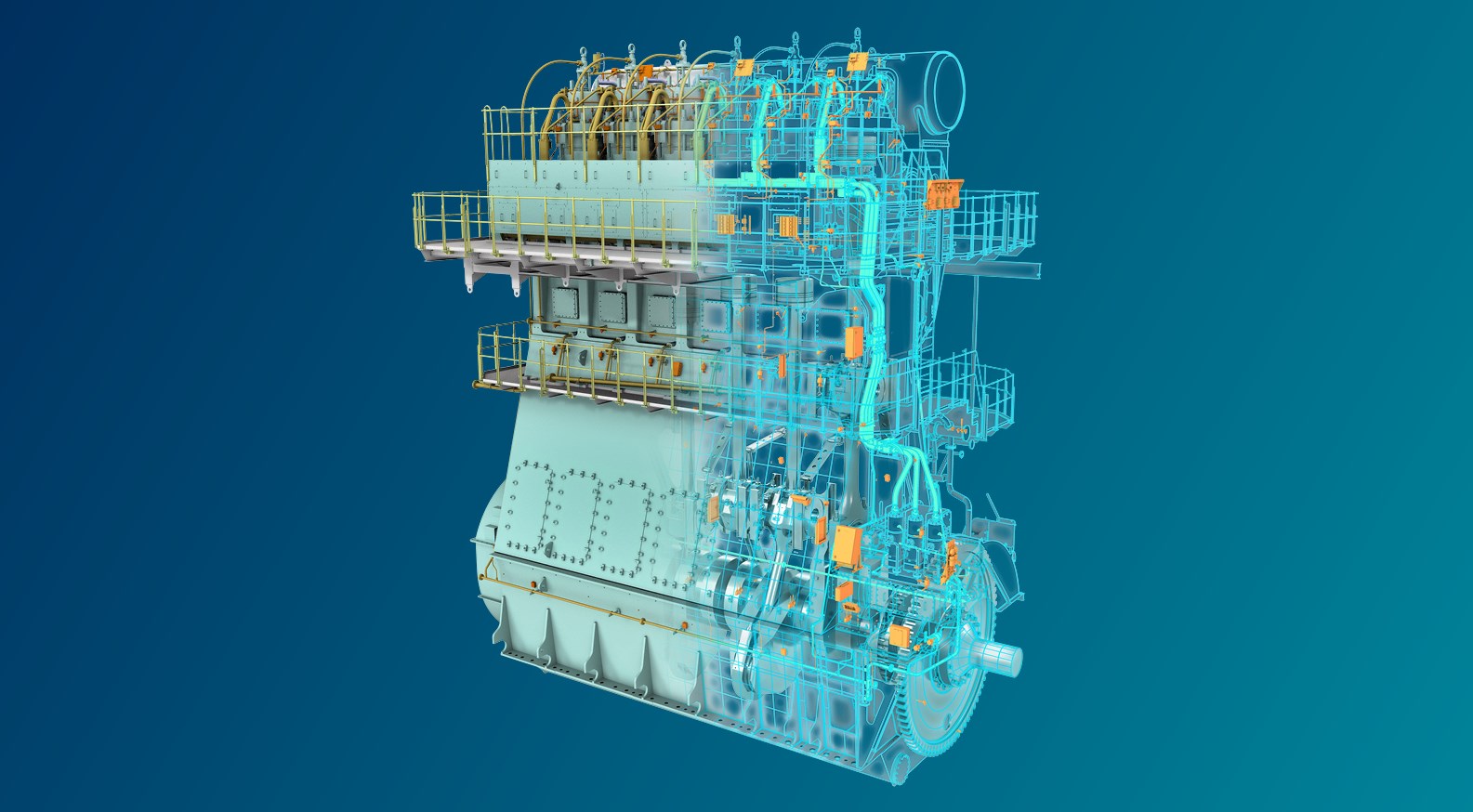
WinGD 8X92DF
51120.0 kW
Power

Engine Specifications

8
Cylinders
920 mm
Bore
3468 mm
Stroke
51,120 kW
MCR Power
80.0 rpm
MCR RPM
2-stroke
Stroke Type
Family: WIN-GD X-DF · Tier: IMO Tier III (gas mode) · Fuel: HFO, VLSFO, MDO, LNG

Inspector Detail

Common issues

  • Gas admission or gas injection valve leakage causing gas-mode misfire
  • Pilot fuel injector wear affecting ignition timing in gas mode
  • Exhaust valve seat burning or recession from high thermal load
  • Piston ring/liner scuffing from cylinder lubrication feed rate mismatch
  • Turbocharger fouling reducing scavenge air pressure
  • Oil residue build-up in the scavenge space (fire risk)
  • Fuel/gas changeover transients causing load fluctuation or trip

Inspection checklist

  • Check gas admission valve tightness and leak-off per maker's gas safety procedure
  • Inspect scavenge space for oil residue and deposits as a fire-risk indicator
  • Measure exhaust valve spindle/seat wear via rotation and lift check
  • Borescope inspection of piston crown, ring land and liner running surface
  • Check cylinder lubrication feed rate and timing against load
  • Inspect turbocharger nozzle ring and turbine blades for fouling or erosion
  • Verify crankcase oil mist detector and relief valve function
  • Check double-wall gas fuel piping ventilation fan operation and alarms
  • Review engine control system alarm/event log for gas-mode trips

Service intervals

Piston overhaul (crown/rings/skirt) typically 16,000-24,000 hours - condition-based per maker's guidance
Cylinder liner inspection typically every 8,000-12,000 hours
Exhaust valve overhaul typically 8,000-16,000 hours depending on fuel and load profile
Gas admission valve function test typically every 4,000-8,000 hours
Turbocharger overhaul typically 16,000-20,000 hours or condition-based
Scavenge space cleaning/inspection typically every 2,000-4,000 hours

Typical wear limits

Piston ring gap typically 0.8-1.6 mm for this bore class - confirm against the engine's own manual
Cylinder liner wear (bore increase) condition-based, commonly checked against a per-diameter wear-rate limit for 2-stroke liners of this size - confirm against maker's limit table
Exhaust valve seat recession assessed by valve rotation and seat contact pattern rather than a fixed dimension - follow maker's inspection procedure

Ranges are typical for this design class. Always confirm against the manufacturer documentation for your serial number.

Critical spares

  • Piston complete with rings
  • Cylinder liner
  • Exhaust valve complete with seat
  • Gas admission valves
  • Pilot fuel injectors/injection valves
  • Turbocharger bearing/cartridge set
  • Cylinder lubricator elements

Safety

  • Loss of ventilation on double-wall gas fuel piping is a critical alarm - never bypass
  • Scavenge space fire risk - oil accumulation must be checked and removed regularly
  • Crankcase explosion risk - oil mist detector must be tested per schedule
  • High-pressure gas supply system - purge and inert before hot work nearby
  • Heavy rotating/reciprocating masses - strict lock-out during turning gear engagement

Class survey

Typically surveyed under Continuous Survey Machinery (CSM) with condition-based interval extension subject to trending of cylinder pressures, exhaust temperature spread and turbocharger performance. Gas fuel installation is additionally subject to IGF Code survey requirements, including verification of gas detection, ventilation and emergency shutdown systems.

Estimated lifetime: Low-speed 2-stroke main engines of this class are typically designed for a service life well beyond 100,000-150,000 running hours with scheduled piston, liner and valve overhauls; overhaul intervals are condition and load-profile dependent - confirm against the maker's maintenance system

Components & Design

Alpha Lubricator Control WIN-GD / Hans Jensen Lubricators
WIN-GD Pulse Lubrication System
Pulse lubrication for accurate CLO timing. Feed rate adjustable 0.5-1.0 g/kWh. Lower feed on gas mode.
Lead time: 6 wk
20.0 kg
Common Rail Unit (RT-flex / X-DF) WIN-GD / Winterthur
WIN-GD Common Rail Unit
Rail pressure ~1000 bar (fuel), ~200 bar (servo oil). Monitor rail pressure stability.
Lead time: 16 wk
1800.0 kg
Crankcase Oil Mist Detector GEA / Schaller Automation
GEA Westfalia OMD / Schaller VN215+
Same as diesel — SOLAS mandatory regardless of fuel. Test weekly.
Lead time: 2 wk
8.0 kg
Cylinder Liner WIN-GD
WIN-GD X-DF Cylinder Liner
Gas ports machined into liner — inspect for erosion. Wear rate significantly lower in gas mode.
Lead time: 16 wk
3200.0 kg
Dual-Fuel System (Gas Mode) WIN-GD
WIN-GD X-DF Gas Admission System
Gas admission at 10-16 bar via scavenge ports. Pre-chamber with diesel pilot. Monitor methane slip.
Lead time: 12 wk
350.0 kg
Engine Control Unit (ECU / ECS) WIN-GD / ABB
WIN-GD WiDE Engine Control System
WiDE = Wartsila Intelligent Diesel Engine. Dual-redundant. iCER optimization requires latest firmware.
Lead time: 8 wk
50.0 kg
Exhaust Valve (& Valve Seat) WIN-GD
WIN-GD Exhaust Valve (X-DF)
Gas mode extends valve life significantly (less hot corrosion). Overhaul at 16,000 hrs (gas-only: 24,000 hrs).
Lead time: 10 wk
300.0 kg
FGSS (Fuel Gas Supply System - LNG/Methanol) TGE Marine / Wartsila Gas Solutions
FGSS LNG Supply Module (ME-GI type HP / X-DF type LP)
LP-FGSS for X-DF (6-16 bar). Mandatory gas detection in duct space. Emergency shutdown drill monthly.
Lead time: 26 wk
Fuel Valve (Injector) WIN-GD
WIN-GD X-DF Fuel Valve (diesel + pilot)
Pilot injector critical for gas mode ignition. Inspect pilot nozzle at 4,000 hrs. Main valve at 8,000 hrs.
Lead time: 6 wk
75.0 kg
Governor (Electronic/Woodward) Woodward
Woodward 723PLUS / WIN-GD Integrated Governor
Integrated with WiDE. Gas/diesel mode switching requires governor parameter set change.
Lead time: 4 wk
15.0 kg
Hydraulic Power Supply (HPS) WIN-GD
WIN-GD Flex HPS (Common Rail Servo Oil)
Servo oil system at ~200 bar. Filter changes every 4,000 hrs. Use approved servo oil only.
Lead time: 14 wk
2500.0 kg
Piston Crown WIN-GD
WIN-GD X-DF Piston Crown
Gas mode reduces thermal loading. Inspect at 16,000-24,000 hrs. Extended intervals possible in gas-only service.
Lead time: 14 wk
1700.0 kg
SCR (Selective Catalytic Reduction) HUG Engineering / Yara Marine
WIN-GD SCR Reactor (for diesel mode Tier III)
Only needed for Tier III in diesel mode (gas mode is inherently Tier III). SCR bypass in gas mode.
Lead time: 20 wk
12000.0 kg
Scavenge Air Cooler WIN-GD / Alfa Laval
WIN-GD SAC (Plate/Shell-and-tube)
Cleaner in gas mode — extended cleaning intervals. Monitor charge air temperature after cooler.
Lead time: 14 wk
5000.0 kg
Sensors & Transmitters WIN-GD / Danfoss / ABB
WIN-GD Sensor Suite (pressure, temp, speed, knock)
Knock detection sensors critical for X-DF gas mode — prevents detonation. Calibrate every 4,000 hrs.
Lead time: 2 wk
2.0 kg
Turbocharger Unit (ABB/MHI/Napier) ABB Turbocharging
ABB A265-L Turbocharger
Gas mode significantly reduces fouling. Extended TC overhaul interval to 16,000-24,000 hrs in gas mode.
Lead time: 16 wk
8500.0 kg

Technical Data

Bohrung 920 mm
Hub 3468 mm
Hub/Bohrung-Verhältnis 3.77
MEP R1 (X92-B) 21.0 bar
MEP R1 (X92DF-2.0 Gasmode) 17.3 bar
BSFC R1 (X92-B Standard) 167 g/kWh
BSFC R2 (X92-B Standard) 160 g/kWh
Spezifische Leistung 6450 kW/cylinder (R1)
Typ Viertakt-Langsamläufer, gemeinsame Schiene (Common Rail)
Zündfolge 1-7-4-10-2-8-5-11-3-9-6-12
Thermischer Wirkungsgrad 51-53% (X92DF im Lastbereich 60-90%)
Emissions-Kompliance IMO Tier II (Standard), IMO Tier III (mit SCR)
unified from engine model True

🤖 Ask about this model

One free question — answered like a marine engineer. No account needed.

Common failures & inspection points

WECS-9520 Steuerungssystem-Ausfälle (dokumentierte Mängel in Servoöl-Lecks, Kraftstoff-Lecks, Drossel-Einspritzventile)
Cooling water leakage in cylinders and exhaust valve actuator deficiencies; inspection routine for high-pressure SCR system required
Bearing and piston cooling oil temperature monitoring critical; condensate flow at water separator too high (scavenging cooling system fouling)
Thermal stress cracks in cylinder head (valve bridge): cyclic thermal load at load changes 70-80 RPM; exhaust valve seating surface wear requires sc
Turbocharger oil leakage and leaks; scavenge air cooler fouling (air side: pressure drop, temperature rise; water side scaling)

Type-general inspection and maintenance points for this equipment category — not model-specific.

Suppliers & Spare Parts

Direct links to manufacturer, datasheet, spare-parts portal and dealers — request access below.

📄 Request sourcing links & documents
🛠 Manage this equipment in your fleet

Cases, daily reports, timesheets and AI troubleshooting in the OceanSphere Marine app — free for 14 days.

Start free trial →
🔎 Suppliers & service for this equipment

Find manufacturers, repair shops and spare-part dealers in the Maritime Network — our global company directory.

Maritime Network →
Equipment Model #38814 · ✓ still in production