What to check on a Marine Transformer (Dry/Cast-Resin).
Marine transformers step voltage between sections of the ship's electrical network — typically high-voltage generation (6.6 kV or 11 kV) down to a 440 V or 690 V distribution bus, or between a bow thruster drive and its supply. The cast-resin design encapsulates the windings in an epoxy resin block instead of immersing them in mineral oil. There is no oil to leak, no bunding or fire-fighting foam system required around the unit, and no risk of an oil-filled tank rupturing in a seaway. The trade-off is a slightly lower…
What sets the dry cast-resin type apart
Marine transformers step voltage between sections of the ship's electrical network — typically high-voltage generation (6.6 kV or 11 kV) down to a 440 V or 690 V distribution bus, or between a bow thruster drive and its supply. The cast-resin design encapsulates the windings in an epoxy resin block instead of immersing them in mineral oil. There is no oil to leak, no bunding or fire-fighting foam system required around the unit, and no risk of an oil-filled tank rupturing in a seaway. The trade-off is a slightly lower short-time overload capacity than an equivalent oil-filled unit and a higher unit cost per kVA. On a ship, where the transformer usually sits inside a switchboard room or a compartment with limited access for oil containment, the dry type has become close to the default choice; oil-filled units survive mainly in older tonnage or in applications where their better overload tolerance is worth the added fire risk management.
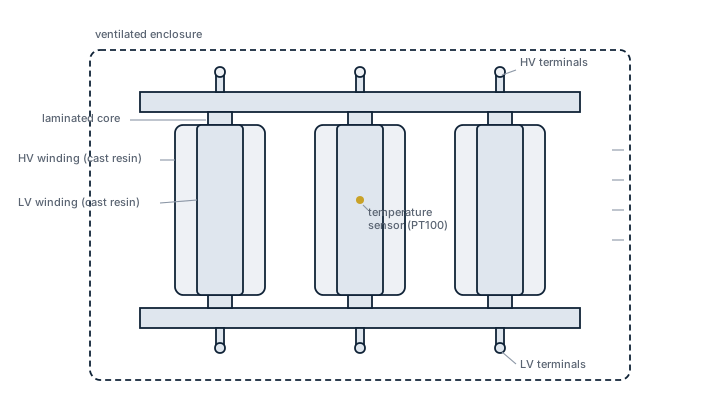
Main components
Core and windings
A three-limb laminated silicon-steel core carries HV and LV copper or aluminium windings. Vector group (commonly Dyn11 or Yyn0) is fixed at the design stage and must match the rest of the switchboard's earthing and protection philosophy — it is not something a yard can change after the fact.
Resin encapsulation
The HV winding is cast under vacuum in an epoxy resin loaded with fine silica filler, which controls thermal expansion and stops the resin cracking through thermal cycling. Cracking here, rather than winding failure, is the most common ageing mechanism on units running through repeated load swings.
Temperature monitoring
PT100 or PTC sensors embedded in each LV winding feed the IAS or a dedicated relay, with alarm and trip stages set below the winding's thermal class limit. This is the primary protection against the slow failure mode of resin transformers — sensors are not an optional extra on a marine unit.
Cooling and enclosure
Natural air cooling (AN) suits most switchboard-room installations; forced air (AF) with fans adds roughly 40% short-term capacity where space is tight. The enclosure's IP rating has to match the compartment — condensation in a poorly ventilated space is a recurring cause of tracking across the resin surface.
Selection and sizing
Rating is set from the connected LV load plus growth margin, not from generator capacity. Key figures to fix at order stage:
- kVA rating and duty cycle (continuous vs. short-time overload)
- Impedance voltage (%uk), which sets fault current contribution and must coordinate with switchgear breaking capacity
- Insulation and temperature-rise class (commonly F or H) against the compartment's expected ambient
- Vector group and neutral earthing arrangement matching the rest of the network
Regulations and class
Class rules require type approval of the design plus routine works testing (insulation resistance, ratio, winding resistance, temperature rise) before delivery, and periodic survey — typically insulation resistance and visual inspection of the resin surface — at each annual or intermediate survey of the electrical installation. SOLAS Ch. II-1 requirements on electrical installations apply to the switchboard system the transformer feeds, including protection against short circuit and earth fault.
Typical faults
| Cause | Consequence |
|---|---|
| Resin cracking from thermal cycling | Partial discharge, tracking, eventual winding-to-winding or winding-to-earth fault |
| Condensation on resin surface after long shutdown or poor ventilation | Surface tracking, insulation resistance failure at survey |
| Blocked or fouled cooling fan (AF units) | Reduced overload capacity, nuisance high-temperature trips under load |
| Loose terminal connections from vibration | Local overheating, hot spots not seen by winding sensors |
What to look for in a supplier
- Type test certificates from a recognised class society, not just factory acceptance data
- Documented vector group and %impedance matching the vessel's switchboard protection study
- Track record of the resin formulation in marine ambient/humidity conditions, not only industrial indoor use
- Availability of spare temperature sensors and terminal kits compatible with the specific frame size
A transformer that trips on high winding temperature during normal load is telling you something about ventilation or a fouled fan, not asking for a sensor bypass — bypassing the trip to keep running is how resin cracks turn into a flashover.