What to check on an Incinerator (IMO MEPC.244).
1 models from Evac in Incinerator (IMO MEPC.244). Below: the full model list.
What sets a MEPC.244-compliant incinerator apart
A shipboard incinerator built to IMO Resolution MEPC.244(66) is not simply a furnace bolted into the engine room — it is a combustion unit whose chamber design, minimum operating temperature, and emission limits are fixed by that standard, and a unit without the corresponding type approval certificate cannot legally burn garbage or sludge at sea regardless of how well it burns. The standard sets the unit apart from a generic industrial waste burner by mandating a specific temperature profile through startup, steady burn, and shutdown, and by requiring the flue gas outlet temperature to stay within a defined range so combustion is complete rather than merely hot.
Read the full guide
Main components
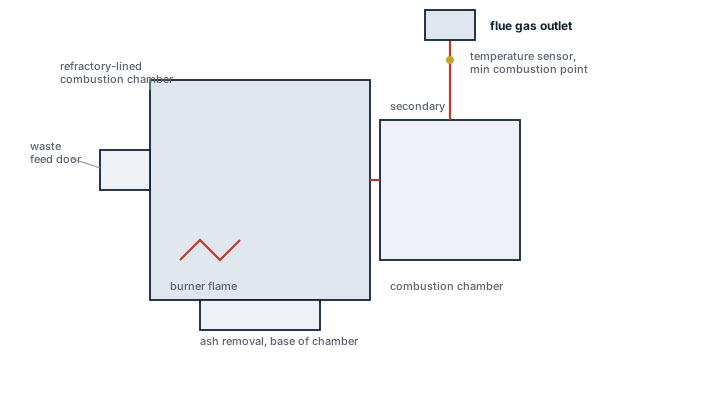
Combustion chamber
Refractory-lined primary chamber where waste is burned, designed to reach and hold a minimum of around 850°C for solid waste combustion as required by the standard.
Secondary combustion chamber / afterburner
Ensures unburned gases from the primary chamber are fully combusted before reaching the stack, which is what keeps flue gas emissions within the MEPC.244 limits.
Waste feed system
Separate hoppers or feed doors for solid waste and a metering pump line for sludge and waste oil, since the two waste streams burn very differently and are usually not fed simultaneously in the same proportions.
Burner and ignition system
Diesel oil pilot burner that brings the chamber up to operating temperature before waste feed is permitted, and that re-ignites automatically if the flame is lost.
Control panel and interlocks
Monitors chamber temperature continuously and blocks waste feed if temperature falls outside the approved band, logging the event for survey purposes.
Selection and sizing
- Rated capacity in kg/h for solid waste and in litres/h for sludge and waste oil, matched to crew size and trading pattern rather than ship size alone.
- Chamber design temperature and residence time, since these are fixed by the type approval and cannot be adjusted after the fact.
- Available space and access for ash removal, which is a daily task on a busy ship.
- Fuel oil consumption of the pilot burner, a real running cost over a long voyage.
Regulations and class
MARPOL Annex VI, Regulation 16, prohibits incineration of specific substances on board (PCBs, sewage sludge and sludge oil from cargo residues subject to Annex I/II, halogenated plastics, and certain other wastes) and requires that any shipboard incinerator installed on or after 1 January 2000 be type approved to IMO Resolution MEPC.244(66) or its predecessor MEPC.76(40). The IOPP Supplement and the ship's garbage record book both reference incinerator operation, and class surveys check the type approval certificate, the temperature logging, and physical condition of the refractory lining at each renewal survey.
Typical faults
- Refractory lining cracking or spalling from thermal cycling — reduces chamber temperature retention and can expose the steel shell to direct flame.
- Blocked sludge feed nozzle from unhomogenised waste oil — causes the burner to trip on low pressure and interrupts the burn cycle.
- Temperature sensor drift or fouling with soot — gives a false high reading, letting the unit run below true operating temperature without alarming.
- Excess ash build-up in the chamber — restricts airflow and lowers combustion efficiency, producing visible smoke and increasing pilot fuel demand.
- Door seal degradation — draws in false air that cools the chamber locally and unbalances the temperature profile.
What to look for in a supplier
- Current MEPC.244(66) type approval certificate for the exact model, not a superseded MEPC.76(40) approval being resold as equivalent.
- Documented flue gas emission data from the type test, since class will ask for it at survey.
- Refractory material and expected relining interval under normal duty.
- Local service support, since a tripped interlock that the crew cannot reset leaves garbage and sludge with nowhere to go.
Never let the crew feed solid waste before the chamber has reached its approved operating temperature — a cold start feed is the fastest way to produce black smoke and an entry in the deficiency list at the next PSC inspection.