OceanSphere
Engines

Power Management System (PMS)

medium 83 models total

A power management system decides, faster than a duty engineer can react, when to start a standby generator, when to shed load, and in what order to trip non-essential consumers before a blackout its logic, not the generators themselves, is what keeps the switchboard alive through a sudden load step.

Read more — Power Management System (PMS) explained

What a power management system actually does

A PMS sits above the individual generator control units and the switchboard, watching total electrical load, bus frequency and available generating capacity, and making the decisions a duty engineer would otherwise have to make by eye: start the next standby generator before load exceeds running capacity, synchronise and close it onto the bus, and shed pre-selected non-essential load if generation capacity drops faster than a new set can come online. This distinguishes it from a simple generator auto-start relay, which only reacts to one signal such as low frequency, without the layered logic of load-dependent start, priority-based load shedding and blackout recovery sequencing a full PMS provides. On vessels running unmanned machinery spaces, the PMS is what makes multi-generator operation with minimal watchkeeping possible at all.

Power management system control scheme
Block diagram of three diesel generators feeding the main switchboard busbar through breakers, with the power management system monitoring the bus, starting a standby generator and shedding non-essential loads before a blackout.

Main components

Load-dependent start and stop logic

Continuously compares total bus load against the capacity of running generators, factoring in a configurable spinning reserve margin, and issues a start command to the next available standby set with enough lead time to synchronise before the margin is used up.

Load-sharing control

Once two or more generators run in parallel, the PMS, or the individual governor and AVR controllers under its direction, divides real and reactive load between them proportionally, keeping each set within its rated output rather than letting one carry a disproportionate share.

Blackout prevention and load shedding

A pre-configured priority table ranks consumers from essential (steering gear, navigation, fire pumps) down to non-essential (accommodation air conditioning, workshop supplies). If load suddenly exceeds available capacity, a generator trip, for example, the PMS sheds load from the bottom of that table in a fixed sequence, fast enough to prevent a frequency collapse and total blackout.

Preferential trip and blackout recovery

Defines which breakers open first if a fault forces an emergency shutdown, and automates the sequence for restoring power afterward: starting the emergency generator, re-energising the bus, and reconnecting consumers in a controlled order rather than all at once.

Selection and sizing

  • Number of generators and their individual capacity, since load-sharing accuracy and shedding granularity both depend on how many sets and how many load steps are available.
  • Integration depth with the alarm and monitoring system a PMS that only talks to the switchboard cannot factor in, for instance, a bow thruster about to be engaged.
  • Redundancy of the PMS controller itself; a single point of failure in the control system defeats the purpose of load-shedding logic built to prevent a blackout.
  • Manual override capability, so an engineer can force a generator online or block a shed sequence during maintenance or drills.

Regulations and class

Class notations for unmanned machinery space operation require automatic standby generator start and documented blackout recovery capability as a condition of reduced manning in the engine room. IACS requirements for electrical installations expect load shedding to protect essential services defined under SOLAS Chapter II-1, and periodic survey includes a functional test of automatic start, load-dependent start/stop and load shedding sequences, not just a visual inspection of the switchboard.

Typical faults

FaultCauseConsequence
Standby generator fails to start on demandAuto-start logic disabled after manual testing, not re-enabledNo standby capacity when load rises, risk of blackout
Load sharing unbalanced between generatorsGovernor droop settings not matched after an engine overhaulOne generator overloaded while another runs light
Load shedding trips essential consumersPriority table misconfigured after equipment changesSteering or navigation load dropped instead of accommodation load
Nuisance generator startsLoad sensor drift or noisy signal from current transformersUnnecessary running hours, fuel and maintenance cost

What to look for in a supplier

  • A documented, editable priority table for load shedding that the crew can actually verify against the vessel's real consumer list.
  • Compatibility with the existing generator governors and AVRs, or a clear retrofit path if they need replacing together.
  • Local backup control at the switchboard that keeps generators running if the PMS controller itself fails.
  • A commissioning test report showing an actual blackout recovery drill, not just a paper configuration.

Re-verify the load shedding priority table any time a new large consumer is added a bow thruster or reefer container bank wired in without updating the table can end up shed ahead of something that should never lose power.

5 manufacturers · 83 models

DEIF

35
iE 350 Marine & ML300 series included from existing TAC
Model Number
TAA00003FC
iE250 Marine Power Management components
Model Number
TAA00003FB
iE 150 Marine, AGC 150
Model Number
TAA000038D
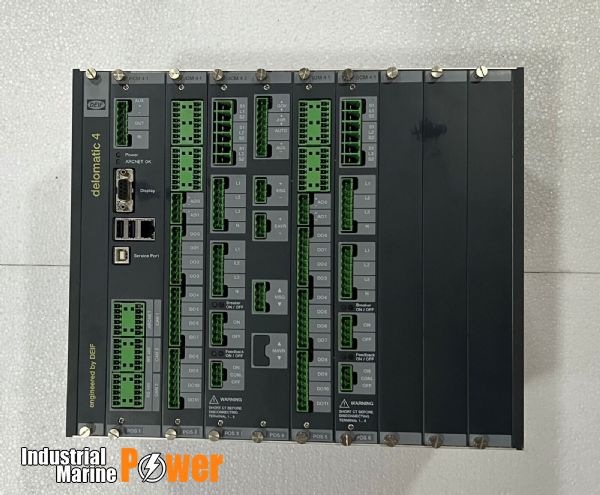
DEIF A/S Delomatic 4
Delomatic 4
Model Number
TAA00000VH
DEIF iE 250, iE 350 and iE 650
Model Number
TAA00003H9
PPM-3 100pt unverified
I/O Points
100
Protocol
Modbus/Ethernet
Class Approval
DNV/LR
Common Failures & Inspection Points
  • Contactor, relay or control-module faults cause failed starts, chatter, unavailable automatic functions or alarms
  • Loose power terminals cause local overheating, insulation damage or phase-related trips
  • Measurement or protection faults cause premature tripping or incorrect system response
  • Communication, I/O or control-circuit faults cause intermittent operation or lost remote control
  • Loss of control power or UPS support causes resets, blank displays or transfer to manual operation
Service: Inspect switching devices, terminals, protection, control wiring, communication modules and enclosure condition. Review alarms and event logs and verify local and remote control under the approved procedure. Look for heat discoloration and loose connections. Refer to the manufacturer documentation for the exact figure for protection settings and configuration limits.
Spare Parts: Carry contactors, relays, fuses, power supplies, I/O or communication modules and backed-up configuration files where applicable.
Use Cases: Electrical motor control, generator coordination and shipboard power automation.
PPM-3 200pt unverified
I/O Points
200
Protocol
Modbus/Ethernet
Class Approval
DNV/LR
Common Failures & Inspection Points
  • Contactor, relay or control-module faults cause failed starts, chatter, unavailable automatic functions or alarms
  • Loose power terminals cause local overheating, insulation damage or phase-related trips
  • Measurement or protection faults cause premature tripping or incorrect system response
  • Communication, I/O or control-circuit faults cause intermittent operation or lost remote control
  • Loss of control power or UPS support causes resets, blank displays or transfer to manual operation
Service: Inspect switching devices, terminals, protection, control wiring, communication modules and enclosure condition. Review alarms and event logs and verify local and remote control under the approved procedure. Look for heat discoloration and loose connections. Refer to the manufacturer documentation for the exact figure for protection settings and configuration limits.
Spare Parts: Carry contactors, relays, fuses, power supplies, I/O or communication modules and backed-up configuration files where applicable.
Use Cases: Electrical motor control, generator coordination and shipboard power automation.
PPM-3 500pt unverified
I/O Points
500
Protocol
Modbus/Ethernet
Class Approval
DNV/LR
Common Failures & Inspection Points
  • Contactor, relay or control-module faults cause failed starts, chatter, unavailable automatic functions or alarms
  • Loose power terminals cause local overheating, insulation damage or phase-related trips
  • Measurement or protection faults cause premature tripping or incorrect system response
  • Communication, I/O or control-circuit faults cause intermittent operation or lost remote control
  • Loss of control power or UPS support causes resets, blank displays or transfer to manual operation
Service: Inspect switching devices, terminals, protection, control wiring, communication modules and enclosure condition. Review alarms and event logs and verify local and remote control under the approved procedure. Look for heat discoloration and loose connections. Refer to the manufacturer documentation for the exact figure for protection settings and configuration limits.
Spare Parts: Carry contactors, relays, fuses, power supplies, I/O or communication modules and backed-up configuration files where applicable.
Use Cases: Electrical motor control, generator coordination and shipboard power automation.
PPM-3 1000pt unverified
I/O Points
1000
Protocol
Modbus/Ethernet
Class Approval
DNV/LR
Common Failures & Inspection Points
  • Loss of electrical, hydraulic, pneumatic, or other service supply caused by a tripped protection device, leakage, blockage, or upstream fault results in failed starting or loss of function
  • Mechanical wear, corrosion, fouling, or contamination of moving and wetted parts causes increased noise, leakage, sticking, vibration, or reduced performance
  • Seal, gasket, hose, cable, or connection deterioration from age, heat, vibration, or environmental exposure produces visible leakage, intermittent signals, or loss of pressure
  • Sensor, switch, actuator, relay, or control-system faults can cause incorrect indication, nuisance alarms, failed automatic sequences, or loss of remote control
  • Incorrect adjustment, assembly, or maintenance can lead to unstable operation, recurrent alarms, or performance that differs from the vessel's normal baseline
Service: Inspect the unit for leakage, corrosion, contamination, loose connections, abnormal noise or vibration, condition of guards and mountings, service supplies, controls, alarms, and functional performance. Use the vessel maintenance history to identify deterioration trends and refer to the manufacturer documentation for exact settings, tolerances, test values, and overhaul criteria.
Spare Parts: Keep the manufacturer-recommended seals and gaskets, filters where fitted, fuses or protection items, common sensors and switches, and critical actuator, control, or wear components appropriate to the installed configuration. Exact part numbers and quantities must come from the manufacturer spare-parts documentation.
Use Cases: Used on vessel types fitted with automation & control equipment, including merchant, offshore, passenger, fishing, or workboat installations where this specific power management system (pms) duty is required.
PPM-3 2000pt unverified
I/O Points
2000
Protocol
Modbus/Ethernet
Class Approval
DNV/LR
Common Failures & Inspection Points
  • Loss of electrical, hydraulic, pneumatic, or other service supply caused by a tripped protection device, leakage, blockage, or upstream fault results in failed starting or loss of function
  • Mechanical wear, corrosion, fouling, or contamination of moving and wetted parts causes increased noise, leakage, sticking, vibration, or reduced performance
  • Seal, gasket, hose, cable, or connection deterioration from age, heat, vibration, or environmental exposure produces visible leakage, intermittent signals, or loss of pressure
  • Sensor, switch, actuator, relay, or control-system faults can cause incorrect indication, nuisance alarms, failed automatic sequences, or loss of remote control
  • Incorrect adjustment, assembly, or maintenance can lead to unstable operation, recurrent alarms, or performance that differs from the vessel's normal baseline
Service: Inspect the unit for leakage, corrosion, contamination, loose connections, abnormal noise or vibration, condition of guards and mountings, service supplies, controls, alarms, and functional performance. Use the vessel maintenance history to identify deterioration trends and refer to the manufacturer documentation for exact settings, tolerances, test values, and overhaul criteria.
Spare Parts: Keep the manufacturer-recommended seals and gaskets, filters where fitted, fuses or protection items, common sensors and switches, and critical actuator, control, or wear components appropriate to the installed configuration. Exact part numbers and quantities must come from the manufacturer spare-parts documentation.
Use Cases: Used on vessel types fitted with automation & control equipment, including merchant, offshore, passenger, fishing, or workboat installations where this specific power management system (pms) duty is required.
PPM-3 3000pt unverified
I/O Points
3000
Protocol
Modbus/Ethernet
Class Approval
DNV/LR
Common Failures & Inspection Points
  • Loss of electrical, hydraulic, pneumatic, or other service supply caused by a tripped protection device, leakage, blockage, or upstream fault results in failed starting or loss of function
  • Mechanical wear, corrosion, fouling, or contamination of moving and wetted parts causes increased noise, leakage, sticking, vibration, or reduced performance
  • Seal, gasket, hose, cable, or connection deterioration from age, heat, vibration, or environmental exposure produces visible leakage, intermittent signals, or loss of pressure
  • Sensor, switch, actuator, relay, or control-system faults can cause incorrect indication, nuisance alarms, failed automatic sequences, or loss of remote control
  • Incorrect adjustment, assembly, or maintenance can lead to unstable operation, recurrent alarms, or performance that differs from the vessel's normal baseline
Service: Inspect the unit for leakage, corrosion, contamination, loose connections, abnormal noise or vibration, condition of guards and mountings, service supplies, controls, alarms, and functional performance. Use the vessel maintenance history to identify deterioration trends and refer to the manufacturer documentation for exact settings, tolerances, test values, and overhaul criteria.
Spare Parts: Keep the manufacturer-recommended seals and gaskets, filters where fitted, fuses or protection items, common sensors and switches, and critical actuator, control, or wear components appropriate to the installed configuration. Exact part numbers and quantities must come from the manufacturer spare-parts documentation.
Use Cases: Used on vessel types fitted with automation & control equipment, including merchant, offshore, passenger, fishing, or workboat installations where this specific power management system (pms) duty is required.
Deif PPM-300 50pt unverified
I/O Points
50
Protocol
Modbus/Ethernet
Class Approval
DNV/LR
Common Failures & Inspection Points
  • Field sensor failure or drift caused by ageing, contamination or wiring defects can create implausible values, nuisance alarms or loss of a measurement channel
  • Network or communication faults caused by switch, cable or configuration problems can cause stale data, disconnected nodes or loss of remote control
  • Controller, I/O or power-supply failure caused by component ageing or overheating can remove groups of signals or trigger system alarms
  • Software or configuration mismatch after replacement or update can cause missing functions, incorrect scaling or communication errors
  • Loose terminals or poor shielding caused by vibration or maintenance disturbance can produce intermittent signals, noise or unexplained trips
Service: Review alarms and event history, inspect power supplies and cabinets, verify critical field inputs against independent indications and check network health. Examine sensor mounting and cable condition and ensure software or configuration backups correspond with the installed system. Refer to manufacturer documentation for exact diagnostic and calibration procedures.
Spare Parts: Useful onboard spares include power supplies, I/O modules, network switches or interface modules, selected critical sensors, relays, fuses and approved configuration backups according to the vessel's automation philosophy.
Use Cases: Machinery automation, power management, alarm monitoring and condition-monitoring applications on merchant, passenger and offshore vessels.
Deif PPM-300 100pt unverified
I/O Points
100
Protocol
Modbus/Ethernet
Class Approval
DNV/LR
Common Failures & Inspection Points
  • Field sensor failure or drift caused by ageing, contamination or wiring defects can create implausible values, nuisance alarms or loss of a measurement channel
  • Network or communication faults caused by switch, cable or configuration problems can cause stale data, disconnected nodes or loss of remote control
  • Controller, I/O or power-supply failure caused by component ageing or overheating can remove groups of signals or trigger system alarms
  • Software or configuration mismatch after replacement or update can cause missing functions, incorrect scaling or communication errors
  • Loose terminals or poor shielding caused by vibration or maintenance disturbance can produce intermittent signals, noise or unexplained trips
Service: Review alarms and event history, inspect power supplies and cabinets, verify critical field inputs against independent indications and check network health. Examine sensor mounting and cable condition and ensure software or configuration backups correspond with the installed system. Refer to manufacturer documentation for exact diagnostic and calibration procedures.
Spare Parts: Useful onboard spares include power supplies, I/O modules, network switches or interface modules, selected critical sensors, relays, fuses and approved configuration backups according to the vessel's automation philosophy.
Use Cases: Machinery automation, power management, alarm monitoring and condition-monitoring applications on merchant, passenger and offshore vessels.
Deif PPM-300 200pt unverified
I/O Points
200
Protocol
Modbus/Ethernet
Class Approval
DNV/LR
Common Failures & Inspection Points
  • Field sensor failure or drift caused by ageing, contamination or wiring defects can create implausible values, nuisance alarms or loss of a measurement channel
  • Network or communication faults caused by switch, cable or configuration problems can cause stale data, disconnected nodes or loss of remote control
  • Controller, I/O or power-supply failure caused by component ageing or overheating can remove groups of signals or trigger system alarms
  • Software or configuration mismatch after replacement or update can cause missing functions, incorrect scaling or communication errors
  • Loose terminals or poor shielding caused by vibration or maintenance disturbance can produce intermittent signals, noise or unexplained trips
Service: Review alarms and event history, inspect power supplies and cabinets, verify critical field inputs against independent indications and check network health. Examine sensor mounting and cable condition and ensure software or configuration backups correspond with the installed system. Refer to manufacturer documentation for exact diagnostic and calibration procedures.
Spare Parts: Useful onboard spares include power supplies, I/O modules, network switches or interface modules, selected critical sensors, relays, fuses and approved configuration backups according to the vessel's automation philosophy.
Use Cases: Machinery automation, power management, alarm monitoring and condition-monitoring applications on merchant, passenger and offshore vessels.
Deif PPM-300 500pt unverified
I/O Points
500
Protocol
Modbus/Ethernet
Class Approval
DNV/LR
Common Failures & Inspection Points
  • Field sensor failure or drift caused by ageing, contamination or wiring defects can create implausible values, nuisance alarms or loss of a measurement channel
  • Network or communication faults caused by switch, cable or configuration problems can cause stale data, disconnected nodes or loss of remote control
  • Controller, I/O or power-supply failure caused by component ageing or overheating can remove groups of signals or trigger system alarms
  • Software or configuration mismatch after replacement or update can cause missing functions, incorrect scaling or communication errors
  • Loose terminals or poor shielding caused by vibration or maintenance disturbance can produce intermittent signals, noise or unexplained trips
Service: Review alarms and event history, inspect power supplies and cabinets, verify critical field inputs against independent indications and check network health. Examine sensor mounting and cable condition and ensure software or configuration backups correspond with the installed system. Refer to manufacturer documentation for exact diagnostic and calibration procedures.
Spare Parts: Useful onboard spares include power supplies, I/O modules, network switches or interface modules, selected critical sensors, relays, fuses and approved configuration backups according to the vessel's automation philosophy.
Use Cases: Machinery automation, power management, alarm monitoring and condition-monitoring applications on merchant, passenger and offshore vessels.
Deif PPM-300 1000pt unverified
I/O Points
1000
Protocol
Modbus/Ethernet
Class Approval
DNV/LR
Common Failures & Inspection Points
  • Controller, I/O or communication faults cause lost signals, unavailable automatic functions or system alarms
  • Failed sensors or incorrect scaling causes implausible values and unnecessary alarms or control action
  • Power-supply or UPS faults cause controller restarts, blank operator stations or loss of redundancy
  • Network or fieldbus faults cause intermittent remote I/O and communication alarms
  • Software, configuration or interlock errors cause unexpected sequences, inhibited starts or incorrect shutdown behaviour
Service: Review alarm and event logs, controller redundancy, communication health, power supplies and I/O status. Compare critical signals with local indication and test alarms, interlocks and shutdowns only under an approved procedure. Maintain backups and configuration control for software changes. Refer to the manufacturer documentation for the exact figure for signal ranges, set points and test criteria.
Spare Parts: Carry critical power supplies, I/O and communication modules, relays, fuses, operator-interface parts and backed-up approved configuration files.
Use Cases: Machinery monitoring, alarm systems, power management, safety shutdown and integrated ship control.
Deif PPM-300 2000pt unverified
I/O Points
2000
Protocol
Modbus/Ethernet
Class Approval
DNV/LR
Common Failures & Inspection Points
  • Controller, I/O or communication faults cause lost signals, unavailable automatic functions or system alarms
  • Failed sensors or incorrect scaling causes implausible values and unnecessary alarms or control action
  • Power-supply or UPS faults cause controller restarts, blank operator stations or loss of redundancy
  • Network or fieldbus faults cause intermittent remote I/O and communication alarms
  • Software, configuration or interlock errors cause unexpected sequences, inhibited starts or incorrect shutdown behaviour
Service: Review alarm and event logs, controller redundancy, communication health, power supplies and I/O status. Compare critical signals with local indication and test alarms, interlocks and shutdowns only under an approved procedure. Maintain backups and configuration control for software changes. Refer to the manufacturer documentation for the exact figure for signal ranges, set points and test criteria.
Spare Parts: Carry critical power supplies, I/O and communication modules, relays, fuses, operator-interface parts and backed-up approved configuration files.
Use Cases: Machinery monitoring, alarm systems, power management, safety shutdown and integrated ship control.
Deif AGC-400 50pt unverified
I/O Points
50
Protocol
Modbus/Ethernet
Class Approval
DNV/LR
Common Failures & Inspection Points
  • Field sensor failure or drift caused by ageing, contamination or wiring defects can create implausible values, nuisance alarms or loss of a measurement channel
  • Network or communication faults caused by switch, cable or configuration problems can cause stale data, disconnected nodes or loss of remote control
  • Controller, I/O or power-supply failure caused by component ageing or overheating can remove groups of signals or trigger system alarms
  • Software or configuration mismatch after replacement or update can cause missing functions, incorrect scaling or communication errors
  • Loose terminals or poor shielding caused by vibration or maintenance disturbance can produce intermittent signals, noise or unexplained trips
Service: Review alarms and event history, inspect power supplies and cabinets, verify critical field inputs against independent indications and check network health. Examine sensor mounting and cable condition and ensure software or configuration backups correspond with the installed system. Refer to manufacturer documentation for exact diagnostic and calibration procedures.
Spare Parts: Useful onboard spares include power supplies, I/O modules, network switches or interface modules, selected critical sensors, relays, fuses and approved configuration backups according to the vessel's automation philosophy.
Use Cases: Machinery automation, power management, alarm monitoring and condition-monitoring applications on merchant, passenger and offshore vessels.
Deif AGC-400 100pt unverified
I/O Points
100
Protocol
Modbus/Ethernet
Class Approval
DNV/LR
Common Failures & Inspection Points
  • Field sensor failure or drift caused by ageing, contamination or wiring defects can create implausible values, nuisance alarms or loss of a measurement channel
  • Network or communication faults caused by switch, cable or configuration problems can cause stale data, disconnected nodes or loss of remote control
  • Controller, I/O or power-supply failure caused by component ageing or overheating can remove groups of signals or trigger system alarms
  • Software or configuration mismatch after replacement or update can cause missing functions, incorrect scaling or communication errors
  • Loose terminals or poor shielding caused by vibration or maintenance disturbance can produce intermittent signals, noise or unexplained trips
Service: Review alarms and event history, inspect power supplies and cabinets, verify critical field inputs against independent indications and check network health. Examine sensor mounting and cable condition and ensure software or configuration backups correspond with the installed system. Refer to manufacturer documentation for exact diagnostic and calibration procedures.
Spare Parts: Useful onboard spares include power supplies, I/O modules, network switches or interface modules, selected critical sensors, relays, fuses and approved configuration backups according to the vessel's automation philosophy.
Use Cases: Machinery automation, power management, alarm monitoring and condition-monitoring applications on merchant, passenger and offshore vessels.
Deif AGC-400 200pt unverified
I/O Points
200
Protocol
Modbus/Ethernet
Class Approval
DNV/LR
Common Failures & Inspection Points
  • Field sensor failure or drift caused by ageing, contamination or wiring defects can create implausible values, nuisance alarms or loss of a measurement channel
  • Network or communication faults caused by switch, cable or configuration problems can cause stale data, disconnected nodes or loss of remote control
  • Controller, I/O or power-supply failure caused by component ageing or overheating can remove groups of signals or trigger system alarms
  • Software or configuration mismatch after replacement or update can cause missing functions, incorrect scaling or communication errors
  • Loose terminals or poor shielding caused by vibration or maintenance disturbance can produce intermittent signals, noise or unexplained trips
Service: Review alarms and event history, inspect power supplies and cabinets, verify critical field inputs against independent indications and check network health. Examine sensor mounting and cable condition and ensure software or configuration backups correspond with the installed system. Refer to manufacturer documentation for exact diagnostic and calibration procedures.
Spare Parts: Useful onboard spares include power supplies, I/O modules, network switches or interface modules, selected critical sensors, relays, fuses and approved configuration backups according to the vessel's automation philosophy.
Use Cases: Machinery automation, power management, alarm monitoring and condition-monitoring applications on merchant, passenger and offshore vessels.
Deif AGC-400 500pt unverified
I/O Points
500
Protocol
Modbus/Ethernet
Class Approval
DNV/LR
Common Failures & Inspection Points
  • Field sensor failure or drift caused by ageing, contamination or wiring defects can create implausible values, nuisance alarms or loss of a measurement channel
  • Network or communication faults caused by switch, cable or configuration problems can cause stale data, disconnected nodes or loss of remote control
  • Controller, I/O or power-supply failure caused by component ageing or overheating can remove groups of signals or trigger system alarms
  • Software or configuration mismatch after replacement or update can cause missing functions, incorrect scaling or communication errors
  • Loose terminals or poor shielding caused by vibration or maintenance disturbance can produce intermittent signals, noise or unexplained trips
Service: Review alarms and event history, inspect power supplies and cabinets, verify critical field inputs against independent indications and check network health. Examine sensor mounting and cable condition and ensure software or configuration backups correspond with the installed system. Refer to manufacturer documentation for exact diagnostic and calibration procedures.
Spare Parts: Useful onboard spares include power supplies, I/O modules, network switches or interface modules, selected critical sensors, relays, fuses and approved configuration backups according to the vessel's automation philosophy.
Use Cases: Machinery automation, power management, alarm monitoring and condition-monitoring applications on merchant, passenger and offshore vessels.
Deif AGC-400 1000pt unverified
I/O Points
1000
Protocol
Modbus/Ethernet
Class Approval
DNV/LR
Common Failures & Inspection Points
  • Controller, I/O or communication faults cause lost signals, unavailable automatic functions or system alarms
  • Failed sensors or incorrect scaling causes implausible values and unnecessary alarms or control action
  • Power-supply or UPS faults cause controller restarts, blank operator stations or loss of redundancy
  • Network or fieldbus faults cause intermittent remote I/O and communication alarms
  • Software, configuration or interlock errors cause unexpected sequences, inhibited starts or incorrect shutdown behaviour
Service: Review alarm and event logs, controller redundancy, communication health, power supplies and I/O status. Compare critical signals with local indication and test alarms, interlocks and shutdowns only under an approved procedure. Maintain backups and configuration control for software changes. Refer to the manufacturer documentation for the exact figure for signal ranges, set points and test criteria.
Spare Parts: Carry critical power supplies, I/O and communication modules, relays, fuses, operator-interface parts and backed-up approved configuration files.
Use Cases: Machinery monitoring, alarm systems, power management, safety shutdown and integrated ship control.
Deif AGC-400 2000pt unverified
I/O Points
2000
Protocol
Modbus/Ethernet
Class Approval
DNV/LR
Common Failures & Inspection Points
  • Controller, I/O or communication faults cause lost signals, unavailable automatic functions or system alarms
  • Failed sensors or incorrect scaling causes implausible values and unnecessary alarms or control action
  • Power-supply or UPS faults cause controller restarts, blank operator stations or loss of redundancy
  • Network or fieldbus faults cause intermittent remote I/O and communication alarms
  • Software, configuration or interlock errors cause unexpected sequences, inhibited starts or incorrect shutdown behaviour
Service: Review alarm and event logs, controller redundancy, communication health, power supplies and I/O status. Compare critical signals with local indication and test alarms, interlocks and shutdowns only under an approved procedure. Maintain backups and configuration control for software changes. Refer to the manufacturer documentation for the exact figure for signal ranges, set points and test criteria.
Spare Parts: Carry critical power supplies, I/O and communication modules, relays, fuses, operator-interface parts and backed-up approved configuration files.
Use Cases: Machinery monitoring, alarm systems, power management, safety shutdown and integrated ship control.
Deif ASR-150 50pt unverified
I/O Points
50
Protocol
Modbus/Ethernet
Class Approval
DNV/LR
Common Failures & Inspection Points
  • Field sensor failure or drift caused by ageing, contamination or wiring defects can create implausible values, nuisance alarms or loss of a measurement channel
  • Network or communication faults caused by switch, cable or configuration problems can cause stale data, disconnected nodes or loss of remote control
  • Controller, I/O or power-supply failure caused by component ageing or overheating can remove groups of signals or trigger system alarms
  • Software or configuration mismatch after replacement or update can cause missing functions, incorrect scaling or communication errors
  • Loose terminals or poor shielding caused by vibration or maintenance disturbance can produce intermittent signals, noise or unexplained trips
Service: Review alarms and event history, inspect power supplies and cabinets, verify critical field inputs against independent indications and check network health. Examine sensor mounting and cable condition and ensure software or configuration backups correspond with the installed system. Refer to manufacturer documentation for exact diagnostic and calibration procedures.
Spare Parts: Useful onboard spares include power supplies, I/O modules, network switches or interface modules, selected critical sensors, relays, fuses and approved configuration backups according to the vessel's automation philosophy.
Use Cases: Machinery automation, power management, alarm monitoring and condition-monitoring applications on merchant, passenger and offshore vessels.
Deif ASR-150 100pt unverified
I/O Points
100
Protocol
Modbus/Ethernet
Class Approval
DNV/LR
Common Failures & Inspection Points
  • Field sensor failure or drift caused by ageing, contamination or wiring defects can create implausible values, nuisance alarms or loss of a measurement channel
  • Network or communication faults caused by switch, cable or configuration problems can cause stale data, disconnected nodes or loss of remote control
  • Controller, I/O or power-supply failure caused by component ageing or overheating can remove groups of signals or trigger system alarms
  • Software or configuration mismatch after replacement or update can cause missing functions, incorrect scaling or communication errors
  • Loose terminals or poor shielding caused by vibration or maintenance disturbance can produce intermittent signals, noise or unexplained trips
Service: Review alarms and event history, inspect power supplies and cabinets, verify critical field inputs against independent indications and check network health. Examine sensor mounting and cable condition and ensure software or configuration backups correspond with the installed system. Refer to manufacturer documentation for exact diagnostic and calibration procedures.
Spare Parts: Useful onboard spares include power supplies, I/O modules, network switches or interface modules, selected critical sensors, relays, fuses and approved configuration backups according to the vessel's automation philosophy.
Use Cases: Machinery automation, power management, alarm monitoring and condition-monitoring applications on merchant, passenger and offshore vessels.
Deif ASR-150 200pt unverified
I/O Points
200
Protocol
Modbus/Ethernet
Class Approval
DNV/LR
Common Failures & Inspection Points
  • Field sensor failure or drift caused by ageing, contamination or wiring defects can create implausible values, nuisance alarms or loss of a measurement channel
  • Network or communication faults caused by switch, cable or configuration problems can cause stale data, disconnected nodes or loss of remote control
  • Controller, I/O or power-supply failure caused by component ageing or overheating can remove groups of signals or trigger system alarms
  • Software or configuration mismatch after replacement or update can cause missing functions, incorrect scaling or communication errors
  • Loose terminals or poor shielding caused by vibration or maintenance disturbance can produce intermittent signals, noise or unexplained trips
Service: Review alarms and event history, inspect power supplies and cabinets, verify critical field inputs against independent indications and check network health. Examine sensor mounting and cable condition and ensure software or configuration backups correspond with the installed system. Refer to manufacturer documentation for exact diagnostic and calibration procedures.
Spare Parts: Useful onboard spares include power supplies, I/O modules, network switches or interface modules, selected critical sensors, relays, fuses and approved configuration backups according to the vessel's automation philosophy.
Use Cases: Machinery automation, power management, alarm monitoring and condition-monitoring applications on merchant, passenger and offshore vessels.
Deif ASR-150 500pt unverified
I/O Points
500
Protocol
Modbus/Ethernet
Class Approval
DNV/LR
Common Failures & Inspection Points
  • Field sensor failure or drift caused by ageing, contamination or wiring defects can create implausible values, nuisance alarms or loss of a measurement channel
  • Network or communication faults caused by switch, cable or configuration problems can cause stale data, disconnected nodes or loss of remote control
  • Controller, I/O or power-supply failure caused by component ageing or overheating can remove groups of signals or trigger system alarms
  • Software or configuration mismatch after replacement or update can cause missing functions, incorrect scaling or communication errors
  • Loose terminals or poor shielding caused by vibration or maintenance disturbance can produce intermittent signals, noise or unexplained trips
Service: Review alarms and event history, inspect power supplies and cabinets, verify critical field inputs against independent indications and check network health. Examine sensor mounting and cable condition and ensure software or configuration backups correspond with the installed system. Refer to manufacturer documentation for exact diagnostic and calibration procedures.
Spare Parts: Useful onboard spares include power supplies, I/O modules, network switches or interface modules, selected critical sensors, relays, fuses and approved configuration backups according to the vessel's automation philosophy.
Use Cases: Machinery automation, power management, alarm monitoring and condition-monitoring applications on merchant, passenger and offshore vessels.
Deif ASR-150 1000pt unverified
I/O Points
1000
Protocol
Modbus/Ethernet
Class Approval
DNV/LR
Common Failures & Inspection Points
  • Controller, I/O or communication faults cause lost signals, unavailable automatic functions or system alarms
  • Failed sensors or incorrect scaling causes implausible values and unnecessary alarms or control action
  • Power-supply or UPS faults cause controller restarts, blank operator stations or loss of redundancy
  • Network or fieldbus faults cause intermittent remote I/O and communication alarms
  • Software, configuration or interlock errors cause unexpected sequences, inhibited starts or incorrect shutdown behaviour
Service: Review alarm and event logs, controller redundancy, communication health, power supplies and I/O status. Compare critical signals with local indication and test alarms, interlocks and shutdowns only under an approved procedure. Maintain backups and configuration control for software changes. Refer to the manufacturer documentation for the exact figure for signal ranges, set points and test criteria.
Spare Parts: Carry critical power supplies, I/O and communication modules, relays, fuses, operator-interface parts and backed-up approved configuration files.
Use Cases: Machinery monitoring, alarm systems, power management, safety shutdown and integrated ship control.
Deif ASR-150 2000pt unverified
I/O Points
2000
Protocol
Modbus/Ethernet
Class Approval
DNV/LR
Common Failures & Inspection Points
  • Controller, I/O or communication faults cause lost signals, unavailable automatic functions or system alarms
  • Failed sensors or incorrect scaling causes implausible values and unnecessary alarms or control action
  • Power-supply or UPS faults cause controller restarts, blank operator stations or loss of redundancy
  • Network or fieldbus faults cause intermittent remote I/O and communication alarms
  • Software, configuration or interlock errors cause unexpected sequences, inhibited starts or incorrect shutdown behaviour
Service: Review alarm and event logs, controller redundancy, communication health, power supplies and I/O status. Compare critical signals with local indication and test alarms, interlocks and shutdowns only under an approved procedure. Maintain backups and configuration control for software changes. Refer to the manufacturer documentation for the exact figure for signal ranges, set points and test criteria.
Spare Parts: Carry critical power supplies, I/O and communication modules, relays, fuses, operator-interface parts and backed-up approved configuration files.
Use Cases: Machinery monitoring, alarm systems, power management, safety shutdown and integrated ship control.
Deif GPU-100 50pt unverified
I/O Points
50
Protocol
Modbus/Ethernet
Class Approval
DNV/LR
Common Failures & Inspection Points
  • Field sensor failure or drift caused by ageing, contamination or wiring defects can create implausible values, nuisance alarms or loss of a measurement channel
  • Network or communication faults caused by switch, cable or configuration problems can cause stale data, disconnected nodes or loss of remote control
  • Controller, I/O or power-supply failure caused by component ageing or overheating can remove groups of signals or trigger system alarms
  • Software or configuration mismatch after replacement or update can cause missing functions, incorrect scaling or communication errors
  • Loose terminals or poor shielding caused by vibration or maintenance disturbance can produce intermittent signals, noise or unexplained trips
Service: Review alarms and event history, inspect power supplies and cabinets, verify critical field inputs against independent indications and check network health. Examine sensor mounting and cable condition and ensure software or configuration backups correspond with the installed system. Refer to manufacturer documentation for exact diagnostic and calibration procedures.
Spare Parts: Useful onboard spares include power supplies, I/O modules, network switches or interface modules, selected critical sensors, relays, fuses and approved configuration backups according to the vessel's automation philosophy.
Use Cases: Machinery automation, power management, alarm monitoring and condition-monitoring applications on merchant, passenger and offshore vessels.
Deif GPU-100 100pt unverified
I/O Points
100
Protocol
Modbus/Ethernet
Class Approval
DNV/LR
Common Failures & Inspection Points
  • Field sensor failure or drift caused by ageing, contamination or wiring defects can create implausible values, nuisance alarms or loss of a measurement channel
  • Network or communication faults caused by switch, cable or configuration problems can cause stale data, disconnected nodes or loss of remote control
  • Controller, I/O or power-supply failure caused by component ageing or overheating can remove groups of signals or trigger system alarms
  • Software or configuration mismatch after replacement or update can cause missing functions, incorrect scaling or communication errors
  • Loose terminals or poor shielding caused by vibration or maintenance disturbance can produce intermittent signals, noise or unexplained trips
Service: Review alarms and event history, inspect power supplies and cabinets, verify critical field inputs against independent indications and check network health. Examine sensor mounting and cable condition and ensure software or configuration backups correspond with the installed system. Refer to manufacturer documentation for exact diagnostic and calibration procedures.
Spare Parts: Useful onboard spares include power supplies, I/O modules, network switches or interface modules, selected critical sensors, relays, fuses and approved configuration backups according to the vessel's automation philosophy.
Use Cases: Machinery automation, power management, alarm monitoring and condition-monitoring applications on merchant, passenger and offshore vessels.
Deif GPU-100 200pt unverified
I/O Points
200
Protocol
Modbus/Ethernet
Class Approval
DNV/LR
Common Failures & Inspection Points
  • Field sensor failure or drift caused by ageing, contamination or wiring defects can create implausible values, nuisance alarms or loss of a measurement channel
  • Network or communication faults caused by switch, cable or configuration problems can cause stale data, disconnected nodes or loss of remote control
  • Controller, I/O or power-supply failure caused by component ageing or overheating can remove groups of signals or trigger system alarms
  • Software or configuration mismatch after replacement or update can cause missing functions, incorrect scaling or communication errors
  • Loose terminals or poor shielding caused by vibration or maintenance disturbance can produce intermittent signals, noise or unexplained trips
Service: Review alarms and event history, inspect power supplies and cabinets, verify critical field inputs against independent indications and check network health. Examine sensor mounting and cable condition and ensure software or configuration backups correspond with the installed system. Refer to manufacturer documentation for exact diagnostic and calibration procedures.
Spare Parts: Useful onboard spares include power supplies, I/O modules, network switches or interface modules, selected critical sensors, relays, fuses and approved configuration backups according to the vessel's automation philosophy.
Use Cases: Machinery automation, power management, alarm monitoring and condition-monitoring applications on merchant, passenger and offshore vessels.
Deif GPU-100 500pt unverified
I/O Points
500
Protocol
Modbus/Ethernet
Class Approval
DNV/LR
Common Failures & Inspection Points
  • Field sensor failure or drift caused by ageing, contamination or wiring defects can create implausible values, nuisance alarms or loss of a measurement channel
  • Network or communication faults caused by switch, cable or configuration problems can cause stale data, disconnected nodes or loss of remote control
  • Controller, I/O or power-supply failure caused by component ageing or overheating can remove groups of signals or trigger system alarms
  • Software or configuration mismatch after replacement or update can cause missing functions, incorrect scaling or communication errors
  • Loose terminals or poor shielding caused by vibration or maintenance disturbance can produce intermittent signals, noise or unexplained trips
Service: Review alarms and event history, inspect power supplies and cabinets, verify critical field inputs against independent indications and check network health. Examine sensor mounting and cable condition and ensure software or configuration backups correspond with the installed system. Refer to manufacturer documentation for exact diagnostic and calibration procedures.
Spare Parts: Useful onboard spares include power supplies, I/O modules, network switches or interface modules, selected critical sensors, relays, fuses and approved configuration backups according to the vessel's automation philosophy.
Use Cases: Machinery automation, power management, alarm monitoring and condition-monitoring applications on merchant, passenger and offshore vessels.
Deif GPU-100 1000pt unverified
I/O Points
1000
Protocol
Modbus/Ethernet
Class Approval
DNV/LR
Common Failures & Inspection Points
  • Controller, I/O or communication faults cause lost signals, unavailable automatic functions or system alarms
  • Failed sensors or incorrect scaling causes implausible values and unnecessary alarms or control action
  • Power-supply or UPS faults cause controller restarts, blank operator stations or loss of redundancy
  • Network or fieldbus faults cause intermittent remote I/O and communication alarms
  • Software, configuration or interlock errors cause unexpected sequences, inhibited starts or incorrect shutdown behaviour
Service: Review alarm and event logs, controller redundancy, communication health, power supplies and I/O status. Compare critical signals with local indication and test alarms, interlocks and shutdowns only under an approved procedure. Maintain backups and configuration control for software changes. Refer to the manufacturer documentation for the exact figure for signal ranges, set points and test criteria.
Spare Parts: Carry critical power supplies, I/O and communication modules, relays, fuses, operator-interface parts and backed-up approved configuration files.
Use Cases: Machinery monitoring, alarm systems, power management, safety shutdown and integrated ship control.
Deif GPU-100 2000pt unverified
I/O Points
2000
Protocol
Modbus/Ethernet
Class Approval
DNV/LR
Common Failures & Inspection Points
  • Controller, I/O or communication faults cause lost signals, unavailable automatic functions or system alarms
  • Failed sensors or incorrect scaling causes implausible values and unnecessary alarms or control action
  • Power-supply or UPS faults cause controller restarts, blank operator stations or loss of redundancy
  • Network or fieldbus faults cause intermittent remote I/O and communication alarms
  • Software, configuration or interlock errors cause unexpected sequences, inhibited starts or incorrect shutdown behaviour
Service: Review alarm and event logs, controller redundancy, communication health, power supplies and I/O status. Compare critical signals with local indication and test alarms, interlocks and shutdowns only under an approved procedure. Maintain backups and configuration control for software changes. Refer to the manufacturer documentation for the exact figure for signal ranges, set points and test criteria.
Spare Parts: Carry critical power supplies, I/O and communication modules, relays, fuses, operator-interface parts and backed-up approved configuration files.
Use Cases: Machinery monitoring, alarm systems, power management, safety shutdown and integrated ship control.

SELCO Marine

26
M3000 100pt unverified
I/O Points
100
Protocol
Modbus/Ethernet
Class Approval
DNV/LR
Common Failures & Inspection Points
  • Loss of electrical, hydraulic, pneumatic, or other service supply caused by a tripped protection device, leakage, blockage, or upstream fault results in failed starting or loss of function
  • Mechanical wear, corrosion, fouling, or contamination of moving and wetted parts causes increased noise, leakage, sticking, vibration, or reduced performance
  • Seal, gasket, hose, cable, or connection deterioration from age, heat, vibration, or environmental exposure produces visible leakage, intermittent signals, or loss of pressure
  • Sensor, switch, actuator, relay, or control-system faults can cause incorrect indication, nuisance alarms, failed automatic sequences, or loss of remote control
  • Incorrect adjustment, assembly, or maintenance can lead to unstable operation, recurrent alarms, or performance that differs from the vessel's normal baseline
Service: Inspect the unit for leakage, corrosion, contamination, loose connections, abnormal noise or vibration, condition of guards and mountings, service supplies, controls, alarms, and functional performance. Use the vessel maintenance history to identify deterioration trends and refer to the manufacturer documentation for exact settings, tolerances, test values, and overhaul criteria.
Spare Parts: Keep the manufacturer-recommended seals and gaskets, filters where fitted, fuses or protection items, common sensors and switches, and critical actuator, control, or wear components appropriate to the installed configuration. Exact part numbers and quantities must come from the manufacturer spare-parts documentation.
Use Cases: Used on vessel types fitted with automation & control equipment, including merchant, offshore, passenger, fishing, or workboat installations where this specific power management system (pms) duty is required.
M3000 200pt unverified
I/O Points
200
Protocol
Modbus/Ethernet
Class Approval
DNV/LR
Common Failures & Inspection Points
  • Loss of electrical, hydraulic, pneumatic, or other service supply caused by a tripped protection device, leakage, blockage, or upstream fault results in failed starting or loss of function
  • Mechanical wear, corrosion, fouling, or contamination of moving and wetted parts causes increased noise, leakage, sticking, vibration, or reduced performance
  • Seal, gasket, hose, cable, or connection deterioration from age, heat, vibration, or environmental exposure produces visible leakage, intermittent signals, or loss of pressure
  • Sensor, switch, actuator, relay, or control-system faults can cause incorrect indication, nuisance alarms, failed automatic sequences, or loss of remote control
  • Incorrect adjustment, assembly, or maintenance can lead to unstable operation, recurrent alarms, or performance that differs from the vessel's normal baseline
Service: Inspect the unit for leakage, corrosion, contamination, loose connections, abnormal noise or vibration, condition of guards and mountings, service supplies, controls, alarms, and functional performance. Use the vessel maintenance history to identify deterioration trends and refer to the manufacturer documentation for exact settings, tolerances, test values, and overhaul criteria.
Spare Parts: Keep the manufacturer-recommended seals and gaskets, filters where fitted, fuses or protection items, common sensors and switches, and critical actuator, control, or wear components appropriate to the installed configuration. Exact part numbers and quantities must come from the manufacturer spare-parts documentation.
Use Cases: Used on vessel types fitted with automation & control equipment, including merchant, offshore, passenger, fishing, or workboat installations where this specific power management system (pms) duty is required.
M3000 500pt unverified
I/O Points
500
Protocol
Modbus/Ethernet
Class Approval
DNV/LR
Common Failures & Inspection Points
  • Loss of electrical, hydraulic, pneumatic, or other service supply caused by a tripped protection device, leakage, blockage, or upstream fault results in failed starting or loss of function
  • Mechanical wear, corrosion, fouling, or contamination of moving and wetted parts causes increased noise, leakage, sticking, vibration, or reduced performance
  • Seal, gasket, hose, cable, or connection deterioration from age, heat, vibration, or environmental exposure produces visible leakage, intermittent signals, or loss of pressure
  • Sensor, switch, actuator, relay, or control-system faults can cause incorrect indication, nuisance alarms, failed automatic sequences, or loss of remote control
  • Incorrect adjustment, assembly, or maintenance can lead to unstable operation, recurrent alarms, or performance that differs from the vessel's normal baseline
Service: Inspect the unit for leakage, corrosion, contamination, loose connections, abnormal noise or vibration, condition of guards and mountings, service supplies, controls, alarms, and functional performance. Use the vessel maintenance history to identify deterioration trends and refer to the manufacturer documentation for exact settings, tolerances, test values, and overhaul criteria.
Spare Parts: Keep the manufacturer-recommended seals and gaskets, filters where fitted, fuses or protection items, common sensors and switches, and critical actuator, control, or wear components appropriate to the installed configuration. Exact part numbers and quantities must come from the manufacturer spare-parts documentation.
Use Cases: Used on vessel types fitted with automation & control equipment, including merchant, offshore, passenger, fishing, or workboat installations where this specific power management system (pms) duty is required.
M3000 1000pt unverified
I/O Points
1000
Protocol
Modbus/Ethernet
Class Approval
DNV/LR
Common Failures & Inspection Points
  • Loss of electrical, hydraulic, pneumatic, or other service supply caused by a tripped protection device, leakage, blockage, or upstream fault results in failed starting or loss of function
  • Mechanical wear, corrosion, fouling, or contamination of moving and wetted parts causes increased noise, leakage, sticking, vibration, or reduced performance
  • Seal, gasket, hose, cable, or connection deterioration from age, heat, vibration, or environmental exposure produces visible leakage, intermittent signals, or loss of pressure
  • Sensor, switch, actuator, relay, or control-system faults can cause incorrect indication, nuisance alarms, failed automatic sequences, or loss of remote control
  • Incorrect adjustment, assembly, or maintenance can lead to unstable operation, recurrent alarms, or performance that differs from the vessel's normal baseline
Service: Inspect the unit for leakage, corrosion, contamination, loose connections, abnormal noise or vibration, condition of guards and mountings, service supplies, controls, alarms, and functional performance. Use the vessel maintenance history to identify deterioration trends and refer to the manufacturer documentation for exact settings, tolerances, test values, and overhaul criteria.
Spare Parts: Keep the manufacturer-recommended seals and gaskets, filters where fitted, fuses or protection items, common sensors and switches, and critical actuator, control, or wear components appropriate to the installed configuration. Exact part numbers and quantities must come from the manufacturer spare-parts documentation.
Use Cases: Used on vessel types fitted with automation & control equipment, including merchant, offshore, passenger, fishing, or workboat installations where this specific power management system (pms) duty is required.
M3000 2000pt unverified
I/O Points
2000
Protocol
Modbus/Ethernet
Class Approval
DNV/LR
Common Failures & Inspection Points
  • Loss of electrical, hydraulic, pneumatic, or other service supply caused by a tripped protection device, leakage, blockage, or upstream fault results in failed starting or loss of function
  • Mechanical wear, corrosion, fouling, or contamination of moving and wetted parts causes increased noise, leakage, sticking, vibration, or reduced performance
  • Seal, gasket, hose, cable, or connection deterioration from age, heat, vibration, or environmental exposure produces visible leakage, intermittent signals, or loss of pressure
  • Sensor, switch, actuator, relay, or control-system faults can cause incorrect indication, nuisance alarms, failed automatic sequences, or loss of remote control
  • Incorrect adjustment, assembly, or maintenance can lead to unstable operation, recurrent alarms, or performance that differs from the vessel's normal baseline
Service: Inspect the unit for leakage, corrosion, contamination, loose connections, abnormal noise or vibration, condition of guards and mountings, service supplies, controls, alarms, and functional performance. Use the vessel maintenance history to identify deterioration trends and refer to the manufacturer documentation for exact settings, tolerances, test values, and overhaul criteria.
Spare Parts: Keep the manufacturer-recommended seals and gaskets, filters where fitted, fuses or protection items, common sensors and switches, and critical actuator, control, or wear components appropriate to the installed configuration. Exact part numbers and quantities must come from the manufacturer spare-parts documentation.
Use Cases: Used on vessel types fitted with automation & control equipment, including merchant, offshore, passenger, fishing, or workboat installations where this specific power management system (pms) duty is required.
M3000 3000pt unverified
I/O Points
3000
Protocol
Modbus/Ethernet
Class Approval
DNV/LR
Common Failures & Inspection Points
  • Loss of electrical, hydraulic, pneumatic, or other service supply caused by a tripped protection device, leakage, blockage, or upstream fault results in failed starting or loss of function
  • Mechanical wear, corrosion, fouling, or contamination of moving and wetted parts causes increased noise, leakage, sticking, vibration, or reduced performance
  • Seal, gasket, hose, cable, or connection deterioration from age, heat, vibration, or environmental exposure produces visible leakage, intermittent signals, or loss of pressure
  • Sensor, switch, actuator, relay, or control-system faults can cause incorrect indication, nuisance alarms, failed automatic sequences, or loss of remote control
  • Incorrect adjustment, assembly, or maintenance can lead to unstable operation, recurrent alarms, or performance that differs from the vessel's normal baseline
Service: Inspect the unit for leakage, corrosion, contamination, loose connections, abnormal noise or vibration, condition of guards and mountings, service supplies, controls, alarms, and functional performance. Use the vessel maintenance history to identify deterioration trends and refer to the manufacturer documentation for exact settings, tolerances, test values, and overhaul criteria.
Spare Parts: Keep the manufacturer-recommended seals and gaskets, filters where fitted, fuses or protection items, common sensors and switches, and critical actuator, control, or wear components appropriate to the installed configuration. Exact part numbers and quantities must come from the manufacturer spare-parts documentation.
Use Cases: Used on vessel types fitted with automation & control equipment, including merchant, offshore, passenger, fishing, or workboat installations where this specific power management system (pms) duty is required.
SELCO M3000 100pt unverified
I/O Points
100
Protocol
Modbus
Class Approval
DNV/LR
Common Failures & Inspection Points
  • Field sensor failure or drift caused by ageing, contamination or wiring defects can create implausible values, nuisance alarms or loss of a measurement channel
  • Network or communication faults caused by switch, cable or configuration problems can cause stale data, disconnected nodes or loss of remote control
  • Controller, I/O or power-supply failure caused by component ageing or overheating can remove groups of signals or trigger system alarms
  • Software or configuration mismatch after replacement or update can cause missing functions, incorrect scaling or communication errors
  • Loose terminals or poor shielding caused by vibration or maintenance disturbance can produce intermittent signals, noise or unexplained trips
Service: Review alarms and event history, inspect power supplies and cabinets, verify critical field inputs against independent indications and check network health. Examine sensor mounting and cable condition and ensure software or configuration backups correspond with the installed system. Refer to manufacturer documentation for exact diagnostic and calibration procedures.
Spare Parts: Useful onboard spares include power supplies, I/O modules, network switches or interface modules, selected critical sensors, relays, fuses and approved configuration backups according to the vessel's automation philosophy.
Use Cases: Machinery automation, power management, alarm monitoring and condition-monitoring applications on merchant, passenger and offshore vessels.
SELCO M3000 200pt unverified
I/O Points
200
Protocol
Modbus
Class Approval
DNV/LR
Common Failures & Inspection Points
  • Field sensor failure or drift caused by ageing, contamination or wiring defects can create implausible values, nuisance alarms or loss of a measurement channel
  • Network or communication faults caused by switch, cable or configuration problems can cause stale data, disconnected nodes or loss of remote control
  • Controller, I/O or power-supply failure caused by component ageing or overheating can remove groups of signals or trigger system alarms
  • Software or configuration mismatch after replacement or update can cause missing functions, incorrect scaling or communication errors
  • Loose terminals or poor shielding caused by vibration or maintenance disturbance can produce intermittent signals, noise or unexplained trips
Service: Review alarms and event history, inspect power supplies and cabinets, verify critical field inputs against independent indications and check network health. Examine sensor mounting and cable condition and ensure software or configuration backups correspond with the installed system. Refer to manufacturer documentation for exact diagnostic and calibration procedures.
Spare Parts: Useful onboard spares include power supplies, I/O modules, network switches or interface modules, selected critical sensors, relays, fuses and approved configuration backups according to the vessel's automation philosophy.
Use Cases: Machinery automation, power management, alarm monitoring and condition-monitoring applications on merchant, passenger and offshore vessels.
SELCO M3000 500pt unverified
I/O Points
500
Protocol
Modbus
Class Approval
DNV/LR
Common Failures & Inspection Points
  • Field sensor failure or drift caused by ageing, contamination or wiring defects can create implausible values, nuisance alarms or loss of a measurement channel
  • Network or communication faults caused by switch, cable or configuration problems can cause stale data, disconnected nodes or loss of remote control
  • Controller, I/O or power-supply failure caused by component ageing or overheating can remove groups of signals or trigger system alarms
  • Software or configuration mismatch after replacement or update can cause missing functions, incorrect scaling or communication errors
  • Loose terminals or poor shielding caused by vibration or maintenance disturbance can produce intermittent signals, noise or unexplained trips
Service: Review alarms and event history, inspect power supplies and cabinets, verify critical field inputs against independent indications and check network health. Examine sensor mounting and cable condition and ensure software or configuration backups correspond with the installed system. Refer to manufacturer documentation for exact diagnostic and calibration procedures.
Spare Parts: Useful onboard spares include power supplies, I/O modules, network switches or interface modules, selected critical sensors, relays, fuses and approved configuration backups according to the vessel's automation philosophy.
Use Cases: Machinery automation, power management, alarm monitoring and condition-monitoring applications on merchant, passenger and offshore vessels.
SELCO M3000 1000pt unverified
I/O Points
1000
Protocol
Modbus
Class Approval
DNV/LR
Common Failures & Inspection Points
  • Controller, I/O or communication faults cause lost signals, unavailable automatic functions or system alarms
  • Failed sensors or incorrect scaling causes implausible values and unnecessary alarms or control action
  • Power-supply or UPS faults cause controller restarts, blank operator stations or loss of redundancy
  • Network or fieldbus faults cause intermittent remote I/O and communication alarms
  • Software, configuration or interlock errors cause unexpected sequences, inhibited starts or incorrect shutdown behaviour
Service: Review alarm and event logs, controller redundancy, communication health, power supplies and I/O status. Compare critical signals with local indication and test alarms, interlocks and shutdowns only under an approved procedure. Maintain backups and configuration control for software changes. Refer to the manufacturer documentation for the exact figure for signal ranges, set points and test criteria.
Spare Parts: Carry critical power supplies, I/O and communication modules, relays, fuses, operator-interface parts and backed-up approved configuration files.
Use Cases: Machinery monitoring, alarm systems, power management, safety shutdown and integrated ship control.
SELCO M3000 2000pt unverified
I/O Points
2000
Protocol
Modbus
Class Approval
DNV/LR
Common Failures & Inspection Points
  • Controller, I/O or communication faults cause lost signals, unavailable automatic functions or system alarms
  • Failed sensors or incorrect scaling causes implausible values and unnecessary alarms or control action
  • Power-supply or UPS faults cause controller restarts, blank operator stations or loss of redundancy
  • Network or fieldbus faults cause intermittent remote I/O and communication alarms
  • Software, configuration or interlock errors cause unexpected sequences, inhibited starts or incorrect shutdown behaviour
Service: Review alarm and event logs, controller redundancy, communication health, power supplies and I/O status. Compare critical signals with local indication and test alarms, interlocks and shutdowns only under an approved procedure. Maintain backups and configuration control for software changes. Refer to the manufacturer documentation for the exact figure for signal ranges, set points and test criteria.
Spare Parts: Carry critical power supplies, I/O and communication modules, relays, fuses, operator-interface parts and backed-up approved configuration files.
Use Cases: Machinery monitoring, alarm systems, power management, safety shutdown and integrated ship control.
SELCO M3200 100pt unverified
I/O Points
100
Protocol
Modbus
Class Approval
DNV/LR
Common Failures & Inspection Points
  • Field sensor failure or drift caused by ageing, contamination or wiring defects can create implausible values, nuisance alarms or loss of a measurement channel
  • Network or communication faults caused by switch, cable or configuration problems can cause stale data, disconnected nodes or loss of remote control
  • Controller, I/O or power-supply failure caused by component ageing or overheating can remove groups of signals or trigger system alarms
  • Software or configuration mismatch after replacement or update can cause missing functions, incorrect scaling or communication errors
  • Loose terminals or poor shielding caused by vibration or maintenance disturbance can produce intermittent signals, noise or unexplained trips
Service: Review alarms and event history, inspect power supplies and cabinets, verify critical field inputs against independent indications and check network health. Examine sensor mounting and cable condition and ensure software or configuration backups correspond with the installed system. Refer to manufacturer documentation for exact diagnostic and calibration procedures.
Spare Parts: Useful onboard spares include power supplies, I/O modules, network switches or interface modules, selected critical sensors, relays, fuses and approved configuration backups according to the vessel's automation philosophy.
Use Cases: Machinery automation, power management, alarm monitoring and condition-monitoring applications on merchant, passenger and offshore vessels.
SELCO M3200 200pt unverified
I/O Points
200
Protocol
Modbus
Class Approval
DNV/LR
Common Failures & Inspection Points
  • Field sensor failure or drift caused by ageing, contamination or wiring defects can create implausible values, nuisance alarms or loss of a measurement channel
  • Network or communication faults caused by switch, cable or configuration problems can cause stale data, disconnected nodes or loss of remote control
  • Controller, I/O or power-supply failure caused by component ageing or overheating can remove groups of signals or trigger system alarms
  • Software or configuration mismatch after replacement or update can cause missing functions, incorrect scaling or communication errors
  • Loose terminals or poor shielding caused by vibration or maintenance disturbance can produce intermittent signals, noise or unexplained trips
Service: Review alarms and event history, inspect power supplies and cabinets, verify critical field inputs against independent indications and check network health. Examine sensor mounting and cable condition and ensure software or configuration backups correspond with the installed system. Refer to manufacturer documentation for exact diagnostic and calibration procedures.
Spare Parts: Useful onboard spares include power supplies, I/O modules, network switches or interface modules, selected critical sensors, relays, fuses and approved configuration backups according to the vessel's automation philosophy.
Use Cases: Machinery automation, power management, alarm monitoring and condition-monitoring applications on merchant, passenger and offshore vessels.
SELCO M3200 500pt unverified
I/O Points
500
Protocol
Modbus
Class Approval
DNV/LR
Common Failures & Inspection Points
  • Field sensor failure or drift caused by ageing, contamination or wiring defects can create implausible values, nuisance alarms or loss of a measurement channel
  • Network or communication faults caused by switch, cable or configuration problems can cause stale data, disconnected nodes or loss of remote control
  • Controller, I/O or power-supply failure caused by component ageing or overheating can remove groups of signals or trigger system alarms
  • Software or configuration mismatch after replacement or update can cause missing functions, incorrect scaling or communication errors
  • Loose terminals or poor shielding caused by vibration or maintenance disturbance can produce intermittent signals, noise or unexplained trips
Service: Review alarms and event history, inspect power supplies and cabinets, verify critical field inputs against independent indications and check network health. Examine sensor mounting and cable condition and ensure software or configuration backups correspond with the installed system. Refer to manufacturer documentation for exact diagnostic and calibration procedures.
Spare Parts: Useful onboard spares include power supplies, I/O modules, network switches or interface modules, selected critical sensors, relays, fuses and approved configuration backups according to the vessel's automation philosophy.
Use Cases: Machinery automation, power management, alarm monitoring and condition-monitoring applications on merchant, passenger and offshore vessels.
SELCO M3200 1000pt unverified
I/O Points
1000
Protocol
Modbus
Class Approval
DNV/LR
Common Failures & Inspection Points
  • Controller, I/O or communication faults cause lost signals, unavailable automatic functions or system alarms
  • Failed sensors or incorrect scaling causes implausible values and unnecessary alarms or control action
  • Power-supply or UPS faults cause controller restarts, blank operator stations or loss of redundancy
  • Network or fieldbus faults cause intermittent remote I/O and communication alarms
  • Software, configuration or interlock errors cause unexpected sequences, inhibited starts or incorrect shutdown behaviour
Service: Review alarm and event logs, controller redundancy, communication health, power supplies and I/O status. Compare critical signals with local indication and test alarms, interlocks and shutdowns only under an approved procedure. Maintain backups and configuration control for software changes. Refer to the manufacturer documentation for the exact figure for signal ranges, set points and test criteria.
Spare Parts: Carry critical power supplies, I/O and communication modules, relays, fuses, operator-interface parts and backed-up approved configuration files.
Use Cases: Machinery monitoring, alarm systems, power management, safety shutdown and integrated ship control.
SELCO M3200 2000pt unverified
I/O Points
2000
Protocol
Modbus
Class Approval
DNV/LR
Common Failures & Inspection Points
  • Controller, I/O or communication faults cause lost signals, unavailable automatic functions or system alarms
  • Failed sensors or incorrect scaling causes implausible values and unnecessary alarms or control action
  • Power-supply or UPS faults cause controller restarts, blank operator stations or loss of redundancy
  • Network or fieldbus faults cause intermittent remote I/O and communication alarms
  • Software, configuration or interlock errors cause unexpected sequences, inhibited starts or incorrect shutdown behaviour
Service: Review alarm and event logs, controller redundancy, communication health, power supplies and I/O status. Compare critical signals with local indication and test alarms, interlocks and shutdowns only under an approved procedure. Maintain backups and configuration control for software changes. Refer to the manufacturer documentation for the exact figure for signal ranges, set points and test criteria.
Spare Parts: Carry critical power supplies, I/O and communication modules, relays, fuses, operator-interface parts and backed-up approved configuration files.
Use Cases: Machinery monitoring, alarm systems, power management, safety shutdown and integrated ship control.
SELCO M3500 100pt unverified
I/O Points
100
Protocol
Modbus
Class Approval
DNV/LR
Common Failures & Inspection Points
  • Field sensor failure or drift caused by ageing, contamination or wiring defects can create implausible values, nuisance alarms or loss of a measurement channel
  • Network or communication faults caused by switch, cable or configuration problems can cause stale data, disconnected nodes or loss of remote control
  • Controller, I/O or power-supply failure caused by component ageing or overheating can remove groups of signals or trigger system alarms
  • Software or configuration mismatch after replacement or update can cause missing functions, incorrect scaling or communication errors
  • Loose terminals or poor shielding caused by vibration or maintenance disturbance can produce intermittent signals, noise or unexplained trips
Service: Review alarms and event history, inspect power supplies and cabinets, verify critical field inputs against independent indications and check network health. Examine sensor mounting and cable condition and ensure software or configuration backups correspond with the installed system. Refer to manufacturer documentation for exact diagnostic and calibration procedures.
Spare Parts: Useful onboard spares include power supplies, I/O modules, network switches or interface modules, selected critical sensors, relays, fuses and approved configuration backups according to the vessel's automation philosophy.
Use Cases: Machinery automation, power management, alarm monitoring and condition-monitoring applications on merchant, passenger and offshore vessels.
SELCO M3500 200pt unverified
I/O Points
200
Protocol
Modbus
Class Approval
DNV/LR
Common Failures & Inspection Points
  • Field sensor failure or drift caused by ageing, contamination or wiring defects can create implausible values, nuisance alarms or loss of a measurement channel
  • Network or communication faults caused by switch, cable or configuration problems can cause stale data, disconnected nodes or loss of remote control
  • Controller, I/O or power-supply failure caused by component ageing or overheating can remove groups of signals or trigger system alarms
  • Software or configuration mismatch after replacement or update can cause missing functions, incorrect scaling or communication errors
  • Loose terminals or poor shielding caused by vibration or maintenance disturbance can produce intermittent signals, noise or unexplained trips
Service: Review alarms and event history, inspect power supplies and cabinets, verify critical field inputs against independent indications and check network health. Examine sensor mounting and cable condition and ensure software or configuration backups correspond with the installed system. Refer to manufacturer documentation for exact diagnostic and calibration procedures.
Spare Parts: Useful onboard spares include power supplies, I/O modules, network switches or interface modules, selected critical sensors, relays, fuses and approved configuration backups according to the vessel's automation philosophy.
Use Cases: Machinery automation, power management, alarm monitoring and condition-monitoring applications on merchant, passenger and offshore vessels.
SELCO M3500 500pt unverified
I/O Points
500
Protocol
Modbus
Class Approval
DNV/LR
Common Failures & Inspection Points
  • Field sensor failure or drift caused by ageing, contamination or wiring defects can create implausible values, nuisance alarms or loss of a measurement channel
  • Network or communication faults caused by switch, cable or configuration problems can cause stale data, disconnected nodes or loss of remote control
  • Controller, I/O or power-supply failure caused by component ageing or overheating can remove groups of signals or trigger system alarms
  • Software or configuration mismatch after replacement or update can cause missing functions, incorrect scaling or communication errors
  • Loose terminals or poor shielding caused by vibration or maintenance disturbance can produce intermittent signals, noise or unexplained trips
Service: Review alarms and event history, inspect power supplies and cabinets, verify critical field inputs against independent indications and check network health. Examine sensor mounting and cable condition and ensure software or configuration backups correspond with the installed system. Refer to manufacturer documentation for exact diagnostic and calibration procedures.
Spare Parts: Useful onboard spares include power supplies, I/O modules, network switches or interface modules, selected critical sensors, relays, fuses and approved configuration backups according to the vessel's automation philosophy.
Use Cases: Machinery automation, power management, alarm monitoring and condition-monitoring applications on merchant, passenger and offshore vessels.
SELCO M3500 1000pt unverified
I/O Points
1000
Protocol
Modbus
Class Approval
DNV/LR
Common Failures & Inspection Points
  • Controller, I/O or communication faults cause lost signals, unavailable automatic functions or system alarms
  • Failed sensors or incorrect scaling causes implausible values and unnecessary alarms or control action
  • Power-supply or UPS faults cause controller restarts, blank operator stations or loss of redundancy
  • Network or fieldbus faults cause intermittent remote I/O and communication alarms
  • Software, configuration or interlock errors cause unexpected sequences, inhibited starts or incorrect shutdown behaviour
Service: Review alarm and event logs, controller redundancy, communication health, power supplies and I/O status. Compare critical signals with local indication and test alarms, interlocks and shutdowns only under an approved procedure. Maintain backups and configuration control for software changes. Refer to the manufacturer documentation for the exact figure for signal ranges, set points and test criteria.
Spare Parts: Carry critical power supplies, I/O and communication modules, relays, fuses, operator-interface parts and backed-up approved configuration files.
Use Cases: Machinery monitoring, alarm systems, power management, safety shutdown and integrated ship control.
SELCO M3500 2000pt unverified
I/O Points
2000
Protocol
Modbus
Class Approval
DNV/LR
Common Failures & Inspection Points
  • Controller, I/O or communication faults cause lost signals, unavailable automatic functions or system alarms
  • Failed sensors or incorrect scaling causes implausible values and unnecessary alarms or control action
  • Power-supply or UPS faults cause controller restarts, blank operator stations or loss of redundancy
  • Network or fieldbus faults cause intermittent remote I/O and communication alarms
  • Software, configuration or interlock errors cause unexpected sequences, inhibited starts or incorrect shutdown behaviour
Service: Review alarm and event logs, controller redundancy, communication health, power supplies and I/O status. Compare critical signals with local indication and test alarms, interlocks and shutdowns only under an approved procedure. Maintain backups and configuration control for software changes. Refer to the manufacturer documentation for the exact figure for signal ranges, set points and test criteria.
Spare Parts: Carry critical power supplies, I/O and communication modules, relays, fuses, operator-interface parts and backed-up approved configuration files.
Use Cases: Machinery monitoring, alarm systems, power management, safety shutdown and integrated ship control.
SELCO C6200 100pt unverified
I/O Points
100
Protocol
Modbus
Class Approval
DNV/LR
Common Failures & Inspection Points
  • Field sensor failure or drift caused by ageing, contamination or wiring defects can create implausible values, nuisance alarms or loss of a measurement channel
  • Network or communication faults caused by switch, cable or configuration problems can cause stale data, disconnected nodes or loss of remote control
  • Controller, I/O or power-supply failure caused by component ageing or overheating can remove groups of signals or trigger system alarms
  • Software or configuration mismatch after replacement or update can cause missing functions, incorrect scaling or communication errors
  • Loose terminals or poor shielding caused by vibration or maintenance disturbance can produce intermittent signals, noise or unexplained trips
Service: Review alarms and event history, inspect power supplies and cabinets, verify critical field inputs against independent indications and check network health. Examine sensor mounting and cable condition and ensure software or configuration backups correspond with the installed system. Refer to manufacturer documentation for exact diagnostic and calibration procedures.
Spare Parts: Useful onboard spares include power supplies, I/O modules, network switches or interface modules, selected critical sensors, relays, fuses and approved configuration backups according to the vessel's automation philosophy.
Use Cases: Machinery automation, power management, alarm monitoring and condition-monitoring applications on merchant, passenger and offshore vessels.
SELCO C6200 200pt unverified
I/O Points
200
Protocol
Modbus
Class Approval
DNV/LR
Common Failures & Inspection Points
  • Field sensor failure or drift caused by ageing, contamination or wiring defects can create implausible values, nuisance alarms or loss of a measurement channel
  • Network or communication faults caused by switch, cable or configuration problems can cause stale data, disconnected nodes or loss of remote control
  • Controller, I/O or power-supply failure caused by component ageing or overheating can remove groups of signals or trigger system alarms
  • Software or configuration mismatch after replacement or update can cause missing functions, incorrect scaling or communication errors
  • Loose terminals or poor shielding caused by vibration or maintenance disturbance can produce intermittent signals, noise or unexplained trips
Service: Review alarms and event history, inspect power supplies and cabinets, verify critical field inputs against independent indications and check network health. Examine sensor mounting and cable condition and ensure software or configuration backups correspond with the installed system. Refer to manufacturer documentation for exact diagnostic and calibration procedures.
Spare Parts: Useful onboard spares include power supplies, I/O modules, network switches or interface modules, selected critical sensors, relays, fuses and approved configuration backups according to the vessel's automation philosophy.
Use Cases: Machinery automation, power management, alarm monitoring and condition-monitoring applications on merchant, passenger and offshore vessels.
SELCO C6200 500pt unverified
I/O Points
500
Protocol
Modbus
Class Approval
DNV/LR
Common Failures & Inspection Points
  • Field sensor failure or drift caused by ageing, contamination or wiring defects can create implausible values, nuisance alarms or loss of a measurement channel
  • Network or communication faults caused by switch, cable or configuration problems can cause stale data, disconnected nodes or loss of remote control
  • Controller, I/O or power-supply failure caused by component ageing or overheating can remove groups of signals or trigger system alarms
  • Software or configuration mismatch after replacement or update can cause missing functions, incorrect scaling or communication errors
  • Loose terminals or poor shielding caused by vibration or maintenance disturbance can produce intermittent signals, noise or unexplained trips
Service: Review alarms and event history, inspect power supplies and cabinets, verify critical field inputs against independent indications and check network health. Examine sensor mounting and cable condition and ensure software or configuration backups correspond with the installed system. Refer to manufacturer documentation for exact diagnostic and calibration procedures.
Spare Parts: Useful onboard spares include power supplies, I/O modules, network switches or interface modules, selected critical sensors, relays, fuses and approved configuration backups according to the vessel's automation philosophy.
Use Cases: Machinery automation, power management, alarm monitoring and condition-monitoring applications on merchant, passenger and offshore vessels.
SELCO C6200 1000pt unverified
I/O Points
1000
Protocol
Modbus
Class Approval
DNV/LR
Common Failures & Inspection Points
  • Controller, I/O or communication faults cause lost signals, unavailable automatic functions or system alarms
  • Failed sensors or incorrect scaling causes implausible values and unnecessary alarms or control action
  • Power-supply or UPS faults cause controller restarts, blank operator stations or loss of redundancy
  • Network or fieldbus faults cause intermittent remote I/O and communication alarms
  • Software, configuration or interlock errors cause unexpected sequences, inhibited starts or incorrect shutdown behaviour
Service: Review alarm and event logs, controller redundancy, communication health, power supplies and I/O status. Compare critical signals with local indication and test alarms, interlocks and shutdowns only under an approved procedure. Maintain backups and configuration control for software changes. Refer to the manufacturer documentation for the exact figure for signal ranges, set points and test criteria.
Spare Parts: Carry critical power supplies, I/O and communication modules, relays, fuses, operator-interface parts and backed-up approved configuration files.
Use Cases: Machinery monitoring, alarm systems, power management, safety shutdown and integrated ship control.
SELCO C6200 2000pt unverified
I/O Points
2000
Protocol
Modbus
Class Approval
DNV/LR
Common Failures & Inspection Points
  • Controller, I/O or communication faults cause lost signals, unavailable automatic functions or system alarms
  • Failed sensors or incorrect scaling causes implausible values and unnecessary alarms or control action
  • Power-supply or UPS faults cause controller restarts, blank operator stations or loss of redundancy
  • Network or fieldbus faults cause intermittent remote I/O and communication alarms
  • Software, configuration or interlock errors cause unexpected sequences, inhibited starts or incorrect shutdown behaviour
Service: Review alarm and event logs, controller redundancy, communication health, power supplies and I/O status. Compare critical signals with local indication and test alarms, interlocks and shutdowns only under an approved procedure. Maintain backups and configuration control for software changes. Refer to the manufacturer documentation for the exact figure for signal ranges, set points and test criteria.
Spare Parts: Carry critical power supplies, I/O and communication modules, relays, fuses, operator-interface parts and backed-up approved configuration files.
Use Cases: Machinery monitoring, alarm systems, power management, safety shutdown and integrated ship control.

Siemens

15
SISHIP/SINAVY PMA72
Model Number
TAA000031R
SIPLINK 500pt PMS unverified
I/O Points
500
Protocol
Profibus/Ethernet
Class Approval
DNV/LR/BV
Common Failures & Inspection Points
  • Power-supply, UPS, fuse, or DC-distribution faults cause controller resets, dead I/O stations, or loss of displays
  • Network, switch, fiber, cable, or connector faults cause communication alarms, stale data, or loss of remote control
  • I/O module, sensor, transmitter, or actuator faults create bad values, nuisance alarms, or failed commands
  • Controller, server, HMI, storage, or software faults cause freezes, rebooting, unavailable trends, or loss of redundancy
  • Configuration, time synchronization, or database errors after maintenance cause incorrect alarms, tags, sequences, or control behavior
Service: Check redundant supplies, network status, controller and I/O health, alarm history, time synchronization, backups, field signals, actuator feedback, HMI operation, and failover functions where fitted. Software changes and safety logic testing must follow the vessel management procedure and manufacturer documentation.
Spare Parts: Typical spares include power-supply modules, I/O cards, communication modules, network switches or media converters, HMI or storage items, relays, and critical field-interface components.
Use Cases: Used on modern merchant, passenger, offshore, naval, and specialized vessels for integrated machinery automation, alarm monitoring, power management, and safety functions.
SIPLINK 1000pt PMS unverified
I/O Points
1000
Protocol
Profibus/Ethernet
Class Approval
DNV/LR/BV
Common Failures & Inspection Points
  • Power-supply, UPS, fuse, or DC-distribution faults cause controller resets, dead I/O stations, or loss of displays
  • Network, switch, fiber, cable, or connector faults cause communication alarms, stale data, or loss of remote control
  • I/O module, sensor, transmitter, or actuator faults create bad values, nuisance alarms, or failed commands
  • Controller, server, HMI, storage, or software faults cause freezes, rebooting, unavailable trends, or loss of redundancy
  • Configuration, time synchronization, or database errors after maintenance cause incorrect alarms, tags, sequences, or control behavior
Service: Check redundant supplies, network status, controller and I/O health, alarm history, time synchronization, backups, field signals, actuator feedback, HMI operation, and failover functions where fitted. Software changes and safety logic testing must follow the vessel management procedure and manufacturer documentation.
Spare Parts: Typical spares include power-supply modules, I/O cards, communication modules, network switches or media converters, HMI or storage items, relays, and critical field-interface components.
Use Cases: Used on modern merchant, passenger, offshore, naval, and specialized vessels for integrated machinery automation, alarm monitoring, power management, and safety functions.
SIPLINK 2000pt PMS unverified
I/O Points
2000
Protocol
Profibus/Ethernet
Class Approval
DNV/LR/BV
Common Failures & Inspection Points
  • Power-supply, UPS, fuse, or DC-distribution faults cause controller resets, dead I/O stations, or loss of displays
  • Network, switch, fiber, cable, or connector faults cause communication alarms, stale data, or loss of remote control
  • I/O module, sensor, transmitter, or actuator faults create bad values, nuisance alarms, or failed commands
  • Controller, server, HMI, storage, or software faults cause freezes, rebooting, unavailable trends, or loss of redundancy
  • Configuration, time synchronization, or database errors after maintenance cause incorrect alarms, tags, sequences, or control behavior
Service: Check redundant supplies, network status, controller and I/O health, alarm history, time synchronization, backups, field signals, actuator feedback, HMI operation, and failover functions where fitted. Software changes and safety logic testing must follow the vessel management procedure and manufacturer documentation.
Spare Parts: Typical spares include power-supply modules, I/O cards, communication modules, network switches or media converters, HMI or storage items, relays, and critical field-interface components.
Use Cases: Used on modern merchant, passenger, offshore, naval, and specialized vessels for integrated machinery automation, alarm monitoring, power management, and safety functions.
SIPLINK 4000pt PMS unverified
I/O Points
4000
Protocol
Profibus/Ethernet
Class Approval
DNV/LR/BV
Common Failures & Inspection Points
  • Power-supply, UPS, fuse, or DC-distribution faults cause controller resets, dead I/O stations, or loss of displays
  • Network, switch, fiber, cable, or connector faults cause communication alarms, stale data, or loss of remote control
  • I/O module, sensor, transmitter, or actuator faults create bad values, nuisance alarms, or failed commands
  • Controller, server, HMI, storage, or software faults cause freezes, rebooting, unavailable trends, or loss of redundancy
  • Configuration, time synchronization, or database errors after maintenance cause incorrect alarms, tags, sequences, or control behavior
Service: Check redundant supplies, network status, controller and I/O health, alarm history, time synchronization, backups, field signals, actuator feedback, HMI operation, and failover functions where fitted. Software changes and safety logic testing must follow the vessel management procedure and manufacturer documentation.
Spare Parts: Typical spares include power-supply modules, I/O cards, communication modules, network switches or media converters, HMI or storage items, relays, and critical field-interface components.
Use Cases: Used on modern merchant, passenger, offshore, naval, and specialized vessels for integrated machinery automation, alarm monitoring, power management, and safety functions.
SIPLINK 6000pt PMS unverified
I/O Points
6000
Protocol
Profibus/Ethernet
Class Approval
DNV/LR/BV
Common Failures & Inspection Points
  • Power-supply, UPS, fuse, or DC-distribution faults cause controller resets, dead I/O stations, or loss of displays
  • Network, switch, fiber, cable, or connector faults cause communication alarms, stale data, or loss of remote control
  • I/O module, sensor, transmitter, or actuator faults create bad values, nuisance alarms, or failed commands
  • Controller, server, HMI, storage, or software faults cause freezes, rebooting, unavailable trends, or loss of redundancy
  • Configuration, time synchronization, or database errors after maintenance cause incorrect alarms, tags, sequences, or control behavior
Service: Check redundant supplies, network status, controller and I/O health, alarm history, time synchronization, backups, field signals, actuator feedback, HMI operation, and failover functions where fitted. Software changes and safety logic testing must follow the vessel management procedure and manufacturer documentation.
Spare Parts: Typical spares include power-supply modules, I/O cards, communication modules, network switches or media converters, HMI or storage items, relays, and critical field-interface components.
Use Cases: Used on modern merchant, passenger, offshore, naval, and specialized vessels for integrated machinery automation, alarm monitoring, power management, and safety functions.
SIPLINK 8000pt PMS unverified
I/O Points
8000
Protocol
Profibus/Ethernet
Class Approval
DNV/LR/BV
Common Failures & Inspection Points
  • Power-supply, UPS, fuse, or DC-distribution faults cause controller resets, dead I/O stations, or loss of displays
  • Network, switch, fiber, cable, or connector faults cause communication alarms, stale data, or loss of remote control
  • I/O module, sensor, transmitter, or actuator faults create bad values, nuisance alarms, or failed commands
  • Controller, server, HMI, storage, or software faults cause freezes, rebooting, unavailable trends, or loss of redundancy
  • Configuration, time synchronization, or database errors after maintenance cause incorrect alarms, tags, sequences, or control behavior
Service: Check redundant supplies, network status, controller and I/O health, alarm history, time synchronization, backups, field signals, actuator feedback, HMI operation, and failover functions where fitted. Software changes and safety logic testing must follow the vessel management procedure and manufacturer documentation.
Spare Parts: Typical spares include power-supply modules, I/O cards, communication modules, network switches or media converters, HMI or storage items, relays, and critical field-interface components.
Use Cases: Used on modern merchant, passenger, offshore, naval, and specialized vessels for integrated machinery automation, alarm monitoring, power management, and safety functions.
SIPLINK 10000pt PMS unverified
I/O Points
10000
Protocol
Profibus/Ethernet
Class Approval
DNV/LR/BV
Common Failures & Inspection Points
  • Power-supply, UPS, fuse, or DC-distribution faults cause controller resets, dead I/O stations, or loss of displays
  • Network, switch, fiber, cable, or connector faults cause communication alarms, stale data, or loss of remote control
  • I/O module, sensor, transmitter, or actuator faults create bad values, nuisance alarms, or failed commands
  • Controller, server, HMI, storage, or software faults cause freezes, rebooting, unavailable trends, or loss of redundancy
  • Configuration, time synchronization, or database errors after maintenance cause incorrect alarms, tags, sequences, or control behavior
Service: Check redundant supplies, network status, controller and I/O health, alarm history, time synchronization, backups, field signals, actuator feedback, HMI operation, and failover functions where fitted. Software changes and safety logic testing must follow the vessel management procedure and manufacturer documentation.
Spare Parts: Typical spares include power-supply modules, I/O cards, communication modules, network switches or media converters, HMI or storage items, relays, and critical field-interface components.
Use Cases: Used on modern merchant, passenger, offshore, naval, and specialized vessels for integrated machinery automation, alarm monitoring, power management, and safety functions.
SISHIP IMAC 500pt PMS unverified
I/O Points
500
Protocol
Profibus/Ethernet
Class Approval
DNV/LR/BV
Common Failures & Inspection Points
  • Power-supply or UPS fault in control cabinets, typically indicated by loss of modules, blank operator stations or widespread communication alarms
  • Network or communication failure from damaged cabling, switches or configuration issues, typically indicated by multiple device timeouts, stale values or loss of remote control
  • I/O module or channel failure from electronics damage or field short circuits, typically indicated by single-point bad values, frozen signals or failed commands
  • Sensor drift or actuator feedback failure, typically indicated by implausible process readings, control hunting or alarm mismatch
  • Software/configuration corruption or controller fault, typically indicated by unexpected logic behavior, rebooting or loss of redundancy
Service: Review alarm/event logs, controller redundancy, network health, cabinet cooling, power supplies, I/O condition, sensor calibration status and backup copies of software/configuration; test critical safety and control functions under approved procedures.
Spare Parts: Carry critical power supplies, I/O modules, network switches, operator-interface components, communication converters, relays and backed-up software/configuration media as permitted by the vessel's control policy.
Use Cases: Used on merchant, offshore, passenger, naval and specialized vessels for machinery automation, alarm monitoring, safety shutdown and power management. This entry applies specifically to the Power Management System (PMS) variant identified as Siemens Marine SISHIP IMAC 500pt PMS.
SISHIP IMAC 1000pt PMS unverified
I/O Points
1000
Protocol
Profibus/Ethernet
Class Approval
DNV/LR/BV
Common Failures & Inspection Points
  • Power-supply or UPS fault in control cabinets, typically indicated by loss of modules, blank operator stations or widespread communication alarms
  • Network or communication failure from damaged cabling, switches or configuration issues, typically indicated by multiple device timeouts, stale values or loss of remote control
  • I/O module or channel failure from electronics damage or field short circuits, typically indicated by single-point bad values, frozen signals or failed commands
  • Sensor drift or actuator feedback failure, typically indicated by implausible process readings, control hunting or alarm mismatch
  • Software/configuration corruption or controller fault, typically indicated by unexpected logic behavior, rebooting or loss of redundancy
Service: Review alarm/event logs, controller redundancy, network health, cabinet cooling, power supplies, I/O condition, sensor calibration status and backup copies of software/configuration; test critical safety and control functions under approved procedures.
Spare Parts: Carry critical power supplies, I/O modules, network switches, operator-interface components, communication converters, relays and backed-up software/configuration media as permitted by the vessel's control policy.
Use Cases: Used on merchant, offshore, passenger, naval and specialized vessels for machinery automation, alarm monitoring, safety shutdown and power management. This entry applies specifically to the Power Management System (PMS) variant identified as Siemens Marine SISHIP IMAC 1000pt PMS.
SISHIP IMAC 2000pt PMS unverified
I/O Points
2000
Protocol
Profibus/Ethernet
Class Approval
DNV/LR/BV
Common Failures & Inspection Points
  • Power-supply or UPS fault in control cabinets, typically indicated by loss of modules, blank operator stations or widespread communication alarms
  • Network or communication failure from damaged cabling, switches or configuration issues, typically indicated by multiple device timeouts, stale values or loss of remote control
  • I/O module or channel failure from electronics damage or field short circuits, typically indicated by single-point bad values, frozen signals or failed commands
  • Sensor drift or actuator feedback failure, typically indicated by implausible process readings, control hunting or alarm mismatch
  • Software/configuration corruption or controller fault, typically indicated by unexpected logic behavior, rebooting or loss of redundancy
Service: Review alarm/event logs, controller redundancy, network health, cabinet cooling, power supplies, I/O condition, sensor calibration status and backup copies of software/configuration; test critical safety and control functions under approved procedures.
Spare Parts: Carry critical power supplies, I/O modules, network switches, operator-interface components, communication converters, relays and backed-up software/configuration media as permitted by the vessel's control policy.
Use Cases: Used on merchant, offshore, passenger, naval and specialized vessels for machinery automation, alarm monitoring, safety shutdown and power management. This entry applies specifically to the Power Management System (PMS) variant identified as Siemens Marine SISHIP IMAC 2000pt PMS.
SISHIP IMAC 4000pt PMS unverified
I/O Points
4000
Protocol
Profibus/Ethernet
Class Approval
DNV/LR/BV
Common Failures & Inspection Points
  • Power-supply or UPS fault in control cabinets, typically indicated by loss of modules, blank operator stations or widespread communication alarms
  • Network or communication failure from damaged cabling, switches or configuration issues, typically indicated by multiple device timeouts, stale values or loss of remote control
  • I/O module or channel failure from electronics damage or field short circuits, typically indicated by single-point bad values, frozen signals or failed commands
  • Sensor drift or actuator feedback failure, typically indicated by implausible process readings, control hunting or alarm mismatch
  • Software/configuration corruption or controller fault, typically indicated by unexpected logic behavior, rebooting or loss of redundancy
Service: Review alarm/event logs, controller redundancy, network health, cabinet cooling, power supplies, I/O condition, sensor calibration status and backup copies of software/configuration; test critical safety and control functions under approved procedures.
Spare Parts: Carry critical power supplies, I/O modules, network switches, operator-interface components, communication converters, relays and backed-up software/configuration media as permitted by the vessel's control policy.
Use Cases: Used on merchant, offshore, passenger, naval and specialized vessels for machinery automation, alarm monitoring, safety shutdown and power management. This entry applies specifically to the Power Management System (PMS) variant identified as Siemens Marine SISHIP IMAC 4000pt PMS.
SISHIP IMAC 6000pt PMS unverified
I/O Points
6000
Protocol
Profibus/Ethernet
Class Approval
DNV/LR/BV
Common Failures & Inspection Points
  • Power-supply or UPS fault in control cabinets, typically indicated by loss of modules, blank operator stations or widespread communication alarms
  • Network or communication failure from damaged cabling, switches or configuration issues, typically indicated by multiple device timeouts, stale values or loss of remote control
  • I/O module or channel failure from electronics damage or field short circuits, typically indicated by single-point bad values, frozen signals or failed commands
  • Sensor drift or actuator feedback failure, typically indicated by implausible process readings, control hunting or alarm mismatch
  • Software/configuration corruption or controller fault, typically indicated by unexpected logic behavior, rebooting or loss of redundancy
Service: Review alarm/event logs, controller redundancy, network health, cabinet cooling, power supplies, I/O condition, sensor calibration status and backup copies of software/configuration; test critical safety and control functions under approved procedures.
Spare Parts: Carry critical power supplies, I/O modules, network switches, operator-interface components, communication converters, relays and backed-up software/configuration media as permitted by the vessel's control policy.
Use Cases: Used on merchant, offshore, passenger, naval and specialized vessels for machinery automation, alarm monitoring, safety shutdown and power management. This entry applies specifically to the Power Management System (PMS) variant identified as Siemens Marine SISHIP IMAC 6000pt PMS.
SISHIP IMAC 8000pt PMS unverified
I/O Points
8000
Protocol
Profibus/Ethernet
Class Approval
DNV/LR/BV
Common Failures & Inspection Points
  • Power-supply or UPS fault in control cabinets, typically indicated by loss of modules, blank operator stations or widespread communication alarms
  • Network or communication failure from damaged cabling, switches or configuration issues, typically indicated by multiple device timeouts, stale values or loss of remote control
  • I/O module or channel failure from electronics damage or field short circuits, typically indicated by single-point bad values, frozen signals or failed commands
  • Sensor drift or actuator feedback failure, typically indicated by implausible process readings, control hunting or alarm mismatch
  • Software/configuration corruption or controller fault, typically indicated by unexpected logic behavior, rebooting or loss of redundancy
Service: Review alarm/event logs, controller redundancy, network health, cabinet cooling, power supplies, I/O condition, sensor calibration status and backup copies of software/configuration; test critical safety and control functions under approved procedures.
Spare Parts: Carry critical power supplies, I/O modules, network switches, operator-interface components, communication converters, relays and backed-up software/configuration media as permitted by the vessel's control policy.
Use Cases: Used on merchant, offshore, passenger, naval and specialized vessels for machinery automation, alarm monitoring, safety shutdown and power management. This entry applies specifically to the Power Management System (PMS) variant identified as Siemens Marine SISHIP IMAC 8000pt PMS.
SISHIP IMAC 10000pt PMS unverified
I/O Points
10000
Protocol
Profibus/Ethernet
Class Approval
DNV/LR/BV
Common Failures & Inspection Points
  • Controller, I/O or communication faults cause lost signals, unavailable automatic functions or system alarms
  • Failed sensors or incorrect scaling causes implausible values and unnecessary alarms or control action
  • Power-supply or UPS faults cause controller restarts, blank operator stations or loss of redundancy
  • Network or fieldbus faults cause intermittent remote I/O and communication alarms
  • Software, configuration or interlock errors cause unexpected sequences, inhibited starts or incorrect shutdown behaviour
Service: Review alarm and event logs, controller redundancy, communication health, power supplies and I/O status. Compare critical signals with local indication and test alarms, interlocks and automatic functions only under an approved procedure. Maintain backups and configuration control for software changes. Refer to the manufacturer documentation for the exact figure for signal ranges, set points and test criteria.
Spare Parts: Carry critical power supplies, I/O and communication modules, relays, fuses, operator-interface parts and backed-up approved configuration files.
Use Cases: Machinery monitoring, alarm systems, power management and integrated ship control.

ComAp Marine

6
InteliSys Marine 100pt unverified
I/O Points
100
Protocol
Modbus/Ethernet
Class Approval
DNV/LR
Common Failures & Inspection Points
  • Power-supply or UPS fault in control cabinets, typically indicated by loss of modules, blank operator stations or widespread communication alarms
  • Network or communication failure from damaged cabling, switches or configuration issues, typically indicated by multiple device timeouts, stale values or loss of remote control
  • I/O module or channel failure from electronics damage or field short circuits, typically indicated by single-point bad values, frozen signals or failed commands
  • Sensor drift or actuator feedback failure, typically indicated by implausible process readings, control hunting or alarm mismatch
  • Software/configuration corruption or controller fault, typically indicated by unexpected logic behavior, rebooting or loss of redundancy
Service: Review alarm/event logs, controller redundancy, network health, cabinet cooling, power supplies, I/O condition, sensor calibration status and backup copies of software/configuration; test critical safety and control functions under approved procedures.
Spare Parts: Carry critical power supplies, I/O modules, network switches, operator-interface components, communication converters, relays and backed-up software/configuration media as permitted by the vessel's control policy.
Use Cases: Used on merchant, offshore, passenger, naval and specialized vessels for machinery automation, alarm monitoring, safety shutdown and power management. This entry applies specifically to the Power Management System (PMS) variant identified as ComAp Marine InteliSys Marine 100pt.
InteliSys Marine 200pt unverified
I/O Points
200
Protocol
Modbus/Ethernet
Class Approval
DNV/LR
Common Failures & Inspection Points
  • Power-supply or UPS fault in control cabinets, typically indicated by loss of modules, blank operator stations or widespread communication alarms
  • Network or communication failure from damaged cabling, switches or configuration issues, typically indicated by multiple device timeouts, stale values or loss of remote control
  • I/O module or channel failure from electronics damage or field short circuits, typically indicated by single-point bad values, frozen signals or failed commands
  • Sensor drift or actuator feedback failure, typically indicated by implausible process readings, control hunting or alarm mismatch
  • Software/configuration corruption or controller fault, typically indicated by unexpected logic behavior, rebooting or loss of redundancy
Service: Review alarm/event logs, controller redundancy, network health, cabinet cooling, power supplies, I/O condition, sensor calibration status and backup copies of software/configuration; test critical safety and control functions under approved procedures.
Spare Parts: Carry critical power supplies, I/O modules, network switches, operator-interface components, communication converters, relays and backed-up software/configuration media as permitted by the vessel's control policy.
Use Cases: Used on merchant, offshore, passenger, naval and specialized vessels for machinery automation, alarm monitoring, safety shutdown and power management. This entry applies specifically to the Power Management System (PMS) variant identified as ComAp Marine InteliSys Marine 200pt.
InteliSys Marine 500pt unverified
I/O Points
500
Protocol
Modbus/Ethernet
Class Approval
DNV/LR
Common Failures & Inspection Points
  • Power-supply or UPS fault in control cabinets, typically indicated by loss of modules, blank operator stations or widespread communication alarms
  • Network or communication failure from damaged cabling, switches or configuration issues, typically indicated by multiple device timeouts, stale values or loss of remote control
  • I/O module or channel failure from electronics damage or field short circuits, typically indicated by single-point bad values, frozen signals or failed commands
  • Sensor drift or actuator feedback failure, typically indicated by implausible process readings, control hunting or alarm mismatch
  • Software/configuration corruption or controller fault, typically indicated by unexpected logic behavior, rebooting or loss of redundancy
Service: Review alarm/event logs, controller redundancy, network health, cabinet cooling, power supplies, I/O condition, sensor calibration status and backup copies of software/configuration; test critical safety and control functions under approved procedures.
Spare Parts: Carry critical power supplies, I/O modules, network switches, operator-interface components, communication converters, relays and backed-up software/configuration media as permitted by the vessel's control policy.
Use Cases: Used on merchant, offshore, passenger, naval and specialized vessels for machinery automation, alarm monitoring, safety shutdown and power management. This entry applies specifically to the Power Management System (PMS) variant identified as ComAp Marine InteliSys Marine 500pt.
InteliSys Marine 1000pt unverified
I/O Points
1000
Protocol
Modbus/Ethernet
Class Approval
DNV/LR
Common Failures & Inspection Points
  • Power-supply or UPS fault in control cabinets, typically indicated by loss of modules, blank operator stations or widespread communication alarms
  • Network or communication failure from damaged cabling, switches or configuration issues, typically indicated by multiple device timeouts, stale values or loss of remote control
  • I/O module or channel failure from electronics damage or field short circuits, typically indicated by single-point bad values, frozen signals or failed commands
  • Sensor drift or actuator feedback failure, typically indicated by implausible process readings, control hunting or alarm mismatch
  • Software/configuration corruption or controller fault, typically indicated by unexpected logic behavior, rebooting or loss of redundancy
Service: Review alarm/event logs, controller redundancy, network health, cabinet cooling, power supplies, I/O condition, sensor calibration status and backup copies of software/configuration; test critical safety and control functions under approved procedures.
Spare Parts: Carry critical power supplies, I/O modules, network switches, operator-interface components, communication converters, relays and backed-up software/configuration media as permitted by the vessel's control policy.
Use Cases: Used on merchant, offshore, passenger, naval and specialized vessels for machinery automation, alarm monitoring, safety shutdown and power management. This entry applies specifically to the Power Management System (PMS) variant identified as ComAp Marine InteliSys Marine 1000pt.
InteliSys Marine 2000pt unverified
I/O Points
2000
Protocol
Modbus/Ethernet
Class Approval
DNV/LR
Common Failures & Inspection Points
  • Power-supply or UPS fault in control cabinets, typically indicated by loss of modules, blank operator stations or widespread communication alarms
  • Network or communication failure from damaged cabling, switches or configuration issues, typically indicated by multiple device timeouts, stale values or loss of remote control
  • I/O module or channel failure from electronics damage or field short circuits, typically indicated by single-point bad values, frozen signals or failed commands
  • Sensor drift or actuator feedback failure, typically indicated by implausible process readings, control hunting or alarm mismatch
  • Software/configuration corruption or controller fault, typically indicated by unexpected logic behavior, rebooting or loss of redundancy
Service: Review alarm/event logs, controller redundancy, network health, cabinet cooling, power supplies, I/O condition, sensor calibration status and backup copies of software/configuration; test critical safety and control functions under approved procedures.
Spare Parts: Carry critical power supplies, I/O modules, network switches, operator-interface components, communication converters, relays and backed-up software/configuration media as permitted by the vessel's control policy.
Use Cases: Used on merchant, offshore, passenger, naval and specialized vessels for machinery automation, alarm monitoring, safety shutdown and power management. This entry applies specifically to the Power Management System (PMS) variant identified as ComAp Marine InteliSys Marine 2000pt.
InteliSys Marine 3000pt unverified
I/O Points
3000
Protocol
Modbus/Ethernet
Class Approval
DNV/LR
Common Failures & Inspection Points
  • Power-supply or UPS fault in control cabinets, typically indicated by loss of modules, blank operator stations or widespread communication alarms
  • Network or communication failure from damaged cabling, switches or configuration issues, typically indicated by multiple device timeouts, stale values or loss of remote control
  • I/O module or channel failure from electronics damage or field short circuits, typically indicated by single-point bad values, frozen signals or failed commands
  • Sensor drift or actuator feedback failure, typically indicated by implausible process readings, control hunting or alarm mismatch
  • Software/configuration corruption or controller fault, typically indicated by unexpected logic behavior, rebooting or loss of redundancy
Service: Review alarm/event logs, controller redundancy, network health, cabinet cooling, power supplies, I/O condition, sensor calibration status and backup copies of software/configuration; test critical safety and control functions under approved procedures.
Spare Parts: Carry critical power supplies, I/O modules, network switches, operator-interface components, communication converters, relays and backed-up software/configuration media as permitted by the vessel's control policy.
Use Cases: Used on merchant, offshore, passenger, naval and specialized vessels for machinery automation, alarm monitoring, safety shutdown and power management. This entry applies specifically to the Power Management System (PMS) variant identified as ComAp Marine InteliSys Marine 3000pt.

Woodward

1
easYgen-3400/3500 Marine
Model Number
TAA00002JZ