Engine Room Crane
An engine room crane is a fixed overhead or jib lifting arrangement sized for machinery component handling inside the confines of the engine room, not for cargo, and its capacity and reach are set by what has to come out of the main engine rather than by any deck cargo figure.
Read more — Engine Room Crane explained ▾
What sets this type apart
Deck cranes work outdoors across a wide reach and load range for cargo, stores and equipment; an engine room crane works in a fixed, confined indoor space and is sized around one job in particular - pulling heavy machinery components such as cylinder heads, pistons, liners or turbocharger rotors for overhaul without needing to send them ashore or up on deck. Its travel is usually limited to a monorail or a short jib arc positioned directly over the main engine and auxiliary machinery, rather than the full-reach slewing motion of a deck crane.
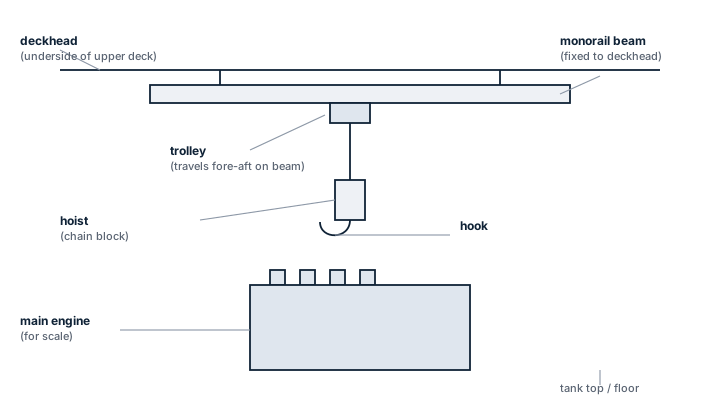
Main components
- Monorail beam or jib arm - fixed structural steel run positioned over the engine top platform, sized to the heaviest single component expected to be lifted.
- Hoist trolley - travels along the monorail, carrying the lifting mechanism and allowing positioning along the beam's length.
- Chain or wire rope hoist - electric hoists are common on larger installations; manual chain blocks remain in use on smaller engine rooms or as a secondary means where power is not available during maintenance.
- Hook block and lifting gear - the interface to slings, shackles and dedicated lifting tools for specific engine components such as piston lifting eyes.
- Control pendant or radio control - lets the operator position the load while standing clear, important given the tight clearances typical of engine room overhauls.
Selection and sizing
Safe working load is set by the single heaviest component the crane will realistically need to lift - typically a cylinder head, piston assembly or turbocharger cartridge for the specific main engine model fitted - with margin for the lifting tackle itself. Headroom and beam travel are dictated by the physical layout of the engine room rather than chosen freely: the crane has to clear the component from its seated position and travel it far enough to set it down on a maintenance platform or lower it toward a hatch for removal.
Regulations and class
Engine room lifting appliances fall under the same class lifting gear survey regime as deck cranes: periodic load testing and thorough examination at intervals set by class, with load test certificates and a lifting gear register kept on board. Because engine room cranes are used less frequently than deck cranes but for critical overhaul work, class surveyors pay particular attention to whether load tests have actually been carried out on schedule rather than only paperwork being current.
Typical faults
- Hoist brake slipping under sustained load - a partially raised heavy component creeps down, a serious hazard in the confined space of an engine room during overhaul.
- Trolley wheels or rail corroded from the humid, oily engine room atmosphere - increases rolling resistance and can bind under load.
- Control pendant cable damaged by heat or oil exposure - intermittent control loss while a load is suspended.
- Wrong lifting gear substituted for the job (standard sling instead of the engine maker's dedicated lifting tool) - unbalanced or overstressed lift of an awkwardly shaped component.
What to look for in a supplier
- Load test certification matching the actual installed capacity, not just a generic hoist rating.
- Component compatible with the engine room's headroom and beam travel as installed, confirmed against ship drawings rather than assumed.
- Suitability for the ambient conditions - heat, oil mist, vibration - typical of a machinery space rather than a general industrial hoist rated for clean environments.
- Availability of the engine maker's dedicated lifting attachments alongside the crane itself, since generic slings are often unsuited to specific components.
Confirm the crane's safe working load against the actual heaviest component of the current main engine model, not the figure from a previous ship - engines change between newbuildings and retrofits, the crane rating sometimes does not.
Typical Manufacturers
3 manufacturers · 4 models
Liebherr Maritime
2
- Traglastbereich (CBG Serie)
- CBG 300: 25 t (Hook), CBG 350: 35 t Grab / 45 t Hook, CBG 500E: bis 90 t Grab
- Traglastbereich (RL Serie)
- RL 650: bis 30 t, RL 1500: bis 40 t, RL 2650: bis 60 t, RL 4200: bis 100 t
- Traglastbereich (MTC Serie)
- MTC 1900: bis 75 t, MTC 3100: bis 100 t, MTC 6000: bis 150 t, MTC 78000: bis 300 t
- Traglastbereich (BOS Serie)
- BOS 2600: bis 100 t, BOS 4200: bis 140 t, BOS 14000: bis 600 t
- Traglastbereich (LS-C Serie)
- LS-C 60: 60 t / 32m Auslegerlänge, LS-C 80: 80 t / 38m, LS-C 100: 100 t / 43m
- Antrieb / Steuerung
- Diesel-hydraulisch oder Elektro-hydraulisch, Litronic Kontrollsystem, Hydraulikleitungen mit Chromnickel-Verzinnerung
- Drehkranz
- Großdurchmesser Rollenlager Drehkränze (z.B. ~9m Durchmesser, ~70 t bei BOS-Serie), Schmierung und Dichtungssysteme
- Inspektionsintervalle
- Nach ~20.000 Betriebsstunden oder nach behördlicher Vorgabe (DGUV, ISO 4309); tägl. Sichtprüfung, jährliche Fachprüfung
- CBG (Floating Cargo Cranes)
- CBW (Cylinder Luffing Ship Cranes)
- RL (Ram Luffing Cranes)
- RL-K (Ram Luffing Knuckle Boom Cranes)
- MTC (Mast Type Cranes)
- BOS (Board Offshore Cranes)
- LS-C (Cylinder Luffing Ship Cranes)
- Area: Drahtseil-Verschleiß: Durchmesserreduzierung >10% (Faserseele) oder >5% (Stahlseele), Drahtbrüche in Gruppen, Knicke, Wellen, Verdrehungen, Korrosion, LochfraßCheck: Visuelle Tagesinspektion nach ISO 4309:2017; Messschieber für Durchmesser; Magnetinduktive Prüfung (MRI) bei Verdacht auf Innenschäden; Inspektionspunkte: Trommelverankerung, Schlagende, Umlenkung über Rollen, beladene Seilabschnitte
- Area: Drehkranz (Slewing Ring): Dichtungssystem verschlissen (Lecks, Verschmutzte Schmierung), Zahnverschleiß (Eingriff prüfen), Lagerspiel, Vibrationen, TemperaturanCheck: Sichtprüfung auf Schmierflüssigkeitsleckage; Prüfung der Dichtungen auf Verschleiß und Verschmutzung; Vibrations- und Temperaturüberwachung; Überholung durch qualifizierte Liebherr Service mit spezialisierter Ausrüstung bei Bedarf
- Area: Hydrauliksystem: Druckabbau, Lecks an Zylindern/Rohren, Hydraulikflüssigkeit kontaminiert oder oxidiert, Funktion der Ventile und Steuerung beeinträchtigtCheck: Drucktest (Pressure Test) gegen spezifizierte Solldrücke; Sichtprüfung auf Flüssigkeitsverluste; Ölprobenanalyse (Condition Monitoring); Funktionsprüfung aller Hubfunktionen (Heben, Schwenken, Luffing)
- Area: Haken / Hook-Block: Risse, plastische Verformung, Verschleiß der Laufflächen, Kerben oder Kratzer, Beschädigungen an LastumlenkungsflächenCheck: Visuelle Oberflächenprüfung auf Oberflächenrisse und Verformung; NDT-Prüfung (Röntgen/MRI) bei kritischen Haken für Innenschäden; Lasttest: ~25% über Nenntraglast durchführen; Überprüfung der Hakenverriegelung und Verschleißmarken
- Area: Stahlkonstruktion / Boom / Ausleger: Korrosion, Oberflächenrisse (besonders an Schweißnähten und Lasteinleitungspunkten), plastische Verformung, VerschweißungenCheck: Oberflächenrost und -korrosion durch Sichtprüfung; NDT-Prüfung (Ultraschall, Röntgen) an kritischen Schweißstellen; Dimensional-Überprüfung geometrischer Toleranzen; Überholung durch Service Centre Steel mit Welding/Structural Analysis bei Bedarf
- Area: Elektrik / Steuerung (Litronic System): Kabel isolationsfehler, Stecker/Kontakte oxidiert oder korrodiert, Funktionsfehler der Kontrollsysteme, Über-/UnterlastaCheck: Visuelle Prüfung aller elektrischen Verbindungen auf Korrosion in Salzwasserumgebung; Funktionsprüfung der Überlastsicherung und Anzeigen; Durchgangsprüfung kritischer Schaltkreise; Lithiumspeicher/Batterie Zustandsprüfung bei elektro-hydraulischen Systemen
Typ-universelle Inspektions-/Wartungspunkte fuer Deck Cranes (Liebherr Maritime, Mega-Schwarm 2026-06). Per-Modell-Specs nicht auto-gefuellt.
- Traglastbereich (CBG Serie)
- CBG 300: 25 t (Hook), CBG 350: 35 t Grab / 45 t Hook, CBG 500E: bis 90 t Grab
- Traglastbereich (RL Serie)
- RL 650: bis 30 t, RL 1500: bis 40 t, RL 2650: bis 60 t, RL 4200: bis 100 t
- Traglastbereich (MTC Serie)
- MTC 1900: bis 75 t, MTC 3100: bis 100 t, MTC 6000: bis 150 t, MTC 78000: bis 300 t
- Traglastbereich (BOS Serie)
- BOS 2600: bis 100 t, BOS 4200: bis 140 t, BOS 14000: bis 600 t
- Traglastbereich (LS-C Serie)
- LS-C 60: 60 t / 32m Auslegerlänge, LS-C 80: 80 t / 38m, LS-C 100: 100 t / 43m
- Antrieb / Steuerung
- Diesel-hydraulisch oder Elektro-hydraulisch, Litronic Kontrollsystem, Hydraulikleitungen mit Chromnickel-Verzinnerung
- Drehkranz
- Großdurchmesser Rollenlager Drehkränze (z.B. ~9m Durchmesser, ~70 t bei BOS-Serie), Schmierung und Dichtungssysteme
- Inspektionsintervalle
- Nach ~20.000 Betriebsstunden oder nach behördlicher Vorgabe (DGUV, ISO 4309); tägl. Sichtprüfung, jährliche Fachprüfung
- CBG (Floating Cargo Cranes)
- CBW (Cylinder Luffing Ship Cranes)
- RL (Ram Luffing Cranes)
- RL-K (Ram Luffing Knuckle Boom Cranes)
- MTC (Mast Type Cranes)
- BOS (Board Offshore Cranes)
- LS-C (Cylinder Luffing Ship Cranes)
- Area: Drahtseil-Verschleiß: Durchmesserreduzierung >10% (Faserseele) oder >5% (Stahlseele), Drahtbrüche in Gruppen, Knicke, Wellen, Verdrehungen, Korrosion, LochfraßCheck: Visuelle Tagesinspektion nach ISO 4309:2017; Messschieber für Durchmesser; Magnetinduktive Prüfung (MRI) bei Verdacht auf Innenschäden; Inspektionspunkte: Trommelverankerung, Schlagende, Umlenkung über Rollen, beladene Seilabschnitte
- Area: Drehkranz (Slewing Ring): Dichtungssystem verschlissen (Lecks, Verschmutzte Schmierung), Zahnverschleiß (Eingriff prüfen), Lagerspiel, Vibrationen, TemperaturanCheck: Sichtprüfung auf Schmierflüssigkeitsleckage; Prüfung der Dichtungen auf Verschleiß und Verschmutzung; Vibrations- und Temperaturüberwachung; Überholung durch qualifizierte Liebherr Service mit spezialisierter Ausrüstung bei Bedarf
- Area: Hydrauliksystem: Druckabbau, Lecks an Zylindern/Rohren, Hydraulikflüssigkeit kontaminiert oder oxidiert, Funktion der Ventile und Steuerung beeinträchtigtCheck: Drucktest (Pressure Test) gegen spezifizierte Solldrücke; Sichtprüfung auf Flüssigkeitsverluste; Ölprobenanalyse (Condition Monitoring); Funktionsprüfung aller Hubfunktionen (Heben, Schwenken, Luffing)
- Area: Haken / Hook-Block: Risse, plastische Verformung, Verschleiß der Laufflächen, Kerben oder Kratzer, Beschädigungen an LastumlenkungsflächenCheck: Visuelle Oberflächenprüfung auf Oberflächenrisse und Verformung; NDT-Prüfung (Röntgen/MRI) bei kritischen Haken für Innenschäden; Lasttest: ~25% über Nenntraglast durchführen; Überprüfung der Hakenverriegelung und Verschleißmarken
- Area: Stahlkonstruktion / Boom / Ausleger: Korrosion, Oberflächenrisse (besonders an Schweißnähten und Lasteinleitungspunkten), plastische Verformung, VerschweißungenCheck: Oberflächenrost und -korrosion durch Sichtprüfung; NDT-Prüfung (Ultraschall, Röntgen) an kritischen Schweißstellen; Dimensional-Überprüfung geometrischer Toleranzen; Überholung durch Service Centre Steel mit Welding/Structural Analysis bei Bedarf
- Area: Elektrik / Steuerung (Litronic System): Kabel isolationsfehler, Stecker/Kontakte oxidiert oder korrodiert, Funktionsfehler der Kontrollsysteme, Über-/UnterlastaCheck: Visuelle Prüfung aller elektrischen Verbindungen auf Korrosion in Salzwasserumgebung; Funktionsprüfung der Überlastsicherung und Anzeigen; Durchgangsprüfung kritischer Schaltkreise; Lithiumspeicher/Batterie Zustandsprüfung bei elektro-hydraulischen Systemen
Typ-universelle Inspektions-/Wartungspunkte fuer Deck Cranes (Liebherr Maritime, Mega-Schwarm 2026-06). Per-Modell-Specs nicht auto-gefuellt.
Konecranes Marine
1
- Trolley wheel flat spots
- Hoist brake adjustment drift
- Pendant control cable damage
- Compact, low‑profile design fits tight engine‑room spaces
- Integrated pendant control with optional remote operation
- Corrosion‑resistant coating suitable for marine environments
- Modular construction simplifies installation and future upgrades
- Proven reliability on a wide range of merchant vessels
- Requires regular hoist brake adjustment to maintain performance
- Trolley wheel wear can lead to flat spots if not inspected frequently
- Pendant control cable is prone to damage in harsh vibration zones
- Limited travel length compared with larger deck‑crane families
- Fully electric – no manual backup for power loss situations
TTS Marine
1
- Slew ring bolt loosening
- Hoist motor overheating
- Limit switch misalignment
- Compact footprint fits tight engine‑room layouts
- Integrated slewing ring provides smooth 360° rotation
- High load capacity relative to size, suitable for engines and generators
- Standardised bolt‑torque inspection interval (every 500 hrs) simplifies maintenance planning
- Monthly wire‑rope lubrication schedule is straightforward
- Limited outreach compared with larger deck cranes
- Hoist motor prone to overheating under continuous heavy use
- Slew ring bolts can loosen if torque checks are missed
- Limit switch misalignment may cause positioning errors
- Requires regular manual inspections; limited remote diagnostics
Who can you trust with this job?
The global maritime company directory — brand coverage, certificates and direct contact routes to maritime suppliers.
Open network →Sourcing this part?
One request. You get suppliers who actually carry it, not a search page.
Request partsCan’t read the plate?
Photograph it. We identify make and model and take you to the datasheet.
Try itRed Sea and Bab el-Mandeb
Rerouted transits, war-risk cover, and what it means for schedules and repairs.
17 reports