Marine Drive Systems & Accessories
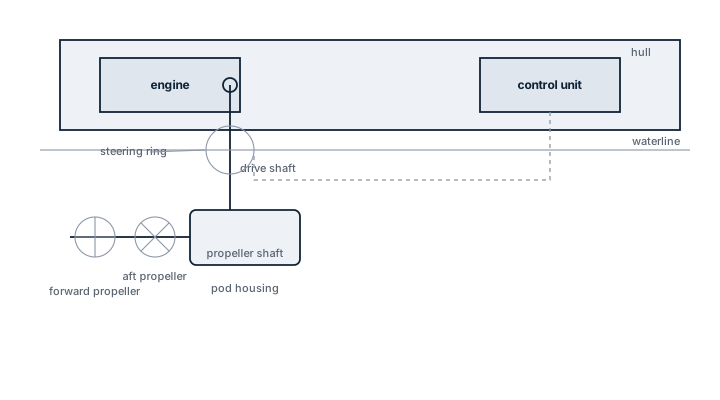
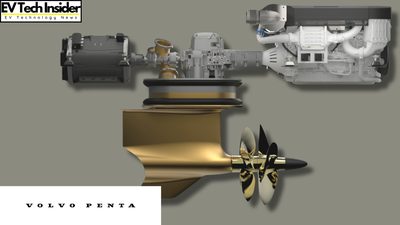
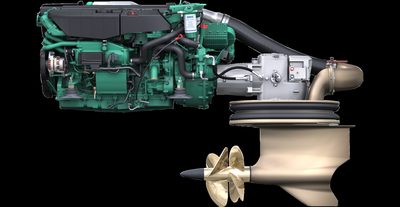
Integrated drive systems such as Volvo Penta IPS package a forward-facing, steerable pod, twin contra-rotating propellers and an electronic control system into one unit, replacing the separate shaft, rudder and single propeller of a conventional installation.
Read more — Marine Drive Systems & Accessories explained ▾
What Makes This Type
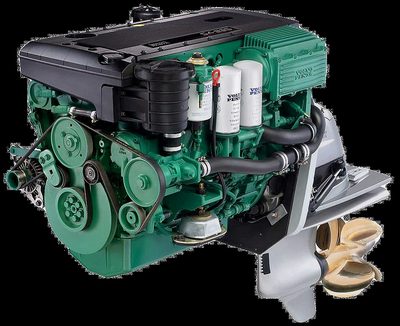
This grouping covers integrated pod-type drive systems, such as Volvo Penta's IPS, and their control and accessory equipment, as distinct from a conventional shaft, stern tube and rudder arrangement. A pod drive turns the whole lower unit to steer, using forward-facing, contra-rotating propellers instead of a single aft-facing propeller behind a rudder. This changes the hydrodynamics enough to reduce fuel consumption and improve low-speed handling on the planing and semi-displacement hulls these systems are mostly fitted to, which is the main reason owners choose it over a conventional shaft line on this size of vessel. The electronic control layer, marketed as EVC (Electronic Vessel Control) on Volvo Penta systems, ties engine management, drive steering, joystick docking control and trim into one system rather than the separate mechanical linkages a conventional installation uses.
Main Components
- Drive unit / pod: the steerable lower unit housing the gear train and propeller shafts, bolted through the hull bottom and rotated by an electro-hydraulic steering actuator.
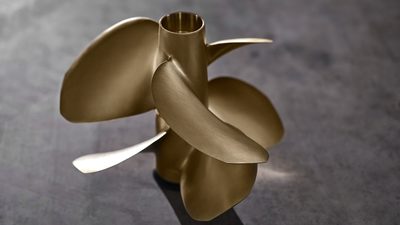
- Contra-rotating propeller set: two propellers on concentric shafts turning in opposite directions, which recovers rotational energy that a single propeller loses and reduces cavitation at a given loading.
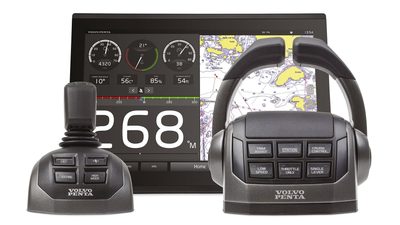
- Electronic Vessel Control (EVC) / Engine Management System (EMS): the electronic layer integrating throttle, steering, trim and joystick control across single or multiple drives.
- Engine mounts and flexible couplings: isolate hull-borne vibration from the engine, sized and rated for the specific engine weight and power, not a generic rubber mount.
- Trim and steering actuators: electro-hydraulic units that angle the drive for steering and adjust running trim, drawing on the vessel's hydraulic supply.
Selection and Sizing
Pod drives are matched to the engine's power output and the hull's displacement and planing characteristics, since the manufacturer specifies drive models against defined power bands rather than offering a continuously variable size range. Multi-engine, multi-drive installations depend on the EVC or EMS software supporting the specific number and layout of drives fitted, including joystick docking, which needs all drives and the bow thruster, where fitted, on the same control bus. Mount selection depends on engine weight, torque characteristics and the vibration isolation the hull structure needs, and is not interchangeable between engine models without re-checking the rated load.
Typical Faults
| Fault | Consequence |
|---|---|
| Anode depletion on the drive unit's underwater housing | Accelerated galvanic corrosion of the pod and propeller shafts once the anode is consumed |
| Steering actuator seal wear | Hydraulic fluid loss and sluggish or asymmetric steering response between drives |
| Engine mount degradation | Increased vibration transmitted to the hull, and in advanced cases misalignment between engine and drive coupling |
| EVC/EMS software or sensor fault | Loss of joystick docking control or throttle synchronisation between multiple drives, forcing a fallback to manual single-drive operation |
| Contra-rotating propeller shaft seal failure | Water ingress into the drive housing, contaminating the gear oil and risking bearing damage |
What to Look for in a Supplier
- Confirmed compatibility of any accessory, mount or control module with the exact drive model and software version fitted, since these systems are tightly matched by the OEM.
- Anode and seal kit availability sized to the specific drive unit rather than a generic marine anode.
- Diagnostic software or interface access for the EVC/EMS layer, without which fault-finding beyond swapping parts becomes very difficult.
Check drive unit anodes on a fixed calendar interval, not by eye at haul-out - galvanic corrosion on a pod drive progresses inside the housing before it becomes visible on the exterior.
2 manufacturers · 13 models
AB Volvo Penta
12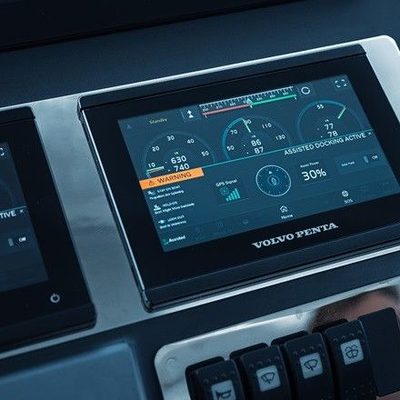
- Komponenten-Verschleiß durch Betriebsstunden und Umgebungsbedingungen
- Korrosion durch Seewasser-/Salzluft-Exposition
- Elektronik-/Steuerungsausfall durch Feuchtigkeit oder Vibration
- Wartungsintervall-Überschreitung verursacht vorzeitigen Ausfall
- Full integration of engine, gear and pitch controls reduces wiring complexity and improves response time
- Built‑in diagnostic and fault‑logging simplifies troubleshooting and supports class survey inspections
- Remote IPS40 panel enables operation from the bridge or other locations, reducing crew workload
- Class‑approved (DNV) for a range of medium‑speed diesel installations, facilitating certification processes
- Compatibility with Volvo Penta’s own engine families ensures optimal performance tuning
- Higher upfront cost compared with conventional mechanical control gearboxes
- Reliance on electronic components makes the system sensitive to moisture ingress and high vibration if not properly sealed
- Limited to Volvo Penta engine platforms; retrofitting onto non‑Volvo power plants can be costly or infeasible
- Requires specialised training for operators and maintenance personnel
- Spare parts inventory must follow Volvo Penta part numbers, which may have longer lead times in remote regions
- Komponenten-Verschleiß durch Betriebsstunden und Umgebungsbedingungen
- Korrosion durch Seewasser-/Salzluft-Exposition
- Elektronik-/Steuerungsausfall durch Feuchtigkeit oder Vibration
- Wartungsintervall-Überschreitung verursacht vorzeitigen Ausfall
- Real‑time condition monitoring enables predictive maintenance and reduces unplanned downtime
- Class‑approved (DNV) solution simplifies compliance with survey requirements
- Fuel‑efficiency optimisation through automated performance feedback
- Remote diagnostics and data logging support shore‑based support teams
- Scalable architecture compatible with a range of Volvo Penta diesel and hybrid drive units
- Higher upfront capital cost compared with basic mechanical governors
- Increased system complexity requires specialised training for crew and maintenance staff
- Electronic components are sensitive to moisture, vibration and salt‑air corrosion if not properly sealed
- Software updates and licence management add ongoing operational overhead
- Dependence on continuous power supply; loss of electricity can affect monitoring functions
- Komponenten-Verschleiß durch Betriebsstunden und Umgebungsbedingungen
- Korrosion durch Seewasser-/Salzluft-Exposition
- Elektronik-/Steuerungsausfall durch Feuchtigkeit oder Vibration
- Wartungsintervall-Überschreitung verursacht vorzeitigen Ausfall
- Full integration of engine management (EMS), automatic control (ACM) and shaft monitoring (SDM) reduces wiring complexity
- Advanced diagnostics and remote monitoring improve maintenance planning and reduce downtime
- Optimised fuel injection and load control enhance fuel efficiency across operating ranges
- Modular design allows retro‑fit to existing Volvo Penta medium‑speed diesel installations
- Compliance with DNV class requirements for electronic vessel control
- Higher initial capital cost compared with conventional mechanical control gear
- Reliance on electronic components makes the system sensitive to excessive vibration and moisture; requires strict environmental sealing
- Limited to Volvo Penta engine families – not a drop‑in solution for other manufacturers
- Specialised training needed for crew and shore‑based technicians
- Software updates and licensing can add ongoing operational expenses

- Komponenten-Verschleiß durch Betriebsstunden und Umgebungsbedingungen
- Korrosion durch Seewasser-/Salzluft-Exposition
- Elektronik-/Steuerungsausfall durch Feuchtigkeit oder Vibration
- Wartungsintervall-Überschreitung verursacht vorzeitigen Ausfall
- Significant fuel savings through optimal load sharing between diesel and electric power sources
- Reduced CO2 and NOx emissions helping meet IMO Tier III and regional emission regulations
- Enhanced operational flexibility with the ability to run on pure electric mode for low‑speed manoeuvring or in emission‑controlled zones
- Built‑in redundancy; if one power source fails, the other can maintain propulsion
- Compatibility with existing Volvo Penta diesel engines and modular integration
- Higher initial capital cost compared with conventional diesel-only drive systems
- Increased system complexity requiring specialised training for operation and maintenance
- Additional space and weight penalties due to batteries, power electronics and control hardware
- Potential reliability concerns if moisture ingress or vibration affect electronic components
- Longer lead times for spare parts specific to the hybrid control unit
- Komponenten-Verschleiß durch Betriebsstunden und Umgebungsbedingungen
- Korrosion durch Seewasser-/Salzluft-Exposition
- Elektronik-/Steuerungsausfall durch Feuchtigkeit oder Vibration
- Wartungsintervall-Überschreitung verursacht vorzeitigen Ausfall
- Higher propulsive efficiency thanks to the forward‑facing propeller design
- 360° steering eliminates the need for separate rudders or stern thrusters, improving docking performance
- Reduced vibration and noise levels in the accommodation spaces
- Compact layout frees up engine‑room space and allows flexible vessel arrangements
- Integrated electronic control system simplifies crew operation and reduces man‑hours
- Higher initial capital cost compared with conventional shaft line systems
- Power range limited to roughly 1,500–3,000 kW per pod; not ideal for very large vessels
- Reliance on sophisticated electronic/hydraulic control units increases vulnerability to moisture or vibration‑induced failures if maintenance is lax
- Specialised dockside support and spare‑part inventory required for pod maintenance
- Potentially higher lifecycle cost if class inspection intervals are exceeded
- Komponenten-Verschleiß durch Betriebsstunden und Umgebungsbedingungen
- Korrosion durch Seewasser-/Salzluft-Exposition
- Elektronik-/Steuerungsausfall durch Feuchtigkeit oder Vibration
- Wartungsintervall-Überschreitung verursacht vorzeitigen Ausfall
- 360° steering eliminates the need for rudders and stern thrusters, giving superior maneuverability.
- Compact layout frees up engine room space and lowers vessel centre of gravity.
- Reduced vibration and noise thanks to electric motor drive inside the pod.
- Higher fuel efficiency at low to medium speeds due to optimized propeller pitch control.
- Simplified shaft line reduces mechanical losses and maintenance points.
- Higher initial capital cost compared with a conventional shaft‑line arrangement.
- Pod seal and bearing wear require specialised inspection and replacement procedures.
- Reliance on electronic control systems makes the unit sensitive to moisture, vibration and power quality issues.
- Maximum continuous power is lower than that of large traditional propeller shafts, limiting use on high‑power vessels.
- Komponenten-Verschleiß durch Betriebsstunden und Umgebungsbedingungen
- Korrosion durch Seewasser-/Salzluft-Exposition
- Elektronik-/Steuerungsausfall durch Feuchtigkeit oder Vibration
- Wartungsintervall-Überschreitung verursacht vorzeitigen Ausfall
- High hydrodynamic efficiency across a wide speed range
- Robust alloy construction resistant to cavitation wear
- Integrated with Volvo Penta control electronics for precise thrust management
- Standard DNV approval simplifies class survey documentation
- Modular design allows quick replacement and spare‑part stocking
- Higher initial cost compared with conventional fixed‑pitch propellers
- Requires dedicated electronic control unit and regular calibration
- Sensitive to corrosion in highly saline environments if protective coating degrades
- Maintenance intervals are stricter; overrunning them can lead to premature wear
- Limited availability of third‑party aftermarket parts
- Komponenten-Verschleiß durch Betriebsstunden und Umgebungsbedingungen
- Korrosion durch Seewasser-/Salzluft-Exposition
- Elektronik-/Steuerungsausfall durch Feuchtigkeit oder Vibration
- Wartungsintervall-Überschreitung verursacht vorzeitigen Ausfall
- High corrosion resistance due to stainless‑steel construction
- Optimised blade geometry for fuel efficiency at typical workboat speeds
- DNV class approved, meeting strict classification requirements
- Modular hub design enables quick replacement and compatibility with Volvo Penta drive units
- Low vibration and noise levels improve crew comfort
- Higher initial purchase price compared with standard cast‑iron propellers
- Fixed pitch limits performance flexibility for vessels that operate over a wide speed range
- Heavier than aluminium alternatives, which may affect weight distribution on small hulls
- Limited to shaft sizes and hub configurations approved by Volvo Penta
- Requires specific maintenance intervals; oversights can accelerate wear
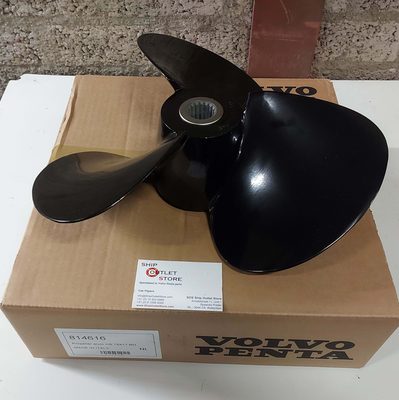
- Komponenten-Verschleiß durch Betriebsstunden und Umgebungsbedingungen
- Korrosion durch Seewasser-/Salzluft-Exposition
- Elektronik-/Steuerungsausfall durch Feuchtigkeit oder Vibration
- Wartungsintervall-Überschreitung verursacht vorzeitigen Ausfall
- Optimised blade geometry delivers higher fuel efficiency and lower emissions
- Modular design allows quick blade replacement and reduces downtime
- Corrosion‑resistant alloy material suited to seawater and salt‑air exposure
- Fully approved by DNV, simplifying class survey compliance
- Designed for seamless integration with Volvo Penta drive units
- Higher upfront cost compared with generic off‑the‑shelf propellers
- Limited size range; may not be available for very large or very small vessels
- Requires strict adherence to OEM maintenance intervals to avoid premature wear
- Spare parts and service must be sourced through Volvo Penta channels, potentially increasing lead times
- Performance gains are most noticeable when paired with compatible Volvo Penta gearboxes
- Komponenten-Verschleiß durch Betriebsstunden und Umgebungsbedingungen
- Korrosion durch Seewasser-/Salzluft-Exposition
- Elektronik-/Steuerungsausfall durch Feuchtigkeit oder Vibration
- Wartungsintervall-Überschreitung verursacht vorzeitigen Ausfall
- High cavitation resistance and efficient thrust generation across the design RPM range
- Corrosion‑resistant alloy or coating suitable for seawater exposure
- Modular hub design enables quick blade replacement and reduces downtime
- Proven track record in coastal and offshore workboats with Volvo Penta drive packages
- Compatible with standard Volvo Penta R‑series gearboxes and control systems
- Heavier than aluminium or composite alternatives, affecting overall vessel weight budget
- Optimised for a specific RPM band; performance drops outside the design range
- Requires precise hub alignment – installation tolerances are tighter than some competitors
- Higher upfront cost compared with generic off‑the‑shelf propellers
- Blade wear can accelerate in highly abrasive or sediment‑laden waters, demanding stricter maintenance

- Komponenten-Verschleiß durch Betriebsstunden und Umgebungsbedingungen
- Korrosion durch Seewasser-/Salzluft-Exposition
- Elektronik-/Steuerungsausfall durch Feuchtigkeit oder Vibration
- Wartungsintervall-Überschreitung verursacht vorzeitigen Ausfall
- Effective reduction of transmitted vibration and noise to the hull
- Compensates for misalignment and thermal expansion during operation
- Corrosion‑resistant materials suitable for marine environments
- Modular product range allows selection based on load and space constraints
- Designed for easy installation and routine inspection per Volvo Penta manuals
- Higher initial cost compared with rigid steel mounts
- Elastomeric elements may require periodic replacement in high‑hour service
- Maximum torque rating lower than heavy‑duty bearing housings
- Installation tolerances are tighter; improper mounting can reduce performance
- Limited availability of spare parts in remote ports for some specialised variants
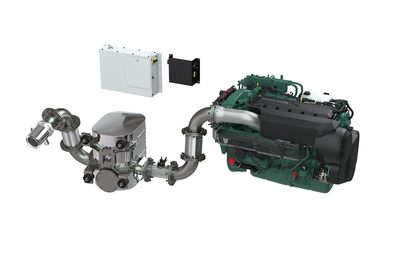
- Komponenten-Verschleiß durch Betriebsstunden und Umgebungsbedingungen
- Korrosion durch Seewasser-/Salzluft-Exposition
- Elektronik-/Steuerungsausfall durch Feuchtigkeit oder Vibration
- Wartungsintervall-Überschreitung verursacht vorzeitigen Ausfall
- Meets IMO Tier III NOx emission requirements for vessels operating in ECAs
- Integrated spark‑arrestor reduces fire risk in the exhaust system
- Designed specifically for Volvo Penta main engines, ensuring optimal fit and control integration
- Compact layout suitable for new builds and limited‑space retrofits
- Supported by Volvo Penta’s global service network and spare‑part logistics
- Higher capital cost compared with non‑SCR exhaust solutions
- Requires on‑board urea (DEF) storage, dosing system and regular replenishment
- Sensitive to seawater ingress; corrosion or moisture can cause catalyst degradation
- Maintenance intervals are stricter; missed service can lead to premature failure
- Limited applicability to vessels that do not use Volvo Penta propulsion units
Daihatsu
1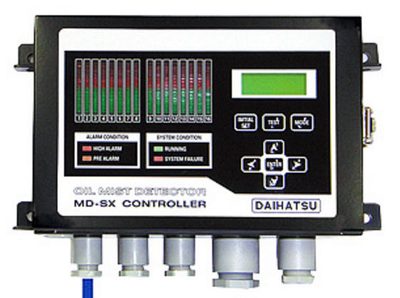
- Komponenten-Verschleiß durch Betriebsstunden und Umgebungsbedingungen
- Korrosion durch Seewasser-/Salzluft-Exposition
- Elektronik-/Steuerungsausfall durch Feuchtigkeit oder Vibration
- Wartungsintervall-Überschreitung verursacht vorzeitigen Ausfall
- Compact footprint suitable for space‑constrained installations
- Integrated electronic control system simplifies start‑up and monitoring
- DNV class approval (model TAA000021K) provides recognized safety compliance
- Modular design allows quick removal of major components for overhaul
- Proven reliability in harsh marine environments when maintenance intervals are observed
- Limited maximum power output compared with larger high‑speed drives, restricting use on high‑power vessels
- Fuel consumption can be higher at part‑load if not matched to vessel duty cycle
- Corrosion risk for external components if sealing is compromised; requires strict moisture control
- Spare‑parts logistics may be slower outside the Daihatsu dealer network
- Initial acquisition cost can exceed that of comparable low‑cost Chinese alternatives