What to check on a Cargo Hose.
A cargo hose is not general-purpose flexible piping. It is built and certified for a specific cargo type — crude oil, refined products, chemicals, or LPG — because the lining and reinforcement that resist one cargo can be attacked or degraded by another. Unlike the fixed manifold piping it connects to, a hose flexes constantly under handling, is exposed to weather and UV when stowed on deck, and gets far less structural protection than a welded pipe run, which is why hoses have their own, shorter inspection and pressure test…
What sets cargo hose apart
A cargo hose is not general-purpose flexible piping. It is built and certified for a specific cargo type — crude oil, refined products, chemicals, or LPG — because the lining and reinforcement that resist one cargo can be attacked or degraded by another. Unlike the fixed manifold piping it connects to, a hose flexes constantly under handling, is exposed to weather and UV when stowed on deck, and gets far less structural protection than a welded pipe run, which is why hoses have their own, shorter inspection and pressure test cycle rather than sharing the ship's general piping survey. The hose is also the one part of the cargo system regularly handled by shore personnel and crane operators who are not part of the ship's crew, so its condition has to be obvious and verifiable at a glance, not just sound on paper.
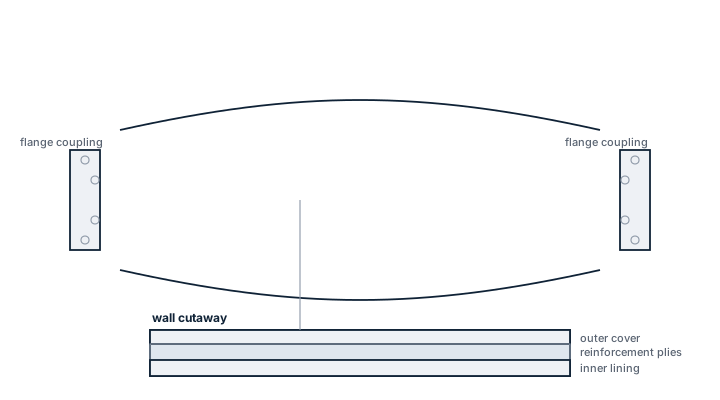
Main types and construction
- Rubber composite hose — layered rubber and textile or wire reinforcement, the traditional choice for crude and product cargoes
- Composite (thermoplastic) hose — helically wound film and fabric layers over a wire helix, lighter than rubber hose and widely used for chemical cargoes because linings can be matched to specific chemical resistance needs
- Cryogenic hose — multi-layer construction for LPG and other liquefied gas transfer, rated for very low temperature service
- End fittings — flanges crimped or built into the hose ends, the point where most hose failures actually start
Selection and sizing
- Chemical compatibility of the lining with the specific cargoes the ship carries, checked cargo by cargo, not just by generic hose type
- Working pressure and test pressure rating against the cargo pump discharge pressure actually used
- Diameter and length matched to the manifold spacing and the transfer rate required
- Temperature rating, critical for heated cargoes and essential for any cryogenic service
Regulations and class
MARPOL Annex I and Annex II set the framework for preventing cargo and oil discharge during transfer operations, and cargo hoses used in ship-to-ship or ship-to-shore transfer are subject to periodic pressure testing, typically well above normal working pressure, with results recorded and the test date marked on the hose itself. Terminals and vetting inspections routinely check hose test certificates and physical condition before permitting a transfer to start, and an out-of-date or damaged hose can stop cargo operations on the spot regardless of what the ship's own paperwork says.
Typical faults
| Fault | Cause | Consequence |
|---|---|---|
| End fitting separation | Fatigue at the crimped joint from repeated handling and bending | Sudden hose failure at the flange, one of the most common causes of cargo spills during transfer |
| Lining blistering or delamination | Chemical attack from a cargo outside the hose's approved compatibility range | Internal leak path invisible from outside until the hose bursts |
| UV and weather degradation of the outer cover | Prolonged deck stowage without protection from sunlight | Cracking of the outer layer, reduced hose life and reduced protection for the reinforcement beneath |
| Kinking during handling | Hose bent tighter than its minimum bend radius during connection | Localised weak point that often becomes the failure point on a later transfer |
What to look for in a supplier
- Type approval and chemical compatibility documentation matching the exact cargoes the ship carries, not a general-purpose rating
- Test certificates traceable to the individual hose, with pressure test results and date clearly marked
- Consistent flange and coupling standards matching the ship's manifold and the terminals it regularly calls at
- Reasonable working life expectancy stated for the service condition, so replacement can be planned rather than reactive
Check the end fittings before every transfer, not just the hose body — most hose failures during cargo operations start at the flange joint, where damage is easy to miss under a quick visual scan of the hose length.