What to check on a Fire Nozzle.
9 models from fike in Fire Nozzle. Below: the full model list.
What defines this type
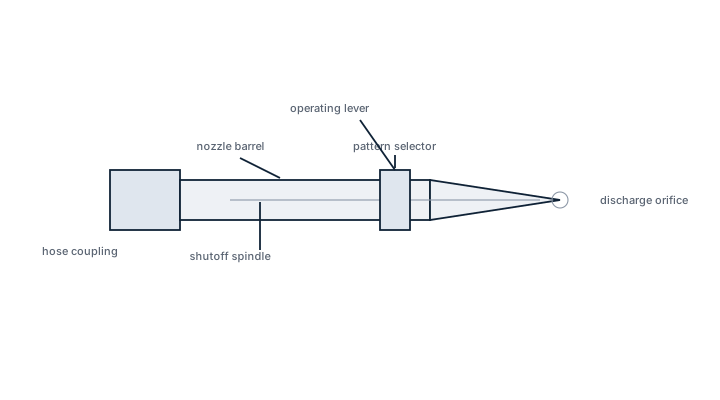
A fire nozzle is the point where the fire main's pressure and flow finally become useful, and its defining feature is the ability to change pattern — jet, spray or shut-off — without the operator closing a separate valve. A solid jet reaches further and knocks down a fire from a distance; a spray or fog pattern cools surfaces, protects the firefighter approaching a hot space and is more effective on some fire classes. Combination nozzles do both from one handle, which is now the standard fit on merchant ships rather than carrying separate jet and spray nozzles.
Read the full guide
Main components
Body and coupling
A brass or corrosion-resistant alloy body with a standard hose coupling matching the ship's fire hose thread, sized to the hose diameter it serves.
Pattern selector
A rotating or sliding sleeve that changes the water discharge from a concentrated jet through a spray cone to fully shut off, operated with one hand so the other stays free.
Shut-off valve
An integral valve allowing the nozzle to be closed at the nozzle itself rather than only at the hydrant, which lets a firefighter reposition without a second person managing the valve.
Selection and sizing
Nozzle size has to match the fire main's design pressure and the pump capacity actually available at that hydrant, not just the hose diameter; an oversized nozzle on a weak main starves every other hydrant running at the same time. SOLAS sets a minimum jet throw and a minimum flow rate per nozzle depending on ship type, and the nozzle diameter fitted has to be capable of delivering that flow at the fire main's rated pressure. Accommodation and machinery space nozzles are commonly a smaller bore than those on deck for cargo or bunkering fires, reflecting the different flow SOLAS requires in each location.
Regulations and class
SOLAS Chapter II-2 specifies the minimum number of fire hoses and nozzles, the minimum jet length, and the minimum simultaneous flow the fire main must deliver through them for the ship type and size. Nozzle diameters are constrained by the same chapter to prevent a crew fitting an oversized nozzle that the fire pumps cannot support at rated pressure. Annual fire equipment surveys check nozzle condition, coupling fit to the hose and correct pattern operation, and a nozzle that will not shut off fully is a common finding.
Typical faults
| Fault | Cause | Consequence |
|---|---|---|
| Pattern selector seized in one position | Corrosion or salt build-up on the sliding or rotating mechanism from infrequent use | Firefighter cannot switch between jet and spray when the fire situation demands it |
| Leaking coupling | Worn or missing gasket, or coupling thread mismatched after a repair with a non-standard part | Reduced pressure at the nozzle and a slip hazard from water spraying at the connection |
| Reduced jet throw | Partial blockage of the nozzle orifice by debris from an unflushed fire main, or wear enlarging the orifice | Firefighter cannot reach the seat of the fire from a safe distance |
| Shut-off valve will not fully close | Grit lodged in the valve seat | Continuous flow after the fire is out, depleting fire main pressure elsewhere |
What to look for in a supplier
- Coupling thread and standard matching the ship's existing fire hose fleet exactly, not a compatible-looking substitute
- Type approval documentation covering the specific flow rate and jet length claimed
- Corrosion-resistant construction suited to prolonged storage in a hose locker rather than continuous use
- Spare gaskets and washers supplied or readily available separately from a full nozzle replacement
Test every nozzle's full pattern range at each fire drill, not just that water comes out — a selector seized on spray-only will not be discovered until someone needs the jet.