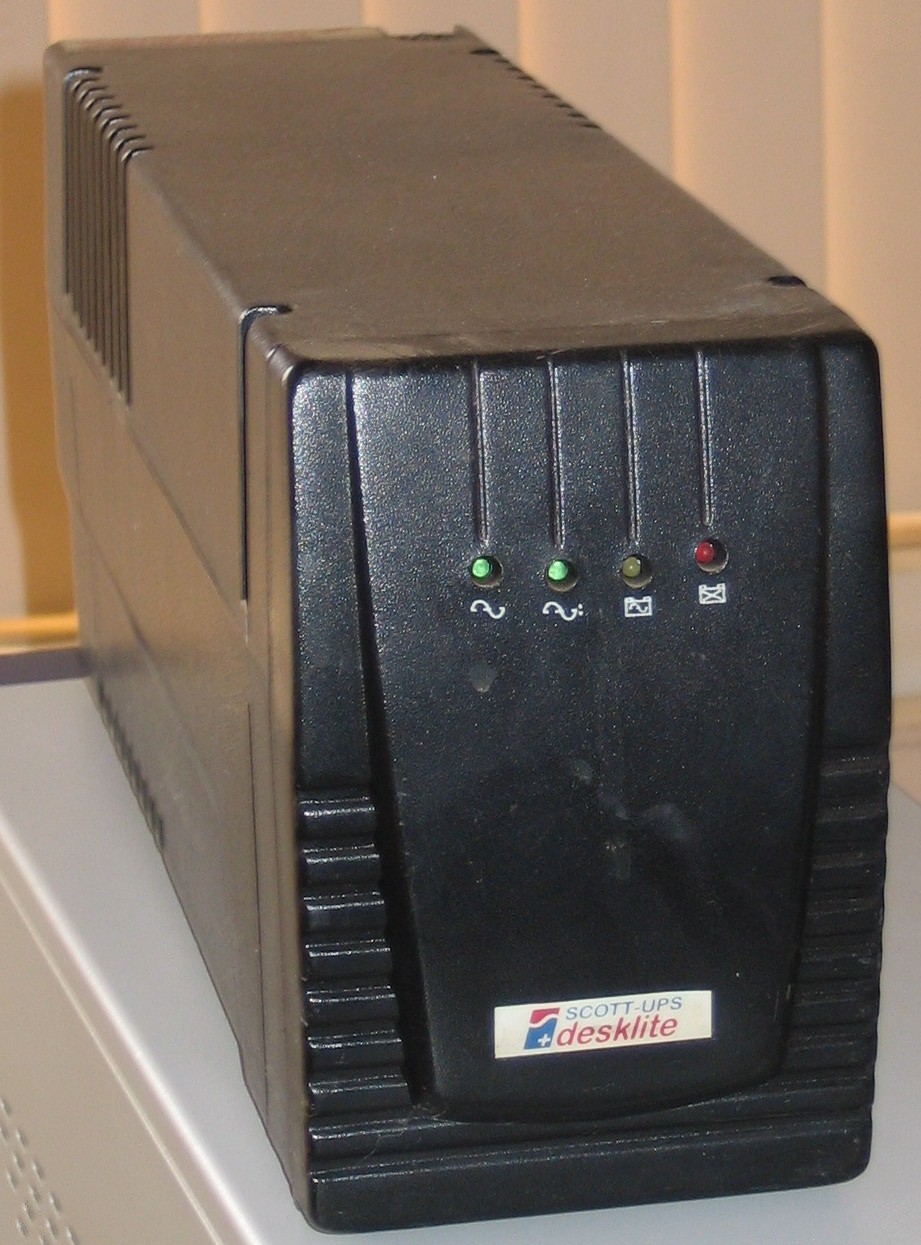
UPS (Uninterruptible Power Supply)
An online UPS keeps navigation and communication loads on inverter power at all times, so a mains failure or generator changeover produces no switching gap at all, unlike the standby designs used elsewhere in the distribution system.
Read more — UPS (Uninterruptible Power Supply) explained ▾
What distinguishes a UPS from the rest of the power distribution chain
Everywhere else in the switchboard the ship accepts that power can be interrupted for the second or two it takes a breaker to trip and a standby source to pick up. A UPS exists precisely because a handful of loads cannot accept even that gap: gyrocompass, radar, ECDIS, GMDSS equipment and the alarm and monitoring system need continuous, filtered power through any switching event, blackout or generator changeover. An online UPS achieves this by keeping the load permanently on an inverter fed from a rectified and battery-buffered DC bus, so a mains failure produces no switching transient at all, unlike a standby UPS that only steps in after detecting a fault.
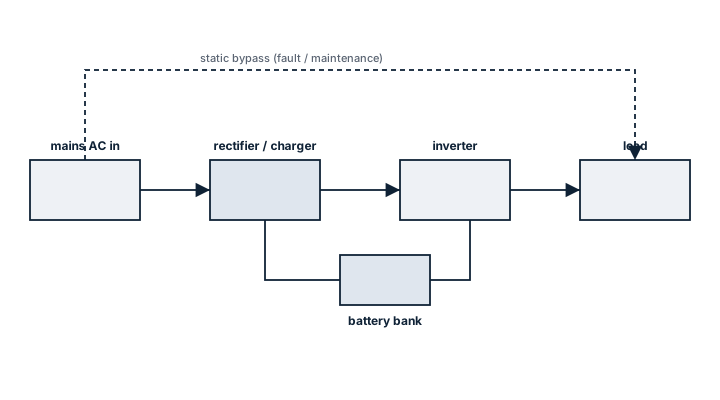
Main components
Rectifier/charger
Converts incoming AC to DC, feeds the inverter and keeps the battery charged, normally sized to do both jobs simultaneously without starving the battery.
Battery bank
Sealed lead-acid or, increasingly, lithium iron phosphate cells sized to carry the connected load for a defined autonomy time, typically 30 minutes to a few hours depending on the criticality of what is connected.
Inverter
Converts the DC bus back to clean AC for the load, continuously in an online design, so the load never sees the raw mains waveform.
Static bypass switch
An electronic switch that transfers the load directly to mains within a few milliseconds if the inverter itself fails or is overloaded, and is also used to take the UPS out of circuit for maintenance without dropping the load.
Selection and sizing
- kVA and kW rating matched to the connected load with margin for inrush current on equipment with motors or transformers
- Autonomy time — how long the battery must carry the load before an alternative source is available, which on a ship usually means until the emergency generator is on line
- Number of separate output circuits, since navigation and communication loads are often required to be on segregated UPS distribution rather than a single shared output
- Battery chemistry, weighing lithium's smaller footprint and longer cycle life against lead-acid's lower first cost and simpler disposal at end of life
Regulations and class
SOLAS Ch. II-1 requires navigation and radio equipment to remain in continuous operation through the transitional period of a power failure, which in practice is met with battery-backed supplies, and GMDSS equipment under Ch. IV must be supported by a source able to power it for the periods laid down there. Class rules generally require documented autonomy testing at survey — discharging the battery under load to confirm it still meets its rated backup time — rather than trusting the charger's own status light.
Typical faults
- Battery capacity loss with age, invisible on a float-charge voltage reading and only caught by a load test, leaving the ship with a UPS that looks healthy but carries the load for minutes instead of the rated time
- Capacitor failure in rectifier or inverter stages after years in a hot switchboard room, producing distorted output or nuisance alarms
- Static bypass switch failing to transfer cleanly, so a genuine inverter fault causes the exact blackout the UPS was fitted to prevent
- Ventilation neglected in the UPS compartment, shortening battery life through sustained high ambient temperature
What to look for in a supplier
- Type approval covering the specific navigation and GMDSS standards the installation must meet
- Battery monitoring that reports actual state of health, not just charge voltage
- Local service support for battery replacement, since batteries are a wear item on a fixed replacement cycle regardless of how well the rest of the unit performs
- Clear documentation of autonomy figures under the vessel's actual connected load, not a generic datasheet figure
Ask for a load test result, not a float-voltage reading, before accepting that a UPS battery still meets its rated autonomy — a bank can read a perfectly healthy voltage and still collapse in minutes under real load.